Basque Country Wine and Culture Tour: Bilbao, Coast & Rioja Alavesa

A Basque Country wine and culture tour brings together Bilbao, the Atlantic coast, the vineyards of Rioja Alavesa and the distinctive traditions of northern Spain in a journey shaped by food, wine, landscape and regional identity.
Bilbao combines contemporary architecture with historic neighbourhoods and a celebrated pintxos culture, while the Basque coast introduces fishing villages, dramatic cliffs and Atlantic scenery. Further inland, Rioja Alavesa is defined by vineyard landscapes, historic wine towns and wineries producing some of Spain’s best-known wines.
What makes the Basque Country particularly rewarding is the contrast between these closely connected areas. Euskadi has its own language, Euskera, as well as strong culinary and cultural traditions that remain visible in everyday life, from pintxos bars and local markets to coastal communities and wine villages.
Our Exploring the Basque Country journey follows these connections with private transfers, guided visits, restaurant reservations and winery experiences arranged in advance, linking Bilbao, the coast and Rioja Alavesa in a practical and well-paced route.
Understanding
Euskadi and the Wider Basque Country
The Basque Country is both a cultural region and a modern political reality, but its boundaries require some explanation. The wider historic Basque Country stretches across northern Spain and south-western France and is traditionally associated with seven territories. This journey focuses on Euskadi, the Basque Autonomous Community in Spain, while our guide to the French Basque Country explores the region north of the border.
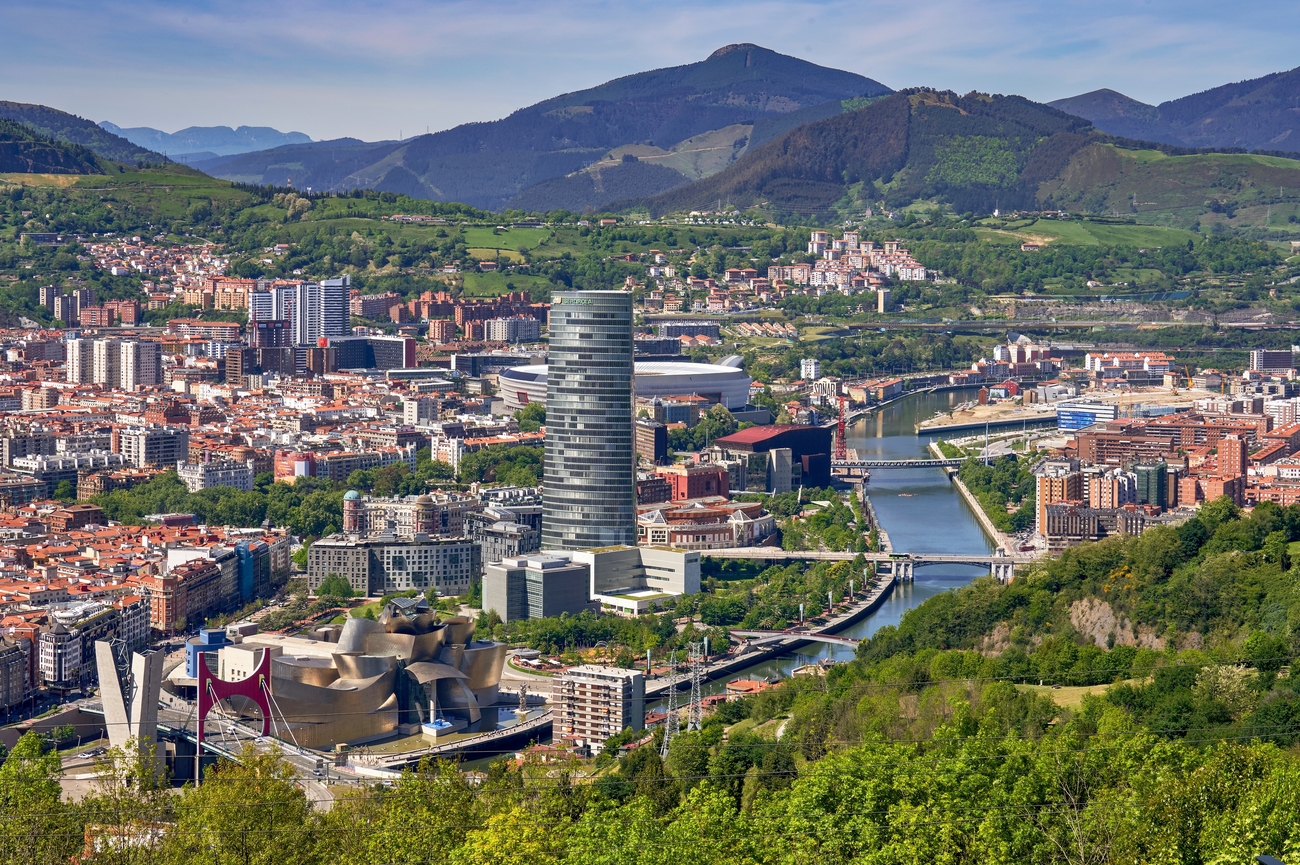
Euskadi comprises three provinces: Bizkaia in the west, with Bilbao as its largest city; Gipuzkoa in the east, home to San Sebastián and the coast near the French border; and Álava in the south, where the green Atlantic hills give way to the vineyards of Rioja Alavesa.
The region has its own parliament, government and police force, as well as distinctive fiscal and administrative powers. Throughout Euskadi, you will see the red, green and white Basque flag, known as the ikurriña, displayed on public buildings, homes and village balconies.
At the heart of Basque identity is Euskera, the Basque language. Euskera is a language isolate, meaning that linguists have not established a relationship between it and any other surviving language. It is spoken alongside Spanish in Euskadi and alongside French north of the border.
Geographically, Euskadi is compact but remarkably varied. It is possible to travel from the damp, fern-covered Atlantic coast to the sunlit vineyards of Rioja Alavesa in little more than an hour. The route crosses the Cantabrian Mountains, which create a natural divide between the maritime climate of the north and the warmer, drier landscape to the south.
San Sebastián, one of Europe’s leading culinary destinations, deserves a journey of its own and features in our four-day San Sebastián culinary itinerary. This Basque Country wine and culture tour explores the wider region around it, combining Bilbao, the coast, Rioja Alavesa and the traditions that connect them.
Bilbao
and the Guggenheim Effect
Before the Guggenheim Museum opened in 1997, few travellers would have built a holiday around Bilbao. It was a port and steel city on a polluted river, proud but declining, the kind of place economists wrote case studies about for the wrong reasons.
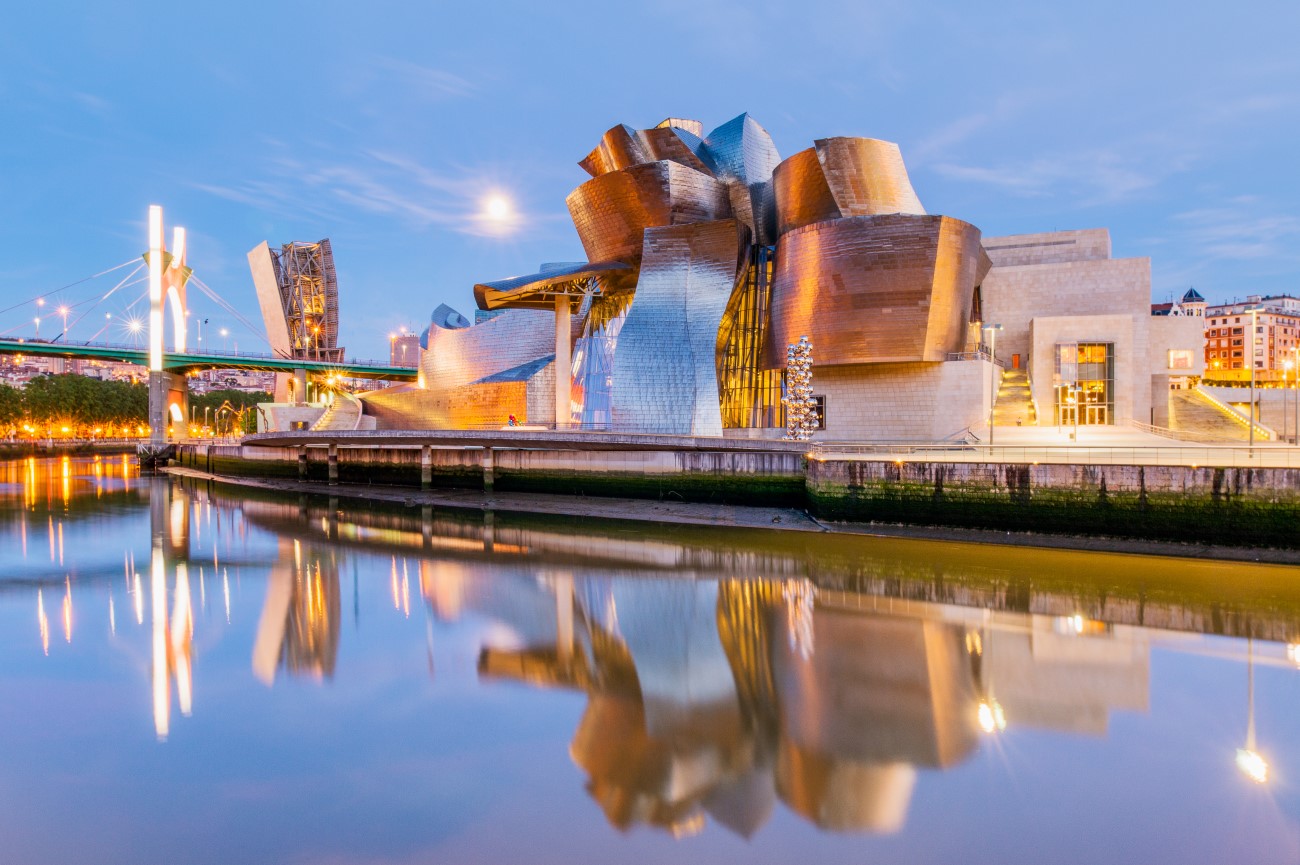
Bilbao responded with an ambitious programme of urban regeneration. New transport links, public spaces and waterfront developments all played a part, but its boldest symbol was an art museum by Frank Gehry, built on a former industrial site beside the river.
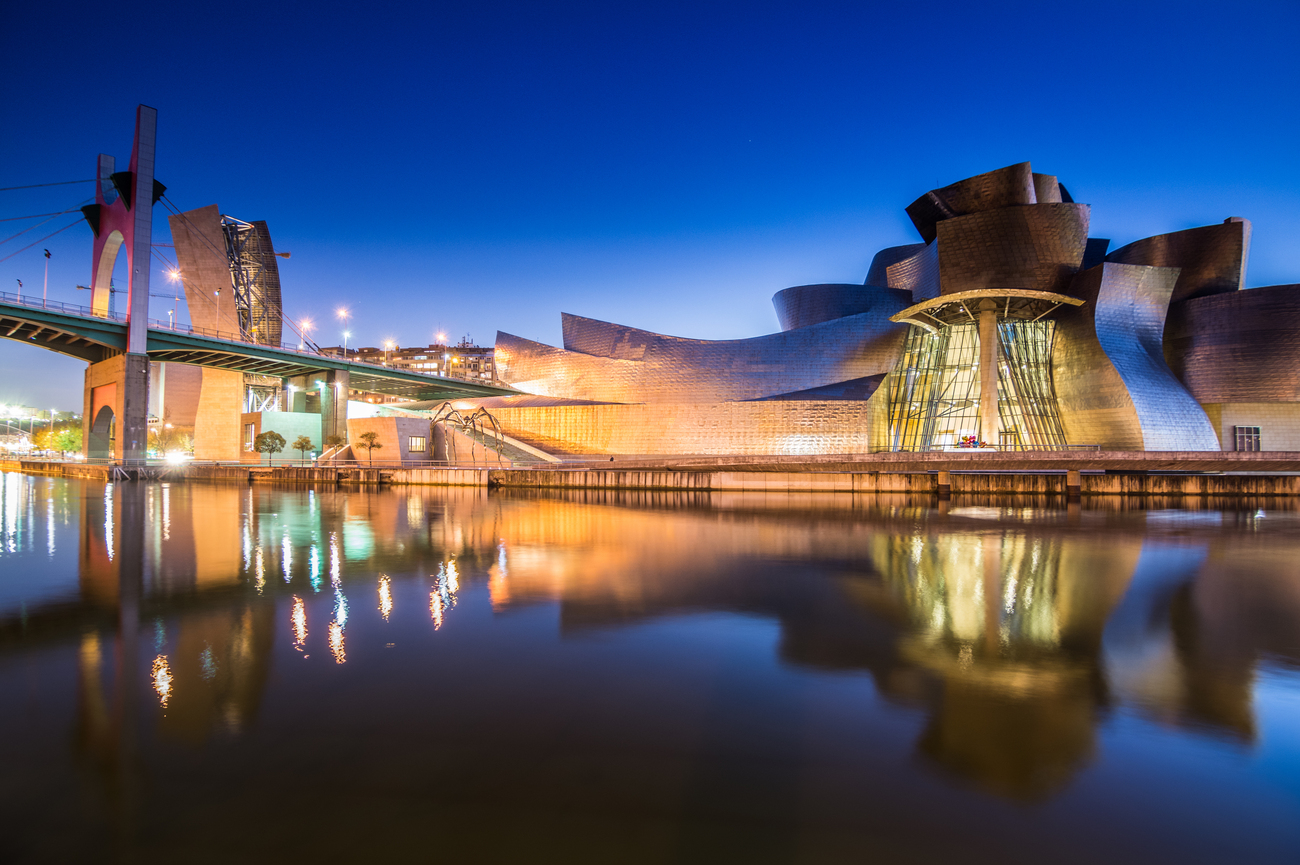
The Guggenheim Bilbao opened in 1997, and the gamble paid off so completely that urban planners around the world began speaking of the “Bilbao effect” and mostly failed to reproduce it. Gehry’s building resembles a ship, a fish or a flower, depending on where you stand and what the weather is doing; its titanium skin takes the river light and hands it back changed.
Outside the entrance sits Jeff Koons’s Puppy, a monumental West Highland white terrier covered entirely in living flowers and replanted as the seasons change. Beside the riverside walk, Louise Bourgeois’s giant bronze spider, Maman, rises over the promenade. Inside, Richard Serra’s The Matter of Time fills the museum’s largest gallery with curved walls of weathering steel that you walk through rather than simply look at.
The building did not just house art. It rearranged a city’s idea of itself.
And the city kept going. The riverfront where the shipyards once stood is now lined with promenades, parks and contemporary buildings, crossed by Santiago Calatrava’s white Zubizuri footbridge. Across the water, the Casco Viejo preserves its original Seven Streets, Santiago Cathedral and the Ribera Market, where fish and seafood arrive from the Bay of Biscay. From the top of the Artxanda funicular, the whole reinvention unfolds below along the bends of the river.
We explore the titanium waterfront, the medieval Seven Streets and the wider story of how Bilbao reinvented itself, because the museum, for all its fame, is only the front door.
Bilbao is also a gateway in a second sense. Narrow-gauge railways run west through the green landscapes of northern Spain, connecting the Basque Country with Cantabria, Asturias and Galicia. For travellers with more time, this is one of Europe’s great slow journeys.
The
Basque Coast: Gaztelugatxe, Urdaibai and Getaria
North of Bilbao, the Basque coast breaks into green headlands, fishing harbours and small coves facing the Bay of Biscay. This remains a working coastline: boats still leave Bermeo in search of tuna and other Atlantic fish, while txakoli vines above Bakio grow on slopes exposed to the sea wind. Between them stands one of the most recognisable landmarks in the Basque Country.
San
Juan de Gaztelugatxe
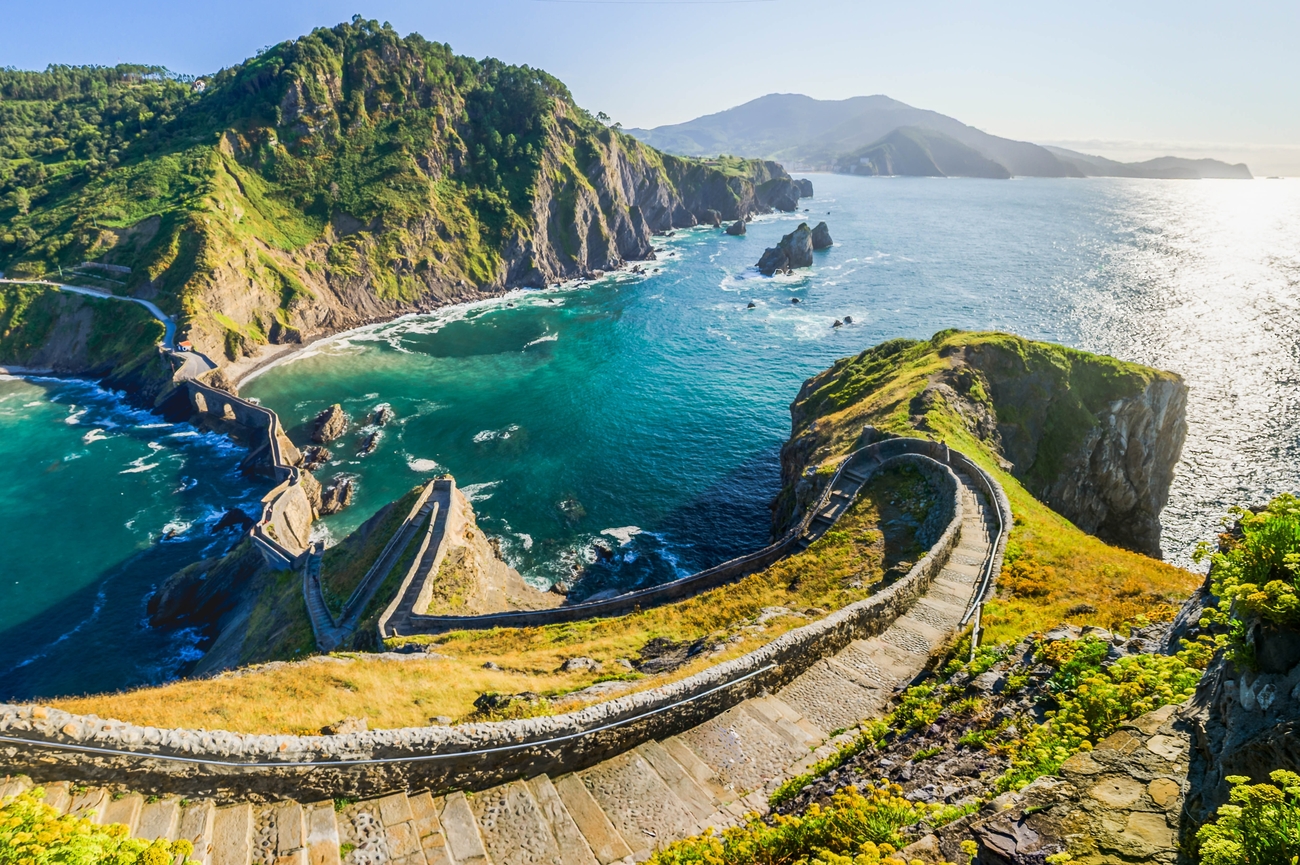
San Juan de Gaztelugatxe is a rocky islet connected to the mainland by a stone bridge and a steep path of 241 steps. At its summit stands a small hermitage dedicated to Saint John the Baptist, surrounded on both sides by the sea.
According to local tradition, visitors ring the hermitage bell three times and make a wish after completing the climb. In more recent years, Gaztelugatxe became internationally known as a filming location for Dragonstone in Game of Thrones, bringing a new wave of visitors to an already celebrated Basque landmark.
Access is controlled on selected busy dates, when visitors must reserve a free timed ticket in advance. On other dates, no reservation is required. Because tickets for popular periods can be fully booked, we arrange the appropriate access in advance as part of our Exploring the Basque Country vacation.
The route, the climb and the practical details are explained in our complete guide to visiting San Juan de Gaztelugatxe.
Urdaibai,
Mundaka and Bermeo
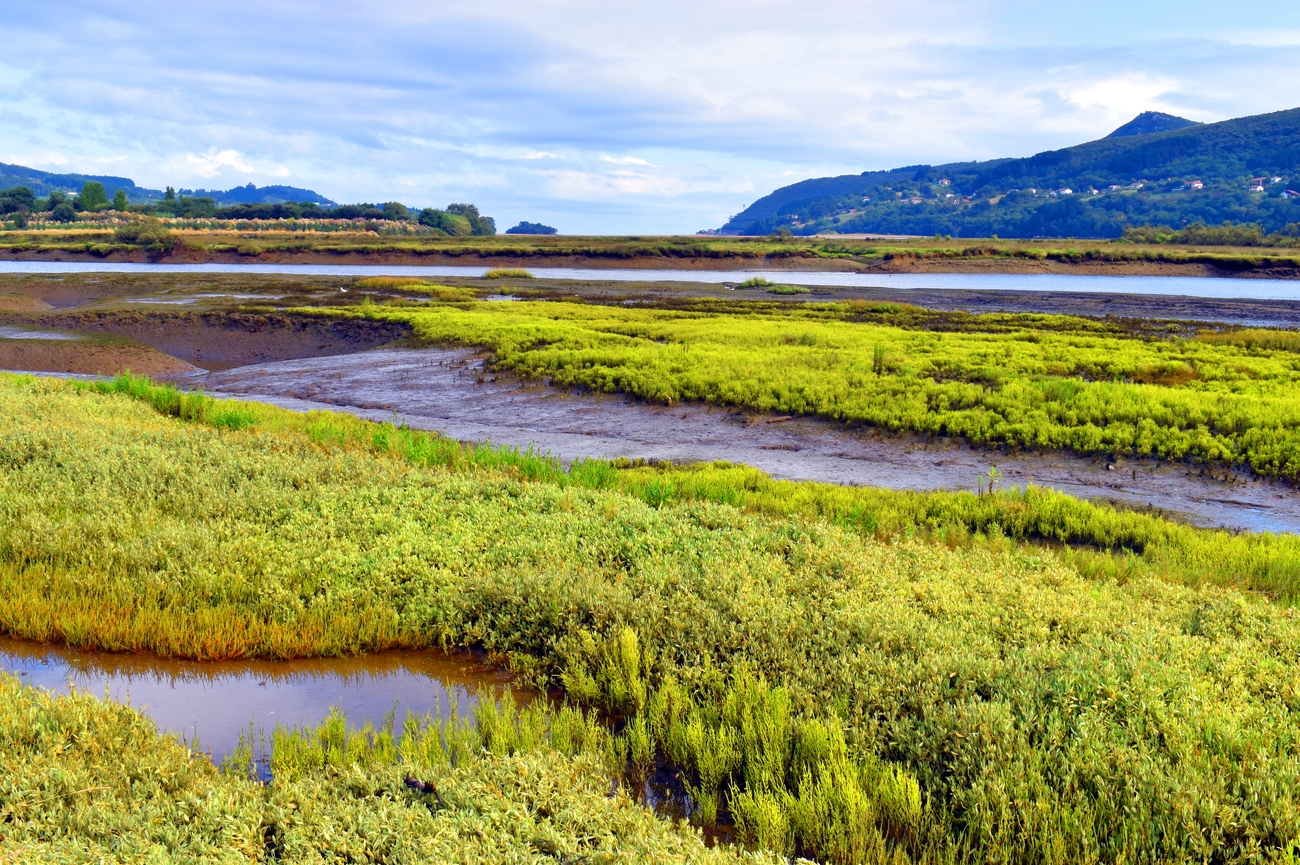
East of Gaztelugatxe, the coastline folds around the Urdaibai estuary, a UNESCO Biosphere Reserve where salt marshes, sandbanks, forests and tidal wetlands create one of the most important natural landscapes on the Basque coast. The tides reshape the estuary throughout the day, while its marshes provide nesting, wintering and stopping grounds for numerous bird species.
At the mouth of the estuary lies Mundaka, a small harbour village known throughout the surfing world for its long left-breaking wave. When conditions are right, surfers follow the wave towards the river mouth while spectators gather along the harbour wall.
Nearby Bermeo remains an active fishing port, with colourful houses stacked around its harbour and a maritime tradition stretching back for centuries. This is a natural place to stop for grilled fish or tuna, served close to the boats and quays that continue to shape the town’s identity.
Inland, Gernika is one of the most important symbolic places in Basque history. Representatives traditionally gathered beneath the Tree of Gernika to affirm Basque rights and liberties. The present tree belongs to a succession grown from the same historic lineage, while the preserved trunk of an earlier tree stands nearby. The town was bombed on 26 April 1937, an attack later immortalised in Picasso’s Guernica.
Getaria
and Zumaia
Farther east, in the province of Gipuzkoa, Getaria occupies a small headland between the sea and the surrounding txakoli vineyards. The fishing town was the birthplace of Juan Sebastián Elcano, who completed the first circumnavigation of the world after Ferdinand Magellan died during the expedition, and fashion designer Cristóbal Balenciaga. Today, the Cristóbal Balenciaga Museum explores the designer’s career in his home town.
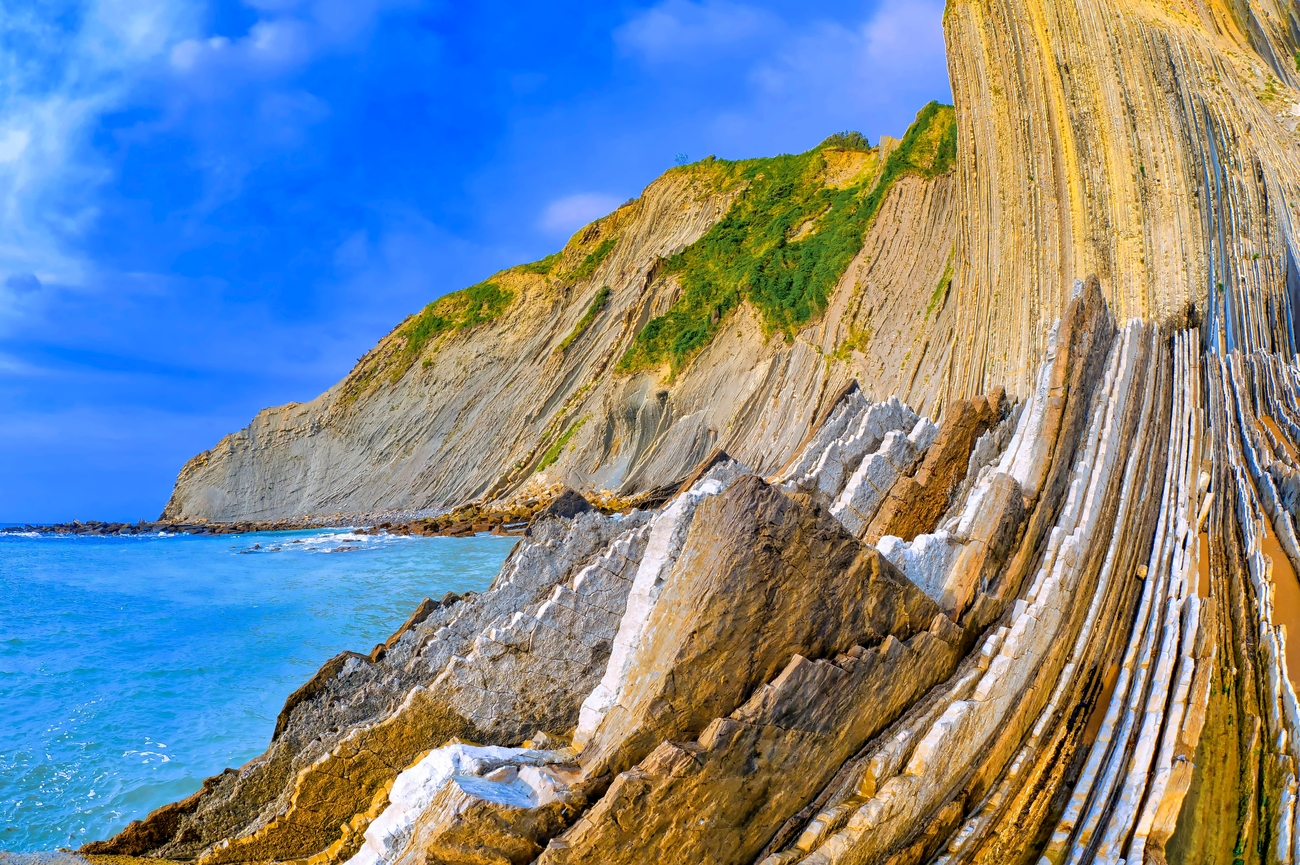
At nearby Zumaia, the coastline changes again. Its flysch cliffs are formed from thin layers of rock deposited over millions of years and later tilted by geological forces. At low tide, the exposed strata stretch across the shore like the pages of an immense stone book.
The Basque coast is often the part of the journey travellers expect least and remember most. Its fishing ports, vineyards, cliffs and estuaries were not created as visitor attractions. They developed in response to the sea, and that working relationship remains visible everywhere.
Rioja Alavesa: The Basque Side of Rioja
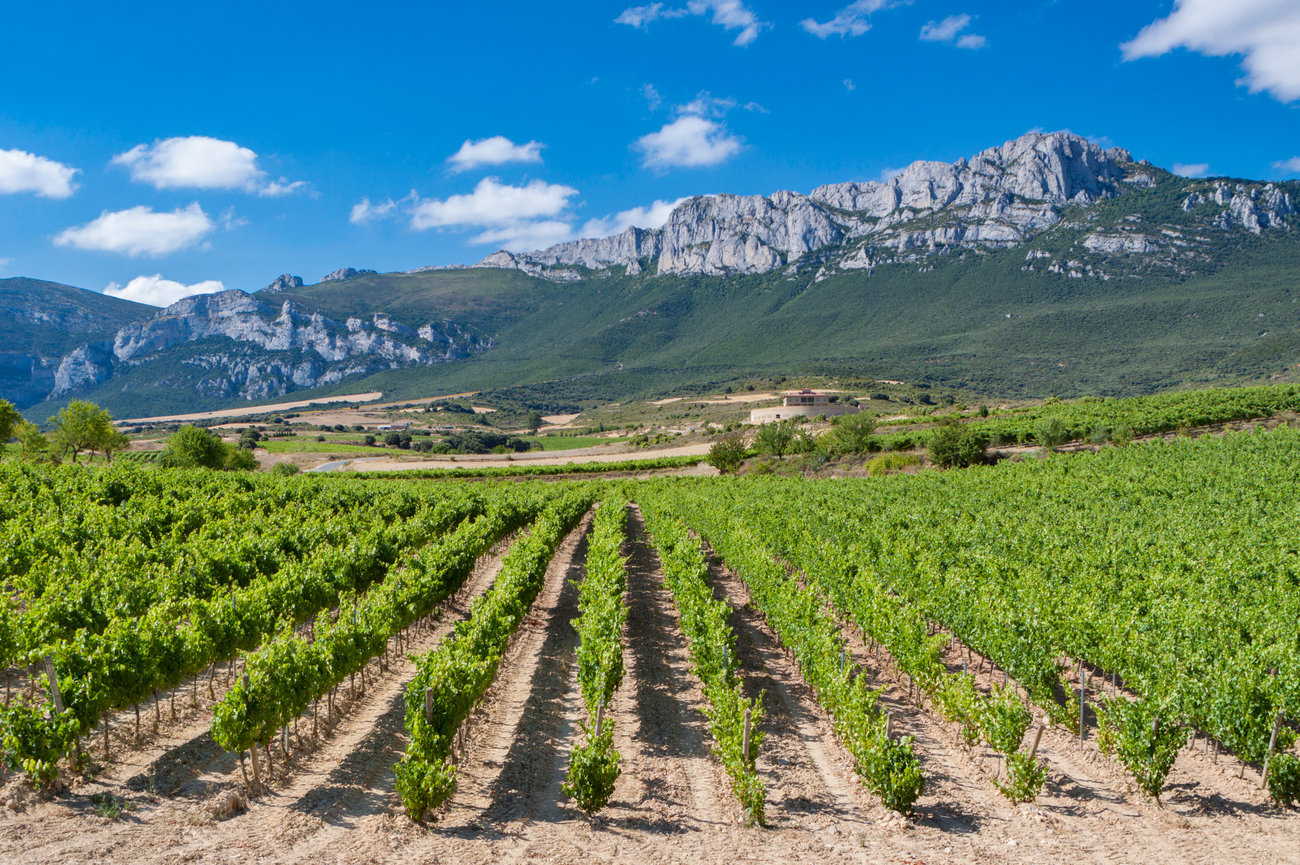
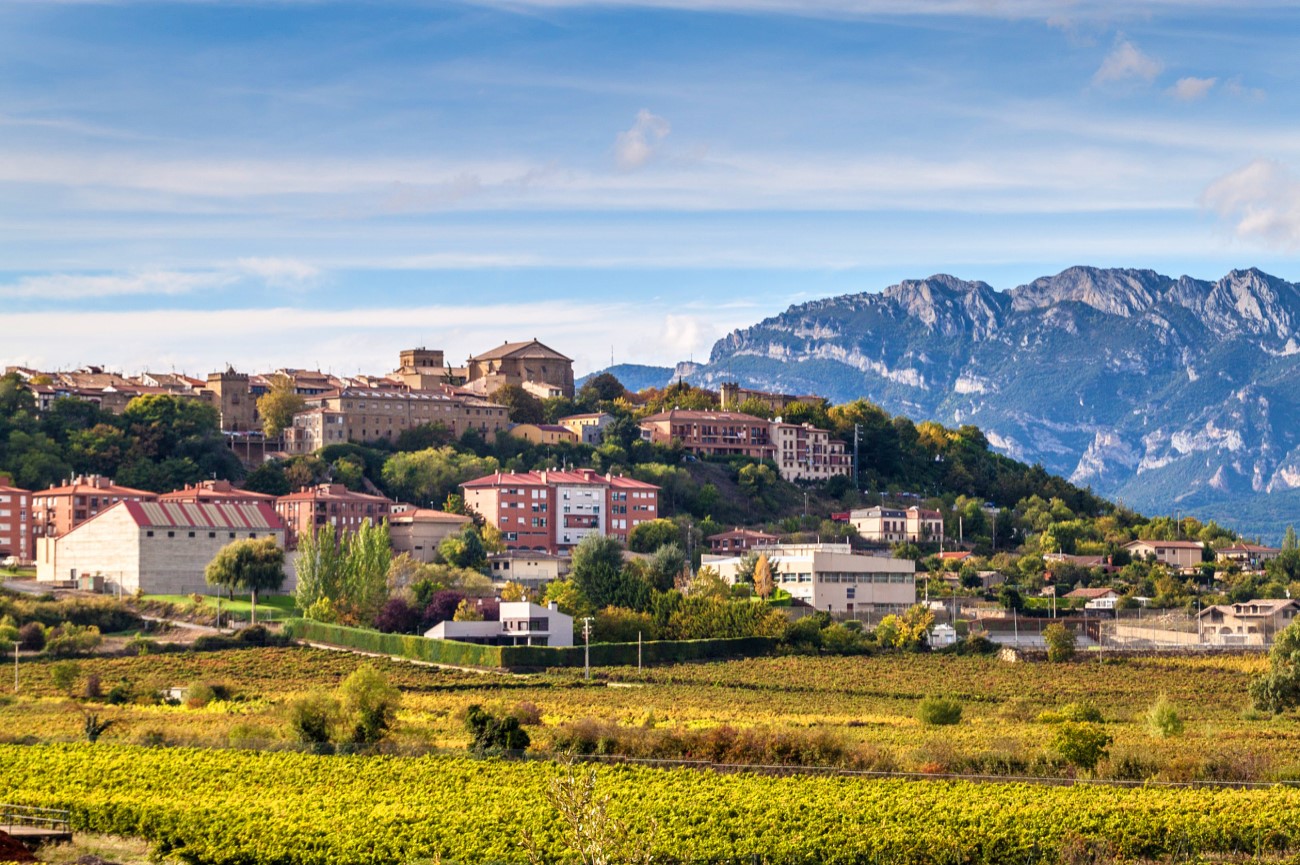
Rioja Alavesa is the Basque part of Rioja, Spain’s best-known wine region. It lies in the province of Álava, south of the Sierra de Cantabria, and forms one of the three official production zones within the Rioja Qualified Designation of Origin.
Cross the mountains south of Bilbao and the landscape changes quickly. The Atlantic rain eases, the light becomes sharper and vineyards begin to cover the slopes beneath the Sierra de Cantabria. The mountains protect Rioja Alavesa from much of the wet weather arriving from the Bay of Biscay, creating a drier climate suited to Tempranillo and other traditional Rioja grapes.
Many vineyards lie at relatively high elevations, sometimes reaching beyond 700 metres, and grow in the clay-limestone soils characteristic of the area. Together, the altitude, climate and soils can produce Tempranillo wines with freshness, structure and bright fruit alongside the depth expected of Rioja.
Laguardia and Its Underground Wine Cellars
At the heart of Rioja Alavesa is Laguardia, a walled medieval town standing above the surrounding vineyards. Cars are largely excluded from its historic centre, but its most remarkable feature lies beneath the streets.
More than 200 underground cellars, known locally as calados, extend beneath the houses and squares. Many were excavated from the 16th century onwards and once allowed families to make and store wine at a naturally stable temperature. Some remain working cellars today.
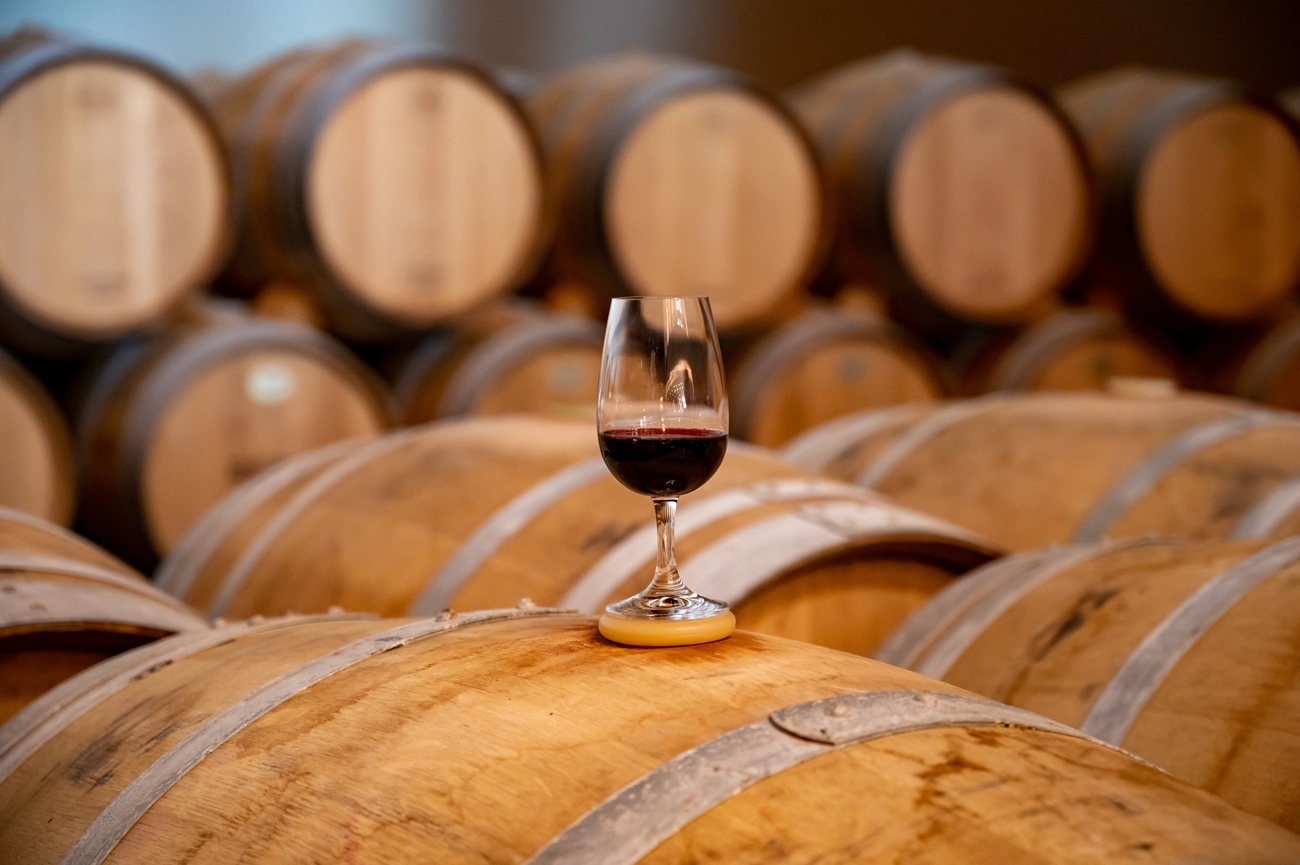
Descending into one, the temperature drops with every step. Barrels sit inside passageways cut directly into the earth, beneath a town whose streets conceal an almost continuous underground network.
Above ground, the Church of Santa María de los Reyes contains an exceptionally well-preserved Gothic portico. Protected for centuries by a later chapel, its carved figures retain much of their historic colour.
Traditional and Modern Rioja Alavesa Wines
Two styles help explain the wines of Rioja Alavesa. The first is the young wine traditionally made using carbonic maceration, in which whole grape clusters ferment in a sealed environment before being pressed. The technique produces vividly coloured wines with fresh fruit and floral aromas, often intended to be enjoyed young.
These wines offer a contrast to the Crianza, Reserva and Gran Reserva styles for which Rioja is internationally known. The region’s longer-aged wines spend time developing in oak and bottle, gaining more complex savoury, spice and mature-fruit characteristics.
Rioja Alavesa has also developed a particularly strong sense of its own identity. Some producers emphasise individual villages, vineyards and plots rather than relying only on the wider Rioja name, reflecting a growing interest in the precise origin of each wine.
Tasting both the youthful and aged styles reveals how varied Rioja Alavesa can be, particularly when the wines are served in the cellars and villages where they were made.
The Architecture of Rioja Alavesa
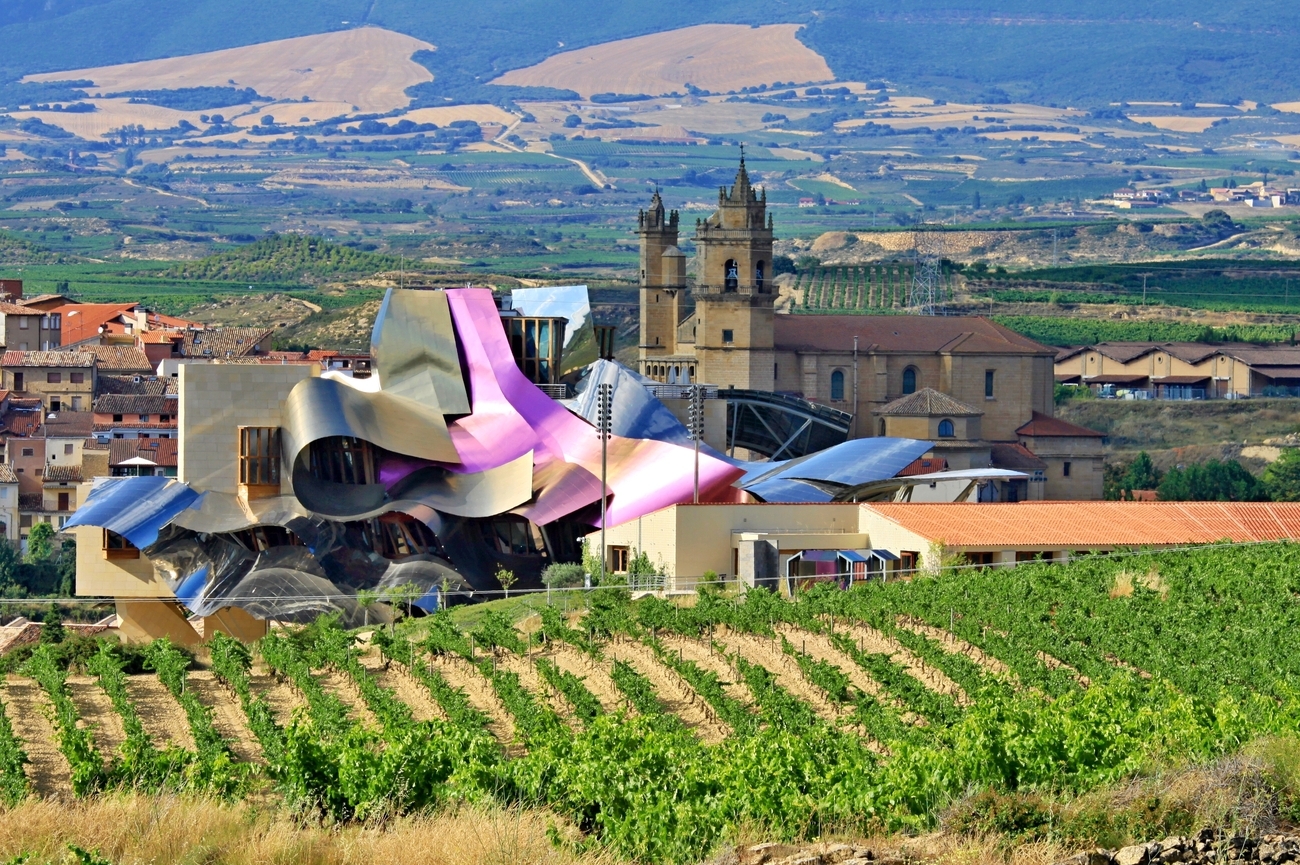
Around Laguardia, historic cellars and contemporary architecture stand side by side. At Elciego, Marqués de Riscal, founded in 1858, lies beneath Frank Gehry’s Hotel Marqués de Riscal, whose sweeping ribbons of titanium echo the colours of wine and bottle foil. The estate was named The World’s Best Vineyard in 2024, an award recognising the overall wine-tourism experience.
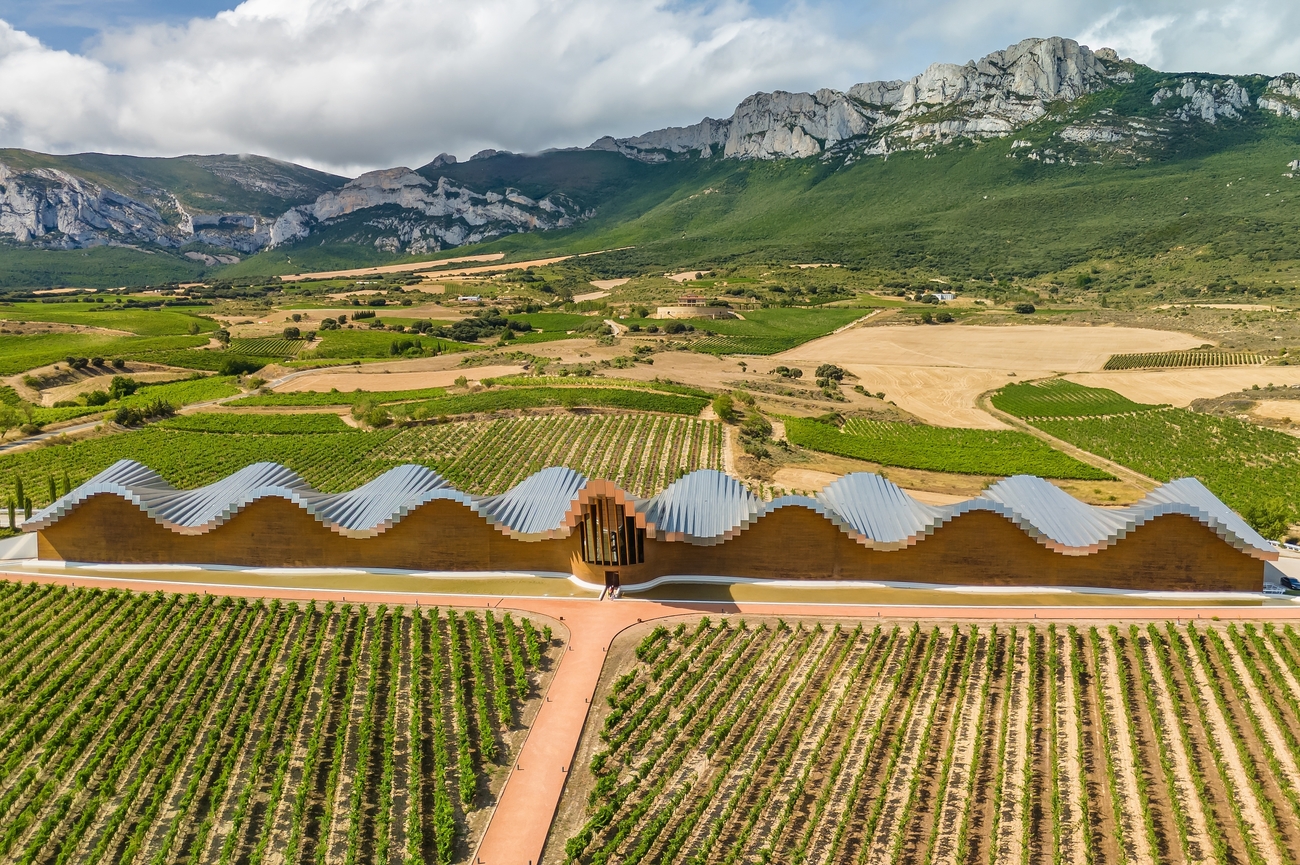
On the edge of Laguardia, Bodegas Ysios is marked by Santiago Calatrava’s undulating aluminium roof, designed to reflect the outline of the Sierra de Cantabria behind it.
At Samaniego, Bodegas Baigorri appears at ground level as a minimalist glass box. Beneath it, the winery descends through seven underground levels, using gravity to move grapes and wine through the production process rather than relying on mechanical pumping.
Scattered among the vineyards are guardaviñas, small dry-stone shelters once used by vineyard workers, while prehistoric dolmens provide evidence that these slopes were occupied and cultivated long before the modern wine industry took shape.
Visiting Rioja Alavesa
The best-known estates offer polished tours and tastings, but Rioja Alavesa is equally rewarding in its smaller family-run wineries and underground cellars. Visits often require advance appointments, and a private driver allows travellers to taste without having to navigate the mountain roads afterwards.
Our Exploring the Basque Country vacation combines carefully selected winery visits with time in Laguardia and the surrounding vineyards. Depending on availability, the day may also include a cellar lunch or traditional dishes such as lamb chops grilled over vine cuttings.
The full story, from Laguardia’s underground cellars to the region’s landmark contemporary wineries, continues in our guide to the wineries and wine traditions of Rioja Alavesa.
The
Basque Table
Food is one of the clearest expressions of Basque identity. It appears in the private gastronomic societies known as txokos, in the pintxos arranged across ordinary bar counters and in the traditional dishes that connect the coast, mountains and farming villages of the region.
Txokos and Pintxos
Culture
Txokos are private gastronomic societies where members gather with friends and family to cook, eat and share wine. Each society has its own kitchen and dining space, and access normally requires membership or an invitation. They are not restaurants, but social institutions built around cooking, companionship and the value placed on eating well.
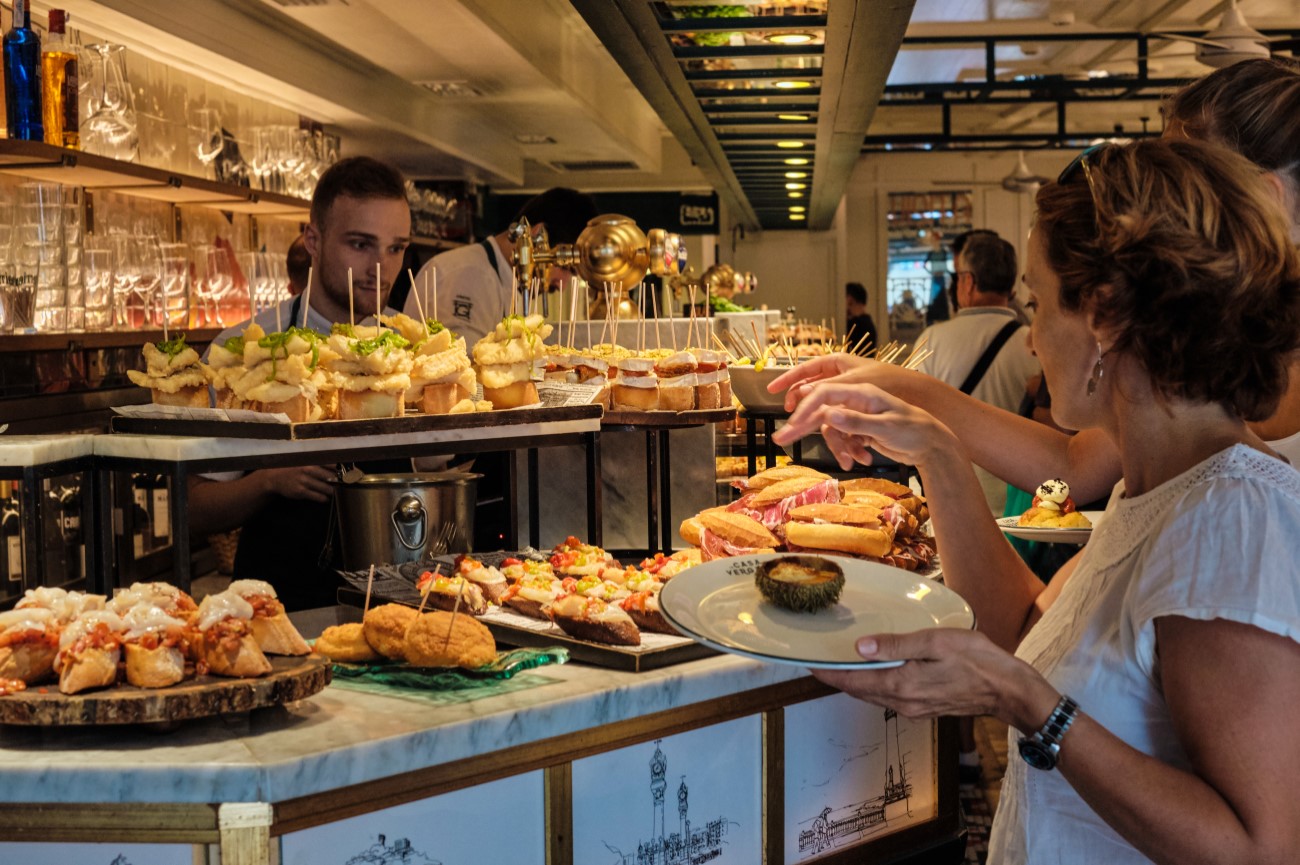
The same culture is visible more publicly in the pintxos bars. Their counters are laid out each evening with small, carefully prepared bites: anchovies with peppers and olives, croquettes, tortilla, seafood and more elaborate combinations served on bread or small plates.
Moving from one bar to another for a drink and a pintxo is known as a poteo or txikiteo. The purpose is not to remain in one place for an entire meal, but to move through the streets, meet people and experience several bars over the course of an evening. It is as much a social ritual as a way of eating.
Traditional Basque Dishes
Basque cooking is often direct, relying on exceptional ingredients and careful technique rather than elaborate presentation.
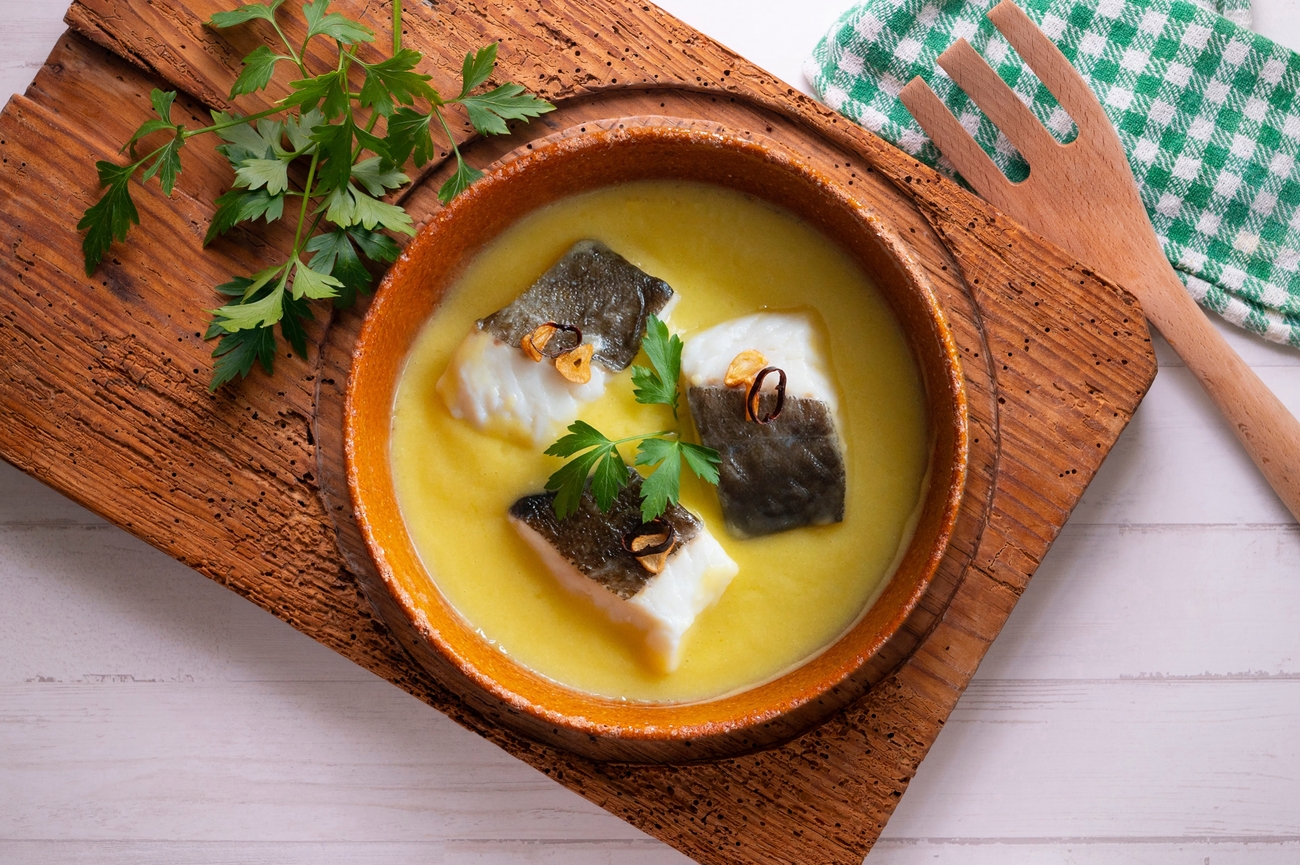
Txuleta is a thick, bone-in cut of mature beef, grilled over hot coals and usually served rare for the table to share. Bacalao al pil-pil combines salt cod, olive oil, garlic and the natural gelatine released by the fish to create a smooth, emulsified sauce.
Marmitako is a tuna and potato stew traditionally associated with fishermen working in the Bay of Biscay. Idiazabal is a firm sheep’s-milk cheese produced in the Basque Country and neighbouring Navarre; some versions are smoked, while others are not.
These dishes are rooted in different parts of the region, from the fishing ports of the coast to the cattle farms and sheep-grazing landscapes of the interior.
Txakoli, the Wine of the Basque Coast
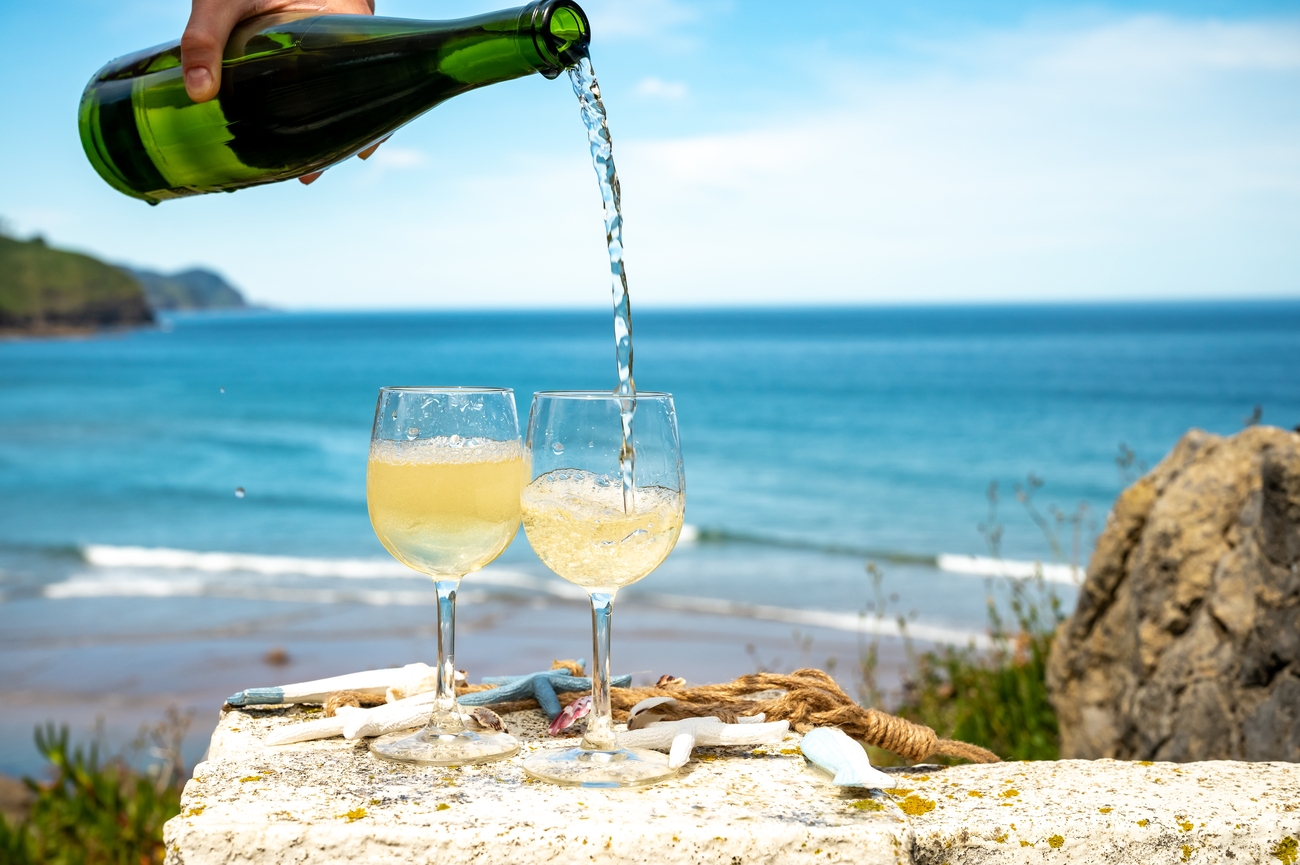
Txakoli is the characteristic wine of the Basque Country, produced under three regional designations of origin in Getaria, Bizkaia and Álava. It is most commonly made from the Hondarrabi Zuri grape and is typically fresh, dry and marked by lively acidity.
Traditionally, txakoli is poured from a height into the glass. The pour aerates the wine, helps release its aromas and can enhance the slight natural spritz found in some styles. Served chilled, it pairs particularly well with seafood, pintxos and the salty flavours of the Basque coast.
After several days in the region, the sight of a bottle raised above the glass becomes as familiar as the pintxos counters themselves.
Food and Basque Identity
Food and language are two of the strongest carriers of Basque identity. Both are sustained through everyday use: in kitchens, markets, bars, fishing ports and the tables where families and friends continue to gather.
Our guide to Basque culture, food and identity explores these traditions in greater depth, from Euskera and rural customs to txakoli, pintxos and the role of gastronomic societies in Basque social life.
A
Culture That Chose Not to Disappear
It would be easy to travel through the Basque Country and treat its culture as part of the scenery. The more rewarding approach is to understand how deliberately that culture has been protected and renewed.
Euskera and the Revival of the Basque Language
Euskera survived not by accident, but through generations of determined use. During the Franco dictatorship, the language was excluded from schools, administration and much of public life. Families continued speaking it at home, while Basque-language schools known as ikastolas helped preserve and teach it, sometimes operating without official recognition.
Following Spain’s return to democracy, Euskera was restored to education and public institutions in the Basque Autonomous Community. Immersion schools, adult-language programmes and Basque-language media have contributed to a significant revival.
Today, Euskera is particularly strong among younger generations. In 2021, nearly three-quarters of people aged between 16 and 24 in the Basque Autonomous Community were able to speak it, although fluency and everyday use vary considerably between different parts of the region.
One of its most remarkable living traditions is bertsolaritza, a form of improvised oral poetry. Performers, known as bertsolaris, compose rhyming verses in Euskera in response to a subject, rhythm or challenge presented to them on stage.
Major competitions can fill large arenas with audiences listening in complete concentration as each verse is created. Imagine thousands of people holding their breath for an improvised poem, and you begin to understand the place language still occupies in Basque public life.
Herri Kirolak and Basque Pelota
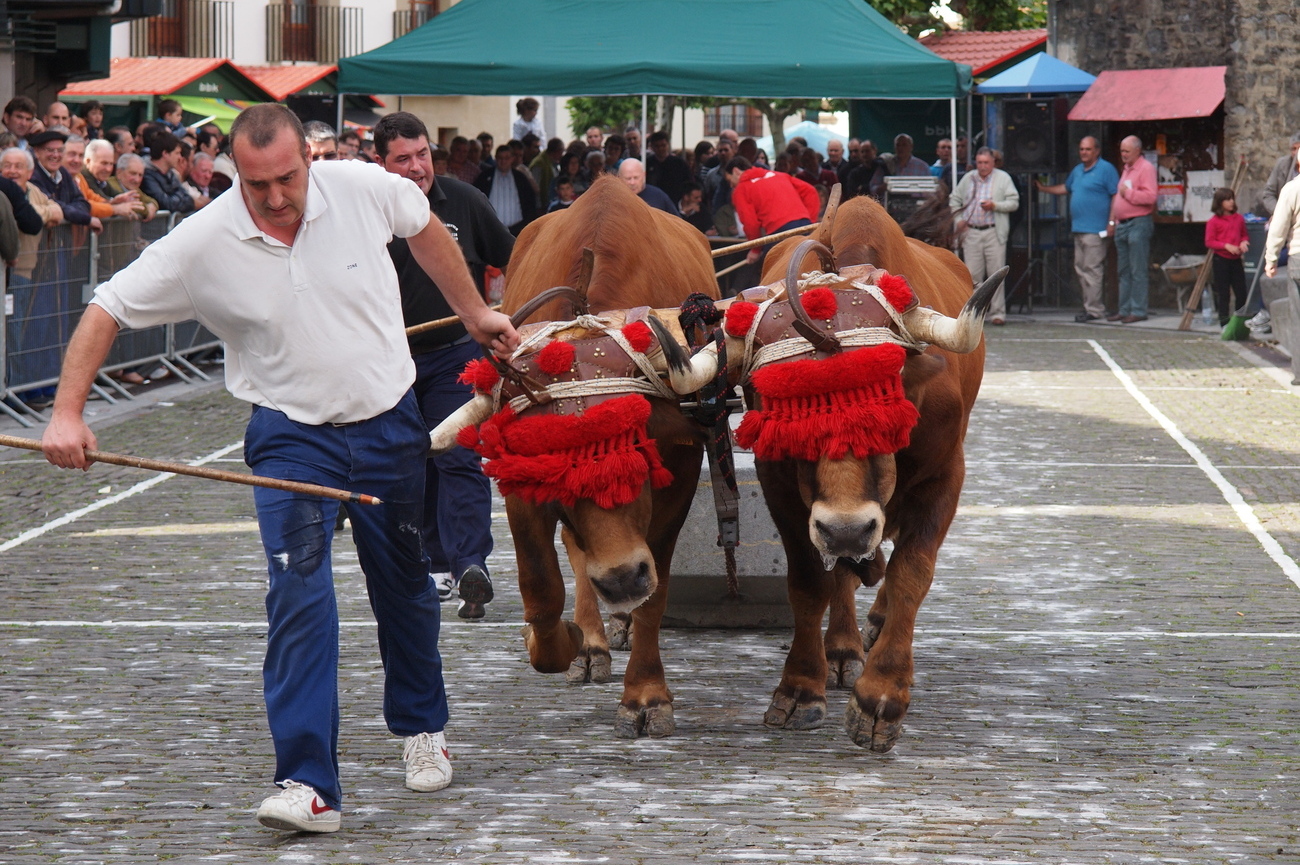
Basque identity is also expressed through traditional sports. The herri kirolak, or rural sports, developed from the physical work once carried out on farms, in forests, at sea and in quarries.
Competitors lift heavy stones, chop logs, cut grass with scythes and compete in tug-of-war and other tests of strength and endurance. Many of these contests remain part of village festivals and agricultural fairs rather than performances created for visitors.
Basque pelota has its own range of forms. Depending on the discipline, the ball may be struck with a bare hand, a wooden implement or a curved wicker basket known as a chistera. Frontons remain a familiar feature of towns and villages across the Basque Country, sometimes standing beside the church or central square.
These traditions continue because local communities still practise, watch and care about them. They take place whether visitors are present or not, which is precisely why encountering them can be so memorable.
Aste Nagusia and Basque Festivals
The festival calendar offers another way into Basque culture. In late August, Bilbao celebrates Aste Nagusia, or Great Week, with nine days of concerts, fireworks, dancing, pelota, herri kirolak and events across the city.
The festival is represented by Marijaia, a large figure with raised arms who appears at the opening celebrations and is ceremonially burned at the end. She returns in a new form the following year, embodying the temporary, exuberant character of the festival itself.
Beyond Bilbao, towns and villages hold their own patron saint festivals, pelota tournaments, rural sports competitions and bertsolari performances. Arriving during one of these celebrations can alter the rhythm of a journey, drawing attention away from scheduled sightseeing and towards the life of a town square.
Good itineraries leave room for discoveries like these.
Experiencing Basque Culture
A traveller can visit the region’s museums and monuments and still leave without fully encountering its living culture. Understanding it requires time, local knowledge and opportunities to experience the places where traditions continue naturally: markets, village festivals, pelota courts, family wineries and the bars where Euskera remains part of everyday conversation.
Our Exploring the Basque Country vacation is designed to create those connections wherever possible, while respecting the fact that private societies, local celebrations and family cellars are living institutions rather than attractions staged on demand.
The result is not simply a journey through Basque landmarks, but a deeper introduction to the language, traditions and communities that continue to shape the region.
Where
to Stay in the Basque Country
The Basque Country is compact enough that the choice of hotel can shape the journey as much as the route itself. Rather than treating each destination as a day trip, staying in the right place allows the character of Bilbao, the coast and Rioja Alavesa to become part of the experience.
Hotels in Bilbao
In Bilbao, several of the city’s leading hotels stand close to the Guggenheim Museum and the regenerated riverfront. From here, Gehry’s titanium building, the riverside promenades and the city centre are within easy reach.
A room overlooking the museum offers one of Bilbao’s most memorable views: the titanium changing with the morning light and reflecting across the river after dark. Other central hotels place travellers closer to the Casco Viejo, pintxos bars and historic streets, depending on the balance preferred between contemporary and traditional Bilbao.
Staying on the Basque Coast
The smaller towns of the Basque coast offer a different atmosphere. Family-run hotels, converted historic houses and intimate coastal properties place travellers close to fishing harbours, beaches and villages where daily life still follows the weather and the sea.
Staying overnight on the coast creates time to experience these places before day visitors arrive or after they leave. It also allows the journey to continue at a slower pace, with evenings in the harbour towns rather than a return to Bilbao after every excursion.
Hotels in Rioja Alavesa
Accommodation becomes particularly distinctive in Rioja Alavesa. At the Hotel Marqués de Riscal, guests can stay within Frank Gehry’s ribbons of titanium, surrounded by vineyards near the village of Elciego.
Laguardia offers a different experience, with boutique hotels inside or close to the medieval town. Some occupy historic buildings above the underground cellars that run beneath its streets, placing travellers within walking distance of the town’s restaurants, churches and wine bars.
Staying in Rioja Alavesa rather than visiting only for the day changes the rhythm of the journey. The wine region stops feeling like an excursion and becomes, for a night or two, the landscape in which the traveller wakes, eats and lives.
A Journey with Less Time in Transit
The compact geography of the Basque Country is one of its quiet advantages. Bilbao, the coast and Rioja Alavesa can be combined without the long travel days found in many multi-region itineraries.
Most transfers are relatively short, leaving more time for museum visits, coastal walks, winery appointments and meals. The journey is spent at the table, on the causeway, beneath the Sierra de Cantabria and inside the cellars, rather than watching the landscape pass from a motorway.
The driving is limited, but the changes in scenery are constant. Few regions in Europe offer such a range of cities, coastlines, vineyards and cultural experiences within such a compact area.
How
the Journey Fits Together
The shape of the journey follows the shape of the land. Bilbao comes first because it is the gateway to the region: the Guggenheim and the Seven Streets, the market and the river, and two nights of titanium, pintxos and Basque city life.
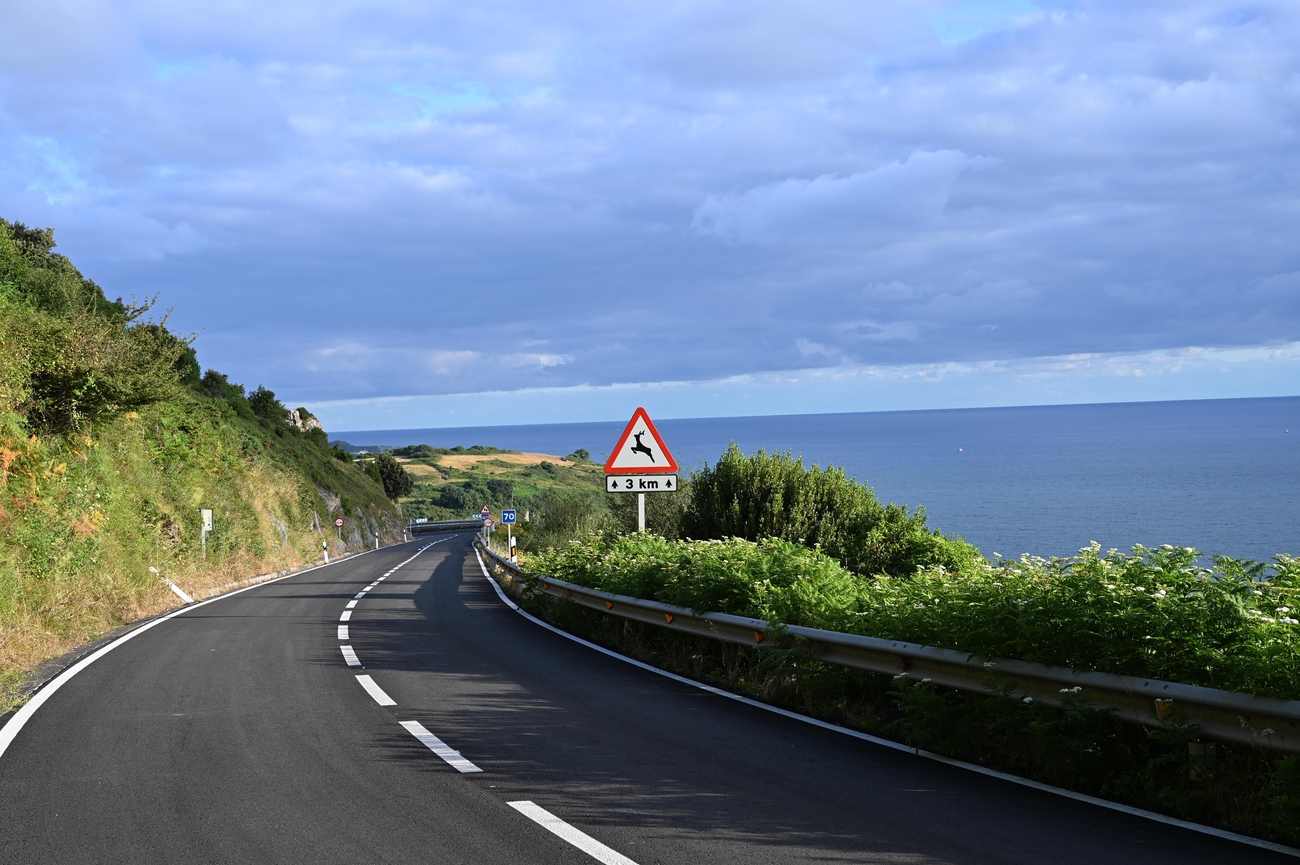
From Bilbao, the route follows the coast to San Juan de Gaztelugatxe, with access arranged in advance when reservations are required. The journey continues through fishing harbours, coastal villages and the landscapes of Urdaibai before reaching the flysch cliffs and wine-growing hills around Getaria.
The road then turns inland and climbs towards the Sierra de Cantabria. As the mountains are crossed, the climate and landscape change, and the second half of the journey belongs to Rioja Alavesa: Laguardia and its underground cellars, architect-designed wineries, long lunches and vineyard roads beneath the sierra.
Food runs through every part of the route. In the Basque Country, eating is not simply a pause between visits. Pintxos evenings, seafood lunches, winery tastings and traditional dishes are part of how the region is understood. The table is not separate from the itinerary. It is the itinerary.
Around one week allows this journey to unfold at the right pace. Our Exploring the Basque Country vacation can be adapted, with more time devoted to the coast, Bilbao or Rioja Alavesa, and it can also be combined with San Sebastián or a longer journey west across northern Spain.
What the trip should never feel is rushed. The pleasure lies in allowing each landscape to replace the last: city, coast, mountains and vineyards, connected by relatively short drives but distinct in atmosphere. For one unhurried week, the Basque Country becomes not a collection of stops, but a journey that builds naturally from one place to the next.
The
Doors Are Already Open
Here is the strange arithmetic of the Basque Country: a compact region containing a museum that helped remake a city, a wine country with centuries-old cellars beneath a medieval town, an Atlantic coastline made internationally famous by a television dragon, and a language unrelated to any other spoken today.
Many travellers experience only one part of it before flying home.
The most rewarding journeys connect all four: Bilbao, the coast, Rioja Alavesa and the living Basque culture that gives each place its meaning. Experienced in the right order and at an unhurried pace, they become more than a collection of landmarks.
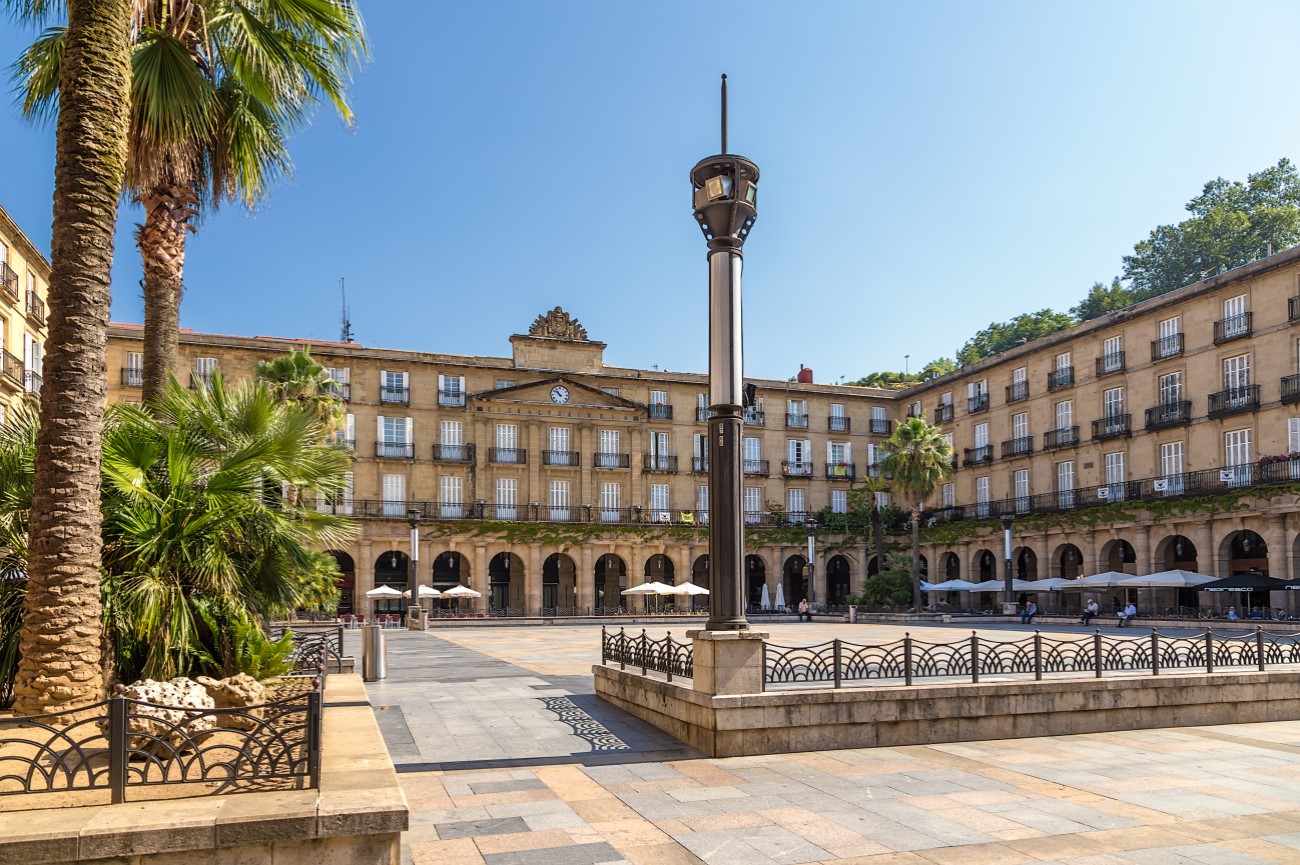
This evening, the pintxos counters beneath the arcades of Plaza Nueva will be laid out again. The bell at San Juan de Gaztelugatxe will be waiting at the top of its 241 steps. Beneath Laguardia, wine will continue to mature in cellars carved under the medieval streets.
Our Exploring the Basque Country vacation brings these experiences together in one carefully planned journey, with private transport, guided visits, winery appointments and selected dining arrangements organised before arrival.
Come to drink Rioja where it is made, hear Euskera spoken in the towns where it remains part of everyday life, explore the coast above the Bay of Biscay and discover how Bilbao transformed itself without losing its Basque identity.
The doors are already open. The journey is ready.


Let us know what you love, where you want to go, and we’ll design a one-of-a-kind adventure you’ll never forget.
Get in touch
Miriam
Travel Specialist

Romina
Travel Specialist

Laura
Travel Specialist
Frequently Asked Questions
- What is the best time of year to visit the Basque Country?
The Basque Country can be visited throughout the year, but spring and early autumn are particularly appealing for comfortable temperatures, coastal sightseeing and winery visits. Summer brings warmer weather and major festivals, while autumn is an excellent time to experience the vineyards of Rioja Alavesa.
- How many days do you need for a Basque Country wine and culture tour?
Around one week allows enough time to explore Bilbao, the Basque coast and Rioja Alavesa at a relaxed pace. Additional days can be added for San Sebastian, further coastal villages or a longer journey through northern Spain.
- What is the best way to travel between Bilbao, the Basque coast and Rioja Alavesa?
Private transport is one of the most convenient ways to combine Bilbao, the Basque coast and Rioja Alavesa. The distances are relatively short, and having a private driver allows greater flexibility for coastal stops, winery appointments and restaurant reservations.
- How far is Rioja Alavesa from Bilbao?
Rioja Alavesa can generally be reached from Bilbao in around 90 minutes by road, depending on the destination and traffic. The journey crosses the Cantabrian Mountains before descending into the vineyards surrounding towns such as Laguardia and Elciego.
- Do Rioja Alavesa wineries need to be booked in advance?
Yes. Many wineries in Rioja Alavesa operate guided visits and tastings by appointment, particularly smaller family-run estates and premium wineries. Booking in advance is recommended to secure preferred wineries, tasting times and dining experiences.
- Do I need to speak Spanish or Basque when visiting the Basque Country?
No. Spanish is widely spoken throughout the region, while Euskera is also commonly heard and used on signs, particularly in areas where the Basque language remains strong. English is spoken in many hotels, restaurants, museums and wineries accustomed to international visitors.
- What should I pack for a trip to Bilbao, the Basque coast and Rioja Alavesa?
Pack comfortable walking shoes, light layers and a waterproof jacket, as weather can change quickly along the Atlantic coast. Smart-casual clothing is useful for restaurants and winery visits, while sun protection is recommended for warmer days in Rioja Alavesa.
- How can Revigorate arrange a tailor-made Basque Country wine and culture journey?
Revigorate can create a tailor-made Basque Country journey combining Bilbao, the Atlantic coast and Rioja Alavesa around your interests and preferred pace. Private transport, guided visits, winery appointments, selected dining experiences and accommodation can all be arranged as part of a personalised itinerary.
Our offices:



Revigorate, Iberian Escapes and Algarve Lifestyle are the registered brand names of APCS Lda . We are a fully authorised travel agency licensed by Turismo de Portugal RNAVT/6867.
In the event of a dispute, the consumer may refer to: RAL - Centros de Arbitragem
Avª. 5 de Outubro, nº. 55, R/C Dtº. 8000-075 Faro, Portugal | Tel: +351 289 823 135 *
* national landline call
E-mail: info@consumoalgarve.pt| www.consumidoronline.pt | Mon to Fri: 9:00 - 13:00 / 14:00 - 17:00