Things to Do in Bregenz: A 3-Day Itinerary
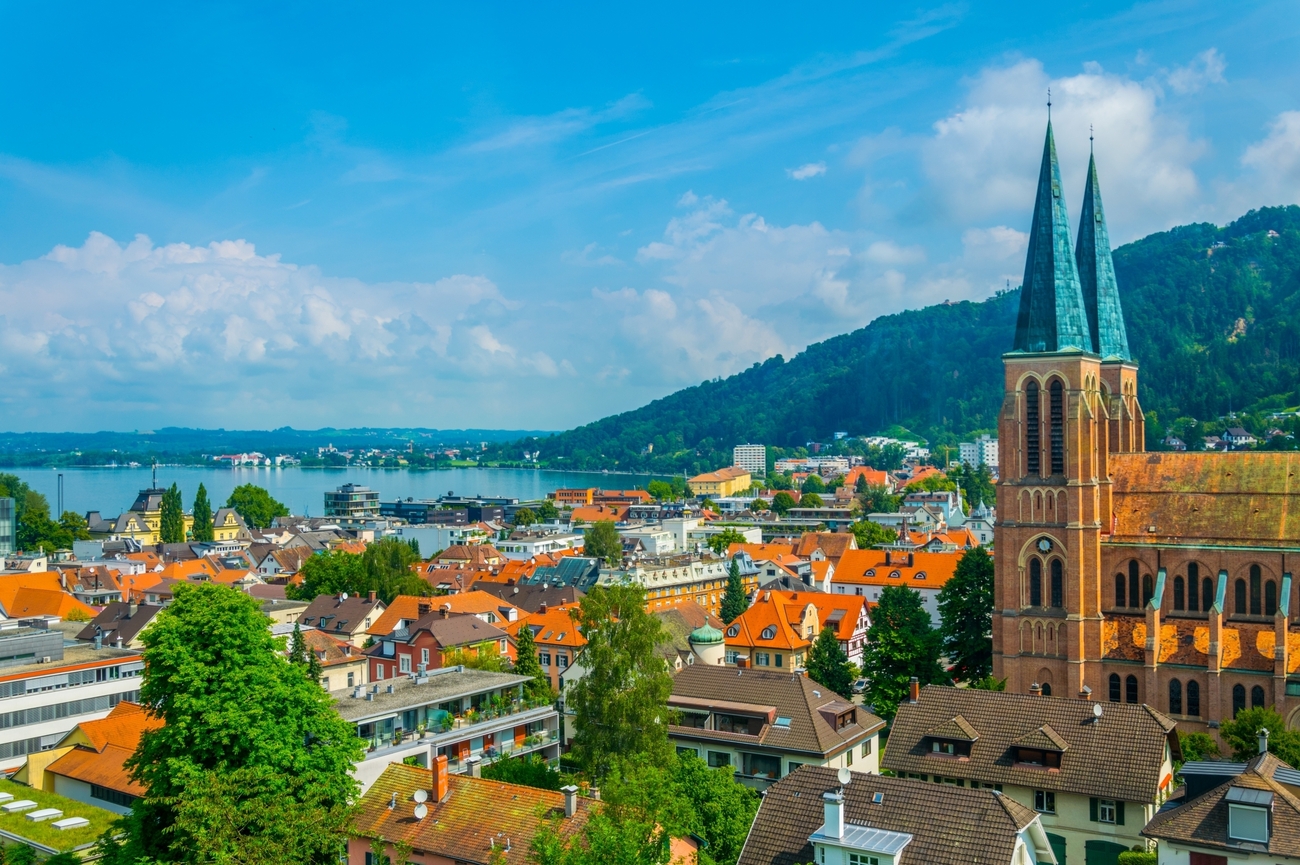
Bregenz is one of the easiest cities on Lake Constance to explore because its main sights are naturally connected. The lakefront lies directly beside the centre, Pfänder rises behind the city, and the Upper Town, museums, harbour and festival district are all within easy reach of one another.
Along the waterfront, you will find the harbour, promenade and Seebühne, home to the Bregenz Festival’s famous floating stage. A short walk inland reveals a very different side of the city, with the medieval Upper Town, Martinsturm, historic gateways and quieter streets.
Bregenz is less about grand monuments and more about the combination of lake scenery, contemporary culture, historic architecture and Alpine views. Three days gives you enough time to explore the city without rushing, including Pfänder, the museums, the old town and the Lake Constance waterfront, while still leaving room for a nearby excursion.
Day 1

Morning: Leutbühel
Leutbühel is a practical and polished starting point for the first morning in Bregenz. It sits in the city center, close to shops, pedestrian streets, offices, cafes and the route toward the Upper Town.
The area itself is not a dramatic landmark in the way a castle or cathedral is. Its value is in how it introduces Bregenz. Leutbühel and the surrounding streets form one of the key parts of the city center, with a pedestrian-friendly layout that connects commercial Bregenz with its older streets. The space has been part of the city’s ongoing public-area improvement, focused on making the center more comfortable for walking, pausing and moving between shops, squares and nearby historic lanes.
Seekapelle zu unserer lieben Frau
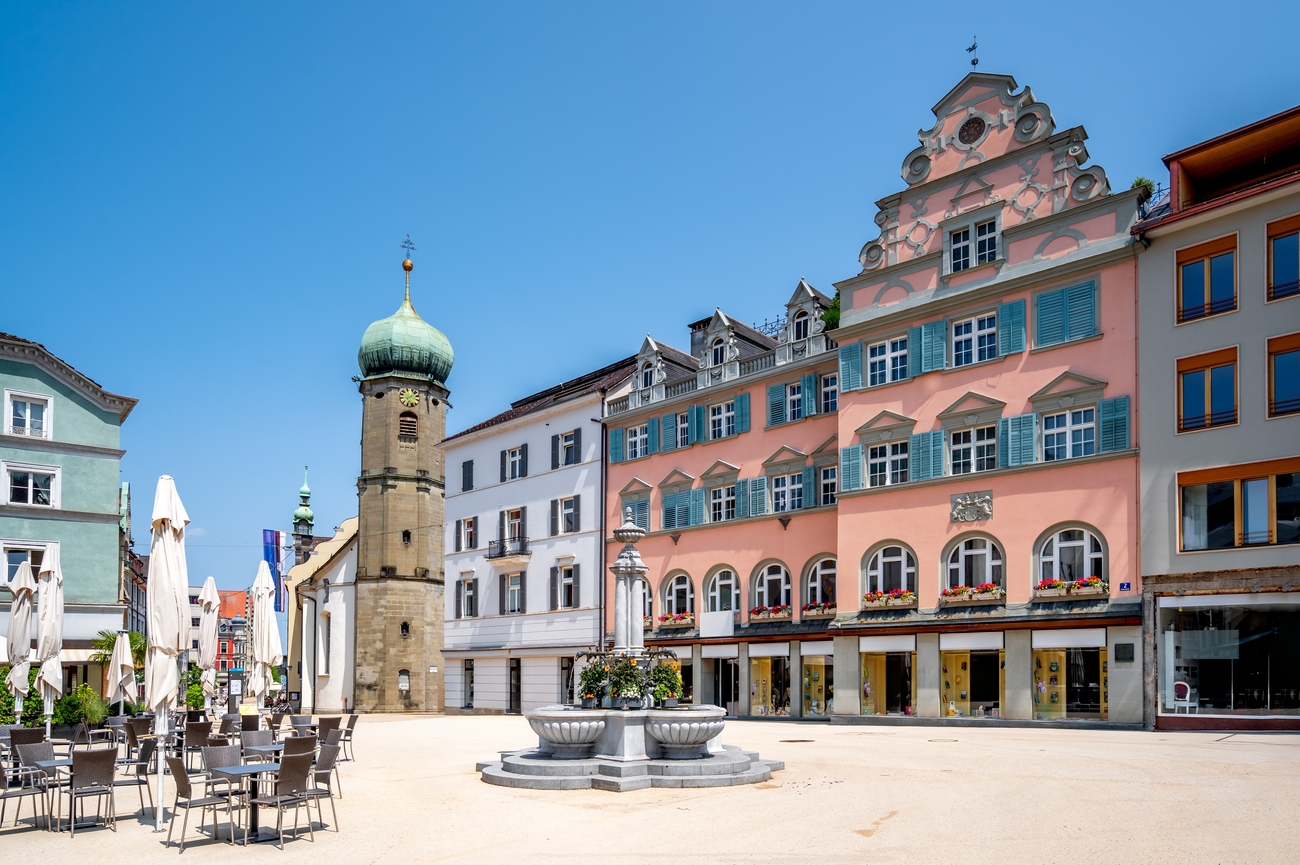
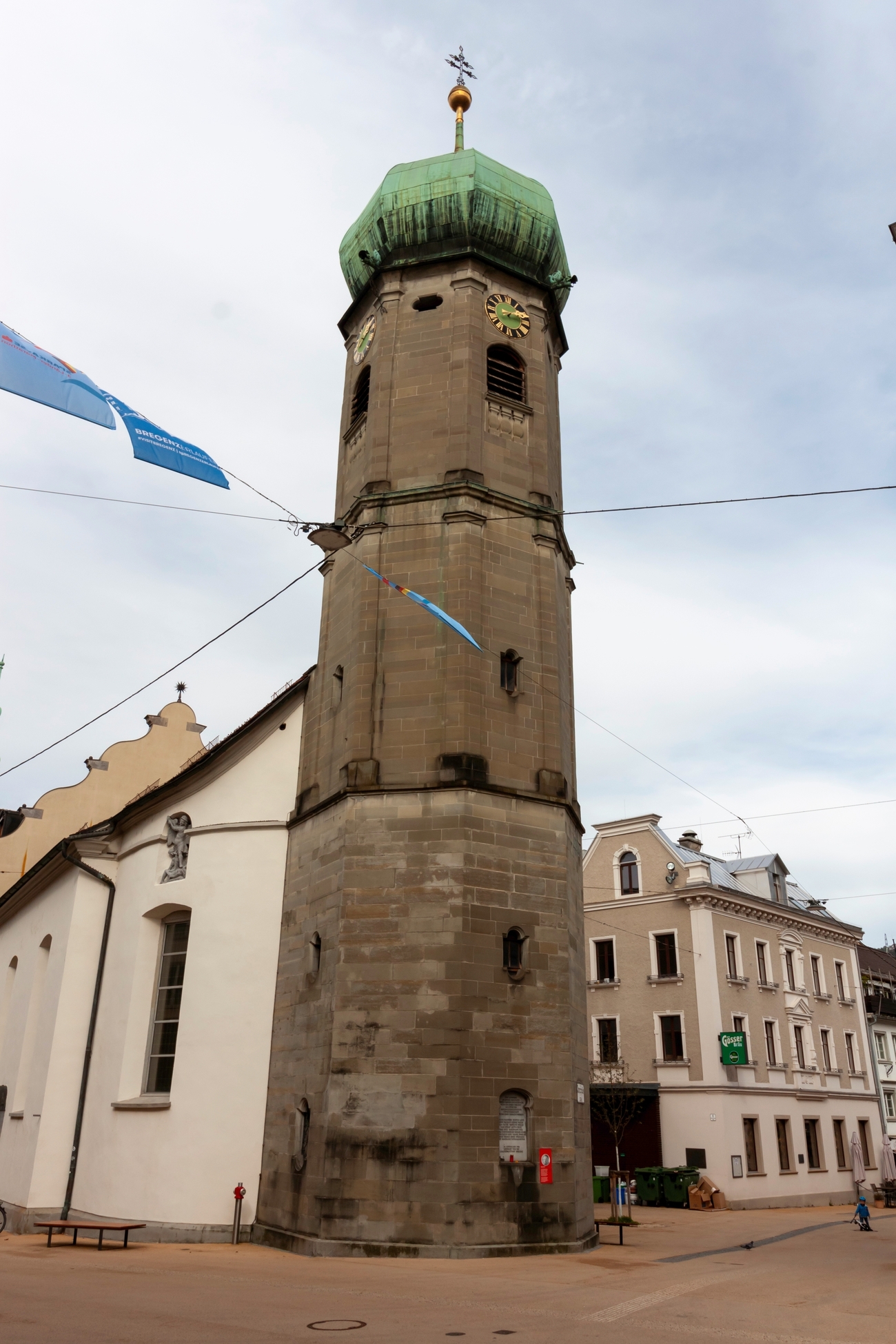
From Leutbühel, Seekapelle zu Unserer Lieben Frau is basically a quick city-center move rather than a full transfer. Walk toward Rathausstraße and you are there in about 3 minutes.
Seekapelle, also known as the Lake Chapel, is one of Bregenz’s smaller but more meaningful religious landmarks. It sits beside the town hall area, so it feels integrated into the city rather than isolated like a separate monument. The chapel was originally built in 1445 to commemorate Bregenz’s victory over Appenzell in 1408, then later rebuilt in Baroque style in 1698. It is dedicated to St. George and the Mother of God.
The exterior is simple with a compact chapel form and a tower that gives it presence along Rathausstraße. Inside, the main point of interest is the Renaissance high altar from 1615 by Esaias Gruber, originally from the former Hofen palace chapel in Lochau.
Herz Jesu
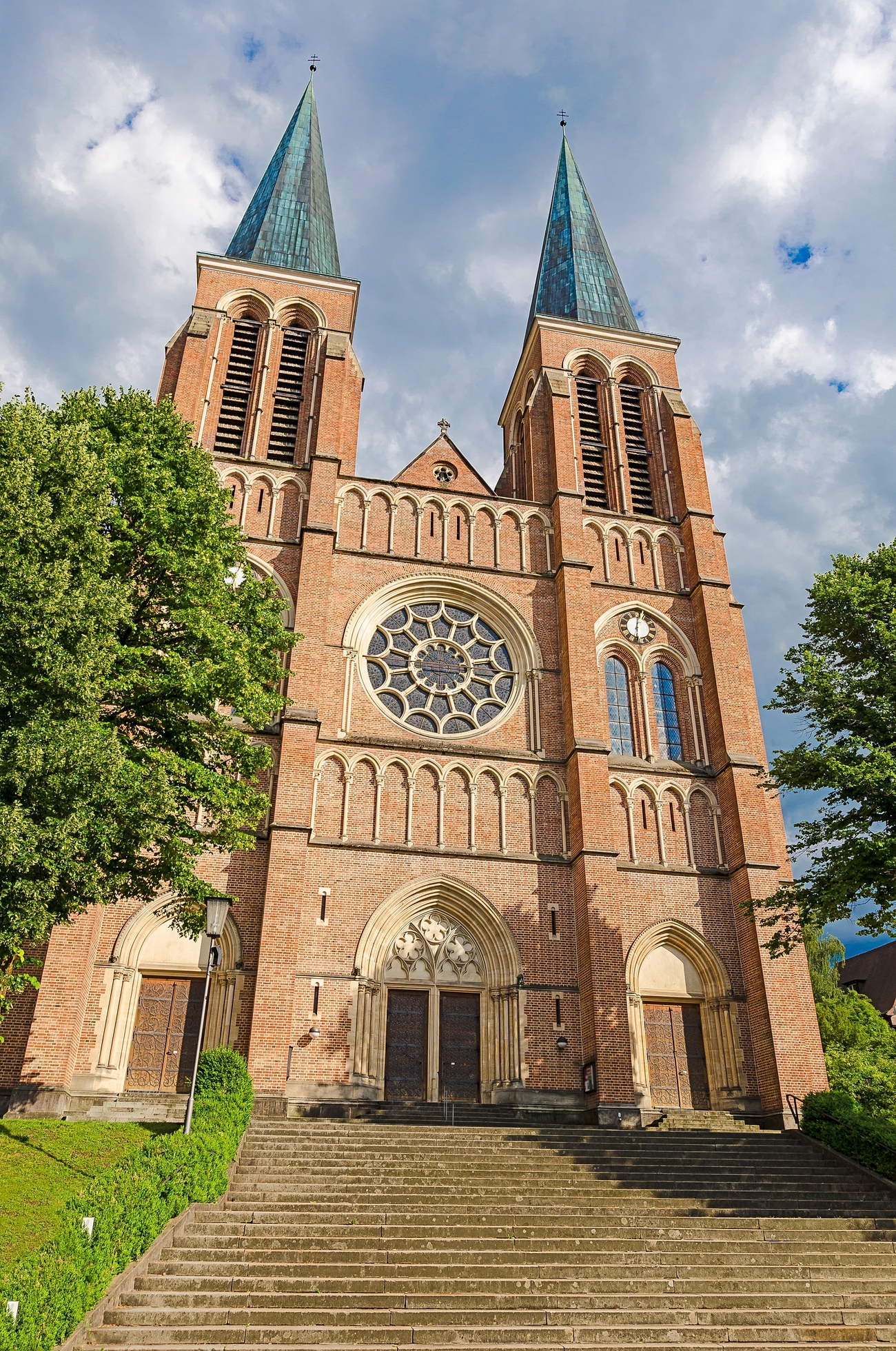
After Seekapelle, the morning continues with a short walk up toward Kolpingplatz for Herz Jesu. Seekapelle is small and tucked into the city center, while Herz Jesu sits higher and feels more commanding.
Herz Jesu is one of the most recognizable churches in Bregenz. Built between 1905 and 1908 in neo-Gothic style, it was designed by architect Joseph Cades and stands on a small plateau above the city center. The two brick towers reach 62 meters, so the church is easy to spot from different parts of Bregenz. It has that sharp vertical look typical of neo-Gothic design, but the red brick gives it a warmer, less cold appearance.
Inside, the church follows a three-aisled basilica layout. One of its most important architectural features is the clerestory, which rises almost twice as high as the side aisles and brings more height and light into the nave. It is a good contrast after Seekapelle because this stop feels more spacious and visually dominant.
You can arrange a private guide, arrive early before the city gets busier, and use the church as a focused architecture stop before moving toward the Upper Town. Give it enough time for the exterior, the towers, the nave and a short historical explanation.
Afternoon: Oberstadt
Continue on foot toward Oberstadt, Bregenz’s Upper Town, after leaving Herz Jesu. The walk takes around 5 to 7 minutes, which is still much more practical than taking a car. This part of the route works better on foot because the streets become tighter and more atmospheric as you move toward the historic core.
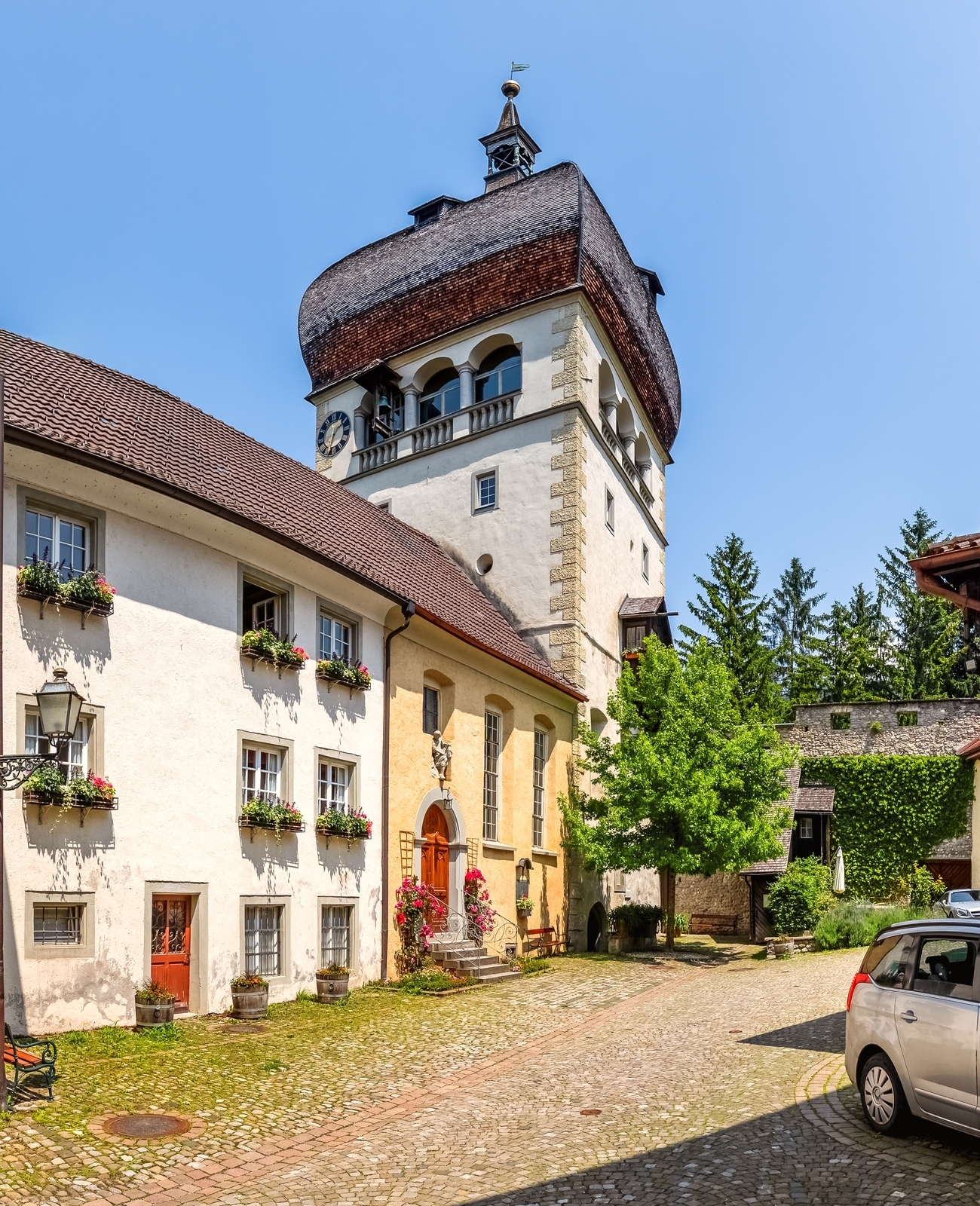
Oberstadt is the medieval side of Bregenz, set slightly above the busier city center and lakefront. It is not a single building but a compact historic quarter, so the point here is the area itself: old walls, city gates, cobbled lanes, preserved façades and small architectural details that are easy to miss if you rush. After the scale of Herz Jesu, Oberstadt feels more intimate.
Martinsturm
Since Martinsturm sits within Oberstadt, this is more of a smooth continuation than a transfer. From the Upper Town lanes, walk toward Martinsgasse and you can reach the tower in around 2-3 minutes.
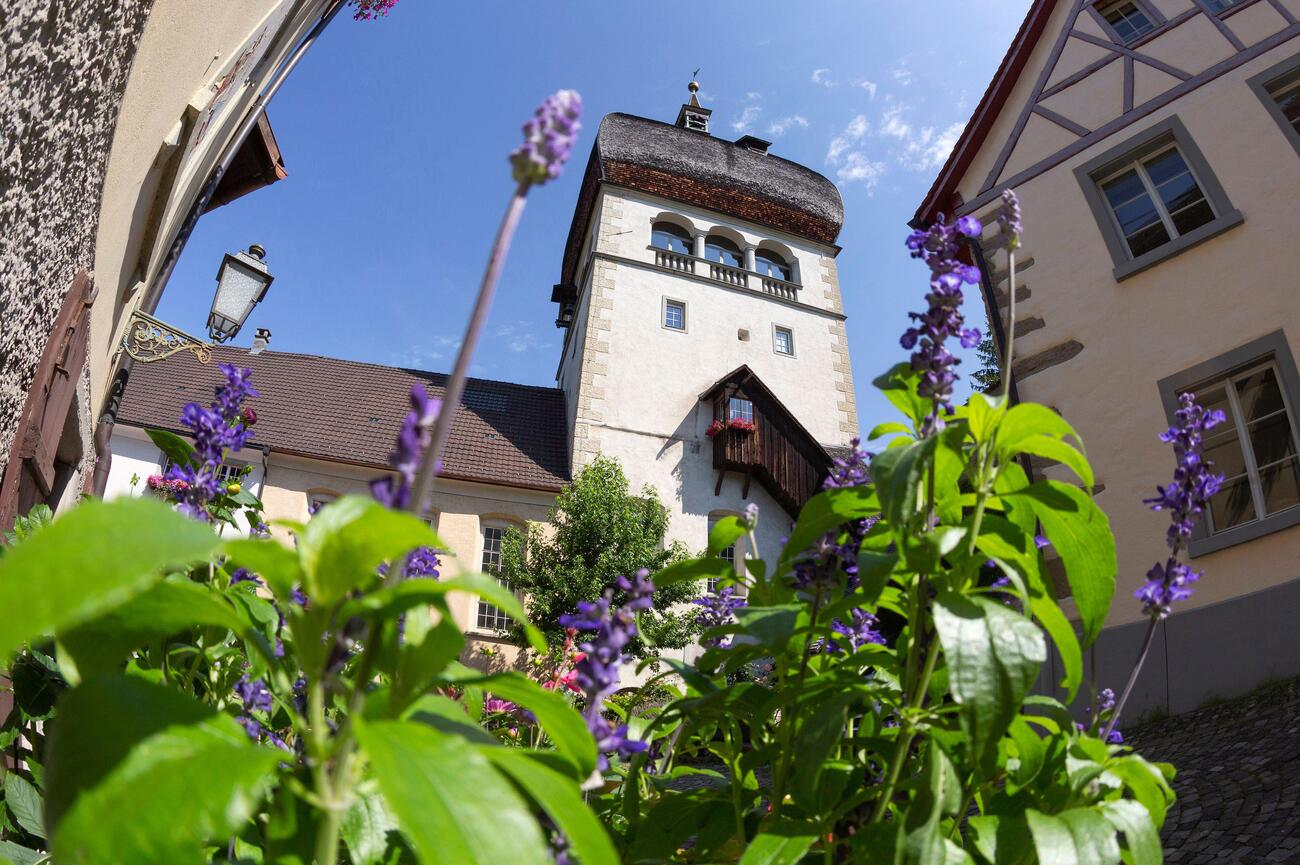
Martinsturm is one of Bregenz’s clearest landmarks and it gives the afternoon a more focused stop after walking through Oberstadt. The tower stands at Martinsgasse 3b and rises above the Upper Town with a very distinct silhouette. It is the kind of place that gives you quick value: history, architecture and a proper view over Bregenz without needing a long detour.
The site began with a warehouse from around the time of the city’s founding, around 1250. In the 14th century, St. Martin’s Chapel became part of the building, and in 1362, Count Wilhelm III of Montfort founded the chapel that was later decorated with frescoes. From 1599 to 1601, master builder Benedetto Prato elevated the structure and added the large wooden dome, turning it into Bregenz’s watchtower. That dome is also important because it made Martinsturm one of the earliest Baroque-style landmarks in the Lake Constance region.
The tower is not just an empty viewpoint. It has exhibitions connected to Bregenz’s city culture and history, including the permanent exhibition “Bregentz. Stadt am Bodensee” and changing special exhibitions in the former tower apartment. The window gallery is the main payoff, with views over the Upper Town, Lake Constance, Pfänder and the surrounding mountains.
Pfänderbahn
Head down from the Upper Town toward the Pfänderbahn valley station on Steinbruchgasse. You will walk for around 10-15 minutes, depending on pace and the exact path you take.
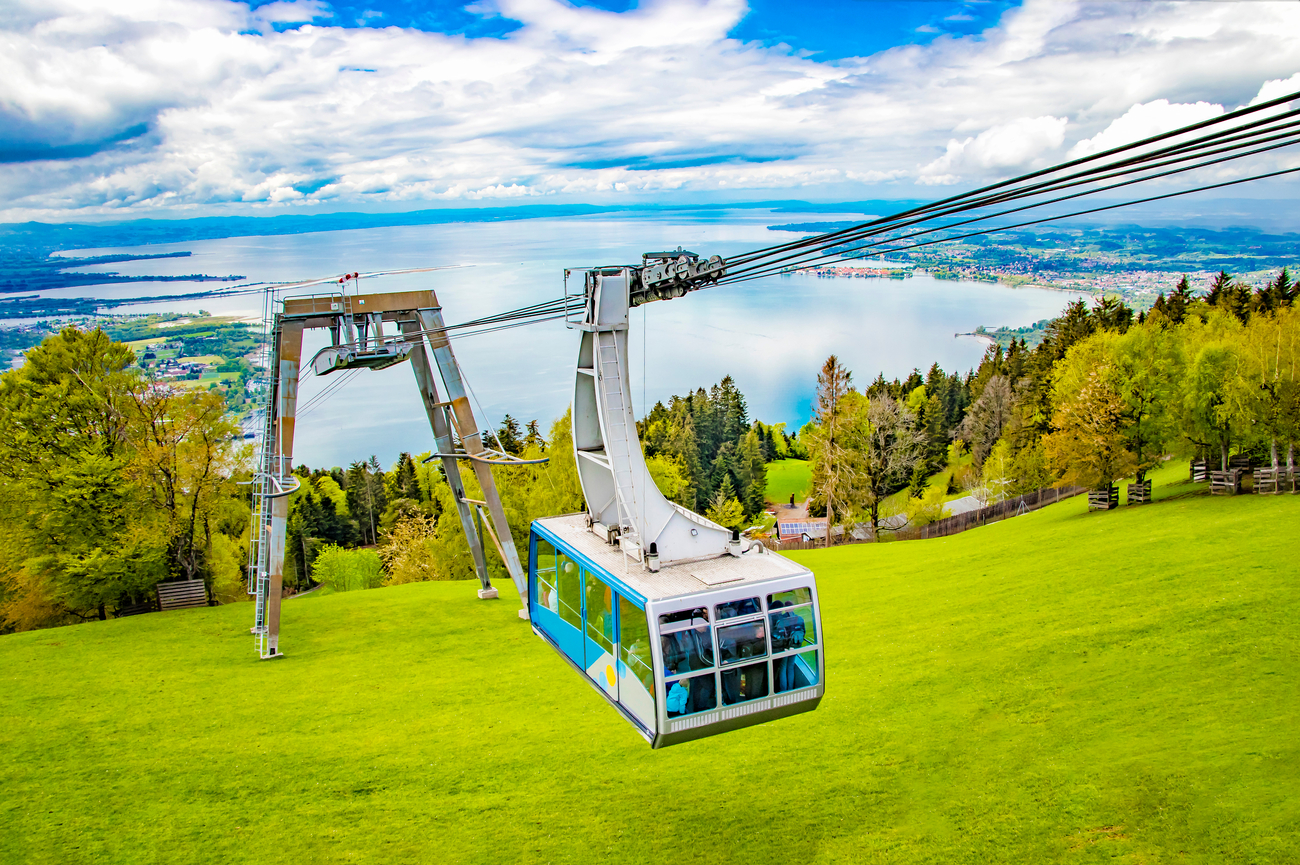
Pfänderbahn is the cable car that connects central Bregenz to Pfänder, the city’s local mountain above Lake Constance. It is one of the most efficient high-value experiences in the city because the ride itself is short, but the change in setting is immediate. In about 6 minutes, you move from the city level to the mountain station, where the view opens over Lake Constance, Bregenz, the Rhine Valley and the surrounding Alpine landscape. The route covers about 606 meters of elevation gain, with large-capacity cabins that can carry up to 80 passengers. It is built for volume, but it still feels like a clean and curated transition because the views start before you even reach the top.
The cable car runs daily from 8:00 AM to 7:00 PM, with regular trips on the full and half-hour. The ride takes about 6 minutes, so you do not need to block too much time for the transfer itself, but you should allow enough time at the top for the panorama, the viewpoint and nearby mountain stops.
Evening: Pfänder
After the Pfänderbahn ride, the evening continues directly at Pfänder. The cable car takes about 6 minutes from the valley station to the mountain station, so this is not a long transfer.
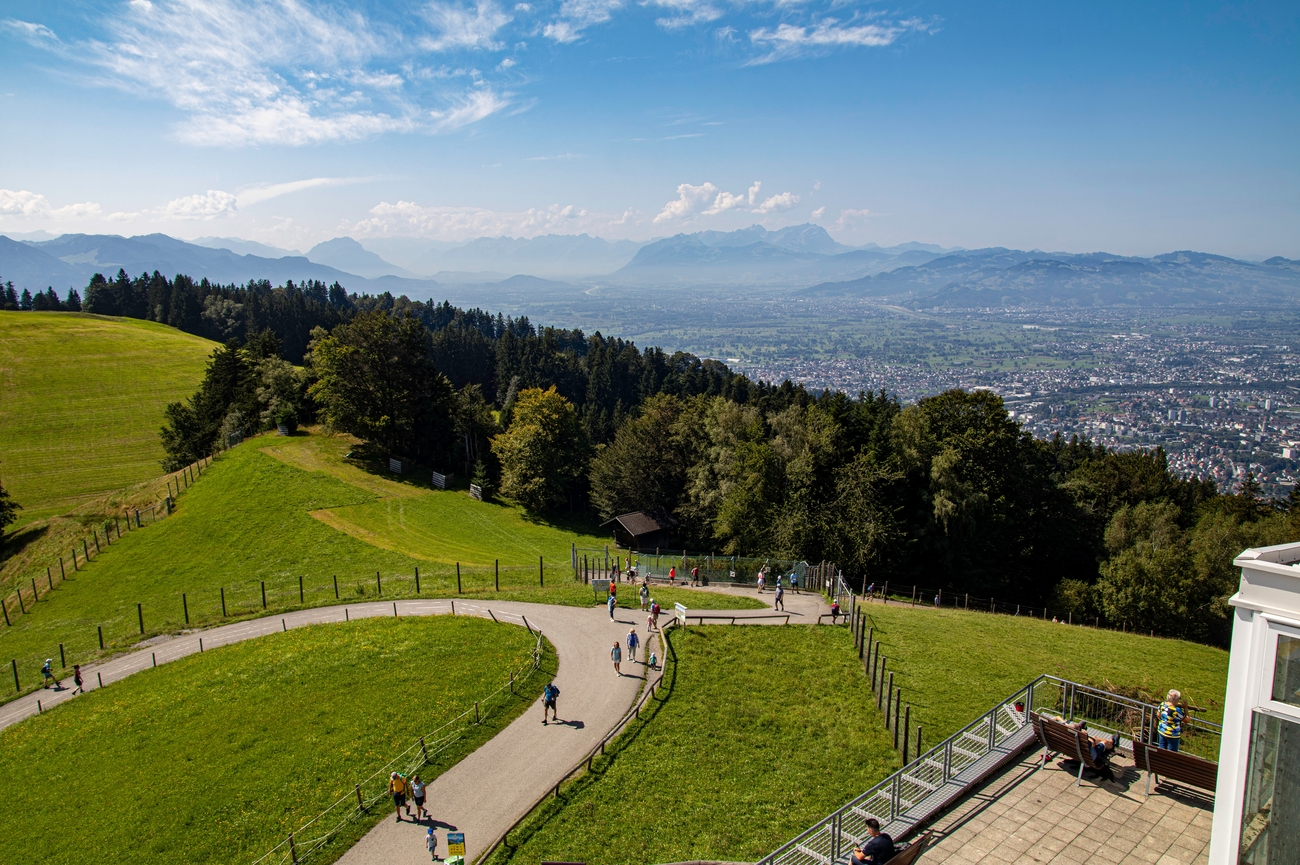
Pfänder is the local mountain above Bregenz and one of the strongest viewpoint stops in the city’s itinerary. From the top, the view opens over Lake Constance, the city, the Rhine Valley and the Alpine landscape across Austria, Germany and Switzerland.
The main draw is the panorama. This mountain is a viewpoint over the entire Lake Constance area and up to 240 Alpine peaks. Around the mountain station, the setting is practical and easy to navigate, with viewing areas, walking paths and access to the nearby Alpine Wildlife Park during daytime hours. The mountain does not feel overly styled or commercial.
You should treat Pfänder as a controlled evening viewpoint. Book the cable car timing carefully, keep the visit focused on the mountain station area and choose a clear-weather slot if possible. You get the best return when the visit is simple: ride up, take in the lake-and-Alps view, walk the immediate area and use the mountain as the calm final note of Day 1.
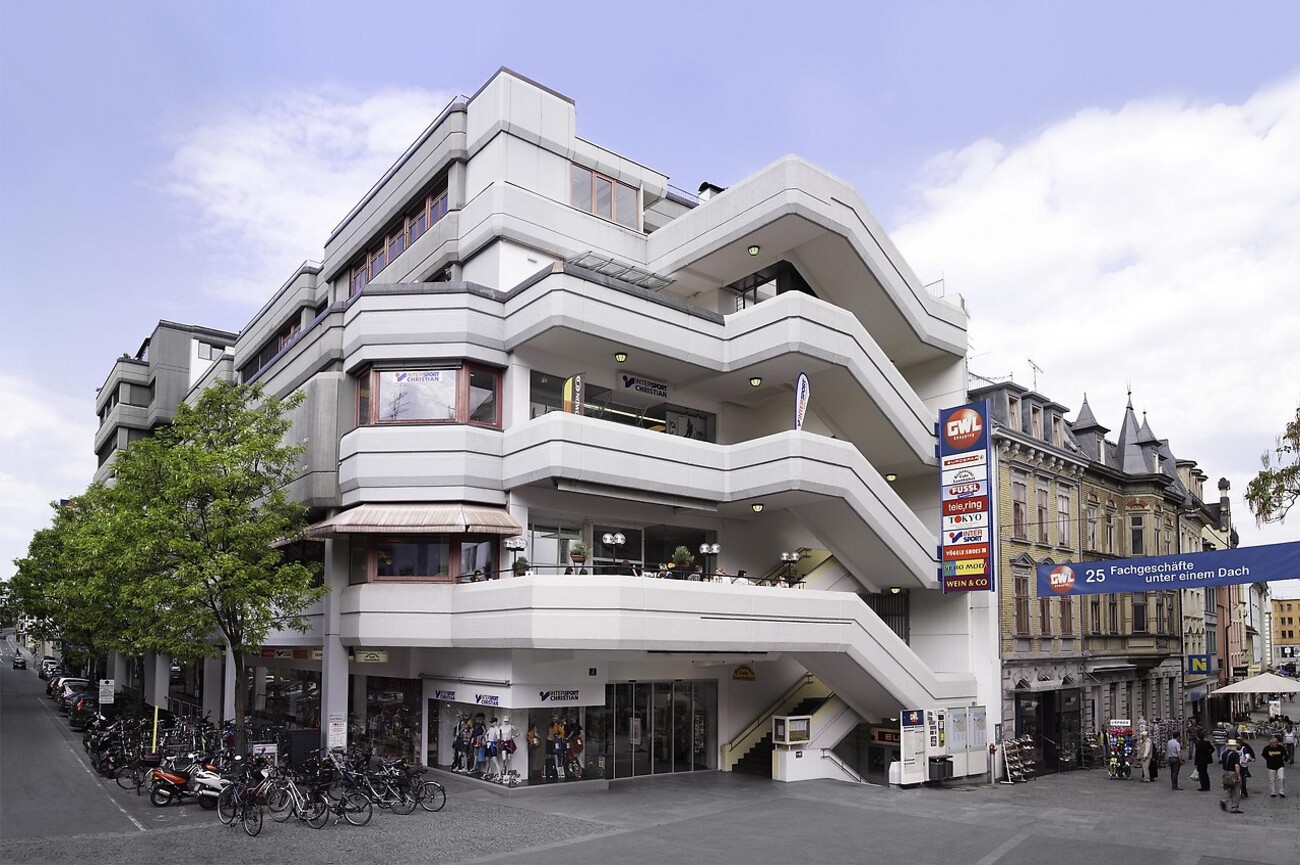
GWL - Kaufhaus & mehr
Come back down from Pfänder by cable car, then continue toward GWL - Kaufhaus & mehr on Römerstraße. The descent takes about 6 minutes and from the Pfänderbahn valley station, it is around a 10-12 minute walk into the city center.
GWL is Bregenz’s central city-shopping stop, located at the beginning of the pedestrian zone. It is not a massive luxury mall, so the expectation should be clear. This is more of a compact, polished retail finish than a full designer shopping district. After the mountain views at Pfänder, it gives the day a practical city-center ending: easy browsing, a few useful shops and a controlled way to wind down before closing the itinerary.
The building has been part of Bregenz’s commercial center since the 1970s and the official GWL site describes it as a modern shopping center with tradition. Inside, the mix includes fashion, jewelry, optics, beauty, services, specialty shops and everyday retail. For a more refined stop, focus on stores like Blickfang fashion and Doris Diem, listed as a Diadoro quality jeweler, rather than treating the whole place as luxury shopping.
GWL usually runs Monday to Friday from 9:00 AM to 6:00 PM and Saturday from 9:00 AM to 5:00 PM, so it works best as an early-evening stop, not a late-night one.
Day 1 - Bregenz
Tour Map
Day 2
Morning:
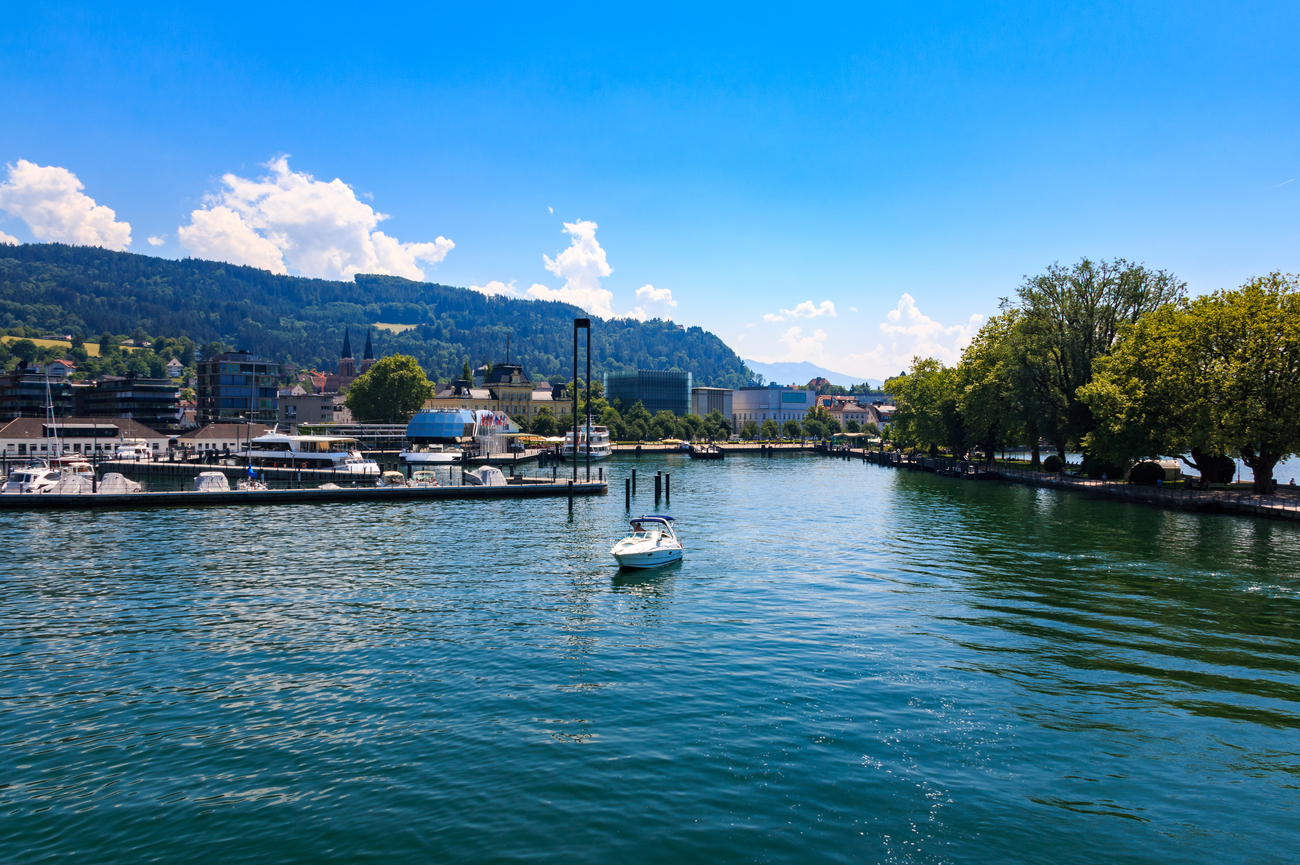
Bregenz Hafen
Bregenz Hafen is one of the most practical places to begin the second day because it immediately shifts the itinerary from historic streets to the lake. The harbor connects Bregenz with Lindau and other towns around Lake Constance, but even without taking a boat, it gives you a clear sense of the city’s position between Austria, Germany, Switzerland and the Alpine backdrop.
Expect boats, lake views, walking paths, harbor activity and quick access to the promenade. This is not a loud waterfront built only for tourists. It feels more functional than flashy, which works well for Bregenz. The harbor is both a transport point and a leisure space, so it gives the day a calm but useful start.
You should use the harbor as more than a quick photo stop. If your schedule allows, arrange a premium cruise or private charter through Vorarlberg Lines rather than relying only on standard sightseeing. You can choose between premium trips, classic scheduled shipping and charter trips, which give you flexibility depending on how exclusive you want the experience to feel.
Molo
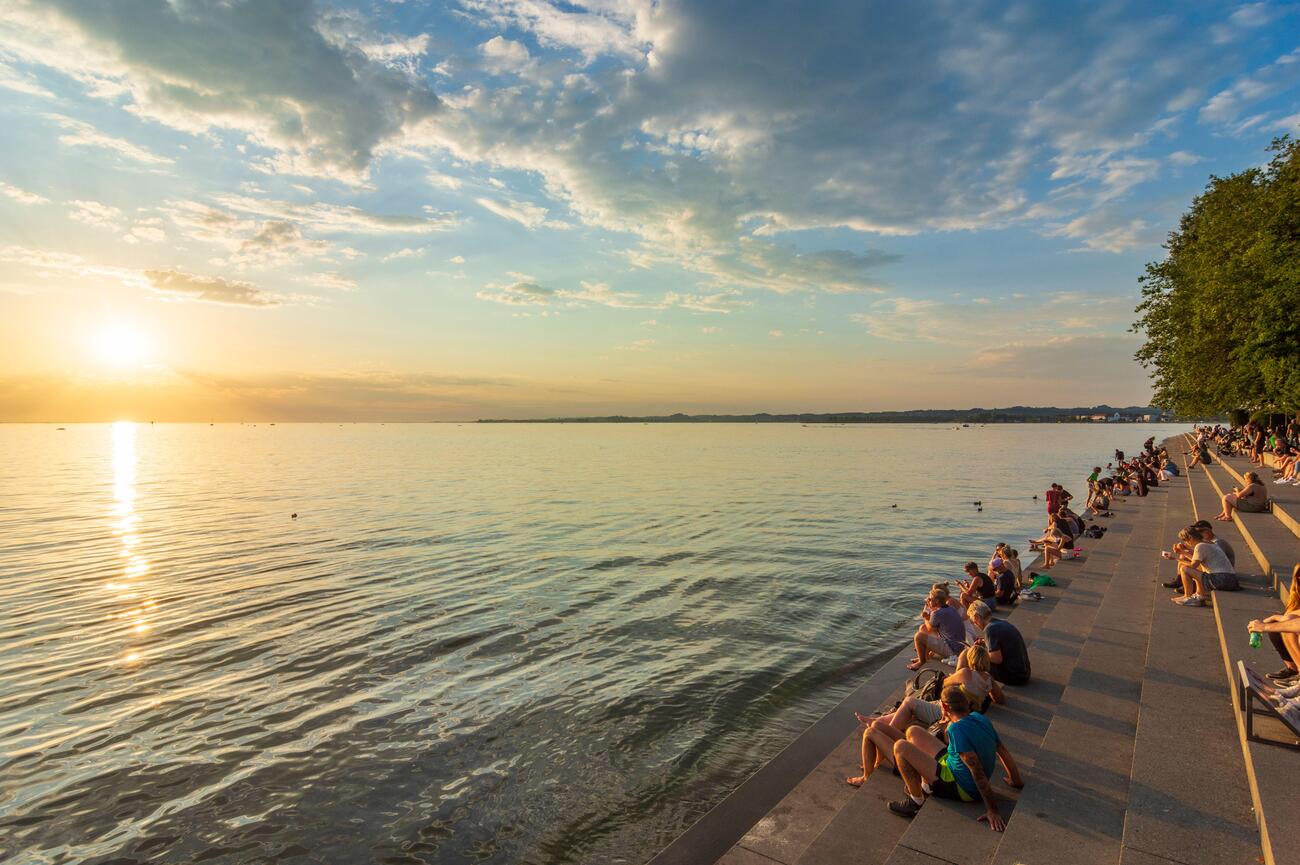
From Bregenz Hafen, stay on foot and continue toward the Molo. The walk is only around 2-4 minutes.
The Molo is one of the easiest places in Bregenz to understand the city’s relationship with Lake Constance. It works as both a harbor structure and a viewing point, with the lake opening directly in front of you and the harbor activity staying close behind.
The harbor area has been reshaped several times, and the western mole, now known as the Blumenmolo, was extended by around 80 meters during the harbor expansion. Today, the Molo is known for its clean lake-facing design, lighthouse feature and sunset steps. Even in the morning, it has value because it gives you a direct look across the water without needing to commit to a cruise or a longer lakeside walk.
You can time it with a private harbor walk, a premium boat departure or a lakefront route that continues toward the cultural quarter. The point is efficiency: you get the lake view, the harbor atmosphere and a strong sense of place without turning the morning into a slow scenic loop.
Vorarlberg Museum
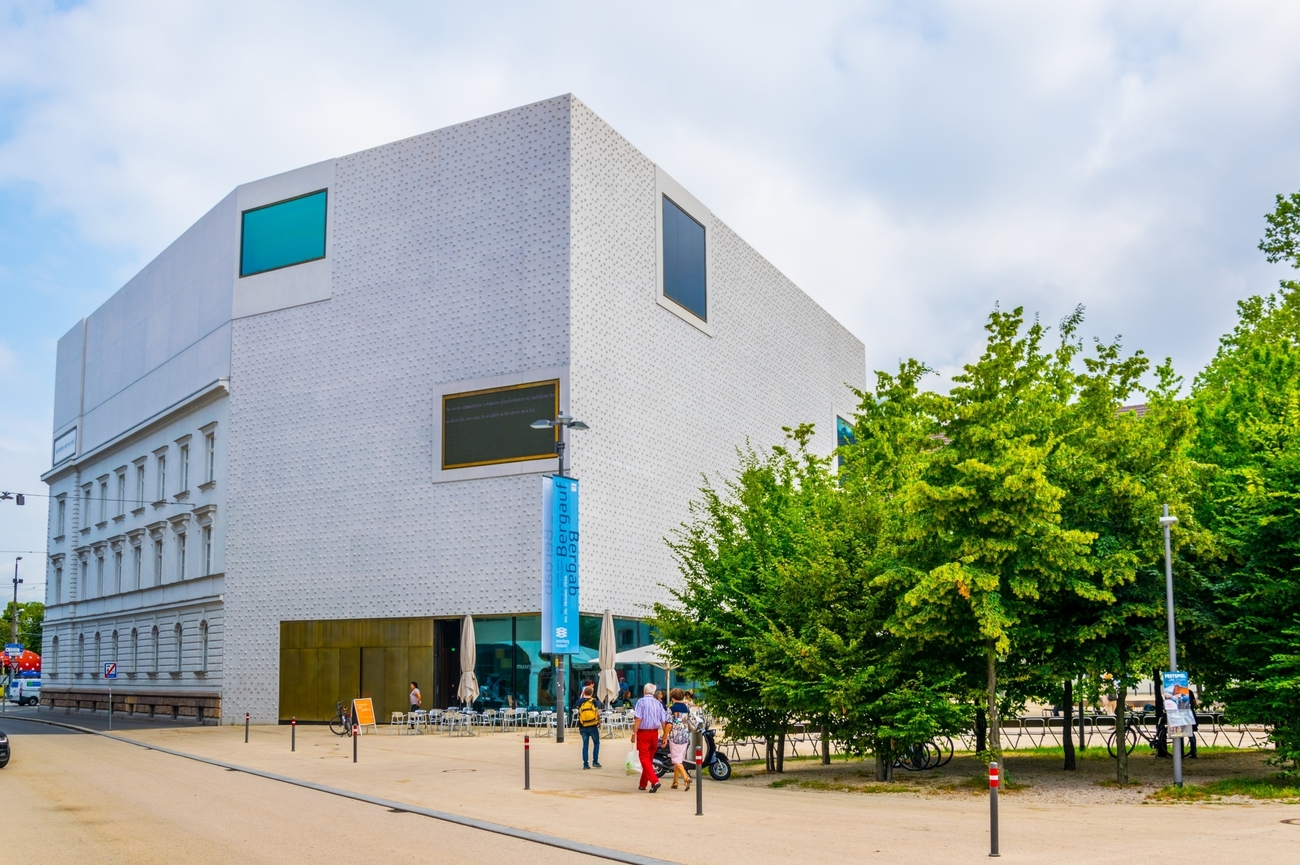
After the Molo, the route turns away from the water and moves into Bregenz’s cultural quarter. Take a 5-minute walk toward Kornmarktplatz, where the Vorarlberg Museum sits close to the lakefront.
Vorarlberg Museum is the main museum for understanding the region’s culture, history and identity. It sits close to the lake and near Kunsthaus Bregenz, which makes it a smart bridge between the waterfront and the city’s museum quarter. You are not just looking at objects; you are getting a clearer read on Vorarlberg as a region.
The building's facade is covered with thousands of concrete “flowers,” created from the imprints of PET bottles, giving the exterior a textured, modern surface that feels distinct without being loud. Inside, the museum combines permanent exhibitions on regional cultural history with changing exhibitions on different themes. One of its strongest features is the panoramic room on the upper level, where the view toward Lake Constance becomes part of the visit rather than just a background detail.
And if you want to join tours, the museum gives you two solid options. You can join the public guided tour on different themes every Sunday at 3:00 PM, though this is held in German. But if you want the visit to feel more tailored, book a private group tour instead.
Kunsthaus
Bregenz
Kunsthaus Bregenz is the easiest next move after Vorarlberg Museum because the two sit almost beside each other in the same cultural quarter. Yes, going from the first museum to the next takes around 1-2 minutes.
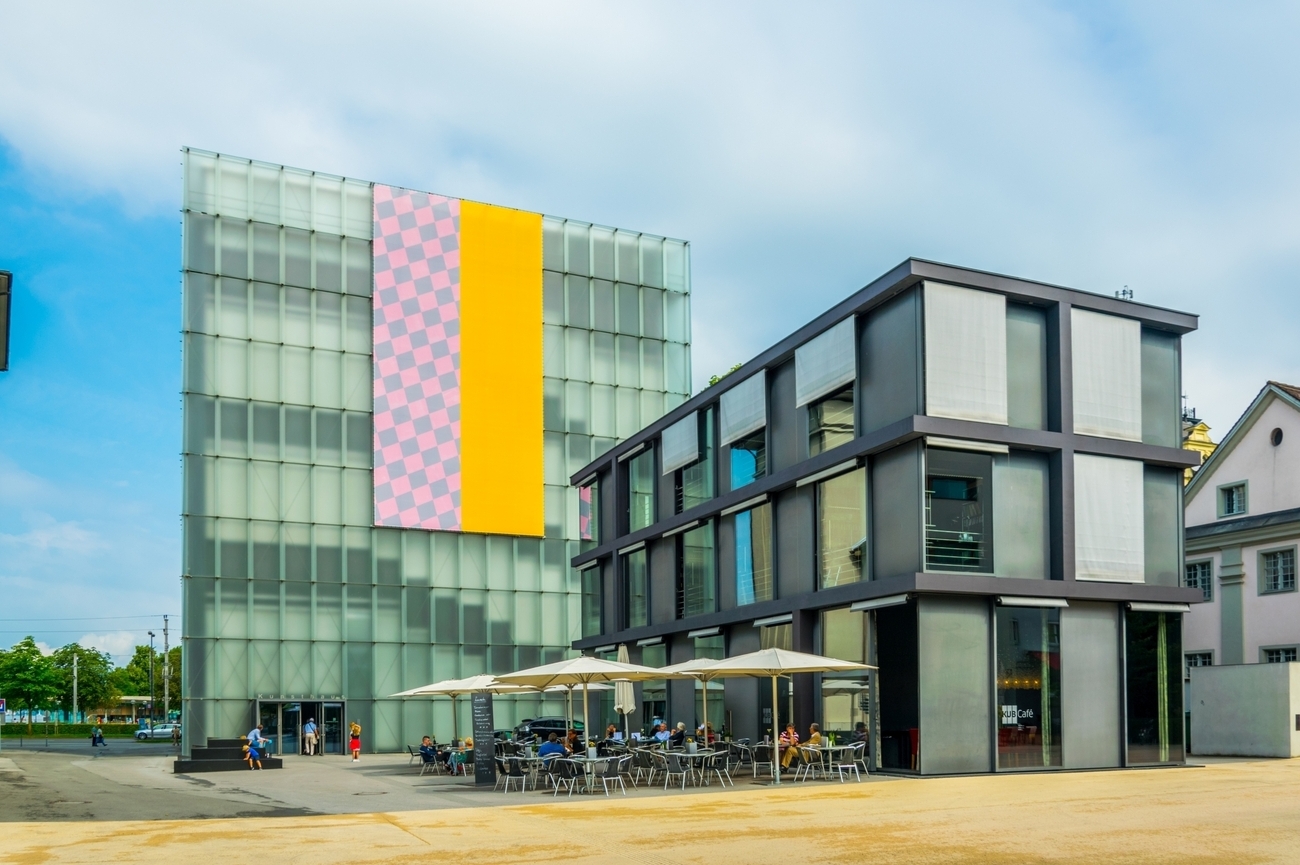
Kunsthaus Bregenz, often called KUB, is one of the city’s most important contemporary art spaces. It was designed by Swiss architect Peter Zumthor and opened in 1997 and the building is a major part of the visit. This is not a neutral white-box museum that disappears behind the exhibition. The architecture is part of the experience, with a glass-panel exterior, a strong concrete structure and controlled natural light that shapes how the art is seen inside. The facade reacts to light and weather, while the interior spaces are designed to keep attention on the exhibition.
There are several ways you can explore KUB. The Architectural Guided Tour is especially useful if you are interested in Peter Zumthor’s building itself; once every exhibition, a guided tour is dedicated specifically to the award-winning architecture. During the Bregenz Festival season, KUB also offers KUB Intros. And if you want more depth, join a guided exhibition tour, which gives insight into the exhibition concept.
Karl-Tizian-Platz
After Kunsthaus Bregenz, stay right where the architecture opens out into Karl-Tizian-Platz. It works as a short reset after KUB: step out, let the building sit in its full context, then use the plaza to connect the museum, public art and nearby cultural venues.
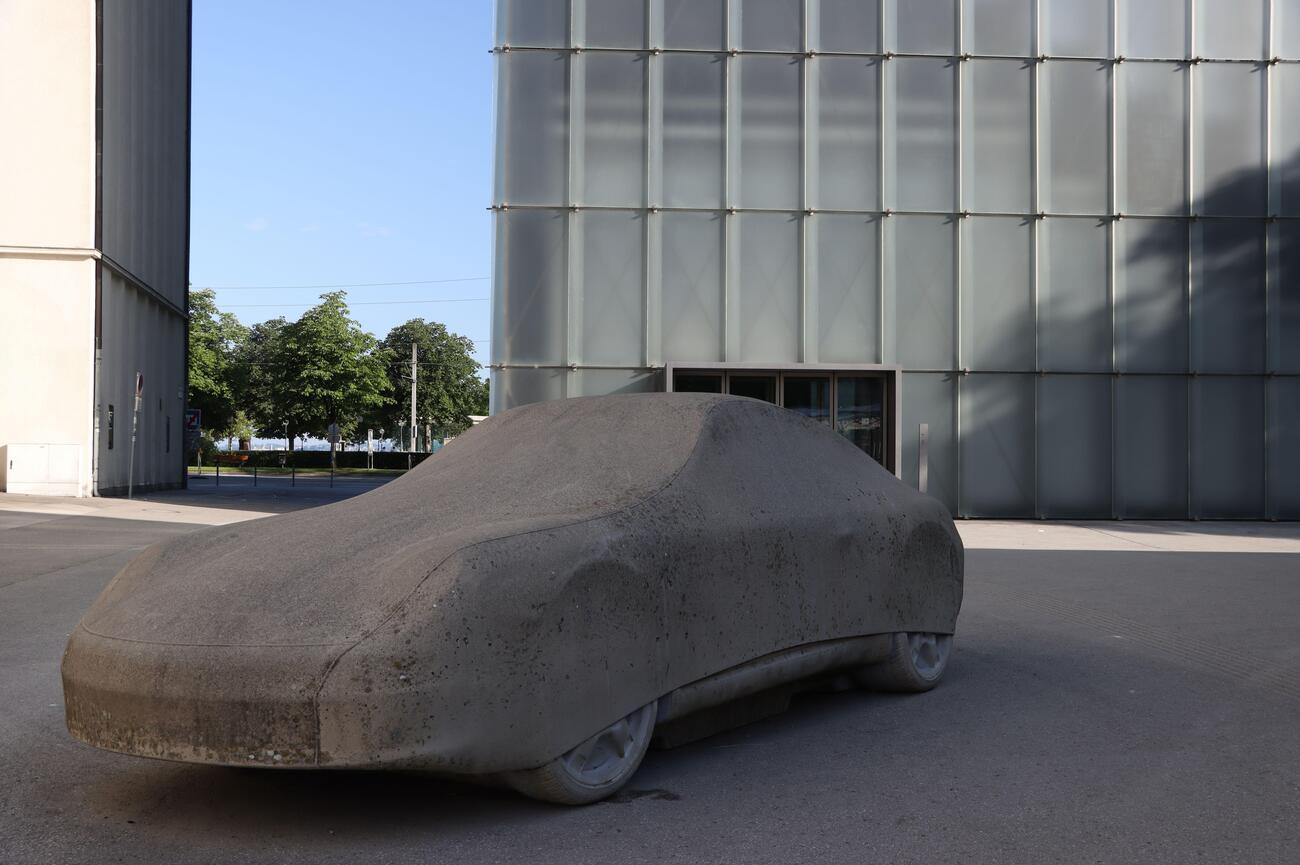
Karl-Tizian-Platz is one of the key public spaces in Bregenz’s cultural quarter. It is not a traditional old European square with a fountain and rows of historic facades. It feels more modern and intentional, shaped by the presence of Kunsthaus Bregenz and the surrounding cultural buildings. The square exists partly because of how Peter Zumthor’s Kunsthaus Bregenz was designed. By keeping the museum volume compact, space was opened on the old-city side of the site, creating what is now Karl-Tizian-Platz. There is also more to notice here than a quick glance suggests. The City of Bregenz’s public-art material lists several works around Karl-Tizian-Platz, including Gottfried Bechtold’s Concrete Porsche in front of Kunsthaus Bregenz, Michelangelo Pistoletto’s Segno Arte and a floor work by Karl-Heinz Ströhle that was originally created for the 1997 opening of KUB. This gives the square value as a public art stop.
Vorarlberger Landestheater
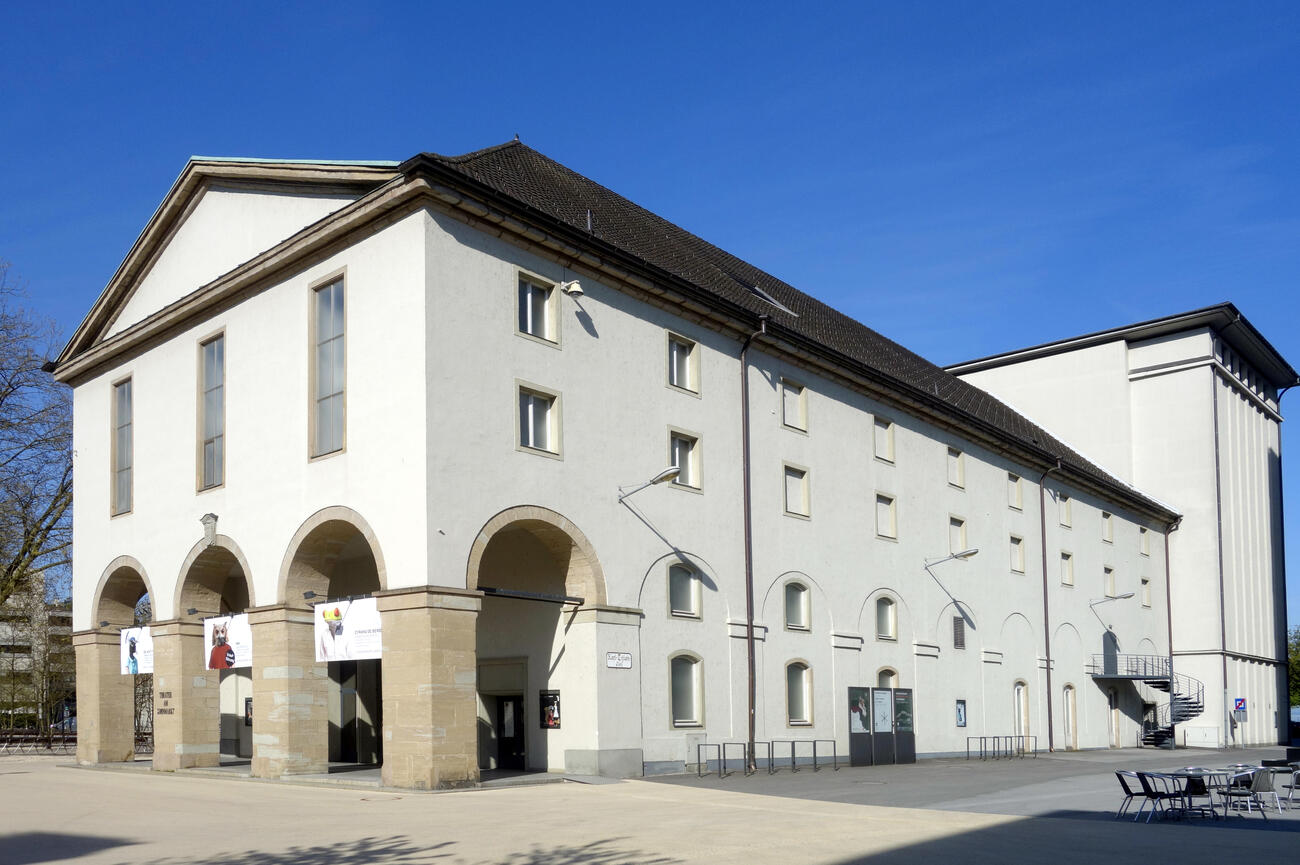
The theater comes in almost naturally after Karl-Tizian-Platz because it sits within the same cultural stretch near the lake. Instead of treating it like a separate destination, let the route slide from the plaza toward Seestraße and in 1-2 minutes you’ll reach Vorarlberger Landestheater.
Vorarlberger Landestheater is one of Bregenz’s key performing arts venues and gives the itinerary a different kind of cultural stop after the museums. Instead of another exhibition space, this brings in the city’s theater scene: spoken drama, literature-based productions, music-oriented drama and works connected to current social themes. It is a smart stop because it shows that Bregenz’s cultural identity is not only built around the festival stage and lakefront architecture but also around year-round performance.
You should approach this as a curated theater stop rather than a casual pass-by. Book the best available seats for a performance, arrange the timing around an introduction if offered or have a private guide explain the theater’s place within Bregenz’s cultural quarter before continuing toward the festival district.
Evening: Festspielhaus Bregenz
By evening, the route leaves the compact museum-and-theater cluster and moves closer to the festival district. From Vorarlberger Landestheater, walk 10–12 minutes along the lakefront to Platz der Wiener Symphoniker, where Festspielhaus Bregenz is located.
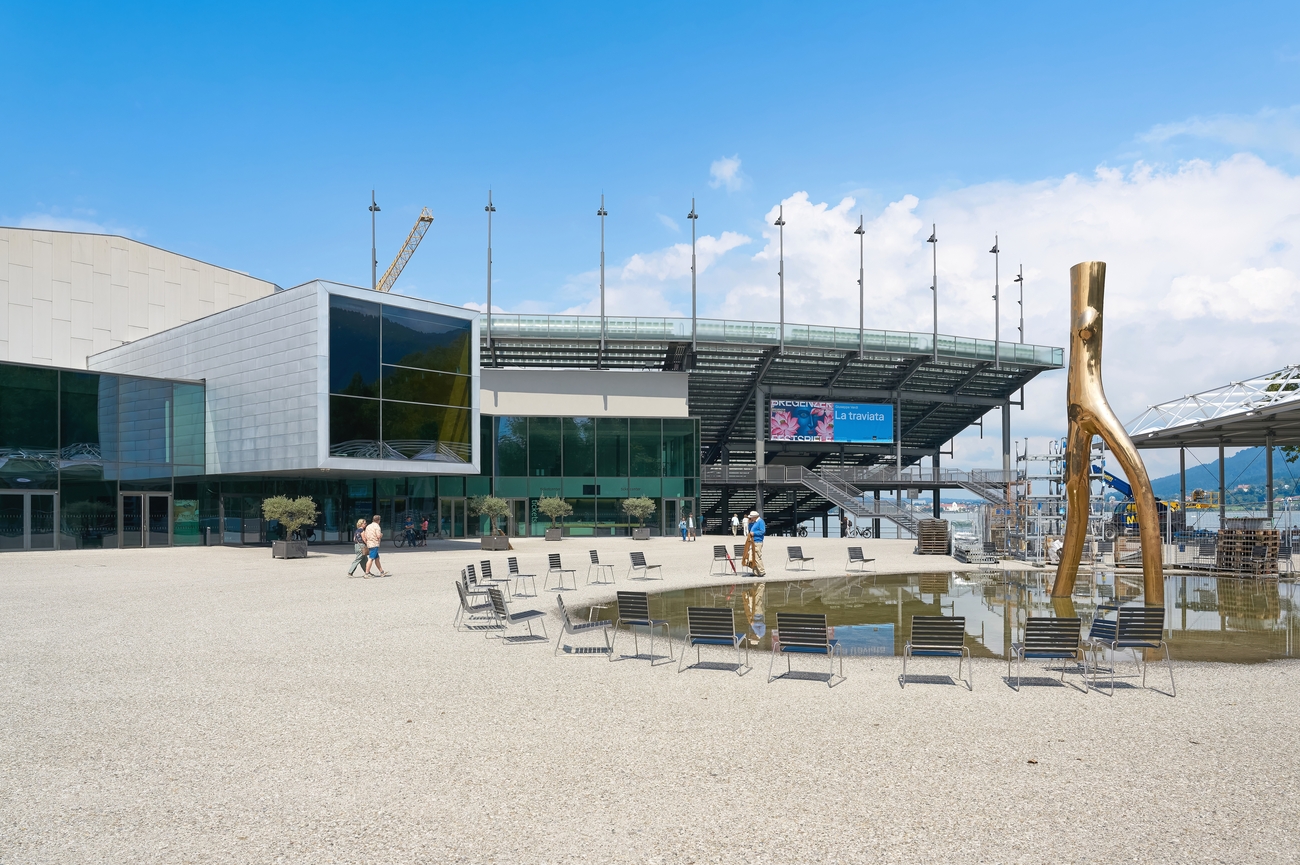
Festspielhaus Bregenz is the city’s major event and performance venue, closely tied to the Bregenz Festival and the famous lake-stage productions. It functions as the indoor cultural engine behind one of Austria’s most recognisable festival settings, connecting formal performance spaces with the outdoor Seebühne area. The venue has a clean, modern event-centre feel rather than an old opera-house atmosphere. Inside, it includes several spaces such as the Großer Saal, Seestudio, Werkstattbühne, Propter Homines and Seefoyer. During the Bregenz Festival season, guided tours and behind-the-scenes experiences can also add valuable context before seeing the lake stage in performance.
Seebühne Bregenz
From Festspielhaus, the evening naturally spills into Seebühne Bregenz. The lake stage sits within the same festival grounds, so you only need around 2-3 minutes on foot to reach it.
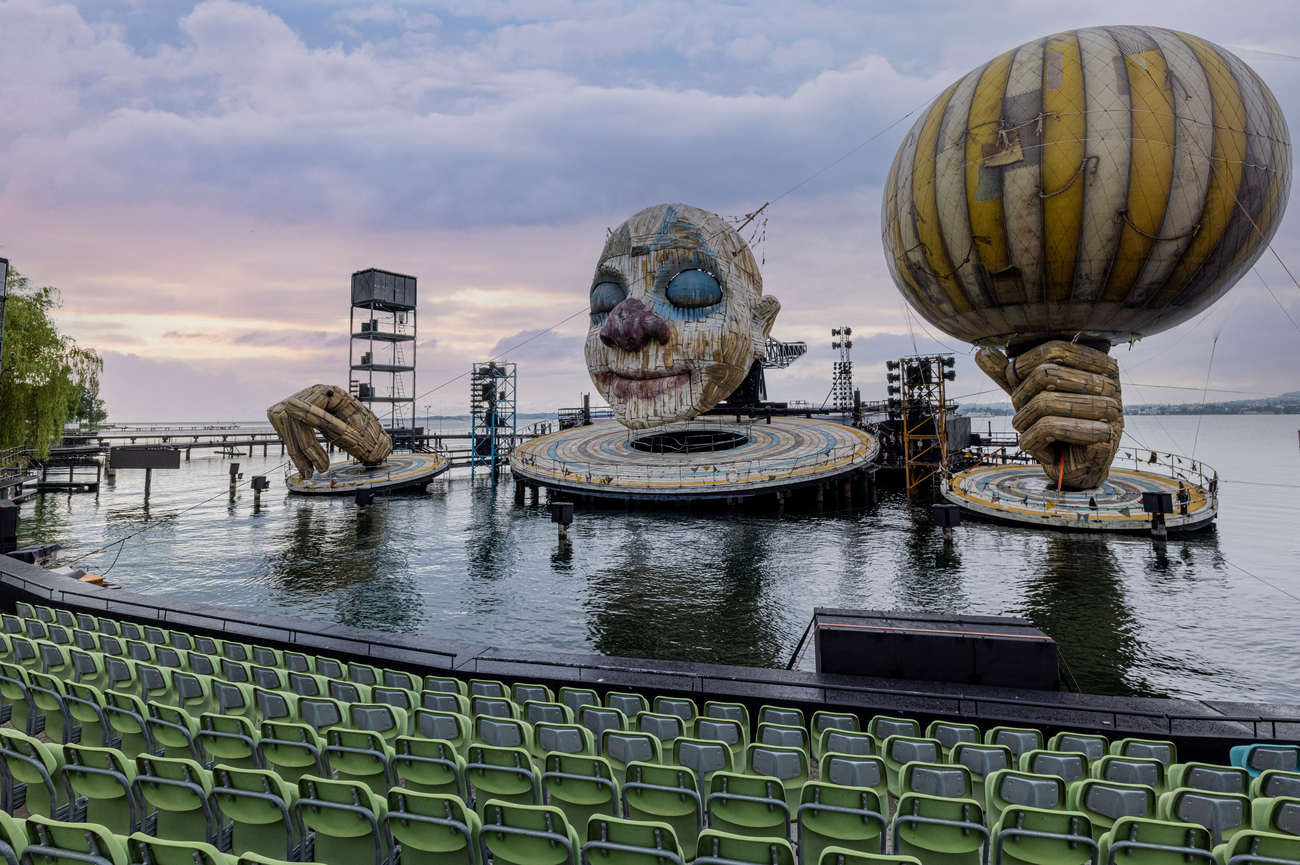
Seebühne Bregenz is the city’s signature performance setting and the clearest reason the Bregenz Festival has such a strong international name. It sits on Lake Constance, with the audience facing a stage built directly on the water. The stage has a serious technical story behind it. The first lake performances began in 1946 on gravel barges and by 1950, a wooden platform and shore-side grandstand had already been built. Today, the stage uses a permanent concrete core, with a new set created around it every two years.
Seebühne is best experienced through the official festival or Festspielhaus guided-tour options. These tours give behind-the-scenes access and explain how the floating stage works, including the technical demands of staging opera in an open-air lake setting. If you are visiting during the Bregenz Festival season, also check the official performance calendar because the real premium experience is seeing the stage in use.
Day 2 - Bregenz
Tour Map
Day 3
Morning:
Seebad Bregenz
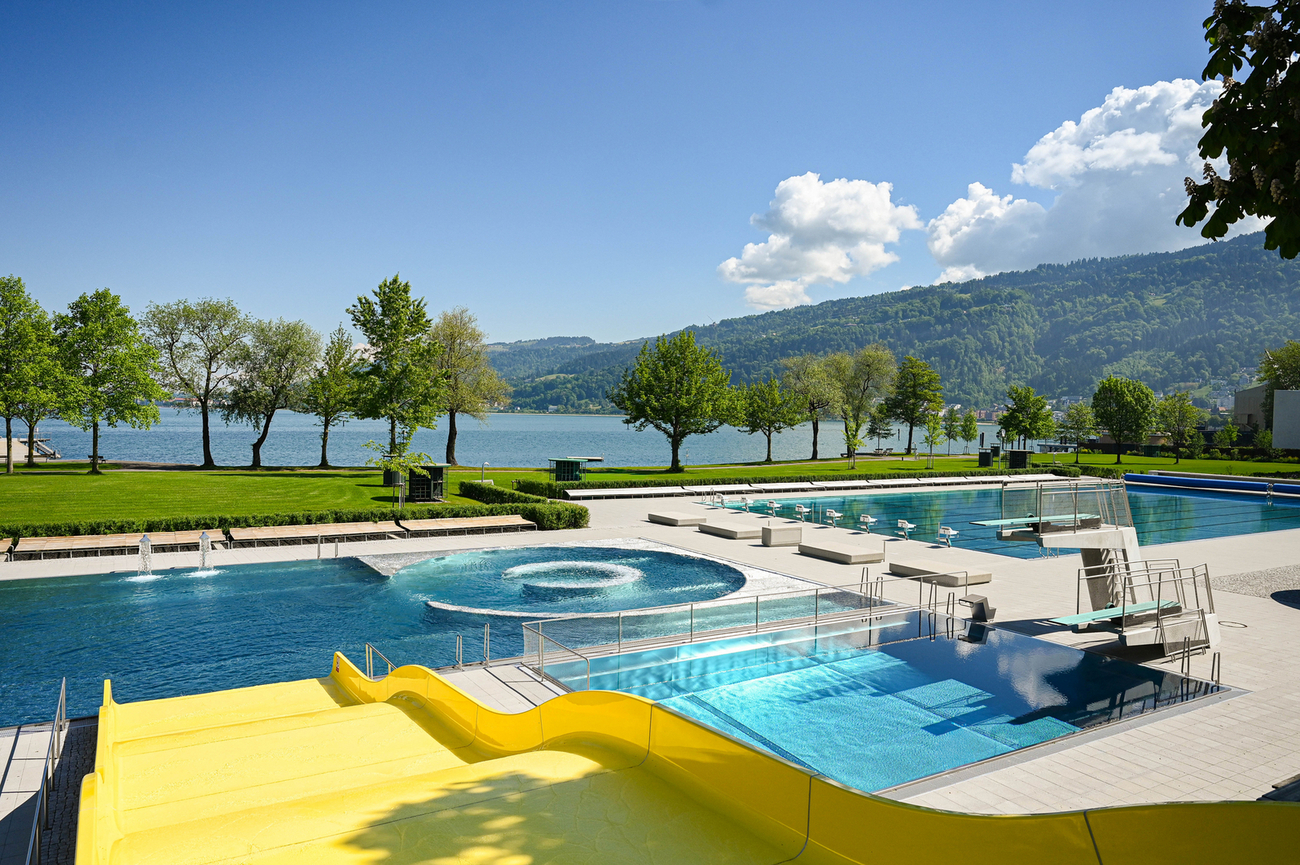
Seebad Bregenz is the city’s main lakeside bathing complex, set directly on Lake Constance. It is a good first stop because it starts the morning with something lighter after the culture-heavy second day. Instead of another museum or performance venue, this gives you the city’s leisure side: open water, pool facilities, lake air and a slower but still polished pace.
The complex includes the outdoor Strandbad, a new indoor pool area and a modern sauna world. The outdoor section is built for summer use, with direct access to the lake, pool areas and space for a proper lakefront pause.
The outdoor Strandbad is usually open daily from 9:00 AM to 8:00 PM in good weather, while in May and September it runs from 10:00 AM to 7:00 PM. The indoor pool and sauna world have separate hours, so check the official schedule before planning the exact morning.
Sporthafen Bregenz
You’ll stay close to the water by moving from Seebad Bregenz toward Sporthafen Bregenz. The walk takes around 5-8 minutes, depending on where you exit the Seebad area. This keeps the morning aligned with the water theme: first the bathing complex, then the marina and boating side of Bregenz.
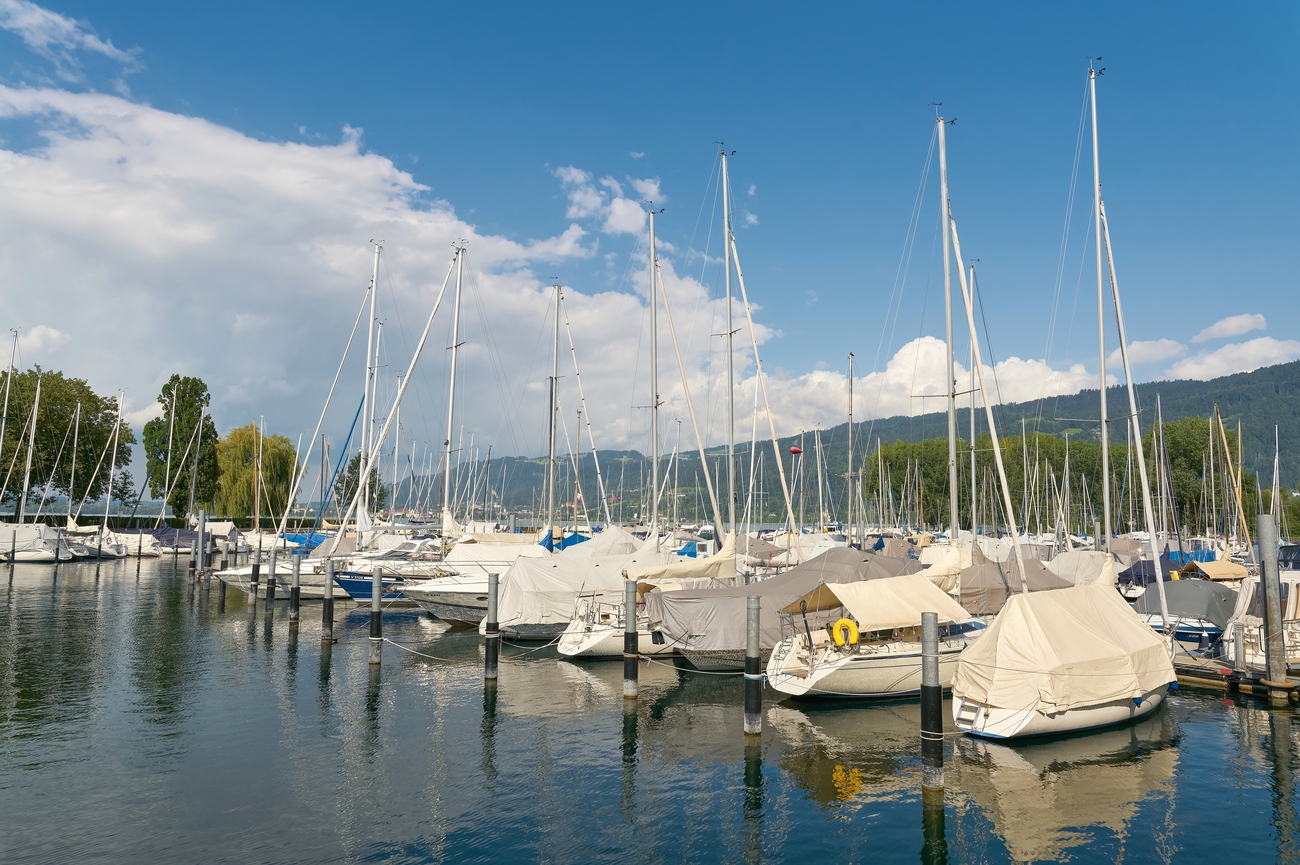
Sporthafen Bregenz gives the itinerary a more nautical angle. After Seebad shows the leisure side of Lake Constance, Sporthafen shifts the focus to boats, berths and marina life. It is not a museum-style stop, but it adds context to how Bregenz functions as a lake city.
The City of Bregenz manages the Sporthafen and lists 391 water berths and 86 dry berths there, making it a serious marina rather than a small decorative harbor. The setup includes mooring areas, marina infrastructure and access points for private boating. Visually, expect boats, docks, lake views and a more technical waterfront atmosphere. And if you want to make the most out of the experience, walk the marina, check the boats and use it as a setup point before arranging a premium cruise, private charter or skipper-led lake experience.
Afternoon: Kloster Mehrerau
After the marina side of Bregenz, the water-themed route shifts into something quieter at Kloster Mehrerau. From Sporthafen Bregenz, it’s an easy walk of roughly 12-15 minutes to reach the abbey. The route stays close to the Lake Constance shoreline.
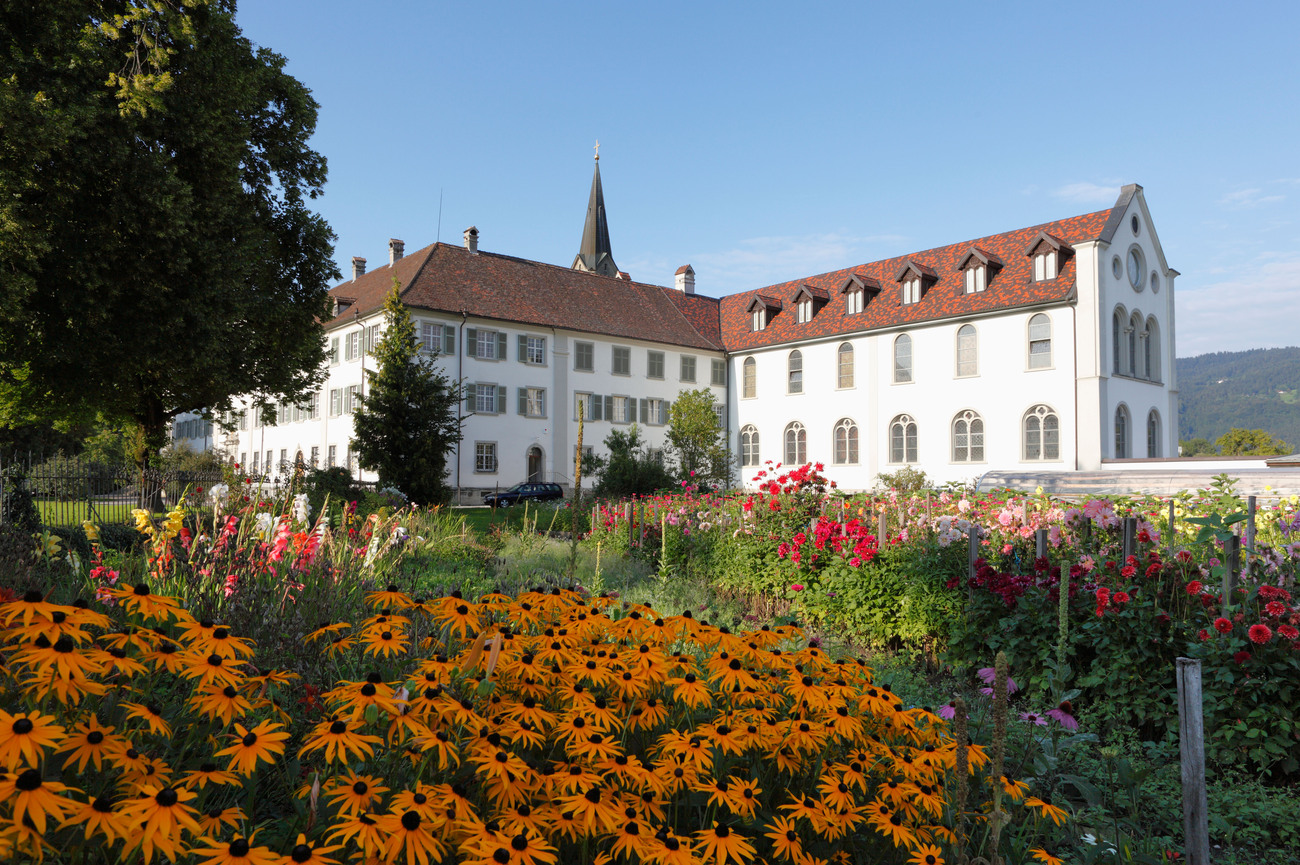
Kloster Mehrerau is one of Bregenz’s most grounded historic sites. It is not a loud tourist attraction and that is exactly why it works well after the morning’s lake and marina stops. The abbey brings a slower, more reflective layer to the itinerary while still staying within the same lakeside geography.
The monastery is officially the Cistercian Abbey of Wettingen-Mehrerau and remains an active religious community. Its complex includes the abbey church, cloister areas, guest spaces, school-related buildings and monastic facilities. Visually, expect a working abbey environment rather than a decorative landmark designed mainly for sightseeing.
The abbey offers group guided tours by advance request and these can include the abbey church, the new relic chapel, the lower church, parts of the cloister, the dining hall, the guest wing and the Baroque library. The “large library” is part of the cloistered area and is not shown during tours, so it is better to set expectations correctly.
Nostalgiebad Mili - das Alte Militärbad
From the quiet grounds of Kloster Mehrerau, the itinerary eases back toward Lake Constance through a slower waterfront stretch. Mili is roughly 15-20 minutes away on foot, making walking the better choice here.
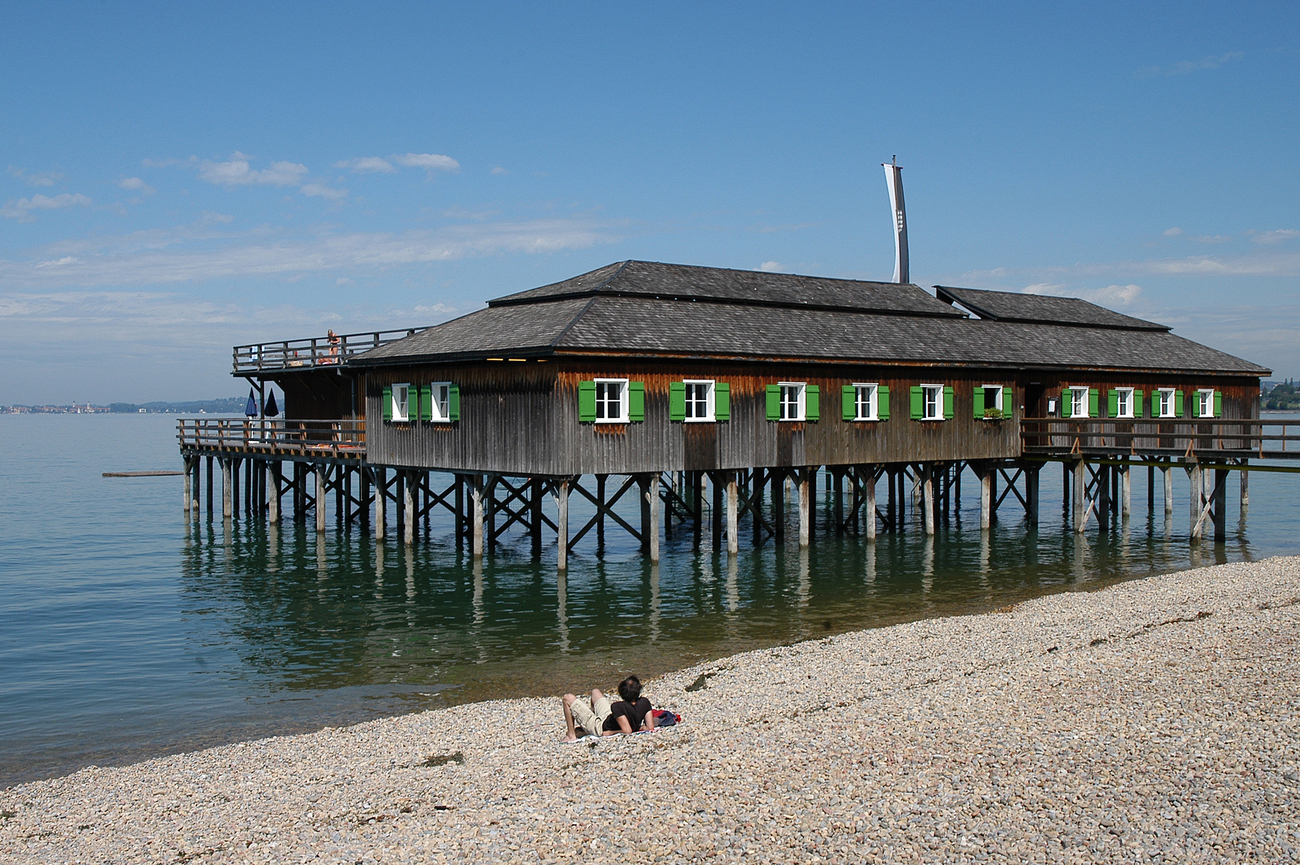
Mili is one of the most distinctive water-based stops in Bregenz. It is not just another public swimming area; it is a historic wooden bathhouse standing on stilts over Lake Constance. That gives it a very different feel from Seebad Bregenz. Seebad is modern and structured, while Mili feels older, more local and more character-driven.
The bath was built in 1825 as a military bathing facility and was originally used to train recruits. Today, it is considered the oldest bathing facility on Lake Constance. The structure keeps its nostalgic identity through wooden planks, sun terraces and direct lake access.
For activities, Mili is designed more for self-guided use than formal touring. You can swim in the lake, relax on the sun terraces, use the diving board, play table tennis or try stand-up paddling when available.
Künstlerhaus Palais Thurn und Taxis
After Mili, the itinerary starts pulling away from the water and back toward Bregenz’s quieter cultural side. Künstlerhaus Palais Thurn und Taxis is roughly a 15-20 minute walk away.
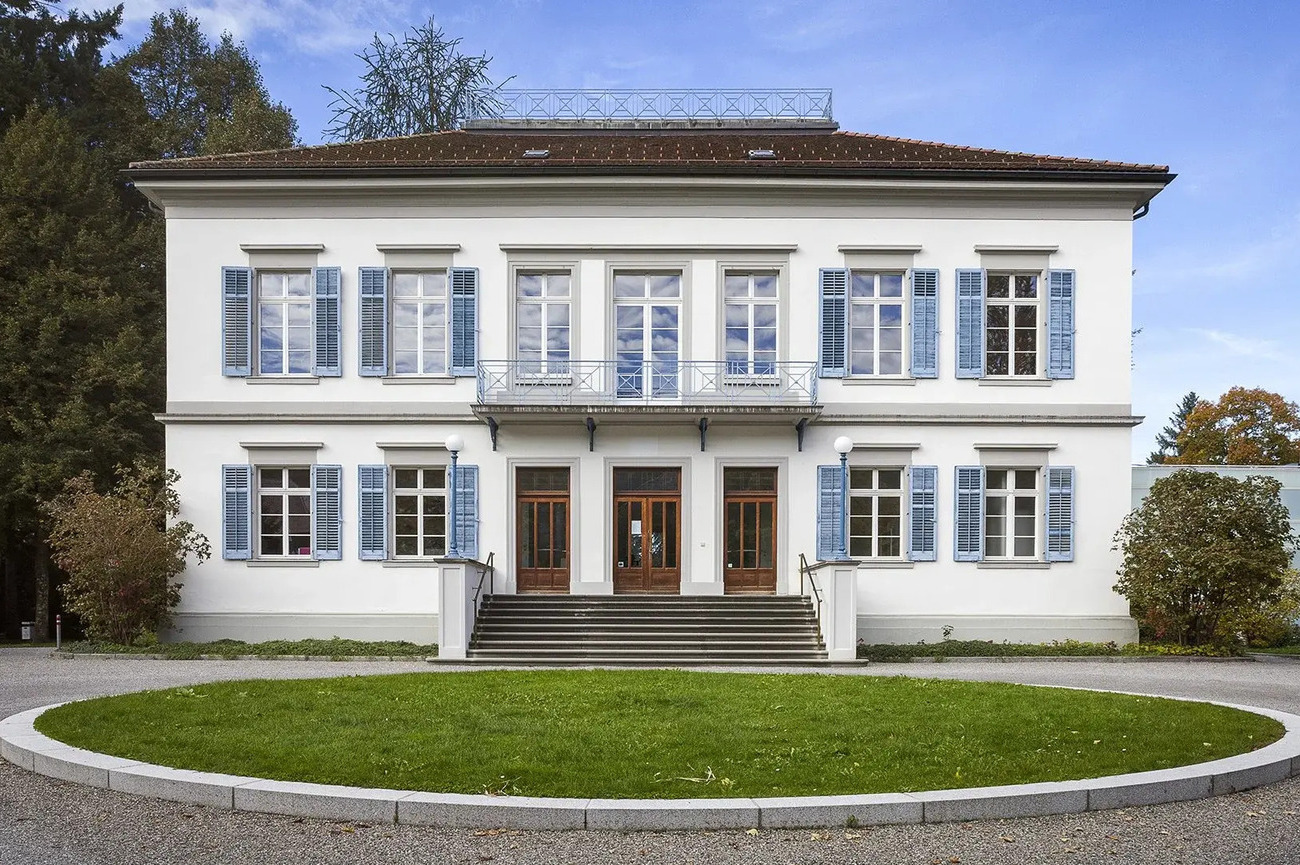
Künstlerhaus Palais Thurn und Taxis is a refined art stop housed in a historic villa on Gallusstraße. The building was constructed in 1848 and later became associated with the Thurn und Taxis name after Gustav Prinz von und zu Thurn und Taxis acquired the property in the late 19th century. Since 1953, it has served as the seat of the Professional Association of Visual Artists of Vorarlberg. This is a late-19th-century villa surrounded by a historic park with native and exotic trees.
Exhibitions change regularly. You should check the exhibition schedule first, time the visit during opening hours and allow space for the park as part of the experience.
Evening: Vorarlberg State Library
The route moves from the gallery setting of Künstlerhaus Palais Thurn und Taxis toward the quieter upper edge of Bregenz. Vorarlberg State Library is best reached by car, because the route rises toward Fluherstraße and usually takes around 5-7 minutes.
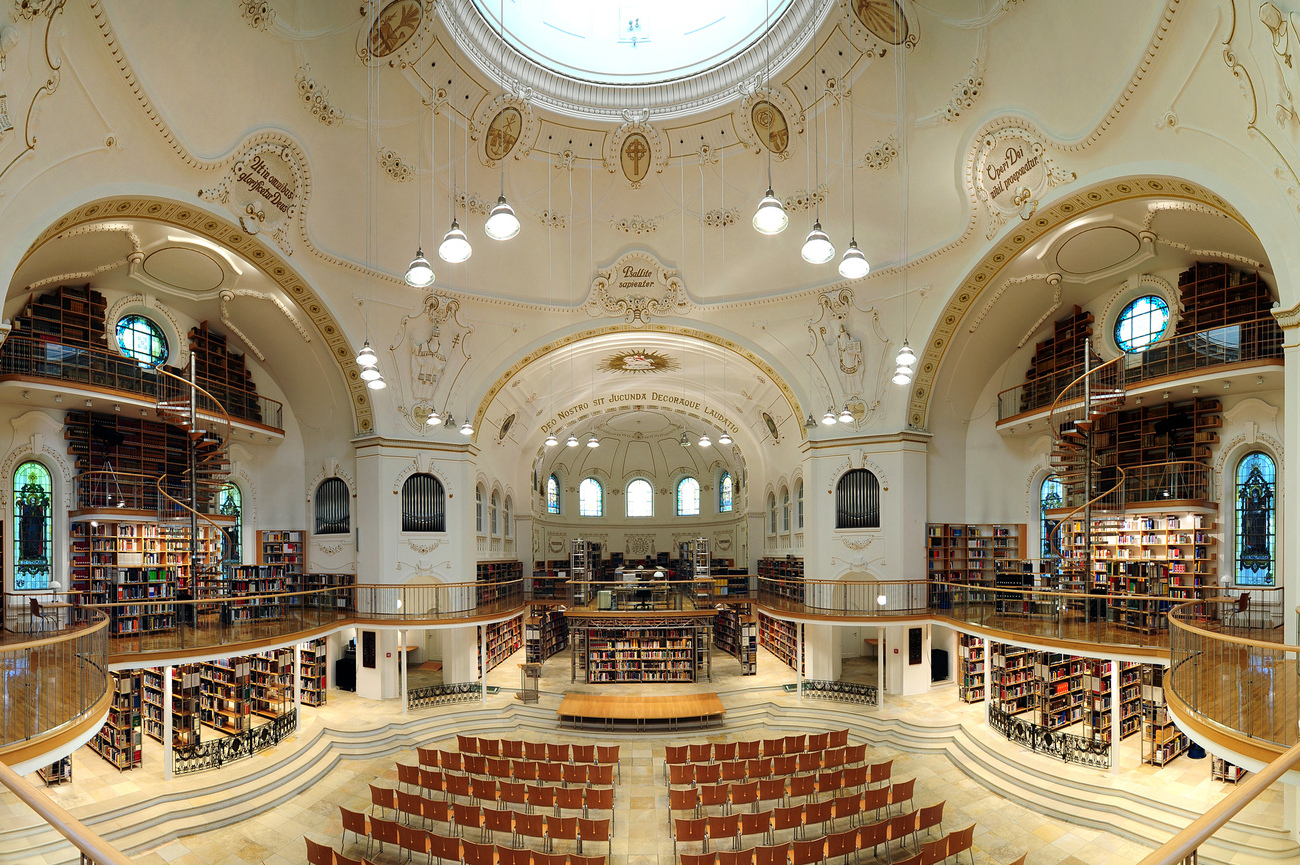
Vorarlberg State Library, or Vorarlberger Landesbibliothek, is one of Bregenz’s more understated cultural stops. It is not a typical tourist-heavy landmark, but that is part of why it works in the evening route. The library sits in a calmer part of the city near the foot of Gebhardsberg.
The building is housed in the former St. Gallusstift, a Benedictine monastery complex that was adapted for library use. The library officially opened in the converted building in 1986, while the Kuppelsaal, the former abbey church transformed into a library hall, was completed in 1993. This is the main architectural reason to include the stop. It is not only about books and archives; it is about seeing how an old religious structure was repurposed into a modern knowledge space.
Burgruine Hohenbregenz
Close the tour by heading to Gebhardsberg, one of the best viewpoints over Bregenz and Lake Constance. From Vorarlberg State Library, the drive takes around 5–7 minutes.
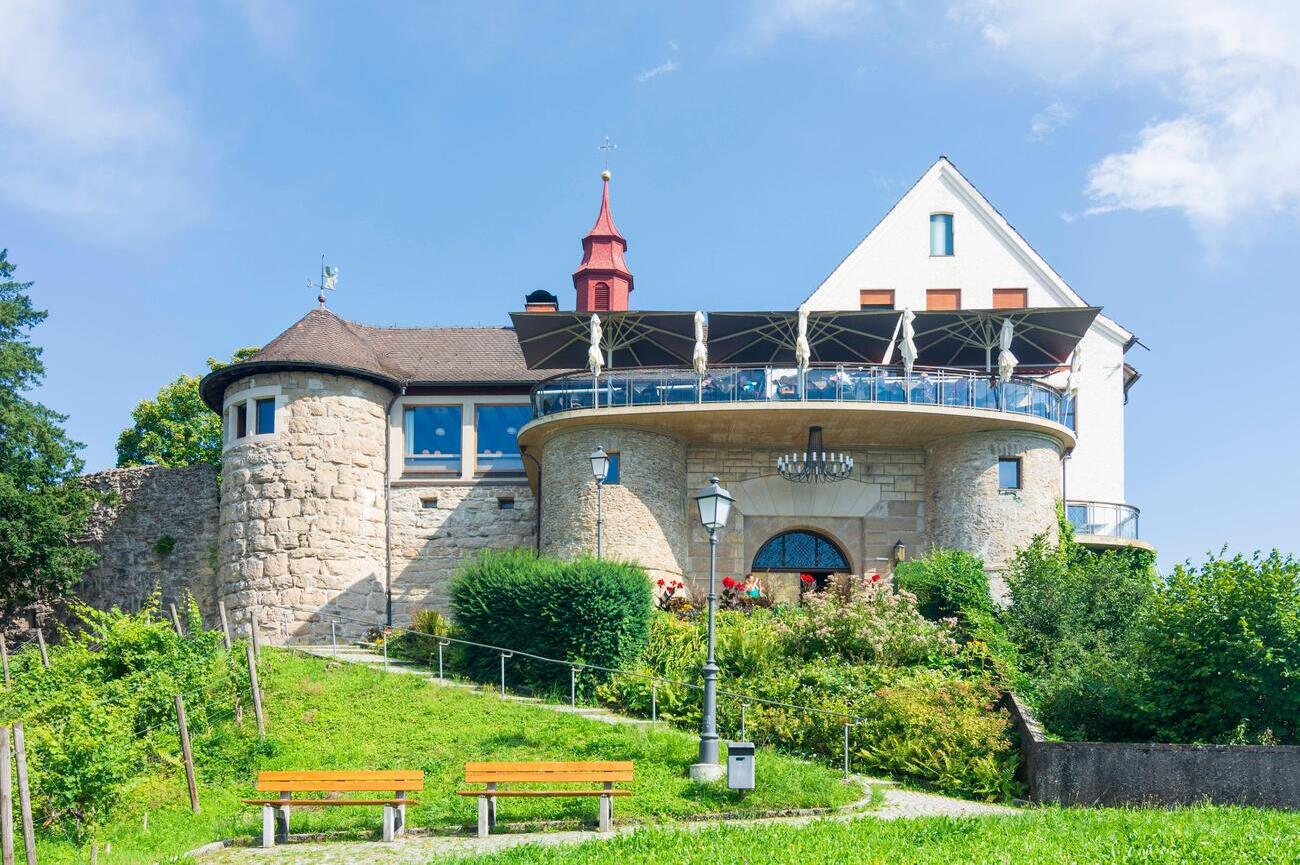
The medieval Castle Hohenbregenz once occupied the hilltop, although only sections of its walls and former palace survive today. After the castle was destroyed in the 17th century, the site was gradually adapted for new uses. The Baroque Chapel of St. Gebhard was built within the remains of the former castle palace, while parts of the historic complex and castle walls were later incorporated into the Burgrestaurant Gebhardsberg. This explains why the ruins are not immediately recognisable as a separate ruined castle.
Walk through the historic complex, see the surviving medieval walls and visit the chapel if it is open. You can also stop for a drink or meal at the restaurant, which combines the old castle setting with panoramic views across Lake Constance, the Rhine Valley and the surrounding mountains. Even without dining, the viewpoint makes Gebhardsberg a worthwhile final stop.
Day 3 - Bregenz
Tour Map
Other Things to Do in Bregenz
Bregenz still has more to give after the main lakefront, museum and Pfänder route. The city is compact, but it has a good second layer like churches, private galleries, quieter art spaces, casino evenings, boutique streets and waterfront areas that are easy to add when you want the itinerary to feel more complete. These are not filler stops. They work best for travelers who want something polished but not overproduced.
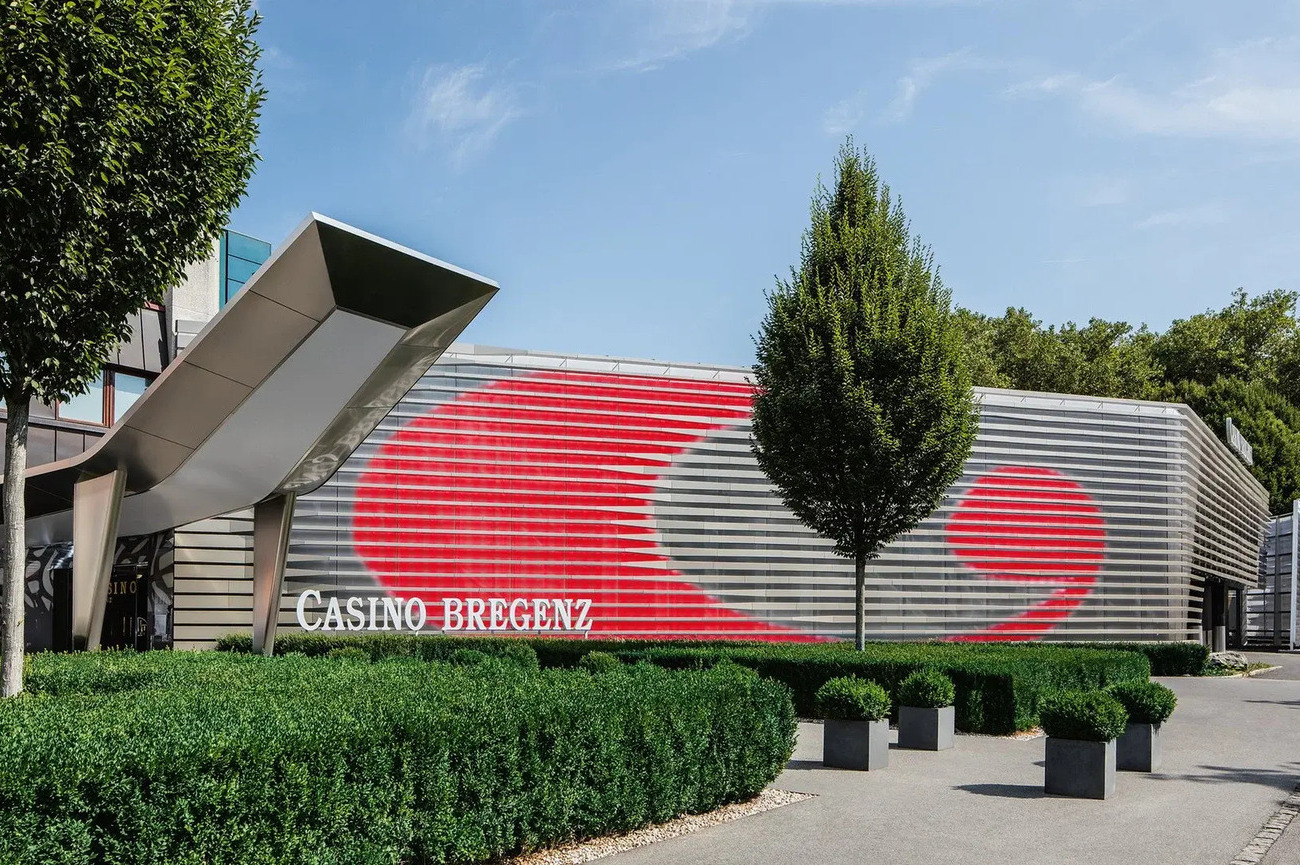
- Casino Bregenz: Casino Bregenz sits near the festival and lakefront district, so it fits naturally after a performance, lakeside walk or cultural stop. The casino covers around 3,000 square meters and combines gaming, entertainment and event spaces near Lake Constance. Its website also offers a virtual tour, which shows areas such as the foyer, reception, gaming and slot machine halls, Arik Brauer room, Jackpot Casino, Casino Lounge, FALSTAFF Casino Restaurant and Cloud Lounge.
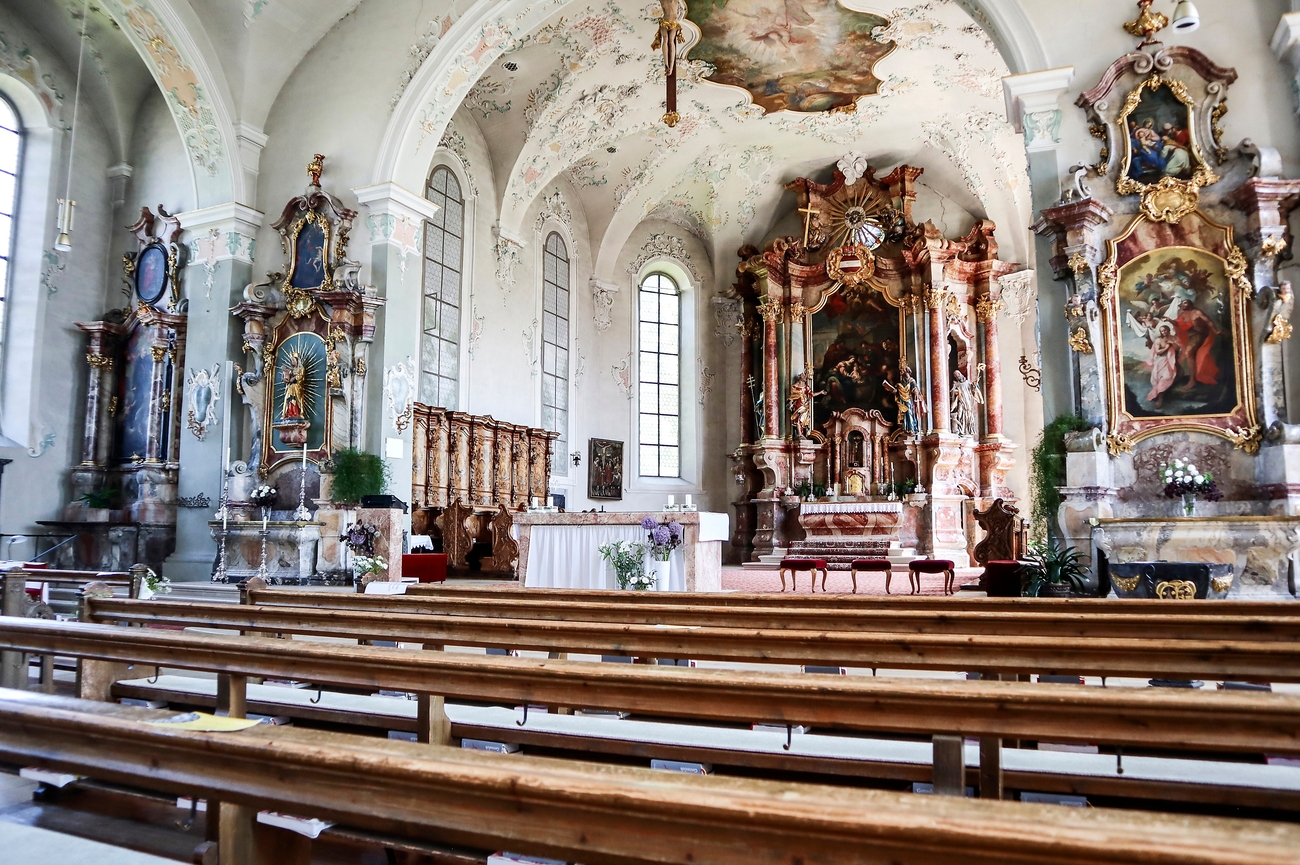
- Kirche St. Gallus: Kirche St. Gallus is one of the most important church stops in Bregenz. The church is linked to a pre-Christian place of worship and was redesigned several times by Baroque master builders from the Bregenzerwald region. The church is named after the Irish monk Gallus, who came to Bregenz as a missionary in the year 610. The parish church itself is considered the oldest in the lowlands of Vorarlberg and was first mentioned in documents toward the end of the 11th century. It is known for strong Baroque elements, including plasterwork, paintings and the silver altar in the left side chapel, which is considered one of the important Baroque works in Vorarlberg. You should expect a large parish church with a strong Baroque character, a visible position over the city and interiors that work well for a short but meaningful stop.
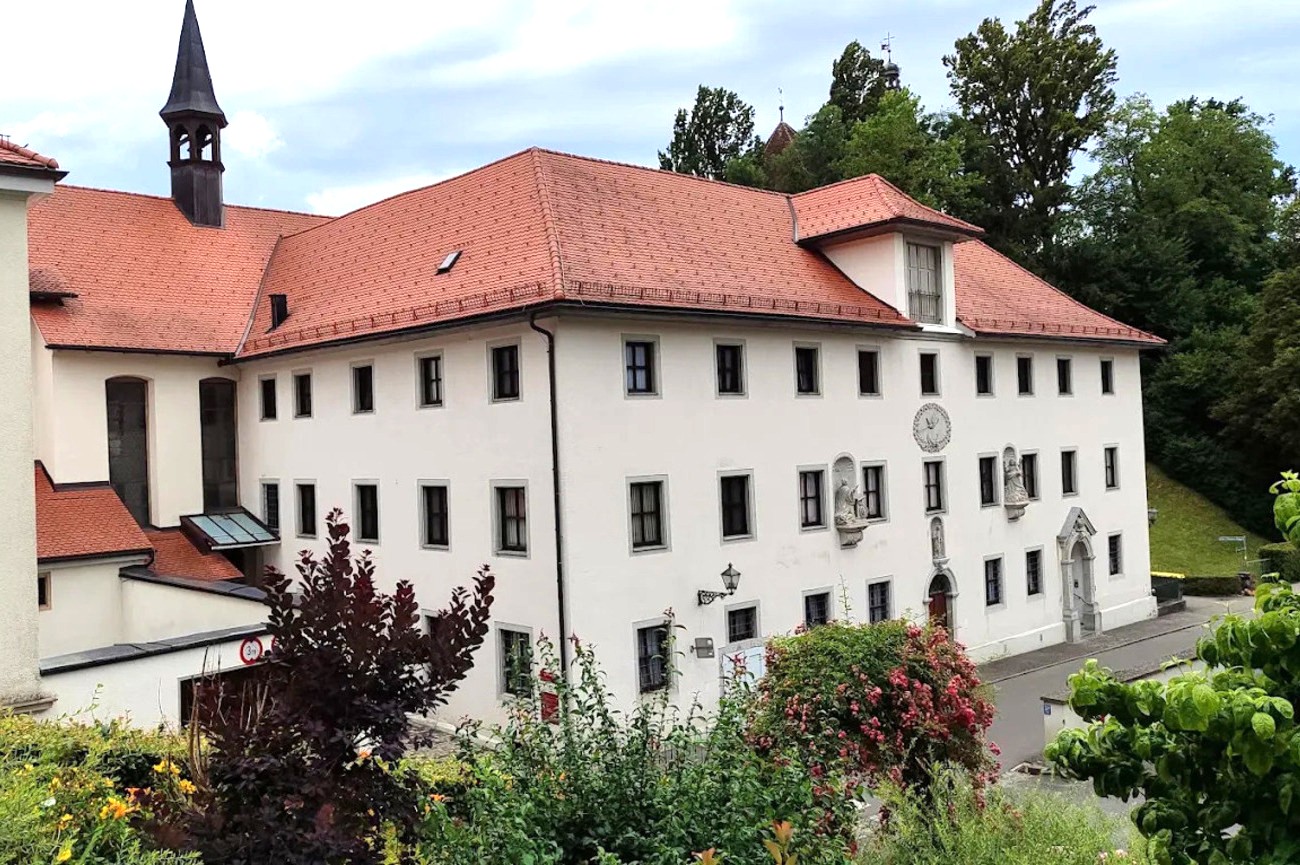
- Kloster Thalbach: Kloster Thalbach is a quieter religious stop near the older side of Bregenz. The newer reason to include it is the Mother Julia Memorial Room, which opened in 2025. The room is located inside the historic monastery building and is dedicated to Mother Julia, giving visitors a more specific spiritual and biographical focus instead of just viewing the exterior of the monastery. It can be visited by going to the reception or contacting the monastery in advance and guided tours can also be arranged.
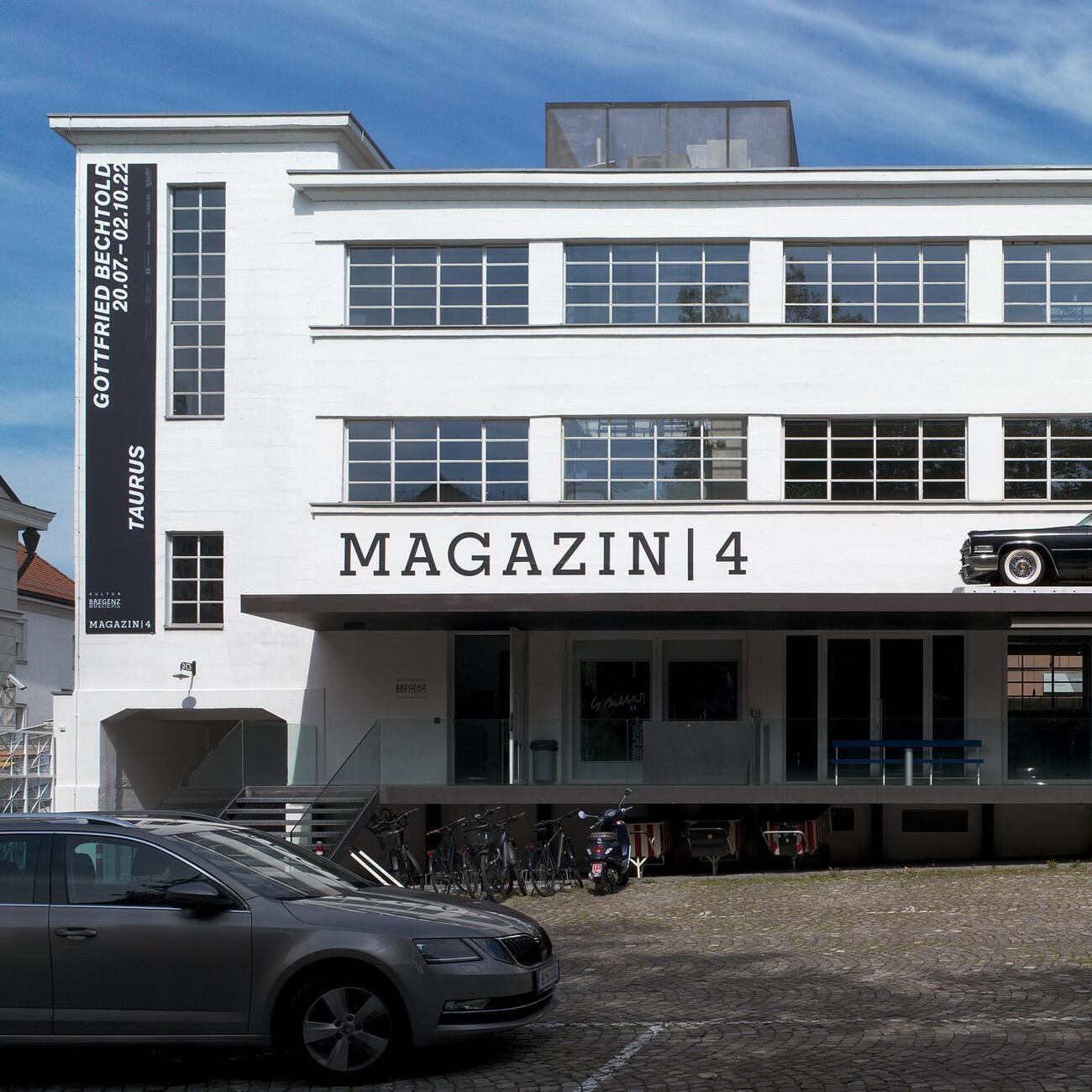
- Magazin 4: Magazin 4 is a strong extra stop for travelers who want Bregenz’s art scene beyond Kunsthaus Bregenz. The building was originally built in 1928 as a warehouse for the steel and coal merchant Pircher and was used as an iron warehouse until the late 1980s. It is noted as one of the few remaining industrial buildings in central Bregenz and has been adapted for cultural use. That background gives Magazin 4 a different texture from the polished museum district: more industrial, more flexible and more experimental. This is not a fixed-collection museum, so planning around the current schedule will help you get the most out of the visit.
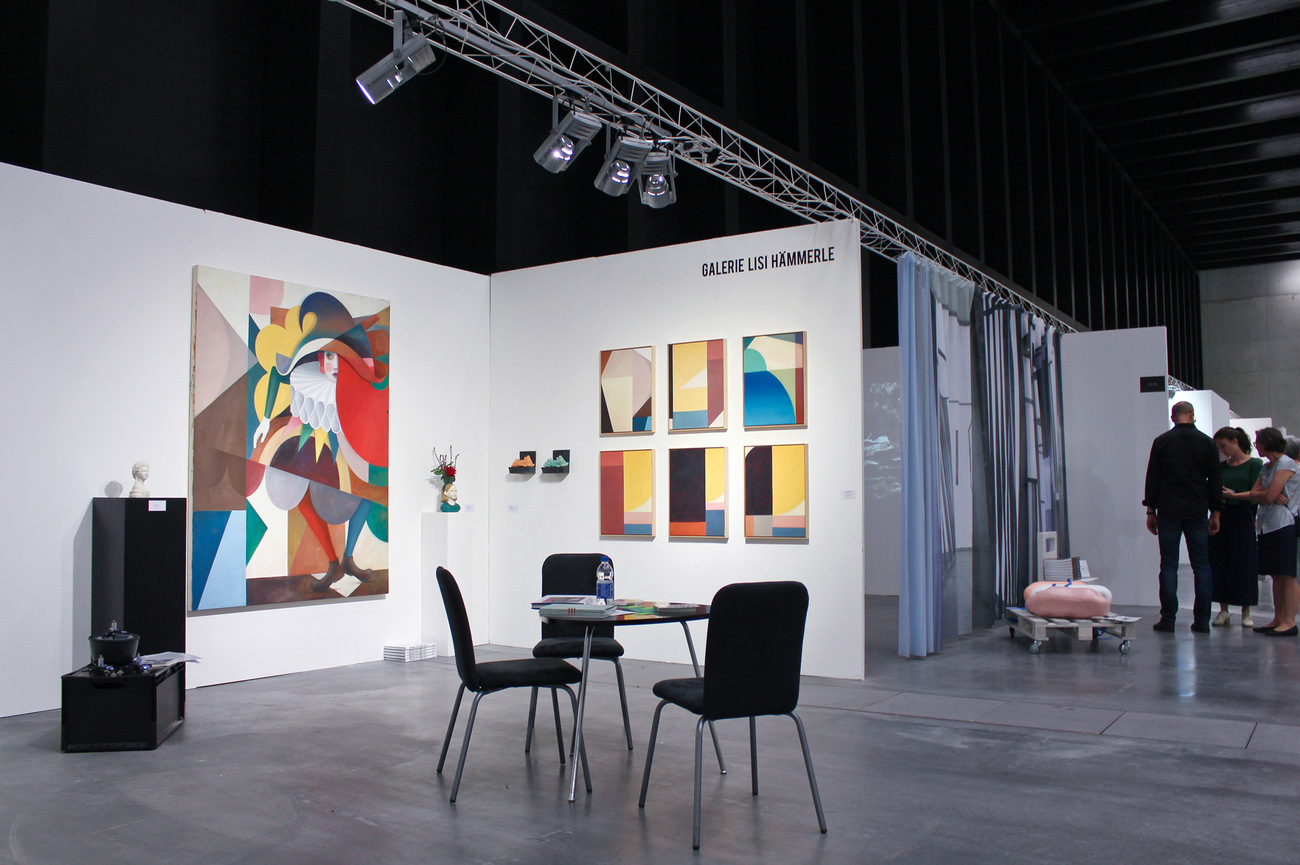
- Galerie Lisi Hämmerle: Galerie Lisi Hämmerle is located on Anton-Schneider-Straße and was founded in 1989 as a gallery for Austrian and international contemporary art. The gallery focuses on contemporary art across different media. Its program includes new media, video installation, photography, painting, sculpture, objects and multiples, with occasional concerts and performances included. Because it is a private gallery, the experience is naturally more focused and less crowded than a museum. The viewing rhythm is slower and the exhibitions are usually more selective.
Things to Do with Kids in Bregenz
Bregenz with kids is not the loud, overstimulating kind of family trip. It is more lake, mountain, animals, museums, playgrounds and just enough “let them run around” energy to keep the day from turning into a negotiation. The city is compact, so you are not spending half the trip moving between places. You can mix a museum stop with a playground, a cable car ride with animals, or a lake swim with mini golf and still keep everyone functioning. Very important.
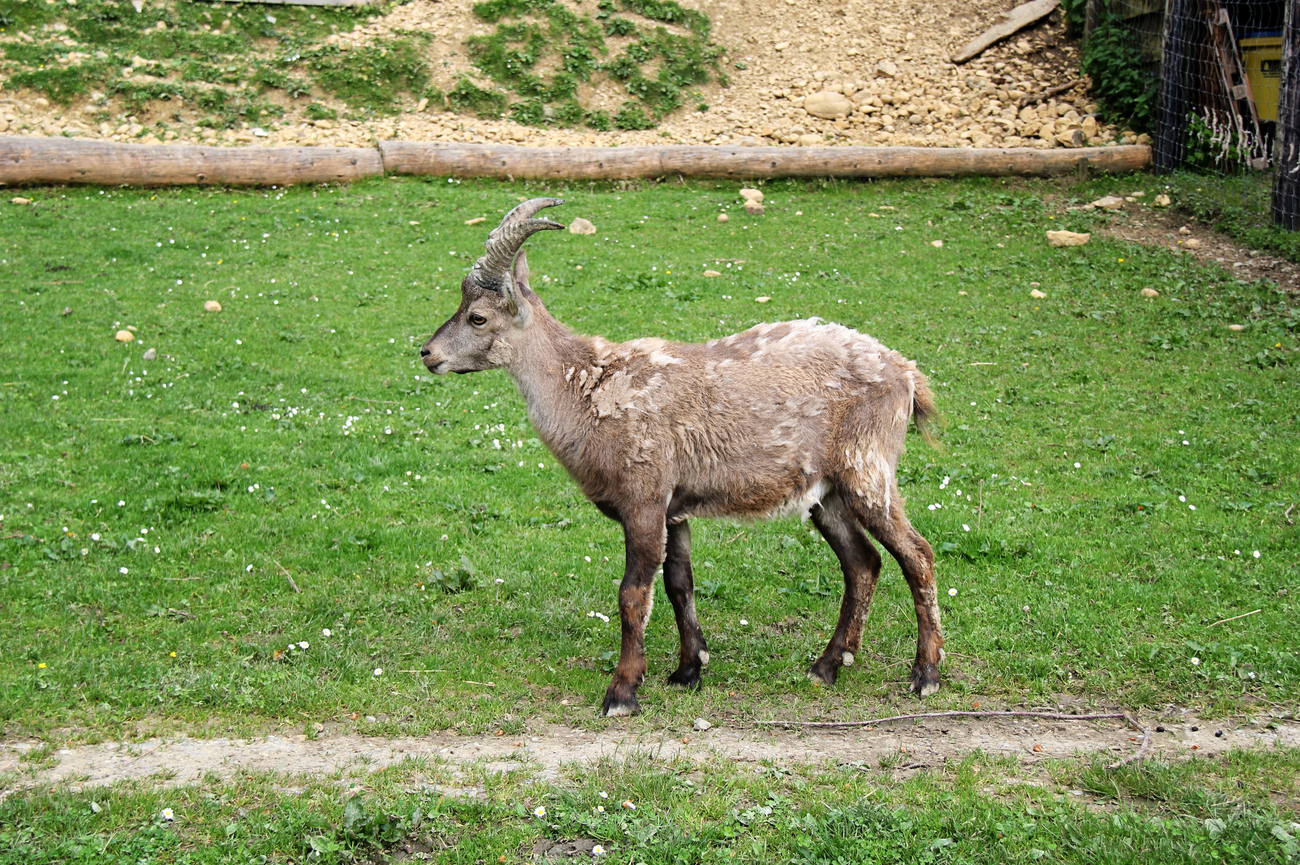
- Alpenwildpark Pfänder: Alpenwildpark Pfänder is one of the easiest kid-friendly wins in Bregenz. It sits near the Pfänderbahn mountain station, so the experience starts before you even reach the animals. Kids get the cable car ride first, then the wildlife park right after. The wildlife park has a short loop where families can see animals such as red deer, ibex, marmots and dwarf goats. It is not a huge zoo, but that actually works in your favor. The loop is manageable, the setting is open, and the mountain view keeps the adults entertained too. There is also a forest slide, audio-guided adventure tours and a balance course, so kids get more than just “look at the animals and behave.”
- Weiherspielplatz: Weiherspielplatz is a good low-pressure family stop when the kids need space to move without turning the day into a full attraction visit. Sometimes a good playground saves the entire day. Kids can play, adults can reset, and the itinerary does not feel like it has completely stopped. It is especially helpful between more structured activities, like museums, shopping streets or old-town walking.
- soBUNT Family Concept Store: soBUNT Family Concept Store is a cute central stop for families who want something calmer than a playground or climbing hall. It is located on Maurachgasse in the heart of Bregenz and focuses on special items for children, families and the home. Its value is in being a small, tasteful stop that fits nicely into a family route through the city center. You can browse children’s items, family goods and design-conscious pieces without needing to commit a lot of time. It works especially well after an old-town walk.
Day Trips from Bregenz
Bregenz is a strong base because it sits right at the edge of three travel moods: Lake Constance towns, Swiss heritage cities and Alpine-side escapes. You do not need to commit to a long-haul day to get something different. The best day trips from Bregenz are not about collecting borders just to say you did it. The smarter move is choosing places that add something the city itself does not fully cover like UNESCO libraries, island gardens, medieval castles and airship history.
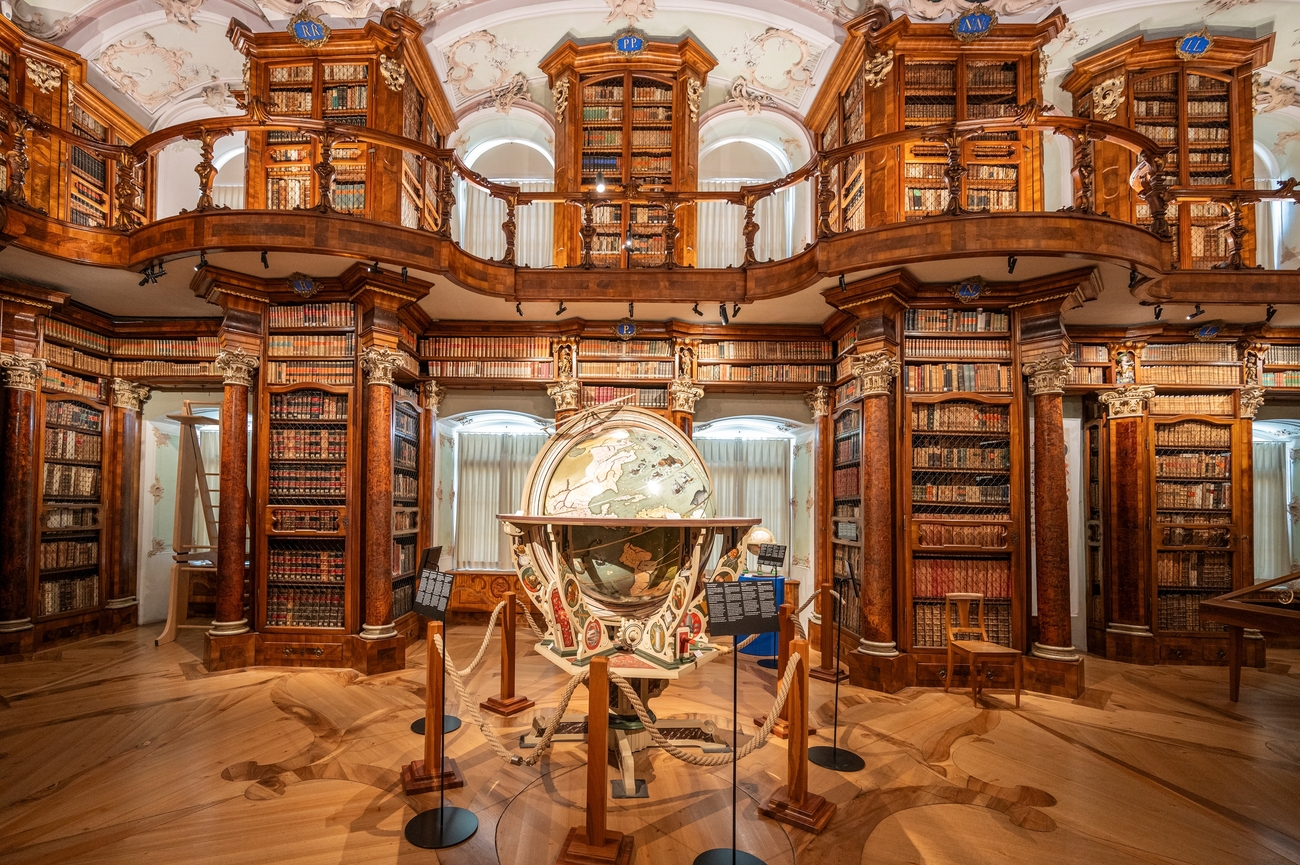
- St. Gallen: St. Gallen is the day trip for travelers who want the cultural weight of Switzerland without committing to a long travel day. The city is best known for the Abbey District of St. Gall, a UNESCO World Heritage Site and that is where your route should begin. The Abbey Library is the star here. It is one of the oldest and richest monastic libraries in the world, with historic manuscripts and Baroque interiors. Around it, you can visit the Cathedral, the vaulted cellar and the old town with its decorated bay windows. Travel from Bregenz usually takes around 28-42 minutes by train, which makes the trip easy to justify. You should go and take first-class train seats, book a private Abbey District guide and keep the route sharp.
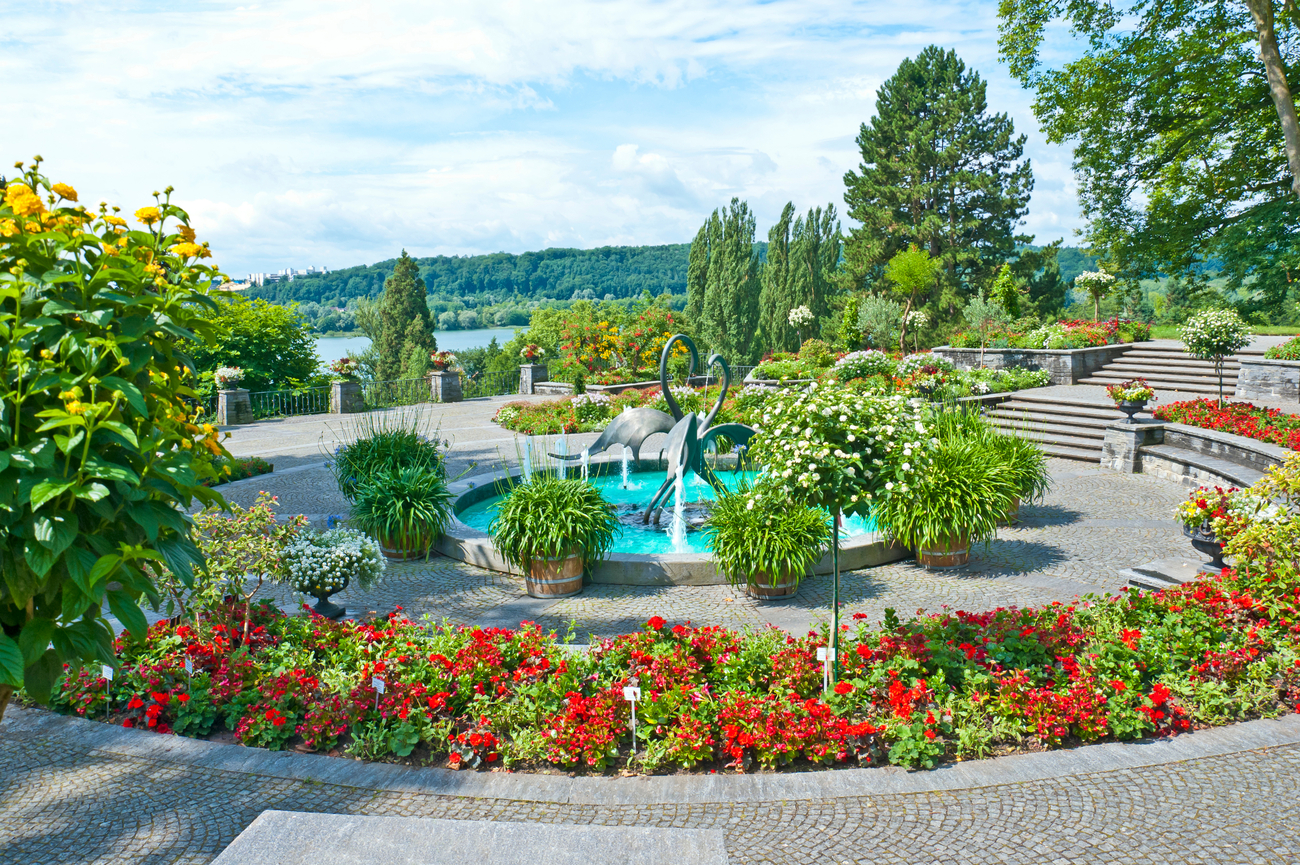
- Mainau Island: Mainau Island is the kind of place you choose when you want gardens, lake views and a clean, curated pace instead of a dense city day. From Bregenz, the drive takes around 1 hour 13 minutes. The island covers around 45 hectares and is known for seasonal gardens, old trees, the palace area, the palm house and the butterfly house. The butterfly house is one of its most popular stops, with tropical planting and up to 120 butterfly species and subspecies. You should book a private garden or history tour and plan the route around the strongest seasonal displays, the butterfly house and the palace area.
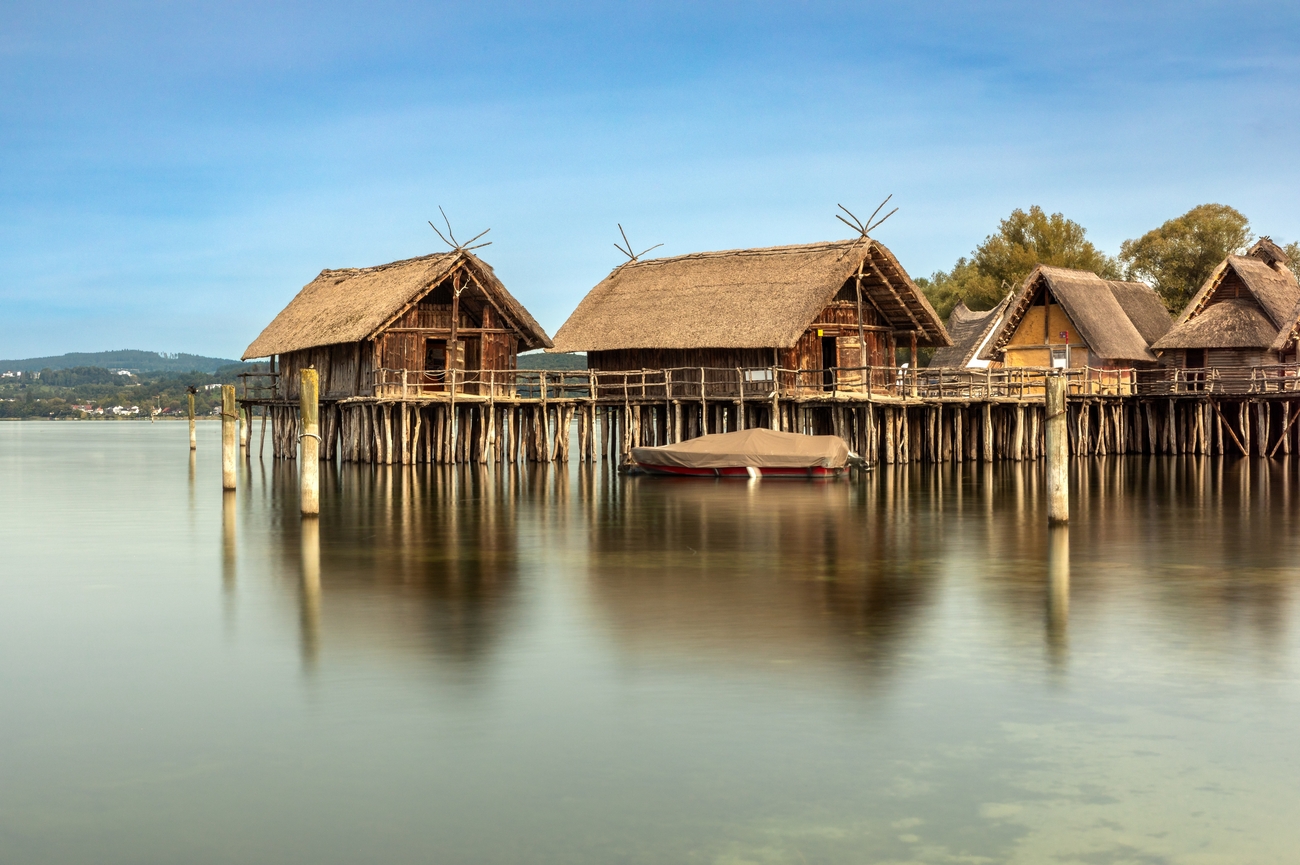
- Unteruhldingen and the Lake Constance Pile Dwellings: Unteruhldingen is one of the most interesting cultural day trips around Lake Constance, especially for travellers who want a UNESCO-related experience beyond St. Gallen. The Pfahlbaumuseum Unteruhldingen is an open-air museum dedicated to prehistoric pile dwellings, with reconstructed lake houses showing how people lived around the Alpine lakes thousands of years ago. It connects Bregenz to the wider UNESCO-listed Prehistoric Pile Dwellings around the Alps and adds an archaeological layer to the region's lake culture. This works best as a curated stop combined with Meersburg, Mainau Island or a Lake Constance driving route.
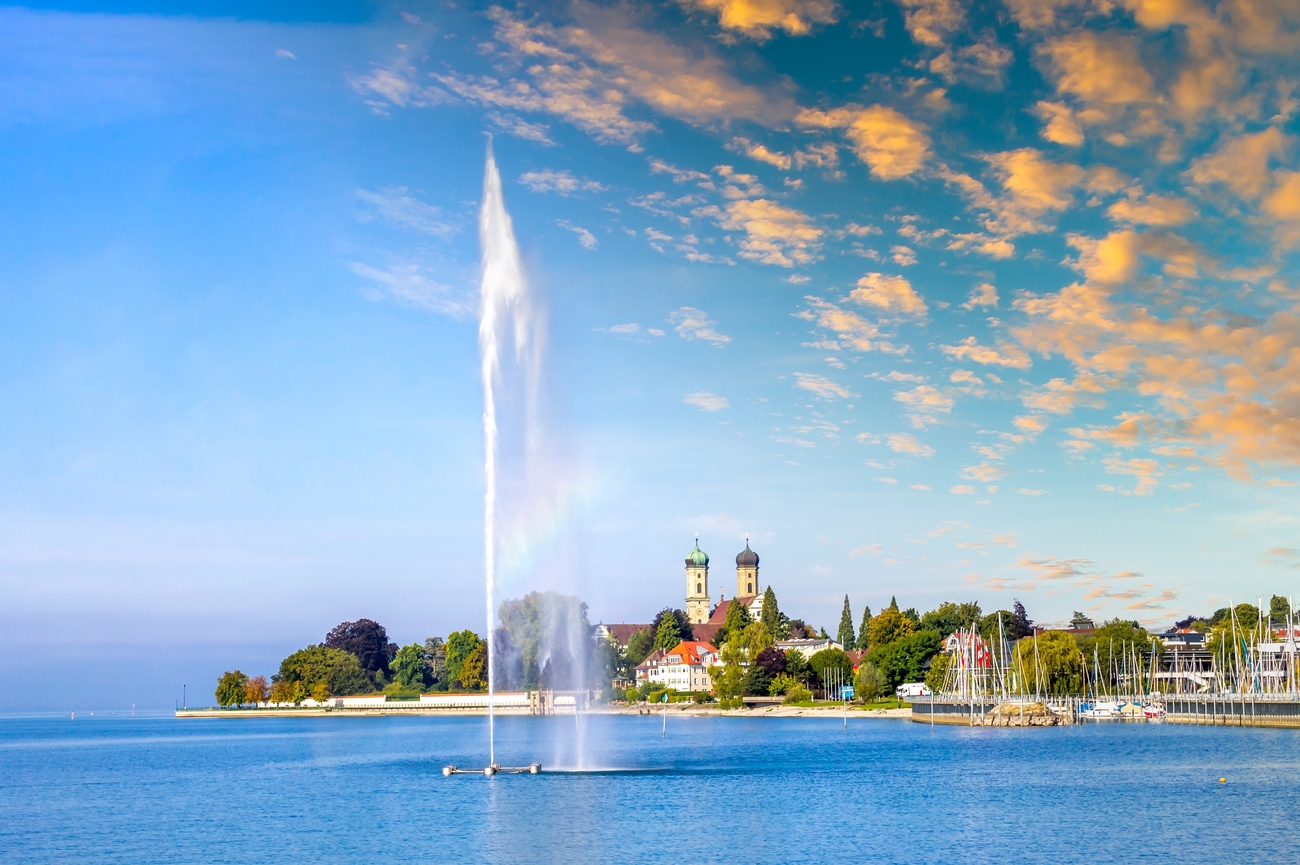
- Friedrichshafen: The reason Friedrichshafen belongs on this list is simple: Zeppelins. Bregenz already gives you lake culture and festival architecture, but Friedrichshafen adds engineering, aviation history and a more technical side of Lake Constance. The fastest train connections from Bregenz can take around 30 minutes. Start with the Zeppelin Museum at the harbor. The museum covers airship history through original exhibits, historical media, technology displays and a partial reconstruction of the LZ 129 Hindenburg. You can add Friedrichshafen Harbor, the waterfront promenade and Moleturm for lake views. And if you want the high-end version, look into a Zeppelin sightseeing flight. These flights depart from Friedrichshafen and offer different routes over Lake Constance.
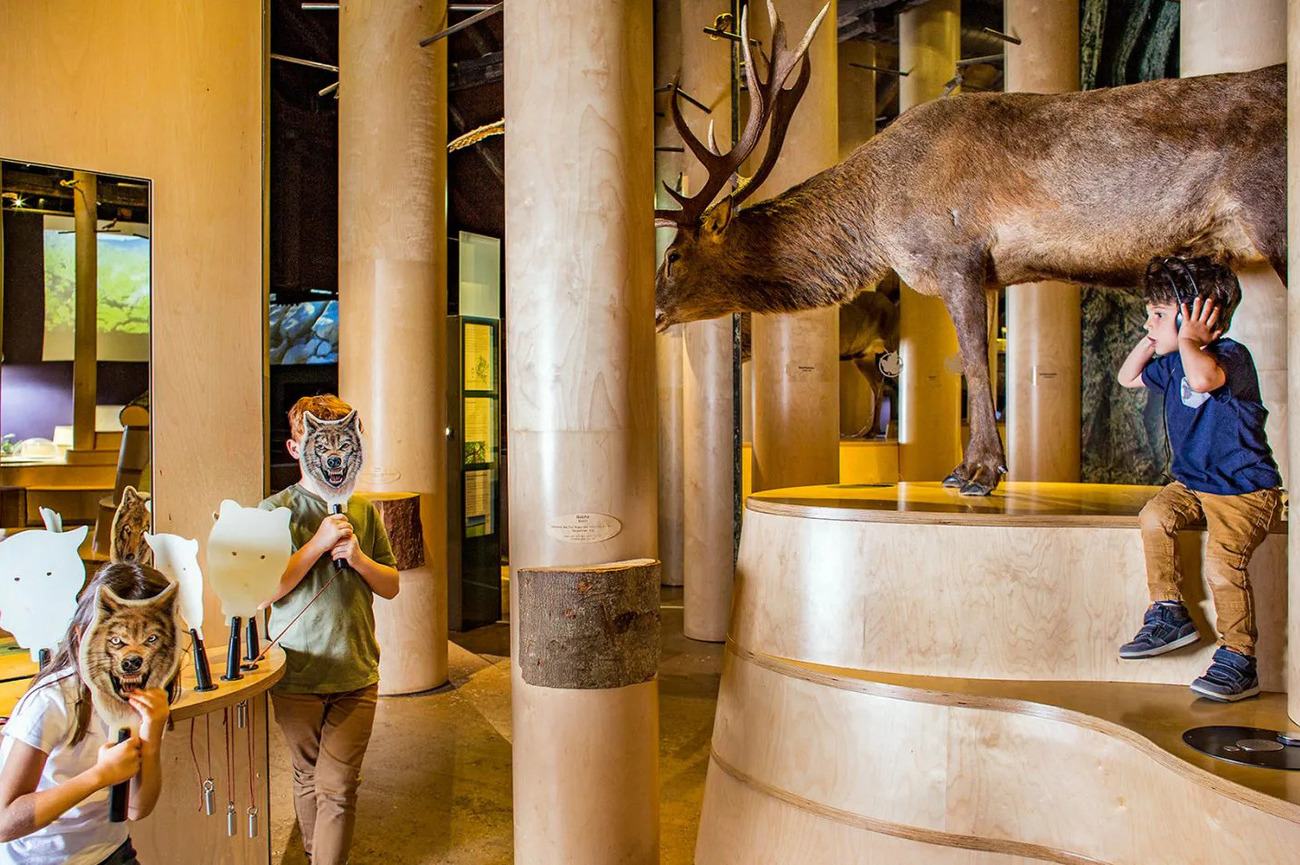
- Dornbirn: Dornbirn is the easiest add-on from Bregenz and the best choice when you want variety without the drama of a long transfer. The train can take around 8-9 minutes, so this trip is almost frictionless. The key stops are inatura Erlebnis Naturschau, Marktplatz, Dornbirn city center and Karren mountain. inatura is the strongest museum stop because it focuses on nature, habitats, science and regional environments in an interactive way. Karren gives the trip its scenic payoff. You can ride the cable car which takes about five minutes to reach the mountain station, where you get views over the Rhine Valley, Lake Constance and the surrounding Alps.
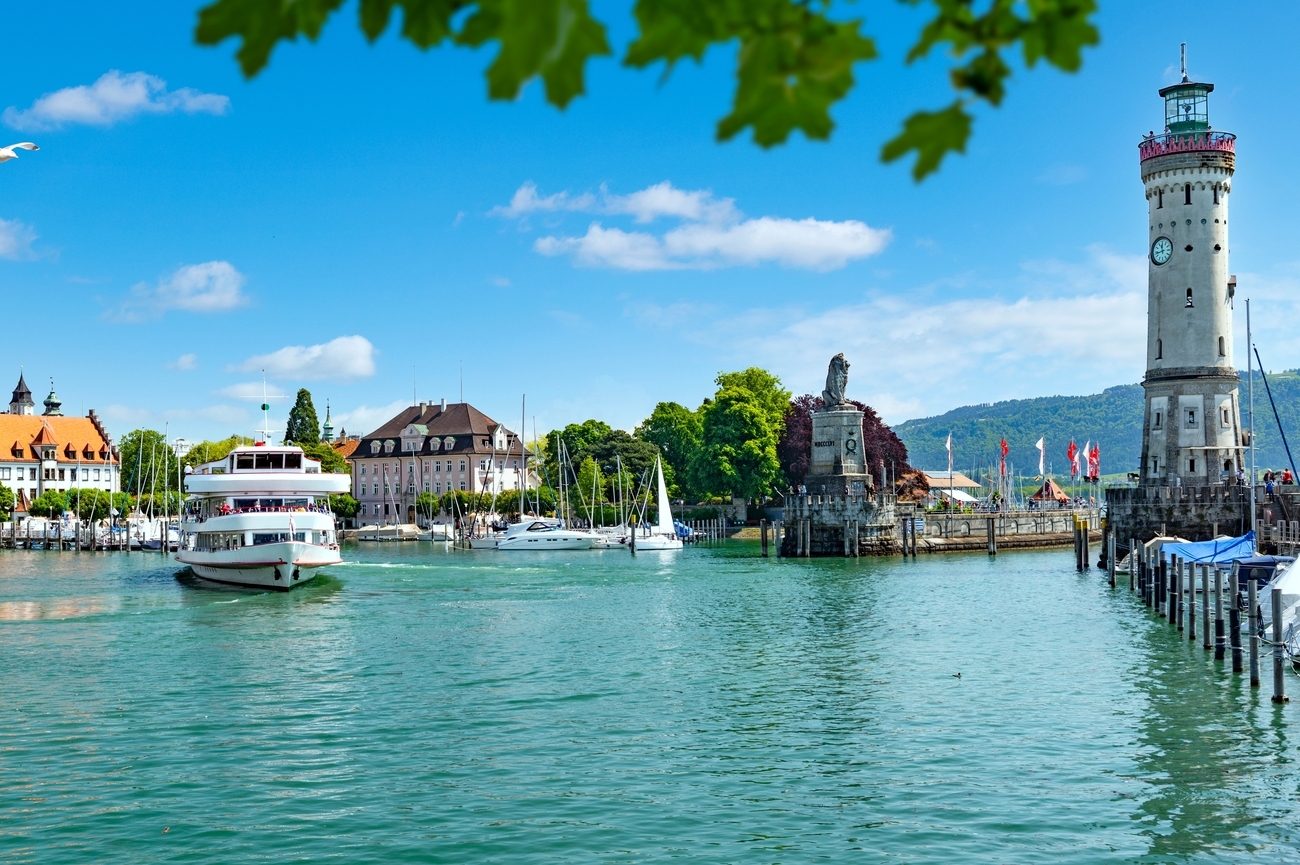
- Lindau: Lindau is one of the easiest and most attractive day trips from Bregenz, sitting just across the border in Germany on Lake Constance. The old town occupies an island connected to the mainland, with narrow streets, historic buildings, harbour views and one of the most recognisable waterfront scenes on the lake. The harbour entrance, framed by the Bavarian Lion and lighthouse, is the classic arrival point and one of the strongest photo stops in the region. Lindau works especially well as a relaxed half-day trip, paired with lunch, a lakeside walk or a private guide focused on the town's history and Lake Constance setting.
Nearby Experiences from Bregenz
Bregenz is already compact, scenic and cultured, but the area around it gives you a much wider set of experiences without forcing a full relocation. This is where the trip gets more layered: not just “stay in Bregenz and walk around.” The best nearby experiences are the ones that give you a clean change of pace. Ski if you want altitude. Golf if you want a quieter luxury day. Historical sites if you want the region’s older story to come through. The Lake Constance Cycle Path also passes through Bregenz, making the city a strong base for relaxed lakeside cycling across the Austrian, German and Swiss sides of the lake. Keep it curated, not chaotic.
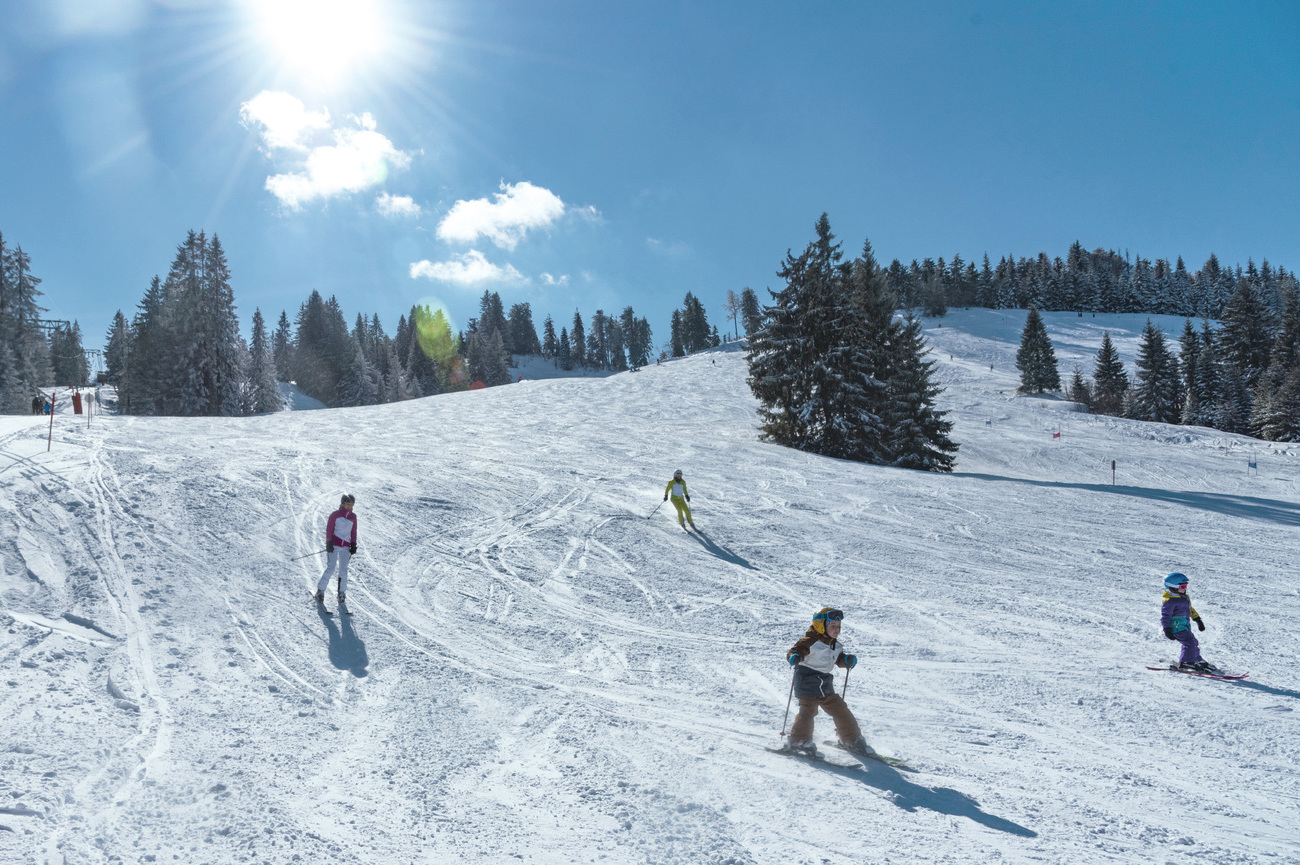
- Bödele: Bödele is one of the most practical ski experiences near Bregenz. It sits above Dornbirn and Schwarzenberg, so it works well if you want a winter-sports stop without pushing deep into the Alps. From Bregenz, the drive usually takes around 30-40 minutes. The ski area has around 25 km of slopes and 12 lifts, with terrain suited for beginners and more confident skiers. It is known for its position between Lake Constance and the Bregenzerwald. You get snow, forest, mountain air and, on clearer days, that wider Lake Constance backdrop.
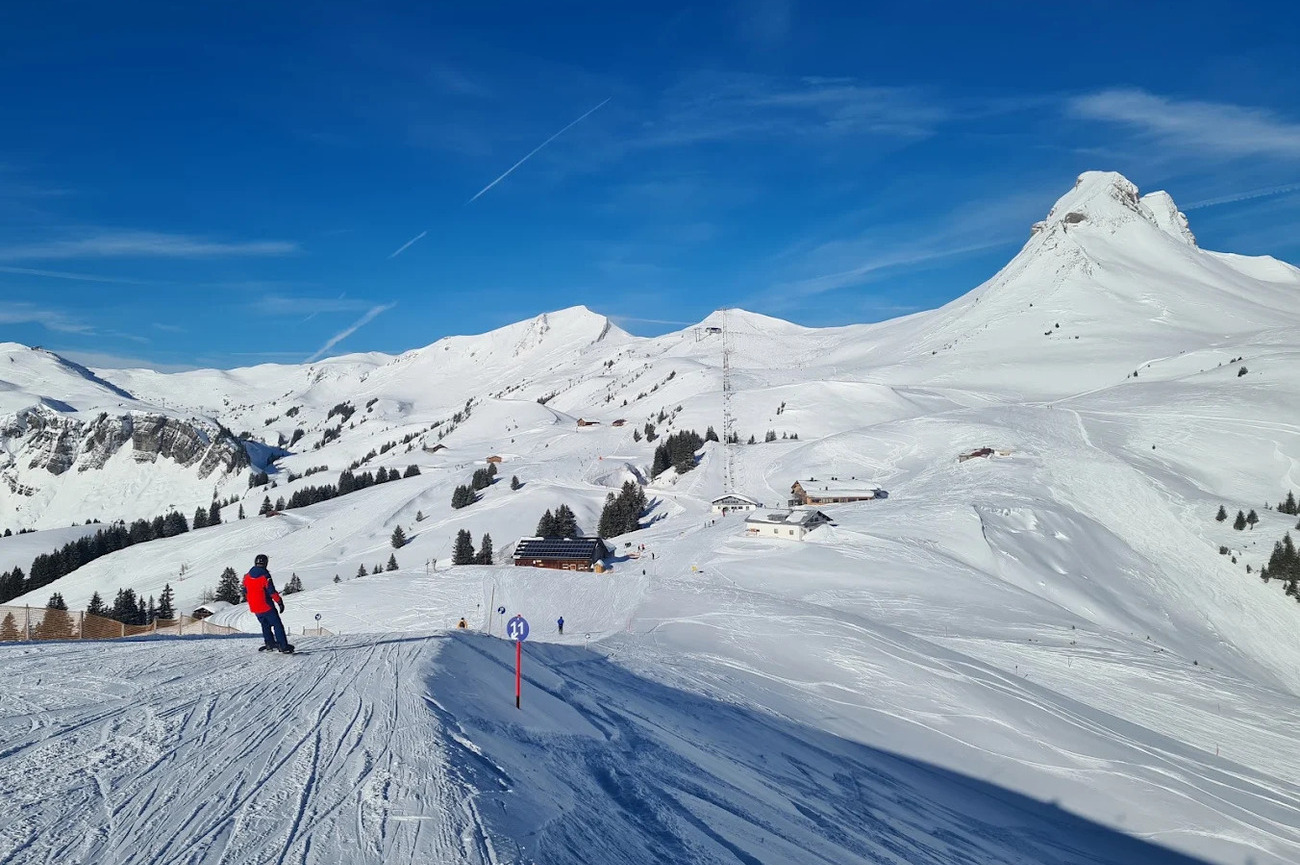
- Damüls-Mellau-Faschina Ski: Damüls-Mellau-Faschina is the bigger ski move from Bregenz. This is the one to choose if you want a proper resort day. Travel time is usually around 1 hour to 1 hour 20 minutes by car, so it still works as a day experience if you start early. The area is one of the largest ski regions in Vorarlberg, with more than 100 km of groomed slopes across Damüls, Mellau and Faschina. It has terrain for different levels, freeride areas, winter hiking routes and that strong Bregenzerwald mountain setting.
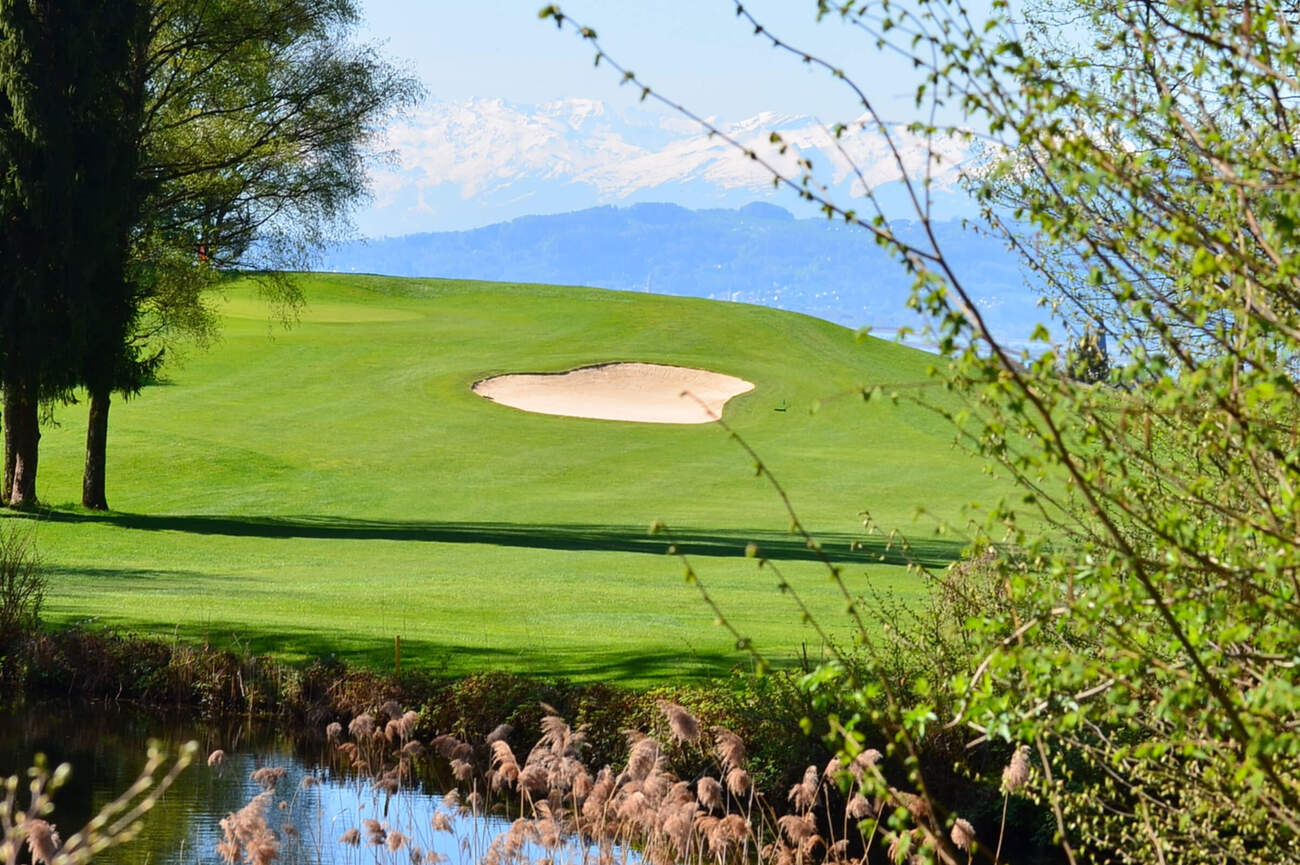
- Golf-Club Lindau-Bad Schachen e.V.: Golf-Club Lindau-Bad Schachen is in Lindau, Germany, roughly 20-30 minutes from Bregenz by car. The course sits near Schloss Schönbühl, with views toward Lake Constance and the Alps. It has an 18-hole course and dates back to 1954. You can pair the round with a short Lindau old-town stop after, especially around the harbor entrance, lighthouse and Bavarian Lion.
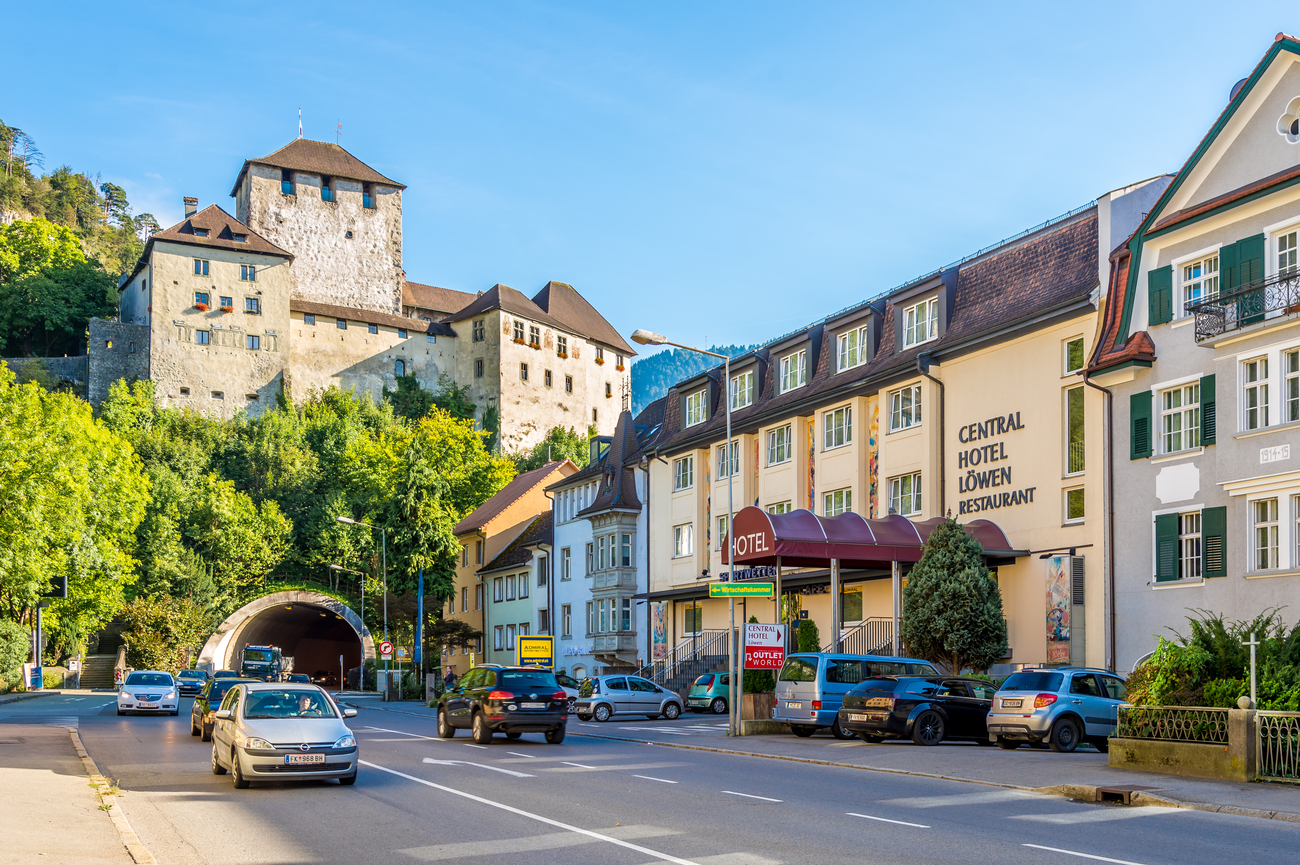
- Schattenburg: Schattenburg Castle is roughly 30-40 minutes away by train or private transfer. The castle is one of Feldkirch’s defining landmarks and houses the Schattenburg Museum. The experience includes historic rooms, regional objects and stories tied to more than 800 years of local history. You can also add the city of Feldkirch itself, especially the old town, Marktgasse, city gates and arcaded streets.
- Jewish Museum of Hohenems: The Jewish Museum of Hohenems is one of the more meaningful cultural-history experiences near Bregenz. Hohenems is usually around 20-30 minutes away by train. The museum is located in the Villa Heimann-Rosenthal, in the center of the former Jewish quarter. It documents Jewish life in Hohenems and the wider region from the 17th century to the present. The area around the museum also adds context, especially the former Jewish quarter and cemetery.
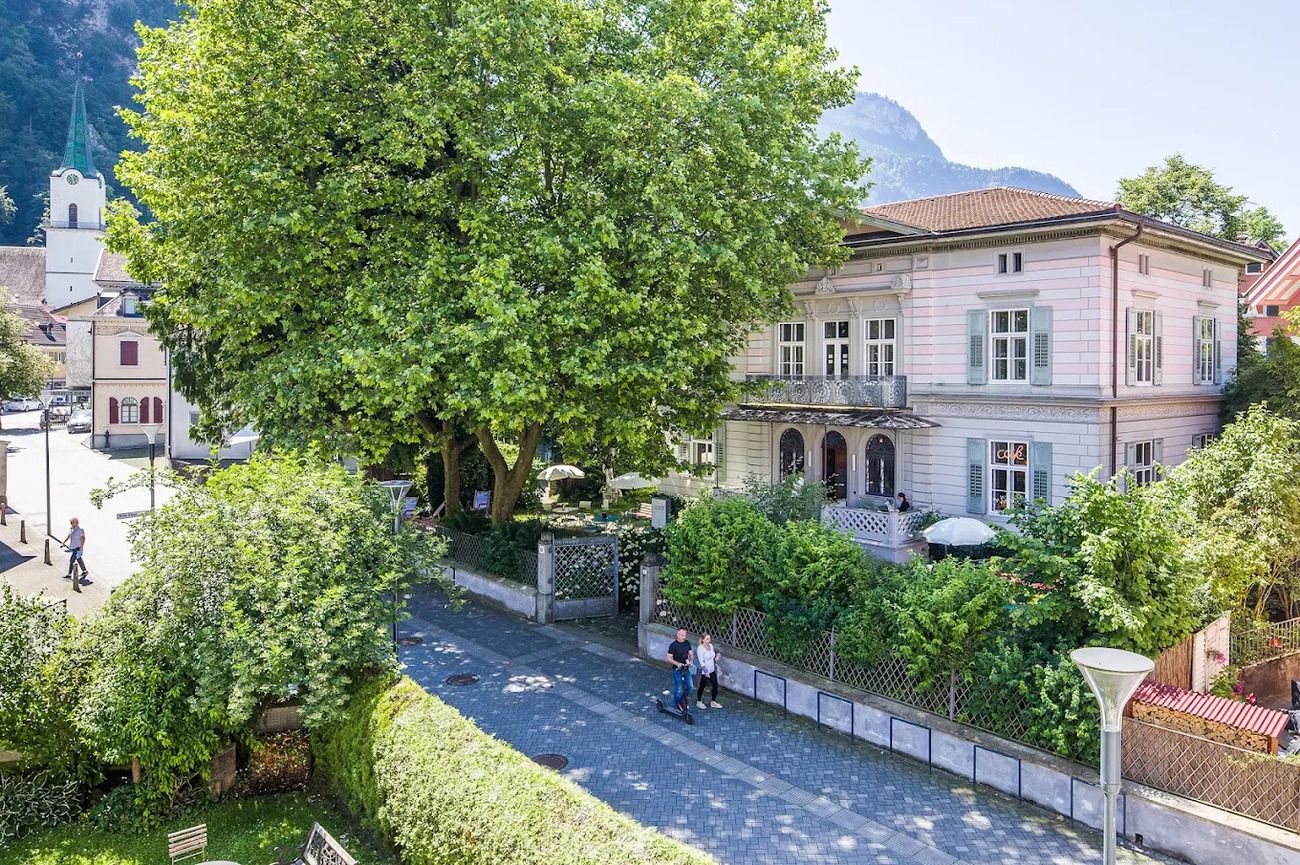
- Bregenzerwald: Bregenzerwald is one of the strongest nearby experiences from Bregenz, especially for travellers interested in Alpine scenery, architecture, food and regional craft. The area is known for its villages, wooden architecture, mountain landscapes and cheese culture, giving the trip a deeper sense of Vorarlberg beyond the lake. A curated day here could include village stops, a cheese-focused experience, local producers, contemporary timber architecture and scenic drives through the Bregenzerwald mountains. It is also a natural introduction to the wider experiences of Vorarlberg, from mountain villages and regional food traditions to design, culture and Alpine landscapes.
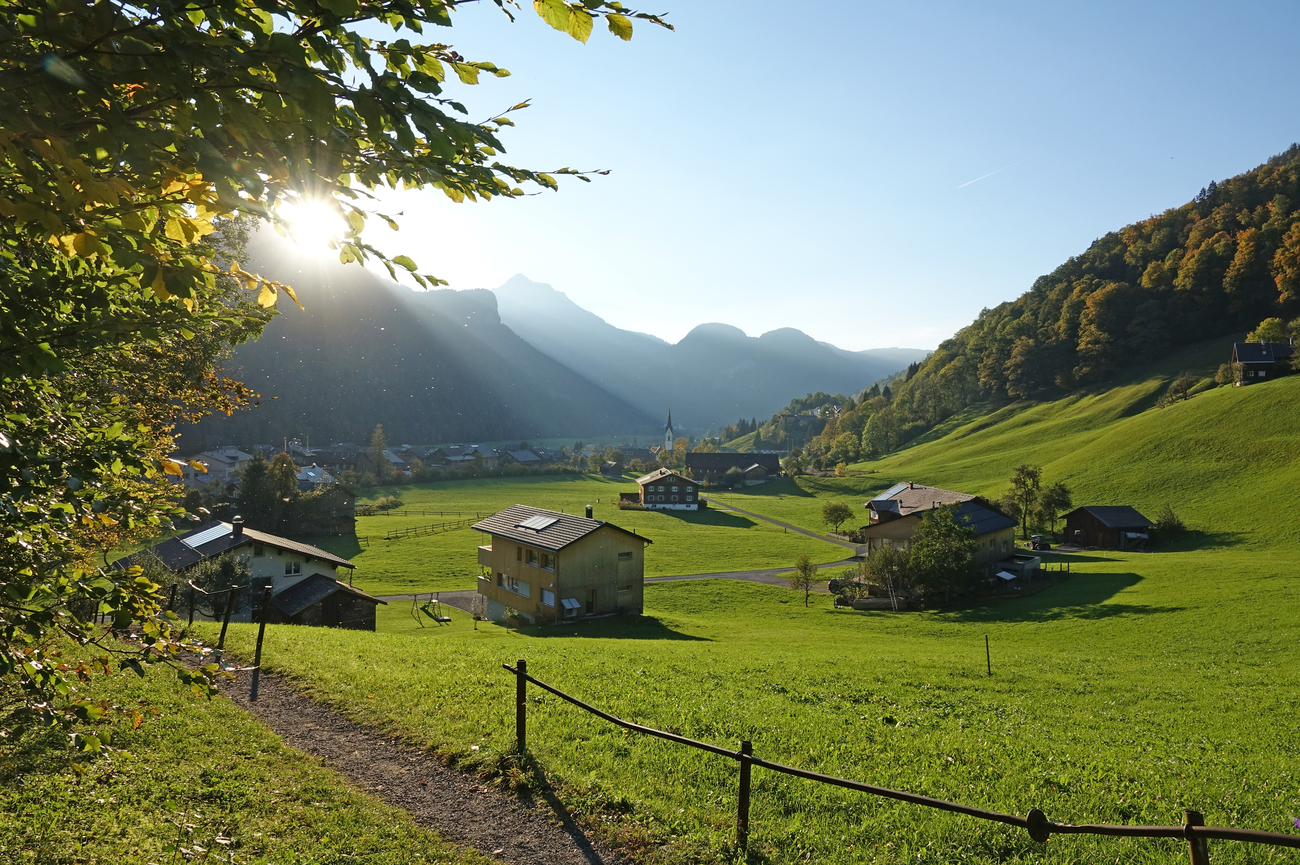
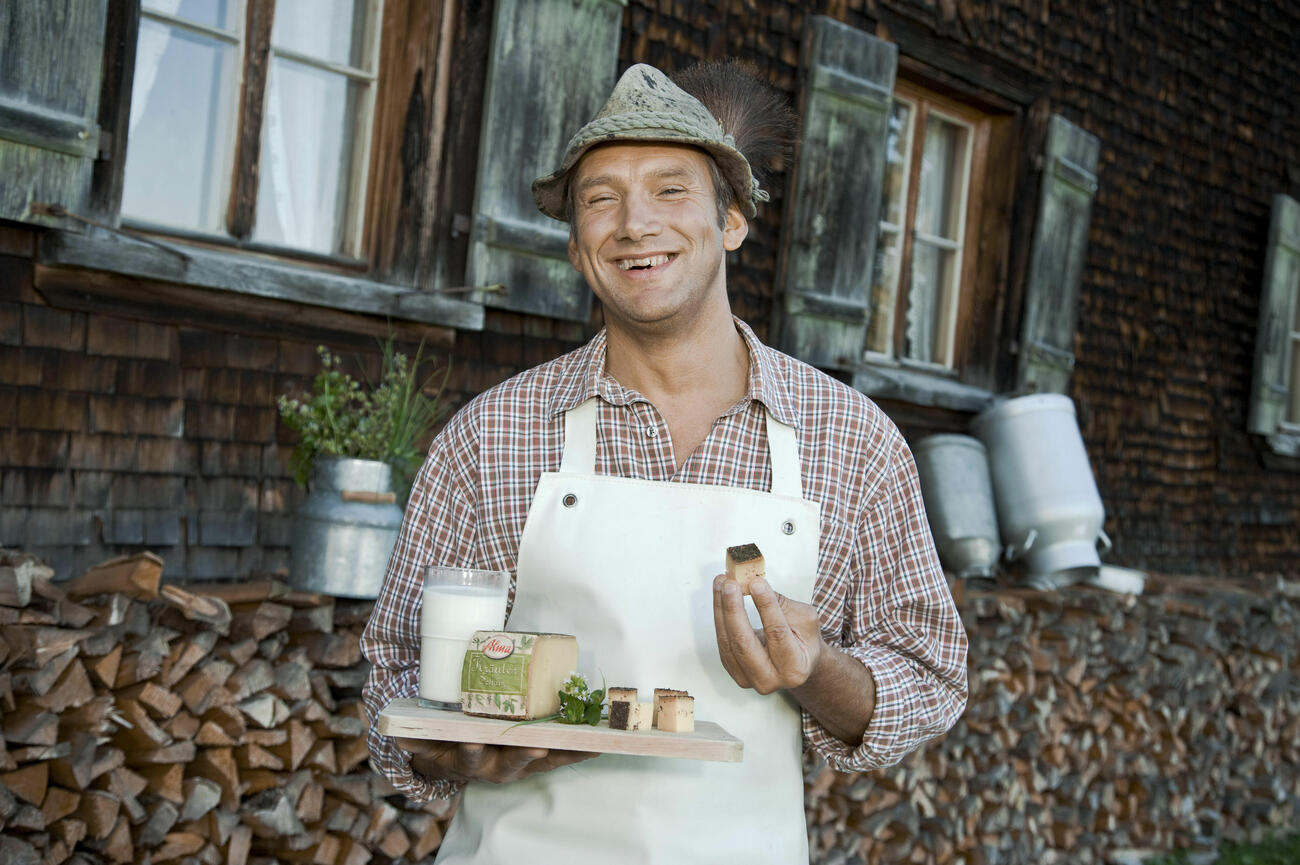
- Bregenzerwald Cheese Route: The Bregenzerwald Cheese Route is a strong culinary experience for travellers who want to connect Vorarlberg's Alpine landscapes with local food culture. Rather than a single road, it is a network of dairies, farms, alpine pastures, inns and producers dedicated to the region's cheese-making traditions. It works well as a private day experience with tastings, village stops, mountain scenery and a lunch built around regional ingredients. This is one of the best ways to make the Bregenz itinerary feel more rooted in Vorarlberg rather than only Lake Constance.
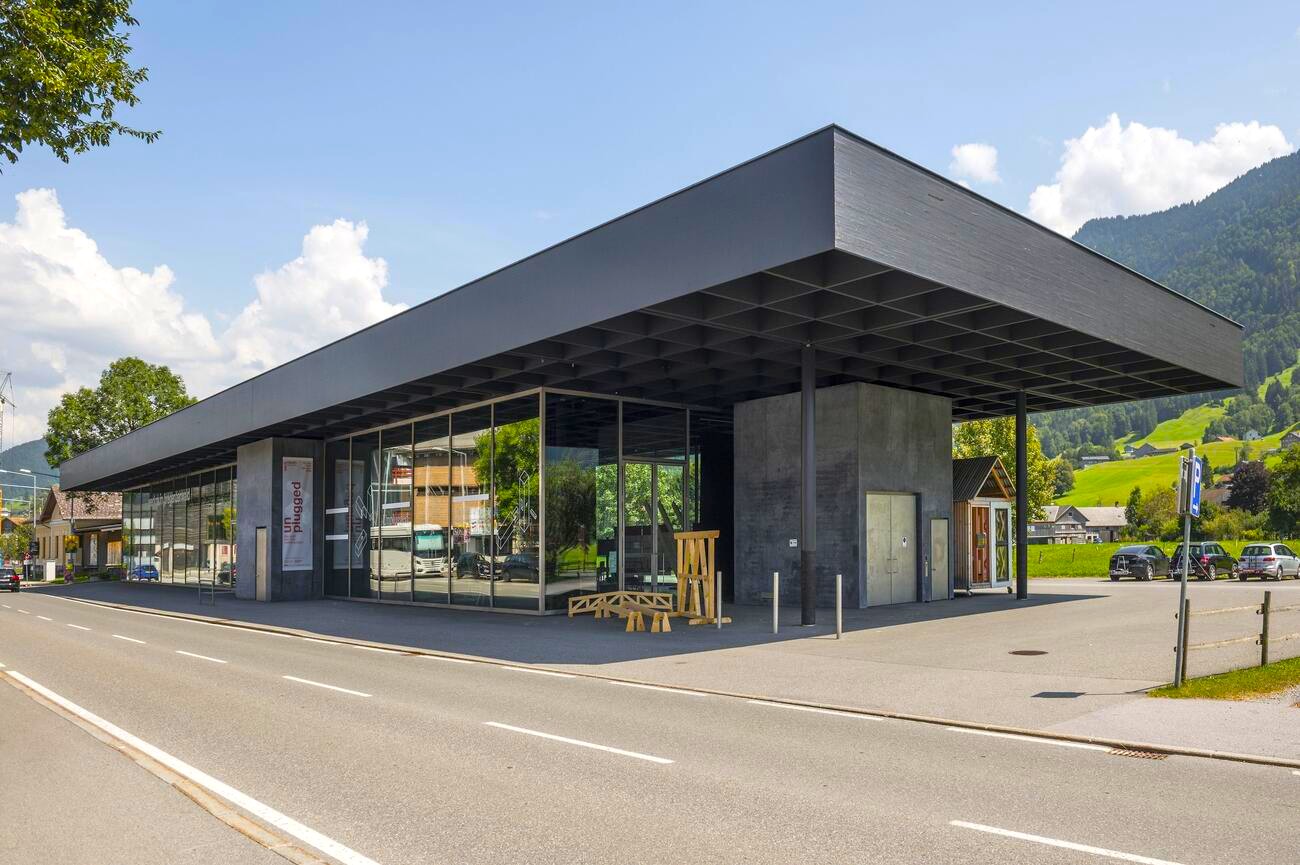
- Werkraum Bregenzerwald: Werkraum Bregenzerwald is an excellent addition for travellers interested in design, craftsmanship and contemporary Alpine architecture. Located in Andelsbuch, it showcases the region's strong craft culture, from timber construction and furniture-making to modern design rooted in local materials. The building itself was designed by Swiss architect Peter Zumthor, creating a strong connection with Kunsthaus Bregenz. This makes it especially relevant for visitors who enjoy architecture-led travel and want to understand why Vorarlberg has such a strong reputation for design.
Golf Courses in Bregenz
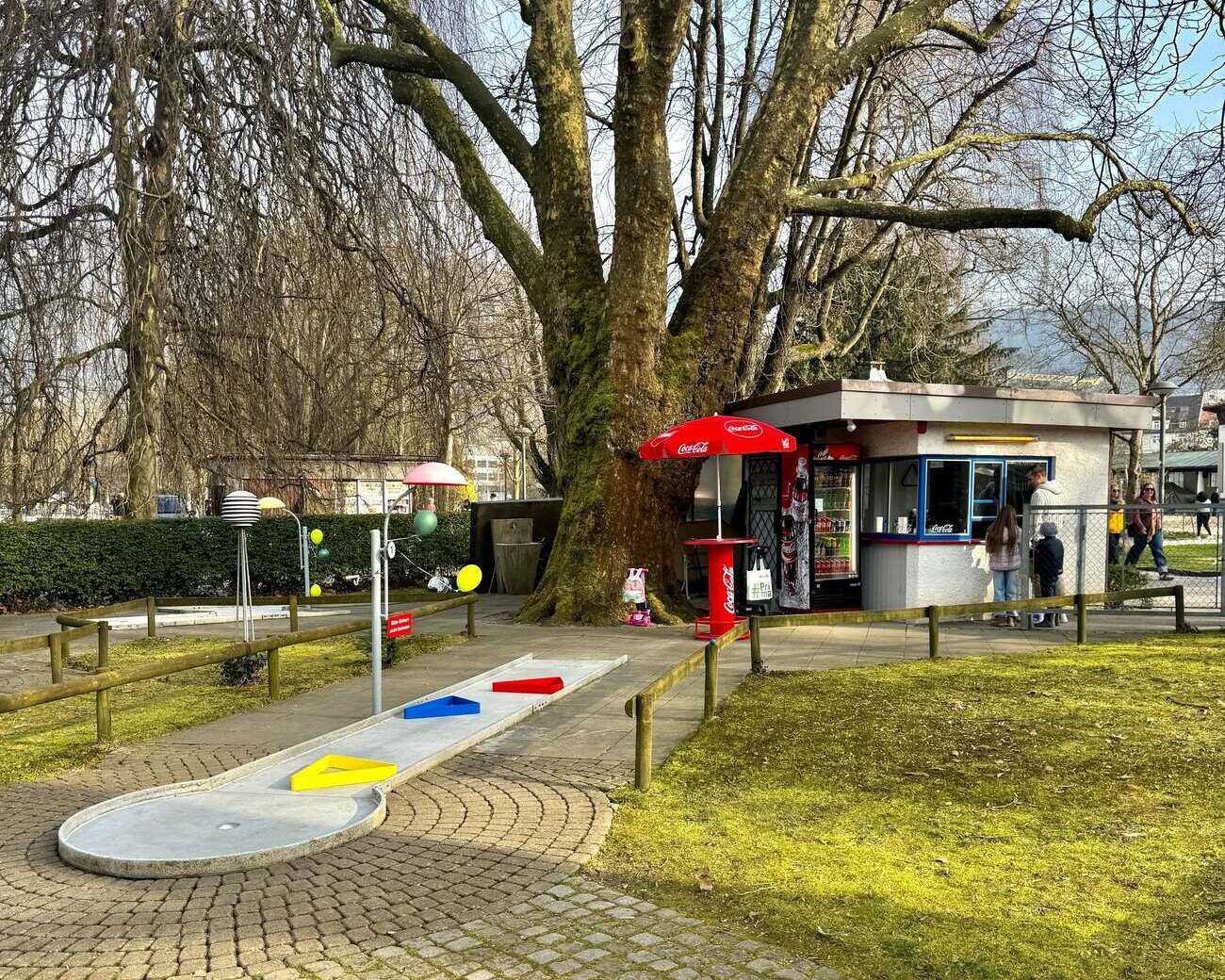
Bregenz is not the place for a full championship golf day inside the city. If you want an 18-hole course, you will need to go outside Bregenz. The main golf-related stop to include is Minigolfplatz Bregenz. It is casual, scenic and easy to fit into a lakefront itinerary without turning the day into a full sports schedule.
- Minigolfplatz Bregenz is the only proper in-city golf-style option to include if the list is limited to Bregenz itself. It sits directly on the lakeside promenade, close to the Seebühne and Festspielhaus. This is not a luxury golf course, so it should not be framed like one. The course gives you a light, social activity right by the water, which works well for families, couples or travelers who want something less formal after museums and cultural stops. It is also a good option if you want a short break without leaving the city center or committing to a full golf round outside Bregenz.
Where to Eat in Bregenz
Bregenz packs a surprisingly diverse food scene into a compact, walkable city, with plenty of variety within easy reach. While it may not be known for Michelin-starred dining, that doesn’t take away from the quality on offer. Instead, it lets you focus on finding the right spot for the moment rather than chasing accolades. From lakeside dining to cozy old-town eateries, the options feel both relaxed and thoughtfully curated. This balance makes it easy to enjoy great meals without overplanning your day.
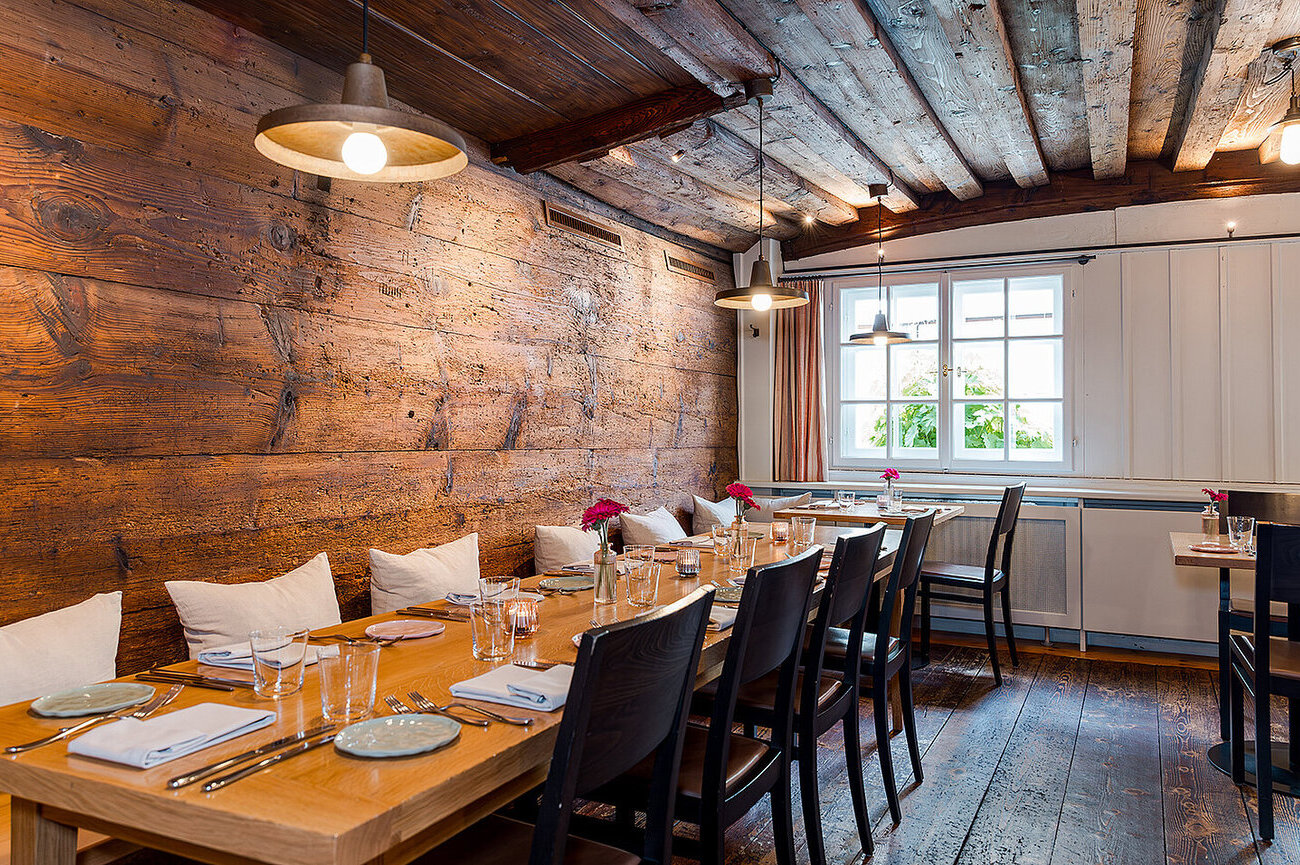
- Maurachbund sits on Maurachgasse, near the Upper Town, inside a listed building with more than 160 years of hospitality history. It is not trying to be loud or trendy. The appeal is quieter: old floorboards, wood-panelled interiors, modern design details and a kitchen that respects tradition without being stuck in it. Carla Booz and Manuel Willi run the place, with Booz handling the front-of-house service and Willi leading the kitchen. Michelin highlights dishes such as filet “Stroganoff” with porcini and spaetzli, sea bass with lukewarm bean and tomato salad, plus classics like Wiener schnitzel and Tafelspitz.
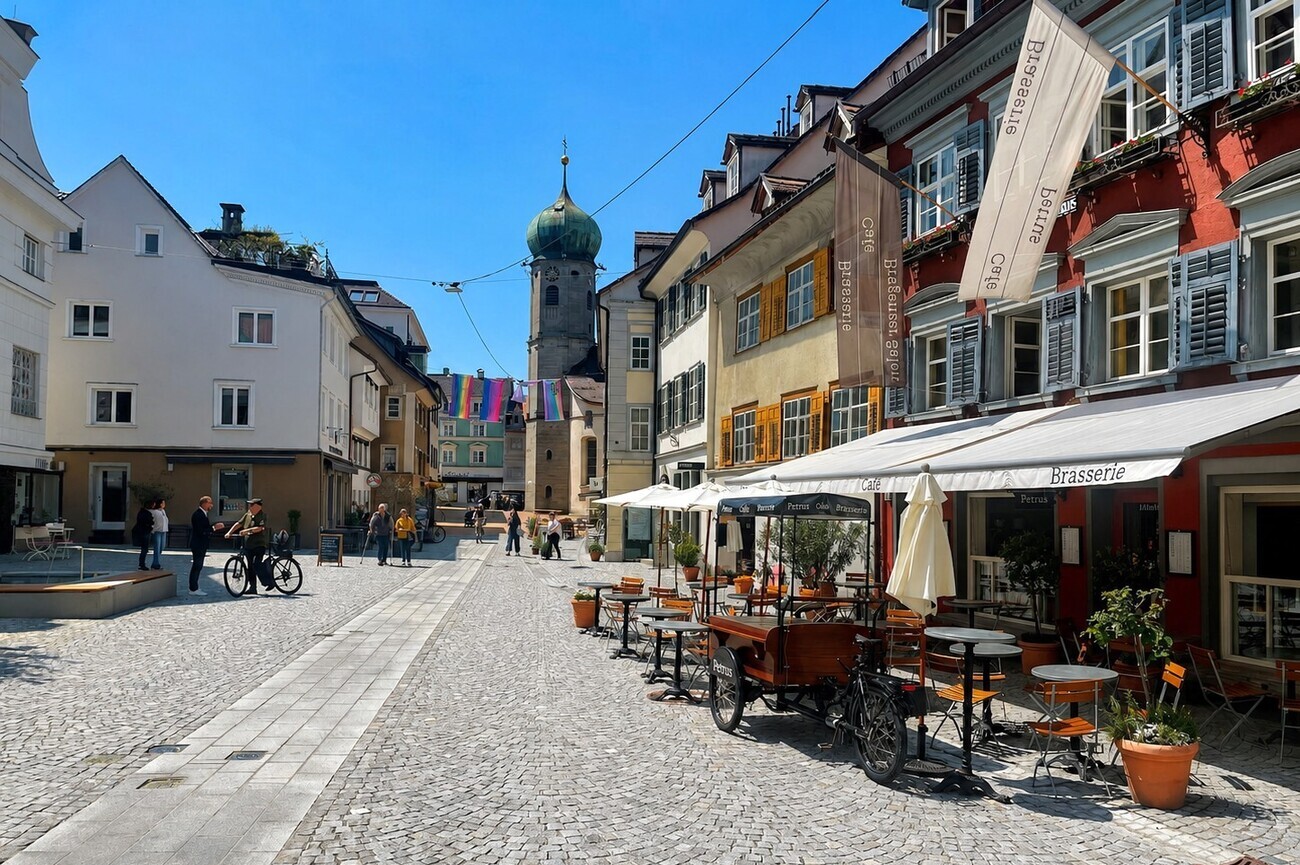
- Petrus Café Brasserie works because it has range. You can come for brunch, lunch, dinner or a long evening that turns into Belgian beer and mussels. The place started as an inn in 1911, so there is history in the walls, but the actual mood is more stylish brasserie than museum-piece dining room. The kitchen leans Belgian-French, with dishes such as beef tartare, pasta, risotto, coq au vin and the house specialty: mussels. Petrus also puts serious attention on Belgian beers, wine and seafood-style dining. You can reserve the salon for a high-end experience.
- Eltoro las tapas Al-Andalus: Eltoro las tapas Al-Andalus brings a completely different flavor profile into Bregenz: Spanish food, shared plates and a more social table. Expect tapas, paella, patatas bravas, Spanish wines, sangria and desserts like leche frita or crema catalana. The restaurant’s own site describes it as a cozy tapas restaurant using high-quality ingredients and it also offers a virtual tour, which helps if you want to check the room before booking. Paella can be prepared on request, which is a useful detail if you are planning dinner for a group.
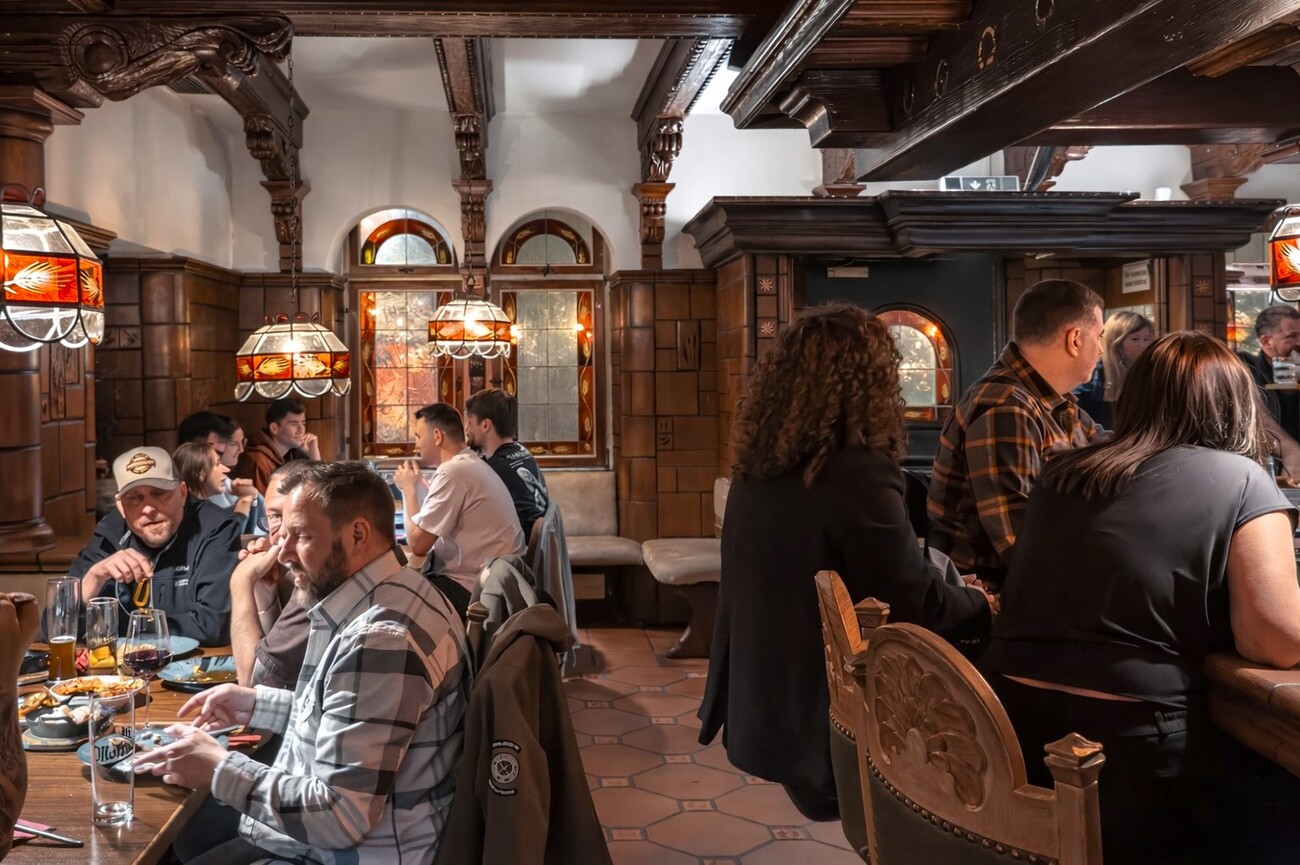
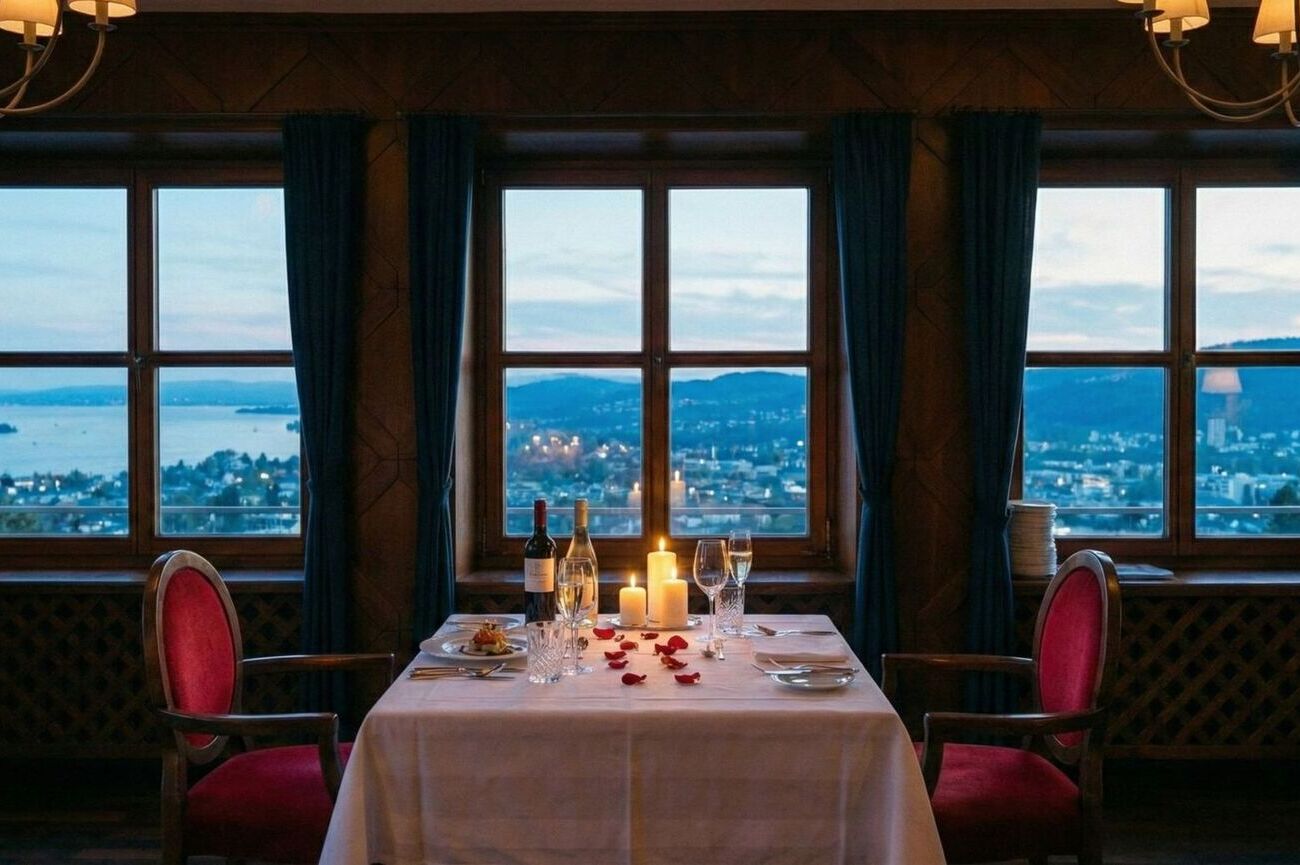
- Burgrestaurant Gebhardsberg: Set within the historic Gebhardsberg complex above Bregenz, Burgrestaurant Gebhardsberg pairs refined Austrian cooking with panoramic views across Lake Constance, the Rhine Valley and the surrounding mountains. Its medieval setting, wood-panelled interiors and scenic terrace give it a memorable sense of place, making it a strong choice for a romantic dinner, special occasion or leisurely lunch. The menu focuses on regional flavours presented with a polished touch, while the elevated location turns the meal into a broader experience of Bregenz’s history, landscape and food culture.
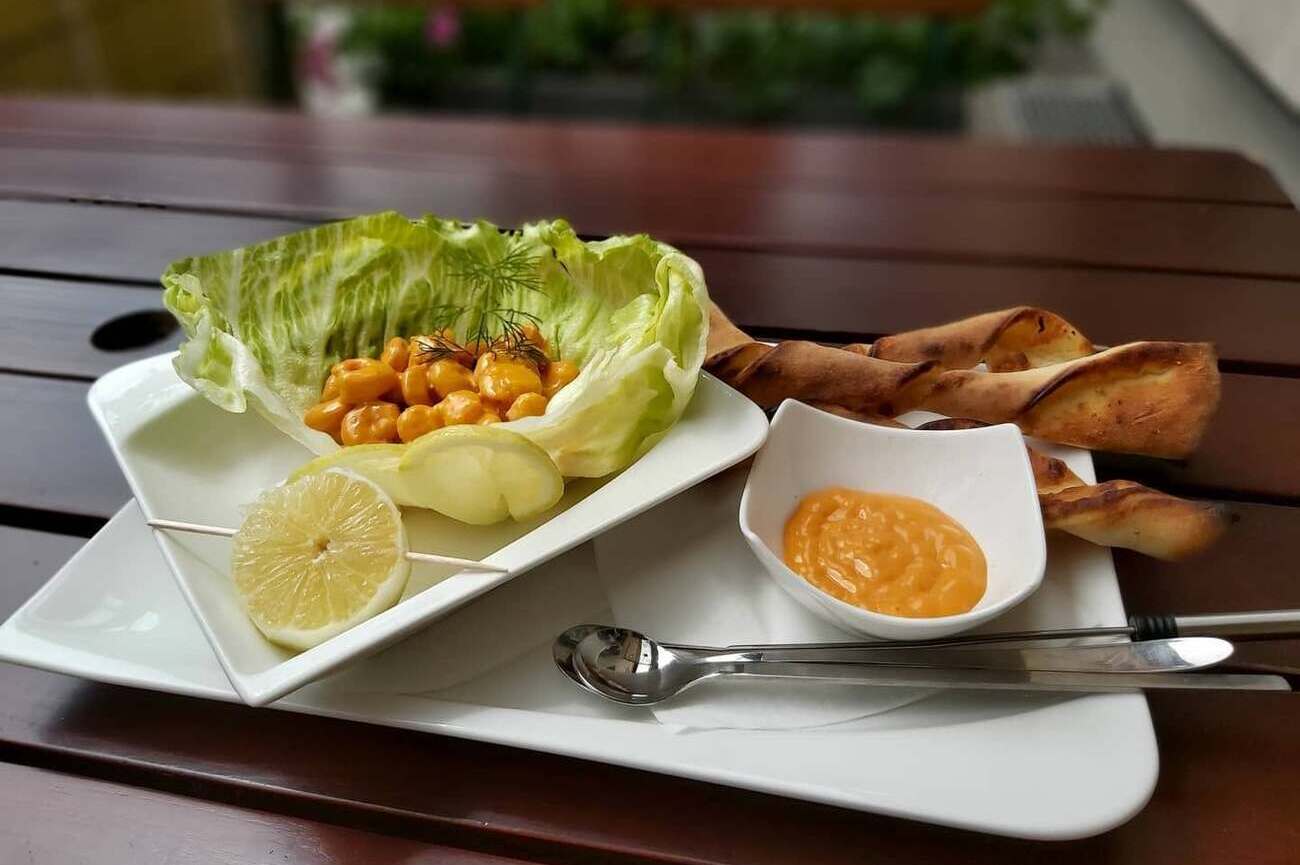
- Kapitano Bregenz: Kapitano is the flexible Italian option. Not every meal needs candlelight, a tasting pace or a reservation strategy. Sometimes you need pizza, pasta, fresh salad and reliable delivery or takeaway after a lake day, museum run or late arrival. Kapitano fills that role without feeling careless. The restaurant focuses on Mediterranean food: stone-oven pizza, pasta dishes, salads and drinks. Its official site highlights regional ingredients, quality sourcing, delivery, pickup and online ordering.
Where to Drink in Bregenz
Bregenz nightlife may be compact, but it delivers more than you’d expect. Everything is close enough to explore in a single evening, making it easy to shape your night exactly how you want it. Instead of chasing a big-city scene, Bregenz rewards you for choosing the right place and enjoying it fully.
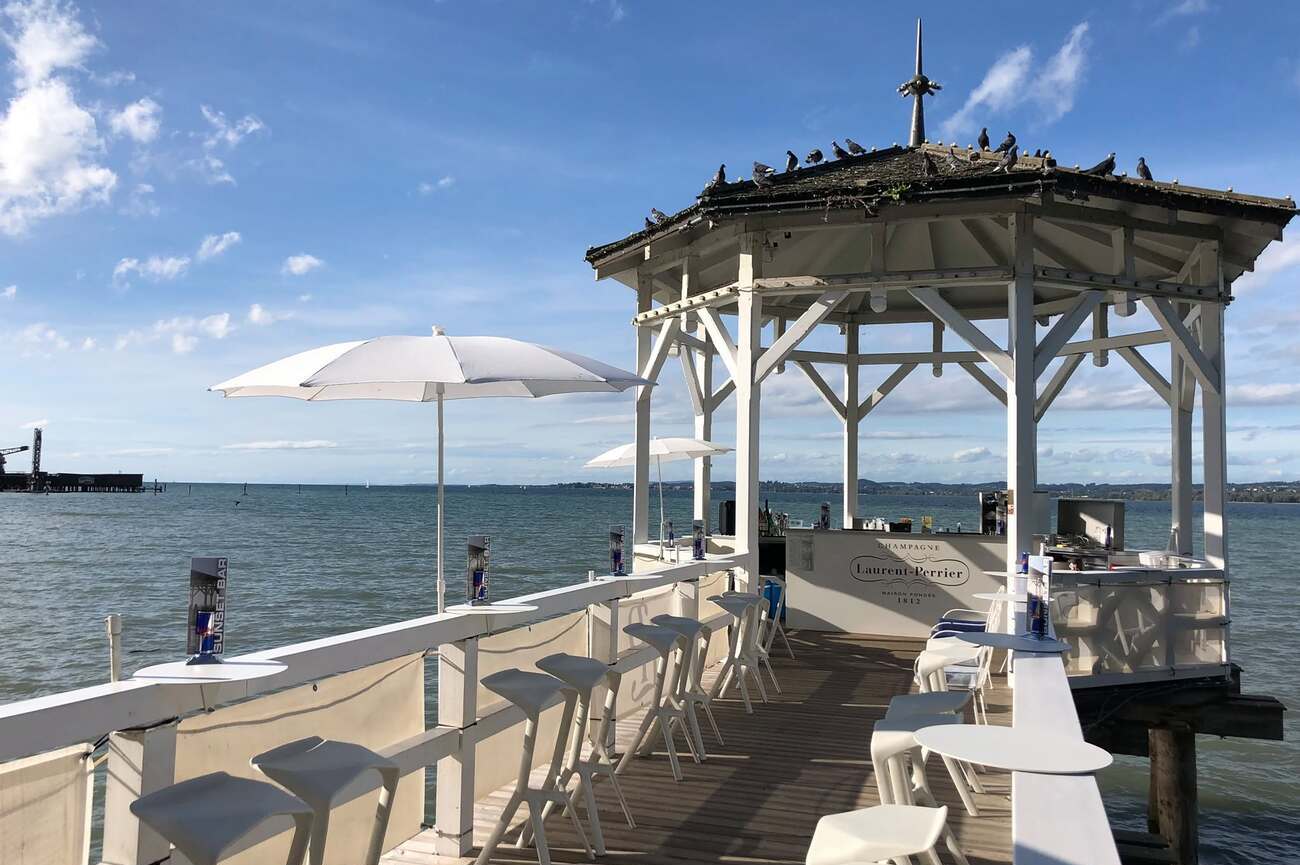
- Fischersteg - Sunset Bar - Bregenz: Fischersteg is the most scenic bar setting on this list and it is not even trying to be subtle about it. The bar sits right on Lake Constance, on the historic Fischersteg, with water around you and the sunset doing half the work. This is the setup: cool drinks, lake air, a white pavilion and a direct view across the water. In the 1920s, seaplanes used this area; today, it is one of the city’s best-known spots for a relaxed sundowner. You should go for the view first, the drinks second.
- KREUZ BAR Bregenz: KREUZ BAR has that “locals and travelers in the same room” feeling that makes a bar more interesting than a tourist-only stop. This is where you go when you want proper cocktails, spirits, wine and a more grown-up evening without moving far from the center. The bar is known for cocktails, international spirits, fine wines and a stylish but not overly stiff atmosphere.
- LAV’M Bregenz: LAV’M brings a different kind of night out into Bregenz with cocktails, shisha, modern interiors and a lounge-style mood. It is located on Mariahilfstraße, so it sits a little away from the most obvious lakefront tourist flow. This is not the quiet glass-of-wine option. It is more social, more relaxed and more suited to groups who want to stay out without going into full club mode. If your Bregenz night needs cocktails and shisha instead of lakefront romance, this is the cleaner pick.
- Tipico Bregenz: Tipico Bregenz is not a classic bar or club, so it should be framed correctly. This is a sports-betting venue, more suited to live-match energy than cocktail culture. It belongs on the list only if you want a sport-focused stop where screens, odds, bets and match-day atmosphere are the point. You come here for football, live sport, betting and that game-night environment where people are actually watching the match instead of just using sport as background noise. It is not the place for a romantic drink or a polished cocktail evening. It is functional, direct and built around sports action.
Cafes in Bregenz
Bregenz does café culture in a quieter, more practical way. No need for dramatic foam art or a twenty-minute speech about beans. The best cafés here work because they fit into the city naturally. You can use them between museum visits, shopping streets, lake walks or slow mornings when the itinerary needs caffeine before culture.
- Vincent’s Backstüble: Vincent’s Backstüble is the café-bakery stop that feels more local. It sits on Anton-Schneider-Straße, so it works well when you are already moving through the central streets of Bregenz. You come here for a bakery-style pause rather than a long brunch situation. Think coffee, pastries, bread, quick bites and a small everyday atmosphere that feels connected to the city’s regular life.
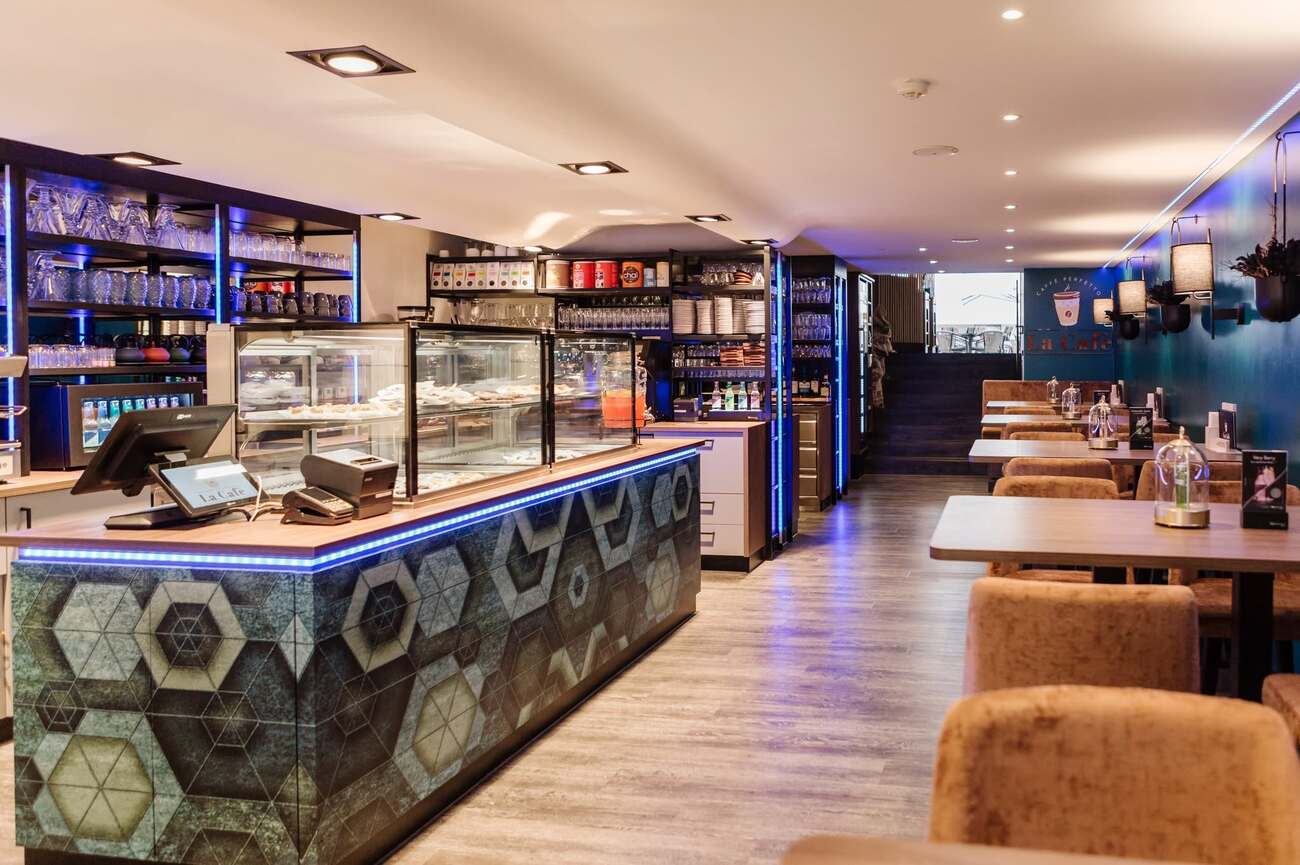
- La Cafè Bregenz: La Cafè Bregenz is the more polished café option near the central old-town flow. Food-wise, it leans into breakfast, pastries and cafe plates. Expect cappuccino, espresso, croissants, waffles, cakes and light dishes. It also has that Austrian-café-meets-modern-city feel: simple enough for a quick coffee, but comfortable enough if you want to sit longer. This is the spot to choose when you want the café break to feel a little more put-together. You can place it after Seekapelle, before a shopping route or as a short stop before continuing toward Kunsthaus Bregenz.
- Cafesito: Cafesito has branches in Bregenz and Dornbirn, but the Bregenz location on Anton-Schneider-Straße is the one to use for a city itinerary. The setup is casual, modern and practical with coffee, bagels, smoothies, frappes, hot chocolate, tea and freshly baked goods. If your day needs something more filling than a croissant but less formal than lunch, this is the move. This place is especially known for bagels, with options that range from classic cream cheese and smoked salmon to chicken, tuna, hummus or sweet breakfast-style fillings. The coffee menu also has range, from espresso and cappuccino to mocha, chai latte and alternative milk options.
Where to Stay in Bregenz
Bregenz does not have a five-star hotel scene and that is not a weakness. The city’s best stays work in a more grounded way, like polished 4-star hotels near the lake, a long-running inn with proper local character and a tiny design hotel that feels sharper than its size suggests. If you are coming for the festival, the lake, Pfänder or the old town, the smarter move is to choose a hotel that fits the way you want to move through the city.
- Hotel Gasthof Lamm (4 Stars): Hotel Gasthof Lamm is the heritage pick with a more relaxed local feel. It has more than 100 years of hospitality behind it and sits only a few minutes from Lake Constance, the Bregenz Festival Theatre and Casino Bregenz. The restaurant is set in a 17th-century inn and serves Austrian and international dishes, local drinks, fine wines, homemade cakes and summer beer-garden energy. Since the Lake Constance Cycling Route is only around 150 meters away, this is a strong choice if you want a stay that works for both festival nights and active days.
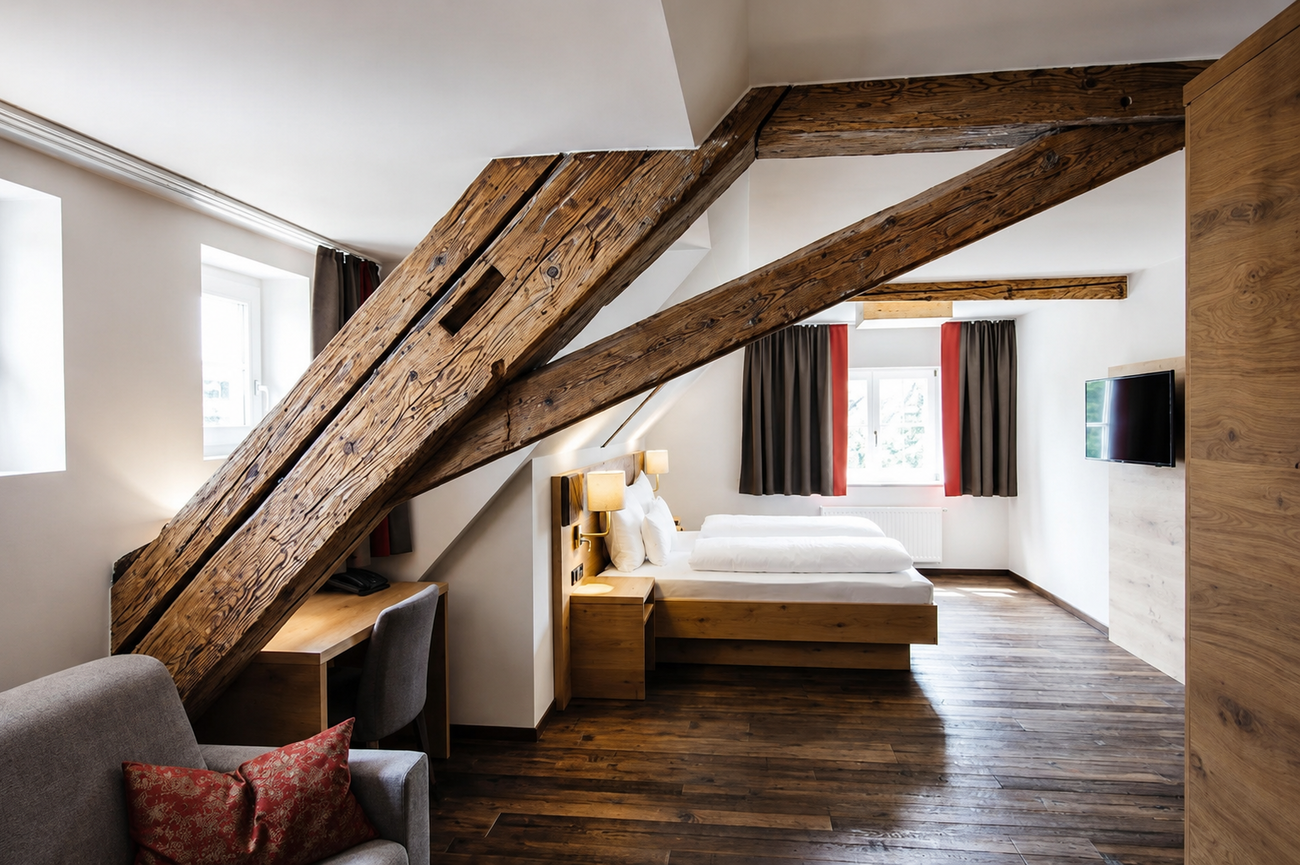
- Hotel Schwärzler (4 Stars): Hotel Schwärzler is the one to choose if you want Bregenz to feel calmer, greener and slightly removed from the immediate lakefront buzz. It is a 4-star hotel on Landstraße, positioned between Gebhardsberg, the River Ach and Lake Constance. The hotel has been part of the city’s hospitality scene since 1905 and is known for balancing business, leisure, nature and local Vorarlberg character. It works especially well for travelers who want more than a room near the festival. Book Hotel Schwärzler if you prefer space, wellness time and a more composed pace. Pair it with a private transfer into the lakefront district, a guided tour of the Upper Town or a curated Pfänder and Gebhardsberg route.
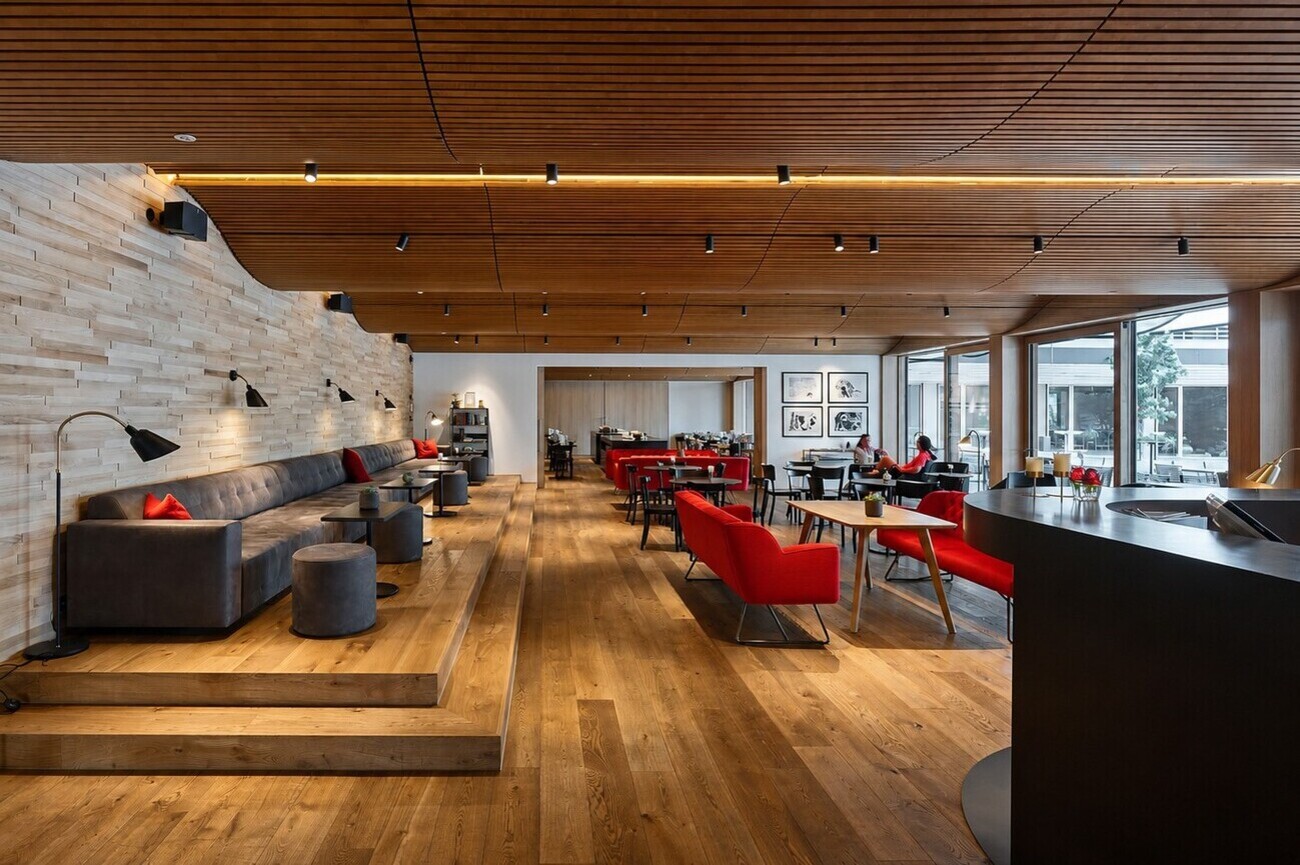
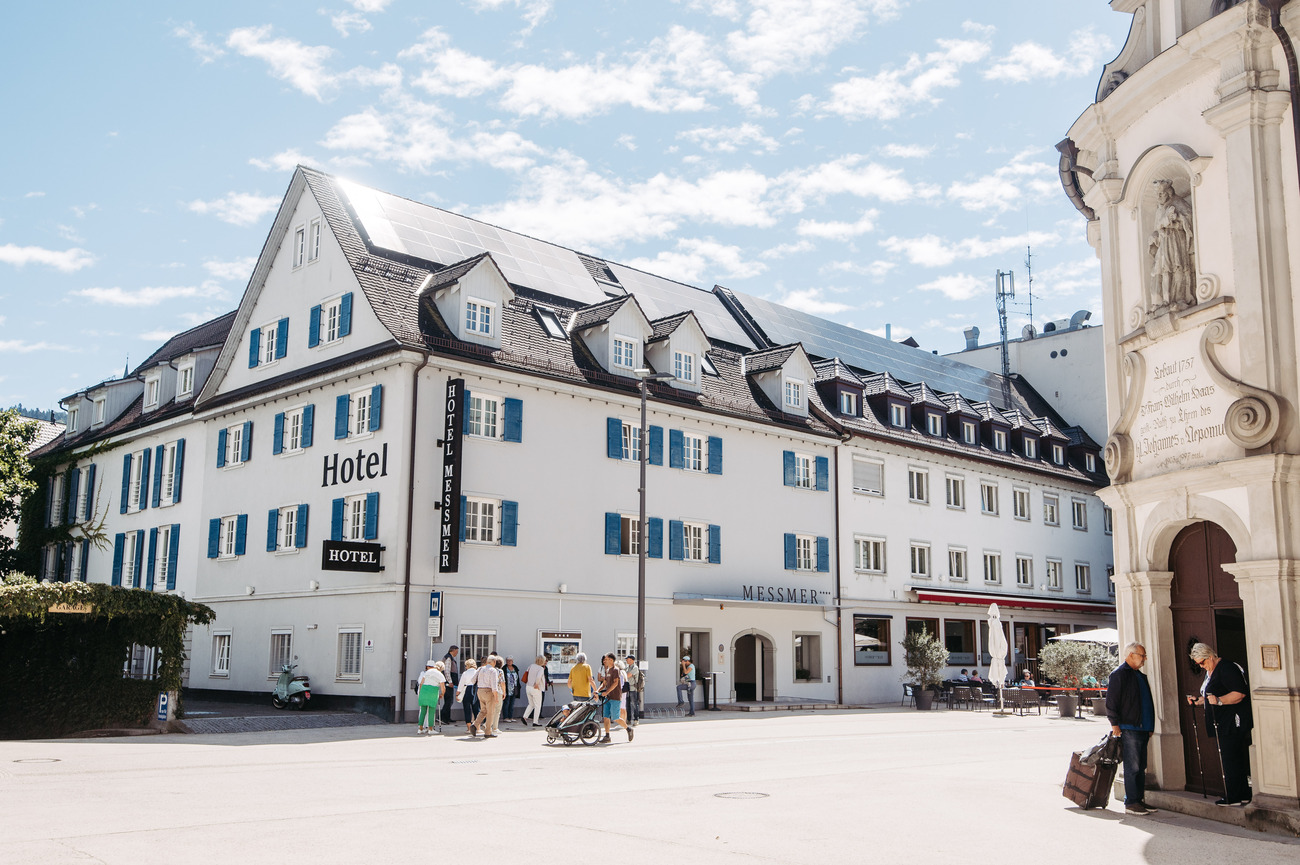
- Hotel Messmer (4 Stars): Hotel Messmer is the classic city-center choice. It sits at Kornmarkt, which puts you close to Kunsthaus Bregenz, Vorarlberg Museum, the old town, the lakefront, and the cultural quarter. If your trip is built around walking, museums, restaurants and festival access, this location does a lot of heavy lifting. Its biggest claim is its history. It has offered hospitality at Kornmarkt since 1390, making it one of Austria’s oldest hotels. Today, it works as a 4-star hotel with modern rooms, a restaurant, hotel bar, a breakfast space and seminar facilities. It is also sustainability-focused, using green electricity, its own photovoltaic system, LED lighting and eco-friendly cleaning products. And the Austrian Ecolabel and EU Ecolabel certifications give that claim more weight.
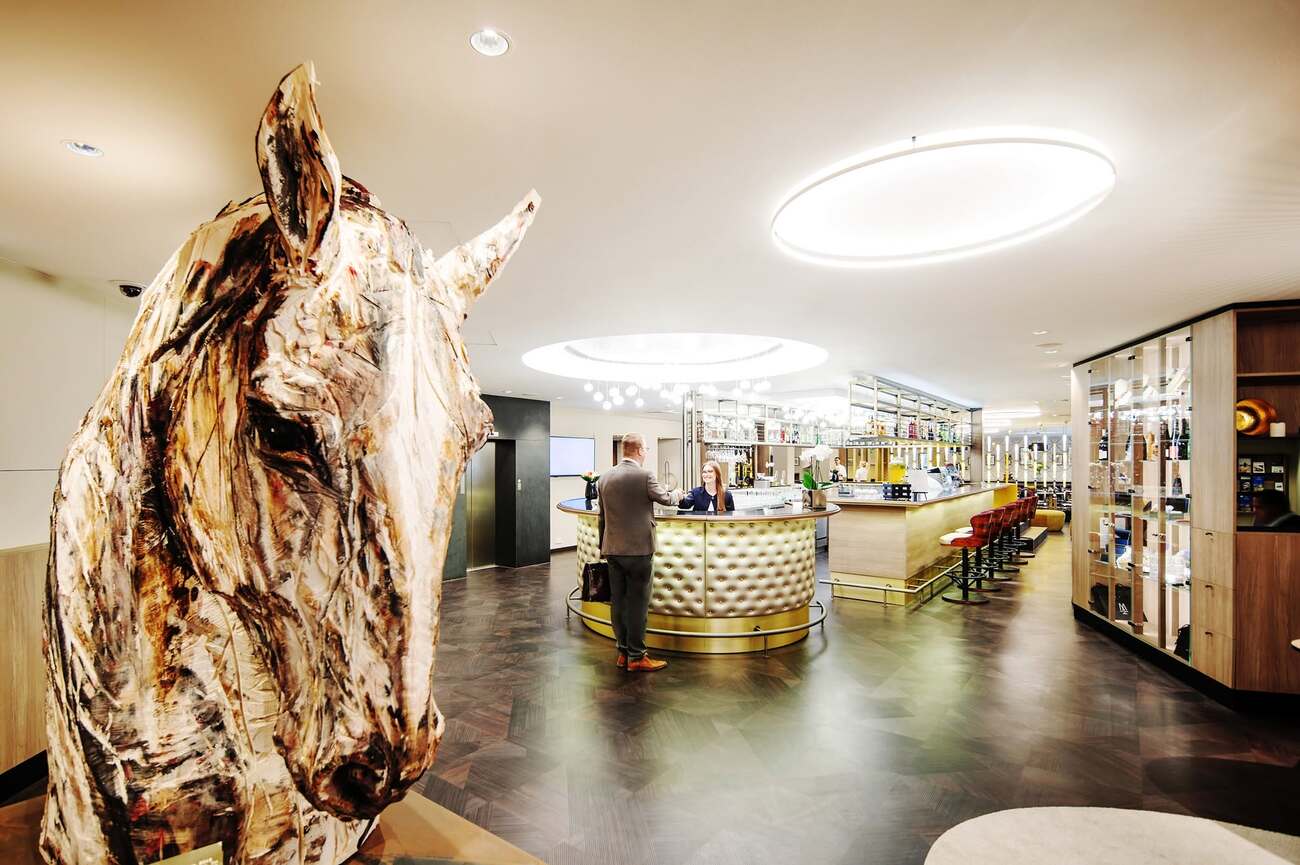
- Grand Hotel Bregenz - MGallery Collection (4 Stars): Located directly beside Festspielhaus Bregenz and Lake Constance, the hotel has Casino Bregenz next door and the Seebühne just minutes away. It offers 105 rooms and suites, modern interiors, the DIVVY restaurant and bar, and a wellness area with an indoor heated pool, saunas and a fitness room. It also carries Green Key certification, adding a sustainability angle to its polished city-hotel profile. The location is its biggest advantage: you can move easily between the hotel, the lakefront, the festival stage and Casino Bregenz without turning the evening into a logistics exercise. Book this hotel during the Bregenz Festival season and plan your stay around performance nights.
- kleiner Löwe – Stadthotel Bregenz (3 Stars): kleiner Löwe is the design-lover’s hotel in Bregenz. It is small, central and much more architectural than the usual city stay. The hotel sits at Kornmarktplatz and has only eight rooms, which already tells you it's intimate, selective and personal. The building was reworked with the involvement of Herzog & de Meuron, so the hotel feels like part accommodation, part design statement. This is not where you go for a large wellness complex or full-service resort energy. You come here for clean design, a central old-town position, a small-room count, a bar, a courtyard and the feeling that every detail was actually considered. It is modern without feeling cold.
Best Time to Visit Bregenz
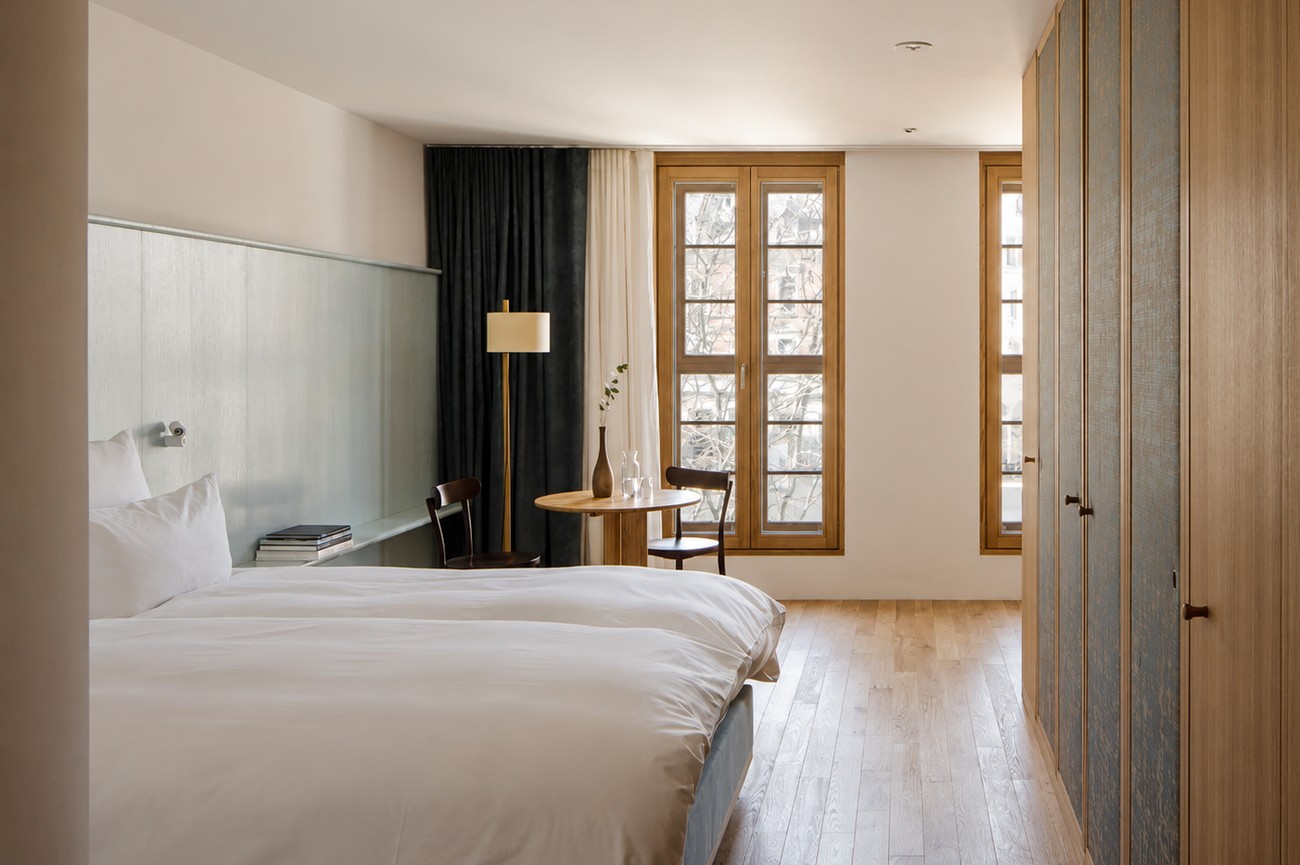
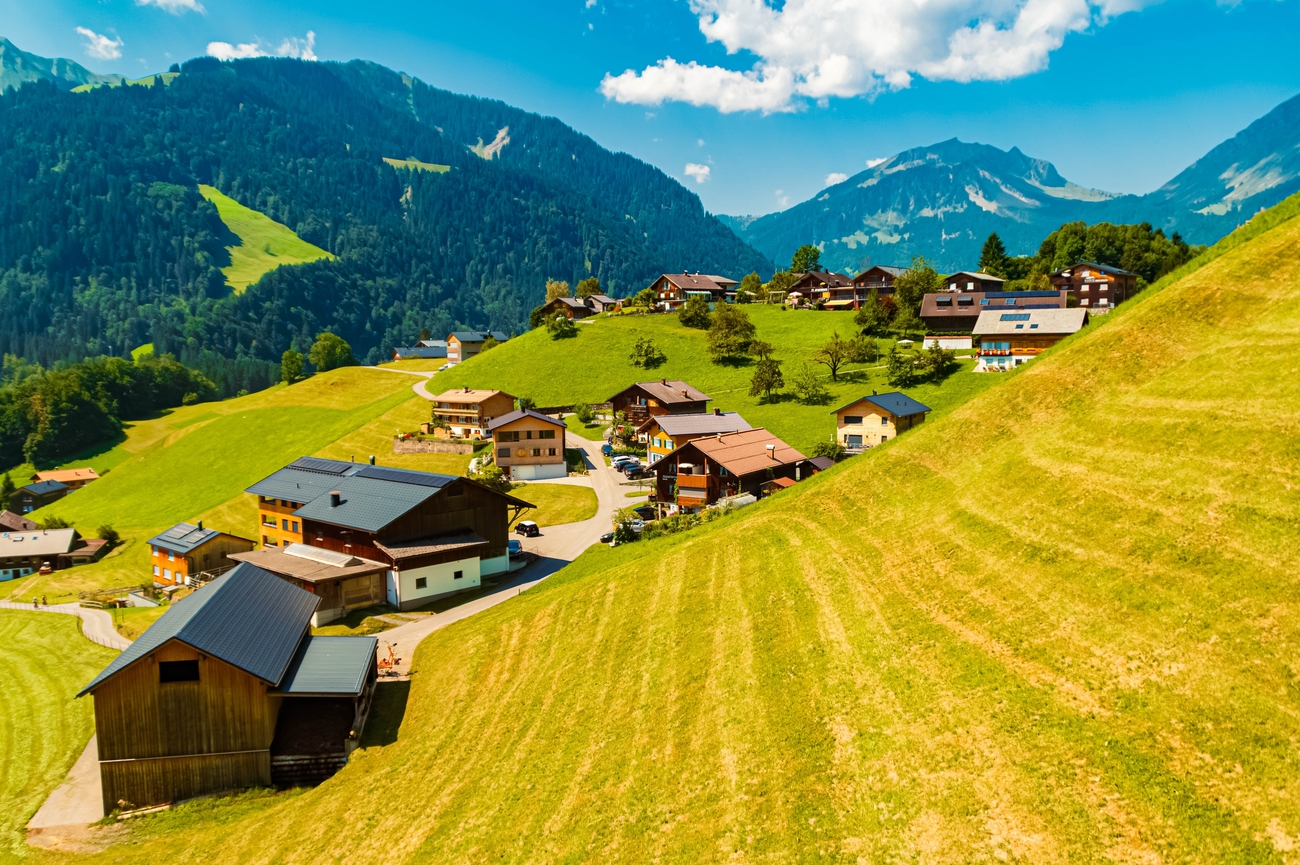
Bregenz is at its very best during the summer months. Late July to August is the best time to visit because this is when the lake, the festival district and Pfänder all feel fully switched on.
The harbor, promenade, Seebühne and Festspielhaus become the natural center of the day, while Pfänder gives you the mountain contrast just minutes from the city. You can start with the old town, move toward the lake, take the cable car up for the view, then return for an evening by the water. The route feels smooth because the city was basically built for this kind of movement.
Late July to August is also the key window for the Bregenz Festival, which is the city’s biggest cultural event. The Seebühne is not just a stage; it is one of the most distinctive performance settings in Europe, built directly on Lake Constance. If you are planning a more luxury trip, this is where the timing matters. Book strong seats early, reserve dinner before the performance and keep the evening clean instead of rushing from one stop to another.
You can build the trip around guided city tours, museum stops, Pfänderbahn, lakefront walks, exclusive boat experiences and festival nights. And if you want the visit to feel more high-end, add a private guide for the old town, book a lake cruise or charter, choose a refined dinner before the show and use private transfers when the schedule gets tight. Bregenz does not need loud luxury. In summer, the lake, the stage and the mountain already do most of the work.
Festivals in Bregenz
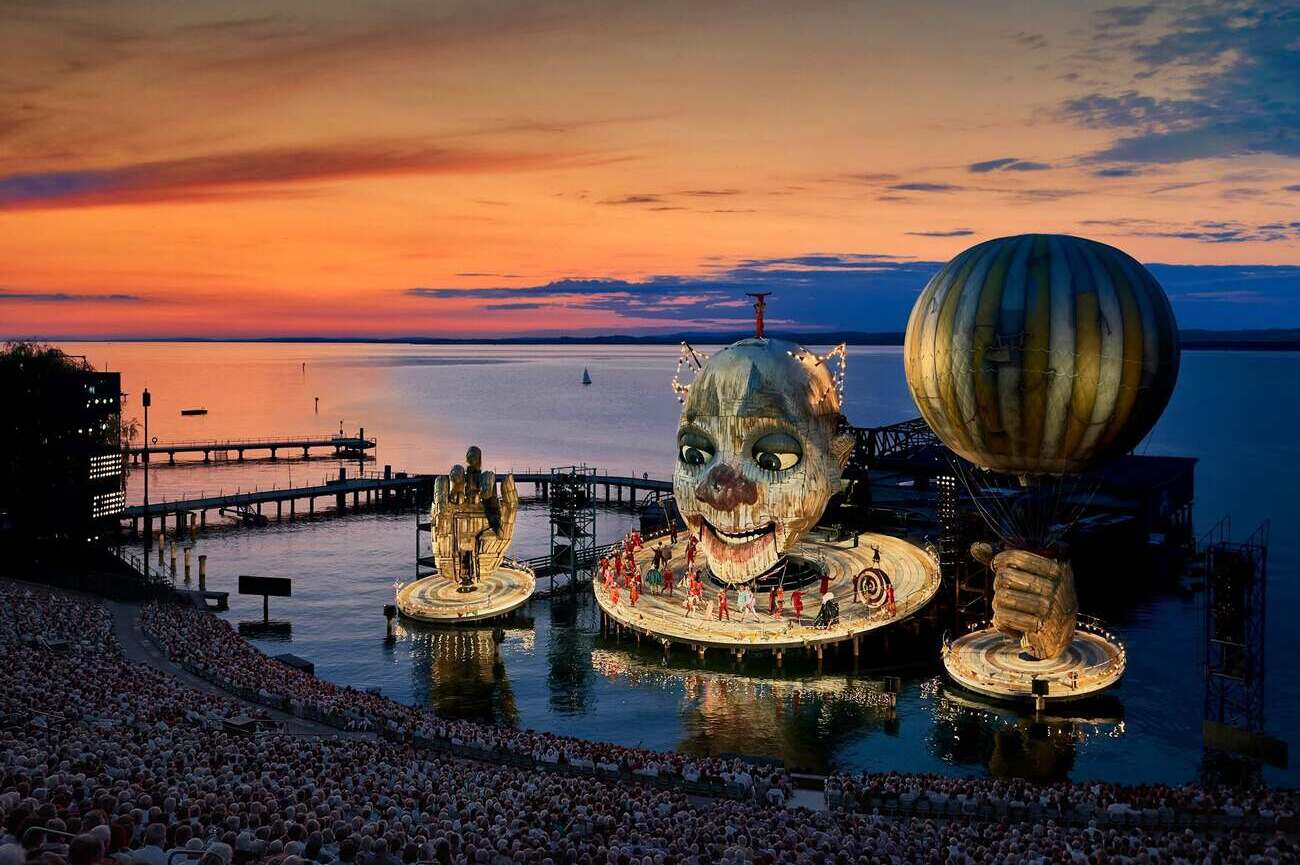
- Bregenzer Festspiele: Bregenzer Festspiele is the main event, the cultural headline and the reason many travelers first learn where Bregenz is. It usually takes place from mid-July to mid-August, right in the city’s strongest summer window. The festival is best known for the Seebühne, the floating lake stage built directly on Lake Constance, where opera becomes less of a formal sit-down night and more of a full-scale visual production. But it is not only about one lake-stage performance. Its program can include opera, music theatre, drama, orchestra concerts, chamber music, youth programming and guided festival insights. If you are planning around this festival, book early.
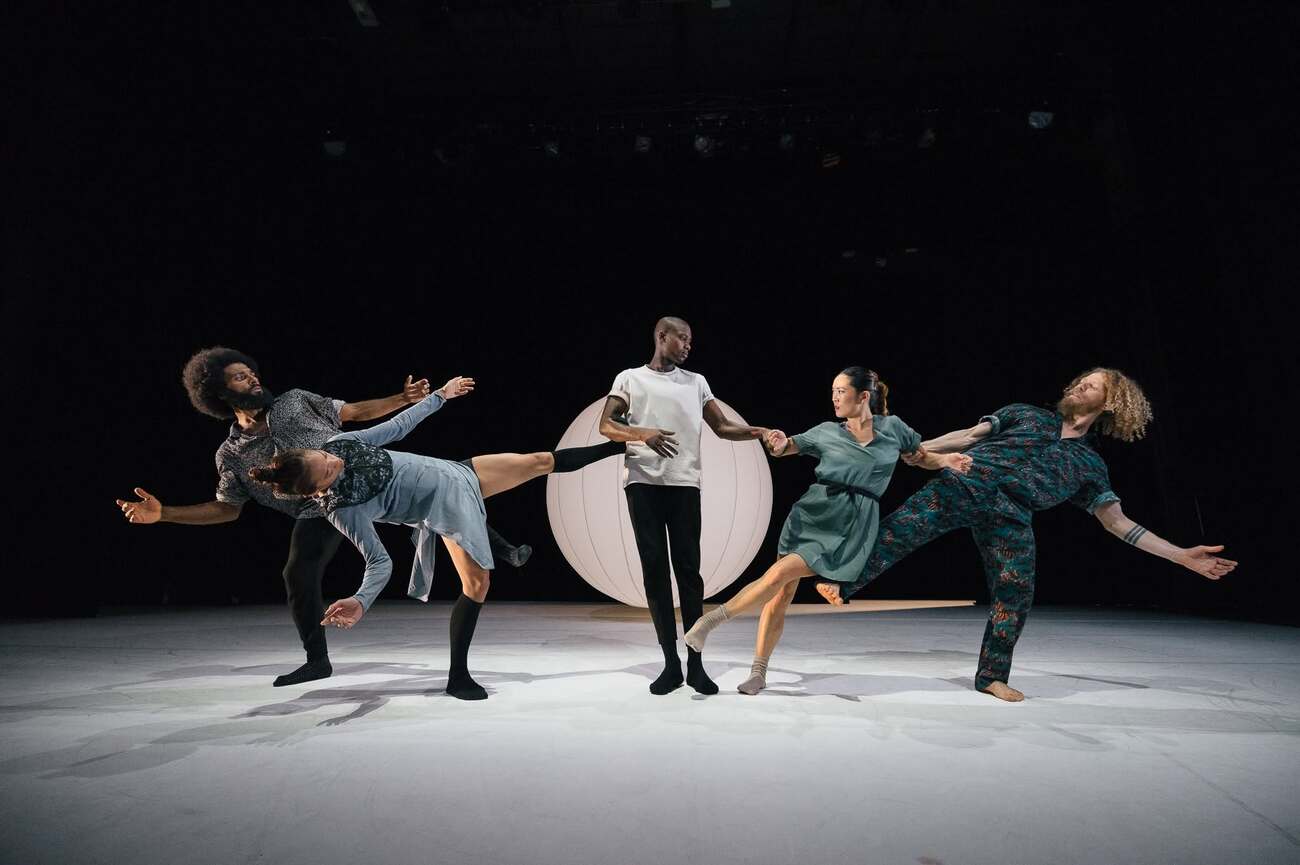
- Bregenzer Frühling: Bregenzer Frühling is the city’s international dance festival, and it usually runs from March to June. It gives Bregenz a more contemporary cultural edge before the big summer lake-stage season takes over. It brings international dance companies to venues such as Festspielhaus Bregenz, with programs focused on contemporary choreography and performance. It is a strong option if you want Bregenz to feel cultural without the peak-summer rush. You get serious stage work, modern productions and a city that still feels easier to move through.
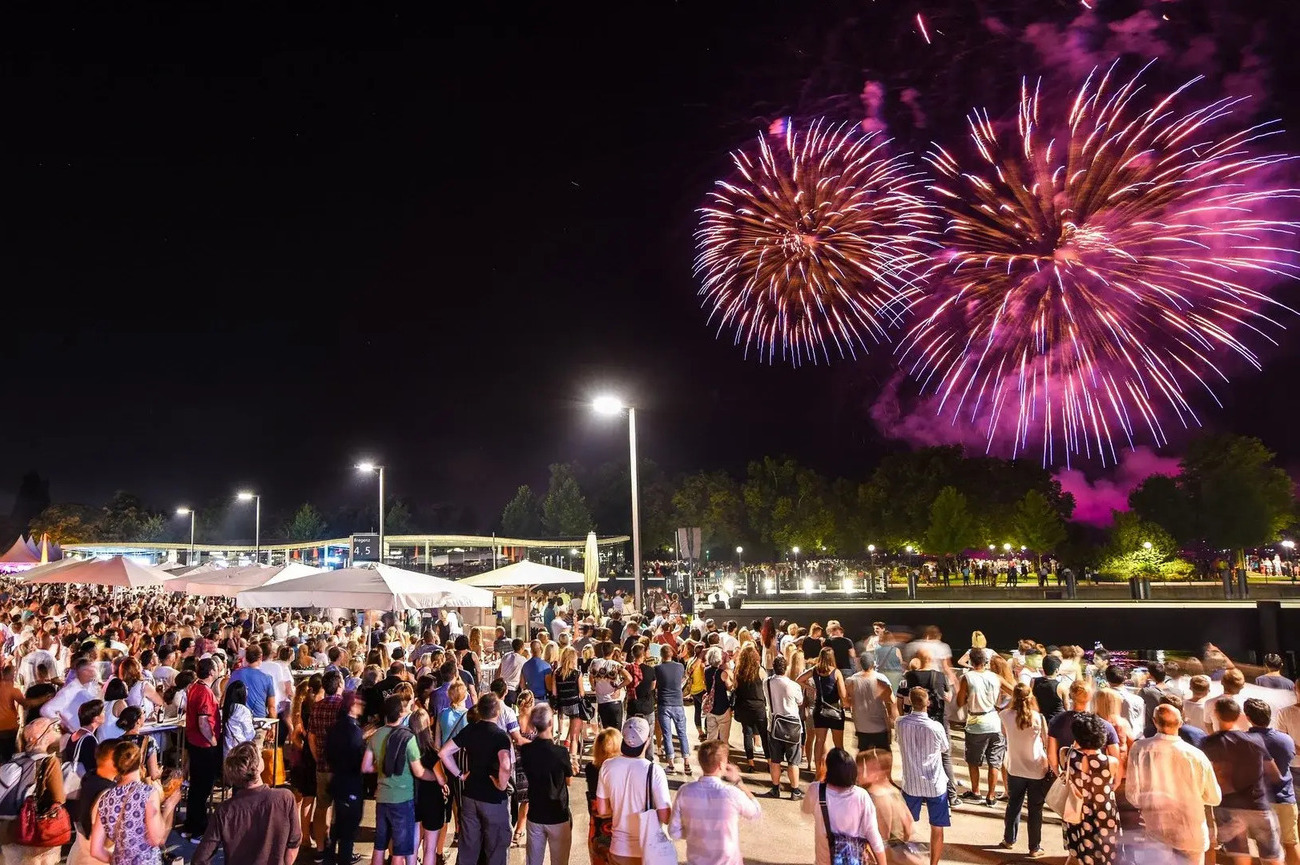
- Bregenz Harbor Festival: The Bregenz Harbor Festival usually takes place toward the end of August, when the lakefront still has summer energy and the harbor becomes the city’s open-air social zone. This is the more casual festival on the list: music, food, drinks, relaxed crowds and that easy waterfront setting that makes Bregenz feel very good at evenings. And the setting is the whole point. Around Bregenz Harbor, you are close to the lake, the cultural quarter, the promenade and the festival district. The event often includes live music, DJs, culinary stalls, drinks and family-friendly programming. Walk the harbor, eat something, get a drink, listen to the music and let the lakefront do its thing.
Plan Your Bregenz
Vacation
From festival nights on the Seebühne and private Lake Constance cruises to guided architecture walks, Alpine day trips and carefully chosen hotels, Revigorate can arrange every detail of your Bregenz vacation. Whether you want to focus on culture, scenery, food, design or a wider journey through Austria and the Lake Constance region, our travel specialists can create a tailor-made itinerary shaped around your interests, pace and travel style.
Contact Revigorate today to start planning your tailor-made Bregenz vacation.


Let us know what you love, where you want to go, and we’ll design a one-of-a-kind adventure you’ll never forget.
Get in touch
Miriam
Travel Specialist

Romina
Travel Specialist

Laura
Travel Specialist
Our offices:


Revigorate, Iberian Escapes and Algarve Lifestyle are the registered brand names of APCS Lda . We are a fully authorised travel agency licensed by Turismo de Portugal RNAVT/6867.
In the event of a dispute, the consumer may refer to: RAL - Centros de Arbitragem
Avª. 5 de Outubro, nº. 55, R/C Dtº. 8000-075 Faro, Portugal | Tel: +351 289 823 135 *
* national landline call
E-mail: info@consumoalgarve.pt| www.consumidoronline.pt | Mon to Fri: 9:00 - 13:00 / 14:00 - 17:00