Things to Do in Rhine Gorge: 4-Day Itinerary
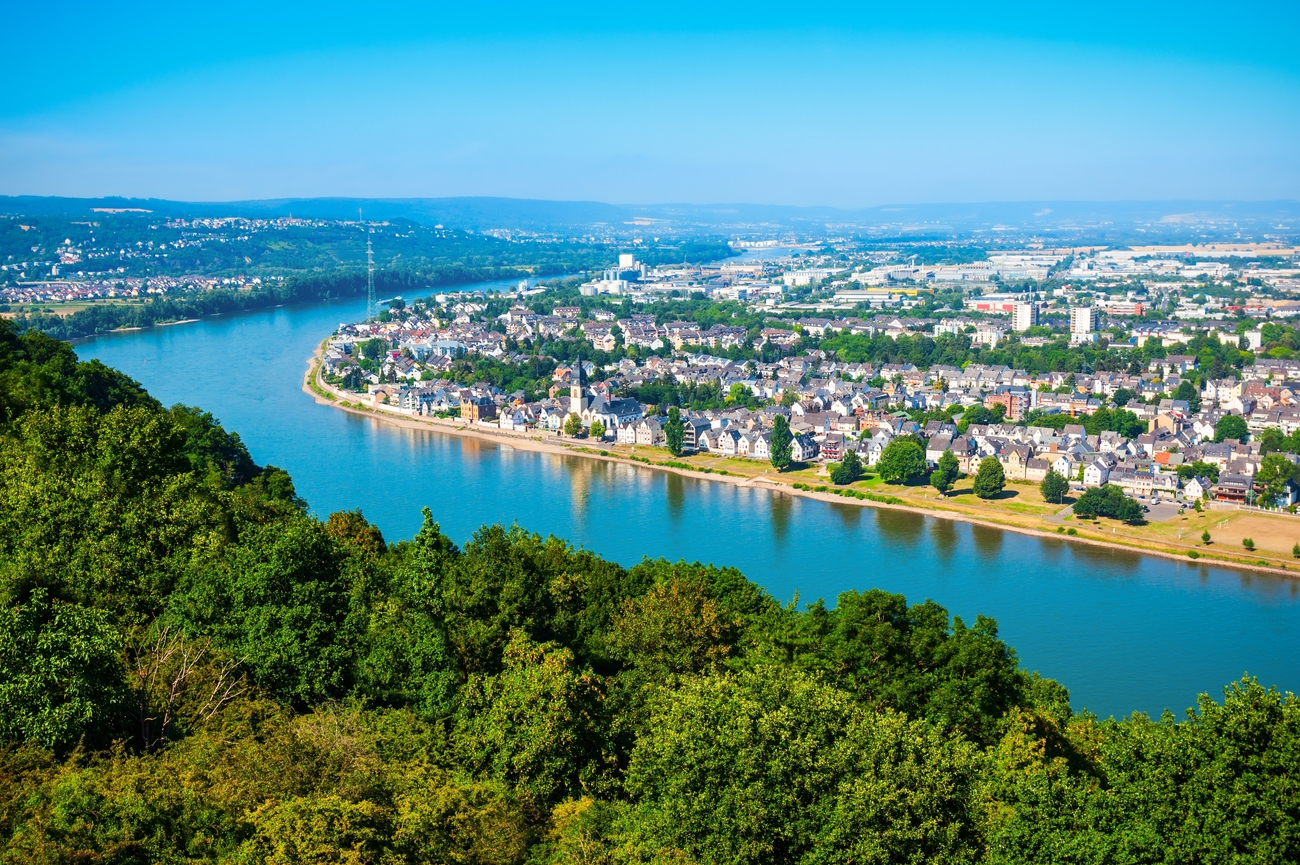
The Rhine Gorge, also known as the Upper Middle Rhine Valley, is one of Germany’s most dramatic cultural landscapes, stretching between Koblenz and Bingen through a UNESCO-listed corridor of castles, vineyards, medieval towns and steep river scenery.
The route is defined by landmarks such as the Loreley, Marksburg Castle, Rheinfels Castle and the historic towns of Bacharach, Oberwesel and St Goar. Vineyards rise sharply above the Rhine, while river cruises, walking trails and elevated viewpoints reveal how closely the region’s history developed around trade, defence and wine.
What makes the Rhine Gorge especially rewarding is the density of its highlights. Castles appear repeatedly along the river, villages remain tightly connected to the valley landscape and scenic viewpoints are often only a short distance apart. This makes it easy to combine history, walking, wine and river travel within the same journey.
This 4-day Rhine Gorge itinerary follows the Rhine between Koblenz and Bingen, combining castles, Loreley viewpoints, vineyard hikes, river cruises and medieval towns in a route designed to feel varied and well paced.
Day 1

Morning: Deutsches Eck
This is where rivers make history look good.
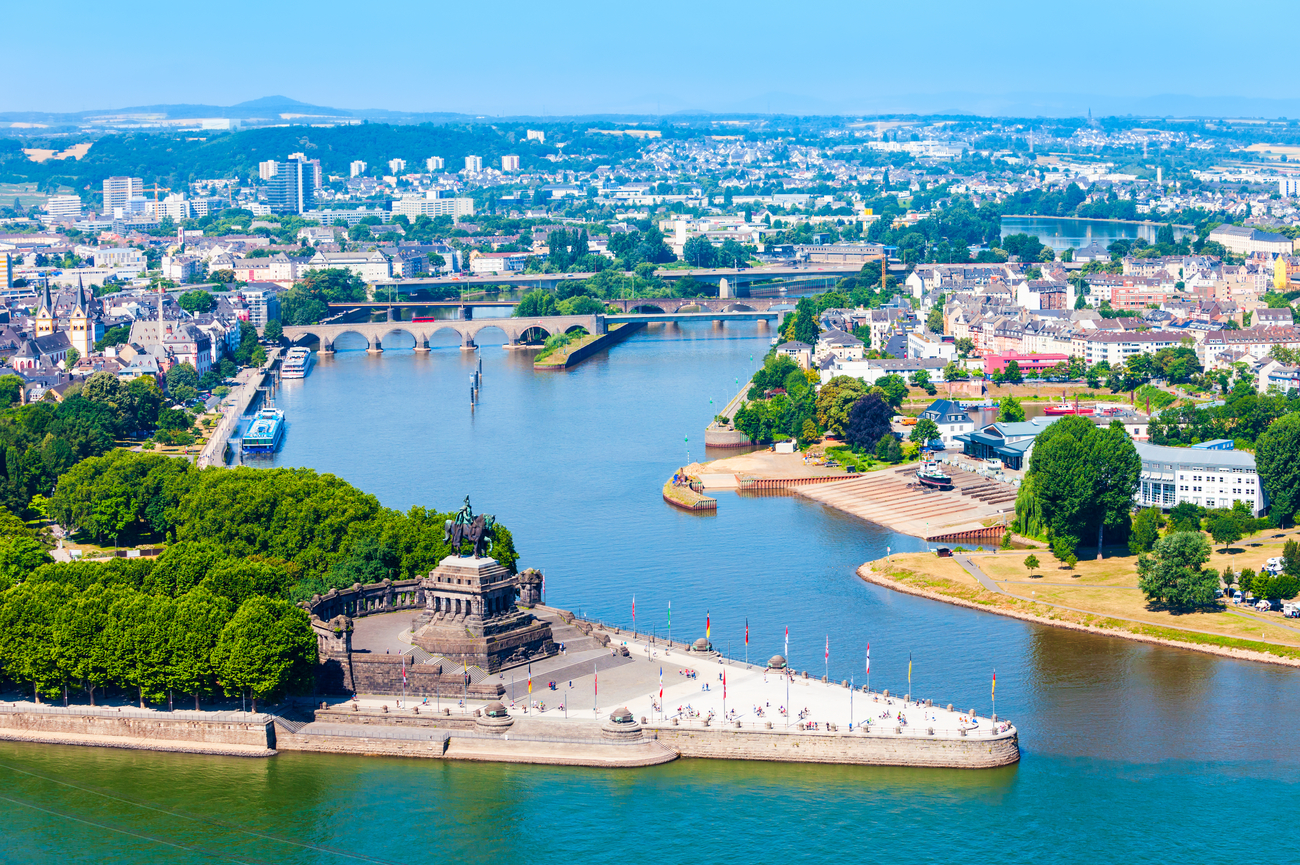
Deutsches Eck hits differently: two legendary rivers, the Rhine and the Moselle, casually collide right where this grand promontory juts into the water. It’s the kind of spot that looks like a postcard printed itself before anyone had a chance to snap a photo. At the heart of it stands the towering equestrian statue of Emperor Wilhelm I, a bronze boss-level figure who’s been watching over Koblenz since the late 19th century (well, his modern version since 1993).
Deutsches Eck isn’t some random riverbend selfie stop. Its name dates back to a Teutonic Order settlement in 1216, back when this rivers-meeting crossroads was already a strategic handshake between waterways. The equestrian monument was first inaugurated in 1897 to honor Wilhelm I’s unification of Germany and became a symbol of unity that persisted, even surviving destruction in World War II and later being reconstructed as a symbol of reconciliation. Today, it’s part of the UNESCO World Heritage Upper Middle Rhine Valley and draws over 2 million visitors annually who come for the views, the vibes, and to stand where water and history collide.
Seilbahn Koblenz
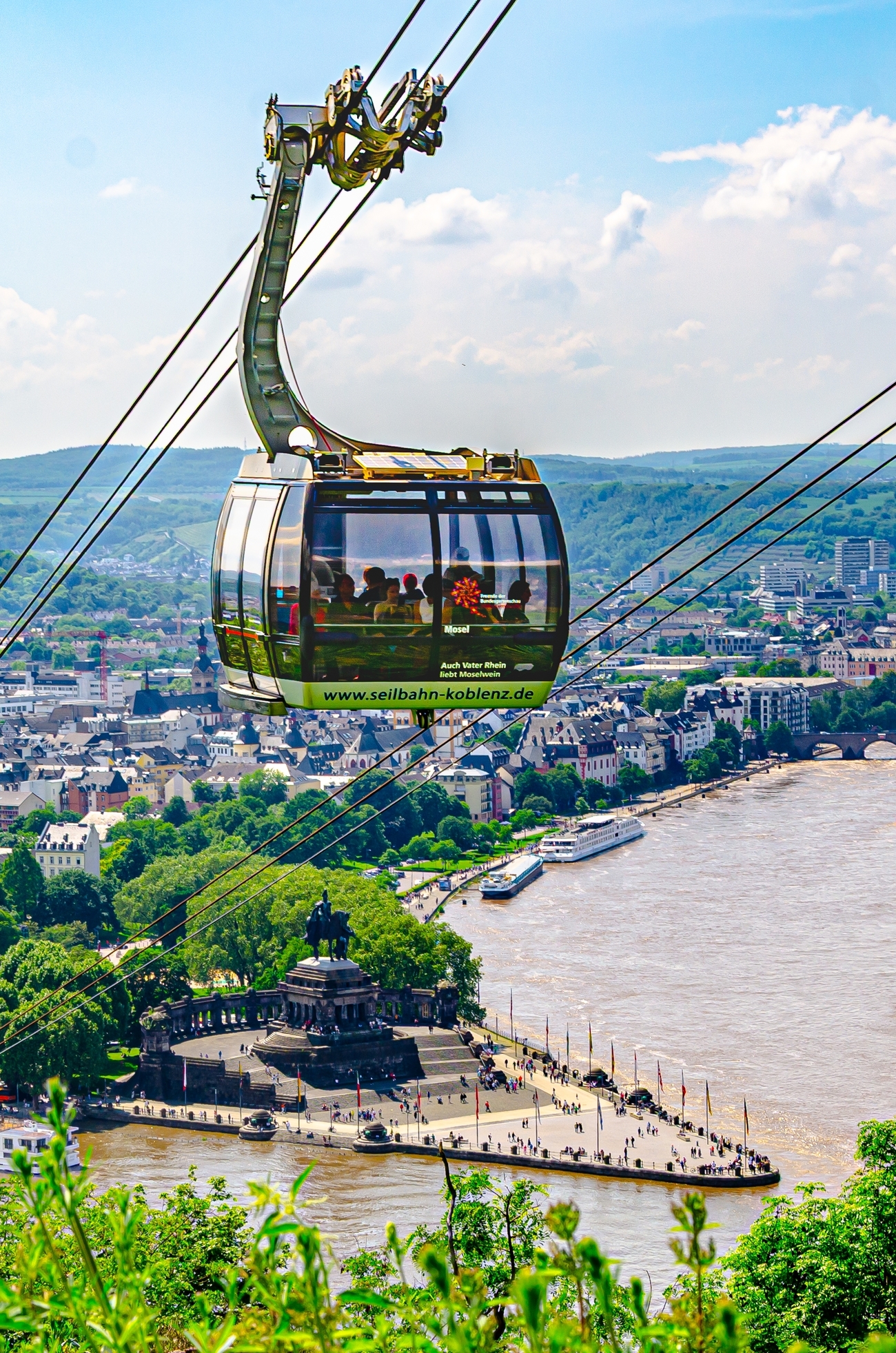
Next, you will be experiencing altitude. Seilbahn Koblenz is the cable car that bypasses roads and goes straight for views on views. It’s just a short riverside stroll (about 5–8 minutes) from Deutsches Eck along the Konrad-Adenauer-Ufer.
Gondolas gliding above the Rhine? Yes. But these aren’t theme-park thrills. They’re panoramic sky lounges. This modern cable car was built for the 2011 Federal Horticultural Show and stuck around because everyone quickly realized it was one of the best ways to experience Koblenz. It stretches roughly 890 meters from the riverbank up to the historic Ehrenbreitstein Fortress plateau, ascending about 112 meters in a smooth 4–5 minute glide. With panoramic glass cabins, including one (no. 17) with a glass floor. Your Instagram grid and your inner travel critic will both be impressed.
The ride itself is a quiet sort of spectacle. Each cabin offers uninterrupted views over the Upper Middle Rhine Valley UNESCO World Heritage site, Deutsches Eck below and the confluence of the Moselle and Rhine. The cable car operates with high transport capacity, so crowds rarely slow you down.
Ehrenbreitstein Fortress
From the top station of the Seilbahn, it’s a short, level walk straight into fortress territory and suddenly, Koblenz feels centuries away.
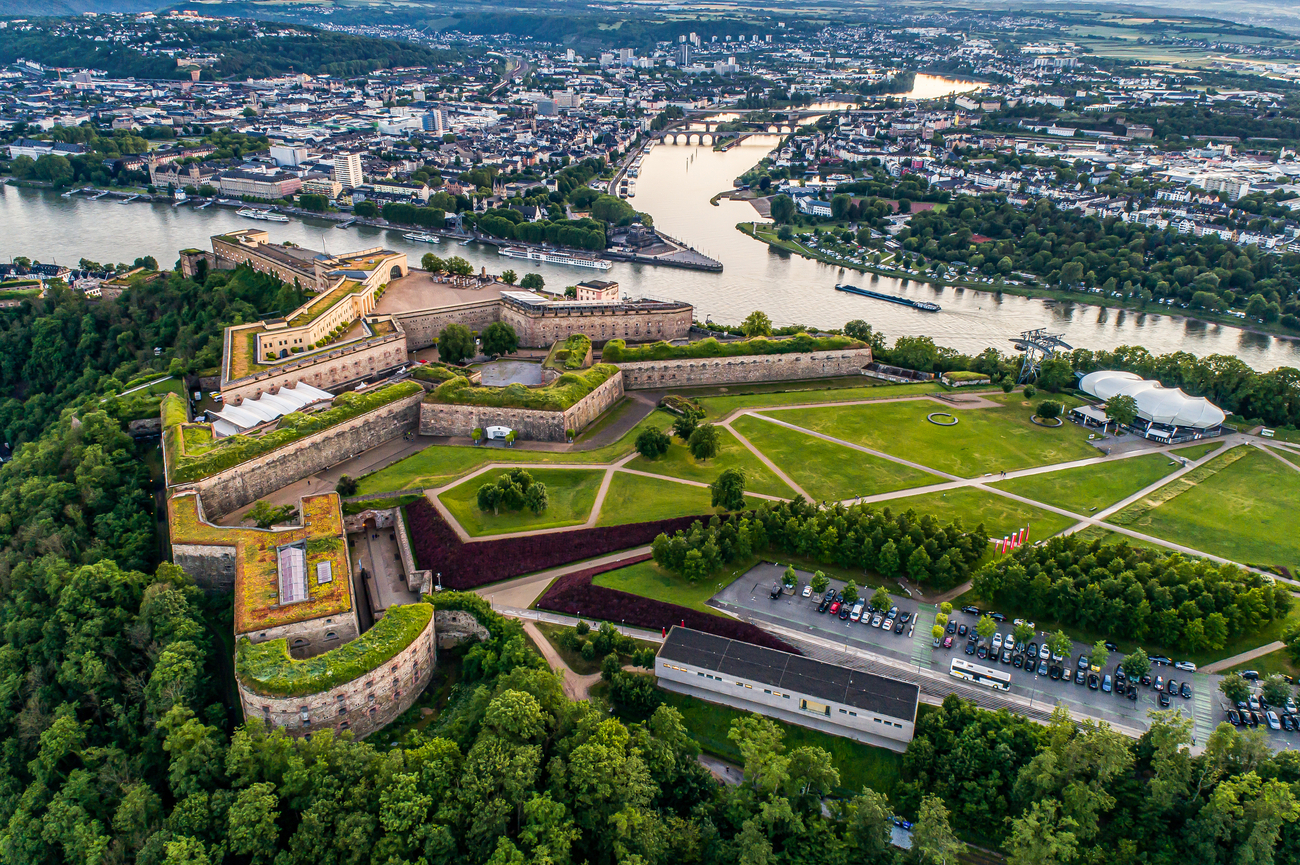
Ehrenbreitstein Fortress dominates the Rhine. Massive stone walls stretch across the plateau like they were designed to outlast drama, empires and questionable architectural trends. Standing 118 meters above the river, this is one of the largest preserved fortresses in Europe with Prussian precision carved into solid rock. The scale alone shifts your posture. You don’t just enter; you advance.
The site dates back over 1,000 years, though the current structure largely reflects early 19th-century Prussian military engineering after Napoleon had the previous fortress blown up in 1801. What rises today is a strategic masterpiece: thick ramparts, deep moats, bastions layered for defense and panoramic courtyards that open dramatically toward the Rhine and Moselle valleys. Inside the complex, multiple exhibition spaces house the Landesmuseum Koblenz and cultural installations, blending military history with art and regional storytelling. It’s stone and strategy with surprisingly good lighting.
If you want to go beyond wandering and actually understand what you’re standing on, book the private guided tour (approx. 1 hour). You’ll get a dedicated expert who walks you through the fortress like it’s a strategic masterclass from medieval origins to Prussian power plays. The tour is available in English, German, French, Italian, Russian and even German Sign Language, so you can choose the language that feels most natural and immersive.
Mittelrheinmuseum Koblenz
From Ehrenbreitstein Fortress, descend back down via the Seilbahn Koblenz and cross toward the Old Town. In under 15 minutes, fortress grit softens into cultured elegance. The stone ramparts trade places with clean museum lines, and the mood shifts from military dominance to artistic refinement. Mittelrhein-Museum Koblenz is where the Rhine tells its story in brushstrokes instead of battlements.
This is one of Germany’s oldest civic museums, founded in 1835 and today housed inside the sleek Forum Confluentes building at Zentralplatz. Inside, you’ll find an impressive collection of paintings, sculptures, graphics and applied art spanning from the Middle Ages to contemporary works. The highlight? Romantic Rhine landscapes that once fueled Europe’s obsession with this very valley like with dramatic skies, castle silhouettes, river light captured before photography existed. You’ll also encounter works from artists like Lovis Corinth and regional masters who shaped the visual identity of the Rhineland.
And if you’re interested in depth, the museum offers public guided tours and themed tours that explore specific collections or eras. Private group tours can be arranged in advance through the museum’s official website, often available in German and English depending on booking.
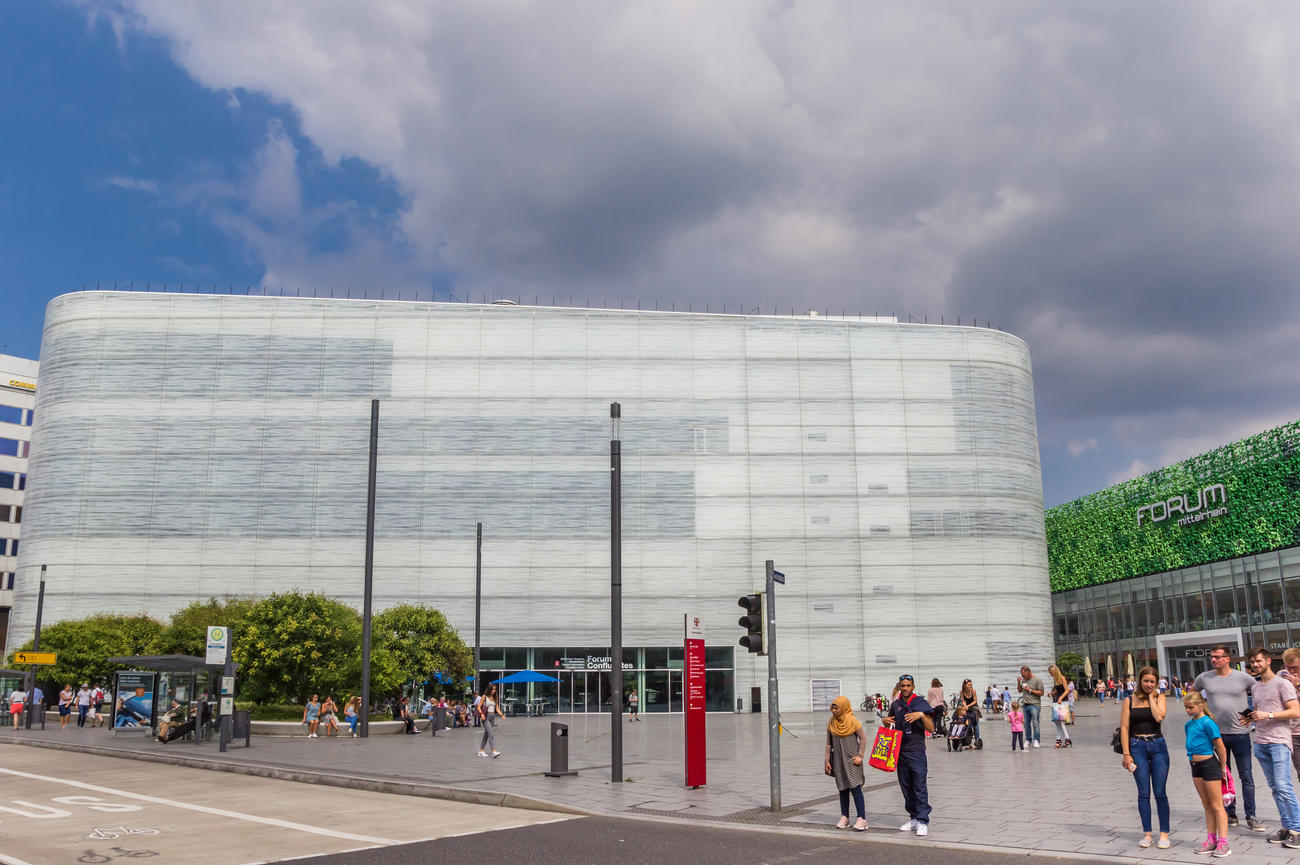
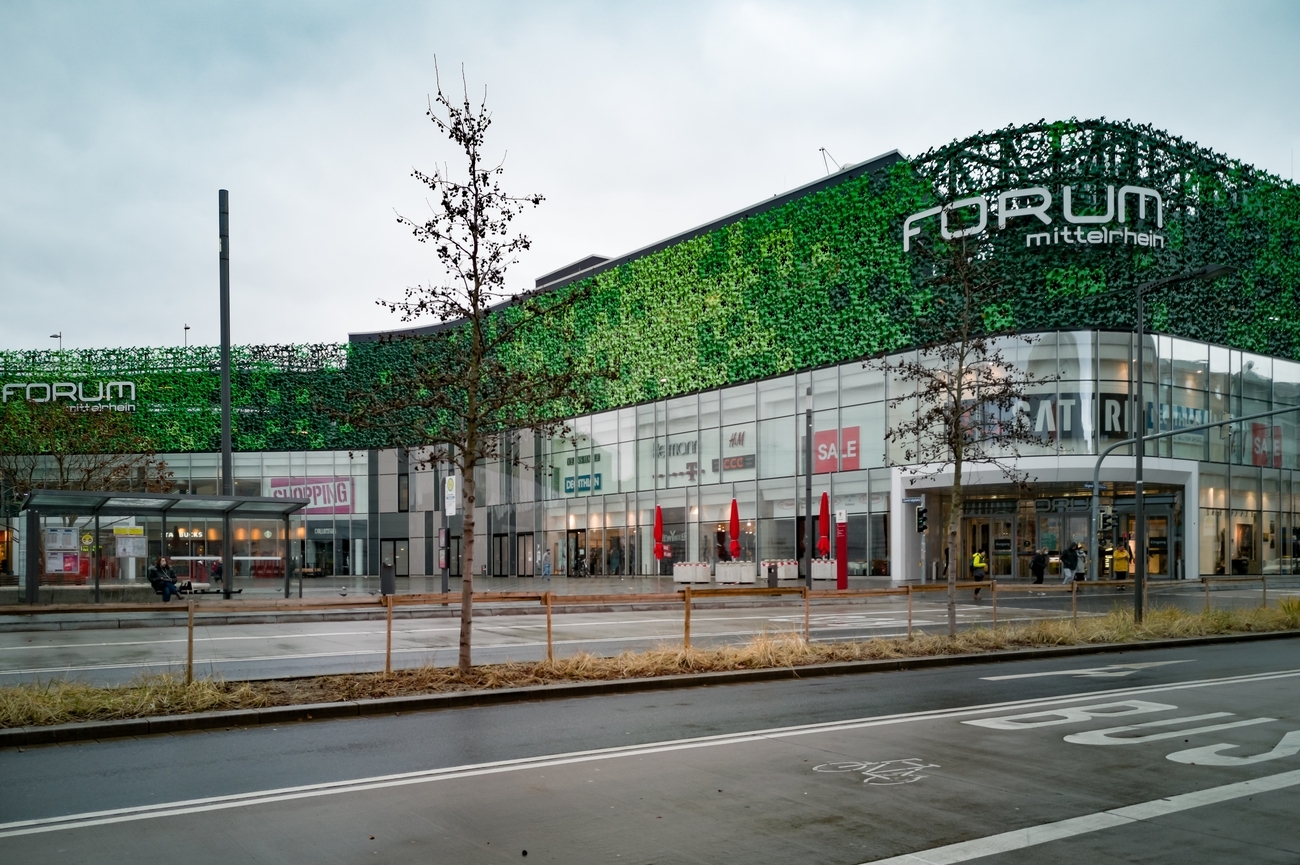
Afternoon: Forum Mittelrhein Koblenz
Step out of Mittelrhein-Museum and you’re practically there. Forum Mittelrhein sits right on Zentralplatz, directly connected to the same modern complex. No transfers, no map-checking spirals.
The building itself feels contemporary and composed with all clean architecture, open atriums and natural light that makes browsing feel less like an errand and more like a curated pause. Opened in 2012, Forum Mittelrhein is Koblenz’s largest shopping center, home to around 80 stores spread across multiple levels. Expect a balanced mix of German and international fashion labels, beauty counters, lifestyle brands and specialty shops. The layout is easy to navigate and the atmosphere stays relaxed even during busier hours.
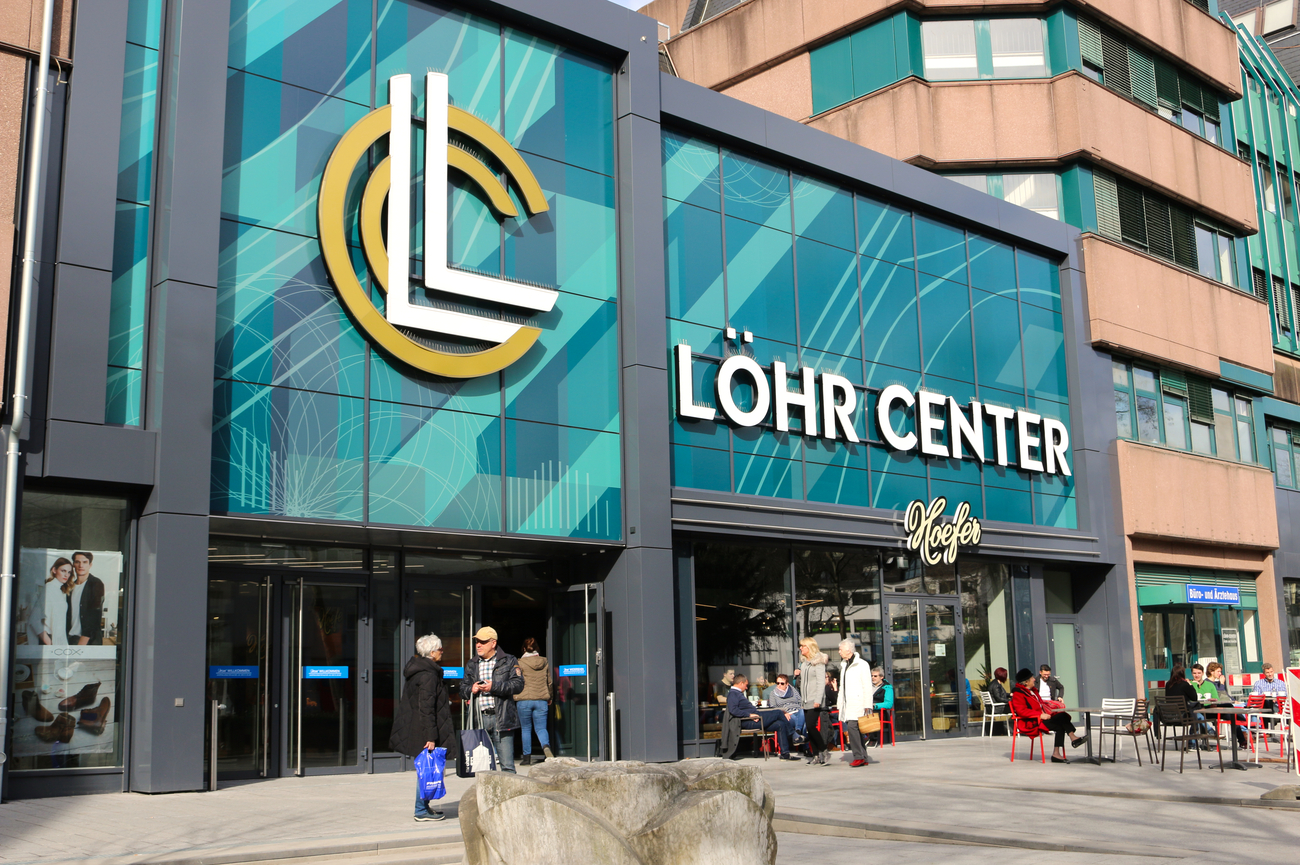
Löhr-Center Koblenz
This is officially a mall hop. From Forum Mittelrhein, it’s about a 10-minute walk through central Koblenz toward Löhrstraße. Consider it a stylish intermission between centuries. Castles in the morning, curated retail in the afternoon.
Löhr-Center Koblenz has been part of the city’s rhythm since 1984 and remains one of the region’s most established shopping addresses. With over 130 stores spread across multiple levels, it’s larger and slightly more classic in layout compared to Forum Mittelrhein. The glass roofing keeps the interior bright, while wide corridors make it easy to browse without feeling boxed in. You’ll find a broader retail mix here with fashion anchors, footwear specialists, jewelry counters, beauty retailers and German department-style staples.
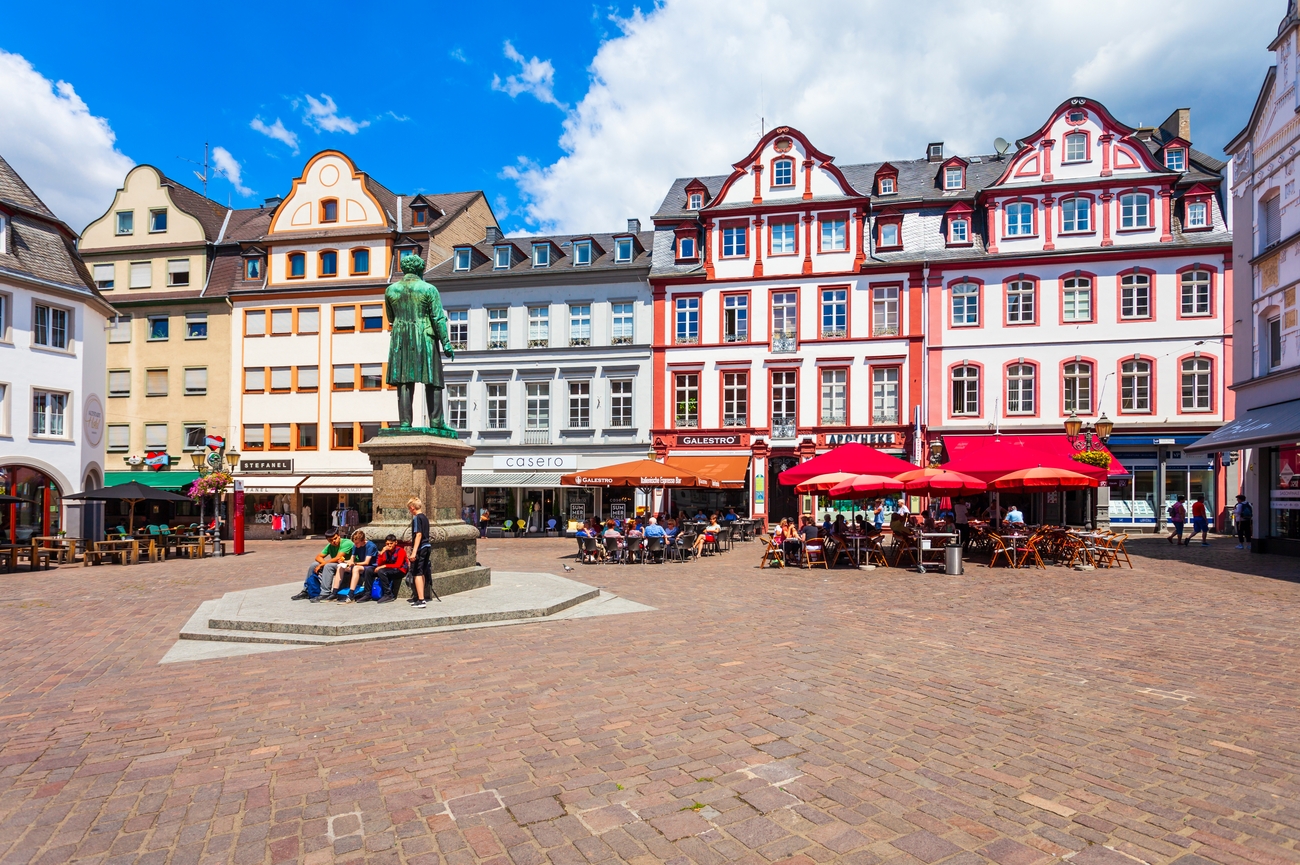
Koblenz Altstadt
Step out of Löhr-Center and head back toward the Old Town and in about 8 minutes on foot, glass storefronts fade into cobblestone charm. The pace shifts naturally. Shopping bags in hand, you enter streets that have been doing “timeless” long before trends existed.
Koblenz Altstadt feels intimate without trying too hard. Narrow lanes twist between pastel façades, wrought-iron signs swing gently above doorways and little plazas open up like quiet stage sets. This is the kind of walk that doesn’t need a rigid route. You’re moving through over 2,000 years of layered history with Roman foundations, medieval churches, baroque facades, all within a compact, walkable grid.
Evening: Konrad-Adenauer-Ufer
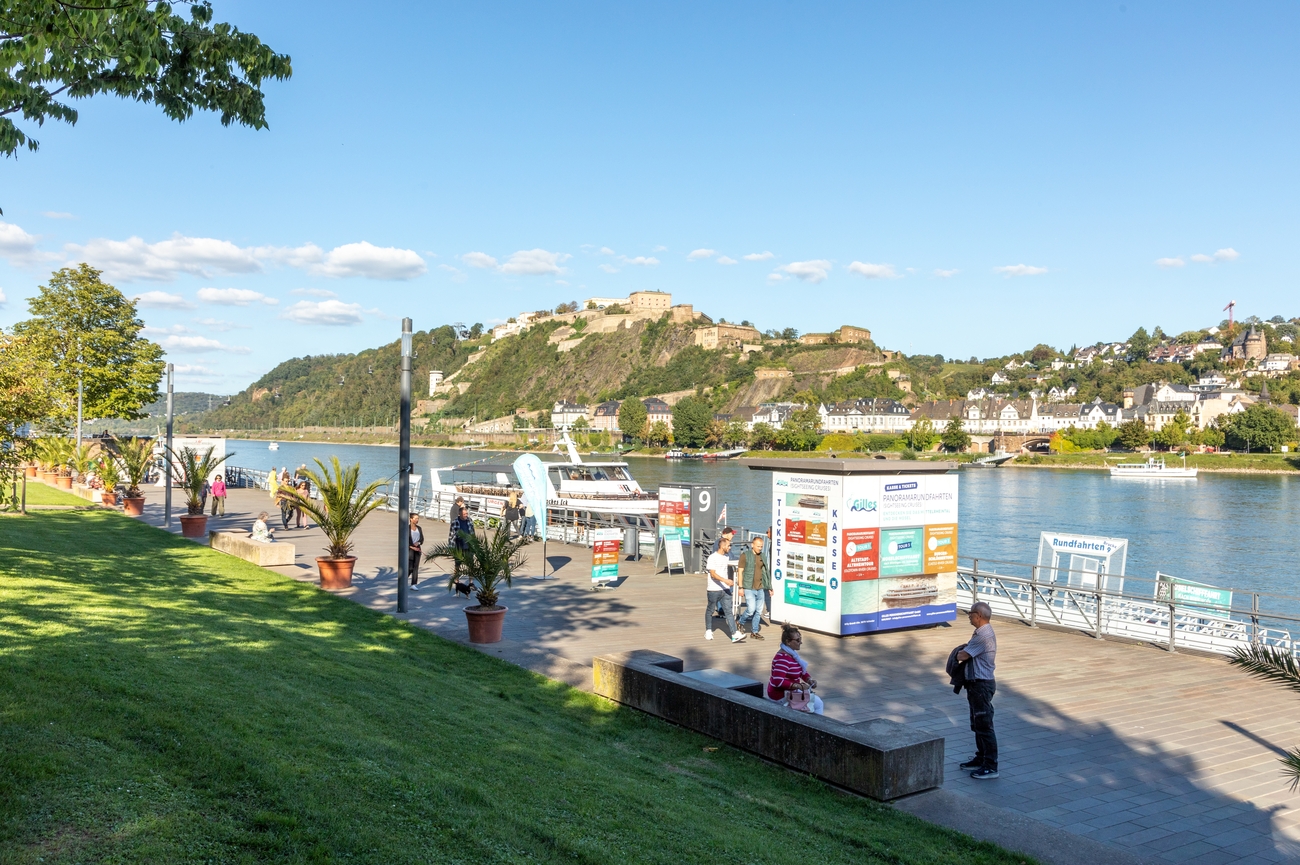
The Old Town gradually opens toward the river. You’ll notice cobblestones widen, the skyline stretches and the Rhine comes back into view. Without needing to think about directions, you naturally arrive at Konrad-Adenauer-Ufer, Koblenz’s elegant riverfront promenade.
Here, the atmosphere shifts. The space feels broader, calmer and more expansive after the intimacy of the Altstadt. The walkway runs along the Rhine with clear sightlines toward passing cruise ships and the dramatic silhouette of Ehrenbreitstein Fortress perched above. Trees line the path, benches face the water and the entire stretch carries that quiet European riverfront confidence.
This waterfront has long been part of Koblenz’s identity. The Rhine and Moselle shape the city’s geography and history and standing here makes that legacy tangible. As evening light settles, the fortress begins to glow softly across the river, echoing the morning’s visit but in a completely different mood. And if you want to elevate the finale, this area serves as a departure point for several Rhine River cruises, including sunset sailings and private charter options.
With that, the pace slows, the river steadies and Day 1 comes to a graceful close.
Day 1 - Rhine Gorge Tour Map
Day 2
Morning:
Stolzenfels Castle
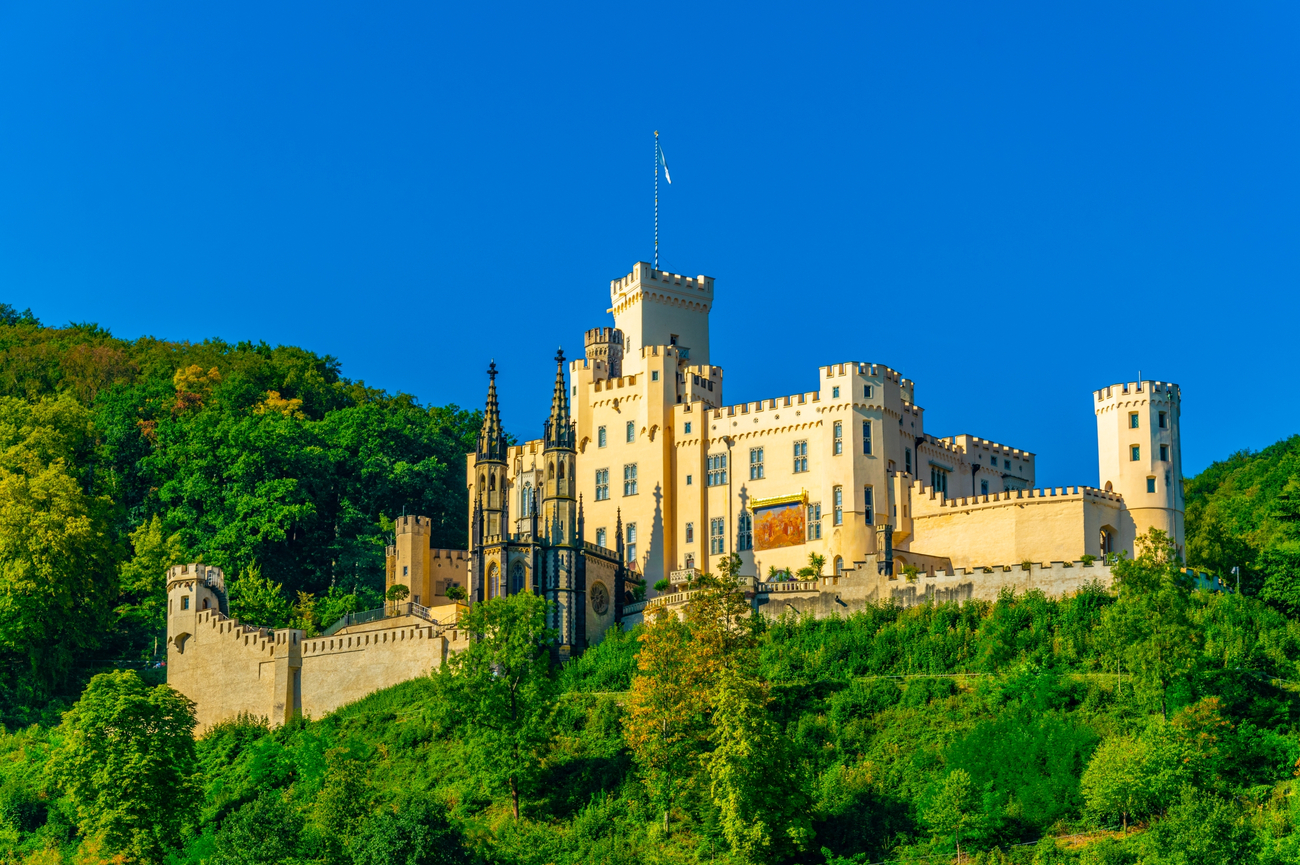
Day 2 starts with a castle that looks like it rehearsed for a romance novel cover. Perched above the Rhine with its blush-toned facade and storybook towers, it feels like royalty once decided the river deserved a dramatic backdrop. And honestly, they weren’t wrong.
Originally built in the 13th century by the Archbishops of Trier, the fortress fell into ruin before being reimagined in the 19th century under King Frederick William IV of Prussia. What stands today is a masterclass in Rhine Romanticism: pointed arches, decorative murals, intricate wood carvings and rooms that feel intentionally theatrical. The Hall of Mirrors alone delivers full regal energy, reflecting light across gilded details and polished floors. Step onto the terraces and the Rhine valley unfolds below in layered greens and silver-blue water.
And if you want to experience Stolzenfels beyond a standard walkthrough, book the 3-hour private tour. This is where the castle shifts from a beautiful backdrop to a layered story. You’ll have a dedicated guide, often fluent in English, Italian or German, leading you through the royal apartments, ceremonial halls and the striking Hall of Mirrors with context that actually sticks.
Marksburg
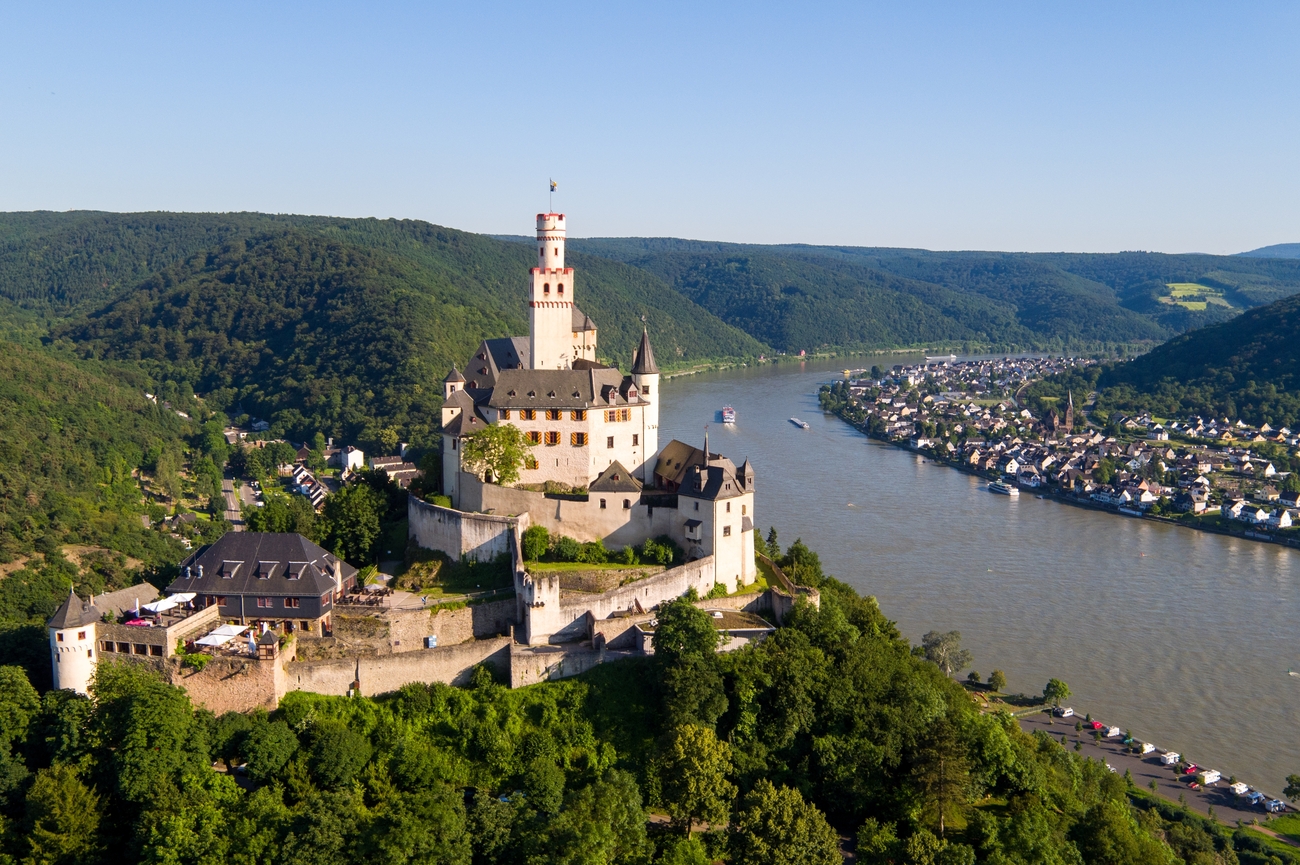
This day leans fully into its fairy tale arc as you head to Marksburg. If Stolzenfels gave you romantic reconstruction, Marksburg Castle gives you the real medieval deal. No 19th-century glow-up. No decorative nostalgia. This one survived. Perched above the town of Braubach, Marksburg is the only hilltop castle along the Rhine that was never destroyed. You’re walking into original stonework, original defensive systems, original atmosphere. It feels less like a set piece and more like a time capsule with walls.
Inside, it’s all narrow staircases, thick ramparts, knights’ halls and a preserved medieval kitchen that still carries that “life happened here” energy. The armory displays crossbows and armor with unapologetic seriousness. The torture chamber? Sobering, historically grounded and a reminder that medieval Europe wasn’t all tapestries and banquets. This castle dates back to the 12th century and was expanded over time, which means you’re literally moving through layers of architectural evolution.
Visits are conducted through guided tours only, lasting approximately 50 minutes. Dedicated English-language tours are offered at scheduled times during the summer. Outside of summer, you can still join a German-language group and follow along using an English-language fact sheet provided at the entrance.
Rheinanlagen Braubach
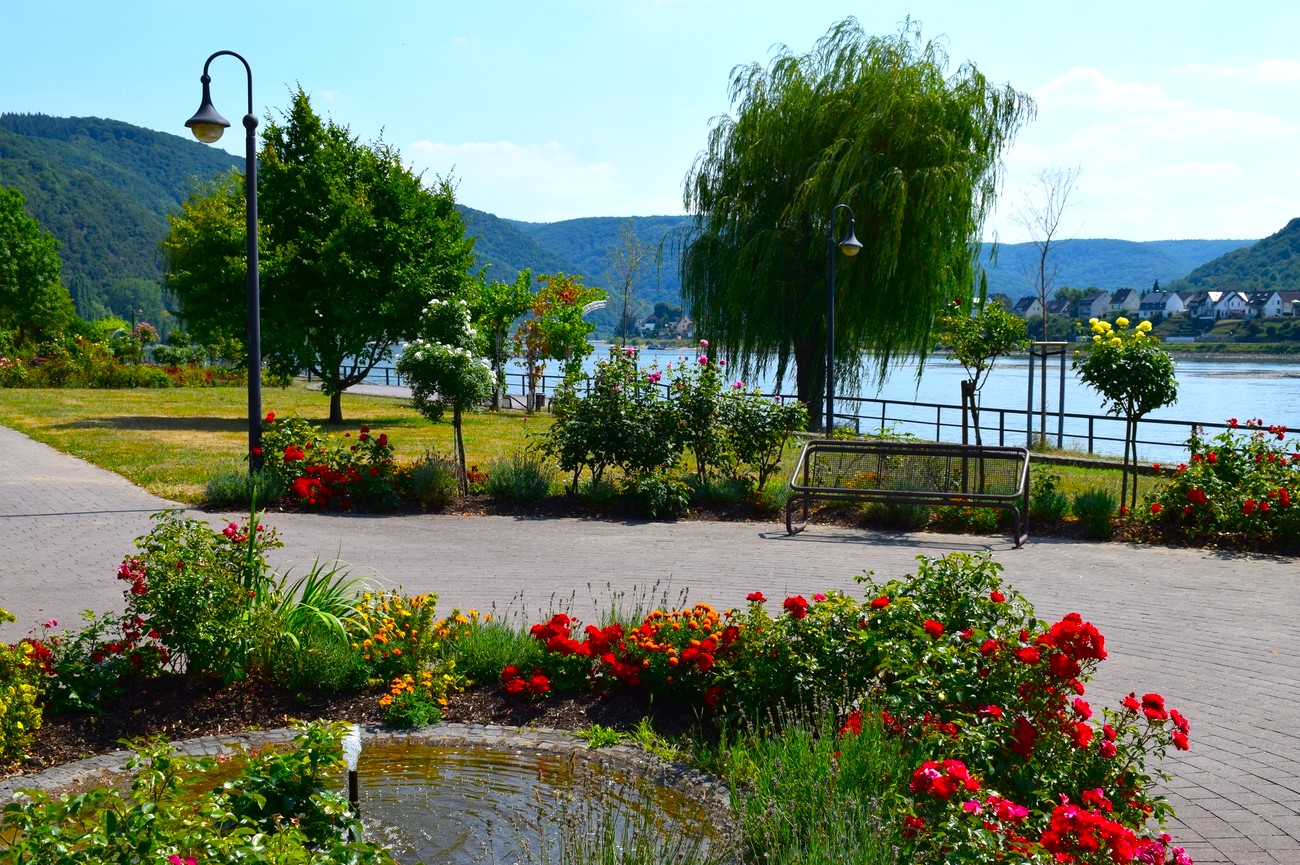
After the stone corridors and spiral staircases of Marksburg, you’ll want air. Space. A softer landing. That’s where Rheinanlagen Braubach steps in. This is a riverside garden that feel like the exhale after medieval intensity.
Right along the Rhine, at the foot of the castle hill, this landscaped promenade stretches gently beside the water with manicured lawns, old trees, flower beds and unobstructed river views. It’s polished but peaceful.
The gardens date back to the 19th century, shaped during the same Romantic Rhine movement that turned this valley into Europe’s obsession. There are benches positioned for optimal river gazing, pathways that curve just enough to keep things interesting and clear sightlines up to Marksburg towering above. You’ve just explored the fortress; now you see it from below, rising dramatically against the skyline like it knows you were just there.
Afternoon:
Loreley Extratour
The river calm of Rheinanlagen Braubach eventually gives way to something wilder. From Braubach, the journey south to the Loreley Extratour trailhead takes about 35–40 minutes by car, following the Rhine’s eastern bank through vineyard-lined curves and castle silhouettes. The
Loreley Extratour is one of the premium circular hiking routes in the region, part of the Rheinsteig network. It’s approximately 14 kilometers in total if completed fully, designed as a scenic loop that combines forest paths, open ridgelines, vineyard edges and multiple panoramic viewpoints over the Rhine Gorge. This is not a casual promenade; it’s an elevated landscape experience. Expect varied terrain, steady inclines and lookout points that reward the effort.
What makes this route special is the perspective. From certain stretches, you see the Rhine narrowing below at the legendary Loreley bend, the same stretch once feared by sailors navigating sharp currents and hidden rocks. The trail passes through quiet woodland sections before opening dramatically onto exposed viewpoints where the valley feels vast and cinematic. You’re moving through the UNESCO Upper Middle Rhine Valley, not just observing it.
The trail is clearly marked and can be self-guided, but if you want depth beyond scenery, arranging a private Rheinsteig-certified hiking guide elevates the experience. Guided options typically run 3–5 hours depending on pace and selected segment, blending geology, folklore, river trade history and vineyard traditions into the walk.
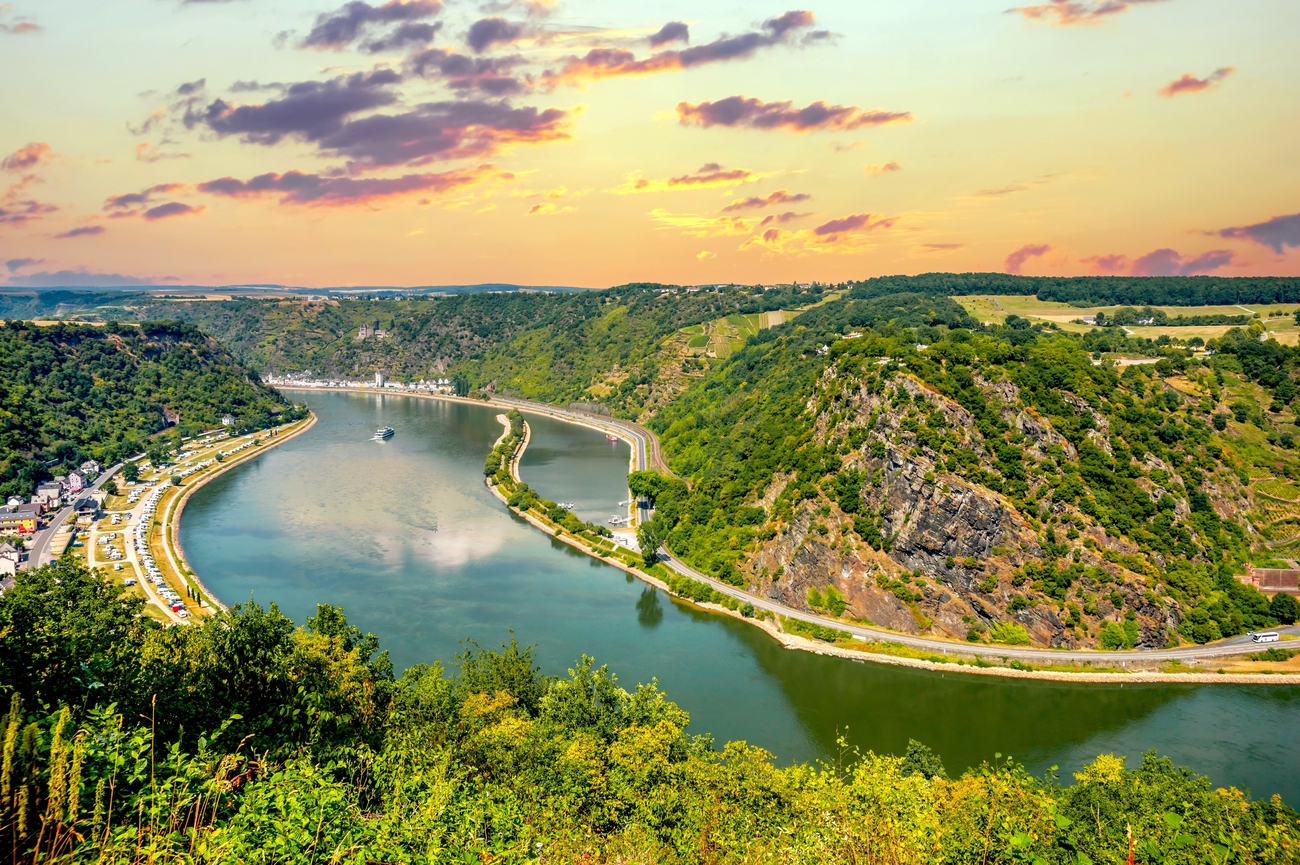
Aussichtspunkt Loreleyfelsen
The forest opens and suddenly the Rhine is everywhere.
After tracing sections of the Loreley Extratour, you arrive at the crown jewel: Aussichtspunkt Loreleyfelsen. This is the vantage point. The one that makes maps make sense. The one that explains centuries of poems, myths and slightly dramatic German folklore.
From this exposed rock ledge, the Rhine curves sharply below in one of its narrowest and most powerful bends. The cliffs rise steeply around you, vineyards cling to impossible slopes and freight ships move carefully through the channel that once terrified sailors. This stretch of river was historically one of the most dangerous passages along the Rhine due to strong currents and hidden reefs which, naturally, gave rise to the legend of the Loreley siren whose song distracted captains. Heinrich Heine immortalized the tale in the 19th century, and the myth stuck.
The viewing platform itself is secure and well-maintained, with railings that allow you to lean into the panorama without feeling exposed. Informational panels nearby explain both the geology of the slate cliffs and the cultural significance of the site within the UNESCO Upper Middle Rhine Valley. This is your nature-centered afternoon. No interiors. No ceilings. Just open sky and layered terrain.
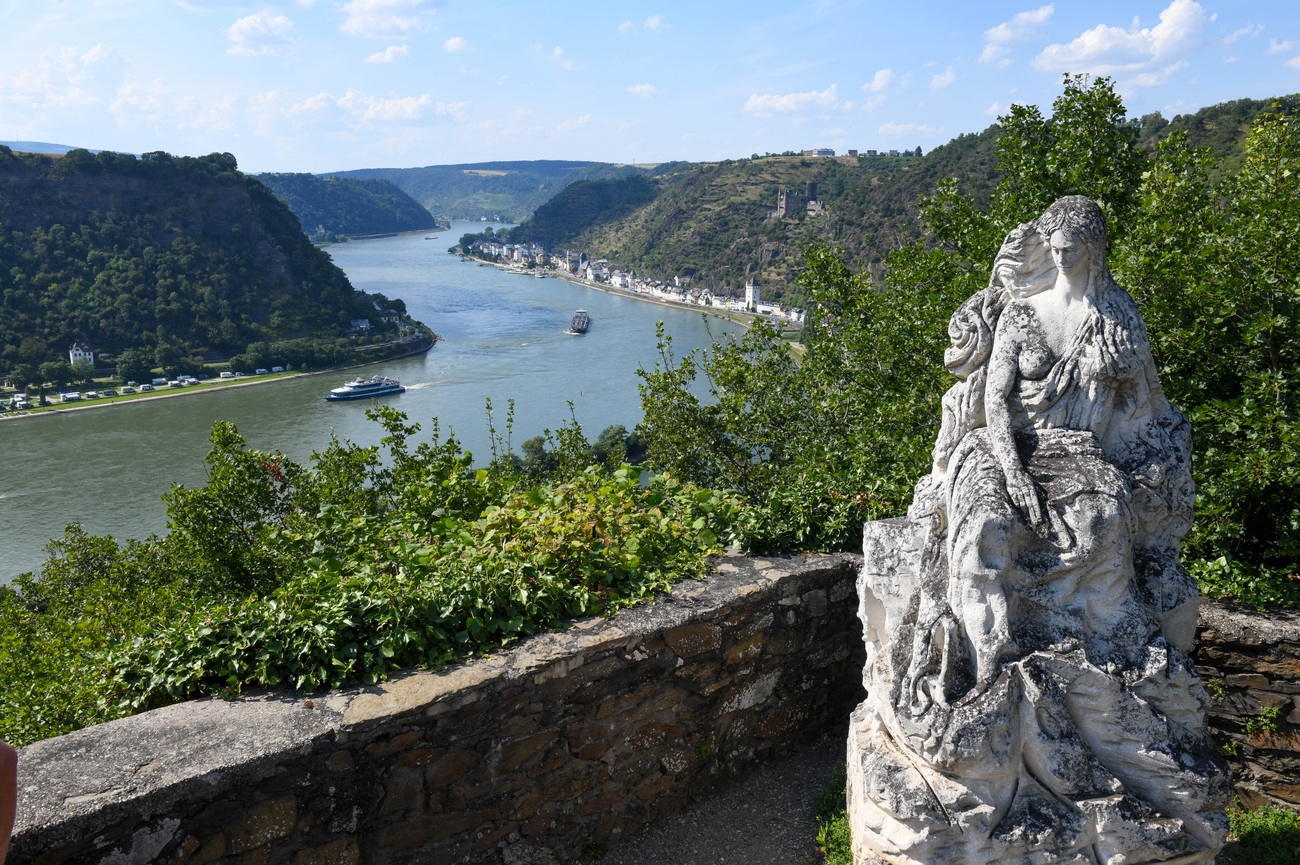
Rheinfels Castle
From the heights of Aussichtspunkt Loreleyfelsen, the descent back toward the river feels like returning from myth to stone. The drive to Burg Rheinfels in St. Goar takes about 10–15 minutes, crossing down from the plateau and following the Rhine’s curve northward.
Burg Rheinfels doesn’t do delicate. Once the largest fortress on the Middle Rhine, it was built in 1245 by Count Diether V of Katzenelnbogen and expanded over centuries into a near-impenetrable stronghold. At its peak, it controlled river tolls and dominated trade along this vital stretch of the Rhine. Though partially destroyed in the late 18th century, the remaining structure still feels monumental. See the tunnels, vaulted cellars, thick defensive walls and open courtyards that stretch wider than many intact castles.
Exploring Rheinfels feels immersive rather than ornamental. You can wander through underground passageways, climb surviving towers and stand along the ramparts overlooking the Rhine valley below. The scale gives it a raw, powerful energy. Less fairytale, more fortress reality. Informational panels throughout the grounds outline the castle’s military engineering, expansion phases and eventual decline.
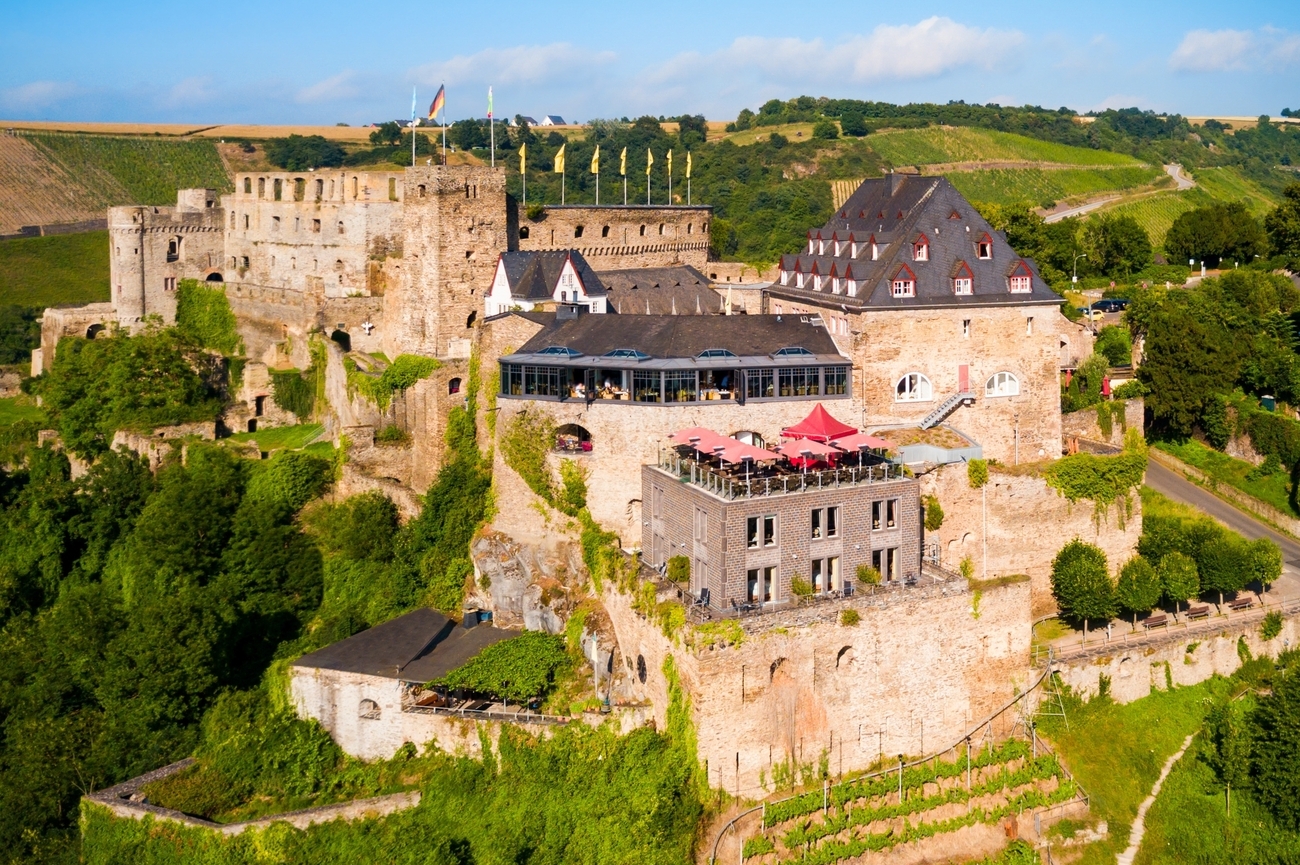
Evening: Rheinanlagen
The path winds downward, and within minutes, fortress walls give way to open sky and flowing water. You arrive at Rheinanlagen St. Goar, the quiet river promenade that sits directly beneath the castle you just explored.
The Rhine moves steadily in front of you, wide and reflective. Across the water, Burg Katz rises in sharp silhouette, perched dramatically above St. Goarshausen. Look further south and the Loreley cliffs still frame the bend in the distance, now softened by evening light. Everything you explored today, the hike, the legend, the fortress, is visible from here in one sweeping glance.
The promenade itself is simple and elegant: tree-lined paths, benches facing the river, boats gliding past at unhurried intervals. This is where the pace shifts from exploration to absorption. And this is where Day 2 closes. Fortress above. River ahead. Loreley behind. And the fairytale settles gently into dusk.
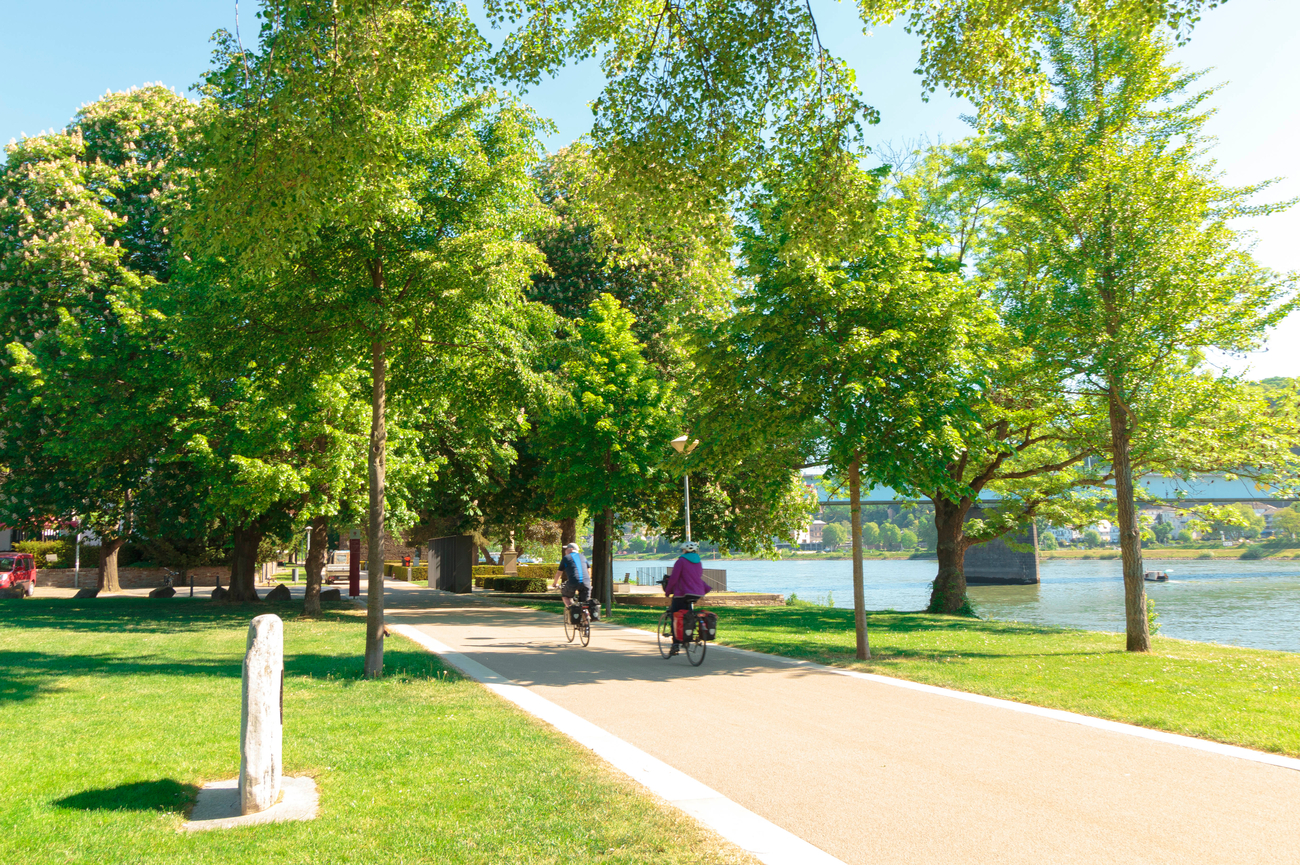
Day 2 - Rhine Gorge Tour Map
Day 3
Morning: Westliche Stadtmauer Oberwesel
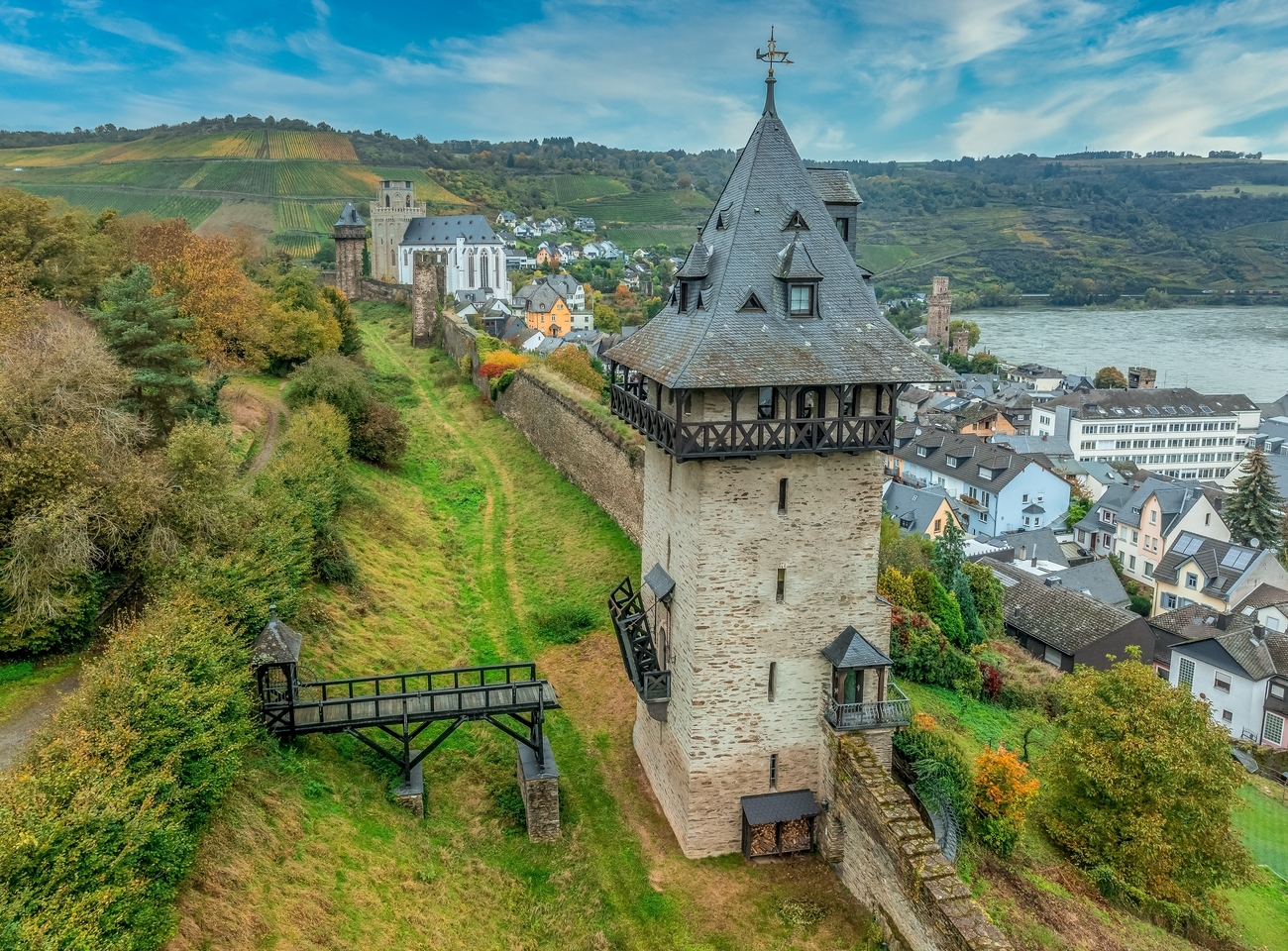
Above the Rhine and wrapped around the old town, the Westliche Stadtmauer Oberwesel stands strong. It is a real medieval wall where centuries of history still rise in plain sight.
This western stretch belongs to one of the best-preserved medieval fortifications in Germany. Built around 1220, the wall once wrapped around the town like a suit of armor, complete with defensive towers, narrow walkways and lookout points that kept watch over the Rhine Valley. Nearly 550 meters of it remain walkable today, along with multiple towers that still stand tall. Not crumbling relics, but confident survivors. The stonework feels sturdy, dramatic and slightly theatrical, especially when the light hits the battlements just right. Up top, sweeping views of vineyards and river curves reward every step.
Liebfrauenkirche Oberwesel
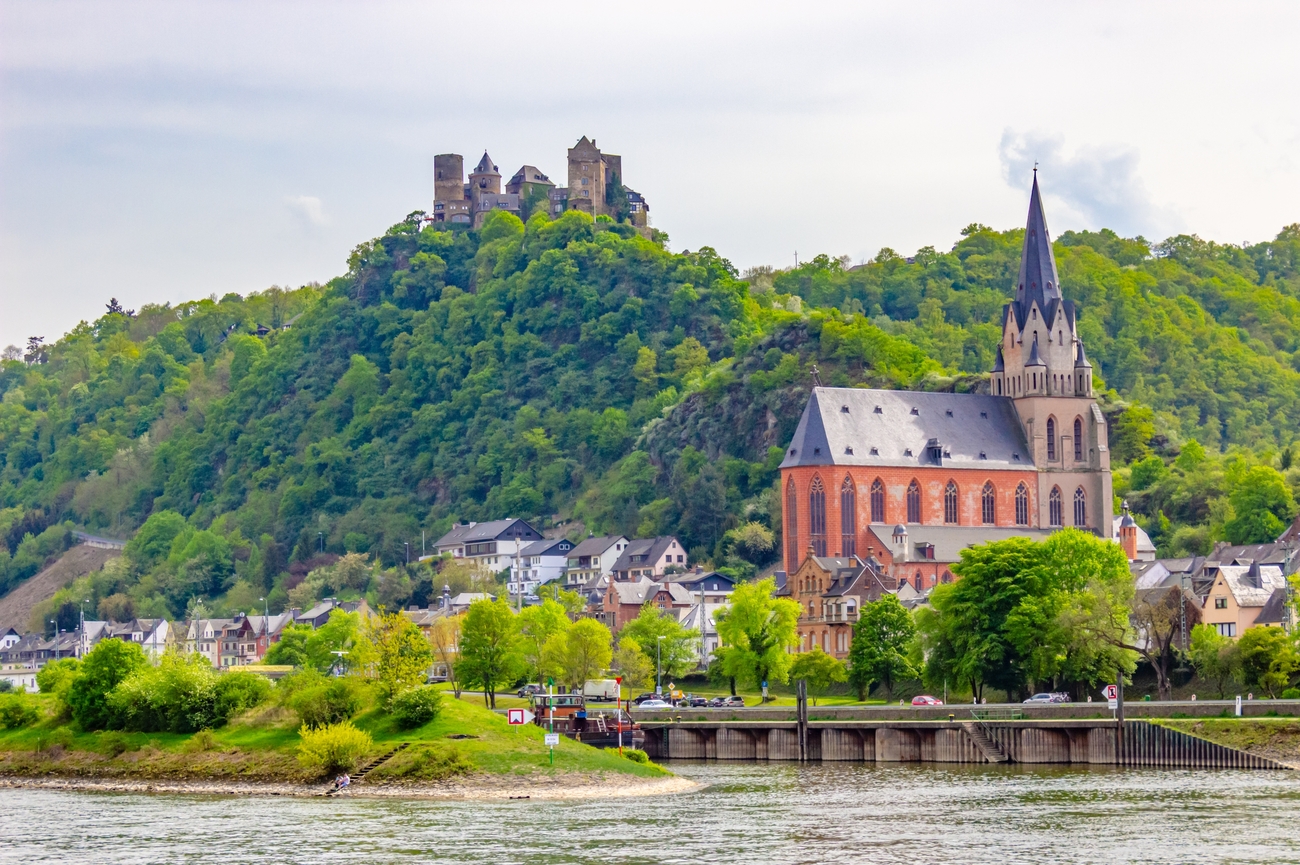
Start from Westliche Stadtmauer Oberwesel and wander inland for about 3–5 minutes through cobblestone alleys that curve like a secret whispered through centuries and you’ll find Liebfrauenkirche Oberwesel.
Liebfrauenkirche isn’t just another church; it’s one of the most important High Gothic churches in the Rhineland, with construction beginning in 1308 and its soaring structure woven into Oberwesel’s skyline for over 700 years. Its towering facade and slender proportions make it unmistakable and inside awaits a Golden Altar among Germany’s oldest High Gothic altar shrines, original filigree rood screen, fresco fragments and intricate furnishings that tell stories through stone and paint.
The church also hosts a historic organ with dozens of registers and a set of medieval bells that have rung out across the Rhine Valley for centuries. Since 2002, Liebfrauenkirche has been part of the UNESCO Upper Middle Rhine Valley World Heritage Site, so its presence here is legendary.
Schoenburg Castle
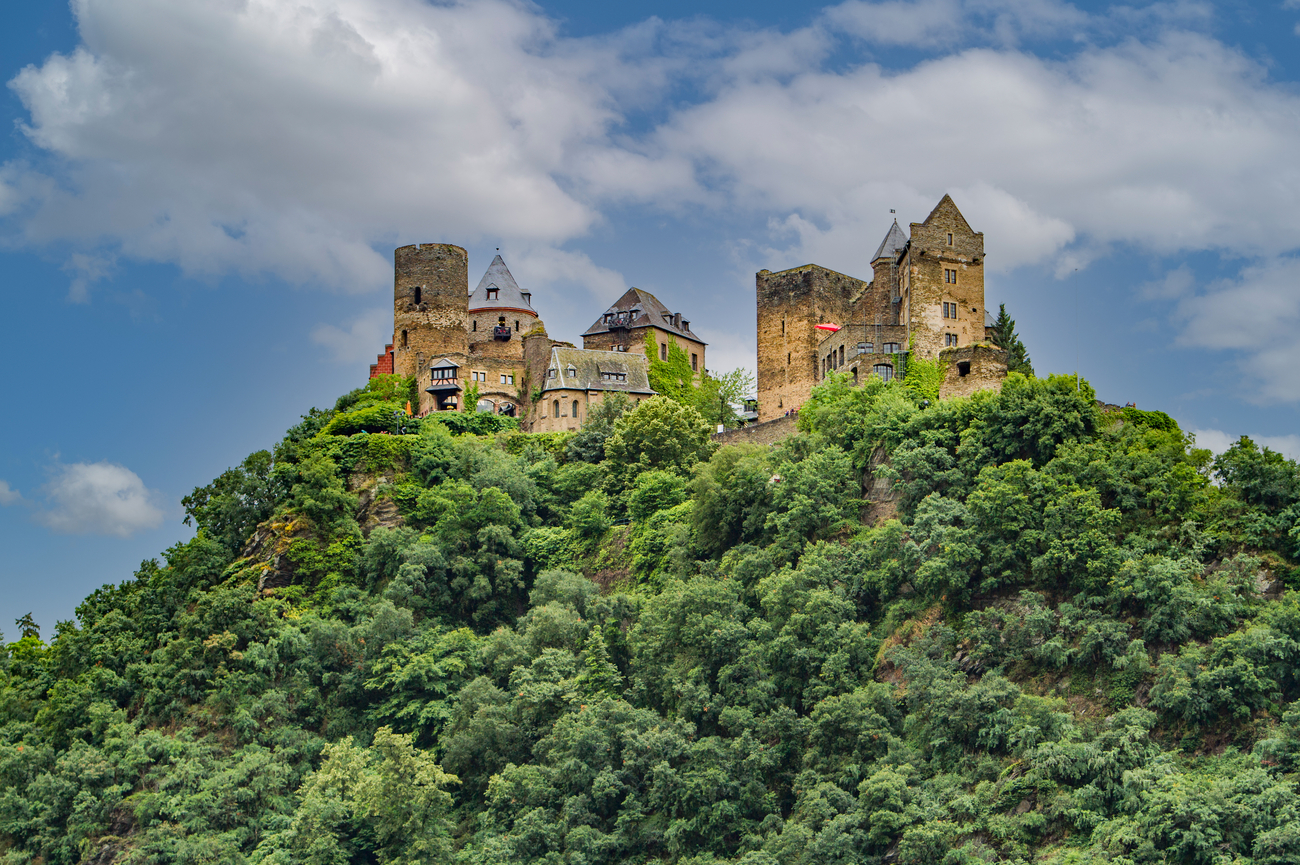
Step away from Liebfrauenkirche and let your feet follow the road as it begins to rise. The town slips lower, rooftops stacking beneath you, while the Rhine stretches out like a silver ribbon in the distance. After a quick 5-minute drive, the vineyards part ways and there it stands: Schöenburg Castle.
Inside the grounds, the Tower Museum (Turmmuseum) adds another layer to the adventure. Climb into the world of knights, castles and centuries-old defense systems while exploring exhibits that bring medieval life into sharper focus. Just note: the museum is closed on Mondays.
And now here’s where things level up. It’s home to the Burghotel auf Schönburg, one of the most iconic castle hotels in Germany. You can actually stay overnight inside these historic walls, sleep in individually styled rooms filled with antiques and dine in a candlelit restaurant overlooking the Rhine. The hotel offers fine dining experiences, wine selections from the region and terrace breakfasts that feel borderline royal. Non-hotel guests can visit certain public areas, enjoy the panoramic garden terraces or book a table at the restaurant for a castle-level culinary moment. Reservations are highly recommended, especially in peak season.
Wernerkapelle
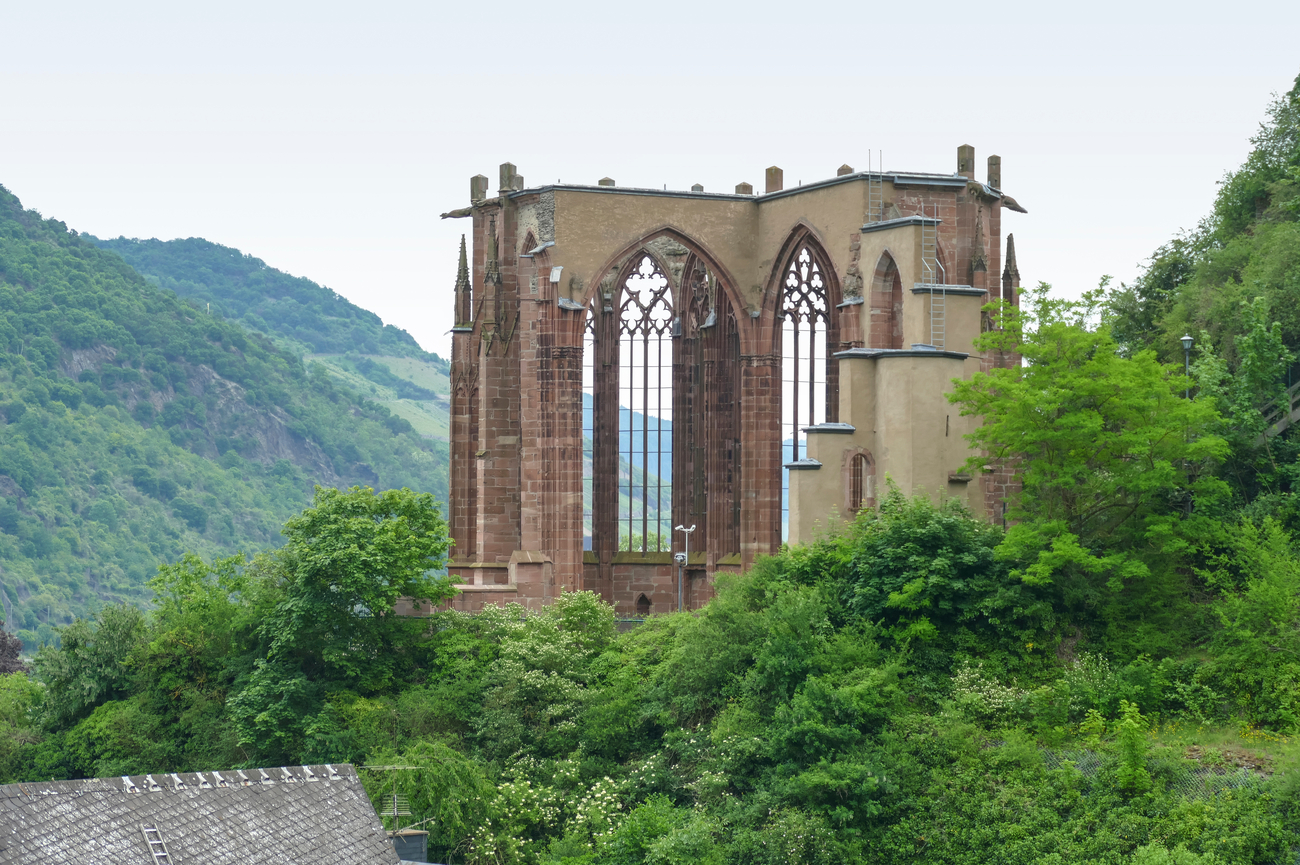
About 15 minutes downhill, go and follow the path toward the edge of Oberwesel’s old fortifications. There, standing gracefully against the Rhine Valley backdrop, you’ll find Wernerkapelle. It is a ruin, yes, but one that wears its broken arches like a crown.
Built in the late 13th century in honor of Werner of Oberwesel. The chapel was originally a Gothic pilgrimage site. Over time, war and weather reduced it to the open-air structure seen today with soaring pointed arches without a roof, delicate stone tracery reaching toward the sky and walls that frame the valley like a living artwork. The structure carries a complex history, including its connection to medieval pilgrimage culture and later reinterpretations of its story. Today, it stands preserved as a monument, offering one of the most atmospheric viewpoints in town. Stone ribs stretch overhead without a ceiling, letting sunlight and sky complete the architecture.
Wernerkapelle may be roofless, but it’s far from incomplete. Its arches still rise with quiet drama, proving that even ruins know how to leave a lasting impression.
Afternoon:
Bacharach Altstadt
From Wernerkapelle, make your way down toward the Oberwesel train station or riverfront and hop on a quick regional train. It’s about 10 minutes to Bacharach, basically a scenic blink along the Rhine.
Prefer slow travel? A Rhine river cruise gliding north delivers serious main-character energy. Either way, by early afternoon, you’ll be stepping straight into Bacharach Altstadt, where half-timbered houses lean in like they’ve been gossiping since the 1300s.
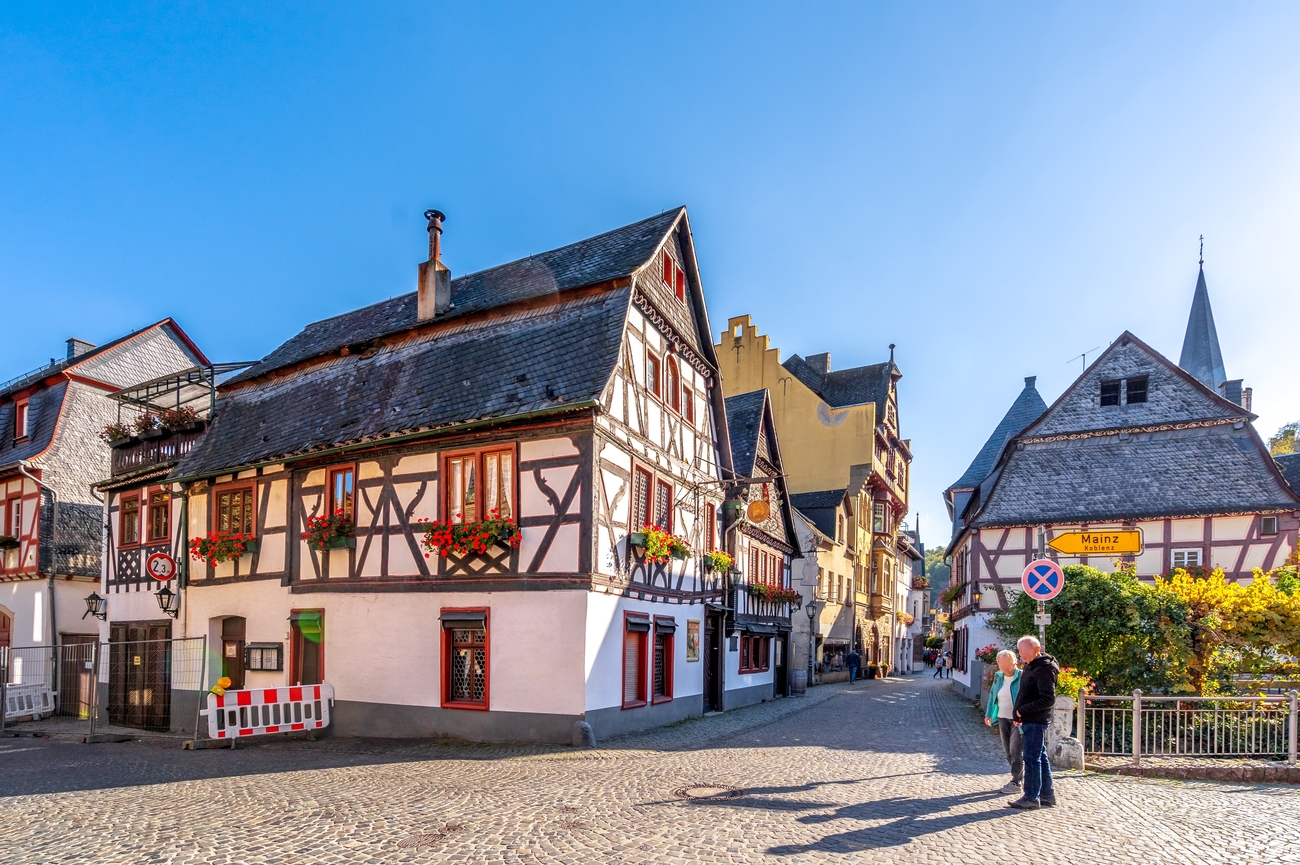
Bacharach’s old town is peak medieval charm without trying too hard. Narrow cobbled lanes twist between timber-framed houses, flower boxes spill over wooden balconies and the town wall still partially hugs the village like a protective arm. This was once a key wine trading hub along the Rhine, thriving on Riesling long before wine became trendy again.
The name “Bacharach” likely comes from the Roman era, and by the Middle Ages it was fortified, prosperous, and strategically important. Today, landmarks like the Altes Haus and the ruins of Wernerkapelle Bacharach above town keep the history very much alive. The Gothic St. Peter’s Church adds quiet grandeur to the story.
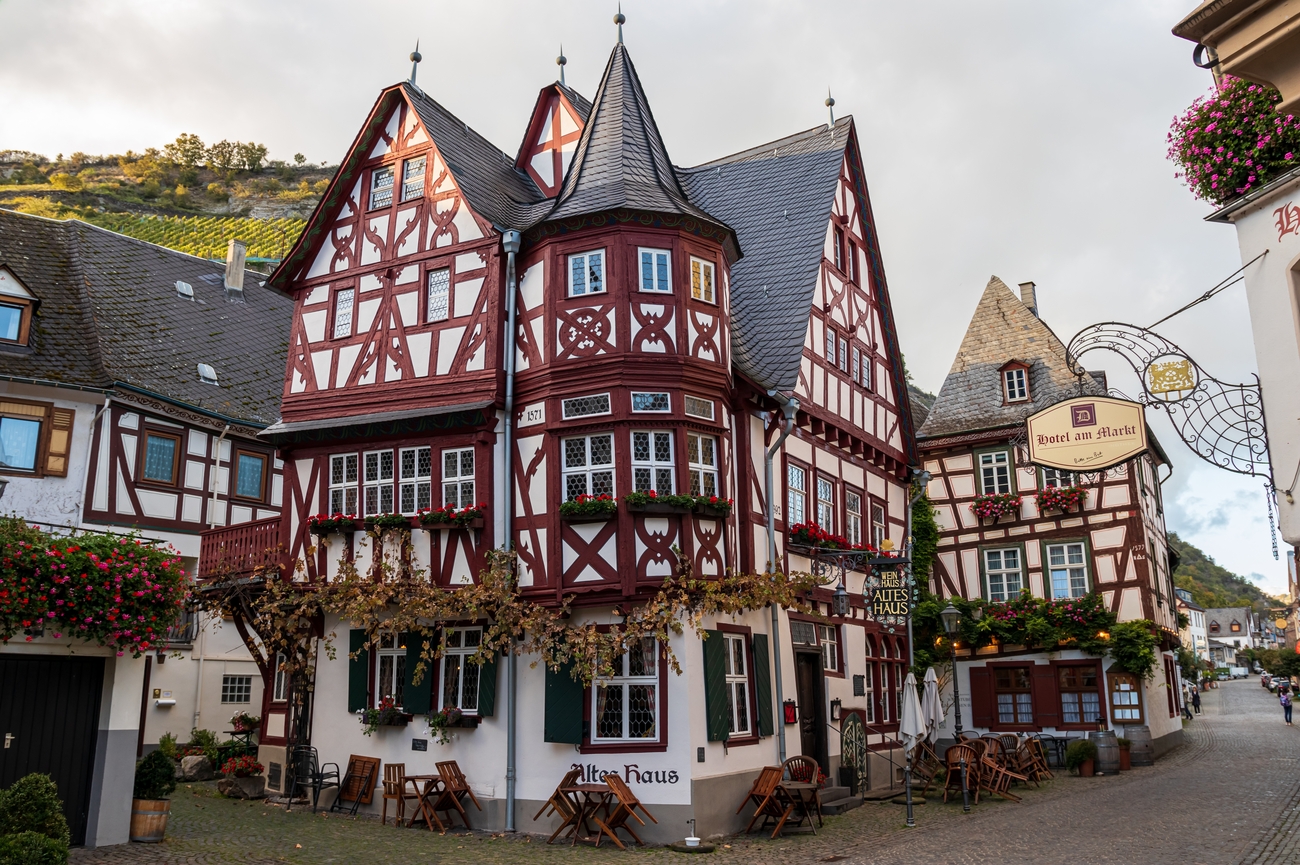
Altes Haus
Right in the heart of Bacharach Altstadt, just a few easy steps from the market square, stands a building that looks like it casually outlived half of European history. Say hello to Altes Haus.
Built in 1368, this is one of the oldest preserved half-timbered houses in Germany and it absolutely knows it. The dark wooden beams, slightly uneven lines and steep gables give it that perfectly imperfect medieval aesthetic, the kind architects today try very hard to “recreate.” Back in the day, it belonged to a wealthy customs official, which explains the prime real estate and the flex-worthy facade. Miraculously, it survived wars, fires and centuries of change, making it one of Bacharach’s most photographed landmarks. History didn’t just brush past this house — it moved in and stayed awhile. Today, Altes Haus operates as a charming restaurant, meaning you can step inside rather than just admire it from the cobblestones.
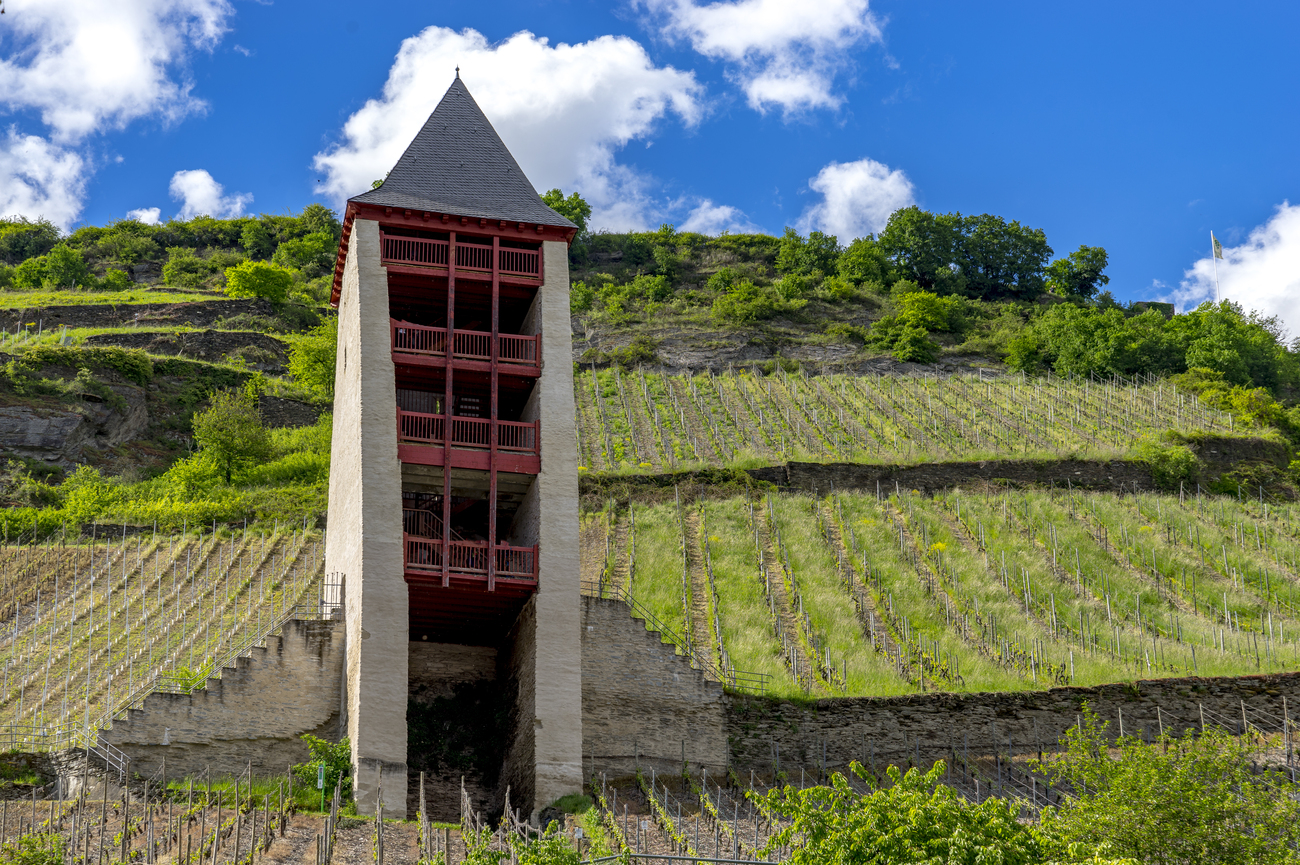
Postenturm
The timber-framed houses thin out, the path tilts gently upward, and within about 5–7 minutes you’ll reach Postenturm, one of the town’s surviving medieval watchtowers. It’s part of the original defensive wall, so yes, you’re basically walking into Bacharach’s security system… 600 years late.
Postenturm dates back to the 14th century, built as part of Bacharach’s fortification network when the town was thriving on Rhine trade and needed protection to match its prosperity. The round stone tower rises solid and sturdy, connected to stretches of the old city wall that still frame the town today. From up here, the views stretch over red rooftops, vineyard-covered hills and the Rhine sliding past in the distance. It’s strategic positioning with scenic side benefits. The stonework feels raw and authentic.
Postenturm may have been built to keep watch, but today it simply invites you to pause, look out and appreciate a town that still wears its history beautifully.
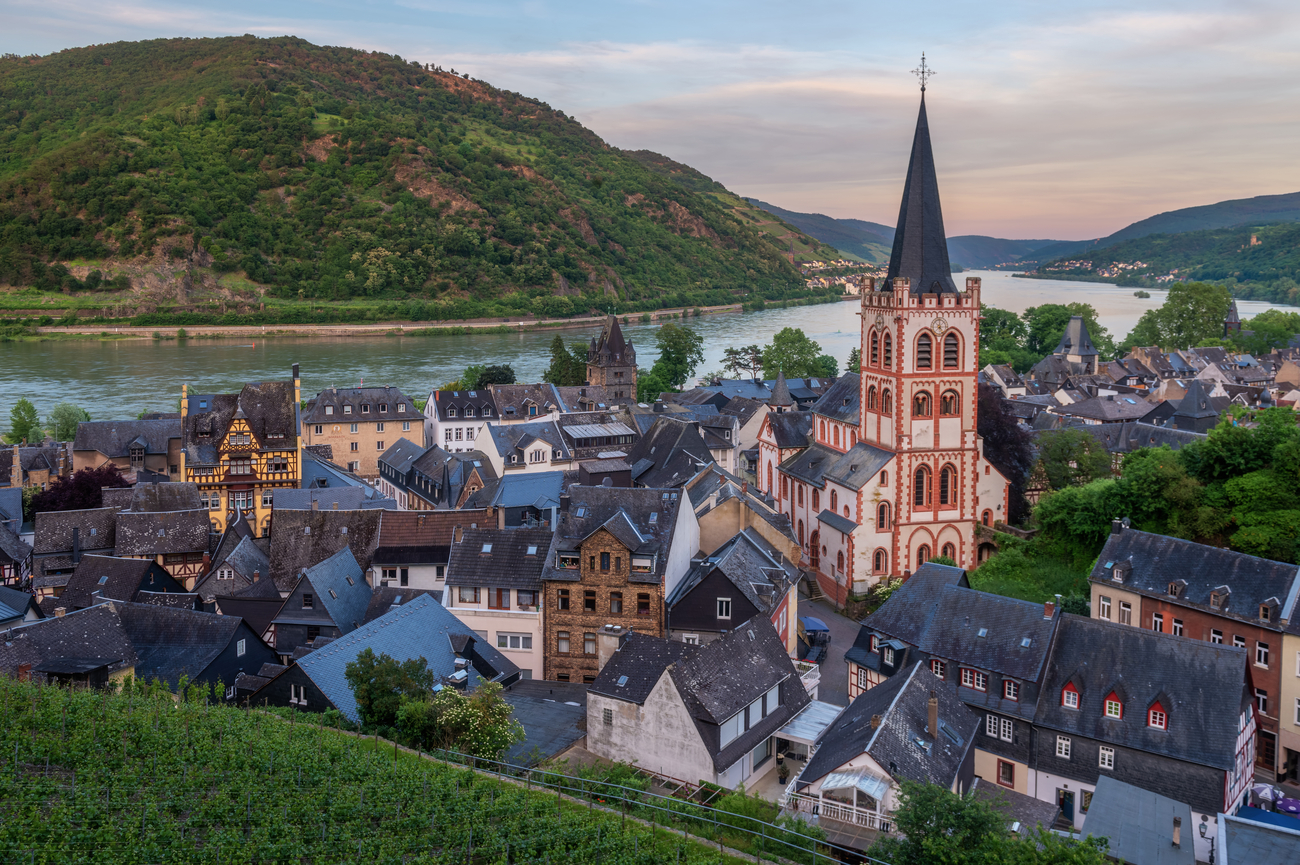
Kirche St. Peter in Bacharach - Evangelische
Kirchengemeinde Vierthäler
Step away from Postenturm and let the old town pull you back in. The defensive walls give way to lively lanes and within a few easy minutes, the sturdy stone silhouette of Kirche St. Peter rises ahead. Set right in the heart of Bacharach, it waits without fanfare.
St. Peter’s Church dates back to the 12th century, making it one of Bacharach’s oldest landmarks. Originally Romanesque and later expanded with Gothic elements, the church blends sturdy stone structure with elegant pointed arches and detailed tracery. Step inside and you’ll notice the contrast immediately: a peaceful, light-filled interior with historic gravestones, medieval wall paintings and a beautifully crafted altar. The church reflects Bacharach’s layered religious history, having transitioned through the Reformation and now serving the Evangelische Kirchengemeinde Vierthäler (Protestant parish).
The church is generally open to visitors during the day and guided walking tours of Bacharach often include St. Peter’s as part of the historical route through town. Concerts are occasionally held here, taking advantage of the church’s acoustics and adding a cultural note to your visit.
Evening:
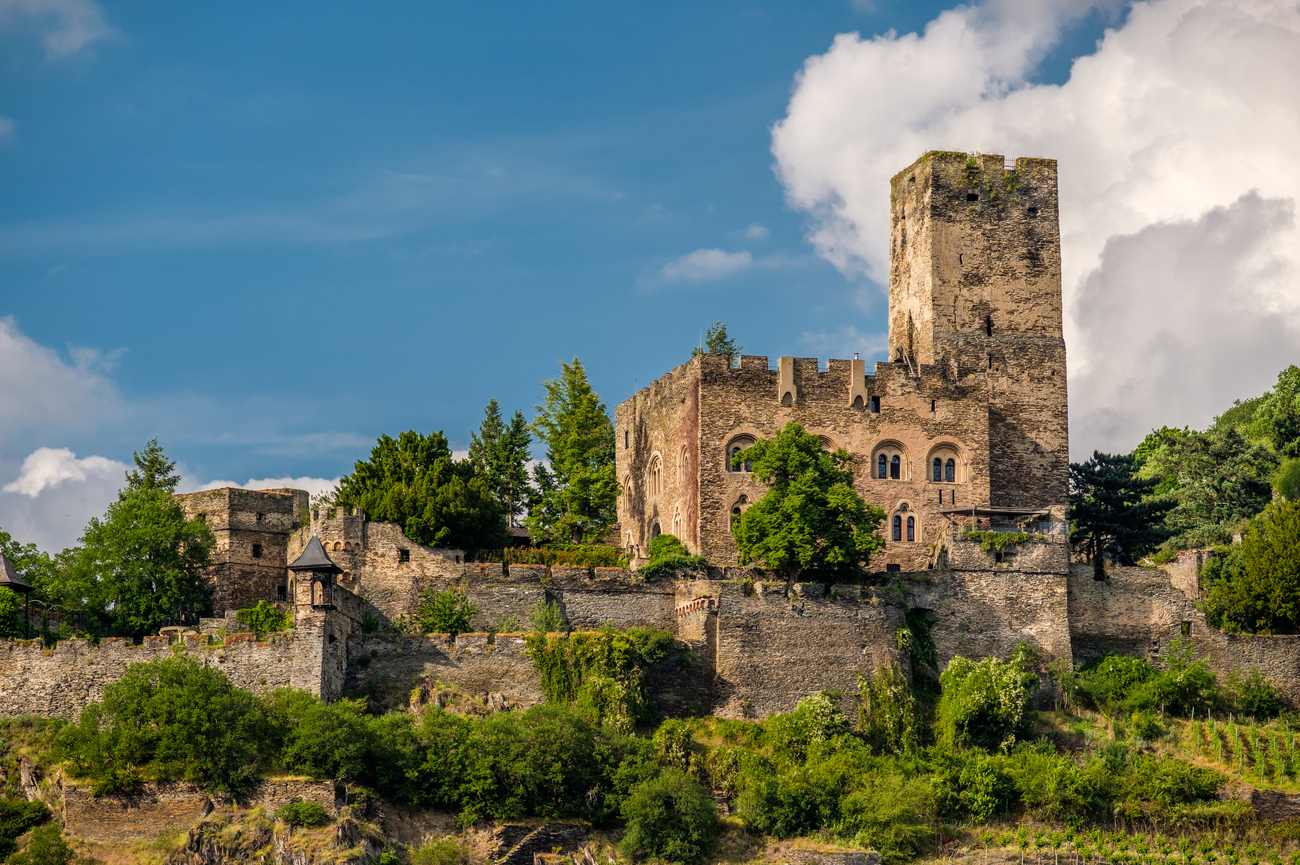
Burg Gutenfels
As evening begins to soften the sky, hop in the car and follow the winding road up from Bacharach’s center toward the vineyards above town. The drive to Burg Gutenfels takes less than 10 minutes, but it feels cinematic with each curve revealing wider Rhine views until the castle suddenly commands the hilltop ahead.
Built around 1219, Burg Gutenfels was strategically placed to oversee Rhine trade routes and protect the region’s wealth. Unlike many castles along the river, it was never blown to ruins, which explains its impressively preserved towers and fortified walls. Its name literally means “Good Rock,” and the location delivers exactly that. From this height, Bacharach looks miniature, vineyards roll in precise green lines and the Rhine bends like it’s posing.
The castle is privately owned and not open for public interior tours, but that doesn’t limit the experience. Scenic viewpoints and nearby walking paths provide panoramic perspectives that are especially striking at sunset. You can join private Rhine Valley driving tours that include Burg Gutenfels as a photo stop and pair it with curated wine tastings or castle routes through the UNESCO Upper Middle Rhine Valley.
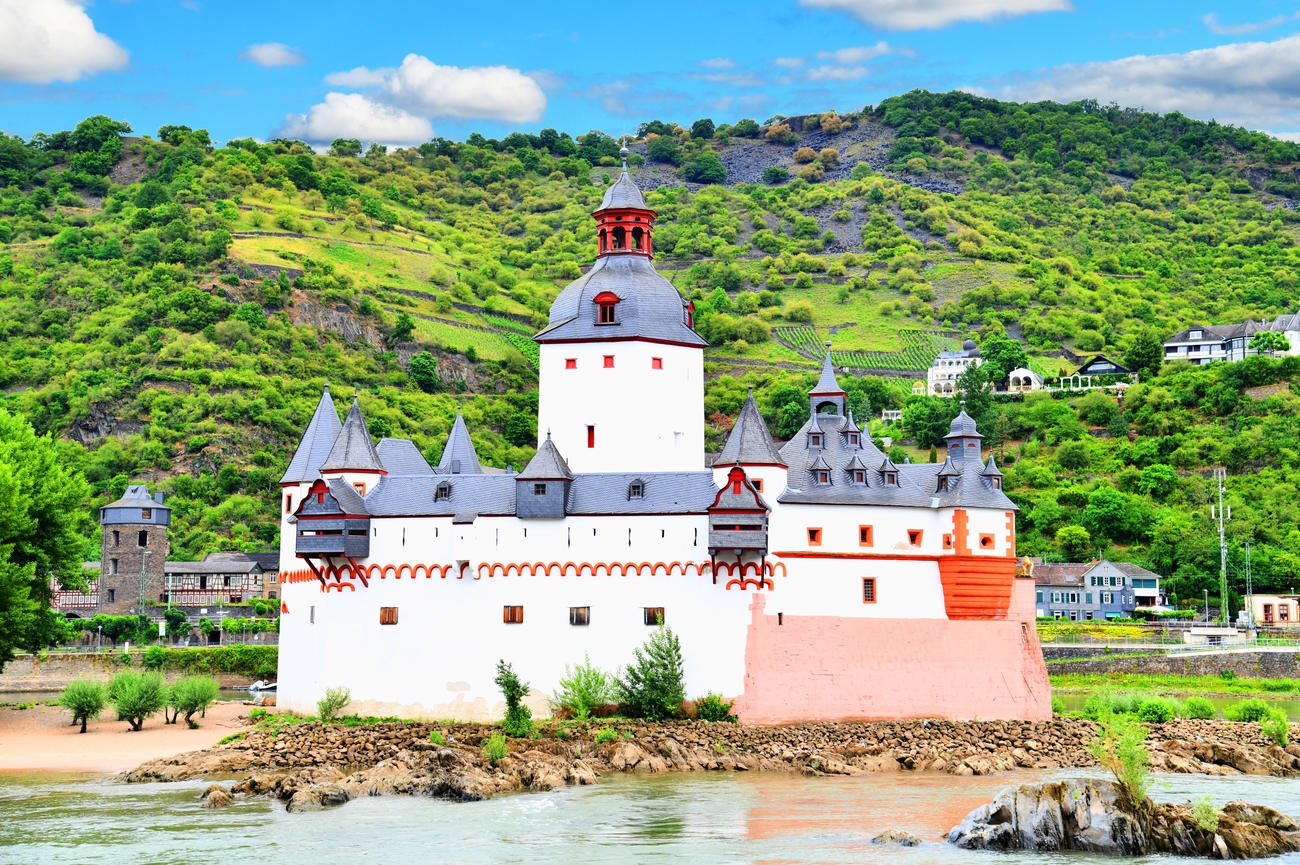
Pfalzgrafenstein Castle
And just like that, Day 3 finds its final chapter in the middle of the Rhine.
Drive north for about 15 minutes from Bacharach to Kaub, where something extraordinary waits mid-river. Park along the riverbank and you’ll spot it immediately, Pfalzgrafenstein Castle, resting on a small island like a stone ship that chose to anchor forever. A short ferry ride carries you across the water and just like that, you’re stepping onto one of the most unique castles in Germany.
Built in 1327 by King Ludwig IV as a toll station, Pfalzgrafenstein was never meant to be a royal residence glamour; it was all business. Its job was to monitor and tax river traffic. The castle’s white walls and red trim make it look almost storybook-sweet, but don’t be fooled, this was a strategic checkpoint in medieval trade. The polygonal keep rises from the center like the captain of this stone vessel, surrounded by protective walls shaped almost like a ship’s bow cutting through the Rhine.
Once you step onto the island, you get to explore the narrow interior chambers, climb the tight spiral staircases, and make your way up to the upper platforms where the Rhine stretches out in every direction. Up there, you’re surrounded by water and sky, with riverboats gliding past like moving postcards. Along the way, audio guides and on-site displays walk you through how this compact fortress functioned as a medieval toll station.
Day 3 - Rhine Gorge Tour Map
Day
4
Lorch
It’s Day 4, the final morning, and the road leads you south along the Rhine to the small but character-filled town of Lorch.
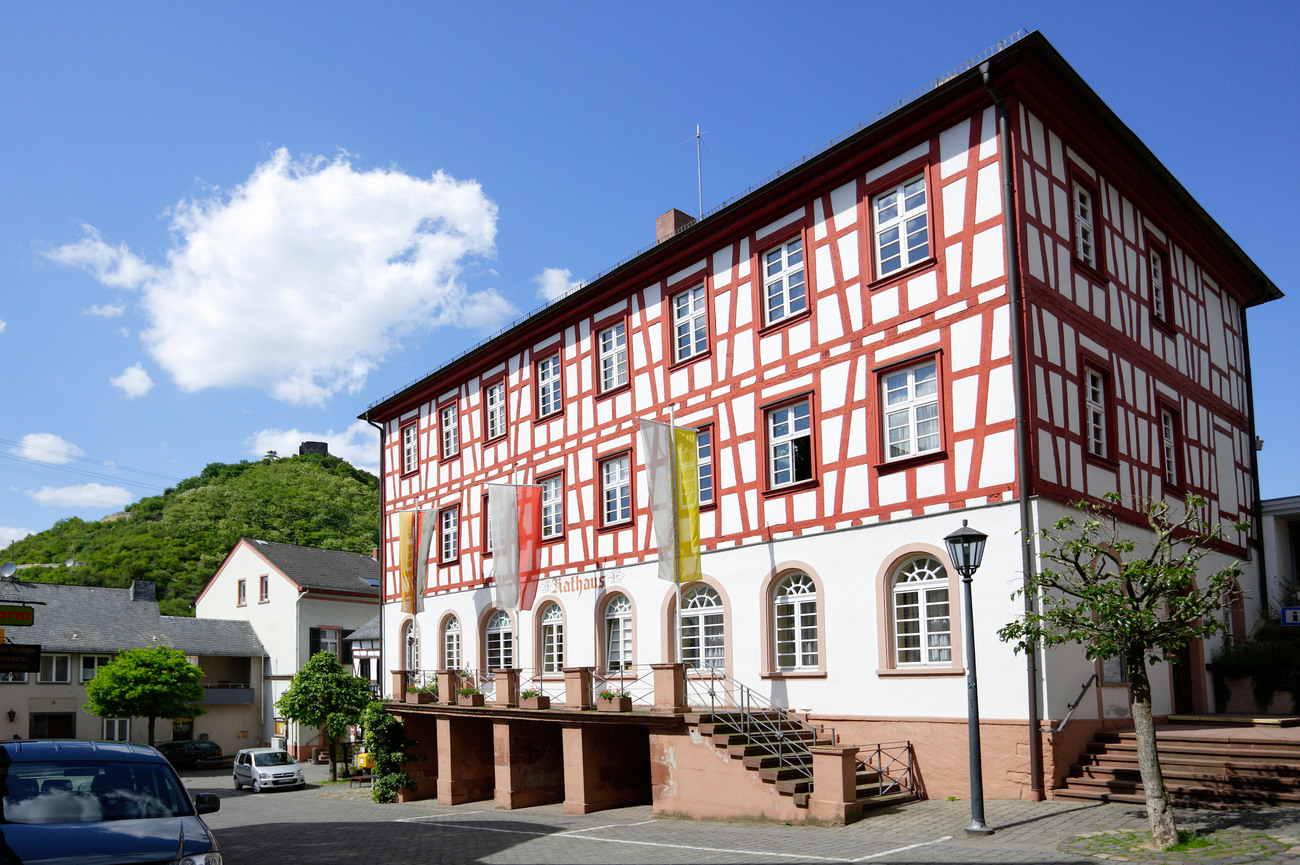
Right in the heart of town stands the Stadtverwaltung Lorch, the historic town hall that anchors the market square. The building reflects Lorch’s long-standing civic pride, with its traditional facade blending seamlessly into the half-timbered surroundings. While it functions as the administrative center today, the structure itself sits within a town that dates back to Roman times and later flourished through wine trade along the Rhine. Around you, narrow streets, small bakeries and stone fountains remind you that this isn’t a staged medieval set. Though the Stadtverwaltung itself isn’t a tourist attraction in the classic sense, it places you perfectly in Lorch’s historic core. From here, you’re steps away from local cafes and wine taverns.
Kirche St. Martin
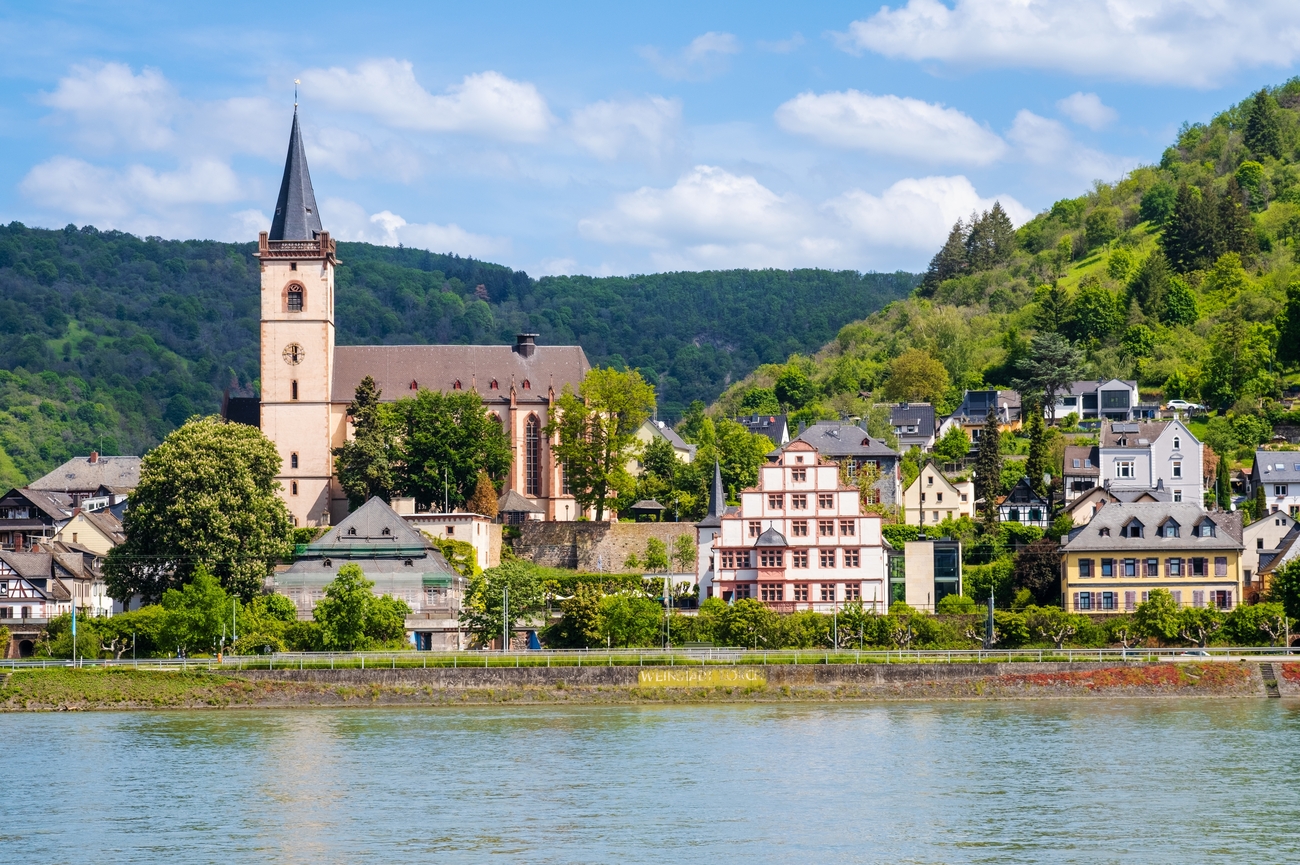
Step away from Stadtverwaltung Lorch and drift through the town’s compact center, no turns to overthink, no long stretches to cover. As you move past the surrounding half-timbered houses, the sturdy stone tower of Kirche St. Martin gradually takes the lead in the skyline. Just follow its height above the rooftops, and within a short, easy walk, you’ll arrive at the church standing confidently at the heart of Lorch.
St. Martin’s Church dates largely to the 13th and 14th centuries and is considered one of the most important Gothic churches along the Middle Rhine. From the outside, its sturdy stone tower and pointed arches give it that classic Rhine Valley silhouette. Step inside and you’ll understand why it’s famous: the breathtaking late Gothic high altar (1483) stretches nearly the full width of the choir, carved in intricate detail with biblical scenes and vibrant painted panels. It’s one of the largest and most artistically significant altarpieces in the region.
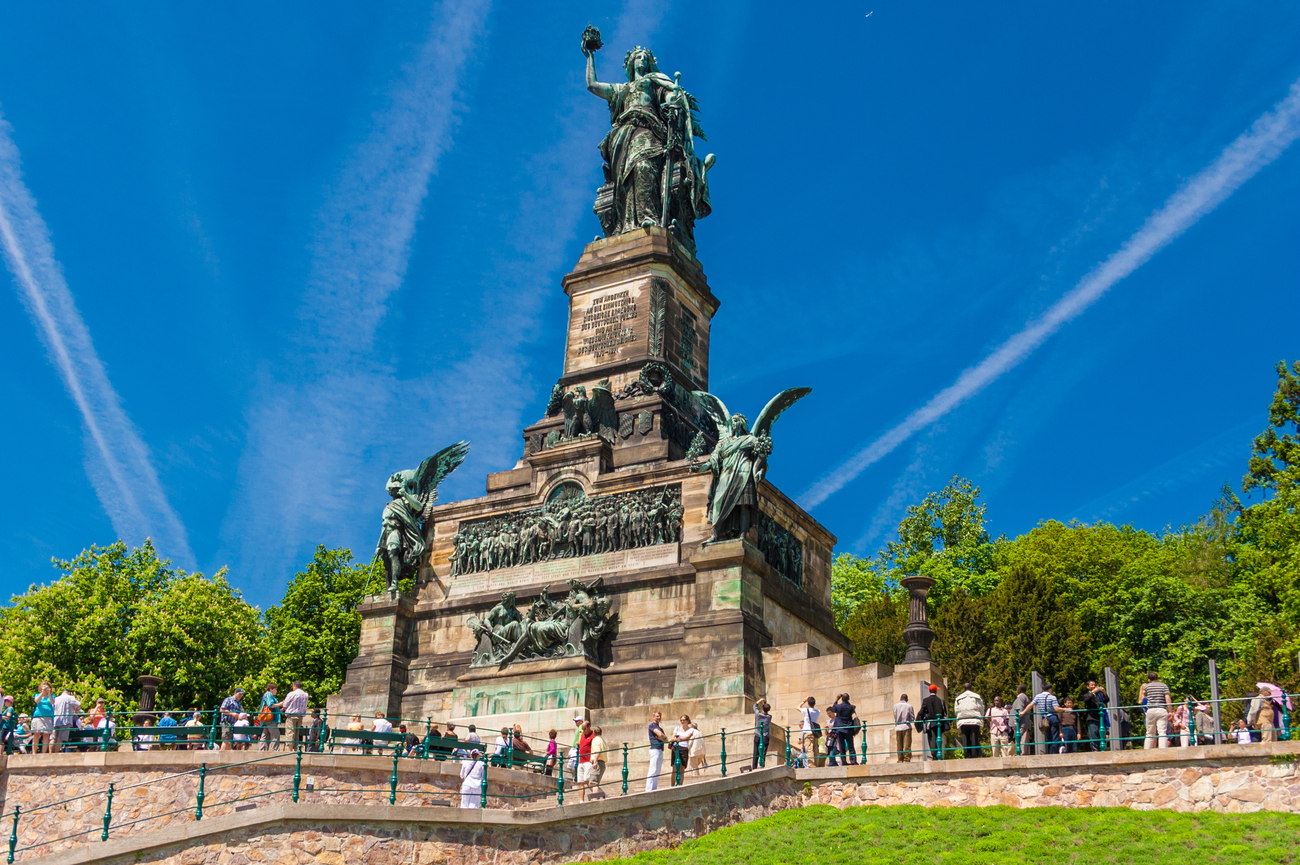
Niederwald Monument
The Niederwald Monument doesn’t ease into the skyline. It owns it.
Unveiled in 1883, the monument was built to commemorate the unification of Germany after the Franco-Prussian War. At its summit stands the 12.5-meter-tall statue of Germania, sword lowered but victorious, crown held high. The entire structure rises about 38 meters, commanding panoramic views over the Rhine Valley, surrounding vineyards and the town of Rüdesheim below. Intricate relief panels at the base depict key historical figures and scenes from the unification era.
Seilbahn Rüdesheim
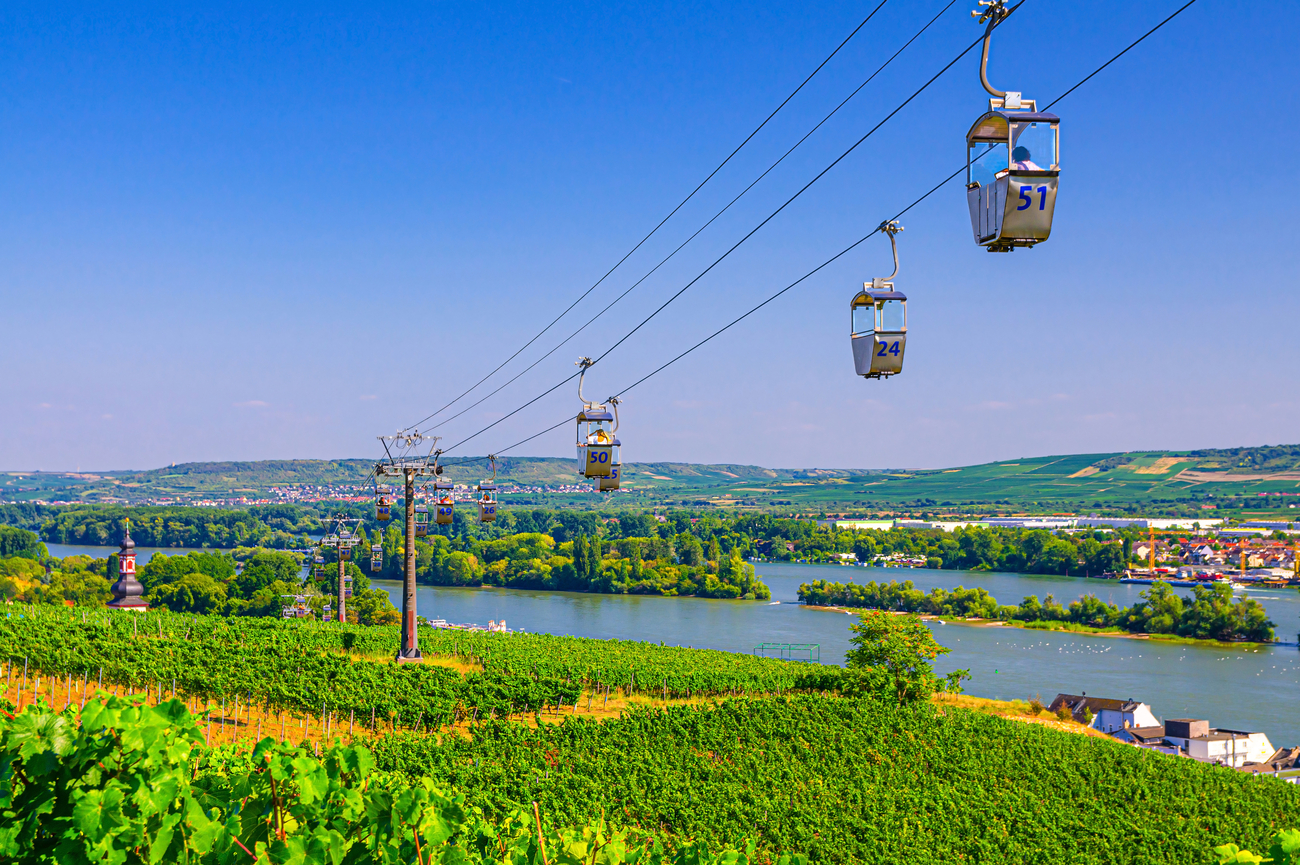
From the base of the Niederwald Monument, follow the signs downhill toward Rüdesheim town center or better yet, make your descent the scenic way with the Seilbahn Rüdesheim.
The Seilbahn Rüdesheim has been gliding above the vineyards since the 1950s, carrying visitors in small two-person gondolas over steep Riesling slopes with uninterrupted views of the Rhine. The ride lasts about 10–15 minutes, but it stretches time in the best way. Below you: perfectly aligned vineyard rows. Ahead of you: the river bending between hills. Behind you: Germania still standing tall above it all. It’s smooth, steady, and surprisingly peaceful.
The cable car typically runs from spring through autumn, with operating hours depending on the season and weather, so you’ll want to check the schedule before heading up. You can choose between a one-way glide or a round-trip ticket, which makes it easy to pair the ride with your visit to the Niederwald Monument or a wander through Rüdesheim’s lively Drosselgasse afterward. It’s your front-row seat to the valley.
Afternoon:
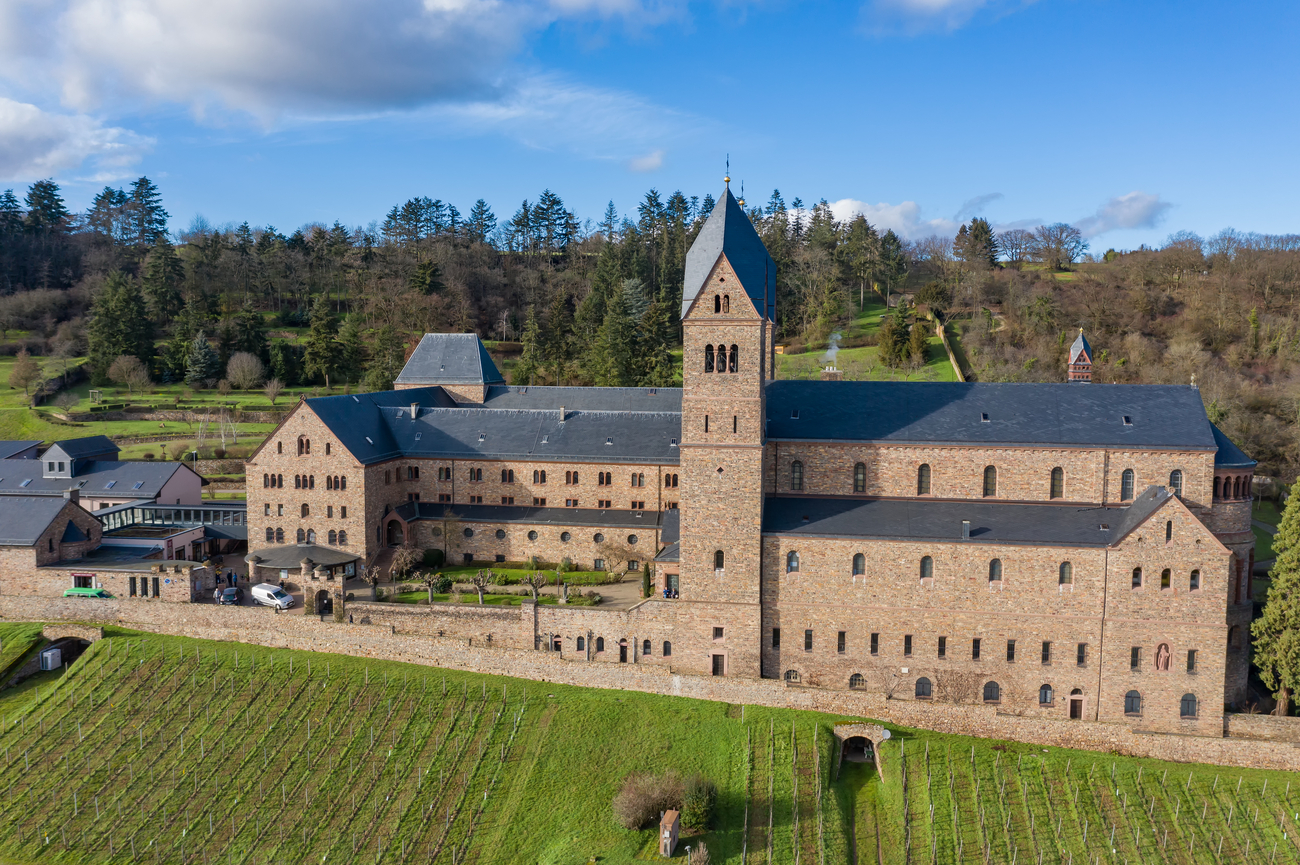
St. Hildegard's Abbey
For the afternoon, let the road gently carry you up from Rüdesheim toward the vineyards above town. It’s a 10-minute drive to St. Hildegard’s Abbey (Abtei St. Hildegard).
Founded in the early 20th century (1900–1904), the abbey was built in honor of Saint Hildegard of Bingen, the 12th-century Benedictine abbess, mystic, composer, healer and all-around visionary long before that was a title people claimed lightly. The church itself is Romanesque Revival in style, with rounded arches, detailed frescoes and golden mosaics that glow softly in the afternoon light. Inside, you’ll notice painted ceilings and intricate biblical scenes that feel both ornate and calming. The Benedictine nuns still live and work here, continuing a spiritual tradition rooted in Hildegard’s teachings.
St. Hildegard’s Abbey offers a different kind of highlight. It’s quieter, elevated and reflective. After days of castles and monuments, this stop slows the rhythm.
Siegfried's
Mechanical Museum
Back in Rüdesheim’s old town, just steps from the buzz of Drosselgasse, you’ll find something unexpectedly delightful: Siegfried’s Mechanical Music Cabinet (Siegfried’s Mechanisches Musikkabinett). From the outside, it looks charmingly historic. Inside? It sings.
This museum houses one of the largest collections of self-playing musical instruments in Europe. Just imagine delicate music boxes, orchestrions, barrel organs and even full mechanical pianos that once filled grand halls without a single human hand on the keys. Many pieces date back to the 18th and 19th centuries, when automated music felt nothing short of magical. Intricate wood carvings, polished brass details, spinning cylinders. These instruments weren’t just built to play, they were built to impress.
But here’s the real twist: you don’t just walk through and read placards. The true charm comes alive in motion and melody. That’s why visits are exclusively guided tours, so trained staff can safely operate the instruments and let you actually hear them perform. During the 45-minute tour, a wide variety of instruments are demonstrated and explained in an engaging, easy-to-understand way. You’ll hear tunes that once echoed through salons and fairgrounds and you’ll see the mechanical genius behind each piece. Tours are available in nine languages and you can also book individualized private tours for a more tailored experience.
Brömserburg
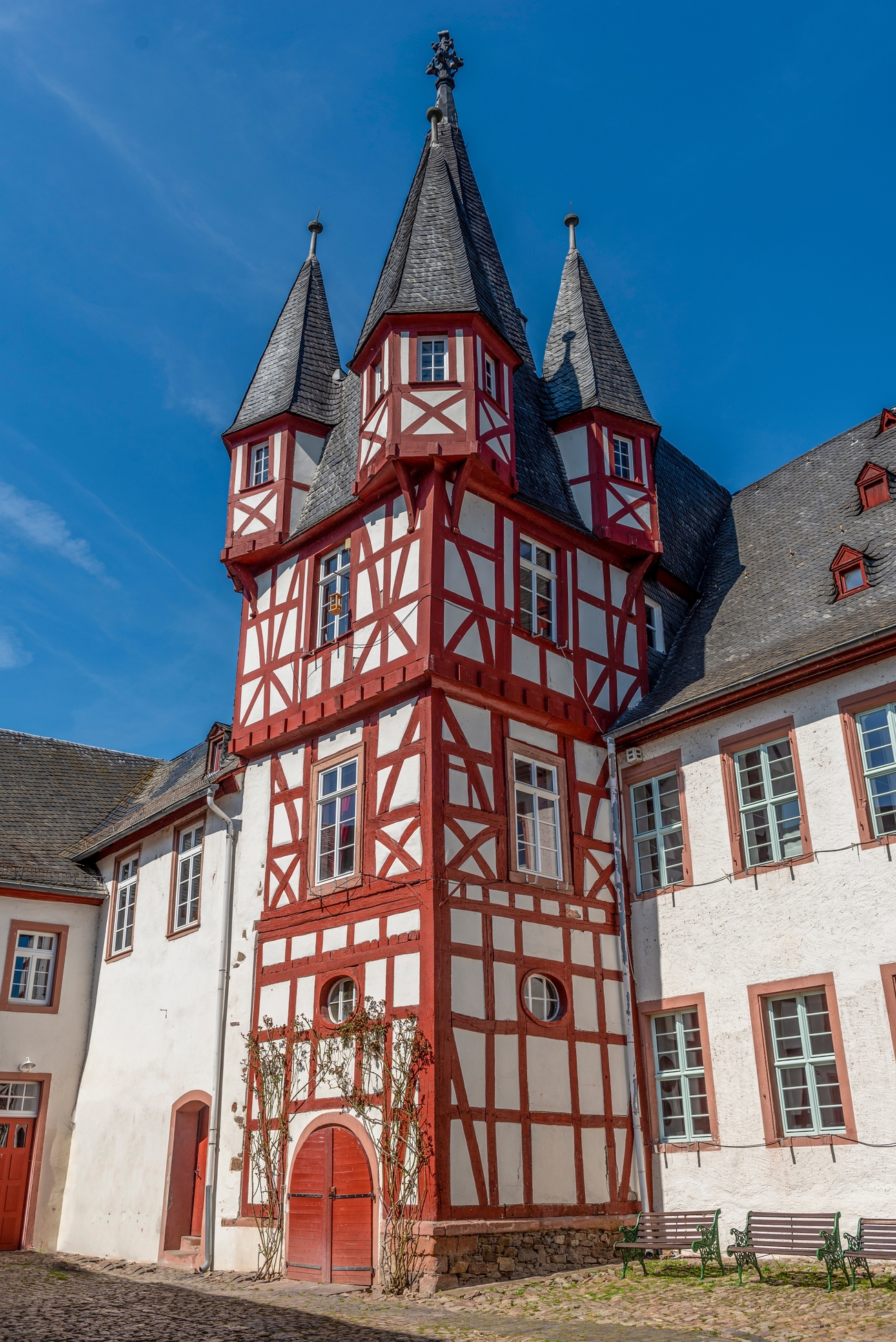
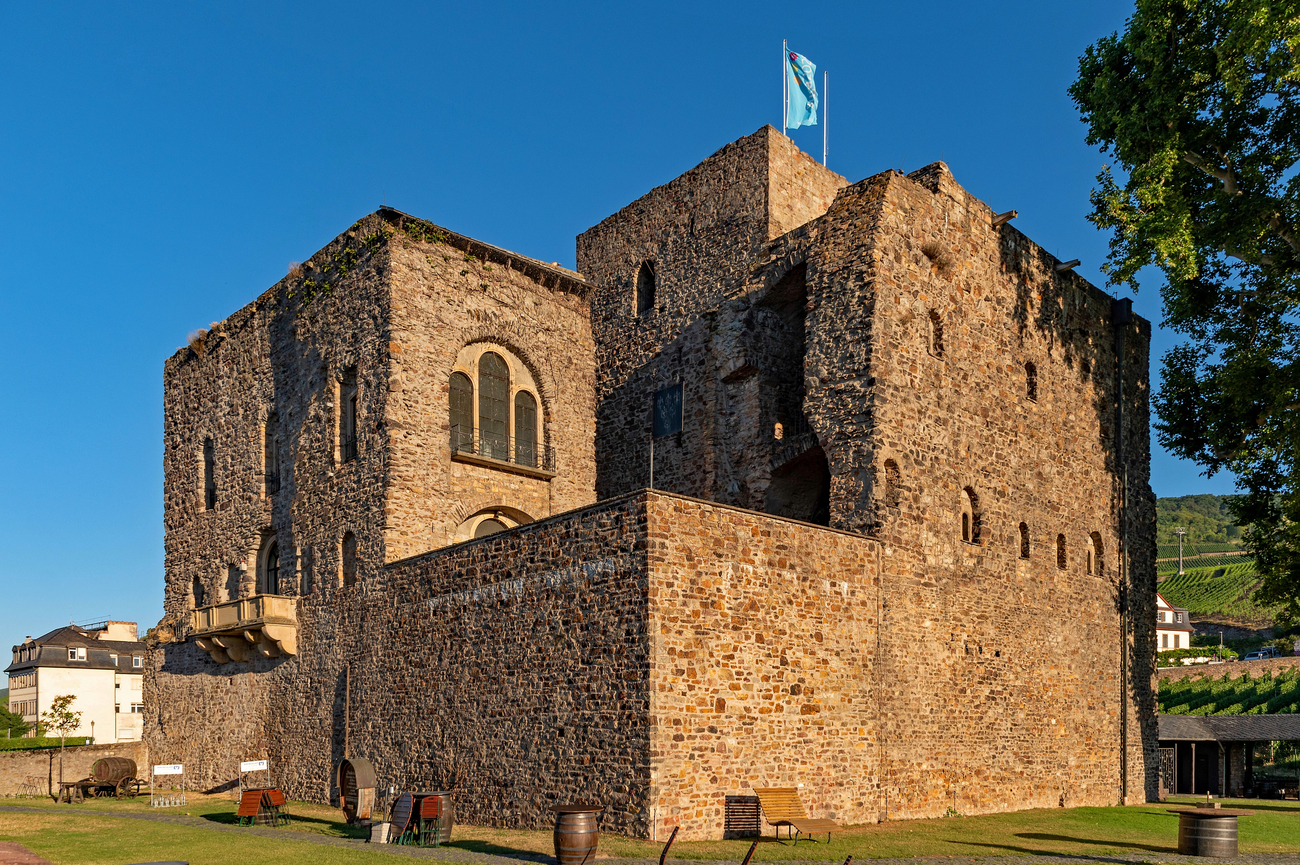
Staying in full museum-hopping mode, make your way toward the Rhine riverfront. Just a few minutes from Siegfried’s Mechanical Museum and you’ll arrive at Brömserburg.
Brömserburg, also known as Niederburg, dates back to the 10th century, making it one of the oldest castles along the Middle Rhine. Originally built as a defensive stronghold, it later became associated with the Brömser family, whose name it carries today. The structure has seen destruction, rebuilding and centuries of shifting ownership, but its core still stands firm. Inside, you’ll find a collection focused largely on wine culture and regional history, showcasing artifacts, weapons and exhibits that trace Rüdesheim’s evolution through trade, conflict and viticulture. The thick walls and vaulted rooms remind you that castles weren’t built for comfort; they were built to endure.
Plan your visit between spring and autumn, when the museum is typically open and ready to welcome explorers like you. Once inside, self-guided audio tours are available, giving you the freedom to explore at your own pace while still getting the full backstory behind the fortress walls, weapons and wine history.
Drosselgasse
Rüdesheim
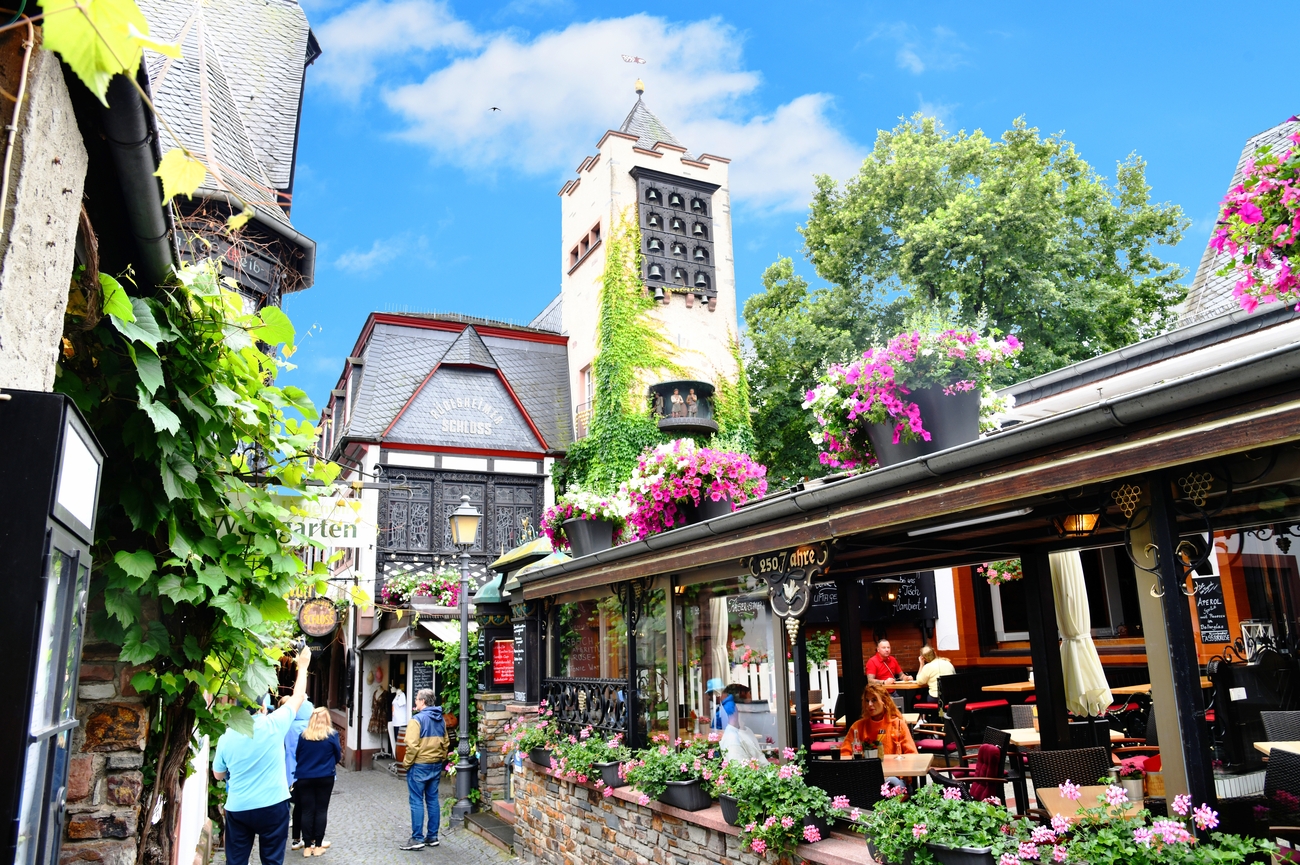
From Brömserburg, you’re only a short stroll away. Follow the flow of people and the sound of clinking glasses and you’ll step straight into Drosselgasse, Rüdesheim’s most famous lane. It’s barely 144 meters long, but it packs more personality per cobblestone than streets twice its size.
This narrow alley dates back to the 15th century and was once a simple route for wine merchants transporting barrels down to the Rhine. Today, it’s the lively heart of town. Timber-framed buildings lean close together, colorful signs swing above doorways and open-air wine taverns spill music and laughter into the street. During the day, it feels charming and historic. By evening, it becomes alive with bands playing German folk tunes, glasses of Riesling and Spätburgunder circulating freely and the whole lane humming with energy.
Evening: Rheinstein Castle
Not enough castles in a day? That’s the right attitude.
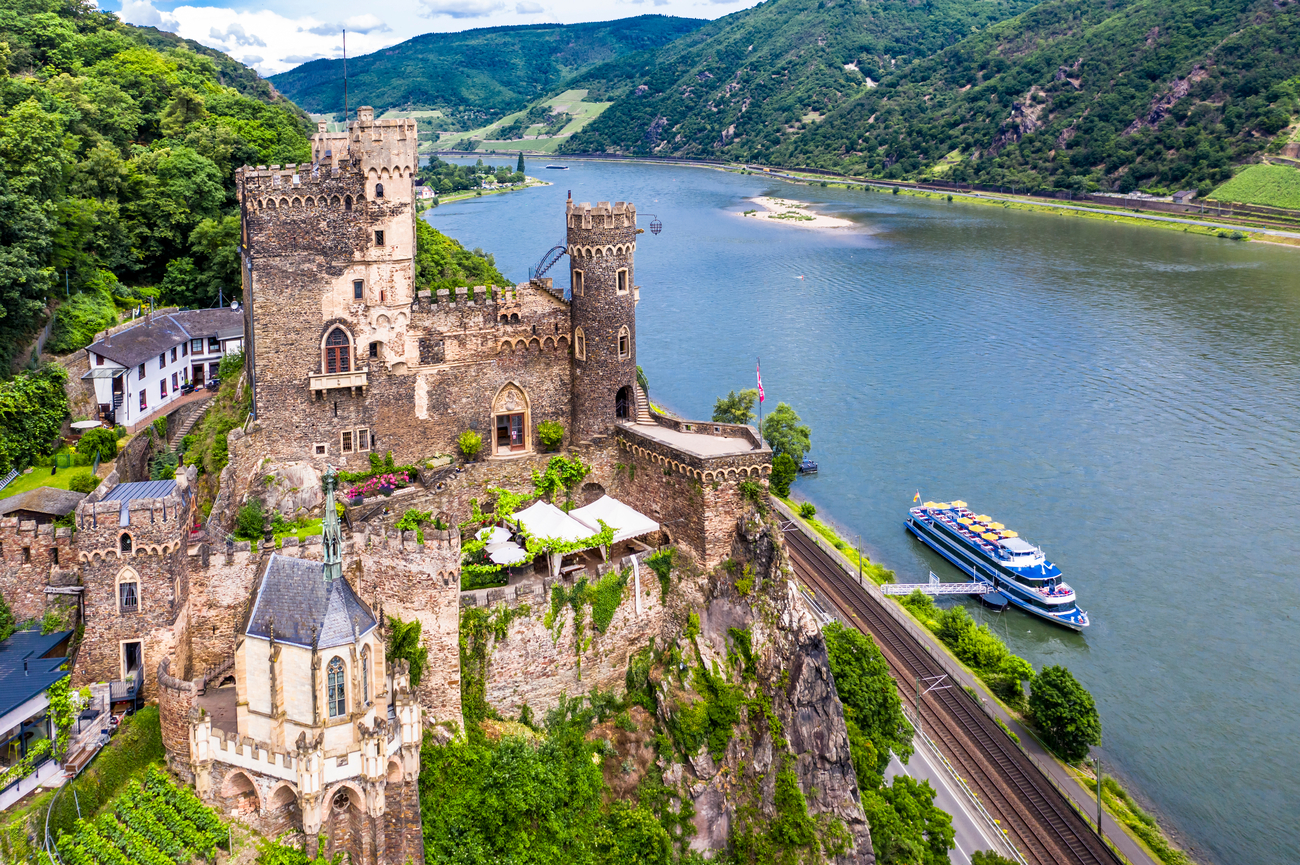
As evening settles in, drive about 10 minutes south from Rüdesheim toward Trechtingshausen, following the Rhine as it curves between steep vineyard slopes. Just when you think the hills couldn’t possibly hold another fortress, Rheinstein Castle (Burg Rheinstein) appears dramatically perched on a rocky outcrop above the river.
Originally built in the 14th century as a customs castle, Rheinstein later fell into ruin before being romantically rebuilt in the 19th century under Prince Frederick of Prussia. The result? A castle that fully embraces its fairytale reputation. Think pointed towers, drawbridges, stained-glass windows and furnished chambers that actually look lived in rather than staged. Inside, you’ll move through decorated rooms, a knight’s hall, and terraces overlooking the Rhine. Step onto the balconies and you’re met with sweeping views that feel almost theatrical at sunset. The castle is generally open seasonally (typically spring through autumn) and you can explore much of it at your own pace.
Klopp
Castle
Still craving one more castle? Good.
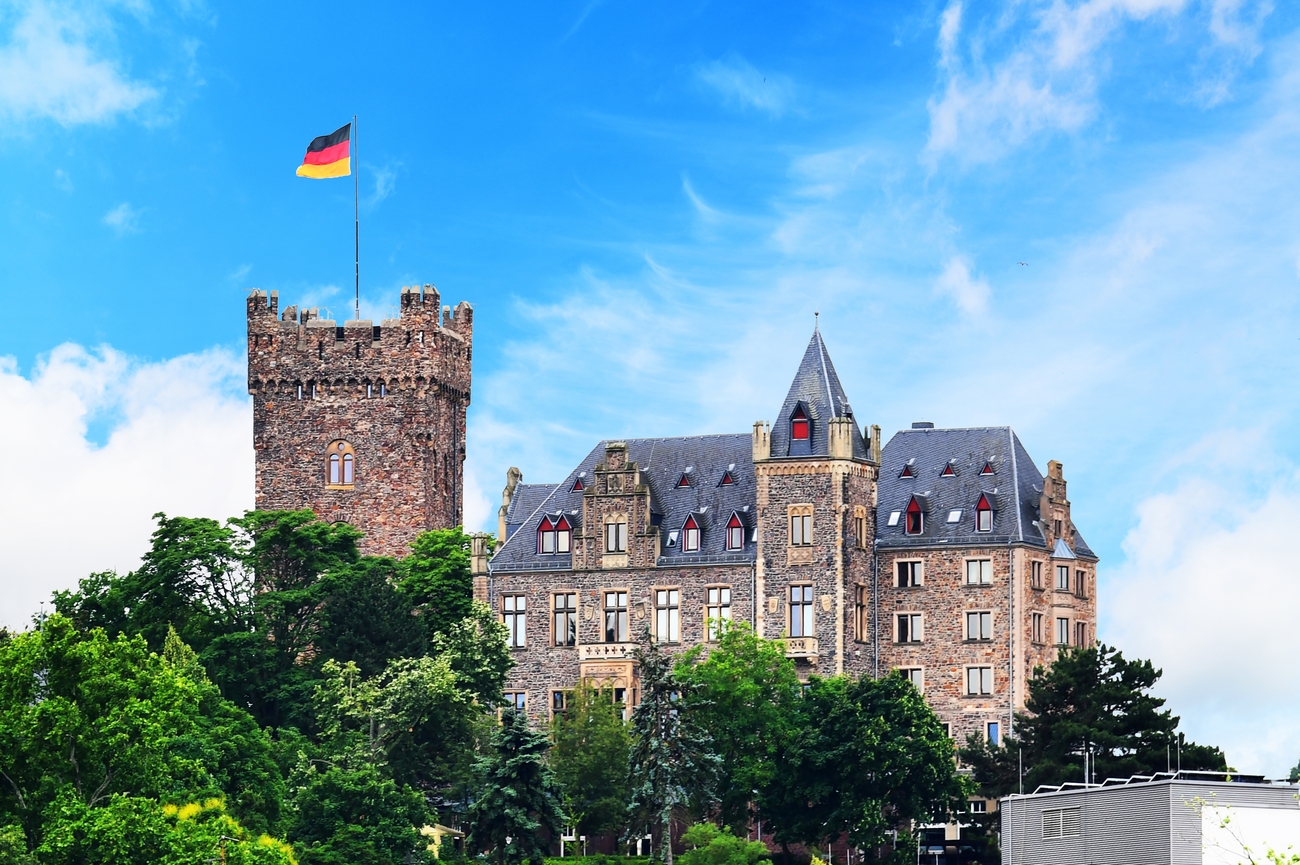
Leave Rheinstein behind and let the Rhine guide you one last time. The road curves gently along the water, vineyards slipping past your windows as if they’re turning the pages of your story. In about fifteen minutes, just when you think the day has shown you all its towers, Klopp Castle (Burg Klopp) rises above the town like the final exclamation mark in a fairytale.
Originally built in the 13th century, Burg Klopp was destroyed and rebuilt more than once, with its current form largely shaped in the 19th century. Today, it serves as part of Bingen’s municipal administration.
Climb up to the castle courtyard and viewing platforms and you’re rewarded with one of the most sweeping panoramas of the Upper Middle Rhine Valley. You’ll see the Nahe River meeting the Rhine, vineyard slopes stretching into the distance, and the Mäuseturm (Mouse Tower) standing watch on its little island below. It’s geography and history in one wide-angle moment. The castle grounds are generally accessible and the viewpoint tower is a highlight if open during your visit.
And then it clicks: this stretch of the Rhine truly feels fairytale-like, not in an exaggerated way, but in the quiet harmony of it all. Castles crown the cliffs. Church spires rise from storybook towns. It’s the kind of place that makes legends believable. There you’ll realize the Rhine doesn’t need embellishment; it has been writing its own fairytale all along.
Day 4 - Rhine Gorge Tour Map
Other Things to Do in the Rhine Gorge
The Rhine Gorge isn’t just a checklist of castles; it’s a landscape that keeps rewarding curiosity. Once you’ve done the headline stops, the real magic happens in the in-between moments: smaller towns, higher viewpoints, slower experiences, better wine. If you’re the kind of traveler who prefers depth over speed and quality over crowds, this stretch of river delivers. Here’s where to go next and how to do it well.
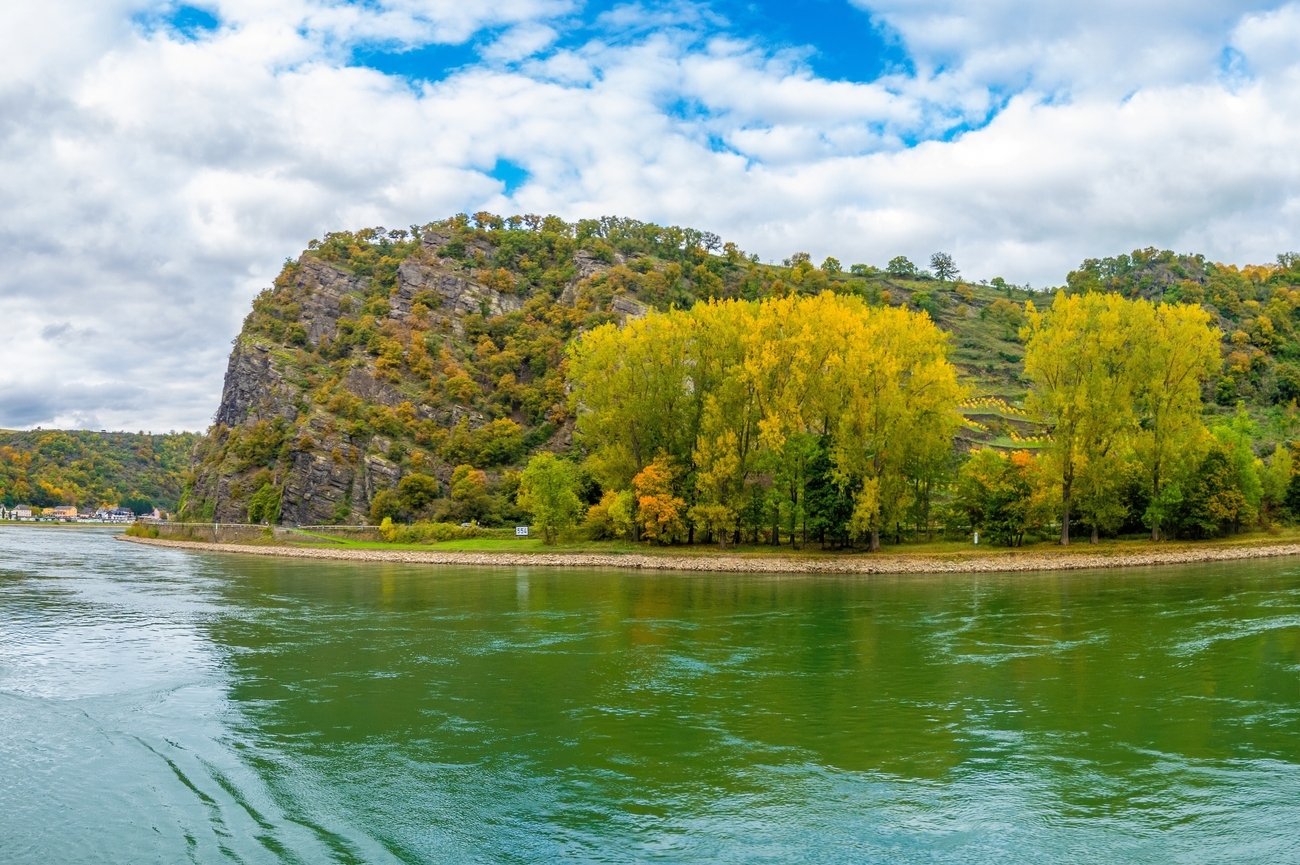
- Lorelei: Rising 132 meters above a dramatic bend in the Rhine, Lorelei is where geography and legend collide. This narrow stretch of river once created dangerous currents for ships, inspiring the famous tale of a siren who lured sailors to their fate, later immortalized in Heinrich Heine’s 19th-century poem. Today, a modern visitor center explains both the myth and the river’s geology, but the real impact happens at the viewing platform, where you can clearly see how the Rhine tightens below. It’s one of the most iconic natural landmarks in the entire gorge.
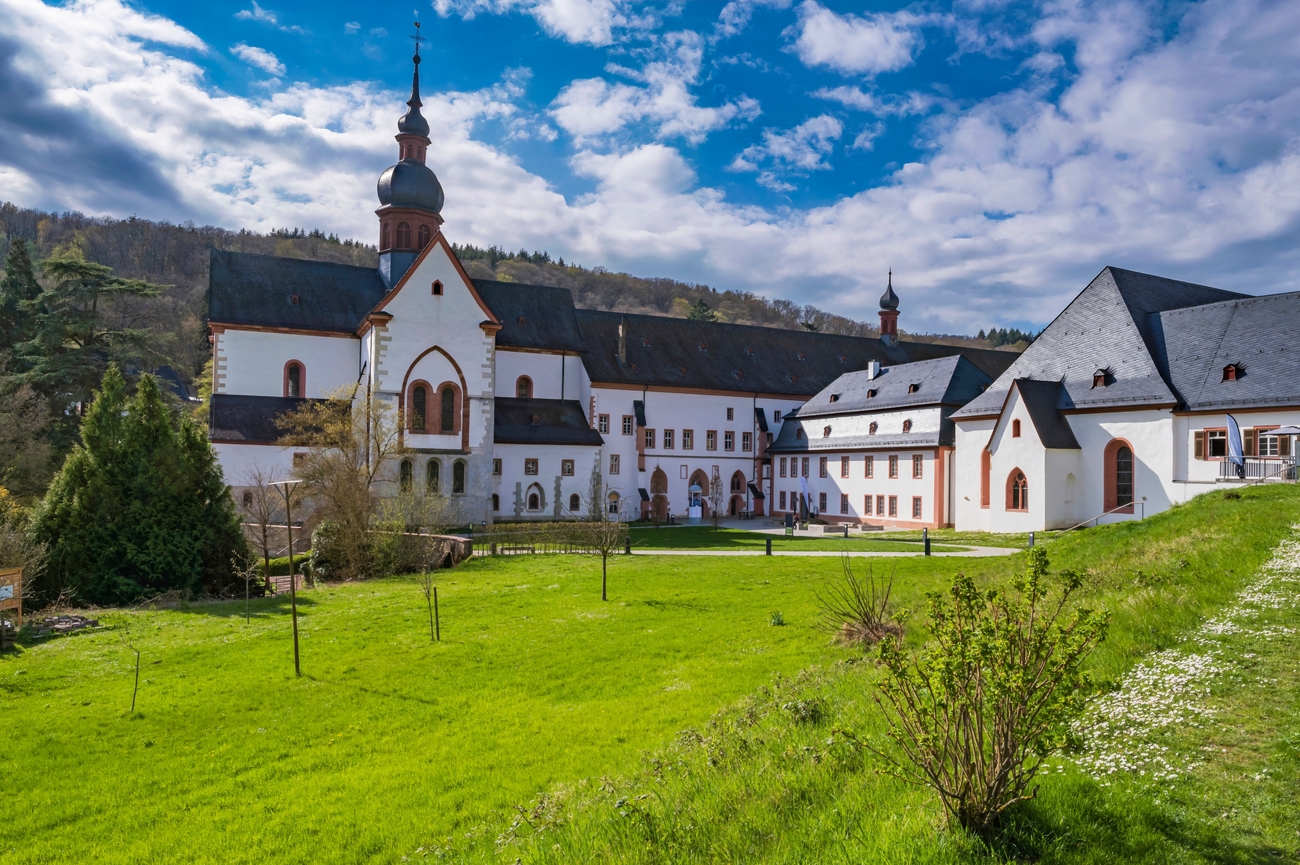
- Eberbach Abbey: Founded in 1136 by Cistercian monks, Eberbach Abbey is one of Germany’s best-preserved medieval monasteries. Its Romanesque basilica, vaulted dormitories and quiet cloisters reflect the disciplined simplicity of the order. Beyond its spiritual past, the abbey is deeply rooted in wine production and remains an active estate in the Rheingau region. You can explore the monastery grounds and book structured wine tastings in historic cellars. Yes, a rare combination of architecture, history and viticulture in one setting.
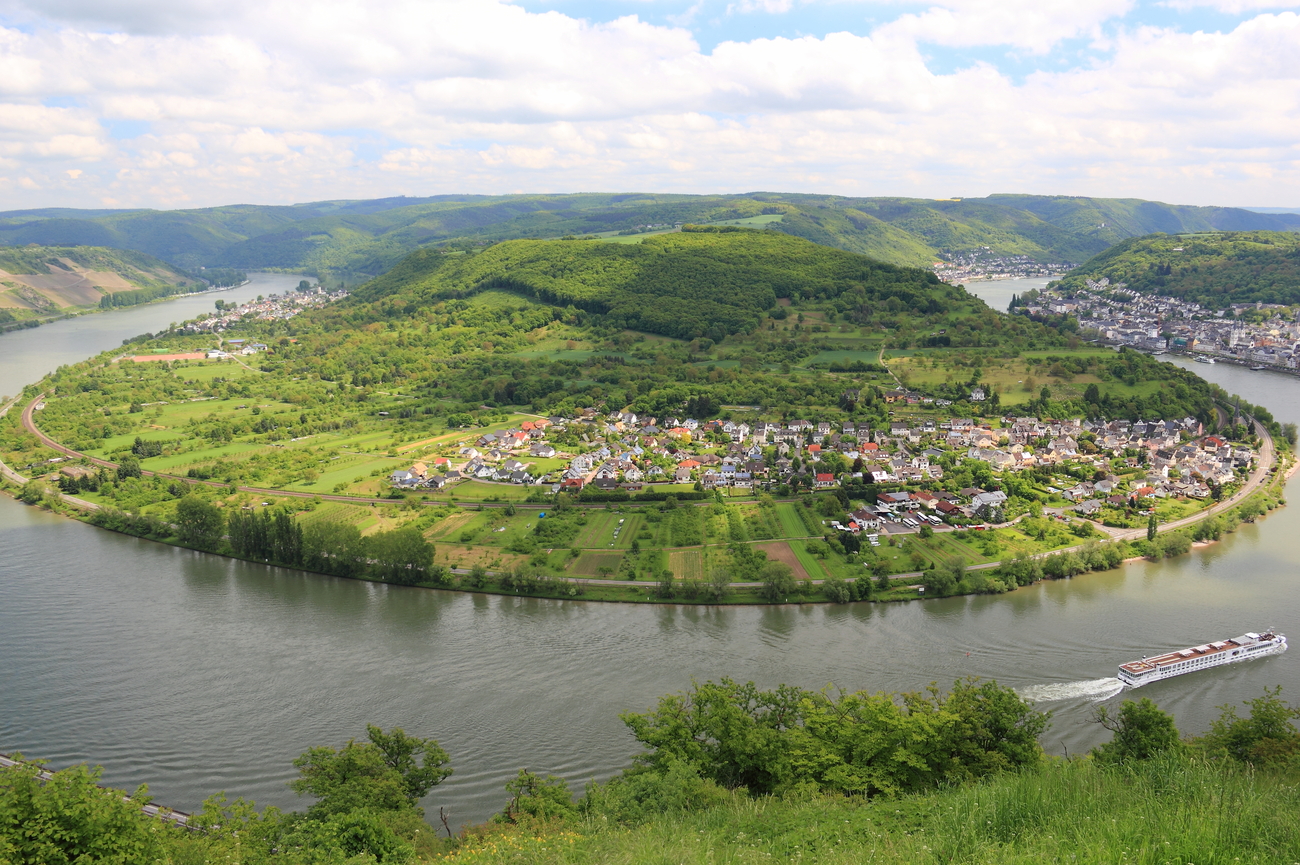
- Vierseenblick: The “Four Lakes View” above Boppard offers one of the most fascinating perspectives in the Rhine Gorge. From this elevated point, the river’s sharp bends create the optical illusion of four separate lakes. You reach it via chairlift from Boppard, gliding over forested slopes before stepping onto a panoramic terrace overlooking the UNESCO-listed valley.
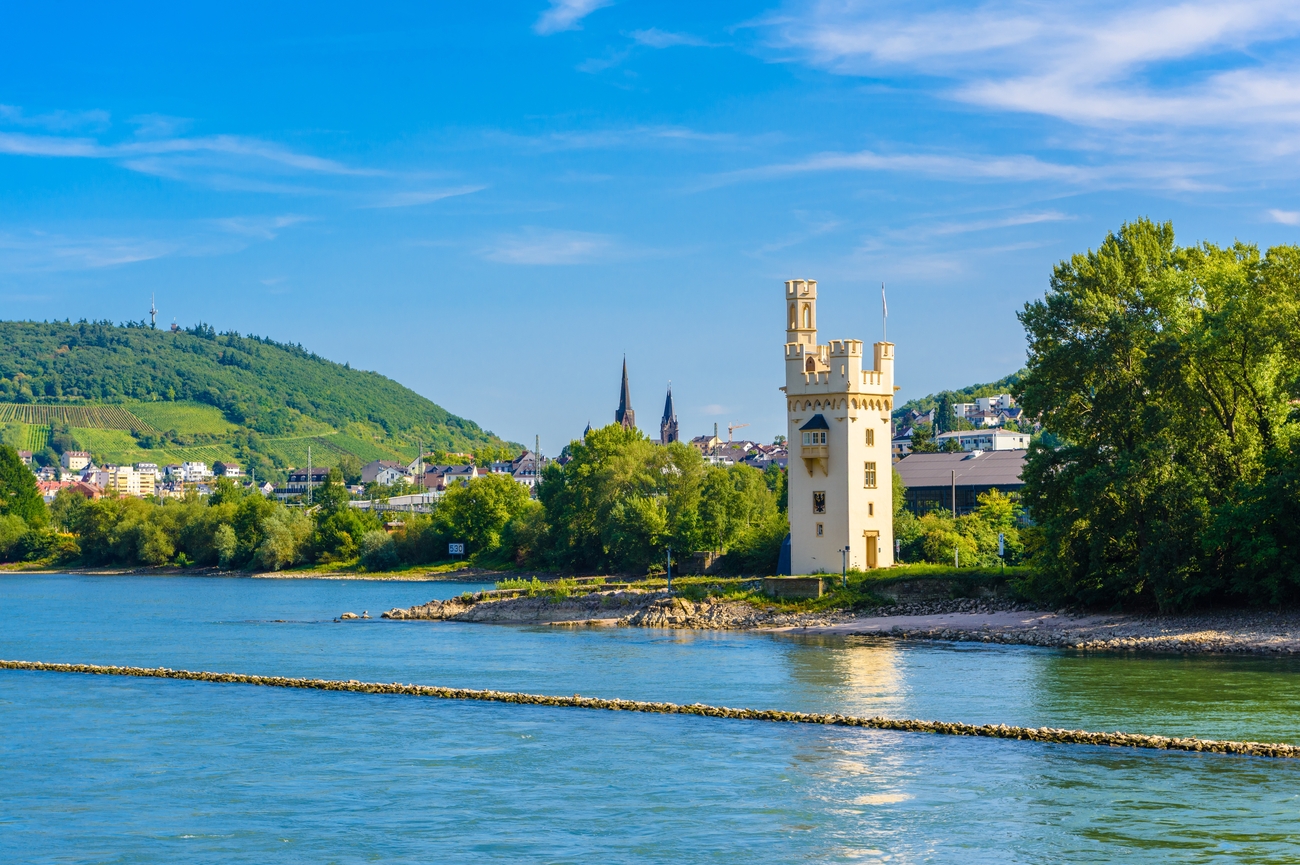
- Mouse Tower: Standing alone on a small island in the Rhine, the 13th-century Mouse Tower once functioned as a toll station controlling river trade. Its strategic placement allowed authorities to monitor and tax passing ships. Though often linked to a dark medieval legend, its real historical significance lies in its role in Rhine commerce. Interior access is limited, but viewing it by boat or from the riverbanks in Bingen gives you a clear sense of its defensive and economic importance.
- Kastell Bodobrica: Long before medieval castles dominated the skyline, the Romans fortified this region. Kastell Bodobrica, built in the 4th century, was part of the Roman defensive frontier along the Rhine. Large sections of its thick stone walls still stand in Boppard’s town center, forming part of a semicircular fortification that once protected soldiers stationed at the empire’s edge.
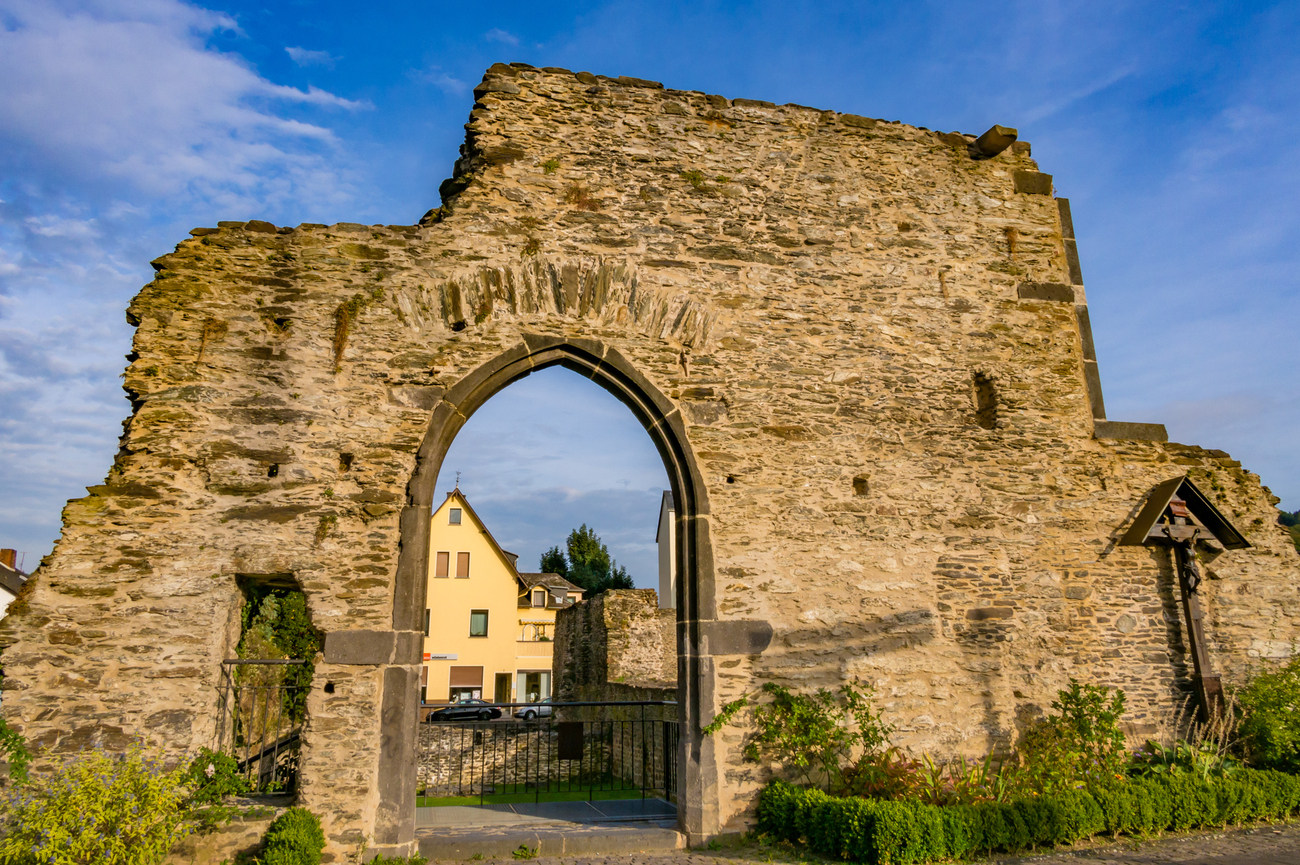
Things to Do With Kids in the Rhine Gorge
Traveling the Rhine Gorge with kids doesn’t mean scaling back the experience. It just means choosing stops where curiosity runs wild. This region is basically a real-life adventure book: castles to explore, rivers to cruise, chairlifts to ride, animals to spot and enough open space for kids to burn energy between history lessons. Here’s where to take them.
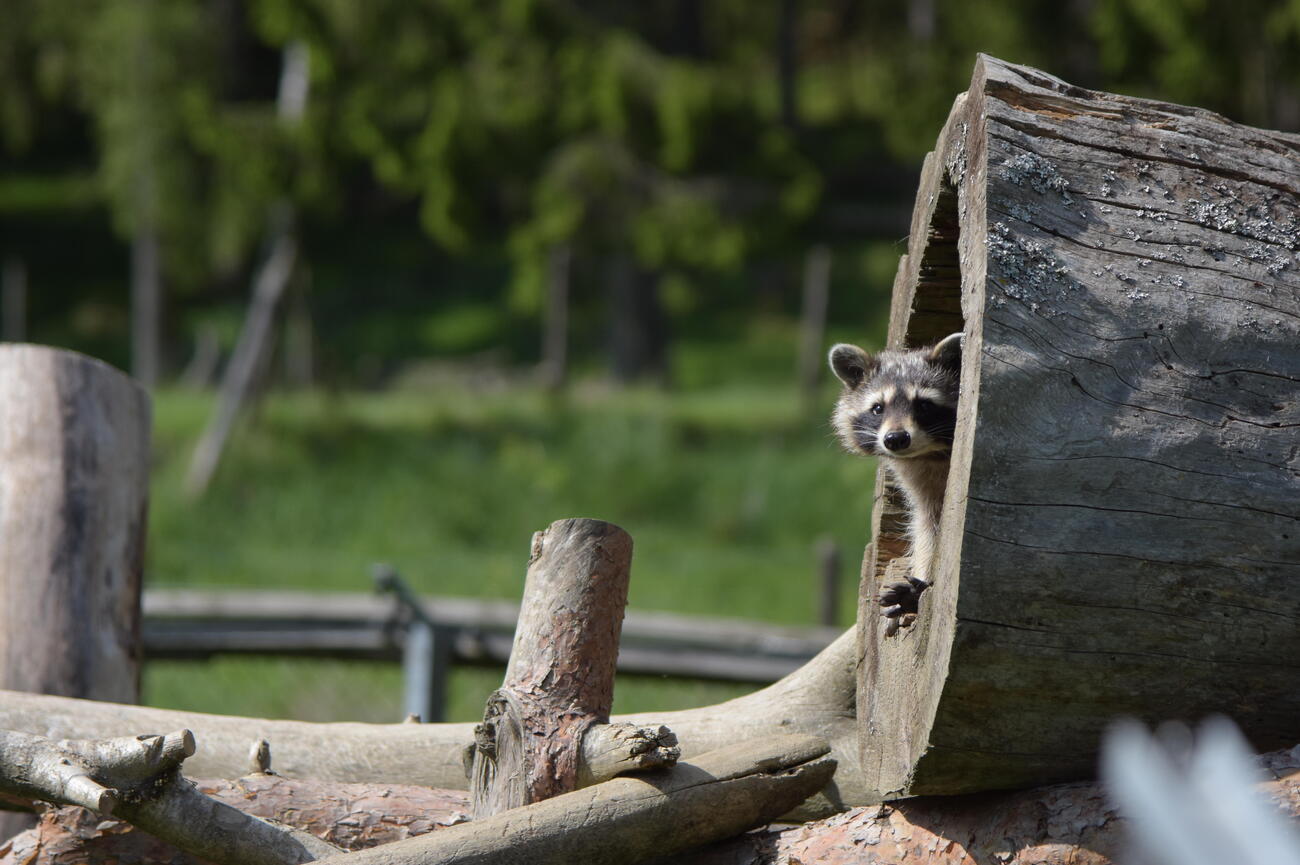
- Hochwildschutzpark Hunsrück: Set in the forests of the Hunsrück region, this wildlife park gives kids space to move while spotting animals in large, natural enclosures. You’ll see wolves, lynx, wild boar, deer and birds of prey which are species native to Central Europe rather than zoo-only exotics. Walking paths are wide and manageable and there are playground areas woven into the route. It feels outdoorsy and calm rather than crowded, which makes it ideal for a half-day reset between castle visits.
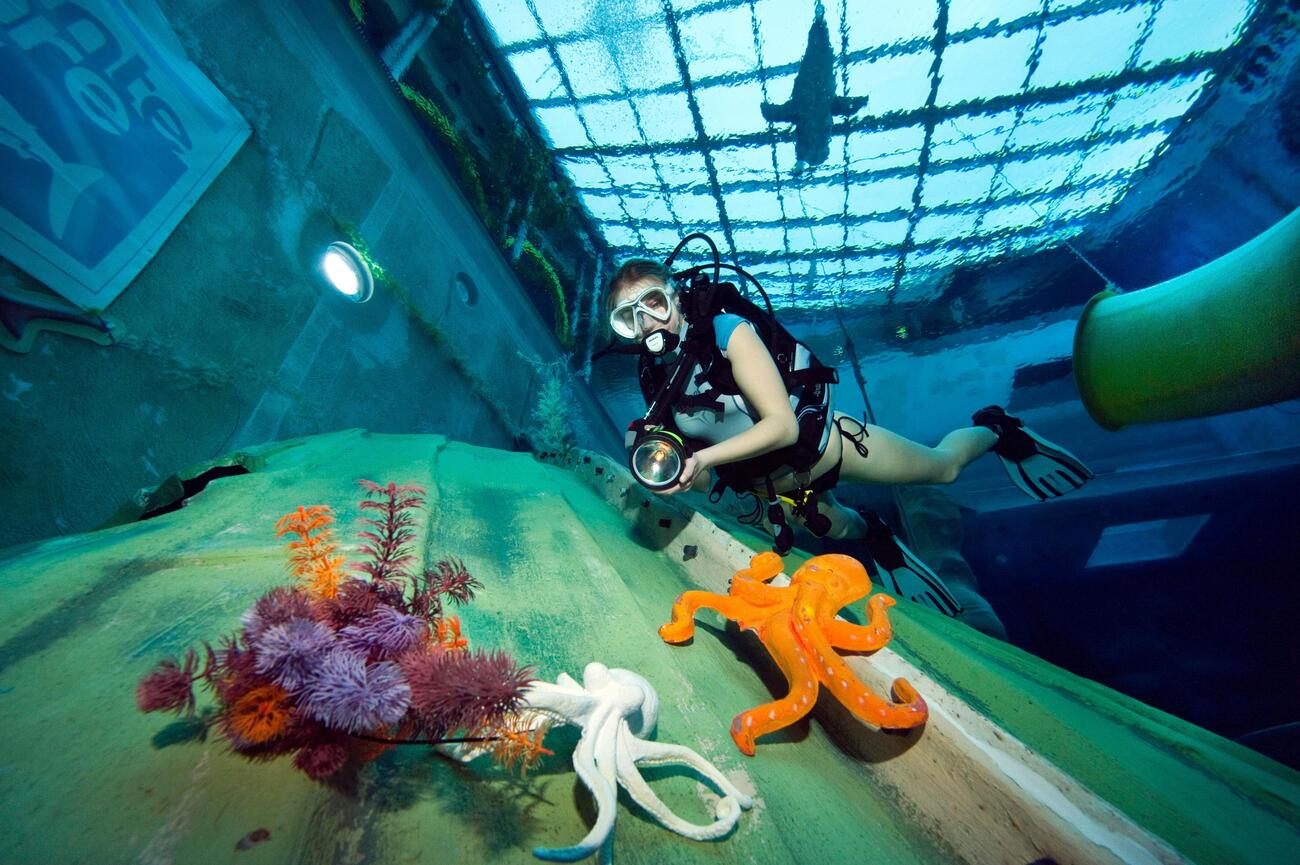
- Monte Mare Rheinbach: When the weather shifts or energy levels spike, Monte Mare delivers a full family water experience. Expect indoor pools, water slides, wave areas and warm family zones where kids can splash safely. It’s modern, clean and designed for all ages, older kids head for slides while younger ones can stay in shallow play areas. After days of climbing towers and walking cobblestones, this is the spot where everyone exhales. As it is located near Bonn, around 1:00 to 1:15 hours from the Rhine Gorge by car, it works best as a half-day or full-day family day trip, especially if you want a weather-proof option.
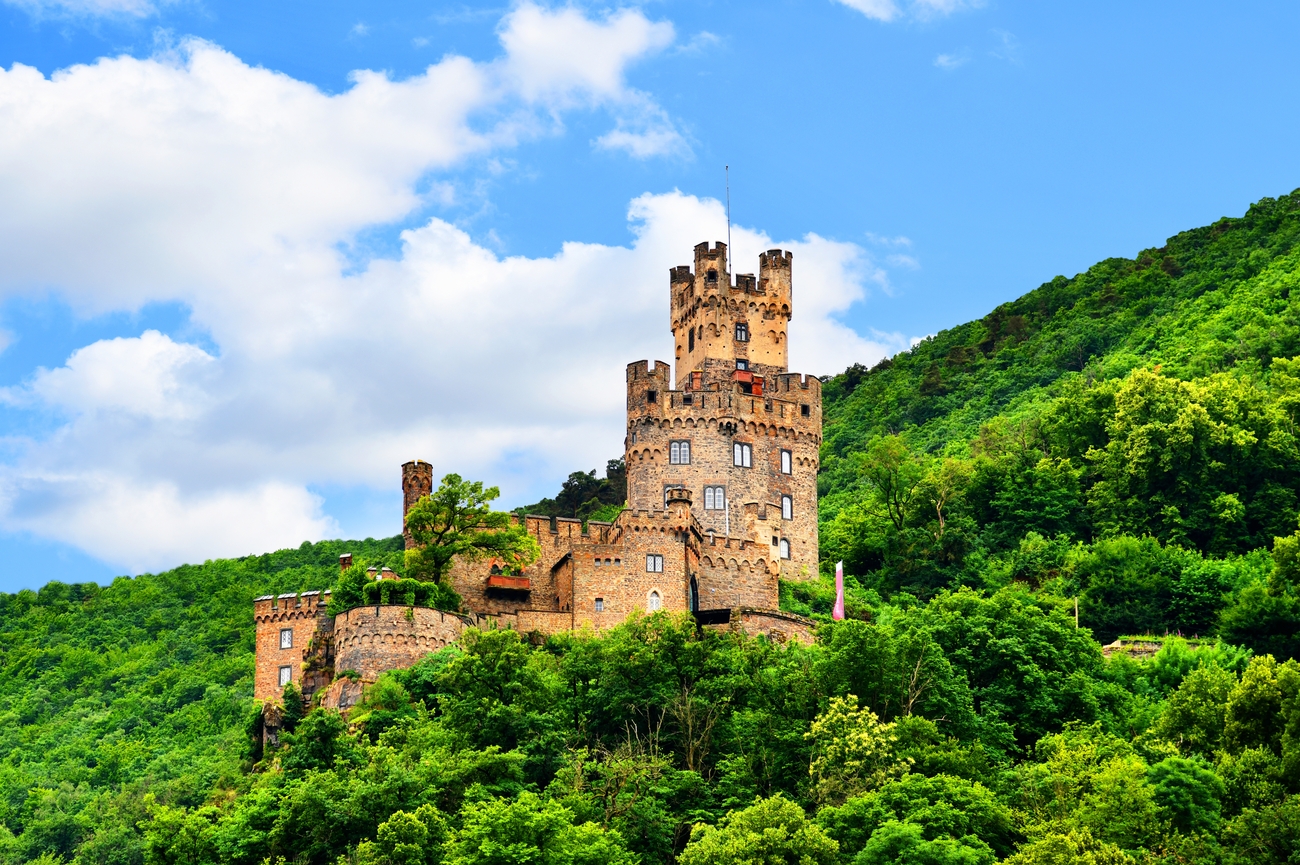
- Sooneck Castle: Perched above the Rhine near Trechtingshausen, Sooneck Castle looks exactly like the fortress kids would sketch with pointed towers, thick walls, and forest surroundings. Originally built in the 13th century to control trade routes, it was later restored in the Romantic era. Inside, you’ll find furnished rooms and exhibits that help younger visitors visualize medieval life. It’s less crowded than some headline castles, which makes exploring with kids far more manageable.
- Garten der Schmetterlinge, Schloss Sayn: Inside a tropical glasshouse next to Schloss Sayn, hundreds of colorful butterflies fly freely around you. Kids walk slowly through lush plants while butterflies land on flowers and occasionally on sleeves. The controlled environment makes it easy to navigate and the visual impact is immediate. It’s calm, immersive and completely different from the stone-and-tower rhythm of the Rhine.

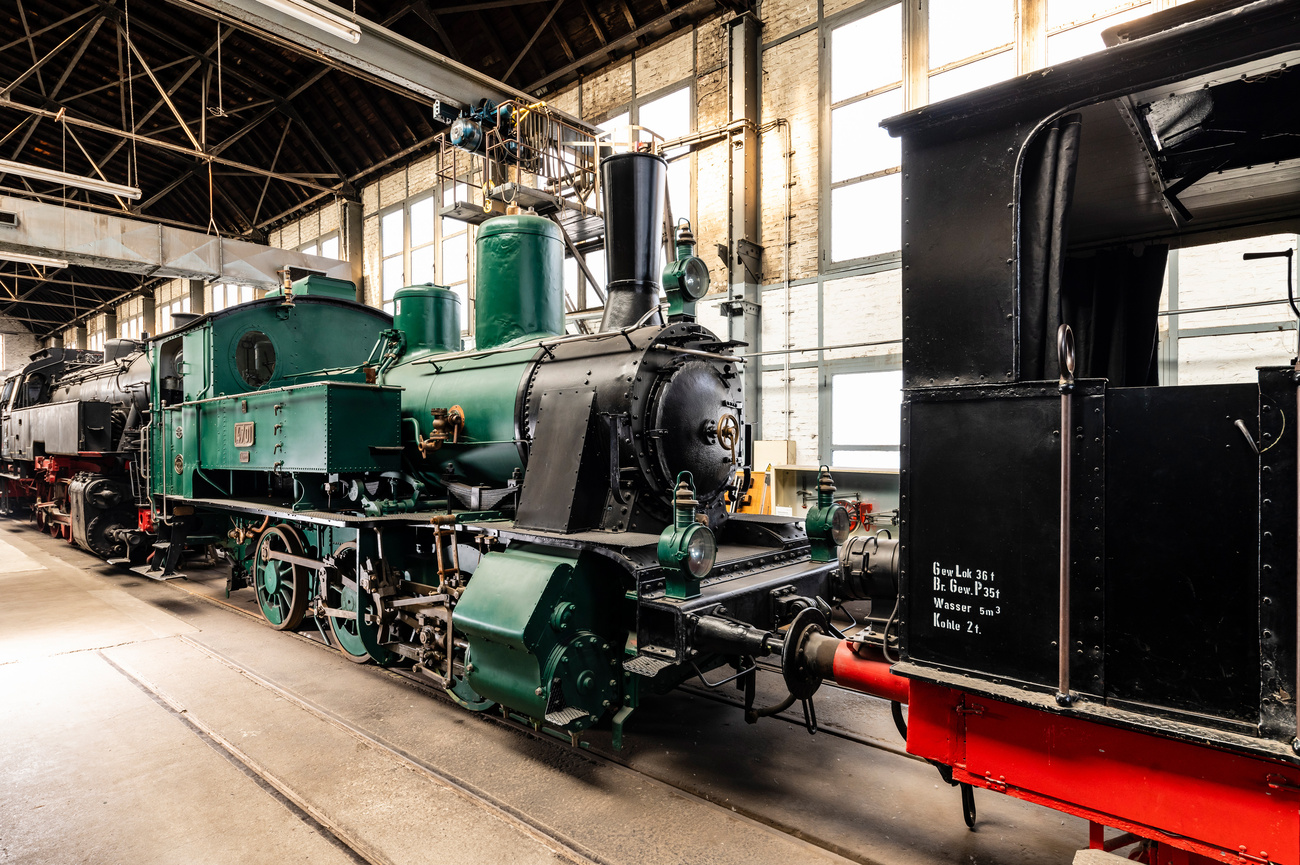
- DB Museum Koblenz (Railway Museum): For train-loving kids (and honestly, plenty of adults), this open-air railway museum is a win. Located in a historic rail yard, it features vintage locomotives, old passenger cars, freight wagons and technical railway equipment. On select event days, you can even step inside certain trains. The scale of the engines alone impresses and the industrial setting gives kids something hands-on and mechanical to focus on.
Day
Trips from the Rhine Gorge
The Rhine Gorge is powerful, but staying put would be a mistake. In every direction, the landscape shifts, the architecture changes tone, and entirely different chapters of German history open up. Roman cities, cathedral skylines, spa towns, university streets, vineyard estates, all orbiting the river you’ve been exploring. If you want to understand the Rhine properly, you need to see what surrounds it. Here’s where to go. All within easy reach of the gorge.
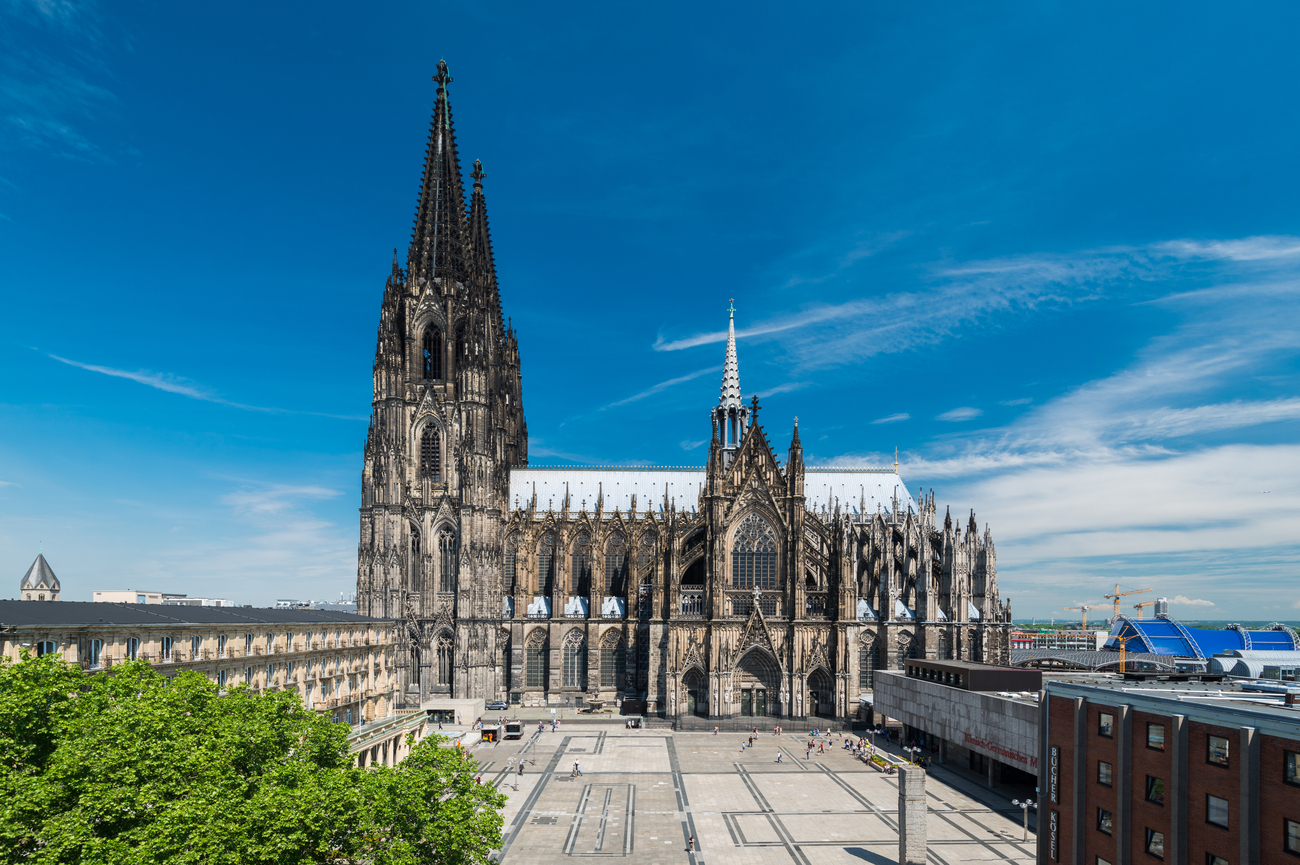
- Cologne: Cologne doesn’t ease into your vision. The Cologne Cathedral (UNESCO World Heritage Site) dominates the skyline the moment you arrive, roughly 1 hour to 1 hour 20 minutes north of the Rhine Gorge. This Gothic masterpiece took over 600 years to complete and standing beneath its twin spires makes that timeline feel real. Climb the tower for panoramic views, step into the Roman-Germanic Museum to explore Cologne’s ancient roots, then wander the colorful Old Town along the river.
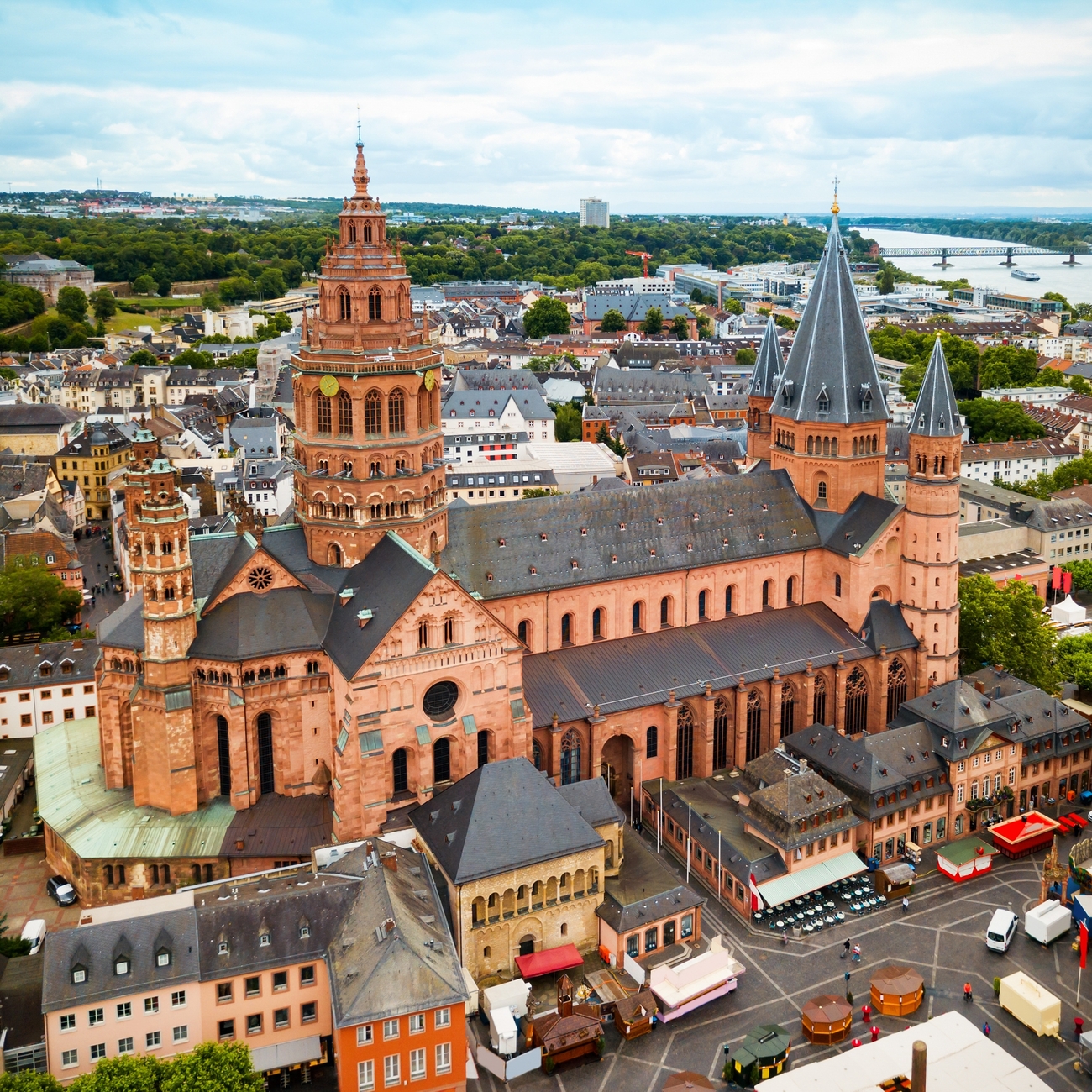
- Mainz: Just 45 minutes south, Mainz introduces you to Gutenberg before Google. The Gutenberg Museum displays original 15th-century Bibles that transformed communication forever. Nearby stands the thousand-year-old Mainz Cathedral, anchoring a lively Old Town filled with wine bars and half-timbered houses. It’s an easy cultural pairing. You can explore print history by morning and have a Rheinhessen wine tasting in the afternoon.
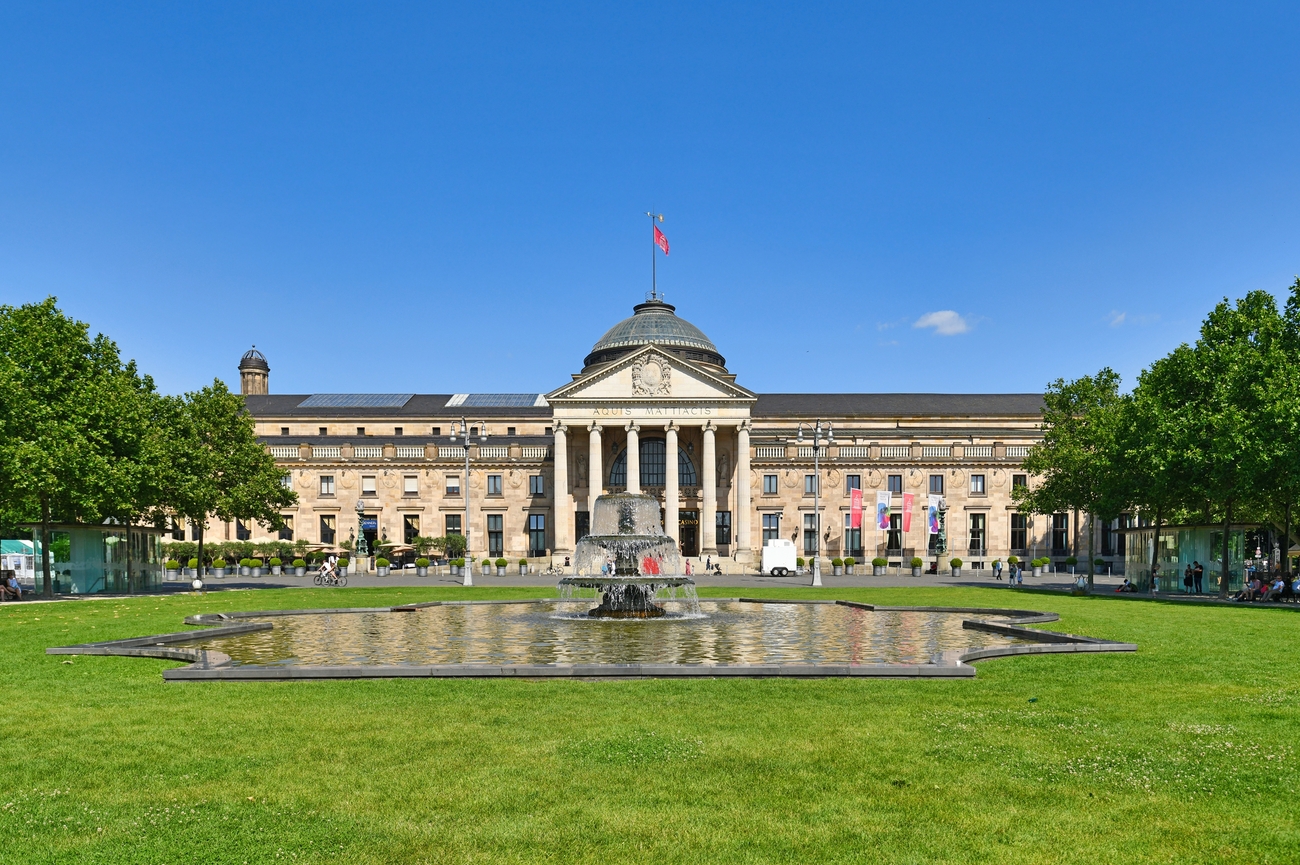
- Wiesbaden: About an hour southeast, Wiesbaden trades medieval grit for spa-town elegance. Known for its thermal springs since Roman times, the city is defined by grand 19th-century facades and wide boulevards. Visit the Kurhaus and Casino and stroll through the landscaped park. Thermal springs have also drawn visitors here since Roman times and today you can step into that tradition at one of the city’s bathhouses, where mineral-rich waters and structured wellness rituals turn relaxation into an art form. Go here if you want a composed, luxurious contrast to the rugged Rhine cliffs.
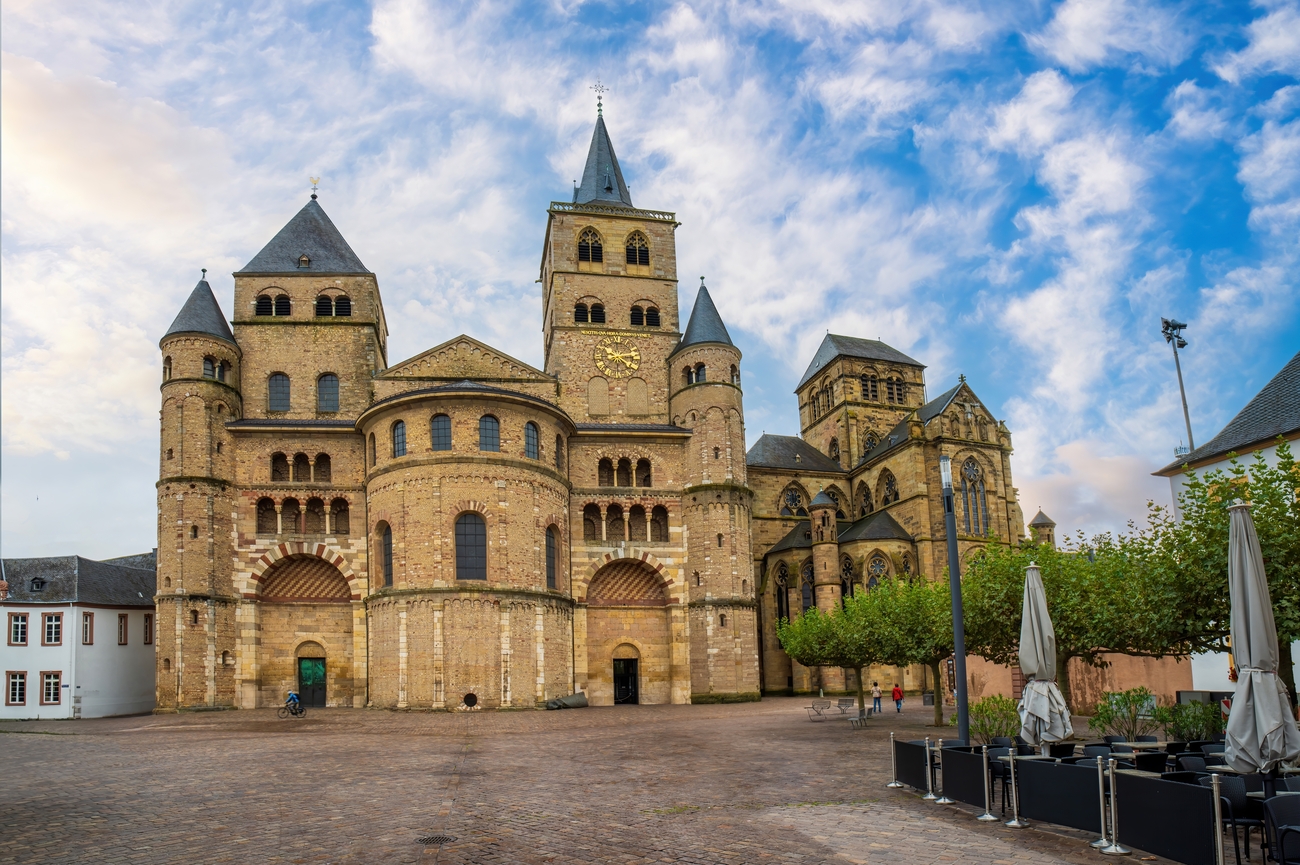
- Trier: Drive about 1 hour and 20 minutes southwest and you land in Roman territory. Trier, founded over 2,000 years ago, is home to the Porta Nigra, one of the best-preserved Roman gates north of the Alps. The city’s Roman baths, amphitheater, and basilica are UNESCO-listed, and Trier Cathedral adds early Christian significance. Book a private Roman history tour to fully appreciate how deeply the empire shaped this region, then finish with a Moselle wine tasting in vaulted cellars.
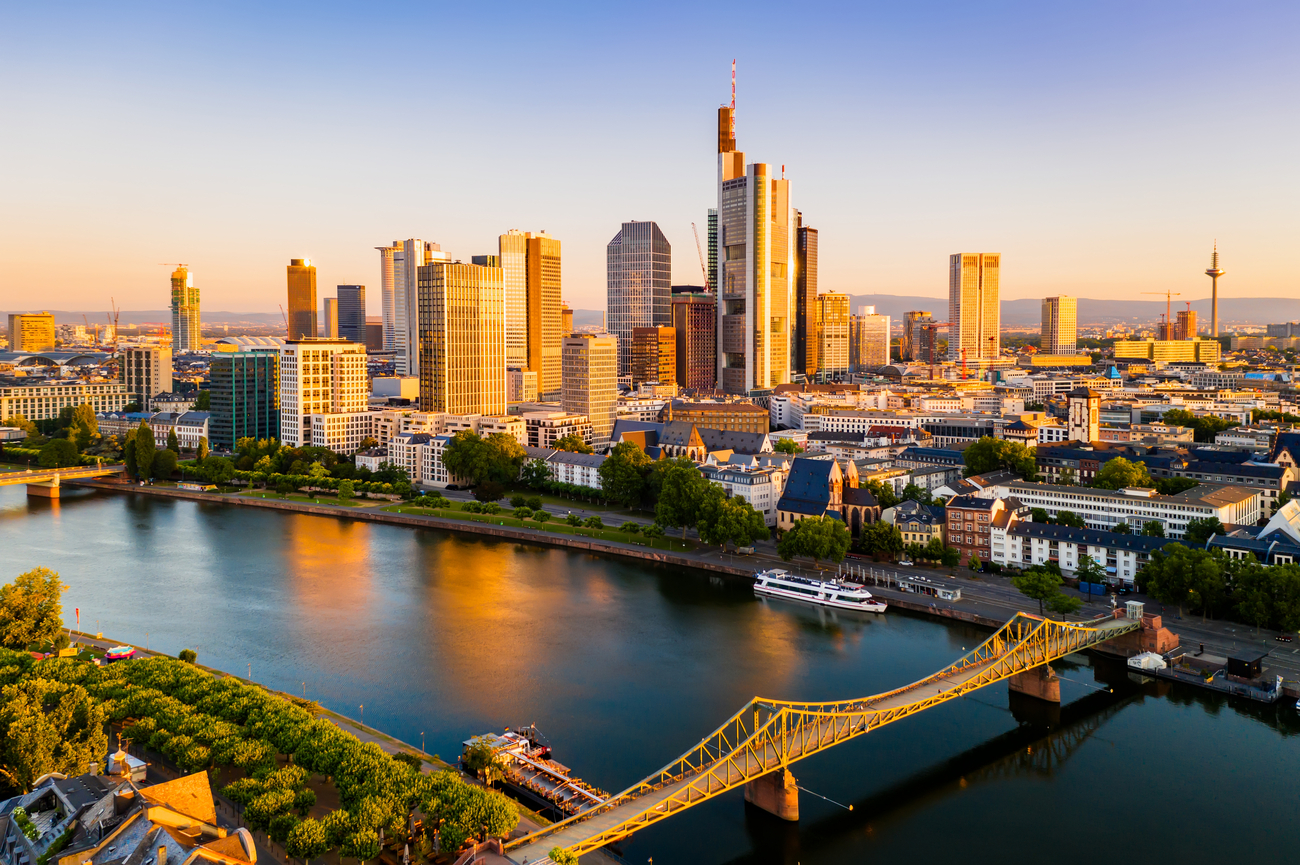
- Frankfurt: Modern Germany steps forward in Frankfurt. About 1 hour and 20 minutes southeast of the Rhine Gorge, the landscape shifts from vineyard-covered slopes to a skyline of glass and steel. Frankfurt feels immediately different. Sharper, faster, unapologetically modern. In the heart of the city, the reconstructed Römerberg square anchors the old town with its timber-framed houses and Gothic Town Hall. The Städel Museum also delivers world-class art, while the Main Tower offers skyline views that reframe the region entirely. Frankfurt doesn’t compete with the Rhine’s romance; it complements it.
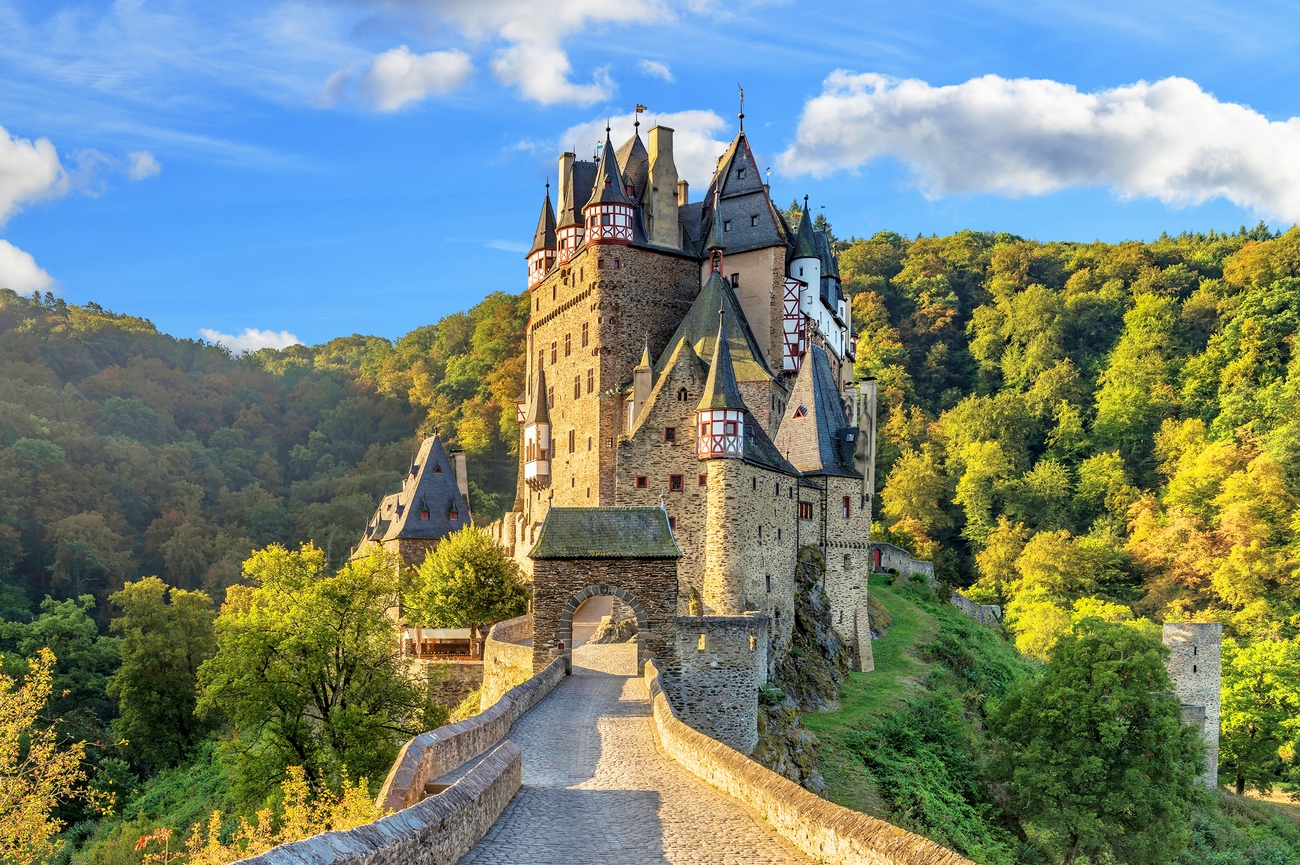
- Burg Eltz: Some castles look impressive from a distance. Burg Eltz is impressive up close. Tucked deep within a forested valley about 1 hour to 1 hour 15 minutes from the Rhine Gorge, this medieval fortress feels untouched by time. Unlike many Rhine castles, Burg Eltz was never destroyed. Original furnishings, treasury rooms filled with gold and armor and winding stone corridors make this less of a photo stop and more of an immersion. You can book a guided interior tour to access private chambers and historic collections. It’s one of the most complete medieval castle experiences in Germany.
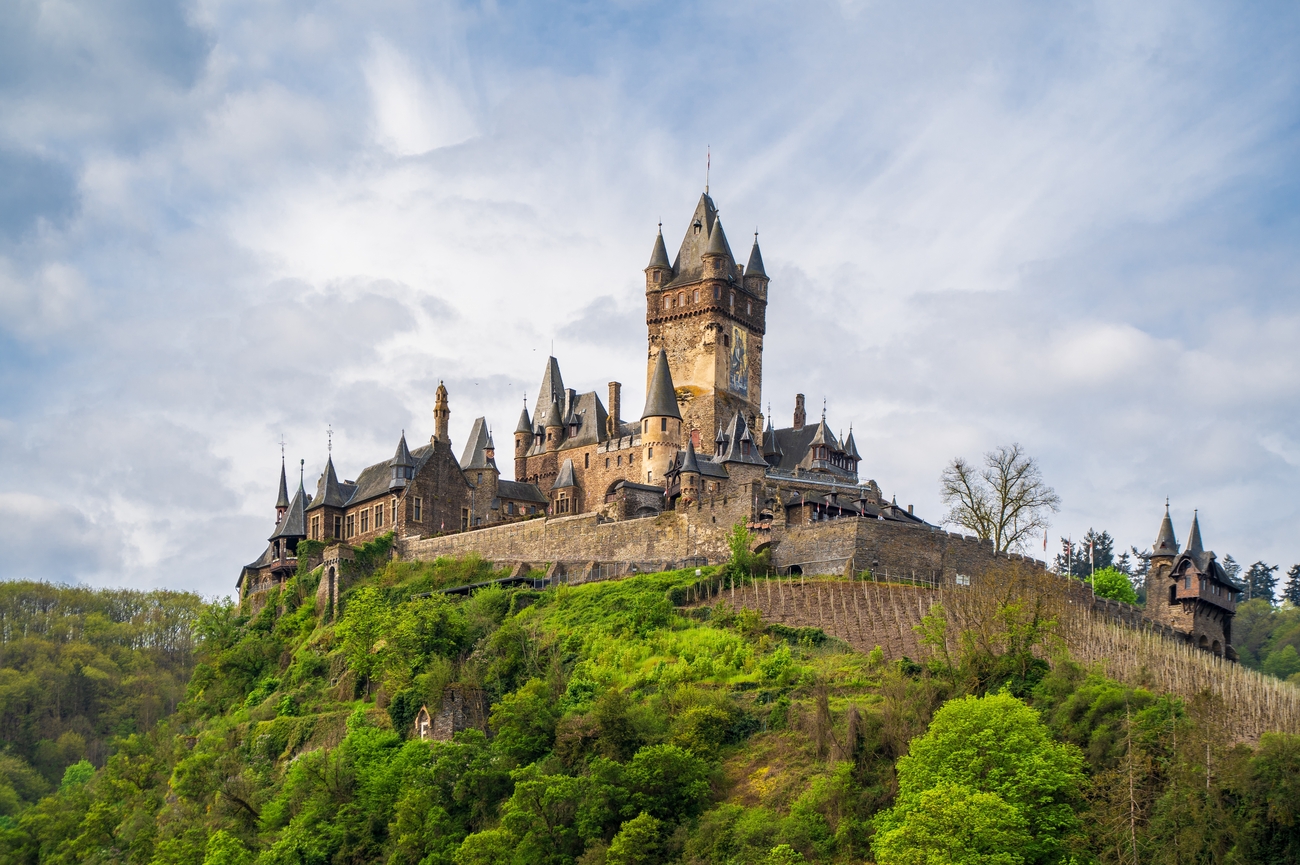
- Cochem: The fully restored Reichsburg Castle rises dramatically above the Mosel River, visible long before you park. Roughly 1 hour west of the Rhine Gorge, this town delivers classic storybook energy. Inside the castle, guided tours take you through furnished halls, knightly chambers and panoramic terraces overlooking the valley. Afterward, descend into town for Mosel wine tasting or a riverside lunch. It’s compact, photogenic, and easy to explore in a single afternoon.
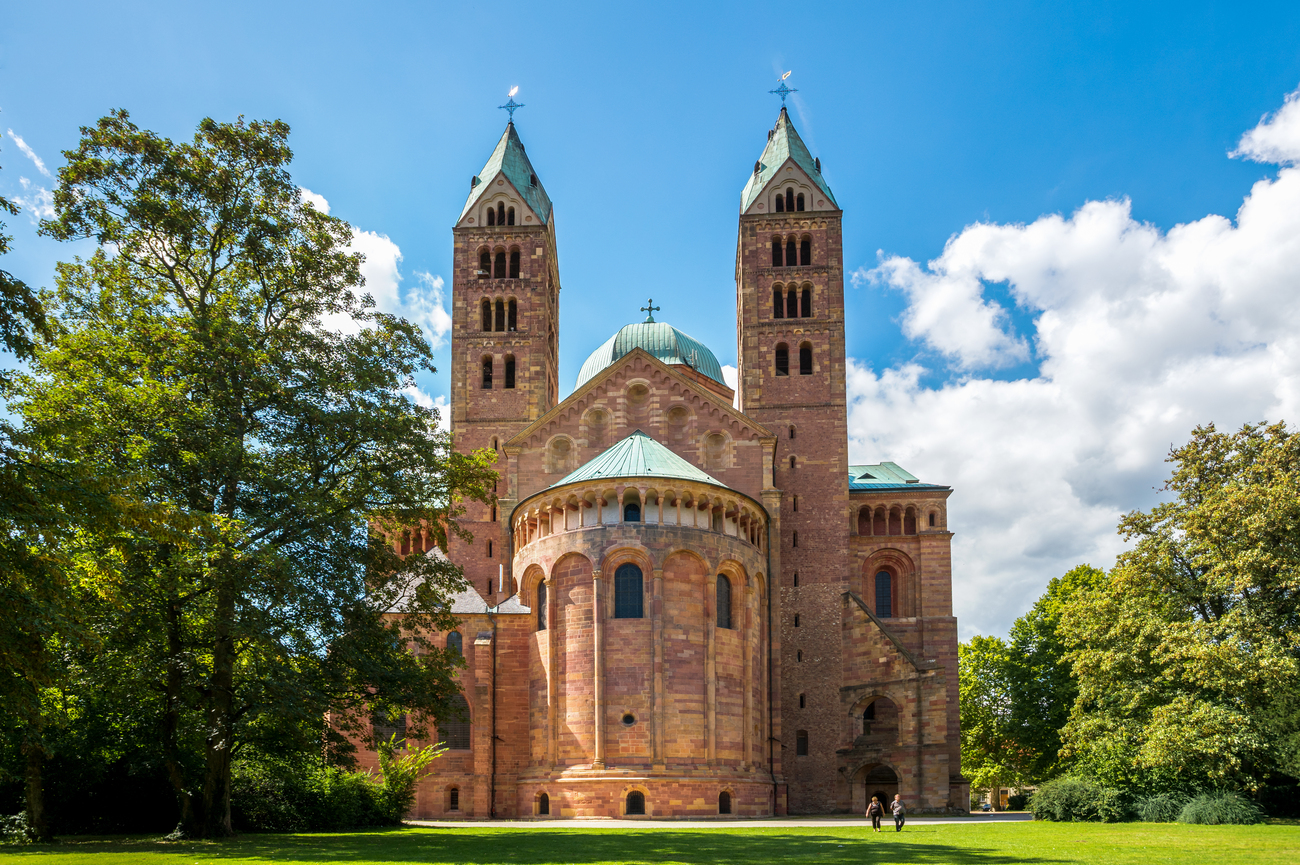
- Speyer: If you want scale, real scale, drive about 1 hour 30 minutes south to Speyer. The Speyer Cathedral (UNESCO World Heritage Site) dominates the skyline and holds the title of one of the largest Romanesque churches in Europe. Built in the 11th century, it once symbolized imperial power and stepping inside makes that history tangible. Climb the tower for sweeping views or explore the crypt where emperors are buried. Beyond the cathedral, the old town streets are lively and walkable and the Technik Museum Speyer adds an unexpected twist with aircraft, submarines and space exhibits.
Golf
Courses in the Rhine Gorge
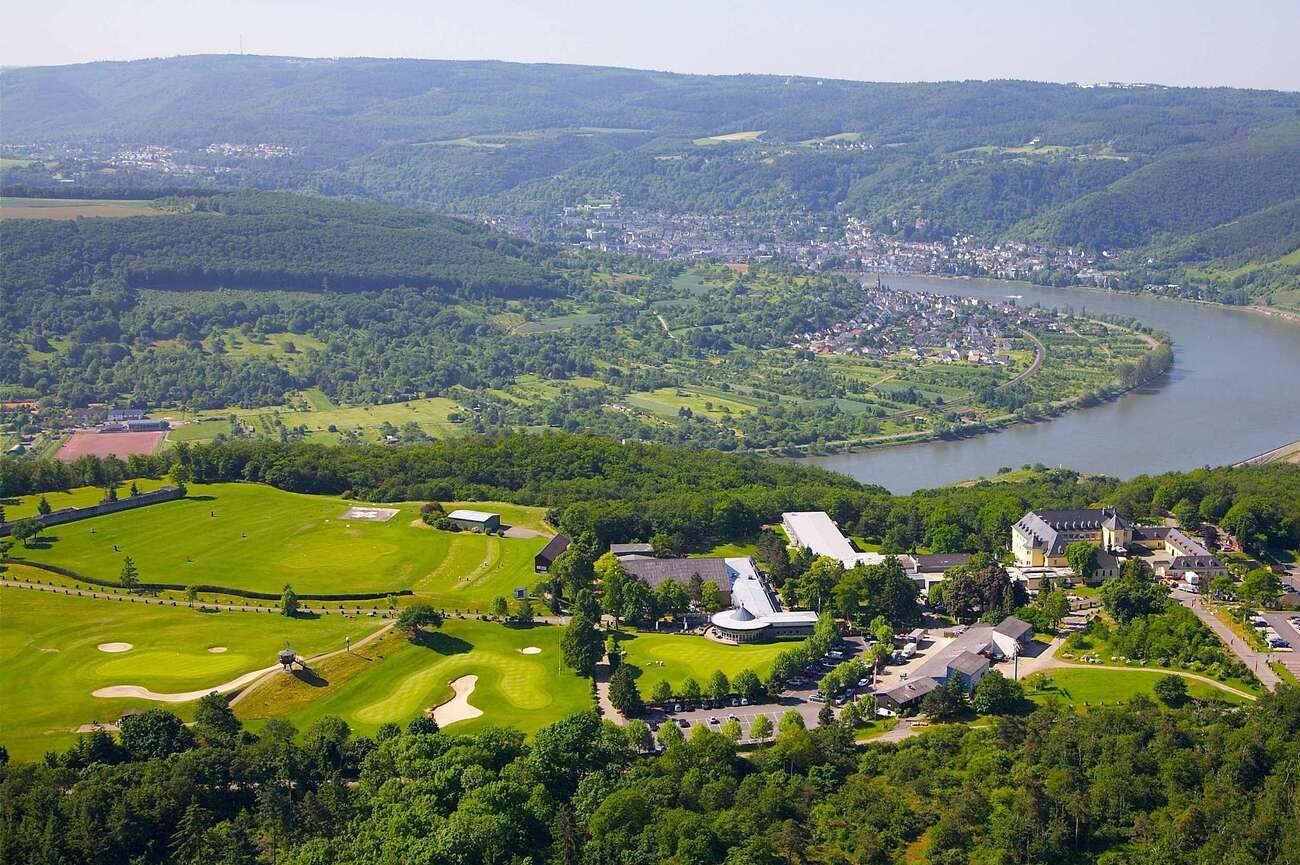
Golf in the Rhine Gorge isn’t about ticking off multiple courses; it’s about playing one in the right place. Inside the UNESCO-listed Upper Middle Rhine Valley, where castles crown cliffs and vineyards grip impossibly steep slopes, there’s only one course that truly sits within the landscape itself. Here, your round isn’t separate from the scenery. It’s woven into it.
- Jakobsberg Nature Resort: Perched on a quiet plateau above Boppard, Jakobsberg Nature Resort offers a calm, elevated escape within the UNESCO-listed Upper Middle Rhine Valley near the Loreley. Surrounded by forests and vineyards, the resort overlooks sweeping views of the Rhine and the distant Westerwald, Taunus and Hunsrück hills. Its highlight is the 18-hole championship golf course, opened in 1994 and regarded as one of Germany’s most scenic. With fairway bunkers, water hazards and fast, undulating greens, the layout delivers a sporty yet fair challenge. Several holes offer views toward Marksburg Castle and the Rhine Valley.
Racecourses
in the Rhine Gorge
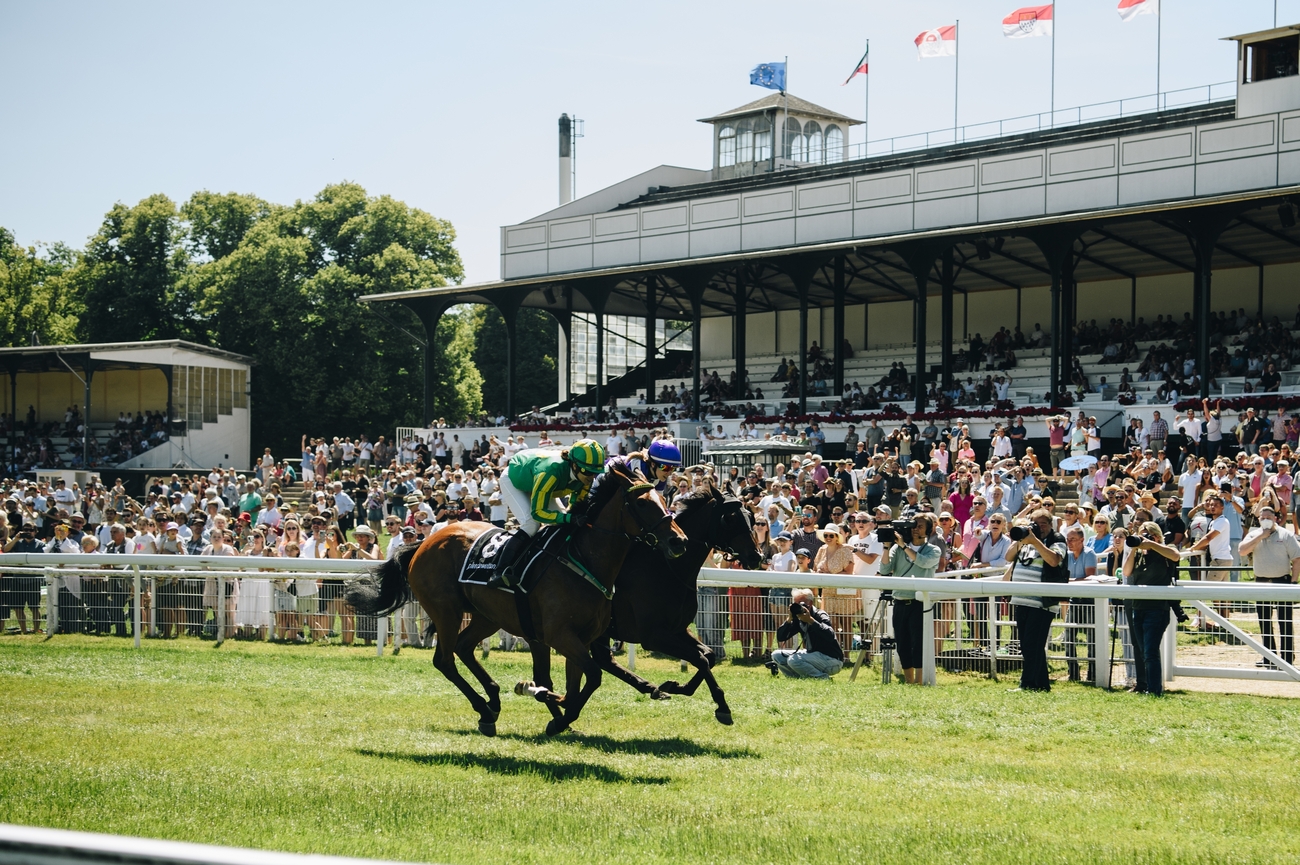
If you’re specifically searching for a formal horse racing track within the Rhine Gorge itself, you won’t find one. The Upper Middle Rhine Valley is defined by steep vineyard terraces, narrow riverbanks, medieval towns and tightly preserved landscapes. A full-scale oval racecourse simply doesn’t fit the geography or the conservation rules here. That said, the closest major venue isn’t far. It’s about an hour north of the gorge, is one of Germany’s most established racecourses and hosts high-level flat racing events throughout the season.
- Cologne-Weidenpesch Racecourse: Cologne-Weidenpesch Racecourse is one of Germany’s oldest and most prestigious flat racing venues. Opened in 1898, the track has built a serious reputation in European racing circles and regularly hosts high-profile events, including Group races that draw top horses, trainers and jockeys. If you’re looking for a proper race day atmosphere, grandstands, paddock parades, bookmakers and that electric moment before the gates open, this is where you’ll find it.
Michelin-Starred
Restaurants in the Rhine Gorge
The Rhine Gorge does drama well with castles, cliffs, river bends that feel almost staged. Fine dining here, though, is more restrained. You won’t find a cluster of Michelin stars lighting up every town along the water. And right now, there are two Michelin-starred restaurants connected to the Upper Middle Rhine region, each offering a very different interpretation of refinement.
- Verbene: Tucked into Koblenz’s old town, Verbene holds 1 Michelin star, and it feels completely in sync with the Rhine’s quiet confidence. The dining room is intimate and warm, service is genuinely welcoming, and the cuisine is modern, seasonal, and rooted in locality. Ingredients are sourced as regionally as possible, so much so that dedicated farmers grow vegetables specifically for the restaurant. Two tasting menus (four to eight courses) guide the experience, with one fully vegetarian option that feels just as thoughtful as the classic menu. A standout dish pairing yoghurt, zucchini, black garlic and lemon oil reflects the kitchen’s balanced, precise style.
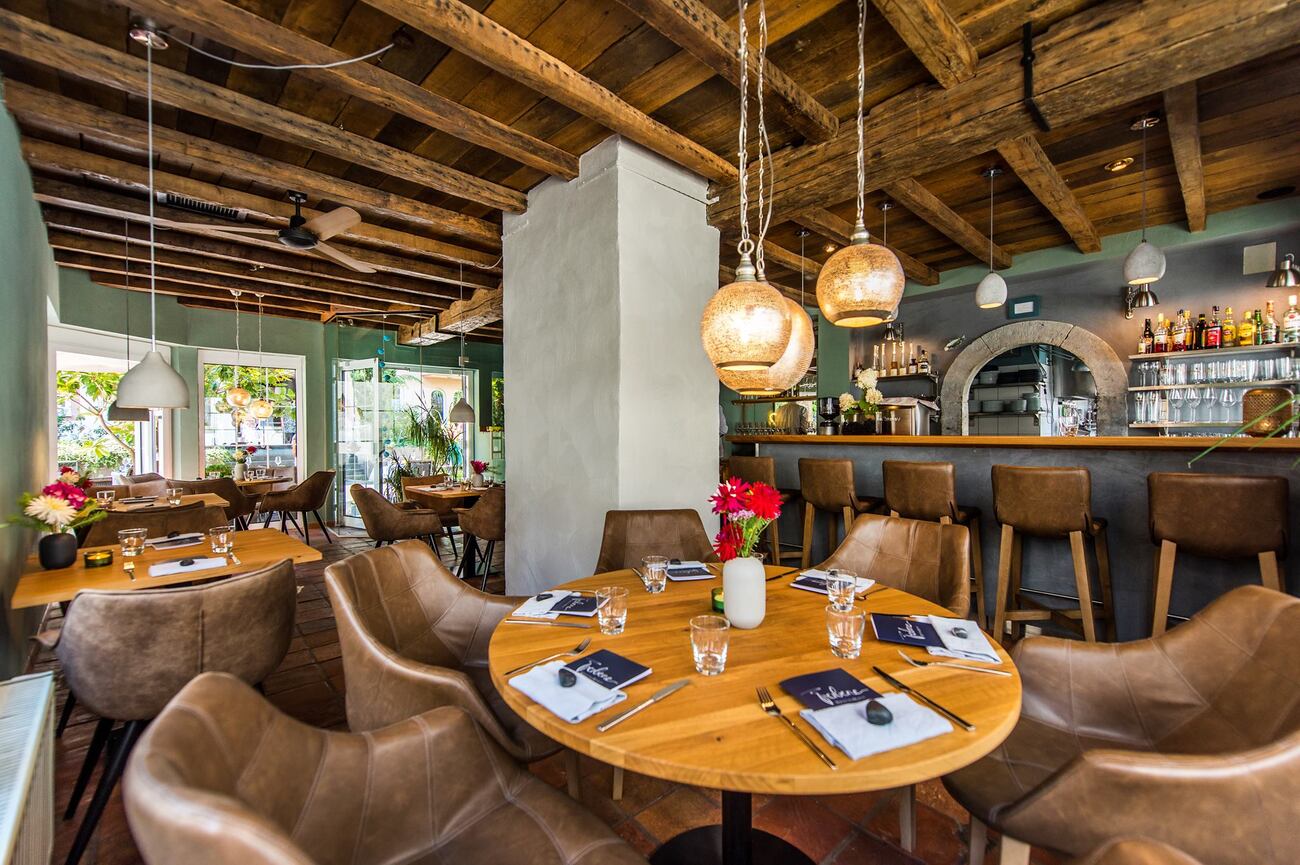
- Schiller’s Manufaktur: At Hotel Stein, chef-patron Mike Schiller delivers 1 Michelin-starred cooking rooted in ingredient quality and technical confidence. The four-course surprise menu, “PhantasTisch,” available by pre-order, highlights inventive plant-based cuisine with the option to add a fish or meat course. The aromatic “vegetable essence” has become something of a signature. If you prefer to order à la carte, French classics anchor the menu. The cassoulet de homard breton arrives rich and robust, while the suprême de faisan classique showcases precision and depth of flavor. Service is led by maître d’ Melanie Stein-Schiller, who brings polish without stiffness. And before leaving, the house shop offers delicacies worth packing home.
Where to Eat in the Rhine Gorge
The Rhine Gorge feeds you in more ways than one. You spend the day climbing castle steps, tracing Roman walls, following vineyard paths and by evening, you’re ready for something grounding. This stretch of river isn’t about experimental tasting menus on every corner. It’s about taverns with stories, terraces with views and family-run kitchens that have seen generations come and go. Here’s where to sit down in the Rhine Gorge.
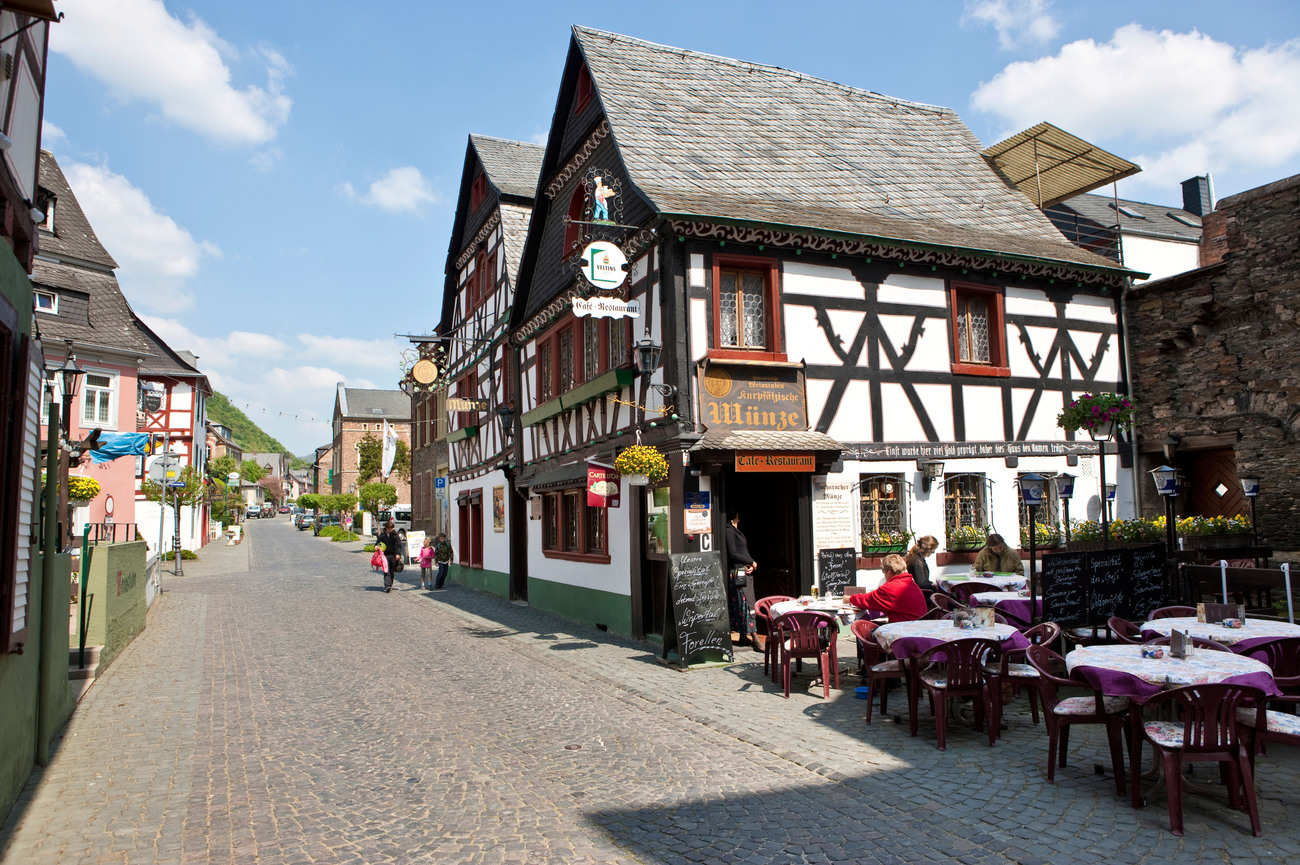
- Kurpfälzische Münze: Right on the Oberstraße in Bacharach’s old town, Kurpfälzische Münze balances history and comfort without trying too hard. The menu leans into regional classics done well. The star here is the Flammkuchen with its paper-thin crust, creamy topping, generous portions, crisp and satisfying without feeling heavy. Pair it with a local Riesling and suddenly the slate soils of the surrounding vineyards make sense. Add a cheese plate sourced from nearby producers or warm garlic bread to the table and you’ve got a meal that feels local and right for the setting.
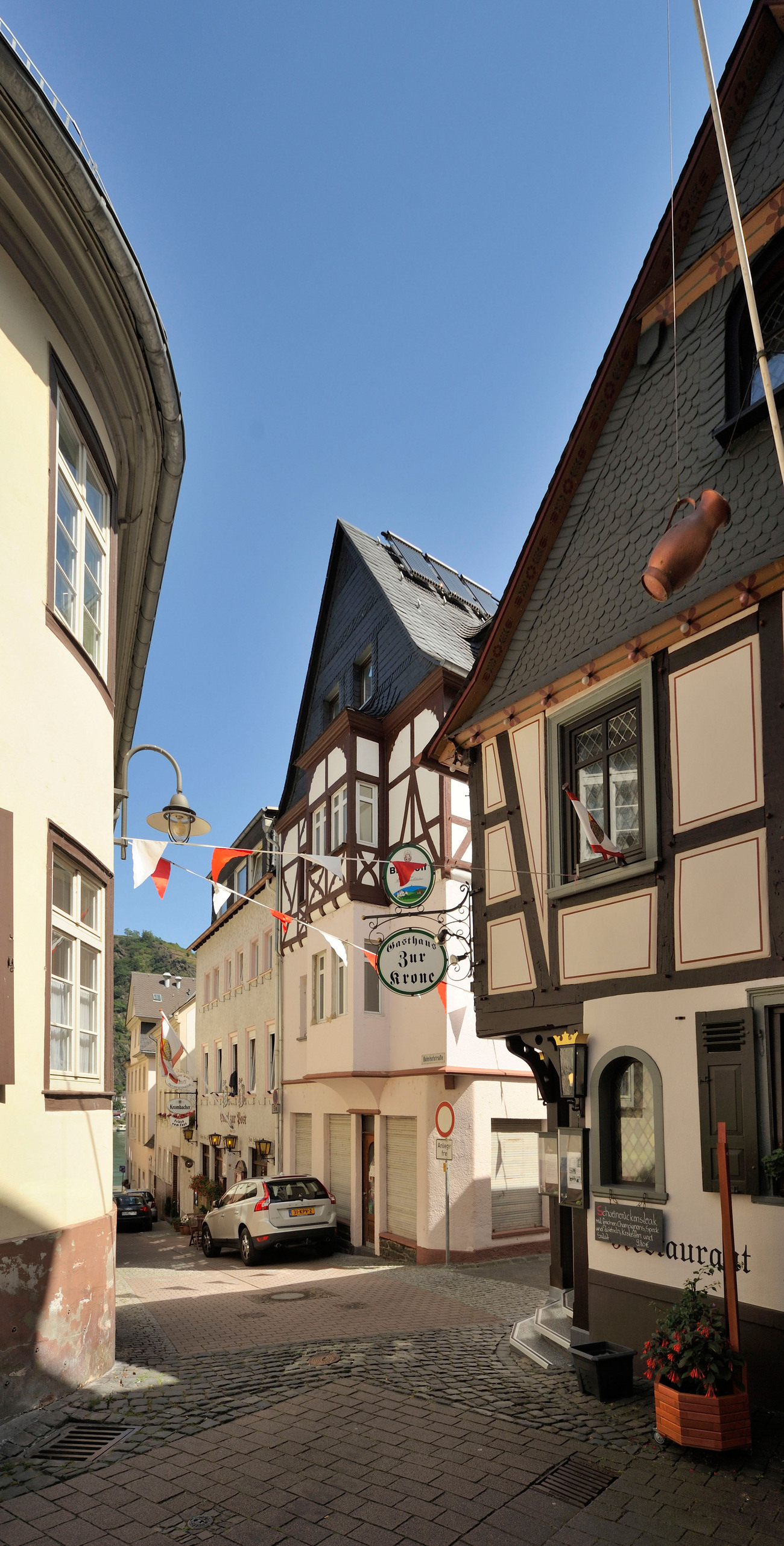
- Restaurant “zur Krone”: Tradition carries weight at Zur Krone. Operated by the same family for over 200 years, nine generations, this restaurant in St. Goar feels rooted in the rhythm of the valley. The kitchen works seasonally: asparagus in spring, game and goose when winter arrives. The atmosphere is cozy indoors, with wood-paneled warmth, while the terrace opens up during warmer months. For dessert, the meringue with cream, vanilla ice cream and egg liqueur is indulgent in the best way.
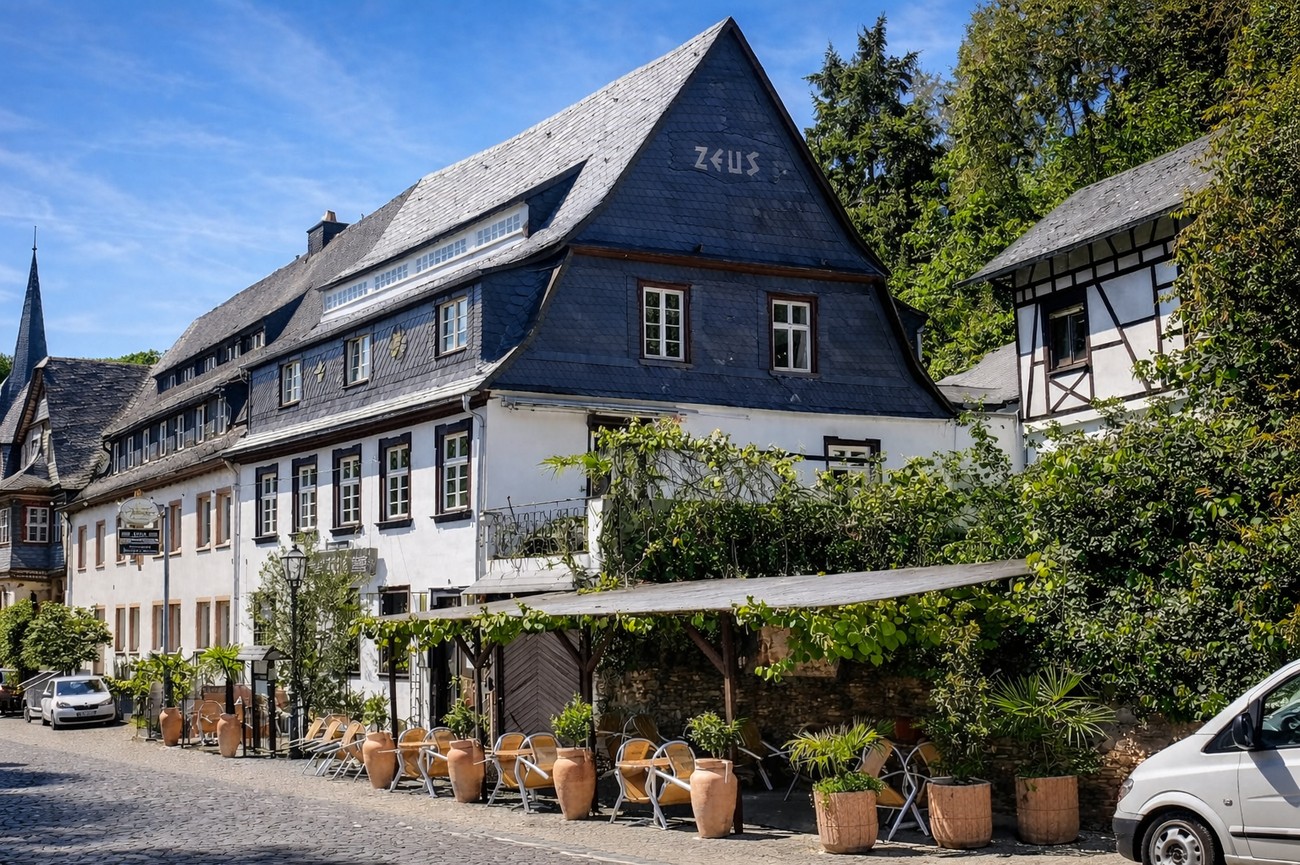
- Restaurant Zeus: In a town known for timber-framed houses and Riesling, Restaurant Zeus adds a Mediterranean layer. Located in Bacharach, it blends Greek and German influences with generous portions and relaxed hospitality. Plates named after gods like Aphrodite and Demeter arrive loaded with grilled meats, gyro and classic accompaniments.
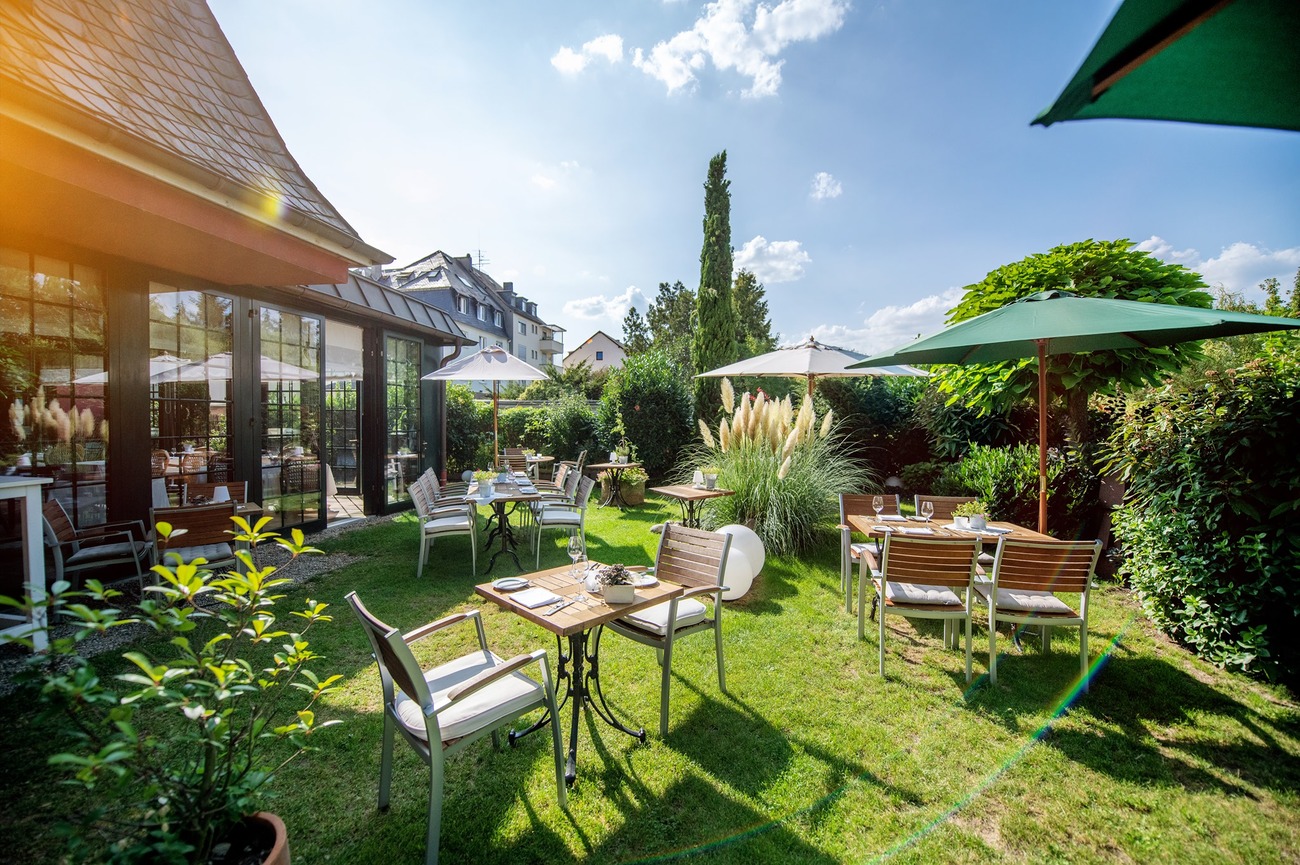
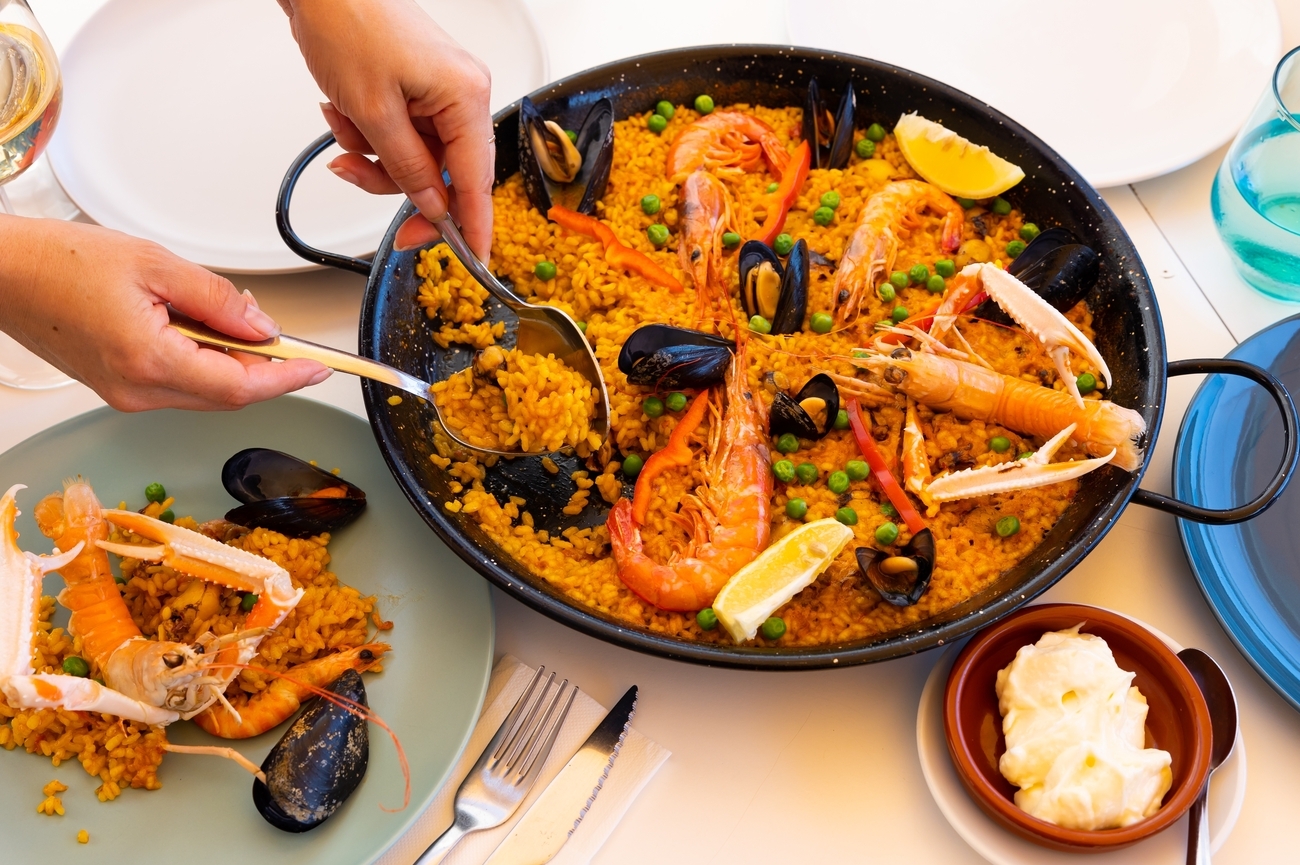
- Luz de Mar am Rhein: This is where the Rhine meets Spain. Luz de Mar am Rhein brings tapas and paella into the heart of Bacharach, offering a lighter, shareable alternative to heavier regional fare. Expect classic Spanish small plates, saffron-rich rice dishes and a terrace that opens toward the river. Service is attentive but relaxed. The kind of place where you order a few dishes, pour a glass, and let the evening stretch.
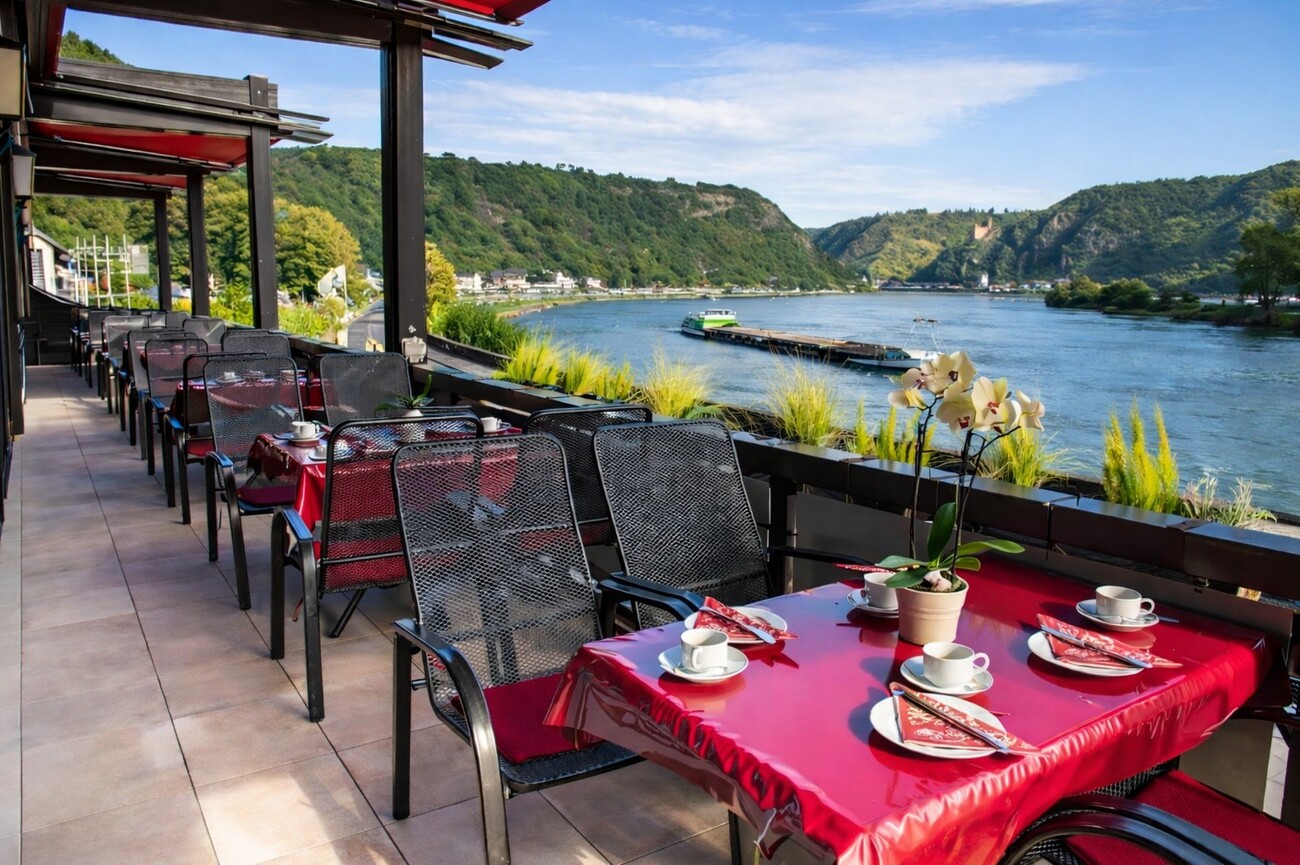
- Panorama Restaurant Loreley: Positioned directly opposite the legendary Loreley rock, this restaurant understands its setting and uses it well. Regional dishes arrive with views of the Rhine, Katz Castle and the steep slopes that define this part of the valley. Ingredients are sourced from nearby Hunsrück producers and the wine list focuses exclusively on top regional winemakers. In the afternoon, fresh cakes and pastries accompany coffee and tea specialties. During summer, two Rhine-facing terraces make the experience as much about landscape as about the plate.
Where
to Drink in the Rhine Gorge
The Rhine Gorge isn’t Berlin. It doesn’t run on neon lights and 4 a.m. queues. Nightlife here feels different. Smaller rooms, riverside terraces, wine instead of vodka shots, conversations that stretch longer than playlists. You don’t party against the landscape here. You sit with it, drink in hand and let the river set the pace.
- Kleines Brauhaus: If you’re looking for energy without chaos, Kleines Brauhaus delivers. This is the kind of place where wooden tables fill quickly, laughter carries across the room, and beer matters. The kitchen leans into German comfort classics, schnitzels, sausages and pretzels, served in generous portions that match the mood. What sets it apart is the in-house brewing. The beer selection isn’t generic; it’s crafted, poured fresh and designed to stand up to hearty food. It’s not a nightclub, it’s a proper Rhine evening with malt, music and a crowd that came to stay awhile.
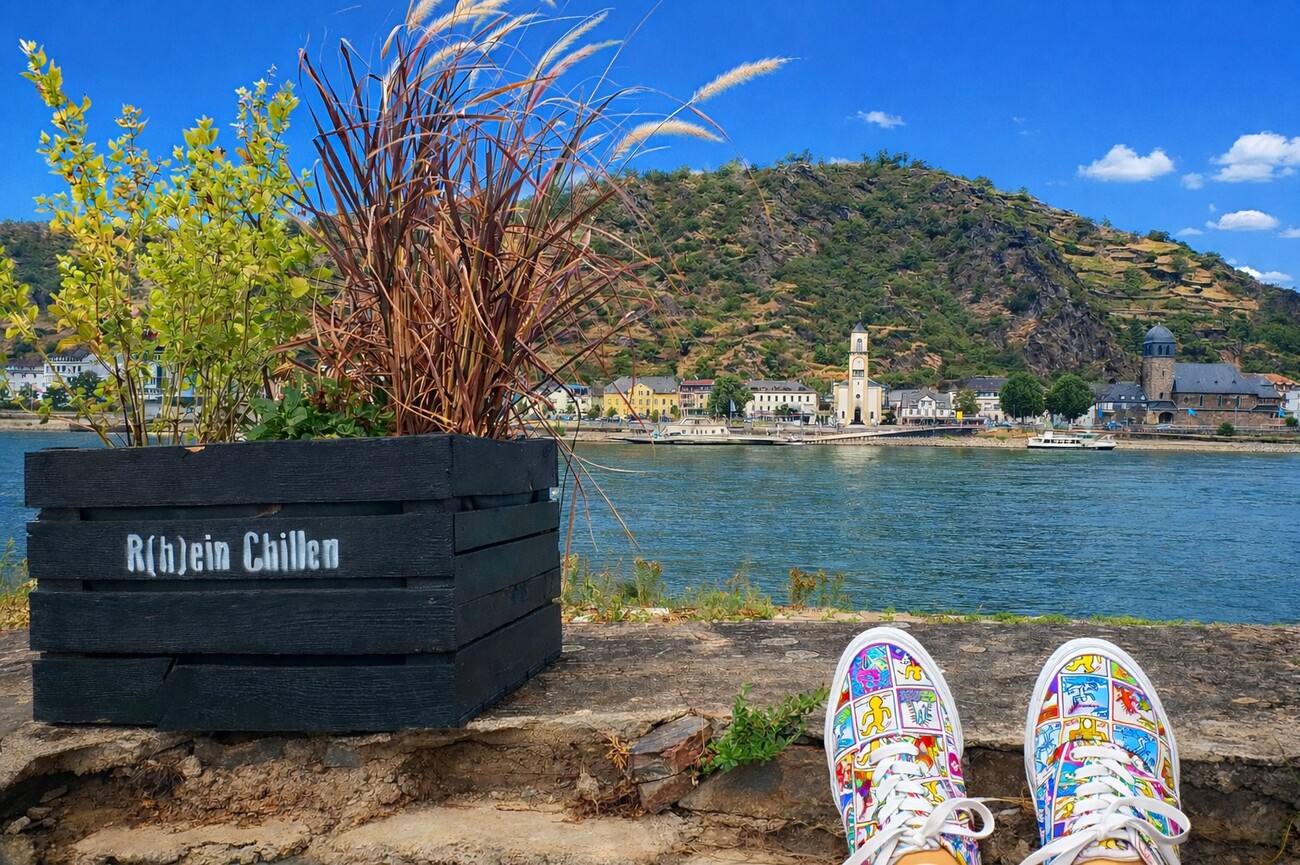
- R(h)ein Chillen: The name tells you everything. R(h)ein Chillen sits directly along the river and leans fully into the view. This is sunset territory with soft light on the water, relaxed playlists and chairs angled toward the Rhine rather than toward each other. Cocktails get mixed reviews depending on expectations, but the affordable pricing and friendly team keep people returning.
- Kaub-Mitte Weinbistro: Kaub doesn’t pretend to be a nightlife hub, and that’s exactly the point. Kaub-Mitte Weinbistro opens in the evening, often around 5 p.m., and feels like a local living room that happens to serve wine. The menu rotates through salads, burgers, tarte flambée, and regional wines and that’s really why you’re here. This is a wine-first spot. Order a glass from the surrounding vineyards, settle into conversation and accept that in the Rhine Gorge, night doesn’t rush.
Cafes
in the Rhine Gorge
The Rhine Gorge does mornings properly. You wake up to river mist, church bells, maybe a castle silhouette in the distance and then you go looking for coffee. Not rushed takeaway coffee. Real coffee. The kind that comes with a slice of something baked that morning and a seat where you can actually sit. Cafes here aren’t just caffeine stops. They’re pacing devices. They slow the day down before it begins.
- Backhaus Lüning Filiale: Sometimes all you need is bread done right. Backhaus Lüning Filiale delivers exactly that. This bakery is known for its fresh loaves like crusty baguettes, soft rolls and pastries that don’t sit around waiting. The cinnamon rolls are a quiet favorite, and the layout is clean, organized, and welcoming enough to make you linger longer than planned. If you want a dependable morning stop before heading toward castles or hiking trails, this is it.
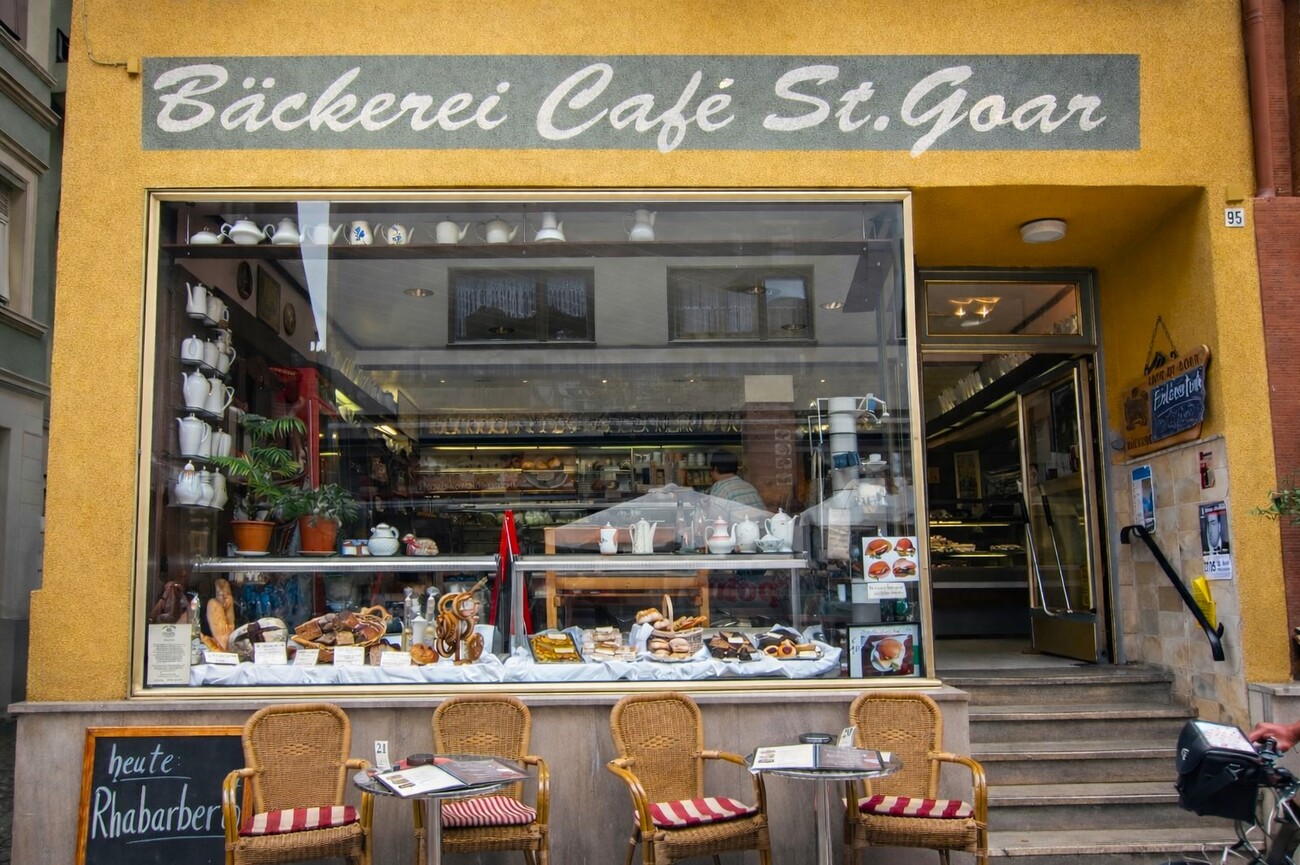
- Café u. Bäcker St. Goar: Positioned in the heart of St. Goar, halfway between the Rhine river and Rheinfels Castle, this café earns its location. You can climb stone paths all morning and then reward yourself with home-baked cakes and strong coffee here. The outdoor seating looks onto a quiet old-town street.
- Café am Rheinsteig: Right in the center of St. Goarshausen near the Loreley, Café am Rheinsteig combines three essentials: cafe, bakery and ice cream parlor. That triple identity works surprisingly well. You can grab a pastry in the morning, return for coffee mid-hike, and finish with a scoop of ice cream after a river walk.
- Nostalgie Winzercafé: If Bacharach had a living room, it might look like Nostalgie Winzercafé. Cozy, intimate and genuinely welcoming, this spot leans into homemade comfort. Guests rave about the house-baked cakes and fruit tarts and the tarte flambée makes a strong case for staying longer than planned.
- Hofcafé: Hofcafé isn’t your everyday grab-and-go bakery. It’s seasonal, intentional and worth timing your visit around. From Easter through the end of October, the courtyard café opens Saturdays, Sundays and public holidays from 2:00 PM to 6:00 PM, turning slow afternoons into something special. The focus here is simple but satisfying: coffee, cocoa, tea and a generous slice from a rotating selection of homemade cakes.
Wineries
and Vineyards in the Rhine Gorge
The Rhine Gorge isn’t just something you look at; it’s something you taste. Slate cliffs, steep terraces, vines gripping impossible angles above the river. The wines here don’t happen by accident. They happen because someone decided that 70% incline was reasonable working terrain. This stretch of the Middle Rhine is smaller than the Mosel or Rheingau, but that’s exactly the point. Riesling? It speaks clearly here.
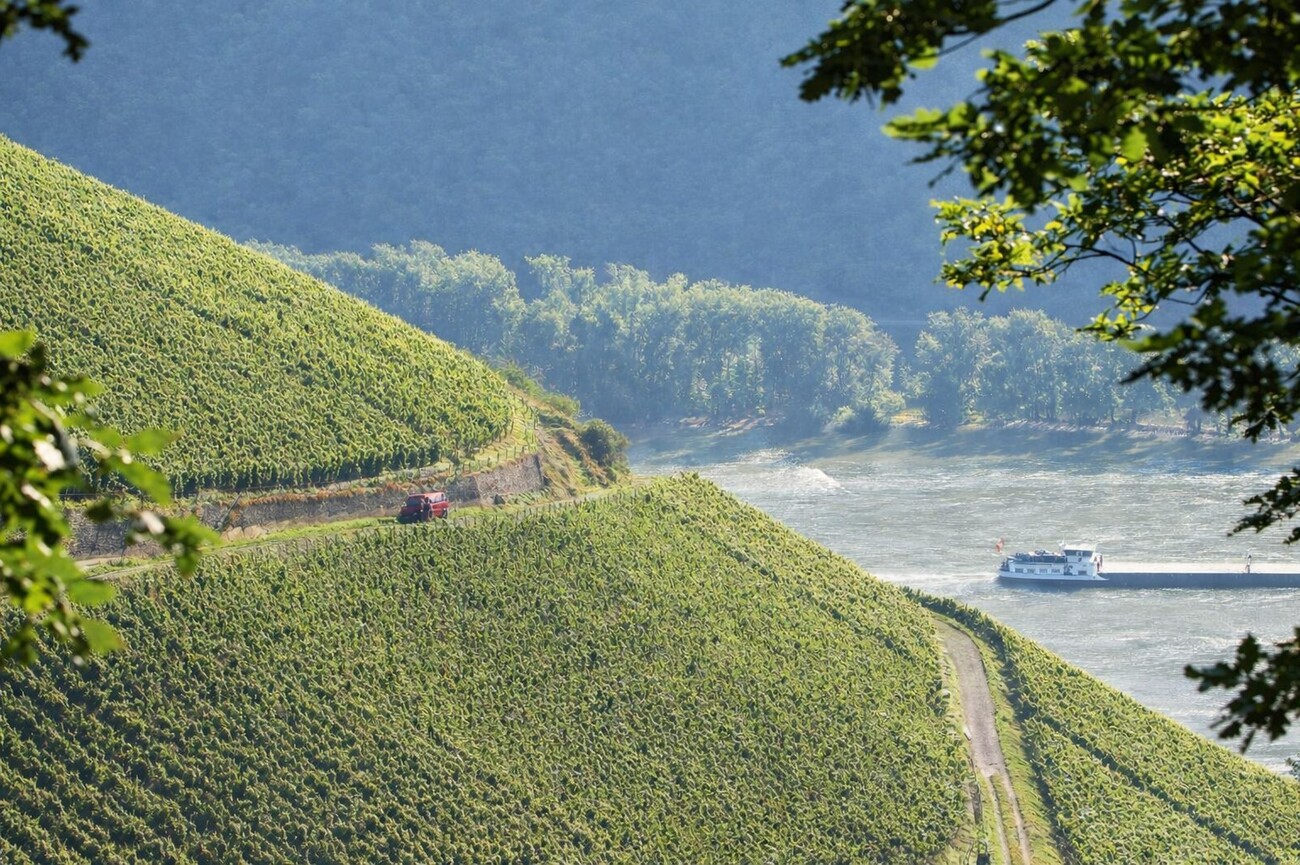
- Weingut Baer: Serious about dry Riesling? Start here. Weingut Bäer works some of the steepest slopes in Bacharach, where slate soils define everything. Around 90% of their vineyards are planted with Riesling, including monopoly holdings like Bacharacher Posten and the island site Heylesen Werth, classified as a first site. Tastings take place at the estate itself, often in a historic villa surrounded by vines.
- Weingut Toni Jost: Slate, Rhine, Riesling, that’s the philosophy here. Weingut Toni Jost cultivates vineyards shaped by Devonian slate formed over 400 million years ago. The south-facing Bacharacher Hahn site, rooted in blue clay slate, produces particularly elegant Kabinett and Spätlese wines. Their Riesling DEVON S stands out for its clear mineral backbone and refined fruit expression.
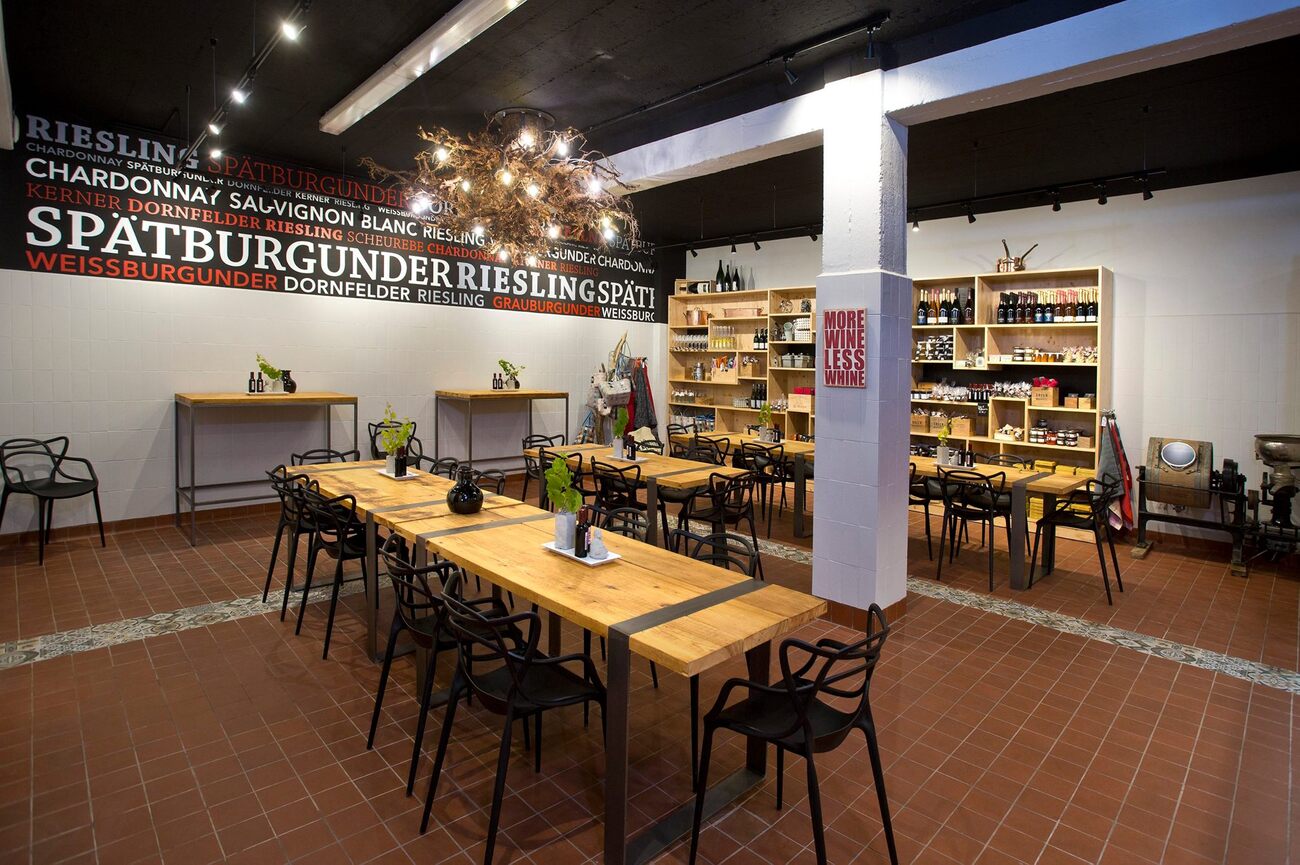
- Weingut am Löwenkopf: Tradition meets sustainability at Weingut am Löwenkopf. Riesling remains central, but Pinot Blanc, Pinot Gris, Pinot Noir, Dornfelder and Pinot Meunier also thrive here. Modern cellar techniques blend thoughtfully with long-standing methods to preserve authenticity. Tastings feel conversational and educational from vineyard practices to harvest decisions and pairing ideas. If you want context with your wine, this stop delivers both.
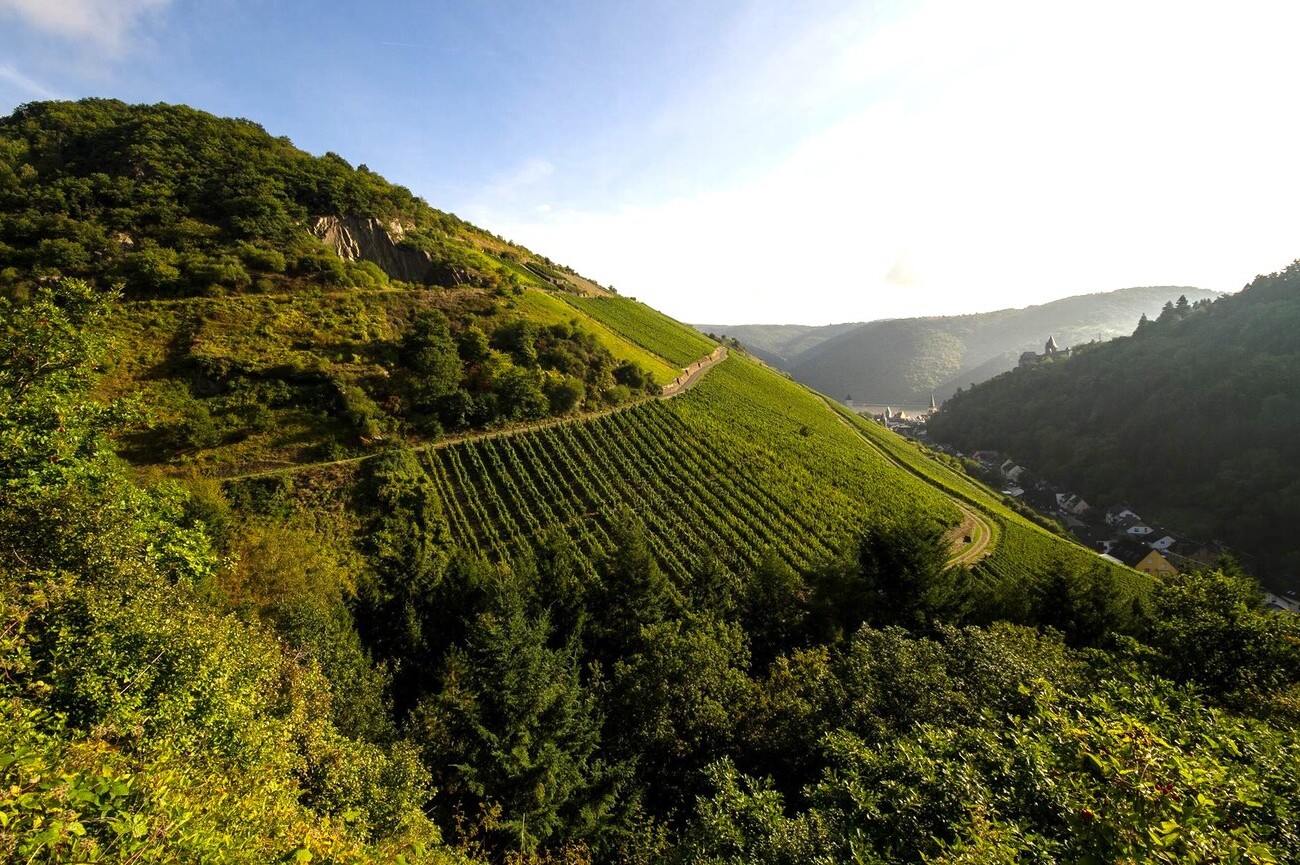
- Weingut Ratzenberger is a family-run winery in Bacharach-Steeg in the UNESCO World Heritage Upper Middle Rhine Valley, known for its focus on high-quality Riesling and traditional craftsmanship. The estate has more than 300 years of winemaking history and is a member of the VDP (Verband Deutscher Prädikats- und Qualitätsweingüter), a prestigious association of top German wine producers. Visitors can also join wine tastings at the estate, a great way to explore their Riesling range and learn more about the steep-slope vineyards of the Rhine Gorge.
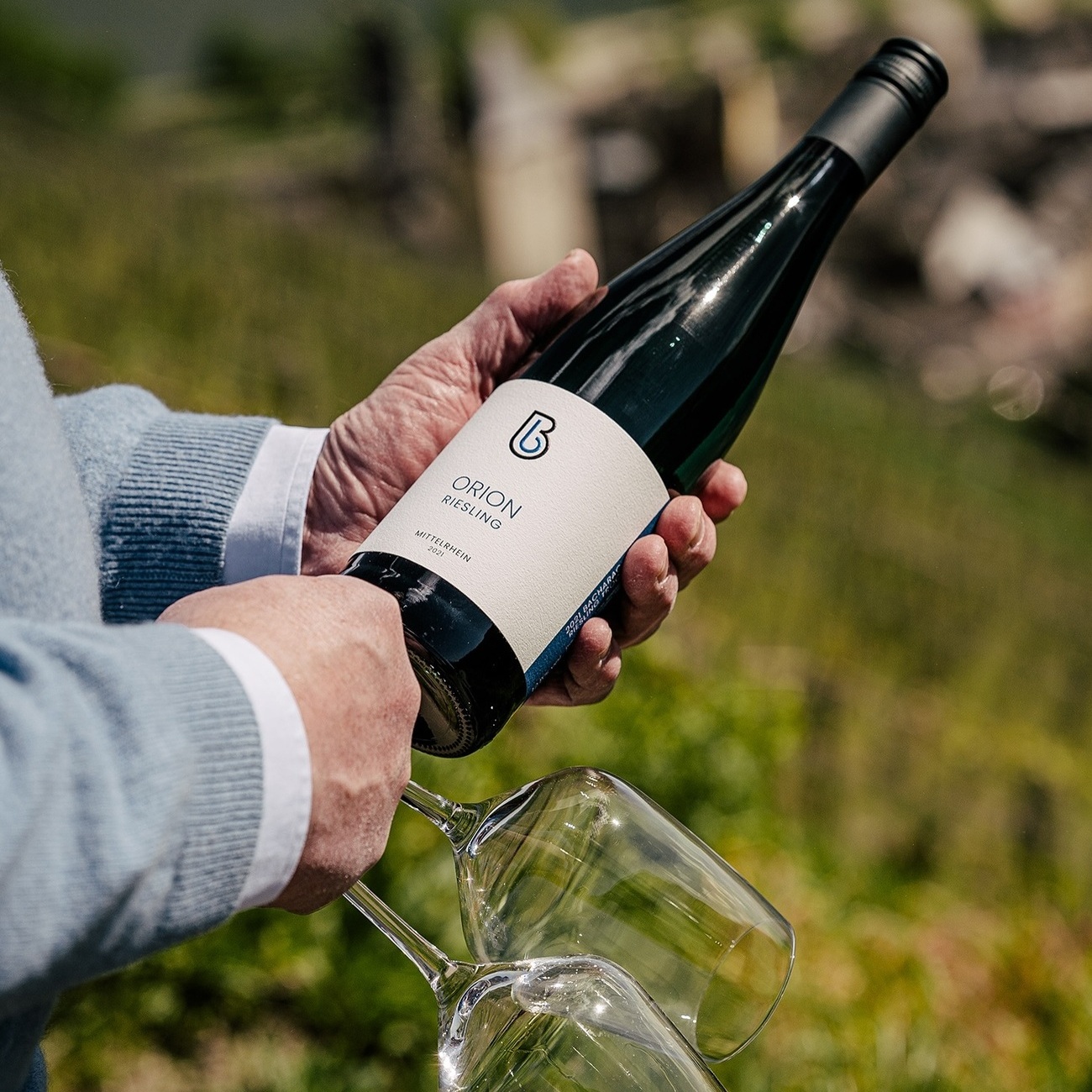
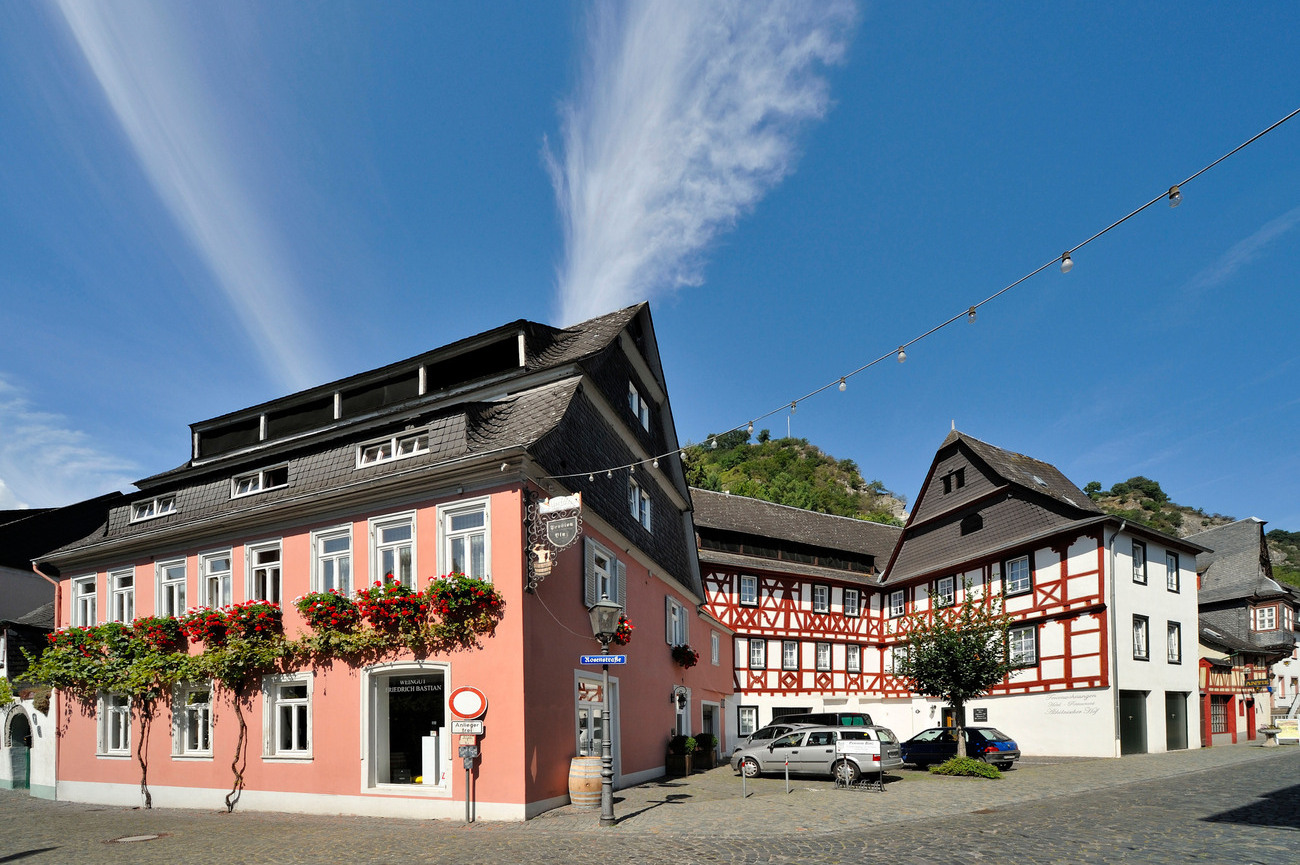
- Weingut Friedrich Bastian: With over 300 years of family winemaking, Weingut Friedrich Bastian carries serious heritage in the Middle Rhine. Their VDP Große Lage and Erste Lage vineyards stretch from Posten to Wolfshöhle and St. Jost, all oriented south and southwest for maximum sunlight. The estate invites you to experience the terrain firsthand via the “Orion Trail,” a vineyard path climbing high above Bacharach’s old town. From the Heine lookout, you can see Heylesen Werth, the unique island vineyard in the Rhine itself, where sandy alluvial soils produce a refreshing Insel-Riesling.
Where
to Stay in the Rhine Gorge
- Hotel Schloss Rheinfels (4 stars): Set beside the mighty ruins of Rheinfels Castle, this 4-star superior hotel delivers a near 5-star experience in one of the most dramatic spots in the gorge. You’re perched above the Rhine with panoramic views stretching toward the Loreley. The rooms combine comfort with historic character, while the wellness area, complete with river views, makes slowing down feel intentional. After a day of exploring, you’ll appreciate returning somewhere that feels both elevated and grounded in the landscape.
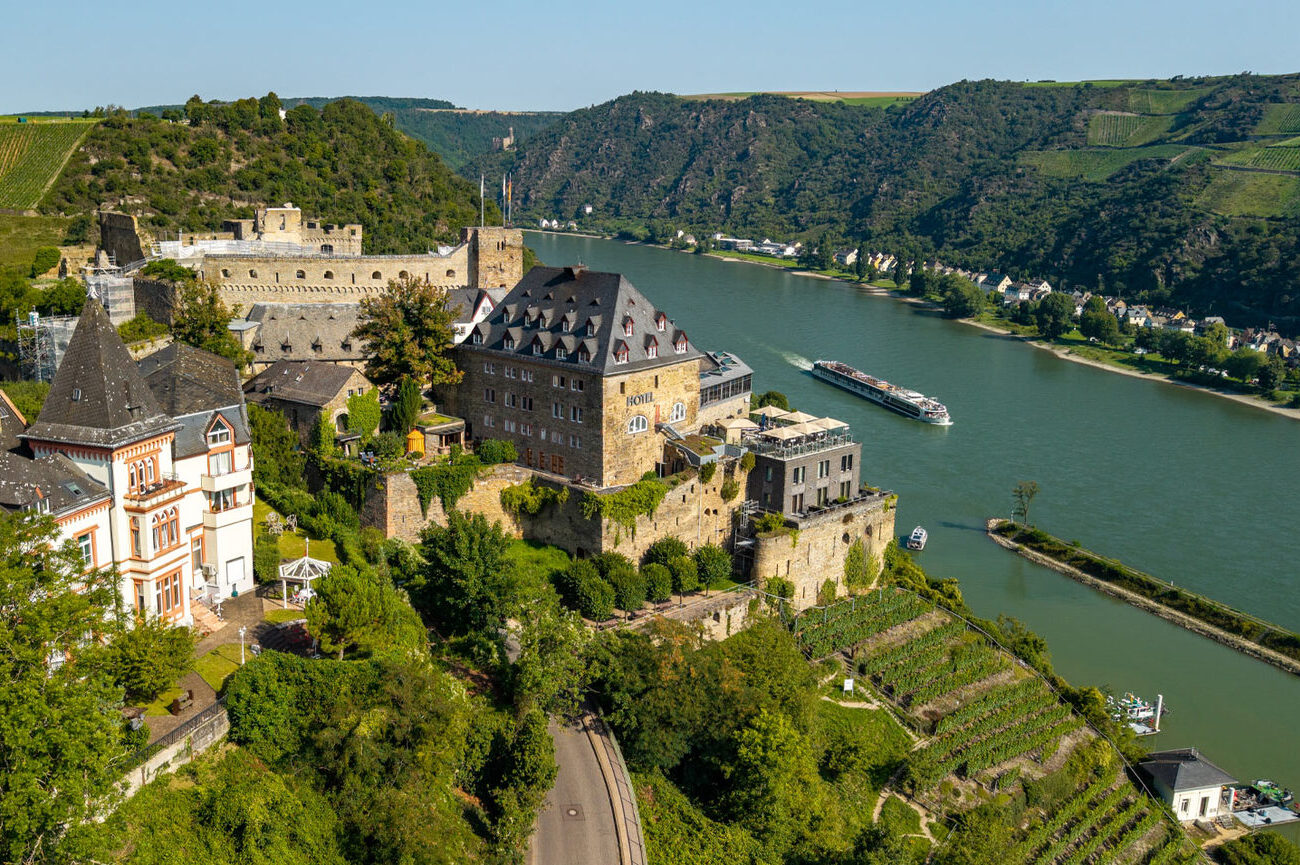
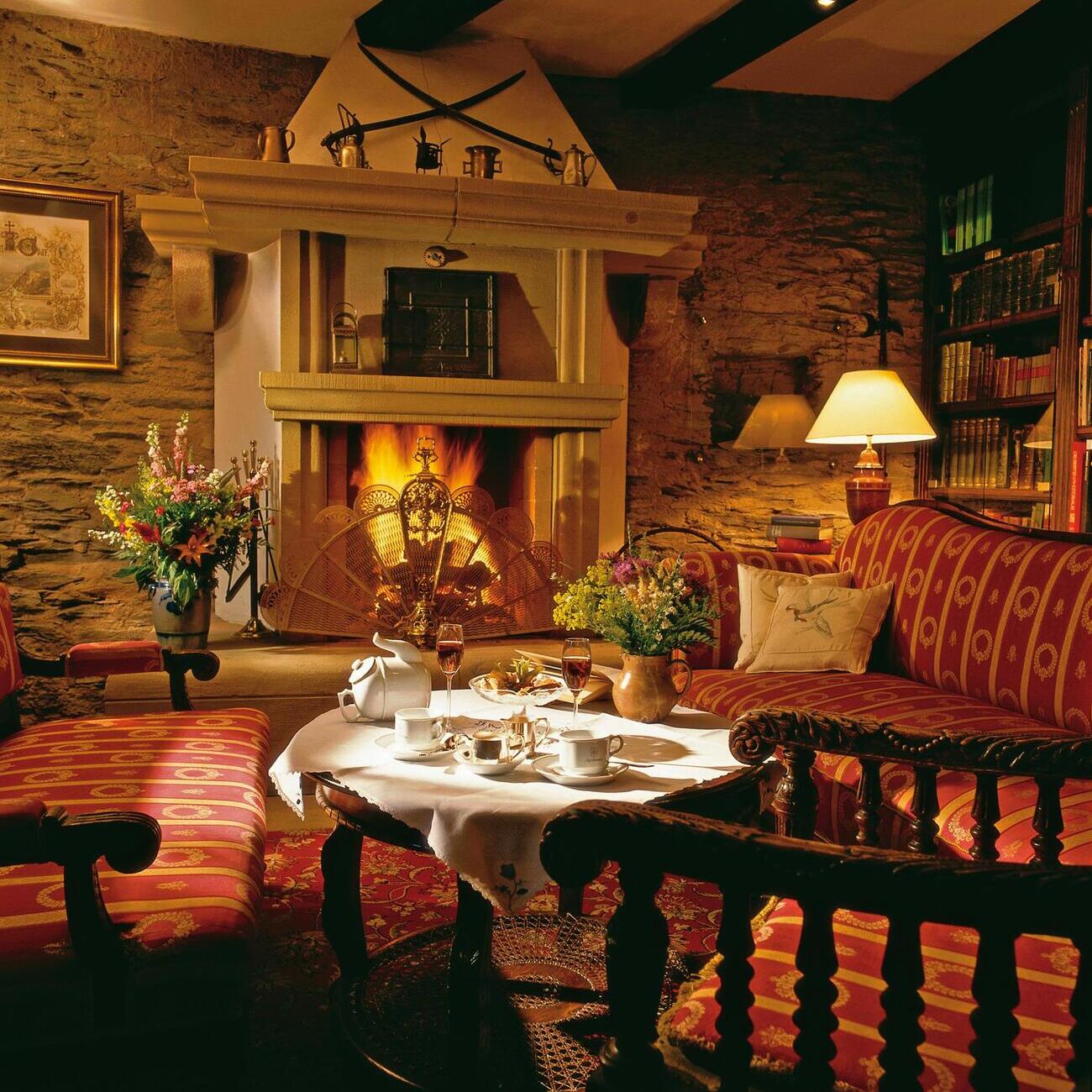
- Burghotel Auf Schönburg (4 stars): If you’ve ever wanted to sleep in a real castle, this is your moment. Rising high above Oberwesel, Burghotel Auf Schönburg offers 31 individually designed rooms and suites tucked inside authentic castle walls. Some even include private saunas. You can wander the exclusive castle gardens, sit by the fireplace in the library or have breakfast on a terrace overlooking the Rhine and vineyards.
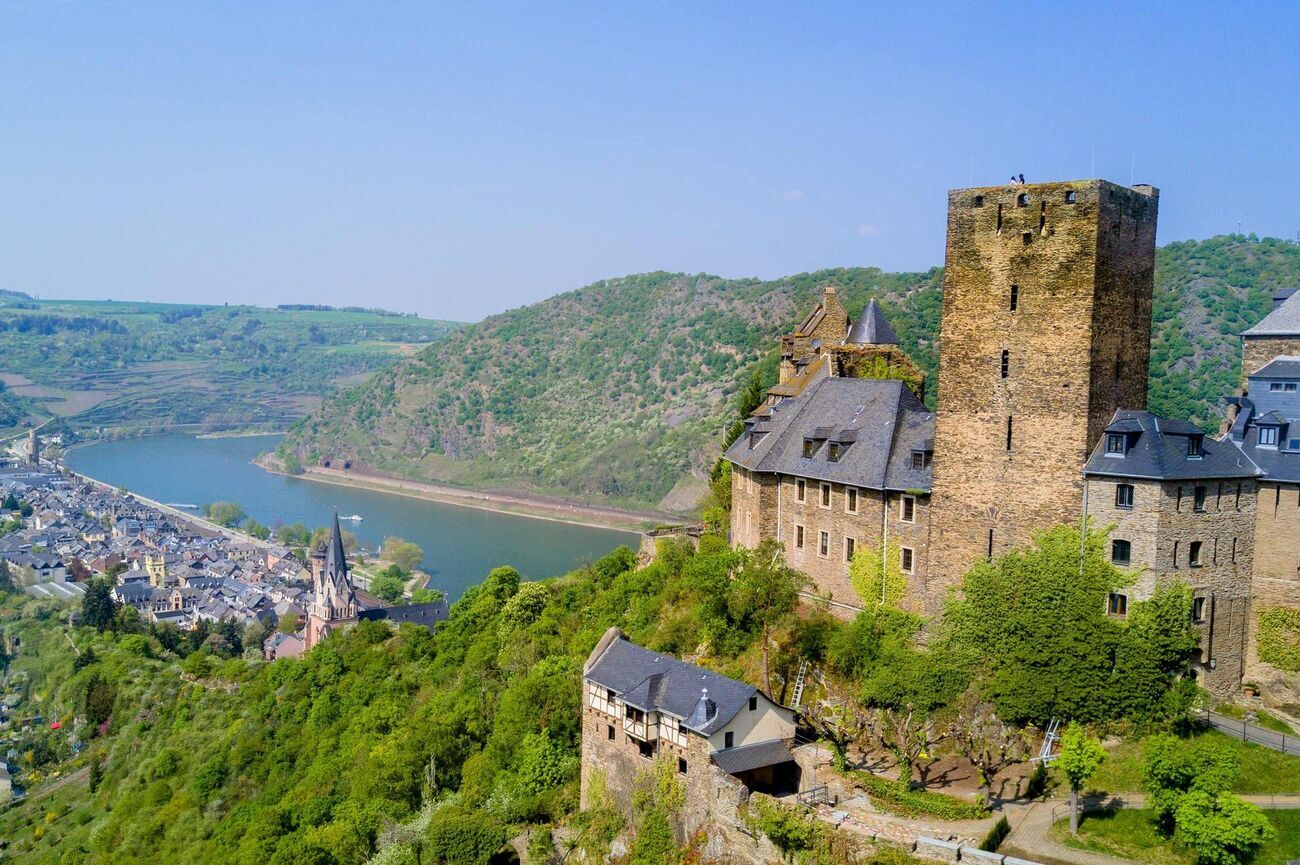
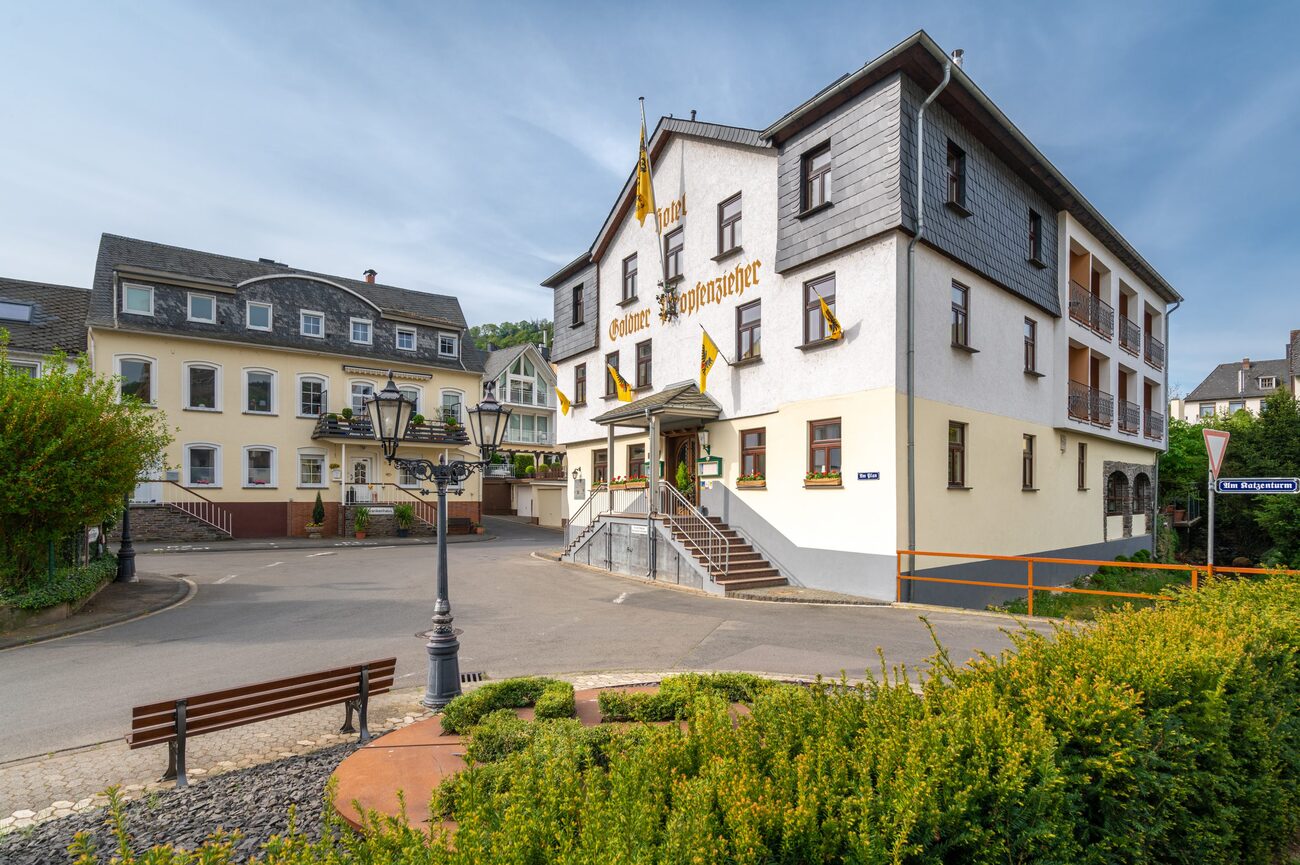
- Weinhotel Goldener Pfropfenzieher (3 stars): Right in Oberwesel’s Old Town, this family-run hotel blends wine culture with warm hospitality. Some rooms frame views of Schönburg Castle or the Rhine, reminding you exactly where you are. The restaurant focuses on regional cuisine and in summer the beer garden beside a small stream becomes the place to linger. If you want a stay that feels connected to both town life and vineyard tradition, this one fits effortlessly.
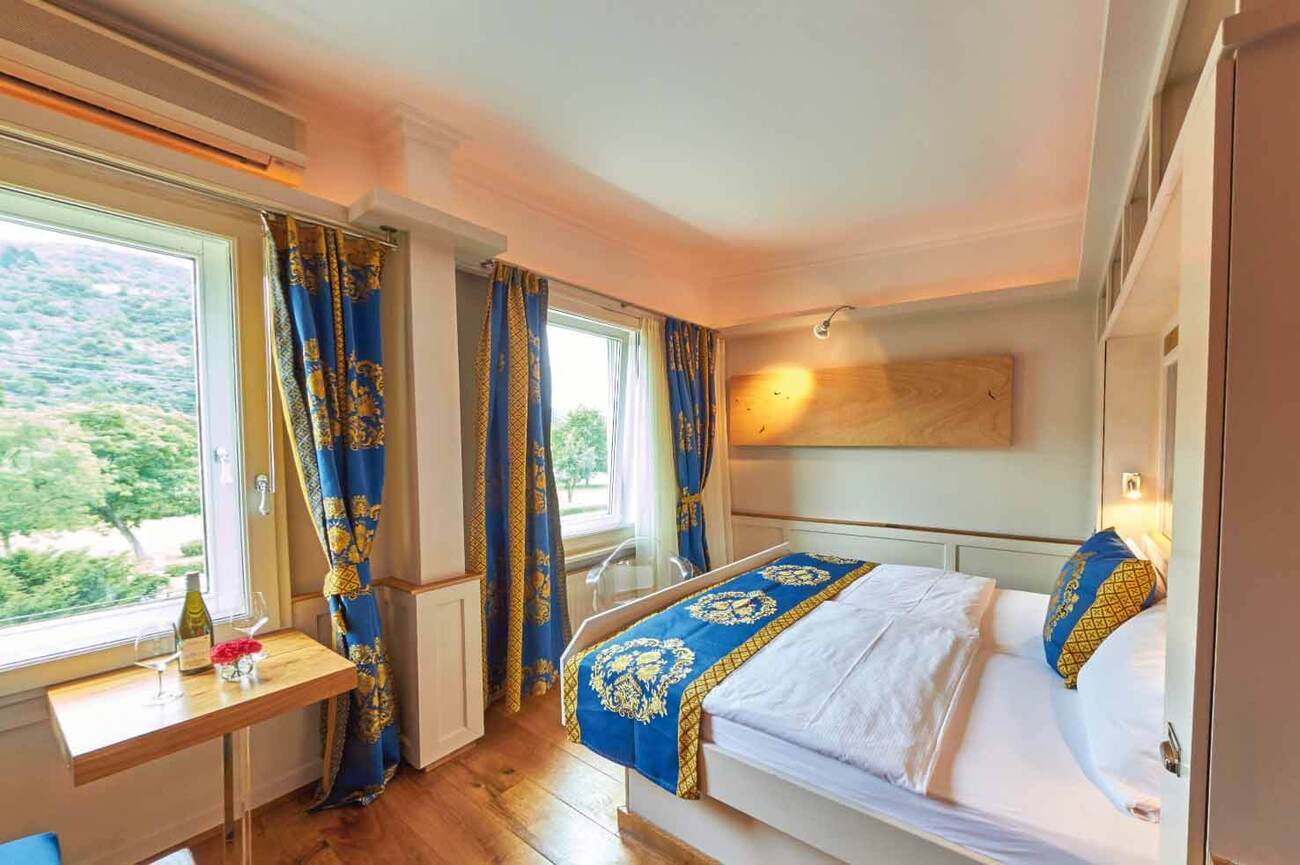
- Rhein-Hotel Bacharach (3 stars): Housed in a 15th-century building along the river, this Bacharach hotel pairs historic architecture with modern comfort. You’ll get soundproofed rooms, air-conditioning and thoughtful details, a welcome balance in a lively riverside town. The attached restaurant serves contemporary regional dishes, including vegan options and the terrace delivers classic Rhine views.
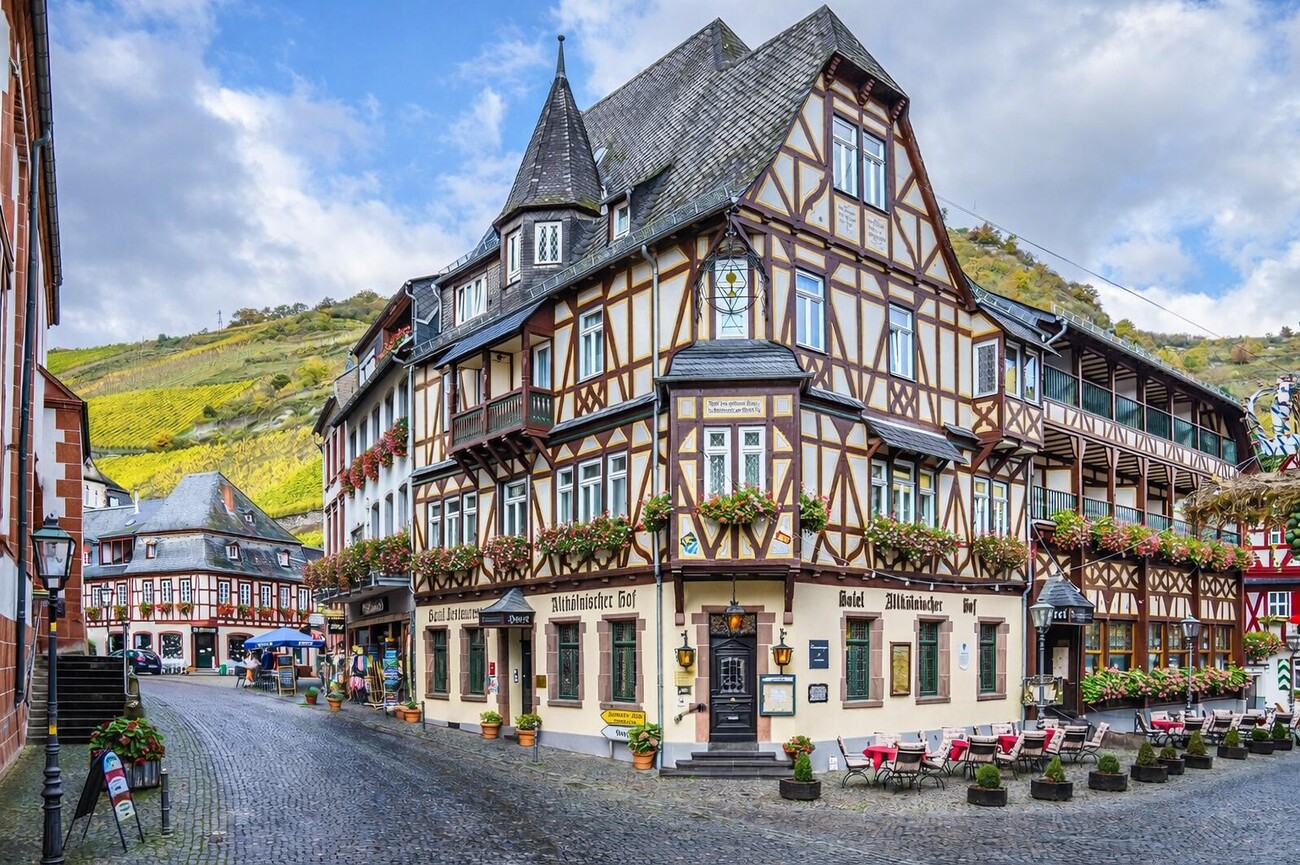
- Hotel Restaurant Altkölnischer Hof (3 stars): Positioned on Bacharach’s historic market square, this half-timbered hotel feels like part of the town itself. Rustic wooden interiors and country-style décor give it character without trying too hard. You can walk out into medieval streets within seconds, which makes spontaneous evening strolls almost unavoidable.
Best
Time To Visit the Rhine Gorge
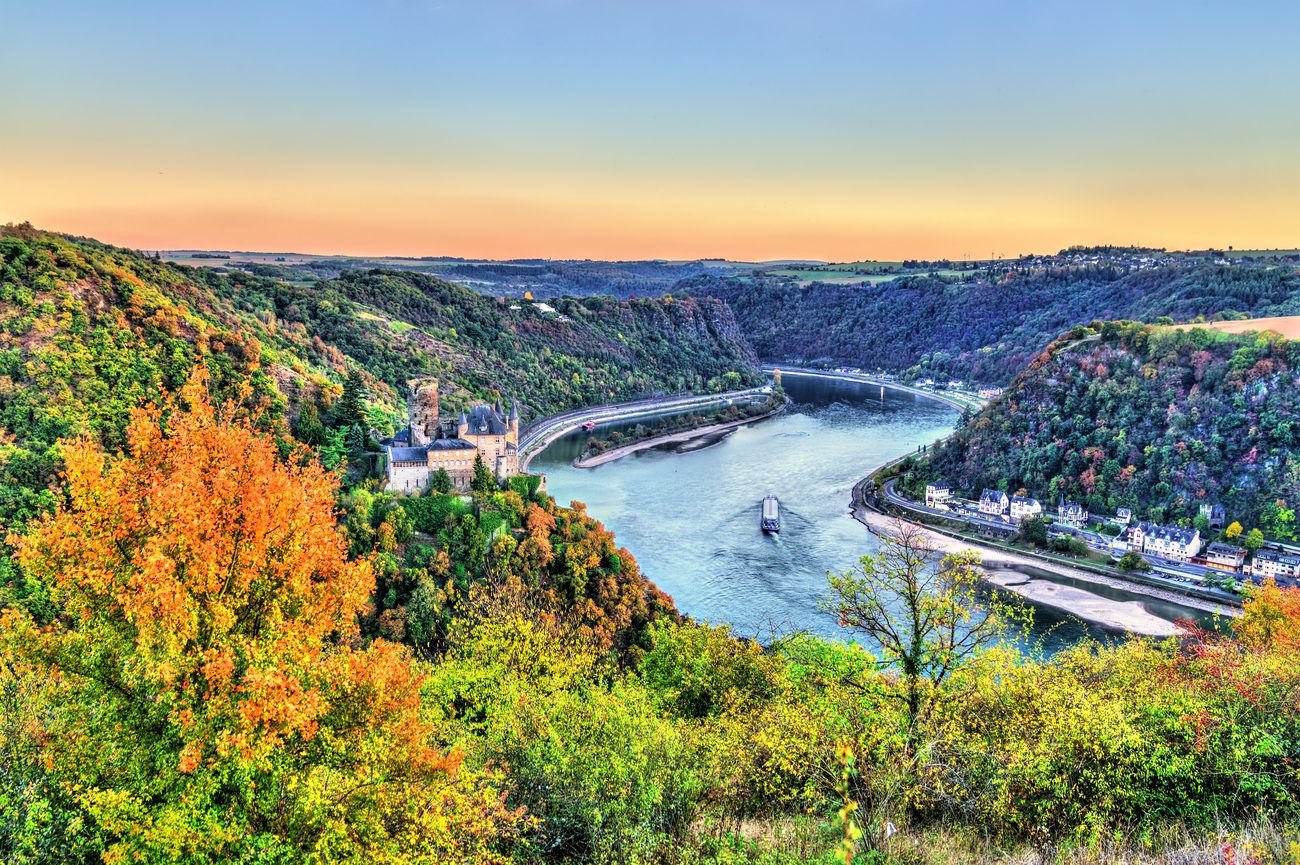
The best time to visit the Rhine Gorge is September through early October when the entire valley feels like it slipped out of Sleeping Beauty.
Not the dramatic showdown. The calm, golden forest sequence. The moment when the light turns soft, the air feels still, and everything seems gently enchanted.
This is harvest season, and that changes everything. The vineyards don’t just look pretty; they glow. Steep slate terraces shift into shades of amber, bronze and honey, wrapping castle-topped hills in warm color. The Rhine moves steadily below, reflecting the sky like polished glass. You climb a medieval tower and look out over the river bend, and suddenly the view doesn’t feel historical. It feels cinematic. Almost storybook. The kind of setting where you instinctively lower your voice because the landscape deserves it.
And then there’s the wine. Grapes are being picked by hand on slopes that seem unreasonable, tractors hum between vineyard rows and cellar doors stay open longer. Riesling tastes sharper, fresher, more alive because it’s connected directly to the season unfolding around you. You’re not sipping something that’s been sitting on a shelf for months. You’re tasting the valley mid-chapter. That energy, focused, purposeful, slightly celebratory, carries through every tavern and terrace.
The weather cooperates too. Mornings are crisp enough to make vineyard hikes feel invigorating rather than exhausting. Afternoons settle into that perfect golden light photographers chase all year. Evenings are built for lingering. One more glass, one more story.
Early autumn is when the Rhine Gorge feels fully itself. Golden, alive and effortlessly cinematic. If you want the valley at its most magical, this is the moment.
Festivals
in the Rhine Gorge
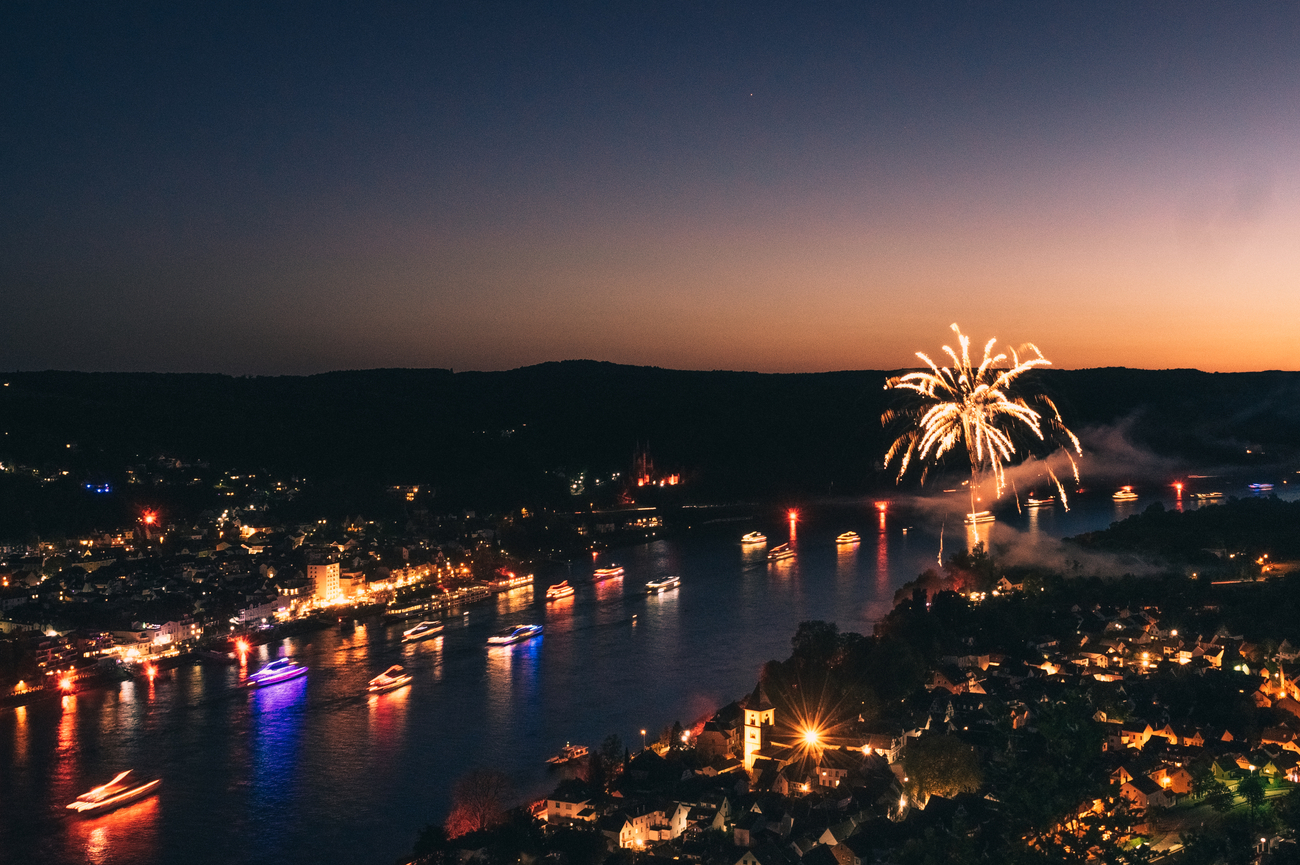
- Rhein in Flammen (Rhine in Flames): This isn’t subtle. Rhein in Flammen takes place on select weekends between May and September, with the most iconic edition happening in August in Koblenz, right where the Moselle meets the Rhine at Deutsches Eck. After sunset, fleets of illuminated ships drift along the river while fireworks erupt above castles and fortresses. Ehrenbreitstein Fortress becomes a stage. You’ll want to arrive early, claim your riverbank spot and stay until the final explosion fades into smoke over the valley.
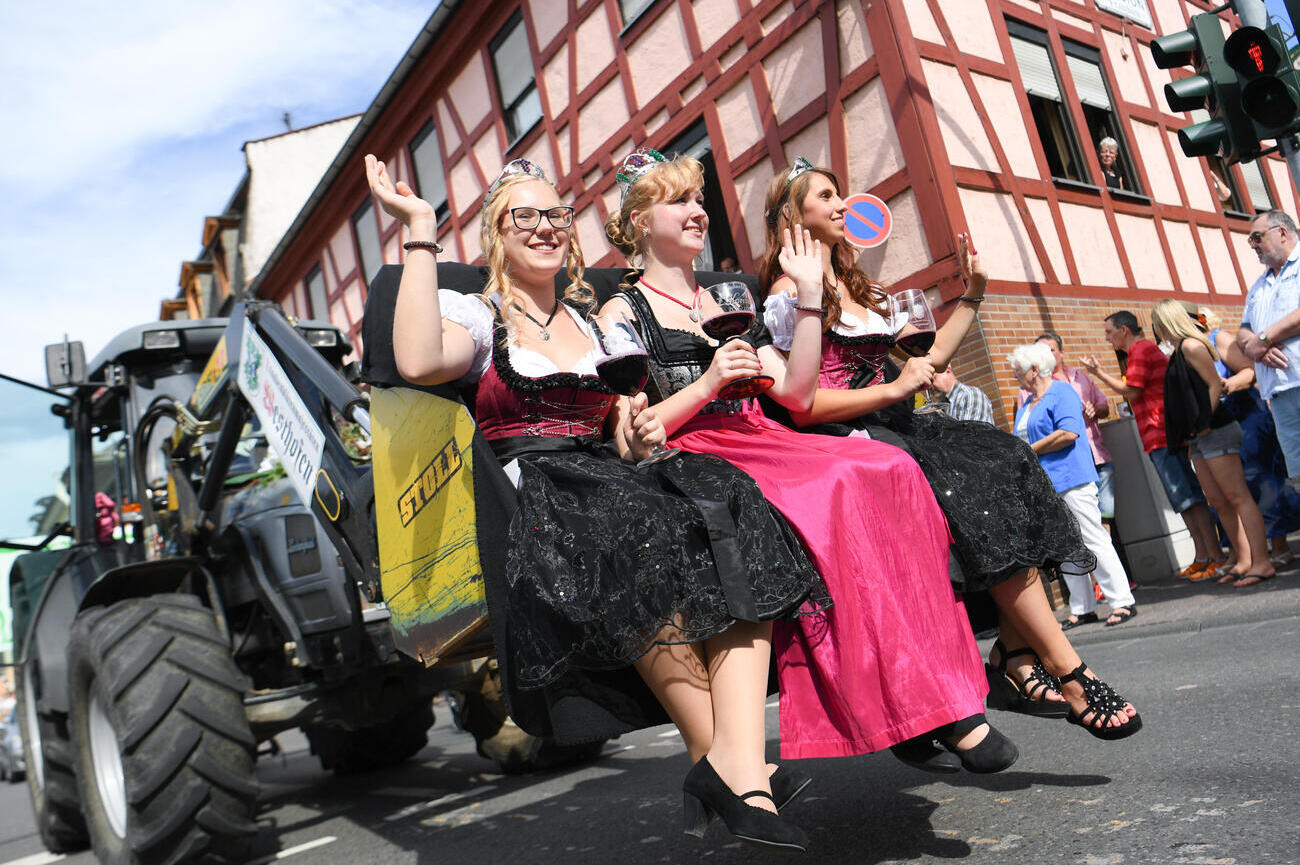
- Bingen Wine Festival: Running for around 11 days from late August into early September, this festival marks the sweet spot between summer energy and harvest anticipation. Wine stands line the Rhine promenade, local producers pour their best vintages and live bands take over the evenings. It starts family-friendly in the afternoon and builds toward a proper crowd once the lights come on.
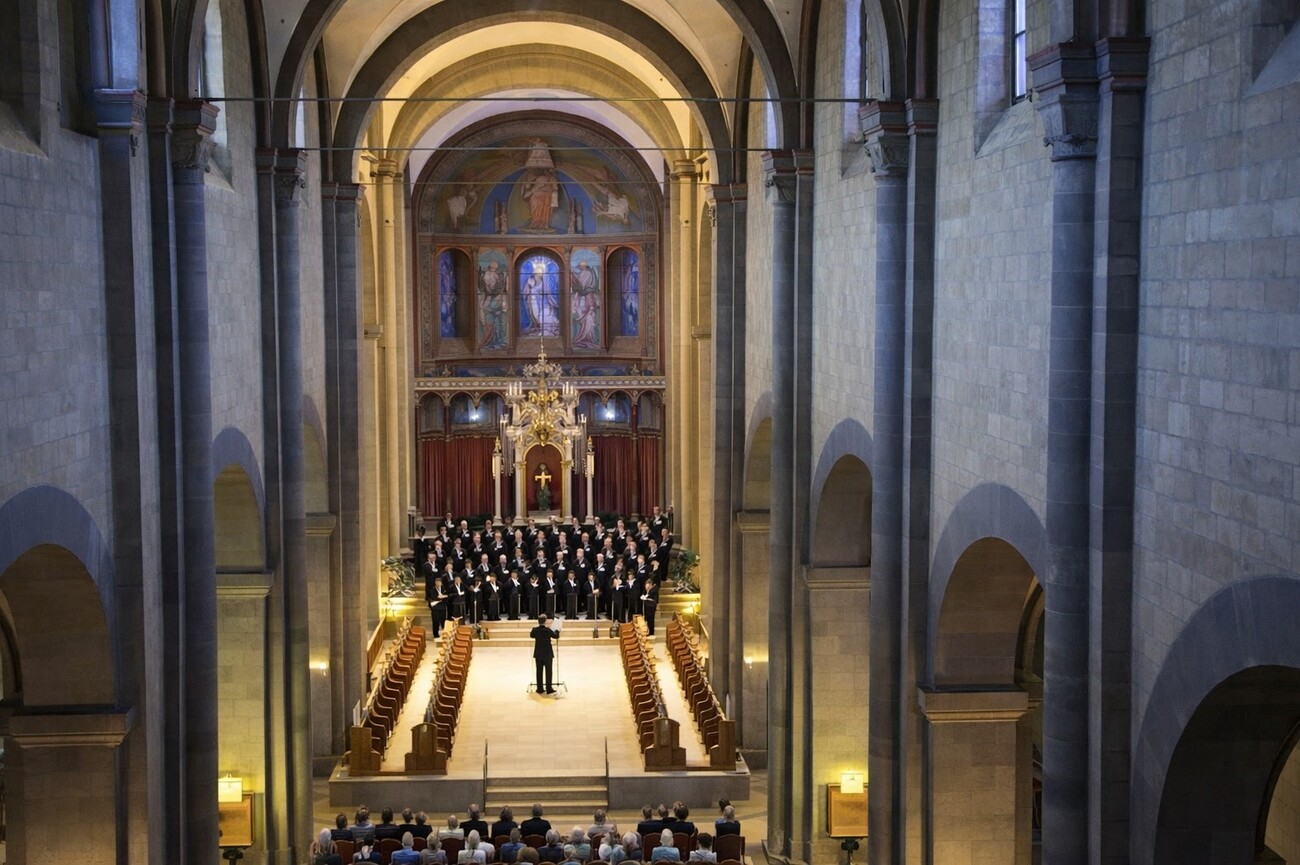
- RheinVokal Festival: Held from June through August, RheinVokal transforms the gorge into a moving concert hall. Classical performances take place in castles, churches and historic venues across towns like Bacharach, St. Goar and Boppard. Picture chamber music inside stone halls while twilight settles over vineyard slopes. It’s cultured without being stiff. Even if classical music isn’t usually your thing, the setting makes it land differently.
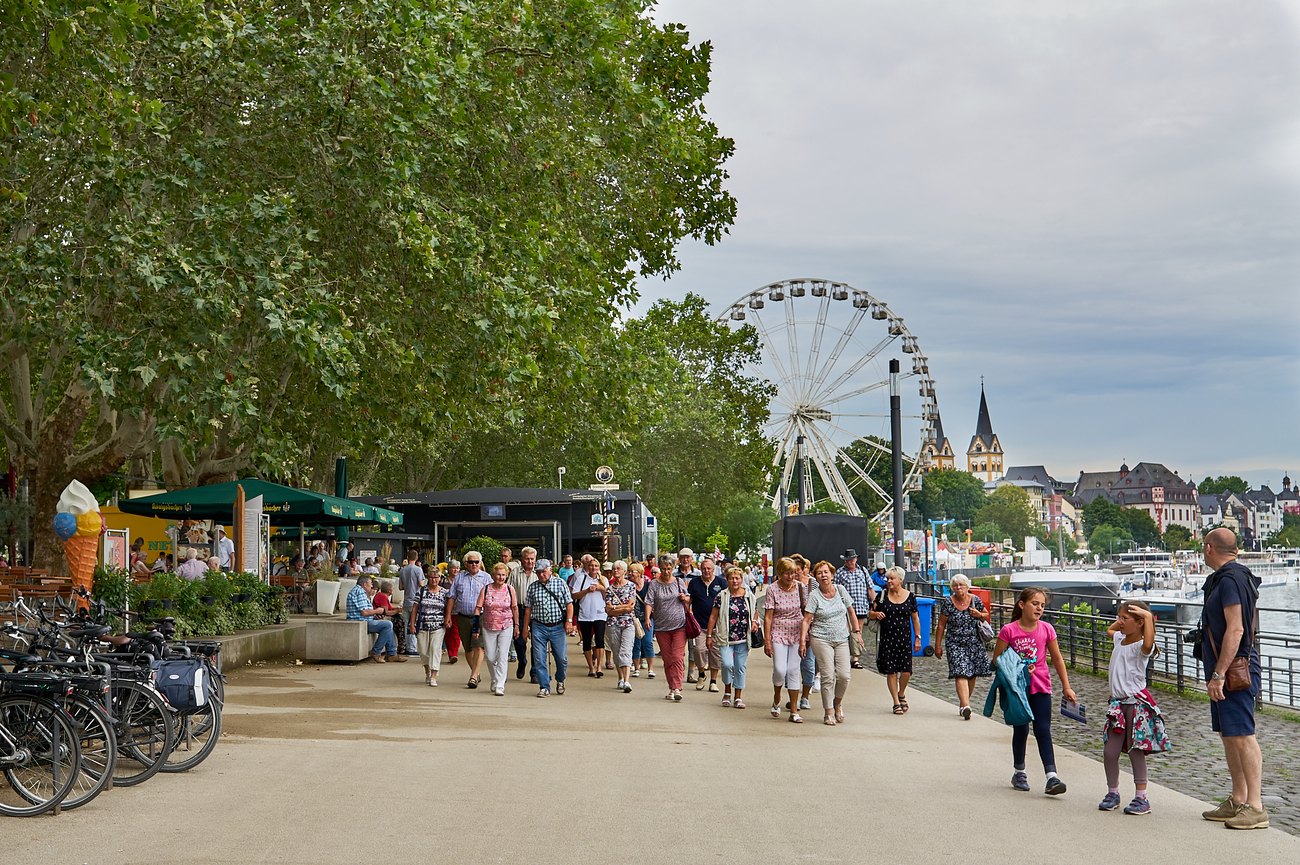
- Koblenz Summer Festival: Every July, Koblenz turns its riverfront into a multi-day open-air stage. The Koblenz Summer Festival blends live concerts, food stands, pop-up bars and cultural programming into one extended celebration. It often overlaps with Rhein in Flammen, amplifying the spectacle. You’ll find everything from regional bands to headline acts.
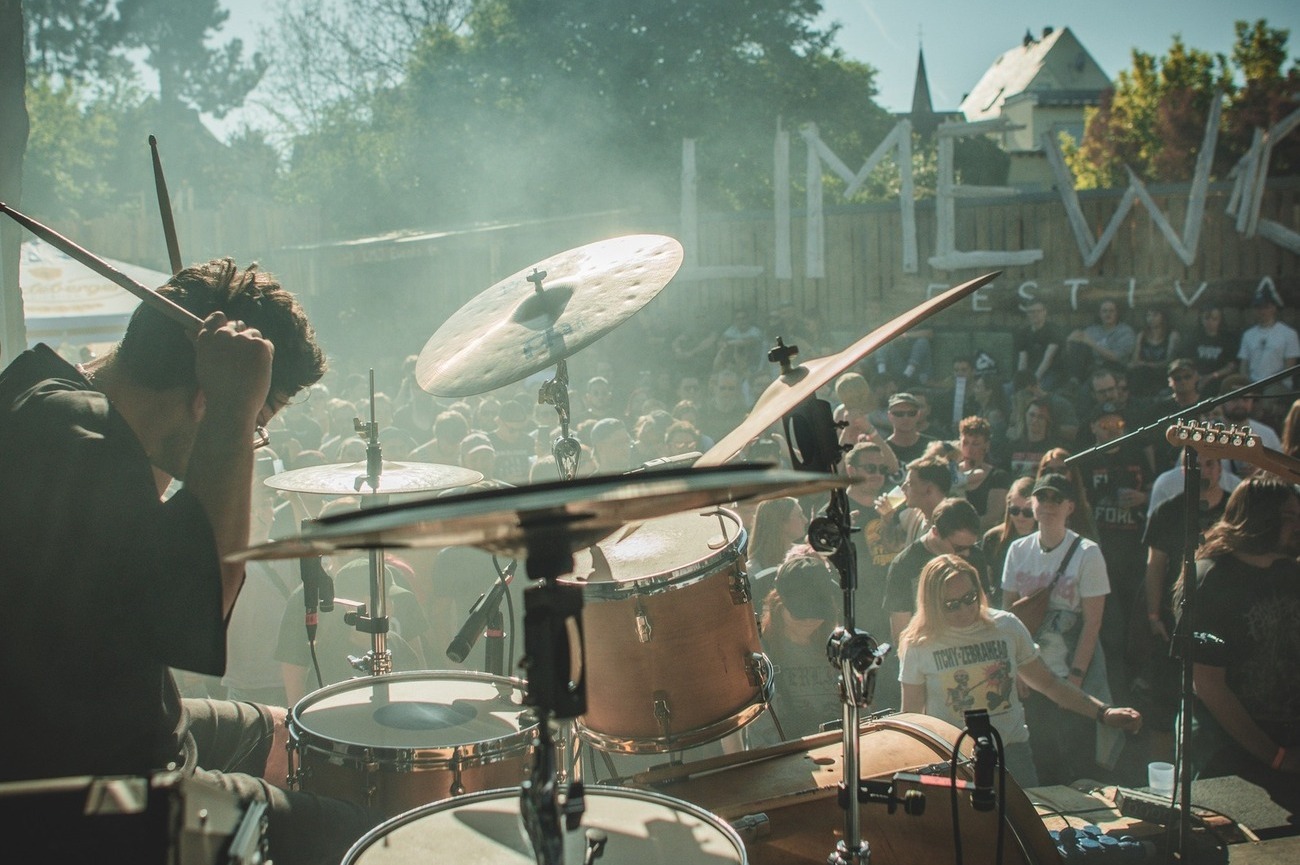
- Limewood Festival: Usually taking place in June or July, Limewood Festival adds a more contemporary pulse to the Rhine scene. Think electronic music, curated stages and a younger crowd leaning into summer nights. It’s less about tradition and more about atmosphere. If you want one evening that swaps Riesling glasses for dance floors, this is your moment.



Let us know what you love, where you want to go, and we’ll design a one-of-a-kind adventure you’ll never forget.
Get in touch
Miriam
Travel Specialist

Romina
Travel Specialist

Laura
Travel Specialist
Our offices:



Revigorate, Iberian Escapes and Algarve Lifestyle are the registered brand names of APCS Lda . We are a fully authorised travel agency licensed by Turismo de Portugal RNAVT/6867.
In the event of a dispute, the consumer may refer to: RAL - Centros de Arbitragem
Avª. 5 de Outubro, nº. 55, R/C Dtº. 8000-075 Faro, Portugal | Tel: +351 289 823 135 *
* national landline call
E-mail: info@consumoalgarve.pt| www.consumidoronline.pt | Mon to Fri: 9:00 - 13:00 / 14:00 - 17:00