Things to Do on the Romantic Road, Germany: 4-Day Itinerary
The Romantic Road feels like the opening chapter of a fairytale, where rooftops tilt perfectly, church towers guide your way, and towns appear composed centuries ago.
This route isn’t “romantic” in the modern sense; it’s poetic, rooted in 19th-century Romanticism, where emotion, nature and nostalgia shaped beauty. After the war, it was designed to reconnect Germany through storybook towns, medieval centres, baroque splendour and landscapes that feel timeless.
Heading south, the atmosphere changes: refined, wine-soaked Franconia with theatrical palaces and orderly gardens gradually gives way to quirky towns, thicker walls, winding streets, and medieval Bavaria, where each gate seems to guard a secret.
To experience it fully, follow our 4-day itinerary along the Romantic Road from Würzburg to Füssen, letting the journey unfold at the perfect pace.
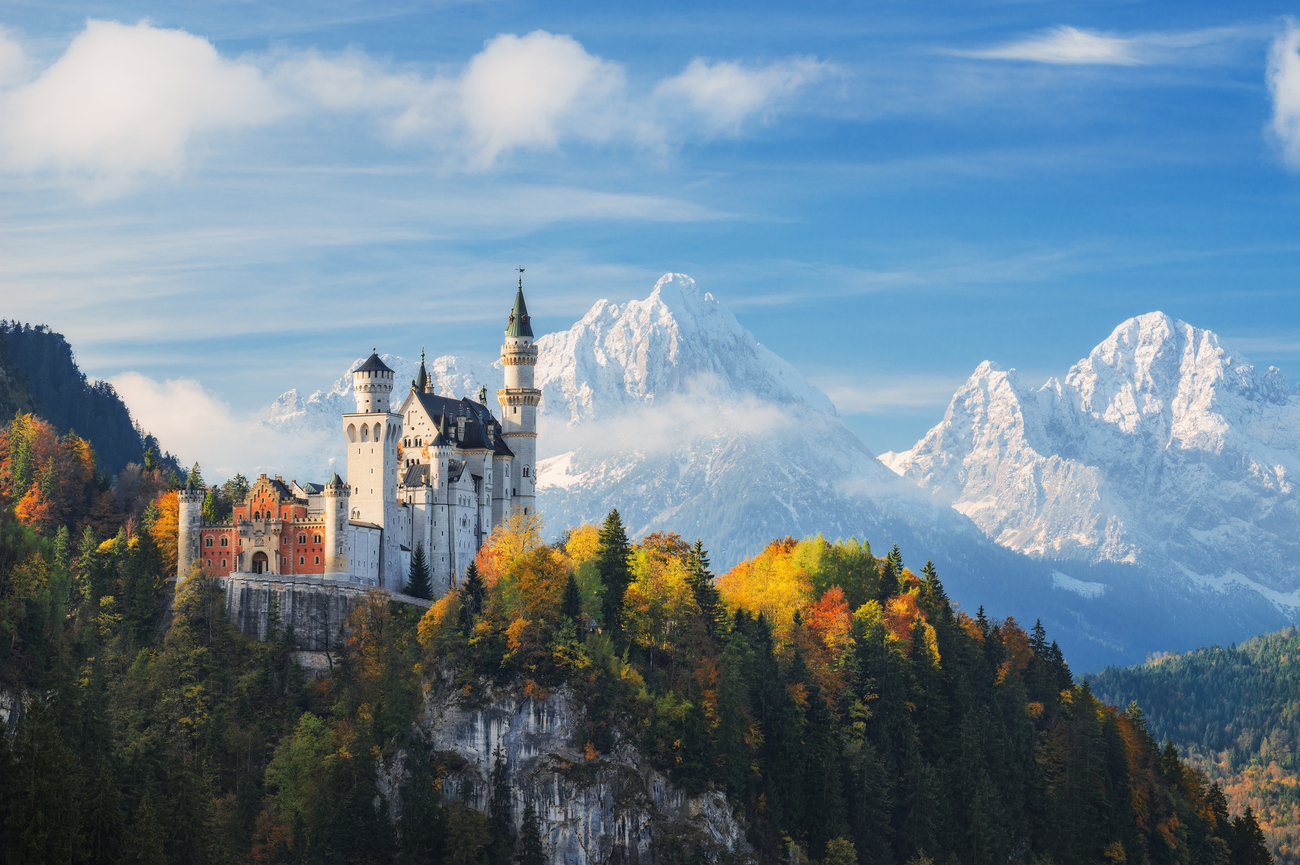
Day 1

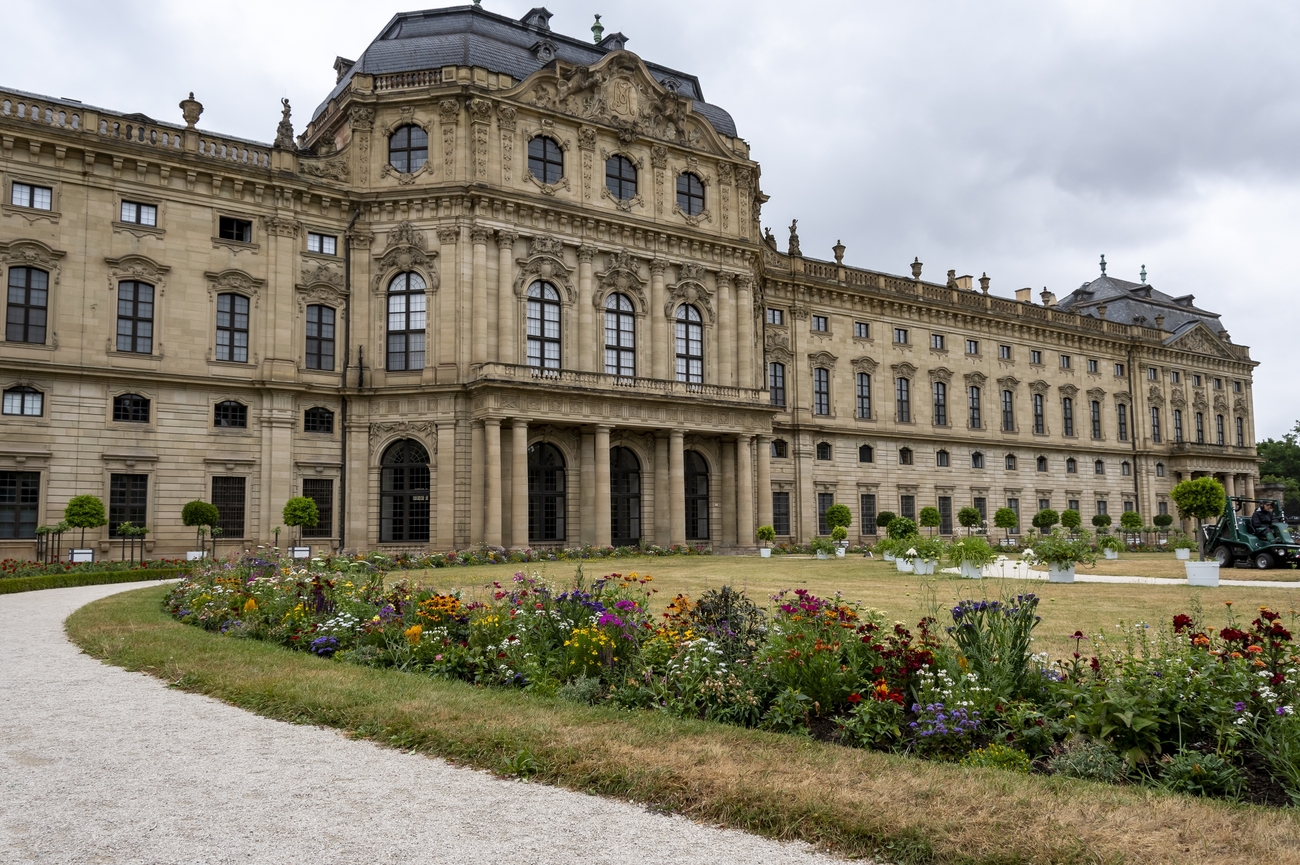
Morning: Würzburg Residenz
The tour opens big. No warm-up. No easing in. Würzburg Residenz sets the tone from the first step.
You start the journey right in the heart of Würzburg, where this UNESCO-listed palace rises with unapologetic confidence. Built in the 18th century as the residence of the prince-bishops of Würzburg, the Residenz was designed to impress diplomats before they even opened their mouths. Baroque architecture meets Rococo refinement, all tied together by one of the largest and most dramatic ceiling frescoes in the world, painted by Giovanni Battista Tiepolo. The grand staircase alone feels like a statement piece. Every room that follows leans into scale, symmetry and controlled excess. This is power expressed through design.
The palace sits at the edge of Würzburg’s historic core, with formal gardens stretching out behind it and the old town unfolding just beyond. Its position makes sense for a starting point. And when it comes to visiting, you have flexibility. All rooms of the Würzburg Residenz can be visited without a guided tour, letting you move at your own pace and linger where it counts. If you want structure and context, guided tours in English take place daily at 11:00 am and 3:00 pm, while German-language tours run every full and half hour throughout the day. You choose how deep you go.
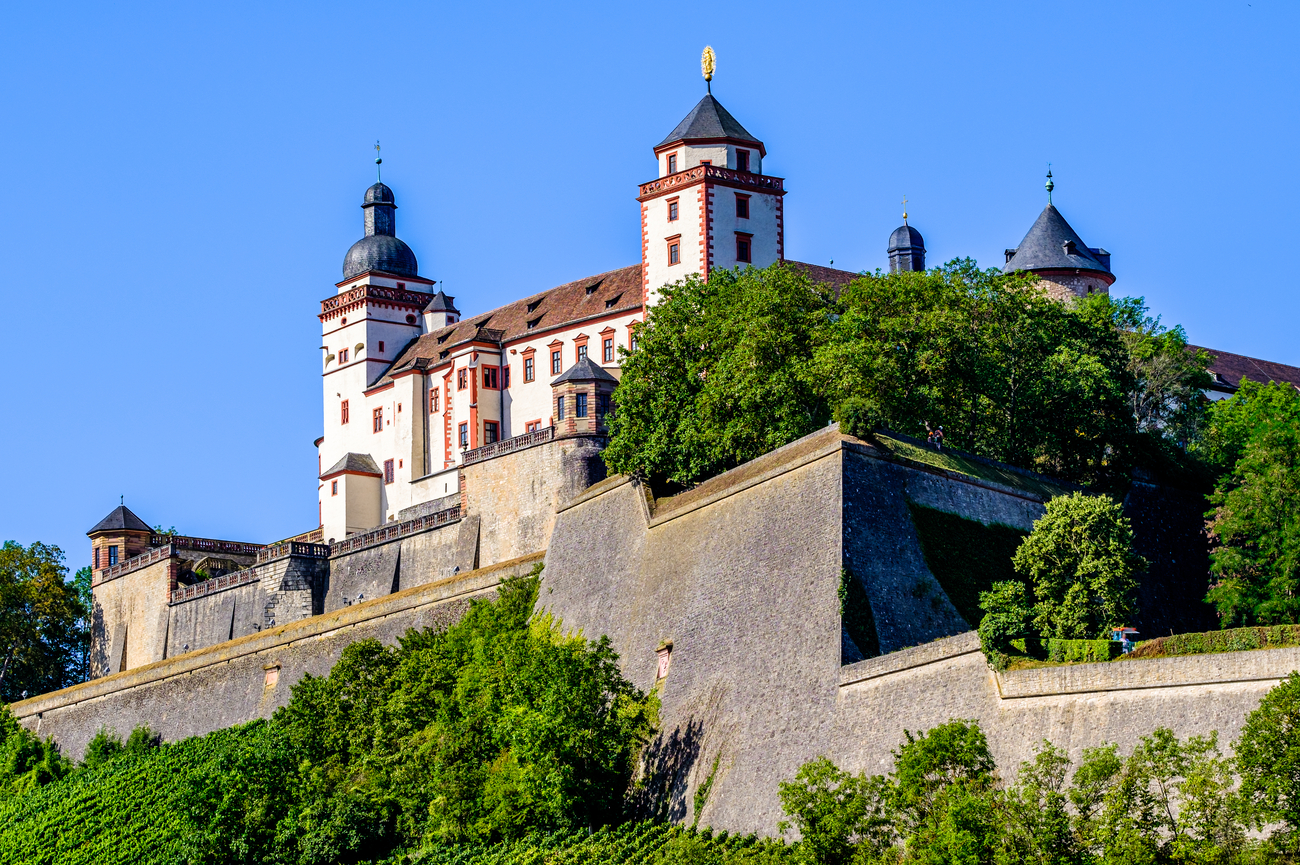
Marienberg Fortress
About 10 minutes by car from the Würzburg Residenz, the city drops away and Marienberg Fortress takes over the skyline.
This is Würzburg’s original power seat, perched high above the Main River long before the Residenz ever existed. Marienberg started as a Celtic stronghold, evolved into a medieval fortress and later became the residence of the prince-bishops before they upgraded their address downtown. Thick walls, watchtowers and courtyards make it clear that this place was built for control, not comfort. From the ramparts, the view stretches across Würzburg’s rooftops, vineyards and river bends.
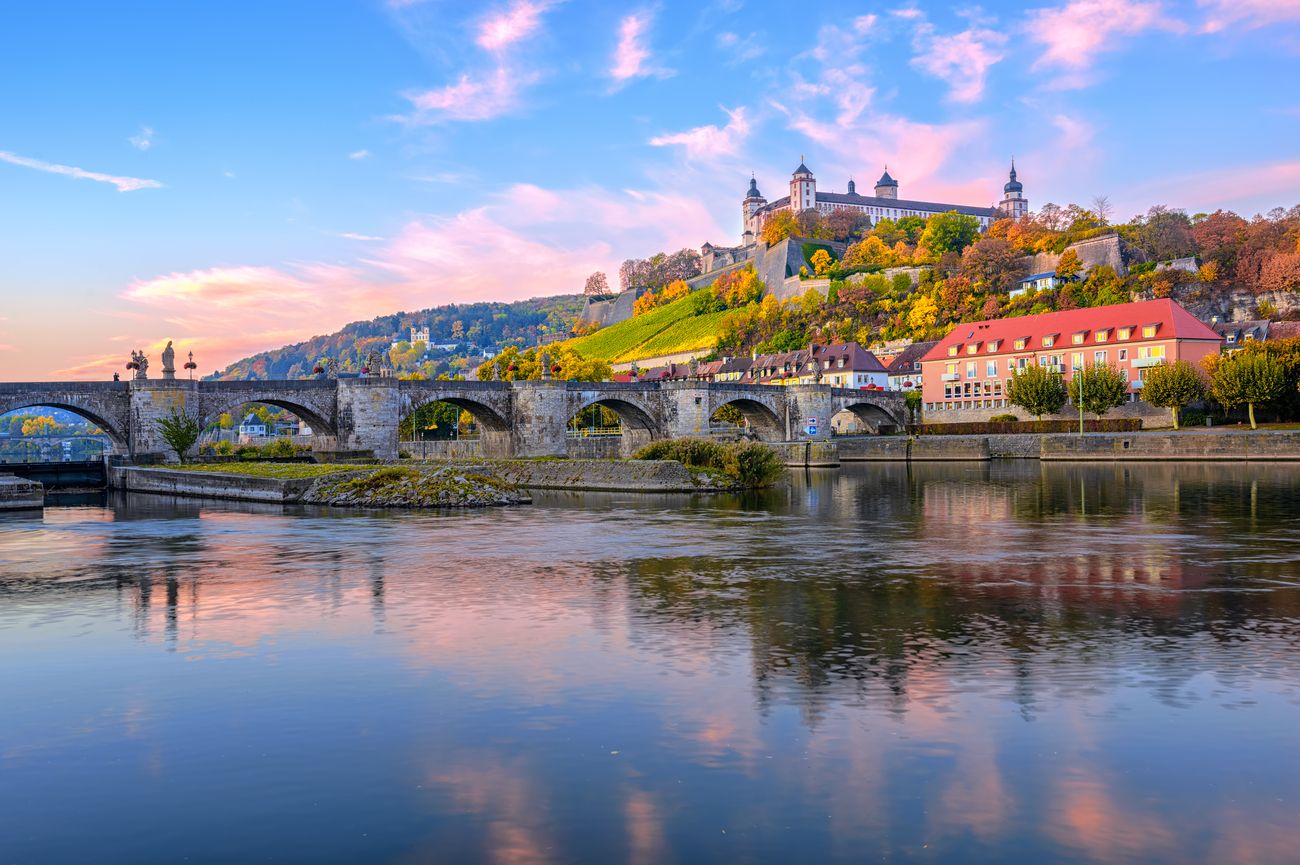
Old Main Bridge
Leave the fortress behind and let gravity do the work. A gentle descent brings you straight to the river, where Old Main Bridge (Alte Mainbrücke) waits exactly where Würzburg naturally comes together.
This bridge has been connecting Würzburg since the 12th century and it still understands timing. Built long before postcards were a thing, it links the old town with Marienberg Fortress and turns the Main River into part of the city’s stage. Statues of saints line the balustrades, giving it a subtle baroque edge without tipping into drama. It’s sturdy, symmetrical and unapologetically central.
Old Main Bridge works because it’s both functional and social. This has always been a gathering place, a lookout, a pause point. From here, you get fortress views on one side, church spires and red roofs on the other and the river calmly doing its thing below. It’s simple. It’s iconic. And it’s one of those places where Würzburg quietly makes sense.
St. Kilian’s Cathedral
Step away from the Main and give Würzburg a few minutes to pull you inward. The space tightens, the walls rise and St. Kilian’s Cathedral takes over.
This is Würzburg’s heavyweight. Founded in the 11th century, St. Kilian’s Cathedral is one of Germany’s largest Romanesque churches and it wears that status without overdecorating. Thick walls, clean lines and a long, grounded nave give the space a sense of gravity that doesn’t rely on sparkle. Dedicated to Saint Kilian, the Irish missionary credited with bringing Christianity to Franconia, the cathedral anchors Würzburg’s religious identity at a deep level. Inside, the architecture does the talking. Wide arches. Solid pillars. A rhythm that feels steady and intentional. Baroque elements and modern additions layer in over time, but the Romanesque core never loses control of the room.
You can visit daily from 8:00 a.m. to 6:00 p.m., with extended hours until 7:30 p.m. on Sundays after evening mass. Entry is possible outside of service times, which gives you room to explore quietly and without rush. And if you’re looking for deeper context, all guided tours are conducted by registered cathedral guides, keeping the experience focused and respectful.
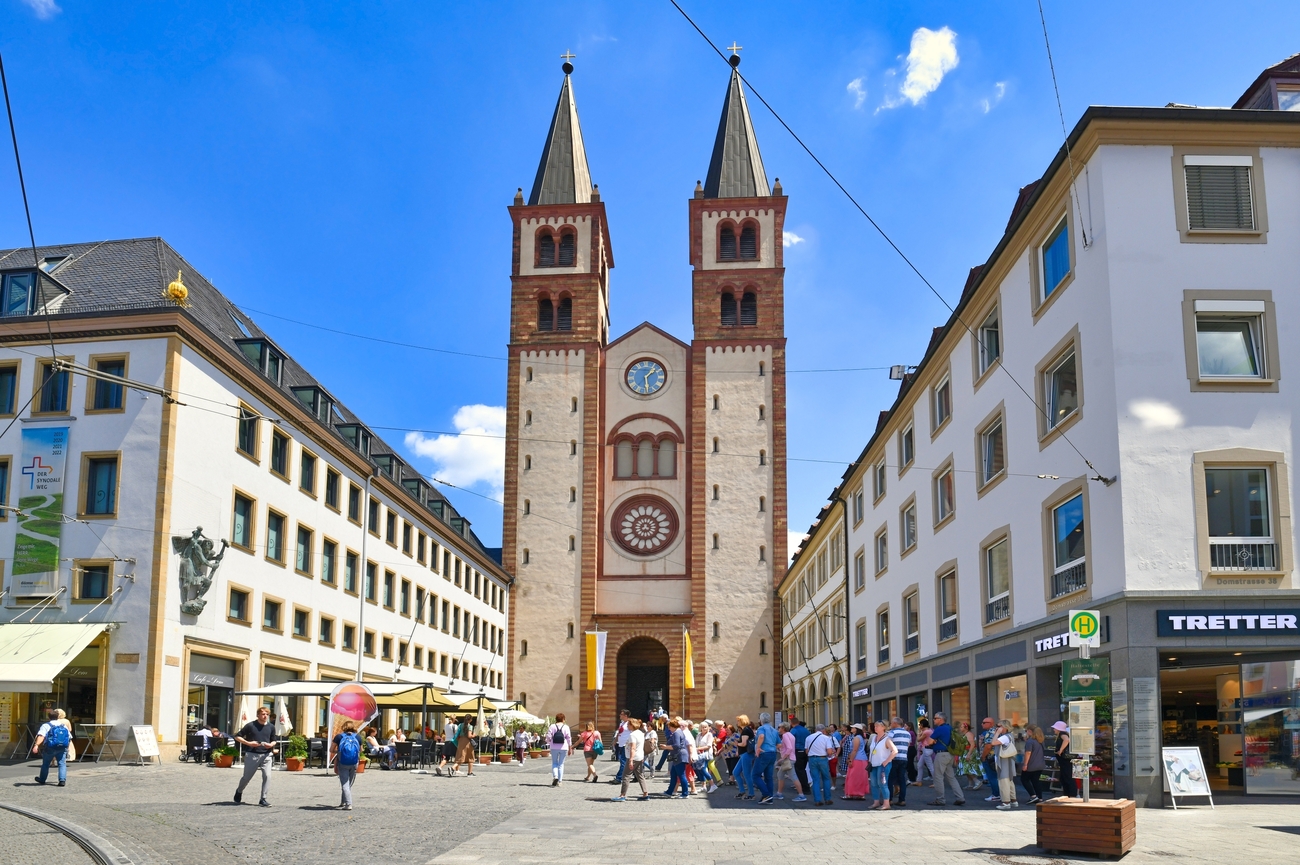
Afternoon: Tauberbischofsheim
After lunch, the road does something smart. It simplifies. About an hour south of Würzburg, the scenery flattens, the pace steadies and Tauberbischofsheim steps in as a reset rather than a spectacle.
This small Franconian town grew along the Tauber River and it shows in the pacing. Half-timbered houses cluster around a compact old town, bridges cross the river without drama and the whole place feels comfortably lived-in. Tauberbischofsheim has medieval roots, but it never leaned into spectacle. Instead, it built a reputation on craftsmanship, trade and balance.
The town’s layout makes wandering easy. You move between the riverbanks, market square and historic buildings without needing a plan. Everything sits close enough to feel cohesive, but varied enough to keep your attention.
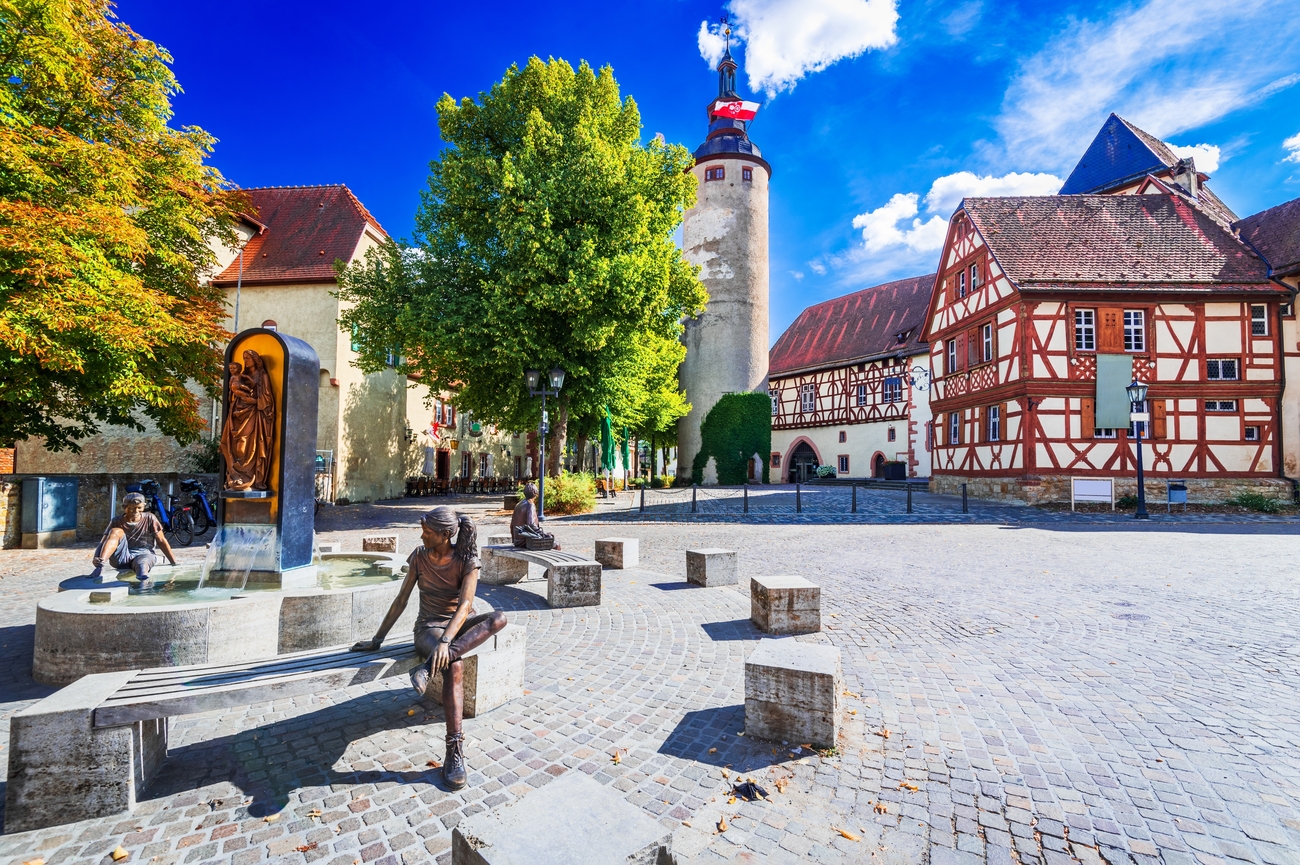
Heimatmuseum Lauda-Königshofen
Within 15 minutes, the route narrows its focus and lands you in Lauda-Königshofen, where Heimatmuseum shifts the story from grand landmarks to lived-in history.
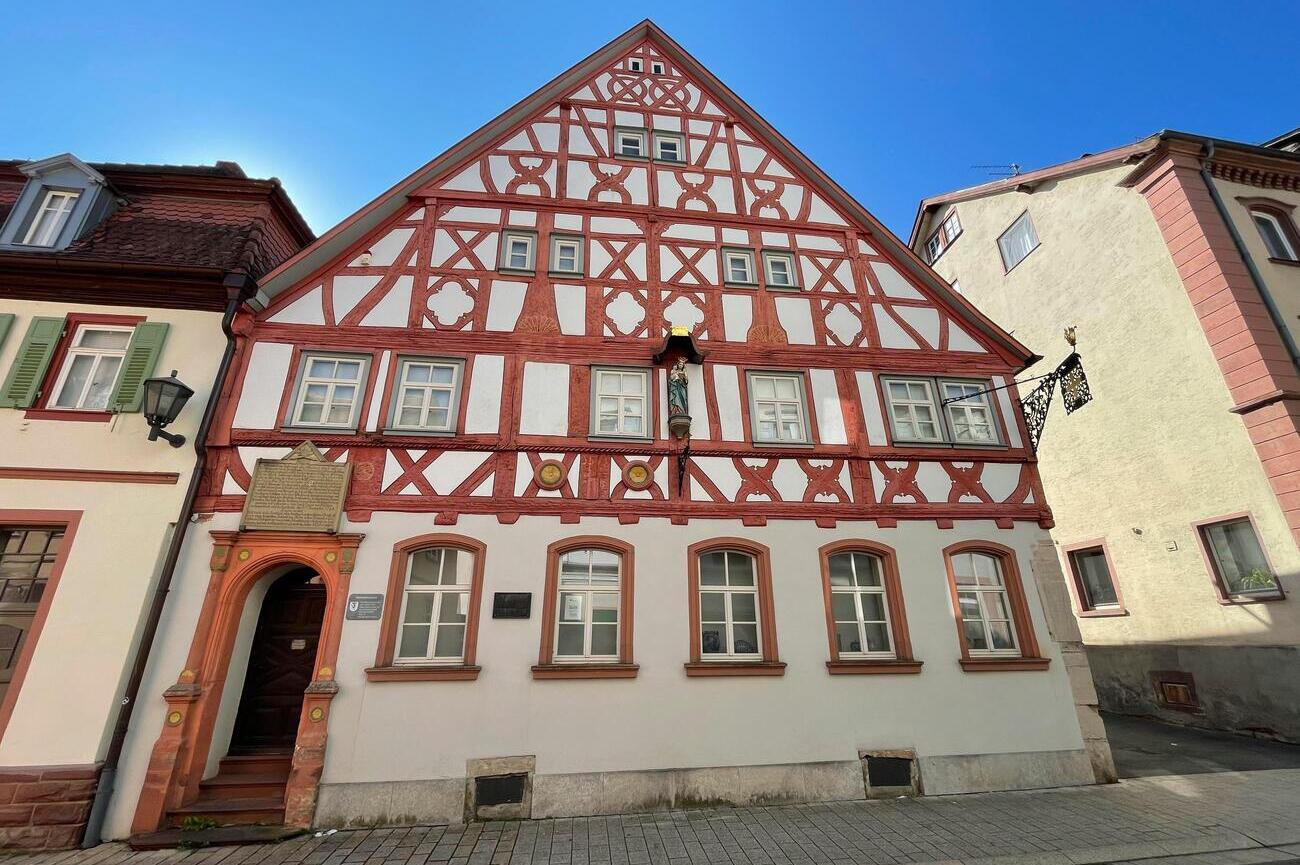
This museum sits inside a historic building and leans fully into the idea of Heimat, it is home, identity and the everyday details that shape a place over time. Exhibits highlight life along the Tauber Valley through traditional crafts, household objects, religious pieces and rural tools. Nothing here is oversized or theatrical. The value comes from proximity. These were real objects used by real people and the museum lets them speak without over-explaining.
Visits are typically self-guided, giving you space to move freely through the collection. But if you want more depth, guided tours are available by appointment, allowing for focused storytelling and regional insight.
Deutschordensmuseum
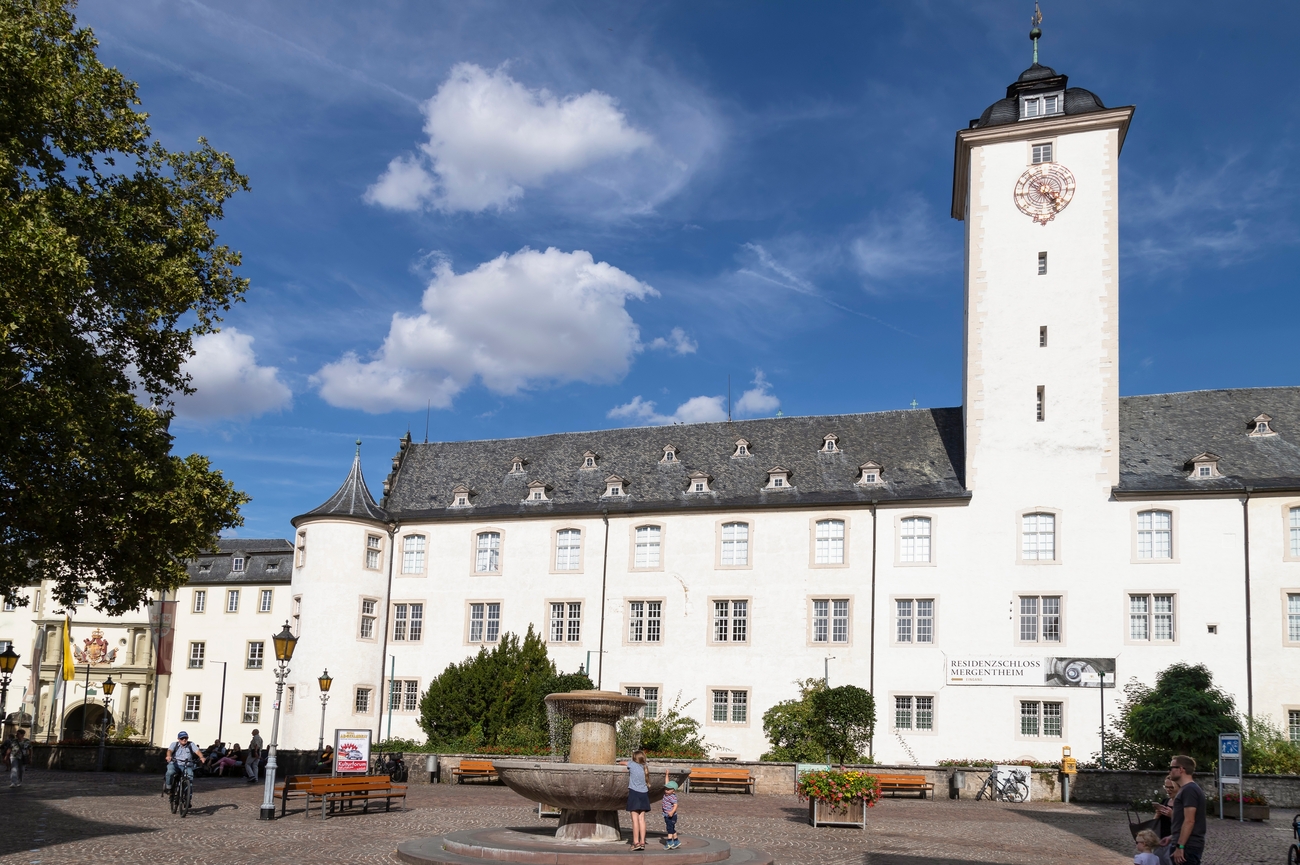
Stay with the rhythm. After about 25 minutes on the Romantic Road, the day leans fully into its theme. This is museum hopping, done properly. Deutschordensmuseum is the anchor stop that gives the afternoon real weight.
This museum is housed in the Deutschordensschloss, once the administrative heart of the Teutonic Order (Deutscher Orden), and the building itself sets the mood before you even step inside. Thick stone walls, expansive courtyards and formal rooms reflect centuries of institutional authority. The Teutonic Order started as a medieval hospital brotherhood during the crusades and evolved into a powerful religious, political and military force across large parts of Central Europe.
What makes this museum work especially well for museum-hopping is how it balances scale with focus. Larger narrative galleries walk you through the Teutonic Order’s origins, expansion and dissolution, while smaller display cases highlight craftsmanship, everyday objects and personal items that bring individual stories to life. There’s armor and heraldry. There’s religious art. There are maps that show shifting borders and influence.
Evening: Sterngasse Defensive Wall
As the afternoon museums wrap up, the Romantic Road delivers its most cinematic shift. After around 45 minutes on the road from Bad Mergentheim, daylight starts thinning and Rothenburg ob der Tauber takes over the evening slot effortlessly. You arrive just in time for its walls to do what they do best.
The Sterngasse Defensive Wall is part of Rothenburg’s fully intact medieval fortification system, one of the most complete in Europe. Built in the 14th century, these walls once defined security, boundaries and control. Along the Sterngasse stretch, the experience feels especially close and tactile. Towers break the line of sight. You’re walking the edge of the old town, where defense mattered more than decoration.
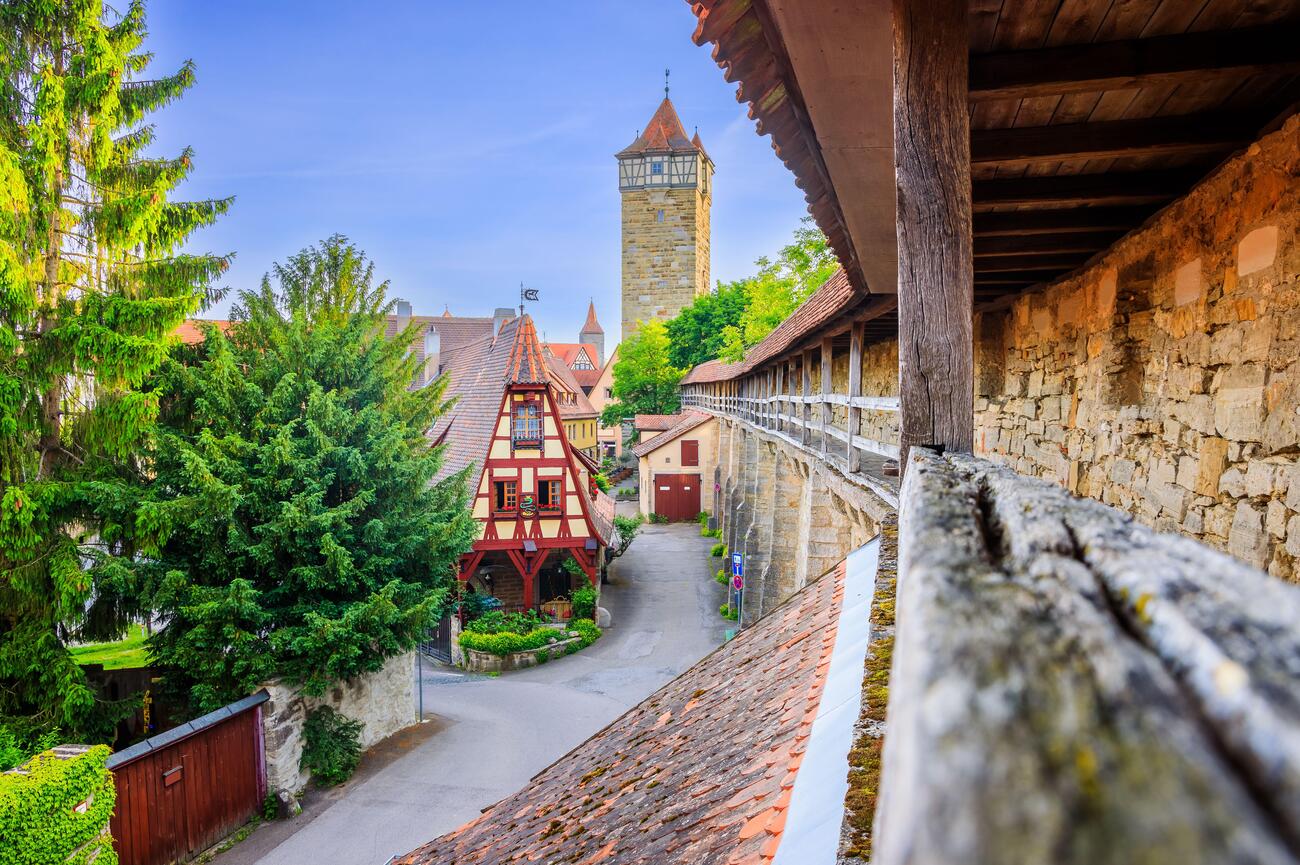
Röderturm
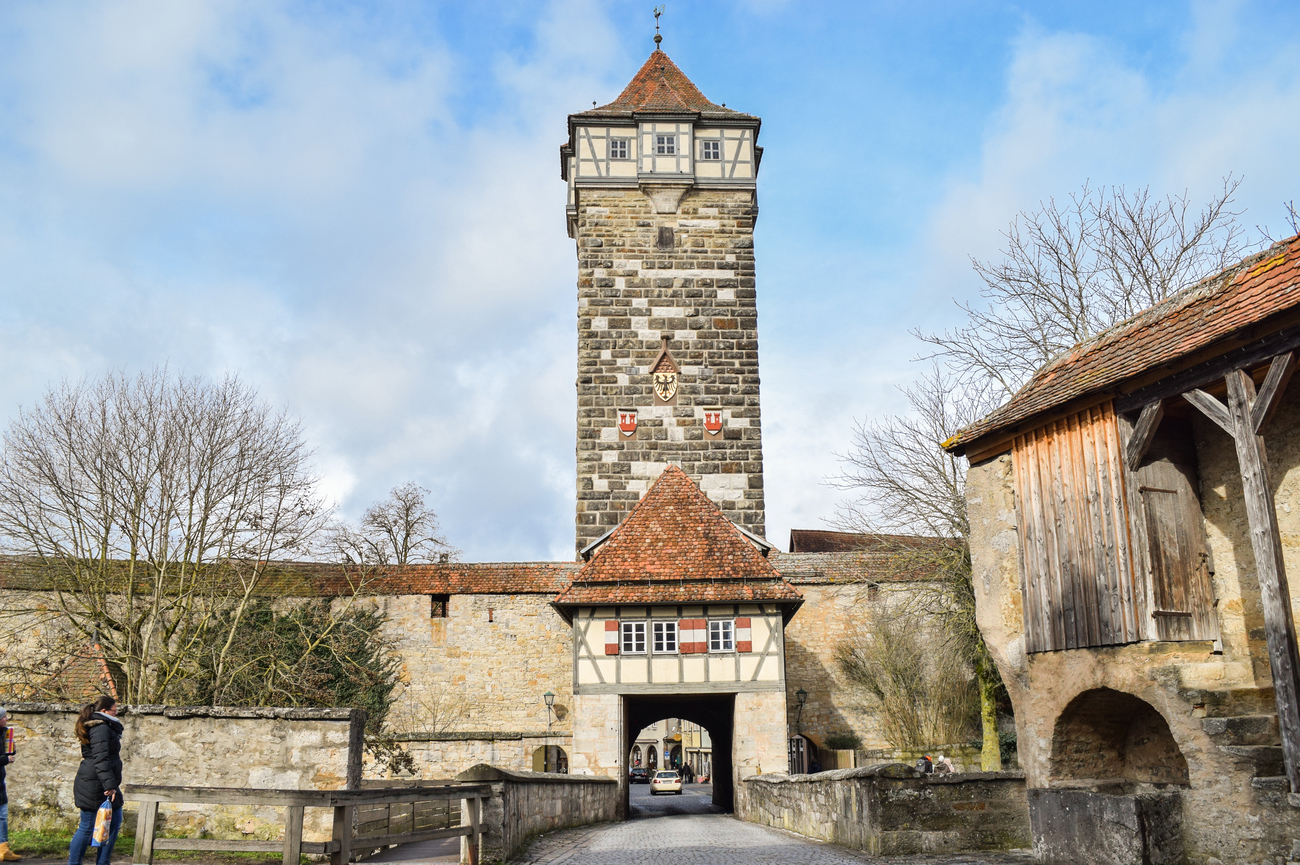
Stay on the wall a little longer and let it guide you west. After about 8 to 10 minutes on foot from the Sterngasse section, the path opens up and Röderturm rises as the final marker of the day.
Röderturm is one of Rothenburg ob der Tauber’s main gate towers and it reads like a period at the end of a sentence. Built as part of the town’s medieval fortifications, the tower once controlled access from the west and signaled who came in and who stayed out. Its height, clean lines and attached gate structure make its purpose obvious. This wasn’t decorative architecture. It was about authority, visibility and control. Today, it stands as one of Rothenburg’s most recognizable silhouettes.
It’s architectural closure without ceremony. You’ve reached the edge, both literally and figuratively. This is where Day 1 officially ends. The wall behind you. The gate in front of you. And the Romantic Road fully underway.
Day 1 - Romantic Road Tour Map
Day 2
Morning: Medieval Crime Museum
Fairytales end where the law gets medieval.
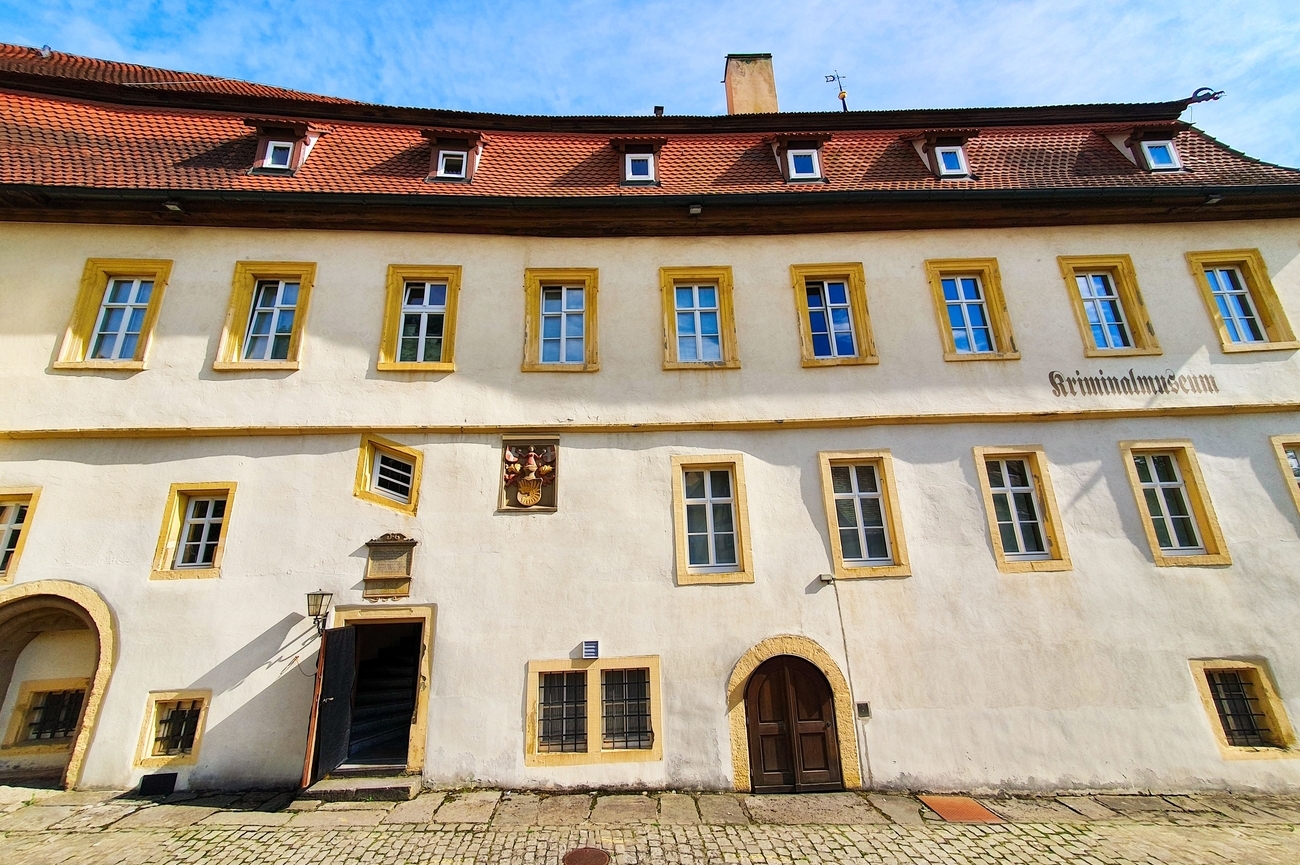
Set inside Rothenburg ob der Tauber’s old town, the Medieval Crime Museum dives straight into how justice actually worked in the Middle Ages. The focus isn’t shock for shock’s sake. It’s on systems, symbols and power. Original punishment devices, trial records and legal codes show how crime was defined and enforced across Europe for centuries. Justice was public, moral and deliberately intimidating. Walking through the exhibits, you start to understand how order was maintained long before modern courts or rights frameworks existed.
If you want structure and deeper context, group tours are available in German and English and are led by experienced museum guides. You’ll need to arrange these in advance by phone, fax or email, as guided tours aren’t offered on a walk-in basis. A typical tour lasts about 60 minutes and here’s the bonus. After the guided portion, you can return to the exhibition on your own during opening hours and revisit sections that stuck with you.
St. Jakobskirche
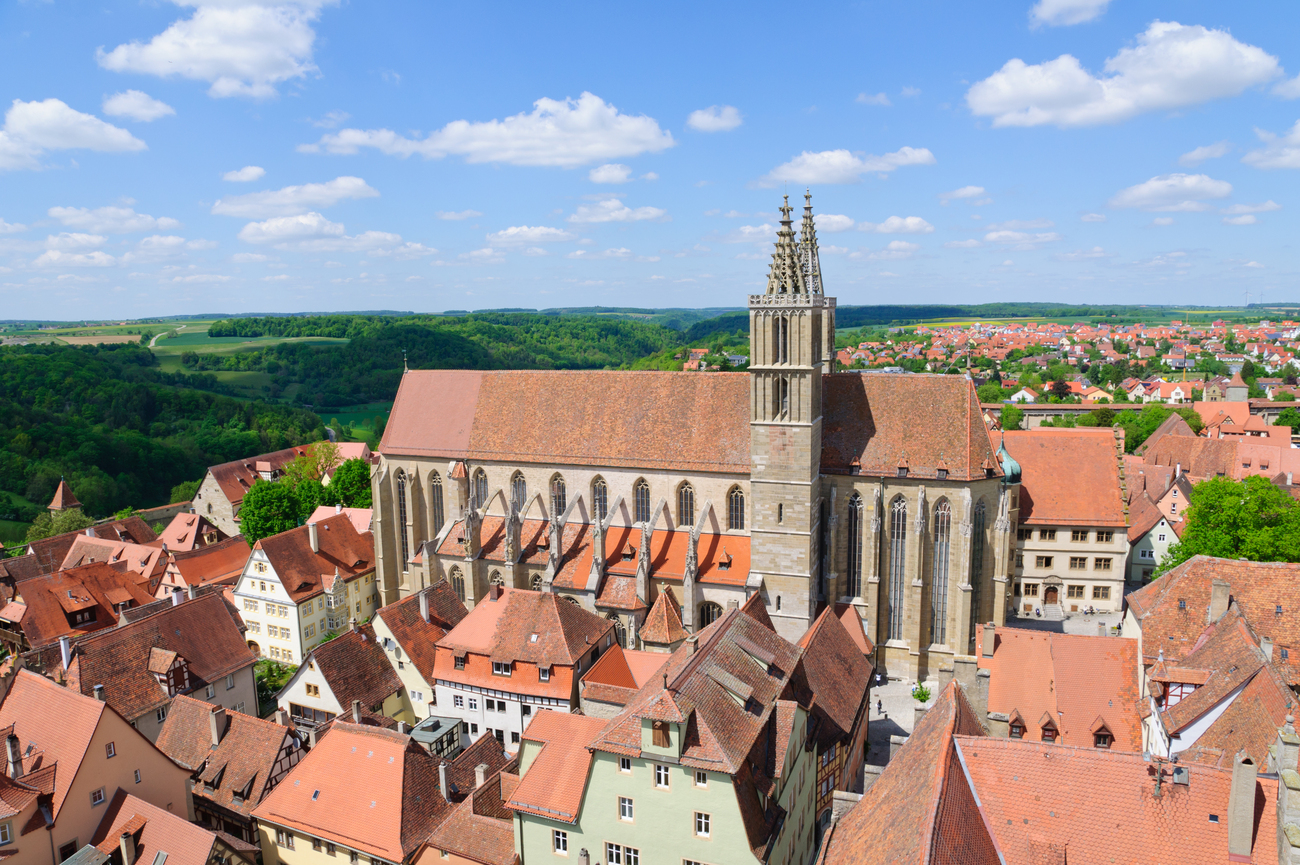
Two minutes from the Medieval Crime Museum, Rothenburg pivots hard and lands at St. Jakobskirche, the town’s spiritual heavyweight.
This is Rothenburg ob der Tauber’s main parish church and one of its most important landmarks. Built between the late 14th and early 16th centuries, St. Jakobskirche is a Gothic statement with zero need to overperform. The exterior stays composed and vertical, but inside is where the real pull happens. The star is the Holy Blood Altarpiece by Tilman Riemenschneider, a masterpiece of late German Renaissance wood carving. No gold overload, no theatrical excess. Just emotion, precision and an almost modern sense of restraint. It’s considered one of the most important altarpieces in Europe and once you’re in front of it, the reputation makes sense.
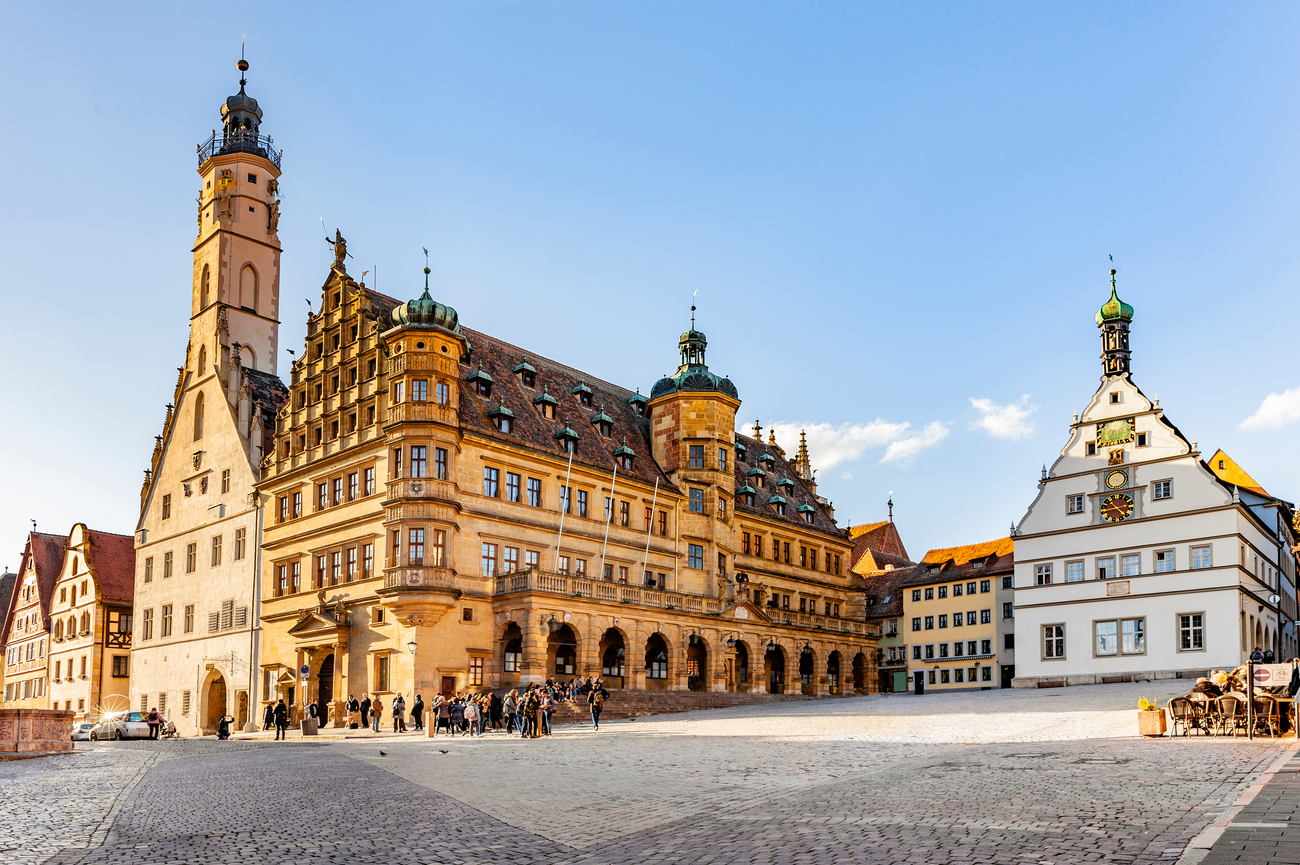
Rothenburg Town Hall
From the church doors, the balance of power shifts instantly. Cross the square and Rothenburg Town Hall takes over.
This building is a timeline in stone. Parts of the Town Hall date back to the 13th century, while later Gothic and Renaissance additions reflect how Rothenburg evolved from medieval stronghold to prosperous imperial city.
The Renaissance facade facing Marktplatz leans confident, orderly and civic-minded. This was the seat of local authority, where laws were passed, disputes were settled and the town governed itself without outside interference. In a city obsessed with preservation, the Rathaus feels especially authentic because it never stopped being useful.
Detwang
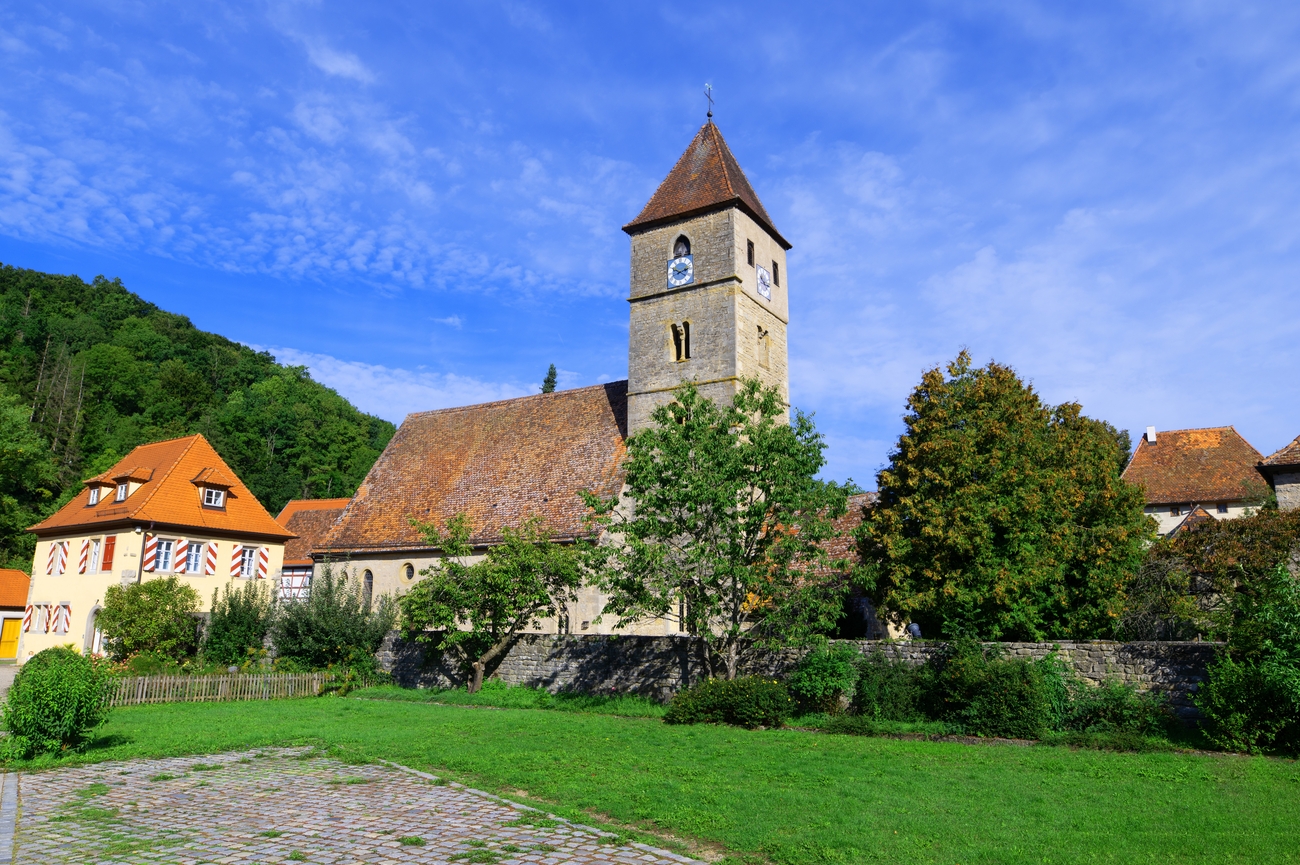
Let Rothenburg slip behind you and follow the road as it dips gently downward. In about 15 unhurried minutes, the town gives way to Detwang.
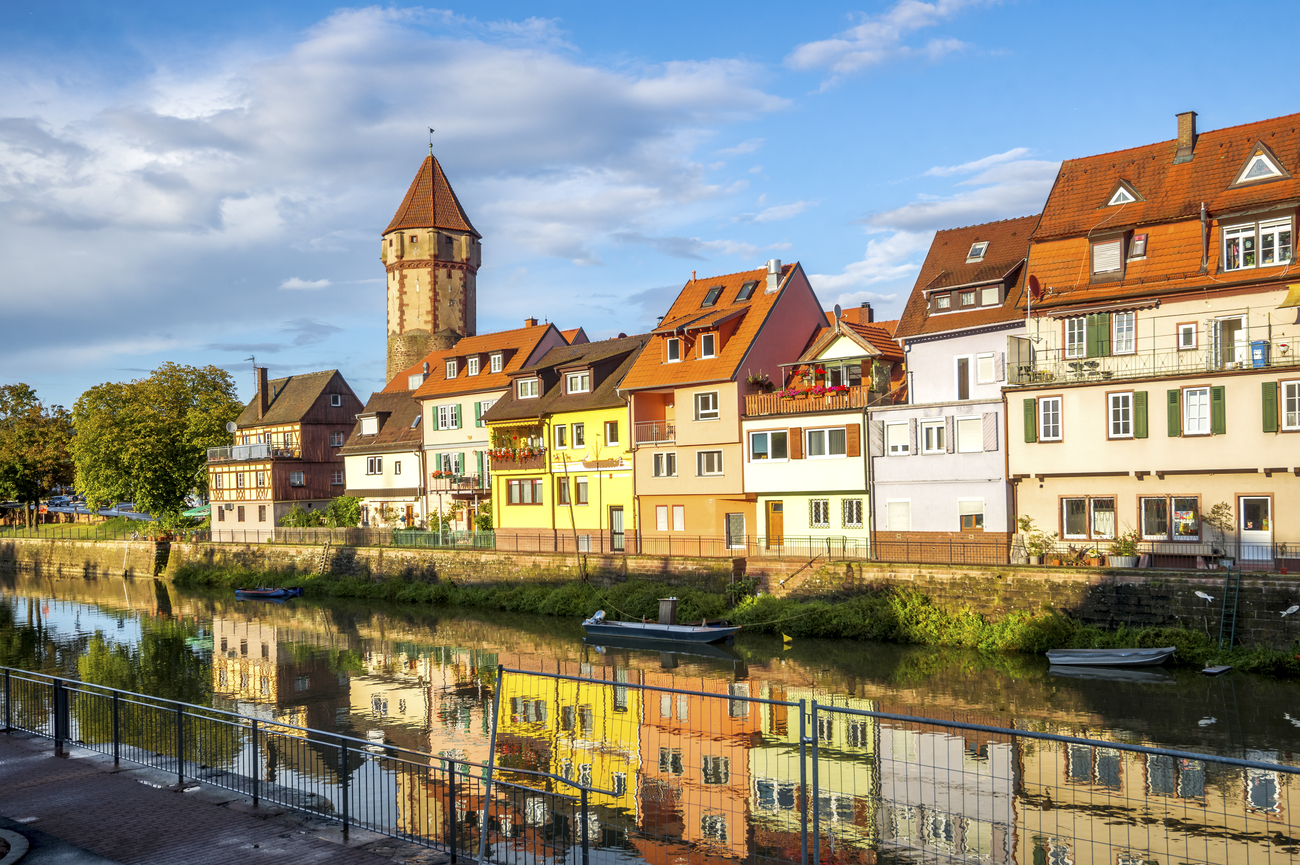
Detwang is a small village just outside Rothenburg ob der Tauber and that proximity is the whole point. It has existed since the Middle Ages as an agricultural settlement tied closely to the town above it. The pace is slower here, the scale noticeably softer. Half-timbered houses sit without ceremony, gardens replace fortifications and the Tauber River quietly anchors the landscape. Detwang isn’t preserved for spectacle. It’s preserved because people kept living here.
Afternoon: Creglingen
After about 45 minutes south from Rothenburg, the Tauber Valley opens up and Creglingen comes into view without trying to compete for attention.
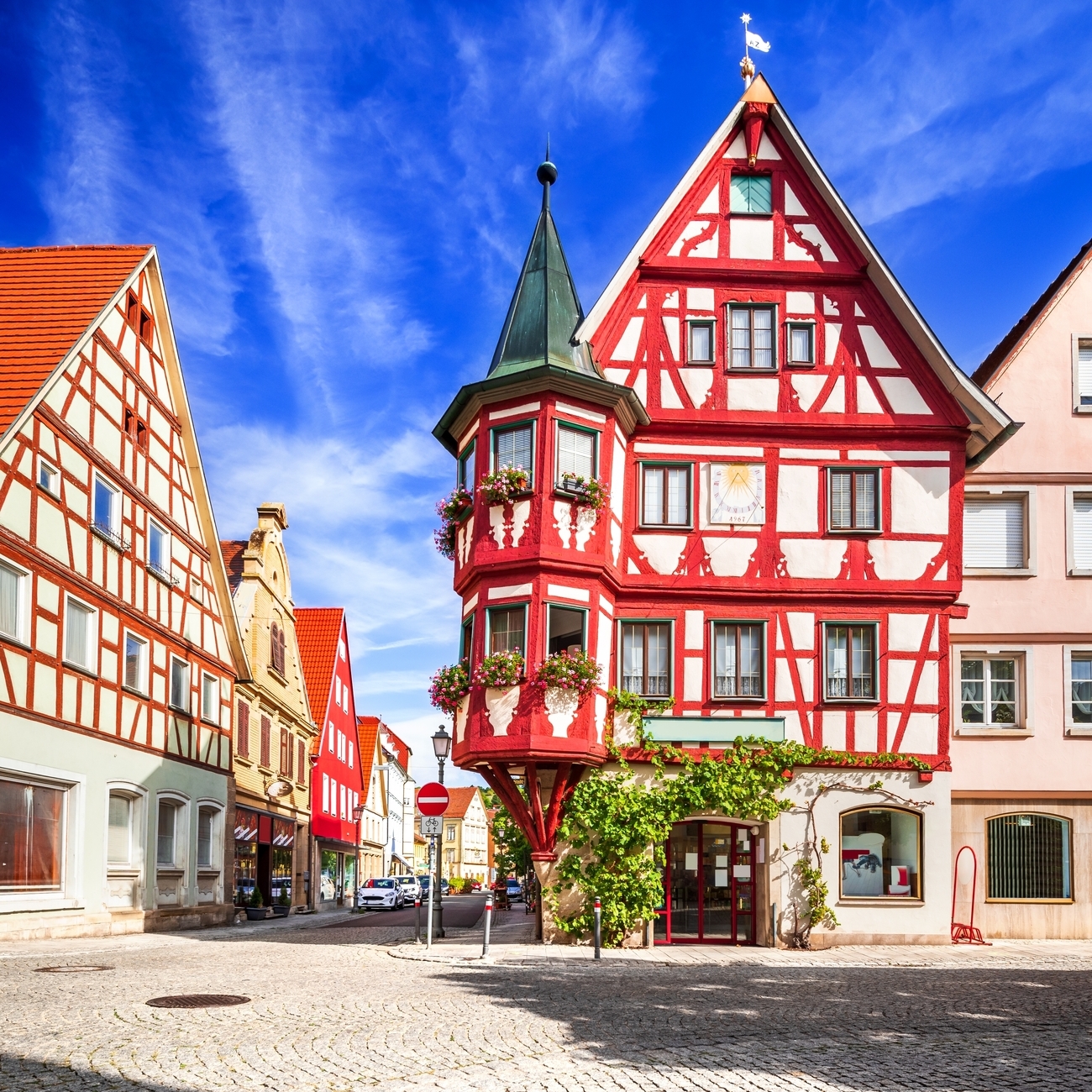
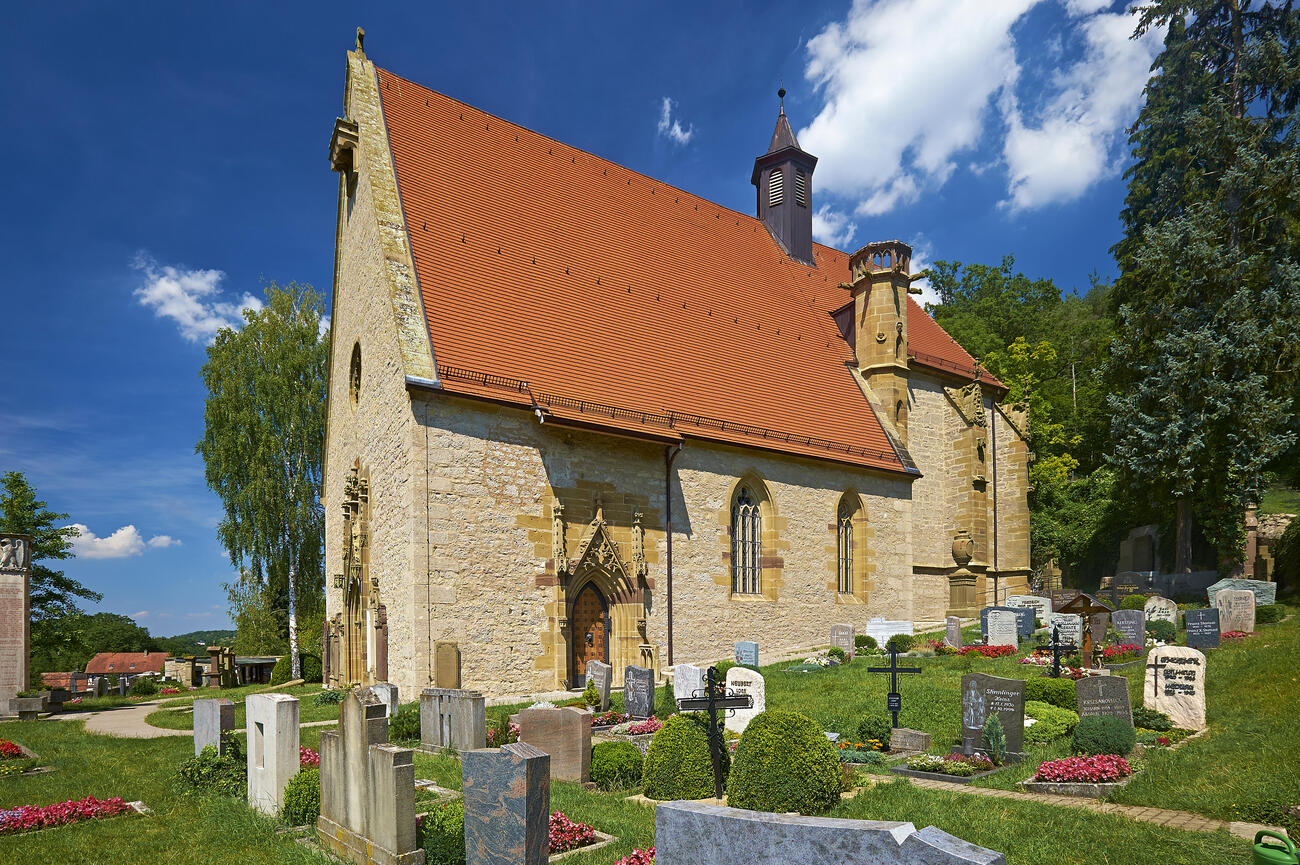
Creglingen is small, rural and intentionally low-key, but it carries serious cultural weight. The town’s name is almost shorthand for one thing: Herrgottskirche, home to Tilman Riemenschneider’s Marienaltar (Altar of the Assumption). Created in the early 16th century, this altarpiece is considered one of his finest works. Unlike the drama of town-square churches, Herrgottskirche sits quietly on the edge of town, surrounded by fields. Inside, the carving is precise, expressive and emotionally calibrated.
Creglingen itself grew as an agricultural settlement and still feels closely tied to the land around it. The historic center is compact and easy to navigate, with half-timbered houses, modest civic buildings and a rhythm that moves slower than Rothenburg’s. That contrast is the point. After a morning packed with power structures and symbolism, Creglingen brings the focus back to craftsmanship and place.
Stadtmauer Dinkelsbühl
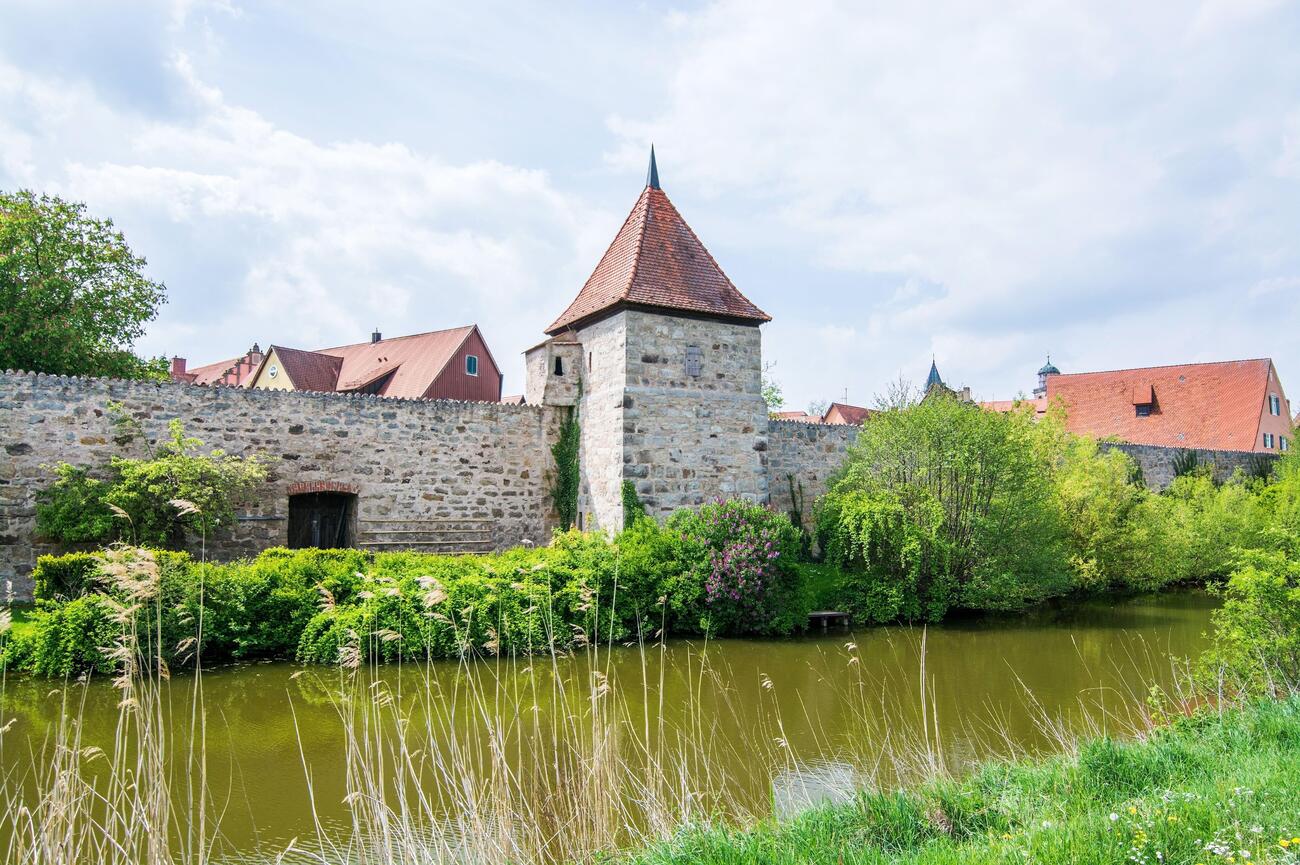
Fifty minutes on, the road delivers you straight to Dinkelsbühl’s defining feature. Its city wall.
Dinkelsbühl’s city wall is one of the most complete medieval fortification systems in Germany and it knows it. Built primarily in the 14th and 15th centuries, the wall wraps fully around the old town with gates, towers and covered walkways still intact. This wasn’t decorative defense. It was practical, strategic and carefully planned. Walking along it, you get a clear sense of how the town once protected itself while still allowing trade and daily life to flow inside.
You can walk long stretches uninterrupted, moving between towers and looking down into the old town on one side and out toward open countryside on the other. The views change constantly. Rooflines shift. Church towers rise and fall.
St. George Church
Leave the circuit behind and head straight for the heart of town. Within five minutes, Cathedral of Saint George reveals itself.
This is Dinkelsbühl’s defining landmark and one of southern Germany’s finest late-Gothic hall churches. Built mainly in the 15th century, St. George is all about proportion and restraint. The exterior keeps things clean and vertical, while the interior opens into a wide, unified space with soaring columns and a sense of calm symmetry. Its placement tells you everything about its role. St. George sits at the heart of the old town, anchoring daily life rather than towering over it.
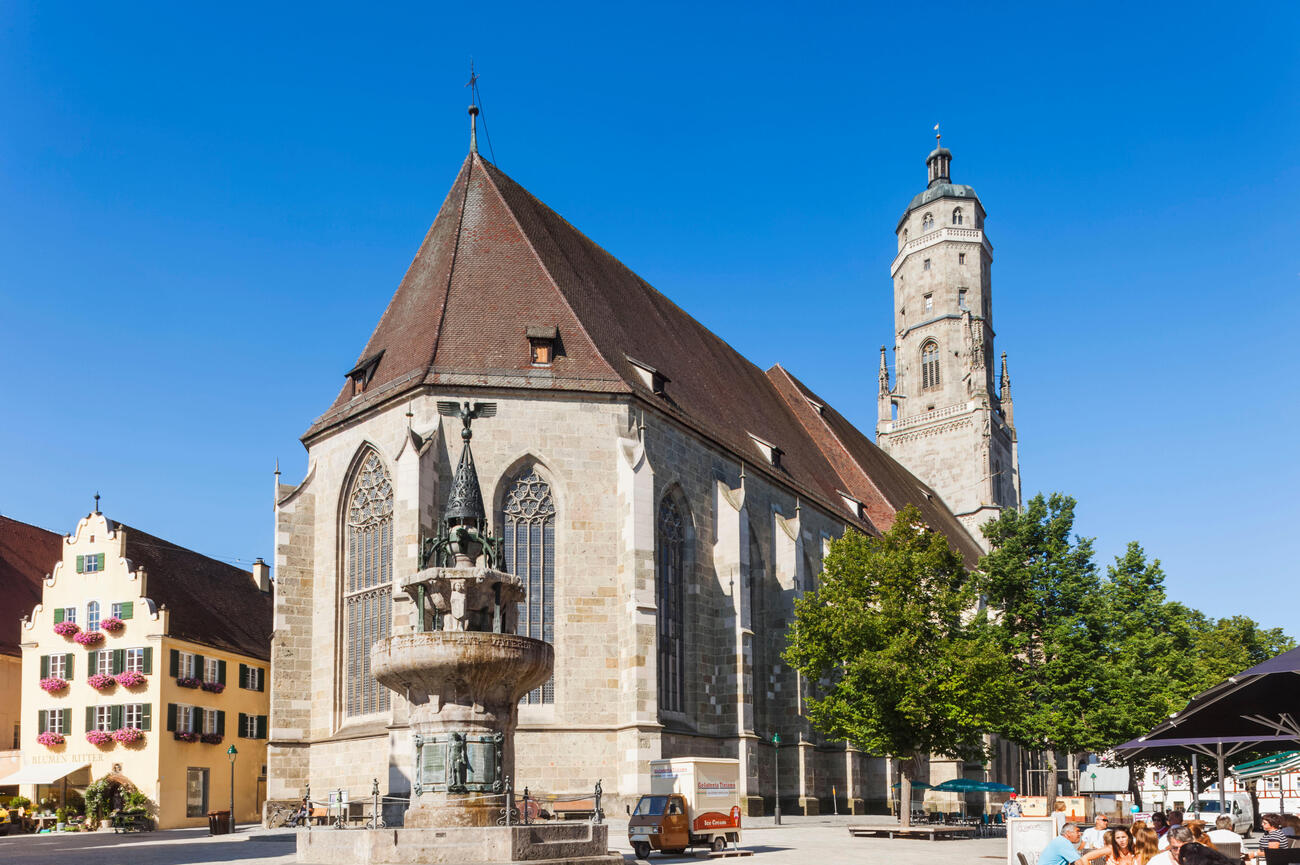
Stadtmauer Nördlingen
The drive south stays quiet until it doesn’t. Forty-five minutes later, Nördlingen appears fully formed, its wall already doing the explaining.
Nördlingen’s wall is famous for a reason. Built in the 14th century, it forms a fully walkable, completely intact ring around the old town. No gaps. No guesswork. You can trace the entire outline of the city from above, moving between towers, gates and covered passages without ever leaving the wall. It’s defensive architecture done with almost mathematical clarity. The town sits inside the Ries meteorite crater, and the wall follows that natural geometry, creating one of the most legible medieval town layouts in Europe.
Walking the wall is immersive in the best way. On one side, rooftops cluster tightly around St. George’s Church. On the other, open land stretches outward, reminding you exactly what the wall was built to keep at bay. The stonework feels consistent, purposeful and unromantic in the literal sense. This was built to work.
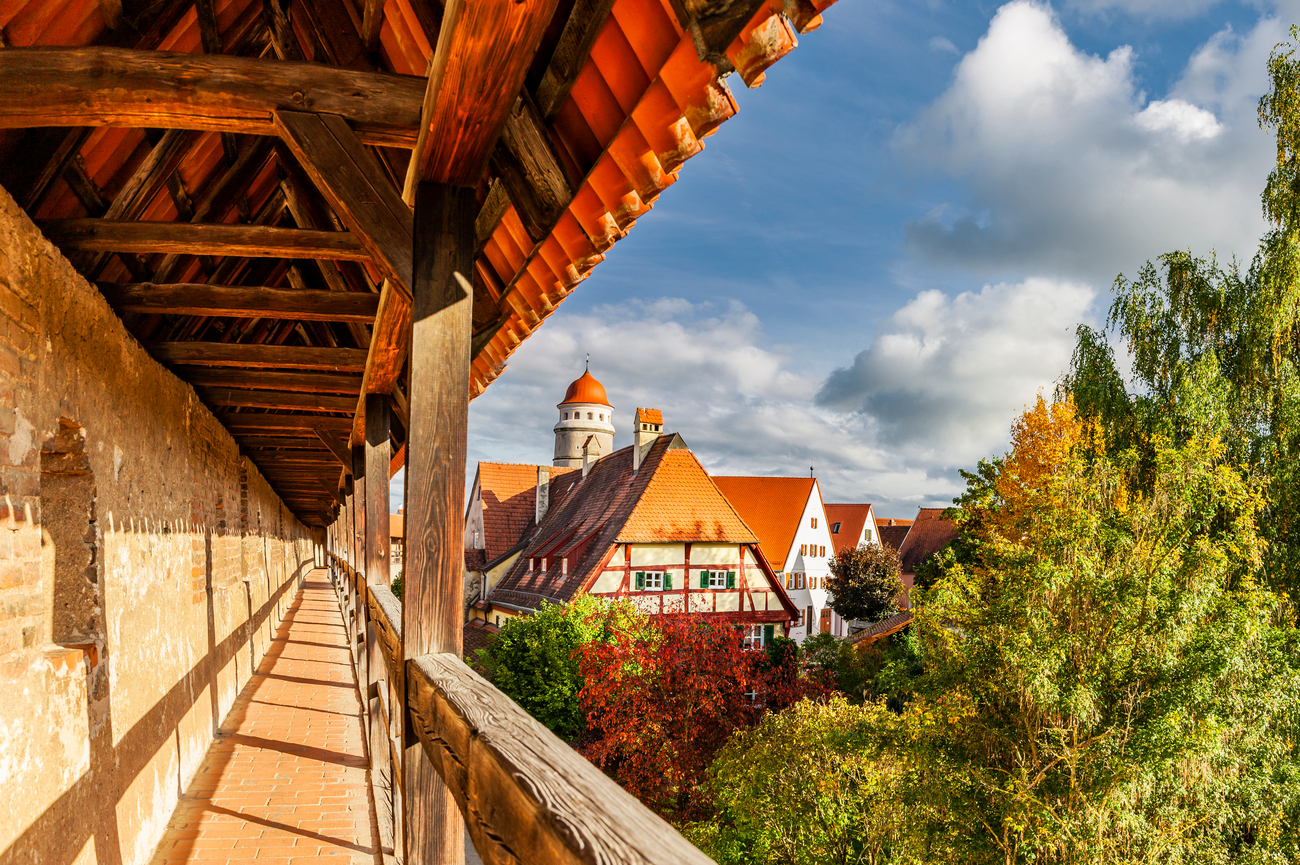
Evening: Campanile “Daniel”
A few minutes on foot from the wall walk, the town’s skyline points you straight to Daniel, the campanile of St. George’s Church.
Daniel is Nördlingen’s vertical exclamation point. This 90-meter bell tower has watched over the town since the 15th century and it still owns the evening slot. Built as part of St. George’s Church, the tower served both civic and religious purposes, keeping time, marking danger and orienting life inside the walls. Its clean Gothic lines rise without excess and that restraint is exactly why it holds up. You don’t need ornament when the proportions are right. Climbing Daniel is a commitment and that’s part of the payoff. The ascent winds upward through narrow staircases before opening onto a viewing platform that delivers one of the clearest layouts of any medieval town in Germany.
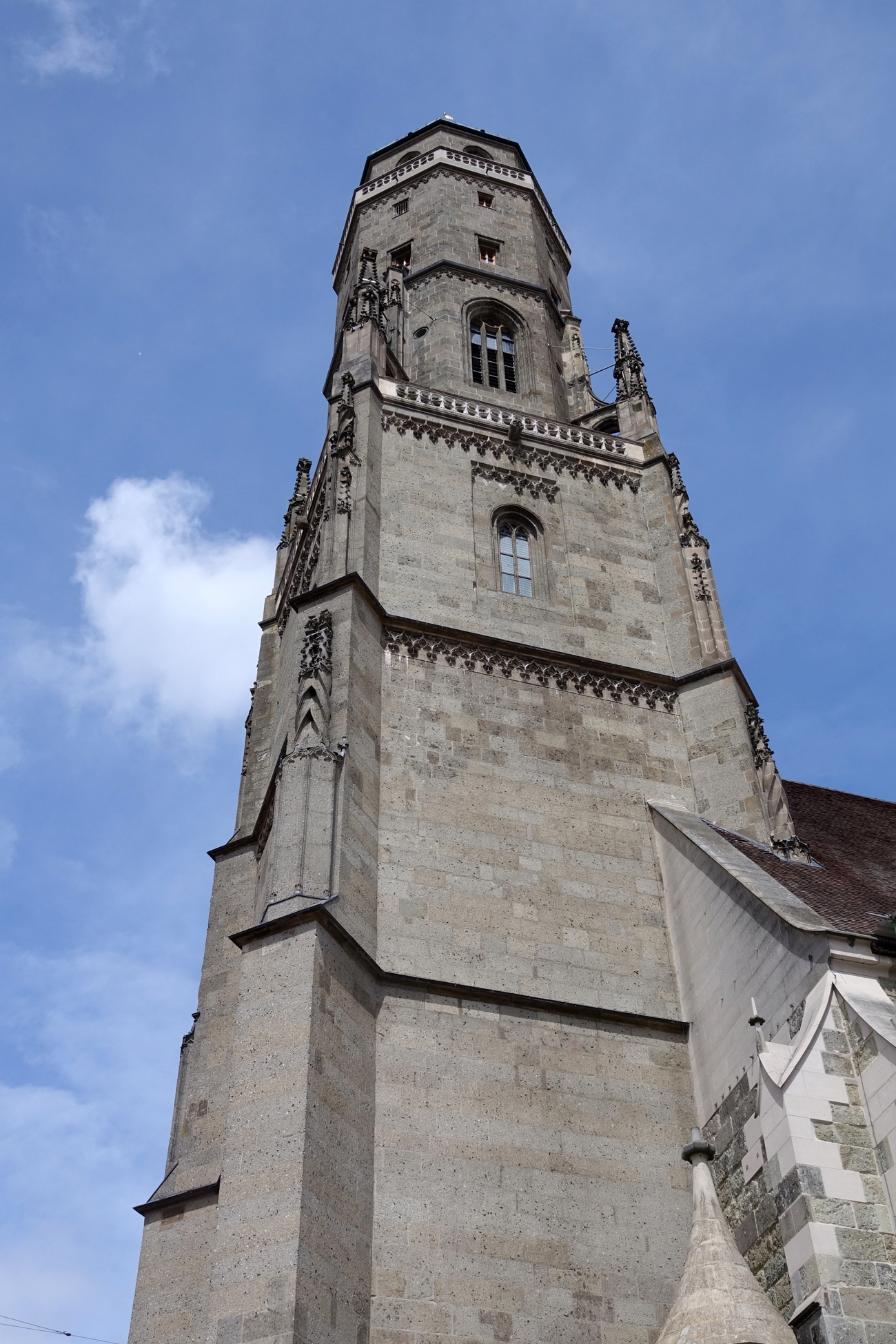
Marktplatz
Come back down to earth. After the climb up Daniel, the town pulls you inward again. Less than five minutes on foot, elevation gives way to openness and Nördlingen Marktplatz becomes the final stop of the day.
Marktplatz is the civic core of Nördlingen and it wears that role with discipline. Framed by well-preserved medieval and Renaissance facades, the square reflects the town’s prosperity as an imperial free city. Nothing here feels oversized or ornamental for show. This was a space built for trade, announcements and everyday exchange. The surrounding buildings reinforce that function, with merchant houses and civic structures forming a square that feels balanced rather than staged.
This is where Day 2 comes to a close. After walls, towers and elevation, Marktplatz brings the day back to street level, letting Nördlingen settle into itself.
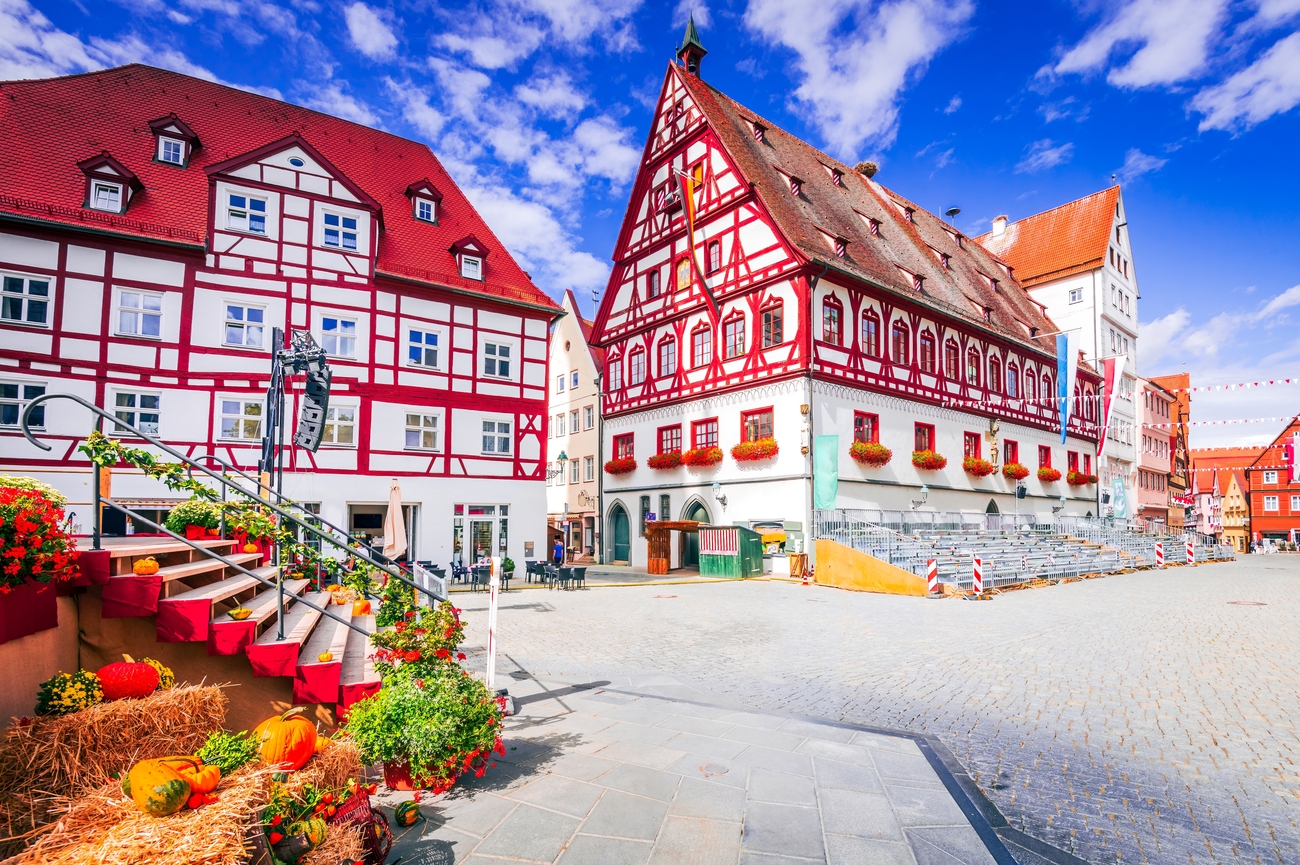
Day 2 -
Romantic Road
Tour Map
Day 3
Morning: Museum Lothar Fischer
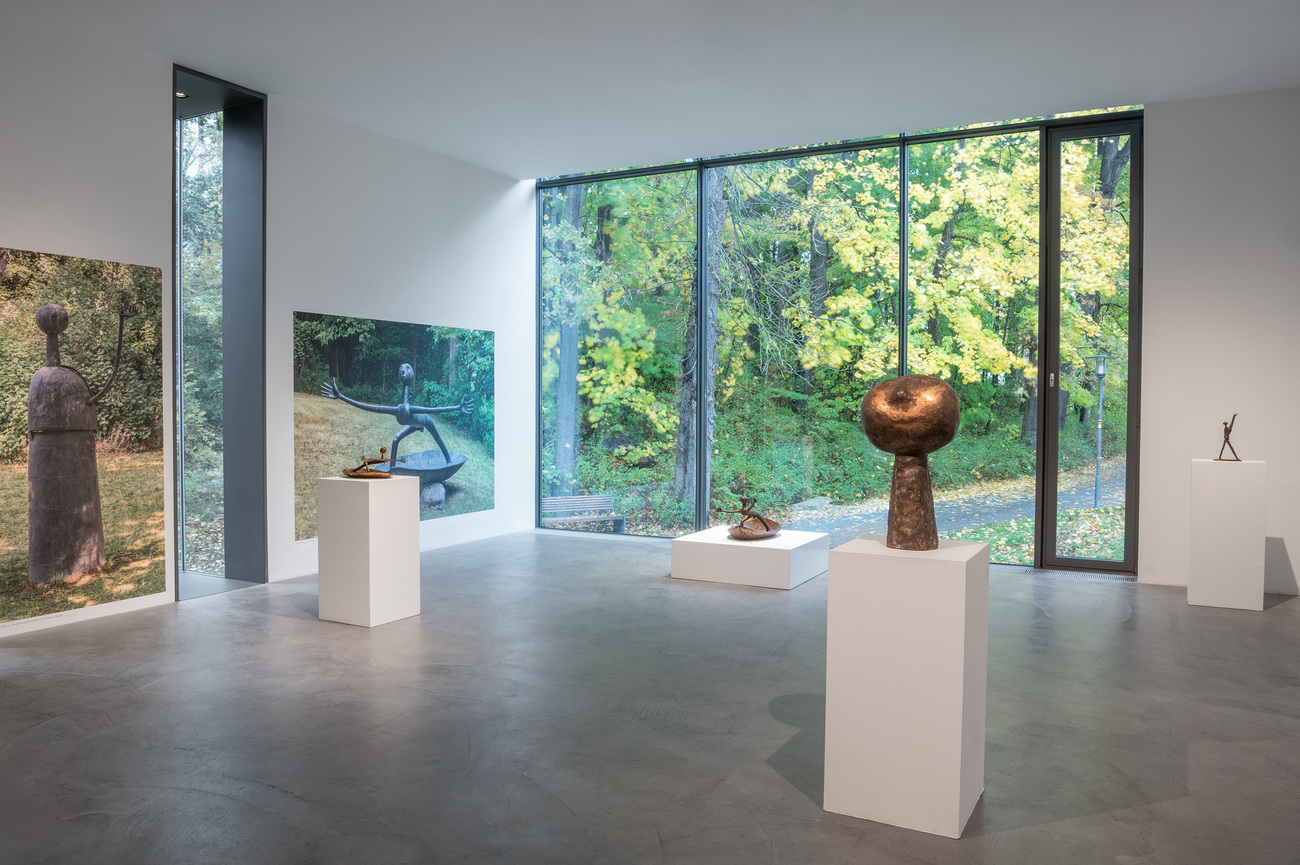
Day 3 opens on a quieter, more contemporary note. Museum Lothar Fischer resets the visual language.
This museum is dedicated to Lothar Fischer, a Nördlingen-born sculptor associated with post-war German modernism. The building itself mirrors the work inside. Minimal, light-filled and deliberately understated. Fischer’s sculptures and drawings focus on the human form, stripped back to essentials. Bodies reduced to gesture, weight and balance. After two days of medieval walls, towers and ornament, this feels like a palate cleanse. Modern, reflective and surprisingly grounded.
And if you want structure, public guided tours are available for a small fee of €2 plus the admission ticket. Tours are held on Sundays at 3:00 p.m. These guided visits are ideal if you want context around Fischer’s work, his connection to Nördlingen and his place within modern German art.
Harburg Castle
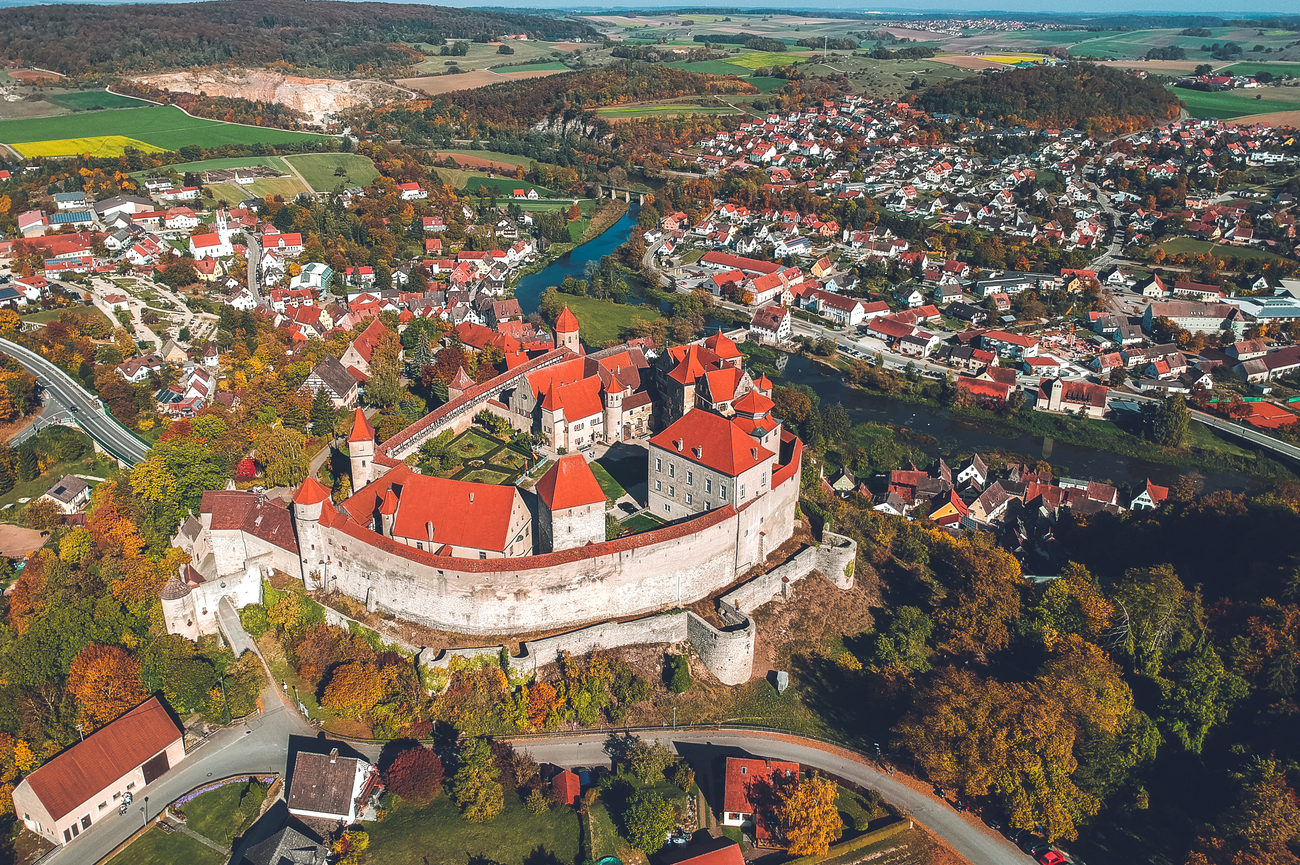
Leave the clean lines of Museum Lothar Fischer behind and let the road reassert itself. About 35 minutes later, Harburg Castle claims the horizon.
Harburg Castle is one of the best-preserved medieval castles in southern Germany and it has zero interest in being cute about it. Dating back to the 11th century, this fortress grew over time instead of being rebuilt for drama, which is exactly why it feels so real. Thick defensive walls, watchtowers, inner courtyards and residential quarters are all still intact, giving you a rare look at how a castle actually worked day to day.
Reichsstraße
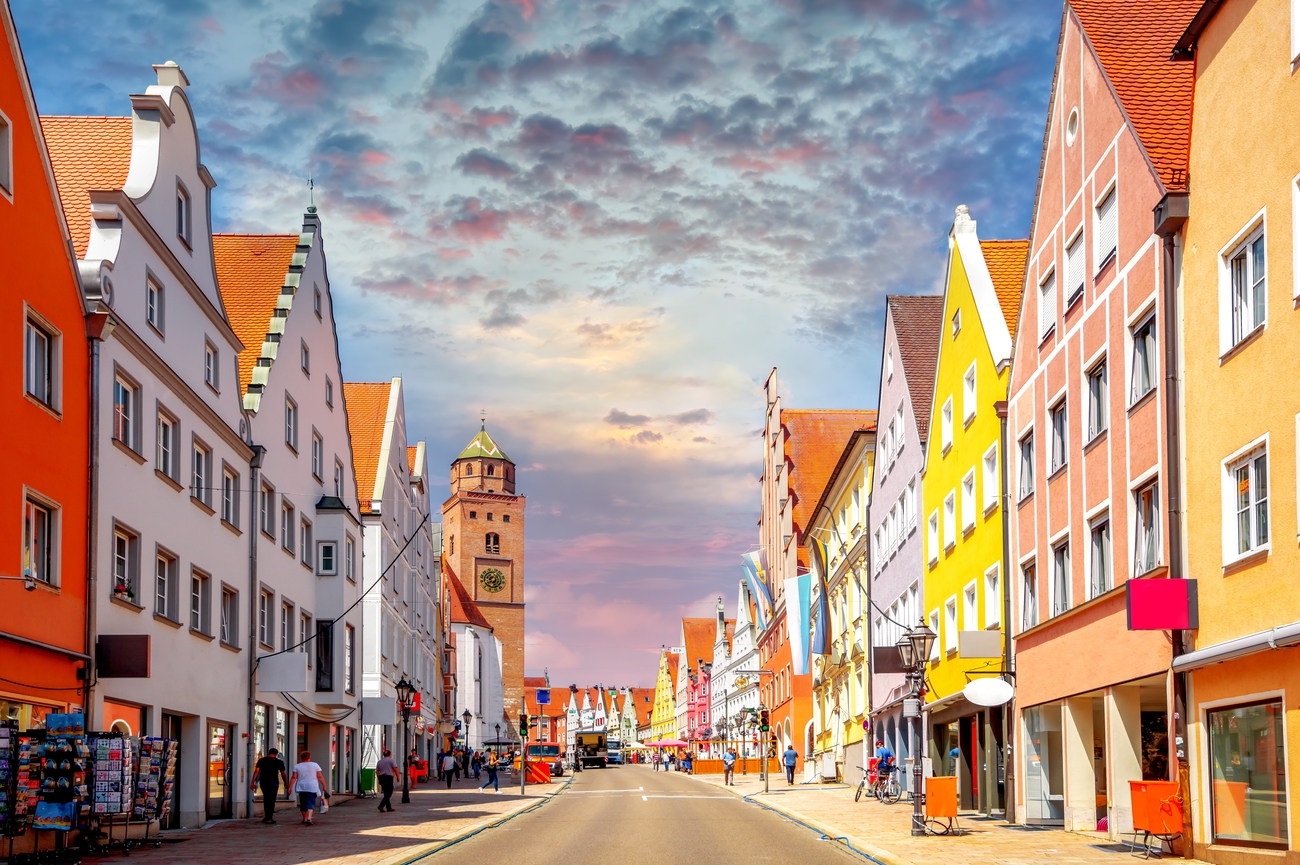
The mood shifts from fortress to town life. About 30 minutes after leaving Harburg Castle, the Romantic Road flattens out and leads straight into Donauwörth’s most defining stretch. Reichsstraße is where the city’s character lines up clearly.
This historic main street has shaped Donauwörth since its time as an imperial city. Wide, linear and easy to read, Reichsstraße was designed for trade, movement and visibility. Colorful merchant houses and former guild buildings line both sides, giving the street a composed rhythm rather than a chaotic one.
Walking Reichsstraße gives you an instant sense of how the town worked. Important buildings branch naturally off the main axis and the layout makes orientation effortless. It’s urban planning that doesn’t need explanation. After castles and defensive walls, this stretch grounds the day in everyday civic life and keeps the itinerary balanced.
Afternoon: Rathaus Donauwörth
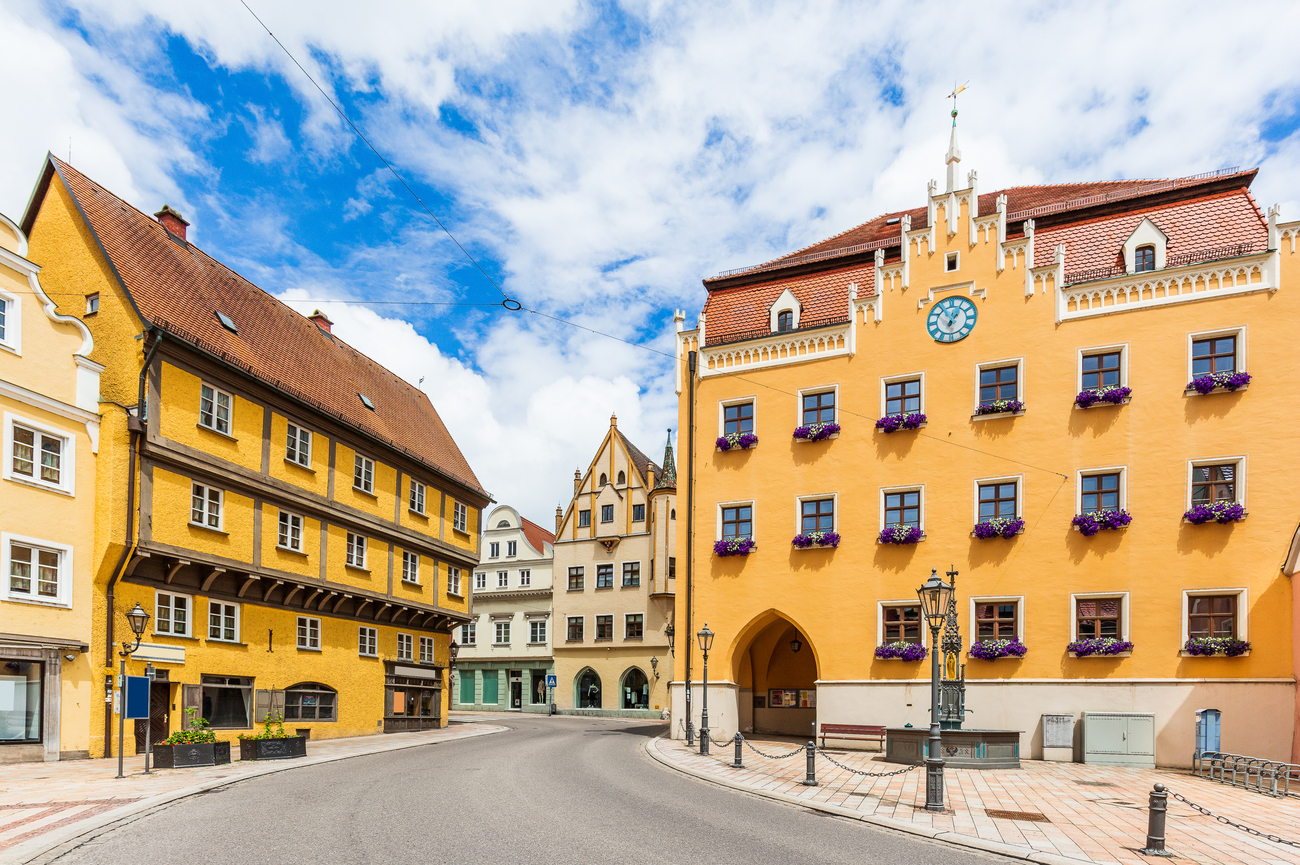
Just a short walk off Reichsstraße, the street energy tightens into formality and Rathaus Donauwörth takes focus.
This town hall is a clean expression of Donauwörth’s time as a Free Imperial City. Built in the 16th century, the Rathaus leans Renaissance in spirit. Orderly facade, measured proportions, zero excess. This was a building meant to project authority through restraint. Decisions were made here. Laws were debated here. Civic identity was shaped here without needing spectacle.
The Rathaus functioned as the center of civic administration, justice and public life. Council meetings, legal proceedings and official announcements all passed through this building. Its presence near the main commercial artery wasn’t accidental. Governance and trade were closely linked and the Rathaus sat exactly where it could oversee both.
Augsburg Cathedral
Let the smaller towns fall away and give the road about 45 minutes to stretch. Augsburg’s deepest layer comes into view. It’s a cathedral.
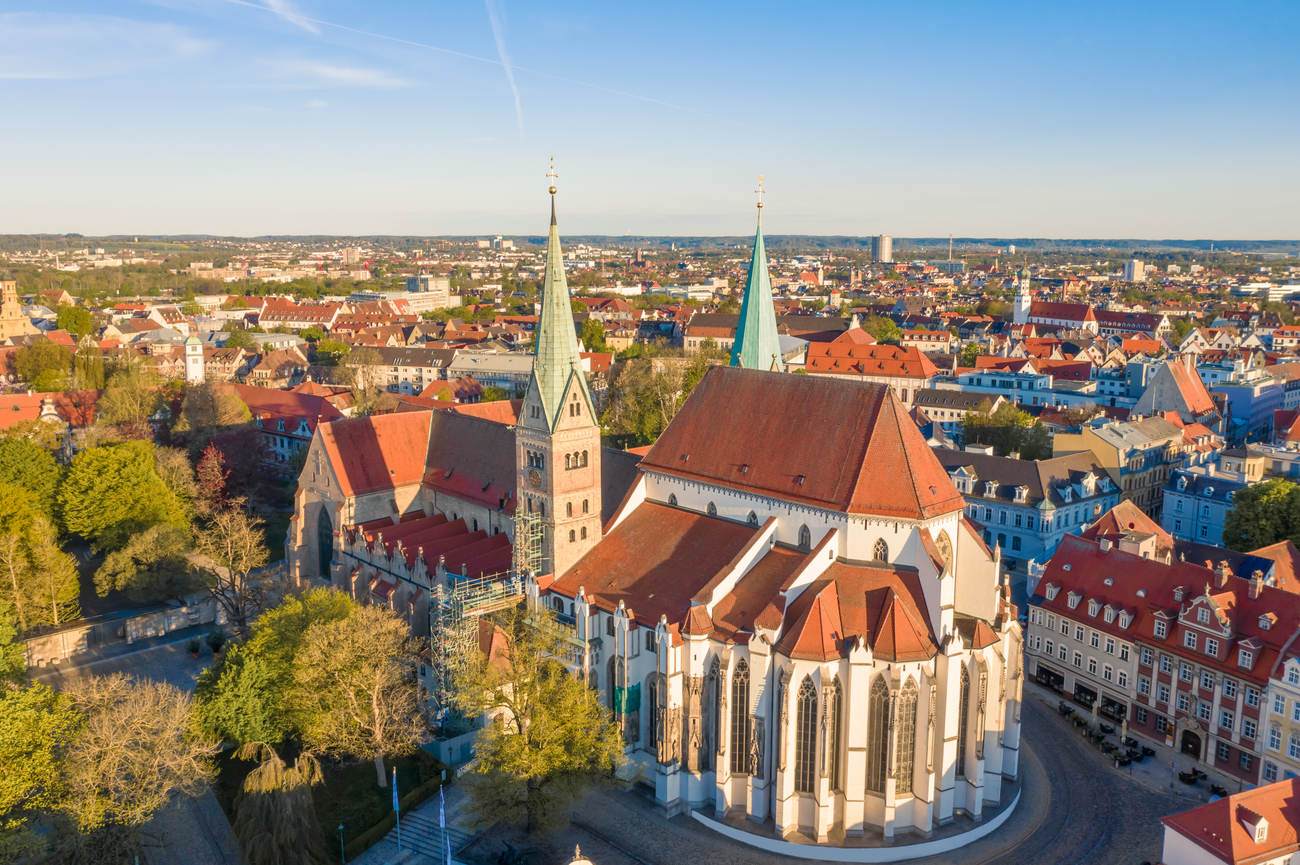
Augsburg Cathedral (Dom Mariä Heimsuchung) is one of Germany’s oldest cathedrals and it wears that age with confidence. Construction began in the 11th century, with layers added over time, which explains the blend of Romanesque solidity and Gothic lift. Thick pillars ground the space, while higher vaults and later additions pull your eye upward. The real flex is inside. The cathedral houses some of the oldest stained-glass windows in Germany, dating back to the 12th century. They’re restrained, almost minimalist by today’s standards, but incredibly powerful once you realize how early they are.
Perlach Tower
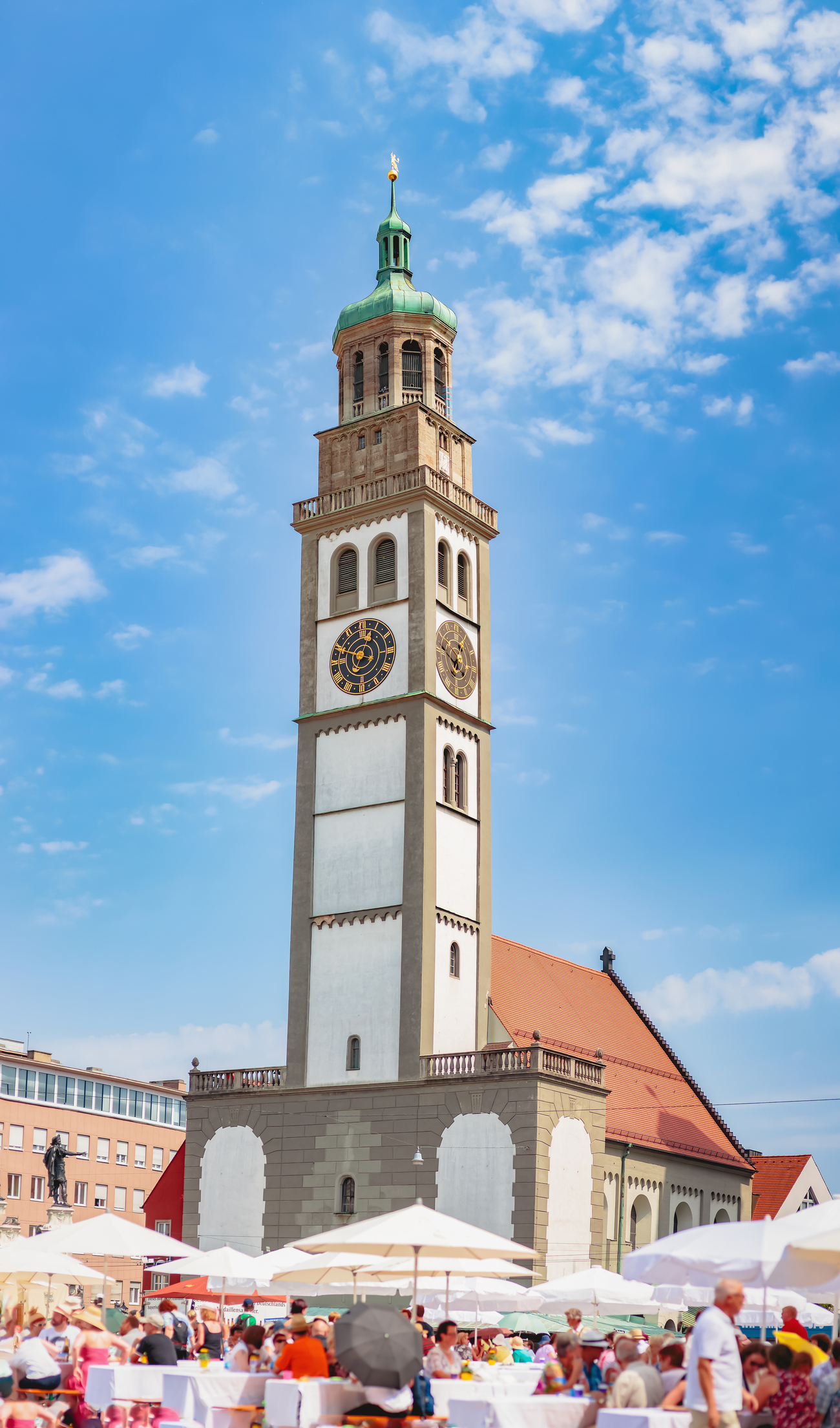
Stay in the city center and let your eyes travel upward. A three-minute walk from Augsburg Cathedral, the streets tighten and Perlach Tower makes its presence known without asking.
Perlach Tower has been part of Augsburg’s skyline since the 10th century, originally built as a watchtower before evolving into the civic landmark it is today. Standing beside Augsburg Town Hall, the tower served as a lookout, a fire watch and a timekeeper for the city. Its height wasn’t symbolic. It was practical. From up here, you could see danger coming long before it arrived. That functional origin gives the tower a seriousness that still reads, even now.
You can also climb this tower and trust us, you wouldn’t want to miss this opportunity. You move up narrow stairways, step by step, until the city suddenly opens beneath you. From the top, Augsburg lays itself out clearly. The old town grid, the cathedral towers, Maximilianstraße stretching cleanly through the city.
Fuggerei
From the tower’s height, the route eases downward and inward. Ten minutes on, Fuggerei quietly changes the mood.
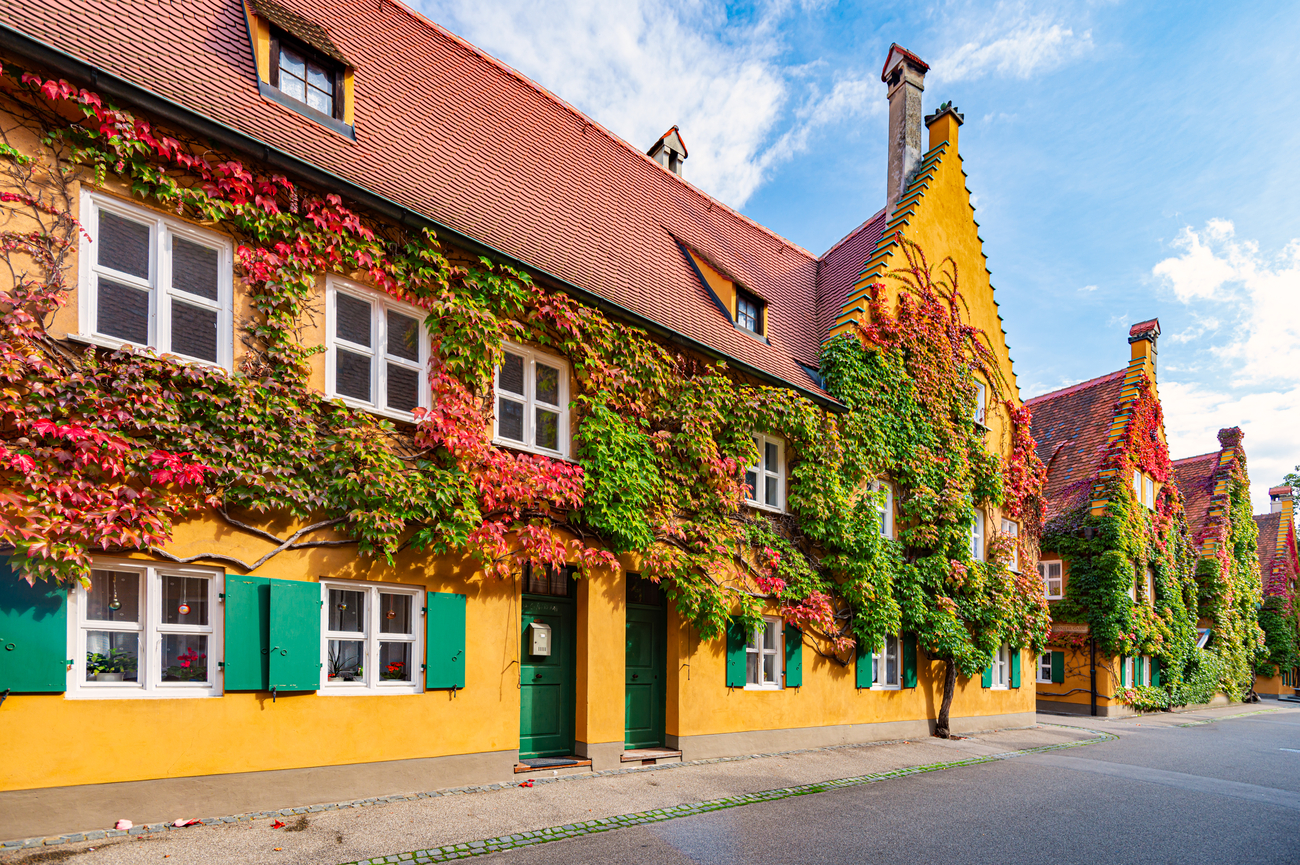
Founded in 1521, Fuggerei operates on an idea that still feels radical today. Created by the Fugger family, one of Europe’s most powerful banking dynasties, this enclosed neighborhood was designed as permanent housing for citizens who needed stability, not charity. The contrast is intentional and it still lands. Behind the gates, the scale drops. Houses are compact, uniform and carefully arranged along quiet lanes, each with its own entrance and small garden.
And what sets Fuggerei apart is continuity. People still live here under the original framework, where affordability comes with responsibility and community matters more than status. You’re not observing history behind glass. You’re moving through a system that never stopped functioning.
Evening: Augsburg Town Hall
From inward-facing streets back to public statement. About a 10-minute walk brings you to Augsburg Town Hall.
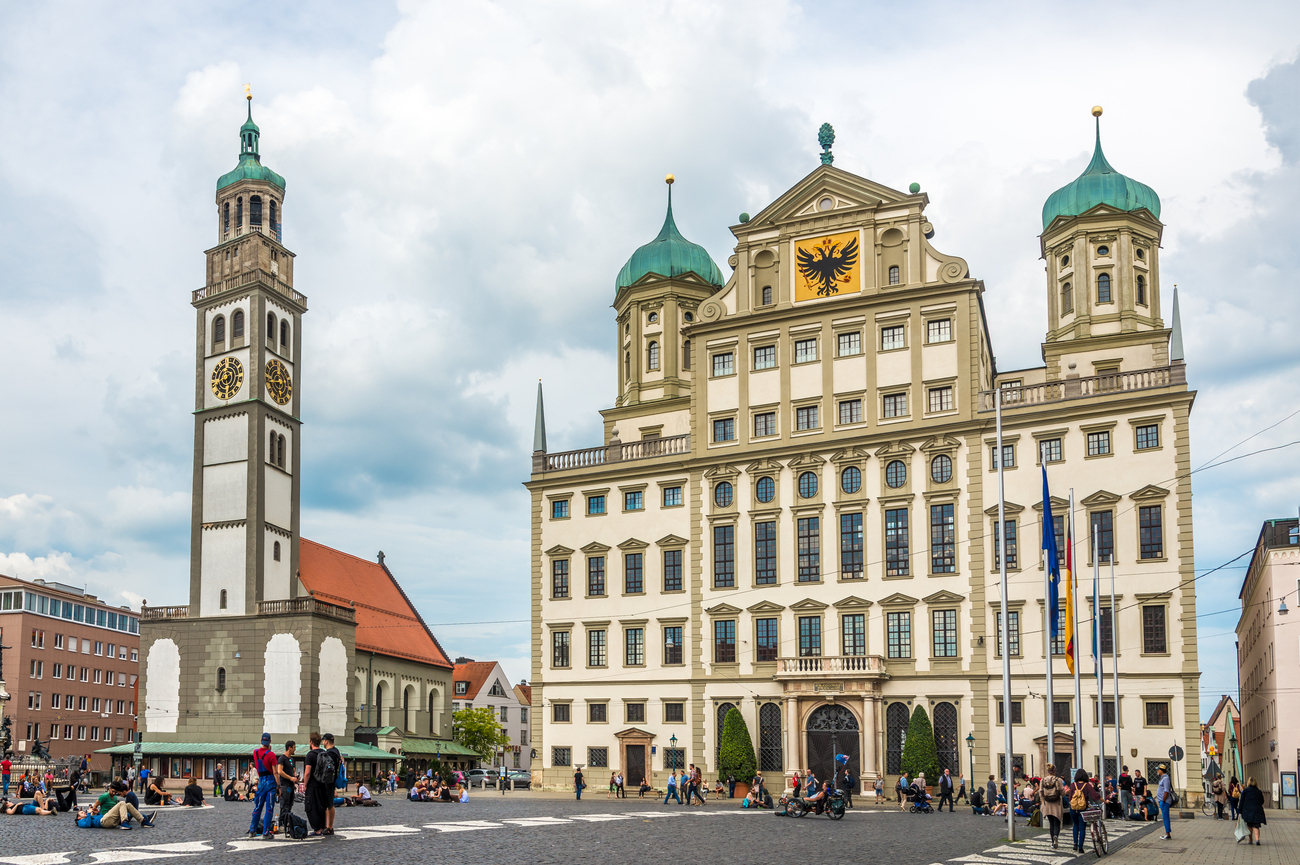
Augsburg Town Hall is one of Germany’s most significant Renaissance civic buildings and it was designed to communicate authority the moment you see it. Completed in the early 17th century, the Rathaus reflects Augsburg’s confidence at the height of its imperial power. The facade is symmetrical, measured and unapologetically formal. This was architecture used as messaging. Order, wealth and stability, clearly expressed in stone.
Goldener Saal
Everything tightens to one room.
Stay inside the Rathaus and let the space do the transition. A short walk within the building takes you straight into Goldener Saal.
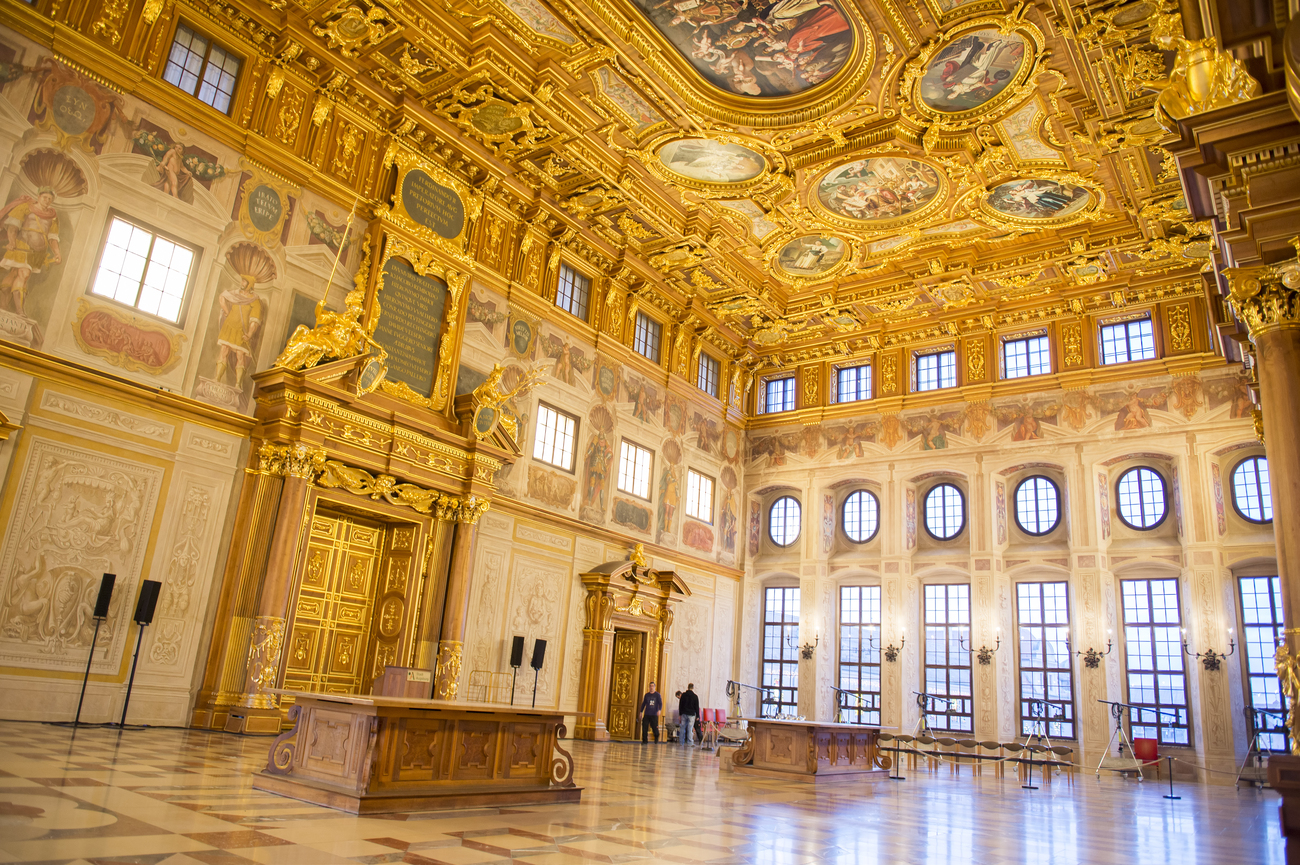
Goldener Saal is where Augsburg drops the polite tone and goes full statement mode. This room is big, shiny and very aware of its angles. Gilded ceilings catch the light in a way that feels low-key engineered for your camera. Even without knowing the backstory, you can tell this space was designed to impress people who mattered.
And what makes it work isn’t just the gold. It’s the control. Nothing feels random. Every surface is doing its job, making the room feel balanced, powerful and honestly kind of iconic. This is the kind of place that doesn’t need filters. You stand there, look up and immediately get why this room shows up all over socials. It’s architecture that understands optics.
You can enter Augsburg Town Hall for free, no hesitation required. If you want to step into Goldener Saal, there’s a small additional fee, and yes, it’s worth it. This is the upgrade. The moment where the city stops hinting and starts showing off. Ending Day 3 here just makes sense. After castles, streets and viewpoints, you finish in a room that knows exactly how it looks and leans into it.
Day 3 -
Romantic Road
Tour Map
Day 4
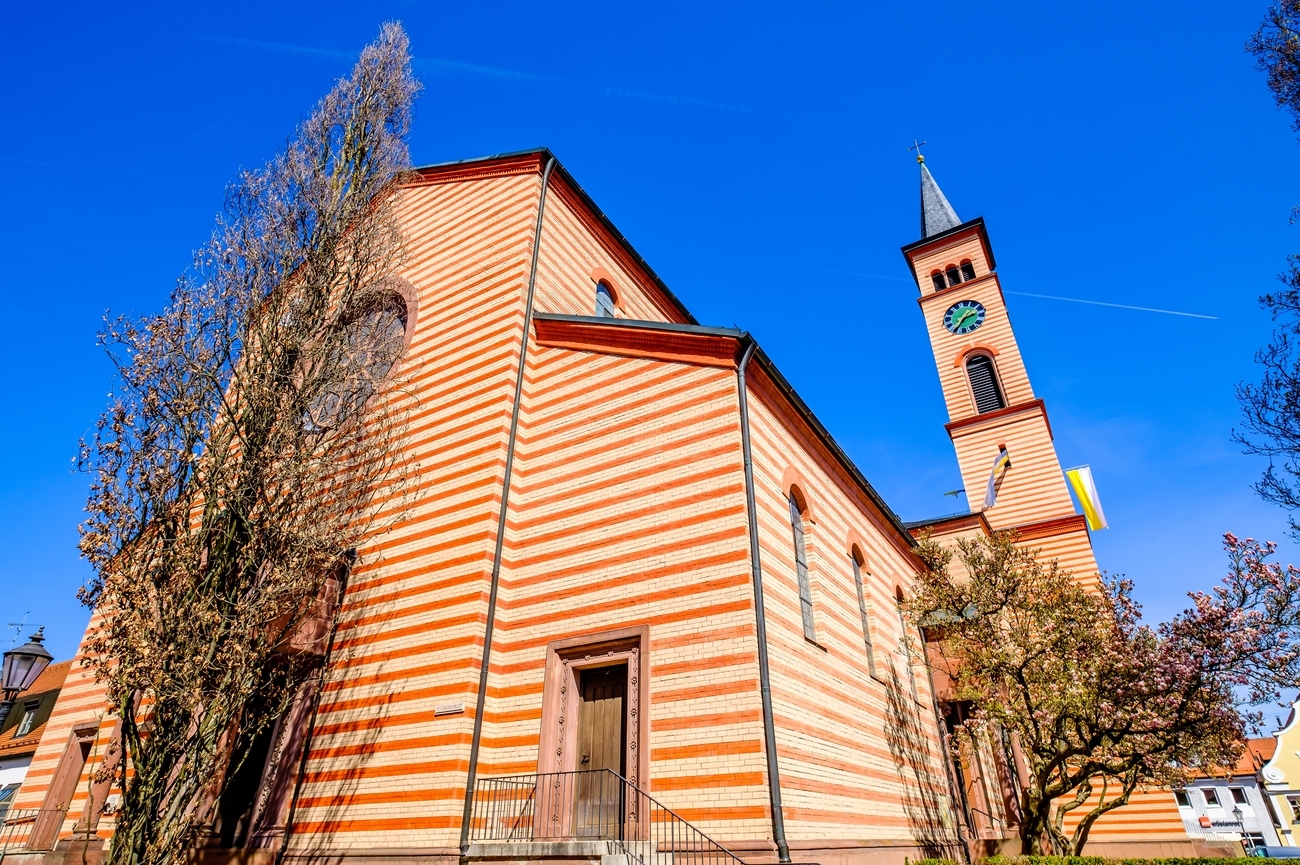
Morning: Stadtpfarrkirche St. Jakobus Major
A quiet opener with serious presence. Stadtpfarrkirche St. Jakobus Major sets the tone before the Romantic Road starts showing off.
This parish church sits slightly elevated, making it feel like a natural point of orientation rather than a detour. Friedberg itself lies directly on the Romantic Road and St. Jakob has been watching over the town since the Middle Ages. Originally founded in the 13th century and later reshaped through Gothic and Baroque phases, the church reflects Friedberg’s history as a strategic Bavarian border town. The interior balances restraint and detail. Vaulted ceilings draw the eye upward while altars and side chapels quietly layer centuries of craftsmanship without visual overload. This is not spectacle architecture. It’s confidence architecture.
Location-wise, St. Jakob works perfectly as a starting point. You are close enough to Augsburg to feel the Roman and Renaissance influence, but far enough south to sense the route shifting into smaller town energy. From here, Friedberg unfolds easily on foot. The church anchors the old town and creates a smooth transition into Hauptplatz walks, town walls and the next stretch of the Romantic Road.
Landsberg am Lech Hauptplatz
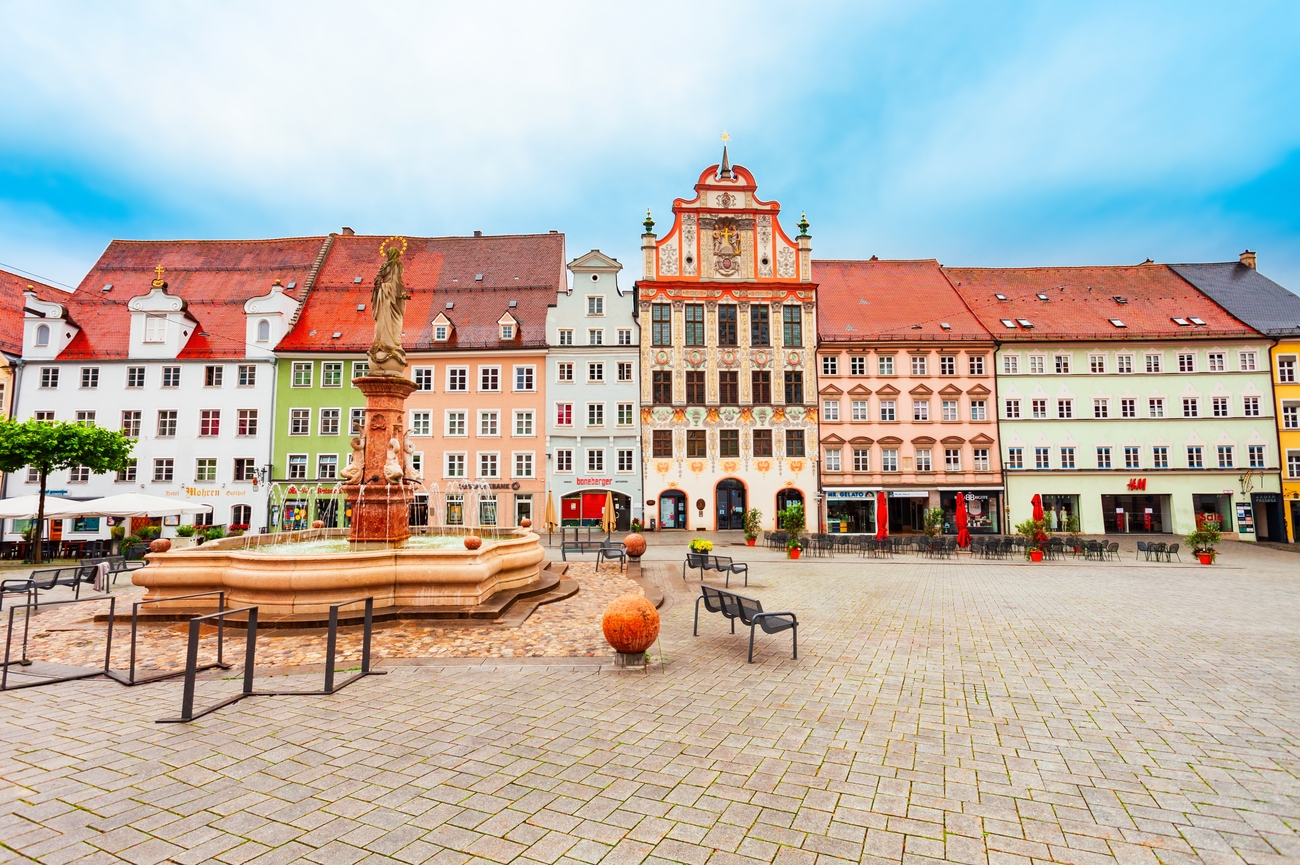
Forty minutes south by car from Stadtpfarrkirche St. Jakob in Friedberg, the road loosens up, the Lech starts making an appearance and the Romantic Road shifts gears. Landsberg am Lech Hauptplatz is where things start feeling confidently cinematic.
This long, elegant square grew rich off salt and it shows. Back when salt was basically liquid gold, Landsberg sat in exactly the right spot and Hauptplatz became the town’s main flex. Merchant houses line the street in soft colors, arcades run beneath them like built-in shade and the whole space feels designed for movement, deals and being seen. This is also Landsberg’s social and civic core. This is where markets happened, announcements were made and travelers passed through on their way north and south.
Schmalzturm Tower
Schmalzturm is Landsberg’s way of keeping things interesting.
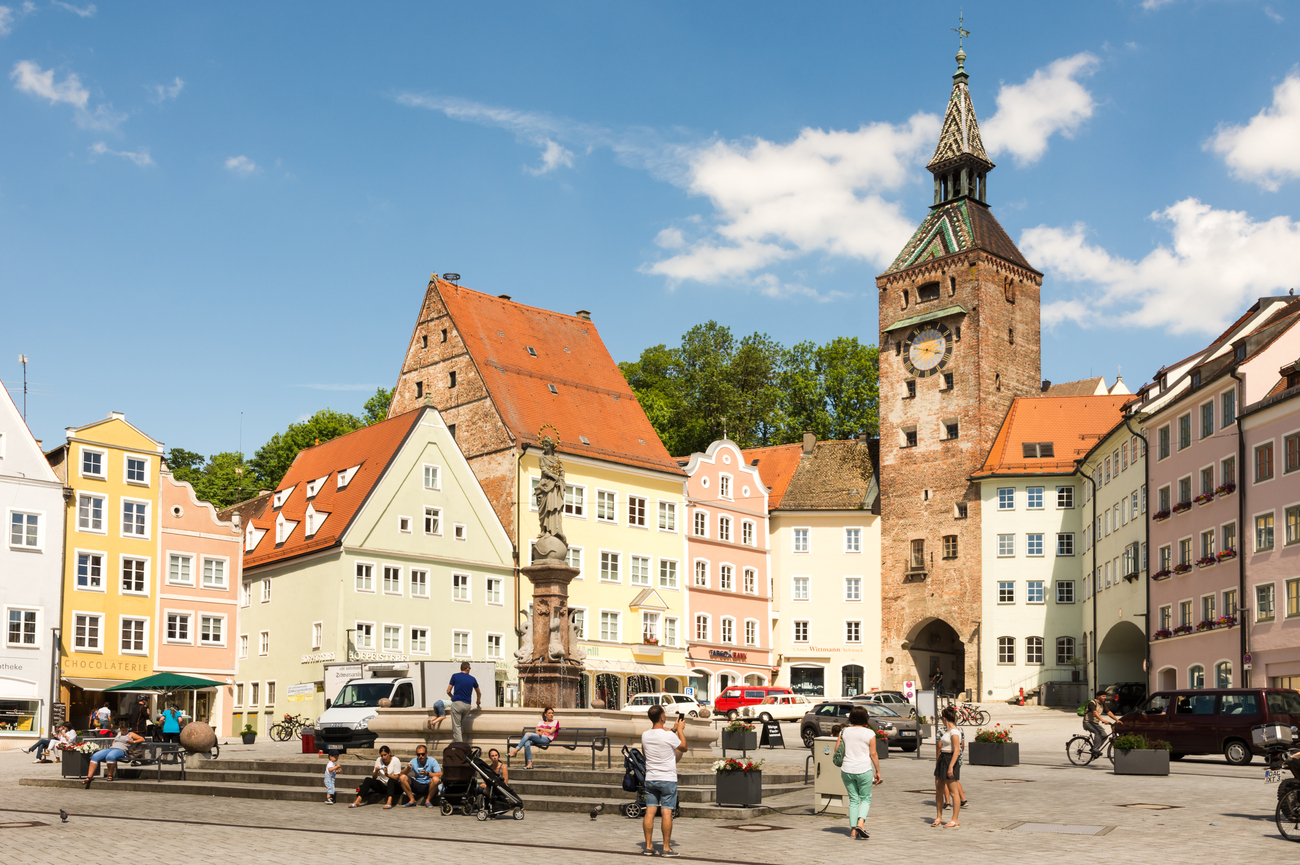
From Hauptplatz, it’s an easy 2 to 3 minute walk. You follow the main street, enjoy the façades for a moment, then suddenly the road narrows and the tower appears like it’s slightly annoyed by modern proportions. Schmalzturm marks the transition between Landsberg’s wider civic space and its older medieval core.
Historically, Schmalzturm was part of Landsberg’s defensive system, built in the 13th century and later reshaped as the town evolved. The name literally means “narrow tower” and it earns it. This gate tower once controlled movement into the inner town and today it still does its job, just without guards or tolls. Its distinctive curved roof and painted exterior make it one of Landsberg’s most recognizable landmarks. More than a monument, it’s an urban punctuation mark. Before Schmalzturm, the town feels open. After it, things get older, tighter and more medieval.
You can join Landsberg am Lech walking tours as these pass directly through Schmalzturm and pause here to explain the town’s fortifications and street layout. And if you want a more luxurious visit, you can join curated photography walks, using Schmalzturm as a framing device to capture the contrast between Landsberg’s open merchant street and its medieval interior.
Afternoon: Altstadt Schongau
Stay on the Romantic Road long enough and the scenery starts tightening its grip. After rolling past river bends and open stretches, the road climbs and suddenly you’re above it all. That’s how Altstadt Schongau announces itself.
Schongau’s old town sits high above the Lech Valley and that elevation was never accidental. Founded as a fortified settlement in the Middle Ages, this was a town built to watch, guard and control movement through the region. The Altstadt is still wrapped in its defensive walls, punctuated by towers and gates that haven’t forgotten their job. Inside, streets curve gently instead of running straight, leading you past painted houses, small squares and churches that feel rooted rather than ornamental.
Schongau played a strategic role along trade routes connecting Bavaria and Tyrol. The old town’s layout reflects that function. Compact. Efficient. Defensive. The walls date back to the 14th century and remain some of the best preserved on the Romantic Road. Walking them gives you elevated views over rooftops and rolling countryside, a reminder that this town once needed every possible advantage.
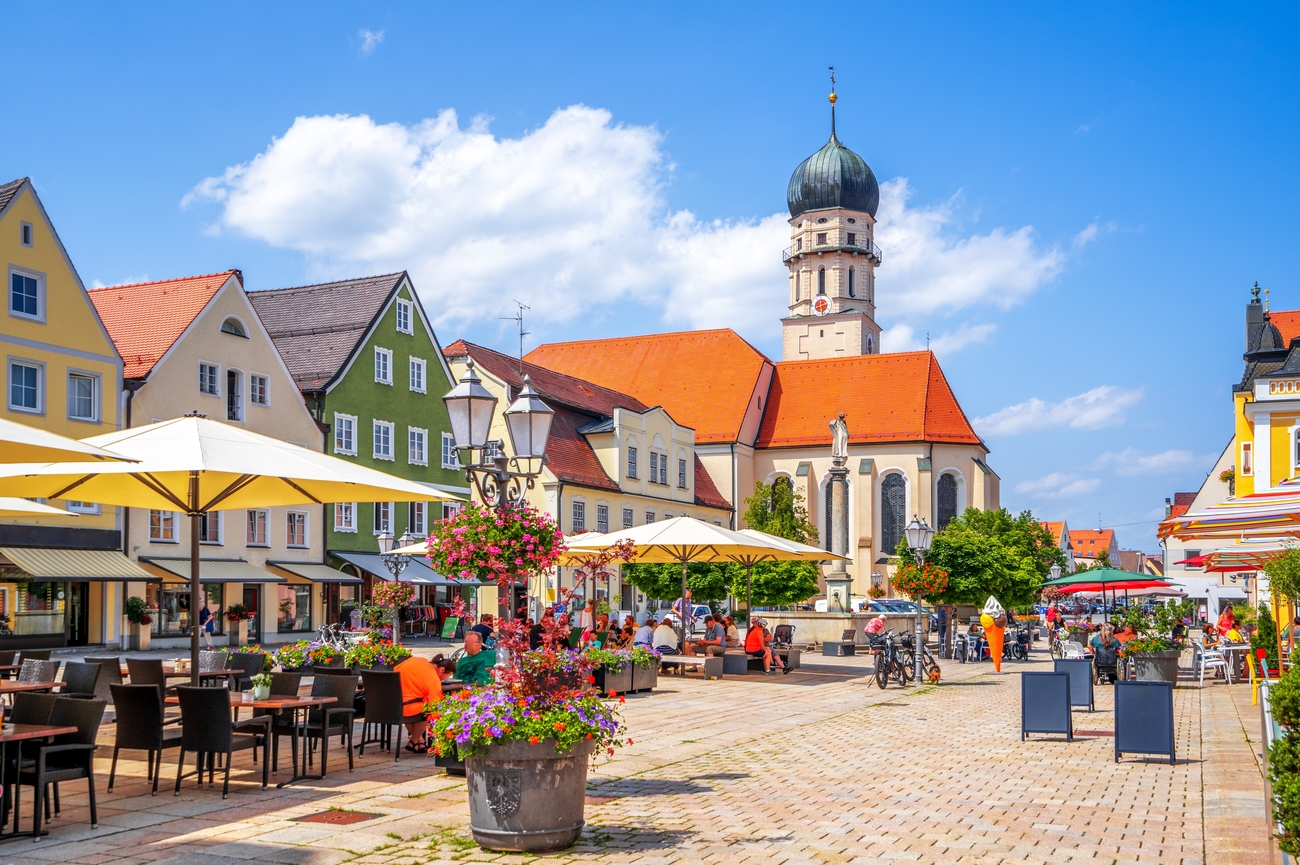
Mariä Geburt
Five minutes after leaving Schongau’s walls behind, the town lets its shoulders drop. The uphill effort fades, the streets breathe a little wider and Stadtpfarrkirche Mariä Geburt appears exactly when the pace is ready to slow.
Mariä Geburt is Schongau’s main parish church and one of its longest-standing landmarks. The first structure rose in the 13th century and what stands today reflects centuries of refinement rather than a single moment in time. Gothic lines give the church its height and clarity, while later Baroque updates softened the interior and introduced warmth. Inside, the vaulted ceiling draws the eye upward without overwhelming it. Altars and side chapels feel intentional and measured, designed for regular worship and community life rather than visual overload.
The church sits near the heart of the Altstadt, positioned as a gathering place rather than a point of control. Its location speaks to its role in everyday life. This was where the town marked seasons, milestones and shared rituals.
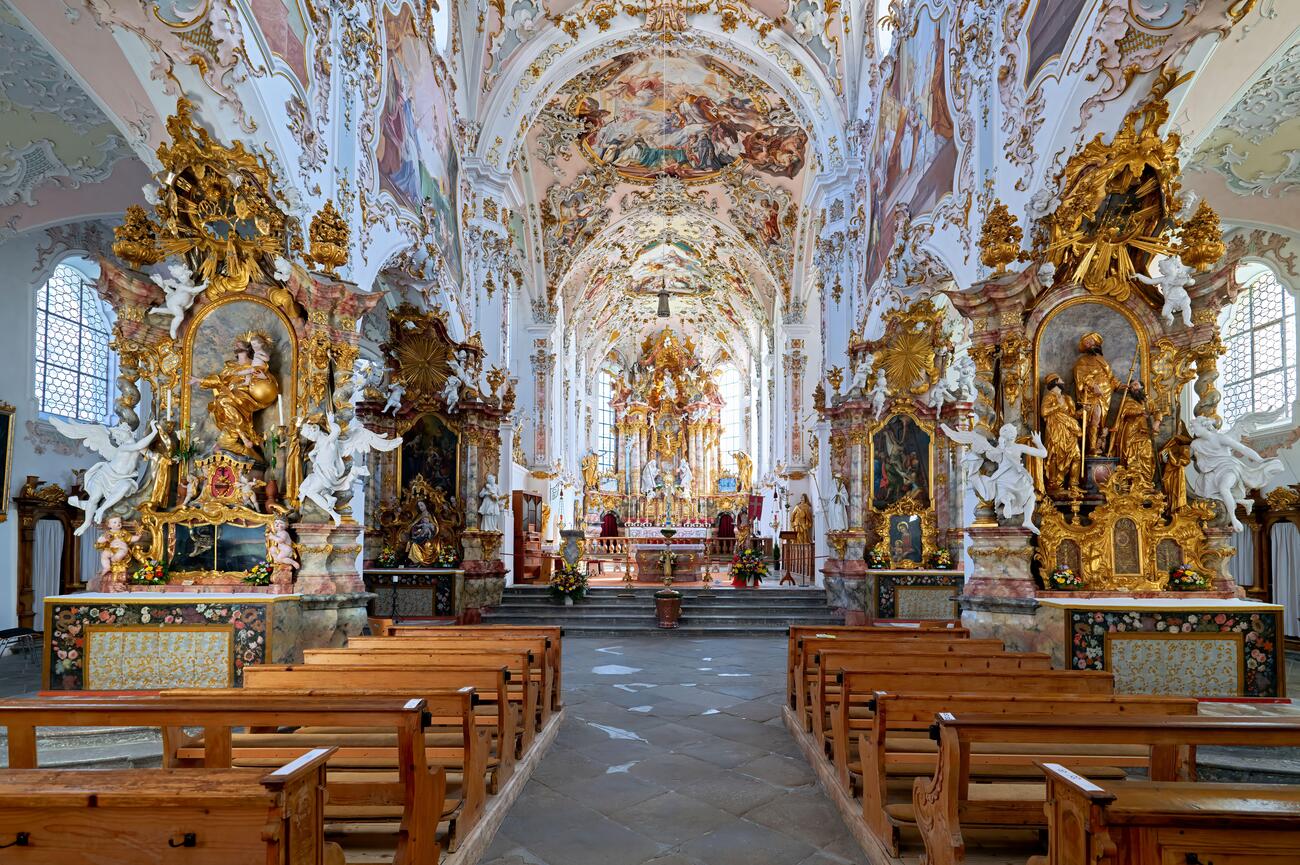
Schwangau
The road starts flirting with the Alps about 45 minutes after leaving Schongau, the kind of drive where fields flatten out and then suddenly don’t. Peaks sharpen. Lakes start reflecting things a little too perfectly. That’s your cue. Schwangau has entered the chat.
Schwangau is a small village with a very big backdrop. Sitting at the edge of the Bavarian Alps, this is where rolling countryside hands things over to full fairytale terrain. The area has been inhabited since Roman times, but Schwangau’s identity today is tied to its landscape and its relationship with Bavarian royalty. Meadows stretch wide, the Lech River slows down and the mountains frame everything like they’re part of the design plan.
The village functions as the natural gateway to the royal castle area and its surroundings, which makes it feel calm despite its global fame. Paths are flat and walkable, viewpoints are thoughtfully placed and the scenery never feels crowded even when the interest level is high. Schwangau’s layout keeps the focus outward. Toward the lakes, the hills, the silhouettes rising above them. It’s a place that lets the environment do most of the talking.
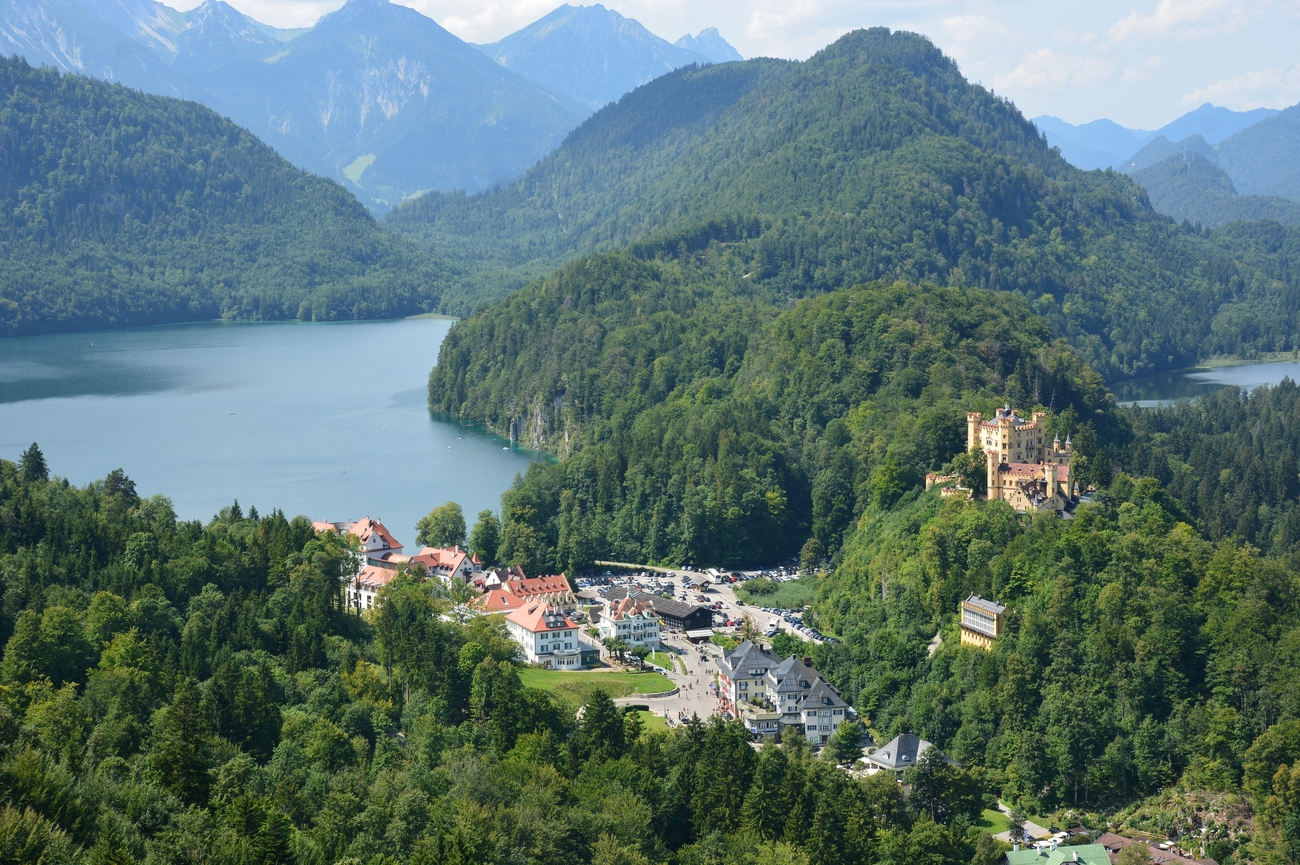
Hohenschwangau Castle
Five minutes after leaving the village, the vibe shifts. Trees part. The hills lean in. And then Hohenschwangau Castle shows up like it’s been waiting for its cue.
This is where King Ludwig II grew up and it explains a lot. Hohenschwangau was rebuilt in the 19th century by King Maximilian II on the remains of a medieval fortress and it feels intentional in a very personal way. Yellow walls instead of grey drama. Towers that watch rather than dominate. Inside, the rooms are wrapped in murals pulled from German legends and medieval sagas, basically a visual playlist of heroic stories that shaped Ludwig’s imagination long before Neuschwanstein became a thing.
The castle’s position matters. Sitting lower on the hillside and facing Alpsee and Schwansee, it keeps everything grounded. Water below. Mountains behind. Oh, and you can only enter Hohenschwangau Castle as part of a guided tour and spaces are limited. Each tour lasts about 45 minutes and takes you through the main interior rooms with a castle guide. Be ready for a bit of movement. There’s no elevator and you’ll climb around 90 steps during the visit. Lace up your boots and prepare for a mini hike!
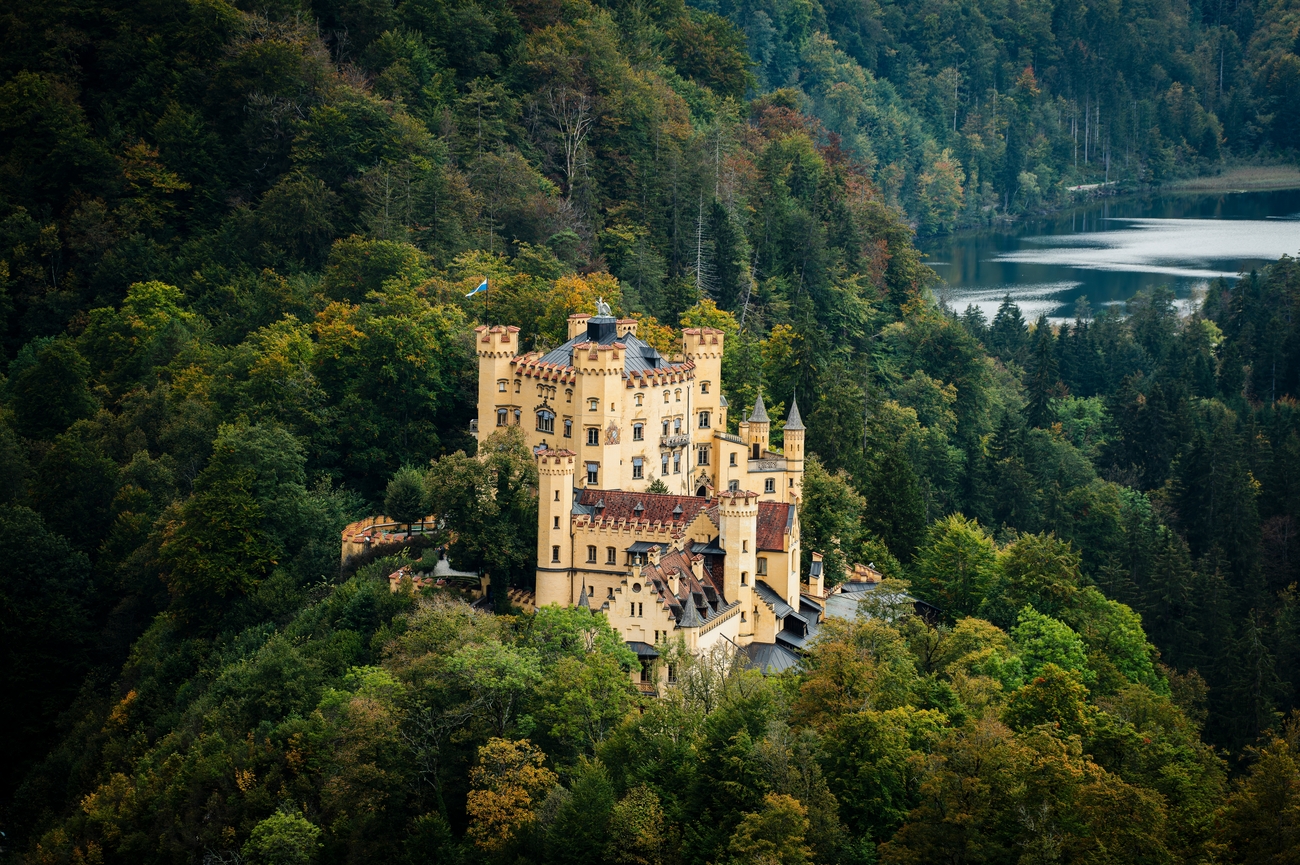
Evening: Neuschwanstein Castle
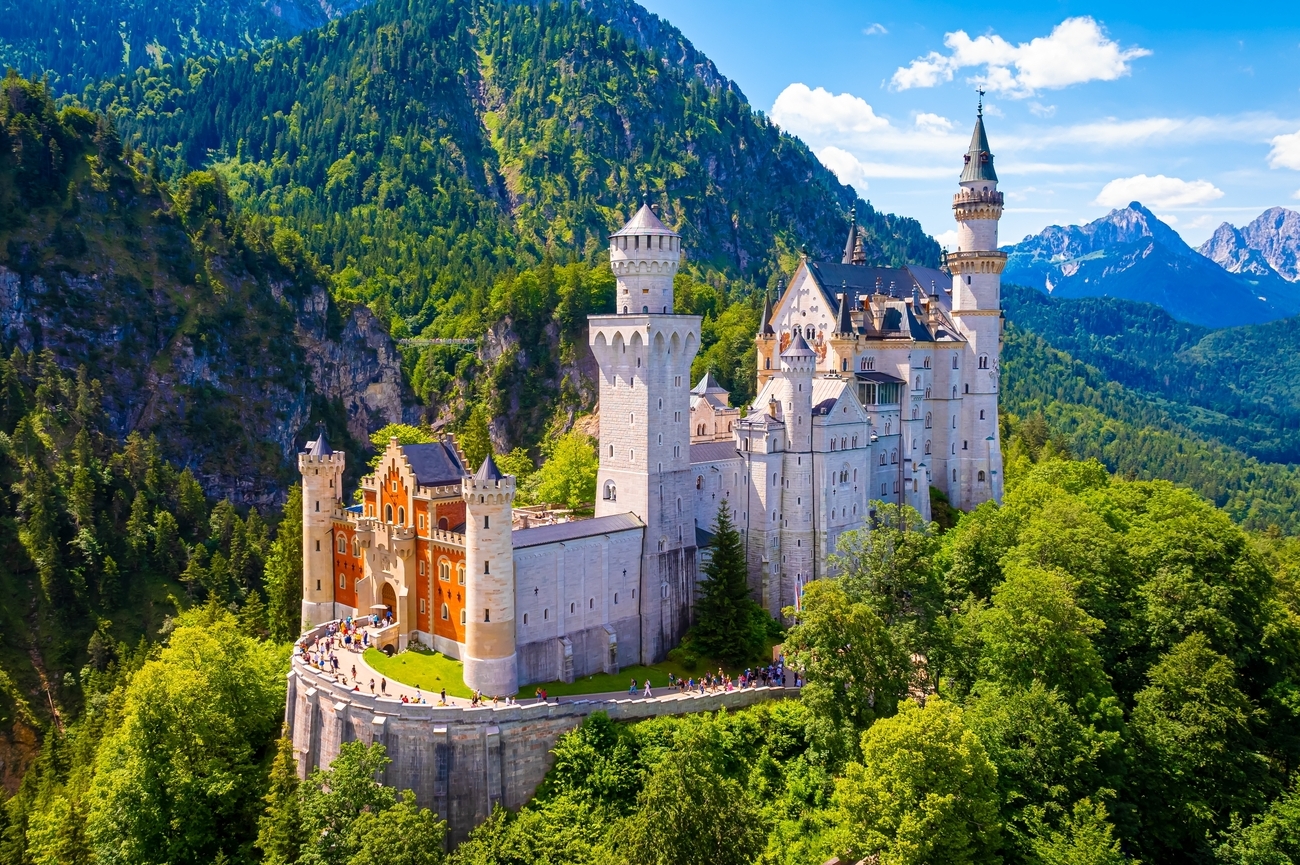
About 15 minutes uphill from Hohenschwangau, the trees thin out and the view sharpens. Neuschwanstein Castle is where the Romantic Road saves its final card.
This stop defines Day 4. Today is all about castle-hopping, moving between royal residences and letting each one build on the last. Neuschwanstein is the final and most dramatic chapter of that sequence. Built in the late 19th century by King Ludwig II, the castle pulls from medieval legends and Wagnerian opera and turns them into architecture that refuses to be subtle. Towers reach skyward, interiors lean theatrical and practicality was clearly not invited to the design meeting. From the outside, it’s instantly recognizable. Inside, rooms like the Throne Hall and Singer’s Hall feel deliberately staged.
If you plan to go inside, you’ll join a guided tour with a fixed time slot and limited capacity. The interior visit lasts about 30 minutes and follows a set route through the main rooms. Tours are offered in German or English, with audio guides available in multiple languages.
The setting carries the mood. Perched above the Pöllat Gorge with Alpsee below and the Alps stacked behind it, Neuschwanstein feels made for a grand finale. You finish looking out over lakes and peaks as daylight fades, with the sense that the Romantic Road saved its biggest statement for last.
Day 4 - Romantic Road Tour Map
Other Things to Do Along the Romantic Road
The Romantic Road doesn’t run out of ideas. It just gets more selective. Once you’ve done the headline stops, this is where the route starts rewarding curiosity. These are the places you hit when you want texture, access and moments that feel a little more intentional. Less checklist, more “you knew where to go.”
- Wertheim Village: Wertheim Village is a deliberately curated retail environment where designer brands sit in an open-air layout that actually makes sense. The experience works best when you approach it strategically. Go mid-morning or early afternoon, avoid peak weekends, and lean into the elevated side of shopping here. This is where the Romantic Road pivots briefly into modern indulgence without breaking character.
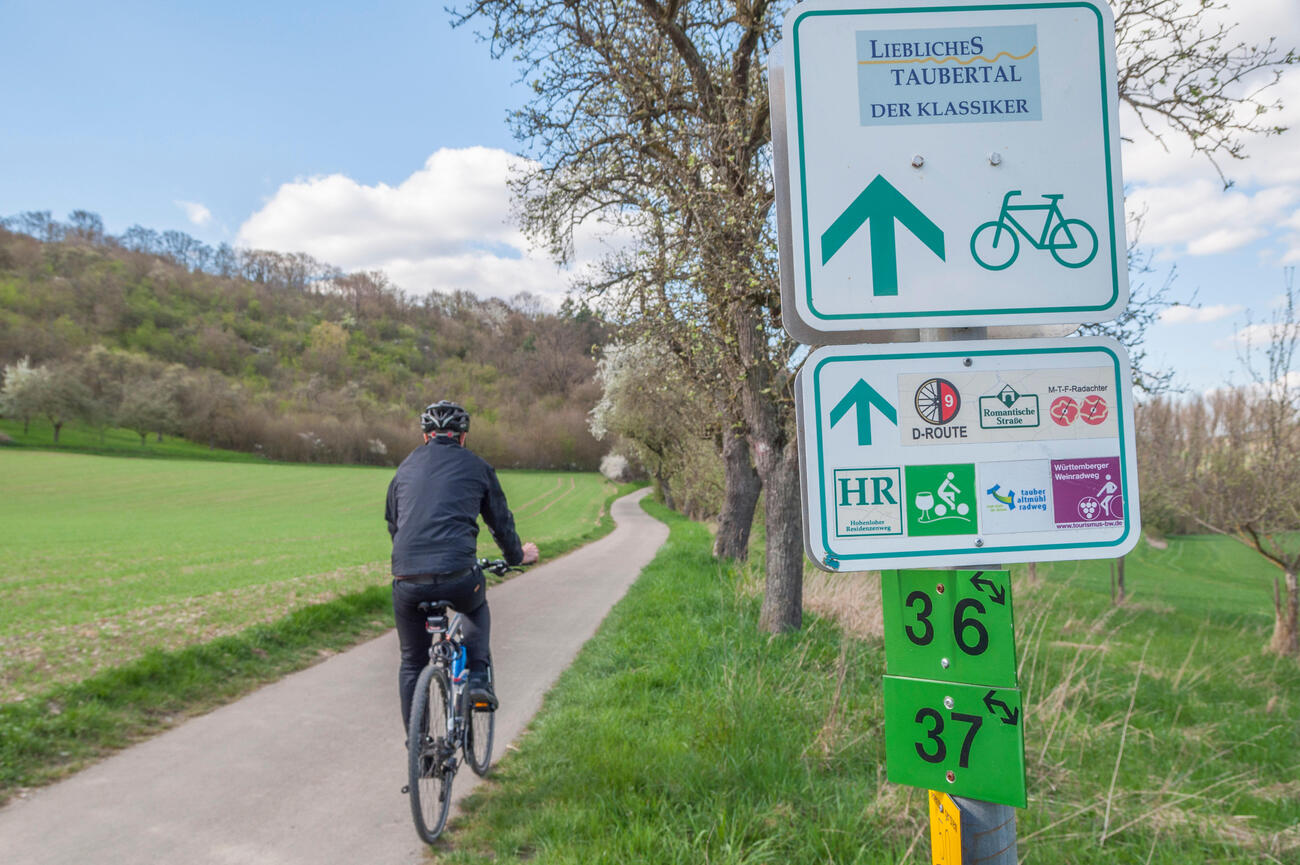
- Taubertalradweg: The Tauber Valley cycling route is one of the most quietly satisfying ways to experience the Romantic Road. Vineyards, river bends, small villages, and open countryside roll past without needing commentary. You don’t cycle this for speed. You do it for rhythm. Even short sections feel rewarding, especially when paired with vineyard stops or scenic pauses that don’t feel staged.
- Herrgottskirche: Herrgottskirche is often described quietly, and that’s exactly how it should be. Built as a pilgrimage church, it sits apart from town life, surrounded by fields, which heightens the sense of focus the moment you step inside. The Marienaltar by Tilman Riemenschneider is the centerpiece, carved in limewood with remarkable restraint. No gold distractions. No visual noise. Just expression, movement, and emotional precision.
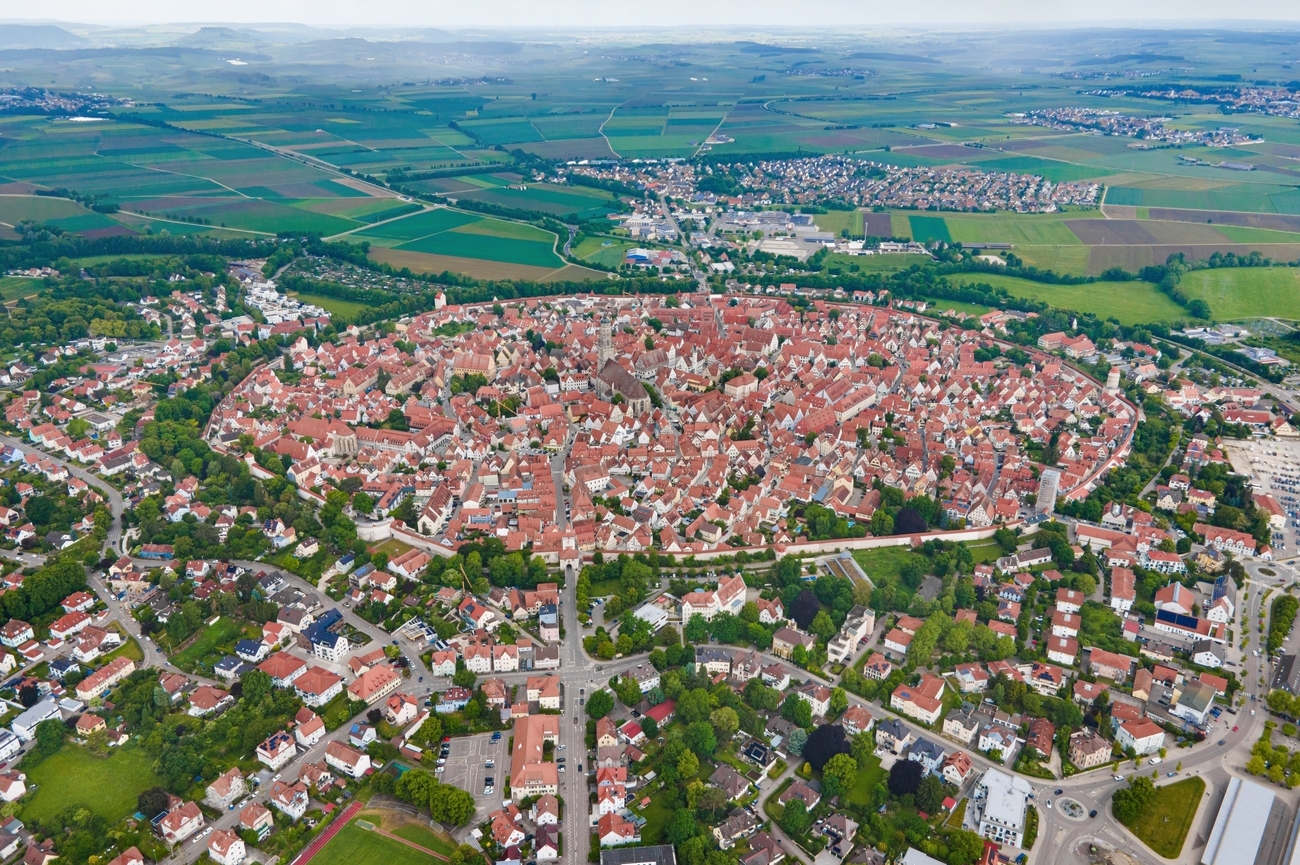
- Nördlinger Ries isn’t something you “visit” in one spot. It’s something you begin to notice everywhere once you know it’s there. Formed by a meteorite impact around 15 million years ago, the crater defines the region’s geology, soil and even architecture. Stones used in local buildings contain microscopic diamonds created by the impact. The best part is that you are not just near the crater, you are in it. The medieval old town of Nördlingen sits inside the impact basin, and its near perfect circular walls trace the crater’s story in stone. You can join private guided walks where an expert turns the landscape from background into a narrative. Once it clicks, Nördlingen’s perfectly circular layout feels inevitable rather than charming.
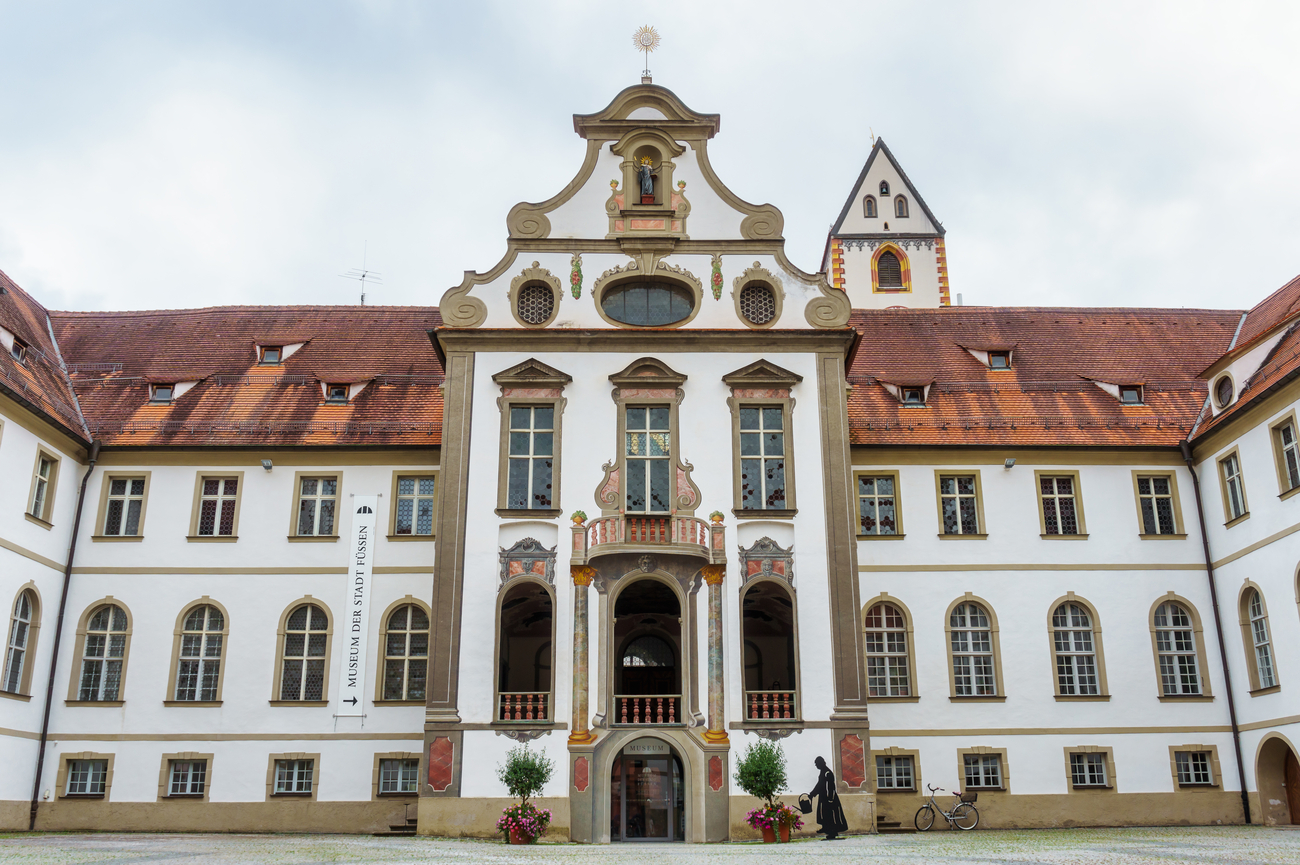
- Benediktinerkloster St. Mang: St. Mang Abbey adds intellectual weight to Füssen’s fairytale reputation. Founded as a Benedictine monastery, the complex blends spiritual discipline with Baroque artistry, resulting in interiors that feel layered but never overwhelming. Frescoes, architectural symmetry and museum spaces unfold gradually, rewarding attention rather than spectacle. This stop reframes Füssen as more than a gateway to castles.
Things To Do With Kids Along the Romantic Road
You’re still moving through medieval towns, palaces and cultural landmarks, but the difference is how those places meet energy levels, curiosity and attention spans. When kids can move, touch, imagine and reset, the route stops feeling like a history lesson and starts feeling like an adventure everyone’s actually part of. These stops are all about balance. They mix learning with play, structure with freedom and culture with moments where kids can just be kids.
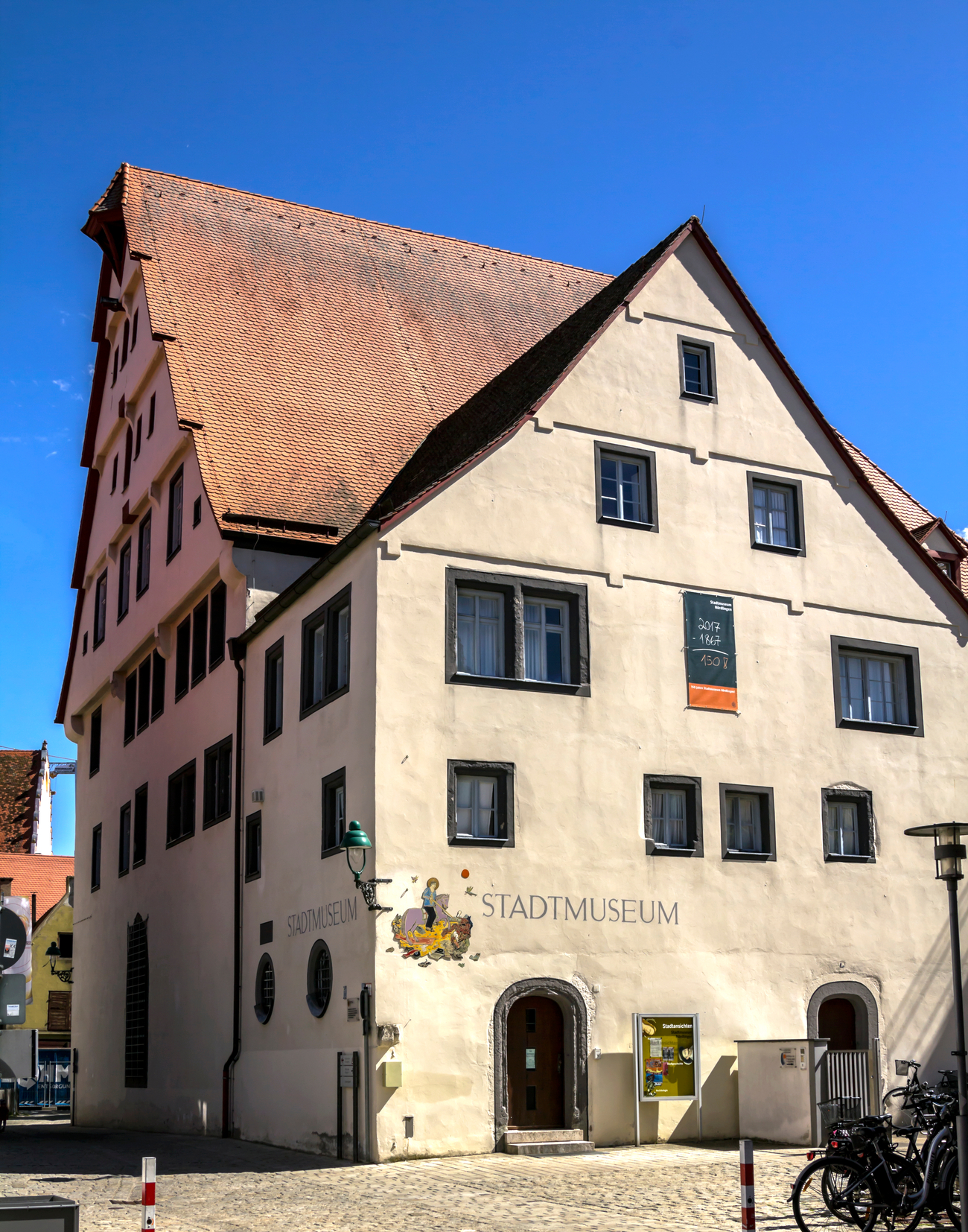
- Stadtmuseum im Hl.-Geist-Spital: This museum works because it’s rooted in everyday life, not abstract history. Set inside a former medieval hospital, it tells the story of how people lived, worked, healed and supported one another in Dinkelsbühl centuries ago. You’re walking through real spaces that once served real functions, which makes the experience easier for kids to grasp. Exhibits are visual and clearly laid out, so you’re not constantly translating information.
- Kristall Palm Beach: At some point, kids don’t need another church or square. They need water, movement and a full reset. Kristall Palm Beach delivers exactly that. Slides, wave pools and family zones give kids the freedom to burn energy properly, while parents benefit from clean facilities and clear organization. The experience works best when you treat it as intentional downtime rather than filler.

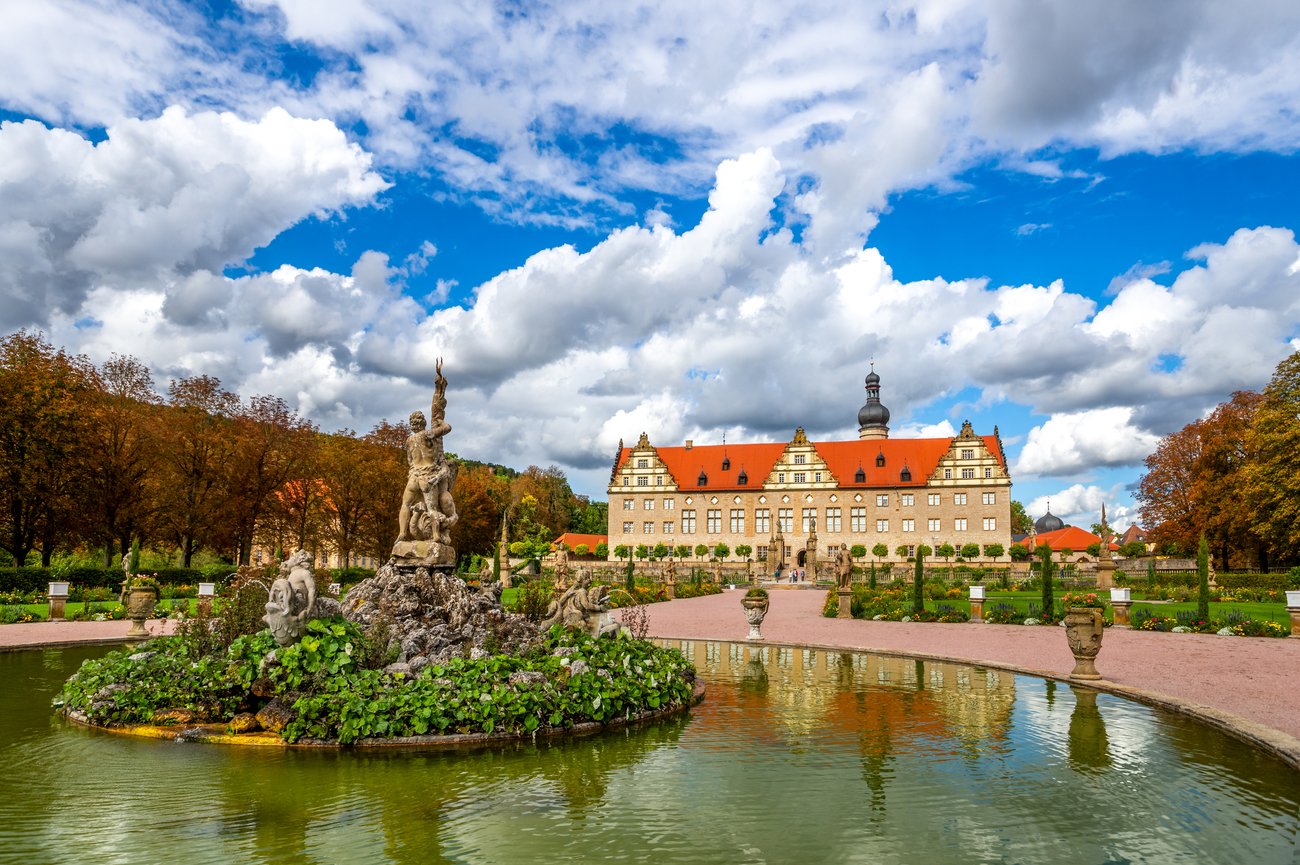
- Weikersheim Palace and Garden: This palace understands how to hold attention. The gardens are expansive, geometric and open, which means kids can walk, explore and move freely instead of being asked to stand still. Inside, the palace rooms are grand enough to spark imagination without feeling overwhelming. You can talk about princes, courts and ceremonies without forcing details.
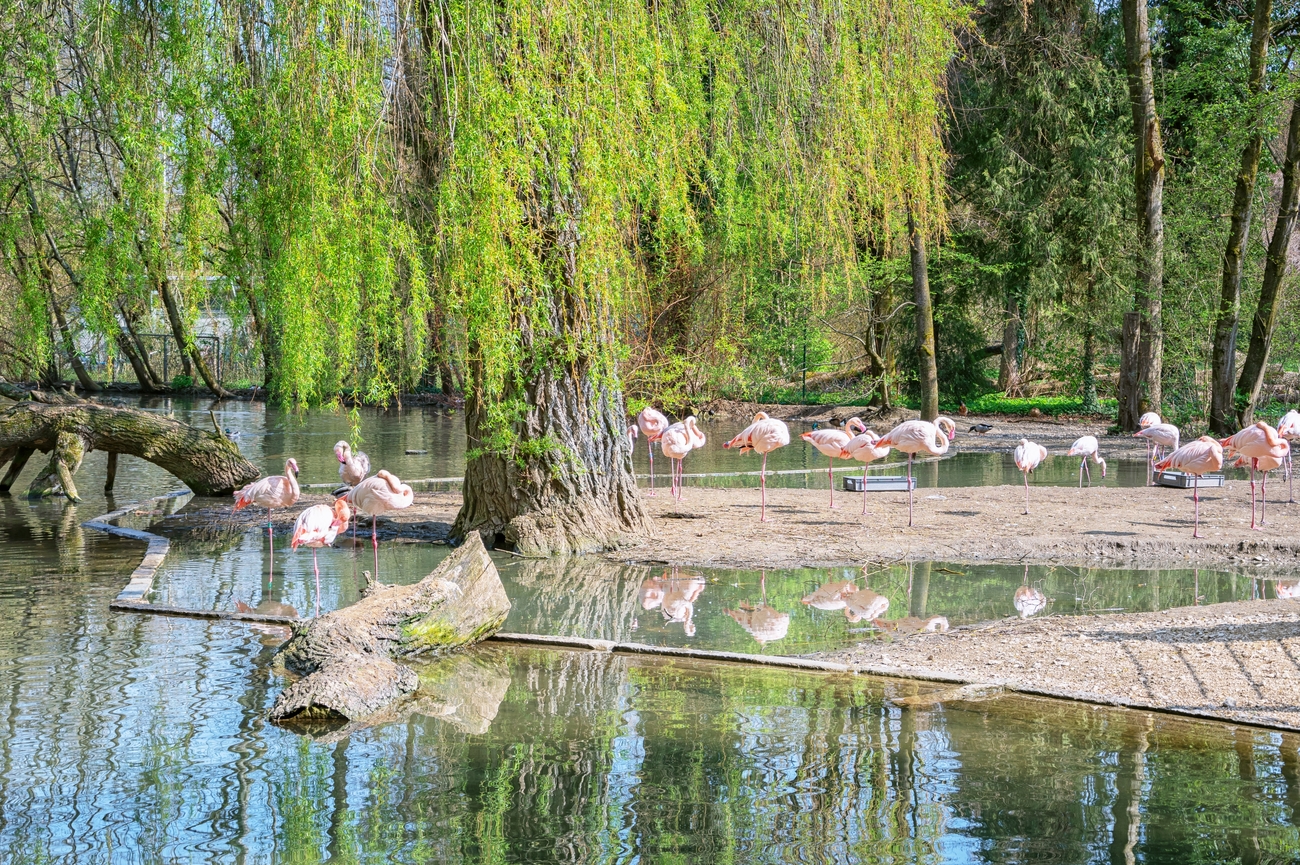
- Zoo Augsburg: Zoo Augsburg is a reliable, low-stress win for families. Wide paths, spacious enclosures and plenty of green areas mean kids aren’t constantly being told to slow down or stay close. You can wander, pause and move on without pressure. It’s especially effective after days heavy on architecture and walking. Everyone relaxes, conversations flow more easily and the day feels lighter without losing structure.
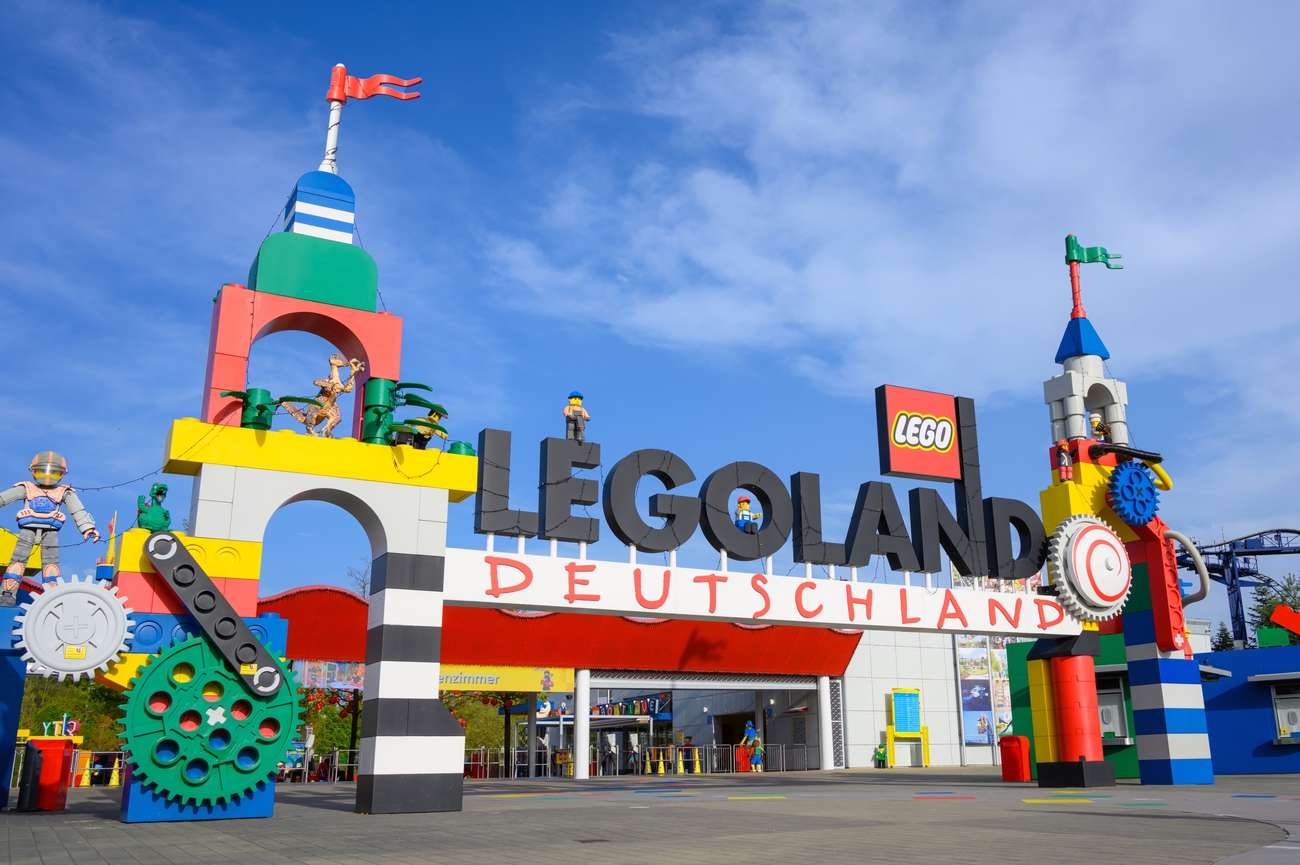
- LEGOLAND Deutschland: Sometimes you want a guaranteed highlight and this is it. LEGOLAND delivers full immersion, creativity and movement in a way that works across age groups. The key is commitment. Treat this as a full experience, not a rushed stop. Clear layout, shaded areas and interactive zones make the day feel manageable rather than exhausting. You’ll leave with kids who feel seen and adults who didn’t have to compromise the entire itinerary to get there.
Day Trips From the Romantic Road
At some point along the Romantic Road, the scenery starts to feel almost unreal. Half-timbered towns line up neatly, towers appear right on cue, and everything feels a little too perfectly composed. That’s when the route quietly invites you to do what Dorothy did best. Step off the road and see what else exists beyond it. Not because the main path isn’t good enough, but because perspective gets sharper when you leave it for a while.
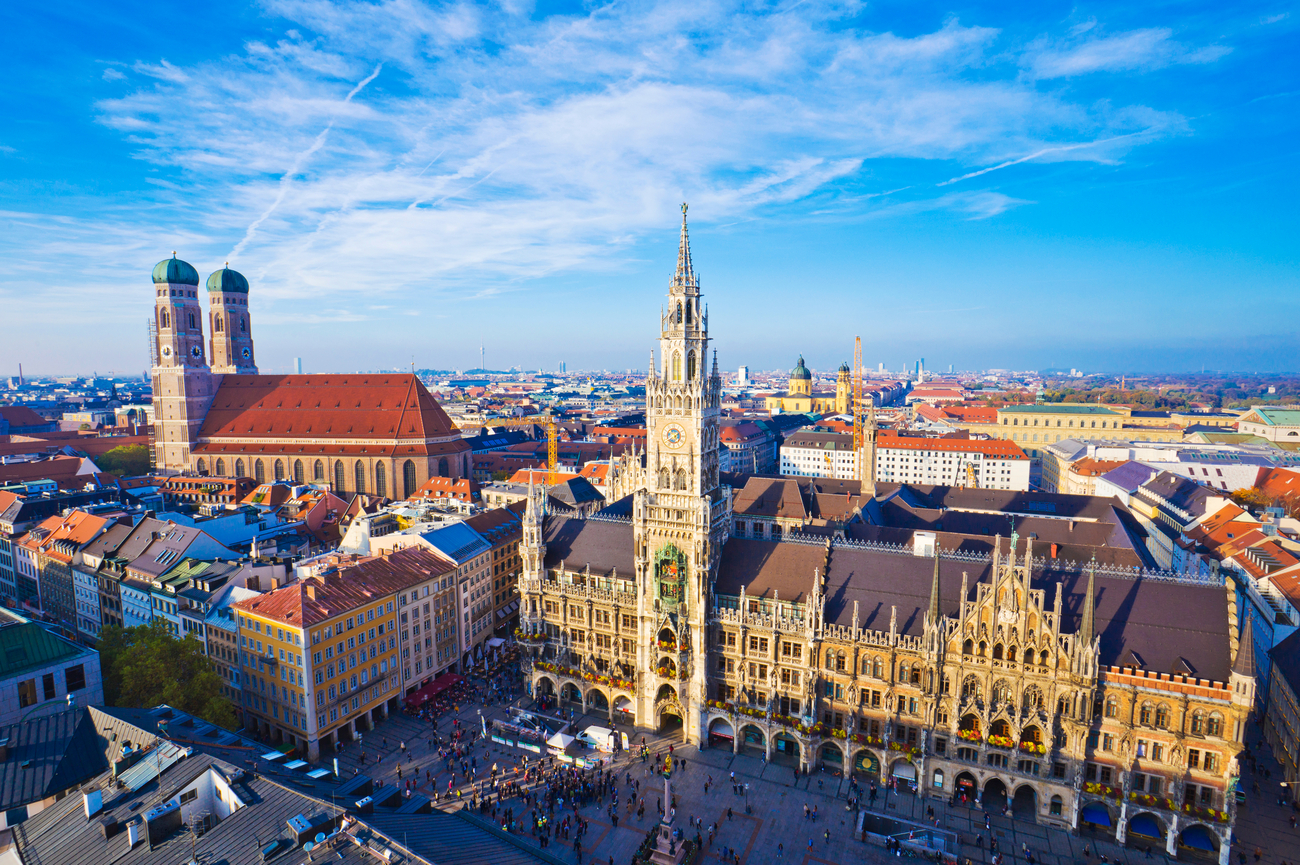
- Munich: Munich has a way of feeling settled before you even step out of the car. From the southern end of the Romantic Road, the journey usually takes about one to one and a half hours. This is Bavaria in control of its image. The Munich Residenz lays out royal ambition in layers rather than spectacle, while Marienplatz keeps the city’s civic heartbeat steady. You don’t need to chase everything here. Decide what matters to you, art, history or refined city life, and Munich meets you at that level.
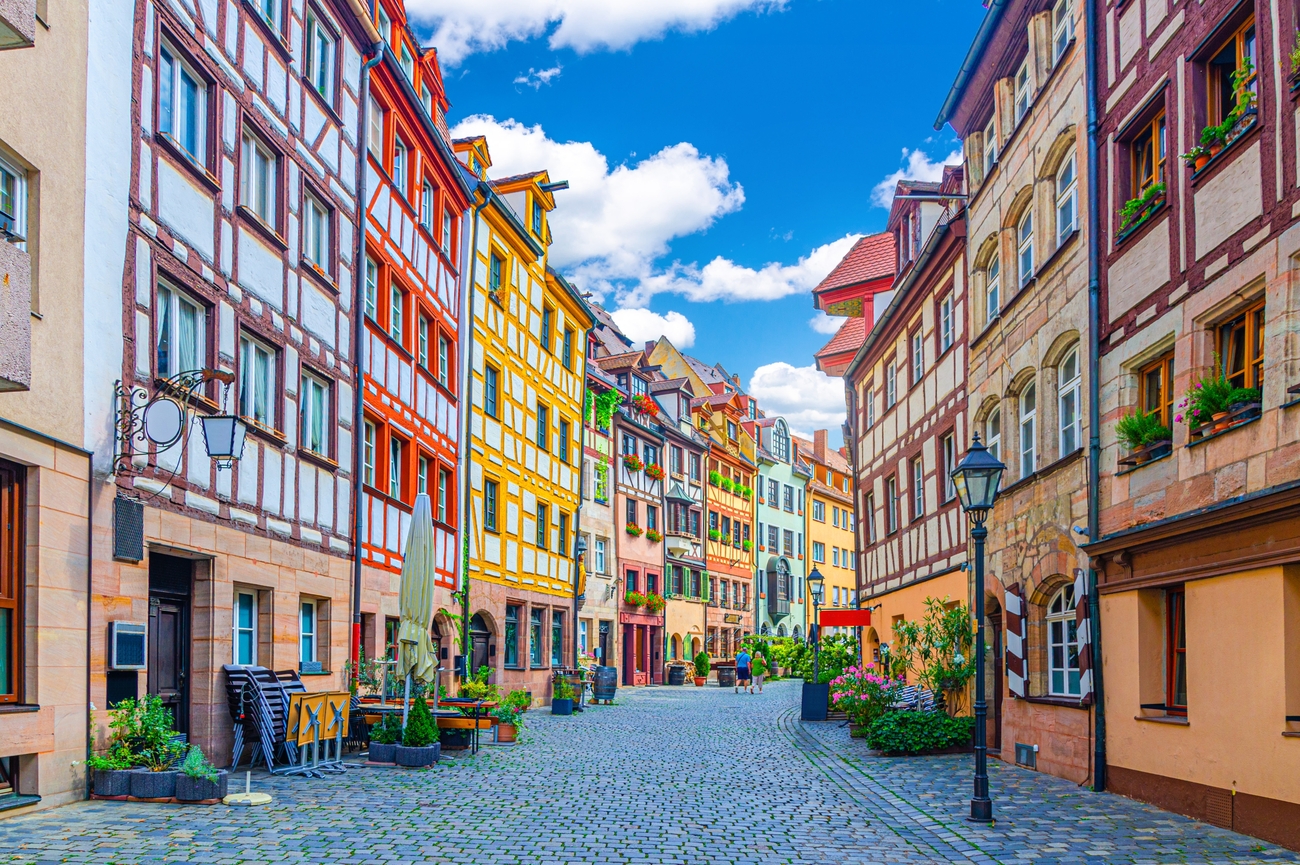
- Nuremberg: Reached in roughly one to one and a half hours from Rothenburg ob der Tauber, it carries its history openly. The Imperial Castle still commands the skyline and you feel that authority as you move through the old town’s walls and narrow streets. Then the narrative shifts. The Documentation Center Nazi Party Rally Grounds introduces a later chapter that changes how everything else reads. You’re not here for comfort. You’re here for clarity.
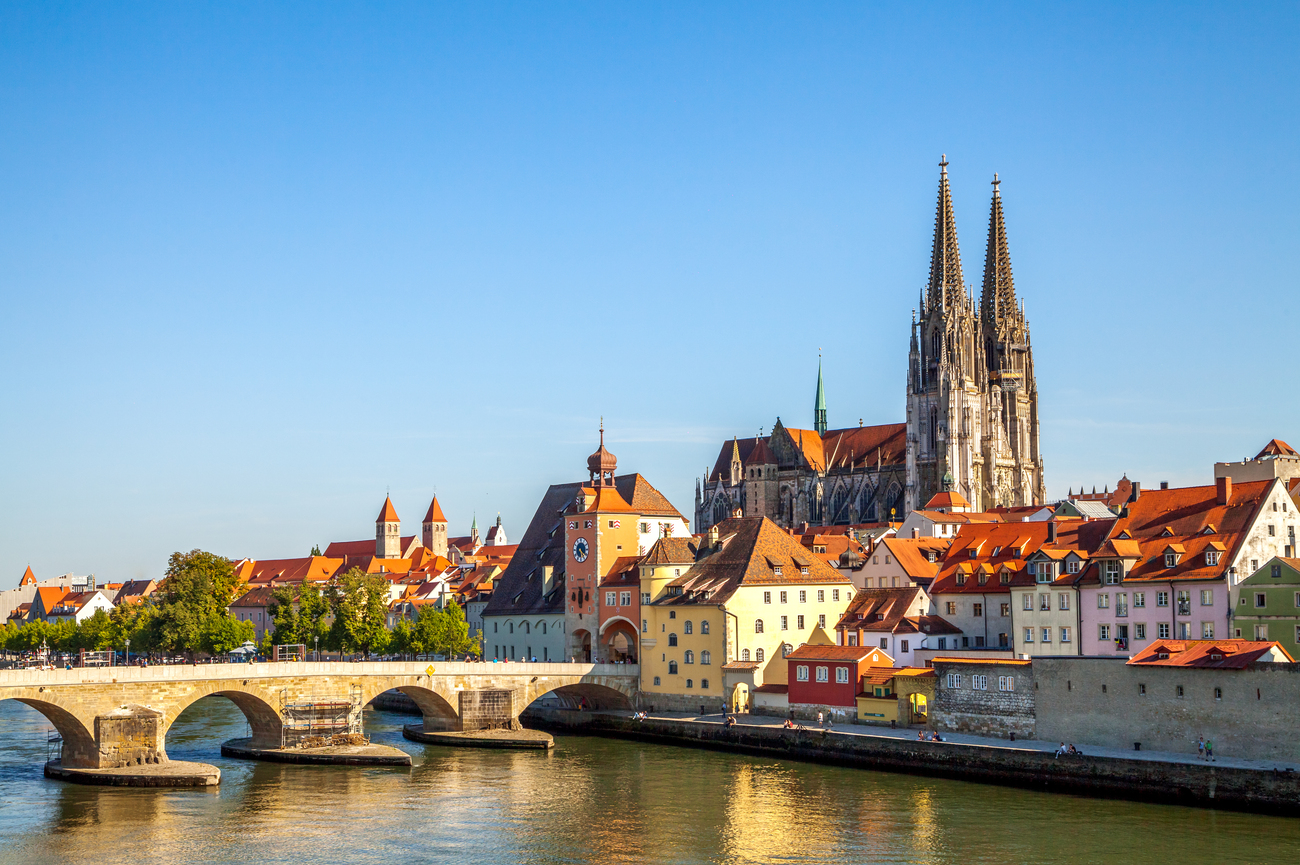
- Regensburg: Regensburg doesn’t try to charm you first. It earns your attention slowly. Located around one to one and a half hours from much of the Romantic Road, this UNESCO World Heritage City feels grounded in function and permanence. The Stone Bridge still defines the city’s relationship with the Danube, while St. Peter’s Cathedral rises with Gothic confidence but never overwhelms its surroundings.
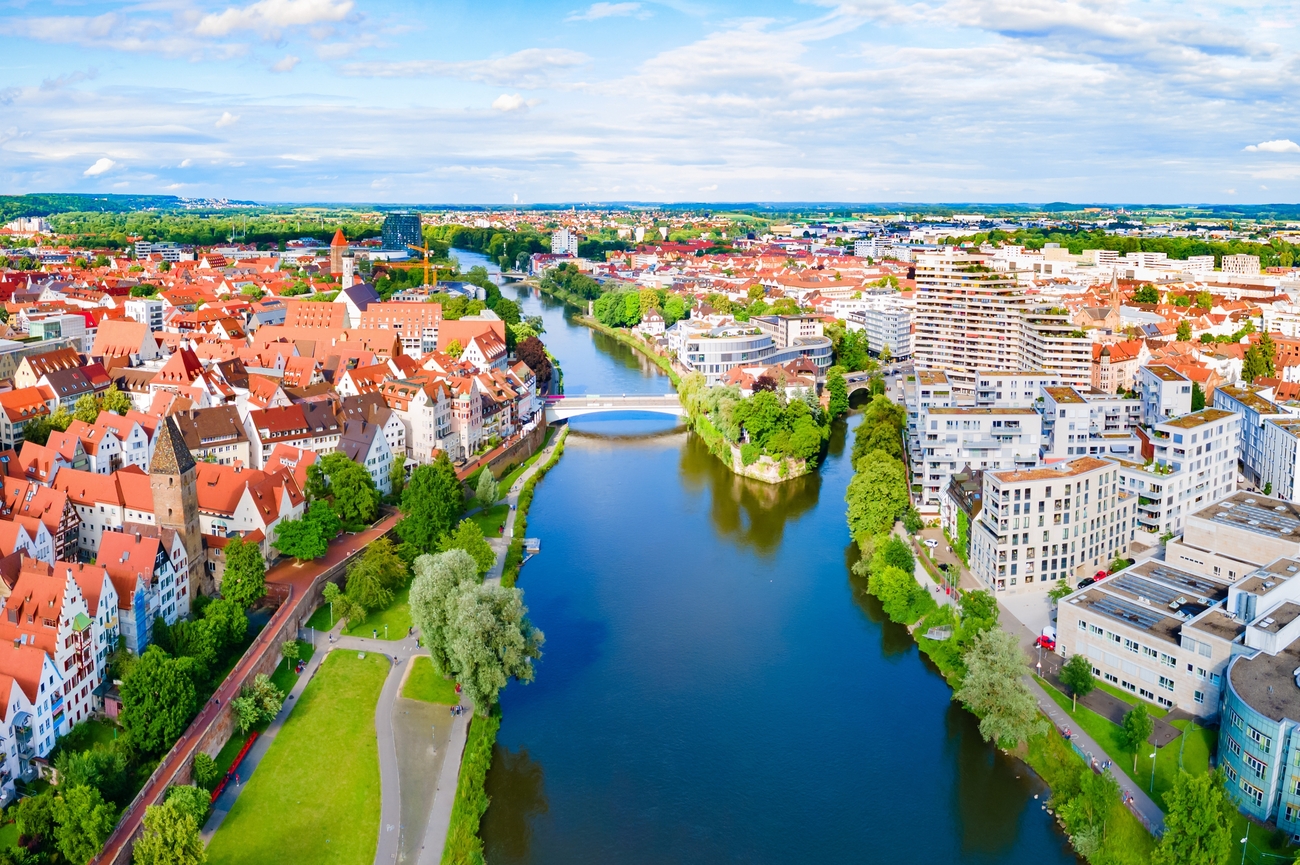
- Ulm: From the southern stretches of the Romantic Road, travel time typically falls within one to one and a half hours, and the skyline immediately sets expectations. Ulm Minster, with the tallest church spire in the world, dominates every angle. Whether you climb it or not almost doesn’t matter. The presence alone is enough. At ground level, the Fishermen’s Quarter shifts the mood with half-timbered houses and narrow waterways, while the Danube opens the city outward. Here is where you’ll feel the balance between ambition above, restraint below.
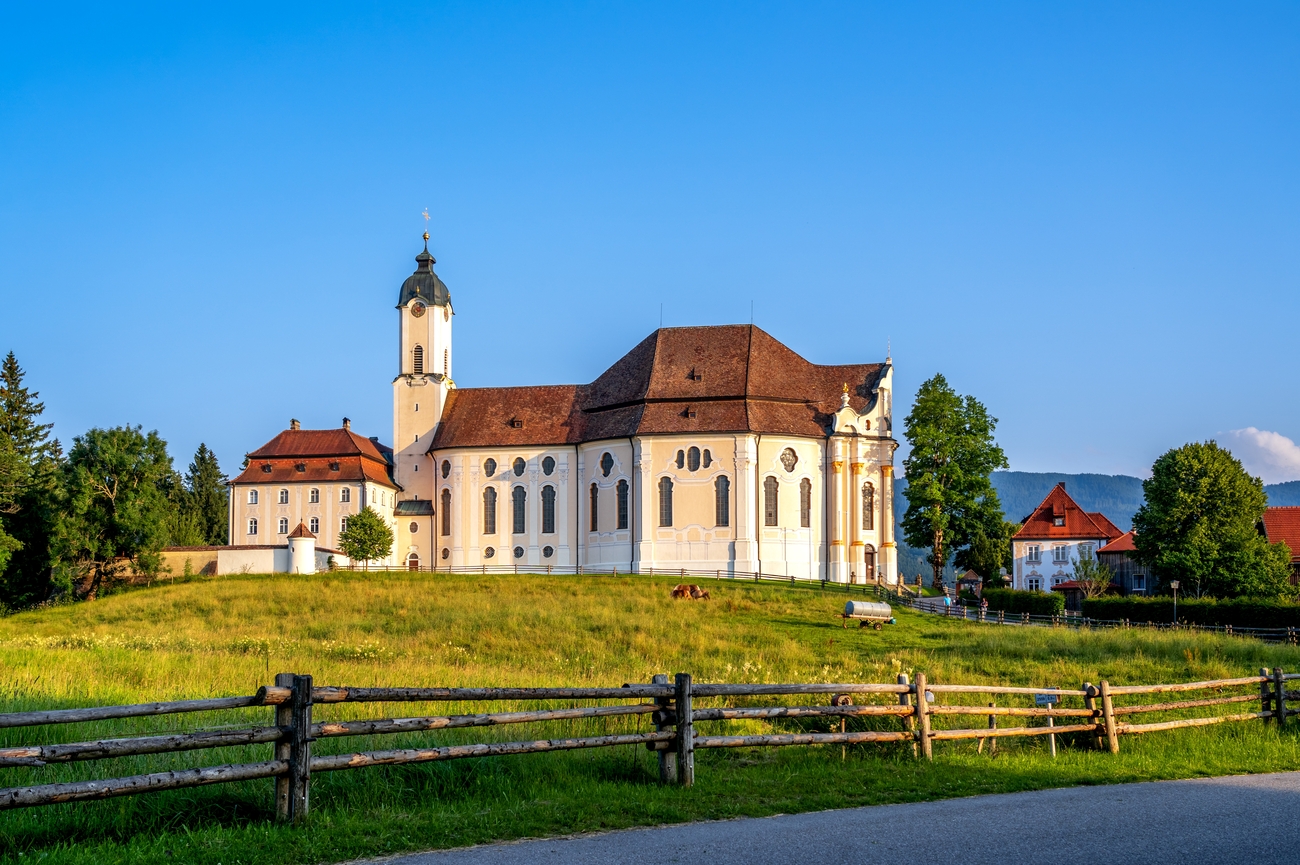
- Wies: Wies sits quietly in the Upper Bavarian countryside near Steingaden and the setting does half the work before you even step inside the church. Reaching this area takes about an hour from Füssen or the southern end of the Romantic Road. The Pilgrimage Church of Wies rises gently from open meadows, almost understated against the landscape. As a UNESCO World Heritage Site, its power comes from precision rather than drama. Inside, Rococo ornamentation is carefully controlled. After busy towns and layered cities, this stop recalibrates your pace and reminds you that stillness can be just as intentional as movement.
Golf Courses Along the Romantic Road
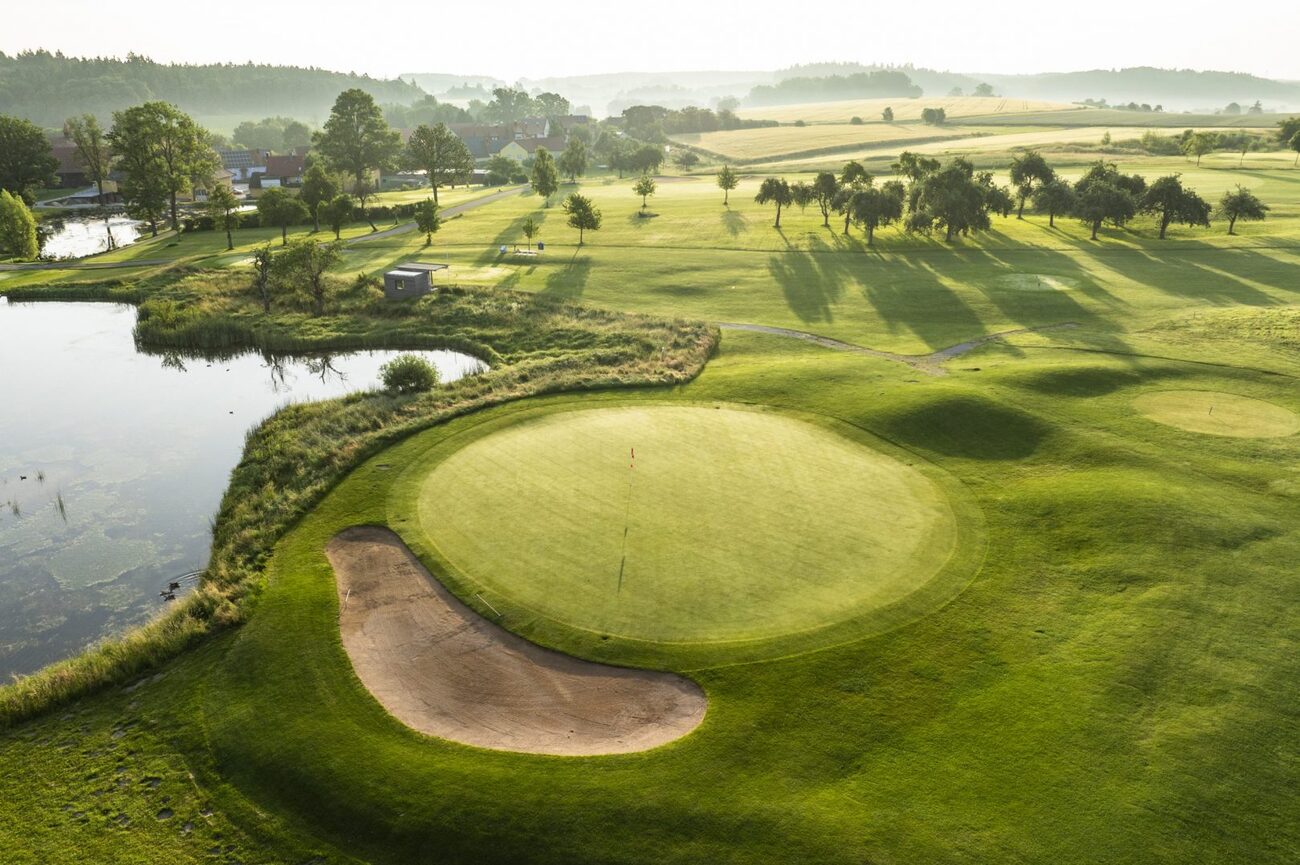
Golf along the Romantic Road isn’t about squeezing in a round between castles. It’s about changing pace without breaking the mood. After days of stone walls, church spires and medieval streets that pull your eyes upward, golf brings everything back to ground level. These courses aren’t isolated resorts dropped into nowhere. They sit inside landscapes shaped by the same forces as the Romantic Road itself, rivers, forests, old trade routes and long-settled countryside. When you play here, you’re not stepping away from the journey. You’re interacting with it differently.
- Golfclub am Reichswald e. V.: Set within the Sebalder Reichswald forest near Nuremberg, Golfclub am Reichswald is wrapped in tall trees, birdsong and the occasional glimpse of wildlife that quietly resets your pace. It is not on the Romantic Road itself, but it is the kind of detour that genuinely earns its place on a golfer’s itinerary, and a strong must-play option in Franconia. The 18-hole course is meticulously maintained, but what defines the experience is its flexibility. With no fixed tee times, play follows the club’s “Come and Run” approach, allowing you to arrive, start and settle into the round without pressure. Afterward, Eagle’s Kitchen adds a refined culinary note, led by Christian Brieske, one of Franconia’s most respected chefs. If you want to refine your technique, PGA coaches Richard Taylor and David Blakeman offer modern instruction for all levels.
- Golfpark Rothenburg-Schönbronn: Just outside Rothenburg ob der Tauber, this is the Romantic Road’s most natural golfing pause, where rolling Franconian countryside shapes an 18-hole course that feels open, measured and quietly refined. The layout flows without intimidation, offering enough variation to stay engaging while remaining approachable for a wide range of players. Fairways sit comfortably within the landscape rather than overpowering it, and the rhythm of the round feels unhurried, making it an easy addition to a Romantic Road itinerary that values balance, scenery and understated quality over spectacle.
Racecourses Along the Romantic Road
The Romantic Road itself keeps its feet firmly on cobblestones, not racetracks. There are no active horse racecourses located directly along the official route and that’s part of its character. Medieval towns, church spires and slow-moving streets don’t exactly leave room for a finish line. That said, the story doesn’t end at the border. Right at the southern gate of the Romantic Road, two established racecourses sit just outside the route, close enough to feel connected without rewriting the map. If you’re entering or exiting the Romantic Road through Munich, these tracks offer a natural detour.
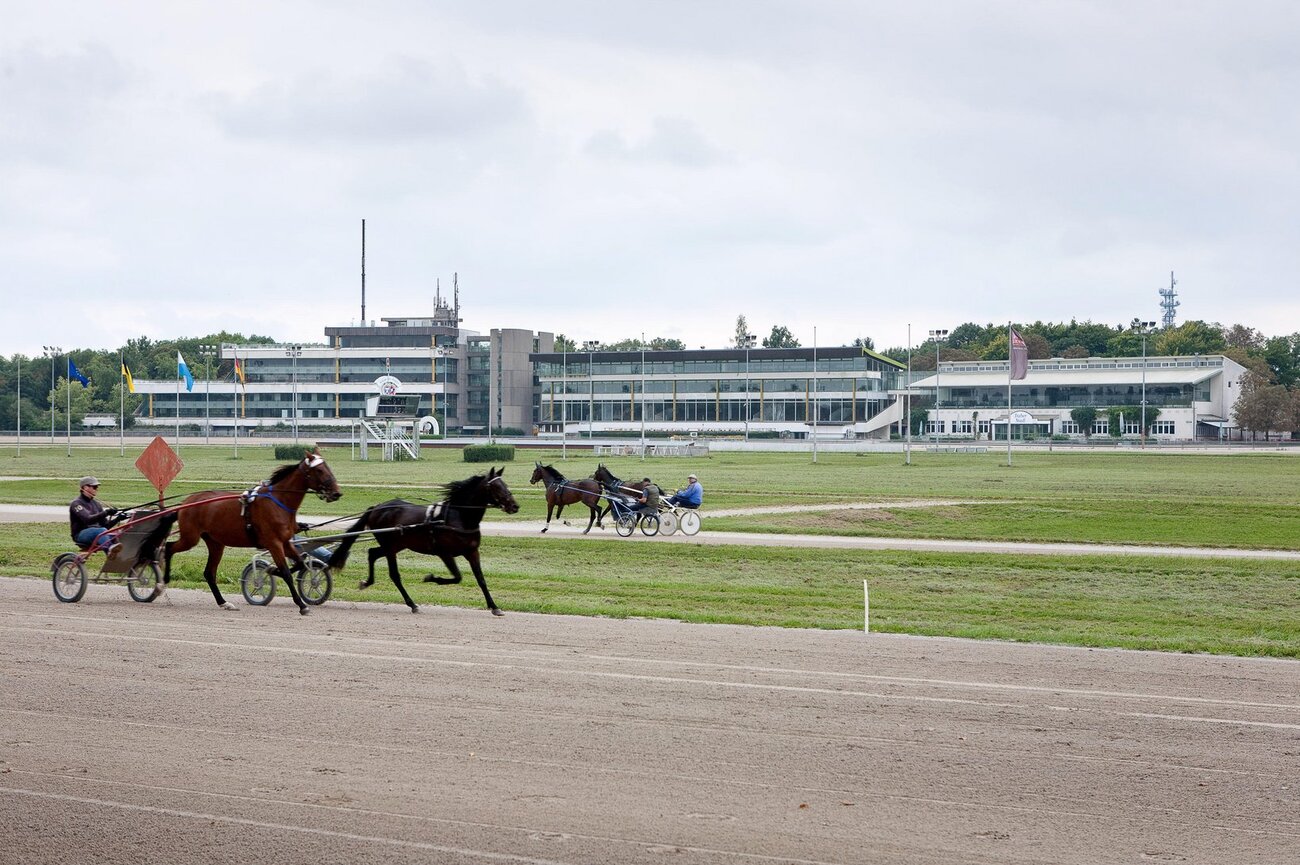
- Trabrennbahn München-Daglfing: Trabrennbahn Daglfing offers a more intimate, almost insider take on horse racing. This is harness racing, where pacing, precision and strategy matter more than spectacle. The atmosphere feels local and lived-in, which makes the experience easier to settle into even if you’re new to the sport. You’re close to the track, the sightlines are clear and the rhythm of the races gives you time to observe rather than rush.
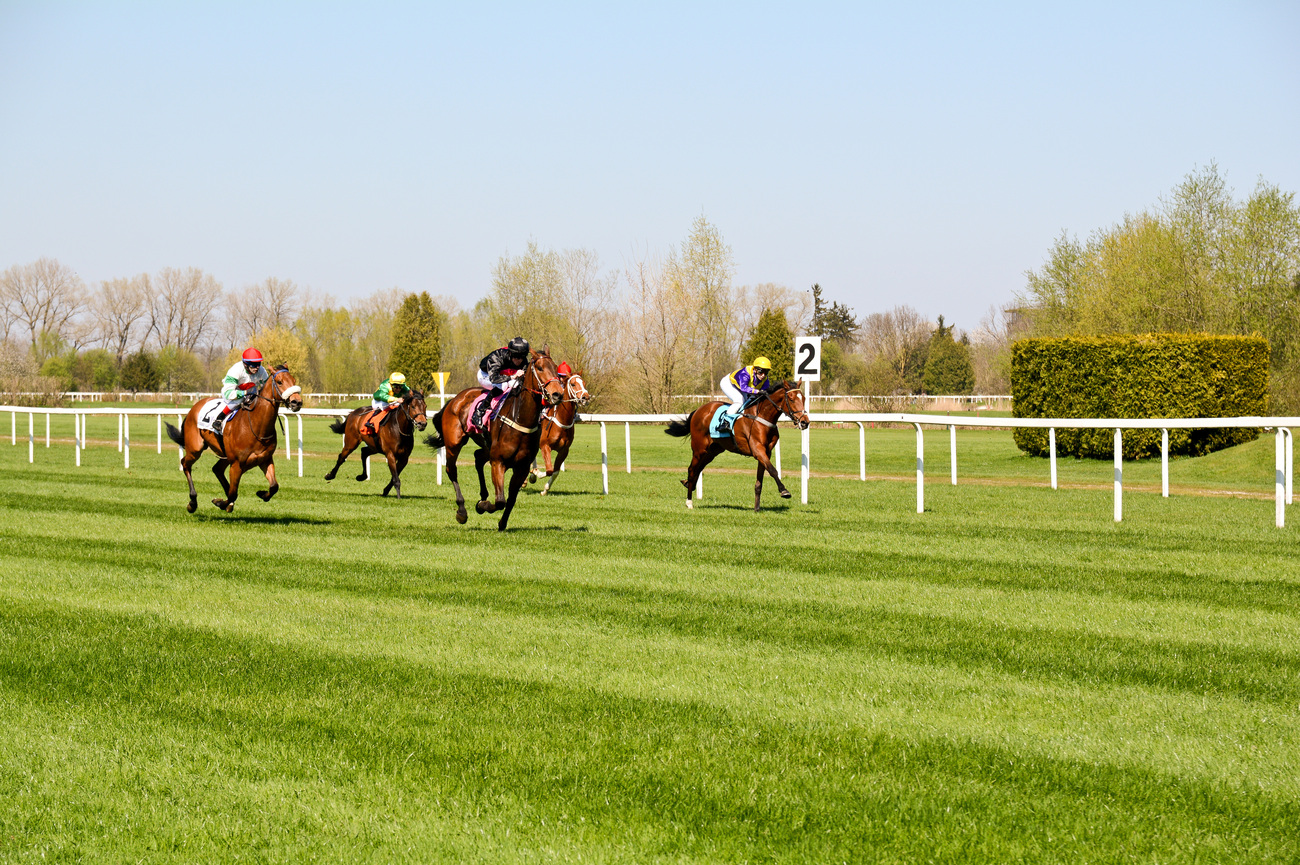
- Galopprennbahn München: Galopprennbahn München is where Bavarian racing leans polished. This is thoroughbred flat racing, delivered in a setting that feels spacious, social and well-organized. The grounds are expansive, giving you room to move, observe and settle in for the afternoon. You don’t need deep racing knowledge to enjoy it. The movement, the crowd energy, and the setting carry the experience. Positioned just outside the Romantic Road’s southern gateway, it works best as a deliberate contrast, an energetic pause before returning to quieter towns and slower rhythms.
Michelin-Starred Restaurants Along the Romantic Road
Michelin stars along the Romantic Road are not scattered. They’re concentrated, intentional and earned quietly. This is a route shaped by restraint, scale and towns that value continuity over reinvention. Fine dining here doesn’t spread out across multiple stops. Rothenburg ob der Tauber is the exception and notably, the only town along the route where Michelin recognition has taken hold. Two restaurants operate at that level, each interpreting refinement differently while staying rooted in place. If you’re seeking precision cooking that doesn’t feel detached from its surroundings, this is where the Romantic Road quietly delivers.
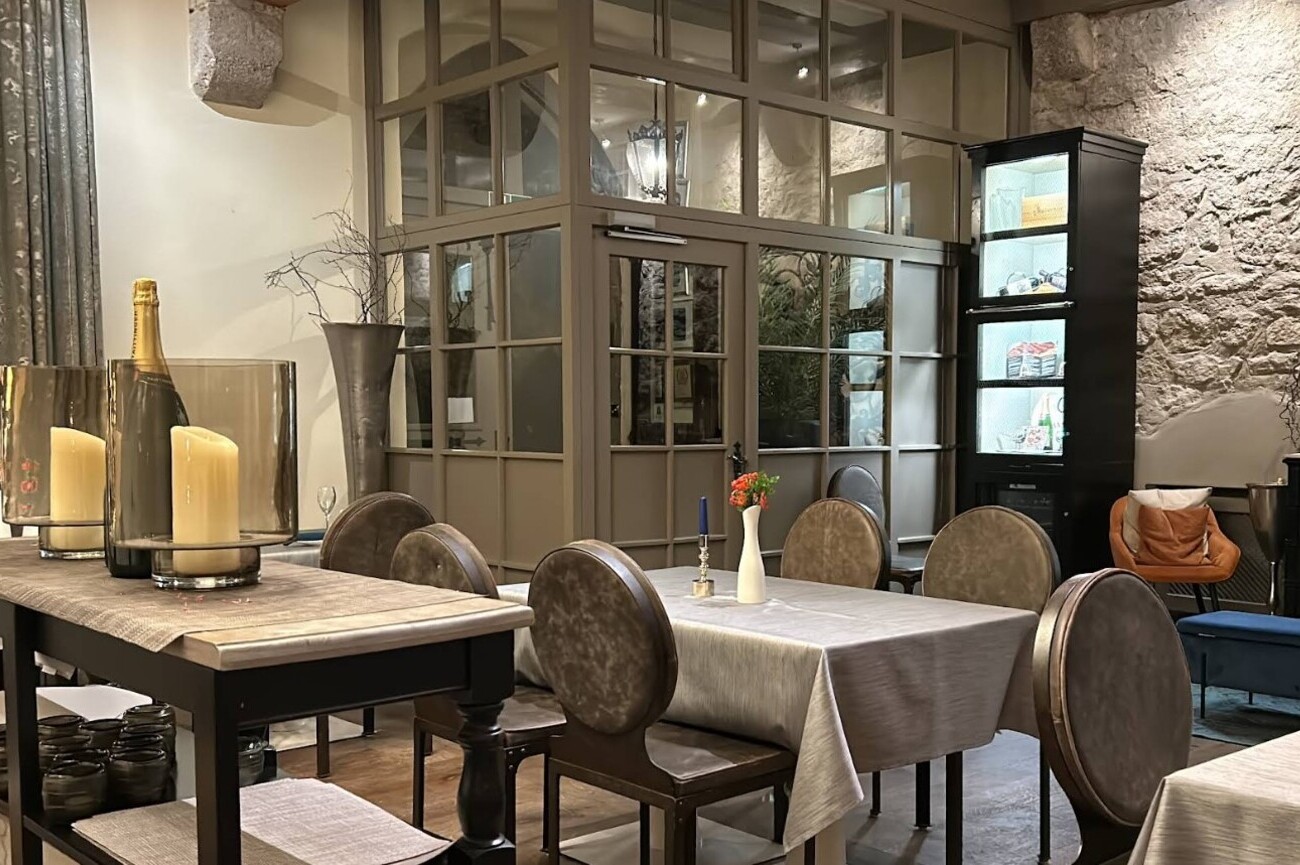
- Restaurant HERr: Restaurant HERr sits confidently within the historic Hotel Herrnschlösschen, blending modern design with architectural details that have been in place since the 16th century. A massive wooden beam from 1526 anchors the space, setting the tone for a dining experience that respects its setting while thinking forward. The kitchen operates with the discipline and clarity expected of a one-Michelin-star restaurant, offering an “Innovative Klassik” tasting menu that evolves with the seasons. Dishes like pickled scallops with beetroot and shiso or raw Taubertal Wagyu paired with horseradish and smoked eel show precision without overcomplication. When weather allows, the baroque garden terrace adds a quiet elegance that feels surprisingly at ease in medieval Rothenburg.
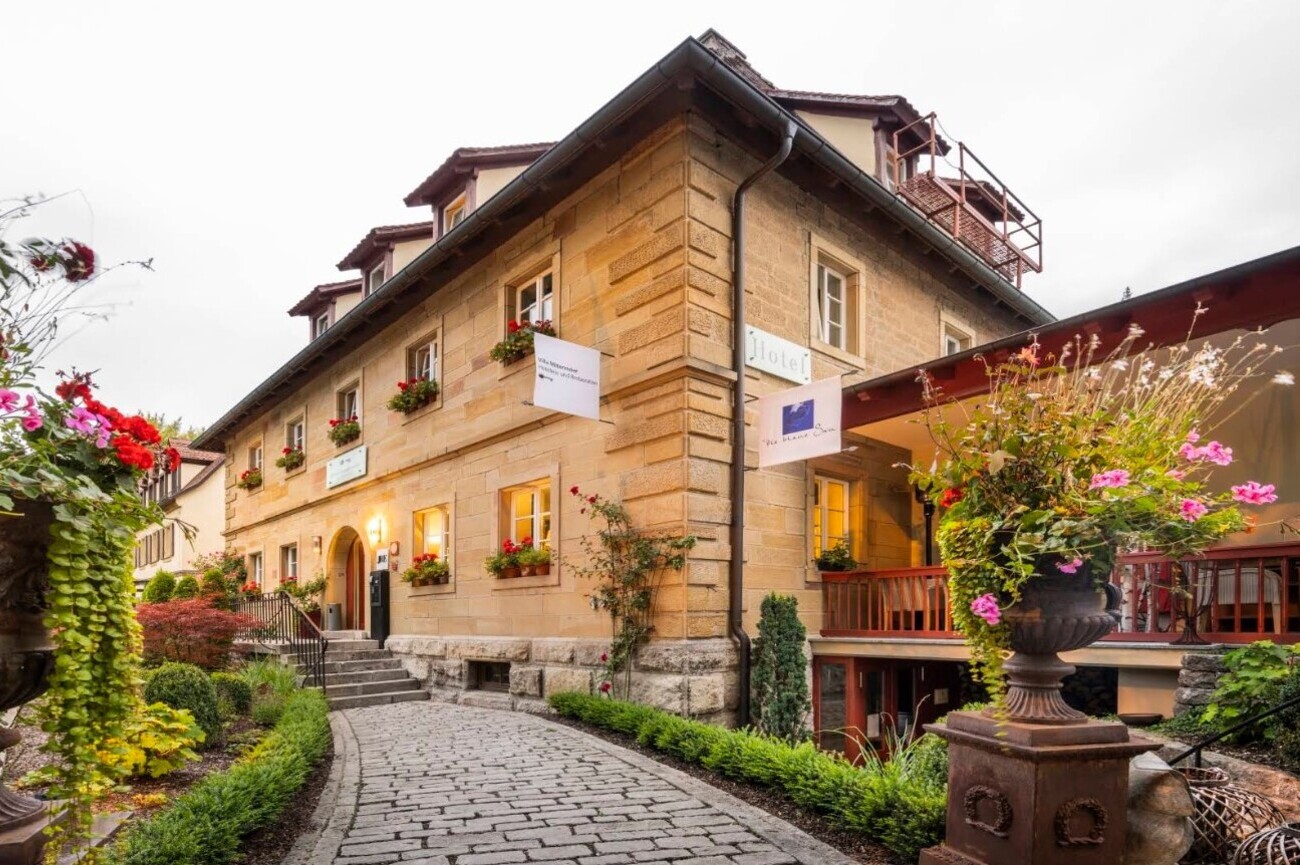
- Mittermeier: Restaurant Mittermeier approaches fine dining with restraint and confidence. Located just outside Rothenburg’s medieval core, the space feels deliberately contemporary, starting with an open kitchen that signals transparency and focus. The cuisine reflects the balance and structure associated with a one-Michelin-star kitchen, built around seasonal ingredients sourced largely from the region. Plates like ravioli with Parmigiano Reggiano and green olive or guinea fowl with chanterelles and lovage emphasize clarity of flavor rather than visual excess. You’re given flexibility through a five, seven, or nine-course menu format, allowing the experience to match your appetite and pace. Wine recommendations lean thoughtfully toward local producers, reinforcing the sense that this is refined cooking that still knows exactly where it is.
Where To Eat Along the Romantic Road
At some point, sightseeing builds an appetite. The Romantic Road is good at that. Long walks, uneven streets and towns that keep pulling you deeper in eventually lead to the same question: where’s good to eat around here? The answer isn’t flashy or overthought. It’s places that know what they’re doing and don’t feel the need to explain it. You’ll find dining rooms that feel familiar within minutes, menus that stick to what works and kitchens that understand the difference between comfort and laziness. These are restaurants that show up exactly when you need them and make you glad you stopped.
- Bürgerspital Weinstuben: If Würzburg had a default dinner table, this would be it. Bürgerspital Weinstuben sits close to the city’s main sights, making it an easy stop once your legs start asking for a break. The menu stays loyal to Franconian staples, pumpkin soup when it’s in season, liver dumpling soup, schnitzel and pork knuckle that arrives with real presence. Local wines play a central role, which fits the historic wine estate setting perfectly.
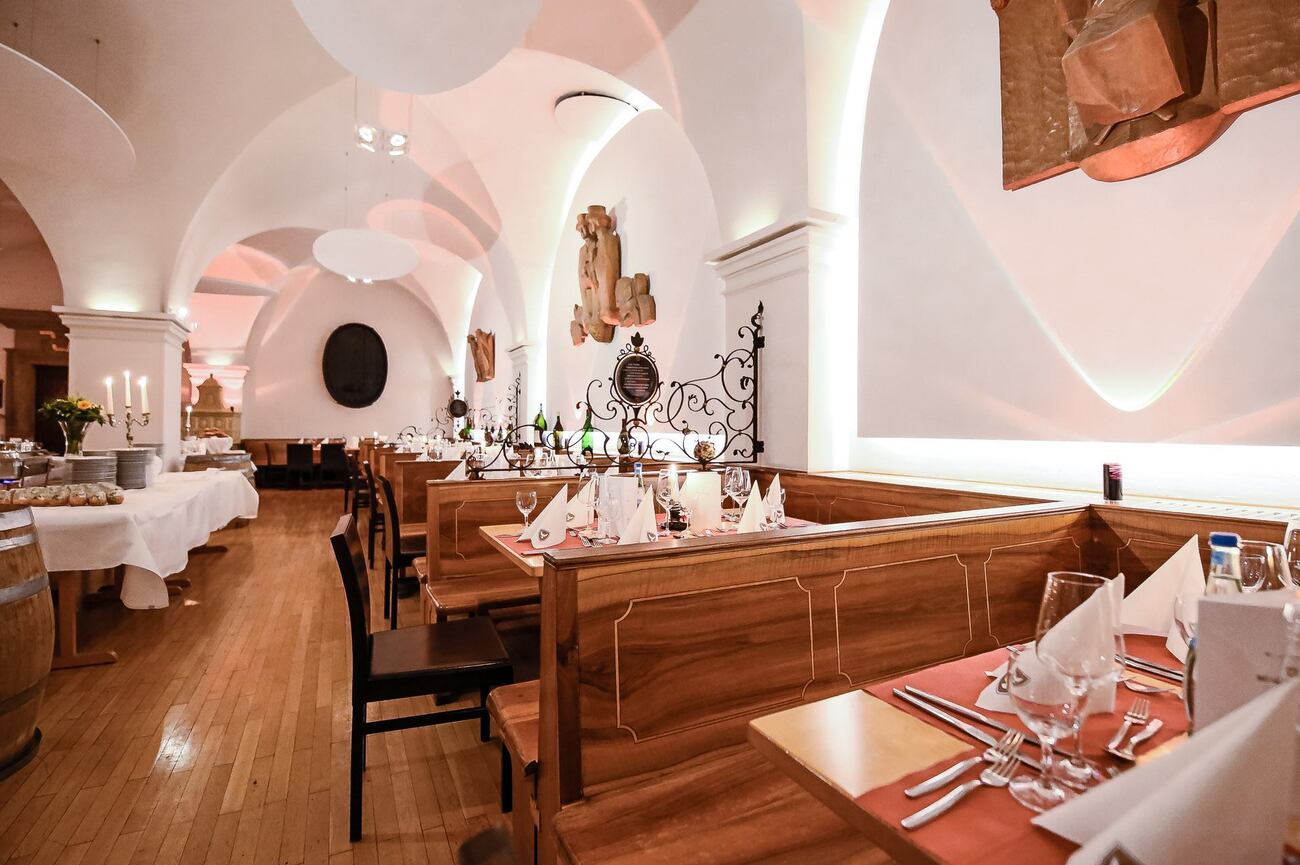
- Backöfele: Backöfele doesn’t flirt with subtlety, and that’s exactly the point. Housed in a building donated by Prince Bishop Julius Echter in 1580, it carries over four centuries of Franconian tradition without turning it into a performance. The kitchen leans unapologetically hearty. Schäufele, schnitzel and the famous Backöfele-Pfännle dominate the table. That Pfännle arrives meant for sharing, piled with pork chops, roast pork, bratwurst, dumplings, sauerkraut and dark beer gravy. It feels communal, comforting and intentionally generous. You come here when you want food that holds its ground and a dining room that feels lived in, not styled.
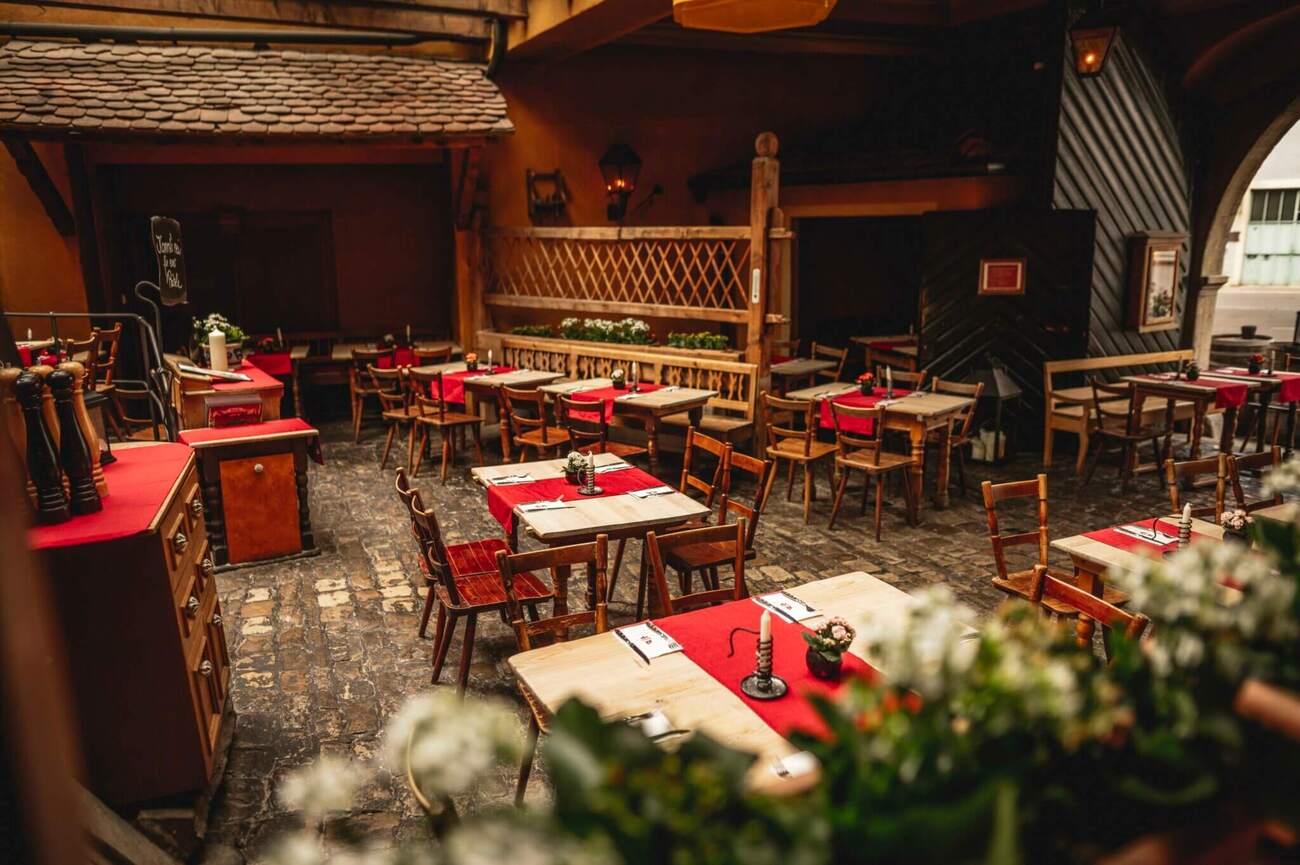
- Profumo di Pasta da Giuseppe: Right in the heart of Rothenburg’s old town, Profumo di Pasta da Giuseppe offers a shift in accent without breaking the mood. The room is small, the energy warm and the focus firmly on handmade pasta and Italian comfort. Lasagna is the quiet star here, layered and rich without being heavy, while ragout al forno pizza and daily-made pastas keep regulars loyal. Even the burrata salad brings a surprise with its mint and fruit pairing. Dessert matters too, especially the tiramisu finished with amaretto.

- Ratskeller Augsburg: Dining beneath Augsburg’s town hall gives Ratskeller instant gravity. Vaulted brick ceilings set the tone, while the menu leans comfortably Bavarian with pork knuckle, sausages, spätzle, schnitzel served in portions that don’t apologize. The beer list highlights local favorites and the pricing stays reasonable given the setting. Outside, the terrace adds energy, especially when the square comes alive. You’ll notice families, locals and travelers all sharing the same space, which gives the place its rhythm.
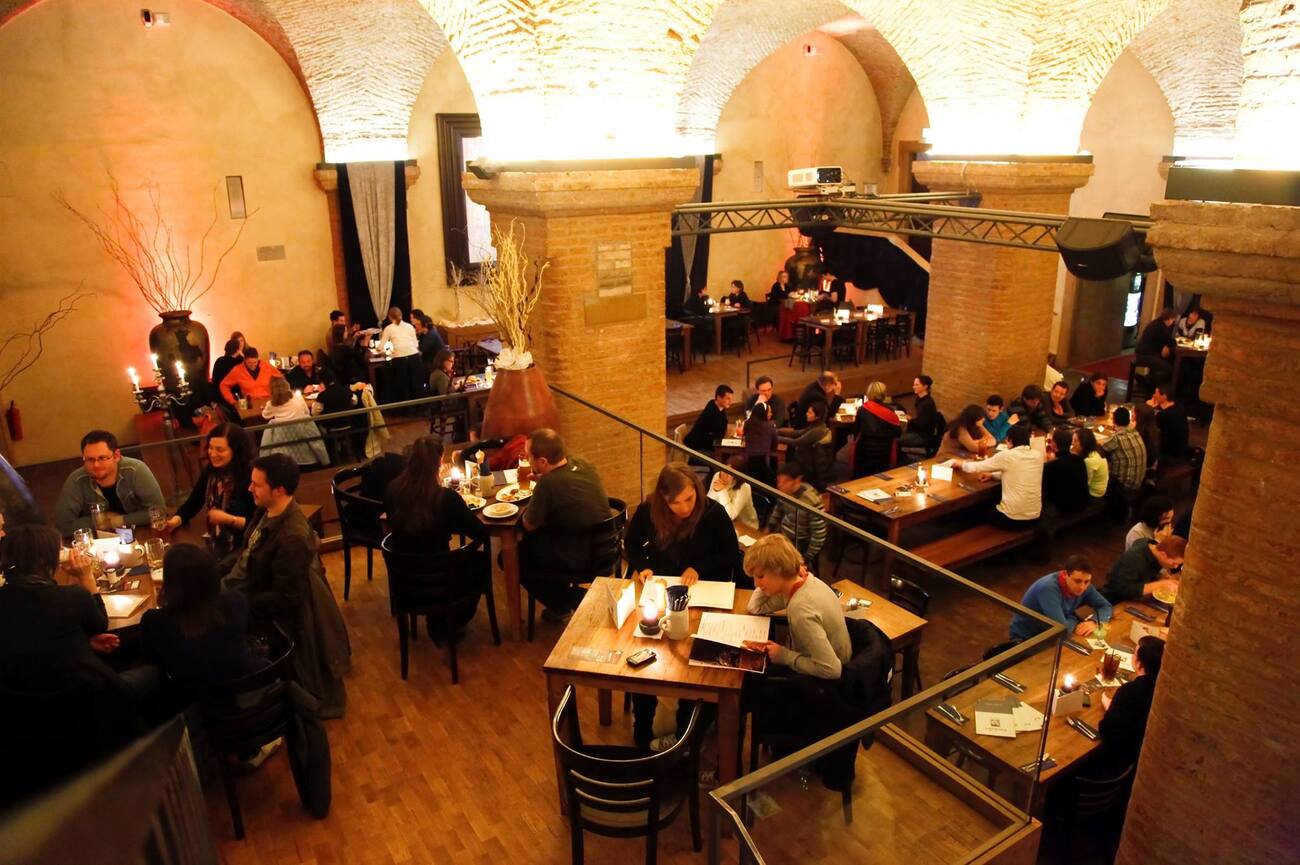
- Altdeutsches Restaurant: Altdeutsches Restaurant feels perfectly placed in Dinkelsbühl’s historic center, with St. George’s Minster just across the street. The kitchen, led by Florian Kellerbauer, keeps its focus tight. With regional ingredients, seasonal logic and menus that don’t wander. You can choose a structured set menu or go à la carte, depending on how the day has unfolded. Service stays polished without stiffness and the atmosphere mirrors the town itself.
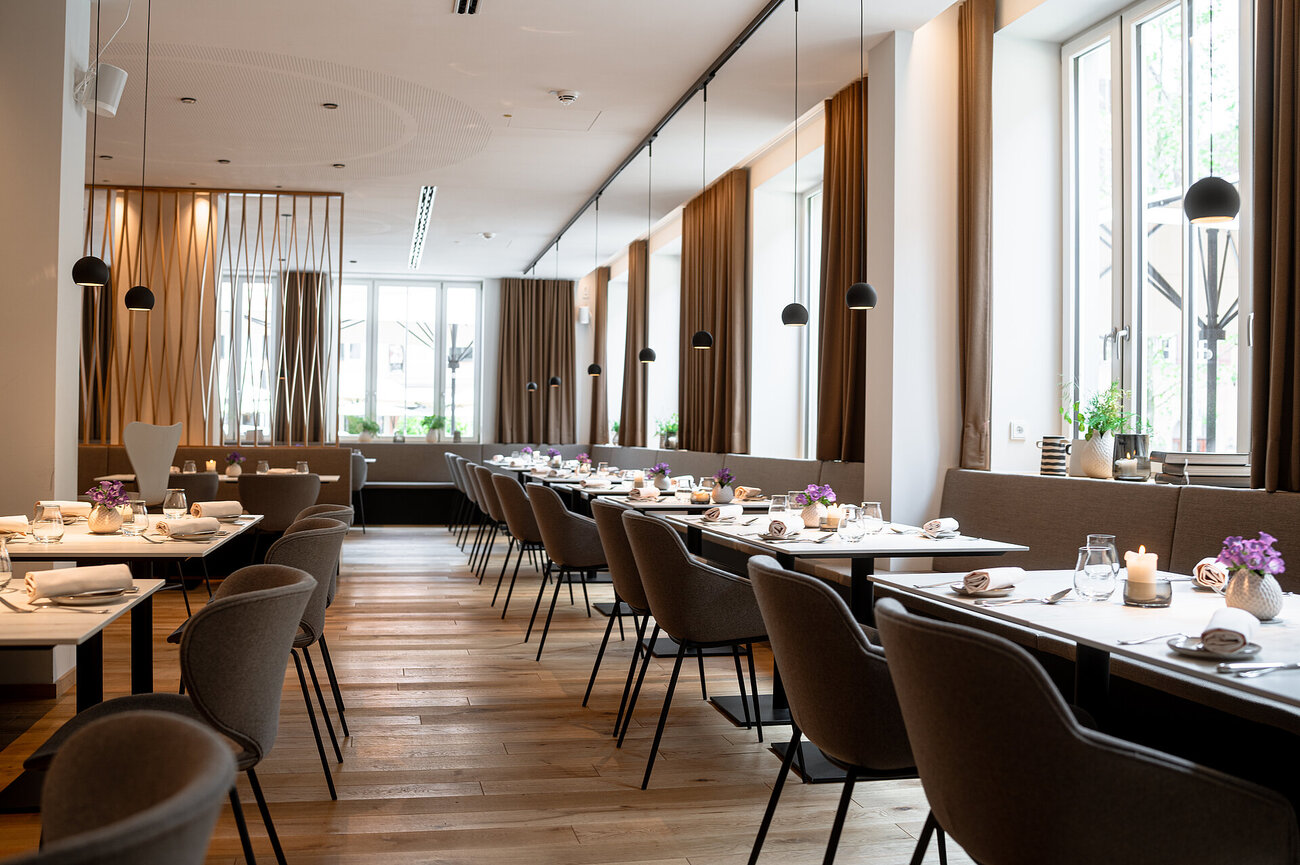
- La Perla Ristorante Pizzeria Füssen: La Perla works especially well at the end of the route. Set in the heart of Füssen, it delivers Italian comfort without fuss. Pizzas are customizable, pastas come generously plated and tiramisu closes things on a familiar note. The dining room stays cozy and outdoor seating adds flexibility when the evening is mild. Service feels genuinely friendly, prices stay fair and the whole experience is easy in the best sense. You come here tired, satisfied and ready for something that doesn’t ask questions, just feeds you well.
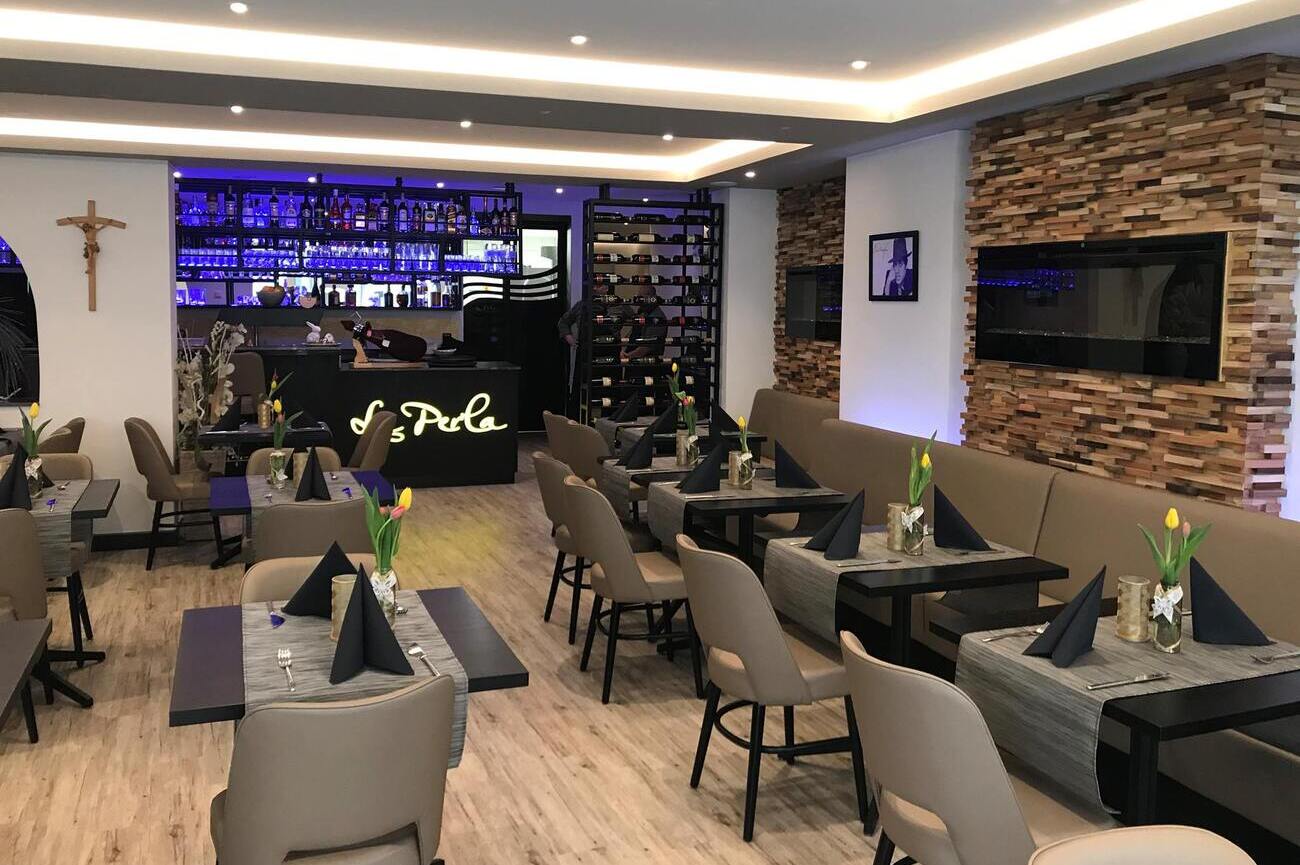
Where To Drink Along the Romantic Road
After dark, the Romantic Road loosens its tie. The streets empty out, the cameras go away and suddenly the route feels less like a postcard and more like a place you’re actually in. This is when you stop chasing landmarks and start chasing atmosphere. You’re not looking for the biggest party or the loudest room. You want a bar that knows when to dim the lights, a terrace that keeps you longer than planned or a rooftop that reminds you there’s more to the town than stone walls. These spots don’t pull you off the route. They keep you on it, just after hours.
- Restaurant & Cocktailbar TOPINAMBUR: TOPINAMBUR feels like Rothenburg after dark, refined. Located inside the Prinzhotel, this restaurant and cocktail bar shifts seamlessly from dinner to drinks without changing rooms or energy. The interior leans modern and elegant, which contrasts nicely with the medieval streets outside. Cocktails are crafted with care, making it a strong choice even if you skip dinner, though dishes like the tender steak or famously thin schnitzel often convince you to stay longer.
- Sonnendeck Augsburg: Sonnendeck Augsburg lifts the night, literally. Sitting on a rooftop in the city center, it offers open views over Augsburg that immediately reset the mood. You notice the space before the menu with comfortable seating, clean lines and a relaxed crowd that knows this is a place to linger. Drinks cover the classics alongside creative cocktails, with beer and wine keeping things accessible. It works for both slow conversations and social nights out, depending on when you arrive. If you’re craving air, perspective and a sense of openness after a day of architecture and museums, this is where the city exhales.
- Caipi Cocktailbar Augsburg: Caipi Cocktailbar is where Augsburg’s cocktail crowd gravitates. Known for its caipirinhas but far from limited to them, the menu runs deep and stays inventive. The room feels lively without tipping into chaos, and even when it’s busy, service remains fast and personal. You’ll often see groups starting their night here, drinks in hand, deciding what comes next.
- Bayrish Pub: Bayrish Pub brings a looser energy to Füssen’s evening scene. It’s casual, social and unapologetically loud at times, especially when sports are on. The outdoor beer garden is a highlight, drawing both locals and travelers looking to wind down after a full day. Drinks are reasonably priced, the beer selection is solid and the food just think currywurst or ribs which goes beyond expectations for a pub. Music leans rock-heavy, so conversation sometimes competes with the speakers.
- LIKKA: LIKKA is all about location and timing. Set right along the Lech River, it shines in the early evening when the light softens and the outdoor tables fill quickly. Drinks are straightforward, the menu stays focused and the atmosphere invites you to slow down rather than move on. You’re here to watch the water, stretch the conversation and let the day close gently.
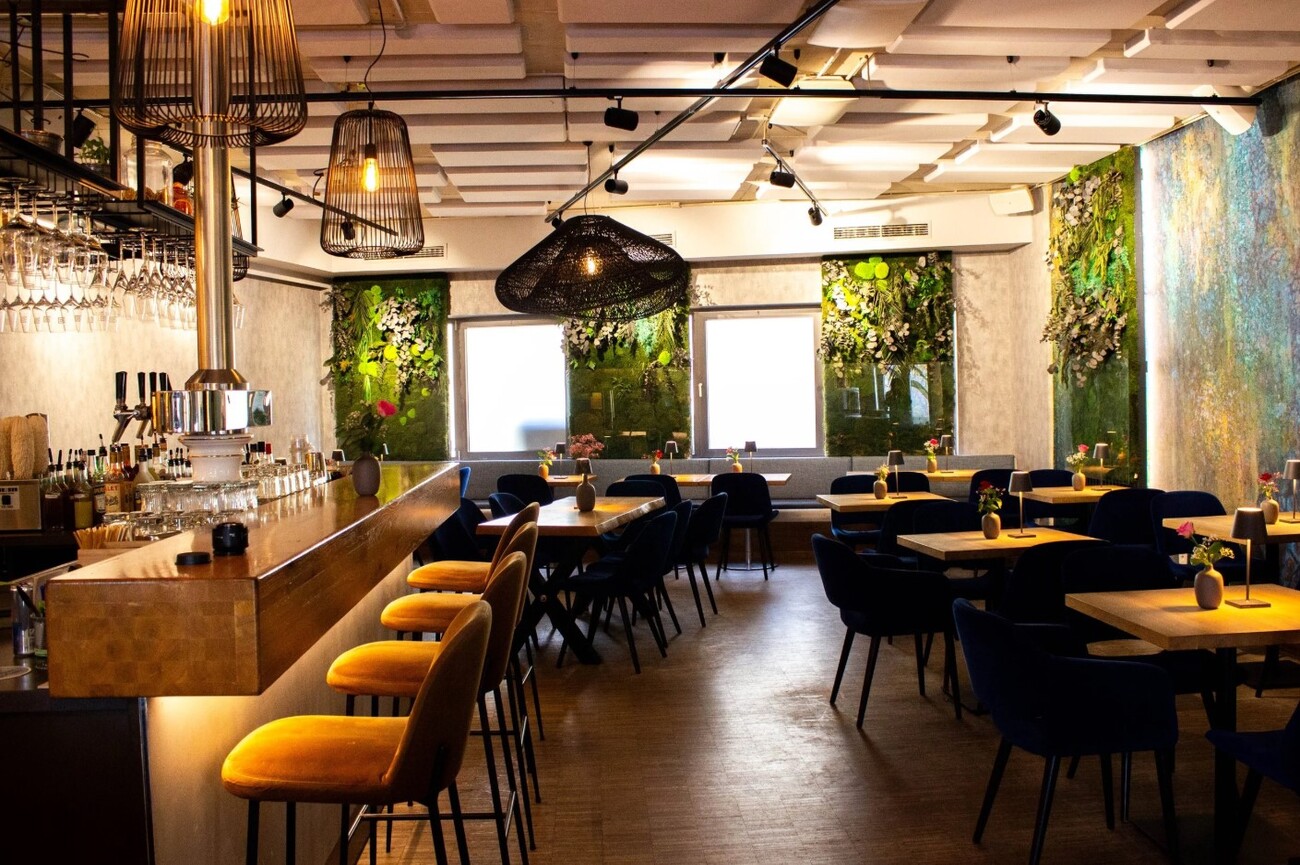
Cafes Along the Romantic Road
Somewhere between the third church tower and the fifth set of cobblestones, caffeine becomes non-negotiable. Not the rushed kind. The sit-down, breathe-out, reset-your-legs kind. Whether it’s a courtyard table, a waffle that shows up hot or a coffee that actually delivers, these cafes earn their spot in the day.
- Café Einzigartig: Café Einzigartig feels like a soft landing in the middle of Rothenburg’s visual intensity. The interior is warm and thoughtfully decorated, the kind of space that makes you want to sit back instead of checking your phone. Soups, homemade spreads and cakes like cheesecake or carrot cake anchor the menu, with vegan options quietly woven in. Coffee is taken seriously, service stays genuinely kind and the overall pace feels unforced. You come here when you want something comforting but not heavy.
- Eiscafé Anosh & Waffeln: Located along Juliuspromenade, Eiscafé Anosh leans into fresh waffles and ice cream served with speed and good humor. The outdoor seating does most of the convincing, especially on warmer days when you want to stay connected to the street. Staff are friendly, quick and clearly enjoy the rhythm of the place. You stop here when you want something easy, sweet and reliably satisfying.
- Café am Milchberg: Café am Milchberg earns its reputation quietly. Tucked into Augsburg’s old town, it’s best known for breakfast but not in a rushed way. The inner courtyard adds a layer of calm, especially when the weather cooperates and the menu balances fresh, hearty and health-conscious options without sounding like it’s trying. Coffee is excellent and the fitness breakfast has its fans (yes, this is a meal for those looking for healthy options!).
- Bio Café Baumgarten: This cafe in Füssen focuses on vegan and gluten-free offerings without making a big deal out of it. Buckwheat crepes, especially the banana chocolate, are the standout, rich without being heavy. The space is cozy, almost intimate, with a design that invites you to slow your breathing a little. Staff are welcoming, an English menu helps and the quality more than makes up for the limited selection.
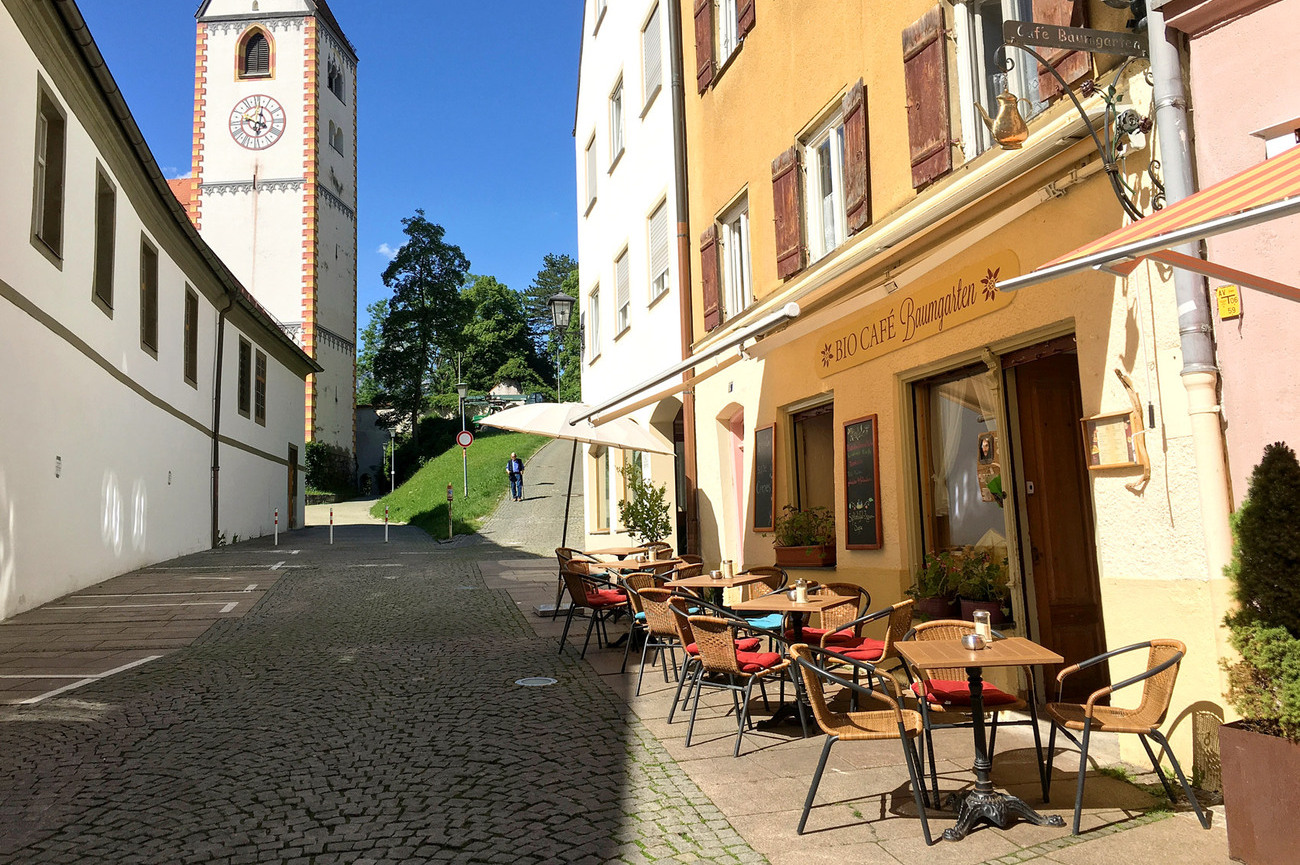
Where to Stay Along the Romantic Road
- Hotel Maximilian’s (5 stars): Hotel Maximilian’s carries its history lightly. Founded in 1495 and rebuilt into its modern form in the mid-20th century, it sits right on Augsburg’s Maximilianstraße, surrounded by the city’s most elegant architecture. Inside, the mood is contemporary luxury with subtle historical references rather than overt nostalgia. Rooms are sleek and spacious, the service polished without stiffness and the spa adds a welcome layer of calm after a day in the city. What sets it apart is balance. You feel the weight of Augsburg’s past, but you sleep in something unmistakably modern.
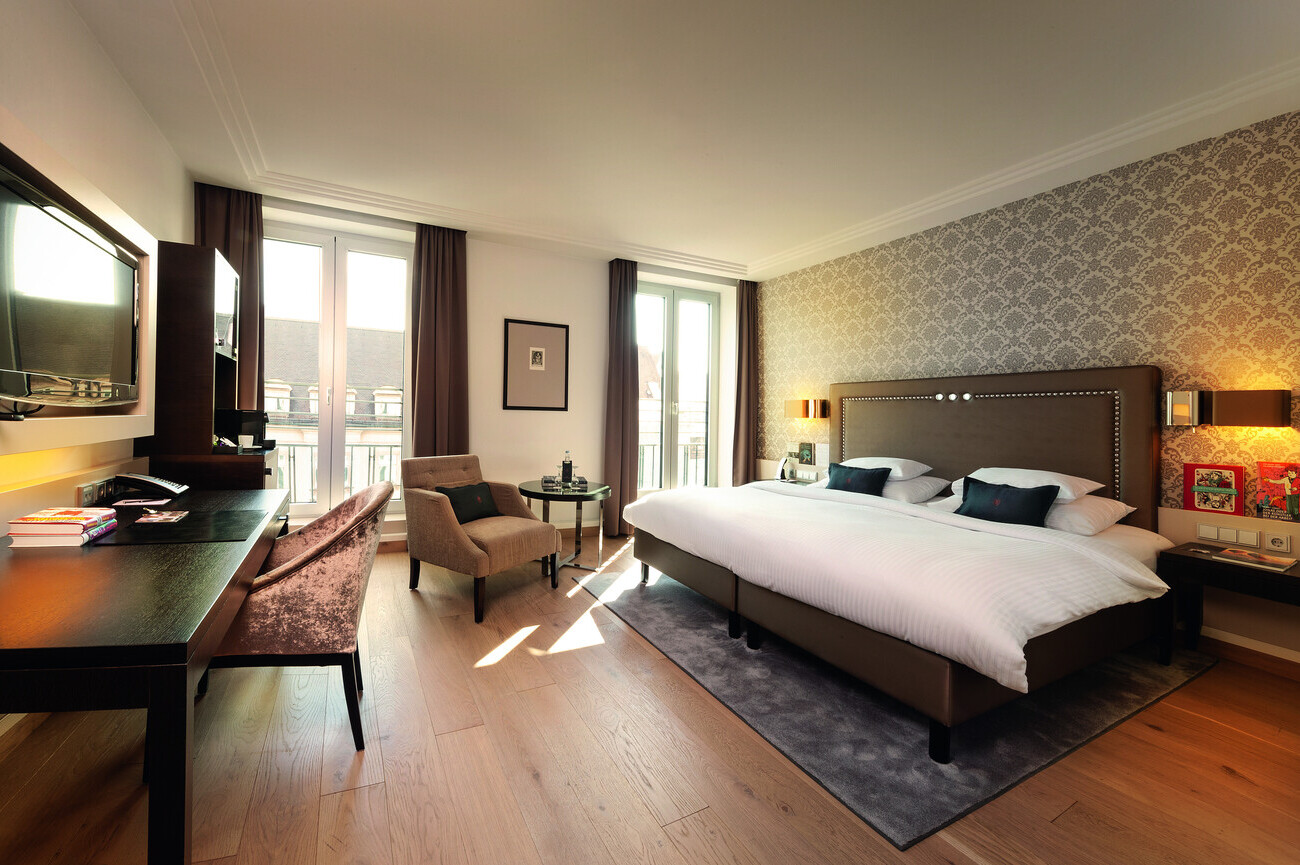
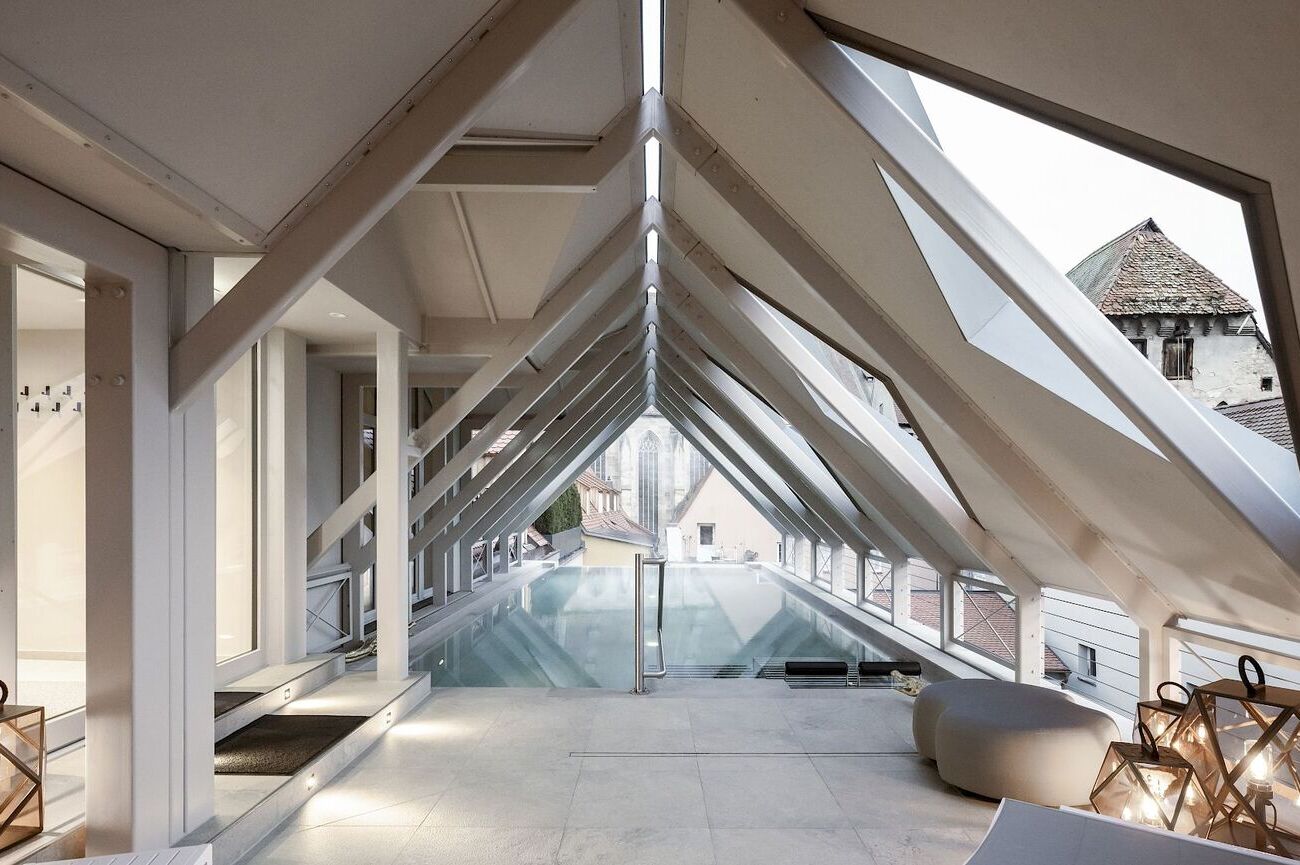
- HOTEL & SPA Goldene Rose (5 stars): Goldene Rose sits right in the heart of Dinkelsbühl’s old town, and it knows exactly how special that is. From the outside, it’s classic half-timbered Franconia. Inside, the redesign is confident, modern and quietly luxurious. Past guests include Queen Victoria and Crown Prince Friedrich and while the clientele has changed, the sense of occasion hasn’t. With 43 rooms and 14 studios designed by South Tyrolean architects NOA, the interiors feel thoughtful and calm rather than theatrical. The spa completes the experience, making this a place where you don’t just stay overnight. You linger.
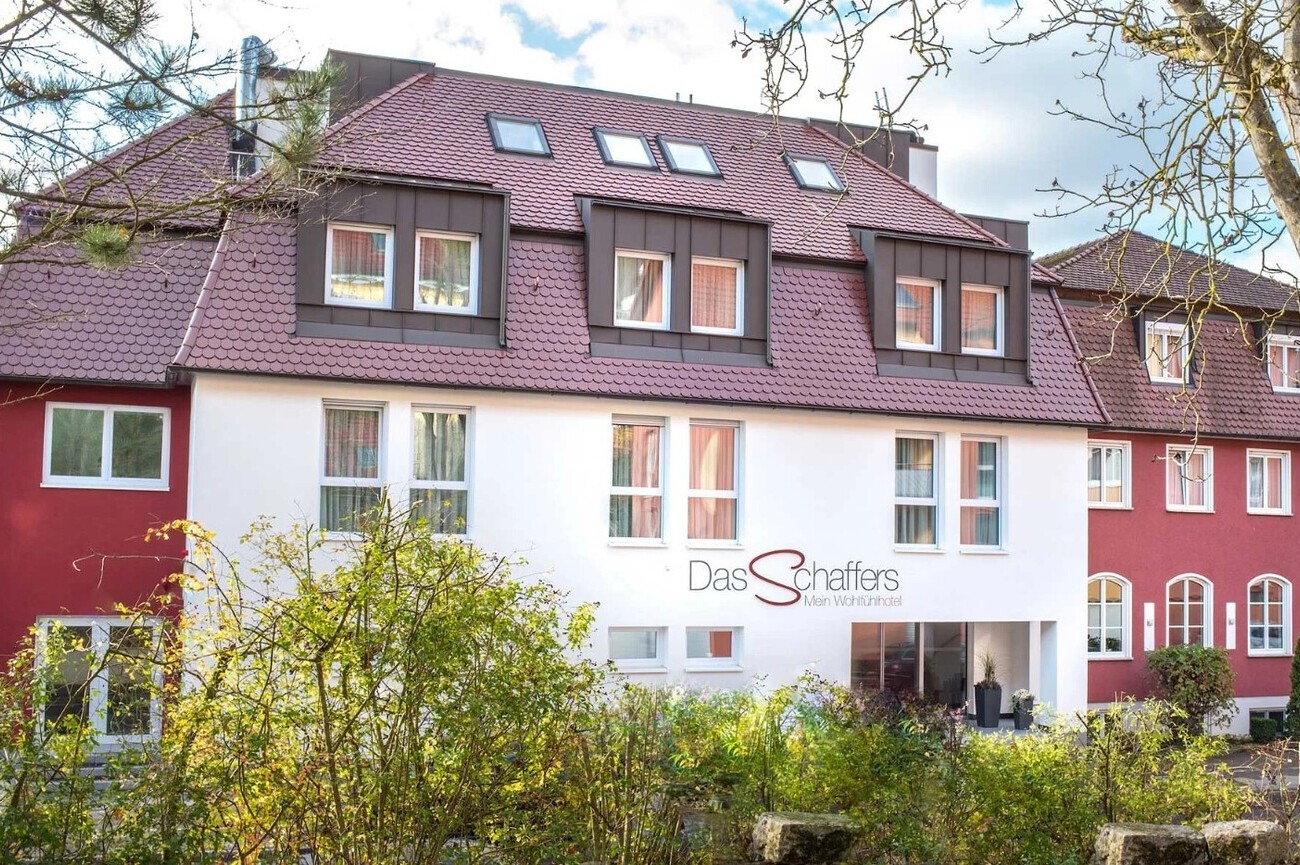
- DasSchaffers – MeinWohlfühlhotel (4 stars): DasSchaffers works best when slowing down is the goal. Located along the Tauber River and a short walk from Bad Mergentheim’s historic quarter and spa gardens, the hotel leans into wellness without feeling like a retreat bubble. Rooms are spacious and quiet, the wellness area is generous, and the library adds a lived-in touch that encourages staying put for a while. Direct access to hiking and cycling routes along the Romantic Road makes it easy to move during the day and fully switch off at night.
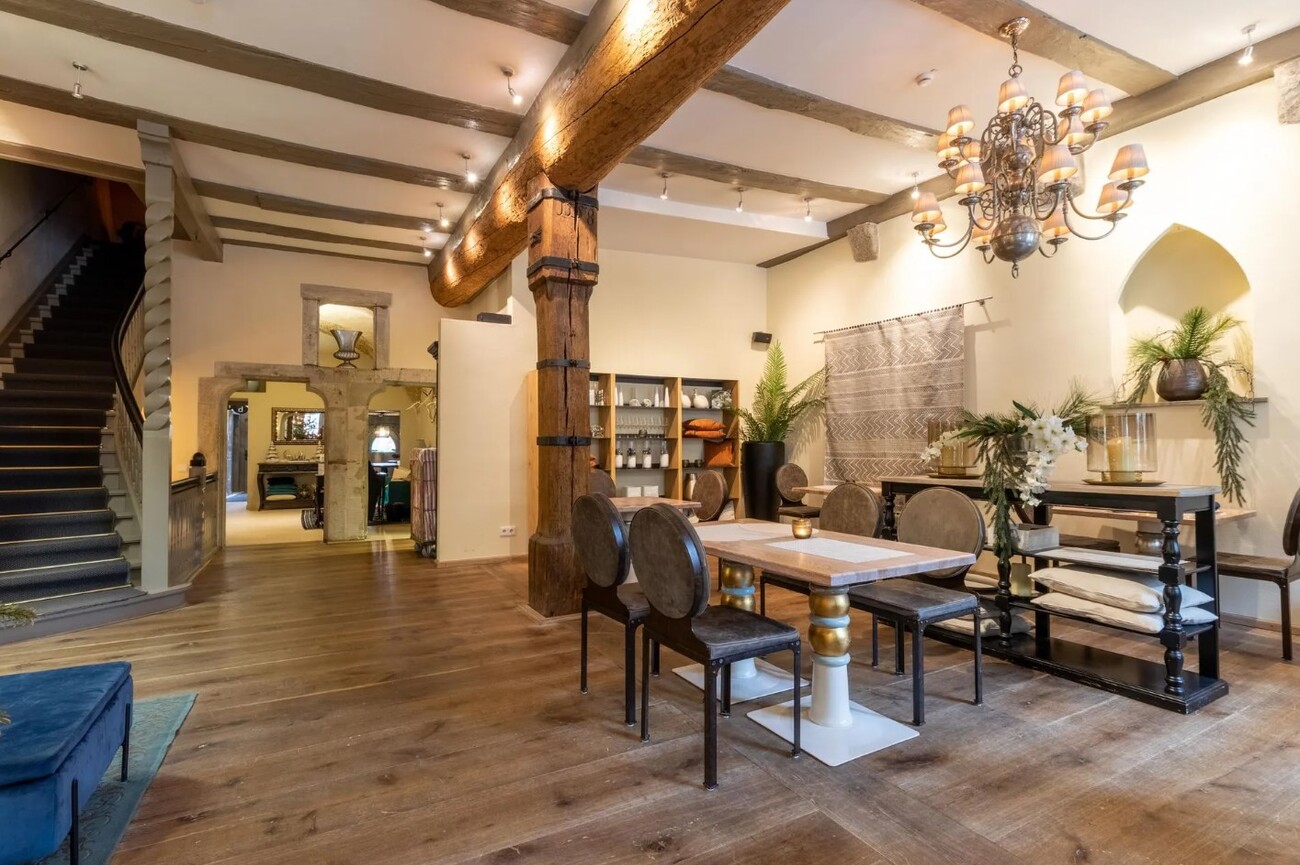
- herrnschlösschen (4 stars): herrnschlösschen is small by design and that’s its strength. With just four deluxe rooms and four suites, it’s the most intimate luxury option in Rothenburg. The styling blends manor-house elegance with bold interior choices, warm colors and a sense of personality you don’t often find in larger hotels. Every room feels different and the service feels personal without crossing into formality. It’s particularly well suited for short, indulgent stays.
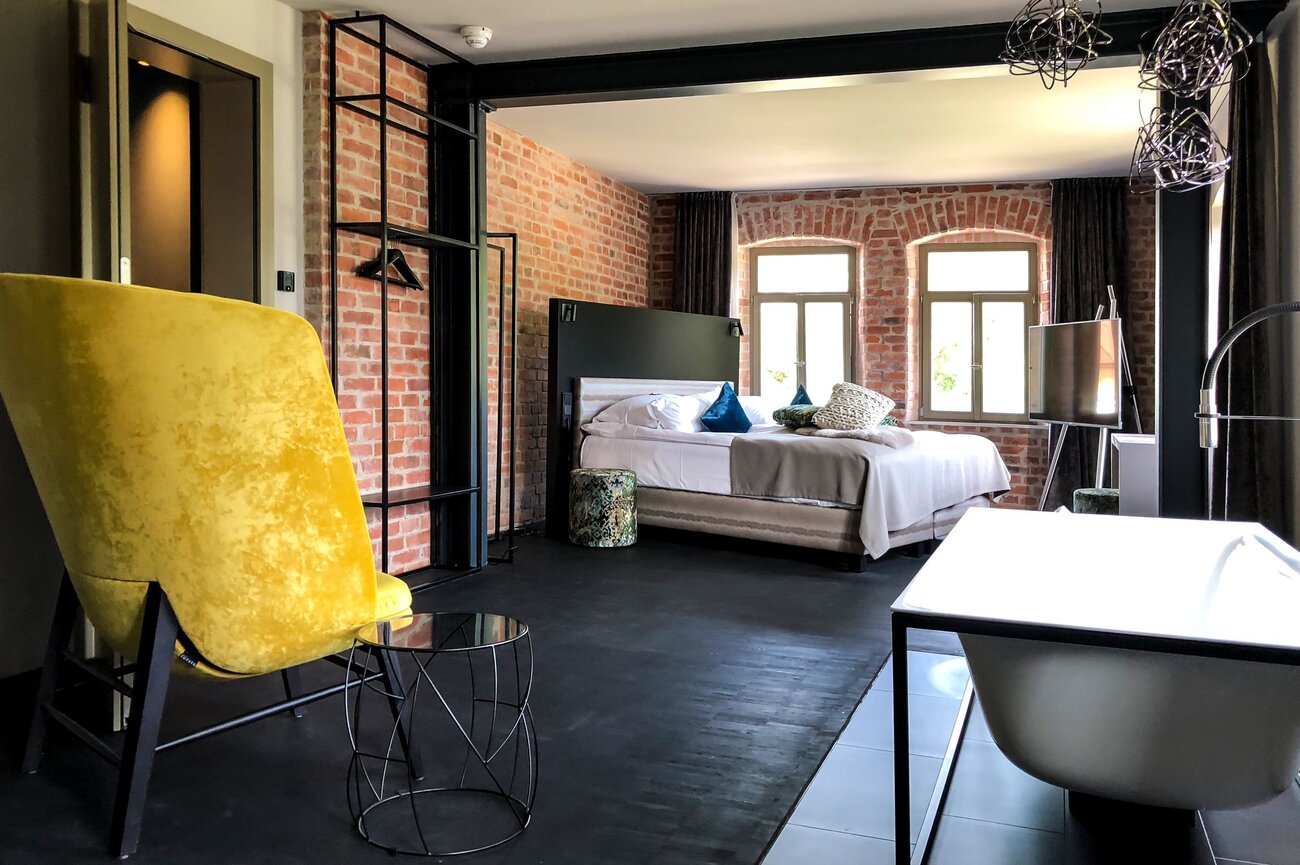
- Mittermeiers Alter Ego (3 stars): Mittermeiers Alter Ego feels more like staying in a thoughtfully designed home than a conventional hotel. Run by Ulli and Christian Mittermeier, the concept is relaxed but intentional. The open kitchen, centered around a bulthaup workspace, doubles as a social hub where conversations happen naturally. Furnishings by Rosenthal Interieur and a self-service trust bar reinforce the sense of ease and autonomy. It’s understated, design-forward and quietly confident.
Best Time to Visit the Romantic Road
Late spring is when the spell actually works.
This is the season when the Romantic Road stops feeling like a checklist and starts feeling like a journey you follow on instinct. Think yellow brick road logic. You don’t overplan. You just keep going because every turn promises something better than the last. From May to early June, the route hits its stride. The towns are awake but not overwhelmed, the scenery is fully switched on and everything looks like it’s been gently color-corrected by nature.
Late spring brings the road into full technicolor. Flower boxes spill over medieval walls, vineyards wake up and castle courtyards finally breathe. You can walk for hours without dodging crowds or checking the weather app every five minutes. Cafés linger outside, church bells feel atmospheric instead of intrusive and the pace shifts from sightseeing to staying. This is when the Romantic Road invites you to slow down and rewards you for listening.
There’s also something quietly powerful about this window. The route feels personal. Just open enough that you start noticing details, the way light hits half-timbered houses, how one stop casually turns into three, how wandering starts to feel purposeful without trying. Like Dorothy discovering Oz wasn’t black and white anymore, you realize the road has fully revealed itself.
And just like the story goes, the magic wasn’t at the destination. It was in trusting the path, following the bricks and letting the journey unfold. Late spring is when the Romantic Road hands you those shoes and says, go.
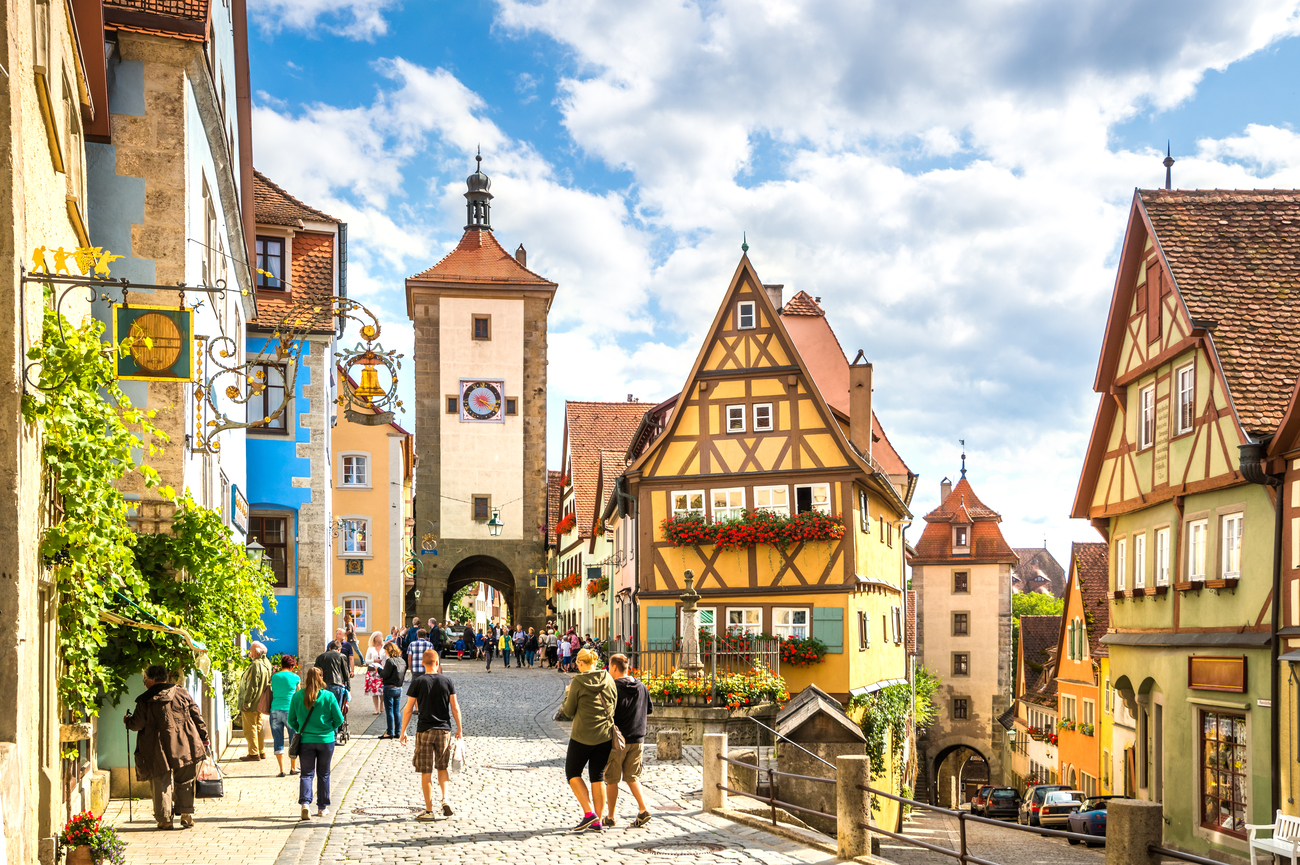
Festivals Along the Romantic Road
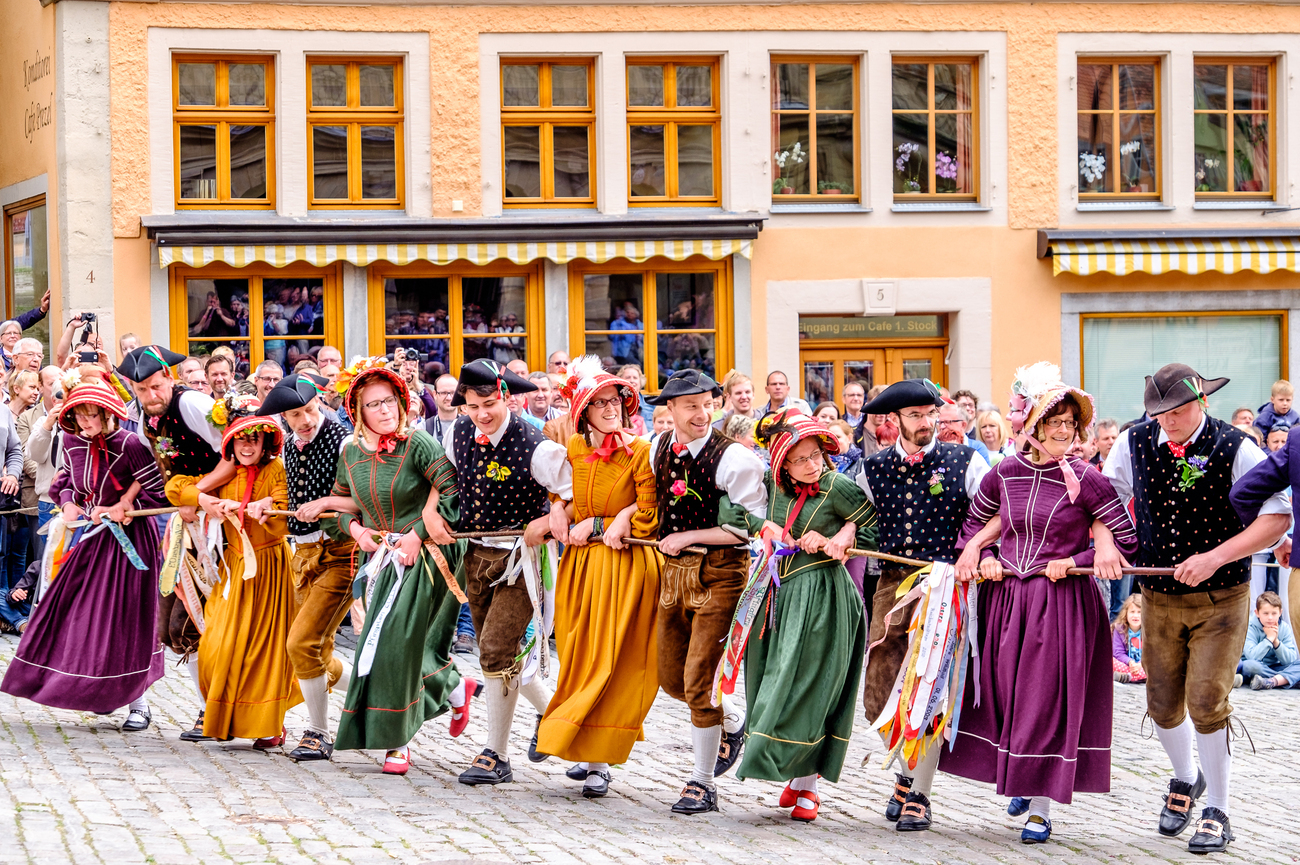
- Meistertrunk: Taking over late May, the Meistertrunk is Rothenburg at its most theatrical. For several days, the old town becomes a living stage where historical reenactments, parades and costumed locals take over the streets. You’ll see scenes pulled straight from the Thirty Years’ War, complete with drums, banners and the legendary wine moment that supposedly saved the city. You’re not watching from a distance here. You’re moving through it, shoulder to shoulder with history.
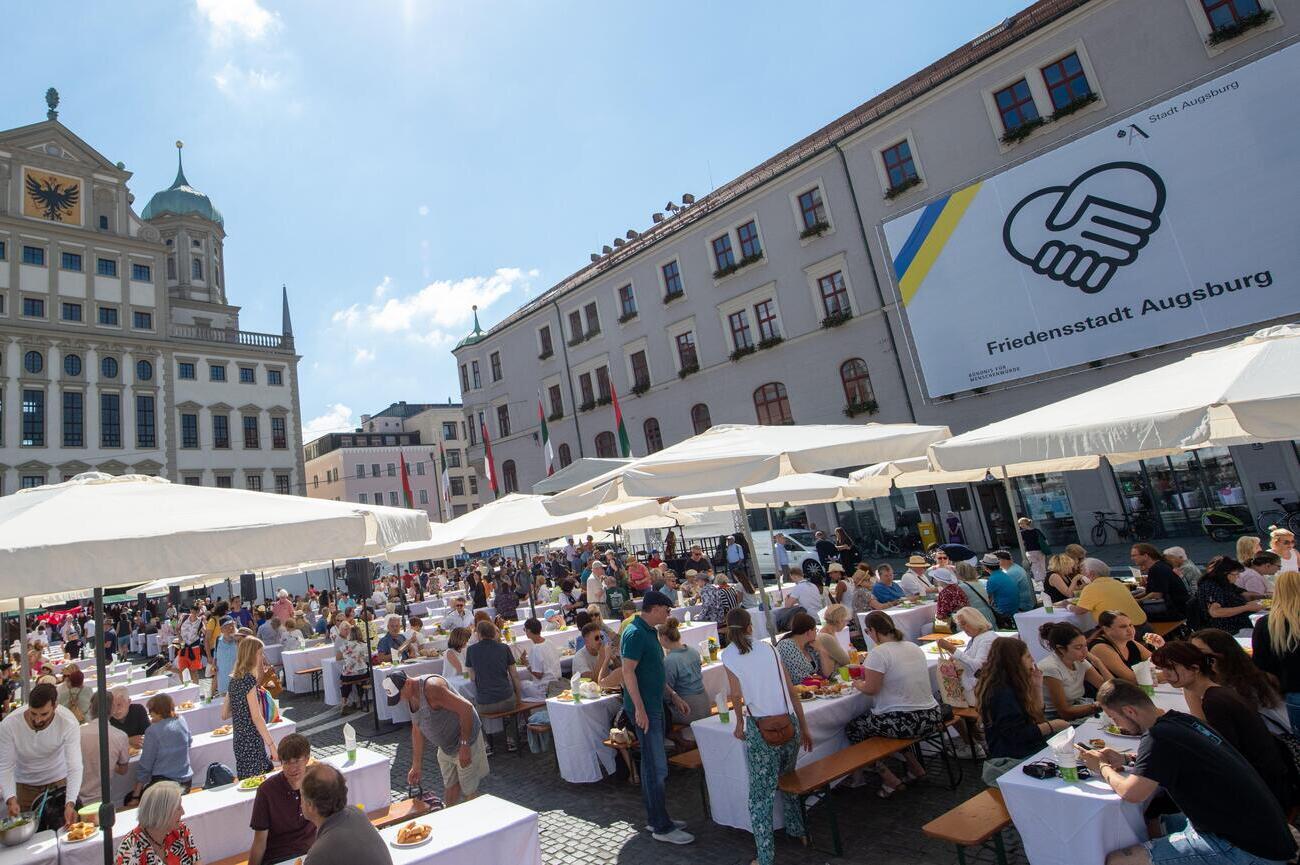
- Hohe Friedensfest: Every year on August 8, Augsburg celebrates Hohe Friedensfest, one of Germany’s most meaningful public holidays. Instead of one central spectacle, the city opens itself up through concerts, cultural events and gatherings spread across public spaces. You’ll notice how calm and reflective it feels, without losing its festive energy.
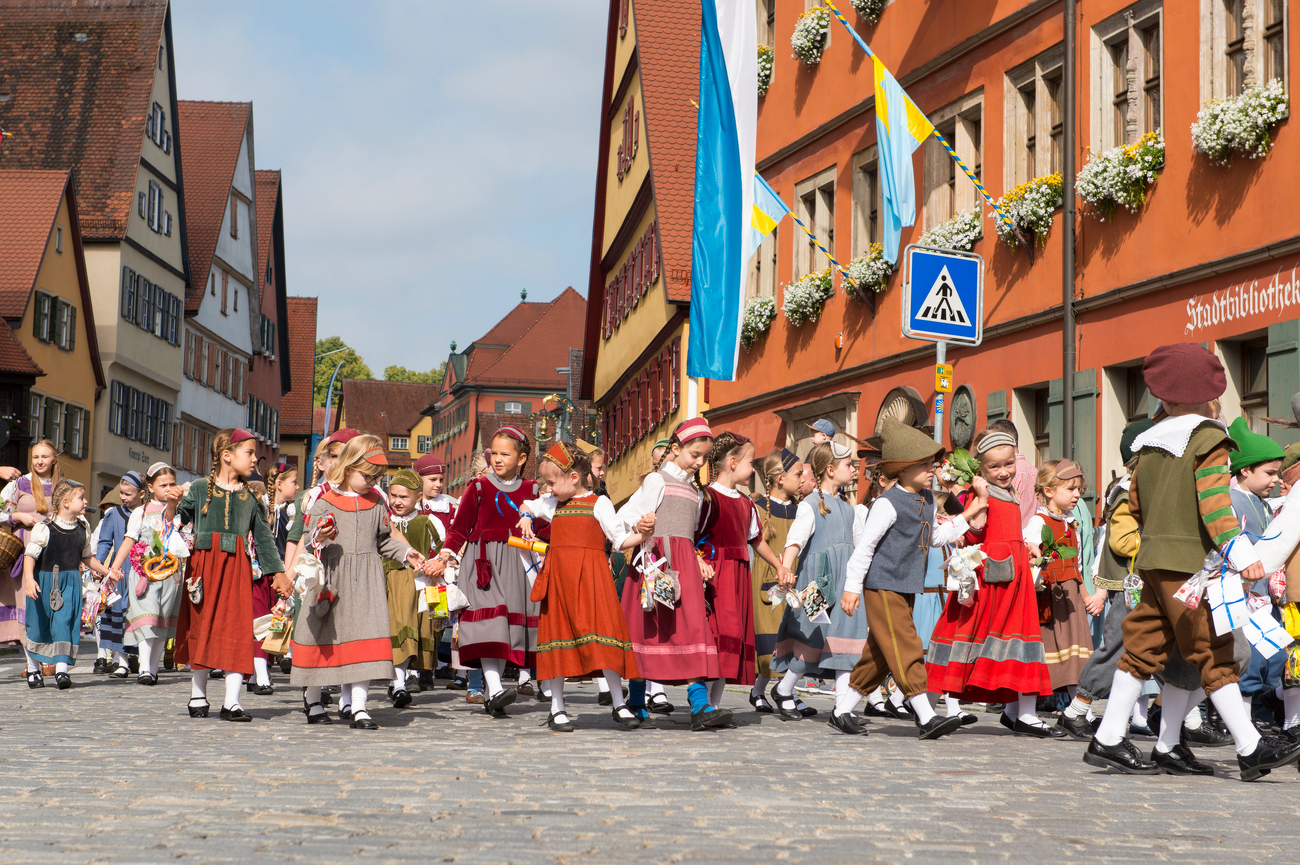
- Kinderzeche: Kinderzeche takes place in late July and gives Dinkelsbühl a distinctly joyful energy. Children lead the way in reenactments and parades that retell how the town was saved centuries ago. You’ll see families lining the streets, historic costumes everywhere and a sense of pride that feels genuine rather than staged.
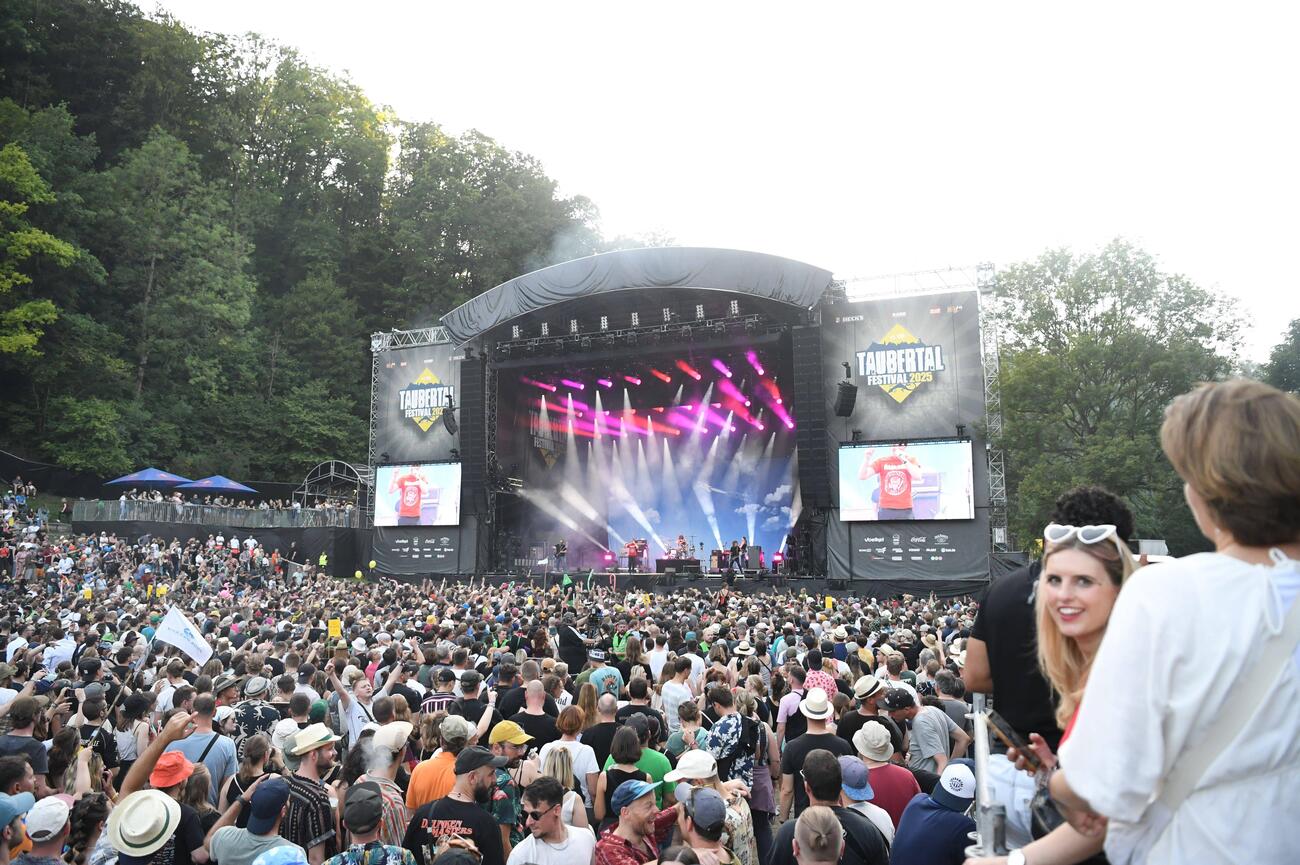
- Taubertal Festival: Held in early August, the Taubertal Festival flips the script on what you expect from the Romantic Road. Set in a green valley just outside Rothenburg, this open-air music festival draws international and German acts across rock, indie and alternative scenes. You trade medieval towers for open skies, live music and long summer evenings. If you want to see how the region balances tradition with modern energy, this is where it happens.
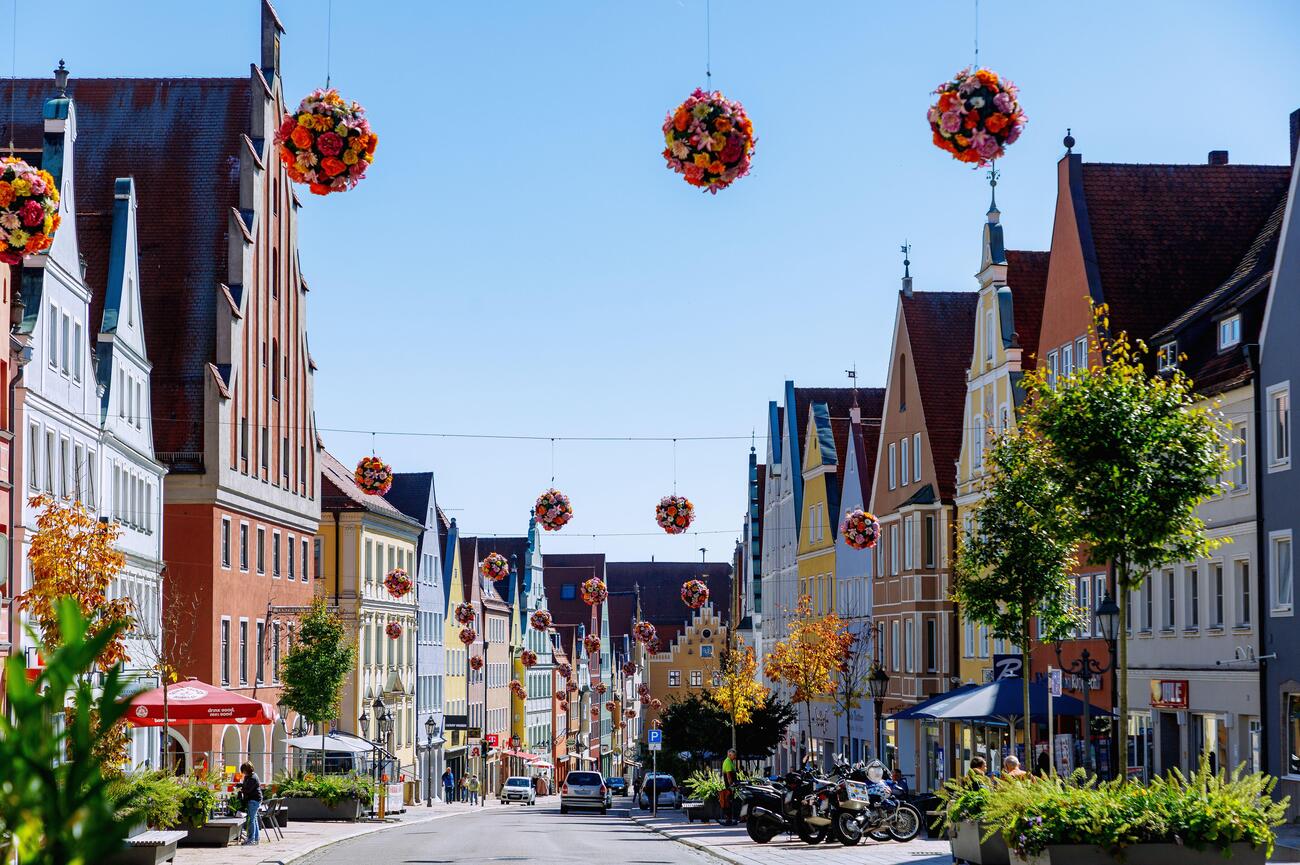
- Reichsstraßenfest: In July, Donauwörth’s historic Reichsstraße turns into one long street party. Food stalls, live bands and performances line the road, and the entire town seems to step outside at once. You don’t need a plan here. You walk, stop when something catches your attention and keep going. It’s casual, welcoming and easy to slip into.
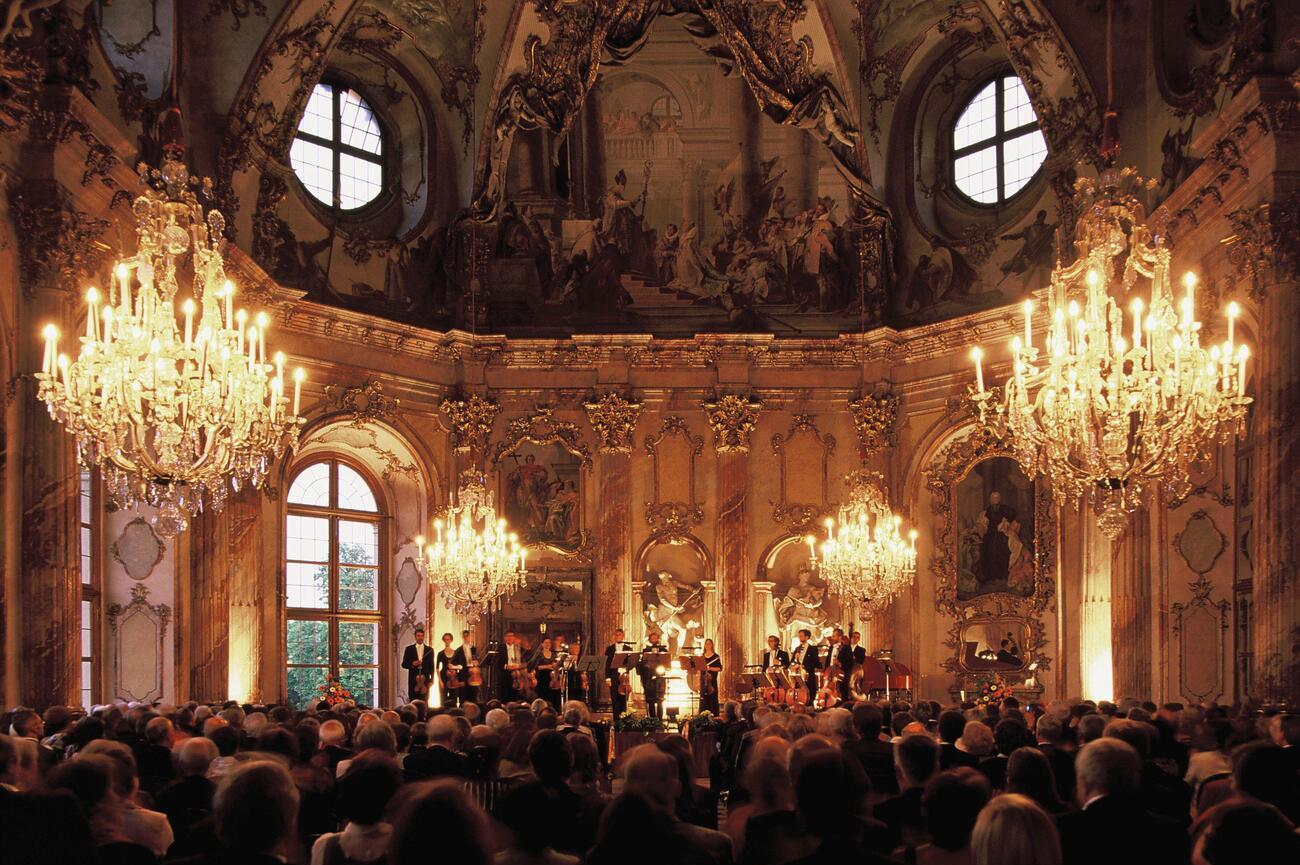
- Mozartfest: Running from late May through June, Würzburg’s Mozartfest brings classical music into some of the city’s most beautiful settings. Concerts unfold in palaces, churches and concert halls, often just steps away from where you spent the afternoon exploring. You might find yourself sightseeing by day and listening to Mozart by night, realizing how naturally culture fits into the rhythm of the city.
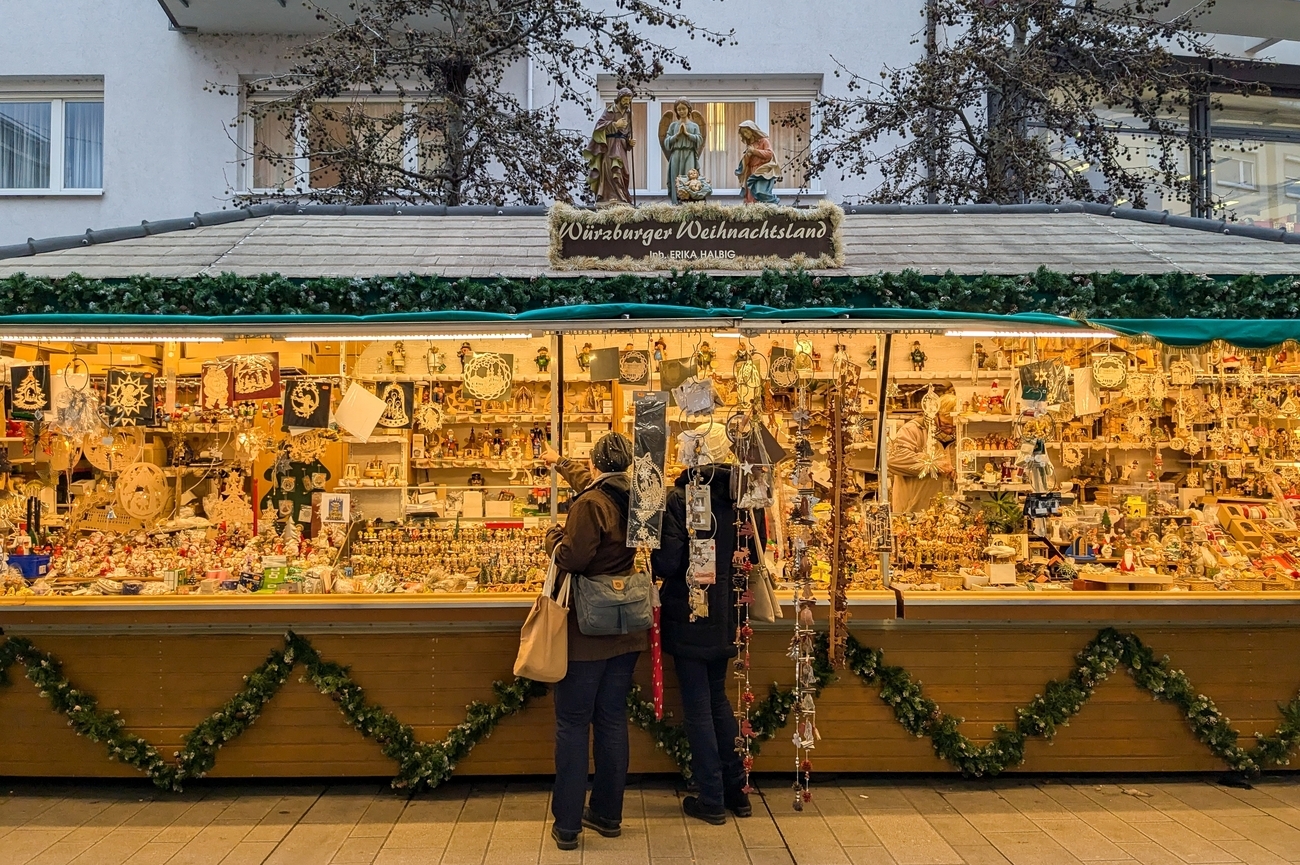
- Würzburg Weihnachtsmarkt: From late November through December, Würzburg’s Christmas Market transforms the city center into a winter gathering place. Wooden stalls fill the square, lights glow against historic facades and the smell of mulled wine follows you through the crowd. You’ll want to come in the evening, when the atmosphere peaks and the cold air makes every warm drink feel earned. It’s the Romantic Road at its coziest and a perfect way to end the year.
The Romantic Road is 29 towns and 460 km of decisions—don’t spend your vacation managing them. While the route is timeless, the logistics of a seamless trip are not. Between securing elusive timed-entry tickets for Neuschwanstein, navigating the restricted historic zones of Dinkelsbühl, and finding the one vineyard in Würzburg that isn’t a tourist trap, the "romance" can quickly be replaced by a spreadsheet.
At Revigorate, we specialize in reclaiming your time. We don’t just book hotels; we curate the flow of your journey, providing private local guides, logistics-free transport, and hand-selected dinner reservations that ensure your only job is to enjoy the view. Contact us today to have our specialists design your custom German itinerary.


Let us know what you love, where you want to go, and we’ll design a one-of-a-kind adventure you’ll never forget.
Get in touch
Miriam
Travel Specialist

Romina
Travel Specialist

Laura
Travel Specialist
Our offices:



Revigorate, Iberian Escapes and Algarve Lifestyle are the registered brand names of APCS Lda . We are a fully authorised travel agency licensed by Turismo de Portugal RNAVT/6867.
In the event of a dispute, the consumer may refer to: RAL - Centros de Arbitragem
Avª. 5 de Outubro, nº. 55, R/C Dtº. 8000-075 Faro, Portugal | Tel: +351 289 823 135 *
* national landline call
E-mail: info@consumoalgarve.pt| www.consumidoronline.pt | Mon to Fri: 9:00 - 13:00 / 14:00 - 17:00