Things to Do in Lake Chiemsee: 3-Day Itinerary
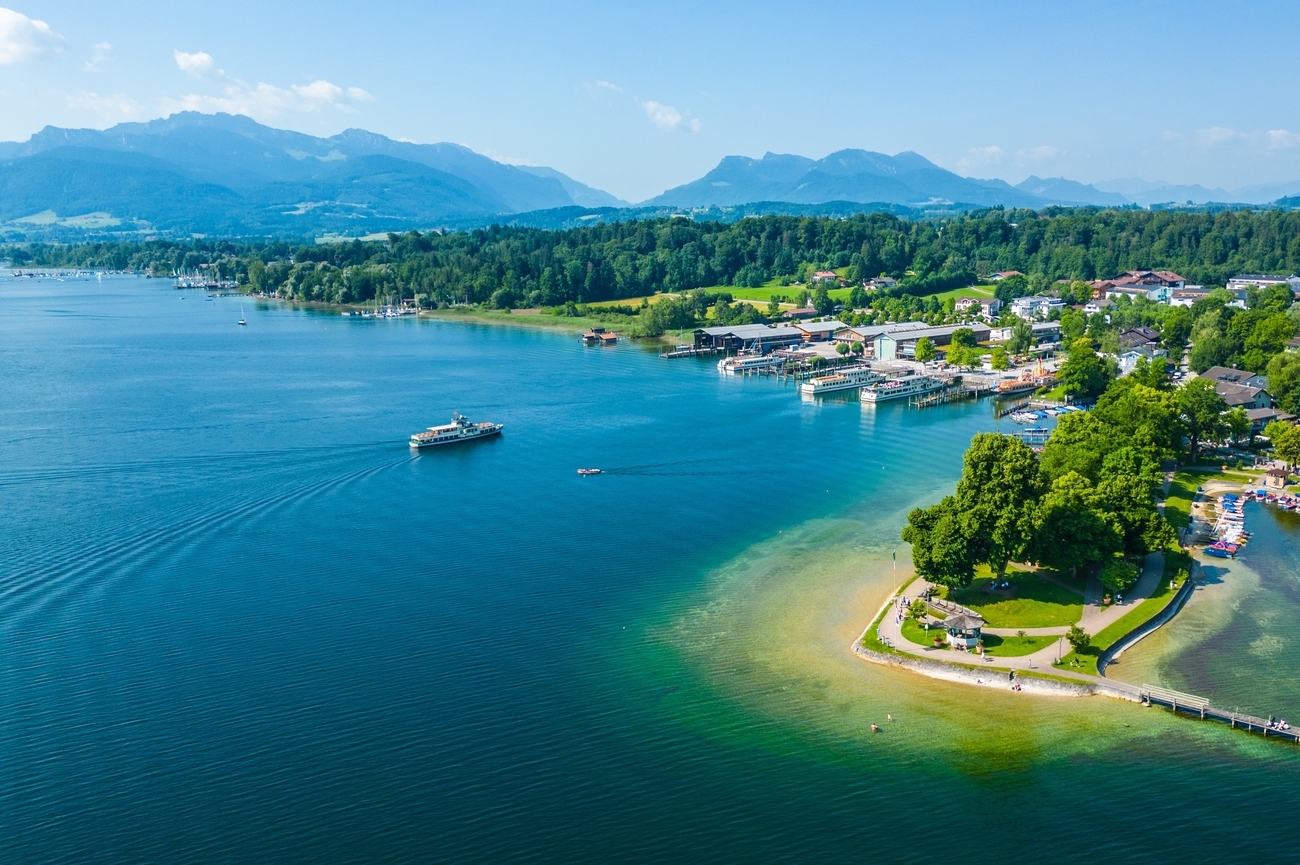
Lake Chiemsee is one of Bavaria’s most distinctive lake destinations, combining royal palaces, historic islands, lakeside villages, ferry journeys and Alpine scenery between Munich and the Bavarian Alps.
The lake’s best-known landmark is Herrenchiemsee Palace on Herreninsel, built for King Ludwig II and inspired by Versailles. Nearby Fraueninsel offers a very different atmosphere, with its Benedictine abbey, historic lanes and quieter waterfront setting. Around the lake, places such as Prien am Chiemsee and Gstadt provide ferry connections, promenades and easy access to the surrounding landscape.
What makes Chiemsee especially rewarding is the contrast between royal history and relaxed lake life. Palace interiors, monastery courtyards, island walks, sailing boats and mountain views can all form part of the same journey without feeling repetitive.
This 3-day Lake Chiemsee itinerary brings together Herrenchiemsee Palace, Herreninsel, Fraueninsel, lakeside villages, ferry journeys and Alpine viewpoints in a route designed to be varied and well paced.
Day 1

Morning: Chiemsee-Bahn
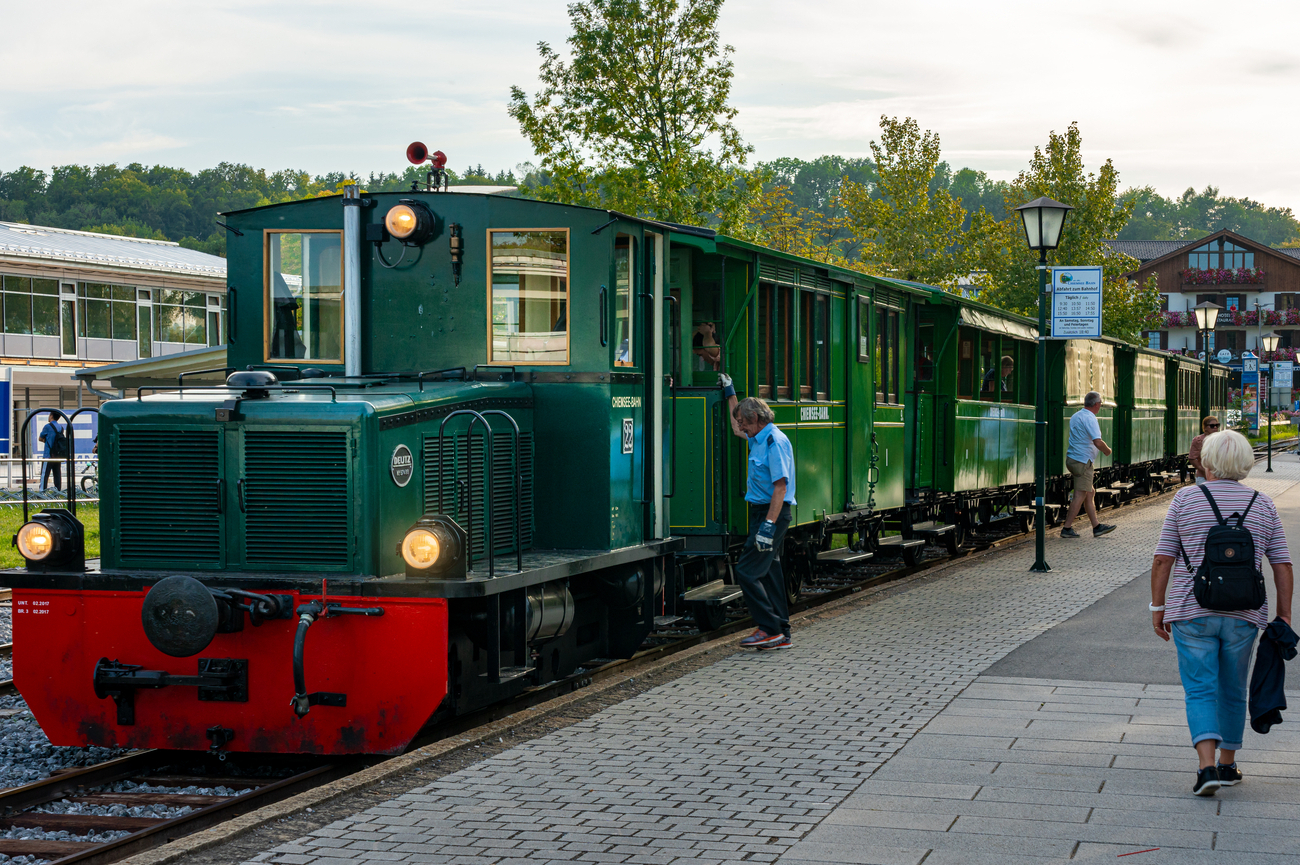
The journey to Chiemsee begins with a train that looks like it rolled straight out of a storybook. The Chiemsee-Bahn doesn’t rush, doesn’t roar and definitely doesn’t do modern drama. Instead, it whistles, puffs and glides along like a charming old character that has been faithfully performing the same role for over a century and still steals the show.
Dating back to 1887, this tiny steam railway connects Prien am Chiemsee station to the lakeside harbor at Prien-Stock, covering a short but iconic route of about 1.9 kilometers. The ride lasts only around eight minutes, but it feels like stepping into a different era. Wooden benches, historic passenger cars and the gentle rhythm of the steam locomotive give the train its old-world charm. In fact, the Chiemsee-Bahn holds bragging rights as the world’s oldest continuously operating steam tramway, lovingly preserved as a Bavarian cultural monument.
The railway was originally built to handle the wave of visitors eager to see Herrenchiemsee Palace after it opened to the public following King Ludwig II’s death. Horse carriages once struggled to move crowds from the train station to the lake, so a local shipping entrepreneur commissioned this charming narrow-gauge railway and the rest is Chiemsee legend.
Promenade Prien am Chiemsee
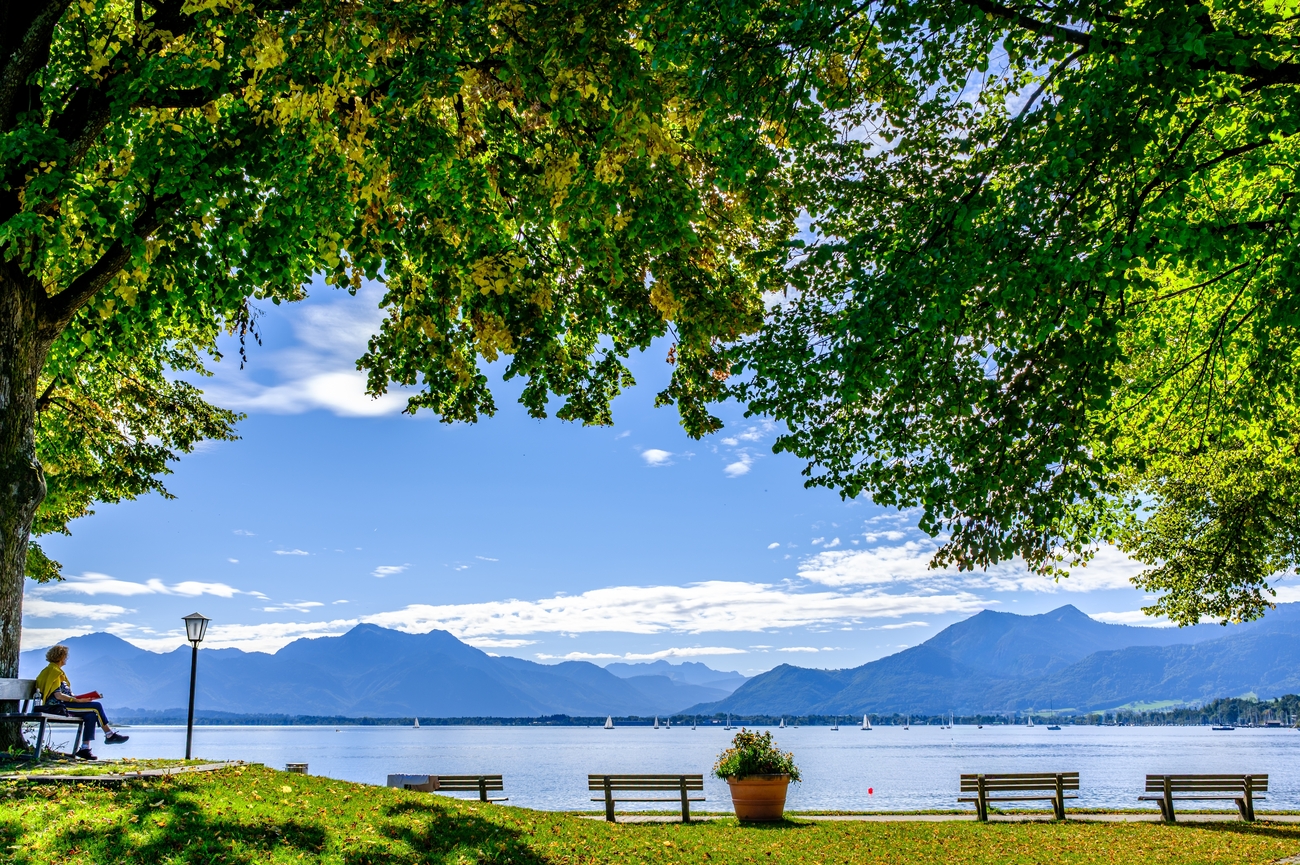
A quick 2–3 minute walk from the Chiemsee-Bahn terminal at Prien-Stock and the scene opens up into the Promenade Prien am Chiemsee.
This is the kind of lakeside stretch that immediately slows the pace of the day. The steam train drops you right at the edge of the water, and suddenly the air feels fresher, the horizon wider and the Alps casually show up in the distance like they’ve been waiting for their cue.
The promenade itself has been part of Prien’s lakeside culture since the late 19th century, when Chiemsee began attracting travelers eager for fresh Alpine air and royal sightseeing trips to Herrenchiemsee. Today, it remains one of the lake’s most elegant waterfront walks. A long, tree-lined path runs along the shoreline, framed by manicured lawns, historic villas and uninterrupted views across Bavaria’s largest lake. Wooden boat docks stretch into the water, sailboats drift past like slow-moving ornaments and the whole setting feels effortlessly polished without losing its relaxed Bavarian charm.
And along the promenade, several landmarks anchor the waterfront. The Schramlbad, established in 1927, is one of the lake’s historic bathing areas and still operates today, complete with its classic wooden lake platform and views toward the islands. Nearby stands the Ludwig II fountain, quietly nodding to the famously eccentric king whose palace dominates the lake. The area also leads directly to the Prien harbor, where ferries glide toward Herreninsel and Fraueninsel throughout the day.
Neues Schloss Herrenchiemsee
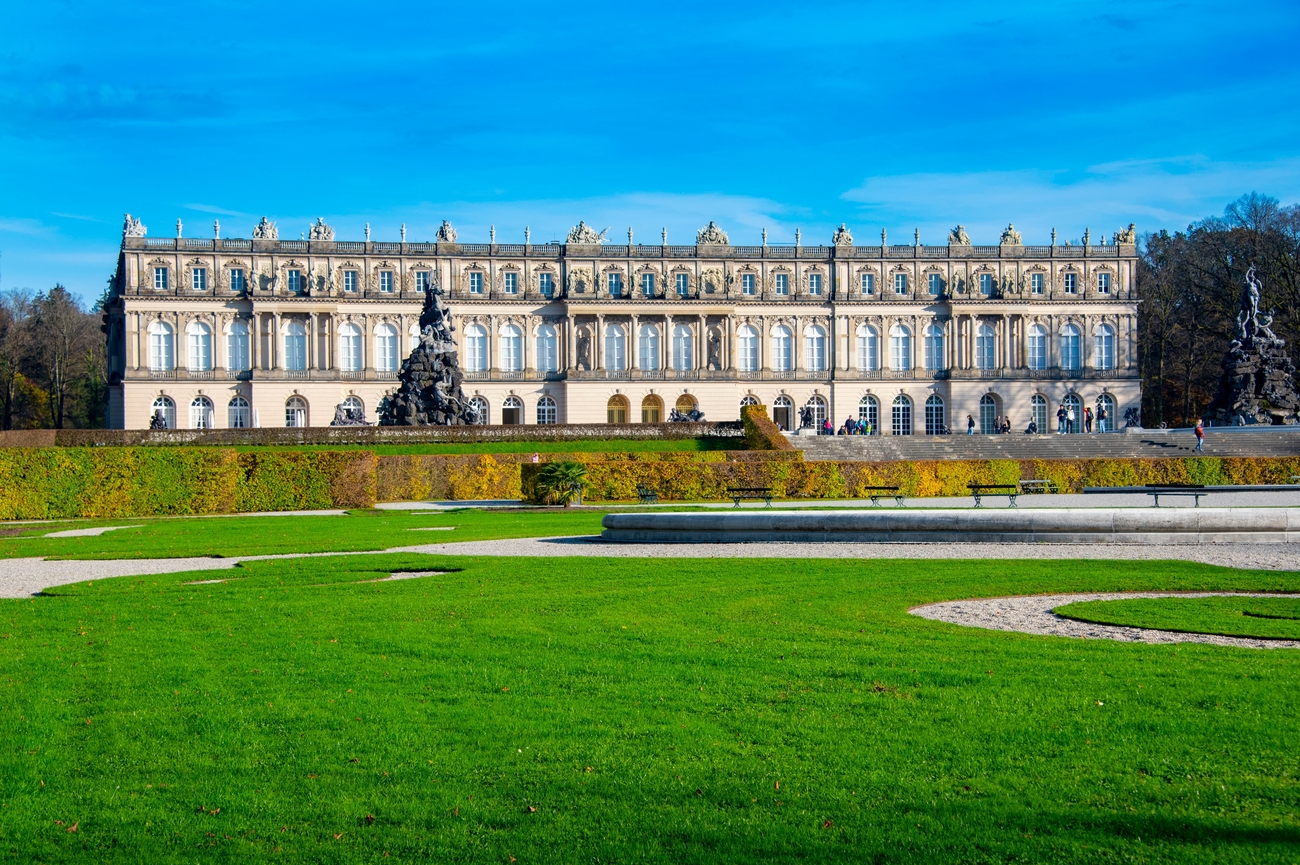
From Prien Promenade, the journey to Neues Schloss Herrenchiemsee begins with a scenic shift from lakeside calm to full royal spectacle. Ferries from Prien harbor cross the lake to Herreninsel in about 15 minutes, followed by a 20-minute walk or carriage ride through shaded forest paths toward the palace.
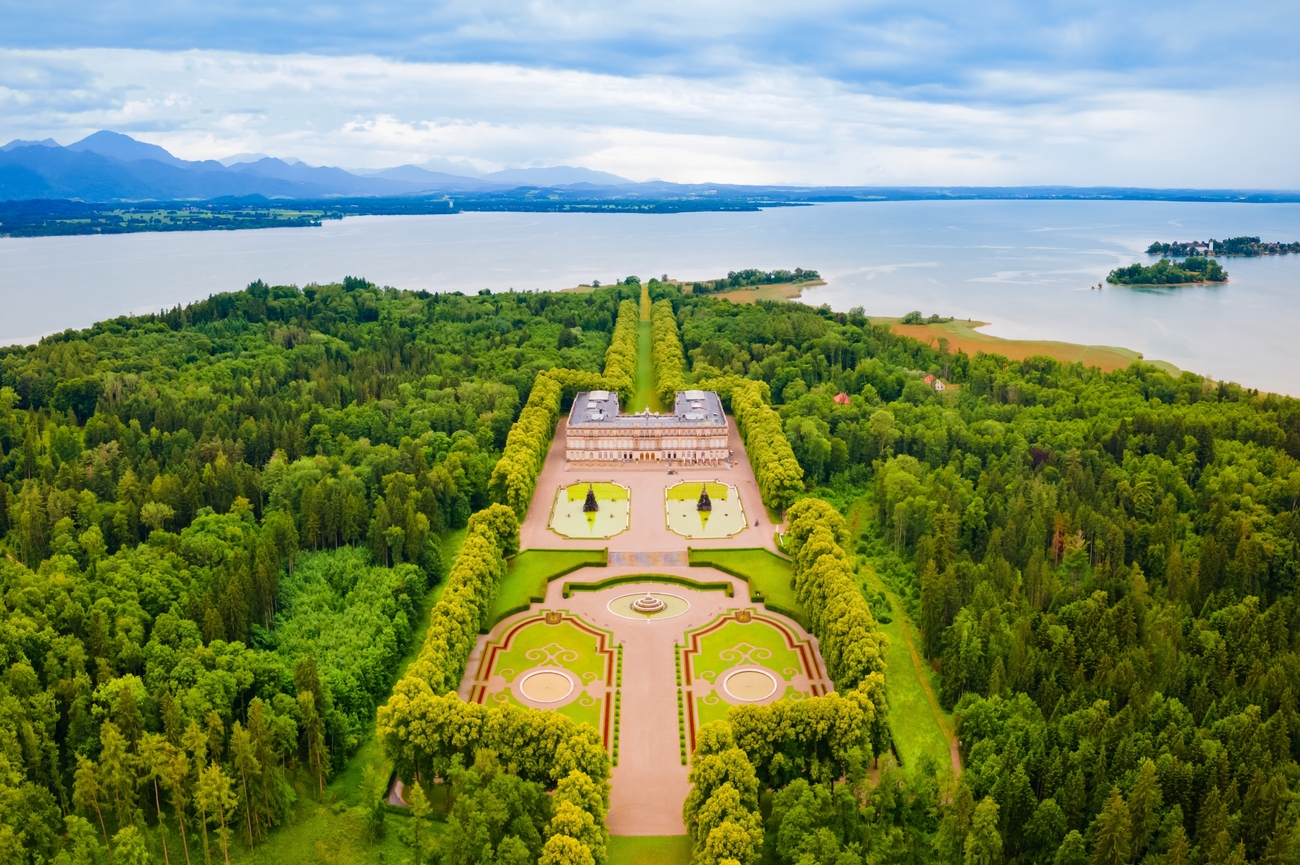
Neues Schloss Herrenchiemsee was commissioned by King Ludwig II of Bavaria in 1878, inspired by the Palace of Versailles and Ludwig’s deep admiration for France’s Louis XIV. The result is unapologetically grand: a sprawling baroque palace surrounded by symmetrical gardens, fountains and long reflecting canals that feel designed for royal-level entrances. Inside, gilded halls, marble staircases and elaborate chandeliers make it clear Ludwig was not interested in subtlety. The showstopper is the Hall of Mirrors, stretching even longer than the one at Versailles, glowing with rows of crystal chandeliers and towering windows overlooking the gardens.
Stepping inside Neues Schloss Herrenchiemsee comes with a small royal rule: entry is only possible through a guided tour lasting about 40 minutes. It’s worth it. The guided format means you won’t just wander through rooms. You’ll hear the stories behind Ludwig II’s extravagant vision, the palace that tried to outshine Versailles and the king whose imagination clearly had no budget cap. Tours run regularly throughout the day and you’ll join one through the visitor center on Herreninsel near the ferry dock, where tickets are organized before entering the palace.
Afternoon:
King Ludwig II Museum
A few steps away from the palace tour route, the King Ludwig II Museum lets you slow down and linger in the world of Bavaria’s most mysterious monarch. After the grandeur of the palace interiors, the museum feels like opening the king’s personal scrapbook. Only this one happens to sit inside one of Europe’s most extravagant royal complexes.
The museum is housed in parts of the Old Palace (Augustinian Monastery) and sections of the Herrenchiemsee complex, and it explores the life of King Ludwig II, the famously enigmatic ruler behind Bavaria’s most legendary castles. Here, you’ll move through exhibits filled with royal portraits, original furniture, personal letters and architectural models of Ludwig’s ambitious building projects. The displays reveal a king who was deeply fascinated with art, theatre, mythology and grand architecture. Sometimes to the point of obsession. It adds context to the palace you just visited, showing how a dreamer with a royal budget shaped some of Bavaria’s most iconic landmarks.
While the palace interiors require a guided visit, you get a little more freedom next door. The King Ludwig II Museum inside the palace complex can be explored at your own pace, giving you time to dive deeper into the king’s life, his love for dramatic architecture and the ambitious castle projects that turned Bavaria into a real-life fairytale map.
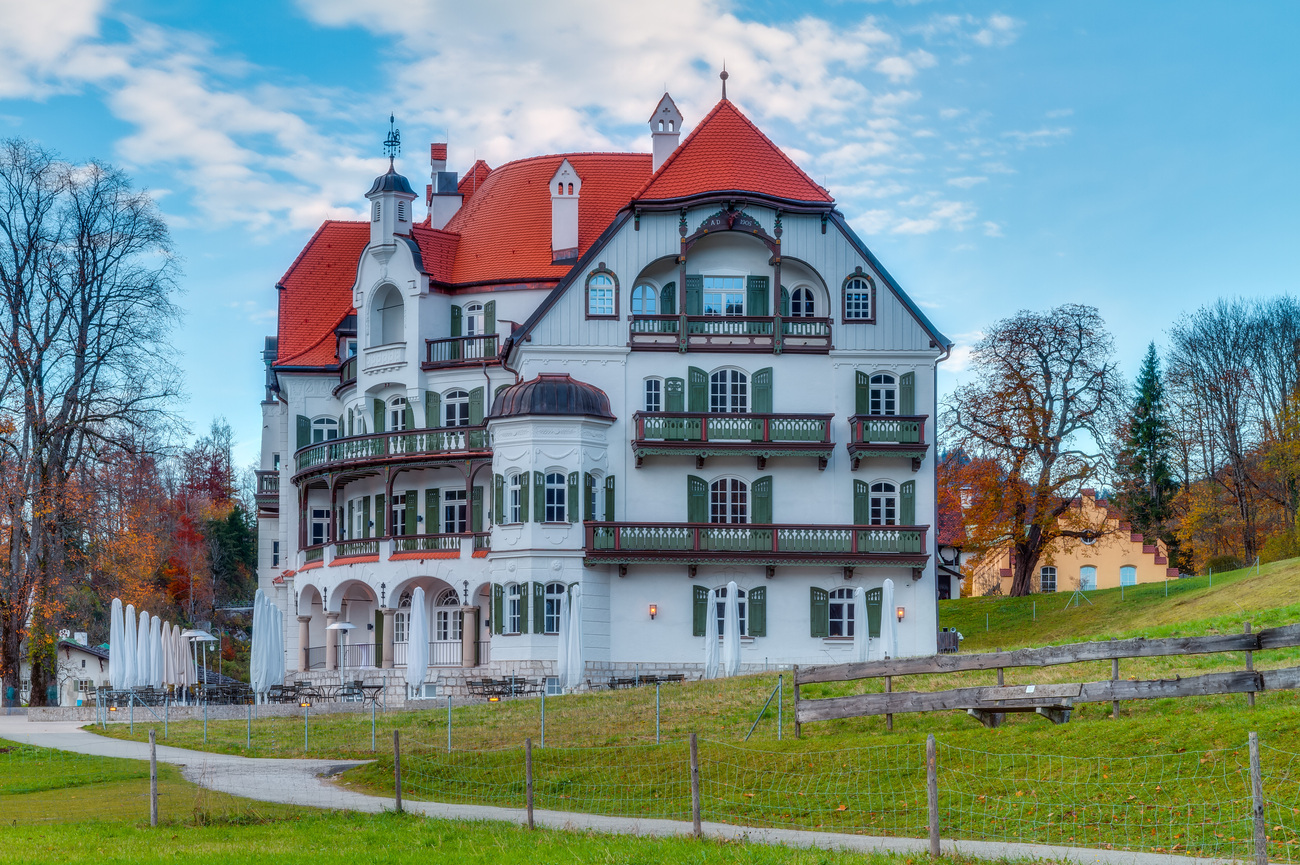
Augustiner Chorherrenstift
Where kings built spectacle, monks built silence.
Before leaving the palace grounds completely, take a slight detour toward the historic monastery complex just beside the New Palace. The Augustiner Chorherrenstift (Old Palace) sits only a short stroll away within the same Herreninsel estate, so there’s no long trek involved. Just follow the paths leading toward the older ochre-colored buildings near the cloisters.
The Augustiner Chorherrenstift dates back to around 765 AD, founded by Duke Tassilo III of Bavaria, making it one of the oldest historic sites in the Chiemsee region. Long before King Ludwig II envisioned his palace here, this island was home to Augustinian canons who lived and worked within the monastery walls. The buildings you see today blend medieval origins with later Baroque architectural additions, creating a complex of warm-toned facades, cloistered walkways and peaceful courtyards that feel quietly elegant rather than grand.
Parts of the monastery complex now house exhibition spaces and sections connected to the King Ludwig II Museum, which you can explore freely without needing a guided tour. The cloisters themselves are worth lingering in for a moment with arched corridors, shaded courtyards and thick stone walls that carry over a thousand years of history. It’s a gentler experience compared to the dramatic interiors of the palace, but just as fascinating.
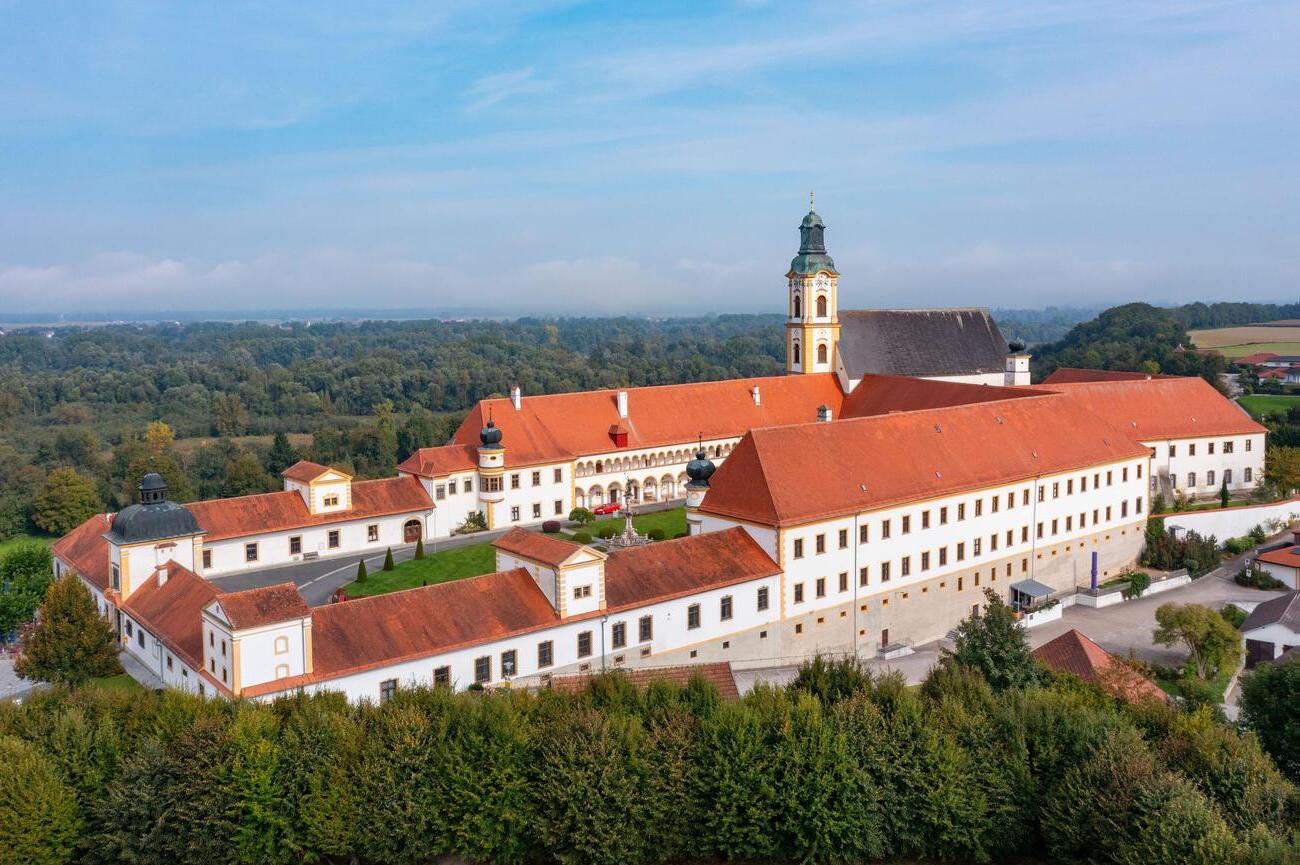
Großer Kanal
Within a 5–7 minute walk, the trees open up and the Großer Kanal stretches out before you like a perfectly staged royal mirror. It’s hard to miss. The long reflecting canal slices straight through the formal gardens, pointing dramatically toward Neues Schloss Herrenchiemsee as if the palace demanded its own spotlight.
The Großer Kanal, or “Great Canal,” forms the grand centerpiece of the palace gardens designed for King Ludwig II in the late 19th century. Inspired by the formal landscapes of Versailles, the canal runs in a perfectly straight axis leading up to the palace facade. Water fountains rise from the center, while wide lawns and symmetrical pathways frame the entire scene. It was meant to impress and it still does.
At certain times of the day, the fountains perform their own little show. The Latona Fountain and surrounding water features activate seasonally, sending water high into the air and turning the canal into a lively centerpiece of the garden. Even without the fountains running, the canal works its quiet magic. The water reflects the palace towers, the Bavarian sky and the long tree-lined pathways that stretch into the distance.
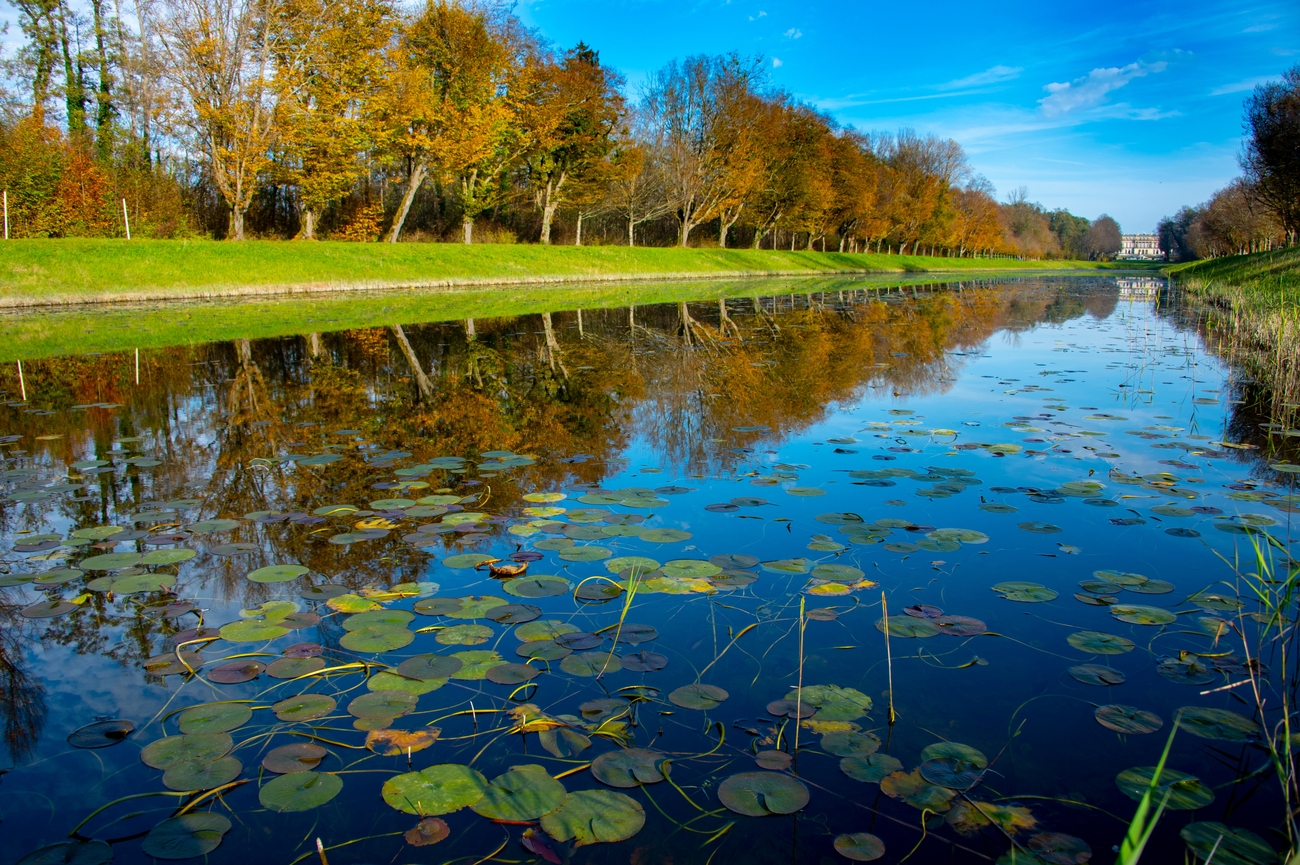
Evening: Frauenwörth Abbey
in Chiemsee
Evening on Fraueninsel slows the entire lake down and Frauenwörth Abbey sits right at the heart of that calm.
From Herreninsel, hop back on the Chiemsee ferry for a short 10-minute ride across the lake to Fraueninsel. Boats run regularly between the islands and the journey itself feels like a gentle reset after the grandeur of Ludwig’s palace. As the ferry approaches the island, the abbey’s distinctive onion-domed bell tower rises above the cluster of pastel houses, instantly marking the island’s most historic landmark.
The Frauenwörth Abbey dates back to around 782 AD, making it one of the oldest continuously active convents in Germany. Founded by Duke Tassilo III of Bavaria, the Benedictine abbey has been home to a community of nuns for well over a thousand years. The abbey church stands proudly near the center of the island, with its warm stone walls and iconic red dome visible from nearly every corner of Fraueninsel. Inside, the church holds centuries of religious art, wooden carvings and the shrine of Blessed Irmengard, one of the abbey’s most revered historical figures.
Unlike the palace across the lake, the abbey moves at a quieter rhythm and you’ll feel it the moment you step onto Fraueninsel. You can walk inside the church respectfully, take your time around the monastery grounds and wander through the tiny island village that grew around the abbey walls.
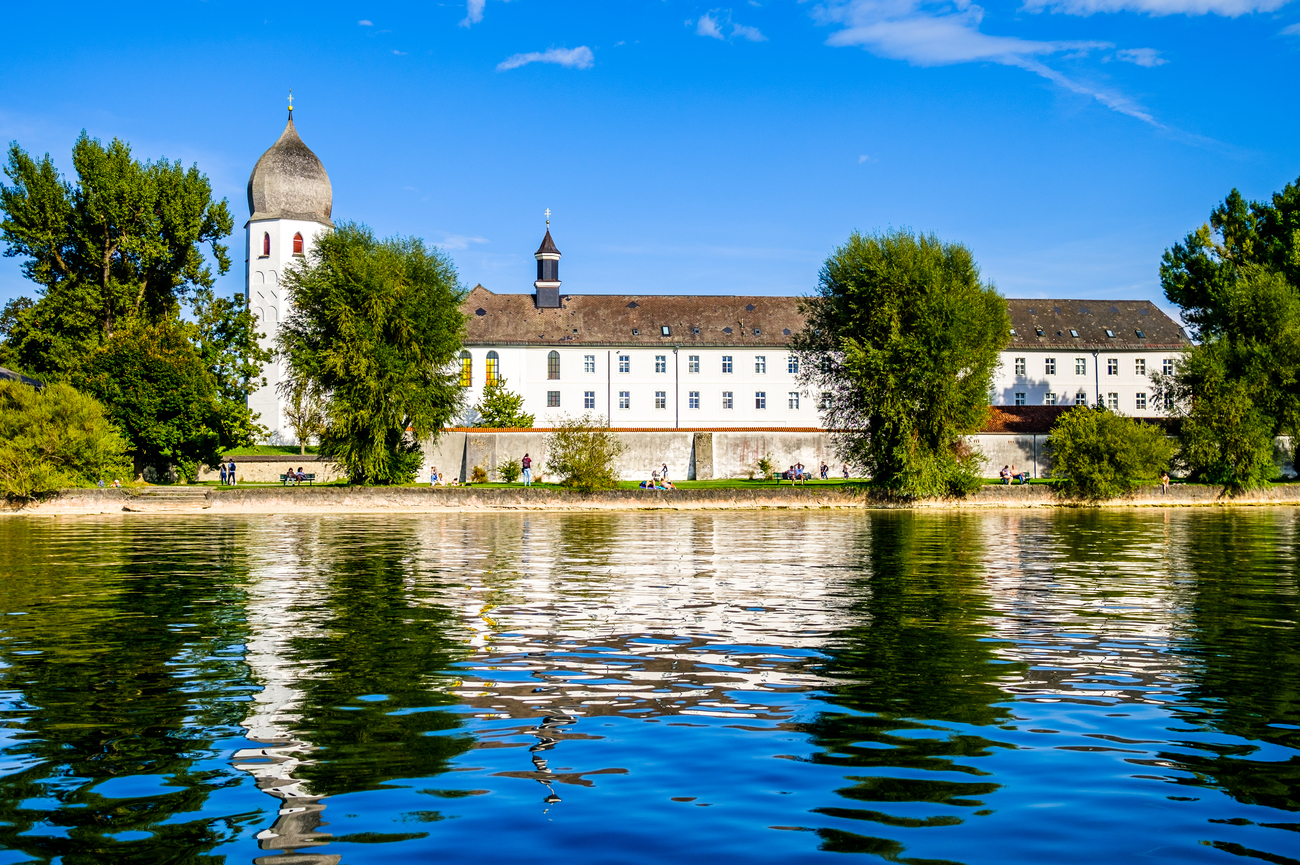
Torhalle
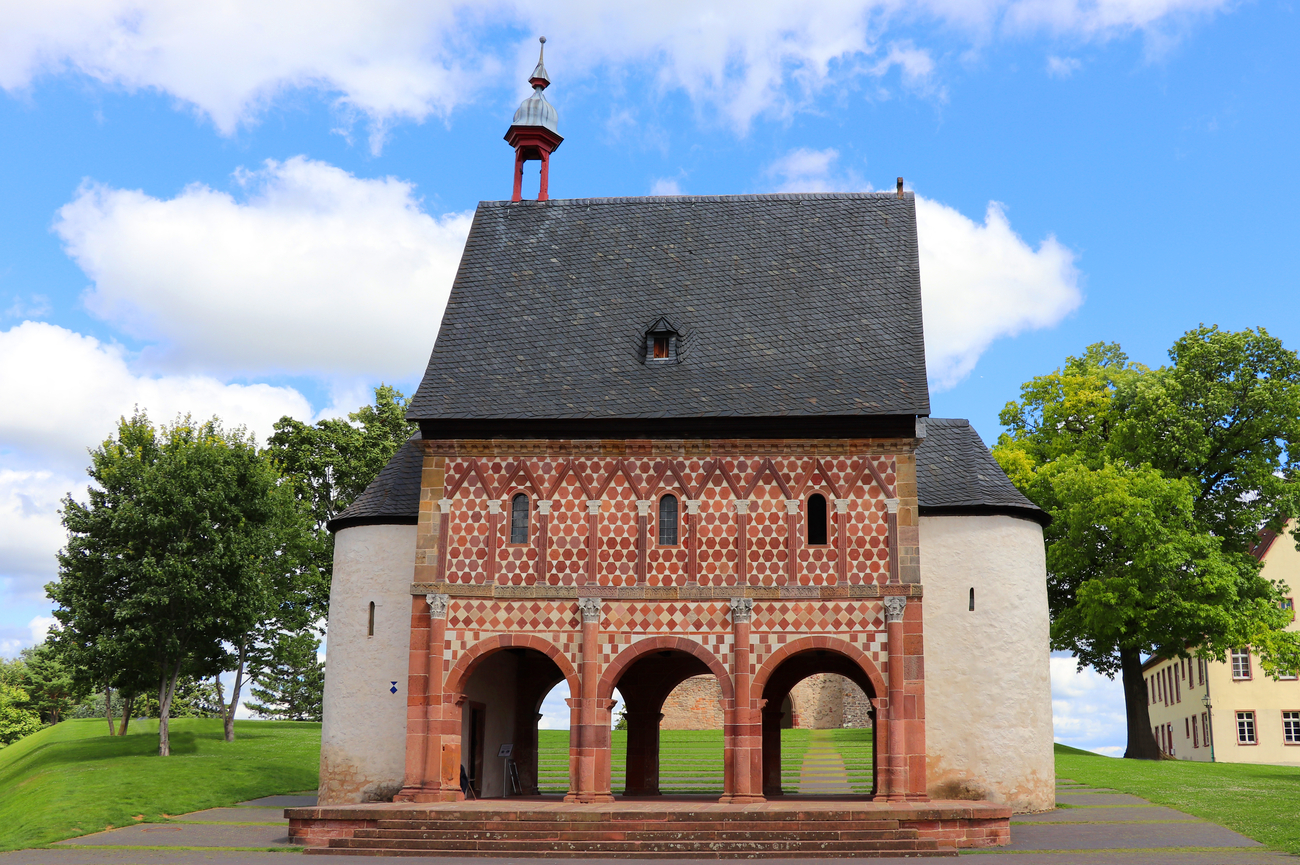
The island saves one of its oldest secrets for last, the Torhalle.
After exploring Frauenwörth Abbey, simply keep wandering through the village paths of Fraueninsel. No map gymnastics needed. Within a minute or two, the Torhalle (Carolingian Gate Hall) quietly appears along the path, almost like a historical cameo you weren’t expecting. The island is small enough that every turn naturally leads somewhere meaningful and this tiny stone gateway sits right in the middle of that story.
The Torhalle dates back to the 9th century, built during the Carolingian era when Fraueninsel was still a growing monastic settlement. Long before ferries and palace visitors arrived, this gate once formed part of the early monastery complex connected to Frauenwörth Abbey. Its architecture is simple yet sturdy with arched openings, thick stone blocks and a weathered surface that has held its ground for well over a thousand years. Compared to the palace’s gilded theatrics across the lake, this building feels refreshingly honest. No royal drama, just history quietly doing its thing.
Today, the Torhalle stands as a small but meaningful historical marker on the island. Many heritage walks around Fraueninsel pause here to explain its connection to the early monastery and the Carolingian period. You might notice how modest it looks compared to the abbey or the royal palace across the water but that’s exactly its charm.
Standing near the Torhalle, surrounded by quiet village lanes and centuries-old stone, feels like closing the final page of the day’s story. Day one at Chiemsee ends not with fireworks but with something better: stillness, history and a little bit of enchanted vibe lingering in the air.
Day 1 - Lake
Chiemsee Tour Map
Day 2
Morning: Chiemsee Bernau
Outlet Store
Day two begins with a little retail therapy, Bavarian style.
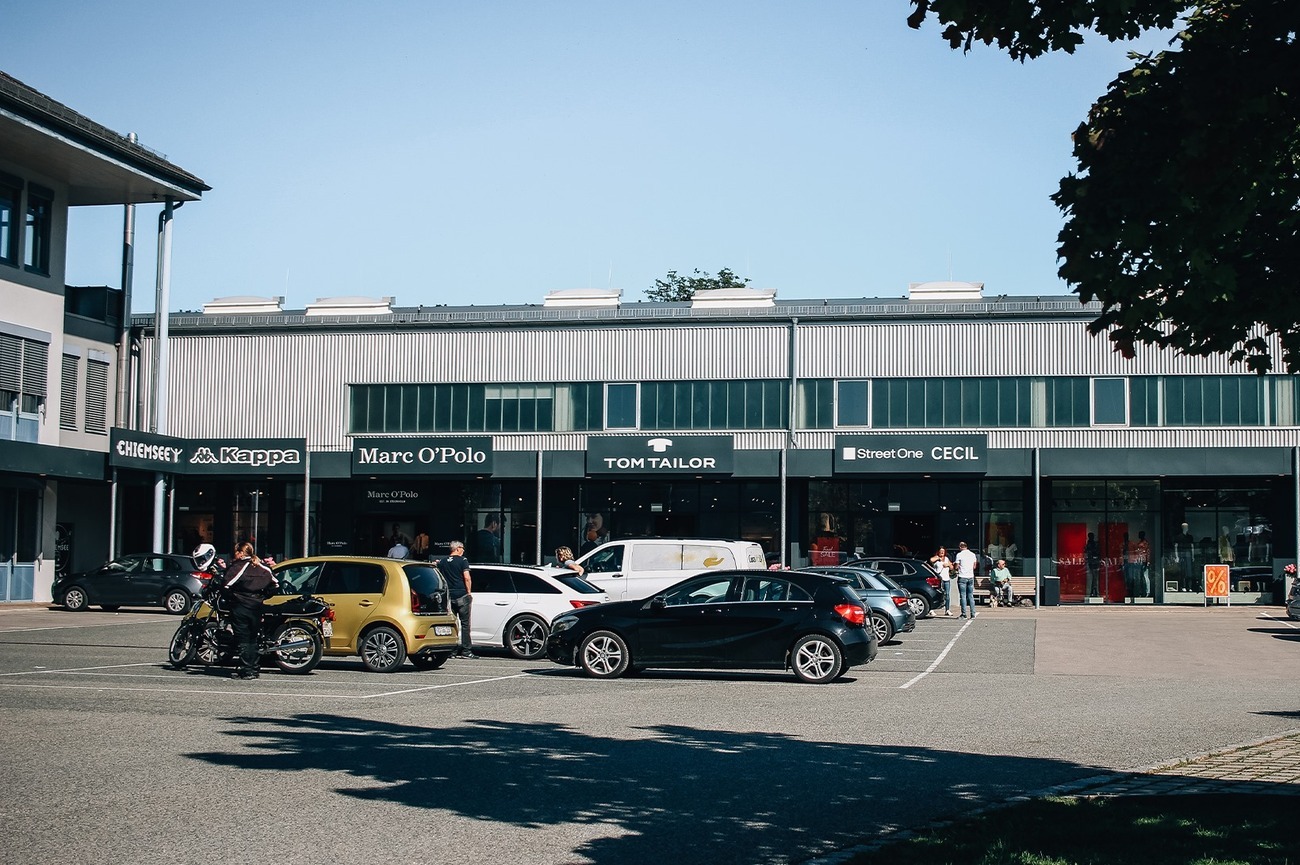
The Chiemsee Bernau Outlet Store belongs to the well-known Bavarian lifestyle brand Chiemsee, which originally launched in the 1980s and became famous for its surf and outdoor apparel inspired by Lake Chiemsee itself. The brand name even carries the lake’s identity and over the years it has grown into an international label blending alpine outdoor culture with a laid-back lake lifestyle. Inside the outlet, you’ll find collections of casual sportswear, jackets, accessories and seasonal pieces, often offered at reduced outlet prices compared to flagship stores.
The store is part of the Bernau Outlet Center, a small cluster of brand outlets that includes labels like Marc O’Polo, Camel Active, Tom Tailor, and Lindt. It’s not one of those overwhelming mega malls, thankfully. Instead, the layout feels manageable and relaxed, allowing you to browse comfortably without feeling rushed. Many travelers stop here because it’s one of the few dedicated outlet areas directly within the Chiemsee region.
Bernauer Segel-Club e.V. Felden
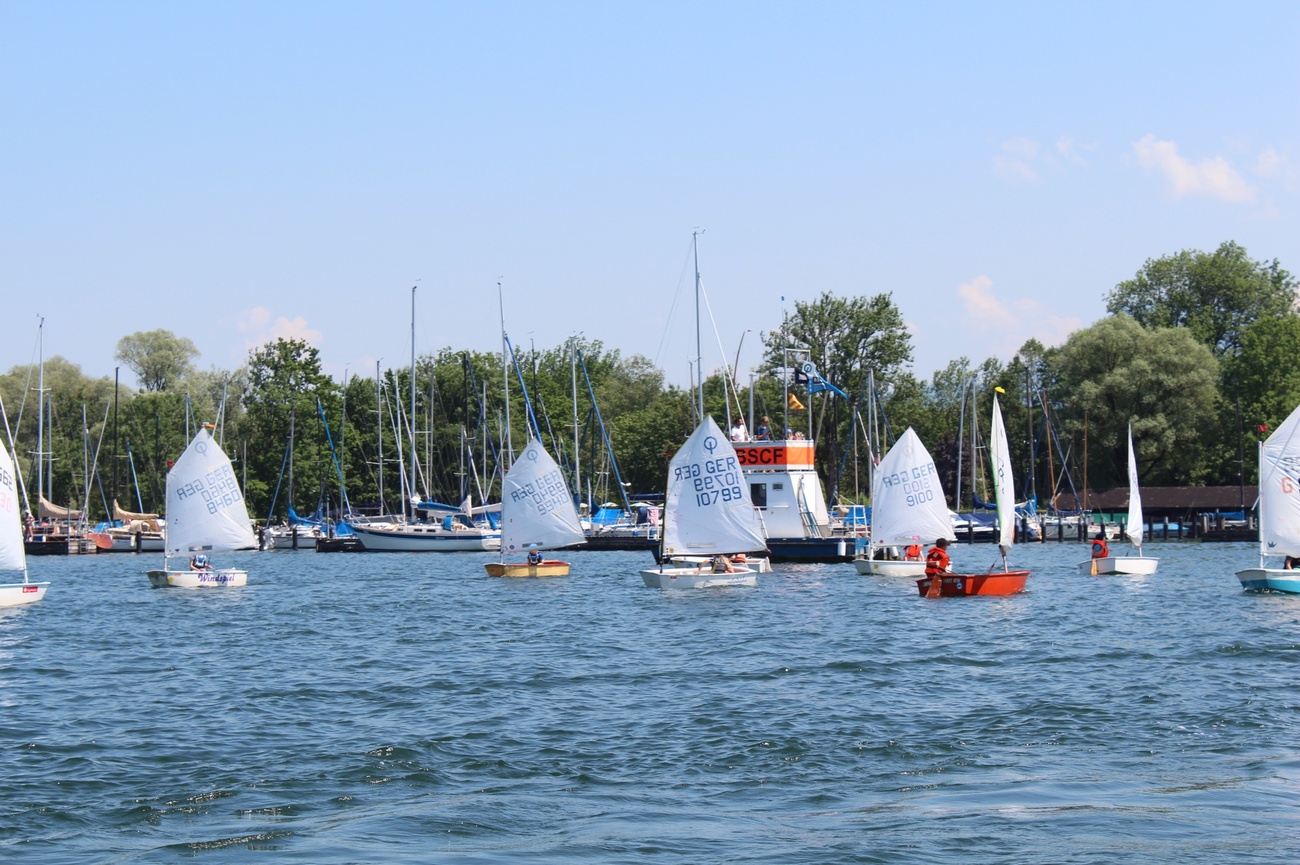
From the Bernau Outlet area, the club sits only about a 5-minute drive toward the lakeshore in Felden, where the road gently leads you closer to the water. As the lake comes into view, the atmosphere shifts from shopping streets to a classic sailing scene. You’ll see masts lining the marina, the Alps rising faintly in the distance and the unmistakable calm of Lake Chiemsee stretching out ahead.
The Bernauer Segel-Club, founded in 1948, is one of the established sailing clubs on Lake Chiemsee and plays a key role in the region’s sailing culture. Located right on the Felden lakeshore, the club manages a lively marina where sleek sailboats and racing yachts rest neatly along the docks. The setting feels effortlessly elegant with white hulls reflecting in the water, long piers reaching into the lake and a clubhouse that anchors the harbor with quiet sophistication.
Throughout the season, the club hosts regattas and sailing competitions, bringing together sailors from across Germany and neighboring Alpine regions. While the club itself operates as a private sailing association, visitors often walk along the Felden lakeside paths nearby, where you can admire the marina, watch boats heading out onto the lake and enjoy the panoramic views across Chiemsee toward the islands.
Strandbad Bernau
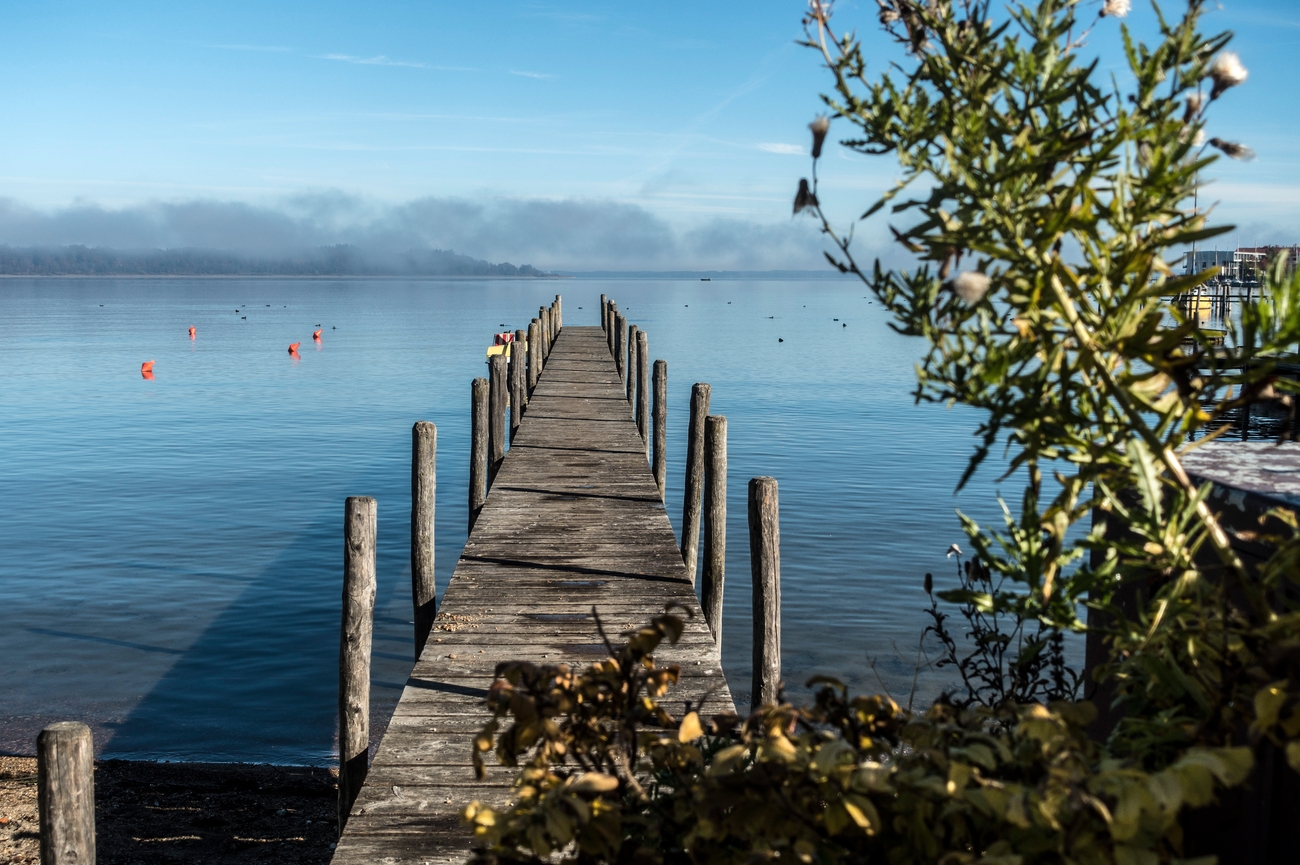
Lake days at Chiemsee come with a front-row seat to the Alps and Strandbad Bernau is where the lake shows off a little. An easy 3–4 minute walk along the lakeshore path will take you there. Just follow the waterfront promenade and the marina gradually gives way to wide lawns, wooden bathing platforms, and open views across the water.
Strandbad Bernau is one of the most scenic public bathing areas on Lake Chiemsee, known for its spacious lakeside park and uninterrupted alpine backdrop. The area combines grassy sunbathing lawns with wooden docks that stretch into the water, giving swimmers easy access to the lake. On clear days, the panorama is hard to beat, the Chiemgau Alps rise dramatically beyond the horizon, while sailboats drift quietly across Bavaria’s largest lake.
The beach area is well designed for a relaxed visit. Wide green spaces allow plenty of room to settle in and shaded trees along the edge of the park offer welcome breaks from the sun. Even if swimming is not on your agenda, the views alone make the stop worthwhile.
Afternoon:
Exter-Kunsthaus
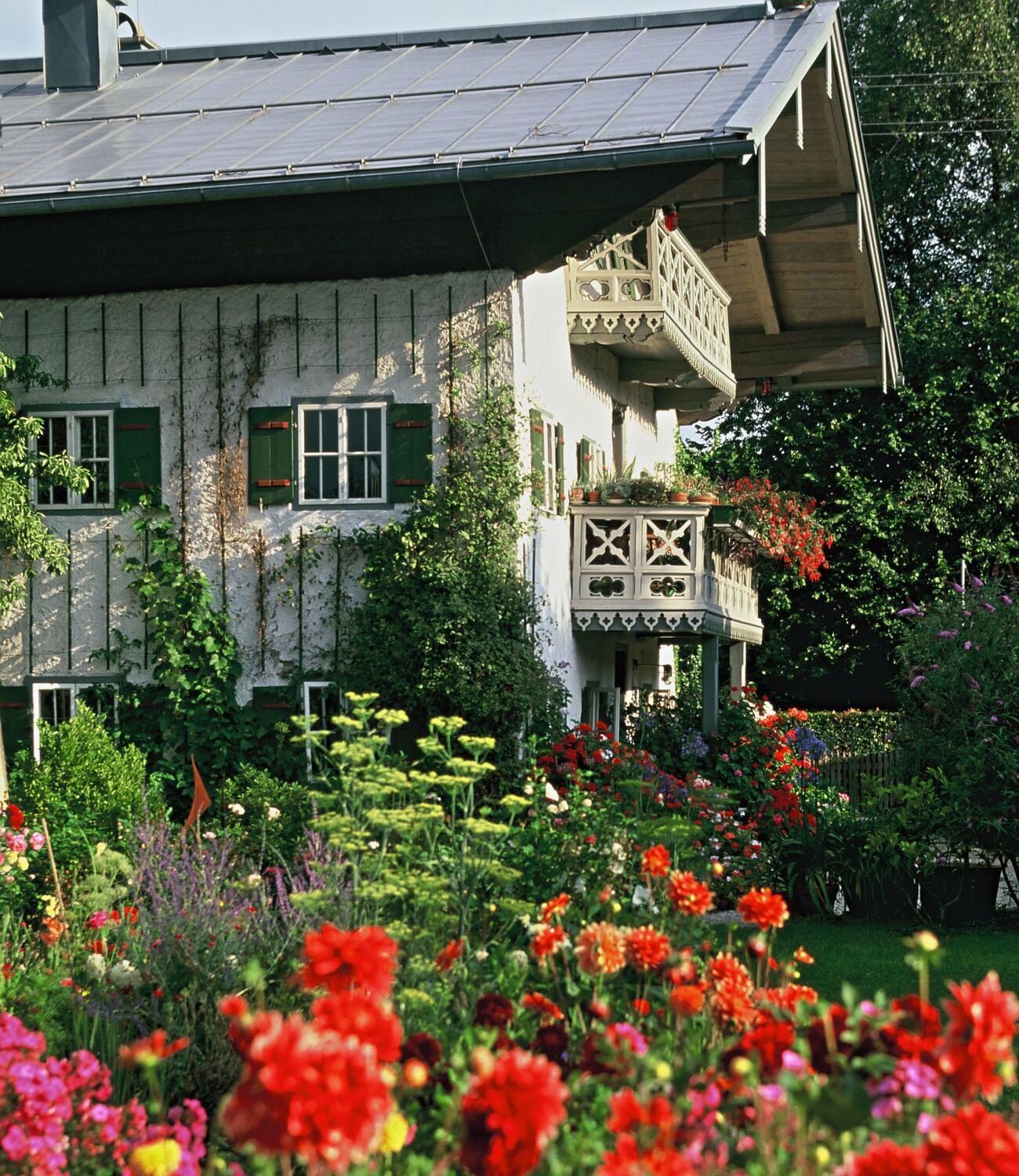
Art finds a quiet home at Exter-Kunsthaus. The journey there feels like a gentle shift in scenery. From Strandbad Bernau, the Exter-Kunsthaus in Feldwies (Übersee) lies about a 10-minute drive along the southern shore of Lake Chiemsee. The house appears modest at first glance, tucked between gardens and trees, but that understated charm is exactly what makes it special.
The Exter-Kunsthaus was once the home and studio of Julius Exter (1863–1939), a key figure in the Munich Secession art movement. Exter was known for his expressive landscapes and vibrant brushwork inspired by the Bavarian countryside. His home reflects that artistic life beautifully with large studio windows designed to capture natural light, airy rooms where paintings once took shape and a setting surrounded by the very scenery that fueled his creativity. The building itself has been preserved as a cultural monument, maintaining the atmosphere of the artist’s working space.
Inside, rotating exhibitions display Exter’s paintings, sketches and works by contemporary artists, creating a bridge between historic and modern creativity. As you move through the rooms, you’ll notice how often the surrounding landscape appears in the artwork. The colors of Lake Chiemsee, nearby fields and the distant Alps quietly make their way onto the canvas.
The house also regularly hosts guided exhibition tours, cultural events and seasonal art programs, organized by the Künstlerhaus Exter association that maintains the site. Visitors are welcome to explore the exhibitions independently during opening hours, while guided tours provide deeper insight into Exter’s life and the artistic movements that shaped his work.
Strandbad Übersee
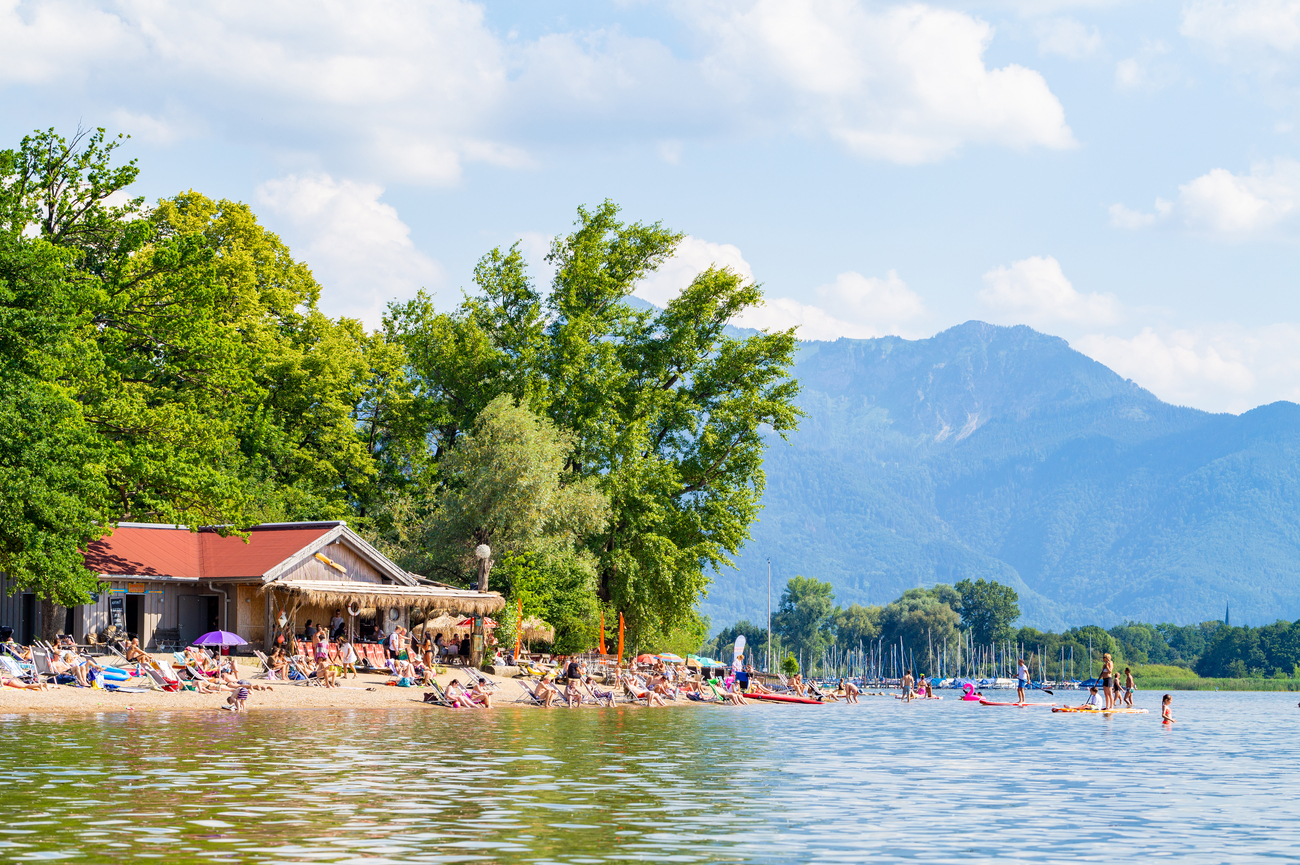
From Exter-Kunsthaus in Feldwies, it’s a quick 5–7 minute drive toward the lakeshore to reach Strandbad Übersee, one of the most beloved waterfront spots on the southern side of Lake Chiemsee.
Strandbad Übersee, often referred to as “Übersee Beach,” is one of the longest natural beach areas on Lake Chiemsee. Unlike the manicured lawns found in other lake parks, this shoreline feels more relaxed and open, with sandy sections, grassy areas and shallow waters that stretch far into the lake. The beach faces the Chiemgau Alps, creating one of the most photogenic lake panoramas in the region. On clear days, the water reflects the mountains so perfectly it almost looks staged.
The area is designed for an easy lakeside afternoon. Wide spaces allow you to walk along the shoreline, settle on the grass or simply enjoy the view of sailboats drifting across the lake. Wooden docks and swimming zones make the water accessible for swimmers, while shaded areas near the trees offer quiet places to relax.
Chiemsee Camping Rödlgries
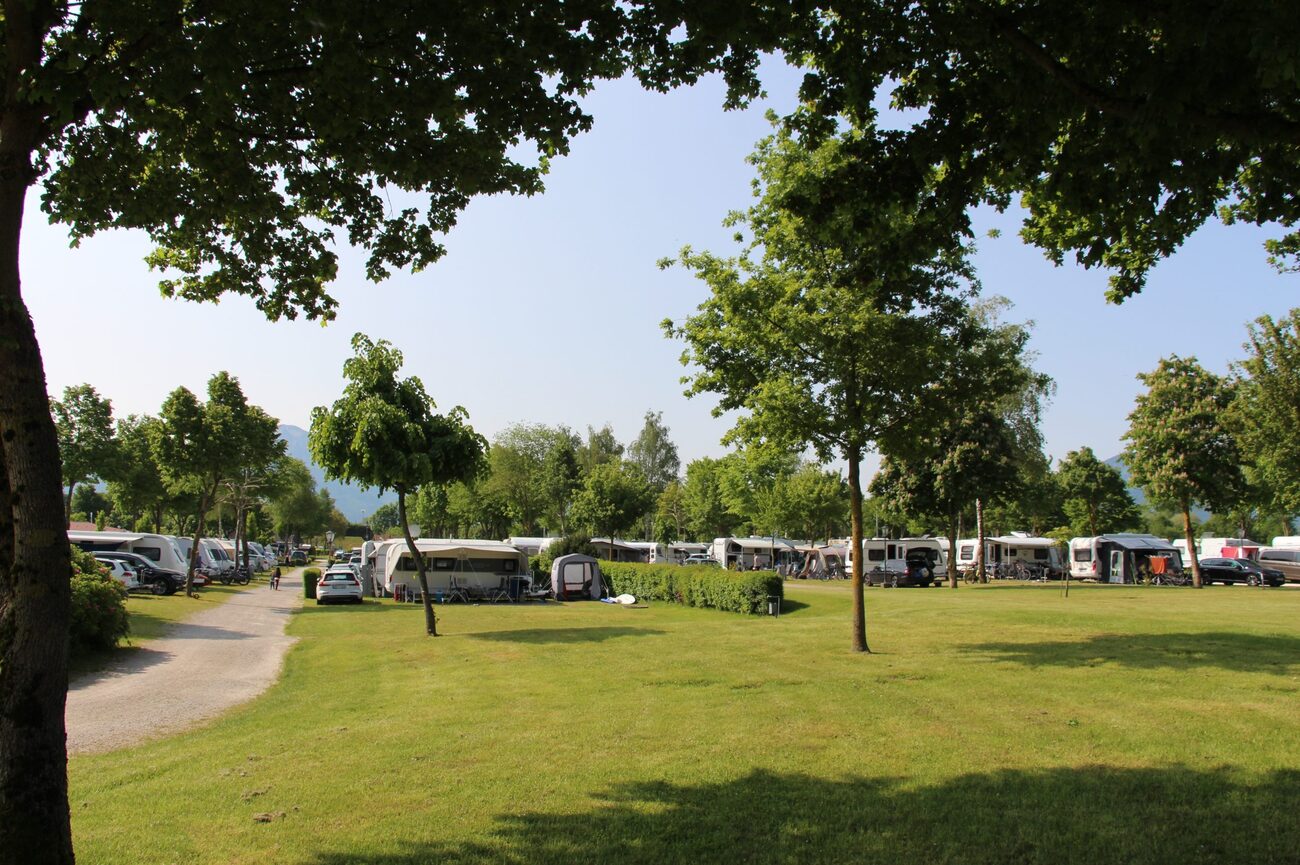
Reaching it from Strandbad Übersee is pleasantly simple. Continue east along the lakeshore toward Rödlgries, and within a few minutes, the landscape begins to feel more open and natural. The busy beach scene gradually fades into meadows and reed-lined water and soon Chiemsee Camping Rödlgries appears along this quieter stretch of shoreline.
Chiemsee Camping Rödlgries sits on one of the most scenic sections of the southern shore. Instead of promenades and marinas, you’ll find wide lakeside meadows that gently meet the water’s edge. The view across the lake stretches toward Herreninsel and the Chiemgau Alps, creating a panorama that feels expansive and refreshingly peaceful. Wooden jetties extend into the lake and the surrounding grassy landscape gives the whole area a relaxed, nature-forward charm.
Although known primarily as a lakeside camping site, the area itself is part of the broader Chiemsee recreational landscape that locals and travelers alike enjoy. The area is also a popular starting point for water activities such as kayaking, paddleboarding and small sailing excursions. Cyclists often pass through here as well on the Chiemsee cycle route. Here, Chiemsee feels less like a busy destination and more like a peaceful lakeside escape.
Evening: Pfarrkirche Mariä Himmelfahrt
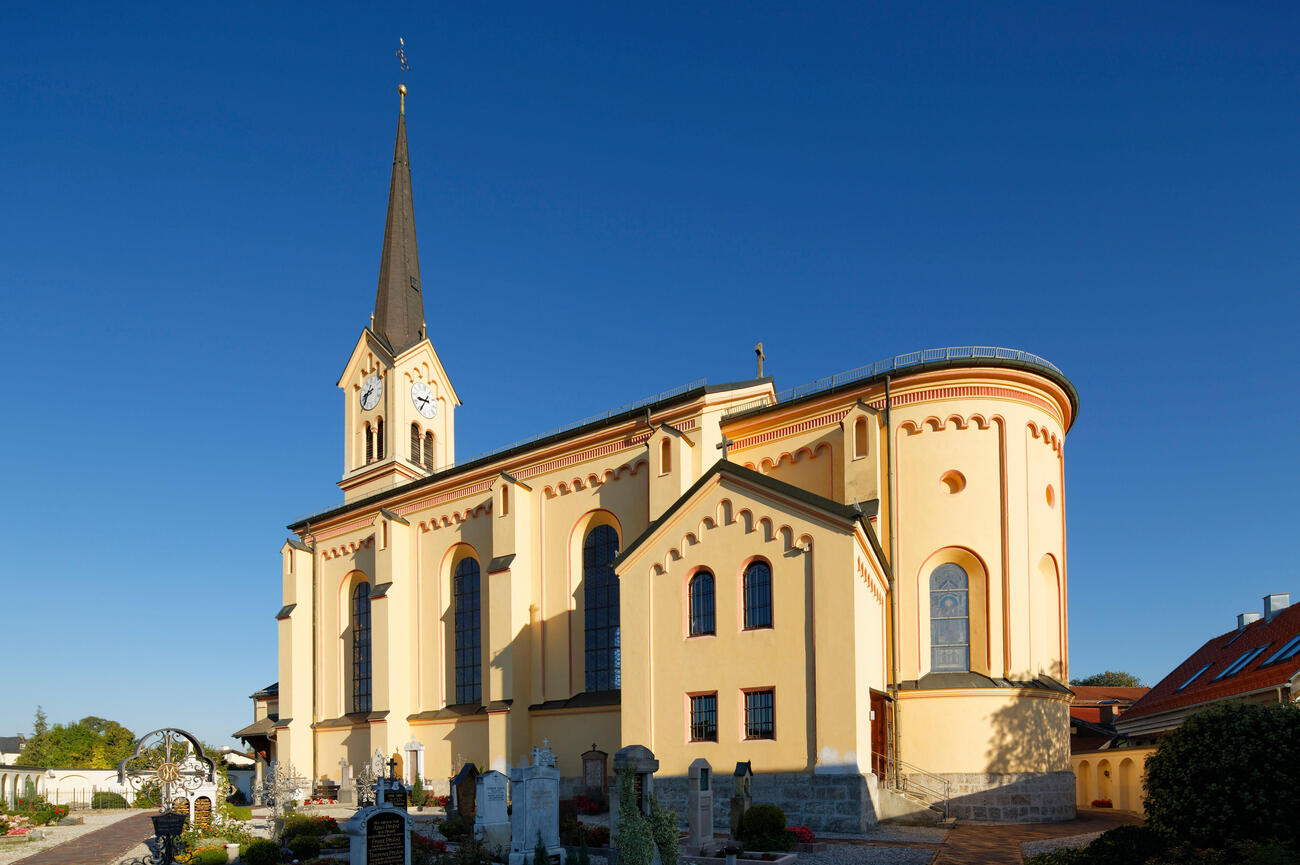
Evening settles gently over the village at the Pfarrkirche Mariä Himmelfahrt (Parish Church of the Assumption of Mary). After the lakeside calm of Chiemsee Camping Rödlgries, continue toward the center of Chieming, where the church rises quietly above the village rooftops. The drive takes about 10 minutes along the eastern shore of Lake Chiemsee, following the road into the heart of town. Soon, the striking tower of Mariä Himmelfahrt appears.
The Pfarrkirche Mariä Himmelfahrt is Chieming’s most recognizable landmark, standing on ground that has been a sacred gathering place for nearly two millennia. While the present church was built in the late 19th century in a stately Neo-Romanesque style, its history reaches back to antiquity. Embedded directly into the tower walls are three ancient Roman votive stones, a fascinating testament to the town’s origins as the Roman settlement of Bedaium.
The church has long served as the spiritual heart of Chieming’s lakeside community. Fishermen, farmers and travelers alike gathered here for centuries, and that sense of continuity still lingers within the walls. Dedicated to the Assumption of Mary, the church remains a peaceful sanctuary where visitors can pause, admire the historic architecture and appreciate the deep cultural roots of the Chiemgau region.
Day 2 - Lake Chiemsee Tour Map
Day 3
Morning: Filialkirche St. Petrus Gstadt am Chiemsee
Your last day begins quietly at Filialkirche St. Petrus, where the lake and the village seem to wake up at the same gentle pace.
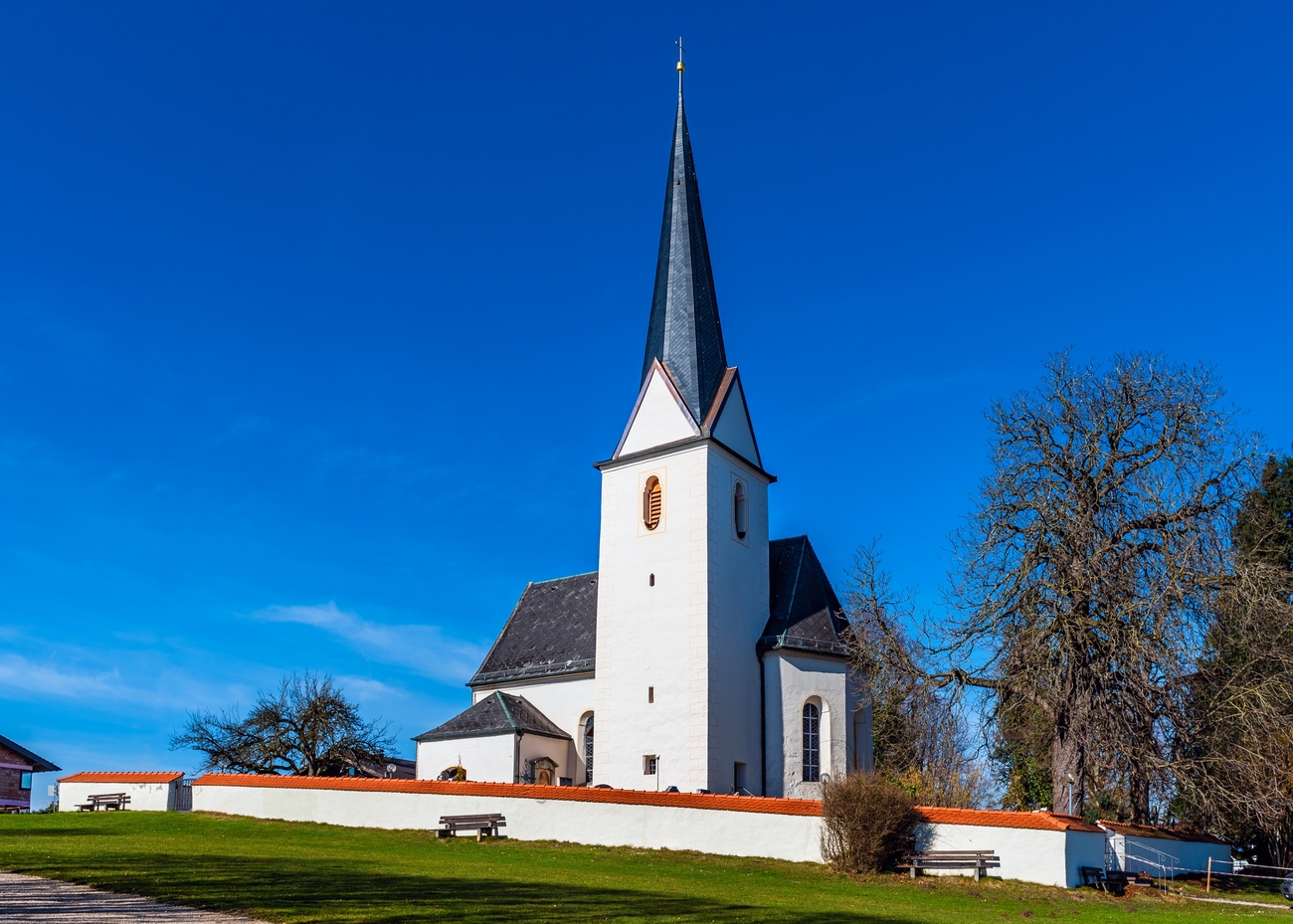
The Filialkirche St. Petrus stands as one of Gstadt’s most charming historic buildings, with origins dating back to the 15th century. The church’s architecture reflects traditional Bavarian village design with white plastered walls, a modest tower and a beautifully simple facade that fits perfectly within the lakeside setting. Over the years, the interior received Baroque decorative elements, adding warmth and artistic detail to the otherwise humble structure. Step inside and you’ll notice delicate frescoes, carved altars and a peaceful atmosphere that feels very much in tune with the quiet rhythm of the village.
Despite its small size, the church has long been an important spiritual center for the local community. For centuries, it served fishermen and residents living around the lake, offering a place for reflection beside the waters that shaped daily life in Gstadt. Today it remains a functioning church while also welcoming visitors who wish to admire its historic character.
Fraueninsel Chiemsee Cape
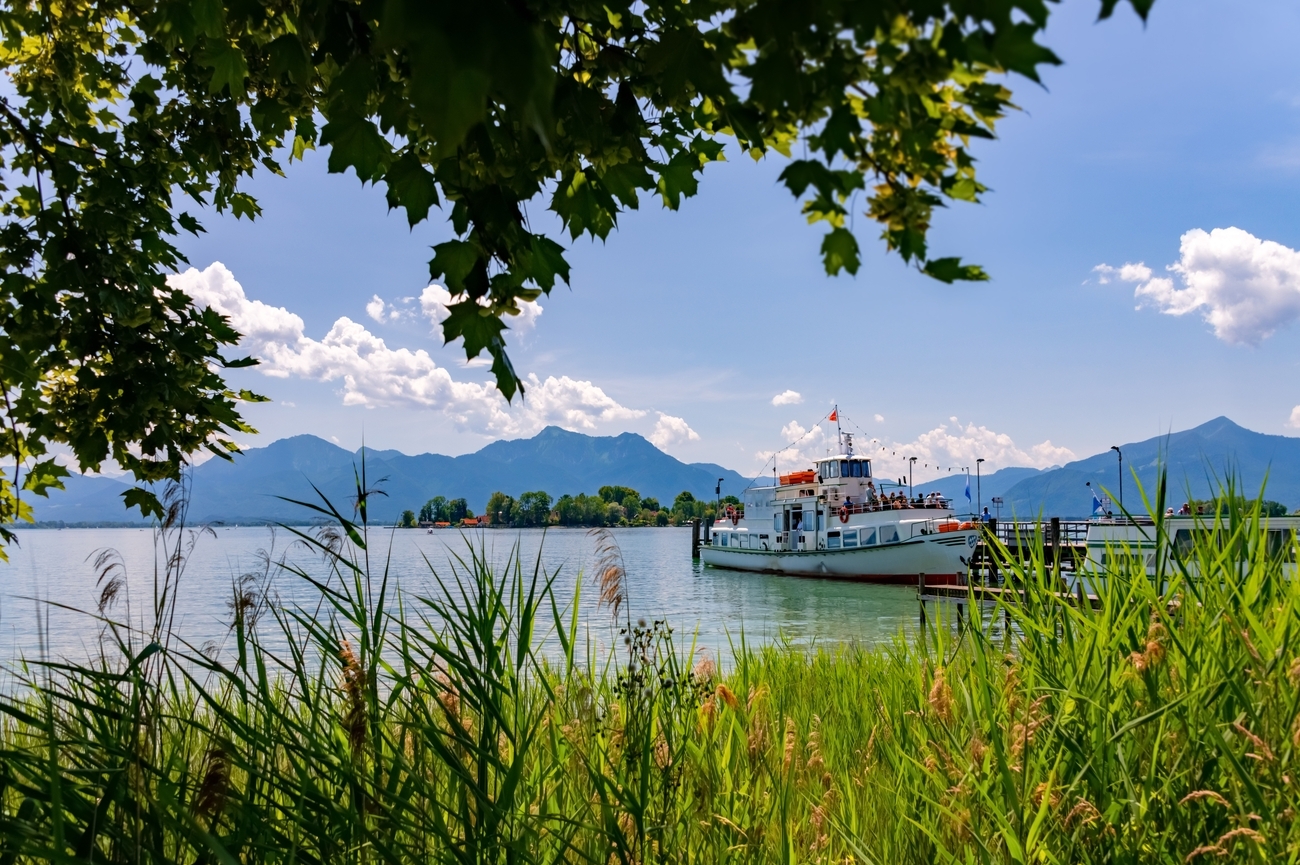
From Filialkirche St. Petrus in Gstadt, the journey continues with a short ferry ride across Lake Chiemsee to Fraueninsel, usually taking around 10 minutes. Boats depart regularly from the Gstadt harbor, gliding across calm water with the Alps stretching faintly in the distance. Once you step onto Fraueninsel, a short wander through the village paths leads toward the outer edge of the island where the Fraueninsel Cape extends into the lake.
This cape forms one of the most scenic natural viewpoints on the island. Unlike the abbey and village center, which carry centuries of history and architecture, the cape is all about the landscape. The shoreline curves gently outward, surrounded by calm water and framed by views toward Herreninsel, the Chiemgau Alps and the wide expanse of Lake Chiemsee. Wooden docks and small boat moorings sit quietly along the water, while the open horizon gives the place a refreshing sense of space.
Standing at Fraueninsel Cape, you get one of those moments where the entire lake seems to unfold in every direction. Yes, historic islands behind you, mountains on the horizon and Bavaria’s largest lake quietly doing what it does best.
Karolingische Torhalle
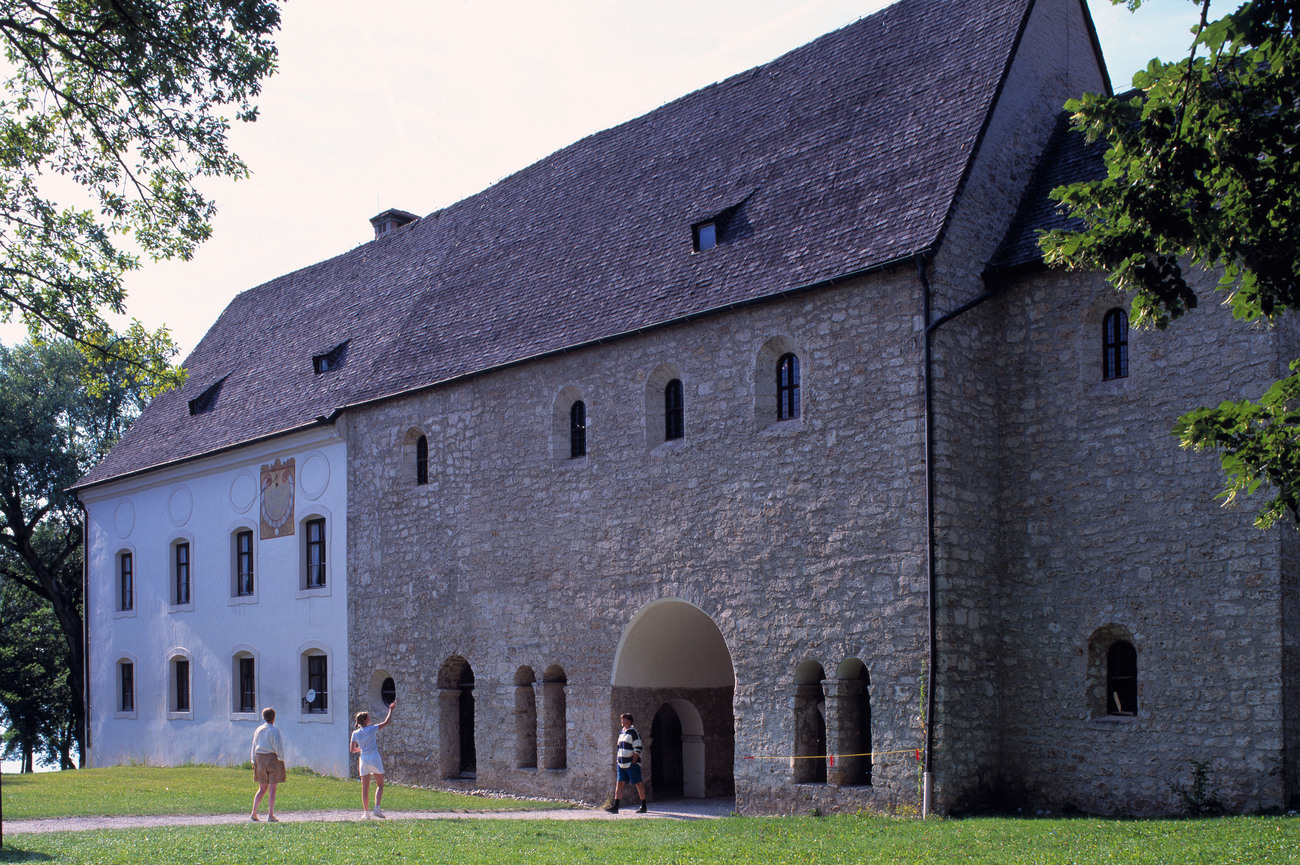
As you continue exploring Fraueninsel after visiting the Fraueninsel Cape, the island’s circular walking path naturally leads you back toward the village center. Within a few minutes of wandering along the narrow lanes near Frauenwörth Abbey, the Karolingische Torhalle appears along the route.
The Karolingische Torhalle dates back to the 9th century, making it one of the oldest surviving structures on the island. Built during the Carolingian era, the gate once served as part of the early monastery complex connected to Frauenwörth Abbey. Its architecture remains simple and sturdy with arched openings, thick stone walls and weathered surfaces that have quietly endured more than a thousand years of island life. Compared to the grandeur of Ludwig II’s palace across the lake, the Karolingische Torhalle feels refreshingly modest yet deeply historic.
Afternoon:
Römermuseum Bedaium
Roman history makes an unexpected appearance at Römermuseum Bedaium, proving that Lake Chiemsee’s story goes much further back than castles and monasteries.
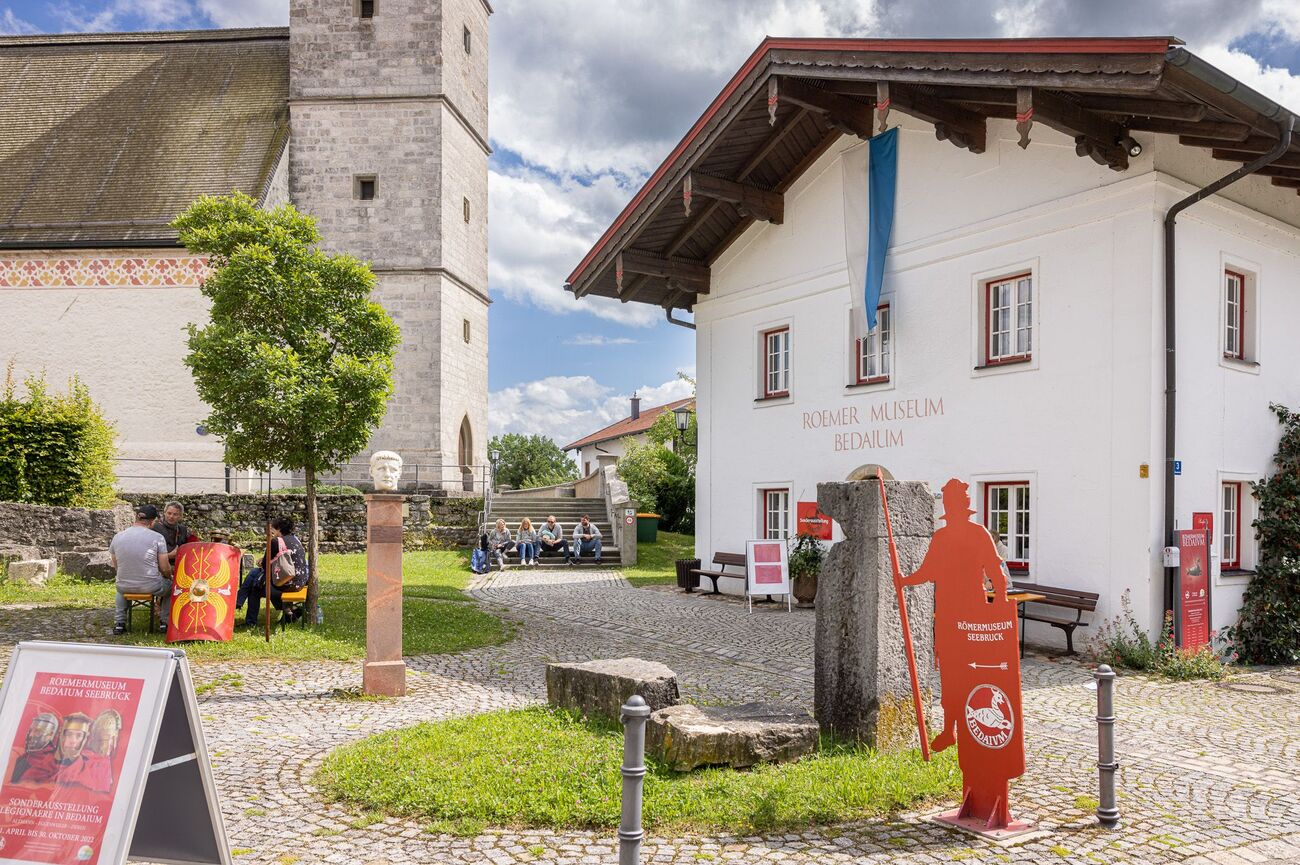
Leaving Fraueninsel, catch the ferry back to the mainland, either Gstadt or Prien, and continue the journey toward Seebruck, a lakeside town on the northern edge of Chiemsee. The drive usually takes about 20 minutes, following scenic roads along the lake and through the gentle landscapes of Chiemgau. As you arrive in Seebruck, the town center quickly reveals its historical roots, and the Römermuseum Bedaium sits right within this compact village area.
The museum stands on the site of Bedaium, an important Roman settlement that once thrived here nearly 2,000 years ago. During Roman times, this location served as a strategic trading and transport hub along routes connecting the Roman provinces of Raetia and Noricum. Inside the museum, exhibits reveal the daily life of the settlement with artifacts such as pottery, tools, jewelry and coins discovered through archaeological excavations in the region. Models and reconstructions help illustrate how the ancient town once looked when Roman merchants, soldiers, and travelers moved through this part of Bavaria.
You can explore the Römermuseum Bedaium independently during opening hours, but guided tours and educational programs are occasionally offered, especially during cultural events or heritage days in Seebruck.
Seebruck Center
After exploring the Römermuseum Bedaium, simply step outside and continue wandering through Seebruck’s village center. The town is wonderfully compact, so you’ll naturally find yourself moving from the museum into the surrounding streets and lakeside areas within just a minute or two of walking.
Seebruck sits on the northern shore of Lake Chiemsee and has been an important settlement for centuries. During Roman times, the town was known as Bedaium, a trading hub positioned along key transport routes between Roman provinces. Today, traces of that ancient layout are still marked throughout the town, giving visitors small clues about where Roman streets and buildings once stood. Over time, the settlement evolved into a charming Bavarian lakeside village known for its harbor, traditional Bavarian buildings and easygoing atmosphere.
Spending time in Seebruck feels like a gentle pause in the journey around Chiemsee. After museums and historic sites, the town simply invites you to wander between Roman history, lake views and the calm rhythm of everyday life beside Bavaria’s largest lake.
Aussichtspunkt Chiemsee Seebruck
The lake saves one of its best panoramas for Aussichtspunkt Chiemsee Seebrück.
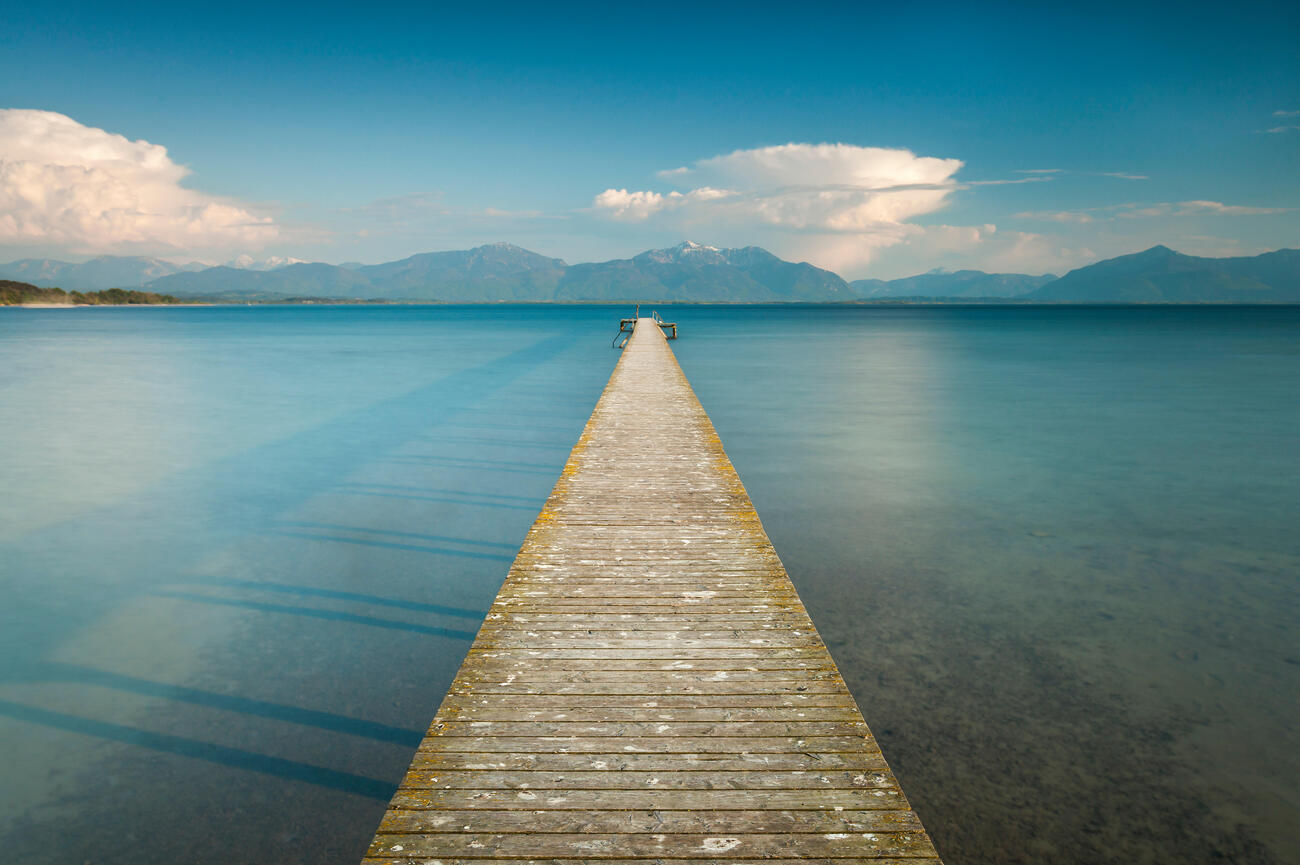
This viewpoint offers one of the clearest looks across Lake Chiemsee’s northern basin. The shoreline stretches gently outward, creating a natural platform where the lake feels vast and open. From here, the water extends toward the distant islands, while the Chiemgau Alps appear faintly along the southern horizon. On calm days, the lake reflects the sky so perfectly that the entire scene feels almost mirror-like.
Unlike formal lookout platforms, the Aussichtspunkt keeps things simple and natural. There are open spaces along the shoreline, small walking paths and quiet spots where visitors pause to take in the panorama.
Evening: Vogelbeobachtungsturm Seebruck
The journey around Chiemsee ends where the lake whispers instead of dazzles at the Vogelbeobachtungsturm Seebruck.
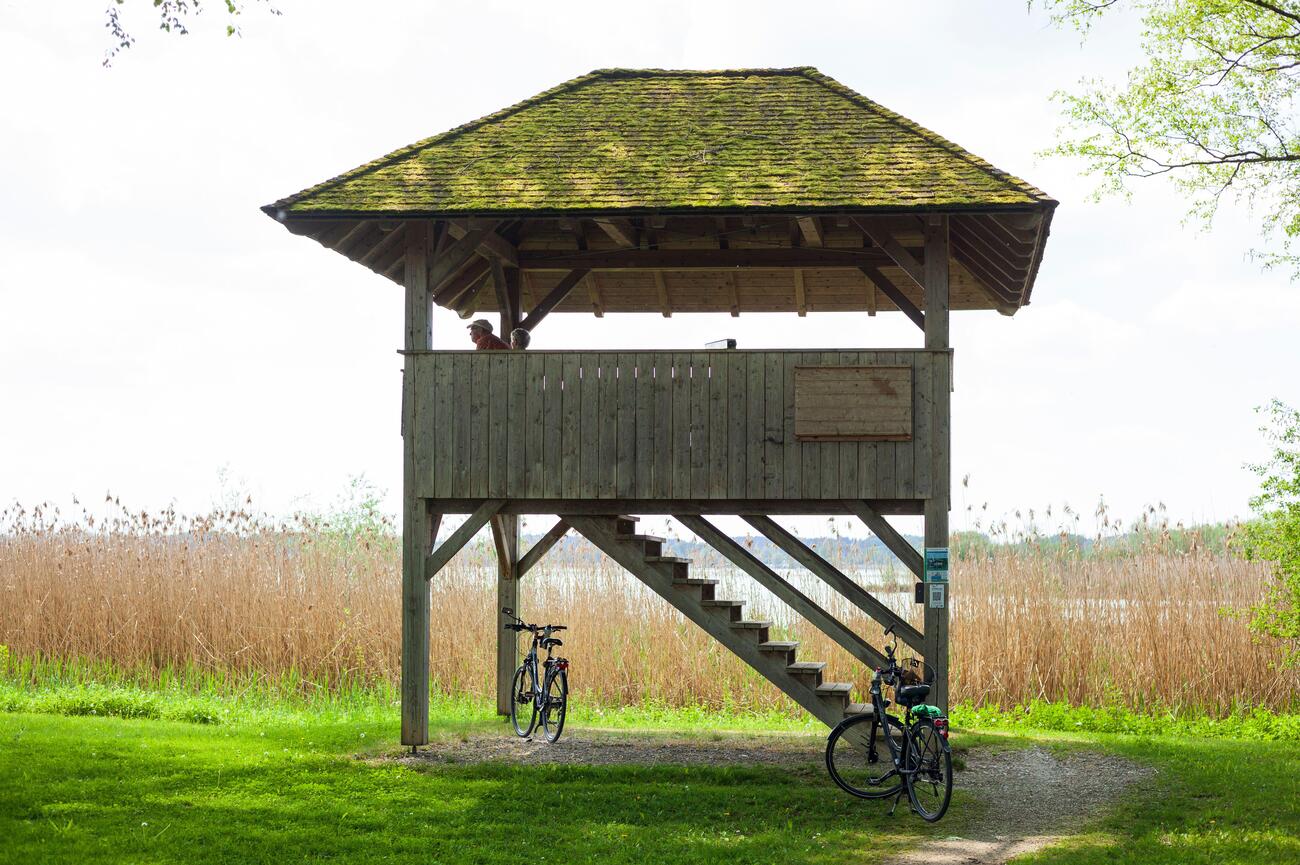
As you continue exploring the lakeside paths around Seebruck, the village gradually fades behind you and the shoreline begins to feel wilder. The paved paths soften into quiet nature trails that weave through the Kurpark wetlands, where reeds sway gently with the lake breeze. Keep following the water’s edge and, before long, a wooden tower rises above the tall grasses, standing like a quiet lookout over the lake.
The Vogelbeobachtungsturm Seebruck, the bird observation tower, sits within a protected wetland area along the northern edge of Lake Chiemsee. From below, it looks simple and unassuming, but climbing its steps slowly reveals a different perspective of the landscape. At the top, the view opens wide: reeds stretching toward the lake, water shimmering in the distance and the faint outline of the Chiemgau Alps completing the horizon. It’s the kind of view that feels calm rather than dramatic, as if the lake is gently exhaling after the day.
This quiet corner of Chiemsee is also known for its rich birdlife. Migratory birds pause here during their seasonal journeys and the wetlands provide a peaceful sanctuary for many species throughout the year.
Ending the journey at the Vogelbeobachtungsturm feels quietly magical. After days filled with royal palaces, ancient monasteries and lively lakeside villages, the story closes in a place where nature gently takes the final bow. From the tower, Chiemsee stretches out in every direction.
Day 3 - Lake Chiemsee Tour Map
Other Things to Do Around Lake Chiemsee
Lake Chiemsee has a funny habit of making you think you’ve seen it all… right before revealing another corner worth exploring. Just when the castles, islands and village walks start to feel complete, the lake quietly reminds you it still has a few tricks up its sleeve. This is Bavaria’s version of a plot twist where sailing clubs hide behind quiet marinas, art lives inside countryside villas and historic estates casually sit between Alpine views and open water. If the itinerary gave you the story, these spots are the bonus chapters.
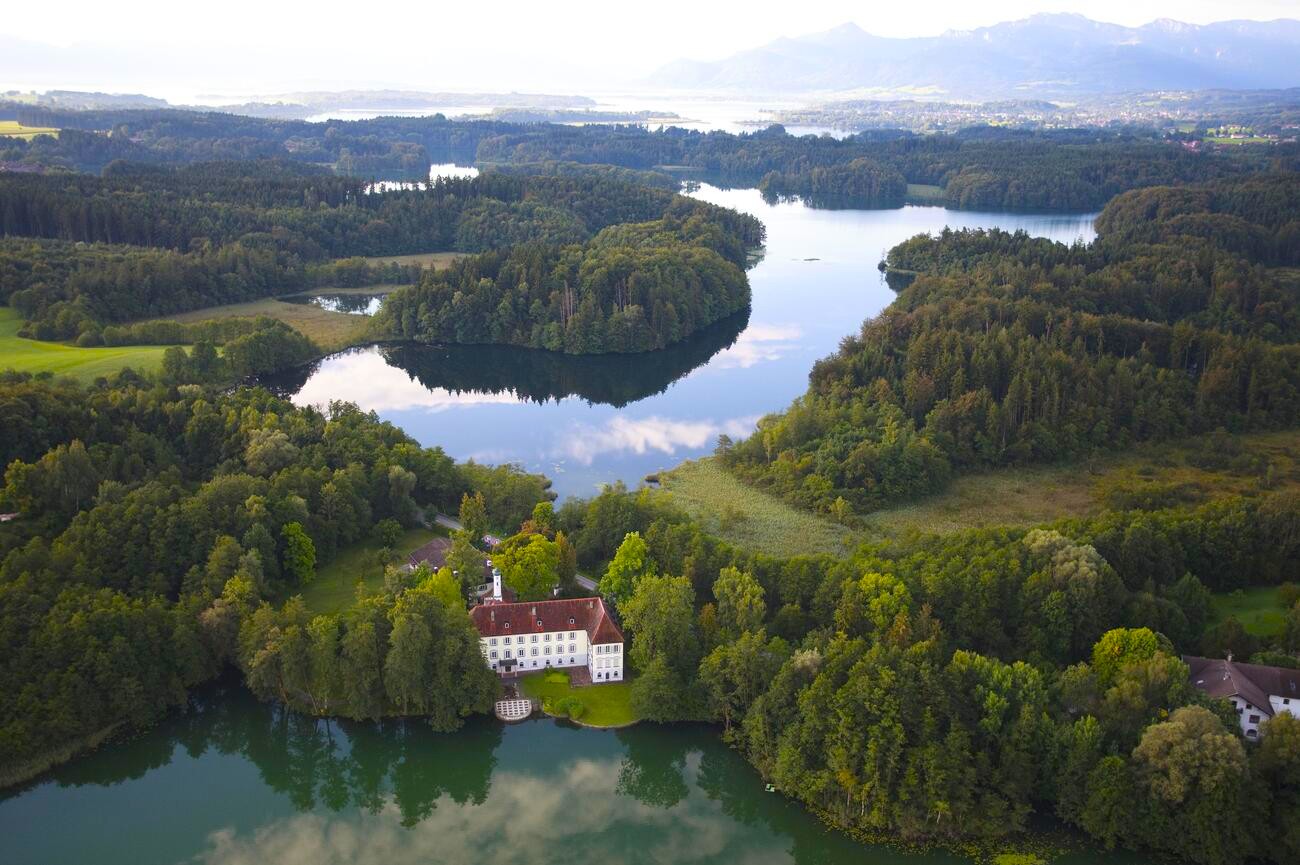
- Schloss Hartmannsberg: Perched gracefully on a small peninsula along the northern edge of Lake Chiemsee, Schloss Hartmannsberg carries the quiet charm of a countryside estate that has seen centuries unfold around it. The estate dates back to the 12th century, though the structure seen today reflects later Baroque and classical influences added during centuries of noble ownership. What makes this place special is its atmosphere. Unlike Ludwig II’s theatrical palaces, Hartmannsberg feels more intimate, like a noble residence that simply happens to sit in one of Bavaria’s most scenic corners. Today the castle functions as a cultural venue managed by the Bavarian State, hosting rotating art exhibitions, chamber music concerts, lectures and cultural gatherings.
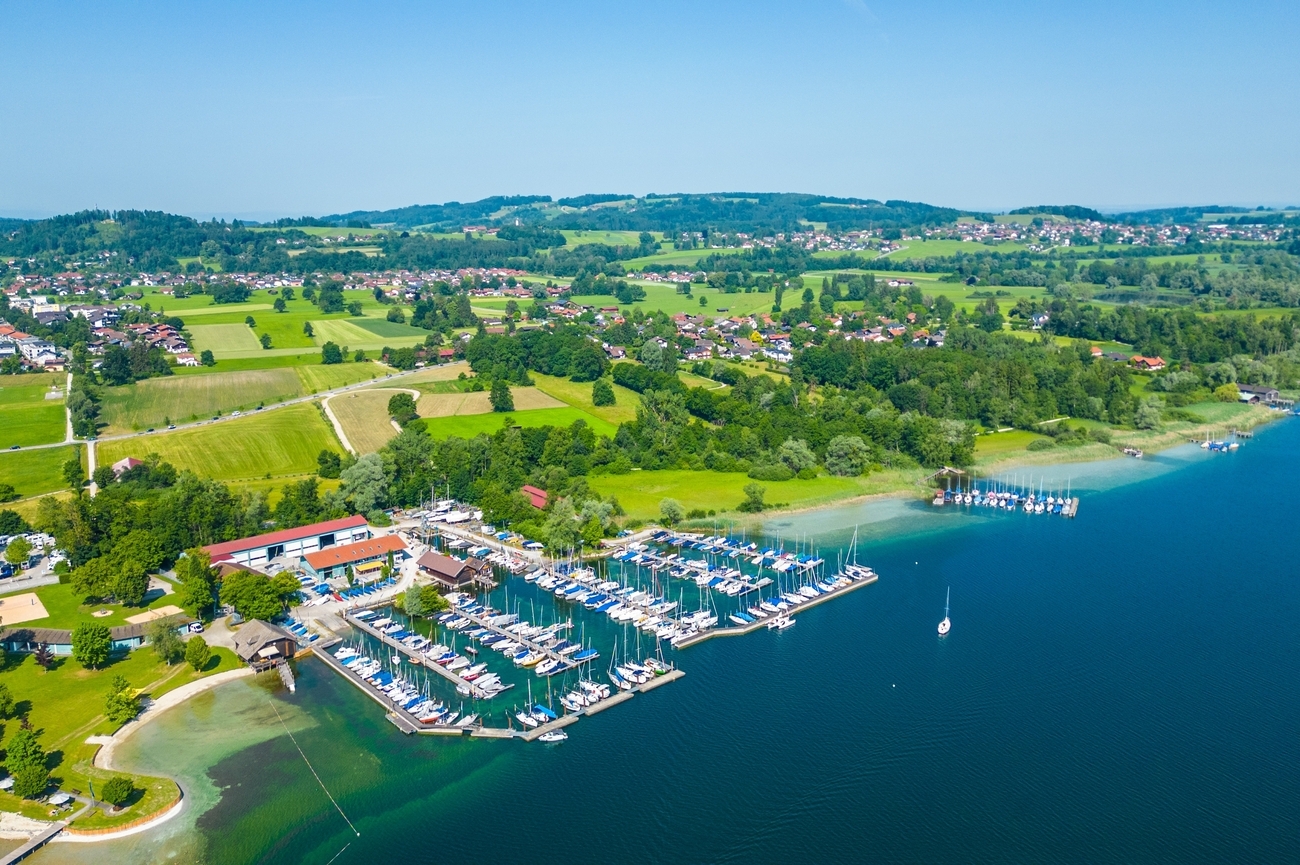
- Chiemsee Marina GmbH: For a look at Chiemsee’s sailing culture, Chiemsee Marina GmbH near Bernau-Felden is where the lake’s boating lifestyle quietly shines. The marina is one of the largest on the lake, offering hundreds of berths for sailboats and yachts. Long rows of masts rise above the docks like a small forest of rigging against the sky. The marina’s setting feels polished but relaxed. Wide walkways run along the water, boats drift gently in their slips and the open lake stretches toward the islands in the distance. It’s a place where locals come to prepare their boats for the day while visitors pause to admire the calm choreography of life on the water.
- Orangerie: Hidden within the grand garden layout of Herrenchiemsee Palace, the Orangerie adds another layer of royal charm to Ludwig II’s island vision. Built as part of the palace complex in the late 19th century, the structure once sheltered citrus trees and exotic plants during the winter months. Architecturally, the building mirrors the symmetry and elegance of the surrounding gardens. The building’s long, balanced proportions blend seamlessly with the geometric garden design outside.
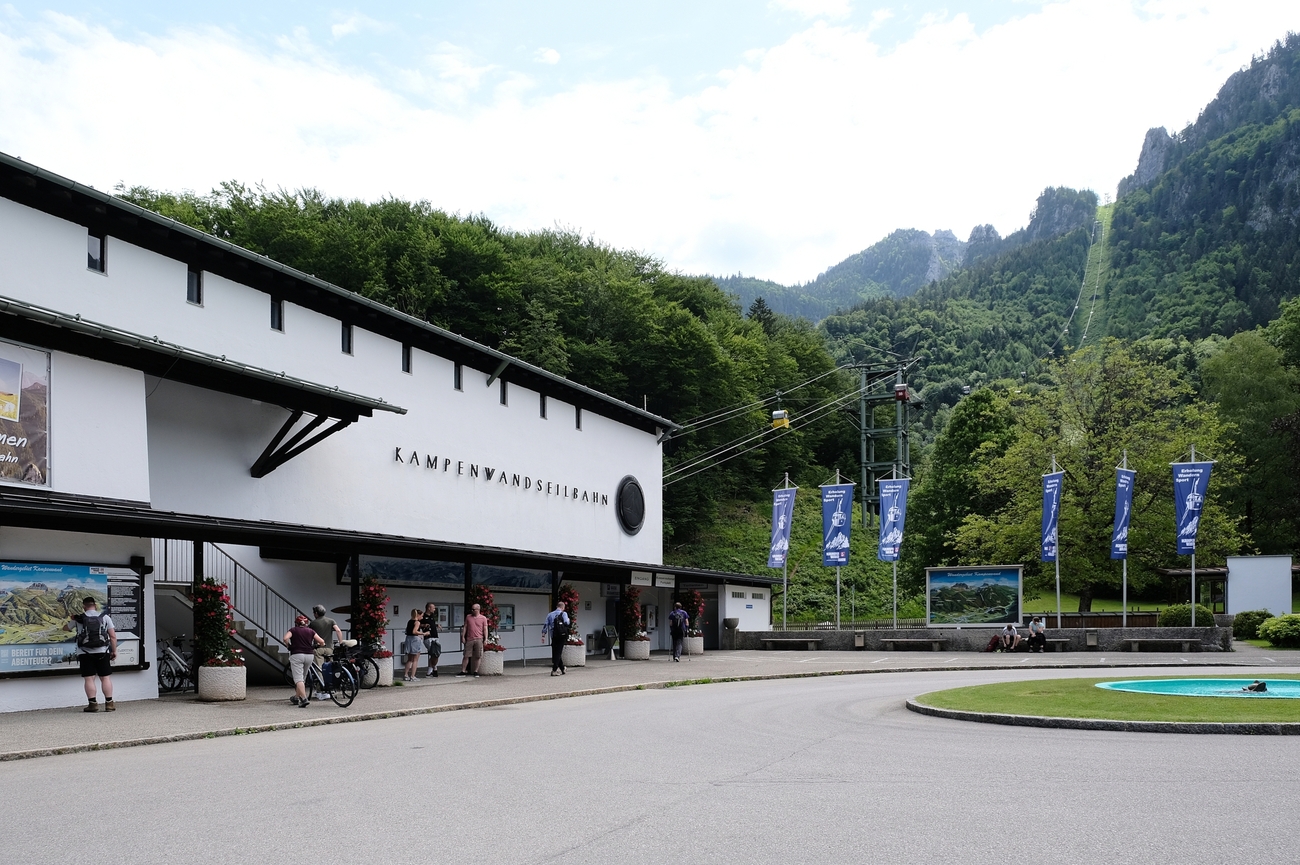
- Kampenwandbahn Talstation: Lake Chiemsee might be the star of the region, but the Kampenwand mountain provides the dramatic stage backdrop. Your adventure begins at the Kampenwandbahn Talstation in Aschau im Chiemgau, where the cable car will carry you from the valley floor into the Bavarian Alps in just a few minutes. The gondola ride itself is worth the trip. As the cabin climbs above forests and alpine meadows, the entire Chiemgau landscape gradually opens up below. Villages shrink into clusters of rooftops, farmland turns into patchwork patterns and Lake Chiemsee eventually appears in the distance like a shimmering sheet of silver.
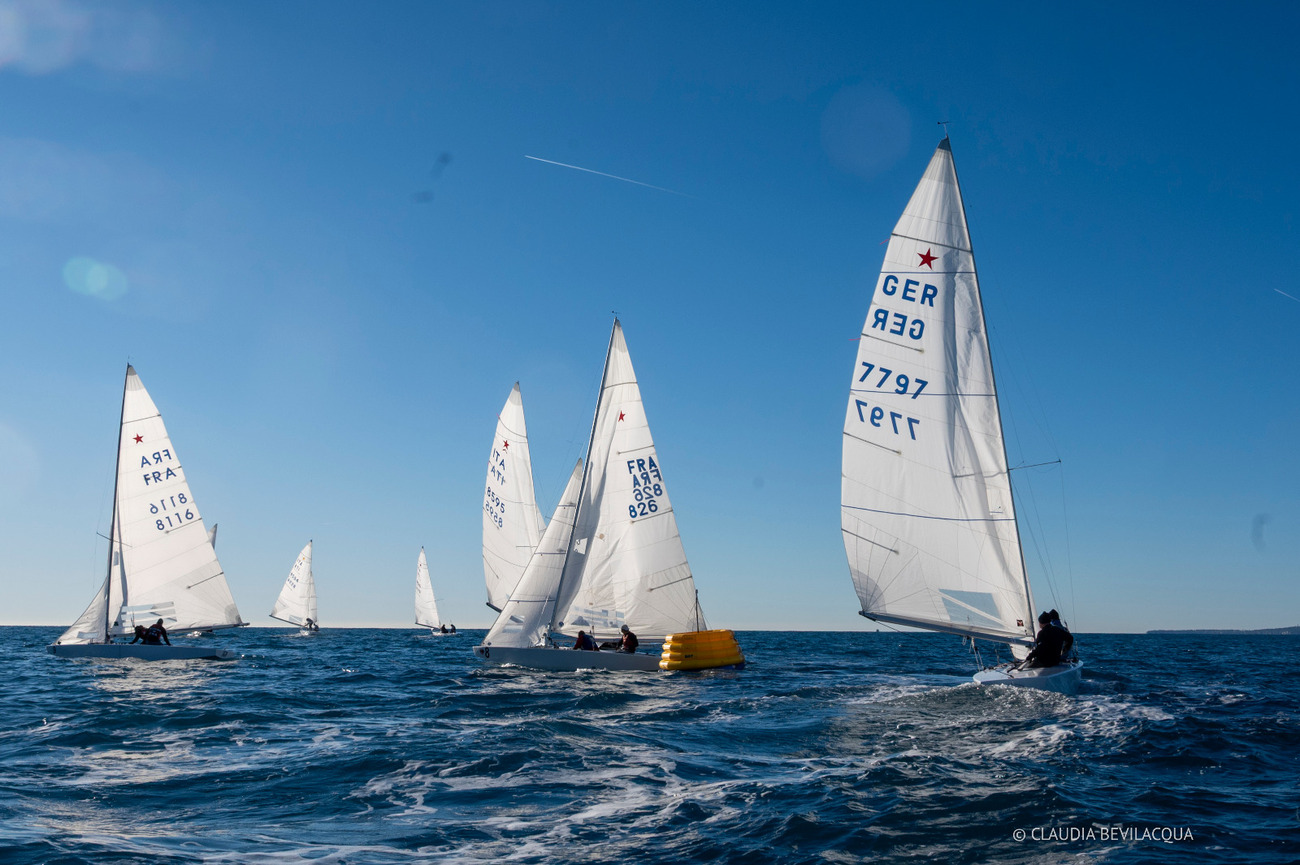
- Chiemsee Yacht Club: If the marina shows you sailing culture, the Chiemsee Yacht Club reveals its more refined side. Located near Prien am Chiemsee, this prestigious sailing club has been part of the lake’s maritime tradition for decades. Its docks host sleek racing yachts, classic sailboats and the occasional high-performance regatta vessel preparing for competition. On sailing days, you’ll see crews preparing their sails, adjusting rigging and heading out into the open water where Chiemsee’s steady winds create ideal conditions. And oh, the yacht club is also known for hosting regattas and international sailing competitions, attracting experienced sailors and sailing enthusiasts from across Europe.
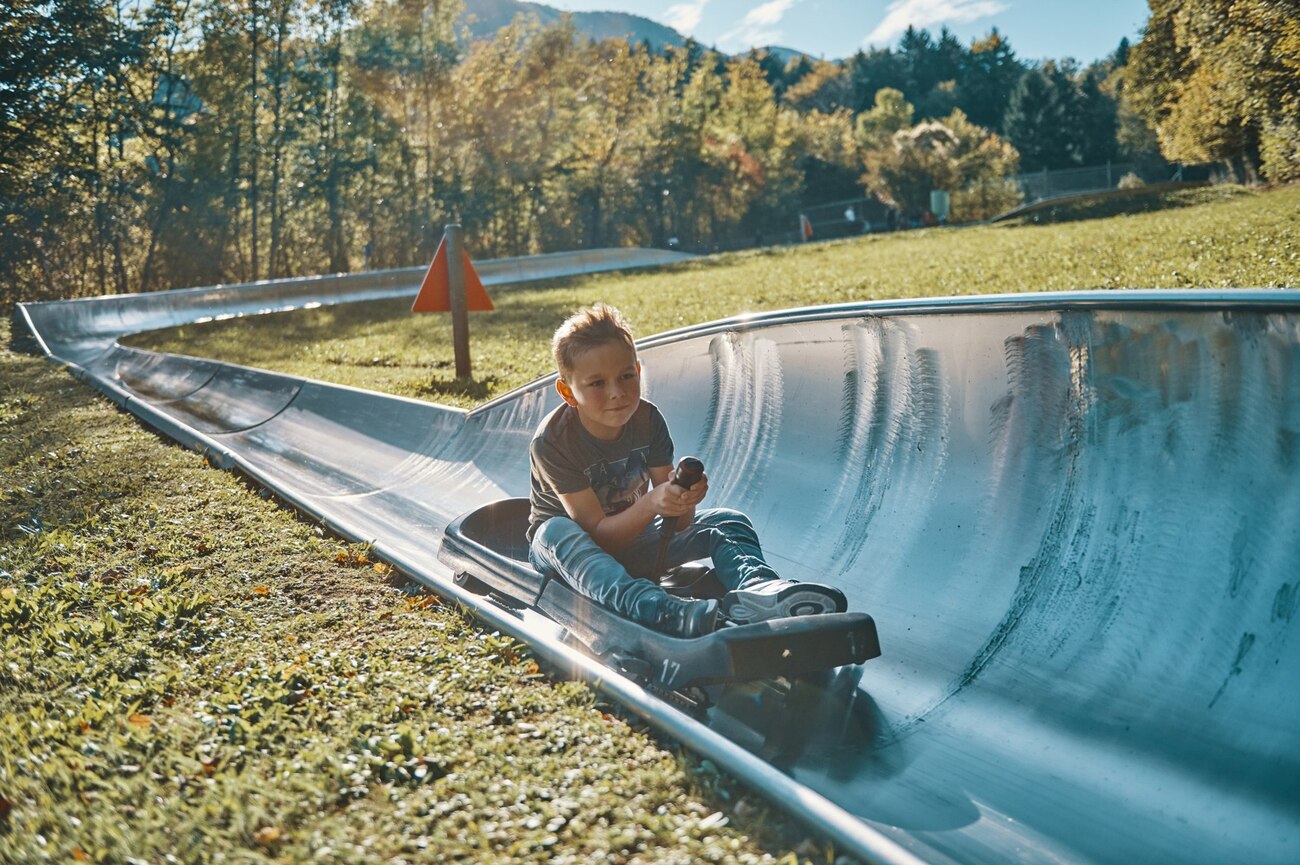
Things to Do With Kids Around Lake Chiemsee
Lake Chiemsee may look like it belongs in a royal fairytale, but it’s also secretly a playground. Beneath the castles, sailboats and monastery towers is a region that knows exactly how to keep younger explorers entertained. Suddenly, the lake becomes a giant outdoor classroom, a nature playground and occasionally a splash zone. The following spots are perfect for families who want a mix of fun, fresh air and a little learning along the way.
- Fairy Tale Adventure Park Marquartstein: At the edge of the Alps sits a place where fairytales step off the page and into the forest. Fairy Tale Adventure Park Marquartstein (Märchen-Erlebnispark Marquartstein) is one of the region’s most beloved family attractions, turning classic European fairytales into playful, walk-through scenes scattered across a wooded hillside. As you move through the park, familiar stories begin appearing around the trails like Sleeping Beauty, Snow White, Hansel and Gretel and other storybook characters quietly tucked between trees and small castle sets. It feels less like a typical amusement park and more like wandering through a fairytale village where each corner reveals another story waiting to be discovered.
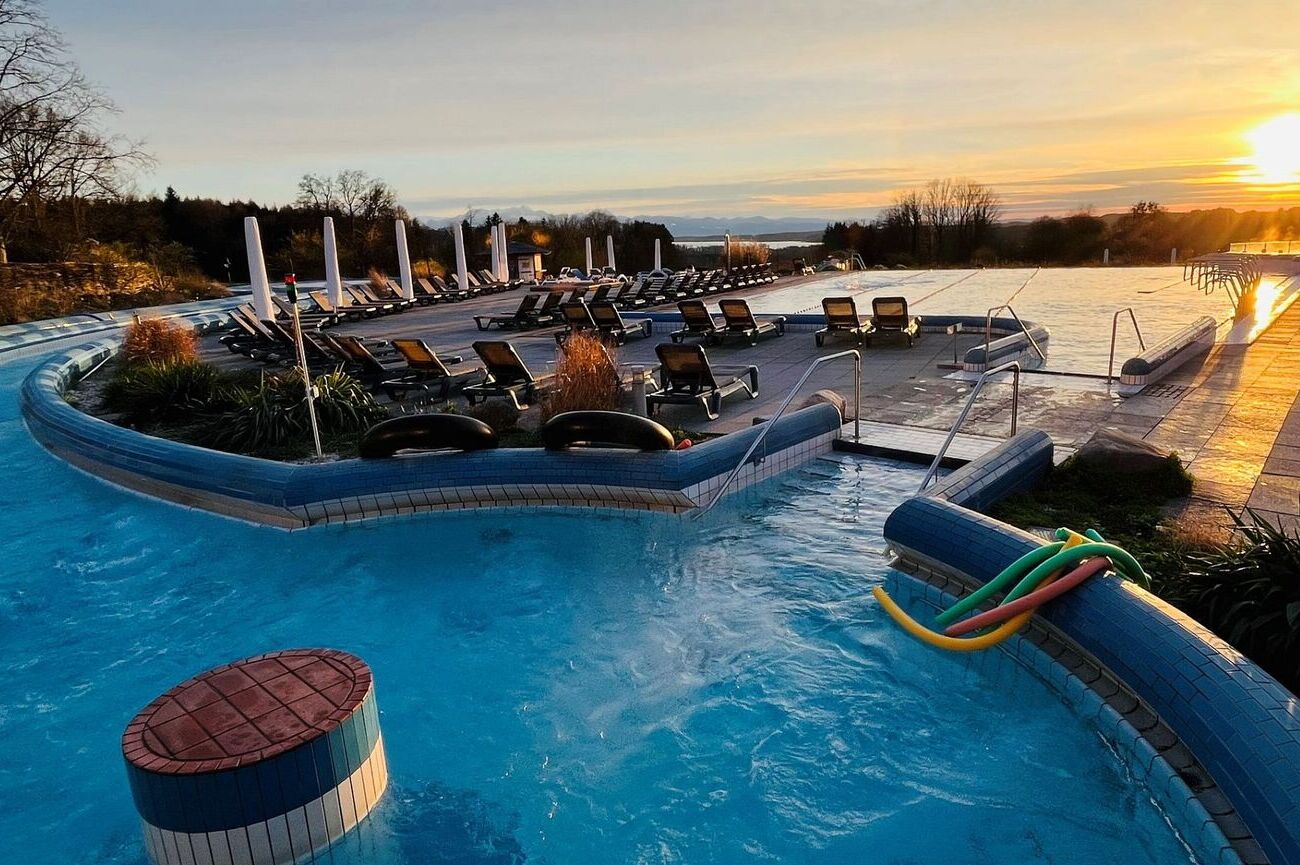
- Chiemgau Thermen: Sometimes kids need a place to splash and adults wouldn’t mind relaxing a little either. Chiemgau Thermen in Bad Endorf delivers exactly that balance, blending a wellness spa with family-friendly water areas. The thermal baths are fed by mineral-rich spring water from deep beneath the Alpine foothills, giving the pools their soothing warmth year-round. Inside the complex, you’ll find indoor pools, relaxation zones and outdoor bathing areas that overlook the surrounding Chiemgau countryside.
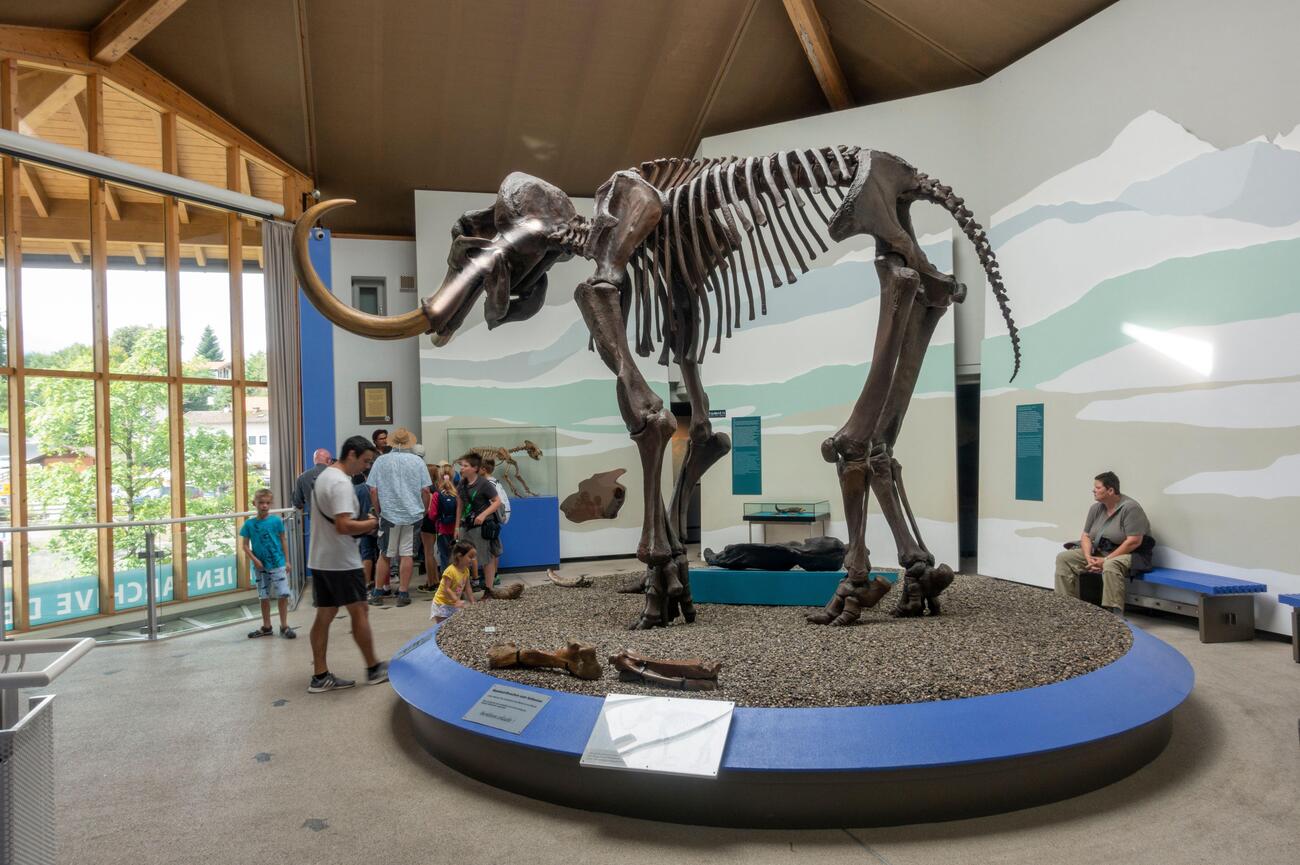
- MammutMuseum Siegsdorf: The MammutMuseum Siegsdorf sits in the town of Siegsdorf, about a 20–25 minute drive from Lake Chiemsee, which makes it an easy detour if your travels already take you through the Chiemgau area. Few things capture a kid’s attention faster than the words “Ice Age mammoth.” That’s exactly what waits inside. The museum is built around one of Bavaria’s most exciting prehistoric discoveries: the skeleton of a woolly mammoth found near Siegsdorf in the 1970s. The enormous bones are reconstructed inside the museum, allowing visitors to see the full scale of an animal that once roamed the Alpine foothills thousands of years ago.
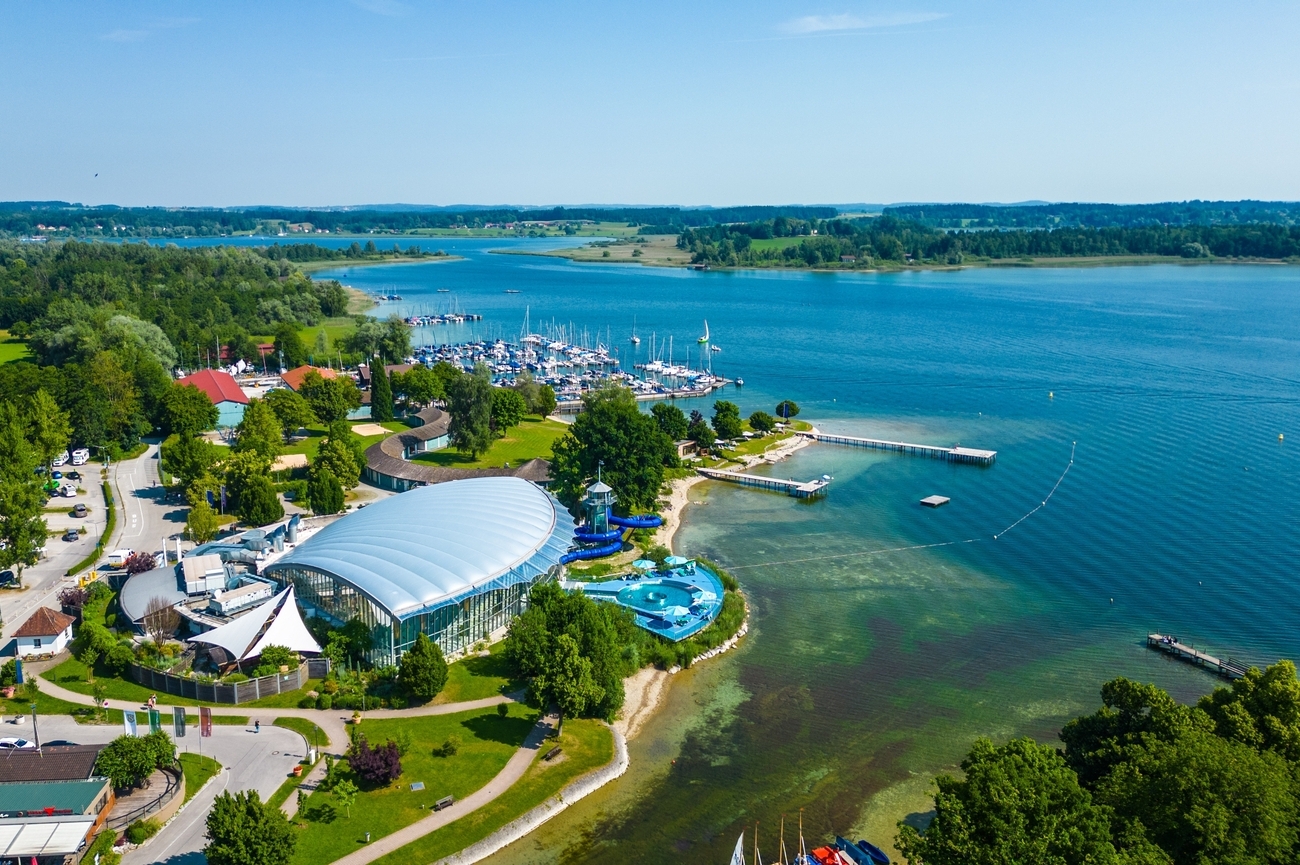
- Prienavera Erlebnisbad: When energy levels are high and the weather is unpredictable, Prienavera Erlebnisbad becomes a family hero. Located right on the lakeshore in Prien am Chiemsee, this modern waterpark mixes slides, pools and spa areas with sweeping views of the lake. The facility includes water slides, wave pools, splash areas for younger children and heated indoor pools. Outside, swimming areas overlook Lake Chiemsee itself, so you can float in warm water while watching sailboats glide across Bavaria’s largest lake.
Day
Trips From Lake Chiemsee
The beauty of basing yourself around Chiemsee is that the day trips feel effortless. No long transfers, no exhausting travel days, just short drives or train rides that open the door to entirely different landscapes and stories. One morning, you’re standing in a Romanesque cathedral, the next you’re riding a cable car into the Alps. Here are some of the best day trips from Lake Chiemsee, each within about 1 hour to 1 hour 30 minutes and each offering something distinct from UNESCO heritage sites to Alpine adventures and elegant historic towns.
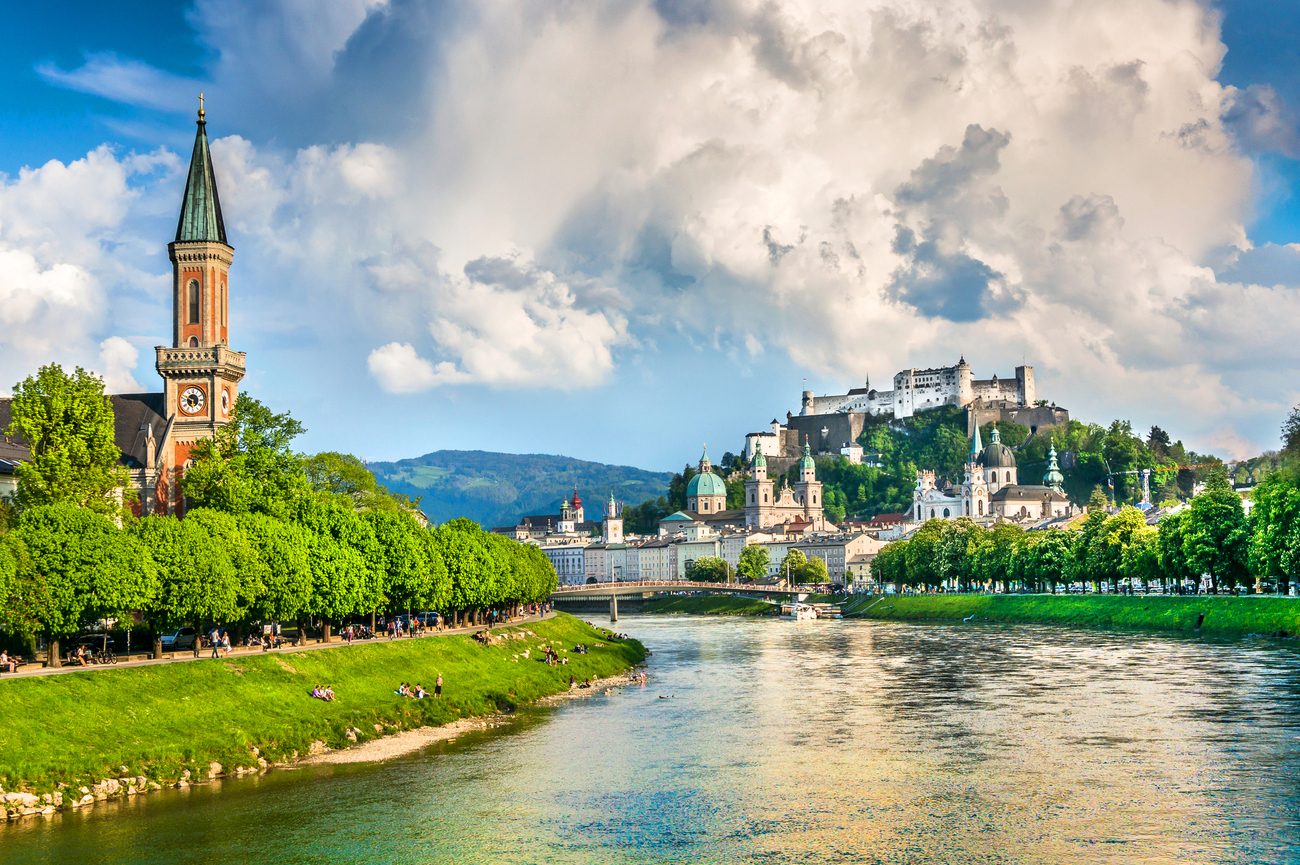
- Salzburg, Austria: Just 50 minutes from Lake Chiemsee, the city of Salzburg feels like stepping into a perfectly preserved baroque masterpiece. The entire historic center (Altstadt) is recognized as a UNESCO World Heritage Site and once you arrive, it becomes clear why. Narrow streets wind between pastel-colored buildings, church domes rise above the skyline and the Salzach River reflects the surrounding Alps. Salzburg is famously the birthplace of Wolfgang Amadeus Mozart, and you can visit Mozart’s Birthplace (Mozarts Geburtshaus) in the lively Getreidegasse street. And if you want an elevated experience, Salzburg delivers with private classical concerts inside historic halls.
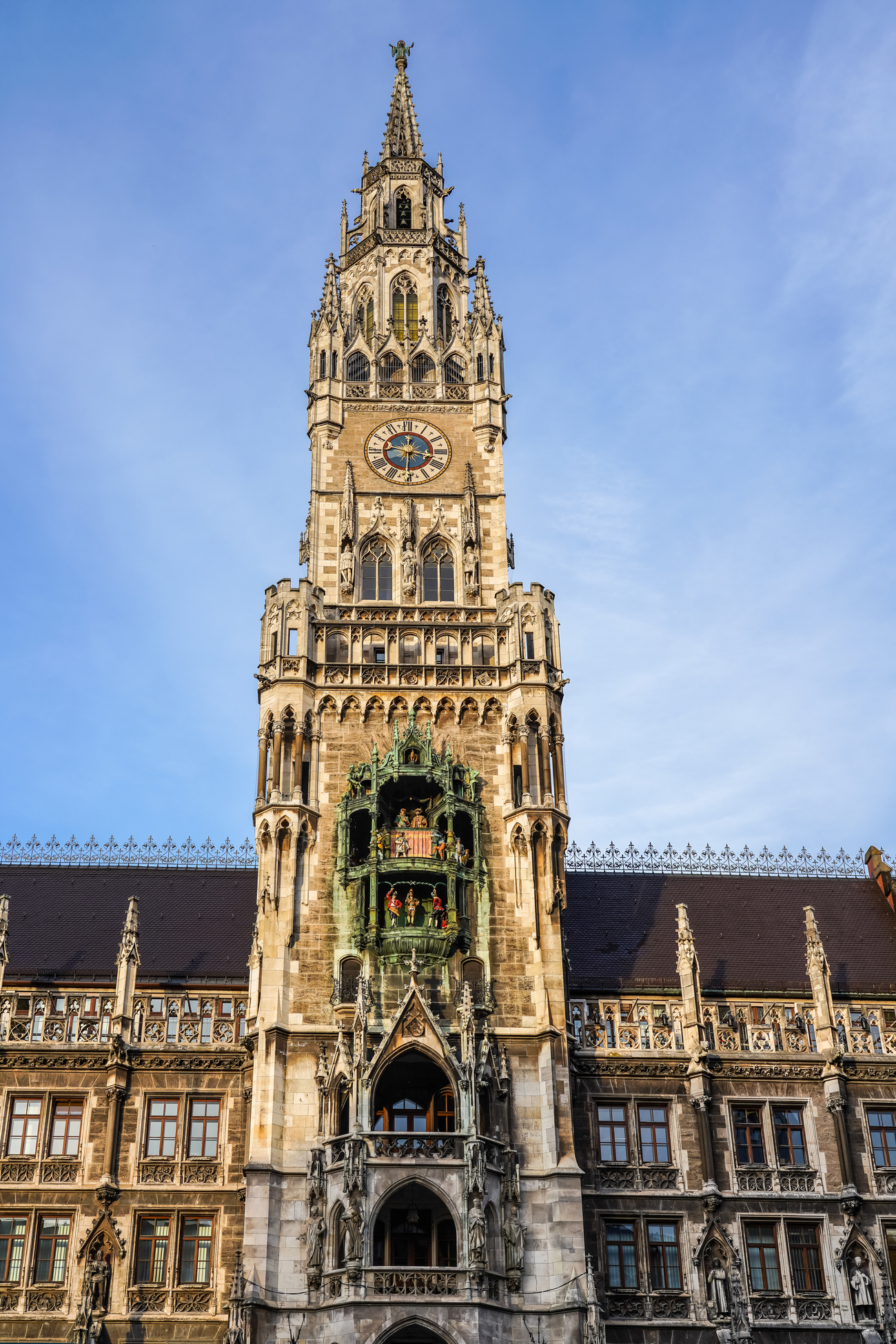
- Munich, Germany: The Bavarian capital sits just 1 hour 10 minutes from Lake Chiemsee and the contrast between lakeside calm and vibrant city energy makes Munich an excellent day trip. At the center lies Marienplatz, home to the neo-gothic Neues Rathaus and its famous Glockenspiel. A short walk leads to the elegant Residenz Palace, once the royal seat of Bavarian rulers and now one of Europe’s most impressive palace museums. You can also attend opera performances at the Bavarian State Opera or explore luxury boutiques along Maximilianstraße. It’s a city that balances culture and sophistication with effortless Bavarian charm.
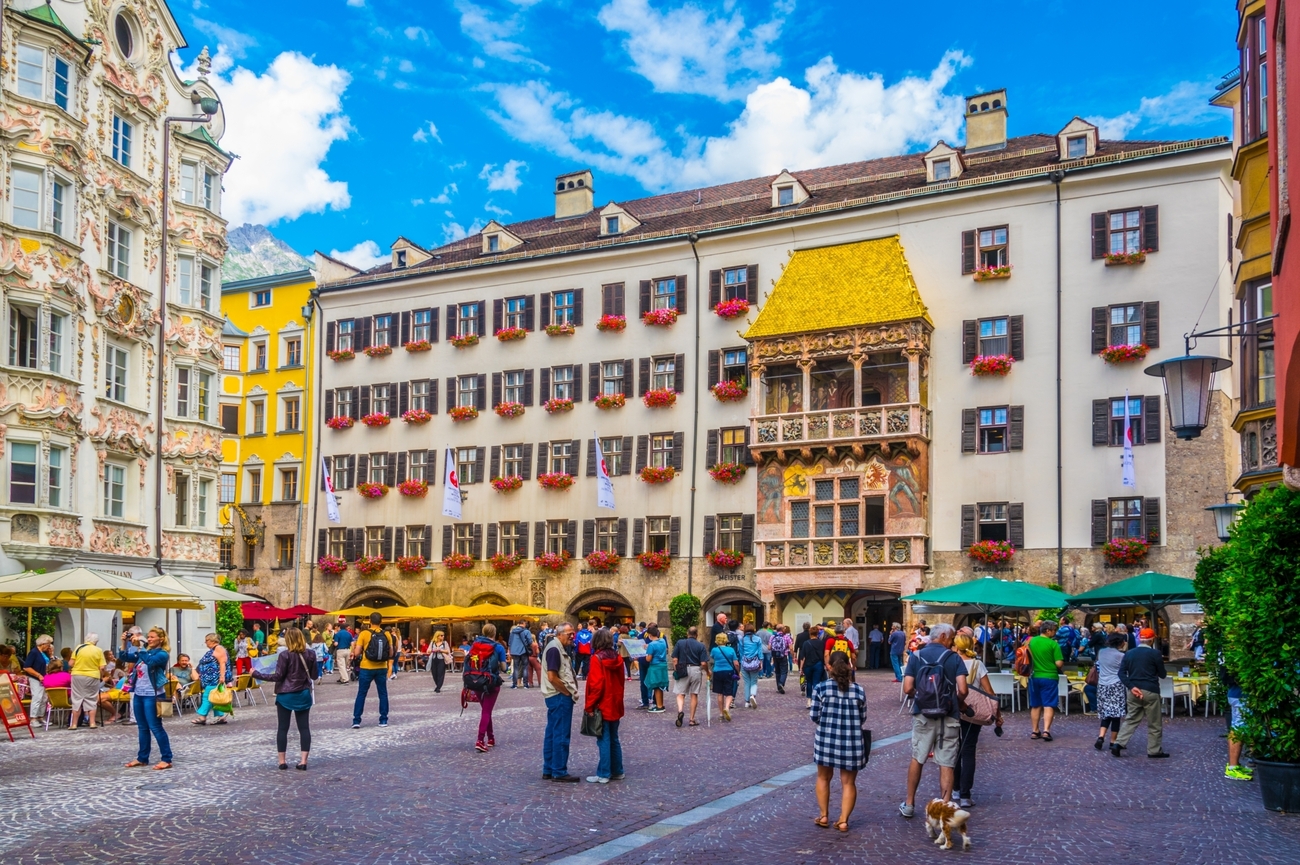
- Innsbruck, Austria: If the Alps are calling, Innsbruck answers beautifully. Located about 1 hour 25 minutes from Chiemsee, this Tyrolean city sits right in the middle of dramatic Alpine scenery. Colorful houses line the Inn River, while jagged mountain peaks rise almost vertically behind the historic old town. This city’s most famous landmark is the Golden Roof (Goldenes Dachl), a balcony decorated with thousands of gilded tiles built for Emperor Maximilian I. And if you want to experience it from above, the Nordkette Cable Car takes you from the city center directly into the high Alps in just minutes. At the top, the panorama reveals an entire world of mountains stretching into the distance.
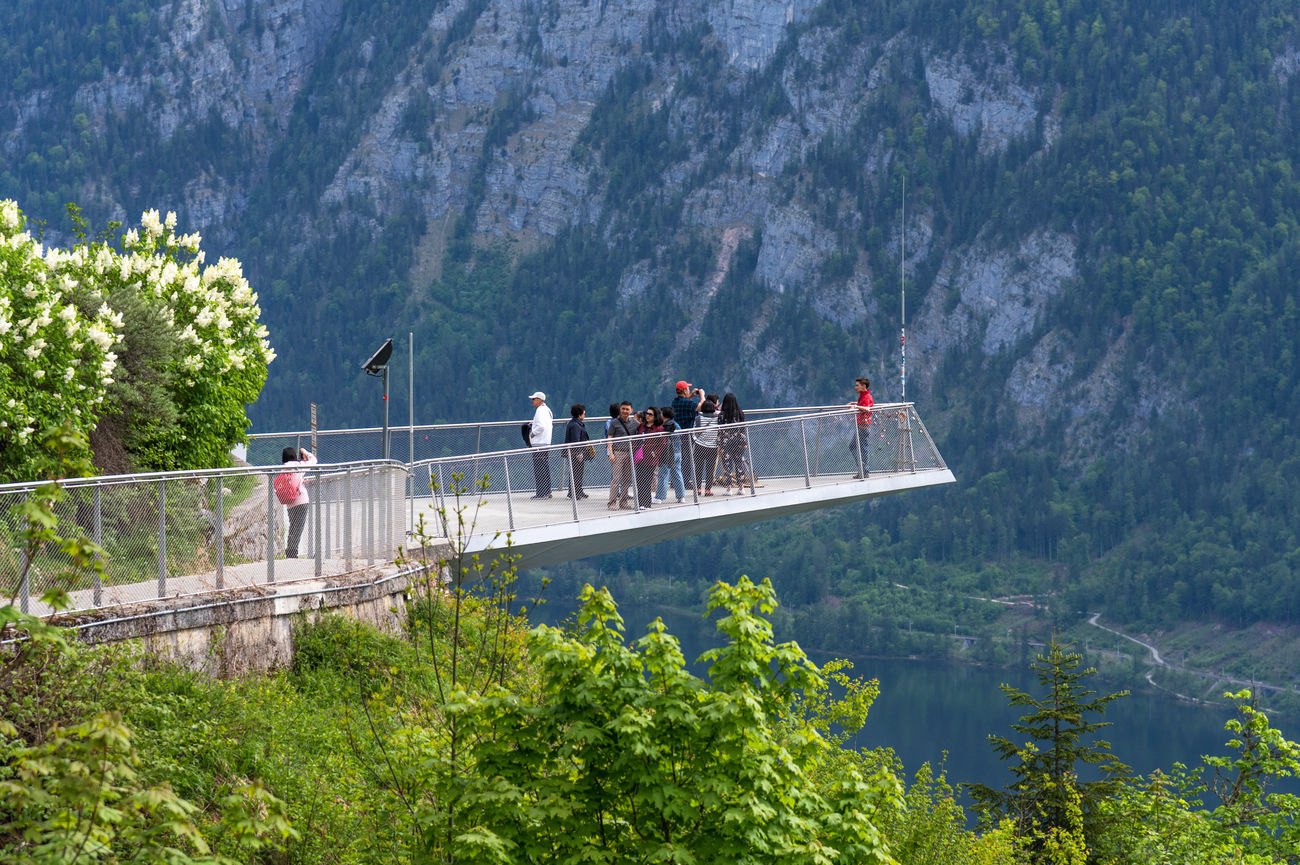
- Hallstatt, Austria: Few places in Europe look as instantly magical as Hallstatt, located about 1 hour 30 minutes from Lake Chiemsee. This lakeside village is part of the Hallstatt-Dachstein/Salzkammergut UNESCO World Heritage Site, recognized for its unique cultural landscape and ancient salt mining history. The village itself clings to a narrow strip of land between the lake and steep mountains, creating one of the most photographed settings in Austria. Colorful houses stack along the waterfront and the Hallstatt Skywalk viewpoint offers breathtaking views across the lake and surrounding Alps. But never forget to visit this spot for what it’s known for, the Hallstatt Salt Mine, one of the oldest salt mines in the world, which tells the story of how this small village once became incredibly wealthy through salt trade.
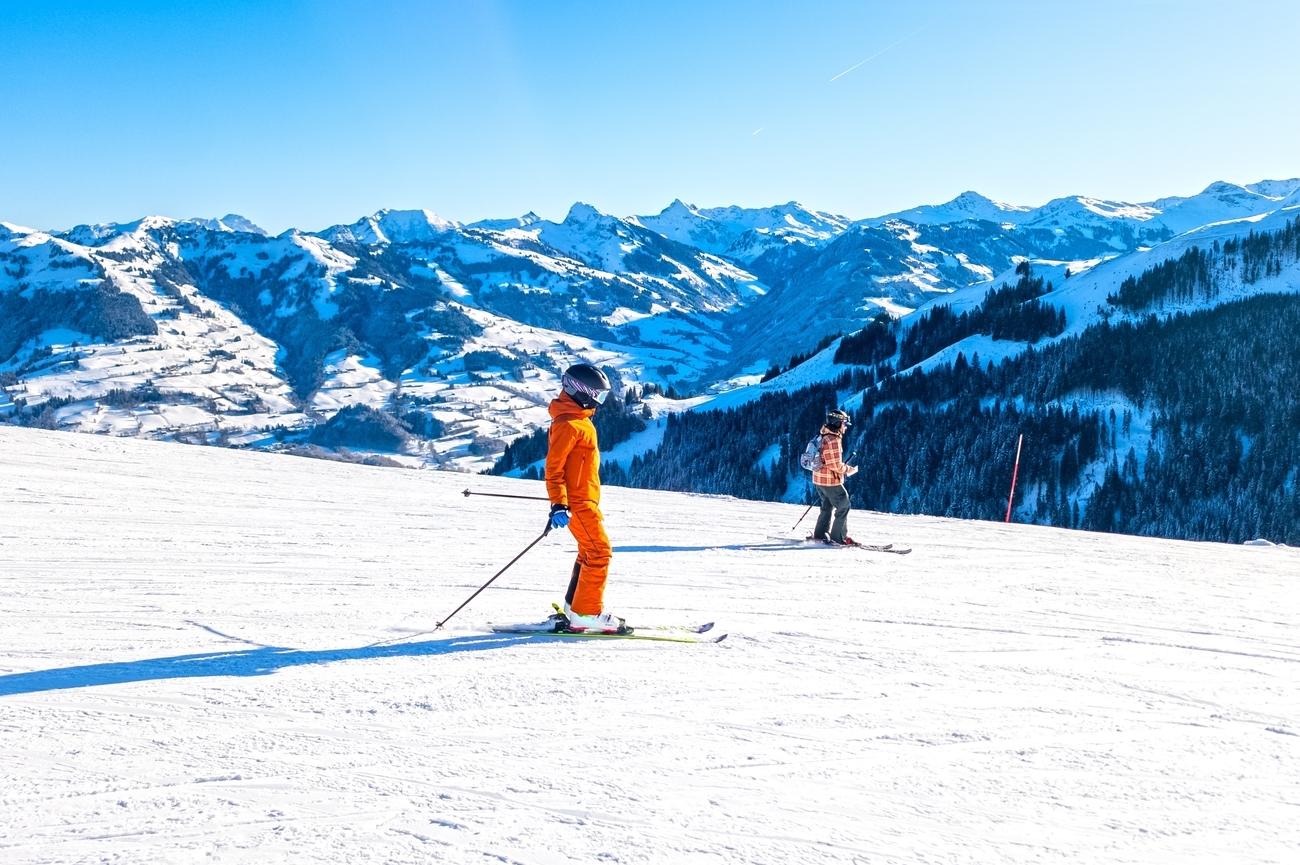
- Kitzbühel, Austria: If you want to experience a lot of outdoor, this is the place to visit. About 1 hour 20 minutes from Lake Chiemsee, you’ll step into one of Europe’s most famous ski destinations, home to the legendary Hahnenkamm race, where some of the world’s best skiers take on one of the most challenging downhill courses. The energy during ski season is electric. And when the snow melts, the town transforms into a world-class golf destination. The region is home to multiple championship golf courses, including Golfclub Kitzbühel-Schwarzsee-Reith, Whether you’re carving through snow, teeing off with alpine views or simply enjoying a long, unhurried lunch, Kitzbühel knows exactly how to deliver the moment.
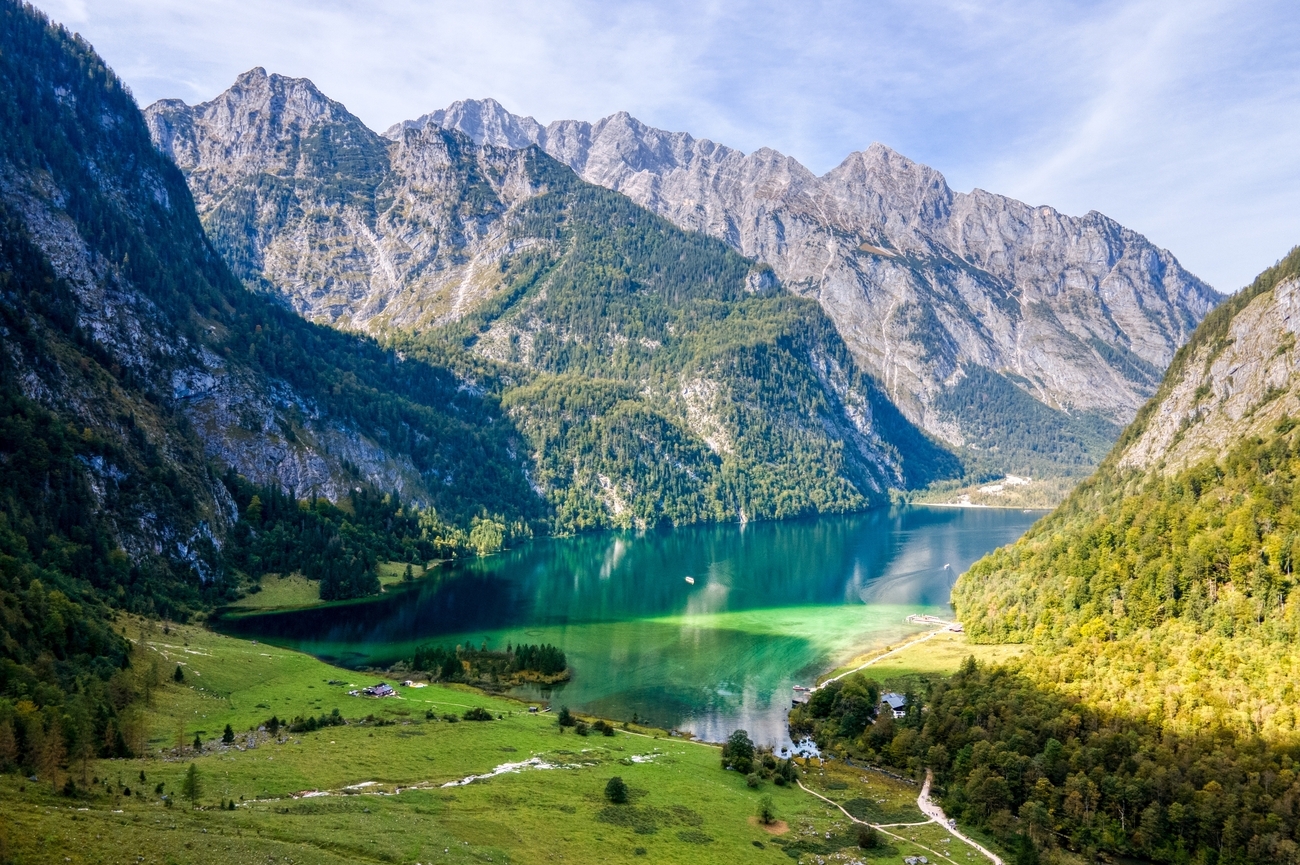
- Berchtesgaden, Germany: If you want to see the Alps at their most unapologetically dramatic, Berchtesgaden is where everything shifts. Located about 1 hour 15 minutes from Lake Chiemsee, this is where the scenery stops being gentle and starts making a statement. The region sits within Berchtesgaden National Park, a protected alpine landscape where mountains don’t just sit in the background; they rise sharply, almost vertically, as if they’re part of the main cast. Peaks like the Watzmann massif dominate the skyline, and no matter where you stand, your eyes keep drifting upward. And then there’s Königssee. As you move through the lake, the mountains close in, towering on both sides.
Nearby
Experiences Around Lake Chiemsee
Step just a little beyond the shoreline and the region quietly reveals an entire supporting cast of experiences. Within a short drive, the landscape opens up into alpine ski slopes, vineyards tucked into sunny hillsides, elegant horse farms and countryside trails that seem designed for slow, scenic adventures. This is where the Chiemgau region really shows its range. Here are some nearby experiences around Lake Chiemsee that add even more depth to your time in the region.
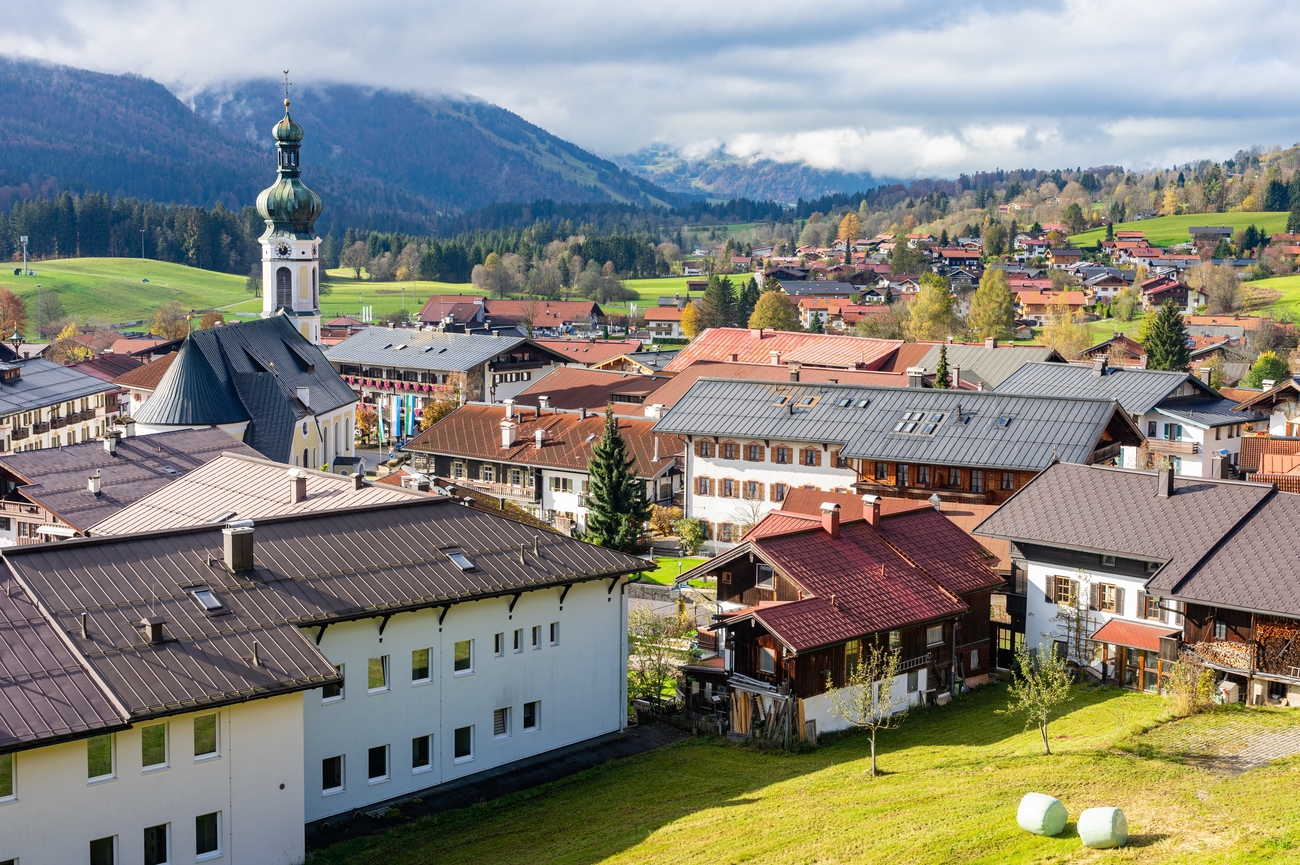
- Reit im Winkl: If the mountains surrounding Lake Chiemsee ever tempt you to go a little higher, Reit im Winkl is the place to follow that instinct. This charming alpine village sits about 45 minutes from the lake and is one of the most beloved outdoor destinations in the Chiemgau region. During winter, the area becomes a ski and snow sports haven, especially around the Winklmoos-Alm ski area, known for its wide open slopes and spectacular alpine views. Skiers and snowboarders glide across snowy terrain while mountain peaks frame the horizon like a dramatic backdrop.
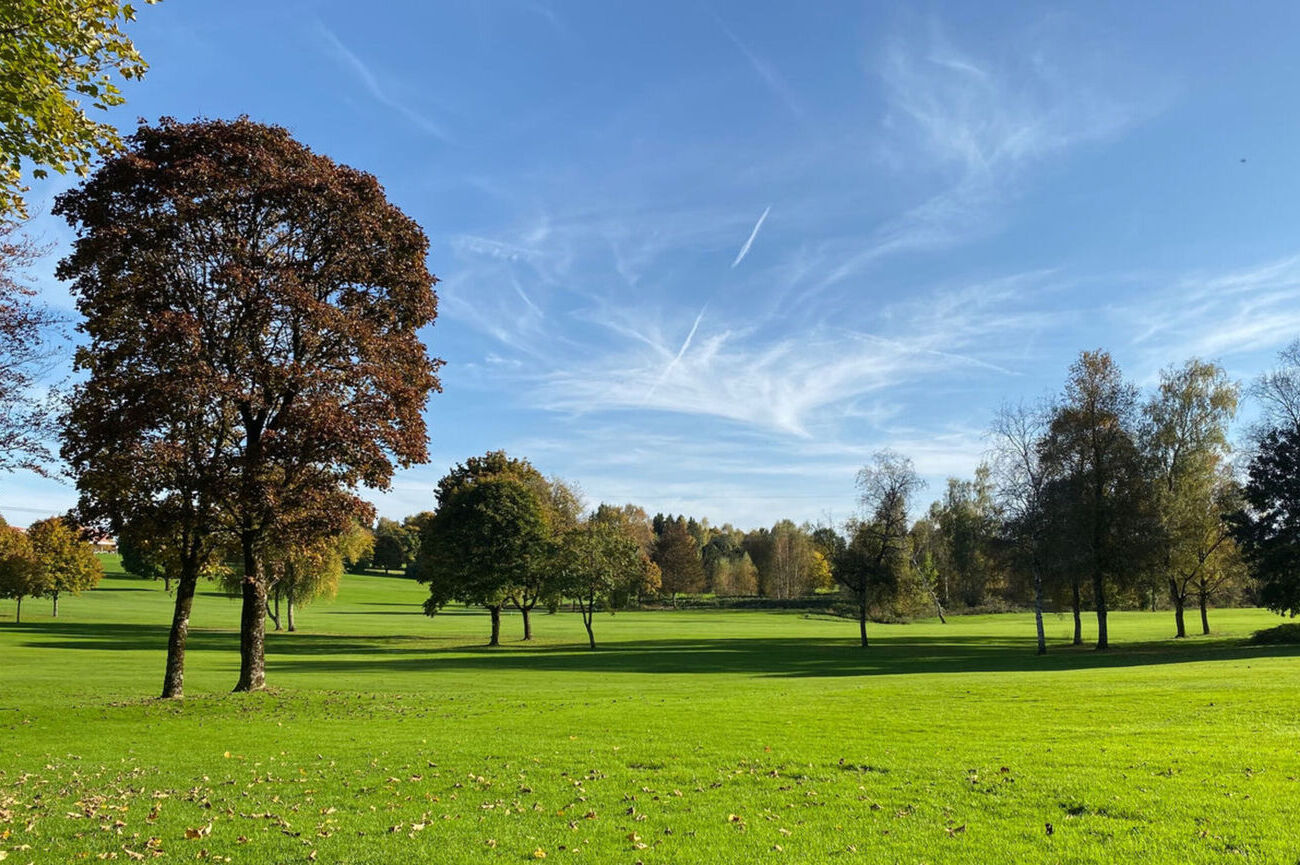
- Höslwang: About 20 minutes north of Lake Chiemsee, the small town of Höslwang introduces you to the quieter countryside of the Chiemgau region. Rolling fields stretch toward distant mountains and the entire area carries a relaxed rural charm that feels wonderfully unhurried. The highlight here is Golf Club Höslwang im Chiemgau, one of the most scenic golf courses in the region. The 18-hole course winds through open farmland and gentle hills, giving golfers wide views of the Bavarian landscape with the Alps often visible in the distance.
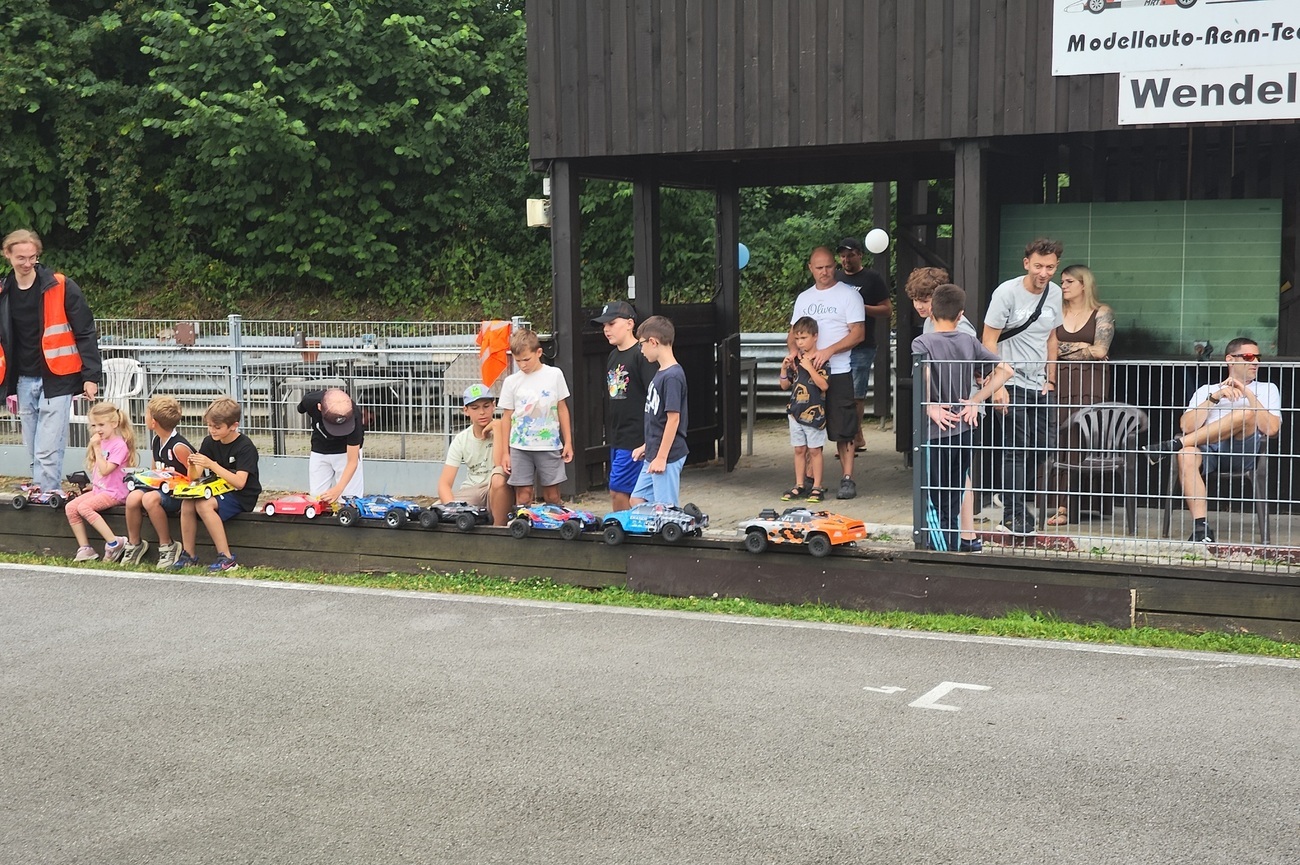
- MRT Rosenheim e. V: MRT Rosenheim e. V brings a burst of adrenaline to the region. Located near the city of Rosenheim, about 30 minutes from Lake Chiemsee, this motorsport club organizes racing events and automotive activities for enthusiasts. And even if motorsports aren’t normally on your travel list, the experience can be surprisingly entertaining.
Golf
Courses Around Lake Chiemsee
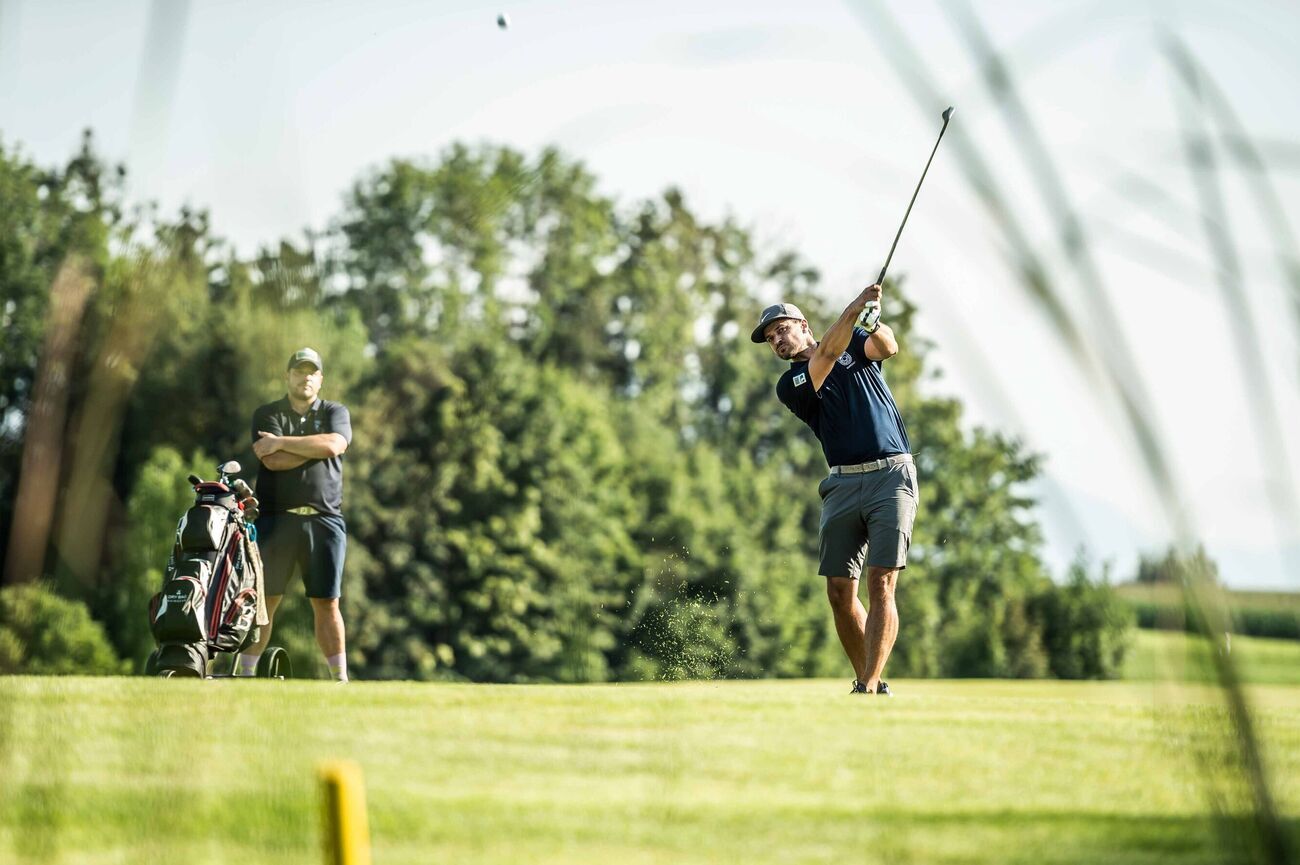
Lake Chiemsee and the surrounding Chiemgau region have quietly become one of Bavaria’s most attractive destinations for golfers. Wide Alpine valleys, gentle countryside and constant views of the Chiemgau Alps create courses that feel scenic even before the first swing. The area is often described as a stronghold for golf in southern Germany thanks to its number of well-maintained courses and their spectacular natural settings. Here are golf courses genuinely located around Lake Chiemsee and in the immediate Chiemgau region.
- Chiemsee Golf-Club Prien: If Lake Chiemsee had a “signature golf course,” this would probably be it. Chiemsee Golf‑Club Prien. Located just above the lakeshore town of Prien, this 18-hole championship course was founded in 1961 on the grounds of a historic estate. The layout moves through rolling terrain framed by mature trees and natural slopes, creating a course that rewards accuracy while still remaining enjoyable for recreational players. As you move through the fairways, the Chiemsee lake and the Chiemgau Alps appear again and again along the horizon. The course blends gentle elevation changes, strategic bunkers and tree-lined holes that keep each section visually interesting.
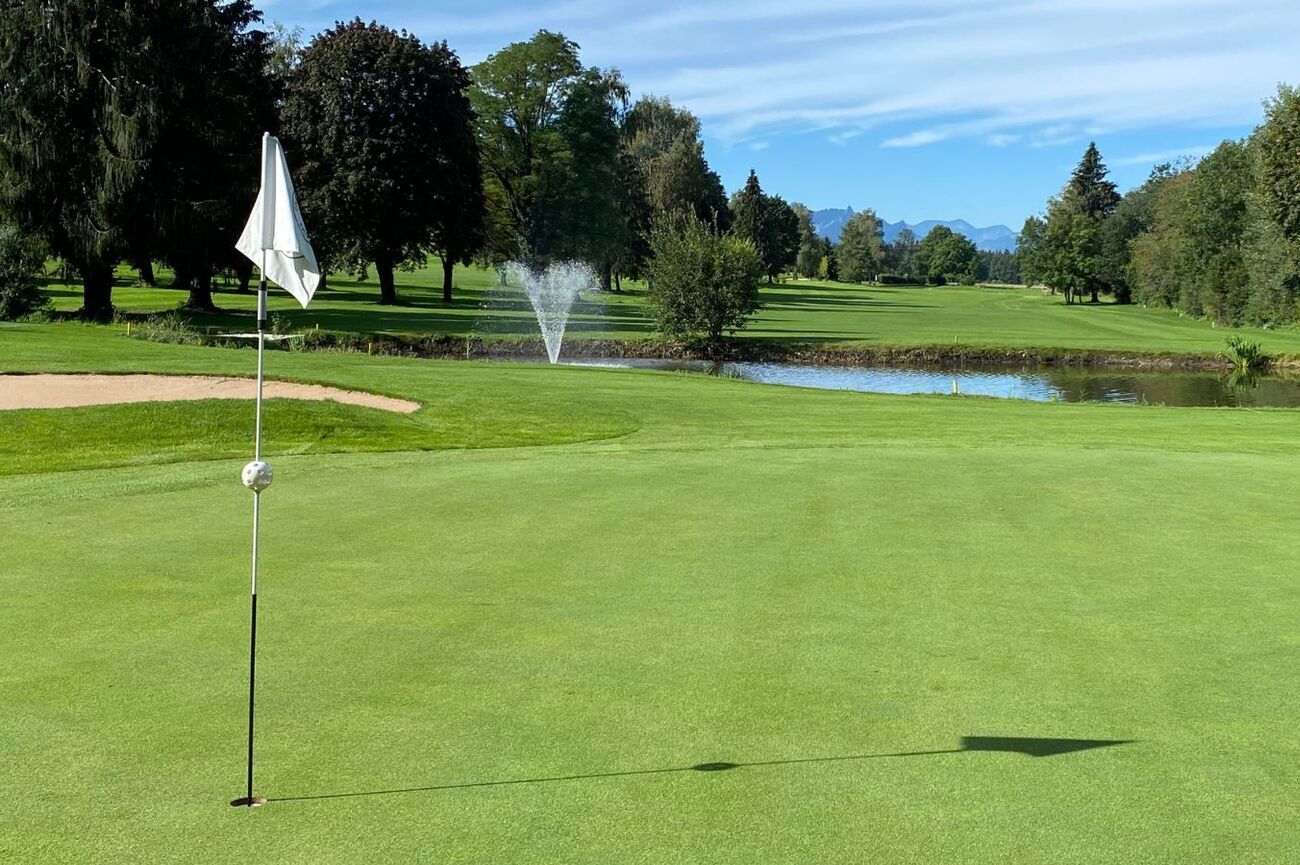
- Golf-Club Chieming e.V.: On the eastern side of the lake sits Golfclub Chieming, a scenic 18-hole course surrounded by open countryside and mountain views. The layout stretches across natural terrain with wide fairways that gradually roll through meadows and forest edges. The design is known for its balanced difficulty. Beginners appreciate the open layout, while experienced players still find plenty of challenge in the strategic greens and subtle elevation changes.
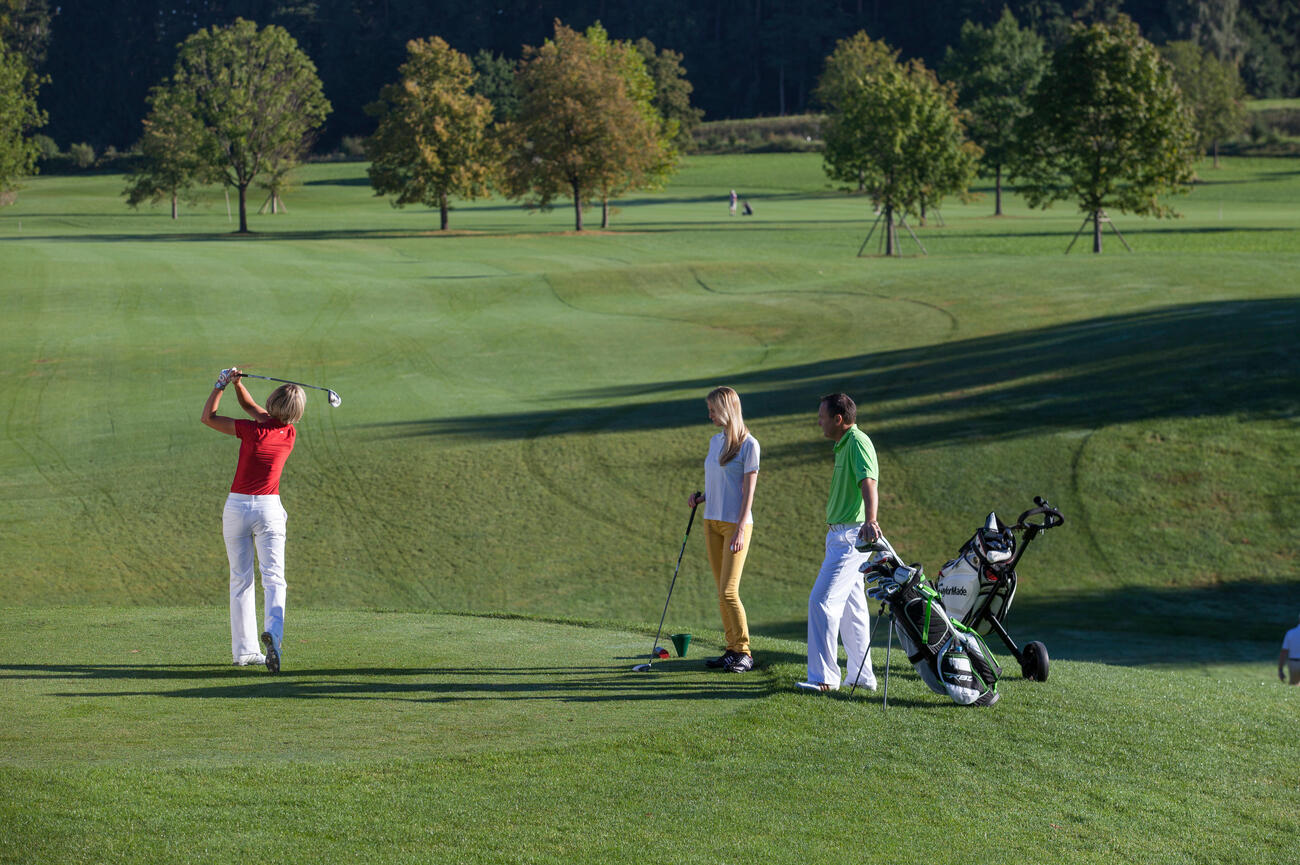
- Golf Club Gut Ising e.V.: Just a few minutes from Lake Chiemsee lies the elegant Golfclub Gut Ising, part of a historic Bavarian estate. The course sits within rolling fields and pastures, creating a setting that feels both rural and refined. This 9-hole course is known for its relaxed atmosphere and beautifully maintained greens. And the real charm here is the environment. Horses graze in nearby paddocks, the Alps rise faintly in the distance and the entire estate feels like a countryside retreat rather than a busy golf resort. If you’re looking for a polished experience, the estate also offers equestrian facilities, fine dining and wellness amenities, making it easy to turn a simple round of golf into a full luxury countryside escape.
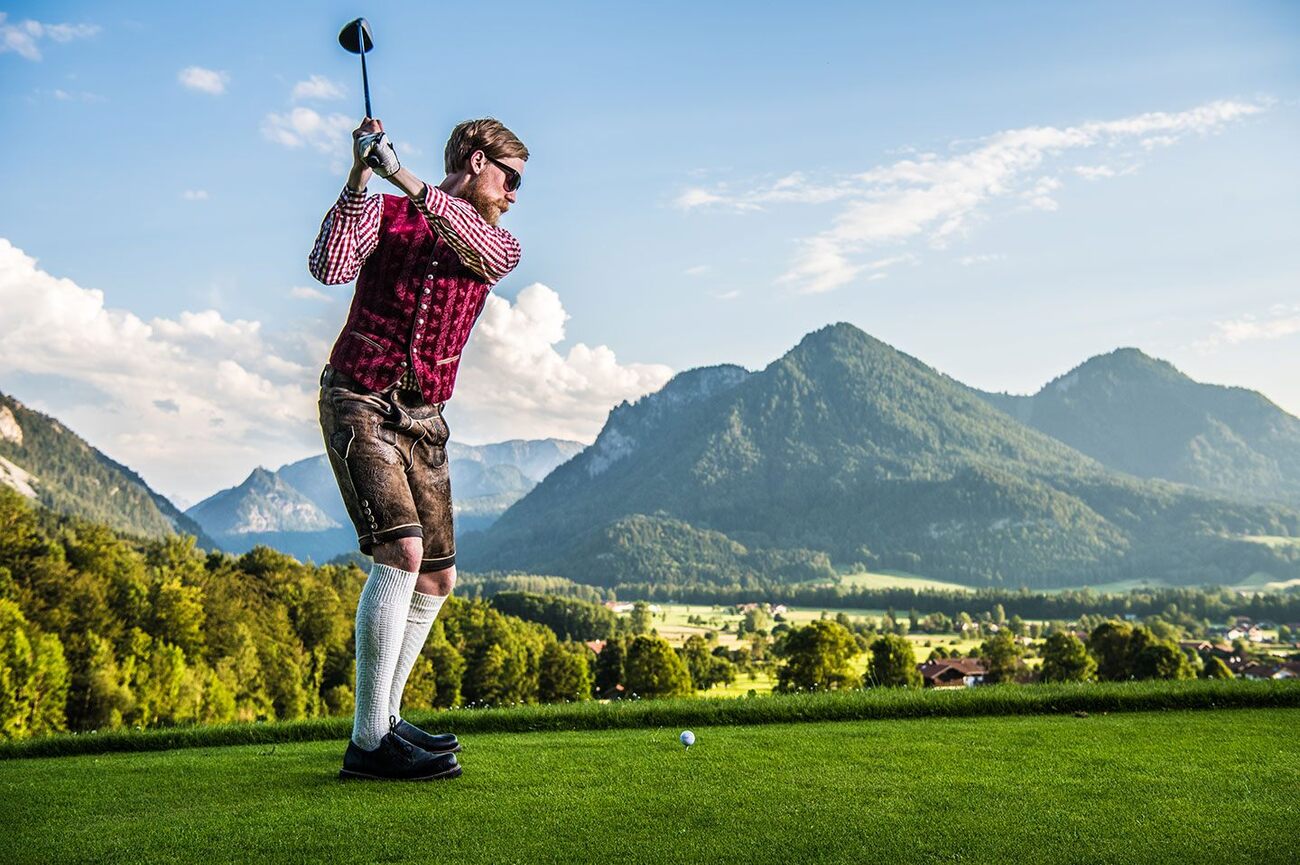
- The Golf Club at Lake Obinger: If you’re looking for a round of golf that feels calm, and scenic, The Golf Club at Lake Obinger delivers that balance. This course sits near peaceful lakes and open countryside, giving the entire experience a relaxed, almost meditative pace. The layout flows through gentle terrain and natural landscapes, where water features and open fairways create a course that feels approachable yet engaging. It’s not about overwhelming difficulty here. Fewer crowds, softer sounds and wide views across the landscape make it easy to slow down and stay present.
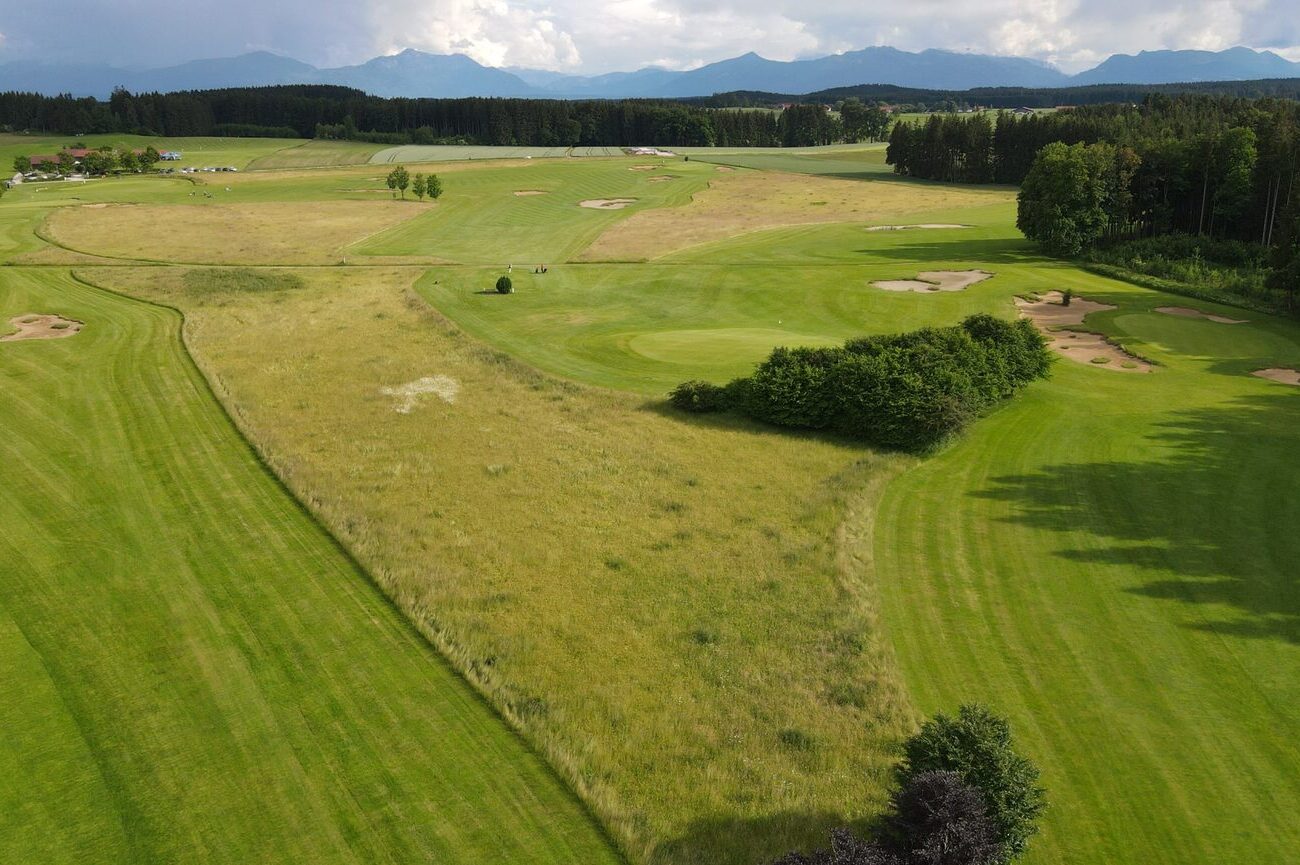
- Golf Club Höslwang im Chiemgau e.V.: Golf Club Höslwang im Chiemgau e.V. is exactly where you want to be. This 18-hole course is known for its wide fairways and open design, making it welcoming for beginners while still offering enough strategy to keep experienced players engaged. Elevation changes are subtle, but just enough to keep each hole interesting. This club is located about 20 minutes north of Lake Chiemsee and it stretches across rolling farmland with the Alps quietly lining the horizon. Even if golf isn’t the main plan, this is one of those places that shows you how beautifully the region blends sport with scenery.
Michelin-Starred
Restaurants Around Lake Chiemsee
Lake Chiemsee knows how to do drama with palaces rising from islands, Alps photobombing every horizon and sailboats gliding across water like they’ve got nowhere urgent to be. But here’s the twist: the real show sometimes happens after sunset, when the plates start arriving. This region quietly punches above its weight when it comes to fine dining. You’ll find chefs foraging in nearby forests, vegetables grown a few steps from the kitchen and lake fish treated with the kind of respect usually reserved for luxury ingredients. And when a place has a Michelin star, it means the kitchen isn’t just cooking well; it’s performing at a level that turns dinner into an experience worth planning your day around. Around Lake Chiemsee, a few standout restaurants are doing exactly that.
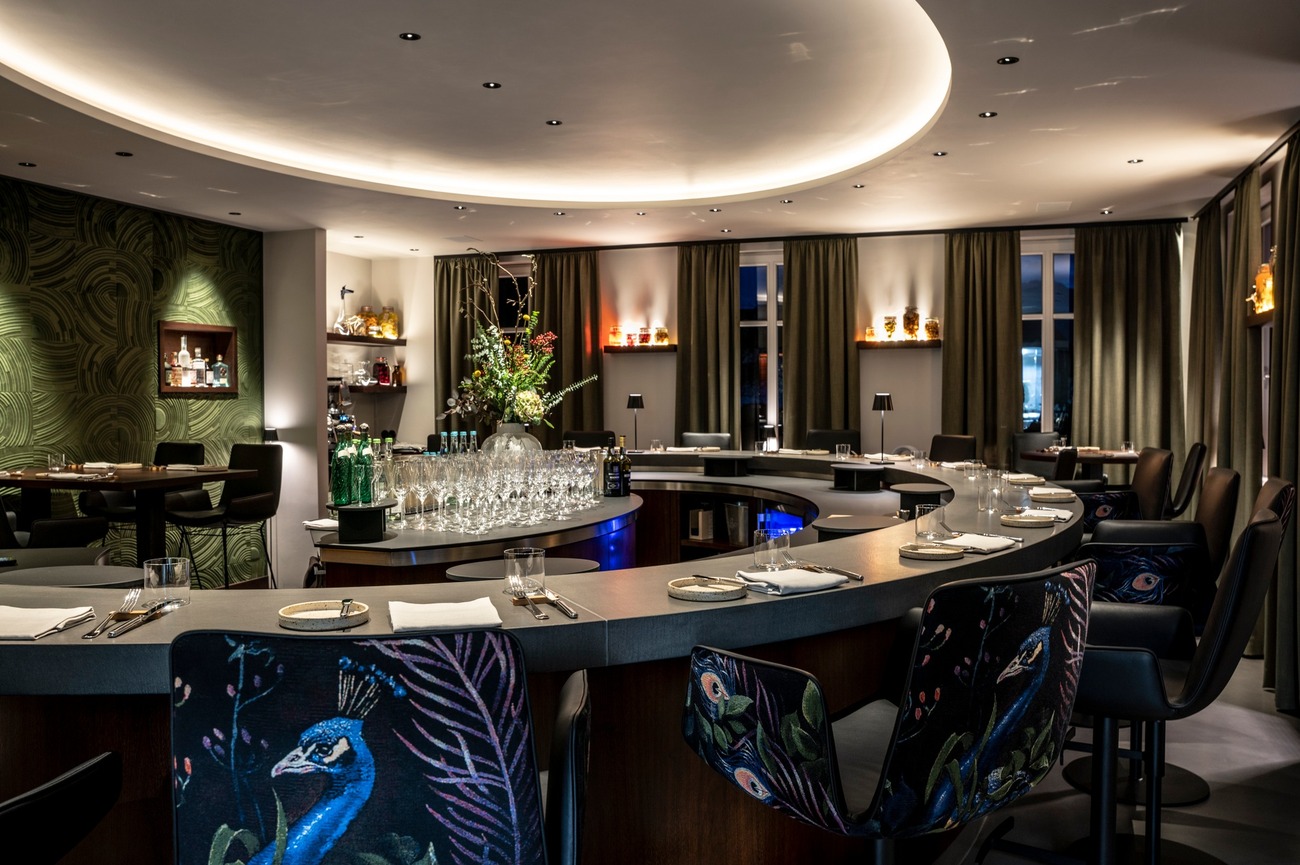
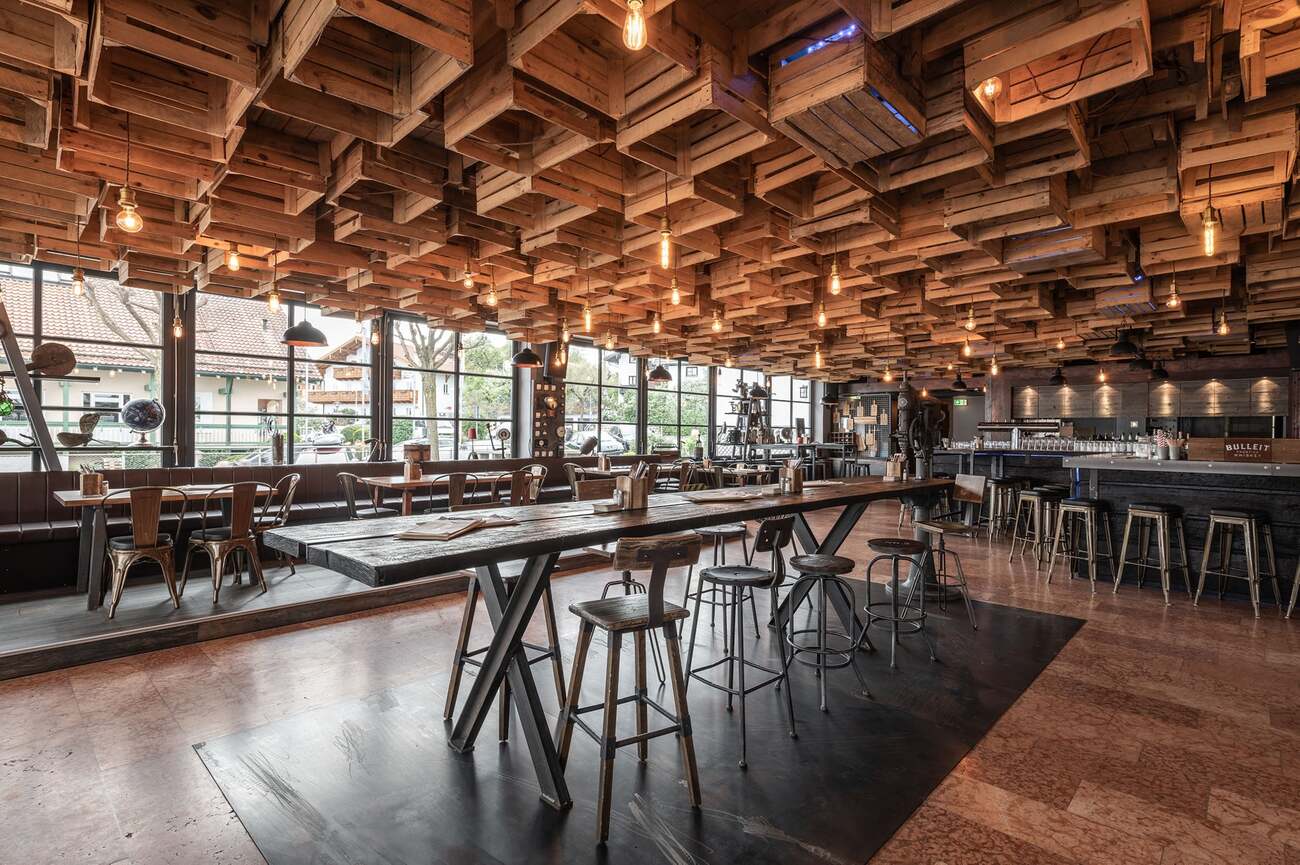
- Wachter Foodbar: A Michelin-starred restaurant inside a stylish urban space is not what most people expect to find near a quiet Bavarian lake and that’s exactly what makes Wachter Foodbar so interesting. Located in Prien am Chiemsee, this restaurant holds 1 Michelin star and is run by chef Dominik Wachter, a young talent bringing a fresh, modern approach to the region’s dining scene. This restaurant’s counter concept immediately changes the experience. Guests sit at a large central bar or high tables that face the kitchen pass. And the cuisine focuses on four- to six-course tasting menus built around regional ingredients, many of which Wachter gathers himself from the forests around Chiemsee. His love for fish dishes stands out in particular. Just imagine perfectly cooked lake trout paired with beurre blanc, chive oil, elderberries and delicately marinated kohlrabi. Each dish balances clean flavors with subtle contrasts.
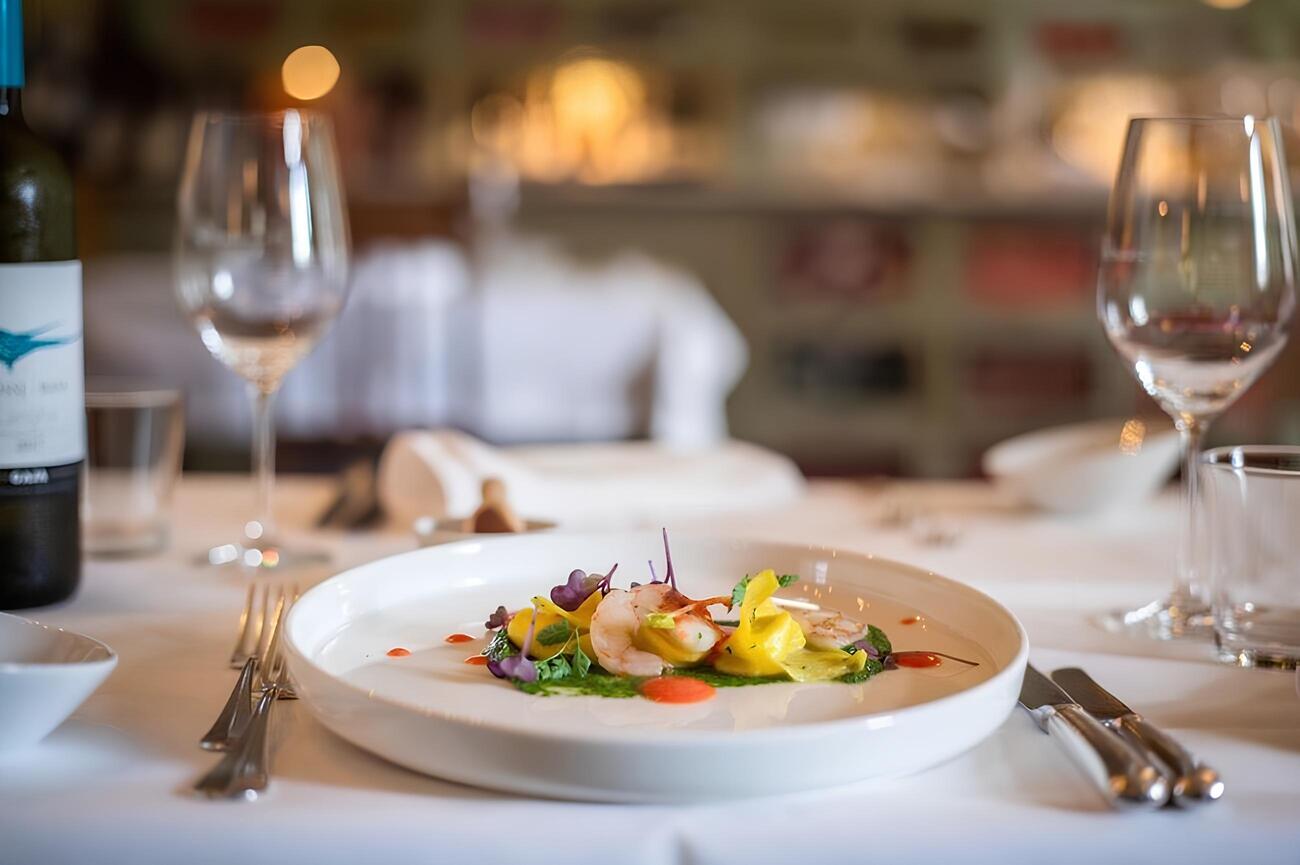
- Restaurant June: Just a few minutes from the southern shore of Lake Chiemsee sits one of the region’s most forward-thinking restaurants. Restaurant June in Übersee is a 1 Michelin star restaurant. It is led by chef Rico Birndt, who previously built a strong reputation at Munich’s acclaimed Mural Farmhouse. Here, vegetables take center stage. Instead of treating them as side characters, the kitchen designs entire tasting menus around them. Guests can choose between a seven-course or an eleven-course surprise menu, where seasonal produce drives the narrative of the meal. The restaurant’s philosophy leans heavily into sustainability and preservation. Ingredients are fermented, pickled, cured and preserved, creating layers of flavor that change throughout the year.
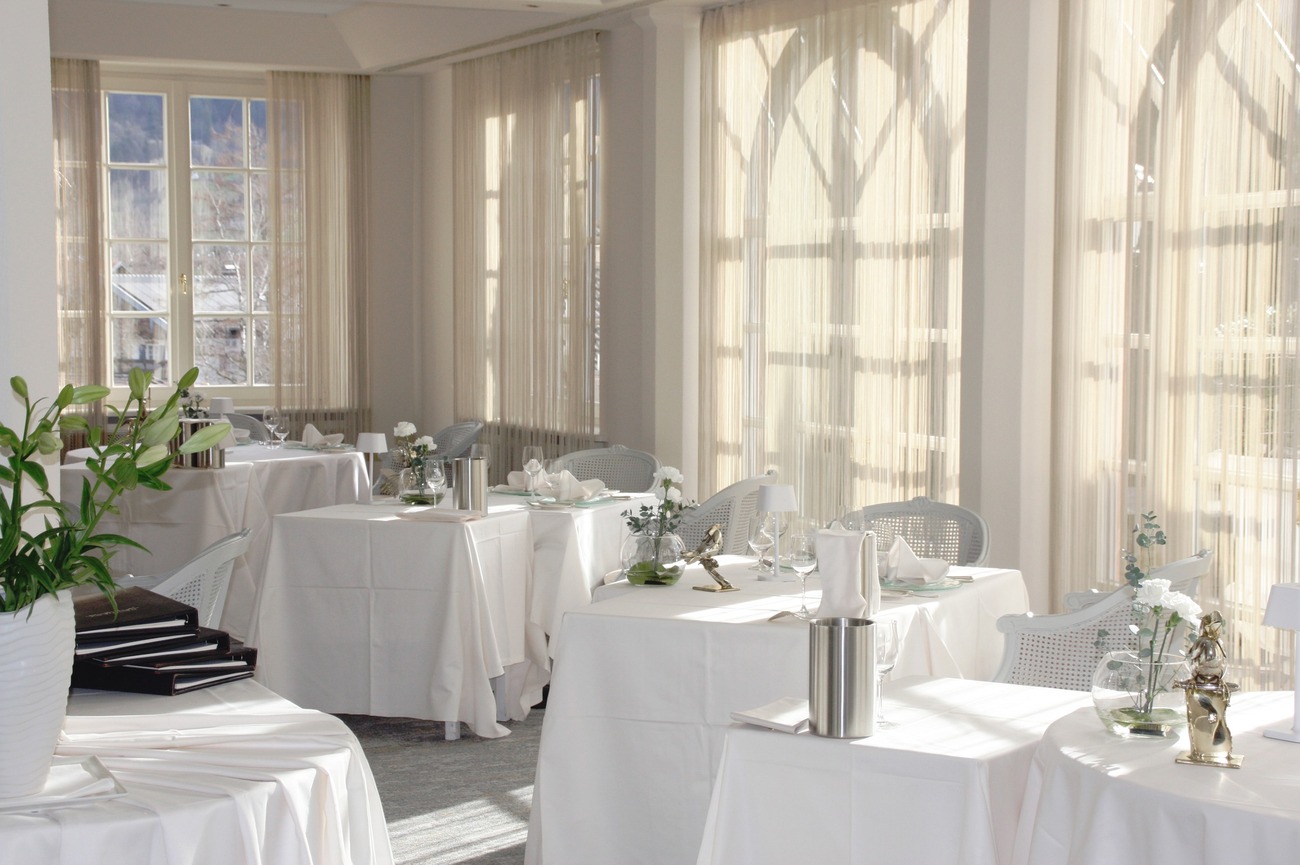
- Epicures: Located within Boutique Hotel Residenz Heinz Winkler, Epicures is one of the most refined dining experiences in the wider Chiemsee region. The restaurant holds 1 Michelin star, placing it among the most refined dining experiences in the wider Chiemsee region. The story of the restaurant is deeply tied to legendary chef Heinz Winkler, who opened the residence in 1991 and quickly turned it into a benchmark for classical fine dining in Germany. Today the tradition continues with chef Daniel Pape leading the kitchen. Epicures offers five- to eight-course tasting menus, though guests can also dine à la carte if they prefer a more relaxed approach. So for those exploring the Lake Chiemsee region, Epicures sits roughly 25 minutes away in Aschau im Chiemgau, making it a natural destination for a special dinner.
Where to Eat Around Lake Chiemsee
Lake Chiemsee may be famous for palaces and sailboats, but give it an hour around lunchtime and the region starts revealing another talent: feeding people exceptionally well. You’ll notice something quickly: many of the best tables here come with a view. A terrace overlooking the lake, a historic inn dining room or a pier where boats gently drift past while dinner arrives. Around Chiemsee, eating out often feels like a continuation of the day’s adventure rather than just the end of it.
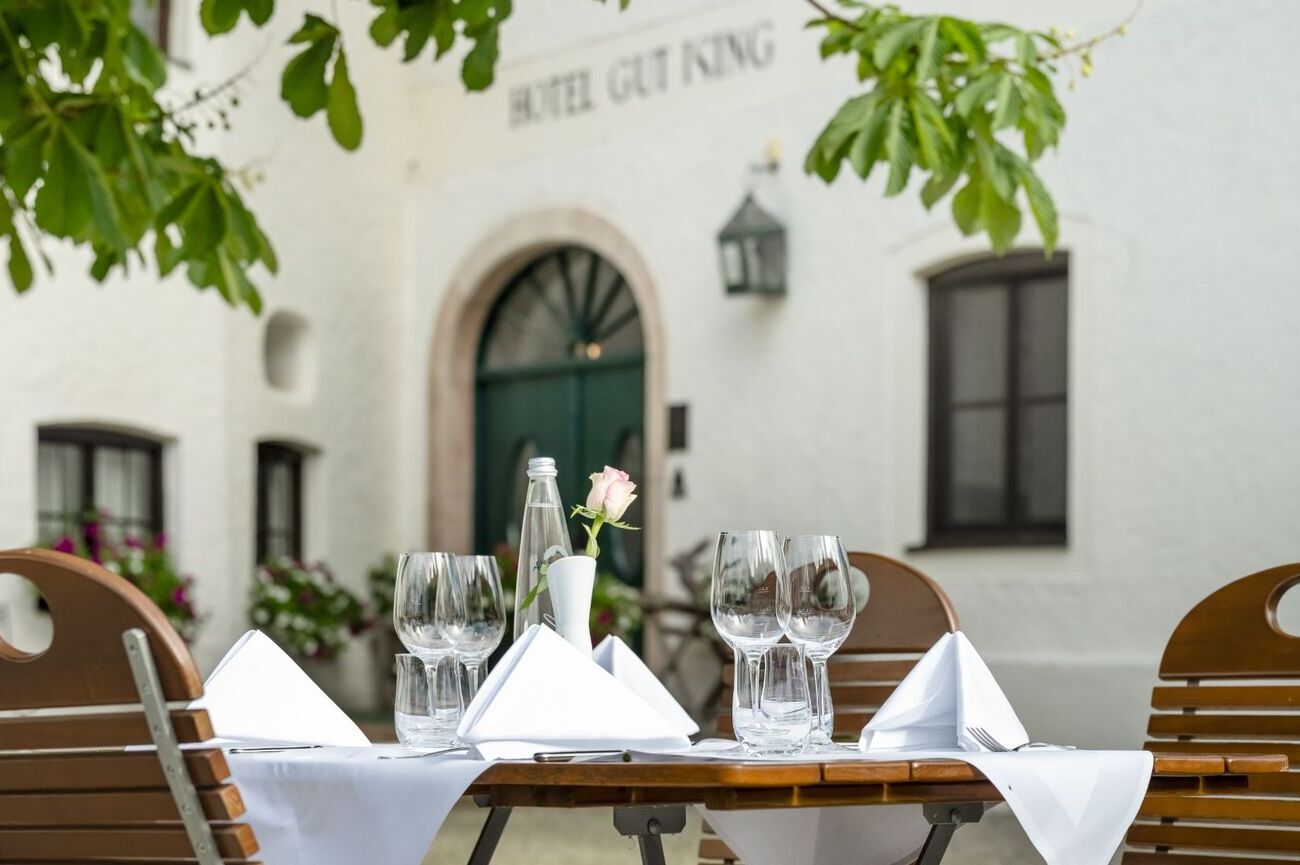
- Restaurant zum Goldenen Pflug: Dining at Restaurant zum Goldenen Pflug feels like stepping into a piece of Chiemsee history. The restaurant is housed inside one of the oldest inns in the region, within Hotel Gut Ising in Chieming, and the interior reflects that heritage beautifully. The menu celebrates classic Bavarian cuisine, but with enough refinement to keep things interesting. One standout dish is the Rindertafelspitz aus dem Kupferpfandl, a beautifully prepared boiled beef fillet served with apple horseradish, chive sauce, creamed spinach and sautéed potatoes. You can order à la carte or choose the restaurant’s Signature Menu, designed for two or more guests who want a curated experience of the kitchen’s best dishes.
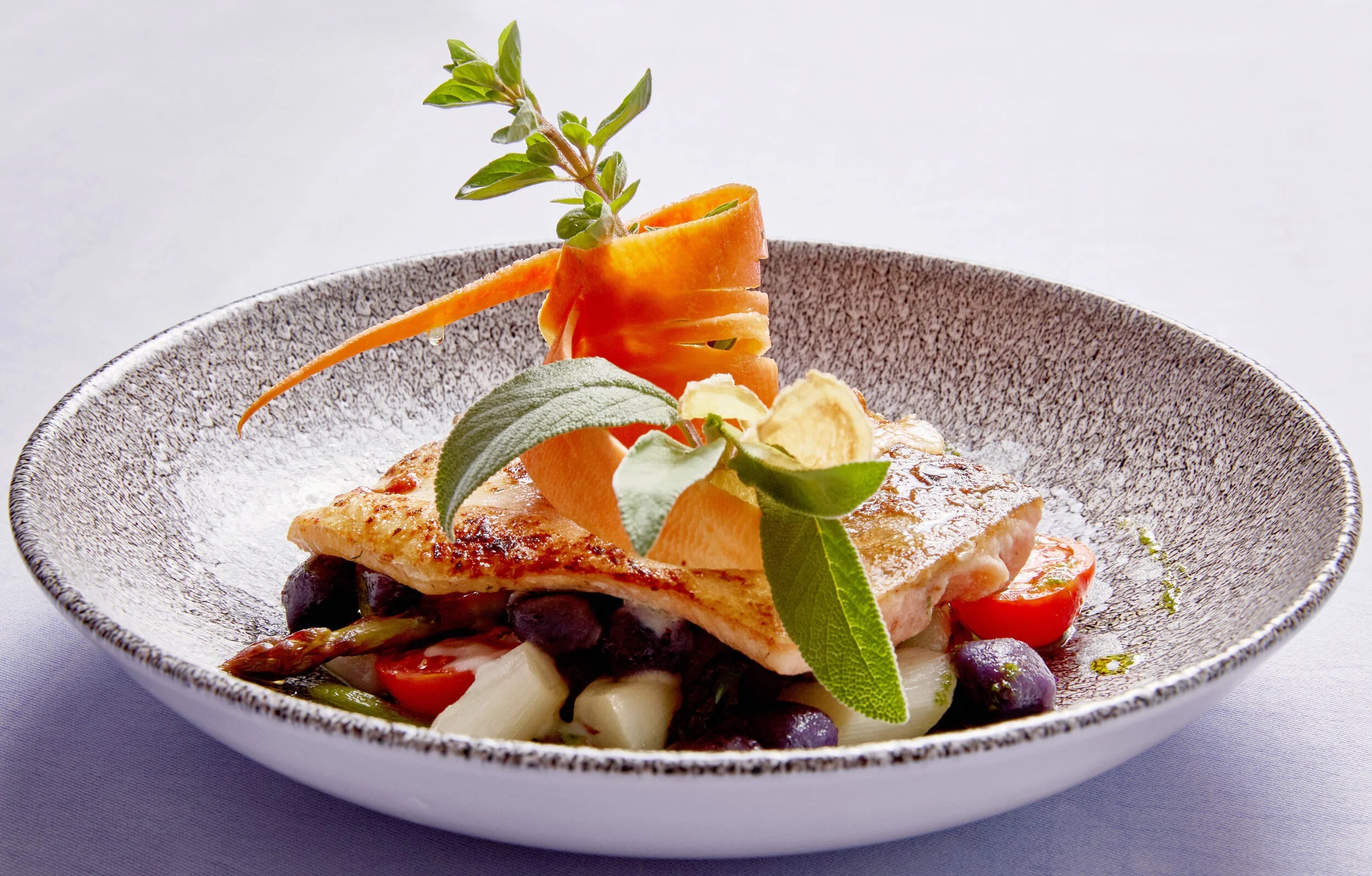
- Zum Fischer am See: If there’s one place around Chiemsee that fully embraces the lake’s identity, it’s Zum Fischer am See. As the name suggests, fish takes center stage here and the kitchen works with ingredients that feel perfectly suited to the lakeside setting. The menu features dishes like house-made fish soup with rouille and baguette or perch fillet in garlic herb butter served with parsley potatoes. The flavors are clean and straightforward, letting the freshness of the fish do most of the talking. That said, meat and vegetarian dishes also appear on the menu for anyone who prefers something different. And the real highlight is the terrace overlooking Lake Chiemsee.
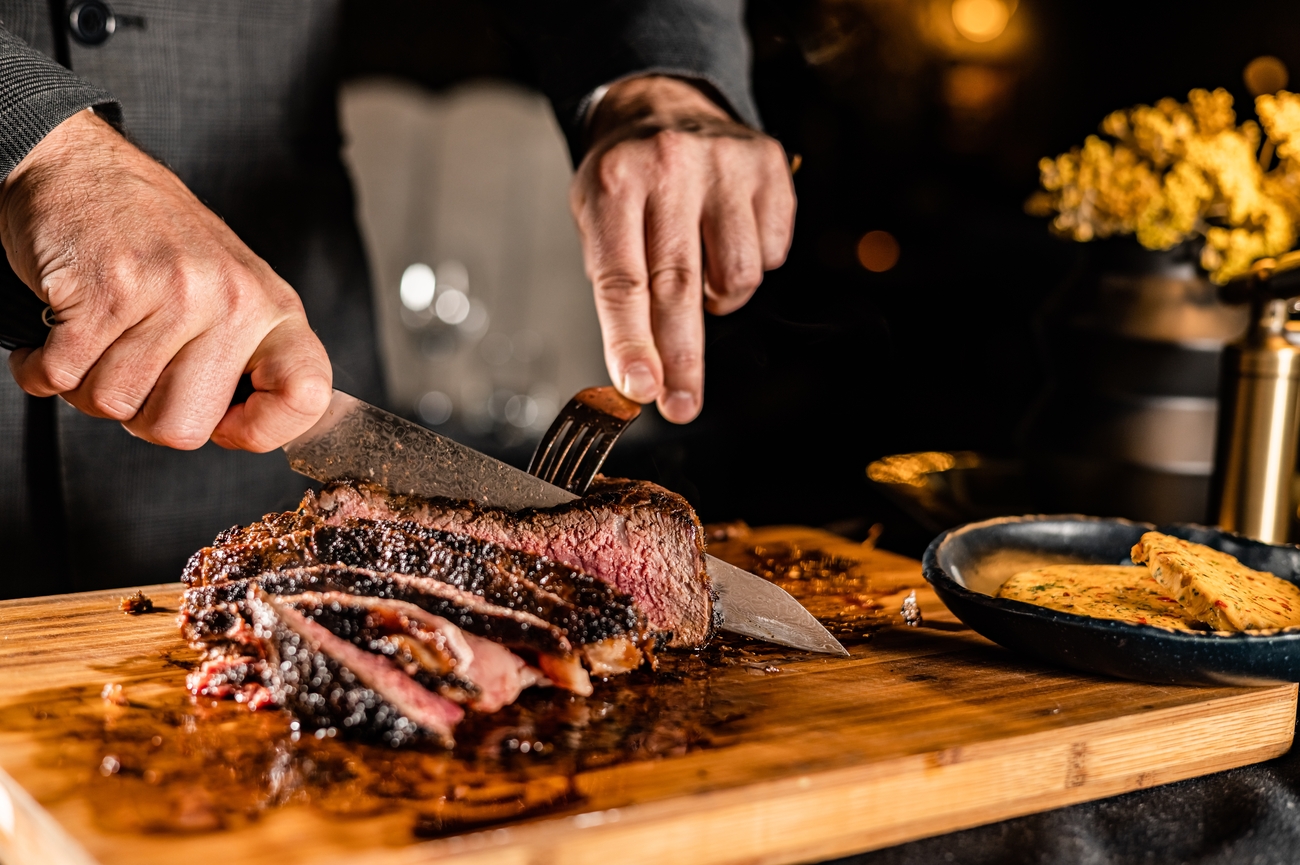
- Steakhouse Maximilian: For those moments when only a perfectly cooked steak will do, Steakhouse Maximilian delivers with confidence. Located in Prien am Chiemsee, the restaurant combines a relaxed yet elegant dining atmosphere with a menu focused on premium cuts of meat. The kitchen specializes in high-quality steaks such as Scottish roast beef and Argentinian filet, prepared with careful attention to flavor and texture.
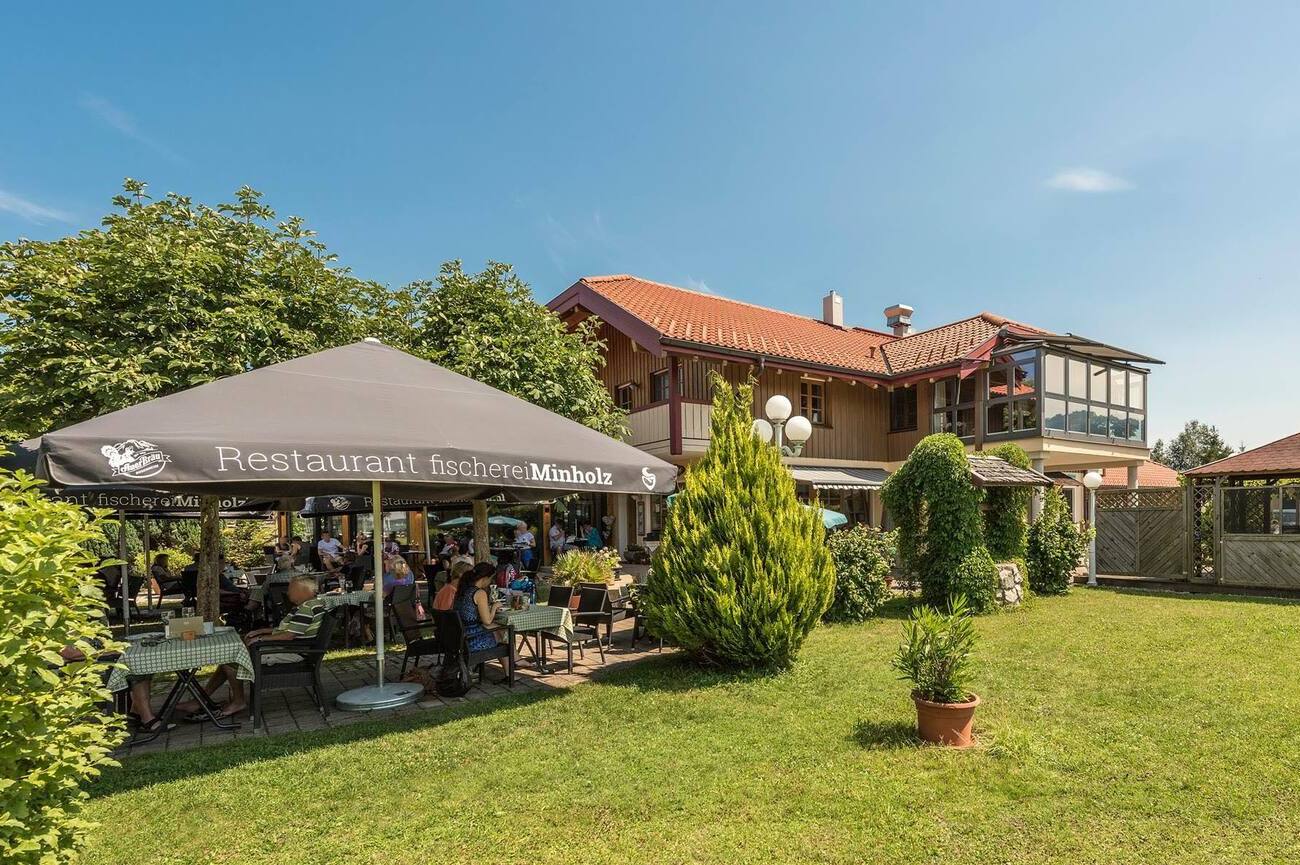
- Restaurant Fischerei Minholz: For a truly lakeside dining experience, Restaurant Fischerei Minholz offers a setting that feels wonderfully authentic. Located near Bernau am Chiemsee, the restaurant sits close to the water and focuses heavily on fresh seafood dishes inspired by the surrounding lake. The interior features warm wooden details and a cozy atmosphere that makes the restaurant feel welcoming from the moment you arrive. And the restaurant also caters well to families, offering a kids’ menu, perfect if your little one is not a fan of seafood.
- Hacienda Tapasbar: Not every meal around Chiemsee has to be traditional Bavarian fare. Hacienda Tapasbar brings a lively Mediterranean twist to the lakeside dining scene. This vibrant restaurant serves a menu inspired by Spanish tapas culture, encouraging guests to share plates and explore different flavors throughout the evening. You’ll find classics like patatas bravas, chorizo dishes, fresh seafood tapas and house-made desserts, all designed to be enjoyed slowly and socially.
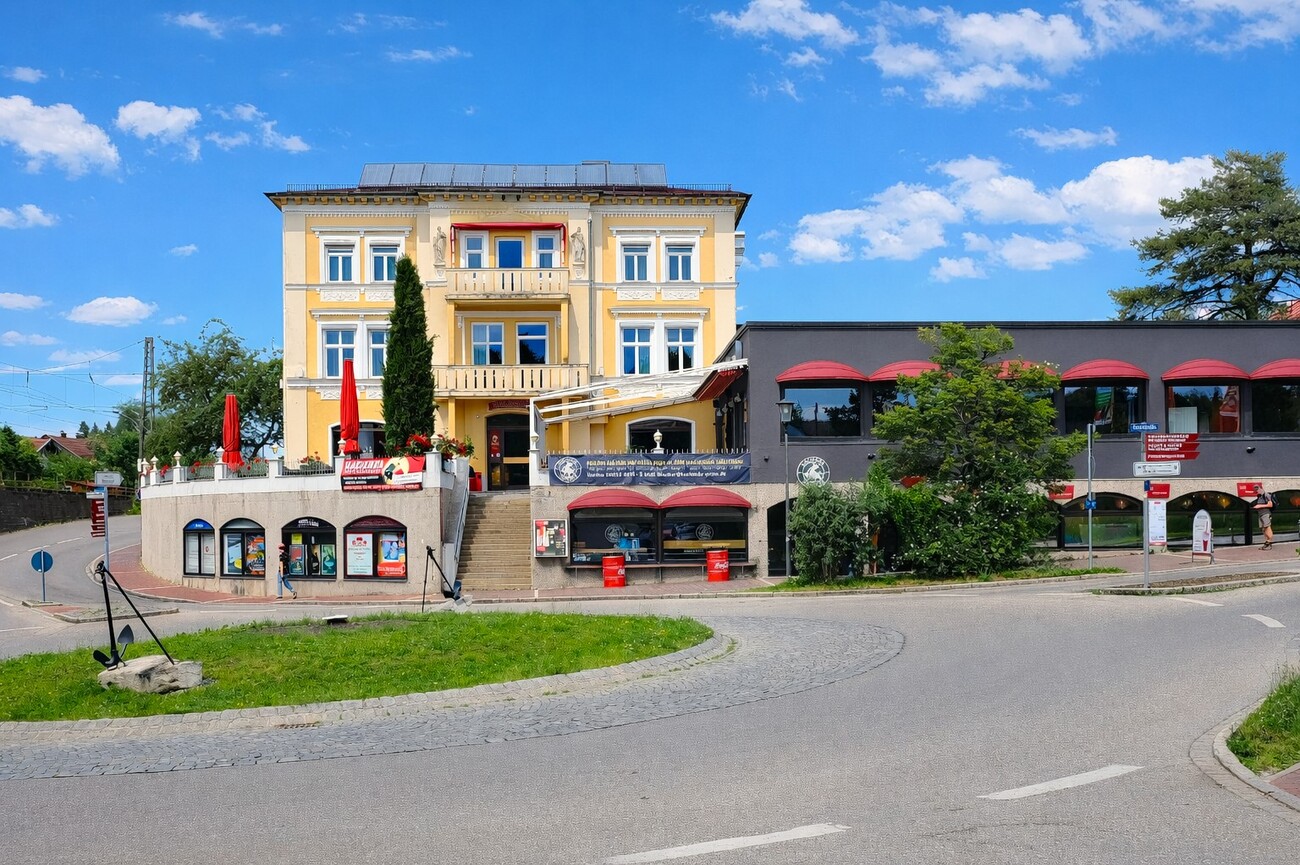
- Steghouse am Chiemsee: Few restaurants capture the lakeside lifestyle of Chiemsee quite like Steghouse am Chiemsee. Sitting directly by the water, the restaurant offers one of the most scenic dining terraces in the region. The menu blends Bavarian comfort food with international favorites. You’ll find dishes like spare ribs, schnitzel, semmelknödel and Kaiserschmarrn, alongside steaks and modern cocktails that give the restaurant a slightly contemporary edge. With its relaxed atmosphere, good food and unbeatable location, Steghouse has become a favorite stop for visitors who want to experience Chiemsee dining at its most scenic.
Where
To Drink Around Lake Chiemsee
When the sun dips behind the Chiemgau Alps and the lake starts reflecting the last gold of the day, Lake Chiemsee quietly shifts gears. The sailboats dock, the promenades slow down and somewhere between a terrace drink and a late-night laugh with friends, the evening finds its rhythm. The nightlife here isn’t about giant clubs or neon-lit party streets. It’s smaller, warmer and often far more memorable. Here are a few bars and nightlife spots around Lake Chiemsee where the evenings come alive.
- Scherzl: Right in the heart of Prien’s market square, Scherzl is the kind of place that feels instantly welcoming the moment you walk in. Located on the ground floor of the historic KronastHaus, this cozy bar and café has become a favorite meeting point for locals who want good drinks without unnecessary fuss. The building itself is worth a moment of appreciation. The Kronast House dates back to 1784, with origins reaching even further to 1598, making it one of Prien’s oldest houses. During the day, you’ll find excellent coffee and homemade cakes from the Müller family bakery that runs the bar. By evening, it turns into a lively but still intimate hangout where conversations stretch long into the night.
- Piraten Club: If your night calls for something a little more unfiltered, Pirate Pub delivers exactly that. This bar proudly embraces its dive-bar personality, creating a place where the focus is simple: good drinks, good music and a crowd that just wants to have fun. The atmosphere is laid-back, welcoming and proudly inclusive. The pub describes itself as a space for tolerance and diversity and you’ll quickly notice that everyone feels welcome. Open daily from 7 PM, the pub fills with a lively crowd that appreciates its casual vibe. Expect cold beer, strong drinks and occasional live music or spontaneous celebrations that make the evening feel unpredictable in the best way.
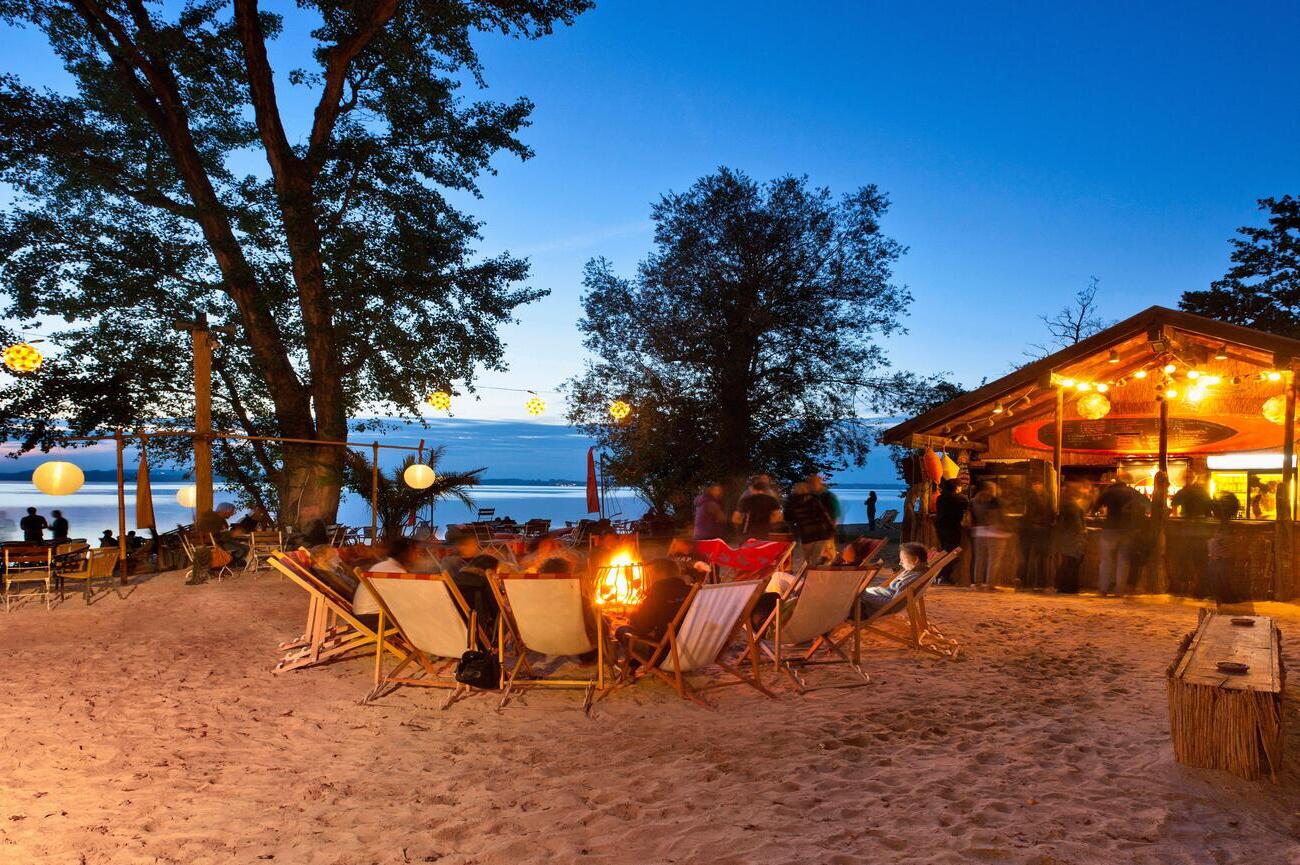
- Beach Bar Übersee: Few bars around Chiemsee can compete with the setting of Beach Bar Übersee. Located directly on the shoreline, this relaxed beach bar captures everything people imagine when they think of a perfect lakeside evening. The concept is wonderfully simple: sand under your feet, mountains in the distance and a drink in your hand. The menu includes beach-bar classics such as Aperol Spritz, Hugo, cocktails, beer and refreshing lemonades, along with casual snacks like sweet potato fries, falafel and grilled sandwiches.
- Tagesbar INSELBLICK: For evenings that lean more toward wine, conversation, and lake views, Tagesbar INSELBLICK offers a beautifully relaxed setting in Gstadt am Chiemsee. The cafe-bar is known for its calming lakeside atmosphere and charming decor. During the day, it’s a popular spot for breakfast platters, coffee and freshly baked cakes. As the day turns into evening, the vibe becomes softer and more social, making it a lovely place to meet friends, share a bottle of wine or simply enjoy the peaceful lakeside setting.
Cafes
Around Lake Chiemsee
Coffee is an experience around Lake Chiemsee. Cafes here often feel like little living rooms for the town: places where travelers pause between ferries, cyclists refuel after a long ride and conversations stretch comfortably over a second cappuccino. The cafe culture around Chiemsee blends classic European charm with modern touches. You’ll find artisanal pastries beside creative breakfast plates, stylish interiors beside sunny terraces and ice cream counters that make it very hard to walk past without stopping.
- Eiscafé Riviera by Da Noi: If your idea of a cafe stop includes something sweet and irresistible, Eiscafé Riviera by Da Noi delivers exactly that. This stylish ice cream cafe in Prien am Chiemsee has built a reputation for its impressive selection of gelato and beautifully presented dessert creations. The stars are the ice cream cups with generous portions layered with sauces, toppings and creative combinations. One standout favorite is the Cookie Cup, a decadent mix of creamy ice cream and crunchy toppings that quickly becomes the table’s main attraction.
- Café Villino: Located conveniently near Prien’s train station, Café Villino is the kind of place travelers discover by accident and then happily remember. The café offers a casual and welcoming setting where coffee, pastries, and light breakfast dishes take center stage. The interior is simple and comfortable, while a small terrace outside allows guests to enjoy their coffee in the open air. The menu includes classic cafe offerings such as fresh cakes, tea, espresso drinks and breakfast plates that make it a practical stop for early mornings or afternoon breaks.
- Café TERNION: Centrally located between Prien’s train station and Wendelstein Park, Café TERNION brings a slightly more refined touch to the local cafe scene. The cafe offers a variety of carefully prepared dishes, cakes and coffee specialties, making it suitable for breakfast, lunch or an afternoon pause. During pleasant weather, the small garden area becomes a lovely retreat where guests can enjoy the peaceful surroundings while sipping their drinks. And one of the cafe’s most interesting features is its occasional gourmet events, including special evenings with renowned chefs such as Michelin-starred and television chef Werner Koslowski.
- Café NOVA: Café NOVA’s menu places a strong emphasis on fresh, vibrant ingredients. Guests often rave about specialties such as the Nova Toast, a beautifully presented dish that combines flavor and creativity in equal measure. Another popular highlight is the café’s frozen yogurt, which offers a refreshing alternative to traditional desserts. And a unique feature is the café’s open kitchen, where diners can watch the preparation process unfold. This small detail adds an extra layer of engagement to the dining experience.
- GenussWelt Padaria: Few cafes capture the joy of coffee and cake quite like GenussWelt
Padaria. Guests often come here for the beautifully presented cakes, which are
both creative and delicious. The cafe also offers a strong breakfast menu along
with inventive snacks that give visitors plenty of reasons to return throughout
the day. You may want to try out their adventurous drinks like the pistachio
iced coffee, which has quickly become a favorite among regulars.

Where to Stay Around Lake Chiemsee
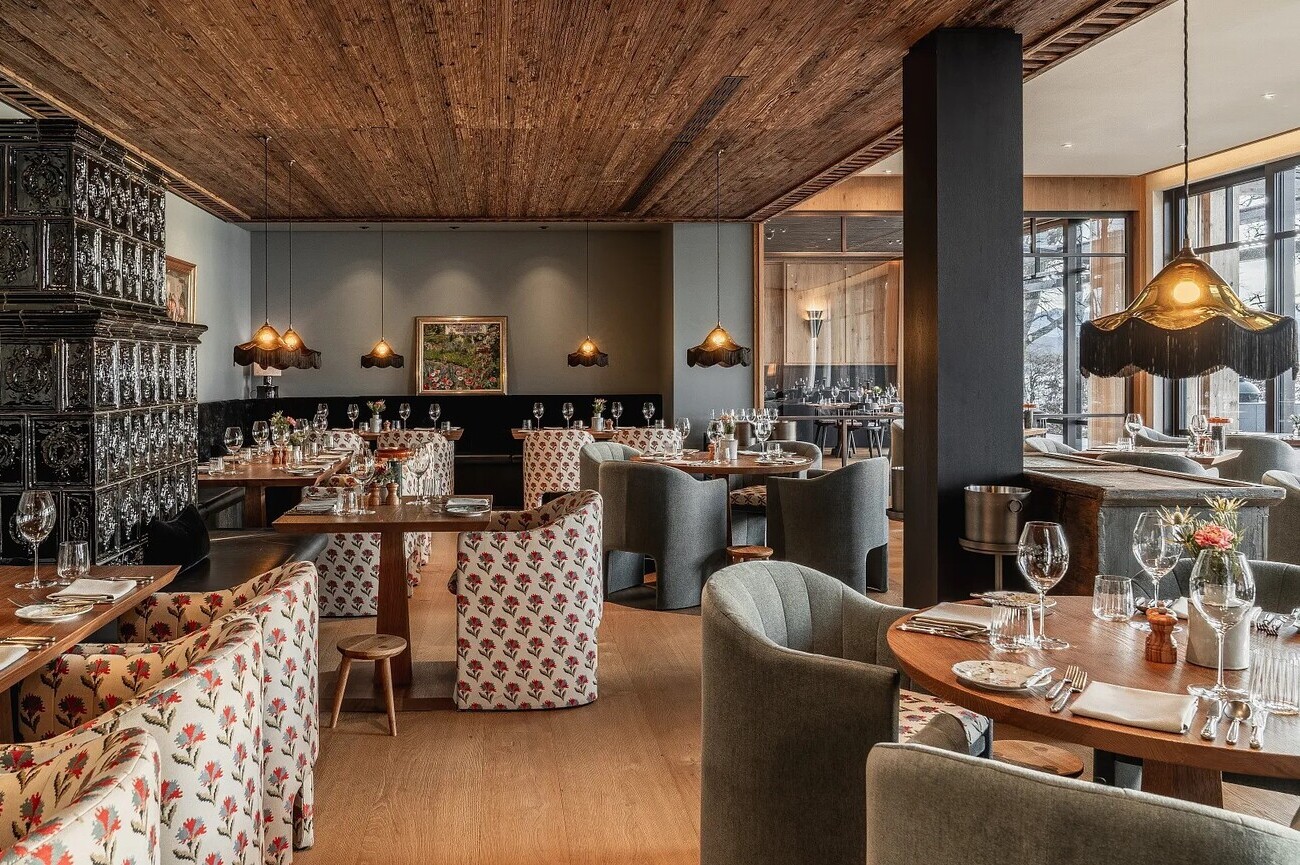
- Chiemgauhof Lakeside Retreat (5 stars): The Chiemgauhof – Lakeside Retreat feels like a bold new chapter for Lake Chiemsee hospitality. While many lakeside hotels lean heavily into traditional Bavarian design, this 5-star property in Übersee takes a refreshingly modern approach. Designed by renowned Milanese architect Matteo Thun, the hotel blends seamlessly into the natural landscape using wood, stone and large glass surfaces that frame uninterrupted views of the lake. Rooms are minimalist yet luxurious, filled with natural light and thoughtful details like oak flooring, velvet rugs and dark stone bathrooms. Some suites take things even further with private garden terraces, outdoor living spaces and open-air Japanese soaking tubs overlooking the water. And dining and social spaces follow the same philosophy. Guests can enjoy a sleek sushi bar, craft cocktail lounge and modern restaurant, making the entire property feel more like a design-forward retreat than a traditional resort.
- Hotel Gut Ising (4 stars): If the idea of a lakeside hotel mixed with a country estate sounds appealing, Hotel Gut Ising delivers exactly that and then some. Located in Chieming near Lake Chiemsee, this 4-star superior resort spreads across a remarkable 170-hectare estate, giving it the feeling of a small Bavarian countryside village rather than a single hotel. What truly sets Gut Ising apart is the sheer range of activities available right on the property. The estate offers equestrian facilities including polo fields and riding stables, a sailing school on Lake Chiemsee, a 9-hole golf course, tennis facilities and an expansive 2,500 square-meter spa dedicated to wellness and relaxation.
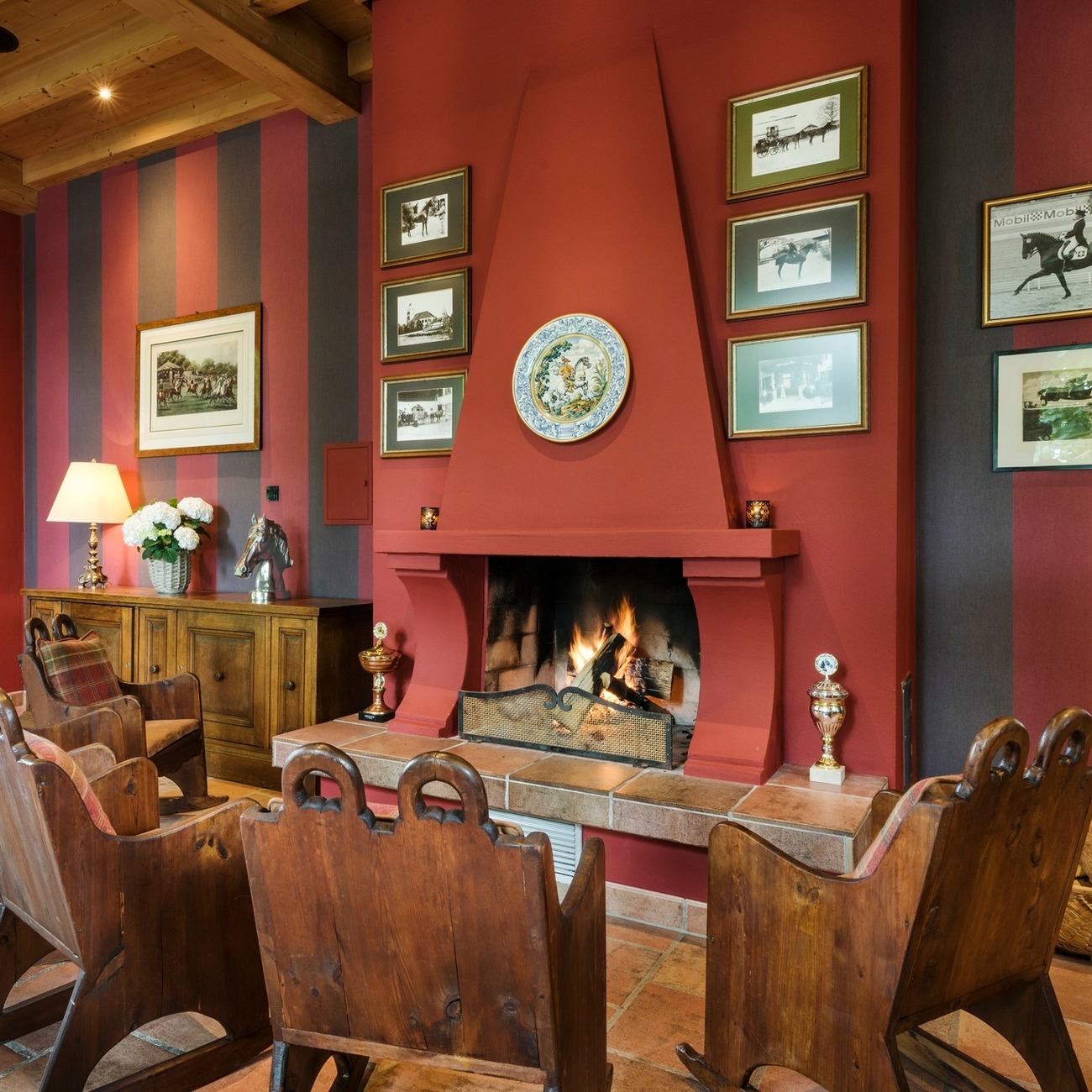
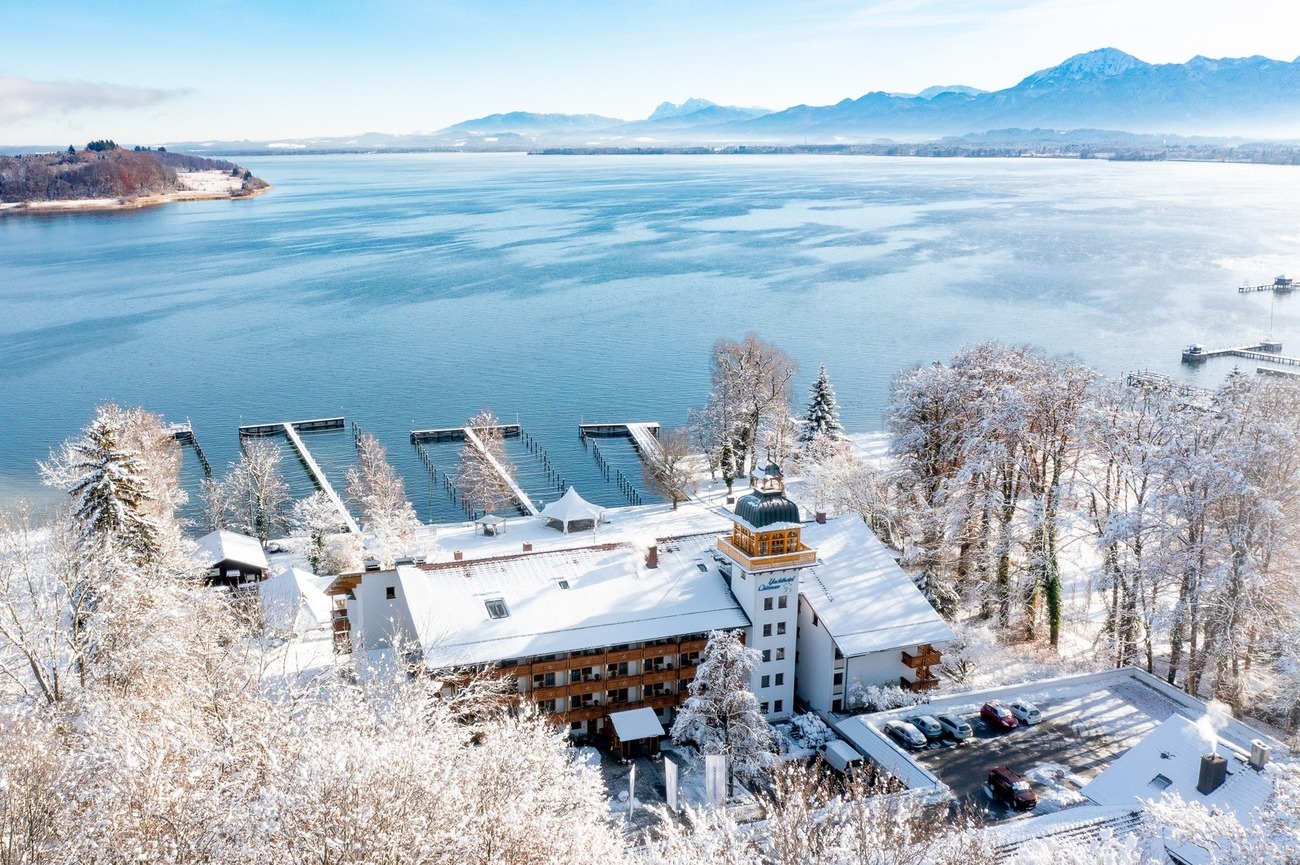
- Yachthotel Chiemsee (4 stars): Few hotels embrace the spirit of the “Bavarian Sea” quite like the Yachthotel Chiemsee. Located directly on the lakeshore in Prien am Chiemsee, this 4-star hotel combines wellness, sailing culture and lakeside elegance in one place. This property is particularly famous for its private marina with 132 yacht berths, making it a favorite for sailing enthusiasts exploring the lake. Guests can watch boats glide across the water while relaxing in the hotel’s beautifully landscaped gardens framed by the distant Alpine panorama.
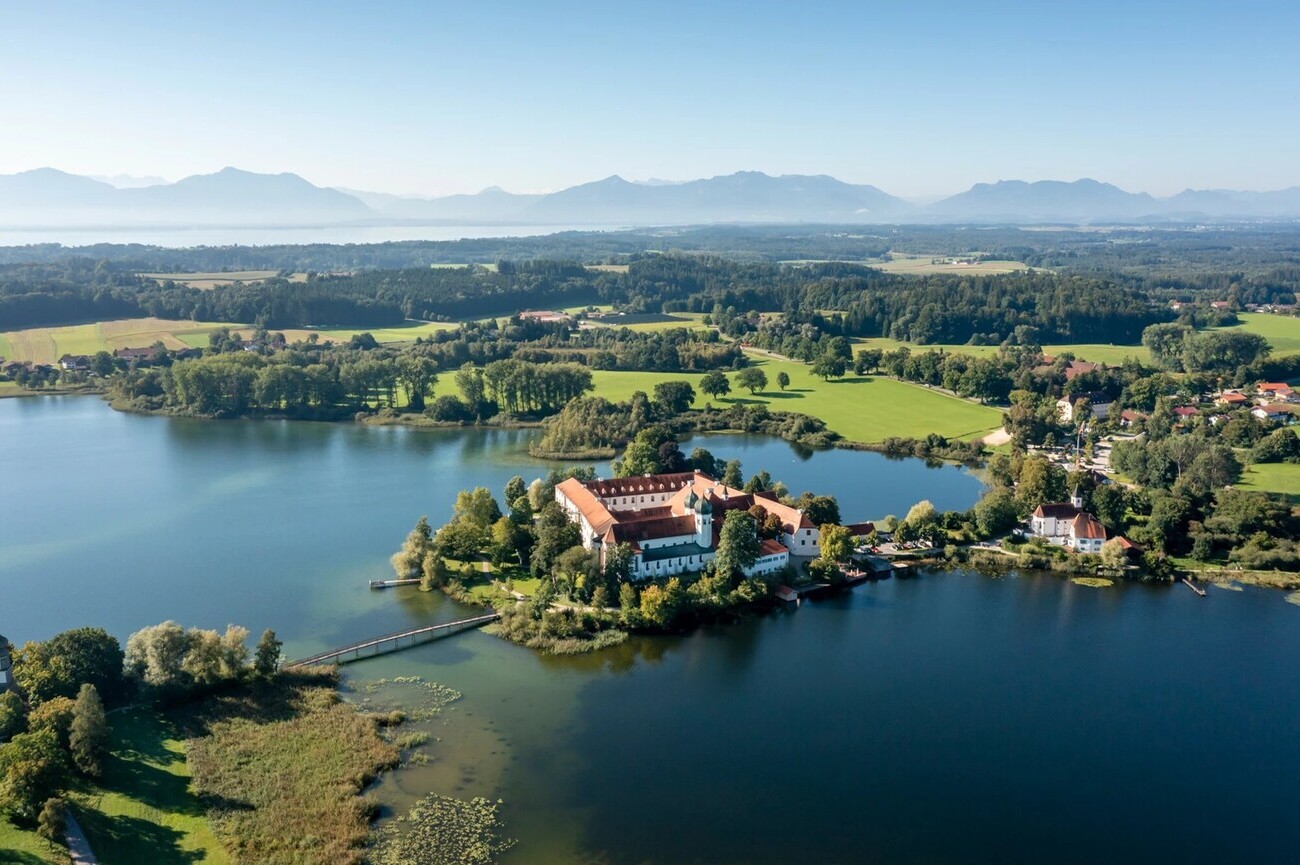
- Kloster Seeon Hotel (3 stars) is a unique lakeside retreat set within the historic former abbey of Kloster Seeon, surrounded by peaceful water and Bavarian countryside. The hotel combines monastic heritage with modern comfort, offering elegant rooms, serene views and a calm atmosphere that feels far removed from everyday life. Its setting within the abbey complex gives every stay a sense of history, while the quiet grounds, cultural character and scenic location make it especially appealing for travellers seeking relaxation, romance or a memorable stop near Lake Chiemsee.
- Zum Fischer am See (3 stars): Set right along the shores of the lake, Zum Fischer am See offers one of the most authentic lakeside stays in the Chiemsee region. This 3-star hotel in Prien am Chiemsee is known for its warm hospitality and spectacular views across Irschener Winkel Bay toward the Chiemgau Alps. Guests wake up to lake views, spend their days swimming or boating and often end the evening on the large summer terrace, where the hotel restaurant serves freshly prepared fish dishes sourced from the lake itself. And water lovers will especially appreciate the hotel’s sailboat jetties, which make it easy to head out on the water directly from the property.
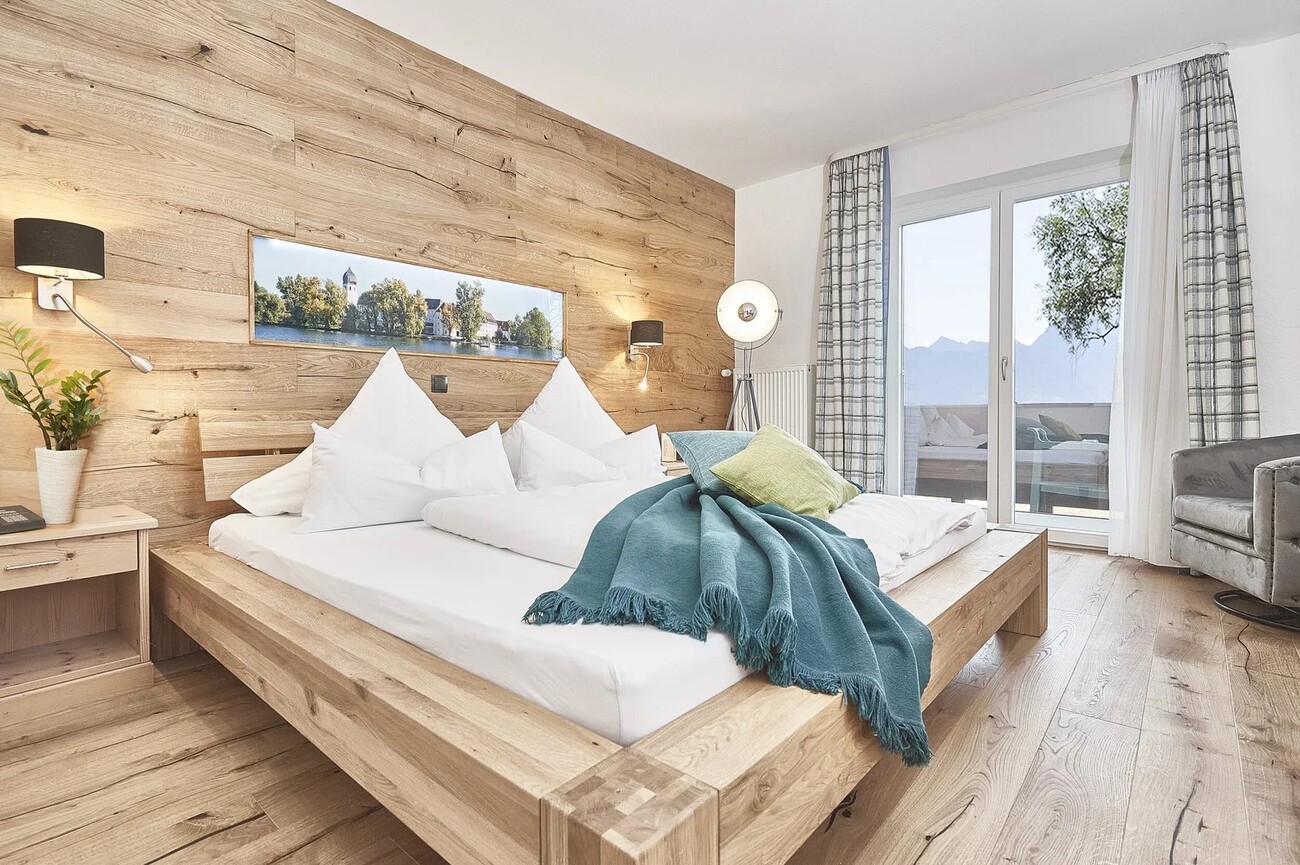
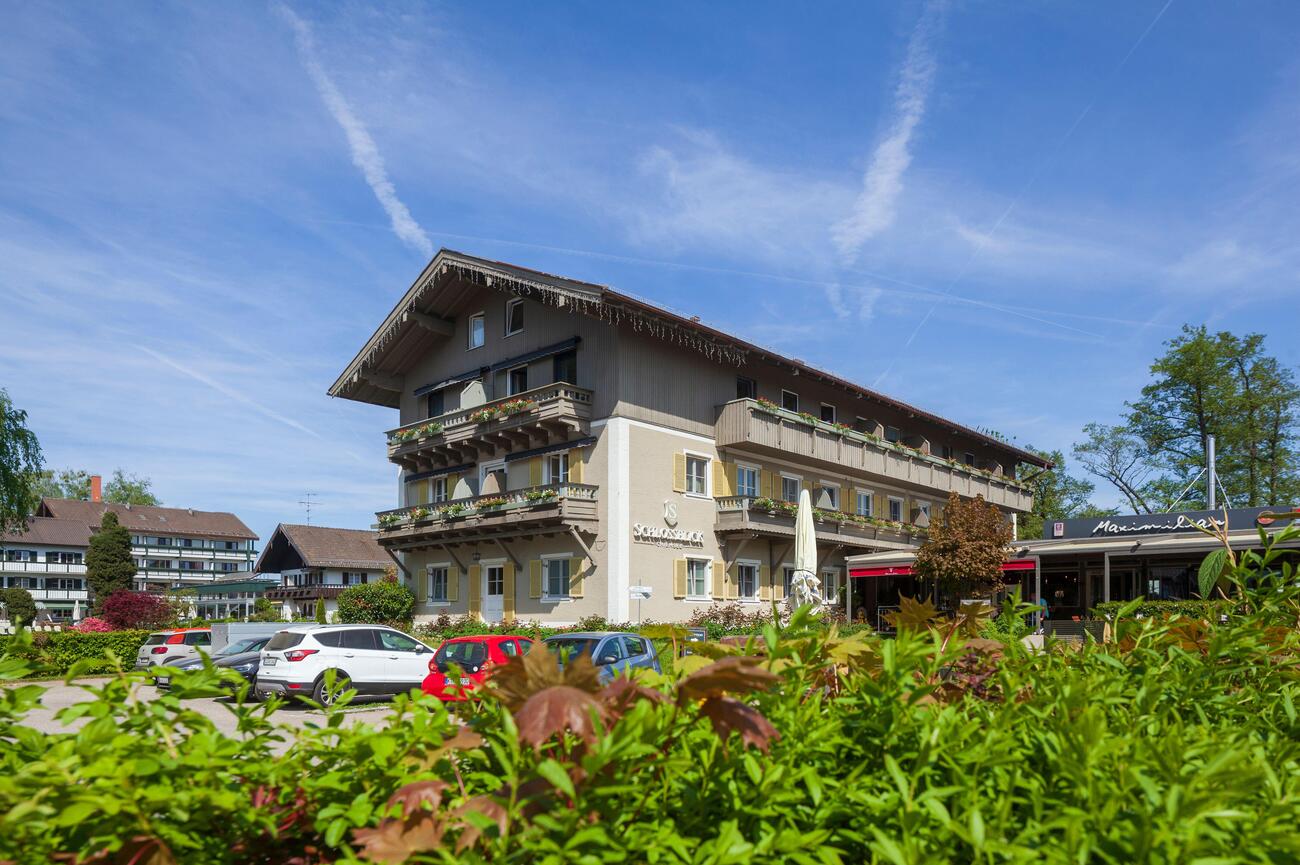
- Hotel Schlossblick Chiemsee (3 stars): For travelers who want lake views without unnecessary fuss, Hotel Schlossblick Chiemsee offers a charming stay right along the shoreline in Prien am Chiemsee. This 3-star superior hotel combines cozy alpine design with one of the most scenic locations in town. Rooms feature warm, natural materials and traditional Bavarian touches, creating a comfortable and inviting atmosphere. Many rooms include balconies overlooking the lake and mountains, offering guests a beautiful start to each morning.
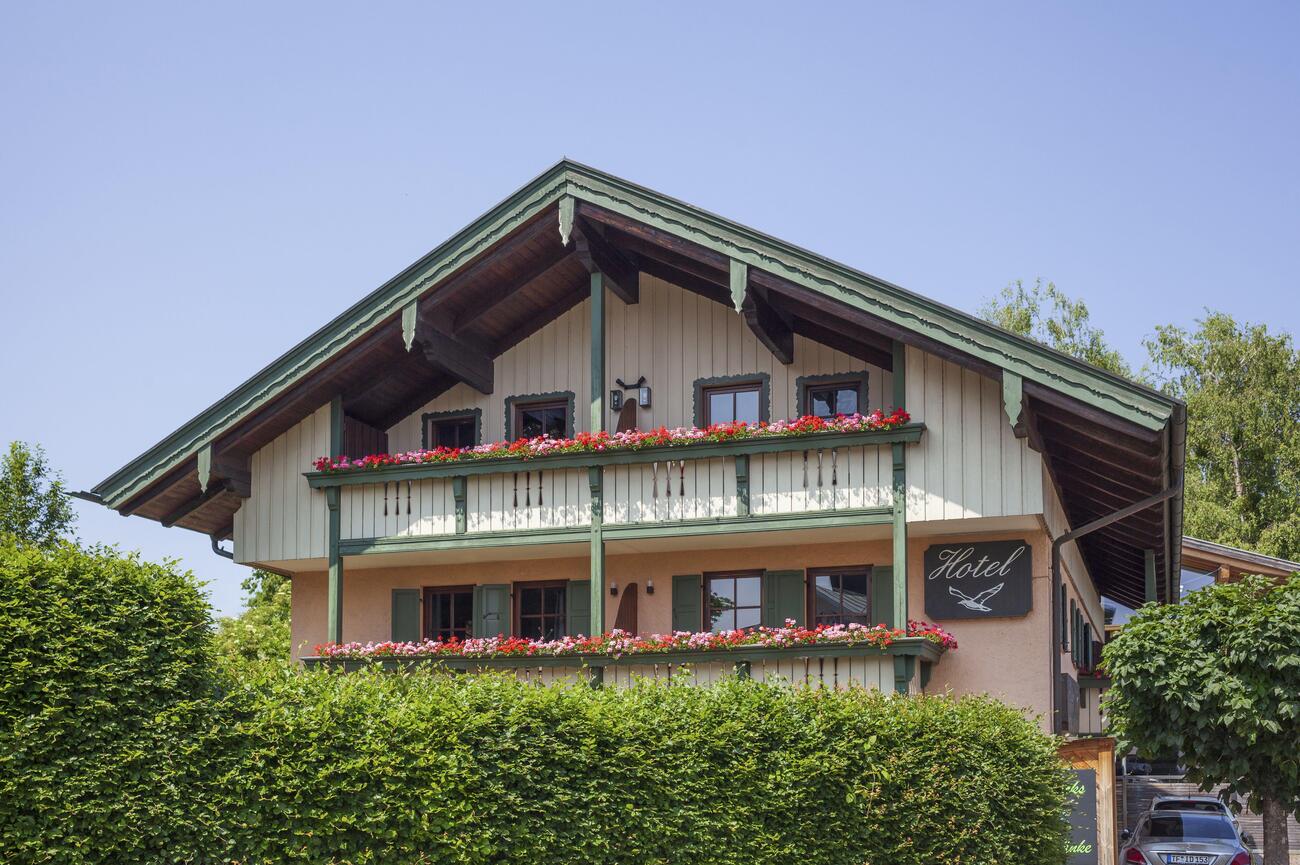
- Hotel Garni Möwe am See (3 stars): Few hotels sit as close to the water as Hotel Garni Möwe am See. Many rooms also feature balconies with views across the lake, making it easy to enjoy the scenery from the comfort of your room. And mornings here start with a generous breakfast buffet, often served on the terrace when the weather cooperates. The location also makes it easy to enjoy water sports like sailing and swimming, while the nearby Prien train station provides convenient connections for exploring the wider Chiemgau region.
Best
Time To Visit Lake Chiemsee
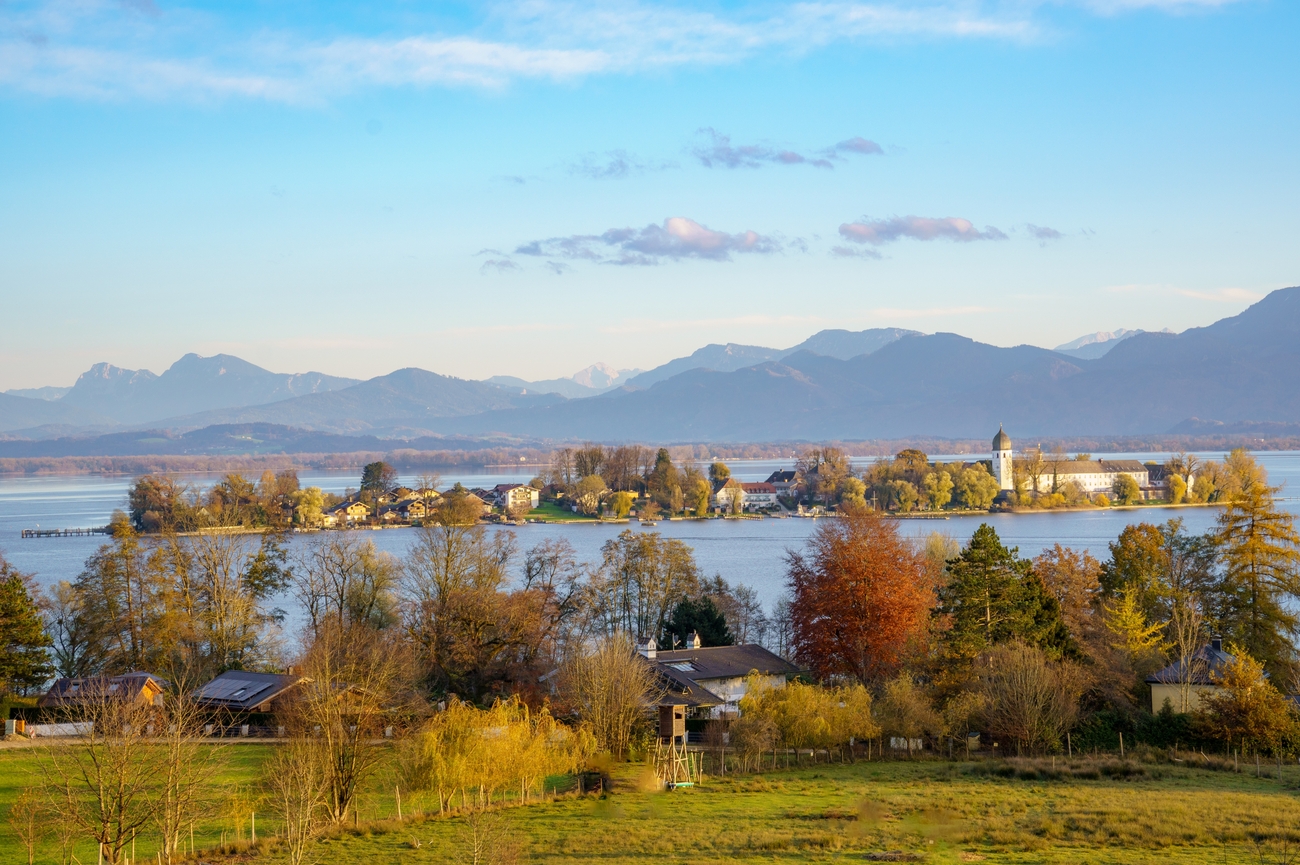
There’s a moment each year when Lake Chiemsee seems to take a quiet breath and glow a little brighter. Early autumn is that moment.
The light turns softer, the air carries a crisp freshness and the landscape begins shifting into warm shades of gold and amber. The Chiemgau Alps stand tall along the horizon, while the lake reflects the changing colors like a perfectly polished mirror. Everything feels calm, balanced, almost as if the region has found its natural rhythm again.
And then there are the castles. Herrenchiemsee Palace, King Ludwig II’s grand vision on its island, seems especially striking at this time of year. The gardens stretch out in symmetrical lines, fountains dance gently in the cool air and the palace facade glows under the mellow autumn sun. Walking through the grounds feels like stepping into a scene where something magical could happen at any moment.
And at night, restaurants and wine bars around the lake begin pouring beautiful German and Austrian wines, often celebrating the harvest season. A glass of wine by the water, with the mountains quietly watching in the distance, feels wonderfully simple and deeply satisfying.
Boat rides across the lake to Fraueninsel and Herreninsel become even more peaceful in early autumn. With fewer visitors and gentle sunlight stretching across the water, the islands feel calm and timeless. The lake moves slowly, the boats glide quietly and the day unfolds at its own unhurried pace.
Early autumn at Lake Chiemsee feels perfectly balanced. Royal castles, glowing landscapes and the quiet elegance of a region at its most beautiful. And standing by the water as the sun sets behind the Alps, it’s easy to feel like you’ve arrived exactly when you were meant to.
Christmas
Markets Around Lake Chiemsee
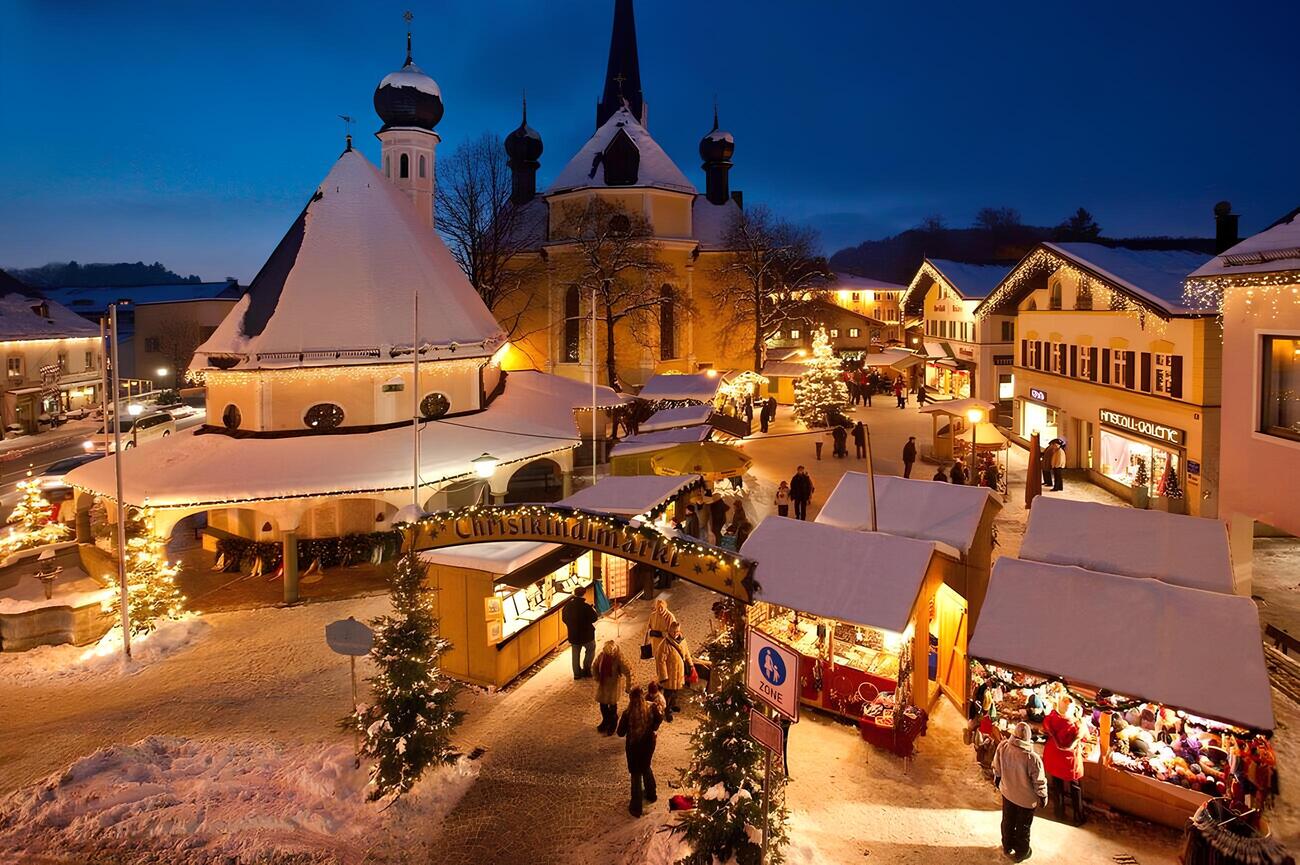
Lake Chiemsee in winter feels like everything unnecessary has been turned down. The noise, the rush, the need to be anywhere else. Everything is quieter and far more intentional. And this is where the Christmas markets come in. Not oversized, not overwhelming, just the right kind of festive. Here are the Christmas markets around Lake Chiemsee that make winter here feel just right.
- Fraueninsel Christmas Market: Some Christmas markets are nice. This one is unforgettable. Set on Fraueninsel in the middle of Lake Chiemsee, this market takes place during the first two weekends of Advent (late November to early December, Friday to Sunday). And getting there? You take a ferry across the lake. As you approach the island, you’ll notice the lights first. Then the outlines of historic buildings. Then the quiet buzz of people gathered together. The market itself winds through the island’s narrow paths and monastery courtyard. Wooden stalls offer handcrafted goods, local delicacies and warm drinks, while live music adds a soft, almost cinematic soundtrack to the experience.
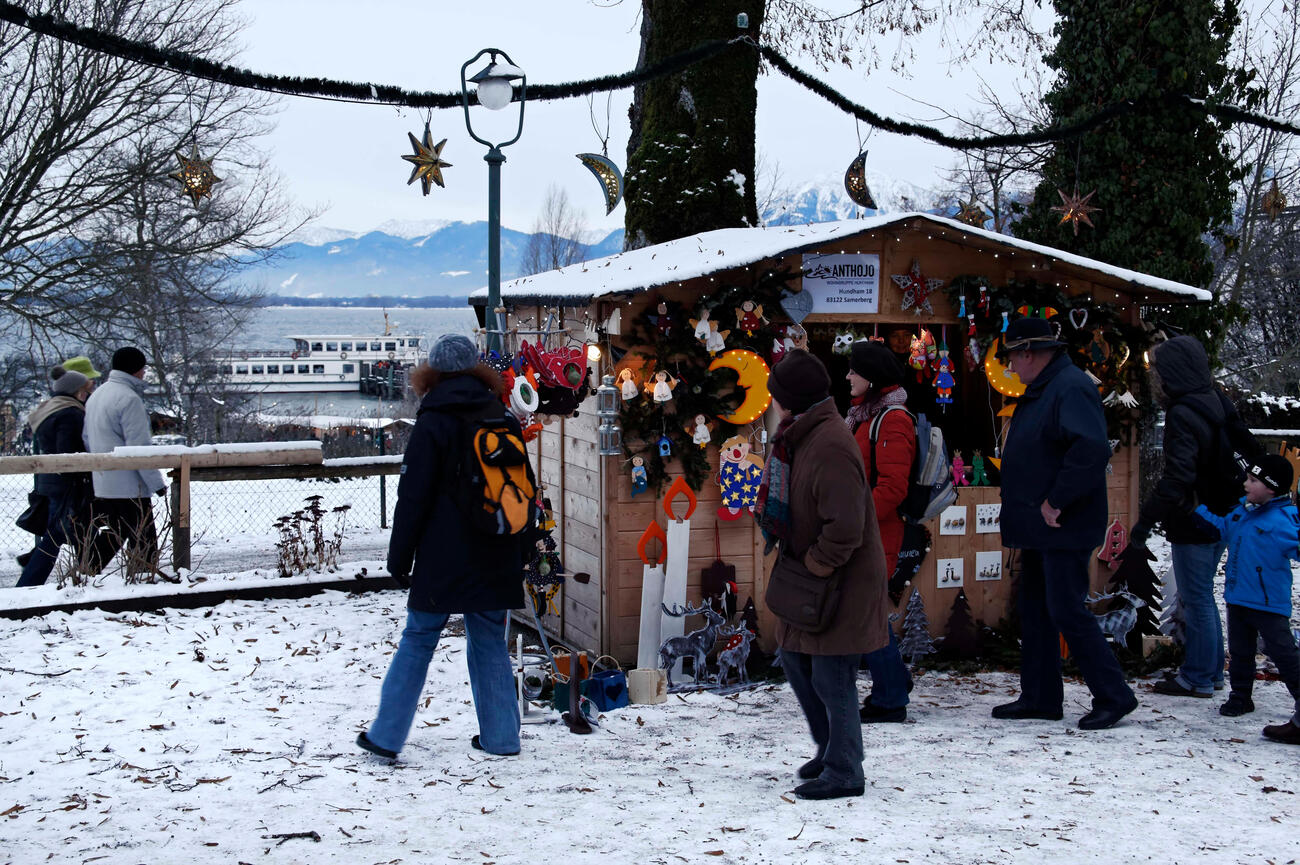
- Prien am Chiemsee Christmas Market: Located in the town center, this market runs throughout Advent (late November through December) and brings together everything you’d expect from a classic Bavarian Christmas market. Wooden stalls, festive decorations, seasonal treats and plenty of mulled wine. It’s the kind of place where you can ease into the evening. Maybe start with something warm to drink, wander through the stalls and let the atmosphere build naturally.
Festivals
Around Lake Chiemsee
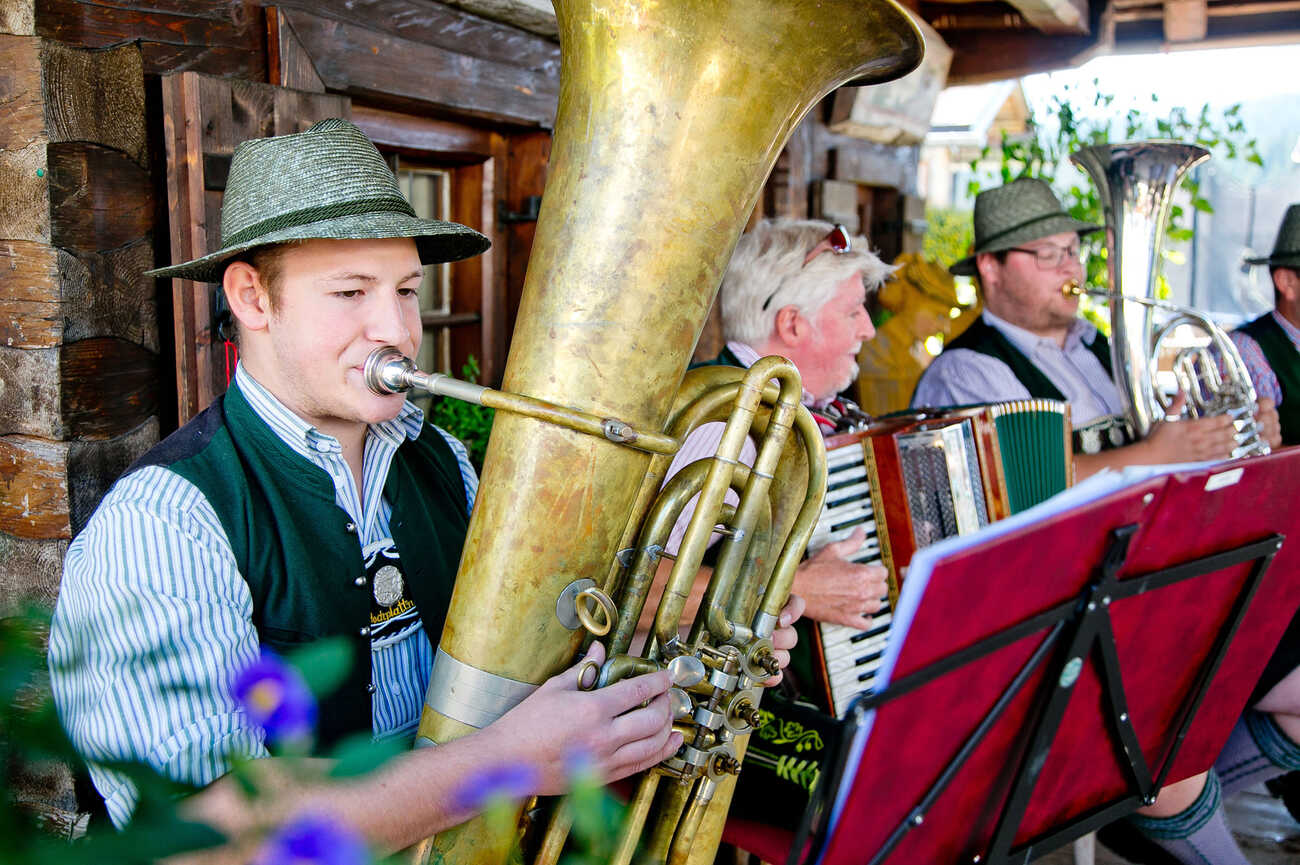
- Chiemgau Alm Festival: If the idea of celebrating on a mountain meadow sounds appealing, the Chiemgau Alm Festival might quickly become your favorite discovery. Held throughout July and August, this festival takes place across various alpine huts and meadows in the Chiemgau mountains surrounding Lake Chiemsee. Each weekend, different mountain pastures host live traditional music, regional dishes and lively gatherings. You’ll quickly notice how easy it is to settle into the rhythm of it all. A cool mountain breeze, a plate of alpine specialties and panoramic views of the Alps.
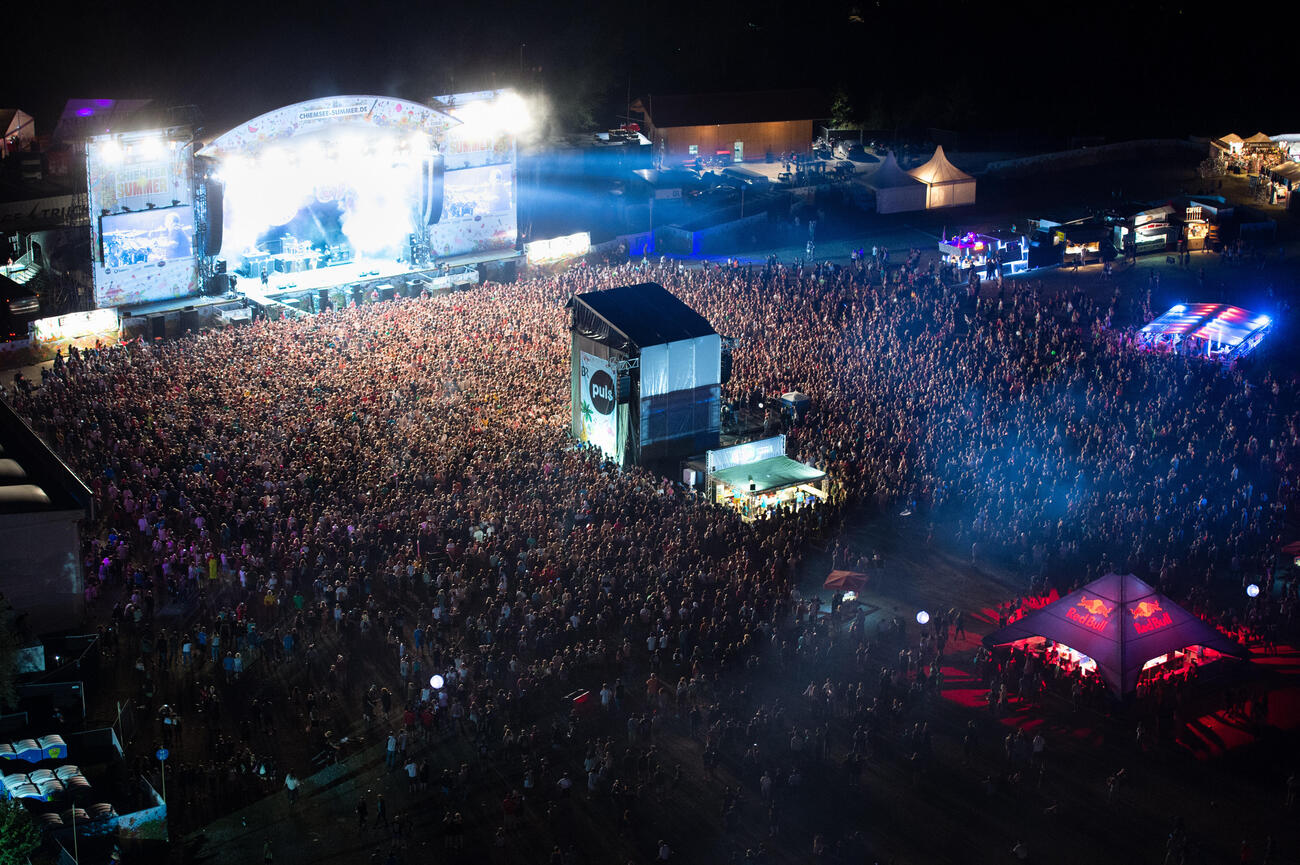
- Chiemsee Reggae Summer: The lake switches from alpine folk to Caribbean rhythms when Chiemsee Reggae Summer arrives each August in Übersee. This iconic music festival usually takes place over three days in late August, attracting thousands of visitors from across Europe. The festival grounds sit near the lake, where several stages host reggae, dancehall and hip-hop artists throughout the weekend. If you find yourself standing in the crowd while the Alps rise behind the stage and the lake sits just a short walk away, it’s hard not to smile.
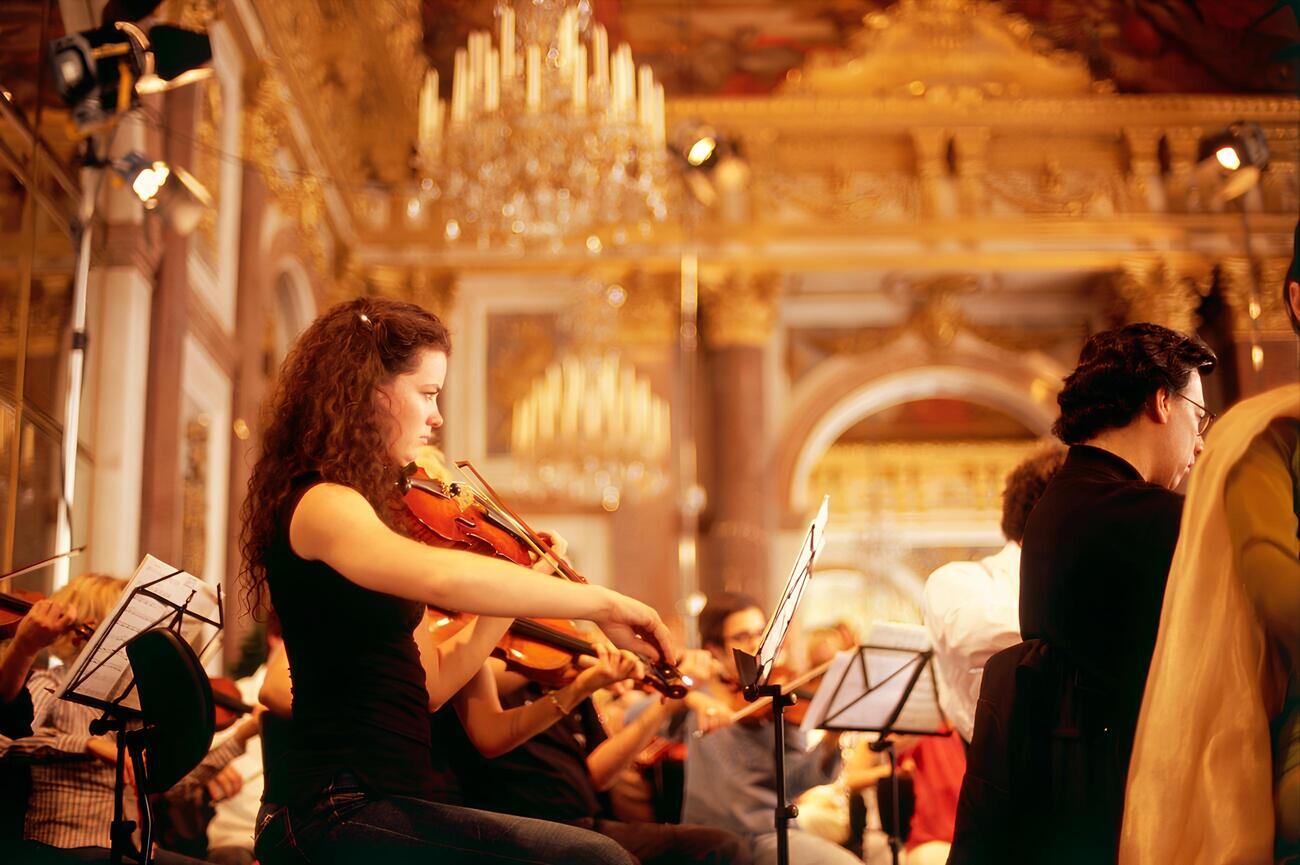
- Herrenchiemsee Festival: Few music festivals in the world can match the elegance of the Herrenchiemsee Festival. Concerts are performed in the spectacular Hall of Mirrors, where orchestras and world-renowned musicians bring classical masterpieces to life. The festival runs for several weeks throughout July, attracting music lovers from across Europe. To attend a concert, you first cross Lake Chiemsee by ferry, then walk through the palace gardens before entering the grand hall. By the time the orchestra begins to play, the entire evening already feels unforgettable.
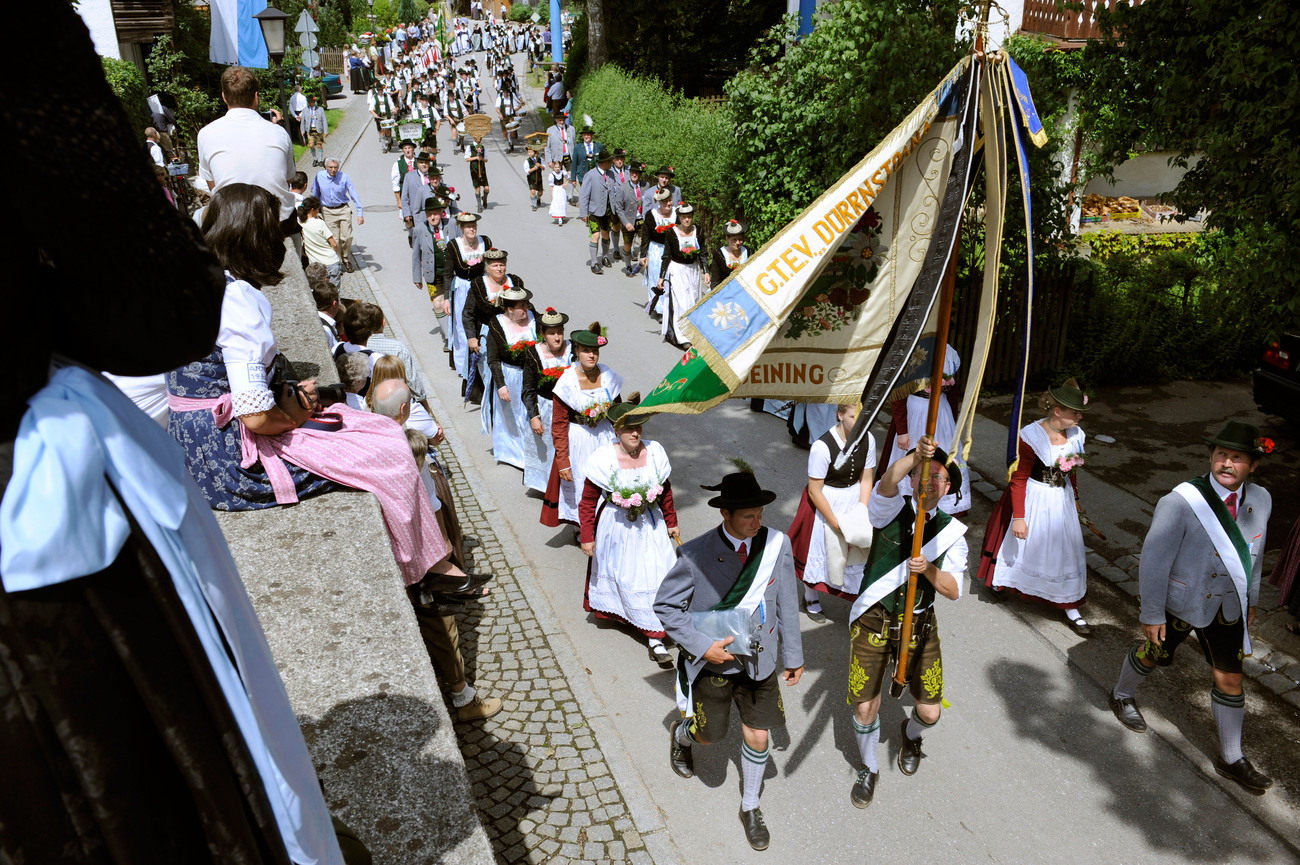
- Gautrachtenfest: To truly understand Bavarian culture, Gautrachtenfest is the festival you’ll want to experience. This traditional event takes place each summer between June and July, rotating between towns across the Chiemgau region near Lake Chiemsee. Hundreds of participants gather wearing beautifully crafted dirndls and lederhosen, marching through the streets accompanied by brass bands and folk dancers.
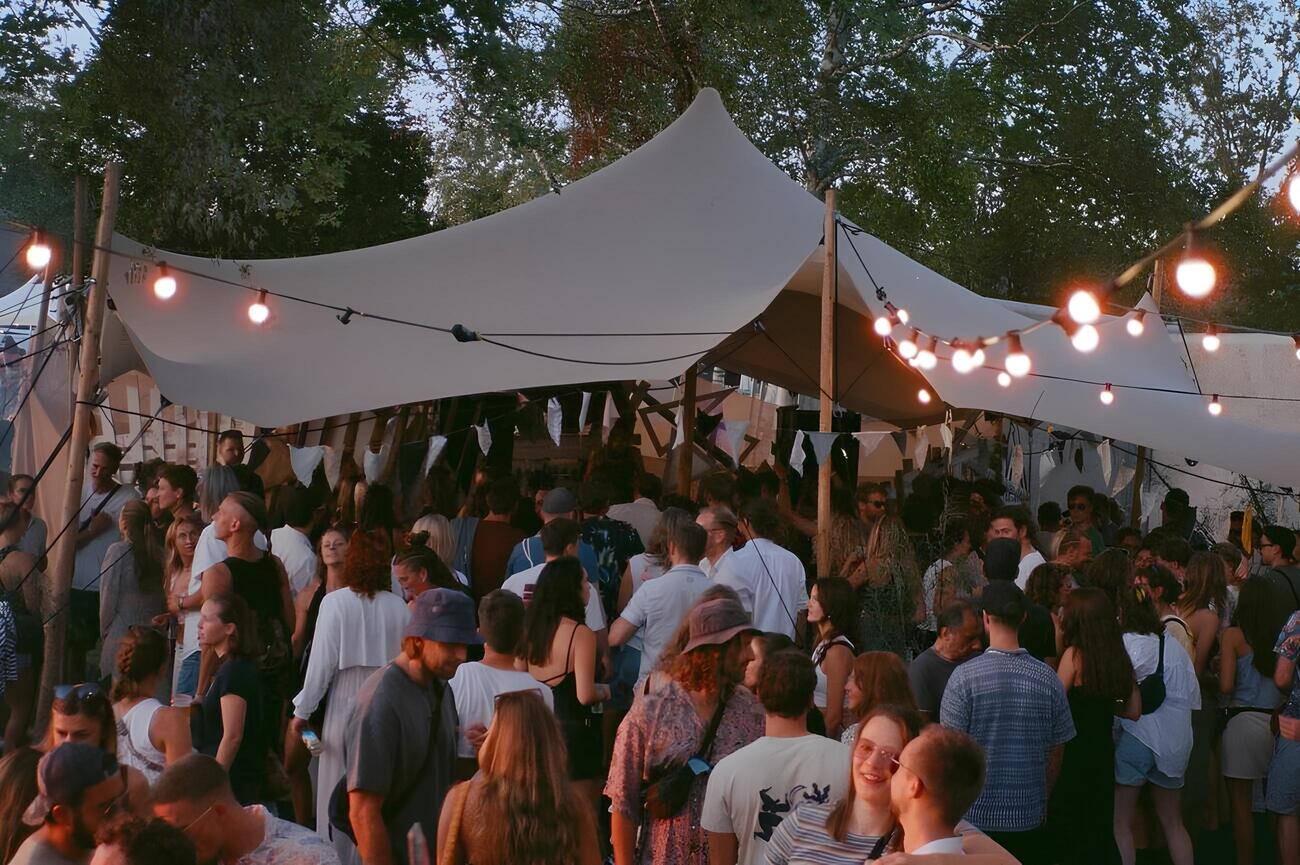
- Moments Festival: For a more modern festival vibe, Moments Festival brings electronic music and contemporary energy to the Chiemsee region every June. The event usually takes place over several days in early summer, attracting international DJs and a younger crowd of music lovers. Imagine standing beneath open skies while the mountains frame the horizon and the music builds into the night. Even if electronic music isn’t usually your thing, the atmosphere can be surprisingly captivating.
Lake Chiemsee may look effortless, but the best experiences here are rarely accidental. Private boat crossings at the right time of day, seamless island-hopping, carefully selected lakeside hotels and reservations at the region’s most sought-after restaurants all require thoughtful planning. Add in nearby alpine escapes, cultural events and perfectly timed day trips, and the difference between a good trip and an exceptional one becomes clear.
At Revigorate, we design journeys that go beyond the obvious. Whether it’s combining Lake Chiemsee with Salzburg, Berchtesgaden or Kitzbühel, arranging private experiences or simply ensuring every detail flows effortlessly, we tailor each itinerary to match your pace and preferences.
If you’re considering Lake Chiemsee as part of your next European journey, contact us to begin planning a bespoke itinerary designed entirely around you.


Let us know what you love, where you want to go, and we’ll design a one-of-a-kind adventure you’ll never forget.
Get in touch
Miriam
Travel Specialist

Romina
Travel Specialist

Laura
Travel Specialist
Our offices:



Revigorate, Iberian Escapes and Algarve Lifestyle are the registered brand names of APCS Lda . We are a fully authorised travel agency licensed by Turismo de Portugal RNAVT/6867.
In the event of a dispute, the consumer may refer to: RAL - Centros de Arbitragem
Avª. 5 de Outubro, nº. 55, R/C Dtº. 8000-075 Faro, Portugal | Tel: +351 289 823 135 *
* national landline call
E-mail: info@consumoalgarve.pt| www.consumidoronline.pt | Mon to Fri: 9:00 - 13:00 / 14:00 - 17:00