Things to Do in Xi’an: 3-Day Itinerary
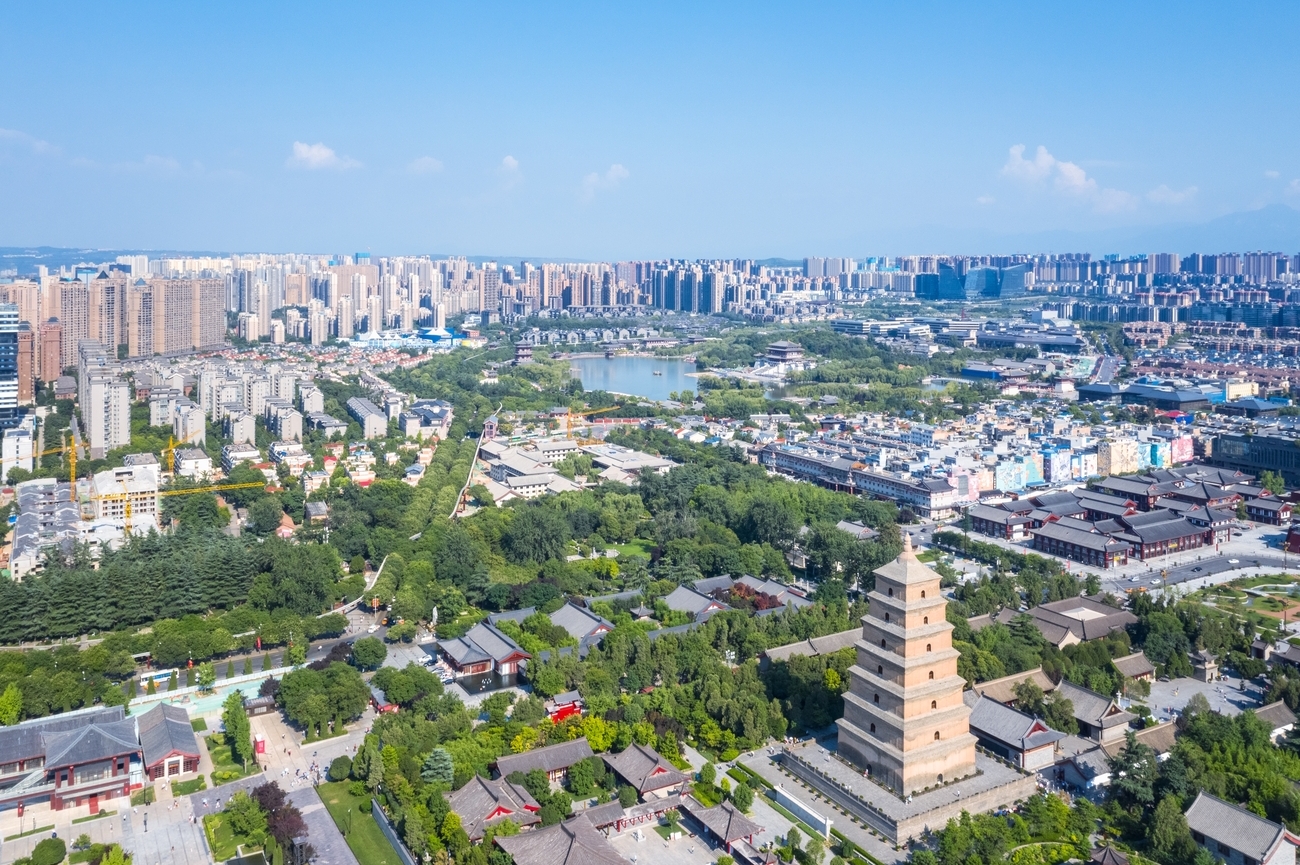
Xi’an welcomes you with a sense of confidence. Not the stillness of a city stuck in time, but the calm of a place that has already lived many lives, imperial capital, frontier outpost, Silk Road gateway, and no longer needs to prove itself. Here, history isn’t locked behind glass. You feel it in everyday moments, incense drifting through temple courtyards, the scent of cumin and chilli rising from street kitchens, modern traffic circling a bell tower that once dictated the rhythm of the city.
Xi’an’s true luxury isn’t spectacle, it’s access. Access to layers of civilisation you can still walk through, taste, and touch, at a pace that lets the city reveal itself slowly. Xi’an is one of the few cities where we design itineraries around time of day, not just sights, because access and atmosphere can shift dramatically from morning to night.
Day 1

Morning: Emperor Qinshihuang’s Mausoleum Site Museum
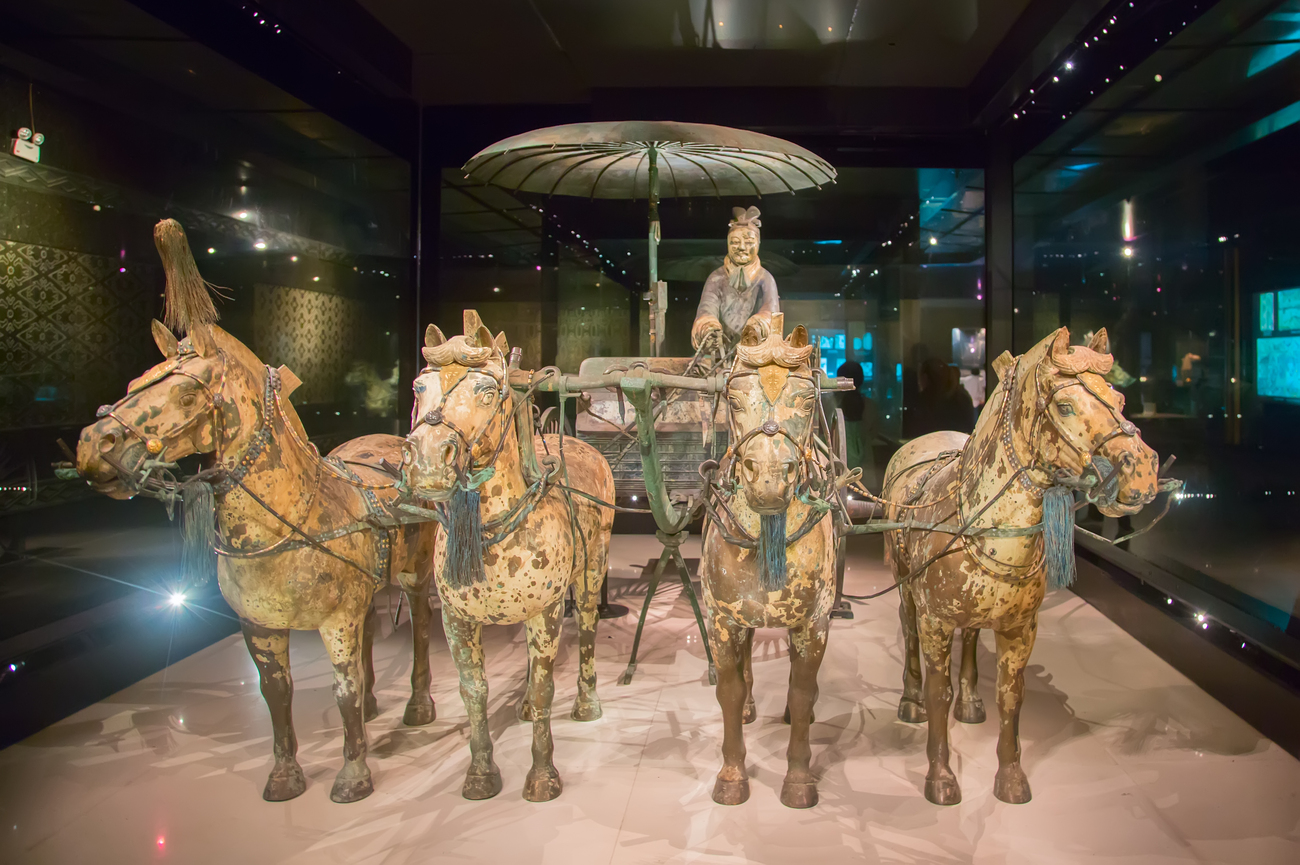
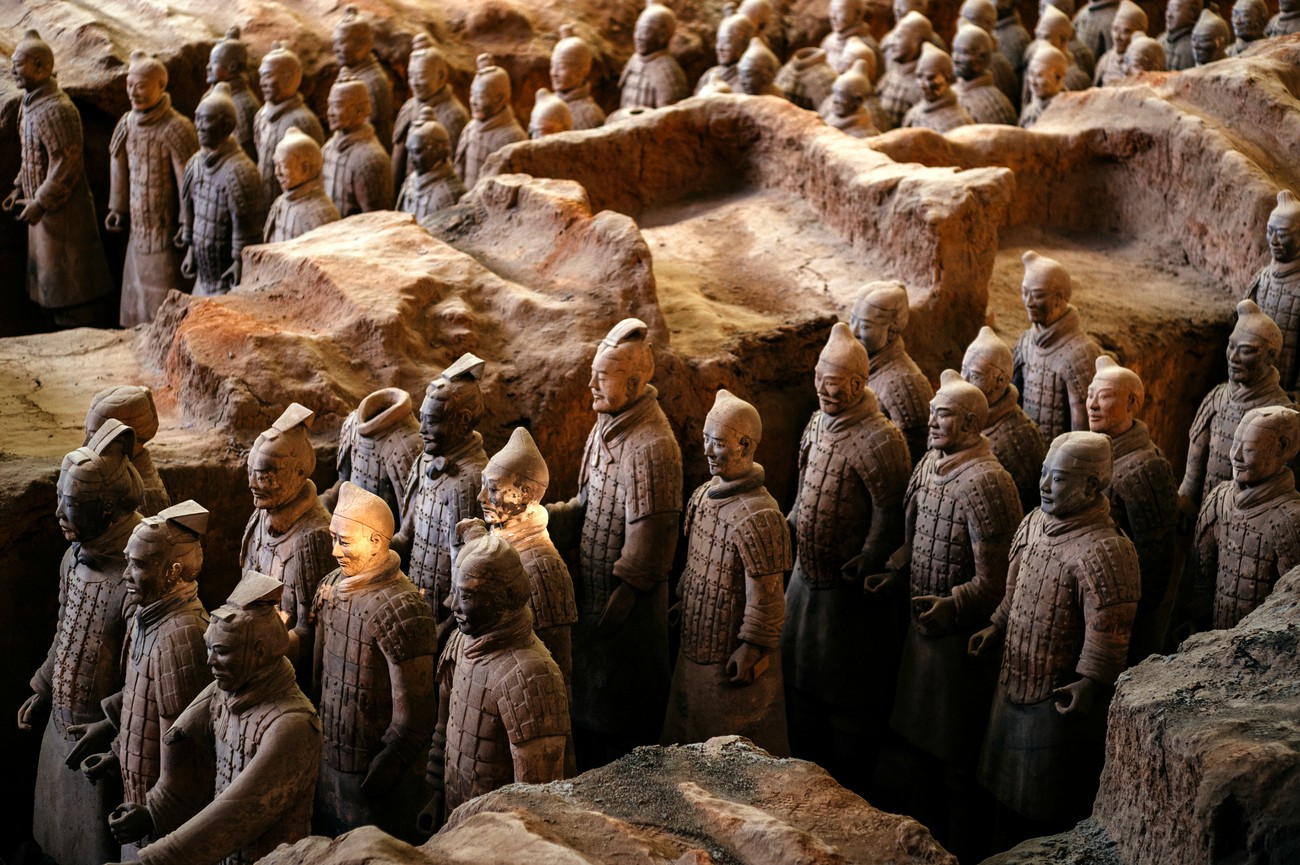
Let’s start strong and begin your Xi’an journey at one of China’s most extraordinary landmarks, a UNESCO World Heritage site and home to the world famous Terracotta Army. This massive archaeological park and museum complex was built to ensure that Qin Shi Huang, the first emperor of a unified China, would continue to rule even after death. For nearly his entire 36 year reign, the emperor poured unimaginable resources into building this underground replica of the imperial capital of Chang’an (today, Xi’an), not to boast power, but he truly believed he would inhabit this space in the afterlife.
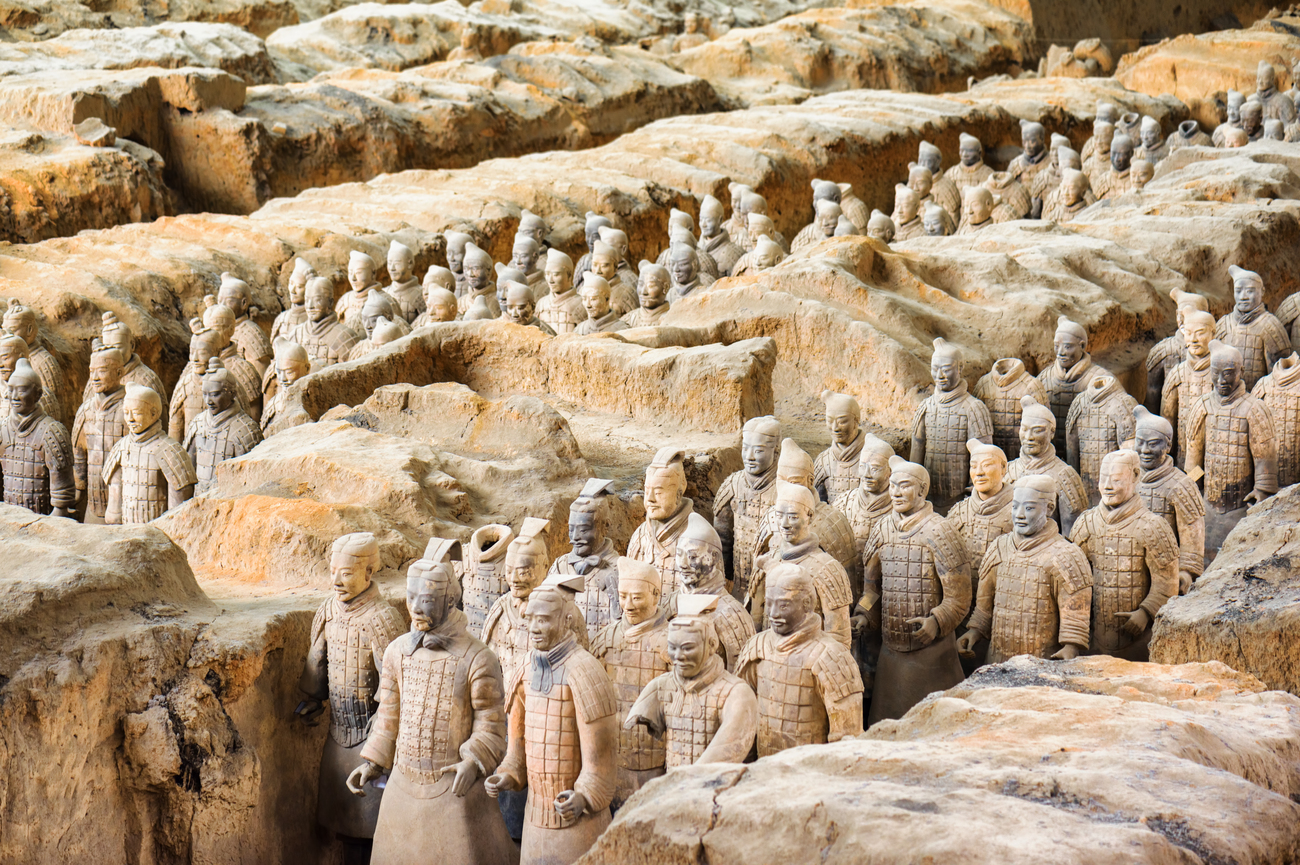
As you walk through the site, you’re not just visiting a museum, you’re stepping into what historians describe as a 2,200 year old “spirit city.” The site remained hidden until 1974, when local farmers accidentally unearthed a terracotta head while digging a well. What followed next became one of the greatest archaeological finds in history. If you look closely, you’ll notice that no two faces of the soldiers are alike, which means each soldier was modeled after real individuals in the Emperor's army.
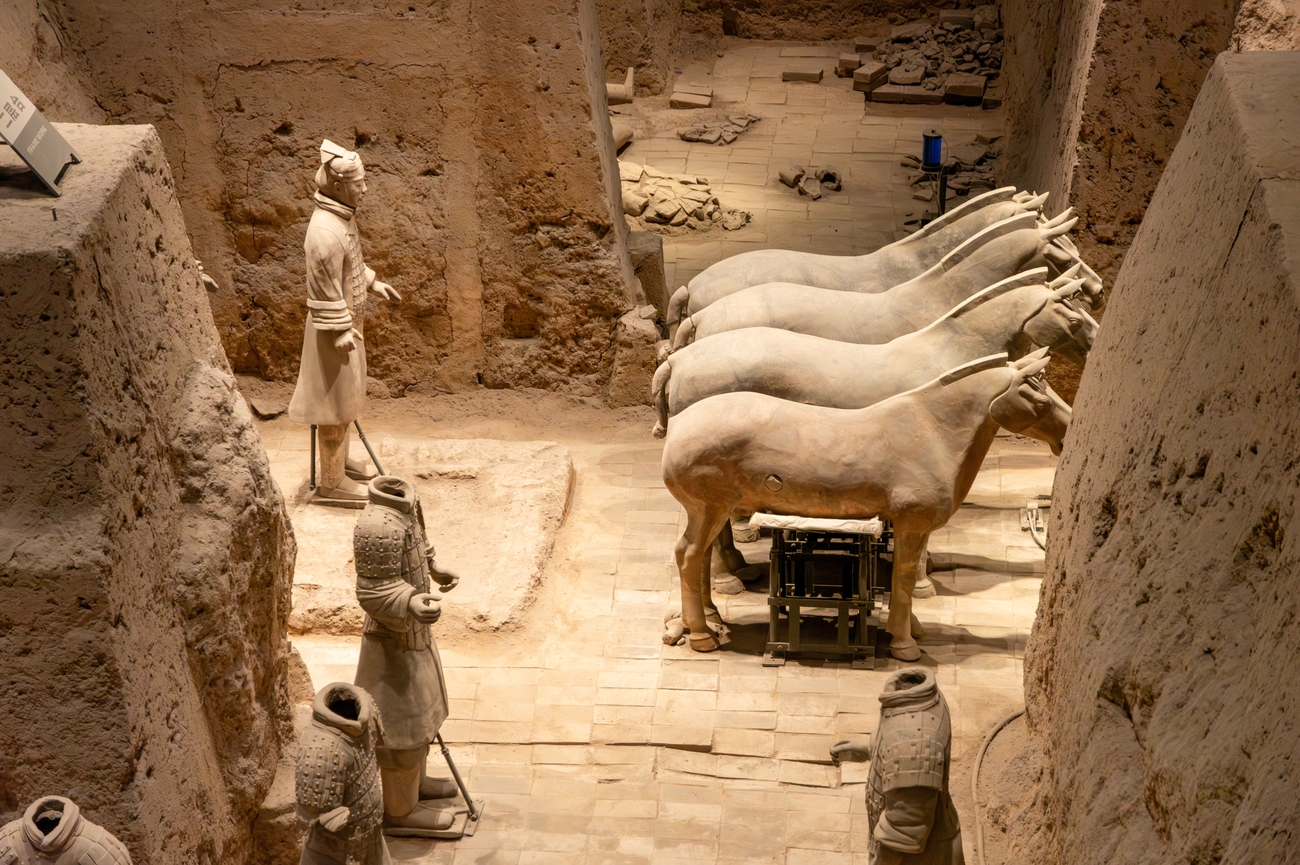
As fascinating as it is to see the Terracotta Army, unfortunately it’s not something we can say the same for Emperor Qin Shi Huang, as his actual burial mound remains unopened. Ancient records describe it having a vast underground palace, with flowing mercury rivers, booby traps, and cosmic map. Recent soil tests have confirmed high levels of mercury in the mound, reinforcing the mystery. Archaeologists believe that opening it now could cause irreversible damage, since when the Terracotta Warriors were first unearthed, their vibrant paint disintegrated within minutes of exposure to air, showing just how fragile these ancient relics are. As current technology cannot yet safely preserve the 2,200-year-old organic materials, the secrets of the emperor’s final resting place remain sealed and protected.
The complex is divided into two main areas: the excavation pits, where you can see the Terracotta Army preserved in their original formations for over two millennia, and Lishan Garden, a peaceful parkland that hides the emperor’s burial mound beneath its greenery. Time your visit for before the complex opens at 8:30 AM or after 3:00 PM, before it closes at 5:00 PM, to avoid the heaviest tour-group crowds.
Afternoon: Huaqing
Palace
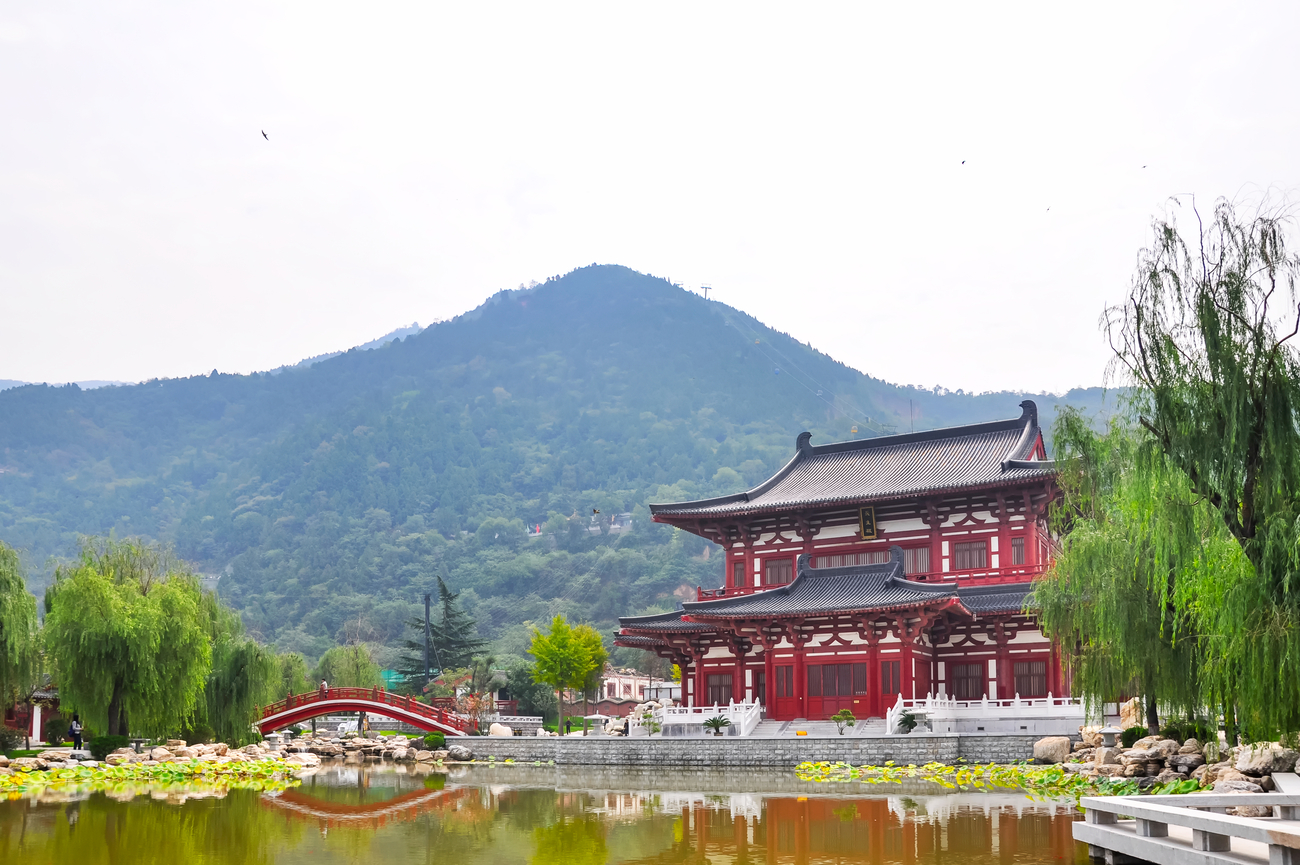
After a morning immersed in ancient history at the Terracotta Army, continue your day at Huaqing Palace, a former imperial garden retreat located at the foot of Mount Lishan. For over 3,000 years, Chinese emperors came here to escape the winter cold, for its natural hot springs that flow at a constant 43°C (109°F).
As you wander the grounds, you can see the ruins of the Ancient Imperial Baths, including the delicate Haitang Bath built for Yang Guifei (the emperor’s consort) and the elegant Lotus Bath reserved for the emperor. Each pool offers a glimpse into palace life, where bathing was a luxury. Inside the grounds, you can also find the Five Room Hall, where Chiang Kai-shek stayed.
In the evening, don’t miss The Song of Everlasting Sorrow, a spectacular outdoor performance staged across the palace grounds and Mount Lishan. With dramatic lighting, water, fire effects, and live performers, the show retells the tragic love story of Emperor Xuanzong and his consort, Yang Guifei (one of the "Four Beauties" of ancient China).
Day 1 - Xi’an Tour Map
Day 2
Morning: Big Wild Goose Pagoda
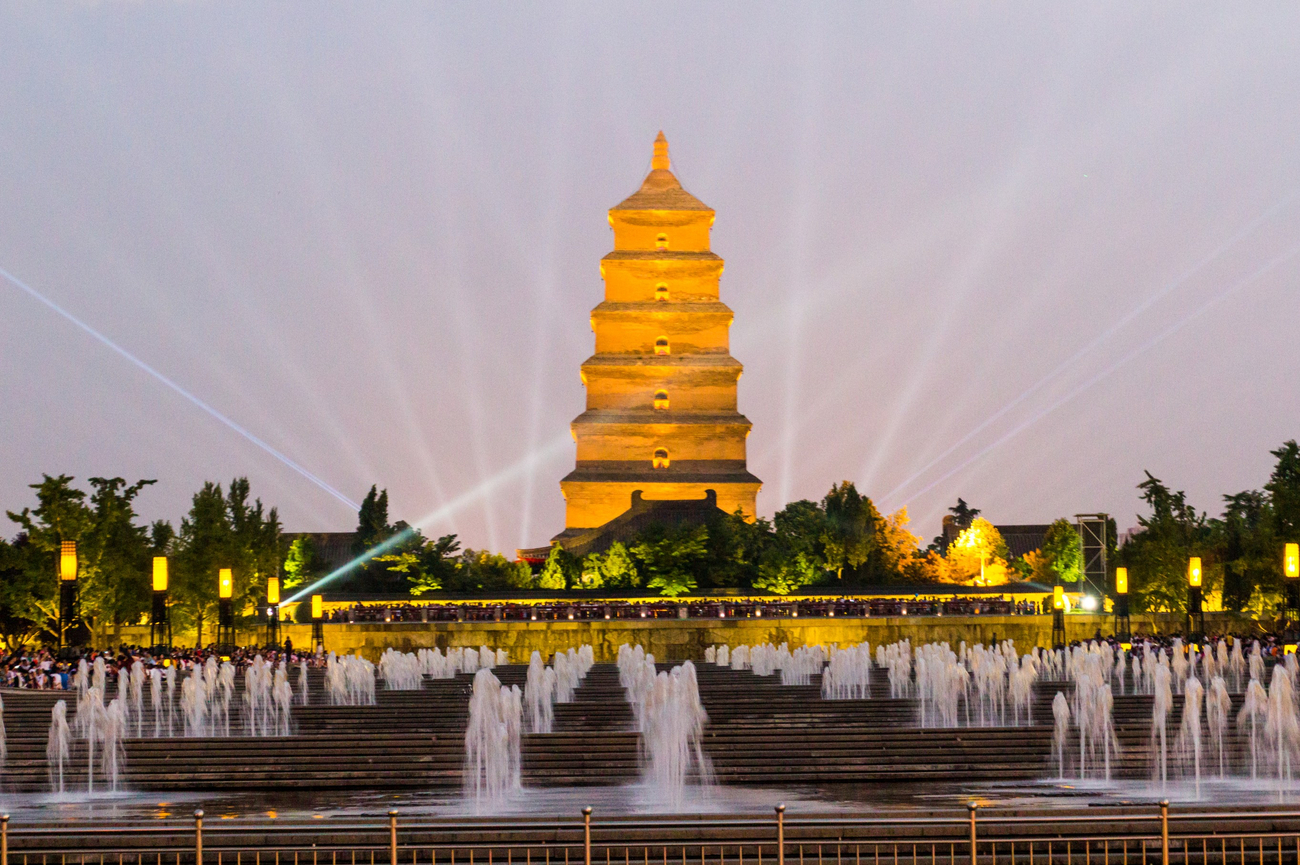
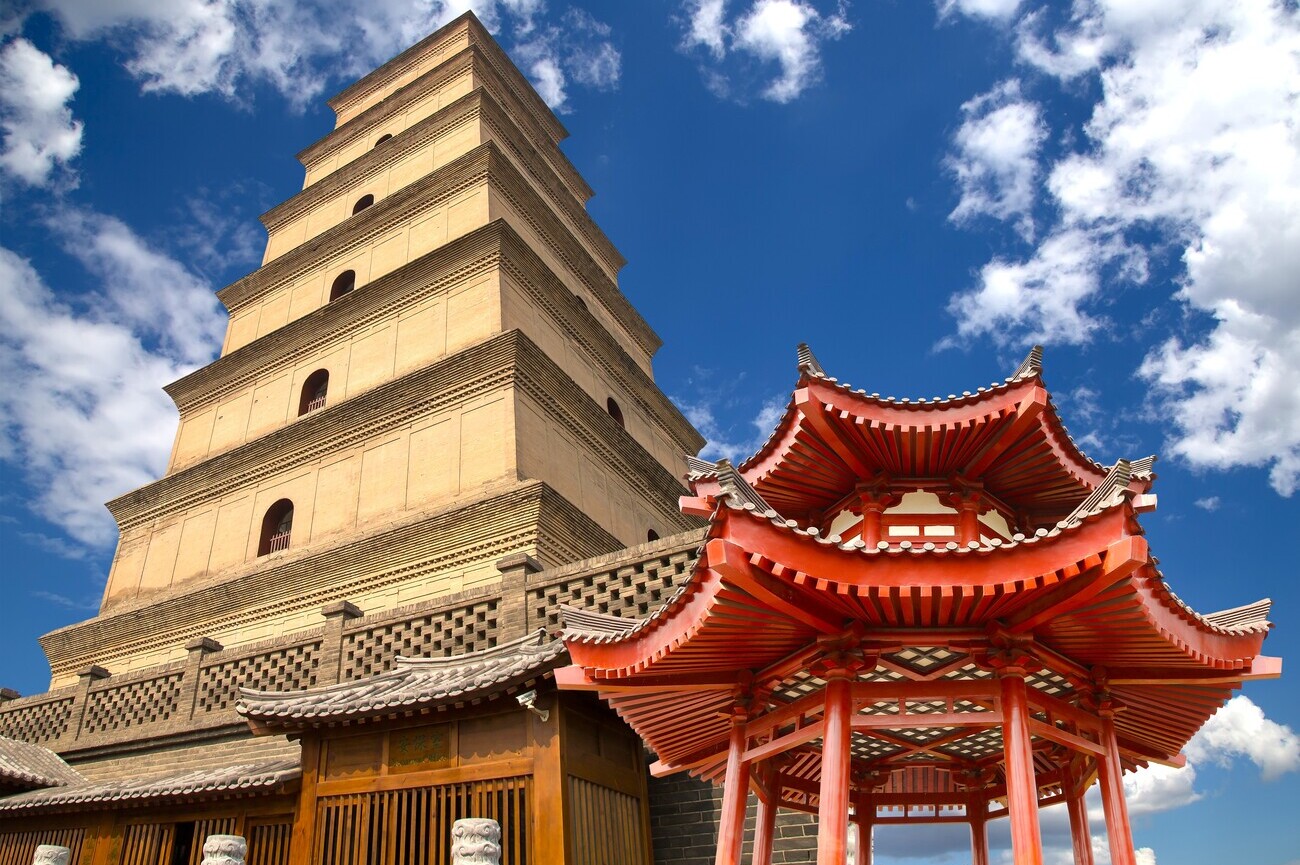
Start your morning at the Big Wild Goose Pagoda, one of Xi’an’s most important Buddhist monasteries and a lasting symbol of the city’s Tang Dynasty heritage. Built in 652 AD, the pagoda was created to safeguard sacred Buddhist scriptures and figurines brought back from India by the legendary monk Xuanzang, whose journey later inspired the classic tale, Journey to the West. Inside the pagoda, you’ll find a wooden staircase that leads to panoramic views of the modern city layout. Below, explore Da Ci’en Temple, where you can wander through grand halls, admire intricate murals and golden statues, and observe monks during prayer.
Shaanxi History Museum
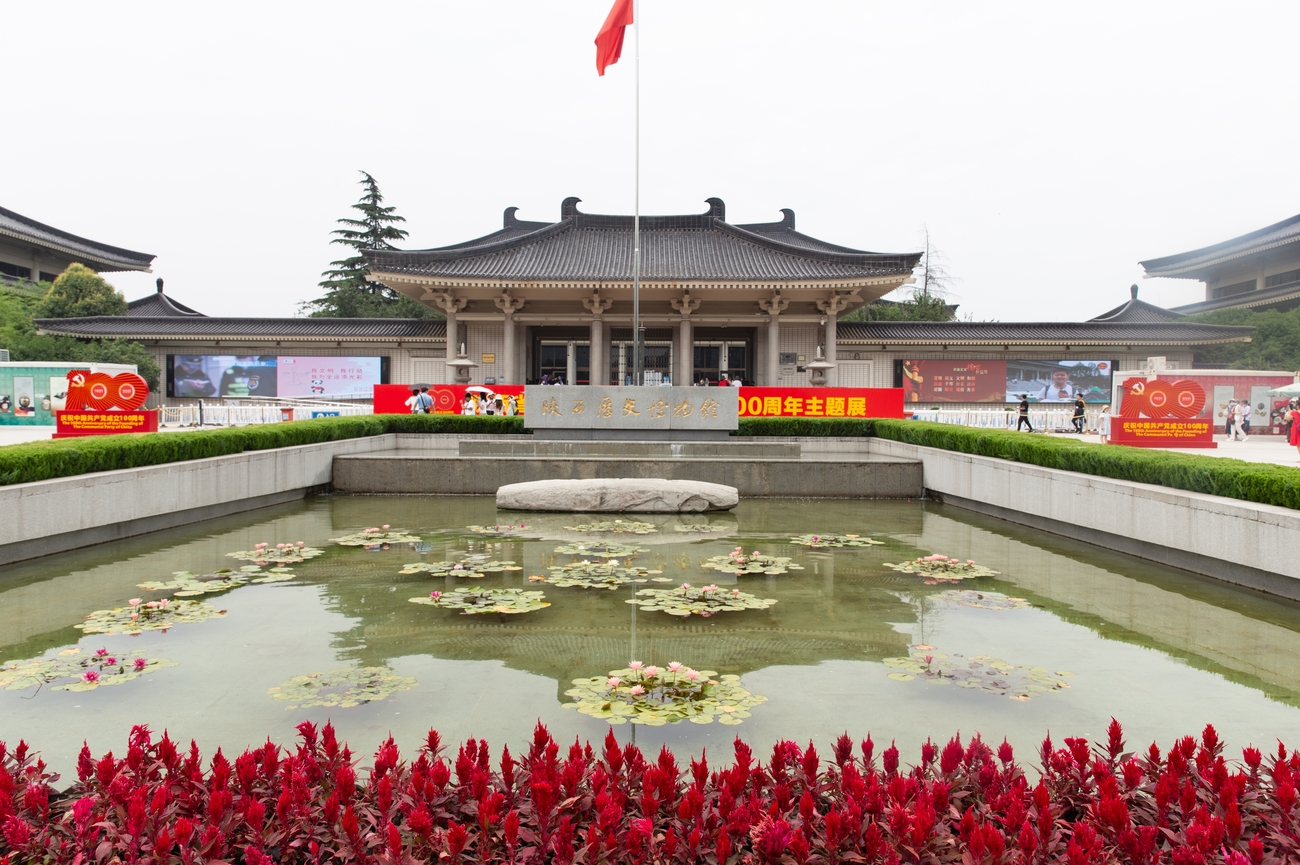
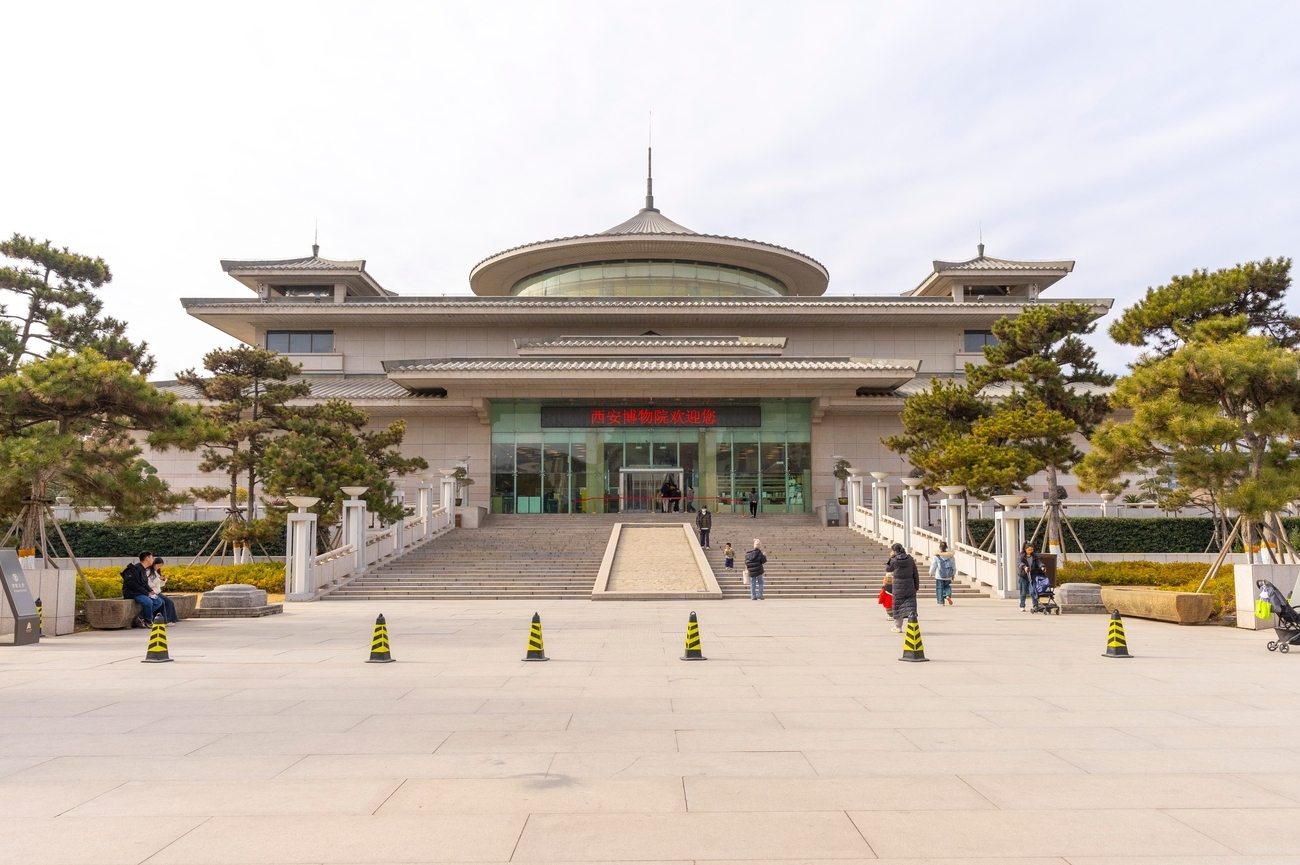
Just a 4-minute drive from the Big Wild Goose Pagoda is one of China’s most prestigious national museums, called “The Pearl of Ancient Capitals.” Designed in elegant Tang Dynasty style architecture, the museum offers you a journey through over a million years of Chinese history. Inside, you’ll find more than 370,000 artefacts that trace the rise and fall of the 13 dynasties that once ruled from Shaanxi.
The exhibitions are thoughtfully curated across three main halls. Hall One, takes you from prehistoric times through the Zhou and Qin dynasties, setting the foundation of early Chinese civilisation. Hall Two, focuses on the Han Dynasty and the early development of the Silk Road (a vast network of trade routes connecting China with the West). Hall Three, brings you into the splendour of the Tang Dynasty, regarded as China’s golden age. As you explore, keep an eye out for rare national treasures inside the museum, like the Empress Jade Seal from the Western Han and the exquisitely crafted Silver Perfume Fumigator from the Tang Dynasty.
Day 2, Morning - Xi’an Tour Map
Afternoon: Xi’an
Museum and Small Wild Goose Pagoda
For a more immersive, tech-forward introduction to Xi’an’s story, head to Xi’an Museum, set within the peaceful grounds of Jianfu Temple. Part of the UNESCO World Heritage Silk Roads network, the museum brings the city’s past to life through interactive displays, touchscreens, and augmented reality, making complex history easy to absorb in a short visit.
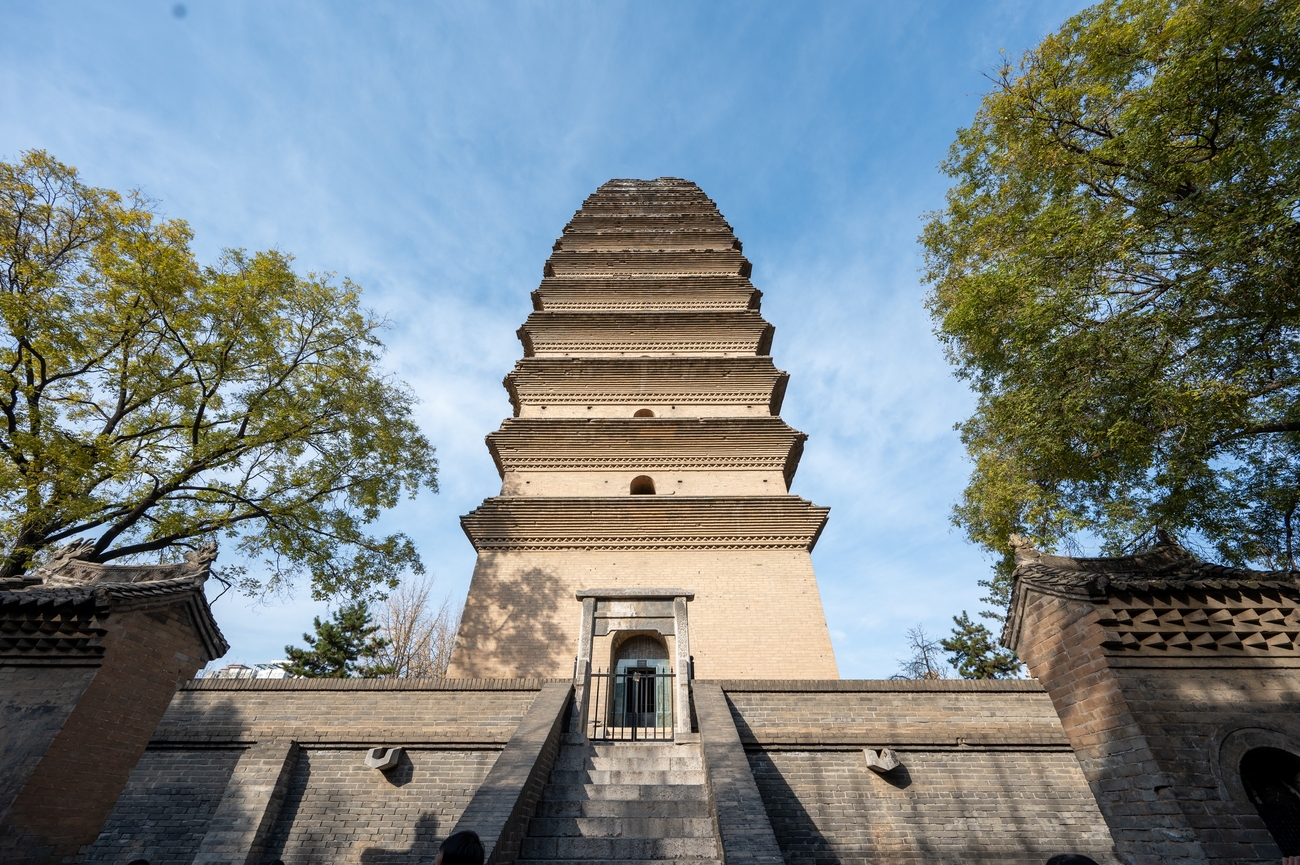
Inside the museum’s underground main hall, you’ll find the Ancient Capital exhibit, a massive 3D topographical map of ancient Chang'an (Xi'an) that shows how the city evolved across different dynasties. And just outside stands the Small Wild Goose Pagoda, built in 707 AD to house sacred Buddhist scriptures brought back from India. Unlike many other structures, it survived a massive earthquake in 1556, though its top two stories were lost, leaving behind its distinctive rounded appearance.
Hancheng Lake
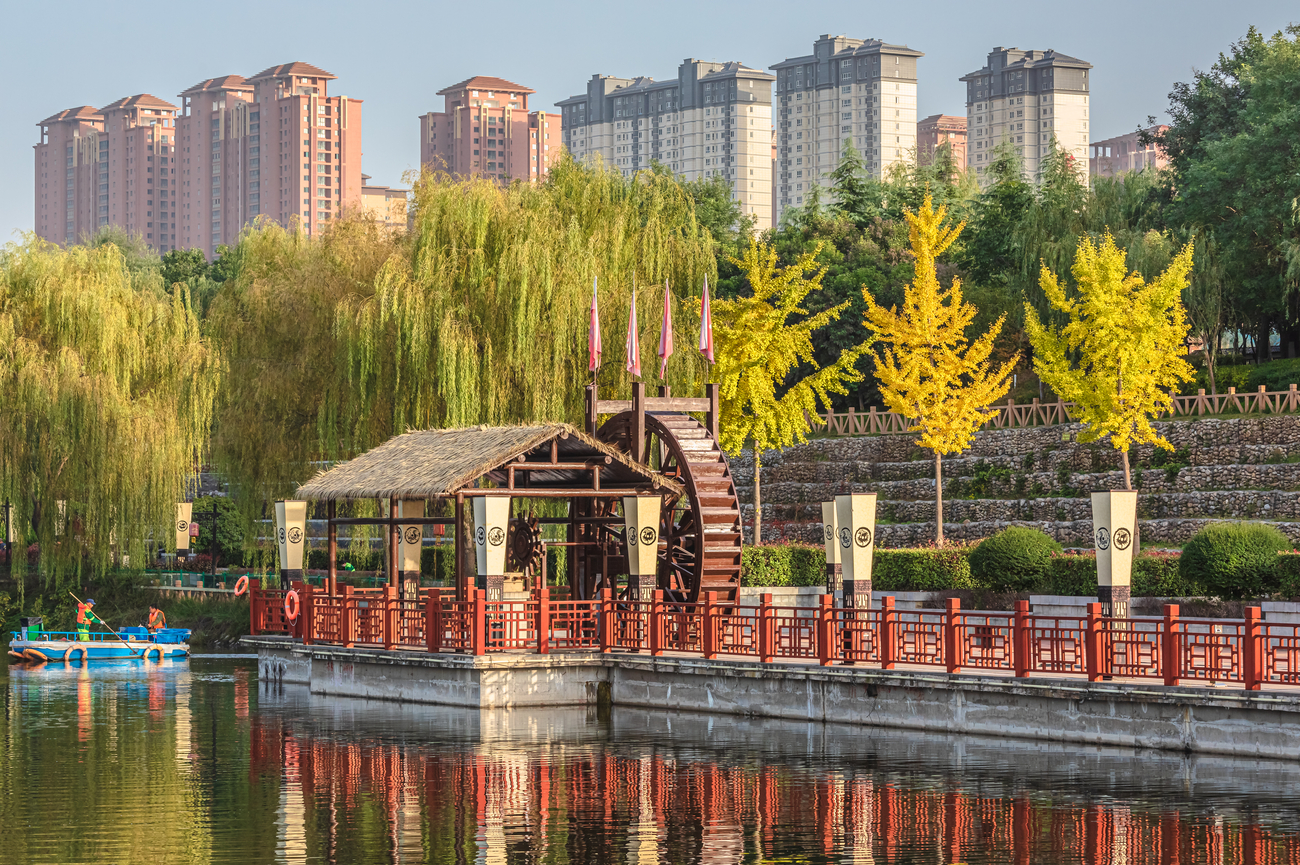
End your day at Hancheng Lake, a massive ecological, and cultural park built over the ruins of ancient Chang’an’s moat and the historic Guanzhong Cao Canal, which dates back to 129 BC. As you explore the park, you’ll come across several of its standout landmarks, like the towering statue of Emperor Wu of Han, standing 21.5 metres high, (the largest of its kind in China). The Gale Pavilion, the park’s highest point, you can step inside an eight-floor museum that showcases Silk Road history, Han clothing, and military campaigns. The Tianhan Xiongfeng Relief, a 200 metres long stone carving (the largest in Xi'an) depicting the political and cultural milestones of the Han Dynasty. And the Sacred Yellow Elm, a rare tree believed to be nearly a thousand years old.
Aside from the park’s major attractions, you can hop aboard an antique-style “picture boat” and enjoy the views from the water, or stay up late until 8:30 PM for the fountain show that lasts for 20–30 minutes
Day 2, Afternoon - Xi’an Tour Map
Day 3
Morning: Ancient City Wall of Xi’an
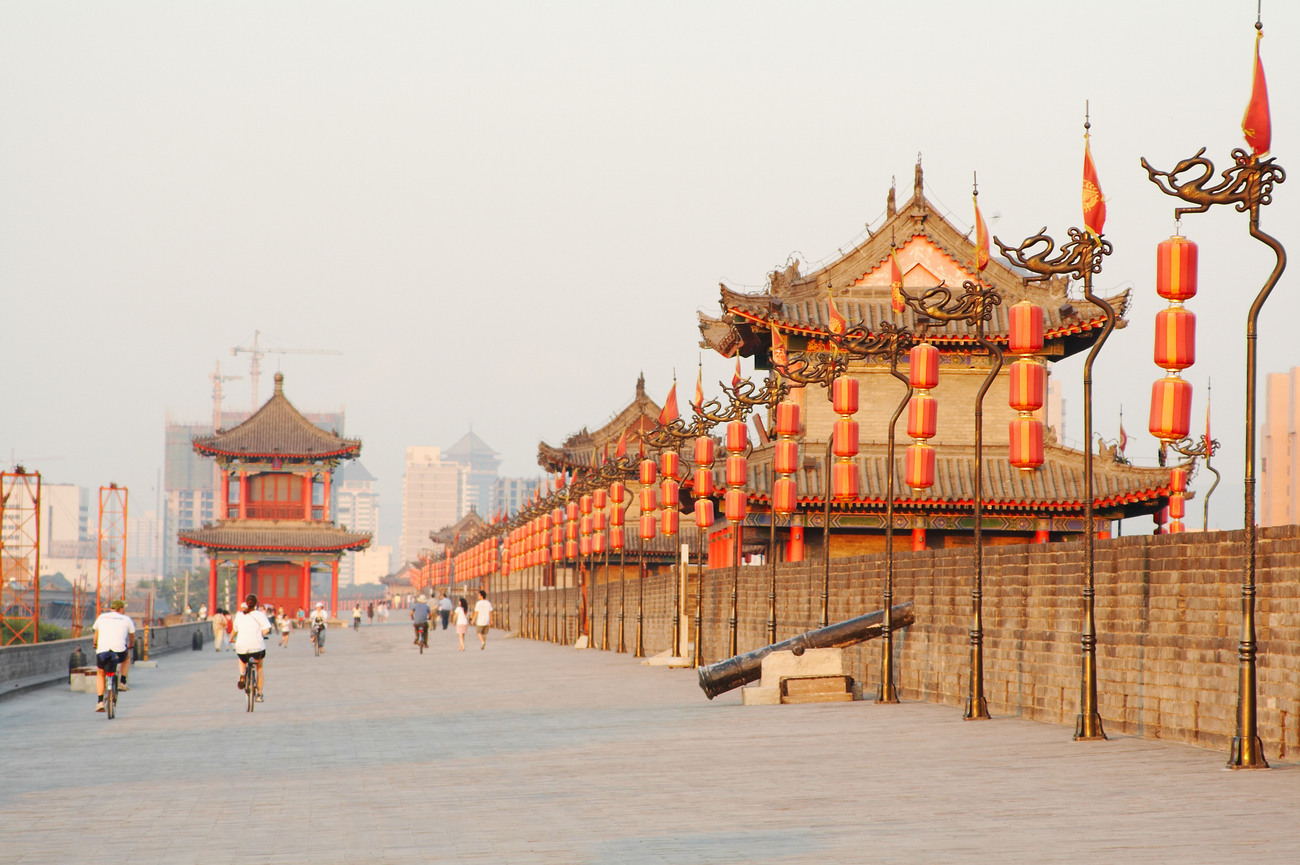
Begin your final day in Xi’an atop the Ancient City Wall, the most complete and best preserved city wall in China, and one of the largest military defence systems ever built. Constructed in 1370 during the Ming Dynasty on the foundations of the earlier Tang palace, the wall forms a vast rectangle that still encloses Xi’an’s centre. Standing 12 metres high and stretching nearly 14 kilometres around the old city, the wall once protected Xi’an with its towering ramparts, fortified gates, and surrounding moat.
To truly appreciate its scale, the best way to explore it is by renting a bicycle and cycling the full loop, which takes about 1.5 to 2 hours at an easy pace. But if you prefer minimal activity, we can arrange a guided golf cart tour around the entire perimeter, so you can enjoy the views and learn the history without much effort.
Shuyuanmen Ancient Street
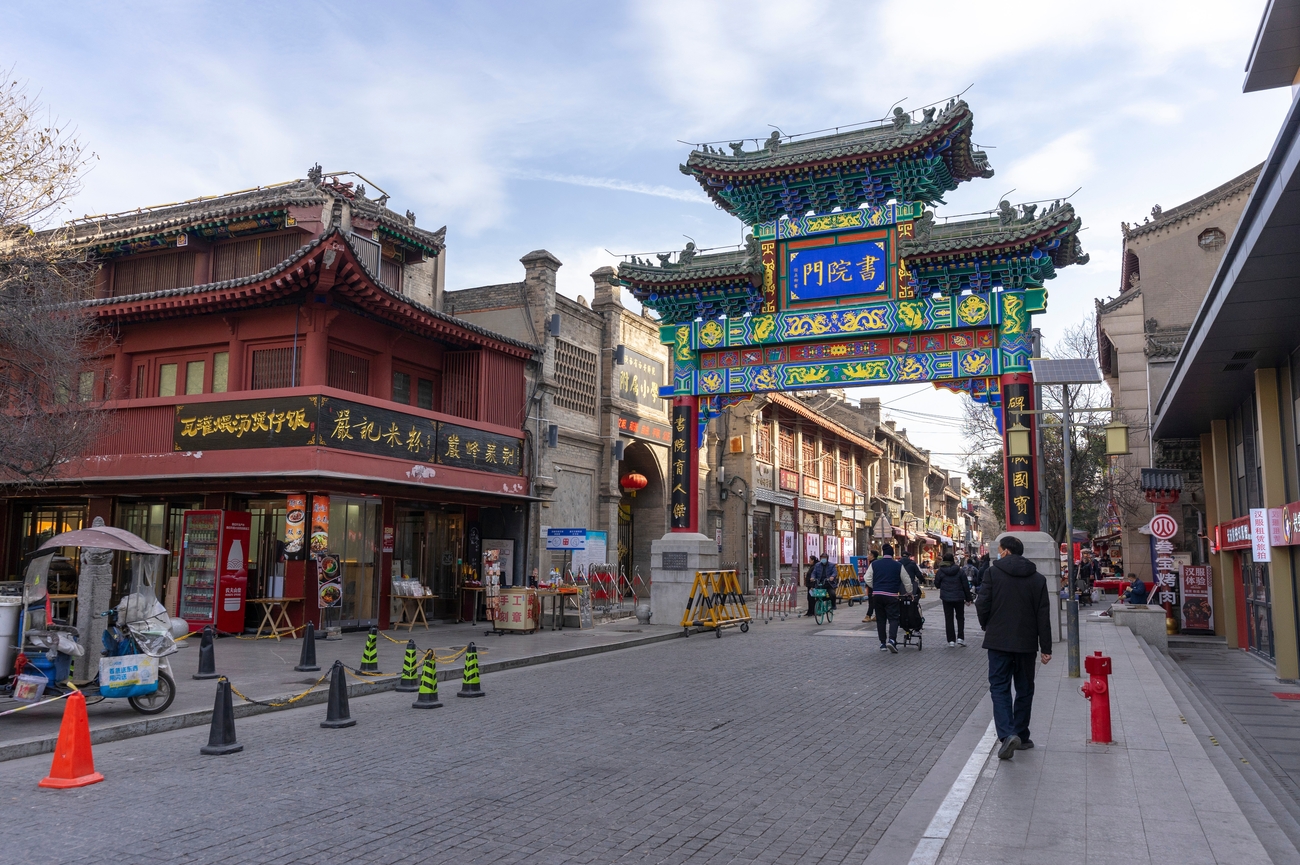
Just steps from the South Gate of the Ancient City Wall, you can find Shuyuanmen Ancient Street, Xi’an’s premier cultural and artistic lane. Named after the Guanzhong Academy, the highest imperial institution of learning in the Ming and Qing dynasties, this bluestone lane is lined with traditional courtyard-style buildings, small art shops, and calligraphy studios. The air often smells of fresh ink and sandalwood, and local artists practise brushwork and calligraphy along the street. For a memorable souvenir, consider having your name carved into a soapstone or jade seal in ancient Chinese script.
Bell Tower of Xi’an
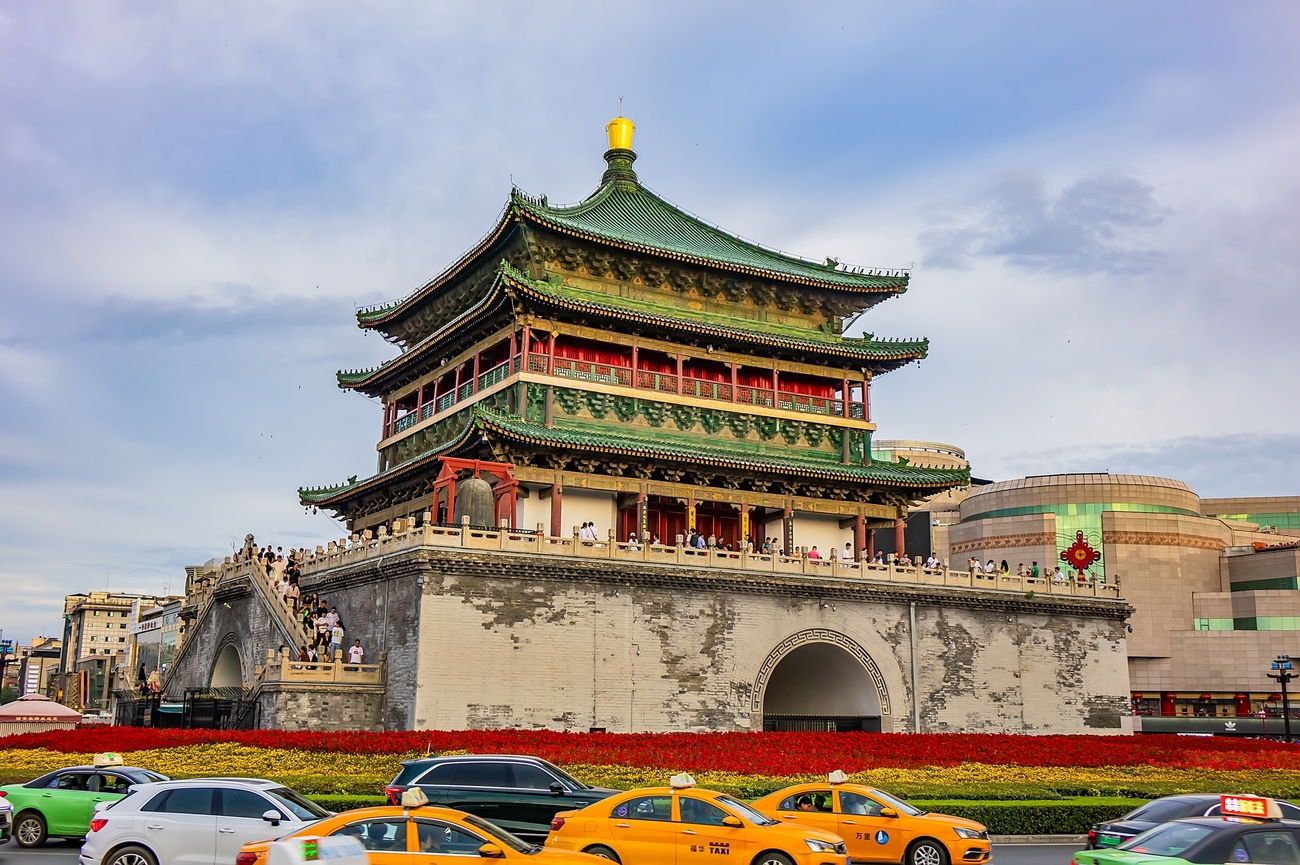
Continue your way up north to the Bell Tower of Xi’an, the largest and best preserved bell tower in China. Built in 1384 during the Ming Dynasty, it stands at the exact geographical centre of the city, where Xi’an’s four main streets meet. Originally built two blocks away, the tower was moved to its current location in 1582 to better align with the city's expanding layout.
In ancient times, its massive bronze bell rang out at dawn to signal the start of the day, working in tandem with the nearby Drum Tower, which signaled dusk. While the tower is already impressive by day, it is a "must-see" at night when it is beautifully illuminated, standing as a golden centerpiece amidst the modern day traffic of the surrounding roundabout.
Day 3, Morning - Xi’an Tour Map
Afternoon: Muslim
Quarter
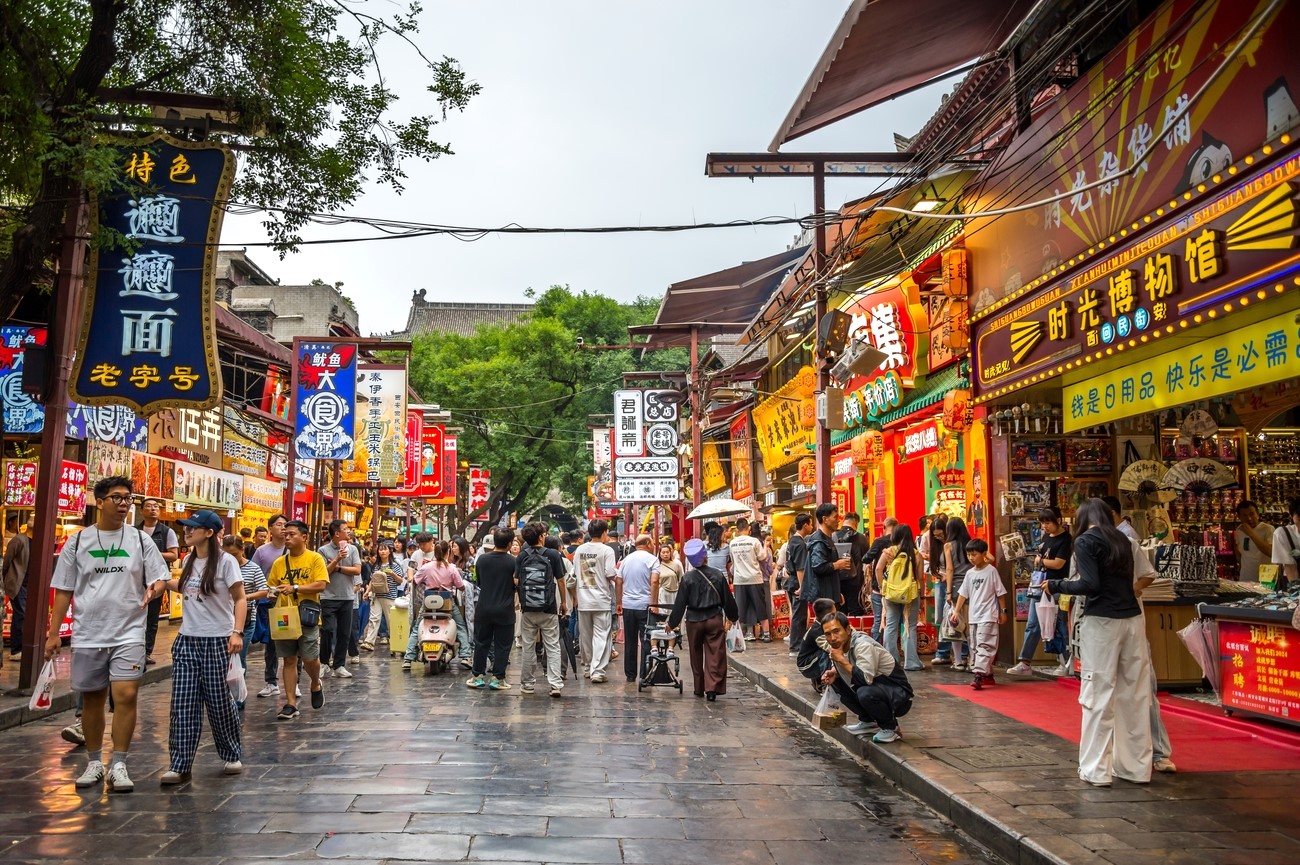
After a full morning of cycling, walking, and picture taking around the Ancient City Wall of Xi’an, you’ll likely be more than ready for a proper meal, and there’s no better place to refuel than the Muslim Quarter. This historic food and cultural hub has been home to the Hui Muslim community since the 7th century, when Silk Road merchants first settled here.
Here, you can find far more than just street food, you can watch vendors put on lively cooking performances as chefs stretch noodles high into the air and dough is rhythmically pounded for fresh, steaming flatbreads. Come hungry, because the local specialities are hard to resist. Try Yangrou Paomo, a comforting bowl of crumbled flatbread soaked in rich lamb or beef broth. Roujiamo, a Chinese hamburger with a crispy bun stuffed with flavourful, slow-cooked braised beef or lamb. Liangpi, cold noodles tossed in spicy vinegar and chilli oil. For dumpling lovers, try Jiasan Soup Packets, delicate lamb or beef soup dumplings filled with hot broth. And if you want something straight off the grill, try Hui Fang Kao Rou, spiced lamb and beef skewers grilled over hot coals.
Great Mosque of Xi’an
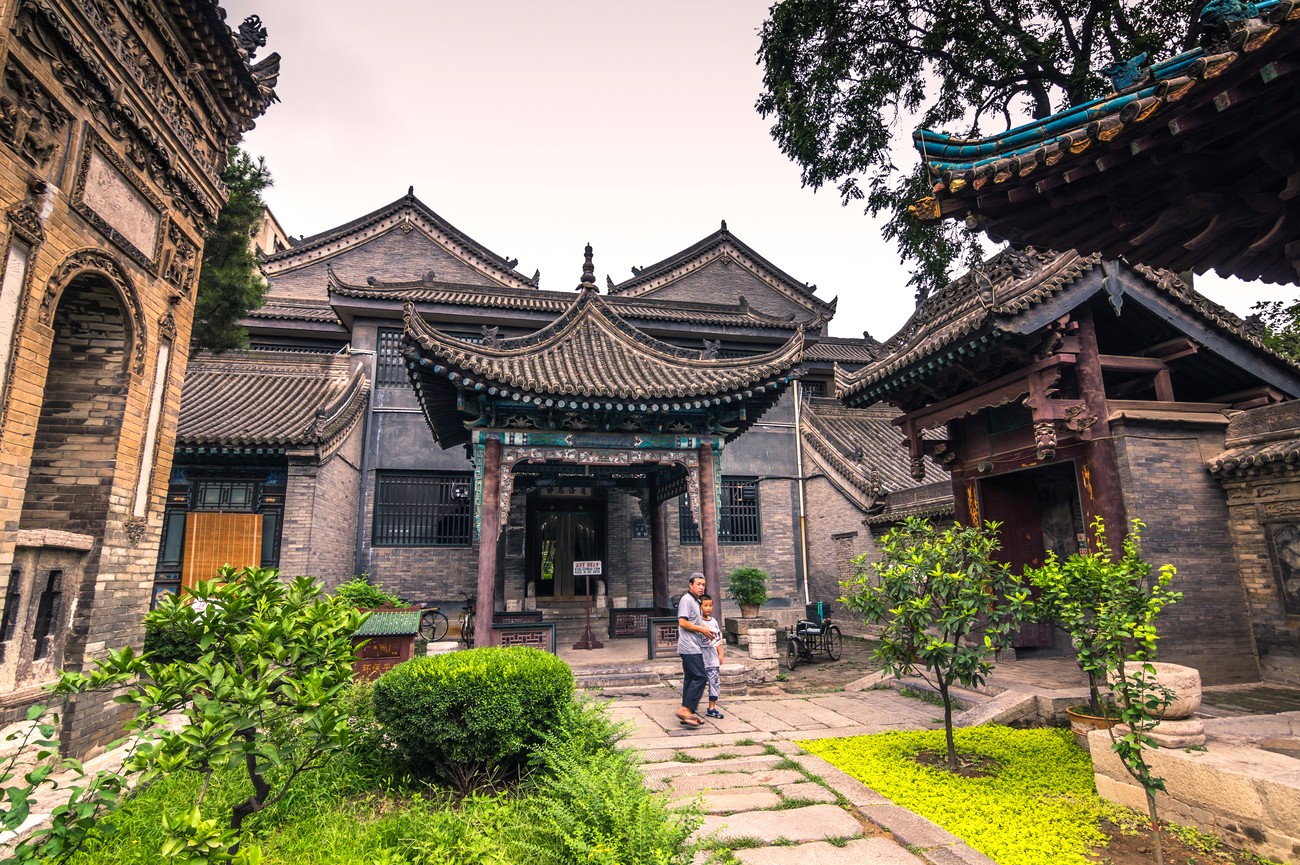
After exploring the flavours of the Muslim Quarter, take a short walk to the Great Mosque of Xi’an. Founded in 742 AD during the Tang Dynasty, it serves as a living symbol of the Silk Road’s cultural exchange. Unlike mosques in the Middle East with domes and minarets, this complex looks like a classic Chinese temple, with grand courtyards, pavilions, and landscaped gardens. As you wander through the Five Courtyards, you’ll pass ancient archways, carved stone tablets, and shaded walkways. Be sure to dress modestly by covering your shoulders and knees as a sign of respect.
Day 3, Afternoon - Xi’an Tour Map
Day Trips from Xi’an
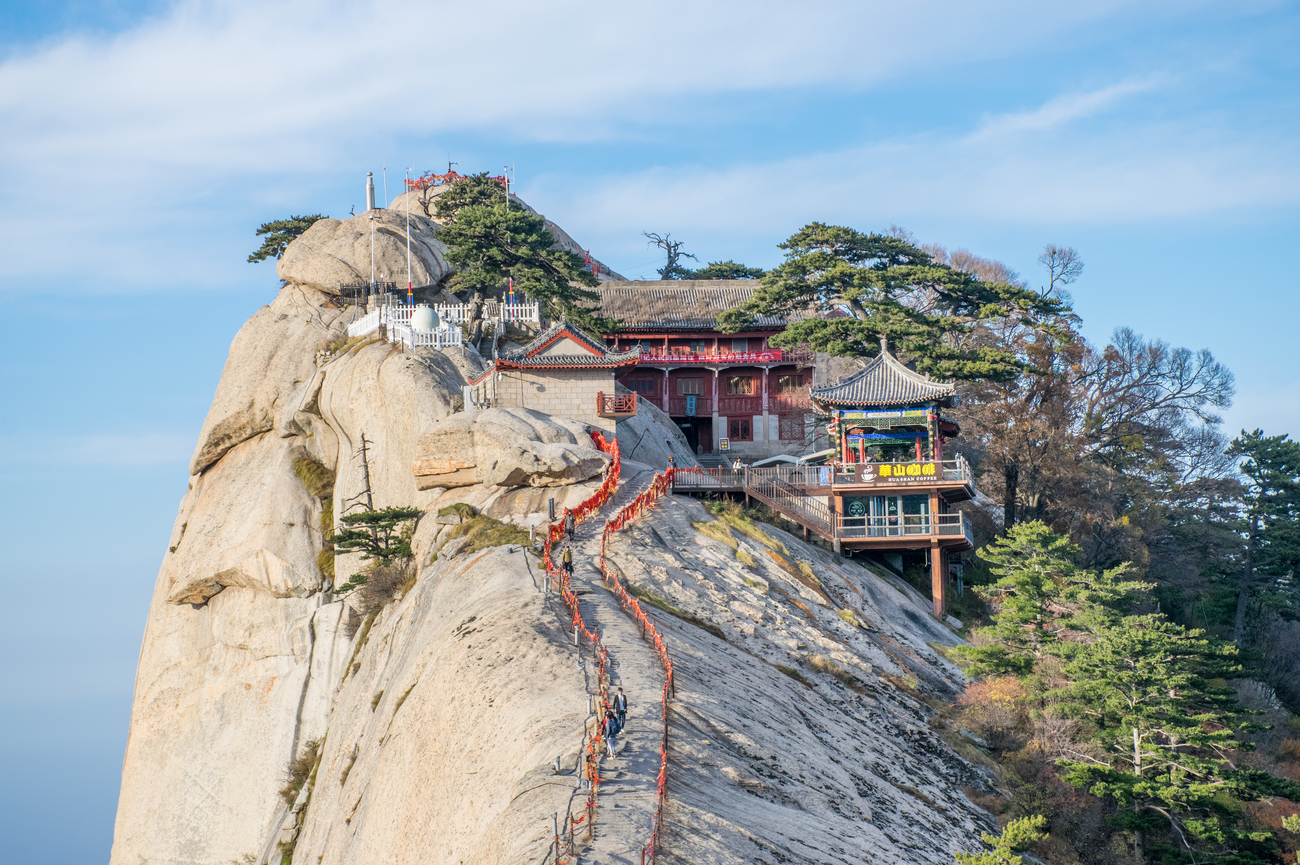
- Mount Huashan: If you’re craving for adventure, go on a day trip to Mount Huashan, one of China’s legendary Five Great Mountains. Just 30 to 40 minutes from Xi’an by high-speed train, it’s an easy escape into some of the country’s most breathtaking mountain scenery. Once there, you can explore the mountain’s five main peaks, each offering its own views, temples, and lookout points. For thrill-seekers, this is where you can test your limits on iconic routes like the Plank Walk in the Sky, a narrow wooden path bolted directly into a sheer cliff face (the palm-sweating trail you’ve probably seen on social media). Another one is the Black Dragon Ridge, a knife edge walkway with steep drops on both sides.
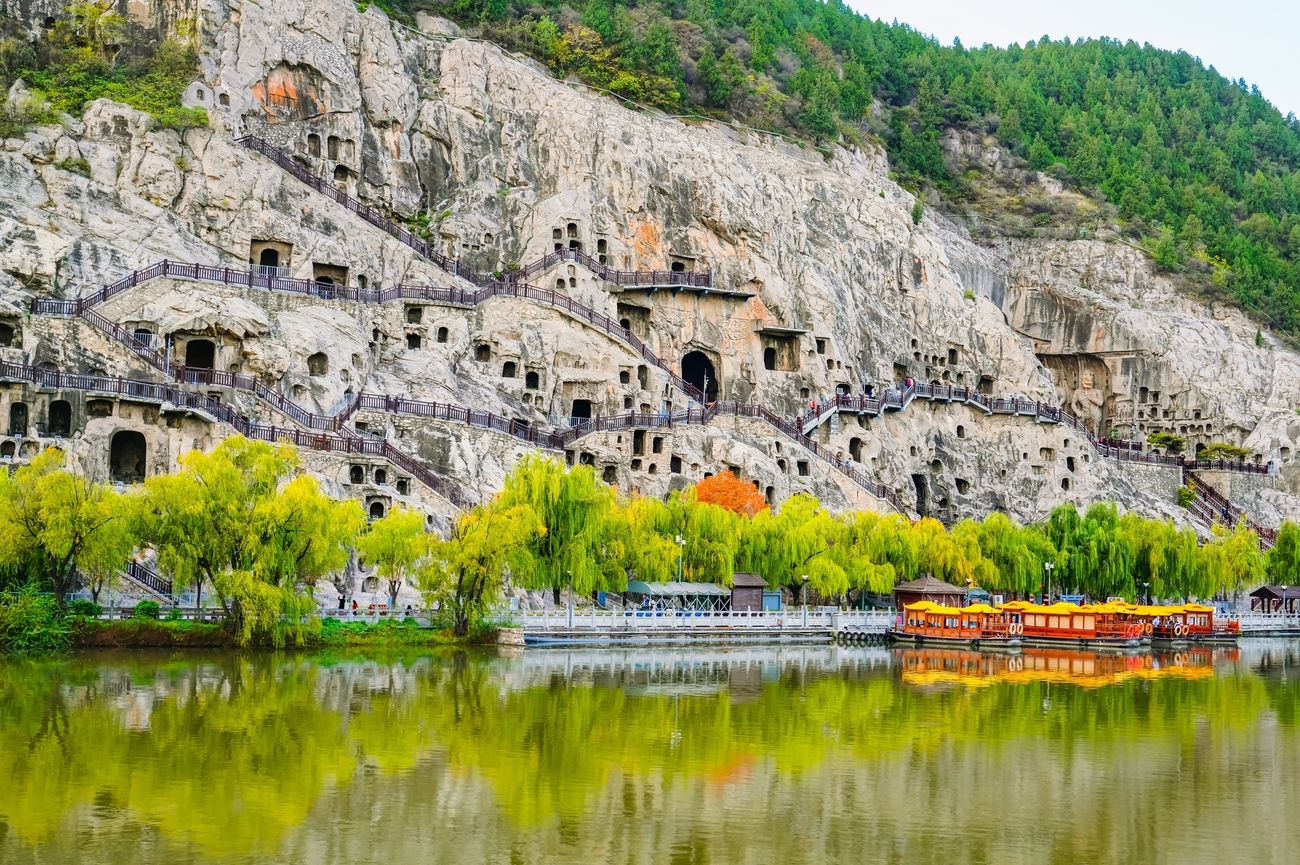
- Luoyang: Just 1.5 to 2 hours from Xi’an by high-speed train, Luoyang offers you a deeper look into China’s Buddhist art and martial arts heritage. Here, you can visit the Longmen Grottoes, a UNESCO World Heritage site and one of the world’s great treasures of Buddhist art featuring over 100,000 statues carved into limestone cliffs. There’s also the Shaolin Temple, known as the birthplace of Zen Buddhism and Shaolin Kung Fu. You can watch daily martial arts practice by resident monks, wander through the temple halls, and explore the Pagoda Forest.
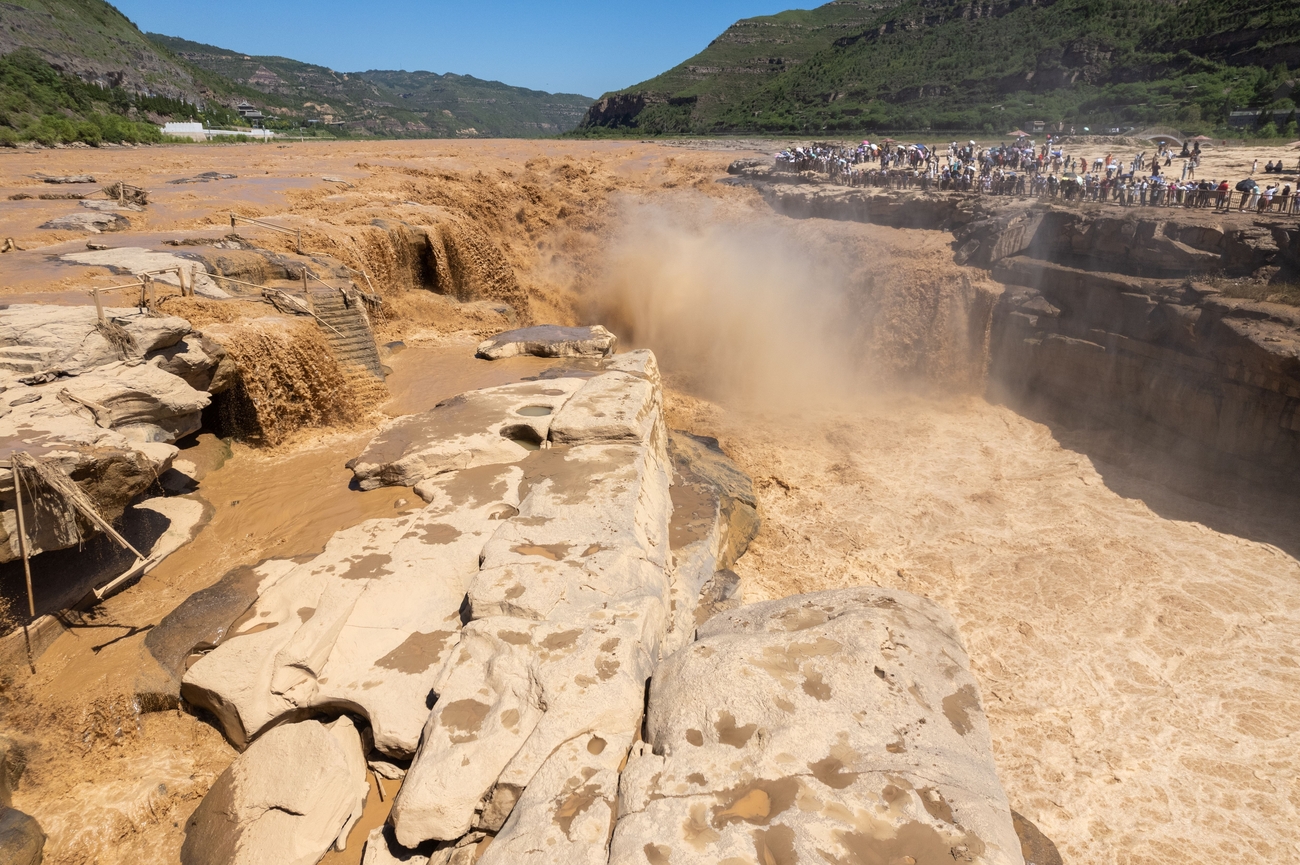
- Hukou Waterfall: The second-largest waterfall in China and the largest yellow waterfall in the world. Located on the border of Shaanxi and Shanxi provinces, about 3.5 hours from Xi’an by high-speed train. Here, you’ll witness the Yellow River at its most powerful, as torrents of muddy gold water surge through a narrow gorge and plunge downward with thunderous force, a sight known locally as the “Majestic Momentum.” From designated viewing platforms, you can safely witness the sheer scale of the falls and feel the mist rise around you. And if you want the full perspective, there’re helicopter tours available that offer a bird’s-eye view of the iconic “teapot spout” formation, revealing just how dramatically the river funnels into the gorge.
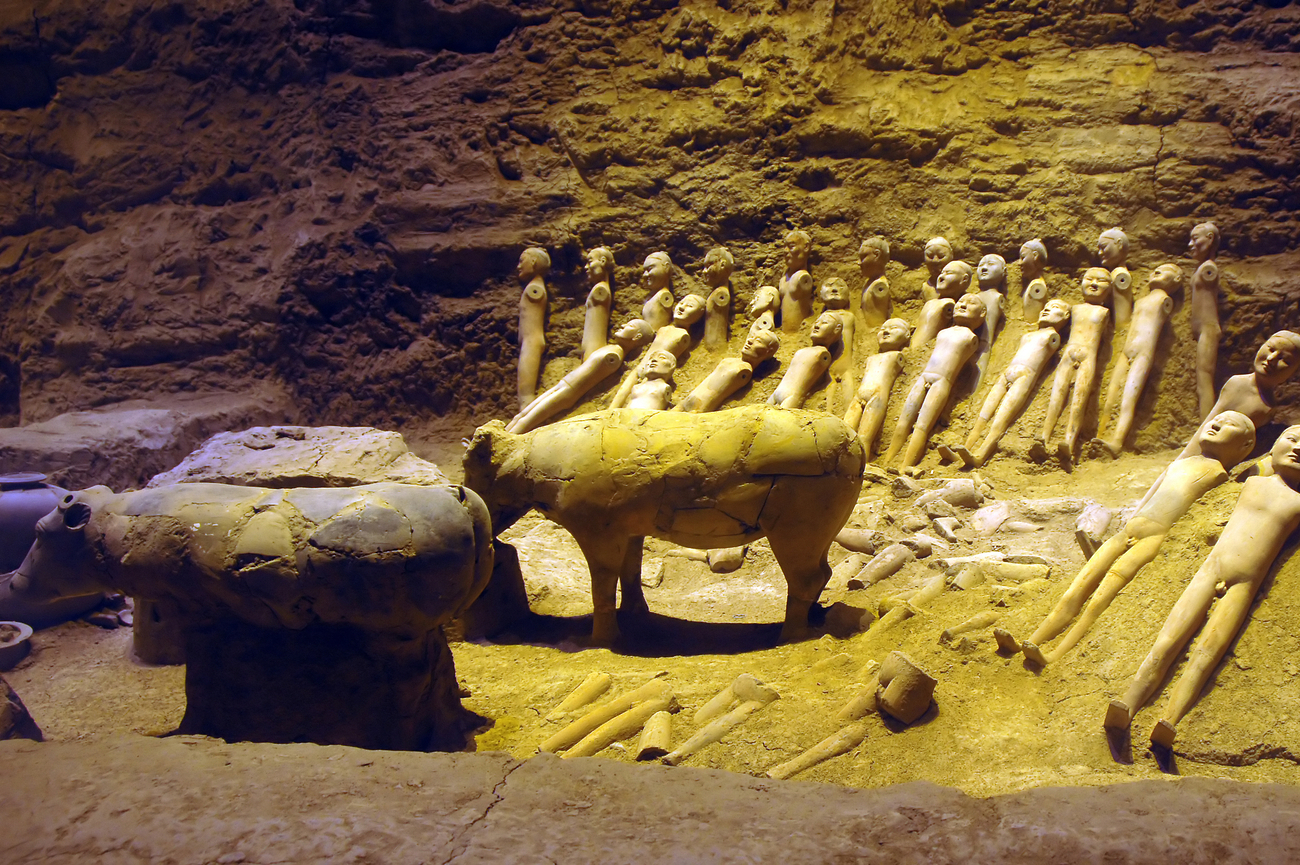
- Han Yang Ling Museum: The joint burial site of Emperor Jing (Liu Qi), the fourth ruler of the Western Han Dynasty, and his Empress Wang. Often considered a hidden gem, this museum offers you a rare, behind-the-scenes look into life during the Western Han Dynasty. What makes this visit truly special is the underground museum, China's first fully underground museum, built directly over active excavation pits, with glass walkways that lets you walk across transparent glass floors directly above the burial pits, providing a top-down view of thousands of artifacts. Unlike the life-sized soldiers of the Qin Dynasty, these terracotta figures are about one-third life-size (60cm tall), depicting a peaceful society, with court ladies, civil officials, and even animals like pigs, dogs, and chickens. The museum also features advanced holographic technology that brings Han Dynasty daily life to life.
UNESCO World Heritage Sites in Xi’an
- Mausoleum of the First Qin Emperor: A UNESCO World Heritage Site since 1987, it’s one of the most significant archaeological discoveries in human history. Spanning an extraordinary 56 square kilometres, this vast necropolis was built as the eternal resting place of Qin Shi Huang, the first emperor of a unified China. Here, you can visit the Terracotta Warriors Museum, where three excavation pits reveal the emperor’s underground army. In Pit 1, the largest and most awe-inspiring, you can stand before more than 6,000 life-sized soldiers arranged in battle formation. Pits 2 and 3, on the other hand, offer a closer look at the structure of the imperial army, displaying cavalry, archers, and the command unit. Over at Lishan Garden, you can also see the emperor’s burial mound. Although the tomb itself remains sealed for safety and preservation reasons, you can still view it externally and walk the surrounding grounds.
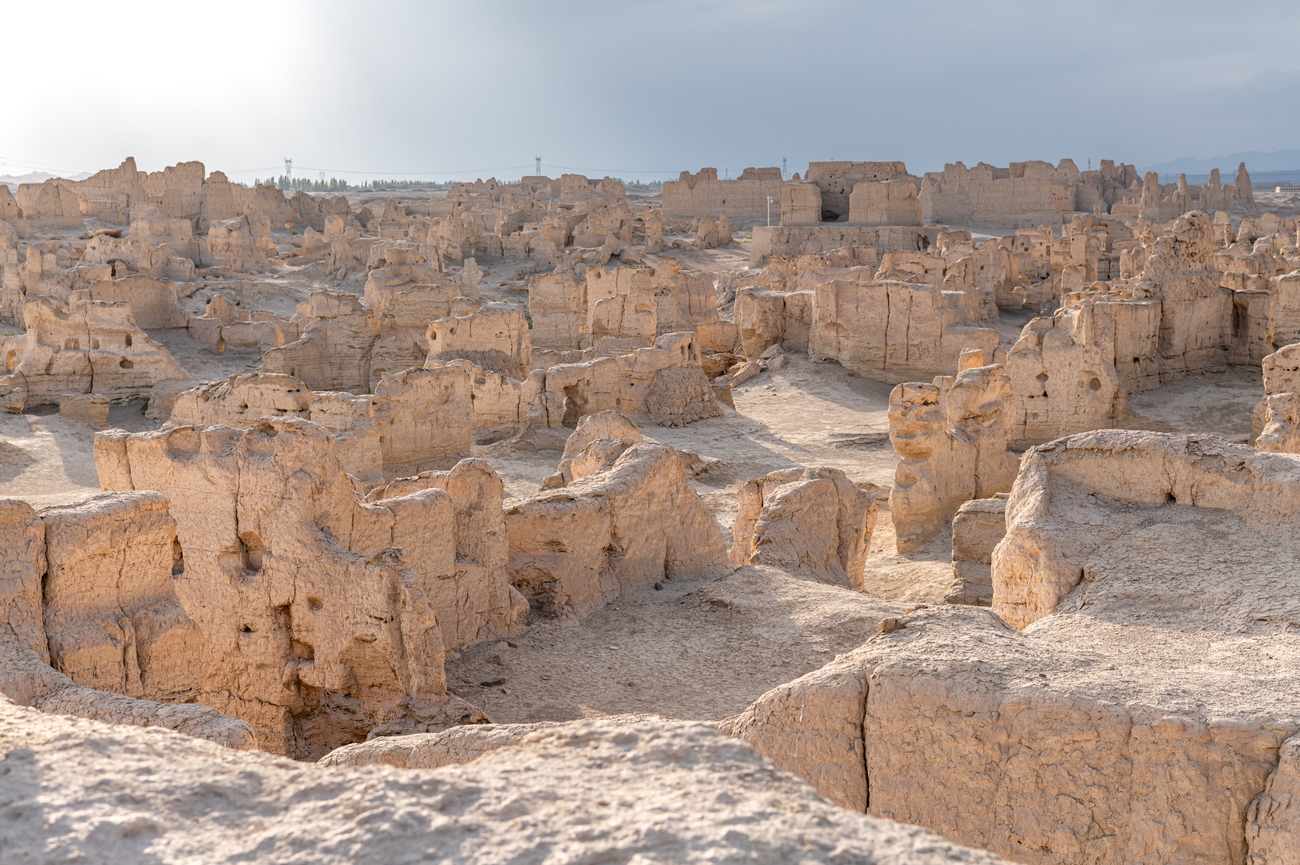
- Silk Roads Sites: The Routes Network of the Chang'an-Tianshan Corridor: Xi’an sits at the very heart of one of history’s greatest networks: the Silk Roads. Officially recognised as a transnational UNESCO World Heritage Site in 2014, the Chang’an–Tianshan Corridor traces the ancient trade routes that linked East and West for over 1,500 years, stretching across China, Kazakhstan, and Kyrgyzstan. Xi'an (known as Chang'an in antiquity) was the eastern starting point of this historic network. Several key landmarks in Xi’an are part of this UNESCO listing, including the Giant Wild Goose Pagoda, Small Wild Goose Pagoda, Weiyang Palace, Daming Palace, and the Xingjiao Temple Pagodas. Together, these sites help you understand Xi’an not just as a former capital of China, but as a crossroads of global exchange.
Luxury Rail Tours in
Xi’an
- Golden Eagle Silk Road Express: Relive the legendary Silk Road aboard the Golden Eagle Silk Road Express, a five star hotel on rails that carries you through China and Central Asia. Here, your private en-suite cabin transforms from a stylish daytime lounge into a cosy bedroom at night, complete with modern amenities. Choose from elegant Superior Cabins or the more spacious Han Dynasty Suites for extra indulgence. Between stops, relax and take a sip of your favorite cocktail in the Bar Lounge Car, where live piano music serenades you, or settle into the Observation Car, with stunning views of the passing landscapes. As part of longer itineraries like the 22-day Grand Silk Road from Beijing to Tashkent, or shorter Ancient China tours, the train stops in Xi’an for guided excursions to the Terracotta Warriors, Ancient City Wall, and Great Mosque. Transfers, gratuities, and curated off-train experiences are all included, so you can simply settle in and enjoy the journey.
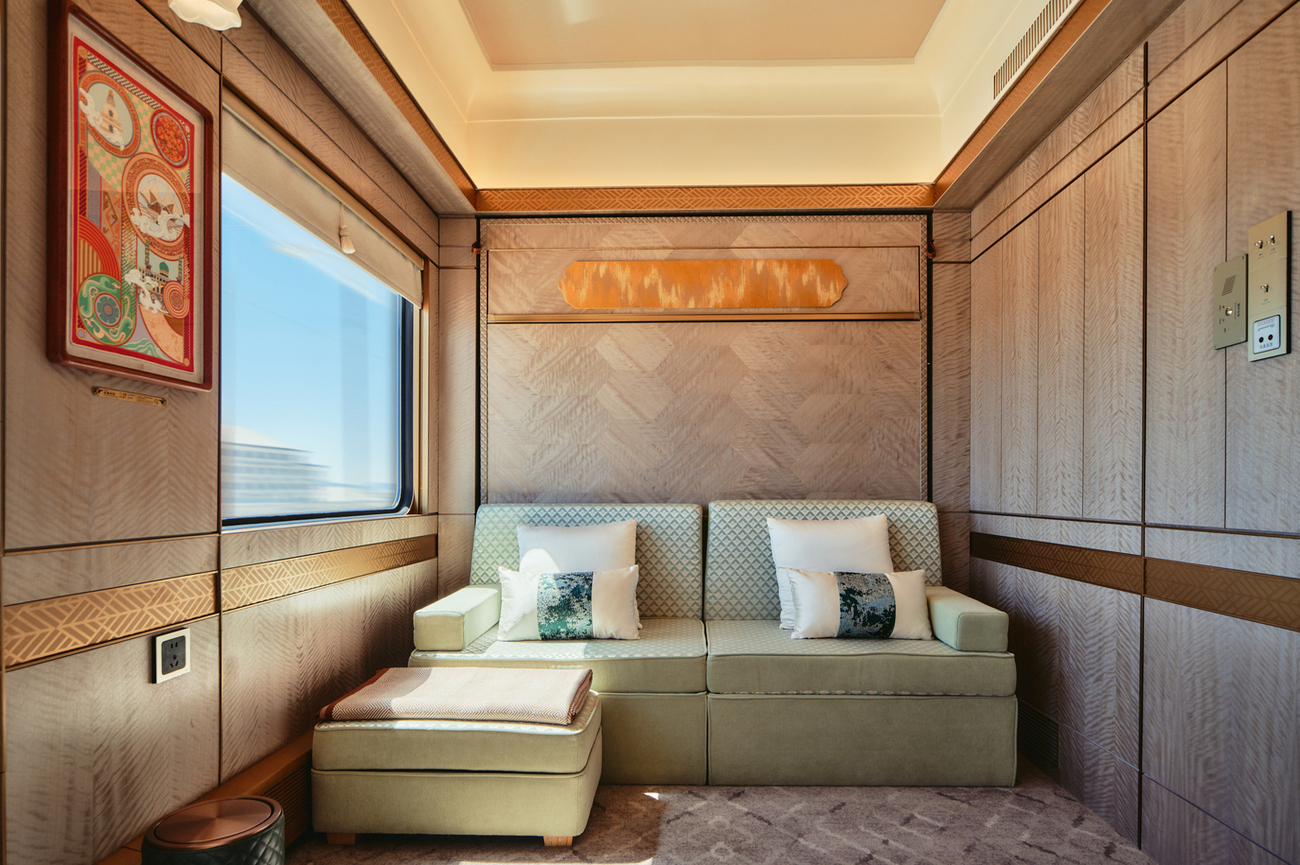
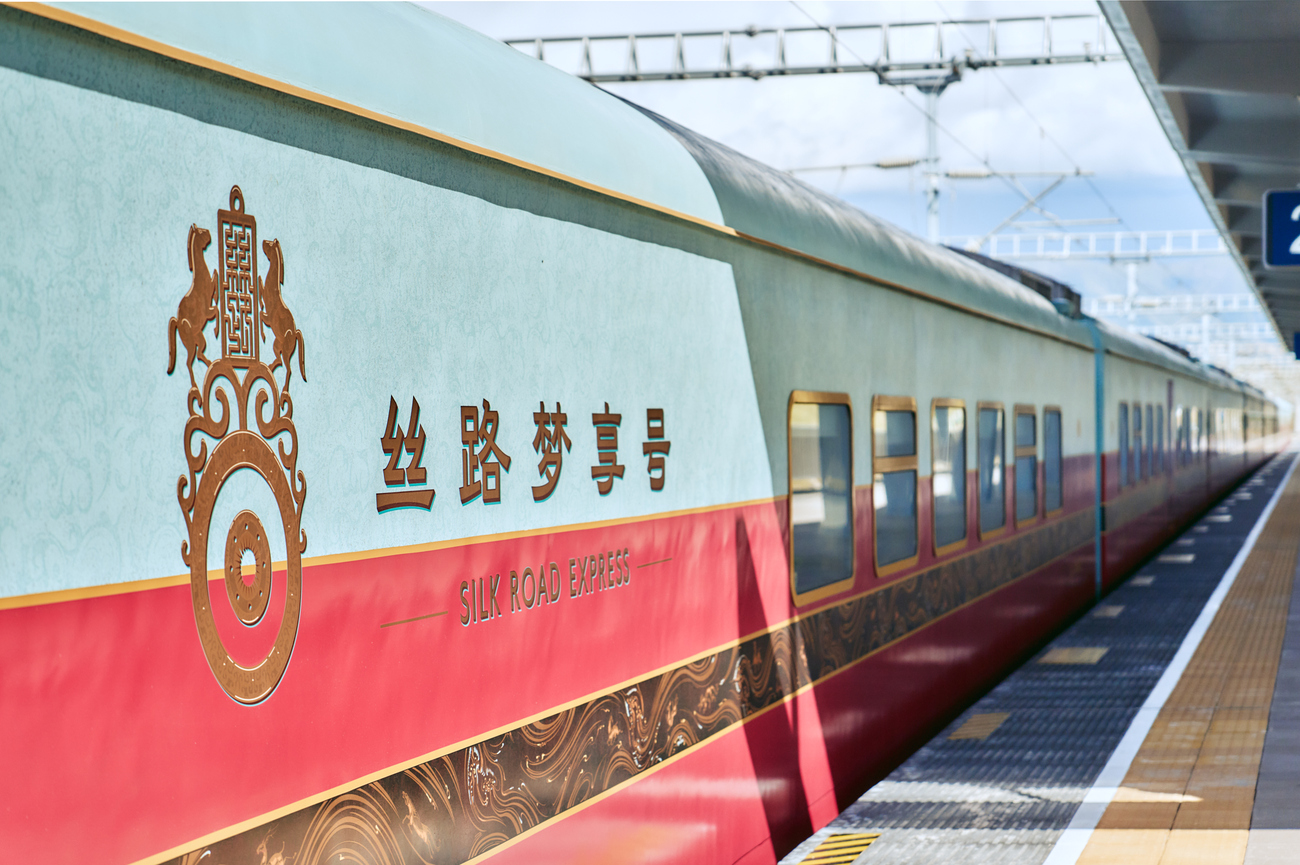
- Silk Road Express: Travel the legendary Silk Road aboard the Silk Road Express, operated by Train of Glamour, it is designed as a leisurely “on board vacation,” this luxury train lets you travel overnight and explore new landscapes and cultures by day. Your journey carries you through beautiful sceneries, shimmering salt lakes, and remote regions of western China. Choose from suites or family rooms, many with private en-suite bathrooms and modern amenities. Between destinations, the train becomes your private retreat. Relax in the tea room, sing along in the KTV lounge, enjoy a game in the automatic mahjong room, unwind in the cigar bar, or simply enjoy the views from the observation car’s expansive panoramic windows. The routes focus primarily on Northern and Southern Xinjiang, giving you rare access to some of China’s most striking and culturally rich regions.
Golf Courses in Xi’an
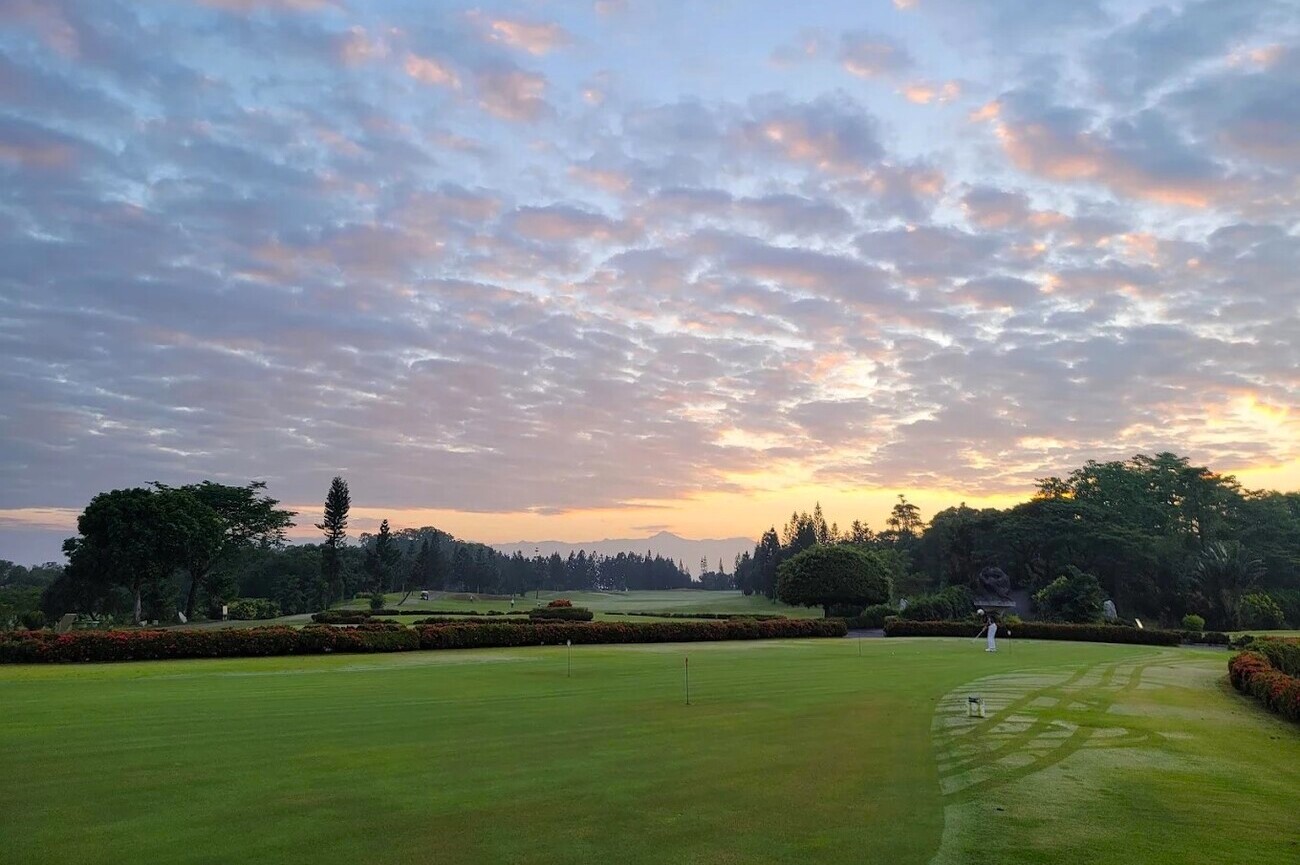
- Xi'an International Golf Club: If you enjoy a round of golf, set aside time for Xi’an International Golf Club, one of the city’s premier championship courses. Designed by renowned British architect Christina Dixon, the 18-hole course follows the natural contours of the land near Weiyang Lake and the Wei River, creating a scenic yet thoughtfully challenging layout. Stretching up to 7,270 yards, it’s among the longest courses in China, with wide fairways and strategically placed bunkers that test both precision and strategy. Whether you’re a seasoned golfer or a relaxed holiday player, the course offers an engaging experience without feeling overly intimidating.
Ski Resorts Near Xi’an
- Cuihua Mountain Ski Resort: For a full alpine-style escape, head to Cuihua Mountain Ski Resort, known as the “Number One Ski Resort in the Qinling Mountains.” Located just 23 to 47 kilometres south of downtown Xi’an, it offers a refreshing winter retreat surrounded by mountain scenery. The resort caters to all levels. Beginners can ease into gentle slopes, while experienced skiers and snowboarders can challenge themselves on steeper runs. Aside from skiing, there’s plenty for non-skiers and families to enjoy, there’s a dedicated snow play area with tubing, zorbing balls, banana boats, and sledding for everyone to enjoy.
- Bailuyuan Ski Field: If you’d like to add a splash of winter fun to your Xi’an itinerary, head to Bailuyuan Ski Field (the closest outdoor ski resort to the city centre). Its easy access and gentle slopes make it a popular choice for beginners, students, and families, who want to enjoy skiing without committing to a full mountain getaway. The resort features a main run approximately 300 to 350 meters long and 60 meters wide, and offers two distinct courses: a beginner slope with a 6-degree gradient and an intermediate slope with an 8-degree gradient. If you want to experience night skiing, the resort is notable for being one of the only resorts in the area offering night sessions in fully lit slopes operating until 11 PM or even midnight.
Vineyards Near Xi’an
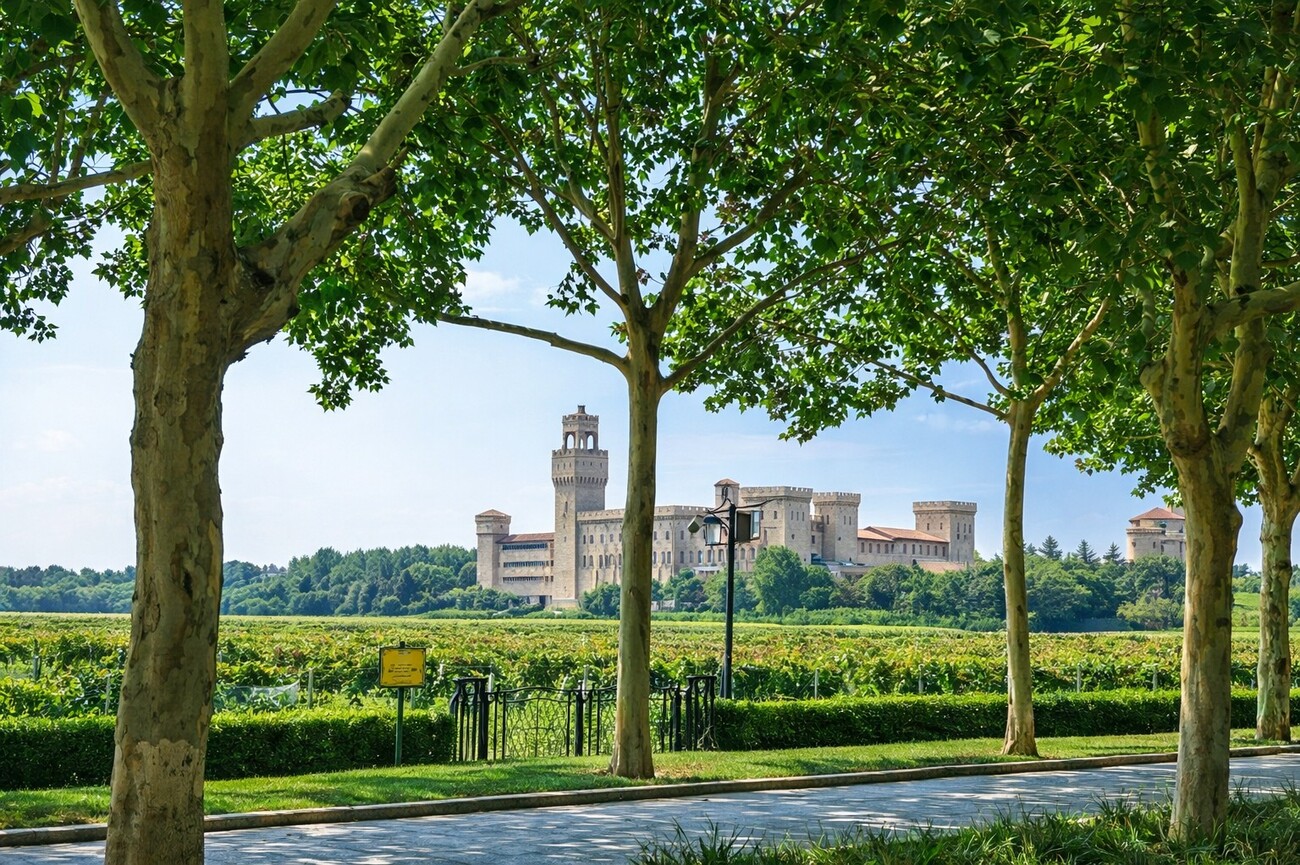
- Changyu Ruina Castle Winery: Just outside Xi’an, the Changyu Ruina Castle Winery (also known as Shaanxi Zhangyu Ruina Chateau) offers a delightful escape into its rolling vineyards and Tuscan-inspired castle. Designed like an Italian château, with warm yellow walls, red-tiled roofs, and soaring towers, it feels like you are suddenly transported to Italy. The estate spans over 700 acres of vineyards, growing classic varietals such as Cabernet Sauvignon, Merlot, and Italian Riesling, alongside a vast grape orchard. Beneath the castle, a sprawling underground cellar houses up to 150,000 oak barrels, where you can observe the traditional wine-aging process up close. Inside the Wine Culture Exhibition Hall, you’ll find interactive displays about wine making, playful ways to explore your taste buds, and an oversized globe displaying global wine regions. Your visit naturally ends with a guided tasting of locally produced red and white wines.
Luxury Spa &
Wellness Experiences in Xi’an
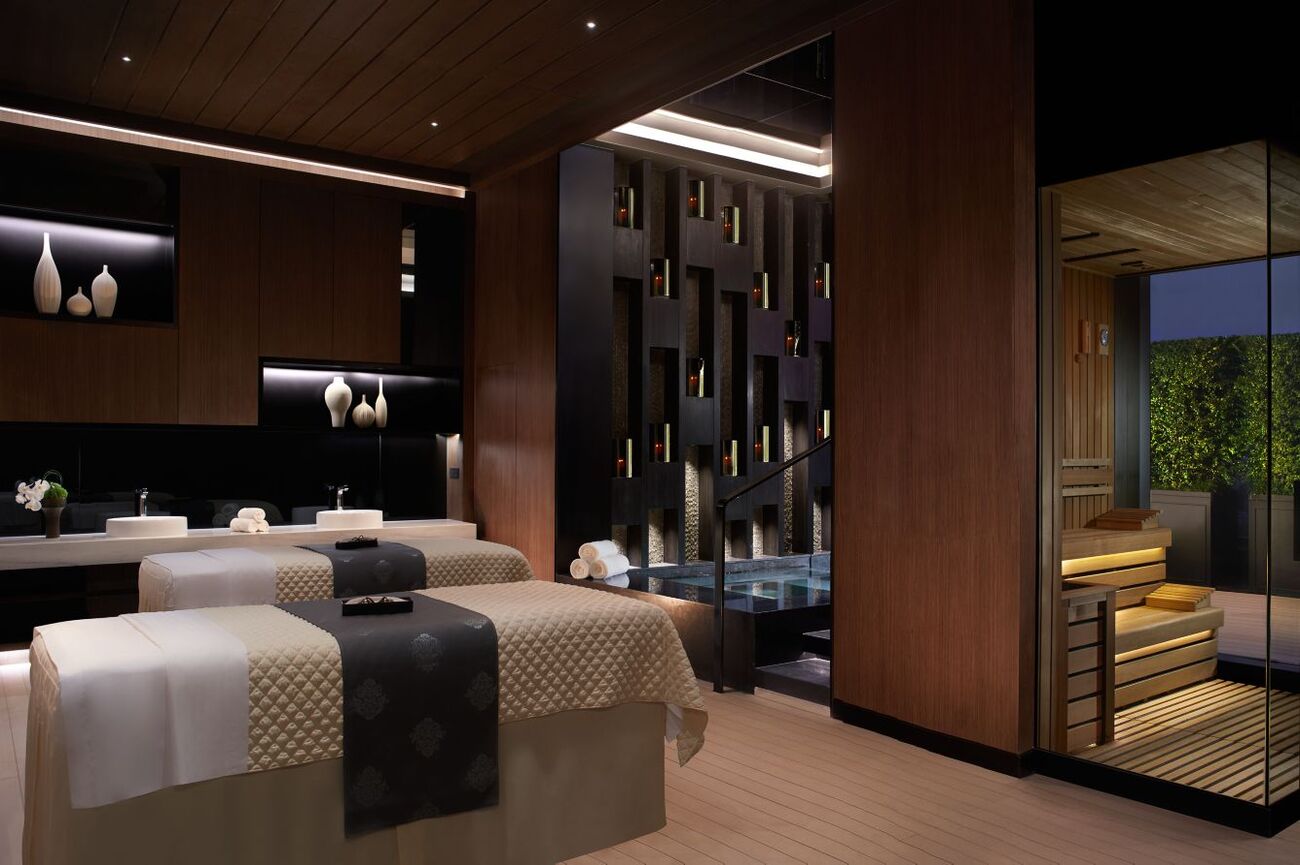
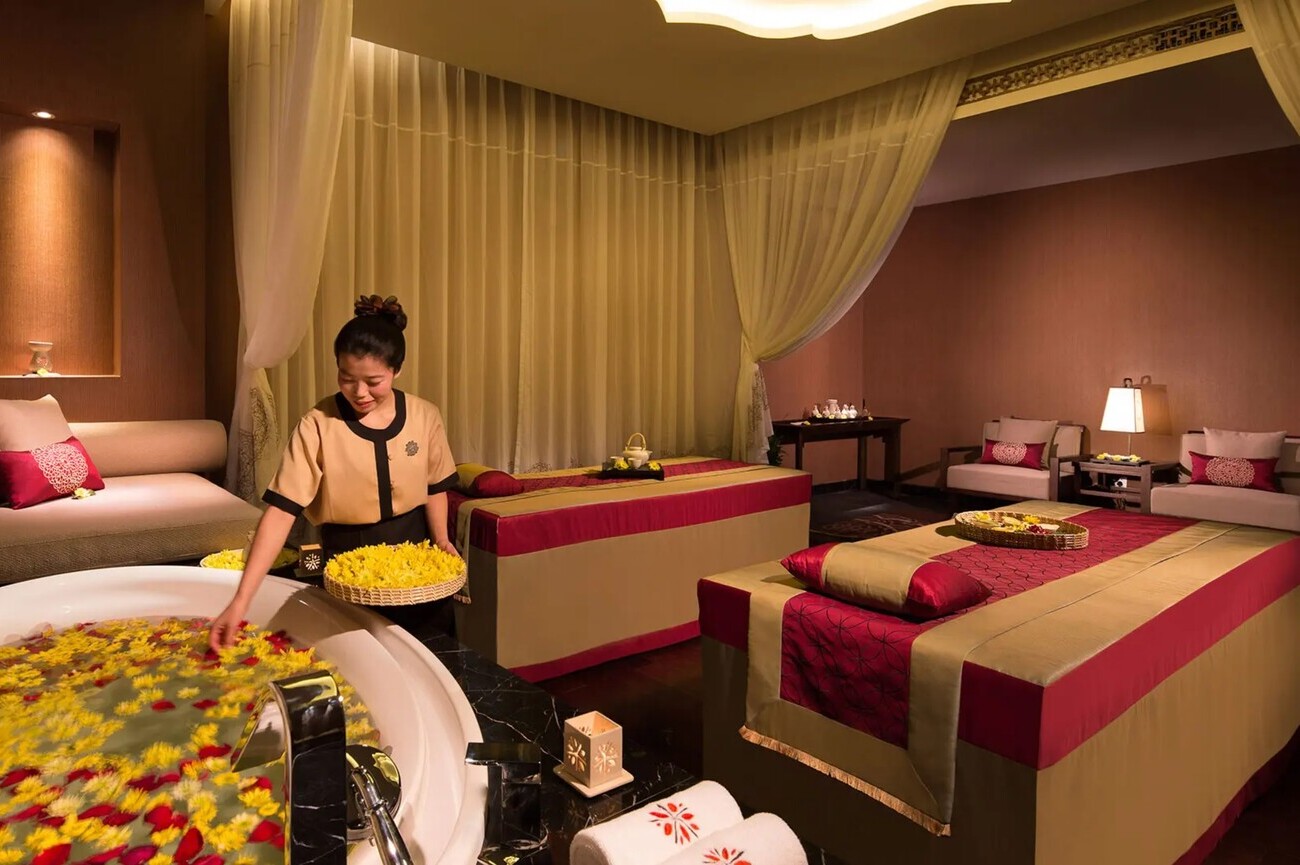
- The Ritz-Carlton Spa: For a moment of pure relaxation, retreat to The Ritz-Carlton Spa for wellness treatments inspired by the historic Silk Road. From the moment you step inside, the serene design, soft lighting, and calming atmosphere invite you to slow down and fully unwind. Here, you’ll be treated to well-appointed rooms with access to a full service salon, fitness centre, indoor swimming pool, sauna, and yoga studio. Try the spa’s signature treatments like the Silk Serenity Package, a 120-minute body treatment, inspired by the ancient spice and trade routes of the Silk Road and uses a blend of essential oils including black pepper, ginger, and sandalwood. If you’re feeling travel fatigue, try the Silk Reviver Treatment, a combination of gentle exfoliation with a targeted massage to release built-up stress. The spa also offers personalised massages, rejuvenating facials using premium ESPA skincare, and therapies inspired by Traditional Chinese Medicine.
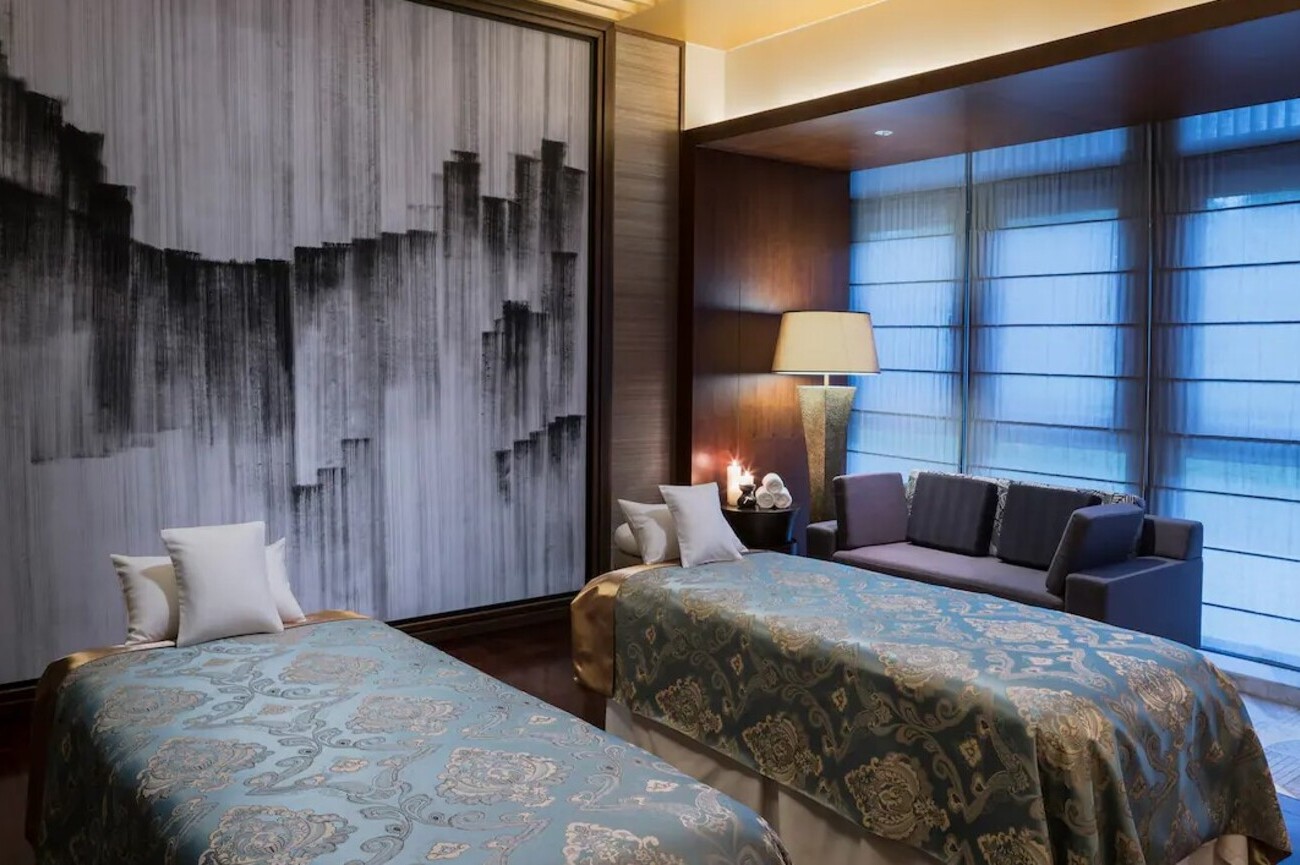
- FLO Spa at Hyatt Regency: Inspired by the Chinese philosophy of “shan shui” which means harmony between nature and beauty, the FLO Spa offers traditional Asian healing in a serene urban setting. The Zen inspired design features a peaceful rock garden and eight private treatment suites, each created to give you a deeply personal and restorative experience. Try their Signature “Floating” Experience, designed to ease tension, promote detoxification, and leave you feeling light, relaxed, and renewed. For something more traditional, try the Tui Na massage or reflexology, both drawn from Traditional Chinese Medicine and tailored to relieve fatigue and restore your energy flow. You can also choose from aromatherapy massages, body scrubs and wraps, and customised facial treatments.
- Angsana Spa at Angsana Xi’an Lintong: This award winning wellness destination offers geothermal waters drawn from the same natural sources once enjoyed by Tang Dynasty royalty at the nearby Huaqing Palace. The resort features more than 30 indoor and outdoor hot spring pools, each infused with different therapeutic ingredients such as lavender, green tea, or traditional Chinese herbs. Here, you can soak between pools at your own pace, choosing warmer or cooler temperatures depending on how your body feels that day. If you prefer some privacy, we can arrange a stay for you at one of the spa’s exclusive private villas, each with its own outdoor hot spring pool, lounge area, and treatment room. Try their signature treatments like the Lishan Healing Massage, which blends Asian techniques with warm, herb infused oils to ease tired muscles and restore circulation, and the Imperial Hot Spring Bathing Ritual, a guided circuit through pools of varying temperatures designed to detoxify, soften the skin, and leave you feeling deeply refreshed like a royal.
Exclusive Workshops
& Immersive Experiences in Xi’an
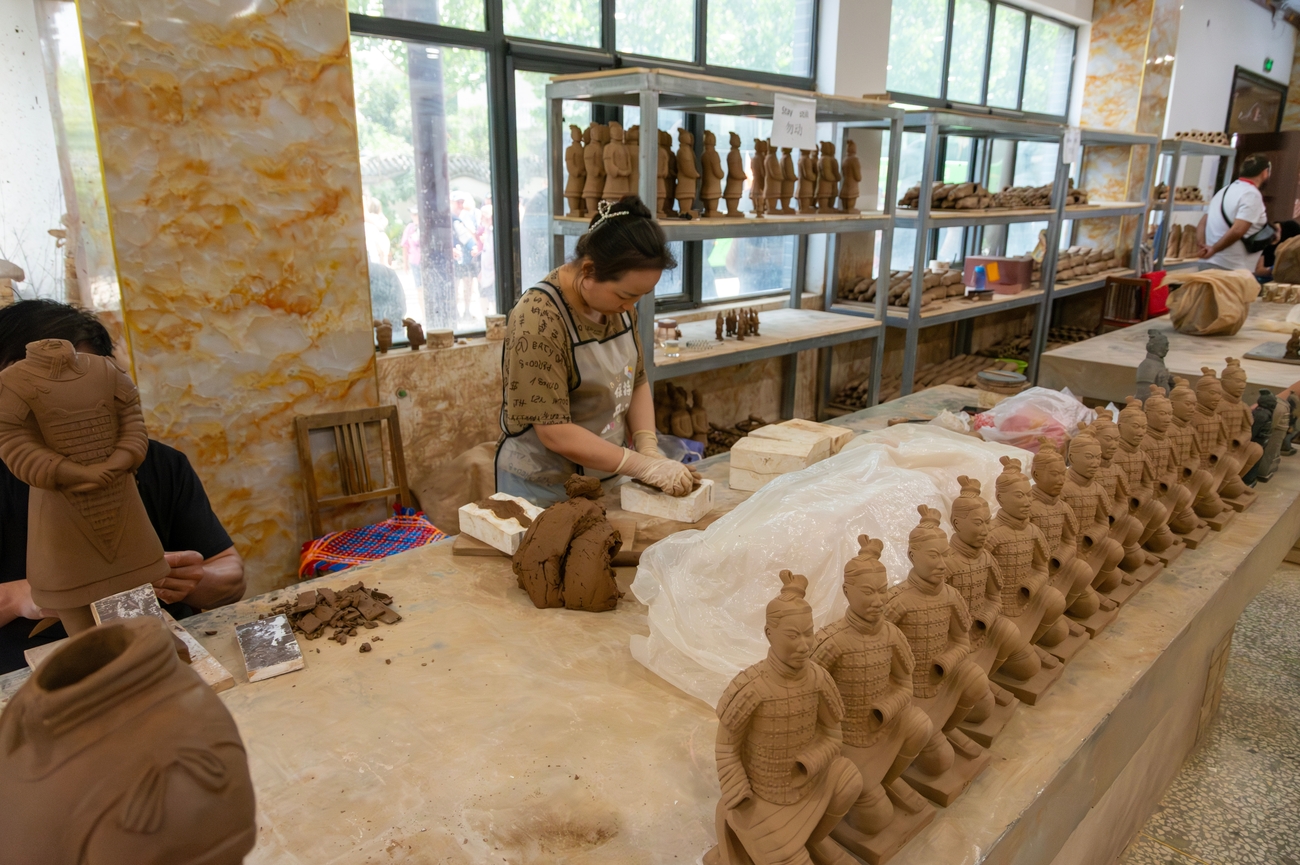
- Terracotta Figure Making Experience: Step into the shoes of the ancient artisans who created the legendary Terracotta Army in this hands-on workshop, where you can shape your own mini warrior guided by expert local craftsmen. Using local clay, simple tools, and moulds, you can form the base shape before adding your own personal touches. Carve facial features, armour details, and even the distinctive hairstyles of Qin Dynasty soldiers.
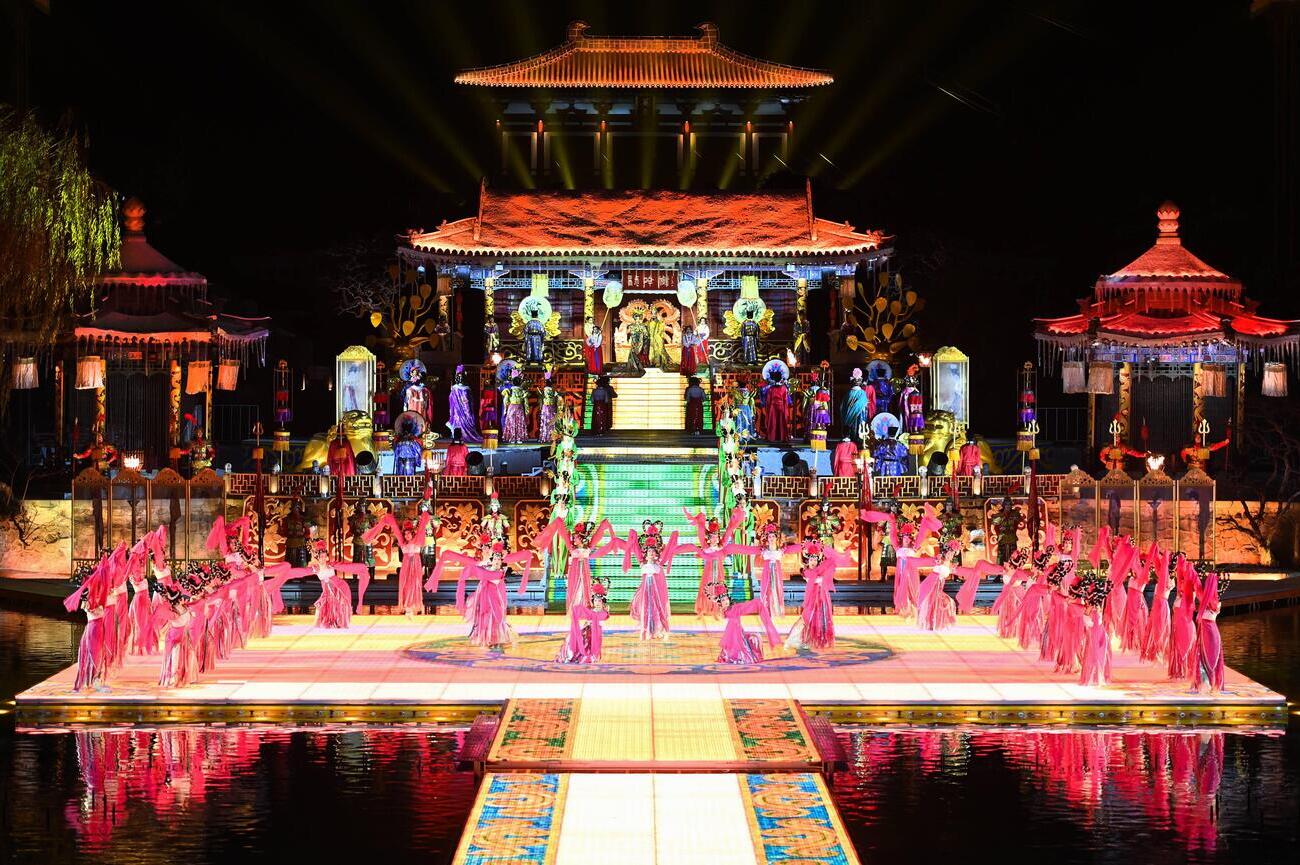
- Watch Cultural Performances at Huaqing Palace: End your day with one of Xi’an’s most unforgettable cultural experiences: The Song of Everlasting Sorrow, a large-scale outdoor performance staged against the backdrop of Mount Lishan and the palace’s beautiful ponds. Using the natural landscape as a living stage, the show retells the tragic 8th-century love story of Emperor Xuanzong and his beloved consort Yang Guifei through music, dance, and amazing visual effects. From your seat in the open air theatre, you’ll watch hundreds of dancers move across water, stone, and light, with meticulously designed costumes and choreography that reflect the splendour of the Tang Dynasty’s golden age. The combination of history, setting, and spectacle makes this performance deeply moving (even if you’re unfamiliar with the story).
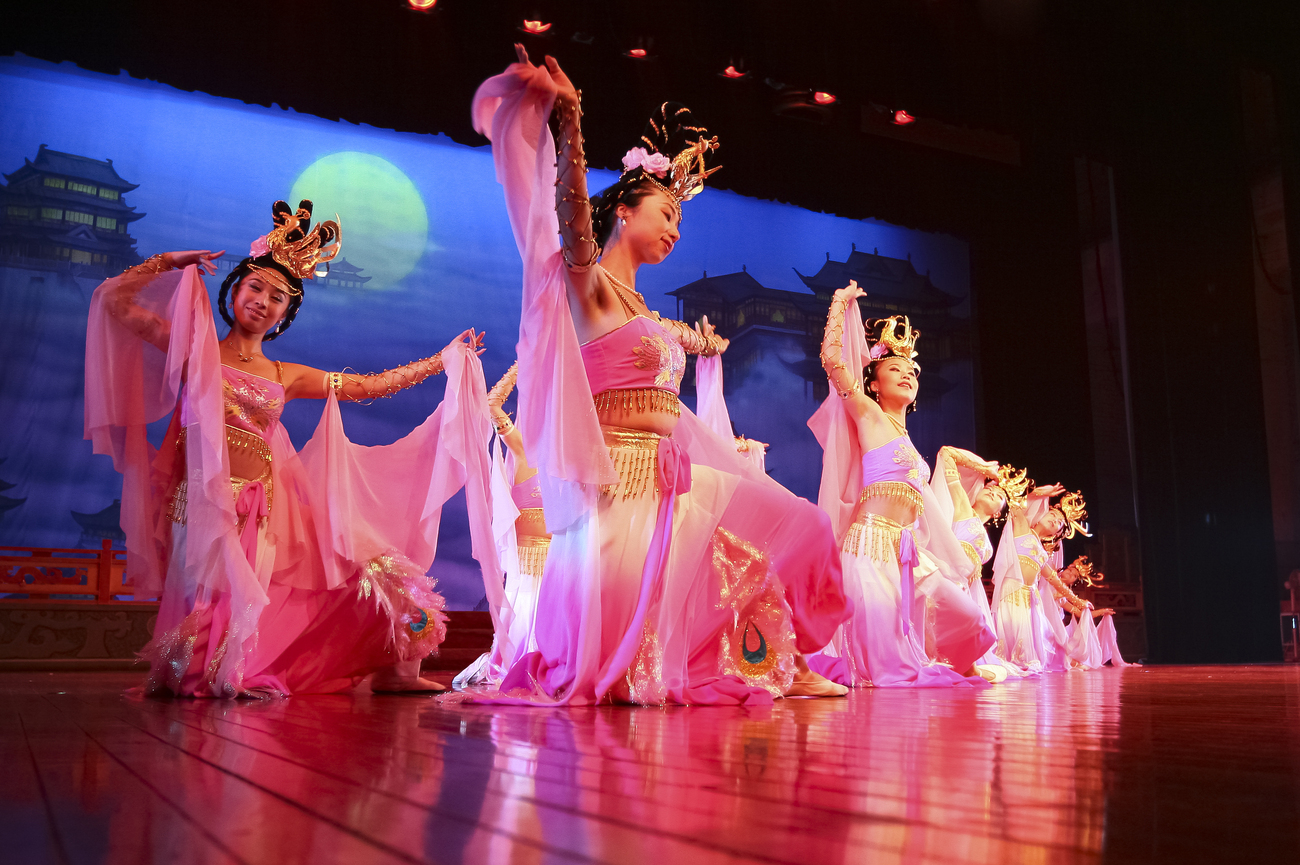
- Tang Dynasty Music & Dance Dinner Show: Step back into the splendour of 8th century China at the Tang Dynasty Music & Dance Dinner Show, where performance and cuisine come together in a full sensory experience. Set inside grand theatre style dining halls, the evening recreates the elegance and artistry of the Tang Dynasty’s golden age. As you dine, enjoy a series of beautifully choreographed dances and live musical performances. At the end of the performance, feast on a Dumpling Banquet, where you’ll sample over 20 varieties of delicately crafted dumplings shaped like flowers, birds, and animals, each with its own unique filling.
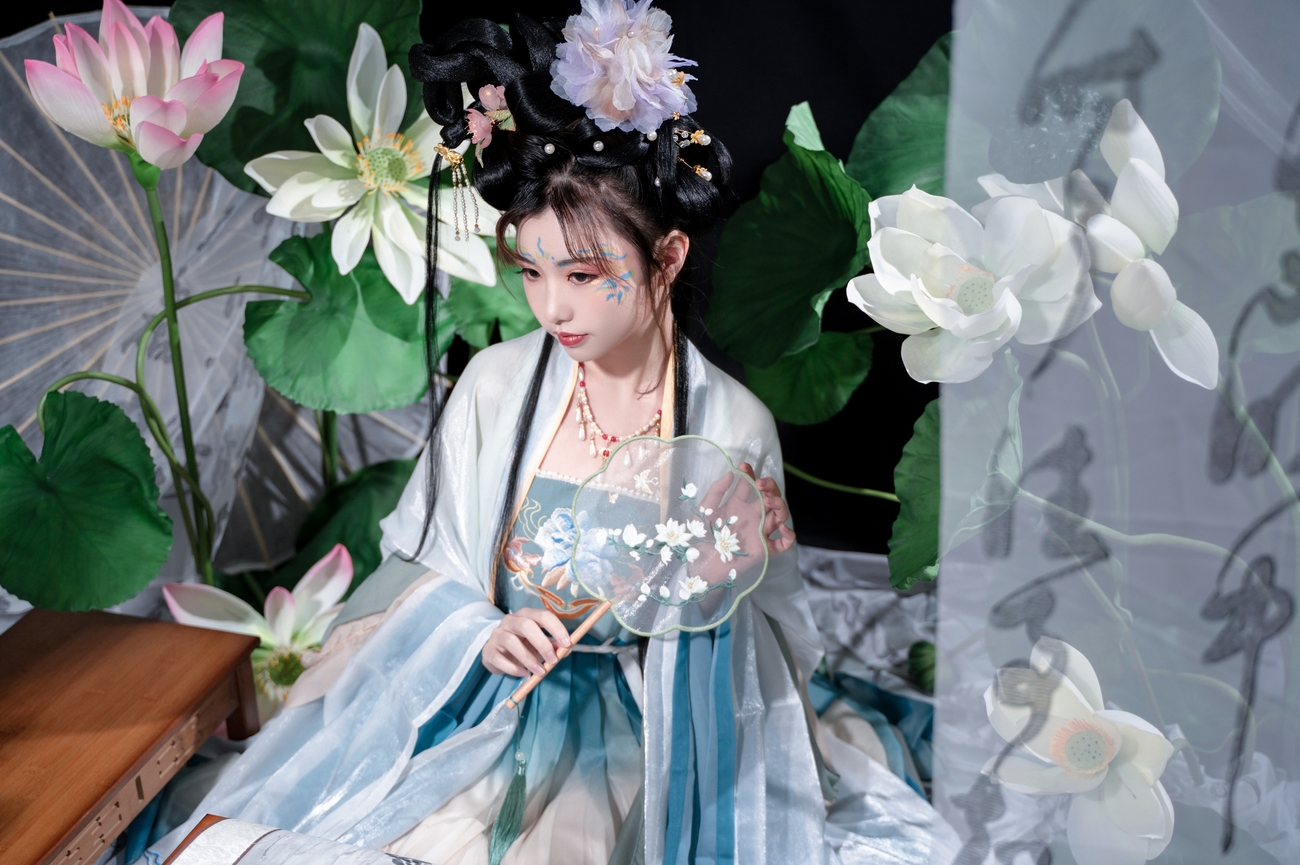
- Professional Hanfu Dress Up & Photoshoot: For a true “time travel” experience, treat yourself to a professional Hanfu dress-up and photoshoot in Xi’an’s Qujiang District. Unlike simple costume rentals, this is a fully immersive styling experience designed to transform you into a Tang Dynasty noble or a Silk Road traveller. You can begin by selecting from beautifully crafted Hanfu robes made from fine silks and rich fabrics, followed by professional stylists applying traditional makeup, along with Tang-style brows and lip shapes. The look is completed with elaborate hairstyles using hair extensions, ornate pins, and floral ornaments to recreate the elegant high-bun styles worn by ancient court ladies and empresses. Once the transformation is complete, a professional photographer can guide you to scenic locations in Xi’an such as the Big Wild Goose Pagoda, Tang Paradise, or the Ancient City Wall to capture graceful, story-rich images that feel straight out of a Chinese period drama.
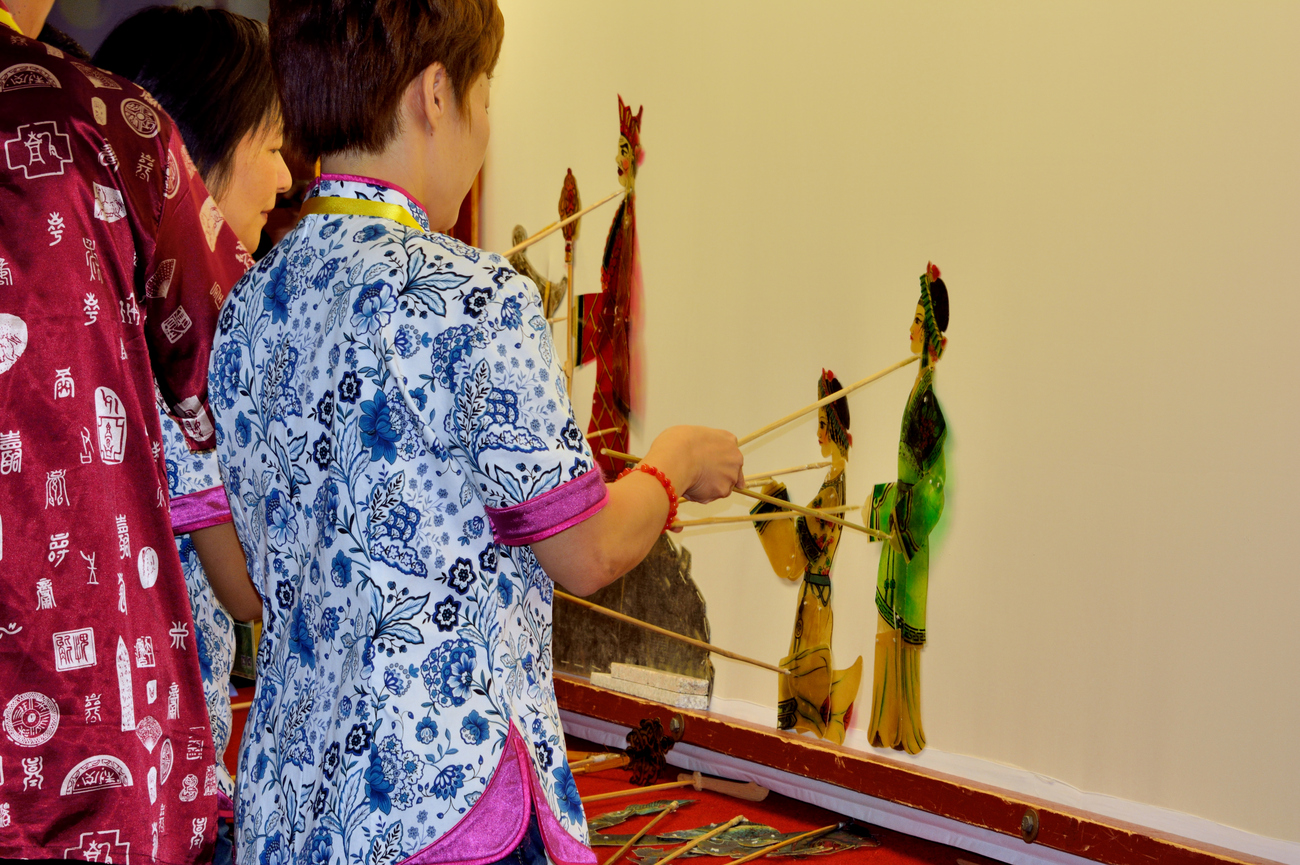
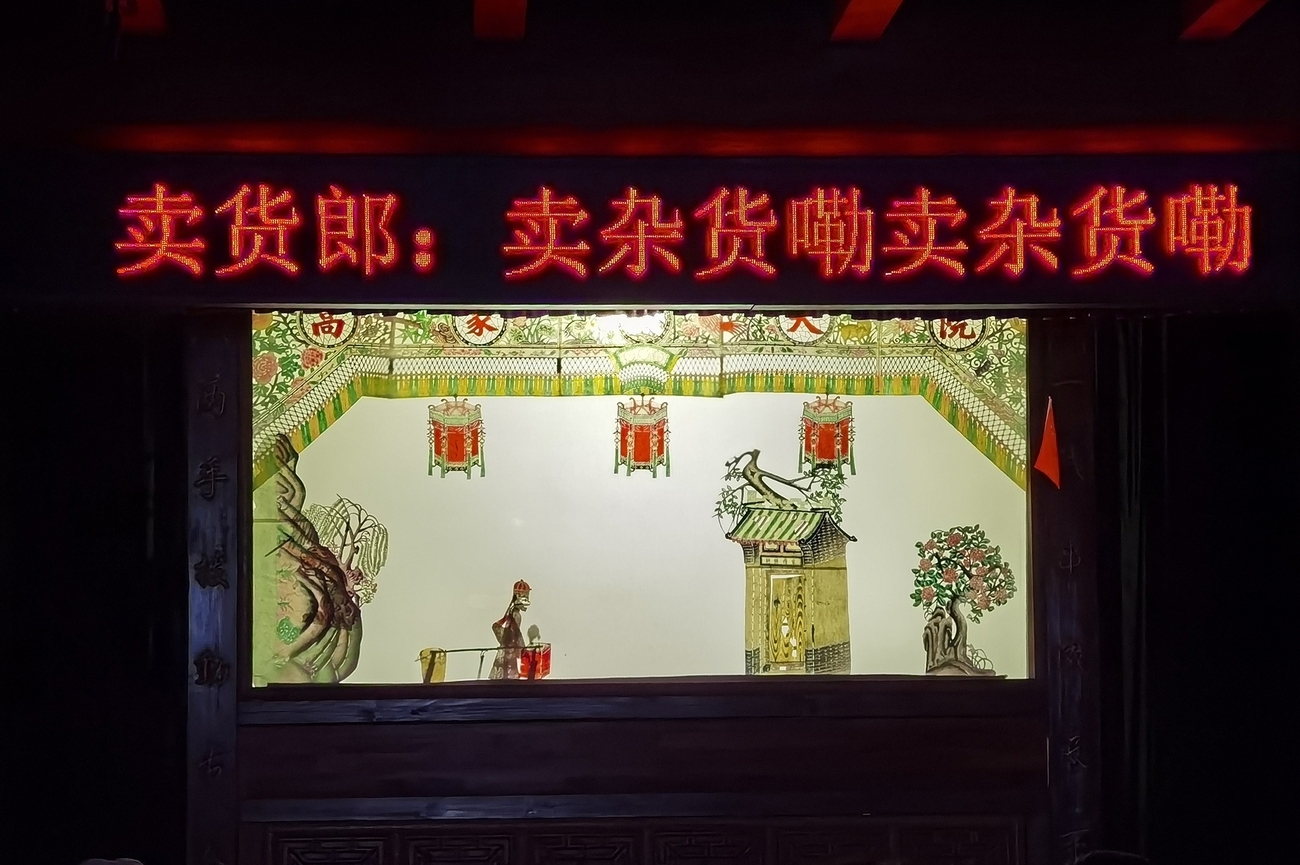
- Leather Shadow Play Class (Pi Ying Xi): Shaanxi is considered the birthplace of Chinese shadow puppetry, making this the perfect place to learn its craft. Held in peaceful courtyards or heritage centres like the Gao Grand Courtyard in the Muslim Quarter, these workshops introduce you to the intricate art of puppet making, from fine leather cutting to detailed hand painting. You can see how each joint, from the neck to the wrists, is carefully designed to create lifelike movement, turning simple silhouettes into expressive characters. The highlight comes when you step behind the backlit silk screen and learn to animate your puppet. Practise subtle wrist movements to make it walk, fight, and bow. It’s a creative, hands-on break from sightseeing.
Other Things to Do in
Xi’an
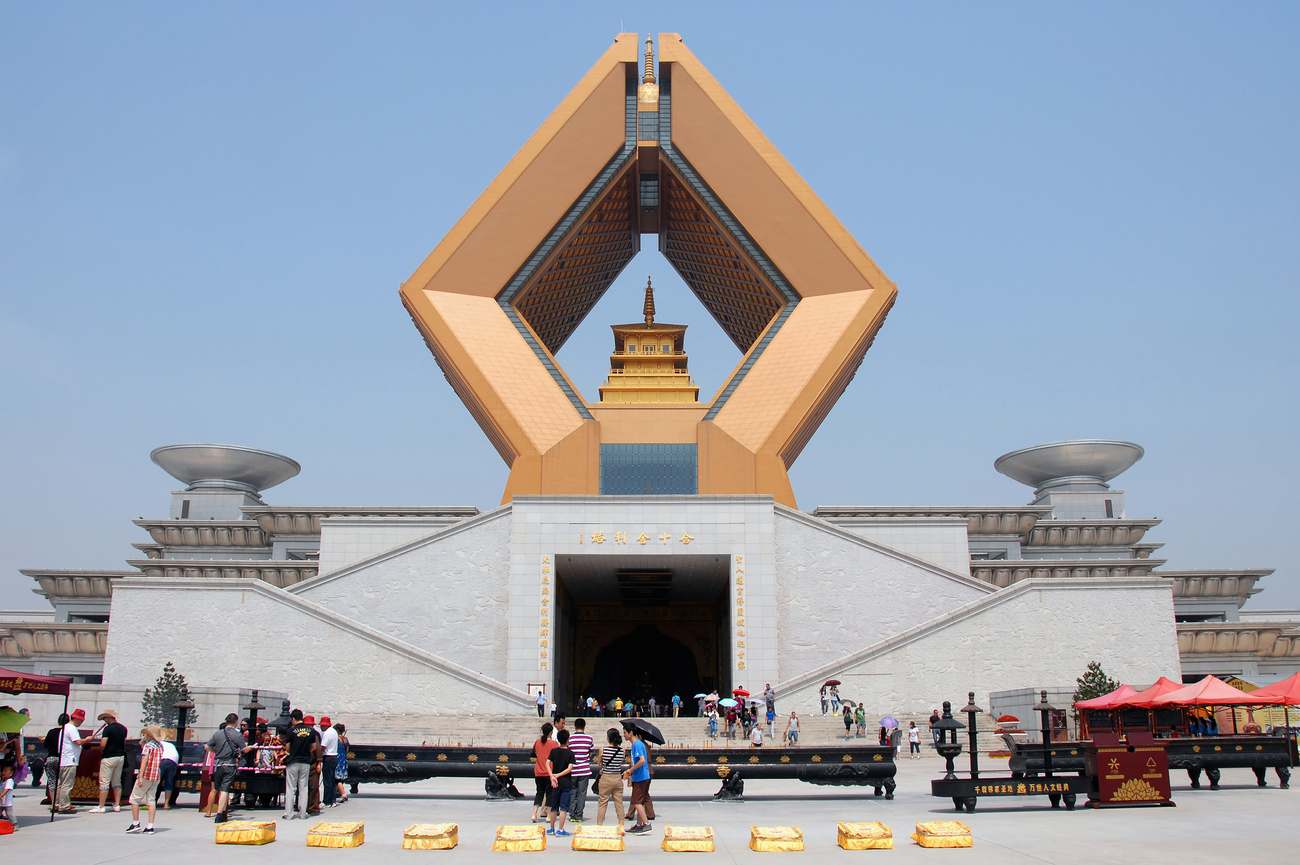
- Famen Temple: For a deeply spiritual and culturally rich experience, visit Famen Temple, one of China’s major Buddhist pilgrimage sites, called the “Ancestor of Pagoda Temples in Central Shaanxi.” Founded over 1,700 years ago during the Eastern Han Dynasty, the temple is revered for housing a rare finger bone relic of Sakyamuni Buddha. If your visit falls on the 1st or 15th day of the lunar month, or on weekends and public holidays, you’ll have the rare opportunity to view the sacred finger relic itself.
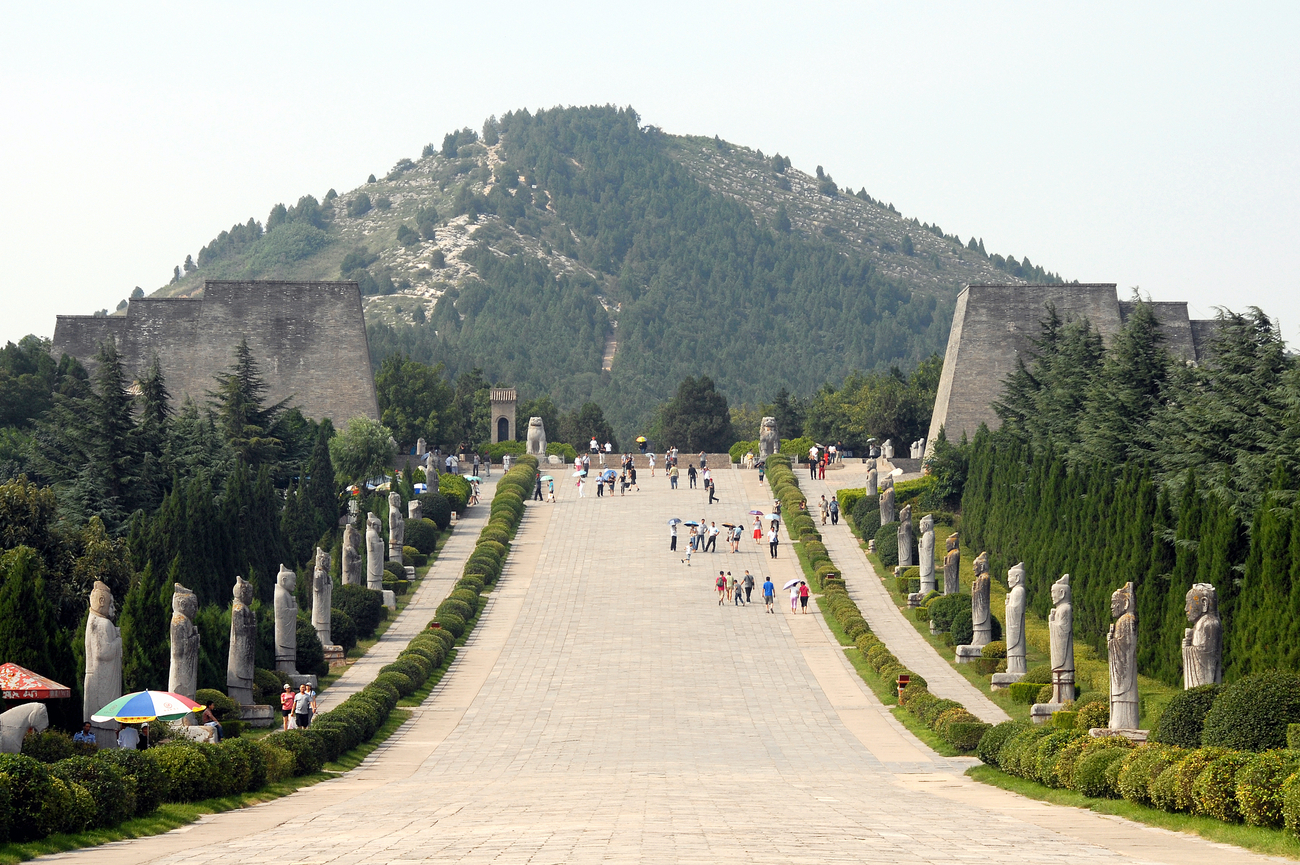
- Qianling Mausoleum: The final resting place of Emperor Gaozong and his formidable wife, Wu Zetian, China’s first and only reigning female emperor. Built in 684 AD atop Mount Liangshan, this vast Tang Dynasty burial complex is one of the very few imperial tombs in China that has never been looted for over 1,300 years. While the main tomb remains sealed, you can explore the underground passages of the surrounding attendant tombs, including those of Princess Yongtai and Crown Prince Zhanghuai. Walking through these excavated chambers gives you rare insight into royal life, court rituals, and the world of the Tang imperial family.
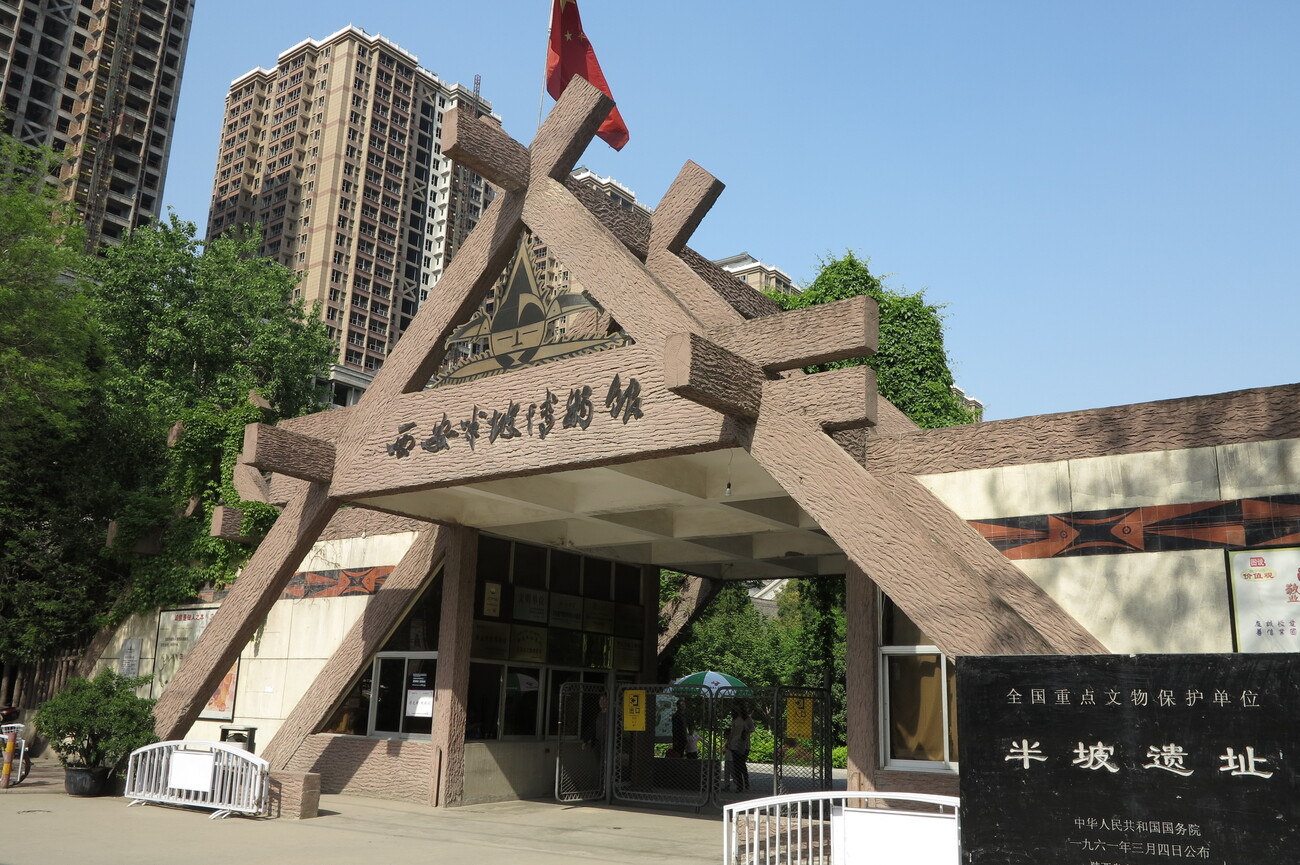
- Banpo Museum: China’s first prehistoric settlement museum, built directly over the excavated remains of a Neolithic village from the Yangshao Culture. This remarkable site offers you a rare glimpse into daily life during the New Stone Age. Inside, you can explore a vast excavation hall and walk above a 3,000 sqm. area that preserves the original village layout. From above, you can clearly see the foundations of ancient homes, storage pits, and animal enclosures, allowing you to visualise how families lived, worked, and gathered. The museum also highlights distinct zones for residential life, pottery kilns, and burial grounds. One of the most touching details in this museum is in the cemetery area, where adults were buried in rectangular pits, while children were laid to rest inside pottery jars placed near the family homes.
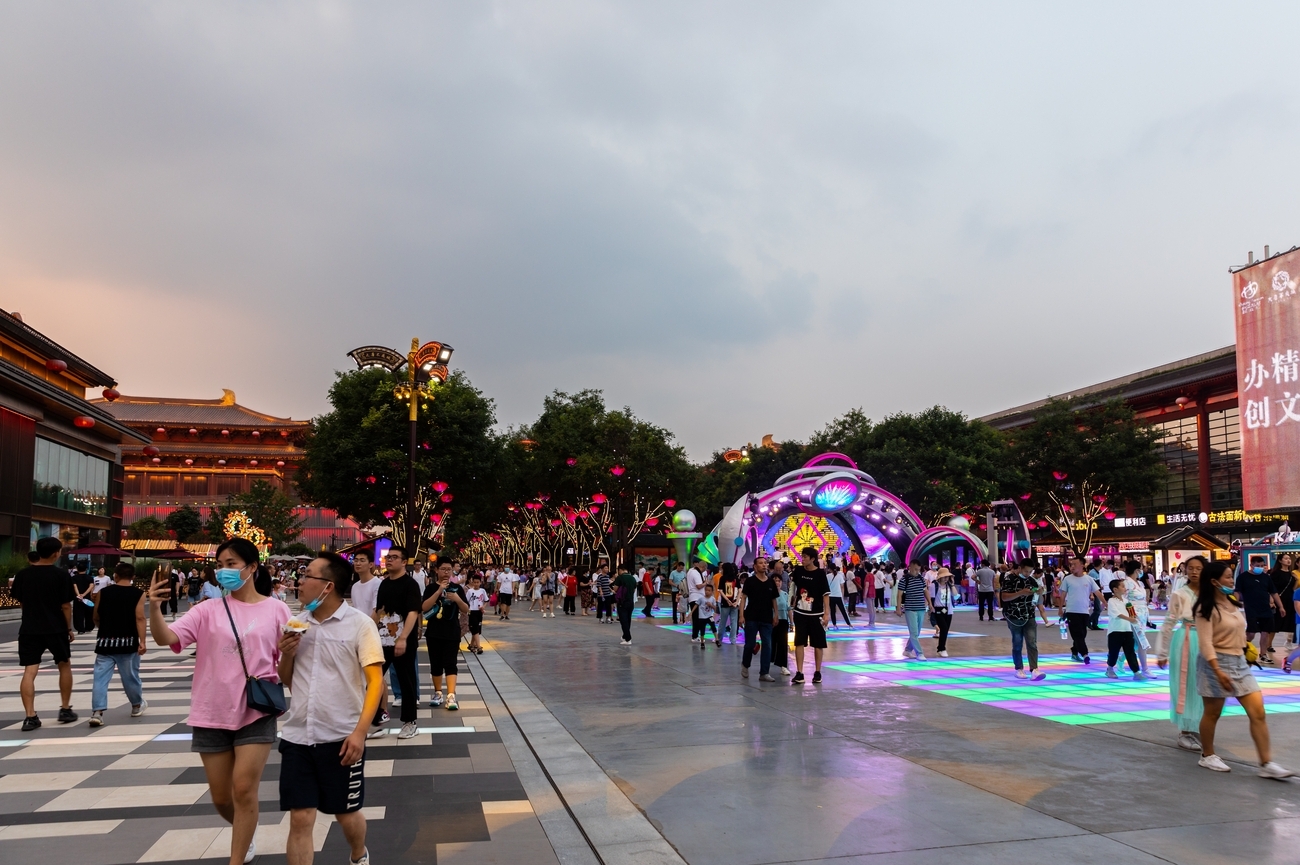
- Grand Tang Dynasty Ever Bright City: A large, open air, pedestrian-only cultural street that brings the splendour of the Tang Dynasty’s golden age to life. Located in the Qujiang District, this lively promenade features Tang architecture, cinematic lighting, and lively street performances into an experience that feels festive. The area truly shines after dark, when thousands of lights illuminate the Tang-style pavilions, towering sculptures, and ornate facades. As you stroll along the 1.5 kilometre walkway, you’ll be surrounded by glowing lanterns, costumed performers, and an infectious festive atmosphere. Throughout the night, you can pause to watch free cultural shows, from traditional dance and music to interactive street performances that draw you into the moment. When hunger strikes, follow the aromas to the rows of food stalls and restaurants serving Xi’an favourites. Be sure to try roujiamo (Chinese hamburger), liangpi (cold noodles), and a selection of sweet pastries and milk teas for a satisfying taste of local flavour.
Things to Do with Kids
in Xi’an
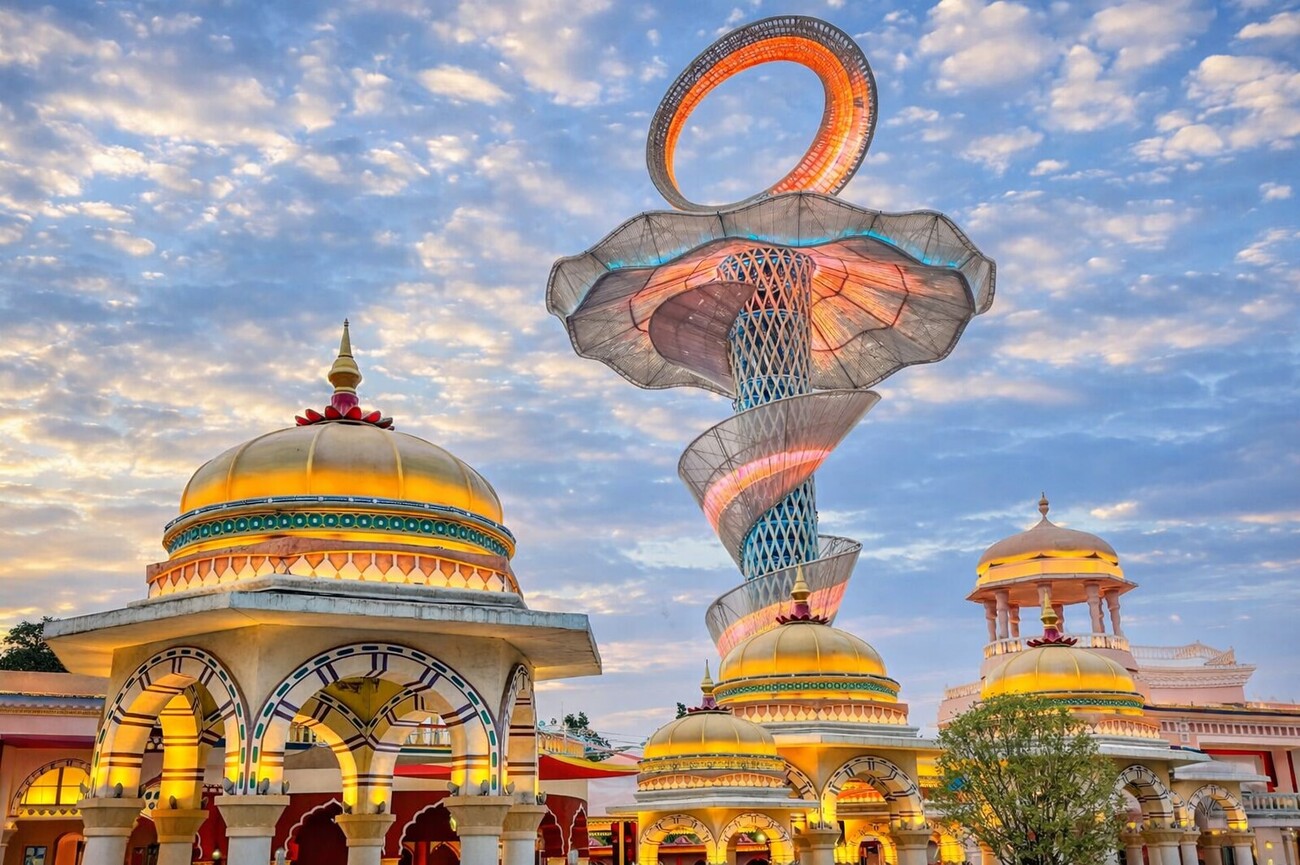
- Silk Road Happy World Amusement Park: For a fun filled day with the family, visit Silk Road Happy World, a large amusement park featuring seven immersive zones that recreates the architecture and traditions of countries once connected by the ancient Silk Road route. Journey through themed areas like Glorious Rome, Magnificent Persia, and Ganges Elephant Valley, each with a unique theme and architecture perfect for family photos. With over 30 rides and attractions, the park caters to all ages.
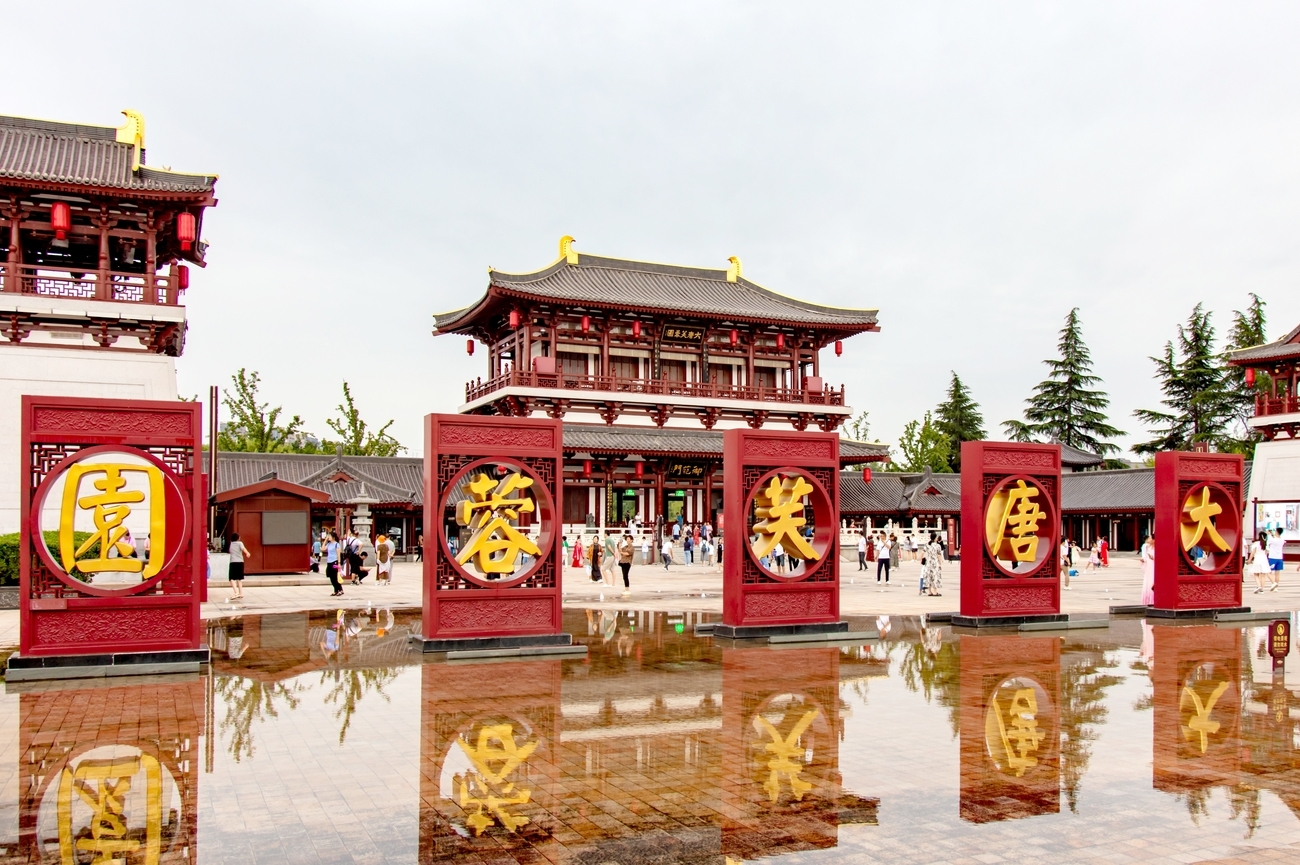
- Tang Paradise (Datang Furong Garden): A massive theme park designed in the grand architectural style of the Tang Dynasty. Built on the original site of an imperial lotus garden, this beautifully landscaped park feels like a living museum. As you explore, you’ll wander through themed areas such as the Imperial Garden, Imperial Cuisine zone, and Folk Culture village, giving you and your kids insights into how life once unfolded during the Tang era. In the evening, stay for the park’s outdoor show on Furong Lake, where dazzling lights, fire effects, music, and a giant water screen bring “The Story of the Tang Dynasty” to life.
- Watch Shadow Puppet Show in Muslim Quarters: One of the most engaging ways to introduce kids to ancient Chinese storytelling is through this 2,000 year old folk art that uses colourful leather silhouettes projected onto a glowing silk screen. One of the best places for families to experience this is at the Gao Grand Courtyard (Gao Fu), a beautifully preserved Ming Dynasty mansion. Unlike a large theater, the setting is intimate, allowing your kids to sit close to the stage, hear the live music and singing, and feel part of the performance. The shows are usually short (around 15–20 minutes), which is perfect for children's attention spans. They often perform action packed snippets of "Journey to the West", featuring the mischievous Monkey King fighting demons. After the show, many venues invite children behind the silk screen, where they can meet the puppet masters, learn how the figures are controlled, and even try moving the puppets themselves.
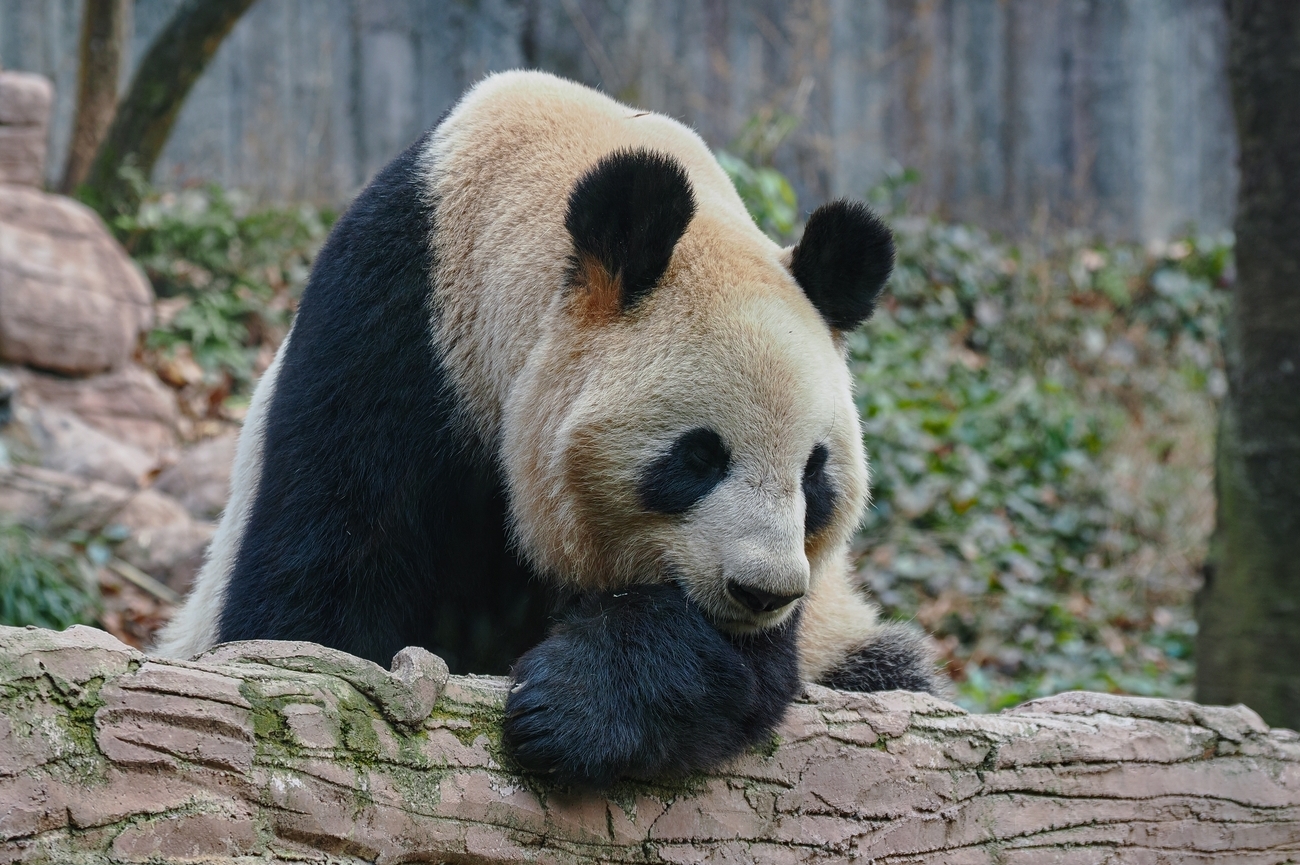
- Qinling Giant Panda Research Center: Also known as the Qinling Four Rare Animals Science Park. This conservation and breeding base is dedicated to protecting some of China’s rarest species. Meet Qi Zia, the world’s only captive brown giant panda. His distinctive chocolate-coloured fur and playful personality make him an instant favourite, especially with children. Watching him roll in the snow during winter or happily munch bamboo year-round is a moment guaranteed to bring smiles all around. The centre is also home to other endangered animals native to the Qinling Mountains, including golden snub-nosed monkeys, golden takins, crested ibises, red pandas, and black bears.
Where to Eat in Xi’an
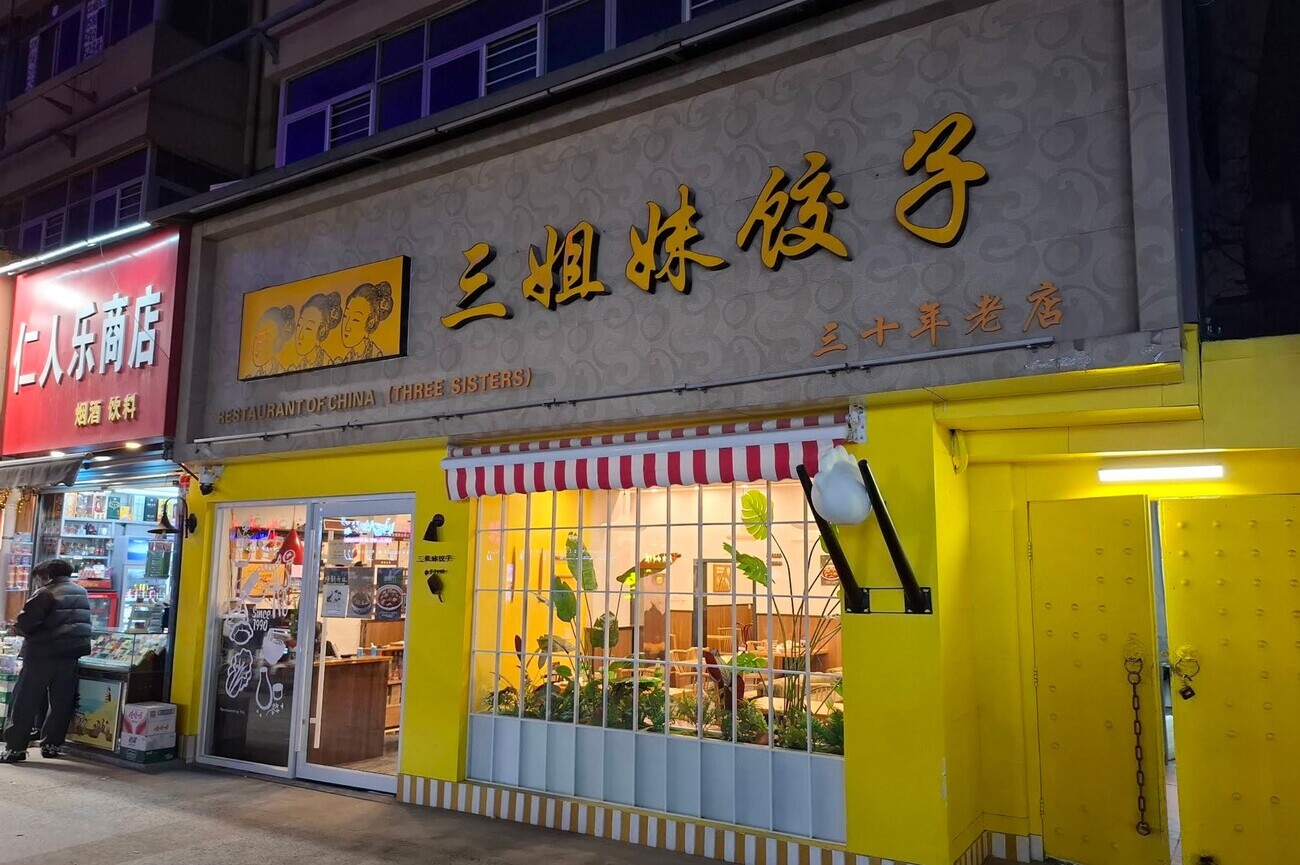
- Three Sisters Dumplings: For a comforting, straight forward taste of local cuisine, the Three Sisters Dumplings offers a home style cooking and welcoming atmosphere. The menu centres around freshly made dumplings, with around six varieties available in both dry and soup styles. Popular choices include pork and Chinese chive, shrimp and pork, and vegetarian options like the Three Element dumplings filled with egg, chives, and glass noodles, as well as mushroom dumplings. Each bite is simple, comforting, and full of flavour. Don’t stop at dumplings, though. Locals swear by the vegetable dishes, which are just as memorable, especially the spicy eggplant, spicy green beans, and organic cauliflower with chilli.
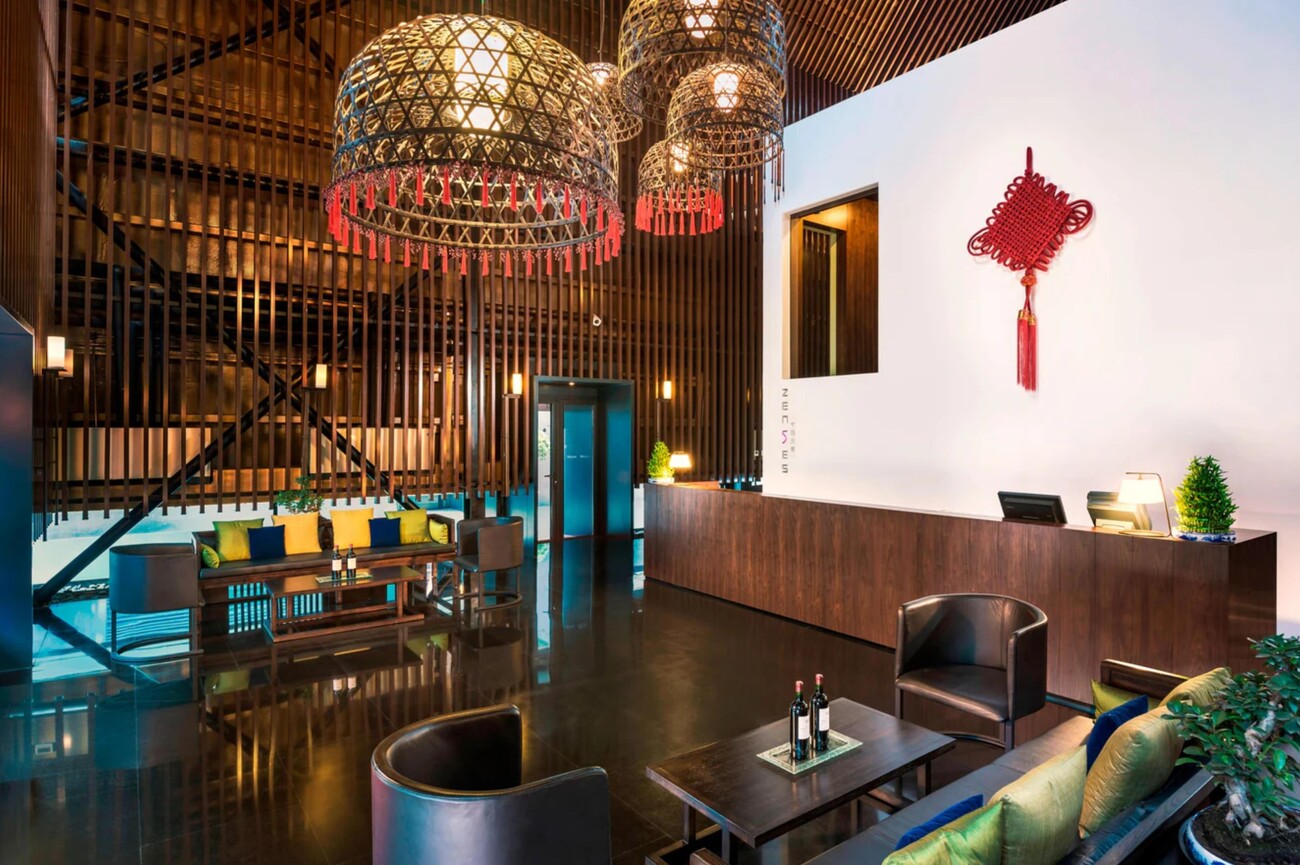
- Five Zen5es at The Westin Xi’an: The signature Cantonese restaurant located inside The Westin Xi’an. With its dark wood interiors, soft lighting, and private dining rooms, it’s an ideal setting for special celebrations, romantic evenings, or polished business dinners. The menu focuses on the five sensory elements of Chinese cuisine: color, aroma, flavor, texture, and presentation, ensuring that every dish is as visually beautiful as it is delicious. Start with their handcrafted dim sum, especially the delicate har gow (shrimp dumplings) and fluffy char siu bao (barbecue pork buns). For mains, don’t miss the crispy roasted pork belly and honey glazed BBQ pork, prized for their quality cuts and perfect balance of richness and sweetness. If you’re in the mood to indulge, check out their premium seafood options like steamed garoupa and braised abalone.
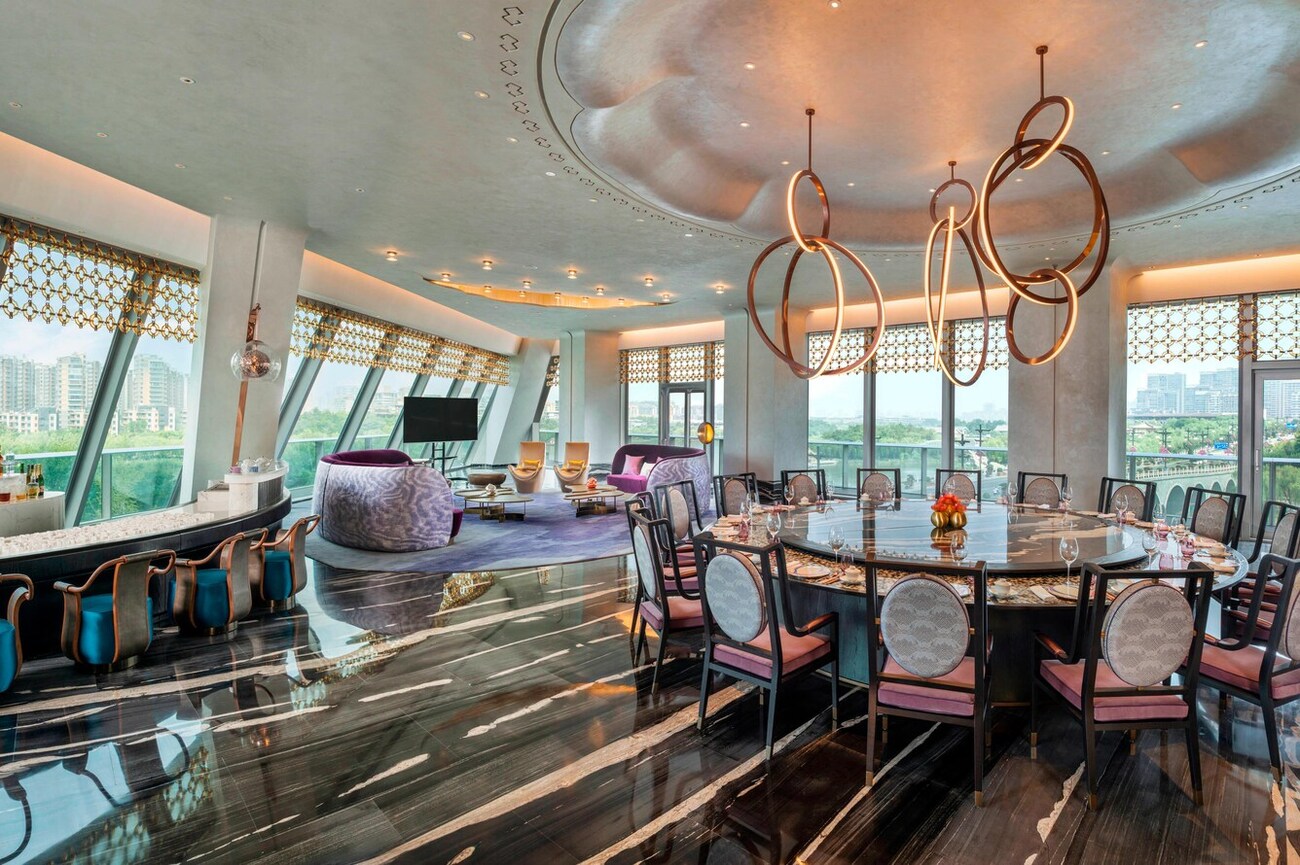
- YEN Chinese Restaurant at W Xi'an: If you’re looking for a contemporary dining experience, we can arrange a table for you at YEN, the signature Chinese restaurant inside the ultra chic W Xi’an. With its striking “Gold and Silk Road” design and stunning views over Qujiang Pool Park, the setting feels glamorous and elegant. The menu features a combination of refined Cantonese techniques with the robust flavours of Shaanxi cuisine, giving you a fresh take on classic dishes like the signature Peking duck, carved tableside and served with delicate pancakes and creative condiments, as well as the premium biangbiang noodles and expertly prepared lamb dishes using high quality imported cuts. Don’t miss the crispy beef with honey and black pepper, a crowd favourite for its tender texture and irresistible balance of sweet and savoury.
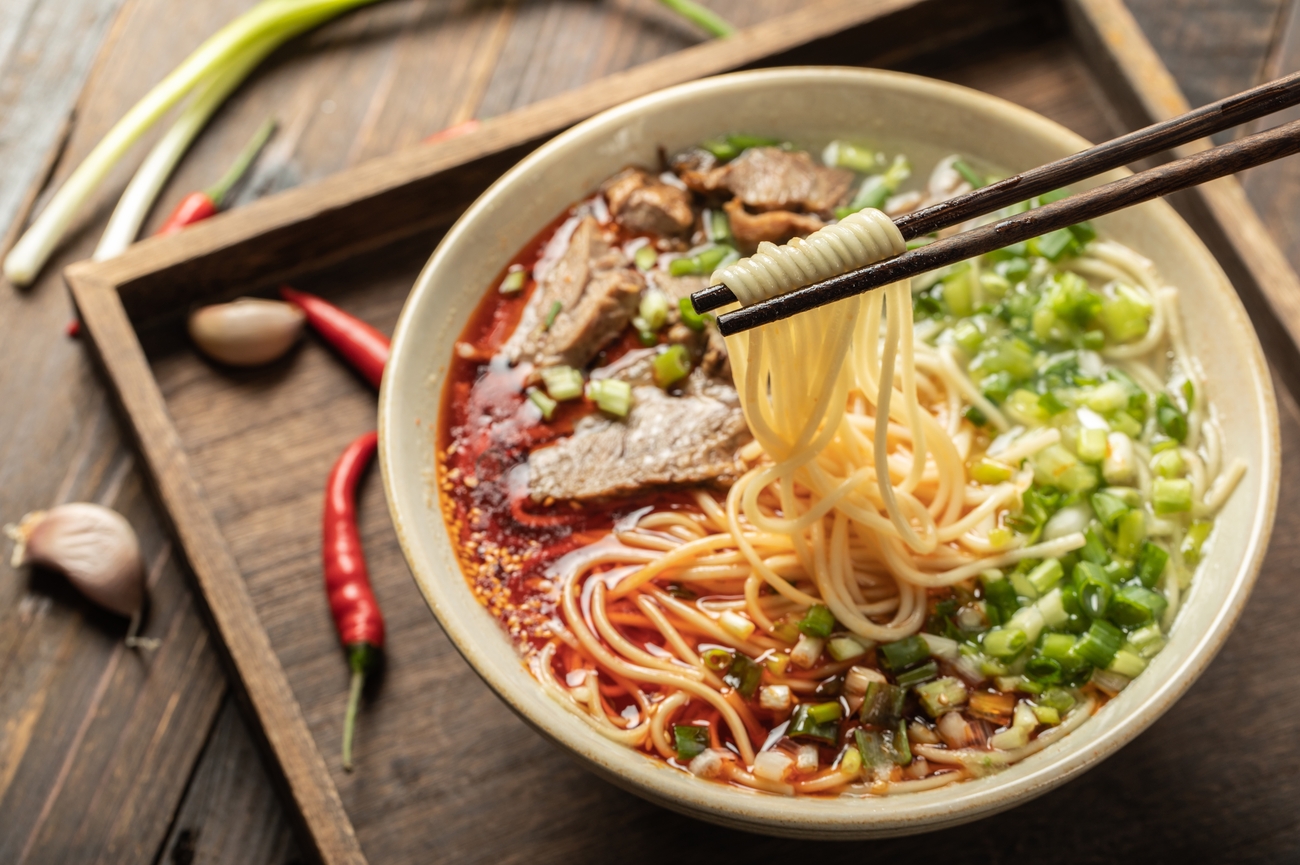
- Liuxin Niuyangrou Paomo: A local favourite known for serving one of Xi’an’s most iconic comfort dishes, the yangrou paomo (or lamb stew). This humble spot is celebrated for its rich, aromatic broth and satisfying flavours that locals swear by. What makes the experience special begins before the cooking even starts. Here, you’ll be handed a piece of flatbread and invited to tear it into tiny, soybean sized pieces, a ritual believed to improve the texture and flavour of the finished dish. Once your bread is ready, you can choose how you like your paomo served: dry, balanced, or with the broth served separately. The result is a comforting, hearty bowl that feels both nourishing and rooted in Xi’an’s culinary heritage.
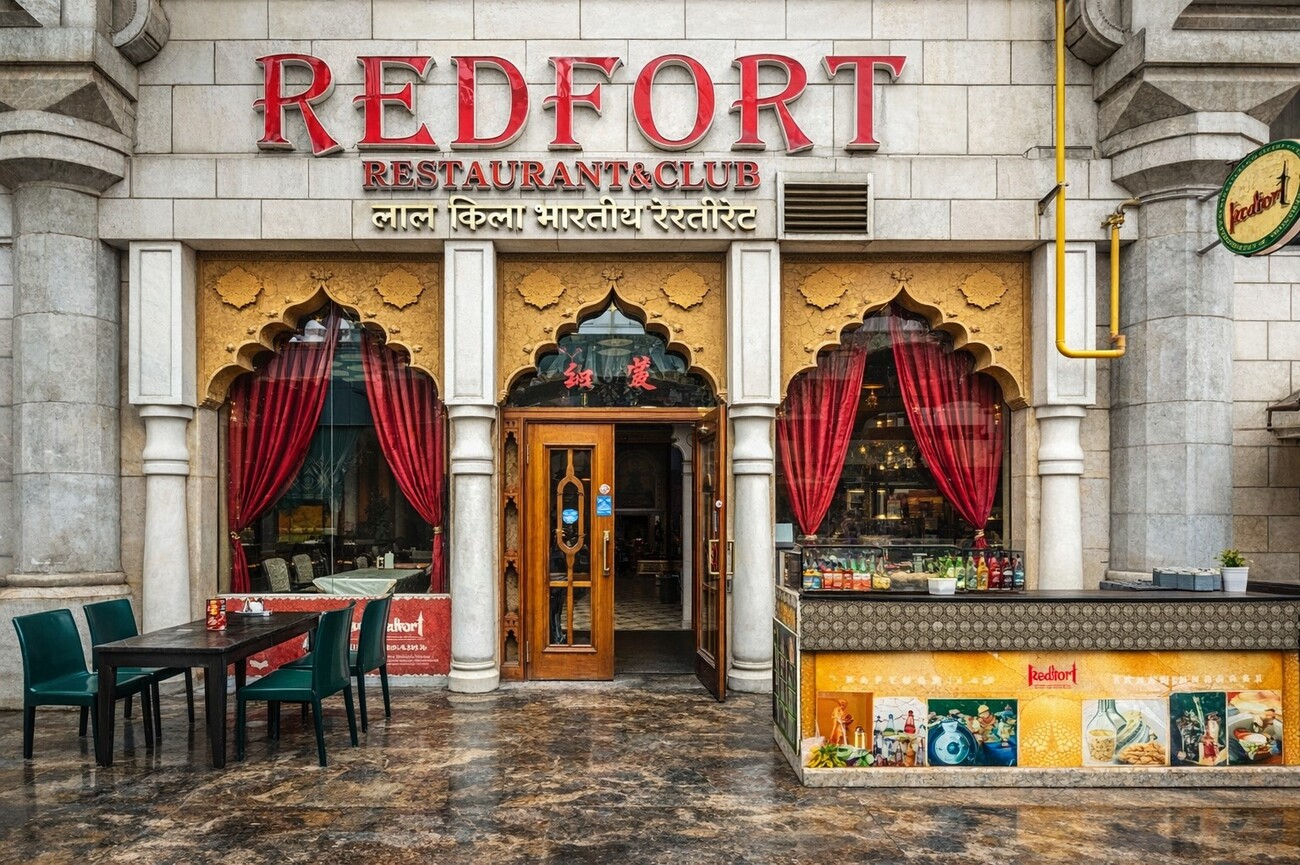
- Redfort Indian Restaurant: For a comforting break from Xi’an’s bold local flavours, Redfort Indian Restaurant offers a familiar and reassuring dining experience, especially popular with travellers and expats. Tucked away near the city centre, it is a long-standing favourite known for warm service and consistently authentic Indian cooking. Inside, the atmosphere is relaxed and welcoming, with simple décor and the gentle aroma of spices from the kitchen. The menu covers classic North Indian dishes, from rich butter chicken and well-spiced lamb curries to fragrant biryanis and slow-cooked dals, all prepared with balance rather than excessive heat. Fresh naan comes hot from the tandoor, perfect for scooping up sauces, and the vegetarian options are a reliable highlight.
Where to Stay in Xi’an
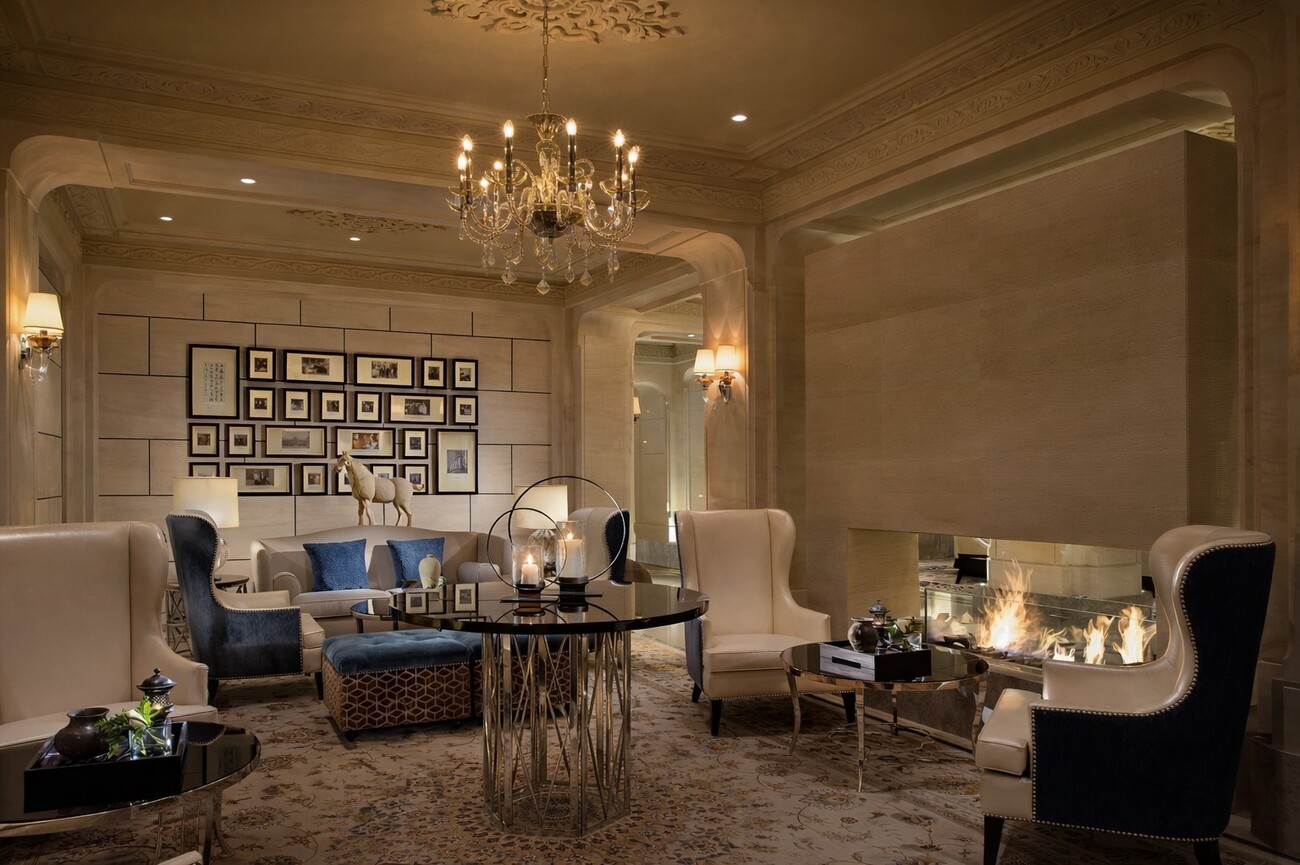
- Sofitel Legend People’s Grand Hotel Xi’an: A beautifully restored historic landmark that combines French elegance with rich Chinese heritage. Originally opened in 1953 as a state guesthouse for visiting dignitaries, the hotel now offers a refined boutique luxury experience. Every suite comes with 24-hour personalised butler (Majordome) service, so everything from tour arrangements to daily requests is effortlessly handled for you. Room interiors combine French and Sino-Russian architecture with elegant Art Deco touches. The hotel’s central location makes exploring Xi’an easy and stress free as you’re within walking distance of the Bell and Drum Towers, the Muslim Quarter, and the Ancient City Wall, giving you the advantage to move between major sights without long commutes or tiring transfers.
- The Ritz-Carlton Xi’an: Consistently ranked among the city’s finest hotels. What truly sets your experience apart here is the attentive, personalised service, where staff anticipate your needs and handle every detail effortlessly, allowing you to fully relax and enjoy your time in the city. The rooms and suites are designed with a sleek, modern aesthetic and equipped with all the comforts you expect from the Ritz-Carlton name. Sink into plush signature beds dressed in high quality linens, enjoy intuitive digital room controls, and unwind in expansive bathrooms featuring deep soaking tubs, rainforest showers, and premium amenities.
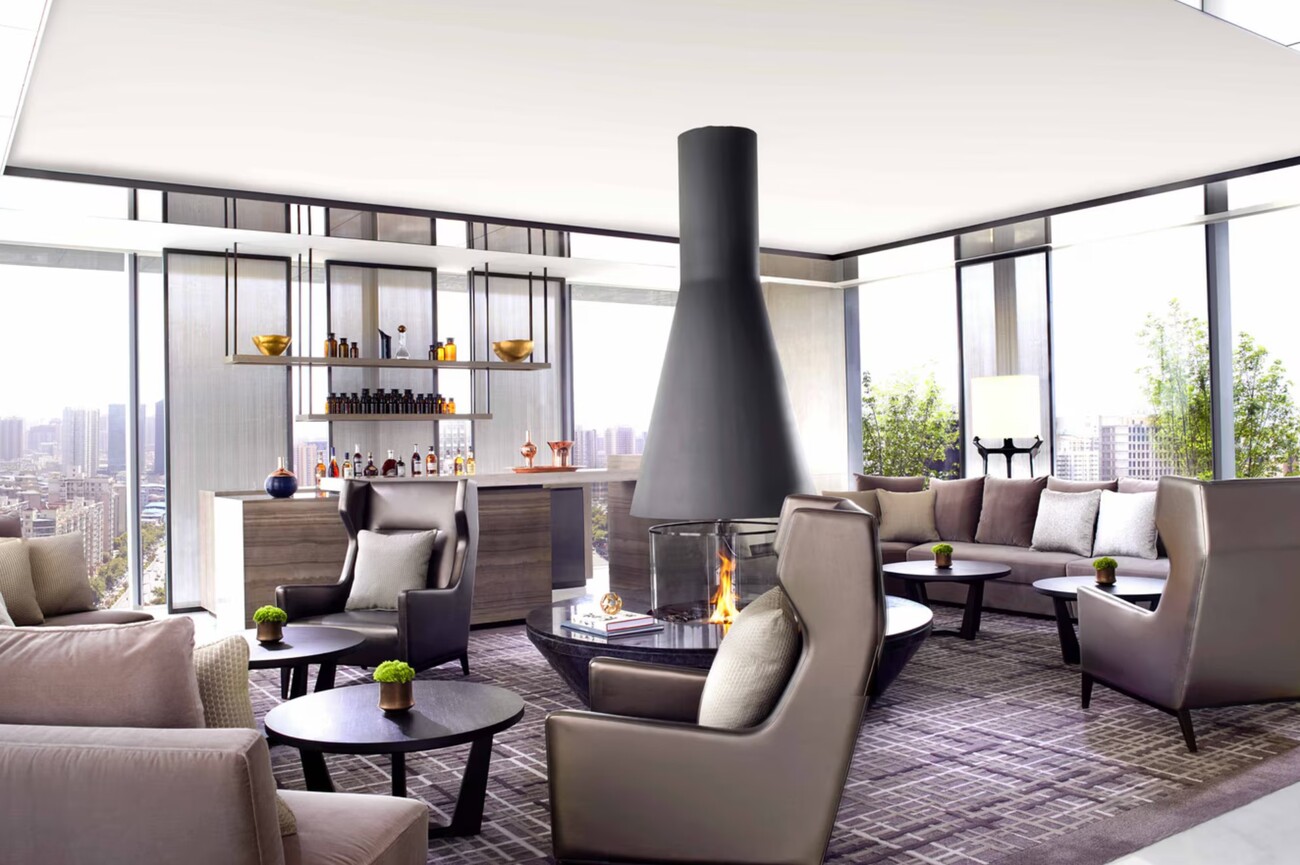
- W Xi’an: If you’re drawn to bold design, vibrant nightlife, and a high energy atmosphere, W Xi’an is your perfect choice. Located beside the Qujiang Pool Park and near the Big Wild Goose Pagoda, the hotel places you right at the centre of Xi’an’s modern cultural and entertainment scene. From the moment you step inside, the hotel feels like a visual spectacle, with its avant-garde neon lighting, dramatic art installations, and a sleek, contemporary aesthetic that reimagines Silk Road heritage for a new generation. The rooms and suites are stylish and spacious, with floor-to-ceiling window views of Qujiang Lake and the city skyline. In the evenings, you’re just steps away from the Grand Tang Dynasty Ever Bright City pedestrian mall, where night markets, street performances, and glowing city lights create a lively, festive atmosphere.
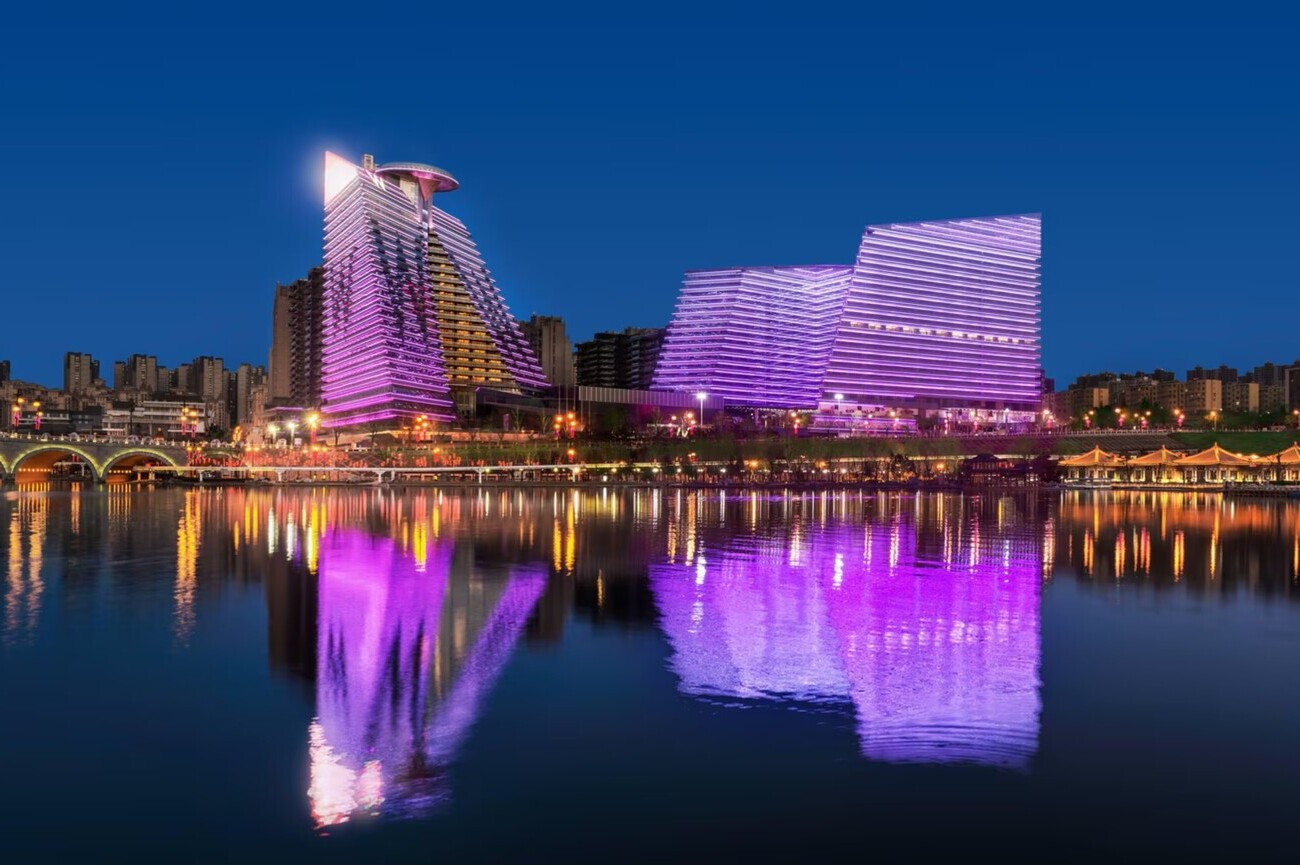
- JW Marriott Xi’an: Nicknamed the city’s “luxury in the sky,” JW Marriott Xi’an offers an elevated stay from the upper floors of a sleek modern skyscraper in the central development district. Its high rise location gives you stunning, floor-to-ceiling views across the city. The rooms and suites are designed for elegance and comfort, featuring plush bedding, marble bathrooms, and the full range of modern amenities you’d expect from a 5 star Marriott property. The hotel is in direct connection to a premium shopping mall and commercial complex, so dining, shopping, and entertainment are all just steps away (without even needing to step outside).
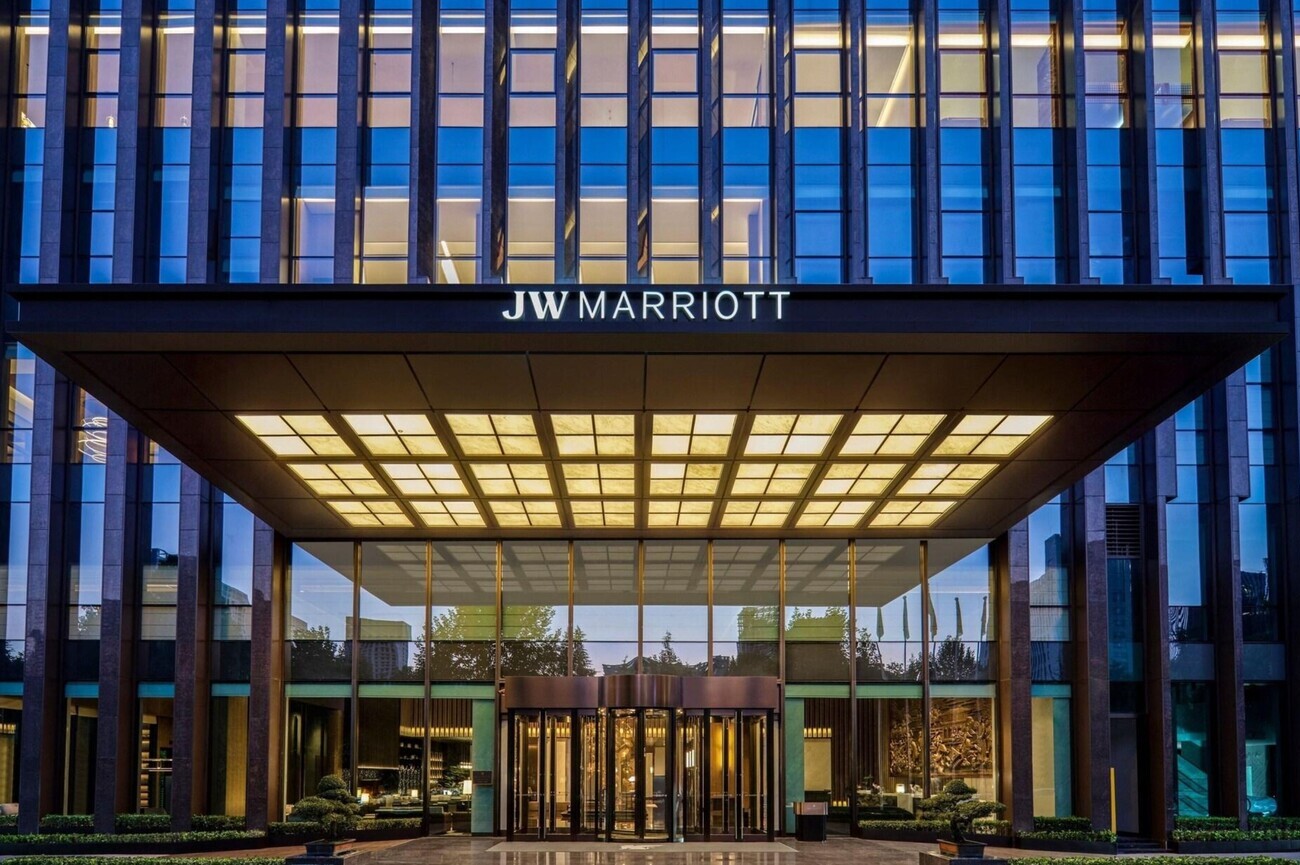
- Angsana Xi’an Lintong: For a deeply restorative stay, escape to Angsana Xi’an Lintong, a luxury hot spring resort, just a 10-minute drive from the Terracotta Warriors. This peaceful retreat features geothermal springs, once enjoyed by emperors and concubines at the nearby Huaqing Palace. You can unwind across more than 30 indoor and outdoor hot spring pools, each infused with calming scents or therapeutic herbs such as lavender and green tea. Whether you prefer a warm, soothing soak or a refreshing dip, you have a variety of options to choose from depending on how your body feels that day. For added privacy, choose a private villa complete with its own outdoor hot spring pool and personal treatment room for a much deserved, uninterrupted relaxation after a day of sightseeing.
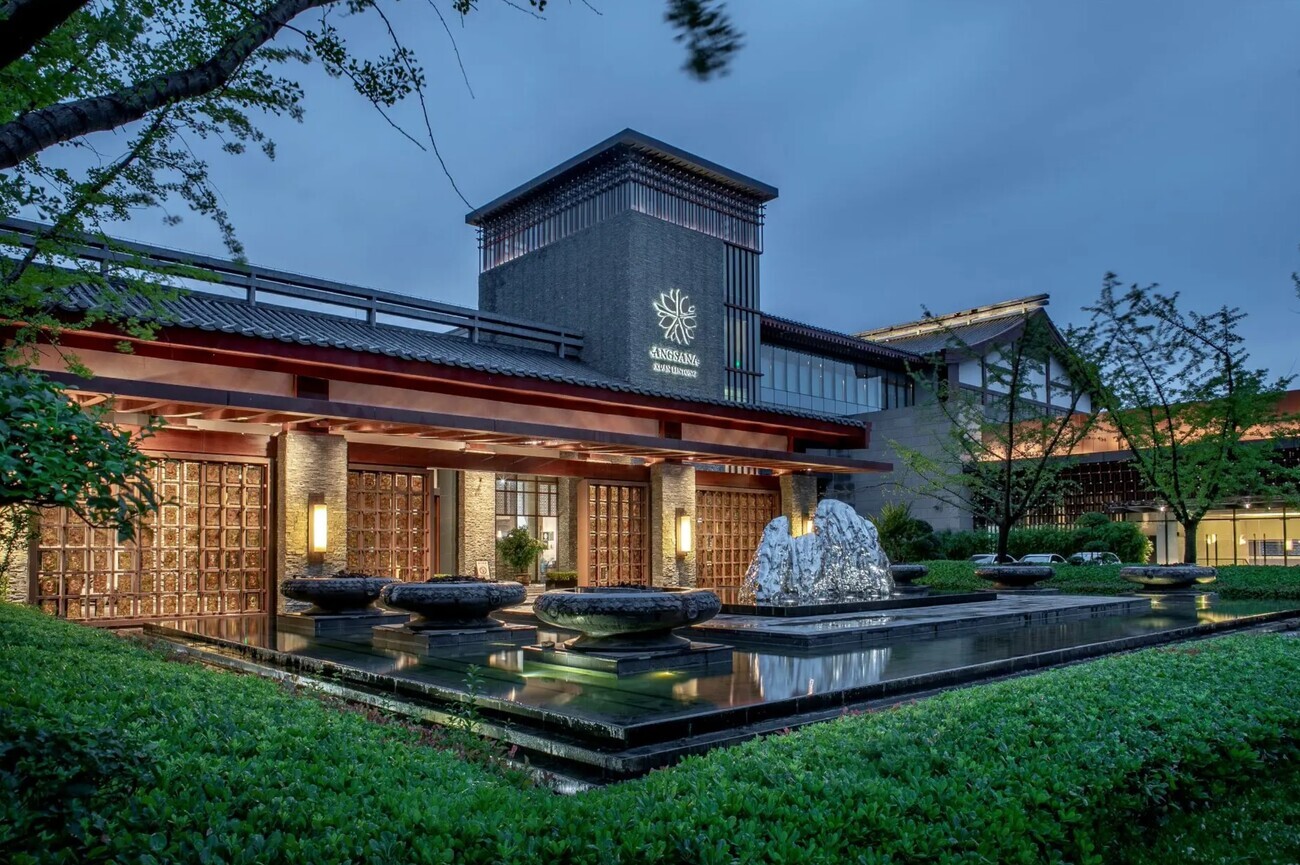
- Gran Melia Xi’an: Located in the scenic Qujiang New District near Qujiang Lake and the city wall, the hotel offers easy access to Xi’an’s major destinations. The hotel’s interior combines classic Spanish architectural elements with subtle references to the ancient Silk Road, creating a space that feels both sophisticated and story driven. The rooms and suites are spacious and elegant, featuring premium bedding, marble bathrooms, high end amenities, and state of the art technology. Many rooms offer calming views over the lake, gardens, or city skyline. Its location makes sightseeing in Xi’an effortless. Here, you’re just a short walk or taxi ride away from the Giant Wild Goose Pagoda, Ancient City Wall, and the lively Grand Tang Dynasty Ever Bright City pedestrian area.
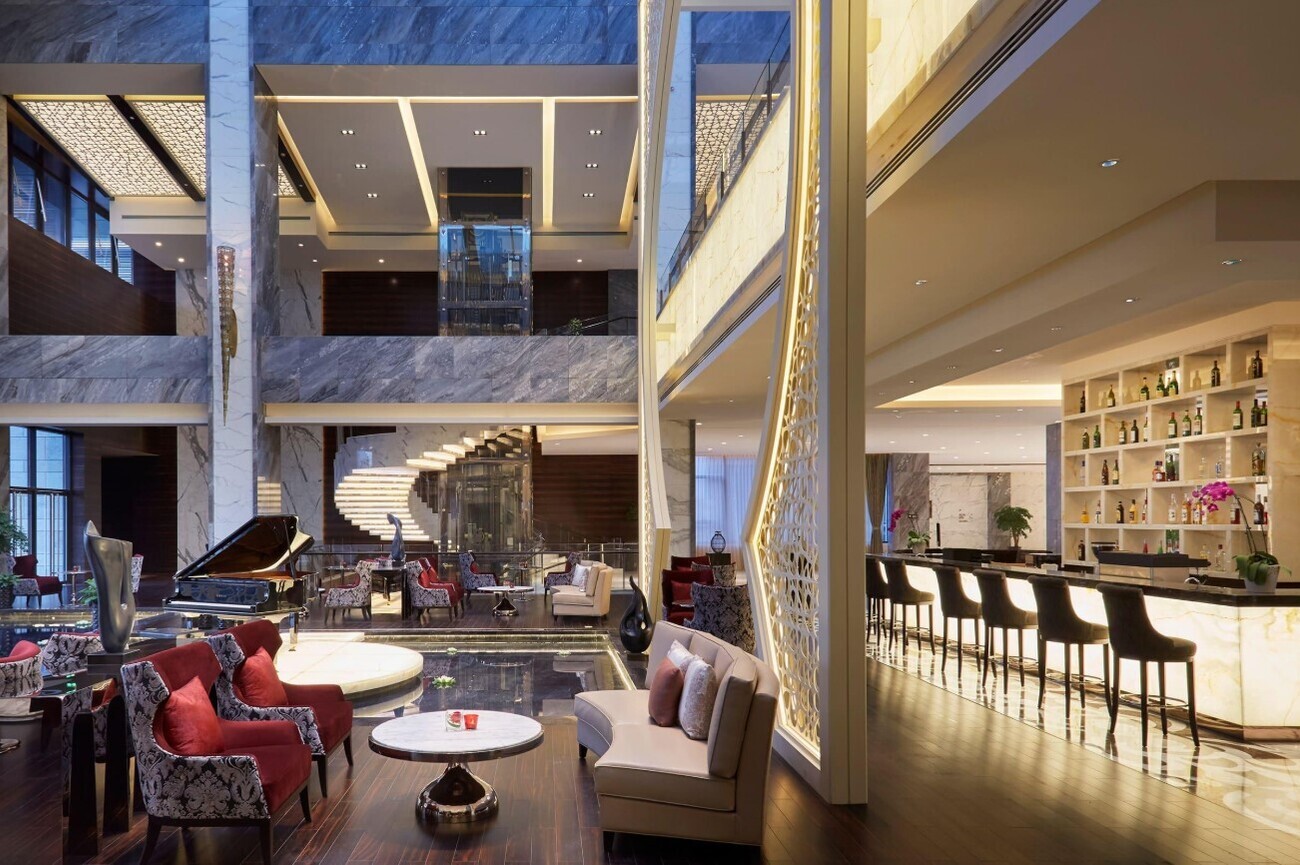
Best Time to Visit
Xi’an
The best time to visit Xi’an is during spring (March to May) and autumn (September to October), when the weather is mild and comfortable. These seasons make activities like cycling along the Ancient City Wall, exploring the Terracotta Army, and walking through historic streets far more enjoyable.
In spring, temperatures typically range from 15°C to 25°C, creating ideal conditions for city exploration. It’s also the season of blossoms like the Peony Festival in Luoyang, a must-see day trip if you have extra time.
In autumn, you’ll enjoy cool air and clear skies, making it the best season for hiking Mount Huashan and enjoying panoramic mountain views. Late October is especially scenic, when the golden ginkgo trees at Han Yang Ling Museum turn the grounds into a glowing autumn landscape.
To avoid heavy crowds, it’s best to plan your trip outside major public holidays, particularly Spring Festival (Lunar New Year), Labour Day, and National Day (Golden Week).
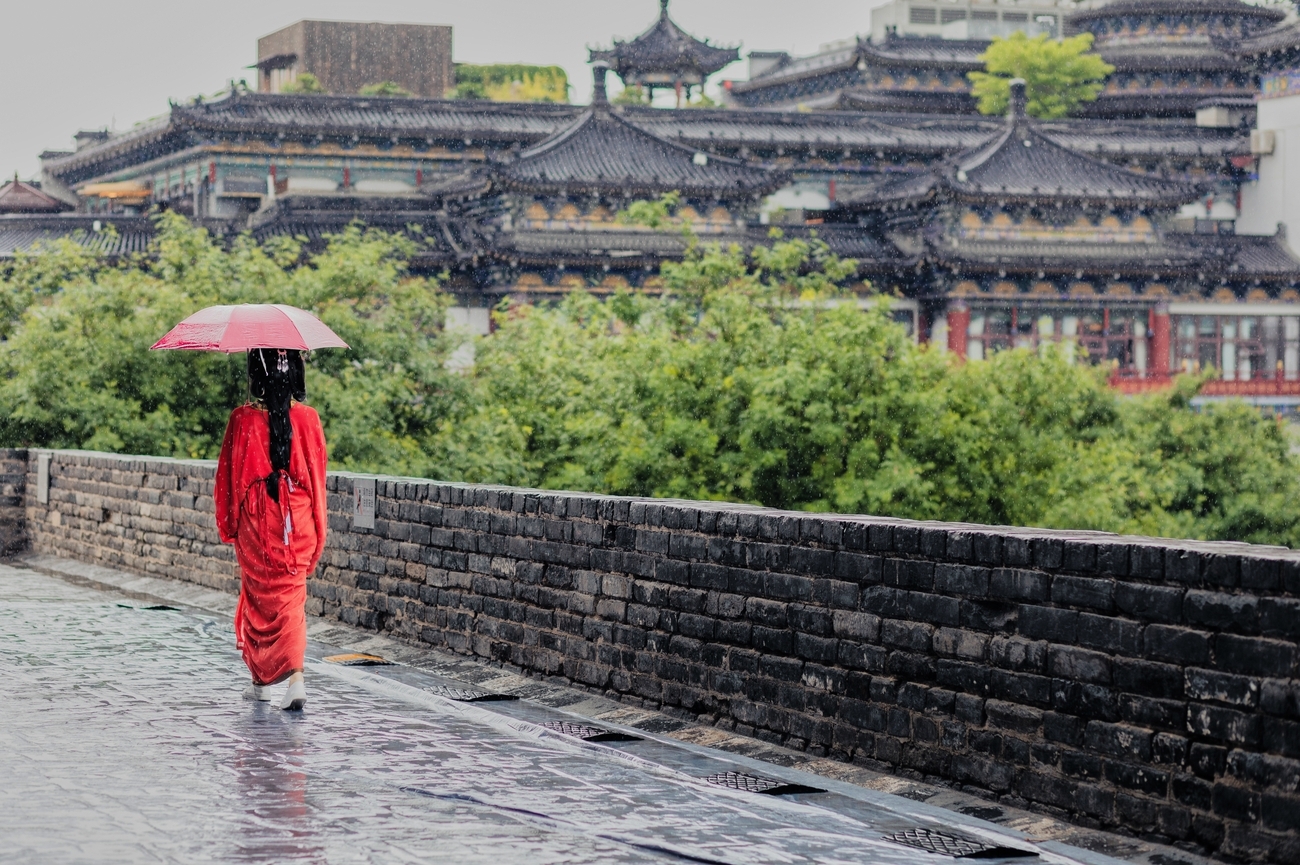
Festivals in Xi’an
- Chinese New Year: Xi’an transforms into one of the most festive cities in the country. As China’s ancient capital, the city prides itself on delivering “The Most Chinese New Year” on an unforgettable scale. One of the festival highlights is the City Wall Lantern Festival, where the ancient ramparts glow with hundreds of elaborate silk lanterns. As you walk along the wall, you’ll pass illuminated dragons, zodiac animals, and mythical figures. Meanwhile, the Grand Tang Dynasty Ever Bright City becomes the heart of the celebration. For weeks, the streets come alive with nonstop performances, from the famous roly-poly dancers to poetry recitals, parades, and waves of red lanterns stretching as far as the eye can see. Traditional temple fairs at places like the Small Wild Goose Pagoda and Daming Palace add even more colour, with lion dances, dragon parades, stilt walkers, and shadow puppet shows. Food plays a central role during the festival, and the Muslim Quarter is the best place to sample festive dishes. Be sure to try jiaozi (dumplings), symbolising wealth, and niangao (sticky rice cake), believed to bring progress and good fortune in the year ahead. Xi’an is one of China’s top domestic travel destinations during Chinese New Year, so crowds can be intense. But it’s an experience worth having at least once in your lifetime. For easier sightseeing, we highly recommend you to consider arriving days before the festivities begin or planning your main city exploration for a later visit, when you can enjoy Xi’an’s landmarks at a more relaxed pace.
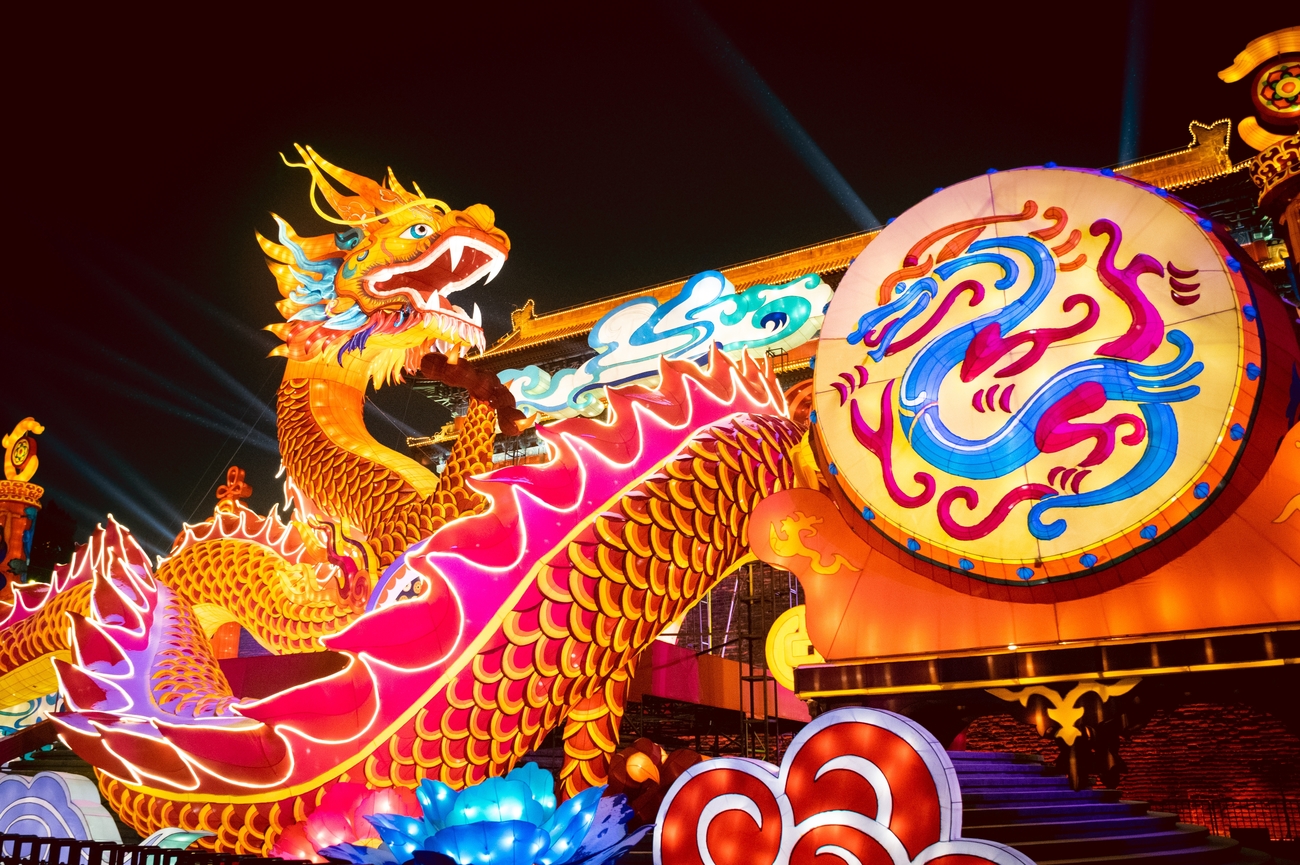
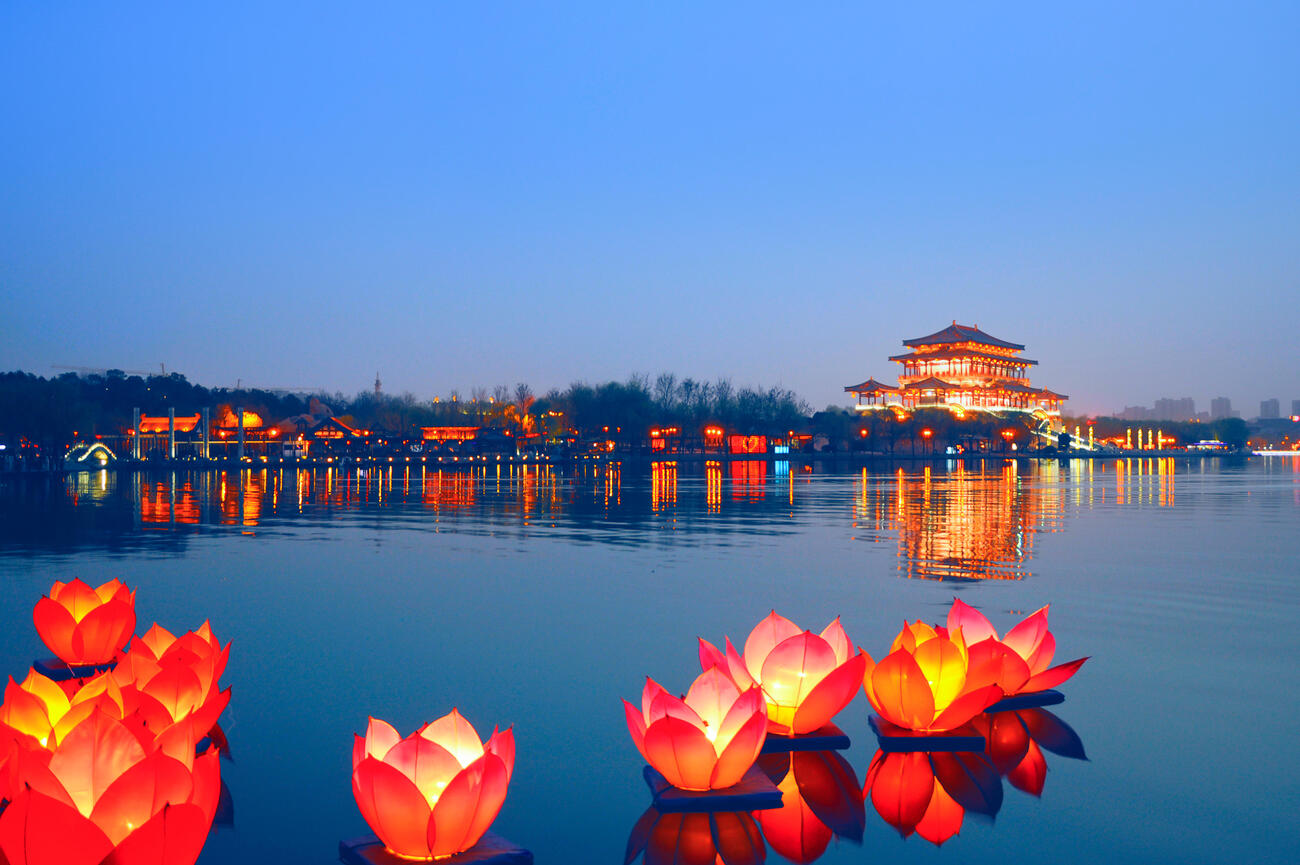
- Lantern Festival: Xi’an is widely considered as one of the best cities in China to experience the Lantern Festival as the city’s ancient setting turns this traditional event into something truly spectacular. One of the main highlights is the Ancient City Wall Lantern Show, where thousands of hand crafted lanterns (some even as large as small buildings) illuminate the ramparts in brilliant colour. Walking along the glowing wall, surrounded by towering lantern displays, feels both magical and immersive. For a more magical scene, head to Tang Paradise, where the imperial style gardens host a shimmering water lantern festival. Here, you’ll see glowing lotus flowers and dragon boats drift across the lake, creating a breathtaking “Sea of Lights” that’s perfect for evening strolls and cinematic photography. And of course, no Lantern Festival experience is complete without tasting tangyuan or yuanxiao soft, or sticky rice balls filled with black sesame, peanut, or red bean paste. Traditionally eaten to symbolise family unity and the full moon, they add a comforting, festive sweetness to your evening.
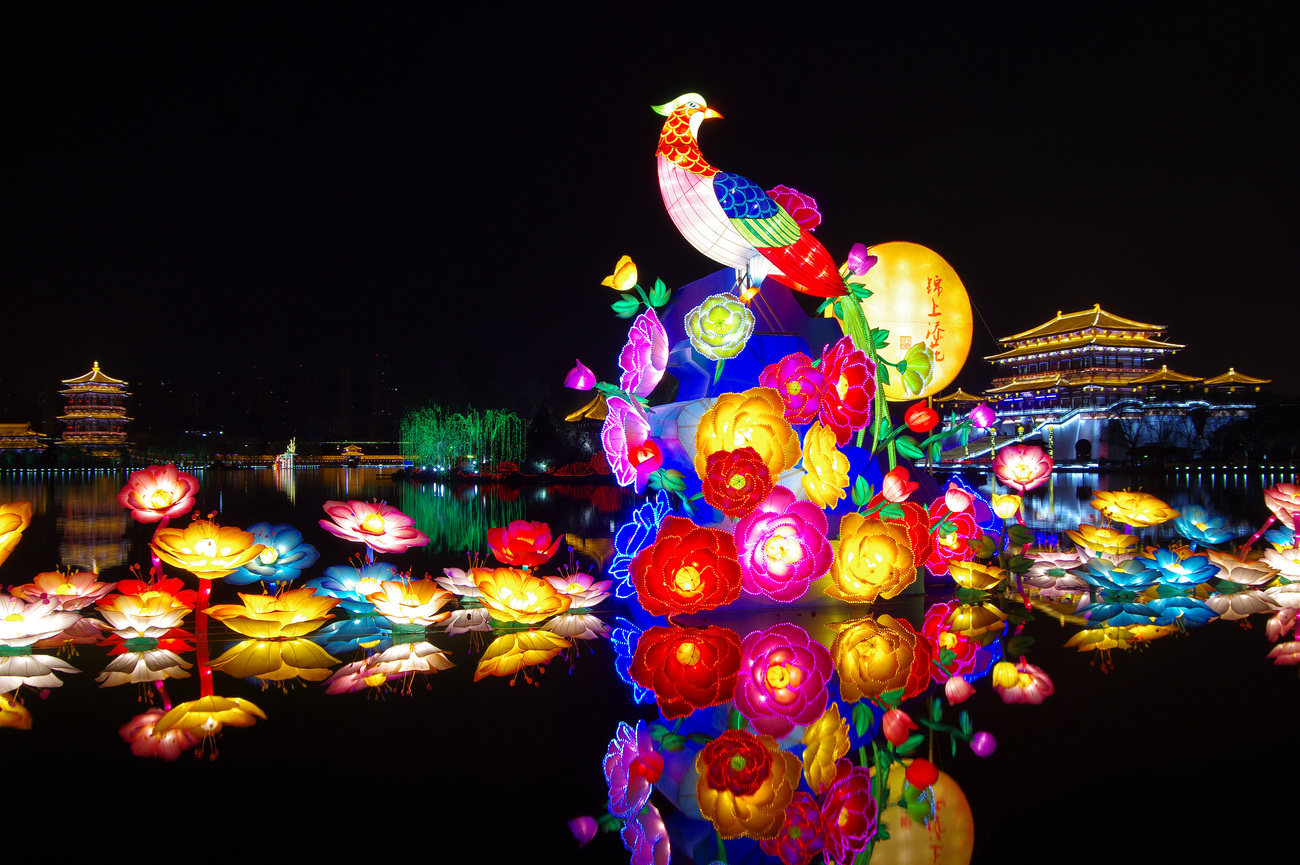
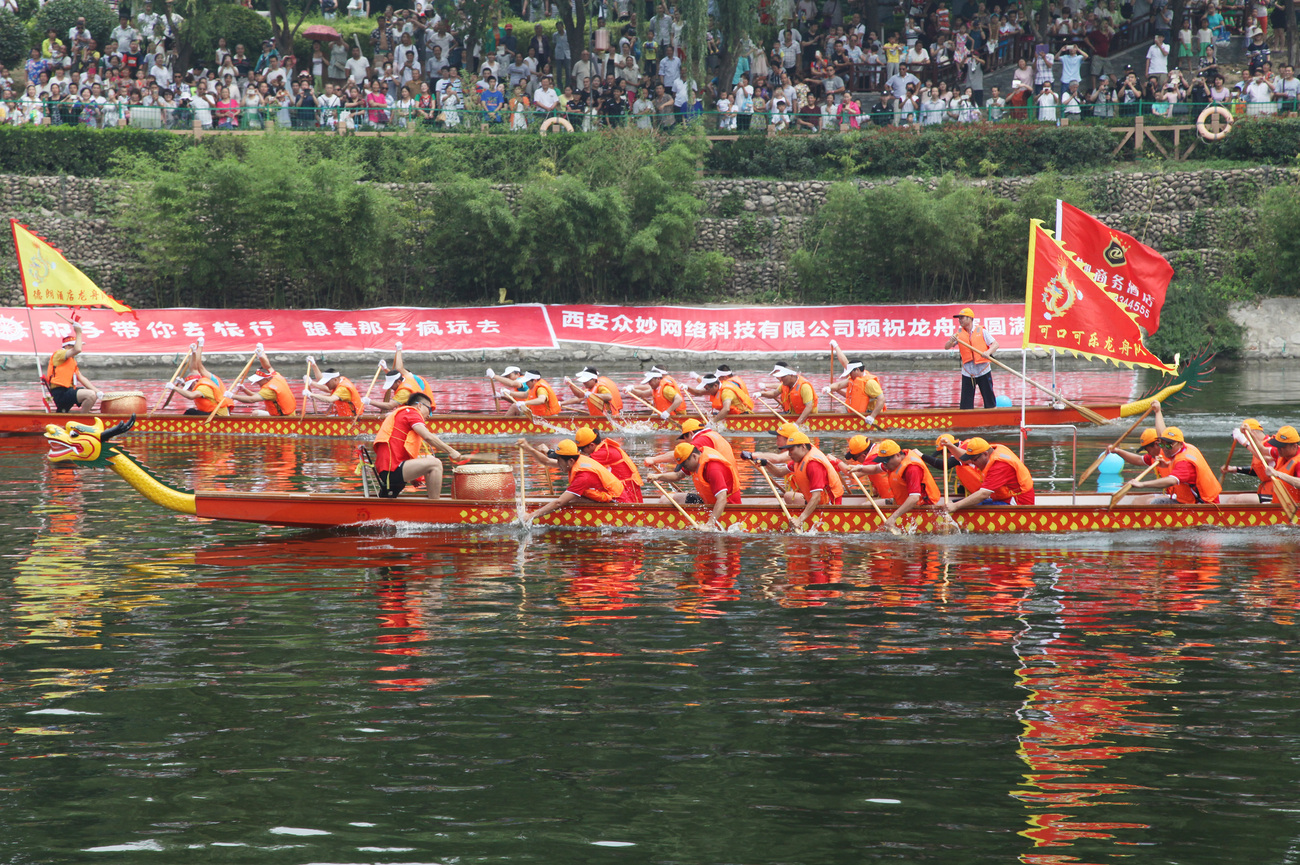
- Dragon Boat Festival: Even as an inland city, Xi’an comes alive during the Dragon Boat Festival. The main celebrations take place at Hancheng Lake and sometimes Qujiang Pool Park, where you can watch colourful dragon boats race across the water to the thunder of beating drums. Arrive early to catch the opening ceremonies, which often include traditional Han style rituals and symbolic offerings to the water. The atmosphere is festive, energetic, and rooted in centuries-old customs, making it a rewarding cultural experience. No festival visit is complete without tasting zongzi, sticky rice dumplings wrapped in bamboo or reed leaves. In Xi’an, a local favourite is honey cold zongzi, served chilled, sliced, and drizzled with honey or osmanthus syrup, a refreshing, lightly sweet treat that’s perfect for the early summer heat.
- Mid-Autumn Festival: With its ancient towers, glowing lanterns, and lake-filled parks, Xi’an is one of the most poetic places in China to experience the Mid-Autumn Festival. For majestic views of the full moon, head up to the Ancient City Wall, where the elevated ramparts offer an unobstructed vantage point. You can choose to cycle along the wall at night, watching the moon rise above the softly illuminated Bell Tower. For the grandest festivities, visit Tang Paradise, where performers dressed in Tang Dynasty robes recreate ancient rituals. Nearby, the reflection of the moon and glowing lanterns on Lotus Lake creates a dreamy, mirror-like scene. Over at Qujiang Pool Park, families gather beneath lantern lit trees for picnics, releasing small floating lights onto the water, forming a spectacular “sea of lanterns.” And of course, no Mid-Autumn Festival is complete without mooncakes. Throughout the city, bakeries and luxury hotels present beautifully packaged varieties, and the Muslim Quarter offers unique regional flavours such as crystal mooncakes and fillings made with local nuts and fragrant rose petals.
Come Visit China’s
Ancient Capital
By the time you leave, “ancient capital” stops sounding like a title and starts feeling like a lived truth. In Xi’an, the past isn’t staged, it’s threaded into courtyards and streets, into the way a bell tower still anchors the city’s centre, into prayers moving through spaces built for quiet devotion, into recipes carried here by travellers who never intended to stay. You don’t just learn about history, you feel how it continues.
At Revigorate, we craft journeys through Xi’an that go beyond the obvious headline sights. We shape each day around your pace, your interests, and the details that matter most, private guiding where it adds value, smooth door-to-door transport, and smart timing to avoid the busiest hours. From early mornings at the Terracotta Army to lantern-lit evenings in the old city, every element is designed to help you experience Xi’an not just as a destination, but as a living story that stays with you long after you return home. To begin designing your personalised Xi’an journey, contact us or call (+1 800 672 0517 | +351 289 009 580 | +44 808 189 0647).
Ready to explore more of Asia? Travel further with Revigorate and discover our curated itineraries across Shanghai, Chengdu, Hong Kong, Singapore, Osaka, and Manila.


Let us know what you love, where you want to go, and we’ll design a one-of-a-kind adventure you’ll never forget.
Get in touch
Miriam
Travel Specialist

Romina
Travel Specialist

Laura
Travel Specialist
Our offices:



Revigorate, Iberian Escapes and Algarve Lifestyle are the registered brand names of APCS Lda . We are a fully authorised travel agency licensed by Turismo de Portugal RNAVT/6867.
In the event of a dispute, the consumer may refer to: RAL - Centros de Arbitragem
Avª. 5 de Outubro, nº. 55, R/C Dtº. 8000-075 Faro, Portugal | Tel: +351 289 823 135 *
* national landline call
E-mail: info@consumoalgarve.pt| www.consumidoronline.pt | Mon to Fri: 9:00 - 13:00 / 14:00 - 17:00