Things to Do in Shanghai: 4-Day Itinerary
Shanghai is often summed up as neon lights, glass towers, and a city that never sleeps. But once you step into it, you realise it’s far more layered than that. Behind the skyscrapers are quiet classical gardens where koi swim under stone bridges. Behind luxury malls are former French streets where locals practise tai chi, dance ballroom, and write poetry on pavement with water. You’ll find 1930s jazz clubs, revolutionary landmarks, and cutting-edge design coexist naturally.
What makes Shanghai special isn’t just how advanced it is, but how gracefully it blends eras. This is the city that once called itself the Paris of the East, where East met West long before globalisation became a buzzword. In this 4-day itinerary, we’ll change the way you see Shanghai. Not as a stopover city. Not as “just a modern megacity.” But as one of Asia’s most nuanced, surprising, and rewarding destinations.
Day 1

Morning: Yu Garden
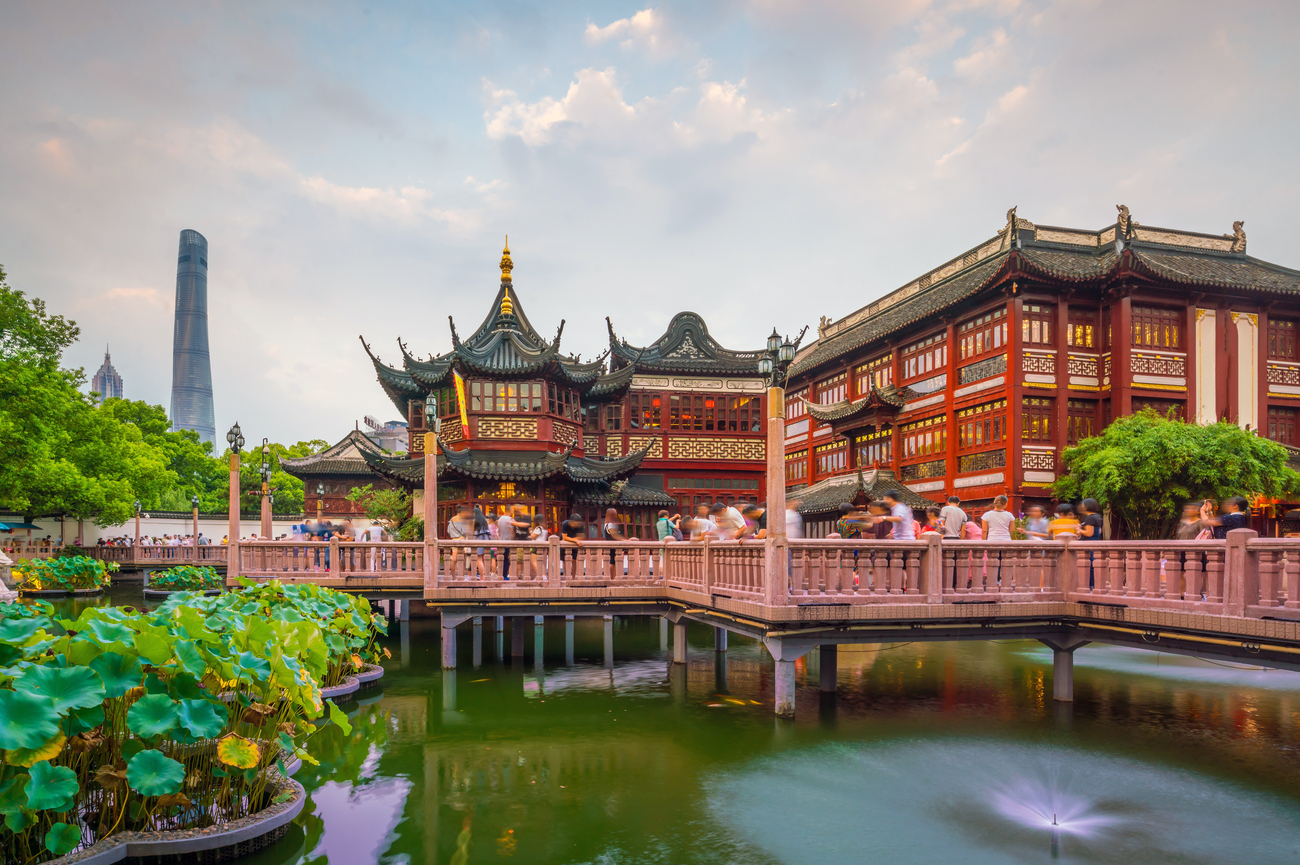
Let’s begin your Shanghai journey at Yu Garden, also known as the Garden of Happiness. It’s the only preserved classical garden in downtown Shanghai, and it’s a beautiful introduction to the city’s softer, more traditional side. Designed in the elegant Jiangnan style, the garden is divided into six scenic areas, each separated by ornate “dragon walls” with ridges shaped like flowing dragon bodies. As you wander, you’ll cross the famous Nine-Zigzag Bridge, built to ward off evil spirits and now a favourite spot for koi feeding and photos. If you’re in the mood to lean into the atmosphere, you can even rent hanfu costumes and stroll the garden in traditional dress, an easy way to add a little magic (and great photos) to your first morning in Shanghai.
Shanghai History
Museum
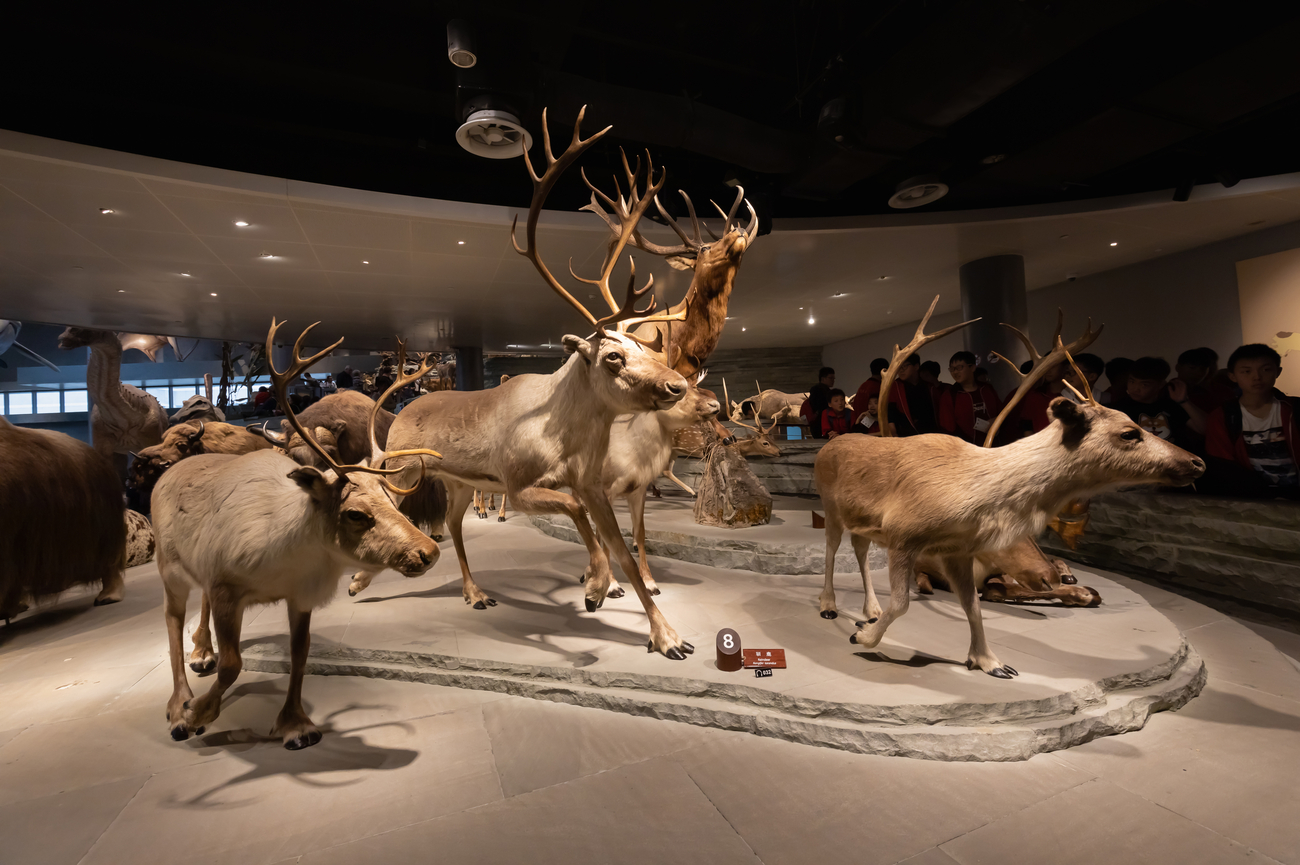
After a nice, scenic stroll at the Yu Garden, head to the Shanghai History Museum to understand how this city became what it is today. With over 110,000 artifacts spread across four floors, the museum walks you through 6,000 years of Shanghai’s story, from its early beginnings to its rise as a global powerhouse.
You’ll move through Ancient History on the 2nd floor, then into Modern Shanghai on the 3rd and 4th floors, where life-size dioramas and interactive displays make the past feel surprisingly alive. When you’re done, take a breather at the rooftop garden, where you can enjoy open views of People’s Square and the surrounding skyline, or relax at the café before continuing your day.
Day 1, Morning - Shanghai Tour Map
Afternoon: The Bund
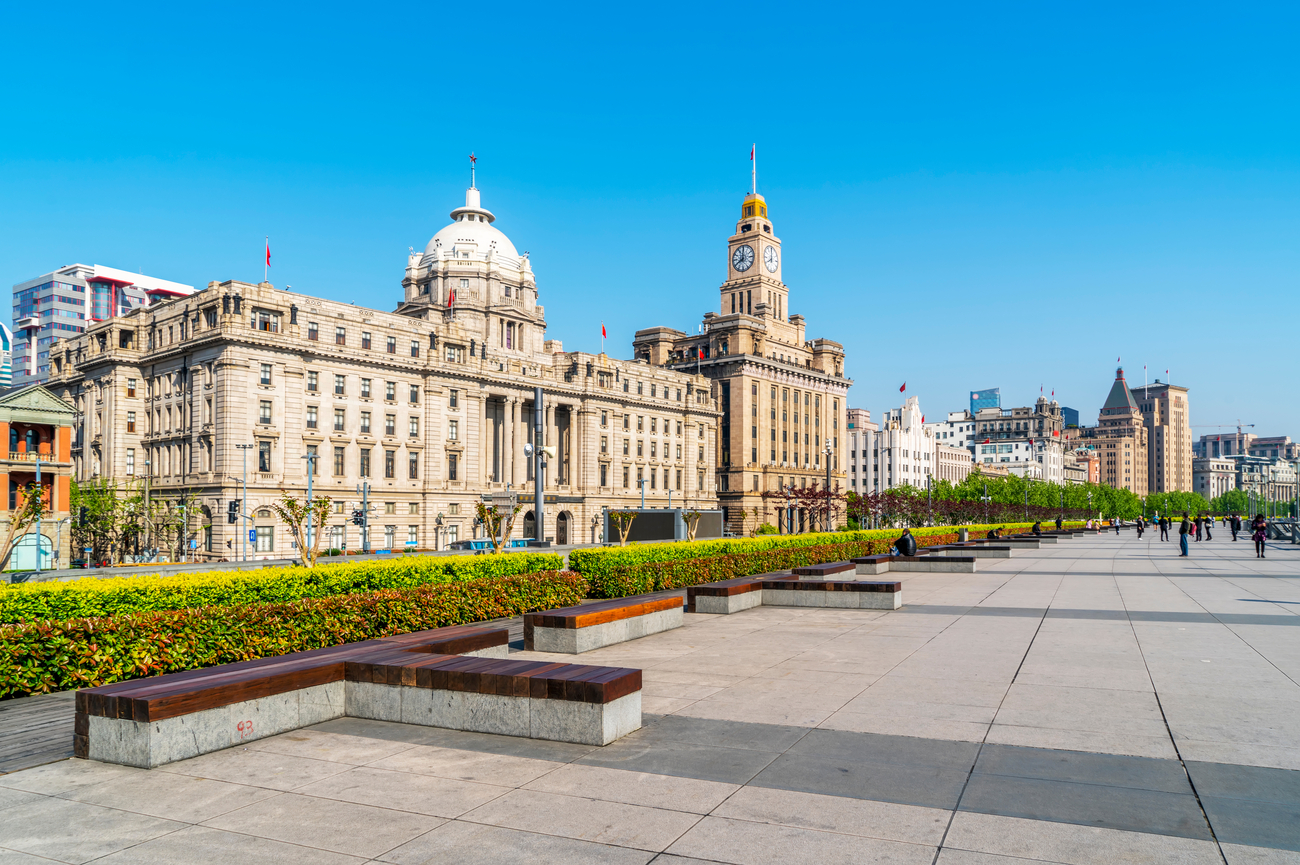
Continue your day at The Bund, Shanghai’s most iconic waterfront. This is where old and new Shanghai face each other across the river, featuring its grand European-style buildings on one side, and the futuristic Pudong skyline on the other. Walk along the elevated promenade and take in the full view. You can stop by landmarks like the Fairmont Peace Hotel with its classic Art Deco lobby, the Customs House with its Big Ben style clock tower, or the old HSBC Building. If you come in the morning, you’ll see locals practising tai chi, jogging, or flying kites, giving you a glimpse of everyday life in Shanghai.
Huangpu River Cruise
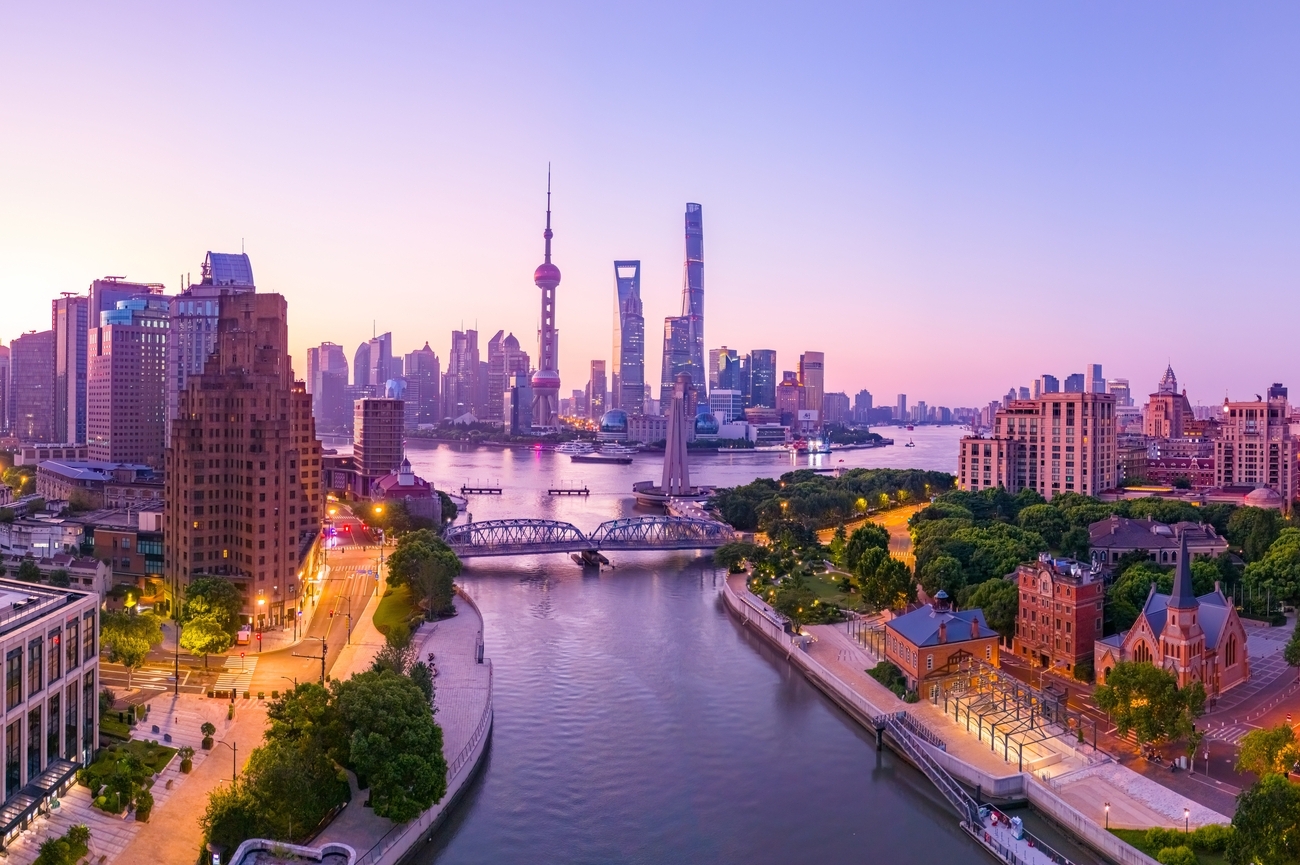
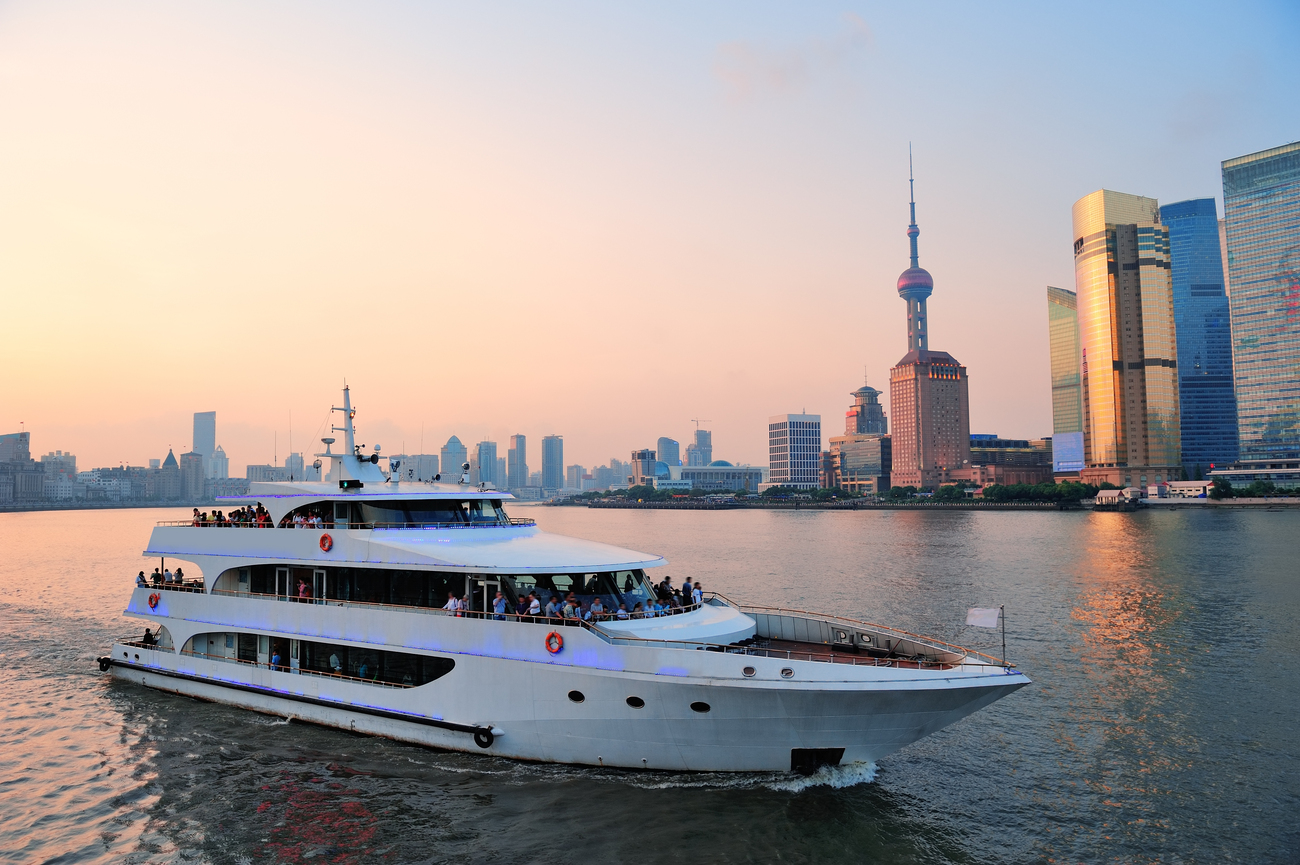
End your day with a Huangpu River Cruise and see Shanghai from the water. The 45–90 minute round-trip ride cruises past the city’s most famous landmarks, including the Oriental Pearl TV Tower, Shanghai Tower, Jin Mao Tower, and Waibaidu Bridge, all beautifully lit after dark. For the best views, head to the upper deck where you can enjoy unobstructed 360-degree cityscapes and take photos as the skyline reflects on the river. If you’d like to turn this into a dinner cruise, we can arrange a dinner cruise for you with Chinese or Western buffet options, live music, and even private dining areas if you prefer a quieter, more intimate experience.
Day 1, Afternoon - Shanghai Tour Map
Day 2
Morning: Shanghai Tower
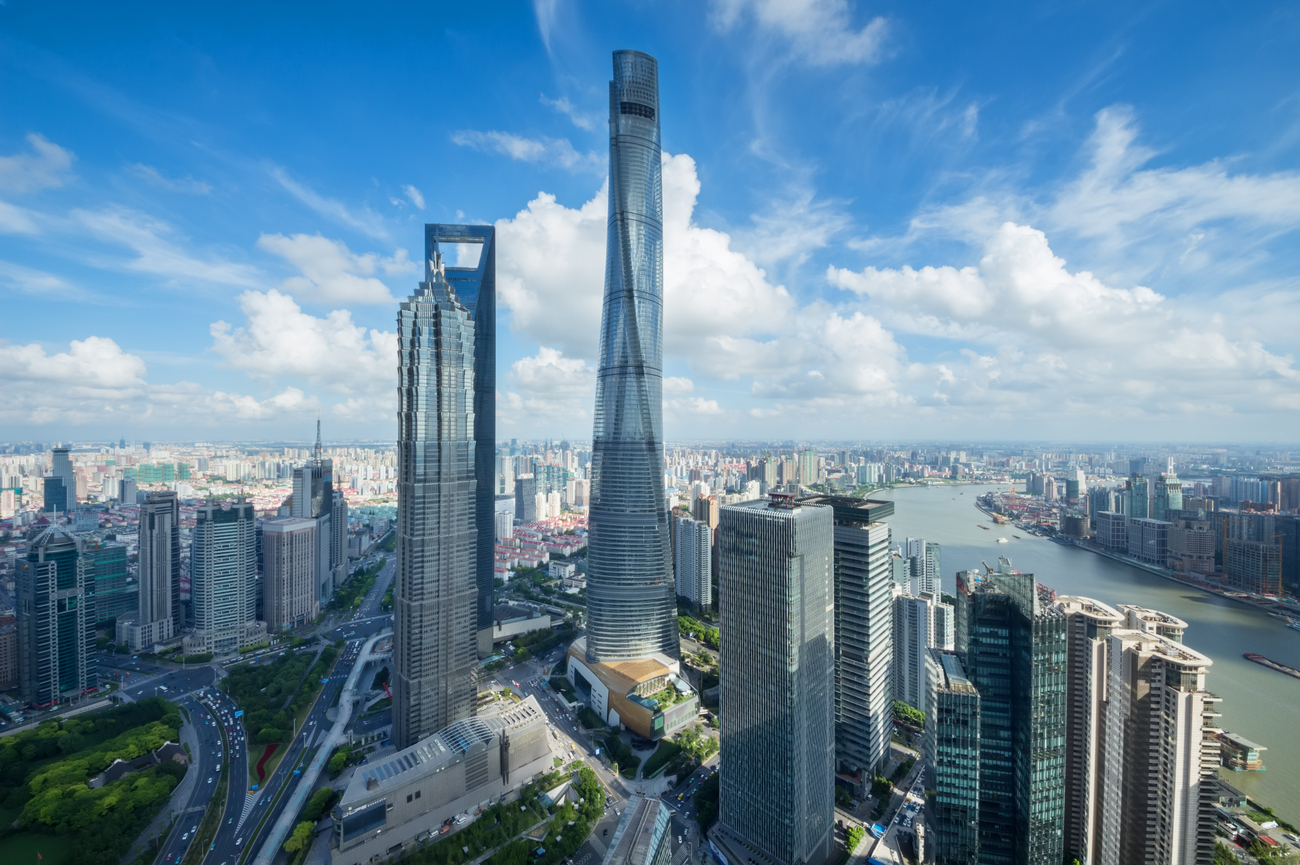
Start your day at Shanghai Tower, the tallest building in China and the third tallest in the world. In under a minute, the ultra-fast elevator (18 metres per second) whisks you up to the observation decks on floors 118 and 119 for sweeping 360-degree views over the city. If you want to go even higher, there’s also access to the 121st floor, putting you more than 560 metres above ground.
Aside from the views, you can also see the tower’s massive tuned mass damper on the 125th and 126th floors, the engineering masterpiece that keeps the building stable during strong winds and typhoons. If you’re after something quieter and more reflective, stop by Duoyun Books on the 52nd floor, one of the world’s highest bookstores, where you can enjoy a coffee, browse beautifully curated shelves, and enjoy the skyline views from the terrace.
Jin Mao Tower
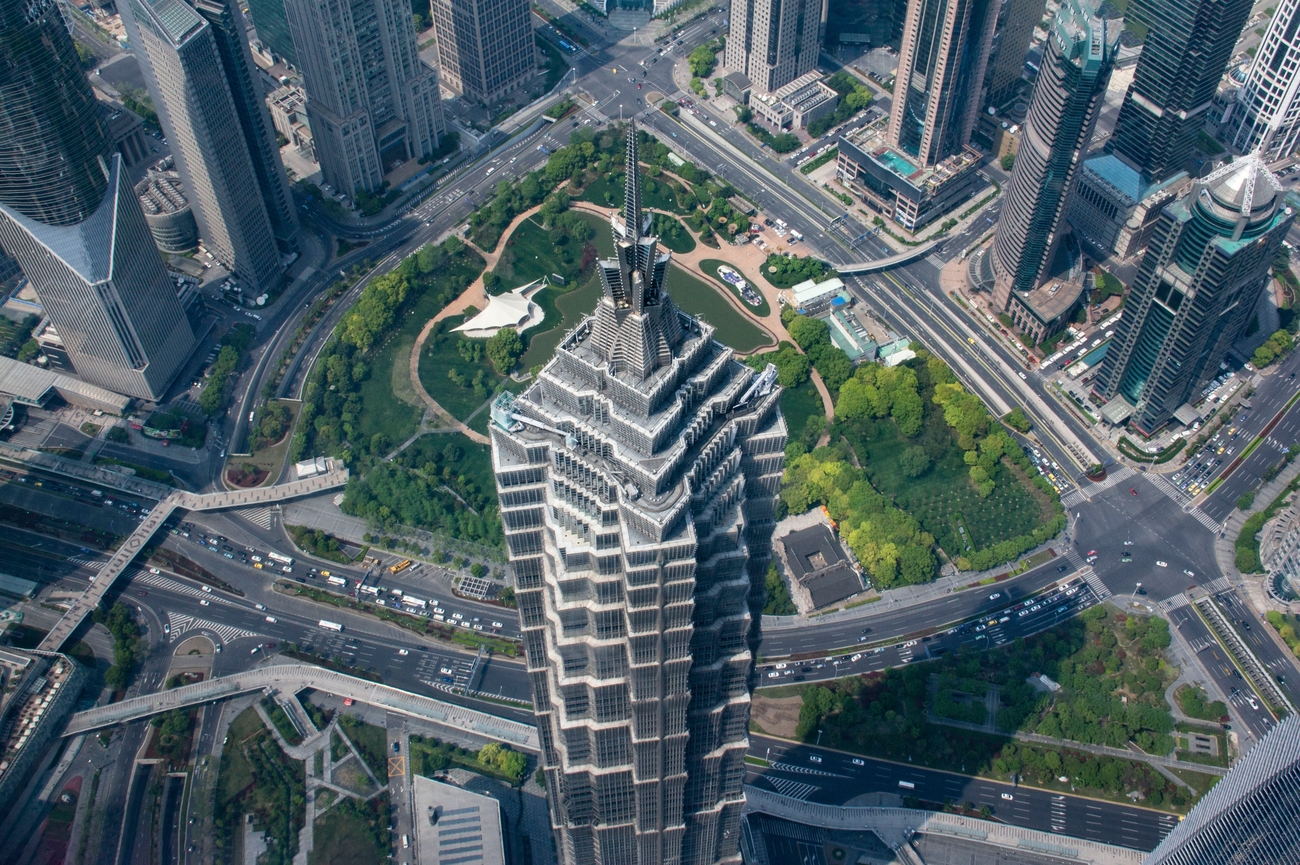
Right beside Shanghai Tower stands Jin Mao Tower, instantly recognisable for its pagoda inspired design that features modern traditional Chinese architecture. It was once the tallest building in China until 2007, and offers one of the most thrilling viewpoints in the city. In just 45 seconds, the high speed elevator takes you up to the 88th-floor observation deck, where you can look straight down into the dizzying atrium and out across Pudong’s skyline. If you’re feeling adventurous, try their palm-sweating Skywalk, a 60-metre outdoor glass walkway with no guardrails, where you’re securely harnessed as you walk along the edge of the tower, 340 metres above the ground. It’s equal parts terrifying and unforgettable. When you’re ready to relax, the tower also houses several upscale bars and restaurants, perfect for a drink or meal with a view.
Day 2, Morning - Shanghai Tour Map
Afternoon: Shanghai
Urban Planning Exhibition Center
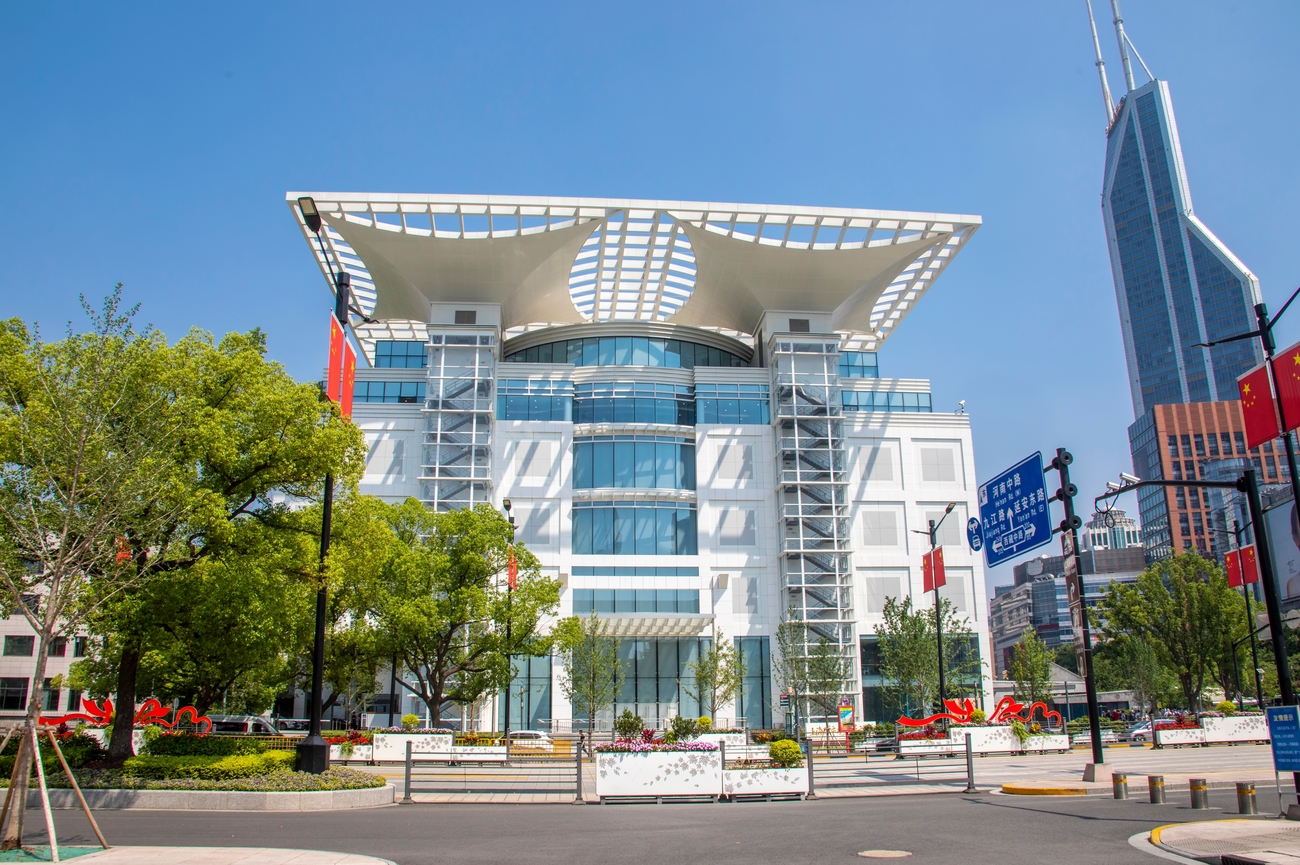
This impressive six-storey museum gives you a clear, fascinating look at how Shanghai became the city it is today and where it’s headed next. Even the building itself is symbolic, with a white, magnolia-shaped roof inspired by Shanghai’s city flower. On the 3rd floor, you’ll find the massive scale model of Shanghai covering more than 600 square metres. It shows the entire city in miniature, complete with a lighting system that shifts from day to night, helping you visualise how the skyline comes alive after dark.
As you move through the exhibits, you’ll see how Shanghai evolved from a small fishing village into a global metropolis, told through historic photos, artifacts, and moving models. If you’re curious about the future, head to the 4th floor to explore Shanghai’s plans for sustainable development, green buildings, and major transport projects like the maglev train and expanding subway lines. It’s a great stop if you’re curious about the “why” behind the city you’re exploring.
Oriental Pearl TV
Tower
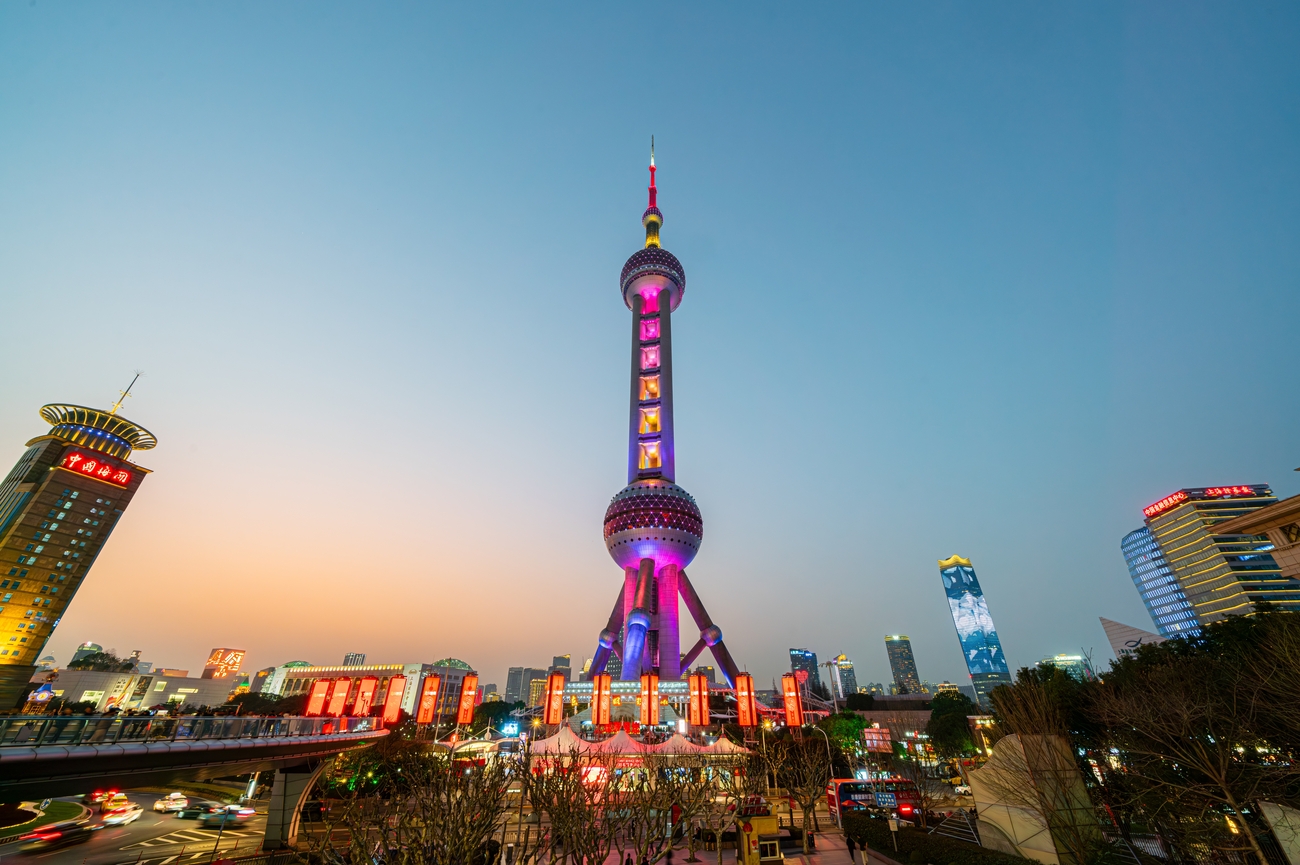
After an insightful visit at Shanghai Urban Planning Exhibition Center, head over to the Oriental Pearl TV Tower to catch Shanghai during the golden hour. This futuristic landmark, with its iconic pink spheres stacked like pearls, is one of the city’s most recognisable sights and gives you a completely different perspective of the skyline.
The tower has multiple observation decks spread across different levels, so you can enjoy stunning 360-degree views of both Pudong and The Bund as the city shifts from daylight to evening glow. If you skipped the skywalk at Jin Mao Tower or just want another adrenaline hit, try the Transparent Skywalk here. It’s a glass corridor where you walk with the city far below your feet, safe, enclosed, and surprisingly thrilling.
Day 2, Afternoon - Shanghai Tour Map
Day 3
Morning: Jade Buddha Temple
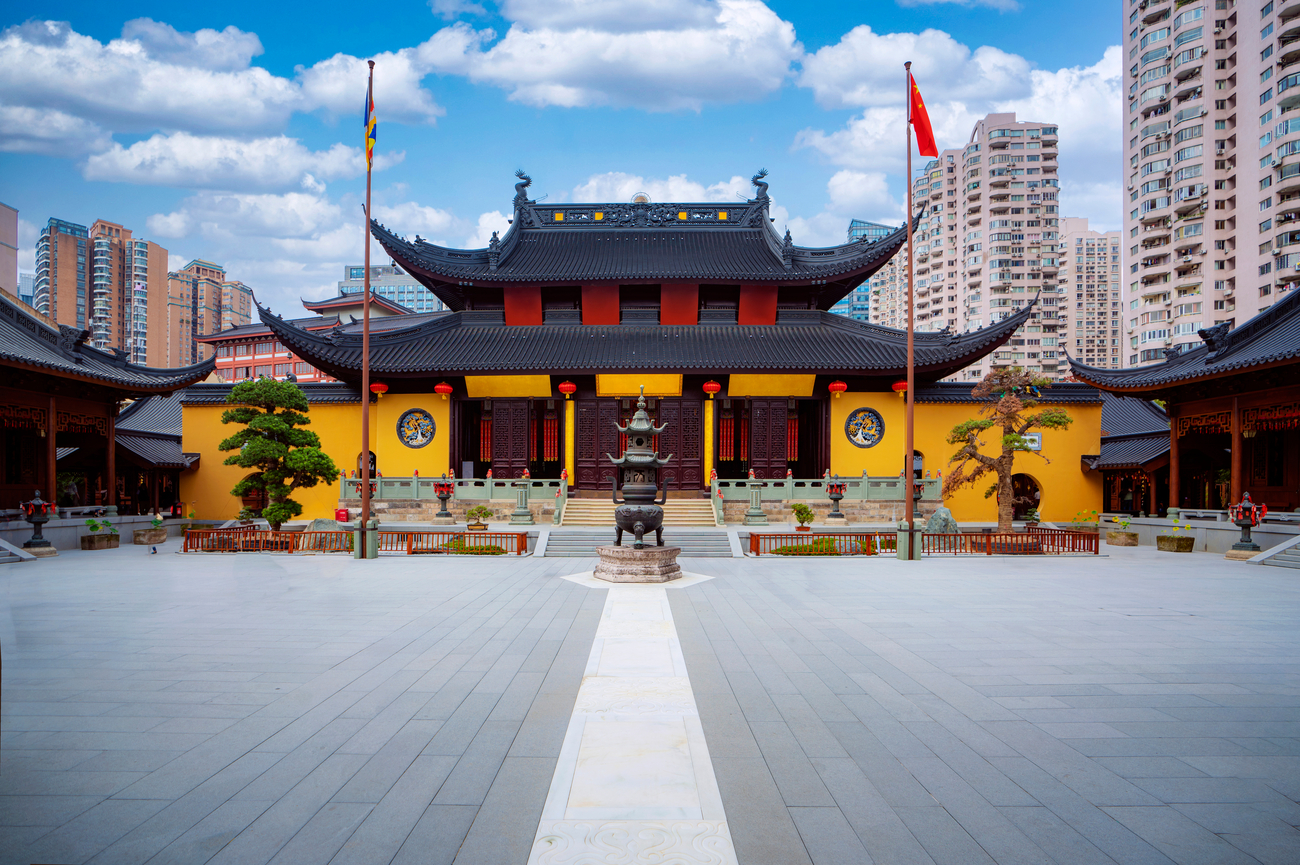
Start your third day in Shanghai at Jade Buddha Temple, a peaceful, active Buddhist monastery that feels worlds away from the city’s busy streets. Founded in 1882 to house two jade Buddha statues brought from Burma, the temple is still an active place of worship and carries a calm, reverent atmosphere throughout.
As you walk through the complex, you’ll see the Sitting Buddha, carved from a single piece of white jade and depicting Buddha at the moment of enlightenment, as well as the Reclining Buddha, which represents Buddha’s entry into Nirvana. In the Mahavira Hall, three large golden Buddhas symbolise the past, present, and future, surrounded by rows of serene Arhat figures. The Hall of Heavenly Kings marks the entrance, guarded by imposing celestial figures and a smiling Maitreya Buddha. Just note that photography is not allowed inside the Buddha halls, so you can fully experience the space without distractions.
Jing’an Temple
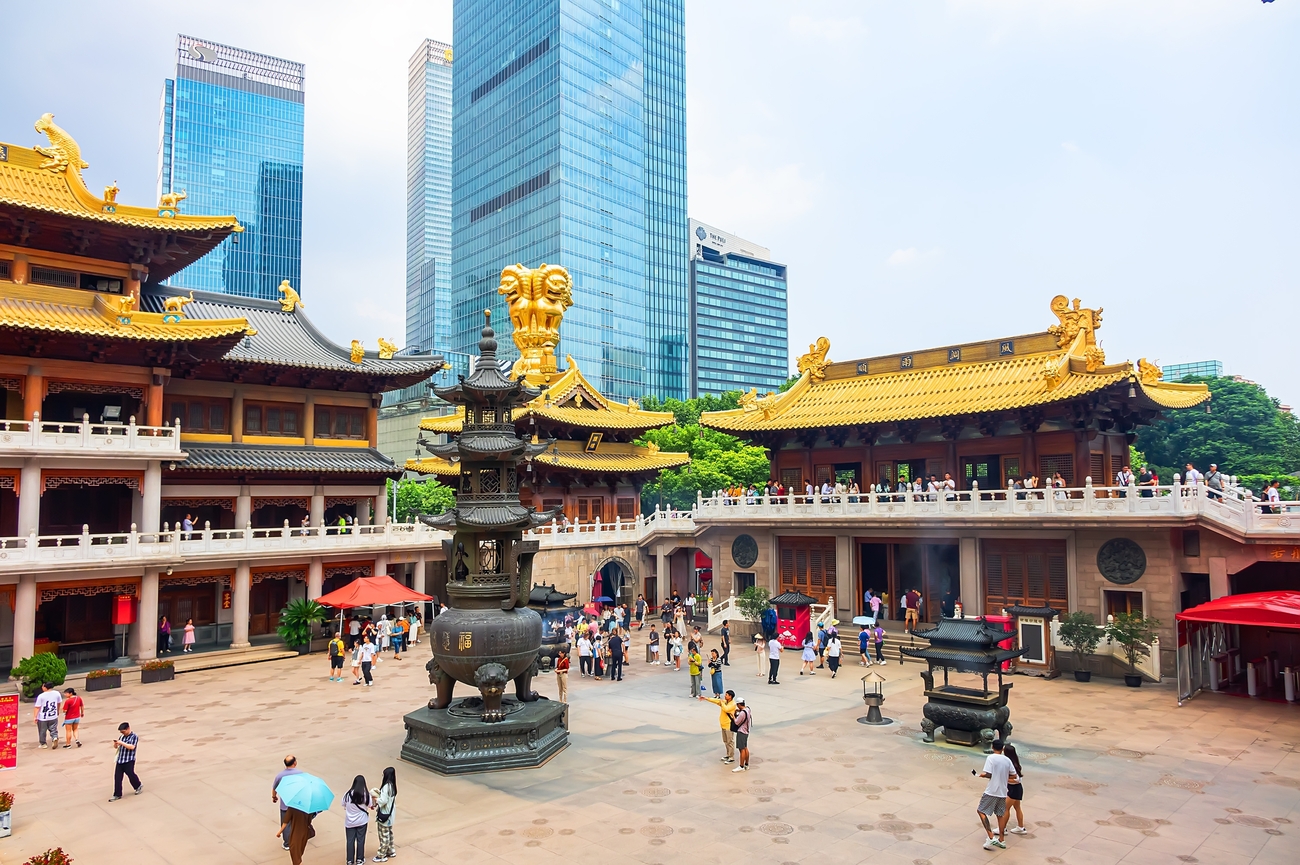
Next, take a short 10–15 minute drive south to Jing’an Temple, one of Shanghai’s oldest and most iconic Buddhist temples. With over 780 years of history, it stands in striking contrast to the glass towers and luxury malls that surround it in the upscale Jing’an District. Inside the main hall, you’ll see a seated Buddha carved from a single piece of silver (one of the largest of its kind in Asia). There’s also a beautifully crafted Guanyin statue made from red sandalwood, a rare jade reclining Buddha, a massive copper bell weighing over 3 tons, and a seven-storey pagoda, standing over 50 meters tall.
Day 3, Morning - Shanghai Tour Map
Afternoon: Fuxing Park
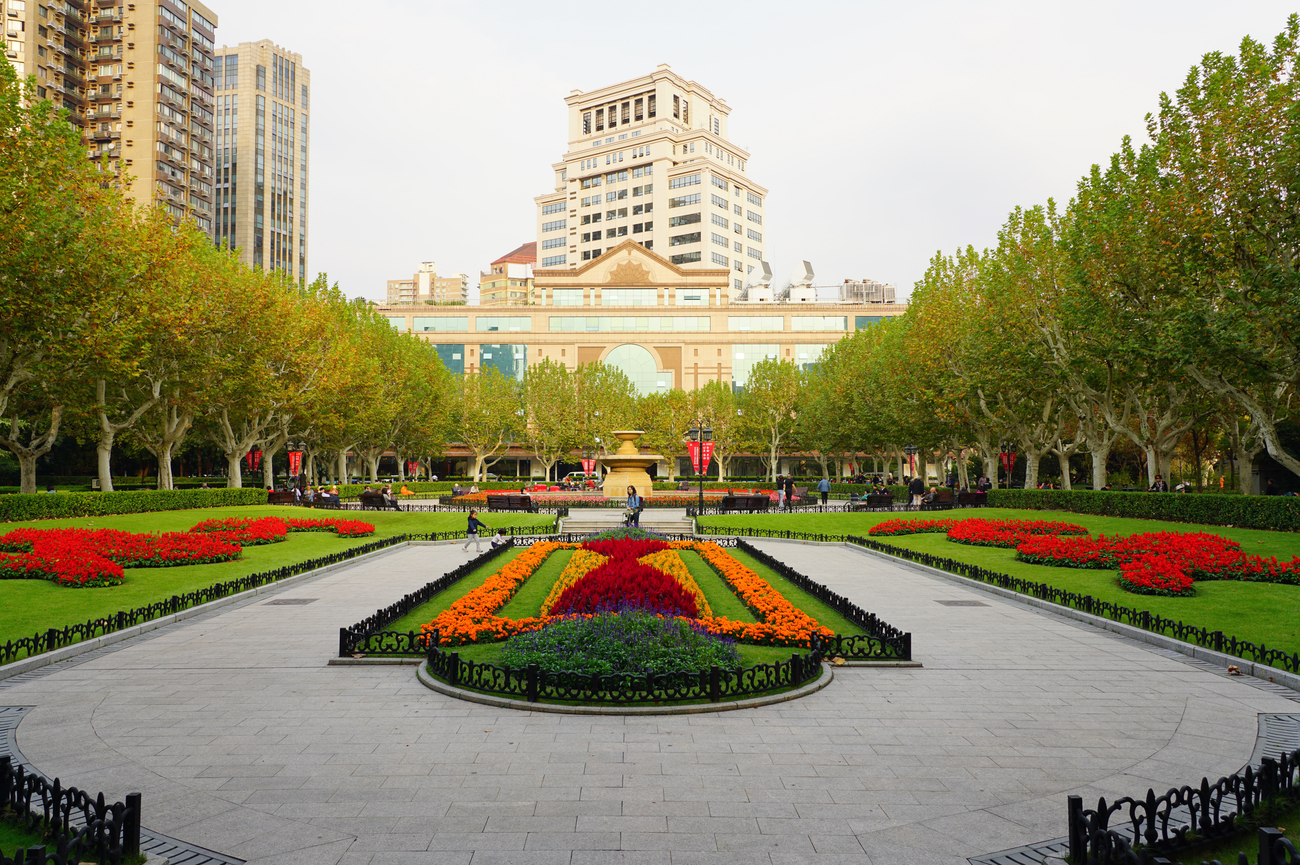
After your temple visits, slow things down at Fuxing Park, a leafy escape in the heart of the former French Concession. This 10-hectare park is the only French-style park in Shanghai, with neat flower beds, fountains, and wide tree-lined paths that feel distinctly European. This is one of the best places to see everyday life in Shanghai up close as you’ll spot retirees practising tai chi, groups deep in mahjong or card games, locals flying kites, and even people doing “water calligraphy” on the pavement with long brushes. In the mornings and afternoons, parts of the park turn into open-air dance floors with ballroom dancing and social groups.
Tianzifang
Just an 8-minute drive from Fuxing Park, head to Tianzifang, a lively arts and crafts enclave tucked inside a beautifully preserved Shikumen (stone-gate house) neighbourhood in the former French Concession. As you wander through its narrow, maze-like alleyways, you’ll move between small art galleries, boutique shops, and traditional homes where locals still live. This is a great spot to pick up “Old Shanghai” nostalgia pieces, handmade jewellery, silk scarves, and designer stationery you won’t find in major malls. When you need a break, duck into one of the tiny cafés or themed bars hidden along the lanes. Many have alfresco seating, making Tianzifang perfect for people-watching and unwinding after a full day exploring the city.
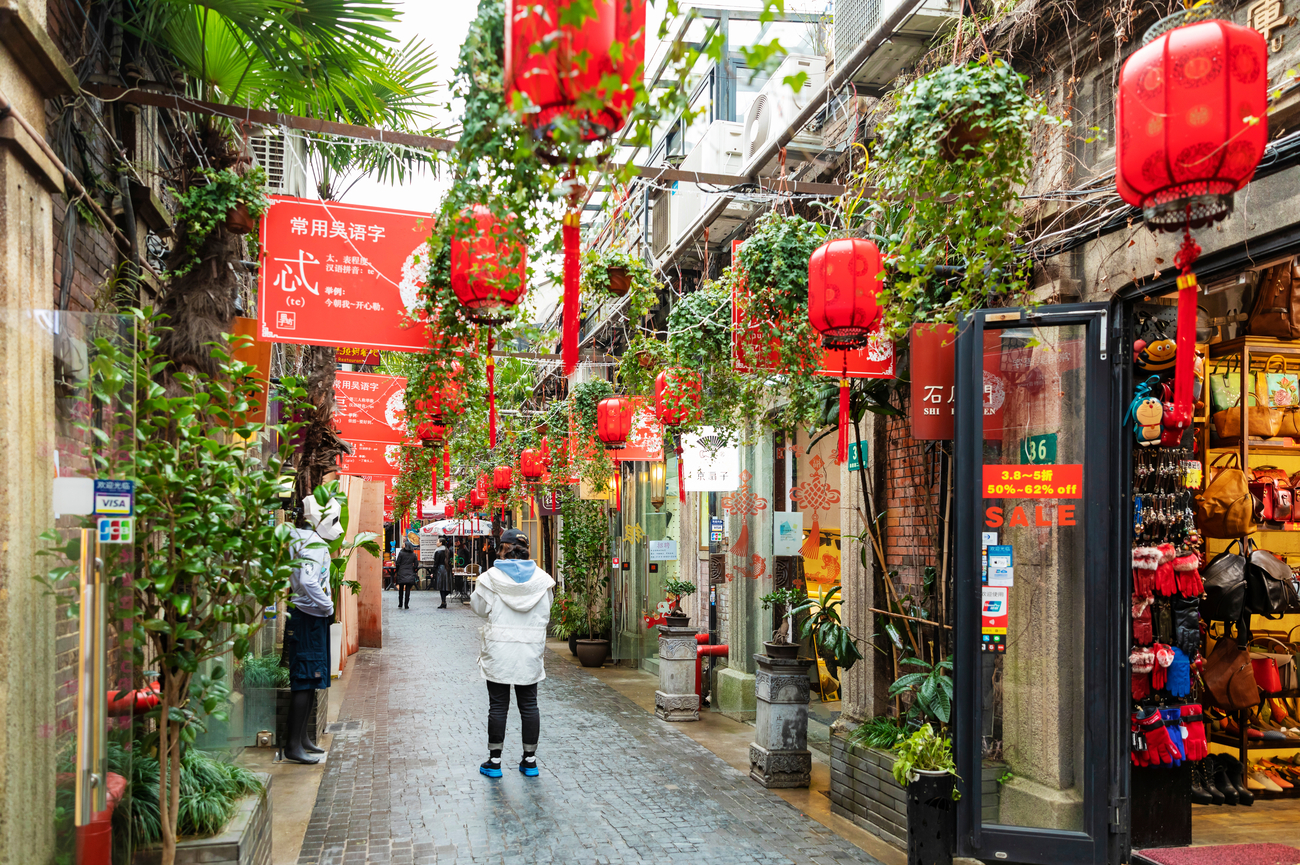
Day 3, Afternoon - Shanghai Tour Map
Day 4
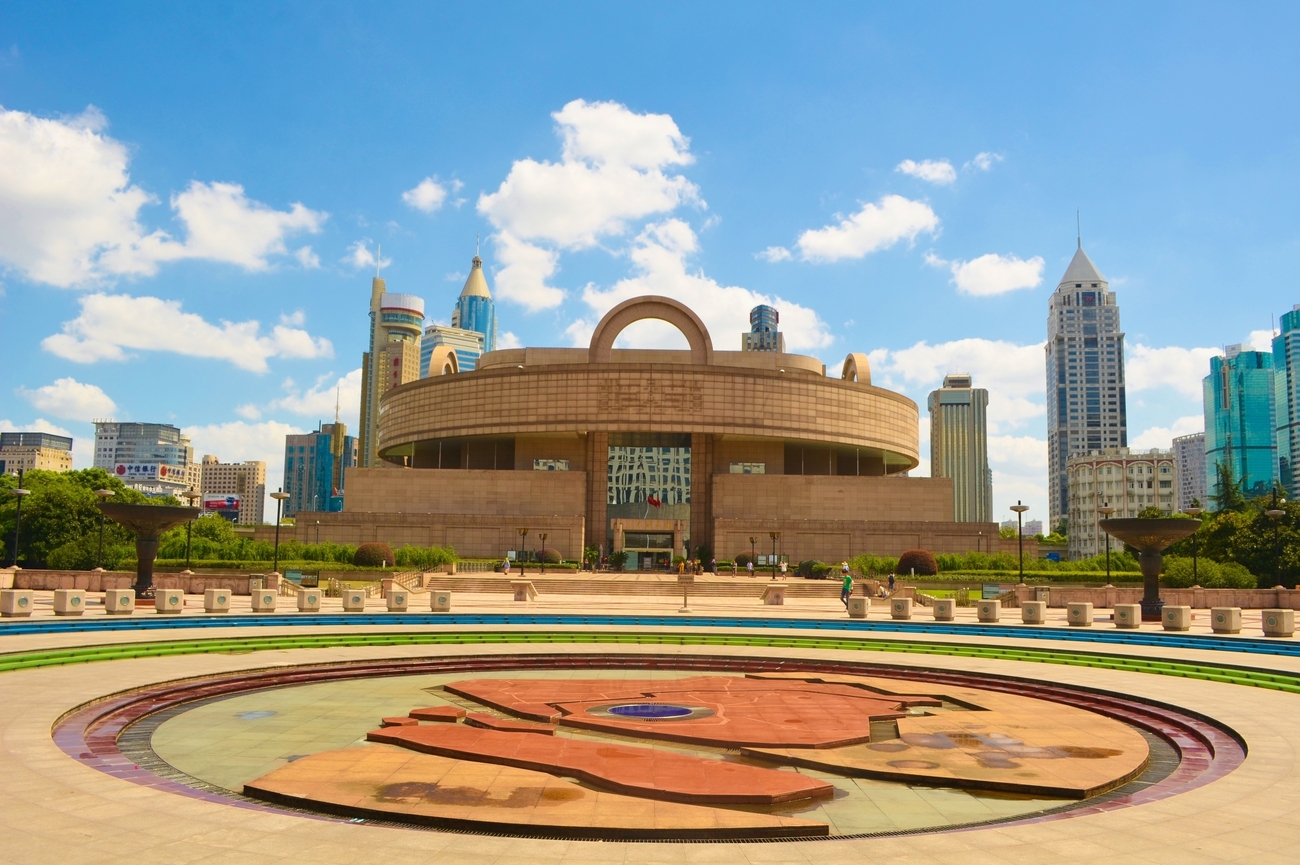
Morning: Shanghai Museum
One of China’s leading museums for ancient Chinese art and culture, the Shanghai Museum gives you a deep, well-curated look into the country’s history without feeling overwhelming. It now operates across two locations: the original Main Building at People’s Square and the newer Shanghai Museum East in Pudong.
At the main building, you’ll find temporary international exhibitions (such as Ancient Egyptian or European collections), alongside permanent galleries like the Chinese Minority Nationalities’ Art Gallery, where you can see traditional clothing and crafts, and the Ming and Qing Furniture Gallery. Over in Pudong, the focus is on China’s national treasures, with impressive collections of ancient bronzes, ceramics, calligraphy, painting, and jade. If you’re worried about the language barrier, don’t be. The museum offers multi-language audio guides and guided tours, so you can fully understand the stories and cultural context behind what you’re seeing as you explore.
Nanjing Road
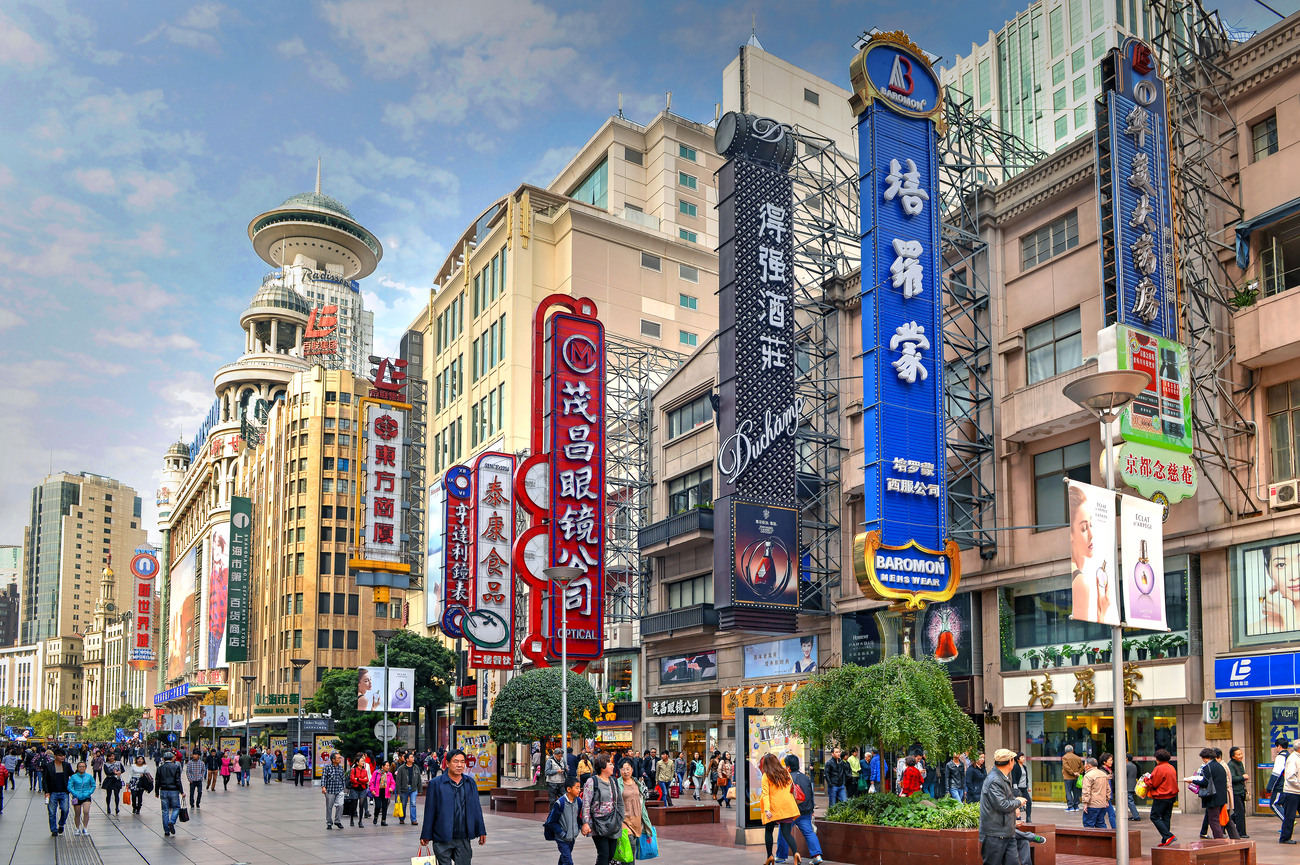
Pedestrian Street
Continue your day along Nanjing Road, Shanghai’s most famous shopping street and often called “China’s No. 1 Commercial Street.” Stretching 1.5 kilometres from People’s Square to The Bund, this lively strip lets you see old and new Shanghai side by side. You’ll find everything here, from classic department stores like No. 1 Department Store and Yong’an to global brands like Nike, LEGO, and Pop Mart. Even if you’re not in the mood to shop, it’s worth coming just to soak in the atmosphere. You can hop on the vintage style Dangdang tram for an easy sightseeing ride down the street, or simply stroll and people watch.
When hunger strikes, grab local snacks from side alley vendors or step into the Shanghai First Food Hall to try traditional treats like smoked fish, pastries, and wine-cured meats, but save your appetite for our next destination, Xintiandi.
Xintiandi
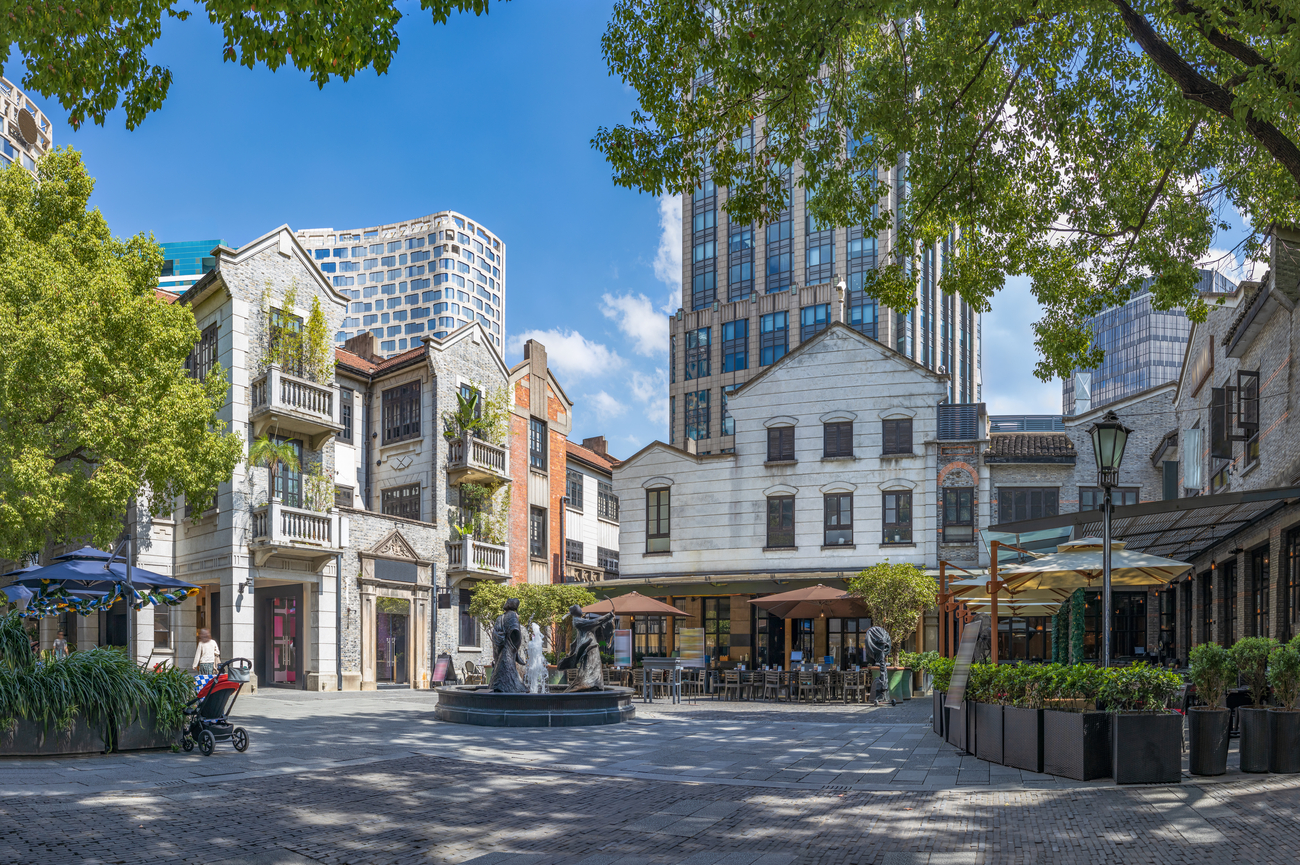
Wrap up your Shanghai journey with an al fresco dining at the heart of Shanghai’s outdoor dining and nightlife scene, Xintiandi. This stylish district is famous for transforming old Shikumen (stone-gate) houses into chic restaurants, cafés, and bars, so you get history and modern energy in one place. Whether you’re in the mood for artisanal coffee, international bistros, or Michelin-recommended dining, you’ll find plenty of great options here to suit your pace and appetite.
After dinner, take a short walk to the Shikumen Open House Museum to see how middle-class Shanghainese families lived in the 1920s, or visit the First CPC National Congress Site, where the Chinese Communist Party was founded in 1921. As the sun sets, enjoy live jazz at clubs or grab a craft beer at the Boxing Cat Brewery, or at a relaxed cocktail bar, perfect for easing into your final evening in the city.
Day 4 - Shanghai Tour Map
Day Trips from
Shanghai
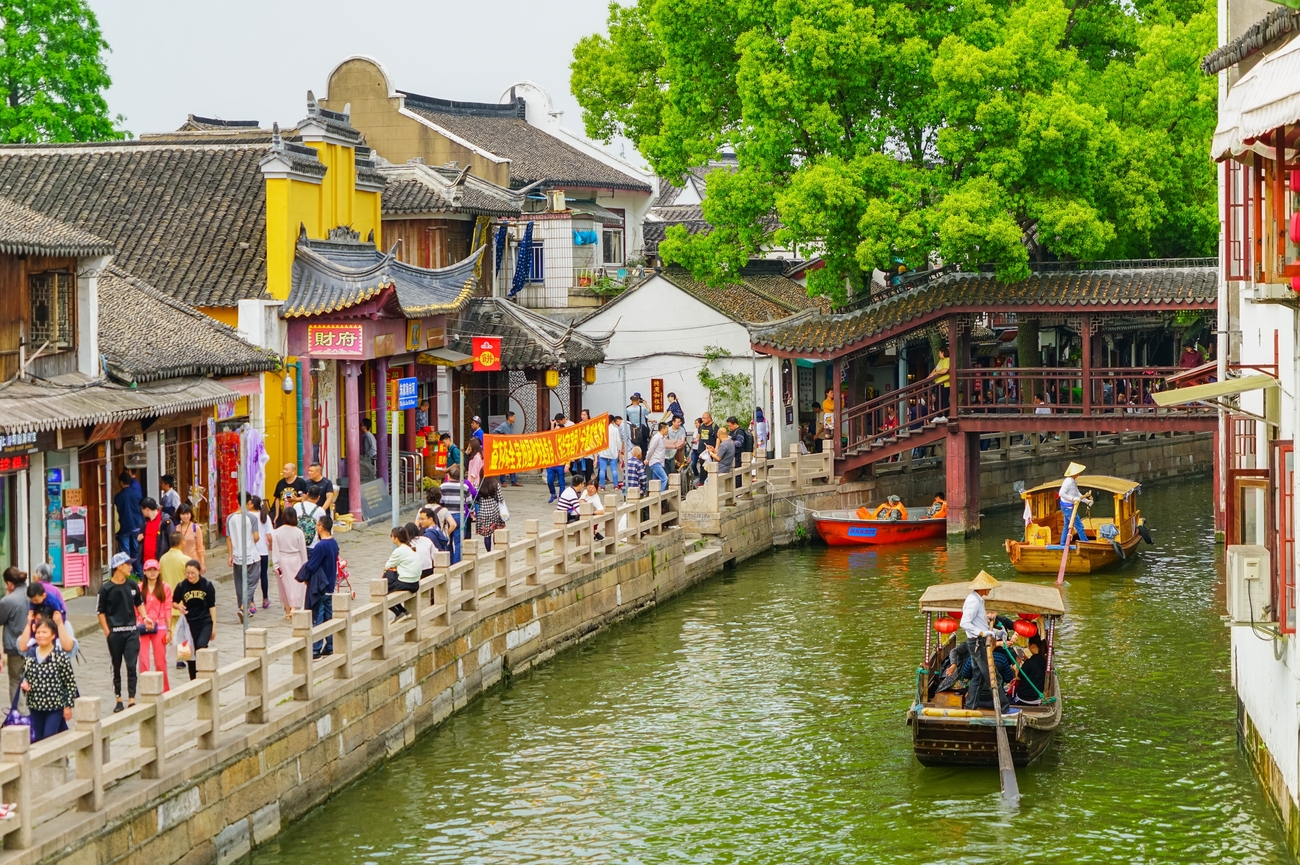
- Zhujiajiao Water Town: Often called the "Venice of Shanghai," Zhujiajiao is a charming ancient town located in the city's outskirts. Here, you can slow down as you wander through stone bridges, riverside homes, and narrow lanes that feel worlds away from modern Shanghai. Take a relaxing canal boat ride on a traditional sampan to see the town from the water, gliding past old houses and arched bridges. You can also stroll through Kezhi Garden for a quiet break among pavilions and ponds, then sample local snacks and delicacies along the streets.
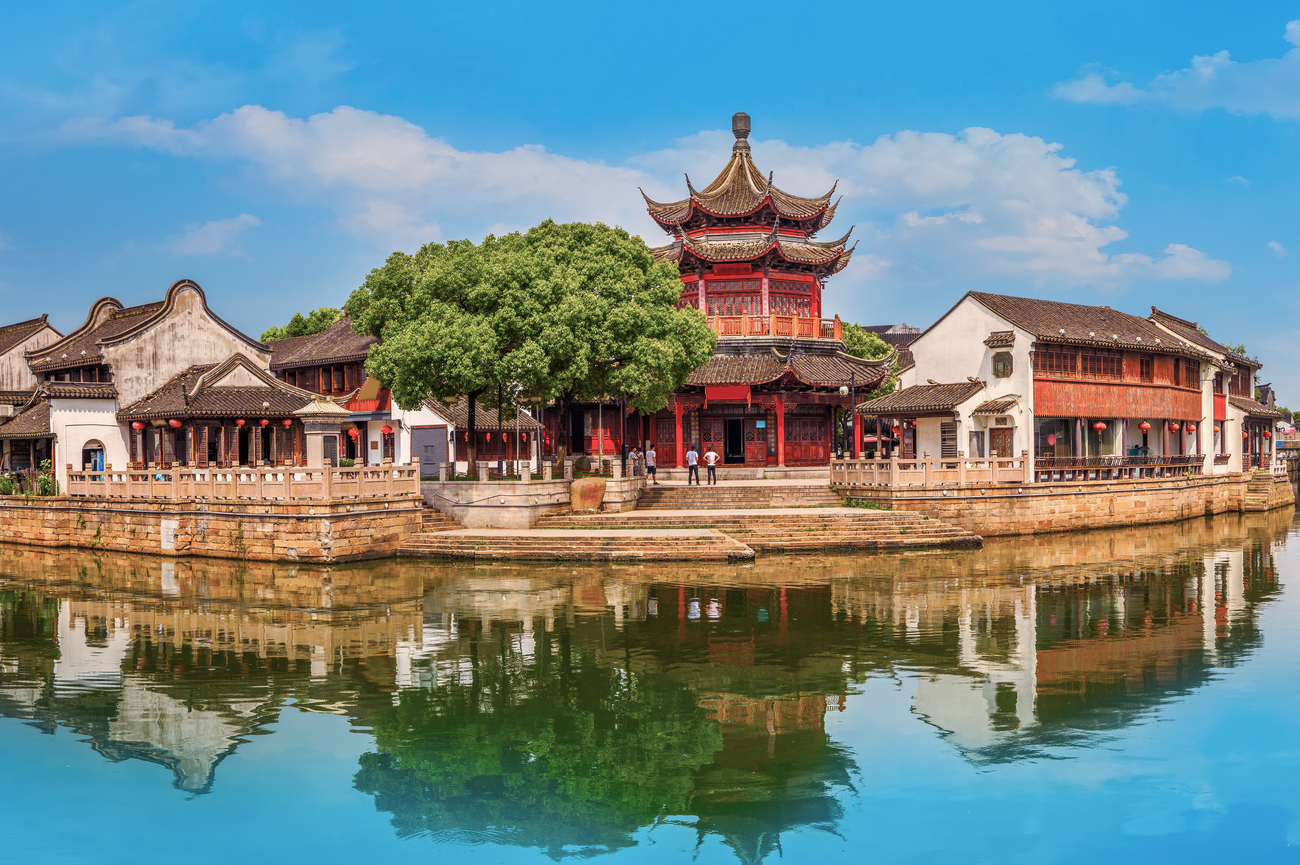
- Suzhou: Known for its graceful canals, elegant stone bridges, and beautifully designed classical gardens. It’s home to over 50 historic gardens, nine of which are UNESCO World Heritage Sites. Here, you can wander through peaceful gardens filled with ponds, pavilions, and sculpted rockeries, or stroll along ancient water streets lined with whitewashed houses and wooden balconies.
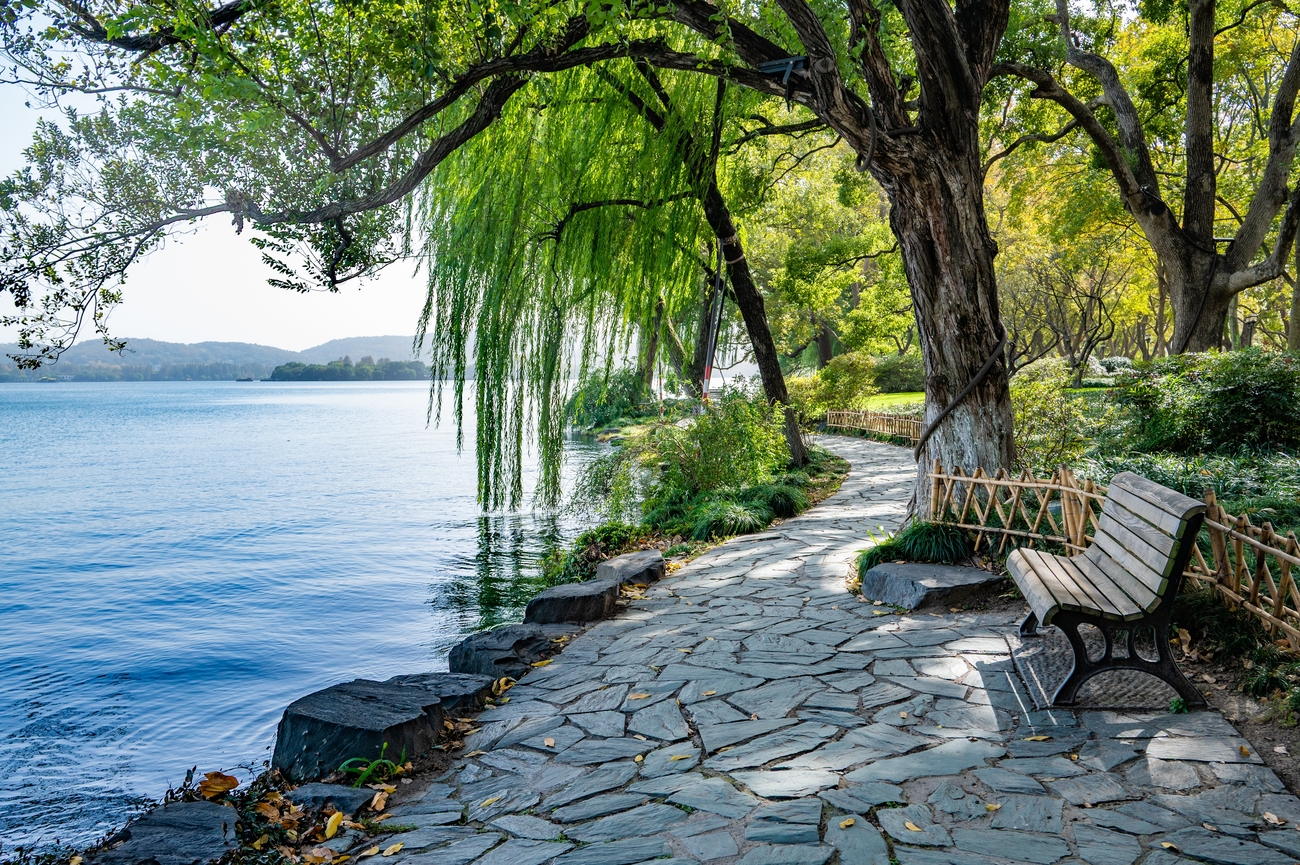
- Hangzhou: Best known for West Lake, a UNESCO World Heritage Site that feels like a living painting. You can walk or cycle around West Lake’s scenic paths, stopping at bridges, pagodas, and gardens along the way, or hop on a traditional boat to glide across the water and reach islands like Su Causeway or Bai Causeway. For something more spiritual, visit Lingyin Temple, one of China’s most important Buddhist temples. And if you love tea (or just beautiful landscapes), a visit to the Longjing tea plantations lets you see where China’s most famous green tea is grown.
UNESCO World Heritage
Sites in Shanghai
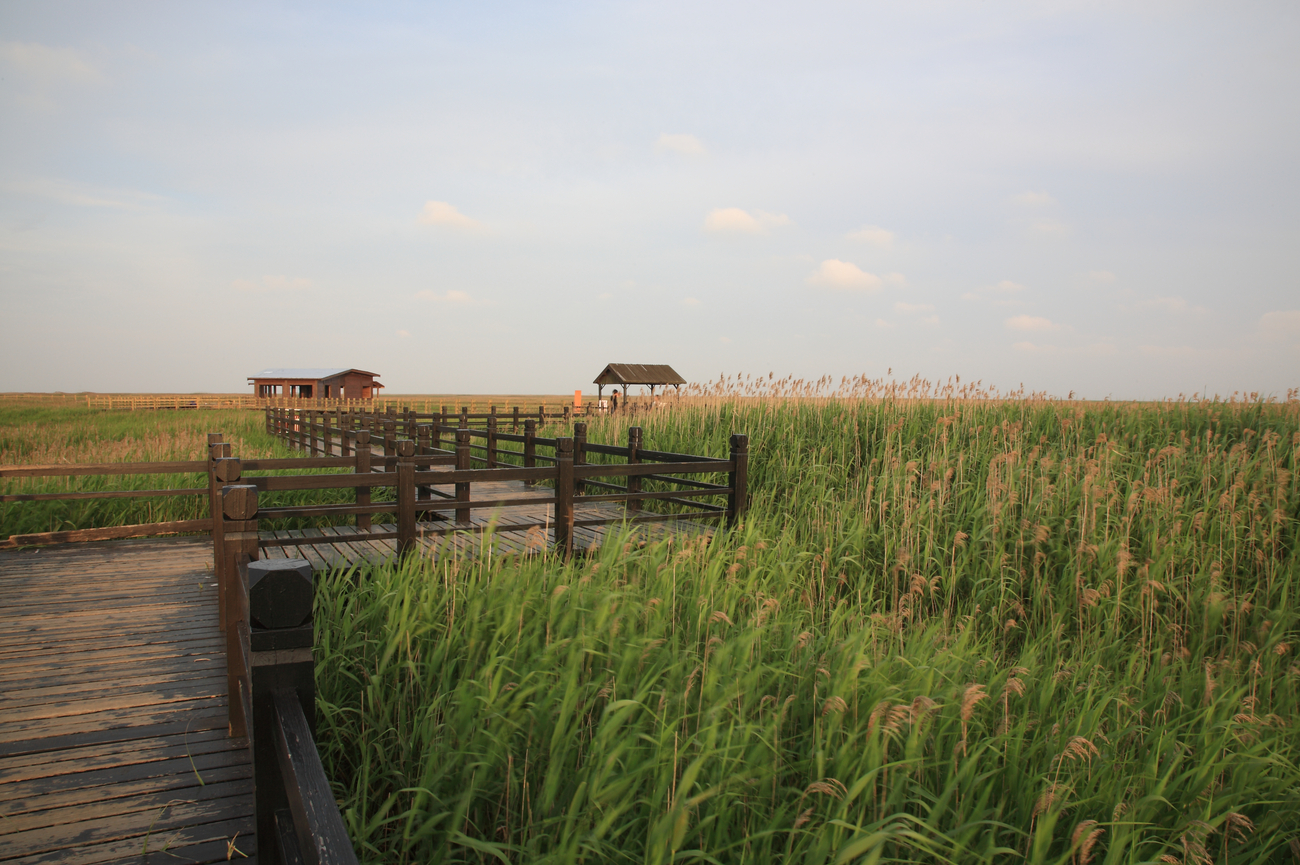
- Migratory Bird Sanctuaries along the Coast of Yellow Sea-Bohai Gulf of China: If you enjoy nature, photography, or quiet, meaningful experiences, visit the Chongming Dongtan National Nature Reserve. This protected wetland is a vital stopover for millions of migratory birds traveling the East Asian–Australasian Flyway, one of the world’s most important migration routes. You can walk along boardwalks and head up observation towers to watch birds resting, feeding, and taking flight across the marshes. Telescopes are available to help you spot different species up close without disturbing them. The best time to visit is during spring and autumn, when migration is at its peak and the skies and wetlands are at their most active.
Luxury Rail Tours in
Shanghai
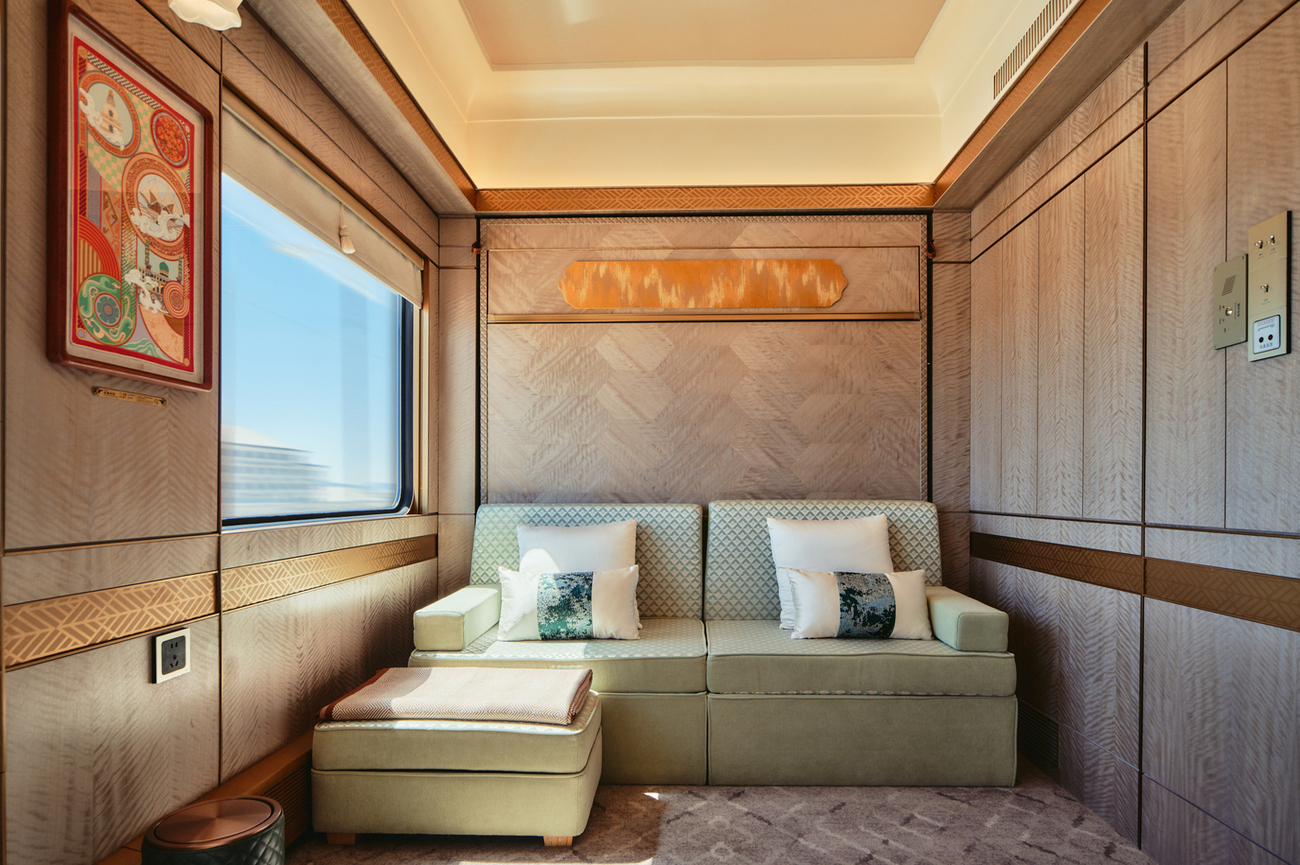
- Golden Eagle Silk Road Express: If you love slow travel, the Golden Eagle Silk Road Express is an
experience in itself. This private luxury train is designed for immersive
journeys across China and Central Asia, combining elegant rail travel with
carefully curated excursions. Shanghai is often a highlight stop on its
“Imperial China” itineraries, so you get to experience the city in a very
exclusive way. Expect high-end, once-in-a-lifetime experiences like aerial
afternoon tea at the J Hotel on the 120th floor of Shanghai Tower, or a private
evening yacht cruise on the Huangpu River with a bespoke dinner and fine wines
as the skyline lights up around you. Onboard, the train feels more like a
boutique hotel on rails, with beautifully designed cabins, a bar lounge, and an
observation car where you can relax, socialise, and watch the landscape roll
by.
Golf Courses in
Shanghai
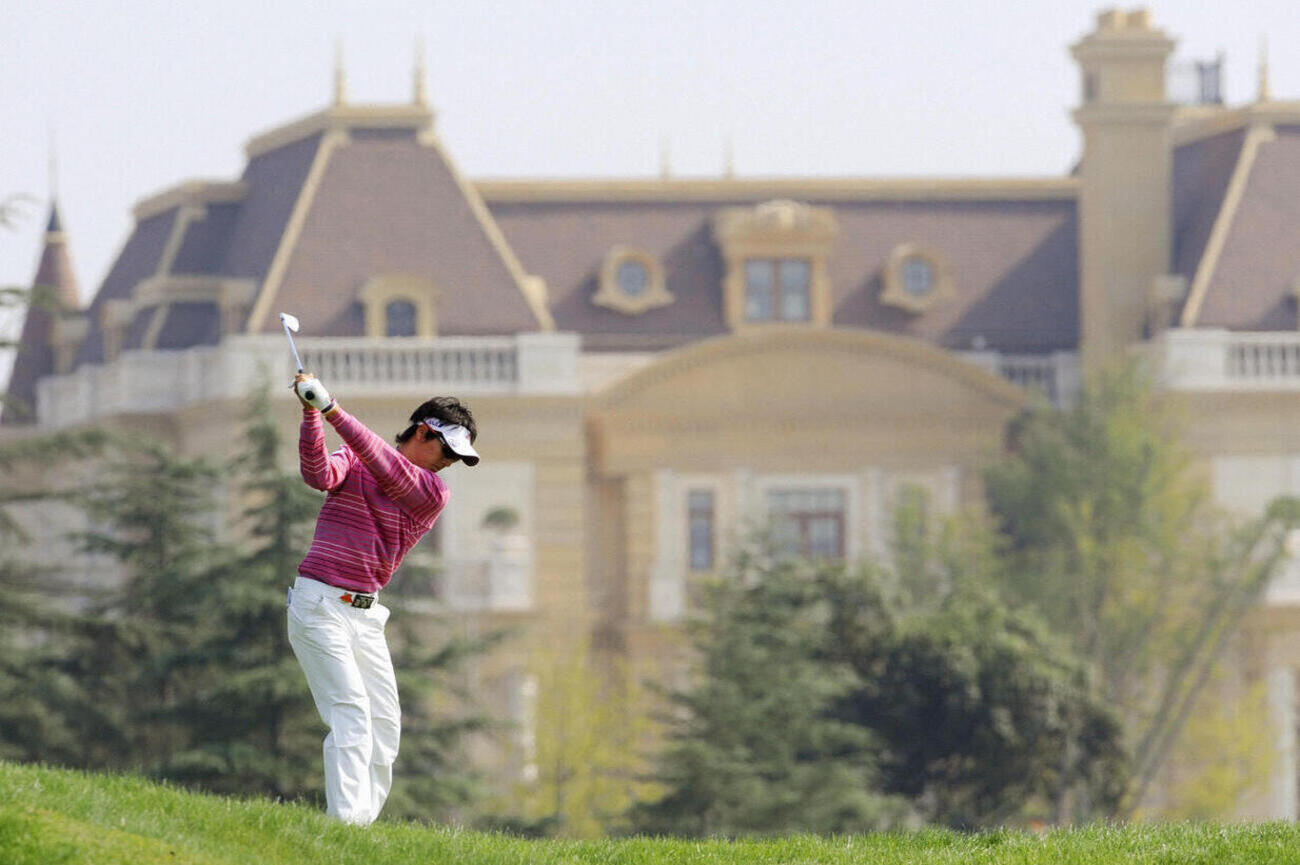
- Sheshan Golf Club: The gold standard of golfing in Shanghai. It’s the city’s most
prestigious and exclusive private club, often compared to Augusta National for
its immaculate condition and elite reputation. The 18-hole championship course
features natural elevation changes and beautifully maintained fairways. It’s
also the long-time host of the WGC-HSBC Champions, Asia’s premier PGA Tour
event, which has attracted legends like Tiger Woods and Rory McIlroy.
- Palm Beach Sea-view Golf Club: If you like your golf with a coastal backdrop, Palm Beach Sea-view
Golf Club is a refreshing change from city courses. This 18-hole championship
course sits near Shanghai’s so-called “gold coast,” giving you open, breezy
fairways and glimpses of the sea as you play. The layout is known for its
sweeping doglegs, strategic water features, and well-kept greens that are
challenging without being punishing. It’s the kind of course that keeps you
engaged hole after hole.
Luxury Spa &
Wellness Experiences in Shanghai
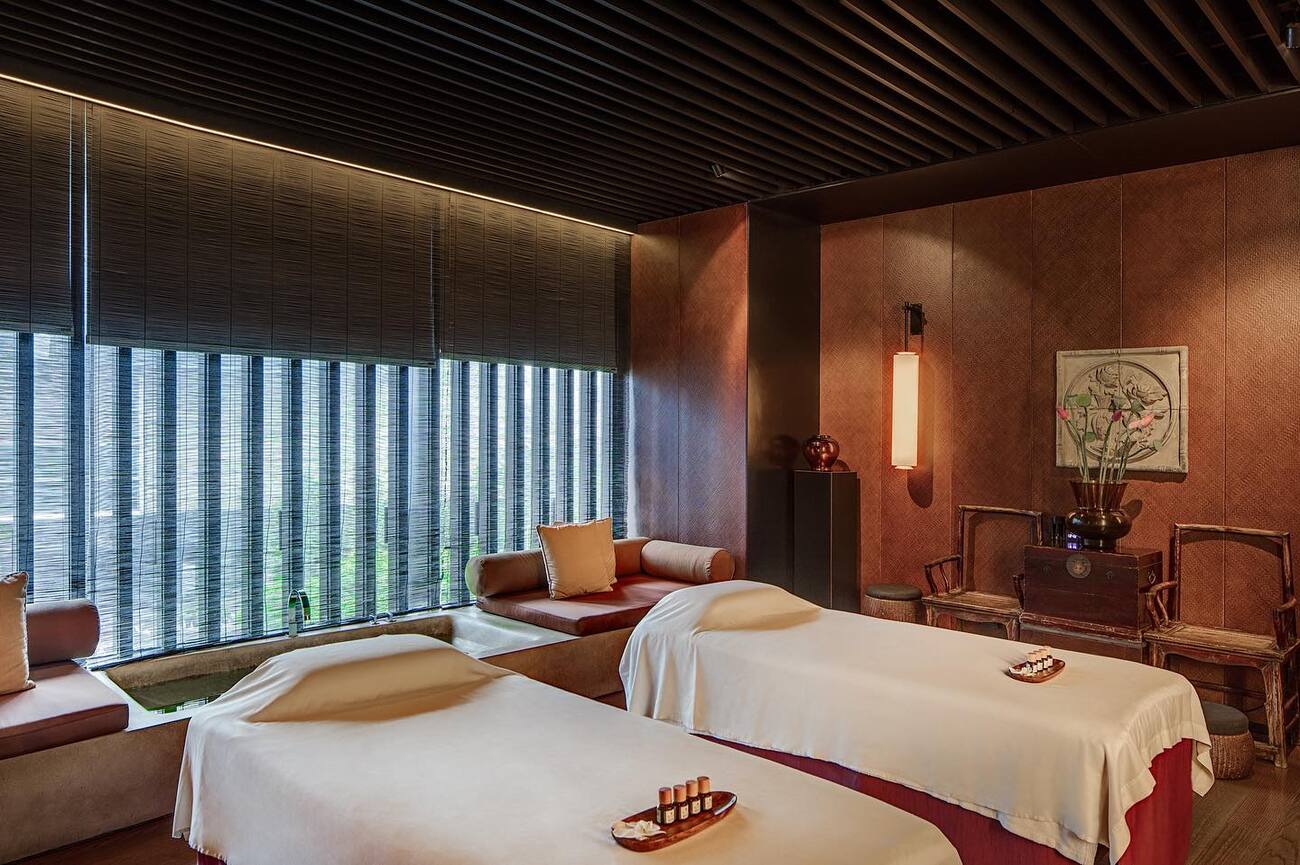
- UR Spa: If you’re craving a calm escape right in the middle of the city, UR Spa is where you go to truly switch off. Located inside The PuLi Hotel, this is a refined urban sanctuary that blends Asian wellness with modern, science-backed treatments. One of the best ways to experience it is through the UR Spa Journey Series, their signature multi-hour treatments are designed to address specific needs. These usually combine full-body massage, facial treatments, and gentle exfoliation into one seamless session, leaving you deeply relaxed from head to toe.
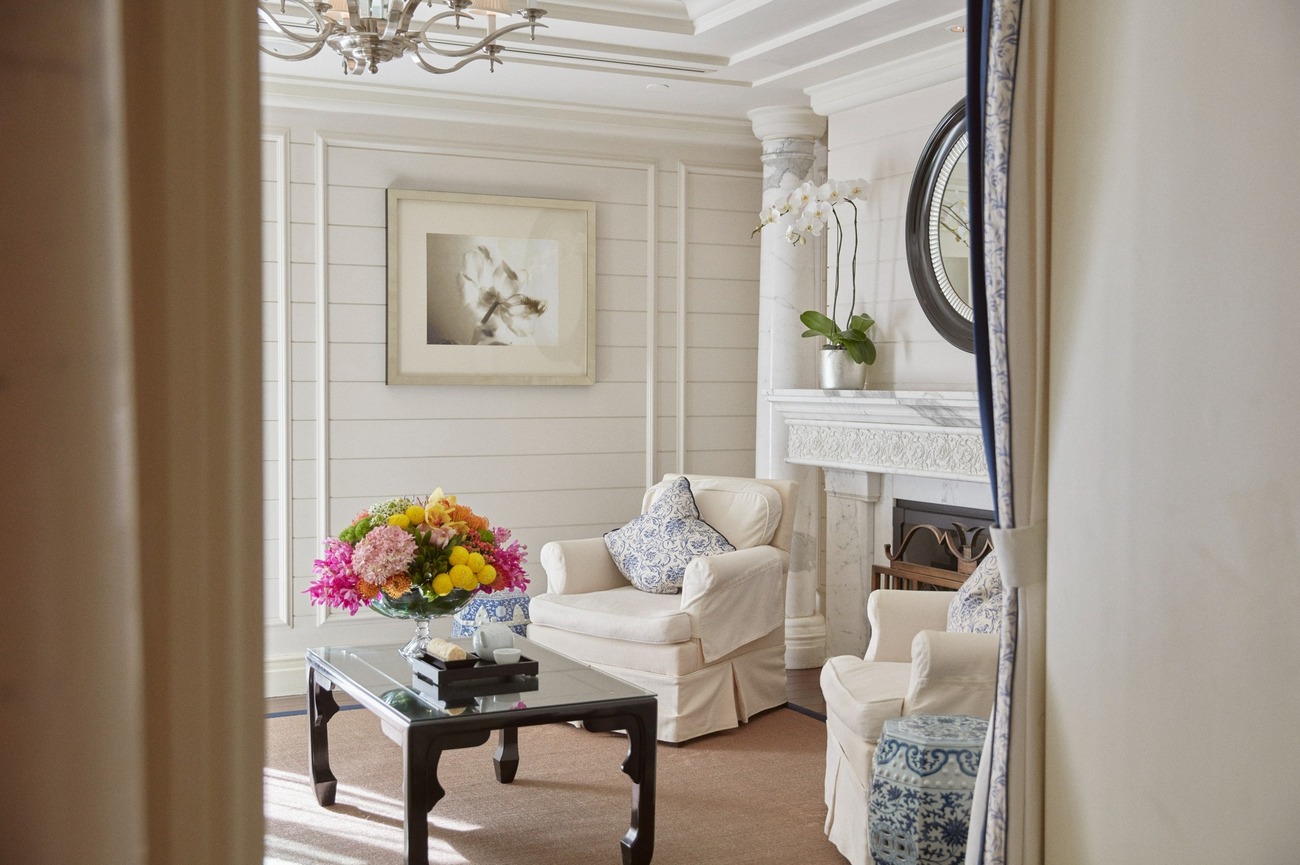
- The Peninsula Spa: A multiple award-winning, Forbes Five-Star rated luxury spa located
inside the historic Peninsula Hotel, the spa combines traditional Chinese
healing philosophies with modern skincare and relaxation techniques, all within
an elegant 1930s Art Deco setting. You can choose from a wide range of holistic
treatments designed to help you truly relax and reset. Some of their signature
options include, the Oriental Thermal Infusion for deep muscle relaxation,
Chakra Balancing for energy alignment, and Traditional Chinese Medicine (TCM)
inspired therapies that focus on restoring balance and circulation. It’s the
perfect place to slow down, switch off, and give your body and mind the care
they deserve after days of exploring the city.
- The Ritz-Carlton Spa Shanghai: If you like your spa experience with a view, this one is hard to beat. Located on the 55th floor of the IFC South Tower, The Ritz-Carlton Spa gives you stunning, floor-to-ceiling views of the Bund and the Huangpu River from every treatment room. The spa follows an “East meets West” approach, blending advanced European skincare with traditional Chinese healing techniques. You can unwind with signature treatments like the Bamboo Massage for deep muscle relief, the Marine Detox Envelopment for full-body renewal, or one of their high-end facials if your skin needs a boost.
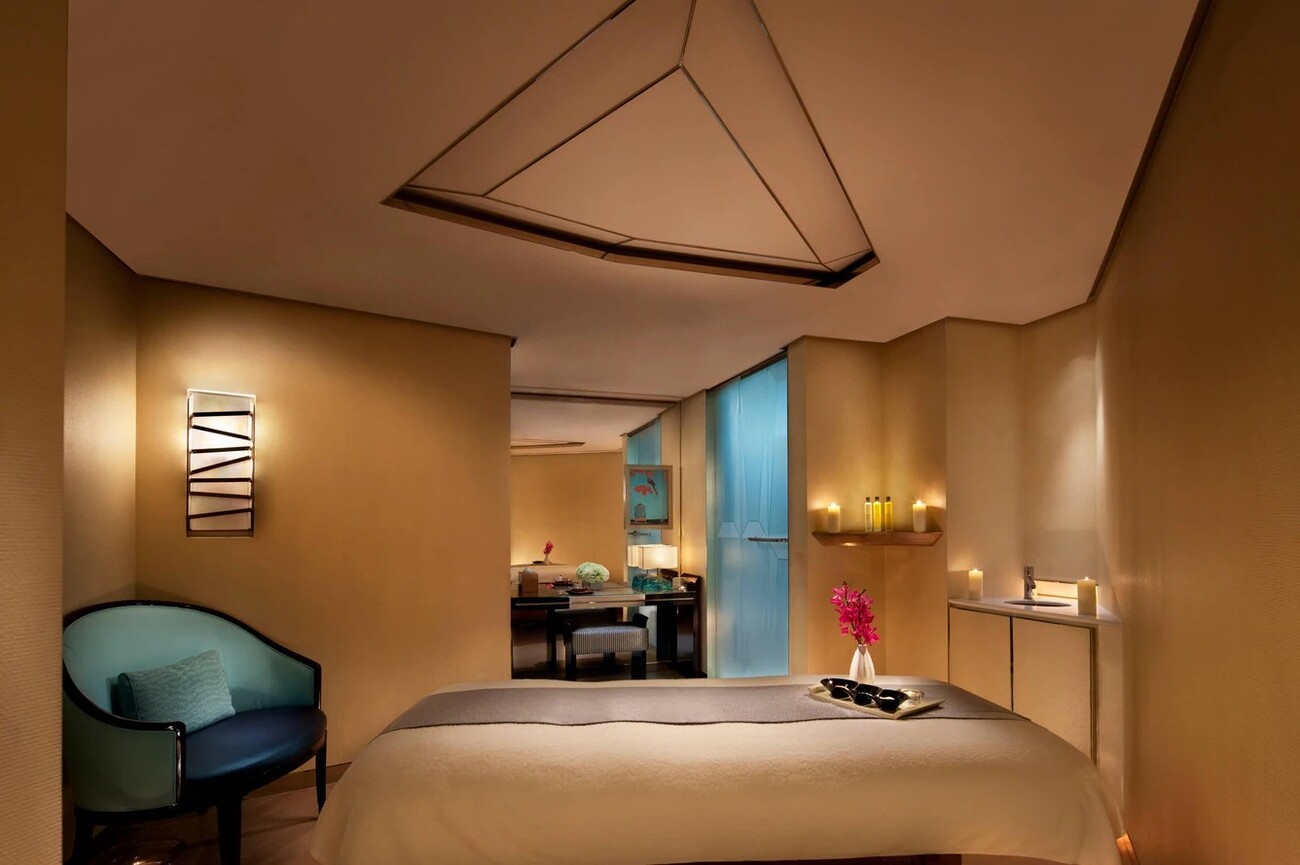
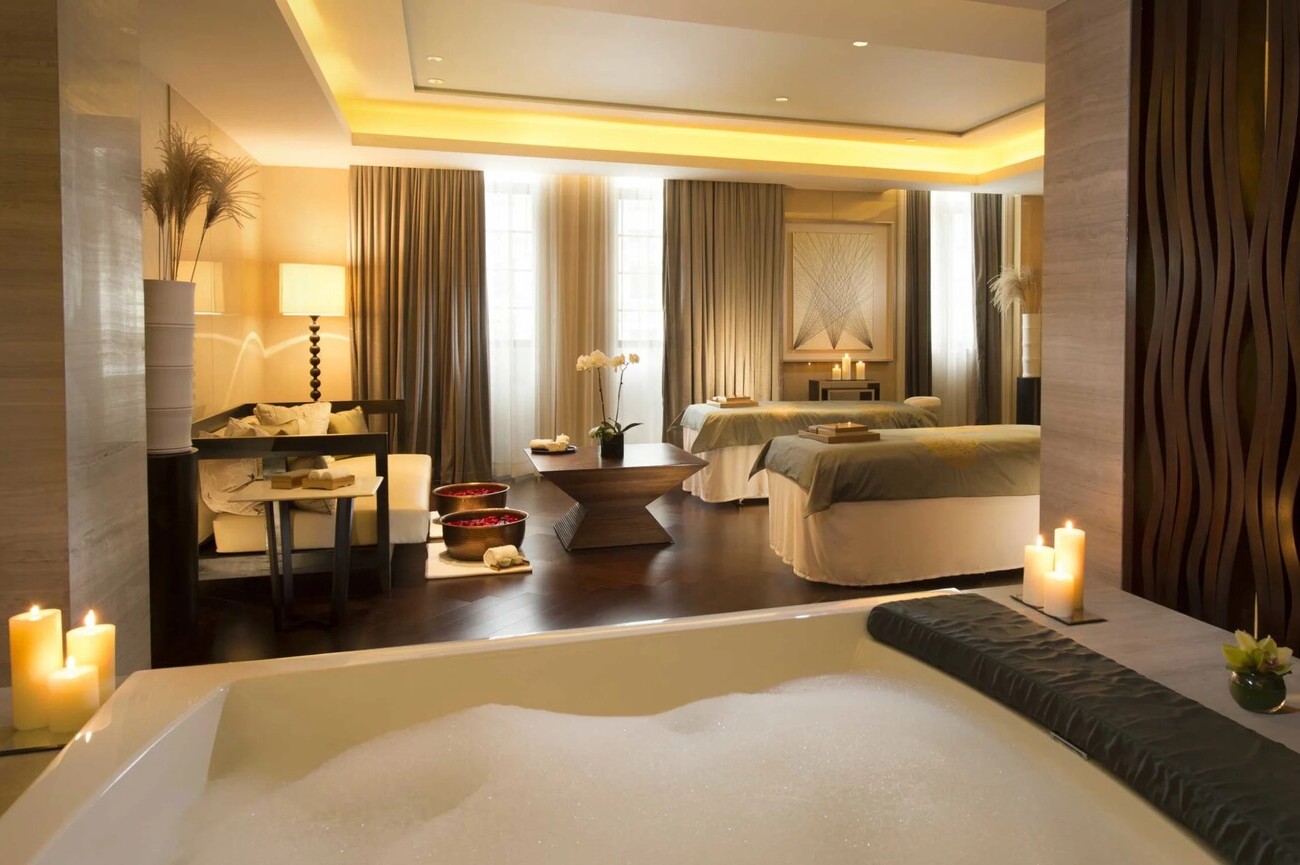
- Waldorf Astoria Spa Shanghai: Offers treatments that blend traditional Chinese healing philosophies
with modern European techniques, so you get the best of both worlds. Try their
signature Longevity Massage, which uses acupressure and essential oils to
release tension and encourage healthy energy flow (Qi), perfect if you’ve been
walking a lot or feeling travel fatigue. You can also opt for their Body
Envelopments and Scrubs, which use natural salts, oils, and mud wraps to gently
detox the skin and leave you feeling fresh and renewed.
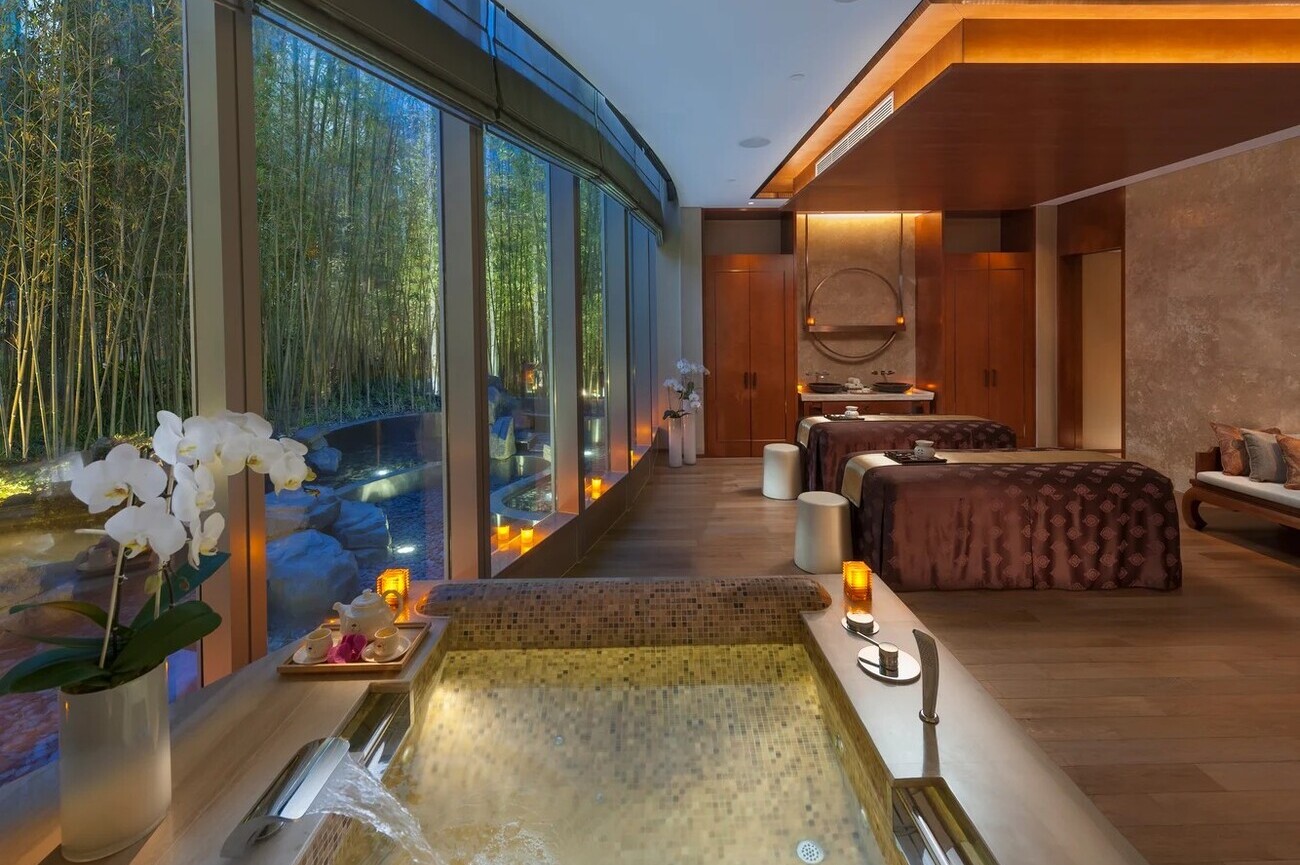
- The Spa at Mandarin Oriental Shanghai: Located along the Pudong waterfront, it’s designed to help you slow
down and rebalance after busy days in the city. You can choose from their wide
range of holistic treatments that blend the brand’s signature therapies with
Traditional Chinese Medicine and modern global techniques like the Oriental
Essence Massage, which combines custom essential oils with a meridian massage
inspired by TCM to ease tension and restore your energy. If you’re curious
about TCM but new to it, you can also book consultations, reflexology, and
targeted body treatments tailored to your needs, so you feel properly
refreshed, not just pampered.
Exclusive Workshops
& Immersive Experiences in Shanghai
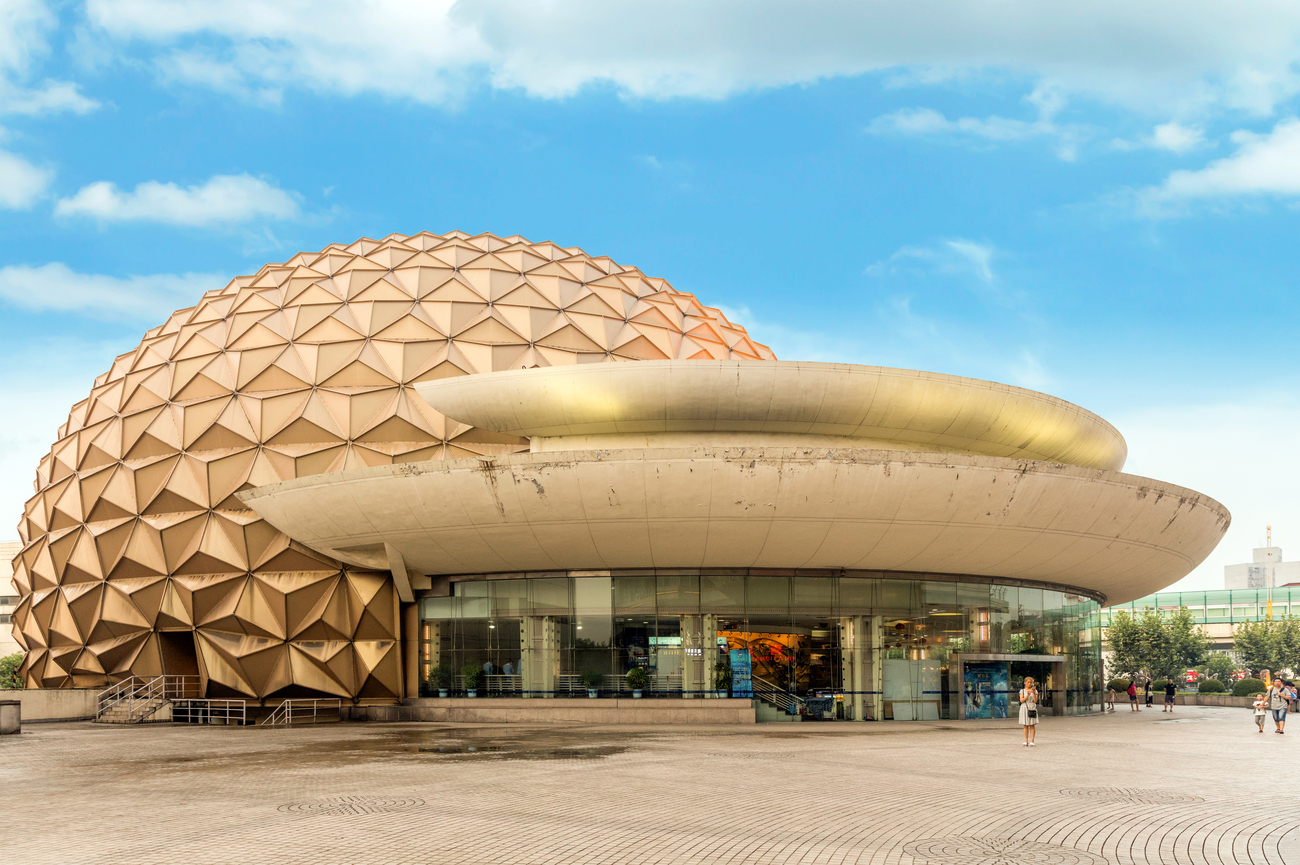
- Shanghai Circus World: If you want more than just watching a show, Shanghai Circus World
gives you a behind-the-scenes, immersive experience into China’s world-famous
acrobatic arts. Often called “China’s No. 1 Circus Arena,” this is the city’s
top venue for spectacular productions like ERA – Intersection of Time. What
makes it special is that you can go beyond the stage. Some packages let you
step into the backstage area of the Golden Dome, where you’ll see performers
warming up and watch the complex rigging used for high-wire and motorcycle
acts. They also offer introductory acrobatics workshops for private groups,
where you can try fun, beginner friendly acts like plate spinning, the Chinese
yo-yo (diabolo), or simple balancing, so don’t worry, there’s no back bending
for you yet! Expect high energy performances enhanced by 3D projection mapping,
surround sound, and interactive moments where performers move through the
aisles.
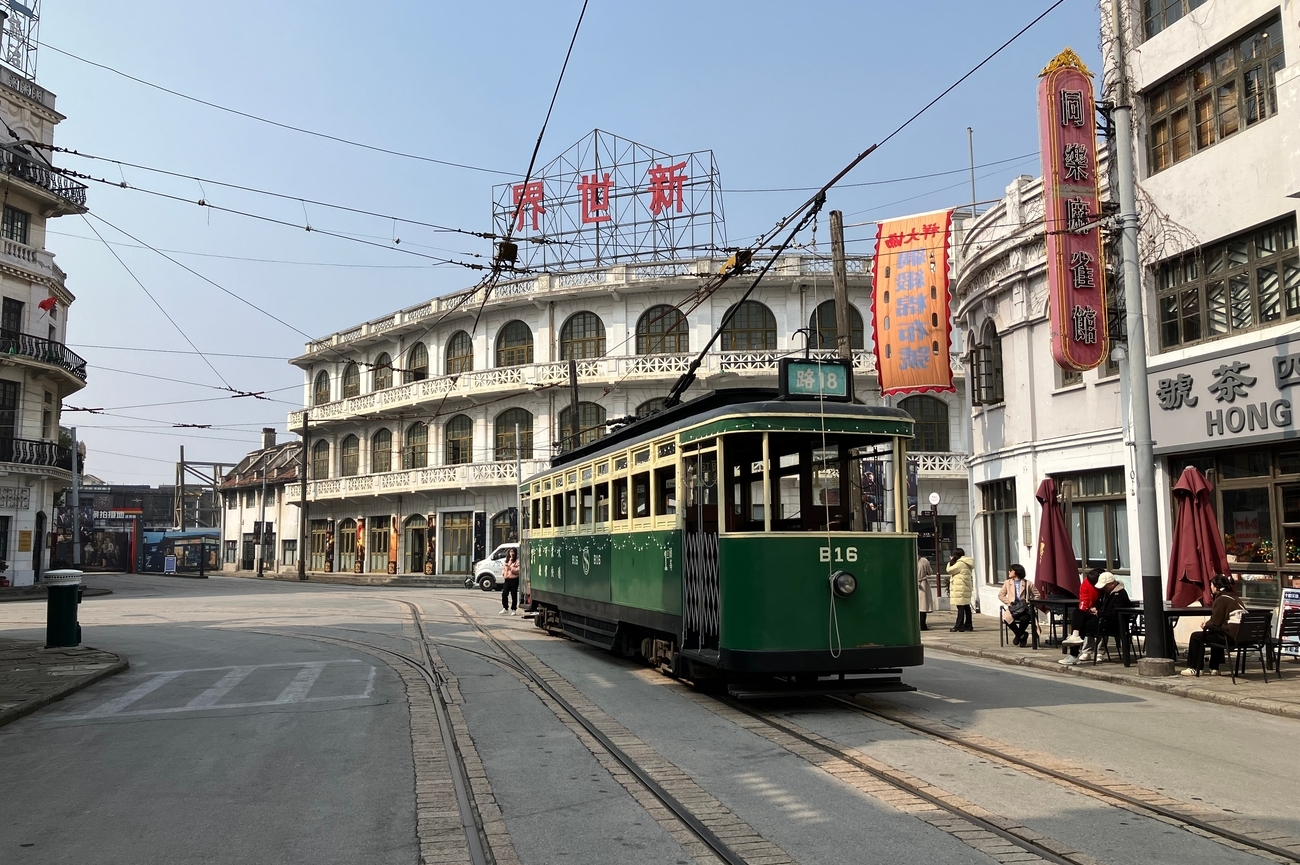
- Shanghai Film Park (Chedun Movie Park): If you love movies or the old Shanghai vibe, this huge open-air film
set in Songjiang recreates 1930s “Old Shanghai” in detail, making you feel like
you’ve stepped straight into a classic Chinese movie. It’s still an active
filming location for major movies and TV shows, but you’re free to wander the
streets, pose on vintage sets, and take photos as if you’re the star of your
own period drama. You can even watch live stunt shows with wire work,
pyrotechnics, and staged “gunfights” that show how action scenes are filmed.
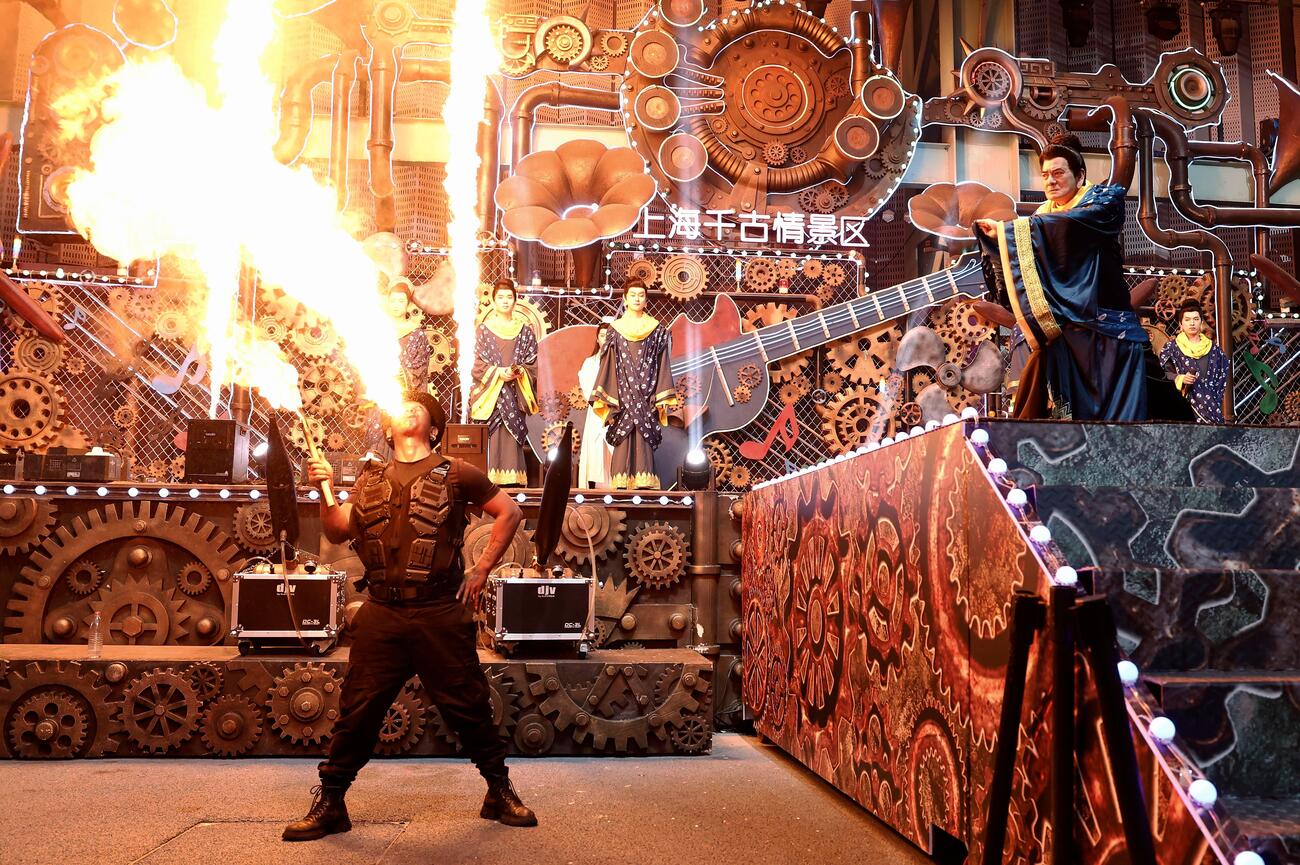
- Shanghai Romance Park: Unlike traditional amusement parks with rides, this massive
"live-action" theme park takes you through different eras of
Shanghai’s history in its 60-minute multi-sensory show that uses moving stages,
water curtains, 3D projection, mist, and even scent effects to bring Shanghai’s
journey to life. Performers move through the audience, so you’re not just
watching, you’re part of it. After the show, you can explore the park’s themed
zones, walk through historical sets, and join hands-on activities.
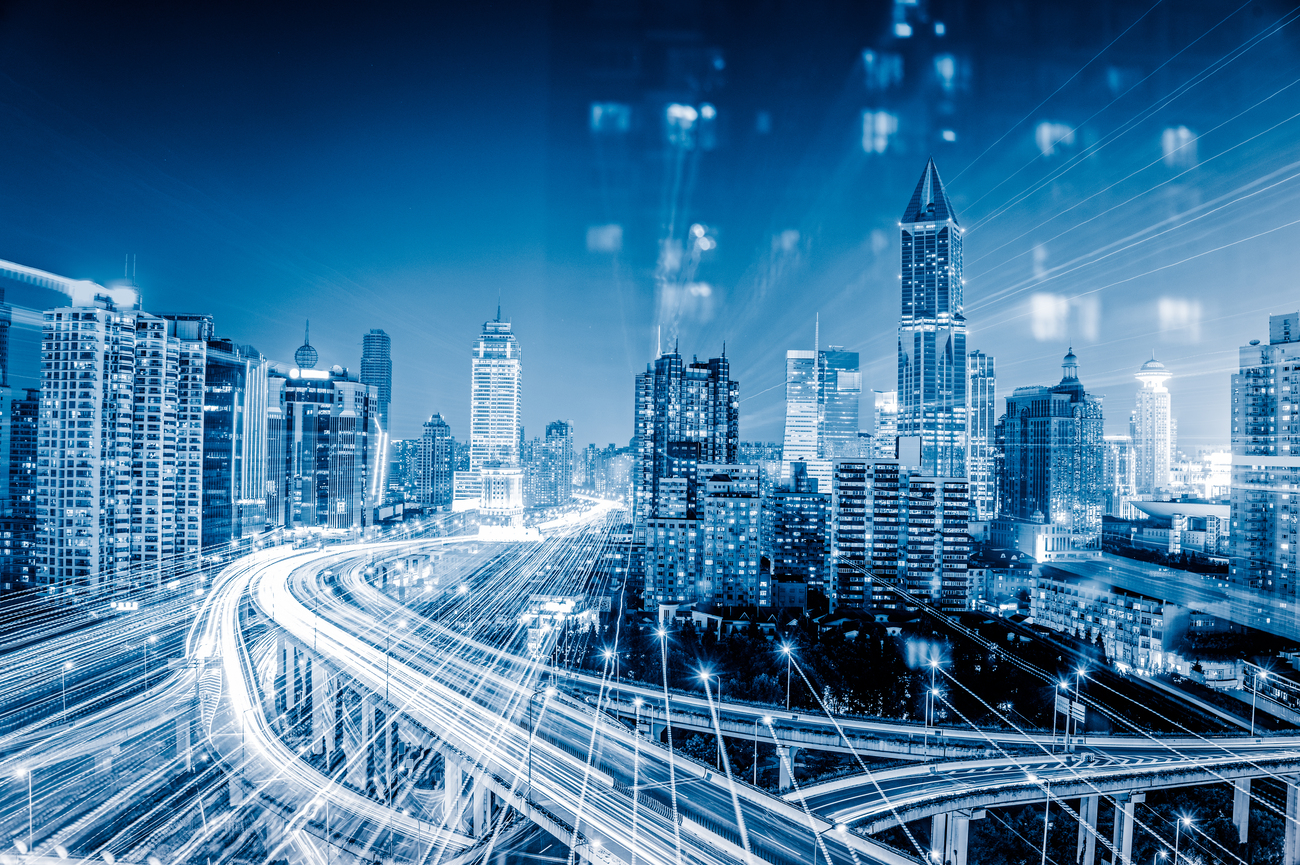
- Fly Over Shanghai: Experience the thrill of diving between the Shanghai Tower and the Oriental Pearl Tower in this state-of-the-art flying theater that offers a “5D” immersive journey that simulates a bird's-eye view of Shanghai’s most iconic landmarks and the natural wonders of China. Here, you’ll be strapped into a hang-glider-style seat that lifts, tilts, and dips in sync with the visuals, while a huge curved screen fills your entire field of view. Add in effects like wind on your face, mist from the Huangpu River, and even the scent of blooming magnolias, and it really does feel like you’re gliding over the city.
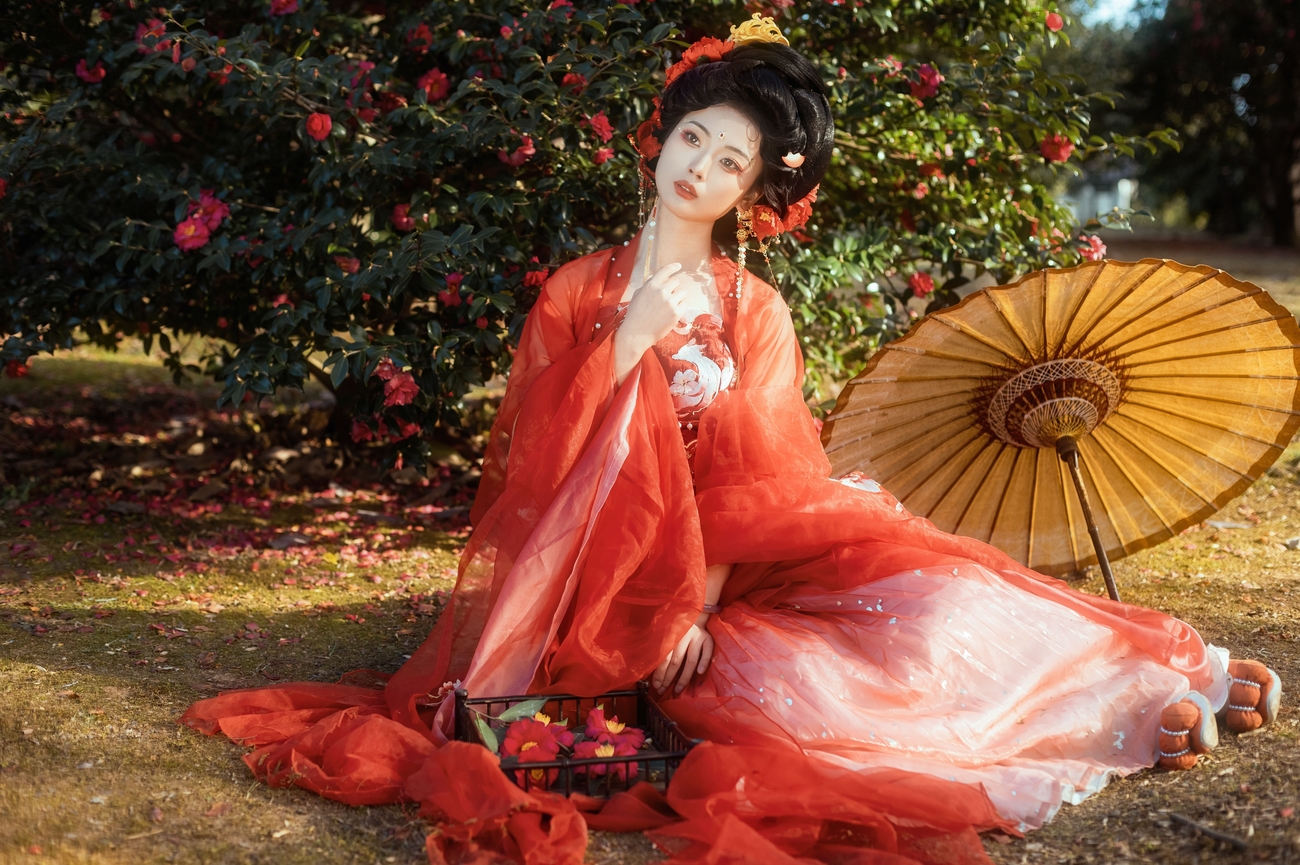
- Hanfu Costume Rental and Photography: If you want to fully lean into Shanghai’s heritage, try exploring the
city in traditional Hanfu. You can choose from beautiful styles inspired by
different dynasties. Professional makeup artists can create classic looks like
“Peach Blossom” or “Flying Glow” makeup and style your hair with traditional
accessories such as jade hairpins, fans, and braids. To make the experience
even more special, we can arrange a professional photographer who will guide
you to scenic spots around the city that perfectly match the ancient aesthetic.
Other Things to Do in
Shanghai
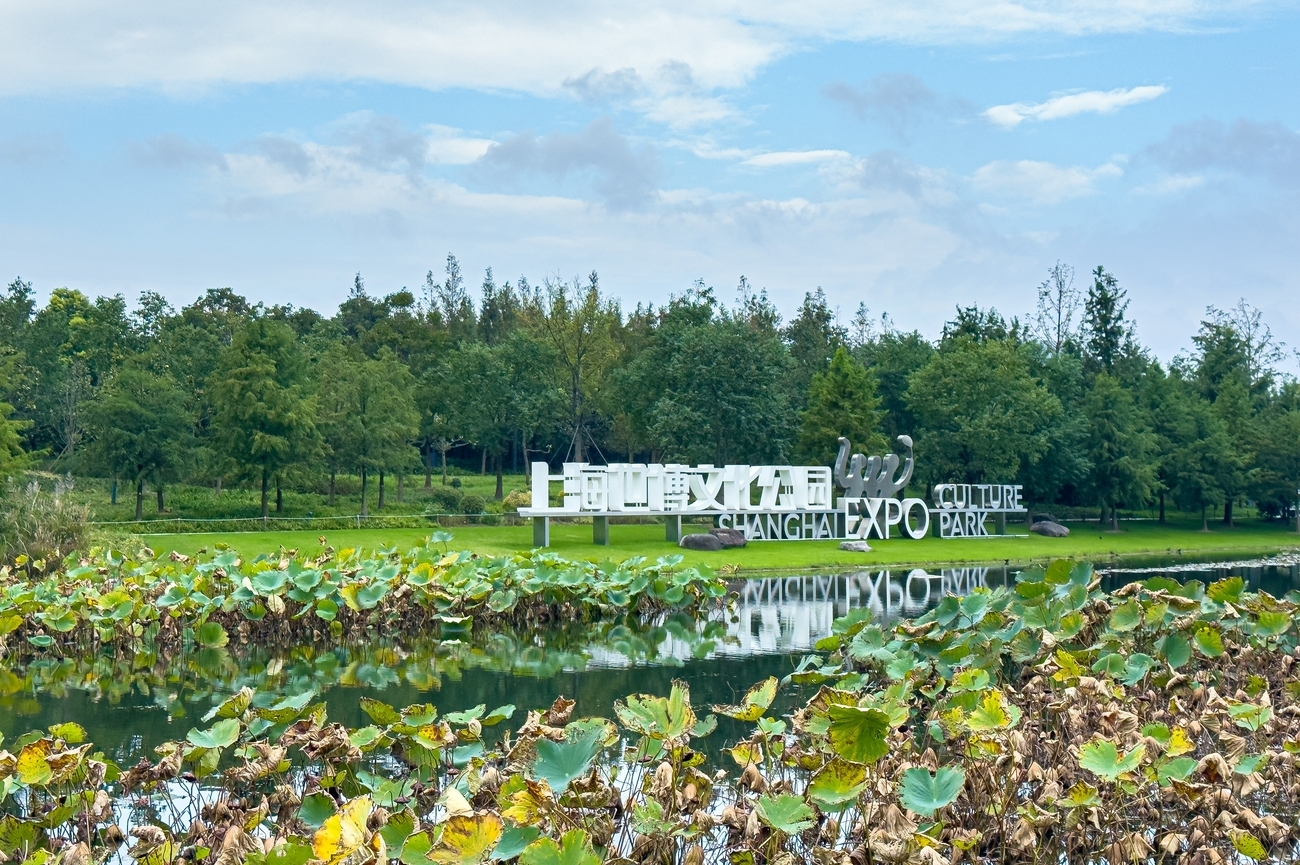
- Shanghai World Expo Cultural Park: Once the site of the 2010 World Expo, this huge riverside park has
been transformed into one of Shanghai’s most impressive urban green spaces. You
can explore the massive Shanghai Greenhouse, divided into three themed
pavilions (Sand Mirage, Cloud Forest, and Cloud Canyon) each recreating
different plant habitats, including a striking “underwater forest” aquarium. If
you’re in the mood for an easy climb, hike up the park’s two artificial hills
for stunning views of the Huangpu River and Lupu Bridge, especially beautiful
at sunset.
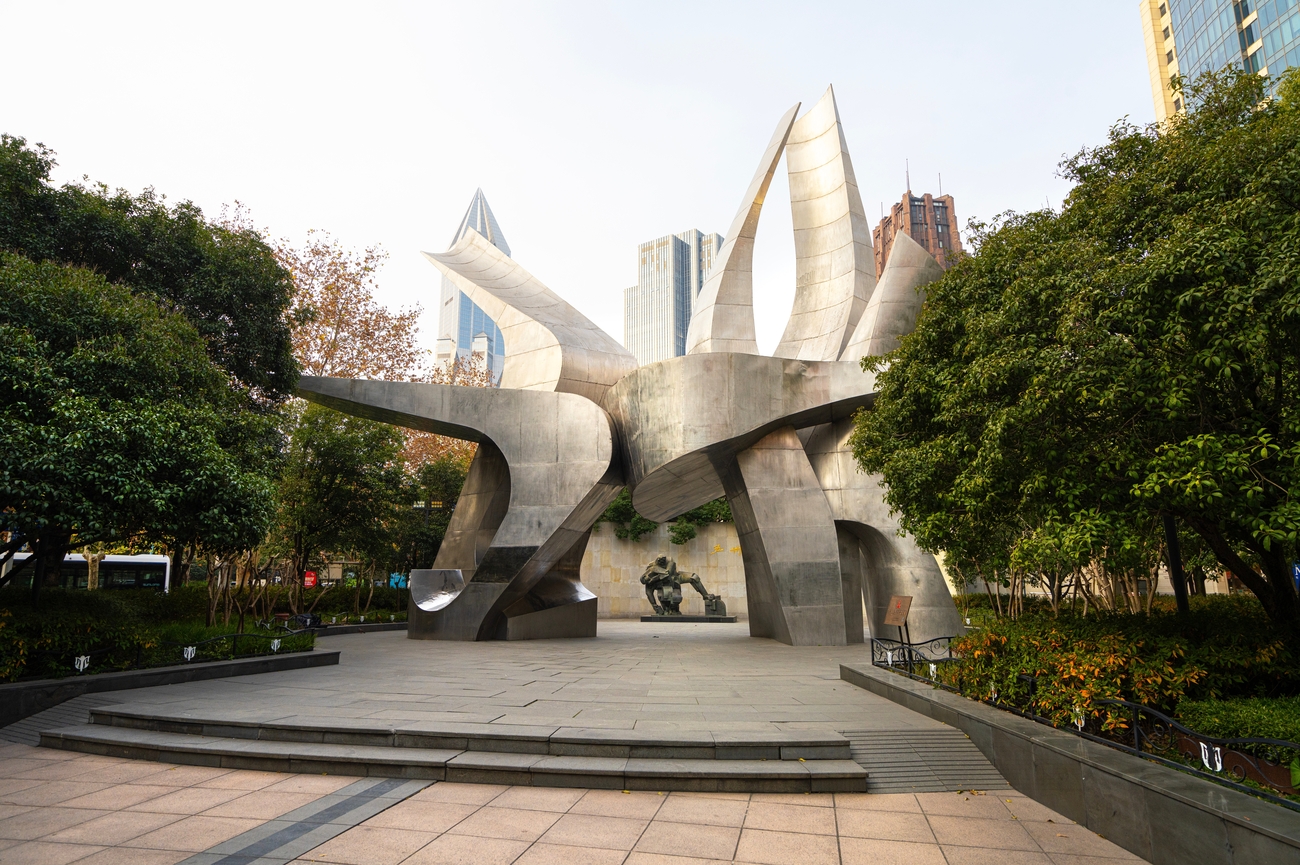
- Monument of the May 30th Movement: Located in People’s Park, this powerful monument marks one of Shanghai’s most important moments in modern history: the 1925 protests against foreign control and the tragic shooting of student demonstrators. Even if you’re not a history buff, the sculpture itself will stop you in your tracks. Its sharp, steel forms rise like flames, bold and dramatic, and from certain angles subtly shape the Chinese characters for “five” and “thirty.” Behind the main sculpture, you’ll find a large bas-relief wall that visually tells the story of the movement. While the text is in Chinese, the emotion and intensity of the scenes are easy to understand. It's a moving stop that adds depth to your walk through People’s Park, and gives you a stronger sense of the struggles that shaped modern Shanghai.
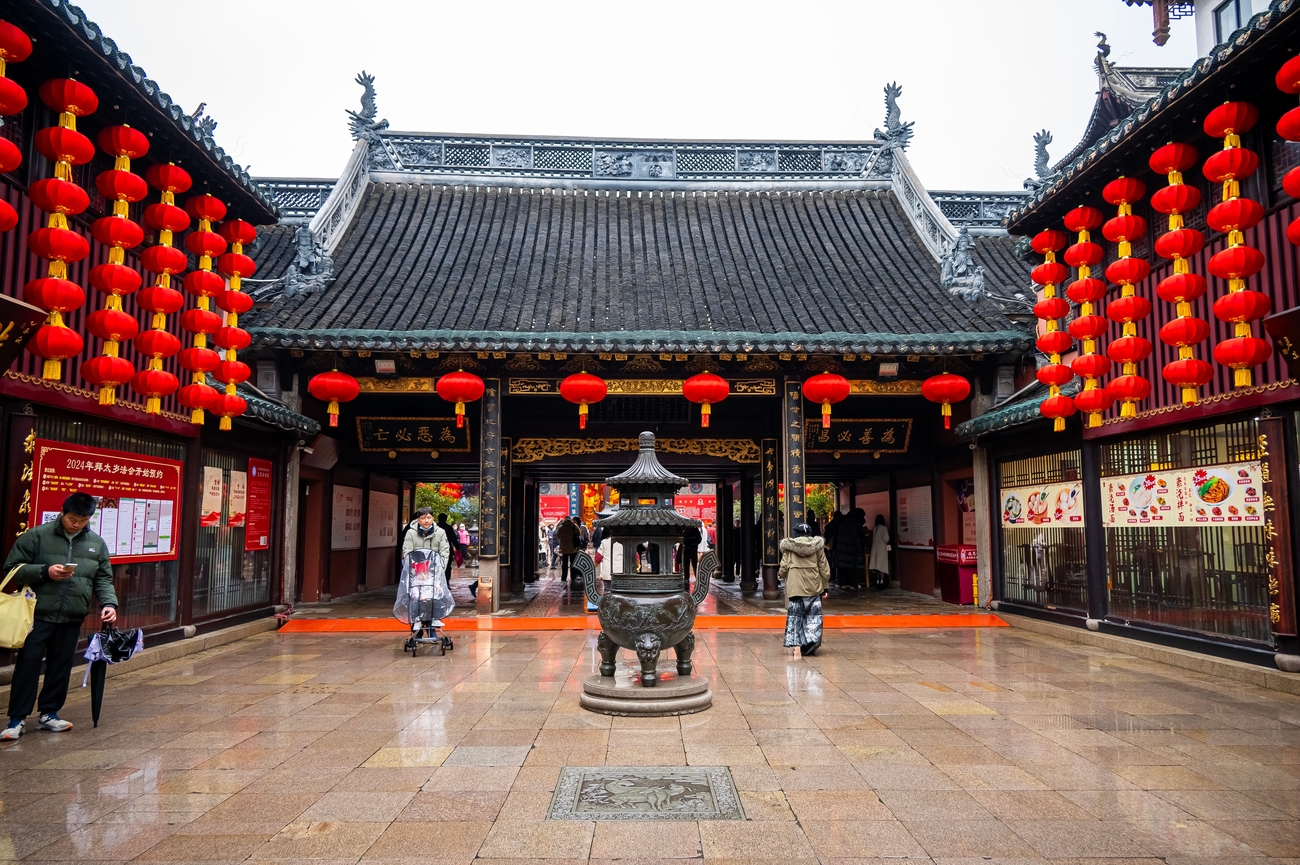
- City God Temple: Right in the heart of the Yu Garden Bazaar, the City God Temple is one of Shanghai’s most important spiritual landmarks. Built during the Ming Dynasty in the early 1400s, it is dedicated to three City Gods believed to protect the people of Shanghai. As you step inside, you’ll notice the classic red walls, golden upturned eaves, and detailed wood carvings that give the temple its timeless beauty. This is still an active place of worship, so you can light incense, bow in the four directions, and quietly make a wish for health, wealth, or success, just as locals have done for centuries. You can also wander through the different halls, each dedicated to a specific deity, and get a deeper feel for how spirituality remains woven into everyday life in Shanghai.
Things to Do with Kids
in Shanghai
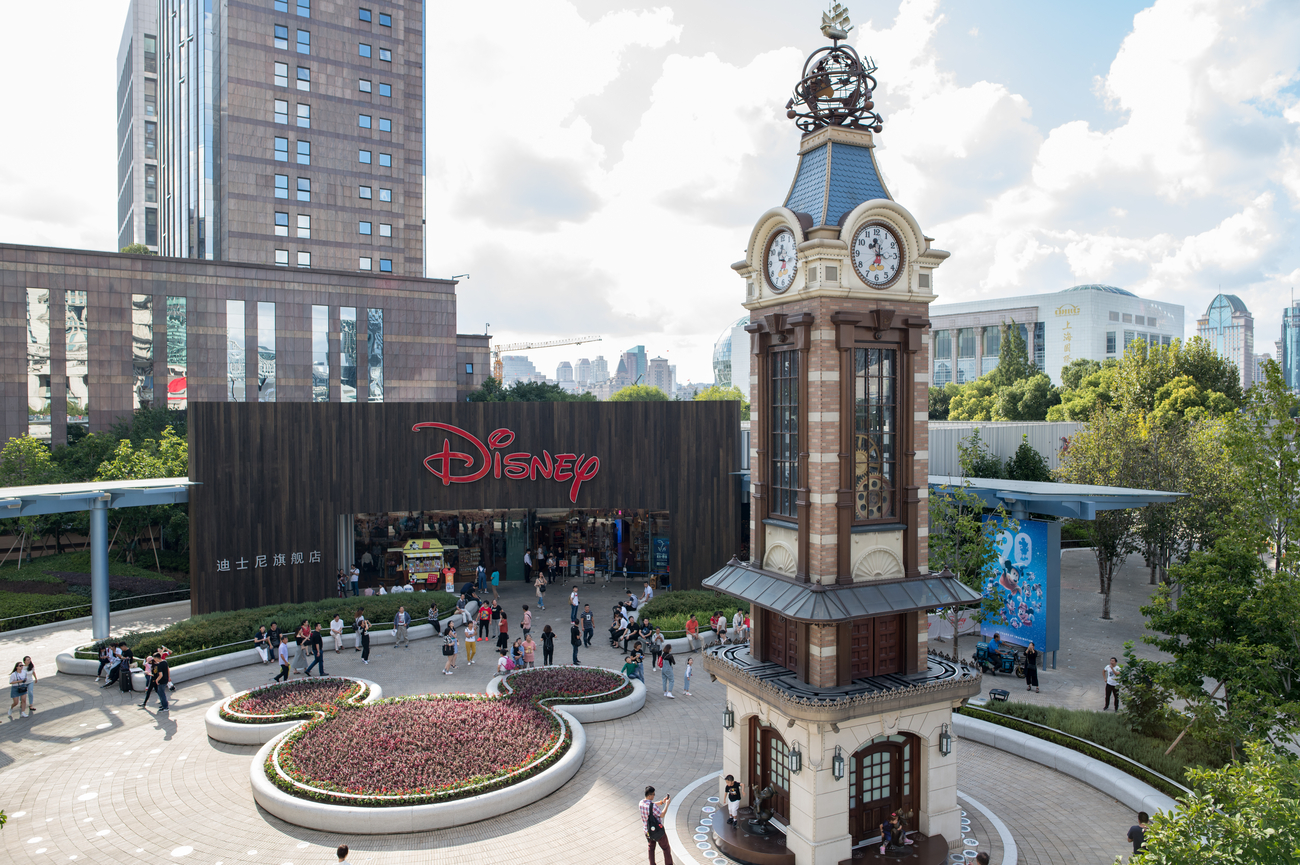
- Shanghai Disneyland Park: The largest Disney resort in Asia, blending classic Disney magic with
unique Chinese touches like the Garden of the Twelve Friends. As you explore,
you’ll move through immersive lands such as Zootopia, race on the futuristic
TRON Lightcycle Power Run, step inside the Enchanted Storybook Castle, and sail
through the spectacular Pirates of the Caribbean ride. End your day with the
nightly castle show, where projections, lasers, and fireworks light up the sky
in a full Disney finale. To make the most of your time, download the Shanghai
Disney Resort app to check real-time wait times, join virtual queues, and buy
Premier Access so you can skip the longest lines and spend more time enjoying
the park.
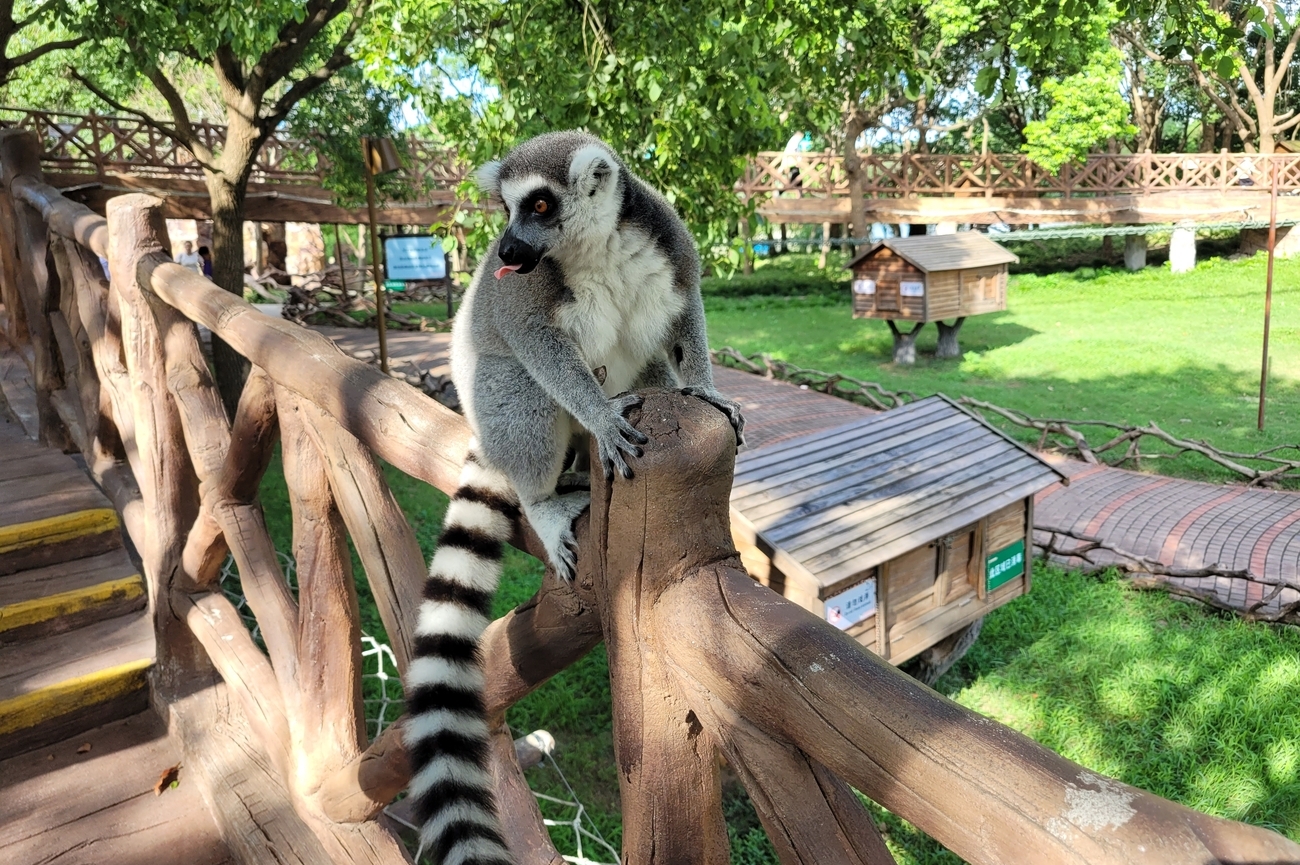
- Shanghai Wild Animal Park: One of China's largest and most hands-on wildlife parks, designed to feel more like a safari than a traditional zoo. It’s especially great if you’re travelling with kids or simply want a more immersive animal experience. Here, you can ride a protected park bus or use a private vehicle to enter the Predator Zone, where lions, tigers, and bears roam freely while you watch safely from inside. A must-visit is the Giant Panda Hall, where you’ll see China’s national treasure up close. The park is known for its successful breeding program, so you’ll often spot younger, playful pandas tumbling around. There are also Animal Interaction Zones where you and your kids can get close to gentler animals. You can even buy special feed to hand-feed giraffes, kangaroos, and lemurs under staff supervision.
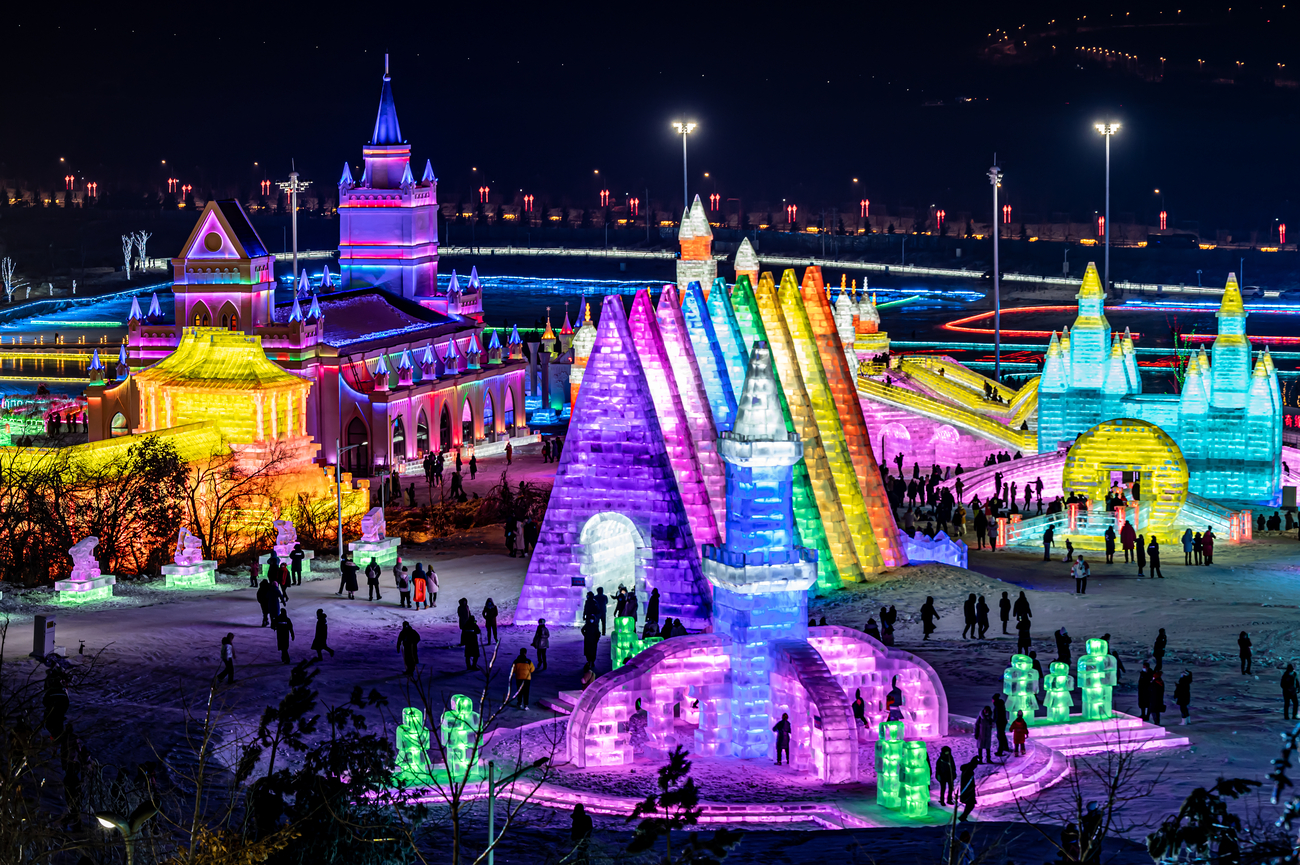
- Shanghai Yaoxue Ice and Snow World: The world’s largest indoor, real-snow resort, giving you a full winter experience all year round, this is perfect if you visit Shanghai during hot, humid, or rainy days. If your kids are too young to ski, there are over 20 snow-based activities they can enjoy, from snow tubing and ice slides to a playful “snow town” where they can build snowmen and have snowball fights. You’ll also find beginner-friendly ski slopes, an indoor train ride, an ice sculpture gallery, and even a Viking-themed water park, so there’s plenty to do whether you’re here for snow fun, photos, or just something different from city sightseeing.
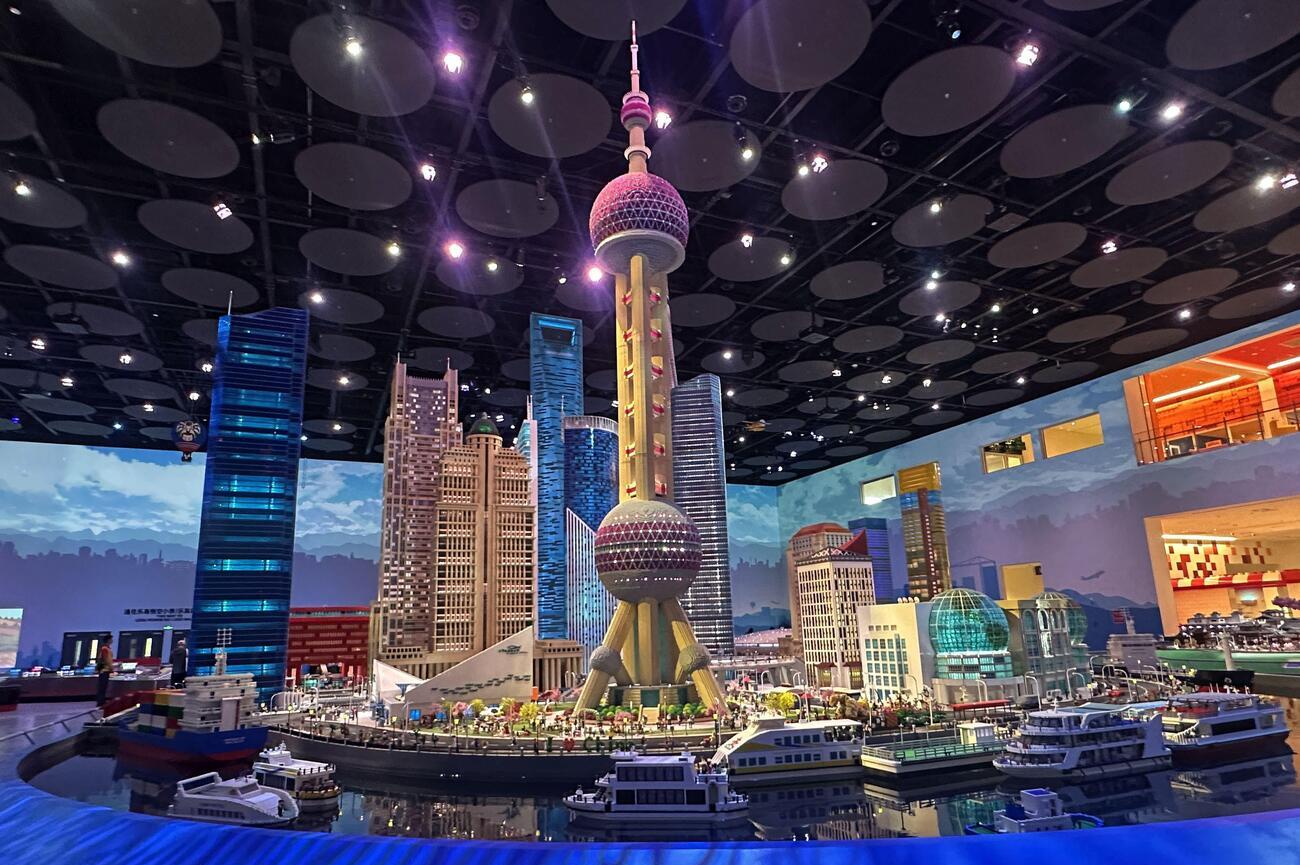
- Legoland Shanghai Resort: China's first Legoland park (and the largest in the world) designed
especially for families with kids aged 2 to 12. With over 75 interactive rides,
shows, and attractions spread across eight themed zones, it’s a full day (or
two) of hands-on fun where your kids can build, play, and explore. See the
world’s first LEGO® Monkie Kid themed land, inspired by the Chinese classic
Journey to the West. Here, you and your kids can watch the “Battle for Flower
Fruit Mountain” live show and join themed adventures around the area. Don’t
miss MINILAND Shanghai, where famous Chinese landmarks like The Bund, the
Potala Palace, and traditional water towns are recreated in stunning detail
using over 85 million LEGO bricks. For extra thrills, hop on the Big LEGO
Coaster, or let your kids live out their driving dreams at the LEGO® City
Driving School, where they can drive electric cars and earn their very own
LEGOLAND driver’s license.
Where to Eat in
Shanghai
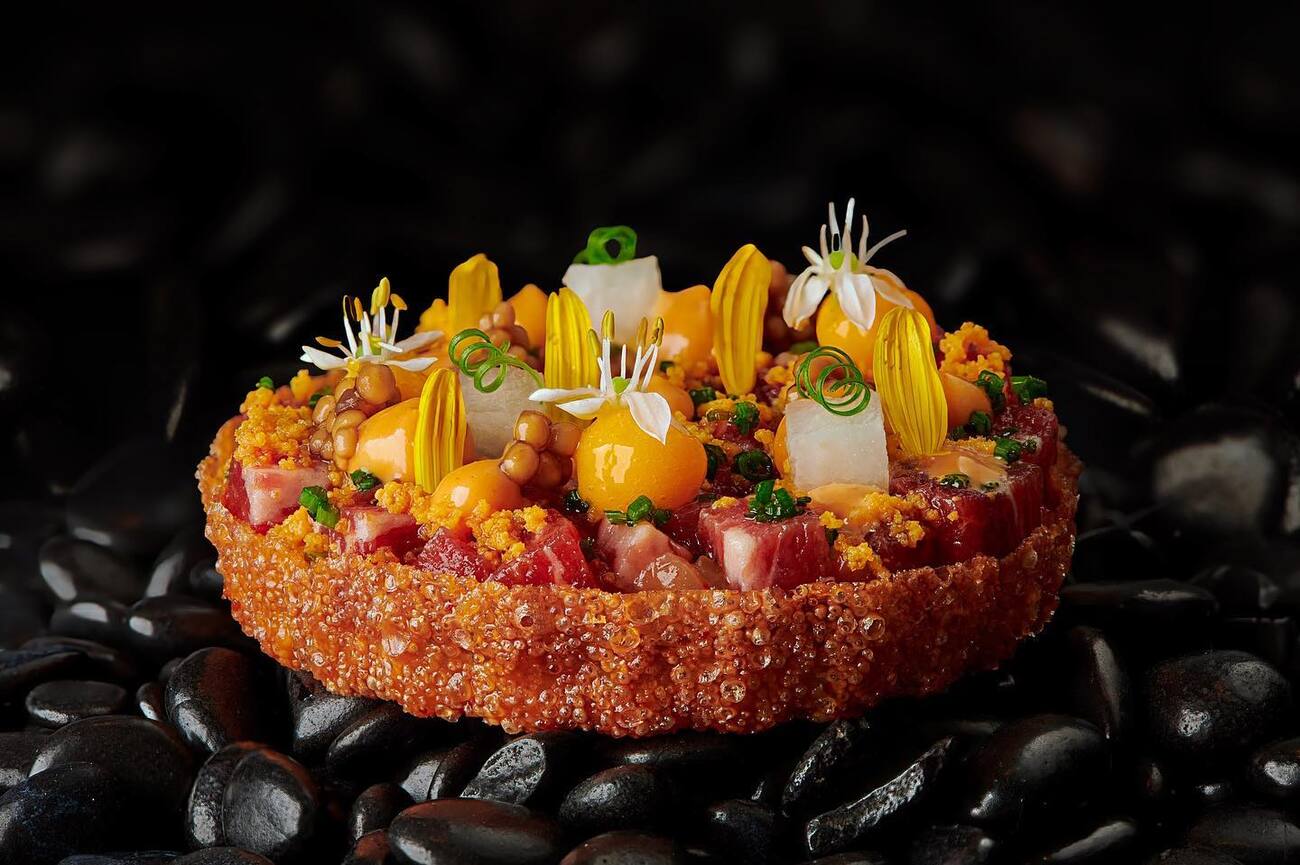
- The Taian Table: One of Shanghai's most prestigious dining destinations, holding the rare honour of three Michelin stars plus a Michelin Green Star for sustainability. Founded by German chef Stefan Stiller, it offers an intimate counter-dining setup where you sit right in front of the open kitchen and watch the chefs work their magic in real time. The tasting menu changes every six to eight weeks (called “Chapters”), so no two visits are ever the same. While the techniques are rooted in French and German cooking, you’ll taste premium Chinese ingredients woven throughout. You can choose between a 10-course or 12-course menu, and expect beautifully detailed dishes like delicately prepared scallops or langoustines, and refined meat courses such as slow-cooked Wagyu or pigeon paired with intricate seasonal vegetables.
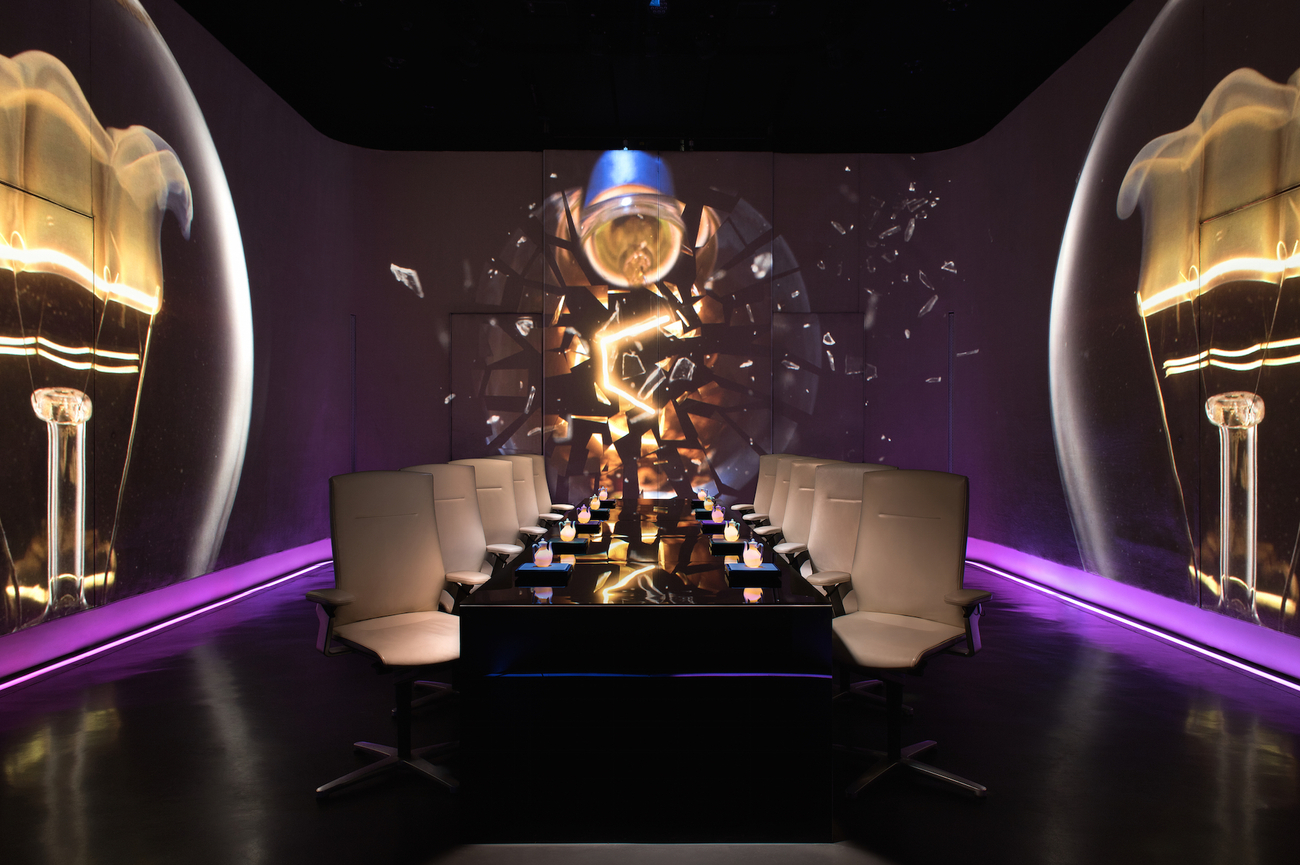
- Ultraviolet By Paul Pairet: It’s not just a restaurant, it’s an experience, and one of the most exclusive in the world. Holding three Michelin stars, it serves only ten guests per night at a single secret table, making every seat feel incredibly special. If you’re looking for something truly once-in-a-lifetime, this is it. Your evening starts at a discreet meeting point, where you’re driven by tinted van to a hidden warehouse location. From there, you’re led into a windowless, high-tech dining room where the walls become 360-degree projection screens. With each of the 20 courses, the entire room transforms—lights, visuals, sound, scent, and even temperature shift to match what’s on your plate. If you’re served a seafood course, you might find yourself surrounded by crashing waves, the scent of the ocean in the air, and the sound of seagulls overhead.
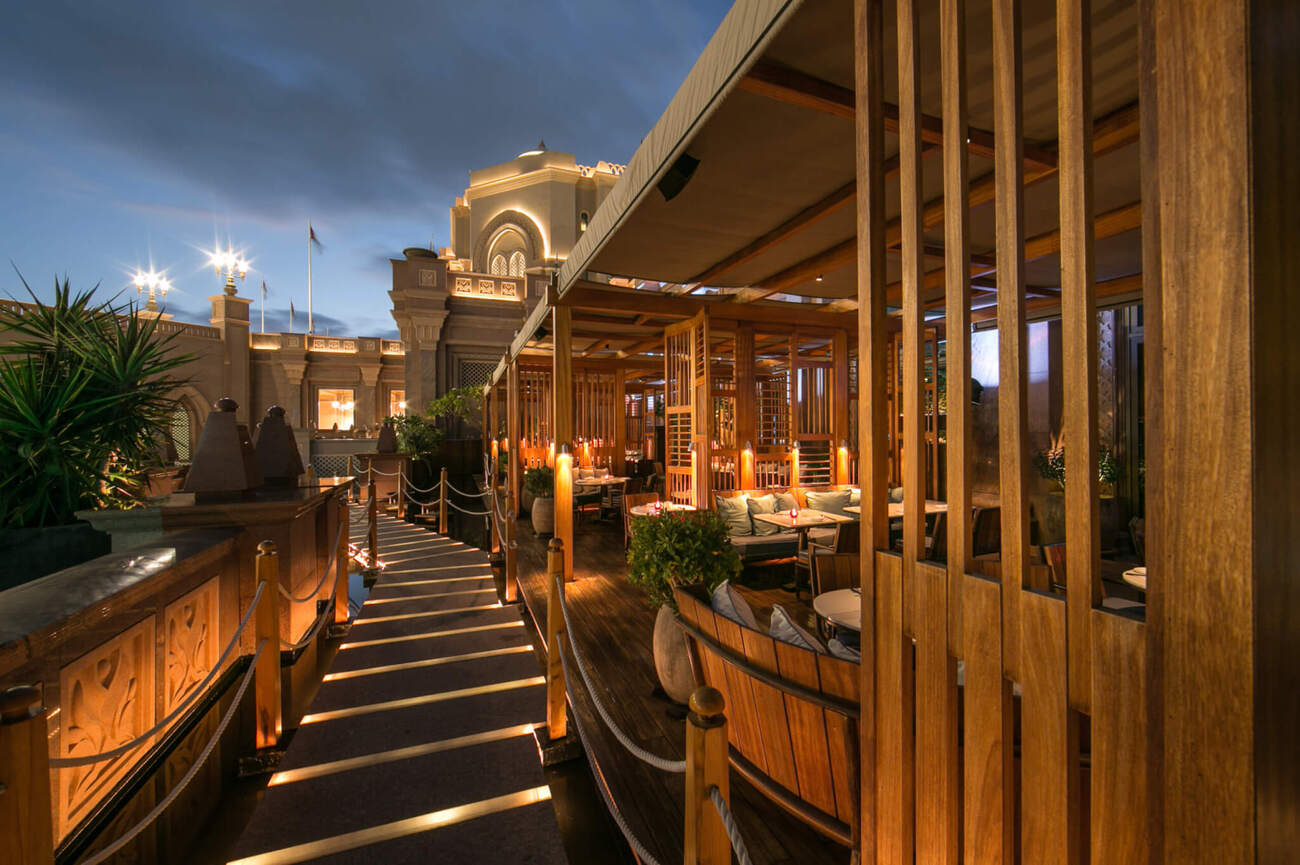
- Hakkasan: Where modern Cantonese cuisine meets Bund glamour. Set inside the historic Bund 18 building, this Michelin-recognised restaurant and lounge pairs refined food with a stylish, high energy atmosphere. If you’re after a night that feels both polished and lively, this is a great choice. The menu blends Hakkasan’s global signature dishes with creations exclusive to the Shanghai branch, all made with premium ingredients and a contemporary edge. Must-tries include the Crispy Peking Duck with Imperial Caviar, Roasted Silver Cod with Champagne and Honey, their beautifully crafted signature dim sum, and the bold stir fried black pepper beef.
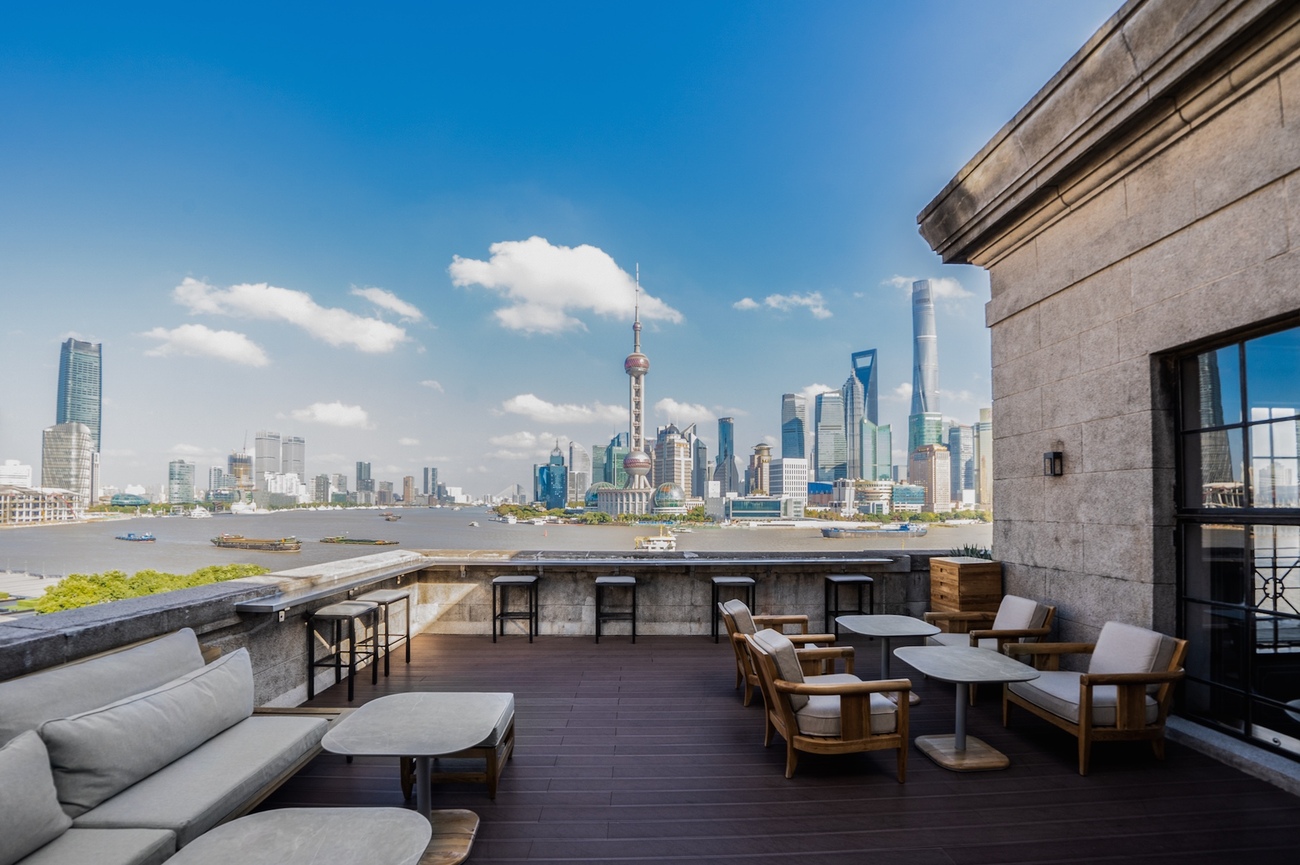
- Mr & Mrs Bund: One of those restaurants that makes an evening on the Bund feel truly special. Set in an elegant Art Deco-style dining room with sweeping views over the Huangpu River, it strikes a perfect balance between refined glamour and relaxed sophistication. Come at sunset if you can, watching the skyline light up from your table is part of the experience. The menu reimagines classic French cuisine with a modern, Asian-influenced touch, focusing on seasonal ingredients and beautifully balanced flavours. Highlights include the signature foie gras with subtle sweet and acidic notes, delicately cooked seafood such as scallops or turbot, and impeccably executed meat dishes paired with precise sauces and garnishes. It’s the kind of place where every detail feels considered, making it ideal for a polished yet unpretentious fine-dining night in Shanghai.
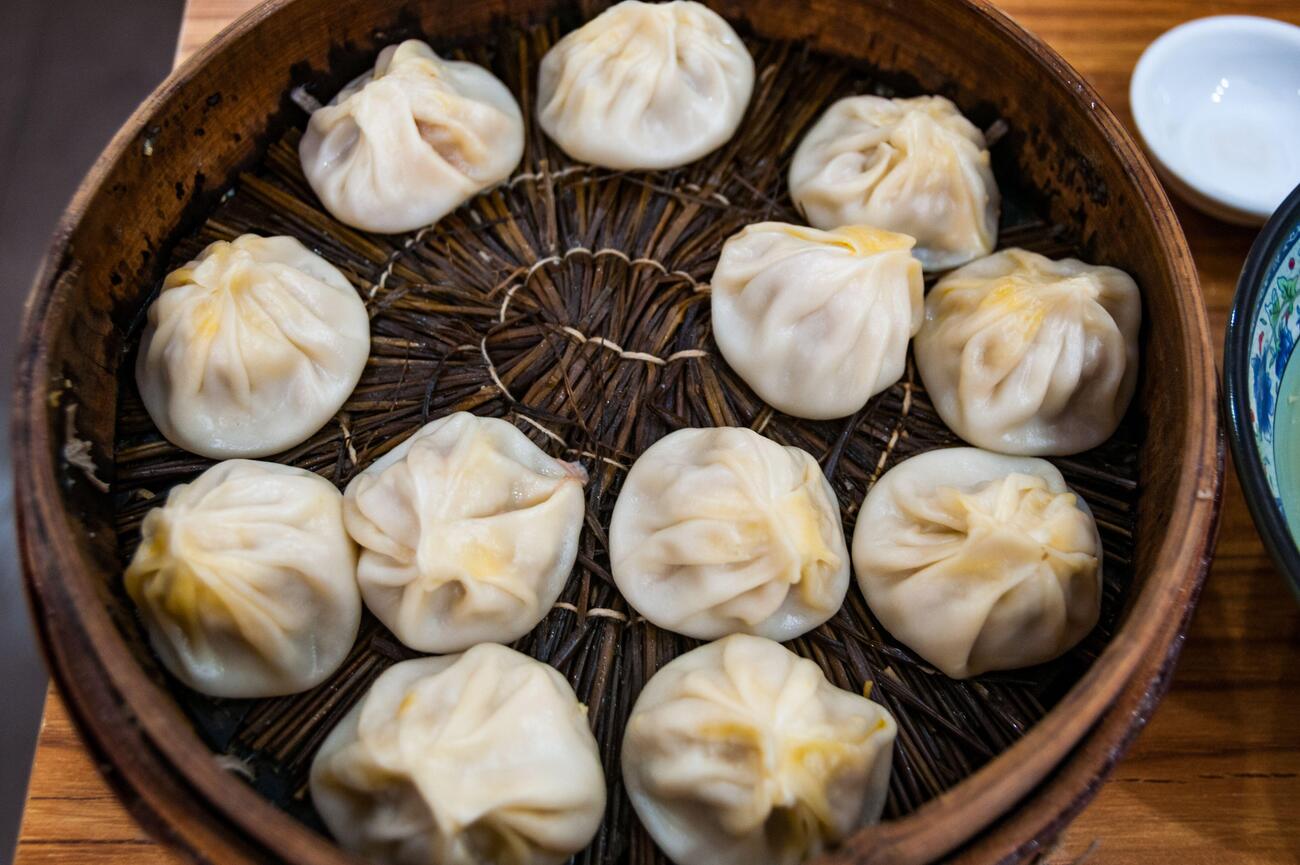
- Jia Jia Tang Bao: A legendary, no-frills dumpling shop where everything revolves around one thing: seriously good xiaolongbao. Don’t expect fancy décor or quiet dining, expect queues out the door, shared tables, and a lively buzz as baskets of steaming dumplings fly past you. If you want to taste what locals swear by, this is the place. The dumplings are made to order, so you get delicate skins, hot broth, and fresh fillings every time. The absolute superstar of the menu is the Pure Crab Roe & Pork Xiaolongbao, these are indulgent, rich, and filled with a golden, savory broth. There’s also the classic Fresh Pork Xiaolongbao, and a fan favorite for those who love a rich, creamy texture, the Egg Yolk & Pork Xiaolongbao.
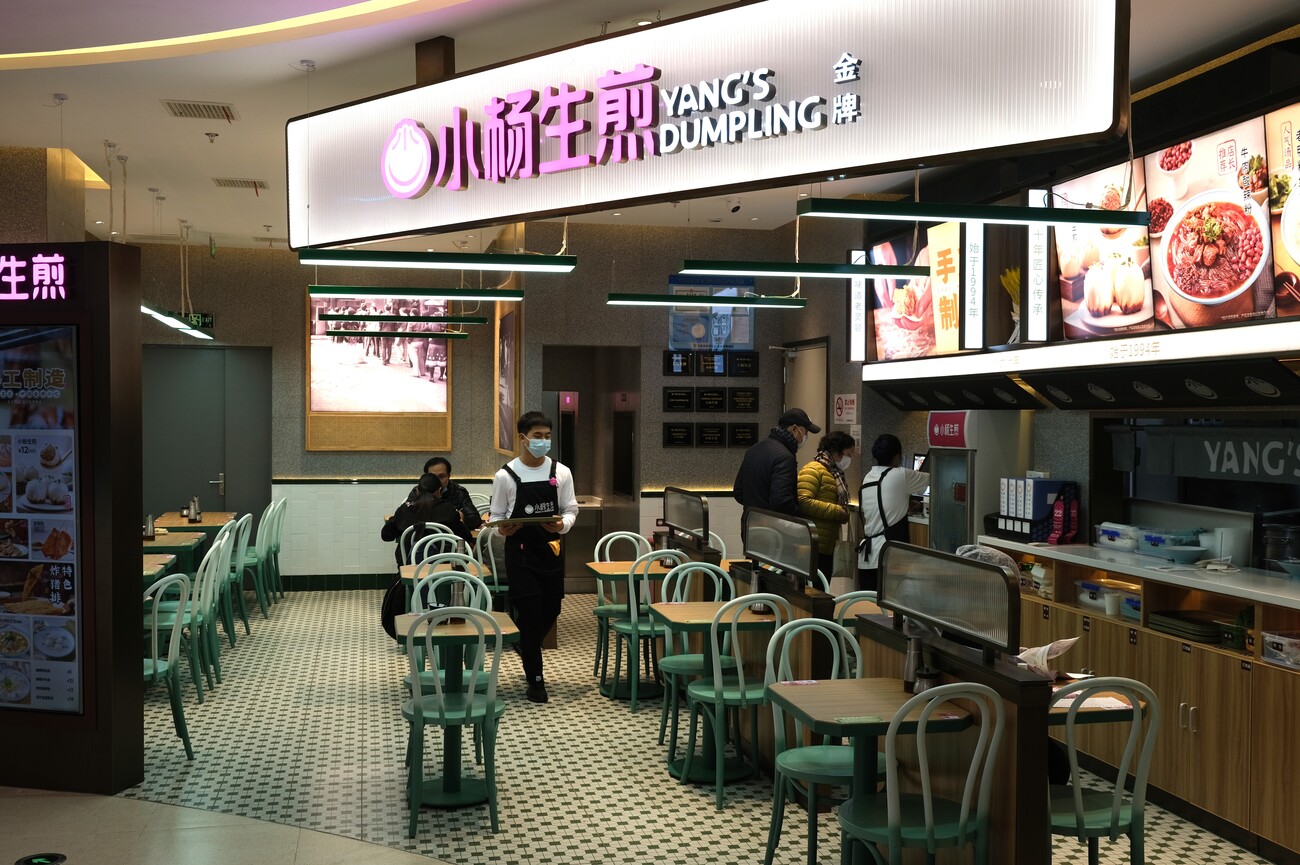
- Yang’s Fried Dumpling: A Shanghai classic, best known for perfecting sheng jian bao, the city’s favourite pan-fried pork dumpling. You’ll find its branches all over the city, but don’t let that fool you. It still draws loyal fans for one simple reason: that unbeatable crunchy bottom, juicy top combo. Order the Classic Pork Sheng Jian and watch them being fried to golden perfection. The base is crisp and crackly, the top is soft and fluffy, and inside you’ll find a savoury pork filling with hot, slurp-worthy broth. If you want something a little lighter, go for the Shrimp & Pork Sheng Jian, where whole, bouncy shrimp add a subtle sweetness.
Where to Stay in
Shanghai
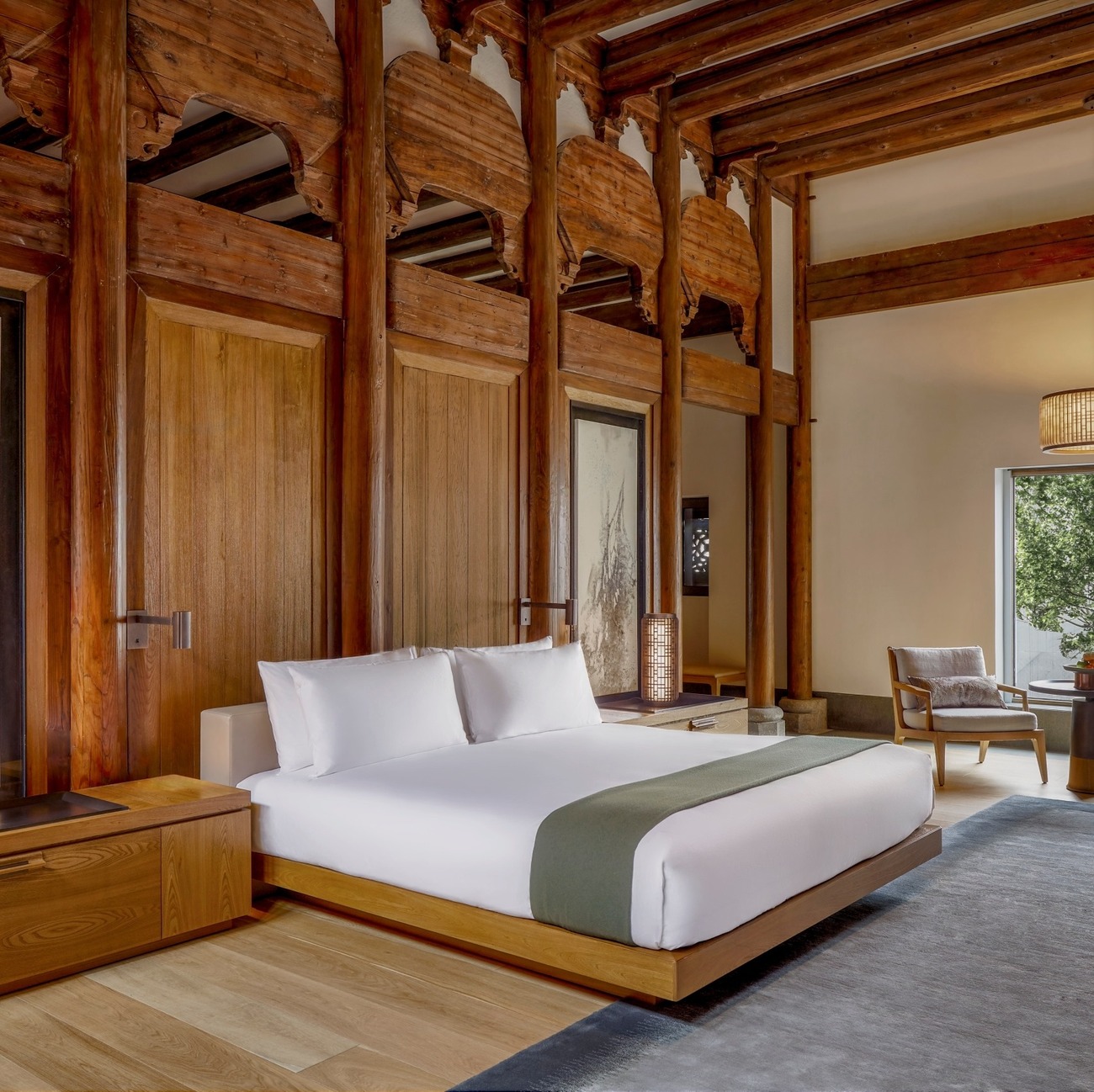
- Amanyangyun: Shanghai’s most exclusive "sanctuary" stay, located just outside the city center in Minhang. Instead of skyscrapers and skyline views, you’ll find restored Ming and Qing Dynasty villas, quiet courtyards, and over 10,000 ancient camphor trees that were carefully relocated here and given a second life. This is not a typical hotel stay. It feels like stepping into a private historic village, where minimalist Aman design meets 400-year-old stone carvings and traditional courtyard architecture. Everything is spacious, calm, and beautifully understated. You can choose between Ming Courtyard Suites, which offer modern comfort with classic Chinese design, or go all out with the Antique Villas, complete with original timber frames, private courtyards, and heated outdoor pools.
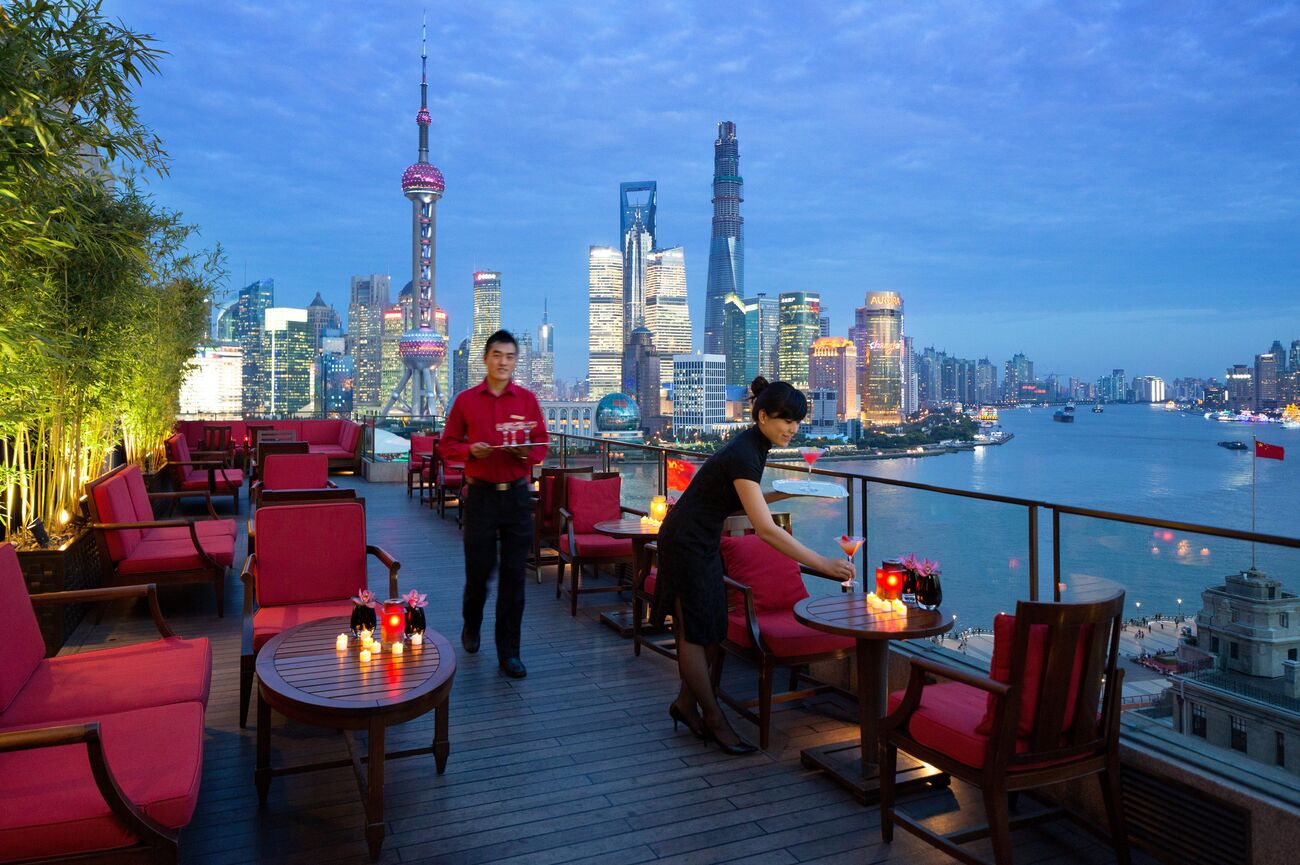
- The Peninsula Shanghai: Widely considered the gold standard of classic luxury in the city. Sitting right on the historic Bund, it’s the only new building constructed on this iconic waterfront in the last 70 years. The moment you step inside, it feels like you’ve slipped back into the “Paris of the East” era. Expect polished marble floors, glittering crystal chandeliers, and that rare, white glove level of service where every detail is quietly anticipated. This is the address of choice for royalty, celebrities, and travellers who want the most prestigious stay in Shanghai. Despite the vintage look, the rooms are surprisingly high tech. You’ll find spa mode bathroom buttons that dim the lights and play calming music, nail polish dryers in the dressing rooms, and intuitive bedside controls that make everything effortless. The spa is Forbes Five-Star rated, and you’re also spoiled for choice with Michelin-starred dining on site, including Yi Long Court and Sir Elly’s.
- The Ritz-Carlton, Shanghai Pudong: Perched high in the IFC South Tower, The Ritz-Carlton Shanghai is one of the city’s skyscraper hotels. From the moment you step into the 52nd floor lobby, you’re wrapped in rosewood, rich fabrics, and floor-to-ceiling glass, with the city stretching endlessly below you. It feels glamorous, elevated, and a little surreal, in the best way. This is a favourite for business moguls and luxury travellers who want to stay in the heart of Lujiazui while enjoying stunning views of the Bund across the river. Every room is designed to maximise the skyline, so you’re never without a view. If you opt for the Club Level, you’re treated to one of the best hotel lounges in the world, with five daily food and drink presentations and attentive, round-the-clock service.
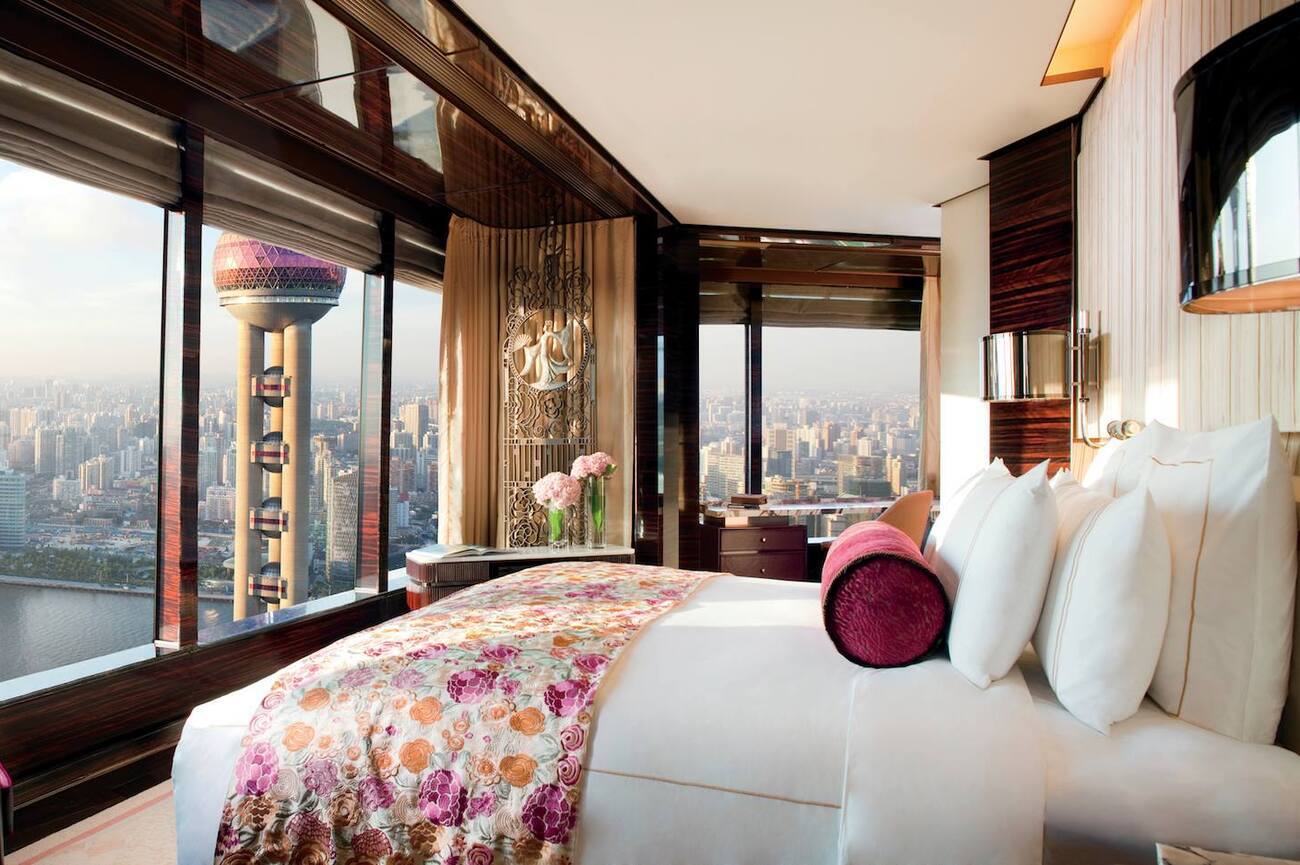
- Park Hyatt Shanghai: Set high above the city from the 79th to 93rd floors of the Shanghai World Financial Center, it is one of the highest hotels in the world. The design is calm, and refined, inspired by the idea of a modern Chinese residence rather than a flashy high-rise hotel. Every room comes with floor-to-ceiling windows, so you’re treated to stunning views of the skyline, the Bund, and the Huangpu River without even leaving your bed. Watching the city light up at night from here is an experience in itself. The rooms are also some of the largest in Shanghai, with high ceilings, plush beds, deep soaking tubs, walk-in rain showers, and all the modern comforts you’d expect.
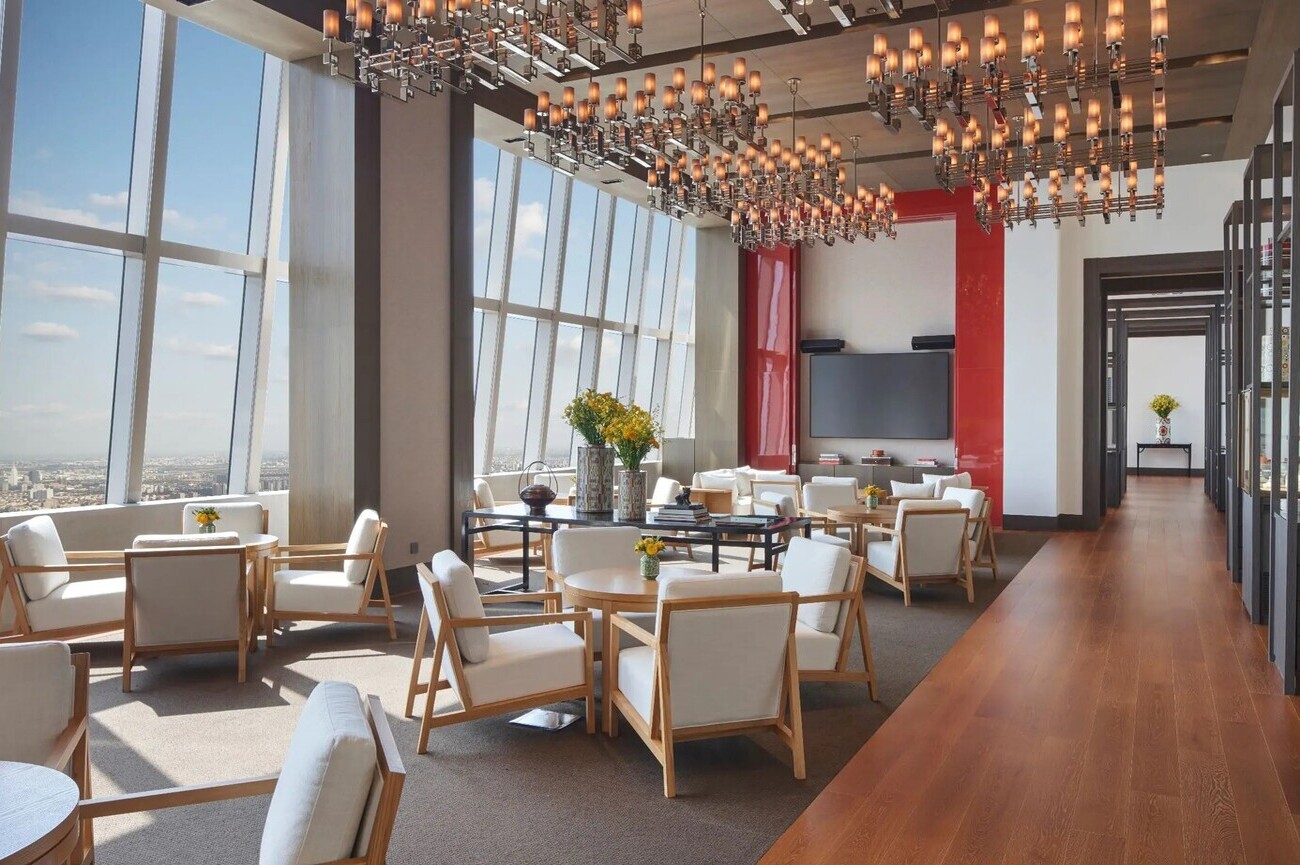
- Mandarin Oriental Pudong, Shanghai: Highly regarded for its exceptional blend of contemporary Chinese design, world-class service, and stunning views of both the modern Pudong skyline and the Bund across the water. The rooms and suites are among the largest in the city, with floor-to-ceiling windows that flood the space with light and city or river views. Expect deep soaking tubs, plush bedding, high-end tech, and the kind of thoughtful service Mandarin Oriental is known for. It’s also a destination in itself for dining. You can enjoy premium steaks at Fifty 8 Grill, refined Chinese cuisine at Yong Yi Ting, or relaxed international dining at Zest.
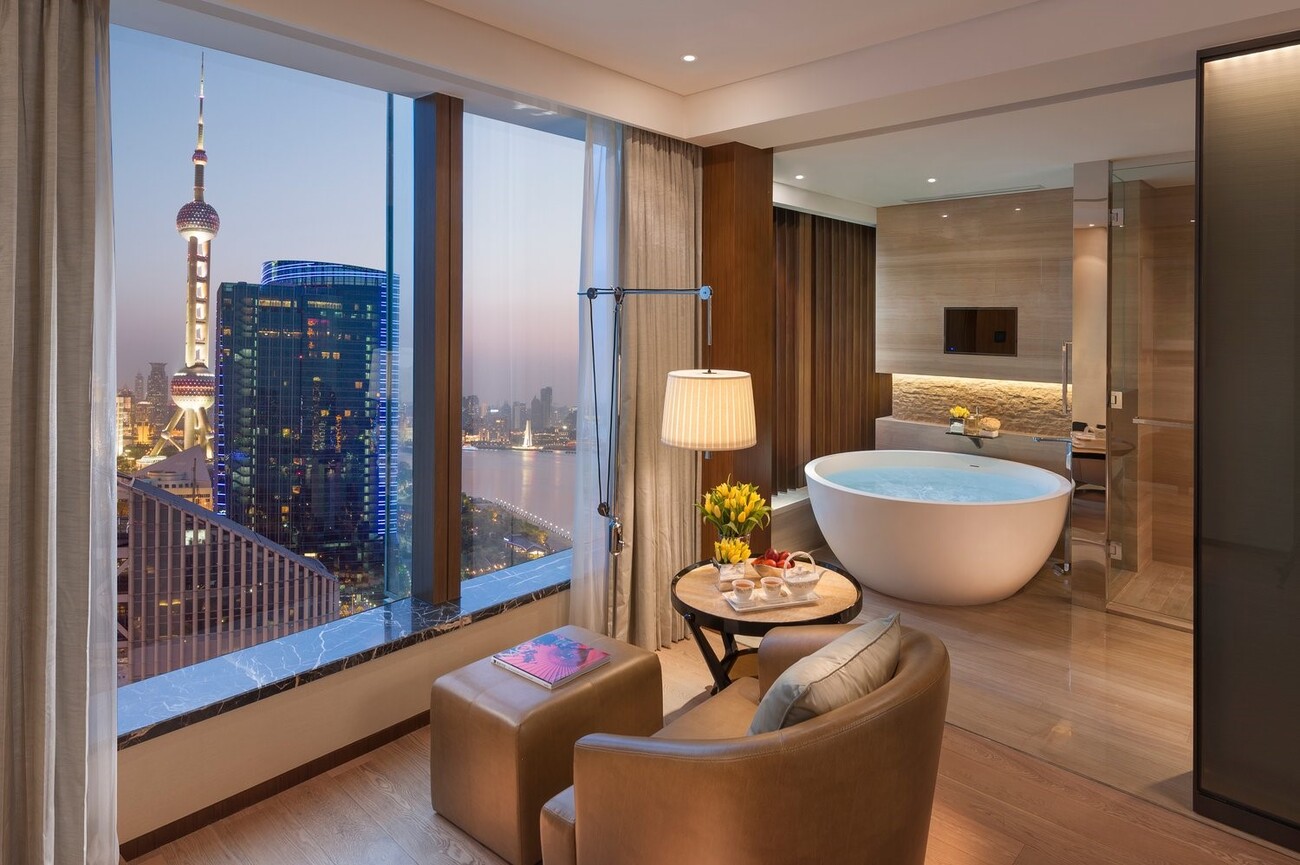
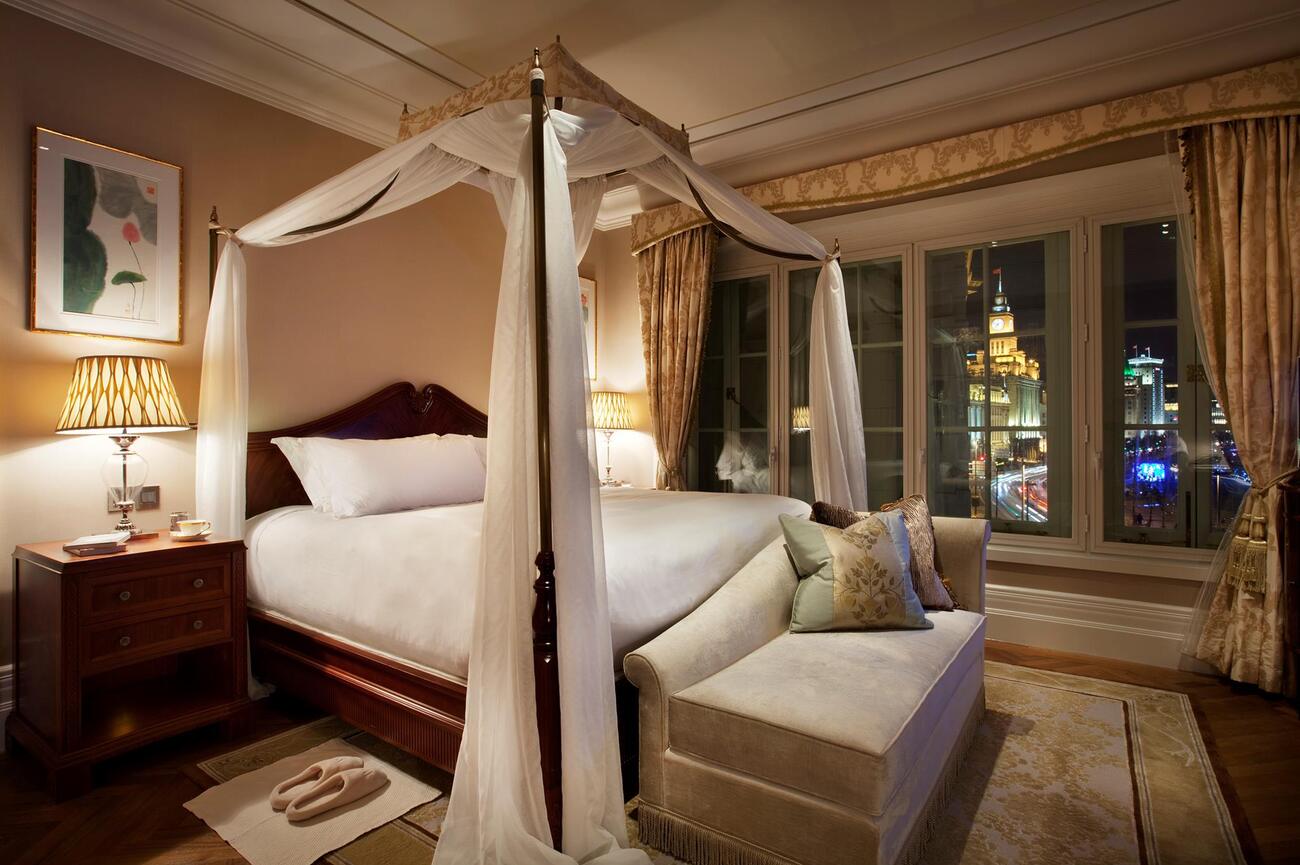
- Waldorf Astoria Shanghai on the Bund: If you love hotels with a strong sense of history, the Waldorf Astoria Shanghai is your kind of stay. It’s the city’s most iconic “heritage hotel.” The property is split between two buildings: the original 1910 Shanghai Club and a sleek contemporary tower, joined by a peaceful courtyard. The historic wing is the real star with its dark mahogany, white marble, vintage chandeliers, and rooms that feel rich with character. The rooms feature walk-in dressing rooms, beautiful claw-foot bathtubs, and Huangpu River views that look much the same as they did a hundred years ago. The newer tower is brighter and more modern, perfect if you prefer clean lines and contemporary comfort. Either way, this is a stay that lets you experience Shanghai’s past and present in one address.
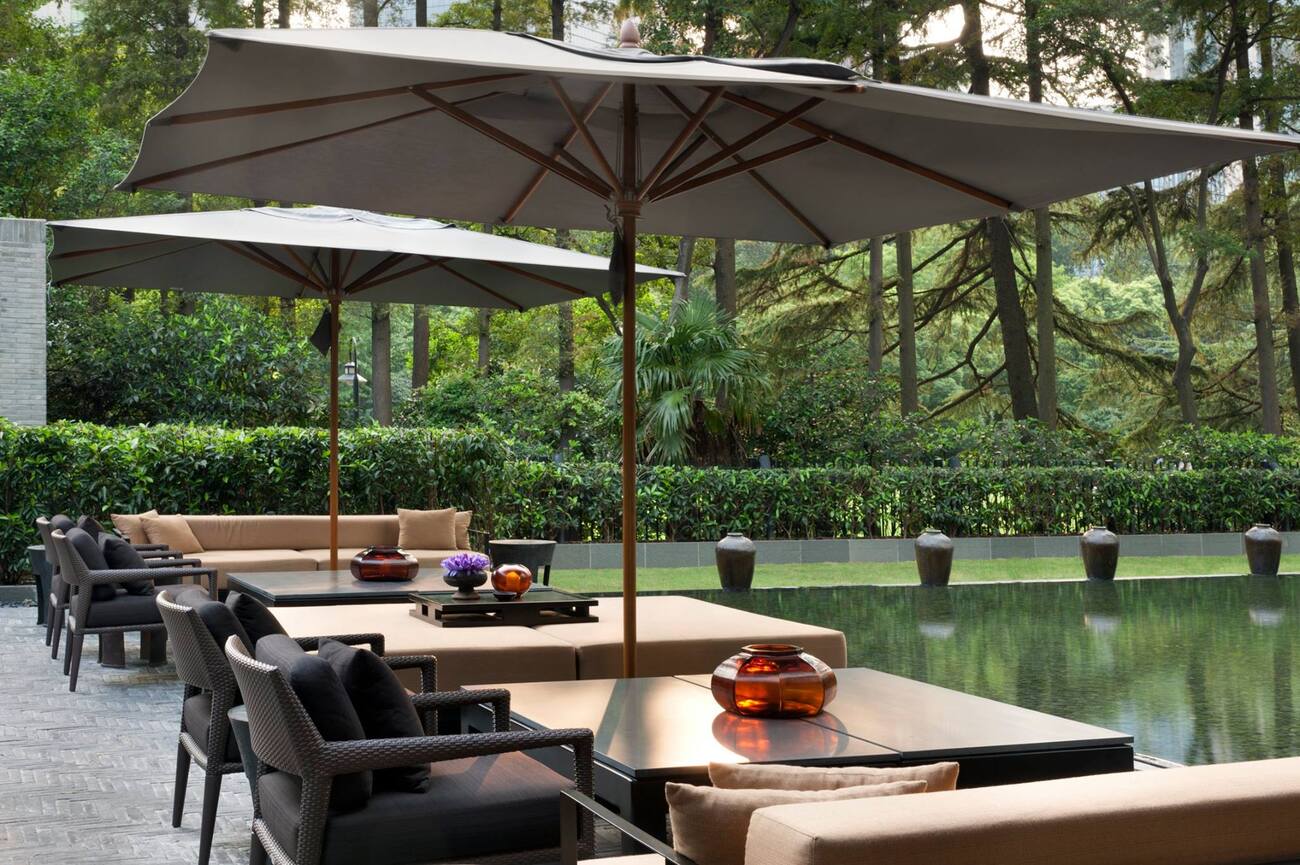
- The PuLi Hotel and Spa: Known for its award winning style, blending traditional Chinese touches with clean, modern details. As you walk into the lobby, you’re greeted by a striking 32-metre reception desk carved from a single piece of wood and a reflective “long pond” that leads your eye toward the green landscape outside. The two-storey library, complete with a fireplace, adds a cosy, almost residential feel, making it easy to settle in with a book or enjoy a quiet drink. Wellness is a big part of the experience here. You can unwind at the UR Spa, swim laps in the infinity pool, or spend time in the saunas, steam rooms, and vitality pool. It’s the kind of place where you can fully switch off, even though you’re right in the heart of Shanghai.
Best Time to Visit
Shanghai
If you’re planning a trip to Shanghai, aim for spring (March to May) or autumn (September to November). These are the city’s most comfortable seasons, with mild temperatures, lower humidity, and clear skies, perfect for walking, sightseeing, and spending time outdoors.
Spring brings fresh air and blooming flowers, making it a lovely time to stroll through parks and gardens. Cherry blossoms in places like Gucun Park are a must-see. Just keep in mind that the Labor Day holiday in early May draws big local crowds, so consider timing your visit before or after the holiday for a lesser crowd experience.
Autumn is widely considered the best season to visit. The weather is crisp and pleasant, the skies are clear, and the city is filled with warm golden colours. It’s ideal for long walks, riverfront strolls, and outdoor dining. November also marks hairy crab season, which is a must if you enjoy local food experiences.
Spring and autumn give you the best balance of weather, atmosphere, and ease of exploring, just steer clear of peak holiday dates and you’ll enjoy Shanghai at its best.
Festivals in Shanghai
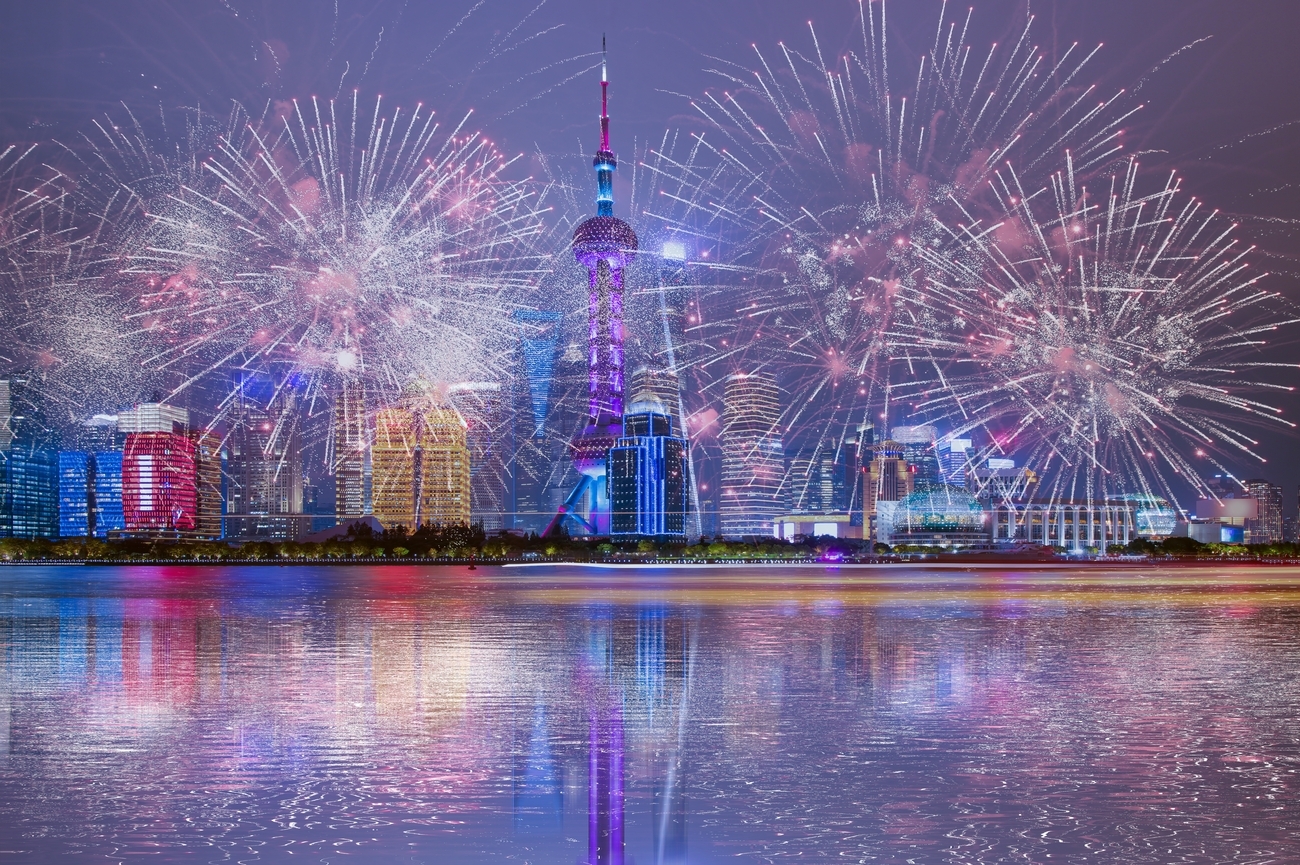
- Chinese New Year: Also known as the Spring Festival, it’s the biggest and most
important celebration in Shanghai. It marks the start of the lunar new year
(usually in January or February) and transforms the city into a festive sea of
red lanterns, gold decorations, and holiday energy. While many locals travel
home to be with family, Shanghai itself becomes a beautiful blend of tradition
and modern spectacle. The absolute must-see is the Yu Garden Lantern Show, where
the entire garden is filled with massive, detailed lantern displays featuring
the year’s zodiac animal and scenes from Chinese mythology. It’s one of the
most famous and photogenic light festivals in the country.
You’ll also find temple fairs and blessing ceremonies across the city. Spiritual sites host lively markets, lion dances, bell-ringing rituals, and “first incense” offerings, where people pray for good luck, health, and success in the year ahead. Food is a big part of the celebration, and this is the perfect time for you to try symbolic lucky dishes. Look out for nian gao (sticky rice cake for “rising higher”), whole fish (for “surplus”), and warm bowls of tangyuan (sweet rice balls symbolising family reunion).
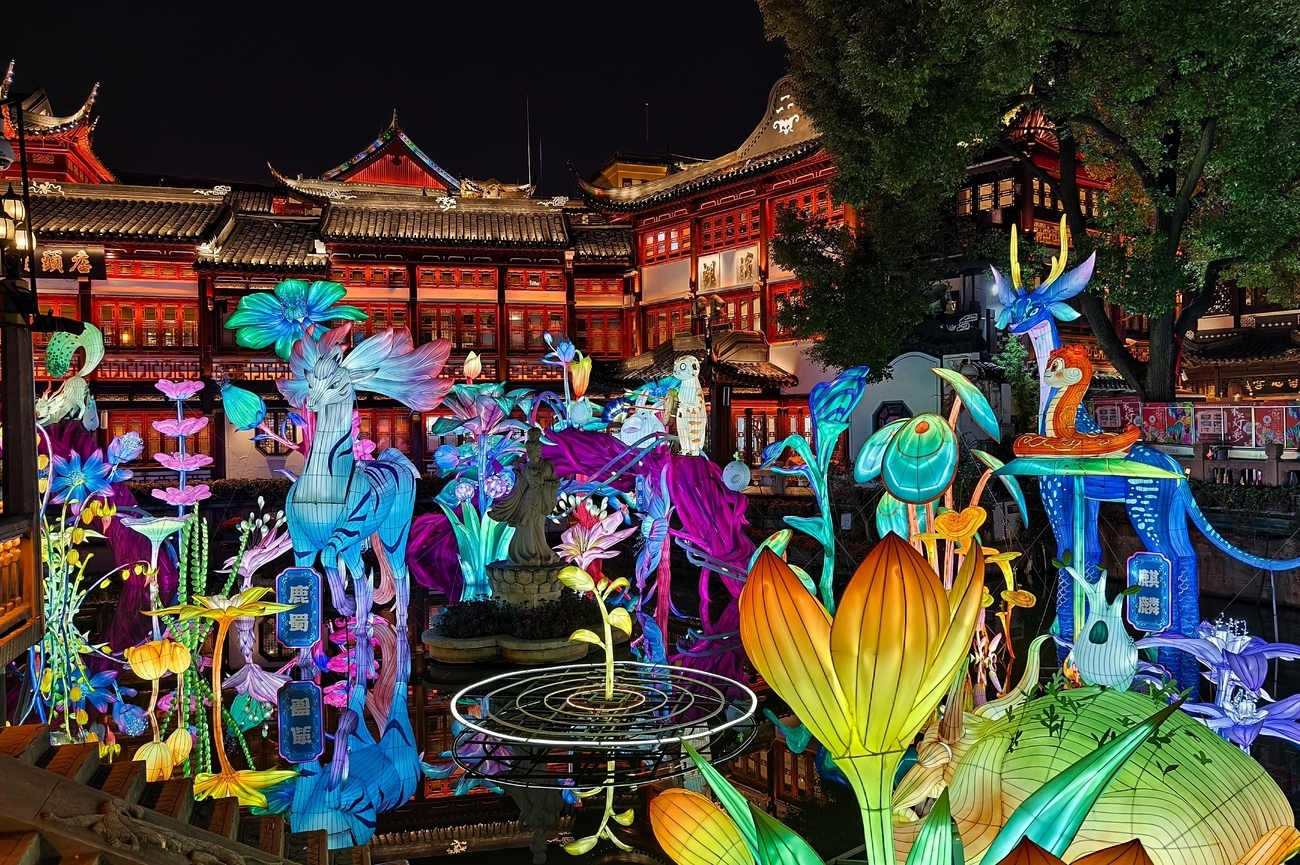
- Lantern Festival: Marks the official end of the Chinese New Year celebrations, held on the 15th day of the first lunar month. In Shanghai, it’s a night filled with glowing lanterns, family gatherings, and the tradition of eating sweet rice balls (tangyuan), which symbolise unity and togetherness. The festival highlight is the Yu Garden Lantern Grand Finale. While lanterns are displayed throughout the Spring Festival, this night is the grand climax. The entire Yu Garden Bazaar turns into a glowing wonderland with massive, creative, high-tech lantern installations. Locals believe that visiting on this exact night brings the best luck, so expect large crowds and a lively energy. As you wander, you’ll also notice colourful slips of paper hanging from lanterns in parks and temples. These are Lantern Riddles (Cai Deng Mi). You’re encouraged to read the riddles, guess the answers, and join in the fun. If you get one right, you might even win a small prize or a sweet treat.
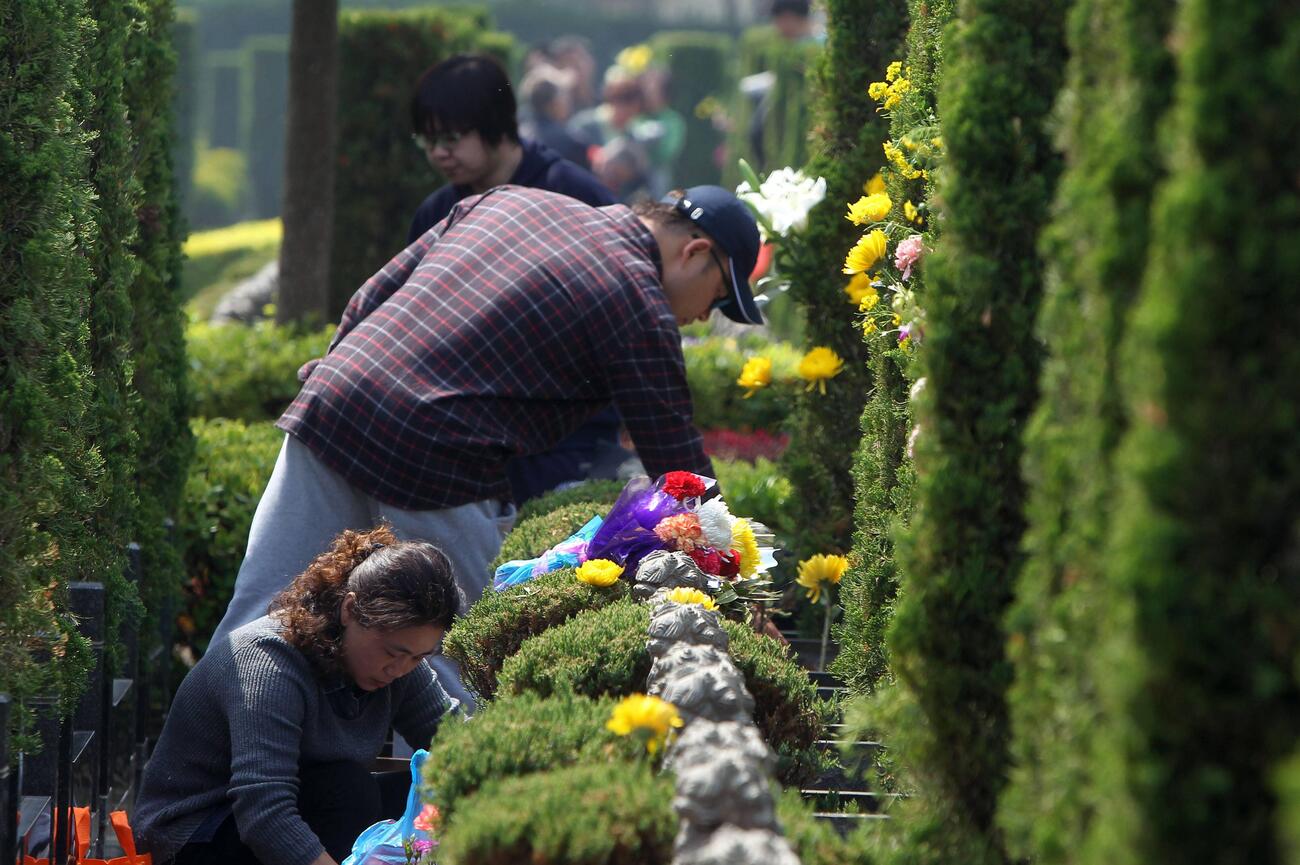
- Qingming Festival: Also known as Tomb-Sweeping Day, it’s a time for honoring ancestors and celebrating the arrival of spring. While it’s a meaningful and reflective occasion for local families, for you as a visitor, it’s also one of the most beautiful times to be in Shanghai. This is when the city enters its “outing season” (Taqing), where parks fill up, flowers bloom, and people head outdoors to enjoy the fresh air. You’ll notice long queues outside famous old-school food shops like Wang Jia Sha and Xinhuabinguan. Everyone is there for Qingtuan, a seasonal bright green dumpling made with glutinous rice and barley grass or mugwort. Traditionally, it’s filled with sweet red bean paste, but modern versions now include savoury fillings like salted egg yolk and meat floss. If you’re in Shanghai during Qingming, join the locals, take a stroll in the park, enjoy the spring sunshine, and treat yourself to a warm Qingtuan.
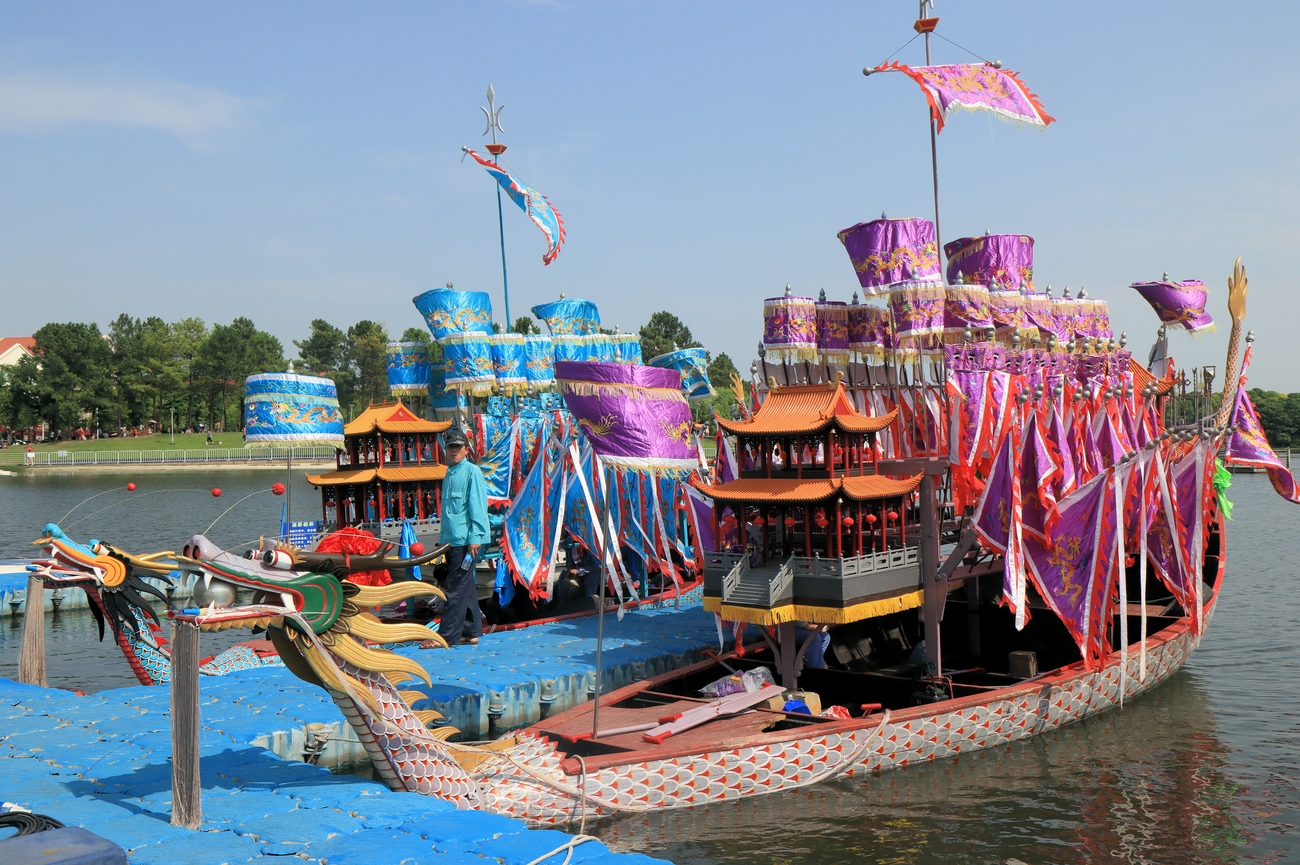
- Dragon Boat Festival: Alively, high energy holiday held on the 5th day of the 5th lunar month, honouring the ancient poet Qu Yuan. This is one of the most exciting times to see Shanghai’s waterways come alive. The highlight is the Suzhou Creek Dragon Boat Invitational, where teams from around the world race long, brightly decorated boats to the thunder of beating drums. You can also catch more traditional races in nearby water towns like Zhujiajiao. And then there’s the food, Zongzi is everywhere. These pyramid-shaped sticky rice dumplings are wrapped in bamboo or reed leaves, and in Shanghai, the favourites are savoury fillings like braised pork belly or salted egg yolk. The best places to try them are in Zhujiajiao or from historic food shops along Nanjing Road.
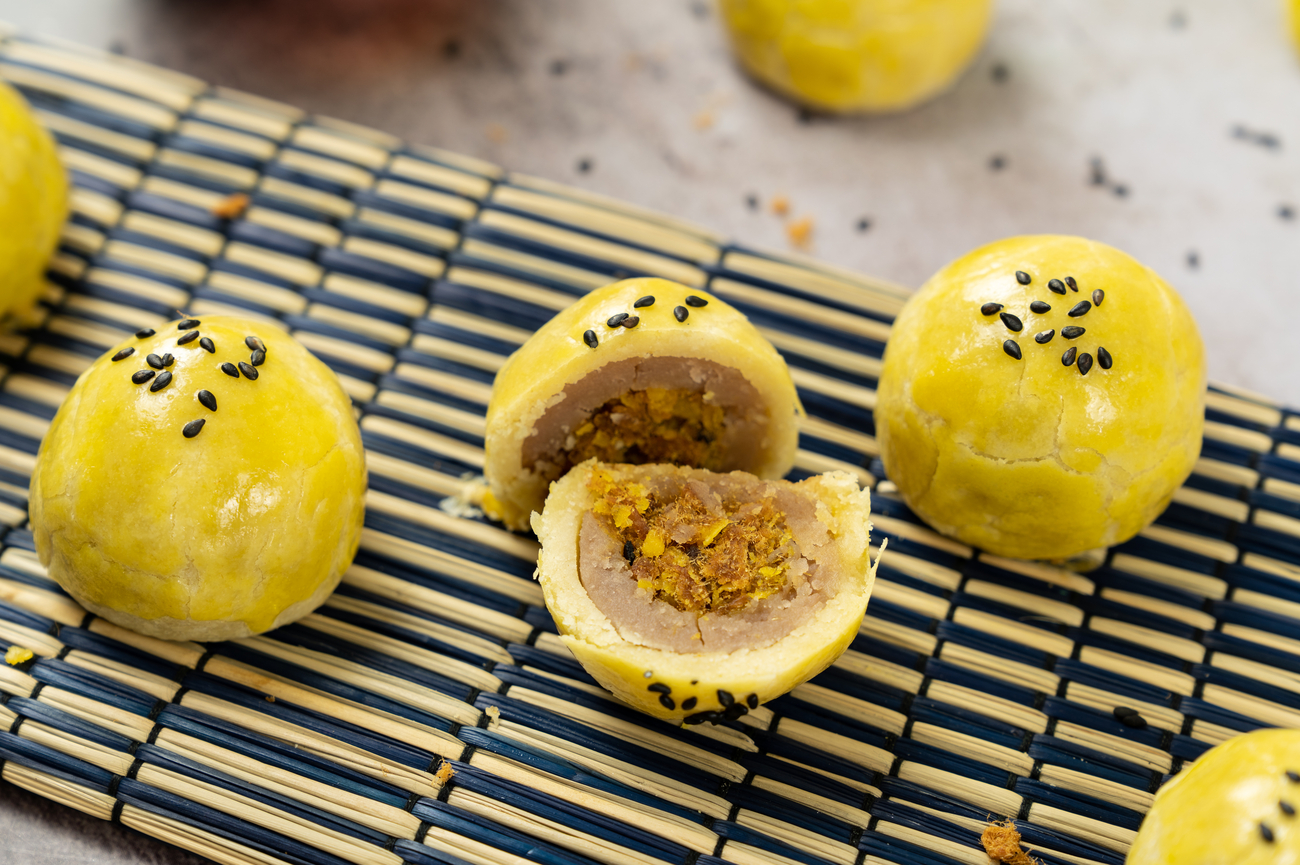
- Mid-Autumn Festival: Also known as the Moon Festival is all about family, gratitude, and the full moon, and in Shanghai, you’ll feel it everywhere. Weeks before the festival, the city turns into a mooncake playground. While you’ll see classic sweet flavours like lotus seed paste and red bean, Shanghai locals line up for one thing in particular: Fresh Pork Mooncakes (Xianrou Yuebing). Expect long, Disneyland park-like queues outside Xing Hua Lou and Guang Ming Cun on Huaihai Road, and yes, they’re worth it. These are flaky, savoury, and served hot, perfect for a quick snack as you explore the festivities. At night, join locals for moon gazing. The Bund promenade is a favourite spot among locals, where you’ll see the full moon hanging over the Pudong skyline, or head to Yu Garden, which often sets up beautiful lantern displays for the occasion.
The Paris of the East
Like Paris, Shanghai isn’t a city you experience through landmarks alone. Yes, the skyline dazzles. The river glows. The towers do their thing. But the real magic is in the details: a leafy French Concession afternoon where locals dance in the park like it’s second nature, a shikumen lane that turns into a café-lined maze, a temple courtyard that stays calm even with luxury stores just outside the gate, and a dinner that shifts effortlessly from humble dumpling shops to world-class, theatre-on-a-plate dining.
So if Shanghai has ever sounded too big, too busy, or too “modern” for your taste, let this itinerary change your mind. Come with an open pace. Walk more than you rush. Eat like a local at least once a day. Look beyond the skyline and then look back at it again, knowing what now lives beneath.
At Revigorate, we’ll help you design a journey that goes deeper than the surface, tailored to your pace, interests, and travel style. Contact us or give us a call at (+1 800 672 0517 | +351 289 009 580 | +44 808 189 0647), and experience Shanghai the way it’s meant to be felt.
Ready to explore more of Asia? Travel further with Revigorate and discover our curated itineraries across Beijing, Hong Kong, Tokyo, Singapore, Osaka, and Manila.


Let us know what you love, where you want to go, and we’ll design a one-of-a-kind adventure you’ll never forget.
Get in touch
Miriam
Travel Specialist

Romina
Travel Specialist

Laura
Travel Specialist
Our offices:



Revigorate, Iberian Escapes and Algarve Lifestyle are the registered brand names of APCS Lda . We are a fully authorised travel agency licensed by Turismo de Portugal RNAVT/6867.
In the event of a dispute, the consumer may refer to: RAL - Centros de Arbitragem
Avª. 5 de Outubro, nº. 55, R/C Dtº. 8000-075 Faro, Portugal | Tel: +351 289 823 135 *
* national landline call
E-mail: info@consumoalgarve.pt| www.consumidoronline.pt | Mon to Fri: 9:00 - 13:00 / 14:00 - 17:00