Things to Do in Chongqing: 3-Day Itinerary
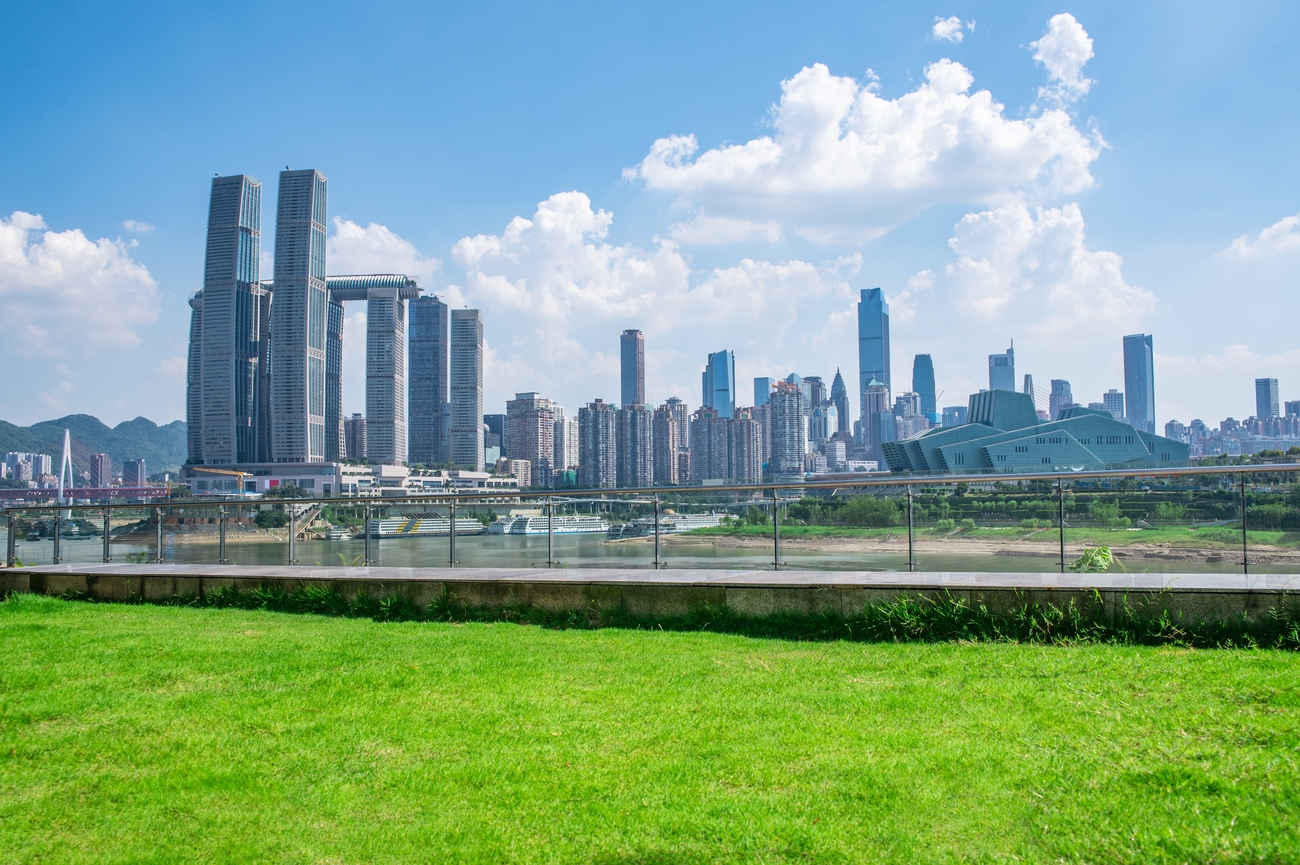
There are cities you explore, and then there’s Chongqing, a place you have to figure out as you go. Built across steep hills where the Yangtze River meets the Jialing River, Chongqing feels less like a city and more like a living maze, one that stretches vertically as much as it does horizontally. Locals call it China’s “8D city,” where roads overlap, buildings stack, trains pass through apartment blocks, and what looks like ground level might actually be the 20th floor.
In this three-day itinerary, we’ll help you move through that complexity with ease. Chongqing doesn’t reveal itself all at once. But once you understand its unique structure, up the hills, across the rivers, and into the night, you’ll start to see how everything connects.
Day 1

Morning: Lizba Rail Station
Begin your Chongqing journey by taking Line 2 of the Chongqing Rail Transit from Huanghuayuan Station to Liziba Station (about a 15-minute ride). Once you arrive, stay for a moment and watch the next train pass through the 19-storey residential building, creating the famous “swallow the train” photo that draws visitors from around the world. Liziba Station is built directly into the building, with the platform occupying the 6th to 8th floors while people live above and below. As impressive as it looks, it’s a masterpiece of urban engineering, featuring specialized noise-reduction technology that makes the train's passage as quiet as a household dishwasher

Three Gorges Museum
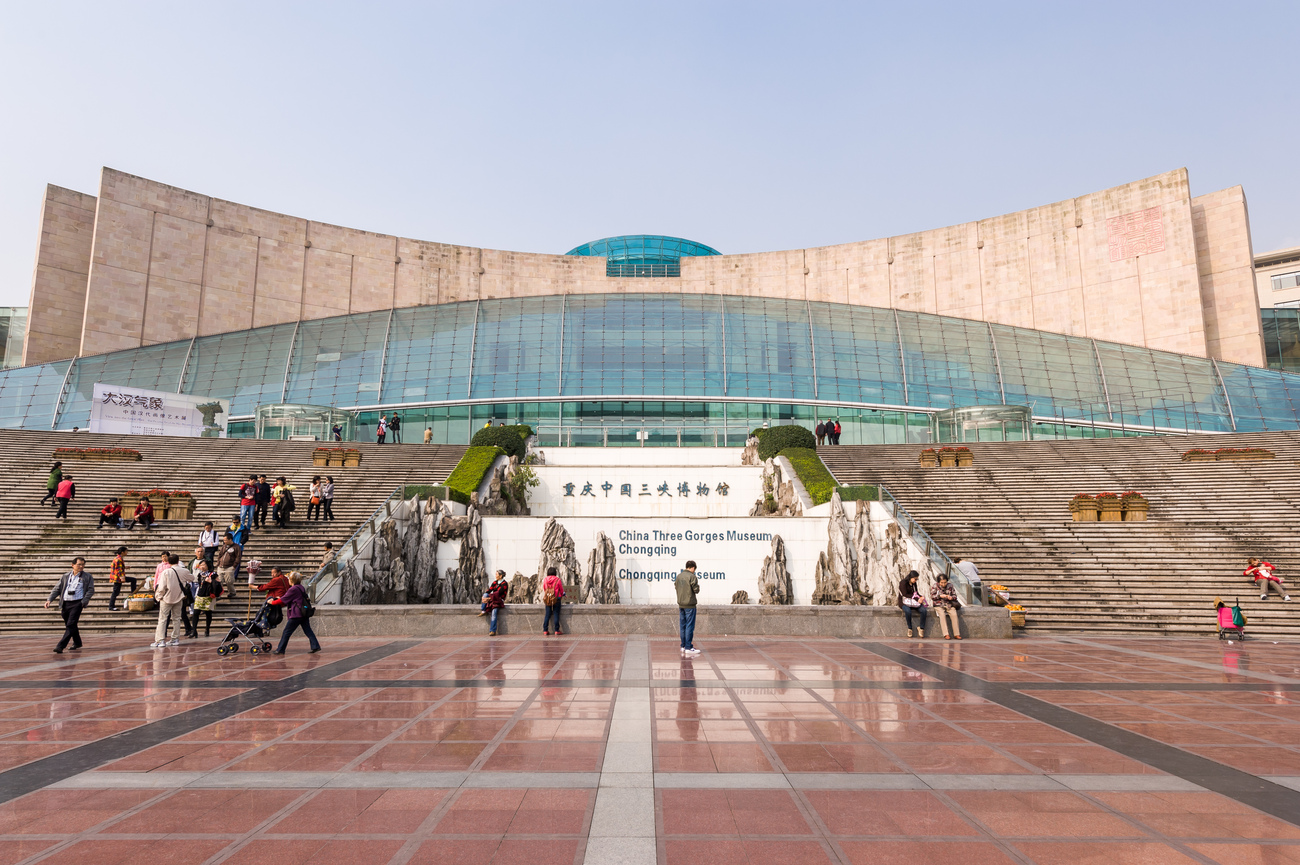
Next, take a short 8-minute drive to the Three Gorges Museum, where you can explore the history and culture of the region all in one place. The museum houses over 180,000 artifacts, covering everything from early human life to the construction of the Three Gorges Dam. As you move through the four floors, each section focuses on a particular theme, from the natural beauty of the Three Gorges to ancient Ba-Yu culture, wartime history, and traditional art. It’s easy to follow and gives you a clear sense of how the region has evolved over time.
Inside, you can watch a 22-minute immersive film showing what the Three Gorges looked like before the area was flooded, or see rare pieces like the Wushan Human Mandible, a fossil linked to early human history in East Asia. You can also collect heritage stamps placed around the museum, turning your visit into a simple, fun way to explore each section.
Day 1, Morning - Chongqing Tour Map
Afternoon: Jiefangbei Pedestrian Street
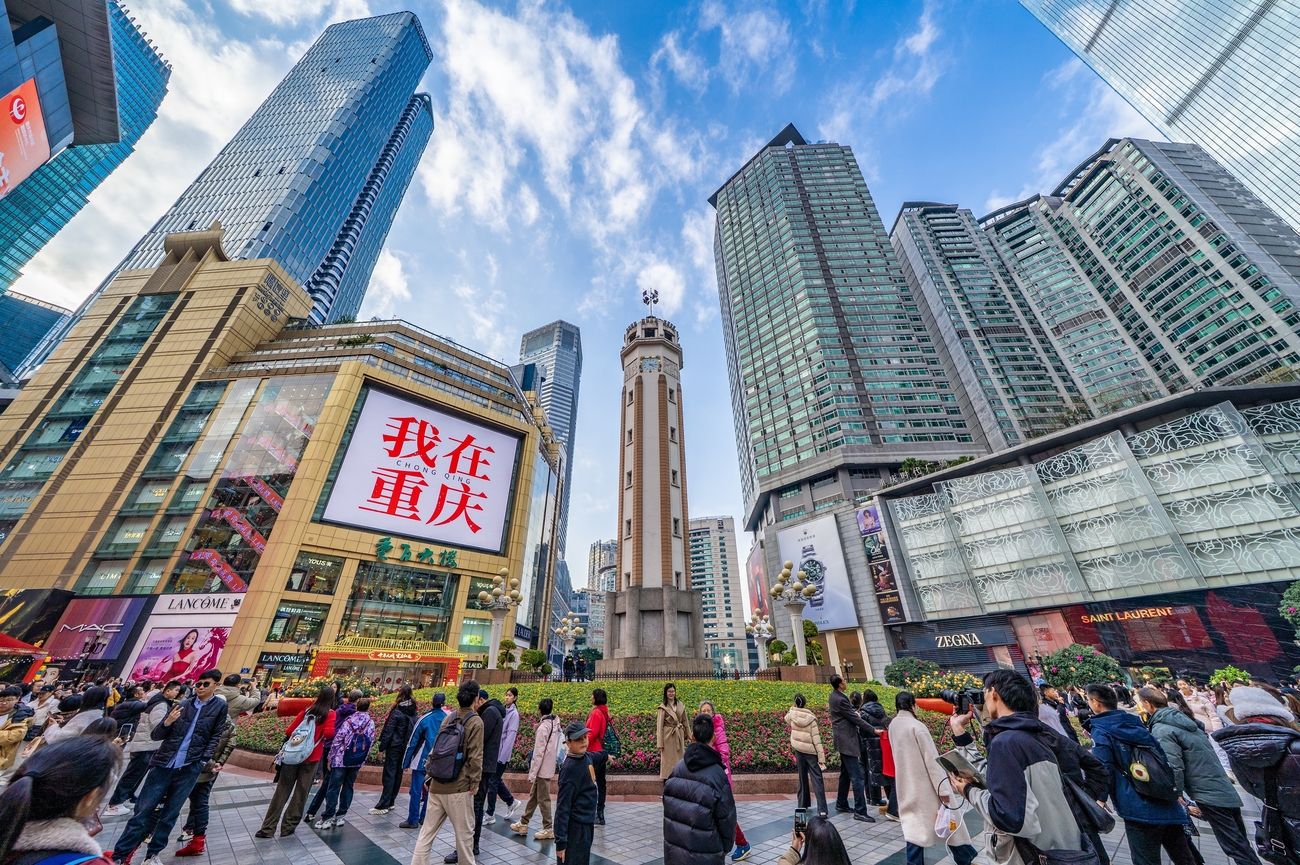
Head to Jiefangbei Pedestrian Street, the beating heart of Chongqing’s "Manhattan of the West" scene. This is where you’ll find towering malls, bright lights, and a constant buzz of activity. You can explore shopping spots like Times Square and The Metropolitan Plaza, or simply walk through Bayi Food Street and try a mix of local snacks and street food. From here, it’s easy to continue exploring on foot. You can walk toward Raffles City and its skybridge, or just marvel at the city’s unique “8D” layout, where streets and walkways sit at different levels, sometimes far above the roads below.
Kuixing Tower
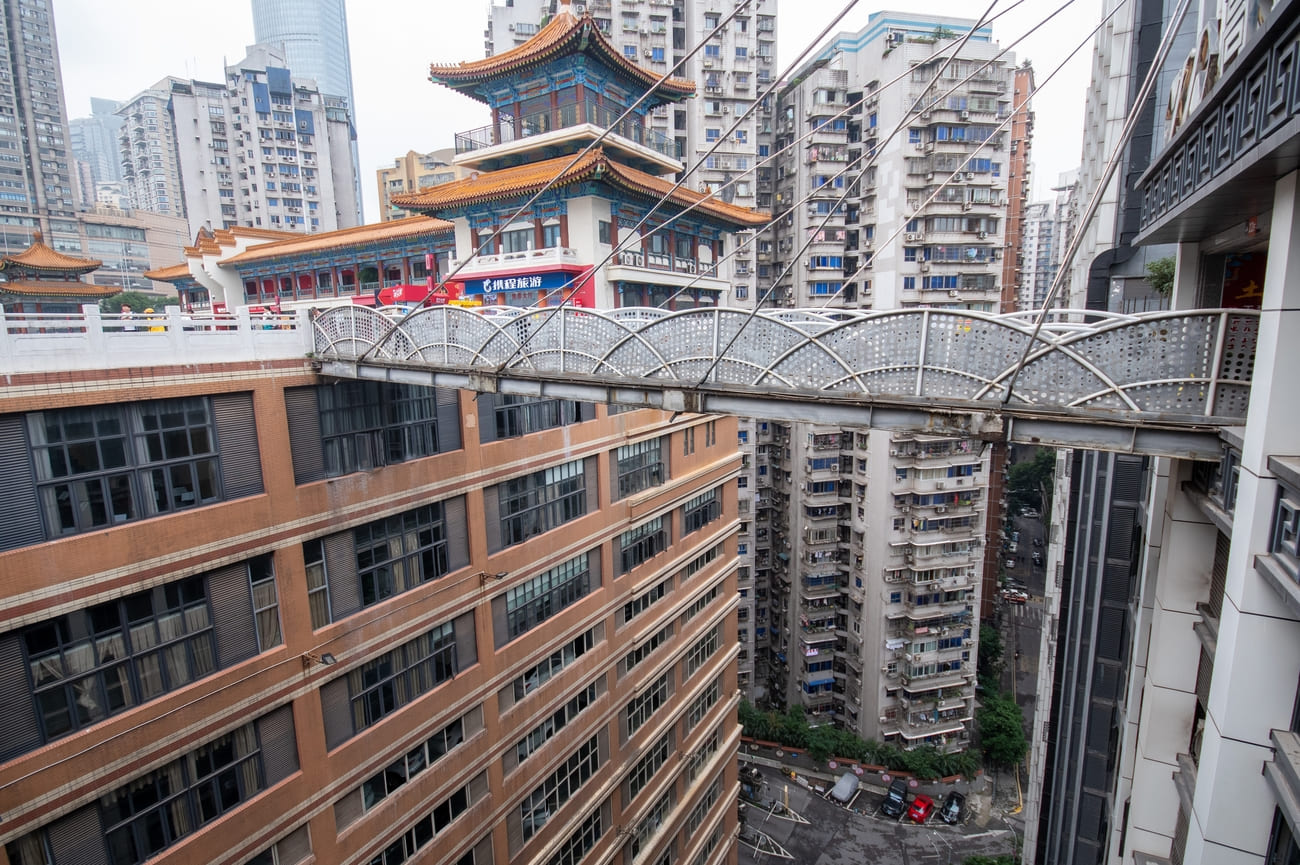
Next, head to Kuixing Tower (also called Kuixing Pavilion), a place that perfectly shows why Chongqing is known as the “8D Magical City.” As you explore, you might feel like you’re walking on ground level but you’re actually standing on the 22nd floor of a building. You can also cross pedestrian bridges that connect to nearby buildings, and at times it feels like you’re walking along the edge of a cliff. Step closer to the railing, and you’ll suddenly realise you’re looking down at streets far below (about 22 storeys down).
Yangtze River Cableway
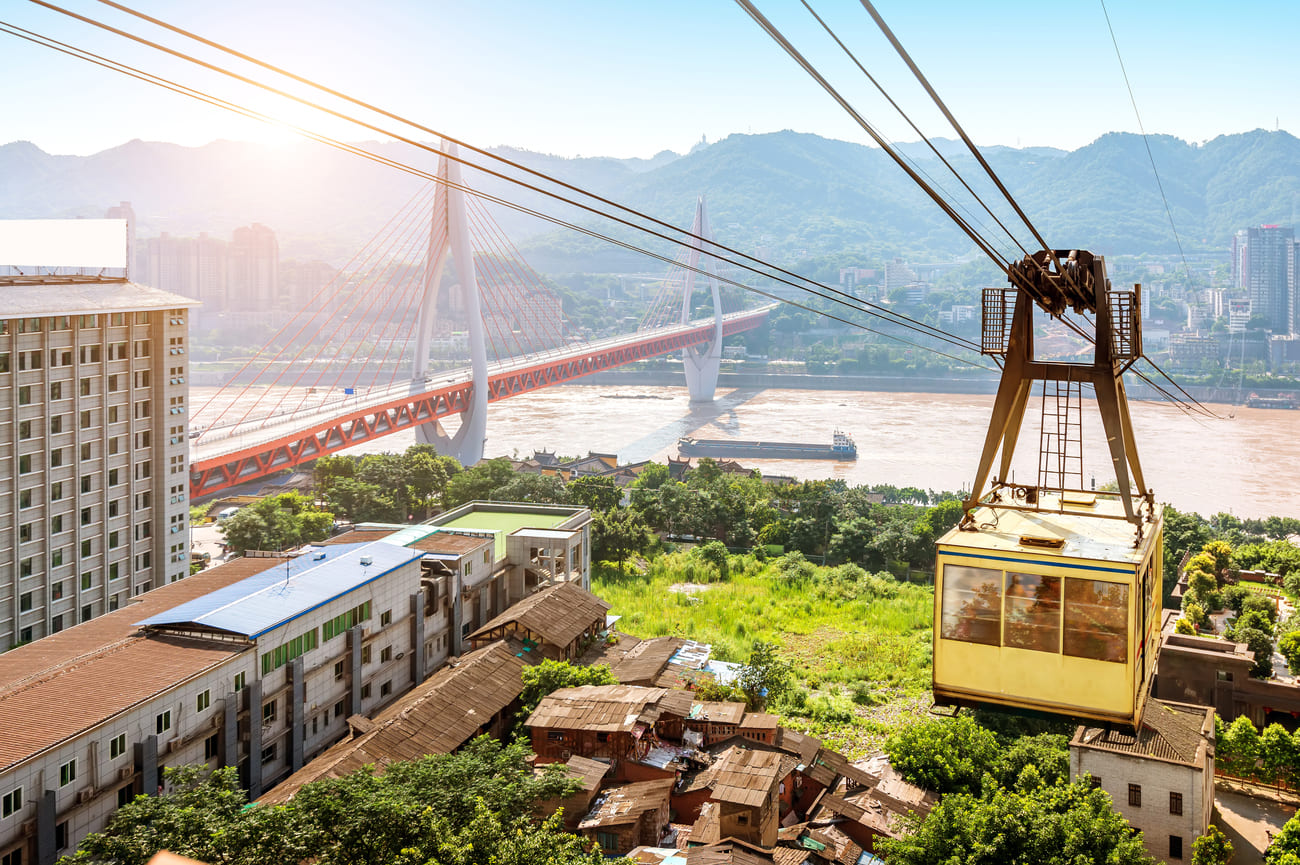
Ride Chongqing’s iconic cableway, called the “Air Corridor of the Mountain City.” Originally built in 1987 for local commuters to cross the river, it’s now a must-do experience for its unique views. The ride lasts about four minutes, but it gives you a spectacular perspective of the city. As you glide above the river, you’ll pass over rooftops, multi-layered highways, and the wide stretch of the river below. From the glass cabin, you can see the contrast between the modern skyline of Jiefangbei on one side and the riverside promenade of Nanbin Road on the other.
Longmenhao Old Street
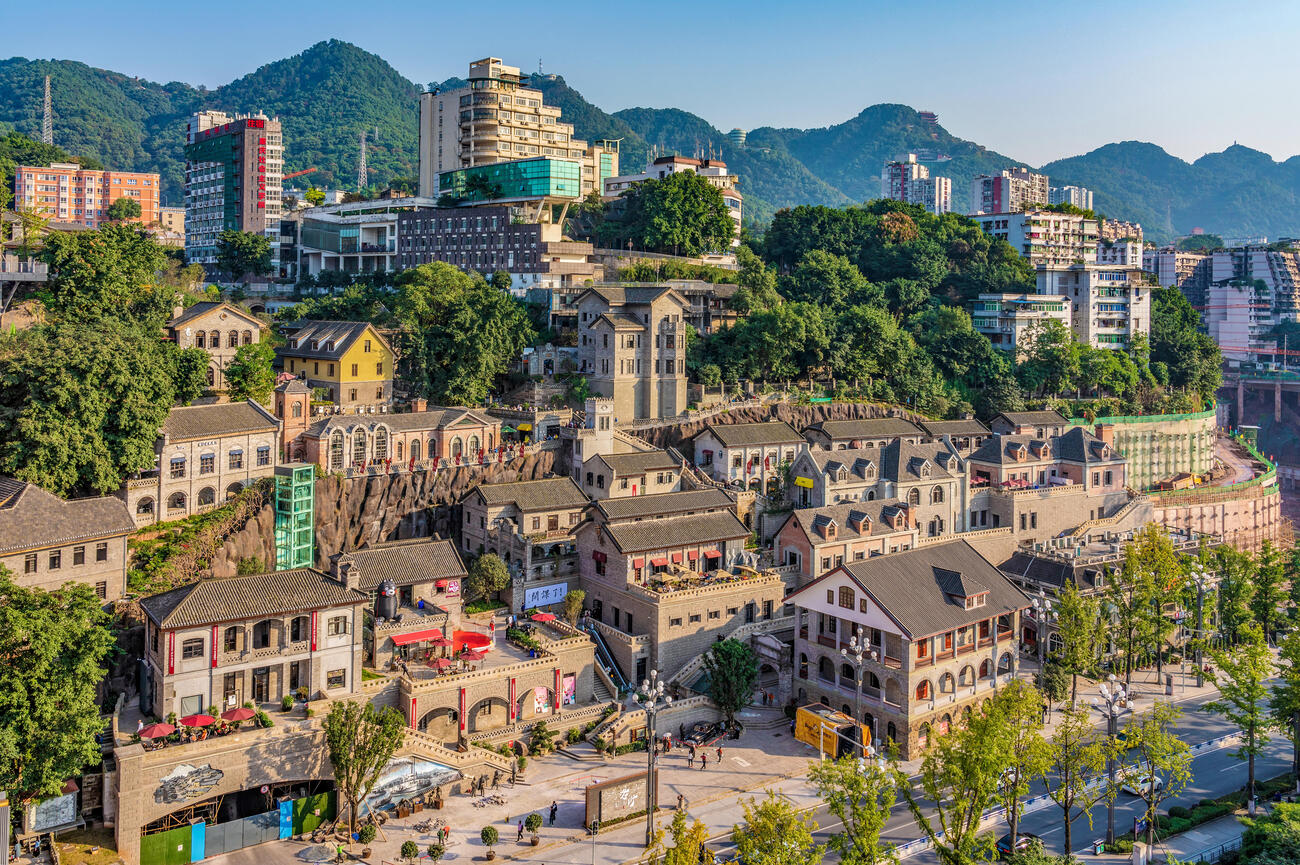
After crossing from the Yuzhong side to the Nan'an (south) side, wrap up your day at Longmenhao Old Street, one of Chongqing’s best preserved historic areas, located right at the foot of the cableway station. As you walk through, you’ll notice a blend of “old meets new” architecture, from around 200 historic buildings combining traditional Ba-Yu stilted architecture with touches of Western colonial design from its trading port past. You can visit former embassy sites and old foreign company buildings, which give you a glimpse into Chongqing’s history as a wartime capital. Or simply take it slow and wander the cobblestone lanes. You’ll find independent bookstores, tea houses, and small creative shops where you can browse or even try local crafts.
Day 1, Afternoon - Chongqing Tour Map
Day 2
Morning: Ciqikou Ancient Town
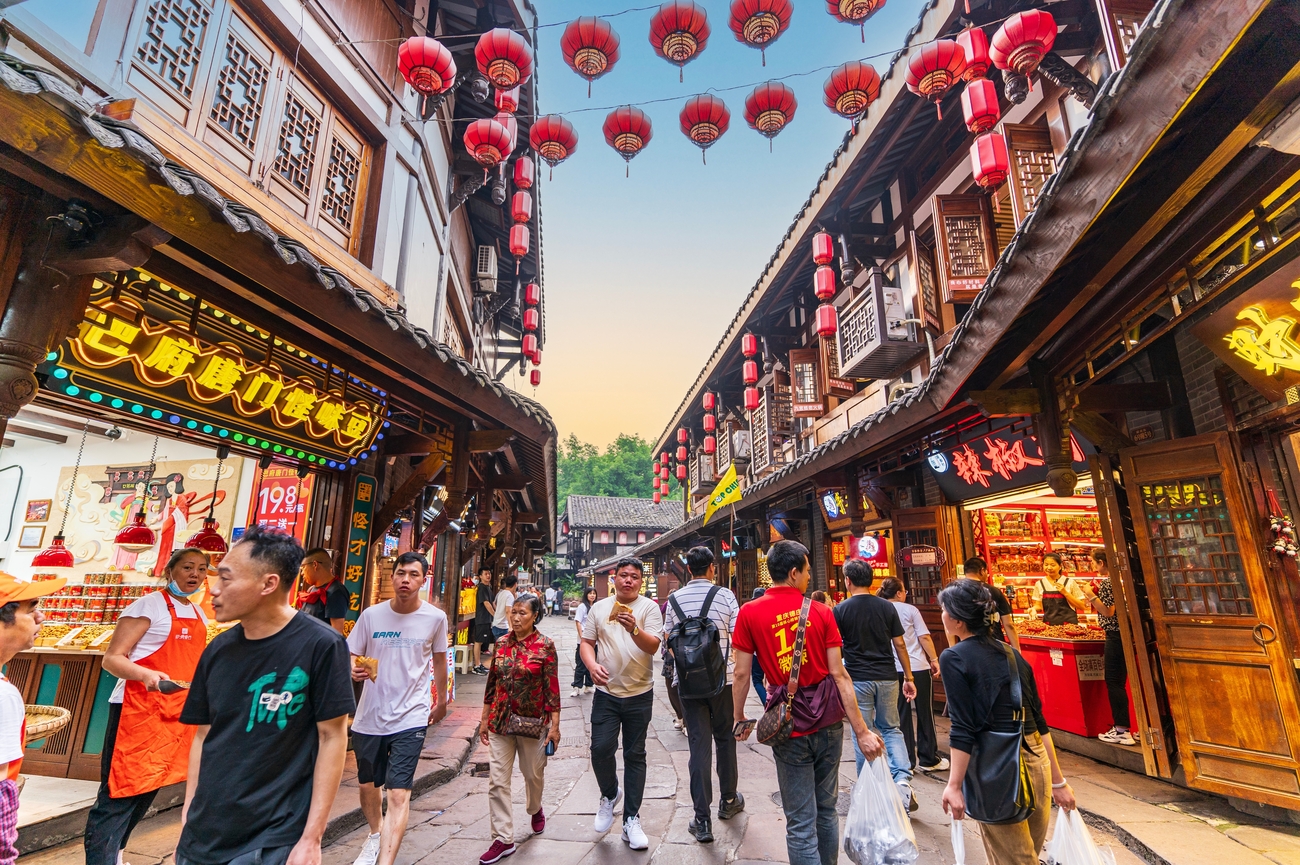
Start your day at Ciqikou Ancient Town, a historic riverside district called the “Little Chongqing.” It was once a busy port known for porcelain, it’s now a lively place where you can experience the city’s traditional architecture and local culture. As you wander through the narrow, stone-paved streets, you’ll see buildings from the Ming and Qing dynasties, along with busy main lanes and quieter side alleys. If you want a break, step into a traditional tea house and watch a "Face Changing" (Bian Lian) show, similar to the performance shown at Sichuan Opera Theater in Chengdu. Make sure to try some of the town’s well-known snacks as you explore, like crispy fried dough twists (Chen Mahua), spicy Mao Xue Wang, and thin, seasoned bean curd sheets (Qianzhang).
Afternoon: Chongqing Zoo
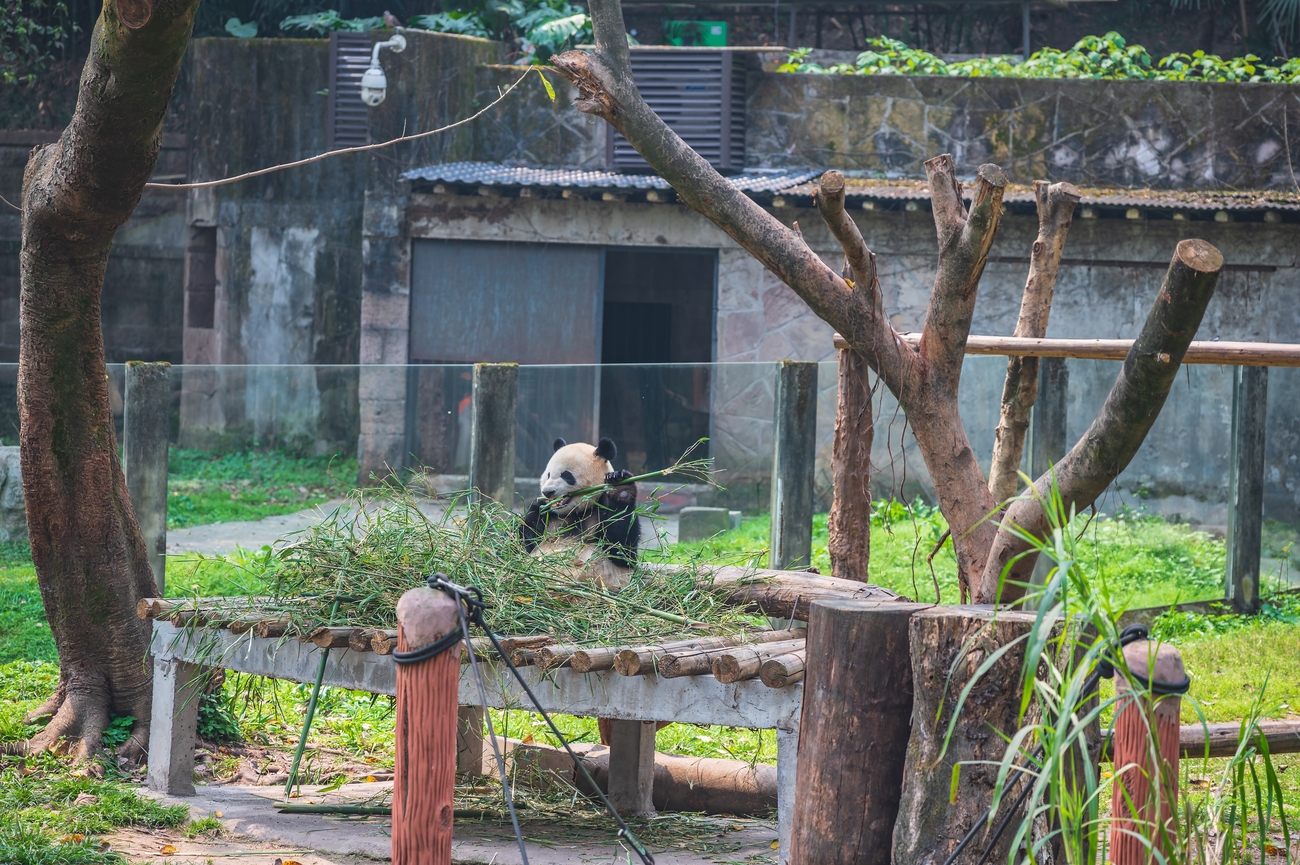
Continue your day at the Chongqing Zoo, one of the largest zoos in China and a major conservation centre, especially known for its giant pandas. As you explore, you’ll have the chance to see over 20 pandas, including well known ones like Er Shun and her twins. Some pandas are even known for their playful behaviour, often gathering together while eating bamboo. For the best chance to see them active like climbing, playing, or feeding, time your visit between 2:00 PM and 4:00 PM.
Beyond the pandas, the zoo is home to more than 4,000 animals across 260 species, so there’s plenty to see as you walk around. If you’re visiting with kids, there’s also a small amusement area with rides like a mini train and carousel. You can also stop by the education centres near the East Gate for interactive exhibits and short videos that help you learn more about the animals.
Hongya Cave
End your day at Hongya Cave, one of Chongqing’s most iconic and photographed spots. Originally a military base and a humble residential area, it was reconstructed into an 11-storey commercial landmark that perfectly captures the "Bayu" architectural style. You can experience the city’s unique vertical layout here by entering on the 1st floor (river level), take an elevator to the 11th floor, and walk out onto a busy city street (Cangbai Road) that looks like the ground level. At around 6:30–7:30 PM, the entire complex glows in warm orange tones, creating a magical, almost cinematic atmosphere that looks remarkably like the bathhouse from Studio Ghibli’s "Spirited Away.” If you get hungry, head to the street food court on Level 4, where you can try local snacks like fried dough twists, sour and spicy noodles, and grilled skewers.
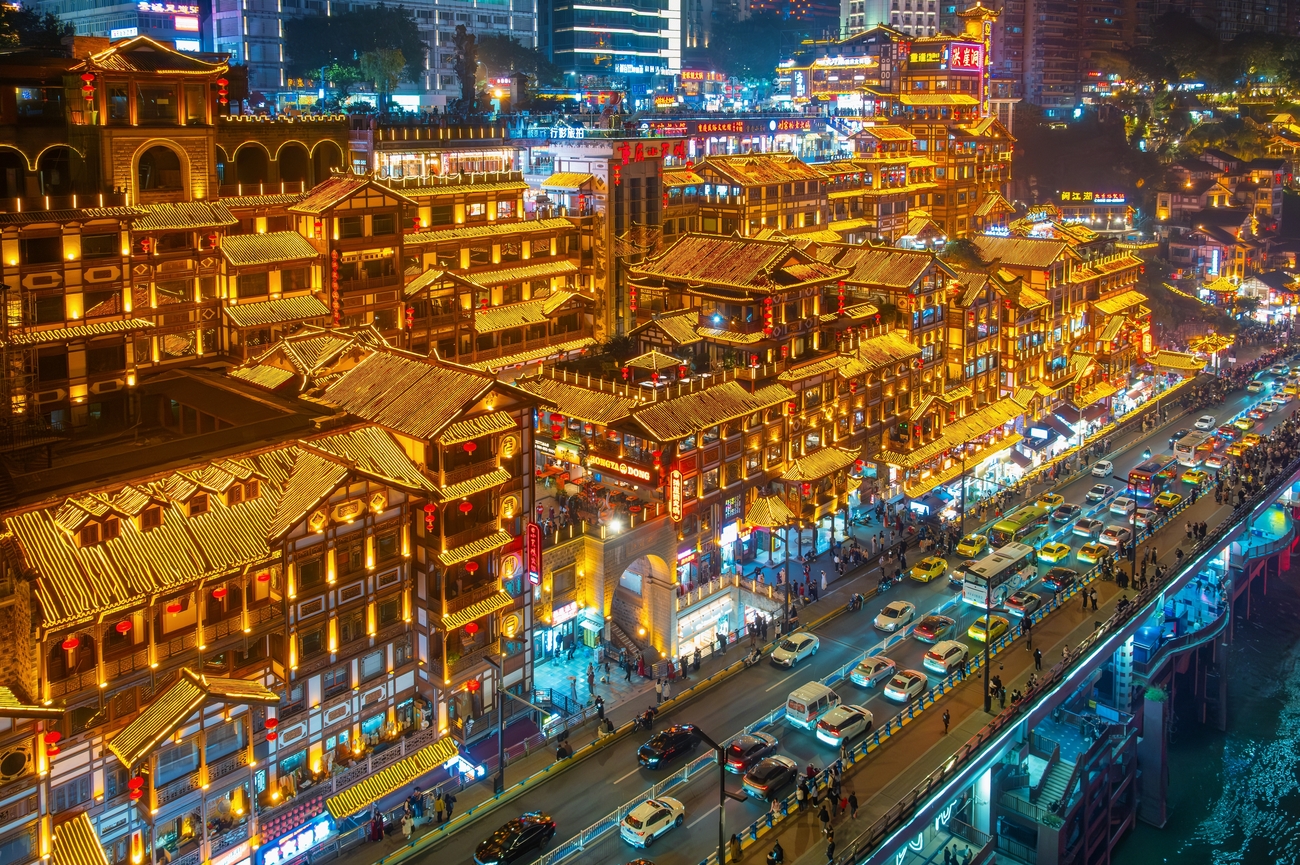
Day 2 - Chongqing Tour Map
Day 3
Morning: Wulong Karst Geological Park
Start your day early at Wulong Karst Geological Park, a UNESCO World Heritage Site known for its unbelievable landscapes, like massive sinkholes, natural stone bridges, and deep gorges. Some of these formations have even appeared in films like Transformers: Age of Extinction. The park is quite large, so it’s divided into key areas like the Three Natural Bridges, Longshuixia Fissure Gorge, Fairy Mountain, and Furong Cave. You can explore one or two sections depending on your pace. As you arrive, you can take photos with the Transformer sculpture at the entrance, then make your way down to Tianfu Official Post, an ancient style complex set deep within a sinkhole, which adds a cinematic feel to the entire experience.
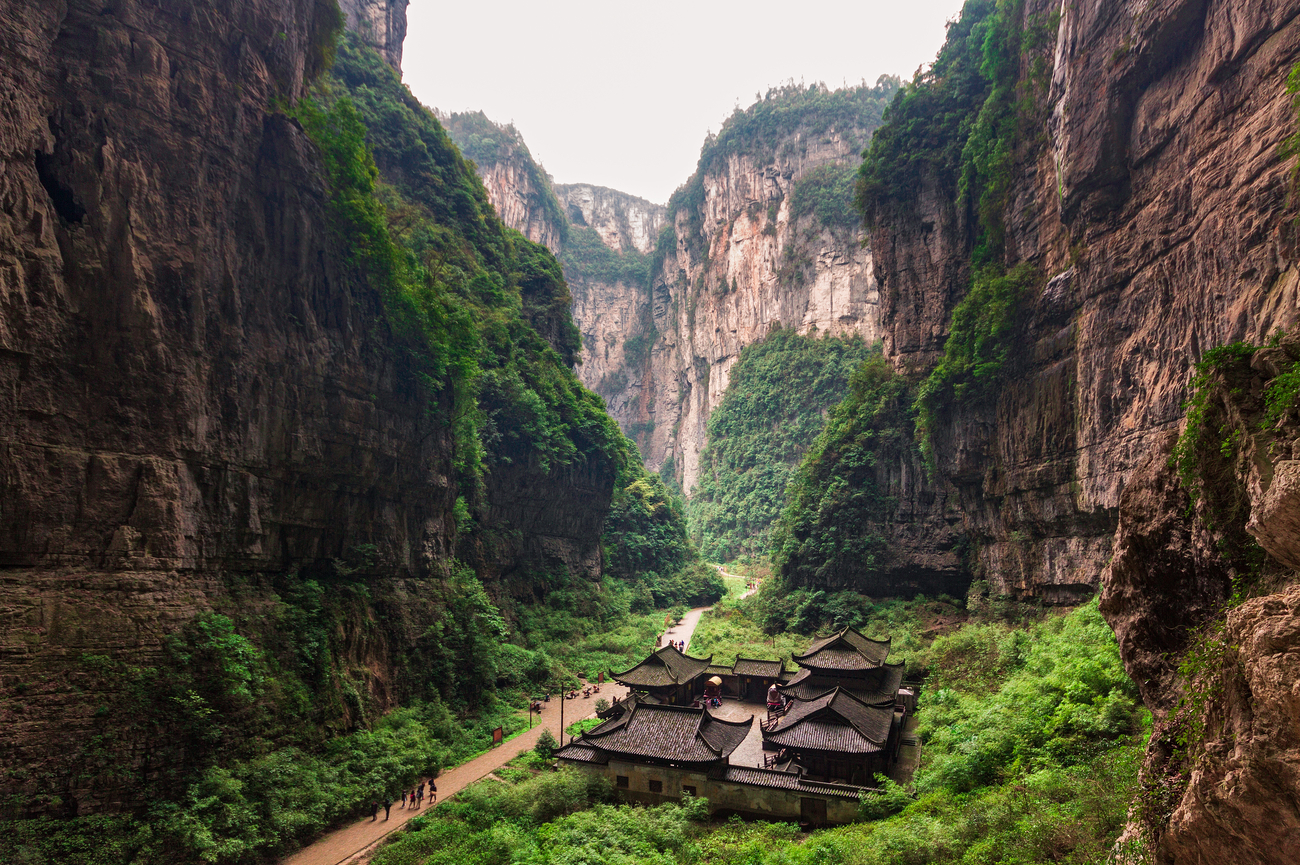
Three Natural Bridges
Head to the crown jewel of the Wulong Karst, where you’ll see three massive natural stone arches: Tianlong (Sky Dragon), Qinglong (Azure Dragon), and Heilong (Black Dragon). It’s one of the largest groups of natural bridges in Asia. Your visit begins with a glass elevator ride down into the valley, giving you a spectacular view of the landscape below. From there, you’ll walk the same paths where the Dinobots were filmed. You'll find a giant Grimlock (T-Rex) sculpture near the entrance that is perfect for photos. At the bottom of the first sinkhole, you’ll find Tianfu Official Post, built during the Tang Dynasty and reconstructed for Zhang Yimou’s film: Curse of the Golden Flower, it looks like a hidden fortress trapped in time.
As you follow the 3 kilometre trail, you’ll pass under each bridge, each with its own character. Tianlong feels wide and powerful, Qinglong is tall with a cascading waterfall, and Heilong is darker and more enclosed. Along the way, look closely at the rock formations under the bridges to spot the "gorilla" and “a leaping carp.”
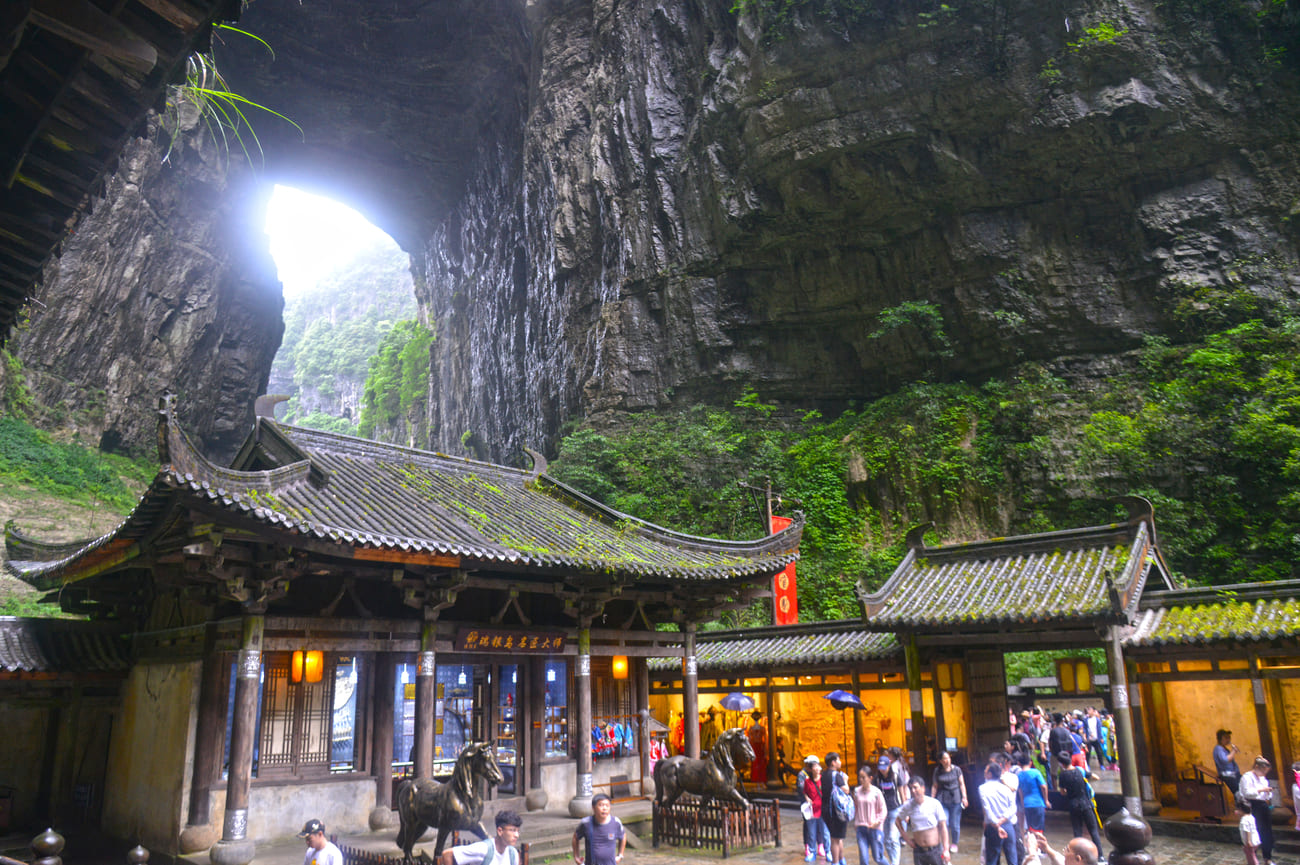
Day 3, Morning - Chongqing Tour Map
Afternoon: Longshui Gorge
From the expansive Three Natural Bridges, take a short shuttle bus to Longshui Gorge (look for the bus bound to “Longshuixia”), the ride takes about 10-15 minutes. Once you arrive, you’ll be exploring an amazing, narrow canyon shaped by millions of years of erosion, with steep cliffs rising 200 to 500 metres above you. Your visit starts with a cliffside elevator that brings you down to the trail. From there, you’ll walk along pathways built into the rock, including narrow ledges and balcony style walkways that hug the canyon walls. Along the way, you’ll pass through caves, tunnels, and even walk beneath light waterfall sprays that add a cool mist to the experience. The full walk usually takes around 1.5 to 2.5 hours. Since the paths can be damp and slippery, wearing comfortable, non-slip shoes will make your visit much easier.
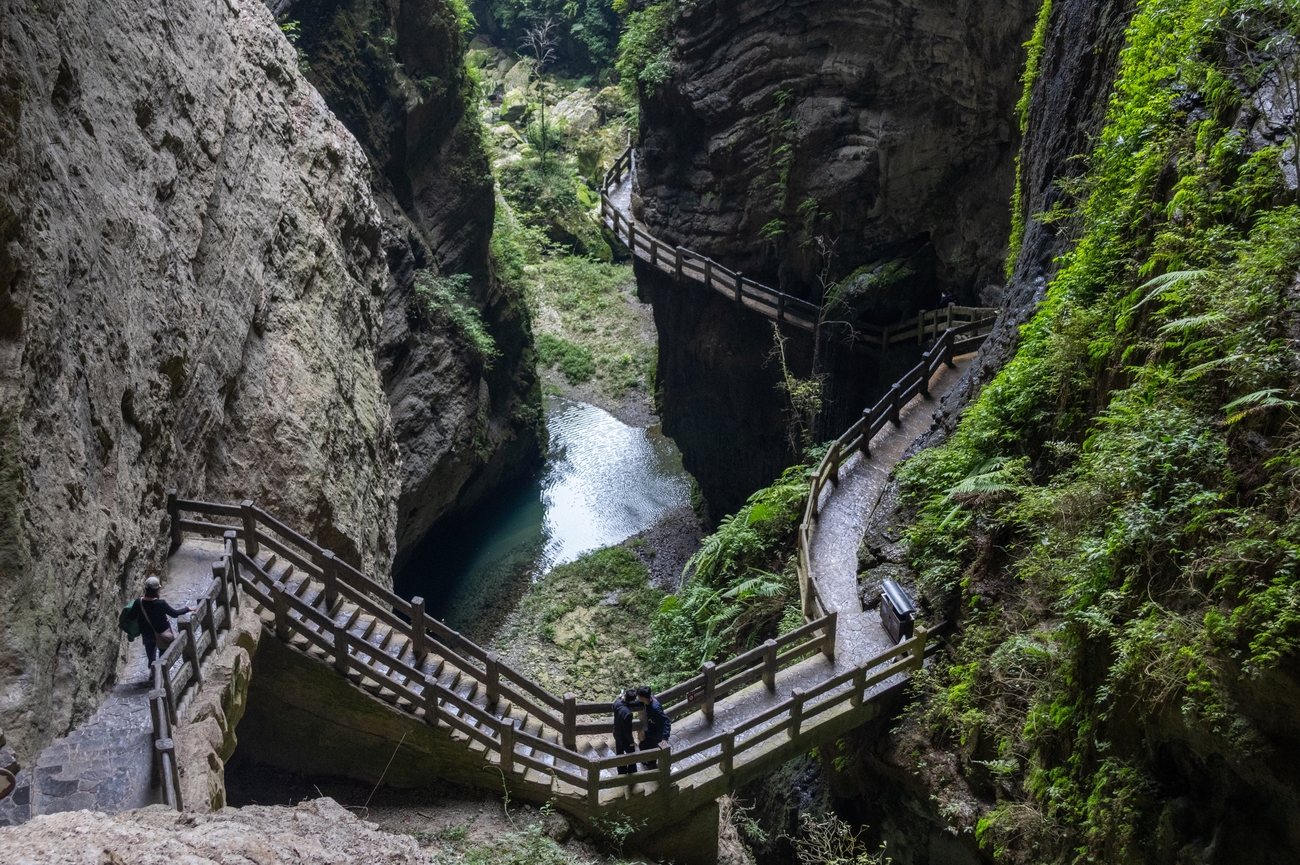
Furong Cave
End your Chongqing journey at Furong Cave, a UNESCO World Heritage Site called an “Underground Art Palace” for its striking rock formations and colourful lighting. Formed over a million years ago, it’s one of the most impressive caves you can visit in the region. Your visit begins with a scenic cable car ride, where you’ll get views of the emerald green Furong River and the surrounding limestone cliffs. Inside, you’ll follow a well maintained loop trail through the cave, passing the cave's wonders like the Giant Stone Waterfall, Coral Jade Pool, and other unique formations shaped over time. The walk usually takes about 1 to 1.5 hours, giving you enough time to take a closer look at the formations without rushing. Afterwards, you can take a sightseeing boat or raft on the Furong River for a different perspective of the karst landscape, a scenic and memorable way to end your Chongqing.
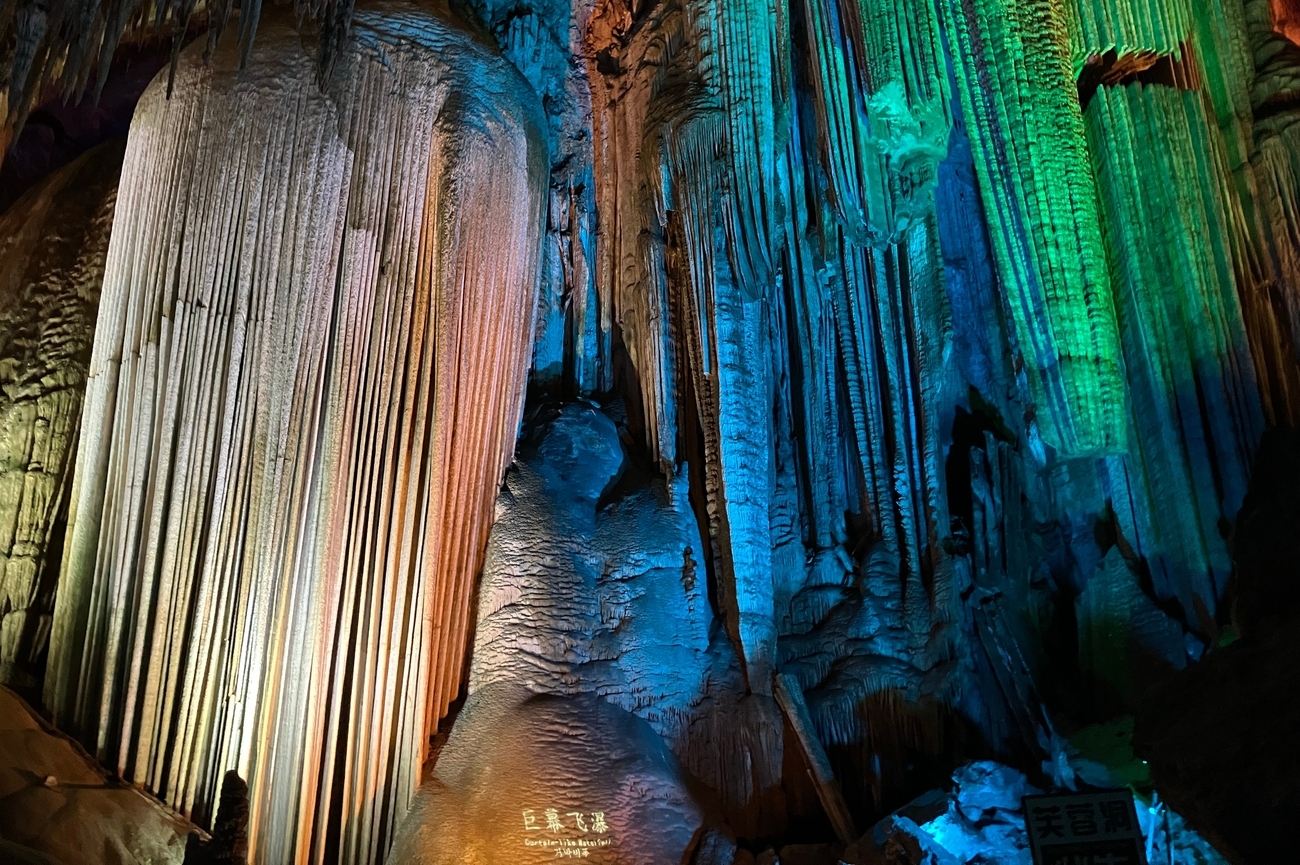
Day 3, Afternoon - Chongqing Tour Map
Day Trips from
Chongqing
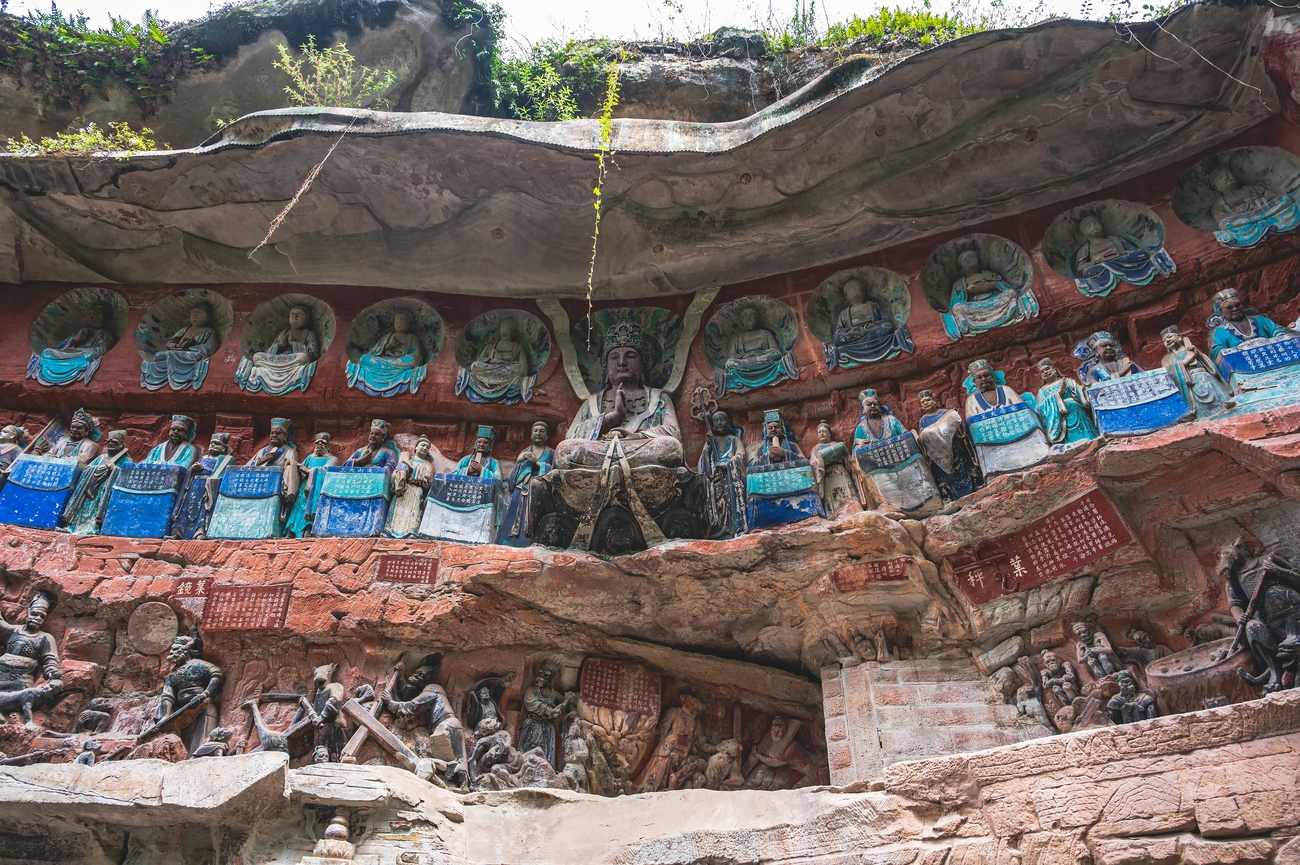
- Dazu Rock Carvings: About 1.5 to 2 hours from central Chongqing, this UNESCO World Heritage site is one of the most impressive cultural sites in Chongqing. Spread across sandstone cliffs, you’ll find over 50,000 statues and 100,000 inscriptions created between the 9th and 13th centuries. Here, you’ll notice how Buddhism, Taoism, and Confucianism are harmoniously integrated in the carvings, giving you a closer look into China’s spiritual and artistic history. The site is divided into several areas, with Baodingshan and Beishan being the main highlights. You can also see the famous thousand hand statue, a massive reclining Buddha depicting the moment of Nirvana, and a U-shaped gorge filled with detailed high relief carvings.
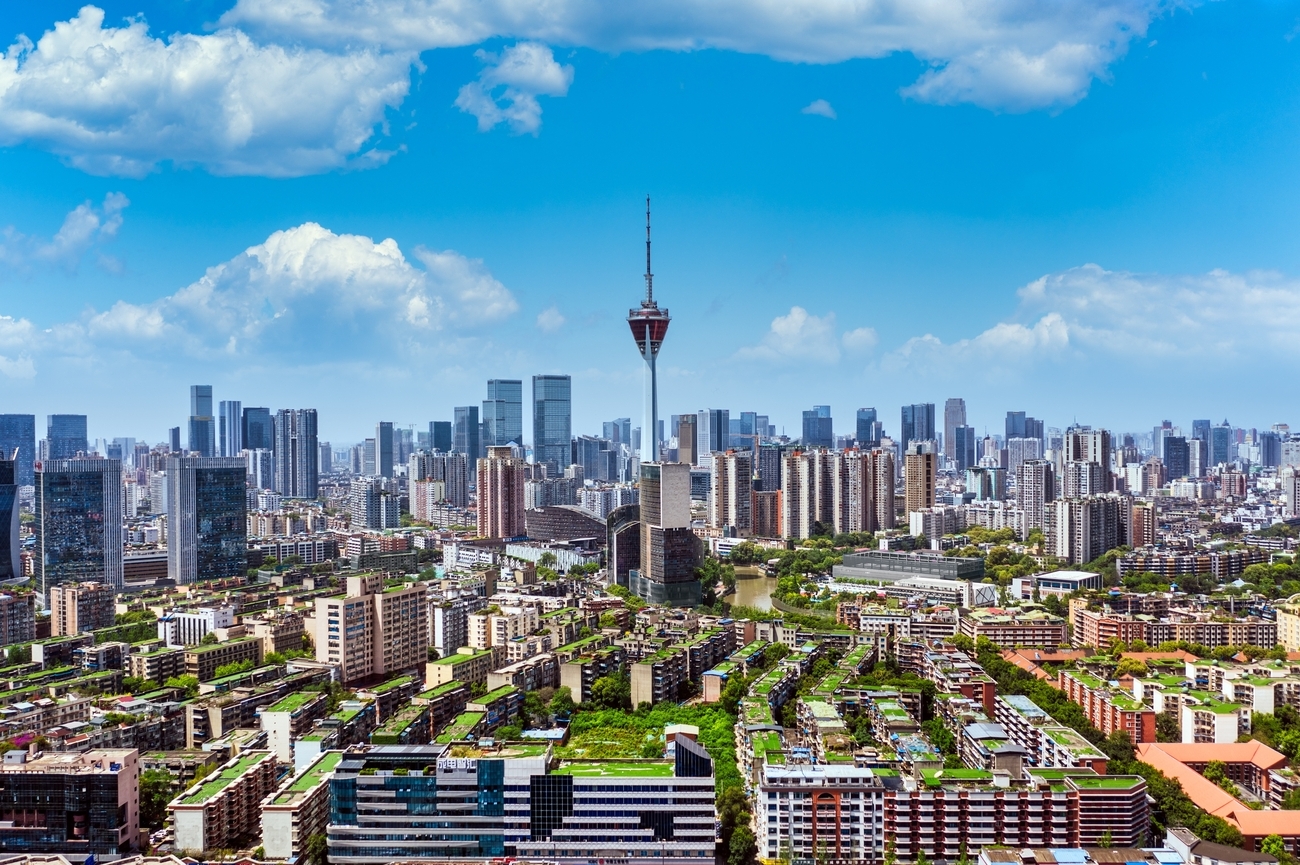
- Chengdu: Just 1 to 1.5 hours from Chongqing, Chengdu offers a refreshing change of pace with its relaxed, “slow life” culture. You can start by visiting the Chengdu Research Base of Giant Panda Breeding, where you’ll see giant pandas (and if you’re lucky, playful cubs up close). After that, slow things down at a traditional tea house like Hemu. Order a cup of jasmine tea, sit back, and watch locals play mahjong, or even try a traditional ear cleaning, for a uniquely Chengdu experience. To round out your visit, wander through Jinli Ancient Street or Kuanzhai Alley, and stop by Wuhou Shrine for a glimpse into the city’s history and heritage.
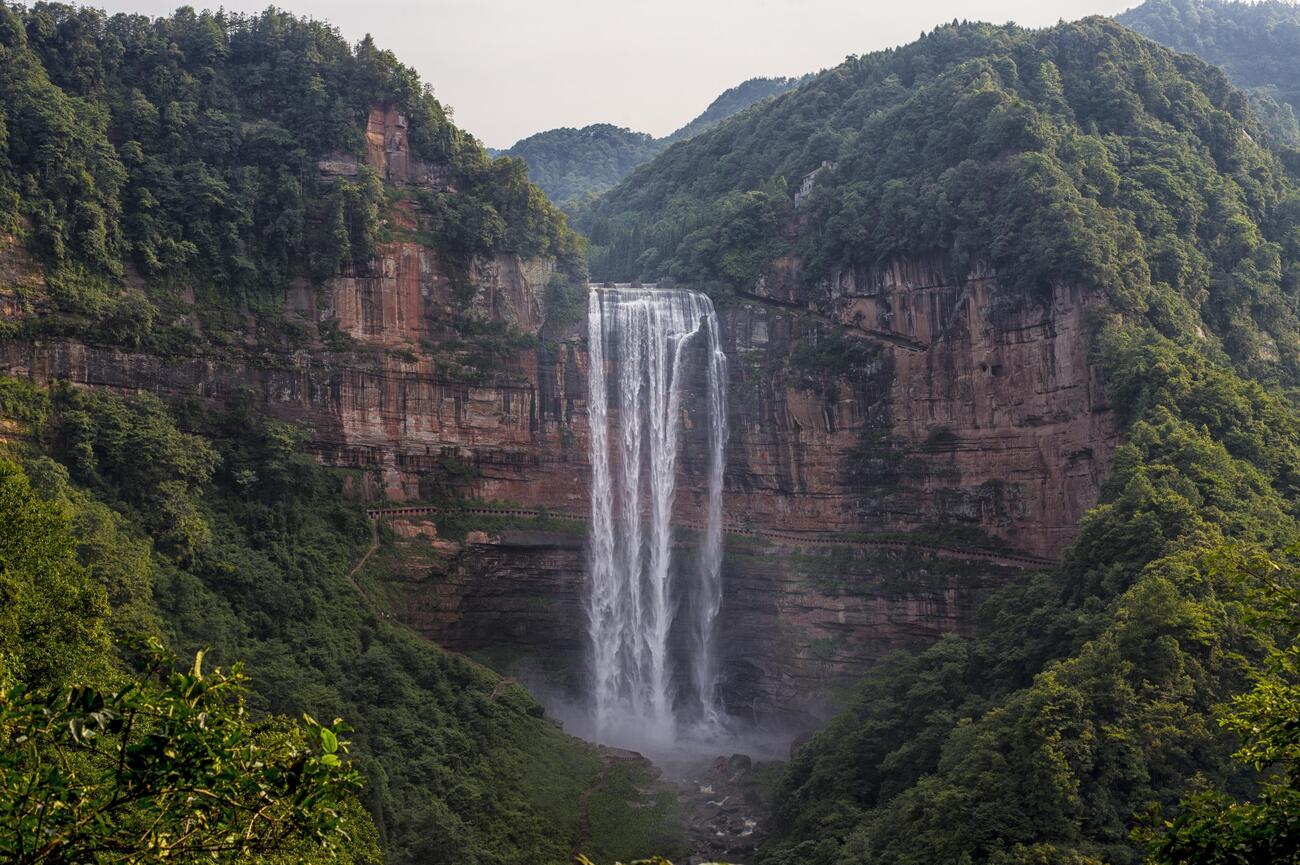
- Simian Mountain: If you’re looking to escape the city, Simian Mountain is a perfect day trip known for its cool air, lush forests, and over 100 waterfalls. It’s called a “natural oxygen bar,” making it a great place to slow down and breathe. One of the highlights is Wangxiangtai Waterfall, the tallest single drop waterfall in China at around 160 metres. Surrounded by red cliffs, it’s even nicknamed the “heart shaped waterfall.” You can also take a relaxing boat ride on Longtan Lake, where you might spot monkeys playing along the shore. Nearby, you’ll find the Simian Mountain Shaolin Temple, a quiet, centuries old site where you can reflect and (sometimes) watch martial arts practice in a peaceful setting.
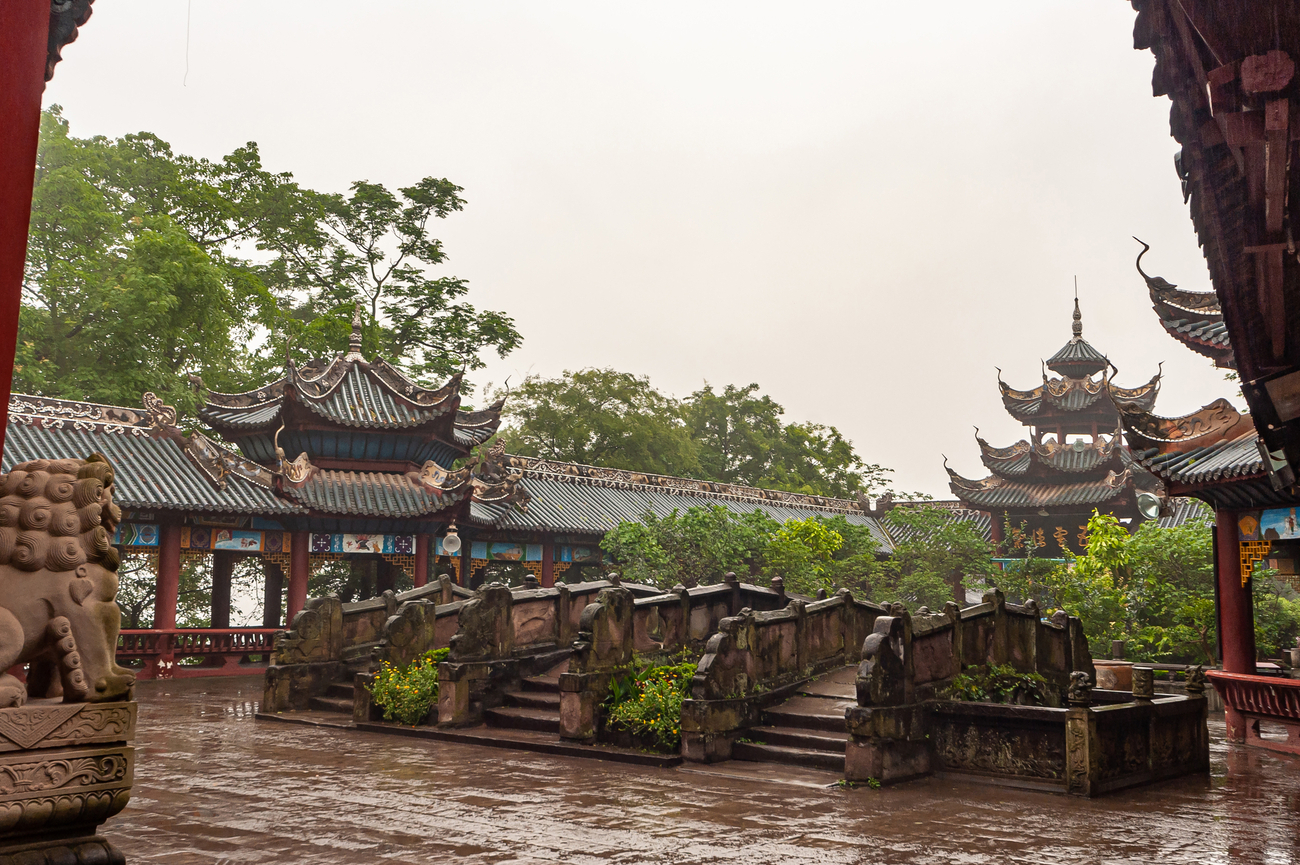
- Fengdu Ghost City: Located about 170 km downstream from Chongqing along the Yangtze River, Fengdu Ghost City is a unique cultural site built on Mingshan Mountain. It’s often included as a stop on Yangtze River cruises. Here, you’ll walk through temples and shrines dedicated to the afterlife, inspired by Chinese mythology. The site is designed to represent the “underworld” (Diyu), with detailed statues, dramatic scenes, and symbolic architecture that bring these beliefs to life. While it may feel eerie at times, the experience is meant to reflect traditional ideas about karma and morality
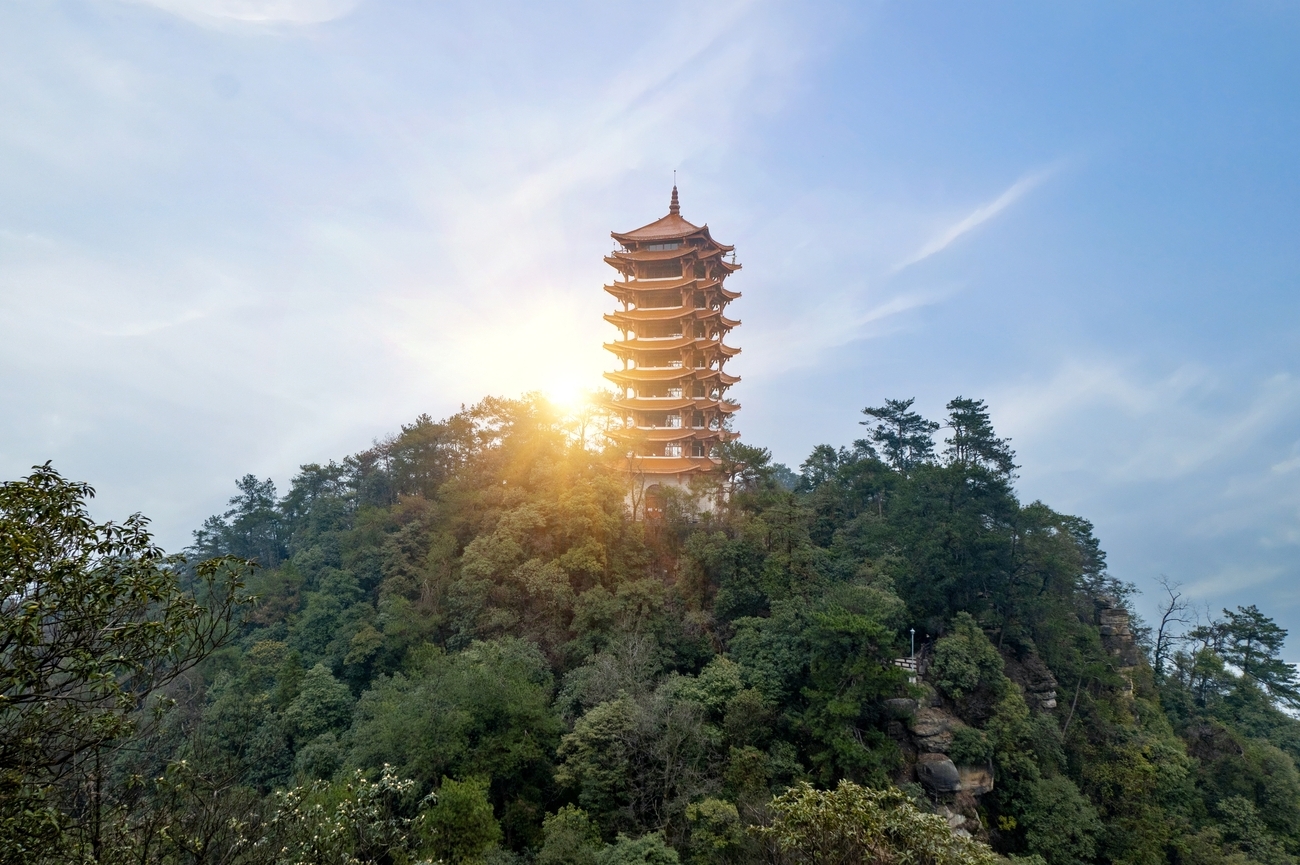
- Jinyun Mountain: Located about an hour from central Chongqing in the Beibei District, Jinyun Mountain is a peaceful nature retreat known for its forested slopes, temples, and fresh mountain air. It’s part of a national nature reserve and is often called one of the “green lungs” of Chongqing. As you explore, you’ll find a network of walking trails that lead through bamboo forests, past waterfalls, and up to scenic viewpoints. The mountain is also home to historic temples such as Jinyun Temple, offering a more spiritual and tranquil experience compared to the city. It’s a great option if you want a half-day or full-day escape into nature without travelling as far as Wulong.
UNESCO World Heritage Sites in Chongqing
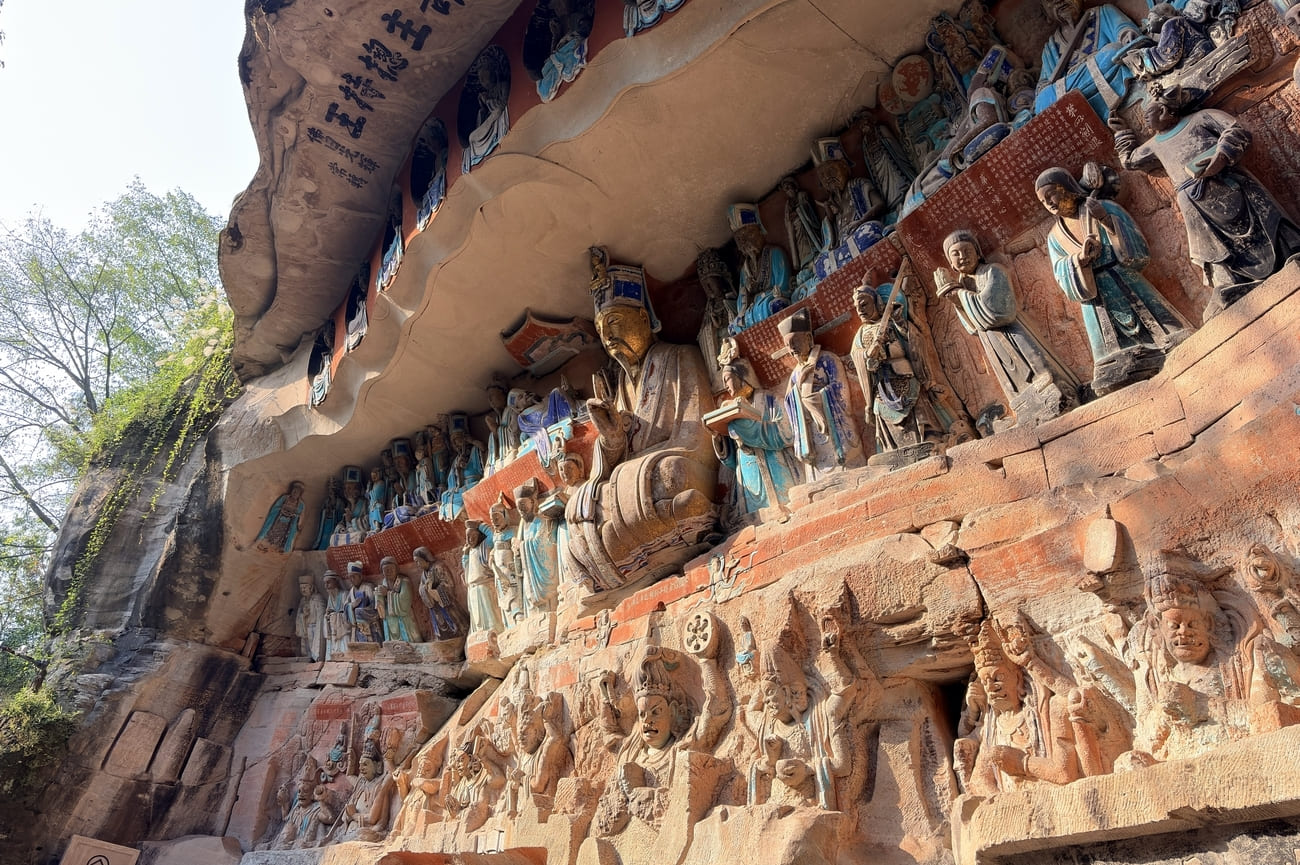
- Dazu Rock Carvings: Considered one of the finest examples of Chinese grotto art, the Dazu Rock Carvings represent the peak of cave temple design from the Tang and Song dynasties. Spread across several sites, with Baodingshan and Beishan being the most significant, the carvings uniquely combine Buddhism, Taoism, and Confucianism. Unlike earlier grotto sites, many sculptures depict scenes from everyday life, making them more expressive and accessible. It is one of the best preserved places in China to understand the coexistence of these philosophies.
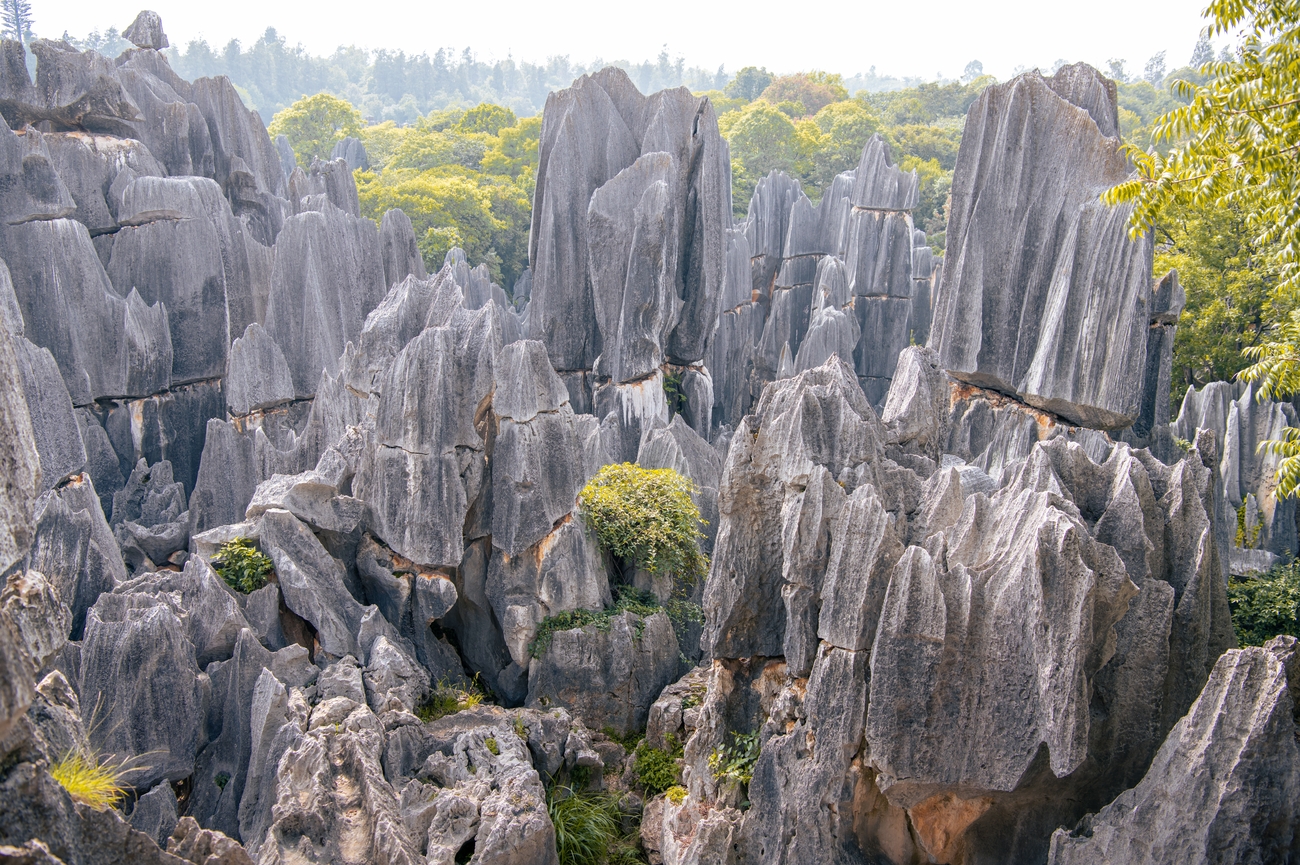
- South China Karst: This UNESCO World Heritage property includes some of the most dramatic karst landscapes in the world, and Chongqing is home to two of its key components: Wulong Karst and Jinfoshan (Jinfo Mountain). In Wulong, you’ll find towering natural bridges, vast sinkholes, and deep gorges, including the famous Three Natural Bridges and Longshuixia Gorge. Jinfoshan offers a contrasting landscape, with a high plateau, forested peaks, and seasonal changes, including snow in winter. Together, they showcase the diversity and scale of karst formations shaped over millions of years.
- Wulipo Nature Reserve: Located in Wushan County, Wulipo Nature Reserve forms part of the extended buffer zone of the Shennongjia UNESCO World Heritage Site (in neighbouring Hubei Province). While not a standalone UNESCO site, it plays an important ecological role, connecting forest systems and supporting biodiversity across the region. The reserve is home to rare species such as the Sichuan golden snub-nosed monkey and clouded leopard. Much of the area remains protected, with limited access, though parts are gradually opening for eco-tourism.
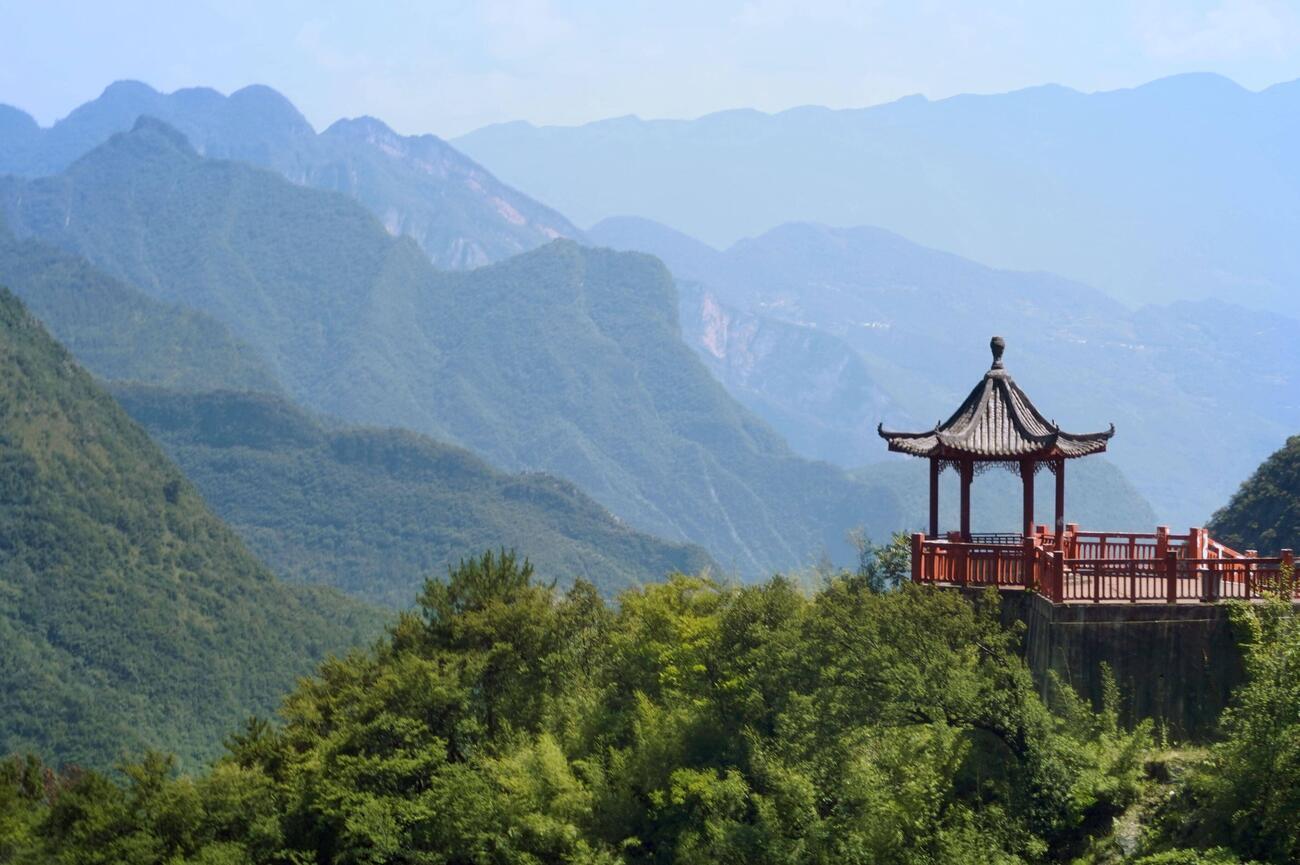
Golf Courses in
Chongqing
- Chongqing Baoli Golf Club: Also known as Poly Golf Club. The club features two 18-hole championship courses, both designed to make the most of the area’s natural topography. You can choose between two distinct playing experiences. The North Course is more challenging, with noticeable elevation changes that test your strategy and control. The South Course, on the other hand, is flatter and more open, offering a more relaxed, parkland style game. Whichever you pick, you’ll get a well designed course that lets you enjoy both the sport and the surrounding landscape.
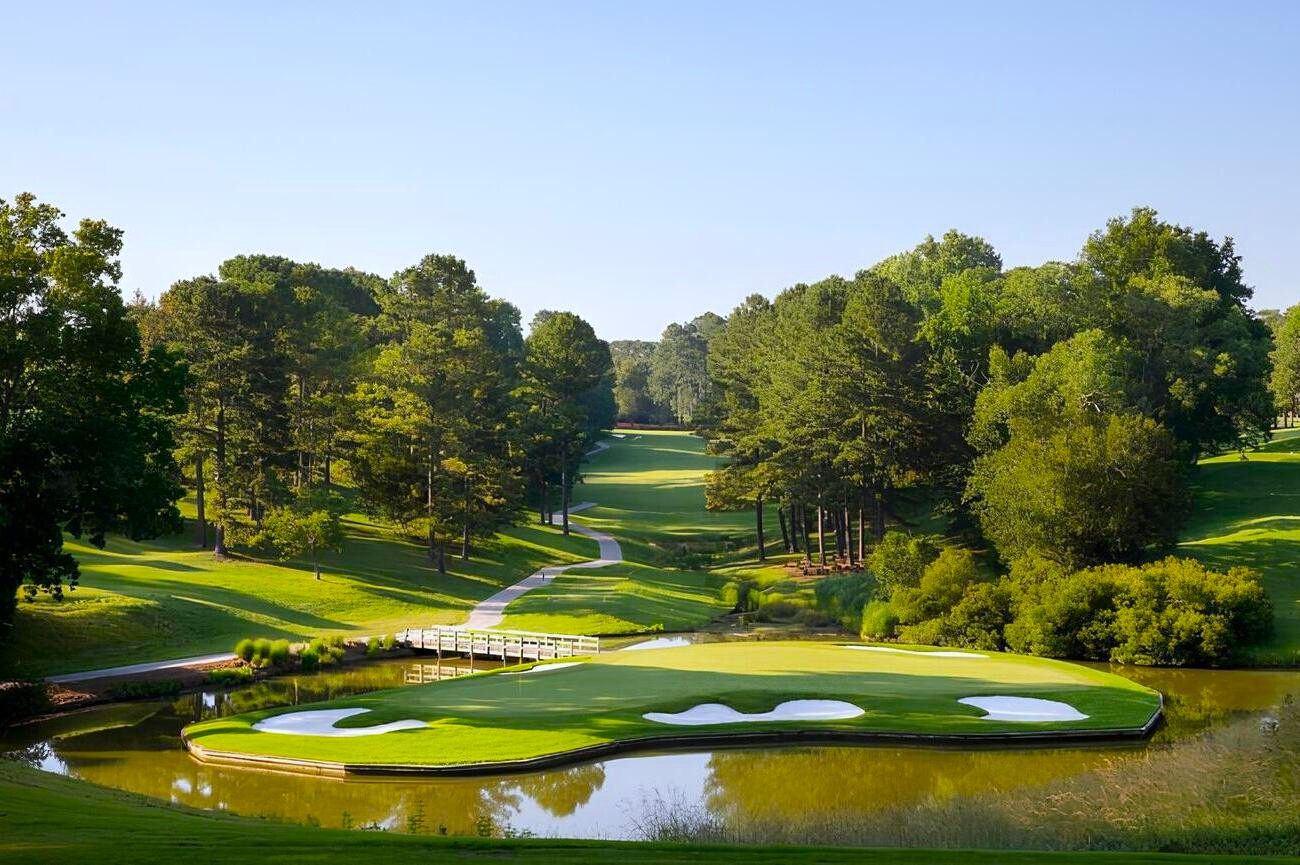
- Kingrun Nanshan Golf Club: Arguably the most prestigious and well maintained golf destination in Chongqing. It’s the city’s only Jack Nicklaus Signature Course, designed to incorporate the natural landscape of Nanshan Mountain. It’s a course that rewards precision and strategy more than power, so every shot really counts. With natural water hazards and tree lined fairways, it can be challenging if you miss your line, but the scenery makes it just as enjoyable. It is also consistently ranked among the "Top 100 Golf Courses in China" for its well-kept greens and fairways, giving you a polished and memorable round from start to finish.
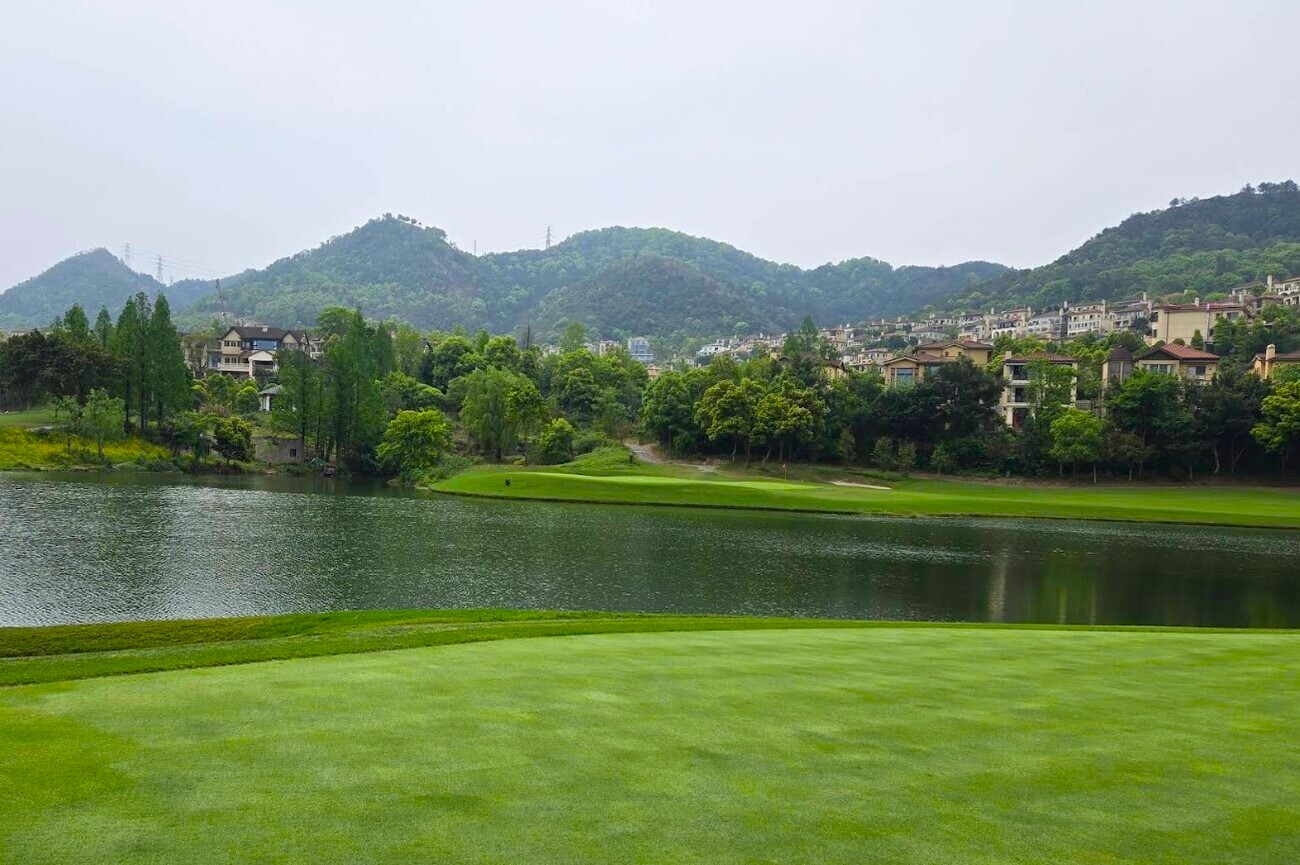
- Chongqing Sun Kingdom Golf Club: Also known as Chongqing Sun Kingdom Hot Spring Golf Course, This is a standout mountain style course in the Jiulongpo District. It’s especially known for its “bunker-focused” design, with over 100 bunkers that add a real strategic challenge to your game. As you play the full 18-hole, par-72 course, you’ll find it more demanding than most rewarding careful shot placement rather than just distance. After your round, you can slow things down at the resort’s natural hot springs. It’s a great way to unwind and recover after a challenging day on the course.
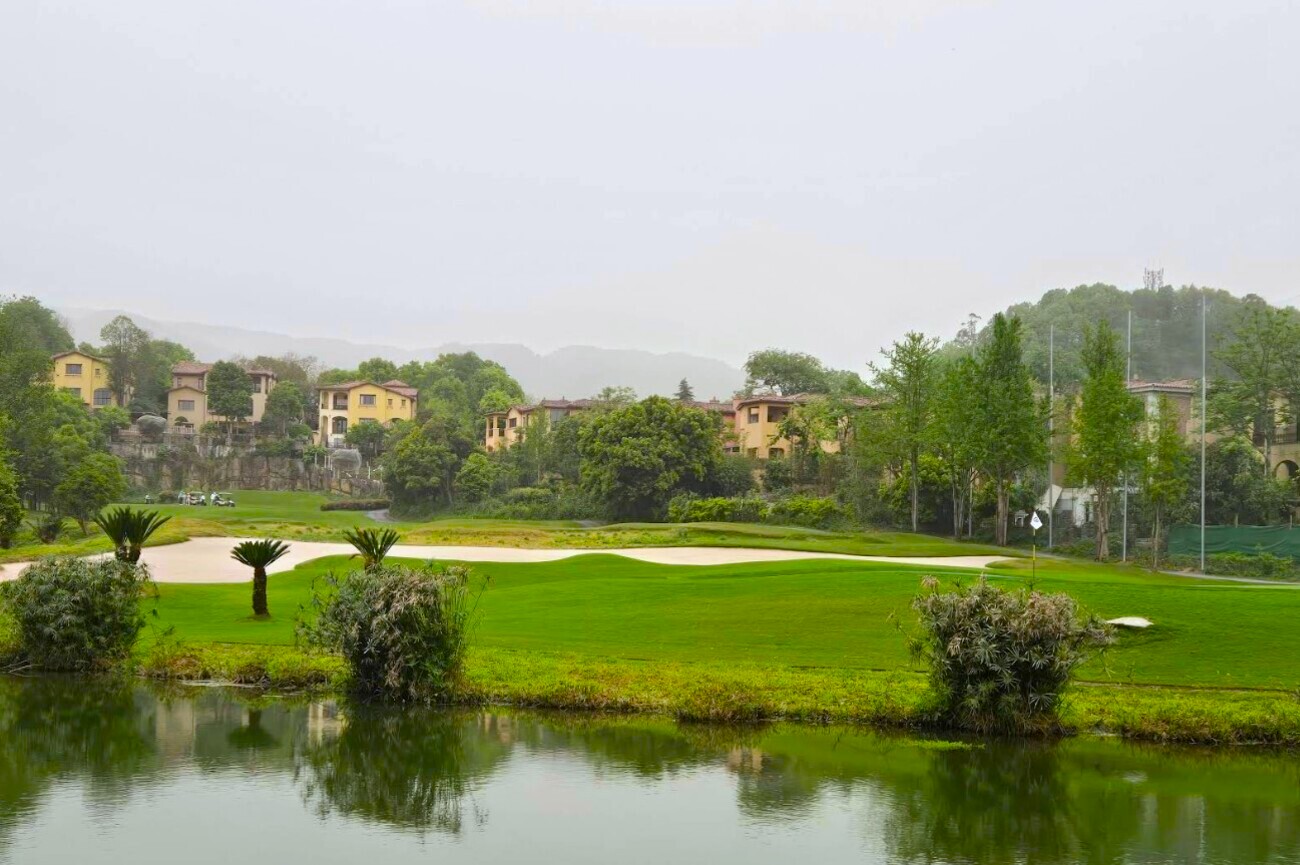
Luxury Spa &
Wellness Experiences in Chongqing
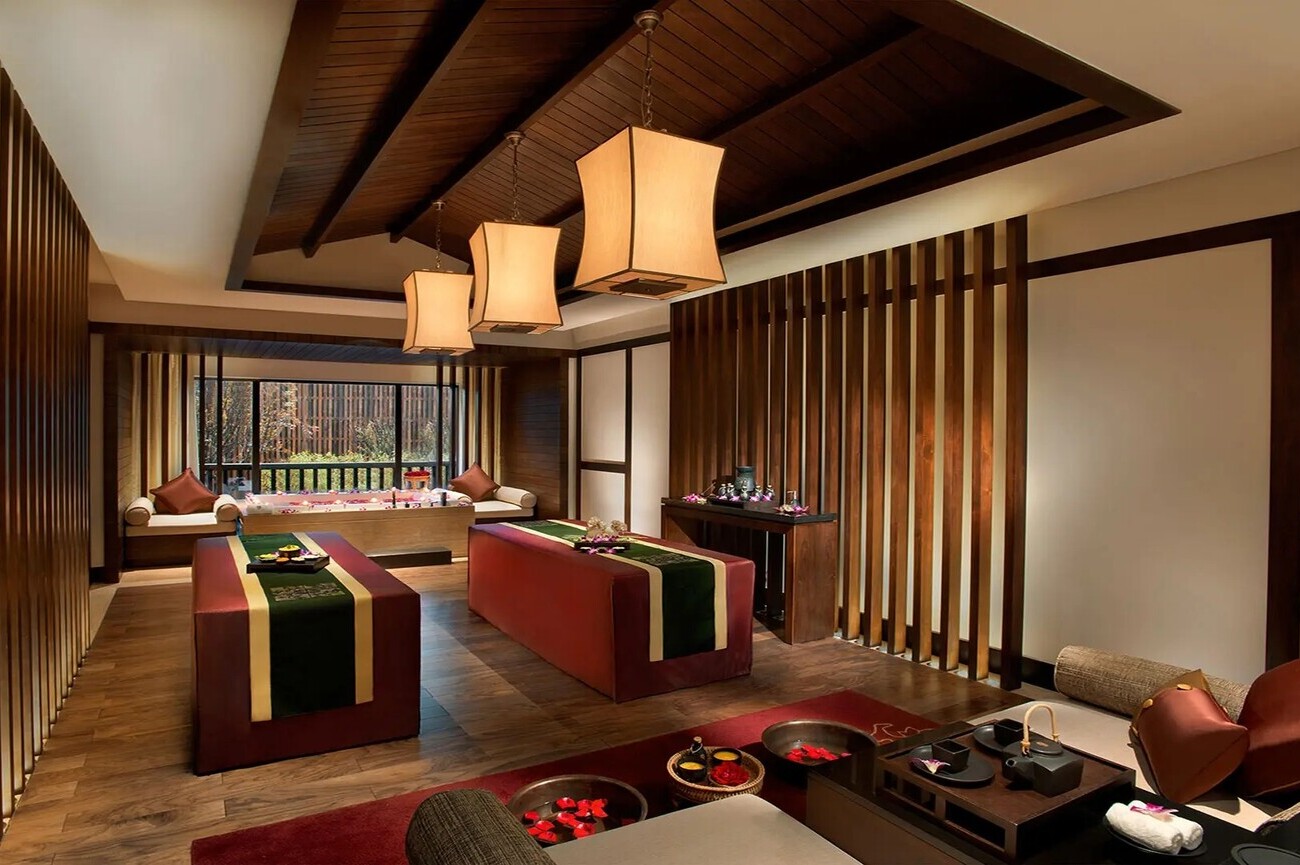
- Banyan Tree Chongqing Spa: Set at the foot of Jinyun Mountain, this spa offers a peaceful, nature focused escape built around the area’s natural hot springs. It feels less like a city spa and more like a quiet retreat where you can fully unwind. Here, the experience centres on holistic wellness, blending traditional Asian healing techniques with mineral-rich spring water from Beibei. It’s designed to help you slow down and reset, both physically and mentally. For treatments, you can try the Royal Banyan massage, known for improving circulation and easing muscle tension. If you prefer something with more pressure after a long walk at Wulong Karst Geological Park, the Balinese massage is the best choice, it uses firm, rhythmic pressure to release tight muscles and leave you feeling recharged.
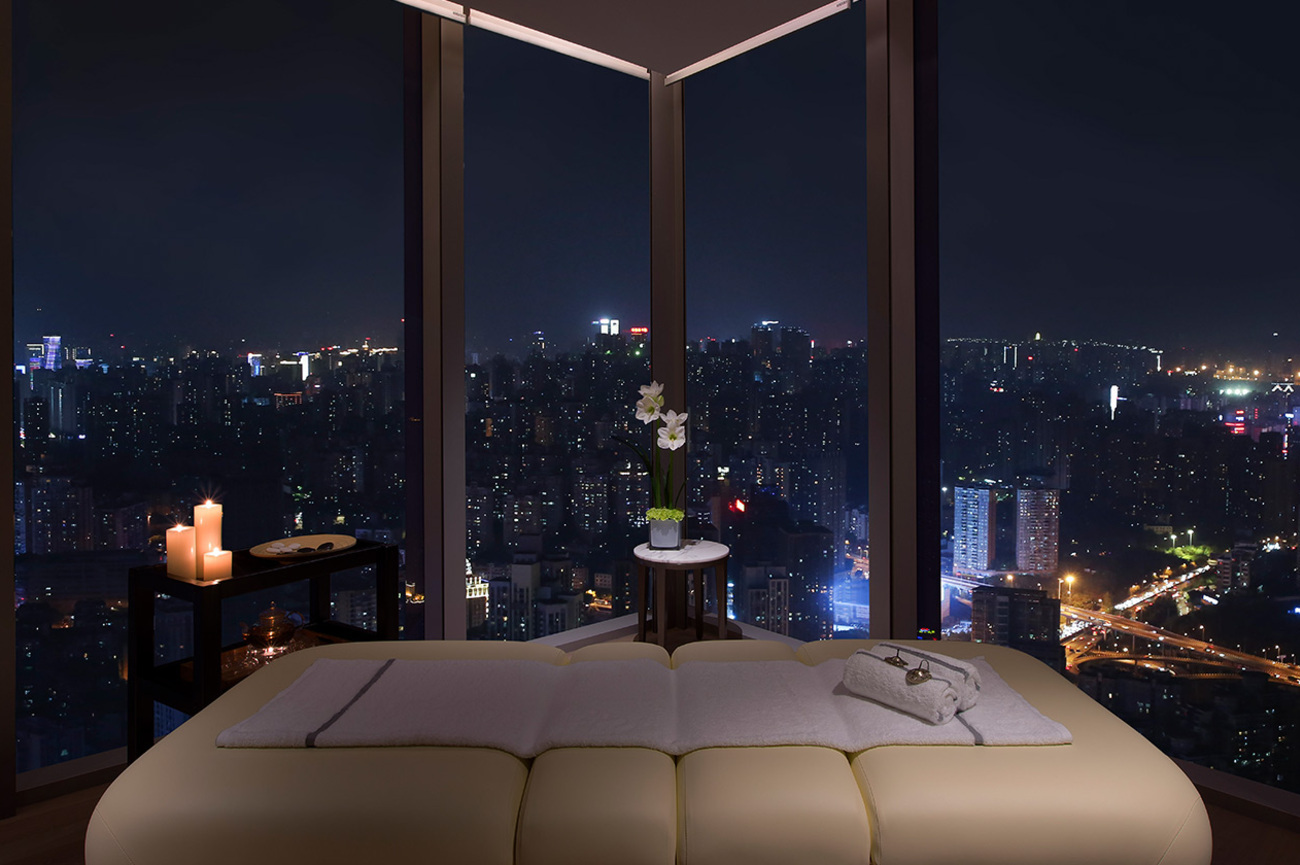
- The Spa at Niccolo Chongqing: Located on the 62nd floor of the IFS Tower, this spa offers a true “sky high” wellness experience, with spectacular views over the Yangtze and Jialing rivers. As you step in, you’ll notice the clean, modern design and floor-to-ceiling windows that bring the city skyline into the space. The idea here is simple: using height, light, and views to help you unwind. During your treatment, you’ll be looking out over Chongqing’s “8D” cityscape, which adds a calm, almost surreal backdrop to the experience. You can choose from massages like deep tissue, Swedish, or traditional Chinese Tui Na, depending on what your body needs. If you’re after something more focused on skincare, the Niccolo Signature facial uses premium products to help refresh your skin, especially useful if you’re dealing with travel fatigue or city exposure.
Exclusive Workshops
& Immersive Experiences in Chongqing
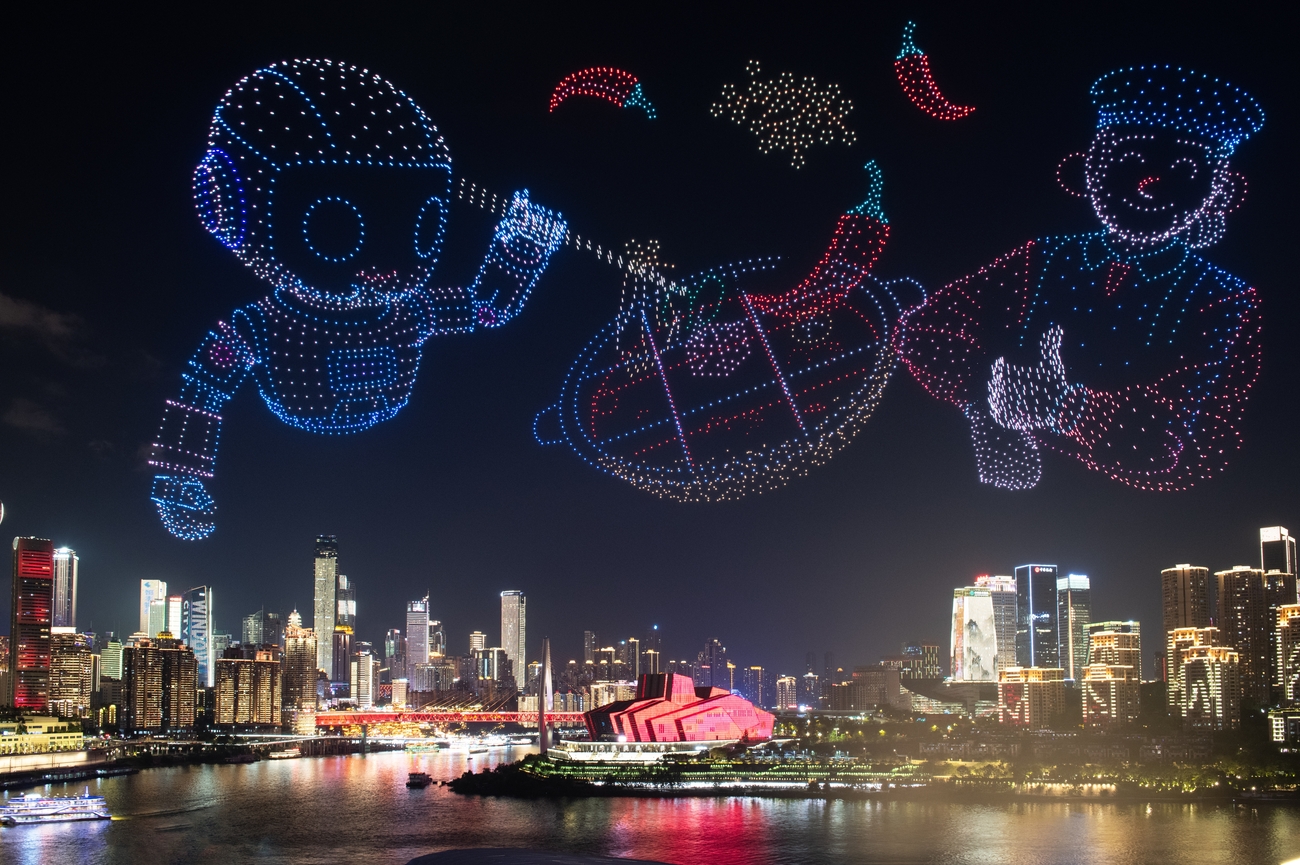
- The “Glamorous Chongqing” Drone Show: End your evening with one of the city’s most impressive spectacles. The “Glamorous Chongqing” drone show lights up the waterfront with hundreds (sometimes thousands) of drones forming moving 3D patterns in the sky. As you watch, you’ll see shapes and scenes inspired by the city itself, from its skyline to cultural icons like hot pot and the famous light rail. It’s not just a drone display, the lights from nearby skyscrapers and the riverfront are synced together, turning the whole area into a living, moving show. Each show runs for about 18 minutes, starting with a short city lighting sequence, followed by a themed performance that changes throughout the year. You can catch it every Saturday night from 8:30 PM - 9:00 PM, as well as during major holidays. For the best views, head to Nanbin Road for a framed skyline view, Chaotianmen Square for a more immersive experience as drones launch directly overhead, or Grand Theater Plaza if you prefer a less crowded spot.
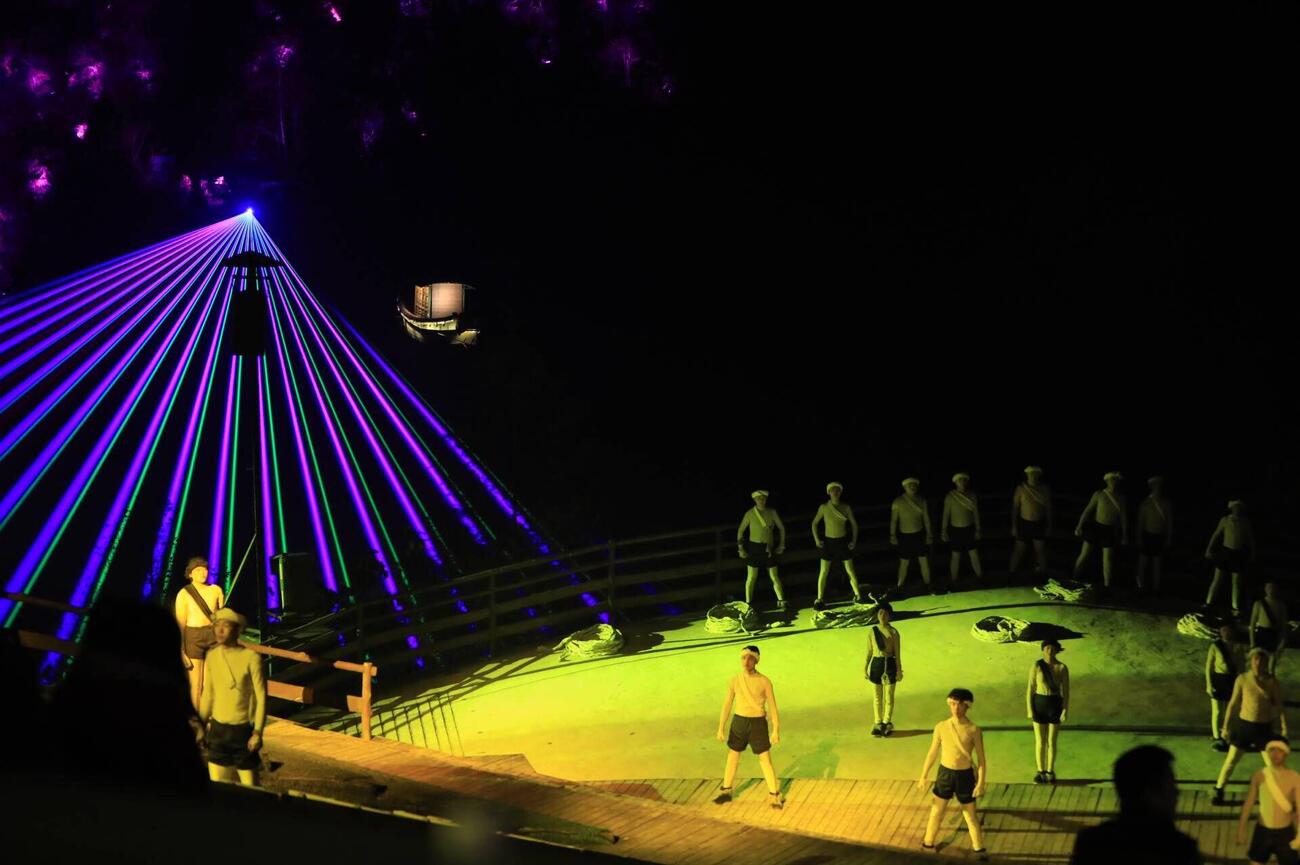
- Impression Wulong Night Show: Another best way to end your day in Wulong is to watch this unforgettable outdoor performance set inside a natural karst canyon. Directed by the legendary Zhang Yimou, who directed the Beijing Olympics opening ceremony, as well the Impression West Lake Show in Hangzhou and Impression Liu Sanjie in Guilin. The show uses the actual cliffs and mountains as its stage, creating a dramatic, larger-than-life experience. As you watch, you’ll notice it’s not a typical theatre show, it feels more like being part of a moving scene. The performance begins even before you’re fully seated, drawing you into the atmosphere right away. One of the highlights is the live performance of “Haozi,” the traditional work songs once used by Yangtze River boatmen to coordinate their strength. Through music, choreography, and storytelling, you’ll also see traditions like the “Crying Marriage,” offering a glimpse into the resilience and daily life of people in this region.
- Dream Ordovician Theme Park, also known as Wansheng Ordovician Theme Park, is the place to head if you are up for the ultimate heart-pounding challenge in Chongqing. Set along a 300 metre cliff, many of its attractions are built right on the edge, using the natural landscape to create palm-sweating experiences. Rather than a typical theme park, you will find high-altitude challenges designed to test your nerves. You can try glass walkways that extend over the cliff, giant swings, and gap-leap attractions that give you a true sense of height. It is not all about thrills, though. The park also highlights the region’s ancient geology, with areas where you can learn about karst formations and explore unique rock landscapes that date back millions of years. Just keep in mind that many of the extreme rides have strict requirements for height, weight, and age, so it is worth checking ahead before you go.
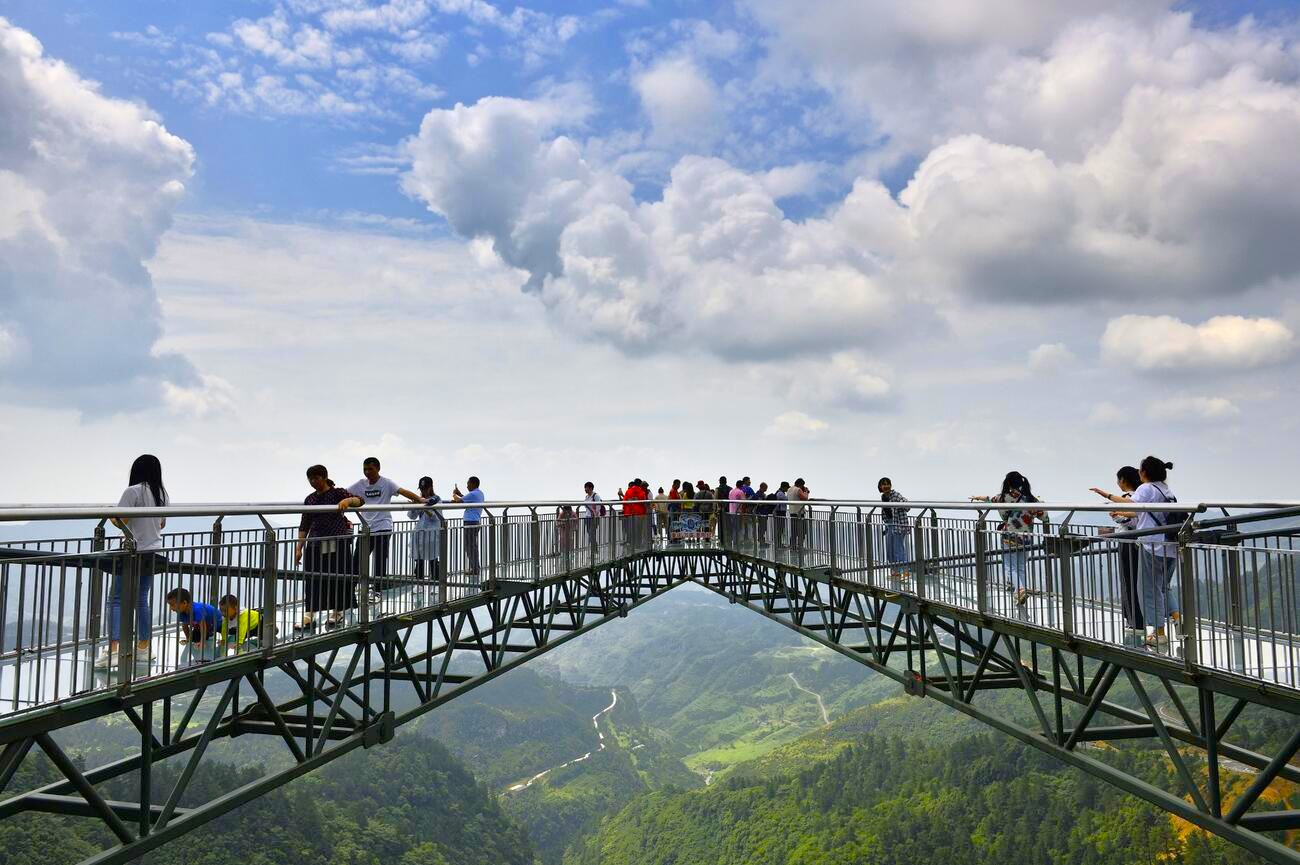
- Chongqing World Trade Center Sky Observation Deck 131: Head up to Sky Terrace 131 in the Jiefangbei CBD for spectacular 360 degree views of the city. It’s more than just an observation deck, it feels like a sky high park with viewing areas, photo spots, and a few light adventure experiences. Getting there is part of the fun. You’ll ride a glass elevator that takes you up over 200 metres in under two minutes. At the top, you can walk around the open air deck, take in the skyline, and explore creative installations designed for photos. Come at night, and you’ll see Chongqing lit up in a vivid, neon glow. If you’re feeling a bit adventurous, there are optional high altitude activities like rappelling down the side of the building or walking on a transparent platform. It’s a good middle ground if you want a thrill without going as extreme as cliffside parks.
- Chongqing Motorcycle Photography: Experience Chongqing’s night scene in a unique way, by riding through the city on a motorcycle while a professional team captures cinematic photos and videos for you. In this experience, you’ll be paired with experienced riders, so you can simply enjoy the ride and focus on the experience. Speeds are kept slow and safe, allowing you to take in the neon lit skyline and pose comfortably along the way. During the shoot, photographers often guide you with simple poses, so even if you’re not used to being in front of the camera, you’ll still get great shots. Many providers also offer themed outfits and helmets, from biker chic to retro styles, so you don’t need to bring anything. Most sessions happen in the evening, and popular routes include Nanbin Road, Dongshuimen Bridge, and the areas around Raffles City and Chaotianmen.
Other Things to Do in
Chongqing
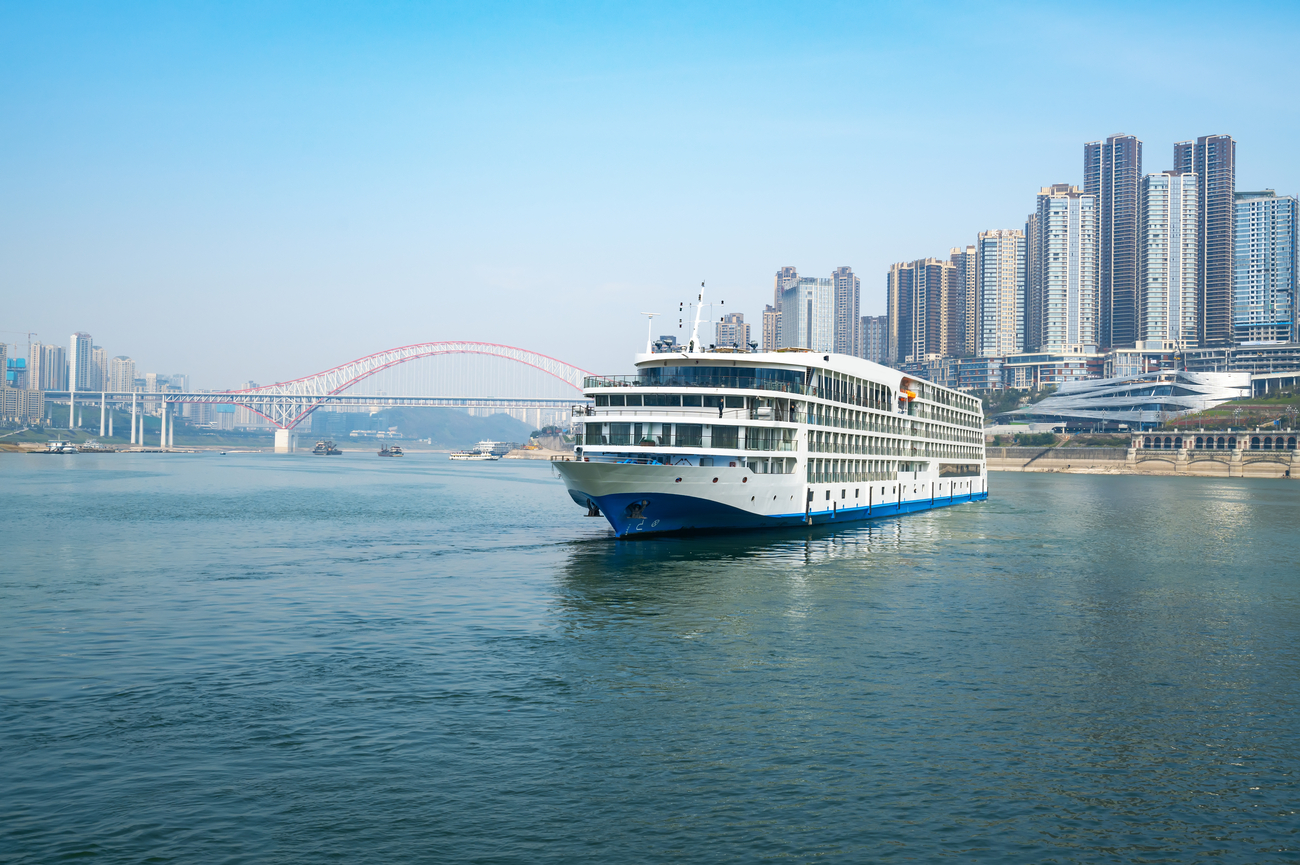
- Yangtze River Cruise: One of the most rewarding experiences in Chongqing. These multi-day journeys take you through the dramatic Three Gorges: Qutang, Wu, and Xiling, blending scenic views with cultural moments along the way. The most popular option is a 4-day downstream cruise from Chongqing to Yichang, covering around 660 kilometres of the river. Most cruises depart from Chaotianmen Dock, where the Yangtze and Jialing rivers meet. You can choose from different routes depending on your time, from shorter 4–5 day trips to longer journeys that continue to Wuhan or even Shanghai. Onboard, the experience is designed to be comfortable and unhurried. Many cabins come with private balconies, so you can enjoy the views at your own pace. You’ll also find facilities like gyms, spas, cinemas, and multiple dining options. Throughout the journey, you can join activities like Tai Chi, cultural talks, or calligraphy sessions, and in the evenings, enjoy live performances. Most cruises are full board, so your meals are taken care of, including a more formal welcome dinner to start the trip.
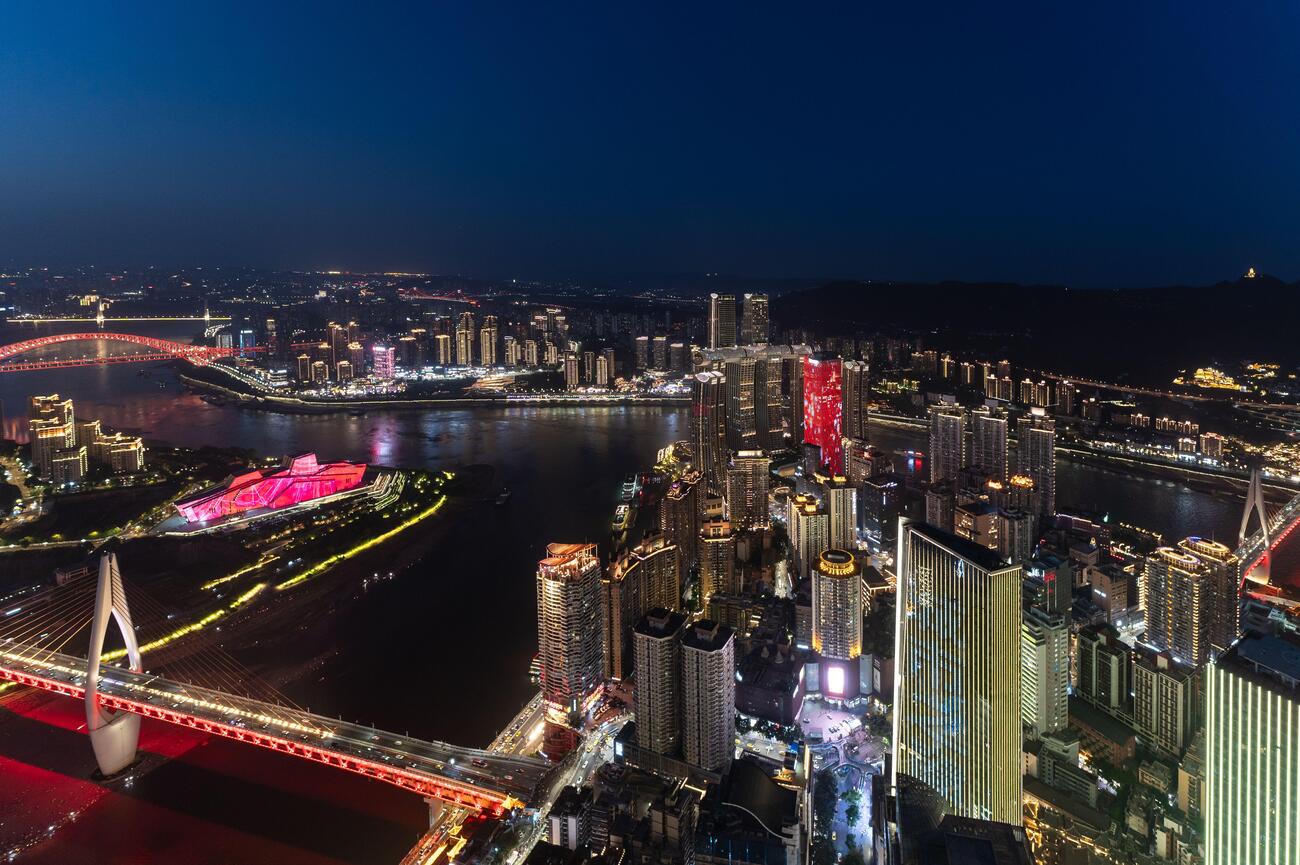
- Chongqing WFC Observation Deck: For one of the highest views in western China, head to the observation deck on floors 73 to 75 of the Chongqing World Financial Center. From here, you’re looking out from nearly 600 metres above sea level, giving you a clear, wide view of the city. This spot continues the legacy of the old Huixian Tower, once Chongqing’s first high rise viewpoint, but with a much more modern setting. From the top, you’ll see the full stretch of the Yuzhong Peninsula, including where the Yangtze and Jialing rivers meet. You can also spot key landmarks like the Grand Theatre, Raffles City, Nanbin Road, and several bridges connecting both sides of the city.
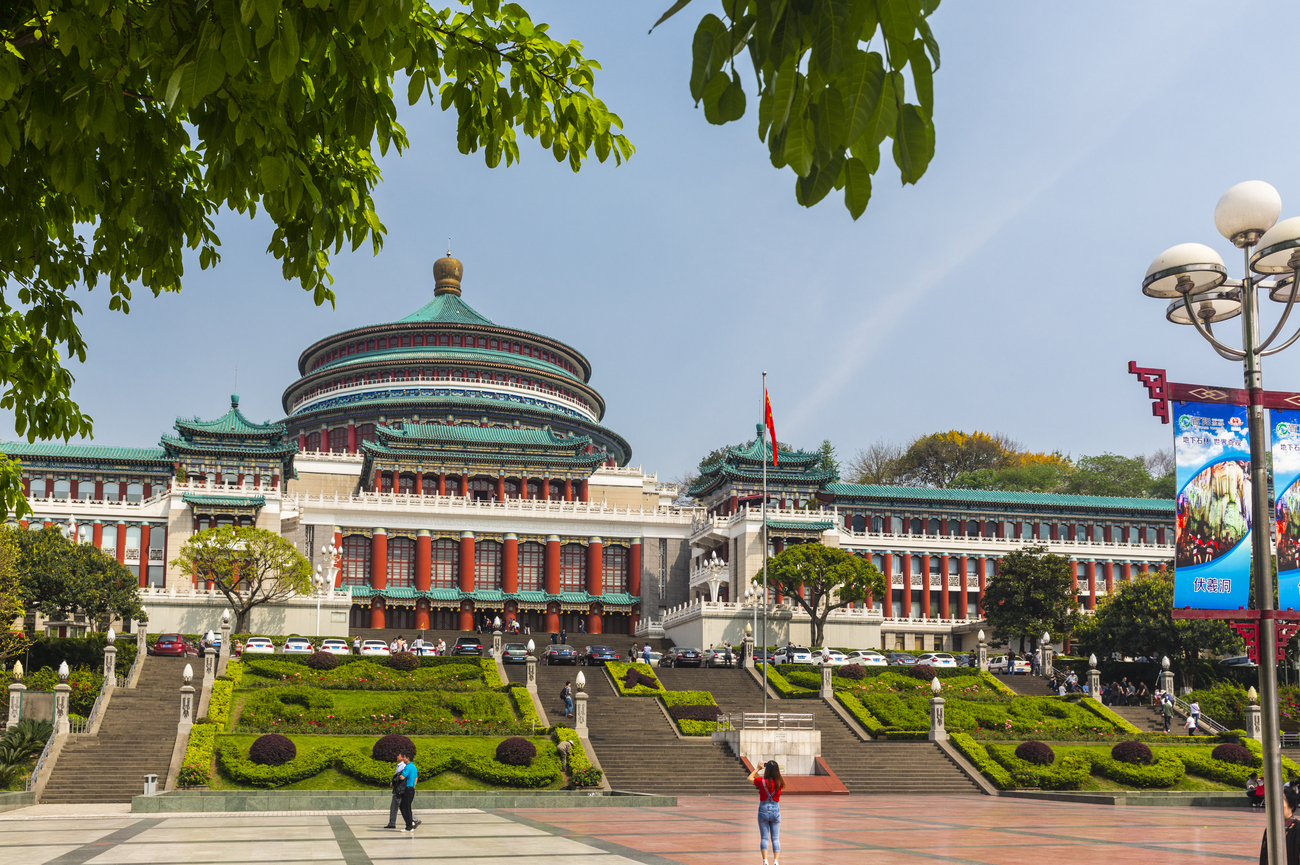
- Chongqing People's Grand Hall: Also known as the Great Hall of the People, this is one of Chongqing’s most recognizable landmarks. Built in the 1950s, it blends traditional Chinese design with modern engineering, inspired by Beijing’s Temple of Heaven. As you approach, you’ll notice its red and gold dome and grand entrance. The 65 metre dome was built without internal pillars, which was a major engineering achievement at the time. The large square in front of the hall is just as interesting. It acts as the city’s “living room,” where locals gather throughout the day. If you visit in the morning or evening, you’ll see people doing Tai Chi, dancing, or playing traditional games. It's a great place to observe everyday life. You can also go inside with a ticket to see the 3,400 seat auditorium and small exhibits that share more about the building and Chongqing’s history.
- Nanshan Mountain: Just across the Yangtze River from the city centre, Nanshan Mountain is one of the best places to take in Chongqing’s skyline from above. It’s especially popular in the evening, when the city lights reflect across the rivers and highlight Chongqing’s layered, “8D” layout. Head to the famous “One Tree Viewing Platform” for a panoramic view over Yuzhong Peninsula, where the Yangtze and Jialing rivers meet. During the day, you can explore quiet walking trails, tea houses, and small gardens scattered across the mountain. It’s an easy escape from the city’s intensity without having to travel far.
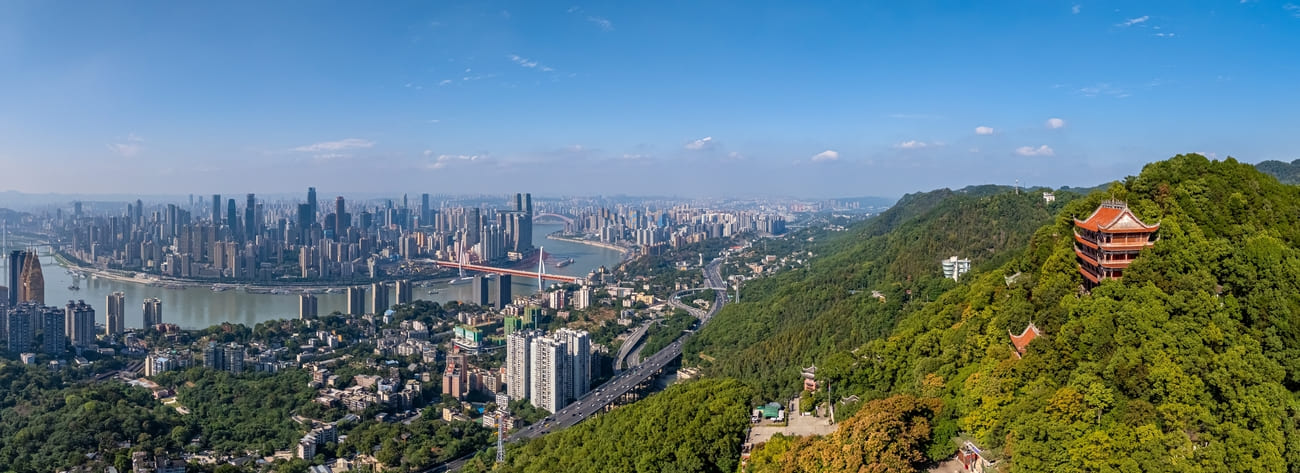
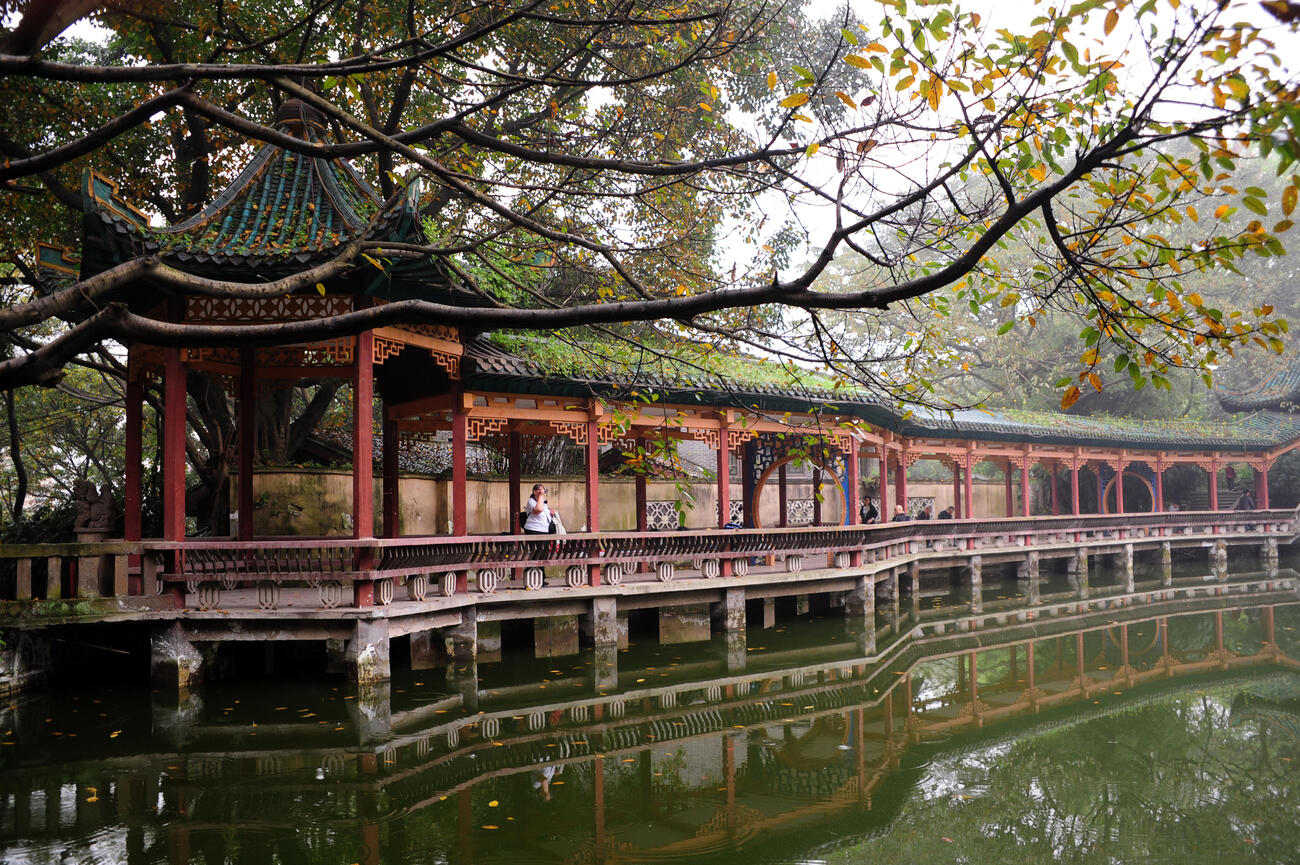
- E’ling Park: One of Chongqing’s oldest and most elegant parks, E’ling Park offers a quieter, more refined perspective of the city. Located on a ridge between the Yangtze and Jialing rivers, it provides excellent viewpoints without the crowds of larger observation decks. The highlight is Liangjiang Pavilion, where you can climb to the top for sweeping views across both rivers and the surrounding skyline. As you walk through the park, you’ll find traditional pavilions, landscaped gardens, and shaded paths, making it a pleasant place to slow down and take a break from the city’s fast pace.
Things to Do with Kids
in Chongqing
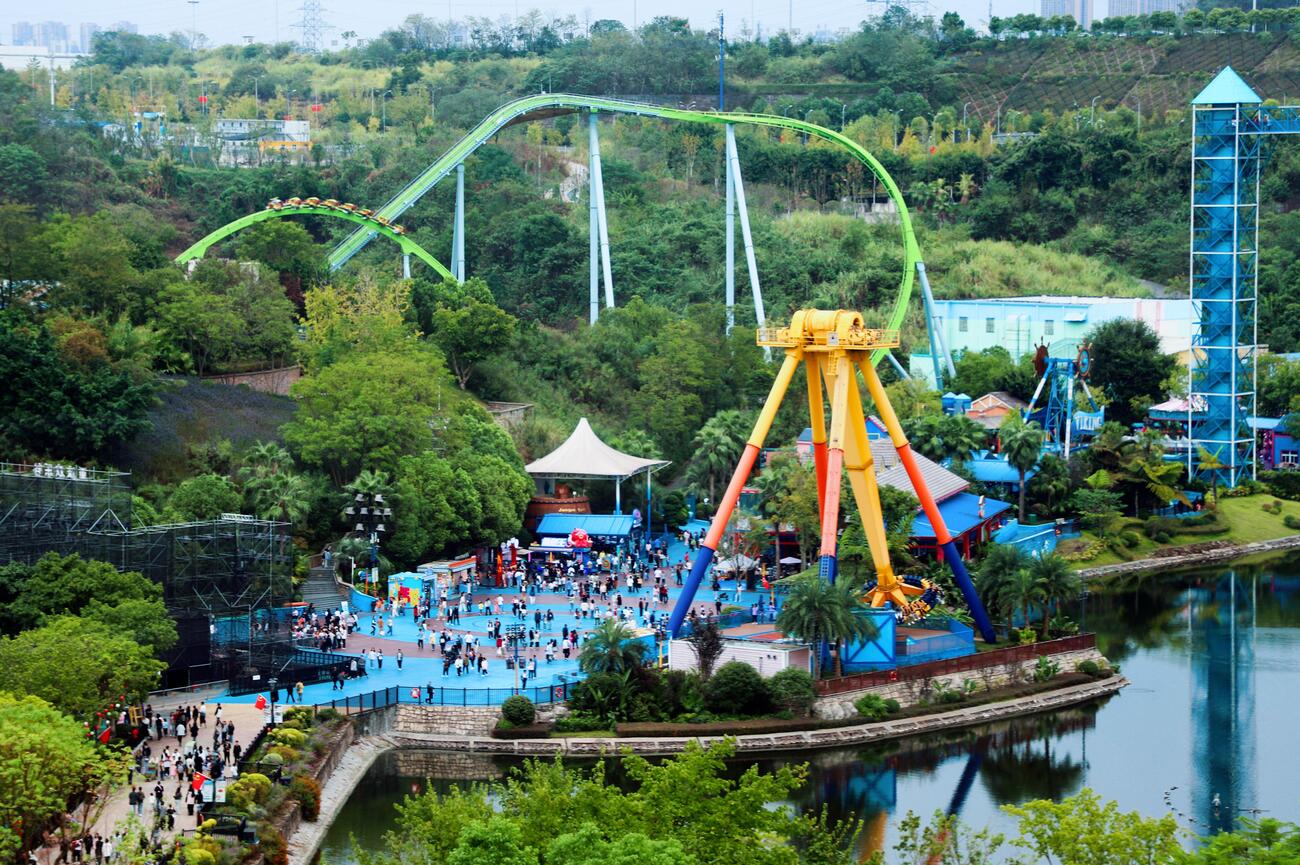
- Chongqing Happy Valley: One of the best places to spend a full day for families travelling with kids. It’s the city’s largest theme park, built into the natural hills, so many of the rides use the natural elevation for extra thrills. With over 100 attractions across different themed zones, there’s something for all ages. Younger kids will enjoy areas like the Super Wings Training Camp, while the Ferris wheel (Chongqing Eye) offers a more relaxed way to take in the views. If you’re up for more thrills, you can try rides like the wooden dragon coaster or the flying wing coaster. There are also live shows and parades throughout the day, giving you a nice mix of rides and entertainment as you explore.
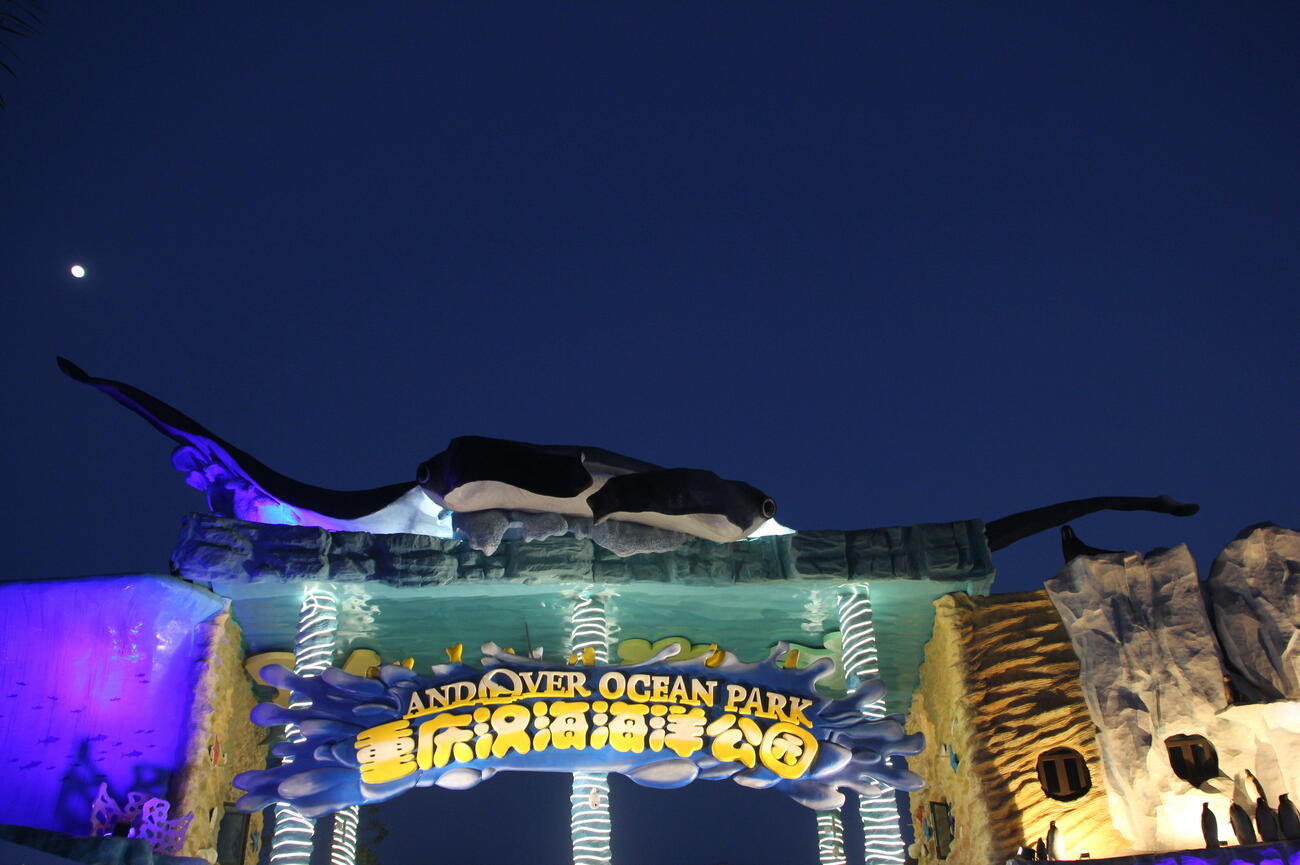
- Andover Ocean Park: If you’re looking for a family friendly activity especially on a hot or rainy day, Andover Ocean Park is a great choice. This indoor marine park in Nan’an District is fully air conditioned and designed to combine fun with hands-on learning. One of the highlights is the Mermaid Theater, where you can watch “mermaids” perform underwater alongside schools of colourful fish and rays. Kids will also love the shallow touch pools, where they can safely interact with starfish and small rays under staff supervision. There are also beluga and dolphin shows, which mix entertainment with simple, engaging lessons about marine life and conservation. Throughout the park, you’ll find small science workshops that introduce kids to different ocean zones and the creatures that live in them. When it’s time to take a break, you can choose from several themed dining spots inside the park, including an underwater restaurant where you can enjoy your meal while watching fish glide past the glass.
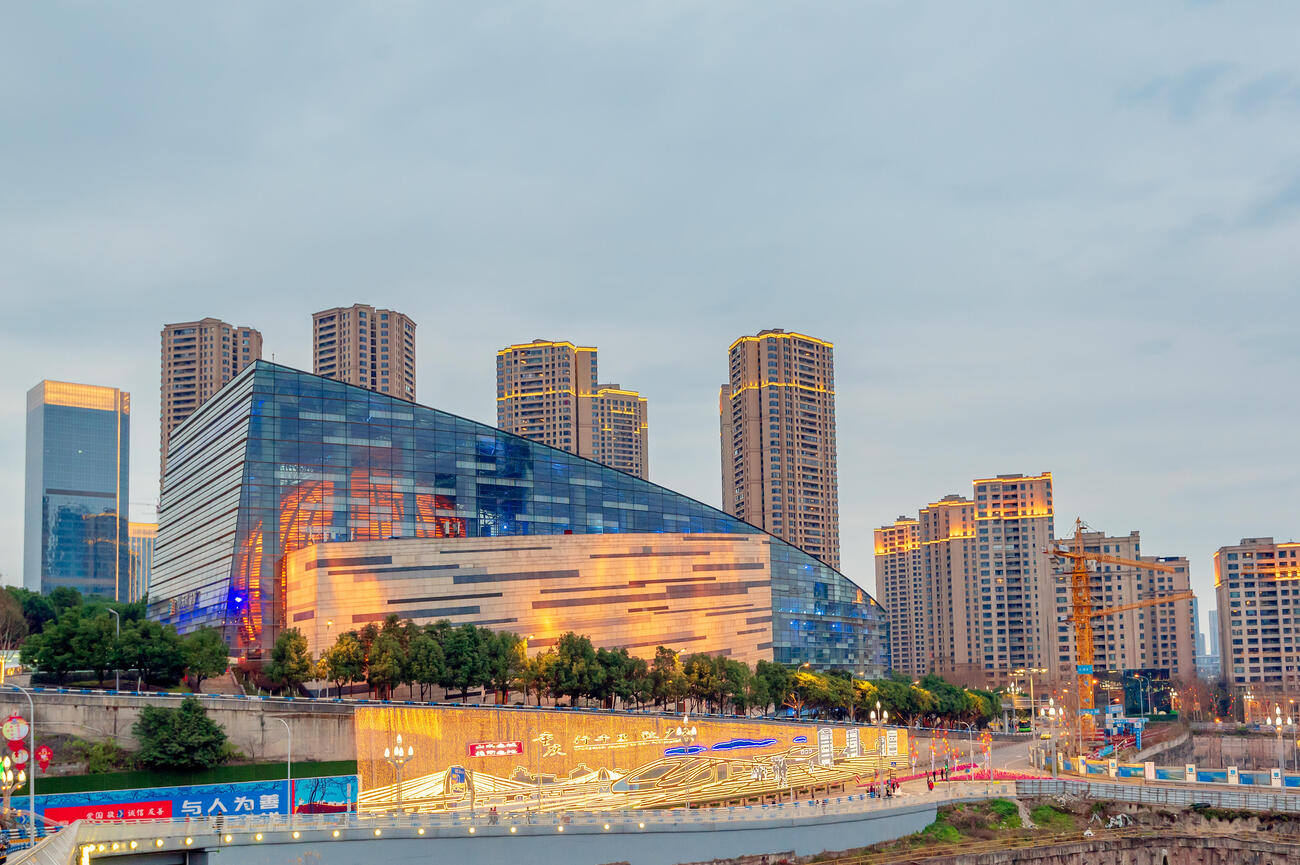
- Chongqing Science and Technology Museum: If you’re looking for a family friendly activity that is both entertaining and educational, Chongqing Science and Technology Museum is a great choice. Located in the modern Jiangbeizui district, this large museum is designed to make science accessible and engaging for children of different ages. Inside, you’ll find a wide range of interactive exhibits covering topics such as space, transport, robotics, physics and the natural world, allowing kids to learn by pressing buttons, testing ideas and taking part in hands-on experiments. There are also dedicated areas aimed at younger children, with simple displays and playful activities that encourage curiosity without feeling too formal. Many of the exhibitions are designed to explain how everyday technology works, which makes the visit both fun and easy to follow for families. The building itself is also impressive, with a bold modern design that adds to the experience. On a hot, rainy or polluted day, it is one of the best indoor attractions in Chongqing for combining sightseeing with something genuinely worthwhile for children.
Where to Eat in
Chongqing
- Fu Hao Restaurant: This Michelin 1-star Cantonese restaurant is a great alternative to the city’s famous spicy hot pot, and offers a more elegant, slower paced meal in the heart of the city. As you step in, you’ll notice the spacious, polished setting, with private dining rooms and traditional Chinese décor. The service is attentive and welcoming, with English speaking staff making it easy for you to navigate the menu. The dishes focus on classic Cantonese cuisine, using premium ingredients like abalone and bird’s nest. For your meal, try the roast goose with honey glaze, known for its crispy skin and tender meat. Or the baked bird’s nest with crab, a rich and more indulgent option. It’s the kind of place where you can sit back, enjoy each course, and experience a different side of Chongqing’s food scene.
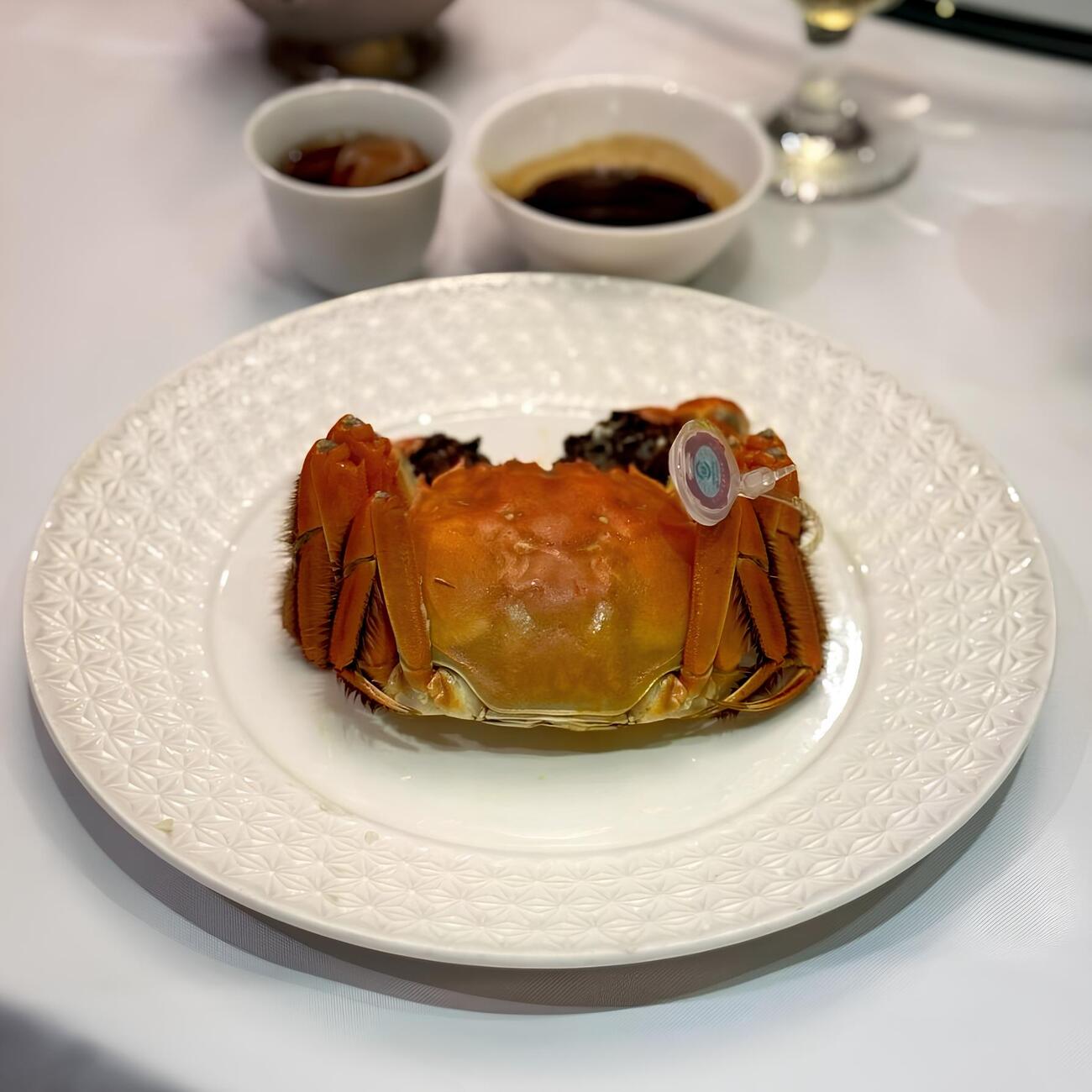
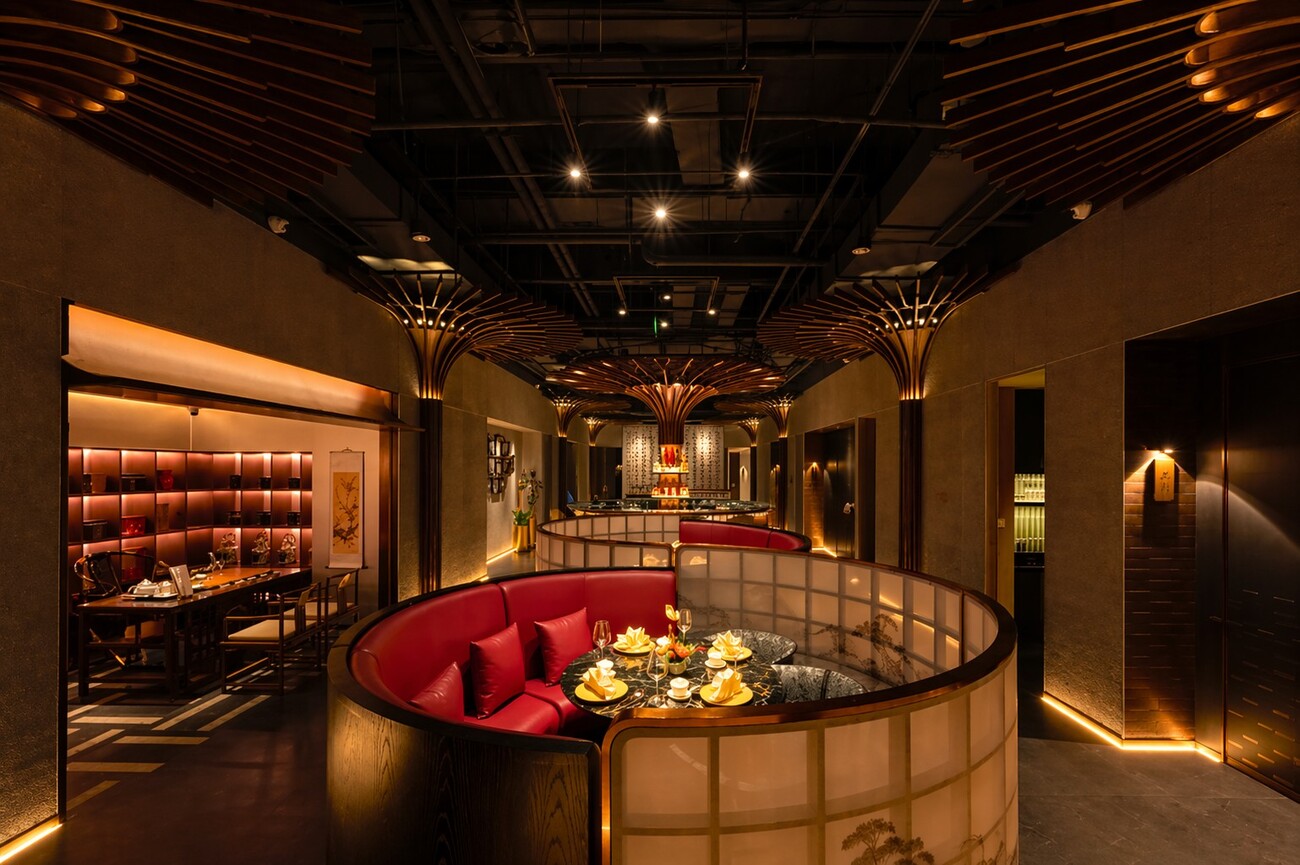
- Family Li Imperial Cuisine (Li’s Kitchen): Located on the 62nd floor of Niccolo Chongqing, Li’s Kitchen offers a unique dining experience inspired by Qing Dynasty court cuisine. The recipes come from the Li family, whose ancestors once served in the Forbidden City. Unlike Chongqing’s bold, spicy dishes, the food here is more refined and delicate, focusing on natural flavours and carefully selected ingredients. There’s no à la carte menu; instead, you’ll choose a set menu that moves through a series of small, thoughtfully prepared dishes. Each is made using traditional techniques—strictly avoiding modern appliances like microwaves—often taking days to complete without additives. Advance reservations are essential for this meticulous preparation. While the 2-star Michelin rating famously belongs to their Tokyo branch, the same family recipes and training bring that prestigious lineage to this Chongqing location.
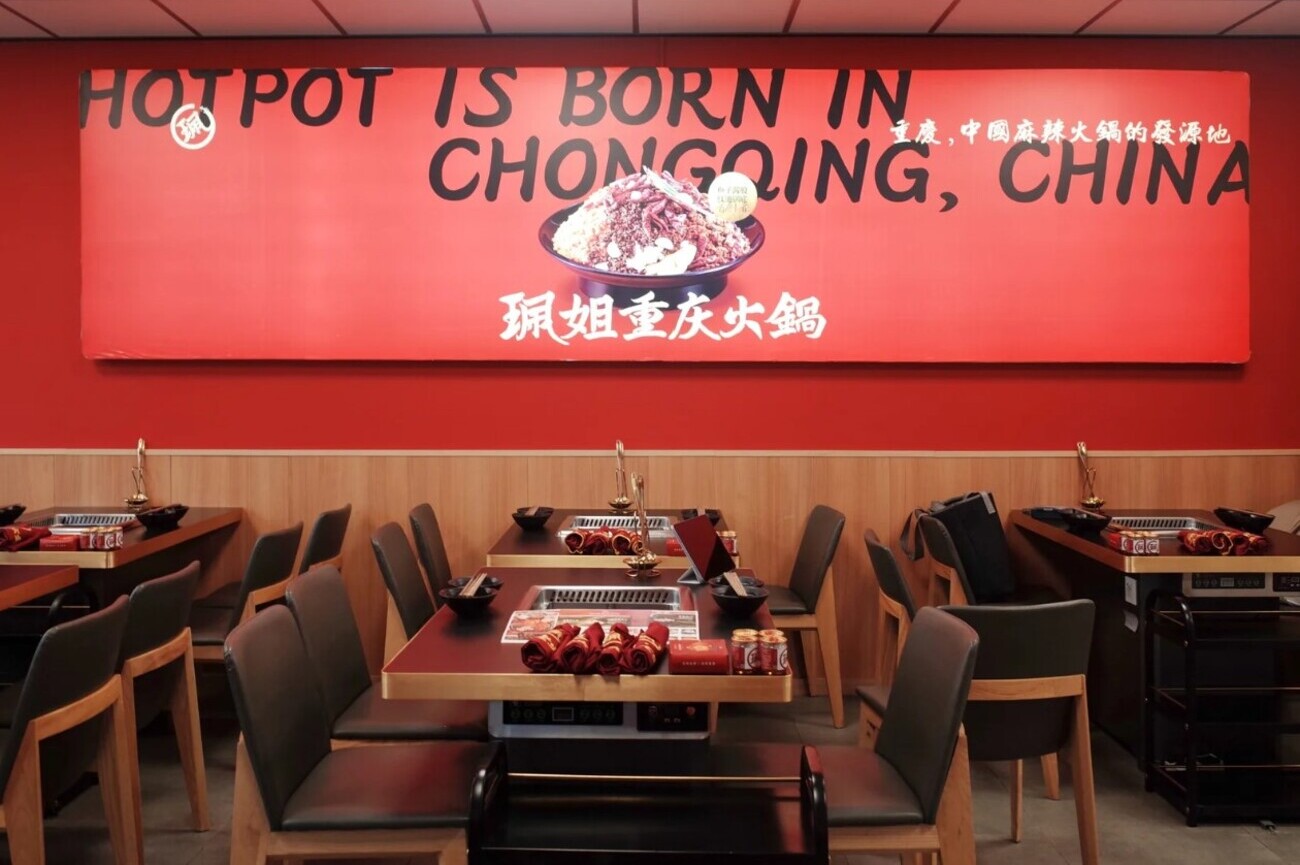
- Peijie Hotpot: If you want a true taste of Chongqing’s famous spicy food, Peijie Hotpot is a must visit. What started as a small local shop has grown into a well known spot. The broth here is rich and bold, made with beef tallow, fermented bean paste, dried chillies, and Sichuan peppercorns. It delivers that classic “ma la” flavour (spicy and numbing) without feeling overpowering. If you're not used to strong spice, it’s best to go for the mild option. When ordering, try the fresh tripe, a local favourite. Cook it briefly (about 15 seconds) for the best texture. The spicy beef is another standout, with thick slices coated in chilli that stays flavorful even after cooking. For something different, the handmade pork meatballs with a hint of rose add a subtle twist.
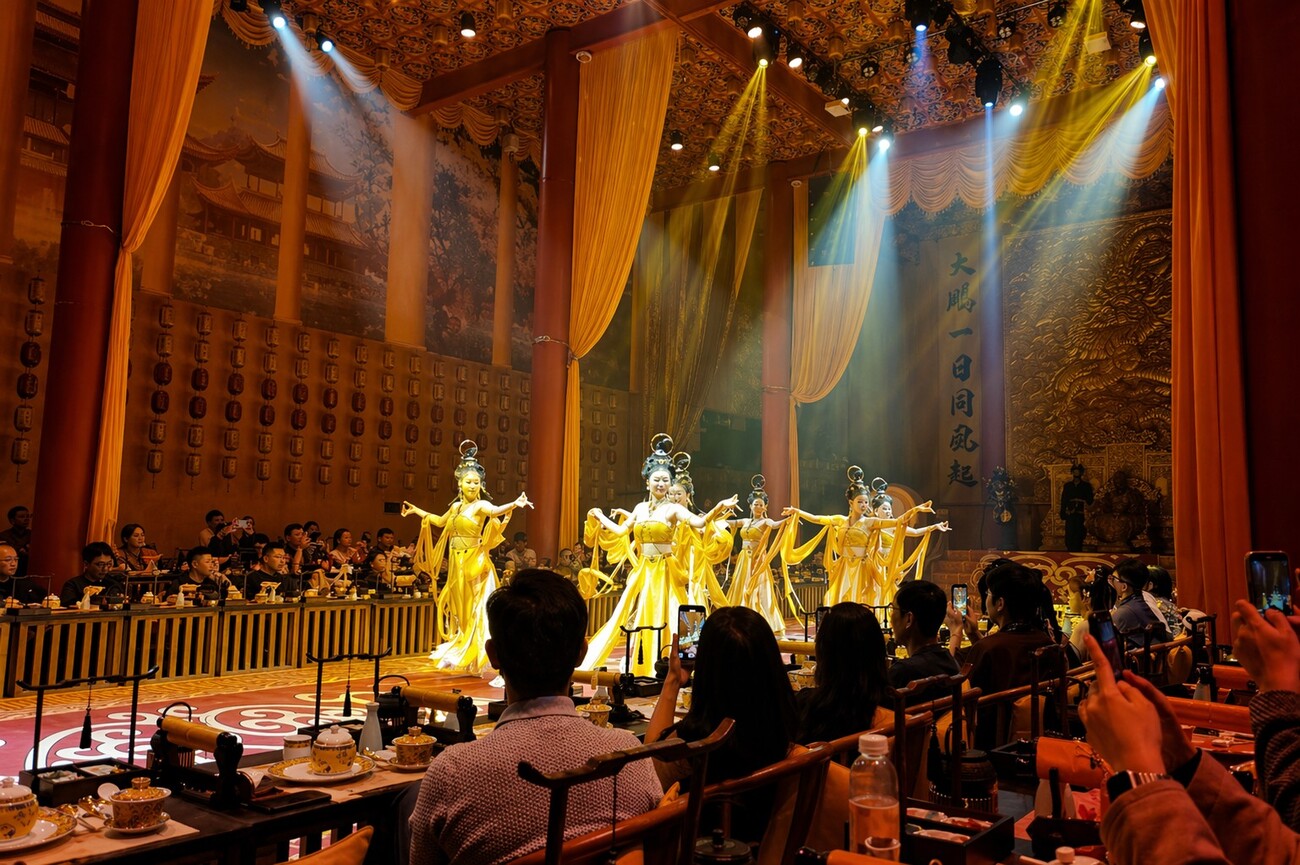
- Chongqing Yu Yuan Imperial Feast: This isn’t just a meal, it’s a full cultural experience. The Imperial Feast is a 90 minute dining show that brings ancient China to life through food, performance, and tradition. Before the banquet begins, you can take part in interactive activities like archery or traditional games. If you want to fully immerse yourself, you can also opt for a Hanfu transformation, where stylists dress you in traditional robes with matching hair and accessories. Once the show starts, you’ll be seated for a multi course meal, with each dish paired with a live performance. Dancers, music, and storytelling unfold on a grand stage, including highlights like the “Dance of All Nations” and an emperor style entrance ceremony. There are two sessions each day: lunch and dinner, and if you plan to try the Hanfu experience, it’s best to arrive a few hours early.
Where to Stay in
Chongqing
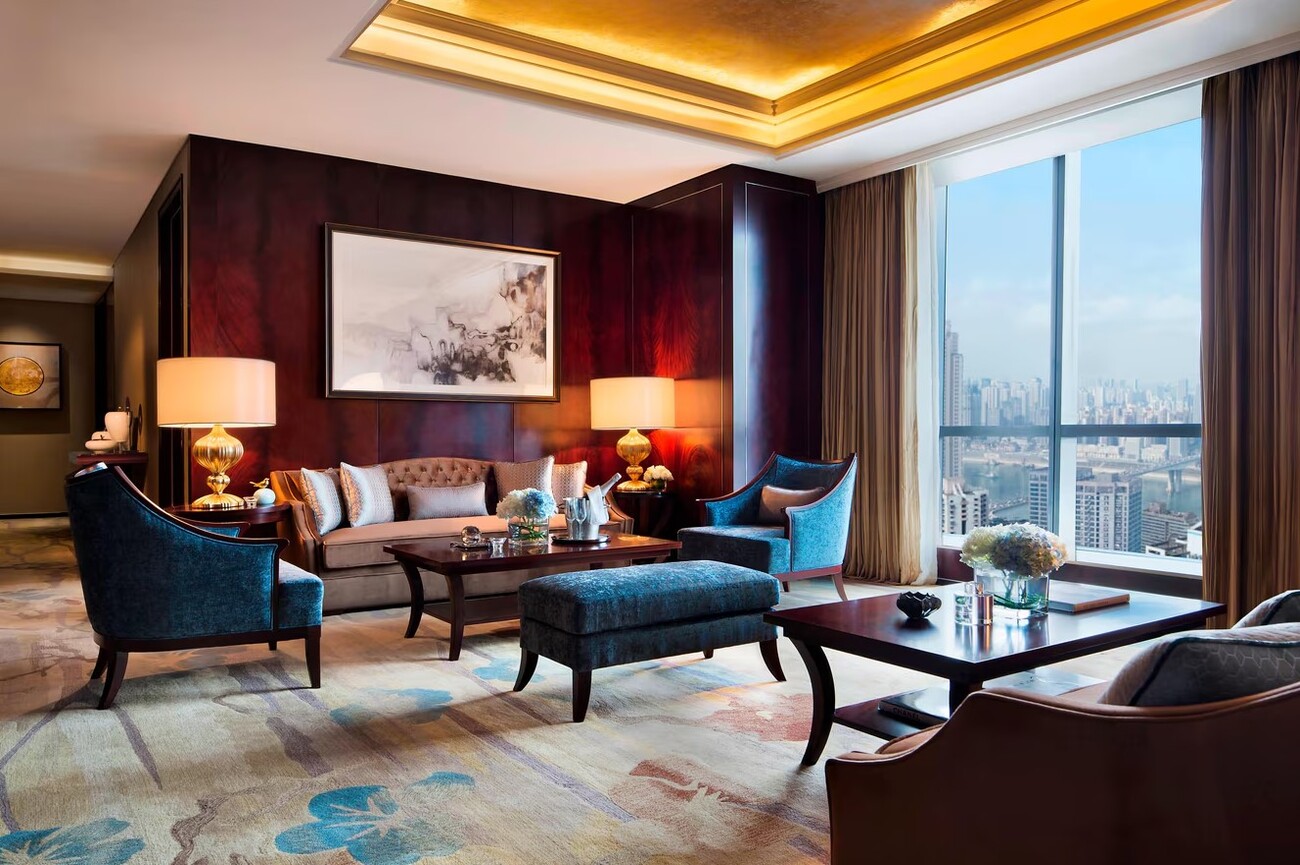
- Regent Chongqing: Located in the Jiangbeizui CBD, Regent Chongqing offers a refined stay with a modern design that subtly blends traditional Chinese elements with a sleek, contemporary feel. The rooms are spacious and thoughtfully designed, with floor-to-ceiling windows that let you take in views of the Jialing River and the city skyline. If you can, go for a river view room, highly recommended by previous guests for its breathtaking nighttime views. While the hotel sits slightly away from the busiest tourist areas, you’re still within walking distance to spots like Qiansimen Bridge, where you can see Chongqing’s signature neon lit, layered cityscape. It’s a great option if you want a quieter base without missing out on the views and atmosphere of the city.
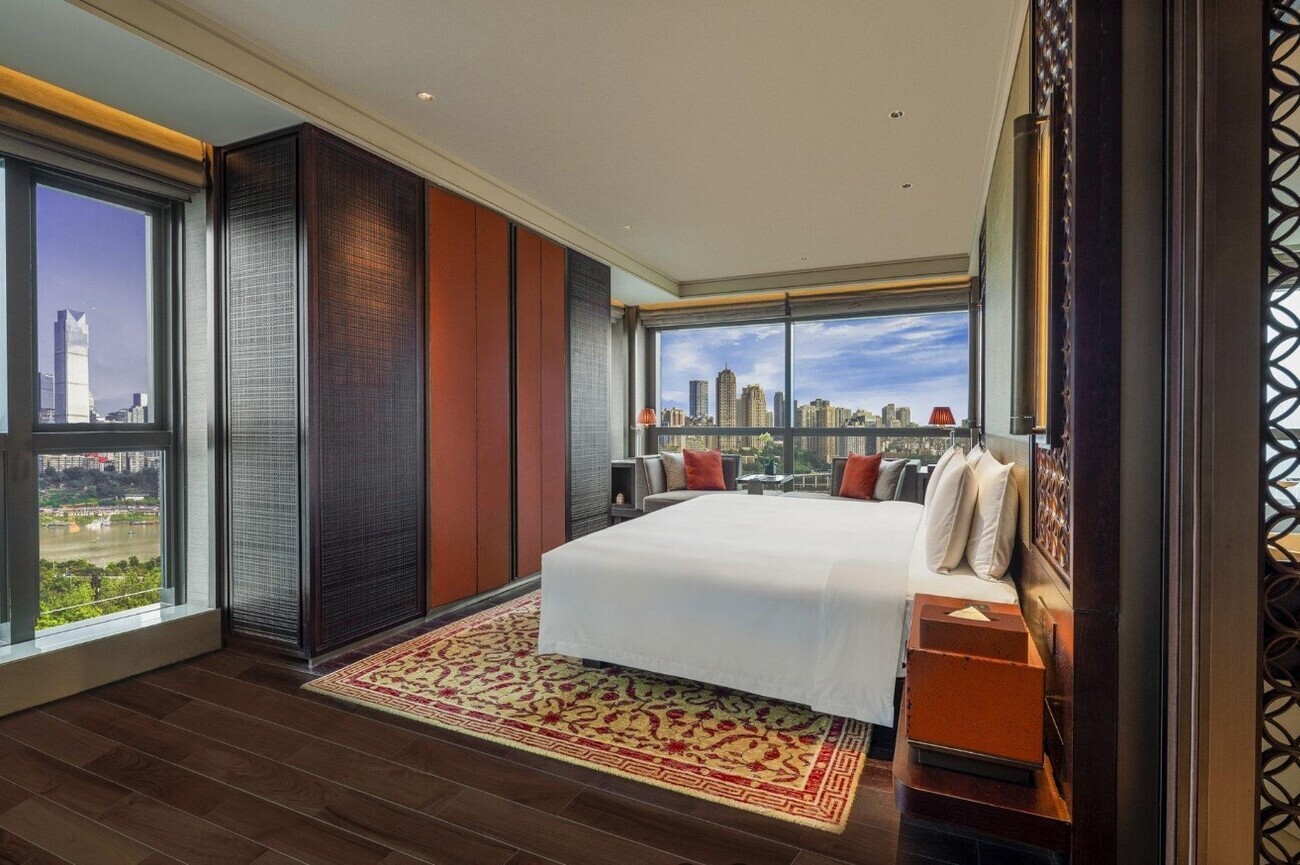
- Niccolo Chongqing: The city’s premier "sky hotel," set across the top floors of IFS Tower 1 in the Jiangbeizui CBD. From the moment you arrive, you’re surrounded by sweeping views of the Yangtze and Jialing rivers below. The sky lobby on the 62nd floor is a highlight in itself, with floor-to-ceiling glass walls that give you a full, uninterrupted view of the city. All rooms are located above the 52nd floor, so wherever you stay, you’ll have a high vantage point. Inside, the design feels elegant and modern, with clean lines, soft tones, and refined materials that make the space feel both stylish and comfortable. Since the hotel sits directly above the IFS Mall, you’ll also have easy access to luxury shopping, dining, and a cinema, making it a convenient base if you want everything close by.
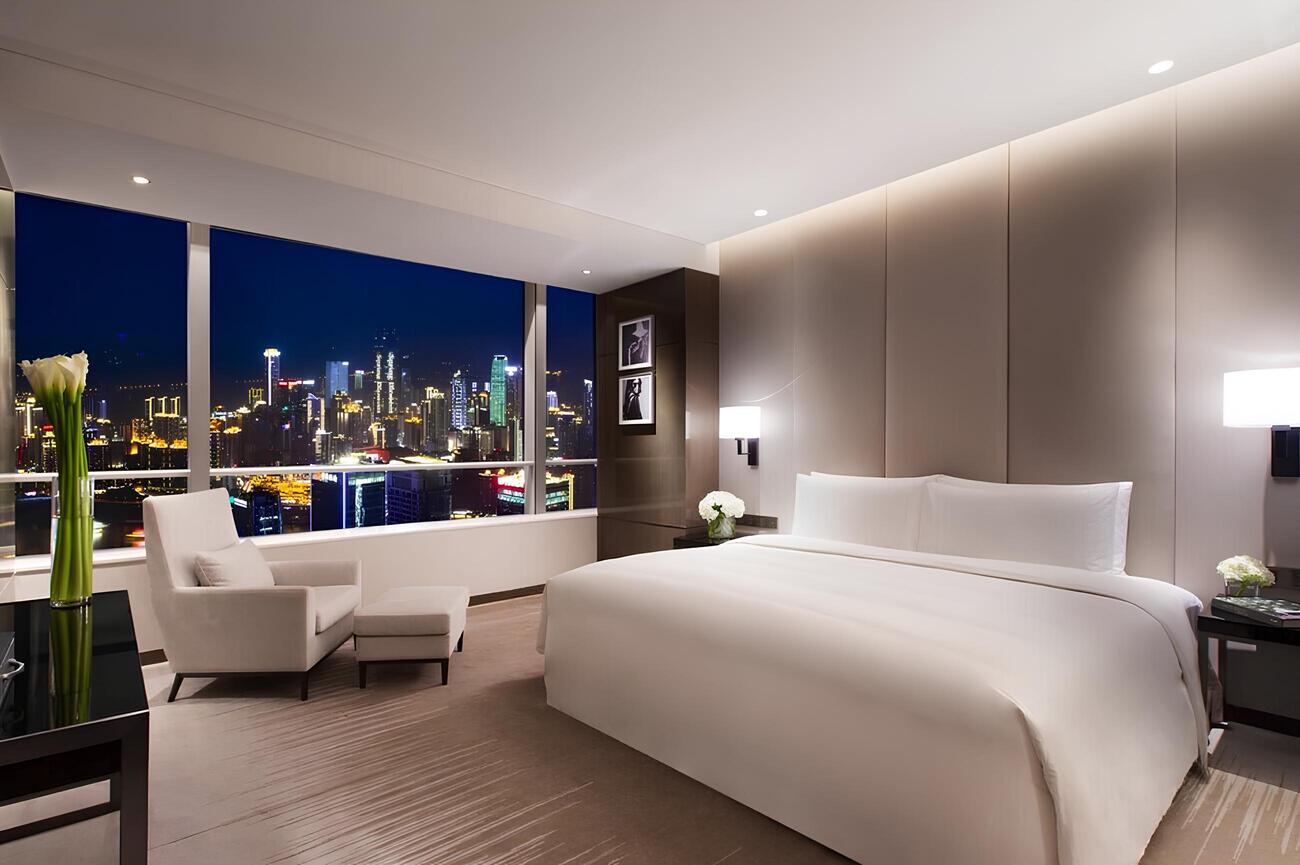
- The Westin Chongqing: Set right in the heart of Jiefangbei, this hotel puts you exactly where the action is. You can step outside and be on the pedestrian street, reach the Liberation Monument in minutes, and walk to Hongya Cave in about 10 minutes. Your experience starts with a high speed lift up to the 51st floor lobby, where floor-to-ceiling windows give you a dramatic view of the city. There’s even a glass viewing section that makes it feel like you’re floating above the streets. Rooms follow the Westin standard, with the signature Heavenly Bed for a comfortable night’s sleep, plus a well-equipped fitness studio. If you forgot your workout gear, you can even borrow some through their lending program. One of the standout features of the hotel is the outdoor infinity pool. Part of it extends outward with a glass base, so you can look straight down at the city below while you swim.
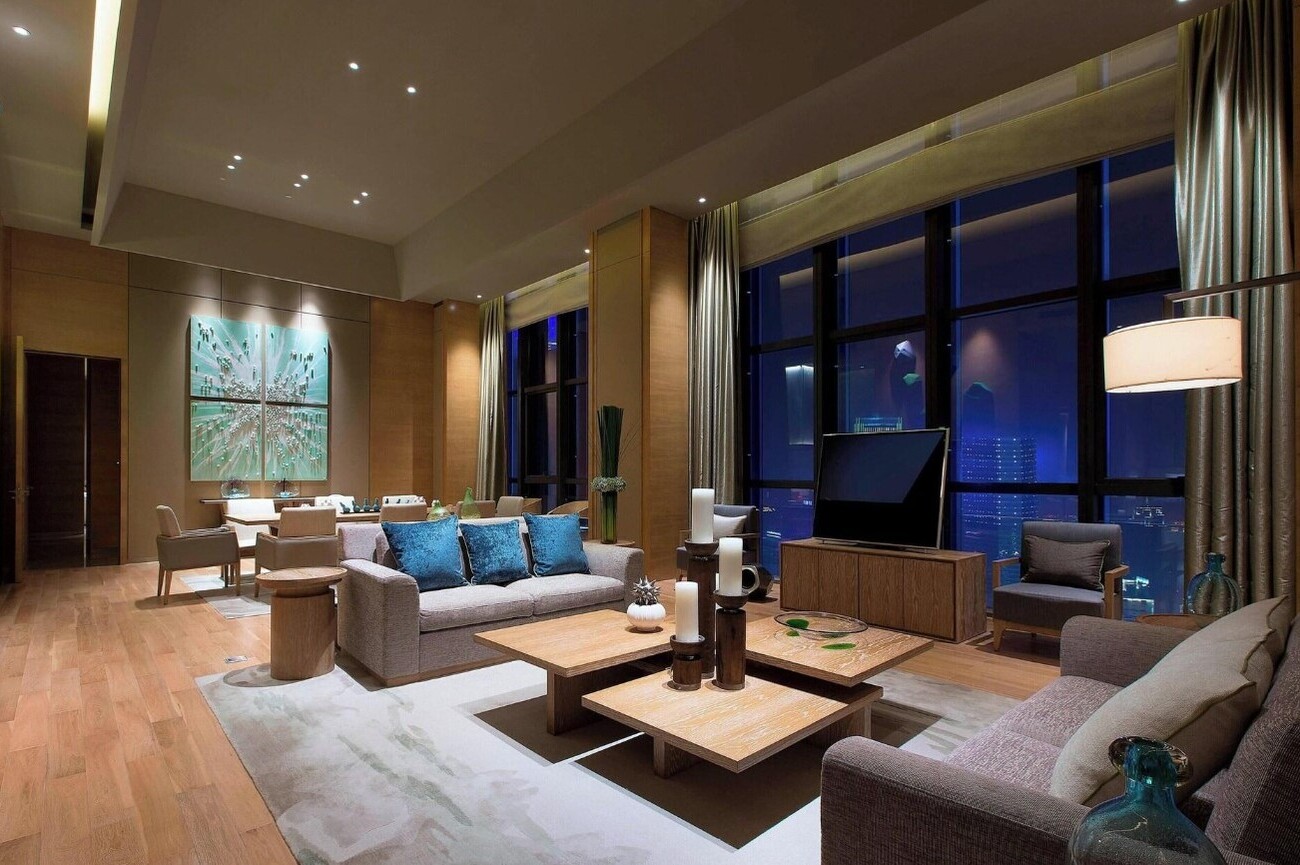
- JW Marriott Hotel Chongqing: Located in the heart of Yuzhong District, this 5-star hotel offers a comfortable and well-positioned base for exploring the city. It combines a polished, modern feel with easy access to both business and tourist areas. The rooms are spacious and well-kept, with a clean, contemporary design. Many also offer wide city views through large windows, giving you a nice view of Chongqing’s skyline. From here, you’re just a short walk (about 5–10 minutes) to Jiefangbei Pedestrian Street and the Liberation Monument. Popular spots like Hongya Cave and Kuixing Tower are also close by, either within walking distance or a quick ride away. It’s a practical and convenient choice if you want comfort and easy access to the city’s main highlights.
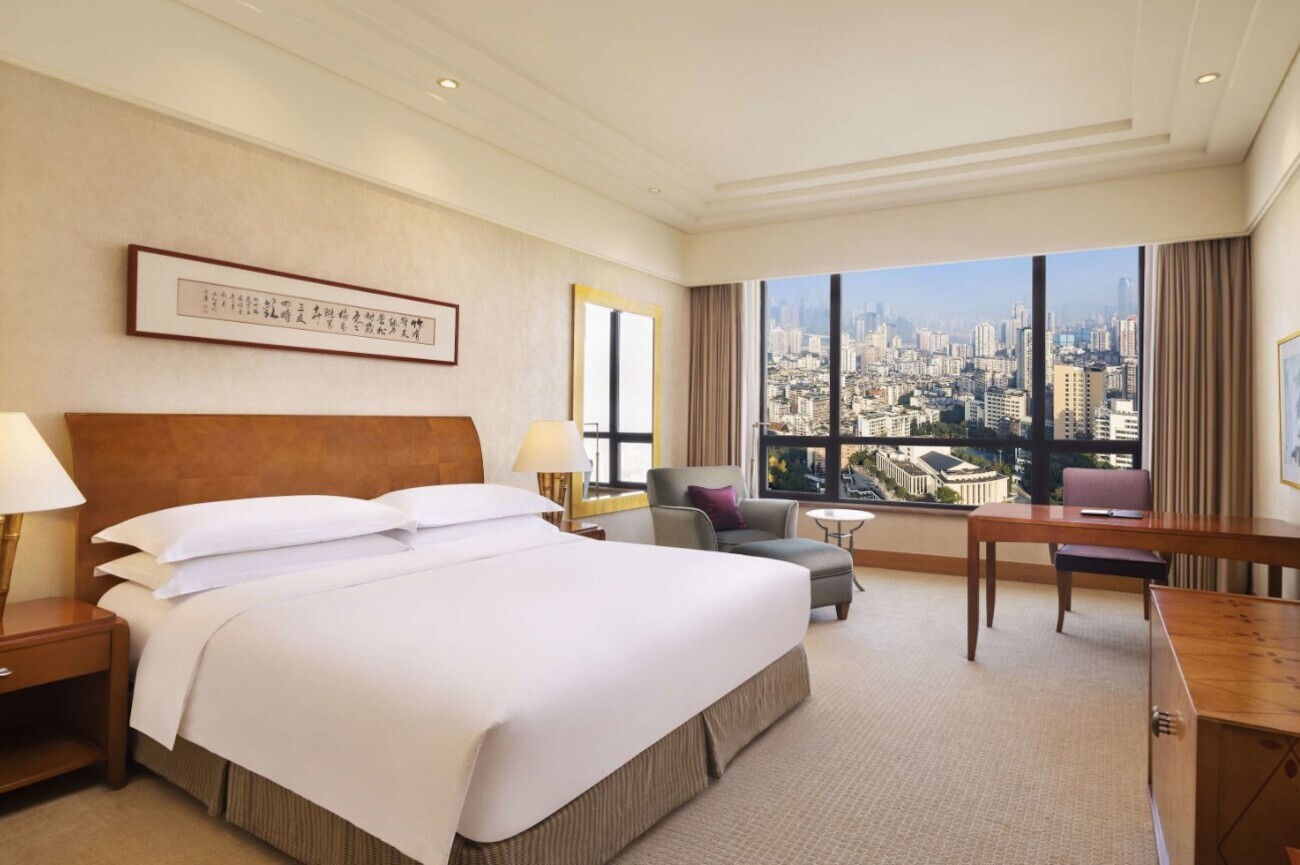
- Hilton Chongqing: A reliable and comfortable base for both business and leisure stays. While it’s one of the city’s older luxury hotels, it’s well known for its consistent service and easygoing atmosphere. The rooms are spacious and designed for comfort, with large windows that let you take in city views. You’ll also have marble bathrooms with deep bathtubs and a seating area where you can unwind after a day out. If you stay in an Executive room, you’ll get access to the 32nd-floor lounge, where you can enjoy breakfast, evening drinks, and a more relaxed space to recharge. For the best views, rooms on higher floors (especially those ending in 17 or 18) are highly recommended. From here, you’ll be within walking distance to places like the Three Gorges Museum and Chongqing People’s Grand Hall, while spots like Hongya Cave and Jiefangbei are just a short ride away. It’s a convenient and comfortable base to return to after exploring the city.
Best Time to Visit
Chongqing
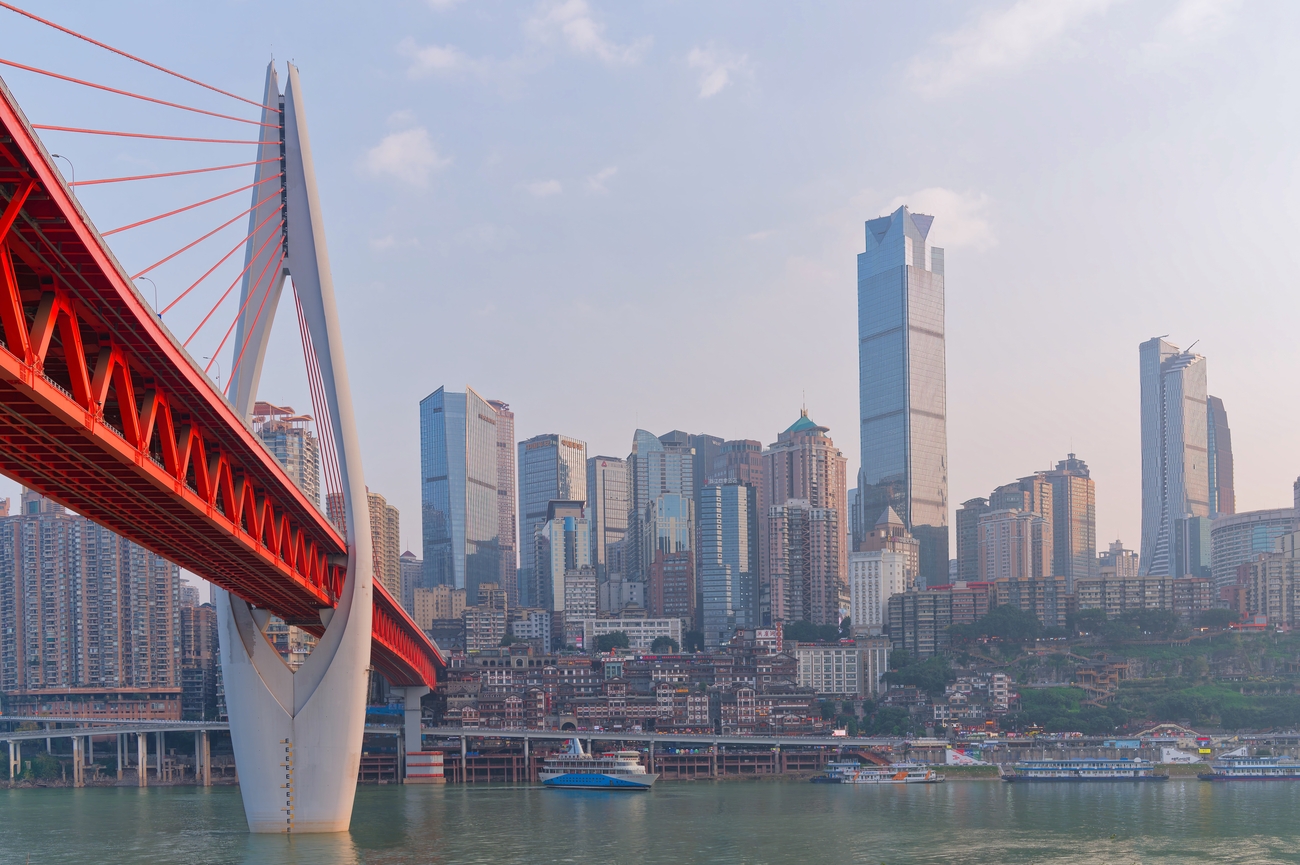
The best time to visit Chongqing is during spring (March to May) and autumn (September to November), when the weather is mild and comfortable for exploring the city. Spring is a great time if you enjoy nature. You’ll see cherry blossoms along the monorail lines and colourful flowers blooming around the mountains. Autumn is often considered the best overall season. The skies are clearer, the air feels fresher, and the scenery becomes more vibrant, especially as the leaves turn red in places like the Three Gorges and Nanshan Mountain. These months make it easier for you to explore Chongqing’s hilly landscape without dealing with the scorching summer heat or the cold, damp winter.
Festivals in Chongqing
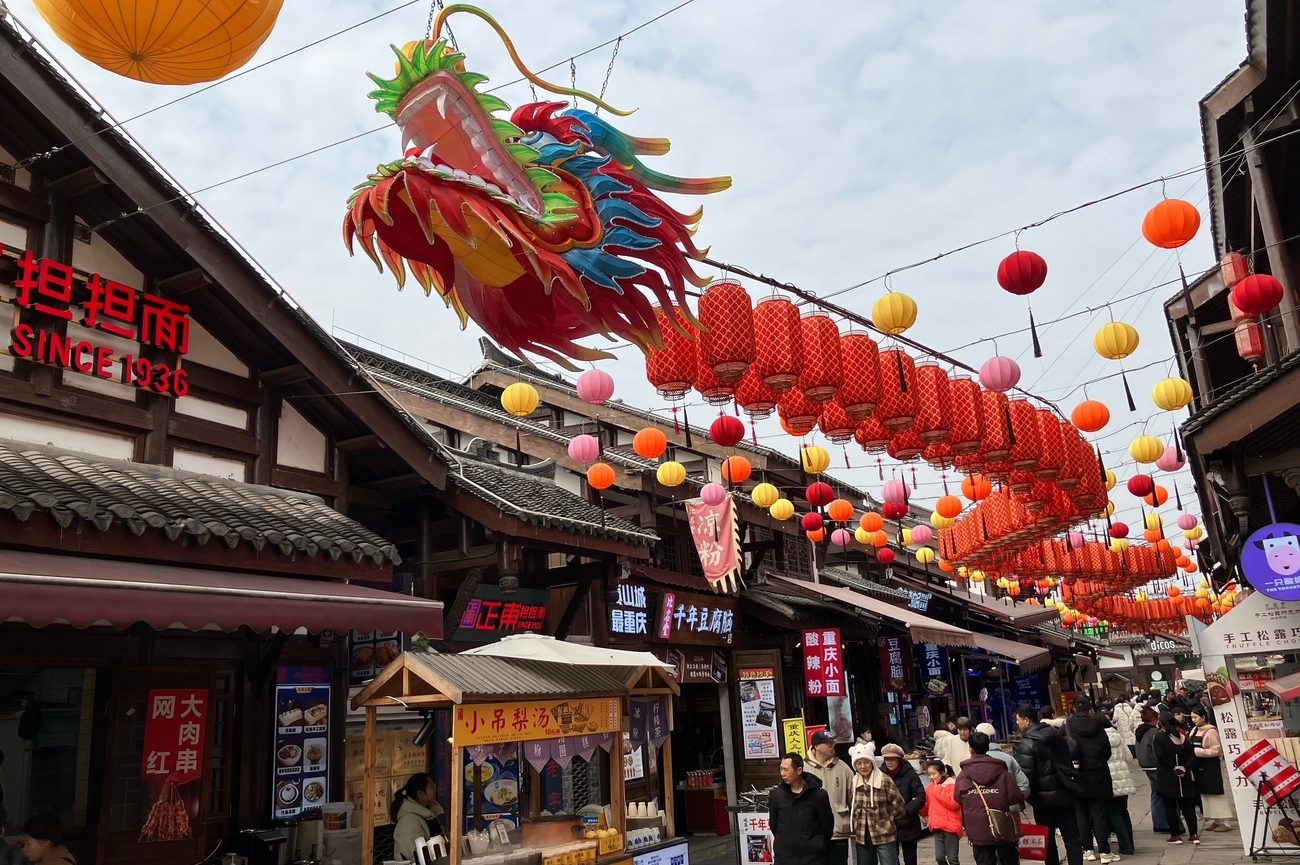
- Chinese New Year: The biggest celebration in Chongqing, transforming the city into a lively, festive scene filled with red lanterns and bright lights. As you explore, places like Hongya Cave and Jiefangbei are decorated with thousands of lanterns, while skyscrapers along the rivers light up with coordinated LED shows. One of the most unforgettable sights is the “Steel Flower” dragon dance, where performers create a shower of sparks that looks like a fiery dragon, something you’ll rarely see elsewhere. The historic areas of Ciqikou Ancient Town also host traditional fairs, where you can watch lion dances, see local crafts, and try festive snacks like candied hawthorn. Food plays a big part too. You’ll notice families gathering around hot pot for reunion dinners, along with seasonal dishes like cured meats that are specially prepared for the holiday.
- Mid-Autumn Festival: A time of family reunions and lunar appreciation. In Chongqing, it feels especially magical. The city’s rivers and mountain viewpoints give you unique places to take it all in. You can head up to high spots like observation decks or skybridges, where you’ll feel closer to the moon while looking out over the glowing city below. Another great way to experience it is on a Yangtze River night cruise, where you can see the moon reflected on the water alongside the illuminated skyline. Across the city, parks often host festive gatherings with lantern displays, music, and traditional games like riddle guessing. Of course, food is part of the celebration. You’ll find classic mooncakes everywhere, but in Chongqing, there’s a twist, some come with spicy fillings or modern versions like “ice skin” mooncakes, especially in hotels and upscale shops.
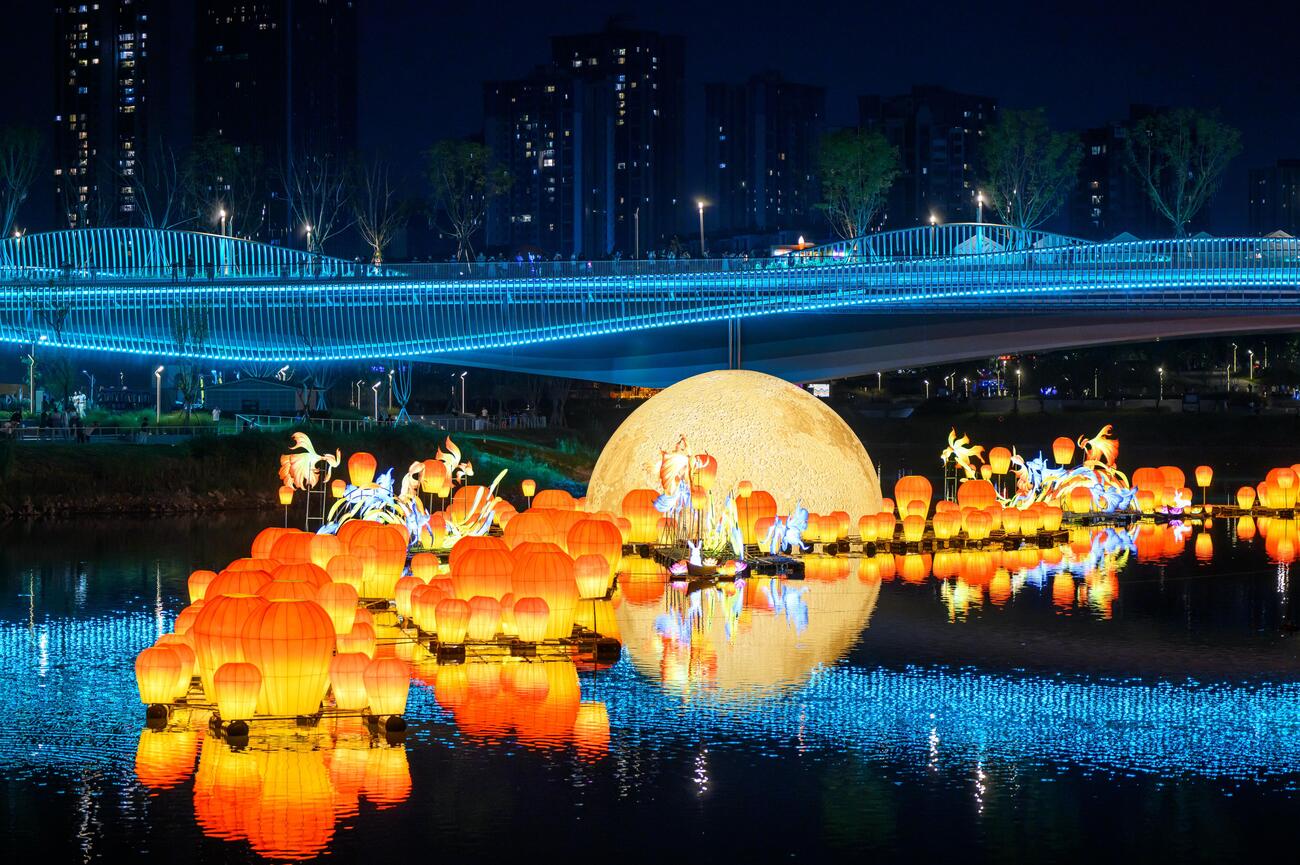
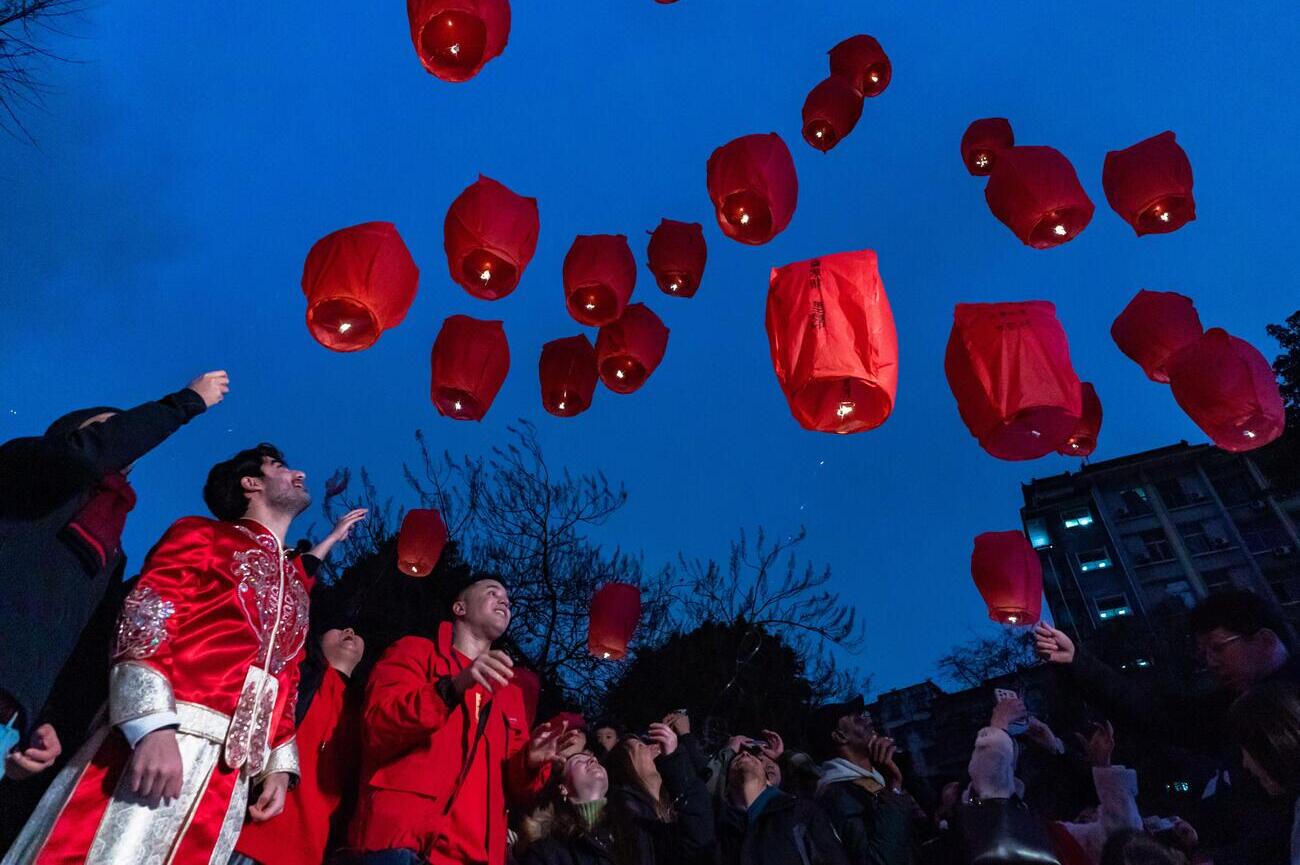
- Lantern Festival: The festival lights up Chongqing in a way that really highlights its unique, “8D” cityscape. You’ll see the city glow with colour, especially along the rivers and in large parks. One of the main spots is the Garden Expo Park, where thousands of giant lanterns (shaped like dragons, mythical figures, and local landmarks) create a vibrant, walk-through display. In areas like Tongliang, you can also watch the “Steel Flower” dance, where performers create a shower of sparks that looks like a fiery dragon, an unforgettable sight in the cool night air. Food is part of the tradition too. You’ll find tangyuan (sweet rice balls) everywhere, symbolising family unity. In Chongqing, you might even come across versions with unique fillings, including slightly spicy ones. Along the rivers, locals often release biodegradable floating lanterns into the water, creating a dreamy, glowing scene as wishes drift downstream.
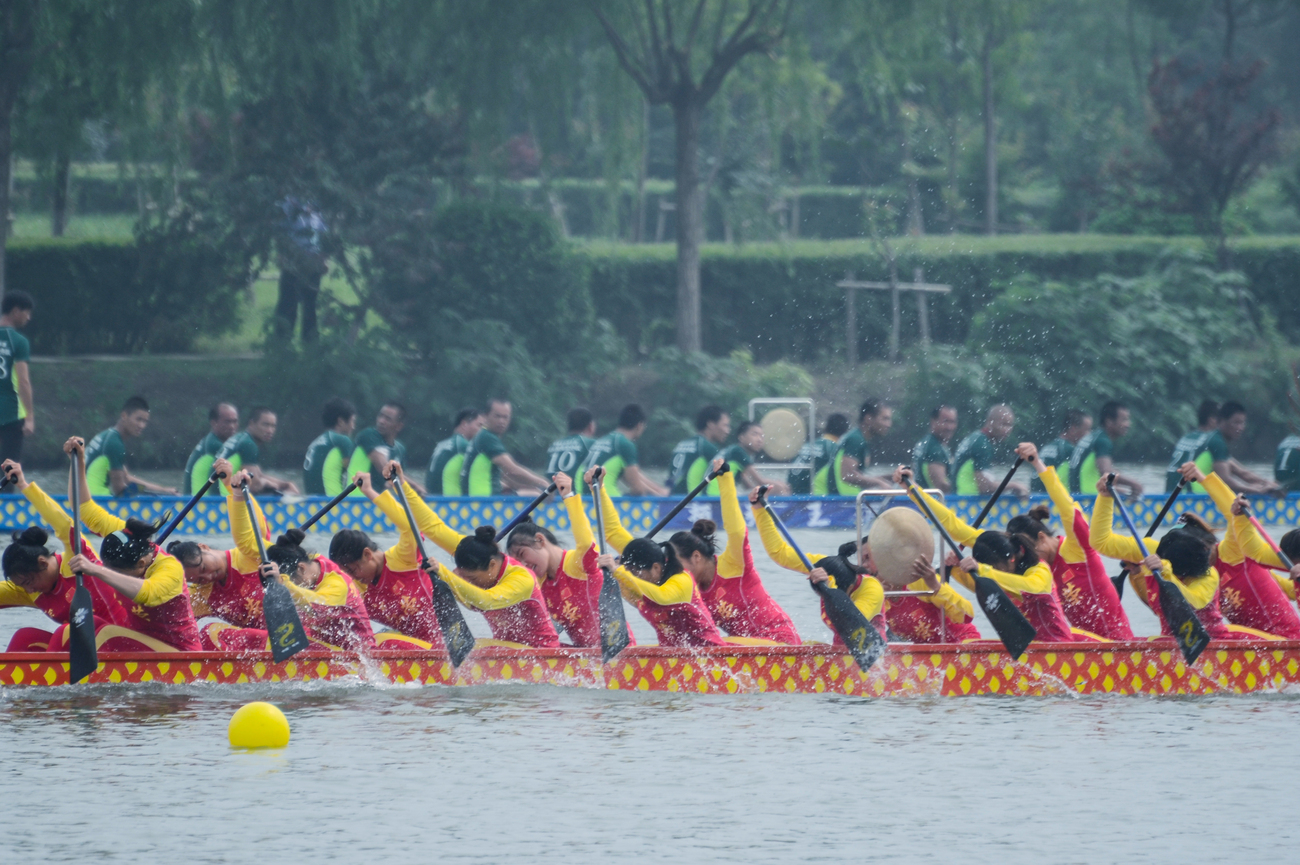
- Dragon Boat Festival: A lively celebration that honours the ancient poet Qu Yuan. In Chongqing (where two major rivers meet) it’s marked by energetic races, local traditions, and seasonal food. One of the highlights is the dragon boat races. You’ll see long, narrow boats with dragon heads racing across the water, moving in sync to the beat of drums. Some of the most dramatic races take place along the Yangtze and nearby rivers, where the surrounding cliffs amplify the energy of the event. As you explore, you’ll notice stalls selling zongzi (or sticky rice dumplings wrapped in leaves). While sweet versions are available, Chongqing is known for its savoury, spicier versions filled with ingredients like pork and Sichuan peppercorns. You may also spot bundles of herbs like mugwort and calamus hanging on doorways. These are part of a traditional practice believed to protect homes during the humid summer months, and they add a distinct, herbal scent to older areas like Ciqikou.
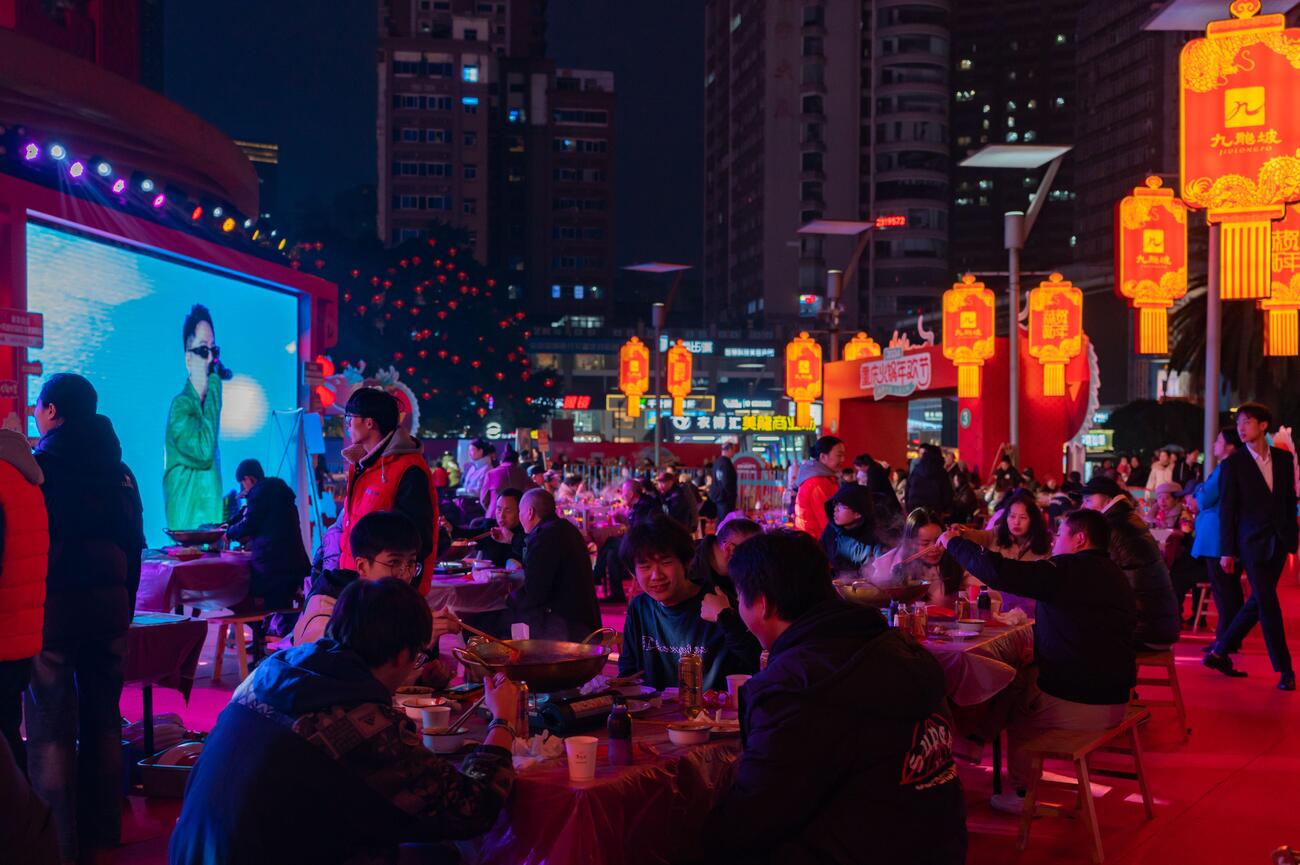
- Chongqing International Hot Pot Festival: If you want to experience Chongqing’s food culture at its peak, this festival is the place to be. Held annually (usually in late October) it celebrates the city’s reputation as the “Hot Pot Capital of China.” At the main event in the Chongqing International Expo Center, you’ll find a lively, almost carnival-like atmosphere built around one thing: hot pot. One of the festival highlights is the giant “Big Hot Pot,” a massive shared pot that can serve dozens of diners at once. You can also join large communal dining areas, where different hot pot brands set up stalls, giving you the chance to try a variety of flavours in one place. Beyond eating, there are exhibition zones where you can explore everything behind the cuisine, from ingredients and spice bases to cooking equipment. It’s a fun, immersive way for you to dive into Chongqing’s signature dish and see just how central it is to the city’s identity.
China’s Cyberpunk
Capital
Chongqing is one of China’s most fascinating cities, but it’s not always the easiest to navigate. With its layered streets, spread-out landmarks, and language barriers, planning the perfect itinerary can quickly become overwhelming, especially if your time is limited.
At Revigorate, we take care of every detail, from private guides and drivers to seamless day trips, dining reservations, and carefully selected hotels. Whether you want to explore the city’s iconic skyline, venture into the UNESCO landscapes of Wulong, or combine Chongqing with destinations like Chengdu or the Yangtze River, we design each journey around you.
Contact us or give us a call at (+1 800 672 0517 | +351 289 009 580 | +44 808 189 0647), and let us create your tailor-made experience through one of China’s most unforgettable destinations.
Ready to explore more of Asia? Travel further with Revigorate and discover our curated itineraries across Osaka, Hokkaido, Hiroshima, Manila, Singapore, Hong Kong, Zhangjiajie, Huangshan, and Guangzhou.


Let us know what you love, where you want to go, and we’ll design a one-of-a-kind adventure you’ll never forget.
Get in touch
Miriam
Travel Specialist

Nina
Travel Specialist

Abigail
Travel Specialist
Our offices:



Revigorate, Iberian Escapes and Algarve Lifestyle are the registered brand names of APCS Lda . We are a fully authorised travel agency licensed by Turismo de Portugal RNAVT/6867.
In the event of a dispute, the consumer may refer to: RAL - Centros de Arbitragem
Avª. 5 de Outubro, nº. 55, R/C Dtº. 8000-075 Faro, Portugal | Tel: +351 289 823 135 *
* national landline call
E-mail: info@consumoalgarve.pt| www.consumidoronline.pt | Mon to Fri: 9:00 - 13:00 / 14:00 - 17:00