Things to Do in the Black Forest: 4-Day Itinerary
The Black Forest is one of Germany’s most distinctive regions, combining dense woodland, thermal spa towns, waterfalls, mountain lakes, vineyards and historic villages across the southwest of the country.
Baden-Baden brings together thermal baths, Belle Époque architecture and cultural landmarks, while scenic routes such as the Schwarzwaldhochstraße lead into higher mountain landscapes. Elsewhere, waterfalls, lakes and forest trails reveal the region’s natural side, with traditional villages and wine-growing areas adding further variety.
What makes the Black Forest especially rewarding is the contrast between wellness, landscape and regional culture. A single journey can combine spa time, panoramic drives, woodland walks, historic settlements, local craftsmanship and vineyard scenery without relying on the same type of experience each day.
This 4-day Black Forest itinerary brings together Baden-Baden, waterfalls, mountain lakes, scenic drives, vineyards and historic villages in a route designed to be varied, practical and well paced.
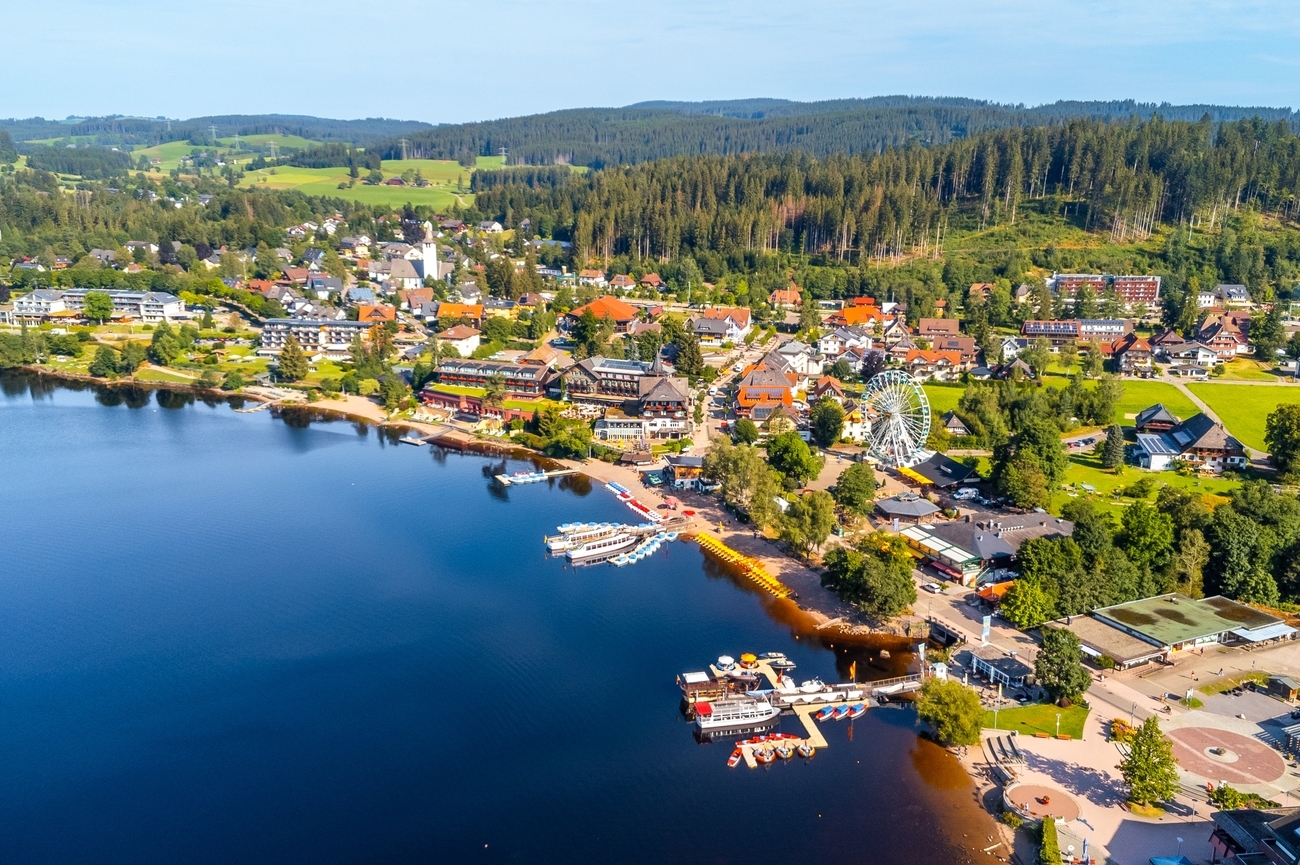
Day 1

Morning: Lichtentaler Allee
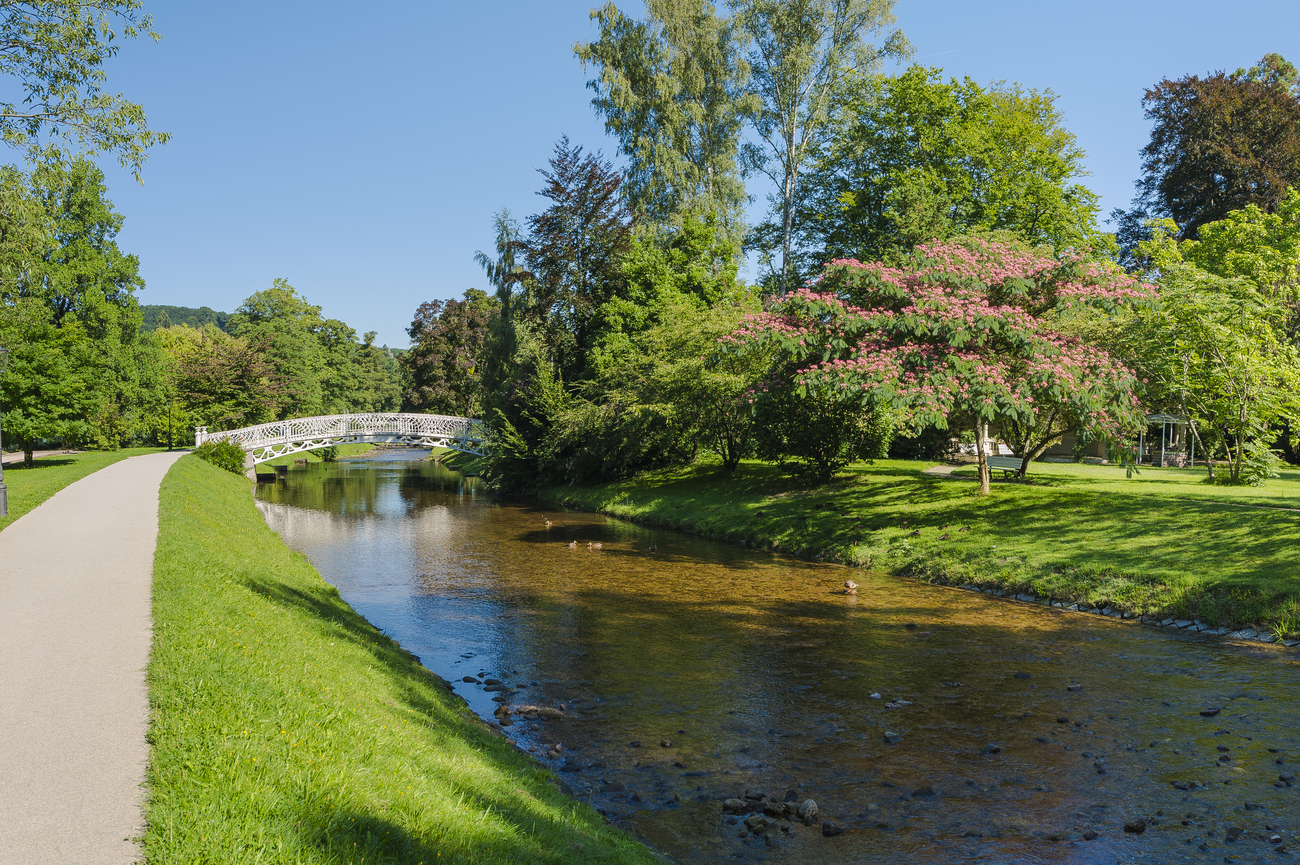
Lichtentaler Allee kicks off your Black Forest journey like a runway walk for nature and culture. Effortless grace, zero attitude.
This isn’t just “a stroll in the park.” Lichtentaler Allee is one of Baden-Baden’s crown jewels: a lush 2.3-kilometer promenade that hugs the Oos River and threads through town like a green heartbeat. It’s the elegant spine of a spa town that redefined rest and refinement in Europe. Think wide lawns, graceful bridges and a curated tree collection with over 300 native and exotic species from magnolias to ginkgos keeping things shady and scenic all year round.
Born from a humble 17th-century footpath linking market to monastery and blossoming into an elegant landscaped park by the mid-1800s, the Allee reflects Baden-Baden’s evolution from countryside trail to cultural promenade. Today it’s a living timeline of history and horticulture, where you can drift past museum mile highlights like the Museum Frieder Burda and the Stadtmuseum, encounter Renaissance and Belle Epoque villas, and score gentle riverside vibes that even hardcore urban wanderers will respect.
Museum Frieder Burda
Five minutes down Lichtentaler Allee and suddenly the trees part, clean white lines, all glass and confidence.
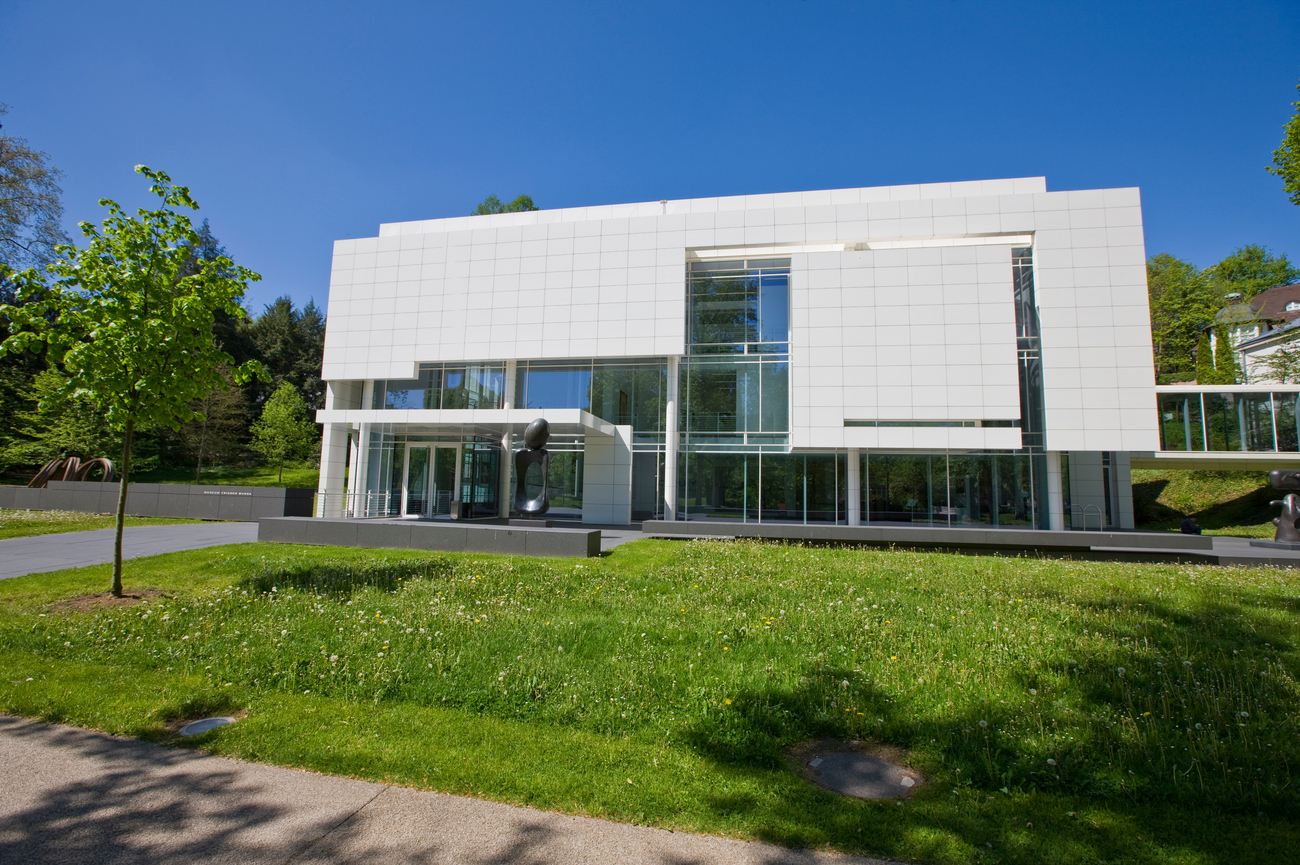
The Museum Frieder Burda sits right inside the park, so the transition from riverbank greenery to contemporary cool feels seamless. Designed by New York architect Richard Meier, the building is a study in light. Floor-to-ceiling glass panels pull the forest inside, white walls bounce natural light like it’s curated and the whole structure feels airy without trying too hard. It’s modern art housed in modern architecture.
Founded in 2004 to showcase collector Frieder Burda’s personal holdings, the museum focuses on Classical Modernism and contemporary art, with heavyweights like Picasso, Gerhard Richter and Neo Rauch regularly in rotation. The current exhibition, “Rivaling Reality: 60 Years of Photorealism,” traces hyperrealism from the 1960s to today with paintings so precise they almost out-camera the camera. The galleries are minimalist, giving the art room to breathe. No clutter. No chaos. Just crisp presentation and serious creative energy.
For guided experiences, you’ve got options. Public guided tours in German run every Saturday, Sunday and public holiday at 11:00 a.m. and 3:00 p.m. If deeper context sounds appealing, the museum’s Artistic Director, Dr. Daniel Zamani, leads special tours of the current exhibition every last Friday of the month at 2:00 p.m. and 4:00 p.m. Expect insider commentary and the kind of art-world nuance that makes you look at a canvas twice. Private tours can be booked in advance with the museum’s art educators, offering immediate entry and a group audio system for crystal-clear explanations. And if you want an elevated touch, exclusive after-hours tours can be arranged for an additional fee.
Kurhaus Baden-Baden
Two minutes from the museum and the vibe shifts from minimalist chic to full Belle Époque drama.
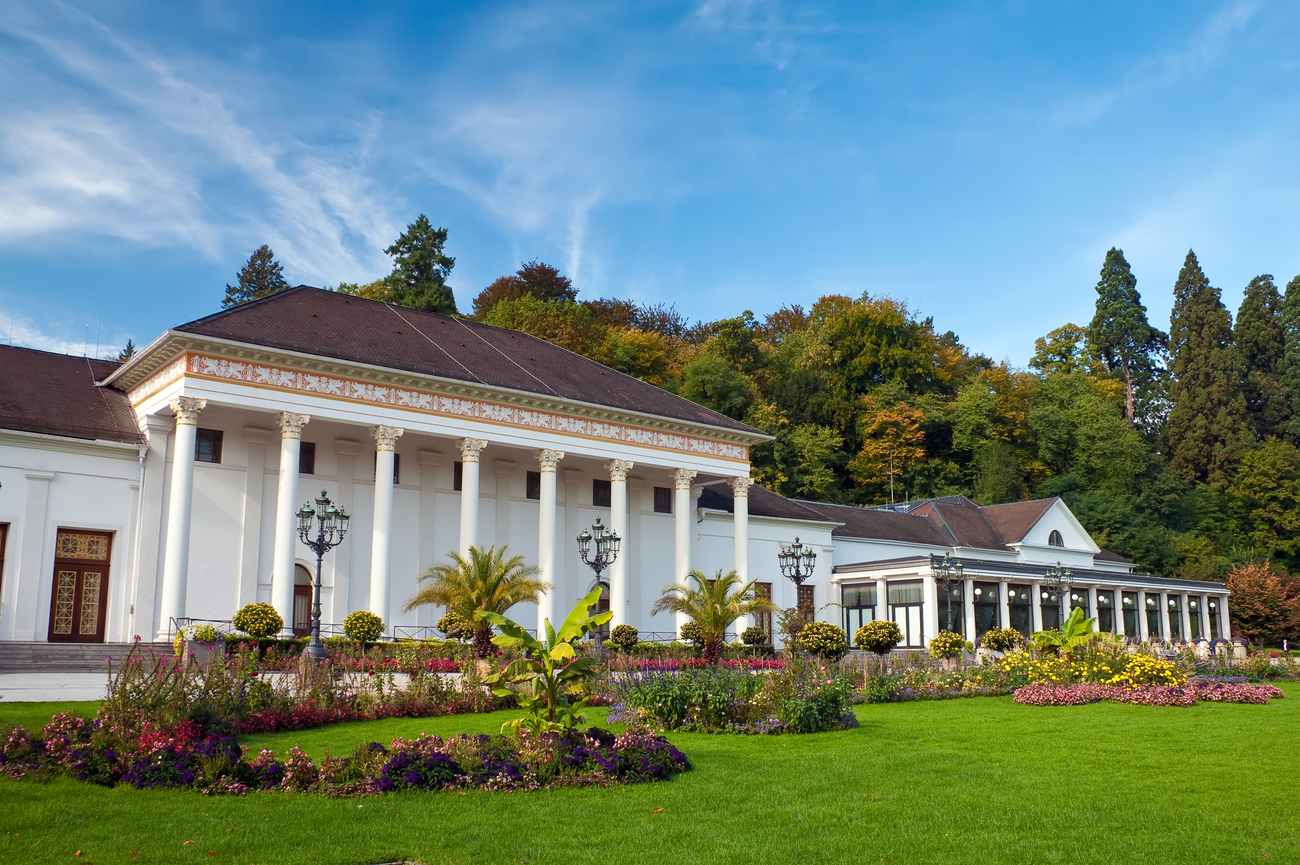
Kurhaus Baden-Baden is simply elegant. Grand colonnades, Corinthian columns and that stately facade facing the gardens make it clear this town mastered luxury long before it became trendy. This is where 19th-century Europe came to see and be seen. Royals, composers, aristocrats, the guest list historically reads like a Wikipedia deep dive.
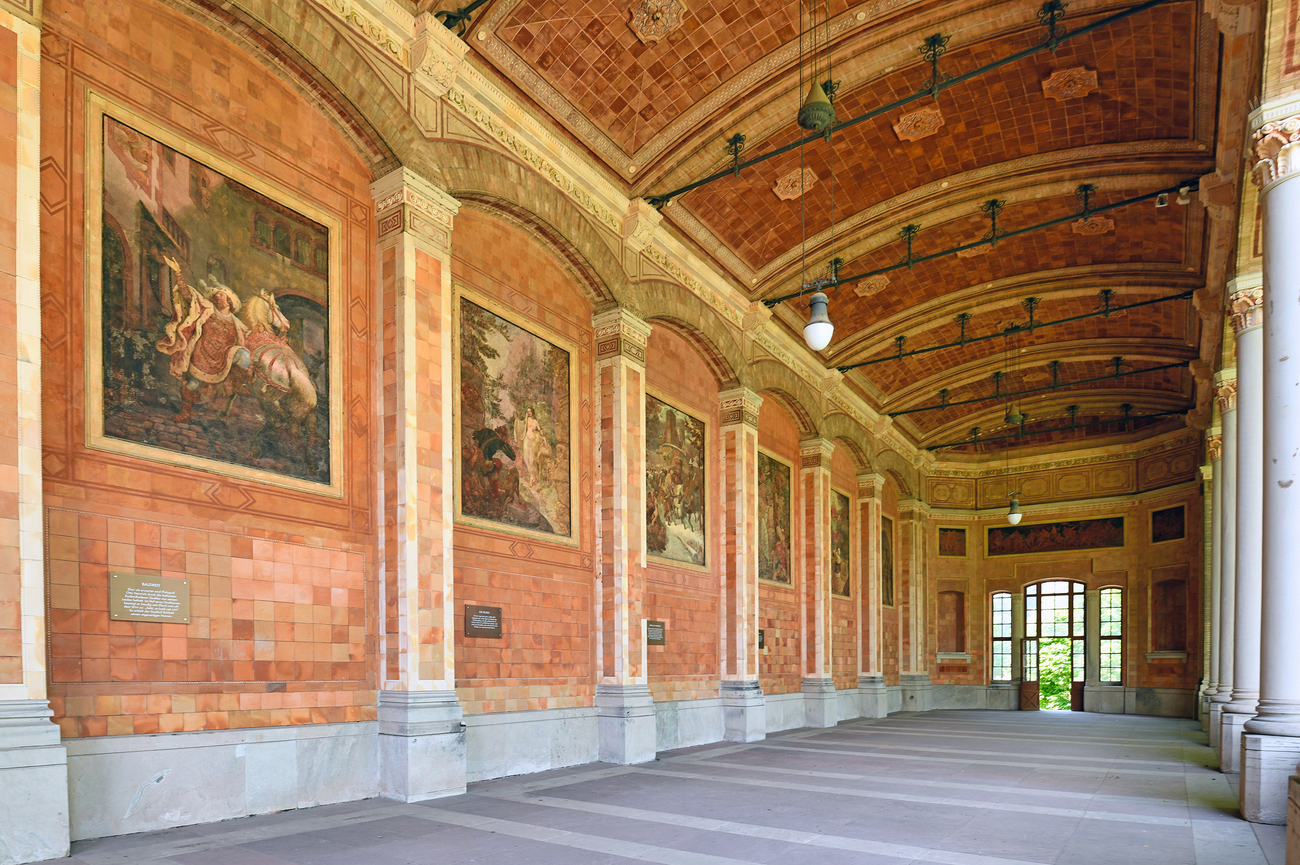
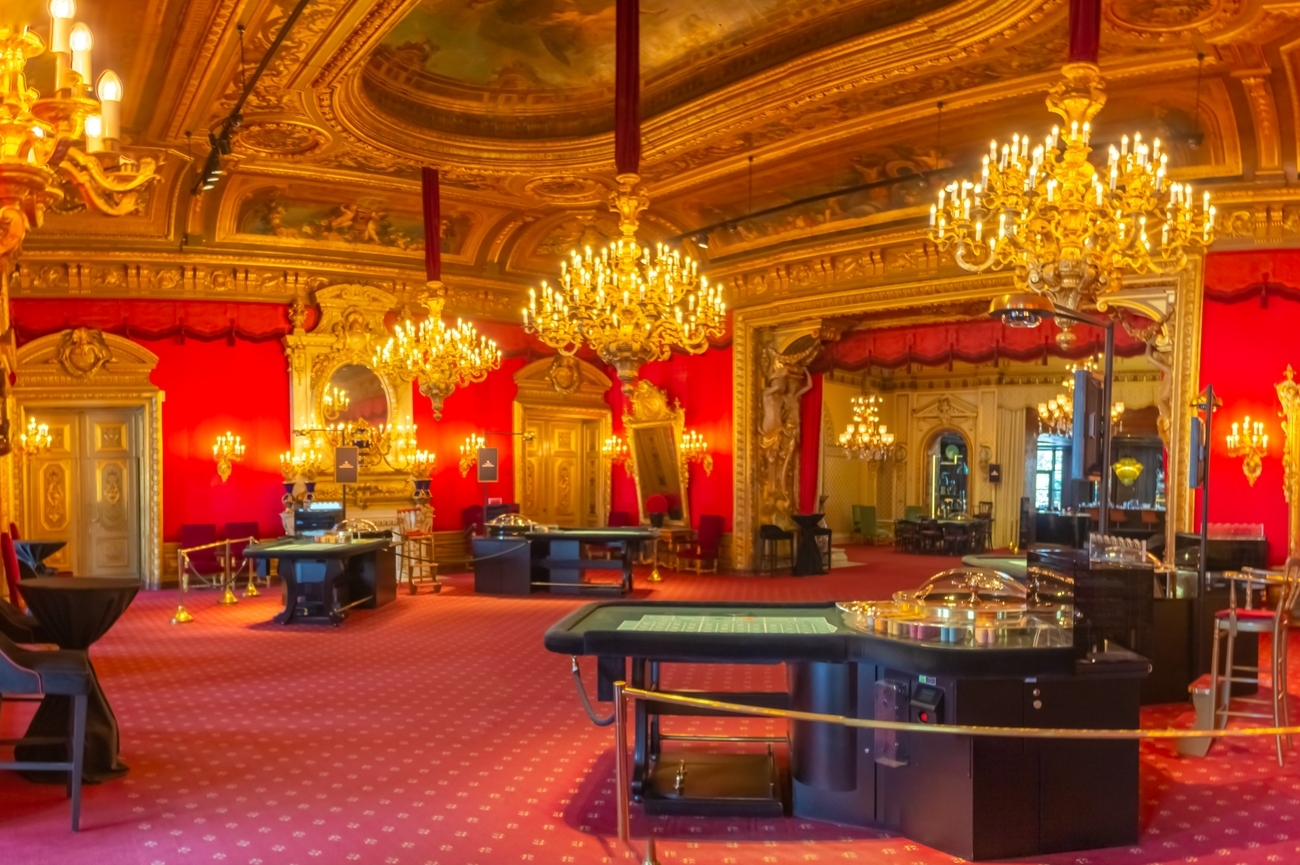
Built between 1821 and 1824 by architect Friedrich Weinbrenner, the Kurhaus was designed as the social heart of Baden-Baden’s spa culture. Step inside and it’s chandeliers, marble, frescoed ceilings and polished parquet floors. The highlight is the Casino Baden-Baden, often described as one of the most beautiful casinos in the world, with interiors inspired by French royal palaces. There’s also the historic Trinkhalle nearby with its 16 Corinthian columns and frescoes depicting local legends, a reminder that even hydration here came with architectural flair.
Guided tours of the Casino are available daily (in German and English at select times), offering access to the ornate gaming rooms and insight into the building’s history and its high-society past. You’ll learn why Marlene Dietrich called it the most beautiful casino in the world and honestly, she had standards.
Kurhaus Kolonnaden
Step outside the Kurhaus and the columns keep going but now they’re framing couture instead of concerts.
The Kurhaus Kolonnaden stretch elegantly alongside the Kurhaus gardens, forming a covered arcade that feels equal parts historic promenade and luxury runway. Built in the 19th century as part of Baden-Baden’s grand spa complex, the colonnades were originally designed for leisurely strolls between social engagements. Today, they still deliver that same refined rhythm just with designer storefronts quietly flexing under classical arches.
Architecturally, it’s symmetry goals. Repeating columns, soft sandstone tones and a long, linear perspective that draws you forward like an invitation. The structure blends seamlessly with the Kurhaus facade, preserving that Belle Époque aesthetic while housing high-end boutiques inside. You’ll find names like Hermès, Gucci, Louis Vuitton and other premium brands lining the arcade.
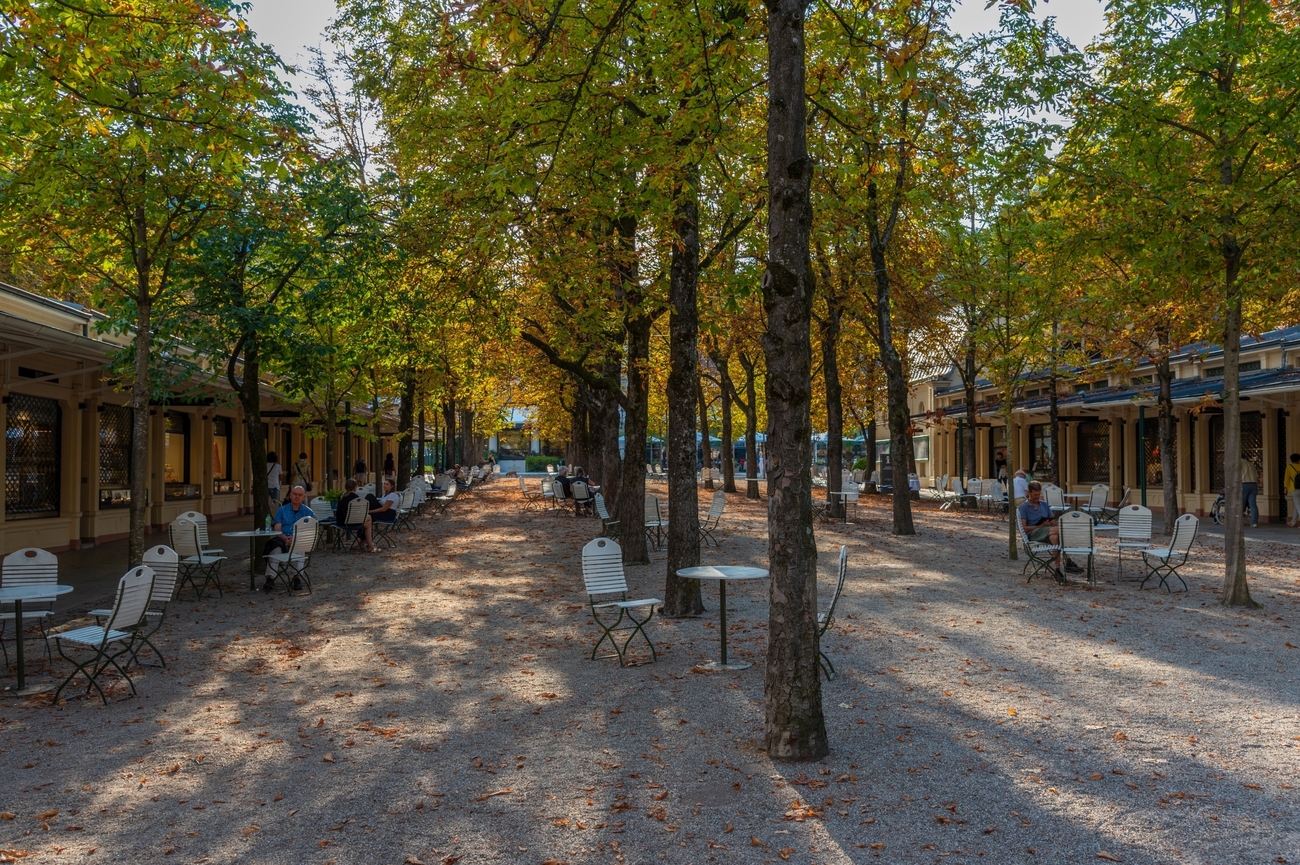
Afternoon:
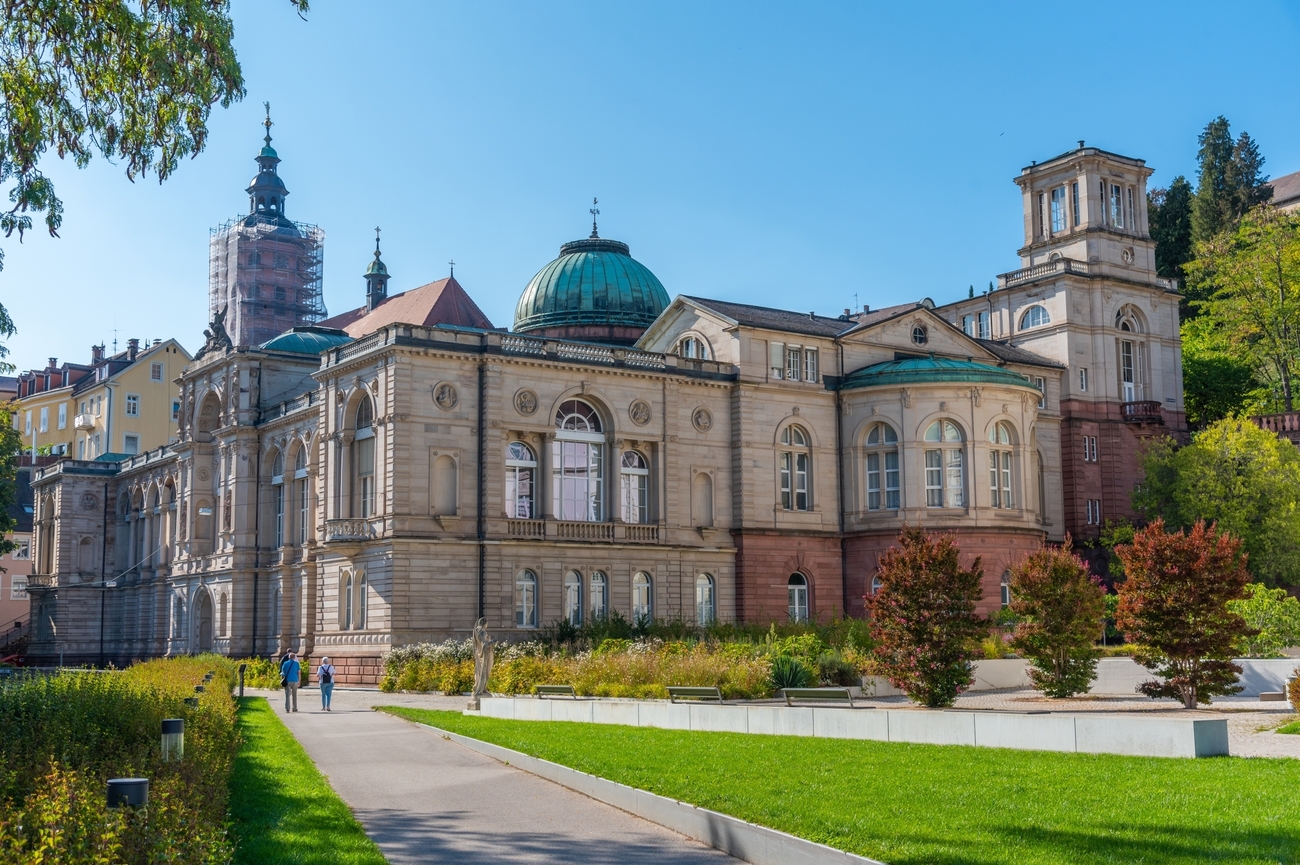
Friedrichsbad Baden-Baden
Now it’s time to soak properly.
A short stroll from the Kurhaus Kolonnaden brings you to Friedrichsbad and this is where Baden-Baden’s spa culture goes full legacy mode. The exterior alone sets the tone: Renaissance-style architecture, domed roofs, ornate detailing. It looks like a palace that accidentally filled itself with thermal water.
Opened in 1877, Friedrichsbad blends Roman bathing traditions with Irish hot-air rituals into a structured 17-step bathing sequence. Yes, seventeen. This is not freestyle spa hopping. You move through progressively warmer thermal pools, steam rooms and soap-brush massages in a ritual designed for total reset. The thermal waters rise from deep beneath the Black Forest and are naturally rich in minerals. The interiors feel grand but calming with marble, high ceilings, frescoes and quiet echoing chambers that make you whisper automatically. It’s co-ed and traditionally textile-free, which might sound intimidating, but here it’s simply part of the centuries-old wellness etiquette.
At Friedrichsbad, you won’t be left guessing what happens next. Each stage of the 17-step ritual is clearly explained and attendants gently guide you through the sequence so you move smoothly from warm air baths to steam to thermal pools without missing a beat. You’re not rushing. You’re progressing.
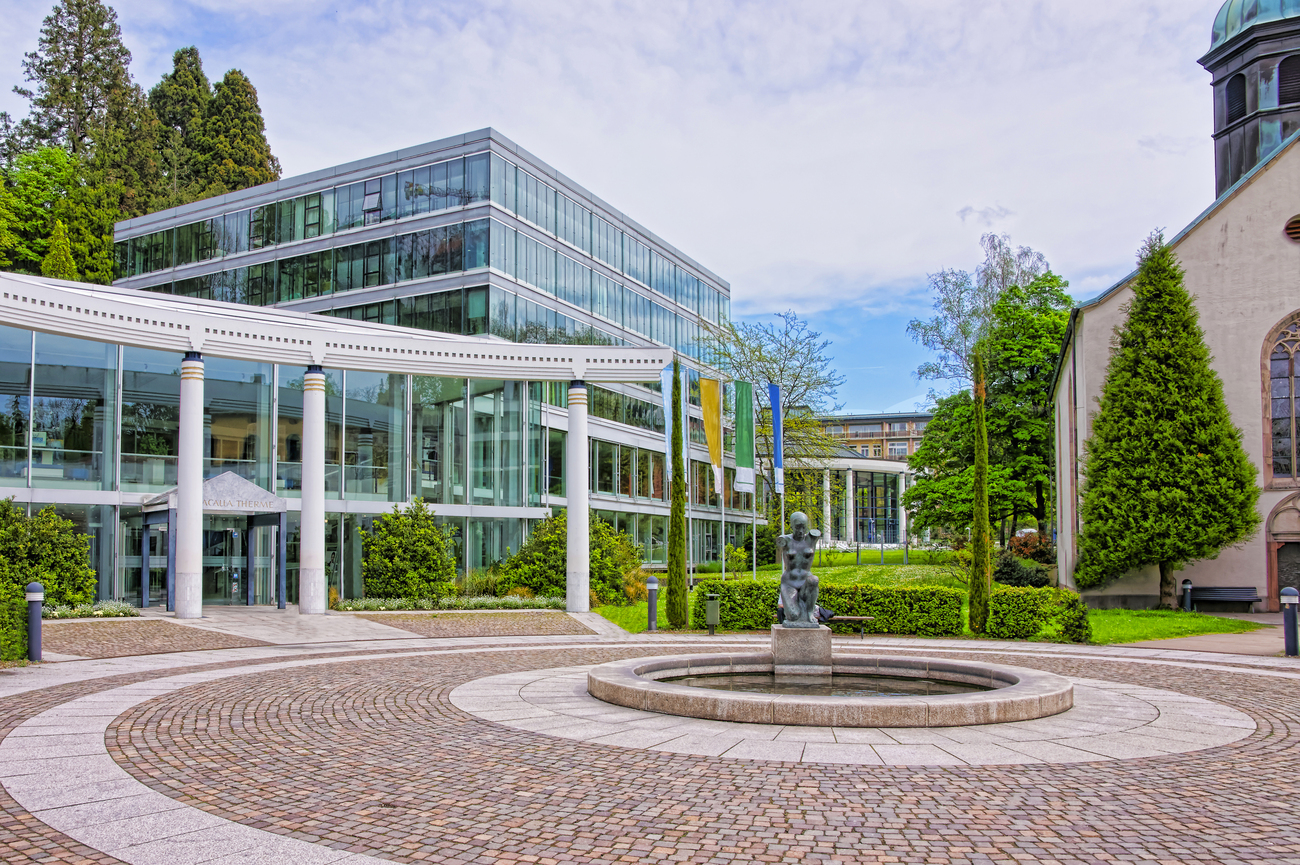
Caracalla Spa
Ready for round two? This one turns the temperature up and the vibe modern.
Just a few steps from Friedrichsbad, Caracalla Spa feels like its contemporary counterpart. If Friedrichsbad is ritual and romance, Caracalla is flow and freedom. You move between indoor and outdoor thermal pools, letting the Black Forest air meet warm mineral water. It’s wellness without the rules-heavy choreography.
Opened in 1985 and named after the Roman emperor who loved a good bath complex, Caracalla sits directly above Baden-Baden’s natural thermal springs. The spa spans over 4,000 square meters and includes multiple thermal pools kept between 34–38°C, bubbling whirlpools, neck showers and a sweeping outdoor lagoon framed by colonnades. Upstairs, the sauna landscape expands the experience with themed saunas, steam rooms and relaxation lounges. The design is open and airy with lots of glass, natural light and clean lines that let the water be the main character.
You can book standard day access or upgrade with reserved relaxation loungers and wellness treatments through the spa’s website. There are scheduled sauna infusions (Aufguss sessions) led by staff throughout the day. It’s a ritual where essential oils and heat are intensified for a deeper detox moment. For something more elevated, private wellness treatments and massage sessions can be added in advance.
Merkur
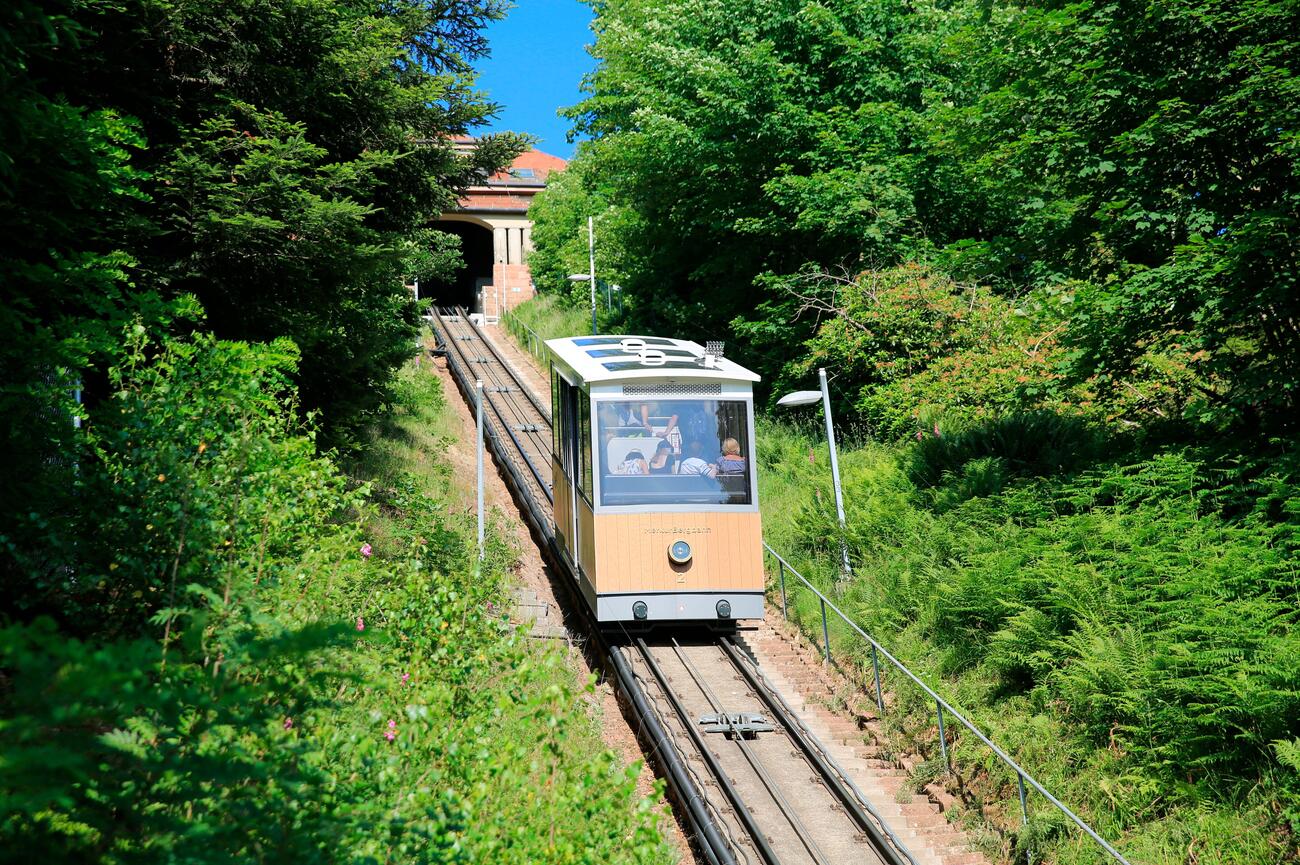
Funicular Railway
From the spa district, it’s about a 10-minute drive to the base station of the Merkur Funicular Railway (Merkurbergbahn). After soaking in thermal calm, this is your vertical glow-up. The ride is short, steep and slightly dramatic in the best way. Within minutes, Baden-Baden shrinks below you and the Black Forest stretches out like it’s showing off.
The Merkurbergbahn has been carrying visitors up Mount Merkur (668 meters above sea level) since 1913. It’s one of the longest and steepest funicular railways in Germany, climbing at a gradient that definitely earns your respect. The cars are modern and glass-fronted, so you’re getting uninterrupted views the whole way up. At the summit, panoramic platforms open up to sweeping forest canopies, the Rhine Valley, and on clear days, even the Vosges Mountains in France. There’s also a viewing tower at the top if you want that extra altitude flex.
You can purchase tickets directly at the station or online for a smoother start. The ride itself is self-guided. Hop on, ride up, explore at your own pace. For a more curated experience, some private Baden-Baden tours include the Merkur ascent as part of a half-day luxury itinerary, pairing it with spa visits or city highlights.
Evening:
The Baden-Baden Casino
Where the stakes and the ceilings are unapologetically high.
From Merkur’s summit calm, descend back into town and head straight to the Casino Baden-Baden, located inside the Kurhaus. This is your evening glow-up moment. Dress sharp. The dress code is enforced after 8:00 p.m. and the atmosphere shifts accordingly.
Opened in 1824, the casino’s interiors were inspired by French royal palaces. Think gilded salons, red velvet, frescoed ceilings and crystal chandeliers that refuse to be subtle. Marlene Dietrich once called it the most beautiful casino in the world and honestly, that wasn’t hyperbole. The gaming rooms are arranged in a sequence of ornate halls, each more theatrical than the last. Even if gambling isn’t your thing, the architecture alone is worth the entrance fee.
You can join a guided casino tour earlier in the day (available in English and German at scheduled times), which walks you through the history, design details and famous visitors. Evening entry tickets are available at the door, but bringing a passport or a valid ID is mandatory.
Festspielhaus Baden-Baden
And now, let the curtain rise.
By car, it’s a smooth 5-minute drive from the Kurhaus to Festspielhaus Baden-Baden.
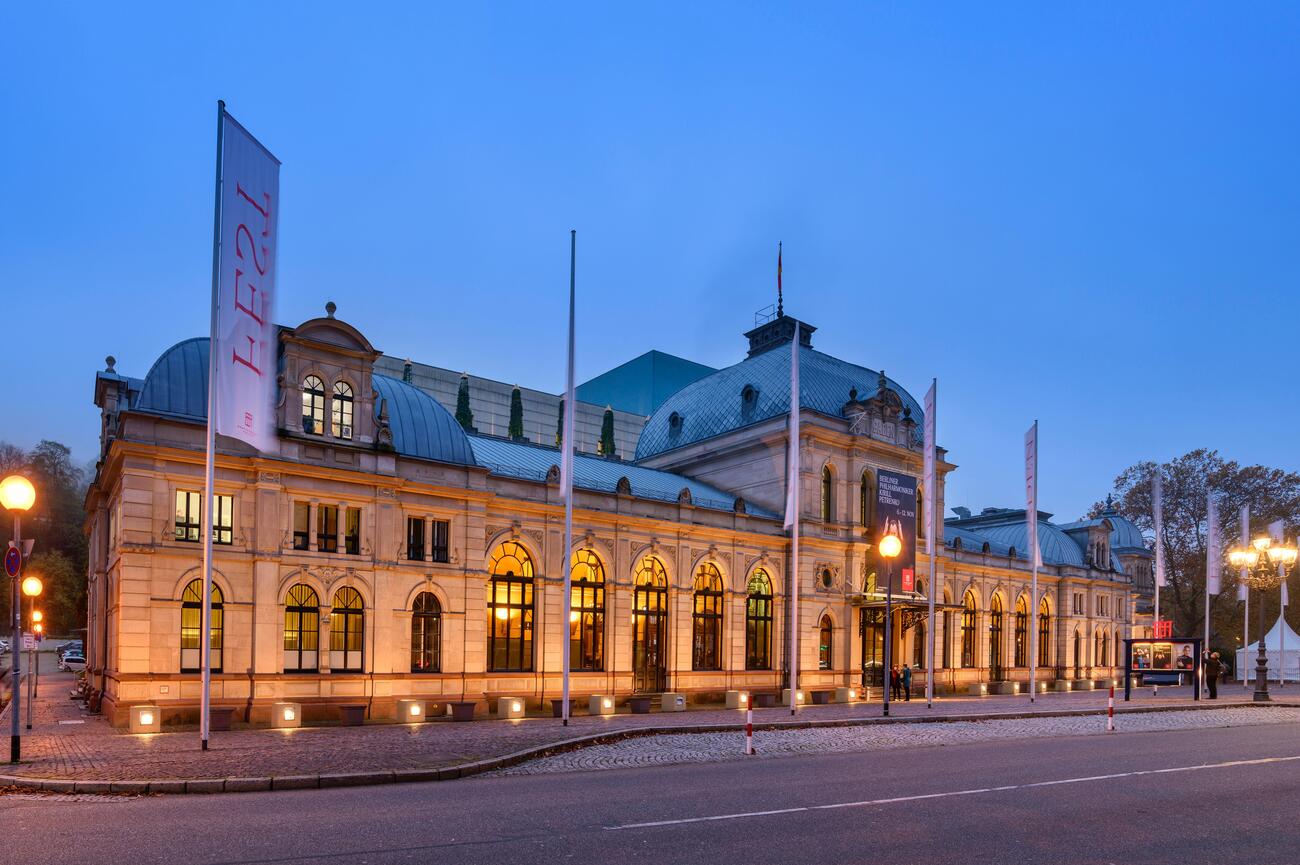
The building itself blends its historic 19th-century railway station façade with a striking modern concert hall extension. Inside, the main auditorium seats around 2,500 guests, making it Germany’s largest opera and concert house. The acoustics are engineered for clarity and depth and the warm wood interiors give the space a refined, intimate feel despite its scale. Programming ranges from opera and ballet to symphony orchestras and international productions. The kind of cultural lineup that elevates an evening instantly.
You’ll want to book your tickets online in advance especially if there’s a major opera or symphony scheduled. Seating categories vary, so you can choose how close you want to be to the stage and how immersive you’d like the sound to feel. If this is your big cultural moment of the trip, go for premium seats.
Day 1 - Black Forest Tour Map
Day 2
Morning:
Mummelsee
This is where the Black Forest goes full fairytale, minus the filters.
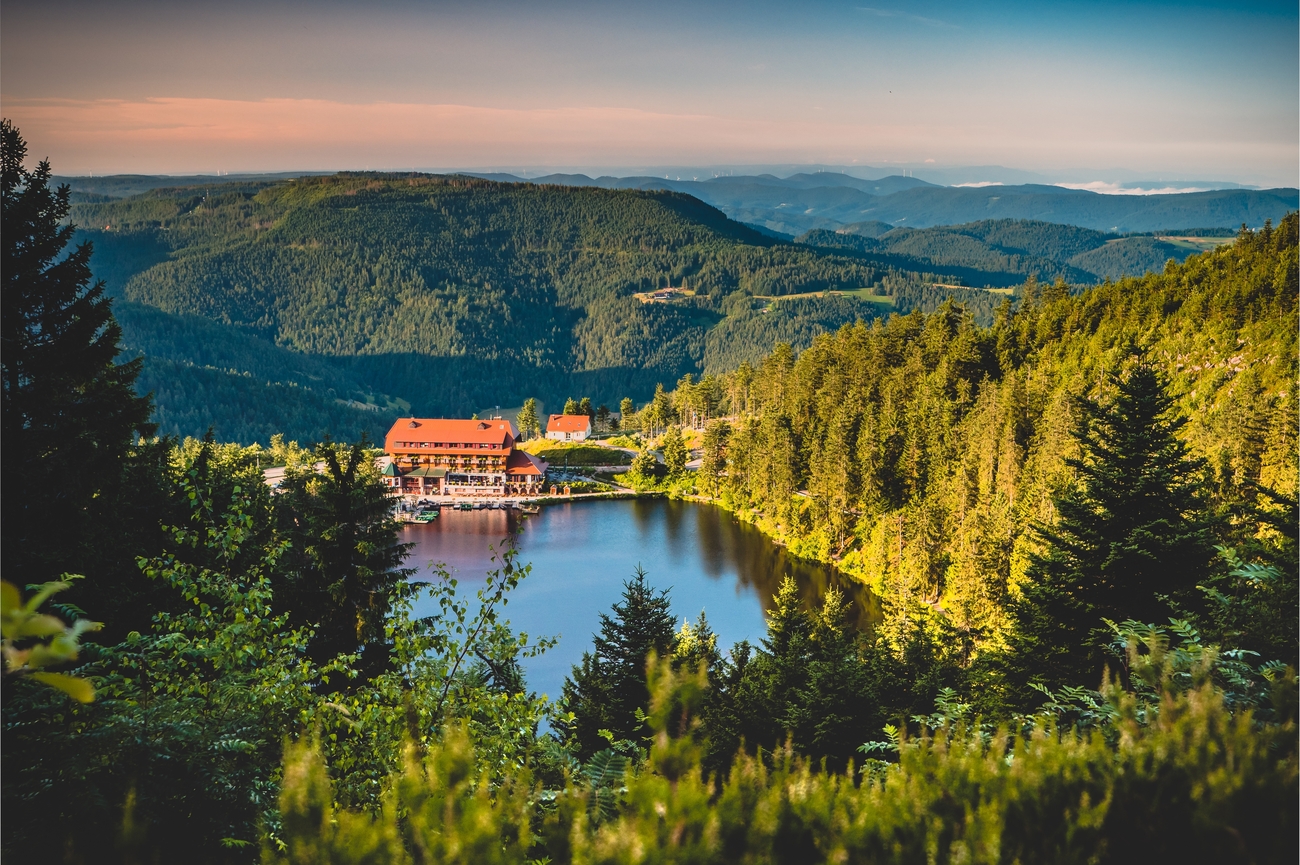
From Baden-Baden, it’s about a 45-minute drive via the B500 Schwarzwaldhochstraße to reach Mummelsee. The road itself is part of the experience. You will pass by dense forest walls and lookout points that tempt you to pull over every five minutes.
Mummelsee sits at about 1,036 meters above sea level, making it one of the highest and most famous glacial lakes in the Black Forest. Formed during the last Ice Age, the lake reaches depths of around 17 meters and is wrapped in pine-covered slopes that reflect perfectly on still mornings. Local legend claims water spirits, the “Mummeln”, live beneath the surface. Myth aside, the lake has a distinct stillness that feels almost staged. A flat circular walking path (about 800 meters) loops around it, making it easy to explore without committing to a full mountain hike.
Hornisgrinde
Leave Mummelsee behind and stay on the B500 Schwarzwaldhochstraße, within a few minutes, signage for Hornisgrinde appears. The drive is short and in under 20 minutes you’ll be pulling into the designated parking area near the summit access road. From there, it’s a brief walk onto the plateau.
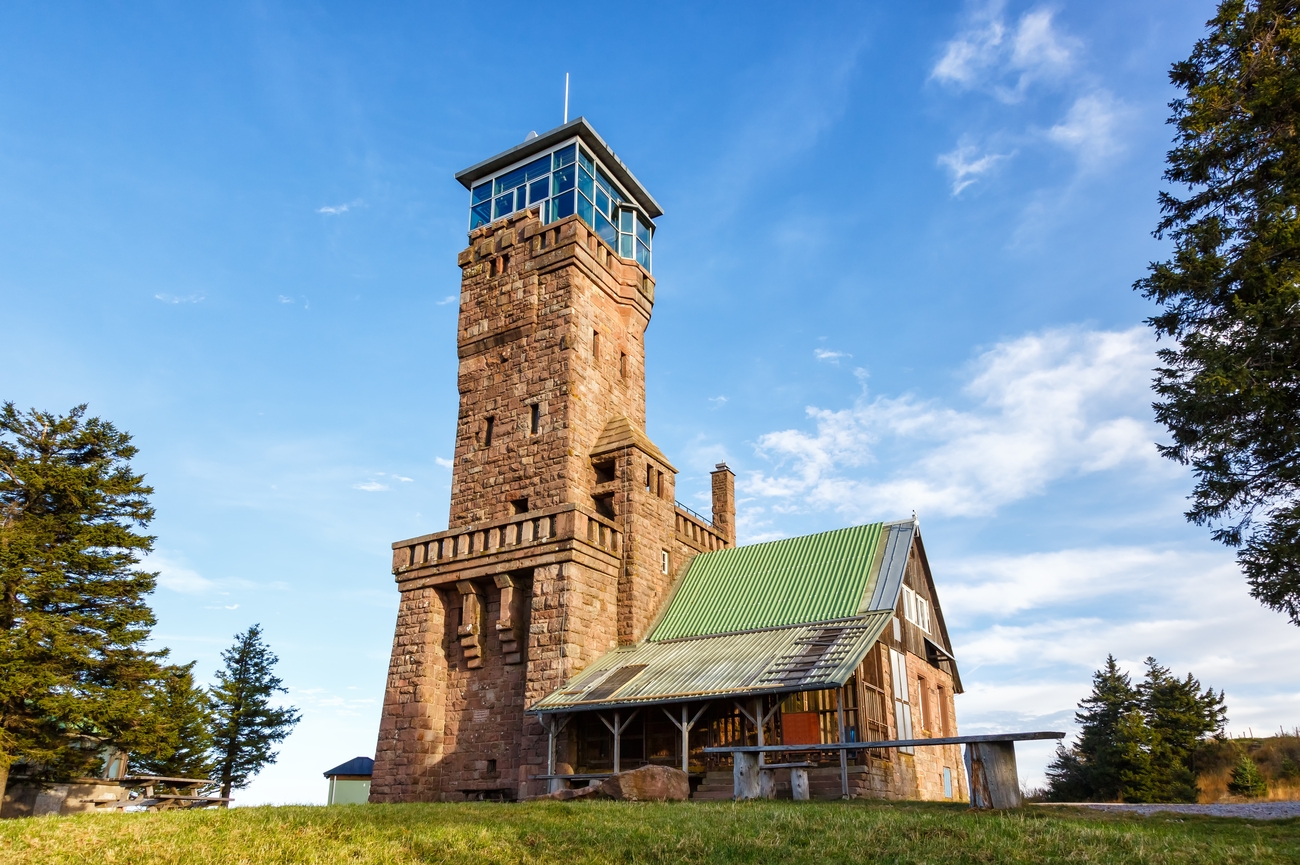
Hornisgrinde rises to 1,164 meters, the highest point in the northern Black Forest. The atmosphere shifts the moment you step out. Forest gives way to open high moorland, the sky feels wider and the wind has a sharper edge. Raised wooden walkways guide you across the protected moor ecosystem, keeping the landscape intact while giving you front-row access to its textures and tones. On clear days, views stretch across the Rhine Valley and even toward the Vosges Mountains in France.
The Hornisgrinde Tower, first built in 1910 and later used for military observation, anchors the summit. Climb to the top and you’ll get a full panoramic sweep, 360 degrees of forested ridgelines and open horizon. Informational boards along the trails explain the mountain’s ecological importance and its layered past.
Aussichtsplattform Ellbachseeblick
If height is your love language, this one speaks fluently.
Move farther south, then trade asphalt for a short forest path. Park near the Ellbachseeblick trail sign, the woods suddenly open and the valley drops away beneath you.
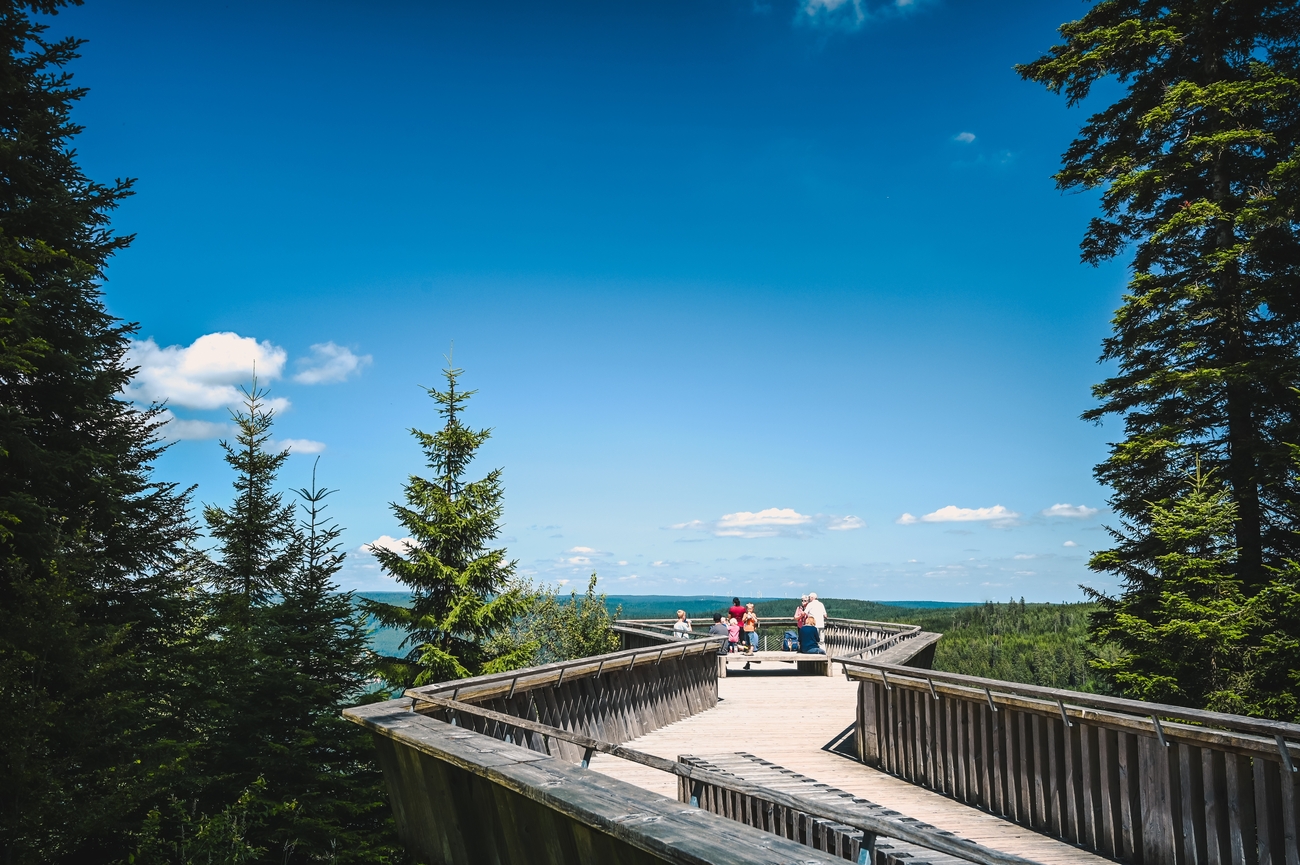
The Aussichtsplattform Ellbachseeblick feels like a front-row balcony carved into the Black Forest. A bold wooden deck stretches outward over layers of pine canopy, pointing your gaze directly toward the dark, glassy Ellbachsee below. Formed during the Ice Age, the lake sits quietly in its basin, almost ink-like against the surrounding green. The platform’s design is clean and angular. It’s modern enough to feel intentional, subtle enough to let the landscape dominate.
Nationalparkzentrum Ruhestein
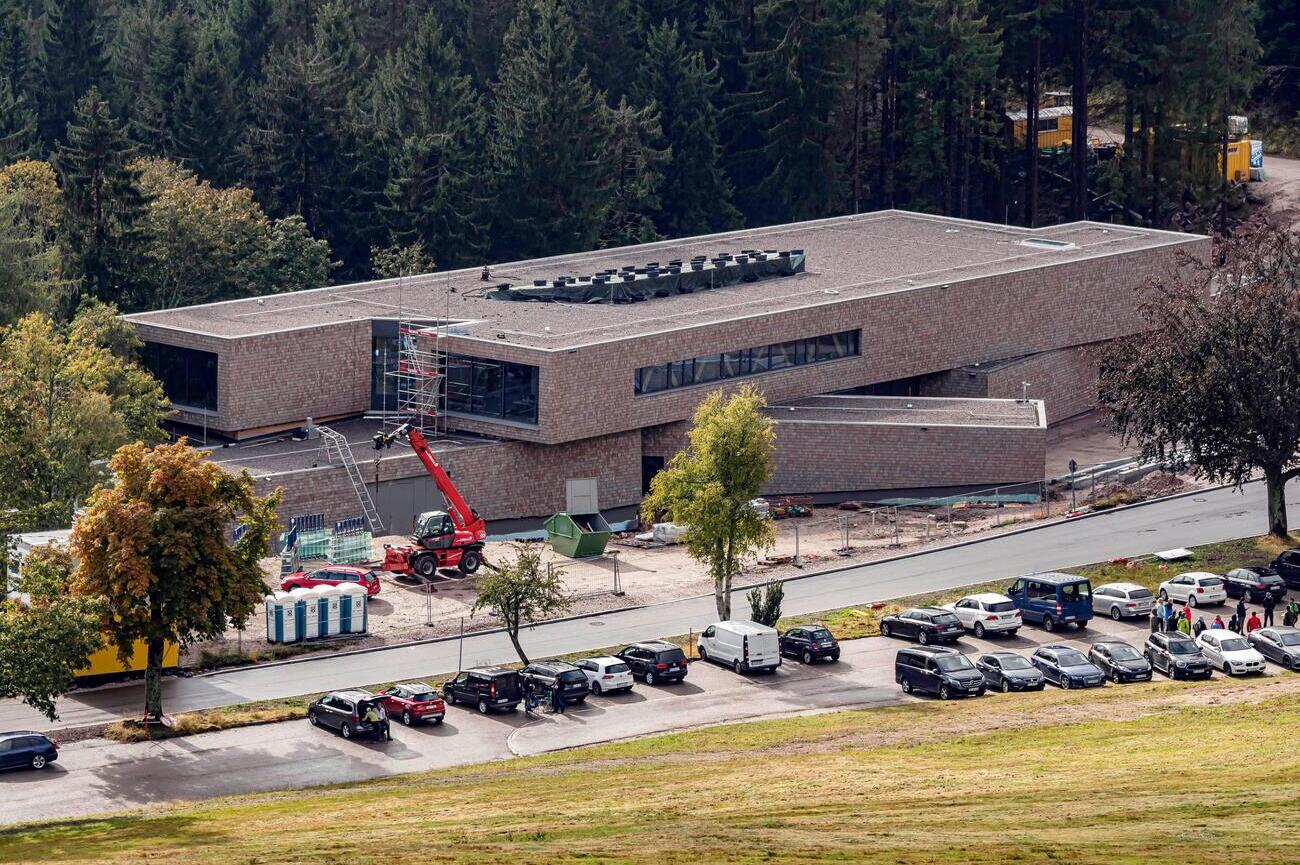
Leave the cliffside views behind and glide back onto the B500. In about 15 minutes, the forest parts just enough to reveal a striking timber structure rising from the trees, that’s Nationalparkzentrum Ruhestein. You’ll know you’re there when architecture starts speaking fluent woodland.
Opened in 2020, the National Park Center is the official gateway to the Black Forest National Park. The building itself is layered almost like stacked tree trunks, constructed primarily from regional wood and designed to blend into the surrounding landscape rather than overpower it. Inside, the exhibitions are immersive and interactive with multimedia installations explain the park’s ecosystems, wildlife corridors, forest regeneration and high moor habitats. You move through soundscapes, tactile displays and panoramic windows that reconnect you visually to the terrain you’ve just explored.
You can wander the exhibition independently or join one of the ranger-led programs and guided hikes offered throughout the year. Seasonal workshops, themed nature walks and educational tours are scheduled regularly.
Afternoon:
Lotharpfad
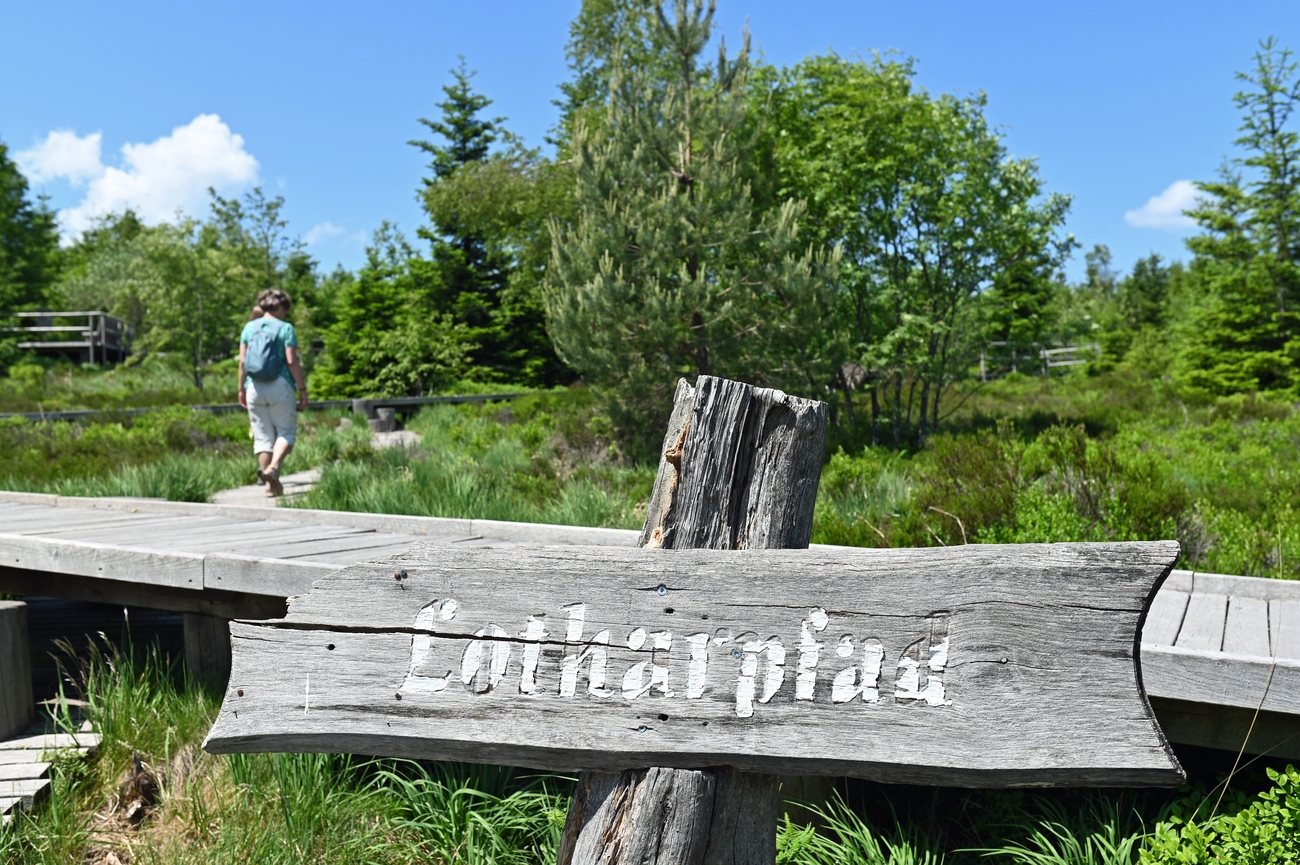
Leave the National Park Center and roll back onto the main road and almost immediately, signs for Lotharpfad appear. Within minutes, you’re pulling into a small roadside parking area tucked into the trees. Step out, follow the wooden trail marker and the forest takes over from there.
The Lotharpfad is a compact circular trail, about 800 meters, but it carries serious narrative weight. After Hurricane Lothar swept through the region in 1999, this section of forest was left untouched. No cleanup. No reset button. What you see here is nature rebuilding on its own terms. Elevated wooden walkways lead you over massive fallen trunks, splintered root plates and dense regrowth pushing toward the light. It feels slightly wild, slightly unruly and completely intentional.
Freudenstadt Marktplatz
From wild forest regeneration to geometric precision, welcome to Freudenstadt.
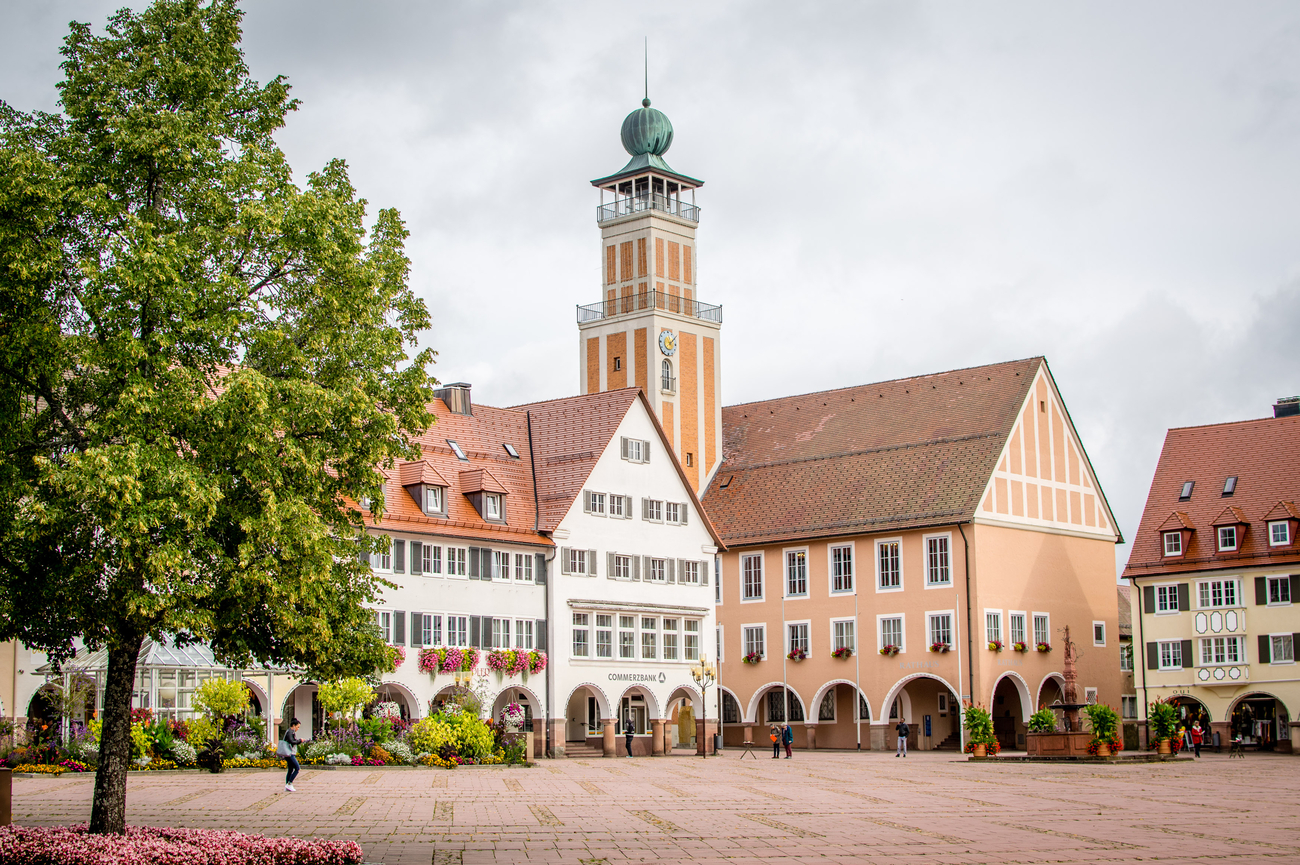
After your time at Lotharpfad, continue south and within about 20 minutes, you’ll arrive in Freudenstadt. The road gradually descends from dense woodland into open town streets and then suddenly space. A lot of it. You’ll know you’ve reached Marktplatz when the buildings pull back and one of Germany’s largest market squares opens up in front of you.
Freudenstadt’s Marktplatz is famously massive, around 219 x 216 meters, making it one of the biggest town squares in the country. Built in 1599 under Duke Friedrich I of Württemberg, the entire town was designed in a grid pattern, which explains the satisfying symmetry. Arcaded walkways frame the square, offering covered promenades that feel orderly and elegant. At its center stands the distinctive Stadtkirche (Town Church) with its rare L-shaped layout, a design choice that architectural nerds quietly love.
Stadtkirche
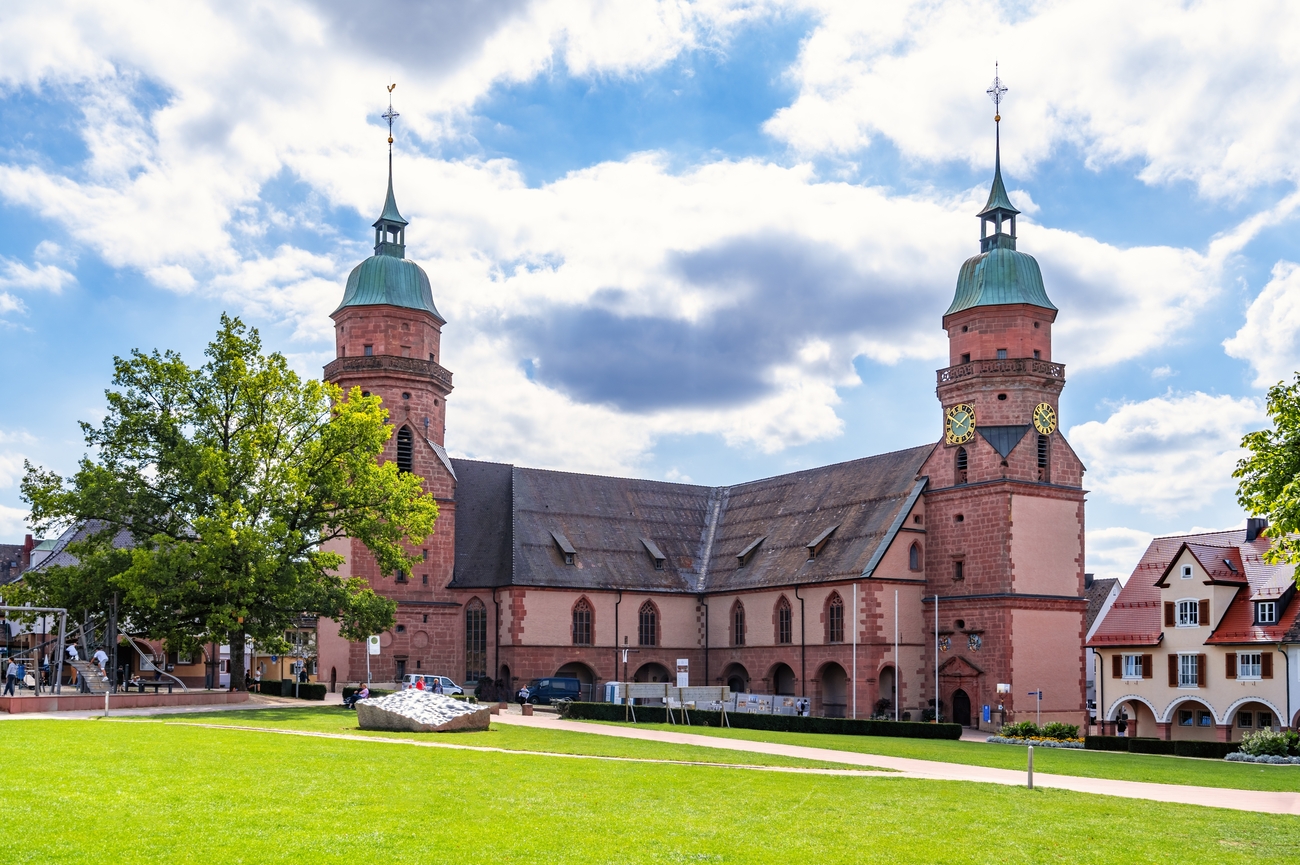
Right at the edge of the Marktplatz, something unexpected catches your eye, a church that refuses to follow the usual blueprint. You don’t need directions for this one. From anywhere on Freudenstadt’s Marktplatz, just walk toward the corner where the arcades meet, the Stadtkirche Freudenstadt anchors the square itself. It’s impossible to miss once you notice its unusual shape.
Built in the early 17th century (completed in 1608), the Stadtkirche is one of the few L-shaped Protestant churches in Germany. That layout wasn’t a design accident, it reflected the Reformation-era emphasis on preaching and visibility rather than altar-centered ritual. The wooden galleries wrap around two sides, pulling the congregation closer to the pulpit. Inside, the atmosphere is warm and understated: exposed timber beams, whitewashed walls and a calm, almost minimalist aesthetic. It feels intimate despite the scale of the square outside.
Evening: Panorama-Bad Freudenstadt
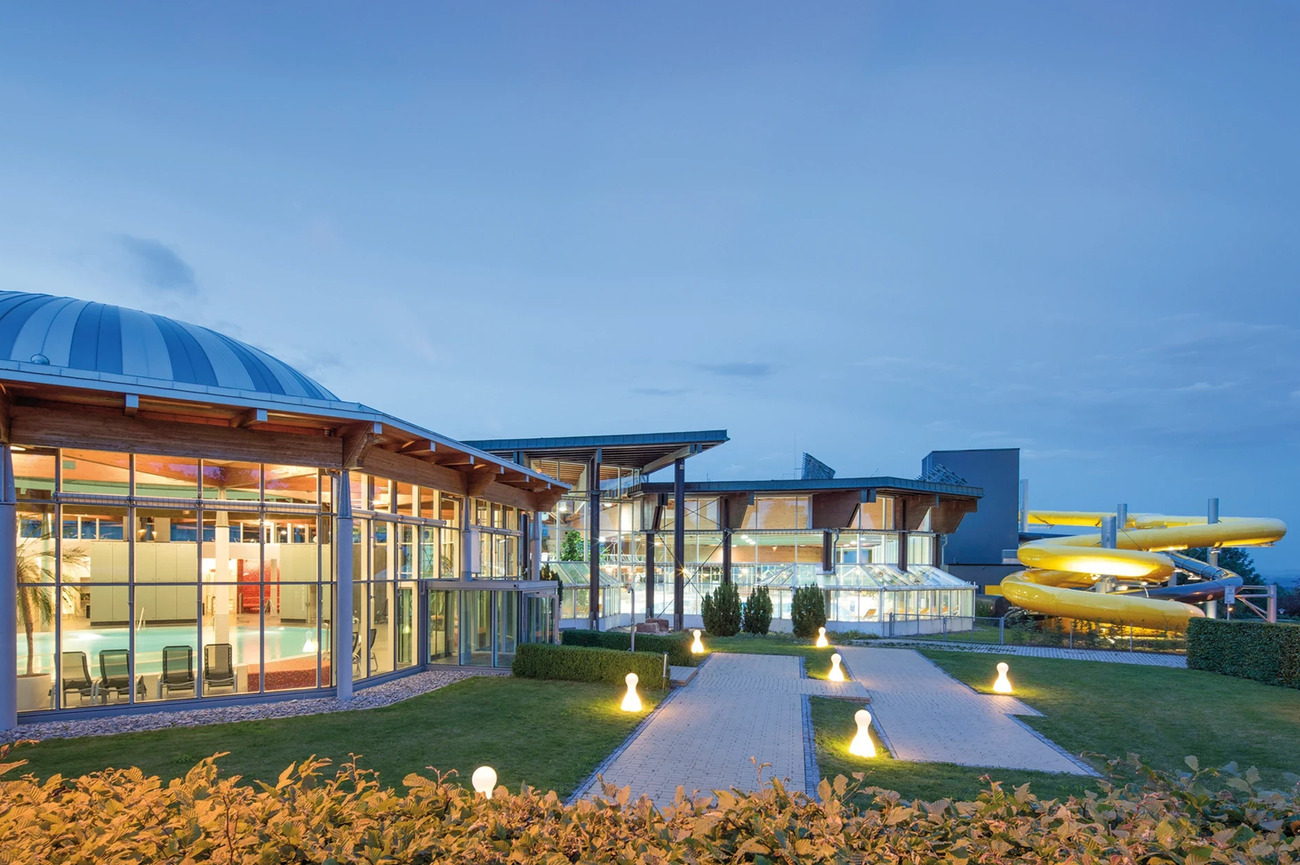
Leave the Marktplatz behind and let the town gently slope upward. Within 5 minutes by car, the rooftops give way to treetops and the curved glass façade of Panorama-Bad Freudenstadt comes into view. You’re trading cobblestones for steam.
Perched above the town, Panorama-Bad earns its name without exaggeration. Floor-to-ceiling glass panels frame rolling Black Forest hills while indoor and outdoor pools stretch toward the horizon. The outdoor basin feels almost infinity-style, especially when mist rises against the dark green backdrop. Water temperatures stay comfortably warm, making it ideal after a full afternoon of walking. Inside, the space is modern and airy with clean lines, open relaxation areas and plenty of natural light.
The sauna landscape adds another layer: themed saunas, steam baths and scheduled Aufguss sessions, where sauna masters intensify heat with essential oils and rhythmic towel techniques. Entry tickets can be purchased onsite or reserved online for smoother access, especially on weekends. Wellness treatments and massages can also be booked in advance if you want to extend your reset.
This isn’t the grand finale yet, it’s your recharge point.
Kniebis
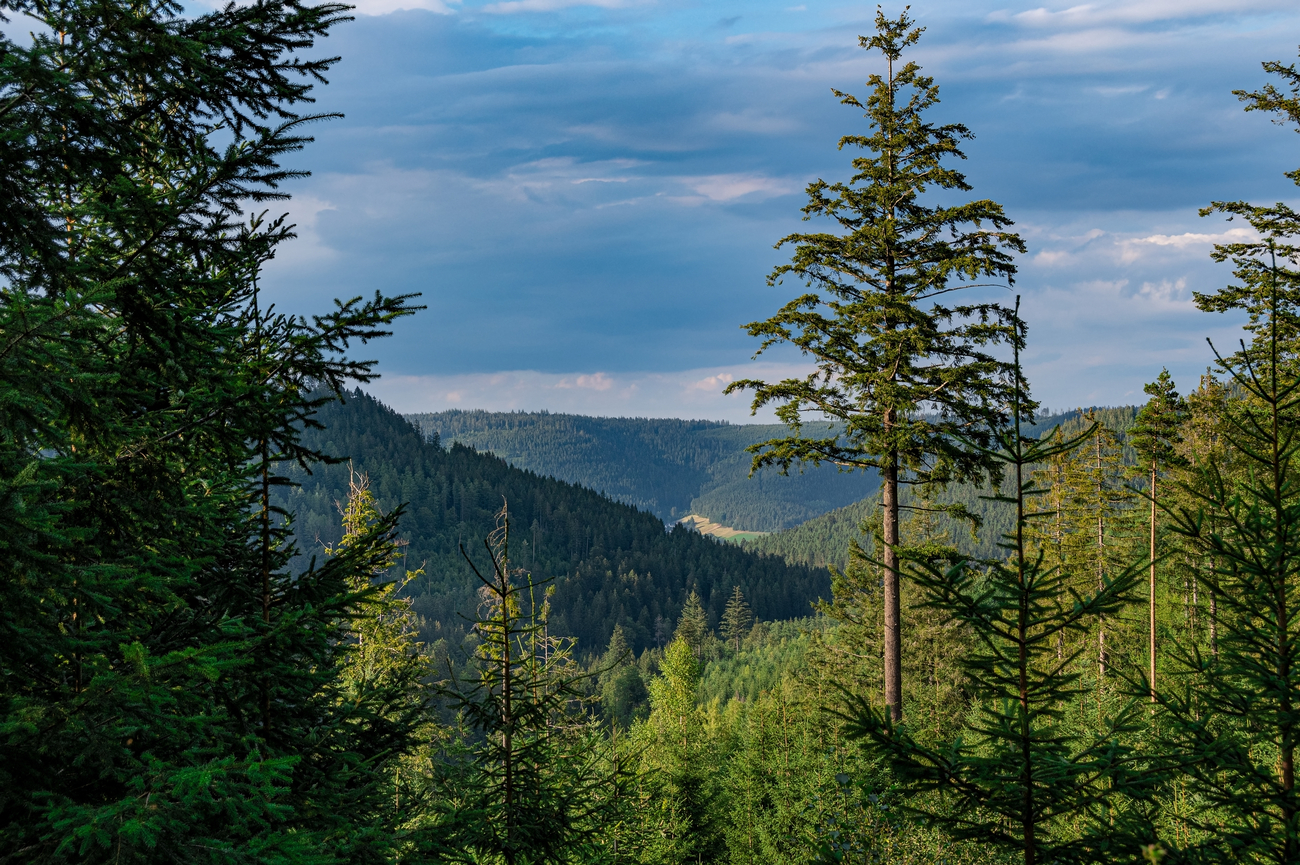
Let the warmth of Panorama-Bad fade behind you and steer toward the higher forest ridge. The road gradually climbs, the town drops lower in your rearview and within about 20 minutes, you’re surrounded by open Black Forest elevation again, that’s Kniebis.
Kniebis has long served as a historic mountain pass, but today it’s all about the vantage points. Several marked pull-offs and trailheads lead to panoramic overlooks where treetops roll endlessly toward the horizon. The Kniebis Panoramaweg is an easy circular path that lets you stretch your legs without committing to a demanding hike. Wide skies, layered ridgelines and uninterrupted forest define the scene.
As the sun lowers, the hills soften into silhouettes and the forest shifts from green to shadow. It’s a simple ending. No grand architecture, no spectacle just elevation, air and the Black Forest settling into the night.
Day 2 - Black Forest Tour Map
Day 3
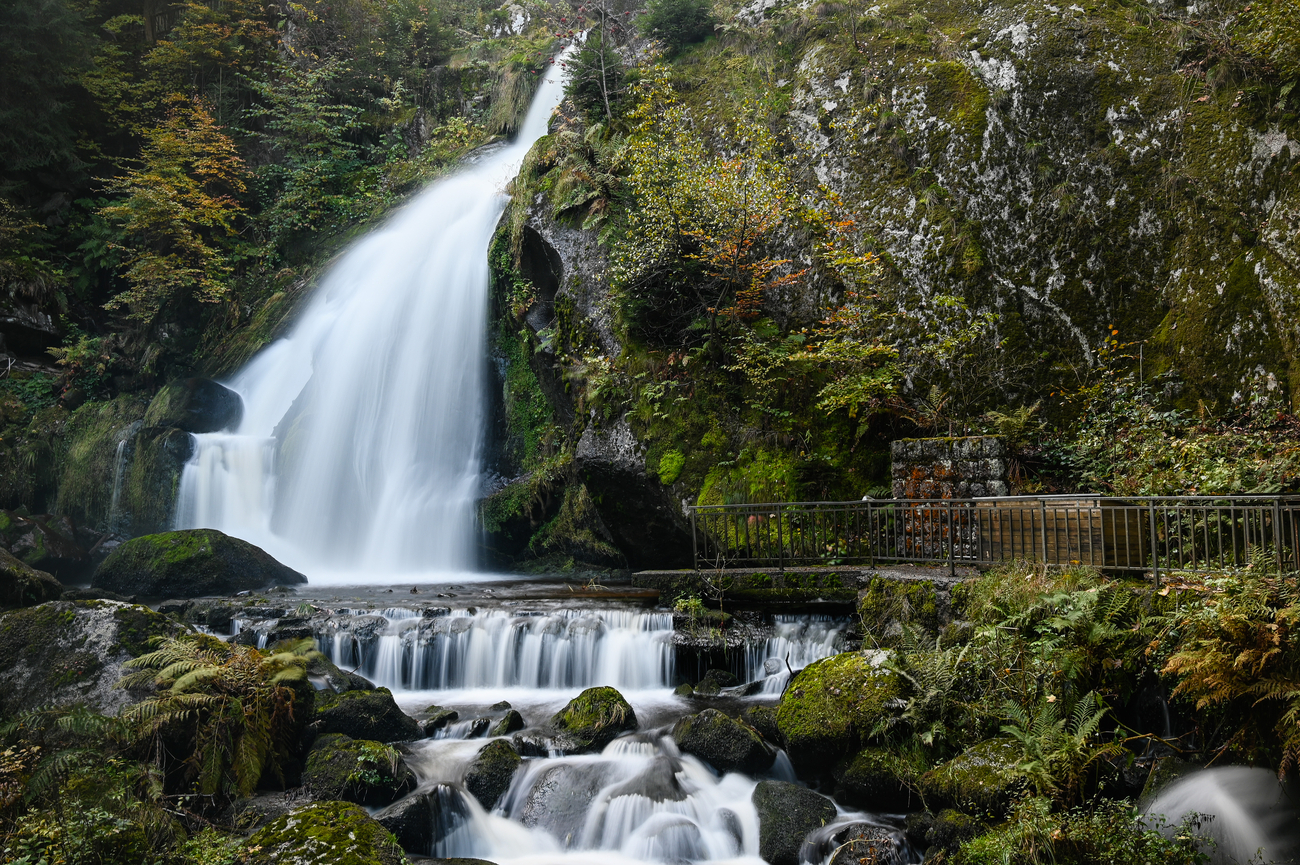
Morning: Triberg Waterfalls
The morning starts loud in the best way.
The Triberg Waterfalls (Triberger Wasserfälle) are the highest waterfalls in Germany, cascading a total of 163 meters over seven main drops. The Gutach River tumbles dramatically down through dense woodland, and the sound echoes through the valley long before you reach the entrance. Wooden bridges and well-maintained paths wind alongside the falls, giving you multiple viewing angles from close-up spray moments to elevated panoramic perspectives. The setting feels classic Black Forest: dark evergreens, moss-covered rocks and water that refuses to be subtle.
You’ll enter through one of the main ticket gates in Triberg town. Admission is required, and tickets can be purchased onsite or online in advance. Clearly marked trails allow you to choose your route. There are shorter loops if you want a quick highlight or a full ascent to the top platforms if you’re ready for a steady climb. Expect stairs. Good shoes are non-negotiable.
Schwarzwaldmuseum
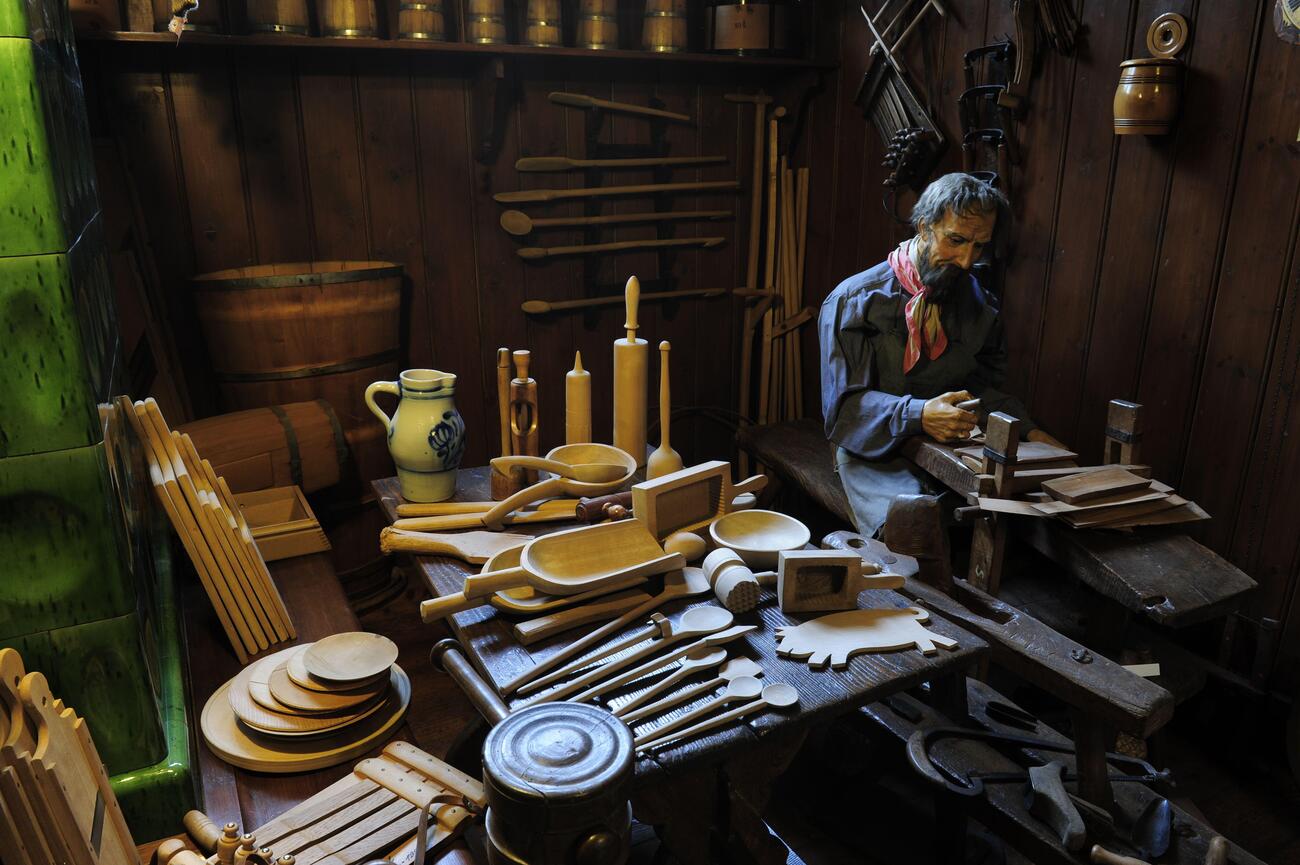
Just a few minutes on foot from the waterfalls’ entrance, the story continues indoors. Stroll into town and within 5 minutes, you’ll reach the Schwarzwaldmuseum. The shift is immediate: from rushing water and forest spray to curated heritage and regional identity.
Founded in 1936, the Schwarzwaldmuseum dives deep into what actually defines the Black Forest beyond the clichés. Inside, you’ll find traditional costumes with elaborate Bollenhut hats, historic clockmaking workshops, early phonographs, mining exhibits and displays on the region’s railway engineering and winter sports history. It’s layered and surprisingly broad with less souvenir-shop nostalgia, more cultural archive. The interiors are traditional and exhibition-focused, with rooms dedicated to craftsmanship, rural life and the evolution of tourism in the region.
If you want more than self-guided browsing, the museum offers guided tours by appointment in German, English, Italian, Spanish and French. Booking ahead allows for a tailored walkthrough of specific themes, whether that’s horology, regional folklore or Black Forest industry.
Blindensee
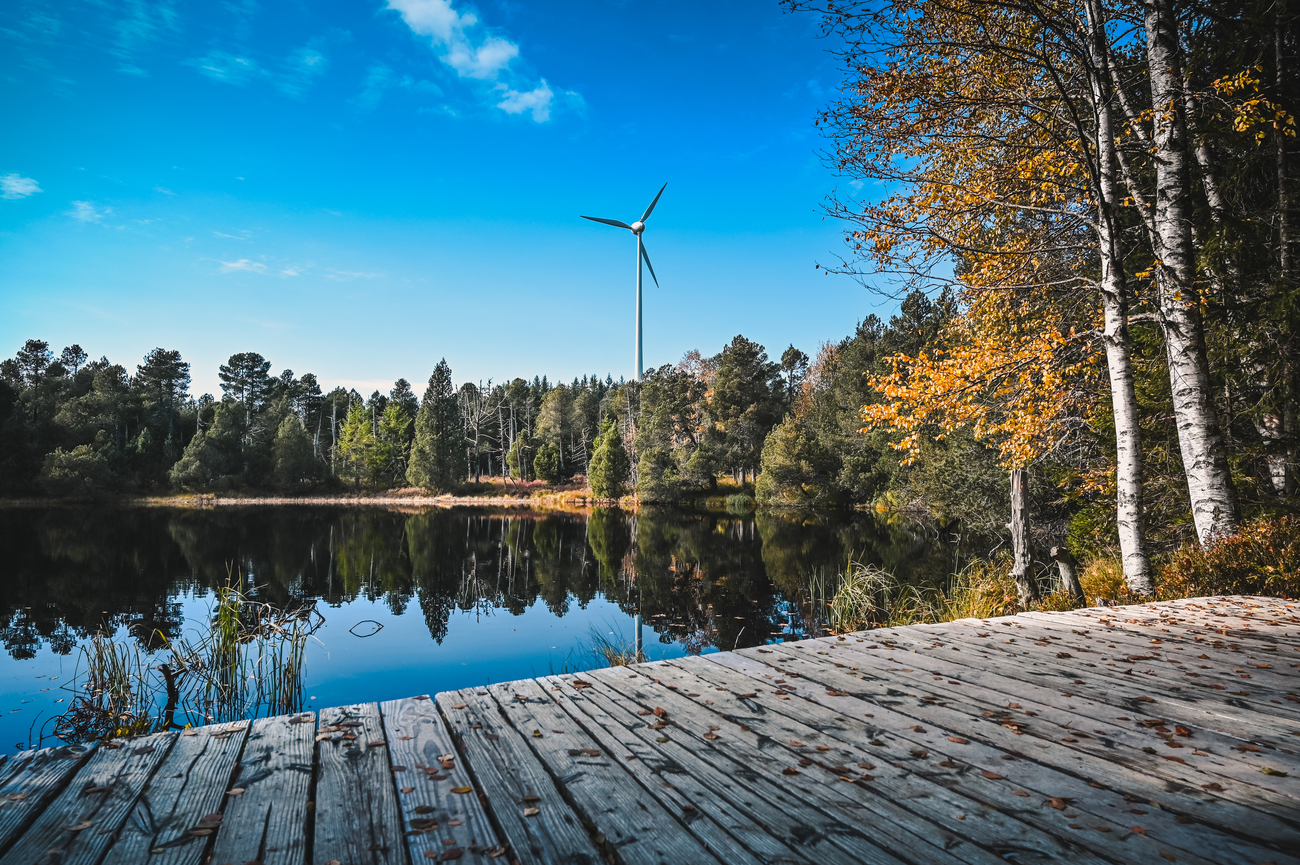
Leave Triberg behind and drive toward Schönwald. In about 15 minutes, park near the marked trail access for Blindensee. From there, it’s a gentle 15–20 minute forest walk along a well-signposted path. The trees thin slightly, the ground softens underfoot and then the lake appears.
Blindensee is a high moor lake formed thousands of years ago, sitting calmly at around 1,090 meters above sea level. Unlike the dramatic energy of Triberg Waterfalls, this place is pure stillness. The water is often dark and mirror-like, reflecting the surrounding pines and sky with almost suspicious clarity. Wooden boardwalk sections guide you across the sensitive moorland terrain, protecting the fragile ecosystem while giving you full access to the view.
Afternoon:
Schiltach Altstadt
Blink and you might think you’ve stepped into a perfectly preserved 16th-century postcard.
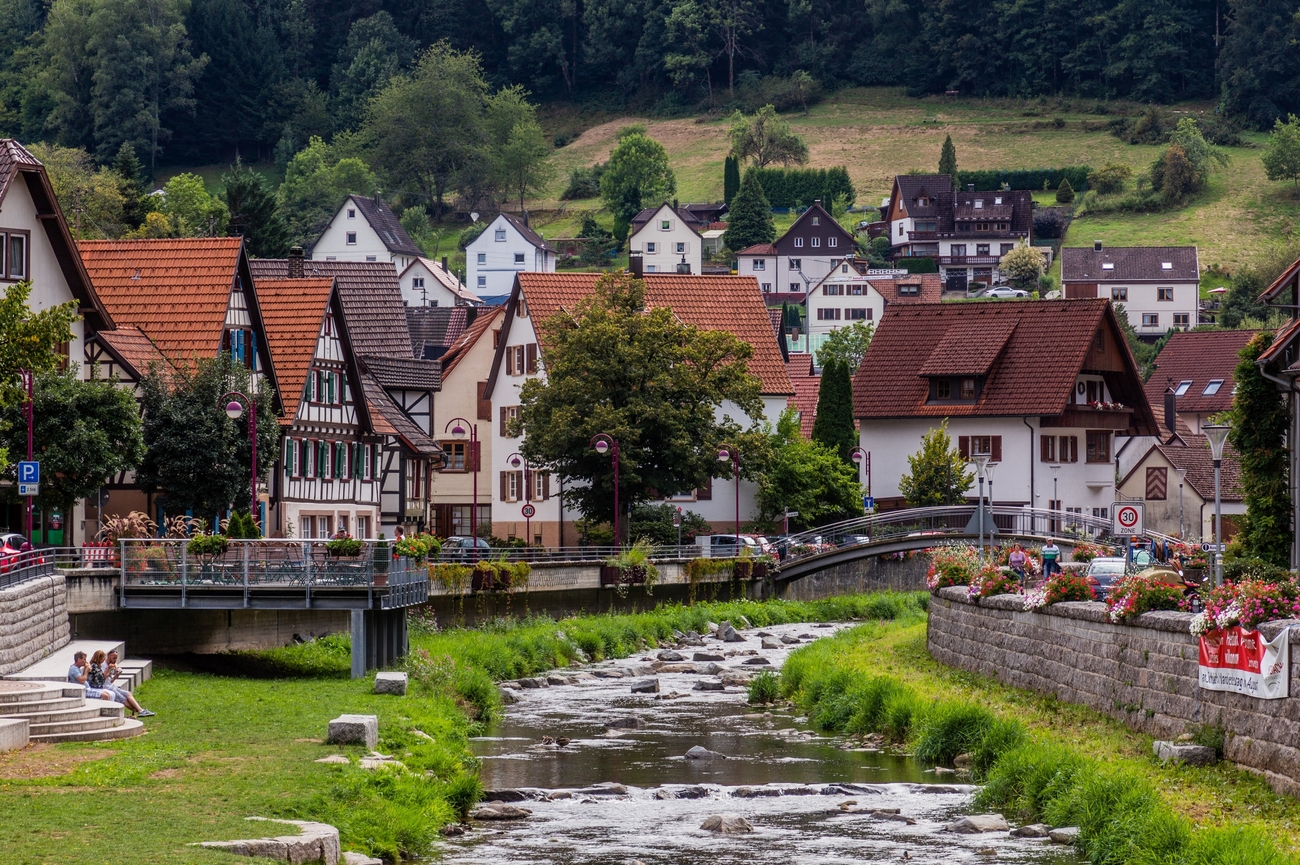
From Blindensee, let the road carry you downhill toward the Kinzig Valley. Forest gives way to rooftops and within about 30 minutes, Schiltach appears tucked between hills like it’s been carefully placed there.
Schiltach’s Old Town feels intimate and architectural at the same time. Timber-framed houses lean gently over cobblestone lanes, their wooden beams dark against pastel facades. The triangular Marktplatz forms the centerpiece, framed by 16th- and 17th-century buildings that once belonged to merchants and craftsmen. Schiltach prospered through timber rafting along the Kinzig River and that wealth shows in the intricate woodwork and preserved guild houses. It’s detailed without being flashy.
There’s no entry gate here; the Altstadt is open-air and easy to explore at your own rhythm. Wander through the narrow alleys, cross the small bridges over the river and circle back to the square.
Schüttesäge Museum
From Schiltach’s Marktplatz, follow the Kinzig River for a few easy minutes on foot, the sound of water guides you straight to the Schüttesäge Museum.
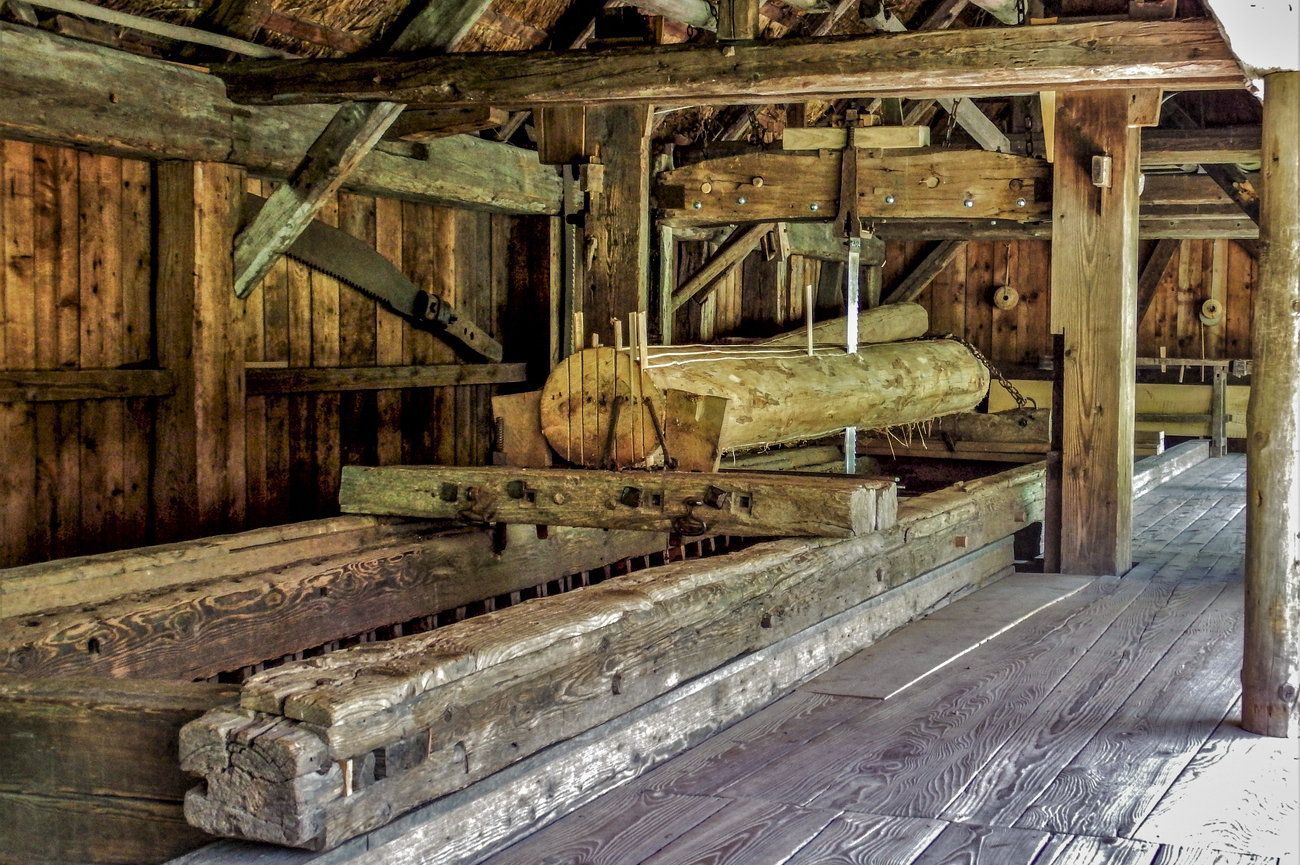
The Schüttesäge is a preserved 16th-century water-powered sawmill, one of the oldest of its kind in the region. Timber was once floated down the Kinzig River and mills like this transformed raw logs into the beams that shaped towns like Schiltach. Inside, the mechanisms are still intact like wooden gears, water channels and blade systems driven by the river’s force. It’s industrial history, but in a way that feels tactile and grounded. You can see how precision and craftsmanship became embedded in Black Forest identity long before cuckoo clocks made headlines.
During the summer months, the museum offers a free public tour every Friday at 3 pm, with no prior registration required. The tour doesn’t just stay inside the mill; it also weaves through parts of the town, connecting the machinery to Schiltach’s broader economic and cultural story.
Dorotheenhütte Wolfach
From timber to fire, craftsmanship shifts mediums.
Follow the Kinzig River out of Schiltach and let the valley guide you south. Within about 15 minutes, signage for Dorotheenhütte Wolfach appears and the factory complex comes into view just outside the town center.
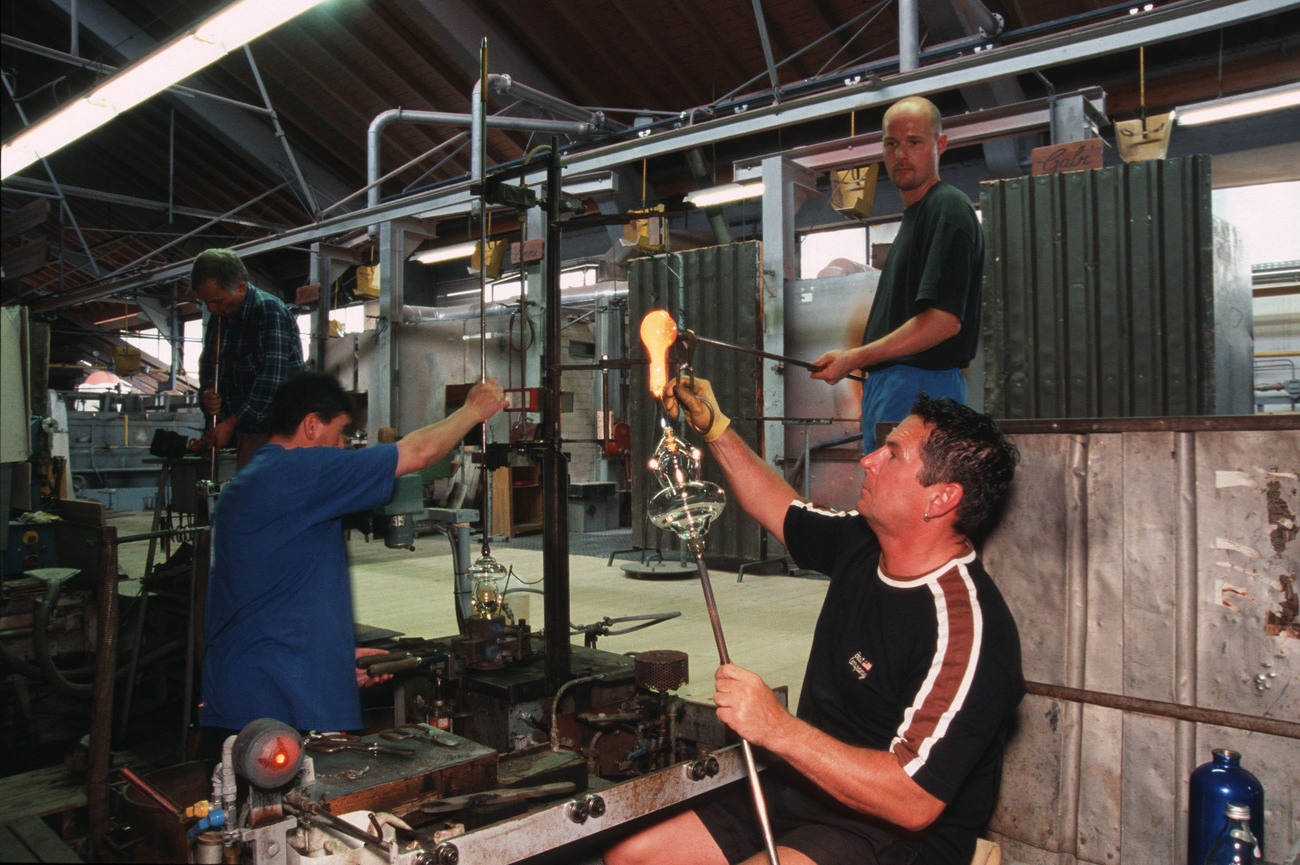
Founded in 1947, Dorotheenhütte is the region’s only remaining traditional mouth-blown glass factory. Inside, furnaces glow at over 1,000°C while artisans shape molten glass with steady breath and controlled rotation. You’ll watch vases, bowls and intricate crystal pieces take form in real time. The adjoining museum section displays historic tools, ornate cut crystal and examples of traditional Black Forest glass artistry that reflect decades of precision.
You’re free to explore independently during opening hours, observing the glassblowers from designated viewing areas. If you’d like deeper context, guided tours are available for an additional fee, offering detailed explanations of the production process, craftsmanship technique and the history of glassmaking in the region.
Evening:
Museum in the castle Wolfach
When a town keeps its stories, it puts them in a castle. Leave Dorotheenhütte and follow the flow of Wolfach back toward its historic core. As the streets narrow slightly and the buildings take on that classic valley-town charm, Schloss Wolfach appears above you, composed, pale, and quietly authoritative.
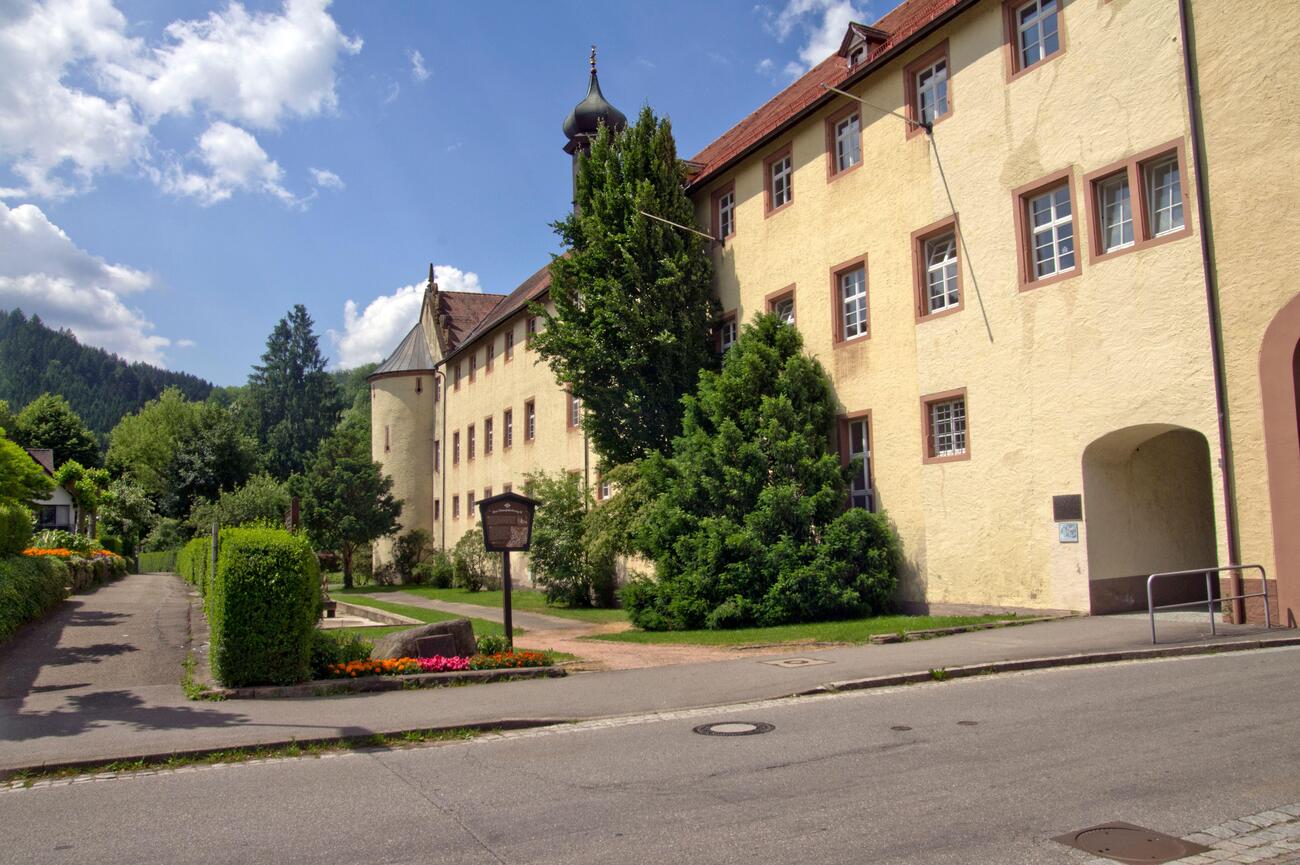
Inside, the Museum im Schloss Wolfach unfolds through former residential rooms of the Fürstenberg family. The setting matters with thick masonry walls, arched ceilings and traditional layouts remind you this was once lived-in power. The exhibitions focus on the Kinzig Valley’s development: mining history, forestry traditions, regional costume, local craftsmanship and the economic systems that shaped the surrounding Black Forest towns. After seeing sawmills and glassblowers earlier, the bigger historical framework clicks into place here.
Husen
Castle
Because one castle is never enough, especially when it comes with a climb.
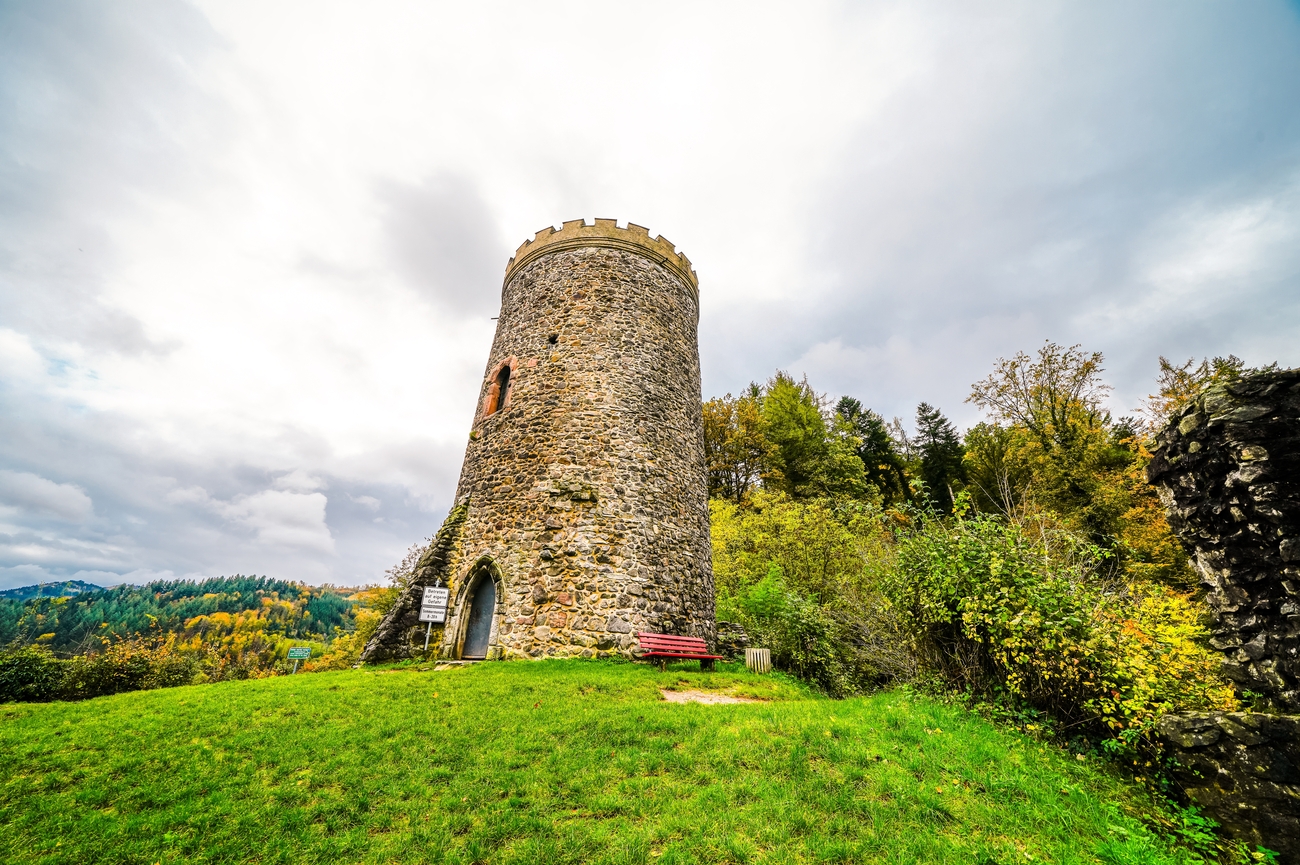
Roll out of Wolfach and stay with the rhythm of the Kinzig Valley. Within about 15 minutes, Hausach appears ahead and above it, the unmistakable silhouette of Burg Husen crowns the slope. Once you’re in town, follow the signs toward the castle trail.
Dating back to the 13th century, Husen Castle once controlled movement through this stretch of the valley. What remains today is a striking ruin: stone curtain walls, open courtyards and a central tower you can still climb. The spiral staircase inside is narrow and medieval in vibe, sturdy shoes recommended, but the summit platform delivers full panoramic payoff. From here, the Kinzig River traces through the valley below, rooftops cluster tightly together and forested hills layer into the distance.
There’s no ticketed entrance or structured route. You wander freely, reading the informational boards that outline the castle’s strategic role and gradual transformation into a historic landmark.
Stand at the edge of the tower and let the day settle. After waterfalls, craft traditions and museum halls, this ending strips everything back to stone and sky. The Black Forest doesn’t need grand finales. It just needs elevation.
Day 3 - Black Forest Tour Map
Day 4
Morning: Freiburg Cathedral
Last day. No slowing down. Freiburg sets the tone immediately. The spire of Freiburger Münster (Freiburg Cathedral) makes navigation easy. It rises above the old town like a stone compass needle.
Construction of the cathedral began around 1200 and its 116-meter Gothic tower is often considered one of the most beautiful in Europe. The openwork spire is what stops people mid-step. Inside, the atmosphere shifts to filtered light and quiet detail: medieval stained glass windows, carved choir stalls and a high altar that anchors the vast nave. Despite its scale, it feels human, not overwhelming, but precise.
You can explore the cathedral freely during opening hours. If you’re ready for a climb, the tower is open to visitors (weather permitting). The staircase is narrow and steep, but the panoramic view from the top delivers a full sweep of Freiburg’s rooftops, the Rhine Valley and even the distant Vosges on clear days.
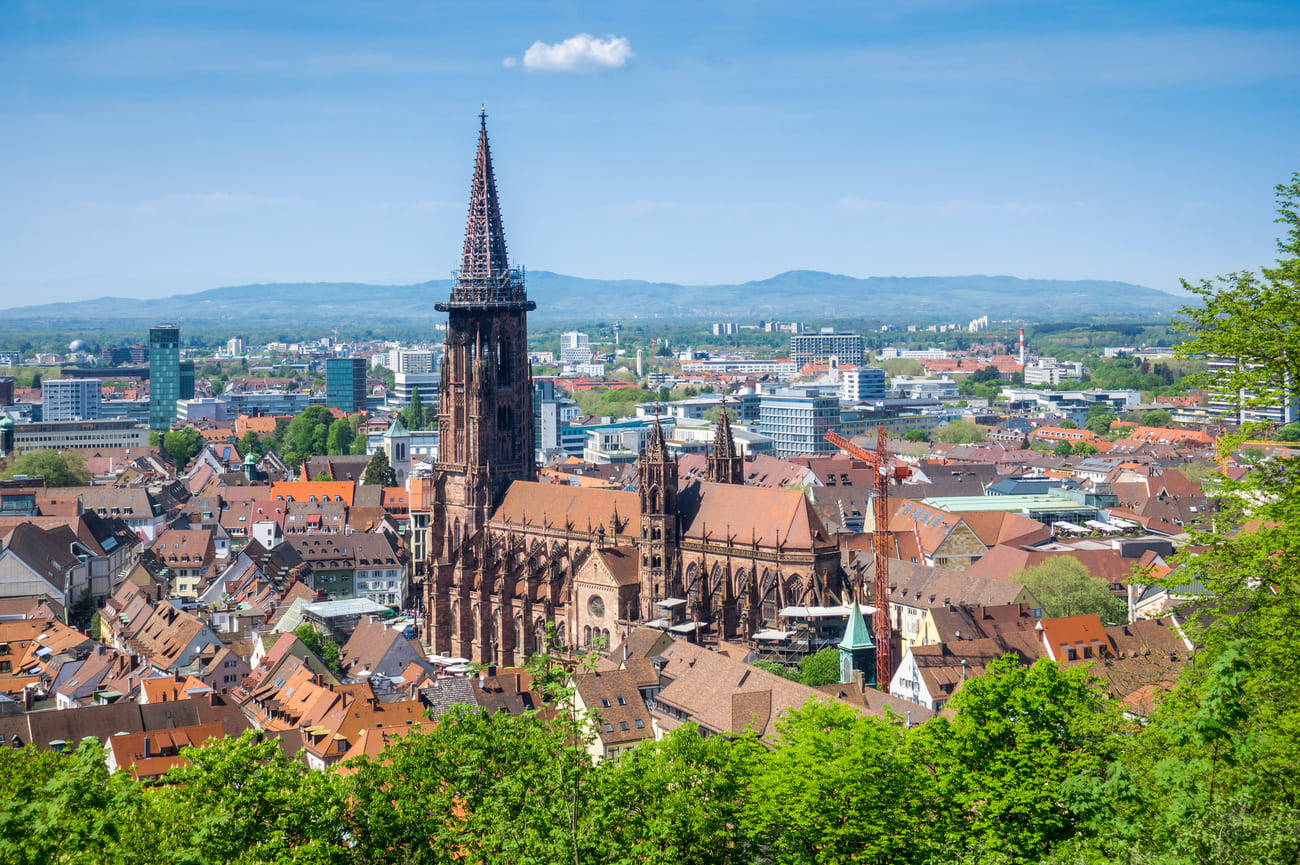
Münsterplatz
You don’t really “go” to Münsterplatz. You’re already in it the moment you exit Freiburg Cathedral. The square wraps around the Münster like a wide embrace, instantly shifting the mood from hushed Gothic interiors to open-air energy.
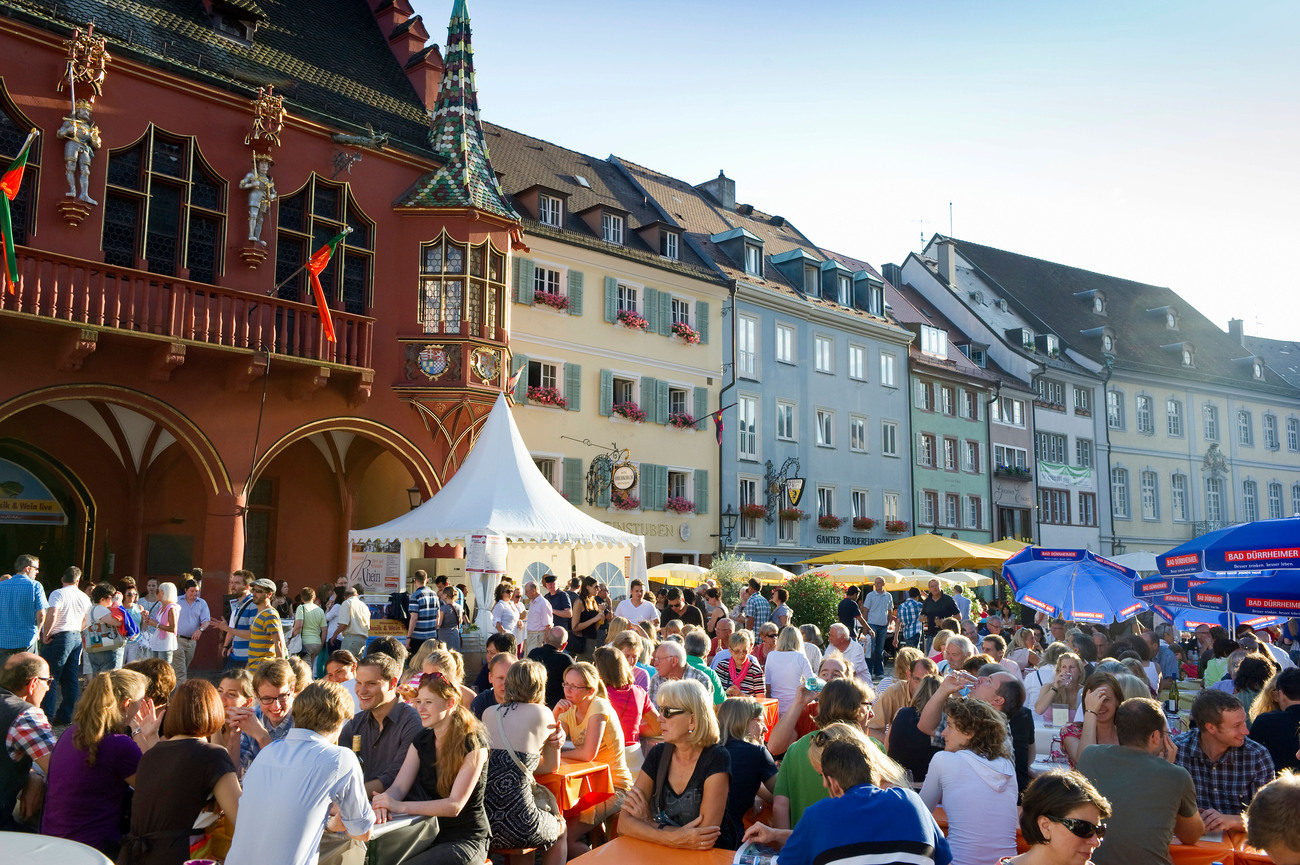
Münsterplatz has been Freiburg’s social and commercial heart for centuries. Colorful townhouses with sloped roofs and decorative details line the perimeter, including the striking red Historisches Kaufhaus on the south side. On most mornings (except Sundays), the square hosts Freiburg’s famous farmers’ market where regional vendors sell fresh produce, flowers, cheeses, breads and Black Forest specialties.
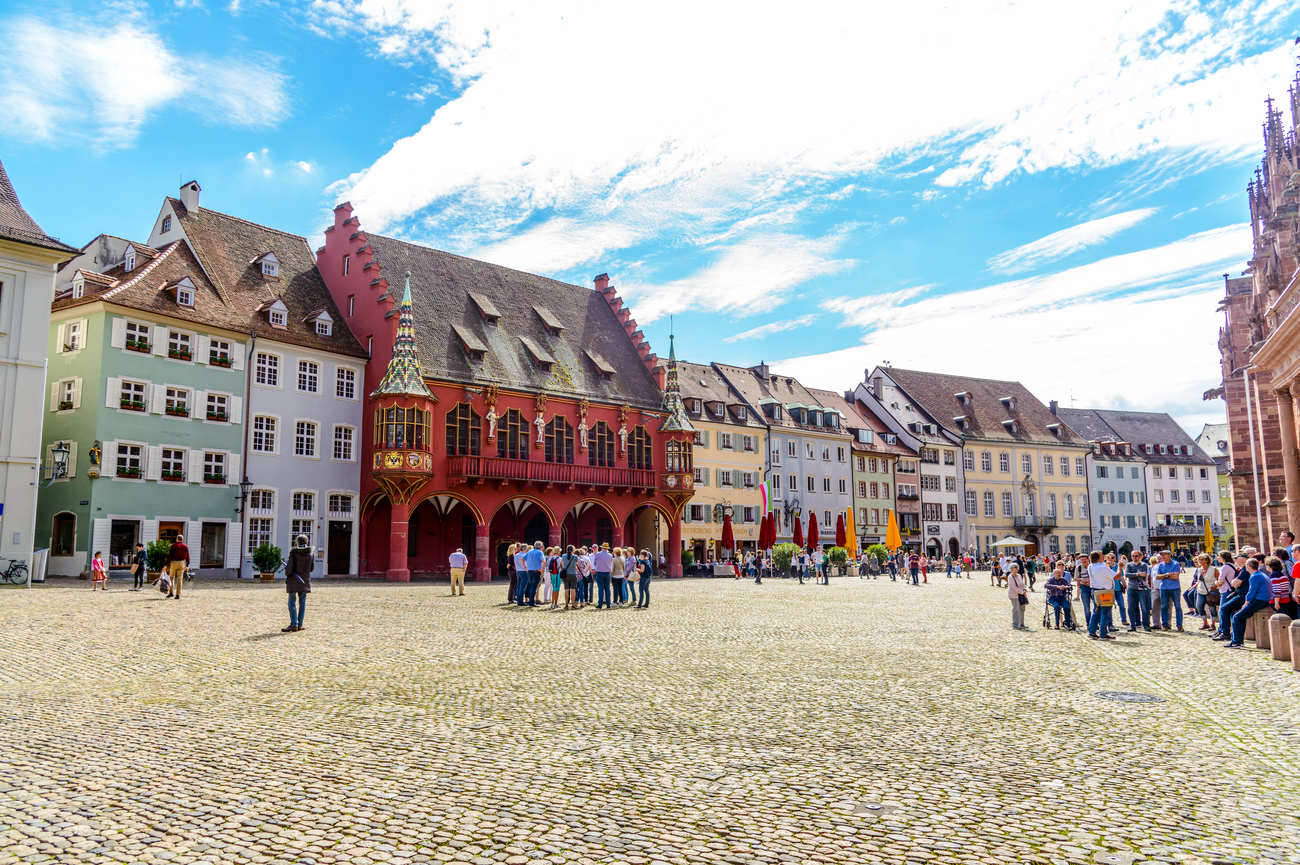
Historical
Merchants' Hall
Now turn toward the building that refuses to blend in. From anywhere in Münsterplatz, your eyes naturally land on it, the deep red facade with ornate balconies and sculpted figures. Just a few steps along the southern edge of the square stands the Historisches Kaufhaus (Historical Merchants’ Hall).
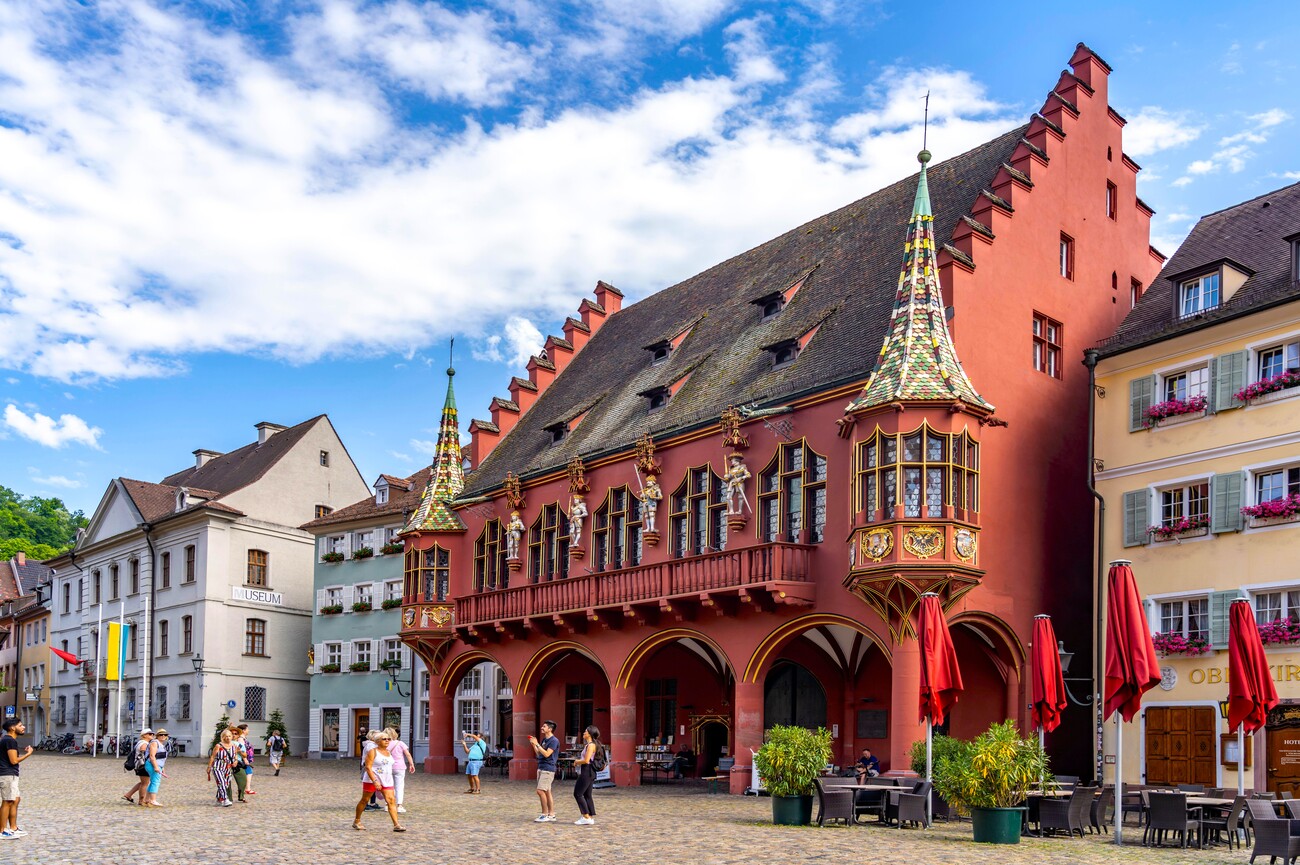
Built in 1520–1532, the Merchants’ Hall once served as Freiburg’s customs house and trading center. Goods entering the city were taxed and regulated here, making it a hub of economic power. The facade is richly decorated with statues of Habsburg rulers, a reminder that Freiburg once sat under Austrian influence. Step closer and you’ll notice the intricate bay windows, patterned roof tiles and detailed coats of arms. It’s Renaissance confidence carved into architecture. The interior today functions primarily as an event venue for receptions and cultural gatherings rather than a daily exhibition space.
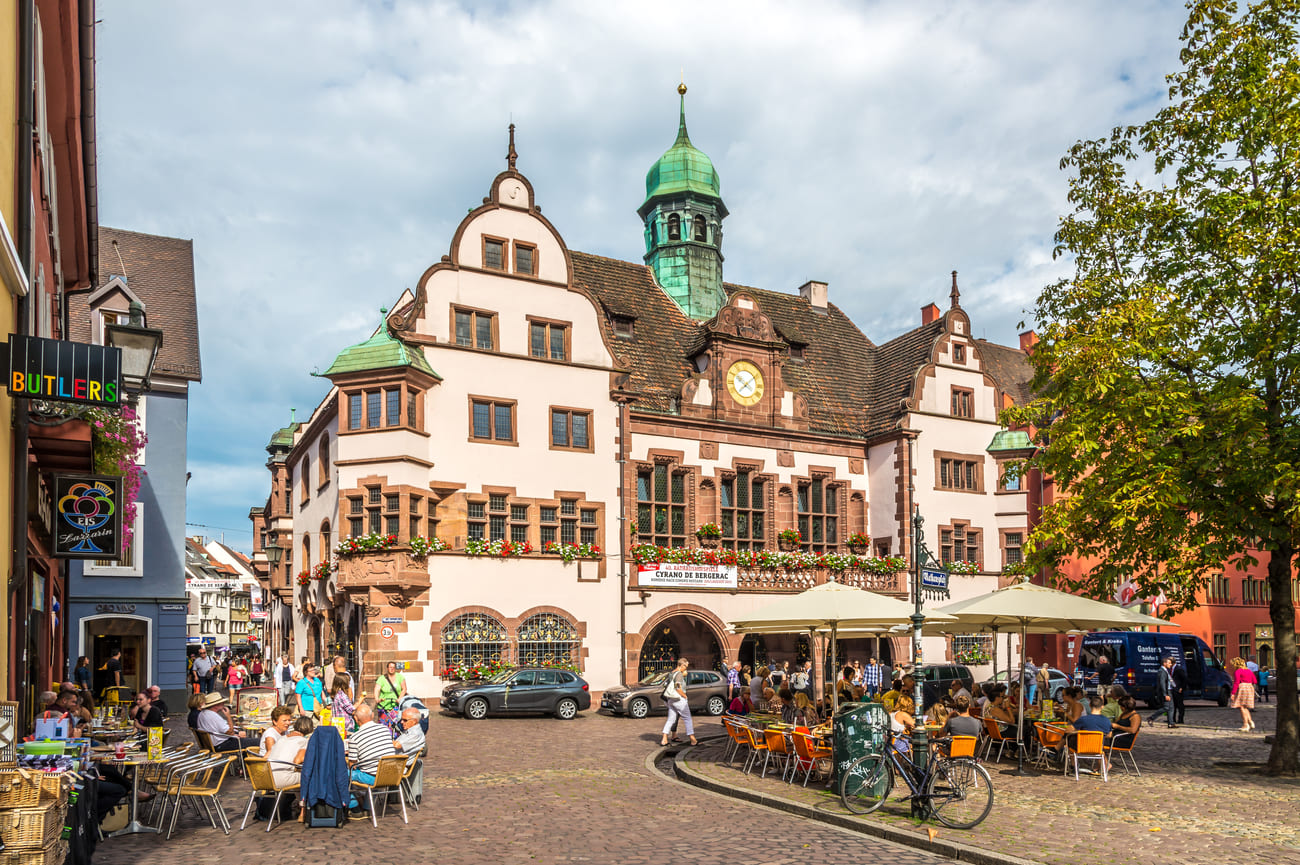
Rathausplatz (Town Hall Square)
Just a short walk from Münsterplatz, Rathausplatz is Freiburg’s civic heart, a calm, open square framed by the Old Town Hall and the New Town Hall. This is where the city shifts from medieval charm to everyday life: people pause at café terraces, bicycles glide past, and the façades give you a clear sense of Freiburg’s proud, well-run character. Take a moment to look up at the architectural details and enjoy the contrast between the historic buildings and the modern rhythm of the centre before continuing onward.
Afternoon: Einkaufszentrum Schwarzwald City
Freiburg
Leave Münsterplatz behind and follow the pedestrian streets east toward the city’s contemporary edge. After a quick 5-minute drive, you’ll arrive at Einkaufszentrum Schwarzwald City Freiburg.
Opened in 1978 and modernized over the years, Schwarzwald City is one of Freiburg’s main urban shopping centers. Inside, you’ll find a mix of fashion retailers, lifestyle brands, specialty stores and everyday essentials spread across multiple levels. It’s compact compared to mega-malls in larger German cities, but that’s part of the appeal. It’s easy to navigate, efficient and centrally located. Large glass façades keep the interior bright and the layout is straightforward.
Schauinslandbahn
Time to leave the city grid and aim higher.
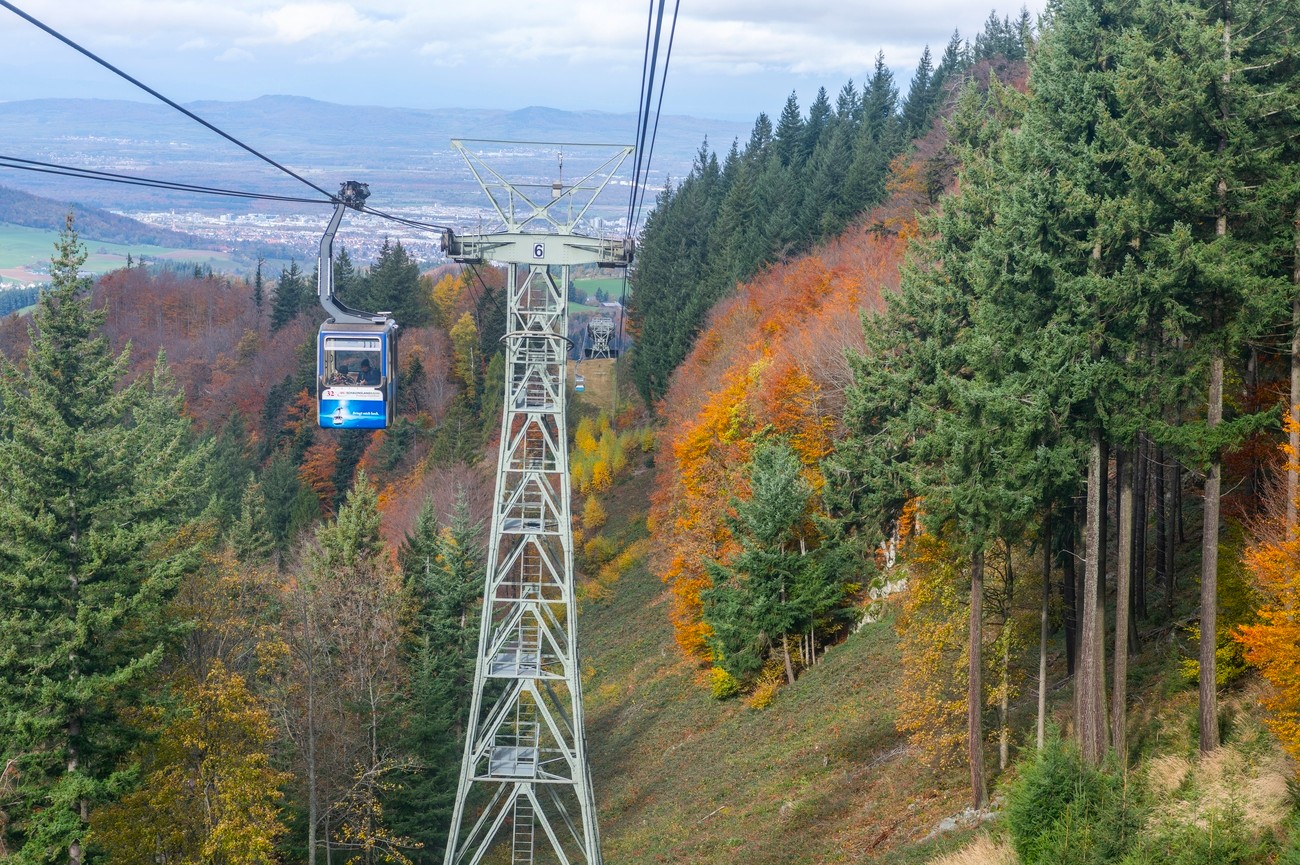
Ease out of central Freiburg and let the streets gradually thin toward the southern edge of town. As the buildings give way to open slopes and vineyards, you’ll start spotting signs for Schauinslandbahn. Within about 20 minutes, the valley station comes into view and above it, the cable cars glide steadily up the mountainside.
The Schauinslandbahn is Germany’s longest loop cable car, stretching about 3.6 kilometers to the summit of Mount Schauinsland (1,284 meters). The ride takes around 20 minutes, rising smoothly over forest clearings and rolling hills. Freiburg shrinks beneath you, the Rhine Valley opens outward and on clear days, you can see as far as the Vosges in France, sometimes even the distant Swiss Alps.
Tickets are available at the valley station or online in advance. Cabins run continuously during operating hours, making the experience flexible and easy to time. Once at the top, clearly marked trails lead to panoramic viewpoints and gentle hiking loops. After four days of valleys and villages, this lift gives you one final elevated perspective before the journey closes.
Schauinsland
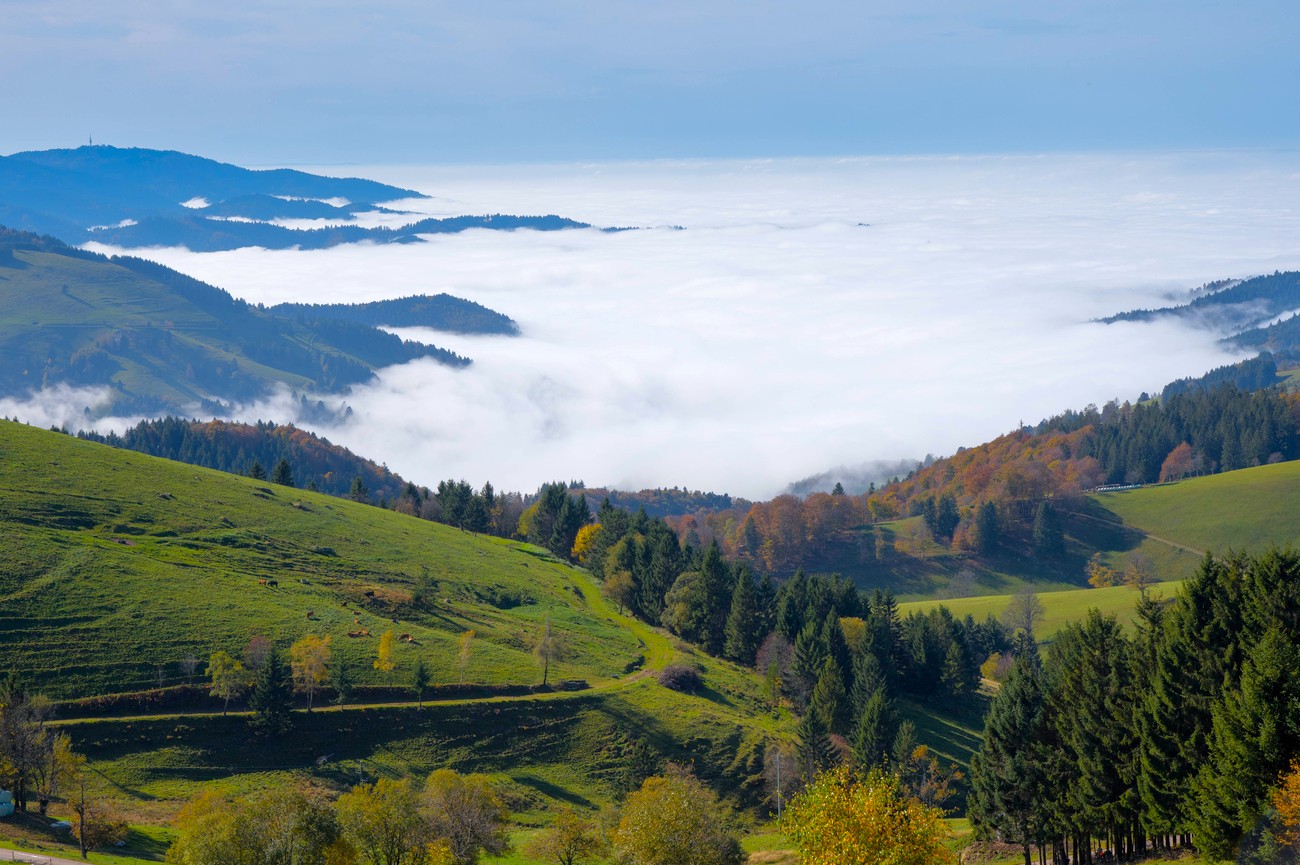
The doors open at the mountain station, and you’re officially on Schauinsland, Freiburg’s high-altitude escape at 1,284 meters. No long transfer, no complicated route.
Schauinsland translates to “look into the land,” and the name is accurate. From the main viewing points near the summit, the panorama unfolds across the Rhine Valley, the Vosges Mountains in France, and on exceptionally clear days, even the Swiss Alps. This mountain also carries a layered past. It was once a significant silver mining site and remnants of that history remain scattered across the terrain. The open grasslands near the summit contrast beautifully with the darker forest slopes below.
You can follow the Panoramaweg, a manageable circular trail offering wide-angle views without intense elevation gain. If you want something longer, several well-marked hiking routes branch out from the summit area.
Titisee-Neustadt
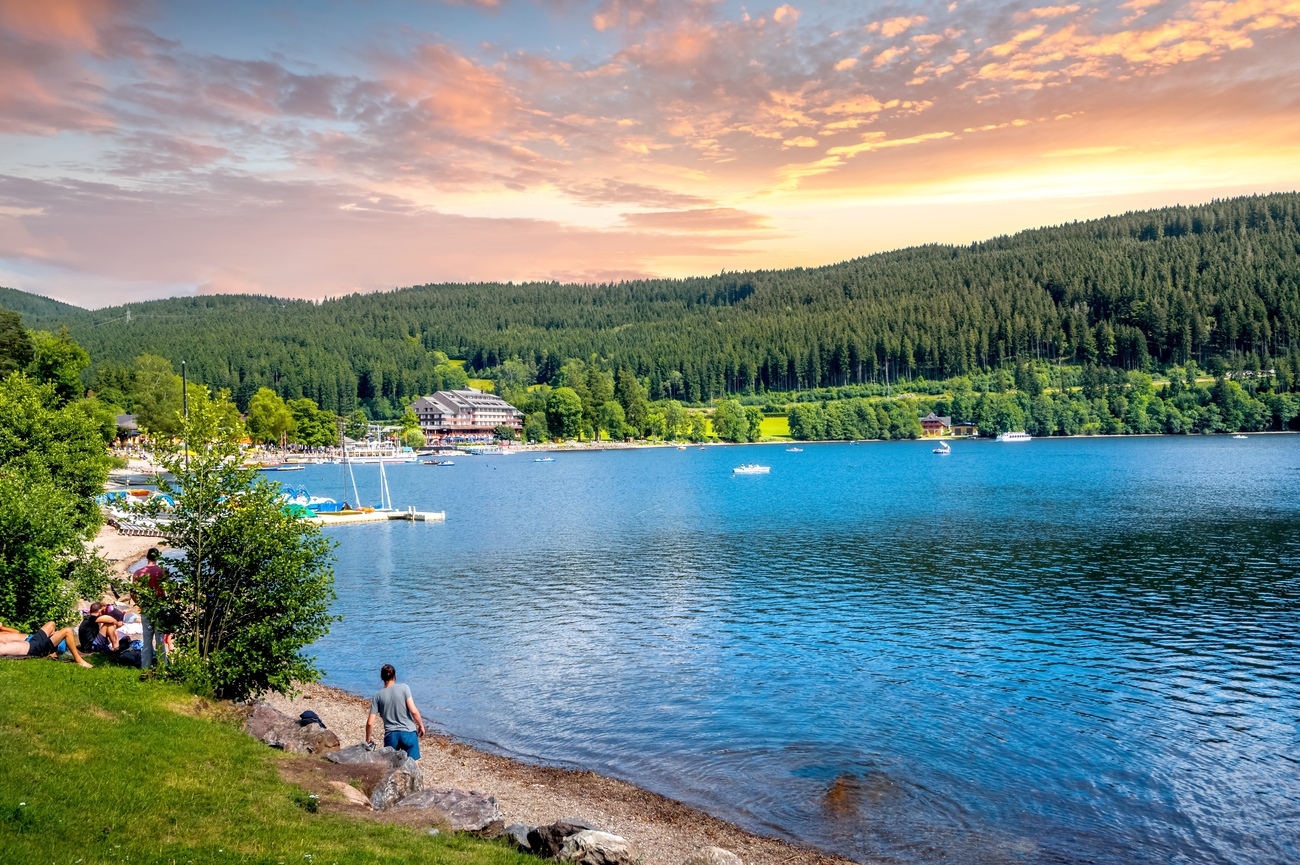
In about 40–45 minutes, forested hills open up and the water of Titisee begins to appear between the trees. Welcome to Titisee-Neustadt.
Titisee is one of the most famous lakes in the Black Forest, formed by a glacial moraine during the last Ice Age. The lake stretches about 2 kilometers long, framed by wooded slopes and walking promenades. The water is clear, often reflective and surprisingly bright when the light hits it right. The lakeside promenade is lively but relaxed, a mix of boutique shops, boat docks and open walking paths. You can rent paddle boats, take a short sightseeing cruise across the lake or simply circle parts of the shoreline on foot.
Evening: Palais Vital
End where the Black Forest does what it does best, water, warmth and a little quiet luxury.
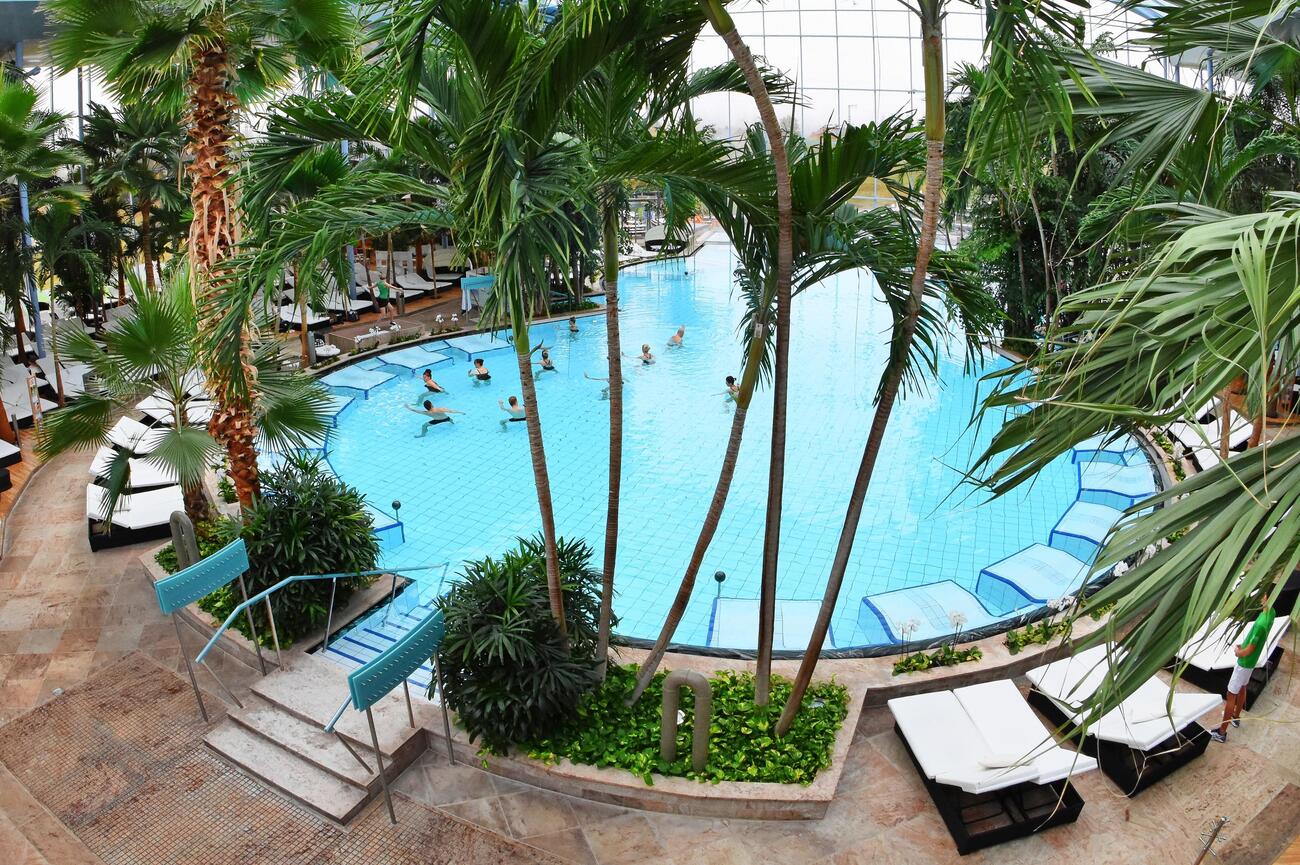
From the Titisee promenade, it’s just a 5-minute drive to Badeparadies Schwarzwald, home to the adults-only Palais Vital spa area. As you leave the lakeside bustle, the palm-tree-lined glass dome of the complex comes into view.
Palais Vital is the refined, 16+ wellness section of Badeparadies, designed for calm over chaos. Inside, you’ll find multiple themed saunas inspired by global spa traditions from Moroccan-style steam baths to Finnish saunas and gemstone-infused relaxation rooms. Warm lagoon pools sit beneath a glass dome, especially atmospheric after dark when the lighting softens and the outside world fades away. Scheduled Aufguss ceremonies take place throughout the evening, where sauna masters elevate the experience with essential oils and heat rituals.
You can purchase entry tickets online in advance or at the reception desk, with time-based options depending on how long you plan to stay. Sauna access follows traditional German textile-free etiquette.
Ravenna Gorge
As evening settles over Titisee-Neustadt, follow the road toward Breitnau. The lake slips out of sight, the trees close in and after 15 minutes, you’ll find the marked trail leading into Ravennaschlucht.
Ravennaschlucht is a narrow, forested ravine carved over centuries by the Ravenna stream, stretching roughly 4 kilometers through a deep side valley of the Höllental. The path follows the water closely, crossing wooden footbridges and passing small waterfalls that tumble over moss-covered rock. The air is noticeably cooler here and the sound of flowing water replaces everything else.
Then comes the architectural moment. Rising 36 meters above the gorge and stretching about 225 meters long, the Ravenna Viaduct carries the historic Höllentalbahn railway across the valley. Built in the late 19th century, its stone arches create a powerful contrast against the wild forest backdrop.
Let this be the final frame. After four days of thermal baths, mountain summits, glass furnaces, castles, lakes and cathedrals, the journey closes with water, stone and forest light fading gently overhead. No grand performance. Just the Black Forest, exactly as it is.
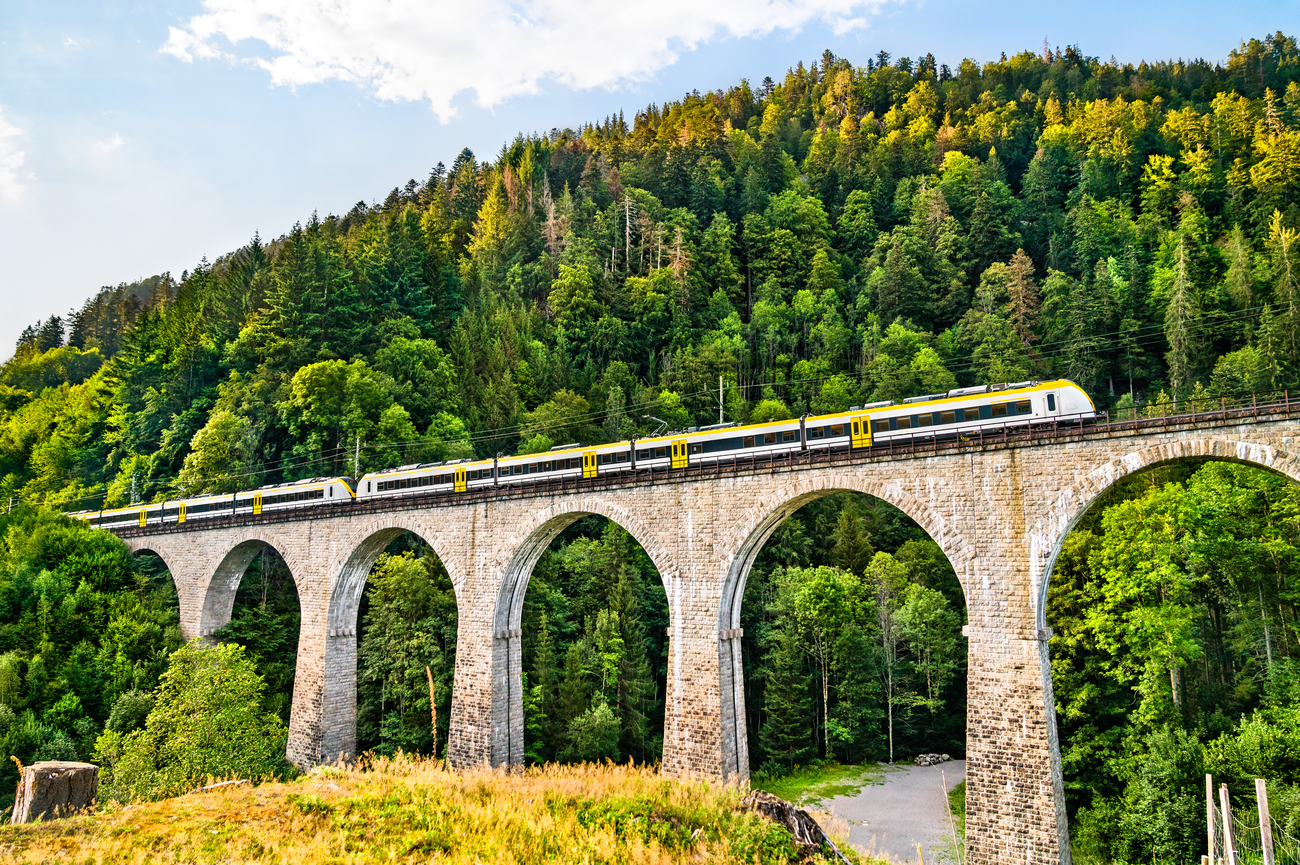
Day 4 - Black Forest Tour Map
Other
Things to Do in the Black Forest
Think you’ve “done” the Black Forest? Not even close. Most travelers skim the surface. A lake, a spa, a waterfall, done. But the Schwarzwald isn’t a checklist destination. It’s layered. Refined in some corners, wildly untamed in others. And if you lean into it properly, it delivers experiences that feel personal, elevated and quietly luxurious. Here’s where to go next.
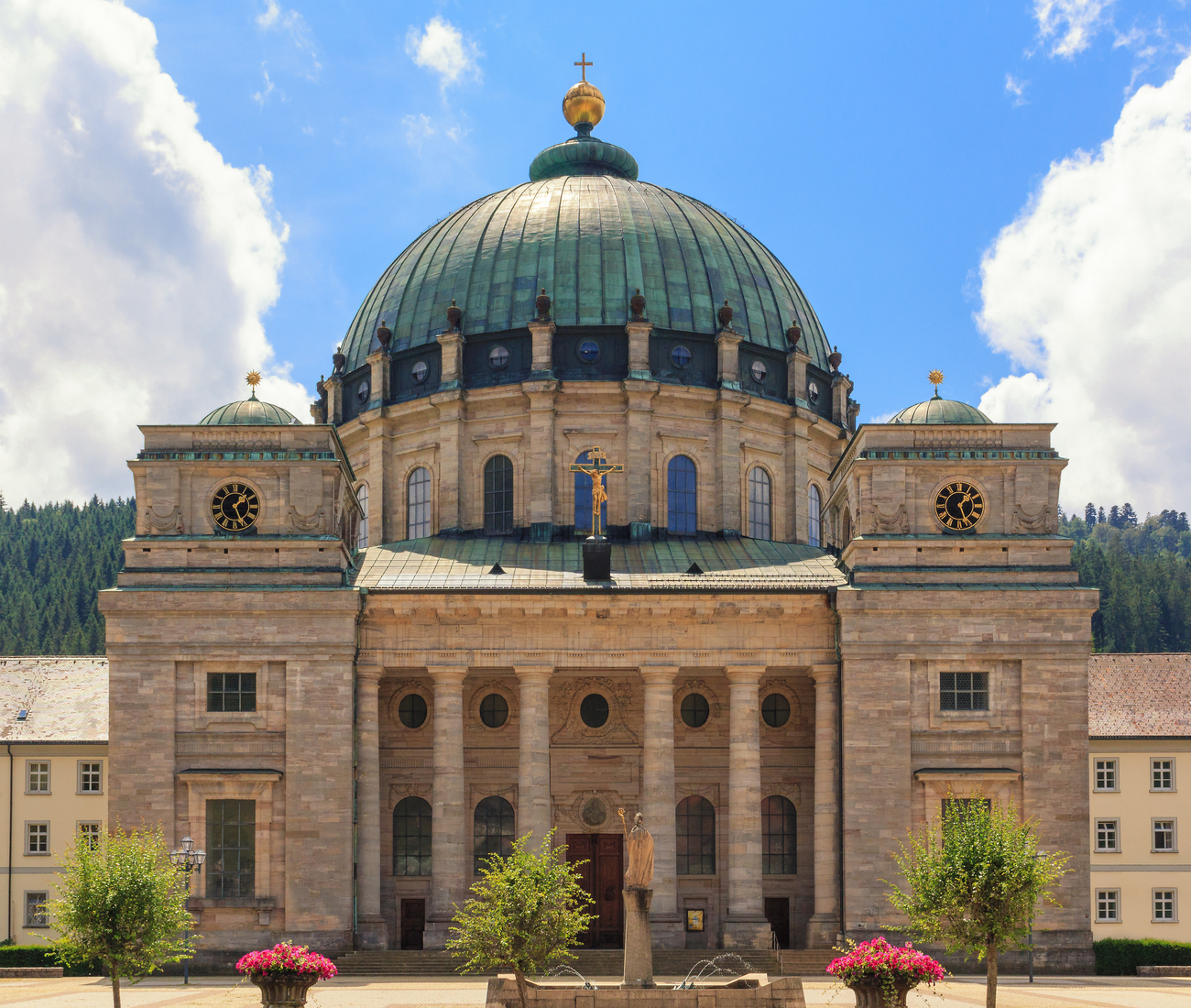
- Dom St. Blasien: This one feels almost unreal. A massive white-domed cathedral rising out of dense forest hills like someone misplaced Rome in the Schwarzwald. The Dom St. Blasien boasts one of the largest domes north of the Alps and stepping inside is a full architectural mic drop. The interior is bright, grand and symmetrically flawless with clean neoclassical lines, towering columns and a scale that commands silence. This was originally part of a Benedictine monastery complex. The cathedral was rebuilt in the 18th century after a devastating fire. What stands today is a testament to ambition.
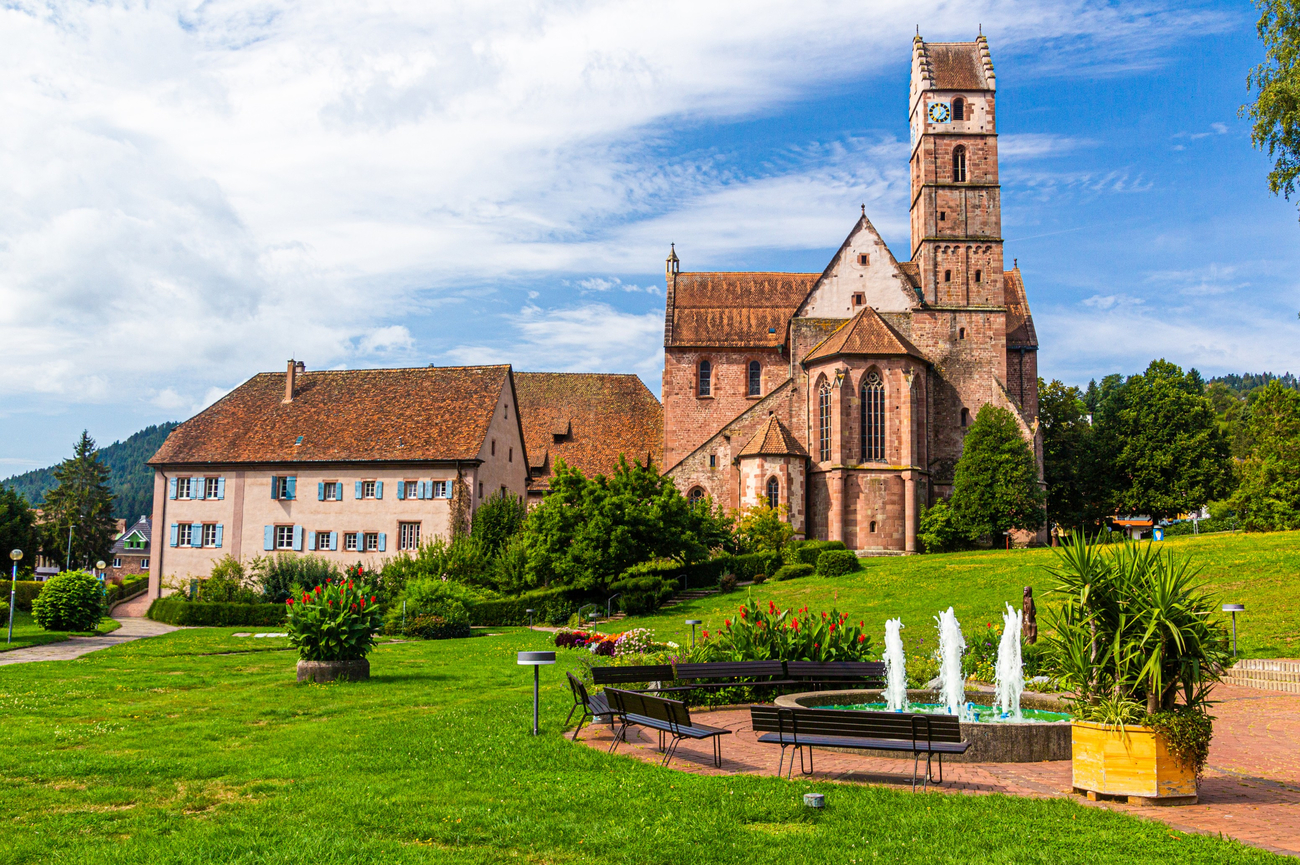
- Kloster Alpirsbach: Kloster Alpirsbach is grounded and Romanesque. Built in 1095, this monastery is all about stone, shadow, and structure. The red sandstone walls and rounded arches create a calm, almost meditative atmosphere. The monastery church itself carries centuries of layered history from Benedictine origins to later Protestant use after the Reformation. You can see those shifts in the architectural details if you look closely.
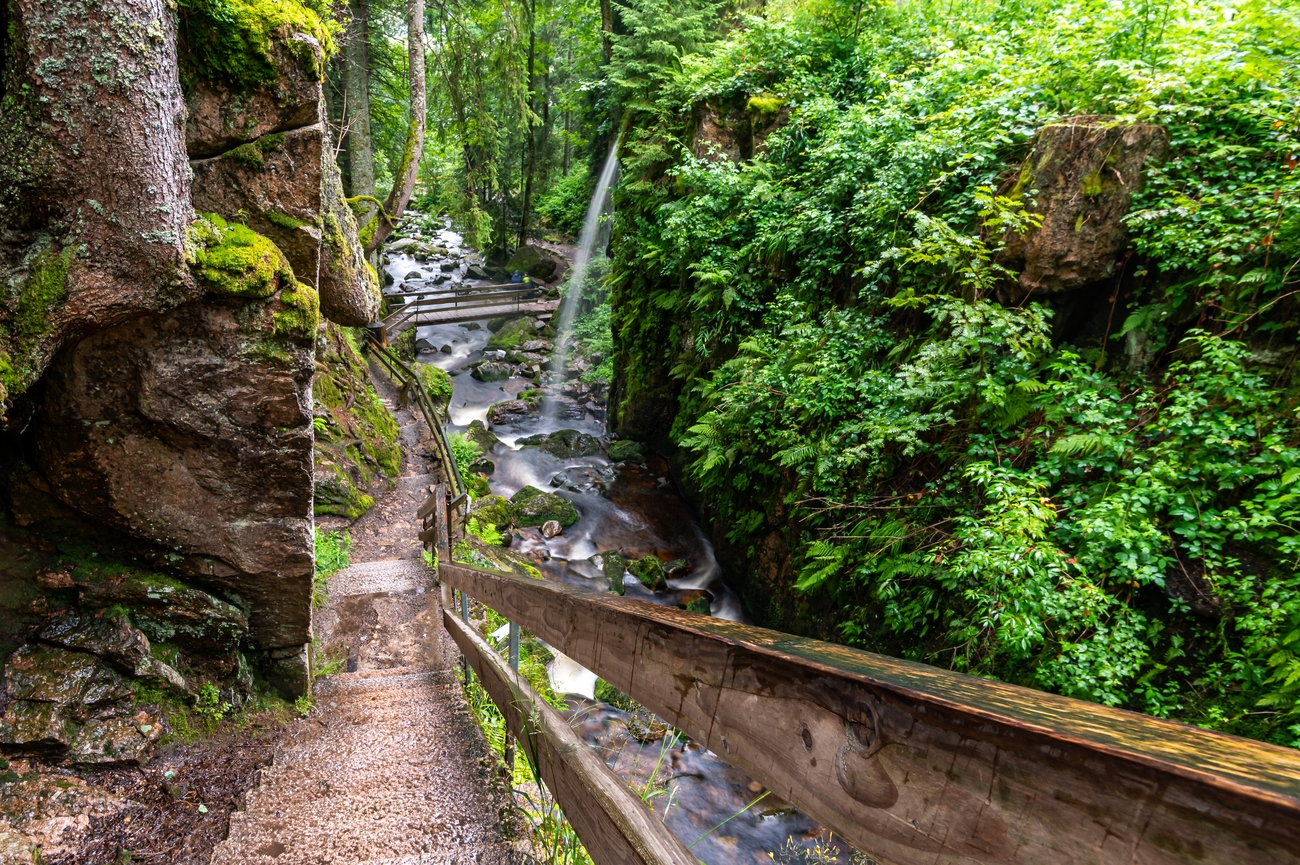
- Menzenschwander Waterfall: Less famous than Triberg. More intimate. Menzenschwander Waterfall sits quietly in a southern Black Forest valley near Feldberg and that’s exactly its appeal. You reach it via a short, manageable forest walk. The waterfall splits into two main cascades, dropping around 30 meters over layered rock. Moss, pine and filtered sunlight create a softer kind of drama.
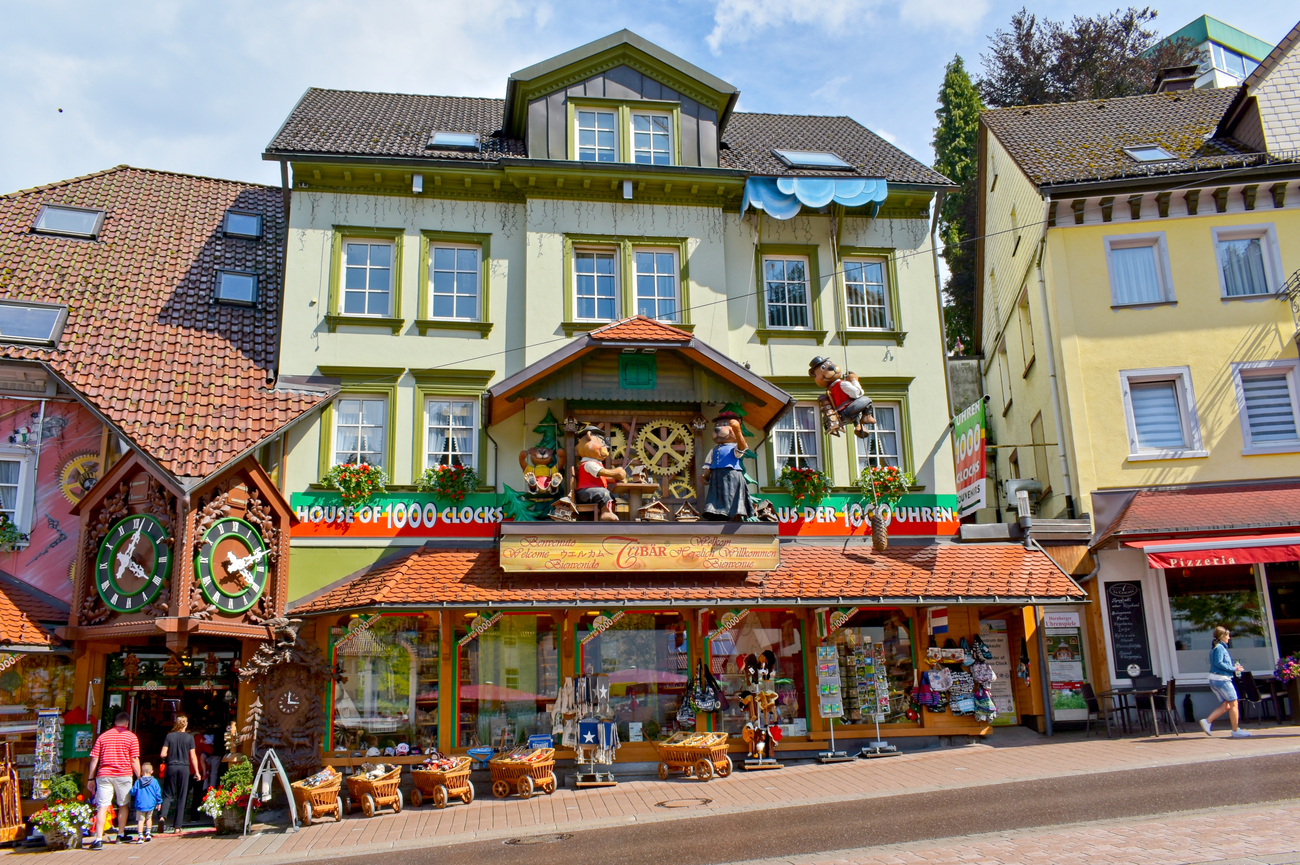
- House of 1000 Clocks: Yes, it sounds touristy. But lean into it. The House of 1000 Clocks in Triberg is an unapologetic celebration of Black Forest horology. Giant cuckoo clocks outside. Walls covered in mechanical precision inside. It’s maximalist in the most German way possible. And beyond the novelty, there’s real craftsmanship here. The Black Forest built a global reputation on clockmaking and this place showcases everything from traditional hand-carved cuckoo clocks to intricate mechanical pieces. Staff can explain the mechanics and history behind different styles and you’ll start noticing the engineering details rather than just the charm.
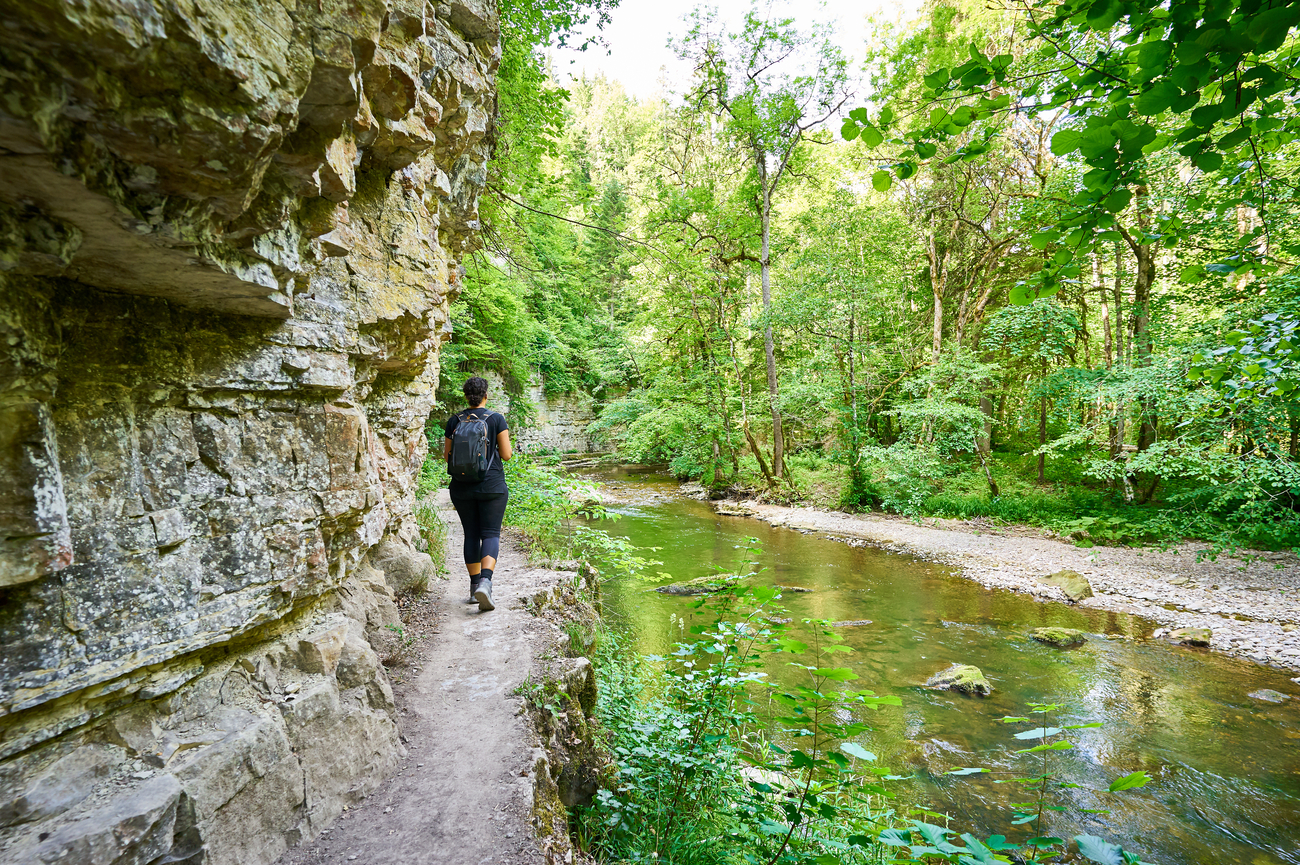
- Wutachschlucht: This is the Black Forest stripped back to raw geology. The Wutach Gorge is deeper, wilder and more dramatic than most hiking areas in the region. Over millions of years, the Wutach River carved through limestone and sandstone, creating steep cliffs, narrow passages and constantly shifting terrain. The hiking trails here range from moderate to challenging, with sections that follow the river closely and others that climb for higher vantage points. You can expect roots, stone steps and a real sense of immersion.
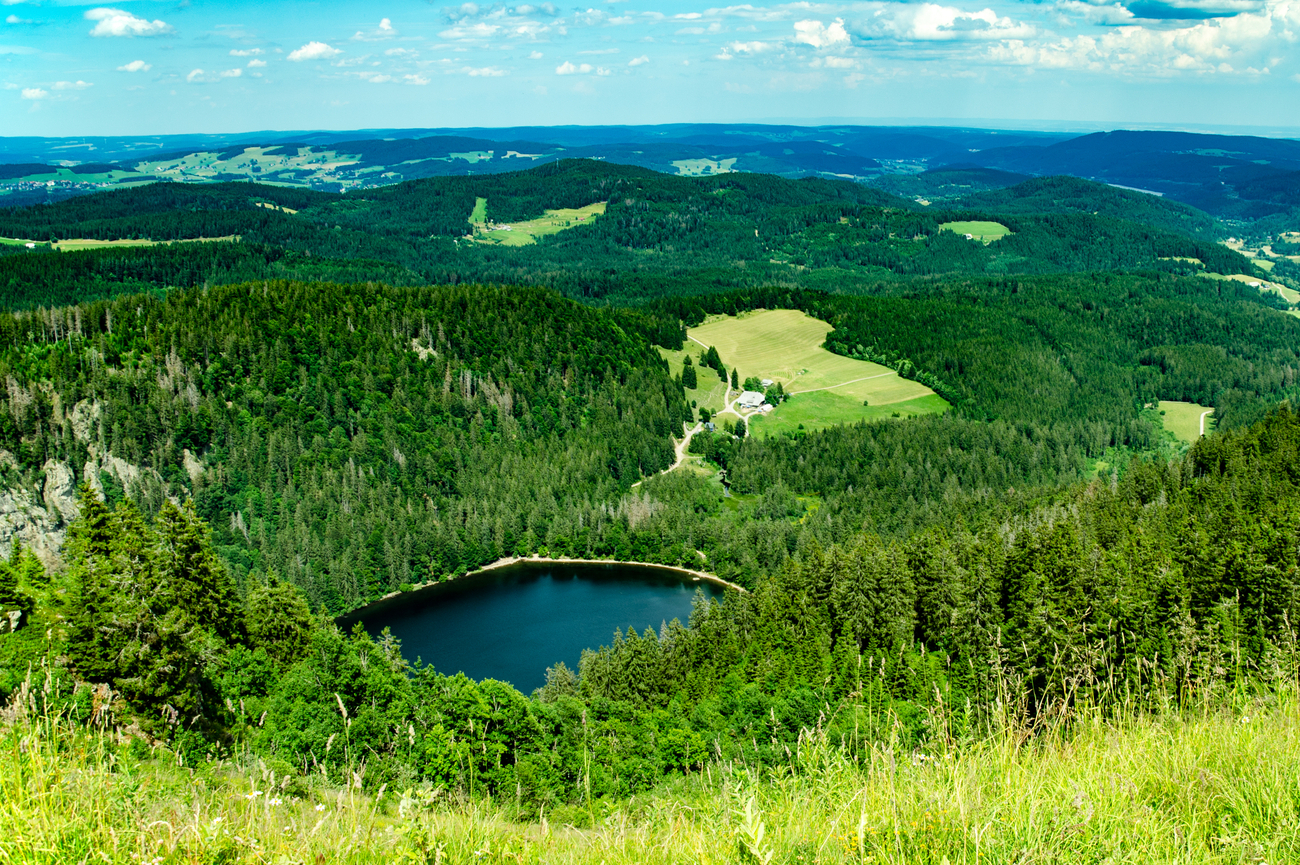
- Feldberg: If you’re going to stand at the top of the Black Forest, make it literal. Feldberg is the region’s highest peak at 1,493 meters and it delivers the kind of wide, cinematic views that reset your perspective instantly. On clear days, you can see across the Rhine Valley and even catch the Alps in the distance. In winter, Feldberg becomes the Black Forest’s premier ski destination. In summer and early autumn, it’s all about panoramic hiking, wildflowers and long ridgeline walks. If your itinerary includes spa days and wine tastings, this is the counterbalance.
Things to Do with Kids in the Black Forest
Think the Black Forest is all spa days and slow hikes? Bring the kids and it levels up fast. This region doesn’t do boring. It does hands-on, outdoors, slightly muddy, wildly fun. The kind of places where kids actually forget about screens and adults secretly have just as good a time. If you’re traveling as a family, here’s where the energy shifts from scenic to seriously engaging.
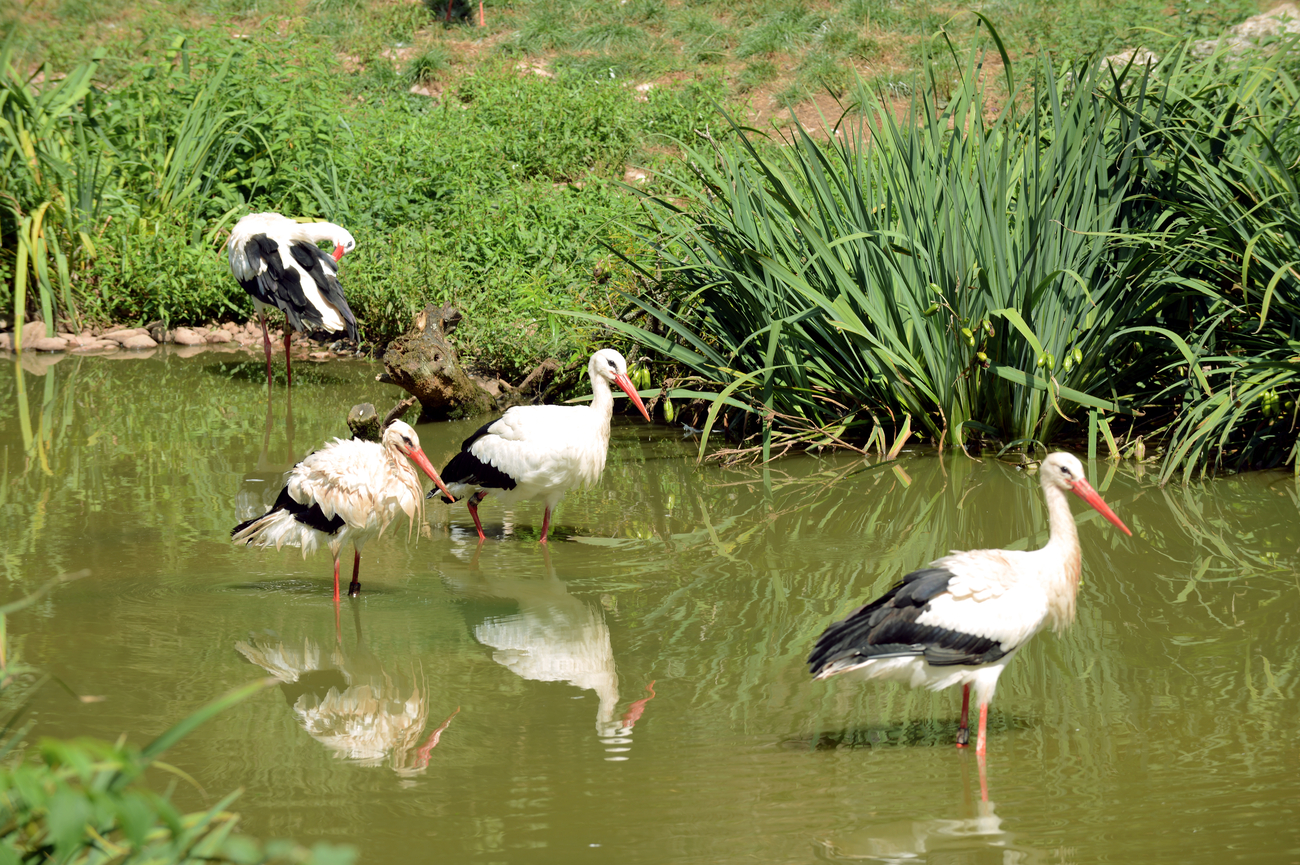
- Vogelpark Steinen: This is where wingspan becomes the headline. Vogelpark Steinen specializes in birds of prey and the live flight demonstrations are the kind of experience that makes everyone, kids and adults, instinctively look up in awe. Eagles, falcons, vultures and owls glide just meters above the audience during scheduled shows and it’s impossible not to feel the power in that moment. Educational commentary during shows explains hunting techniques and conservation efforts in a way that’s engaging without being heavy.
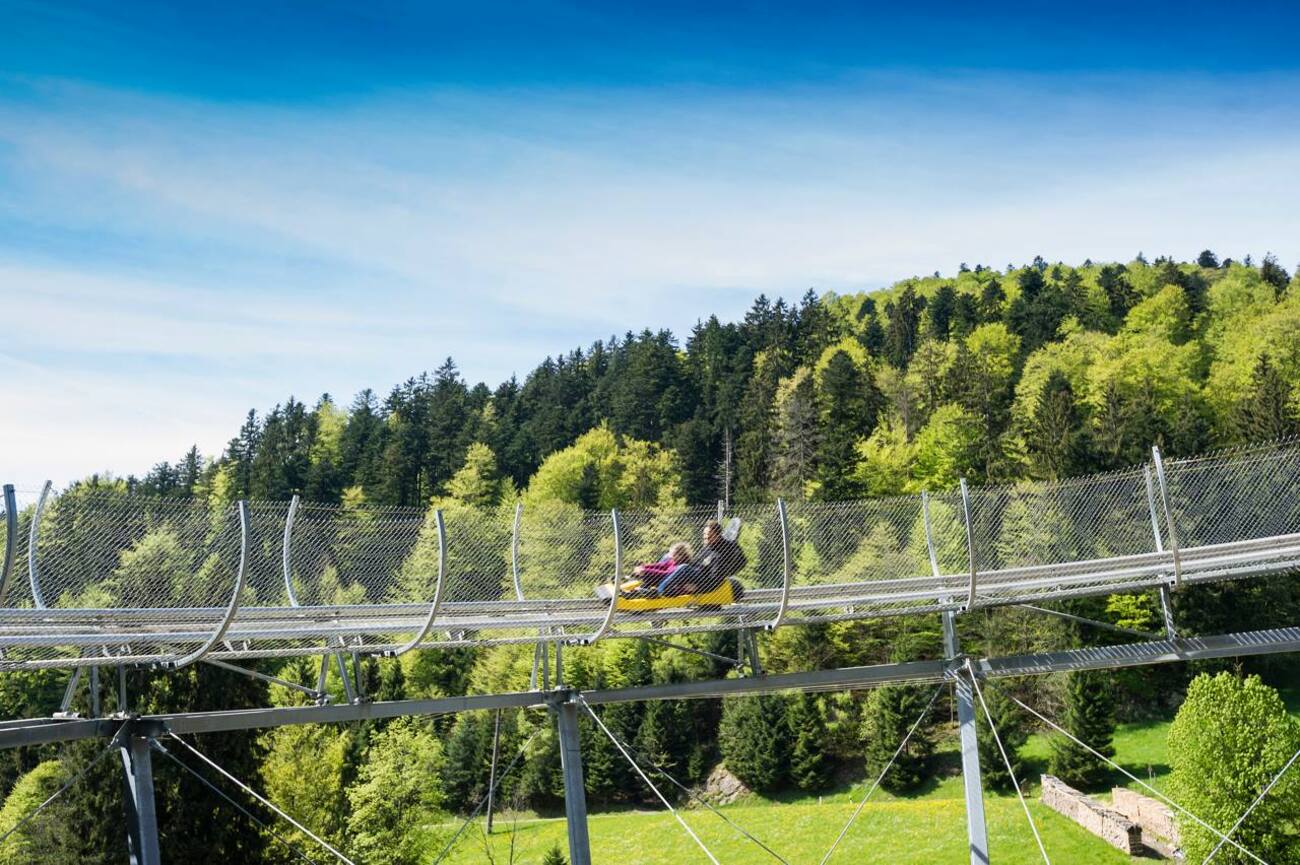
- Steinwasen Park: If someone designed a “maximum fun, minimal boredom” blueprint, it would look like Steinwasen Park. This place blends wildlife park, amusement rides and alpine adventure into one cohesive outdoor experience. You’ve got ibex and lynx in large natural enclosures, but also a summer toboggan run, a wild-water ride, playgrounds and one of the longest pedestrian rope suspension bridges in the region. Plan for several hours here. You won’t leave early.
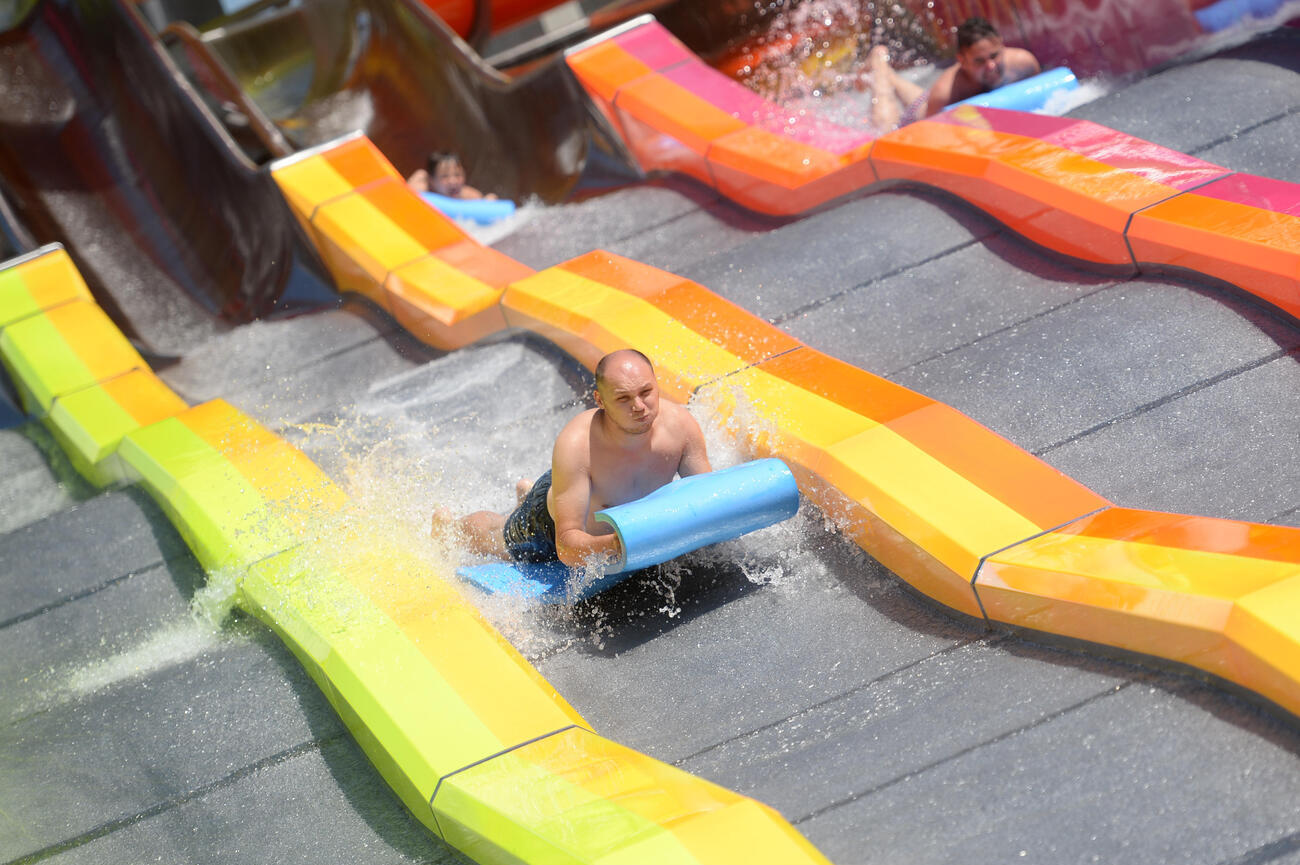
- Badeparadies Schwarzwald: If energy levels are peaking and everyone needs a splash reset, this is your move. The Galaxy section of Badeparadies Schwarzwald in Titisee is a full-scale indoor waterpark with slides twisting under a glass dome, wave pools rolling on schedule and multi-level water play structures that feel like aquatic playground architecture. There are varying slide intensities, so younger kids have their own zones while older ones can chase the high-speed tunnels.
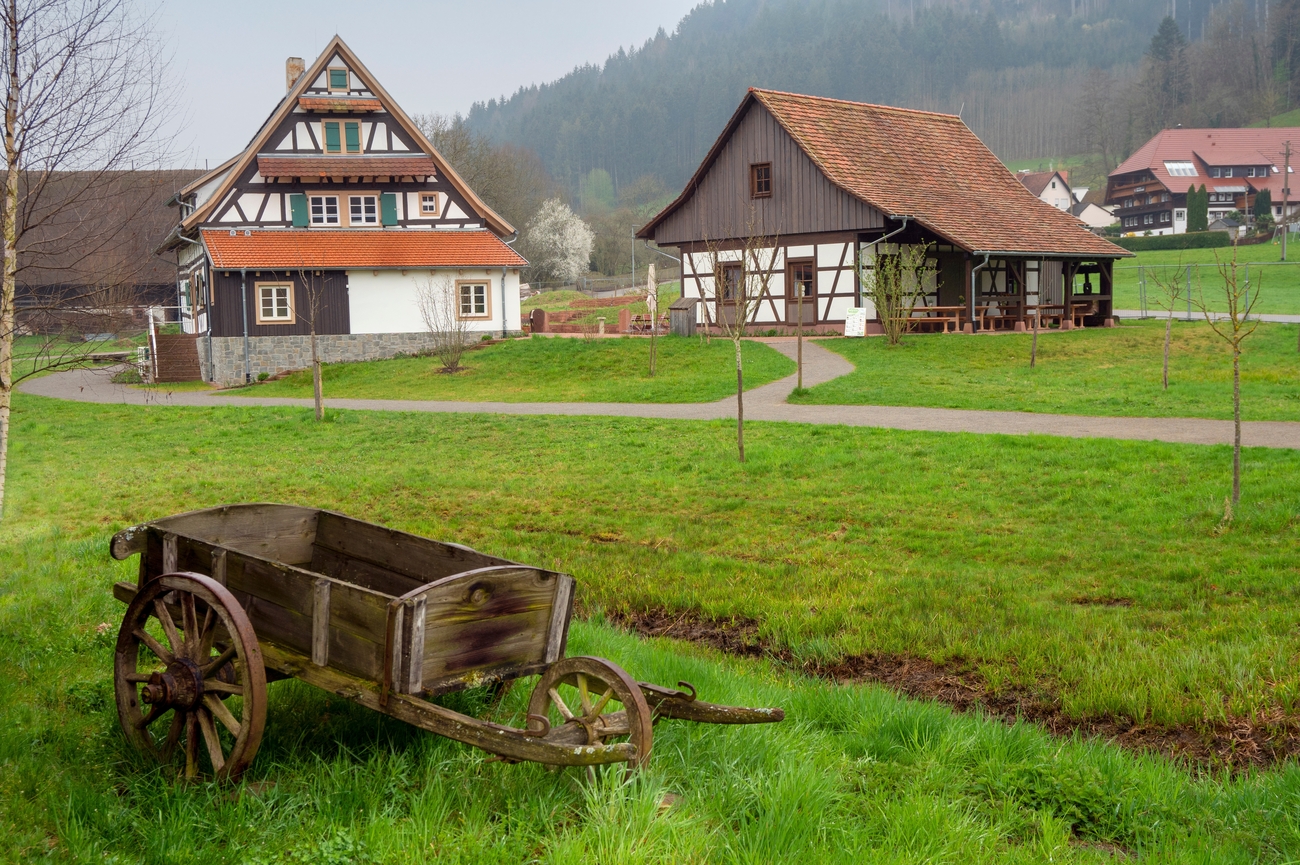
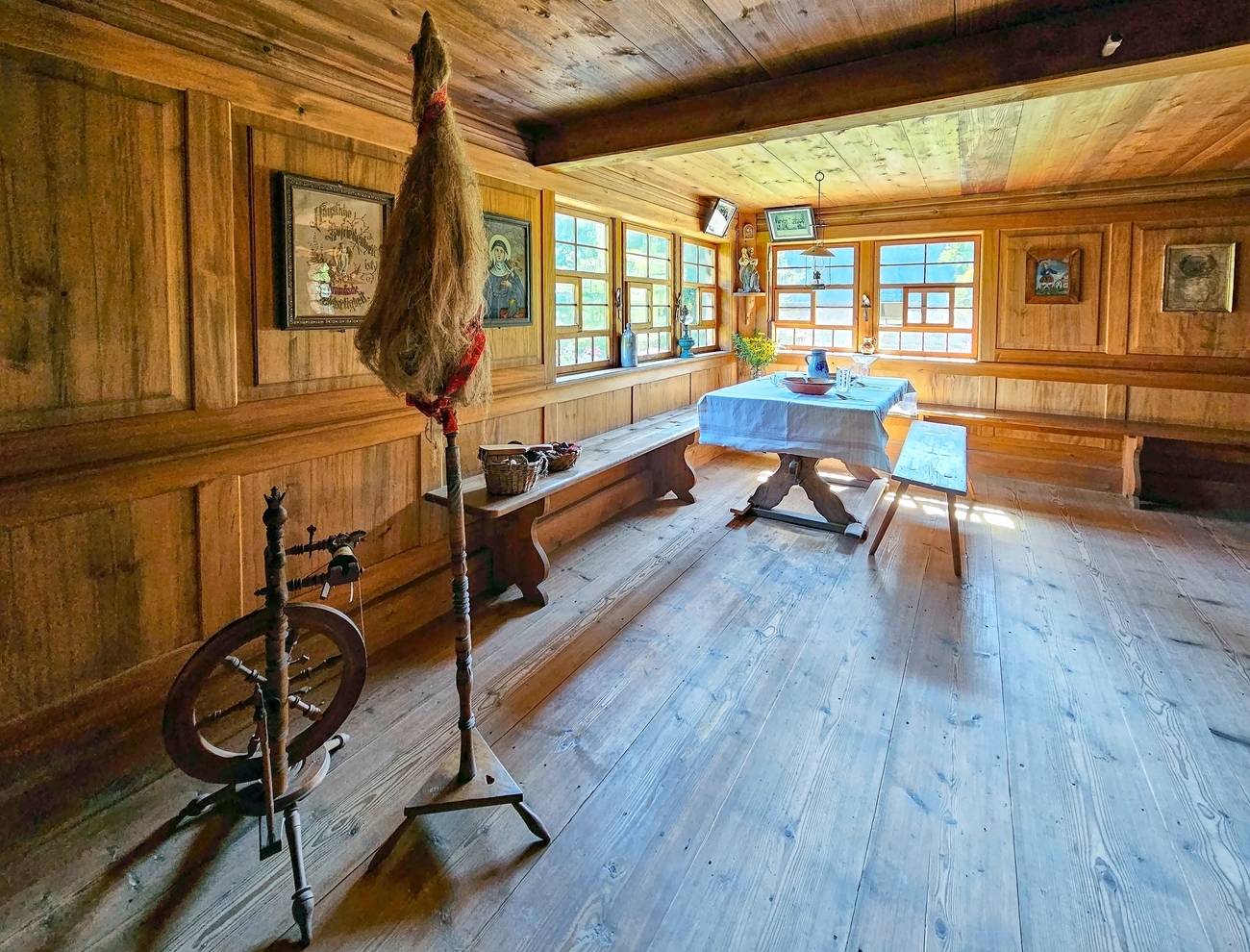
- Black Forest Open Air Museum: The Black Forest Open Air Museum relocates traditional farmhouses from across the region into one open landscape and you can walk straight into them. Yes, kitchens, bedrooms, barns, tools and all. Kids can watch bread baking in wood-fired ovens, see farm animals up close and participate in seasonal craft workshops. Instead of staring at artifacts behind glass, they move through lived-in spaces that feel real. It’s immersive in a way that makes history feel less like a timeline and more like a story.
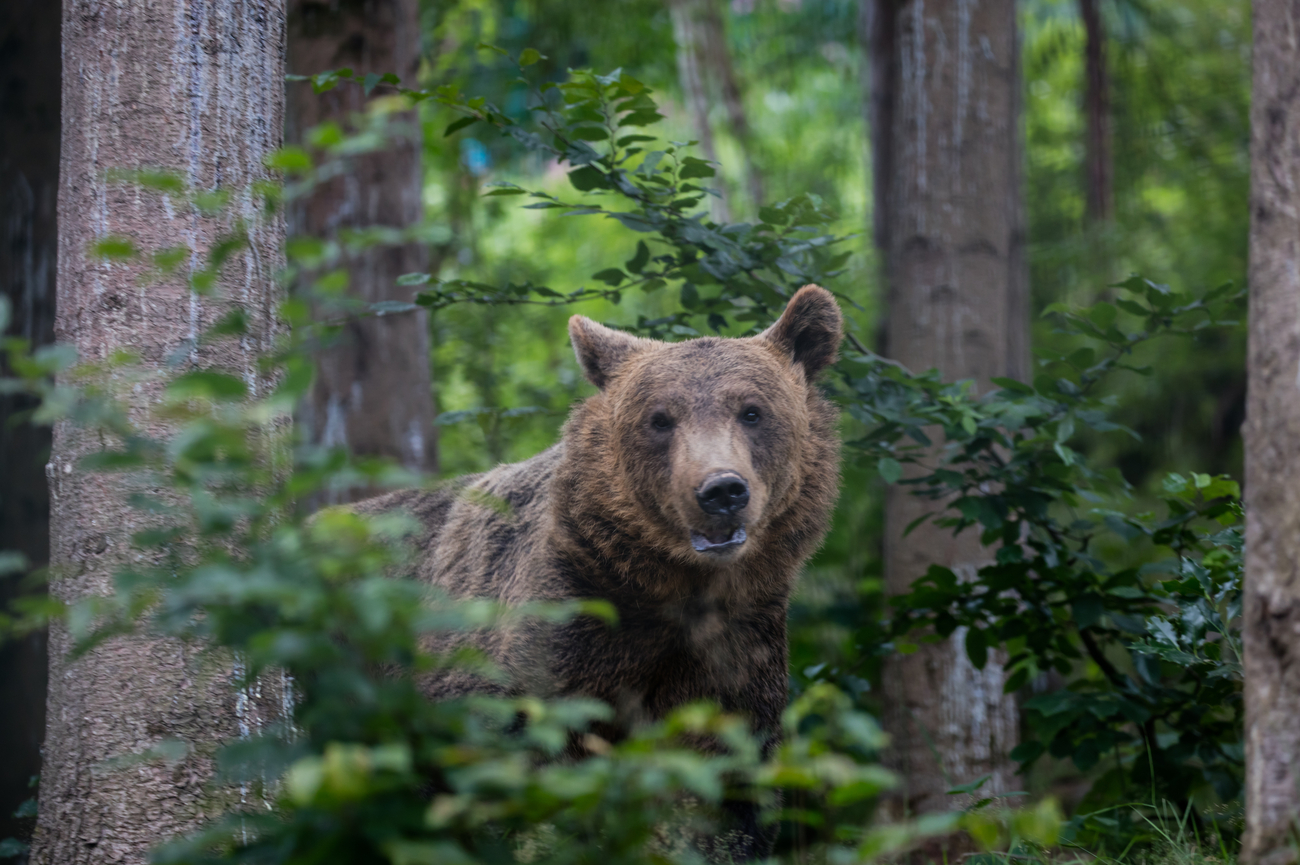
- Alternative Wolf and Bear Park Black Forest: This is wildlife with purpose. The Alternative Wolf and Bear Park near Bad Rippoldsau-Schapbach isn’t a traditional zoo; it’s a sanctuary for rescued bears, wolves and lynx. The animals live in expansive, forested enclosures that prioritize their well-being and elevated platforms allow visitors to observe without intrusion. You’re walking through forest terrain while scanning for movement between trees. It feels more like tracking wildlife than visiting an attraction.
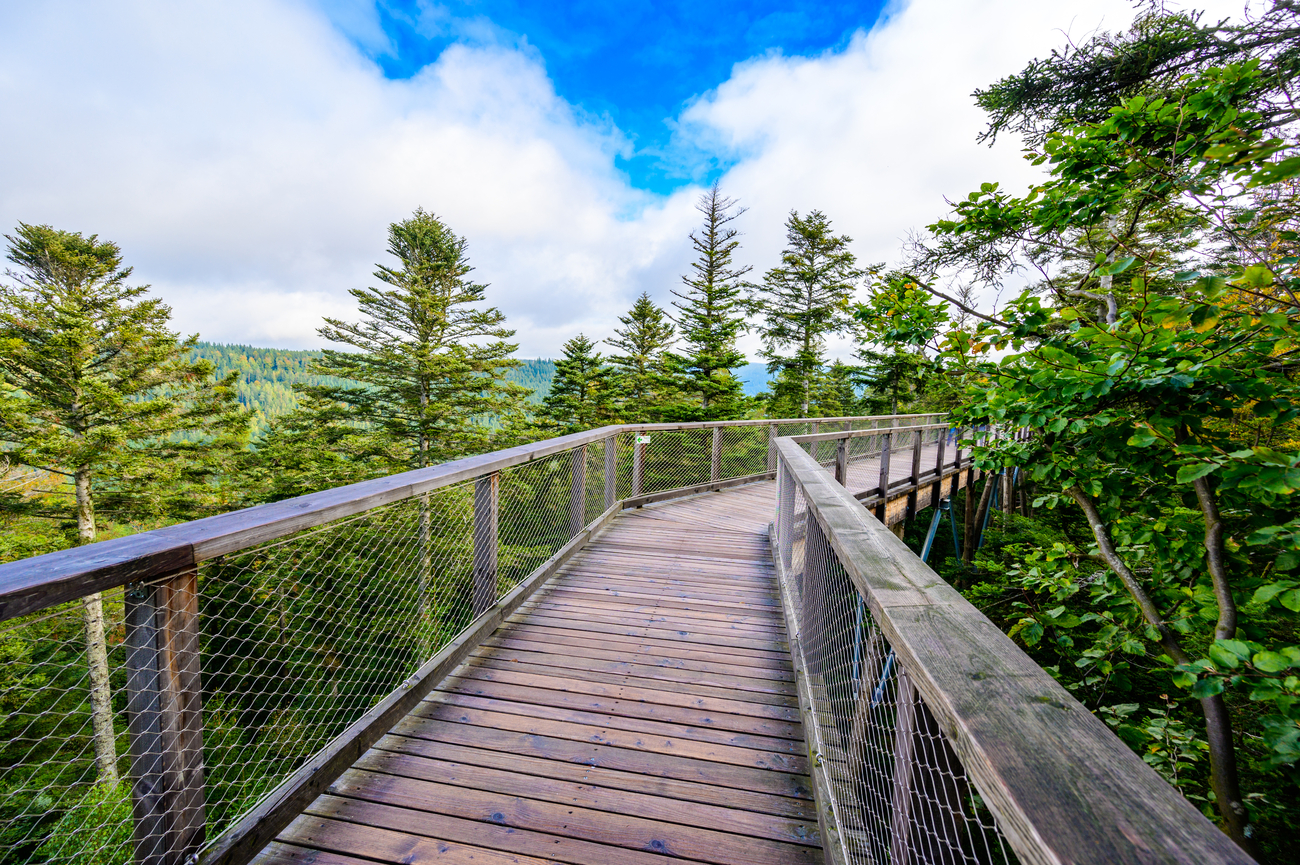
- Treetop Walk Black Forest: This one shifts your perspective literally. The Treetop Walk Black Forest elevates you gradually above the forest floor on a wide wooden walkway that spirals upward to a panoramic observation tower. The incline is gentle, making it accessible for kids and strollers and interactive learning stations along the path explain forest ecosystems in digestible, hands-on ways. At the top, you’re standing above the canopy, looking out over endless green ridgelines.
Day Trips from the Black Forest
Stay based in the Schwarzwald and you unlock something bigger: vineyard-covered hills in one direction, French half-timbered towns in another, Roman ruins, avant-garde art, palace symmetry and UNESCO sites that quietly flex centuries of history. The beauty here is range. You don’t have to relocate. You just have to drive. Here are the day trips that elevate your Black Forest stay.
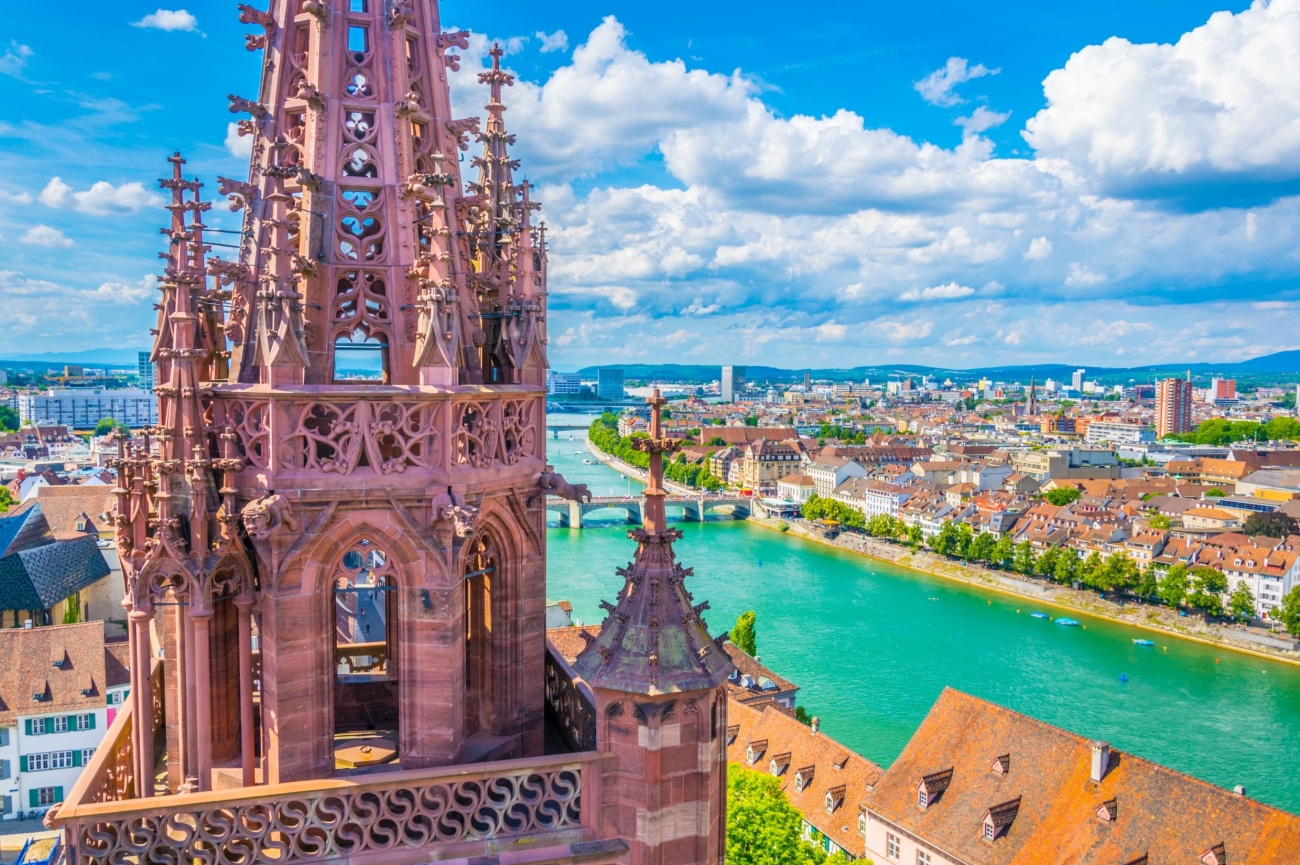
- Basel feels intentional. Compact, cultured and quietly powerful. From Freiburg, the drive takes just over an hour, long enough to feel like a change of scenery, short enough to stay effortless. The Old Town climbs toward Basel Minster, where red sandstone towers overlook the Rhine. Then lean into culture. The Kunstmuseum Basel is world-class, and the nearby Fondation Beyeler blends modern art with architectural calm.
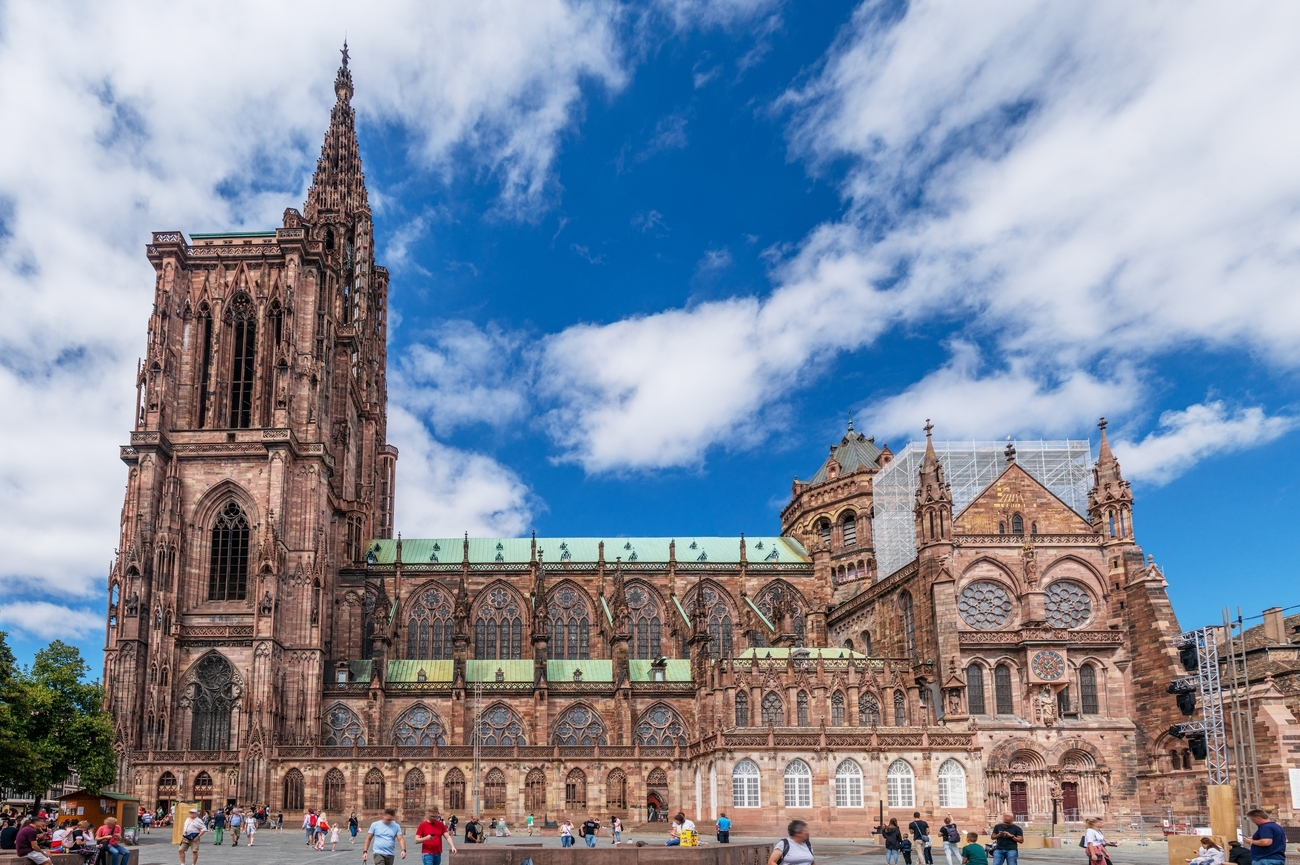
- Strasbourg: From Baden-Baden, you’re about 75 minutes away from a full French pivot. Strasbourg immediately feels different. Cafe terraces, canals and the dramatic facade of Strasbourg Cathedral dominate the skyline. Climb the cathedral tower. Walk through La Petite France, where half-timbered houses lean over the water. Visit the Palais Rohan if you want fine arts layered into the day. Or take a boat cruise around the UNESCO-listed Grande Île to understand the city’s shape from the river. And if you want to elevate it, reserve a private Alsatian wine tasting.
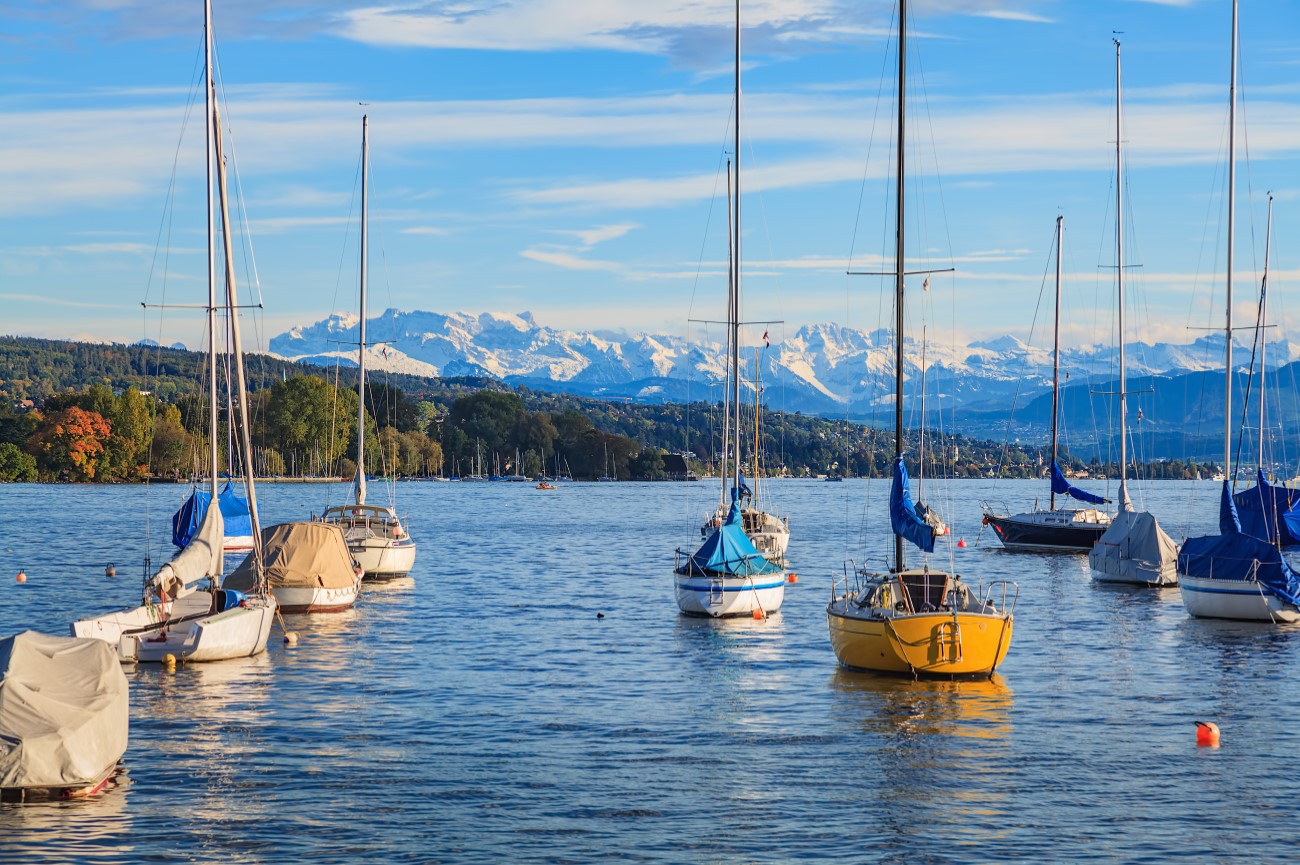
- Zurich: Lake first. That’s how you should do Zurich. After about an hour and a half from Freiburg, trade forest ridgelines for open water and start along the shores of Lake Zurich, where sailboats cut across a backdrop of distant Alps. From there, drift into the Altstadt, letting narrow lanes guide you toward Grossmünster and up to Lindenhof Hill for a clean panoramic sweep of rooftops and river. And if you want a sharp finish, go and book a private lake cruise.
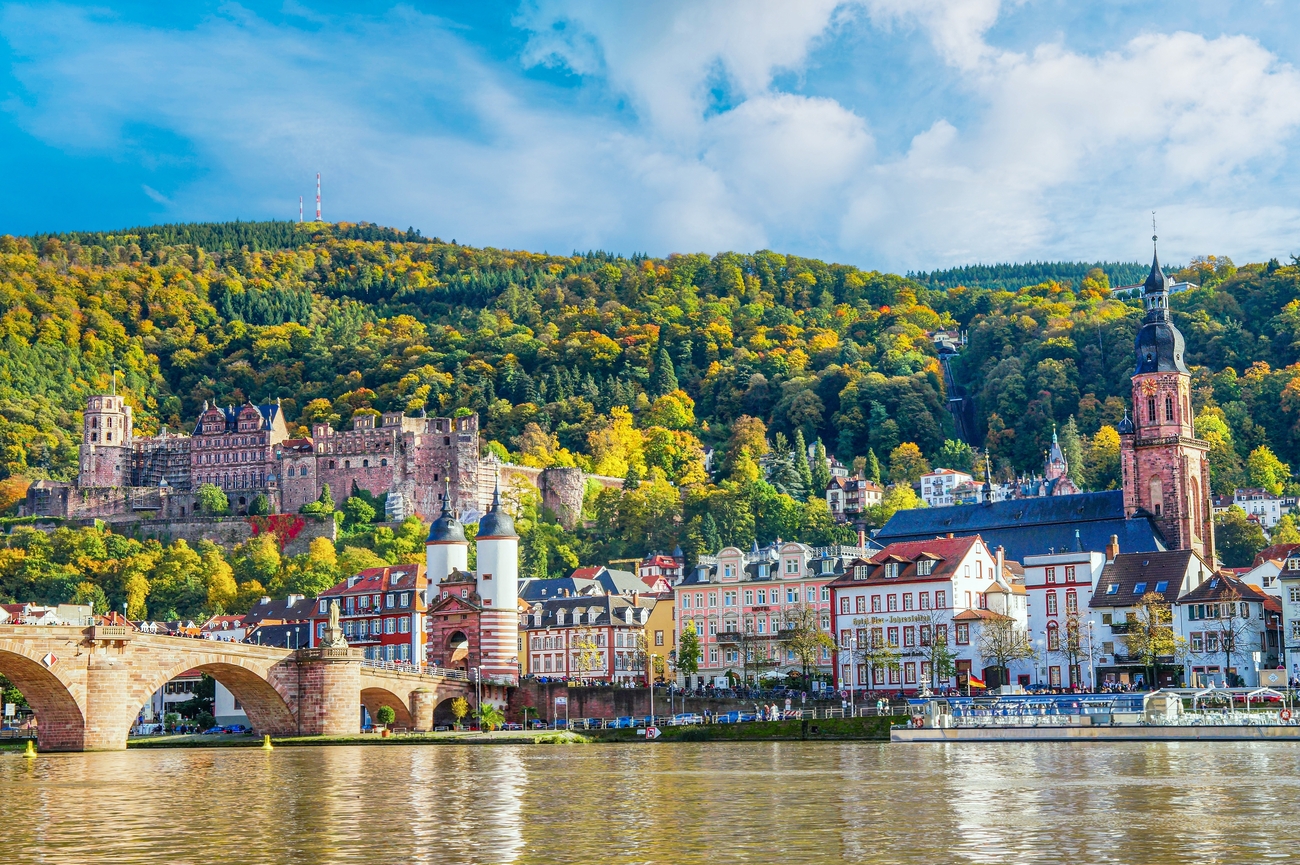
- Heidelberg: Heidelberg is pure river-and-castle drama. Heidelberg Castle stretches across the hillside above the Neckar and the terrace view over the valley is the kind that makes you pause longer than planned. The ruins feel grand without being over-restored. If you want a higher angle, the Philosopher’s Walk gives you that classic panoramic sweep back toward the castle. This city is about 90 minutes away from the northern Black Forest, making it an easy but rewarding shift from forest calm to historic elegance.
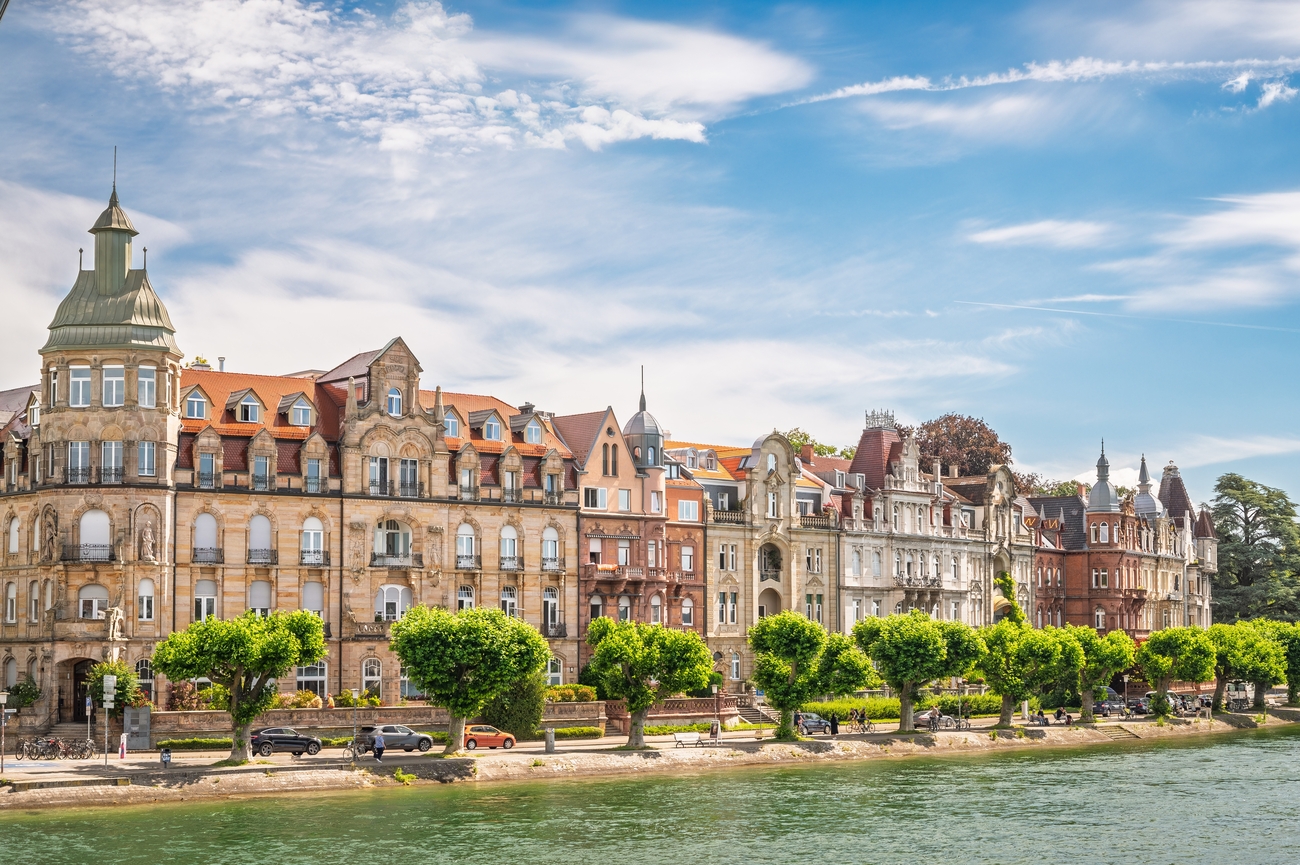
- Konstanz: Konstanz feels expansive the moment you arrive. After roughly an hour and a half on the road from the southern Black Forest, the scenery opens dramatically into Lake Constance. The medieval Old Town is compact and walkable, centered around Konstanz Cathedral, whose tower rewards you with a full lake panorama. From there, it’s an easy drift toward the harbor promenade, where boats glide across the water and ferries connect you to Mainau Island, famous for its botanical gardens and baroque palace. After days wrapped in dense forest, Konstanz gives you space, light and that wide-open horizon effect.
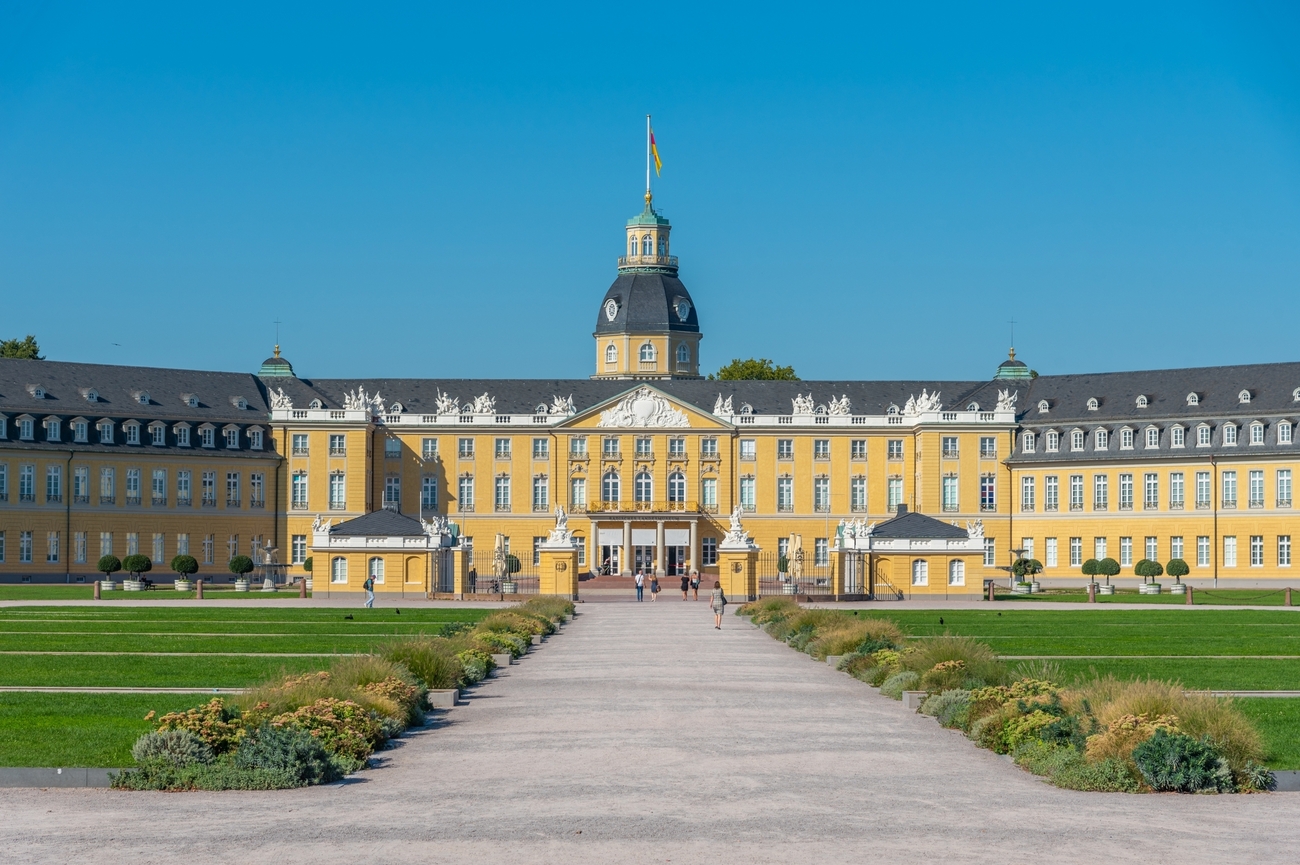
- Karlsruhe: Karlsruhe feels architectural and intentional and after about an hour on the road from Baden-Baden, the city’s precise layout immediately stands out. It radiates outward from Karlsruhe Palace and climbing the palace tower reveals the perfectly symmetrical fan-shaped street plan below. If you’re willing to stretch the day slightly, the UNESCO-listed Maulbronn Monastery lies less than an hour beyond the city. It is one of Europe’s best-preserved medieval monastic complexes and absolutely worth the detour.
Golf
Courses in the Black Forest
Turns out, the Black Forest doesn’t just do hiking trails; it does fairways too. For a region known for dense pines and spa towns, there’s a surprisingly strong golf scene woven into the landscape. Courses here aren’t squeezed into leftover land. They stretch through meadows, roll along forest edges, climb gentle highland plateaus and open up to valley views that make you pause mid-swing. You can go classic and traditional or polished and high-end, all without leaving the region.
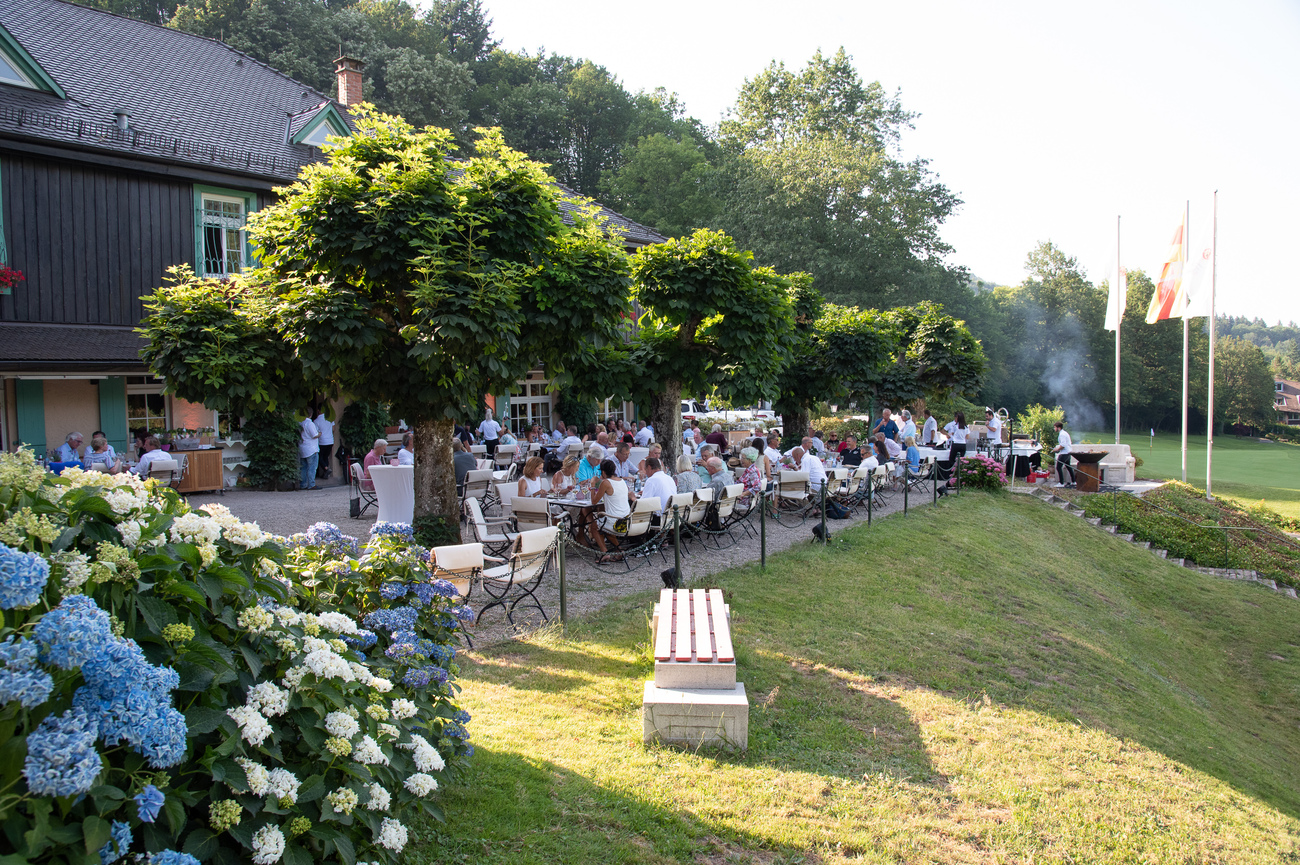
- Golf Club Baden-Baden: This is heritage golf. Founded over 120 years ago, Golf Club Baden-Baden sits on the lower slopes of the Fremersberg, right where the Black Forest begins to thicken. The 4,260-meter, Par 64 layout may be shorter than modern championship courses, but don’t mistake length for ease. You’ll play among larches, birches, beeches, oaks and chestnut trees that feel older than most clubhouses in Germany. It’s one of the country’s finest natural courses.
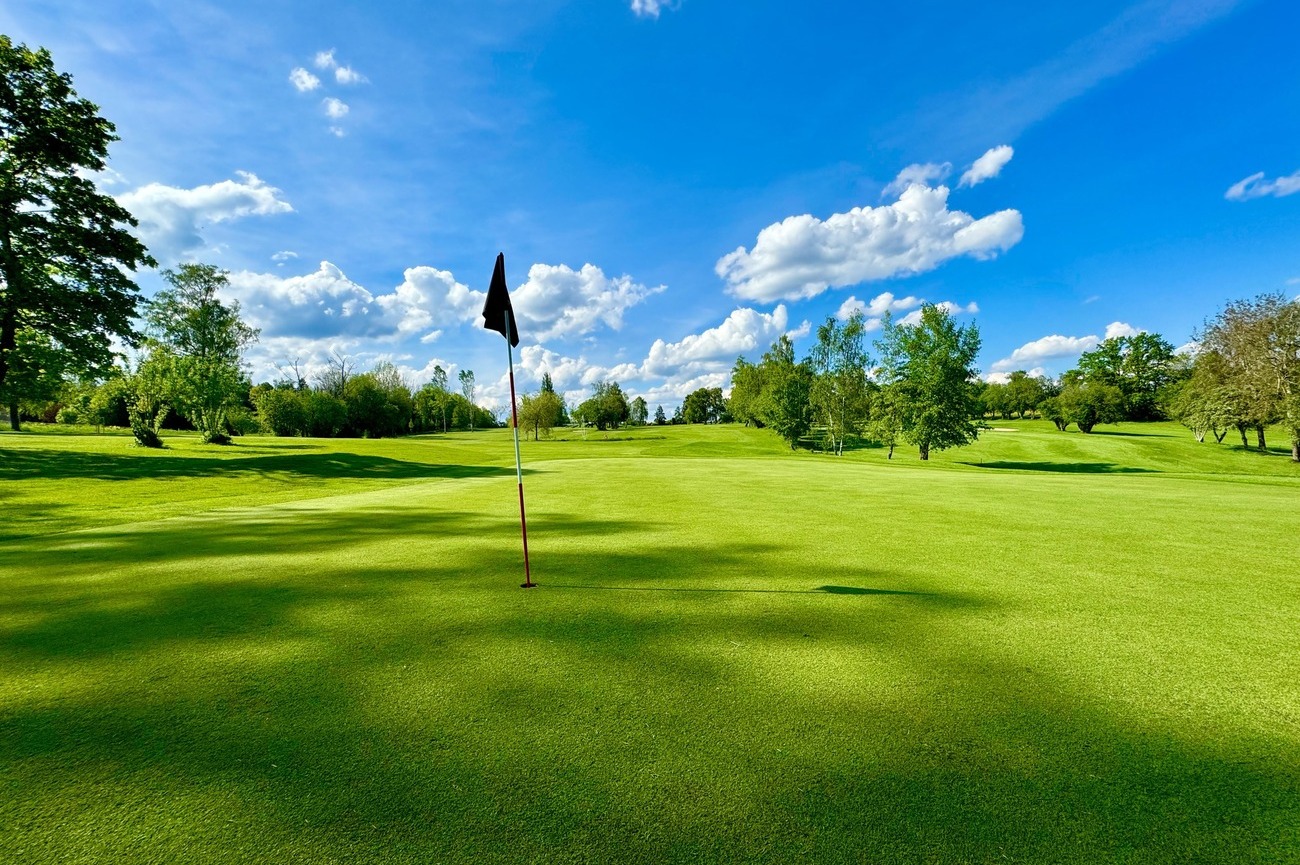
- Golf-Club Freudenstadt e.V.: Founded in 1929, Golf-Club Freudenstadt carries history but plays modern. The original layout evolved significantly after World War II, eventually becoming a full 18-hole course redesigned by Hannes Scheiner in 1992. It’s a course that feels steady and grounded, well-suited for both consistent players and those looking to enjoy a scenic round without overwhelming difficulty.
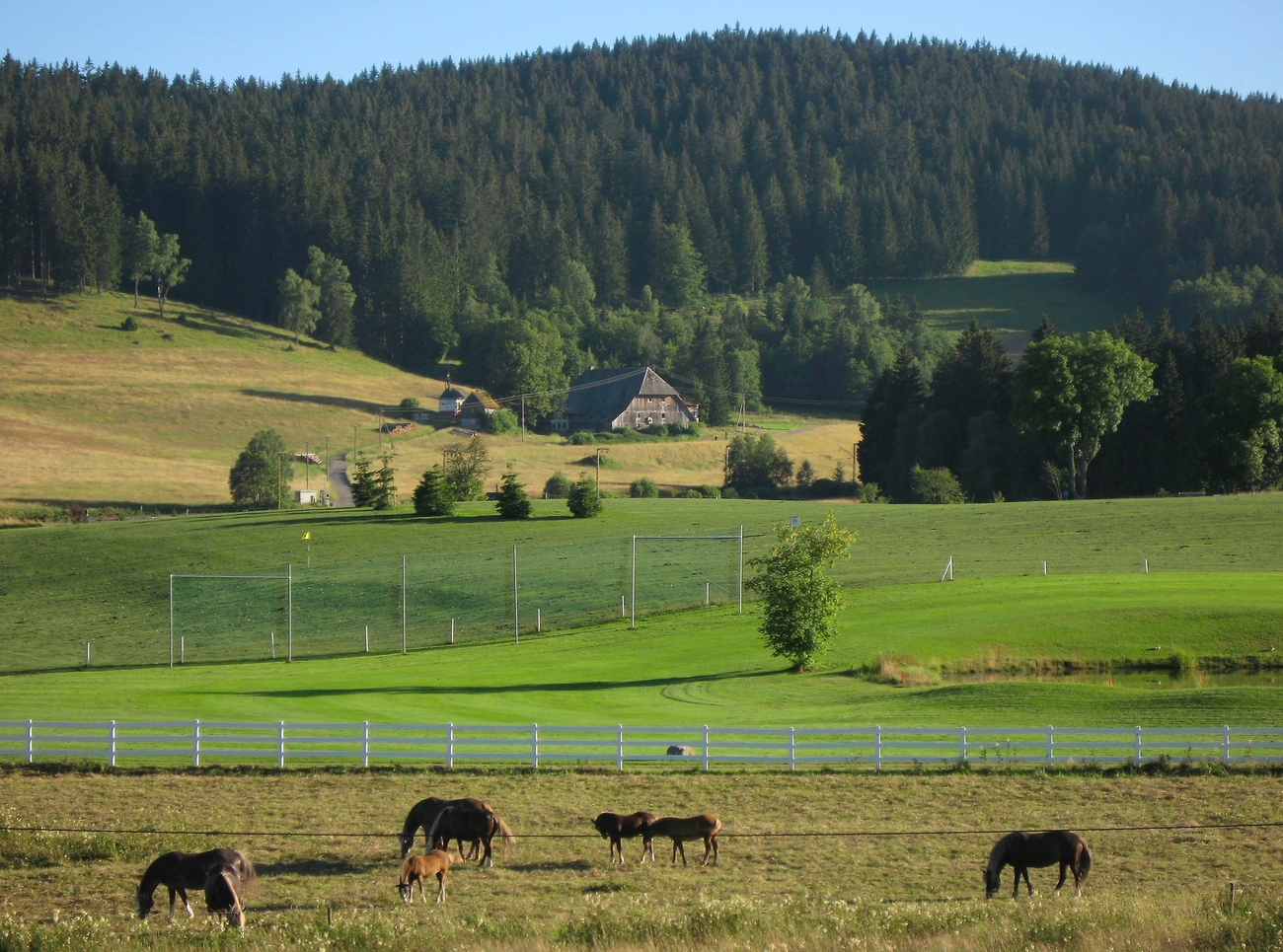
- Golfclub Hochschwarzwald: Just 500 meters from Lake Titisee, Golfclub Hochschwarzwald combines alpine scenery with accessible play. The 18-hole course sits at an elevation, offering open views and fresh mountain air, while remaining only about 30 minutes from Freiburg. The layout caters to a wide range of players. Experienced golfers will appreciate the varied terrain, while beginners can ease into the sport with structured introductory courses. If you’re planning a golf-focused stay, the club also partners with regional hotels, making it easy to integrate into a Black Forest golf retreat.
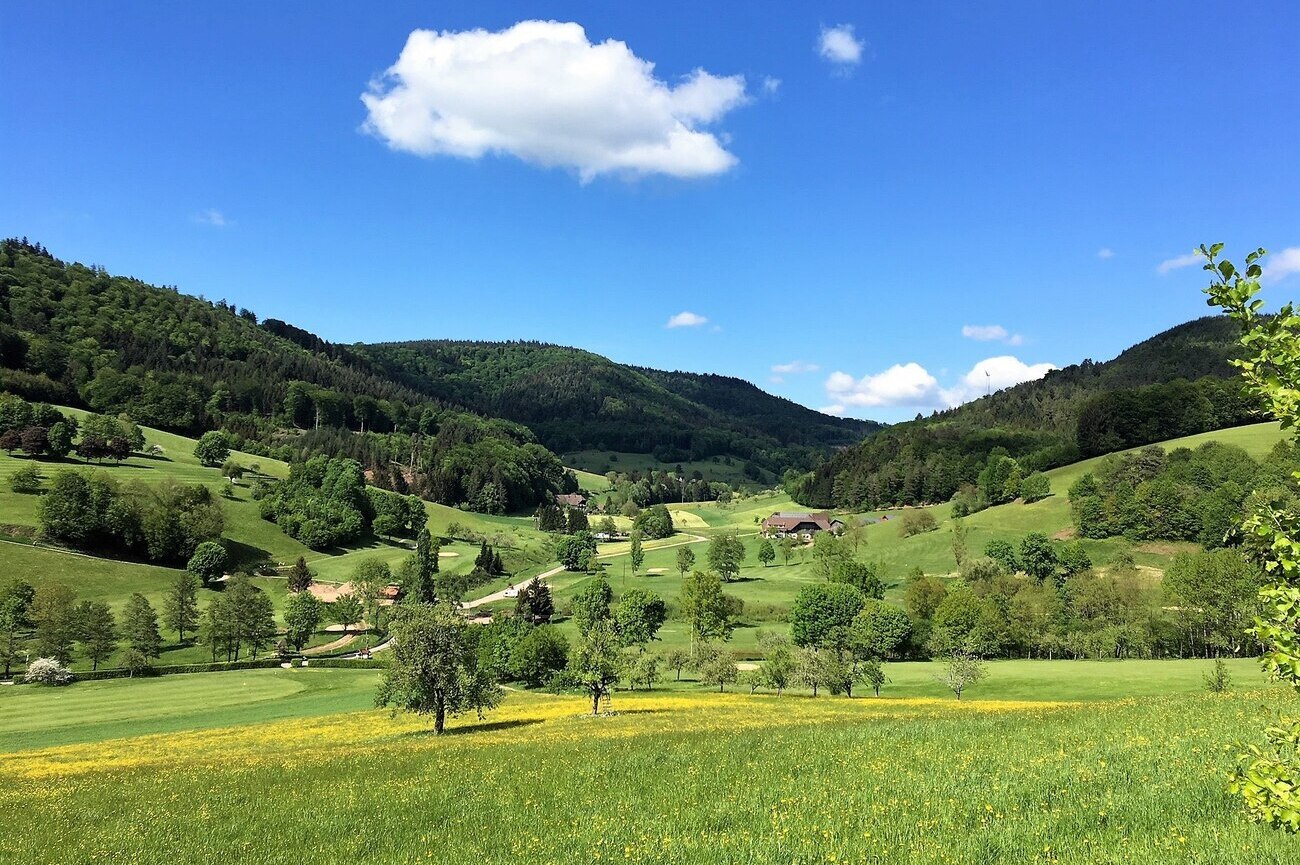
- Golfclub Ortenau e.V.: Established in 1979, Golfclub Ortenau proudly holds the title of the oldest golf club in the Ortenau region. What sets it apart is the topography. This is one of the most scenic and elevated courses in the area, with dramatic natural surroundings shaping each hole. The course evolved steadily over time, opening its first six holes in 1982, expanding to nine in 1984, and completing the full 18-hole layout in 2004. And if you’re curious about getting started, there are taster courses available, offering a low-pressure introduction to the sport.
Racecourses
in the Black Forest
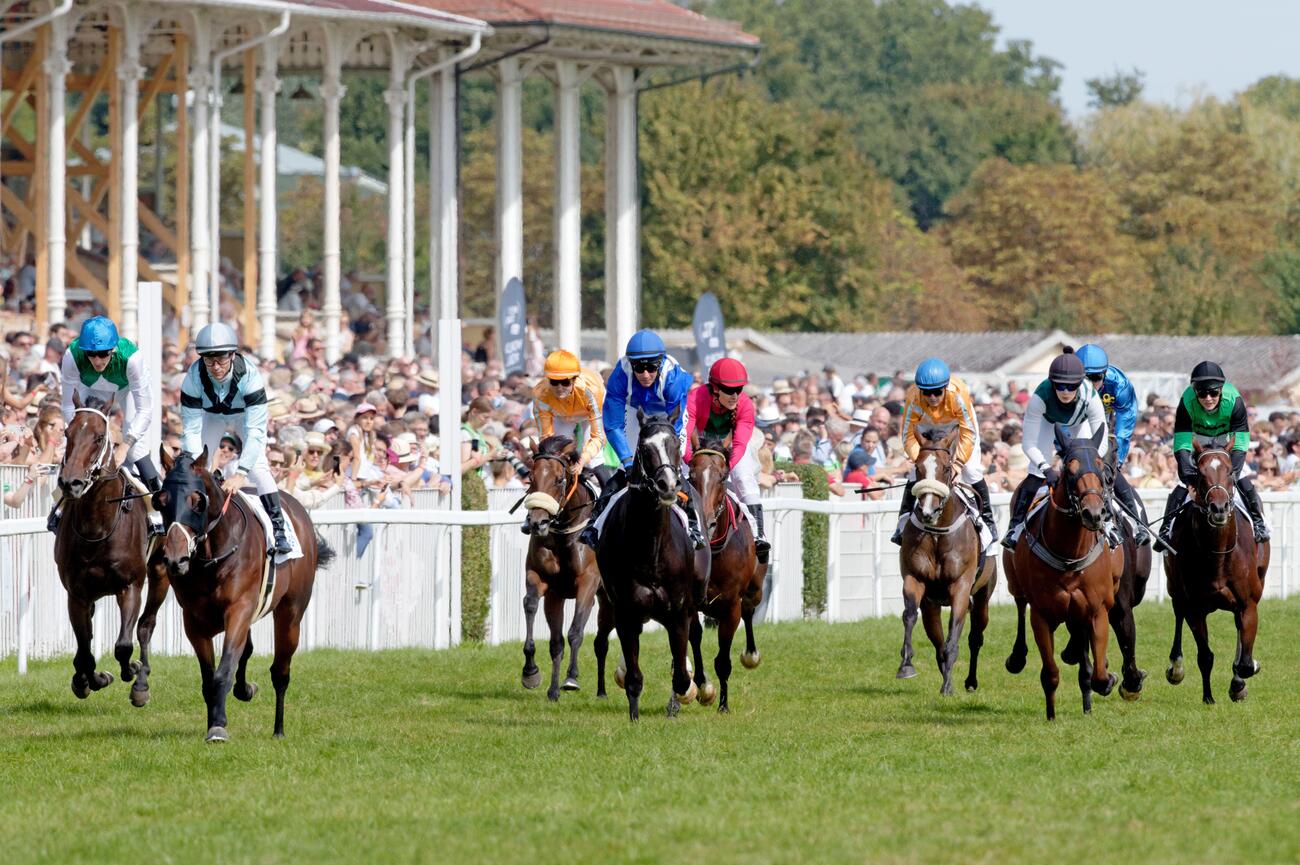
Horse racing may not be the first thing that comes to mind when you think of the Black Forest but it absolutely deserves a place on your radar. This region is about quality over quantity and when it comes to horse racing, there’s one venue that carries the entire legacy on its shoulders. If you’re looking for grandstands, turf, and that refined race-day atmosphere, you don’t need a list of ten. You need the right one.
- Galopprennbahn Baden-Baden (Iffezheim): This is the crown jewel. Located just outside Baden-Baden, this historic racecourse is Germany’s most prestigious flat racing venue and the undisputed centerpiece of the Black Forest racing calendar. Operated by Baden Galopp, the track hosts major international events, including the renowned Grosser Preis von Baden, drawing elite horses, jockeys, and racing enthusiasts from across Europe. You can experience the energy from the stands or elevate the day with VIP hospitality, private lounges, and premium seating.
Michelin-starred
Restaurants in the Black Forest
You come for forests and spa towns. Then dinner happens and suddenly you’re in a room where sauces are reduced to silk, langoustines arrive like sculpture and dessert trolleys feel theatrical. The Black Forest is quietly one of Germany’s strongest fine-dining regions, with Michelin stars tucked between valleys and mountain ridges. This isn’t rustic comfort food. This is precision, legacy and serious culinary ambition.
- Restaurant Bareiss: Longevity matters here. Chef Claus-Peter Lumpp has been at the helm since 1992 and that kind of consistency shows in every plate. His cooking is rooted in classic French technique, layered with international nuance, and executed with the confidence of a kitchen that knows exactly who it is. The amuse-bouches set the tone, lobster-filled dumplings in a fragrant broth of watermelon, lemon balm and chilli, precise but playful. And desserts here are not an afterthought. Head pastry chef Stefan Leitner crafts elaborate finales and the praline trolley demands attention. Restaurant Bareiss holds three Michelin stars, placing it among Germany’s culinary elite.
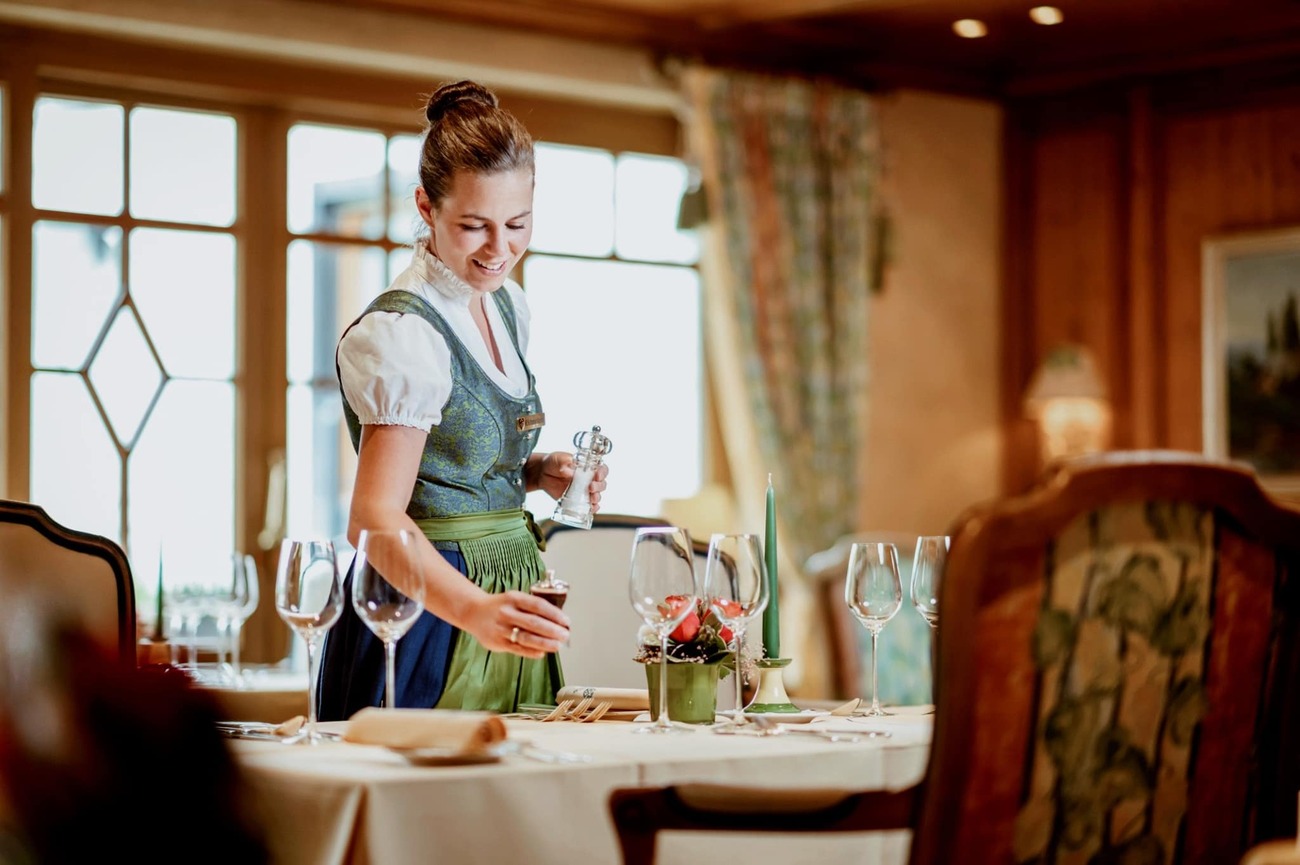
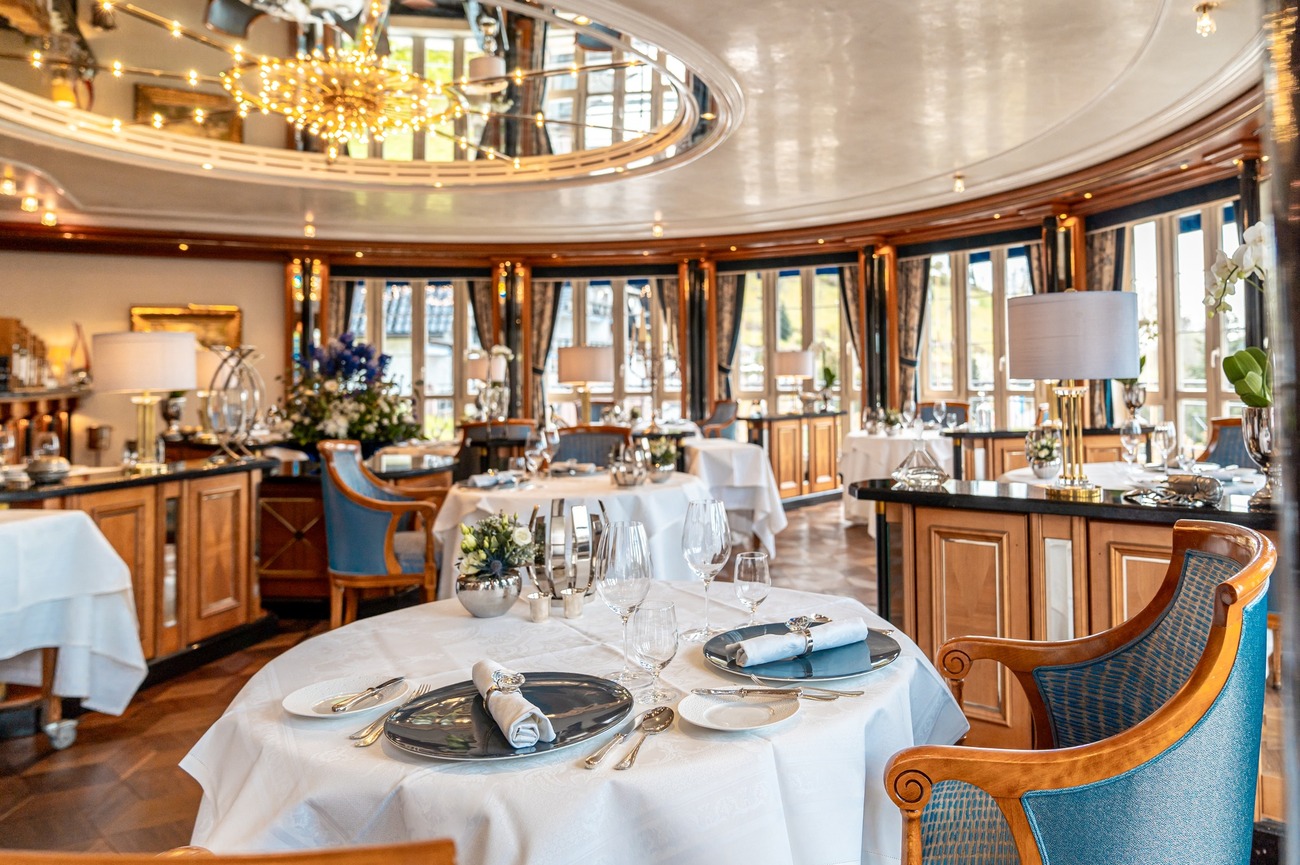
- Le Pavillon: Le Pavillon holds two Michelin stars, confirming its place among the region’s top-tier culinary addresses. Chef Martin Herrmann respects French classics but sharpens them with modern clarity. Sauces are the highlight here, particularly the vin jaune sauce served with perfectly cooked turbot and artichoke, rich yet controlled. The eight-course tasting menu can be shortened, allowing flexibility without sacrificing flow.
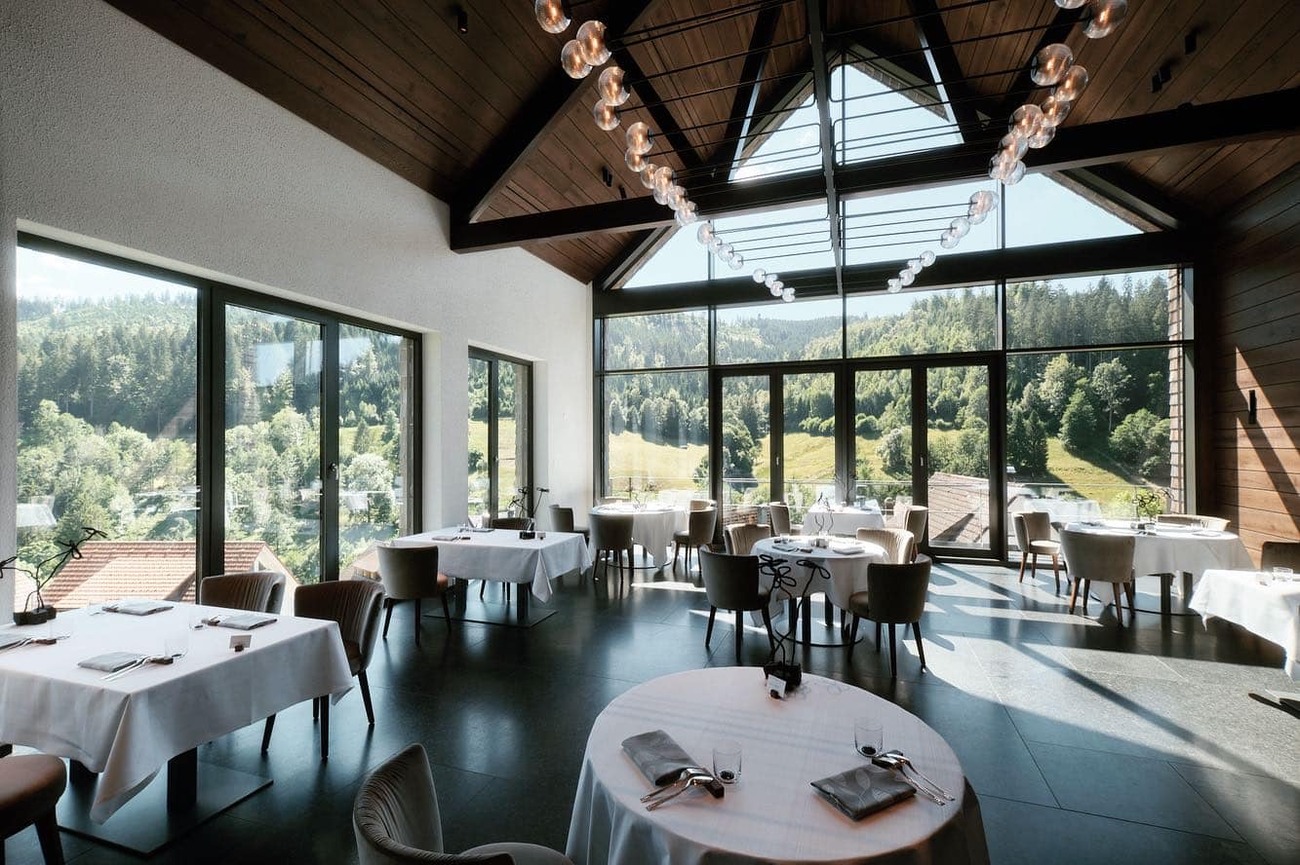
- Schwarzwaldstube: Awarded two Michelin stars, Schwarzwaldstube pairs valley views with sharp culinary execution. Floor-to-ceiling glass opens the valley to your table at Schwarzwaldstube, the flagship restaurant of Traube Tonbach. Chef Torsten Michel delivers dishes that are modern in presentation but grounded in classical discipline. A standout like Norwegian langoustine with roe glaze, peas, black morels and Chablis nage shows the balance between richness and restraint. You can choose a shorter or extended tasting menu, including a vegetarian option, or order à la carte. Desserts by Piet Gliesche close with finesse.
- Ösch Noir: Before you even sit down at Ösch Noir, you pass the open kitchen. Chef Manuel Ulrich builds from a French base, weaving in contemporary precision and meticulous detail. Dishes like Gillardeau oysters with glazed black salsify, nasturtium and Imperial Oscietra caviar highlight texture, balance and temperature control. This spot holds two Michelin stars and two tasting menus, “Noir” and the vegetarian “Vert”, which offer different pathways through the experience. Sommelier Michael Häni leads an impressive wine program and crafts thoughtful non-alcoholic pairings.
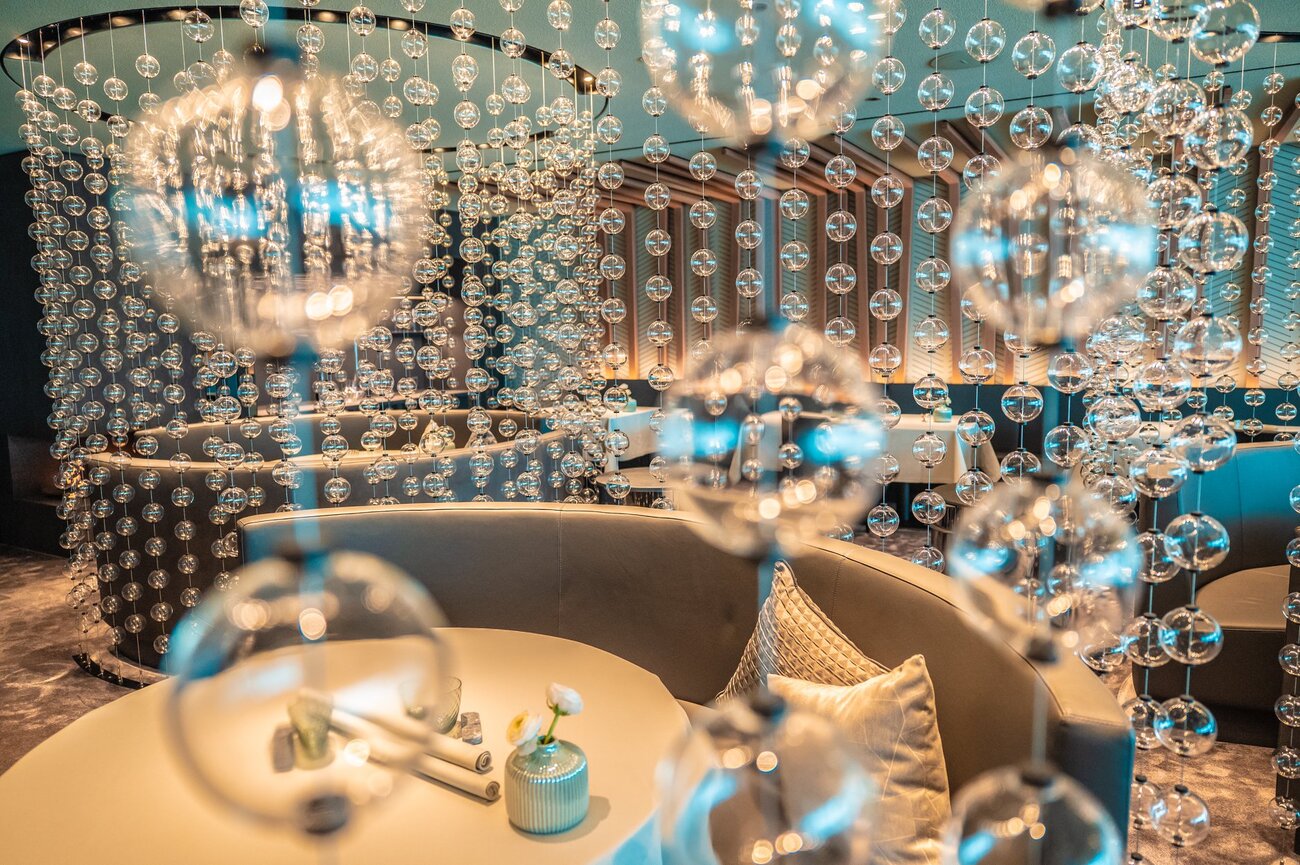
- 1789: Minimalism is the signature here. In 1789, located within Hotel Traube Tonbach, Chef Florian Stolte presents two six-course menus, one vegetarian, that lean modern, precise and subtly Asian in influence. Ingredients are treated with restraint: langoustine served raw as carpaccio with minimal seasoning, allowing its natural sweetness to dominate; grilled Wagyu beef fillet finished simply with salt to amplify its depth. This restaurant has one Michelin star, carving out its own niche within Baiersbronn’s already impressive fine-dining scene.
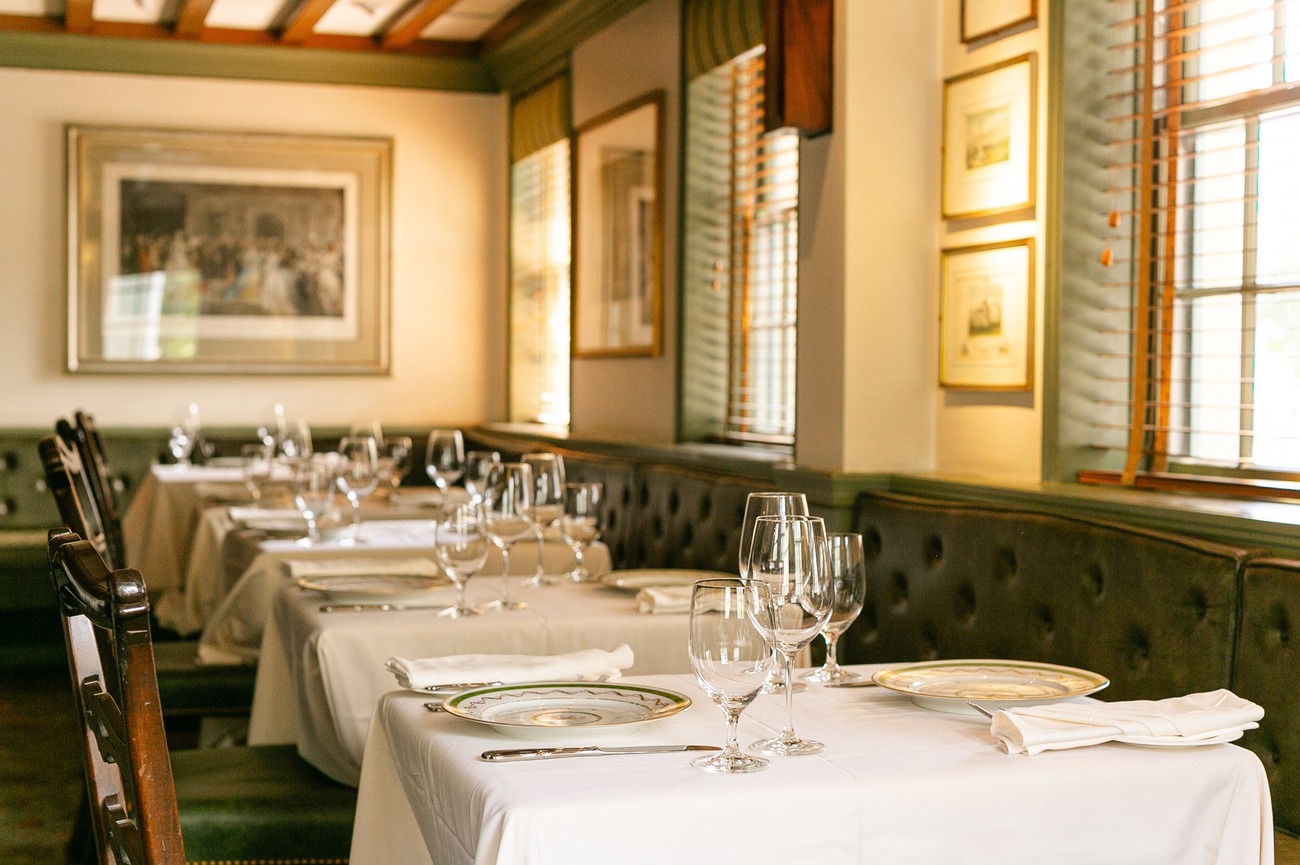
Where to Eat in the Black Forest
Not every meal here needs white tablecloth choreography. Sometimes you want generous steaks, farmhouse roulade, a terrace with wine or a 17th-century inn that still feels alive. The Black Forest does comfort and character just as confidently as it does Michelin stars. This region understands appetite. Here’s where to sit down and do it properly.
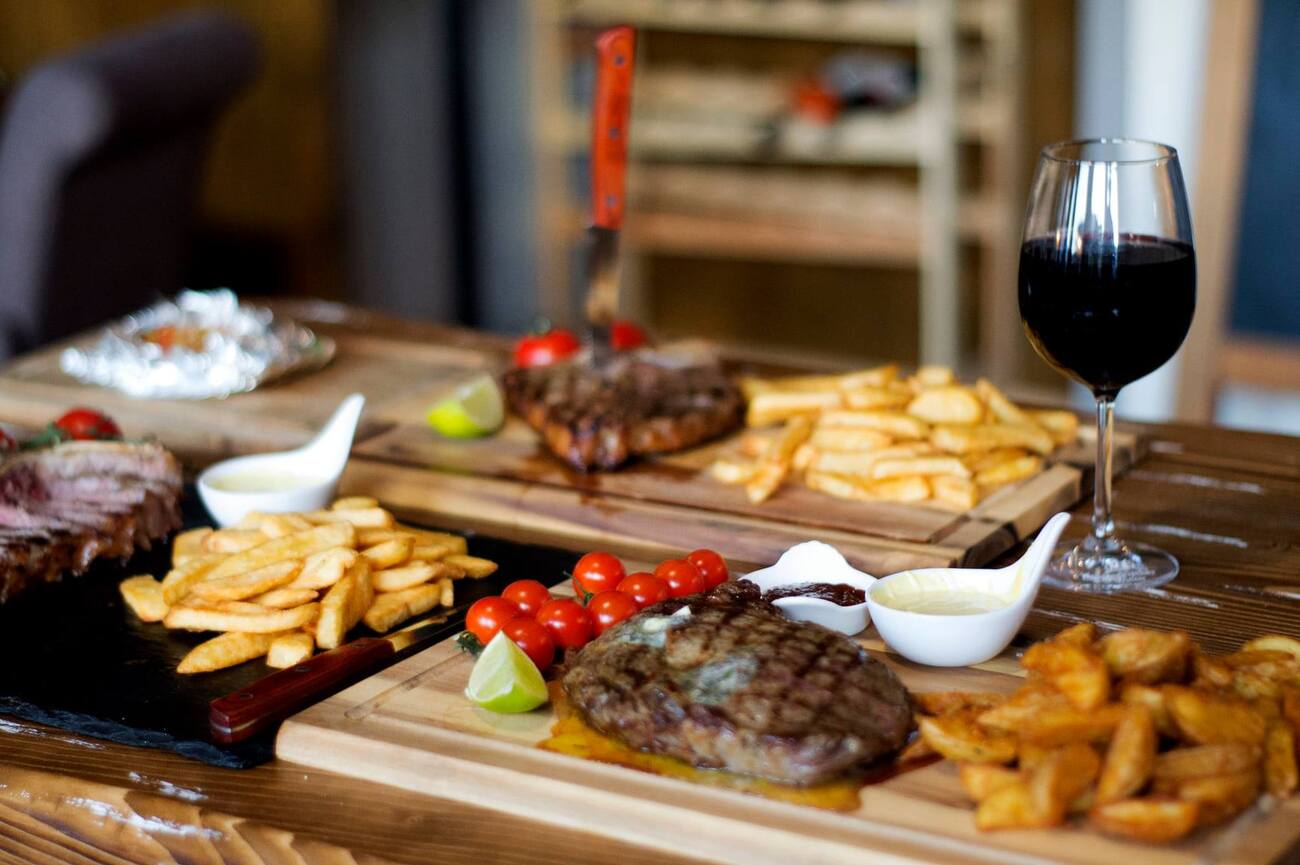
- Restaurant-Hotel Tomahawk: This is where you go when appetite is the headline. Restaurant-Hotel Tomahawk has built a reputation around bold grilled dishes and serious portions. The Tomahawk steak is the star. It’s perfectly cooked, deeply flavorful and often called one of the best in Germany by regulars. If you’re a meat-first diner, this place understands you.
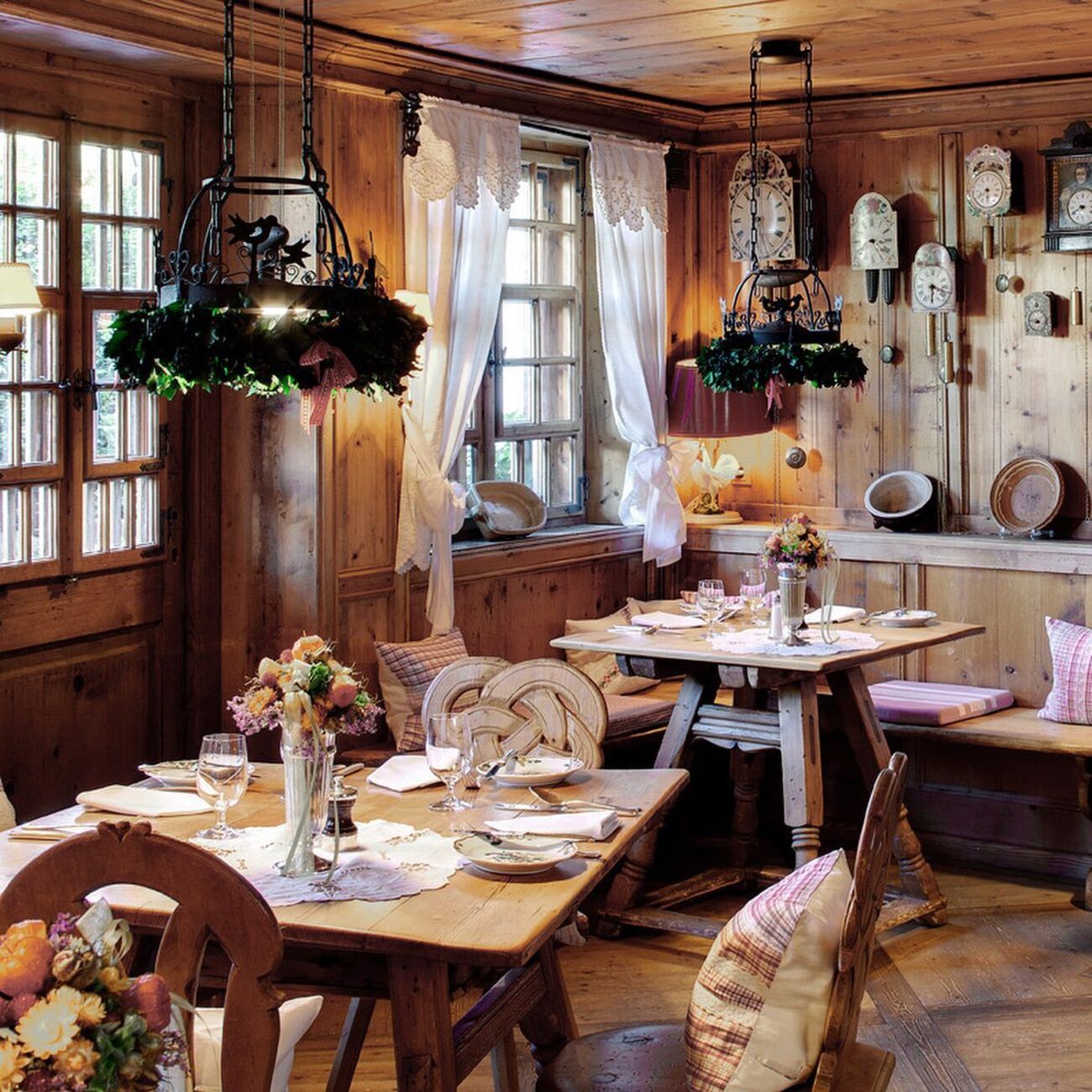
- Dorfstuben: If you want authenticity, Dorfstuben delivers it without performance. This restaurant feels like stepping into a 19th-century farmhouse because you are. The “Clock Room” and “Förster Jakob Room” are decorated down to the smallest detail and waitresses in traditional dirndls serve with warmth and confidence. The cuisine leans seasonal and regional: game from the hotel’s own hunting grounds, trout from its fish farm and classics like braised beef roulade in Pinot Noir sauce.
- Zum Kreuz: Operating since 1683, Zum Kreuz isn’t playing at tradition; it is tradition. Now in its fourth generation under Matthias Schwer, this inn sits just outside St. Märgen at over 1,000 meters elevation, giving you mountain air with your meal. The father-and-son kitchen team focuses on seasonal fare and regional classics. Expect local game, maultaschen, schnitzel and thoughtfully prepared vegetable menus (the “Gemussmenü” requires advance order).
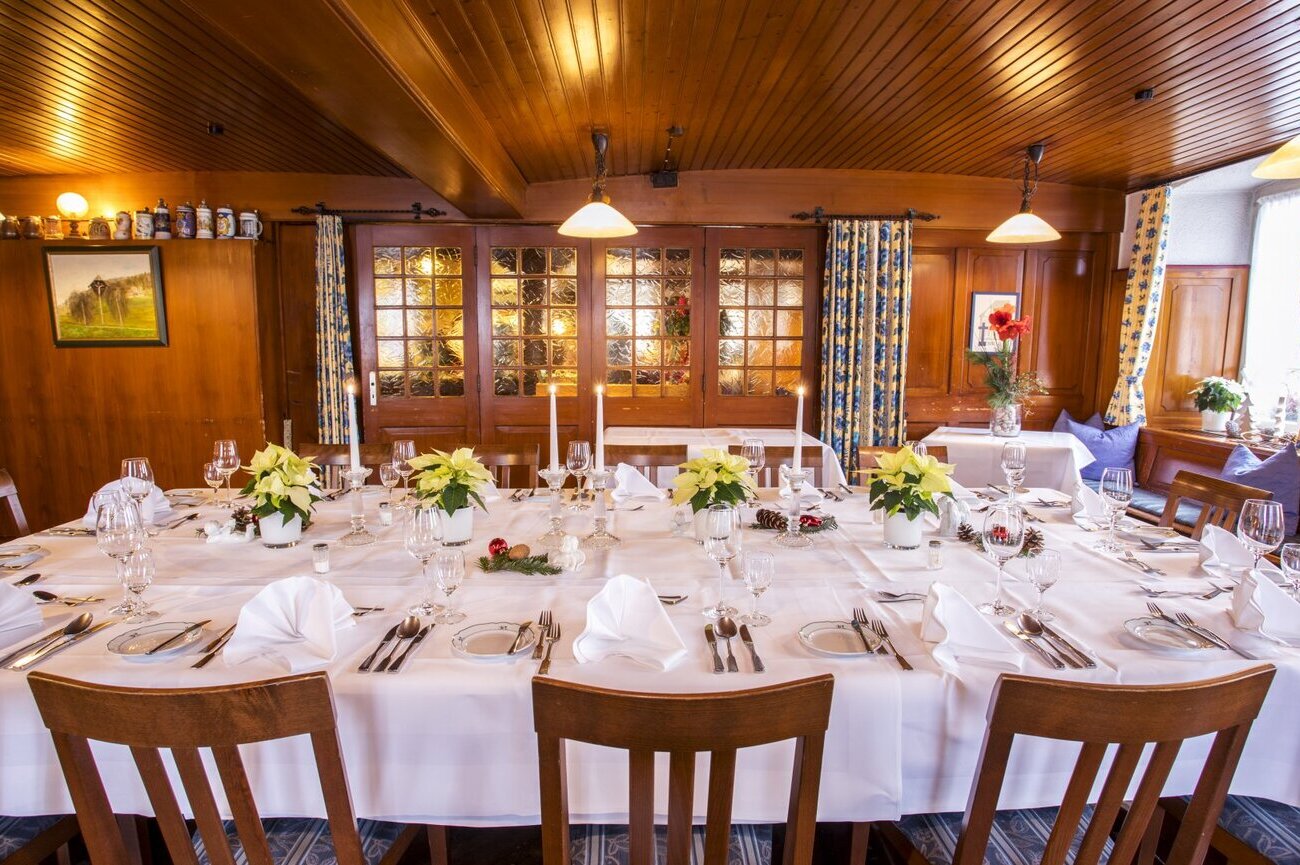
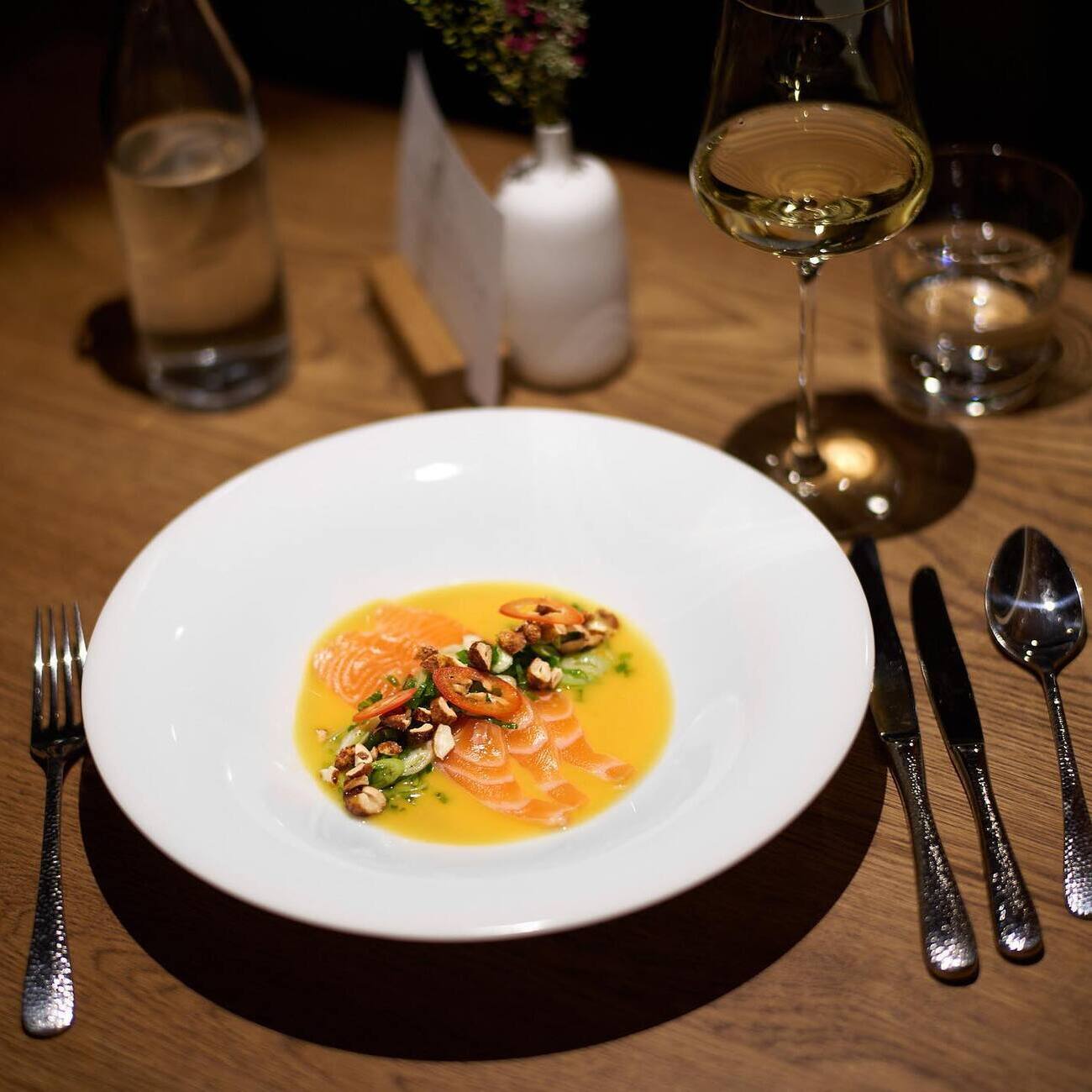
- Löwengrube: Löwengrube feels like old meets new done right. Once a traditional wine tavern, it has been transformed under chef-patron Amadeus Kura into a space that preserves historic character while adding sleek modern touches. Northern Black Forest salmon trout with peach, pepper and cashews feels fresh and confident, while veal loin with aubergine and polenta leans more Mediterranean. You can order à la carte or opt for a five-course menu in the evening.
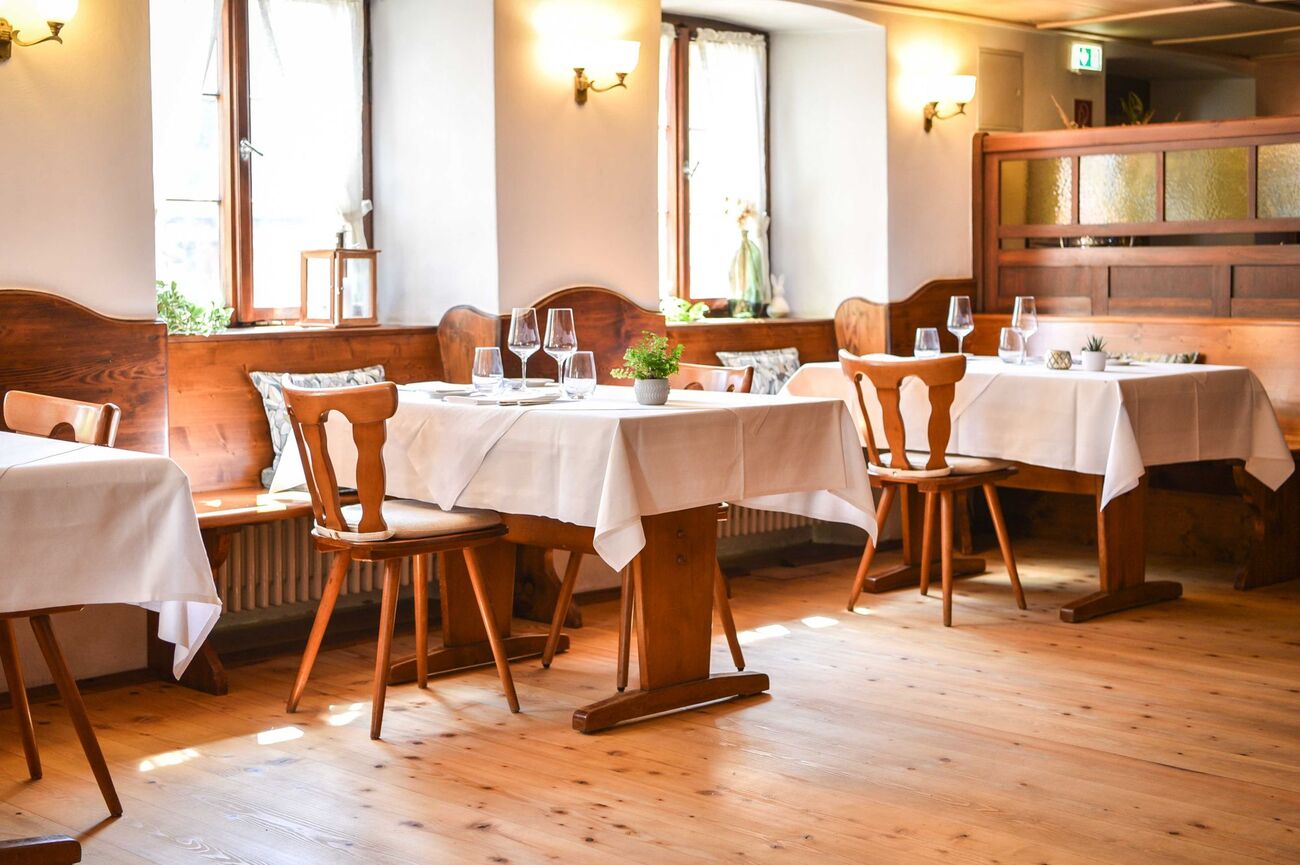
- Gasthaus zum Raben: Dating back to 1604, Gasthaus zum Raben is the kind of place where low ceilings, wooden benches and a tiled stove create immediate warmth. Perched at around 600 meters with views toward Freiburg, it feels remote in the best way. And the owners Melanie and Pierre Barrel are fully present. She leads the service with ease while he crafts a seasonal “carte blanche” menu of four or six courses inspired by both the region and his French heritage.
Where
To Drink in the Black Forest
The Black Forest doesn’t sleep early. Once the lights come on in Baden-Baden, Freiburg or the smaller towns tucked between ridgelines, the energy shifts. Cocktail shakers replace hiking poles. Live bands take over timber-framed streets. And suddenly, the forest feels like the backdrop to something louder. Here’s where to go when you’re not ready to call it a night.
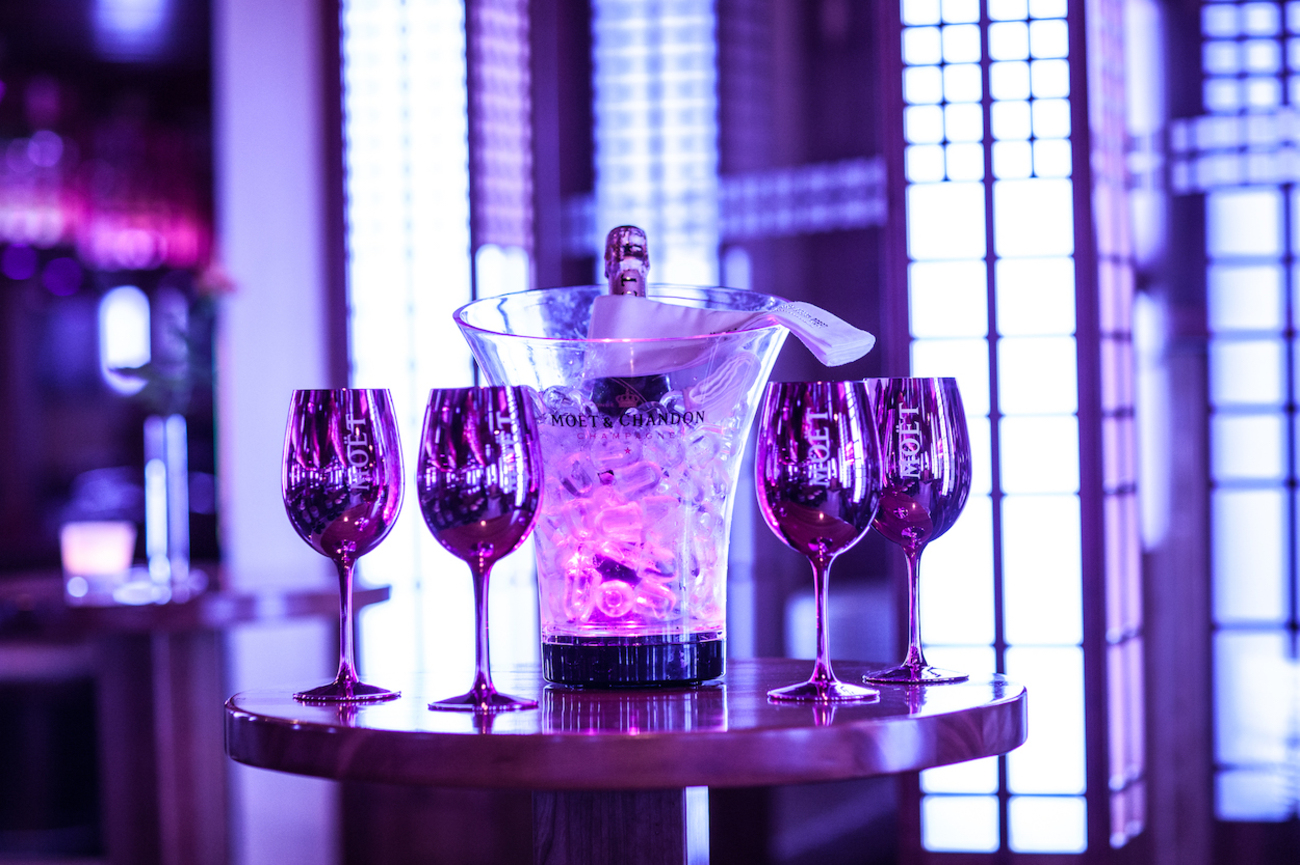
- Equipage (Baden-Baden): If you’re in Baden-Baden and want movement, Equipage is your spot. It’s part dance bar, part cocktail lounge, part live-music venue and fully committed to atmosphere. The lighting is low, the playlist is current and the energy builds as the night goes on. The cocktail program holds its own, with well-balanced classics and house creations that aren’t just sugary fillers.
- Henry’s Bar (Freiburg im Breisgau): Freiburg has a laid-back student-city pulse, and Henry’s Bar fits right into it. Cozy, intimate, and easy to settle into, this is the kind of place where you start with one cocktail and end up staying for three. The bartenders know what they’re doing whether it’s a perfectly stirred Old Fashioned or something more creative. You can also join whiskey tastings and cocktail workshops hosted by Henry’s Bar.
- Fürstenberg’s Irish Pub (Villingen-Schwenningen): For something louder and unapologetically lively, Fürstenberg’s Irish Pub delivers. Expect dark wood interiors, traditional Irish décor, and live music that turns the entire room into a sing-along zone. The menu leans hearty with burgers, stews, fish & chips and the drinks list is stacked with Irish beers and whiskeys at reasonable prices.
- BiGi Bar (Altensteig): If you want something stylish but relaxed, Bigi Bar offers that sweet spot. The atmosphere is cozy and well-designed. Beyond drinks, the kitchen covers everything from German staples to international favorites, always emphasizing fresh ingredients and solid execution. It’s a good place to start the evening slowly with cocktails, snacks and conversations and let the night unfold without pressure.
Cafes
in the Black Forest
Between hikes, lake walks and long scenic drives, there’s one ritual that quietly defines this region: Kaffee und Kuchen. The Black Forest doesn’t rush its café culture. You sit. You order properly. You let the cake arrive like it’s earned an entrance. Whether it’s a legendary slice of Schwarzwälder Kirschtorte or a farmhouse apple tart still warm from the oven, cafes here are part of the experience.
- Café Schwarzwaldmaidle: Close to the train station and easy to reach, Café Schwarzwaldmaidle blends accessibility with charm. Breakfast is a highlight here, especially the generously portioned breakfast-for-two platter that’s known to leave you with leftovers (not a bad problem). They open early, making it ideal if you’re heading out for a full day of exploring. The pastry selection is broad and coffee is taken seriously.
- Cuckoo’s Nest: Rustic in the best way, Cuckoo’s Nest Gutach feels like it belongs in a storybook. Set near a stream and surrounded by forest scenery, it’s a peaceful stop that pairs nature with indulgence. The homemade Black Forest cake is the headline act. But there’s more than cake here. Expect hearty snacks, fresh ingredients and friendly service that keeps the atmosphere relaxed.
- Traudel’s Café: Hidden in the idyllic Brettental valley, Traudel’s Café invites you to slow down properly. For over 30 years, the kitchen has been preparing house specialties with consistency and care. Homemade cakes and regional specialties dominate the menu, all served in a cozy environment that feels personal rather than commercial. This is where you go when you want calm with your coffee.
- Café im alten Engel: Set in the scenic Dachsberg region, Café im alten Engel pairs homemade baking with a garden that might steal your attention. The outdoor seating areas are scattered thoughtfully. Guests often stop here after hikes, drawn by the promise of homemade cakes and good coffee. The staff maintains a friendly, relaxed tone that fits the countryside setting.
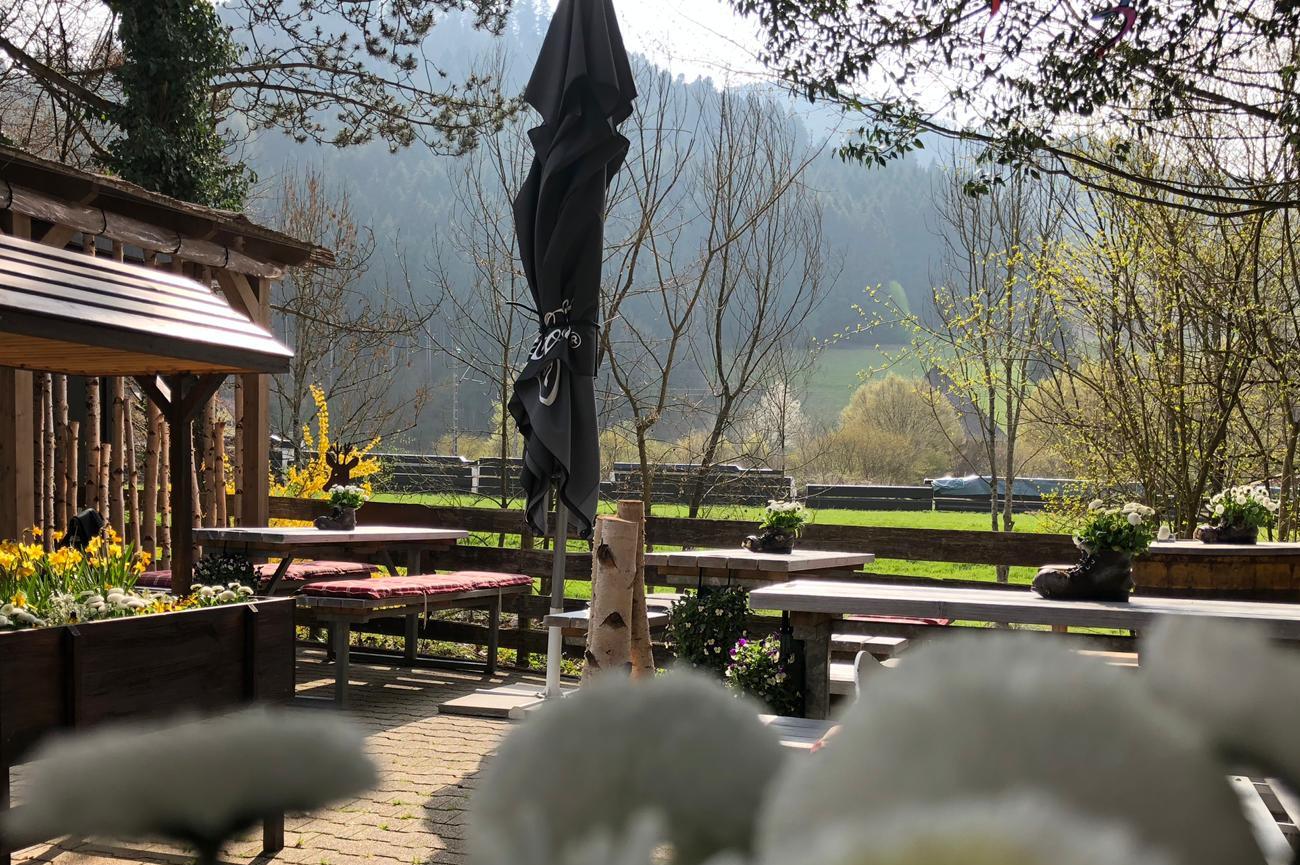
- Café Waldfrieden: Perched on a quiet hill in Lebach, Café Waldfrieden blends traditional Saarland comfort with scenic calm. The menu moves beyond cake into hearty comfort food. The juicy chicken is a standout and it is often praised for its seasoning and tenderness. Crispy Pommes, hearty Hackbraten (meatloaf) and even classic pizzas round out the offerings. You will go here if you want a quick coffee stop and a proper pause.
Wineries
and Vineyards in the Black Forest
When people think of the Black Forest, they picture cake before they picture Cabernet. But along the western and southern edges, especially near Freiburg, Gengenbach, and the Markgräflerland gateway, vineyards stretch across sunny slopes with serious intent. You’re not just visiting wineries here. You’re stepping into family legacies, architectural showpieces and hillside vineyards that shape every bottle.
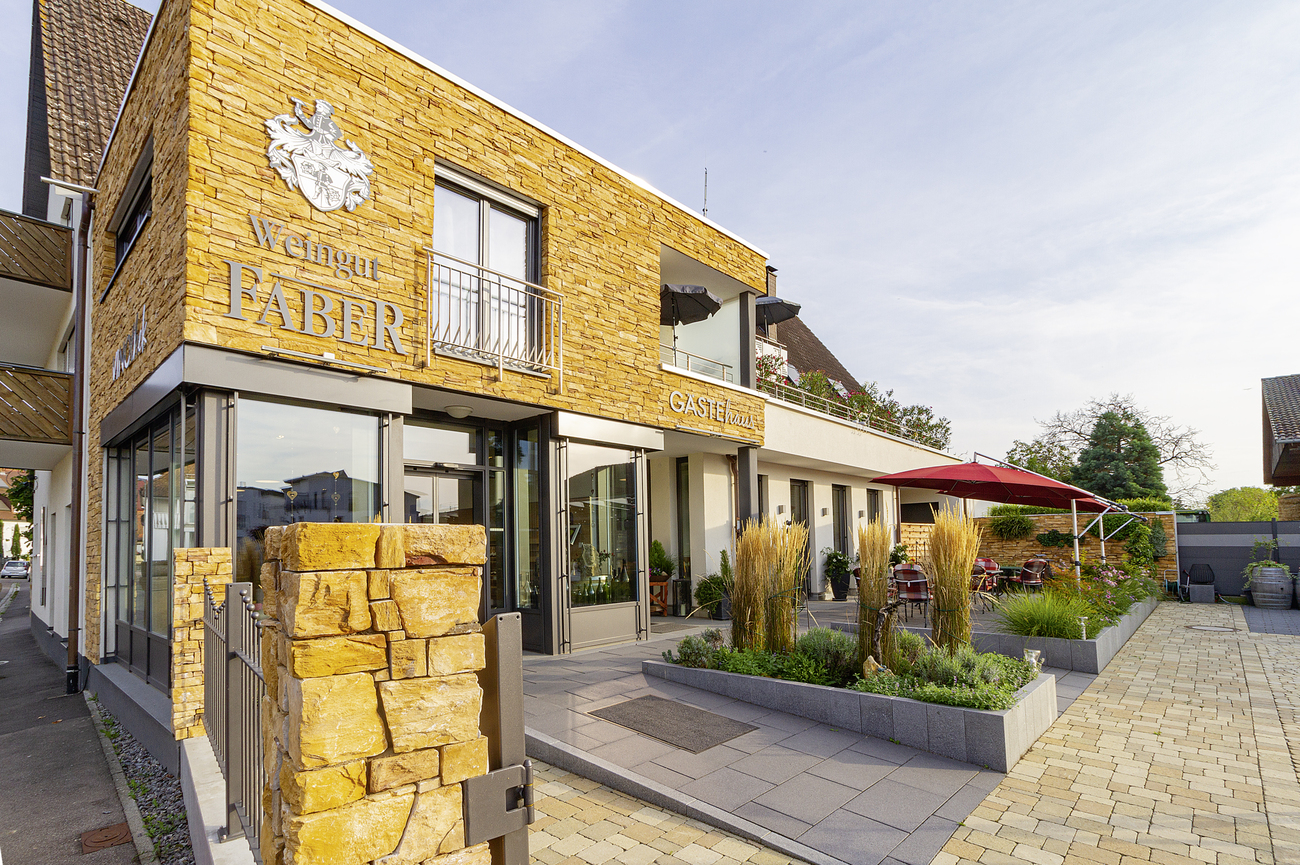
- Weingut Faber: At the foot of the Schönberg hill in Freiburg, Weingut Faber works
directly where the Black Forest transitions into the Markgräflerland wine
region. Many of their vineyards sit on sunny slopes within Freiburg itself
which gives their wines both identity and strong local roots. Sebastian Faber
focuses on diversity: Pinot Gris, Pinot Blanc, Chardonnay, Muscat, Gutedel,
Pinot Noir, and Cabernet Dorsa all appear in the portfolio. They’ve also embraced innovation with PIWI varieties like Muscaris and
Souvignier Gris, plus an alcohol-free PIWI cuvée.
- Weingut Fritz Waßmer: If Pinot Noir is your language, Fritz Waßmer speaks it fluently. Founded in 1998, the winery has earned international recognition, particularly for its Pinot Noir, inspired by Burgundy traditions. Waßmer is largely self-taught, but his deep respect for terroir and structure shows in wines that are independent, layered and complex. Tastings here feel serious but not pretentious. It is ideal if you’re exploring the southern reaches of the Black Forest wine corridor.
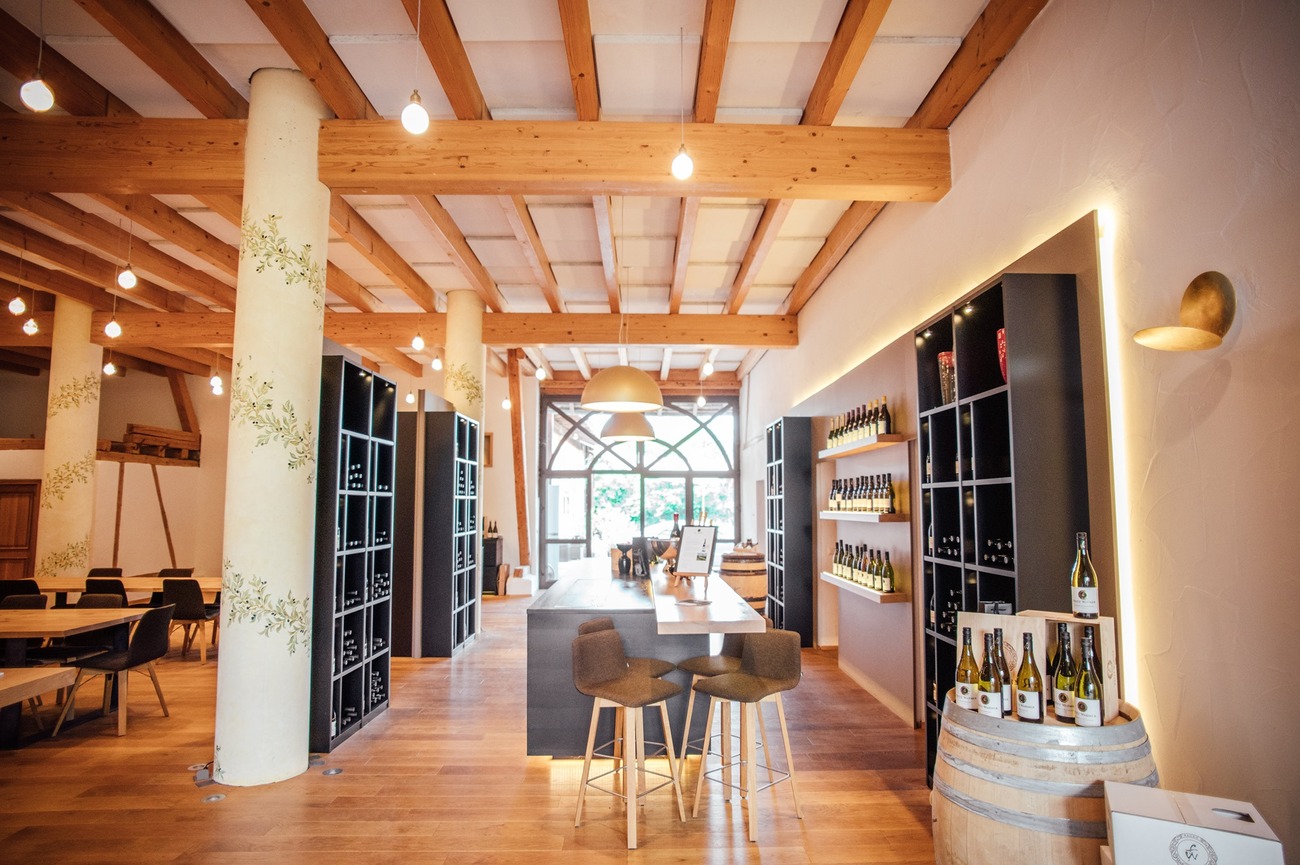
- Weingut Simon Huber: In the picturesque town of Gengenbach, Weingut Simon Huber has built a reputation strong enough to be listed among the 1,000 best wineries in Germany by the Vinum wine guide. The winery blends traditional craftsmanship with modern technology and the result is structured, expressive wines that reflect their site. You can visit for guided tastings, explore the shop or join one of their wine walks, where vineyard tours combine outdoor movement with hands-on wine education.
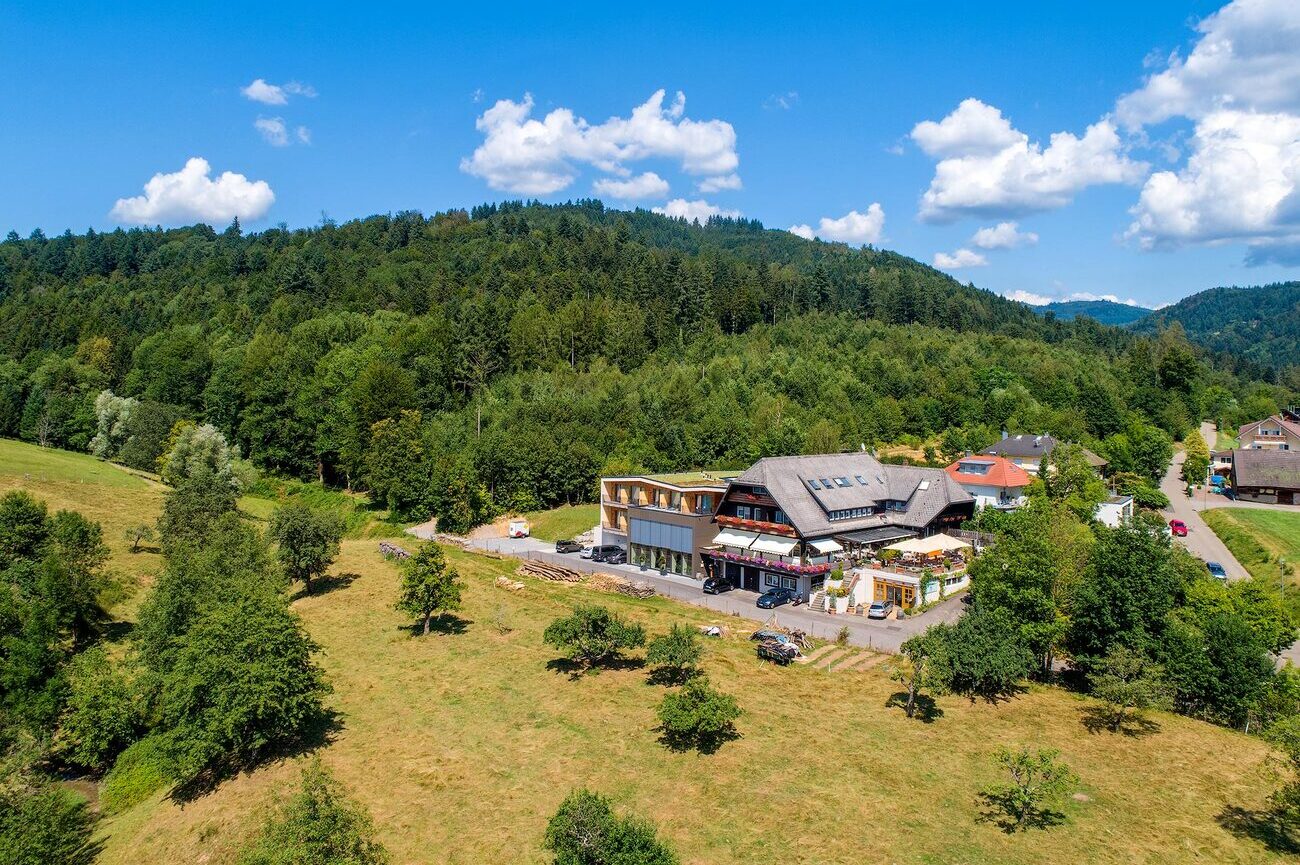
- Weingut Andreas Laible in Durbach (Ortenau) is a highly regarded family estate on the Black Forest’s western edge known for expressive, terroir-driven Riesling and Pinot varieties; the winery blends careful vineyard work with precise cellar technique to produce structured, elegant wines that reflect the steep, sun-exposed sites of the Ortenau, making it a standout stop for anyone exploring quality Baden wines at the forest’s foothills.
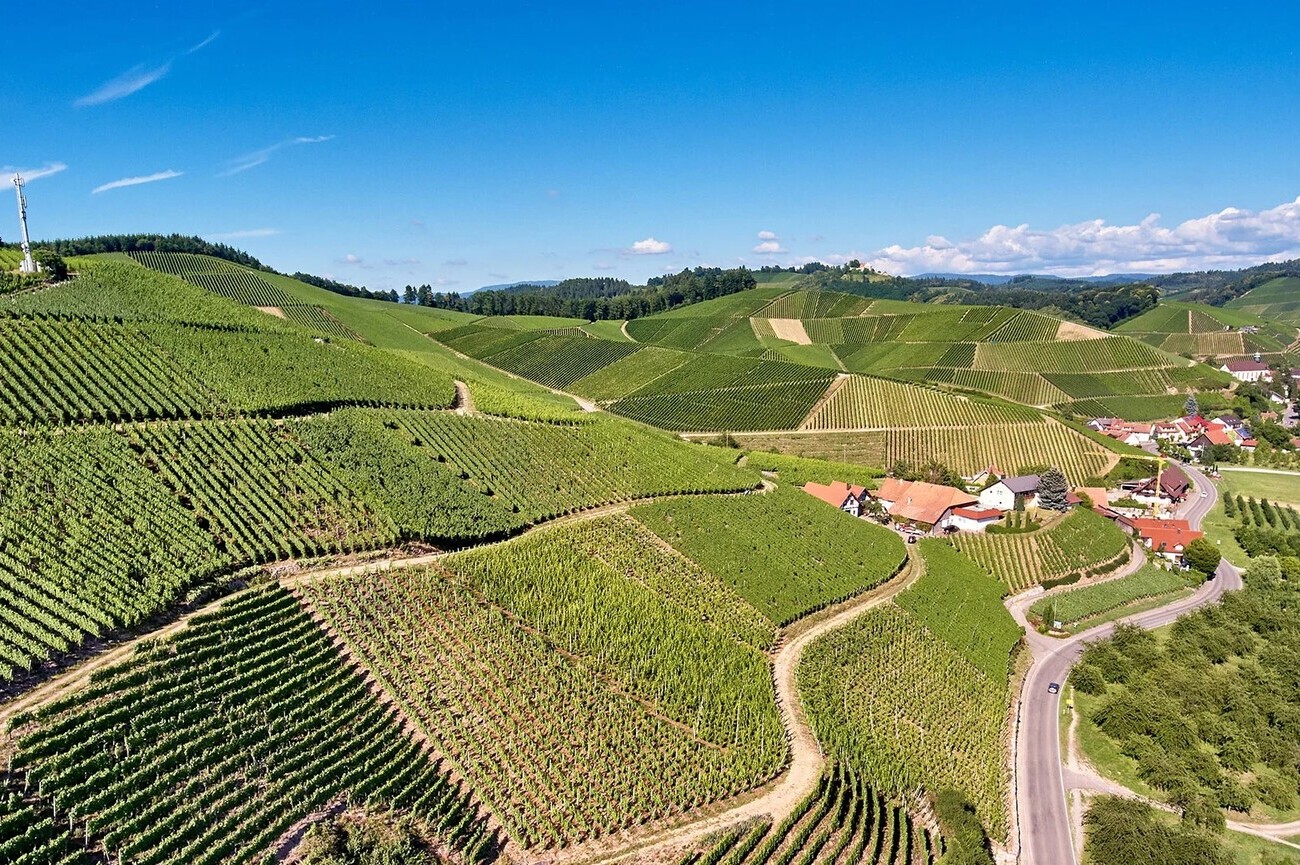
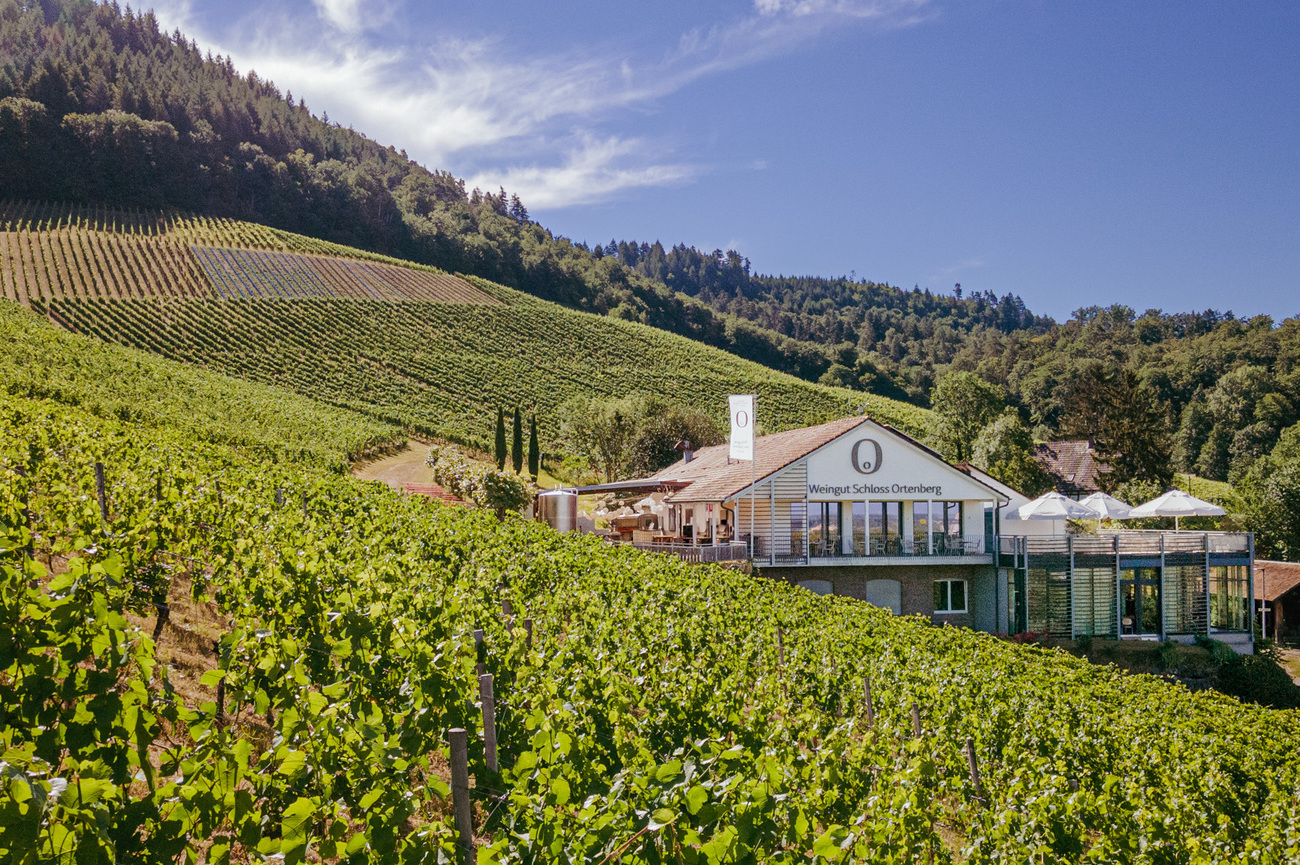
- Weingut Schloss Ortenberg is a well-known winery in the Ortenau, on the western edge of the Black Forest, set below Ortenberg Castle. It focuses strongly on Riesling, alongside other classic Baden varieties, and the style is typically fresh and well-structured, shaped by the warm hillside vineyards at the forest’s foothills. The estate is easy to visit, with a shop for browsing and the option to arrange tastings. If you want something more in depth, guided tastings can be booked by appointment.
Where to Stay in the Black Forest
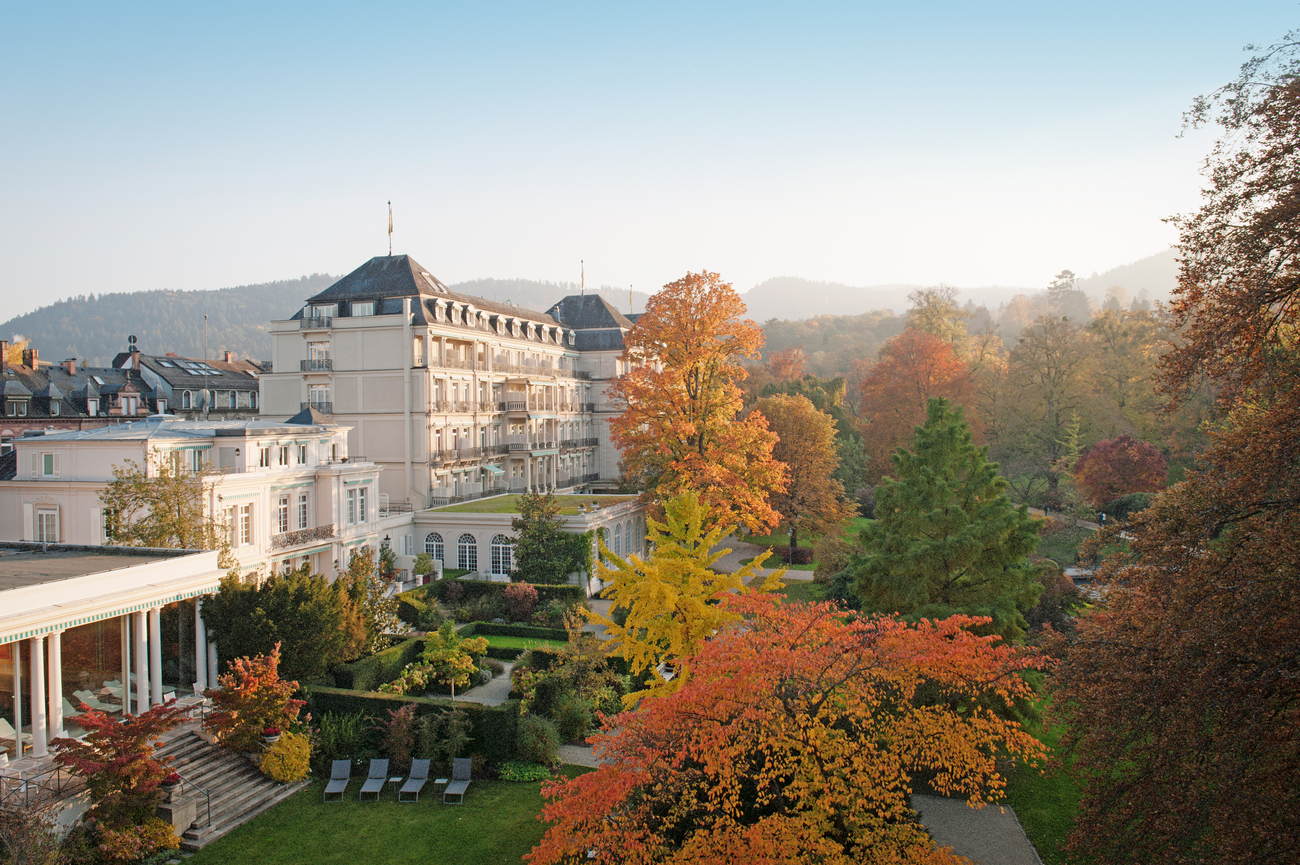
- Brenners Park-Hotel & Spa (5 stars): If Baden-Baden is Europe’s spa royalty, Brenners Park-Hotel & Spa is the one. Open since 1872, this grand hotel sits beside the Oos River overlooking Lichtentaler Allee, surrounded by manicured parkland. The architecture leans unapologetically 19th-century luxury with antique furnishings, marble bathrooms, private terraces and the entire property feels like a preserved era of elegance. The spa goes beyond thermal baths; practically every European and Asian treatment imaginable is available, executed at a level that sets the standard for the region.
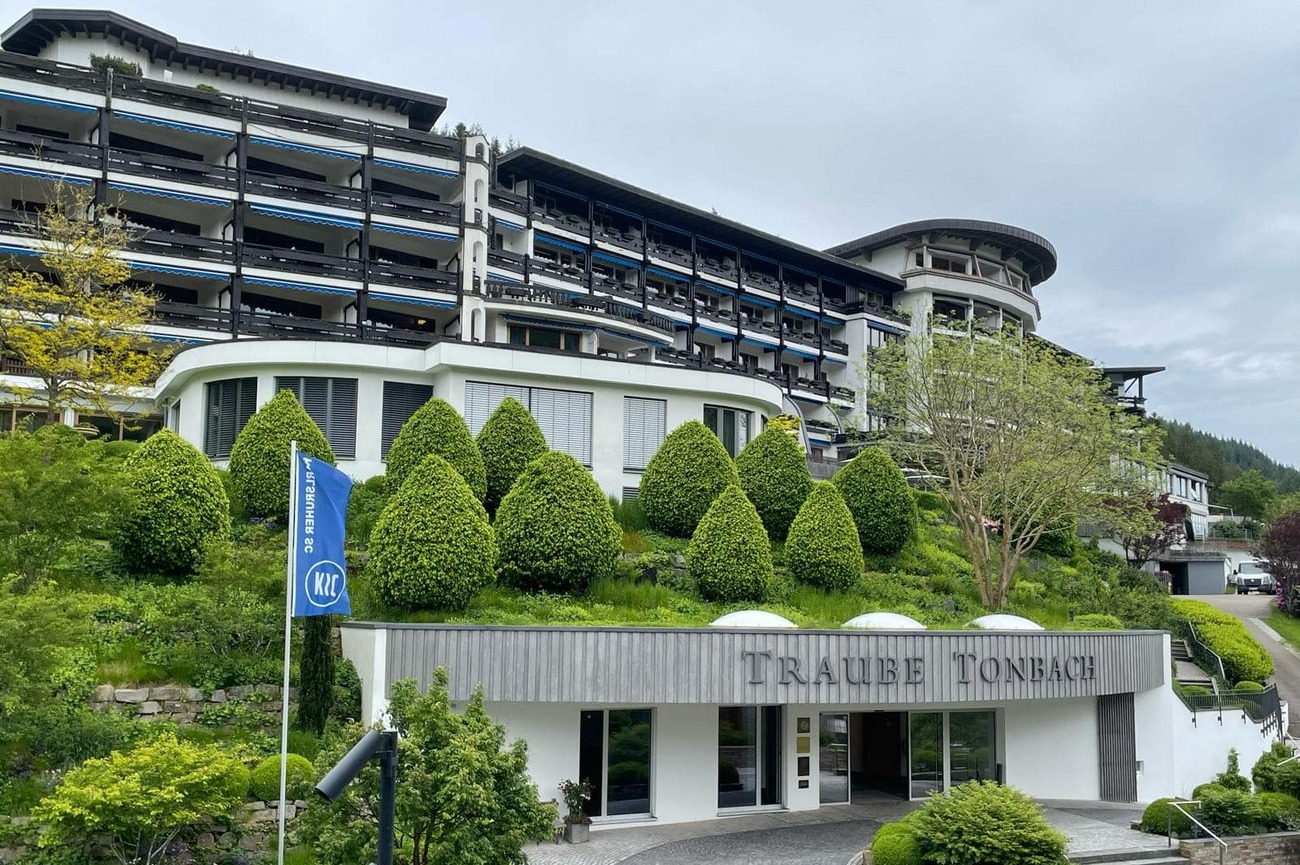
- Hotel Traube Tonbach (5 stars): Hidden among sunlit forest paths in Baiersbronn, Hotel Traube Tonbach blends alpine warmth with culinary dominance. This is not just a luxury retreat; it’s a gastronomic powerhouse, home to multiple Michelin-starred restaurants including Schwarzwaldstube and 1789. The wellness area overlooks the valley, the service feels intuitive and the atmosphere balances luxury with genuine hospitality. Whether you’re traveling as a couple or with family, the experience feels thoughtfully curated.
- Parkhotel Wehrle (4 stars): Staying in Triberg puts you close to the famous waterfalls and Parkhotel Wehrle makes that location feel comfortable and refined. Rooms are spacious, many with balconies and garden views. You get modern conveniences with EV charging, private check-in and family-friendly layouts without losing the regional charm.
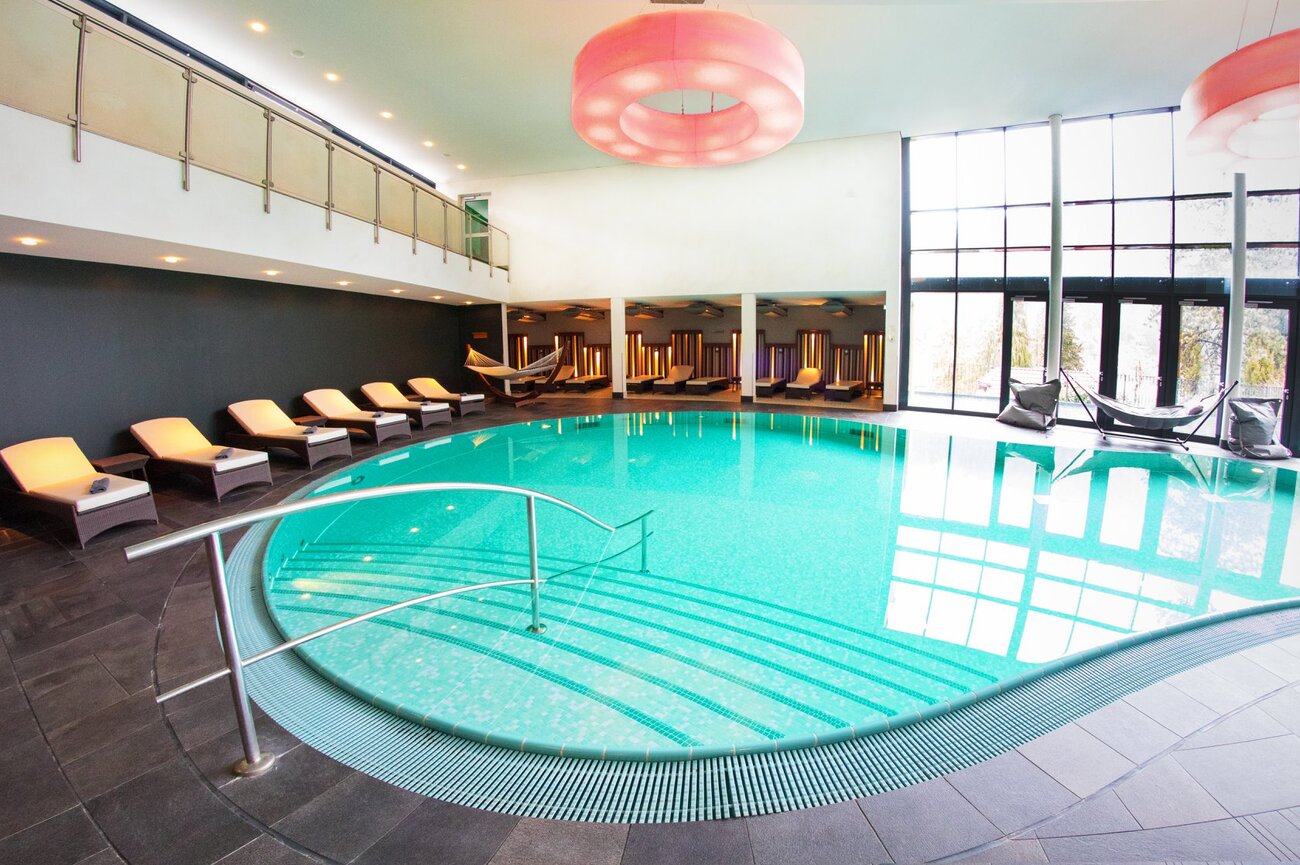
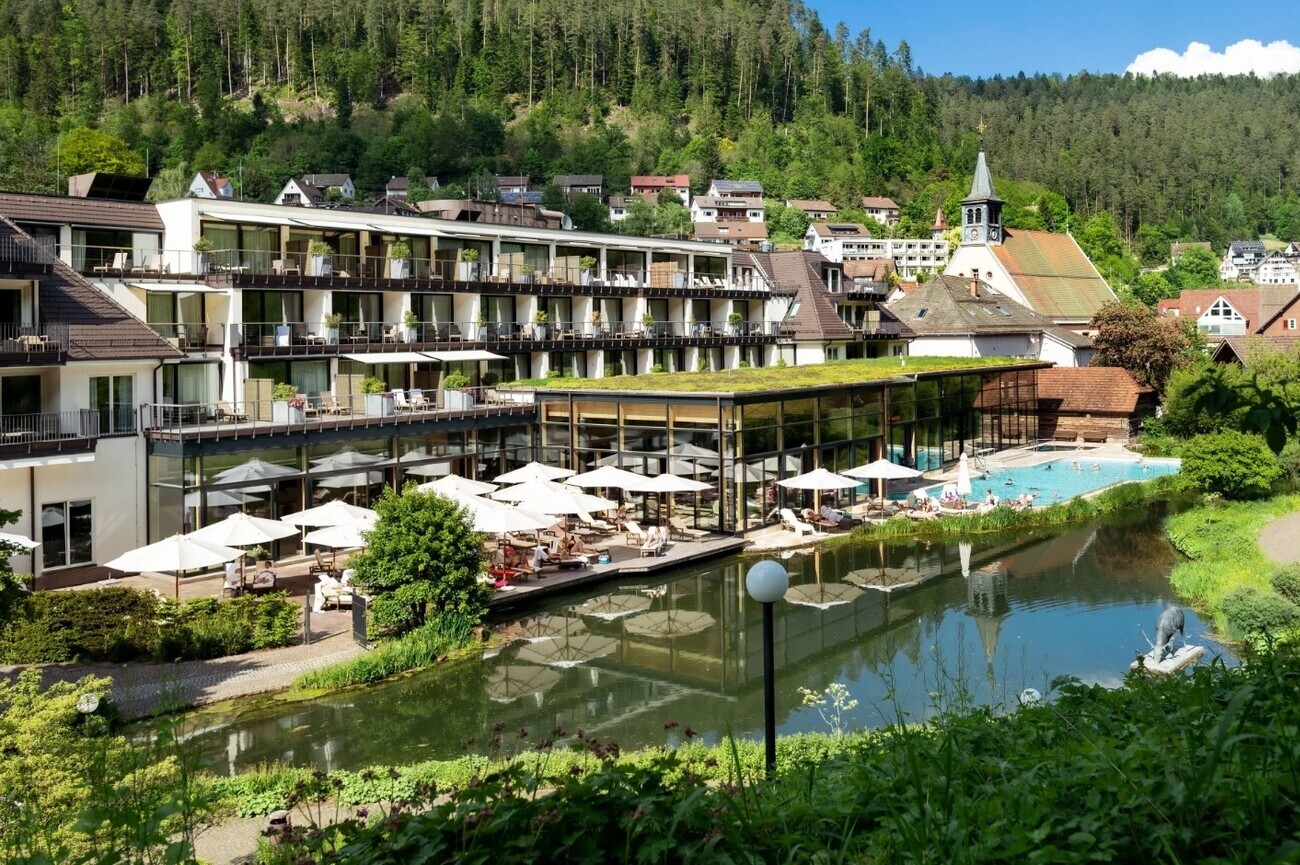
- Hotel Therme Bad Teinach (4 stars): If your trip includes the word “spa,” this is your move. Hotel Therme Bad Teinach centers around its in-house thermal bath and panoramic wellness facilities. You hike during the day, then soak while looking out at forested hills. Rooms are generously sized and comfortable and the Quellen-Restaurant focuses on regional cuisine served in cozy settings from a conservatory to a fireplace bar. You stay here to reset properly.
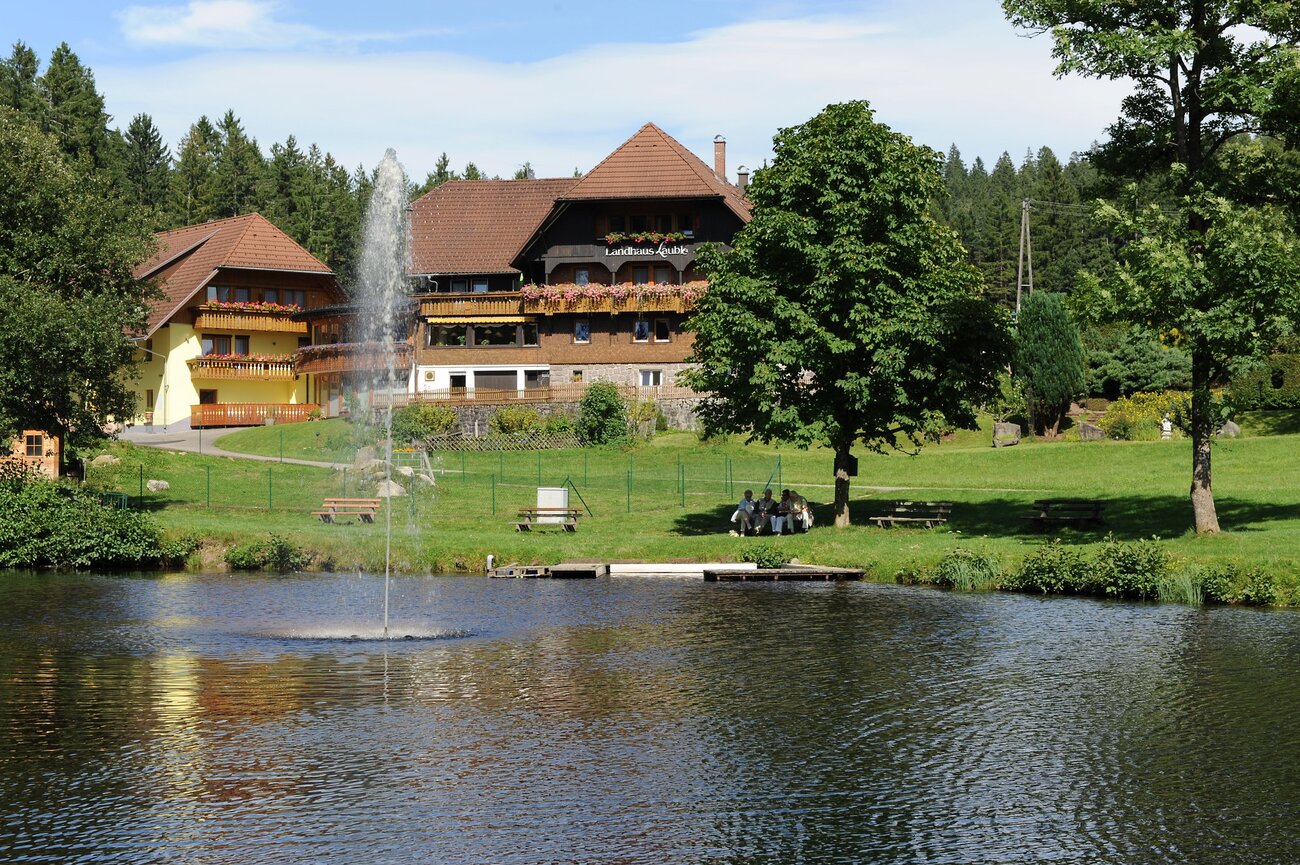
- Landhaus Lauble (3 stars): Landhaus Lauble delivers if you prefer something personal over polished. In fact, you’ll get that feeling immediately. Run by the same family for generations, it sits high in the Black Forest and feels genuinely welcoming. Rooms are cozy and country-style and the café-restaurant focuses on regional specialties including Black Forest ham from their own butchery and house-made fruit brandies. Their Black Forest cake is legendary. You’re checking into a family story.
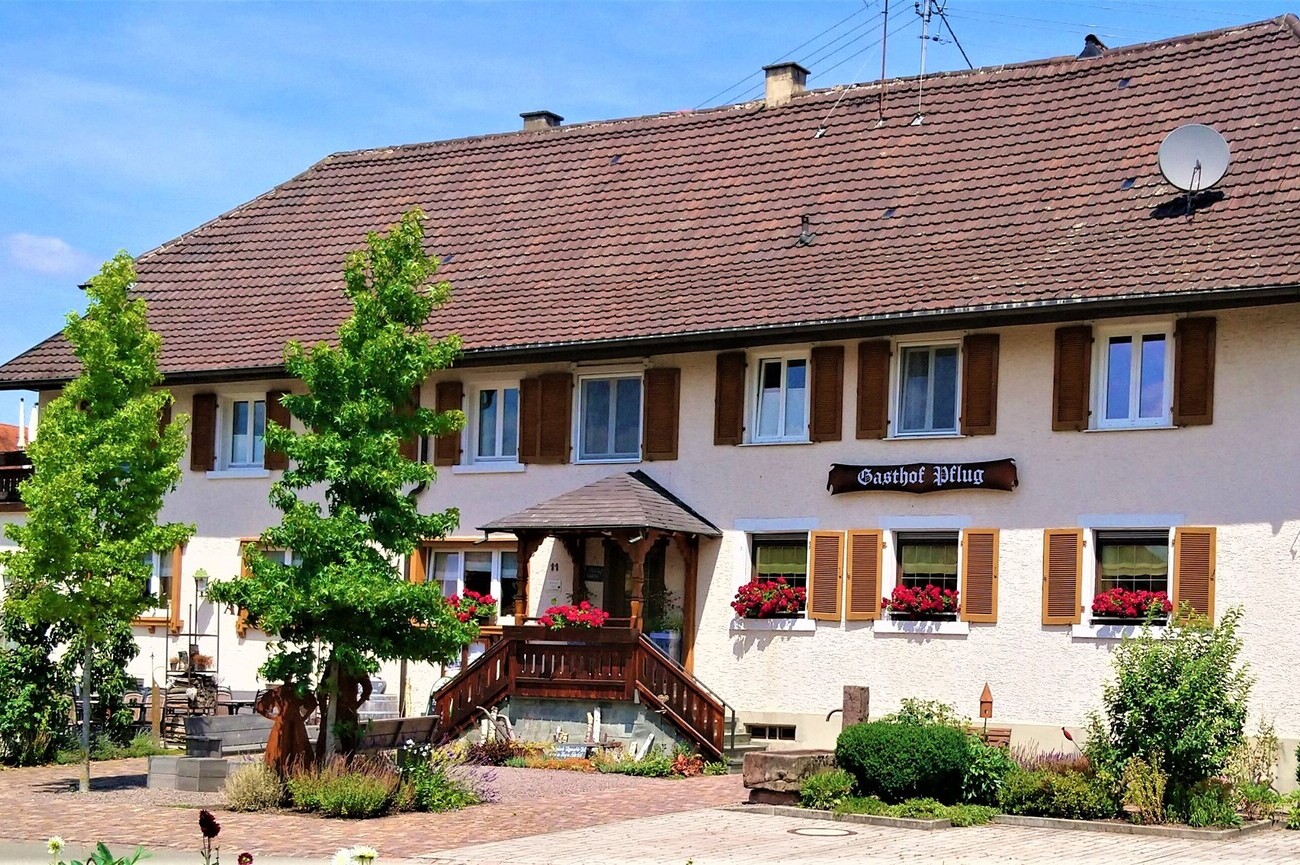
- Landgasthaus Zum Pflug (3 stars): Landgasthaus Zum Pflug offers over 100 years of hospitality in the Kleine Wiesental valley. Located along the Westweg hiking trail, it’s perfect if your days revolve around movement. The hotel also has a restaurant that emphasizes regional, seasonal cooking with meat and sausages from their own livestock. Evenings in the beer garden feel relaxed and communal. You stay here for comfortable, “just like with friends” atmosphere.
Best
Time To Visit the Black Forest
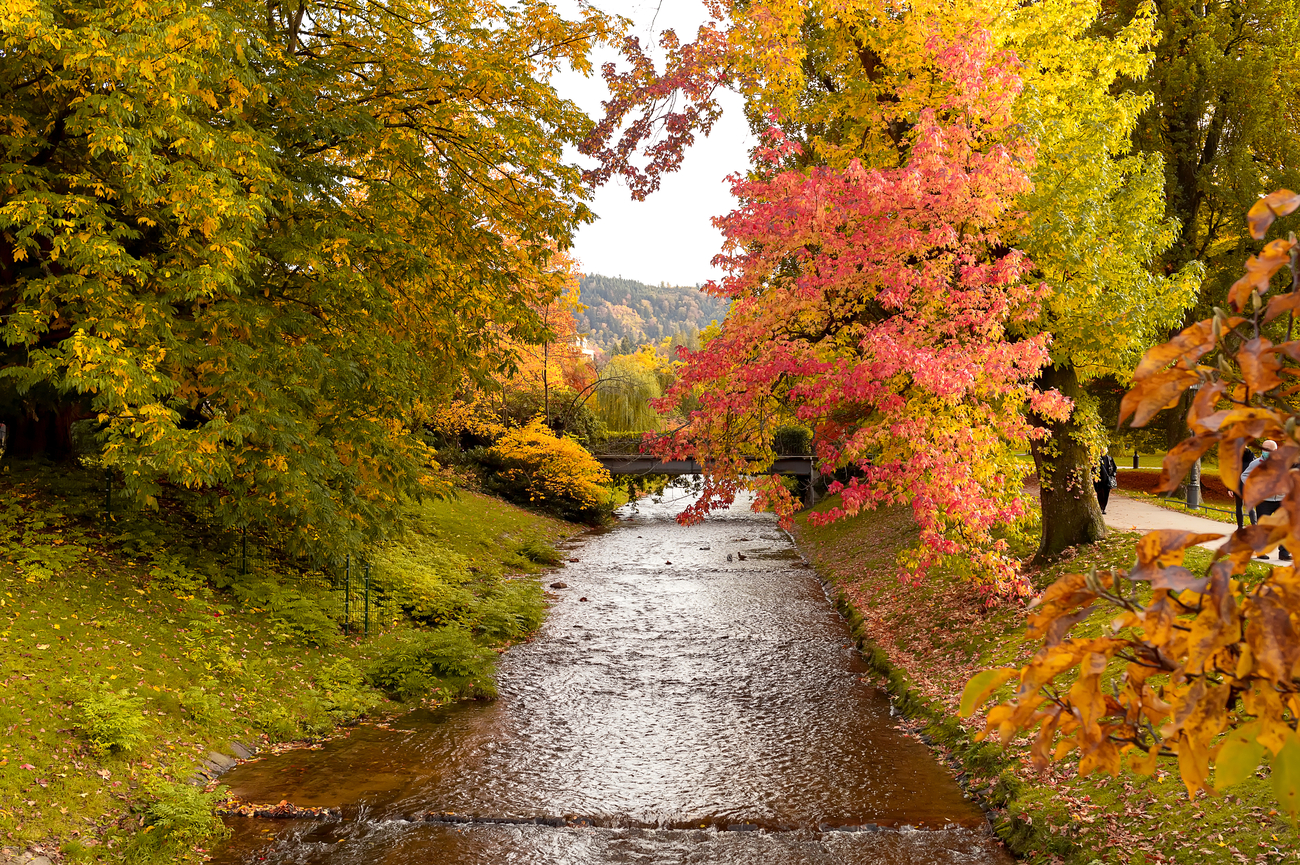
Come in autumn when the forest dresses for the ball.
This is the season when the trees trade their summer greens for gowns of amber, ruby and burnished gold. Valleys wake beneath a veil of silver mist and castle towers rise through it like something sketched by a careful hand. The air turns crisp, not harsh, but polished, carrying the scent of leaves and distant woodsmoke. You walk a little slower here. You look up more often. Even the light feels intentional, spilling across hillsides as if it knows it’s being watched.
By day, vineyards near Freiburg shimmer in harvest glow, their grapes heavy with promise. Forest paths soften under a carpet of fallen leaves, each step a quiet whisper. In Baden-Baden, spa steam curls into cool air like a spell being cast, marble warmed beneath your feet while the world outside turns golden. Dining rooms dim their lights just enough for candle flames to flicker like tiny lanterns guiding you deeper into the story. A glass of Pinot Noir tastes fuller. A slice of cake feels ceremonial.
As twilight settles over the ridgelines, the Black Forest grows still in a way that feels almost ceremonial. The sky fades to a soft violet, and a pale mist slips quietly between the trees, blurring the edges of rooftops and vineyard terraces. Windows begin to glow one by one, warm against the cool evening air, like lanterns placed carefully along the edge of a sleeping kingdom.
By the final evening, something has shifted. The forest no longer feels distant or dramatic; it feels known. Not because you’ve uncovered every trail or tasted every wine but because the place has unfolded gradually, scene by scene. The hills darken into deeper shades of bronze, windows cast a steady golden glow and the valleys rest in a calm.
There is no rush here. Only a gentle closing of the day, as if the forest itself has drawn the curtains. And in that quiet, beneath a sky dusted with stars, the story settles exactly where it was meant to.
Happily ever after.
Festivals
in the Black Forest
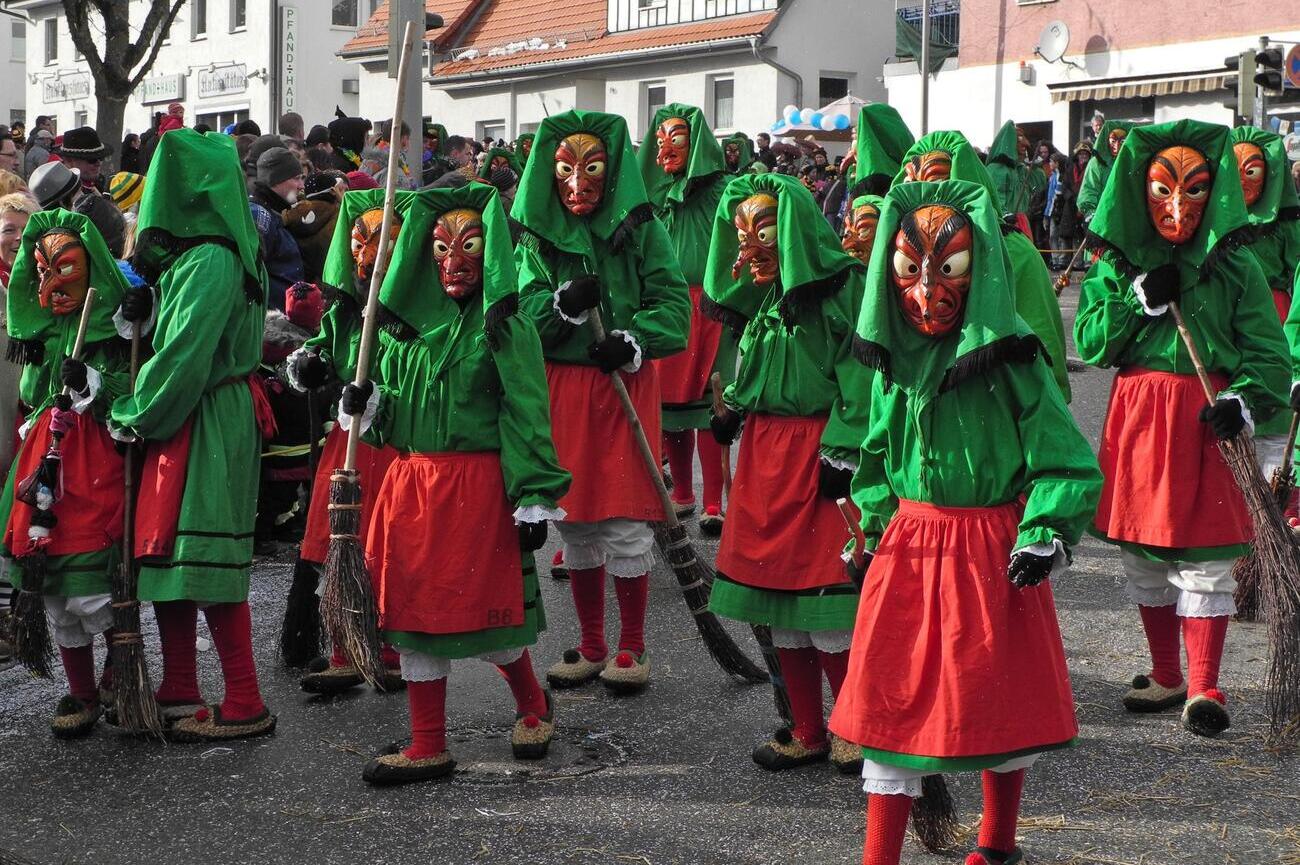
- Alemannic Fasnet: If you’re visiting in February, just before Lent begins, you’ll walk straight into Alemannic Fasnet. Towns like Rottweil and Villingen-Schwenningen fill with carved wooden masks, hand-stitched costumes and parades that move through medieval streets with centuries of weight behind them. This isn’t glitter and confetti. It’s ritual.
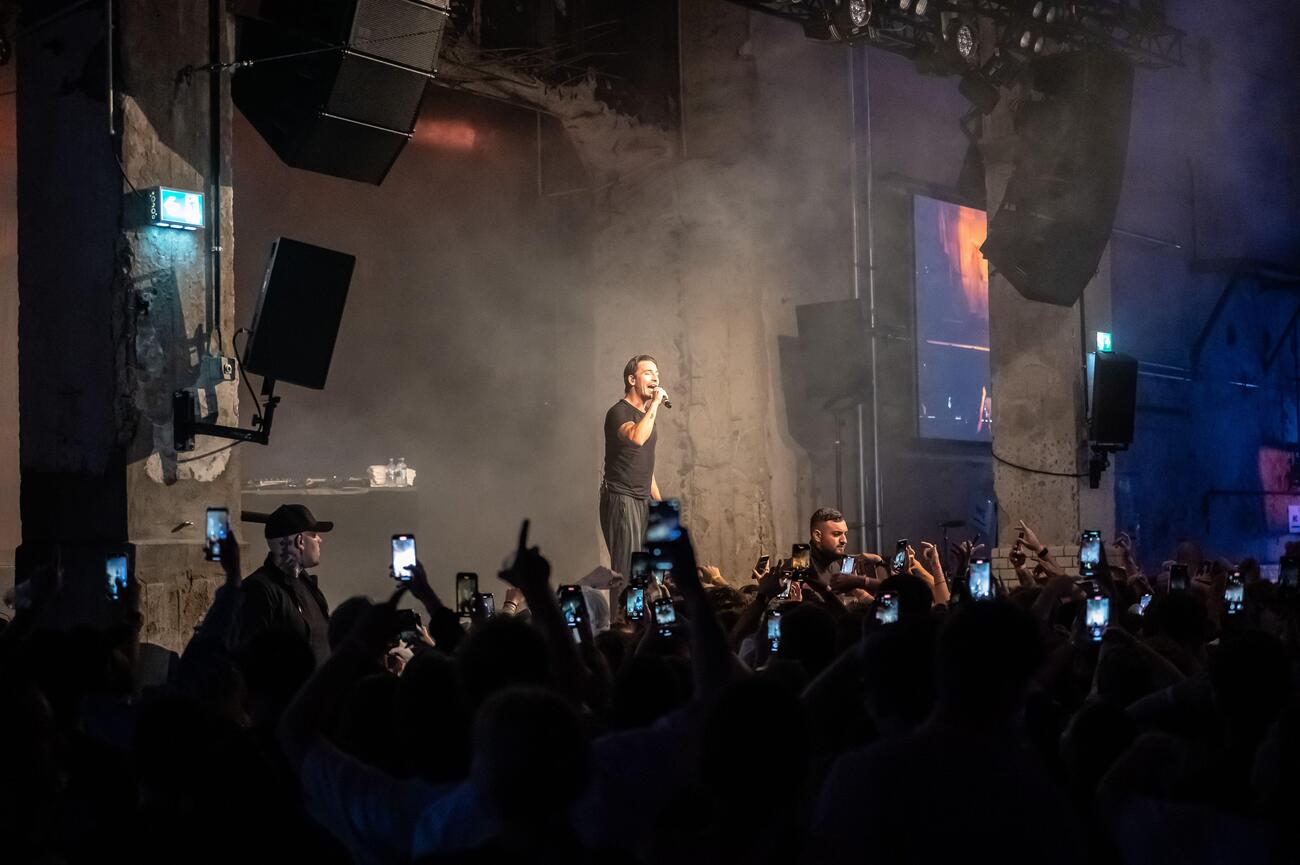
- Ferienzauber Rottweil is the city’s headline summer festival, turning warm evenings into a rolling programme of live entertainment. Over several weeks from late July into mid August, it brings concerts and stage shows to two standout settings, the industrial Kraftwerk venue and the open air area by the Wasserturm. Expect everything from well known touring musicians to comedy and cabaret nights, plus occasional family friendly dates, all with a relaxed, festival after dark feel that draws locals and visitors alike.
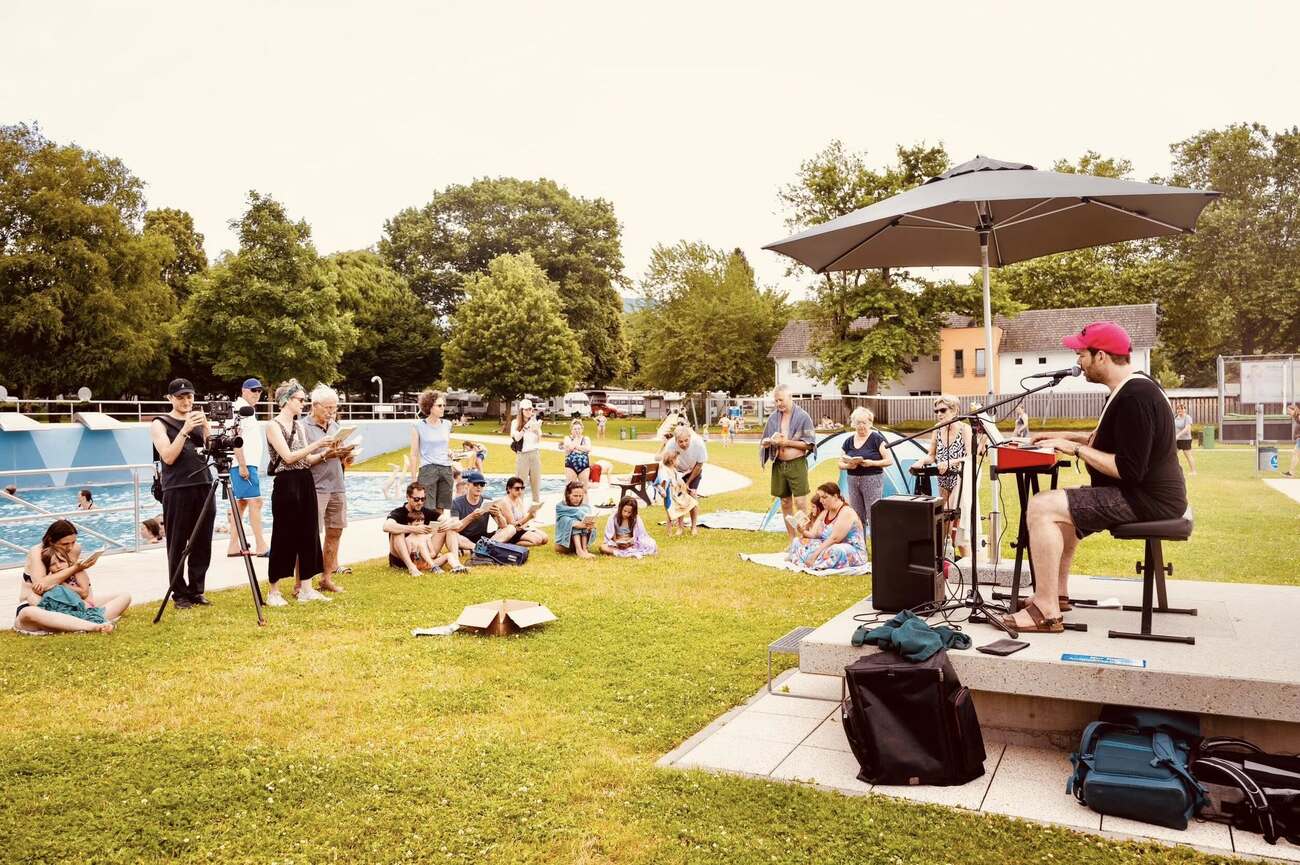
- Black Forest Voices Festival: The Black Forest Voices Festival, usually held mid-to-late June over several days, gathers vocal artists from around the world for concerts and workshops. Churches and open-air spaces fill with layered harmonies that travel effortlessly through the valley. You don’t need a program guide. Just sit, listen and let the sound settle.
- Weinfest: Late summer belongs to wine. Across August and September, especially during harvest season, towns like Freiburg and Gengenbach host multi-day Weinfests that stretch over long weekends. You’ll stand shoulder-to-shoulder with locals at wooden stalls, tasting Pinot Noir and Gutedel while live bands set the tempo
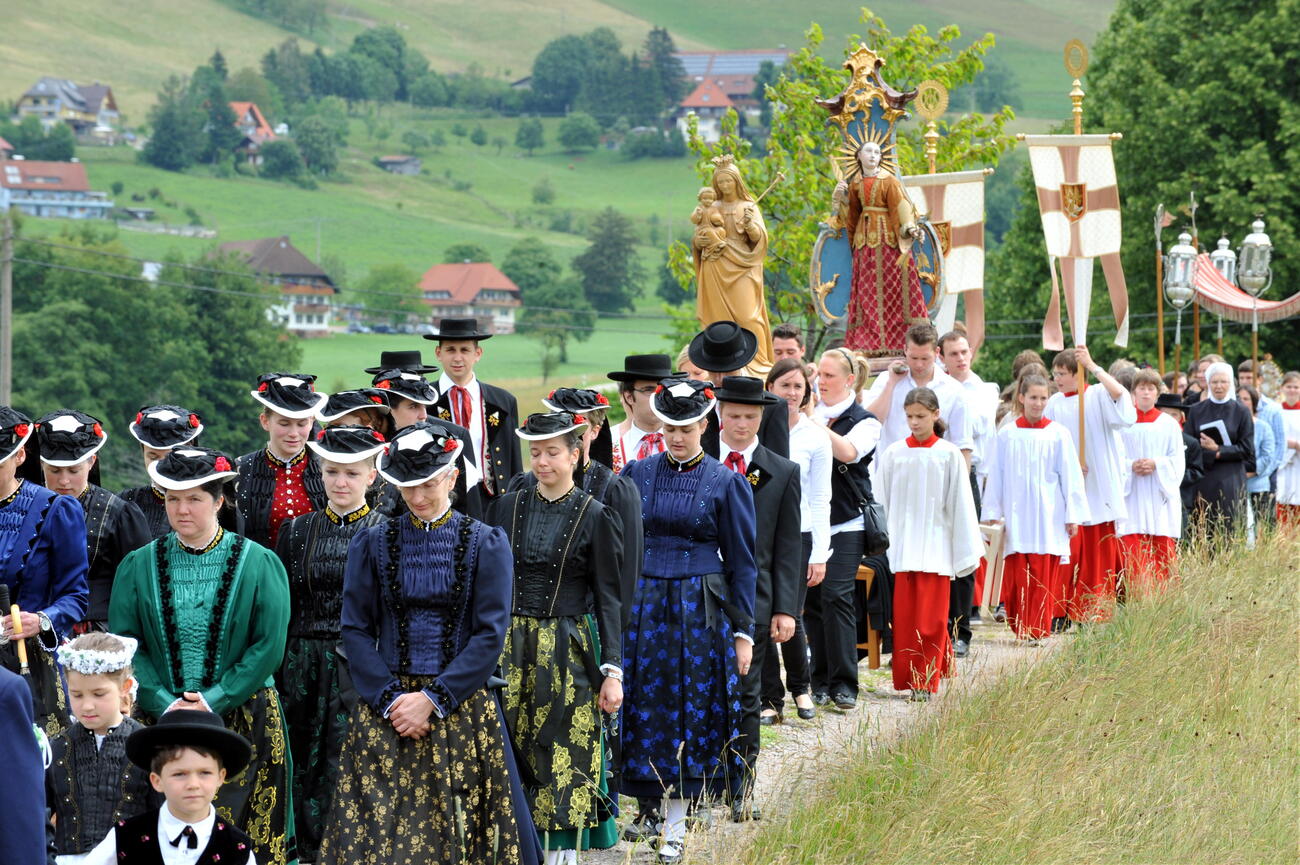
- Fronleichnam: When late spring turns toward early summer, ten days after Pentecost, Fronleichnam (Corpus Christi) takes place. Typically in May or June, always on a Thursday. Streets are decorated with intricate flower carpets and ceremonial processions move through towns in quiet reverence. You’ll see communities come together with choirs singing, petals scattered and tradition carried forward.
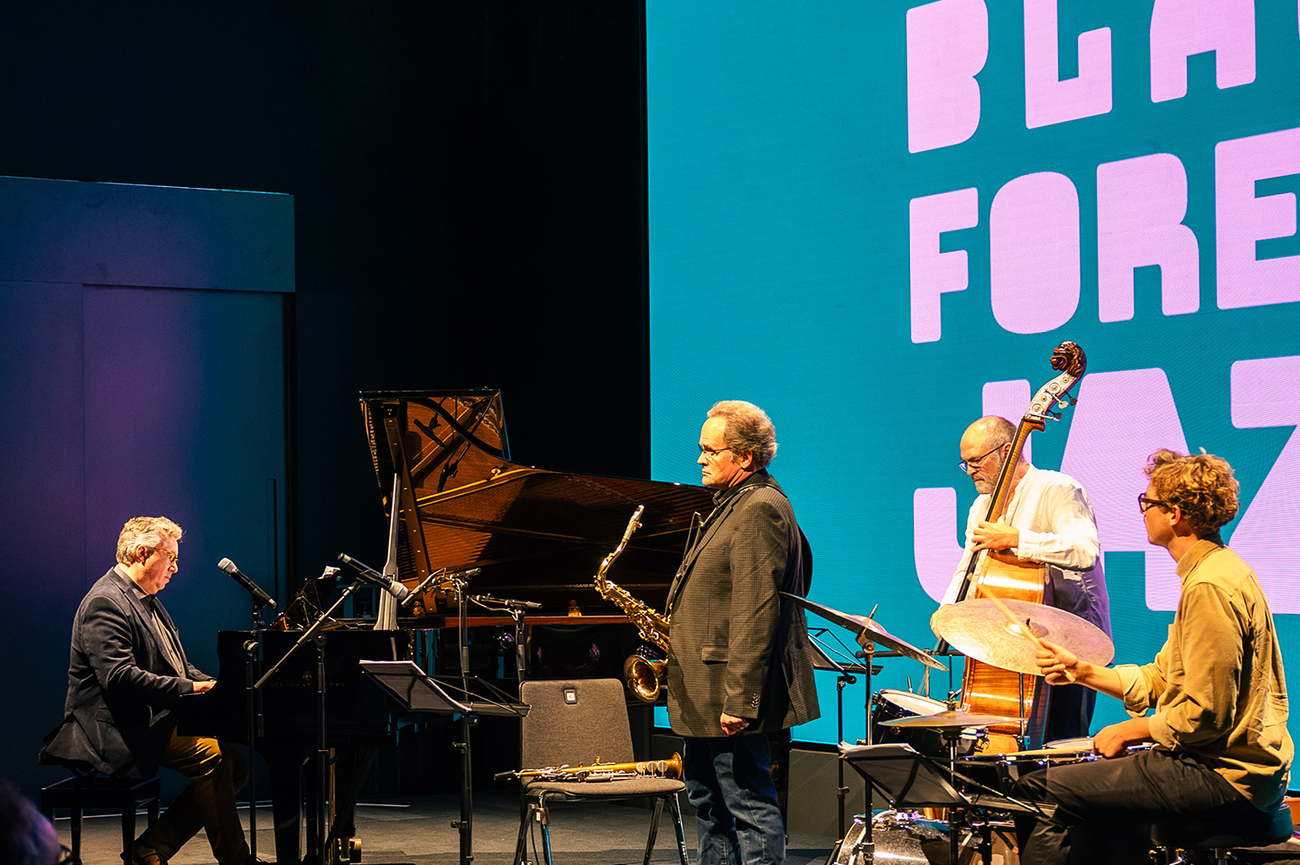
- BlackForestJazz: July brings improvisation into the forest. Over several days in mid-summer, BlackForestJazz unfolds across multiple towns, filling intimate halls and open-air stages with rhythm. You might sit in a historic square as a saxophone carries through warm evening air.
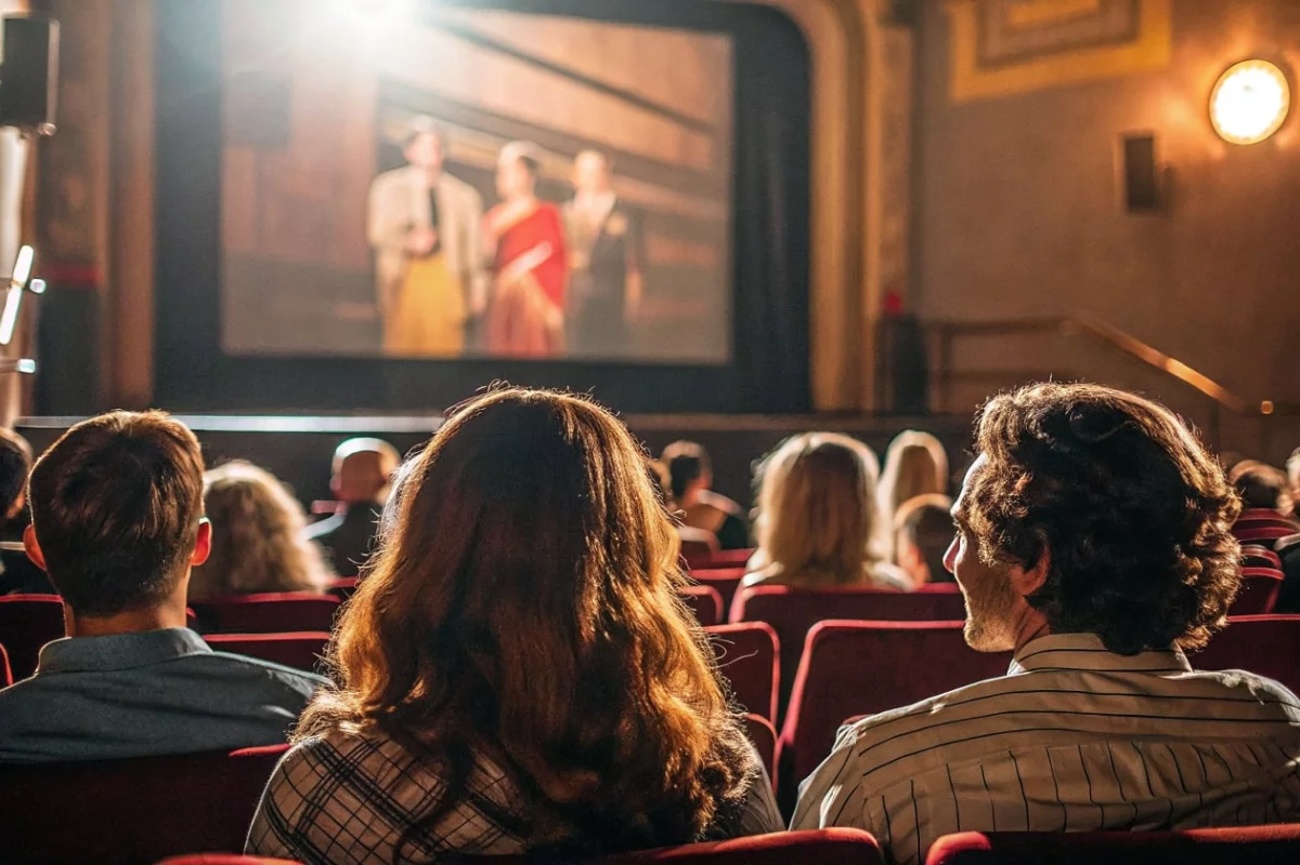
- Black Forest Film Festival: As August settles in, the Freiburg region hosts the Black Forest Film Festival, spanning several days of curated screenings. Independent films, documentaries and international features take center stage. You’ll step into historic venues or atmospheric screening spaces and stay for the Q&A sessions that follow.

Let this be the final frame. After four days of thermal baths, mountain summits, craft towns and lakeside pauses, the Black Forest doesn’t end with a performance, it ends with you feeling like everything simply flowed. If you want that same ease without the planning tabs, we’ll build your custom itinerary around your pace, book the right hotels, secure the reservations and handle the logistics end to end. You just show up. The forest does the rest.


Let us know what you love, where you want to go, and we’ll design a one-of-a-kind adventure you’ll never forget.
Get in touch
Miriam
Travel Specialist

Romina
Travel Specialist

Laura
Travel Specialist
Our offices:


Revigorate, Iberian Escapes and Algarve Lifestyle are the registered brand names of APCS Lda . We are a fully authorised travel agency licensed by Turismo de Portugal RNAVT/6867.
In the event of a dispute, the consumer may refer to: RAL - Centros de Arbitragem
Avª. 5 de Outubro, nº. 55, R/C Dtº. 8000-075 Faro, Portugal | Tel: +351 289 823 135 *
* national landline call
E-mail: info@consumoalgarve.pt| www.consumidoronline.pt | Mon to Fri: 9:00 - 13:00 / 14:00 - 17:00