Things to Do in Nuremberg: 3-Day Itinerary
Nuremberg is a historic city in Bavaria, Germany, known for its well-preserved medieval old town, imperial landmarks and one of the most significant historical narratives in the country. It was once one of the most important cities of the Holy Roman Empire and that legacy still shapes how the city looks and moves today.
The Imperial Castle sits above the old town like it owns the place, Gothic churches dominate the skyline and the city walls still frame much of the center in a way that makes everything feel connected rather than scattered. It’s a city where history is not tucked away behind museum glass; it’s part of the streets, the buildings and the daily rhythm of the place.
Getting around here is simple. The old town is compact and most of the major sights like Hauptmarkt, St. Lorenz, Albrecht Dürer House and the castle are within walking distance of each other. You’re not spending half the day trying to decode transport maps or accidentally ending up three districts away. The city flows well. You can move from medieval courtyards to polished retail streets without it feeling abrupt, which makes the whole experience smoother and honestly, a lot less exhausting.
What makes Nuremberg work is the balance. It has the history people come for, but it doesn’t feel frozen in time. Luxury boutiques sit beside old stone buildings, locals pass through medieval squares like it’s just another Tuesday and the polished parts of the city never feel forced. It doesn’t need to oversell itself because the place already knows what it is. It feels expensive without being loud about it.
There’s also range. One part of the day can be spent walking through castle courtyards and Renaissance streets, and the next can take you through designer shopping streets like Kaiserstraße or the quieter corners by the Pegnitz River, where the city slows down a little. You get the postcard moments but you also get the lived-in side of it.
Across three days, there’s enough time to see the landmarks, enjoy the slower details and move through the city without rushing it like a checklist. You can take your time, actually enjoy where you are and leave feeling like you saw more than just the obvious highlights. To make that easier, we’ve prepared a 3-day itinerary that keeps everything running smoothly.
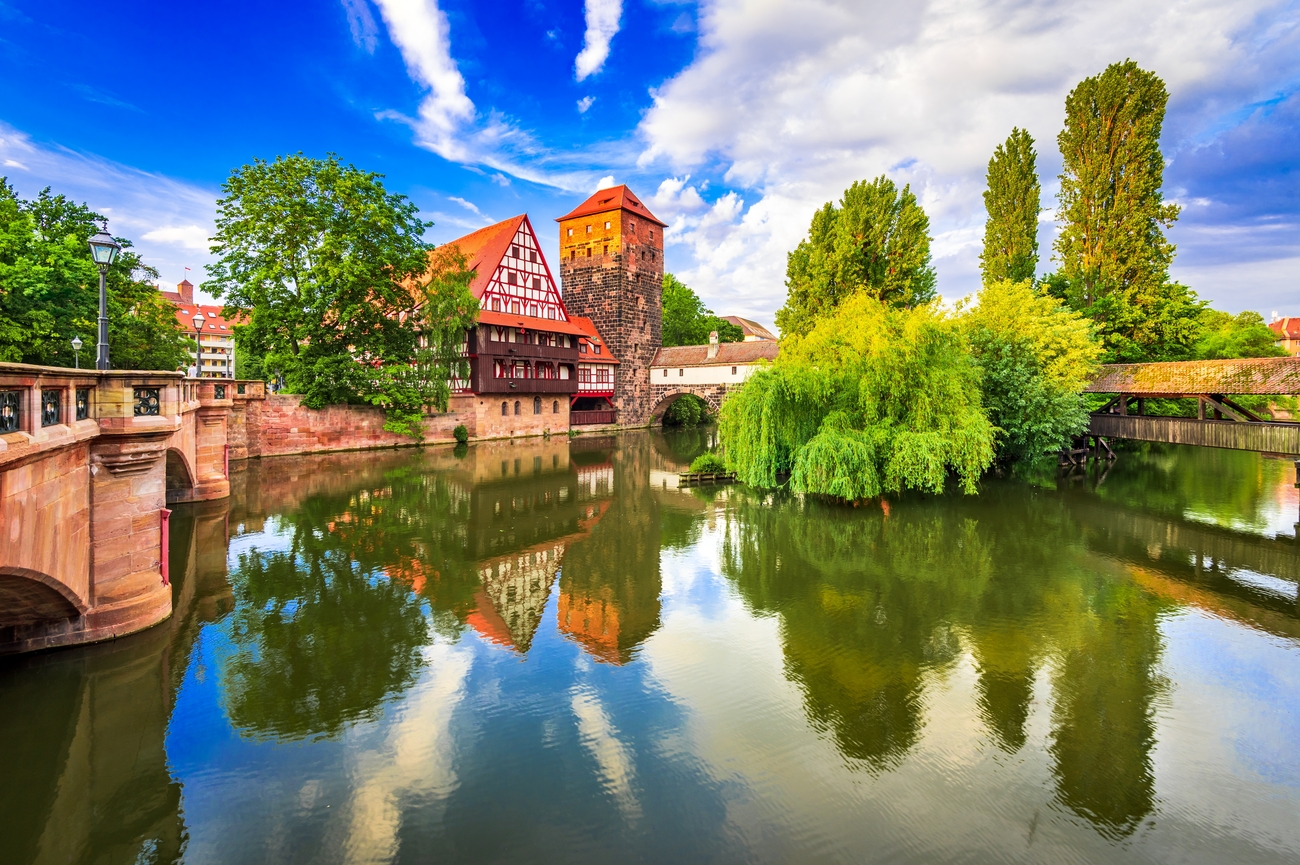
Day 1

Morning: Imperial Castle of Nuremberg
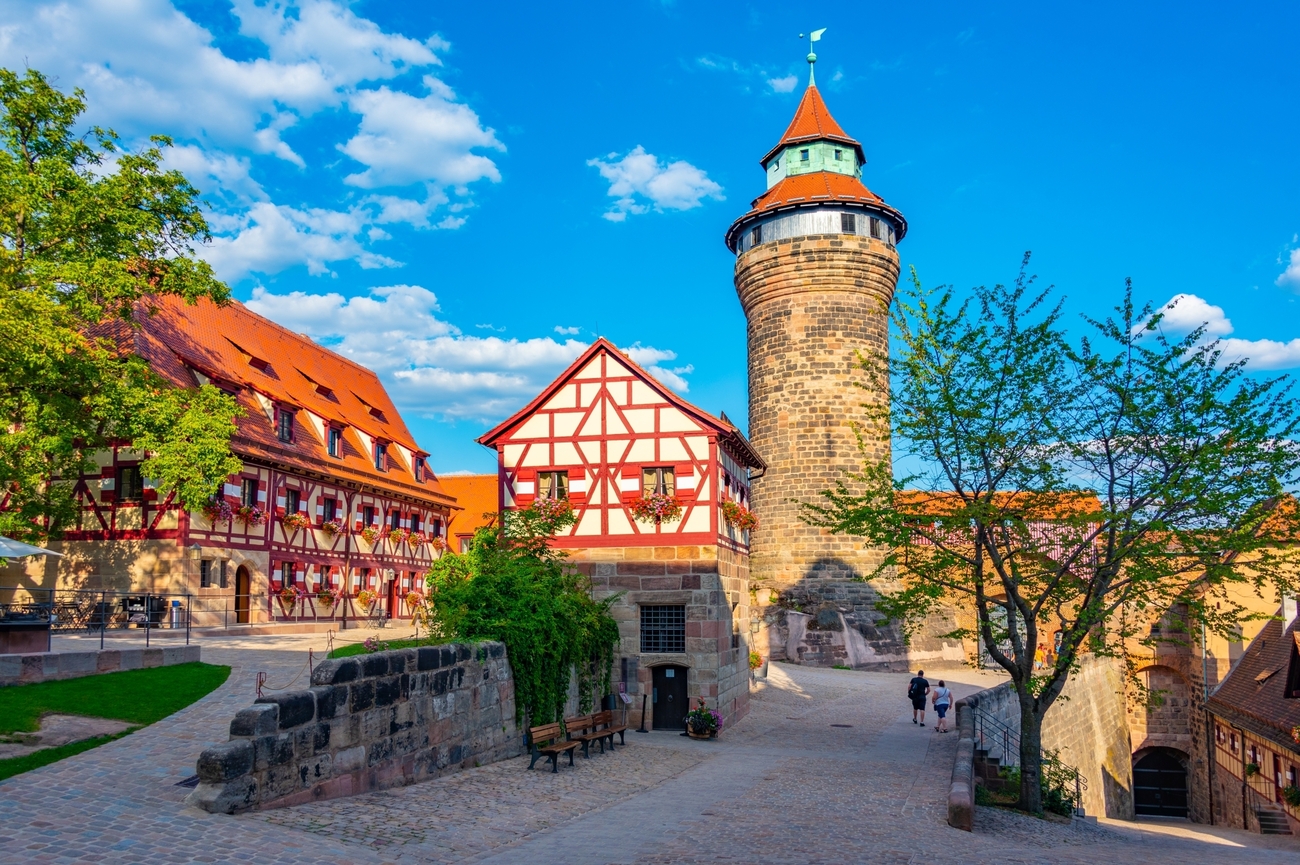
The Imperial Castle of Nuremberg, or Kaiserburg Nürnberg, is the kind of place that immediately tells you why this city mattered. Sitting above the old town, it has been the symbol of Nuremberg for centuries and was once one of the most important imperial residences of the Holy Roman Empire. This is where kings and emperors stayed, where power was shown very clearly. Starting your trip here makes sense because everything else in the city feels like it unfolds from this hill.
Its history goes back to around the 11th century, with major expansions under the Salian and Hohenstaufen emperors. Because Nuremberg sat along important trade routes and political networks, the castle became a preferred residence for German kings and emperors traveling through the empire. It wasn’t just decorative; it was a working center of authority.
Imperial diets, political meetings and royal stays happened here, which made the castle one of the most politically significant places in medieval Germany. Even after heavy damage during World War II, the complex was carefully restored, so what you see today still holds that original medieval structure and atmosphere.
The castle complex is more than just one building. You’ll walk through the Palas, the Imperial Chapel, the Sinwell Tower, the Deep Well and the Imperial Castle Museum, all built across different periods but still working together as one of Germany’s strongest medieval landmarks. The Romanesque double chapel is one of the architectural highlights, especially because of how it was built directly into the uneven rock.
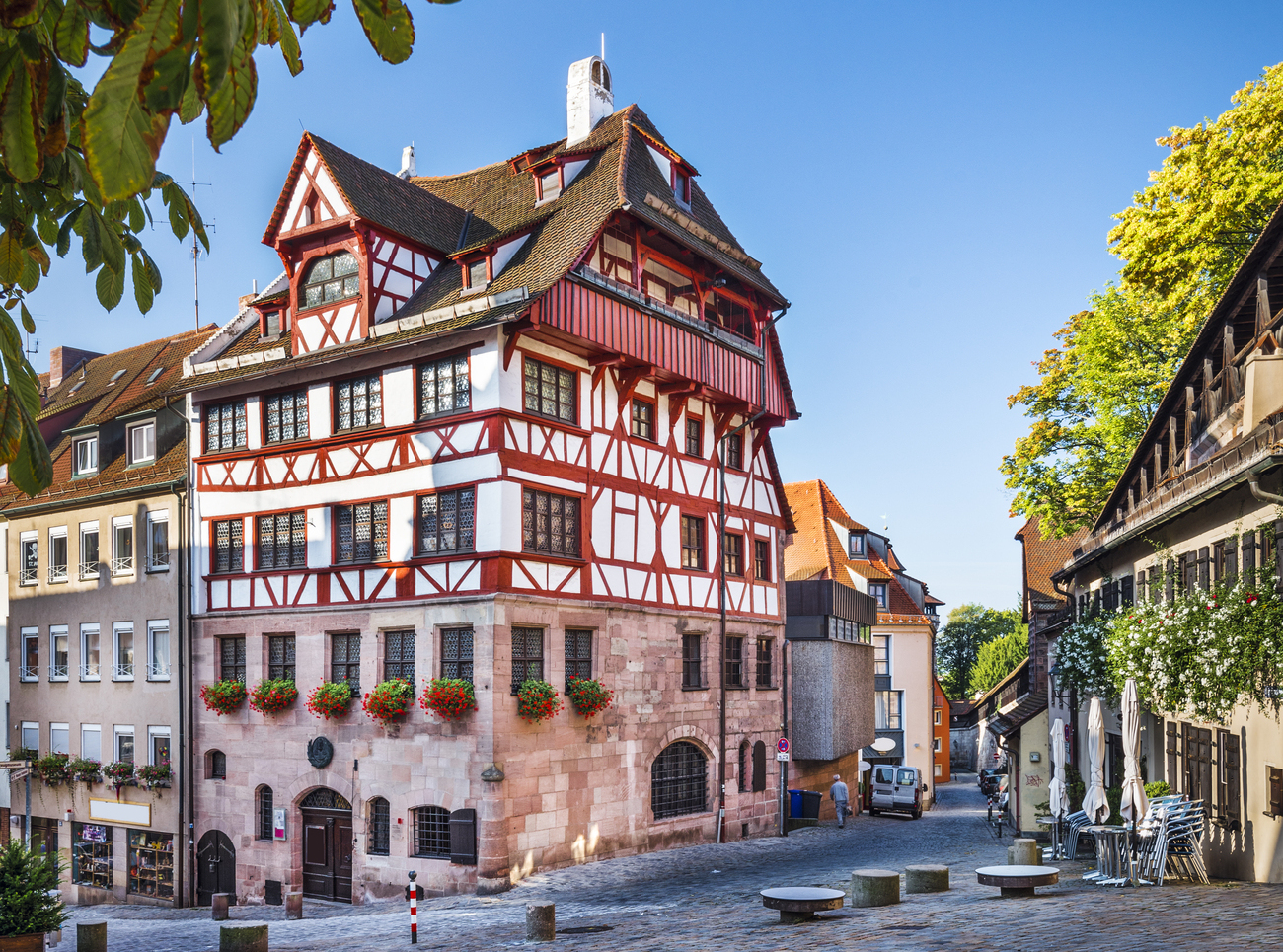
Museums Nuremberg - Albrecht Dürer House
From the Imperial Castle of Nuremberg, the Albrecht Dürer House is only about a 5-minute walk downhill. You leave the castle grounds, pass through the charming streets near Tiergärtnertorplatz and suddenly you’re standing in front of one of the city’s most famous half-timbered houses.
This was the home of Albrecht Dürer, Germany’s most celebrated Renaissance artist, from 1509 until his death in 1528. He wasn’t just a painter; he was basically the creative powerhouse of his time. He’s an artist, printmaker, theorist and someone whose work shaped European art far beyond Nuremberg.
The house itself is a beautifully preserved five-story timber-framed building from the early 15th century, with its sandstone ground floor and wooden upper levels giving it that classic Franconian look. Inside, you’ll see reconstructed living quarters, workshop spaces and exhibitions of Dürer’s prints and techniques, which make the place feel personal rather than overly formal.
One of the best parts of visiting is how the museum explains daily life during Dürer’s time. You get to understand how an artist of that level actually lived and worked in the early 1500s. The historic kitchen, living rooms and studio spaces make it easier to connect the name to a real person. There are also demonstrations of old printmaking techniques. Audio guides are available, but the guided tours are the better move if you want the full story, especially the tours led by the “Agnes Dürer” guide. Yes, an actor portraying Dürer’s wife, which sounds cheesy on paper but is actually one of the museum’s best features.
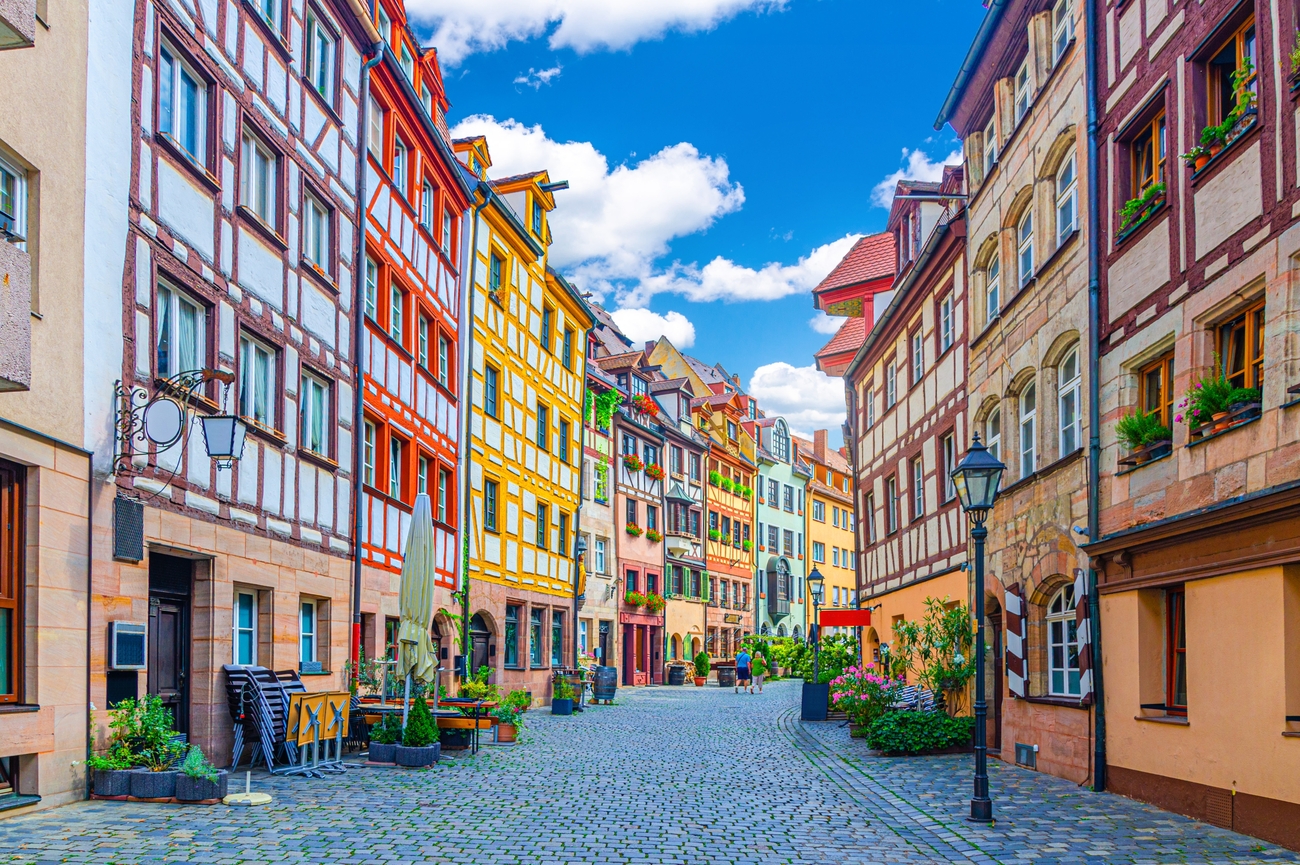
Weißgerbergasse
Weißgerbergasse is only about a 3-4 minute walk away, so there’s no need to overthink the route. You simply continue through the old town streets near Tiergärtnertorplatz.
This street is famous for its beautifully preserved half-timbered houses, many of which date back to the Middle Ages and survived the heavy destruction of World War II. That alone makes it special, because large parts of Nuremberg had to be rebuilt, while Weißgerbergasse kept much of its original historic character. The name comes from the white tanners or “Weißgerber,” who once worked here, treating leather in the medieval period.
This is one of the best-preserved historic streets in the city. The colorful timber-framed facades line the narrow street almost perfectly, with the upper floors leaning slightly outward in that classic medieval style. You’ll notice details here that are easy to miss elsewhere like wooden beams, carved signs, flower boxes and uneven stone paths.
Afternoon: Hauptmarkt
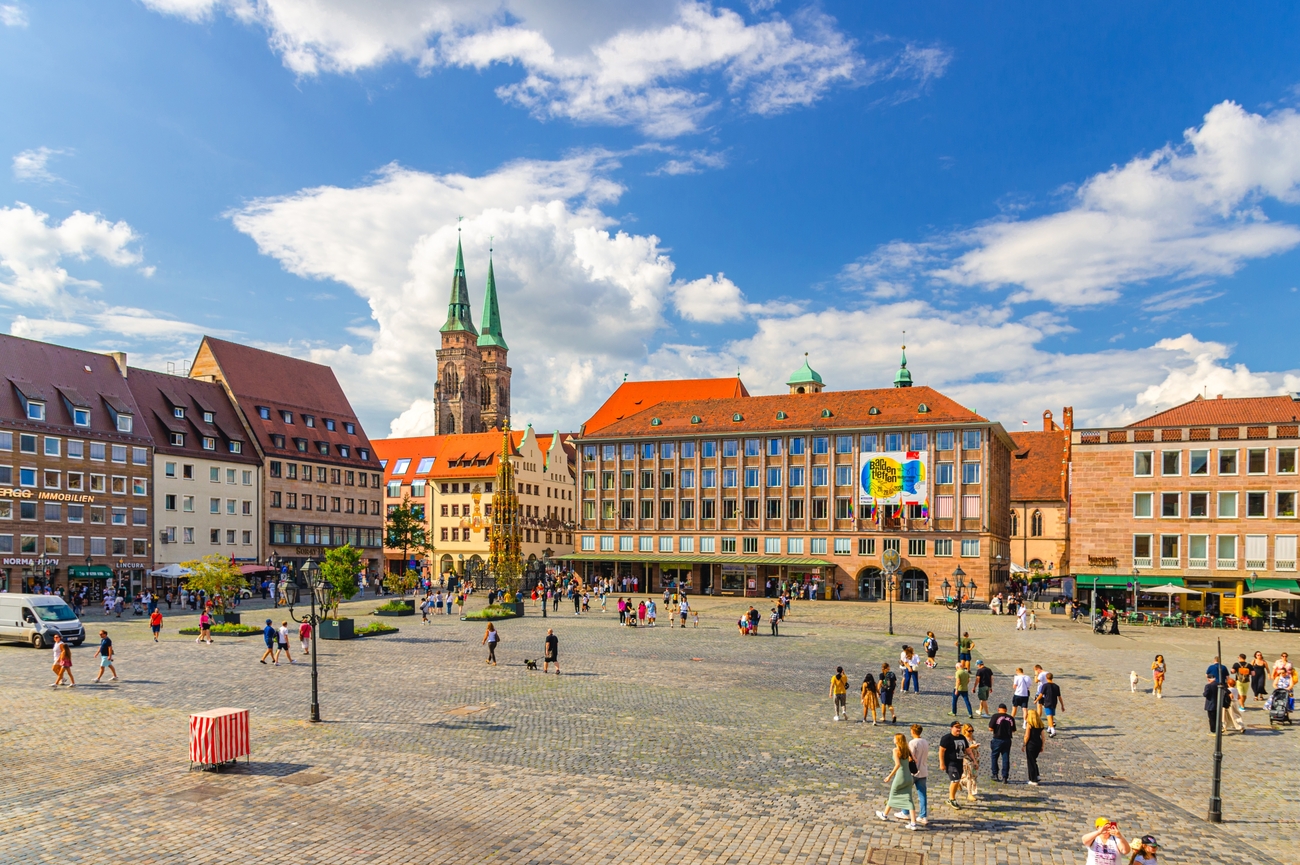
A short walk through the old town brings you from Weißgerbergasse to Hauptmarkt. This is the city’s main square and the place where everything seems to meet.
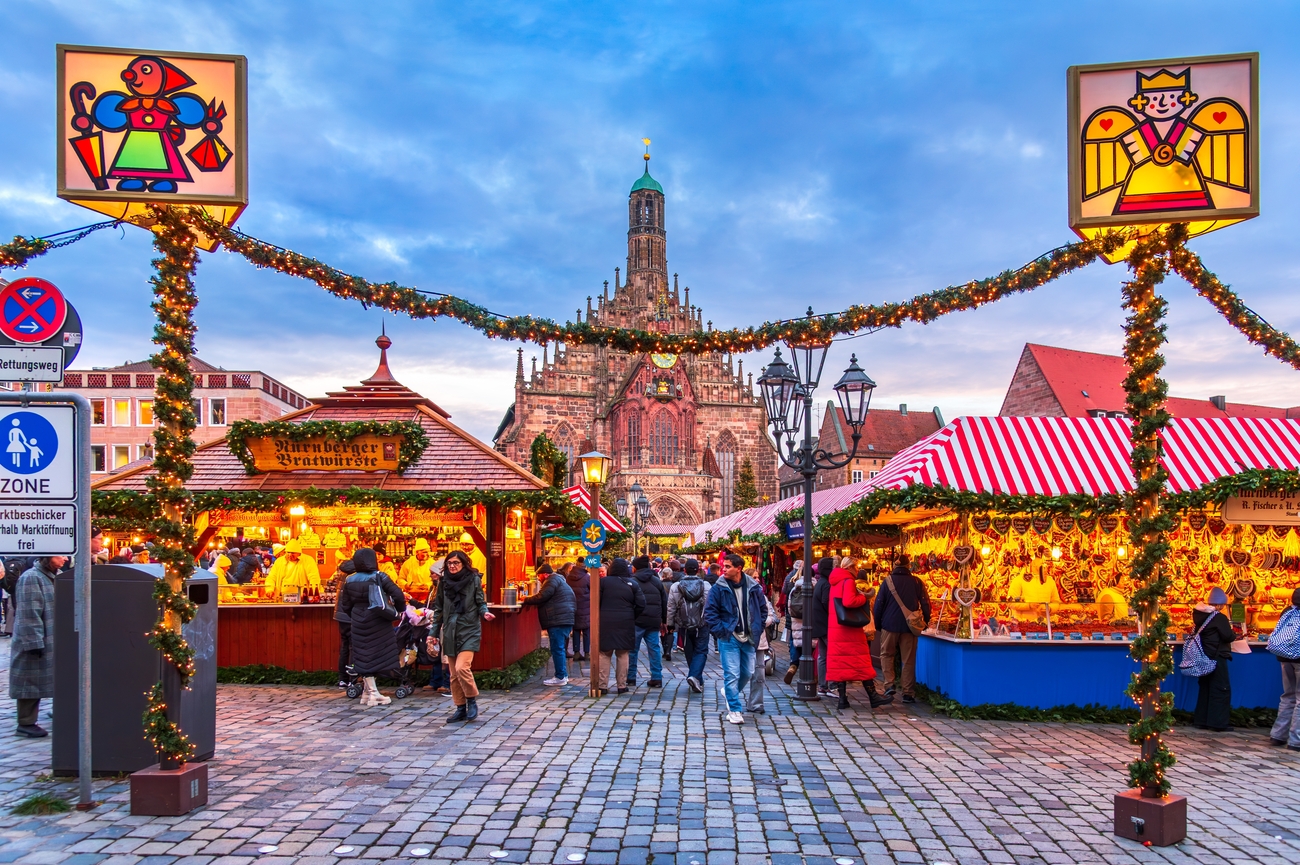
Hauptmarkt has been the center of city life for centuries. It sits right in the middle of the old town and has long been used for trade and public gatherings. Today, it still works exactly like that. During winter, this becomes the famous Christkindlesmarkt, one of Europe’s best-known Christmas markets, but even outside December, the square holds that same sense of importance.
The square is framed by some of the city’s most recognizable landmarks. The Frauenkirche stands directly at the front with its Gothic facade, while the Schöner Brunnen rises nearby like something pulled straight from a medieval sketchbook. Around the edges, historic merchant houses and civic buildings create that classic old-European square energy, but without feeling overly polished.
Schöner Brunnen
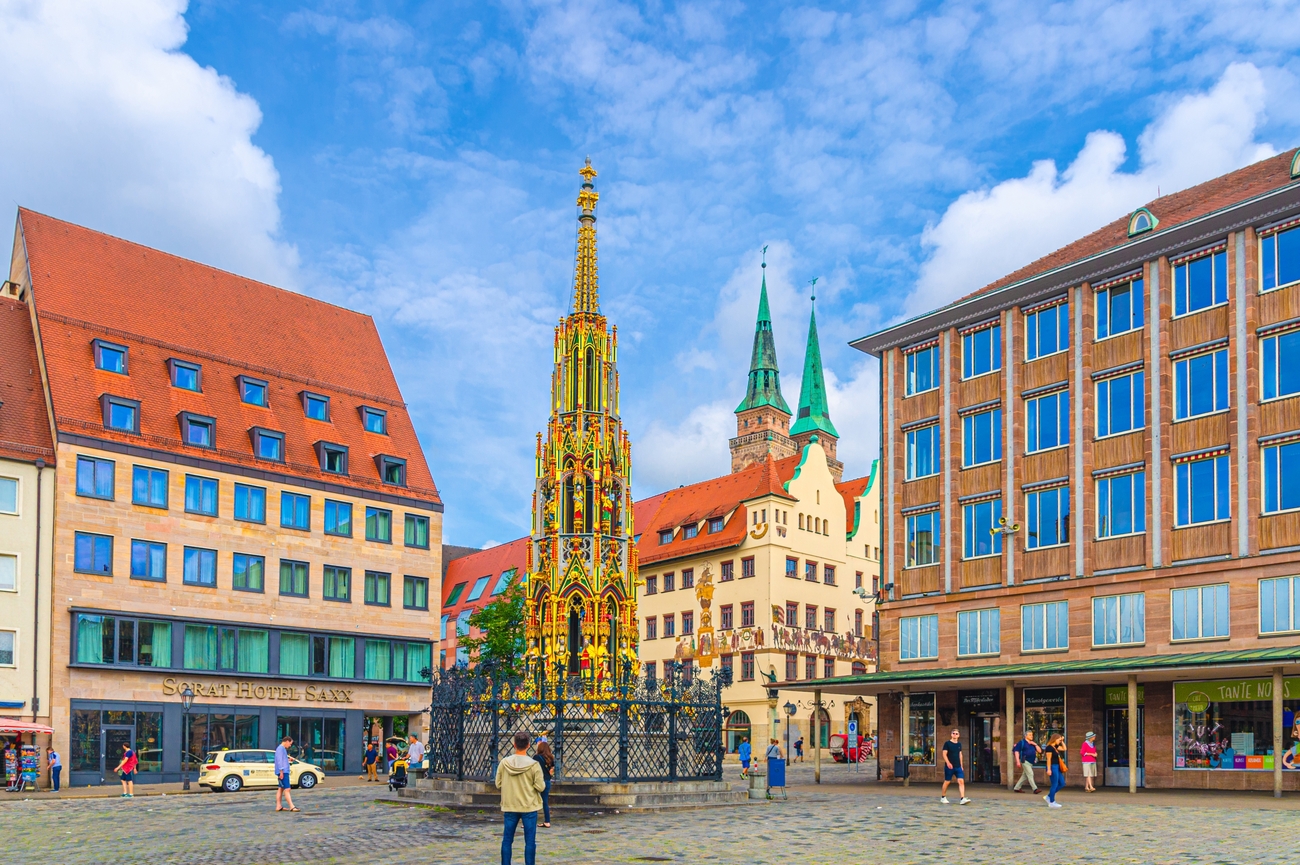
Just a minute or two on foot from Hauptmarkt brings you to Schöner Brunnen and technically, you’ve probably already spotted it the moment you stepped into the square. It rises right beside the market like a giant Gothic sculpture, impossible to miss.
Schöner Brunnen, which translates to “Beautiful Fountain,” was built in the late 14th century and was designed more as a symbolic monument than a practical fountain. Standing about 19 meters high, it was originally intended for the main parish church before plans changed, and it eventually found its place here in Hauptmarkt. The golden figures arranged around the structure represent philosophers, church leaders, electors and kings, basically turning the fountain into a vertical lesson in medieval world order.
What you see today is actually a careful replica installed in the early 20th century, while the original stone figures were moved to the Germanisches Nationalmuseum for protection. Still, the replica keeps all the detail that makes it special. The golden accents catch the light beautifully, especially in the afternoon and the Gothic design feels almost like a church tower decided to become a fountain instead. Then there’s the famous brass ring built into the fence. Locals and visitors spin it for good luck and yes, people absolutely still queue for that little tradition.
Frauenkirche
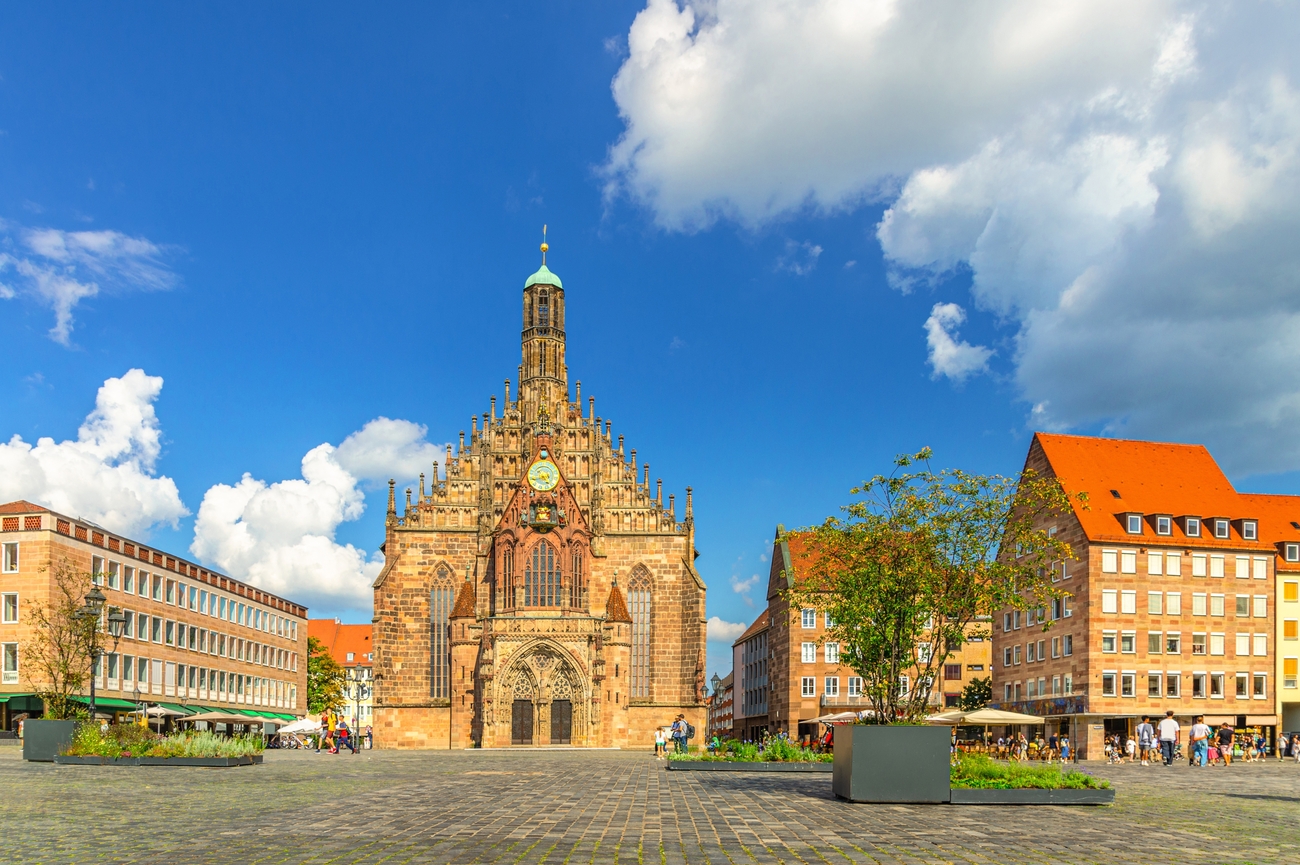
Only a few steps from Schöner Brunnen, the Frauenkirche stands directly at the eastern side of Hauptmarkt. You’re still in the same square, but the focus shifts upward.
Frauenkirche or the Church of Our Lady was built in the 14th century under Emperor Charles IV on the site of the former Jewish quarter. It was designed as an imperial chapel and carried strong political significance from the beginning, especially because Nuremberg was closely tied to the Holy Roman Empire. The church became a symbolic space for imperial ceremonies and royal appearances.
The rich Gothic stonework, pointed arches and sculptural details pull your attention immediately, but the most famous feature is the Männleinlaufen clock. Every day at noon, the mechanical figures move to commemorate the Golden Bull of 1356, showing the Prince-Electors circling Emperor Charles IV. It’s a small detail, but one that gives the building real personality.
Most guided Old Town tours include Frauenkirche because it sits at the center of Hauptmarkt and ties directly into the city’s imperial history. If you time your visit around noon, you’ll catch the clock performance, which is worth it even if you’re not usually the “watch the clock tower show” type.
St. Sebald - Sebalduskirche Nürnberg
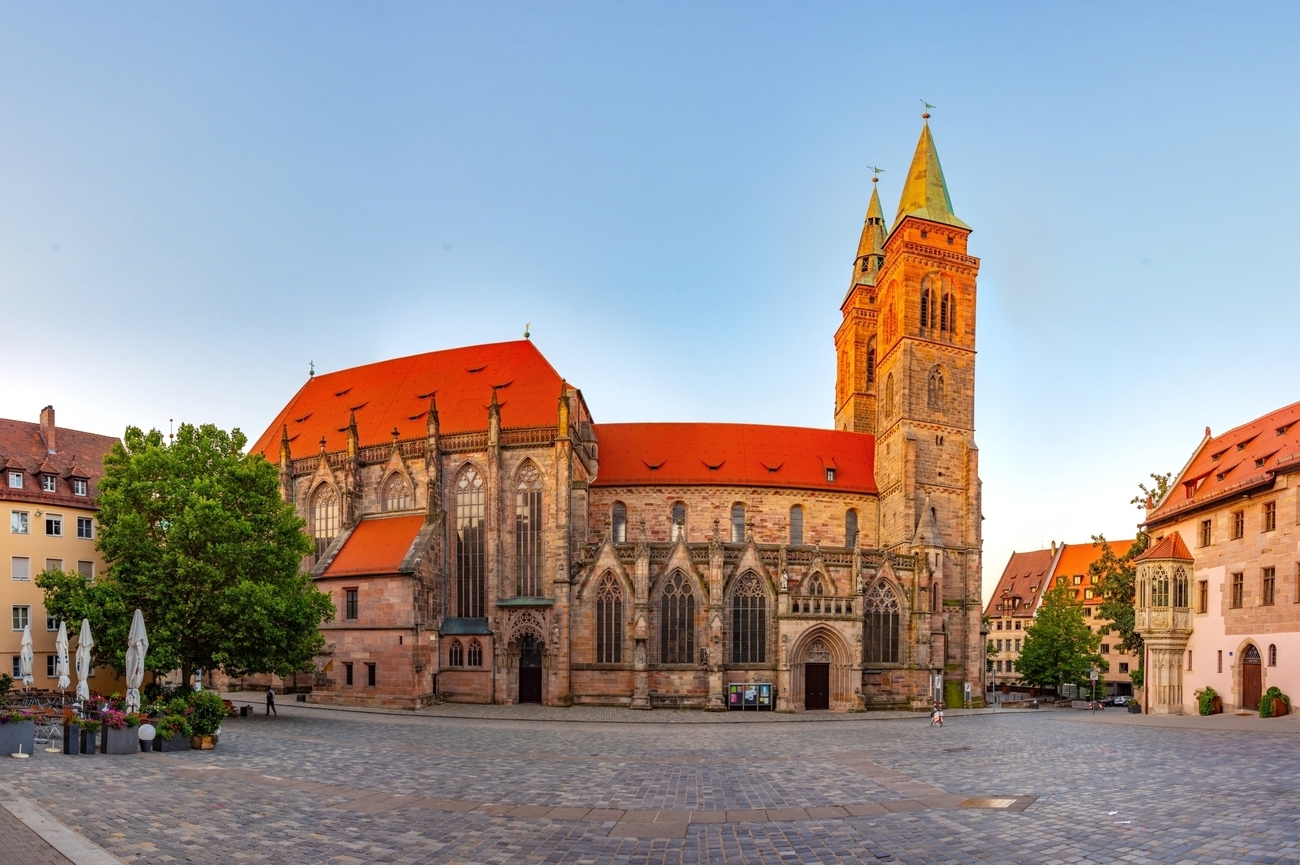
A short walk across Hauptmarkt brings you to Sebalduskirche and the shift feels natural since both landmarks are part of the city’s historic core. You pass through the square, move closer to the northern side of the old town and suddenly the church rises in front of you with its massive Gothic towers and darker stone facade.
St. Sebald is the oldest parish church in Nuremberg and one of the city’s most important religious landmarks. Its origins go back to the 13th century, though parts of the structure reflect Romanesque beginnings before later Gothic expansions took over. The church is named after Saint Sebaldus, the patron saint of Nuremberg, whose presence is still central to the identity of the building.
Inside, the standout feature is the shrine of Saint Sebald, an extraordinary bronze masterpiece created by Peter Vischer and his sons in the early 16th century. It’s detailed to an almost ridiculous level with figures, symbols, decorative elements everywhere and it easily becomes the focal point of the church. Beyond that, the interior has beautiful stained glass, high vaulted ceilings, stone pillars and a quieter, more grounded atmosphere compared to Frauenkirche. There’s also surviving medieval artwork and a sense of age that feels very real, especially since the church was heavily damaged during World War II and carefully rebuilt afterward.
Evening: Kaiserstraße
From Sebalduskirche, Kaiserstraße is about a 5-7 minute walk through the heart of the old town. You leave the heavier medieval atmosphere of the church district and step into one of the city’s more polished shopping streets.
Kaiserstraße has long been one of Nuremberg’s key commercial streets, connecting the historic center with some of the city’s most refined retail areas. This part of the city has always carried a more upscale reputation, where architecture and commerce meet without feeling forced. It’s not a flashy luxury district like you’d find in bigger capitals, but that’s exactly why it works. It feels local, polished and much more understated.
The street itself is lined with premium boutiques, fashion houses, jewelry stores and well-kept historic buildings that keep the area from feeling too modern or generic. You’ll find designer labels sitting comfortably beside independent specialty shops, which makes the browsing feel more interesting.
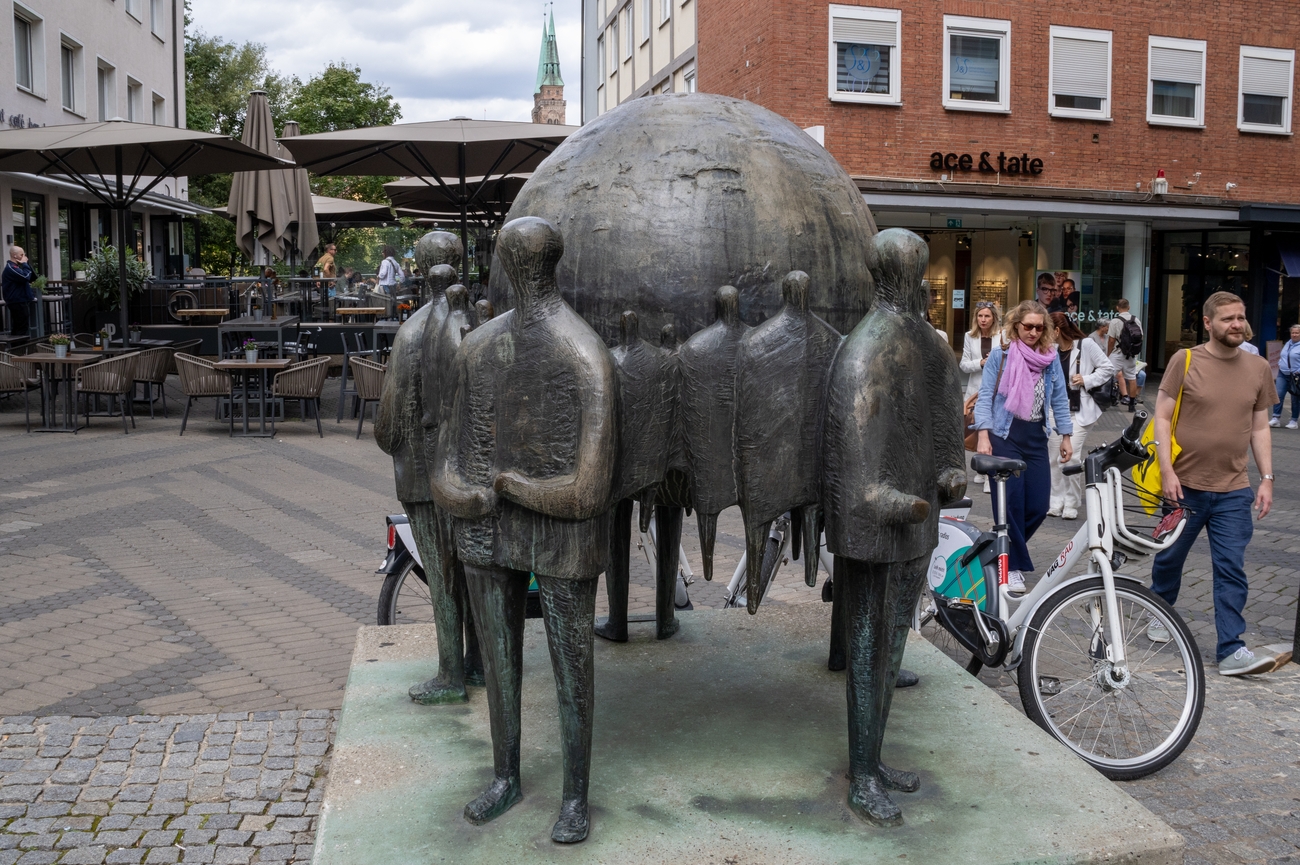
Karolinenstraße
A short 3-5 minute walk from Kaiserstraße brings you to Karolinenstraße, making it the perfect place to end the evening without breaking the flow of the day. This is where the night shifts into shop till you drop mode.
Karolinenstraße is one of the city’s main shopping streets and one of the busiest pedestrian zones in the old town. It has long been a commercial hub, connecting key parts of central Nuremberg while blending historic surroundings with modern retail. Unlike some luxury districts that feel overly curated, this street feels natural and active.
The street is lined with fashion boutiques, department stores, premium brands, beauty stores and elegant storefronts. You’ll find everything from well-known international labels to refined local shops, all within walking distance of the city’s major landmarks. Ending the night here makes sense. After castles, churches and centuries of history, Karolinenstraße gives the itinerary a smoother finish.
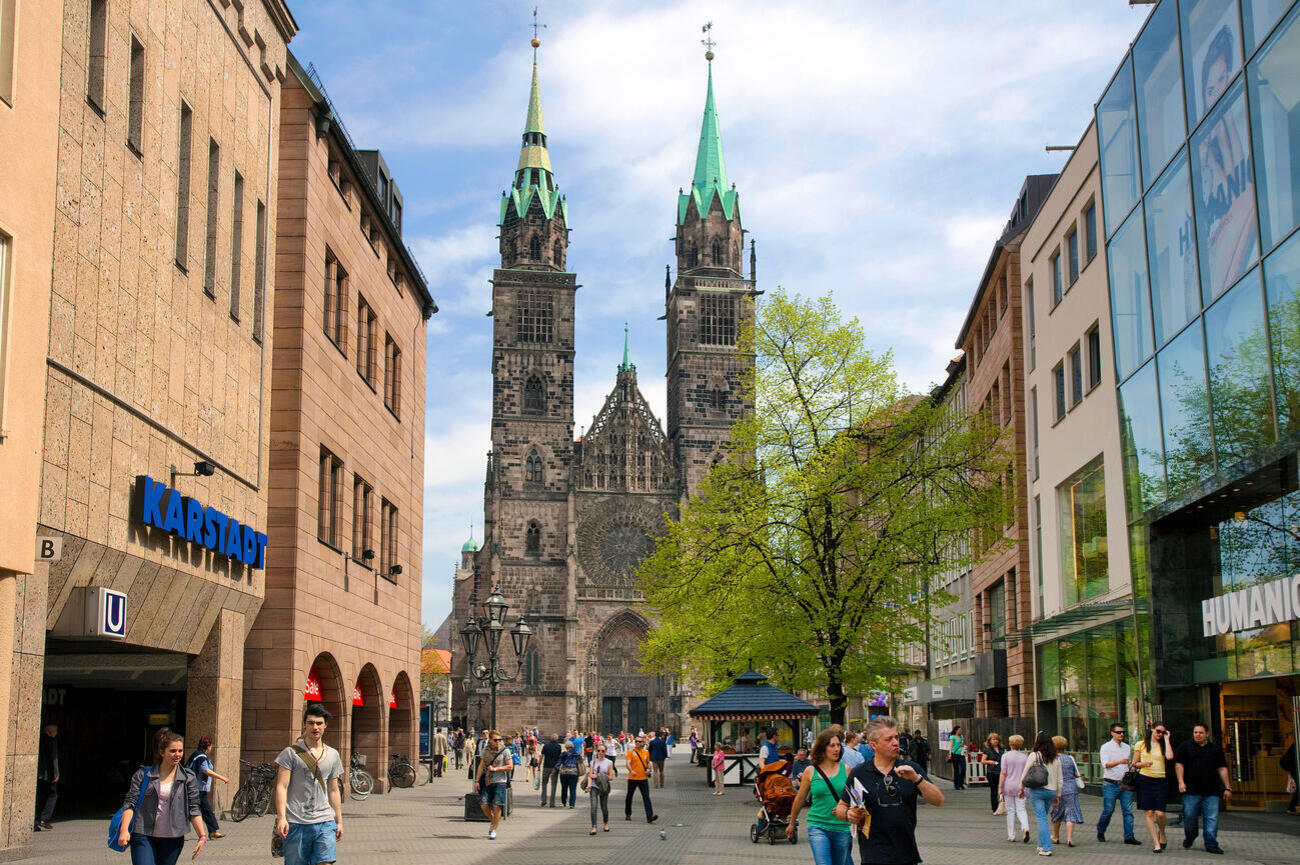
Day 1 - Nuremberg Tour Map
Day 2
Morning: Germanic National
Museum
Starting day two at the Germanisches Nationalmuseum makes sense because this is where Nuremberg gives you the bigger picture. Located just outside the busiest parts of the historic center, the museum feels quieter but far from overlooked.
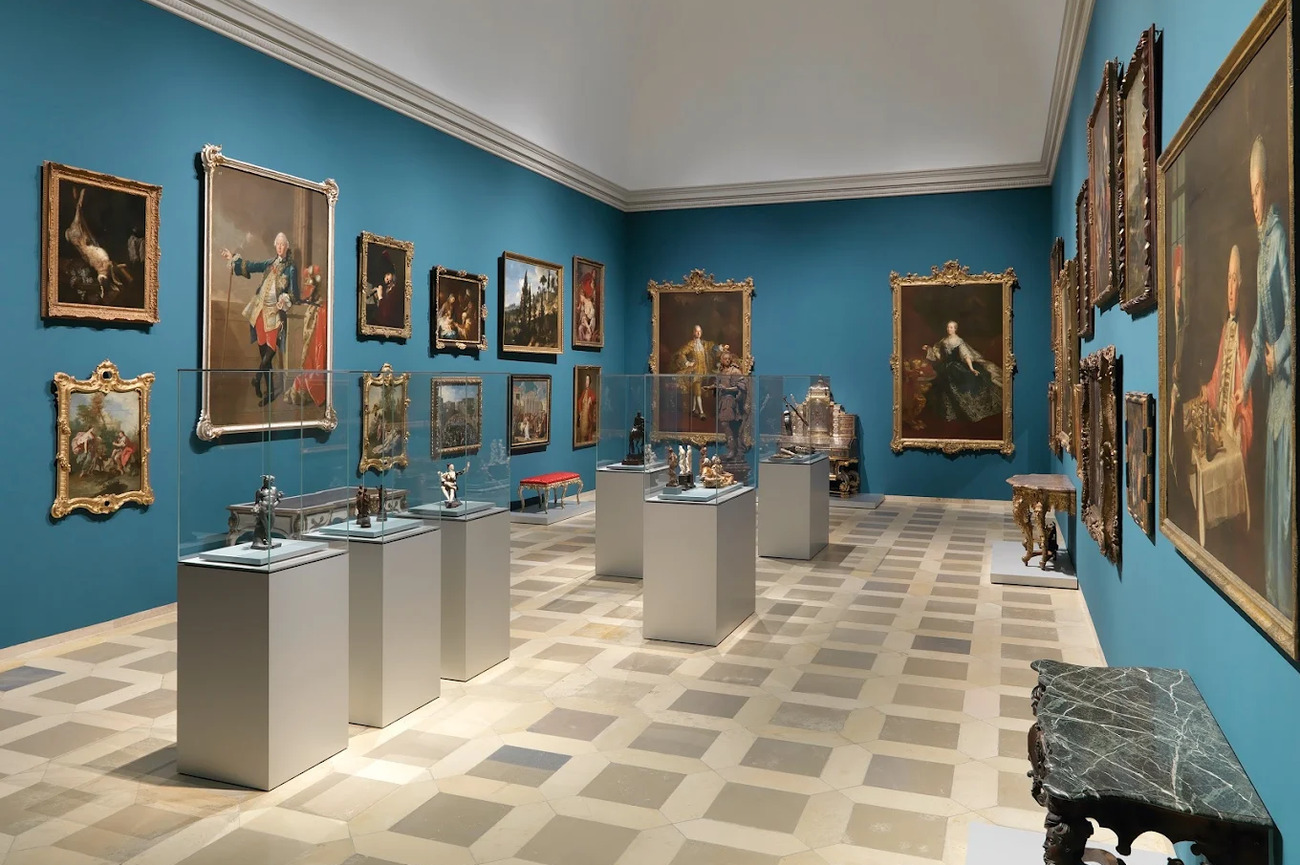
The Germanisches Nationalmuseum is the largest museum of cultural history in the German-speaking world. Founded in 1852, it holds an enormous collection covering art, design, science, religion and everyday life from prehistoric times to the modern era. The museum itself is built around a former Carthusian monastery, so even the architecture gives you layers to work with. Yes, it has medieval stone structures mixed with modern exhibition spaces that somehow fit together without looking forced. It feels serious, but not intimidating.
Inside, the collection is huge. Highlights include works by Albrecht Dürer, medieval sculptures, historic scientific instruments, armor, manuscripts and beautifully preserved decorative arts. One of the strongest parts of the museum is how it shows ordinary life alongside major historical moments. And the museum also houses the oldest surviving globe by Martin Behaim, which is one of those quietly impressive pieces people don’t expect to care about and then absolutely do.
Kartäuserkirche
A short walk within the same museum complex brings you to Kartäuserkirche, which makes this next stop feel effortless. There’s no need for transport or even much planning; you’re already there.
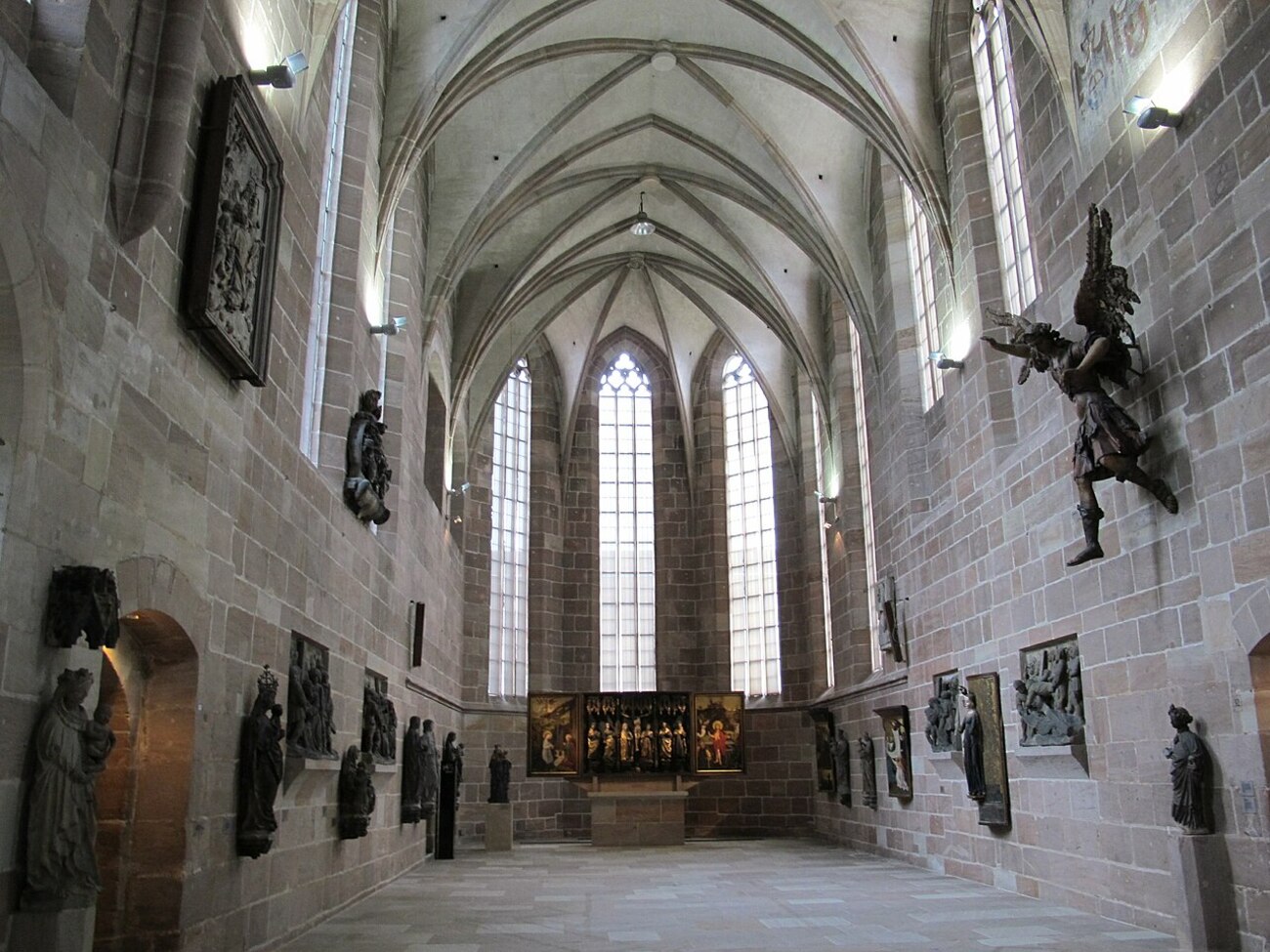
Kartäuserkirche was originally part of the Carthusian monastery founded in the late 14th century. It was built as a monastic church for the strict Carthusian order, known for silence, simplicity, and a life built around contemplation rather than public grandeur.
This church is a beautiful example of late Gothic design, with high vaulted ceilings, tall narrow windows and clean stone lines that make the space feel open without being overwhelming. The interior is simple compared to places like Sebalduskirche or Frauenkirche. And since it now forms part of the Germanisches Nationalmuseum, the church often houses exhibitions and preserved artworks that connect directly to the museum’s larger collection, so it feels like history continuing rather than a separate stop.
Handwerkerhof Nürnberg
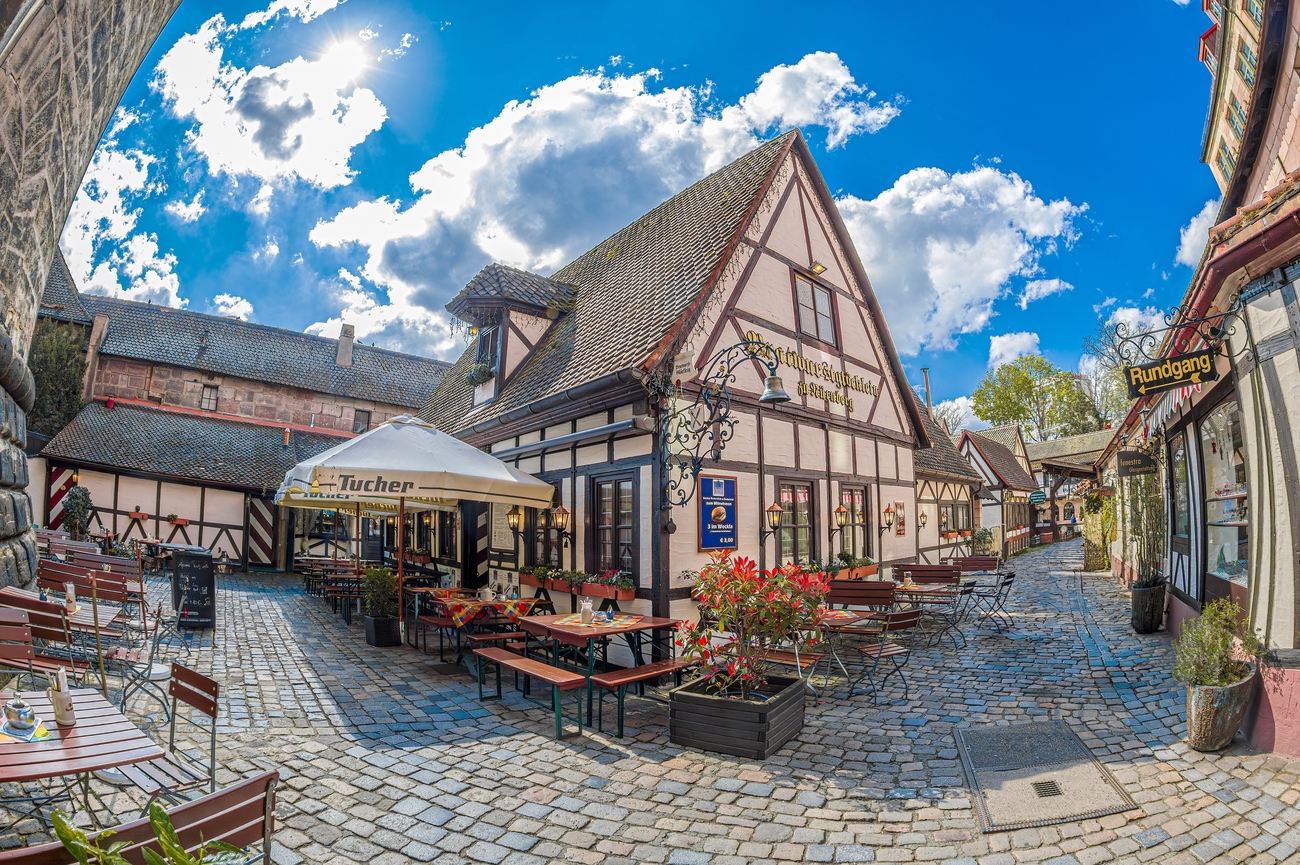
From Kartäuserkirche, Handwerkerhof Nürnberg is about a 10-12 minute walk toward the Königstor city gate near the main train station. Timber-framed buildings, small courtyards, artisan workshops and the smell of fresh-baked goods make it feel like you accidentally stepped into a medieval village that somehow kept going.
Handwerkerhof, which translates to “Craftsmen’s Courtyard,” was created in 1971 as a recreation of a traditional medieval artisan quarter. It was designed to preserve and showcase Franconian craftsmanship and local trade culture, especially near one of the old entrances to the city. While it may be a reconstructed space rather than an untouched original district, it works because it still feels connected to Nuremberg’s identity.
Inside, the area is made up of small lanes, courtyards, workshops and specialty shops selling everything from handmade leather goods and glasswork to traditional toys, jewelry and local delicacies. The half-timbered houses and old stone details give it that classic Franconian look, but it avoids feeling overly staged. You’ll also notice traditional bakeries, gingerbread shops and artisan spaces where you can actually watch craftspeople at work.
There’s no entrance fee since Handwerkerhof is an open public area and most guided Old Town tours include it as part of the route between the station district and the old town center.
Afternoon: Frauentor
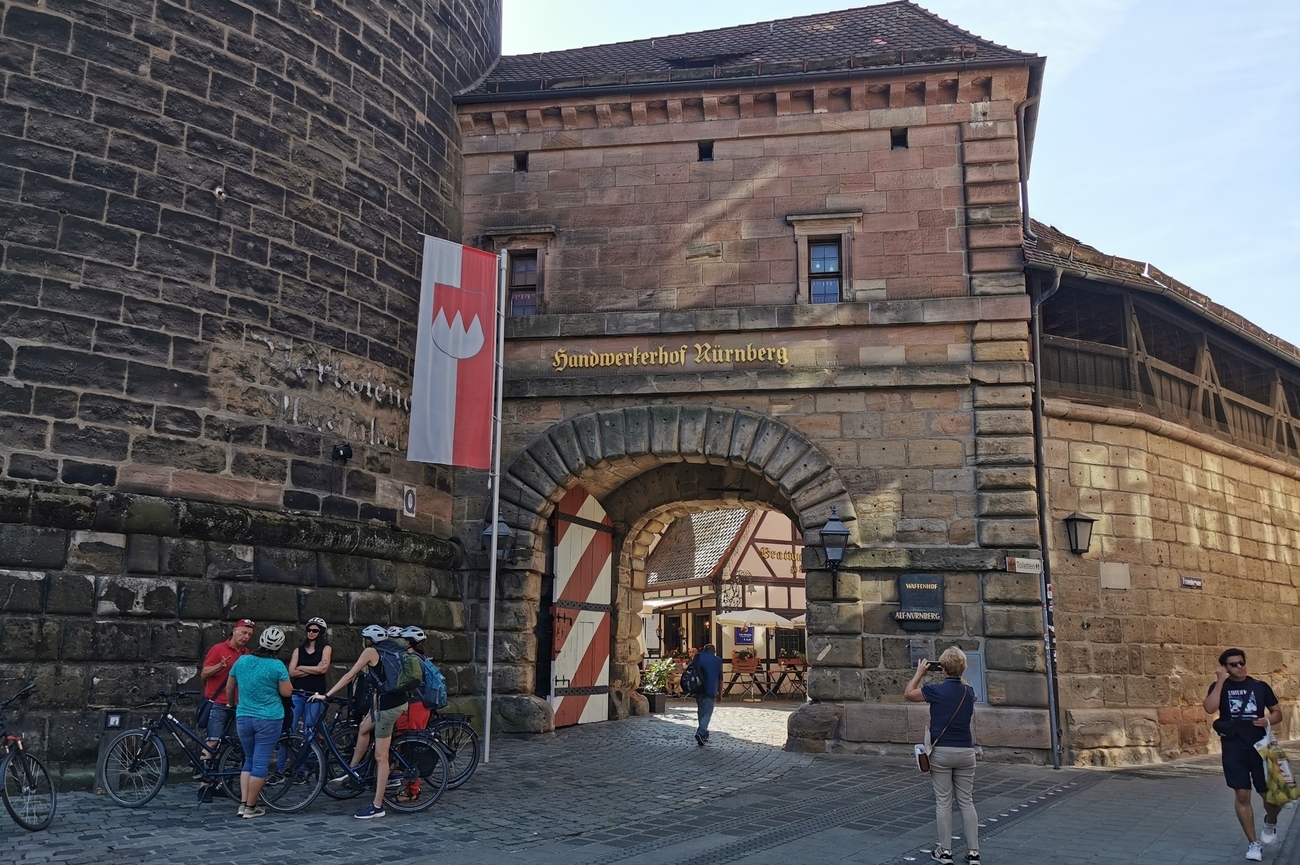
A short 2-3 minute walk from Handwerkerhof Nürnberg brings you to the Frauentor. You’re still within the old city walls, but now the focus shifts to one of Nuremberg’s historic gateways. The tower, the stone walls and the surrounding gate area remind you just how seriously medieval cities took defense.
Frauentor or the Women’s Gate, is one of the main surviving gates of Nuremberg’s old fortification system and dates back to the late medieval period. The city walls were among the strongest in Europe at the time and gates like this were not just entrances; they were serious military structures built for protection and control. Frauentor guarded the southeastern access to the city and connected directly to trade routes and daily movement in and out of Nuremberg.
Architecturally, the gate has that classic fortified look with thick sandstone walls, a round tower structure and the kind of heavy medieval design that makes modern buildings look a little too soft. It sits right beside the railway station area today, which creates an interesting contrast between old defenses and modern city movement.
Königstorpassage
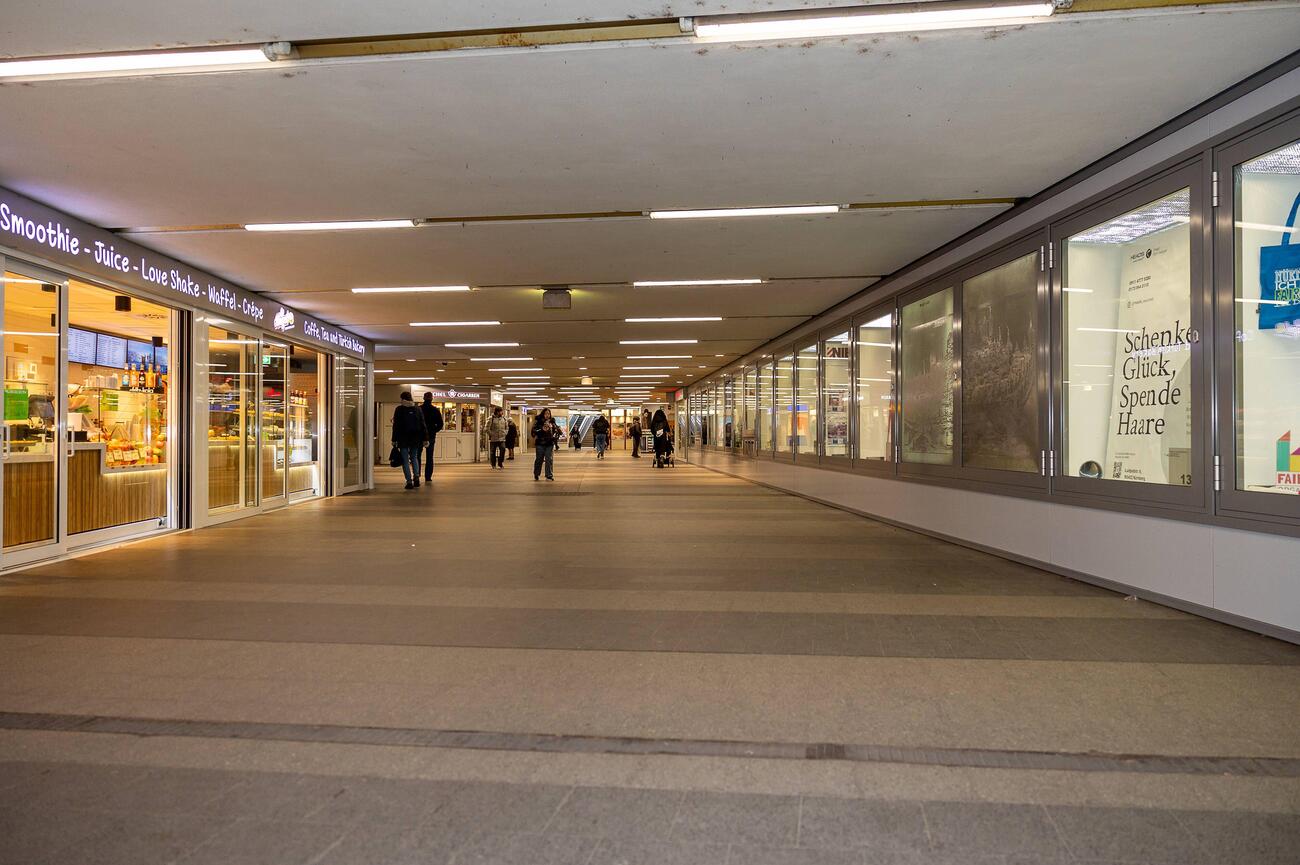
Just a short 3-5 minute walk away, Königstorpassage comes right after Frauentor and the contrast is immediate. You leave behind the medieval stone walls and historic gate towers, then step into a more modern retail space. Located beside the main station and near Königstor, it works as one of the smoother transitions between old Nuremberg and its more contemporary side.
Königstorpassage has long served as a key shopping and transit point because of its location beside Nürnberg Hauptbahnhof and one of the main entrances to the old town. It connects travelers, locals and shoppers moving in and out of the city center, which gives it a constant energy without feeling chaotic.
Inside and around the passage, you’ll find fashion stores, beauty brands, specialty shops, cafés and retail spaces that make it easy for a slower afternoon stop or a quick luxury browse before continuing deeper into the city.
St. Lorenz
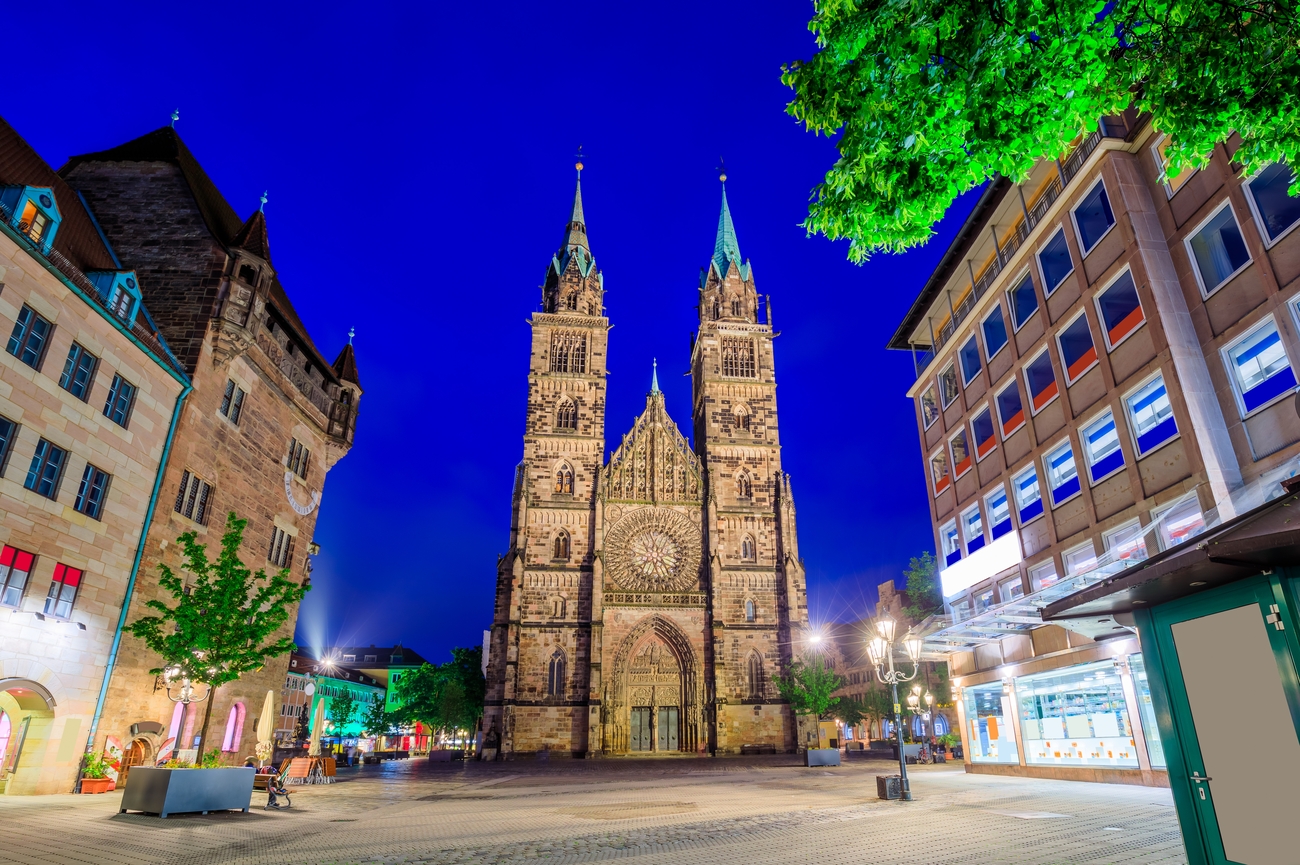
From Königstorpassage, St. Lorenz is about a 7-8 minute walk back into the heart of the old town and the route feels like a return to Nuremberg’s grander side. Busy shopping streets gradually give way to one of the city’s most impressive Gothic landmarks. You’ll notice it before you even reach the square. The twin towers rise above the surrounding buildings like they own the skyline.
St. Lorenz is one of the most important churches in Nuremberg and one of the finest examples of Gothic architecture in southern Germany. Built mainly between the 13th and 15th centuries, it became the main church of the wealthy merchant district on the southern side of the Pegnitz River. While Sebalduskirche represented the older northern side of the city, St. Lorenz reflected the power and prosperity of the trading class. It was a statement piece then and it still feels like one now.
The exterior is dramatic with massive twin towers, an enormous rose window, pointed arches and intricate stonework that somehow looks sharp even after centuries. Inside, the church opens into a soaring Gothic space with high vaulted ceilings, stained glass and some of the city’s most significant religious artworks.
The standout is the “Annunciation” by Veit Stoss, a suspended wooden sculpture that feels almost unreal when you see it hanging in the center of the choir. There’s also the Sacrament House by Adam Kraft, another masterpiece that proves medieval artists were clearly showing off in the best way.
Breite Gasse
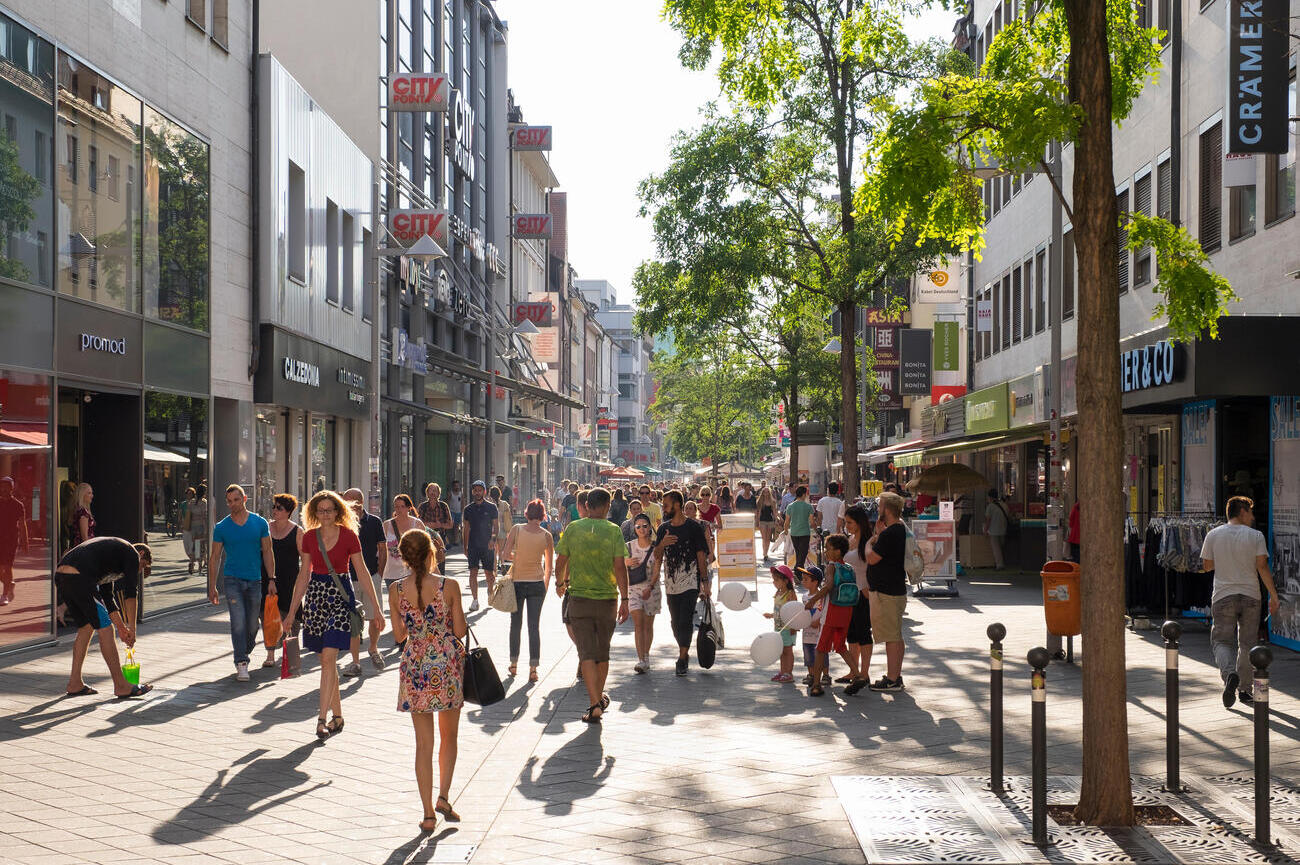
Just a few minutes on foot from St. Lorenz, Breite Gasse pulls you straight back into shopping mode. The streets get busier, storefronts get brighter and the whole area feels like Nuremberg switched from cathedral mode to retail therapy.
Breite Gasse has long been one of Nuremberg’s main commercial streets and remains one of the busiest pedestrian shopping zones in the center. It connects key parts of the southern old town and naturally links places like St. Lorenz, Karolinenstraße and the surrounding retail district.
The street is lined with fashion stores, department shops, premium beauty brands, lifestyle boutiques and specialty retailers that make it ideal for a longer afternoon browse. You’ll find both familiar international names and smaller local stores tucked between them, which keeps it from feeling too generic. The pedestrian layout helps a lot. You can actually take your time instead of fighting traffic or rushing through.
Evening: Lorenzer Platz
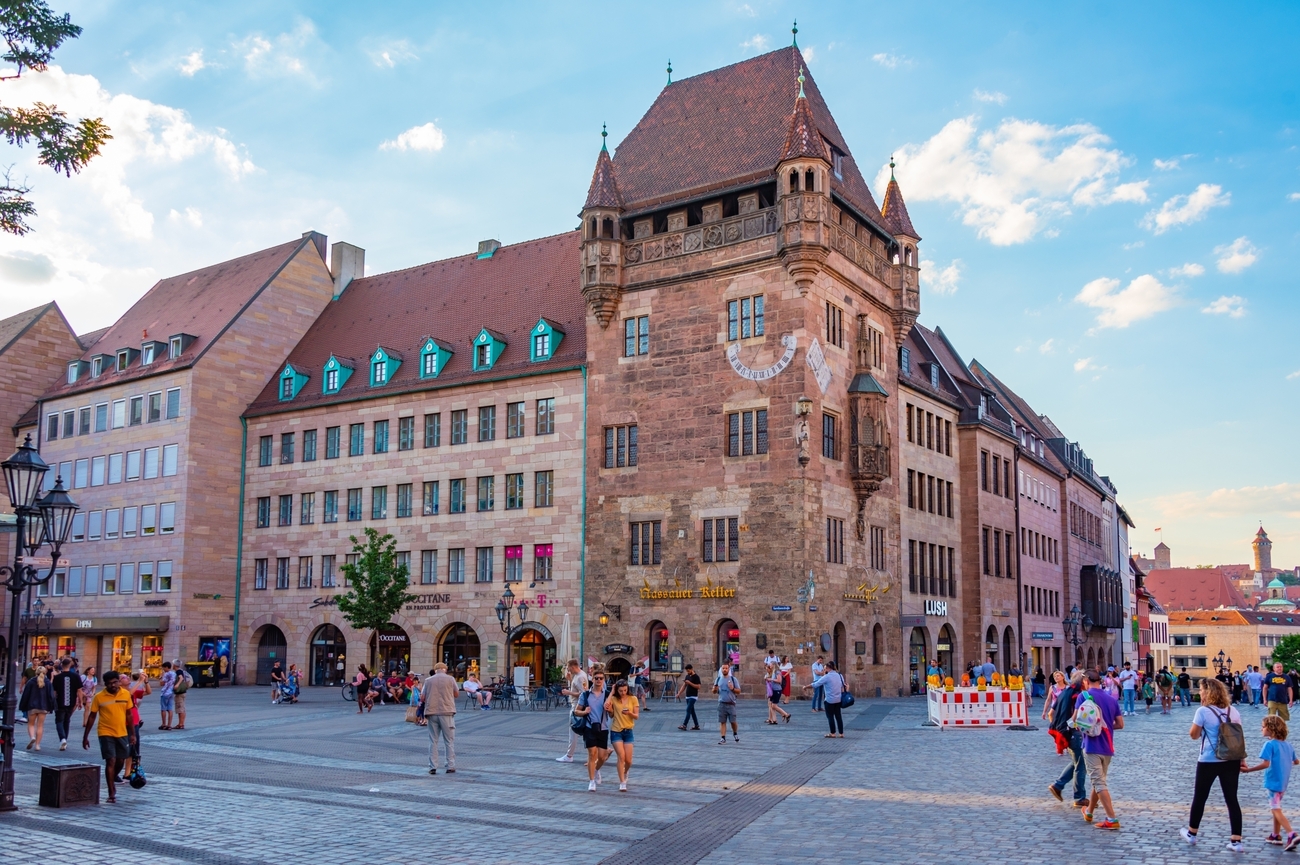
Just a 3-5 minute walk from Breite Gasse brings you to Lorenzer Platz, with St. Lorenz standing right beside it and the old town glowing softer in the evening light.
Lorenzer Platz is one of the key squares in the southern part of Nuremberg’s old town and has long been tied to the city’s commercial and civic life. It sits directly beside St. Lorenz, which gives the whole space a strong architectural anchor, but the square itself feels more relaxed than the busier Hauptmarkt.
It served as an important gathering point for merchants and local activity. Today, it still works as one of those places where people naturally pause rather than just pass through.
The square is framed by historic facades, elegant old-town buildings and open pedestrian space that makes it ideal for slower evening walks. You get a strong view of the church’s Gothic towers, but also enough distance to appreciate how the square fits into the rhythm of the city. Street musicians, locals meeting after work and visitors taking the long way back to their hotel all add to the atmosphere.
Henkersteg
A gentle 7-10 minute walk away, Henkersteg feels like stepping into a quieter side of Nuremberg. Leaving Lorenzer Platz behind, the route pulls you away from the open square and busier streets and closer to the Pegnitz River.
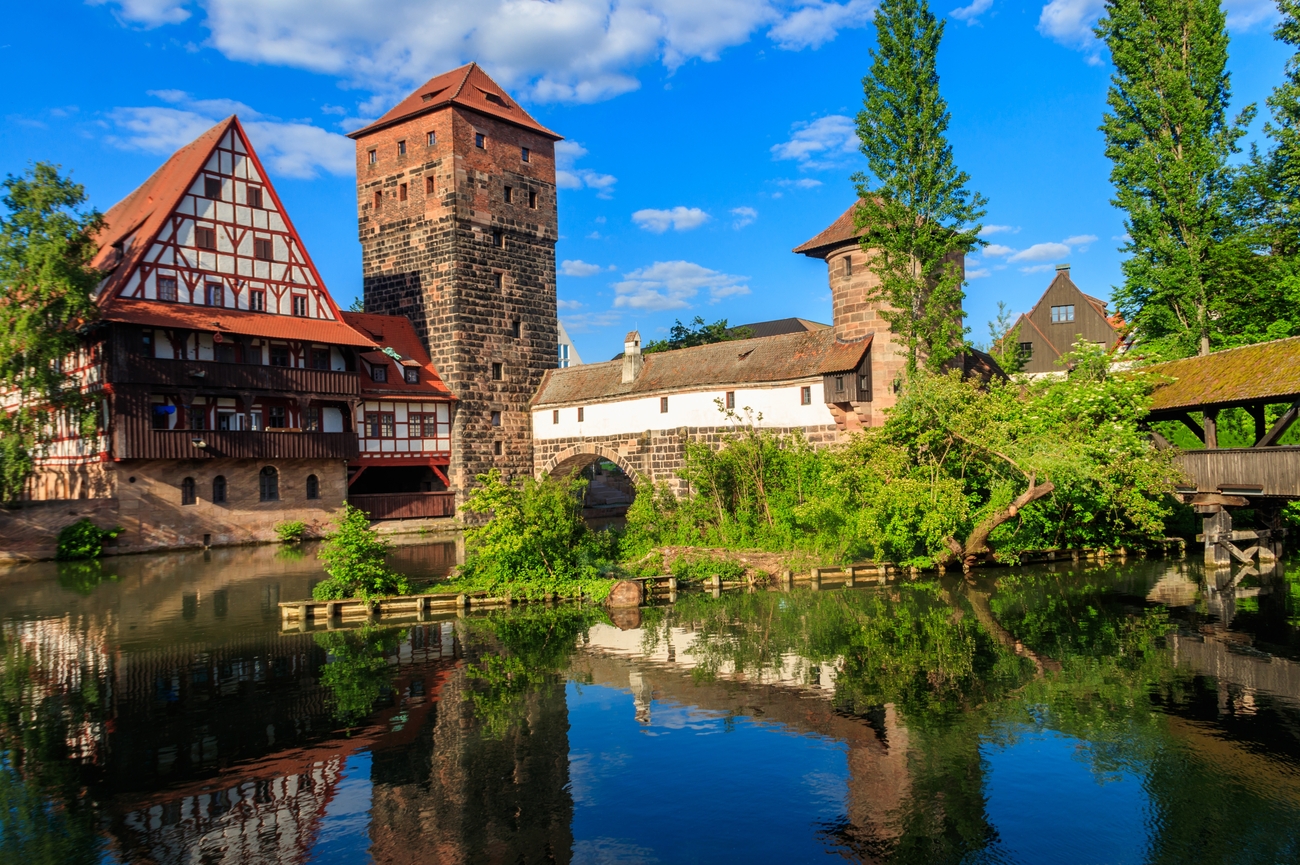
Henkersteg is one of Nuremberg’s most distinctive historic wooden bridges. Built in the late 16th century, it connects the old town to the former executioner’s house, which sat slightly separated from the rest of the city for obvious reasons. Back then, the town executioner lived outside the main social center because the profession carried a strong social stigma, even though it was an official and necessary role. Very glamorous? Absolutely not. Historically fascinating? Definitely.
The bridge itself is covered, wooden and full of old-world character. It stretches across the Pegnitz with a design that feels almost storybook, especially in the evening when the light softens and the river reflects the old stone buildings around it. Nearby, the executioner’s house and the surrounding riverside quarter add even more atmosphere, making this area one of the most photogenic parts of Nuremberg.
Trödelmarkt
Just a short walk from Henkersteg, Trödelmarkt is a practical and easy final stop for day two. The route follows the Pegnitz River and keeps you within the quieter part of the old town.
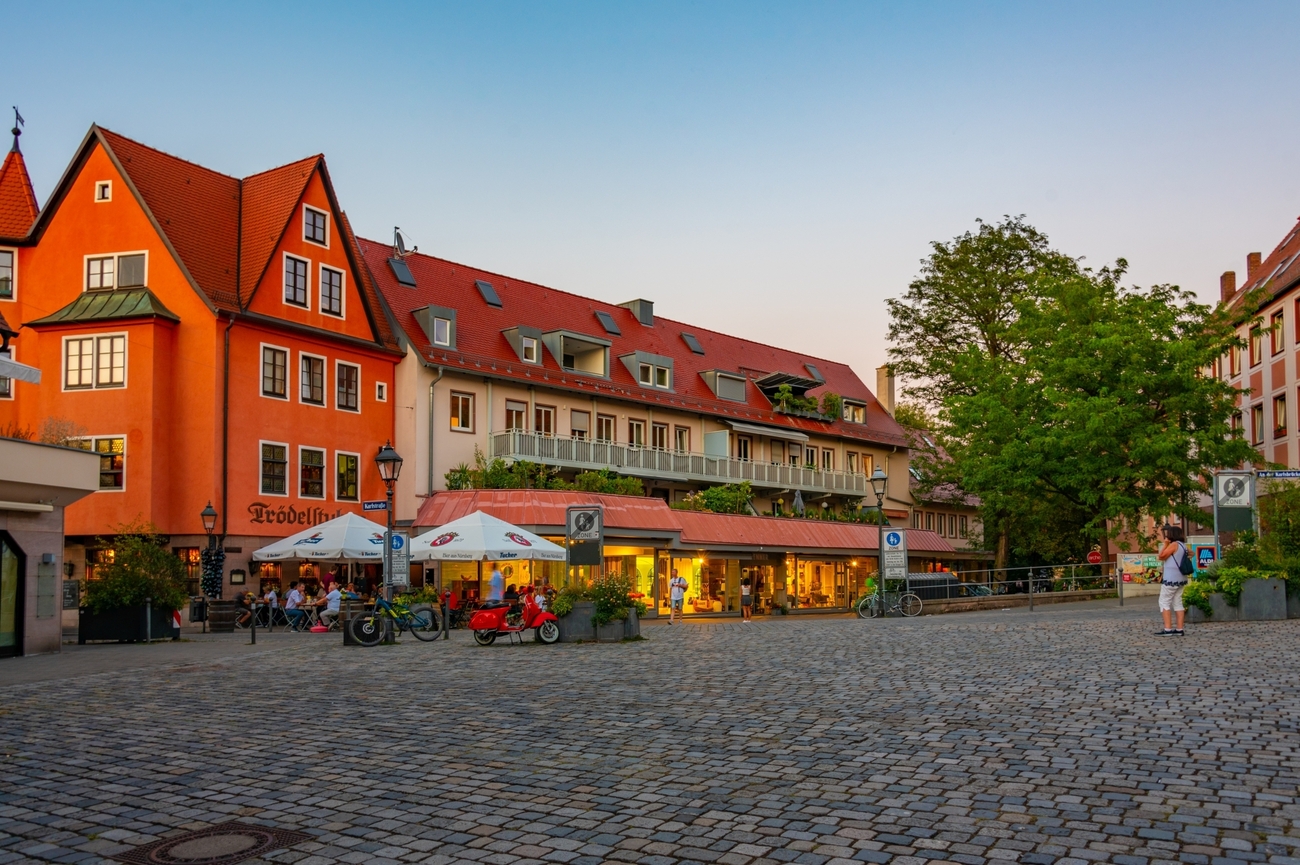
Trödelmarkt is one of the oldest streets in Nuremberg and was historically used as a trading area for merchants and small businesses. Its location along the river made it an important commercial zone in the medieval city, especially for craftsmen and market activity. The name comes from its old function as a flea market and trading district but today, it feels much more refined than that suggests.
The street is lined with historic buildings, small bridges, riverside views and well-preserved old-town facades. You’ll also find antique shops, smaller boutiques and specialty stores that feel more local than the larger shopping streets nearby. It’s quieter than the main retail districts, which makes it better for an evening walk.
Day 2 - Nuremberg Tour Map
Day 3
Morning: Documentation Center Nazi Party Rally Grounds
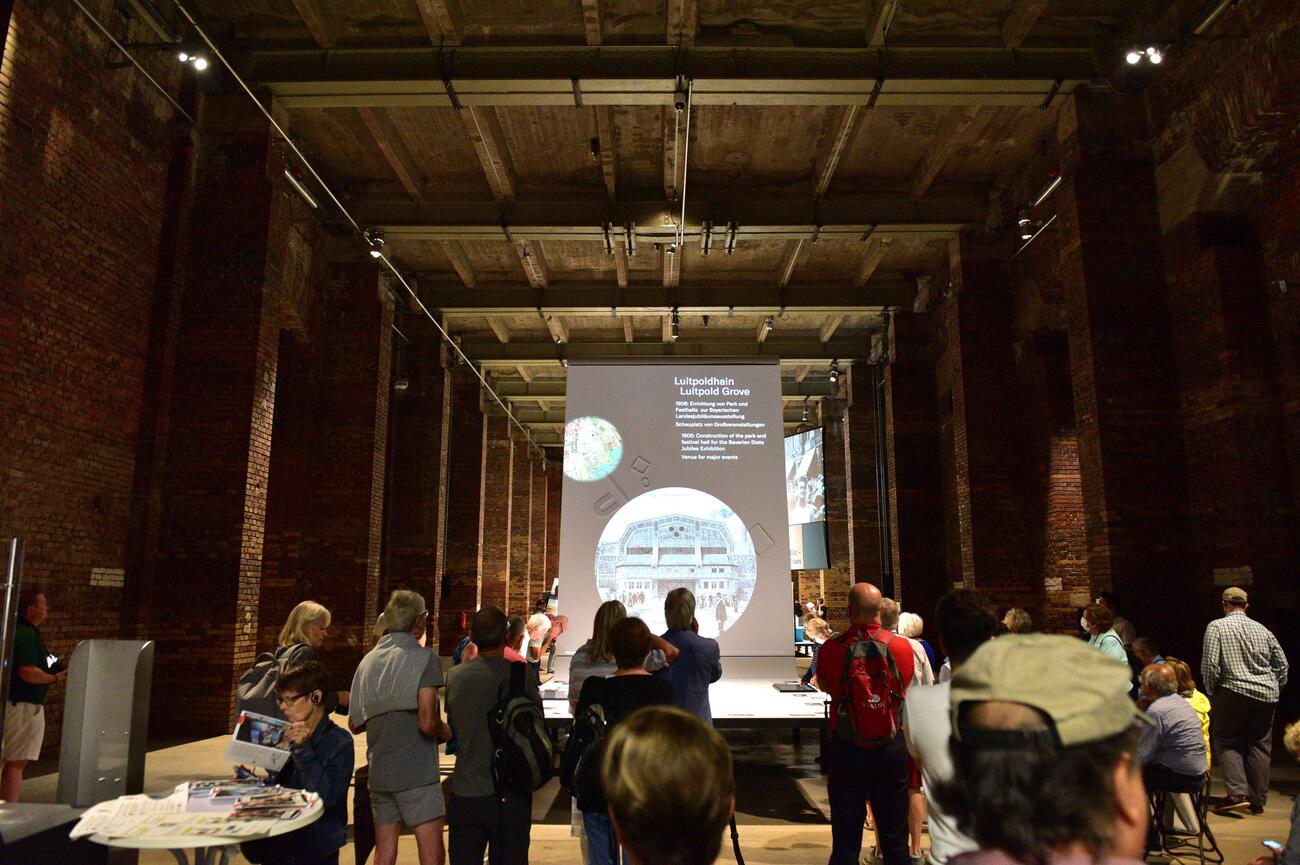
Located at the former Nazi Party Rally Grounds, the Documentation Center Nazi Party Rally Grounds is not a light sightseeing stop and it shouldn’t be. It gives context to a major part of 20th-century German history and shows how the city continues to deal with that legacy today.
The site was used by the Nazi Party between 1933 and 1938 for massive propaganda rallies designed to project power, control and political spectacle. The Documentation Center is housed in the northern wing of the unfinished Congress Hall, one of the most recognizable structures on the grounds. Walking through it feels very different from the medieval old town because it should. This part of the city exists as a reminder, not a celebration.
The museum focuses on the rise of National Socialism, the use of Nuremberg as a propaganda stage, the impact of the Nazi regime, and the consequences that followed after World War II. You’ll see how architecture, mass gatherings and political messaging were used to shape public perception and control. It also covers forced labor, the experiences of prisoners of war and how the city confronted its own role after 1945. Personal stories, photographs, documents and witness accounts make the visit feel much more direct and less like distant history.
A guided tour is the best way to visit because the site needs explanation beyond what you see on your own. The one-hour guided tour of the interim exhibition gives detailed information on the former Nazi Party rallies and the history of the site from 1918 to the present.
Kongresshalle
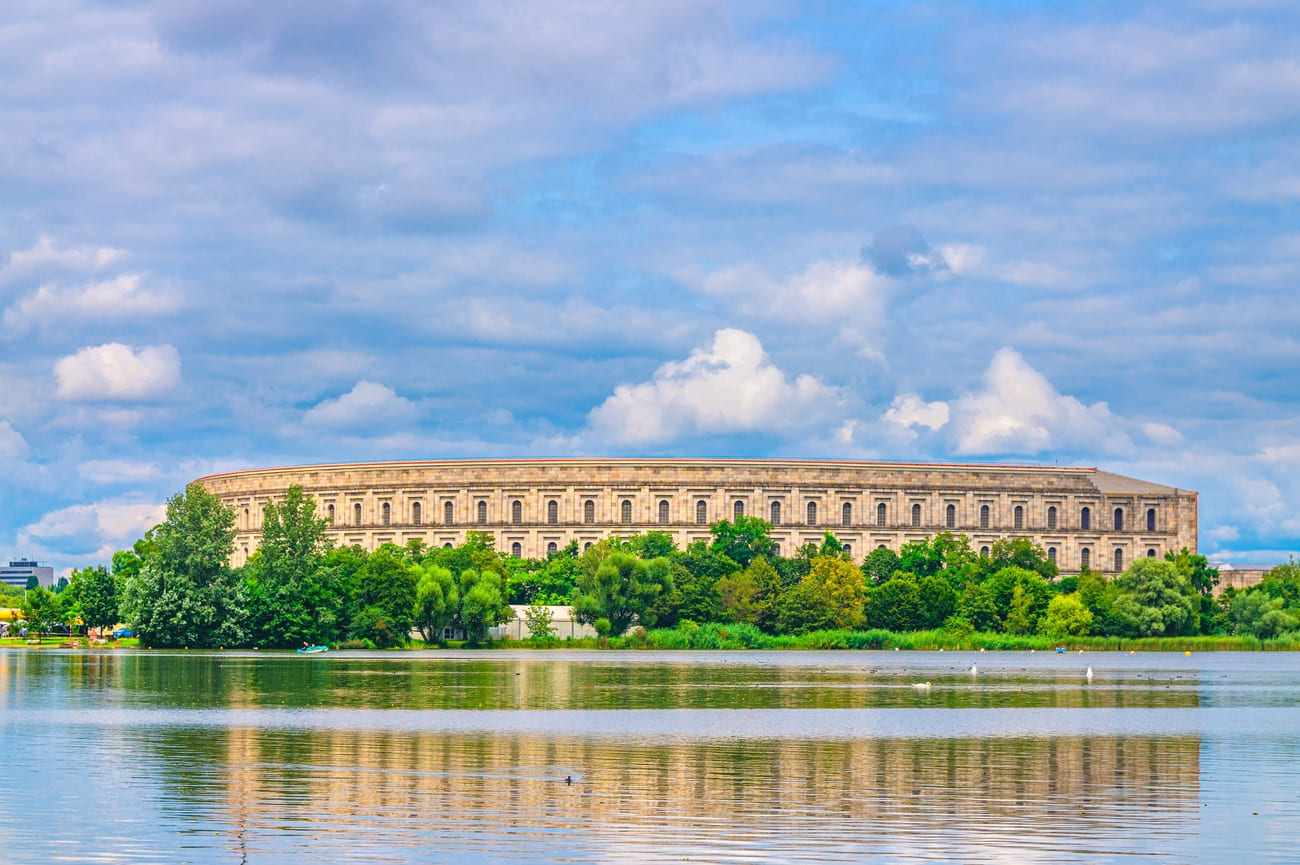
Just a short walk from the Documentation Center brings you to Kongresshalle, since the museum itself is located within its northern wing. You’re already standing beside one of the largest and most striking structures on the former Nazi Party Rally Grounds.
Kongresshalle or the Congress Hall was planned by the Nazi Party as a monumental assembly building inspired by the Roman Colosseum. Construction began in 1935 under architects Ludwig and Franz Ruff and was intended to hold around 50,000 people for party congresses and propaganda events. It was never completed but even unfinished, it remains one of the largest surviving examples of National Socialist architecture in Germany.
The structure is built around a huge horseshoe-shaped design with red brick cladding and granite foundations, surrounding an enormous open courtyard. It feels oversized on purpose because it was. The building was never meant to be subtle; it was designed as a visual statement. Today, that unfinished state actually makes it more powerful because you can clearly see both the ambition and the collapse of that ideology.
Dutzendteich
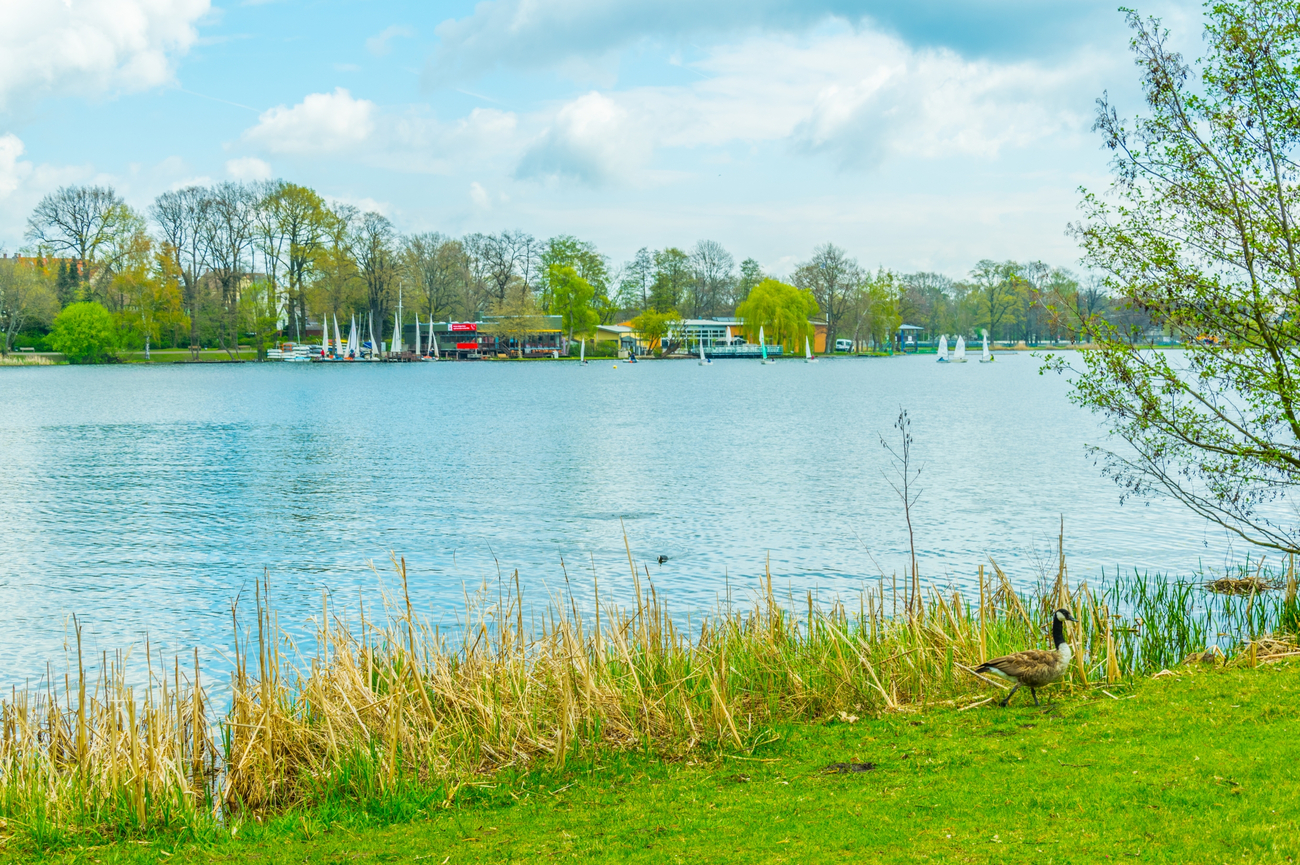
From Kongresshalle, Dutzendteich is only a short walk away. After the heavy architecture and serious history of the Rally Grounds, the lake feels quieter and more open.
Dutzendteich is a large lake and park area located within the former Nazi Party Rally Grounds complex, but its history goes back much earlier than that. Originally created in the Middle Ages as fish ponds, the area later became part of the city’s public leisure space before being absorbed into the massive plans of the Nazi regime. During the 1930s, it was integrated into the rally grounds as part of the grand design, surrounded by parade spaces and monumental buildings.
The lake itself offers wide walking paths, tree-lined views and clear sightlines toward Kongresshalle and the surrounding rally grounds. Locals use the area for walking, cycling, and quiet afternoons.
Afternoon: Zeppelinfeld
From Dutzendteich, Zeppelinfeld is about a 10-15 minute walk and keeps you within the same historical district of the former Nazi Party Rally Grounds.
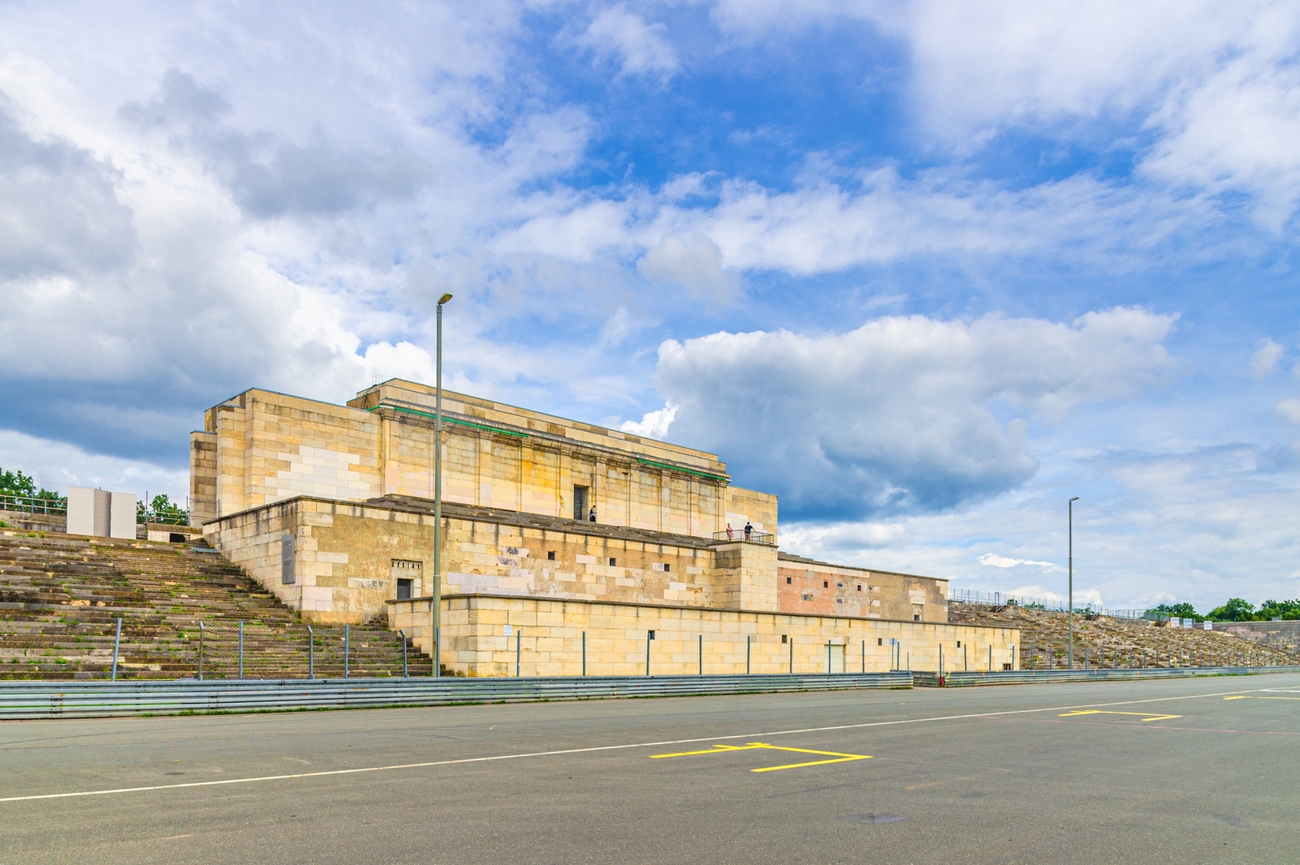
Zeppelinfeld was one of the main rally sites used by the Nazi Party for mass propaganda events and military displays between 1933 and 1938. This was where enormous party rallies took place, with thousands of participants and spectators gathered to project unity, discipline and absolute power. The famous grandstand, designed by architect Albert Speer, stood as the visual center of these events and became one of the most recognized symbols of Nazi propaganda architecture.
Today, much of the original site remains, including the large open parade ground and parts of the grandstand. While sections have deteriorated or been partially dismantled over time, the atmosphere is still powerful because the emptiness itself says a lot.
Luitpoldhain
Luitpoldhain is about a 10-minute walk and keeps you within the wider Rally Grounds area. After the scale and intensity of Zeppelinfeld, this part of the site feels noticeably calmer.
Luitpoldhain was originally created in the early 20th century as a public park and exhibition space before it was transformed by the Nazi Party into one of the major ceremonial grounds of the Rally Grounds complex. It became the site of the annual “Luitpold Arena,” where large political gatherings and memorial events were staged, especially ceremonies honoring fallen Nazi Party members.
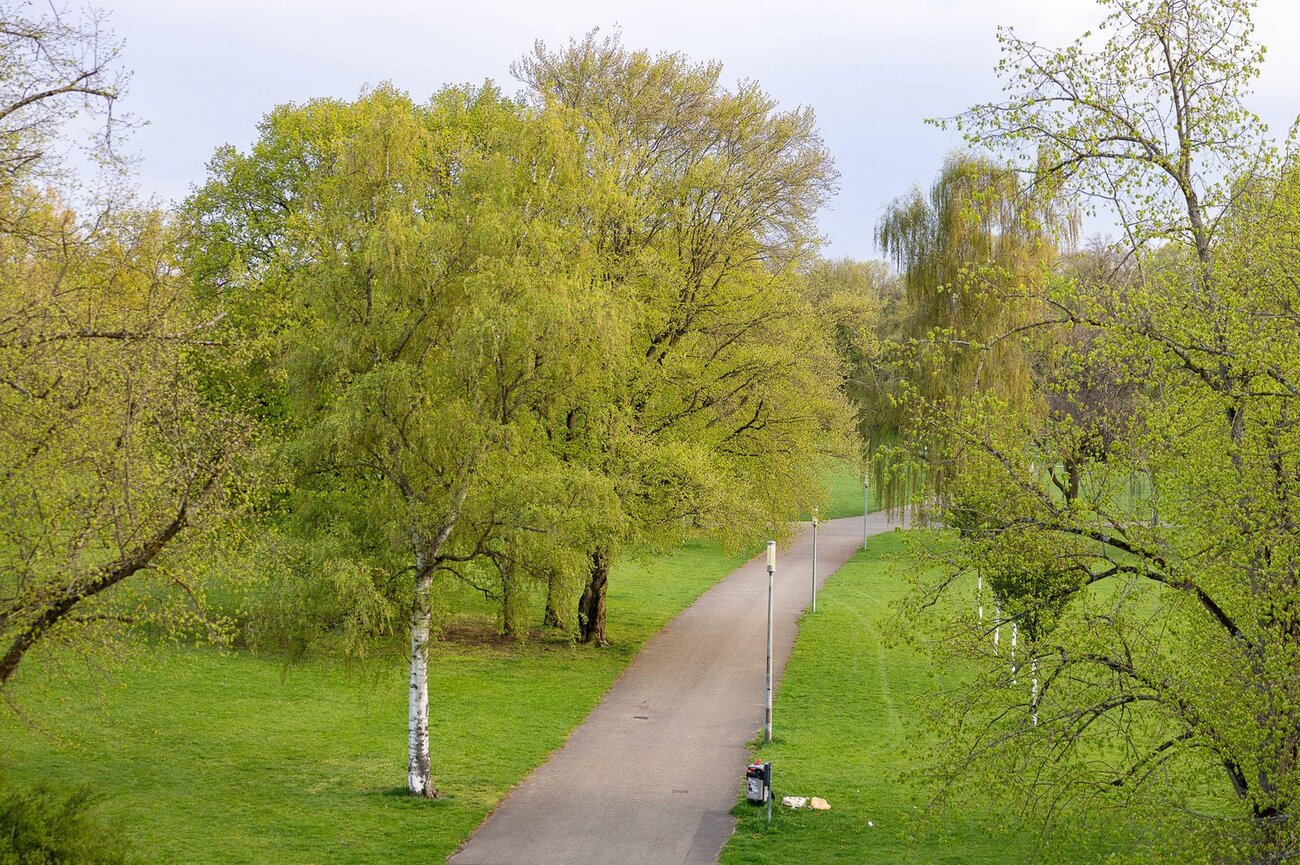
Today, Luitpoldhain looks much more like a public park than a formal historic monument. Wide lawns, tree-lined paths and open walking areas make it feel peaceful at first glance, but the historical significance remains underneath that surface. Some original structures and layout traces are still visible, especially when you understand how the area was used.
Nuremberg State Theater
Leaving Luitpoldhain behind, about 15 to 20 minutes by car brings you back into the city center and straight to the Nuremberg State Theater.
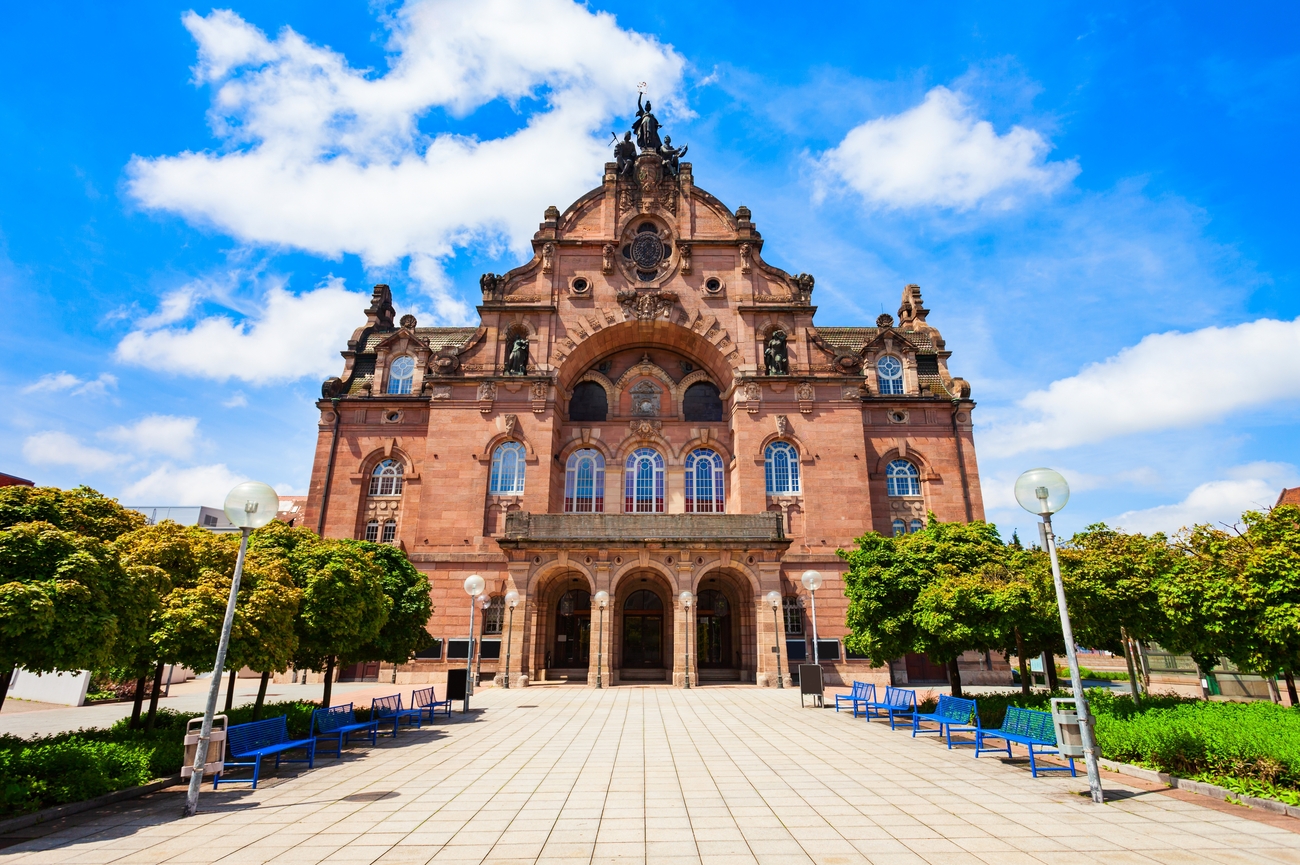
The Nuremberg State Theater, or Staatstheater Nürnberg, is one of the city’s most important cultural institutions and one of the largest multi-genre theaters in Germany. It includes opera, drama, ballet and concert performances, making it a major part of Nuremberg’s artistic life. The current Opera House building opened in 1905 and reflects the grand civic architecture of that period.
The exterior has that classic early 20th-century European theater look: symmetrical design, detailed stonework, large arched windows and a sense of quiet grandeur that fits the city well. Inside, the opera house feels refined rather than overly extravagant, with traditional seating, ornate details and a strong sense of occasion the moment you walk in. Even if you’re not attending a full performance, the building itself is worth seeing because it shows another side of Nuremberg beyond the medieval and wartime landmarks.
Evening: Fleischbrücke
A short 8-10 minute drive from the Nuremberg State Theater brings you back toward the old town and to Fleischbrücke, one of the city’s most elegant historic crossings. It sits right over the Pegnitz River and connects some of the most beautiful parts of the old center.
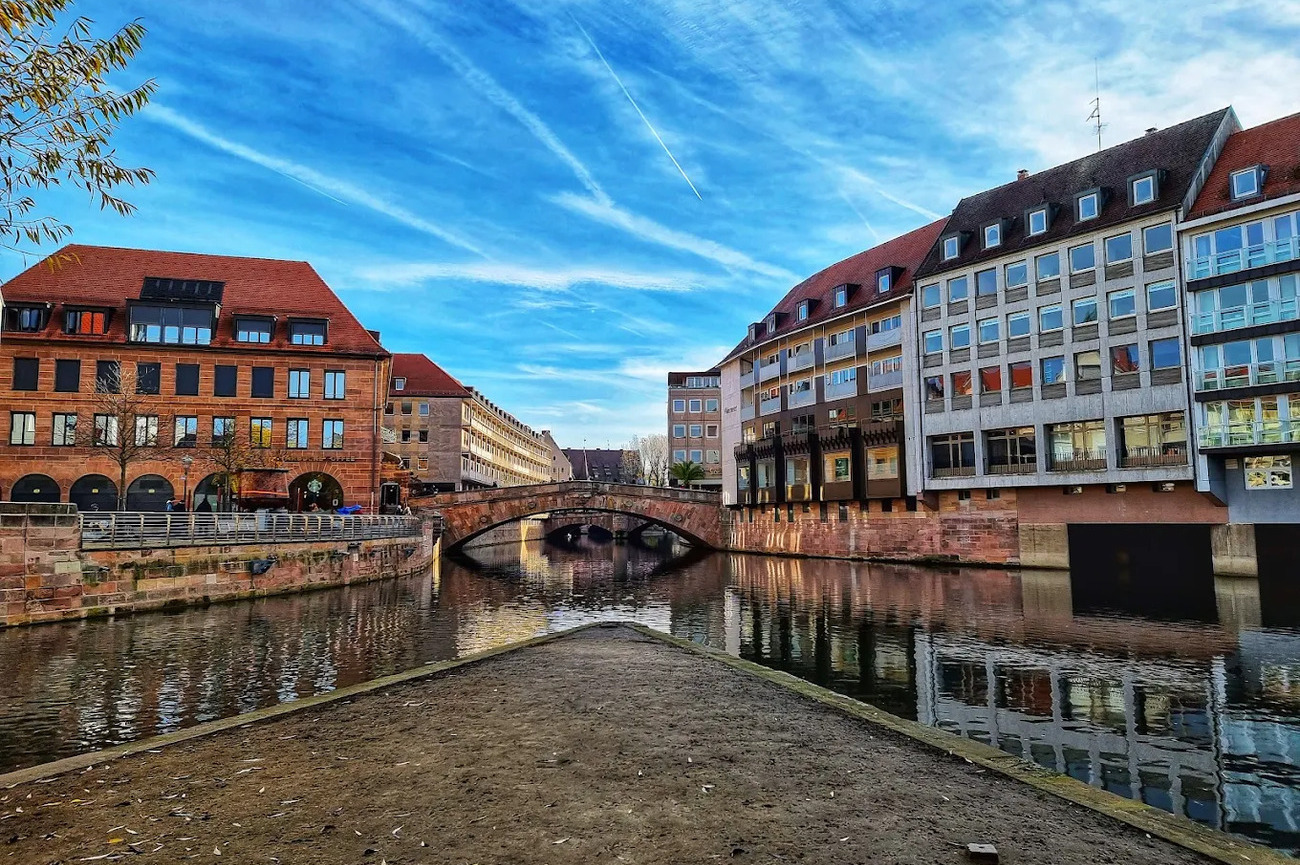
Fleischbrücke was built in the late 16th century and is considered one of the finest Renaissance bridges in Germany. It replaced an earlier medieval crossing and was designed to handle the heavy traffic coming through the nearby meat market district, which gave the bridge its name. Unlike the more decorative Gothic landmarks around the city, Fleischbrücke stands out because of its clean Renaissance design.
The bridge itself is built from sandstone and features a single broad arch that stretches gracefully across the Pegnitz. Its design was inspired by the Rialto Bridge in Venice. Around it, the old town buildings and riverside streets create one of the most polished views in central Nuremberg.
Museumsbrücke
Another short riverside walk brings you from Fleischbrücke to Museumsbrücke, making it a fitting final bridge of the trip and a smooth way to end the itinerary. Fleischbrücke feels more architectural and formal, while Museumsbrücke opens up to wider river views and a calmer evening pace.
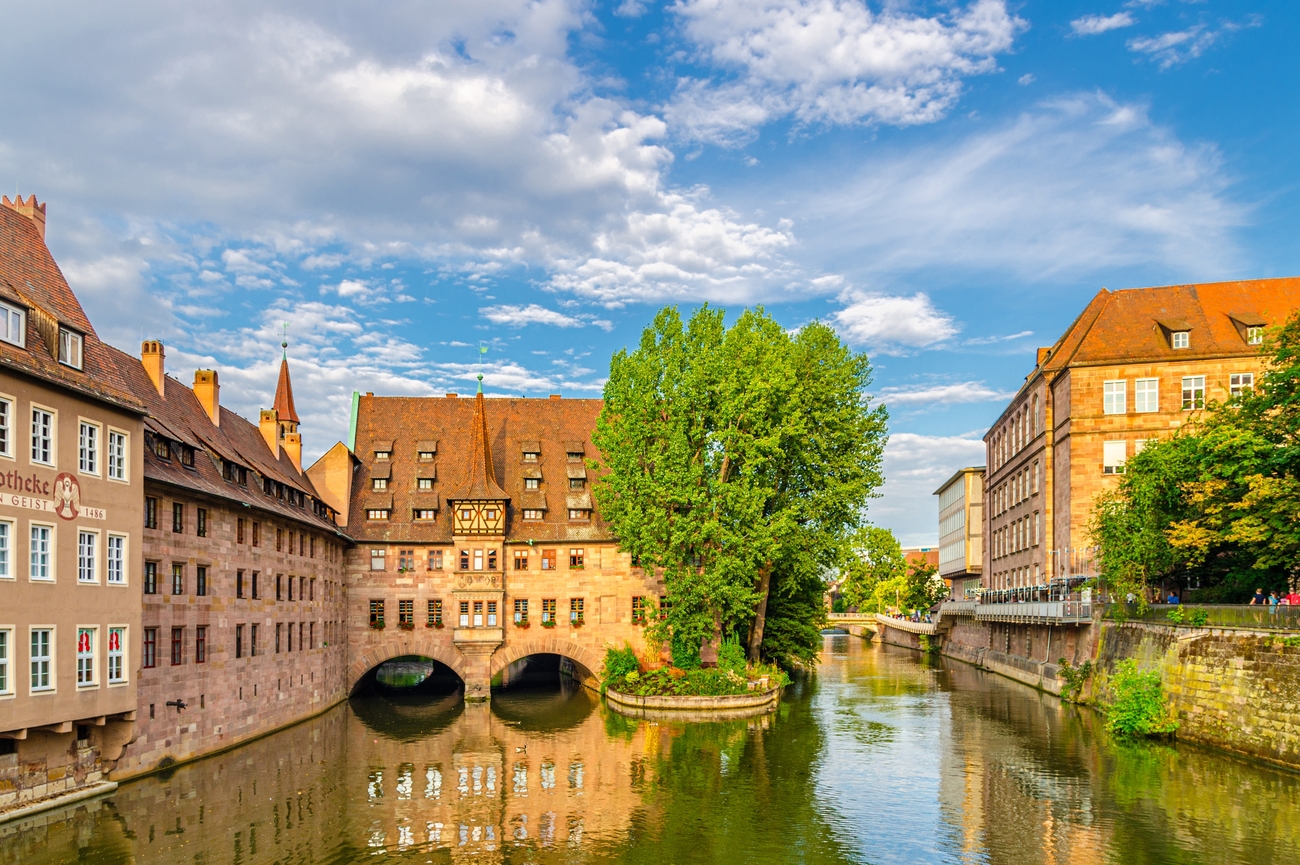
Museumsbrücke is one of the most central bridges in Nuremberg, linking the old town across the Pegnitz while offering one of the best riverside views in the city. Its location places you right between the historic core and the quieter riverfront streets. It has long been part of the city’s daily flow, connecting markets, commercial streets and cultural landmarks without trying to be the main attraction.
Day 3 - Nuremberg Tour Map
Other Things to Do in Nuremberg
Some of the best experiences here are not the obvious headline attractions. They’re the quieter museums, the palace gardens, the market halls and the streets where you end up staying longer than planned. You can spend the morning inside a royal palace, the afternoon browsing luxury boutiques or historic wine cellars and the evening at the opera without ever needing to leave the center.
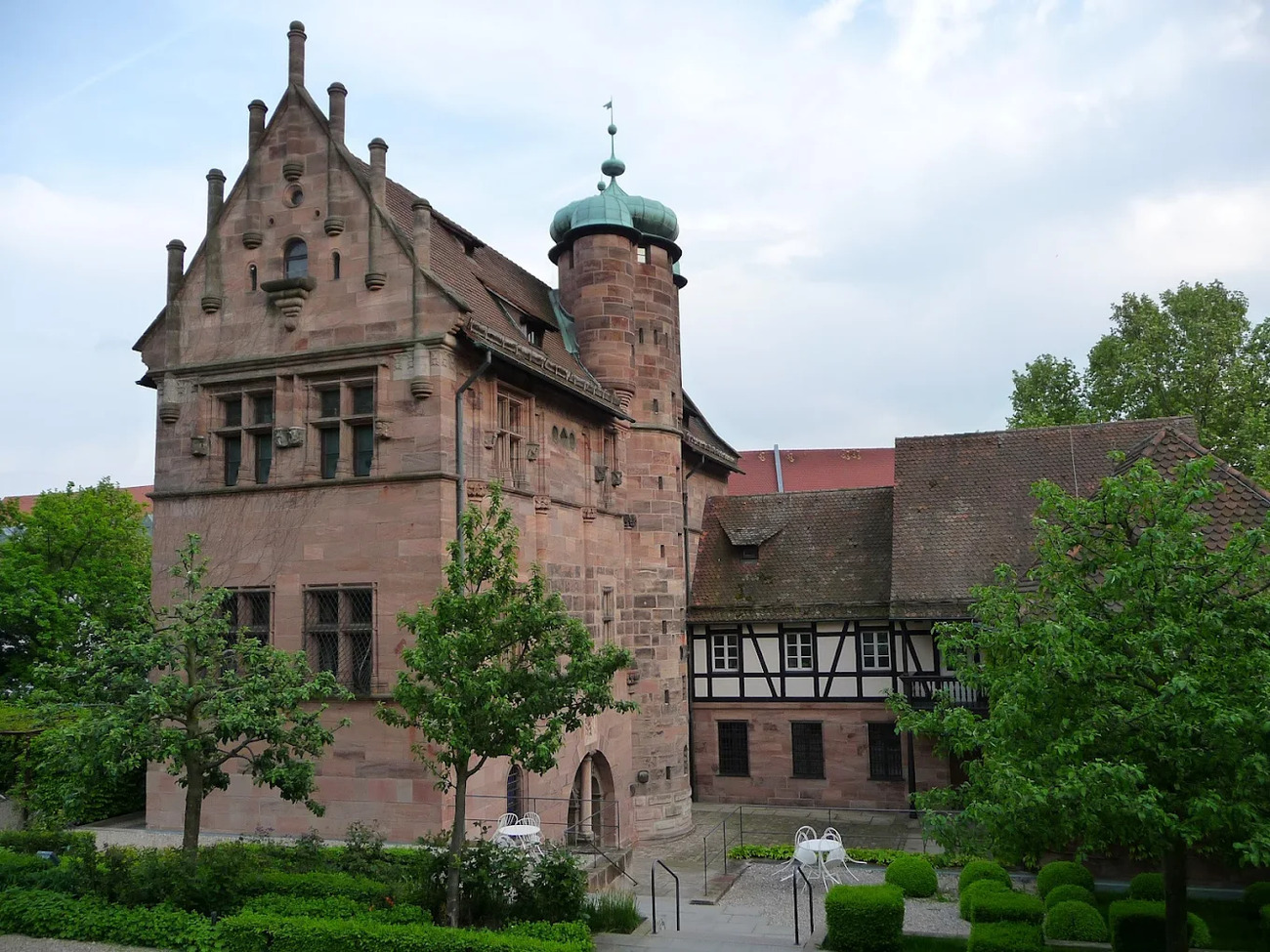
- Museum Tucherschloss und Hirsvogelsaal: This Renaissance merchant mansion gives you a closer look at how Nuremberg’s wealthy patrician families lived during the 16th century. It feels more intimate than the larger museums because you’re walking through actual historic rooms instead of broad exhibition halls. The Tucher family was one of the city’s most powerful merchant dynasties and the preserved interiors reflect that with formal halls, detailed woodwork and the kind of understated wealth that feels very old money. The Hirsvogelsaal is the standout, known for its richly decorated Renaissance ceiling and elegant design. You can join guided tours which cover stories behind the merchant families and their influence on the city.
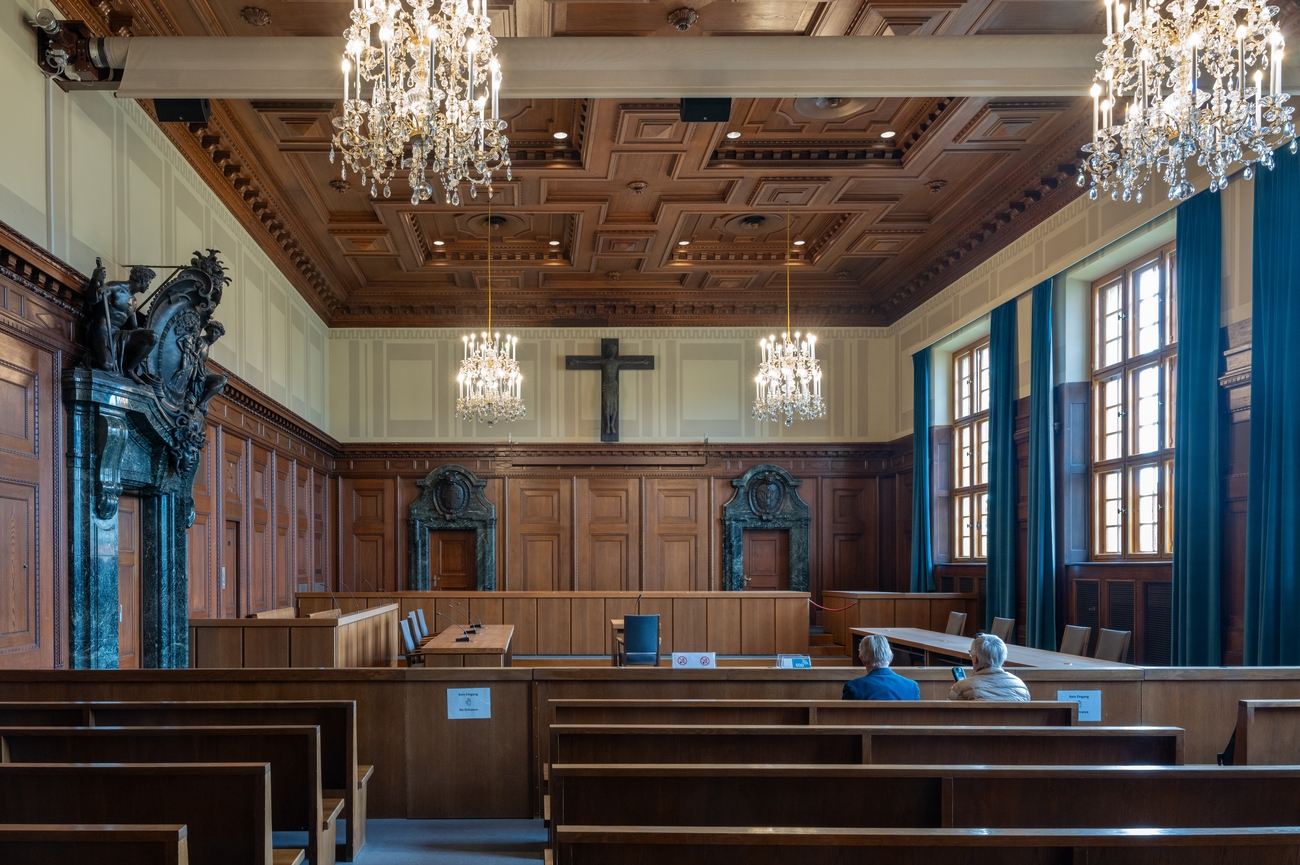
- Justizpalast Nürnberg: The Palace of Justice is one of the most important modern historical sites in Nuremberg because this is where the Nuremberg Trials took place after World War II. Courtroom 600 became internationally significant as Nazi leaders were prosecuted for war crimes, crimes against humanity and crimes against peace. The attached museum and exhibition spaces explain the legal process, the defendants and how these trials shaped international criminal law.
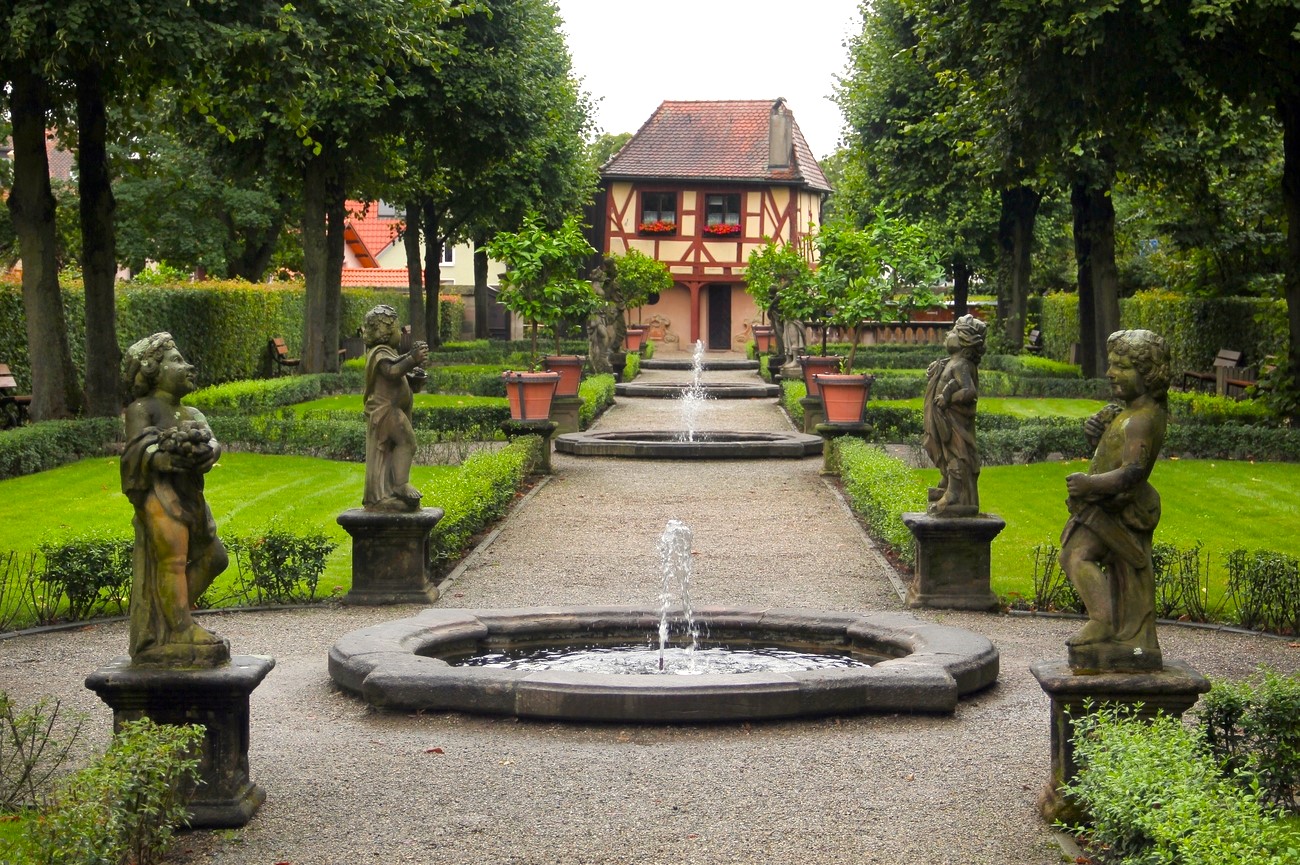
- Barockgarten St. Johannis: This is one of the quieter places in the city and one of the most underrated. Located near St. Johannis Cemetery, the Baroque Garden offers a much calmer side of Nuremberg with formal landscaping, old trees and a peaceful atmosphere that feels far removed from the busier tourist routes. The area is closely connected to the cemetery, where several important historical figures are buried, including Albrecht Dürer. Visiting with a local guide gives the place much more meaning because of the stories behind the graves.
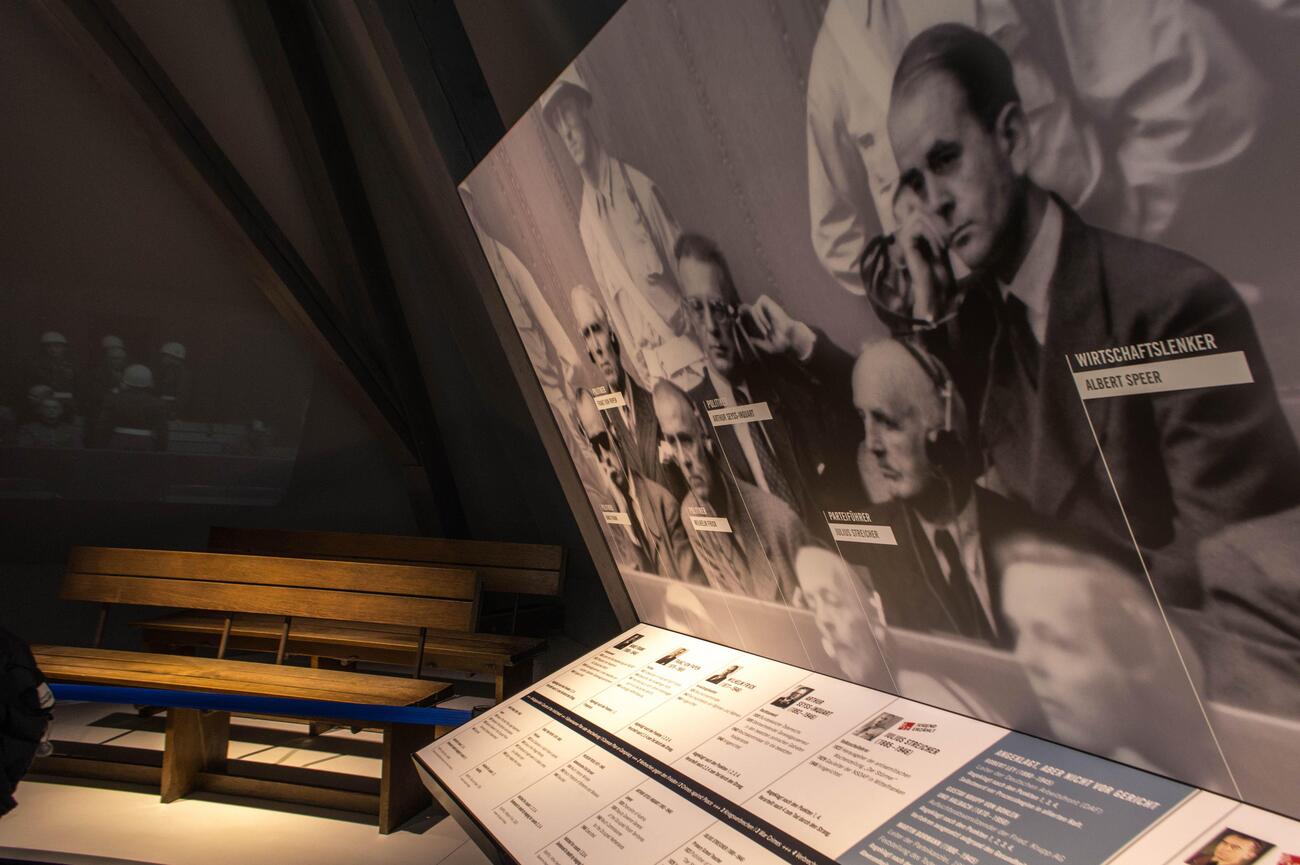
- Memorium Nuremberg Trials: Located inside the Palace of Justice complex, the Memorium deserves proper time on its own. It focuses on the history and legal significance of the Nuremberg Trials and how they shaped modern international law. The exhibitions are detailed but clear, covering both the courtroom process and the larger political consequences after 1945. There are audio guides available but private tours make the experience stronger, especially if you want a deeper understanding instead of just the main facts.
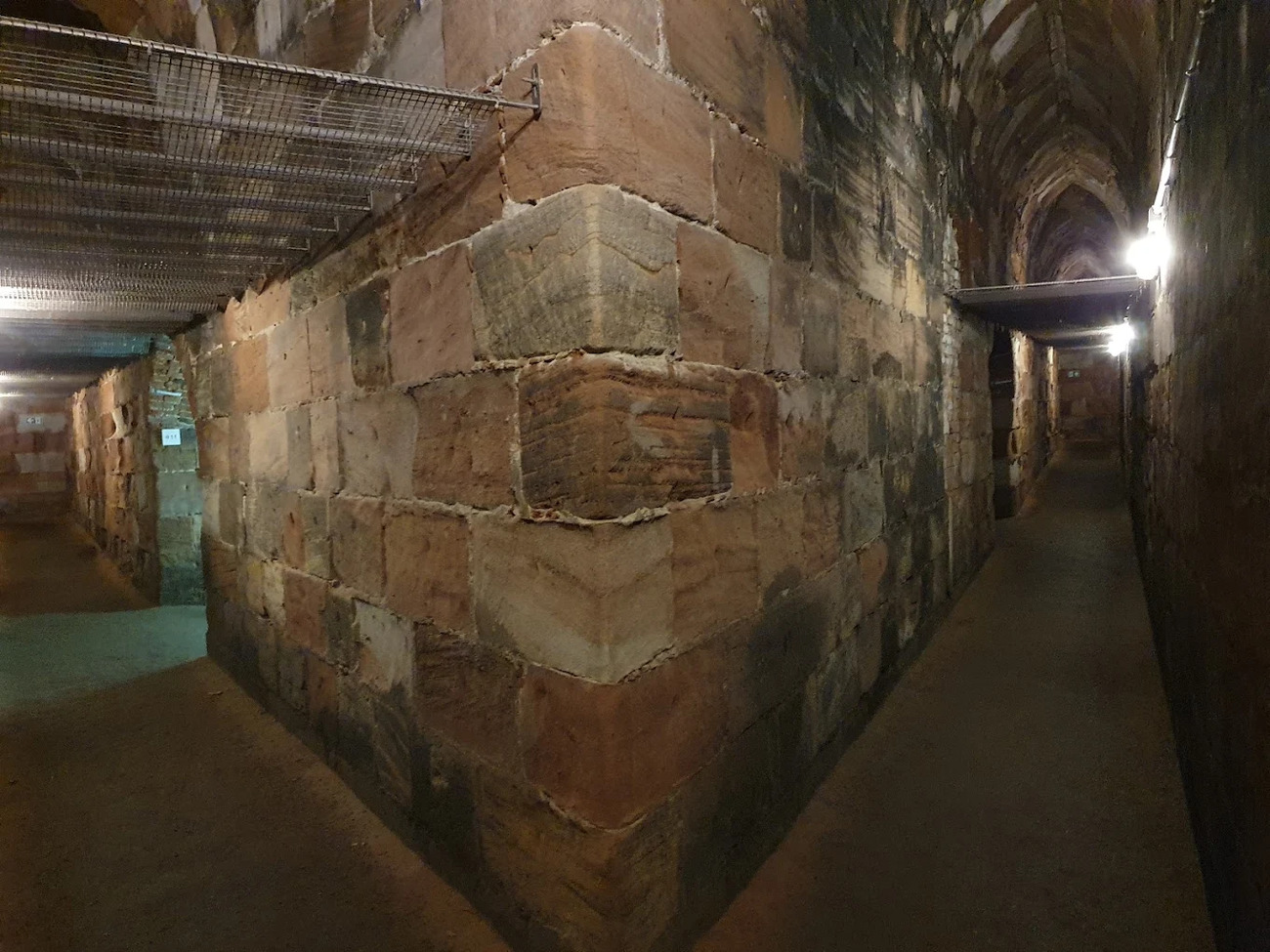
- Förderverein Nürnberger Felsengänge e.V.: Beneath the old town, the historic rock-cut cellars of Nuremberg offer one of the city’s most unexpected experiences. These underground tunnels were originally used for beer storage and later served as air-raid shelters during World War II. It’s a completely different side of the city. It’s cooler, quieter, and far more interesting than most people expect. The guided tours are essential because the site only works with explanation. You’ll learn how the sandstone tunnels were carved, how breweries used them for red beer storage and how the spaces later became wartime shelters.
Things to Do with Kids in Nuremberg
Nuremberg is surprisingly good for family trips because it doesn’t force you to choose between “educational” and “actually fun.” There are hands-on museums, huge green parks, animal encounters, indoor play spaces and enough open-air spots to let kids run around before everyone starts negotiating over snacks. If you’re traveling with children, these are the places that make Nuremberg feel less like a history lesson and more like a city break.
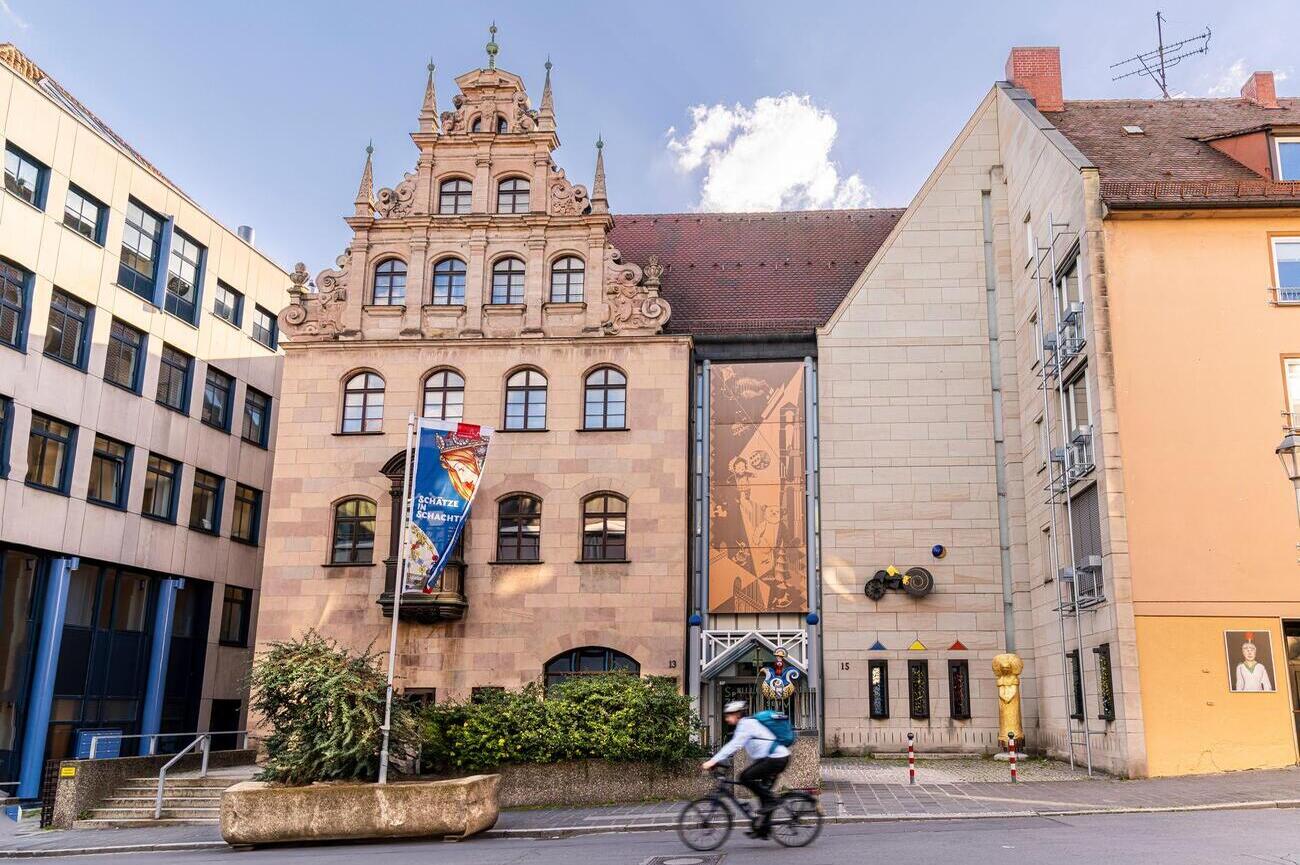
- Toy Museum: Located right in the old town, the Toy Museum covers several centuries of toy history, from handmade wooden dolls and dollhouses to model trains, tin toys, teddy bears and old-school mechanical toys that somehow still look cooler than half the things sold today. It’s spread across several floors inside a historic building and the displays are detailed without feeling overwhelming. You’ll see how toys changed over time and how Nuremberg became one of Europe’s major toy-making cities. There’s also a dedicated play area and interactive family sections, which help a lot because children can actually engage instead of just quietly following adults around. Family tickets are available and guided visits sometimes include special seasonal workshops for children.
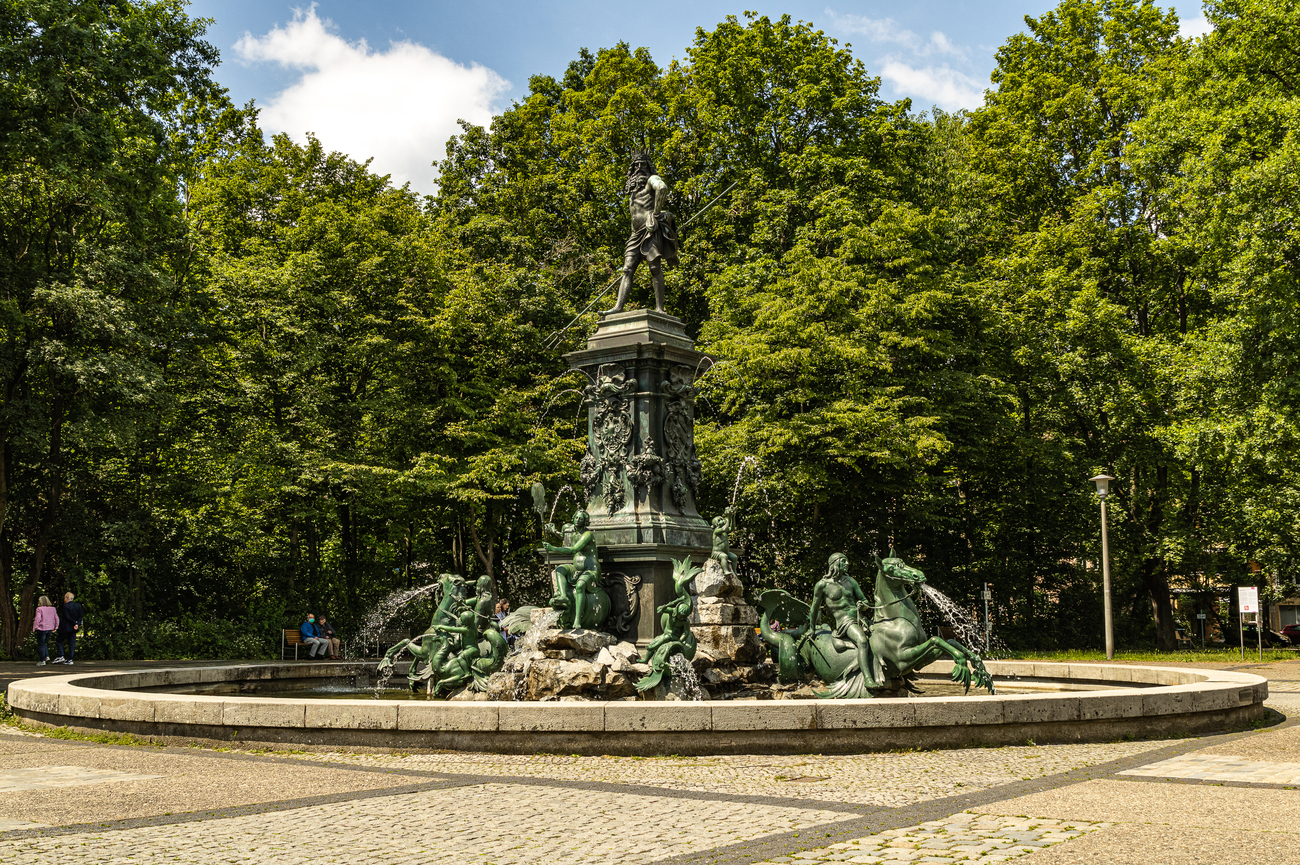
- Stadtpark Nürnberg: Stadtpark is one of the city’s largest and nicest green spaces, with wide walking paths, playgrounds, ponds, open lawns and enough room for children to run around without someone immediately yelling “careful.” It has been part of the city since the early 20th century and works as both a recreational space and a proper city escape. Families come here for picnics, bike rides, casual walks and playground time, while locals use it as part of daily life rather than a sightseeing stop.
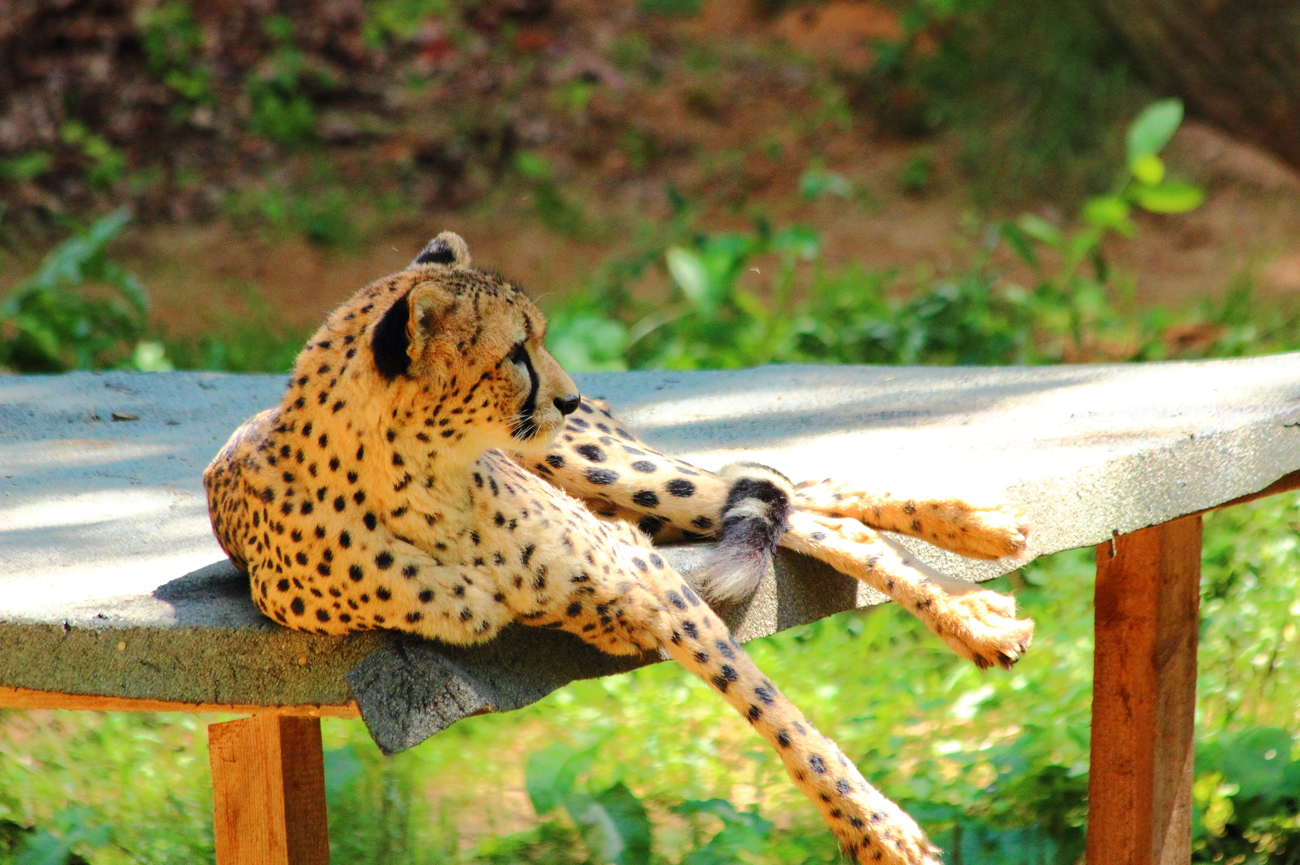
- Nürnberg Zoo: Nürnberg Zoo is easily one of the strongest family stops in the city and one of the best zoos in Germany. It sits inside a large forested area. Instead of tight urban enclosures, you get wide natural spaces, tree-lined walking paths and a layout that feels much calmer for both kids and adults. The zoo is home to dolphins, polar bears, big cats, giraffes, gorillas, manatees and a huge range of other animals. There’s also a dolphin lagoon and the manatee house is surprisingly memorable. You can experience seasonal feeding sessions and animal-focused educational programs depending on the time of year.
- Experience Field for Developing the Senses: Yes, the name sounds like someone challenged German to be extra dramatic, but the place is genuinely excellent for families. It’s an interactive science and sensory park where children can test balance, sound, movement, touch and perception through hands-on exhibits. It’s part museum, part playground and much smarter than it first sounds. Instead of standing behind glass displays, kids get to climb, experiment, test optical illusions, play with sound installations and physically interact with almost everything. The outdoor sections are especially fun in warmer months, while indoor installations help when the weather decides not to cooperate.
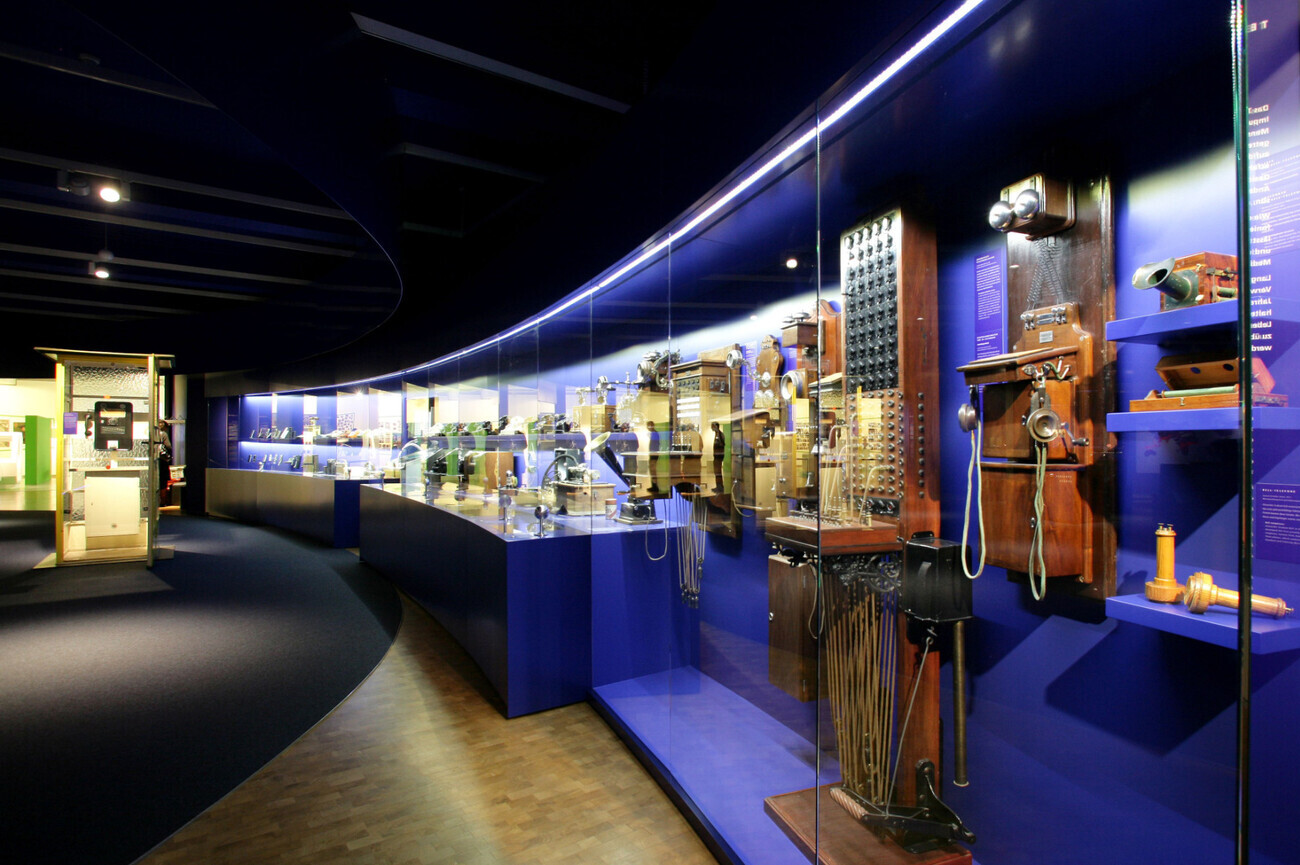
- Museum of Communication of Nuremberg: The Museum of Communication is one of the smartest family museum choices in the city because it actually understands that children like doing things, not just reading signs. It covers the history of communication from letters and telephones to broadcasting, media and digital life. Kids can try hands-on exhibits, playful displays and seasonal workshops designed for younger visitors, while adults get the deeper historical context in the background. Special events and family-friendly programs happen throughout the year, so checking ahead helps.
Day Trips from Nuremberg
The location is ridiculously convenient. You don’t need overnight plans or complicated logistics. Most of these places are easy to get to by direct train or a short private drive, which means you can leave after breakfast, spend a full day exploring somewhere completely different and still be back in Nuremberg for dinner. If you want your Nuremberg itinerary to feel less repetitive and a little more elevated, these are the places worth adding. And yes, most of them are close enough that your train ride is shorter than the time people spend deciding where to brunch.
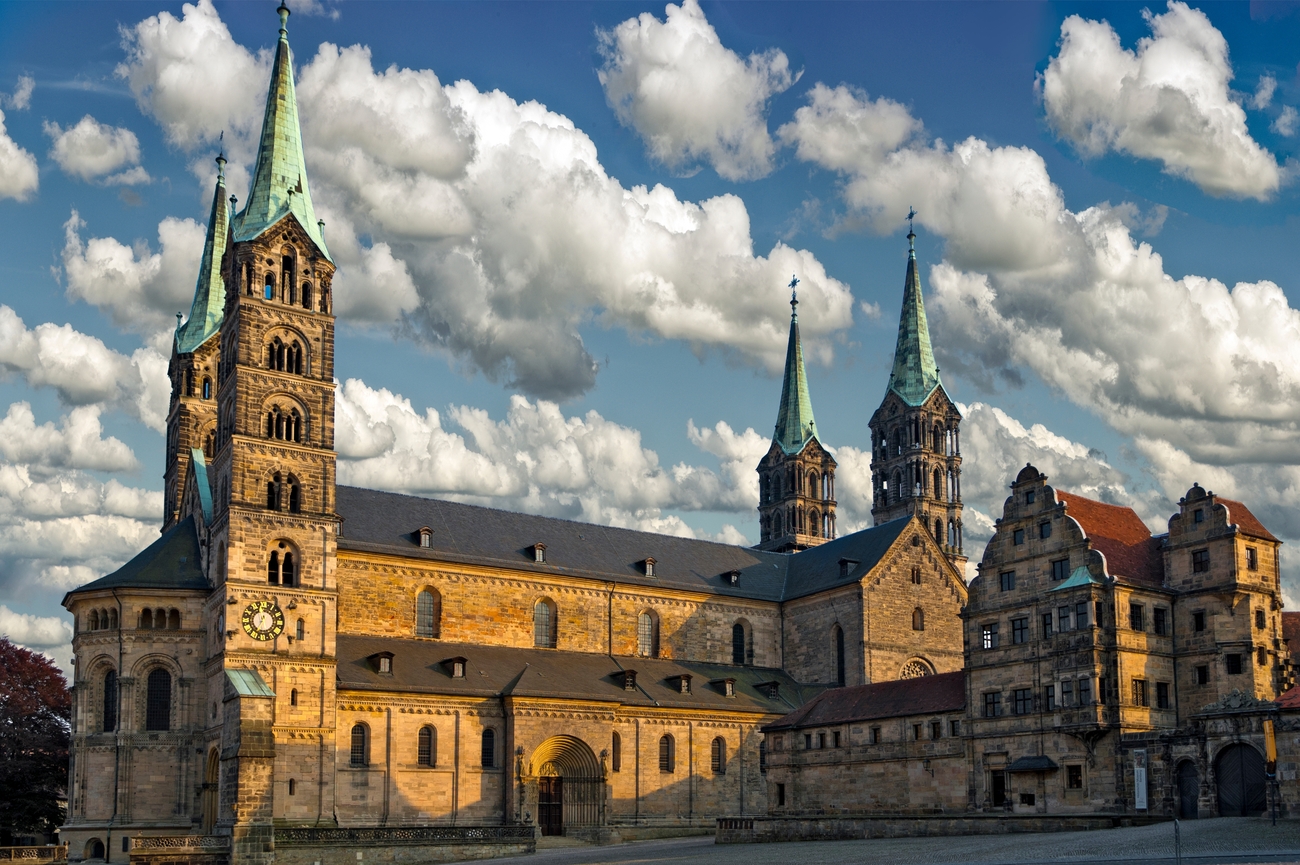
- Bamberg: Bamberg is the easiest yes on this list. Around 40 to 45 minutes by direct train from Nuremberg, it gives you one of Germany’s best-preserved medieval towns and a UNESCO World Heritage Site that actually lives up to the label. The city is built across seven hills, which sounds dramatic but mostly means excellent views and a lot of beautiful church towers. The main stops are Bamberg Cathedral, the Altes Rathaus dramatically placed in the middle of the river, Neue Residenz Bamberg with its rose garden and the Little Venice district with its old fishermen’s houses along the water. You can also pair the UNESCO old town with Schloss Seehof, just outside Bamberg for palace gardens. And yes, we already prepared an itinerary if you’re planning to extend your trip.
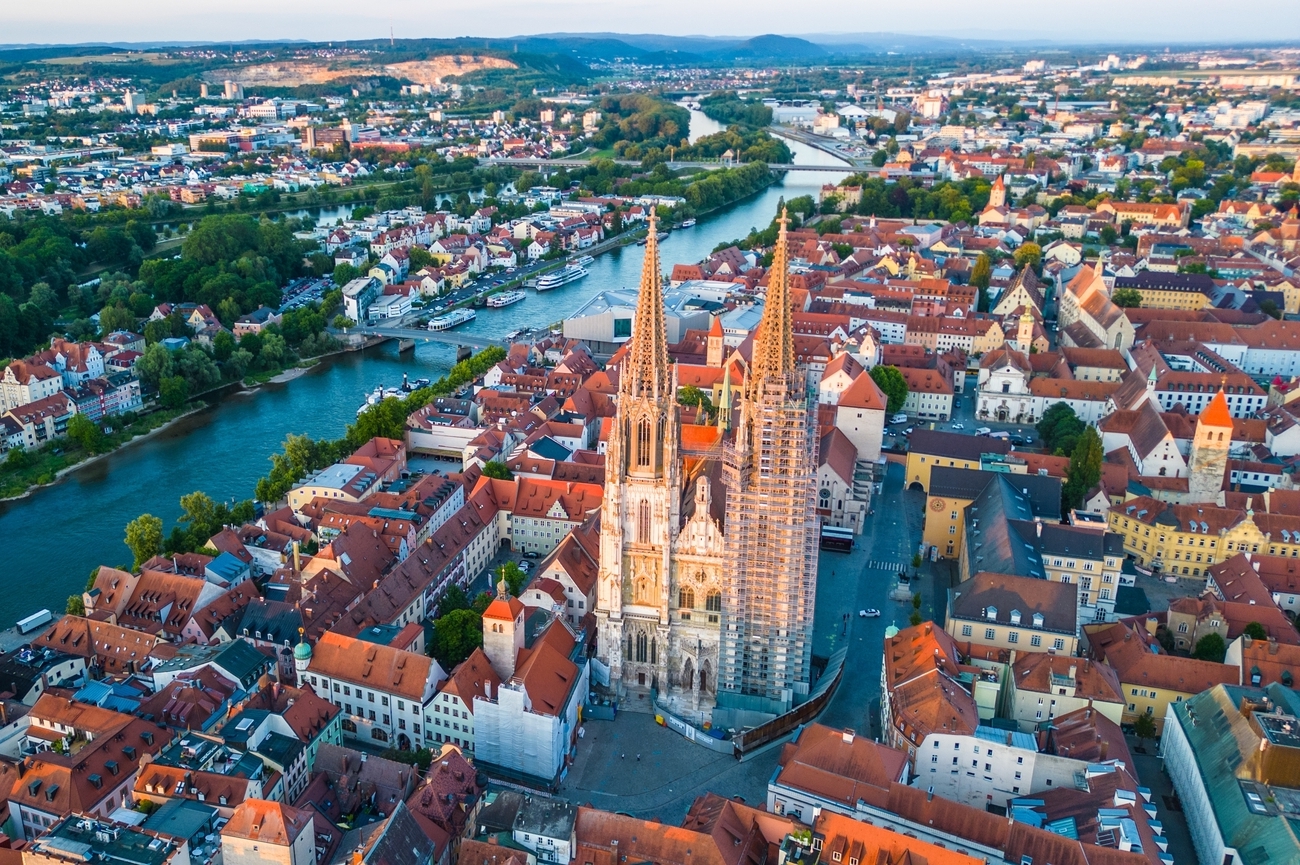
- Regensburg: Regensburg sits about an hour away by train and the city feels like medieval Germany decided to stay organized. Its UNESCO-listed old town is one of the most complete in the country, with Roman roots, Gothic architecture and streets that somehow make every detour look like the right one. You’ll want to start with St. Peter’s Cathedral, then walk across the Stone Bridge, one of the oldest surviving bridges in Germany. The Thurn und Taxis Palace adds a more polished, high-society side to the day, while the riverside old town keeps everything walkable and easy to enjoy without overplanning. If you want the luxury version, book a guided palace tour at Thurn und Taxis and add a private Danube cruise during warmer months.
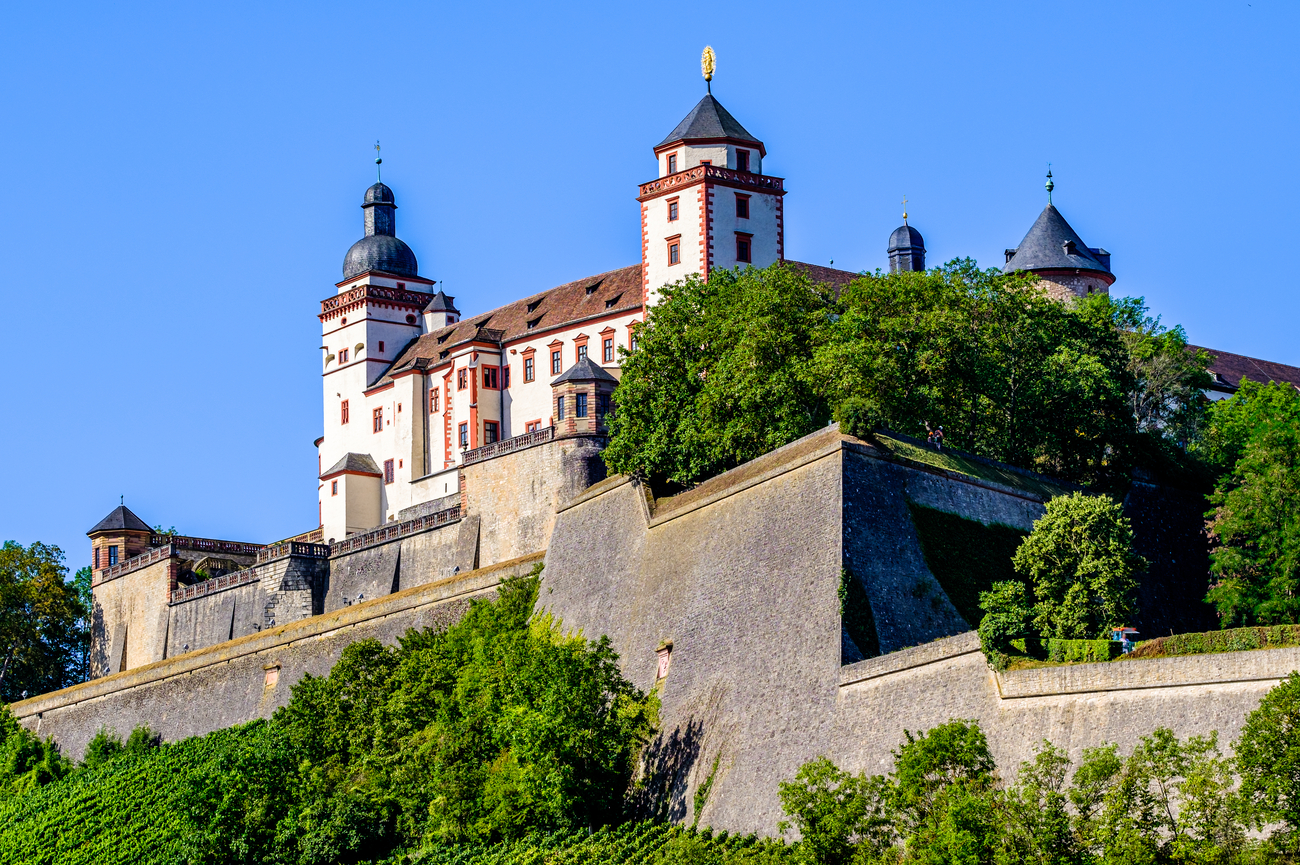
- Würzburg: If baroque architecture is more your thing than medieval towers, Würzburg is the move. The train ride takes around 1 hour and 10 minutes and you’ll arrive in a city with a less fairy-tale old town, more sweeping staircases and ceilings designed to impress. The star attraction is the Würzburg Residence, a UNESCO World Heritage Site and one of the most spectacular palaces in Germany. The interiors are serious business, especially the grand staircase and Tiepolo frescoes. Add Marienberg Fortress for panoramic views and walk the Old Main Bridge for the classic Würzburg city scene.
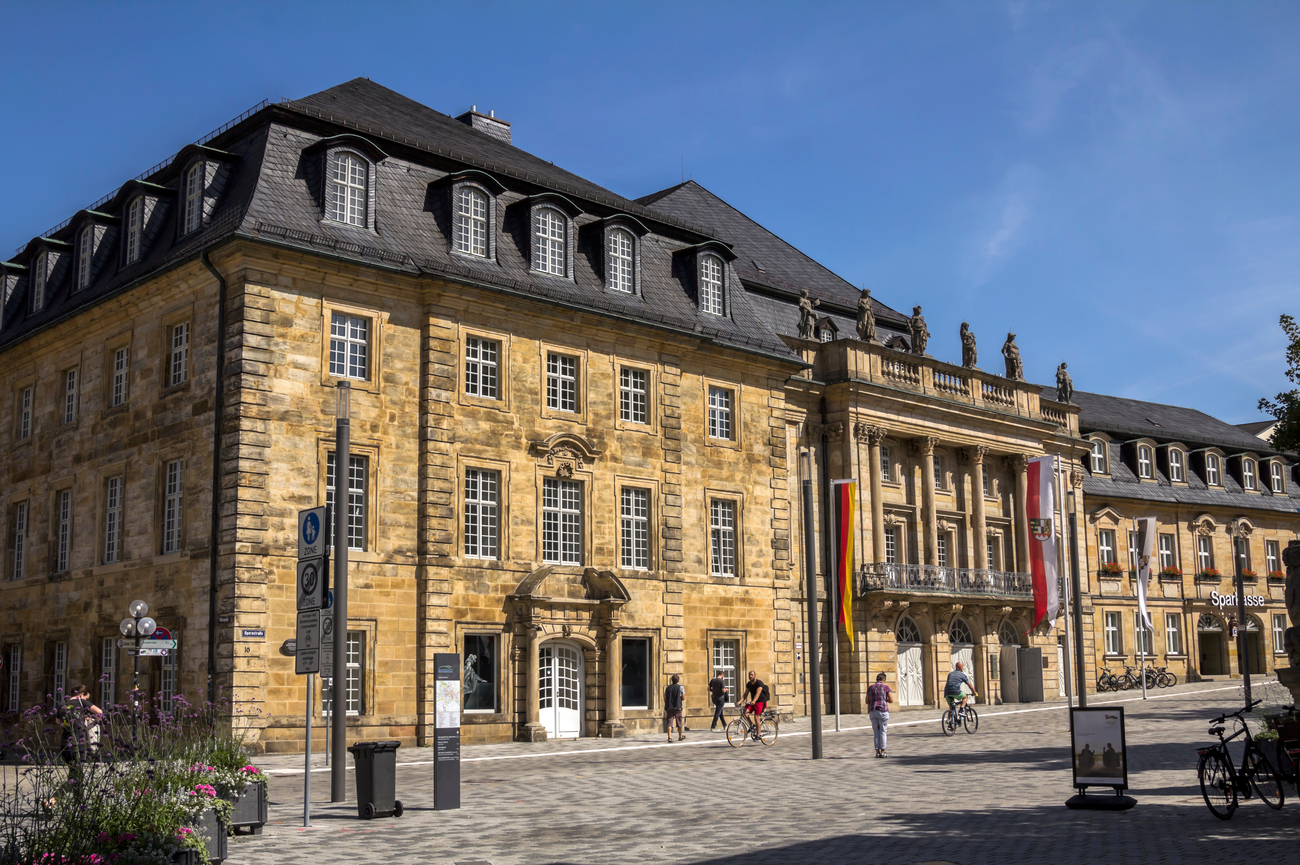
- Bayreuth: Bayreuth takes about an hour by direct train and is one of the more underrated day trips from Nuremberg. It’s known for Richard Wagner and opera culture, but even if opera is not your thing, the city gives you palace gardens, elegant streets and one of the most beautiful UNESCO sites in Bavaria. The Margravial Opera House is the main reason people come. It’s UNESCO-listed and one of the finest baroque theaters in Europe. Add the New Palace and the Hermitage gardens and the day starts feeling a lot more polished than expected.
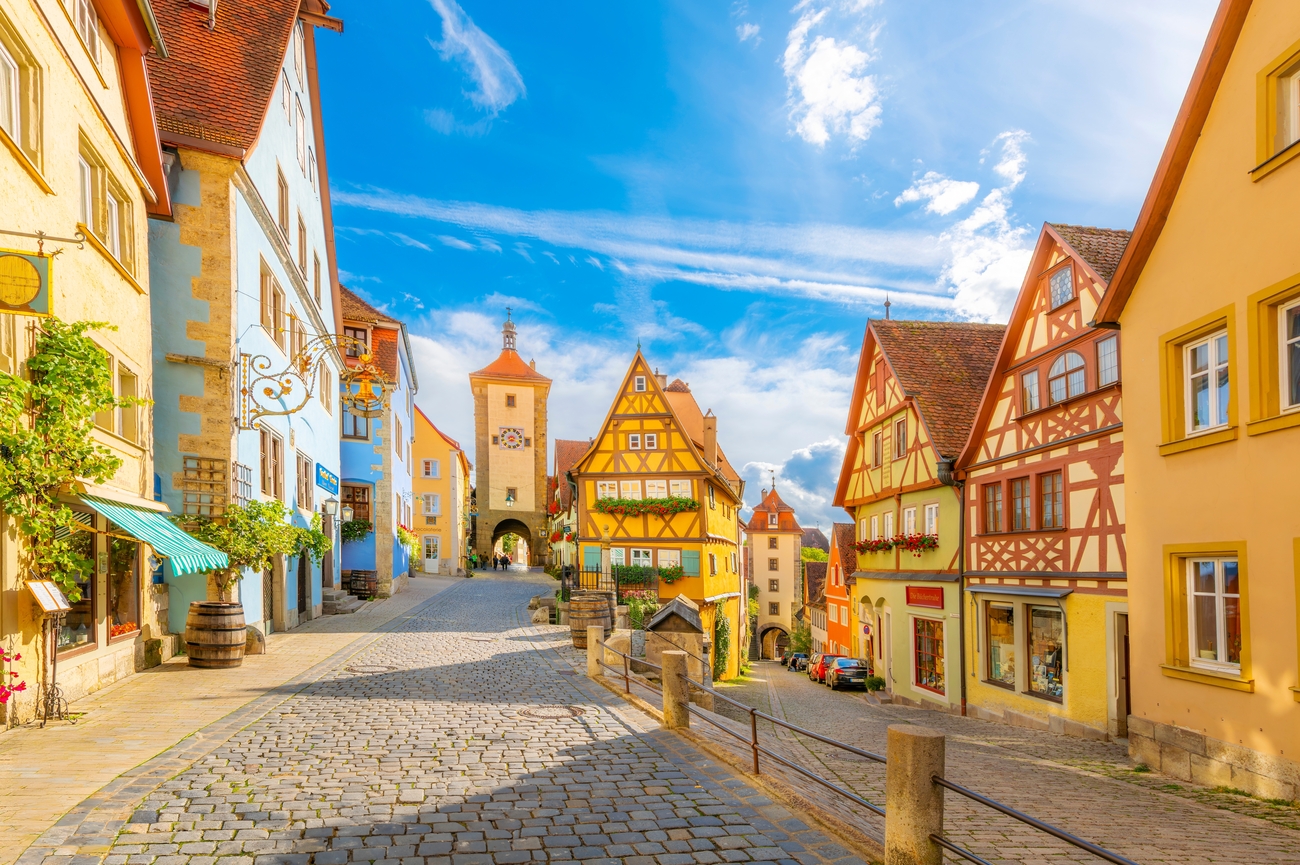
- Rothenburg ob der Tauber: Around 1 hour and 15 minutes from Nuremberg by car, Rothenburg ob der Tauber is one of Germany’s most iconic medieval towns and absolutely worth adding to your itinerary. Sitting along the Romantic Road, the town feels almost unreal with its perfectly preserved city walls, half-timbered houses, cobbled lanes and towers that look untouched by time. Unlike larger cities, Rothenburg works best slowly. Walk the medieval walls, climb the Town Hall Tower for panoramic views across the red rooftops and spend time around Plönlein, one of the most photographed corners in Germany. The town is also known for its traditional Christmas shops, artisan boutiques and quieter luxury atmosphere that feels more exclusive than crowded. During winter, the Christmas market transforms the old town into one of Bavaria’s most atmospheric seasonal destinations. It also links naturally with our Romantic Road itinerary, making it easy to turn a Nuremberg stay into a wider tailor-made journey through medieval Bavaria, countryside villages, boutique wineries and castle hotels.
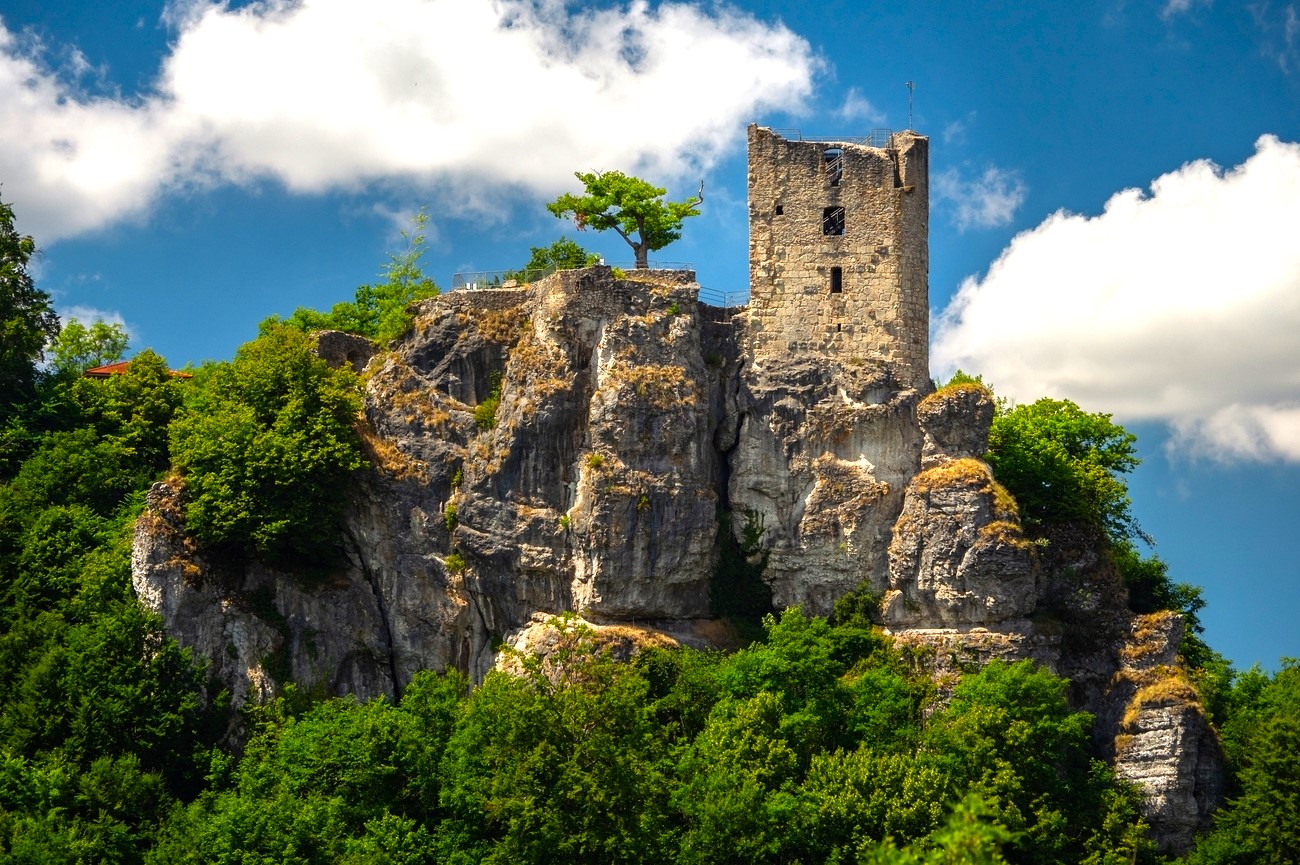
- Franconian Switzerland (Fränkische Schweiz): Around 45 minutes from Nuremberg by car, Franconian Switzerland is one of the best countryside escapes near the city. The region is known for limestone cliffs, wooded valleys, caves, castles and traditional villages, giving you a completely different side of Bavaria without needing a long transfer. It works especially well as a private scenic drive, with stops at hilltop castles, walking routes, local breweries and viewpoints along the way. For guests who want nature, heritage and a slower rural pace, Franconian Switzerland is an easy way to add variety to a Nuremberg itinerary while staying within comfortable day-trip distance.
Nearby Experiences in Nuremberg
Nuremberg is great when you want a city break that doesn’t stay stuck in one lane. You can spend the morning in a medieval old town, the afternoon on a golf course and the next day be at a race track or standing at a UNESCO site that looks like it belongs in a history textbook. If your itinerary needs something beyond castles and churches, these are the nearby experiences worth adding.
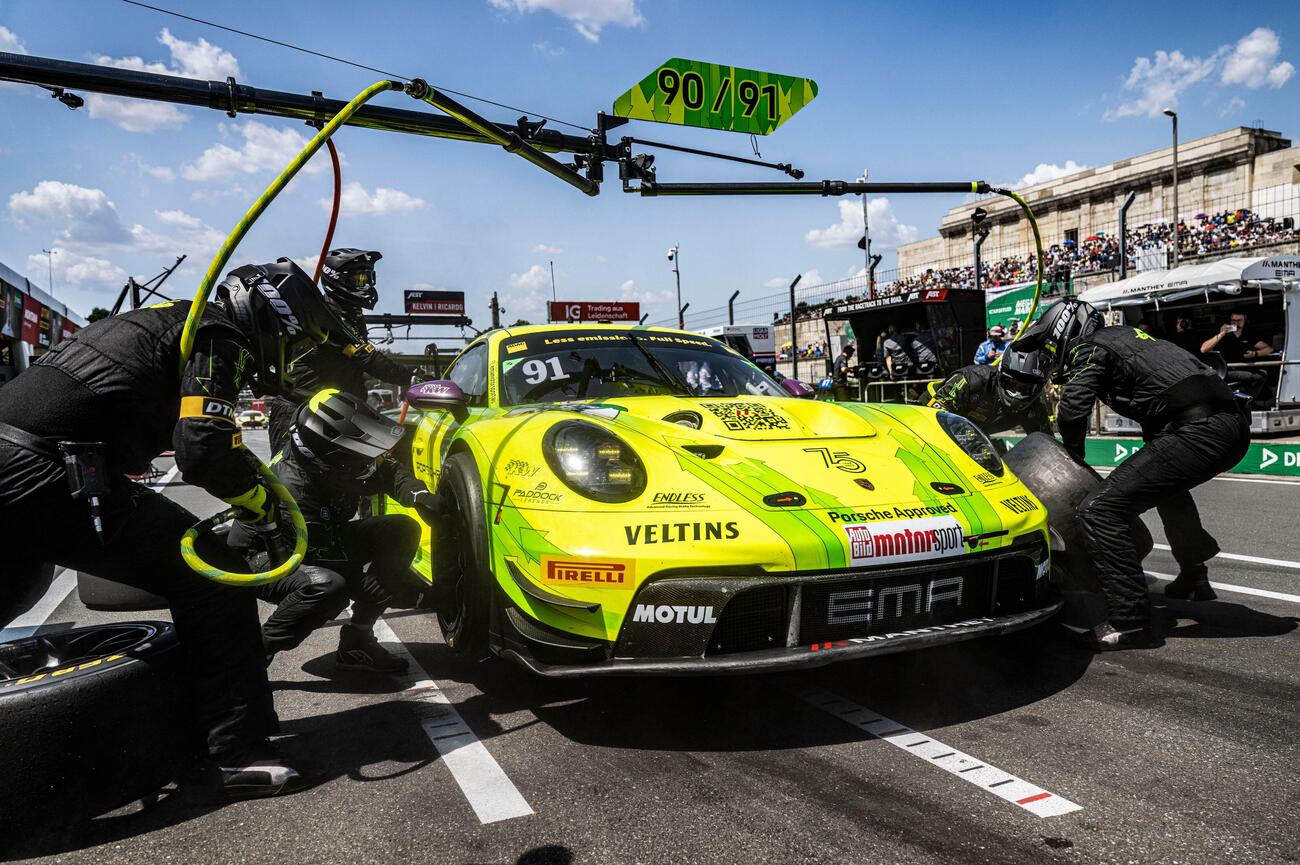
- Norisring: Right in Nuremberg itself, Norisring is one of Germany’s most famous street racing circuits and gives the city a very different kind of reputation. It runs around the area near the former Nazi Party Rally Grounds, which means motorsport and major history exist in the same space. The circuit is best known for hosting DTM races and major touring car events and race weekends completely change the atmosphere of the area. The temporary street track, fast corners and city setting make it one of the most unique motorsport venues in the country.
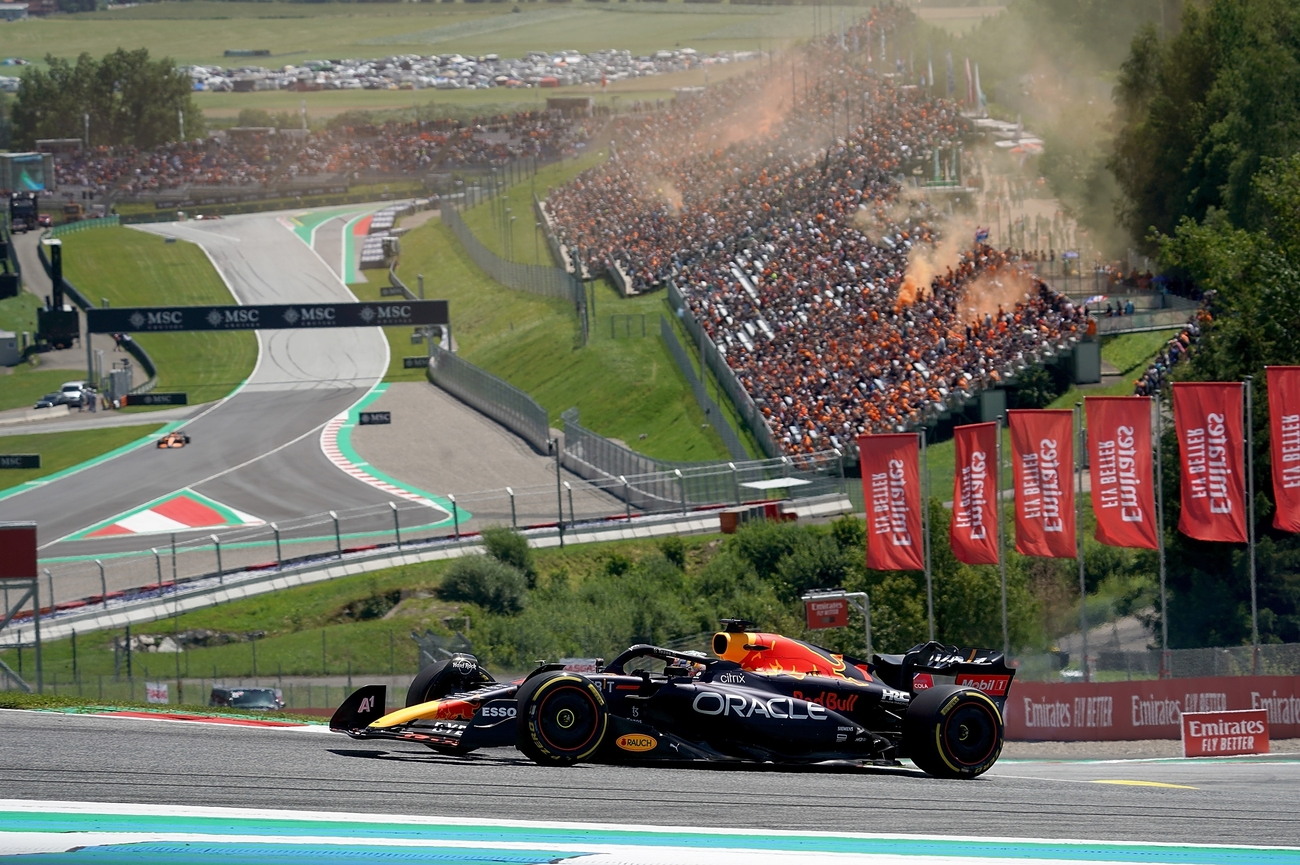
- Red Bull Ring: This one is farther from Nuremberg and works more as a full luxury day trip or overnight extension, but if motorsport matters to you, it deserves a place on the list. Located in Austria, the Red Bull Ring is one of Europe’s best-known racing circuits and home to major Formula racing weekends and international motorsport events. The track is famous for premium motorsport culture. It feels more polished and purpose-built than a city circuit like Norisring, with proper grandstands, hospitality lounges and driving experience programs that let you get closer to the track instead of just watching from a distance.
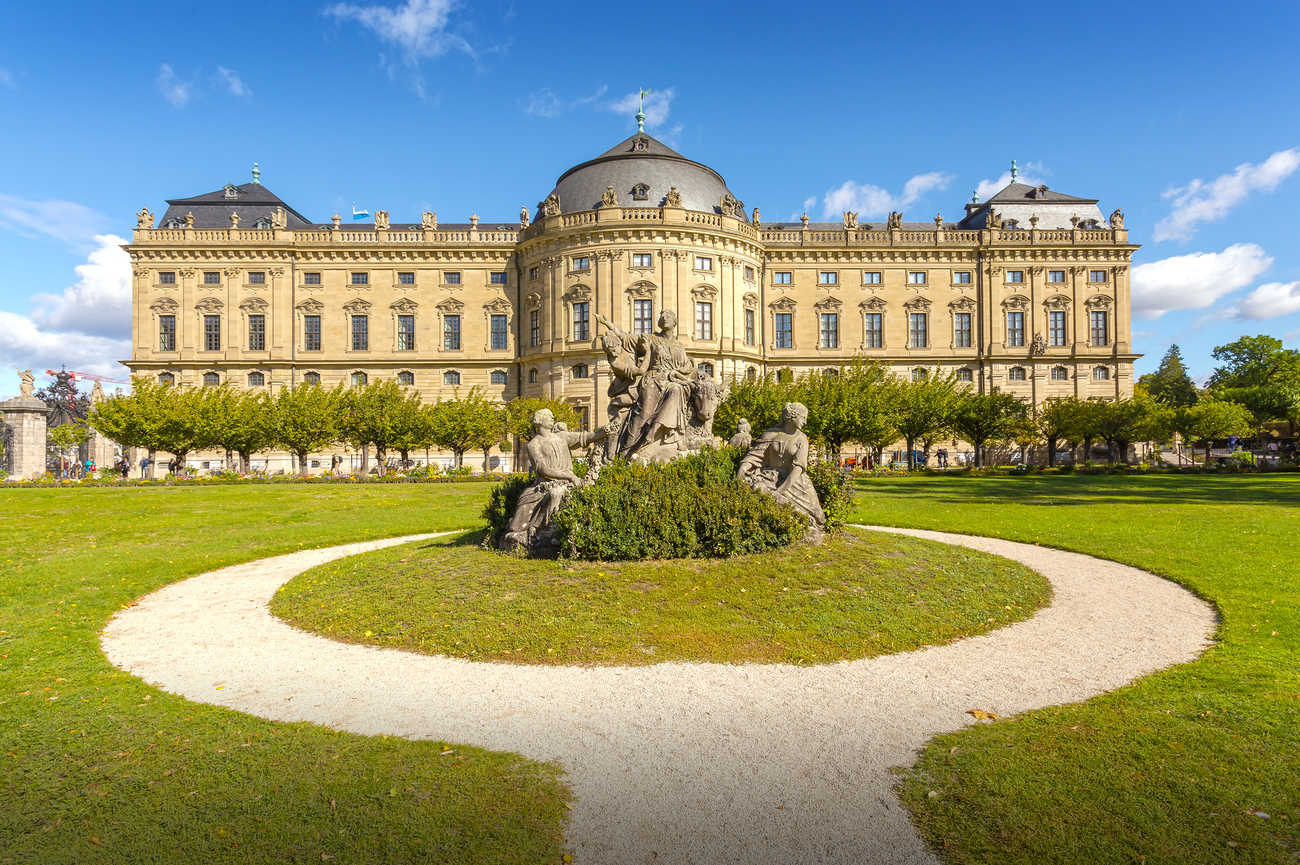
- Würzburg Residence: Around 50 minutes to 1 hour by direct train from Nuremberg, the Würzburg Residence is one of the strongest historical day trips. The Residence was built for the Prince-Bishops of Würzburg and is considered one of the finest baroque palaces in Europe. The main highlight is the grand staircase hall with Giovanni Battista Tiepolo’s massive ceiling fresco. The Imperial Hall, formal court rooms and the beautifully designed Court Garden all make the visit feel properly royal. It’s also a UNESCO World Heritage Site, so yes, it absolutely earns its place on the list.
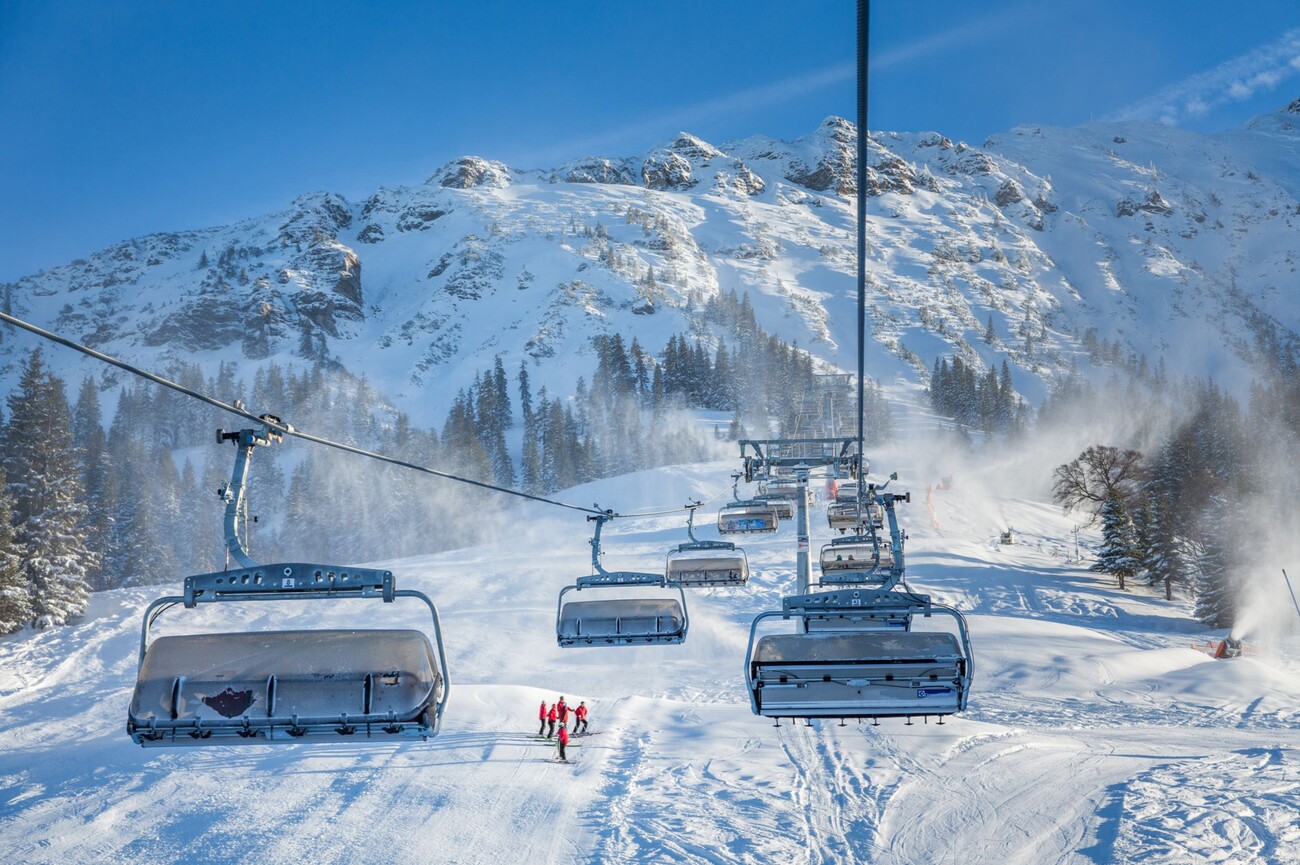
- Skilift Osternohe: If travelling as far as Zugspitze feels like too much commitment, Skilift Osternohe is the easier winter answer. Located around 35 to 40 minutes from Nuremberg, it’s one of the closest ski spots for quick day trips and works especially well for shorter winter plans or beginner-friendly ski days. It’s a smaller local ski area. You get practical access, less travel time and slopes that are ideal for relaxed skiing without turning the day into a major operation. It’s also popular for families and casual winter weekends.
Golf Courses in Nuremberg
Nuremberg does golf well because it doesn’t try too hard about it. You get forest courses, championship layouts, quieter countryside clubs and driving ranges that actually feel worth the trip. What makes golf here better is the setting. A lot of the courses sit just outside the city, so within 20 to 40 minutes, you move from old-town streets to tree-lined fairways and proper country-club energy.
- GolfRange Nürnberg: This is one of the easiest golf options if you want something practical, modern and close to the city. The course is known for its well-maintained practice facilities, structured training areas and approachable layout. It’s especially good if you’re mixing sightseeing with golf because you can fit it into the itinerary without losing the entire day. The clubhouse and range setup also make it strong for beginners or casual players who want a smoother experience.
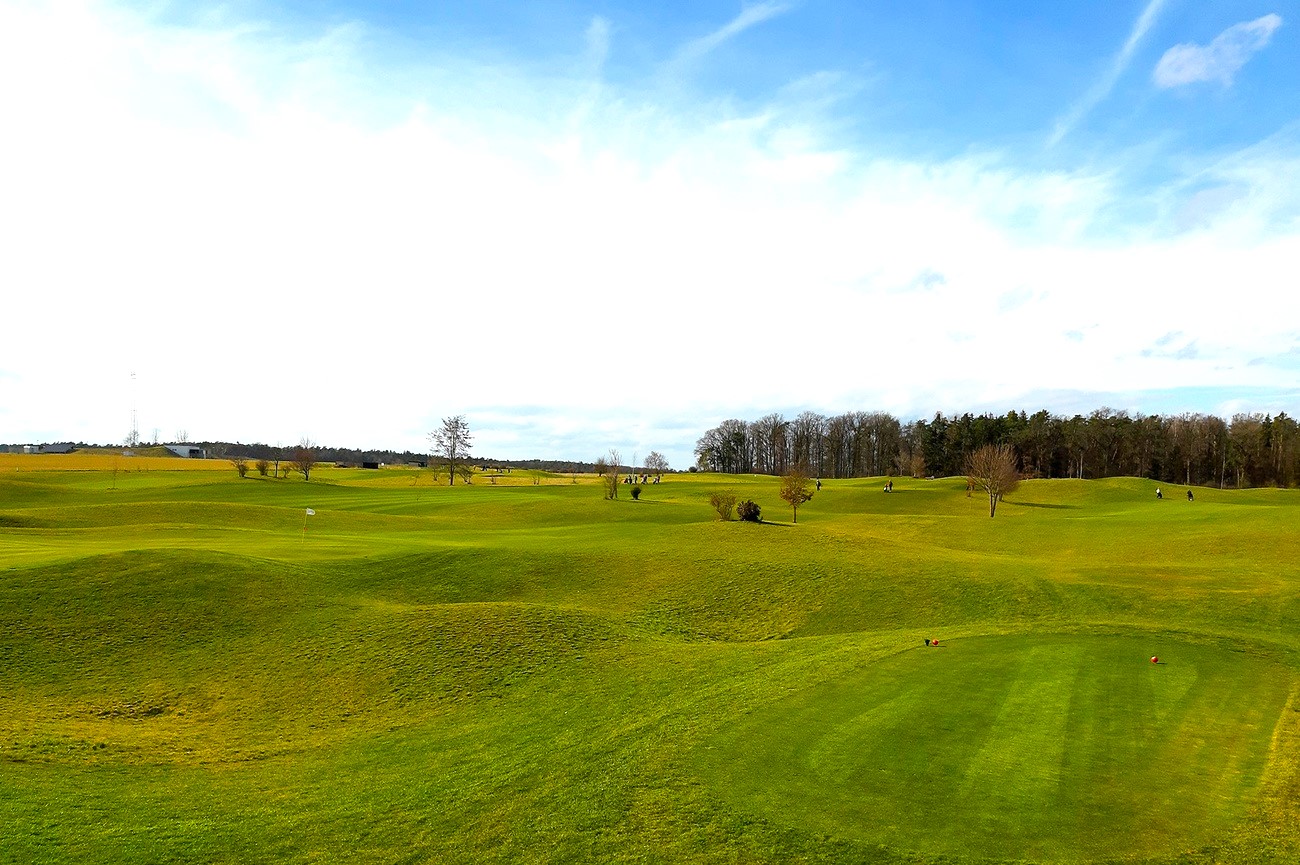
- 1st Golf Club Fürth e.V.: About 20 to 25 minutes from central Nuremberg, this is one of the strongest choices if you want both variety and a more established club atmosphere. It offers both an 18-hole championship course and a 9-hole short course, which makes it work for serious golfers and easier leisure rounds. The layout is designed to challenge experienced players while still staying approachable for guests and beginners. It has a proper club restaurant, practice facilities and professional instruction available, so it feels like a full golf day rather than just a round and leave situation.
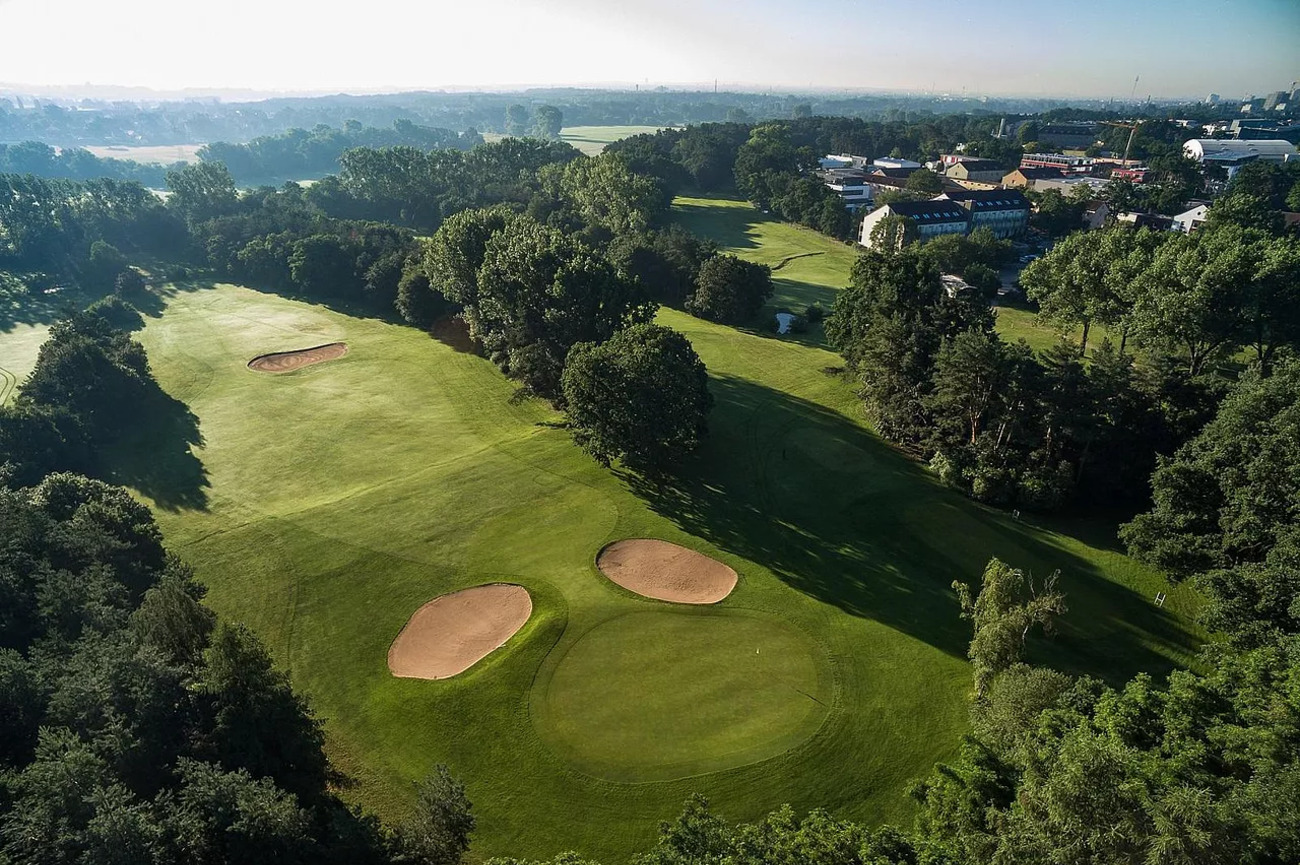
- Golfclub am Reichswald e. V.: Around 20 to 25 minutes from central Nuremberg, Golfclub am Reichswald is one of the most established golf courses in the region and easily one of the best choices. The club is known for its well-maintained fairways, tree-lined holes, and strong championship layout that keeps things interesting without trying too hard. It has hosted major tournaments over the years, so it carries real golfing credibility, not just pretty scenery. The clubhouse adds to the experience with refined dining and a more traditional members' club feel.
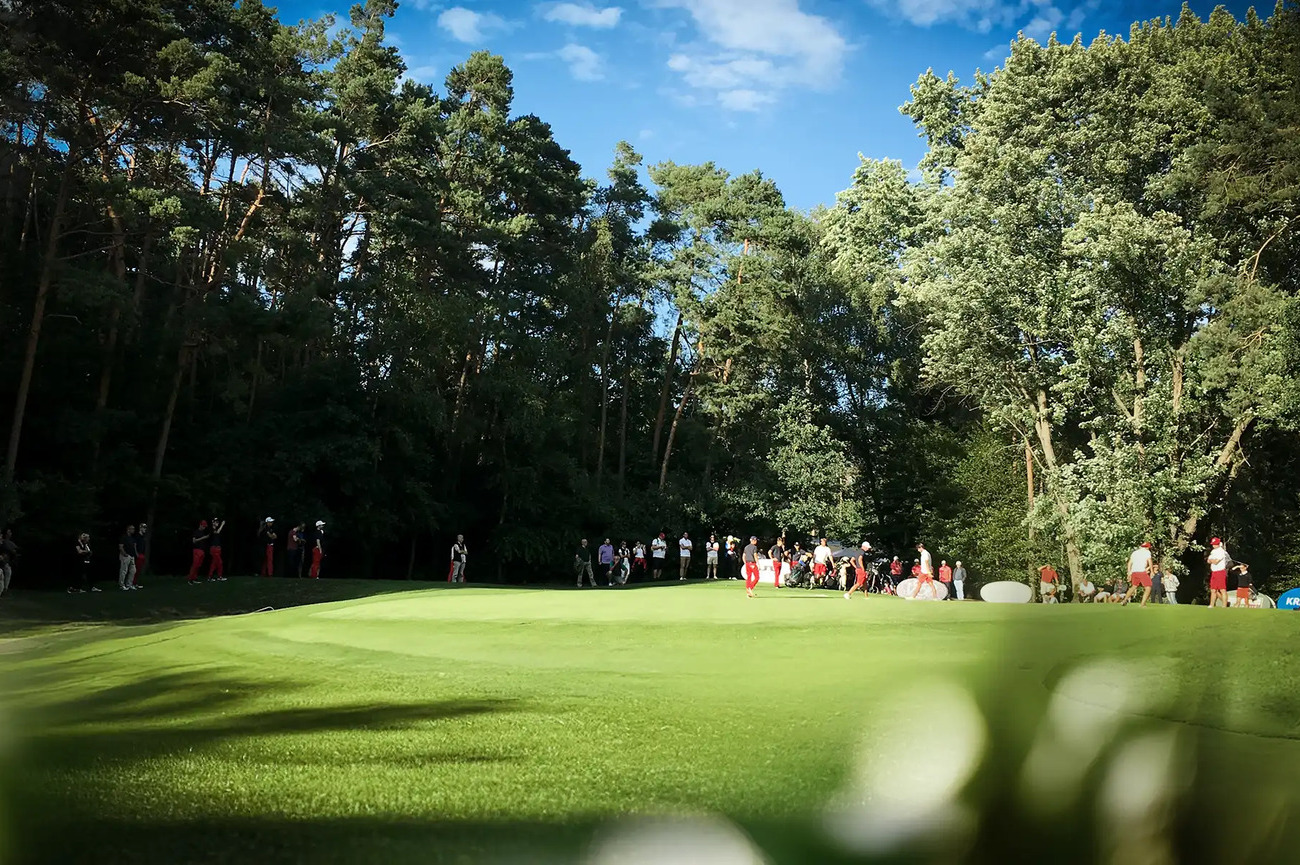
Vineyards
& Wine Experiences Near Nuremberg
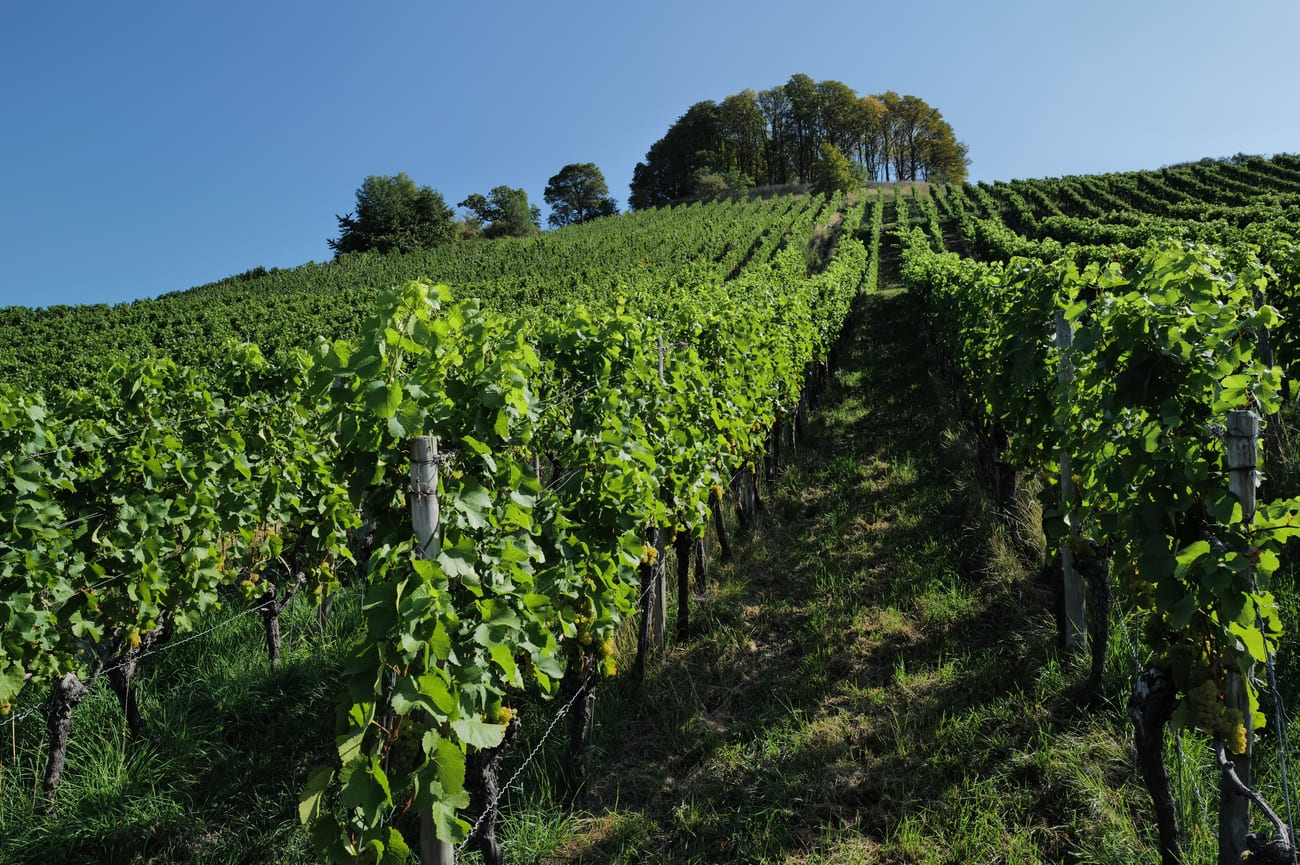
Franconia is one of Germany’s most underrated wine regions and a useful addition to a Nuremberg itinerary if you want something slower, more local and less obvious than another museum stop. While Nuremberg itself is not a vineyard city, several wine towns and estates sit within about an hour by car, making them easy to include as a relaxed afternoon or private countryside extension.
- Iphofen: Around 50 minutes from Nuremberg by car, Iphofen is one of the prettiest wine towns in Franconia. Medieval walls, vineyard-covered hills and traditional wine taverns give it a quieter, more local feel than the larger cities nearby. The town is especially known for Silvaner wines and is home to respected estates such as Weingut Hans Wirsching and Weingut Johann Ruck, with vineyards including Julius-Echter-Berg, Kalb and Kronsberg. It works well as a private half-day trip for guests who want wine, scenery and a slower countryside pace without travelling too far from Nuremberg.
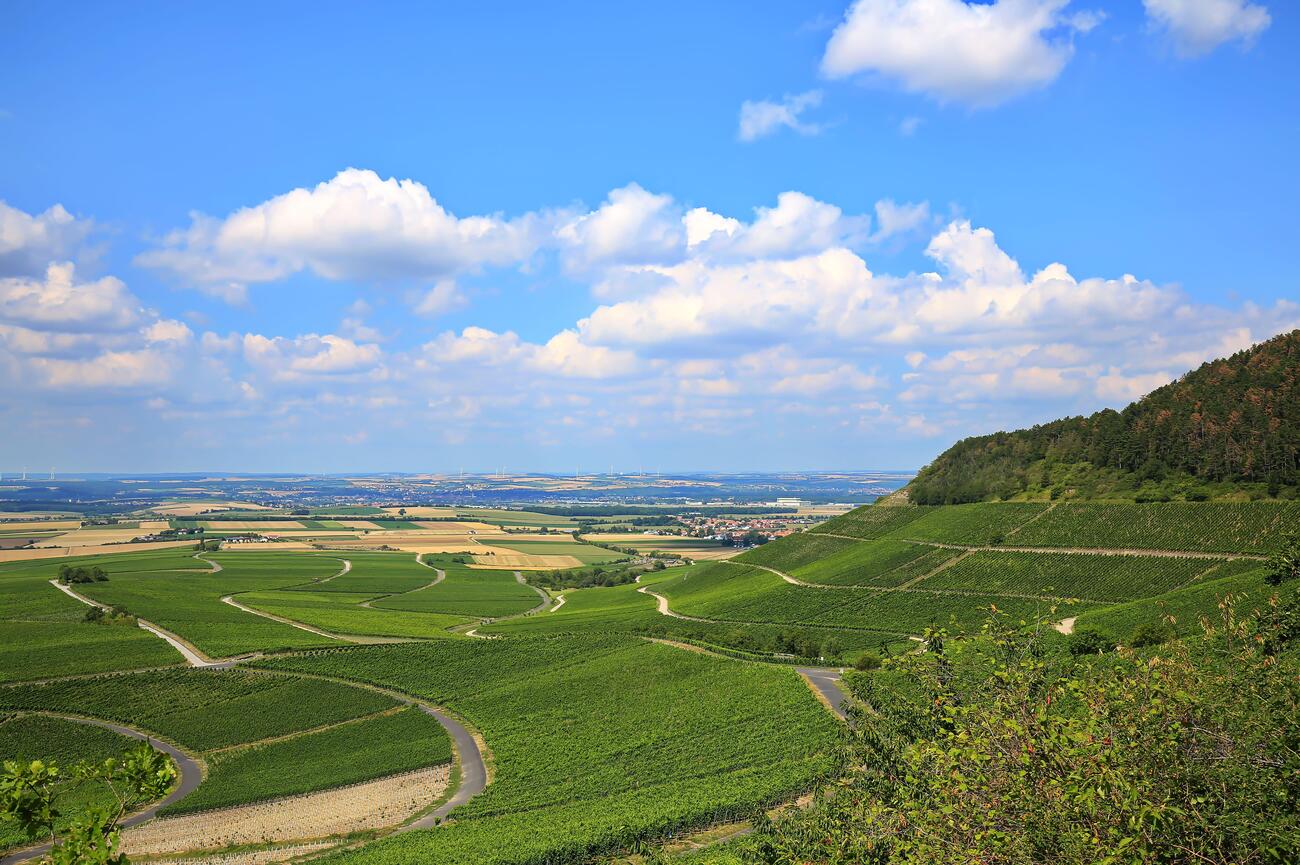
- Castell: Around 1 hour from Nuremberg by car, Castell is one of Franconia’s historic wine villages and home to long-established wine estates. It combines aristocratic heritage, rolling vineyards and traditional Franconian wine culture, making it a strong choice for guests who want a more refined rural experience. Guests can visit Fürstlich Castell’sches Domänenamt, one of the region’s most historic estates, with vineyards including Schlossberg, Hohnart, Reitsteig and Trautberg. A visit here can include the estate vinothek, a private tasting or a guided wine experience, paired with nearby countryside villages as part of a tailor-made itinerary. For a fuller wine-focused day, Castell can also be paired with nearby Iphofen, famous for Julius-Echter-Berg, or Würzburg, home to historic estates such as Bürgerspital and Juliusspital.
Michelin-Starred Restaurants in Nuremberg
Nuremberg’s food scene is quieter than Munich’s and less flashy than Berlin’s, but that’s exactly why it works. What stands out most is how personal many of these places feel. Some are hidden behind small old-town doors, some sit quietly in residential neighborhoods and some are tucked inside boutique hotels where you would never guess there’s a Michelin kitchen behind the entrance. If you’re planning a high-end trip, these are the reservations worth making.
- Essigbrätlein holds 2 Michelin stars and honestly, it feels like one of the smartest meals you can have in Germany. Right in the middle of Nuremberg’s old town, the restaurant is small, intimate and slightly mysterious. You literally ring the bell to be let in, which already sets the tone. Chefs Andree Köthe and Yves Ollech are known for their vegetable-forward philosophy and their “leaf to root” approach, where every part of an ingredient matters. The tasting menu changes constantly and leans heavily into regional produce with combinations that sound unusual but work in a way that makes you question your own kitchen choices. Wine pairings here are also excellent, especially if you like Riesling, and the wine list is one of the best in the city for that.
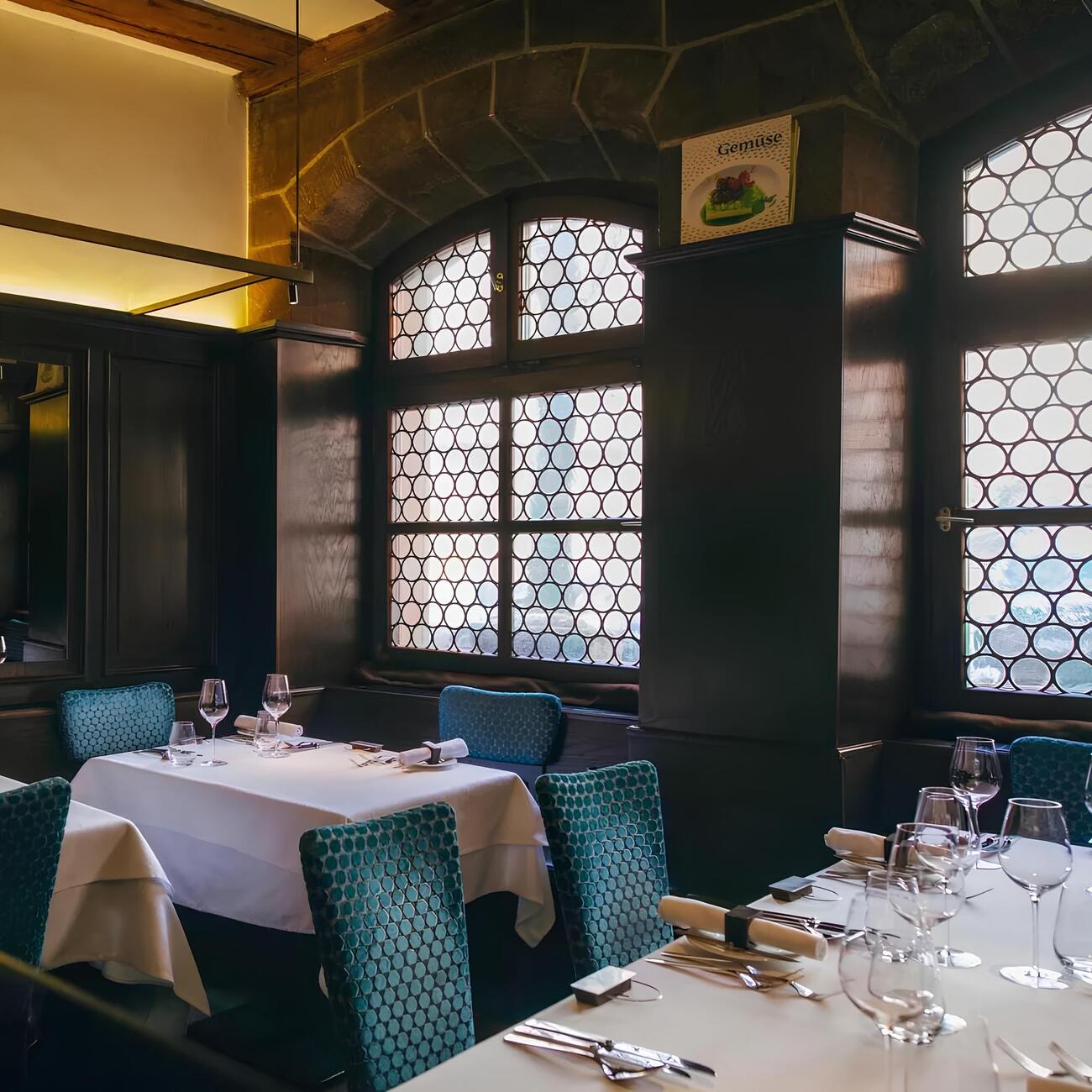
- etz: Chef Felix Schneider takes sustainability seriously in this 2-Michelin-star restaurant. Fermentation, foraging, in-house butter, homemade vinegar, house-cured ham… everything is built around process and detail. The experience starts with a short tour of the experimental kitchen before dinner, which already tells you this is not a quick meal. The tasting menu runs for four to five hours and changes with the seasons, offering either fish-and-meat based or vegetarian versions. The open kitchen keeps the atmosphere relaxed and the chefs themselves present the dishes, which makes the whole evening feel more connected. If you want the full high-end culinary experience and don’t mind dinner becoming the entire night, etz is the move.
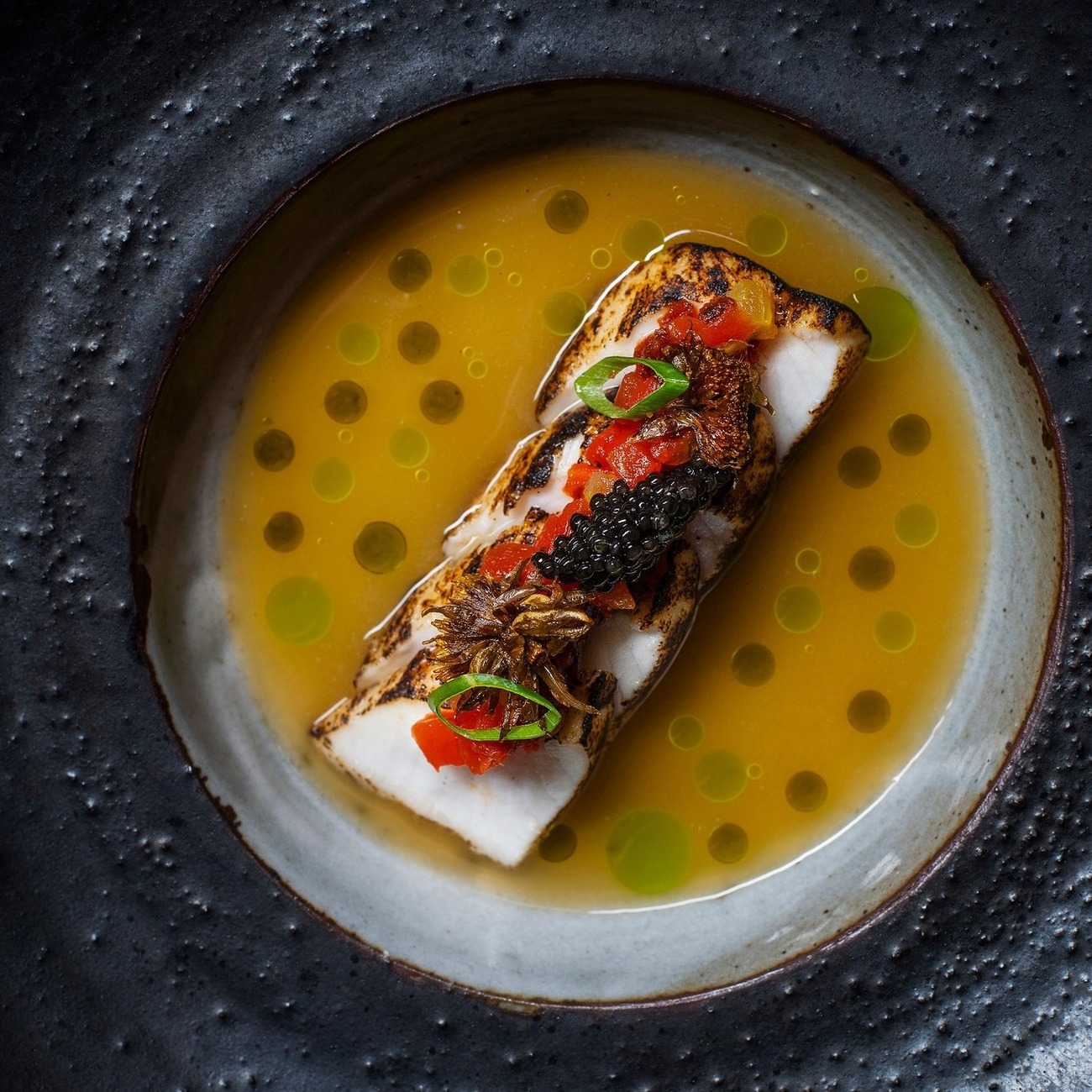
- Entenstuben holds 1 Michelin star. It’s located in the Wöhrd neighborhood and sits inside a fairly quiet building. Chef Fabian Denninger works from strong classical foundations but gives the dishes a sharper, more modern edge. The seasonal tasting menu is vegetarian by default but you can expand it with fish and meat options like perfectly cooked skrei with braised leeks, mashed potato and a beurre blanc that deserves its own applause. There’s also a charming leafy terrace at the back that works especially well in warmer months. For something extra, “PrimeDine” events preview upcoming seasonal menus, which is a good excuse to plan your timing around dinner.
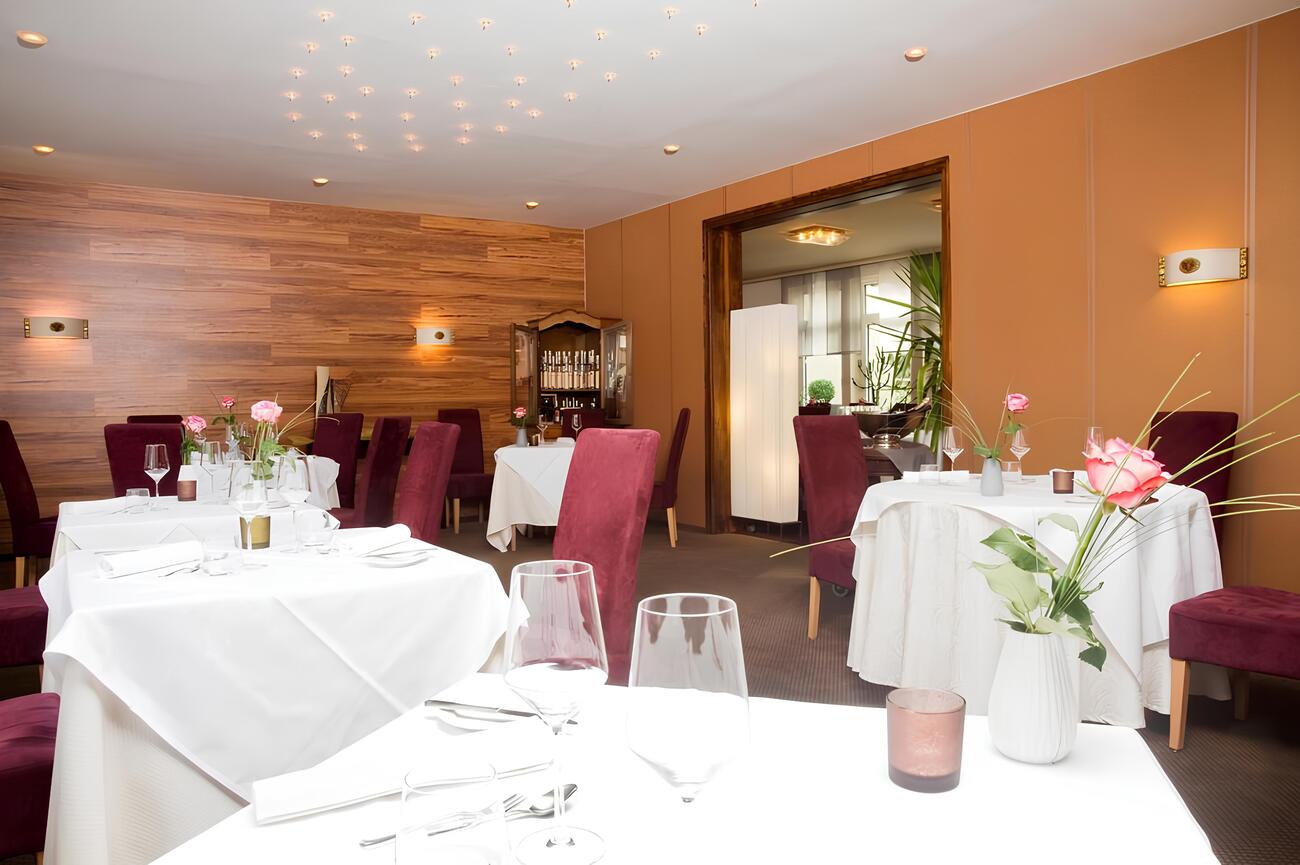
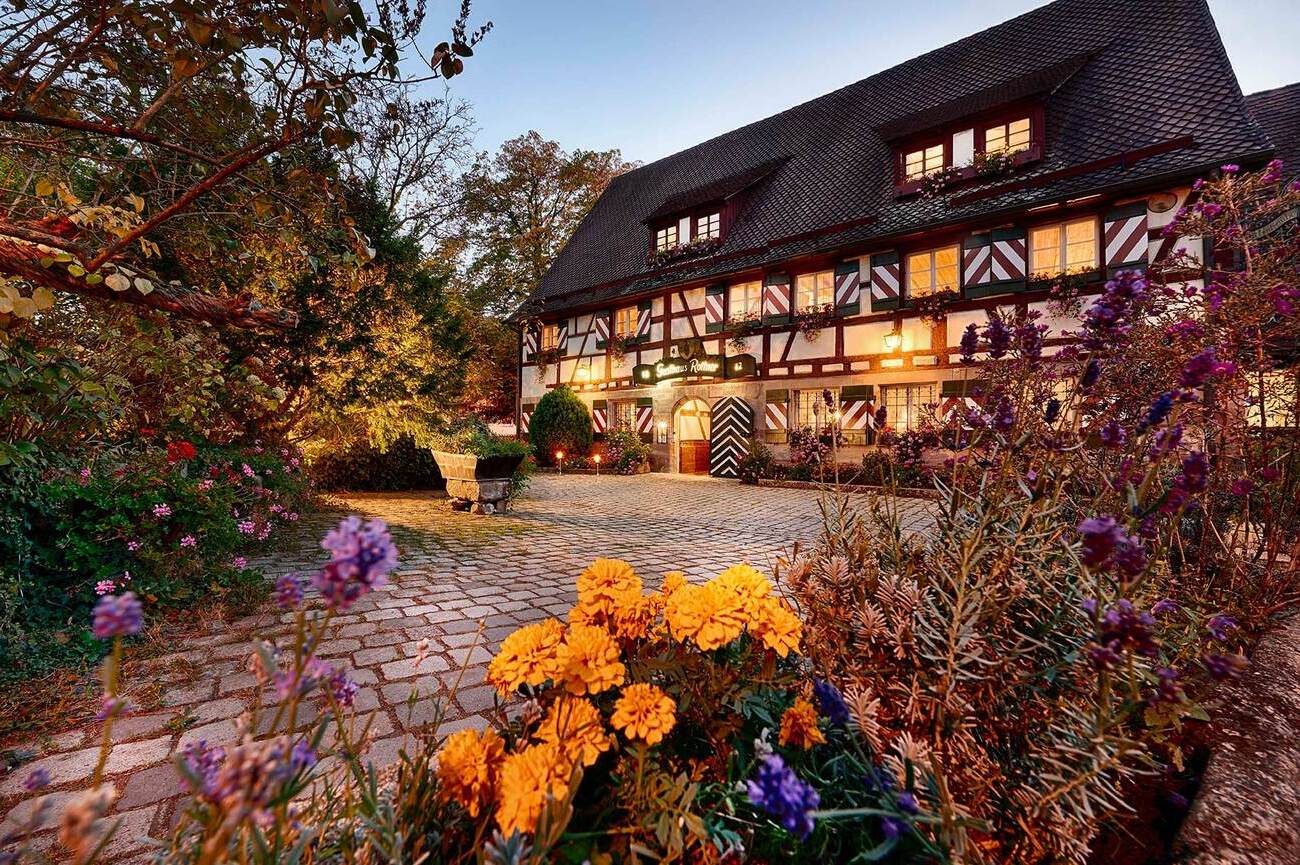
- Waidwerk holds 1 Michelin star and sits inside the Romantik Hotel Gasthaus Rottner, giving it a slightly different energy from the city-center fine dining spots. Chef Valentin Rottner continues the family tradition here, working with extremely fresh ingredients and modern techniques across five- or seven-course tasting menus. The restaurant interior mixes minimalist design with rustic details and subtle hunting references, which makes sense because the chef is a hunter himself.
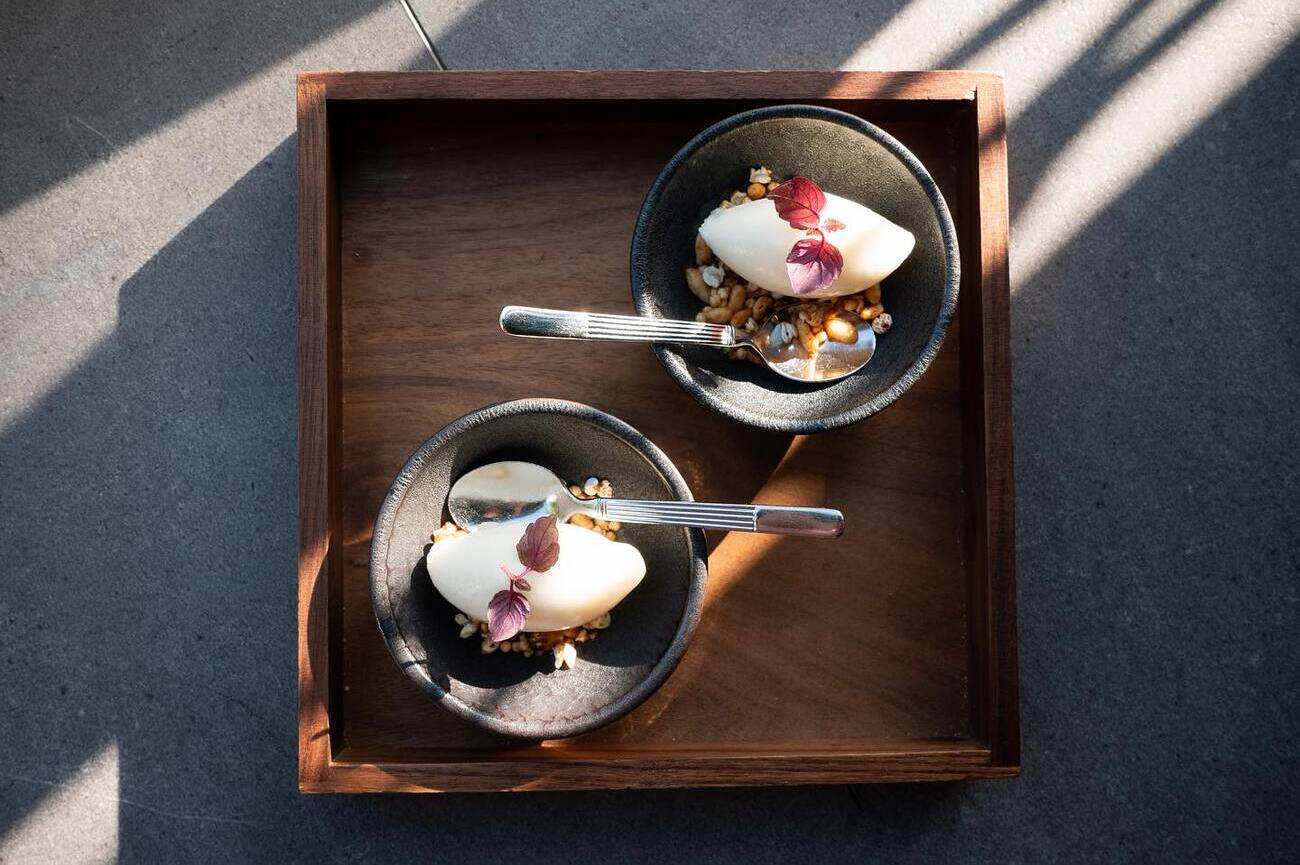
- Wonka holds 1 Michelin star and yes, the name makes people expect theatrics, but the actual food is refreshingly the opposite. Chef Christian Wonka focuses on clean composition and strong flavor, using only a few components per dish and letting them do the work. There are often subtle Asian influences running through the menu, which keep the flavors sharp and interesting without overpowering the structure of the dish. Evening service offers a five- or six-course tasting menu and there’s also a vegan version that’s taken seriously, not treated like an afterthought. Lunch versions of the tasting menu are also available if you want Michelin dining without fully committing your evening.
Where to Eat in Nuremberg
The city is confident with food. Good ingredients, strong kitchens and places that know exactly what they’re doing. You’ll find polished Japanese omakase hidden behind quiet doors, elegant Italian dining inside centuries-old townhouses and Franconian restaurants that make regional food feel a lot more interesting than people expect. Come hungry and leave your “just a quick meal” plans somewhere else.
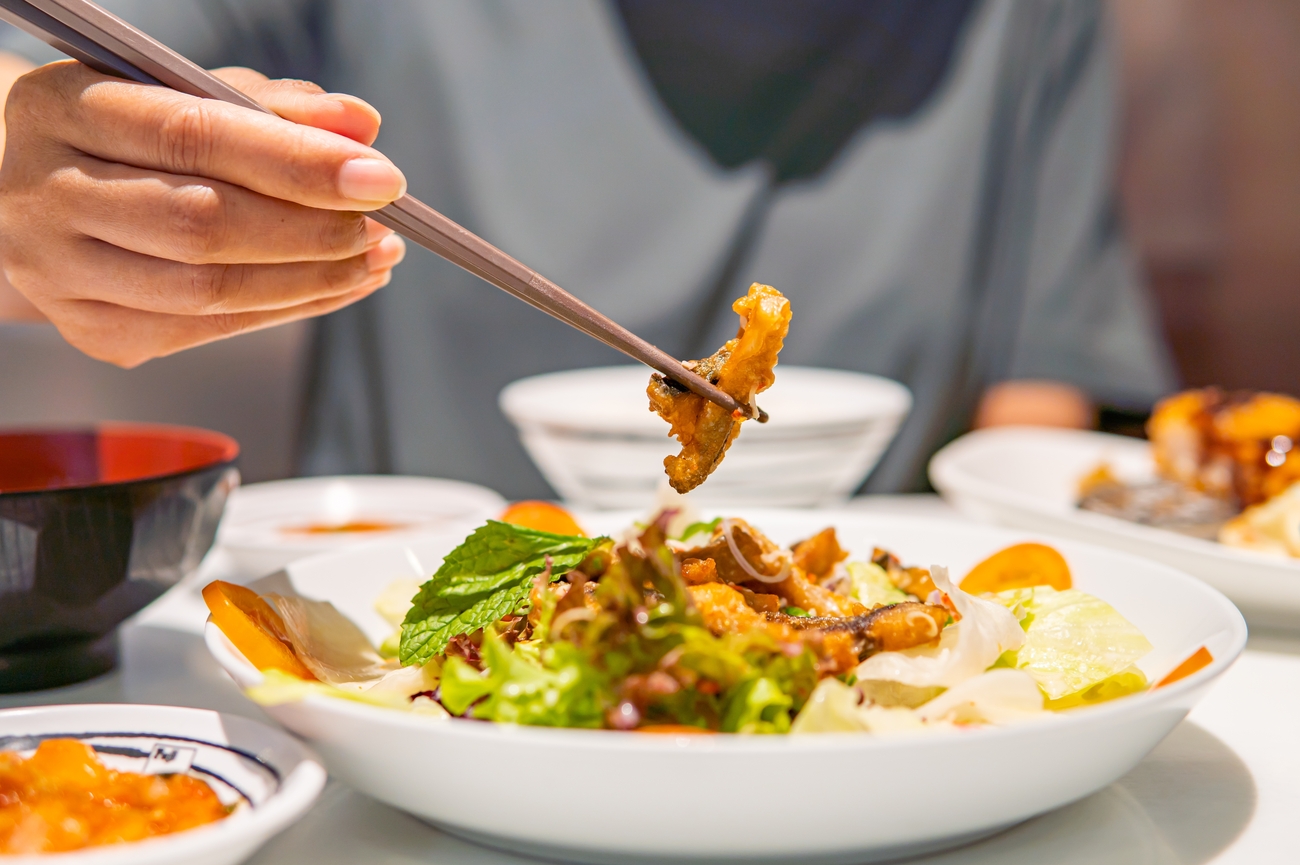
- Kakehashi: If you want serious Japanese dining in Nuremberg, this is the reservation. Kakehashi is sleek with clean-lined Japanese interiors and the five prized counter seats facing the open kitchen are where you want to be. Watching chef Koichiro Yoshida work is half the experience. The two-course sushi and sashimi set is a strong starting point, but the six-course “Mini Omakase” and seven-course “Koichi’s Special” are where the kitchen really shows off. You’ll notice subtle Franconian touches in some dishes, which makes the whole experience feel rooted in Nuremberg rather than just imported style. Japanese Kirin Ichiban on tap and a strong sake selection also complete the setup.
- MINNECI: Housed inside a 16th-century townhouse dating back to 1560, MINNECI already wins points before the first plate arrives. Italian cuisine here leans Mediterranean and clean rather than heavy and predictable. You can go for a four- to six-course tasting menu or order à la carte if you prefer more control over the evening. Dishes like ravioli with wild mushrooms, sage and balsamic vinegar keep things flavorful without unnecessary drama. Lunch is also a smart move here because they offer a smaller and more affordable menu that still feels polished.There’s also a lovely terrace outside for warmer days.
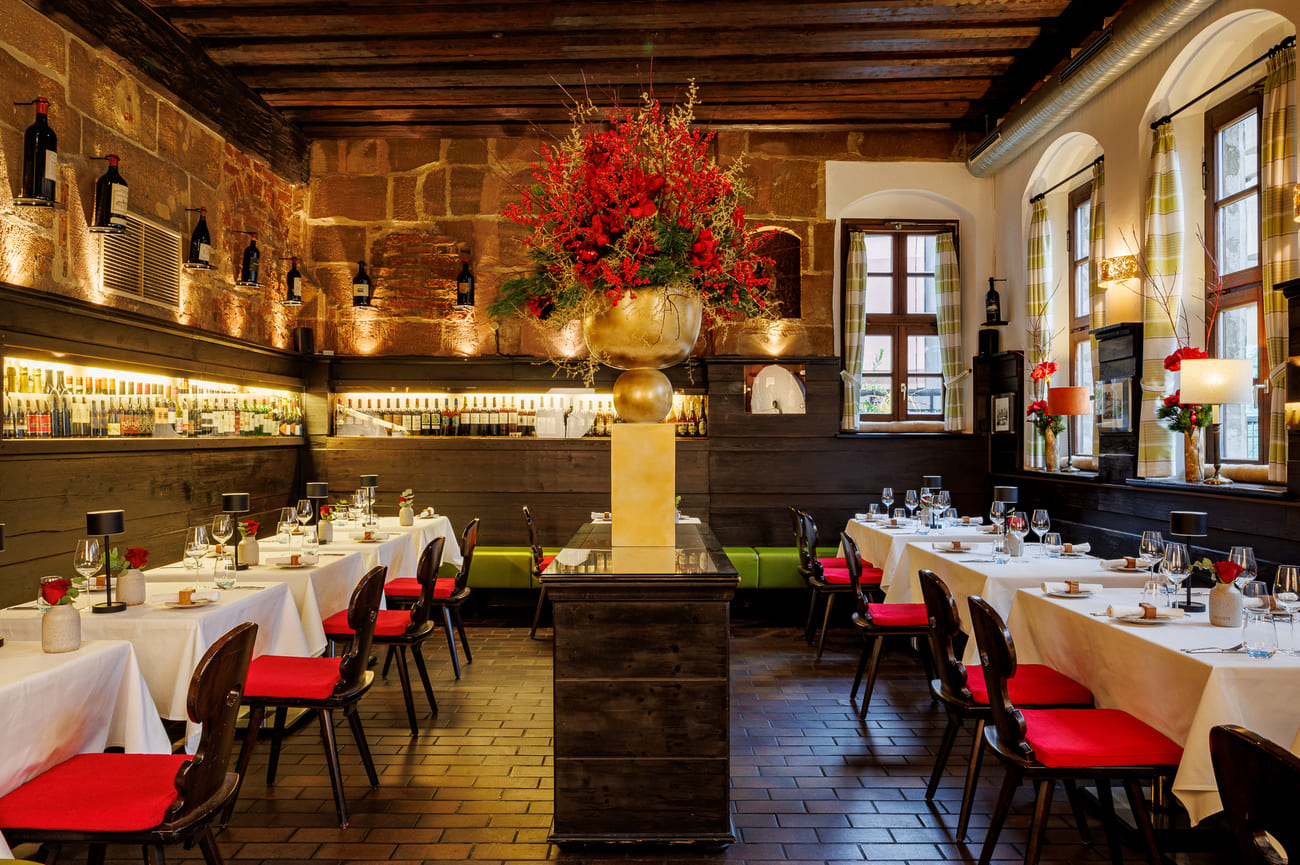
- Weinklang: Some restaurants feel like a place you discover once and then immediately start recommending to people. Weinklang is that kind of spot. Tucked into the northwest of Nuremberg, it’s smaller, more intimate and has that cozy but chic energy that makes you want to stay longer than planned. Chef-owner Tomas Spanu brings Sardinian-French roots into a menu that stays ingredient-focused and clean. You can choose between four- or five-course tasting menus, including a vegetarian version or go à la carte if you want more flexibility. And the wine racks lining the space are not subtle. You are here for good food and very good wine.
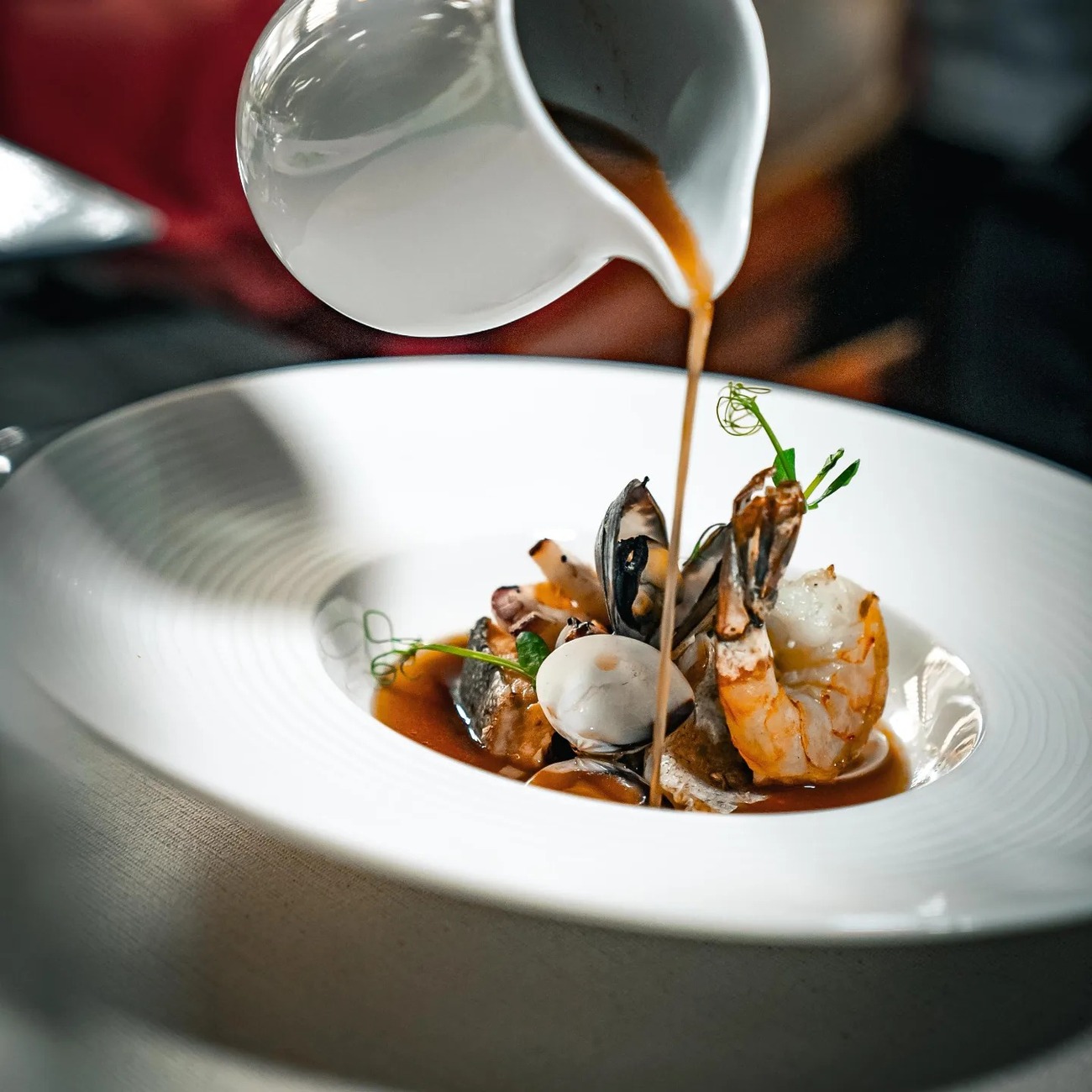
- Zirbelstube asks for a little extra effort because it sits on the outskirts of Nuremberg, inside the family-run Restaurant & Hotel Zirbelstube. Housed in a handsome sandstone building from 1860, it feels like the kind of place locals quietly keep to themselves. The restaurant is far more refined than the relaxed hotel setting first suggests. The menu focuses on regional and seasonal cuisine with classical and international influences, which means Franconian comfort food gets a much better wardrobe. You can mix and match dishes across two tasting menus. Maybe pan-fried octopus with fennel and beans one course, then Franconian Sauerbraten with red cabbage and bread dumplings the next.
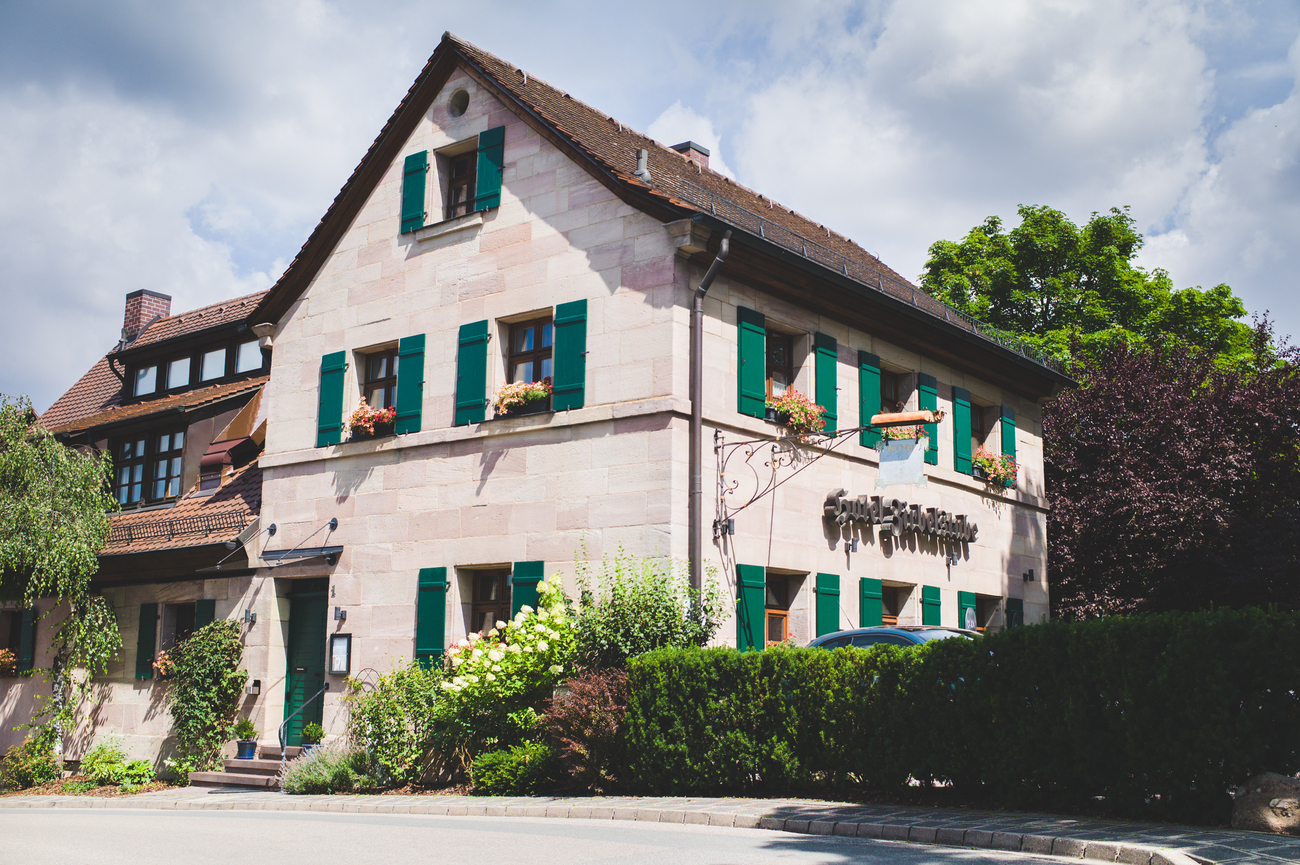
- Fränk'ness sits right in the center of Nuremberg on Königstraße and the name already tells you what it’s doing. Franconian food, but updated, sharper, and definitely dressed better. The four-course meat menu is a standout and gets strong praise for both quality and portioning, which is rare because fine dining usually picks one. Vegetarian options are also taken seriously here, not treated like a side note. Their wooden sharing platters are especially popular and give the experience a slightly more social feel, while lunch is also known for strong burger options that people specifically come back for.
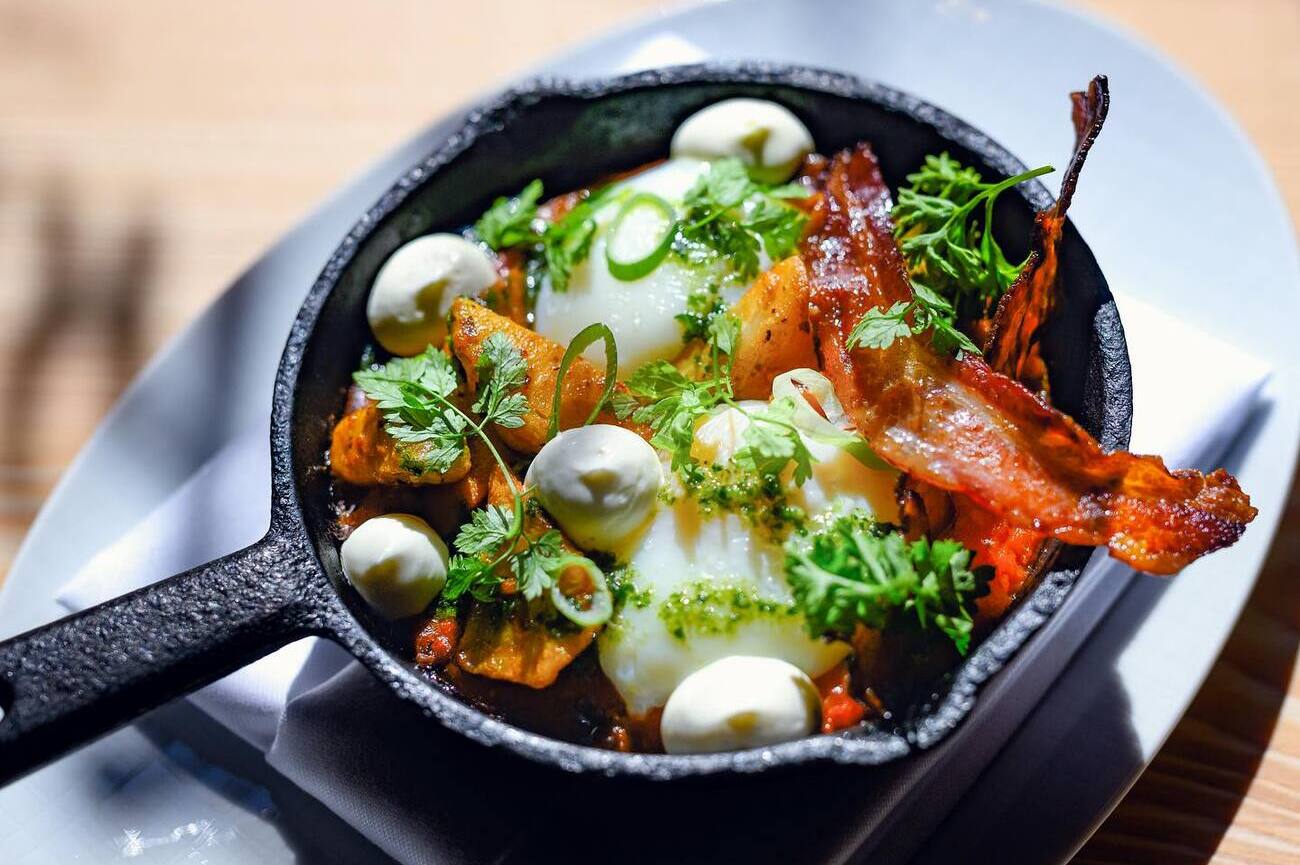
Where to Drink in Nuremberg
Nuremberg does nightlife in a way that feels a little smarter. It’s less about giant neon clubs and more about places with actual personality. You’re not here for random overpriced vodka soda energy. You’re here for good drinks, better atmosphere, and places that feel like they belong to the city. Some are tiny and loud with vinyl spinning in the background, some lean full speakeasy with low lights and perfect Old Fashioneds and some make you feel like you accidentally stepped into New York for the night.
- Mata Hari Bar: Mata Hari Bar is tiny. Genuinely tiny. And that’s exactly why it works. You’re close to the music, close to the bar, and probably close enough to hear someone passionately explaining why vinyl sounds better. Very on brand. The drinks menu is broad and refreshingly independent. Cocktails, whisky, long drinks, beer, wine, spirits and a strong selection of alcohol-free options all make the cut. Music matters a lot. Think guitar heroes, garage rock, punk, 60s beat, rockabilly, alternative, metal and actual people playing vinyl and CDs because they care.
- The Flower of Hawaii: This place fully commits to the tiki bar life and honestly, respect for that. The Flower of Hawaii brings a Polynesian-inspired cocktail setup right into Nuremberg, with tropical drinks, themed glassware, and enough atmosphere to make your regular gin and tonic feel underdressed. The stars here are the classics like Mai Tais, Zombies and strong summer cocktails that arrive looking like vacation plans. The bar itself is cozy and well-designed, with both indoor and outdoor seating that makes it work year-round.
- Die Rote Bar: Die Rote Bar is for people who care about cocktails and want the bartender to care too. Classic cocktails are done properly here like Caipis, Whisky Sours, the kind of drinks that immediately expose whether a bar knows what it’s doing. They also lean into more original creations like the Whisky Sour Continental and Anglo Americano, which regulars tend to come back for. Complimentary peanuts with drinks sounds small, but somehow it adds to the whole mood. You can also choose between livelier seating or a quieter corner depending on what kind of night you’re having.
- Harlem Bar: Harlem Bar leans into the New York mood and does it well. It’s urban, polished and a little dramatic in the right places. Their signature strength is customization. House-made syrups, handcrafted ingredients and monthly changing cocktail specials keep the menu moving, while the team is happy to adjust drinks based on what you actually like instead of forcing you into whatever is trendy that month. There are also live events and DJ nights that shift the mood depending on when you go, so one visit can feel completely different from the next.
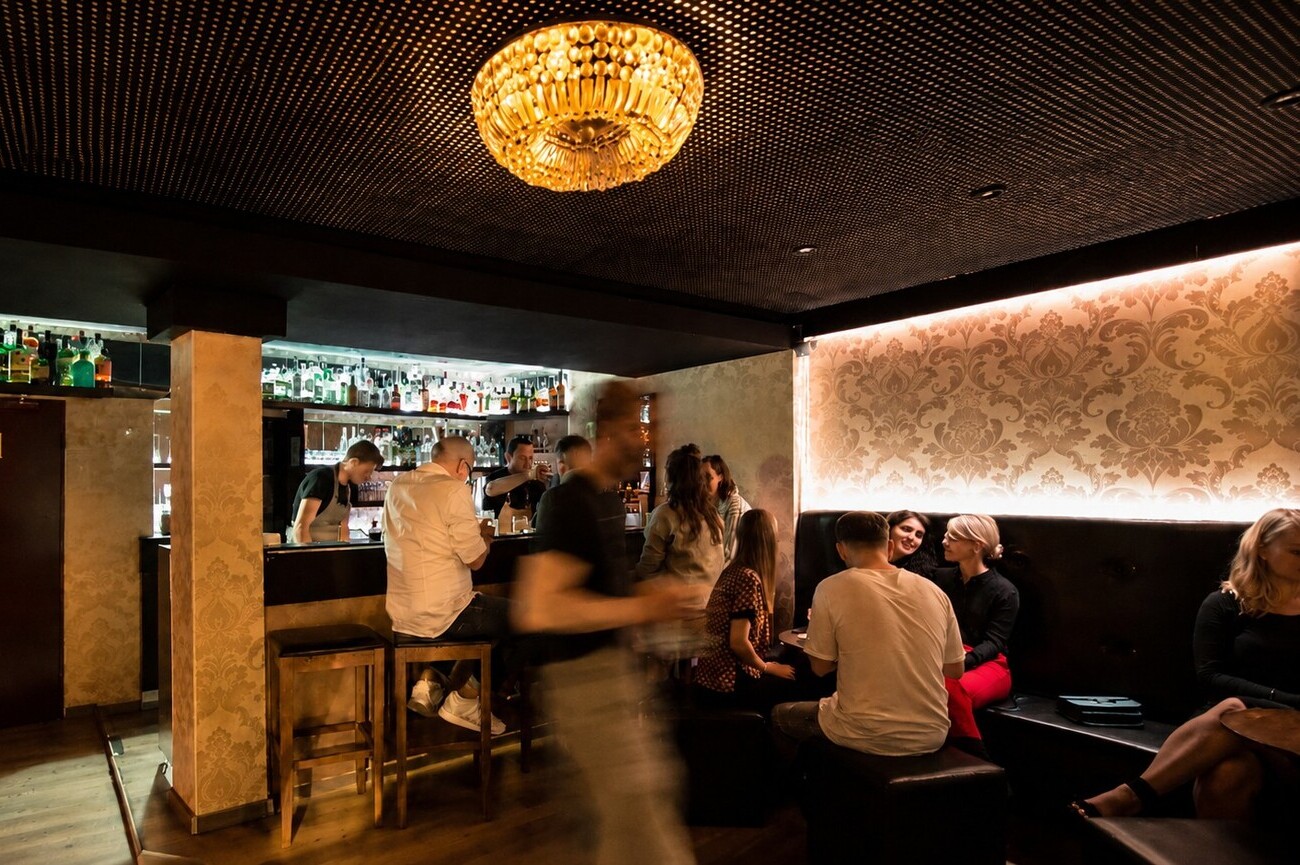
- Vintage Bar: Hidden on Irrerstraße, Vintage Bar has a speakeasy-style atmosphere with dim lighting, jazz in the background and bartenders who clearly take their work personally. In the best way. This is where you order an Old Fashioned and trust the process. Signature drinks like the Pecan Fat-Washed Sazerac and the Vanderbilt show how much detail goes into the menu. The terrace outside adds another layer if you want a slower evening.
Cafes in Nuremberg
In Nuremberg, you’ll find serious espresso bars where the barista can explain your beans better than most people explain their careers, elegant pastry cafes that feel straight out of old Europe and brunch spots where one coffee somehow turns into your entire morning plan. If your itinerary needs slower mornings and stronger coffee, these are the cafes worth knowing.
- Machhörndl Coffee Espresso Brew Bar: Machhörndl is one of the strongest specialty coffee spots in Nuremberg and has the kind of reputation that makes coffee people quietly loyal. It sits on a calmer street away from the busier city center. Their espresso drinks, flat whites and iced lattes are all built around quality beans and balance rather than sugar-heavy distractions.
- Süss Dealer is where breakfast turns into brunch and brunch turns into “maybe just one more coffee.” It’s one of the best café spots in the city for a slower, indulgent morning, with cozy interiors and a lovely outdoor terrace that works especially well in warmer months. The menu leans generous and photogenic but still delivers on flavor. Pancakes with pistachio sauce are one of the stars. It’s fluffy, rich and definitely not pretending to be healthy. The Strammer Dealer with poached eggs and smoked salmon is another strong order and the fig goat cheese salad balances things out if you’re trying to look responsible.
- Konditorei Café Beer: This is the kind of cafe where dessert decisions become slightly stressful because everything looks like the correct choice. Konditorei Café Beer has that classic old-school pastry cafe energy. It is closer to a traditional Viennese cafe than a modern minimalist espresso bar. This spot is known for homemade cakes, tarts and pastries. There’s serious variety here, from fruit tarts to rich layered cakes, and locals treat it like a reliable institution rather than just a tourist stop.
- NextDoor CoffeeClub: NextDoor CoffeeClub works equally well for breakfast, remote work or just hiding from the city for a bit. Located near a tram station in the southern part of Nuremberg, it’s easy to reach without dealing with the old town crowds. Coffee is built around locally roasted beans and yes, the latte art is good enough that people notice. Beyond drinks, the menu is stronger than expected with quiches, bagels, vegan snacks, brownies, cakes and pastries that make “just coffee” a very unrealistic plan.
- Di Simo – caffè e vini: Sitting near the river in Nuremberg’s medieval center, it has one of the nicest cafe locations for people-watching, slower afternoons and pretending you only came for one slice of cake. The coffee is consistently praised and often described as some of the best visitors have had in Germany, which is a strong statement in a country that takes café standards seriously. Homemade cakes like cheesecake and apple cake are the usual favorites. It also works well later in the day because the “e vini” part matters too. Coffee can quietly turn into wine if the afternoon goes that way.
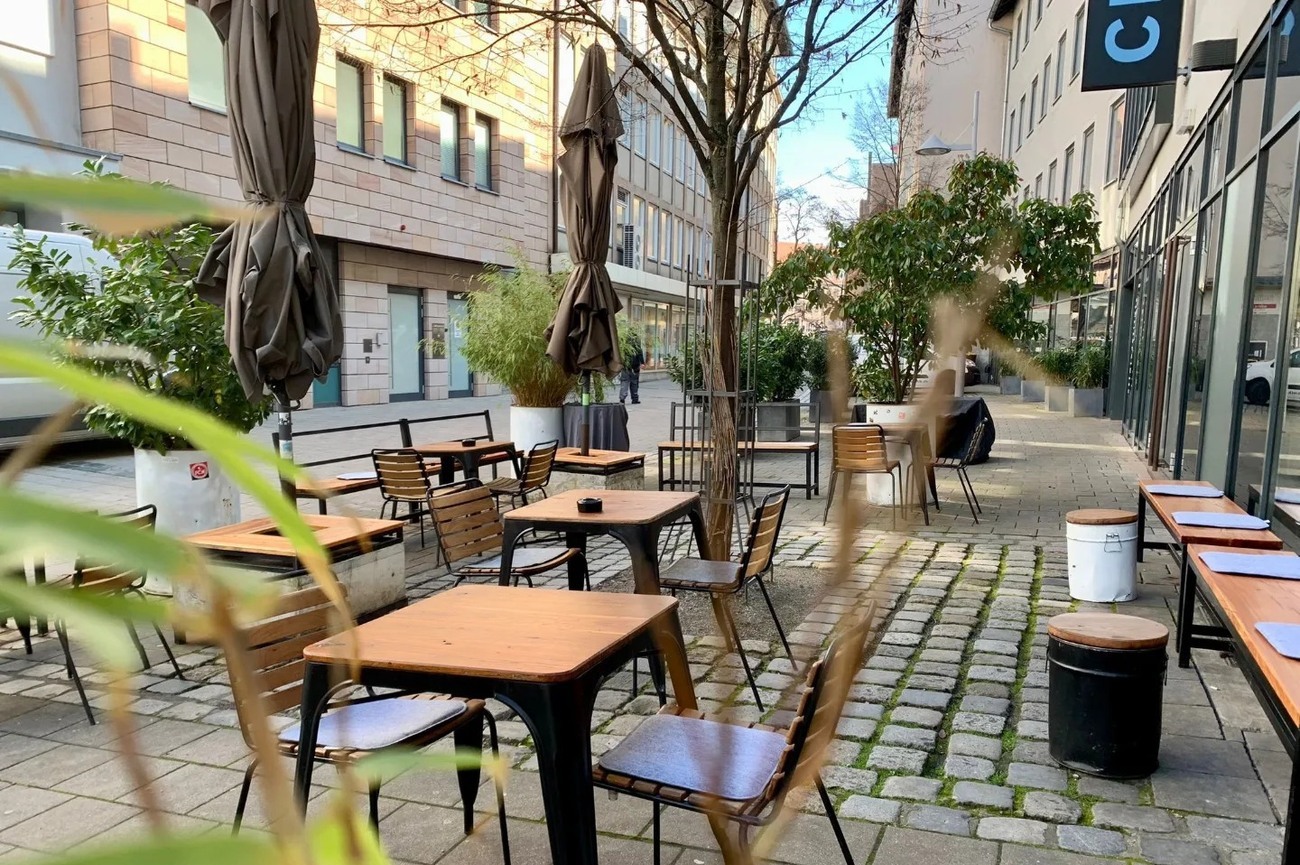
Where to Stay in Nuremberg
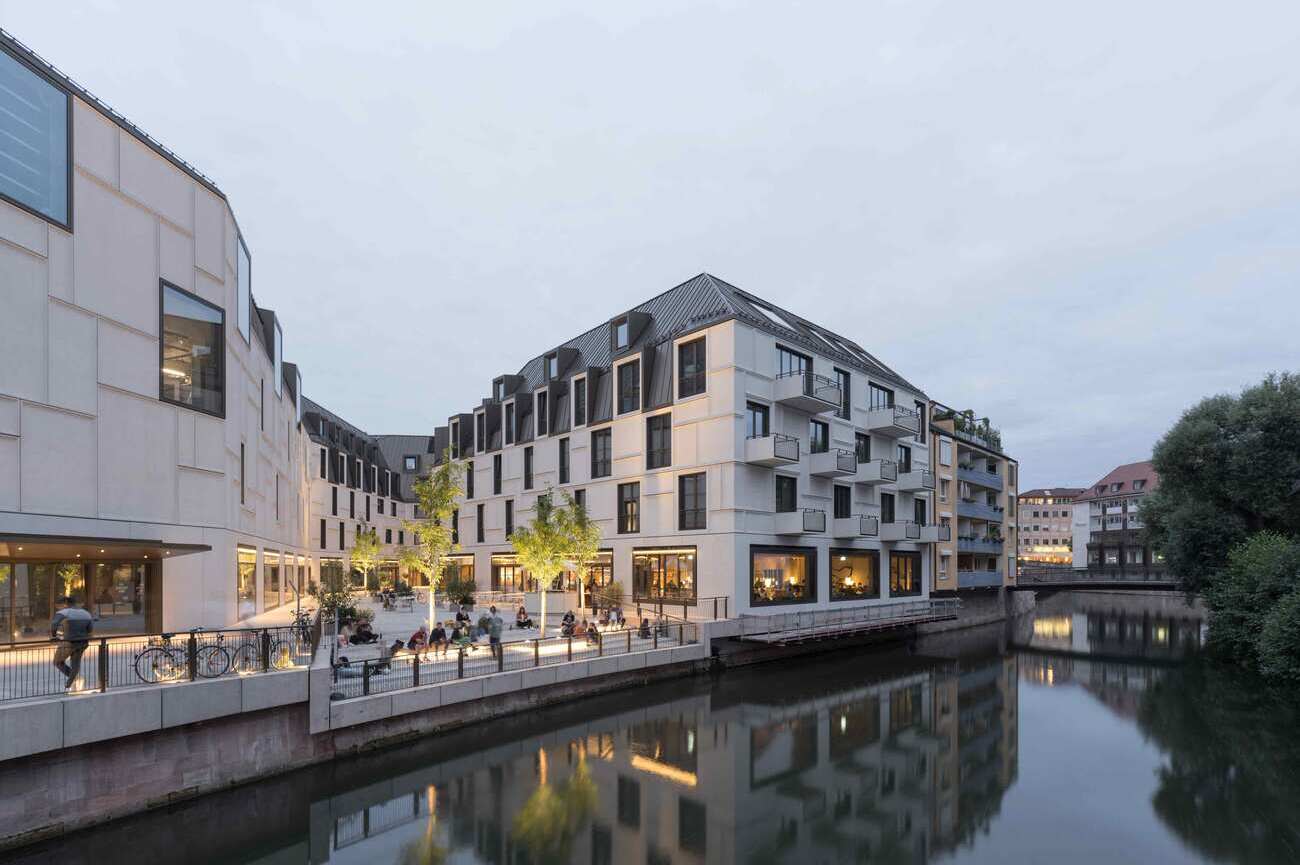
- Karl August - a Neighborhood Hotel (5 stars): If you want the most modern luxury stay in the city center, Karl August is the answer. Sitting in the Augustinerhof district just off a pedestrian-only promenade, this 5-star hotel feels more like a stylish city hub than a traditional hotel. You’re steps from Hauptmarkt, close to the old town landmarks and surrounded by cafes, restaurants and the kind of city energy that makes walking everywhere feel easy. What makes it stand out is the rooftop. The geometric infinity pool under skylights is one of the best hotel features in Nuremberg and instantly upgrades the whole stay. Add the sauna, fitness room, Babor spa treatments and you have a place that knows recovery matters after a full day of sightseeing. The hotel includes a sleek French brasserie, an all-day cafe, Bonbon Ice Cream Bar and even a one-MICHELIN-star restaurant.
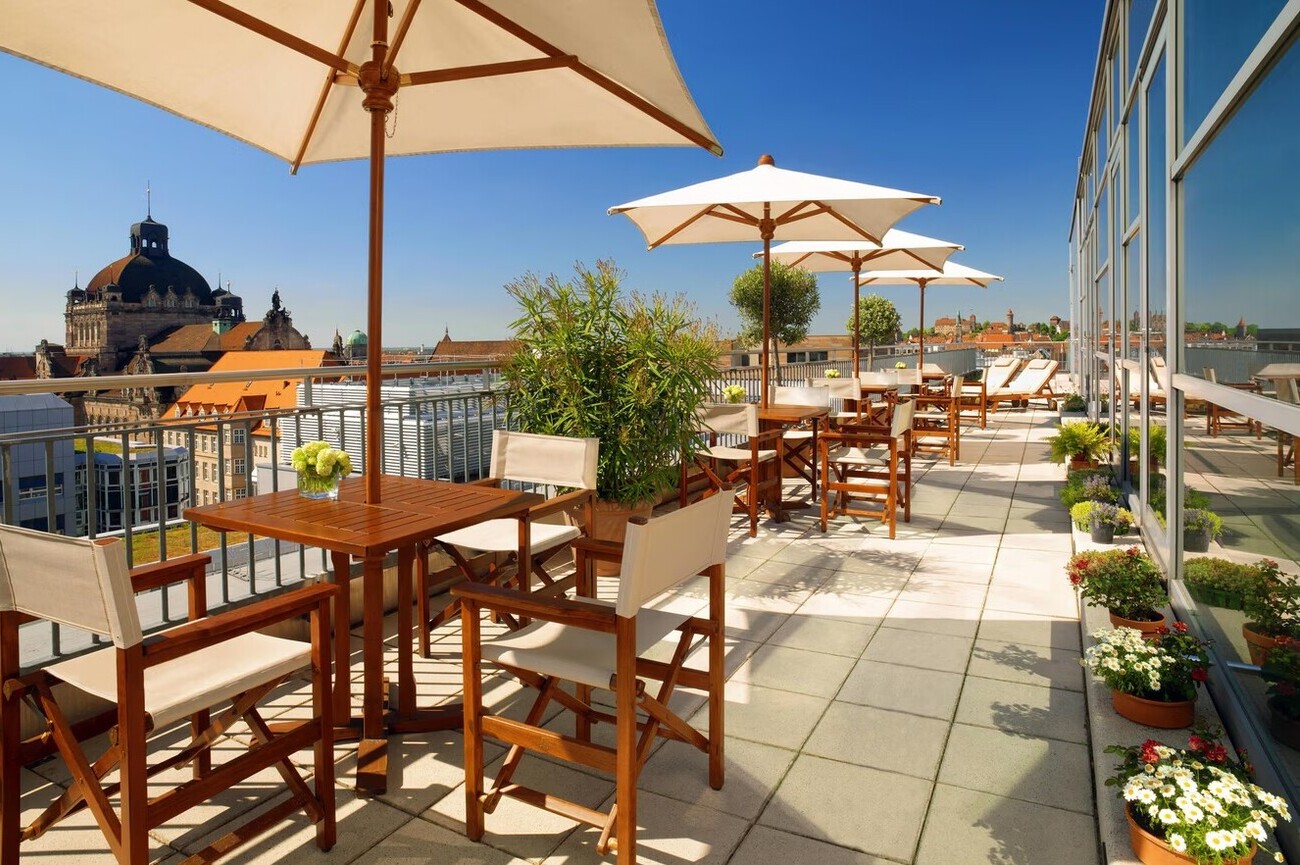
- Sheraton Carlton Hotel Nürnberg (5 stars): This is the classic luxury business-meets-leisure hotel. The Sheraton Carlton is a 5-star property near the main train station, which means convenience is very much part of the appeal. It works especially well if you want quick access to both the old town and day trips like Bamberg, Würzburg or Munich without dragging luggage across cobblestones. The top-floor spa with pool, sauna and panoramic city views is the real highlight. After a full day in the old town, that rooftop wellness setup feels like excellent life planning. Its reputation comes from consistency: strong service, reliable comfort and location that makes everything easier.
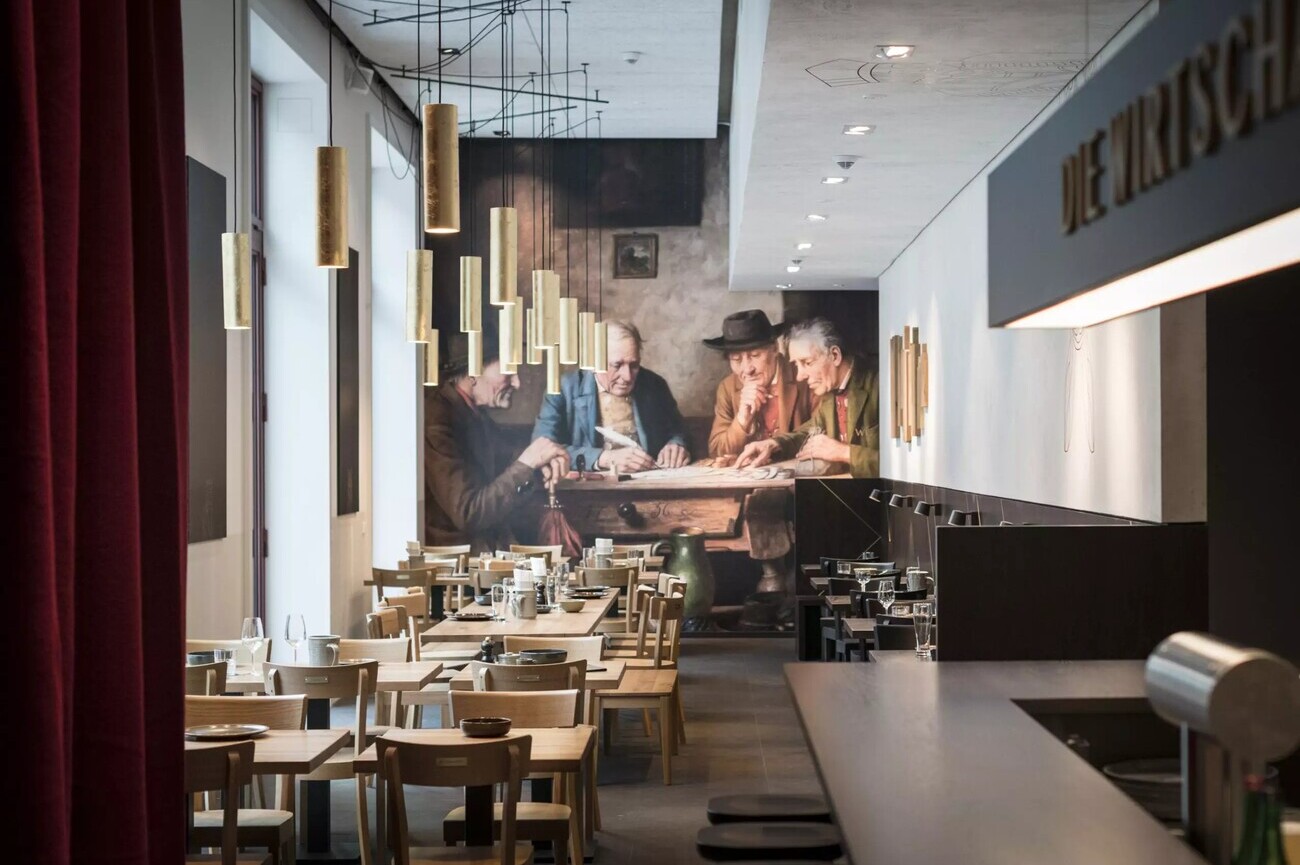
- Melter Hotel & Apartments (4 stars): Melter is for travelers who like boutique hotels that feel personal rather than overly formal. Located near St. Lorenz Church and the Germanisches Nationalmuseum, this 4-star stay puts you right where you want to be. The hotel mixes hotel rooms with apartment-style stays, which is useful if you’re staying longer or just want more room to exist like a normal person. There’s also an on-site art gallery, a coffee shop and shopping close by, so it feels tied into the city rather than separated from it. The design leans modern, creative and relaxed.
- Hotel VICTORIA Nürnberg (4 stars): Hotel Victoria wins on location almost unfairly. Sitting in the historical center near Craftsmen’s Courtyard and just steps from the main train station, it places you right between arrival convenience and old town charm. The hotel itself has a more classic historical style, which fits the setting well. Rooms are comfortable, allergy-friendly and polished without trying too hard. And what makes it stand out is how easy the trip becomes. You can walk to St. Lorenz, Hauptmarkt and the Germanisches Nationalmuseum in minutes.
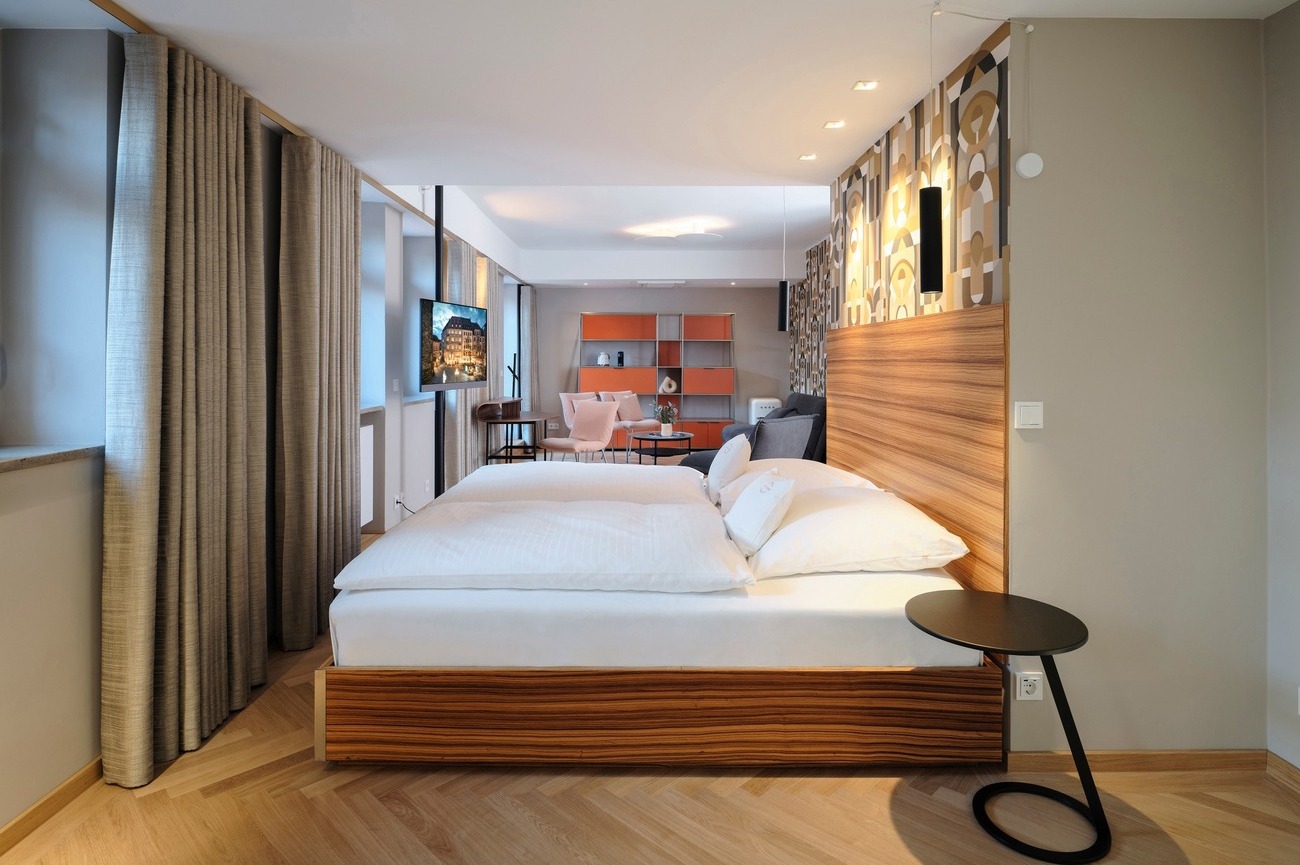
- Hotel Five (3 stars): Hotel Five is small, central and very smart if your trip is focused on actually exploring the city instead of spending all day inside the hotel. Located on Obstmarkt, just steps from the Main Market Square, this 3-star boutique hotel gives you one of the best old town positions without the heavier luxury-hotel pricing. It opened in 2015 and keeps things simple but stylish with only 16 rooms, which makes it feel more personal. The extra bonus is Five Diner, the hotel’s own restaurant, known for breakfast in the morning and strong burgers, salads and snacks later in the day. Even locals come for it, which is usually the best sign.
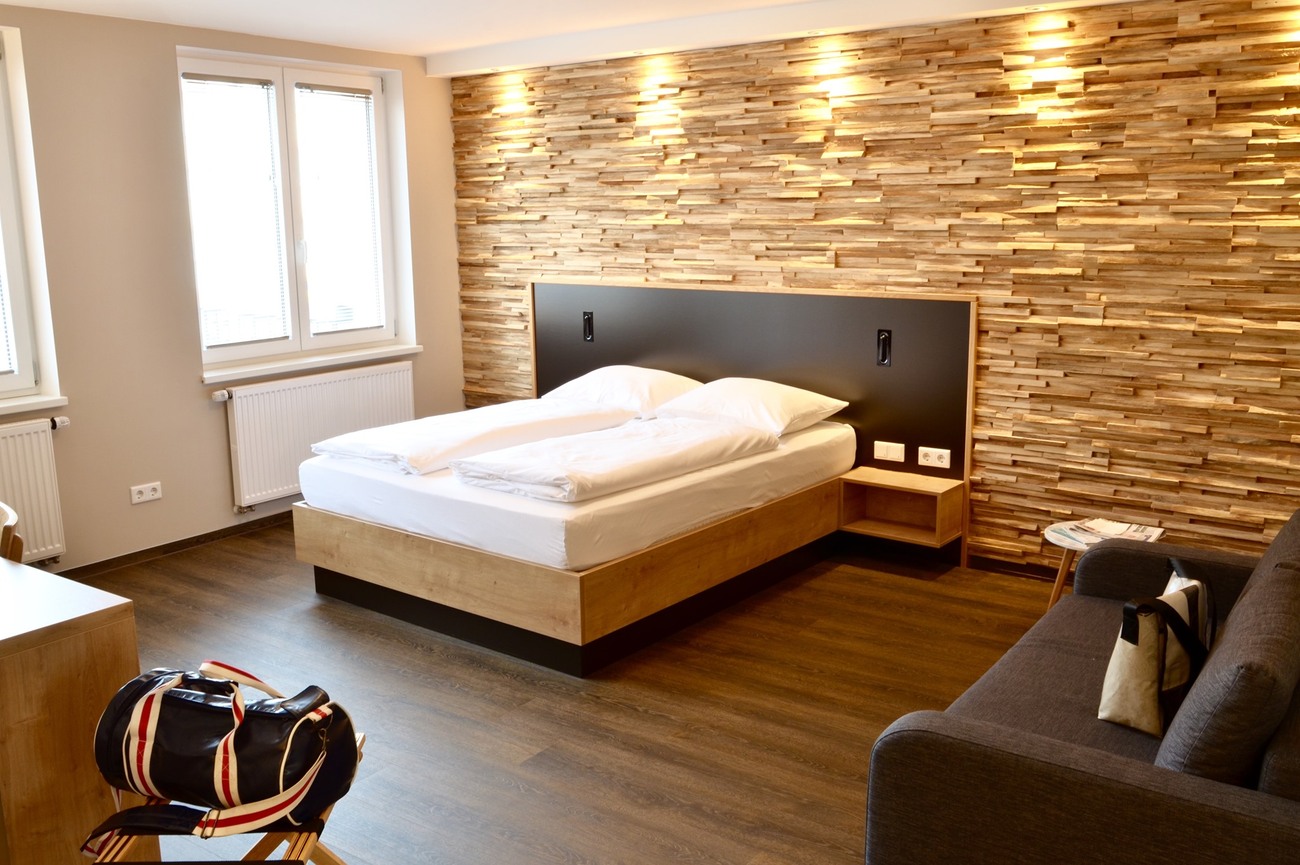
- Hotel Burgschmiet (3 stars): If you want a quieter stay near the castle district, Hotel Burgschmiet is a strong pick. This 3-star hotel sits close to Kaiserburg Nürnberg and the Albrecht Dürer area. The rooms are comfortable and classic, with a more traditional hotel feel. The rich cold buffet breakfast is a real plus, especially before a full sightseeing day. Its location also works well because it feels close to the sights without sitting directly in the busiest tourist flow.
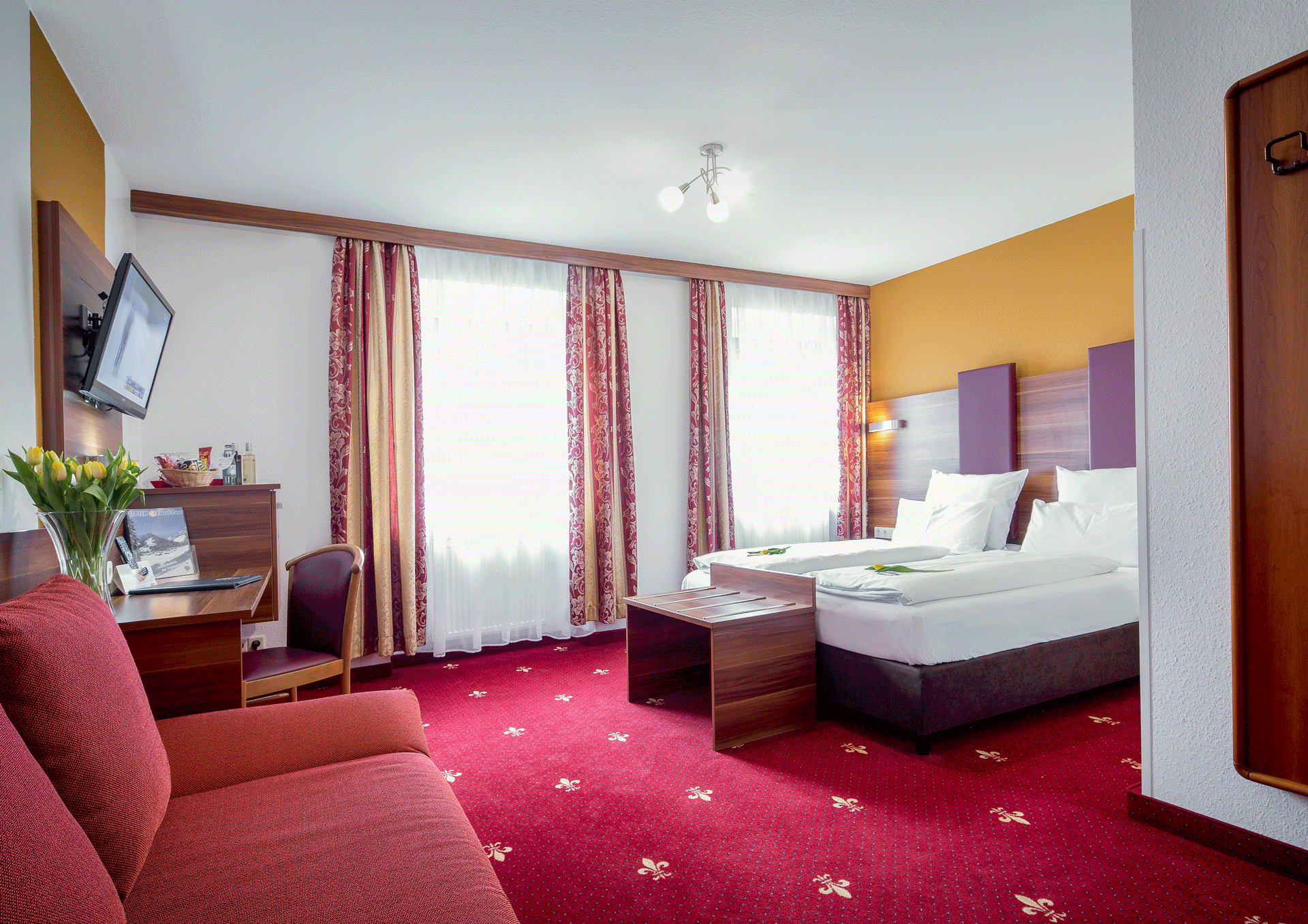
Best Time to Visit Nuremberg
The best time to visit Nuremberg is late spring to early autumn, especially from May to September. This is when the city is warm enough for long walks through the old town, castle views actually worth lingering for and outdoor dining that makes you forget your hotel room exists.
Nuremberg is a city best experienced on foot. You want clear skies when walking up to the Imperial Castle, crossing the old bridges near Henkersteg or spending an unreasonably long time around Hauptmarkt because the architecture keeps distracting you. The warmer months also make places like Weißgerbergasse, Lorenzer Platz and Trödelmarkt feel more alive.
This is also the best season for Franconian wine culture and yes, that matters. Nuremberg itself has excellent wine bars and terrace dining, but the real advantage is how easily you can turn it into day trips. Würzburg works beautifully in this season, especially around the UNESCO-listed Würzburg Residence and the surrounding wine estates where a tasting can quietly become your entire afternoon. Bamberg also feels different when the riverside stays busy late into the evening and the slower pace of the old town actually gets room to breathe.
What makes Nuremberg work is how naturally everything fits together. The history is obvious, but the city never feels like it exists only for visitors. Luxury boutiques sit beside old stone buildings, locals cross medieval squares on their way to work and cafes spill out into streets that have looked the same for centuries.
If you’re visiting for castles, wine, and a city that feels historic without feeling stuck in the past, May to September is the best window. The weather works with you, the day trips feel smoother and Nuremberg gives you more reasons to stay outside longer. It’s when the city feels most complete.
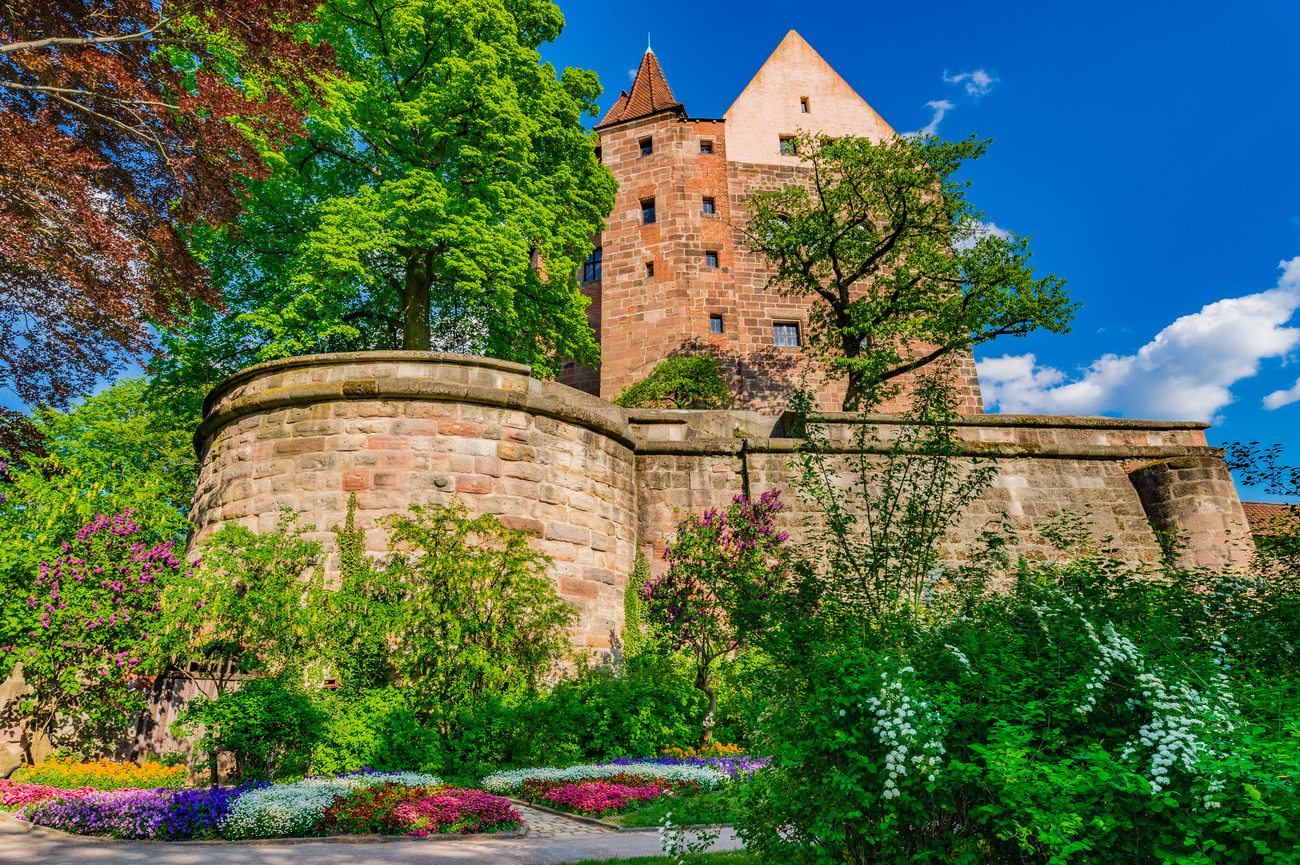
Festivals in Nuremberg
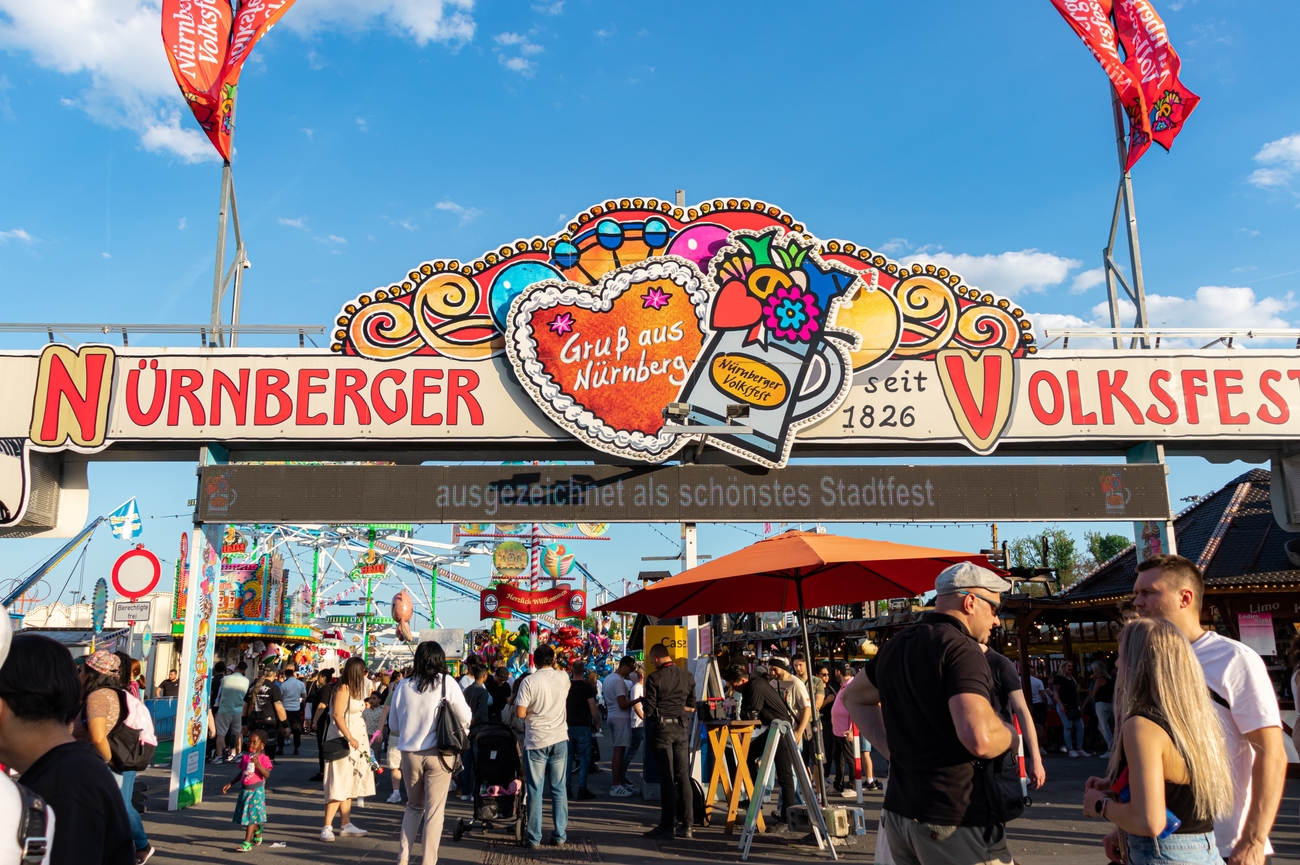
- Nürnberger Volksfest: Held twice a year in spring (April to May) and again in autumn (late August to September), Nürnberger Volksfest is one of the largest folk festivals in Bavaria and honestly feels like Oktoberfest’s slightly less chaotic cousin. It takes place at Dutzendteich near the lake and combines big fairground rides, beer tents, food stalls and traditional Franconian festival energy. You’ll find classic festival food, local beer, Ferris wheels and roller coasters, The spring edition feels lighter and more family-focused, while the autumn version leans stronger into beer tent season.
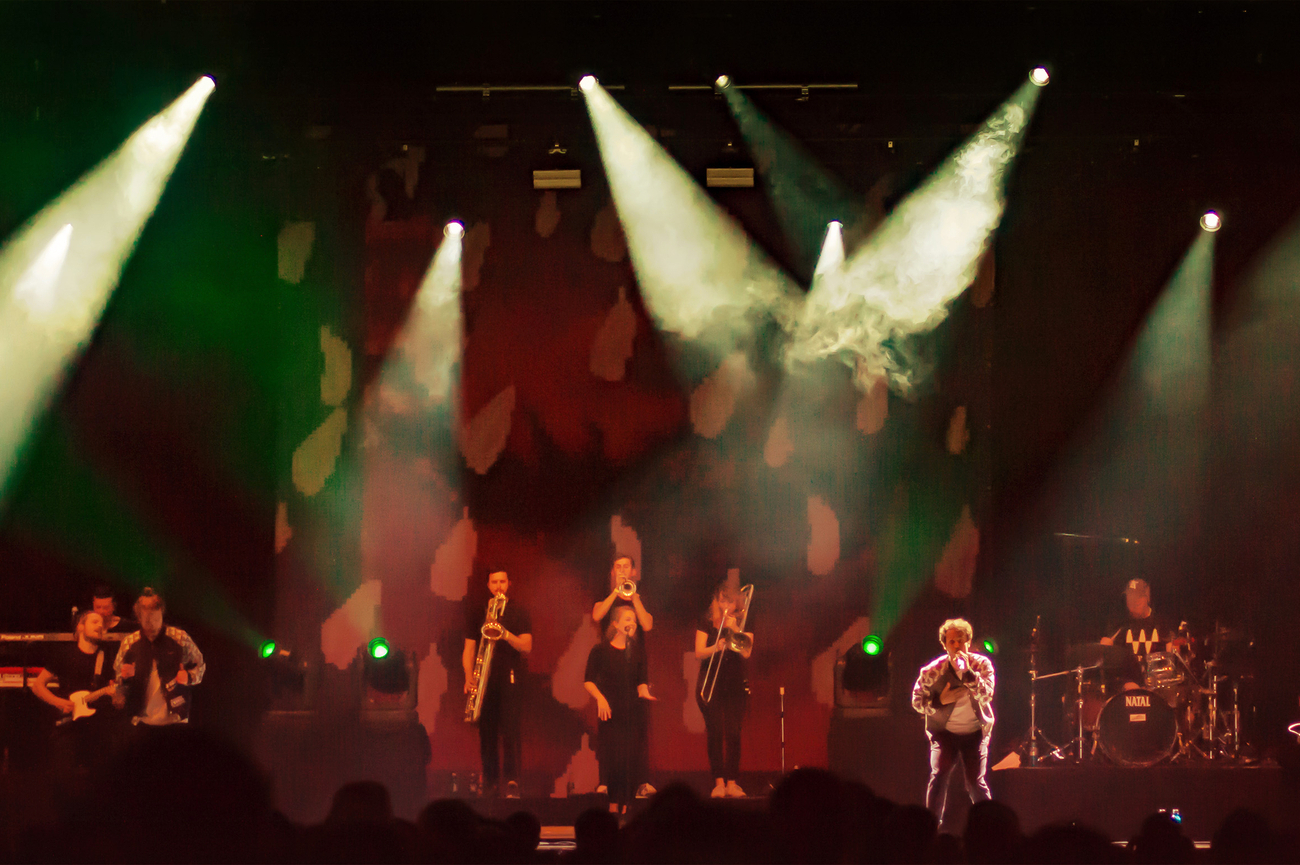
- Bardentreffen: Every year in late July, Bardentreffen takes over the old town and turns Nuremberg into one giant open-air music festival. It’s one of the city’s best-known summer events and one of the easiest to love because it’s free. Streets, squares and stages across the center fill with live music from international artists, local acts and genres that move from folk to jazz to indie to things you’ll pretend you already knew. You’re walking through Hauptmarkt for sightseeing and suddenly there’s a live concert happening next to you.
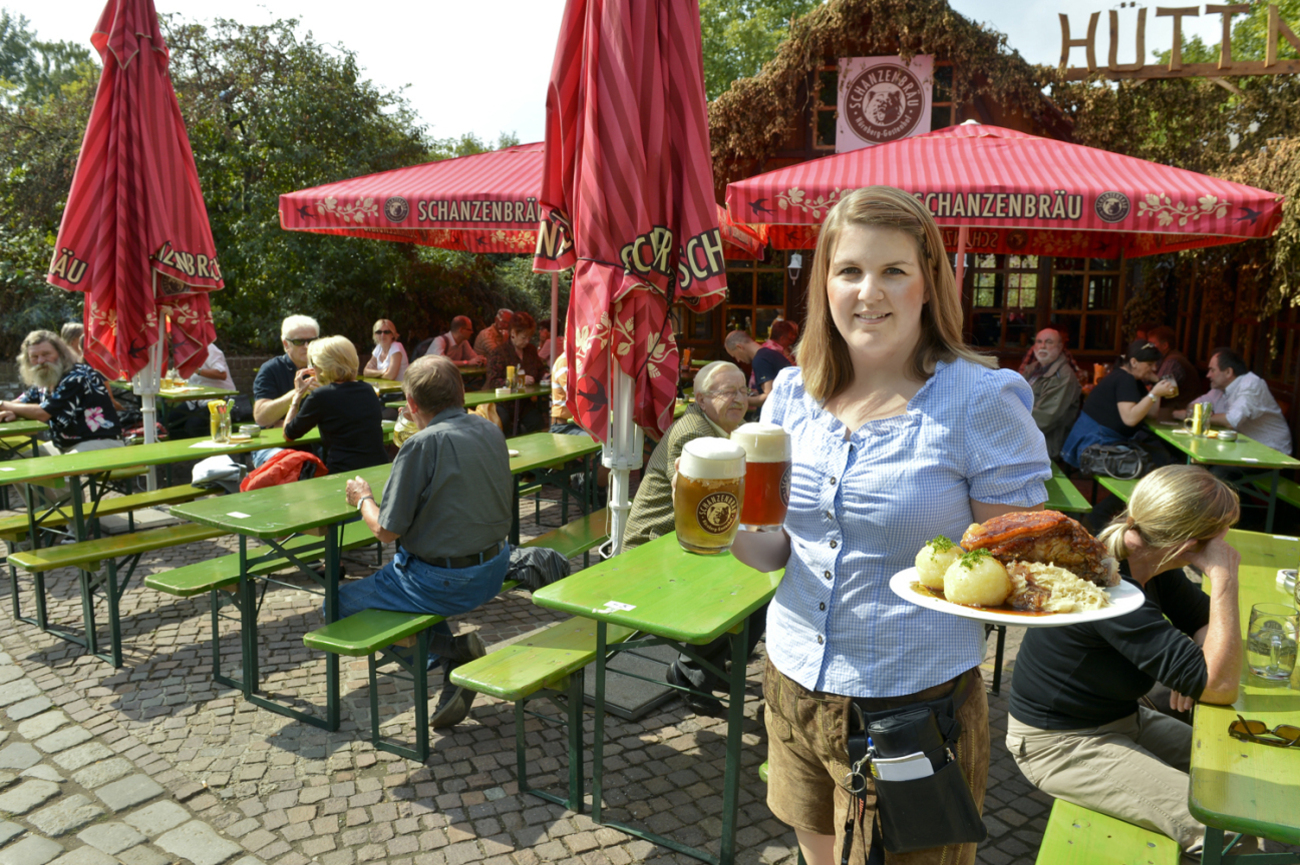
- Altstadtfest Nürnberg: Usually held in September, Altstadtfest is exactly what it sounds like. The old town showing off. This festival spreads across the historic center with market stalls, live music, local food and enough Franconian atmosphere to make your step count irrelevant. One of the biggest highlights is the Fishermen’s Jousting event on the Pegnitz River, where teams in traditional costumes attempt to knock each other off boats using long poles. Add local wine, regional dishes and evening concerts, and it becomes one of the best ways to experience the city outside the standard sightseeing route.
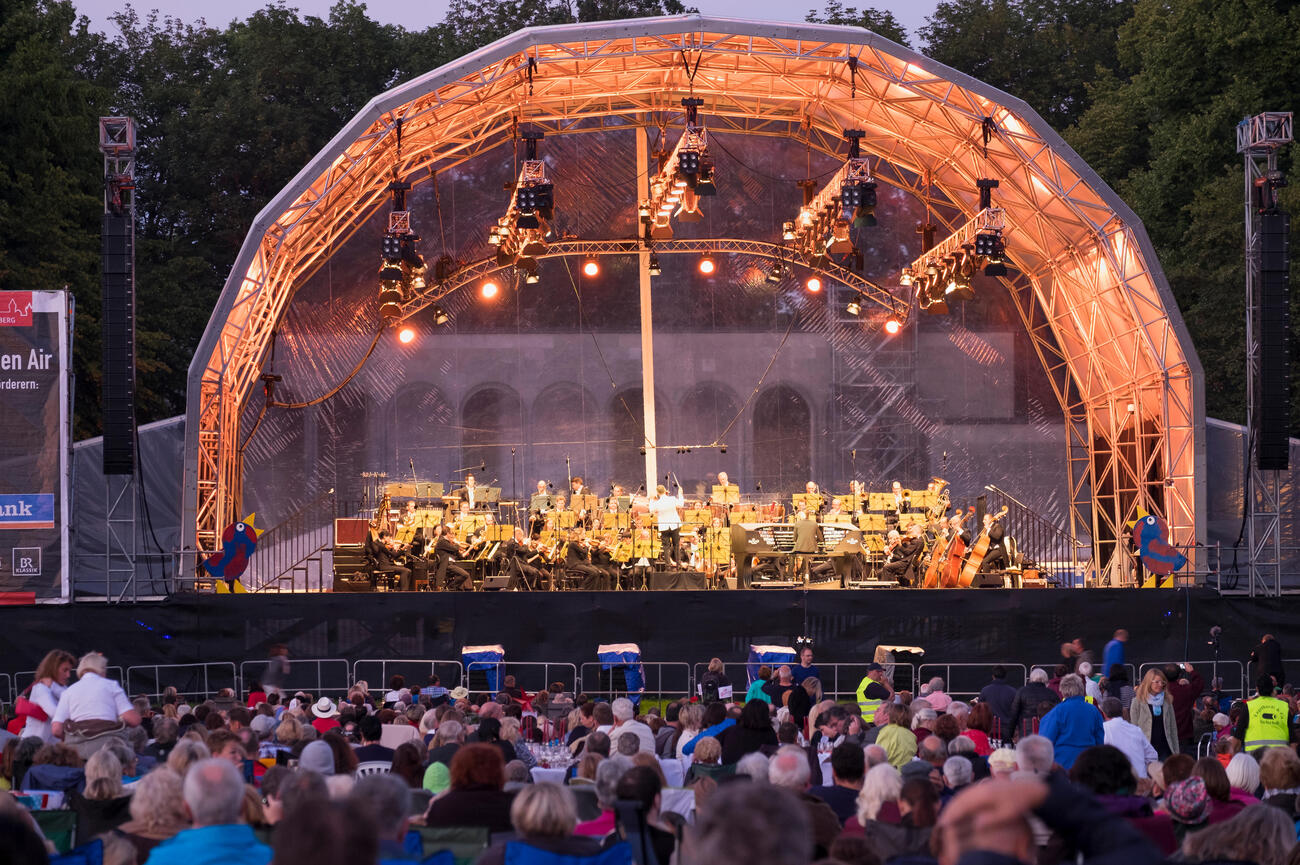
- Klassik Open Air: In July and August, Luitpoldhain turns into one of the most elegant picnic spots in Germany thanks to Klassik Open Air. This is not your stiff concert hall classical music setup. The Nuremberg State Philharmonic and the Nuremberg Symphony usually lead the concerts and the atmosphere is far more relaxed than formal. You can dress up a little, bring good wine and make an evening of it.
- Nürnberger Christkindlesmarkt: Running from late November through December, this is the big one. Nuremberg Christkindlesmarkt is one of the most famous Christmas markets in Europe, and yes, it absolutely gets crowded. It takes over Hauptmarkt with wooden stalls, lights, mulled wine, gingerbread, ornaments, and enough roasted almond smell to permanently affect your decision-making.
Our offices:



Revigorate, Iberian Escapes and Algarve Lifestyle are the registered brand names of APCS Lda . We are a fully authorised travel agency licensed by Turismo de Portugal RNAVT/6867.
In the event of a dispute, the consumer may refer to: RAL - Centros de Arbitragem
Avª. 5 de Outubro, nº. 55, R/C Dtº. 8000-075 Faro, Portugal | Tel: +351 289 823 135 *
* national landline call
E-mail: info@consumoalgarve.pt| www.consumidoronline.pt | Mon to Fri: 9:00 - 13:00 / 14:00 - 17:00