Things to Do in Regensburg: 3-Day Itinerary
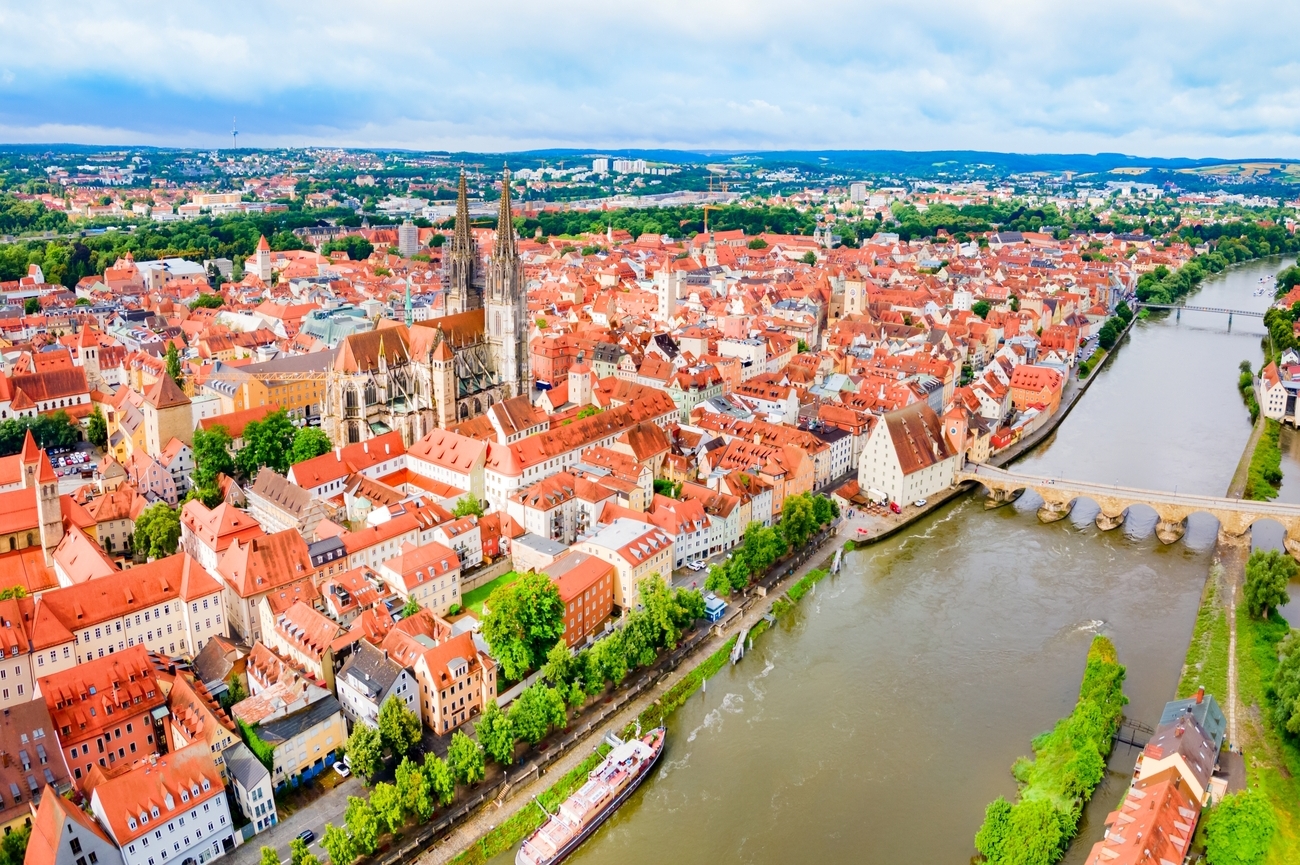
Regensburg is a historic city in Bavaria, Germany, with one of the best-preserved medieval centres in the country. Its Old Town with Stadtamhof is UNESCO-listed for its exceptional urban fabric, and the city is also connected to the Frontiers of the Roman Empire through the Danube Limes. Built along the Danube River, Regensburg still reflects its Roman origins, with a compact layout where streets, squares and major landmarks remain closely connected.
The city is easy to navigate. Major sites like the cathedral, medieval towers and central squares sit within short walking distance of each other, while the Stone Bridge connects the old town to quieter areas across the river. There’s a clear structure to how everything fits together, which makes moving around straightforward without needing to constantly reset your route.
Regensburg also manages to balance history with everyday use. Administrative buildings, museums and retail streets all operate within the same historic framework, so the city doesn’t feel sectioned off or overly curated. You move through different parts of it naturally, without needing to go out of your way.
There is also a clear consistency in how the city looks and feels. The architecture does not shift too abruptly, so the experience remains cohesive as you move from Roman remnants to Gothic landmarks and later additions. That keeps the city easy to settle into, without the sense of moving between completely different environments every few streets.
Across three days, this itinerary maps Regensburg with intention. Each stop is placed where it belongs, so the experience unfolds smoothly without forcing the pace.
Day 1

Morning: St. Peter Cathedral
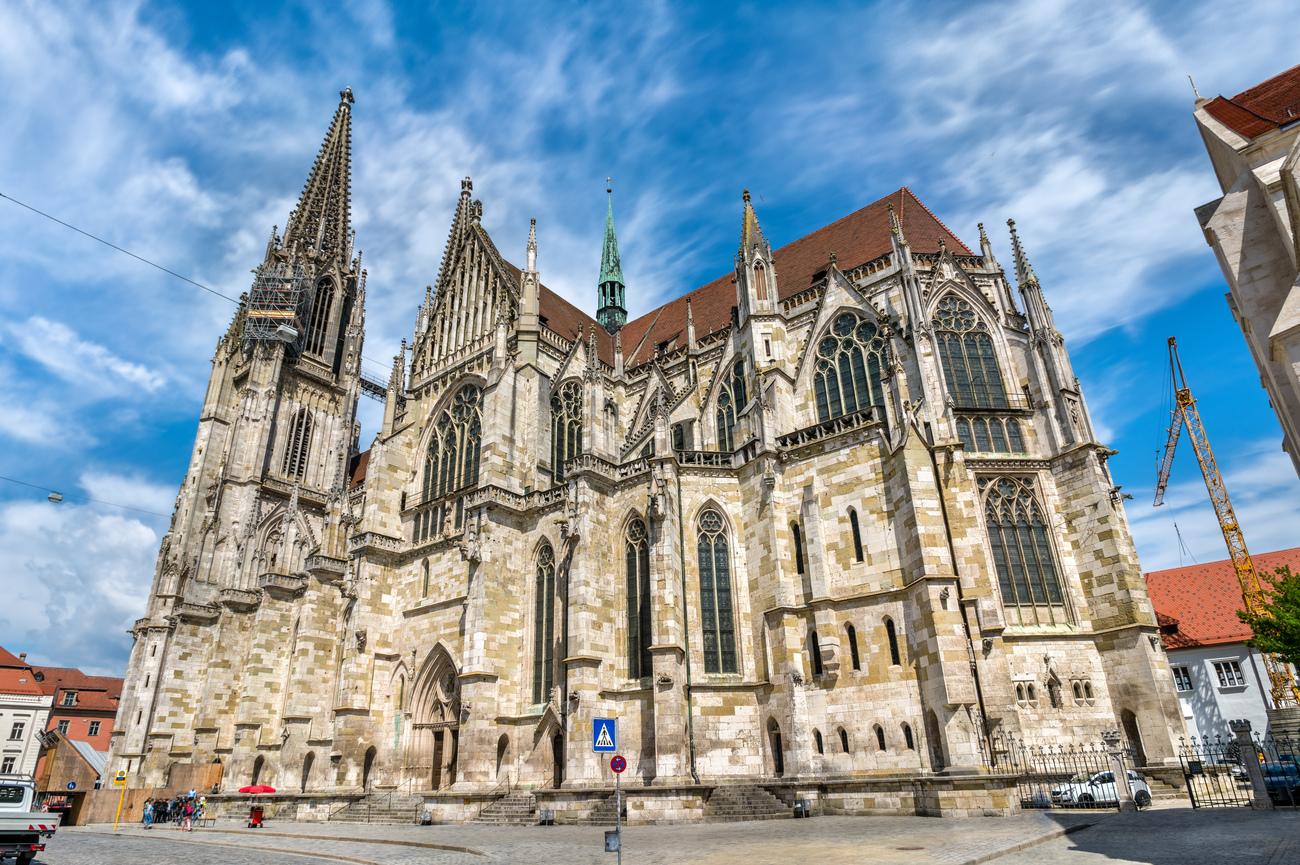
St. Peter Cathedral sits at the center of Regensburg’s Old Town and sets the tone for everything that follows. It’s the city’s main Gothic landmark, rising sharply above the surrounding streets with twin spires that are hard to miss from almost any angle. Starting here makes sense, not just geographically, but visually. The scale, the detail and the way it anchors the city all hit immediately, so you’re stepping into Regensburg at its most defined.
Construction began in the 13th century and continued over several hundred years, which shows in the depth of its design. The exterior is classic High Gothic with pointed arches, intricate stonework and a facade that feels precise rather than decorative. Inside, the space opens up vertically with ribbed vaults and stained glass windows dating back to the medieval period.
The cathedral is also home to the Regensburger Domspatzen, one of the oldest boys’ choirs in the world and if you time it right, hearing them during a service adds another layer to the visit without needing anything staged. Nearby, the Domschatz Museum holds the cathedral treasury and offers structured visits with set opening hours, usually running late morning through afternoon.
Porta Praetoria
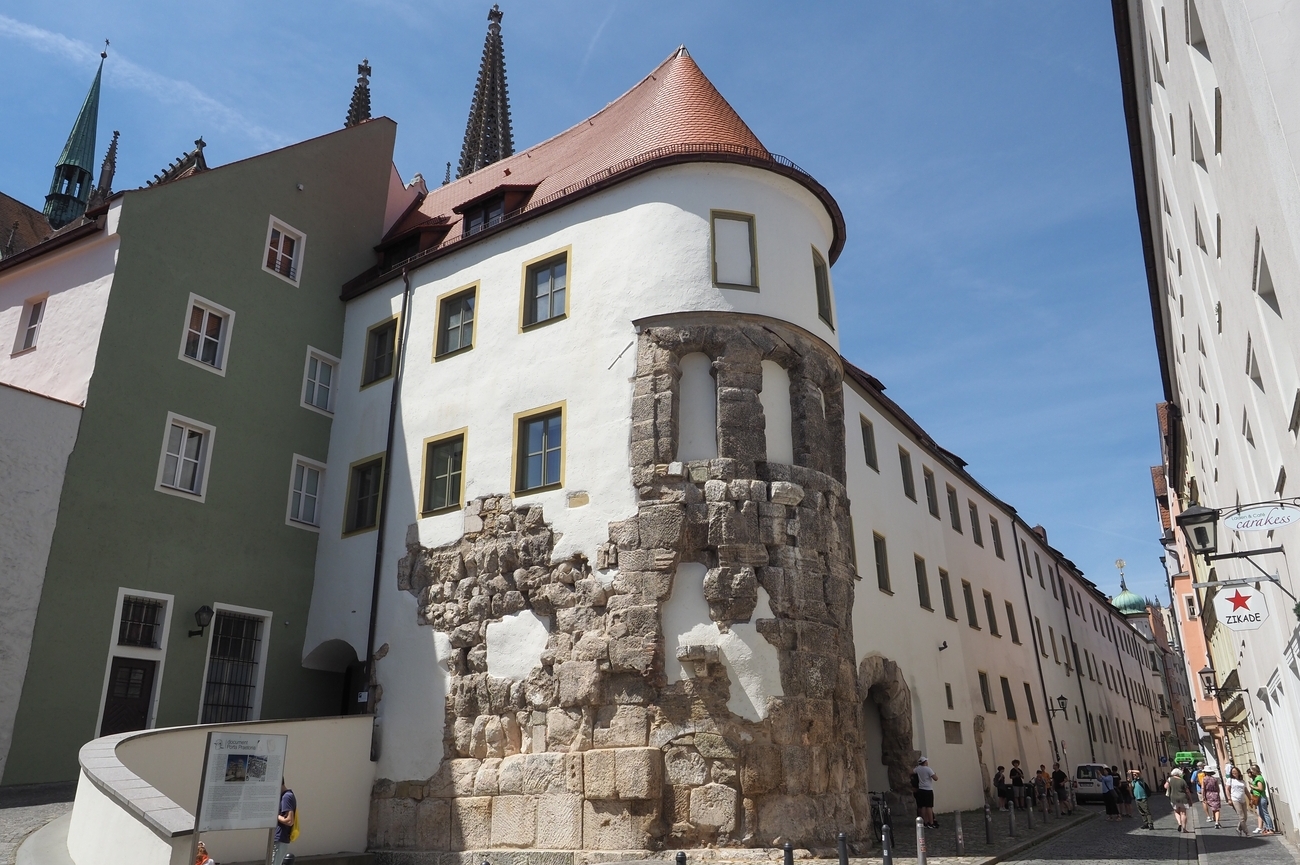
From St. Peter’s Cathedral, it’s about a 2–3 minute walk toward the northeast corner of the Old Town. You move towards something much older, tucked more quietly into the street. Porta Praetoria is one of those spots you could pass without context, but once you clock what it is, it changes how you see the city.
This is a Roman gate dating back to around 179 AD, built during the reign of Emperor Marcus Aurelius as part of the former legionary fortress Castra Regina. It’s one of the oldest surviving stone structures in Germany and what you see today is only part of the original northern gate. The stonework is massive and stripped down with large limestone blocks, minimal decoration and a structure built more for function than display. It’s partially integrated into later medieval buildings, which makes it feel less like a standalone monument and more like a layer within the city itself.
You can book a private historical walking tour that includes early access or quieter morning routes through the Old Town. Porta Praetoria itself is a quick stop, but in the right context, it becomes one of the more grounded, high-value moments in the itinerary.
Krauterermarkt
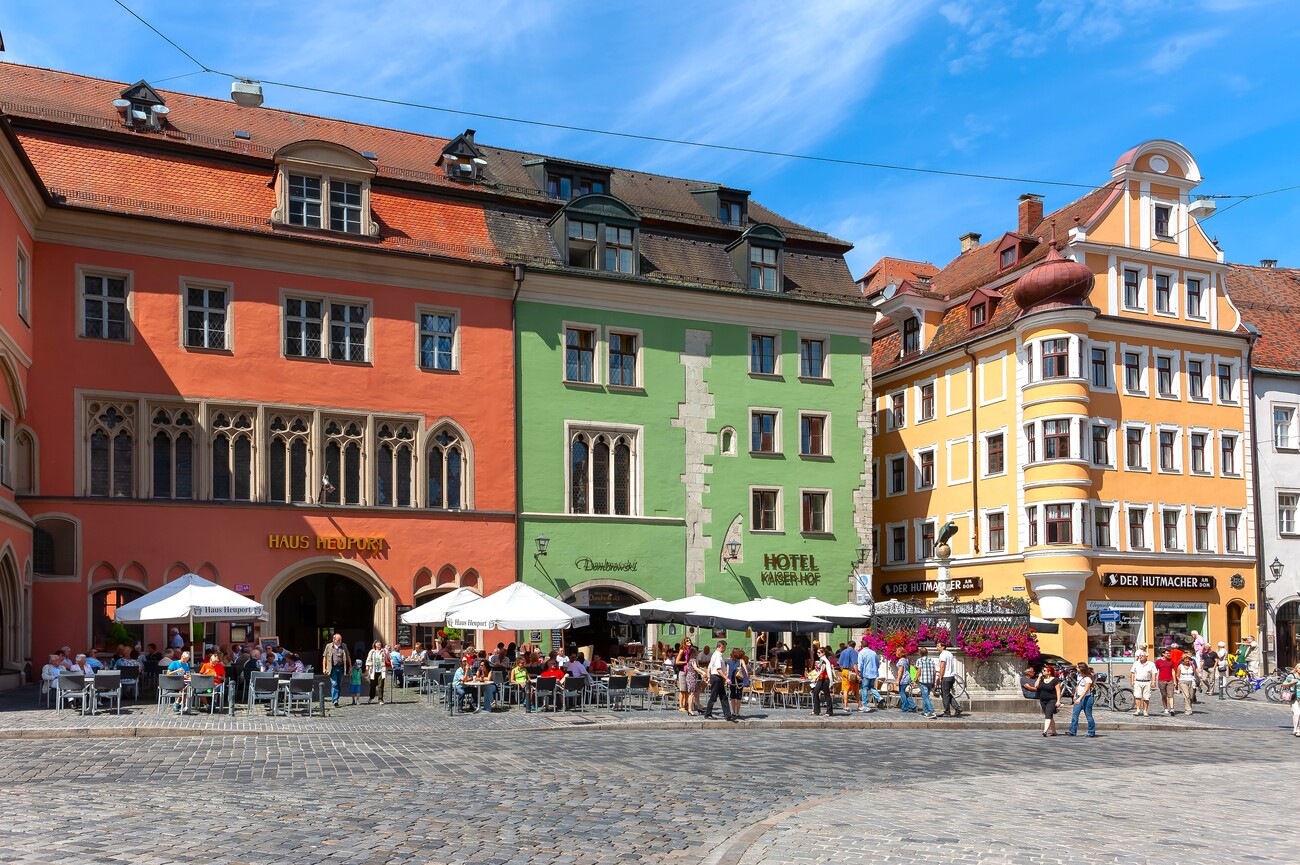
A 2-minute walk back toward the cathedral area will take you to the Krauterermarkt. It’s more open, more active and clearly designed as a place where people gathered, not just passed through.
Krauterermarkt translates to “herb market” and that name isn’t random. This square historically functioned as a trading spot for herbs, medicinal goods and everyday supplies. The buildings around it reflect that commercial past with tall, narrow façades with a mix of Gothic and later styles, all slightly uneven but still cohesive. It’s one of the few spots where Regensburg’s religious and commercial sides overlap this clearly.
Today, the square is more about atmosphere than function, but it still works as a natural pause in the route. Guided city tours often pass through here as part of the Old Town circuit, using it as a point to explain medieval trade systems and urban planning. If you’re on a private walking tour, this is usually where guides slow things down a bit.
Afternoon: Neupfarrplatz
Leaving Krauterermarkt, head southwest through the Old Town’s main pedestrian streets for about 3-4 minutes. The streets widen slightly as you approach and the flow of people naturally pulls you into a more open space.
The square sits on a complex historical layer. It was once the site of the medieval Jewish quarter, later cleared in the early 1500s and today that history is preserved through the document Neupfarrplatz. And above ground, the setting is more contemporary, with the Neupfarrkirche at the center and a mix of retail buildings surrounding it. It’s one of the few places in Regensburg where past and present are visibly stacked rather than blended.
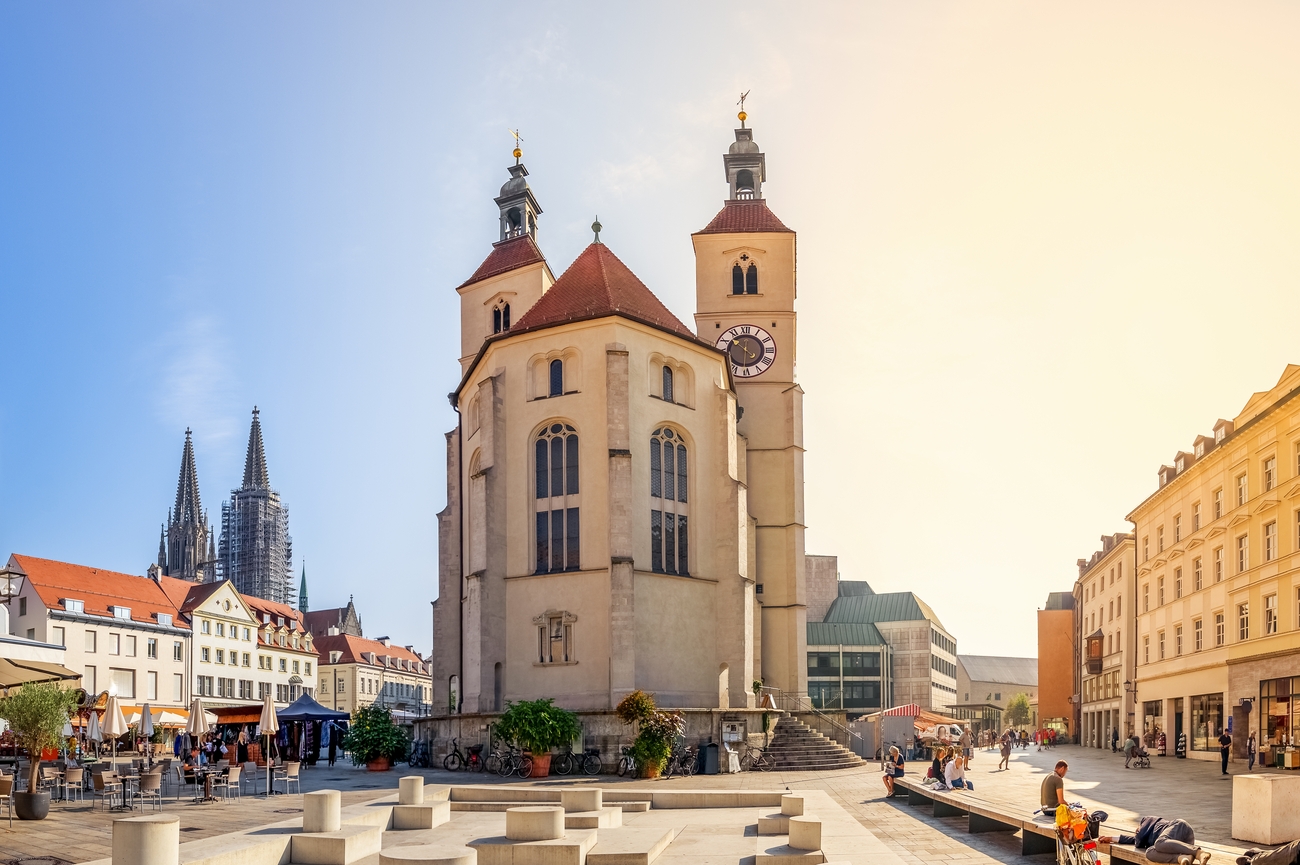
document Neupfarrplatz
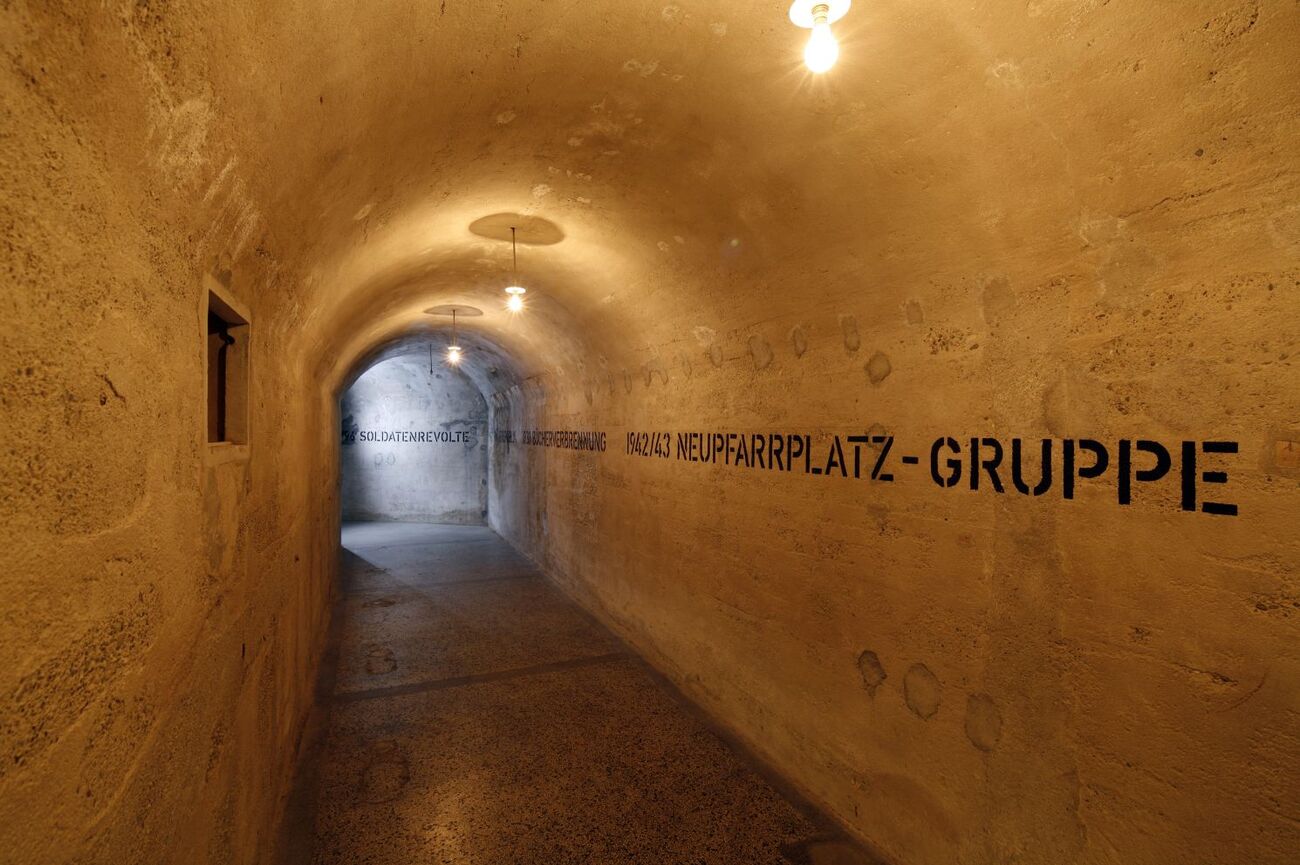
This is located right beneath Neupfarrplatz, with the entrance just off the open plaza. No walking transition here, just a shift downward.
This site preserves the remains of Regensburg’s former Jewish quarter, which existed here until the early 16th century. What you see below ground are archaeological foundations, street outlines, and structural remnants, paired with visual reconstructions that map how the area once looked. The exhibition is compact but detailed with clean layout, low lighting and a clear narrative flow that moves from daily life in the quarter to its destruction and what followed.
Access is ticketed, and you
can explore with an audio guide or as part of a structured visit. Public guided
tours are available Thursday to Saturday at 2:30 PM, with Monday added from
January 1, 2026. Tickets are handled through the Old Town Hall Tourist
Information Office, which is also where the guided tour begins. If you prefer
more flexibility, private group tours can also be arranged by appointment.
Wahlenstraße
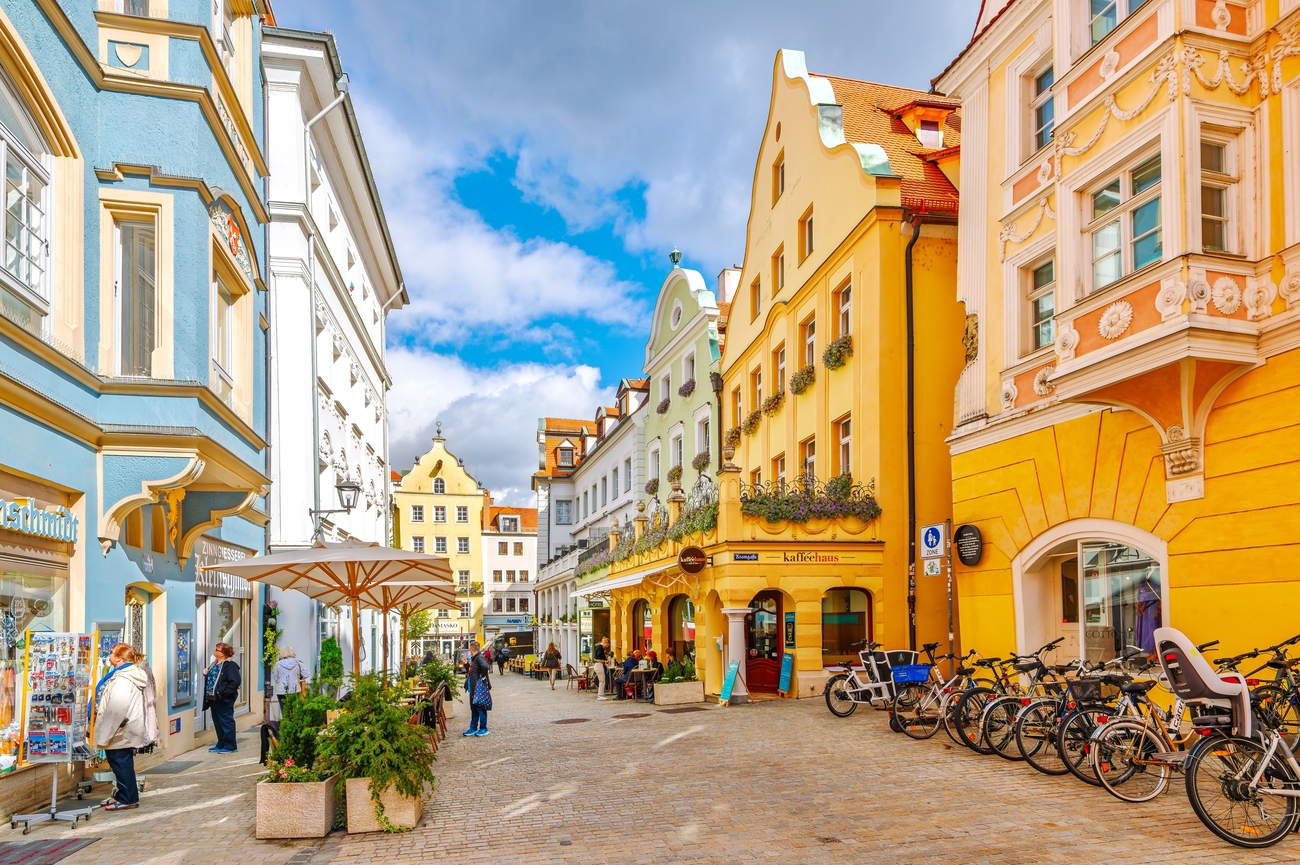
Once you’re back at street level in Neupfarrplatz, head west and you’ll reach Wahlenstraße in under a minute. It’s one of the main arteries of the Old Town.
Wahlenstraße is one of Regensburg’s key shopping streets, lined with boutiques, specialty stores and local retailers set inside medieval and early modern buildings. The architecture still carries the same narrow façades and layered construction you’ve been seeing, but here it’s paired with a more polished, commercial use. It’s not a mall in the typical sense as everything is integrated into the Old Town grid, which keeps the experience consistent with the rest of the city.
You’ll find a mix of independent boutiques, curated concept stores and higher-end fashion and lifestyle shops, making it one of the more refined retail strips in Regensburg. It’s also a good reset point in the itinerary.
Goliathhaus
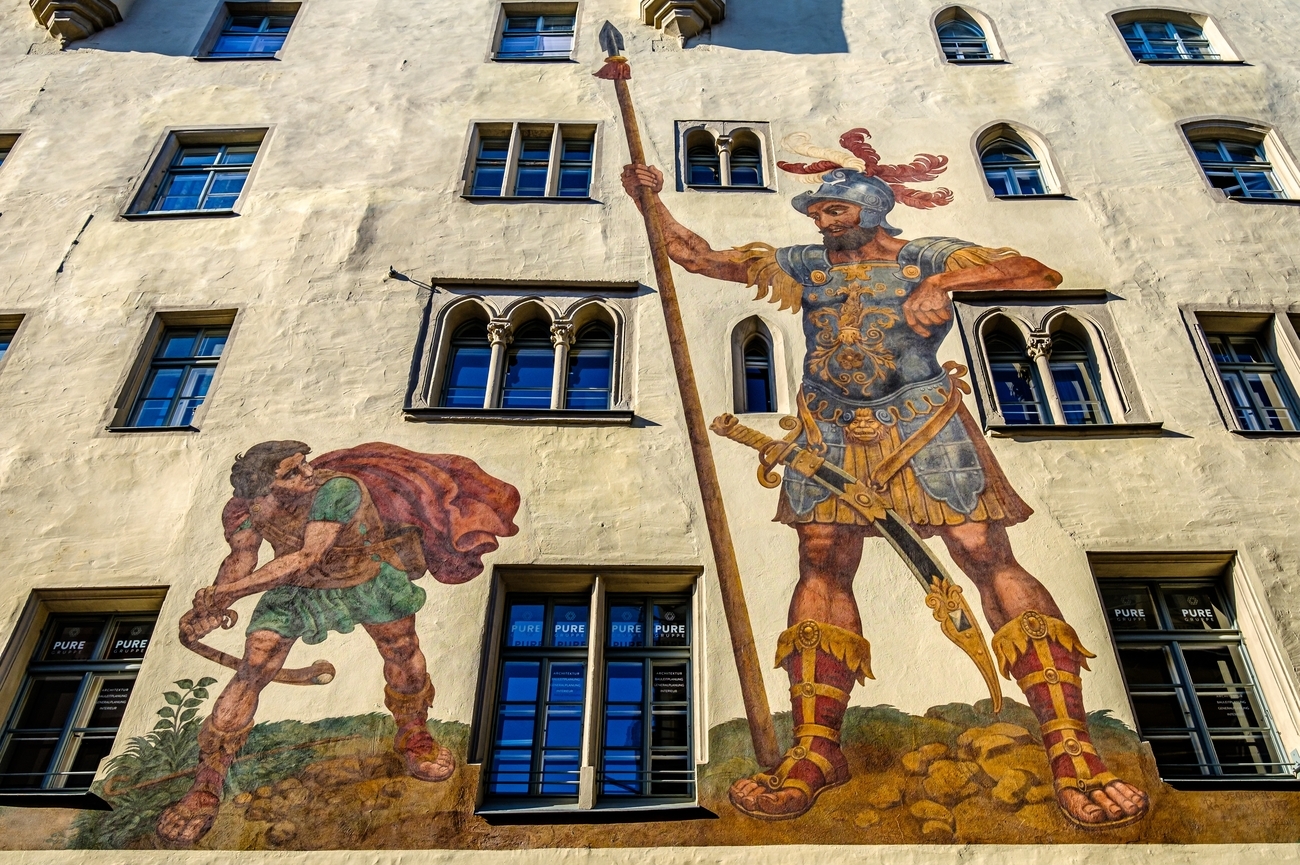
From Wahlenstraße, continue west for about 2 minutes, then turn toward Goliathstraße. Goliathhaus is easy to spot once you’re close, mainly because of what’s painted on it.
The building dates back to the 13th century and is known for its large exterior fresco depicting the biblical story of David and Goliath, added in the 16th century. The facade itself is tall and narrow, typical of medieval merchant houses, but the artwork gives it a distinct identity within the street. It reflects the wealth and status of its former owners, who used visual elements like this to stand out in a dense urban setting. Today, the structure remains well-preserved, blending original stonework with later decorative layers.
There’s no interior access for casual visitors, so the experience is focused on the exterior and its historical context. You can join guided walking tours that include Goliathhaus as a short stop. It’s a quick visit, but it adds character to the route.
Evening: Altes Rathaus Regensburg
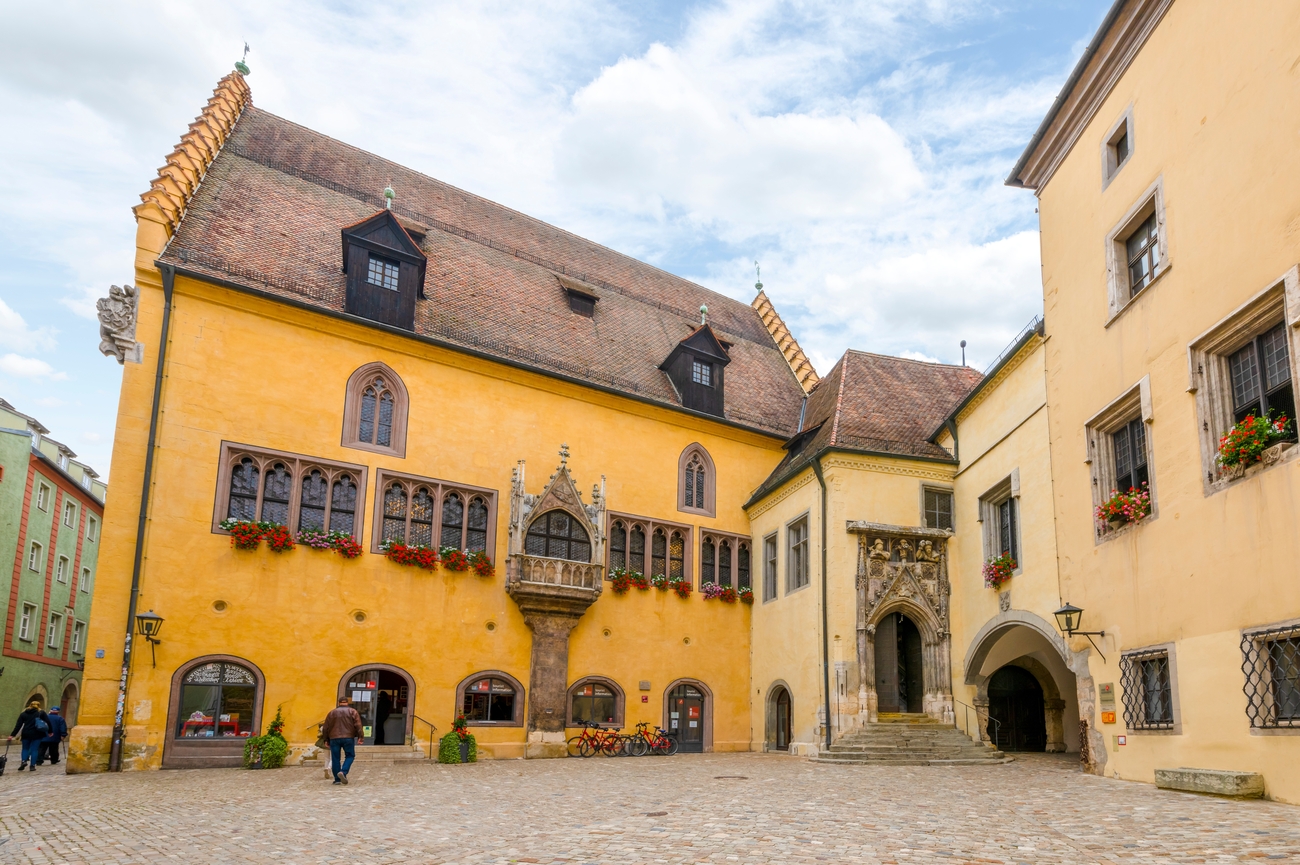
Leaving Goliathhaus, continue along the nearby streets toward Rathausplatz for about 2-3 minutes. Altes Rathaus sits within this cluster and it blends into the square but is still clearly defined by its tower and layered structure.
The Old Town Hall dates back to the 13th century and later became the seat of the Perpetual Imperial Diet of the Holy Roman Empire from 1663 to 1806. It’s a combination of medieval and later expansions, with interconnected sections that reflect its long administrative use. Inside, key spaces like the Reichssaal highlight its political importance, while the basement areas reveal a more complex and less polished side of its history, including former interrogation chambers.
Entry is through the Reichstagsmuseum, and visits are typically done via guided tours only, running at scheduled times throughout the day. These tours focus on the building’s role in imperial governance.
Haidplatz
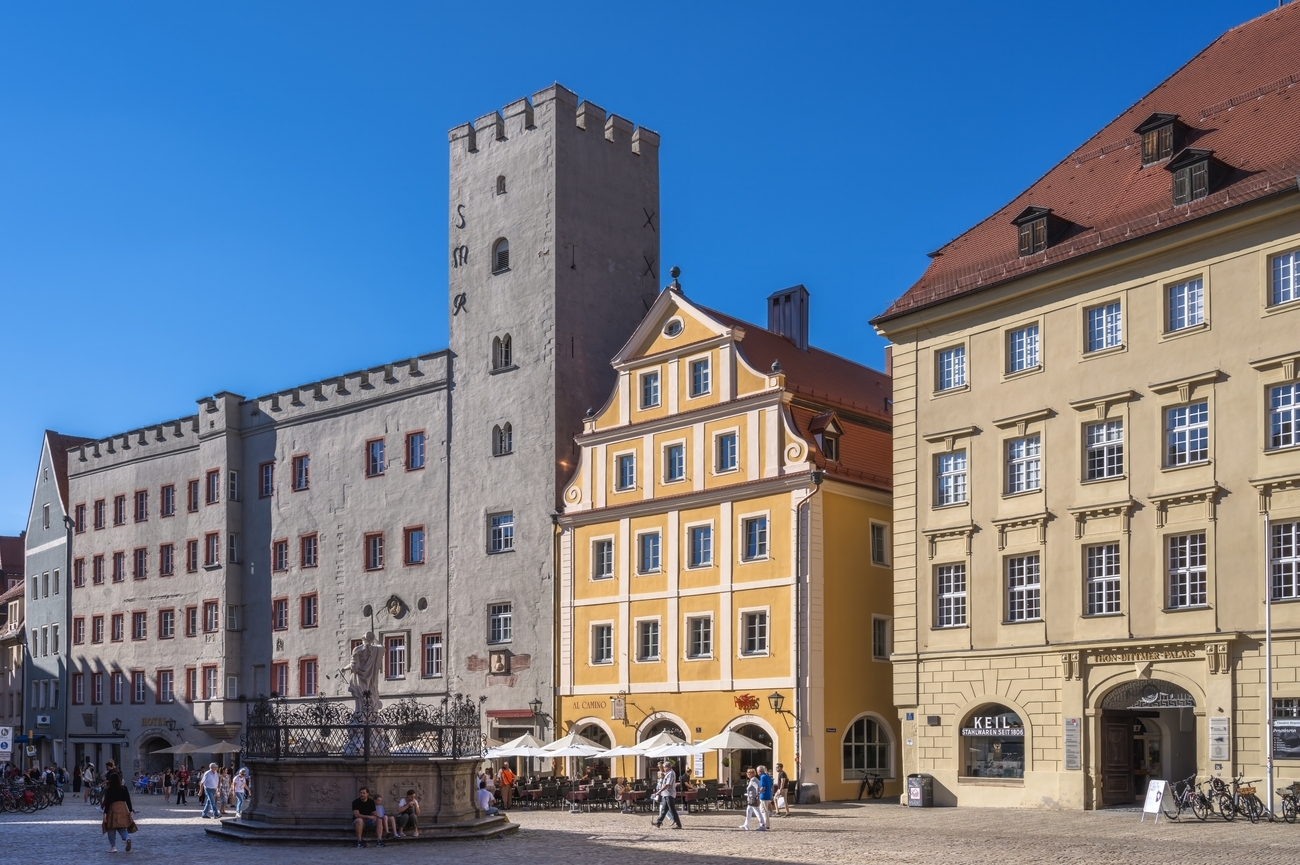
Follow the streets west for about 2 minutes and the space opens into Haidplatz. You move from a civic square into one that feels more residential and social.
Haidplatz dates back to the medieval period and was historically used for tournaments, gatherings and trade. The square is framed by a mix of well-preserved buildings, including the Golden Cross (Goldenes Kreuz), a former patrician house that once hosted imperial guests and the Thon-Dittmer-Palais, a later Baroque addition that now serves cultural functions. The architecture here leans slightly more refined compared to the tighter streets nearby, with facades that reflect wealth and status from different periods.
Goldener Turm
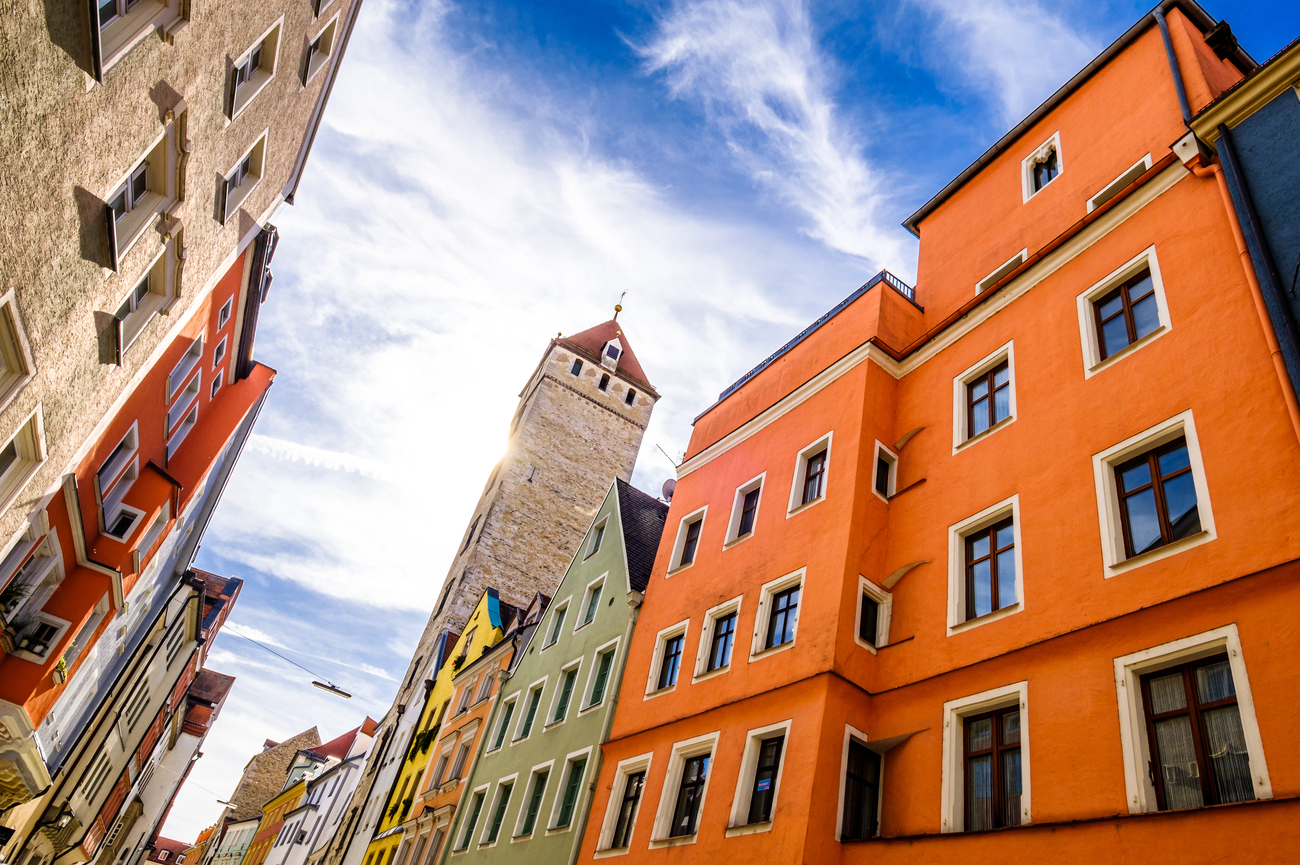
The tower doesn’t dominate the skyline the way the cathedral does, so you’ll notice it more as you get closer. Goldener Turm dates back to the 13th century and is one of the tallest surviving patrician towers in Regensburg. These towers were built by wealthy merchant families as a display of power and status and this one still reflects that intent. The structure is narrow and rises over 50 meters, with a facade that’s mostly unadorned, relying on height and proportion rather than decoration. It’s part of a larger medieval complex and is now used by the University of Regensburg.
Most visits here are exterior-focused, but the tower is regularly included in guided walking tours as a final architectural highlight. It ties together the city’s merchant history, showing how wealth was expressed in built form rather than just trade. It’s a clean, grounded way to close the day, ending on a structure that represents the city’s medieval identity without needing anything extra.
Day 1 - Regensburg Tour Map
Day 2
Morning:
Steinerne Brücke
Start the day by making your way toward the Danube, where the Stone Bridge naturally draws you in.
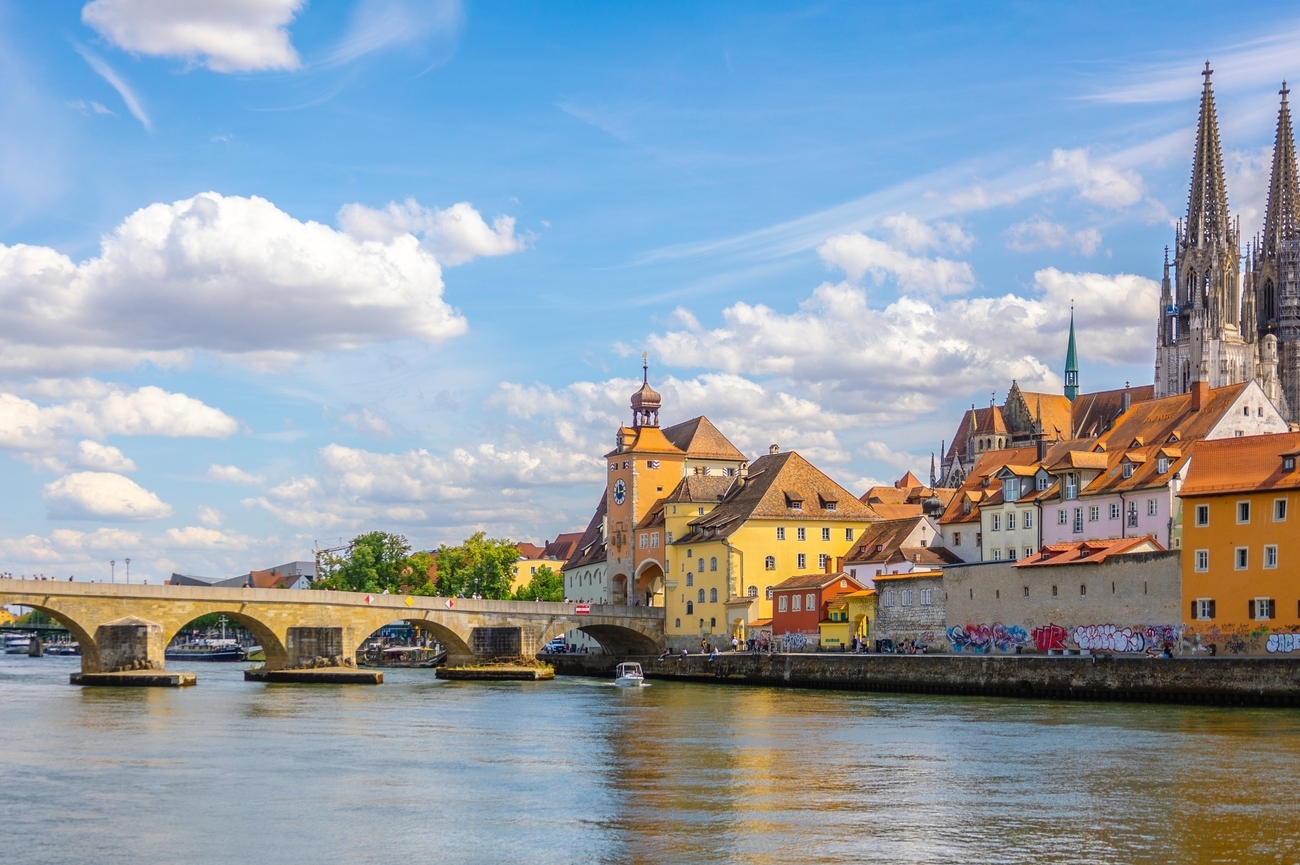
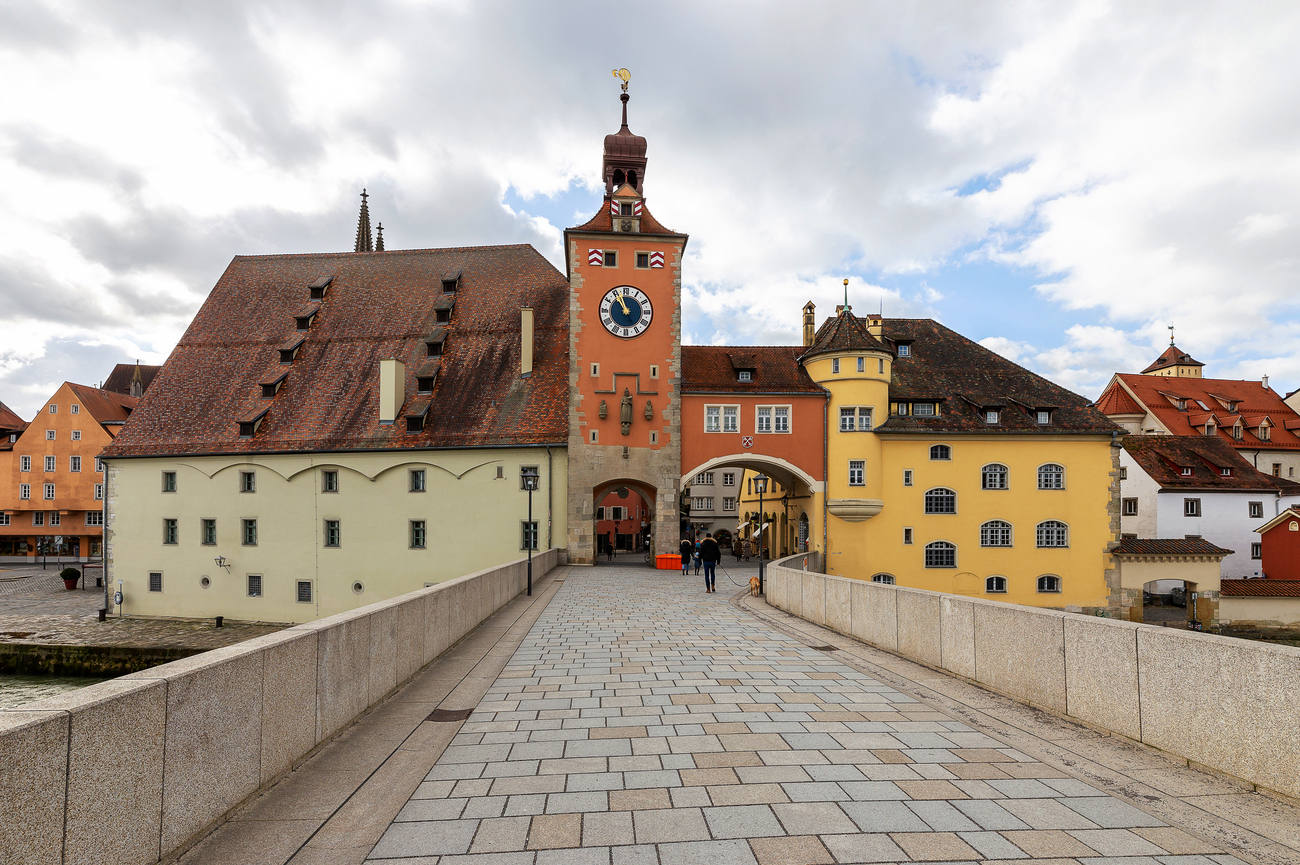
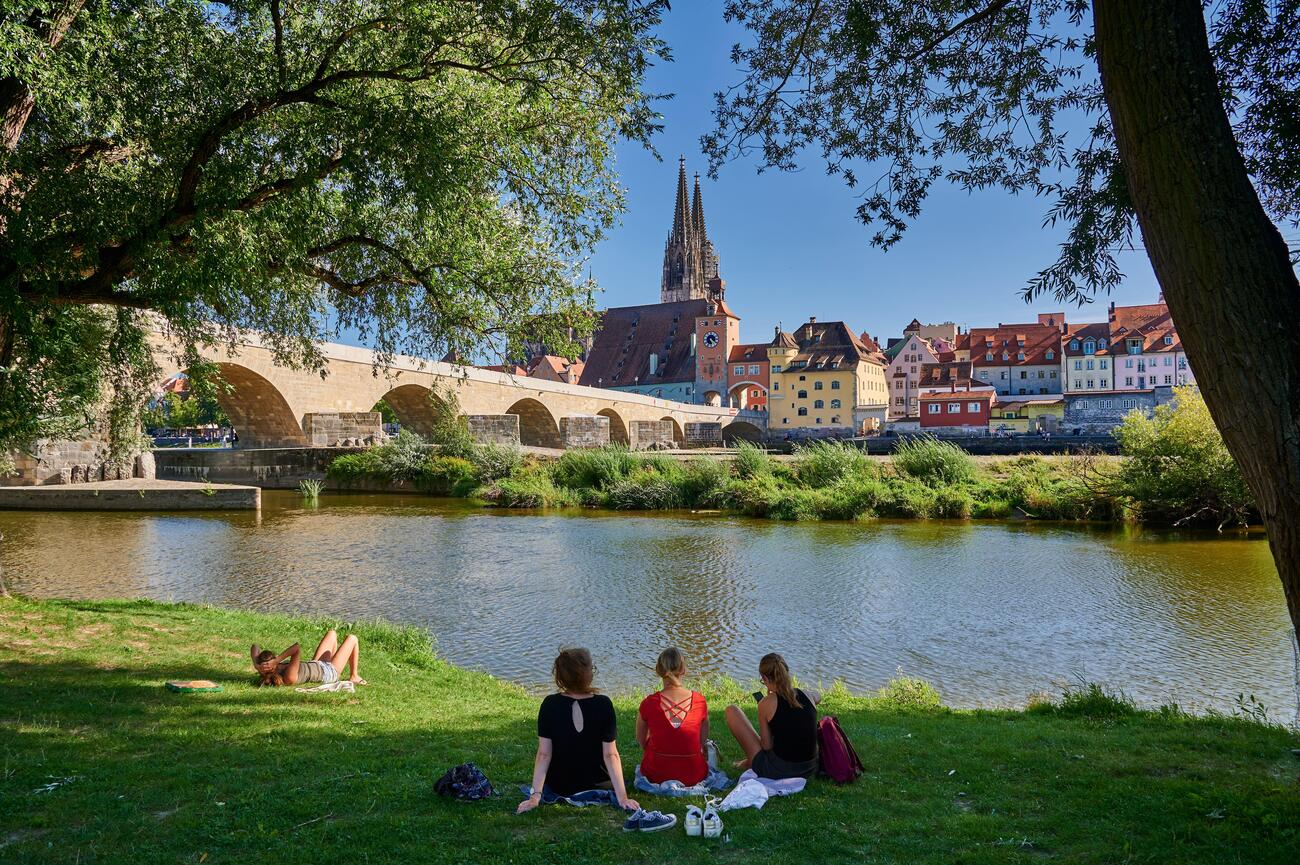
The Steinerne Brücke was built in the 12th century (1135-1146) and was considered an engineering breakthrough of its time. It spans the Danube with 16 stone arches, connecting the Old Town to the district of Stadtamhof. For centuries, it served as a key trade route between northern and southern Europe, which explains its scale and durability. The bridge itself is pedestrian-only today and walking across it gives you a clear view of the river, the cathedral skyline and the overall layout of Regensburg.
Brückturm-Museum
At the southern end of Steinerne Brücke, the Brückturm-Museum sits directly along your path. There’s no detour, just step off the bridge and into the tower.
The museum is housed inside one of the bridge’s original defensive towers, which dates back to the 12th century. It’s a compact space, but it does a good job of breaking down how the Stone Bridge was built and why it mattered. You’ll find models, historical diagrams and construction details that explain the engineering behind the 16-arch structure, along with context on its role as a major trade link across the Danube. The interior is narrow and layered across levels, which makes the visit feel more like moving through a preserved structure than a standard museum setup.
Stadtamhof
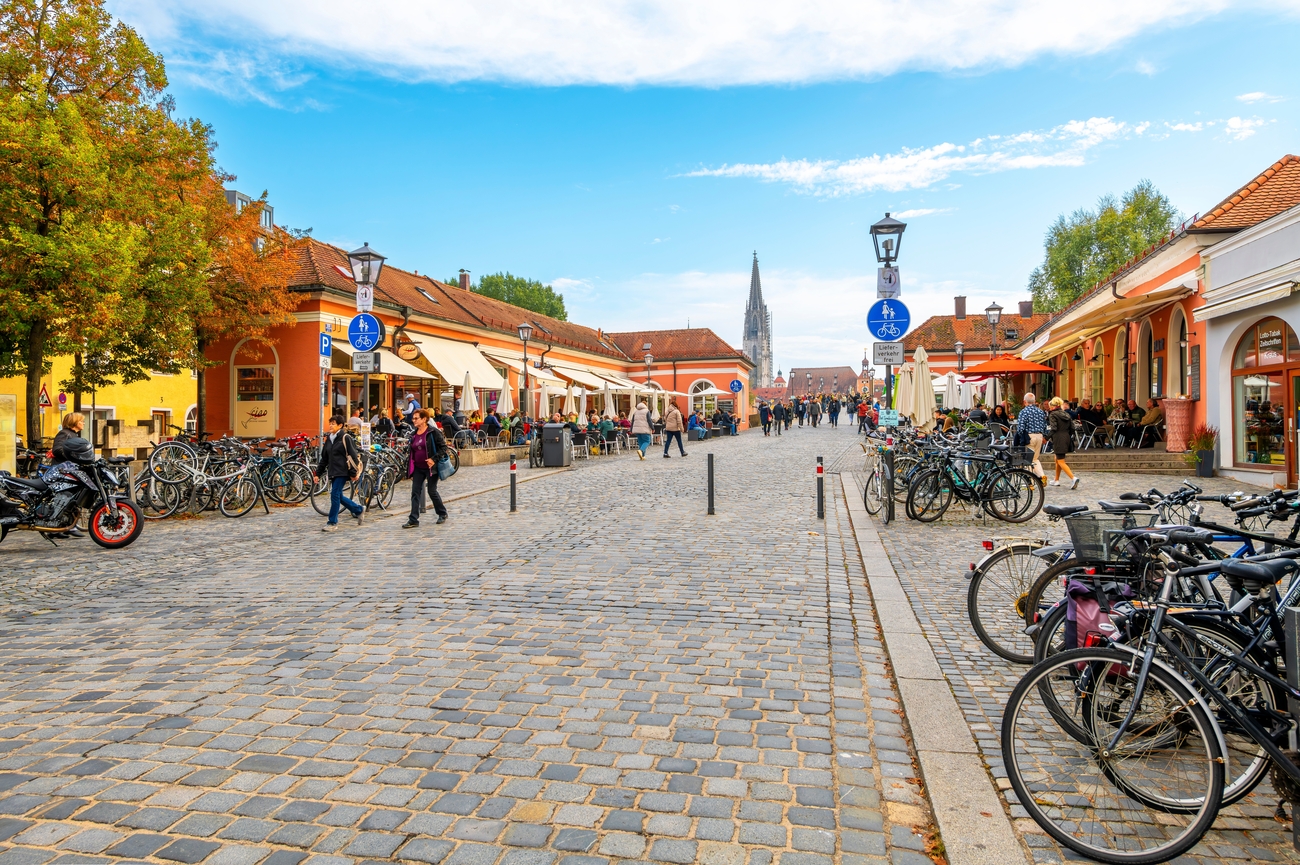
Continue across Steinerne Brücke heading north, and within 2-3 minutes you’ll step into Stadtamhof. It’s still historic, just quieter and more spread out.
Stadtamhof was once a separate Bavarian town before being incorporated into Regensburg, and that difference still shows. The main street runs in a straight line, lined with colorful houses, smaller-scale buildings, and traditional façades that feel less formal than the Old Town core. It’s also part of the UNESCO-listed area, but the atmosphere is more relaxed. You’re still surrounded by history, just without the constant movement.
For a more elevated experience, some private walking or bike tours extend further into Stadtamhof and along the Danube paths nearby, offering a more curated route away from the busiest areas.
Afternoon: Schloss St. Emmeram, Thurn und Taxis
From Stadtamhof, head back across the Steinerne Brücke and continue south toward Emmeramsplatz. The walk takes about 10-12 minutes, moving from the quieter riverside district back into the Old Town and then into a more open, formal area.
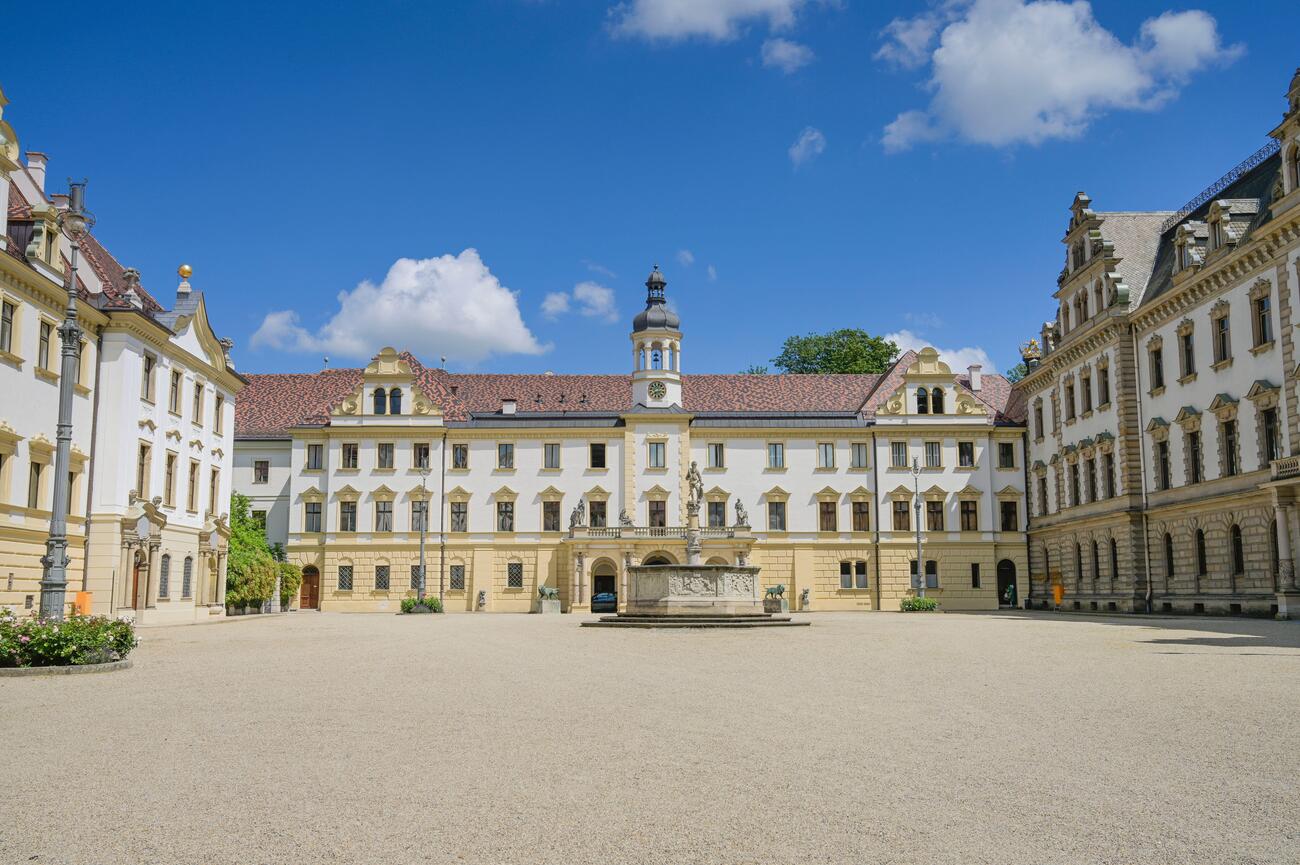
Schloss St. Emmeram is one of the largest private residences in Germany and has been the seat of the Thurn und Taxis family for centuries. Originally a Benedictine monastery, the complex was later transformed into a palace, which explains its layered layout with cloisters, grand halls, courtyards and formal rooms all sitting within one structure. The interiors lean heavily into aristocratic design, with detailed ceilings, period furnishings and rooms that reflect the family’s historical role in European postal systems and nobility.
Access depends on the section you want to see. The State Rooms and Cloister are only accessible through guided tours, which run on a scheduled basis and need to be booked in advance through the official online ticket system. These tours follow fixed time slots, released weekly, so planning ahead matters. Meanwhile, the Treasury and Royal Stables can be visited independently during opening hours.
Basilica of St. Emmeram
From Schloss St. Emmeram, the basilica is just steps away. It is within the same complex area.
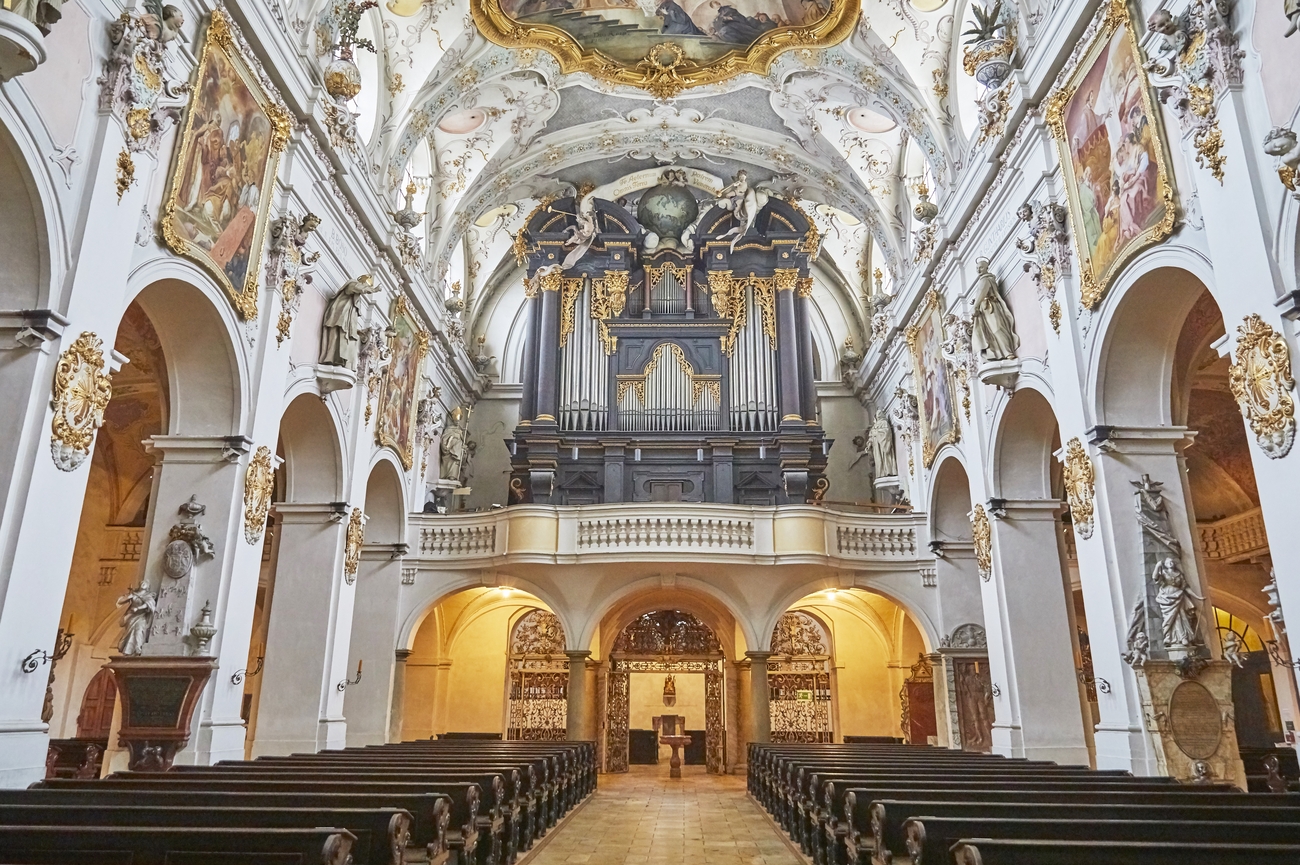
The Basilica of St. Emmeram is one of Regensburg’s oldest religious sites, with origins tracing back to the 8th century. Over time, it evolved from a monastery church into a richly detailed basilica, blending Romanesque foundations with Baroque interior elements. Inside, the contrast is clear with ornate stucco work, gilded altars and layered decoration sitting over a much older structural base.
Entry to the basilica is generally free and you can explore the interior at your own pace during opening hours. Guided tours of the palace sometimes include the basilica as an extension, but many visitors experience it independently.
Emmeramsplatz
Step out from the Basilica of St. Emmeram and you’re already at Emmeramsplatz. There’s no walking time to factor in. This square sits directly in front of the basilica and alongside Schloss St. Emmeram.
Emmeramsplatz functions as a forecourt to both the basilica and the palace complex. It’s wider and more structured than most Old Town spaces, with a layout that feels intentional rather than organic. The square highlights the scale of the buildings around it, especially the palace facades, while keeping enough open space to make the area feel less dense. Architecturally, it leans more toward Baroque influence compared to the tighter medieval streets earlier in the route.
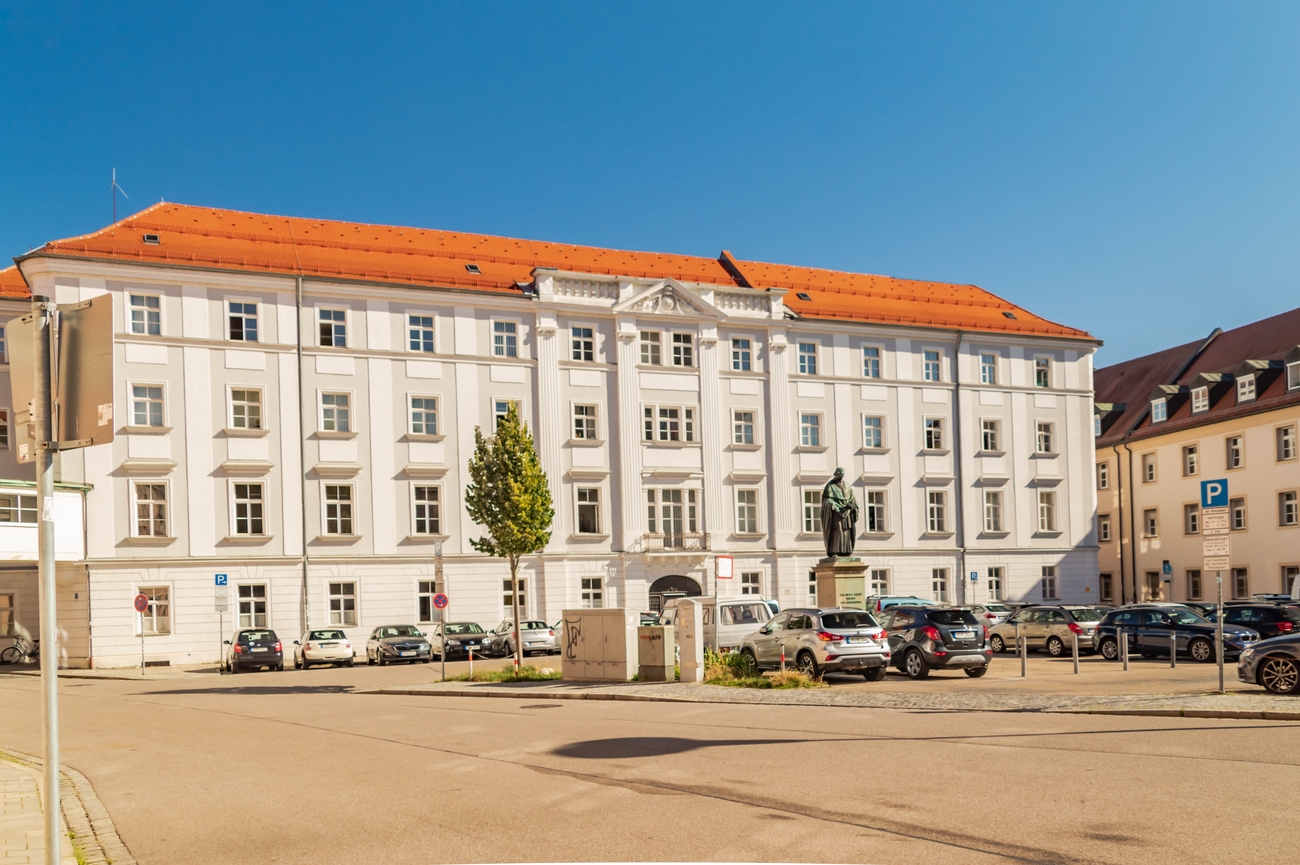
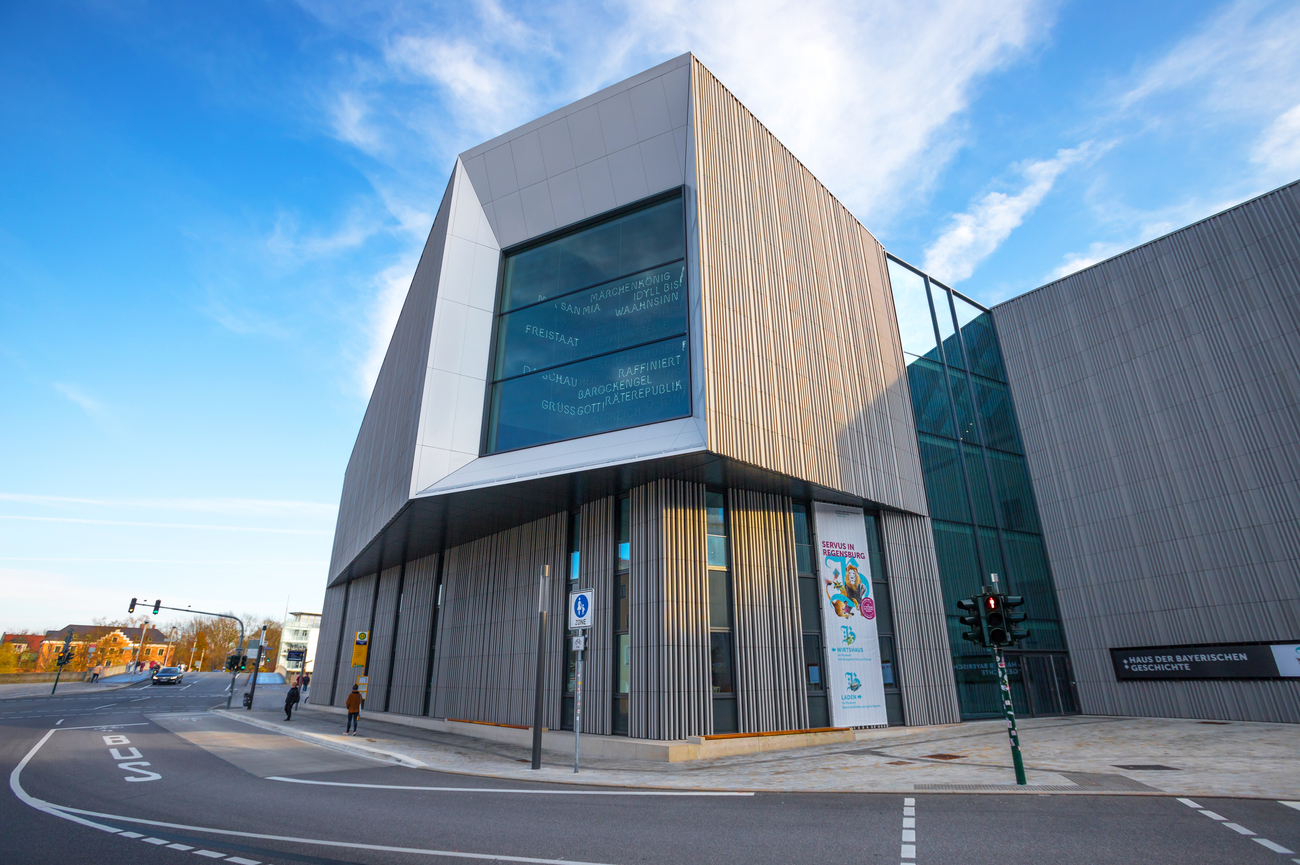
Evening: House of Bavarian History
From Emmeramsplatz, head southeast toward the Danube for about 10-12 minutes. The walk gradually opens up as you leave the tighter Old Town streets, and the setting shifts into a more modern riverside area. The House of Bavarian History stands out right away as it contrasts with everything you’ve seen earlier in the day.
The museum focuses on Bavaria from the 19th century to the present, so it feels more current compared to the medieval and Roman stops. Inside, the exhibitions combine large-scale objects, multimedia installations and personal artifacts, making the experience more interactive and less static. The layout is open and well-paced, so you’re not moving through tight rooms but through wider, curated sections that guide you through political, cultural, and social developments across Bavaria.
Guided tours are available in several formats depending on how deep you want to go. Standard tours of the permanent exhibition typically run for about 75 minutes, covering how Bavaria transitioned into a Free State and what defines it today. There are also shorter tours (around 45 minutes) that focus on key highlights, as well as themed tours that explore topics like Bavarian identity, culture and historical turning points. These are offered in German, English and sign language, with other languages available upon request. You can choose how you would like to explore this museum.
Donaupromenade
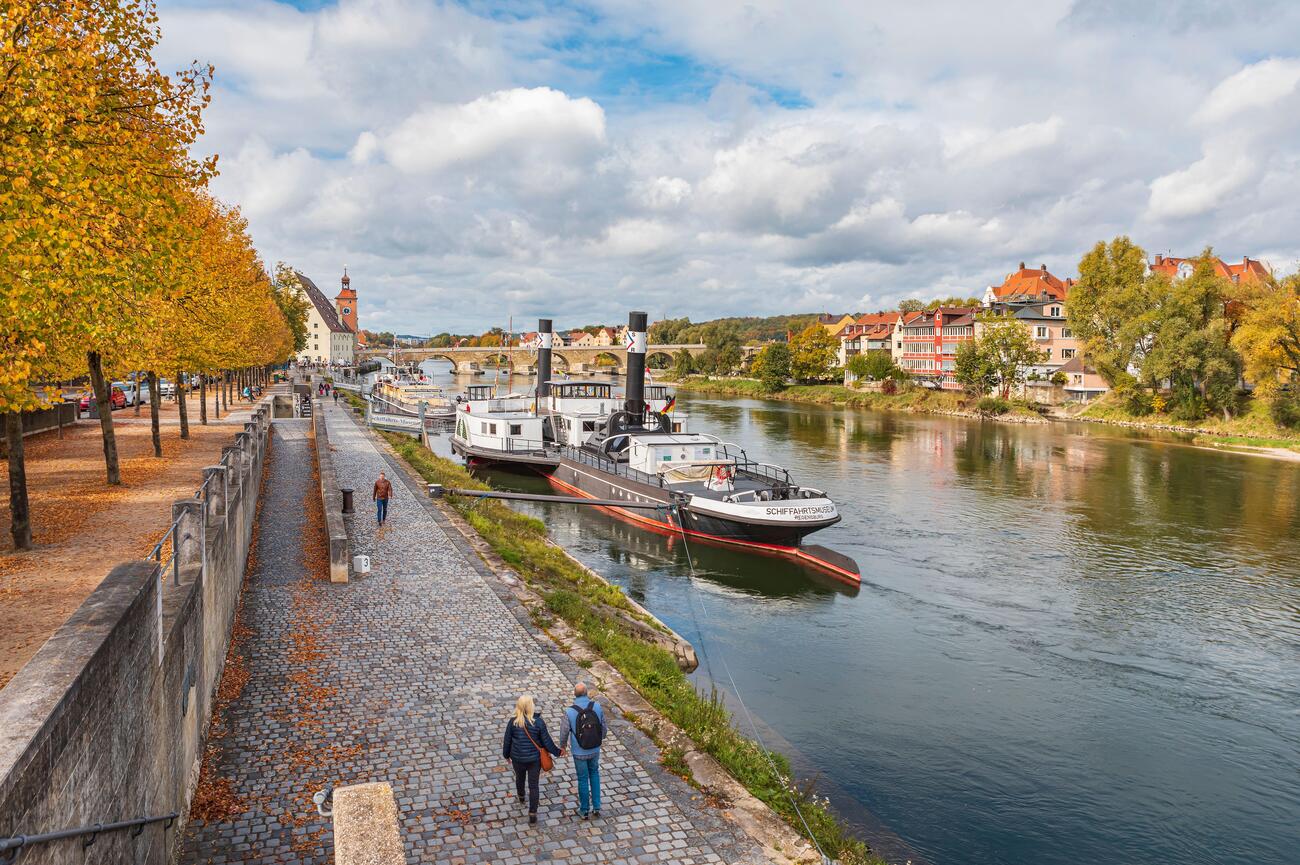
Step out of the House of Bavarian History and head straight toward the river. Within 2-3 minutes, you’re on the Donaupromenade.
The Donaupromenade runs along the Danube and offers a clear, uninterrupted stretch for walking. You get open views of the water, the Steinerne Brücke in the distance and the Old Town skyline behind you. The design is simple. It has wide paths, seating areas and enough space to move at your own pace. It’s not built to impress with features, but it works because of the setting. The river does most of the work here.
It’s a natural closing point. You’re not being directed through anything. You just walk, pause and take in the view.
Day 2 - Regensburg Tour Map
Day 3
Morning:
Bismarckplatz
Start the morning by heading toward the western side of the Old Town.
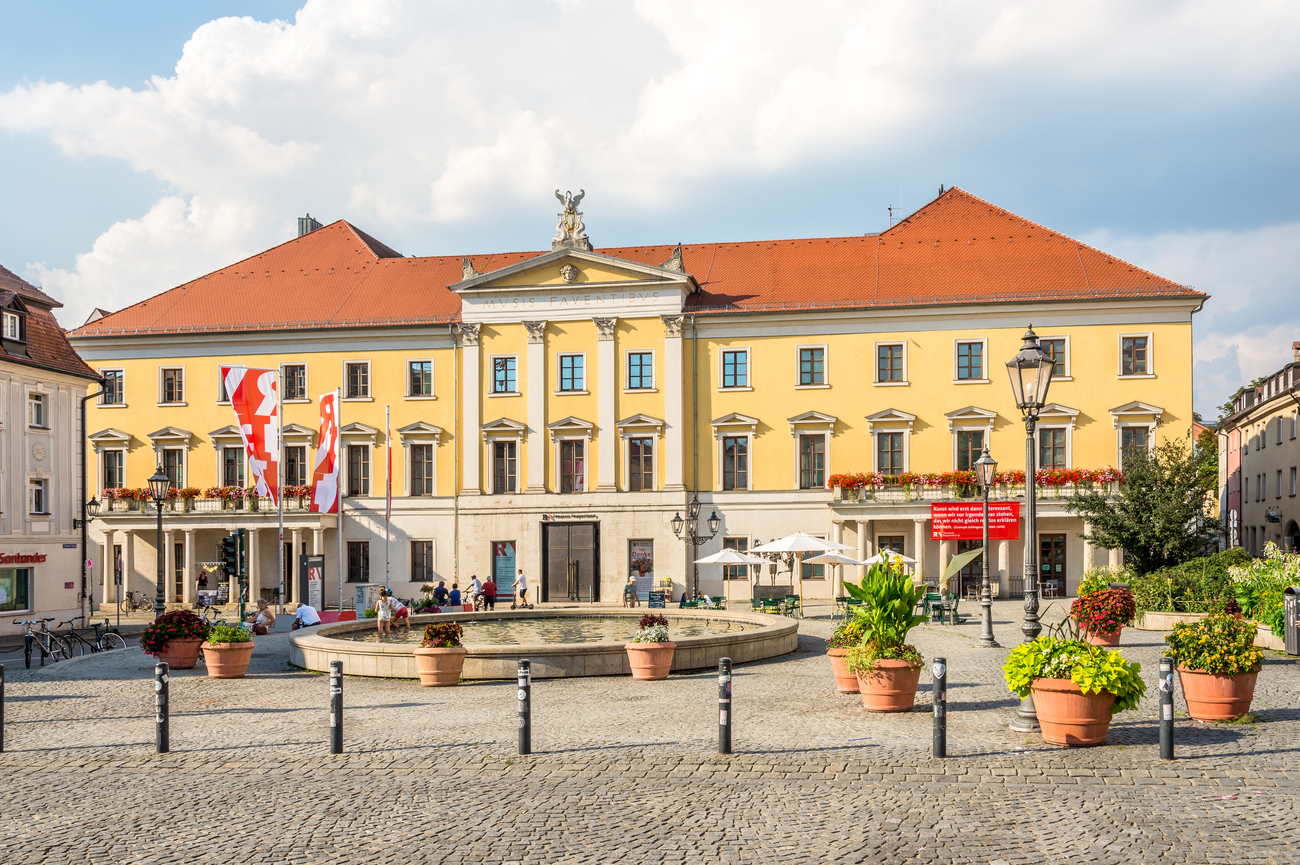
Bismarckplatz developed more prominently during the 18th century and is framed by Baroque and Neoclassical facades, giving it a more uniform and composed look compared to the tighter medieval streets. It also serves as the setting for Theater Regensburg, one of the city’s main cultural institutions. The square itself is broad and structured, with buildings that feel more planned than organic, reflecting a later phase of urban development.
You won’t find formal tours dedicated to the square alone, but it’s a common inclusion in guided city routes. It often acts as a transition point between historic districts and cultural venues.
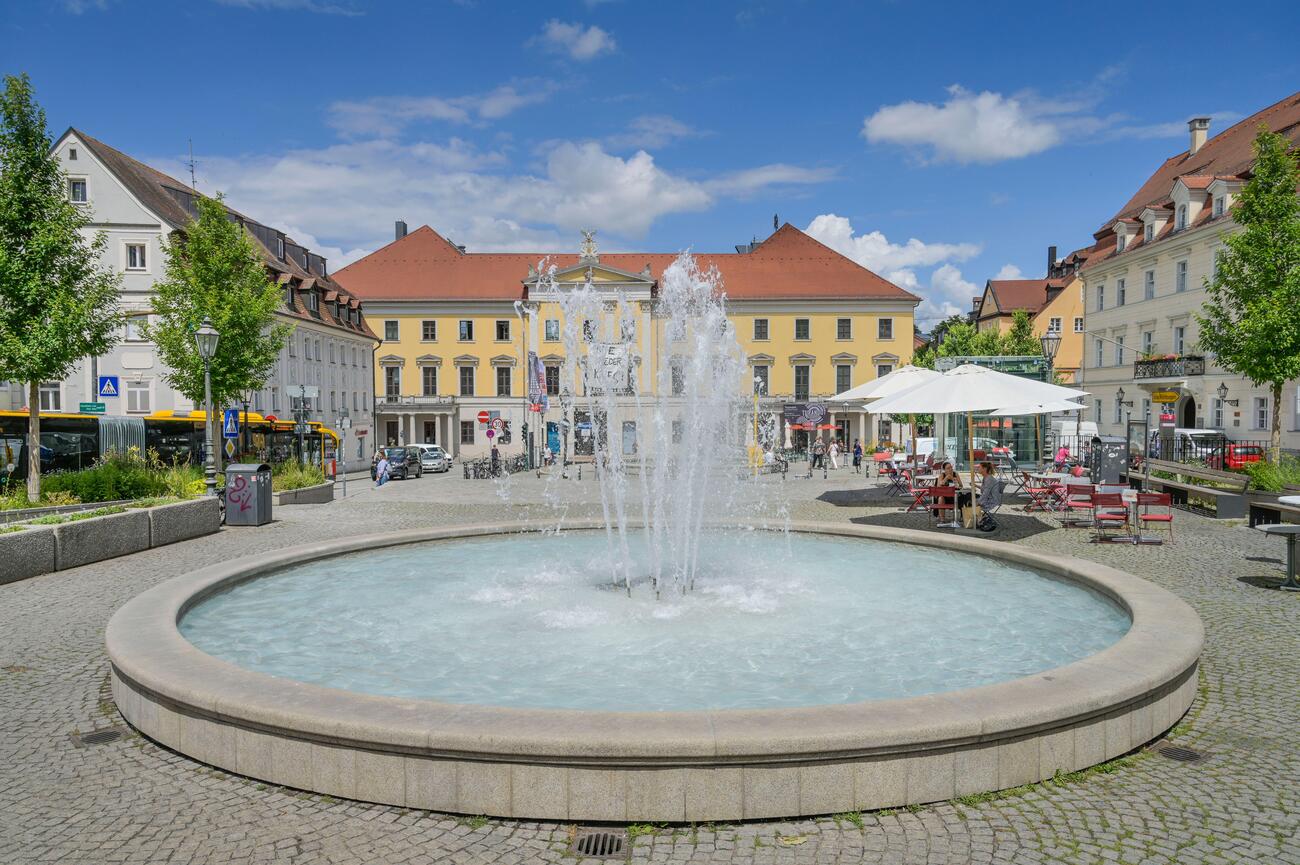
Theater am Bismarckplatz
From the centre of Bismarckplatz, the Theater am Bismarckplatz is directly in front of you. This is the main house of Theater Regensburg, one of Bavaria’s largest municipal theatre organisations, with roots going back to the early 19th century. The building itself reflects that period, with a restrained classical facade compared to the older medieval structures nearby. Inside, it contains the Großes Haus and Neuhaussaal, and hosts a varied programme of opera, drama, ballet and concerts, making it a key part of Regensburg’s contemporary cultural scene.
While casual entry depends on scheduled performances, Theater Regensburg does offer guided tours and backstage visits at select times, usually arranged in advance. These tours give you access to areas not normally open to the public, including stage zones and technical spaces, along with a breakdown of how productions are staged.
Jakobstor
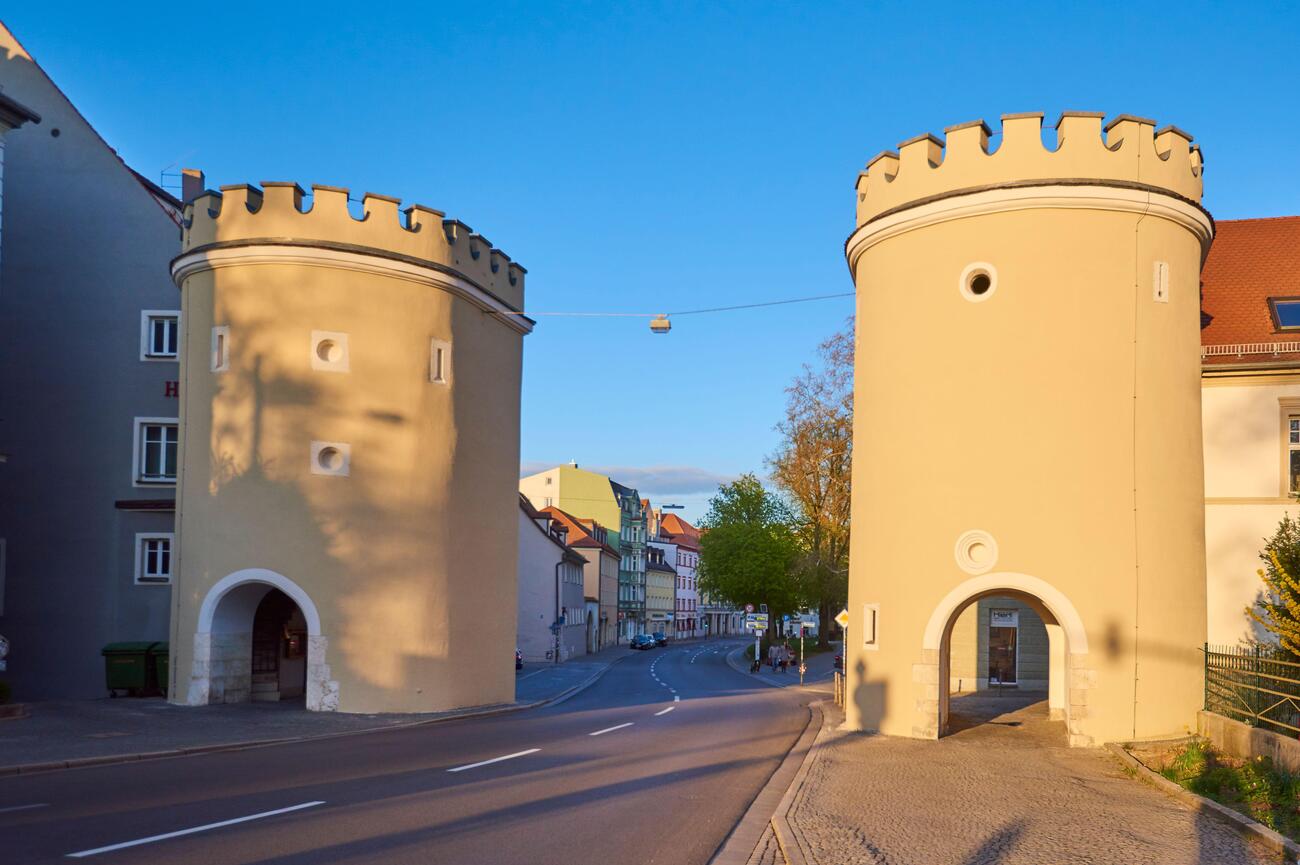
Head west along the main road for about 3-4 minutes, and Jakobstor comes into view near the edge of the Old Town. This is one of the points where the historic city once controlled who came in and out.
Jakobstor dates back to the 14th century and remains one of the best-preserved gates from Regensburg’s original fortifications. It marked a key exit toward western routes, including pilgrimage paths like the Way of St. James. The structure is simple and direct, with a stone gate tower with a central archway, connected to surviving sections of the city wall. It’s built for purpose, not display, which makes it stand out in a different way compared to more decorative landmarks. Oh, there’s no interior access, so the focus stays on the exterior and its role within the city’s defensive system.
Scots Monastery
A 2-minute walk will take you to the Scots Monastery.
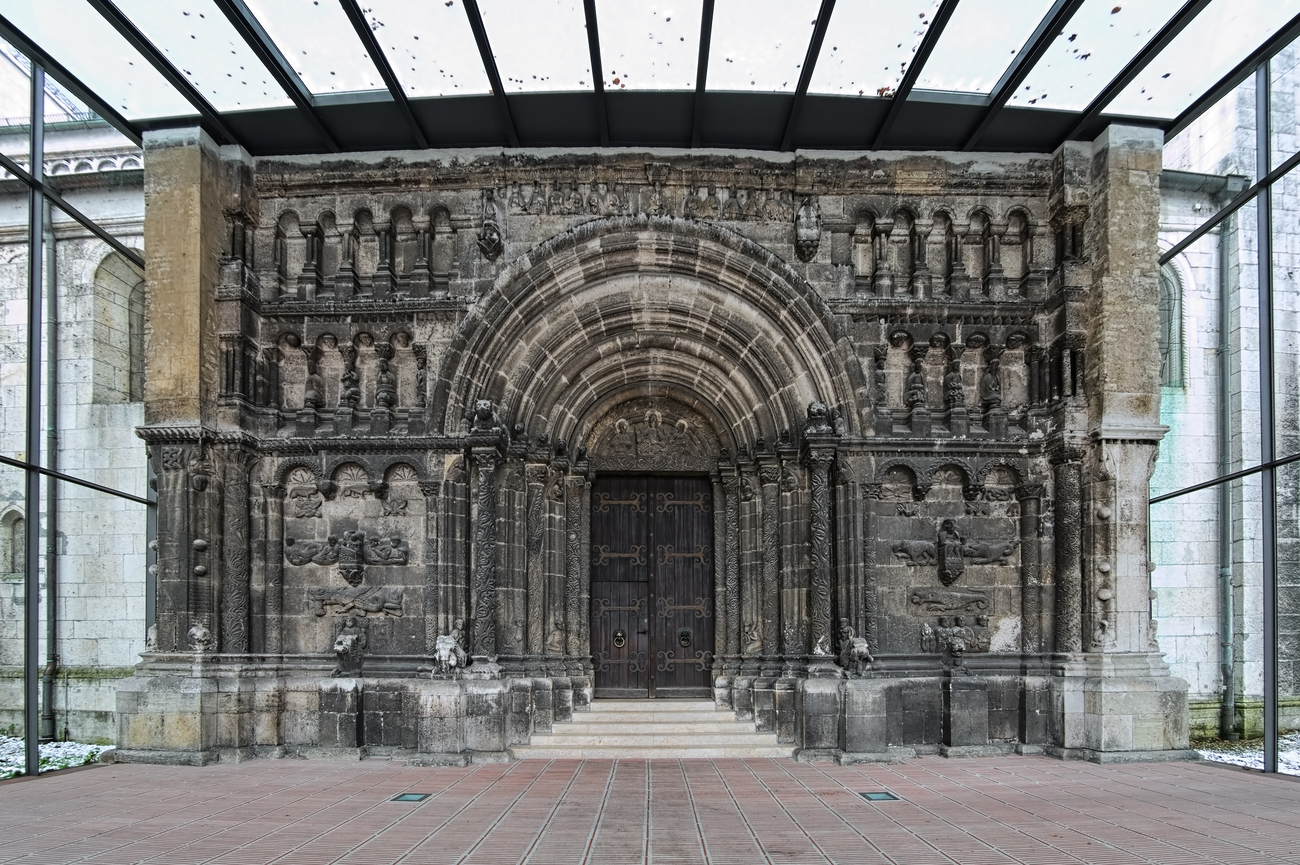
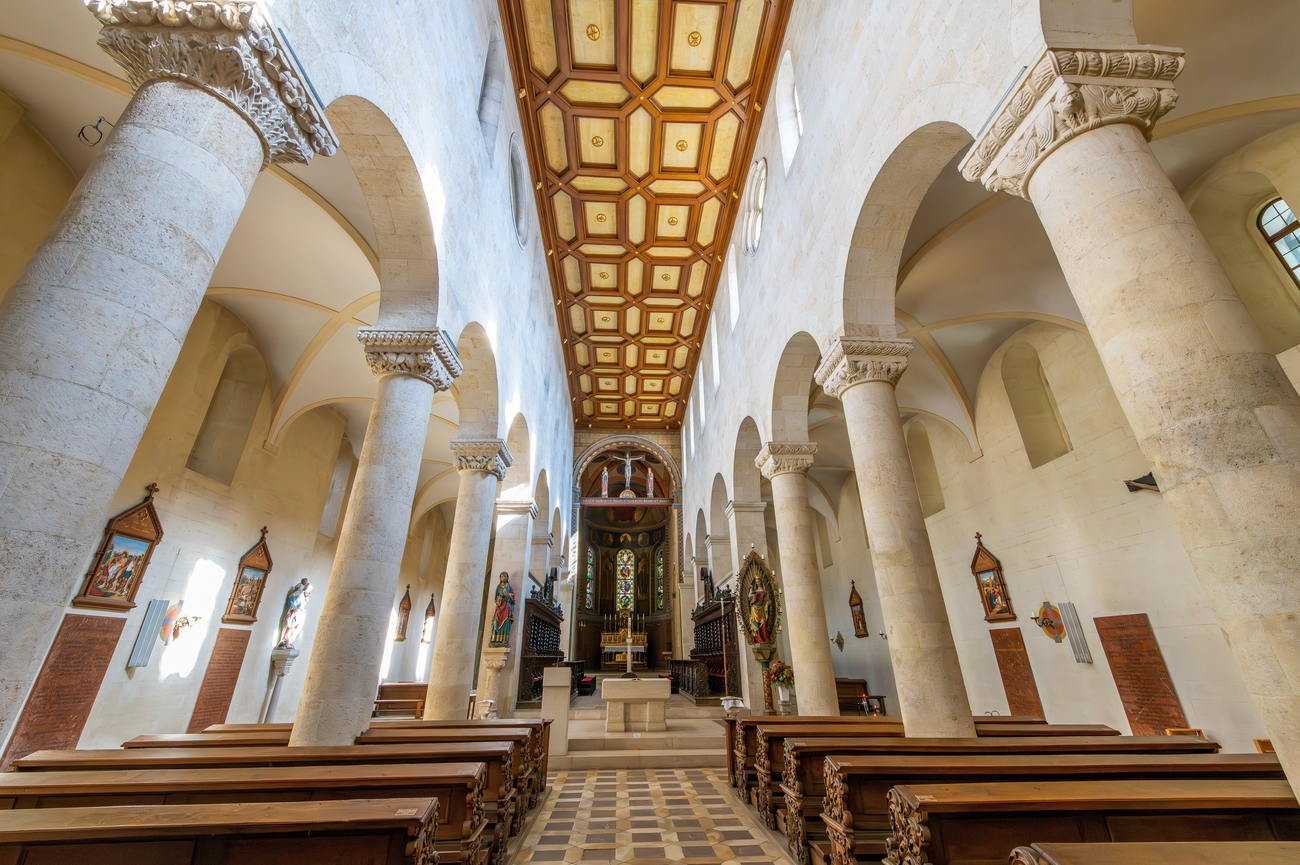
The Scots Monastery, also known as Schottenkirche St. Jakob, dates back to the 12th century and was founded by Irish Benedictine monks, which explains the “Scots” name used historically for Irish monks in Germany. It’s one of the most important Romanesque churches in southern Germany, known for its highly detailed north portal, often referred to as the Schottenportal. The carvings are dense and symbolic with figures, animals and abstract forms layered across the entrance, giving it a very different look from the Gothic structures elsewhere in the city. Inside, the space is more restrained, with solid stone construction and a simpler layout that reflects its earlier origins.
The church is generally open to visitors during the day. There are no fixed guided tours specific to the monastery, allowing you to step inside and move through at your own pace.
Afternoon: Golfmuseum Regensburg
Work your way back into the Old Town by heading east for about 7-10 minutes, and the streets gradually tighten again as you re-enter the denser medieval grid. The Golfmuseum is tucked along one of the smaller lanes, so it comes up more subtly compared to earlier landmarks.
The Golfmuseum Regensburg is one of the oldest golf museums in the world, set inside a historic patrician house. It focuses on the evolution of golf, with early clubs, balls, artwork and memorabilia that trace how the sport developed and spread. The space is compact and feels more like a curated collection than a large museum, which makes it easy to move through without it feeling heavy. There are also no formal tours here so you can visit during standard opening hours and explore independently.
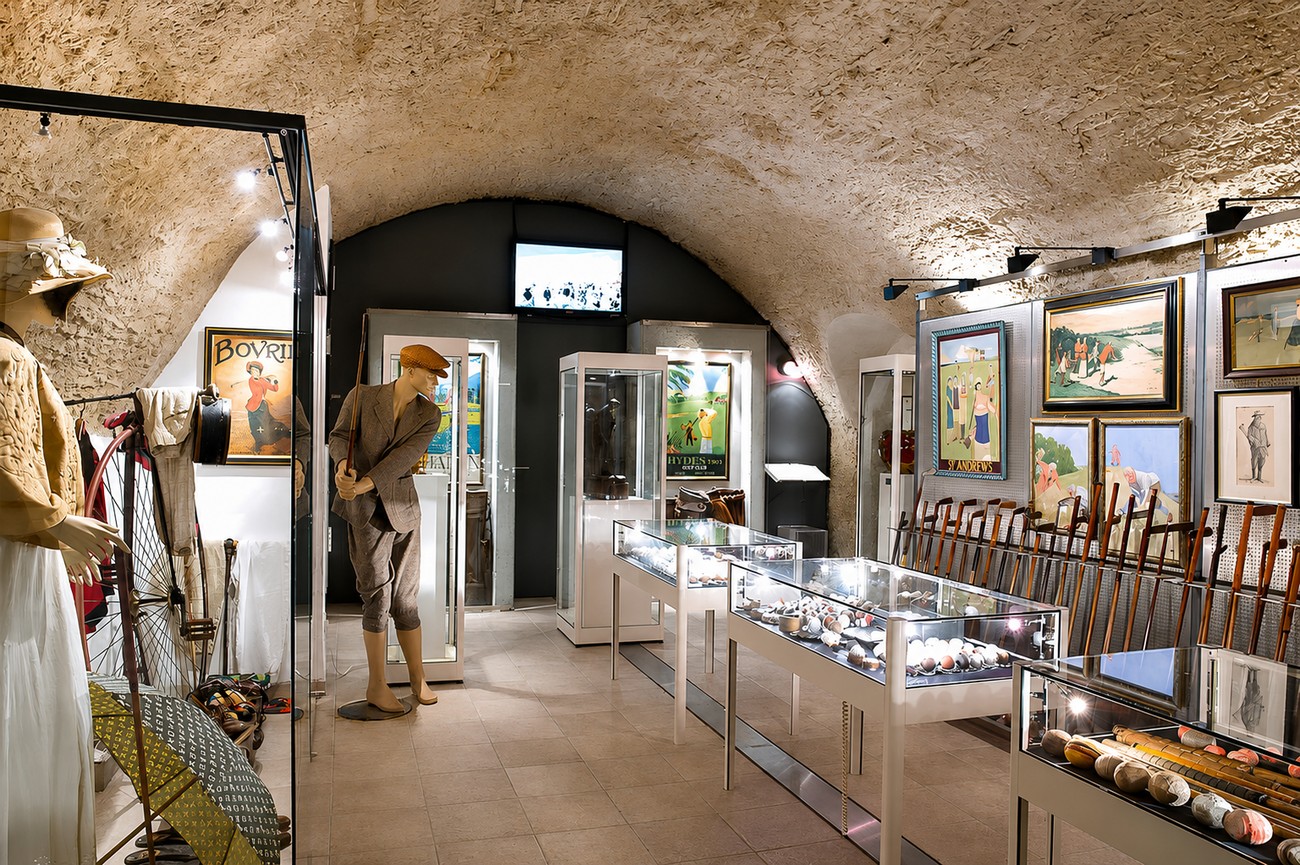
Maximilianstraße
A 3-5 minute walk from the Golfmuseum Regensburg will take you to Maximilianstraße. It connects key parts of the city, including the Old Town and the main train station, so there’s a steady flow without it feeling overcrowded.
Maximilianstraße was developed in the 19th century and reflects a more modern phase of Regensburg’s growth. The architecture shifts toward Neoclassical and later styles, with broader facades, larger windows and a more uniform street layout. It’s one of the city’s main commercial avenues, lined with retail stores, boutiques and larger-format shops that contrast with the smaller, independent stores found deeper in the Old Town. The street feels more open and practical, but still fits within the overall city structure.
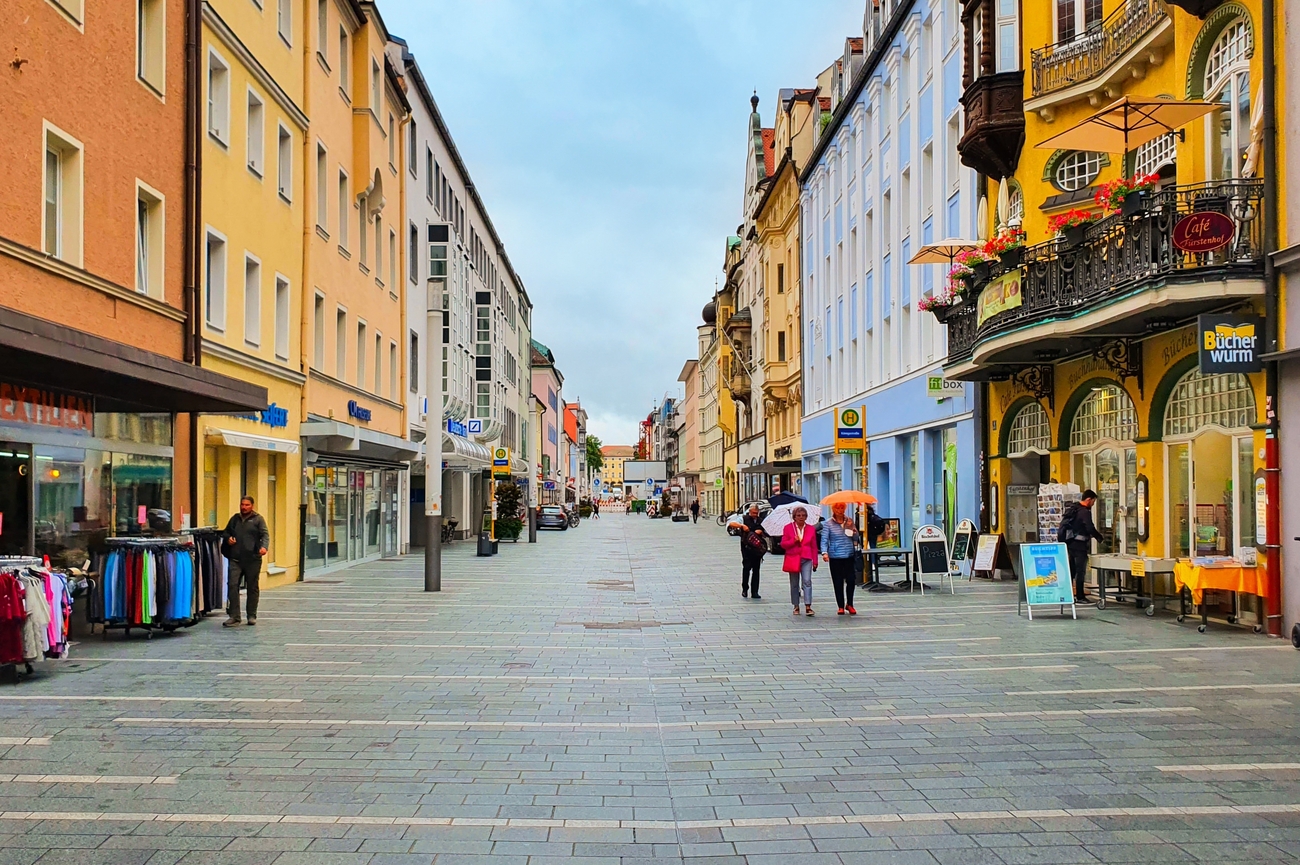
Evening: Herzogs Park
Make your way west from Maximilianstraße for about 10-12 minutes, gradually leaving the busier commercial stretch behind. Herzogs Park is one of the few spots in Regensburg where the city fully gives way to green space.
This park sits along the Danube and was originally part of a ducal residence, which explains its more structured layout. The park combines manicured gardens, tree-lined paths, small pavilions and open lawns, along with remnants of older fortifications like the Prebrunnturm. It’s not oversized, but it’s well-designed, with enough variation to keep it interesting without feeling scattered. Compared to earlier stops, this is more about space and pacing than architecture.
The park naturally feels more exclusive in the evening with fewer people, softer light and a slower pace. It’s a clean way to wind down the day without needing anything structured.
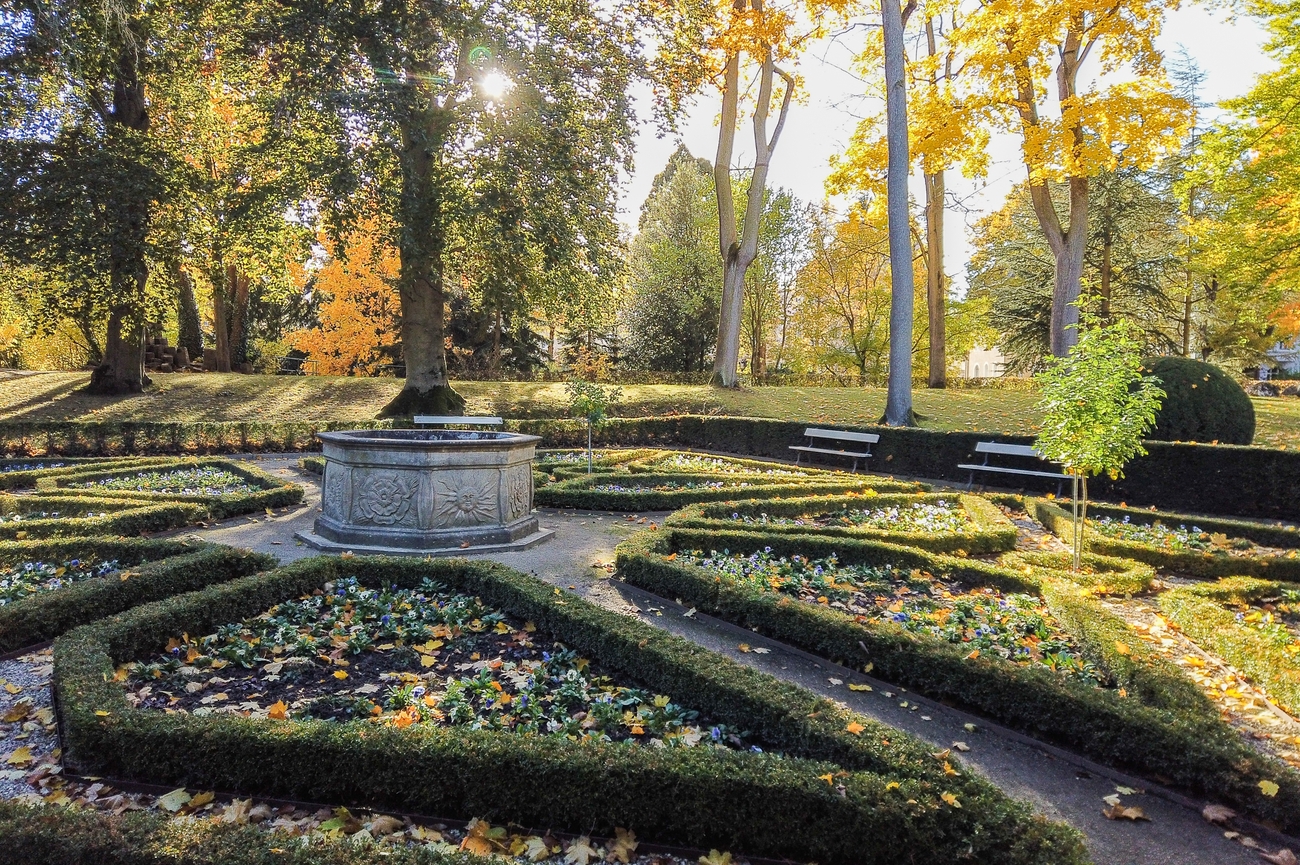
Villapark
From Herzogspark, follow the riverside path west for about 7 minutes and Villapark gradually comes into view.
Villapark is smaller and less structured than Herzogspark, which gives it a more natural rhythm. You’ll find open lawns, shaded paths and river-facing spots without the more formal garden design seen earlier. It’s not built around standout features, but the setting carries it with less noise, more space and a clearer connection to the Danube.
There are no tours or scheduled visits tied to this park, so the experience is fully self-paced. Most guided routes don’t extend this far, which keeps the area quieter even during busier periods. And even on your own, Villapark closes the day cleanly. It is just far enough from the center to feel like a proper endpoint.
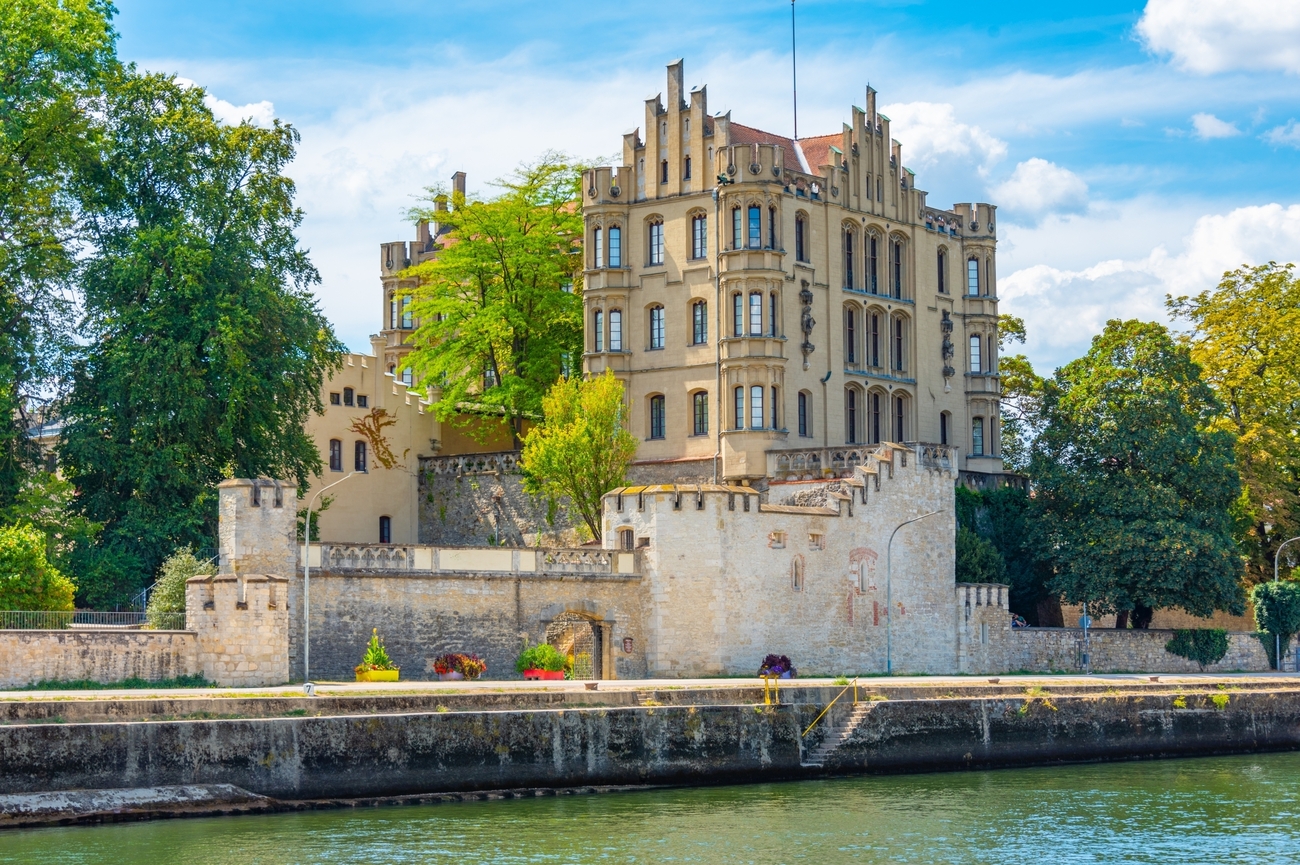
Day 3 - Regensburg Tour Map
Other Things to Do in Regensburg
Regensburg has a way of giving you more once you’ve already covered the main route. The core sights do their job, but the city opens up further when you start looking at smaller museums, river experiences and more curated stops. It’s still compact, still easy to move through. Here are additional places worth adding if you want to stretch the itinerary without breaking its flow:
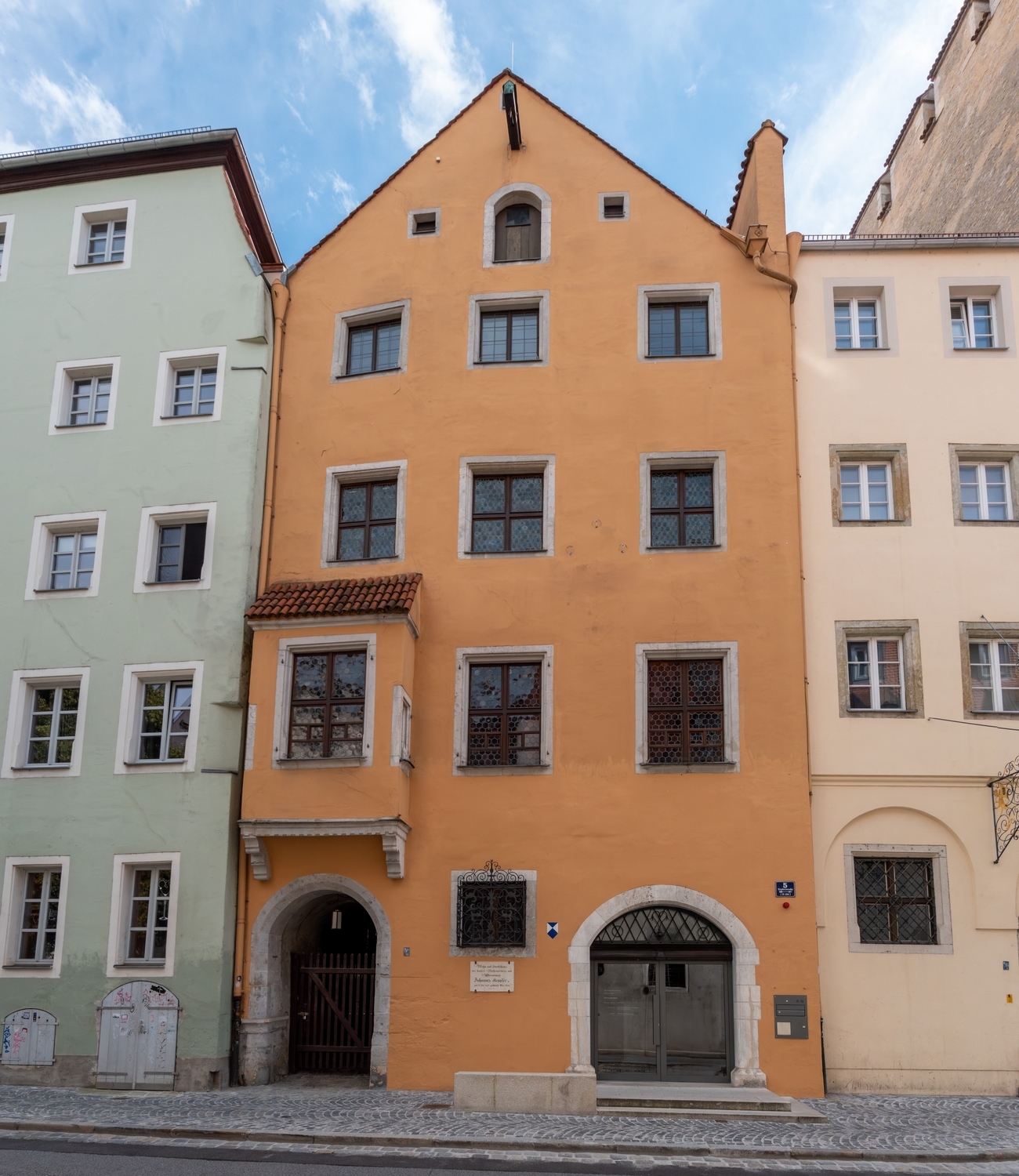
- Kepler Memorial House: The Kepler Memorial House is where astronomer Johannes Kepler spent his final days, and it’s been turned into a focused museum that tracks both his work and his connection to Regensburg. You’ll find original prints, instruments, manuscripts and scientific models tied to Kepler’s work on planetary motion. The exhibits lean into clarity rather than volume, breaking down complex ideas into something you can actually follow without needing a technical background. Some curated tours include Kepler alongside other lesser-known sites.
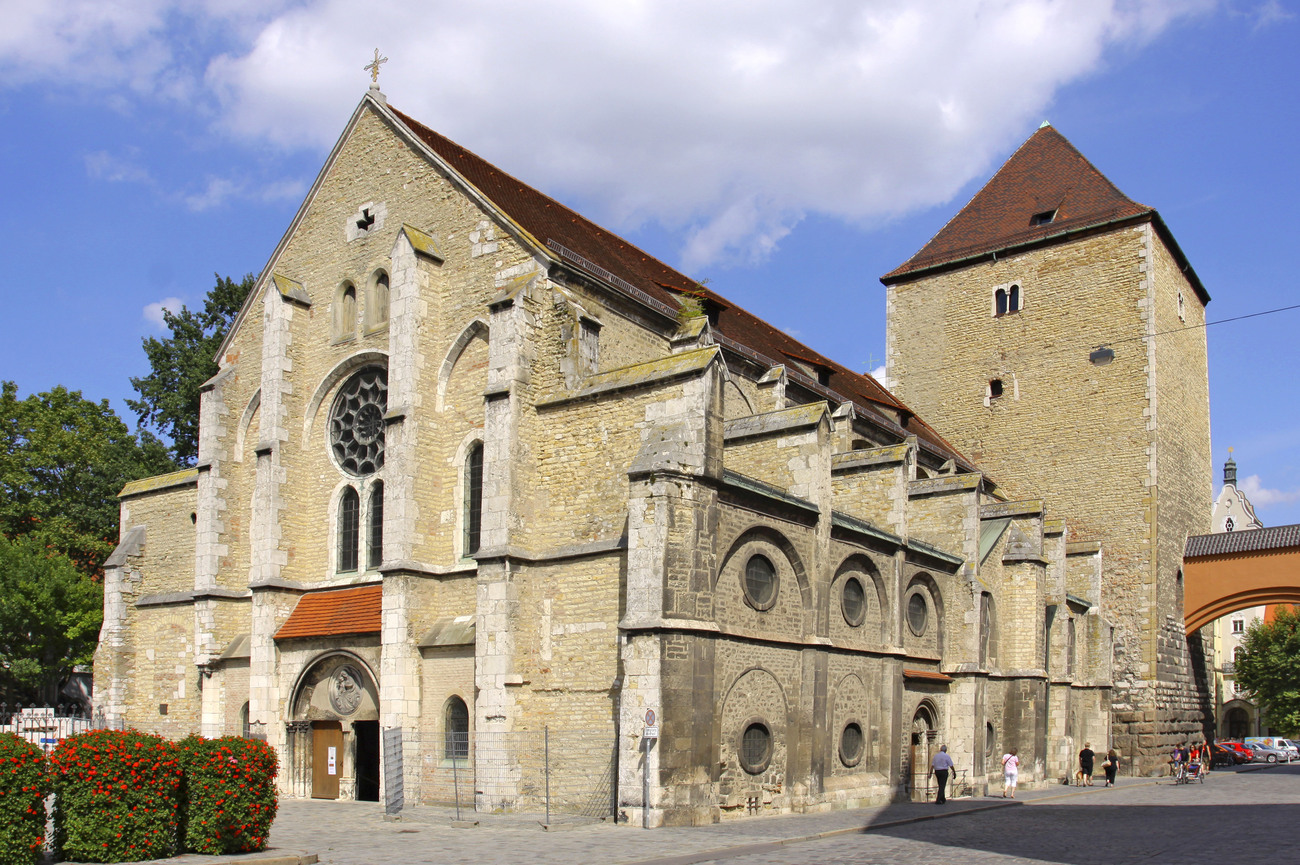
- St Ulrich’s Church sits beside Regensburg Cathedral but feels noticeably quieter and more reflective. Originally built in the 13th century, the former church is now used as a museum space for religious art, with displays that often include medieval sculpture, liturgical objects and works connected to the Diocese of Regensburg. Its Gothic architecture remains clearly visible, but the interior has been adapted for exhibitions, with a cleaner layout, controlled lighting and far less crowd pressure than the cathedral next door.
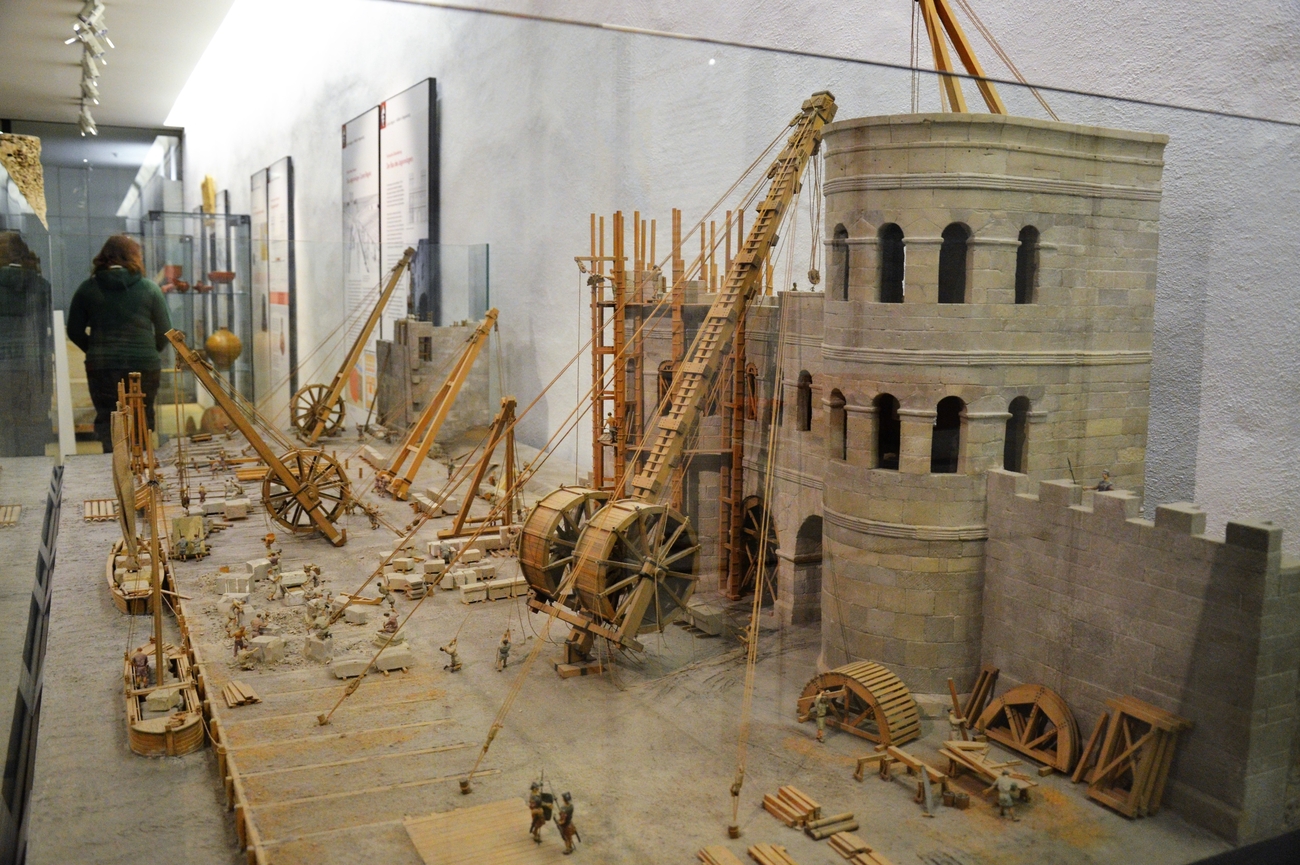
- Historisches Museum Regensburg: Housed in a former monastery, the Historisches Museum covers Regensburg from Roman times through the modern period. It’s one of the more comprehensive stops in the city, with multiple sections that let you move across eras without leaving the building. The layout is broader compared to smaller museums, but still manageable if you focus on key areas. The collection includes archaeological finds, medieval artifacts, paintings and everyday objects. You can book a private guided museum tour to explore all these.
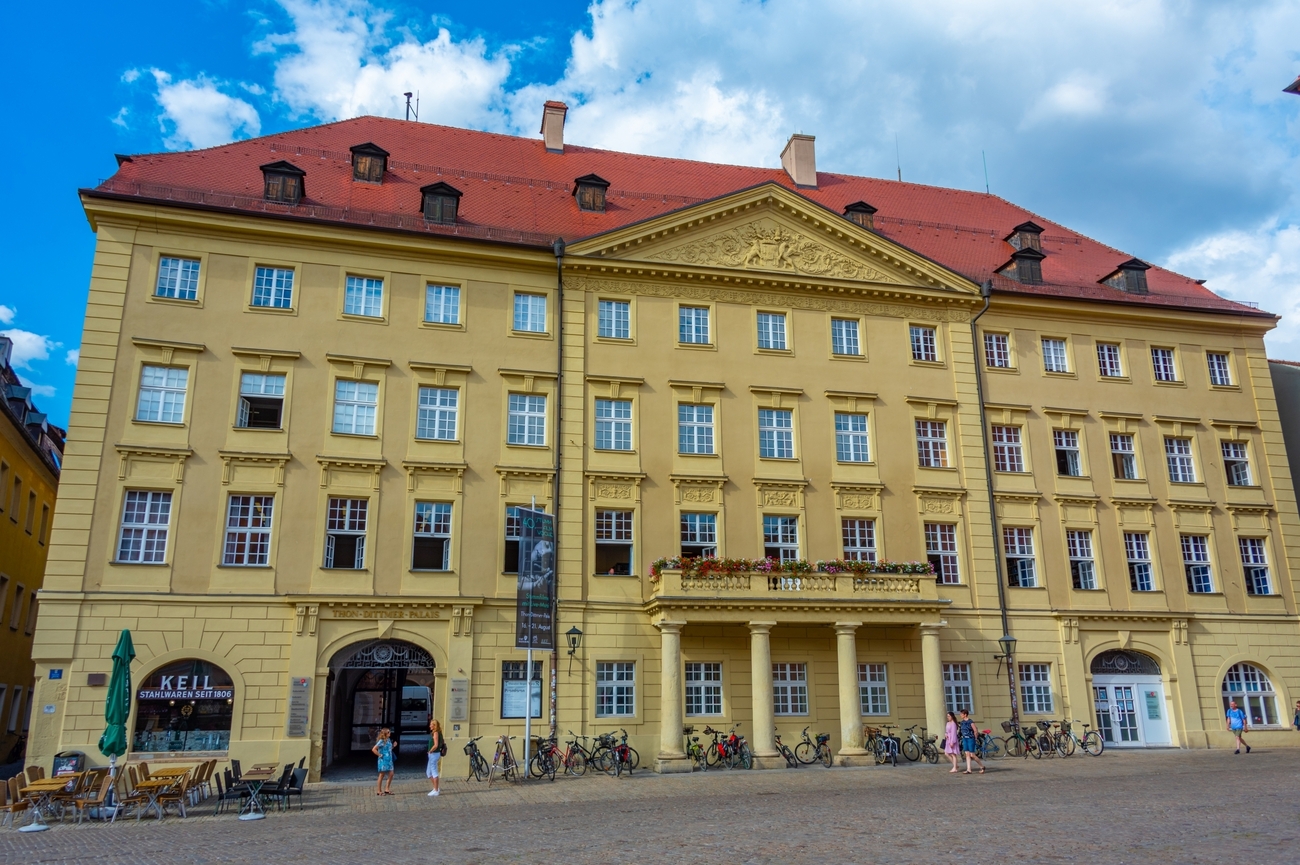
- Thon-Dittmer-Palais: Located at Haidplatz, Thon-Dittmer-Palais is a Baroque city palace that blends historic architecture with modern cultural use. The building dates back to the 18th century, with symmetrical façades and design elements that reflect a more planned, aristocratic style. Today, it hosts cultural events, exhibitions and educational programs, so access varies depending on what’s happening. When open, the courtyard and interior areas are worth stepping into, especially if you want a break from tighter urban spaces.
- Parish Church of St. Cassian: St. Cassian is one of the oldest parish churches in Regensburg, but it doesn’t draw the same attention as the cathedral or basilica. The church combines Romanesque foundations with later Gothic and Baroque updates, which is shown in the structure and interior detailing. It’s not overly ornate, but there’s enough variation to keep it interesting.
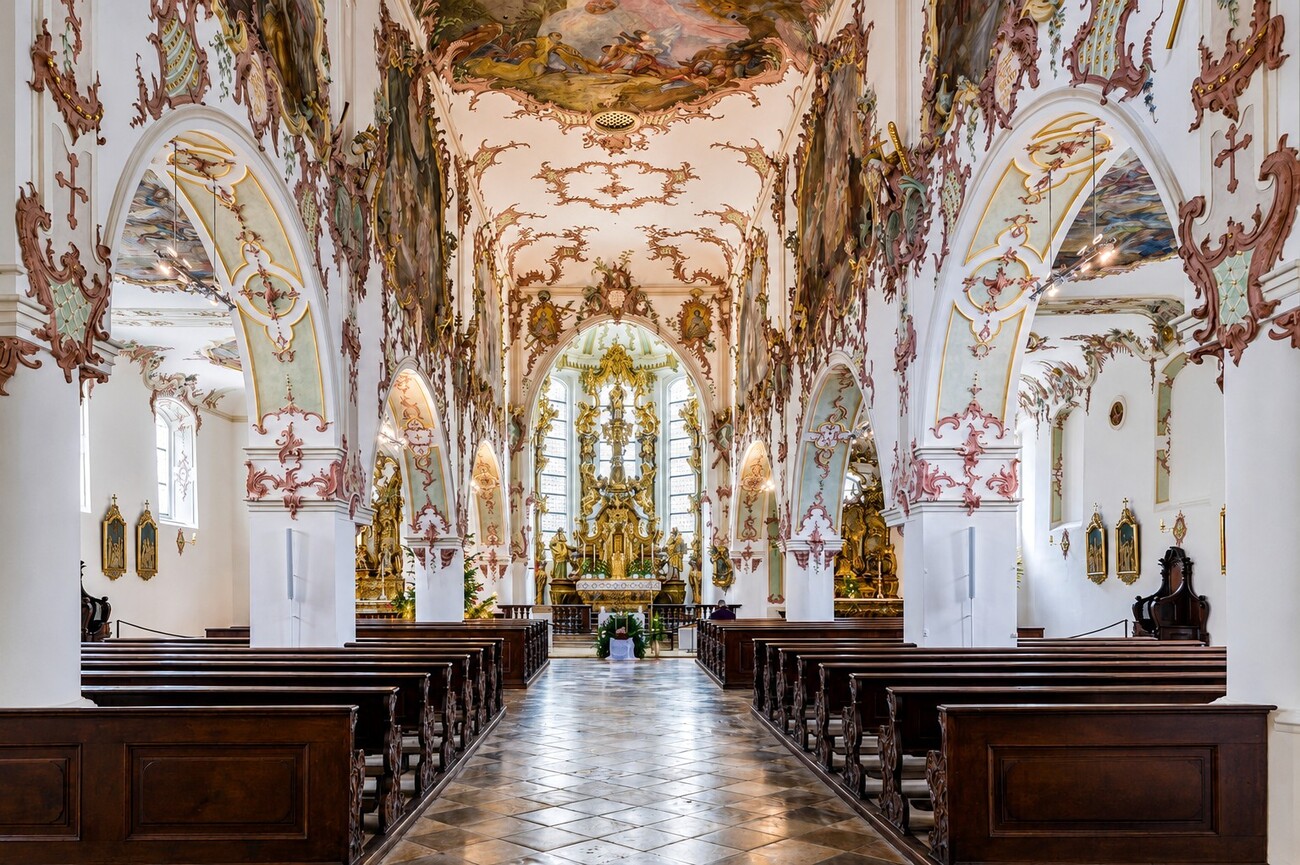
Things to Do with Kids in Regensburg
Regensburg works well with kids because it doesn’t force you into one type of activity. You’re not locked into long museum runs or full-day attractions. You can move from an interactive museum to a riverside park within minutes, or swap a cultural stop for something more active without breaking the flow. The city gives you options without making it complicated. The list below focuses on places that actually work with options to upgrade the experience through private bookings or better timing.
- Westbad and sauna paradise: Westbad is the city’s main water and wellness complex and it’s one of the easiest ways to add a high-energy break into your itinerary. The facility combines indoor and outdoor pools, water slides and designated family zones, so it works whether you’re visiting for a quick session or planning to stay a few hours. For kids, the main draw is the slides and play areas. There are also shallow pools and calmer sections, so younger visitors aren’t left out.
- Naturkundemuseum Regensburg: The Natural History Museum focuses on fossils, minerals and regional wildlife, making it one of the more accessible museum options for kids. You’ll find skeletons, geological samples and preserved specimens, all arranged in a way that’s easy to follow. The building itself is historic, which adds another layer to the visit, but the layout remains manageable.
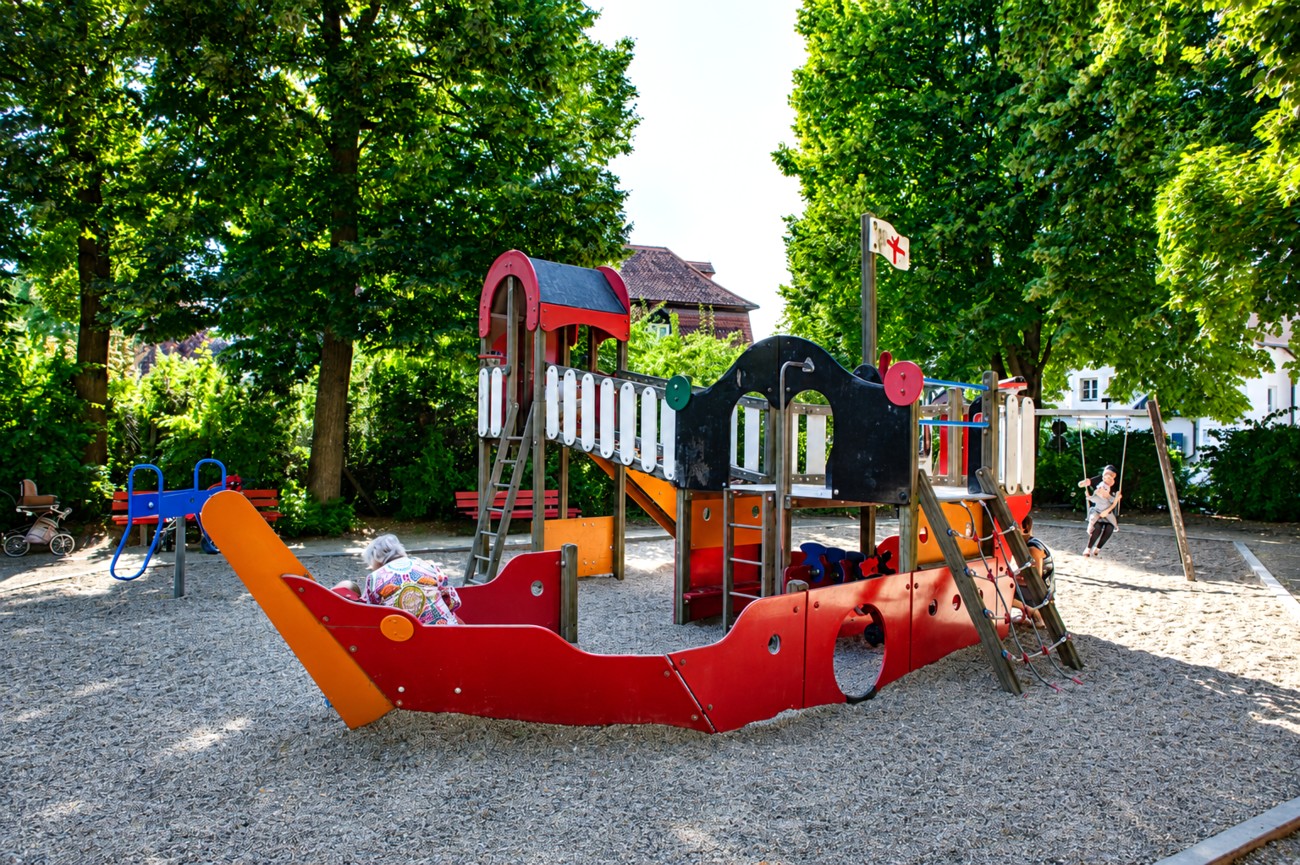
- Spielplatz Grieser Spitz: Spielplatz Grieser Spitz sits right along the river and is one of the more scenic playground spots in the city. It’s not just a play area; it’s part of a wider open space where the Danube and Regen rivers meet, so the setting feels more open compared to inner-city playgrounds. The playground itself includes climbing structures, swings and open play zones, giving kids enough variety to stay active. Around it, there’s space to run, sit or walk along the river.
- Jahninsel: Jahninsel is one of the easiest outdoor spaces to integrate into your itinerary. Located along the Danube, it offers wide grassy areas, open paths and direct river access, making it ideal for unstructured time. It’s not heavily developed, which gives kids more freedom to move without restrictions. You can also turn this into part of a guided cycling or walking route along the Danube.
- The Escape Room Show: The Escape Room Show offers a more structured, indoor activity that works especially well for older kids and teens. The experience is built around themed rooms where you solve puzzles within a set time, so it keeps everyone focused and engaged from start to finish. Each room is designed with story-driven setups, interactive elements and timed challenges, making it more immersive than a typical attraction. It’s a good option if you want something that breaks away from walking and sightseeing while still feeling purposeful.

Day Trips from Regensburg
Regensburg sits in a part of Bavaria where day trips actually make sense. You’re not committing to long transfers or complicated routes as most destinations fall within 30 to 90 minutes, whether by car or direct train. Within an hour, you can shift from a medieval trading city to a river gorge, from a Baroque riverside town to a UNESCO-listed hill city. Here are well-paced day trips that offer something distinct and worth the effort:
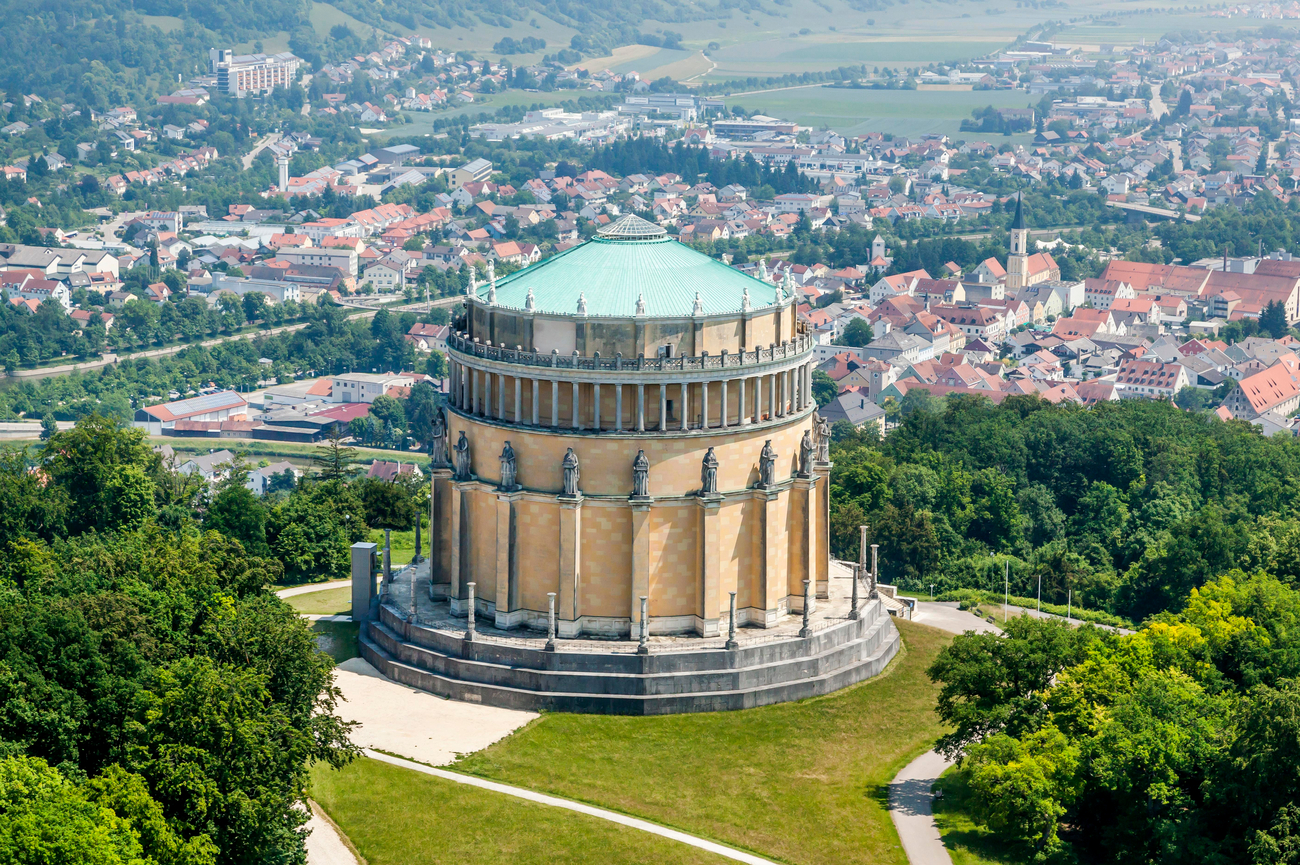
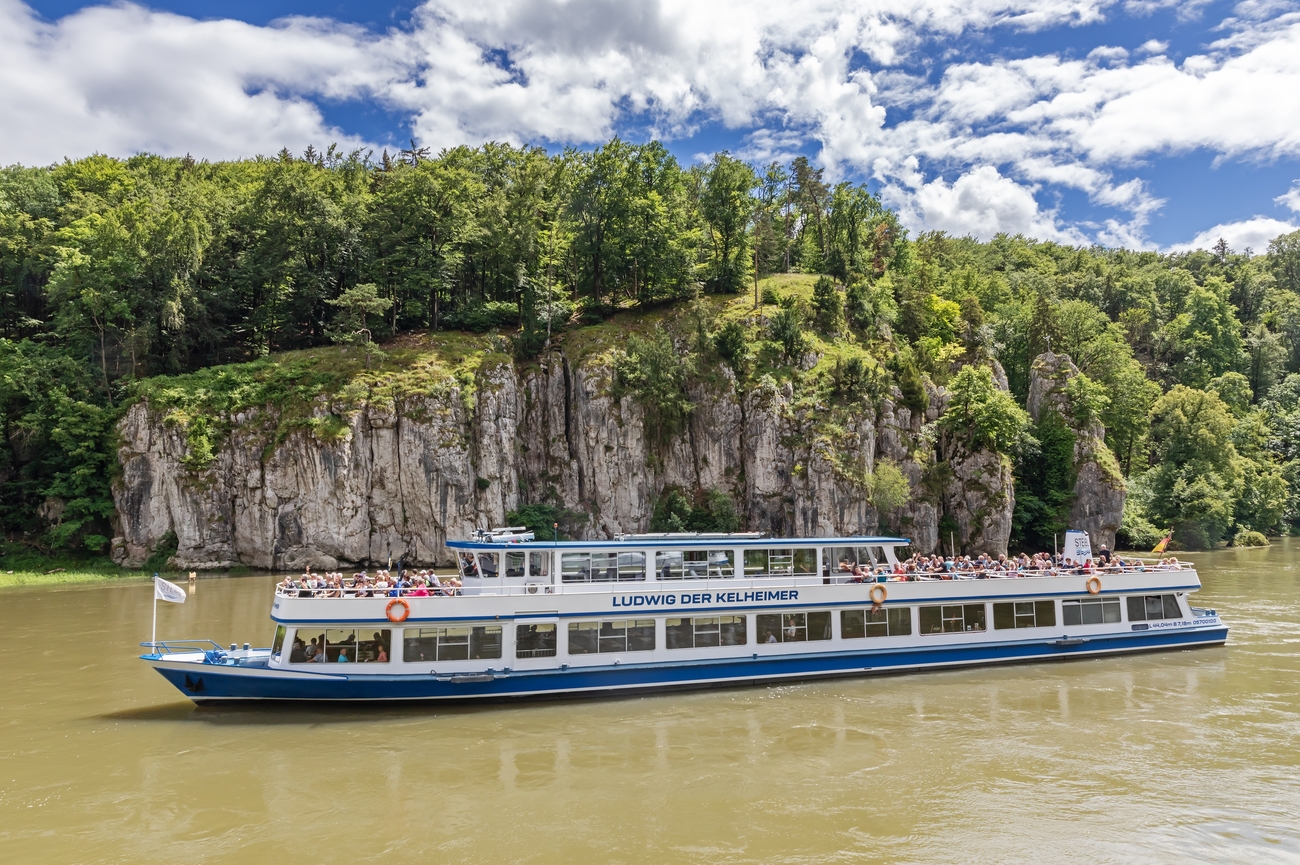
- Kelheim and Befreiungshalle, Germany: Around 35–40 minutes from Regensburg, Kelheim is one of the easiest and most worthwhile day trips from the city. This is where the Danube Gorge (Weltenburger Enge) begins, a protected stretch of river framed by steep limestone cliffs. Most visitors come for the boat trip through the gorge to Weltenburg Abbey, one of Bavaria’s oldest monasteries, but Befreiungshalle adds another major reason to go. Commissioned by King Ludwig I and set high above the river, this neoclassical monument was built to commemorate the victories over Napoleon. The structure itself is striking, but the bigger draw is the elevated position and wide views across the surrounding landscape. Done properly, Kelheim works as a layered day out, river scenery, monumental architecture and one of Bavaria’s most distinctive historic settings, all within an easy distance of Regensburg.
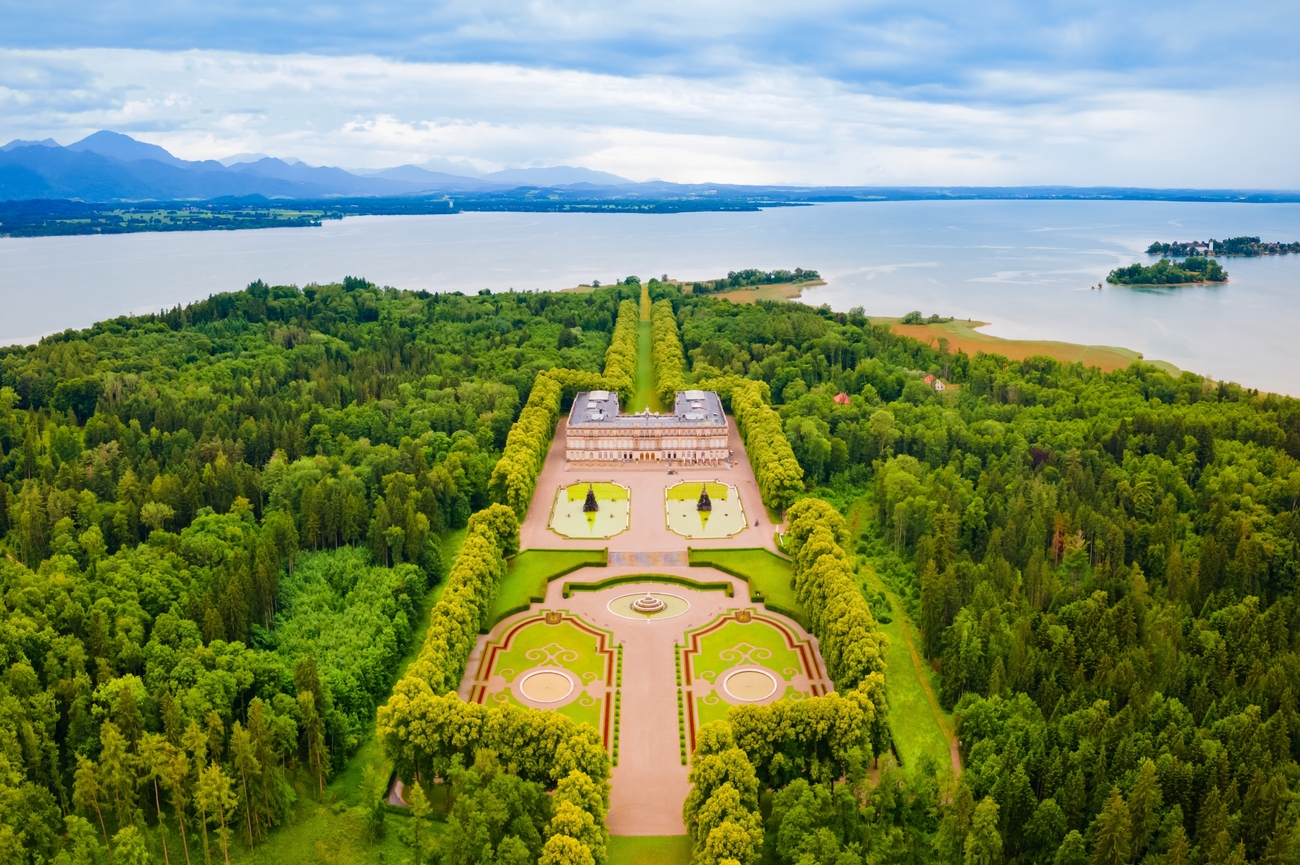
- Lake Chiemsee, Germany: Lake Chiemsee sits about 1 hour 20-30 minutes from Regensburg and it shifts the entire mood of the trip. This is Bavaria’s largest lake, with open views, mountain backdrops and a slower pace compared to city stops. The standout is Herrenchiemsee Palace, built by King Ludwig II and set on an island in the lake. You’ll need a ferry to reach it, which adds another layer to the visit. The palace itself is modeled after Versailles with large halls, formal gardens and a layout designed for scale. And if you want to explore beyond a day trip, we also made a dedicated itinerary available for Lake Chiemsee that covers the area in more depth.
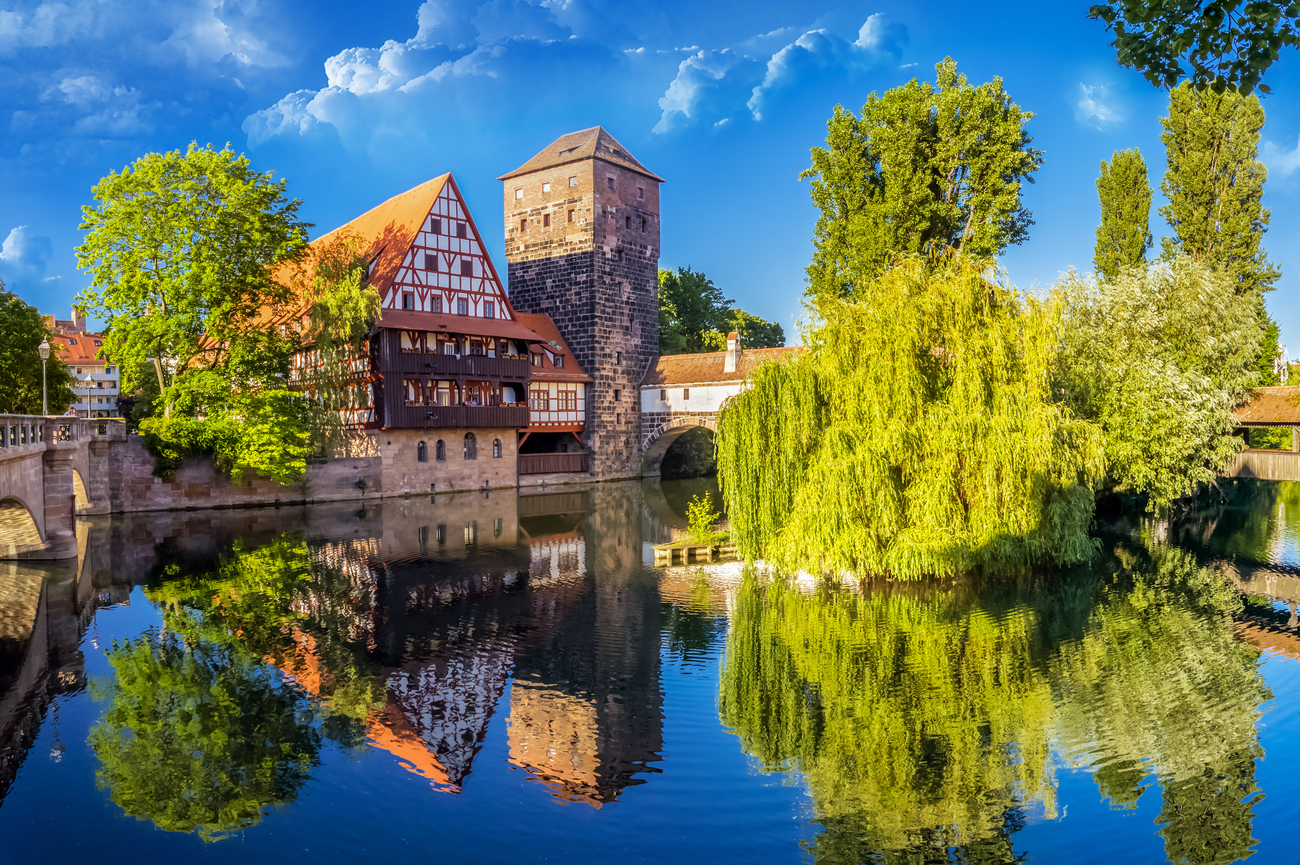
- Nuremberg, Germany: At around 1 hour 20 minutes from Regensburg, Nuremberg adds a larger-city feel without becoming unmanageable. The Old Town is still enclosed by walls, but inside you’ll find more variation with market squares, major churches and the Imperial Castle. The Nuremberg Castle is the anchor. From there, you can move down into the Hauptmarkt, where the layout opens up and then into the surrounding streets that mix reconstruction with original structures. The city feels broader and more layered compared to Regensburg.
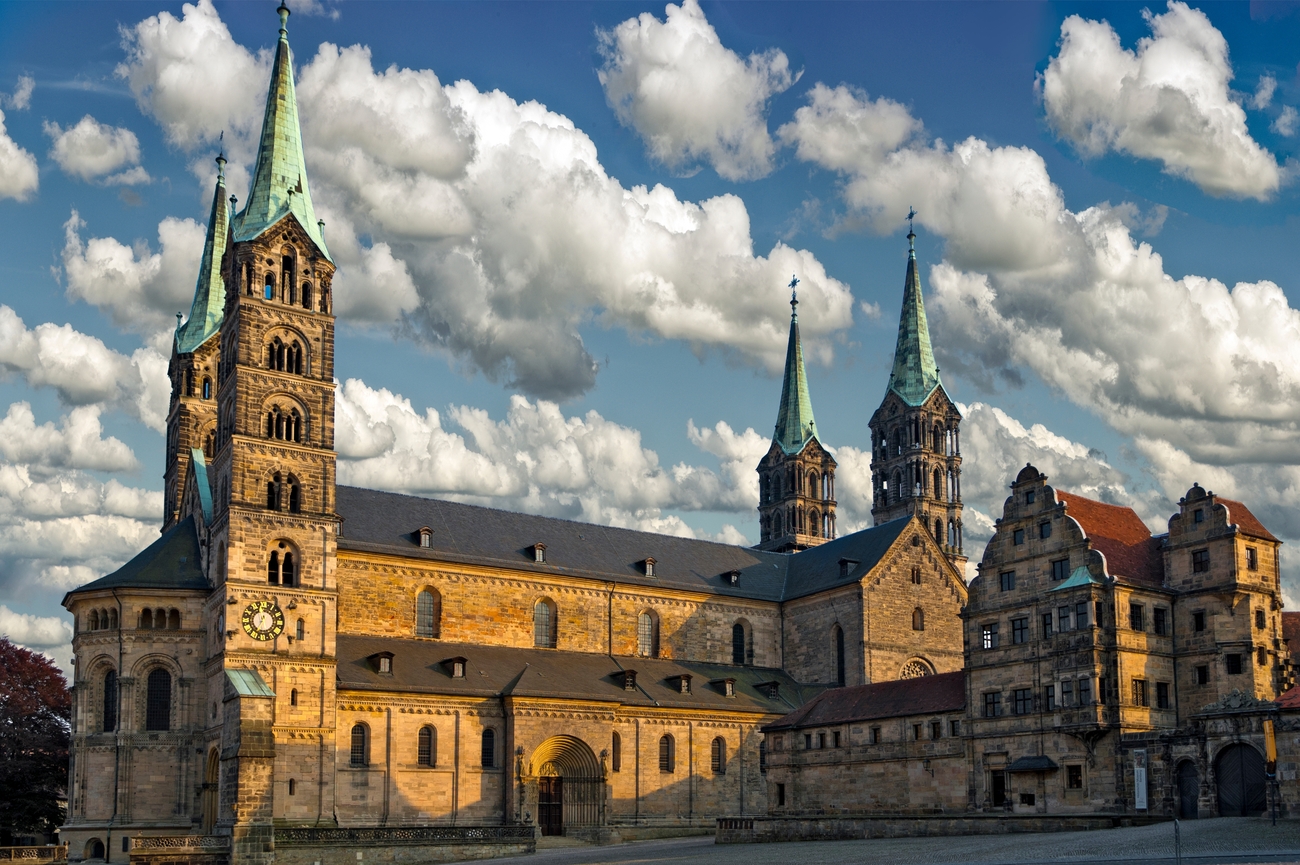
- Bamberg, Germany: Bamberg is an hour and 30 minutes away and is one of the strongest additions you can make. It’s a UNESCO World Heritage Site, with an Old Town spread across hills and river islands, giving it more variation than most cities of its size. Key spots include the Bamberg Cathedral, the Old Town Hall set on a bridge and the riverside district often referred to as Little Venice. The layout feels layered but still walkable, which keeps the day manageable. And if you’re planning to stay longer, a full Bamberg itinerary is also available to help you explore the city more thoroughly.
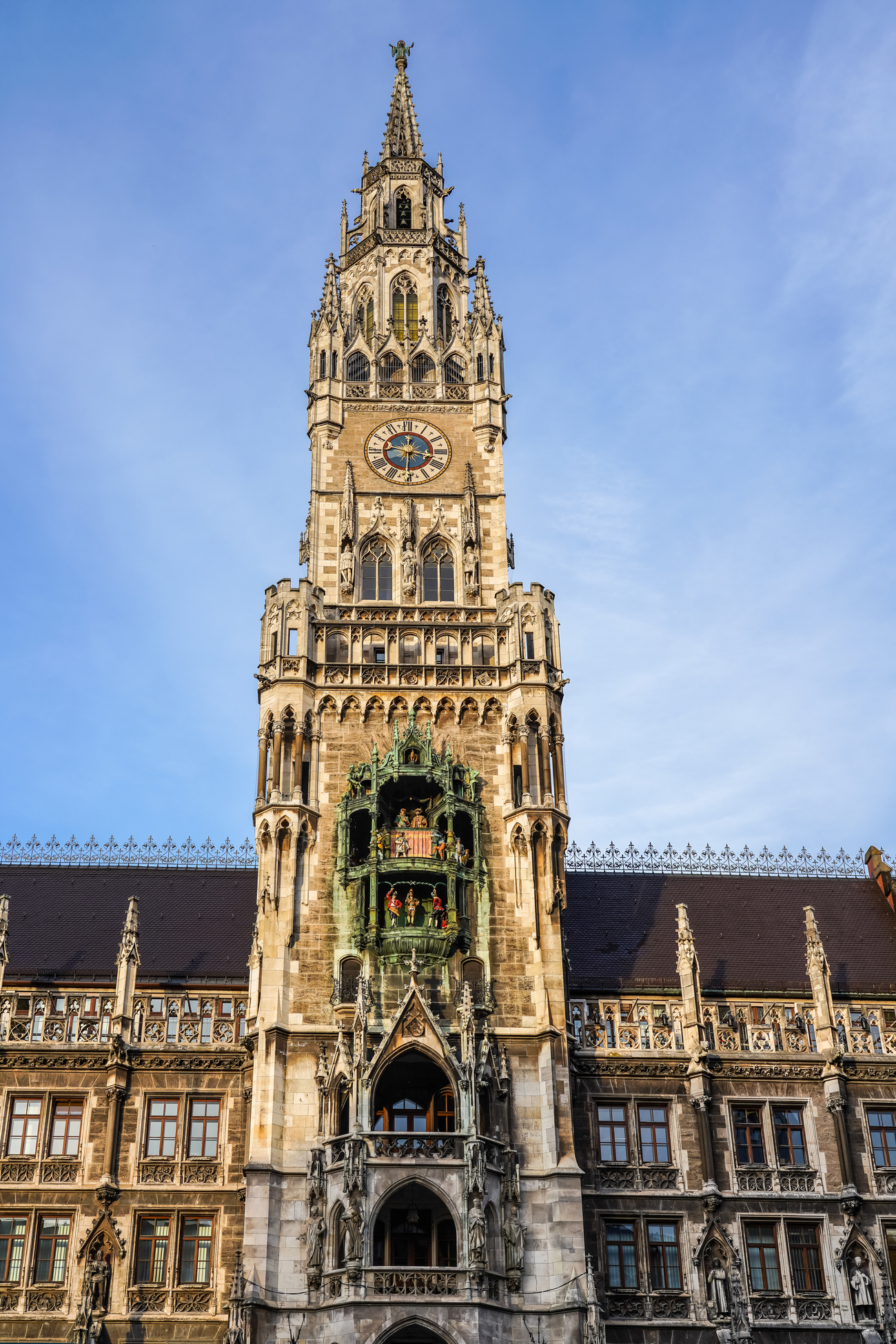
- Munich, Germany: Munich is the easiest big-city add-on, sitting around 1 hour 30 minutes by train. It’s more structured and modern but still anchored by a strong historic core. Start at Marienplatz, where the New Town Hall (Neues Rathaus) dominates the square, then move outward toward sites like the Residenz Palace and the English Garden, one of Europe’s largest urban parks. You can also consider a private city tour with a driver-guide, which allows you to cover multiple districts efficiently without relying on public transport.
- Salzburg, Austria: Salzburg is about 1 hour and 30 minutes from Regensburg and delivers a clear shift in atmosphere. The main landmarks are easy to group into one route: Hohensalzburg Fortress, which overlooks the city, Salzburg Cathedral and the Getreidegasse, a narrow shopping street with historic facades. The setting, mountains in the background, river cutting through the center, adds another layer to the experience. If you decide to extend your stay, we’ve also prepared a detailed Salzburg itinerary available for a more complete experience.

Nearby Experiences from Regensburg
Regensburg sits in a part of southern Germany where you can stack completely different experiences without long travel days. You can go from river gorges to alpine terrain, from structured golf courses to cultural sites that feel completely out of place in Bavaria. That range is what makes nearby experiences actually worth adding. The key is picking experiences that shift the pace. Something active, something scenic, something with scale.
- Danube Gorge: About 35–40 minutes from Regensburg, the Danube Gorge is one of the most visually distinct landscapes in the region. The river cuts through steep limestone cliffs, creating a narrow passage that feels more remote than it actually is. The main way to experience it is by boat from Kelheim to Weltenburg Abbey, which sits directly against the rock face. The route is short but focused. You can explore the abbey grounds before heading back.
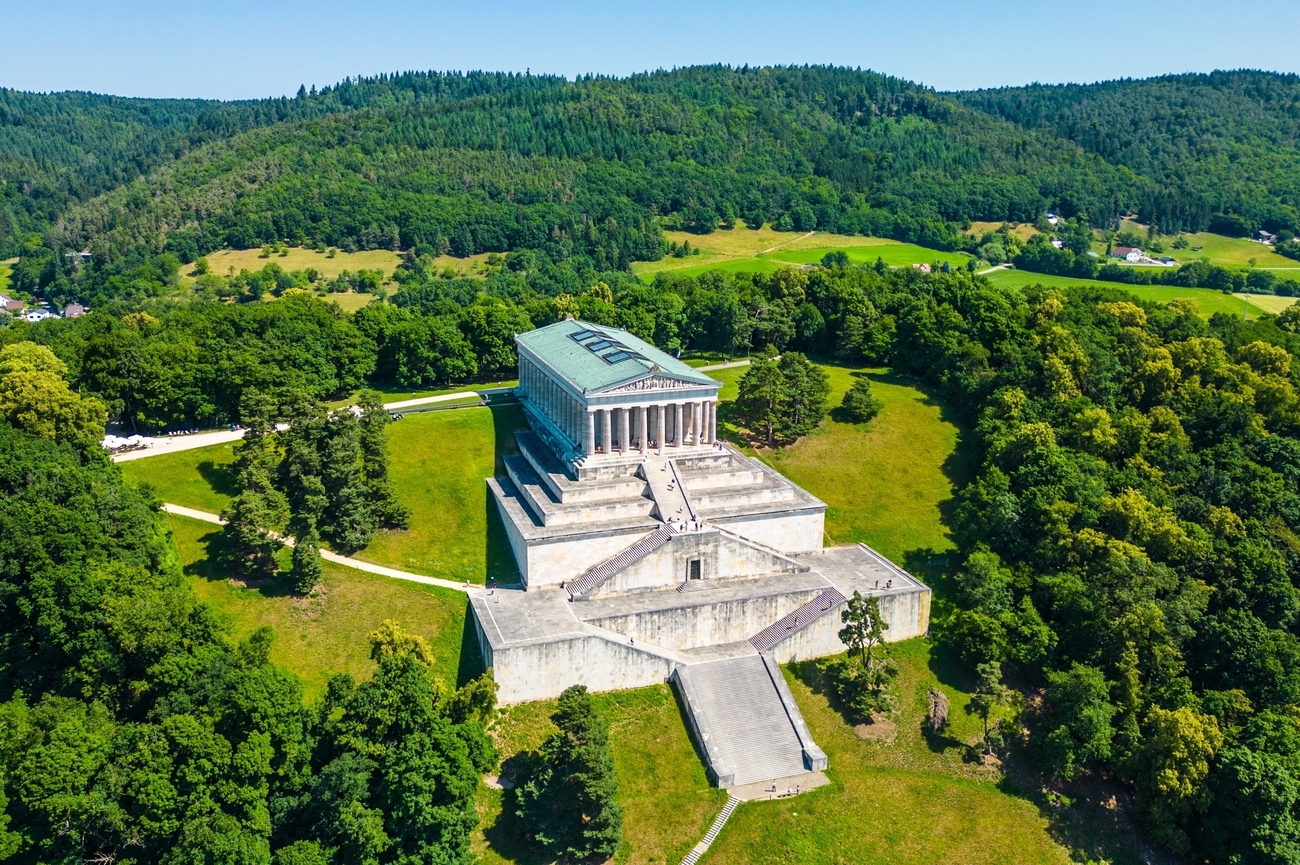
- Walhalla: Only 20 minutes from Regensburg, Walhalla is one of the easiest high-impact stops. Built as a neoclassical hall of fame, the structure sits above the Danube, reached by a long staircase that opens up to wide views across the river valley. Inside, the hall features busts of notable German figures, but the real value is the setting with open space, elevation and clear sightlines over the landscape.
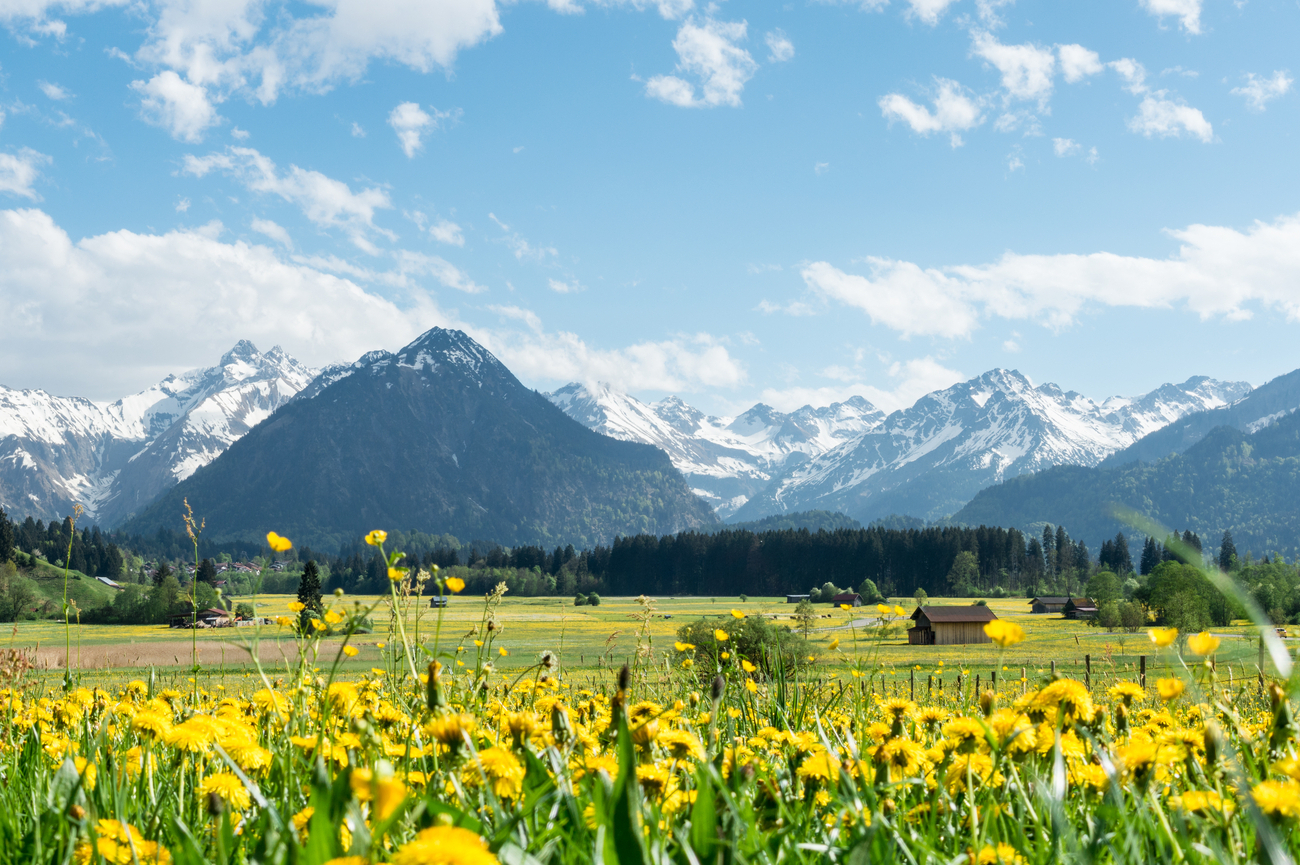
- Bavarian Alps: If you want to go beyond the city, the Bavarian Alps make a strong addition to a wider Bavaria itinerary. At around 1.5 to 2 hours from Regensburg depending on the area, this is where the landscape shifts fully, mountains, cable cars, ski areas in winter and hiking routes in warmer months. Key bases include Garmisch-Partenkirchen and the Zugspitze region, where you can access Germany’s highest peak and some of the country’s best-known alpine scenery. This works best as a pre-arranged day trip with private transport or as part of a longer journey through Bavaria. For a broader look at what the region offers, see our guide to the best places to visit in Bavaria.
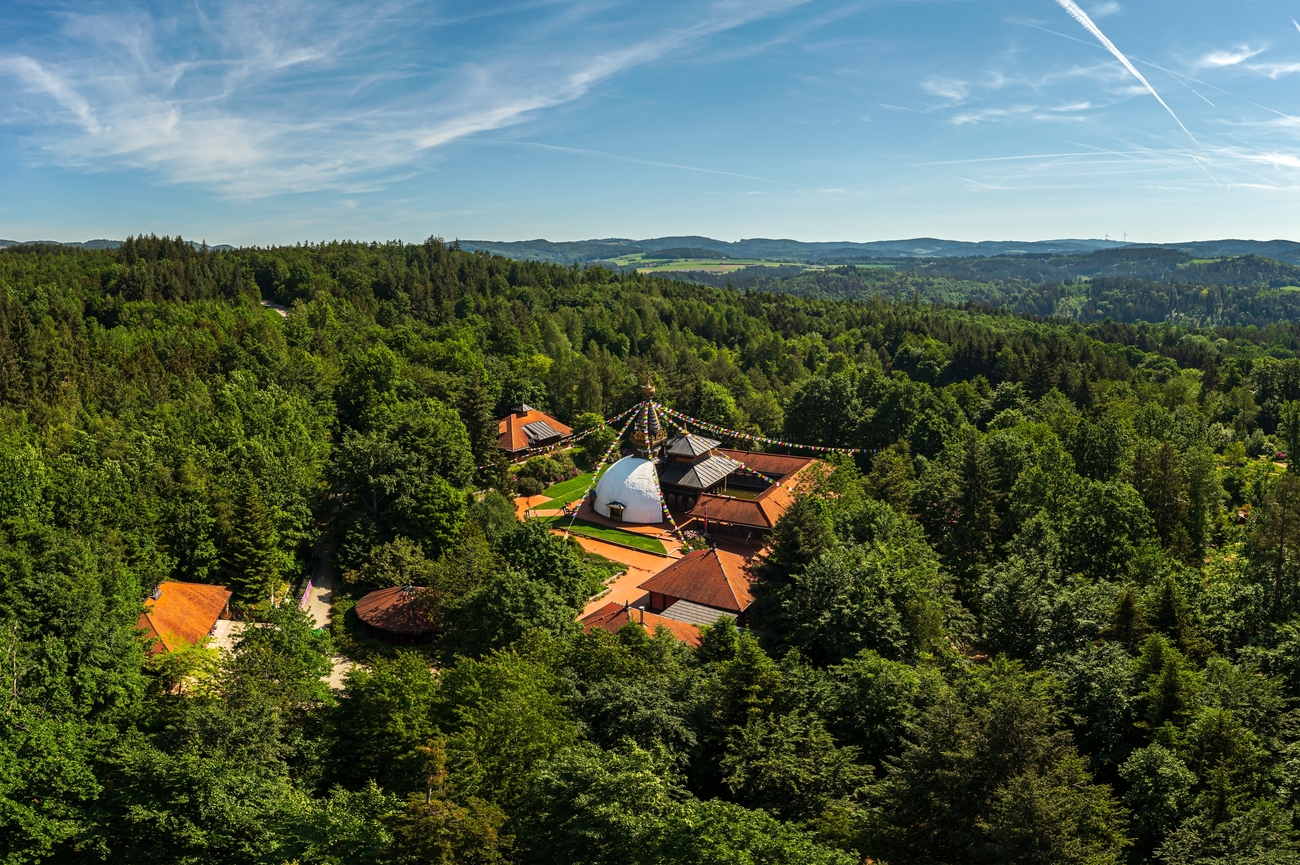
- Nepal Himalaya Pavillon: Around 30 minutes from Regensburg, this is one of the most unexpected experiences in the region. The pavilion itself is an authentic Nepalese temple structure, originally built in Nepal and later transported and reconstructed here using traditional craftsmanship. There are hand-carved wooden elements, layered roof tiers and symbolic motifs that reflect Hindu and Buddhist influences. And the surrounding gardens are designed to match the tone of the pavilion. You’ll find stone paths, small water features and quiet seating areas, all laid out to slow movement rather than direct it.
- Bach an der Donau and the BaierWeinMuseum: Around 25–30 minutes from Regensburg, Bach an der Donau offers one of the clearest wine-related excursions in the area. This part of the region belongs to Bavaria’s smallest wine-growing area, which makes it more niche than the better-known German wine destinations, but still worth including if you want to widen the trip beyond the city itself. The BaierWeinMuseum gives context on the local wine tradition, while the surrounding landscape adds a quieter, more rural contrast to Regensburg. This works well as a short scenic detour or as part of a broader day out along the Danube.
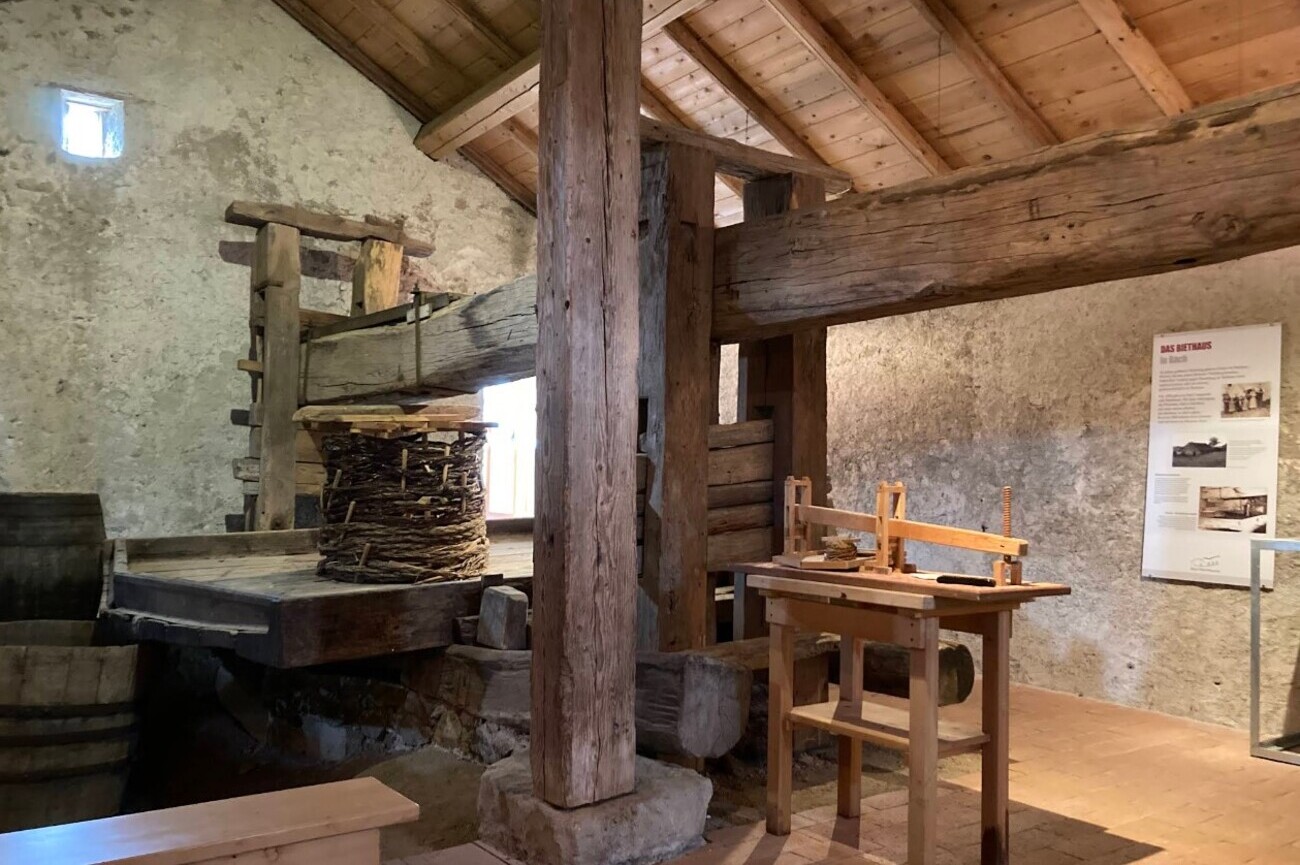
Golf Courses near Regensburg
Regensburg isn’t widely known as a golf destination, but that’s exactly why it works. You’re not choosing between multiple courses or trying to compare layouts. There’s one main course that defines the experience. If you want to play while staying in the city, you know exactly where to go and how to structure it into your trip without overthinking it.
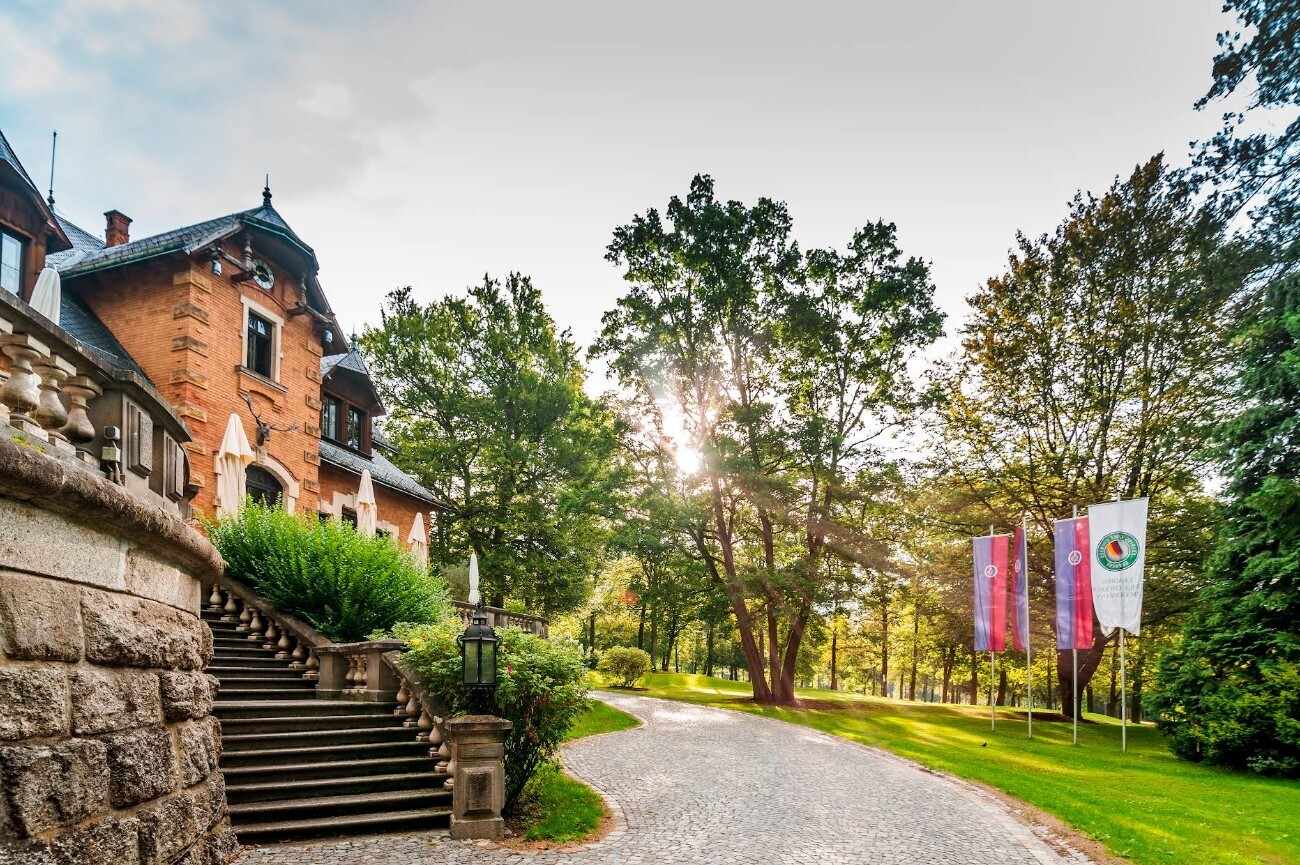
- Golf and Country Club Regensburg e.V.: This is the only full-scale golf course directly associated with Regensburg. Located in the Thiergarten area just outside the immediate city center, it takes about 15 minutes to reach, which keeps it accessible without feeling disconnected from your itinerary. The club sits on what was once a historic hunting estate of the Thurn und Taxis family and that background shows in the setting. The course is an 18-hole championship layout, designed in a classic parkland style with tree-lined fairways, elevation changes and a quiet, forested atmosphere. Since this is the only true course in Regensburg, it’s worth approaching it properly.
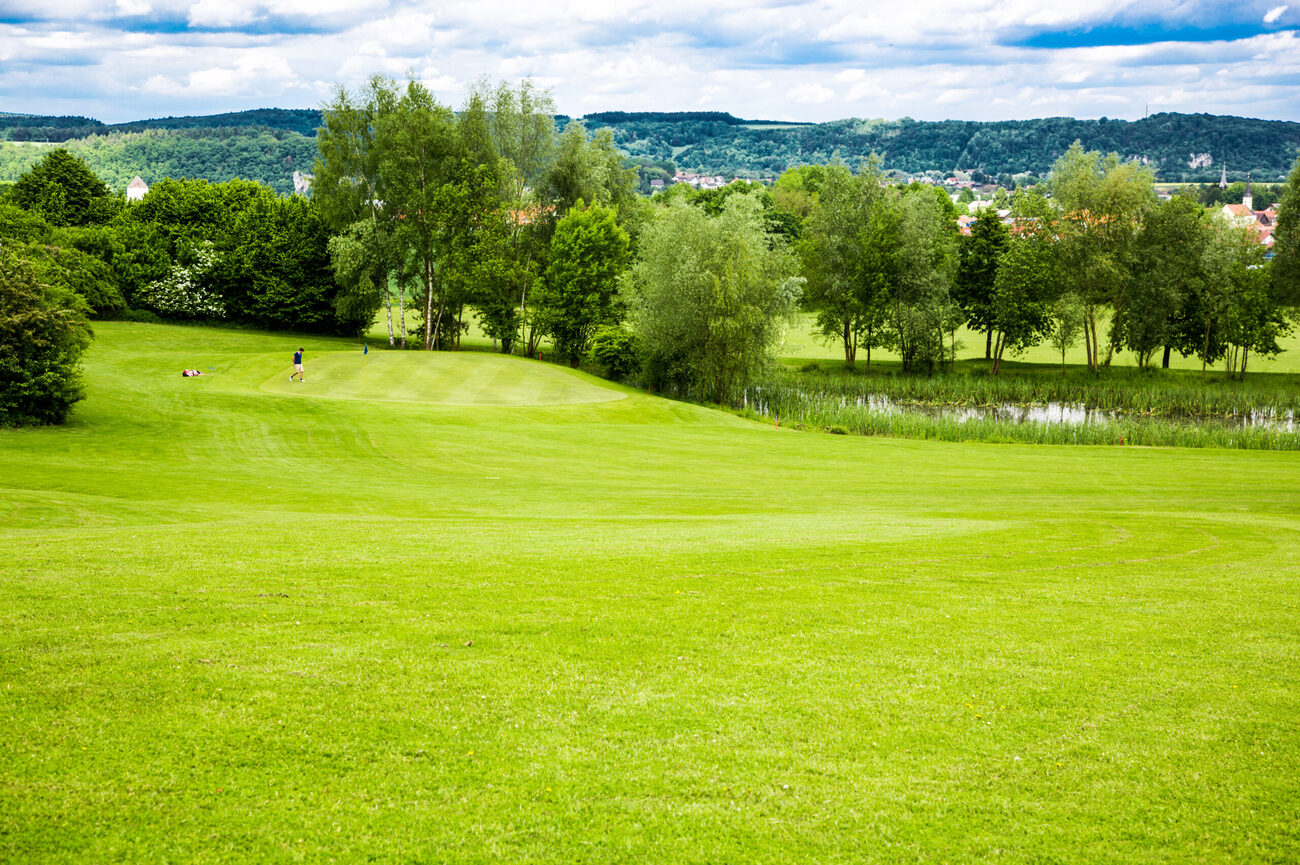
- Golf Course Deutenhof GmbH & Co. KG: Located about 15–20 minutes from Regensburg, this course offers a more accessible alternative to the city’s main club. It includes both 18-hole and 9-hole layouts, which makes it easier to fit into a half-day schedule. The course combines open fairways with more technical sections, so it works whether you’re playing casually or looking for a more structured round. It’s less formal than higher-end clubs. You can also book private tee times or coaching sessions.
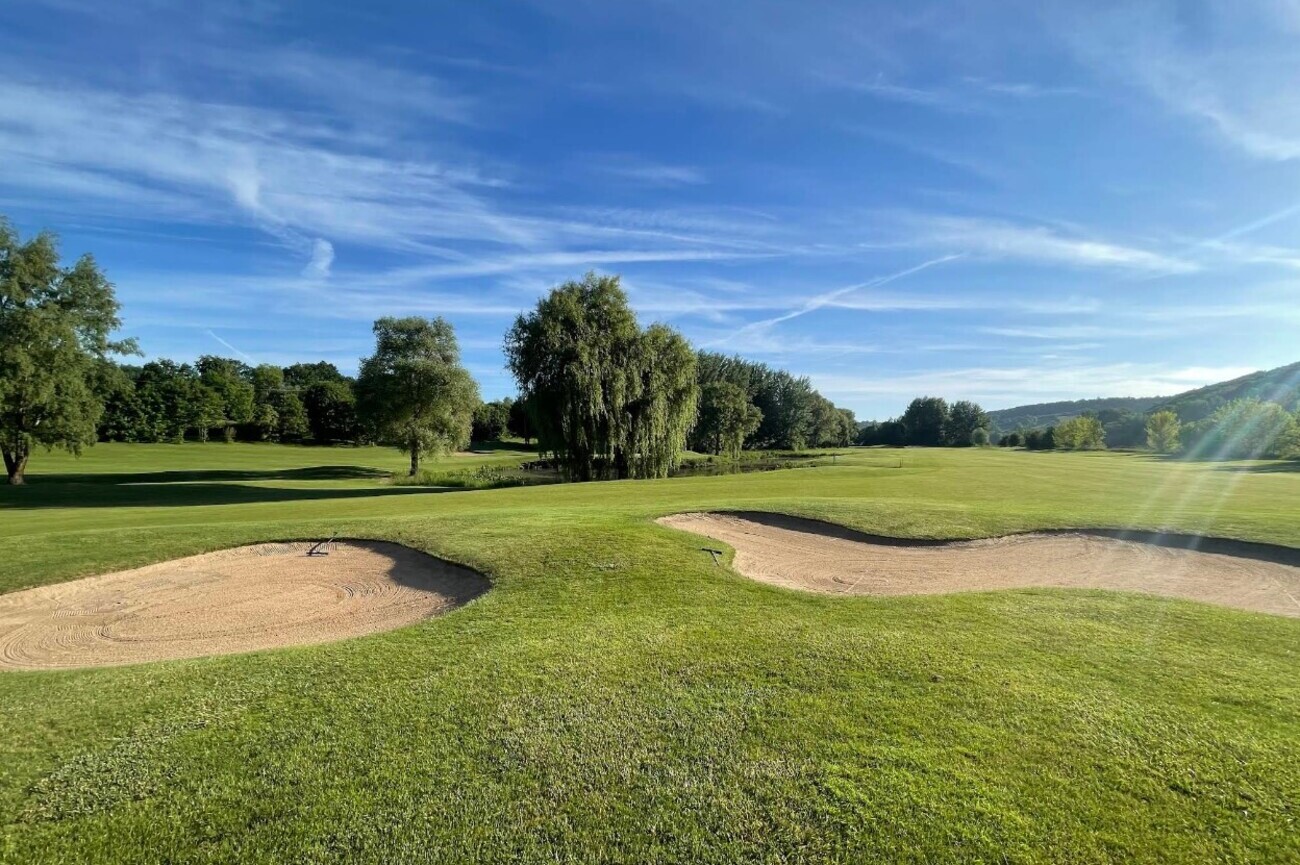
- Golf & Yachtclub Gut Minoritenhof GmbH & Co. KG: Just 10 minutes from Regensburg, this course sits directly in the Danube valley and offers a 27-hole layout, giving you flexibility in how you structure your round. The setting is more open than forested courses, with rolling terrain and wider fairways, which makes it easier to play at your own pace.
Michelin-Starred Restaurants in Regensburg
Regensburg isn’t overloaded with Michelin-starred restaurants. You’re not choosing from a long list. You’re choosing from a tight group of kitchens that actually define fine dining in the city. Each one has a clear identity, and if you plan it right, these meals feel like events. Here are the Michelin-starred restaurants in Regensburg, all located within the city:
- Storstad: Storstad sits above the city, literally. Located on the fifth floor of the historic Goliath House, it gives you direct views of the cathedral, especially from the terrace. This is a 1 Michelin star restaurant, led by Anton Schmaus, with a strong Nordic influence coming through in both design and cooking. You’re looking at 5-7 course tasting menus (plus shorter options midweek), built around clean, ingredient-focused dishes. One standout is the charcoal-grilled sea bass, where the quality of the fish carries the entire plate, supported by subtle roasted notes. If you want to elevate the visit, go all in with a full tasting menu with wine pairing, terrace seating if available and evening reservations. You can also opt for a lighter lunch set menu, which gives you the same kitchen in a more controlled format.
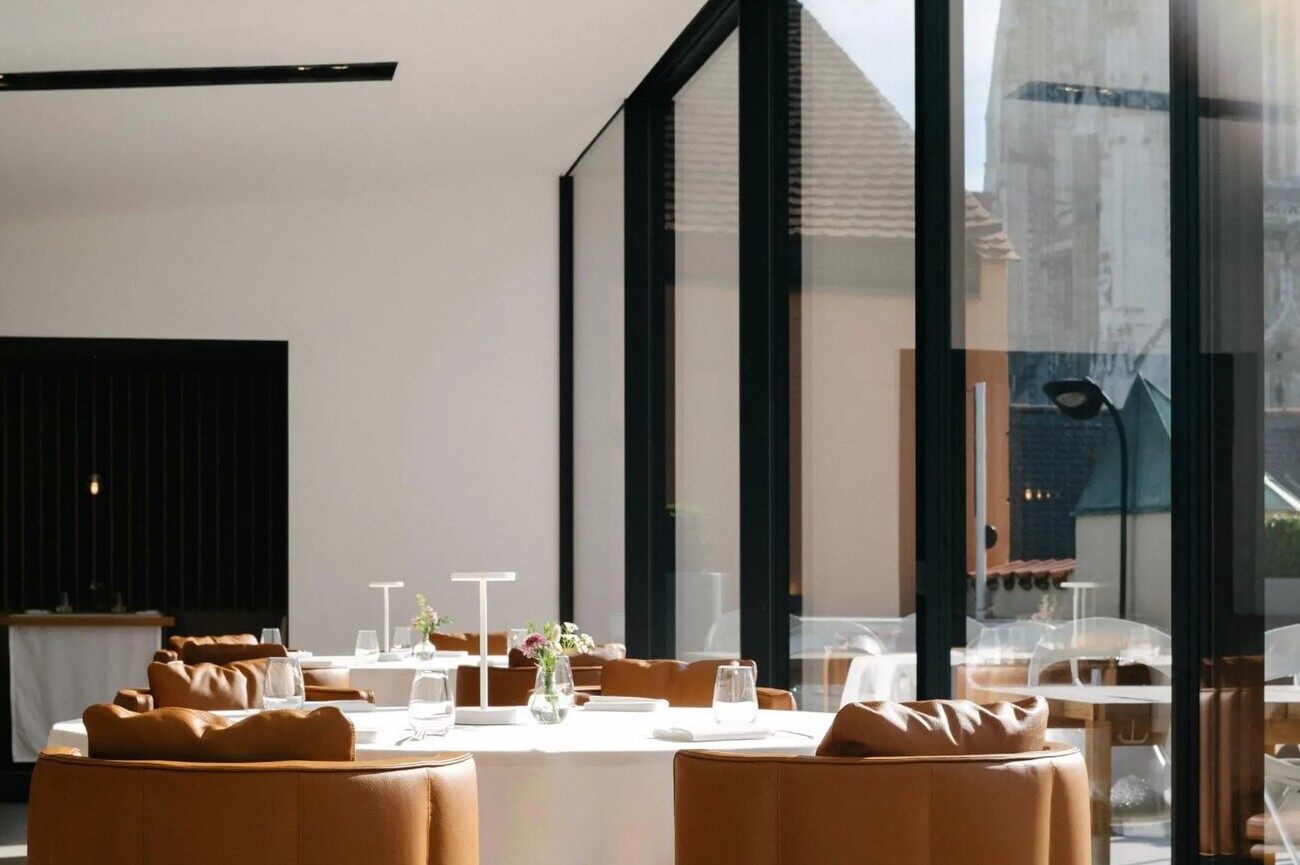
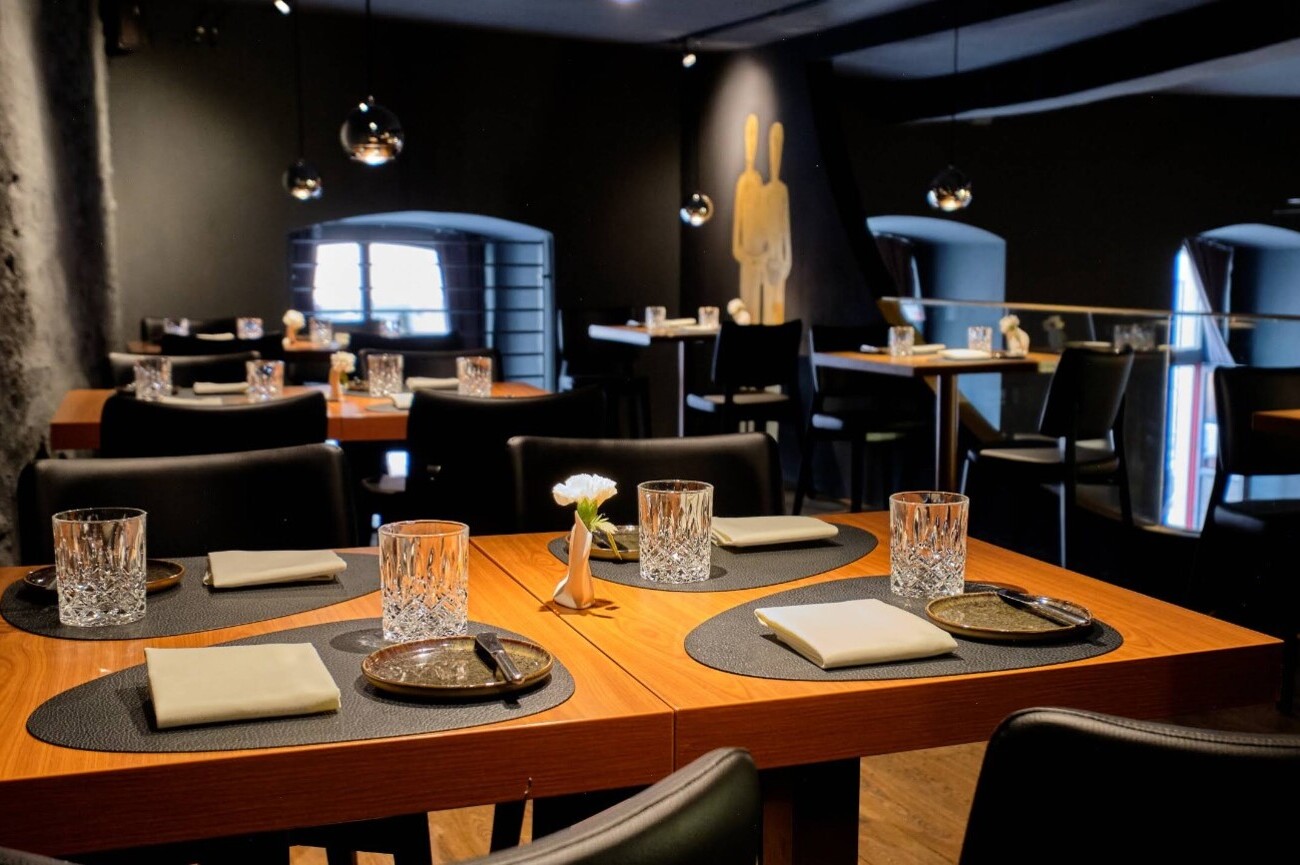
- ROTER HAHN by Maximilian Schmidt: Set inside a historic townhouse that dates back to the 13th century, Roter Hahn blends old structure with a more relaxed, modern dining approach. The atmosphere is less formal than you’d expect from a starred restaurant, but the food stays precise. This is also a 1 Michelin star restaurant, led by Maximilian Schmidt, known for modern cuisine with global influences. The menu shifts between 3, 5, or 8 courses, with dishes that mix techniques and flavors like lahmacun with pulled piglet’s tail or Korean-style fried veal sweetbreads with gochujang. And to upgrade the experience, go for the longer tasting menu in the evening, paired with wines.
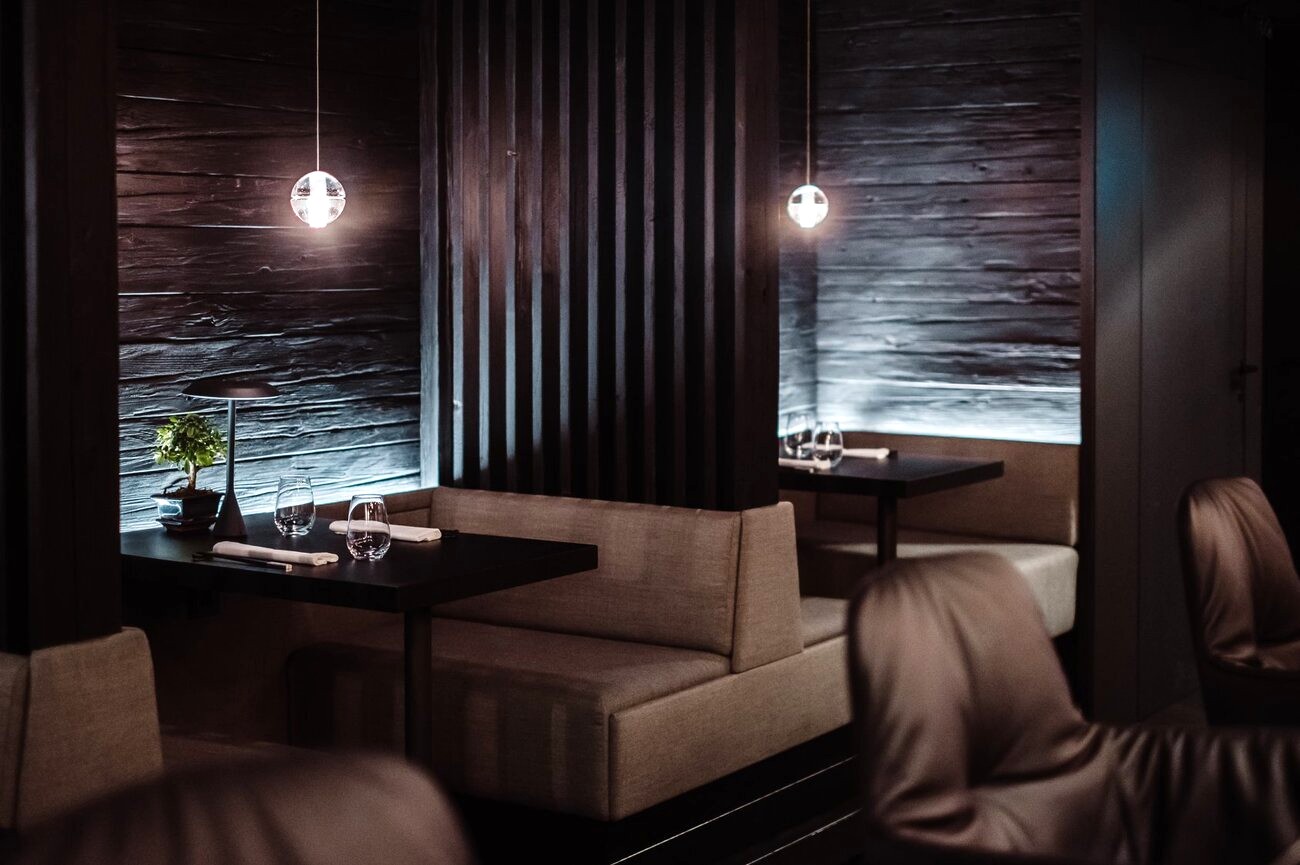
- Aska is compact, darker in tone, and centered around the counter-style sushi setup, which keeps the focus on the craft. This is a 1 Michelin star restaurant, specializing in authentic Japanese sushi, led by Osaka-trained chef Atsushi Sugimoto. The format is tight with 8 or 10-course omakase-style menus. You’re getting premium fish, precise technique and minimal distraction. It’s one of the more focused dining experiences in the city. You can book counter seating for a closer view of preparation and go with the full set menu plus sake pairing.
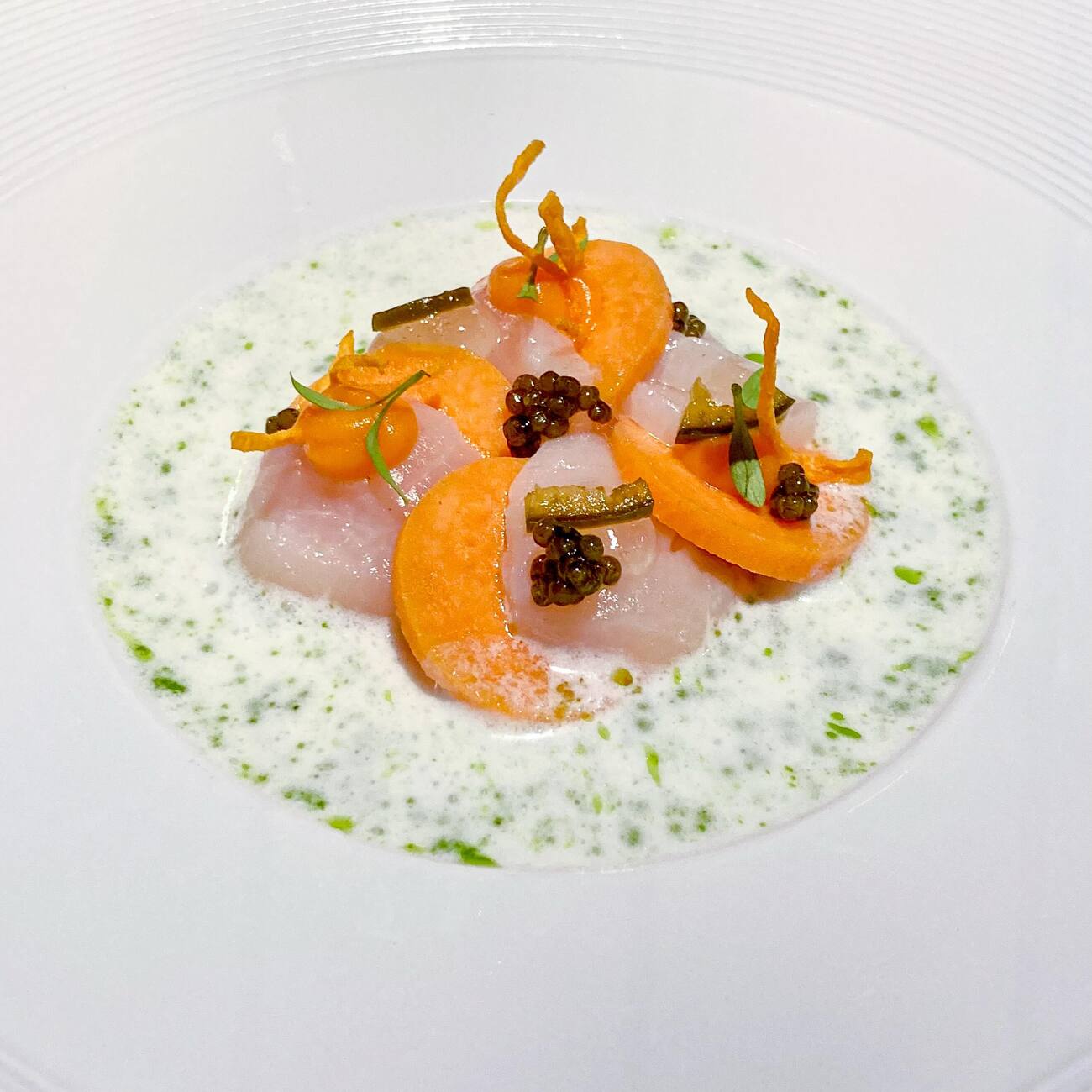
- Ontra’s Gourmetstube: Ontra is located slightly outside the Old Town in TechSquare, giving it a more contemporary setting compared to the others. The design is clean and modern and the atmosphere leans more polished than traditional. This is a 1 Michelin star restaurant, focused on seasonal cuisine with a strong emphasis on precision and balance. The main highlight is the 7-course evening tasting menu, served in the adjoining Gourmetstube. The dishes are refined without being overly complex, with options that also include vegetarian elements. You might want to book the evening tasting menu in the Gourmetstube, ideally with wine pairing. And if you want a lighter version, the lunch menu offers a more accessible entry point while still reflecting the same kitchen.
Where to Eat in Regensburg
Regensburg keeps its food scene tight, but it hits variety without trying too hard. You’re not scrolling through endless options; you’re picking between places that each bring a clear angle. Some lean modern, some stay traditional and others sit somewhere in between. The advantage is you don’t waste time filtering. You just decide what kind of night you want, whether casual, polished or something in between, and build around that. Here are restaurants in Regensburg worth your time:
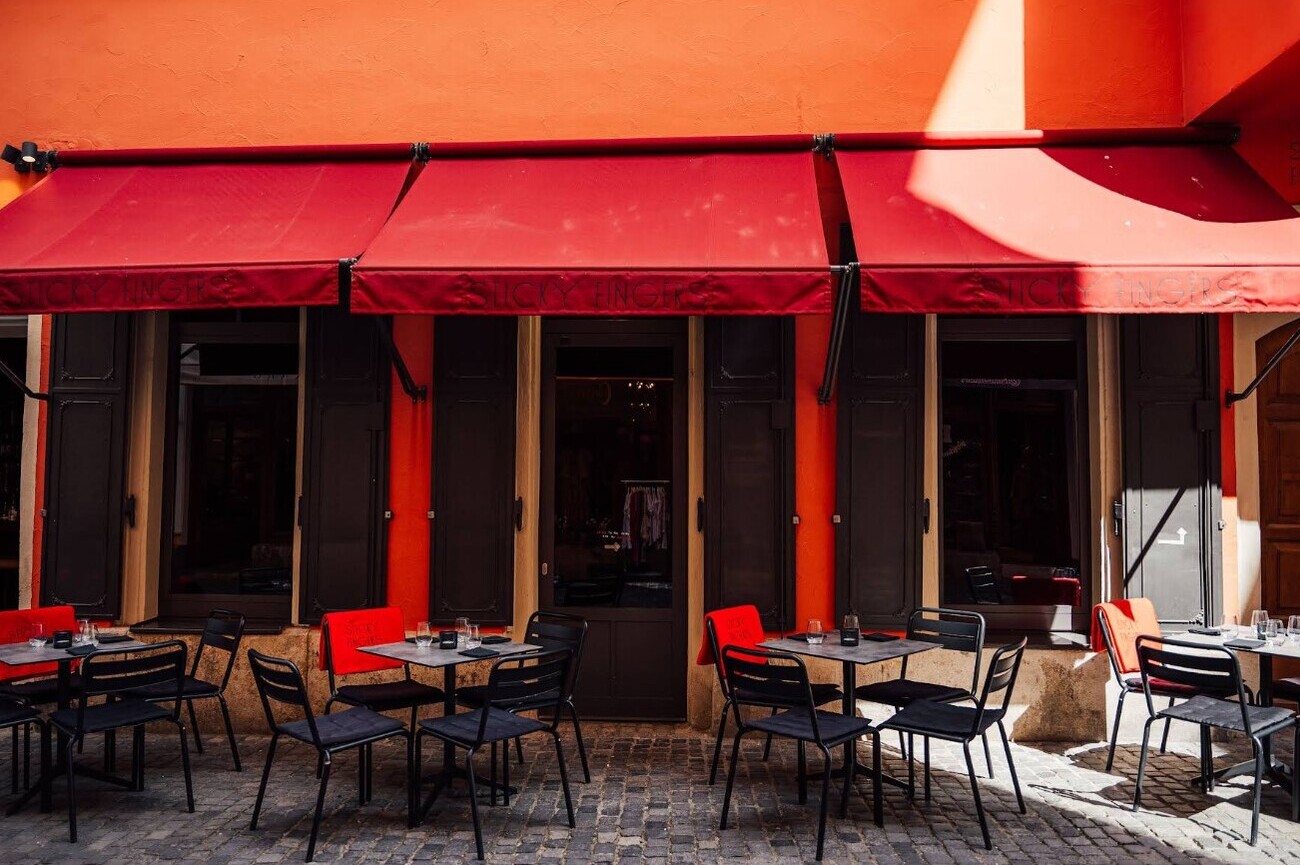
- Sticky Fingers: This one leans into energy first, food second, but the food still holds up. Located in the Old Town, Sticky Fingers feels closer to a lounge than a traditional restaurant. You’ll see international dishes with a playful edge from things like flamed salmon with ponzu and sushi rice to more unexpected combinations like breakfast plates paired with caviar and vodka. If you don’t want to overthink it, the “Sticky Styled” surprise menu for the table keeps things easy.
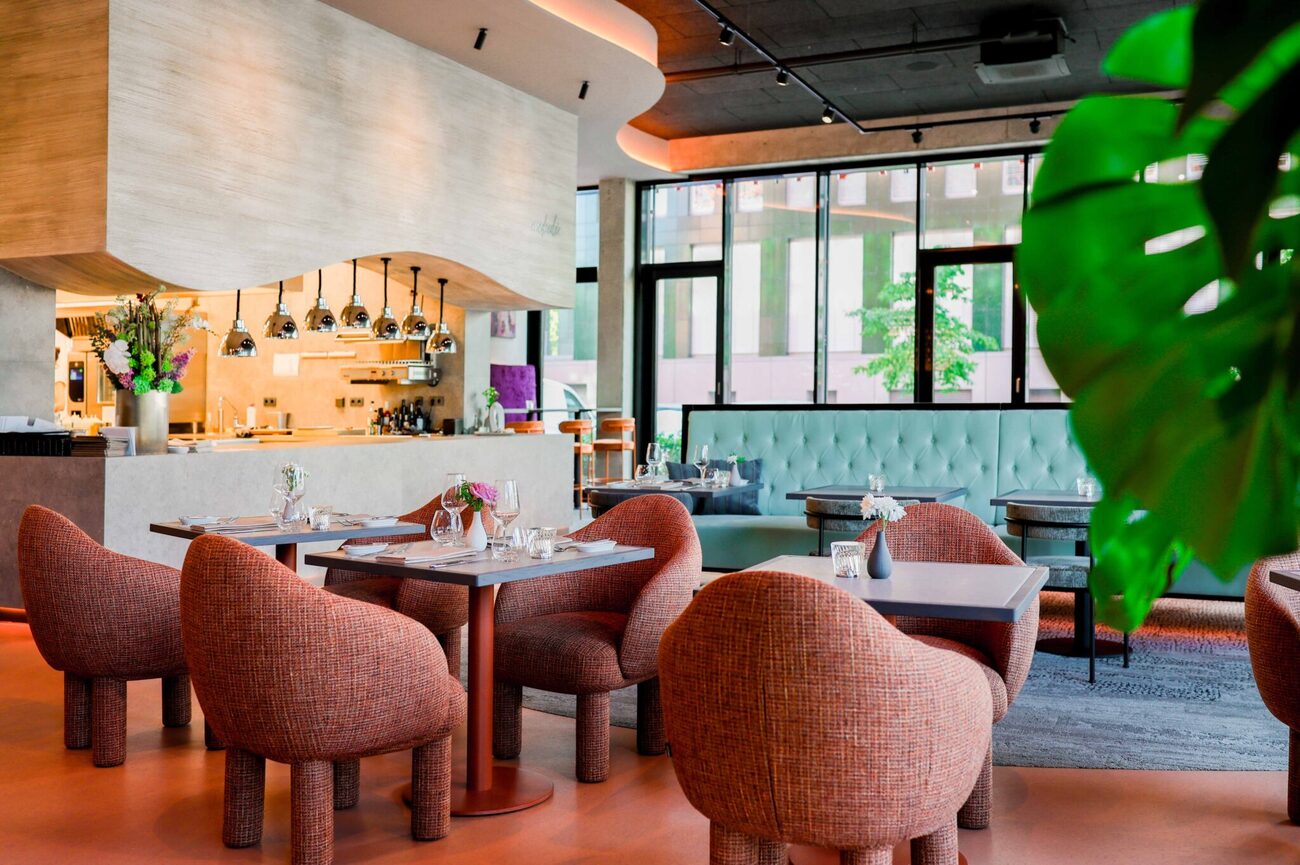
- Mokuli: Mokuli is where things get cleaner and more controlled. The space is bright, minimalist and open, with an exposed kitchen and floor-to-ceiling windows that keep everything visible. It feels modern without trying too hard. Food here follows a seasonal, ingredient-driven approach, with dishes like yellowfin tuna paired with vegetables or venison matched with chanterelles and fruit elements. You can go à la carte, but the structure works better with the 4- or 6-course tasting menus, including a full vegetarian option.
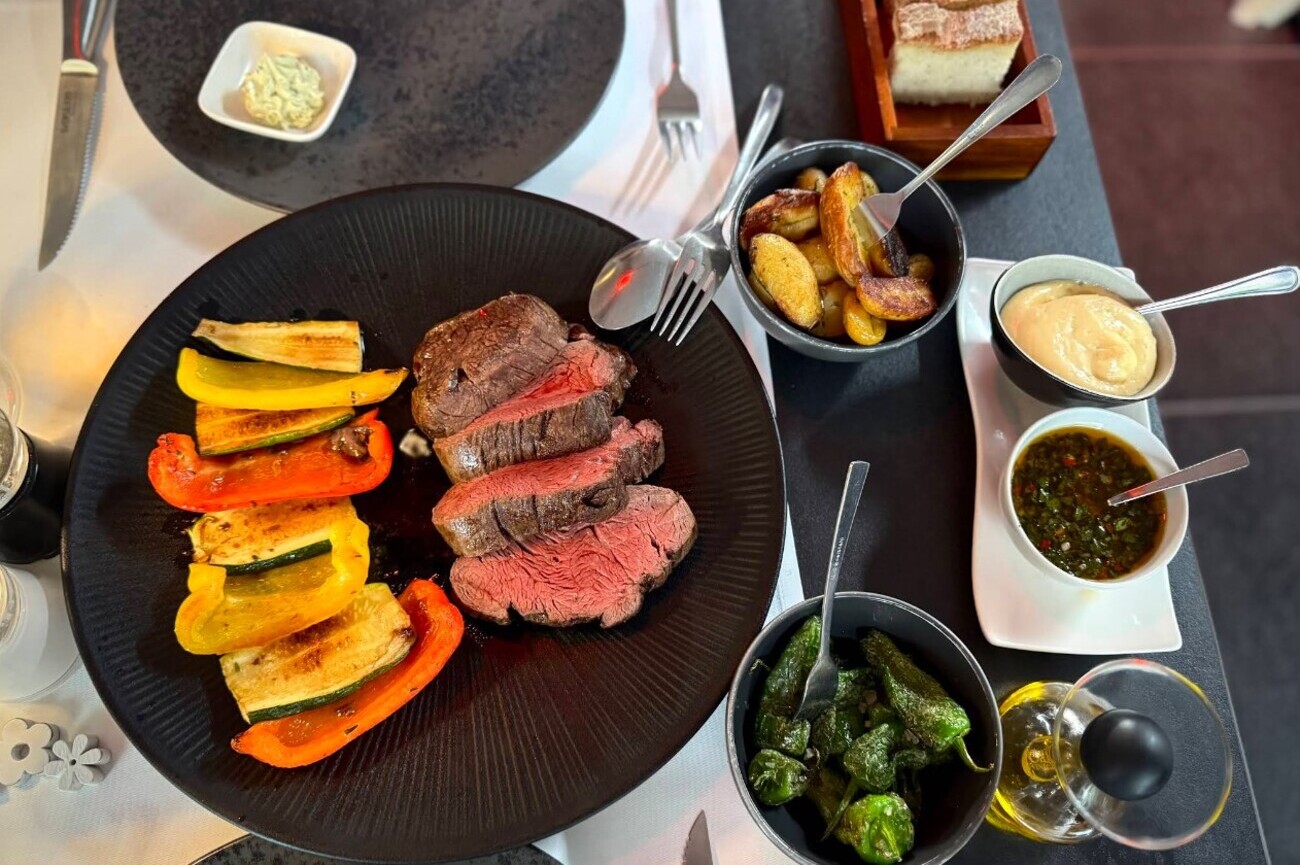
- Kreutzer's Restaurant: Housed in a former warehouse, Kreutzer’s leans into a more grounded, industrial feel. The space is larger, less intimate, but comfortable enough that you don’t feel rushed. The focus is straightforward with chargrilled steaks, fish and solid portions. It’s the kind of place where the menu doesn’t try to impress with complexity. It just delivers consistency. There’s also a strong drinks list, which makes it work equally well for dinner or a longer evening. And if you want to elevate the experience, go for a reserved dinner slot with pre-selected courses or wine pairing, especially during busier nights.
- Restaurant Mirabelle Regensburg: Mirabelle shifts the tone toward something more European and polished, with a French bistro influence running through both the space and the menu. It’s closer to classic dining, but without feeling overly formal. Expect well-prepared meats, structured sauces and a tighter menu that focuses on execution rather than variety. The wine list is solid and you can upgrade your visit by aiming for a full dinner with wine pairing.
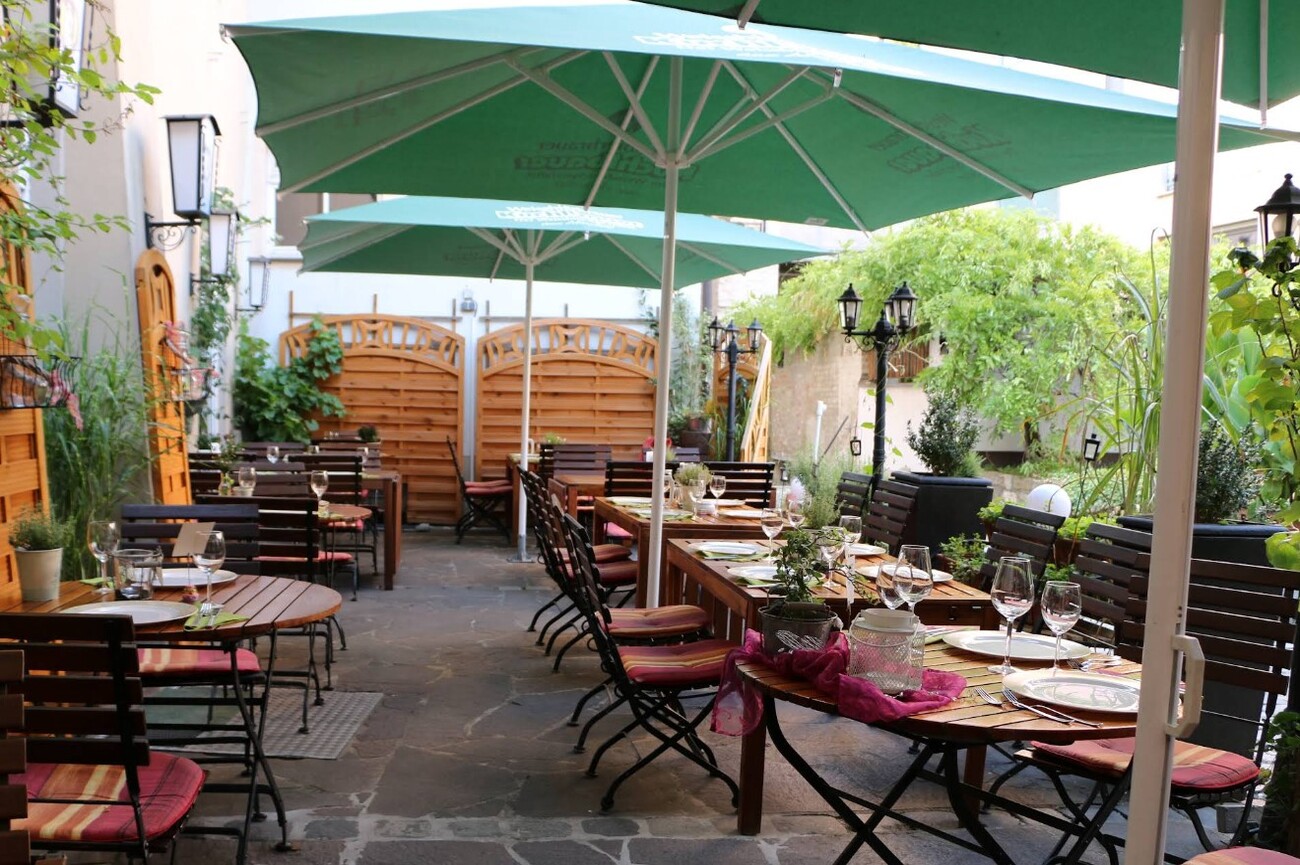
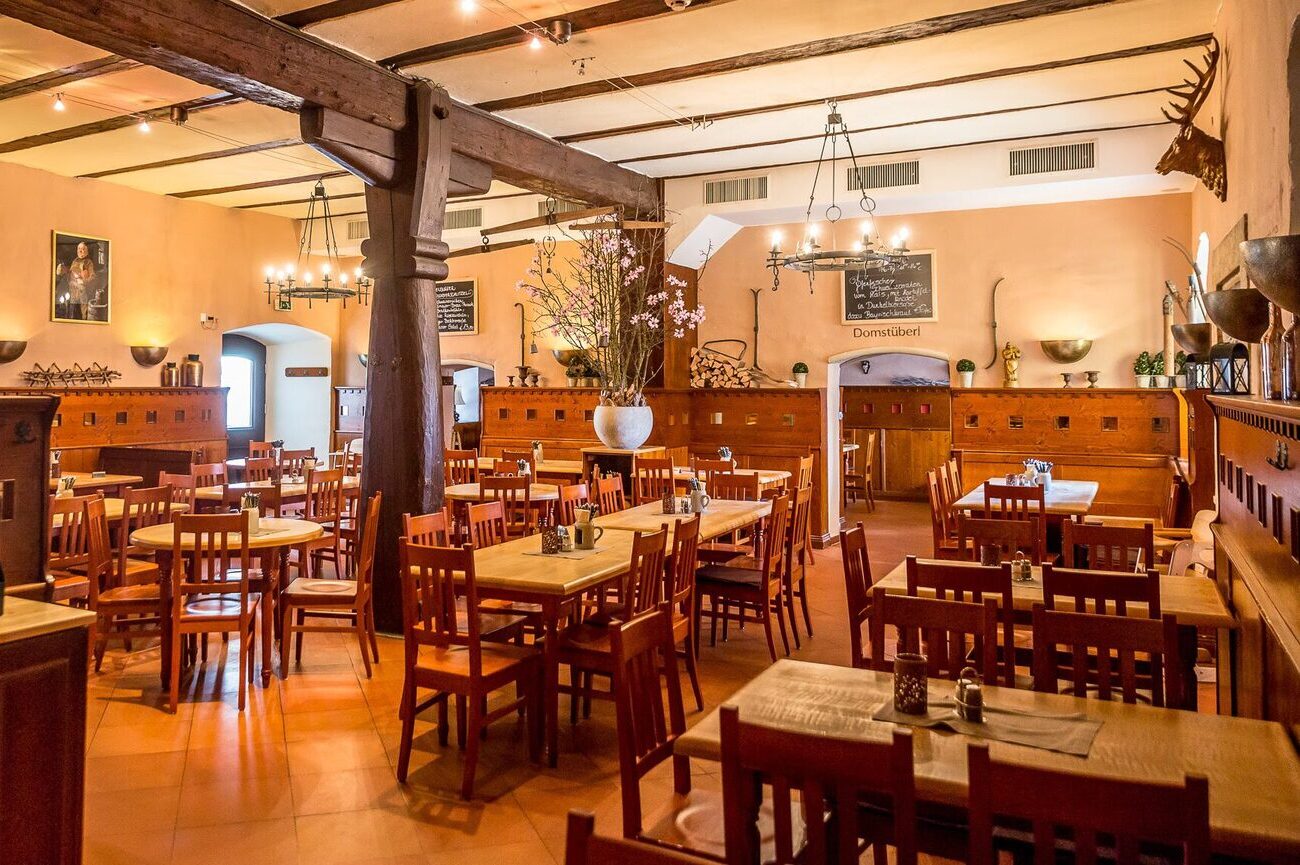
- Weltenburger am Dom: This is where you lean into Bavarian tradition, but in a setting that still feels central and accessible. Located on Domplatz, the restaurant sits right near the cathedral, which gives it a stronger sense of place compared to others. The menu is built around hearty regional dishes and monastery-brewed beers, backed by Kloster Andechs. And for a better experience, aim for outdoor seating, either the Domterrasse with cathedral views or the courtyard Biergarten.
Where to Drink in Regensburg
Regensburg keeps its nightlife compact. You’re not hopping across districts, you’re moving within a tight Old Town grid where bars, cocktail spots and small clubs sit within minutes of each other. That makes nights easier to manage. You can start slow, shift the pace and still keep everything within walking distance. Some places lean into craft cocktails, others into live music or themed interiors. Pick your vibe early and the rest of the night falls into place.
- Barock Bar: Barock Bar focuses on precision drinks and tailored mixes, backed by bartenders who actually adjust based on what you like rather than just following a menu. The space stays cozy but refined, often with live music that keeps things engaging without overpowering the room. The menu is deep with classic builds alongside more creative options. Standouts include the Pancake Old Fashioned and the Wintersun cocktail, while the Cold Turkey mocktail gives a non-alcoholic option that still feels considered.
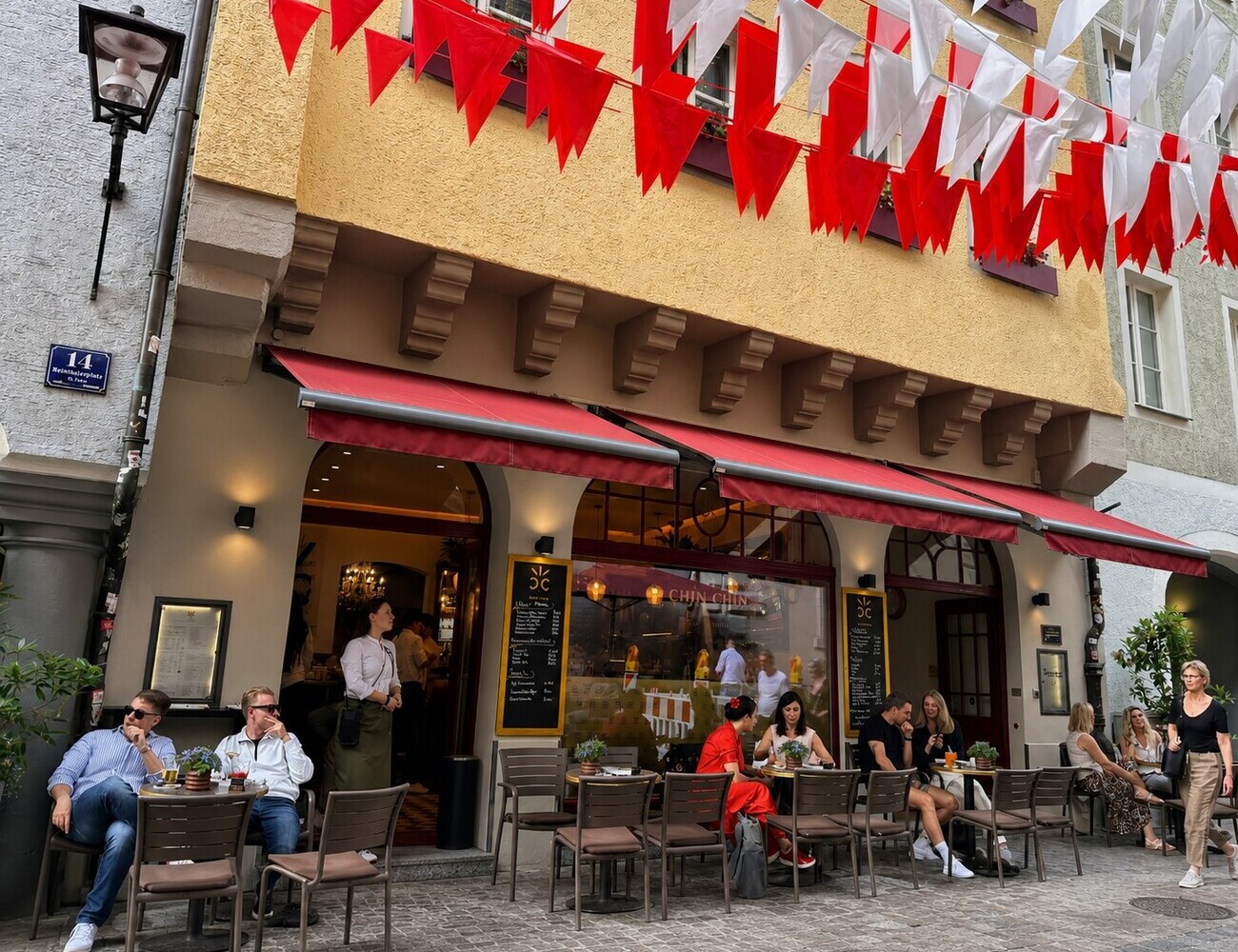
- Chin-Chin Bar: Tucked inside the Bohemian Hotel, Chin-Chin Bar shifts the tone toward something more polished and low-key. The space feels controlled with soft lighting, cleaner design and a quieter atmosphere compared to louder spots nearby. The focus here is on fine bar culture, meaning quality over volume. Go for early evening or late-night cocktails in a quieter slot, especially if you want a more relaxed, almost private-feeling setting.
- Murphy's Law Irish Pub: Murphy’s Law leans fully into its identity. Set in a vaulted cellar, it delivers a proper Irish pub atmosphere with dim lighting, heavier interiors and a steady crowd. This is where you go if you want sports, energy and social interaction. Matches from leagues like the Champions League and Bundesliga run on big screens and there’s enough going on like darts, whisky tastings and group tables to keep the place active. And for an even better experience, time your visit around match nights or events, when the atmosphere peaks.
- KA5PER Cocktailbar: KA5PER sits somewhere in the middle, casual but still focused on cocktails. The space is compact and inviting, with a setup that works well for groups without feeling crowded. Drinks are the highlight, especially the more creative or infused options like basil-based mixes. The menu leans slightly playful and the pricing stays reasonable, which keeps it accessible. On weekends, the energy shifts with DJ sets and live music, making it a stronger late-night option.
- Tiki Beat Bar & Club: Tiki Beat is the most distinct concept on the list. The entire space is built around a South Pacific theme, with tropical interiors, themed drinks and a setup that changes depending on the time of day. Earlier in the day, it works as a relaxed café-style spot, but by evening it shifts into a full bar and club environment. The drink menu leans heavily into exotic cocktails, matching the setting. On weekends, it pushes further with live bands, themed nights and DJ sets covering everything from swing to reggae.
Cafes in Regensburg
Regensburg does cafes differently. You’re not dealing with a rushed grab-and-go culture. Most places here are built for slowing down, sitting in and actually enjoying the stop. Whether it’s a quick coffee, a full brunch or a mid-afternoon reset, the cafe scene leans into comfort, quality and atmosphere without overcomplicating things. Everything sits within walking distance, especially around the Old Town, so you can easily move from one spot to another depending on the mood. Some cafes focus on specialty coffee and others on breakfast plates or cakes.
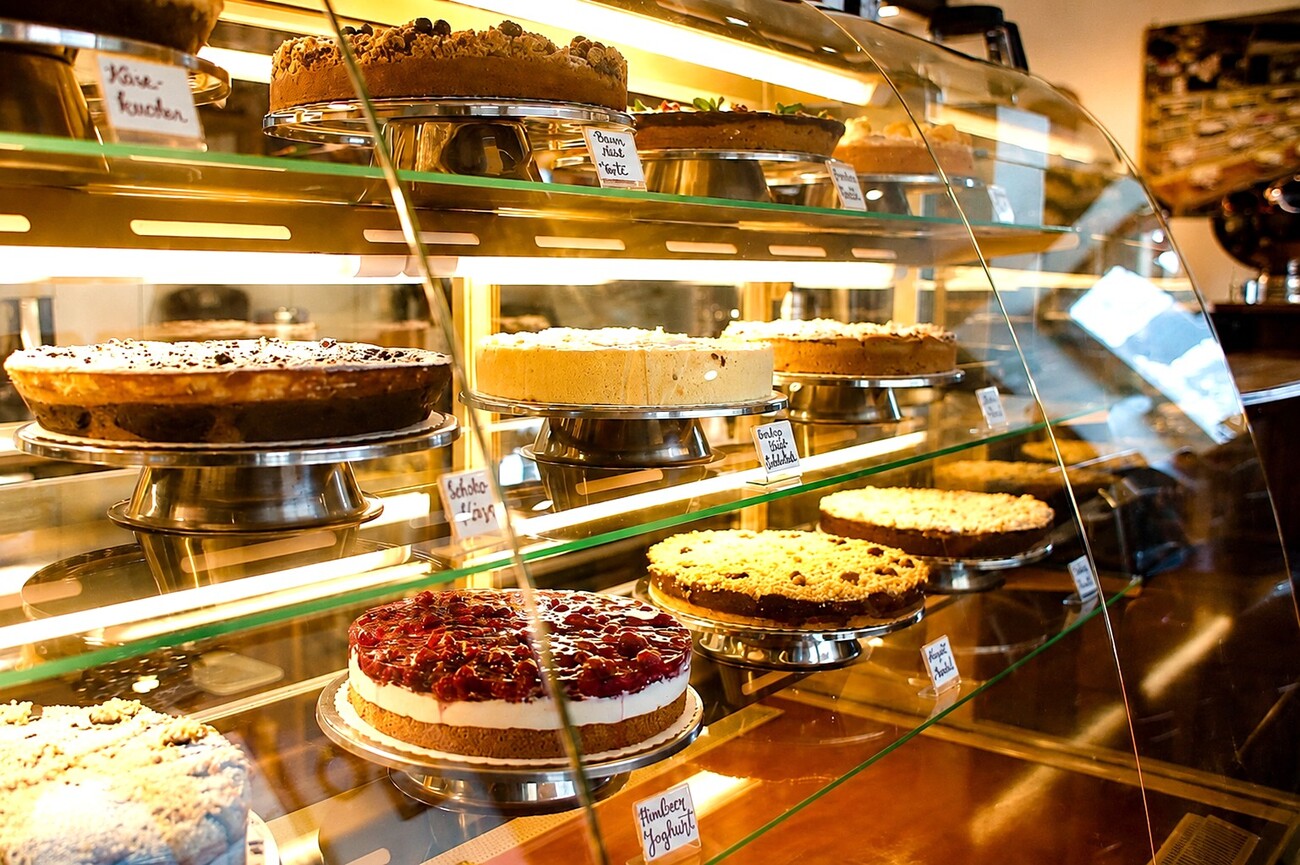
- Kuchenbar: Kuchenbar is where you go when the plan is simple with coffee and cake done properly. The space feels personal, with a smaller interior that leans cozy rather than crowded. Cakes are the main draw here, displayed upfront and rotated regularly. You’ll find classic slices alongside seasonal options, all paired with straightforward drinks like cappuccinos or chai lattes.
- Rehorik 190° Café | Bar | Rösterei: This one is built around coffee, not just serving it. Rehorik runs as a working roastery, so you’re sitting in a space where beans are actually processed on-site. The menu leans into specialty coffee with filter, flat white and cappuccino alongside brunch items like hummus toast and homemade cakes. It’s a bit more structured compared to smaller cafés, with a setup that attracts both casual visitors and coffee-focused guests. And if you’re into it, pick up freshly roasted beans before leaving.
- Café Lila: Café Lila leans toward brunch culture, with a menu that stretches beyond basics. The space is larger than most cafés in the city, giving it a more open feel without losing the cozy edge. You’re looking at eggs Benedict, vegan options like falafel burgers and house-made jams, all presented cleanly. Go earlier and secure a full breakfast or brunch spread, especially if you want a slower start to the day.
- Malefiz Café & Bar: Malefiz feels more curated. The space is compact, slightly tighter, but designed to feel intentional and warm, especially with its layout and presentation. The menu mixes lighter bowls like granola, porridge and acai with more filling options like breakfast platters and burgers. Everything leans fresh, with a focus on ingredients that look as good as they taste. Oh, and drinks stand out here with specialty lattes, chai and house-made syrups that add another layer.
- Caffé Rinaldi: Caffé Rinaldi brings a different angle to Italian café culture right in the Old Town. It’s more than just coffee; the menu runs from breakfast into lunch and even light dinner territory. You’ll find espresso-based drinks, fresh juices and dishes like truffle pasta, carbonara and burrata salads. The breakfast plates, built with Italian meats, cheeses and fruit, are one of the stronger options if you want something more complete. This is the spot for a longer meal rather than a quick stop.
Where to Stay in Regensburg
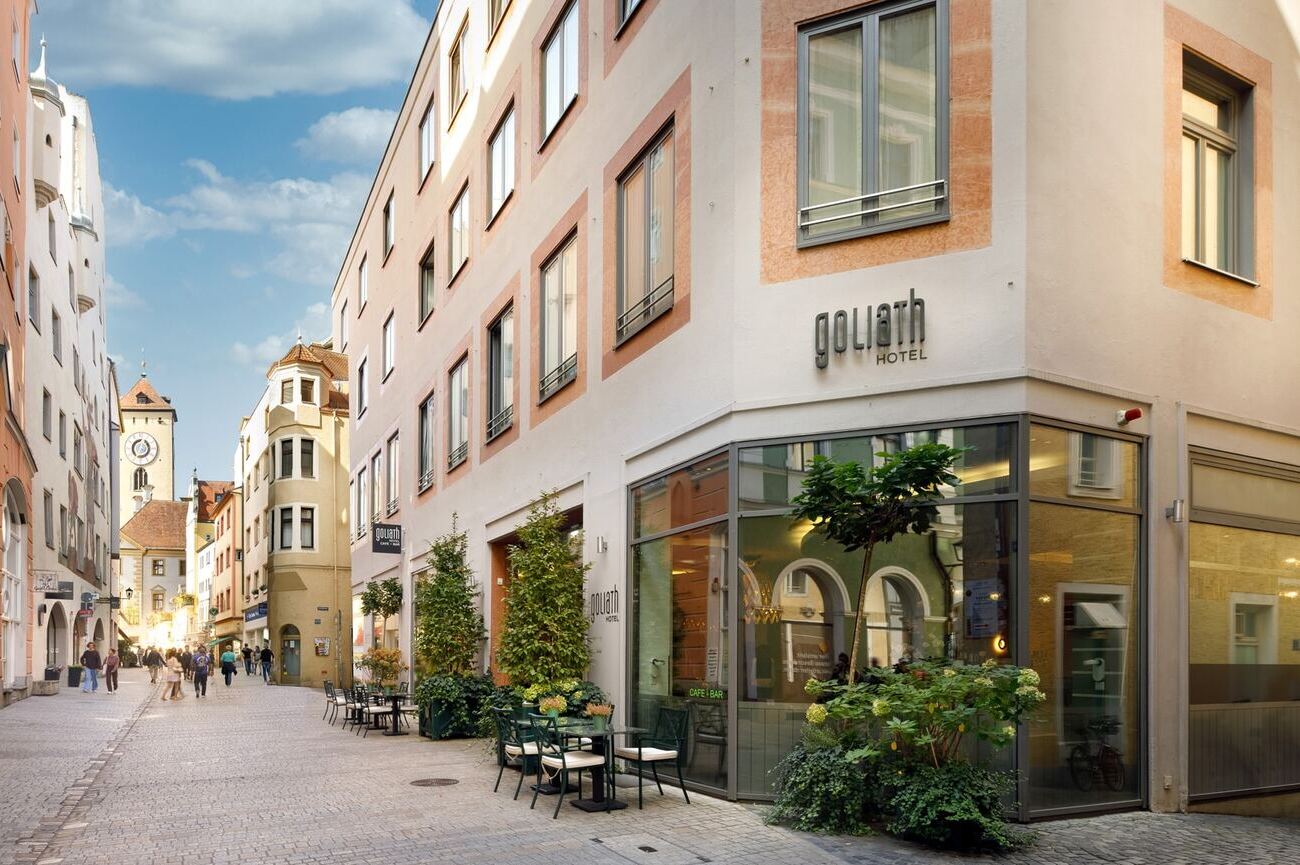
- Hotel Goliath am Dom (5 stars): Hotel Goliath am Dom is built around location first, then refinement. Sitting directly beside the cathedral, you’re positioned in the most concentrated part of the Old Town, within walking distance of the Stone Bridge, Danube riverfront and main historic streets. You won’t need transport once you check in and everything starts right outside the door. One of the stronger features is the rooftop terrace, where breakfast is served in warmer months. The view lines up directly with the cathedral towers, which makes it one of the few places in the city where you get that perspective without crowds. The property also includes a small wellness area with sauna and fitness room, which works as a reset after long walking days.
- Novotel Regensburg Zentrum (4 stars): Novotel Regensburg Zentrum leans into modern convenience and accessibility. Located just outside the Old Town boundary, it offers a more open layout compared to the dense historic center while still keeping major attractions within a 10–15 minute walk. The hotel has over 130 rooms, all designed with a functional, contemporary layout with neutral tones, workspaces and standard amenities like coffee stations and refrigerators. Facilities include a fitness studio, lounge bar and on-site restaurant serving Mediterranean-style dishes, plus a daily breakfast setup with a wide selection. The hotel also supports bike rentals, which is useful given how bike-friendly Regensburg is.
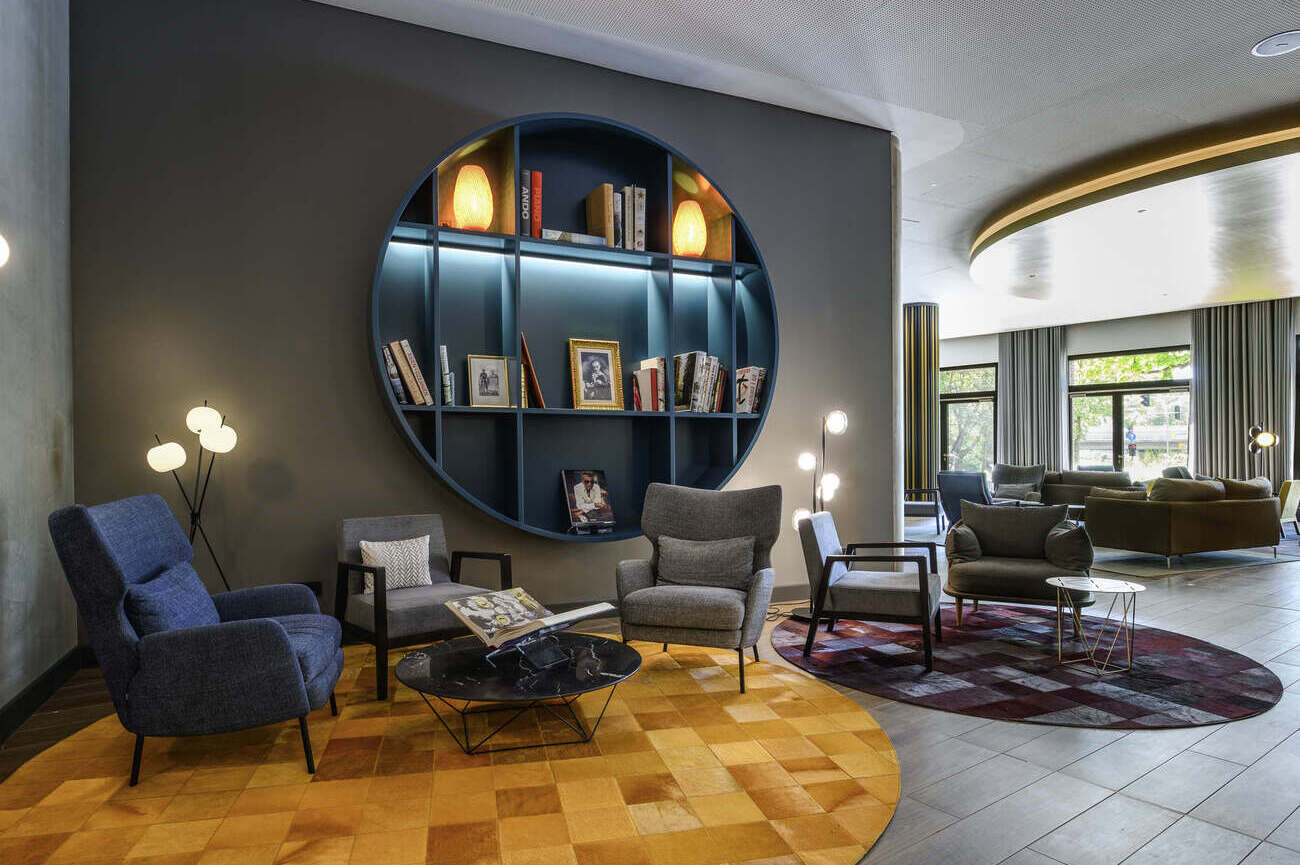
- Hotel Das Regensburg (4 stars): Hotel Das Regensburg balances central access with modern comfort. It’s about a 6-minute walk from the main train station and within easy reach of the cathedral and Thurn und Taxis Palace. Rooms are air-conditioned and well-equipped, with features like flat-screen TVs, work desks and city-view options. The hotel also offers family rooms and flexible layouts, which make it more adaptable for different travel types. Common areas include a sun terrace, lounge and bar, plus added conveniences like EV charging stations and bicycle parking.
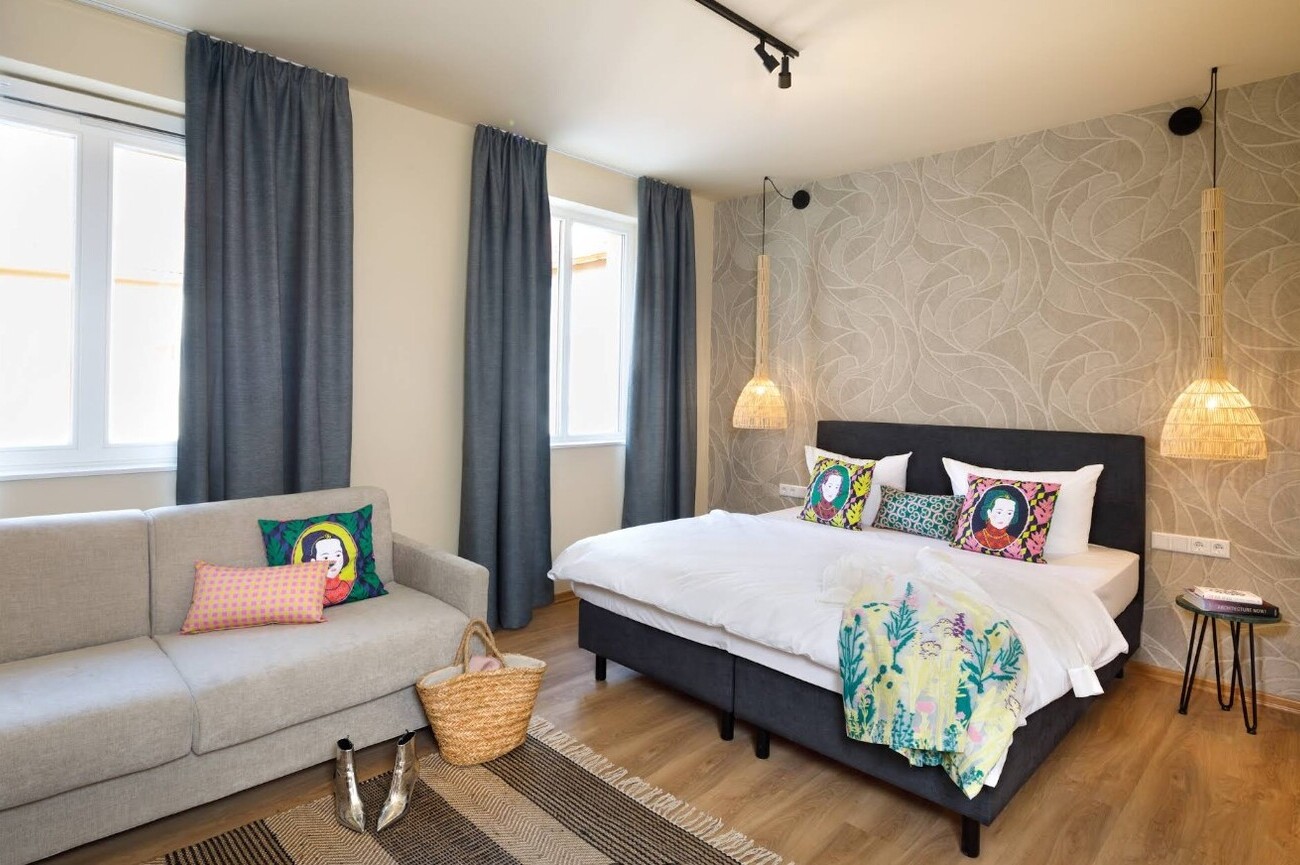
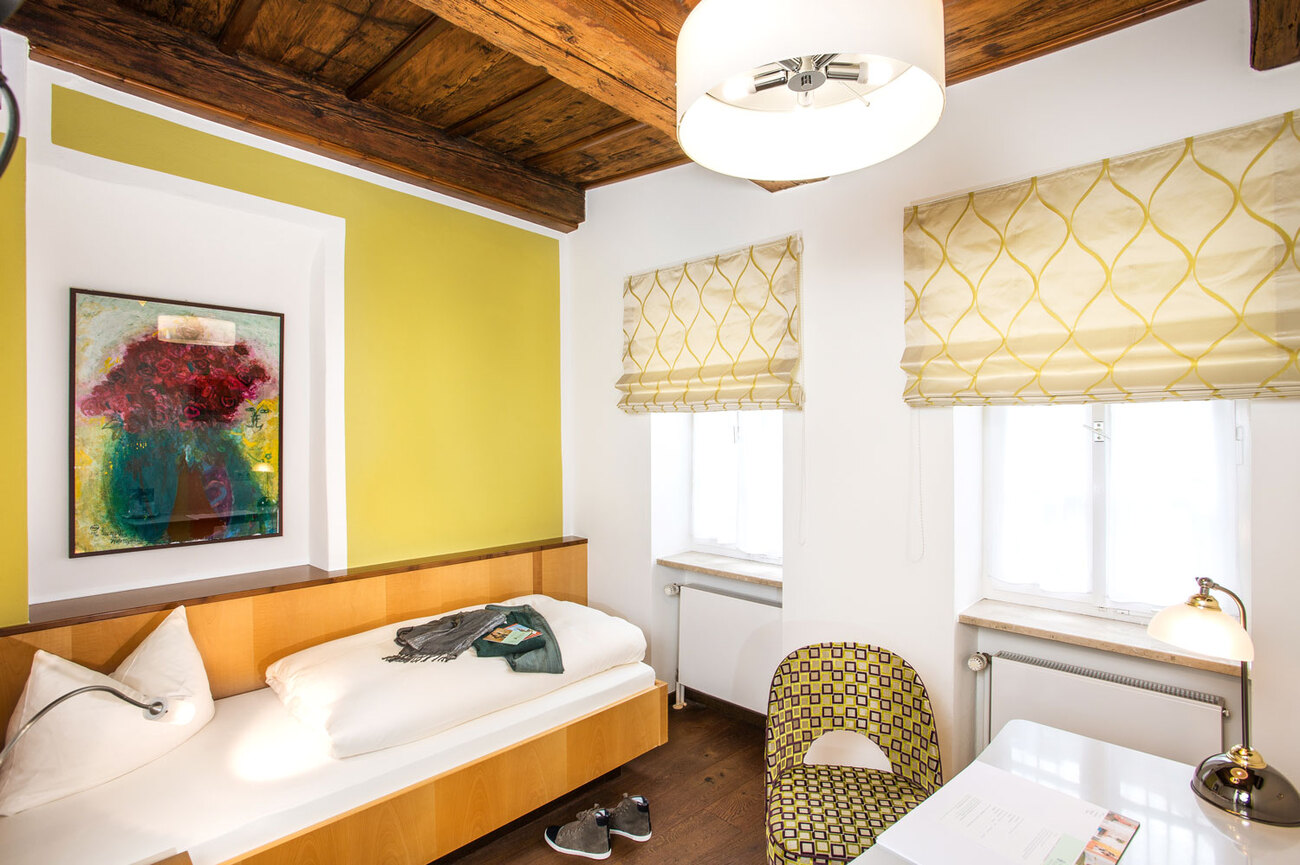
- Hotel Münchner Hof (4 stars): Münchner Hof leans into historic character and individuality. Located in a car-free zone just 2 minutes from the cathedral, it places you deep inside the Old Town while maintaining a quieter, more contained environment compared to busier streets. The building itself is historic and the rooms reflect that. Each one is individually themed, with different layouts, decor styles and details. Some feel more traditional, others more updated, but none are standardized. This makes the experience less predictable but more personal. The hotel doesn’t rely on large-scale facilities; it’s more about location and atmosphere.
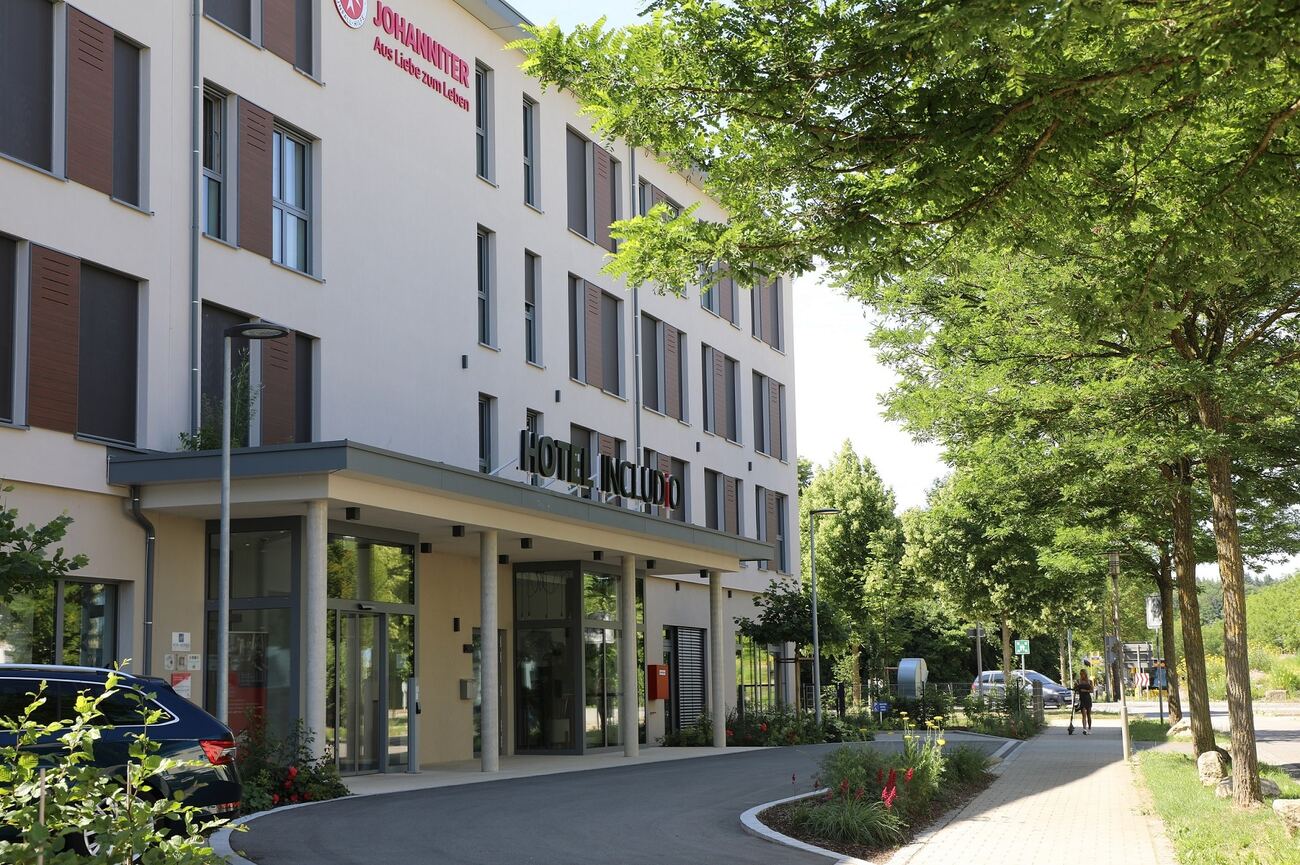
- Johanniter-Inklusionshotel INCLUDiO (4 stars): INCLUDiO is built around accessibility and inclusive design, offering a more modern, purpose-driven alternative to traditional hotels. Located about 10–15 minutes from the city center by car, it provides a quieter base while still staying connected to main attractions. Rooms are soundproofed, air-conditioned and designed for comfort, with clean layouts and practical features like work desks and accessible bathrooms. The hotel also includes wellness facilities such as a sauna and fitness center, along with a restaurant serving international cuisine with vegetarian, vegan and dietary-specific options.
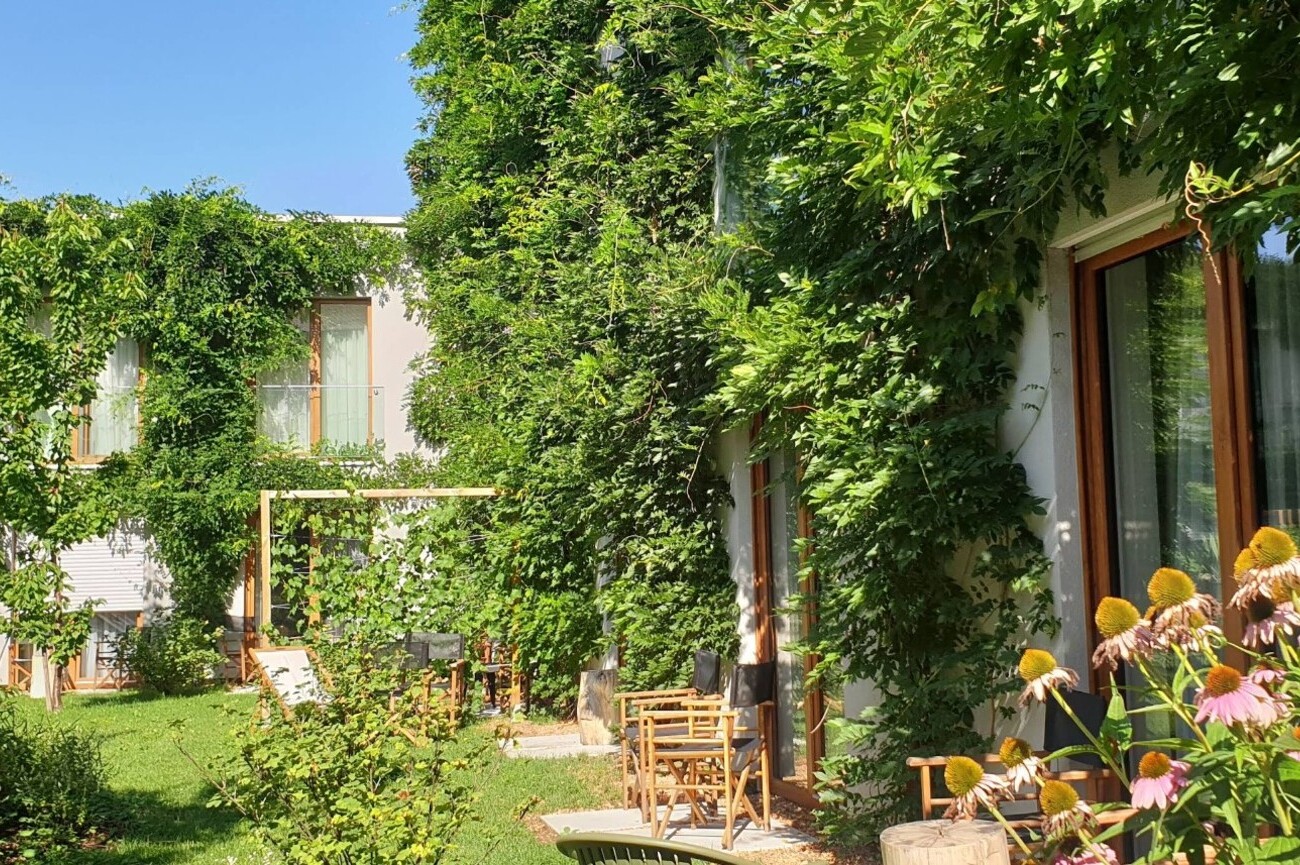
- Green Spirit Hotel (3 stars): Green Spirit Hotel stands out for its eco-conscious concept and layout. The property combines a listed 18th-century building with a newer structure, both centered around a large courtyard garden. This creates a more open, relaxed environment compared to the tighter Old Town hotels. The hotel offers a mix of double rooms, family rooms and apartments, some with private terraces. The courtyard is one of the hotel’s best features with its shaded seating, greenery and open space that makes it a practical area for downtime. There’s also a fitness room and lounge, so you won’t miss a workout during your stay.
Best Time to Visit Regensburg
Regensburg works best when the city is fully open, easy to move through and not slowed down by extremes. May through June is when that balance lands properly. The weather is stable, daylight stretches well into the evening, and everything from cafes to river routes operates without disruption.
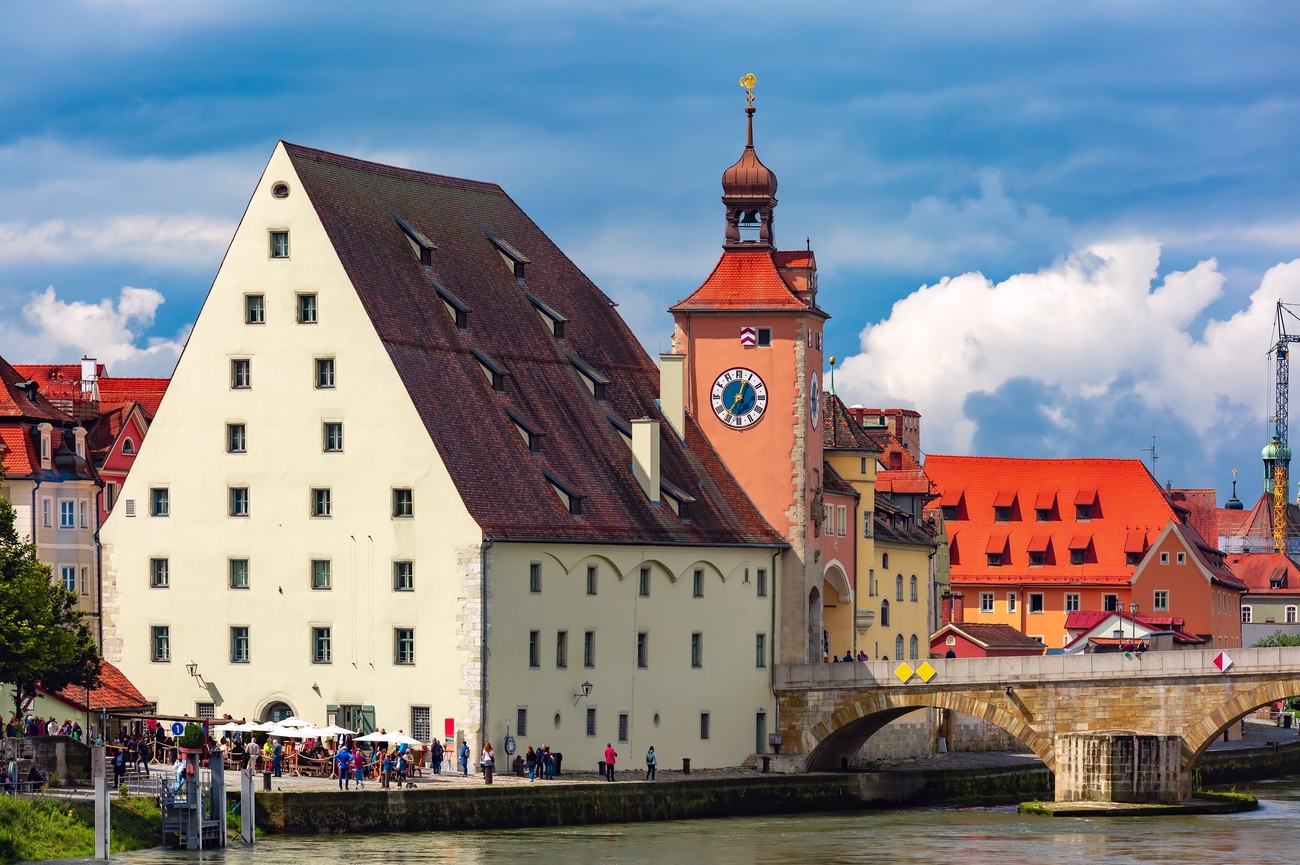
During this period, the Old Town holds its structure. Streets stay active but manageable, which means you can move between the cathedral, Stone Bridge and central squares without losing time to congestion. Outdoor seating becomes part of the experience rather than a backup plan and the Danube promenade feels open enough to actually enjoy instead of navigate. You can cover more ground without feeling rushed and the city stays consistent from morning through evening.
This is also the most reliable window for premium and pre-arranged experiences. Private walking tours run on schedule and move efficiently between landmarks. Danube boat trips toward the Danube Gorge operate regularly, with better availability and fewer delays. If you’re layering in day trips, transport connections stay predictable, which matters when you’re working with a fixed itinerary. You’re not building buffer time into every leg of the day.
To get more out of the visit, schedule early morning tours before the midday build-up and lock in evening reservations in advance, especially for terrace seating in central locations. If you’re adding golf, cycling or guided excursions, this is the period when those activities run at full capacity without overbooking.
Regensburg doesn’t rely on a long travel window; it relies on the right one. Late spring gives you clear movement, full access and fewer interruptions, which keeps the entire trip aligned with how the city naturally flows.
Christmas Markets in Regensburg
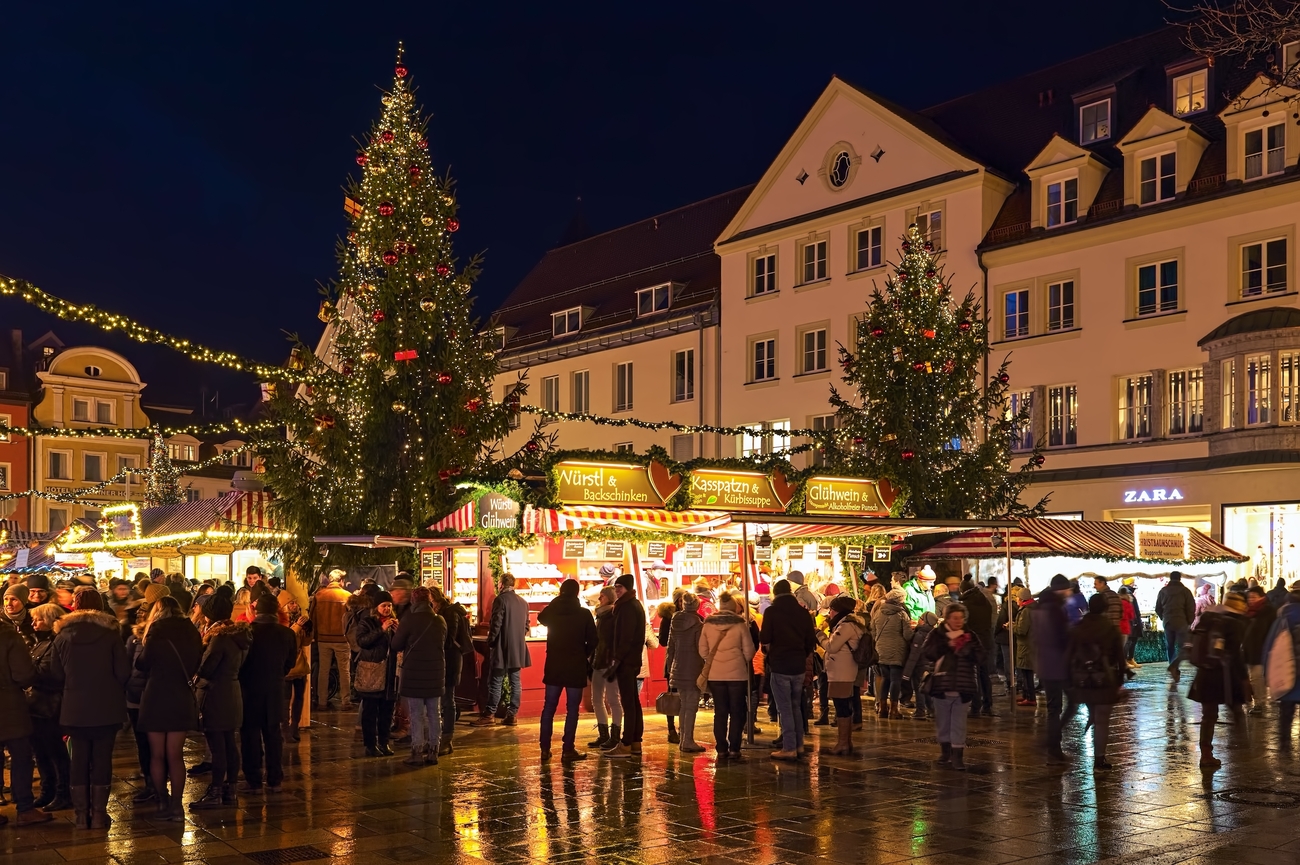
- Christkindlmarkt: This is the main one. Held at Neupfarrplatz, the Christkindlmarkt runs from late November to December 23, operating daily from morning into the evening. It’s the oldest and most traditional market in the city, dating back over 200 years. You’re getting the full Bavarian setup with wooden stalls, mulled wine, grilled sausages and handcrafted goods. The layout is open but structured around the church, which keeps movement easy even when it gets busy.
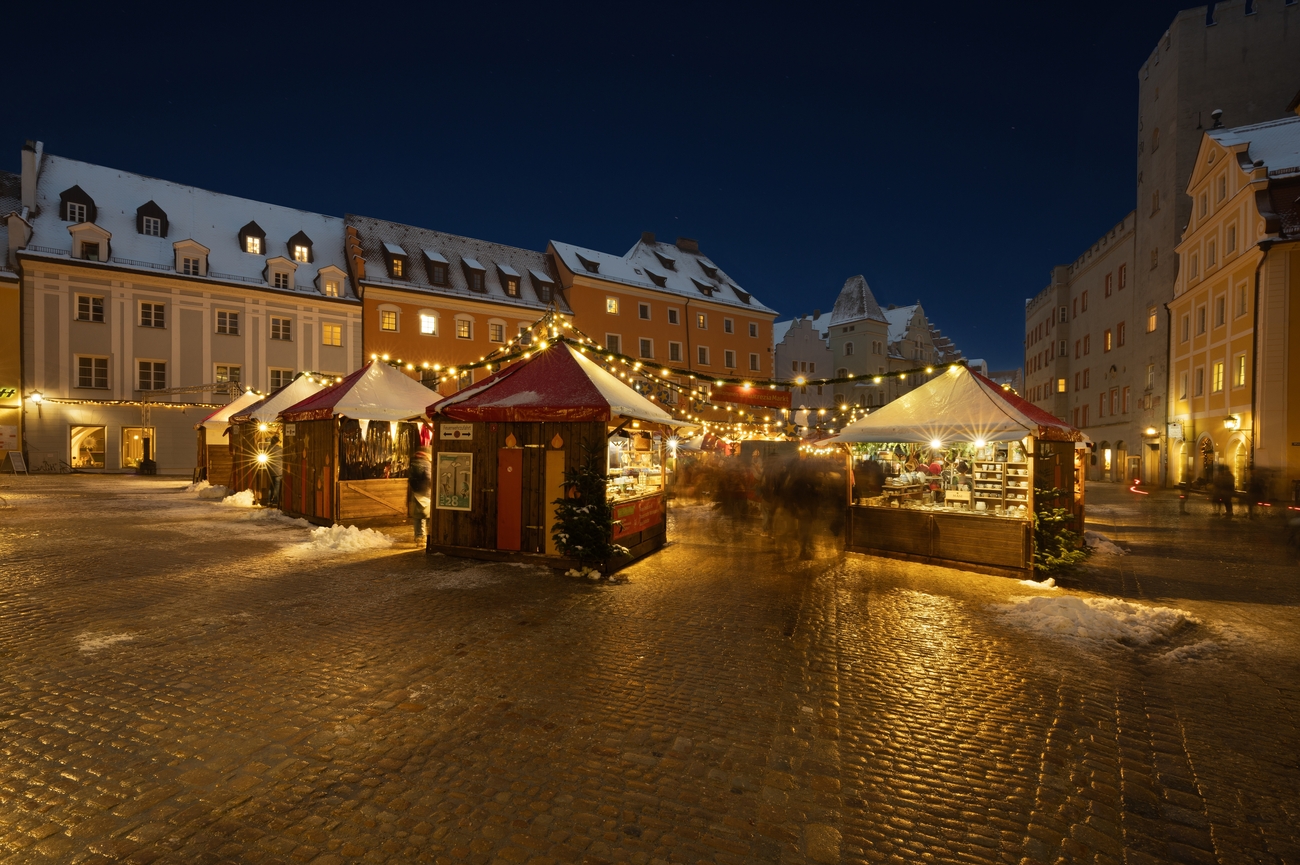
- Lucrezia-Markt: The Lucrezia Market runs alongside the main season, typically from late November to December 23, centered around Haidplatz and Kohlenmarkt. This one shifts the focus from food to craft and design. It’s known for high-quality artisan goods with handmade jewelry, ceramics, textiles and art pieces rather than standard souvenir stalls. There’s also a cultural program with live performances and exhibitions, which gives it more structure than a typical market.
- Adventsmarkt im St. Katharinenspital: Set across the river in Stadtamhof, this market runs from late November to December 23, with shorter weekday hours starting in the afternoon and longer weekend hours. This is the most intimate and local-feeling market in Regensburg. It sits along the Danube, right by the Stone Bridge, with bonfires, smaller stalls and direct views back toward the cathedral skyline.
Festivals in Regensburg
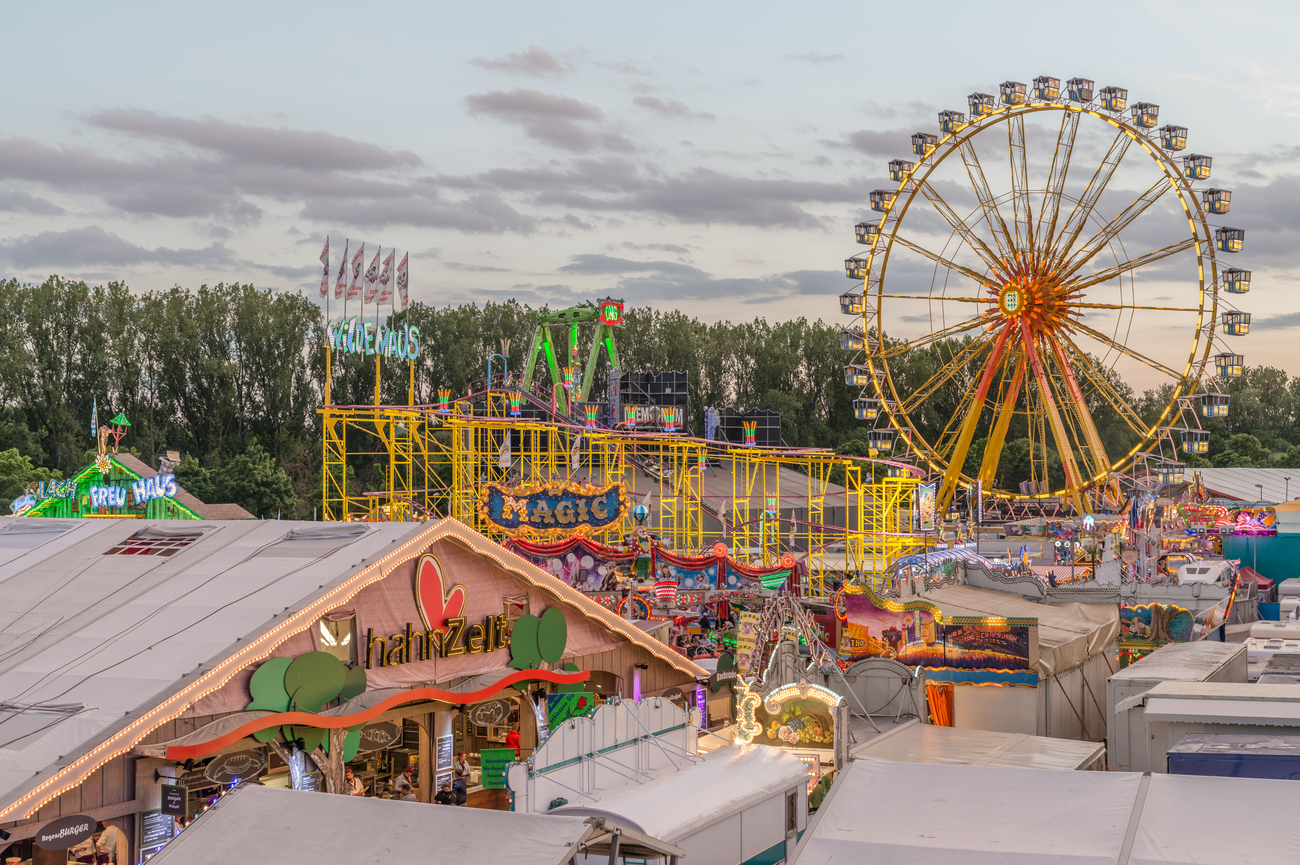
- Regensburger Dult: This is Regensburg’s version of a classic Bavarian fair and it runs twice a year, in May (spring Dult) and again late August into early September (autumn Dult), typically lasting about two weeks each time. Set along the Danube at Dultplatz, it’s a mix of beer tents, rides, food stalls and market stands. You’ll see traditional dress, long communal tables and full beer halls by evening. If you want to experience it properly, go for reserved seating inside the main tents, especially in the evening. That’s where the pace shifts with live bands, full service and a more structured setup.
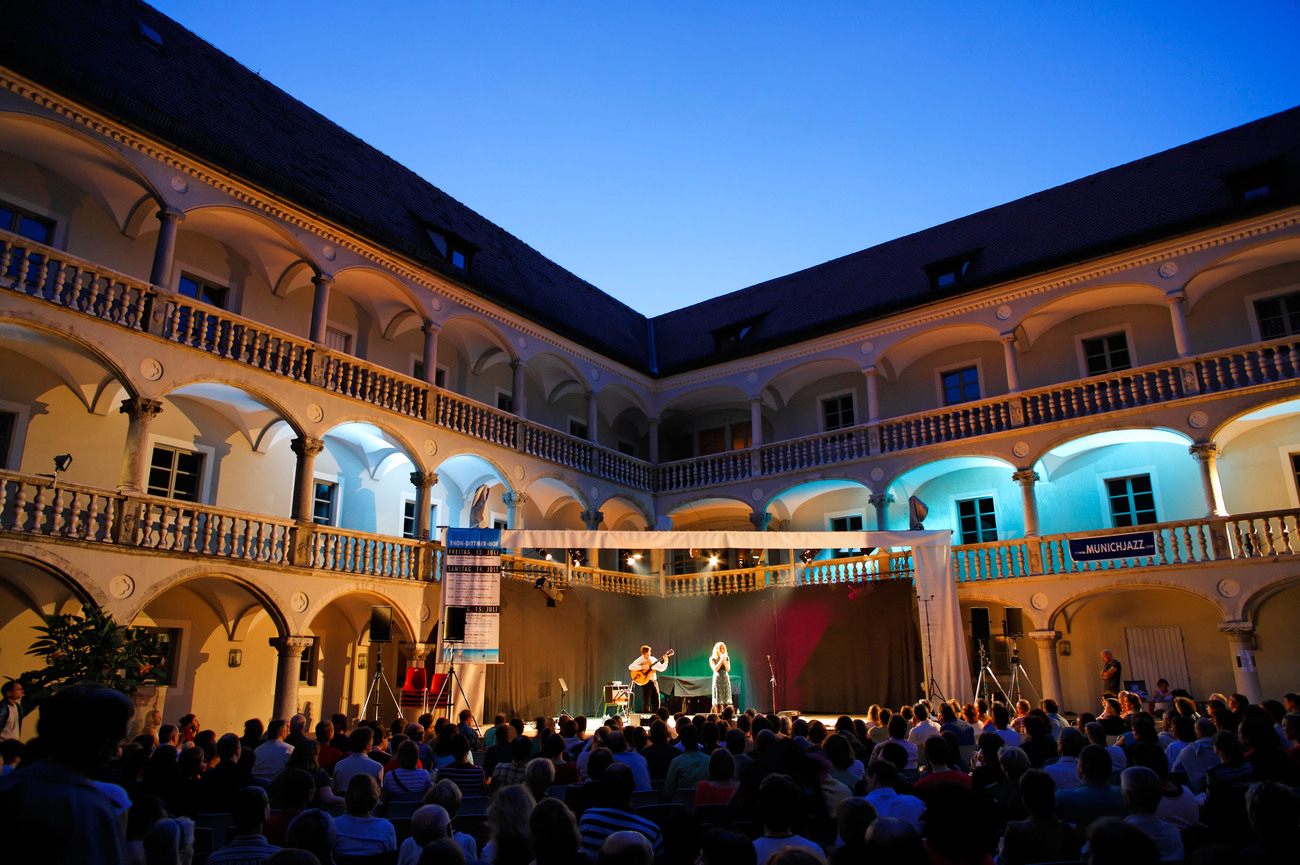
- Jazzweekend Regensburg: Held each summer, usually in July, Jazzweekend is one of Regensburg’s best-known cultural events. Concerts take place across the Old Town in squares, courtyards and indoor venues, which gives the festival a city-wide feel rather than keeping it confined to one site. The programme covers a mix of jazz styles, from classic and swing to more contemporary sets, and much of the appeal comes from hearing live music in historic surroundings. If you want to experience the city at its most atmospheric, this is one of the strongest times to visit.
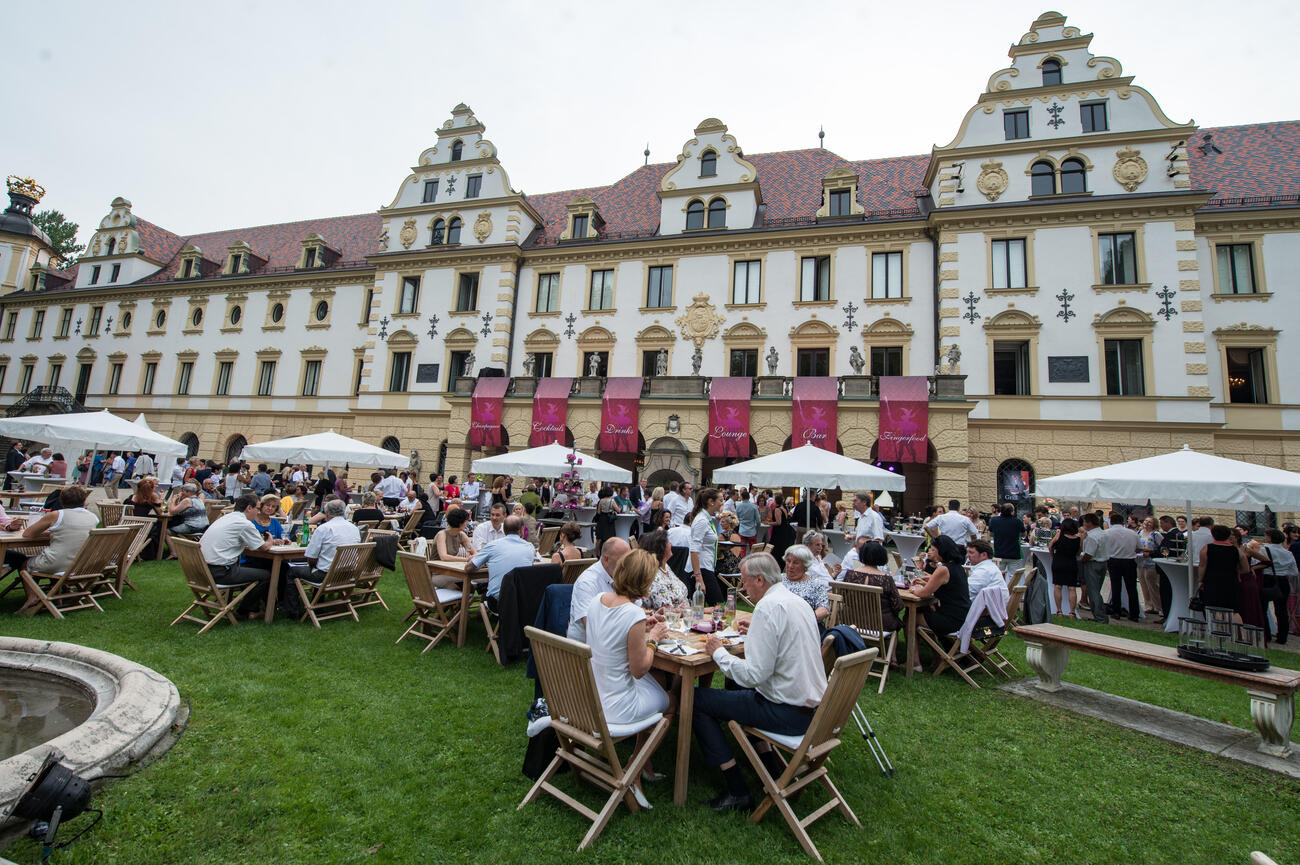
- Thurn und Taxis Palace Festival: Held in July, usually over two to three weeks, this is Regensburg’s most polished event. It takes place inside the courtyard of the Thurn und Taxis Palace, which immediately changes the tone with less of a street festival feel and more of a curated cultural setting. The lineup leans toward concerts, opera and high-profile performances, often featuring international artists. Seating is structured, acoustics are controlled and the setting, historic palace walls lit at night, does most of the work.
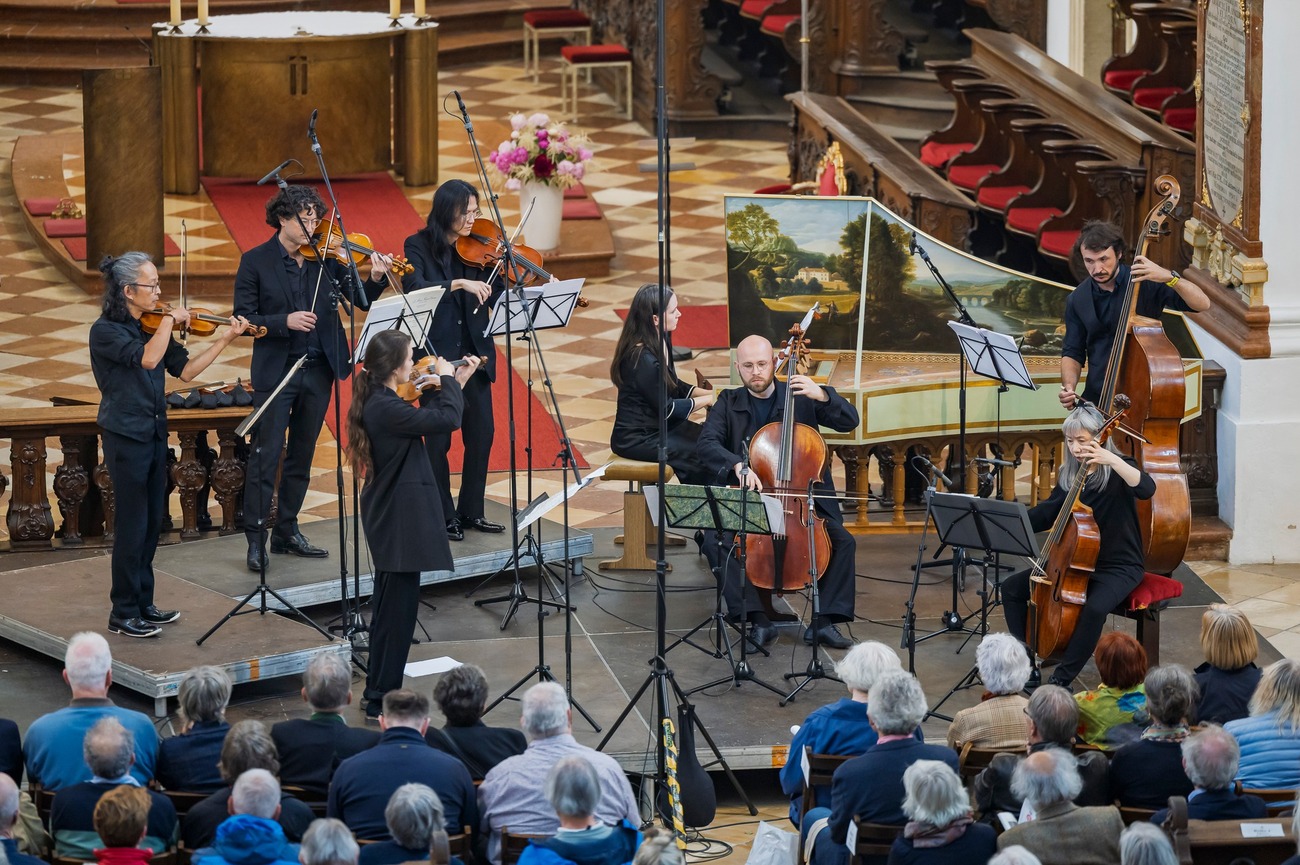
- Tage Alter Musik: This one runs annually in early June, typically over a long weekend and it focuses entirely on early music like medieval, Renaissance and Baroque performances. Concerts are held across historic venues like churches, halls and courtyards. This makes the experience feel integrated into the city rather than staged separately. If you’re adding this to your itinerary, go for pre-booked concert tickets in key venues, especially for evening performances.
- Bürgerfest: This is one of the city’s biggest local events, held every two years in summer (usually June or July) and running across a full weekend. The entire Old Town turns into a multi-stage open-air festival, with live music, food stands and street performances spread across squares and narrow streets. One street might be jazz, the next indie, the next full Bavarian setup.
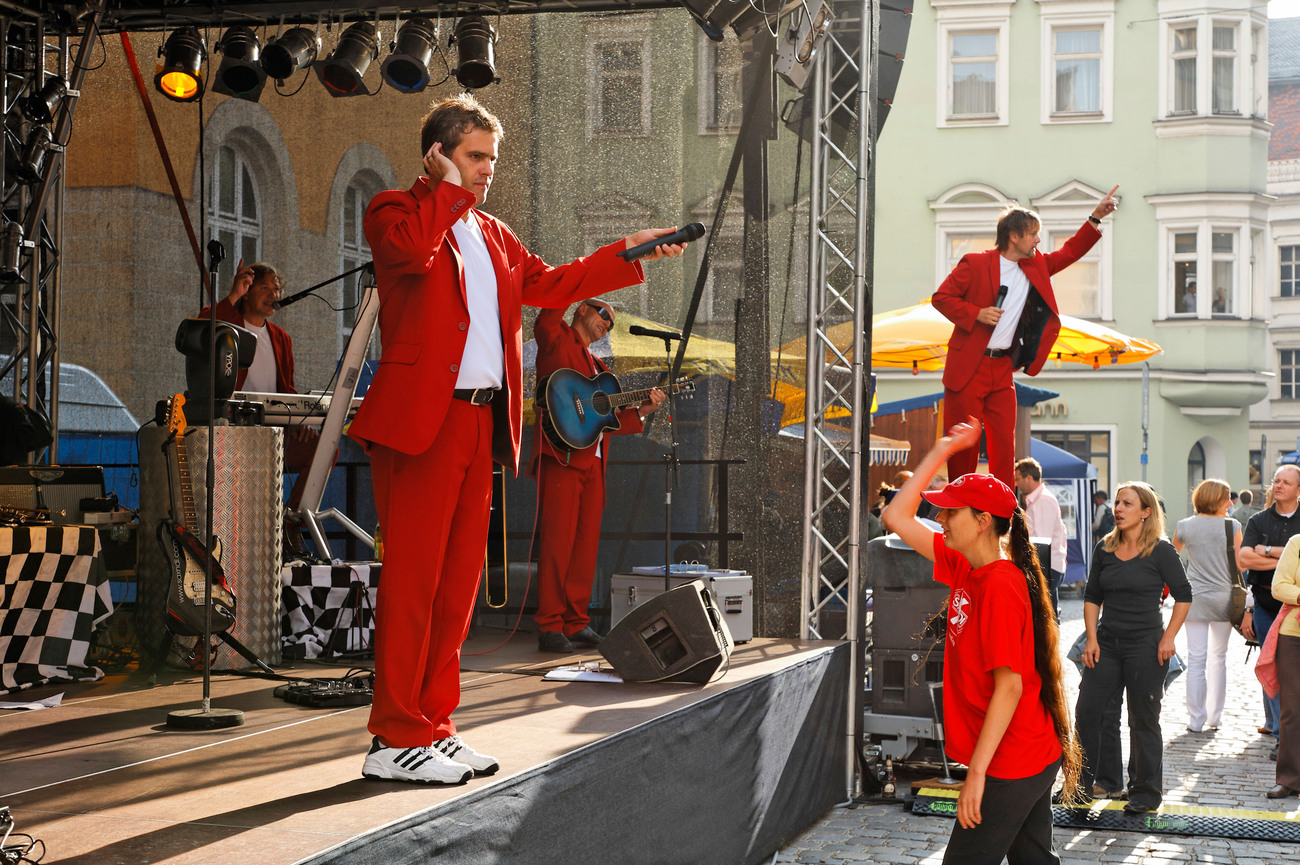
- Internationale Kurzfilmwoche: This runs annually in March, usually over about a week and focuses on international short films across multiple genres. It’s one of the more established short film festivals in Germany, drawing thousands of visitors and hundreds of films per edition. Screenings take place in cinemas and cultural venues across the city.
Why Plan Your Regensburg Trip With Us
Regensburg is easy to enjoy on the surface, but fitting the city together properly takes more planning than it first appears. Timing palace tours, choosing the right day trips, securing strong restaurants and building in the right pace can quickly turn a short stay into something more complicated than expected.
We create tailor-made trips built around how you like to travel, whether that means private guides, driver-led day trips, family-friendly pacing, golf, wine, culture or a wider Bavaria journey. Instead of trying to piece everything together yourself, you can have a trip designed around your priorities, with the logistics handled for you.
If you are planning a custom-made vacation in Regensburg or a broader journey through Bavaria, contact us and we will help design the right itinerary for you.


Let us know what you love, where you want to go, and we’ll design a one-of-a-kind adventure you’ll never forget.
Get in touch
Miriam
Travel Specialist

Romina
Travel Specialist

Laura
Travel Specialist
Our offices:



Revigorate, Iberian Escapes and Algarve Lifestyle are the registered brand names of APCS Lda . We are a fully authorised travel agency licensed by Turismo de Portugal RNAVT/6867.
In the event of a dispute, the consumer may refer to: RAL - Centros de Arbitragem
Avª. 5 de Outubro, nº. 55, R/C Dtº. 8000-075 Faro, Portugal | Tel: +351 289 823 135 *
* national landline call
E-mail: info@consumoalgarve.pt| www.consumidoronline.pt | Mon to Fri: 9:00 - 13:00 / 14:00 - 17:00