Things to Do in Frankfurt: 4-Day Itinerary
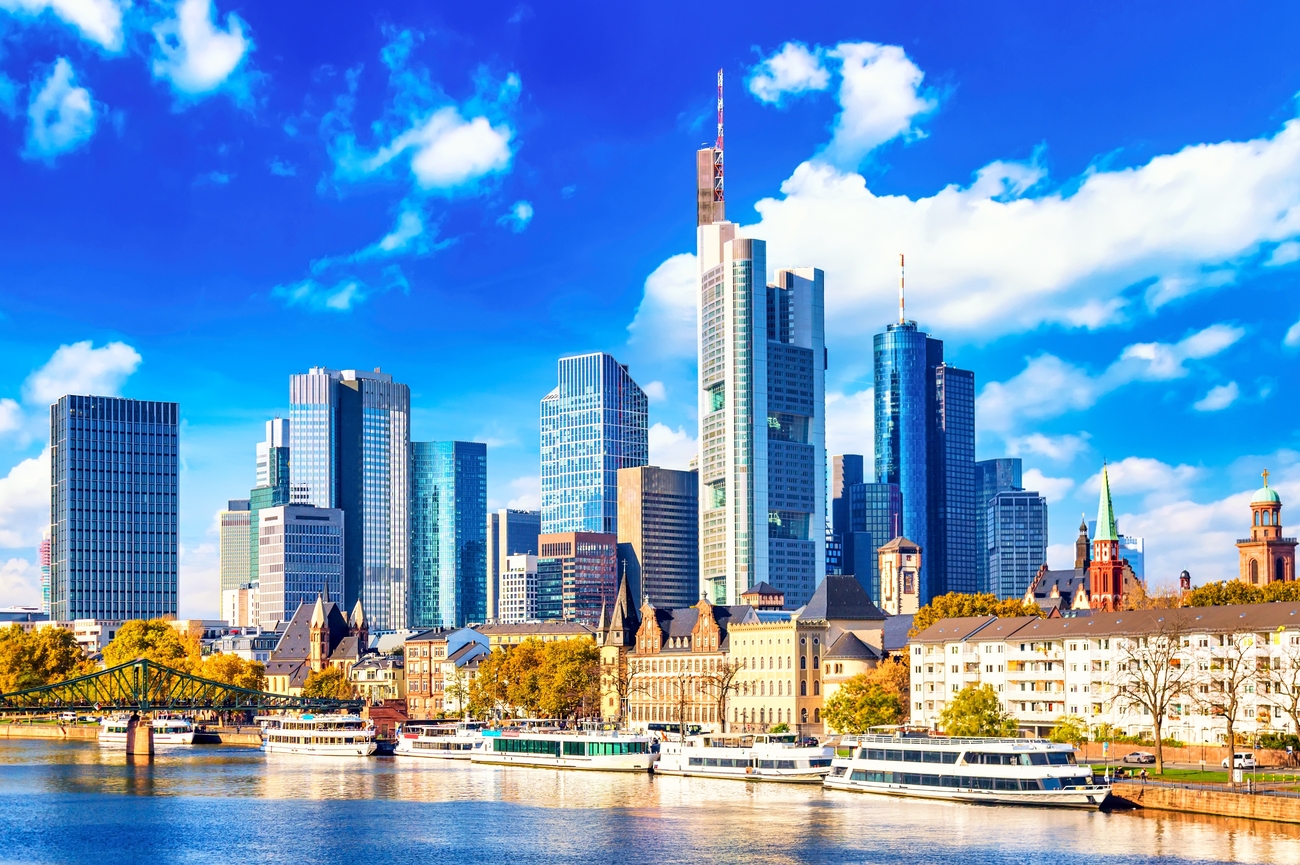
Frankfurt tends to surprise people. Although the city is often associated with banking, business and glass skyscrapers, it has far more depth than its reputation suggests. Germany’s financial capital sits on the Main River, combining centuries of history with one of Europe’s most distinctive modern skylines.
In a single day, you can walk through the reconstructed medieval centre around Römerberg, browse luxury boutiques, visit major museums and end the evening beneath some of the tallest buildings in Germany. This contrast between historic streets and contemporary architecture is one of the qualities that makes Frankfurt different from many other German cities.
Frankfurt also has international importance far beyond tourism. It is home to the European Central Bank, the Frankfurt Stock Exchange and one of the world’s leading trade fair centres. Yet culture is just as important to the city’s identity. Museumsufer brings together a concentration of museums along both banks of the Main, while the birthplace of Johann Wolfgang von Goethe connects Frankfurt with one of Germany’s most influential writers. Events such as the Frankfurt Book Fair reinforce the city’s role as a centre of ideas, commerce and culture.
The Main River shapes much of the experience. Its promenades, bridges and viewpoints connect the historic centre, museum district and modern skyline, creating some of the best views in the city. Beyond the centre, Palmengarten, residential neighbourhoods, traditional apple wine taverns and nearby destinations provide enough variety for a longer stay.
This 4-day Frankfurt itinerary combines Römerberg, Museumsufer, Main Tower, Palmengarten, local dining and a choice of day trips, with enough time to explore the city at a comfortable pace.
Day 1

Morning: Römerberg
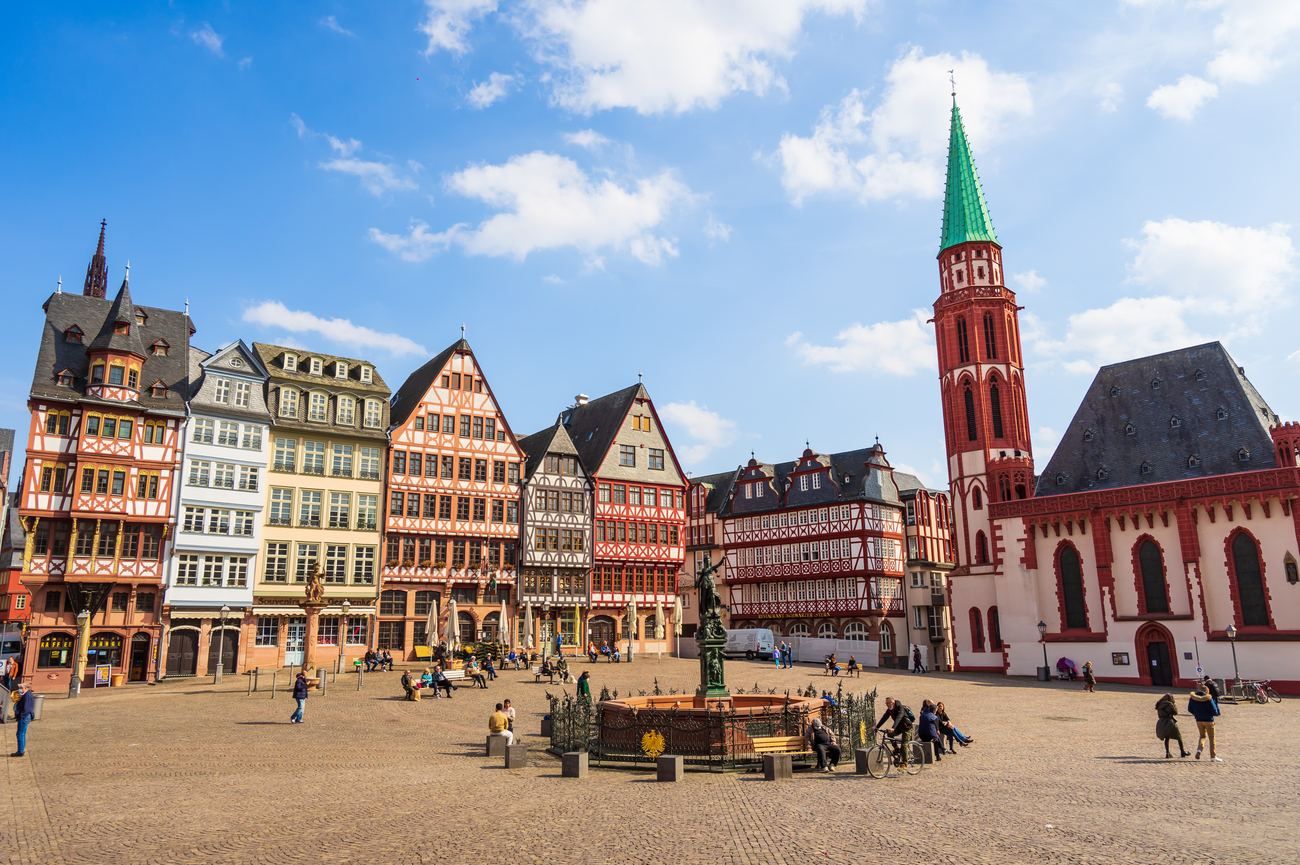
Römerberg is the historic heart of Frankfurt and the natural place to begin exploring the city. Located in the Altstadt, this public square has been the center of civic life for centuries and remains one of Frankfurt’s most recognizable landmarks. While the city is often associated with finance and modern skyscrapers, Römerberg offers a reminder that Frankfurt’s story started long before glass towers became part of its skyline.
The square is surrounded by traditional timber-framed buildings, historic churches and the famous Römer, Frankfurt’s city hall since 1405. The three-gabled facade of the Römer is one of the most photographed sights in the city and serves as a symbol of Frankfurt itself. Throughout history, Römerberg hosted imperial coronation celebrations, trade fairs and major public events, making it one of the most historically significant locations in Germany.
What you will see today is the result of careful reconstruction after much of the area was destroyed during World War II. Despite this, the square retains the character of a traditional German old town. You can join guided walking tours that regularly depart from the Old Town and include Römerberg as a central stop.
Frankfurter Römer
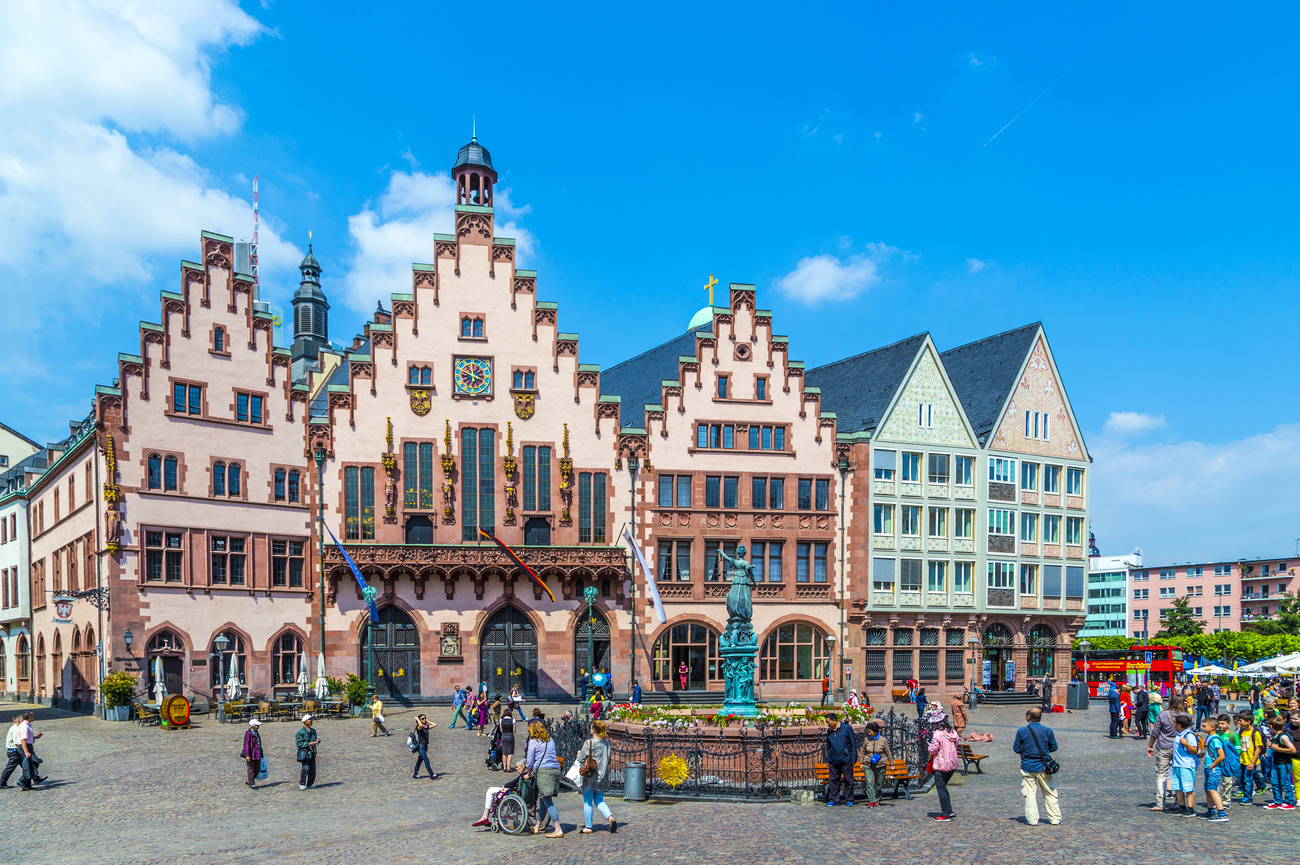
From the center of Römerberg, it takes less than a minute to reach the Frankfurter Römer. In fact, it sits directly on the western side of the square.
The Frankfurter Römer has served as Frankfurt's city hall since 1405, making it one of the oldest continuously used town halls in the country. Its distinctive stepped-gable facade, consisting of three connected medieval buildings, has become one of the defining symbols of the city.
While the exterior is instantly recognizable, some of the most interesting spaces are found inside. The highlight is the Kaisersaal, or Emperor's Hall, where portraits of Holy Roman Emperors line the walls. Following imperial coronations at nearby Frankfurt Cathedral, elaborate banquets were traditionally held here. The combination of Gothic elements, historic halls and centuries of political history gives the Römer a significance that extends far beyond its architecture.
Old St. Nicholas Church
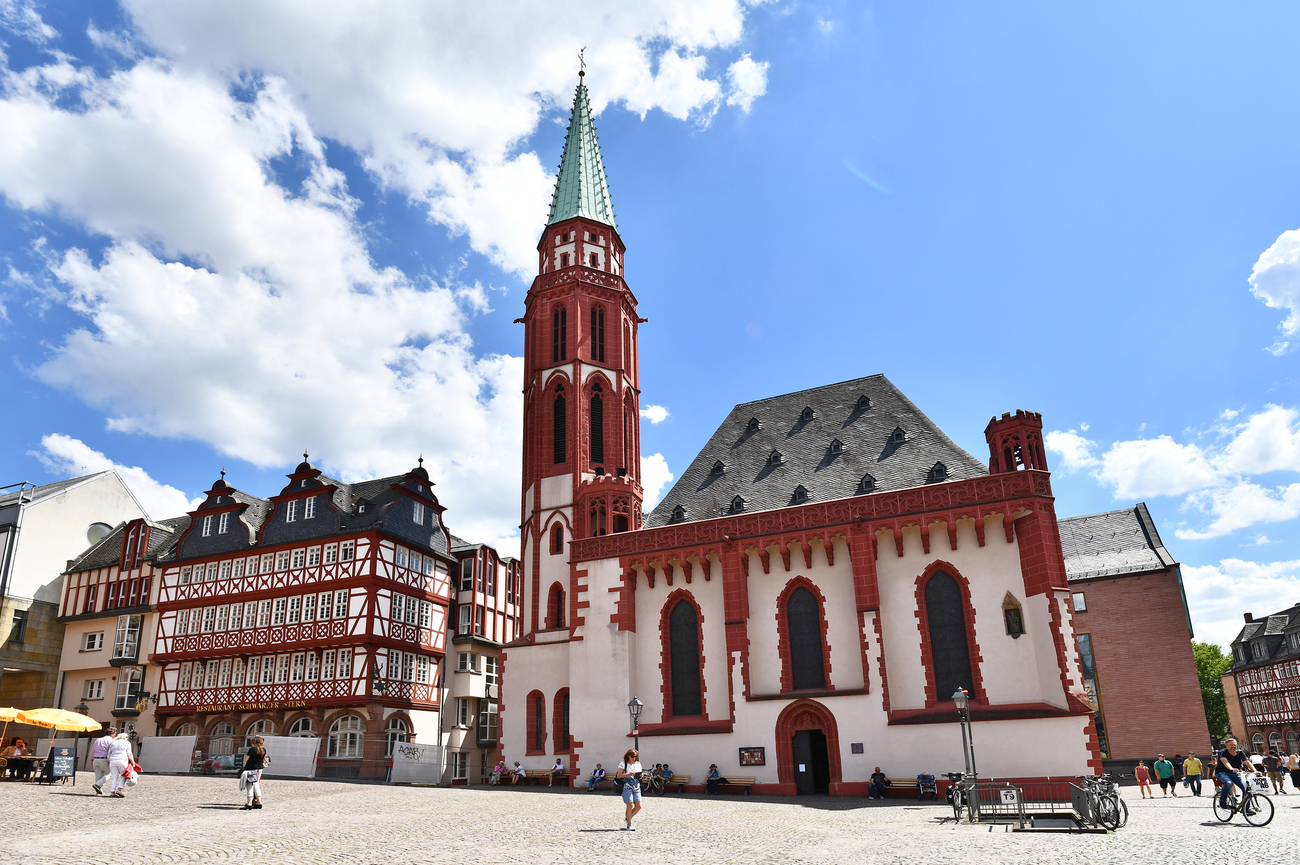
A short walk across Römerberg brings you to Old St. Nicholas Church, one of the most recognizable landmarks surrounding the square. The church stands just a few steps from the Frankfurter Römer. Its slender tower and green spire have been part of Frankfurt's skyline for centuries and are often visible from different points around the Old Town.
Old St. Nicholas Church dates back to the 13th century and is one of the few historic religious buildings in the area that survived major destruction during World War II. Originally serving merchants, travelers and members of Frankfurt's city council, the church played an important role in the daily life of the medieval city.
The exterior reflects a blend of Gothic architecture and later restorations, while the interior remains relatively simple and peaceful. You will find pointed arches, stained-glass windows and a bright, welcoming atmosphere that contrasts with the busy activity of Römerberg outside. The church's carillon, consisting of multiple bells, is another notable feature and regularly adds a distinctive soundtrack to the historic center.
Frankfurt Cathedral
As you continue to the second church of the day, it is about a 4-minute walk east from Old St. Nicholas Church to Frankfurt Cathedral. The route passes through some of the most attractive sections of the Altstadt, with reconstructed medieval-style buildings, narrow streets and public squares creating a seamless connection between two of Frankfurt's most important landmarks.
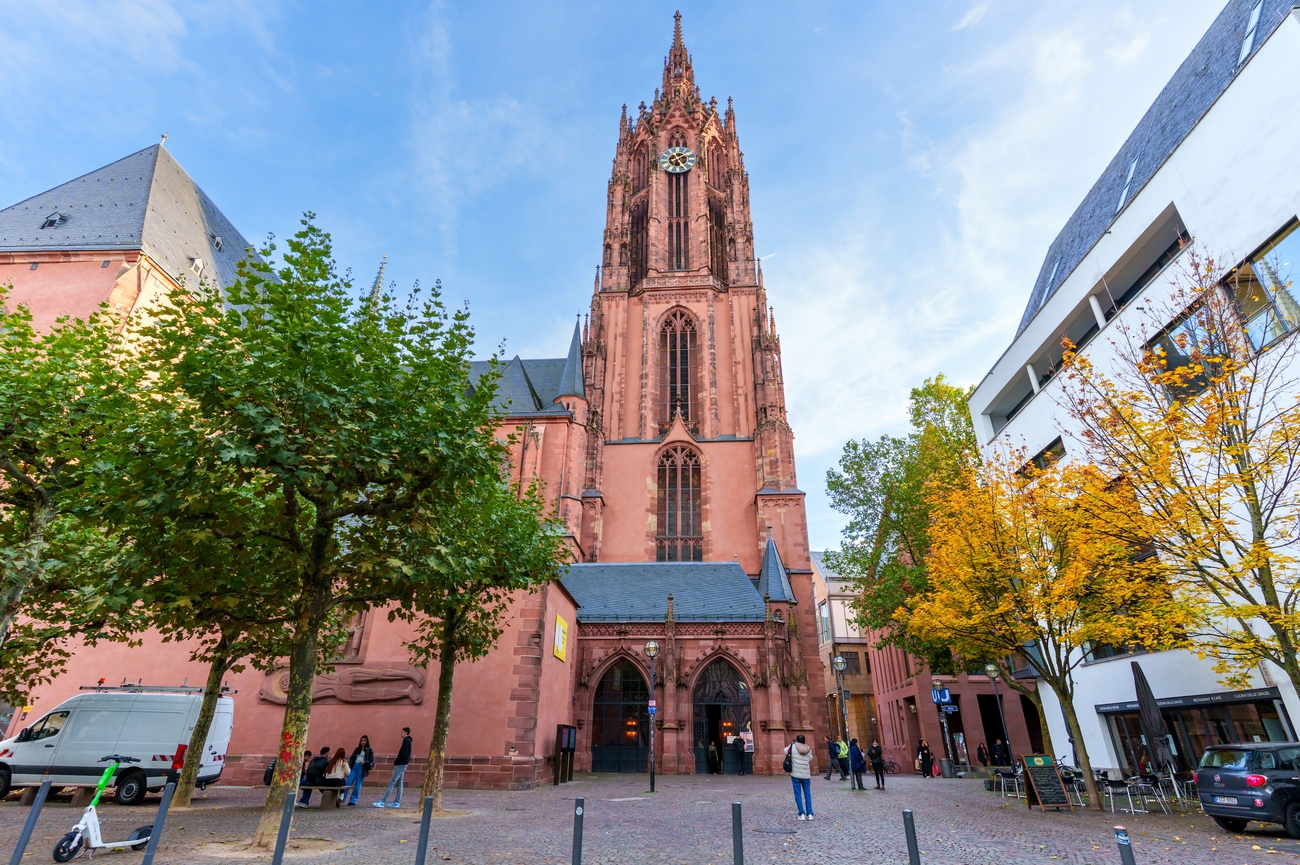
Frankfurt Cathedral, officially known as St. Bartholomew's Cathedral, is one of the most historically important churches in Germany. Although it was never the seat of a bishop, it earned the title of "Imperial Cathedral" because of its close association with the Holy Roman Empire. Between the 16th and 18th centuries, several Holy Roman Emperors were elected and crowned here, making it one of the most significant ceremonial sites in European history.
The cathedral's striking red sandstone exterior immediately sets it apart from many other churches in the country. Its 95-meter Gothic tower dominates the surrounding skyline and remains one of the best-known visual symbols of Frankfurt. Inside, the atmosphere is more restrained than some of Europe's grand cathedrals, but that simplicity allows visitors to focus on the architecture, vaulted ceilings, historic chapels and religious artworks that have survived centuries of change, war and reconstruction.
One of the most popular experiences is climbing the cathedral tower. The ascent involves more than 300 steps, but the reward is one of the finest panoramic views in the city. From the top, you can see the contrast that defines Frankfurt so well.
Afternoon: Eiserner Steg
After exploring Frankfurt Cathedral, the route continues south toward the Main River. Eiserner Steg is approximately a 5-minute walk away and can be reached through the streets of the Old Town before emerging at the waterfront. The historic church towers and old buildings gradually give way to open river views.
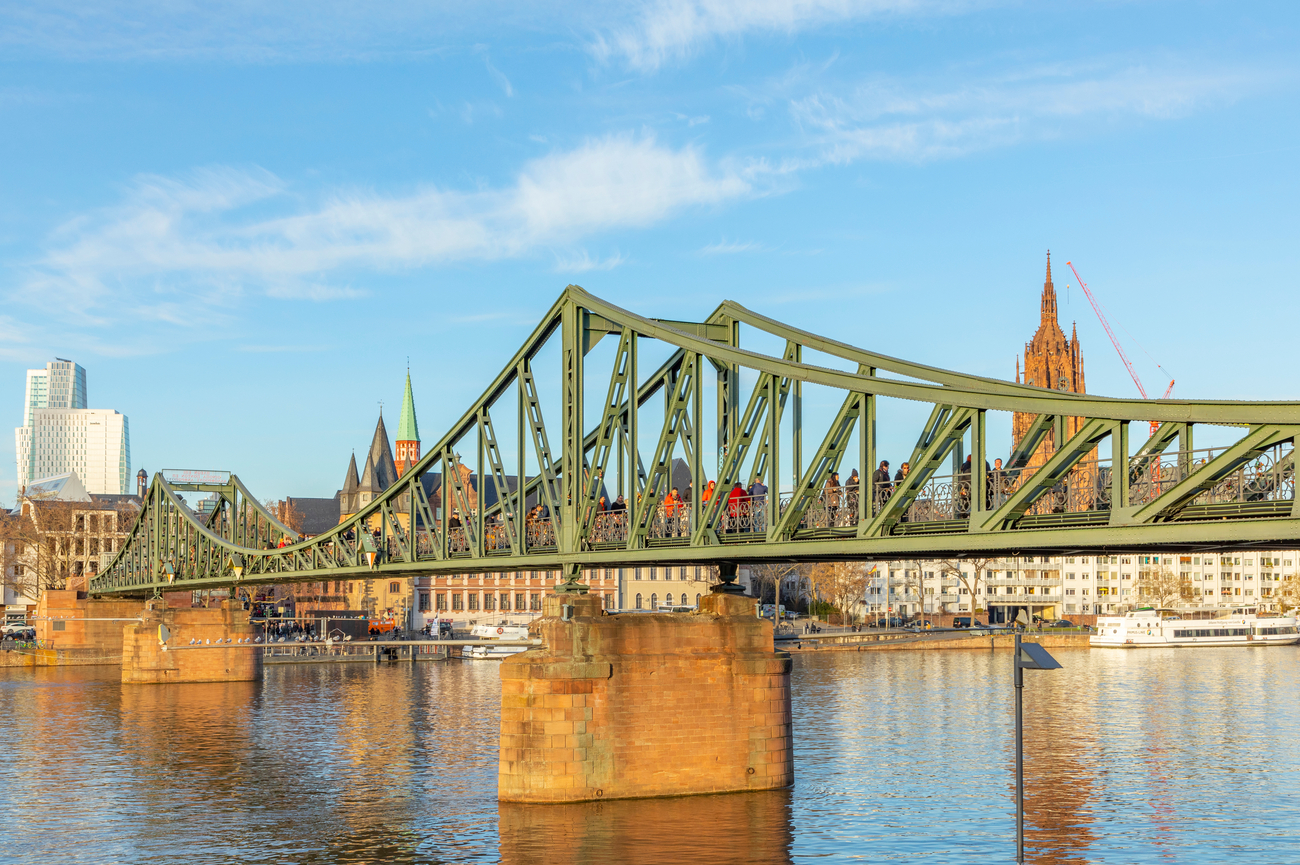
Eiserner Steg is a pedestrian bridge that spans the Main River and has connected the city's northern and southern riverbanks since 1868. It was originally built to improve access between the Old Town and Sachsenhausen, and despite being rebuilt after World War II, it remains one of Frankfurt's most recognizable landmarks.
The bridge is constructed primarily of steel and features a distinctive truss design that stands out against Frankfurt's skyline. What will draw you, however, is the perspective it offers. From the center of the bridge, you get an unobstructed view of the Main River, the historic Altstadt, the museum district and the cluster of skyscrapers that have earned Frankfurt the nickname “Mainhattan”.
Another feature that catches attention is the collection of love locks attached to sections of the bridge. While similar displays exist across Europe, they have become part of the bridge's identity and add a more personal element to an otherwise industrial structure. The Greek inscription running along the side of the bridge, taken from Homer's Odyssey, is another detail worth noticing.
Mainkai
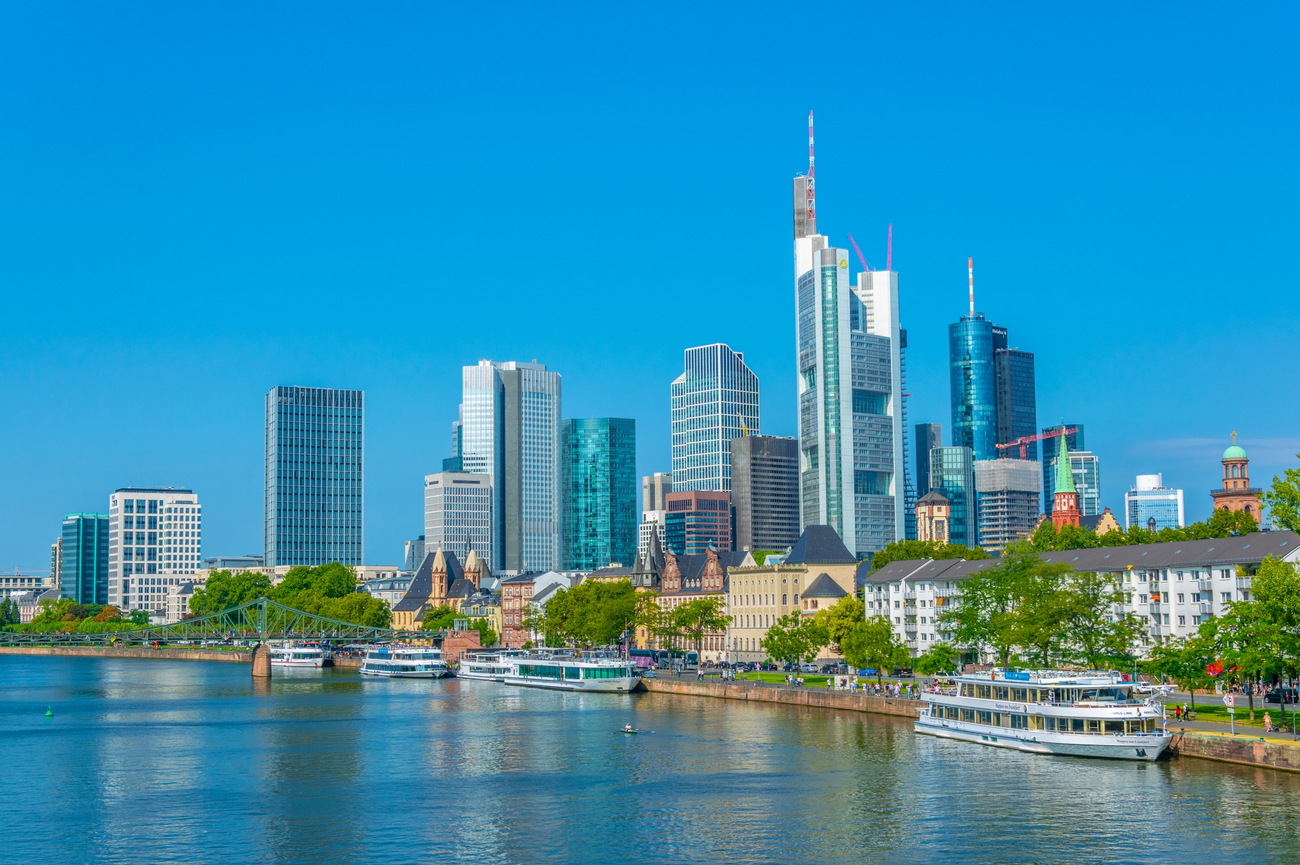
Rather than crossing the river immediately, continue west along the northern bank from Eiserner Steg and you'll find yourself on Mainkai within a minute or two. Mainkai is a riverside promenade that runs along the northern bank of the Main River, directly beside Frankfurt's historic center.
For decades, it has served as an important public space where locals and visitors can enjoy open views of the water, the city's bridges and the skyline beyond. Its location between the Old Town and the river makes it one of the most accessible and frequently visited parts of Frankfurt.
Before modern transport networks developed, this section of the riverfront played an important role in trade and commerce. Goods arriving by river were unloaded here, helping Frankfurt grow into one of the most important commercial centers in the region. While its industrial function has long disappeared, the waterfront remains closely tied to the city's identity and development.
Goethe House
From Mainkai, Goethe House is about a 10-minute walk back into the city center. The route moves away from the river and into Frankfurt’s more polished inner streets.
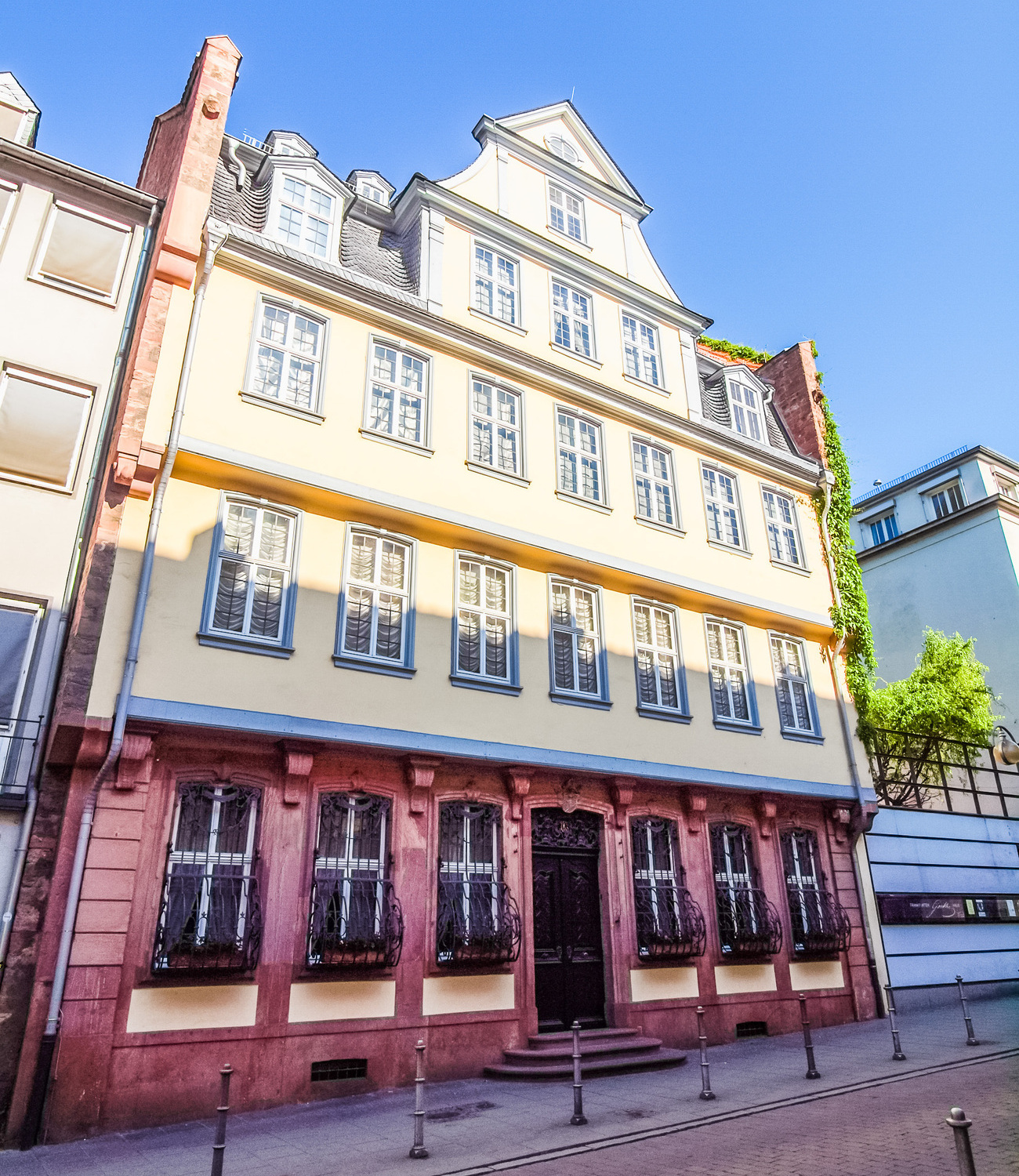
Goethe House is the birthplace of Johann Wolfgang von Goethe, Germany’s most celebrated writer and one of Frankfurt’s most significant historical figures. Located on Großer Hirschgraben, the house has been restored to reflect the kind of upper-middle-class home Goethe grew up in during the 18th century. Inside, the rooms show period furniture, family spaces, writing areas and domestic interiors connected to Goethe’s early life. The visit gives useful context without taking too much time, which makes it a strong stop for busy travelers who still want substance. You are not just looking at an old house; you are seeing the setting that shaped one of Europe’s major literary figures.
If you’d like a bit more context during your visit, the museum offers guided tours throughout the week. Most travelers won’t need to plan around them, but they can be a nice option if you want a deeper introduction to Goethe and the house. And if you're visiting with a group or would prefer a tour in English, it’s best to book ahead through the museum.
Evening: Goethestraße
As the day transitions into the evening, it is only about a 10-minute walk north from Goethe House to Goethestraße. After a day spent exploring the city's history, Goethestraße offers a completely different side of Frankfurt.
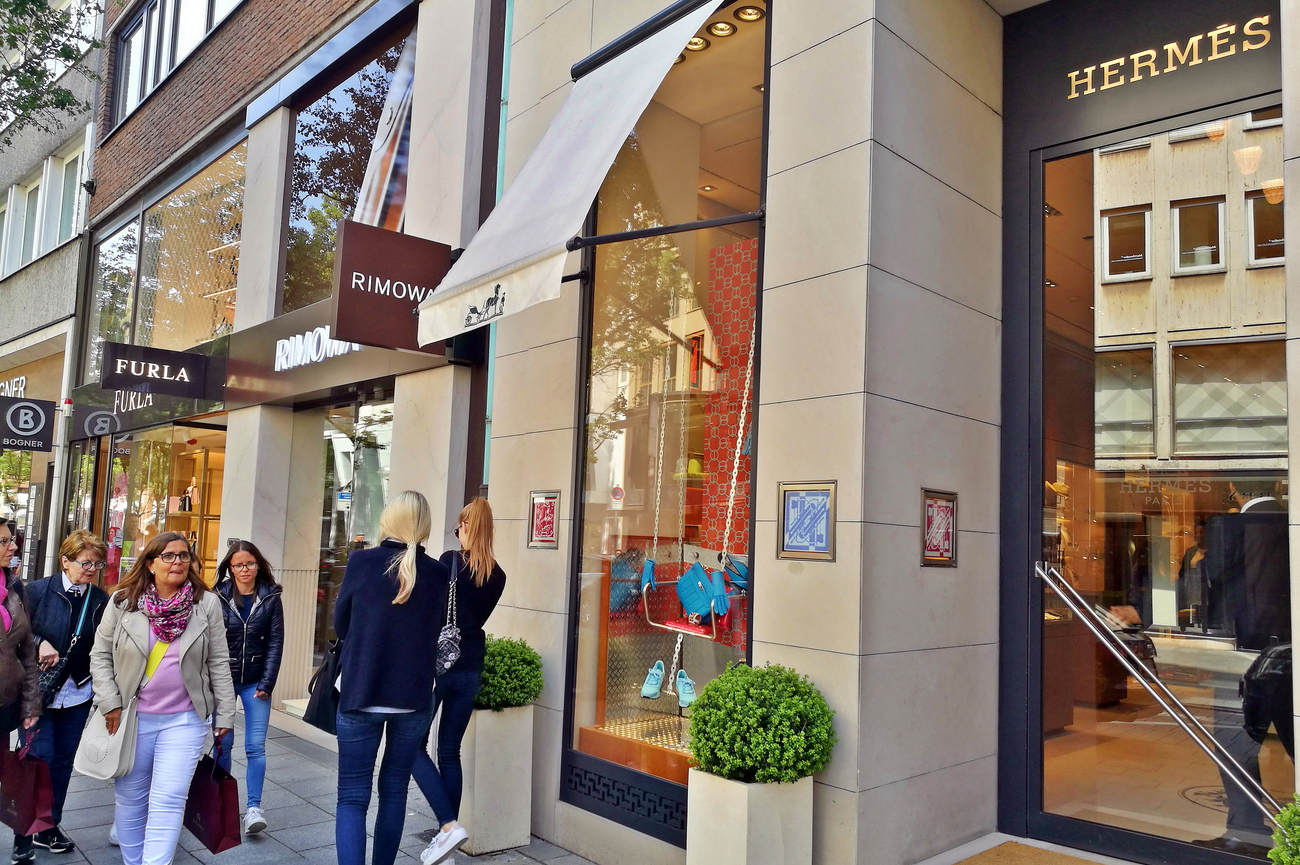
Goethestraße is Frankfurt's premier luxury shopping street and is often compared to destinations such as Bond Street in London, Avenue Montaigne in Paris and Via Montenapoleone in Milan. Stretching between Opernplatz and Goetheplatz, the street is home to some of the world's most recognized luxury brands, including Chanel, Louis Vuitton, Hermès, Cartier, Tiffany & Co., Gucci, Prada and Rolex. Even if you are not planning to shop, the street is worth seeing because it showcases Frankfurt's position as one of Europe's major financial and luxury markets.
MyZeil
To end the day, continue east from Goethestraße for approximately 10 minutes on foot to MyZeil. While Goethestraße showcases Frankfurt's traditional luxury scene through designer boutiques and flagship stores, MyZeil presents a more contemporary side of the city.
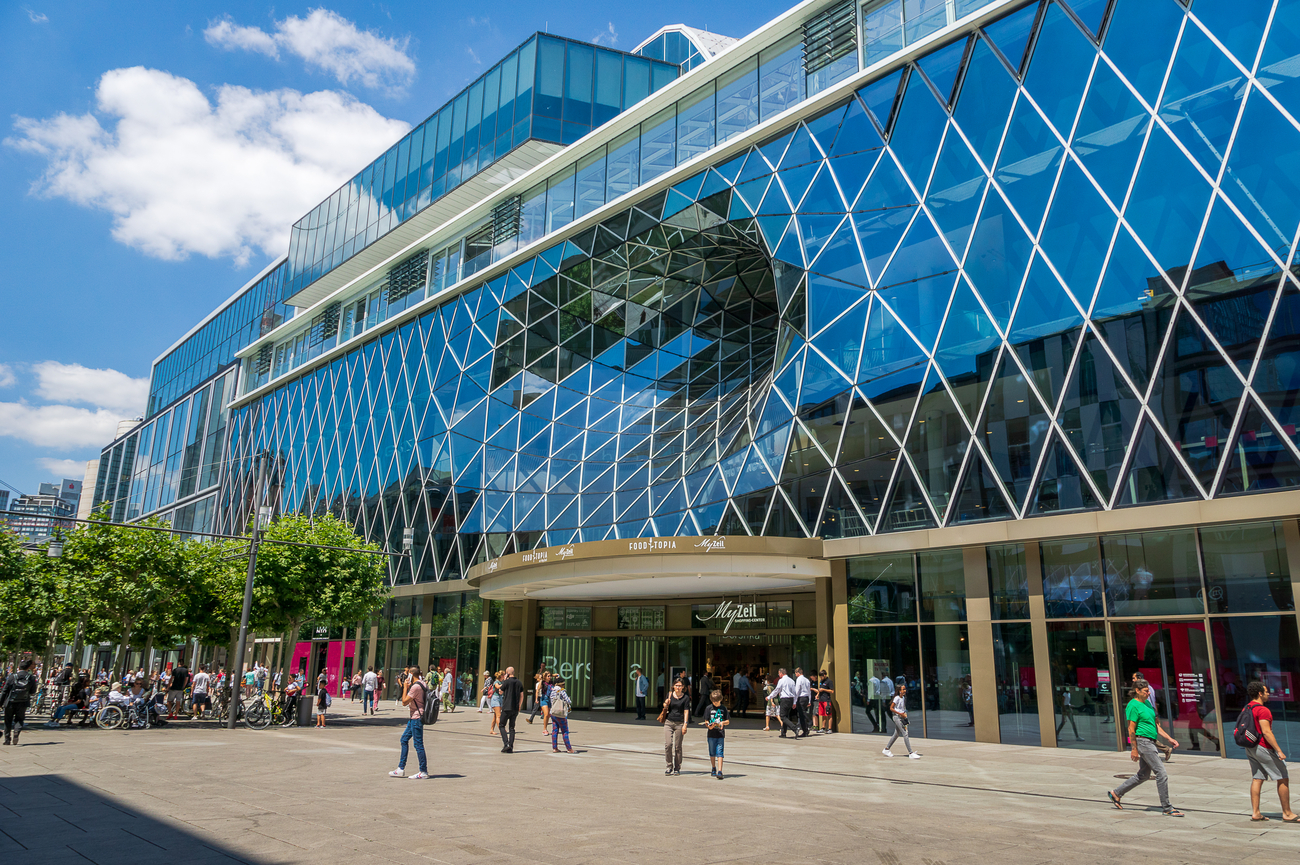
Opened in 2009, MyZeil is one of Germany's most recognizable shopping destinations, known for its striking architecture designed by Italian architect Massimiliano Fuksas. The building's glass facade features a dramatic vortex-like structure that appears to pull inward toward the center of the mall, making it one of the most photographed modern buildings in Frankfurt. The mall spans several levels and brings together international fashion brands, lifestyle retailers, beauty stores and premium shopping concepts under one roof.
As the final stop of the day, MyZeil provides a fitting conclusion to Frankfurt's luxury side. Between the designer boutiques of Goethestraße and the modern retail experience found here, you gain a broader understanding of how the city balances tradition and contemporary style.
Day 1 - frankfurt Tour Map
Day 2
Morning: Städel Museum
Day 2 begins on the southern bank of the Main River in Frankfurt's renowned museum district. The Städel Museum is one of Germany's most important art museums and houses a collection spanning more than 700 years of European art history. The museum was established through the legacy of banker and art patron Johann Friedrich Städel and has grown into an institution recognized well beyond Germany. Its collection includes works by masters such as Rembrandt, Vermeer, Botticelli, Monet, Renoir, Picasso and Gerhard Richter.
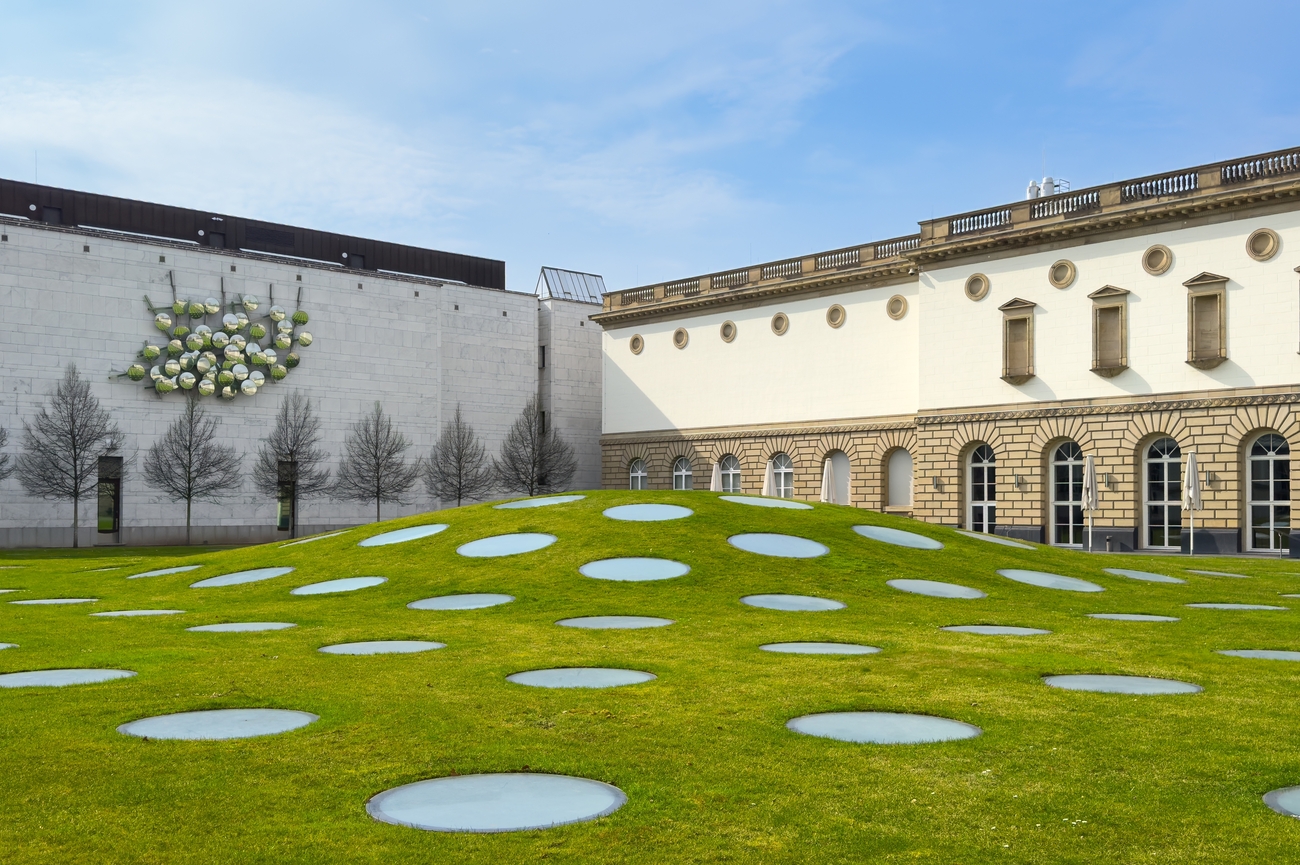
The original building presents a grand and traditional appearance, while the underground extension features a striking curved roof punctuated by hundreds of circular skylights. The result is a space that feels contemporary without overshadowing the art it was designed to showcase.
The Städel offers a variety of guided experiences for visitors looking to explore beyond the highlights. Guided tours are available in English, German, French, Italian, Russian, Dutch and Japanese, making the museum particularly accessible if you are an international traveller. Talks in English provide additional opportunities to engage with specific themes and exhibitions, while groups can request customized tours based on particular interests. The museum also offers workshops in its ateliers.
Liebieghaus
After exploring the Städel Museum, the next stop is conveniently located just a 2-minute walk away. The Liebieghaus sits immediately beside the Städel along Frankfurt's Museumsufer.
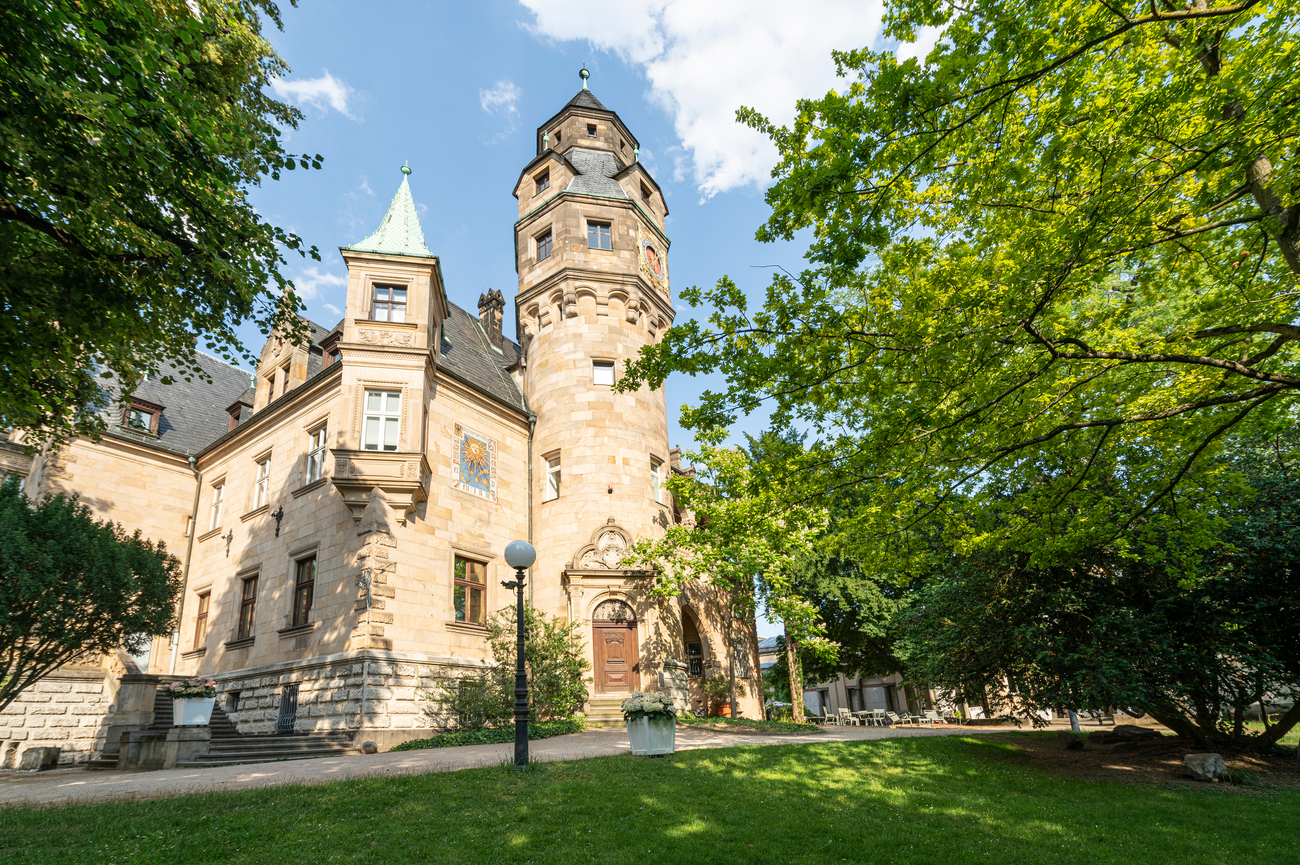
The Liebieghaus Sculpture Collection is housed within a historic villa overlooking the Main River and is considered one of Europe's leading sculpture museums. Its collection spans approximately 5,000 years, bringing together works from ancient Egypt, Greece and Rome through to the Middle Ages, Renaissance, Baroque and Neoclassical periods. It was originally constructed as a grand residential villa in the late 19th century, combining elegant historic interiors with carefully designed exhibition spaces.
A current highlight is Animals Are Only Humans Too: Sculptures by August Gaul, featuring animal sculptures by German artist August Gaul alongside works spanning 5,000 years of history. The exhibition explores how animals have been represented as symbols, myths and individual subjects across different cultures and eras. You can also book guided tours and they can be arranged in English, French or German. The museum also hosts seasonal events, including garden concerts and the popular Liebieghaus Live and Secret Garden programs.
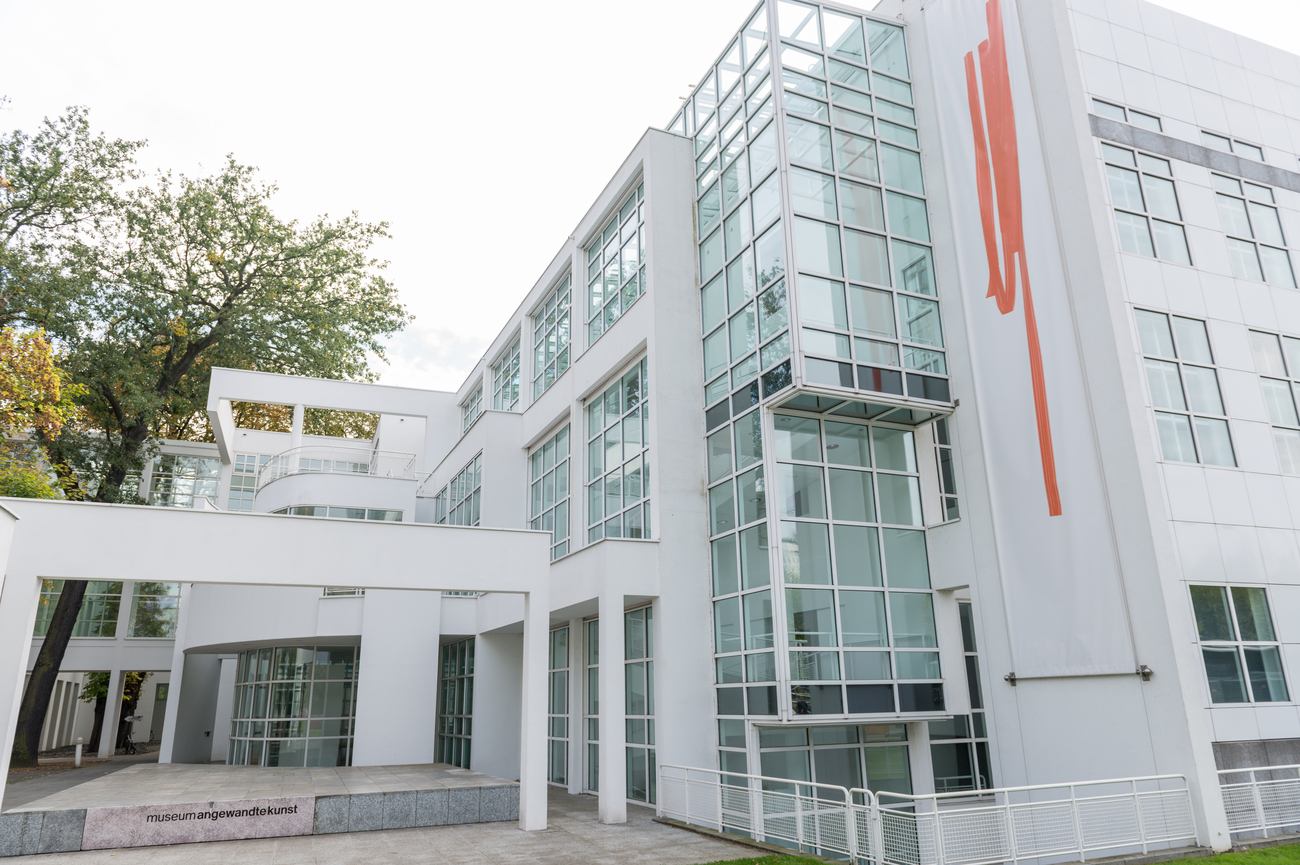
Museum of Applied Arts
By this point, Day 2 has firmly established itself as a museum-filled morning. The Museum of Applied Arts Frankfurt is only a short 5-minute walk from the Liebieghaus, allowing you to continue exploring the Museumsufer without breaking the flow of the day. Each museum in this district offers a different perspective.
The Museum of Applied Arts Frankfurt focuses on design, craftsmanship, architecture and everyday objects that have shaped how people live and interact with the world. Unlike traditional art museums centered on paintings or sculptures, this institution explores the relationship between design and daily life. Its collections range from historical decorative arts and furniture to contemporary industrial design, fashion, graphic design and architecture.
Permanent highlights include exhibits dedicated to influential designers and architects such as Richard Meier and Dieter Rams, alongside one of the museum's most famous attractions, the Frankfurt Kitchen. Widely regarded as one of the first modern fitted kitchens, it revolutionized how domestic spaces were organized and influenced kitchen design around the world. The museum also showcases a variety of objects from its collections, offering insight into how design has evolved across different periods and aspects of everyday life. And you can also join guided tours. Public tours are typically conducted in German, while private tours in English and French can be arranged in advance.
Afternoon: Museum für Kommunikation Frankfurt
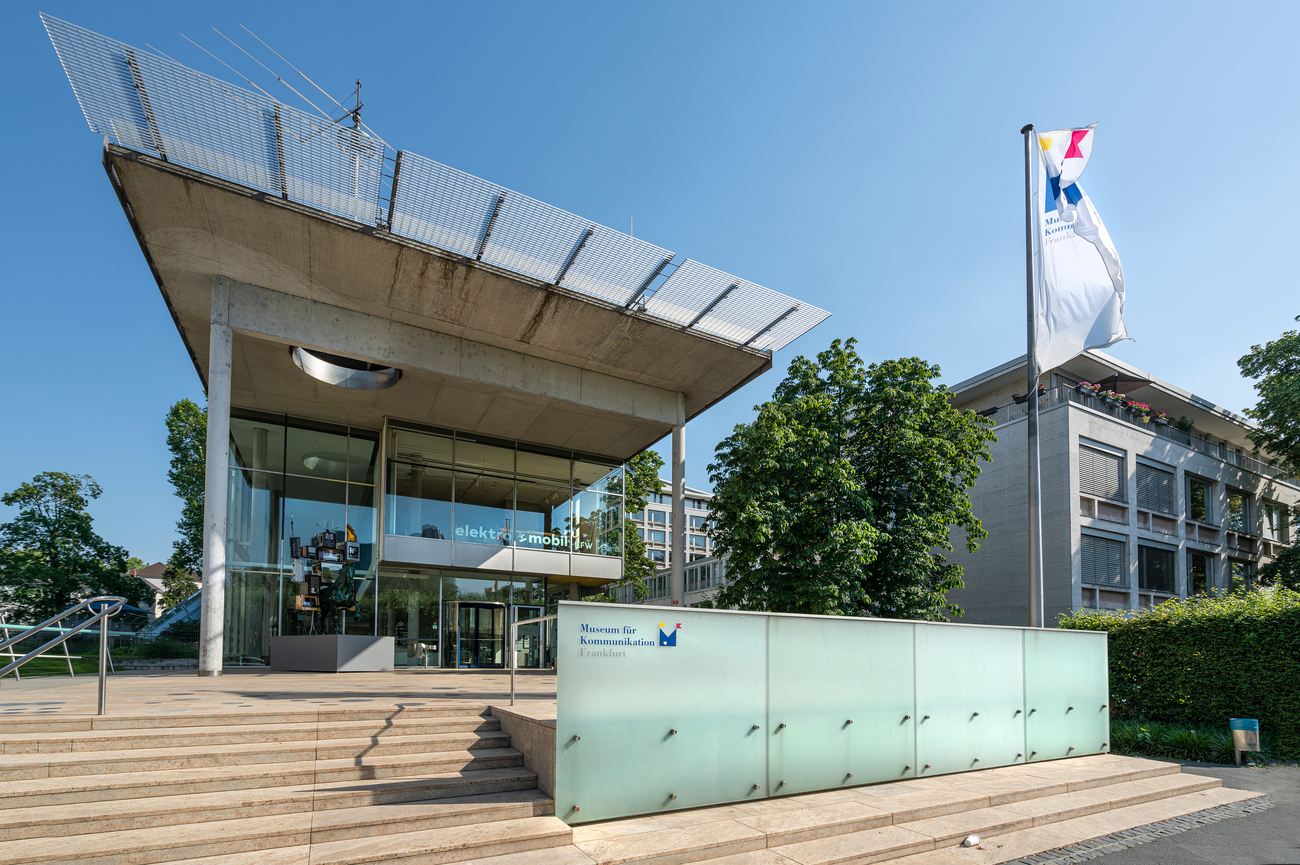
After a morning spent exploring art, sculpture and design, the afternoon continues the museum theme from a different angle. Museum für Kommunikation Frankfurt is only a few minutes on foot from the Museum of Applied Arts, making it an easy addition to the Museumsufer route.
Museum für Kommunikation Frankfurt is one of the most unique museums in the city because it looks at how people have connected, exchanged information and shared ideas over thousands of years. The museum's permanent exhibition, Media Histories Retold, covers more than 6,000 years of communication history across approximately 2,500 square meters of exhibition space. Rather than presenting history as a series of dates and inventions, the museum uses objects, stories, technologies and personal experiences to show how communication has evolved from ancient methods to the digital age.
Beyond the permanent collection, the museum also hosts temporary exhibitions throughout the year. These are displayed in dedicated exhibition spaces on the upper floors and often explore contemporary topics related to media, technology and communication. There are also several guided experiences available throughout the week, including guided tours, live events and workshops. And if you are traveling with families, educational workshops and children's programs are offered regularly.
German Film Museum
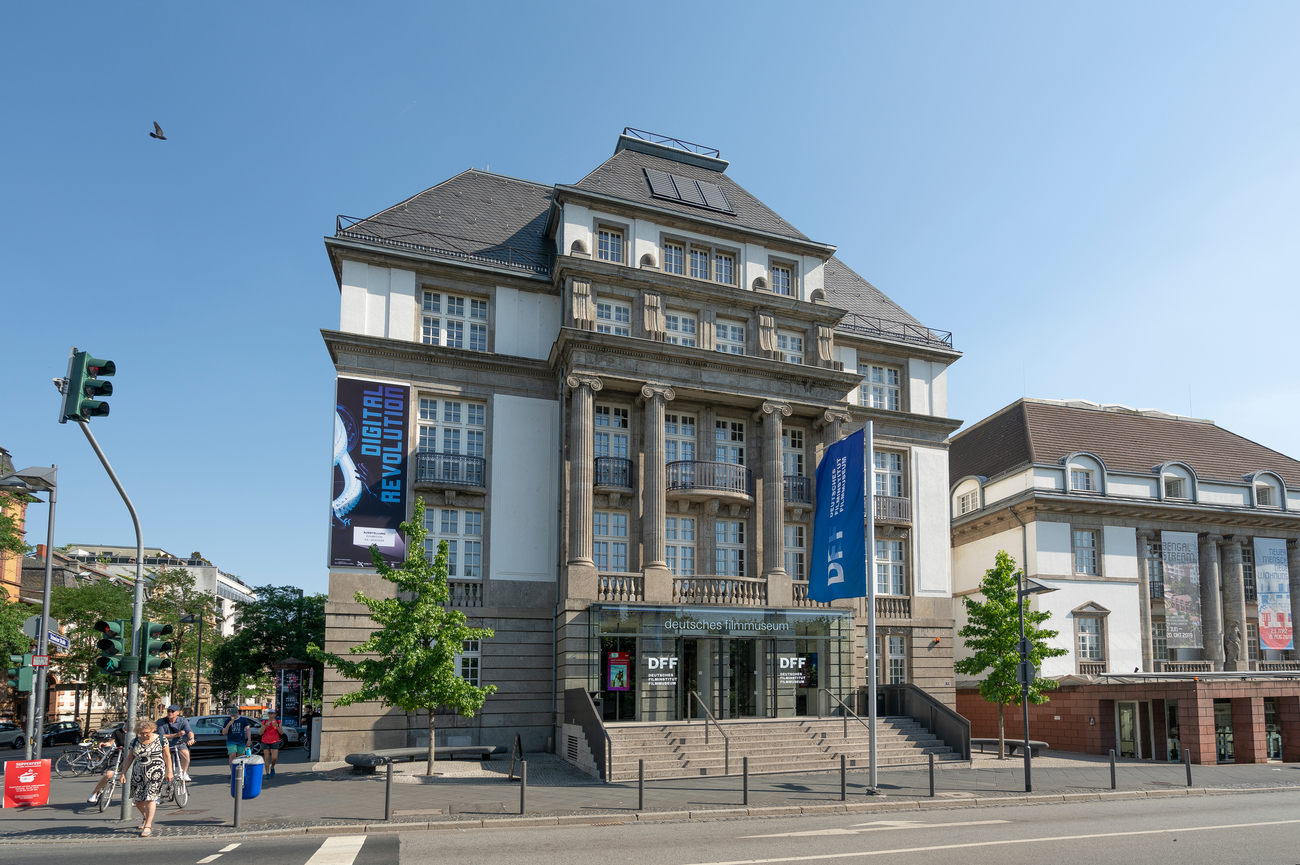
From Museum für Kommunikation Frankfurt, the German Film Museum is only about a 3-minute walk along the Museumsufer. At this point, the afternoon stays compact and efficient, which matters when the day is already filled with museums.
The German Film Museum explores how moving images are created, understood and experienced. Its permanent exhibition, Filmic Vision and Narrative, covers two floors and around 800 square meters, making it detailed but still manageable for a focused visit. The exhibition includes historical film equipment, working models, interactive stations and large-scale projections that explain the development of cinema without making the experience feel too technical.
You can also join guided tours available through the museum education team. These tours highlight key objects in the exhibition and include behind-the-scenes details, such as the story behind the Alien costume featured in the second part of the permanent exhibition. The format works well because it gives you a strong overview first, then leaves time to continue exploring on your own.
Dreikönigskirche
After a museum-filled morning and afternoon along the Museumsufer, it is time for a change of pace. Dreikönigskirche is located in the Sachsenhausen district, just a short walk from the museums along the riverfront.
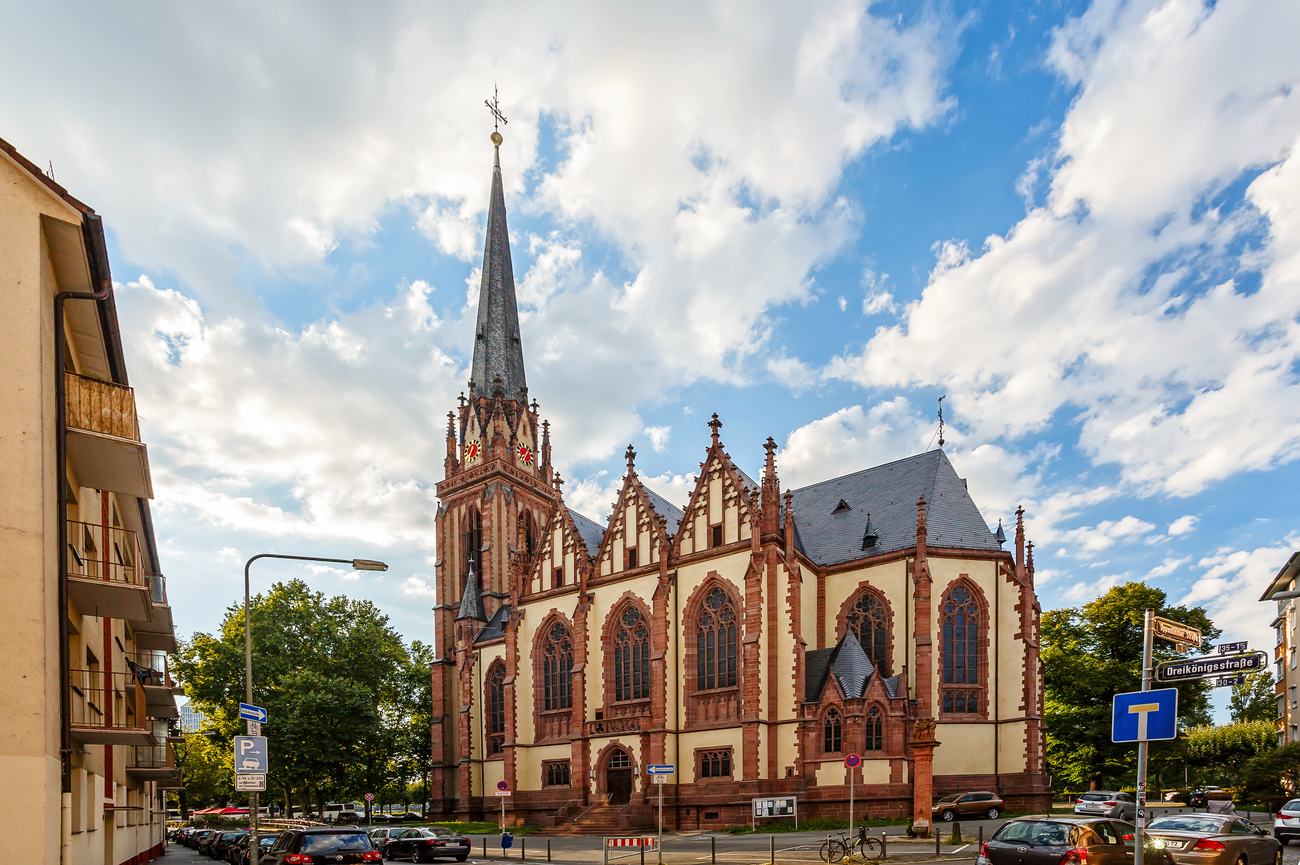
Dreikönigskirche or the Church of the Three Kings stands on the southern bank of the Main River and is one of the most recognizable landmarks in Sachsenhausen. Completed in the late 19th century, the church was designed in the Neo-Gothic style and remains an important part of Frankfurt's skyline. Its tall sandstone tower can be seen from various points along the river and serves as a visual counterpart to the historic churches located in the Old Town across the water.
Pointed arches, decorative stonework and a soaring spire give the church a distinctly Gothic appearance, while the red sandstone construction ties it visually to other historic landmarks in Frankfurt. And inside, you will find a spacious nave, stained-glass windows and an atmosphere that feels calm and welcoming.
Evening: Main Tower
As the day moves into the evening, it is time to leave Sachsenhausen and head toward Frankfurt's modern skyline. From Dreikönigskirche, Main Tower is approximately a 20-minute walk across the Main River, or a short taxi ride if you prefer a quicker transfer.
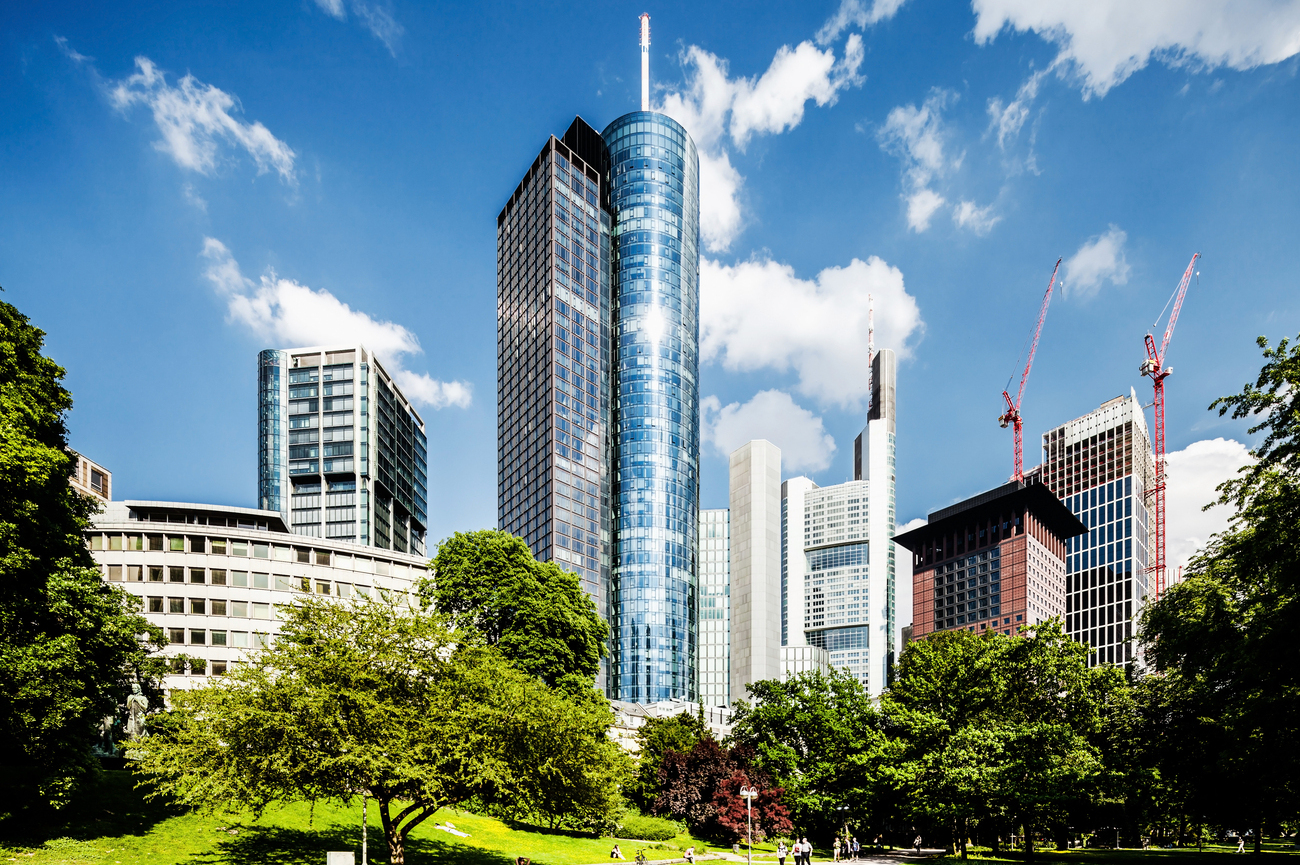
Standing at 200 meters tall, Main Tower is one of Frankfurt's most recognizable skyscrapers and one of the few high-rise buildings in the city with a public observation deck. Completed in 1999, the tower remains a symbol of Frankfurt's position as Germany's financial capital. The main draw is the observation platform near the top of the building. From here, visitors enjoy panoramic views across Frankfurt's skyline, the Main River, the Old Town, Sachsenhausen and even the surrounding Taunus hills on clear days.
Day 2 - frankfurt Tour Map
Day 3
Morning: Palmengarten Frankfurt
Day 3 begins with a different side of Frankfurt. After two days spent exploring historic landmarks, museums and the financial district, the focus shifts toward green spaces and the city's elegant Westend neighborhood.
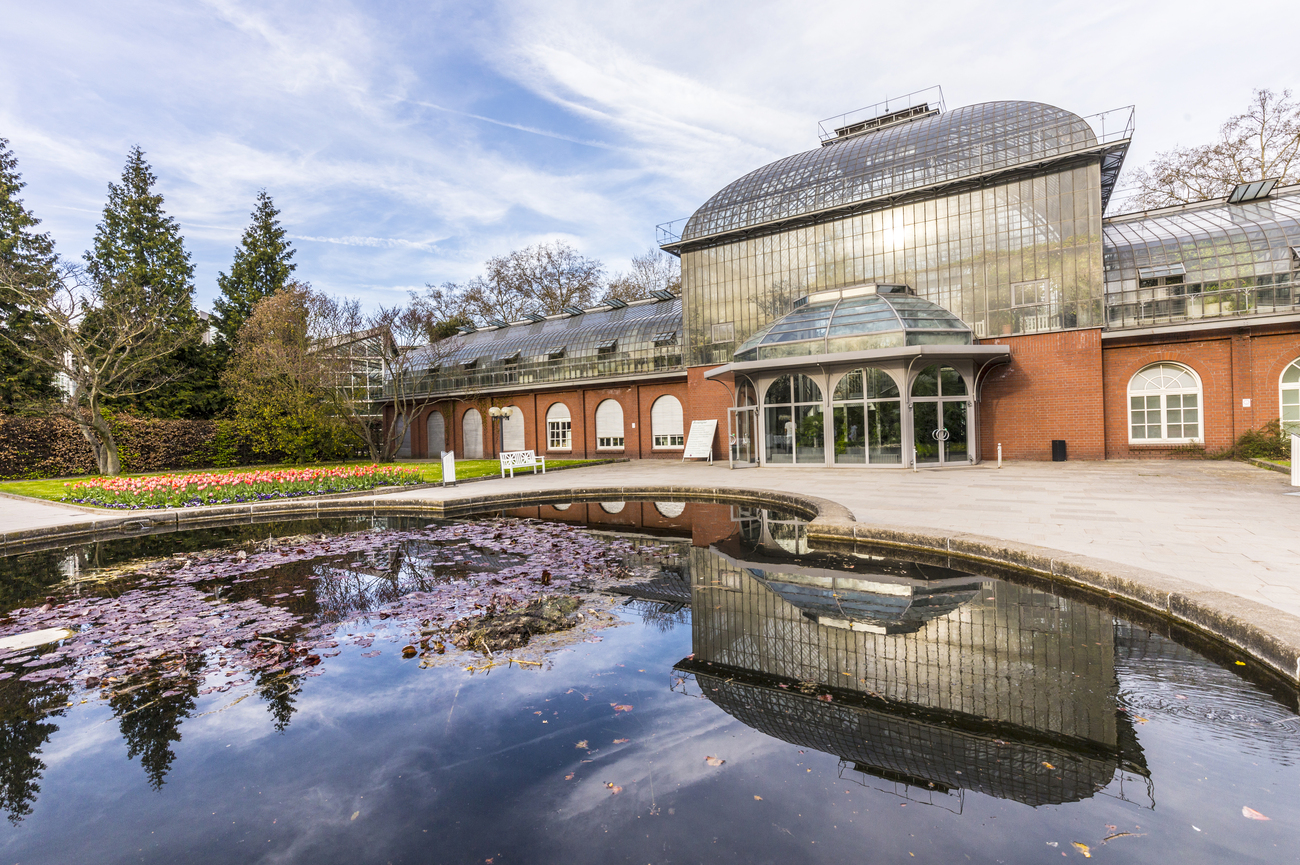
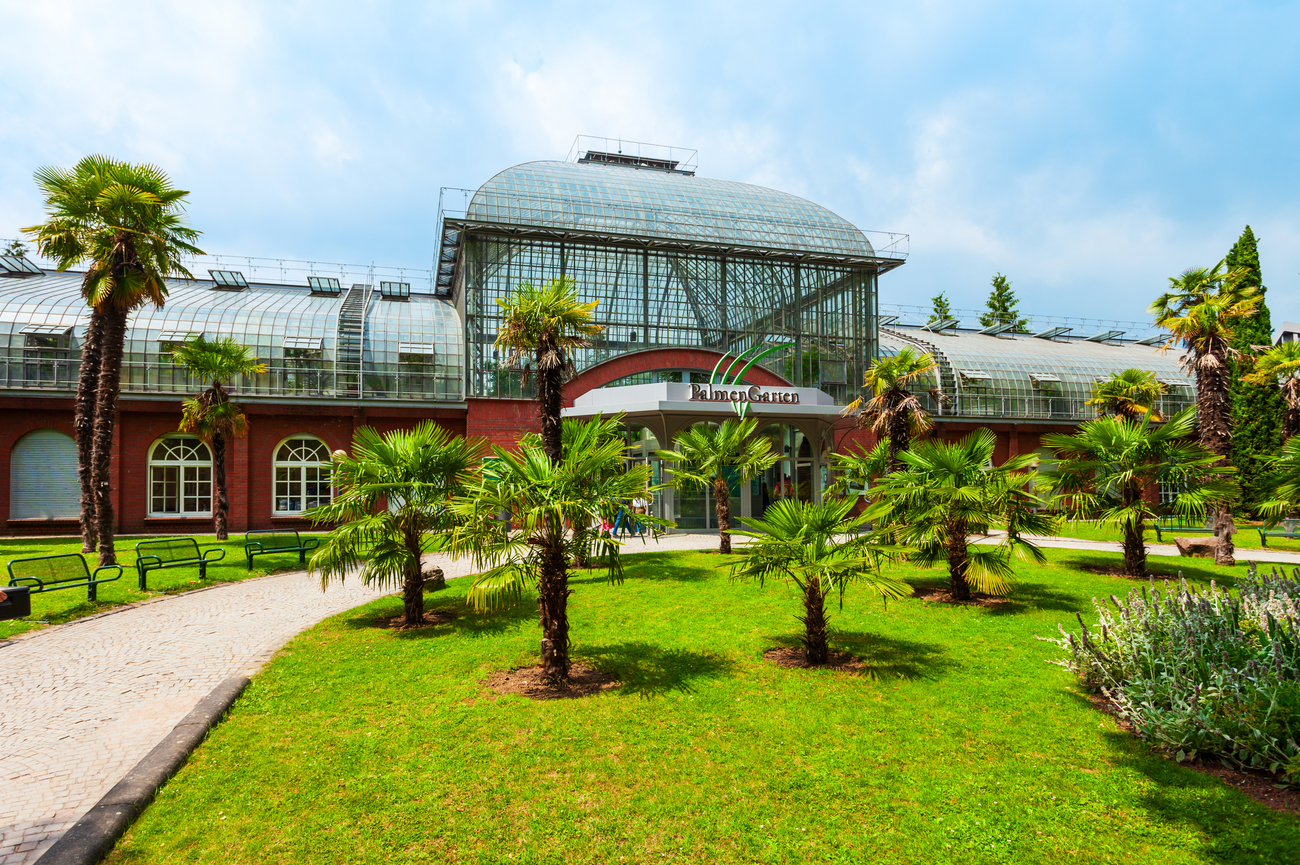
Opened in 1871, Palmengarten is Frankfurt's largest botanical garden and one of the most respected botanical collections in Germany. Covering more than 20 hectares, the garden brings together plant species from across the world, ranging from tropical rainforests and desert landscapes to Mediterranean gardens and alpine environments. This garden is known for its variety. You can move through different climate zones and landscapes within a single visit. Large greenhouses recreate tropical and subtropical environments, while outdoor gardens showcase seasonal flowers, ornamental plants and carefully landscaped grounds. The Palm House remains one of the most impressive structures in the garden, housing exotic species beneath a striking glass and steel framework.
You can join guided tours available throughout the year which provide insight into the garden's collections, seasonal displays and botanical research. Depending on the season, visitors may also encounter exhibitions, educational programs and special events focused on plants, sustainability and conservation. The garden regularly hosts cultural events as well.
Botanischer Garten Frankfurt
Since the morning is already focused on nature, the next stop requires almost no travel. Botanischer Garten Frankfurt sits directly adjacent to Palmengarten, making it an easy continuation of the day's theme.
Botanischer Garten Frankfurt serves as the botanical garden of Frankfurt's university system and is dedicated to the conservation, study and presentation of plant biodiversity. Although significantly smaller than Palmengarten, it offers a different experience by focusing on ecological habitats and native plant communities rather than grand horticultural displays. The garden contains a variety of specialized sections that recreate different ecosystems, including woodland habitats, meadows, wetlands and alpine environments. Plants are grouped according to their natural habitats, allowing visitors to understand how species interact within broader ecological systems.
One of the advantages of visiting Botanischer Garten after Palmengarten is the contrast you will notice between the two. At Palmengarten, you can admire the beauty and diversity of plants from around the world, while Botanischer Garten invites you to look more closely at ecological relationships and the scientific side of botany. Experiencing both gardens gives you a more complete picture of the plant world than either destination could offer on its own.
Afternoon: Senckenberg Nature Museum
The itinerary shifts from living plant collections to the broader story of life on Earth. From Botanischer Garten Frankfurt, the Senckenberg Nature Museum is approximately a 10-minute walk away through Frankfurt's Westend district.
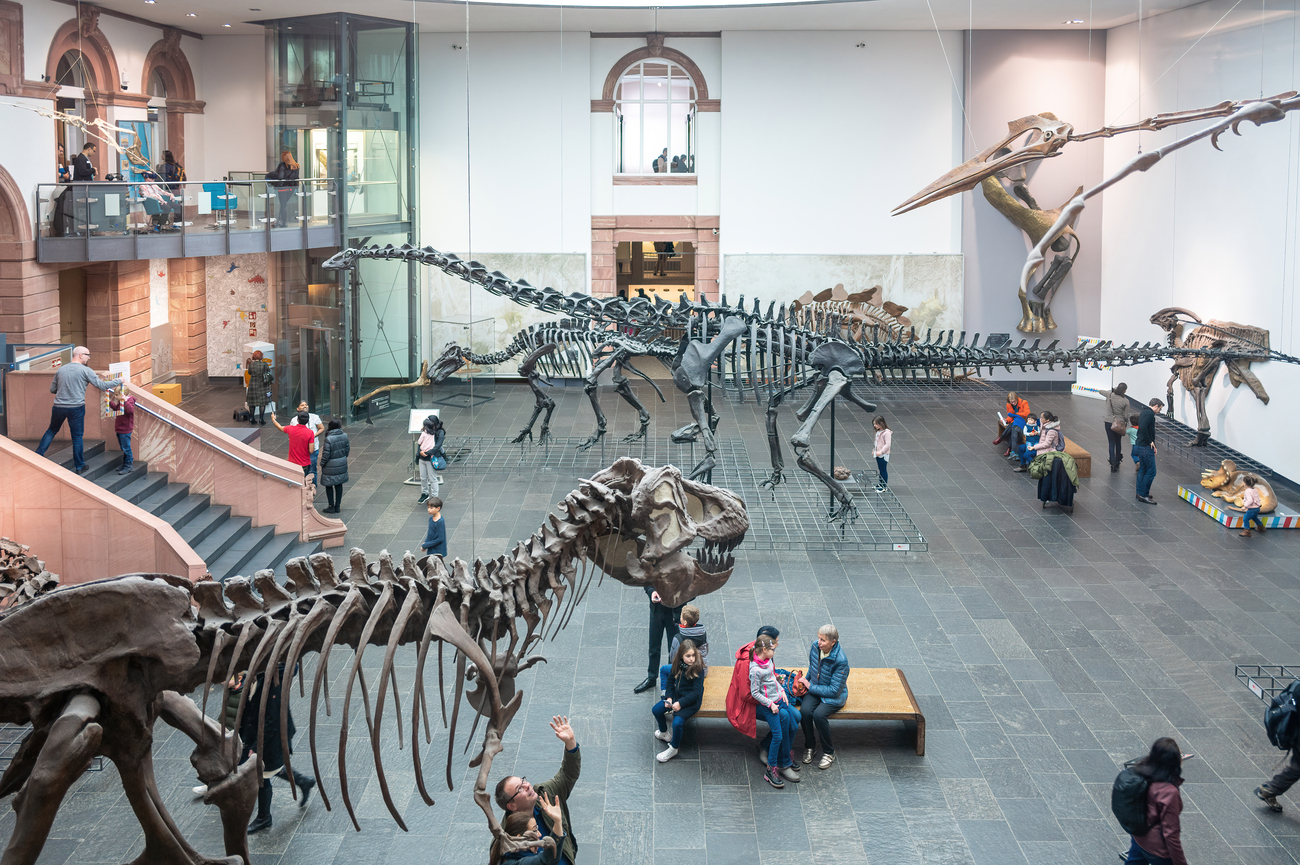
The Senckenberg Nature Museum is the largest natural history museum in Germany and one of Frankfurt's most important cultural institutions. While it is widely known for its dinosaur exhibits, the museum's collections extend far beyond prehistoric creatures. You can explore exhibitions covering fossils, marine life, geology, biodiversity, evolution and environmental science, making it one of the most comprehensive natural history museums in Europe. The museum makes a strong first impression even before you enter. Large dinosaur models outside the building have become one of Frankfurt's most recognizable sights. And inside, visitors encounter towering dinosaur skeletons, ancient fossils, marine ecosystems, preserved animal specimens and interactive displays that bring scientific concepts to life.
If you'd like more context as you explore, consider joining one of the museum's guided tours. The Senckenberg Highlights tour covers key exhibits such as dinosaurs, whales and important fossil discoveries. Or you can also choose from several themed tours. A Journey Back in Time to the Dinosaurs focuses on prehistoric life, while A Dive Through the Museum takes you through coral reefs, sharks, sperm whales and deep-sea habitats. The Nature + Medicine tour explores how biodiversity connects to human health and modern medicine.
IG Farben Building
After exploring the Senckenberg Nature Museum, the itinerary continues deeper into Frankfurt's Westend district. The IG Farben Building is approximately a 15-minute walk away.
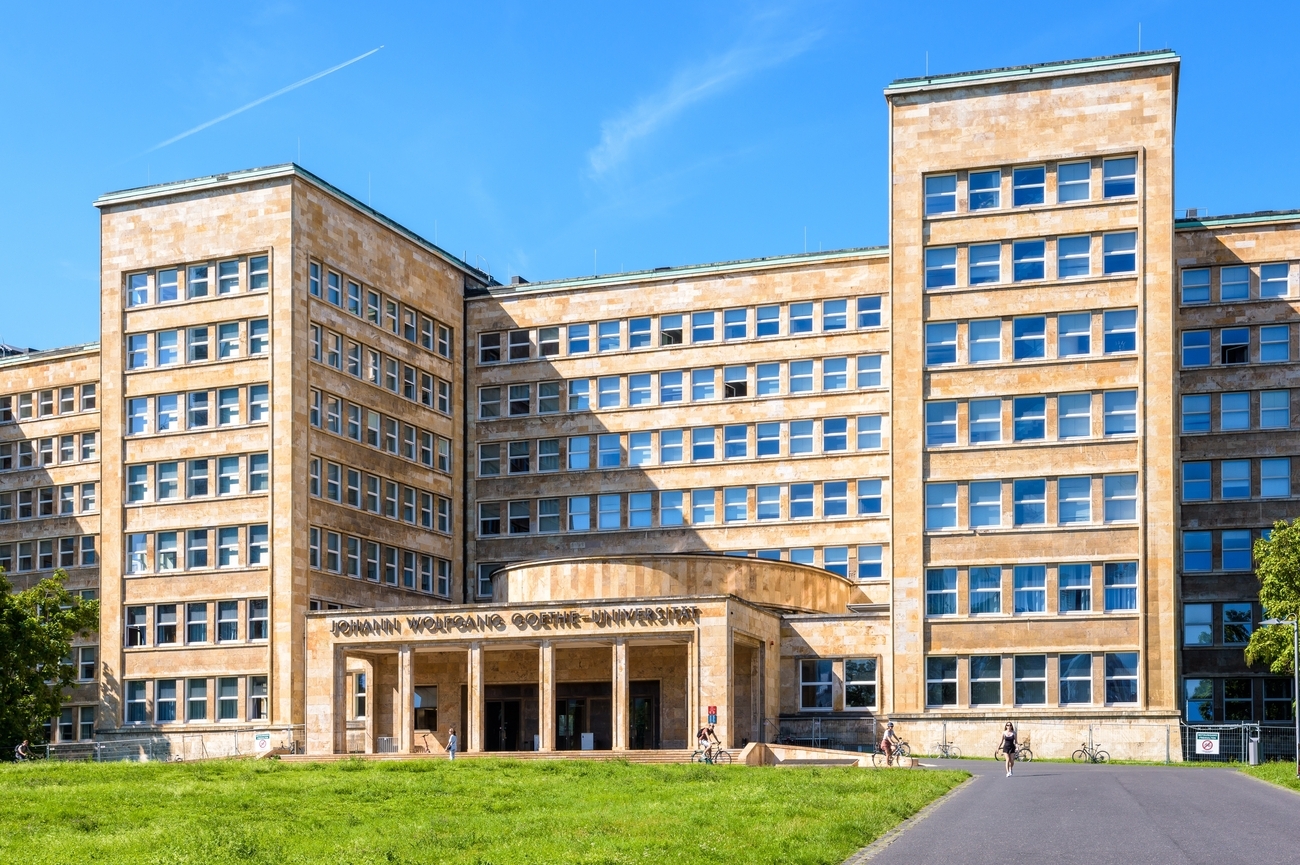
The IG Farben Building is one of the most significant historic structures in Frankfurt. Completed in 1931, it was designed by architect Hans Poelzig and served as the headquarters of IG Farben, once the largest chemical and pharmaceutical company in Europe. At the time of its construction, it was considered one of the largest office buildings in the world. Today, it serves as part of the Westend Campus of Frankfurt's Goethe University. And while it primarily functions as a university facility and is not operated as a traditional tourist attraction, it is frequently included in architectural, historical and academic walking tours.
Eschenheimer Turm
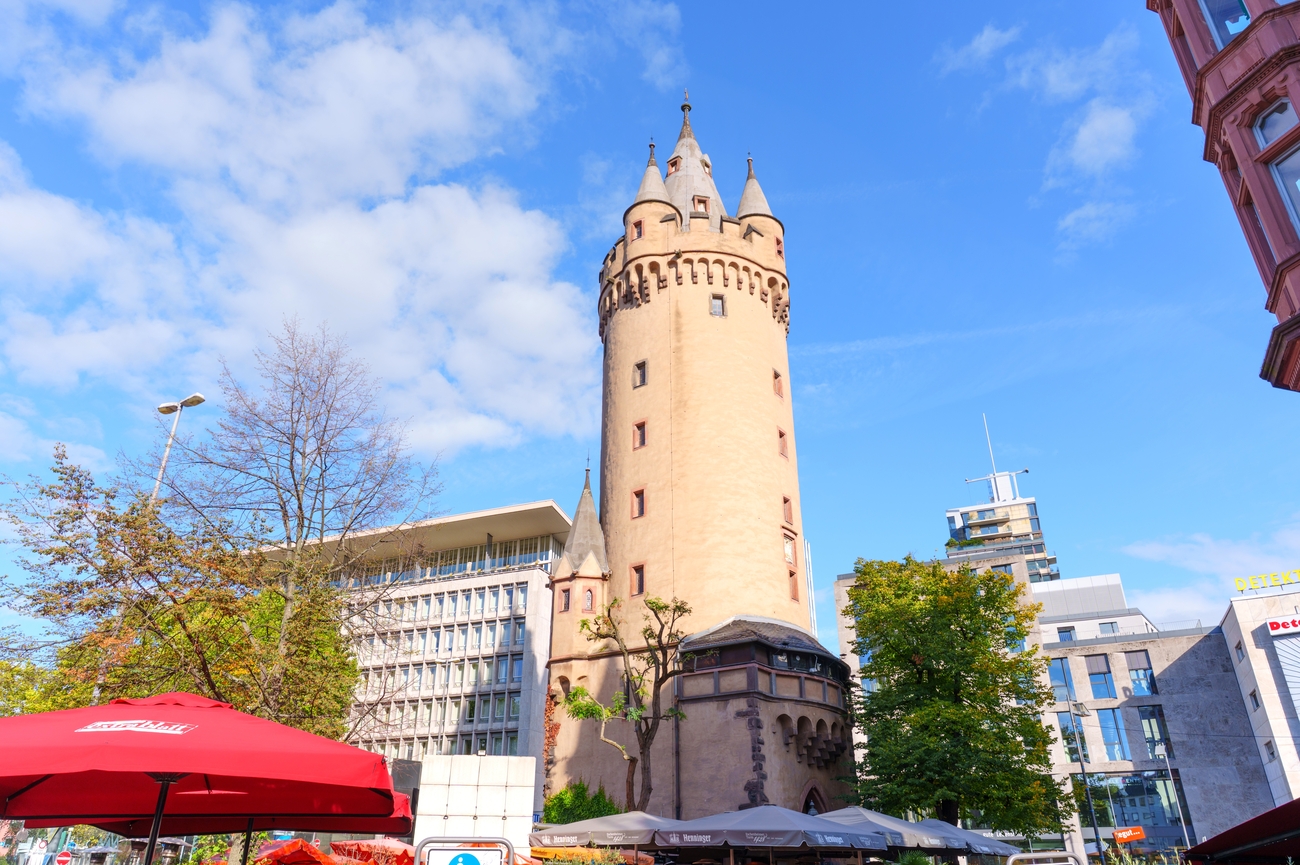
Eschenheimer Turm is approximately a 20-minute walk from the university campus, though a short U-Bahn ride can reduce the journey considerably. The transition is an interesting one because it connects two very different periods of Frankfurt's history.
Standing approximately 47 meters tall, Eschenheimer Turm is immediately recognizable for its pointed roof, corner turrets and fortified appearance. Surrounded today by modern streets and office buildings, it creates a striking contrast between Frankfurt's medieval past and contemporary cityscape. Historically, the tower served both defensive and administrative functions as part of the city's fortifications, helping protect Frankfurt's growing commercial importance. Having survived centuries of change, it remains one of the few places where visitors can still experience the city's medieval heritage in its original form.
Evening: Alte Oper
From Eschenheimer Turm, it is an easy 8-minute walk southwest to Alte Oper, one of Frankfurt's most elegant landmarks. The route follows some of the city's busiest central streets before opening onto Opernplatz, where the grand facade of the former opera house immediately commands attention.
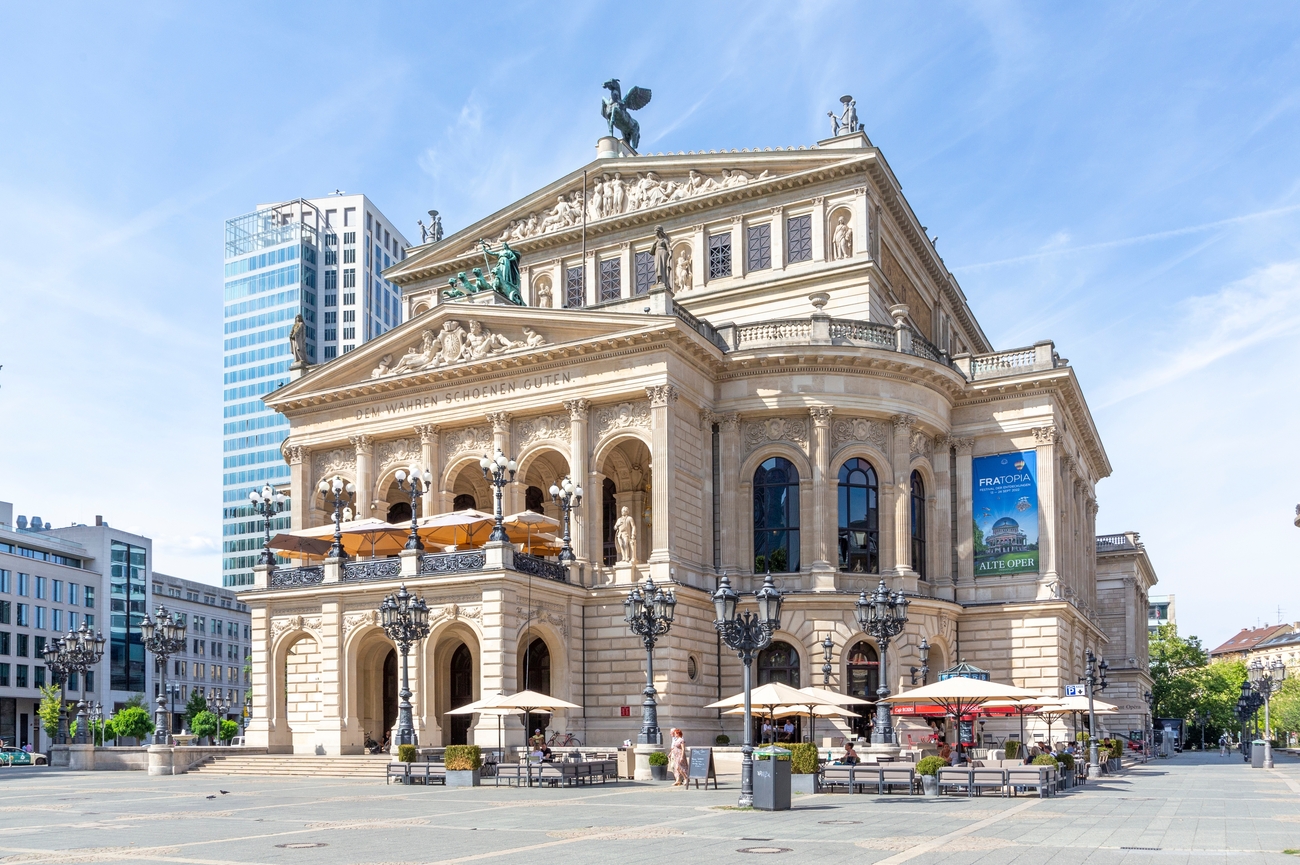
Alte Oper, which translates to "Old Opera," originally opened in 1880 and quickly became one of Germany's most prestigious performance venues. Severely damaged during World War II, the building stood in ruins for decades before being meticulously restored and reopened in 1981. Today, it functions not as an opera house but as a world-class concert and event venue, hosting classical performances, international artists, lectures and cultural events throughout the year.
Alte Oper is one of Frankfurt's most impressive architectural landmarks. Its grand Neo-Renaissance facade features ornate sculptures, decorative columns and intricate detailing that contrast sharply with the modern skyscrapers visible nearby. The building's exterior is often enough to justify a visit on its own, particularly in the evening when the structure is illuminated and serves as the focal point of Opernplatz. You will explore elegant concert halls and beautifully restored interiors that reflect the building's historic prestige while accommodating modern performances and events.
Börsenplatz
To conclude Day 3, continue east from Alte Oper for less than 10 minutes on foot to Börsenplatz. The walk is short but symbolic.
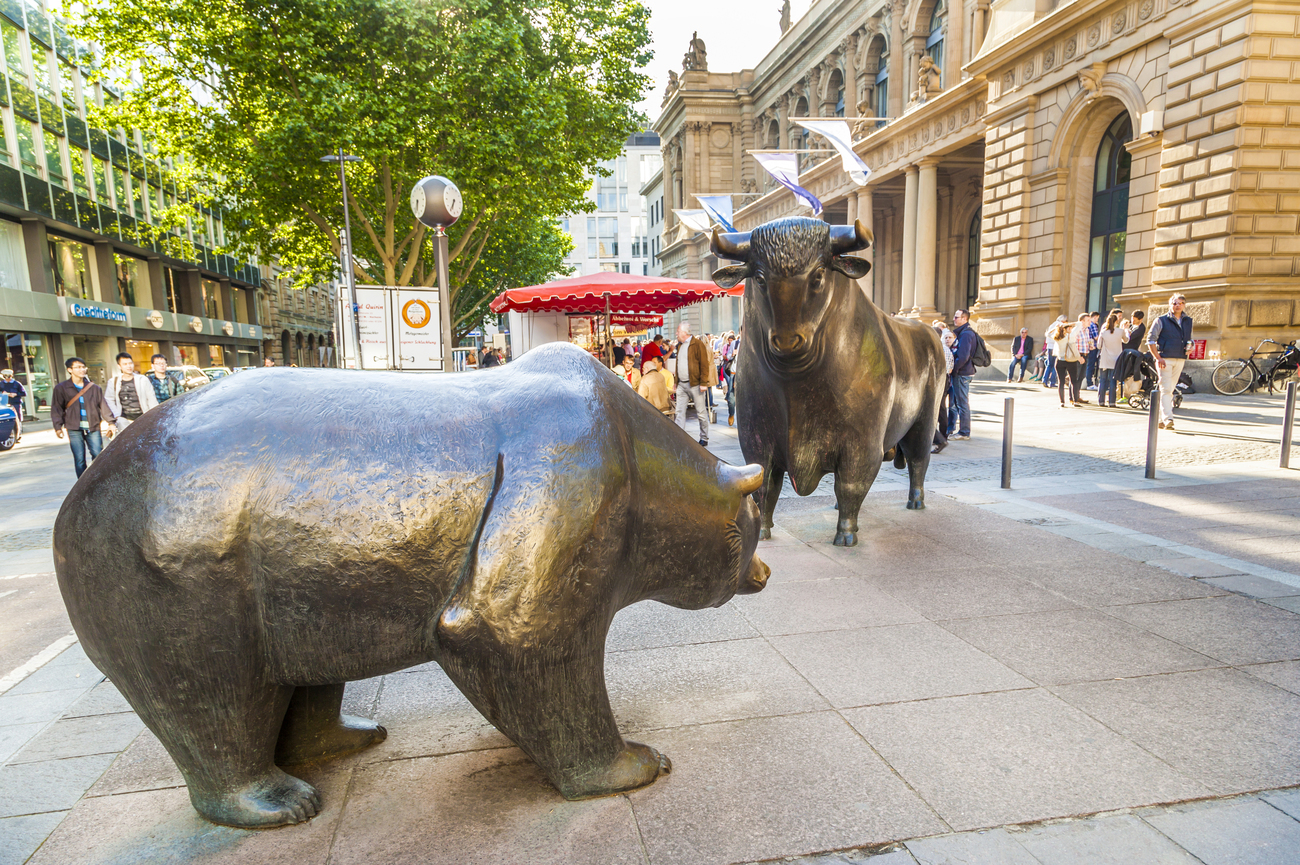
Börsenplatz is home to the Frankfurt Stock Exchange, one of the largest and most influential stock exchanges in the world. For centuries, Frankfurt has been a center of trade, finance and international business and few places represent that legacy more clearly than this square. While many visitors associate Frankfurt with its skyline, Börsenplatz offers a more direct connection to the economic activity that helped build the modern city.
The square itself is best known for the iconic Bull and Bear sculptures positioned outside the stock exchange building. These statues have become symbols of global financial markets and are among the most photographed landmarks in Frankfurt's financial district. Behind them stands the historic stock exchange building, an elegant structure completed in the late 19th century that continues to serve as an important center of financial activity today.
Day 3 - frankfurt Tour Map
Day 4
Morning: European Central Bank
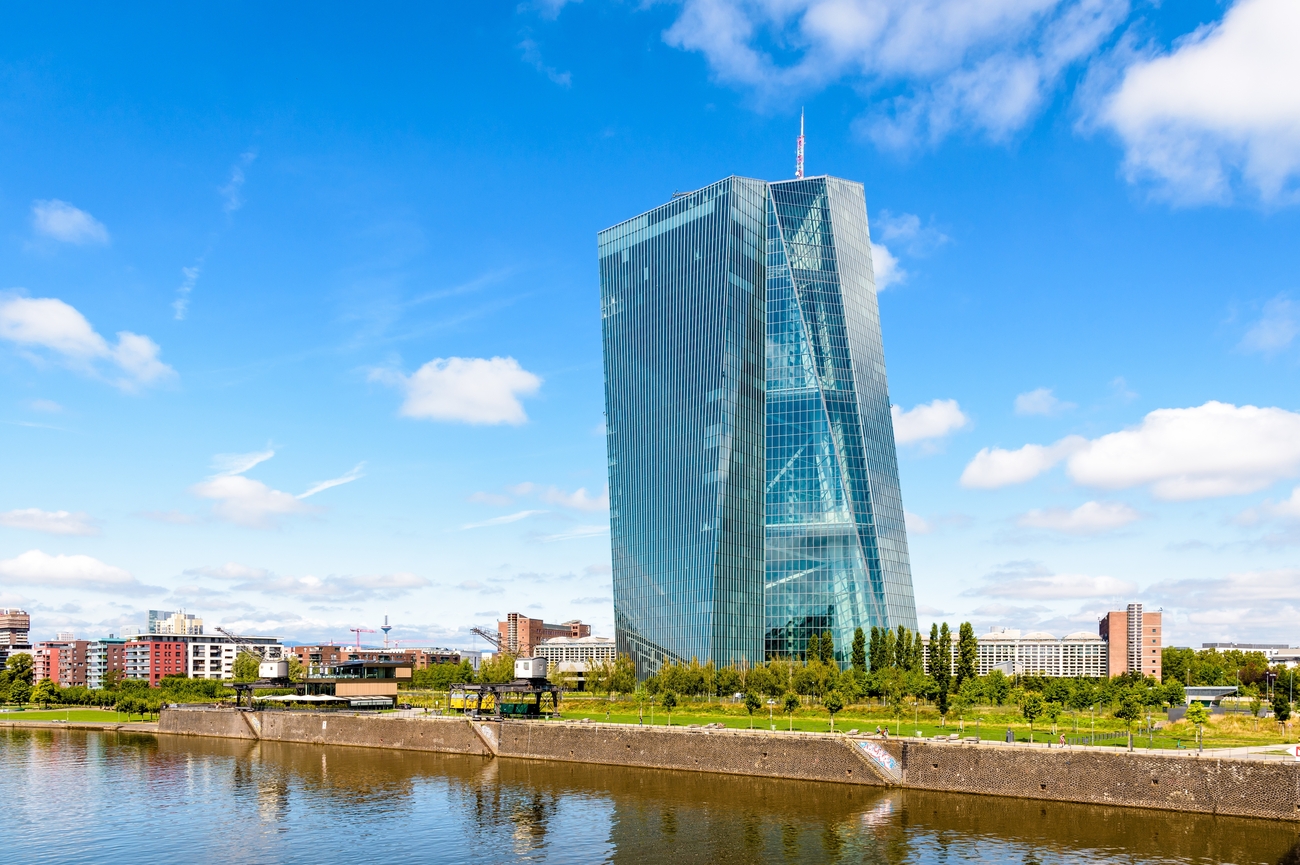
Day 4 begins in Frankfurt's Ostend district, home to one of the most influential financial institutions in the world. The European Central Bank (ECB) sits slightly east of the historic city center and offers a different perspective on Frankfurt than the previous days.
The European Central Bank serves as the central bank of the eurozone and is responsible for monetary policy across the countries that use the euro. Since moving into its current headquarters in 2015, the ECB has become one of Frankfurt's most recognizable modern landmarks. Its presence reinforces the city's status as one of Europe's leading financial centers and places Frankfurt at the center of major economic decisions affecting hundreds of millions of people.
Designed by Coop Himmelb(l)au, the complex combines a pair of modern glass towers with the restored Großmarkthalle, a historic wholesale market building dating back to the 1920s. The integration of contemporary architecture with a significant historic structure creates one of the most distinctive building complexes in the city.
Osthafen
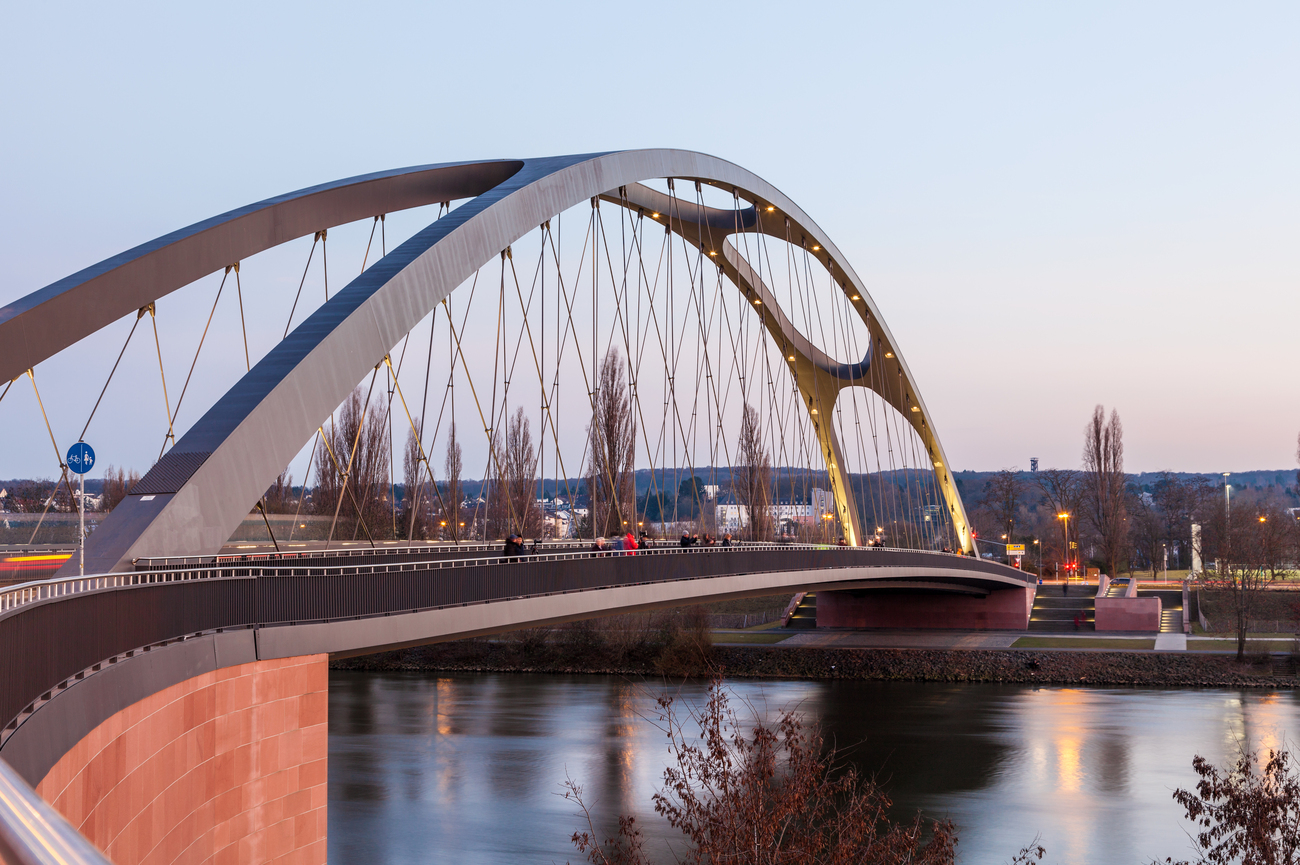
From the European Central Bank, Osthafen is practically on your doorstep. A short walk along the eastern section of the Main River brings you into one of Frankfurt's most interesting redevelopment districts.
Osthafen or Frankfurt's East Harbor was originally developed in the early 20th century as an important cargo port supporting the city's growing trade and industrial activities. While portions of the harbor continue to serve commercial functions today, large sections of the district have evolved into a mixed-use area featuring offices, residential developments, creative workspaces and public waterfront areas. Walking through the area, you'll notice former industrial structures being repurposed for modern uses while new office buildings and residential projects continue to reshape the district.
Deutschherrnbrücke
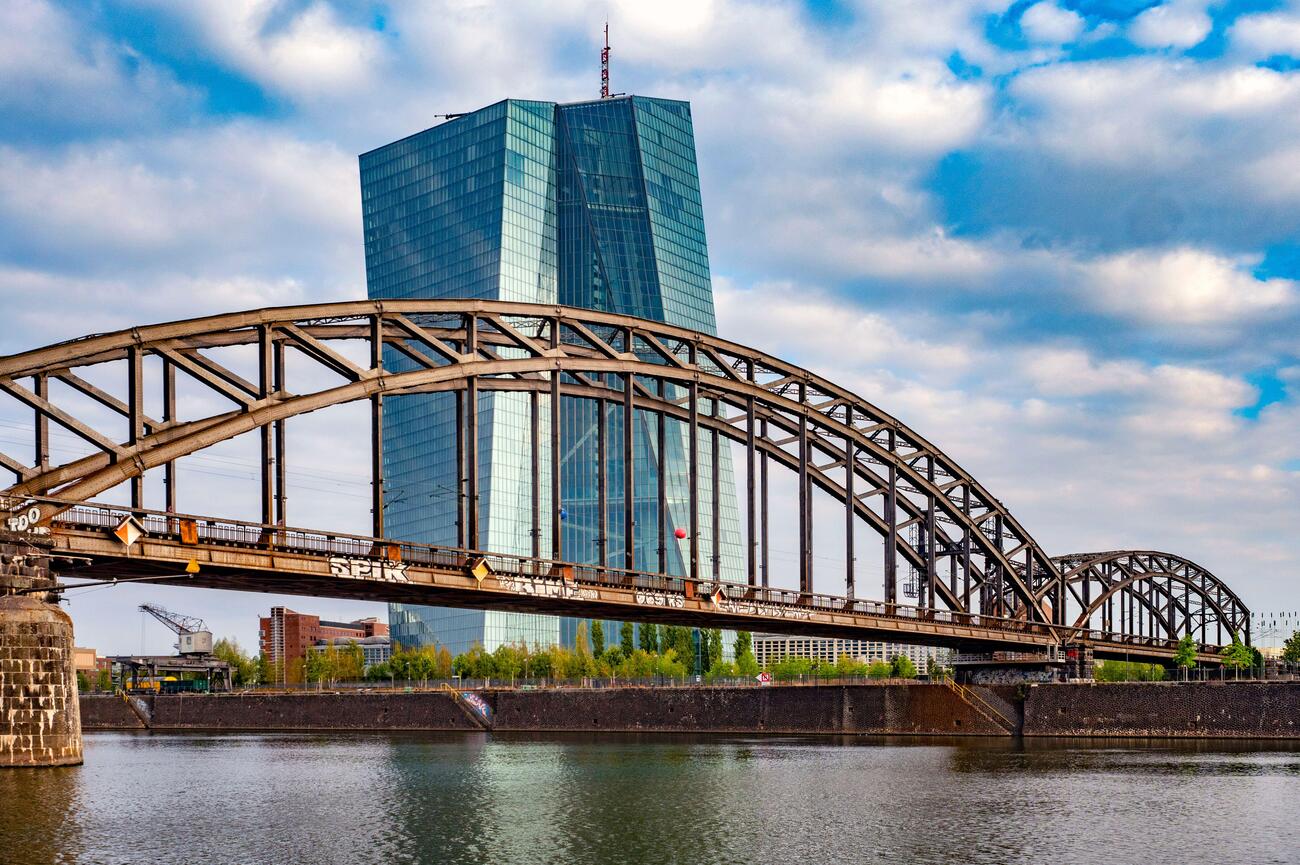
Continuing along the waterfront from Osthafen, it takes roughly 10 minutes on foot to reach Deutschherrnbrücke. The route follows the Main River and remains firmly within Frankfurt's eastern district. This bridge offers one of the best vantage points in this part of Frankfurt.
Deutschherrnbrücke is a combined railway, pedestrian and cycling bridge that spans the Main River between Ostend and Sachsenhausen. Although it lacks the historical fame of Eiserner Steg, many locals consider it one of Frankfurt's most underrated viewpoints. Its elevated position provides expansive views of the river, the European Central Bank, the city's skyline and the evolving waterfront districts that have shaped modern Frankfurt.
You will enjoy this spot if you are a photographer since it is one of the strongest viewpoints in the city. The bridge provides unobstructed sightlines across the river and captures several of Frankfurt's defining features in a single frame.
Afternoon: Skyline Plaza
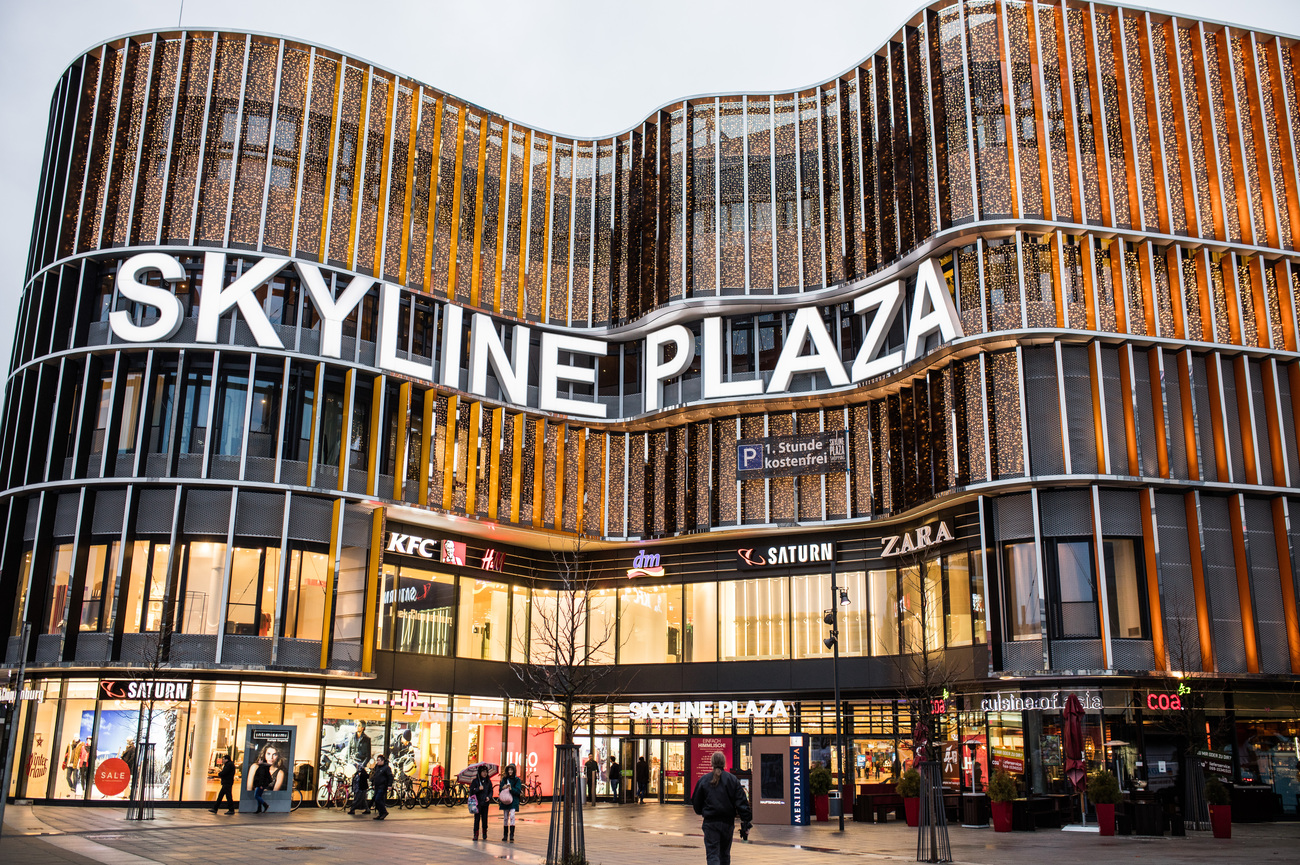
After spending the morning in Frankfurt's eastern districts, the itinerary shifts west toward one of the city's major commercial and retail hubs. Skyline Plaza is approximately a 15-minute drive from Deutschherrnbrücke or easily accessible via public transport.
Opened in 2013, Skyline Plaza is a contemporary mixed-use complex located in the Europaviertel district near Messe Frankfurt. The development combines retail, dining, wellness facilities and office space within a modern architectural setting, making it one of Frankfurt's most important commercial centers. The shopping center features a broad mix of international brands, fashion retailers, lifestyle stores, beauty boutiques and specialty shops spread across multiple levels. While it may not carry the concentration of luxury houses found on Goethestraße, Skyline Plaza offers a more diverse and accessible retail experience.
And one of the complex's standout features is its rooftop area. Unlike many shopping centers, Skyline Plaza incorporates a large rooftop garden that provides views of Frankfurt's skyline and surrounding districts.
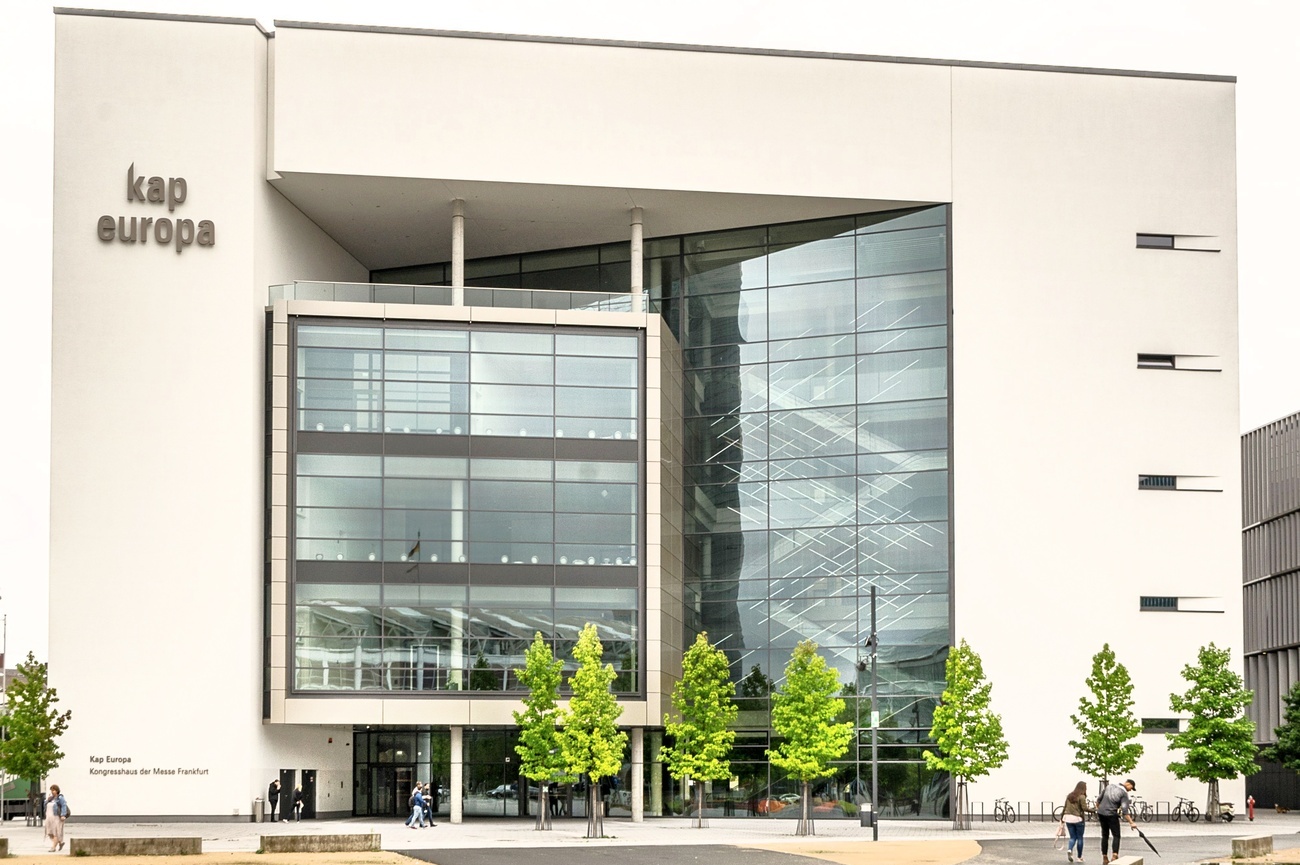
Kap Europa, convention center Messe Frankfurt
Just across the street from Skyline Plaza stands Kap Europa. This is one of Frankfurt's most important conference and event venues and a key part of the Messe Frankfurt complex.
Opened in 2014, Kap Europa was designed as a state-of-the-art convention center capable of hosting conferences, corporate gatherings, exhibitions and international events. It was also the world's first convention center to receive a DGNB Platinum sustainability certification, reflecting Frankfurt's emphasis on innovation and environmentally responsible development. Its contemporary architecture and flexible event spaces have helped establish it as one of the city's premier venues for business events.
Kap Europa is closely connected to Messe Frankfurt, one of the largest trade fair organizations in the world. Messe Frankfurt hosts internationally recognized events such as the Frankfurt Book Fair, Automechanika, Ambiente and numerous industry-specific exhibitions that attract visitors from across the globe. Together, Kap Europa and Messe Frankfurt play a major role in the city's economy and reinforce Frankfurt's position as one of Europe's most influential business hubs.
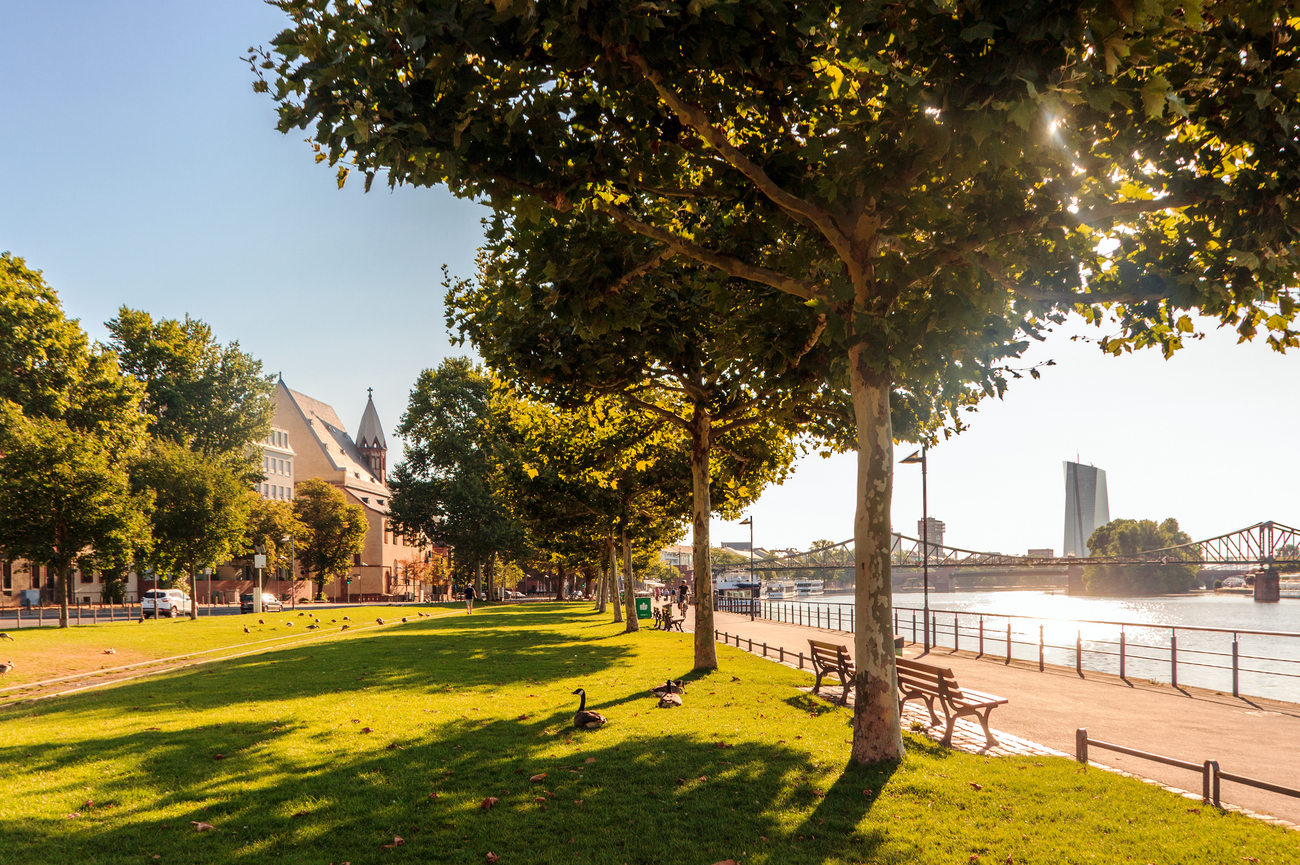
Nizza Park
After an afternoon spent exploring Frankfurt's business and convention district, the itinerary shifts back toward the Main River. Nizza Park is approximately a 15-minute journey from Kap Europa and offers a welcome change of pace before the final evening stops.
Nizza Park, often simply called "Nizza" by locals, stretches along the northern bank of the Main River and is known for its surprisingly Mediterranean character. Established in the 19th century, the park takes its name from Nice on the French Mediterranean coast because early visitors felt the area's climate and vegetation resembled that of southern France. Thanks to Frankfurt's relatively mild microclimate and the park's sheltered riverside location, a wide variety of subtropical plants thrive here, including palm trees, fig trees, cypresses and other species more commonly associated with southern Europe, creating a landscape that feels distinctly different from most urban parks in Germany. Today, it remains one of Frankfurt's most pleasant public spaces and serves as a popular retreat for locals seeking a quieter environment within the city center.
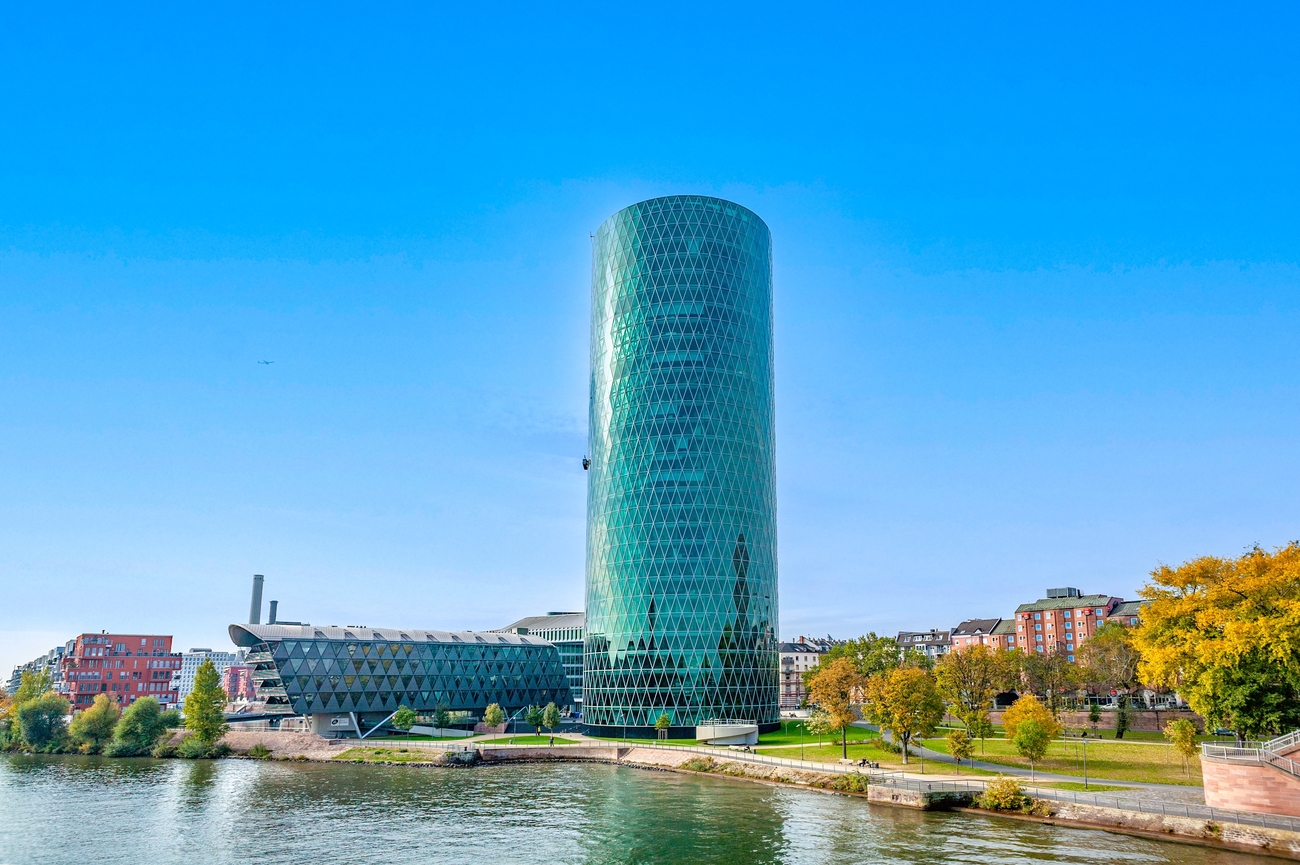
Westhafen Tower
Continuing west along the Main River from Nizza Park, Westhafen Tower is approximately a 15-minute walk away. You will be returning to the city’s contemporary side.
Westhafen Tower is one of Frankfurt's most recognizable skyscrapers, largely because of its unusual diamond-patterned glass façade. Completed in 2004, the 109-meter tower stands within the redeveloped Westhafen district, a former harbor area that has evolved into a mixed-use neighborhood featuring offices, residential buildings and waterfront promenades. The tower's unique design has earned it the nickname "The Gerippte," a reference to the traditional ribbed glass used for serving Frankfurt's famous apple wine.
Unlike the towering skyscrapers concentrated in Frankfurt's financial district, Westhafen Tower stands somewhat apart, giving it a stronger visual presence along the riverfront. The building's curved shape and reflective glass exterior make it particularly striking when viewed from across the Main River or from nearby bridges.
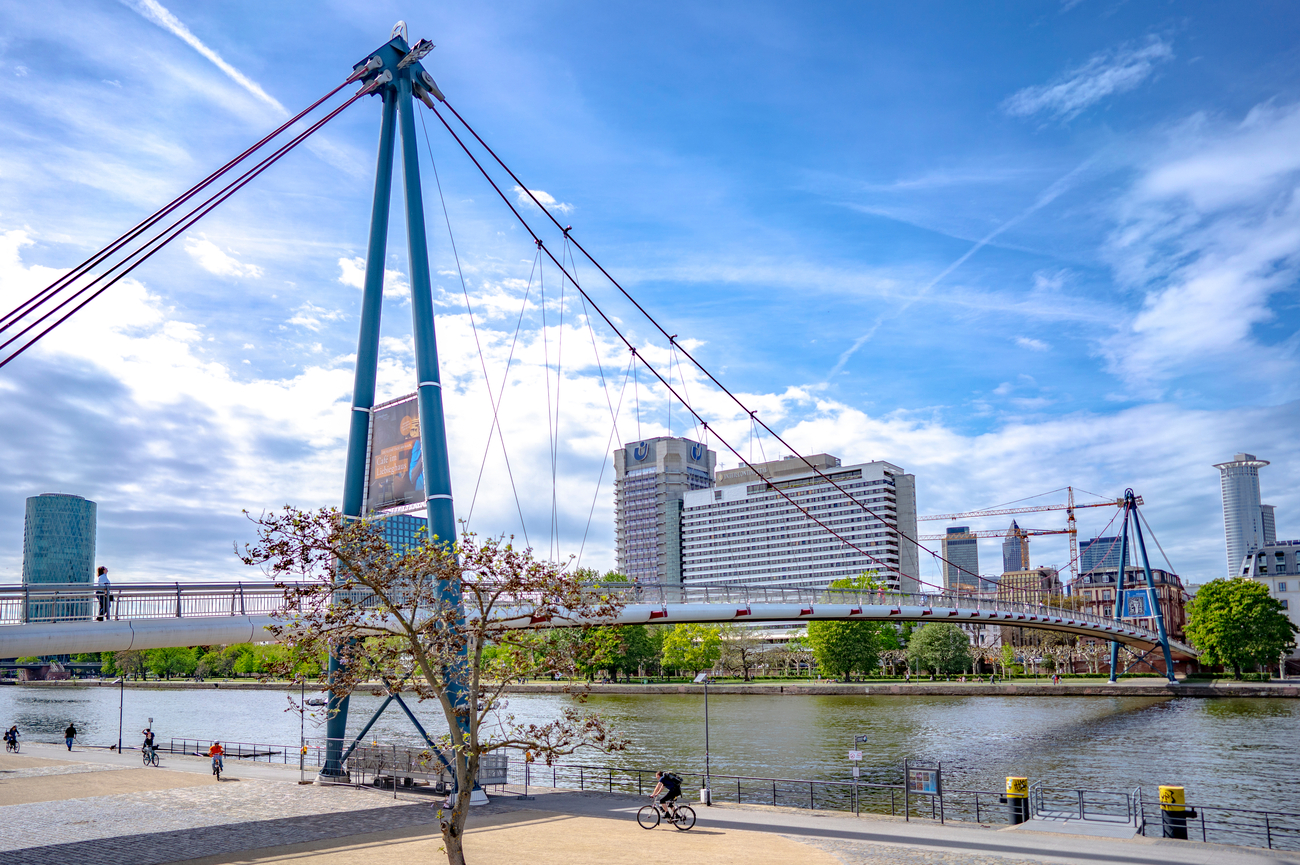
Holbeinsteg
As the journey through Frankfurt draws to a close, follow the riverside promenade east from Westhafen Tower for approximately 15 minutes until you reach Holbeinsteg. This final vantage point feels like a natural culmination of the past four days, bringing together many of the themes that have shaped the itinerary: the Main River, Frankfurt's skyline, historic districts, cultural institutions and modern architecture.
Holbeinsteg is a pedestrian bridge spanning the Main River between Sachsenhausen and the northern riverbank. Opened in 1990, the bridge was designed specifically for pedestrians and cyclists, creating a convenient connection between the Museumsufer district and the city center. While it is often overshadowed by the more famous Eiserner Steg, you may find Holbeinsteg equally rewarding because of its excellent views and generally quieter atmosphere.
After exploring Frankfurt's medieval squares, museums, gardens, financial institutions, luxury districts and modern architecture, this quiet crossing over the Main River serves as a reminder of how all those pieces connect. It is a simple ending, but one that captures the character of Frankfurt remarkably well.
Day 4 - frankfurt Tour Map
Other Things to Do in Frankfurt
Four days cover many of Frankfurt's major landmarks, but the city still has a few worthwhile experiences that did not naturally fit into the itinerary. These places offer a different perspective on Frankfurt, from contemporary art and historic estates to sports, architecture and some of the city's most recognizable public landmarks. If you have additional time in the city, these attractions are excellent additions that complement the main itinerary while showcasing sides of Frankfurt that many visitors overlook.
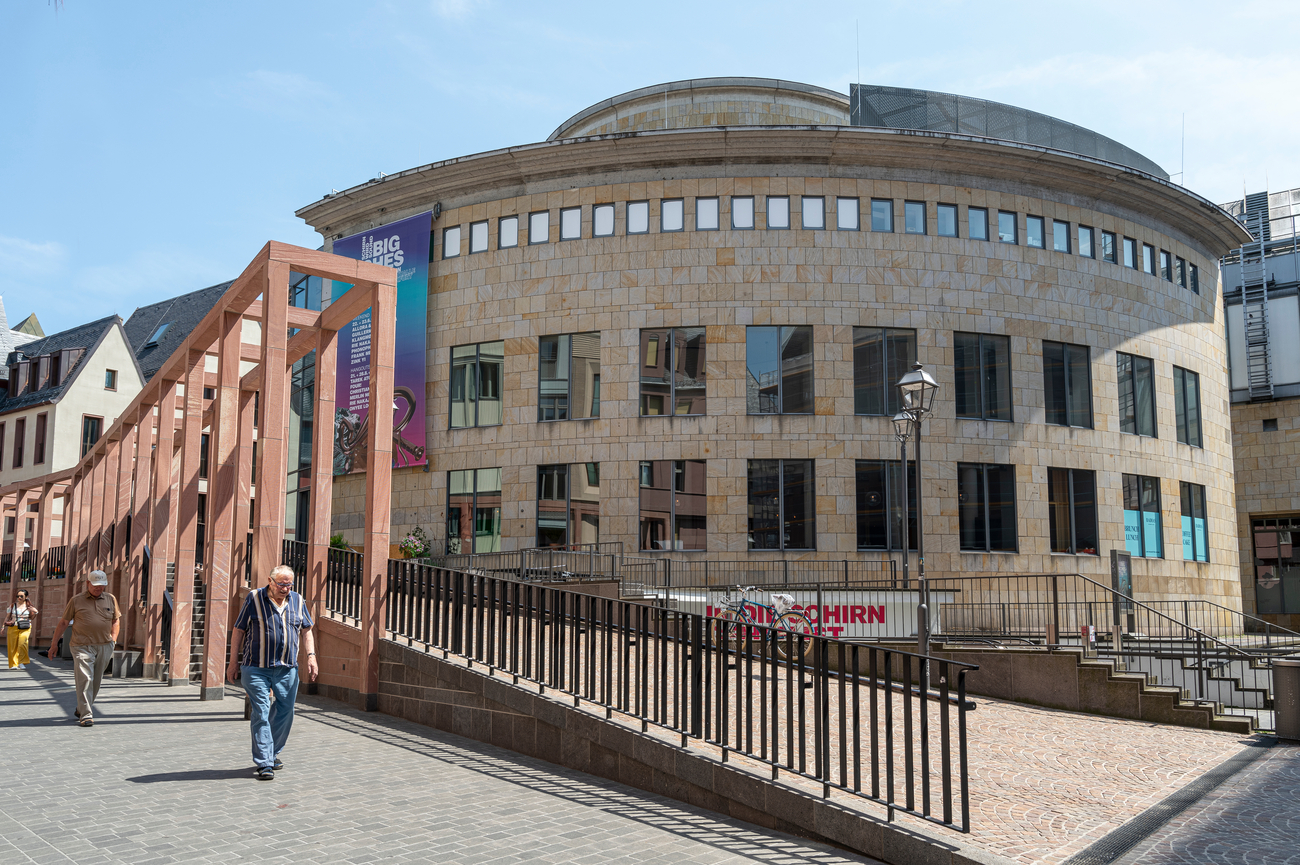
- Schirn Kunsthalle Frankfurt: Located between Römerberg and Frankfurt Cathedral, Schirn Kunsthalle Frankfurt is one of Germany's leading venues for modern and contemporary art. Unlike traditional museums with permanent collections, the Schirn focuses on major temporary exhibitions featuring internationally recognized artists, movements and themes. This means no two visits are exactly alike. The building itself is modern and minimalist, designed to place the focus squarely on the exhibitions. You can join guided tours and private tours to enjoy exclusive insights into exhibition concepts, artistic techniques and the stories behind the works on display.
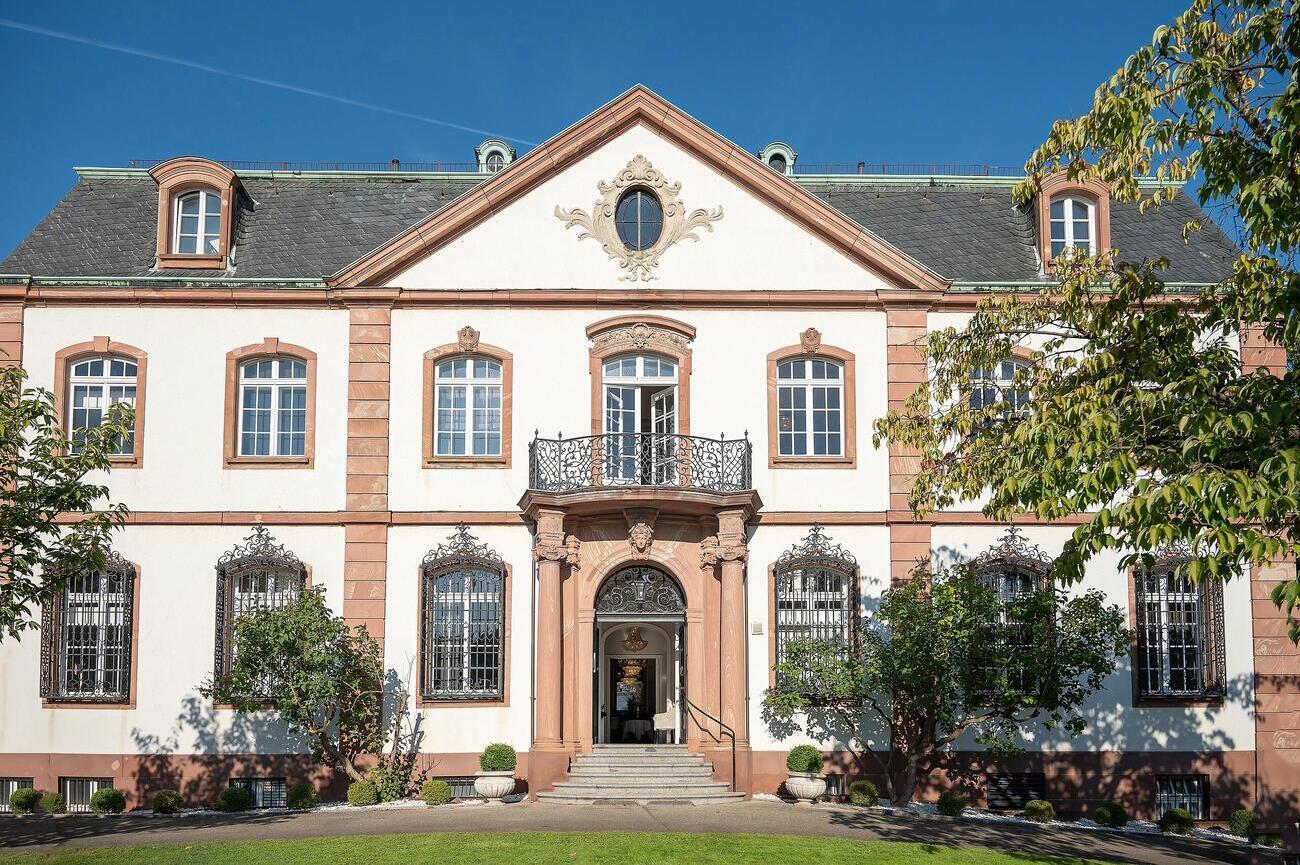
- Villa Merton: Constructed in the early 20th century, Villa Merton combines stately architecture with elegant grounds and remains one of Frankfurt’s refined historic venues. Today, it is associated with the Union International Club and Restaurant Villa Merton, and is used for dining, events and cultural gatherings. While it is not a traditional sightseeing attraction, the villa offers a glimpse into Frankfurt’s upper-class heritage, diplomatic atmosphere and intellectual life.
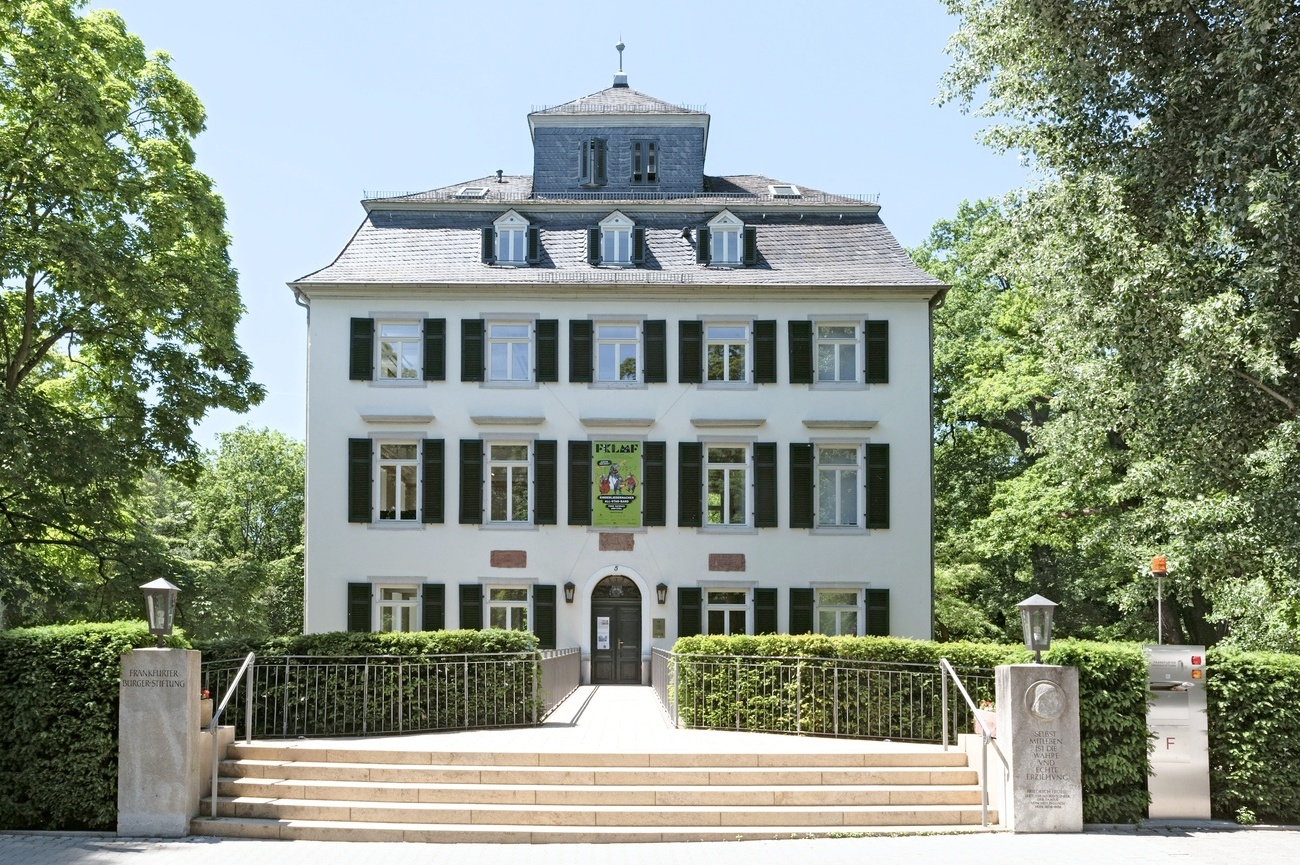
- Holzhausen Palace: Set within Holzhausen Park, Holzhausen Palace is a Baroque moated palace with roots in one of Frankfurt’s old patrician estates. Dating back to the Renaissance period, this small water palace originally formed part of a noble family's estate and remains one of the few surviving manor houses within the city. The building's picturesque location beside a pond gives it a distinctly different atmosphere from Frankfurt's urban center. Today, the palace hosts concerts, cultural events and exhibitions throughout the year.
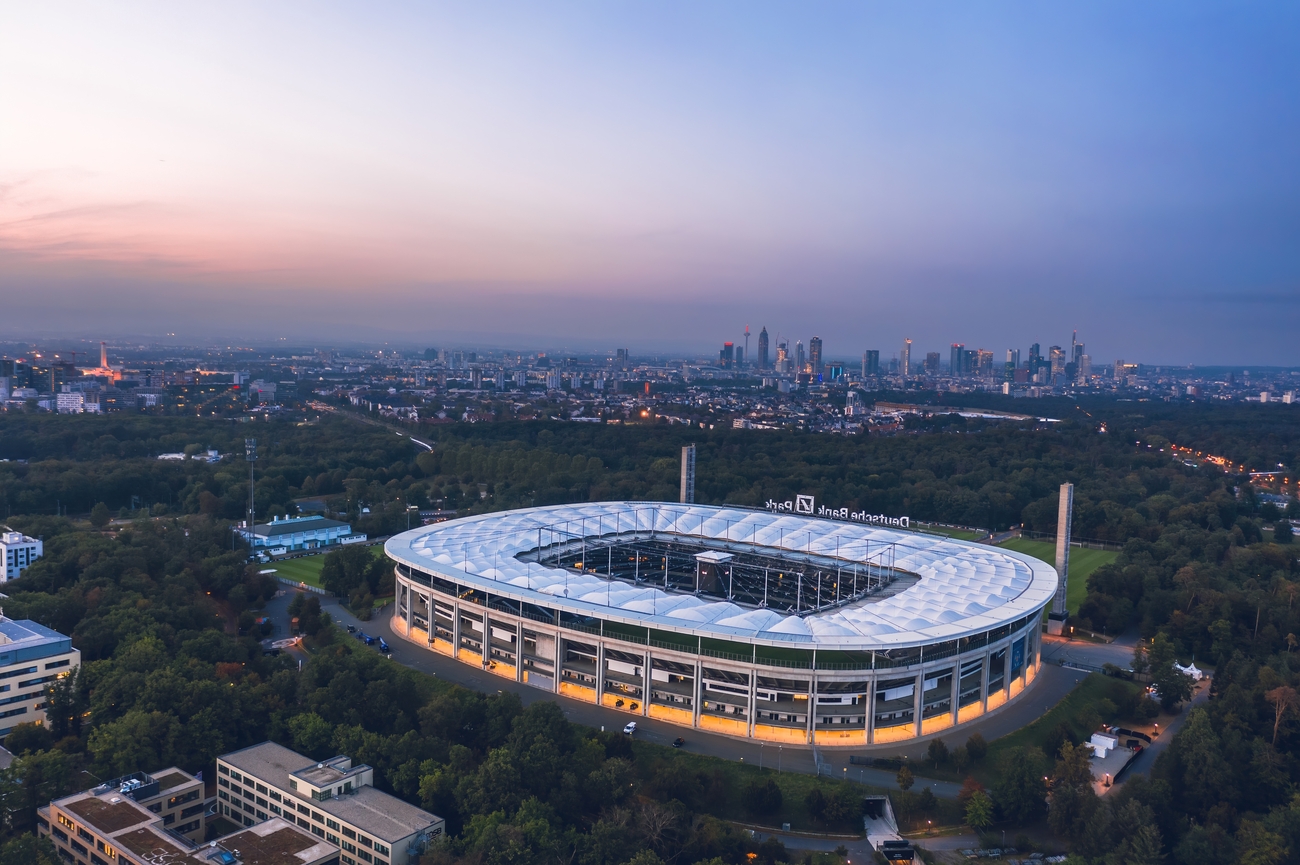
- Deutsche Bank Park: Best known as the home stadium of Eintracht Frankfurt, Deutsche Bank Park is one of Germany's premier sports and entertainment venues. Beyond football matches, the stadium hosts major international concerts and events throughout the year. You can join guided stadium tours that provide access to areas normally reserved for players, officials and VIP guests, including dressing rooms, hospitality suites and pitch-side areas.
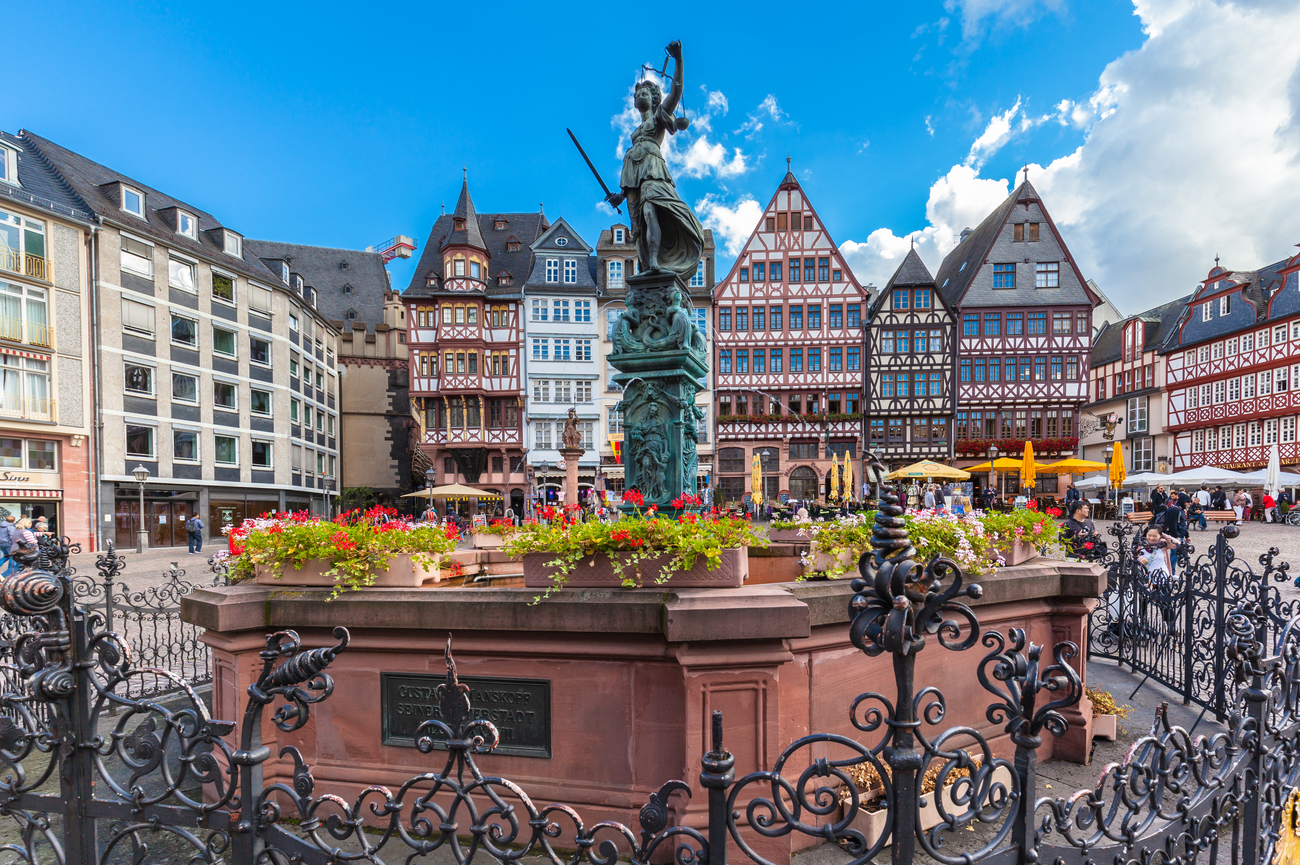
- Fountain of Justice: Originally constructed in the 16th century, the fountain features a statue of Justitia, the Roman goddess of justice, holding her traditional scales and sword. Over the centuries, the fountain became closely associated with imperial coronation celebrations and important civic events that took place in the square. You might have already passed by this spot when you went to the Römer or Frankfurt Cathedral. This is worth the stop as the fountain carries significant historical symbolism and remains one of the defining features of the city's historic center.
Things to Do with Kids in Frankfurt
Frankfurt may have a reputation as Germany's financial capital, but it is surprisingly good at keeping younger travelers entertained. Beyond the skyscrapers and business districts, the city offers a mix of hands-on museums, huge parks, animal encounters, science exhibits, botanical gardens and water-based attractions that make family travel feel a lot less like a logistical challenge. The best part is that many of these attractions are designed to be interactive rather than passive, so children are not just looking at things behind glass all day.
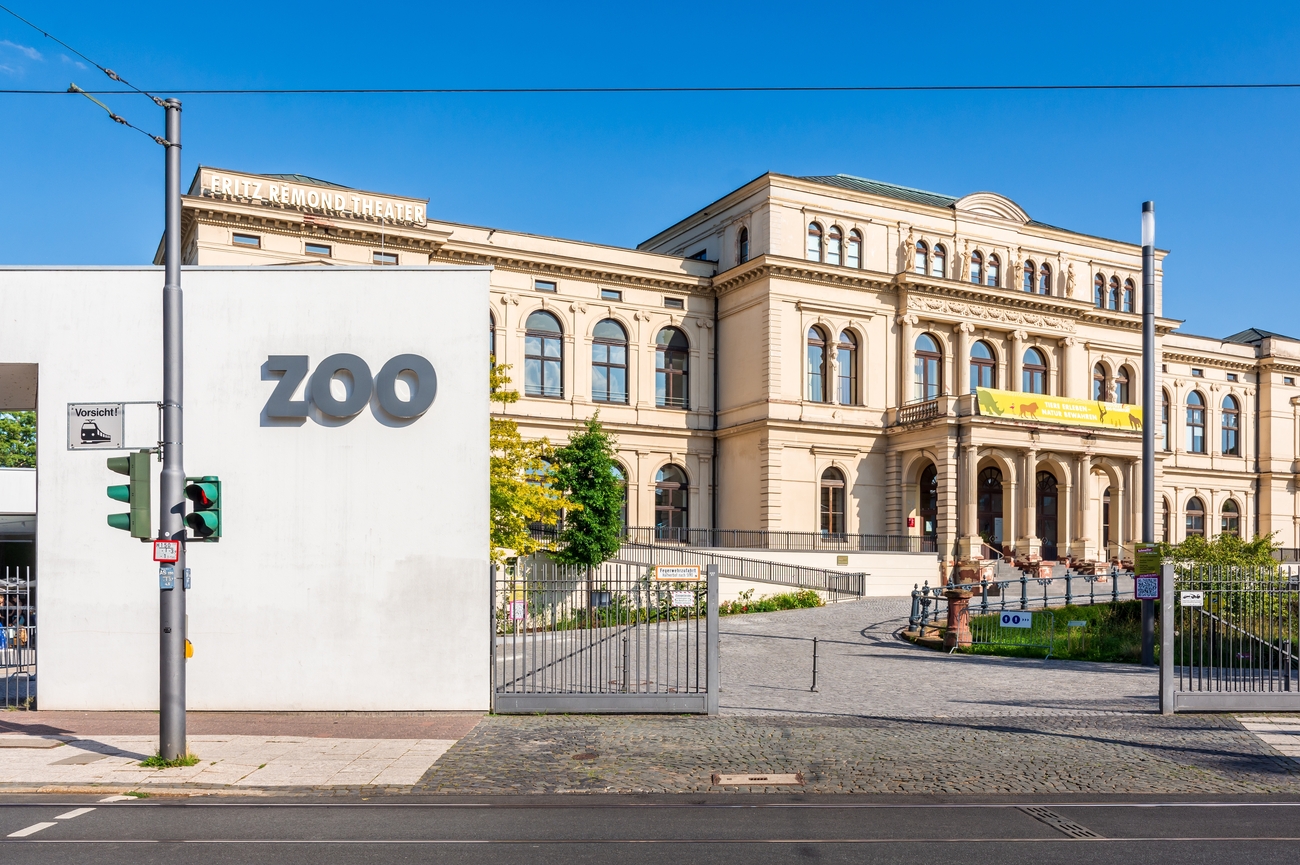
- Zoo Frankfurt: One of the oldest zoos in Germany, Zoo Frankfurt has been welcoming visitors since 1858 and remains one of the city's most popular family attractions. Home to hundreds of animal species from around the world, the zoo features everything from lions, giraffes and gorillas to reptiles, penguins and tropical birds. One of the standout attractions is the Grzimek House, where nocturnal animals live in specially designed environments that allow visitors to observe species that are usually active while most people are asleep.
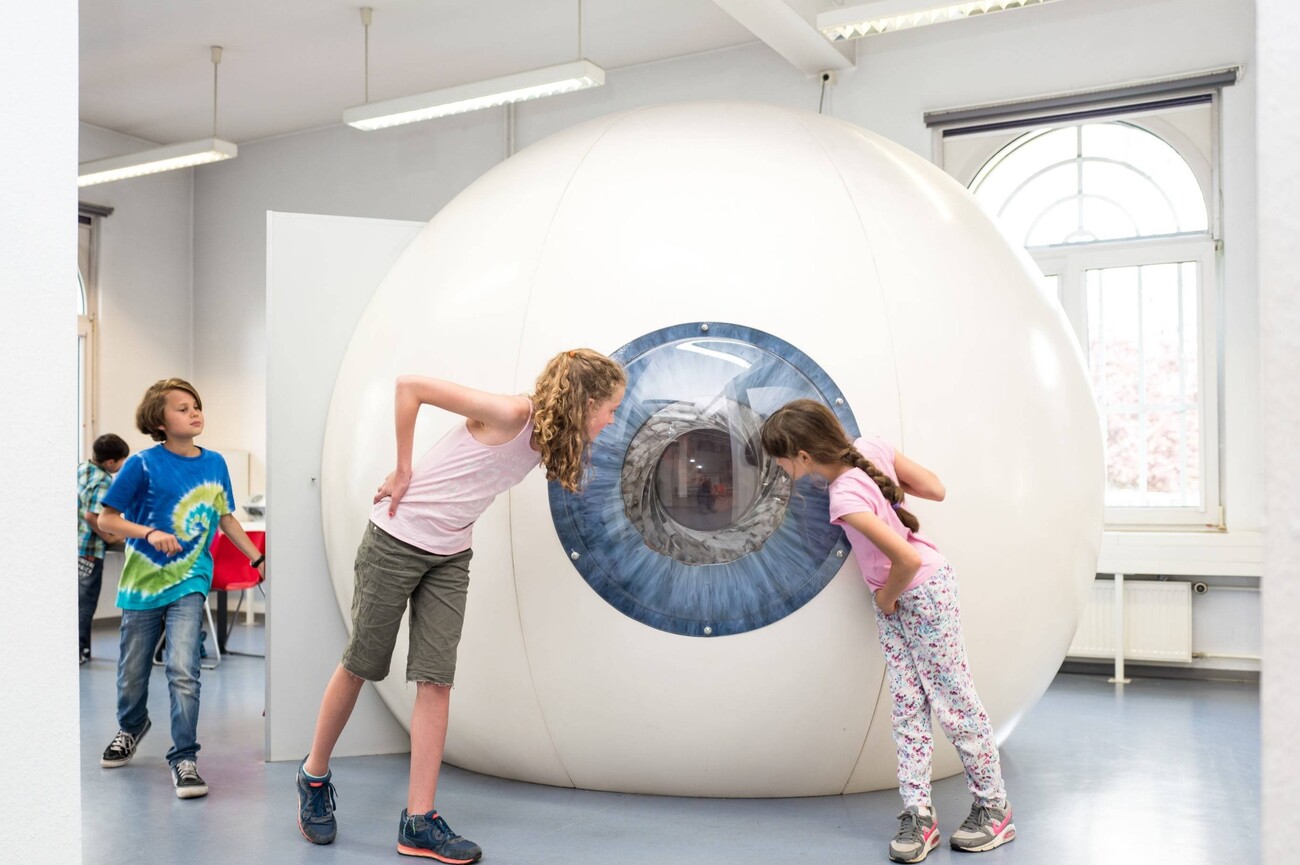
- EXPERIMINTA ScienceCenter: If your kids enjoy pressing buttons, building things, solving puzzles or asking "why" every five minutes, EXPERIMINTA ScienceCenter is likely going to be a hit. Unlike traditional museums where touching things is discouraged, this science center is built around interaction. Visitors are encouraged to experiment with exhibits covering physics, engineering, mathematics, technology and perception. Oh, and many parents find themselves testing the exhibits just as enthusiastically as their children.
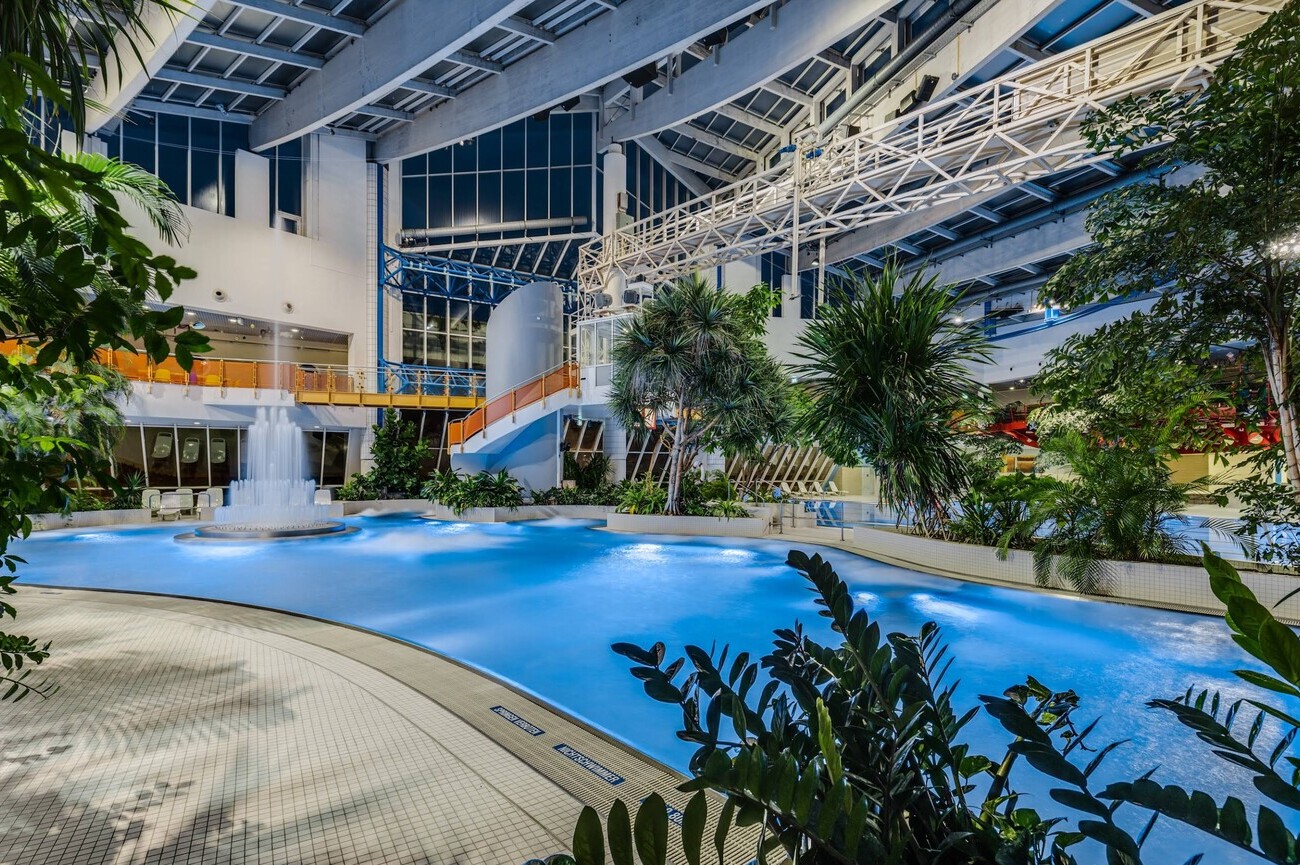
- Titus Thermen: Sometimes the best sightseeing strategy is taking a break from sightseeing altogether. Titus Thermen offers exactly that. This indoor aquatic complex features swimming pools, water slides, family recreation areas and wellness facilities, making it one of Frankfurt's best options when the weather isn't cooperating or the kids need to burn off energy. Your kids will surely enjoy the slides and water attractions. Meanwhile, you can recharge at the spa and relaxation areas while the kids continue to have fun.
- Günthersburgpark: Not every memorable family activity requires an entrance ticket. Günthersburgpark is one of Frankfurt's most family-friendly green spaces and offers playgrounds, open lawns, walking paths and plenty of room for children to run around. The atmosphere feels local rather than tourist-focused, which is part of its appeal. The park's playgrounds are among the best in the city and the large open spaces make it easy for children to play freely. If you need a slower-paced afternoon between sightseeing stops, this is an excellent place to unwind.
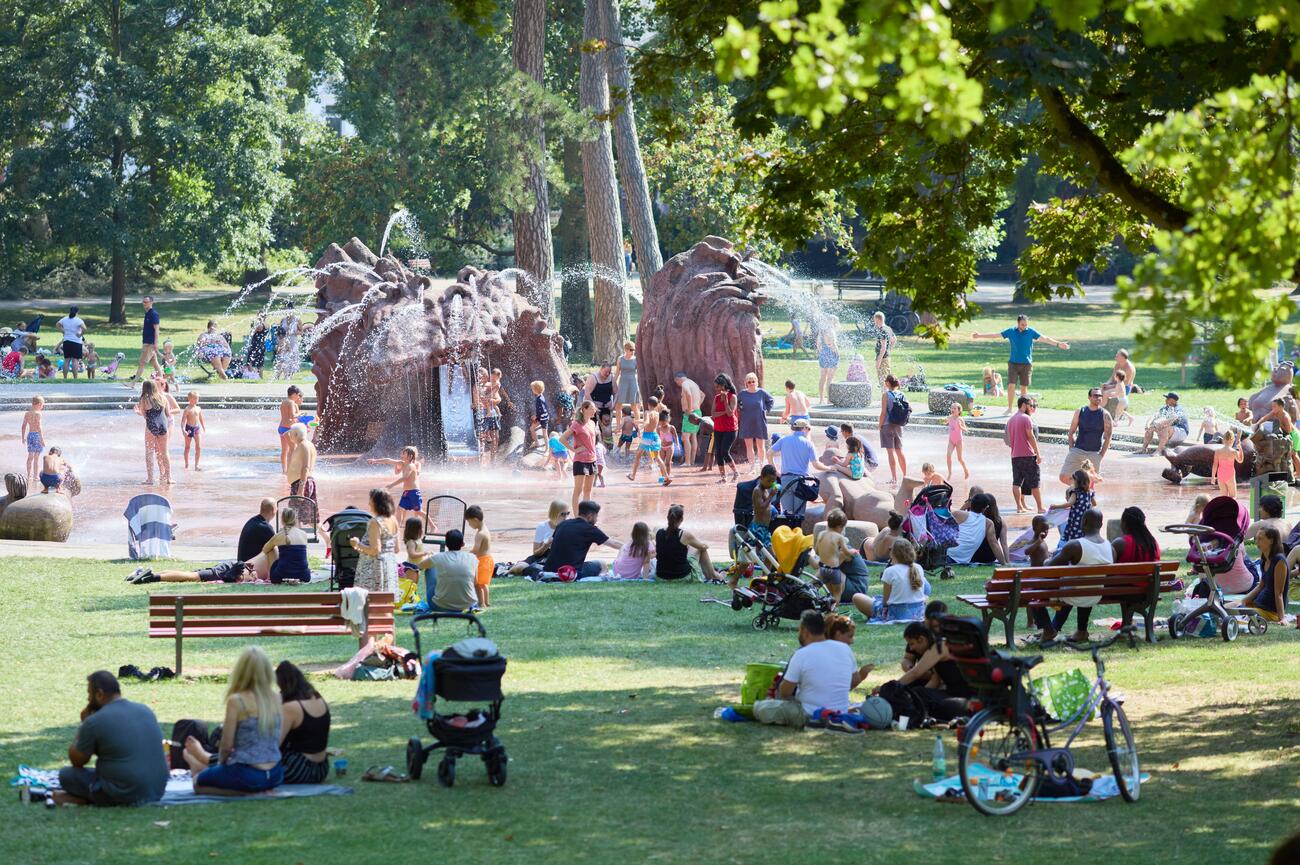
- Kobelt Zoo: For a more relaxed and intimate animal experience, Kobelt Zoo offers a refreshing alternative to larger zoological parks. This community-focused animal park is home to domestic animals and smaller species, creating an environment that feels approachable and family-oriented. Younger children often enjoy Kobelt Zoo because they can get closer to the animals and explore at a comfortable pace. While it may not have exotic animals from every continent, it provides a charming local experience that feels authentic.
Day Trips from Frankfurt
Exploring beyond Frankfurt reveals a different side of Germany, where centuries of history, culture and tradition are woven into every destination. Whether you're interested in wine tasting along the Rhine, wandering through historic old towns or discovering important cultural landmarks, there are countless opportunities to experience the region's variety. These destinations offer a rewarding change of pace from the city while showcasing some of the most memorable places in western Germany.
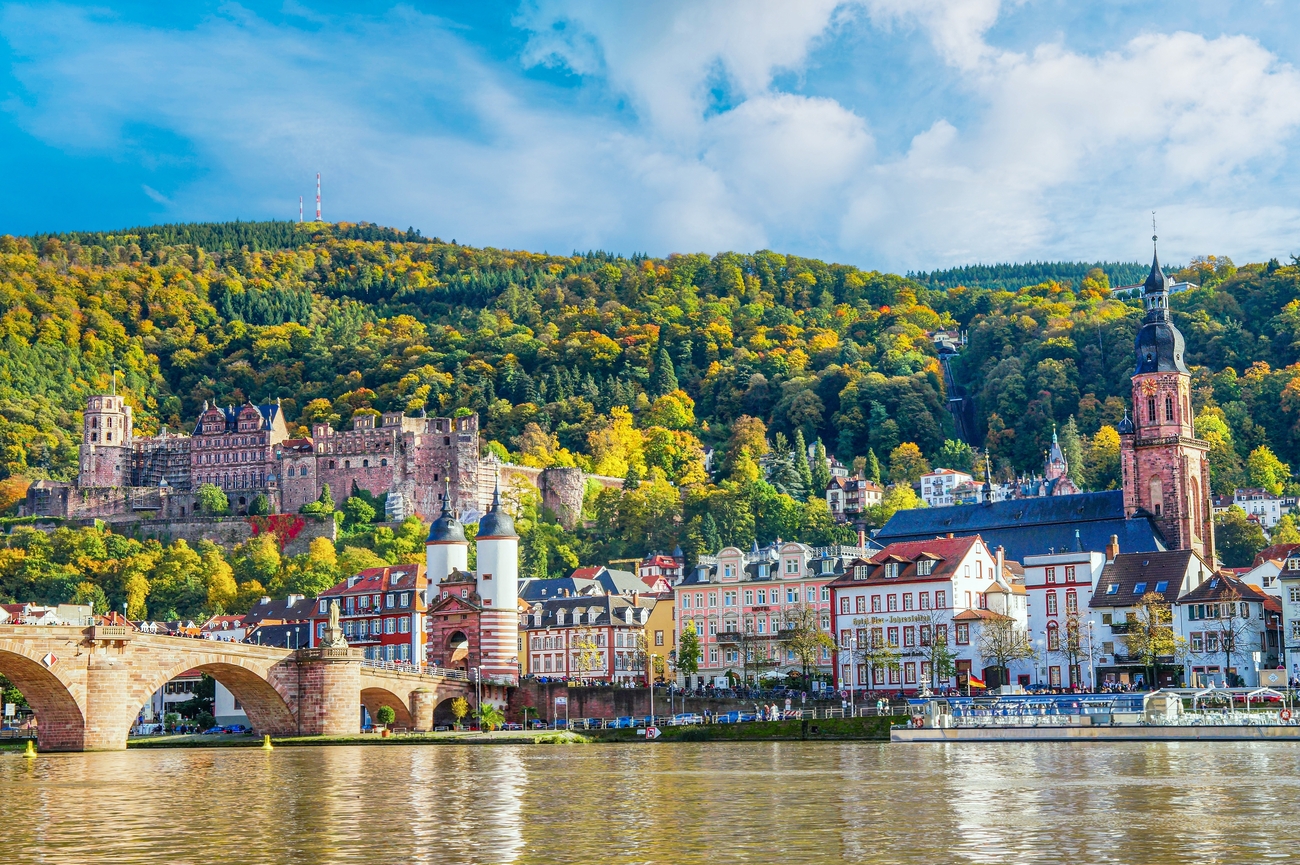
- Heidelberg: Around 1 hour and 15 minutes from Frankfurt by train, the city is widely regarded as one of Germany's most beautiful destinations and attracts visitors from around the world. The undisputed highlight is Heidelberg Castle, whose dramatic ruins overlook the Neckar River and the city's historic center. Down below, the Altstadt stretches beneath the castle with cobbled streets, elegant squares and centuries-old buildings. Other notable attractions include the Old Bridge, the Church of the Holy Spirit and the Philosopher's Walk. If you want to experience the best of Heidelberg, join private castle tours.
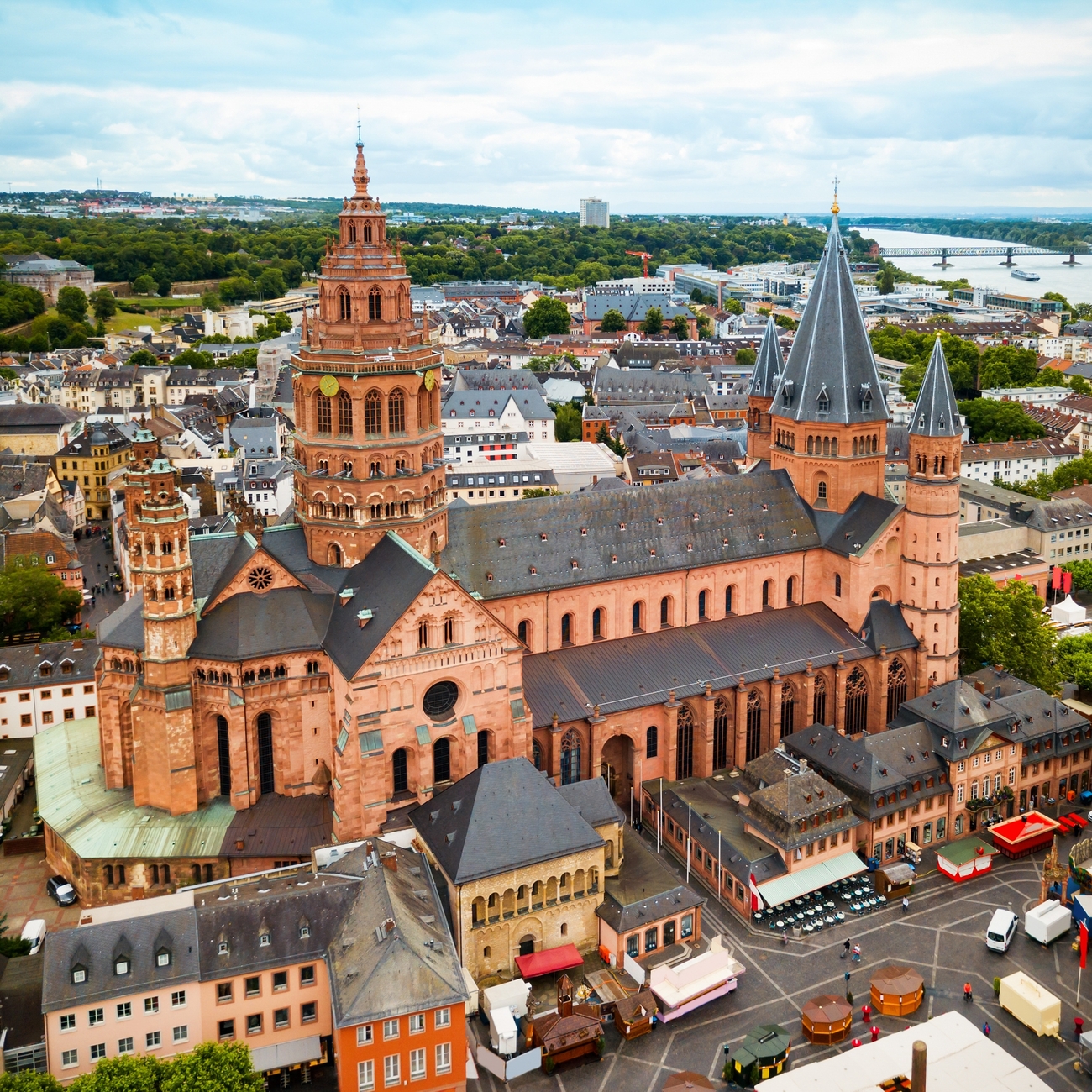
- Mainz: Situated on the Rhine River, Mainz is a city where Roman heritage, religious history and cultural significance intersect in a remarkably walkable setting. This spot is just 40 minutes away from Frankfurt. This place is known as the birthplace of Johannes Gutenberg, whose invention of movable-type printing transformed the spread of knowledge across Europe. The city's centerpiece is Mainz Cathedral, an impressive Romanesque structure that has dominated the skyline for more than a thousand years. Nearby, the Gutenberg Museum explores one of history's most influential inventions. You can also join luxury river cruises on the Rhine promenade.
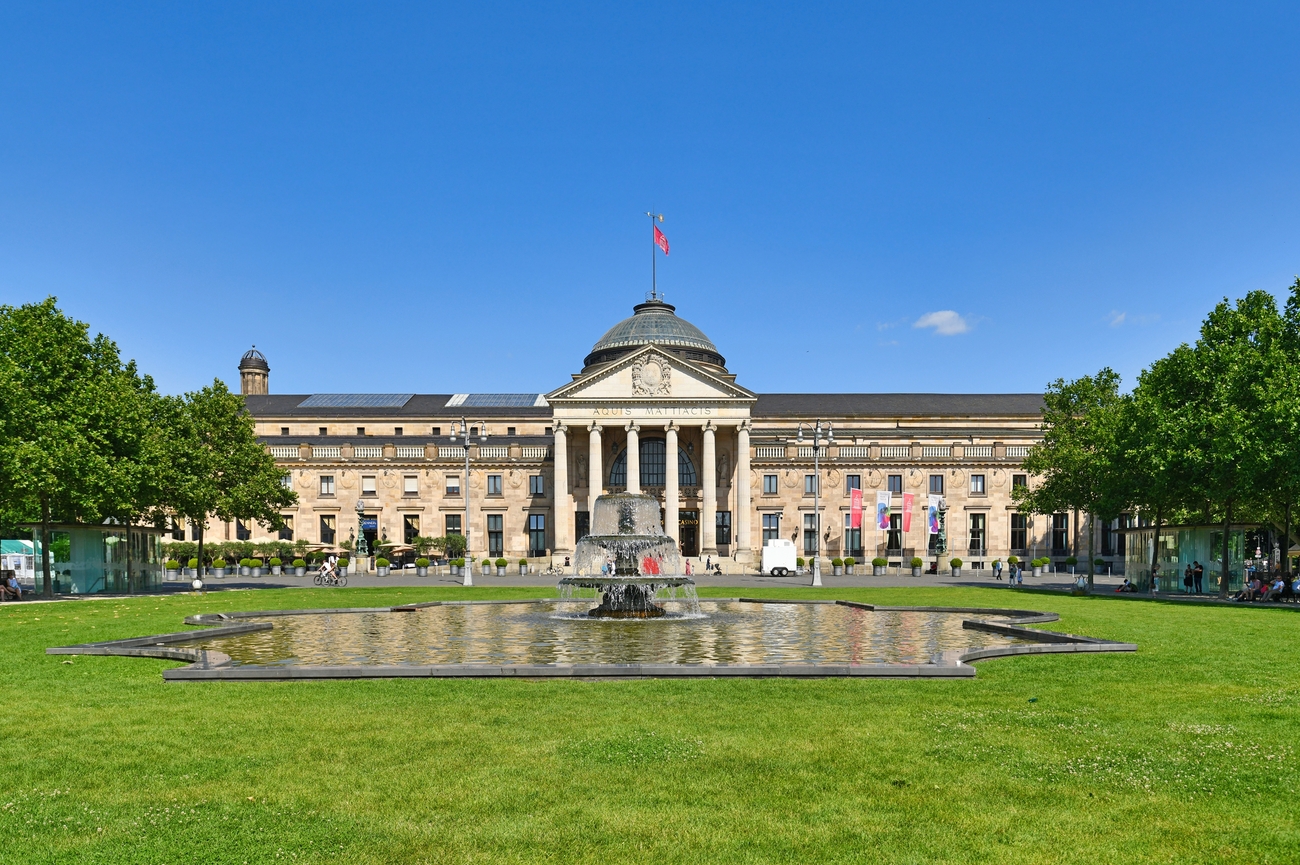
- Wiesbaden: There is a reason Wiesbaden feels more polished than many cities near Frankfurt. It developed as a spa destination for aristocrats, wealthy travelers and cultural figures, and that legacy still shows in its wide boulevards, historic villas and elegant public spaces. The trip from Frankfurt usually takes about 35 to 40 minutes, making it one of the easiest upscale escapes from the city. The architectural highlight of this city is the Kurhaus, sitting beside the landscaped Kurpark and giving the city much of its grand spa-town identity. Wilhelmstraße is another key stop, known for refined shops, historic façades and a more relaxed luxury atmosphere. You can also book wellness treatments, as Wiesbaden remains one of Germany’s best-known historic spa cities.
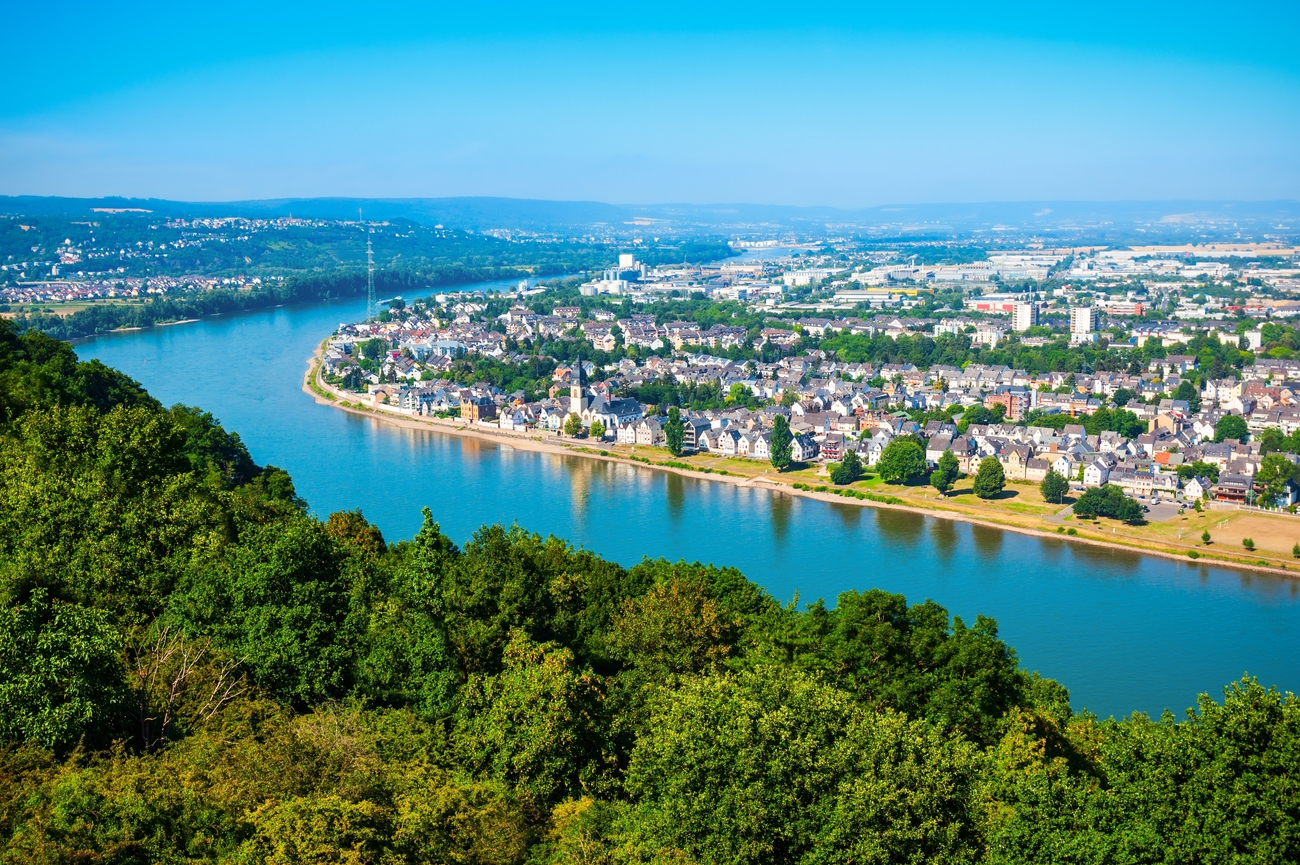
- Koblenz: Koblenz is best approached as a river-city day trip, not just a historic stop. The city sits where the Rhine and Moselle rivers meet, and that geography defines almost everything about the visit. From Frankfurt, the journey usually takes around 1 hour and 20 minutes by train. This city is known for the Deutsches Eck, the dramatic point where the two rivers meet beneath the equestrian statue of Emperor Wilhelm I. From there, the cable car to Ehrenbreitstein Fortress gives you one of the best views in the region. Koblenz also sits within the UNESCO-listed Upper Middle Rhine Valley, so it works especially well if you want to combine city sightseeing with river scenery.
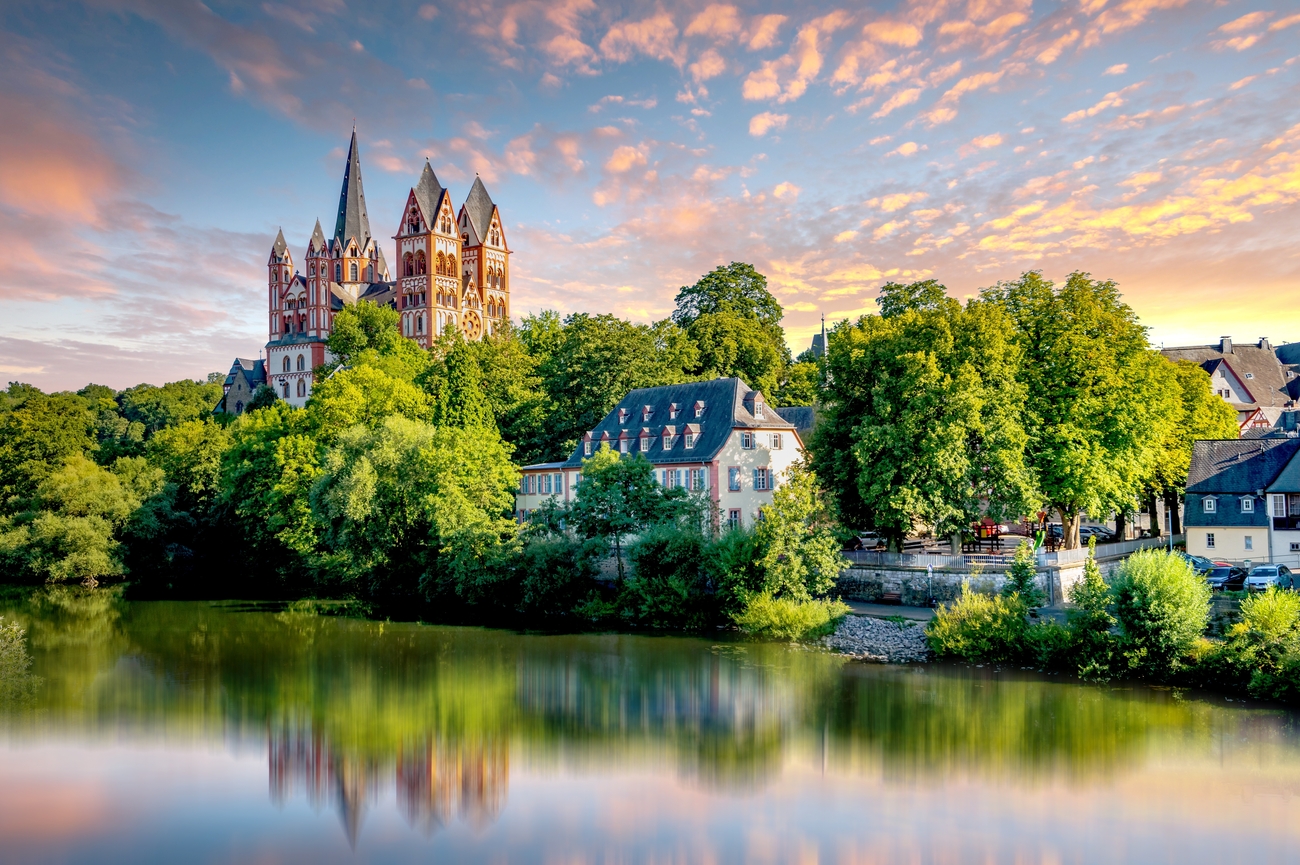
- Limburg: Limburg is the day trip for travelers who want medieval Germany without the heavy crowds. Around one hour from Frankfurt, the city is compact and easy to explore on foot. The standout landmark is Limburg Cathedral, instantly recognizable for its seven towers rising above the Lahn River. You will also find yourself in awe of the Old Town filled with half-timbered houses, narrow lanes and small squares.
Nearby Experiences from Frankfurt
The advantage of Frankfurt's location is that you can leave a boardroom in the morning and be on a ski slope, golf fairway or scenic river cruise not long after. Whether you're looking for a premium golf experience, winter sports, luxury wellness or outdoor adventure, these destinations provide excellent options for a day beyond the city.
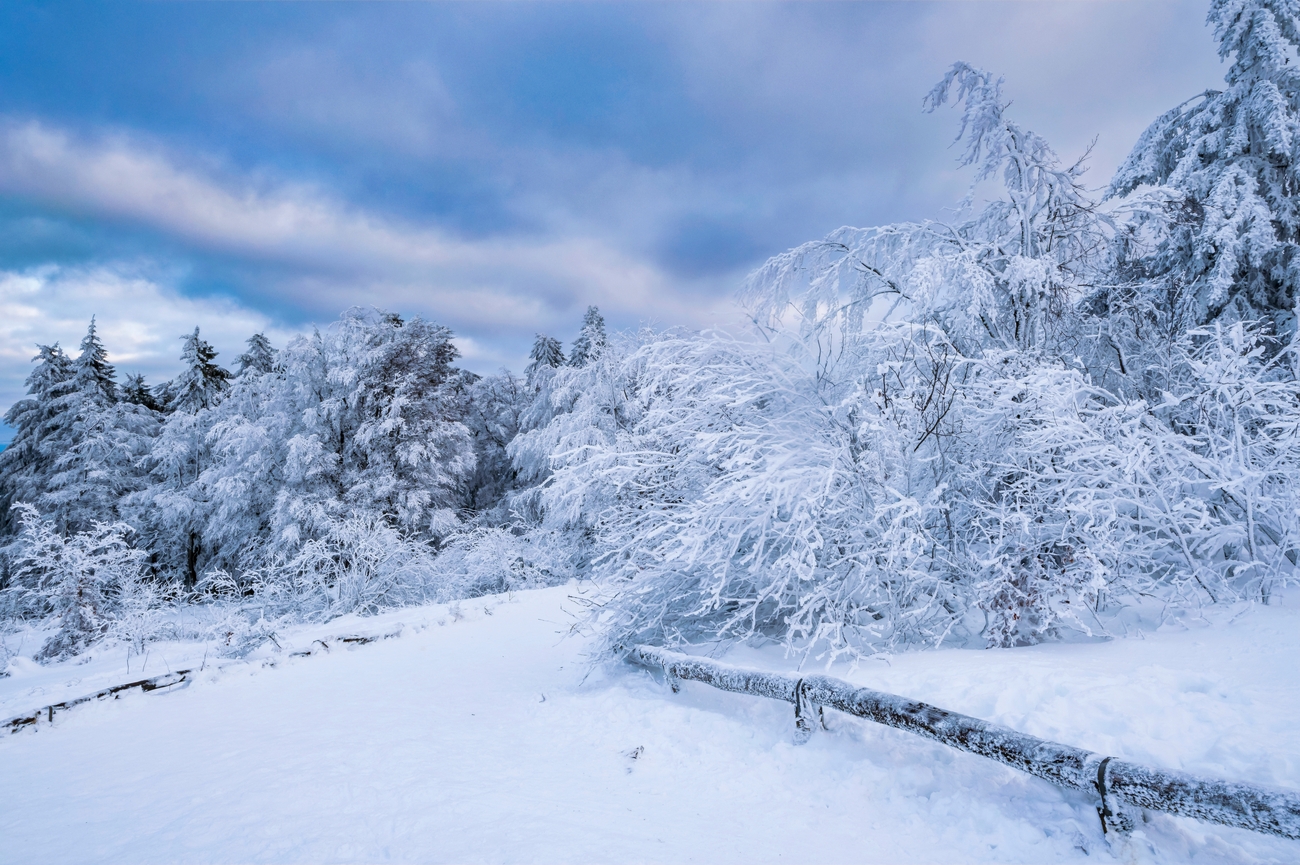
- Feldberg: If you’re visiting Frankfurt in winter and want a nearby snow escape, Feldberg in the Taunus Mountains is one of the closest options. It is better described as a winter outing for sledding, walking and occasional snow activities rather than a guaranteed ski destination. Outside winter, Feldberg is popular for hiking, cycling and wide views over the surrounding region.
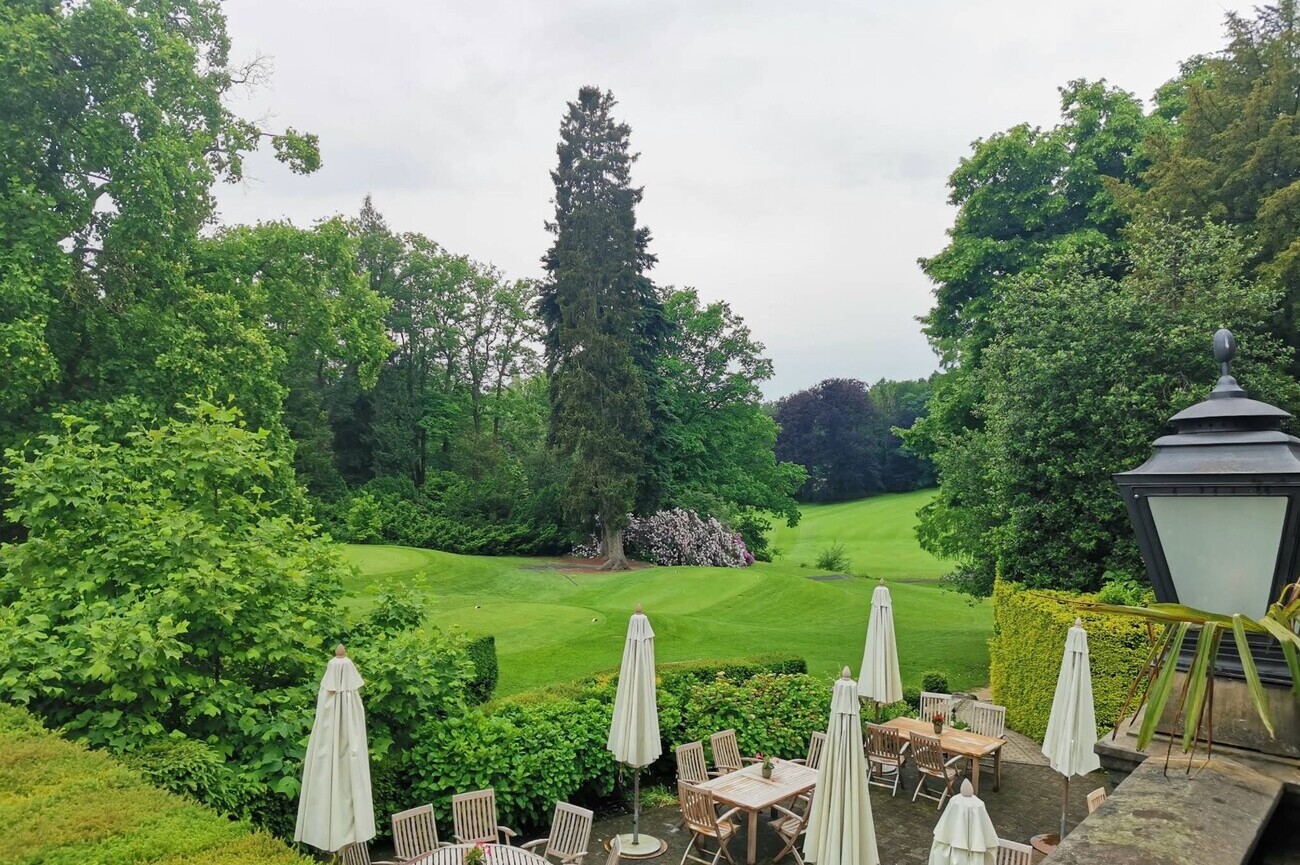
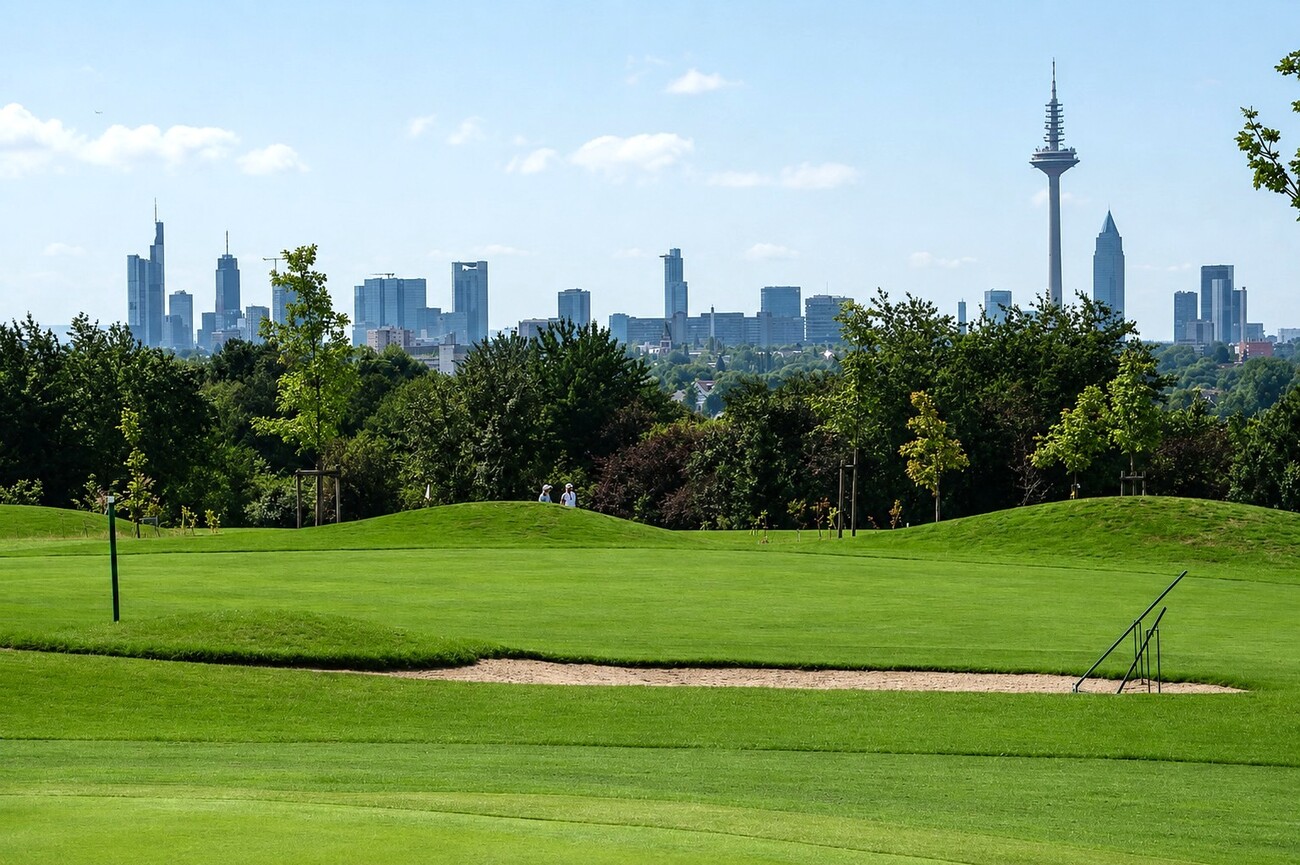
- Golf- und Land-Club Kronberg e.V.: Set in the affluent Taunus region approximately 30 minutes from Frankfurt, Golf- und Land-Club Kronberg combines championship-level golf with exceptional scenery. The course sits near Kronberg's historic districts and offers views toward the surrounding hills, creating a much more rural atmosphere than you might expect so close to Germany's financial capital. This golf course is one of Germany’s top golfing destinations and here you can experience private golf sessions and premium dining experiences.
- Rheingau: Within an hour of Frankfurt lies one of Germany's most celebrated wine-producing regions. The Rheingau is famous for its Riesling vineyards, riverside villages and historic wine estates. Towns such as Rüdesheim, Eltville and Oestrich-Winkel serve as excellent bases for exploring the area. If your idea of a perfect day involves scenic landscapes, exceptional wine and a slower pace, the Rheingau consistently delivers.
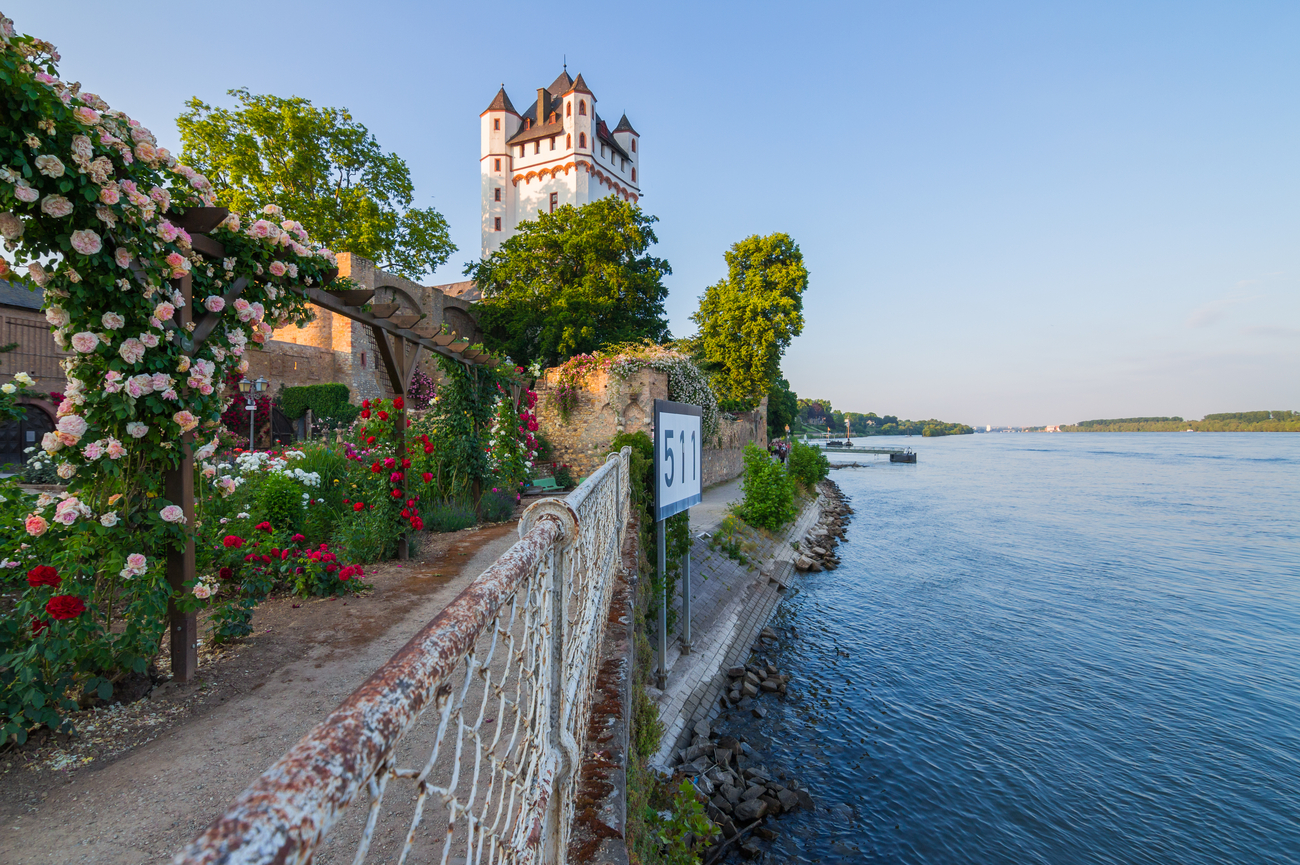
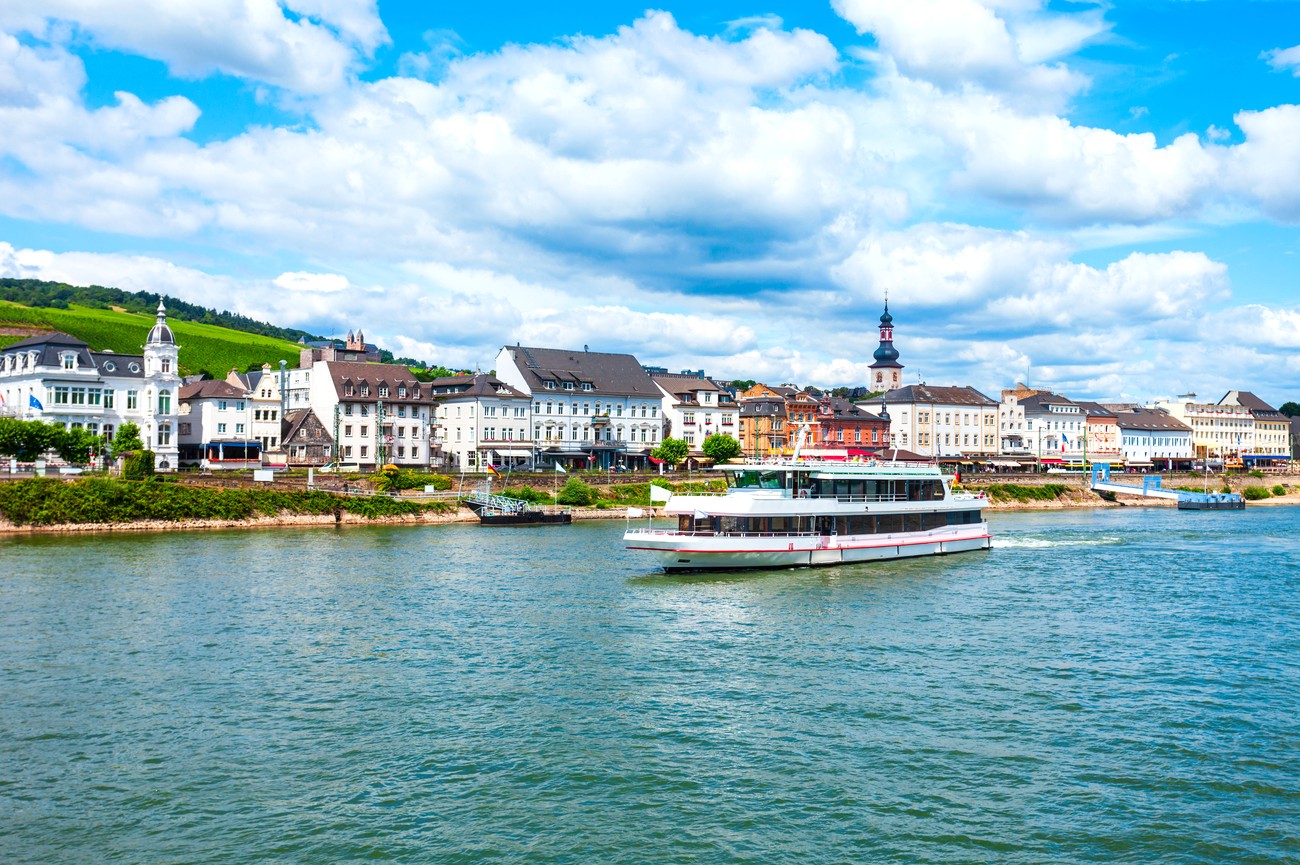
- Rhine River: Some of Germany’s most spectacular scenery unfolds from the water. Within approximately one hour from Frankfurt, you can travel to Rüdesheim or Bingen to board sightseeing cruises through the UNESCO-listed Upper Middle Rhine Valley. From there, the route passes medieval castles, vineyard-covered hillsides and historic riverside towns, making a Rhine cruise one of the most memorable day trips from Frankfurt.
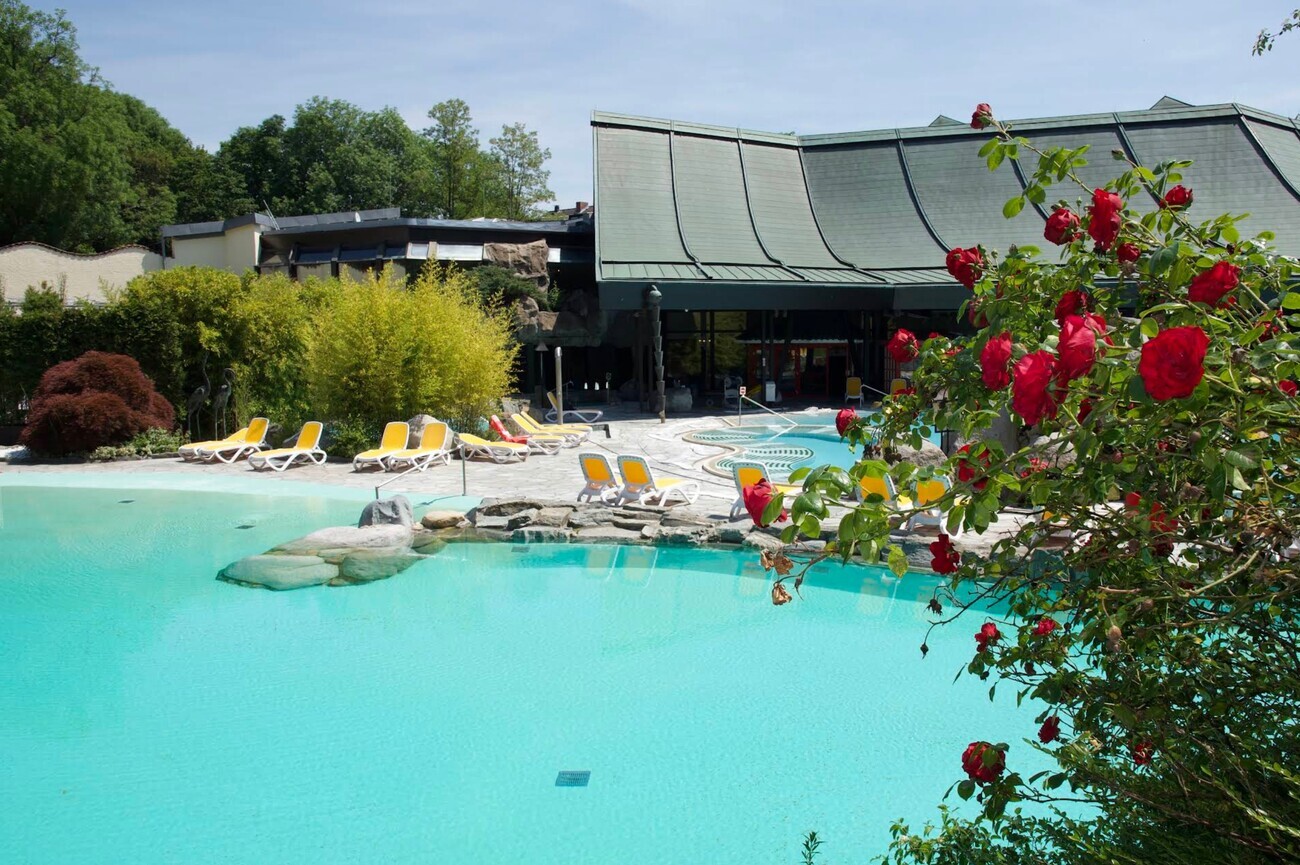
- Taunus Therme: After several days of sightseeing, a wellness-focused experience can be a welcome change of pace. Located around 25 minutes from Frankfurt, Taunus Therme is one of the region's premier spa and thermal bath facilities. The complex features thermal pools, saunas, relaxation zones and wellness treatments inspired by various international spa traditions. You can avail private spa packages and premium wellness experiences if you are looking for a more luxurious way to visit this place.
Golf Courses in Frankfurt
Frankfurt is not the first city people think of when discussing golf in Germany, but that is partly what makes it interesting. Unlike many European financial capitals, Frankfurt offers quality golf facilities surprisingly close to the city center. You can leave a morning meeting downtown and be standing on a fairway less than half an hour later. If you're planning a golf-focused visit, these are the most notable golf facilities located within Frankfurt itself.
- Frankfurter Golf Club e.V.: When discussing golf in Frankfurt, this is the course that usually leads the conversation. Founded in 1913, Frankfurter Golf Club is one of Germany's oldest golf clubs and remains one of the country's most respected courses. The 18-hole parkland layout sits within Frankfurt City Forest and was designed by renowned golf architect Harry S. Colt, whose work can be found at some of the world's most celebrated courses. If you want to experience German Open events, then this is a must-visit.
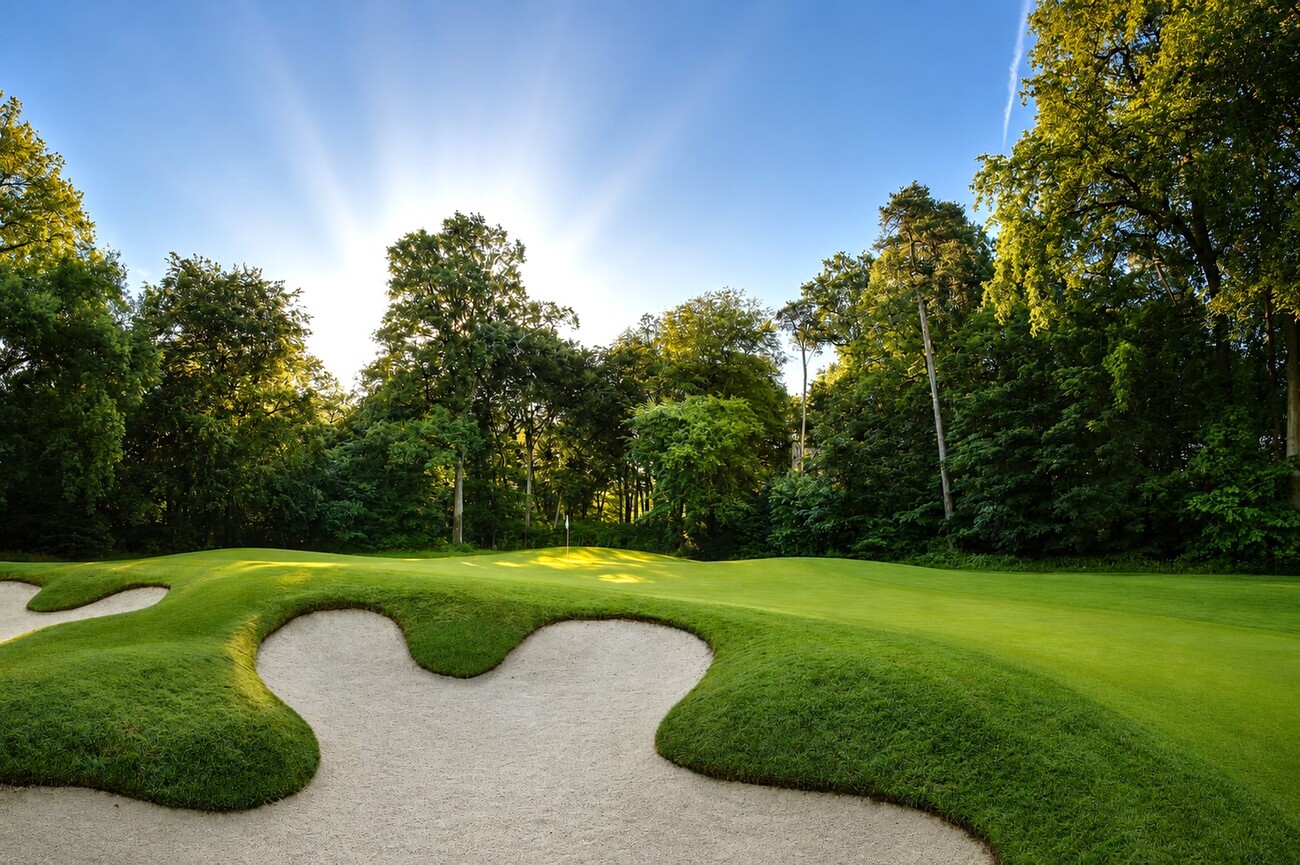
- Golf Range Frankfurt: If Frankfurter Golf Club represents Frankfurt's traditional golf scene, this venue represents its more accessible side. Located on the northern edge of the city, Golf Range Frankfurt combines a public-friendly approach with modern facilities, making it popular among beginners. The facility includes a 9-hole course, a large driving range, putting greens, pitching areas and practice bunkers. If you want a relaxed round or simply wish to keep your swing sharp during a business trip, this is arguably the most practical golf facility in Frankfurt.
Michelin-Starred Restaurants in Frankfurt
Frankfurt is not usually the first city people think of when planning a fine dining trip, but that makes its restaurant scene more interesting once you start exploring it. The city offers a mix of styles that reflects both its international character and its strong culinary traditions. Within a relatively small area, you can find everything from precise French cooking in a historic setting to a focused Japanese omakase experience. For anyone looking to experience Frankfurt through its food, these restaurants provide a clear starting point.
- Lafleur: Set within the elegant Palmenhaus beside Palmengarten, Lafleur holds two Michelin stars and is widely considered one of Frankfurt's premier fine dining destinations. Under chef Andreas Krolik, the restaurant has built a reputation for highly sophisticated tasting menus. Signature creations have included braised Wagyu short ribs served with truffle sauce, autumn truffles, corn purée and carefully balanced accompaniments that showcase the kitchen's attention to detail. In the evening, guests can choose between the luxurious "Grands Produits" tasting menu and the acclaimed "Ethical Vegan Cuisine" menu, which highlights Krolik's passion for plant-based gastronomy. If you're looking for the city's flagship Michelin experience, Lafleur is often where the conversation starts.
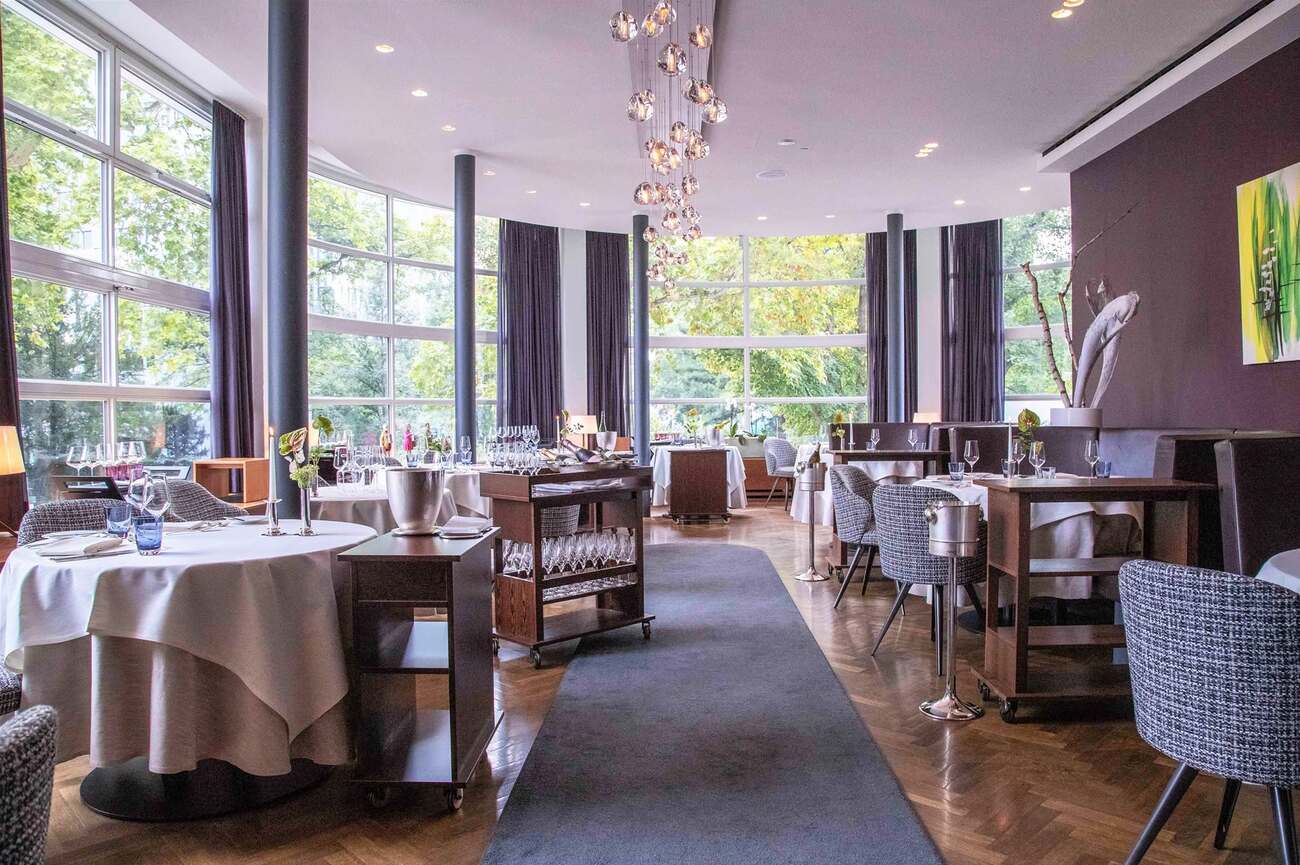
- Masa Japanese Cuisine: Masa Japanese Cuisine holds one Michelin star and centers around chef Masaru Oae's omakase menu, a carefully curated progression of dishes that showcases premium Japanese ingredients and meticulous craftsmanship. Sushi plays a major role, but the experience extends beyond raw fish. You may encounter beautifully prepared Toriyama Wagyu sirloin, seasonal seafood and dishes that blend traditional Japanese techniques with subtle modern and European influences. Presentation is also a major part of the experience, with several courses arriving as carefully composed works of art. You wouldn’t want to miss out on the restaurant's extensive sake collection that adds another dimension to the experience.
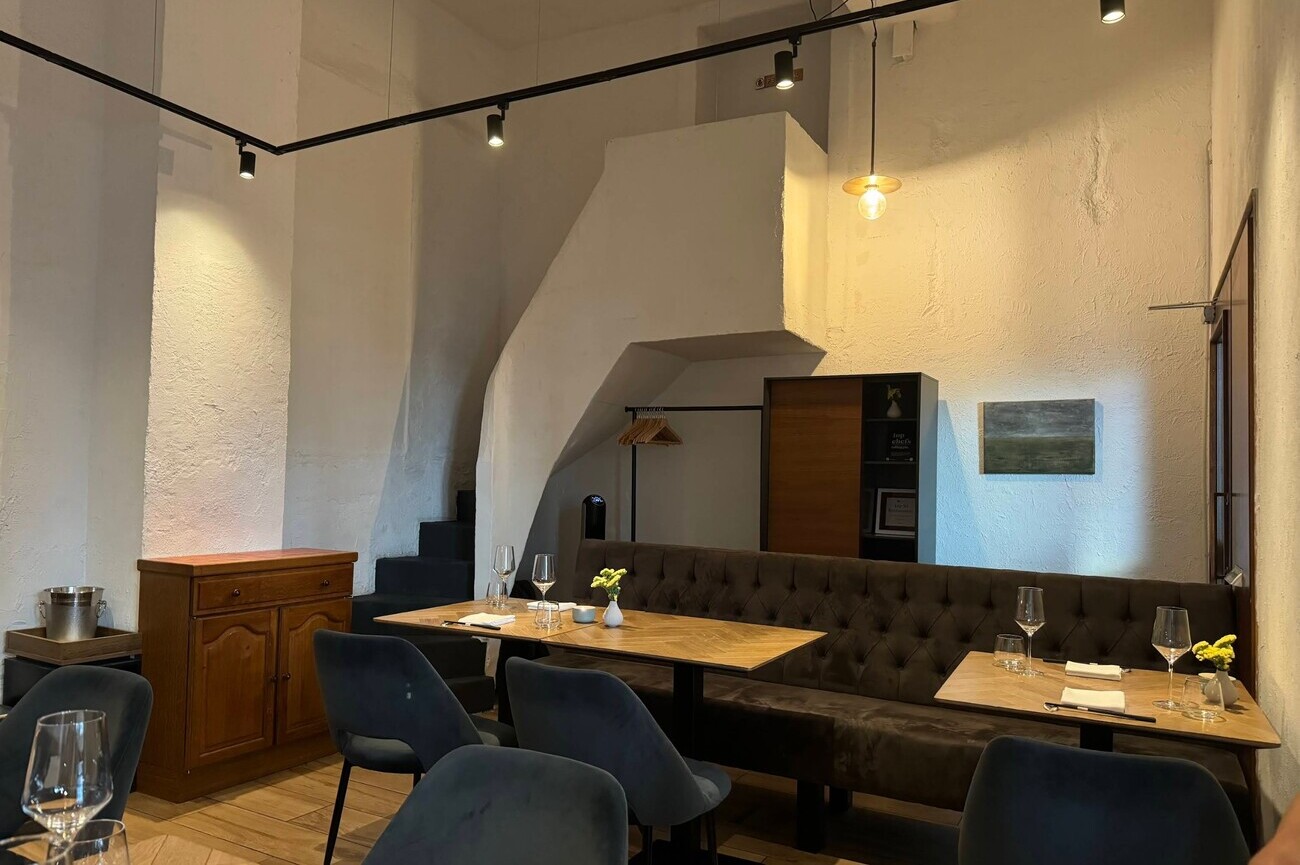
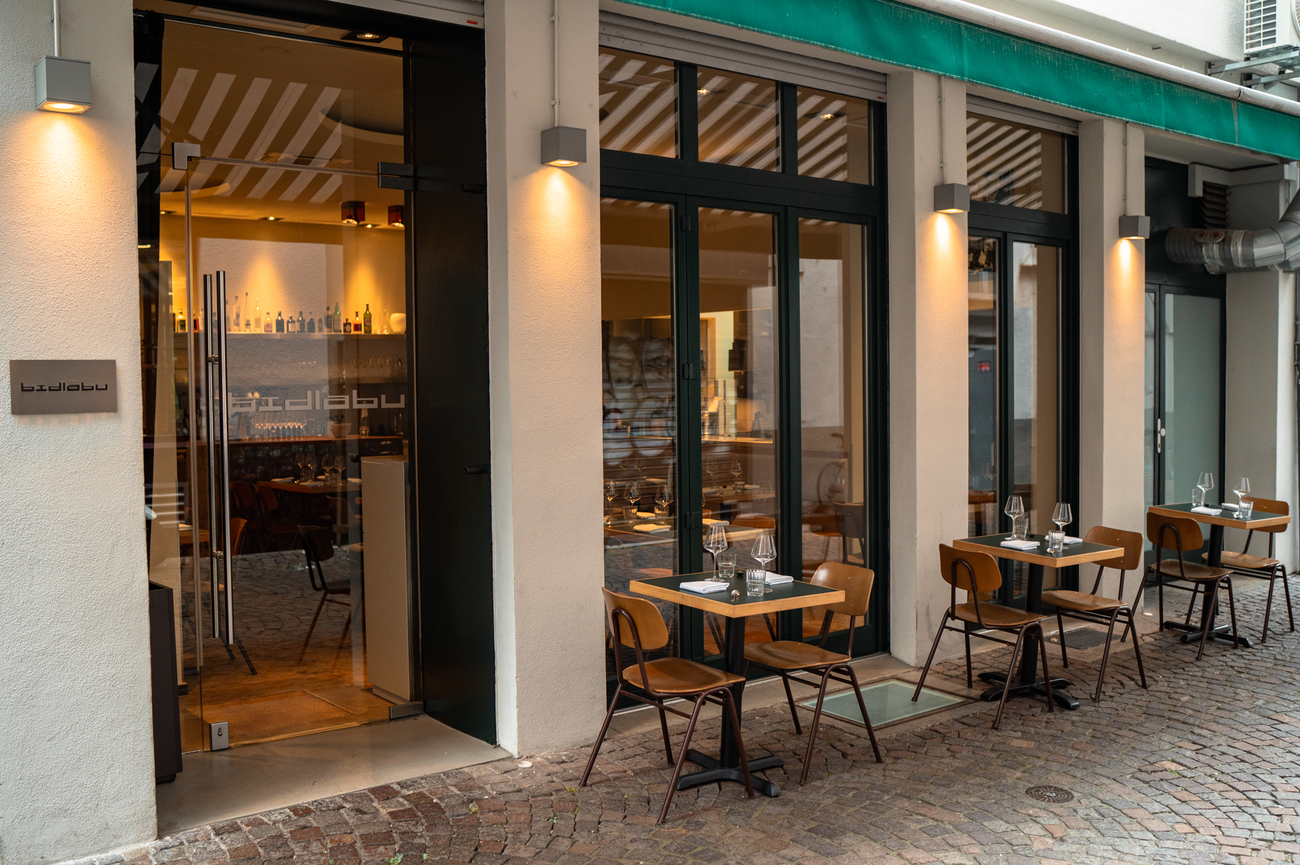
- Bidlabu: Tucked away in the city center, Bidlabu holds one Michelin star and has built a loyal following through its approachable atmosphere and exceptionally well-executed food. The restaurant feels more like a neighborhood favorite than a formal fine dining destination. Chefs André Rickert and Janina Allgaier focus on dishes that are grounded and accessible while still demonstrating the level of precision expected from a Michelin-starred kitchen. And if you are looking for a Michelin restaurant that caters to vegetarians, this is the place to go.
- Erno’s Bistro: Erno's Bistro has been a Frankfurt institution for years and it continues to hold one Michelin star thanks to its consistently excellent French cuisine. Led by chef Valéry Mathis, the restaurant embraces classic French culinary traditions while incorporating seasonal ingredients and modern refinement. And if you are a wine lover, you will enjoy this place. The restaurant places particular emphasis on French labels.
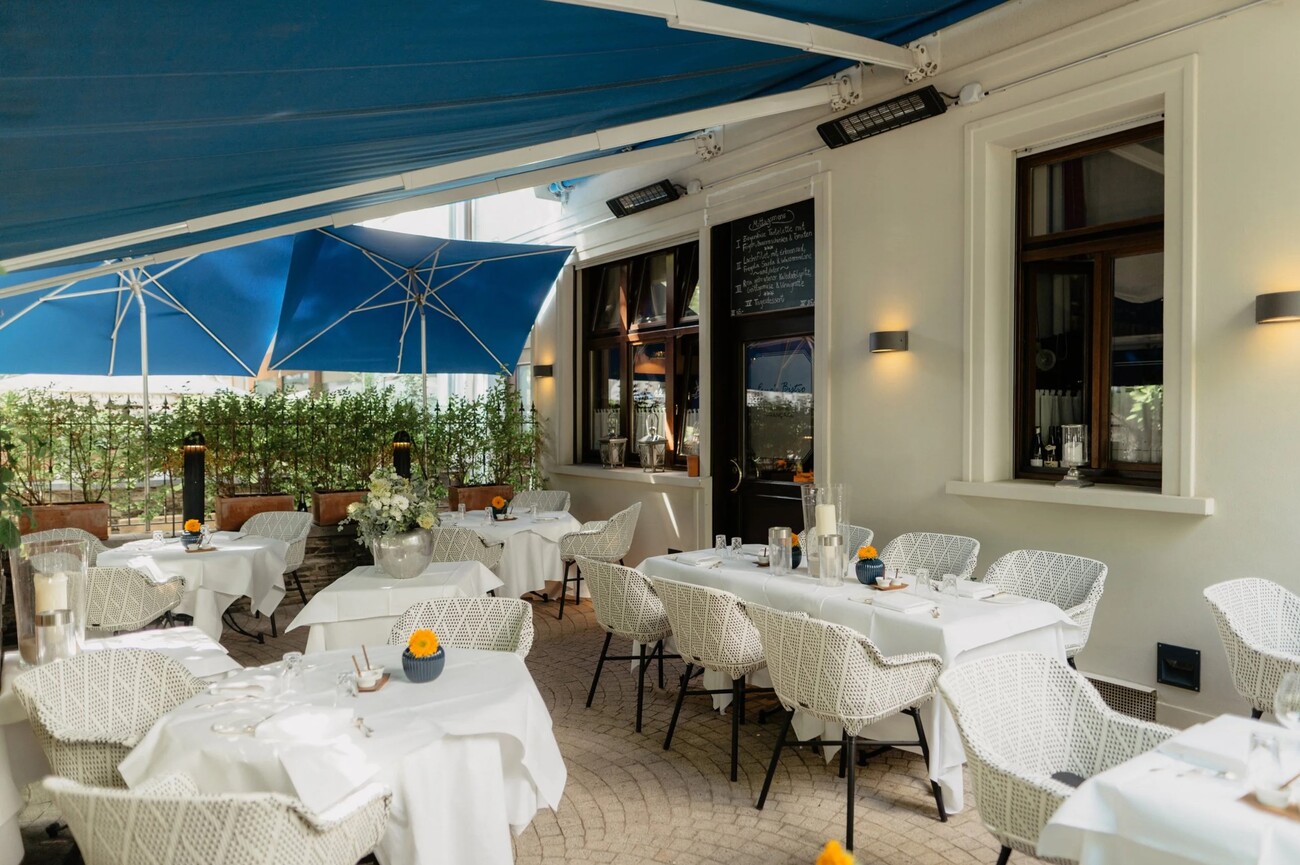
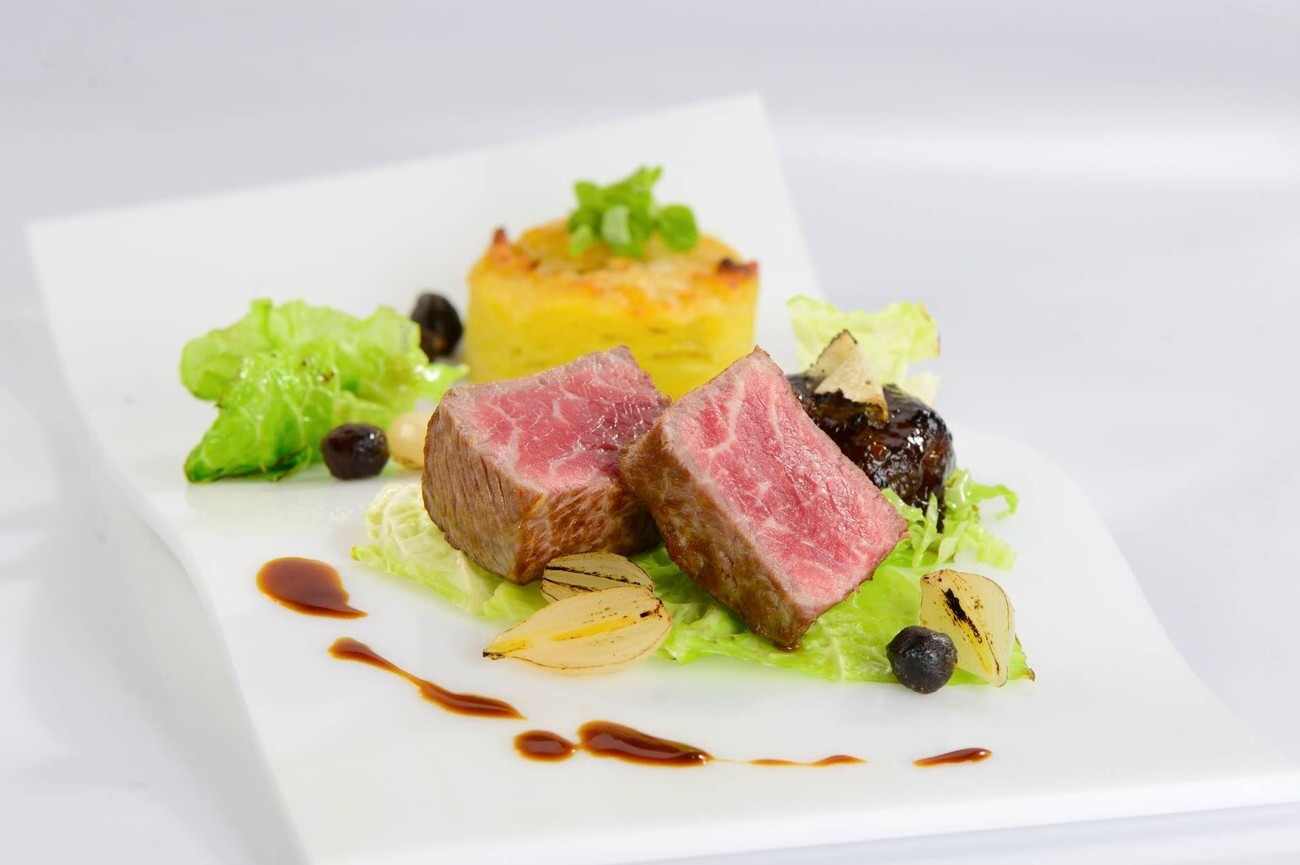
- Restaurant Villa Merton: Located inside a historic villa in Frankfurt's diplomatic quarter, Restaurant Villa Merton holds one Michelin star and delivers one of the city's most elegant dining experiences. Chef Philippe Giar focuses on creative cuisine rooted in regional influences. You will enjoy this restaurant if you enjoy immersive dining experiences. The Chef's Table, available Tuesday through Saturday, provides a closer look at the culinary process, while the restaurant's popular Gourmet Special evenings add another dimension to the visit.
Where to Eat in Frankfurt
Frankfurt's food scene goes far beyond Michelin stars. Some of the city's most memorable meals happen in places that feel more relaxed, more local and sometimes even more difficult to get a table at. You could spend several evenings dining across the city and never feel like you're repeating the same experience. That's part of Frankfurt's appeal. It doesn't force a single culinary identity. Instead, it gives you options.
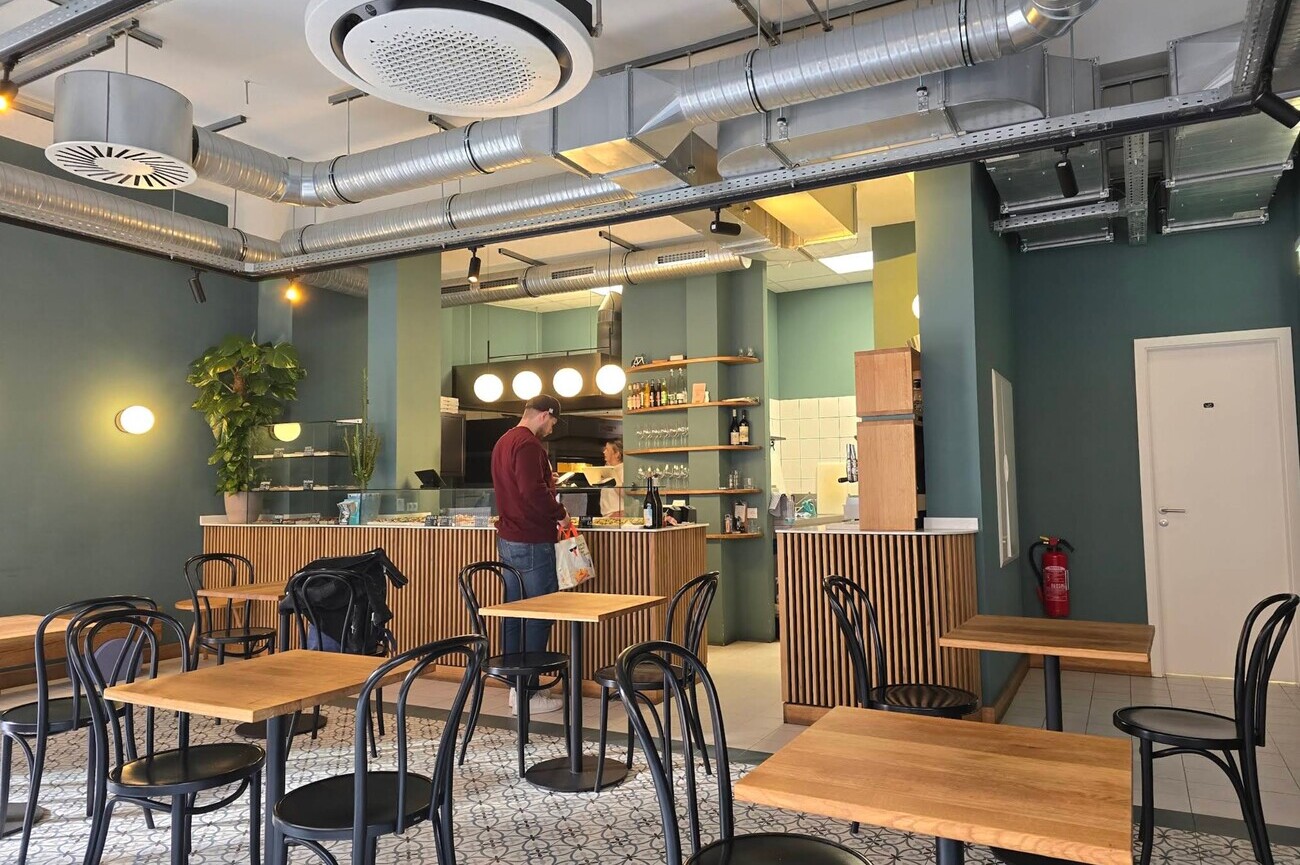
- YALDY sits in Frankfurt's lively Bahnhofsviertel district, just steps from the legendary Moseleck pub, yet the atmosphere could not be more different. The restaurant embraces a modern sharing concept, encouraging diners to sample multiple dishes rather than commit to a traditional starter-and-main format. The menu moves comfortably between comfort food and refined cooking. One moment you're eating quail with flatbread using your hands, the next you're diving into crudo paired with blood orange and horseradish.
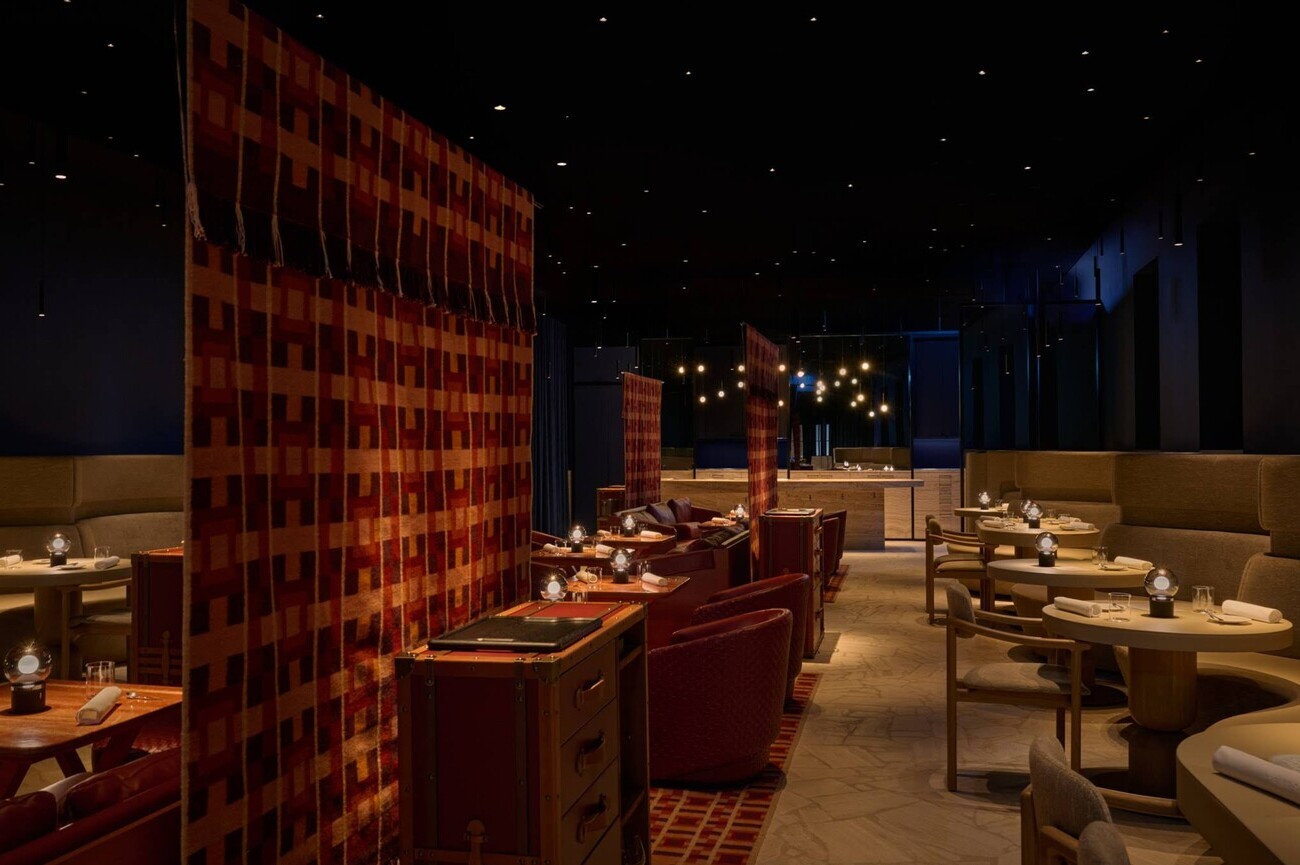
- The Dune: Inside Frankfurt's luxury hotel The Florentin, The Dune approaches fine dining with confidence rather than excess. The restaurant's interior feels polished and cosmopolitan. Dishes such as sea bream with teardrop peas and vin jaune or squab paired with salsify and red cabbage kosho jus demonstrate technical skill without unnecessary complexity. You can book one of the longer tasting menus and allow the sommelier team to guide the beverage pairings.
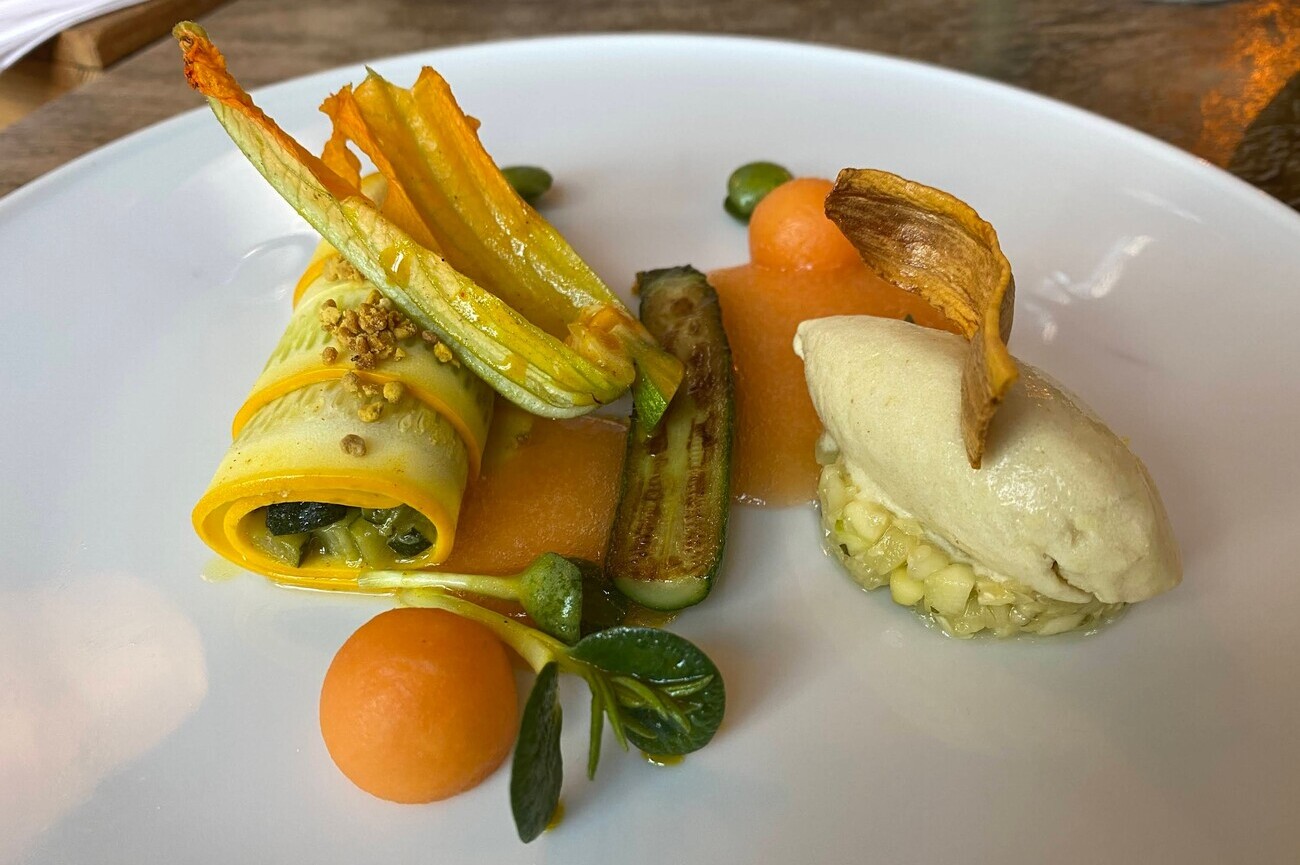
- Bornheimer Ratskeller: Some restaurants impress through exclusivity. Bornheimer Ratskeller takes a different route. Here, the focus is regional cuisine, seasonal ingredients and a commitment to using products as completely as possible. Part of the charm is that the menu changes daily and is only revealed when service begins. You will arrive knowing the philosophy but not necessarily the exact dishes. Many favorites return regularly, including Odenwälder Handkäse and house-made pâtés, but the kitchen remains guided by availability and seasonality.
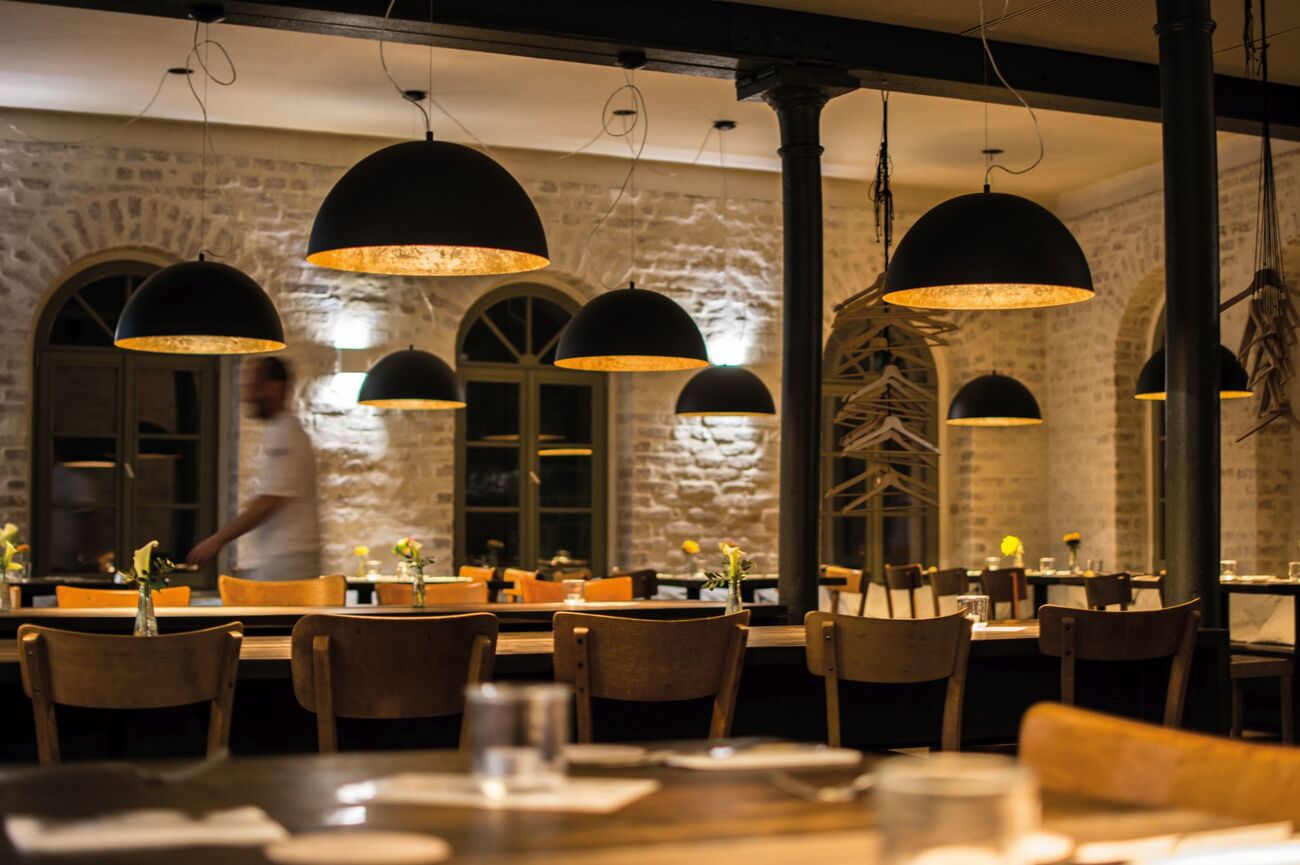
- The Sakai: The Sakai proves that great sushi does not require a flashy setting. Hidden below street level, the restaurant embraces a minimalist Japanese aesthetic. Chef Hiroshi Sakai leads an omakase-focused experience built around precision, restraint and exceptional ingredients. Sitting at the counter gives you a front-row seat to the preparation process, where every cut and movement appears deliberate.
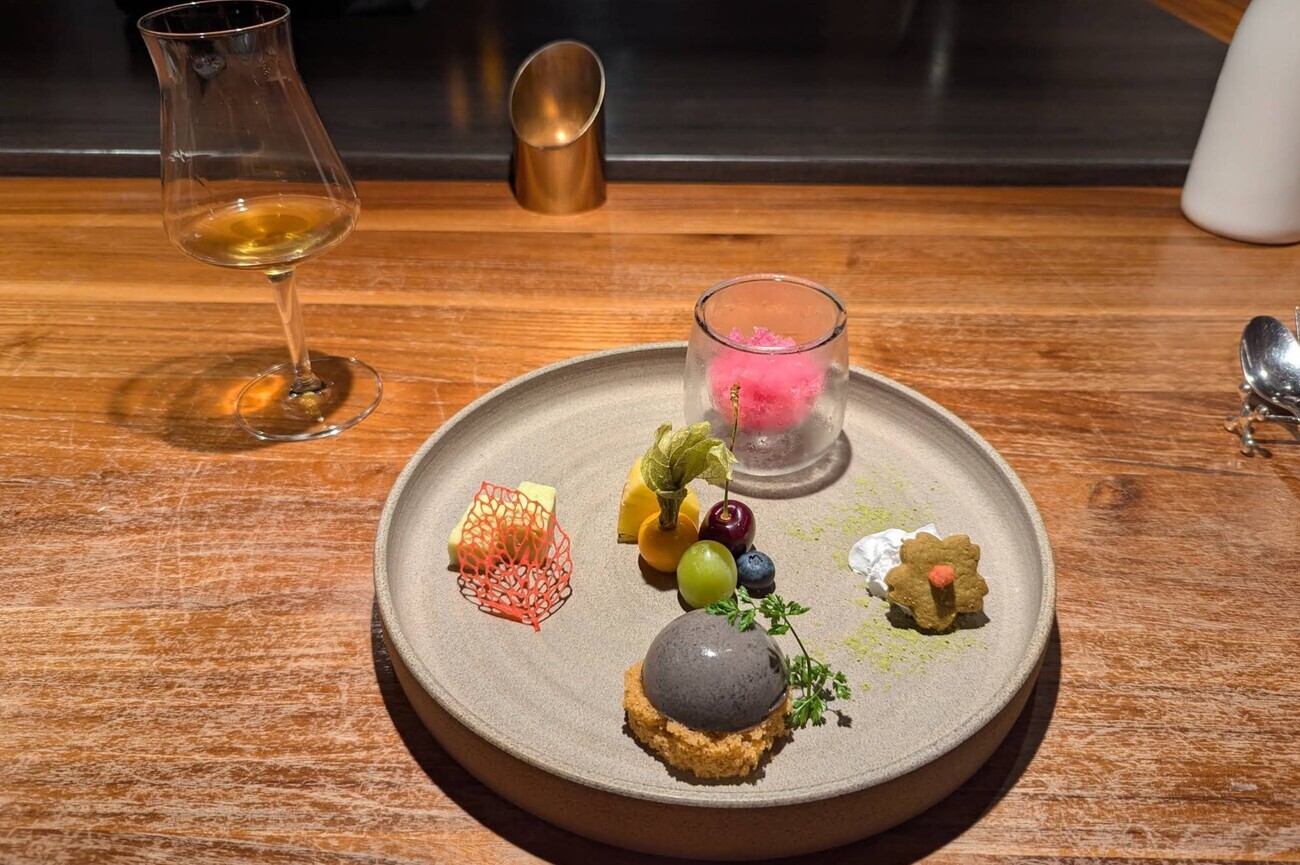
- Carte Blanche: At Carte Blanche, surrendering control is part of the concept. Rather than selecting dishes from a menu, guests are presented with a surprise tasting experience built around seasonal ingredients and the kitchen's creativity. The food leans modern and ingredient-focused. Depending on the season, you may encounter charcoal-grilled sturgeon, mackerel ceviche or inventive vegetable-driven courses. You will also enjoy the beautiful historic building it occupies.
Where to Drink in Frankfurt
Frankfurt's nightlife is often underestimated. Many visitors are surprised to discover a city with a surprisingly diverse after-dark scene. Within a few blocks, you can move from a historic jazz cellar to a cocktail bar filled with vintage arcade machines, then finish the night at a venue that has been part of Frankfurt's nightlife culture for decades. The city offers plenty of options that feel authentic rather than manufactured for tourists.
- Jazzkeller Frankfurt: Few venues carry as much history as Jazzkeller. Hidden beneath street level, this legendary club has earned a reputation as one of Europe's most historic jazz venues and remains one of Frankfurt's most iconic nightlife destinations. Live jazz remains the main attraction, and the venue regularly hosts talented musicians from Germany and abroad. If you're lucky, you may catch one of the club's famous jam sessions, where visiting artists and local musicians share the stage. However, it is important to note that this bar is focused on drinks rather than dining, offering cocktails, beer and wine alongside a small selection of snacks.
- Sachsenhausen Apple Wine Taverns: Sachsenhausen is one of the best places in Frankfurt to experience the city after work, especially if you want something more local than a polished cocktail bar. The district is famous for its traditional apple wine taverns, where locals gather over Apfelwein, hearty regional food and long tables that make the atmosphere feel relaxed and social. This is where Frankfurt feels less corporate and more personal. Places such as Apfelwein Wagner, Atschel and Zum Gemalten Haus are among the classic addresses, serving dishes like green sauce, pork knuckle, schnitzel and Handkäse alongside the city’s signature drink. If you want to understand Frankfurt beyond the skyline, an evening in Sachsenhausen is essential.
- Pik Dame: Pik Dame feels like stepping into a different era of Frankfurt nightlife. Located in Bahnhofsviertel, the venue has been part of the city's night culture for decades and continues to reinvent itself while preserving its distinctive character. Red velvet seating, small lamps and vintage decorative details create an atmosphere that feels nostalgic without becoming dated. The venue's relatively small size creates a strong connection between performers and the audience.
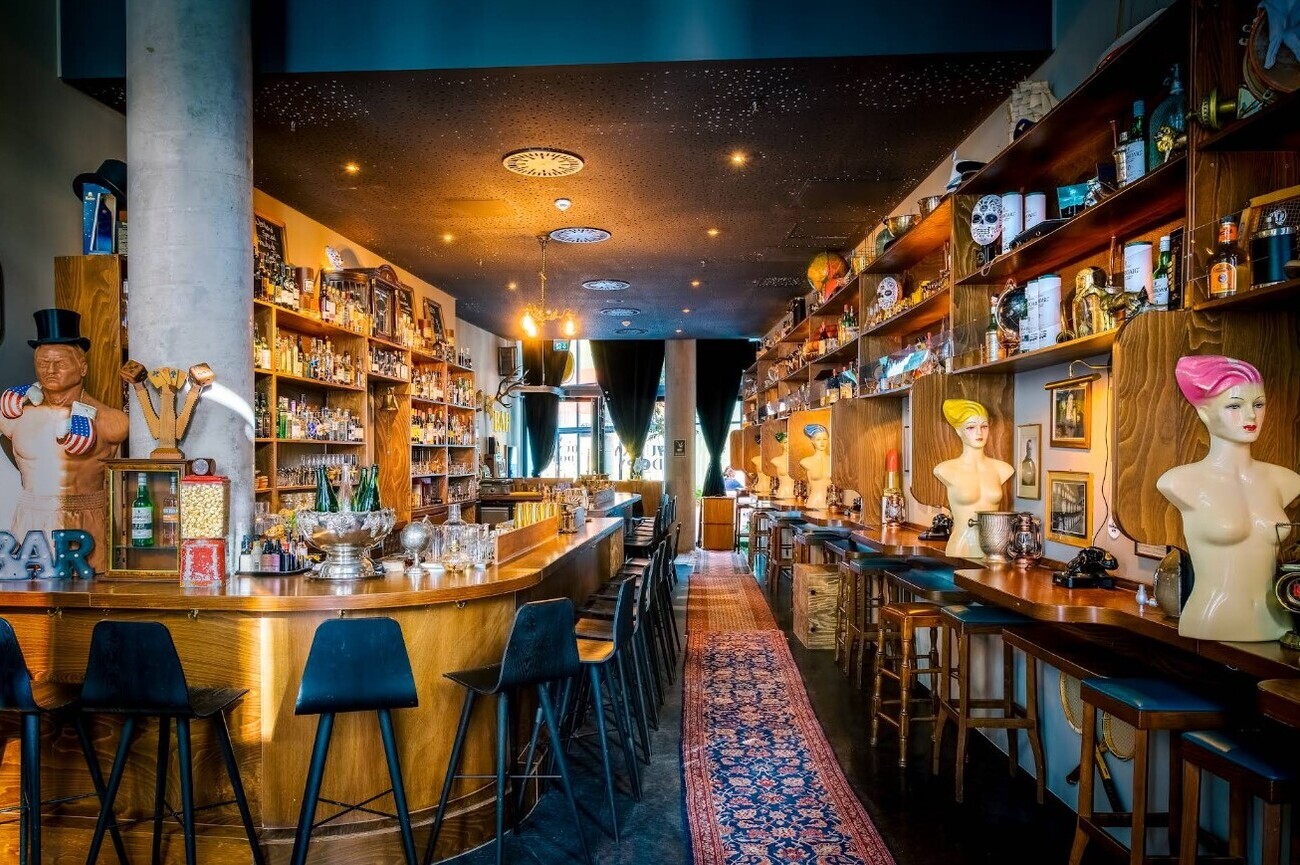
- Hunky Dory Bar: Hunky Dory is proof that Frankfurt's Bahnhofsviertel has evolved far beyond its old reputation. Founded by Armin Azadpour, formerly of the acclaimed Kinly Bar, the venue takes inspiration from David Bowie's iconic album of the same name while creating an identity entirely its own. Vintage arcade machines line the space and guests can order drinks directly to their booths using retro telephones.
- Trinkhalle: Trinkhalle represents a different side of Frankfurt's social scene. Part neighborhood kiosk, part casual gathering place, it has become a popular stop for locals looking for a quick drink, coffee or snack. You'll find a wide range of beverages, sweets, snacks and ice cream, all offered at approachable prices. This is perfect for travelers who want to experience a more local side of Frankfurt.
- Baile Bar: Conveniently located near Sachsenhausen's local train station, Baile Bar combines the comfort of a café with the atmosphere of a neighborhood bar. The concept is straightforward: good drinks, comfortable surroundings and a space where people can gather without feeling rushed. The drinks menu covers the essentials well, including cocktails, gin-based drinks, Moscow Mules and Aperol Spritzes. And if you are a craft beer enthusiast, you’ll appreciate the selection from BraufactuM, featuring options such as their Pale Ale and The Brale Brown Ale. Small snacks are also available.
Cafes in Frankfurt
The cafe scene here moves between vintage brunch spots, minimalist specialty coffee bars and creative places where Vietnamese flavors meet modern cafe culture. It is not just about grabbing caffeine before sightseeing. These cafés are good enough to become part of the itinerary.
- Le Petit Café: Le Petit Café brings a softer, vintage charm to Alt Sachsenhausen, one of Frankfurt's most historic districts. The menu leans fresh and comforting, with healthy brunch options, vegetarian dishes, smoothies, homemade cakes and colorful specialty drinks. The blue and pink lattes are the kind of order that will probably end up on your camera roll, while the Spanish cortado and matcha latte keep the menu grounded for serious coffee drinkers. This is a strong pick if you want a relaxed morning in Sachsenhausen before exploring the riverfront or museums nearby.
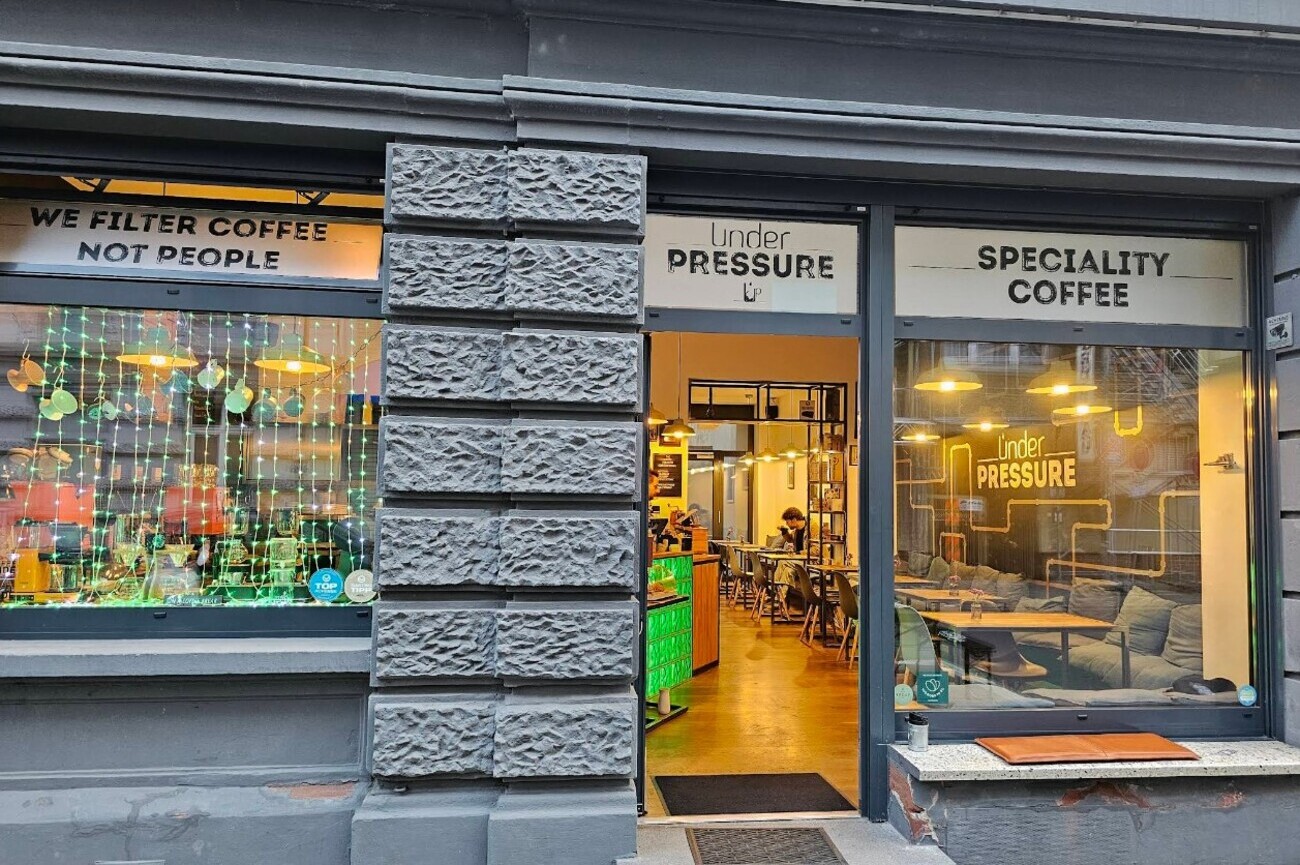
- Café Under Pressure: Café Under Pressure has a vibe that is casual but productive, with V60 pour-overs, flat whites, homemade cheesecake and enough power outlets to make laptop users feel seen. The move here is simple: order the caramel cheesecake with a flat white if you want comfort or go for the V60 if you are in the mood to slow down and actually taste the coffee.
- Drei Kaffeebar: For specialty coffee lovers, Drei Kaffeebar is one of Frankfurt's strongest stops. Located on Fahrgasse, the cafe has a clean, minimalist look with light concrete walls, black furniture and a design style that keeps the focus exactly where it should be: on the coffee. Owners Stephan and Romy Ebel source beans from roasteries across Europe, and the menu highlights careful brewing methods rather than gimmicks. You can go for hand-poured filter coffee, espresso-based drinks or pick up beans and brewing accessories to take home.
- Ca Phe, oi: Ca Phe, oi brings a Vietnamese-influenced café concept to Frankfurt, and it stands out because it does not feel like a copy-paste brunch place. The menu mixes specialty drinks with playful food options, including pancakes, egg dishes, fried chicken croffles and a banh mi-croissant hybrid that has become one of its most talked-about items. Vietnamese coffee is the obvious choice, but the coconut cloud iced matcha deserves attention if you want something refreshing and a little different.
Where to Stay in Frankfurt
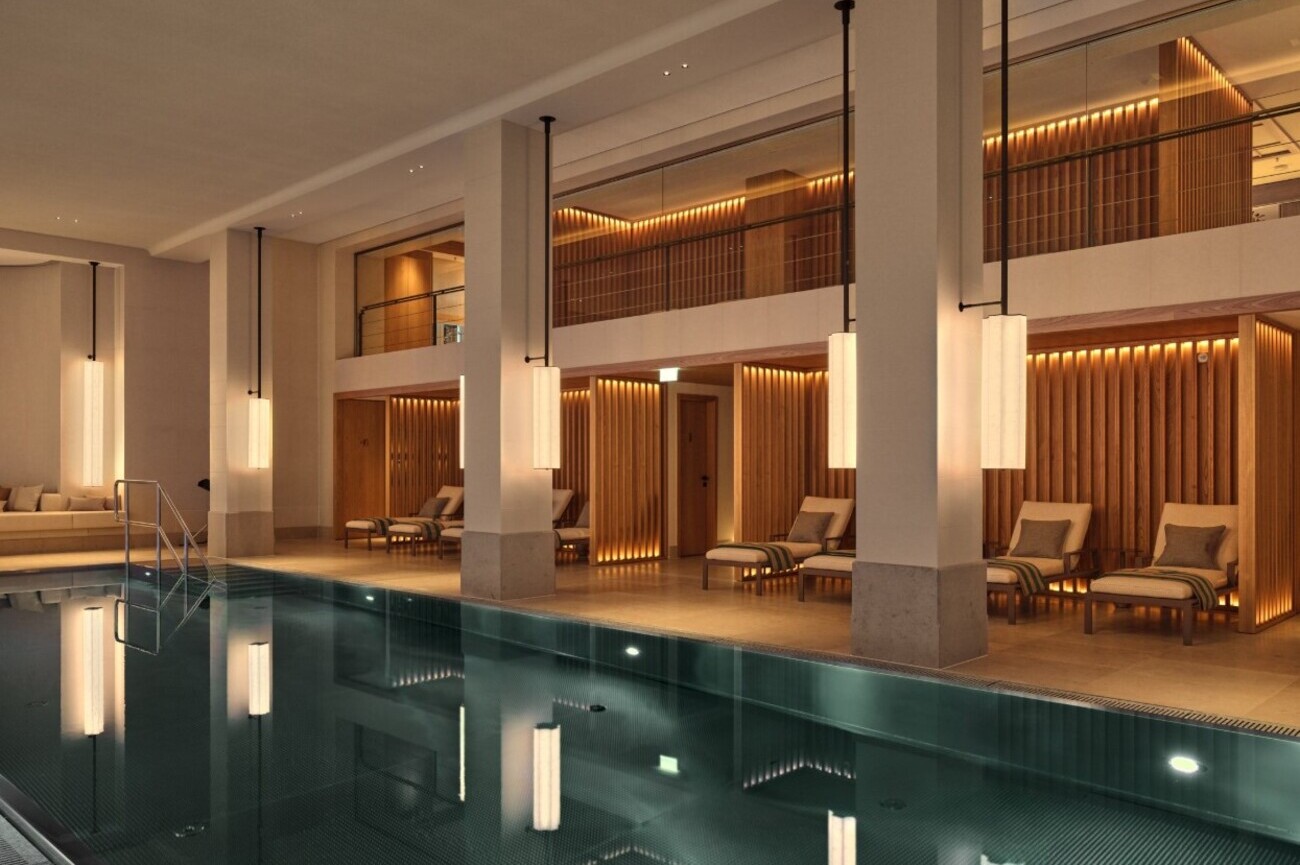
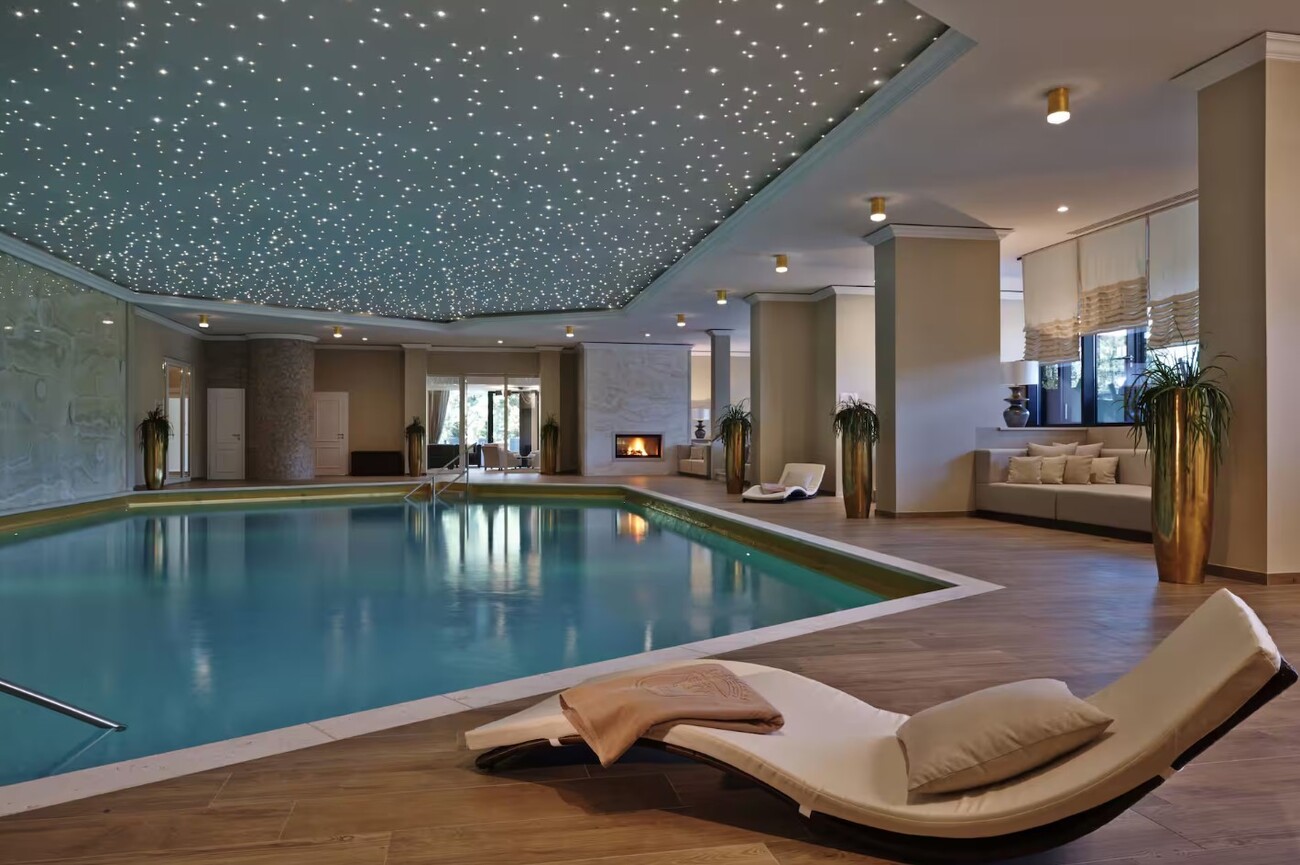
- The Florentin by Althoff Collection (5 Stars): The Florentin is one of Frankfurt's newer luxury hotels and occupies a property with a story. The hotel revives Villa Speyer, a grand 1901 mansion that later became the celebrated Villa Kennedy before closing in 2022. Rather than erase the building's history, the redesign preserves much of its character while introducing contemporary comforts that feel entirely current. The central courtyard creates a surprisingly secluded atmosphere, making it easy to forget that Frankfurt's skyline is only minutes away. The hotel itself offers multiple dining venues, an elegant bar, a cigar lounge and a comprehensive spa with an indoor pool.
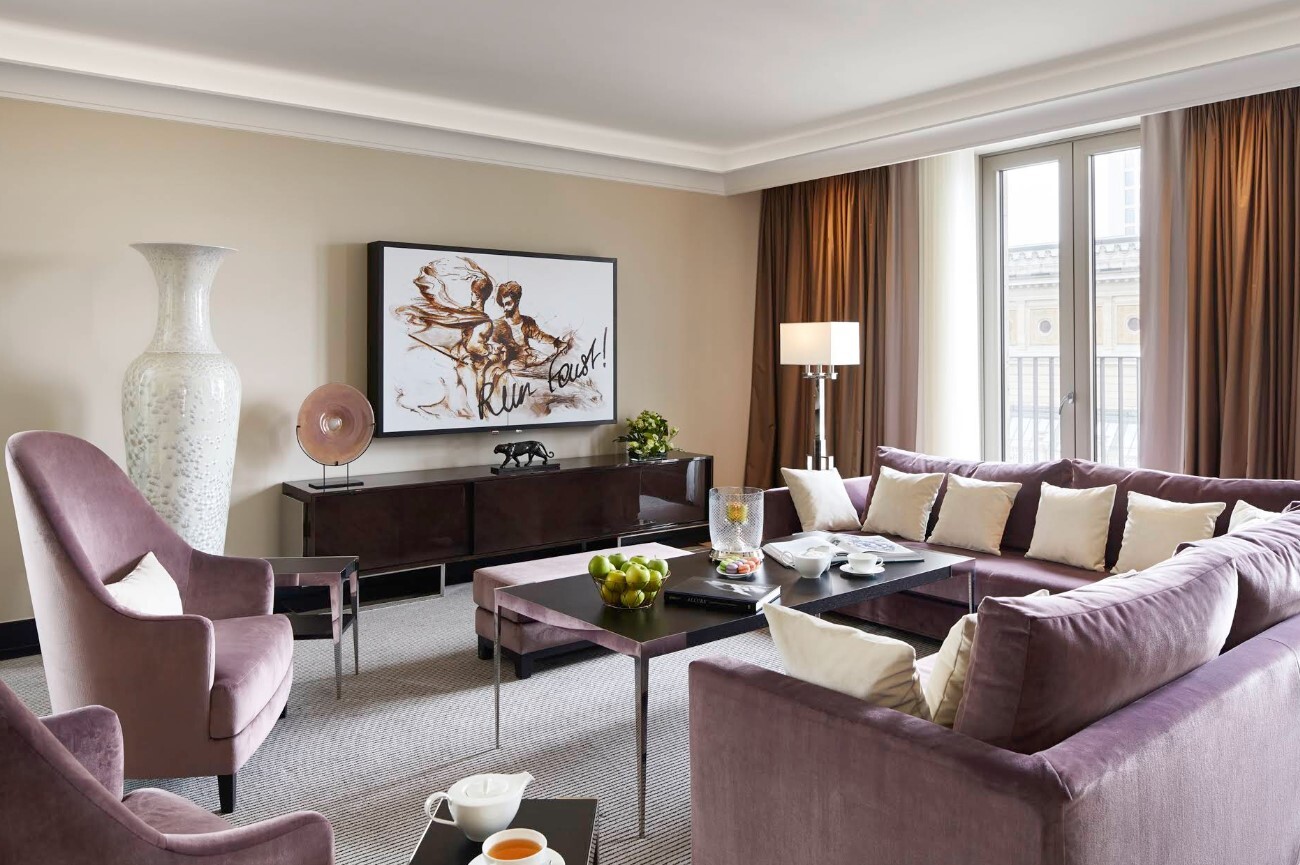
- Sofitel Frankfurt Opera (5 Stars): Location is a major part of the appeal at Sofitel Frankfurt Opera. Positioned directly on Opernplatz and facing the iconic Alte Oper, the hotel sits at the intersection of Frankfurt's cultural, retail and financial districts. You can walk to luxury boutiques on Goethestraße, major business addresses and historic landmarks without needing transportation. The hotel takes a distinctly French approach. Rooms feature subtle Parisian influences, Art Deco touches and sophisticated color palettes without becoming overly thematic. Modern amenities such as Illy espresso machines, Bose sound systems and Lanvin bath products reinforce the hotel's upscale positioning.
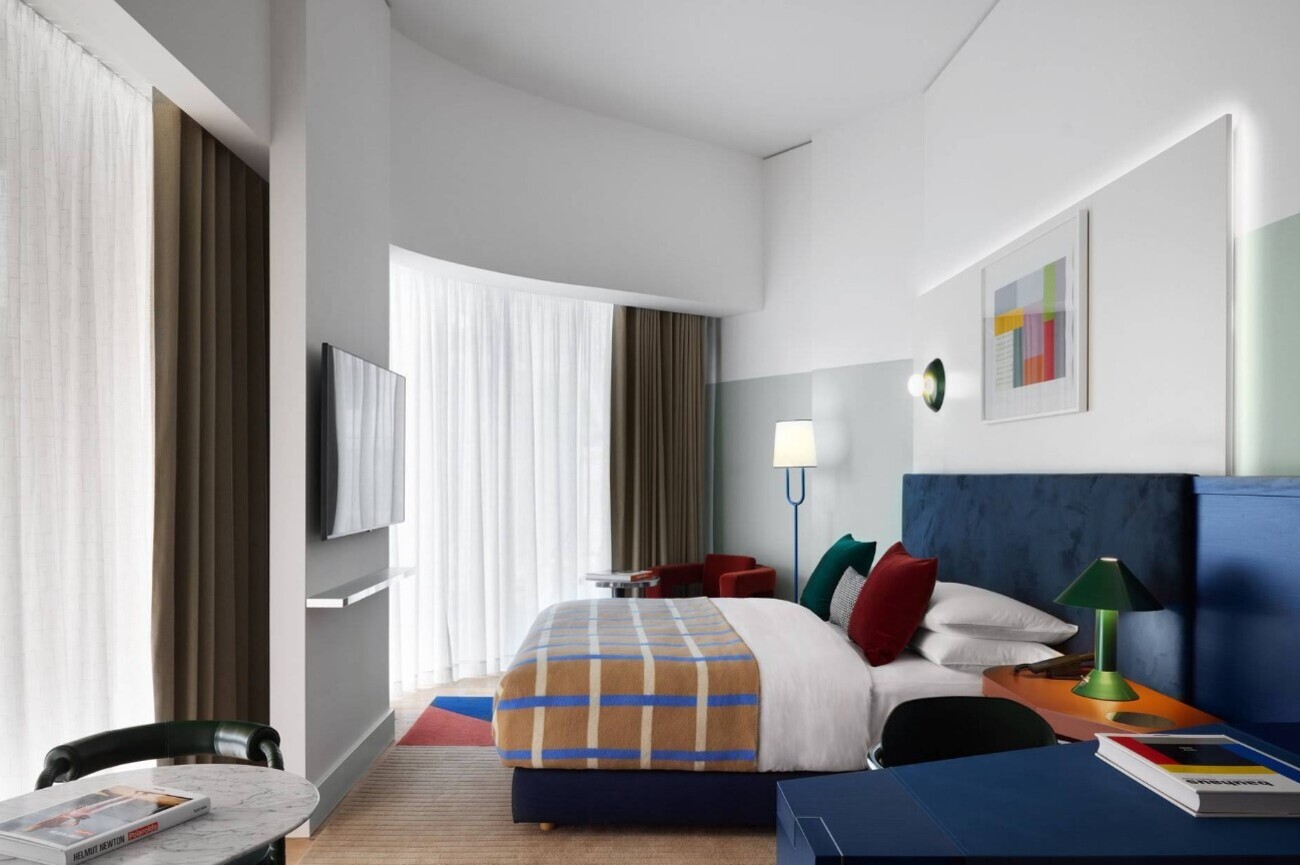
- Kimpton Main Frankfurt by IHG (5 Stars): Kimpton Main Frankfurt takes a more contemporary approach, transforming a former banking headquarters into one of the city's most design-forward accommodations. Bauhaus influences run throughout the property, balanced by the brand's signature use of color and a more relaxed atmosphere. Business travelers appreciate the flexible workspaces, while leisure guests often gravitate toward the rooftop garden bar and restaurant, which provides city views and a Mediterranean-inspired menu. But what makes this hotel stand out is the Kimpton social hour, where complimentary wine encourages guests to mingle.
- Hilton Frankfurt Gravenbruch (4 Stars): Technically close to Frankfurt but feeling worlds away, Hilton Frankfurt Gravenbruch offers a completely different experience from the city's urban hotels. Surrounded by woodland and overlooking a lake, the property began life as a country estate before evolving into the resort-style hotel seen today. The rooms are noticeably more spacious than what many city-center properties can offer, and several feature views of either the park or the lake. Dining ranges from regional cuisine at EssTisch to seasonal menus at The Hidden Wine Bistro, while the lounges provide relaxed spaces for drinks and informal meetings. If you want greenery and privacy, this hotel offers a refreshing alternative.
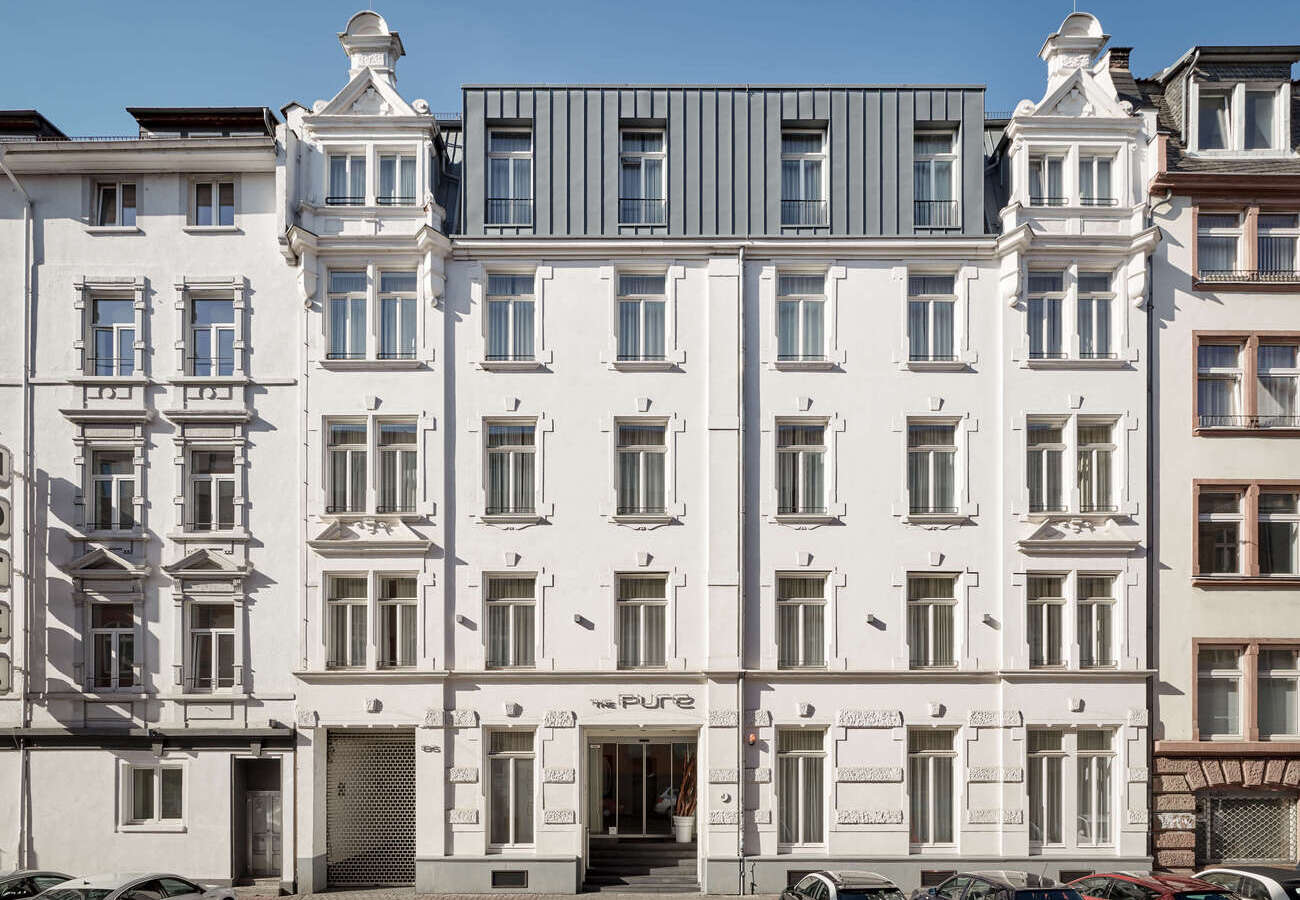
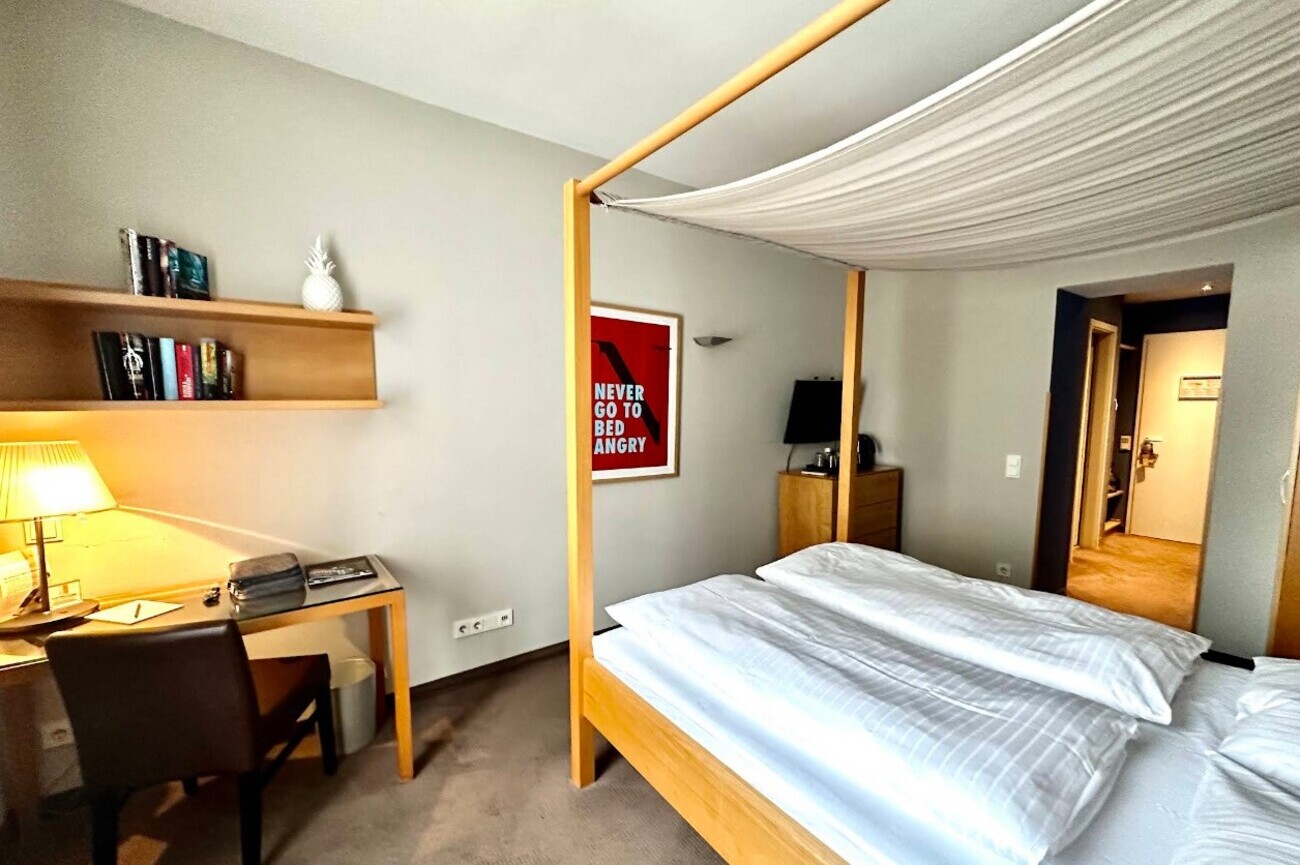
- The Pure Hotel (4 Stars): Housed in a former textile factory near Frankfurt's banking district, the hotel embraces an almost futuristic aesthetic defined by white marble, white leather and clean architectural lines. Guest rooms soften the concept slightly with warm parquet flooring and carefully placed contrasts, creating spaces that feel comfortable as well as stylish. Technology is well integrated throughout the property, and amenities include a fitness room, sauna and a sleek cocktail bar that matches the overall design language.
- Hotel Villa Orange (3 Stars): Villa Orange takes a very different approach from Frankfurt's larger luxury properties. Rather than focusing on scale or extravagance, this independently operated boutique hotel emphasizes comfort, sustainability and personal service. This was Frankfurt's first certified organic hotel and remains the city's only member of the BIO HOTELS association. Sustainability influences everything from operations to sourcing, but without feeling performative or restrictive.
Best Time to Visit Frankfurt
Frankfurt works best when the city can be explored outside.
The best time to visit is late spring, particularly from May to early June. The weather is generally comfortable, the days are longer and the city feels more open and inviting. Frankfurt is a destination where much of the experience happens between attractions, whether that means walking along the Main River, crossing its historic bridges, relaxing in public squares or moving between museums, shopping districts and historic landmarks.
This is when Frankfurt feels most balanced. The Main River becomes a focal point of daily life, outdoor terraces fill up, and green spaces such as Palmengarten are at their most attractive. Areas like Römerberg, Sachsenhausen, Opernplatz and the Museumsufer are particularly pleasant to explore on foot, allowing you to experience the city at a comfortable pace rather than rushing from one attraction to the next.
For a city that blends culture, commerce, history and modern architecture, late spring brings everything into focus. The weather works with you, the riverfront feels alive and the city’s best spaces are easier to enjoy without the rush. If you want Frankfurt at its most polished, walkable and genuinely enjoyable, this is the time to go.
Festivals in Frankfurt
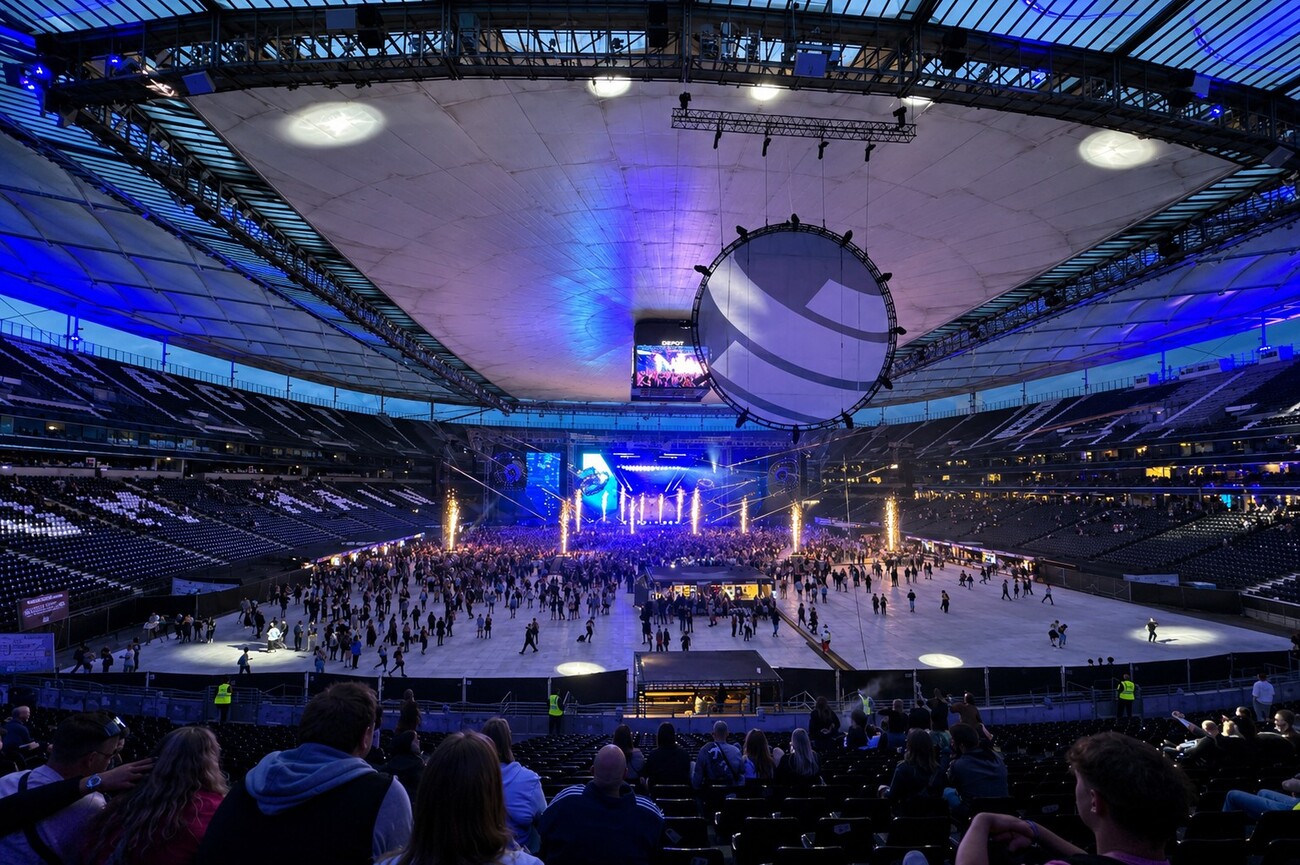
- World Club Dome: For a few days every June, Frankfurt quietly transforms into one of the largest electronic music destinations in the world. Held at Deutsche Bank Park, World Club Dome brings together internationally renowned DJs, large-scale stage productions and tens of thousands of music fans from across Europe and beyond. This is often described as a "club festival" on a stadium scale, which is surprisingly accurate. Multiple stages, immersive production design and marathon sets create an experience that feels closer to a global music gathering than a traditional concert.
- Apple Wine Festival: Apple wine is not just a local drink in Frankfurt; it is part of the city’s identity. The Apple Wine Festival, usually held in August at Rossmarkt, celebrates Apfelwein with local producers, traditional food, live music and a relaxed city-center atmosphere. You show up, try different versions of Frankfurt’s signature drink and get a quick read on local culture. It is casual, social and very Frankfurt.
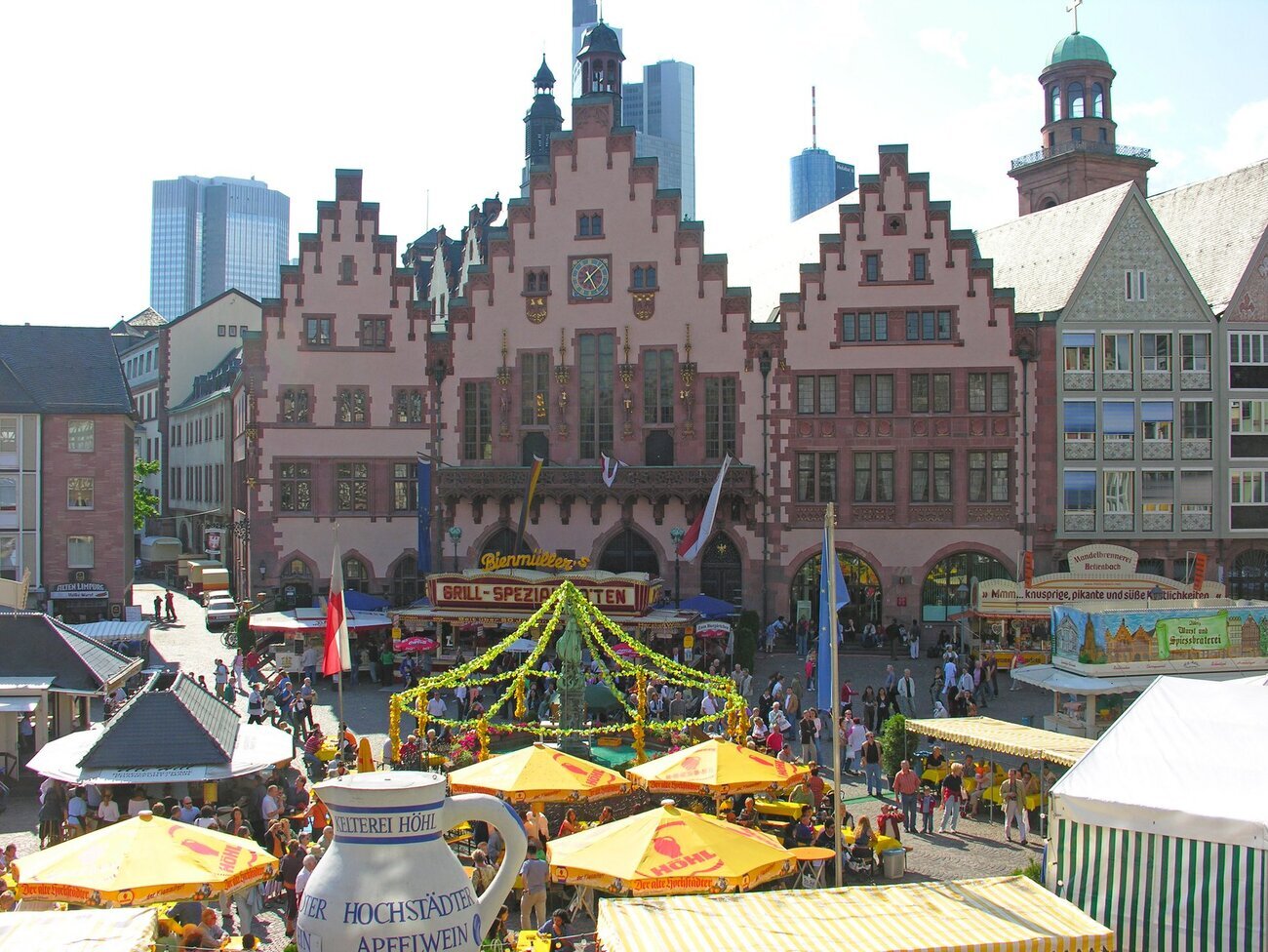
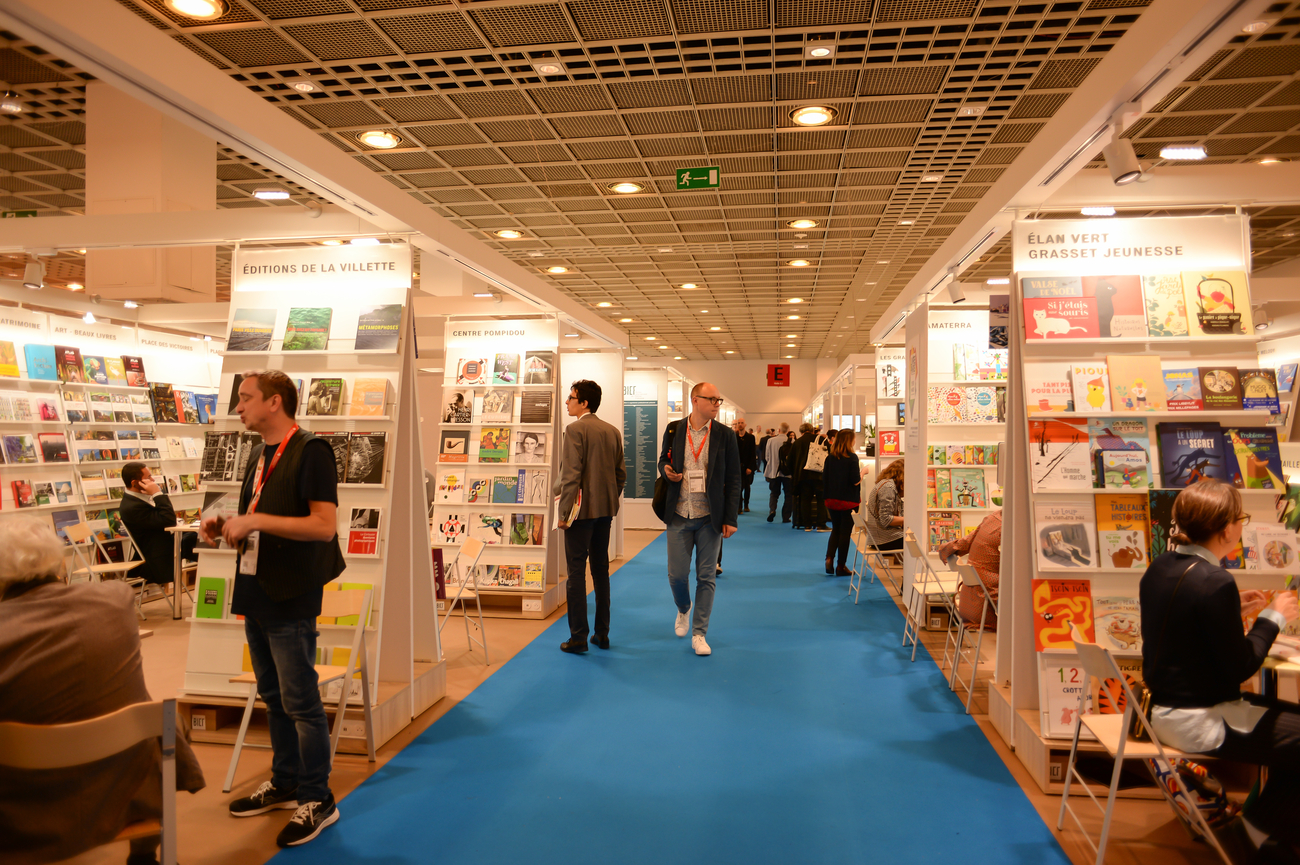
- Frankfurt Book Fair: Held every October, the Frankfurt Book Fair (Frankfurter Buchmesse) is the largest publishing and media event in the world. For more than 500 years, Frankfurt has been a center for the exchange of books and ideas, and today the fair attracts publishers, authors, literary agents, journalists and industry professionals from over 100 countries. While the first days are primarily reserved for the publishing trade, the final weekend opens to the public with author talks, book signings, exhibitions and cultural events across the city. Even if you are not directly involved in publishing, the scale and international atmosphere make it one of Frankfurt's most distinctive annual events.
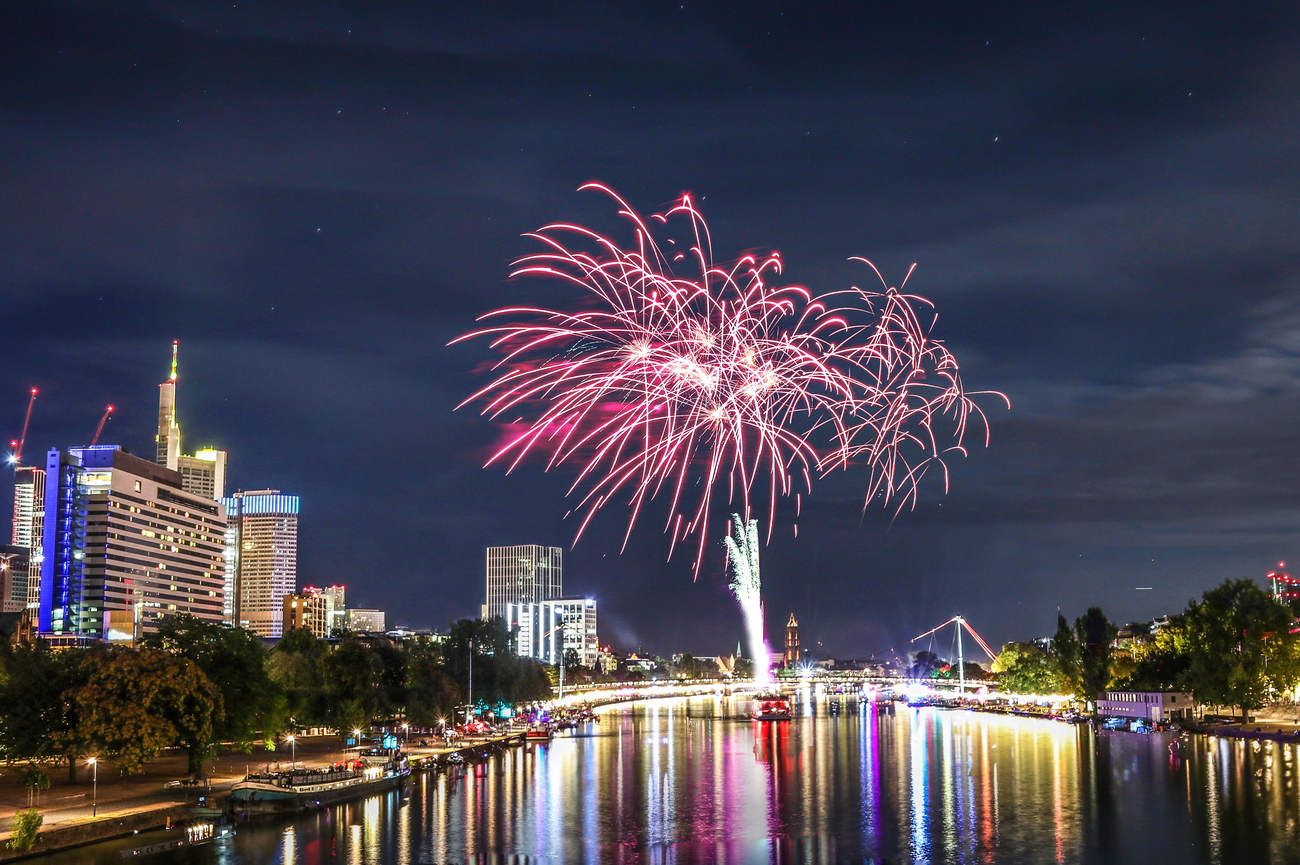
- Museumsuferfest: Museumsuferfest is one of Frankfurt’s strongest cultural events. Held in late August, it takes over both sides of the Main River and turns the Museumsufer district into a large open-air celebration of museums, music, food and art. This is where Frankfurt’s cultural side really shows up. Museums extend their programming, stages appear along the river and the waterfront becomes one of the busiest and most exciting parts of the city.
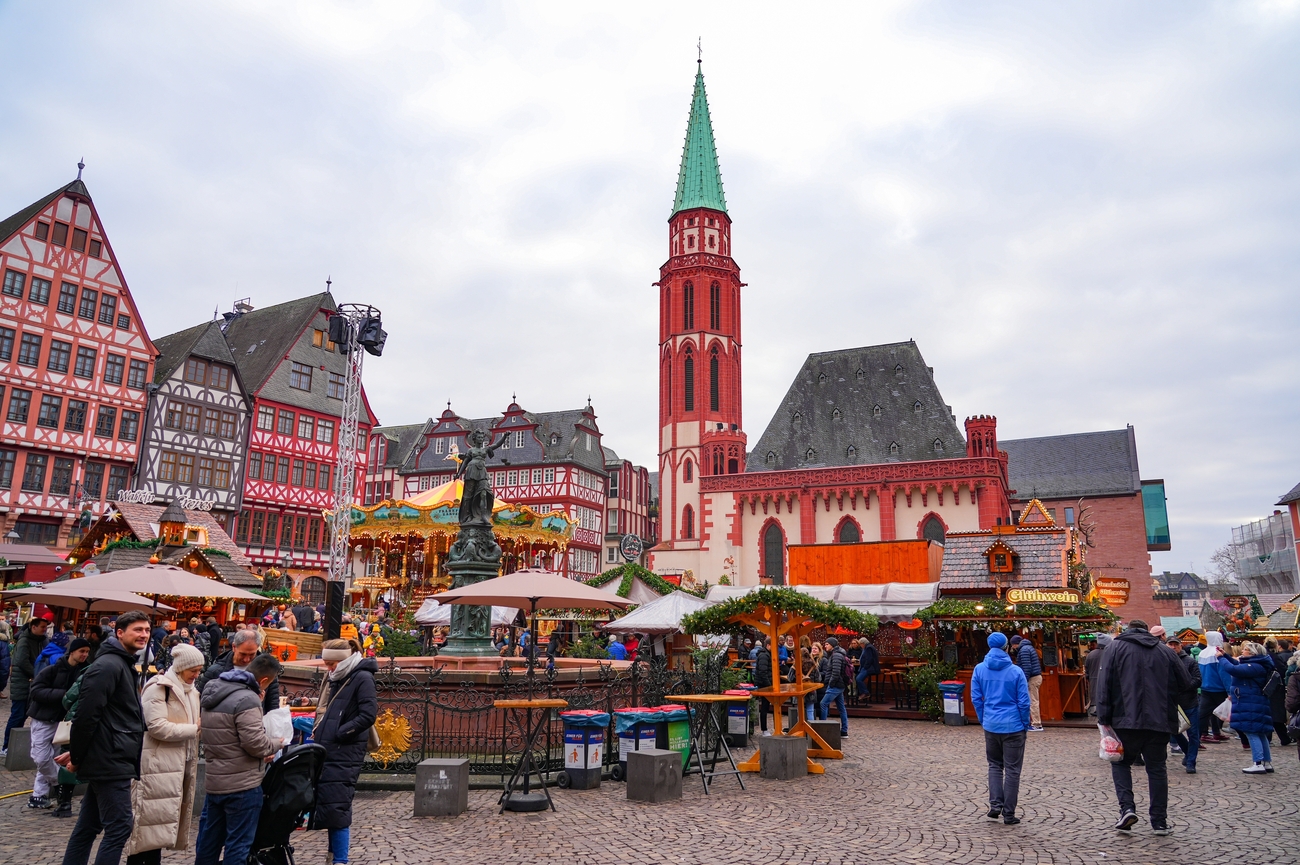
- Weihnachtsmarkt: From late November through December, Römerberg and the surrounding squares fill with wooden stalls, seasonal food, handmade gifts, festive lights and one of Germany’s most classic Christmas market settings. Weihnachtsmarkt gives the center its most atmospheric moment of the year. With the Römer, Old Town facades and Christmas decorations all in one place, the market feels rooted in the city rather than added on for tourists. It is busy, yes, but it is also one of the most memorable times to experience Frankfurt’s historic core.
Plan Your Frankfurt Vacation
From private museum tours and luxury hotels to riverside dining, apple wine evenings in Sachsenhausen and day trips through the Rhine region, Revigorate can arrange every aspect of your Frankfurt vacation. Whether you wish to combine Frankfurt with Heidelberg, Mainz, Wiesbaden, the Rheingau or a wider Germany itinerary, our travel specialists can create a tailor-made journey shaped around your interests, pace and travel style.
Contact Revigorate today to start planning your tailor-made Frankfurt vacation.


Let us know what you love, where you want to go, and we’ll design a one-of-a-kind adventure you’ll never forget.
Get in touch
Miriam
Travel Specialist

Romina
Travel Specialist

Laura
Travel Specialist
Our offices:



Revigorate, Iberian Escapes and Algarve Lifestyle are the registered brand names of APCS Lda . We are a fully authorised travel agency licensed by Turismo de Portugal RNAVT/6867.
In the event of a dispute, the consumer may refer to: RAL - Centros de Arbitragem
Avª. 5 de Outubro, nº. 55, R/C Dtº. 8000-075 Faro, Portugal | Tel: +351 289 823 135 *
* national landline call
E-mail: info@consumoalgarve.pt| www.consumidoronline.pt | Mon to Fri: 9:00 - 13:00 / 14:00 - 17:00