Things to Do in Munich: 4-Day Itinerary
Munich is the capital of Bavaria and one of Germany’s most rewarding cities for culture, history, fine dining and refined travel. Once the seat of the powerful Wittelsbach dynasty, the city still carries that royal legacy through landmarks such as the Munich Residence, Nymphenburg Palace, grand ceremonial squares and elegant boulevards that give the historic centre its distinctive character.
It is also one of Germany’s strongest luxury destinations. Maximilianstraße brings together designer boutiques, heritage architecture and polished city living, while areas such as Fünf Höfe add a more contemporary edge with upscale shopping, galleries and refined cafés. Munich’s luxury is not loud. It is found in grand façades, carefully preserved architecture, excellent hotels, world-class restaurants and a city rhythm that feels organised, elegant and easy to enjoy.
Beyond the historic landmarks, Munich has impressive range. The Kunstareal museum district holds some of Germany’s most important art collections, the English Garden offers one of Europe’s great urban green spaces and BMW Welt reflects the city’s close connection to design, engineering and modern innovation. Within easy reach of the city, travellers can also add royal palaces, alpine landscapes, lakeside escapes, golf, skiing, opera, festivals and UNESCO World Heritage sites.
This four-day Munich itinerary is designed as a starting point for experiencing the city with balance and purpose. It brings together the main cultural highlights, luxury shopping areas, museums, green spaces and nearby experiences without making the journey feel rushed. For travellers who want every detail arranged around their time, interests and pace, Revigorate can turn this outline into a fully tailor-made Munich and Bavaria vacation, including private guides, luxury hotels, restaurant reservations, opera tickets, chauffeur-led day trips and seasonal experiences.

Day 1

Morning: Marienplatz
Marienplatz is the natural place to begin a first visit to Munich. It has been the city’s central square since 1158 and remains the heart of the historic centre, surrounded by some of Munich’s most recognisable landmarks. The square is busy throughout the day, but starting here in the morning gives you the best sense of the city’s rhythm before moving deeper into the Old Town.
The Glockenspiel performance at the New Town Hall takes place daily at 11 AM and 12 PM, with an additional 5 PM performance from March to October. It is one of Munich’s classic visitor moments, and although it is popular, it is still worth pausing for. The figures reenact scenes from Bavarian history, bringing a sense of ceremony to the square before the day’s sightseeing begins.
Many official walking tours also start from Marienplatz, making it a useful meeting point if you want a private guide to add historical context to the Old Town, the royal landmarks and Munich’s wider Bavarian identity.

New Town Hall
From Marienplatz, the New Town Hall, also known as Neues Rathaus, is quite literally right in front of you. It stands directly on the northern side of the square, so this is less a walk and more the natural first stop.
The New Town Hall has served as the seat of Munich’s city government since the late 19th century and remains one of the city’s most recognisable buildings.
Built between 1867 and 1909 in Neo-Gothic style, the façade stretches across the square with detailed stonework, statues, arches and an 85-metre tower that dominates the surrounding rooftops. The building contains more than 400 rooms, but its most famous feature is the Glockenspiel, where 32 life-sized figures perform daily in the tower.
Inside, the building shifts from a dramatic exterior to elegant historic interiors, including grand staircases, ceremonial spaces and the famous Law Library. The Town Hall balcony also has a special place in Munich’s sporting culture, as this is where FC Bayern Munich celebrates major championship victories with supporters gathered below in the square.

St. Peter's Church & Tower
From the New Town Hall, cross Marienplatz and walk slightly south towards Rindermarkt. St. Peter’s Church is only around two minutes away on foot, making it an easy continuation from the main square.
Locally known as Alter Peter, St. Peter’s Church is the oldest parish church in Munich and one of the best places to understand the city’s early history. The first church on this site was built shortly after Munich was founded in 1158, and over the centuries the building was rebuilt and restored after fires and wartime damage. This is why the church blends Gothic, Baroque and Rococo details rather than following a single architectural style.
Inside, the golden high altar is the main focal point, while the surrounding chapels and decorative features give the church a layered historic character. The real highlight, however, is the tower. At around 91 metres high, Alter Peter offers one of the best panoramic views in central Munich, looking across the Old Town, the Frauenkirche towers and, on clear days, towards the Alps.
Reaching the top requires climbing more than 300 steps, and there is no lift, so it is best suited to travellers who are comfortable with stairs. For those who make the climb, it is one of the most rewarding viewpoints in the city centre.

Viktualienmarkt
Leaving St. Peter’s Church, Viktualienmarkt is just a short walk away. Head back towards the open square beside Marienplatz and continue for around three minutes on foot. The atmosphere changes quickly as you move from church towers and historic façades into one of Munich’s liveliest food markets.
Viktualienmarkt has been Munich’s main daily food market since 1807, when it was moved from Marienplatz to allow more space for the city’s growing trade. Today, it covers more than 20,000 square metres and includes over 100 stalls selling fruit, cheese, flowers, spices, pastries, wine and Bavarian specialities. At the centre of the market stands the traditional Maypole, decorated with Bavarian figures and local trade symbols.
This is a good place to pause between historic visits, whether for a light lunch, a guided food tasting or simply to see how the city’s local food culture works beyond restaurant dining. Seasonal events also take place throughout the year, especially around Christmas and traditional local festivals.

Afternoon: Frauenkirche
From Viktualienmarkt, walk northwest through the Old Town towards Frauenplatz. The route takes around five minutes on foot and leads through some of Munich’s busiest central streets, with the cathedral’s twin green-domed towers gradually appearing above the surrounding rooftops.
Frauenkirche, officially the Cathedral of Our Dear Lady, is one of Munich’s most important religious landmarks and one of the defining symbols of the city skyline. Built between 1468 and 1488, it is a late Gothic brick church known for its scale, simple exterior lines and two distinctive towers topped with Renaissance-style domes.
The towers rise to almost 100 metres and are protected by local height regulations that help preserve Munich’s historic skyline. Inside, the cathedral feels calmer and more restrained than its exterior suggests. The long nave, high vaulted ceilings and rows of tall columns create a spacious, almost austere atmosphere.
One of the cathedral’s best-known details is the Teufelstritt, or Devil’s Footstep, a dark footprint near the entrance linked to one of Munich’s most famous legends. For travellers following the Old Town on foot, Frauenkirche also works as a useful orientation point, as its towers are visible from many parts of the centre.

Odeonsplatz
Leaving Frauenkirche, walk north through the Old Town towards Odeonsplatz. The route takes around seven minutes on foot, passing elegant shopping streets and historic façades before opening into one of Munich’s grandest public squares.
Odeonsplatz was created in the early 19th century under King Ludwig I and quickly became one of the city’s most important ceremonial spaces. It sits at the northern edge of the historic centre and connects directly to several major royal and political landmarks, including the Theatine Church, the Feldherrnhalle and the entrance to the Hofgarten.
The square has a strong sense of scale, with the yellow Baroque façade of the Theatine Church on one side and the monumental Feldherrnhalle opposite. Inspired by Florence’s Loggia dei Lanzi, the Feldherrnhalle is one of the square’s most recognisable features and carries a complex political history linked to the failed Beer Hall Putsch of 1923.
Today, Odeonsplatz remains an important gathering point for public events, celebrations and cultural moments. It is also a natural transition between the Old Town and Munich’s former royal quarter, making it the right place to pause before continuing towards the Munich Residence.

Munich Residence
Odeonsplatz leads naturally into Munich’s former royal quarter. Walk along Residenzstraße for around three minutes, where the formal façades, palace entrances and inner courtyards begin to shift the atmosphere from civic Munich to courtly Bavaria.The Munich Residence was the former royal palace of the Wittelsbach dynasty, the family that ruled Bavaria for more than 700 years. What began as a castle in 1385 gradually expanded into one of Europe’s largest city palaces, with ten courtyards and more than 100 rooms now open to visitors.
The architecture moves through Renaissance, Baroque, Rococo and Neoclassical styles, reflecting the long history of the Bavarian court. The Antiquarium is one of the standout spaces, with its vast Renaissance hall, vaulted ceiling, sculptures and painted decoration. The Imperial Hall, ancestral galleries and Treasury add further scale, while the nearby Cuvilliés Theatre brings a more theatrical Rococo layer to the complex.
This is one of Munich’s most important cultural stops, so it is worth allowing enough time rather than treating it as a quick palace visit. For a more meaningful experience, a private guide can help connect the rooms, collections and court history into a clearer story of Bavaria’s royal past.

Hofgarten
Stepping out of the Munich Residence, Hofgarten is right next door. The palace complex opens naturally toward the gardens.
Hofgarten was built in the early 17th century under Maximilian I as a formal Renaissance-style court garden for the royal residence. It sits between the Residence and the English Garden, creating a quiet green space right in the middle of the city. The layout is symmetrical and clean, with gravel paths, fountains, arcades and trimmed hedges that look like they were designed by someone who definitely believed in structure. And at the center stands the Diana Temple, a pavilion that gives the garden its focal point and often ends up being the unofficial meeting spot for locals and visitors alike.

Evening: Maximilianstraße
From Hofgarten, Maximilianstraße is about a 7-minute walk east through one of the most elegant parts of central Munich. The route takes you past the National Theatre and along formal city streets where the atmosphere starts to shift from royal history to quiet luxury.
Maximilianstraße is the city’s most famous luxury shopping street and one of the most prestigious addresses in Germany. Built in the 19th century under King Maximilian II, the boulevard was designed to reflect royal ambition and still carries that polished energy today.
It stretches from Max-Joseph-Platz toward the Maximilianeum and is lined with designer boutiques, flagship stores, high-end jewelers and elegant historic buildings that make even window shopping feel like an event. This is where brands like Chanel, Gucci, Louis Vuitton and Hermès casually exist next to grand facades and cultural landmarks.

National Theatre
From Maximilianstraße, the National Theatre is only a short 3-minute walk back toward Max-Joseph-Platz. After the designer storefronts and polished boulevards, ending the day here feels a little more timeless.
The National Theatre Munich is home to the Bavarian State Opera, the Bavarian State Ballet and the Bavarian State Orchestra. First opened in 1818 under King Maximilian I Joseph, the building was heavily inspired by Greek classical architecture, with its grand columned façade giving it the kind of entrance that clearly expects people to arrive well dressed. It was heavily damaged during World War II and later rebuilt, reopening in 1963 while keeping its historic grandeur intact.
The theatre is just as dramatic as expected, with red velvet seating, chandeliers, gold detailing and the kind of interiors that remind you opera houses were never designed for subtle people. The stage hosts major opera productions, ballet performances and classical concerts throughout the year.
If you want more than just admiring the exterior, guided backstage tours are available on selected dates and give access to areas usually hidden from the audience, including rehearsal spaces, stage sections and historical interiors. Performance tickets can also be booked directly through the Bavarian State Opera website.

Day 1 - Munich Tour Map
Day 2
Morning:
Nymphenburg Palace
Nymphenburg Palace was built in 1664 as a summer residence for the Wittelsbach rulers and later expanded into one of Europe’s grandest Baroque palace complexes. It stretches across an enormous landscaped park with formal gardens, canals, pavilions and smaller palace buildings. The central palace is massive, with its wide symmetrical facade facing the gardens like it fully expects admiration.
Inside, the Great Hall is the obvious showstopper, with ceiling frescoes, chandeliers and enough gold detailing to make restraint feel irrelevant. The Gallery of Beauties, commissioned by King Ludwig I, is another major highlight, along with the royal apartments and ceremonial rooms that show exactly how seriously Bavarian court life took presentation. Outside, the park extends far beyond what most visitors expect, with smaller pavilions like Amalienburg and Pagodenburg.
There are audio guides and guided tours for the main palace. The carriage museum is also worth adding if you want to see how royal transport looked before luxury meant German sports cars.


Amalienburg
From the main palace building of Nymphenburg, Amalienburg is about a 10 to 15-minute walk through the park. The path takes you deeper into the formal gardens, past canals and tree-lined walkways.
Amalienburg was built in the 1730s as a hunting lodge for Emperor Charles VII and his wife, Maria Amalia, and it is one of the finest examples of Rococo architecture in Europe. Compared to the scale of Nymphenburg Palace, it is much smaller, but honestly, that is part of the charm. This place is less about size and more about detail. The pale blue facade looks elegant and understated from the outside, but inside, the famous Hall of Mirrors immediately changes the tone. Silver ornamentation, crystal chandeliers and delicate stucco work make the entire space feel like someone designed luxury.
The interiors were created by François de Cuvilliés and Johann Baptist Zimmermann, which is basically the Rococo equivalent of hiring the best people in the business. Beyond the Hall of Mirrors, there are private chambers, a hunting room and even a kitchen with early decorative stove technology.

Pagodenburg
A 10-minute walk through the northern section of the Nymphenburg Palace park brings you to Pagodenburg.
Pagodenburg was built in the early 18th century as a small pleasure pavilion for the Wittelsbach court, designed as a place for rest, tea and quiet gatherings away from the main palace. The exterior is elegant and compact, but the real highlight is inside, where the upper floor is decorated with blue and white Dutch-style tiles and Chinese-inspired design elements that reflected Europe’s fascination with East Asian aesthetics during that period.
The pavilion was originally used for afternoon tea and private relaxation and honestly, it still gives that same energy. It feels like the kind of place built for escaping official duties without technically leaving palace grounds. The lower floor was designed as a resting room, while the upper salon feels brighter and more decorative, with a lighter atmosphere than the formal reception halls of the main residence.

Afternoon: Botanical Garden Munich-Nymphenburg
The Botanical Garden Munich-Nymphenburg sits just beyond the northern edge of the palace park, around a 3-minute drive from Pagodenburg. The path moves naturally through quieter sections of the grounds.
This is one of Germany’s largest and most important botanical collections, opened in 1914 and covering more than 20 hectares. It is home to around 19,000 plant species from across the world, arranged through themed sections that include alpine gardens, medicinal plants, rose collections and tropical greenhouses. The outdoor areas feel spacious and calm, while the greenhouse complex brings in climates that definitely did not come from Bavaria.
After palace interiors and Rococo pavilions, the garden feels quieter and less formal, but still very intentional. The tropical greenhouses are one of the strongest parts of the visit, especially when the humidity hits and it suddenly feels like Munich took a very unexpected detour. The water lily pond outside is another standout.
The garden is open daily with seasonal opening hours depending on the time of year. Guided tours are available on selected dates, often focused on specific plant collections or conservation themes.

Badenburg
A short walk back through the quieter sections of the Nymphenburg Palace park leads to Badenburg. The paths here feel more secluded, with fewer visitors and more open space between the trees and canals.
Badenburg was completed in the early 18th century as the private bathing pavilion of the Wittelsbach court, and yes, it was essentially a royal bathhouse designed to look elegant. It was one of the first major palace buildings in Europe created specifically for bathing and leisure, which already says a lot about how seriously they took comfort. The exterior is understated compared to the larger palace buildings, but inside, the central bathing hall is the real highlight with a large tiled pool surrounded by decorated walls, mirrors and high windows that make the whole thing feel far more glamorous than the average spa day.
Access to Badenburg is included with the combination ticket for the Nymphenburg park palaces, along with Amalienburg, Pagodenburg and Magdalenenklause. Since it is smaller, the visit itself is fairly quick, but it works best as part of the wider palace park route.

Schlosspark Nymphenburg
Leaving Badenburg, Schlosspark Nymphenburg naturally becomes the next stop since the pavilion sits within the wider palace grounds. There is no real need to “go” anywhere.
Schlosspark Nymphenburg is one of the largest and most important historic palace parks in Germany, designed as part of the wider Nymphenburg Palace complex. Originally laid out in the 17th century in strict Baroque style, it was later adapted into a more natural English landscape garden while still keeping formal canals, fountains and structured views near the palace. It stretches across more than 180 hectares, which means it is large enough to forget you are still in Munich.
Guided palace tours often include sections of the gardens, but exploring independently works just as well here because the layout encourages wandering. Seasonal fountain schedules and carriage rides are worth checking in warmer months if you want a little extra drama without much effort.

Evening: Schloss Blutenburg
A short drive of around 10 to 15 minutes west of Nymphenburg Palace brings you to Schloss Blutenburg, making it an easy final stop for the evening. The route moves away from the formal palace grounds into a quieter residential part of Munich, where the pace feels noticeably slower.
Schloss Blutenburg is a late medieval castle surrounded by water and one of Munich’s quieter historic landmarks. Built in the 13th century and later expanded in the 15th century by Duke Albrecht III, it originally served as a hunting lodge and country retreat for Bavarian nobility. Compared to Nymphenburg, it is much smaller and less theatrical, but that is exactly why it stands out. The white walls, red roofs and peaceful lake setting make it feel almost unexpectedly calm.
The castle is best known for its Gothic chapel, which contains original late medieval altar pieces and stained glass that survived centuries of change. The courtyard and surrounding lake add to the atmosphere and it also houses the International Youth Library.

Day 2 - Munich Tour Map
Day 3
Morning: Königsplatz
Day 3 will open with more structure, wide open squares and museum buildings. Königsplatz was created in the 19th century under King Ludwig I as part of his vision to turn Munich into a cultural capital inspired by classical Europe. The square was designed in a strict neoclassical style, with monumental buildings and broad open space that make it feel more like a ceremonial stage than a regular city plaza.
The square also carries a more complex history because of its use during the Nazi era for propaganda events and party rallies. Today, that history is part of the site’s identity and the area feels quieter because of it. It is a place where art, politics and architecture overlap, which makes it more than just a beautiful open space.

Alte Pinakothek
A short 5-minute walk east from Königsplatz brings you to Alte Pinakothek, right in the heart of Munich’s Kunstareal museum district. The route feels seamless because this part of the city was built for exactly this kind of museum-hopping.
Alte Pinakothek is one of the oldest art museums in the world and one of Munich’s most important cultural landmarks. Opened in 1836 under King Ludwig I, it was created to house the Wittelsbach collection of European masterpieces and still holds one of the strongest Old Master collections in Europe. The museum focuses on paintings from the 14th to the 18th centuries, with works by artists like Albrecht Dürer, Peter Paul Rubens, Raphael, Leonardo da Vinci, Rembrandt and Titian.
One of the biggest highlights is Rubens’ monumental cycle of paintings, where entire walls seem to belong to him alone. Alongside the permanent collection, the museum regularly hosts temporary exhibitions and special collection presentations, adding more variety to the visit depending on the season. These often include themed historical exhibitions, works from the Neue Pinakothek during renovation periods and curated presentations.

Pinakothek der Moderne
Pinakothek der Moderne sits just a few minutes north of Alte Pinakothek, around an 8-minute walk within Munich’s Kunstareal district. The route stays inside the city’s main museum quarter.
Pinakothek der Moderne is one of the world’s largest museums for modern and contemporary art, but it also covers design, architecture and graphic arts under one roof. Opened in 2002, the building itself is part of the experience, with its large central rotunda, open white spaces and minimal design making everything feel intentionally uncluttered. It houses four museums.
The collection moves far beyond paintings. You will find works by Picasso, Magritte and Warhol alongside furniture design, industrial objects, photography, fashion and large-scale architectural exhibitions. One room can be abstract expressionism, the next can be iconic chair design, and somehow it all works. Temporary exhibitions rotate regularly, especially in the architecture and graphic arts section.

Afternoon: House of Art
In about 10 minutes, following the edge of the English Garden, you’ll reach Haus der Kunst (House of Art). It is one of Munich’s most important contemporary art institutions and one of its most historically layered buildings.
Opened in 1937, it was originally built as a monumental exhibition space during the Nazi era, which means the building carries a difficult political history alongside its role as a major modern art venue today. That contrast is part of what makes visiting here so interesting. The architecture is massive and intentionally severe, but inside, the exhibitions focus entirely on contemporary art, international installations and large-scale works that often challenge the space itself.
Unlike traditional museums with permanent collections, Haus der Kunst works through changing exhibitions, so every visit depends on what is currently showing. Large installations, photography, sculpture, video works and conceptual exhibitions often take over entire halls, making the experience feel more immersive than just walking room to room.
Public guided tours are offered regularly and are one of the best ways to experience the exhibitions, especially since contemporary art can either click immediately or leave you standing there pretending to understand a giant concrete object. There are also curator’s tours which offer deeper first-hand insight into the exhibitions themselves. Family tours, accessible tours in German Sign Language, tours for blind and visually impaired visitors, and even “Baby listens in” tours for parents with babies are also part of the program. There is even a guided tour and yoga option.

Eisbachwelle
A few minutes on foot from Haus der Kunst brings you to Eisbachwelle, right at the southern edge of the English Garden. You go from contemporary art halls and heavy architecture to one of Munich’s most unexpectedly iconic local scenes.
Eisbachwelle is one of Munich’s most famous urban landmarks and one of the few places in the world where river surfing happens right in the city center. The standing wave forms where the Eisbach, a small branch of the Isar River, flows under a bridge near Prinzregentenstraße. It has been a local surf spot since the 1970s and officially became legal for surfing in 2010. The wave is fast, cold and not beginner-friendly at all, which somehow makes it even more respected. And even if you are not surfing, it is one of the best people-watching stops in the city.

English Garden
Leaving Eisbachwelle, the English Garden starts almost immediately, with the famous surf wave sitting right at its southern edge. This is one of the largest urban parks in Europe.
The English Garden is one of Munich’s most iconic green spaces and one of the largest inner-city parks in the world, even bigger than New York’s Central Park. Created in 1789, it stretches from the city center all the way toward the northeastern edge of Munich, covering nearly 400 hectares. It was designed in the English landscape style, which means less formal palace symmetry and more open meadows, wooded paths, streams and wide spaces that feel intentionally natural. It is the kind of park that makes you forget you are still in a major city.
One part of the park feels quiet and residential, another has beer gardens full of people pretending one more pretzel is a personality trait and then there is the Chinese Tower, the Japanese Tea House and open lawns where locals are fully committed to doing nothing beautifully.

Evening: Angel of Peace
From the English Garden, the Angel of Peace is about a 4-minute drive southeast, following Prinzregentenstraße toward one of Munich’s most elegant elevated viewpoints. The route moves from open park landscapes into grand city avenues lined with historic buildings and quieter residential corners.
The Angel of Peace or Friedensengel is one of Munich’s most recognizable monuments and one of its best elevated viewpoints. Built between 1896 and 1899, it was created to commemorate the 25 peaceful years following the Franco-Prussian War of 1870–71. The monument stands on a raised terrace above the Isar River, with a golden angel holding an olive branch at the top of a Corinthian column. It is dramatic, yes, but in a very Munich way.
The terrace around the monument is part of what makes the stop worth it. Wide staircases, formal gardens and open views across the city give the whole area a sense of space that feels calmer than the busy Old Town. It is also one of the best places to see how Munich balances grandeur with restraint.

Maximilianeum
Maximilianeum is only about a 5-minute drive uphill along the eastern side of the Isar River. After the monument views and golden-hour light at Friedensengel, ending here keeps that same elevated perspective but with a much grander finish.
Maximilianeum is one of Munich’s most striking buildings and one of the clearest examples of how seriously Bavaria took architecture as a statement. Completed in 1874 under King Maximilian II, it was originally built as the home of the Maximilianeum Foundation for gifted students and today also serves as the seat of the Bavarian State Parliament. The building sits on a raised terrace overlooking the Isar, with a long neoclassical facade, sweeping staircases and one of the best panoramic positions in the city.

Day 3 - Munich Tour Map
Day 4
Morning: Olympiapark München
Olympiapark was created for the 1972 Summer Olympics and remains one of Munich’s most important urban landmarks. The entire complex was designed with a futuristic vision that still feels surprisingly current, especially the sweeping tent-like roof structures of the Olympic Stadium, which became one of the most iconic examples of modern architecture in Europe.
The park covers more than 850,000 square meters and includes the Olympic Stadium, Olympic Hall, Olympic Lake, the Olympic Tower area and large landscaped green spaces that make it feel much bigger than a typical city park.

BMW Welt
BMW Welt sits right beside Olympiapark, so getting there takes barely 5 minutes by car and honestly feels more like moving across the same district than heading to a new stop.
BMW Welt is part exhibition space, part delivery center, part architectural flex and one of Munich’s most visited attractions for good reason. Opened in 2007, it serves as the brand experience center for BMW, MINI and Rolls-Royce, combining car displays, technology showcases and event spaces under one massive futuristic roof. The building itself is a highlight, with its double-cone glass structure and sweeping steel design making it look like something that should probably have its own soundtrack.
Inside, the experience goes beyond polished cars on display. You will find interactive exhibitions, concept vehicles, motorsport displays and rotating showcases that explain the design philosophy behind the brand.
Guided discovery tours are one of the best ways to experience BMW Welt, especially if you want more than photos next to luxury vehicles. These tours explore the building itself, the architecture, the brand areas and the stories behind BMW’s design and engineering approach. They are offered in both German and English, as open public tours or private group tours for companies and school groups.


BMW Museum
Just across the road from BMW Welt, the BMW Museum is an automatic stop. The two are designed to work together. BMW Welt gives you the present and future of the brand, while the museum takes you back through the history that made all of it possible.
The BMW Museum opened in 1973 alongside the Olympic Games and has become one of Munich’s most recognizable modern landmarks. Its silver bowl-shaped building, often called the “salad bowl” by locals, is already iconic from the outside, but inside, the museum is much more than a car display. It covers the full history of BMW, from early aircraft engines and motorcycles to classic automobiles, motorsport legends and futuristic concept vehicles.
Classic race cars, vintage motorcycles and iconic models sit next to design studies and technology displays that explain how the company evolved. Even if you are not deeply into cars, there is enough focus on innovation, architecture and cultural history to keep it interesting.

Afternoon: Münchner Freiheit
From the BMW Museum, Münchner Freiheit is about a 10 to 15-minute drive southeast into the heart of Schwabing. The route moves away from Olympic Park’s modern architecture and into one of Munich’s most stylish and lived-in neighborhoods.
Münchner Freiheit is one of the central squares of Schwabing and one of the best places to feel a different side of Munich. It is not about grand monuments or palace history here. This area is known for its mix of elegant residential streets, shopping, nightlife and a long-standing creative reputation. Schwabing was once the city’s bohemian quarter, attracting writers, artists and intellectuals.
The square connects directly to Leopoldstraße, one of Munich’s major boulevards and works as a social hub where locals actually spend time instead of just passing through. The colorful subway entrance installation adds a modern contrast to the more classic architecture around it.

Leopoldstraße
Leopoldstraße begins almost immediately from Münchner Freiheit. The square flows directly into one of Munich’s most well-known boulevards.
Leopoldstraße is one of Munich’s main urban arteries, stretching from the city center through Schwabing and toward the northern districts. It is known for its mix of shopping, cafes, galleries and elegant residential buildings.
During warmer months, terraces stay full, locals linger longer than planned and the whole area feels like it runs on coffee and people-watching. It is also a key route during major city celebrations and football victories, when the street turns from elegant boulevard into full public party.

Evening: Fünf Höfe
Fünf Höfe is around a 10 to 15-minute drive back toward Munich’s city center, in the elegant shopping district near Theatinerstraße. This place is the right shift for the evening, especially if the plan is to end the day somewhere refined.
Fünf Höfe is one of Munich’s most upscale shopping destinations, designed as a luxury retail and lifestyle complex right in the heart of the city. Opened in 2003 and designed by architects Herzog & de Meuron, it connects five historic courtyards into one sleek urban space filled with designer boutiques, art galleries, concept stores and elegant cafés. The architecture keeps things minimal and modern, with glass ceilings, clean lines and open courtyards.
The mix of brands here leans high-end, with international fashion houses, premium jewelry, beauty boutiques and independent designer stores all sitting within walking distance of each other.

Theatinerstraße
Theatinerstraße begins just a few minutes from Fünf Höfe, making it an easy final stop for the trip and a very natural way to close the itinerary. A short walk through the surrounding courtyards and elegant Old Town streets brings you straight into one of Munich’s most established shopping avenues.
Theatinerstraße is one of Munich’s most important shopping streets and one of the clearest examples of how the city blends luxury with restraint. Running between Odeonsplatz and Marienplatz, it connects some of the most elegant parts of the Old Town and is lined with designer boutiques, heritage brands, flagship stores and beautifully preserved historic facades.
For the luxury version of the finale, stay here after sunset and take the longer route toward Odeonsplatz instead of rushing back. The lights from the boutiques, the historic facades and the quieter evening atmosphere make the street feel even more polished at night.

Day 4 - Munich Tour Map
Other Things to Do in Munich
Munich has the major landmarks everyone expects like palaces, museums, church towers and luxury shopping but the city works better when you leave space for the extras. Some of the best experiences are not the obvious headline stops. They are the places that show how the city actually lives: historic villas by the lake, royal hunting grounds, quieter museums and elegant spa afternoons. If you have extra time, these places are worth adding.
- Museum Villa Stuck: Museum Villa Stuck is one of Munich’s most underrated cultural stops and a strong choice if you want something more personal than the larger museum circuit. It was the home, studio and private world of Franz von Stuck, one of Germany’s most important Symbolist artists. Located in the elegant Bogenhausen district, the villa combines preserved historic interiors with contemporary exhibitions. Alongside the original interiors, the museum also hosts rotating exhibitions focused on contemporary art, design and photography.

- Spa at the Andaz: Sometimes the smarter move is a rooftop spa with skyline views and a break from walking 20,000 steps a day. The spa at Andaz Munich Schwabinger Tor is one of the city’s best luxury wellness spots, located in Schwabing where the atmosphere already feels polished before you even check in. The spa includes a rooftop pool, sauna, steam room, relaxation areas and treatments that make you briefly consider changing your entire lifestyle.

- Müller'sches Volksbad: Müller’sches Volksbad is one of the most beautiful bathhouses in Europe and easily one of the most unexpected places to visit in Munich. Opened in 1901, it is a historic public swimming hall built in full Art Nouveau style, with vaulted ceilings, stained glass and decorative arches. It was originally created as a public bathhouse. The main swimming halls are stunning, and the sauna area adds another level if you want a slower visit.

- Allianz Arena: Even if football is not usually your thing, Allianz Arena is one of those places that still lands. Home to FC Bayern Munich, the stadium is one of the most famous in Europe and instantly recognizable because of its glowing exterior panels that light up red, white or blue depending on who is playing. And the arena tour takes you through player areas, the tunnel, dressing rooms, press zones and the stands, which is enough to make even casual visitors suddenly care about football strategy.

- Prinzregententheater: If you want a cultural evening but prefer something a little more intimate than the National Theatre, Prinzregententheater is a strong choice. Opened in 1901, this historic venue was designed in the style of Wagner’s Bayreuth Festival Theatre and has become one of Munich’s most respected performance spaces for opera, concerts and ballet. You should book a performance here as it will be one of the best ways to end your trip.

Things to Do with Kids in Munich
Munich is surprisingly great with kids because the city understands one important rule: if children are bored, everyone is stressed. Luckily, this place has parks big enough to burn energy, museums where touching things is encouraged, zoos that actually feel like a full day out, and waterparks that can turn one “just a quick stop” into a six-hour commitment. If you want activities that keep kids entertained without sacrificing the trip, these are the ones worth adding.
- Hellabrunn Zoo: Hellabrunn Zoo is easily one of the best family-friendly attractions in Munich. Opened in 1911, it is considered the world’s first geo-zoo, which means animals are grouped by the regions they naturally come from instead of being placed randomly by species. That makes the whole experience feel more immersive. You move from the Arctic to Africa to Asia without it feeling like educational chaos. Feeding sessions and special talks throughout the day make the visit more interactive and there are multiple playgrounds where kids can burn off the extra excitement.

- Sea Life Munich: Located near Olympiapark, it is compact enough to keep younger kids engaged but still full of enough sharks, rays and glowing fish to make the visit feel exciting. The biggest highlight is the walk-through ocean tunnel, where sharks and rays glide overhead and everyone immediately stops pretending they are not impressed. It fits perfectly into a lighter afternoon, especially if paired with Olympiapark nearby. If you want the better experience, check feeding schedules in advance so you can time the visit around them rather than just walking through at random.

- Westpark: Created for the 1983 International Garden Exhibition, Westpark is large, beautifully landscaped and much more interesting than a standard city green space. There are wide walking paths, playgrounds, duck ponds, open lawns and even themed garden sections like the Japanese Garden and the Thai Sala by the lake. There are also cafes nearby and enough shaded areas to make longer visits comfortable, especially in warmer months

Day Trips from Munich
Munich is great, but one of its biggest flexes is how easy it is to leave for the day and come back feeling like you visited a completely different world. The best day trips from Munich are the ones that feel worth the effort without turning into a full travel mission. You want somewhere close enough to enjoy properly, but different enough that it feels like a real escape. These places do exactly that.
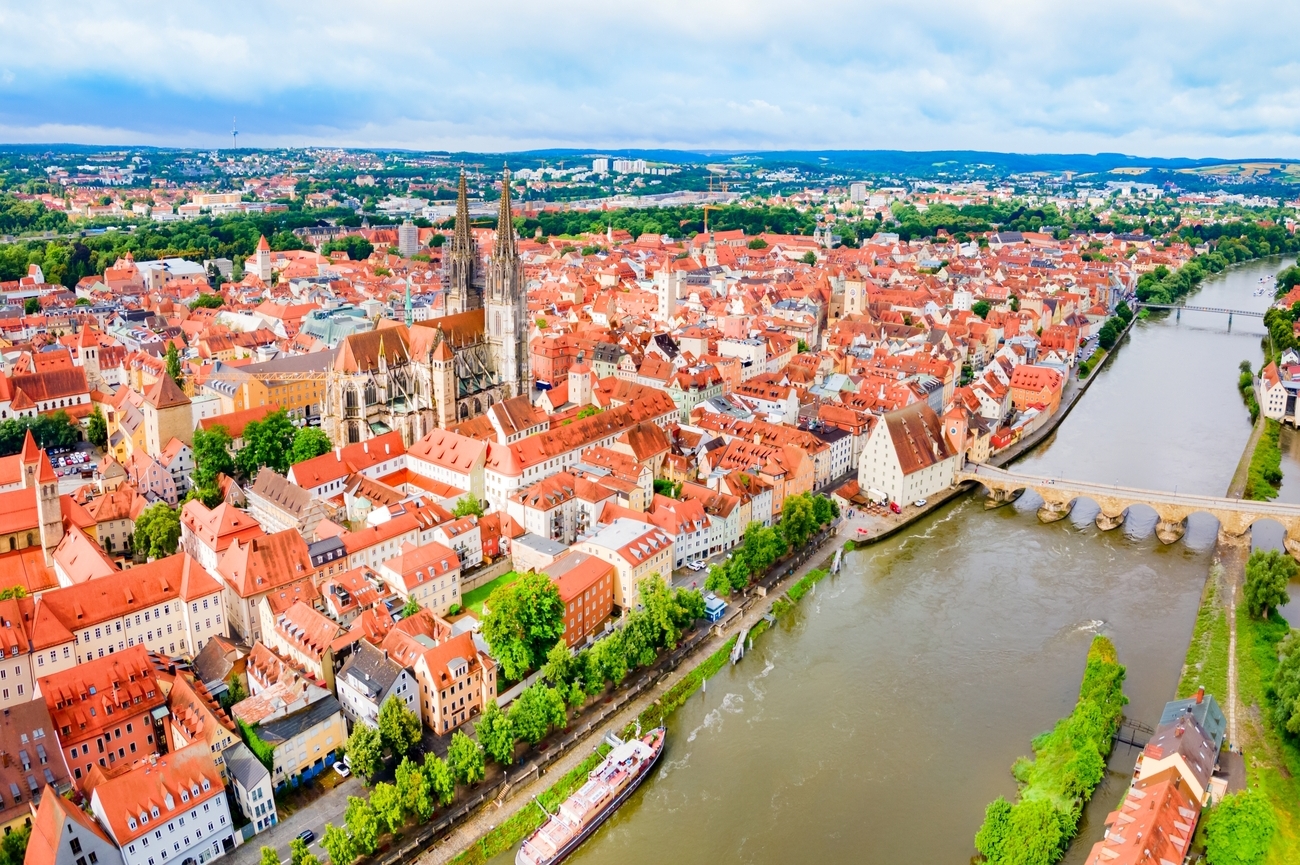
- Regensburg: Regensburg is one of the strongest day trips from Munich if you want history with actual atmosphere and not just one cathedral doing all the work. Its Old Town is a UNESCO World Heritage Site and one of the best-preserved medieval city centers in Germany. The main landmarks are the Stone Bridge, Regensburg Cathedral and the Old Town Hall, but St. Emmeram Palace adds the real luxury angle. It is the residence of the Thurn und Taxis family and gives the city that extra aristocratic layer. The city is around 1 hour to 1 hour 30 minutes from Munich by direct train, which makes it an easy full-day trip without complicated logistics. And if you want to explore Regensburg more deeply, we’ve also prepared a full itinerary for the city.
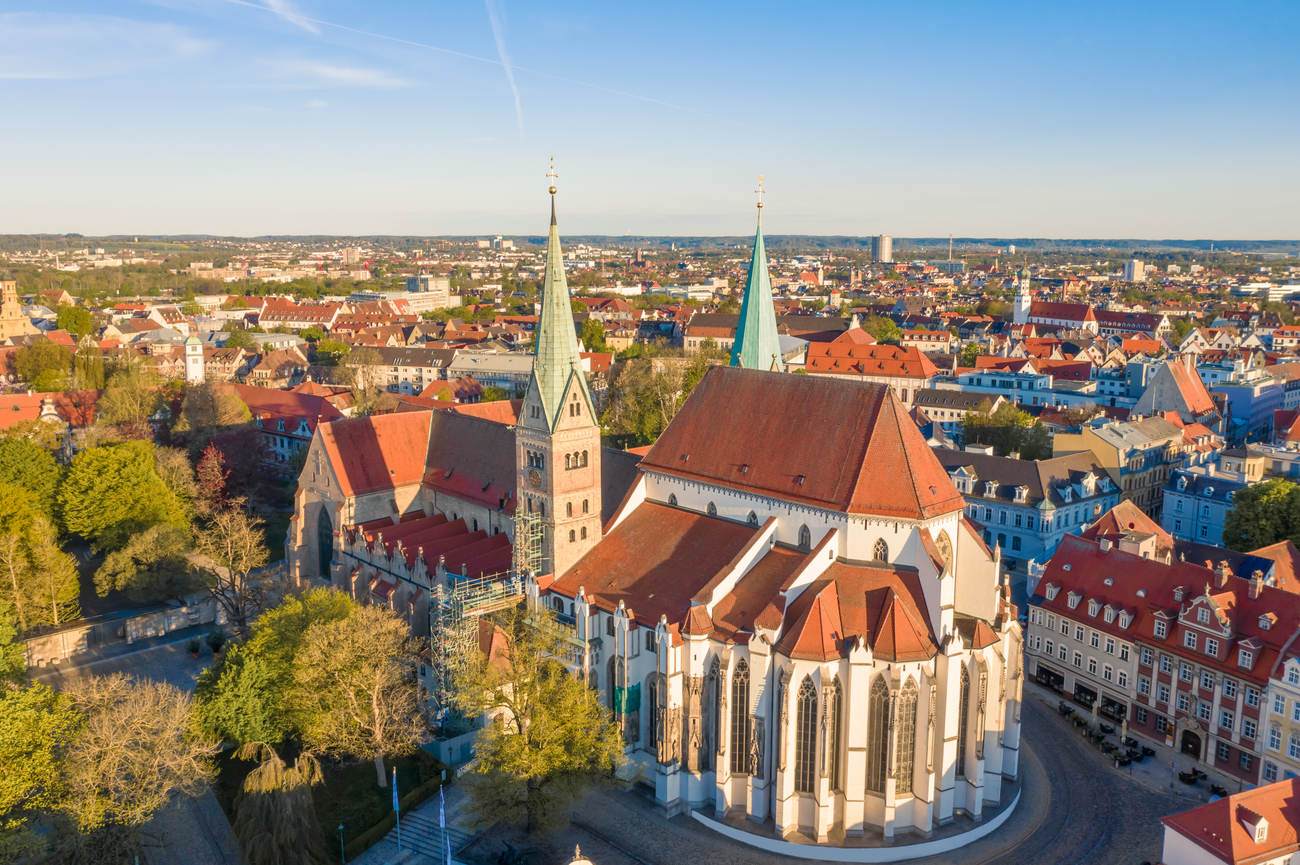
- Augsburg: Augsburg is one of Germany’s oldest cities and has a much quieter elegance compared to the bigger tourist names. It takes only about 40 minutes by train from Munich, so it is one of the easiest day trips on this list. The city is home to the Augsburg Water Management System, a UNESCO World Heritage Site, and yes, it sounds technical, but it shaped the city’s entire identity and architecture. The Fuggerei is one of the most interesting stops as it is the world’s oldest social housing complex. If Augsburg ends up being your kind of city, we’ve also prepared a full itinerary for it.
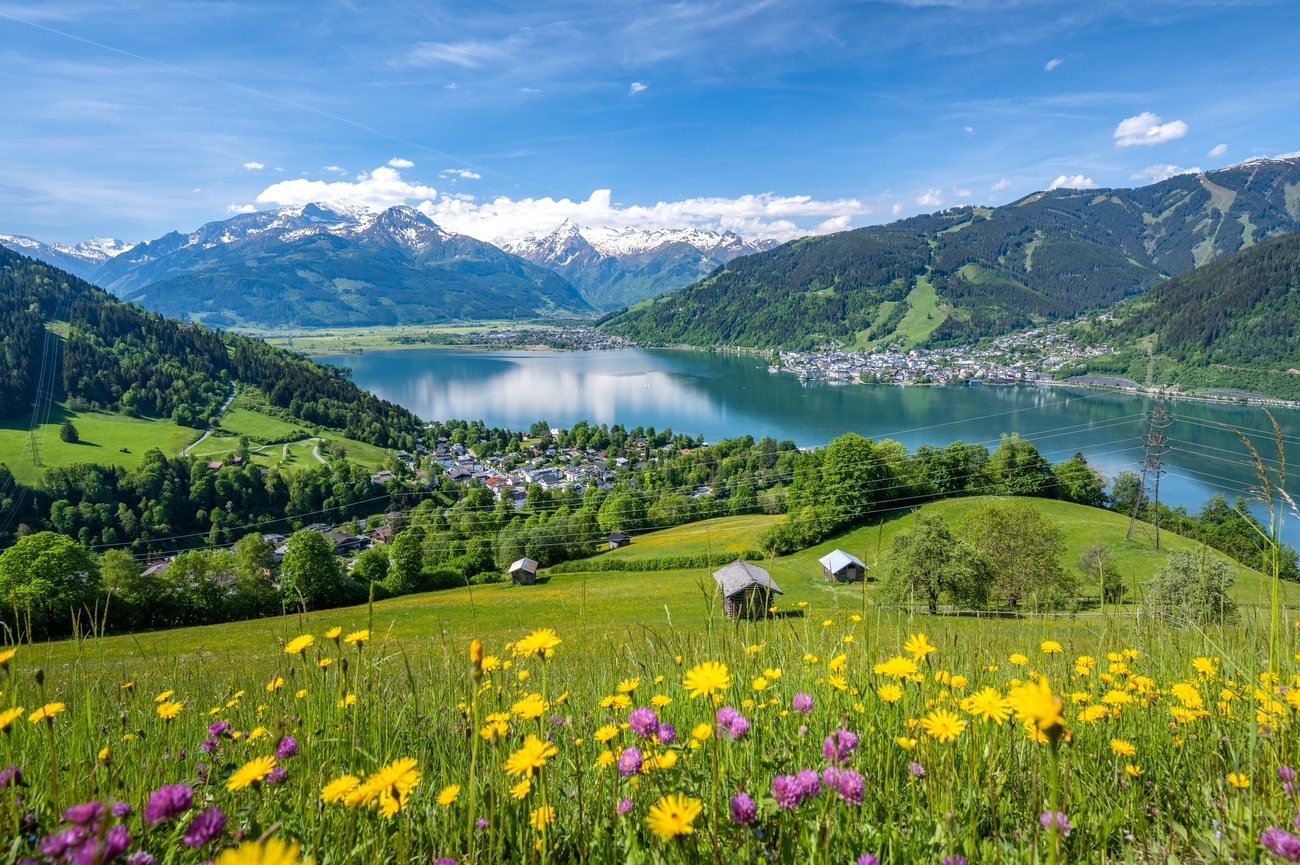
- Salzburg: Salzburg is technically in Austria, but from Munich, it feels like a very reasonable decision and a very good one. The Historic Centre of Salzburg is a UNESCO World Heritage Site. Hohensalzburg Fortress is the obvious major stop, but Mirabell Palace, Mozart’s Birthplace and Getreidegasse are just as important for understanding the city. The Old Town is also compact and easy to explore on foot. It is about 1 hour 30 minutes by car and a little longer by direct train. And if you want to stay longer, we’ve also prepared a full itinerary for Salzburg.
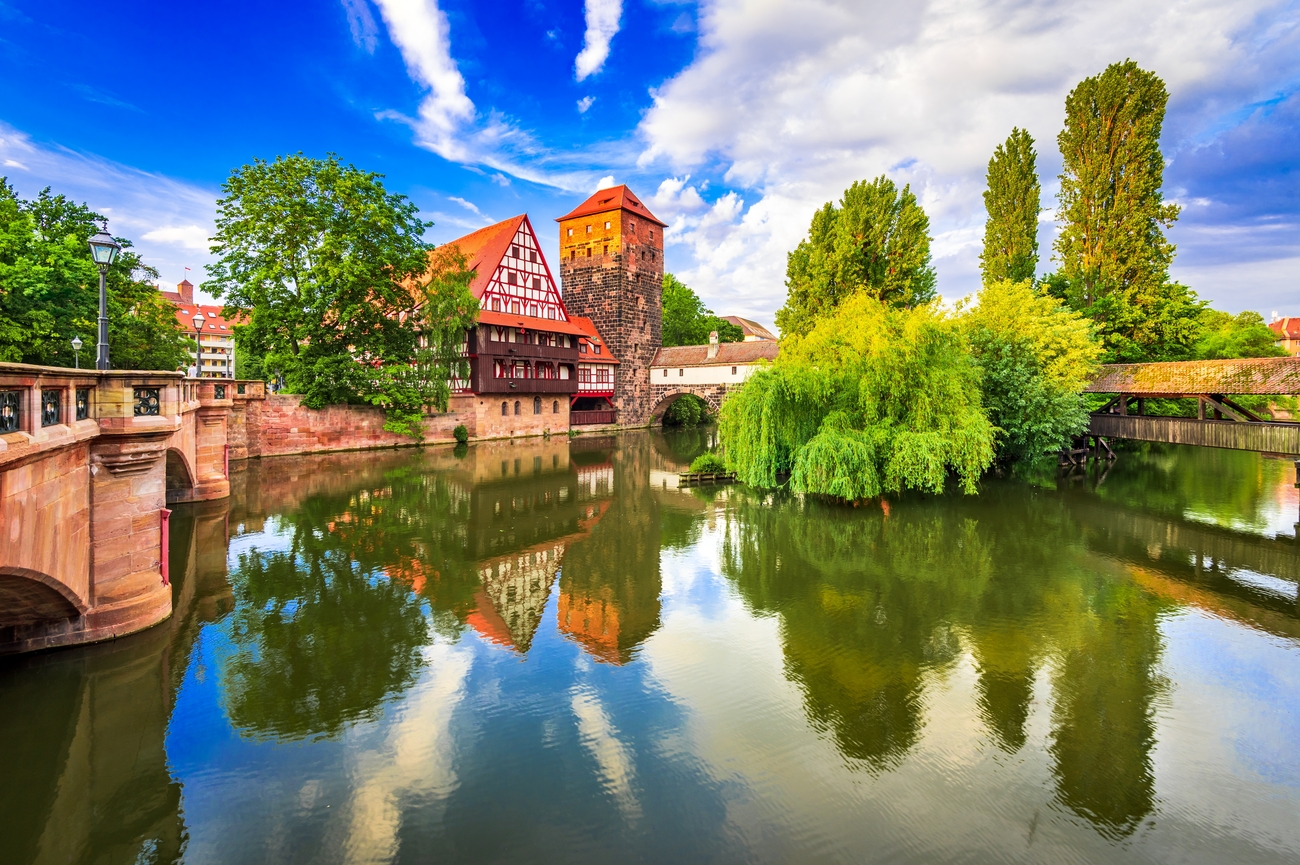
- Nuremberg: Nuremberg has the kind of history that makes every street feel like it has receipts. This is just around 1 hour to 1 hour 15 minutes from Munich by high-speed train. It was once one of the most important cities of the Holy Roman Empire and today the Old Town still carries that weight through its castle, Gothic churches and preserved medieval layout. Hauptmarkt, St. Lorenz Church and Albrecht Dürer House are all strong stops, while Kaiserstraße and the surrounding shopping streets add the more polished side of the city. It also has a deeper historical layer through the Documentation Center and WWII history sites if you want a broader perspective. If you want to explore it properly, we’ve also prepared a detailed itinerary for Nuremberg.
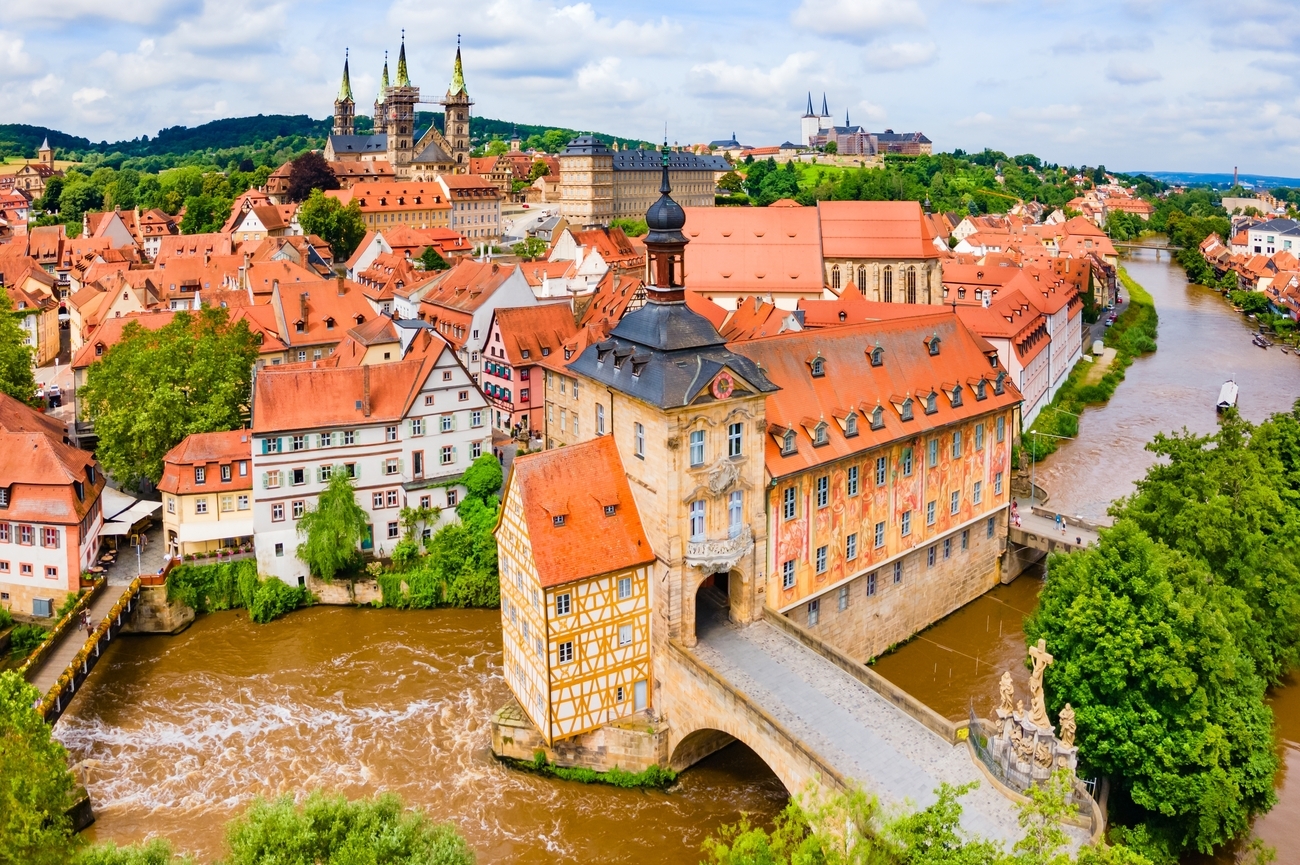
- Bamberg: In just roughly 1 hour and 30 minutes from Munich, you’ll arrive in a city that feels like someone designed a medieval spot and then refused to modernize the good parts. Its Old Town is a UNESCO World Heritage Site and is built across seven hills, with canals, bridges and half-timbered houses. The Altes Rathaus is the signature landmark, sitting dramatically in the middle of the river like it wanted attention and got it. You can also visit its historic breweries, so even a casual walk here tends to involve excellent beer. And yes, we’ve also got you covered in case Bamberg ends up being your pace.
- Schleissheim Palace Complex: Schleissheim Palace Complex is one of the strongest cultural additions within easy reach of Munich, located around 30 minutes north of the city by car. The complex includes the Old Palace, New Palace and Lustheim Palace, giving visitors a broader view of Bavarian court life beyond the better-known Nymphenburg Palace. The New Palace is the main highlight, with grand Baroque interiors, ceremonial rooms, galleries and formal gardens that reflect the scale and ambition of the Bavarian rulers. Lustheim Palace, set at the far end of the gardens, adds a more intimate hunting-lodge atmosphere and houses an important porcelain collection. This is a strong option for travellers who want royal history without the crowds of Munich’s most obvious landmarks. It also works well as a half-day private excursion, especially when combined with Dachau Palace or a slower return through northern Munich.

Nearby Experiences from Munich
Munich is great for city days, but sometimes the best move is leaving the center for a few hours and doing something that feels a little less museum, a little more lifestyle. One morning can be spent on a championship golf course, the next on a mountain slope and by afternoon you are standing inside a monastery that has been there longer than most countries. If you want something beyond the standard sightseeing loop, these are worth adding.
- St. Eurach Land- und Golfclub e.V.: St. Eurach Land- und Golfclub e.V. is one of the best luxury golf experiences near Munich. Located about 50 minutes south of the city by car, it is consistently ranked among Germany’s top golf courses and feels exactly like the kind of place where people discuss tee times. It is known for its challenging layout, quiet exclusivity and a setting that feels far removed from city pace.

- Golf Valley München: Closer to the city, Golf Valley München is about 30 minutes from central Munich and is one of the strongest options if you want championship-level golf without a full countryside commitment. It has hosted professional tournaments and has a modern design. The course is known for its large fairways, strategic water features and immaculate practice facilities. If you want golf that feels slightly more “modern Munich” than aristocratic countryside, this is the one.

- Garmisch-Partenkirchen: About 1 hour to 1 hour 30 minutes south of Munich by car or train, it is Germany’s best-known alpine resort town. In winter, the main draw is skiing and snowboarding around Zugspitze, Germany’s highest mountain. The slopes are reliable, the views are unfairly good and the entire area knows exactly what it is doing when it comes to alpine tourism. Outside ski season, the town still works for hiking and cable car rides.

- Andechs Monastery: Andechs Monastery sits about 45 minutes southwest of the city and is one of the most famous pilgrimage sites in Bavaria, known for its Benedictine abbey, baroque church and very respected brewery. The monastery dates back centuries and the church interiors bring full gold-detail commitment. It is a place with strong religious history, but also one that locals happily visit for the beer garden.

- Dachau Palace: Most people know Dachau for its memorial site, but Dachau Palace deserves attention too if you are looking for more history. Located about 30 minutes from Munich, the palace sits on a hill with wide views across the countryside. It was once a residence of the Wittelsbach rulers and still has formal gardens, Renaissance architecture and a calm setting that makes the whole visit feel slower and more reflective.

- Dachau Memorial Site: Dachau Memorial Site is around 30 minutes from central Munich and is one of the most important historical visits near the city. It should be approached with respect and never treated as casual sightseeing, but it is an essential place for travellers who want to understand Munich and Bavaria in a wider historical context.The former concentration camp was opened in 1933 and became the model for many camps that followed. Today, the memorial includes preserved buildings, exhibitions, religious memorials and spaces for reflection. A visit here is sobering, difficult and important. For travellers including Dachau in a Munich itinerary, it is best arranged with a specialist guide who can provide context and handle the visit with the seriousness it deserves.

- Freising & Weihenstephan: Freising is around 40 minutes north of central Munich and works well as a quieter historical stop close to the city. It is one of Bavaria’s oldest towns, with a more local feel than Munich and a compact centre that is easy to explore on foot. The main landmark is Freising Cathedral, set on Domberg hill, with interiors that bring together Romanesque foundations and later Baroque decoration. The town also has pretty streets, traditional cafés and a slower pace that makes it a useful contrast to Munich’s larger royal and museum sites. Freising is also home to Weihenstephan, often associated with one of the world’s oldest breweries. For travellers interested in Bavarian beer culture, food history or a relaxed half-day outside Munich, this is one of the easiest and most rewarding nearby additions.

Golf Courses in Munich
Munich does golf a little like it does everything else. The city itself does not have endless championship courses inside the center, but it has a few strong in-city options where you can actually play without turning the day into a countryside expedition. If you want proper golf while staying in Munich, these are the places that make sense.
- Golfclub München-Riem: This is one of the most practical golf options if you want to stay fully inside Munich city limits. Located in the east of the city near the former racecourse area, it gives you a proper golf experience without needing to leave Munich behind. The club features a 9-hole course, a large driving range with floodlights, a short game area and a 3-hole practice course, so it works well for both serious players and people trying not to embarrass themselves publicly.

- Seven Tees Golf and Bar: If traditional golf feels like too much commitment, this is the cool-city version of it. Located in Schwabing, Seven Tees is an indoor golf club and social space that mixes simulator golf with a polished lounge atmosphere. It is less countryside fairway and more “designer golf night with cocktails.” The simulators are high quality and the setup is sleek. It is a strong option for evening golf, bad-weather days or anyone who likes the idea of golf but also likes climate control and good lighting.

- Münchener Golf Club e.V. - Golfanlage Thalkirchen: This is one of the classic in-city golf names and one of the rare traditional clubs still operating within Munich itself. Located in Thalkirchen, it is known for its private club atmosphere and its compact 9-hole course. The location also makes it easy to combine with a slower day around the Isar River or southern Munich neighborhoods.

Michelin-starred Restaurants in Munich
You are getting world-class tasting menus, rare wine lists, deeply technical cooking and dining rooms where every detail feels important. The city’s Michelin scene is also surprisingly concentrated, which makes choosing where to book much easier. What makes Munich stand out right now is that the city is home to two of Germany’s most acclaimed Michelin-starred restaurants, including multiple three-star establishments. That alone already says a lot about how serious Munich’s dining scene has become.
- JAN: JAN is currently holding three Michelin stars, which already places it in a completely different category. Chef Jan Hartwig has built a dining experience that mixes French fine dining techniques with German comfort-food references in a way that somehow feels both deeply technical and emotionally familiar. Meatloaf, mustard sauce, pâté en croûte and Handkäs mit Musik show up here. The restaurant itself is sleek and minimal, with an open connection to the kitchen that the team calls the “Labor der Liebe” or “Laboratory of Love.” The seven-course tasting menu is the core experience, available at both lunch and dinner, though shorter lunch versions are also offered.

- Tohru in der Schreiberei: Tohru in der Schreiberei holds three Michelin stars, and honestly, it feels like one of the most interesting restaurants in Munich because it refuses to stay in one culinary lane. Chef Tohru Nakamura blends French and European fine dining with Japanese ingredients and techniques, creating tasting menus that feel refined without losing personality. The restaurant is set inside Munich’s oldest townhouse, where the city’s recorded history began in 1552. One of the standout examples is the Koshihikari rice served with regional trout caviar, fermented-rice beurre blanc, sake and elderflower. The restaurant offers eight- and ten-course menus.

- Atelier: Atelier holds two Michelin stars and sits inside the legendary Hotel Bayerischer Hof, which already tells you the level of luxury you are dealing with. The restaurant was designed by Axel Vervoordt. The five- and seven-course menus are carefully structured, with optional wine pairings pulled from a wine list featuring around 300 labels. The dishes lean contemporary European, but the focus is less on dramatic experimentation and more on clean execution and balance.

- Tantris: Tantris holds two Michelin stars and is one of the most legendary fine dining restaurants in Germany. Opened in 1971, it helped shape the country’s modern haute cuisine scene, and the restaurant still feels iconic in the best way possible. The interiors are bold, dramatic and unapologetically 1970s, with deep reds, black details and a dining room that somehow still feels cool instead of outdated. Chef Benjamin Chmura’s cuisine balances French technique with modern creativity. The restaurant offers seven-course tasting menus for both omnivore and vegetarian diners, plus a shorter lunch format.

- Les Deux: Les Deux holds one Michelin star and sits right in Munich’s Old Town inside Schäfflerhof. The location alone already works in its favor because the dining room overlooks the city through floor-to-ceiling windows, giving the whole experience a sharper urban energy compared to some of Munich’s quieter fine dining spaces. Dishes like black cod with eel dashi, parmesan, spinach and peanut show how the restaurant likes combining richness with sharper, more unexpected elements. Oh, and the wine list includes more than 600 labels.

Where to Eat in Munich
Munich’s restaurant scene works because it does not force one identity. One meal can be ultra-polished Japanese-Peruvian fine dining inside a luxury hotel, the next can feel like modern European cooking inside a glass-heavy creative district. You can do rooftop dinners, chef’s counter experiences, long wine-heavy evenings or sleek business-lunch spots without leaving the city center.
- Matsuhisa Munich: Inside the ultra-luxury Mandarin Oriental Munich, Matsuhisa Munich brings Nobu Matsuhisa’s globally known Japanese-Peruvian fusion style into the center of Bavaria. The black cod is the signature for a reason. It’s soft, rich and perfectly balanced, but dishes like Peruvian rib-eye anticucho and the sushi selections also hold their own.

- NICE feels very current Munich. Located in Werksviertel near Ostbahnhof, the restaurant sits inside a newer contemporary complex with floor-to-ceiling windows, a stylish open layout and enough natural light to make even weekday lunches look expensive. Dishes like golden trout with borscht broth, sweet pepper and chervil or poulet noir with cabbage and capers show how carefully everything is layered.

- THE CLOUD by Käfer: At BMW Welt, THE CLOUD by Käfer turns dinner into a fully designed experience. The restaurant’s concept changes focus yearly through what chef Jens Madsen calls “Culinary Nomadism,” where different global regions influence the tasting menu. The room itself is part of the experience. Large glass walls overlook BMW Welt, while an illuminated cloud installation hangs above the dining room, mirroring the evolving menu concept.

- Jin: Jin has been around for two decades, which in restaurant years basically means it survived every trend cycle possible and still stayed relevant. Located in central Munich, the restaurant keeps its interiors sleek and minimalist with subtle Far Eastern influences. You can choose between the “Jins Degustation” menu or order à la carte, depending on how serious the evening is about to become.

- Vinaiolo: Haidhausen has plenty of good restaurants, but Vinaiolo stays memorable because it genuinely feels lived-in. Open for more than 25 years, the restaurant brings a softer, more classic Italian atmosphere into Munich without becoming touristy. Pumpkin risotto with Tuscan pecorino cream, pink-roasted tuna with olive tapenade and seasonal pasta dishes are the kinds of plates that work because they are executed cleanly instead of overcomplicated.

Where to Drink in Munich
Munich’s nightlife is better than people expect. The city has the polished cocktail bars, velvet-heavy dance spots and underground late-night energy, but it does not always advertise itself loudly about it. These are the spots worth staying out for.
- Zephyr Bar: Located near Gärtnerplatz, the space is compact, modern and intentionally low-key. Seasonal flavors, infused spirits and unusual combinations show up constantly, but the drinks still feel approachable instead of performative. You should grab counter seats so you can watch the bartenders work through the menu in real time.
- CALL SOUL Breaking Bar: Near the English Garden, CALL SOUL Breaking Bar goes fully into its Breaking Bad-inspired identity without turning into a gimmick. The space mixes theatrical details, moody lighting and high-level mixology. The bar focuses heavily on signature drinks, many served with dramatic presentation and playful chemistry-lab references. There is also a “Lab Store” concept where some drinks and bottled cocktails can be taken home.
- Havana Club Munich: Havana Club has been part of Munich nightlife since 1985, and the place knows exactly what it is. The interiors have barely changed over the decades with green walls, dim lighting, dark wood and strong Cuban bar energy everywhere. Rum is the main event here. The bar carries serious Caribbean selections and the bartenders know how to build proper mojitos, daiquiris and stronger rum-forward cocktails without turning them into sugar bombs.
- Paradiso Tanzbar: Paradiso Tanzbar is where Munich nightlife gets glamorous and slightly chaotic at the same time. Red velvet, chandeliers, mirrored walls and burlesque performances make the entire place feel like someone merged an old cabaret club with a modern dance floor. This is one of the better nightlife picks if you want an actual night out instead of just drinks and polite conversation.
- Garçon: Tucked near Viktualienmarkt with only around 30 seats, the place feels calm, intimate and almost unusually quiet for a cocktail bar. No loud shaking sounds, no over-the-top performance bartending. The bar focuses entirely on stirred drinks, which shapes the mood more than you initially realize. Old Fashioneds and Manhattans exist, but softer aperitif-style creations and wine-forward drinks are where Garçon really shines.

Cafes in Munich
Munich’s café scene is less about giant influencer spaces and more about specialty coffee. Some cafés are quick neighborhood stops where the espresso matters most and others are built for slow brunches. If you like cafés that feel personal instead of mass-produced, Munich delivers very well.
- sweet spot kaffee – specialty coffee: The name comes from the idea of the “sweet spot,” that perfect moment where everything in a coffee lines up exactly right, and owner Markus Pyttel treats every cup like it is supposed to land there. The beans rotate regularly from different specialty roasters, so the menu never feels static. There is also a strong lineup of pastries including cardamom rolls, pain au chocolat, banana bread and Franzbrötchen that pair perfectly with the brighter coffee profiles.
- Suuapinga Specialty Coffee: Suuapinga is known for blends that are crafted carefully. If you are into carefully made coffee rather than giant brunch plates and endless décor moments, Suuapinga is one of Munich’s strongest stops. The focus here stays exactly where it should: quality beans and excellent preparation.
- Southbank Specialty Coffee: Southbank Specialty Coffee brings a softer Australian café style into Munich’s Westend district. The menu is broader than the small space initially suggests. Espresso, filter coffee, cold brew and matcha all have strong followings, while pastries like Franzbrötchen, banana bread and cookies make it very easy to accidentally stay longer than planned. The cafe also offers different espresso roast profiles.
- Café Faber: Located along Zeppelinstraße, Café Faber has built a loyal following because it balances strong specialty coffee with genuinely creative food instead of treating brunch like an afterthought. The menu goes beyond the standard eggs-and-toast routine. Eggs Benedict with rich hollandaise sauce are among the biggest favorites, while the Turkish eggs and gnudi have also become signature dishes people specifically return for. Oh and coffee matters here too with specialty brews that have depth and balance.

Where to Stay in Munich
- Mandarin Oriental Munich (5 stars): The Mandarin Oriental Munich is easily one of the city’s most refined hotels. Set inside a 19th-century building in the Altstadt, the property combines old-world European elegance with polished service. You are within walking distance of Marienplatz, the Opera, Maximilianstraße and most of Munich’s major luxury shopping and cultural spots. The rooftop terrace is one of the biggest reasons people book this hotel. Heated pool, rooftop garden and views stretching toward the Alps make it feel surprisingly calm for such a central address.

- Rosewood Munich (5 stars): The hotel occupies two heritage buildings in the Old Town: the former Bavarian State Bank headquarters and the aristocratic Palais Neuhaus-Preysing. Rooms and suites follow a timeless contemporary style with soft tones, elegant detailing and extremely high-end finishes. And the hotel’s Asaya Spa is also a major draw, especially if you want a slower wellness-focused afternoon after days of museums, shopping and walking through the city center.

- BEYOND by Geisel (5 stars): Sitting directly across from Marienplatz, this boutique luxury property feels more like staying inside an extremely stylish private residence. BEYOND by Geisel only offers a handful of rooms and suites. The concept revolves around shared luxury spaces. Guests have access to a living room, library, open kitchen and a 24-hour concierge service.

- Platzl Hotel (4 stars): Platzl Hotel is one of Munich’s most established city-center stays, and the hotel understands exactly why people book it. The interiors stay rooted in classic Bavarian style with dark wood, brass details and warm tones but the rooms avoid feeling outdated thanks to cleaner modern updates and comfortable layouts. Food is a huge part of the experience here. You can move between Ayinger am Platzl for Bavarian classics and beer, Josefa for cocktails and coffee or Pfistermühle for Michelin-recognized dining inside a restored 16th-century mill.

- Hotel Torbräu (4 stars): Hotel Torbräu is Munich’s oldest continuously operating hotel, but the property keeps things modern enough that it never feels stuck in the past. The rooms are contemporary and functional with soundproofing and modern furnishings. You can also try out the hotel’s Schapeau restaurant which focuses on European cuisine, making it convenient for relaxed dinners after exploring the city.

- Hotel Deutsche Eiche (3 stars): Hotel Deutsche Eiche has been part of Munich since 1864 and the building still carries that historic character through its neoclassical facade and traditional architecture. At the same time, the interiors feel modern and stylish. But the neighborhood is one of the biggest reasons people stay here. Bars, cafes, nightlife spots, museums and the Isar River are all within easy reach, while Viktualienmarkt and Marienplatz sit only a short walk away.

Best Time to Visit Munich
Munich feels at its best from May to June. The city becomes brighter, greener and noticeably more alive without losing the calm structure that makes it easy to explore.
The energy shifts completely during these months. People stay outside longer, the Isar River fills with locals, beer gardens become social hubs again and the entire city feels lighter without losing its polished edge.
This timing also works perfectly for travelers who want to experience Munich beyond the stereotypical Oktoberfest image. You get clearer views from rooftops and church towers, easier day trips to lakes and castles outside the city and better conditions for walking tours through the Altstadt, the English Garden and neighborhoods like Haidhausen or Schwabing.
The longer daylight hours also make a noticeable difference. You can start the morning in a museum or palace, spend the afternoon shopping along Maximilianstraße or relaxing in a beer garden and still have enough time for dinner reservations or evening performances without the day feeling packed too tightly. Munich’s layout already makes the city easy to navigate, but during late spring, everything feels more connected and easier to enjoy at a slower pace.
But more than anything, Munich simply feels complete during these months. The city’s historic architecture, cafe culture, green spaces and luxury side all work together especially well in late spring. It is polished without feeling stiff, active without becoming exhausting and social without trying too hard.

Christmas Markets in Munich
Munich is already elegant for most of the year, but Christmas gives the city permission to become fully atmospheric. Historic squares, palace courtyards and shopping streets fill with lights, wooden stalls, mulled wine and enough roasted almonds to make self-control feel unrealistic.
The main Munich Christmas Market takes place at Marienplatz, directly in front of the New Town Hall, also known as Neues Rathaus. This is the classic postcard version of winter Munich, with the giant Christmas tree, the Neo-Gothic façade and the Glockenspiel all doing their part without trying too hard.
Beyond Marienplatz, the city has several smaller markets that are worth adding if you visit in late November or December. The Residenz Christmas Village brings a more refined feel inside the Munich Residence courtyards, while the Medieval Christmas Market near Odeonsplatz leans into historic costumes, old-style crafts and a slightly theatrical Bavarian atmosphere. Tollwood Winter Festival is the more contemporary option, with international food stalls, concerts, art installations and festive shopping inside Olympiapark.
For travellers visiting Munich in winter, the Christmas markets change the whole mood of the city. The evenings feel warmer, the Old Town becomes more inviting and even the cold starts to feel like part of the experience rather than something to complain about.

Festivals in Munich
- Flying Circus: Flying Circus usually takes place in May and brings a younger, more alternative energy into Munich’s festival lineup. The event blends electronic music, live performances, art installations and creative pop-up spaces. It is especially popular among younger locals and international visitors looking for something beyond beer halls and classic Bavarian programming.

- HeartBeatz Festival: HeartBeatz Festival takes over Munich during the summer months, usually around June or July, and fully commits to high-energy electronic music culture. Big-name DJs, outdoor stages and festival crowds moving between dance floors until late at night make this one of the city’s more modern nightlife-heavy events. If your version of a city trip includes dancing for eight hours straight and pretending hydration is optional, this festival understands you.

- Oktoberfest: Oktoberfest runs from late September into the first weekend of October and remains Munich’s biggest international event by far. Yes, it is famous for beer, but the scale of the festival is what surprises most first-time visitors. Massive beer tents, traditional Bavarian clothing, carnival rides, brass bands and entire sections of the city operating around the festival create an atmosphere that is much bigger than people expect. And despite the global attention, there is still a strong local side to Oktoberfest. Munich residents genuinely participate in it, especially during daytime hours and family-focused events earlier in the festival period.

- Sommerfest: Sommerfest takes place during August inside Olympiapark and feels like Munich in full summer mode. Olympiapark already feels open and active during summer, and the festival builds naturally into the landscape with lake views, evening lights and large grassy spaces where people stay for hours. Concerts and activities happen throughout the day, so it works equally well for casual afternoon visits or longer evening plans.

- Eataly Vino Festival: Usually held in spring or early summer, the Eataly Vino Festival turns Munich’s Eataly location into a full-scale Italian wine and food event. Wine producers, tasting stations, regional Italian specialties and live demonstrations take over the space for a weekend. Go and expect everything from sparkling wines and Barolos to fresh pasta stations and high-quality olive oils casually ruining supermarket versions forever.

- Munich Opera Festival: The Munich Opera Festival is one of the city’s most prestigious cultural events and usually takes place in summer. Hosted by the Bavarian State Opera, it brings together major opera productions, concerts and special performances, making it one of the strongest seasonal additions for culture-focused travellers.

- Tollwood Festival: Tollwood is one of Munich’s most distinctive cultural festivals, held in both summer and winter. The summer edition takes place in Olympiapark with concerts, theatre, food stalls, art installations and international cultural events, while the winter edition brings a festive version of the same creative spirit during the Christmas season. It works well for travellers who want something more contemporary and international alongside Munich’s traditional beer halls, opera houses and Christmas markets.

Plan Your Munich Vacation With Revigorate
Munich is easy to enjoy, but it is much better when every detail is arranged properly. The city combines royal palaces, major museums, opera, fine dining, luxury shopping, lakes, alpine scenery and day trips across Bavaria, which means the best itinerary depends on your interests, travel dates and pace.
Revigorate can design a tailor-made Munich vacation around the way you want to travel. We can arrange private guides, chauffeur-led day trips, restaurant reservations, opera or concert tickets, luxury hotels, family-friendly experiences, golf, wellness, seasonal festivals and wider Bavaria extensions.
Whether you want a cultural city break, a luxury Bavaria itinerary, a family trip, a romantic escape or a journey built around food, art and history, we will shape the experience so your time is used well and the trip feels effortless from start to finish.


Let us know what you love, where you want to go, and we’ll design a one-of-a-kind adventure you’ll never forget.
Get in touch
Miriam
Travel Specialist

Romina
Travel Specialist

Laura
Travel Specialist
Our offices:



Revigorate, Iberian Escapes and Algarve Lifestyle are the registered brand names of APCS Lda . We are a fully authorised travel agency licensed by Turismo de Portugal RNAVT/6867.
In the event of a dispute, the consumer may refer to: RAL - Centros de Arbitragem
Avª. 5 de Outubro, nº. 55, R/C Dtº. 8000-075 Faro, Portugal | Tel: +351 289 823 135 *
* national landline call
E-mail: info@consumoalgarve.pt| www.consumidoronline.pt | Mon to Fri: 9:00 - 13:00 / 14:00 - 17:00