Things to Do in Franconia: 6-Day Itinerary
Franconia is one of the most varied regions in northern Bavaria, combining historic cities, medieval towns, vineyards, castles, museums and major cultural landmarks within one distinctive area. It appeals to travelers who want more than a single type of experience, especially those interested in architecture, art, history, regional culture and scenic landscapes.
Würzburg is closely associated with Baroque architecture, grand residences and Franconian wine, while Nuremberg brings imperial history, important museums and a stronger urban character. Bamberg is known for its UNESCO-listed old town, riverside setting and preserved medieval layout. Bayreuth stands out for opera, palace architecture and formal gardens, while Coburg adds royal residences, historic collections and one of the region’s most impressive fortresses. Franconia also has several smaller destinations that carry just as much character as its larger cities. Rothenburg ob der Tauber remains one of Germany’s best-preserved medieval towns, with intact walls, historic houses and narrow streets. Kulmbach is dominated by Plassen Castle, while Ansbach is known for its Margravial Residence and elegant court architecture. Bad Staffelstein adds major religious landmarks such as Banz Abbey and the Basilica of the Fourteen Holy Helpers.
The region’s appeal also comes from the variety of its landscapes and cultural settings. Vineyard-covered hills surround parts of Würzburg and the Main River, while northern and eastern Franconia offer forests, rock formations and elevated castle sites. Historic market squares, palace gardens, cathedral interiors and museum collections give each destination a different focus, so the trip does not feel repetitive.
Luxury in Franconia is generally connected to heritage. It appears in royal apartments, UNESCO-listed residences, private wine estates, opera houses, formal gardens, specialist museums and carefully restored historic centers.
Franconia offers enough range to fill several days without relying on the same type of attraction. A morning can center on a Baroque palace, an afternoon on an art collection or a medieval fortress, and an evening in a historic square or major performance venue. To cover the region’s main highlights while keeping the experience varied and refined, we have prepared a 6-day Franconia itinerary.
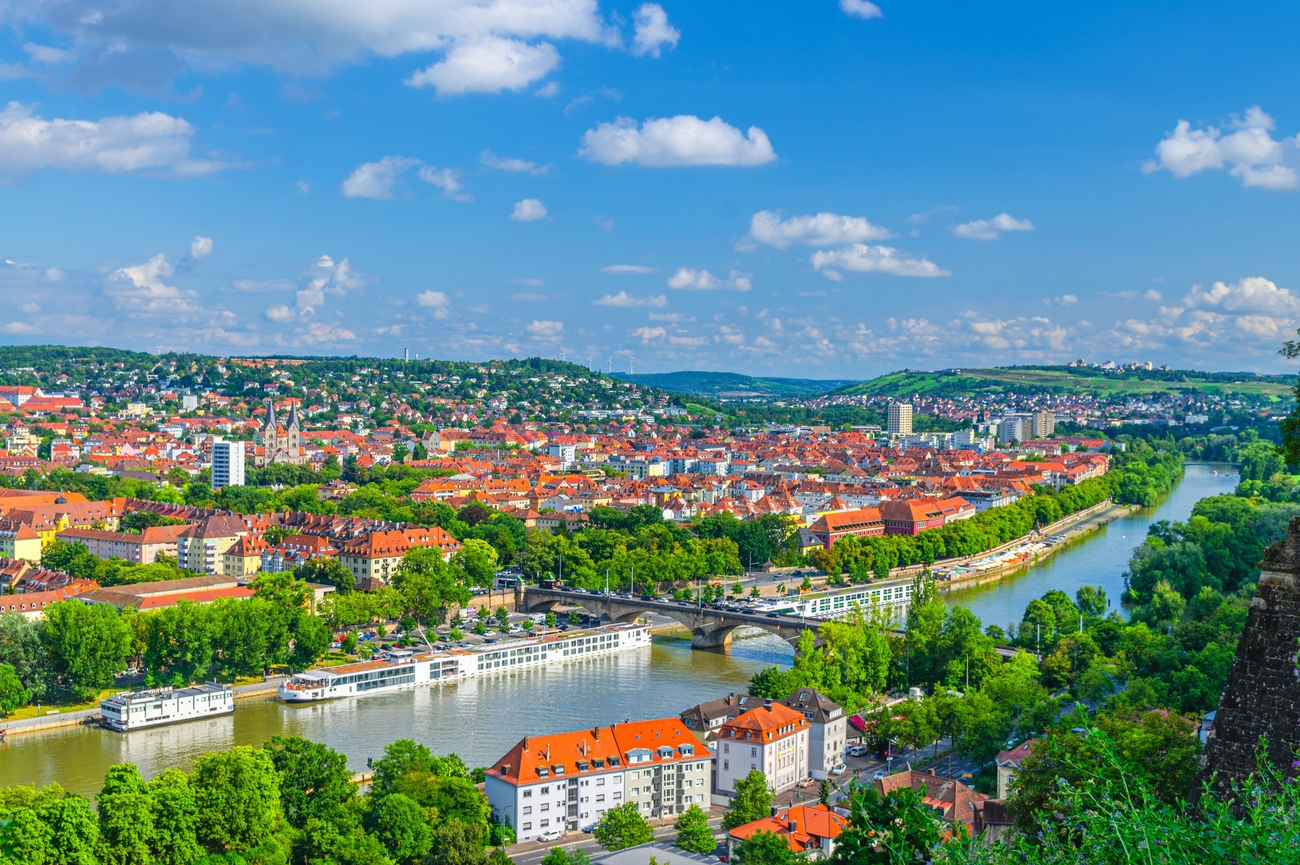
Day 1

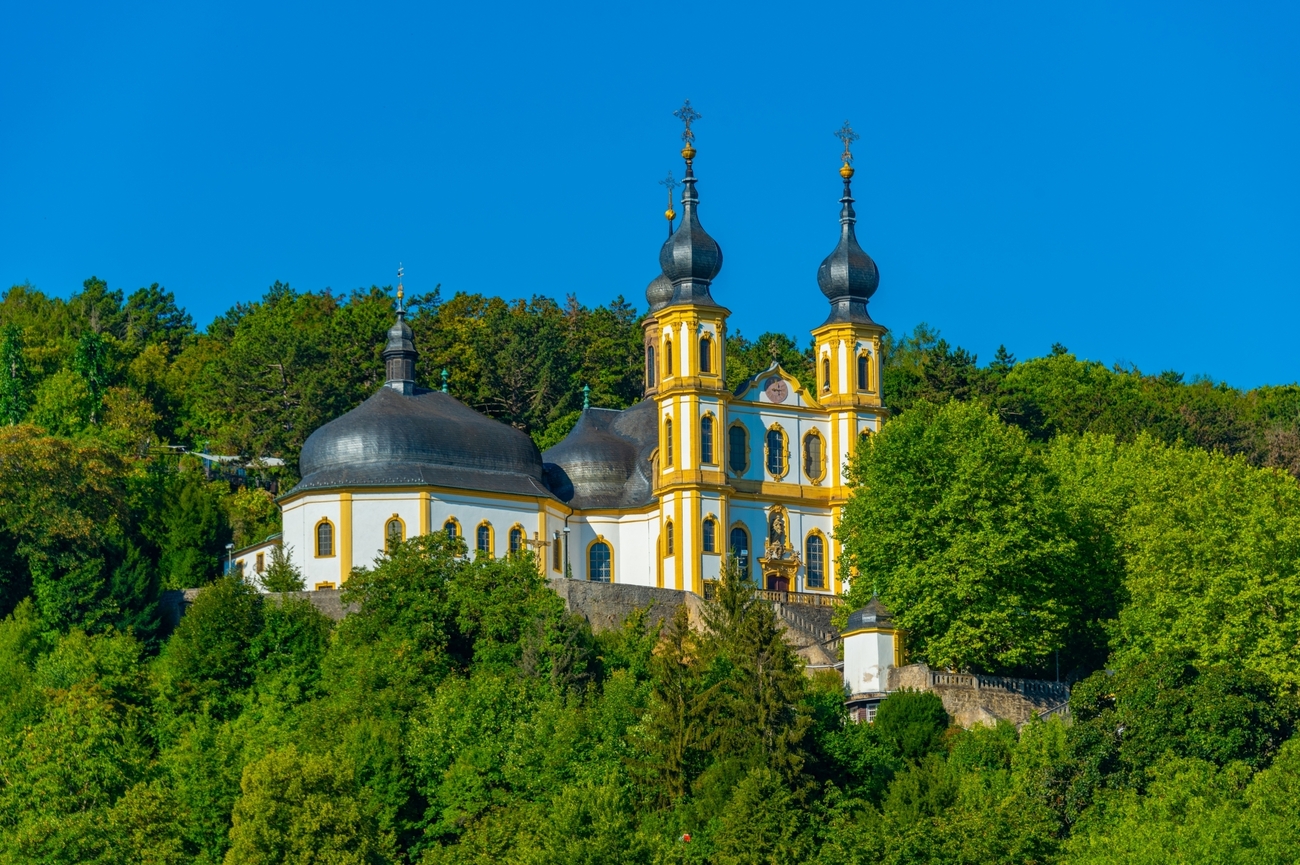
Morning: Käppele Sanctuary
Käppele Sanctuary sits on Würzburg’s Nikolausberg and makes a strong opening stop for the Franconia tour. Its twin-towered facade, curved roofs and elevated position give you an immediate view of the city’s Baroque character, while the surrounding terraces provide clear views toward Würzburg and Marienberg Fortress.
The present church was built between 1748 and 1750 from plans by Balthasar Neumann, beside an earlier pilgrimage chapel connected to a Pietà placed on the hill in 1640. The interior was completed in Rococo and early Neoclassical styles, with elaborate stucco, decorative altars, ceiling artwork and a passage displaying votive offerings left by pilgrims. The approach is equally important: the historic Stationsweg includes 14 Stations of the Cross, five terraces and 77 life-size figures created during the 18th century.
You can join tours from local guides that offer a focused Käppele tour lasting about one hour, covering the sanctuary, its architecture and the panorama toward Marienberg Fortress. And there are also longer guided walks of around two to two and a half hours that follow the Stationsweg before entering the church, although it involves roughly 300 steps and is better suited to visitors who are comfortable with a steady uphill climb.
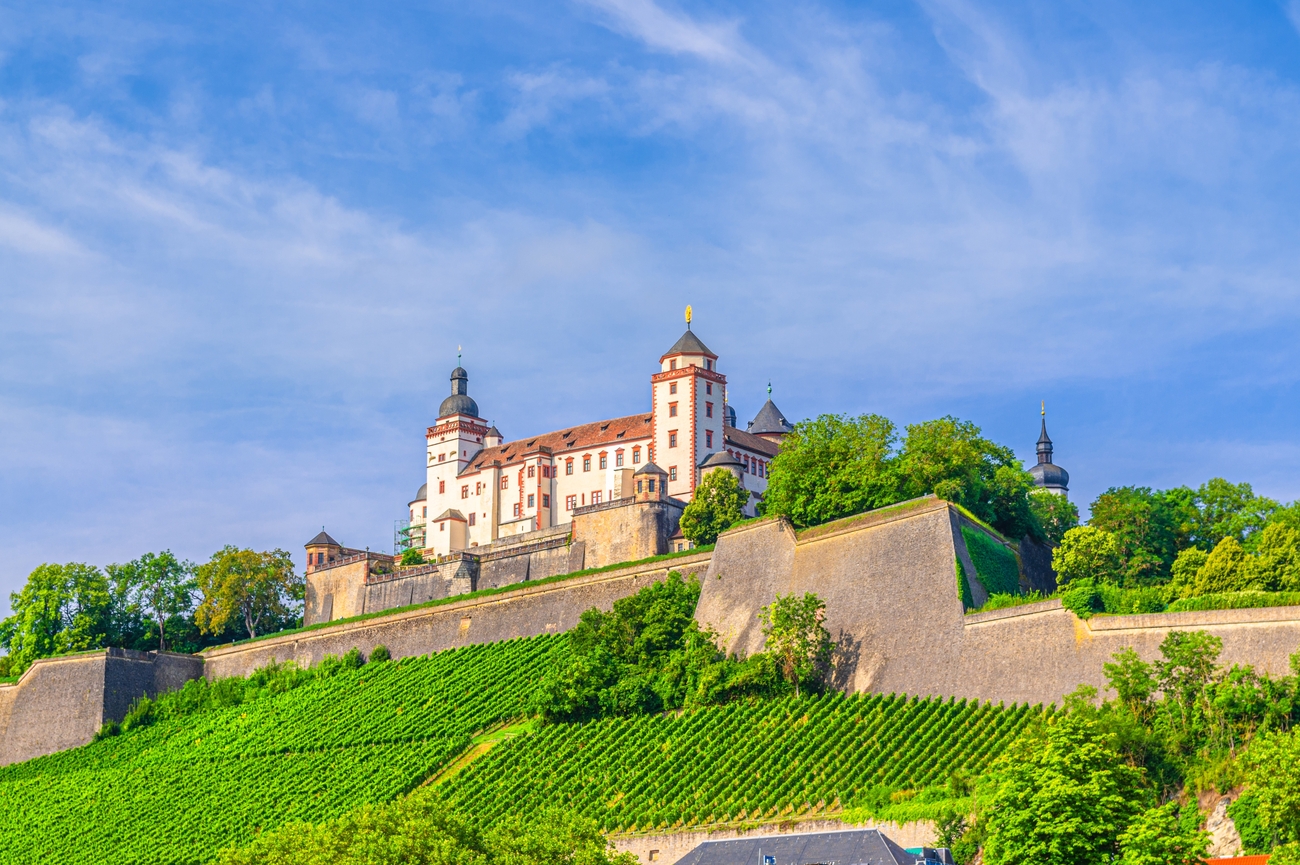
Marienberg Fortress
From Käppele Sanctuary, continue by car toward Marienberg Fortress, Würzburg’s defining hilltop landmark. The two sites look close across the landscape and it will only take an 8-10 minute drive.
Marienberg has served as a fortified site for centuries. The hill was occupied as early as the late Bronze Age, while a major castle began taking shape around 1200. It later became the residence of Würzburg’s prince-bishops from roughly 1250 to 1720. After Swedish forces captured it in 1631, the complex was reinforced with the large Baroque bastions that still define its profile. Much of the fortress burned in 1945 and was subsequently reconstructed, with restoration completed in 1990. This place is known for the circular Marienkirche, the 40-meter keep and the Renaissance well house, which contains a cistern more than 100 meters deep. The adjoining Museum für Franken adds real substance to the visit through Franconian art, cultural history and major sculptures by Tilman Riemenschneider.
You can join the official fortress tour that lasts about 60 minutes and covers the castle grounds, including sections of the main complex that independent visitors cannot currently enter. There are also English public tours available on weekends and holidays, while German tours are offered several times daily.
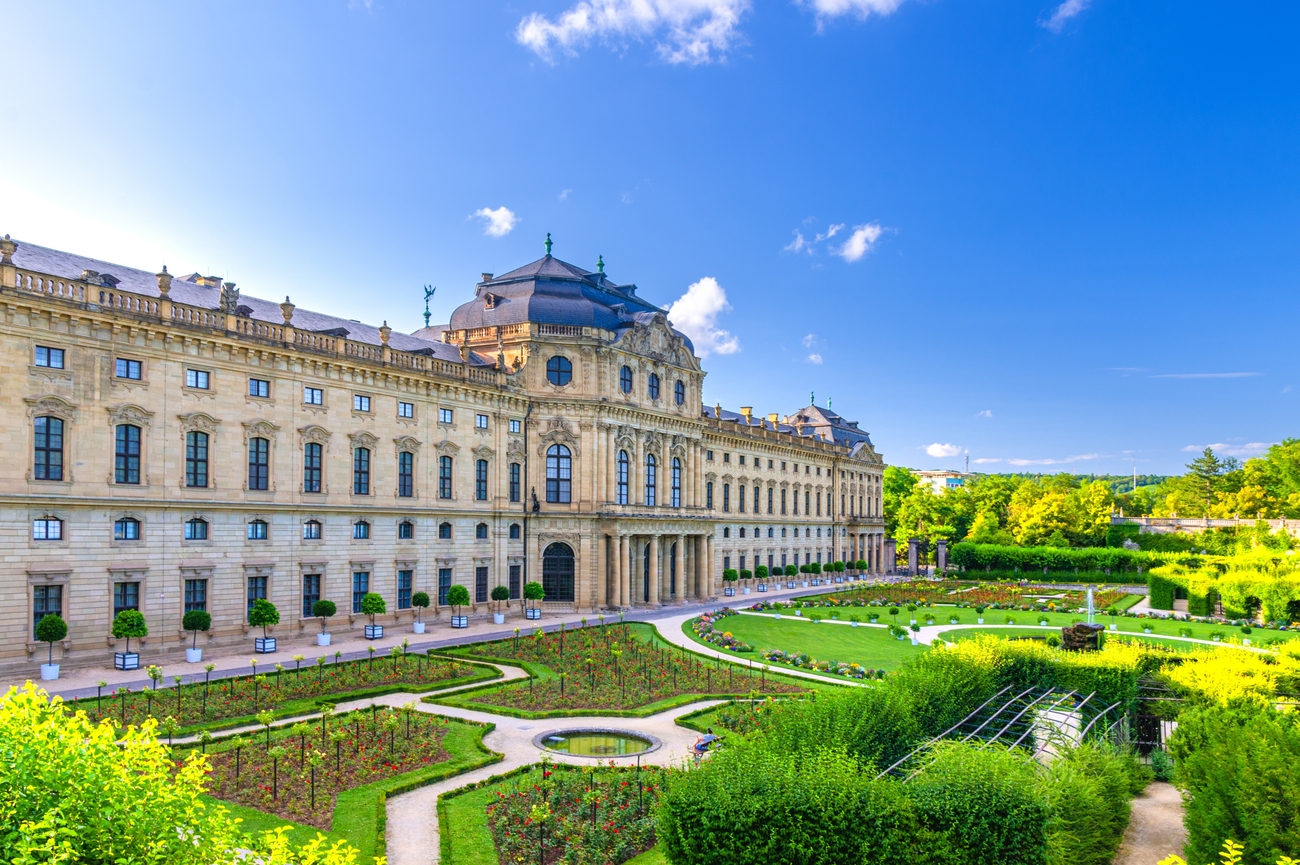
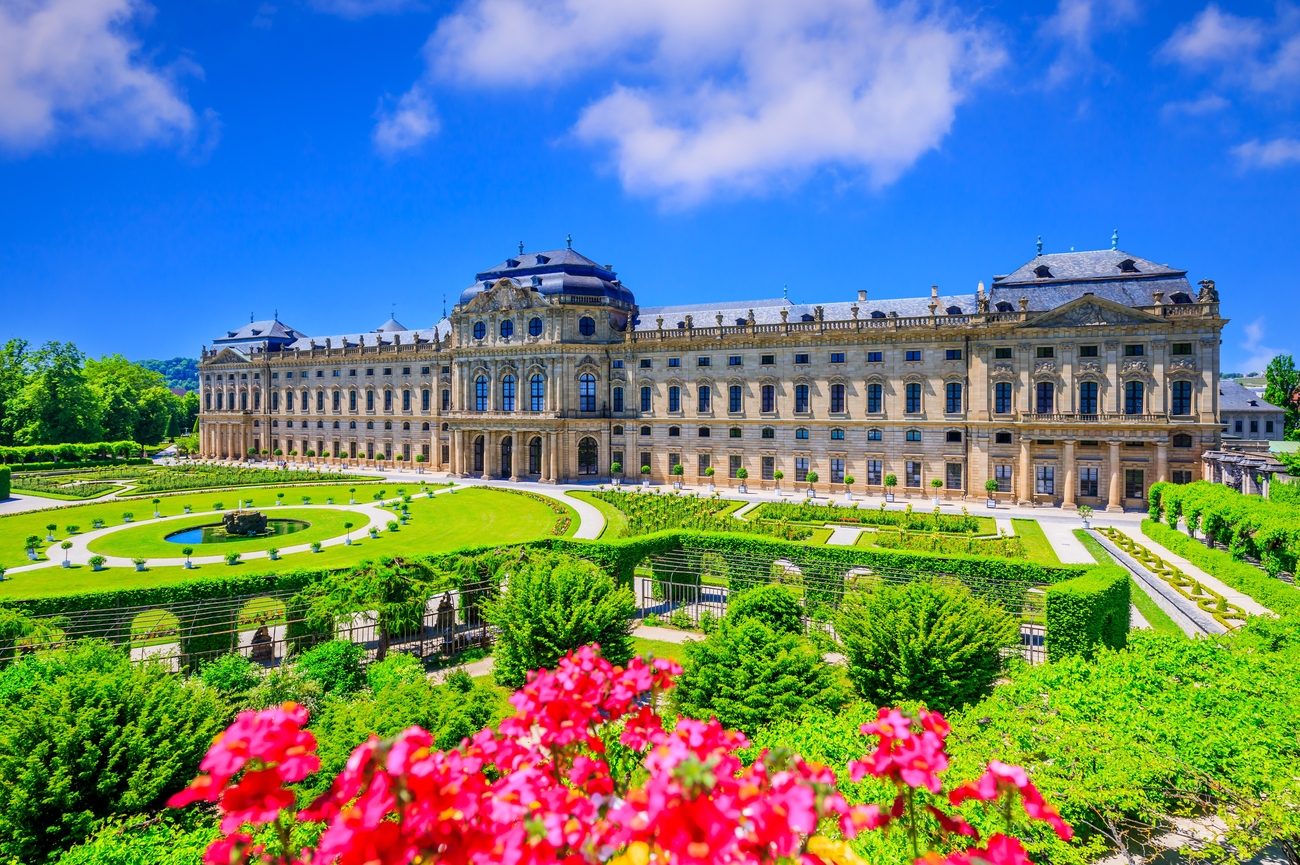
Würzburg Residence
Leaving Marienberg Fortress, cross the Main and continue toward Residenzplatz in central Würzburg. The heavy defensive walls of the fortress give way to the clean symmetry and formal scale of the Würzburg Residence. This UNESCO-listed palace is one of the city’s essential stops and the strongest example of its former wealth and political influence.
Construction began in 1720 for Würzburg’s prince-bishops, with architect Balthasar Neumann leading the project. The exterior was largely completed by 1744, while work on the interiors continued until 1780. Inside, the route passes through the Garden Hall, grand staircase, White Hall, Imperial Hall and a series of state apartments. The staircase ceiling carries Giovanni Battista Tiepolo’s monumental fresco, completed between 1751 and 1753, while the palace’s 40 period rooms contain 18th-century furniture, tapestries, paintings and decorative art.
The Residence was almost completely burned during the bombing of Würzburg in March 1945, although its central stone-vaulted rooms and Tiepolo frescoes survived. Decades of detailed restoration followed, including the reconstruction of the Mirror Cabinet, which reopened in 1987. The finished result does not feel like a generic palace visit; the craftsmanship and scale are genuinely impressive, even when your schedule is tight.
You can explore all publicly accessible rooms independently, but the official guided tour is the more efficient choice. English tours run daily at 11:00 a.m. and 3:00 p.m., last around 30 minutes and are included with the admission ticket. You can also book a private tour and this option lasts 90 minutes.
Afternoon: Court Garden
From the Würzburg Residence, the Court Garden is only a 1-2 minute walk through the palace grounds. Simply exit toward the garden side of the Residence and continue through the formal gates.
The Court Garden was developed after the completion of the Residence under Prince-Bishop Adam Friedrich von Seinsheim. Court gardener Johann Prokop Mayer began designing the grounds during the 1770s, using the former city fortifications and surrounding slopes as part of the layout. Instead of one large garden, the grounds are divided into several sections, including the East Garden, terraced paths, tree-lined areas and a reconstructed kitchen garden.
Take time to notice the ornamental gates, sculptures, decorative vases and carefully maintained topiary. Many of the stone figures were created by Franconian court sculptor Johann Peter Wagner and his workshop. Seasonal flower beds and shaped fruit trees add color without making the garden feel overly staged.
Schloss Veitshöchheim
The Court Garden at the Würzburg Residence is about eight kilometers from Schloss Veitshöchheim. Your journey time will be roughly 15–20 minutes by car.
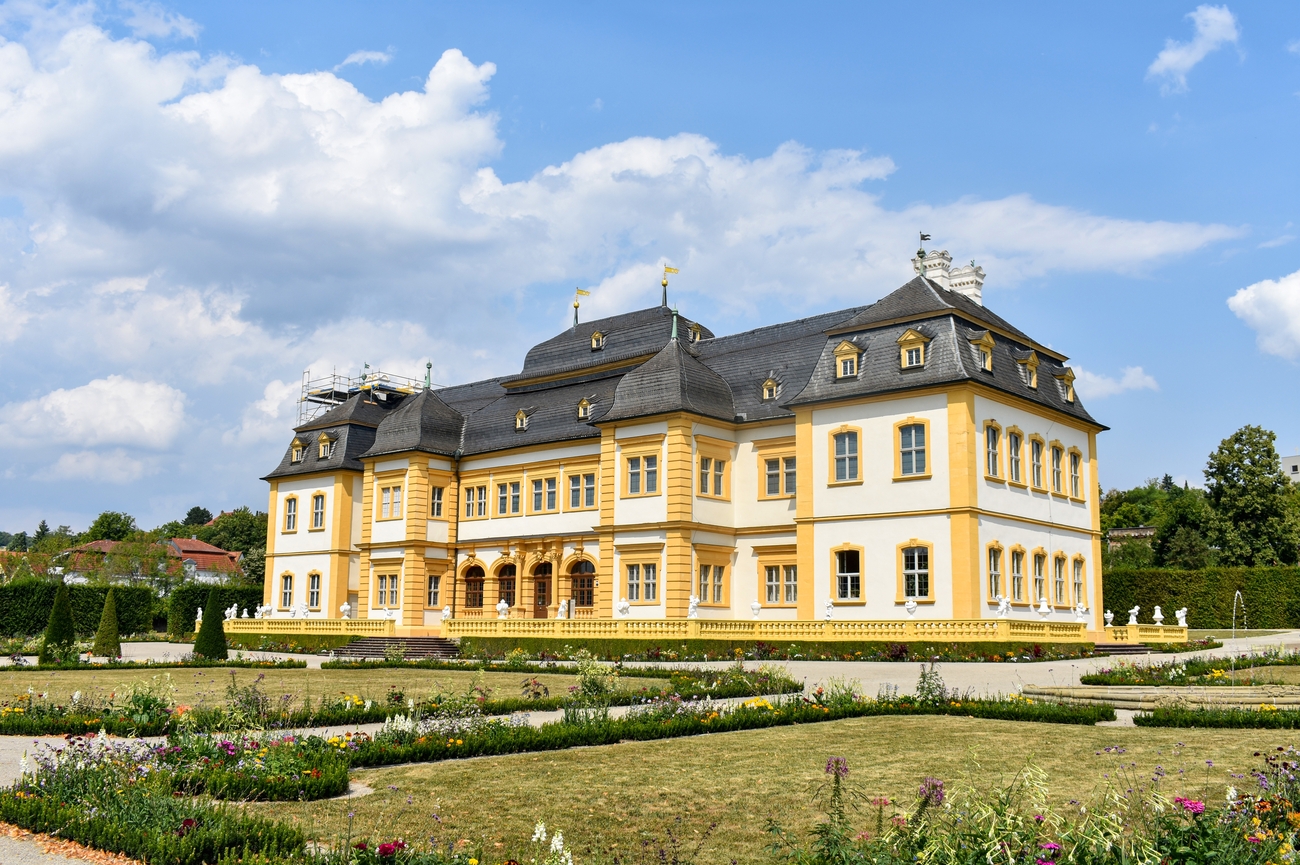
Schloss Veitshöchheim served as the summer residence of Würzburg’s prince-bishops until 1802. The original building was constructed between 1680 and 1682, then enlarged from 1749 to 1753 by Balthasar Neumann. Inside, the main highlights include the prince-bishop’s private apartments, Antonio Bossi’s ceiling stucco and staircase sculptures by Johann Peter Wagner. The rooms furnished around 1810 for Grand Duke Ferdinand of Tuscany are especially notable for their rare paper wall coverings. The details are refined rather than over-the-top, so the visit feels focused and manageable even on a full itinerary.
The historic rooms on the upper floor can only be seen through an official guided tour. Tours take approximately 30 minutes and are conducted in German. You can also request a group tour if you are visiting as part of a large group.
Hofgarten Veitshöchheim
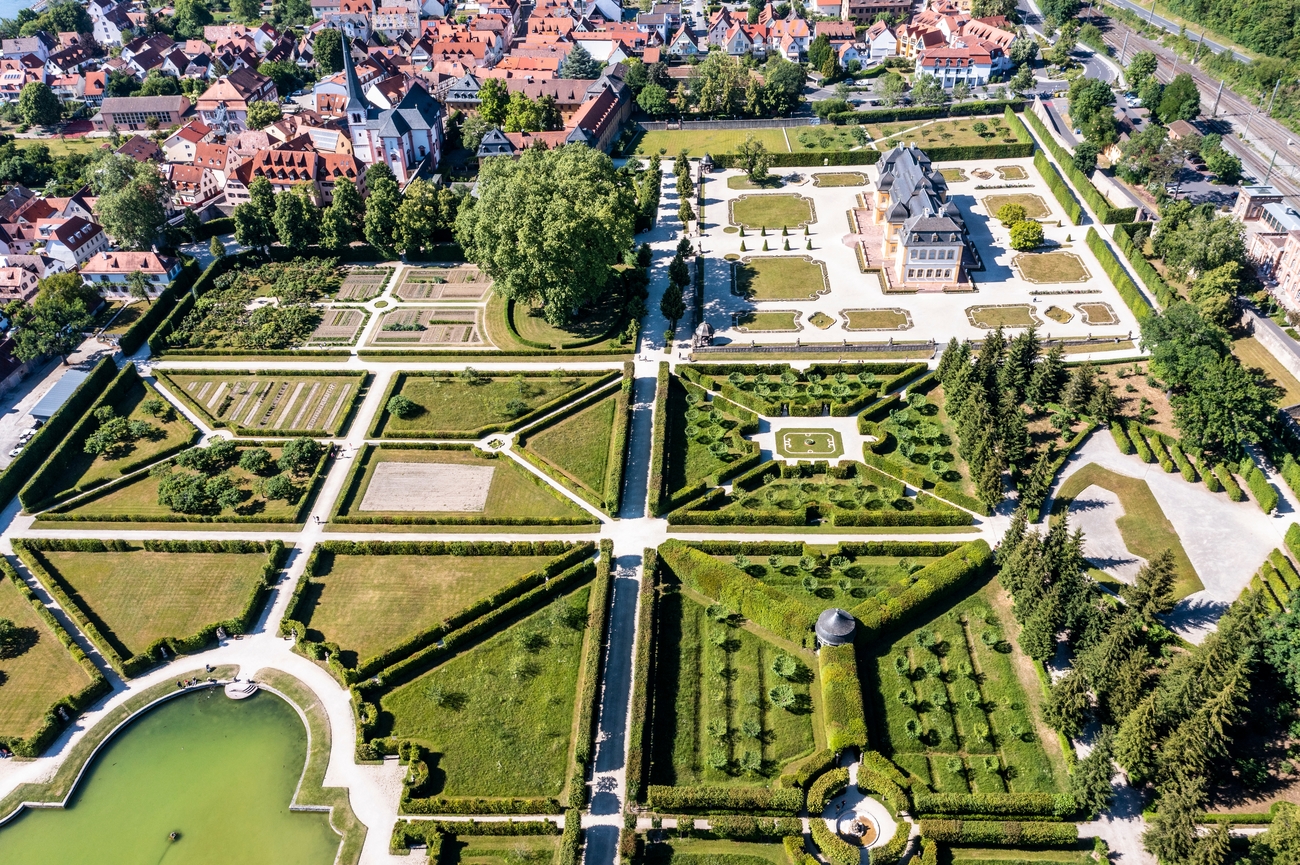
From Schloss Veitshöchheim, the Hofgarten is only a 1-2 minute walk, as the palace stands directly within the garden complex. Step outside the palace and continue into the formal grounds, where the small summer residence opens into a much larger landscape of clipped hedges, fountains, lakes and sculpture-lined paths. The garden is free to enter and is open throughout the year.
The garden began taking shape in 1702, when the grounds surrounding the summer residence were organized into a flower garden, kitchen garden, carp pond and wooded sections used for pheasants and deer. Its present Rococo appearance was developed mainly from 1763 under Prince-Bishop Adam Friedrich von Seinsheim. While many European formal gardens were later redesigned as English landscape parks, the Hofgarten Veitshöchheim retained much of its original structure. This makes it one of Germany’s best-preserved Rococo gardens rather than a modern reconstruction designed mainly for tourists.
The grounds are divided into several themed areas, including hedge-lined garden rooms, lake sections, pergolas, circular clearings and small pavilions. Nearly 300 sculptures are placed throughout the property, representing classical gods, animals, allegorical figures, members of court society and personifications of the arts. Major highlights include the Great Lake, the Parnassus sculpture group, the hedge theatre, the Grotto House, Chinese-style pavilions and the historic kitchen garden, where fruits, vegetables and herbs are still cultivated.
You can explore the garden independently using the available audio guide, which provides information about both the grounds and the history of the palace. You can also arrange a private garden tour lasting approximately 90 minutes. This allows the guide to focus on the Rococo design, sculptures, water features and historical sections most relevant to your interests.
Evening: Old Main Bridge
The drive back to central Würzburg takes approximately 15-20 minutes. The Old Main bridge itself forms part of Würzburg’s pedestrian zone, which means your chauffeur will need to drop you near the Old Town side for the final short walk.
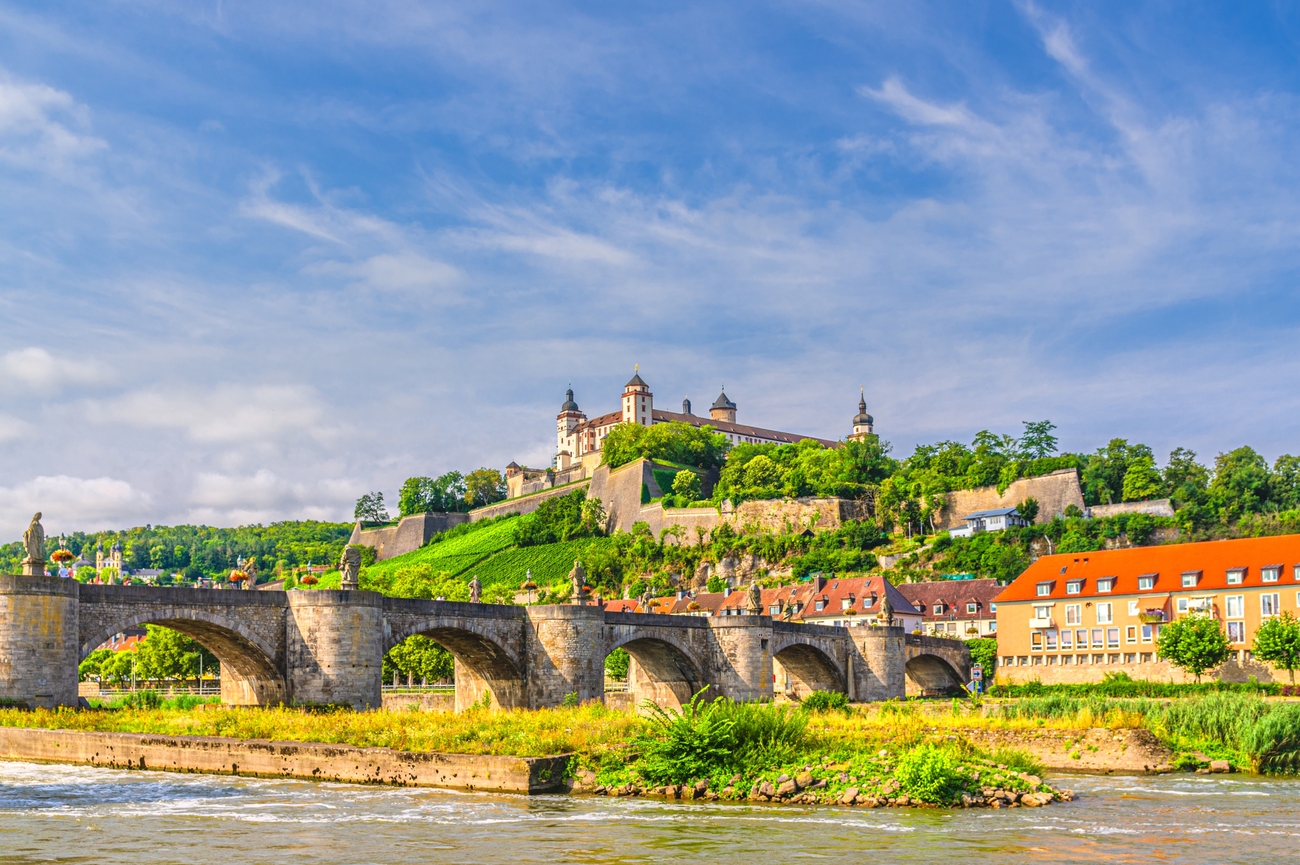
The Old Main Bridge is one of Würzburg’s most recognisable landmarks and a strong final stop for the day. It crosses the Main River between the historic center and the hillside below Marienberg Fortress, giving you direct views of the fortress, Käppele Sanctuary and the surrounding vineyards. A stone bridge may have existed on this site as early as 1120, but the present structure was largely developed from the late 15th century. Its piers were completed between 1476 and 1488, initially connected by a wooden structure, before stone arches were added beginning in 1512. Around 1730, the bridge received its defining Baroque statues: approximately 4.5-meter figures representing saints and historical religious figures connected to Würzburg. Although the sculptures were damaged during the bombing of 1945, they were later restored.
Day 1 - Franconia Tour Map
Day 2
Morning: Plönlein
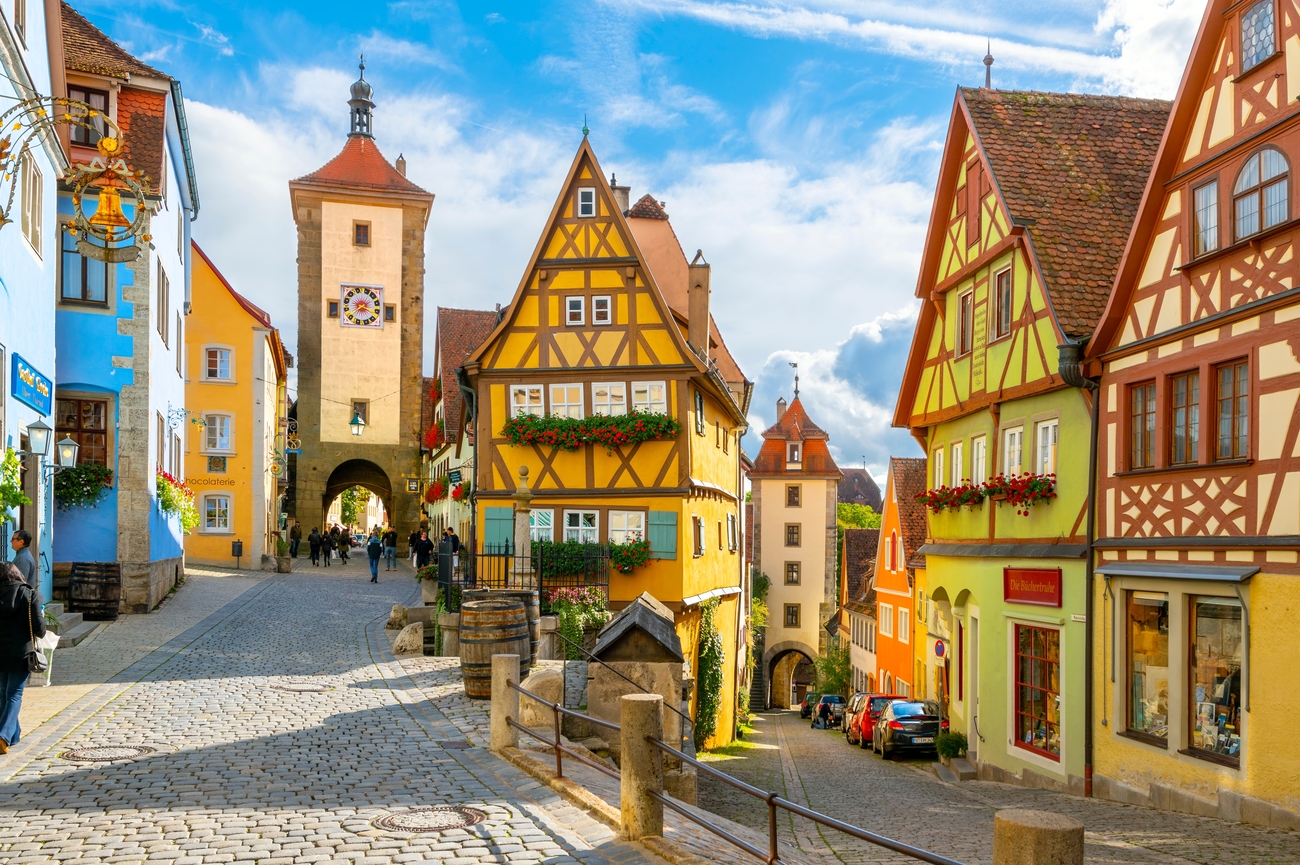
Plönlein is Rothenburg’s best-known landmark, but the name refers to the entire small square rather than only the narrow yellow half-timbered house in the center. The ensemble includes the fountain in front of the house and the two streets behind it. One leads through the tall Siebersturm into the Spital Quarter, while the other slopes toward the Kobolzeller Tor, a fortified gateway dating from around 1360 that connects the old town with the Tauber Valley. The word Plönlein is generally understood as a small or level place by a fountain.
Its appeal comes from how much of Rothenburg’s historic character is concentrated in one view: timber framing, stone paving, defensive towers, narrow facades and the remains of the medieval wall system. The central house is slightly irregular rather than perfectly symmetrical, which keeps the scene from feeling too polished or manufactured. Plönlein has also become an internationally recognized image of the European medieval town and has influenced settings used in films, animation, games and other visual media, including associations with Disney’s 1940 version of Pinocchio.
Plönlein itself is an outdoor landmark, so there is no ticketed interior or dedicated tour attached to the square. You can cover the main viewpoint in 20–30 minutes, including time to study the towers and walk briefly toward the Kobolzeller Gate. However, the better option is to include it at the beginning of a private old-town tour, allowing the guide to explain how the streets, gates and former city walls developed as Rothenburg expanded.
Spitalbastei
From Plönlein, continue south along Spitalgasse for around 5-7 minutes on foot. The route passes through the Siebersturm and leads deeper into the Spital Quarter.
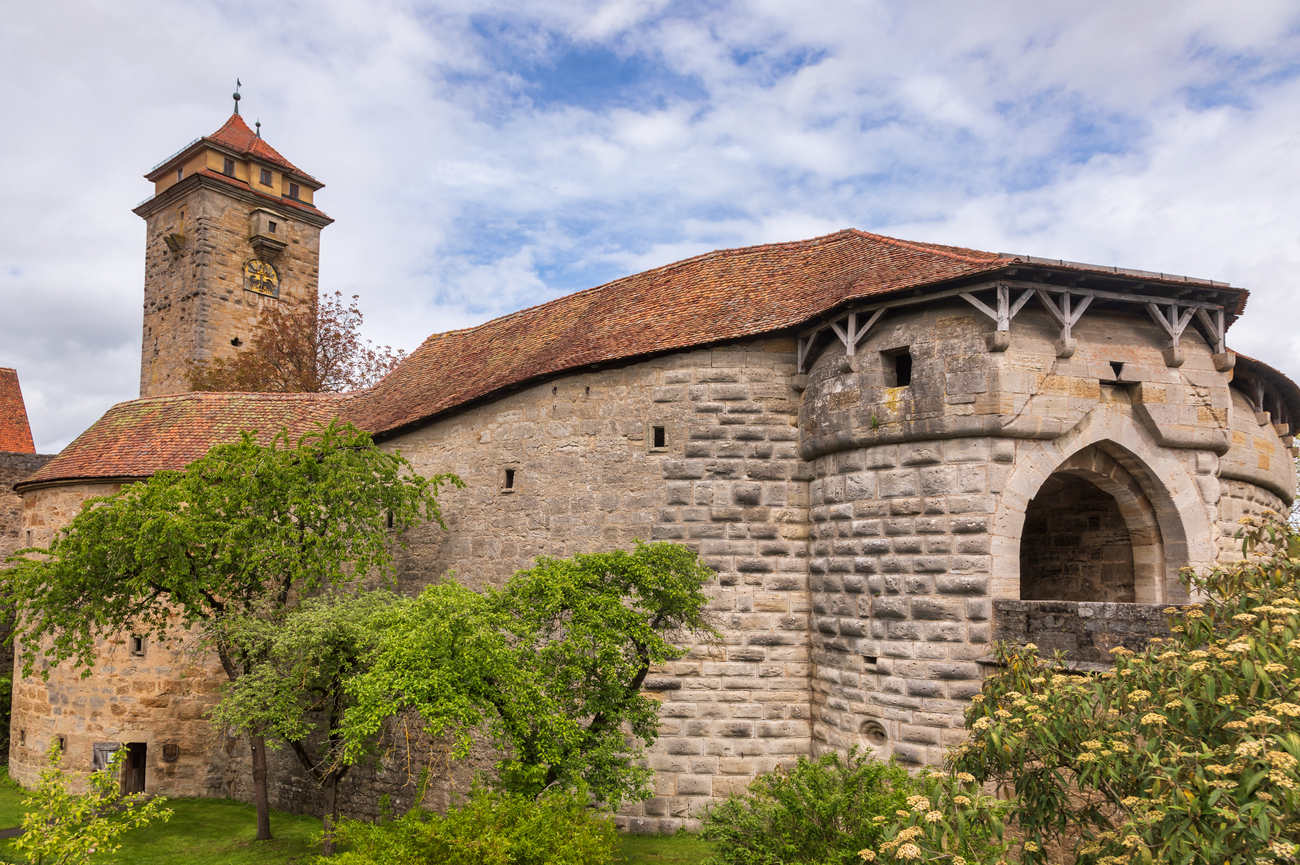
The Spitalbastei, also known as the Spital Bastion or Hospital Bastion, is the youngest and most substantial section of Rothenburg’s historic fortifications. It was built to protect the Spital Quarter, the final part of the expanding old town to be enclosed by defensive walls. It was completed in 1546, placing it firmly in the period when city defences were being adapted for more advanced weapons and military tactics.
This is not a decorative gate designed purely for appearances. The defensive complex contains thick stone walls, enclosed passages, multiple gateways and protected spaces that allowed defenders to control movement into the city. Its rounded, extended layout was designed to strengthen the southern entrance and accommodate cannon-based defence. The outer structure includes two defensive enclosures, seven gates, a drawbridge, a portcullis and elevated firing positions, giving you a clearer sense of how seriously Rothenburg protected this side of the town.
One of the details worth noticing is the Latin inscription “Pax intrantibus, salus exeuntibus,” translated as “Peace to those who enter, salvation to those who leave.” It appears above the Spital Gate and provides a surprisingly welcoming message for such a heavily fortified entrance. The contrast between that inscription and the structure’s military design is part of what makes the stop interesting. You can also access sections of Rothenburg’s approximately four-kilometer city-wall route from this area.
Castle Garden
Leaving the fortified southern quarter, continue north through Rothenburg’s old town toward Herrngasse. The walk from Spitalbastei to the Castle Garden takes approximately 15-20 minutes, passing Spitalgasse, the central market area and one of the town’s most elegant historic streets before reaching the Burgtor.
The Castle Garden occupies the site of Rothenburg’s former Hohenstaufen imperial castle. King Conrad III commissioned the stronghold in 1142 to reinforce royal control over the surrounding territory. The castle no longer stands, and the familiar claim that it was destroyed by an earthquake in 1356 may be more legend than confirmed fact. The remaining Blasius Chapel is now used as a memorial and is the only surviving building from the former castle complex. Today, the site is arranged as an English-style landscape park with broad lawns, mature trees, flower beds and open viewpoints over the Tauber Valley. Near the former gardener’s house, a formal figure garden contains eight sandstone sculptures representing the four seasons and the four classical elements.
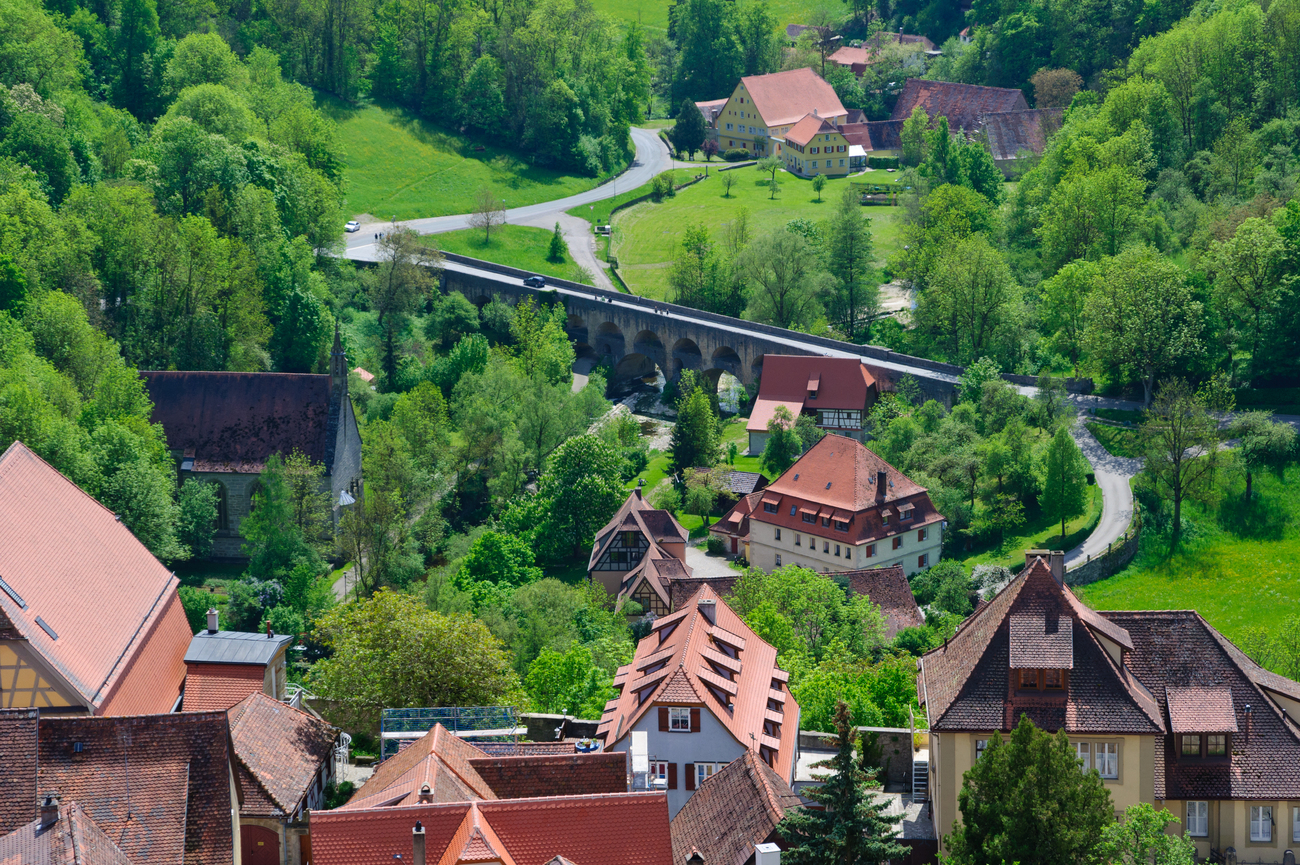
The viewing platforms on either side of the garden give you different perspectives across the valley. Looking south, you can see the Kobolzell Church, the Double Bridge, vineyard slopes and the fortified Spital Quarter visited earlier in the morning. The northern view extends toward Detwang and Toppler Castle, while the surrounding walls show how Rothenburg was positioned above the Tauber for defense and control of the landscape.
Afternoon: Rothenburg Museum
A 5-7 minute walk through Herrngasse and Klostergasse connects the Castle Garden with the Rothenburg Museum at Klosterhof 5. The route stays entirely within the old town, so there is no need to return to the vehicle.
The Rothenburg Museum occupies a former Dominican convent founded in 1258 by imperial official Lupold von Nordenberg. Nuns from Würzburg and nearby Neusitz moved into the site the following year, and the convent continued to develop through the 13th and 14th centuries. After Rothenburg adopted the Reformation in 1544, the religious community declined and the complex eventually passed into municipal ownership. The building was converted into a city museum during the 1930s, with later restoration work preserving and reconstructing important parts of the former convent.
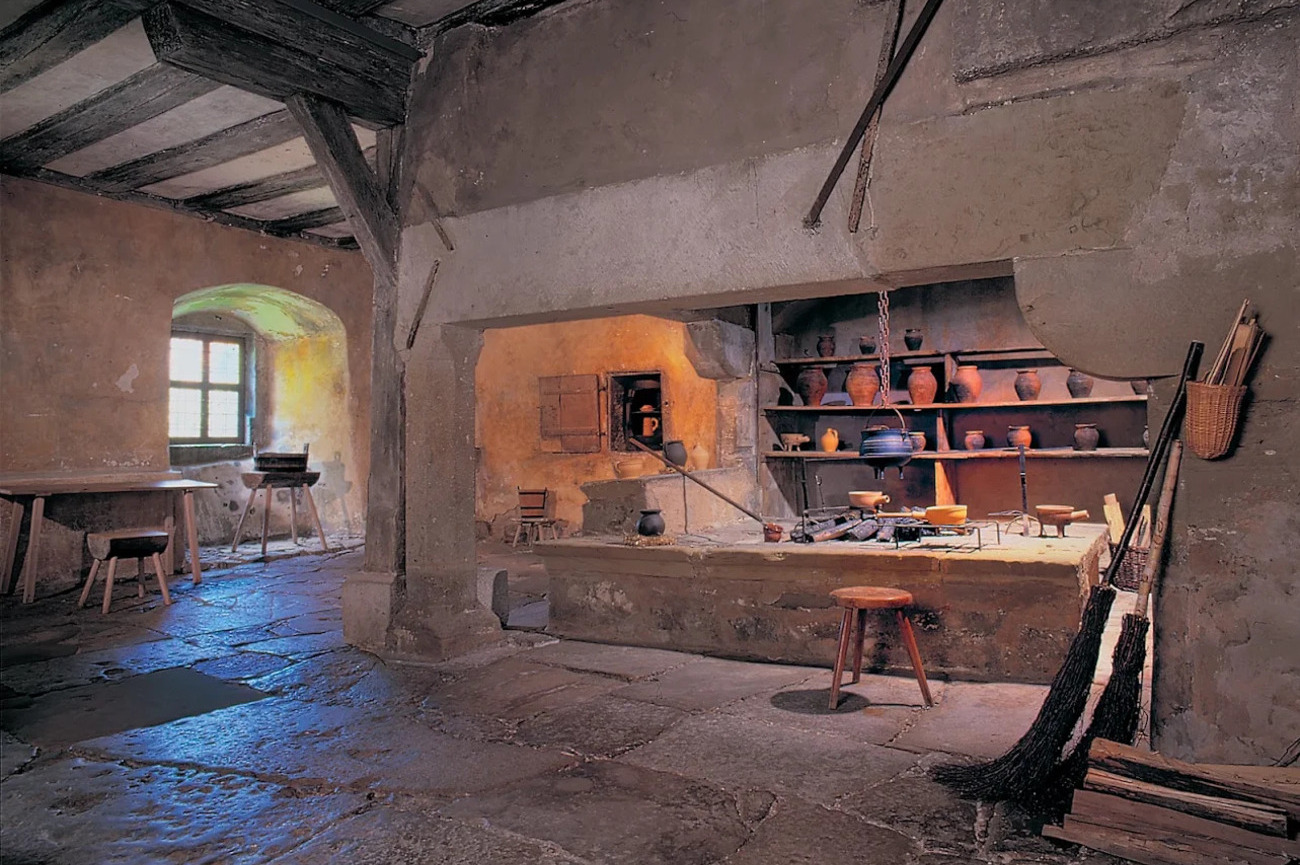
Spread across approximately 2,500 square meters, the museum explains Rothenburg’s development as an imperial city through art, weapons, religious objects, furniture and everyday household items. One of its most important features is the surviving 13th-century convent kitchen, considered among the oldest preserved monastic kitchens of its kind. Other highlights include the Rothenburg Passion paintings, the Baumann weapons collection, historic faience, Judaica, craft displays and furnished rooms showing how local residents lived across different periods.
You can move through the museum independently, but you can also book a private guided visit. The museum offers a 60-minute convent and museum tour led by the character “Nun Sabine” for groups of up to 20 people.
Medieval Crime Museum
From the Rothenburg Museum, head toward the former St. John’s Quarter until you reach Burggasse, where the Medieval Crime Museum is located. The walk takes about 8-10 minutes and stays entirely within the old town.
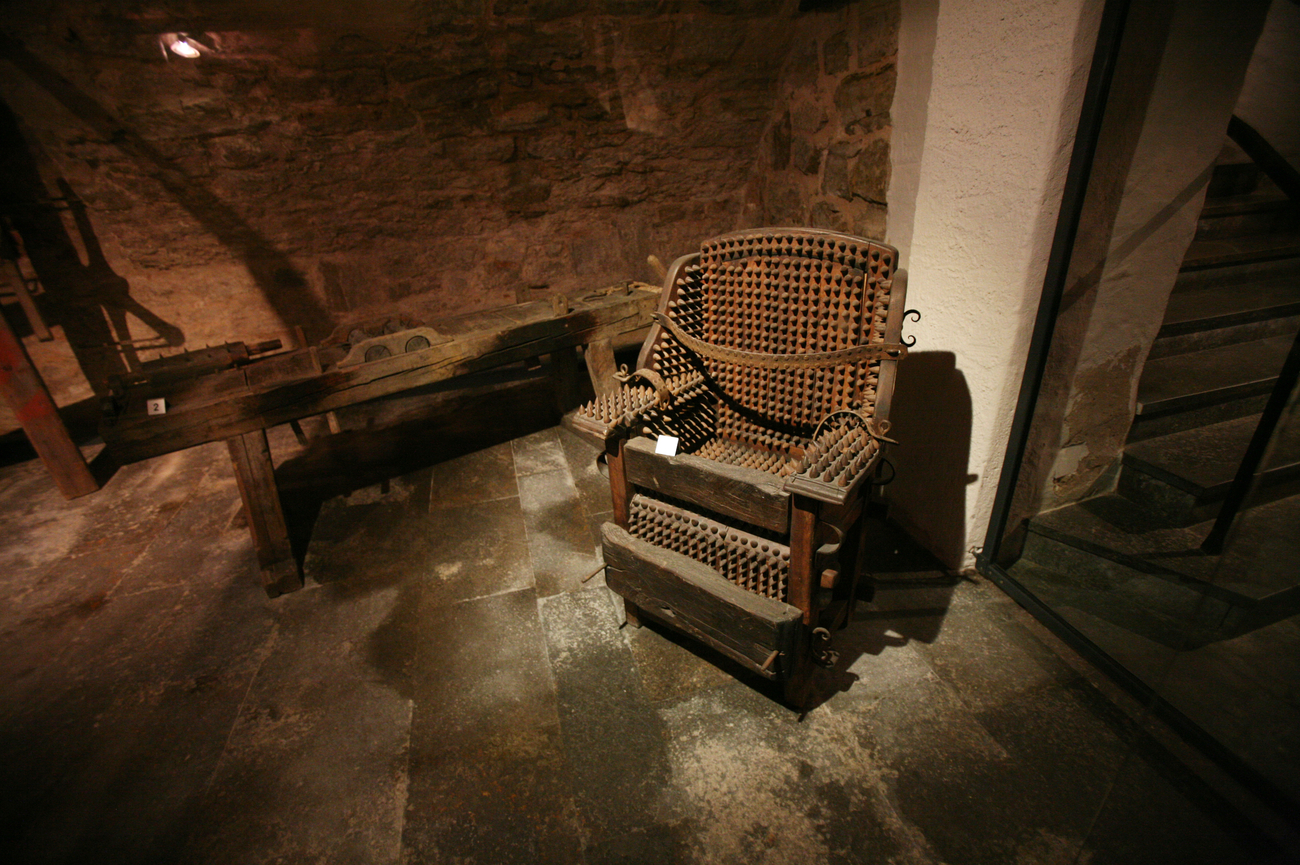
The Medieval Crime Museum is housed in the former St. John’s Commandery, constructed between 1393 and 1410 beside St. John’s Church. The building was remodelled in the Baroque style in 1718 and later served as a Bavarian district administration office. The museum moved into the restored complex in 1977 and now holds approximately 50,000 objects covering more than 1,000 years of German and European legal history. The vaulted cellar covers interrogation methods and torture, while the upper floors examine public humiliation, witch trials, executioners, constitutional law, marriage, women before the law, school discipline and major criminal cases.
One of the museum’s best-known exhibits is the so-called Iron Maiden. The display corrects the popular belief that it was a medieval torture and execution device, explaining that its threatening spikes were added later and that the original object was connected with punishments involving public shame. You can book a private guided tour available in German or English.
Ansbach Residence
Leaving Rothenburg’s medieval center behind, the drive to Ansbach Residence takes approximately 35-40 minutes. The route passes through gentle Franconian countryside, offering a relaxed transition between the two historic towns.
Ansbach Residence began as a medieval complex before being transformed into a formal residence between 1705 and 1730. Most of its surviving interiors were designed by Italian architect Leopoldo Retti and completed between 1734 and 1745 for the margraves of Brandenburg-Ansbach. The palace remains unusually consistent because the last margrave abdicated in 1791 and transferred his territory to Prussia, after which there was little reason to modernize the state apartments.
The main floor is divided into separate ceremonial suites for the Margrave, the Margravine and important guests. It is known for the Festival Hall with Carlo Carlone’s ceiling fresco, the Mirror Cabinet with its collection of Meissen porcelain and the palace art gallery, which displays Rococo paintings and works from the former margravial collection. The Gothic Hall contains the largest collection of faience and porcelain from the former Ansbach Manufactory, while a group of preserved 18th-century margravial horses adds one of the palace’s more unusual exhibits.
You can only access the palace through an official guided tour. Tours begin every hour, last approximately 50 minutes and run until 5:00 p.m. The Residence is closed on Mondays except for selected public holidays.
Evening: Orangerie Ansbach
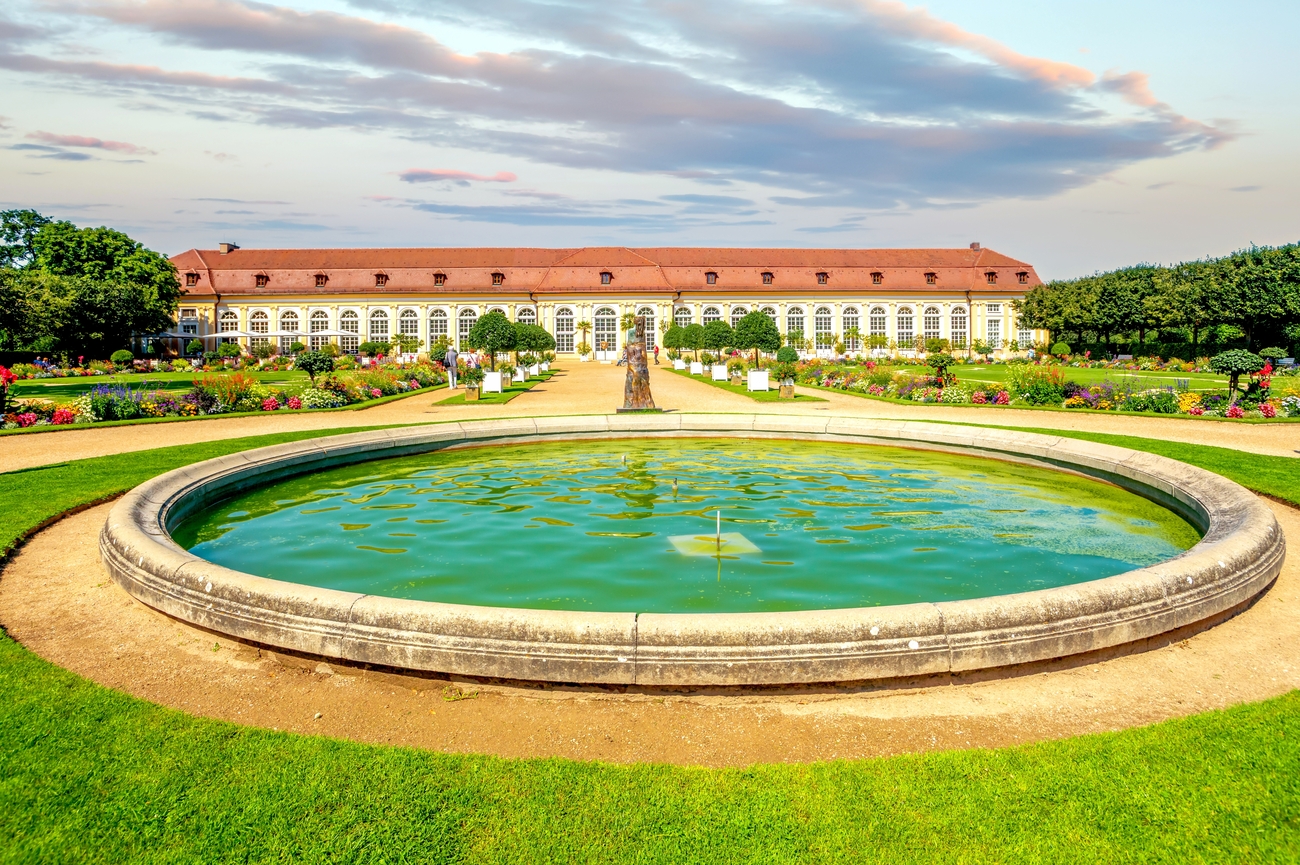
Once the tour of Ansbach Residence ends, walk across the Promenade and continue into the Court Garden. The Orangerie is reached in roughly 5 minutes, although the palace and garden are not directly connected because several buildings stand between them.
Built between 1726 and 1743, the Orangerie was designed according to plans by Carl Friedrich von Zocha and later completed under Leopoldo Retti. It originally served two purposes: protecting citrus trees and other sensitive plants during the winter, and providing an elegant venue for summer celebrations held by the margravial court. Its design follows French architectural models. The long, symmetrical building is divided by projecting pavilions and faces a formal parterre framed by double rows of lime trees.
During spring and summer, the area in front of the Orangerie is decorated with flower beds based on historical Baroque planting patterns. More than 150 Mediterranean and subtropical plants may be displayed around the garden, including lemon, Seville orange, olive, pistachio, laurel and fig trees. And the season matters for this evening stop. The Court Garden stays open later in the warmer months and closes earlier during the rest of the year, so plan accordingly or consider an indoor event if visiting outside summer.
Day 2 - Franconia Tour Map
Day 3
Morning: Schöner Brunnen
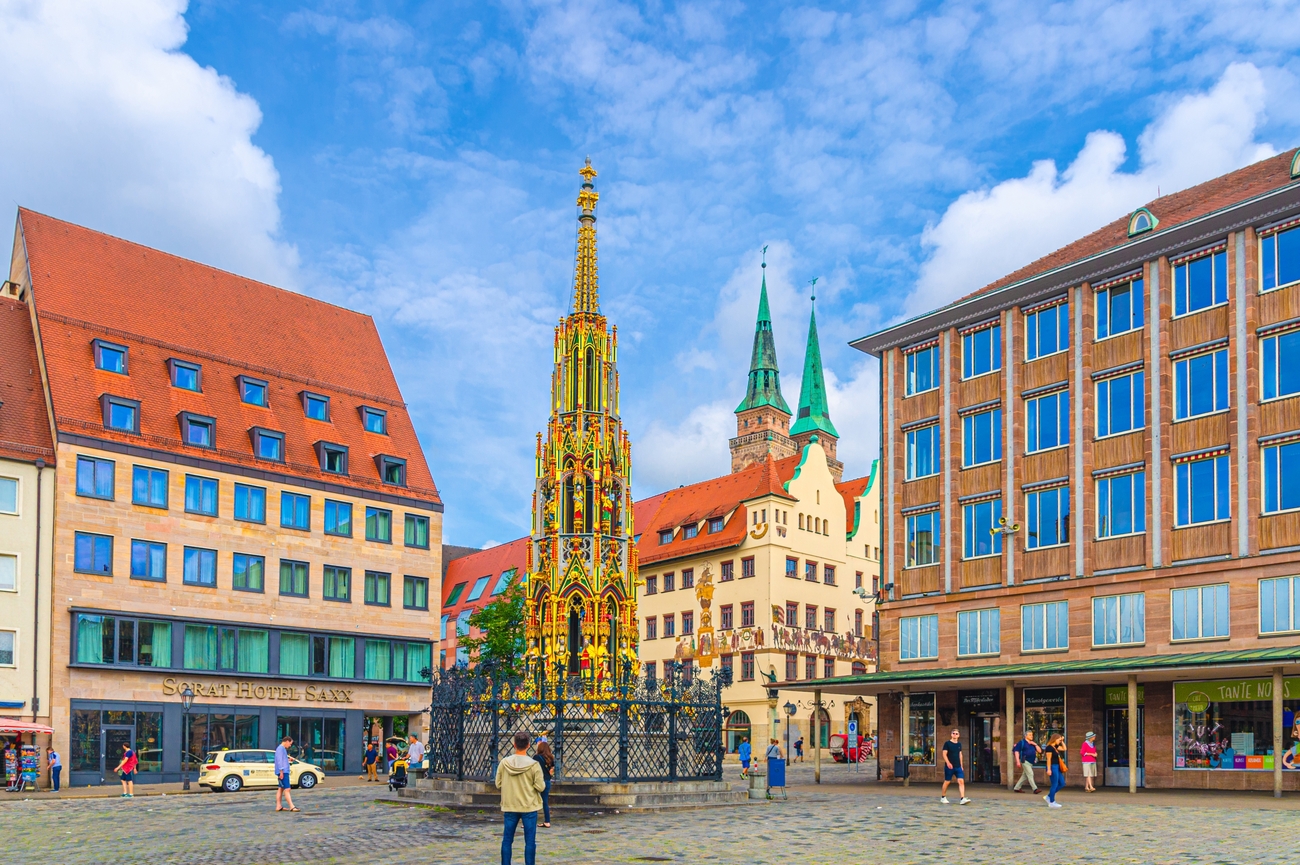
The Schöner Brunnen stands on the northwestern side of the Hauptmarkt, close to the Old Town Hall. Built between 1385 and 1396 by master builder and stonemason Heinrich Beheim, the Schöner Brunnen rises approximately 19 meters above its octagonal basin. Its narrow, tiered design resembles the spire of a Gothic church more than a conventional public fountain. Four levels contain 40 painted stone figures representing the medieval worldview of the Holy Roman Empire, including philosophers, biblical figures, church leaders, rulers and prince-electors.
The structure visible on the Hauptmarkt today is a carefully produced replacement, while surviving original sculptures are preserved in the Germanisches Nationalmuseum. The fountain’s iron railing was added in 1587 and contains its best-known detail which is a movable brass ring that appears to have no visible seam. Local tradition says that turning the ring brings good luck or grants a wish. It takes only a few seconds, but it remains one of those Nuremberg traditions that even serious travelers tend to try.
Imperial Castle of Nuremberg
A steady 10-12 minute uphill walk leads from Schöner Brunnen through Burgstraße to the Imperial Castle of Nuremberg. The route passes some of the oldest streets in the city’s historic center.
The Imperial Castle was one of the most important royal and imperial residences in the Holy Roman Empire. Nuremberg was first documented as royal property in 1050 and the Salian and Hohenstaufen rulers later used the city for court assemblies and Imperial Diets. Much of the castle visible today developed under the Hohenstaufen dynasty around the 12th and early 13th centuries. In 1356, Emperor Charles IV’s Golden Bull established Nuremberg as the location where newly elected rulers were expected to hold their first Imperial Diet.
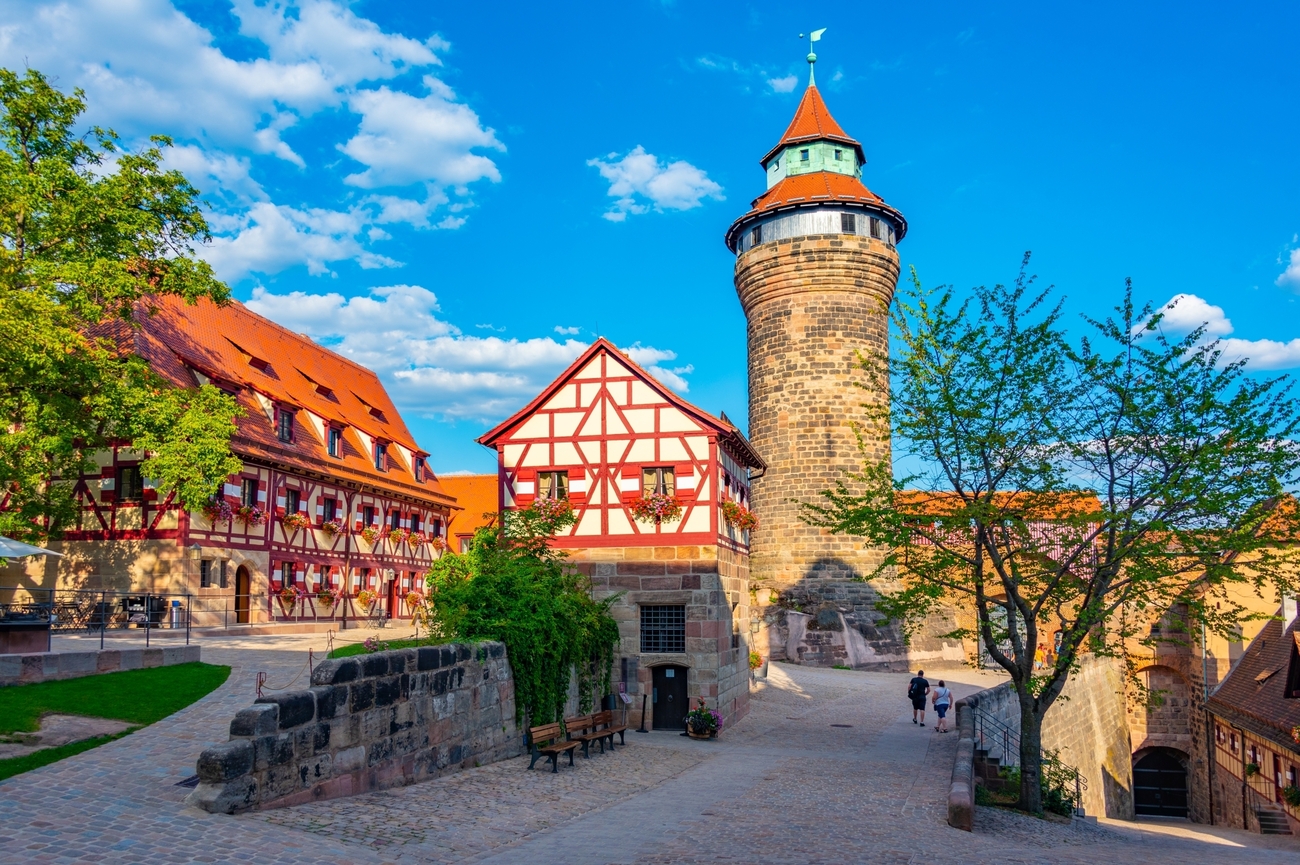
The main visit covers the Palas, the Romanesque double chapel and the Imperial Castle Museum. Built around 1200, the double chapel consists of two chapels positioned one above the other, with a separate imperial gallery that allowed the ruler to attend services while remaining apart from the wider court. The museum also contains historical weapons and objects from the Germanisches Nationalmuseum. Although much of the castle was destroyed in 1945, important Romanesque and late Gothic sections survived and the wider complex was reconstructed after the war. And two features stand out. The Deep Well, over 50 meters deep, supplied water during sieges and is only accessible on guided visits. The nearby Sinwell Tower, built in the 13th century, offers panoramic views of Nuremberg’s old town.
Museums Nuremberg - Albrecht Dürer House
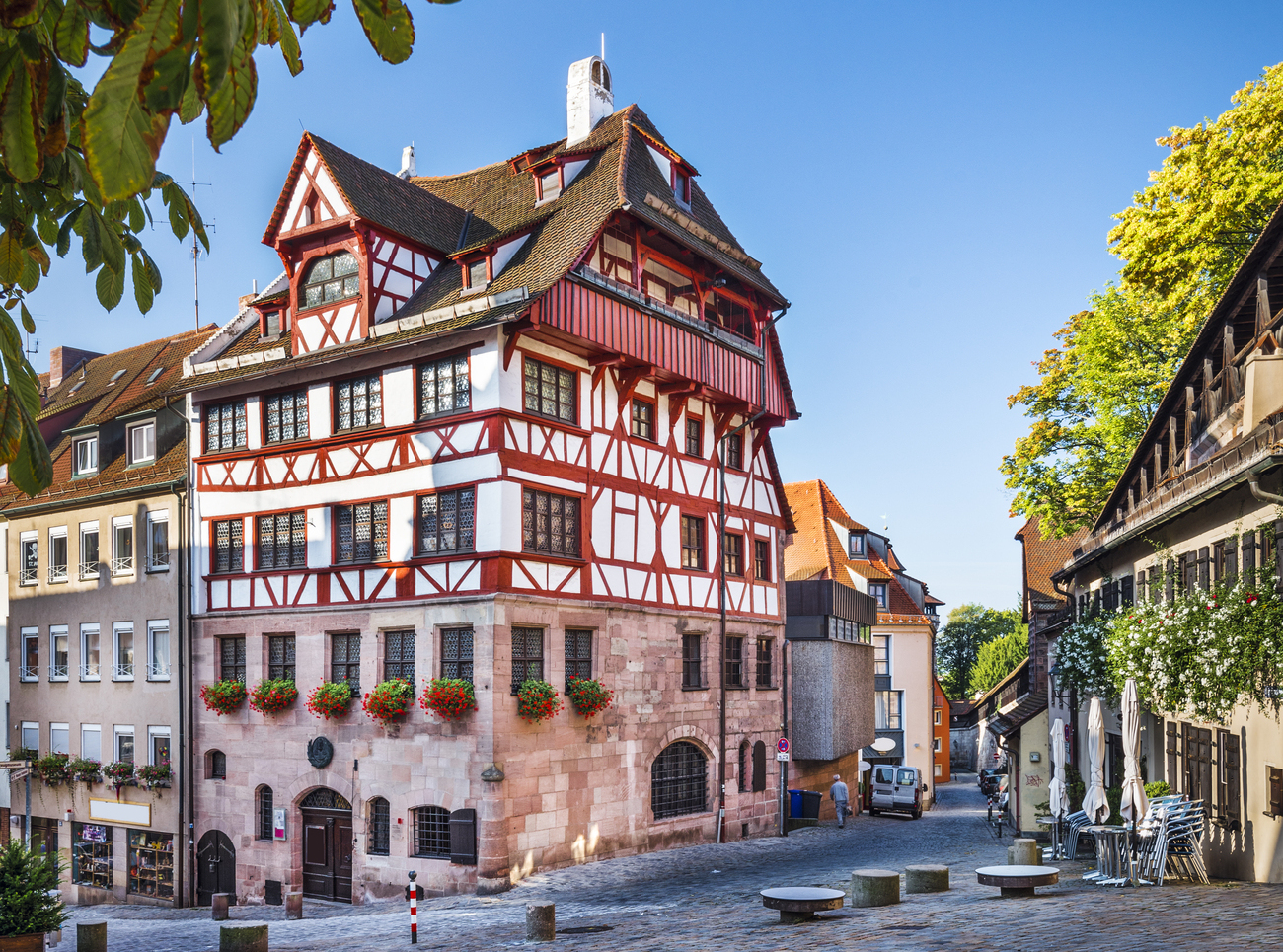
A short downhill walk of about five minutes connects the Imperial Castle to the Albrecht Dürer House, leading past Tiergärtnertorplatz and onto Albrecht-Dürer-Straße. The building’s timber-framed upper levels and solid sandstone ground floor immediately reflect the kind of well-appointed residence a prominent Renaissance artist would have occupied.
Built around 1420, the house was purchased by Albrecht Dürer in 1509, when he was already one of Europe’s most recognized artists and printmakers. He lived and worked here until his death in 1528 with his wife Agnes, his mother, pupils and apprentices. The property later became one of the world’s earliest memorials dedicated to an artist and officially opened as a museum in 1871. Although nearby bombing damaged its roof, windows and exterior walls in 1945, the building escaped a direct hit and was restored soon after the war. It remains the only surviving late-medieval artist’s house of its kind north of the Alps.
The interior combines original architecture with reconstructed rooms illustrating Dürer’s home and workshop. The first floor includes a historic kitchen with its original fireplace and period-style living rooms. Upstairs, the workshop shows how pigments, woodcuts and engravings were produced, while the Dürer Room and Graphics Cabinet display copies of his paintings and rotating works from the city’s collection.
The museum’s best-known experience is the costumed tour led by an actress portraying Agnes Dürer. Instead of a standard art-history lecture, you’ll hear about daily life in the house, like how the workshop functioned, how apprentices were trained, who visited and how Agnes managed finances and helped sell her husband’s work.
Afternoon: Kaiserstraße
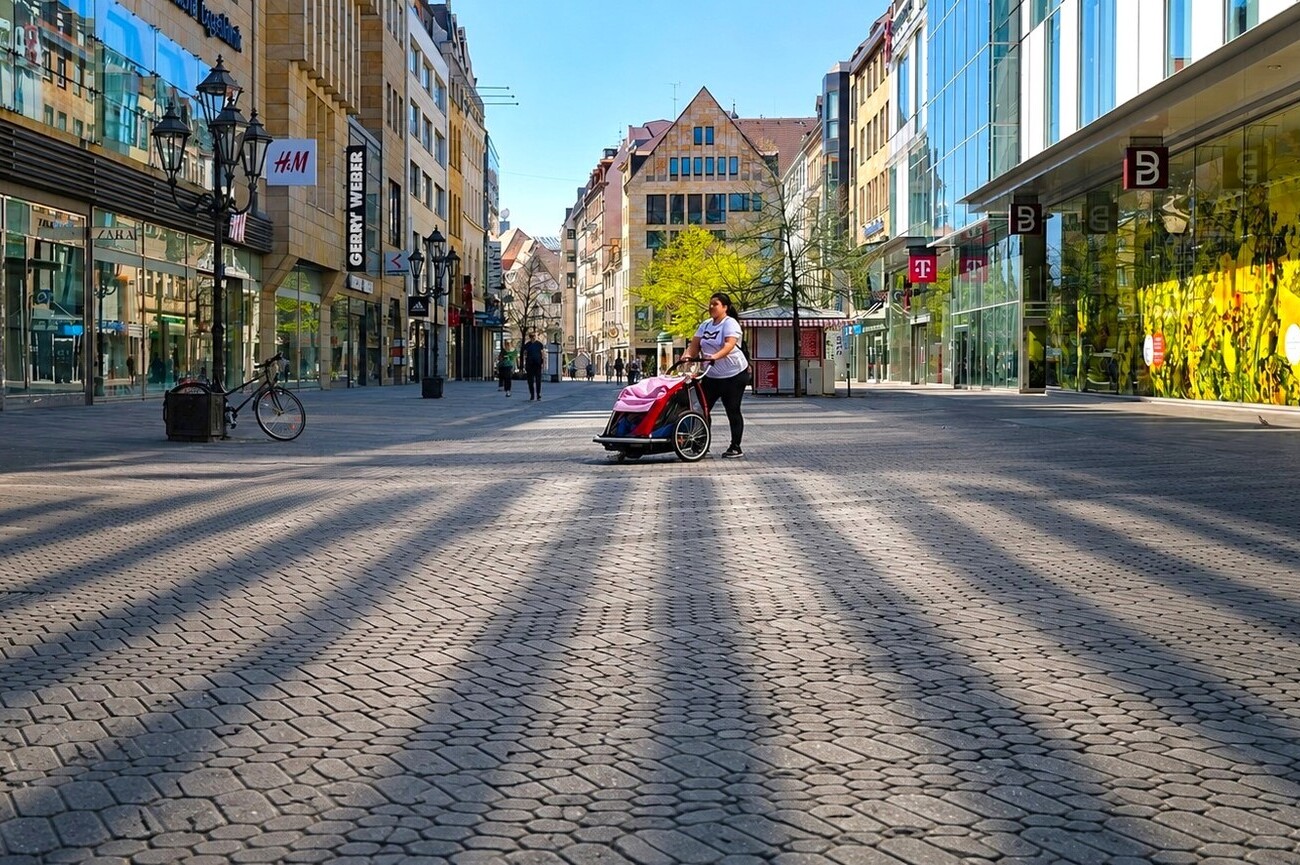
The afternoon begins with shopping on Kaiserstraße, reached by a 12-15 minute downhill walk from the Albrecht Dürer House. You will pass through the Old Town toward Hauptmarkt before continuing into the southern district near the Pegnitz River.
Kaiserstraße is considered Nuremberg’s elegant shopping promenade and carries a more selective retail mix than the busier Karolinenstraße and Breite Gasse. International fashion, fine jewelry, leather accessories, art and premium interior design are concentrated along a relatively compact street. Current brands include Emerson Renaldi, Wolford, Marc Cain and Patrizia Pepe, alongside design and lifestyle retailers such as Bang & Olufsen, Cairo Designstore and the Nespresso Boutique. Art collectors can also visit spaces including Galerie Voigt Kunst and Modulgalerie, which bring contemporary and modern works into the shopping circuit.
The street does not operate like an enclosed luxury mall. Its boutiques and galleries are built into the historic Old Town, with sandstone facades, narrow side streets and easy connections to the Pegnitz waterfront and St. Lorenz district.
Germanisches Nationalmuseum
From Kaiserstraße, continue south through the Old Town for approximately 10-12 minutes on foot to reach the Germanisches Nationalmuseum on Kartäusergasse. The museum entrance sits beside the Way of Human Rights, a row of concrete pillars created by Israeli artist Dani Karavan.
Founded in 1852, the Germanisches Nationalmuseum is the largest museum of cultural history in the German-speaking world. Its collections cover around 600,000 years of European art, design and everyday life, with approximately 25,000 objects displayed across the permanent galleries. The museum combines the remains of a medieval Carthusian monastery with later exhibition buildings and modern glass architecture.
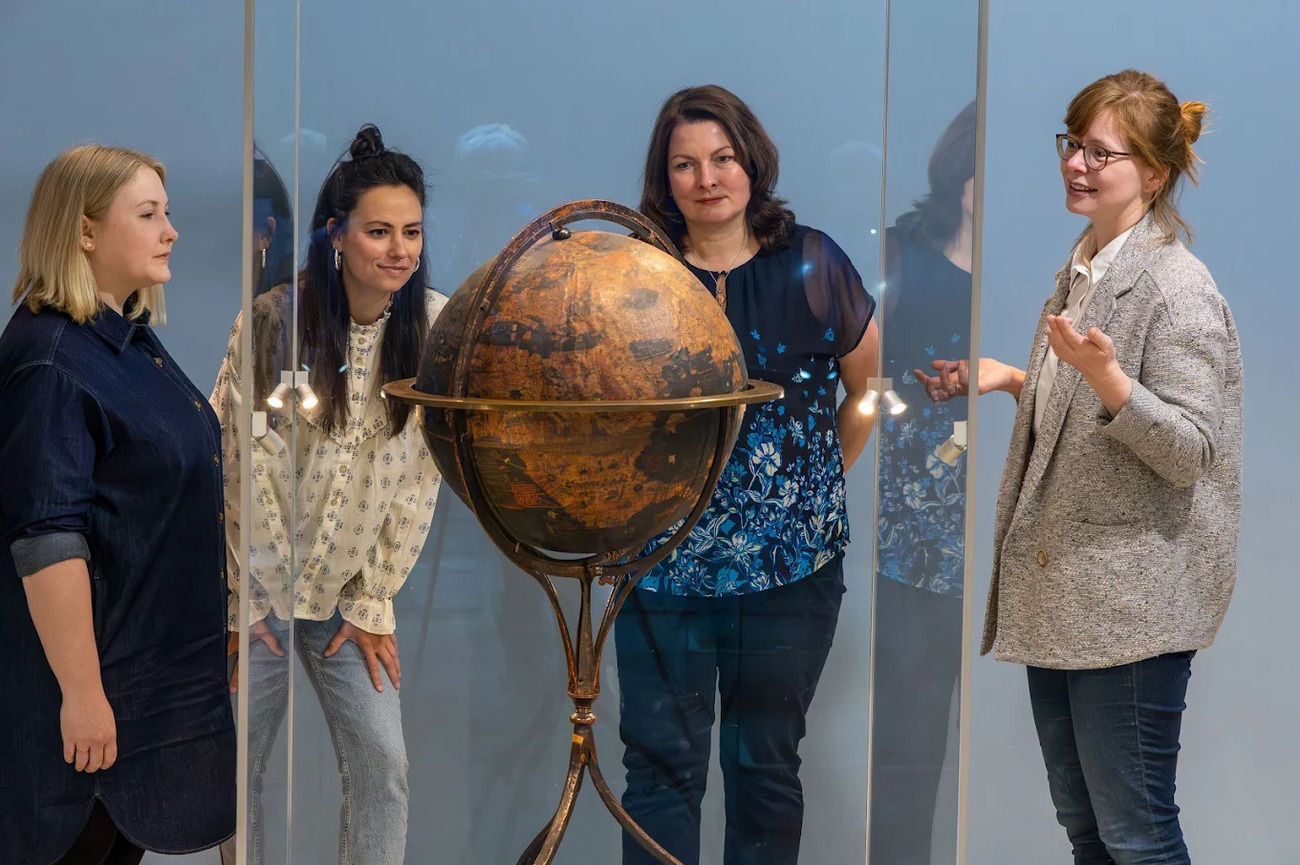
The collection includes paintings and prints connected to Albrecht Dürer, medieval sculpture by artists such as Veit Stoss, historic armor, musical instruments, decorative arts, furniture, textiles and early scientific objects. The main headline is the Behaim Globe, produced in Nuremberg between 1492 and 1494 and regarded as the oldest surviving representation of Earth in spherical form. It predates reliable European knowledge of the Americas, so the globe shows the world as it was understood at the transition between the Middle Ages and the early modern period.
If you are working with limited time, you can join the English-language Highlights of the Permanent Collections tour. And if you prefer something more tailored, you can arrange independent group or themed tours, allowing you to focus on a specific period or collection instead of following the full chronological route.
New Museum - Nuremberg State Museum of Art and Design
The next stop is only a 5-7 minute walk from the Germanisches Nationalmuseum. Continue southeast through the Old Town toward Klarissenplatz, where the New Museum stands close to Nuremberg Central Station and the medieval city wall.
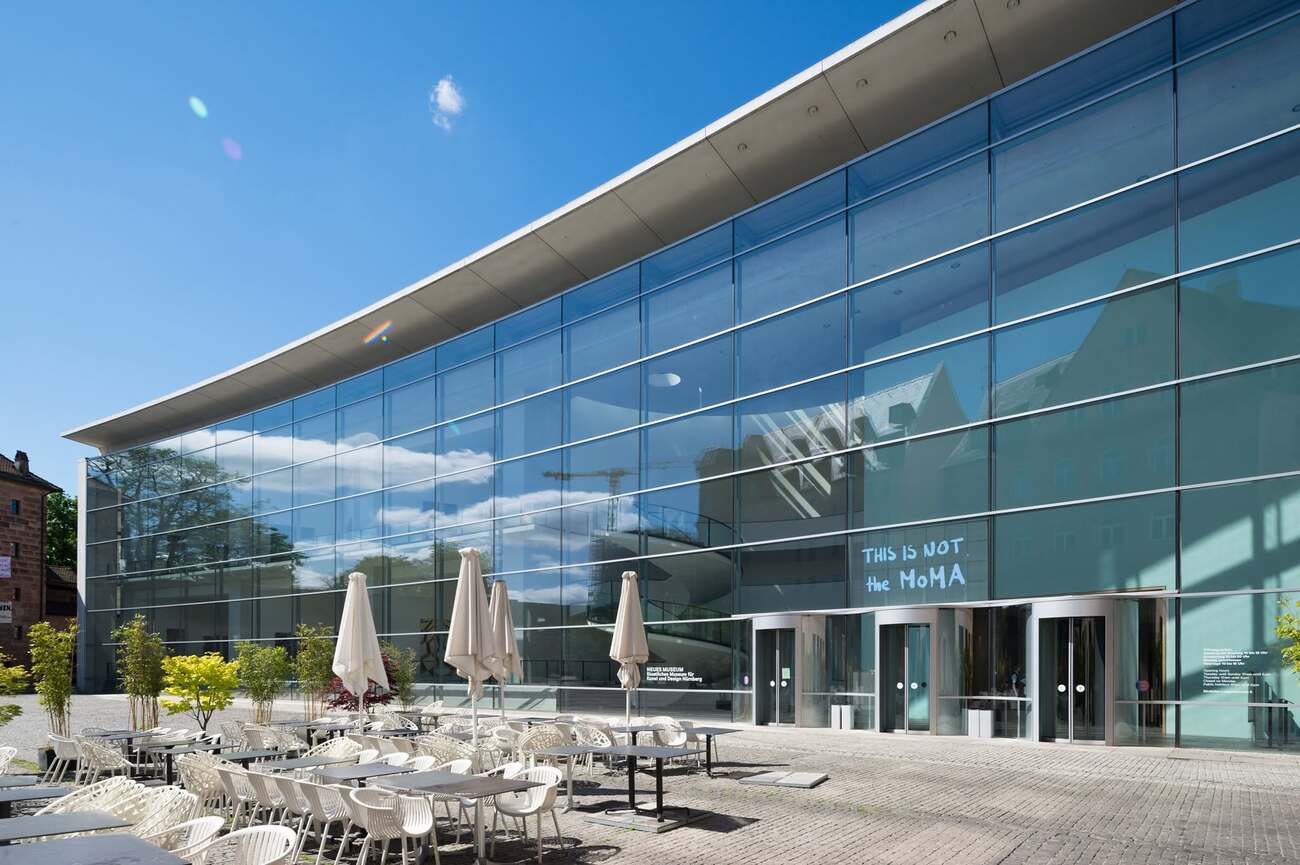
Opened in 2000, the New Museum is the State Museum of Art and Design in Nuremberg and covers artistic developments from 1945 to the present day. Its exhibition areas extend across more than 3,000 square meters, bringing painting, sculpture, photography, video, installation art and industrial design into the same institution. The building was designed by Berlin architect Volker Staab, with a long curved glass facade that follows the edge of the Old Town and reflects the surrounding historic buildings.
The art collection contains around 1,500 works. Major names represented in the museum’s wider collection and exhibitions include Gerhard Richter, Nam June Paik and Thomas Ruff. The design section is presented in cooperation with Die Neue Sammlung in Munich, one of the world’s leading design museums and examines how furniture, everyday products, materials and visual communication have changed over recent decades. A sculpture garden adds another layer, with works by artists including Ulrich Rückriem, Karl Prantl and Hiromi Akiyama displayed beside the city wall.
Evening: Nuremberg State Theater
Spend the evening at Staatstheater Nürnberg’s Opernhaus, located around an 8-minute walk from the New Museum. The theatre’s illuminated facade marks a clear change from the afternoon’s galleries and design collections.
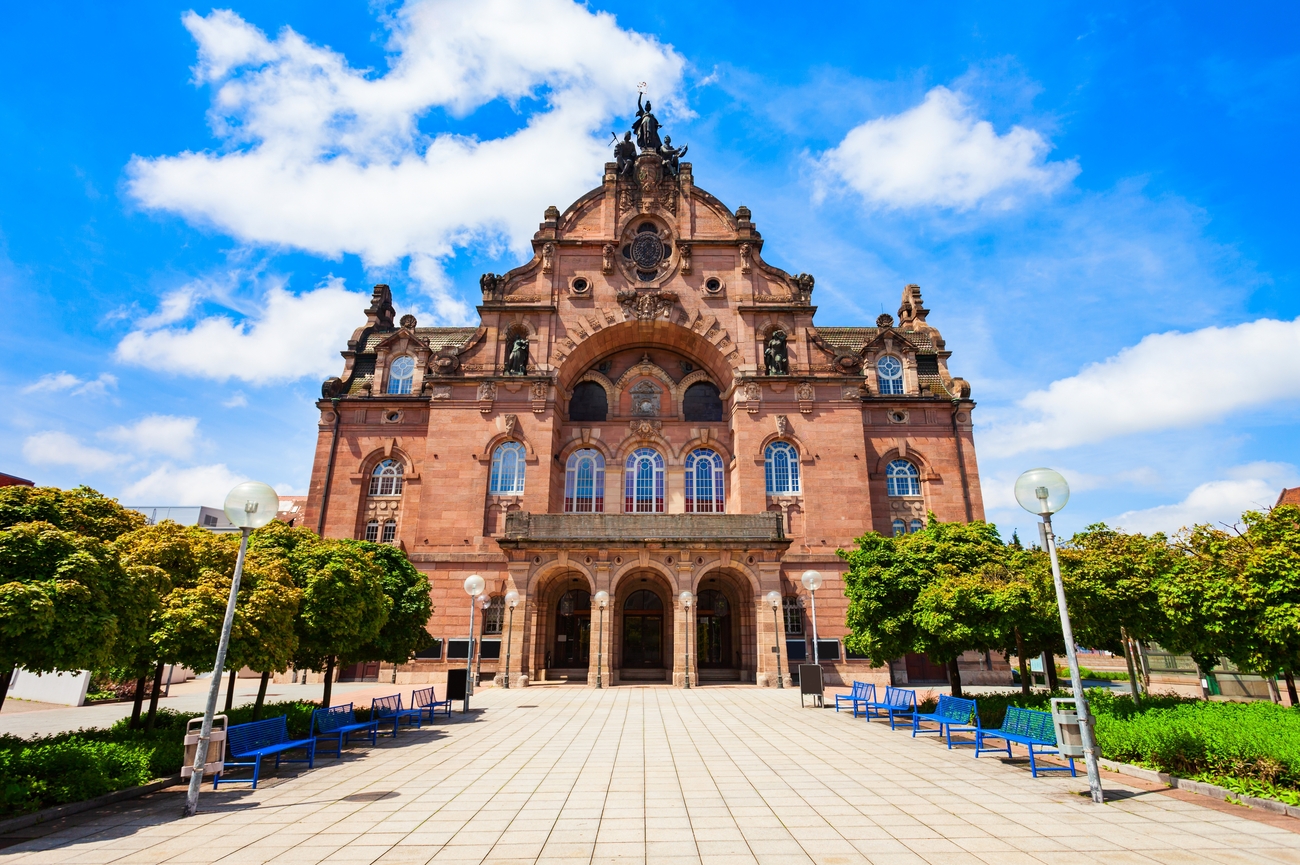
The Opera House opened on 1 September 1905 with Richard Wagner’s Die Meistersinger von Nürnberg. Designed by Berlin architect Heinrich Seeling, the building stands just outside the Old Town walls and quickly became one of Nuremberg’s main cultural venues. Its exterior has remained largely unchanged, while the interiors have a more complicated history. They were originally decorated in an elaborate Art Nouveau style, but most of this design was removed during a major remodelling ordered by the National Socialist administration in 1935.
Today, Staatstheater Nürnberg presents opera, ballet, drama and concerts, with the historic Opernhaus serving as its main venue for large-scale musical productions. English-speaking visitors can follow many operas through German and English subtitles displayed on monitors beside the stage, although availability depends on the individual production. You can also book behind-the-scenes tours that cover the building’s architecture, performance history and backstage operations.
Day 3 - Franconia Tour Map
Day 4
Morning: Seehof Palace
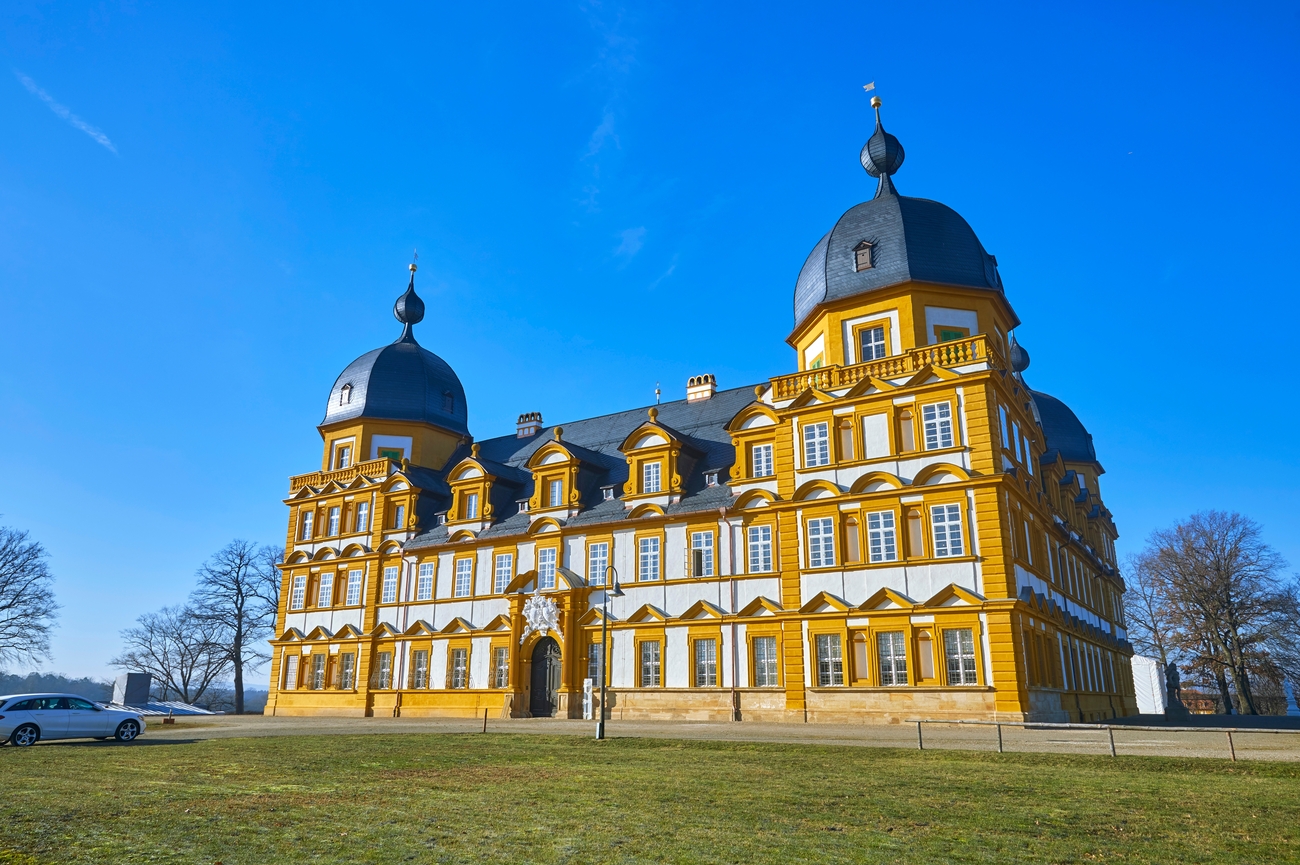
Seehof Palace began as a late-15th-century hunting lodge and country estate before being rebuilt as the summer residence of Bamberg’s prince-bishops. Construction of the present four-winged palace began in 1687 under Prince-Bishop Marquard Sebastian Schenk von Stauffenberg, following plans by northern Italian architect Antonio Petrini. Its compact square layout and four corner towers were influenced by the Schloss Johannisburg in Aschaffenburg. Later prince-bishops continued adapting the palace through the 18th century.
Inside, nine restored state rooms are currently open to visitors. The most important is the White Hall, redesigned during the rule of Prince-Bishop Johann Philipp Anton von Franckenstein. In 1751, court painter Giuseppe Appiani created its large ceiling fresco, showing a heavenly gathering of gods alongside allegories of hunting and the leisure activities associated with a prince-bishop’s summer residence. Other rooms include the prince-bishop’s bedroom and furnished apartments that show how Seehof functioned as both a private retreat and a place for receiving guests. Although more compact than the Würzburg Residence, the restored rooms provide a focused view of court life at Seehof.
You can only explore the palace through an official guided tour. Tours are conducted in German and last approximately 45 minutes. And the wider palace complex can also be reserved for high-level private and corporate functions. Its historic Orangery accommodates receptions, banquets and concerts for up to 416 guests, while the palace chapel and adjoining room are available for smaller ceremonies.
Bamberg Cathedral
A 15-20 minute drive brings you from Seehof Palace to Bamberg’s historic Domberg. Bamberg Cathedral stands at the center of the square, surrounded by the Alte Hofhaltung and New Residence.
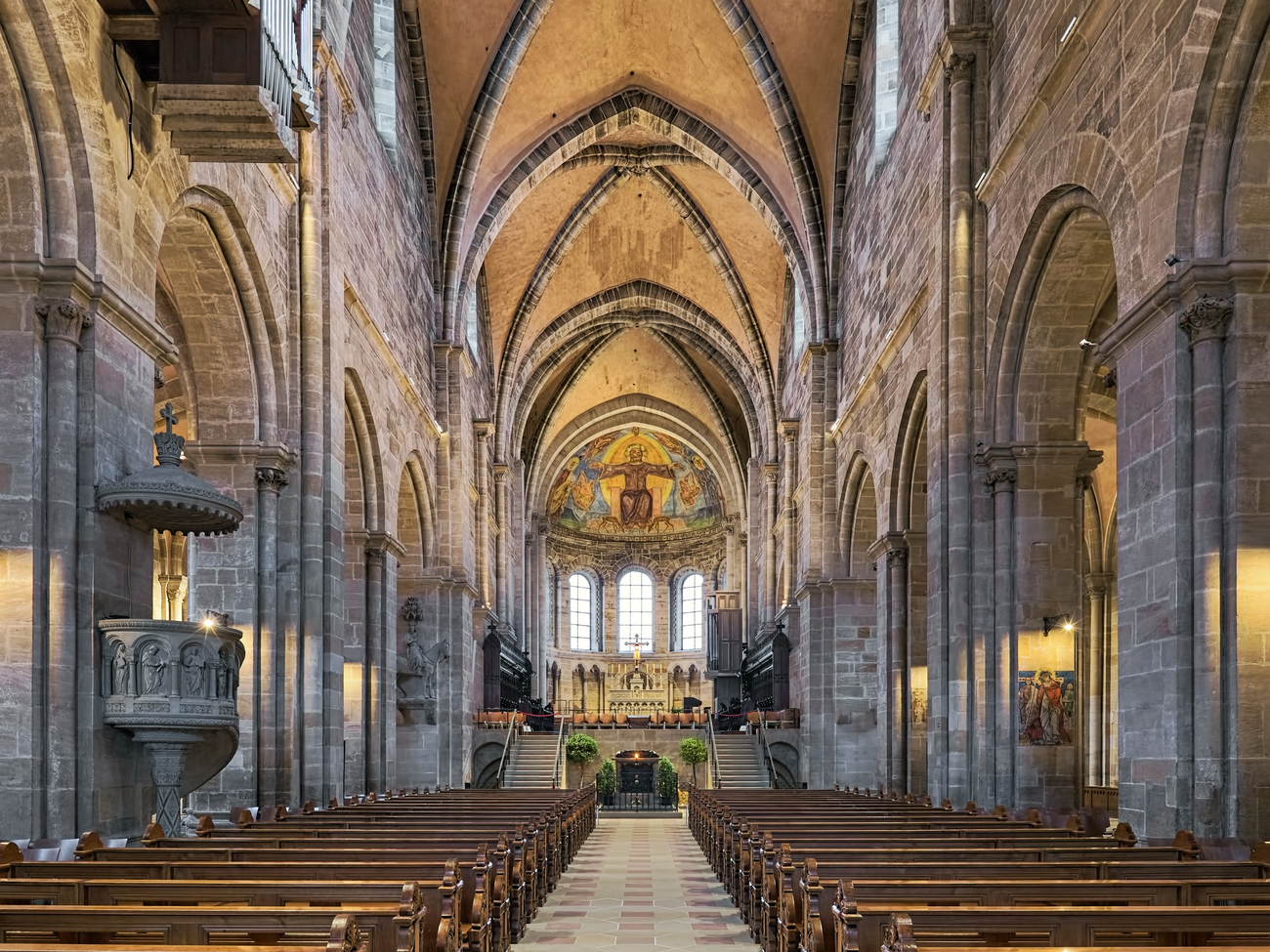
Officially named the Imperial Cathedral of St. Peter and St. George, Bamberg Cathedral traces its origins to Emperor Heinrich II, who founded the Bamberg diocese in 1007. His first cathedral was consecrated in 1012 but was later destroyed by fire, as was its successor. The present building is the third cathedral on the site and was completed during the 13th century, combining late Romanesque mass with early Gothic detailing. Its four towers dominate the Bamberg skyline and remain one of the most recognisable features of the UNESCO-listed old town.
It's known for the mysterious Bamberg Horseman, created during the first half of the 13th century. The cathedral also contains the tomb of Emperor Heinrich II and Empress Kunigunde, carved by Tilman Riemenschneider, a detailed Marian altar by Veit Stoss and the tomb of Pope Clement II. The papal tomb is particularly significant because it is the only Vatican-recognized papal burial site north of the Alps.
Neue Residenz Bamberg
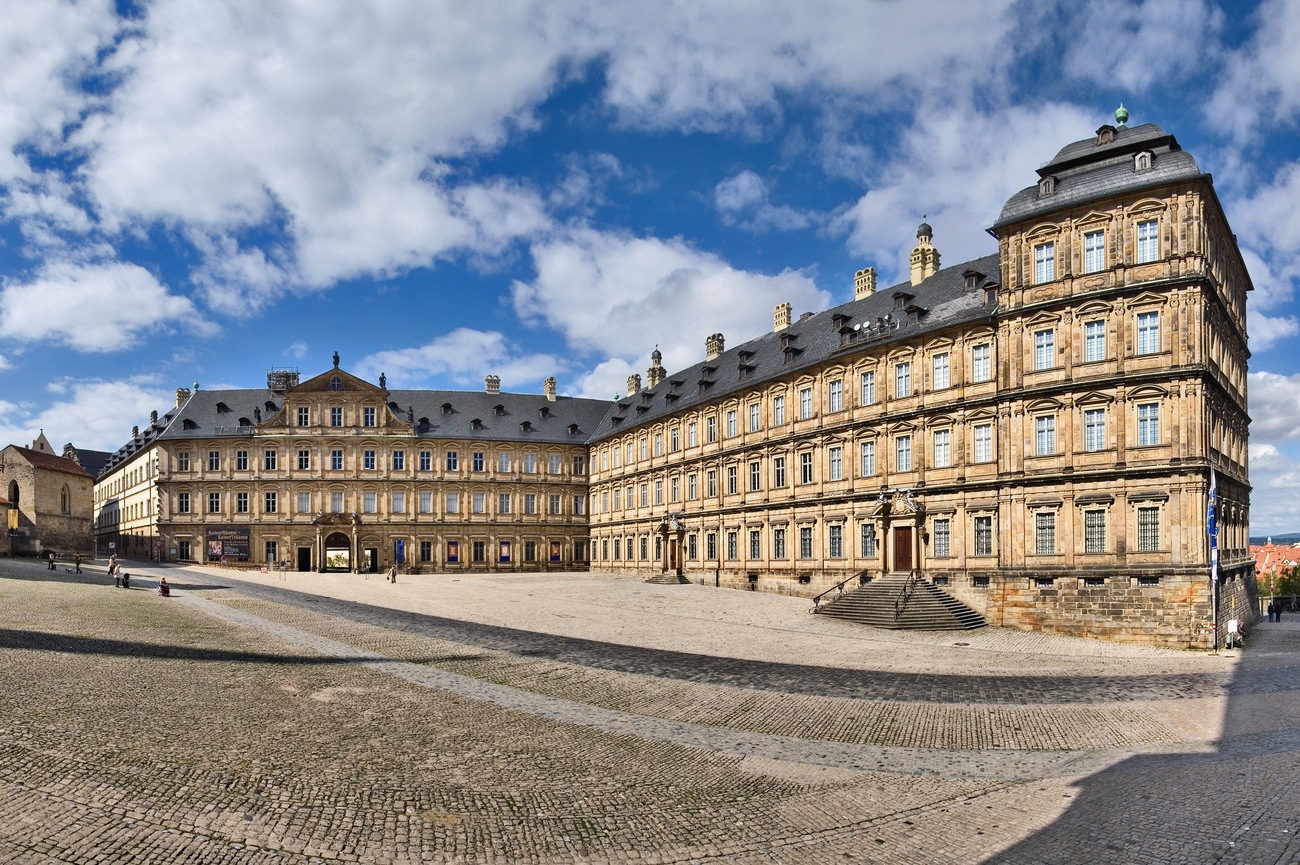
Just across Domplatz, the Neue Residenz Bamberg is less than a 1-minute walk from Bamberg Cathedral. The Residence provides the clearest look at how Bamberg’s prince-bishops lived and governed.
Construction took place in two major phases over more than a century. The rear Renaissance wings were built between 1603 and 1612, replacing several older residences belonging to cathedral canons. Work resumed under Prince-Bishop Lothar Franz von Schönborn, who commissioned architect Leonhard Dientzenhofer to add the two Baroque wings facing Domplatz between 1697 and 1703. The completed palace became the seat of Bamberg’s prince-bishops until secularisation in 1802. Later occupants included King Otto of Greece and Queen Amalie during their exile, while the Bavarian state government temporarily operated here during the political unrest of 1919.
The interior covers almost 50 rooms and holds one of the most extensive collections of historical furniture managed by the Bavarian Palace Administration, including more than 500 pieces. Its main highlight is the Imperial Hall, where painter Melchior Steidl covered the walls and ceiling between 1707 and 1709 with portraits of emperors, allegorical figures and scenes representing political authority.
Guided tours of the Prince-Bishop’s Apartment run in German every 30 minutes, while you can explore the other rooms on your own. Be aware that the Elector’s Apartment and part of the State Gallery are currently closed for renovation.
Afternoon: Old Court
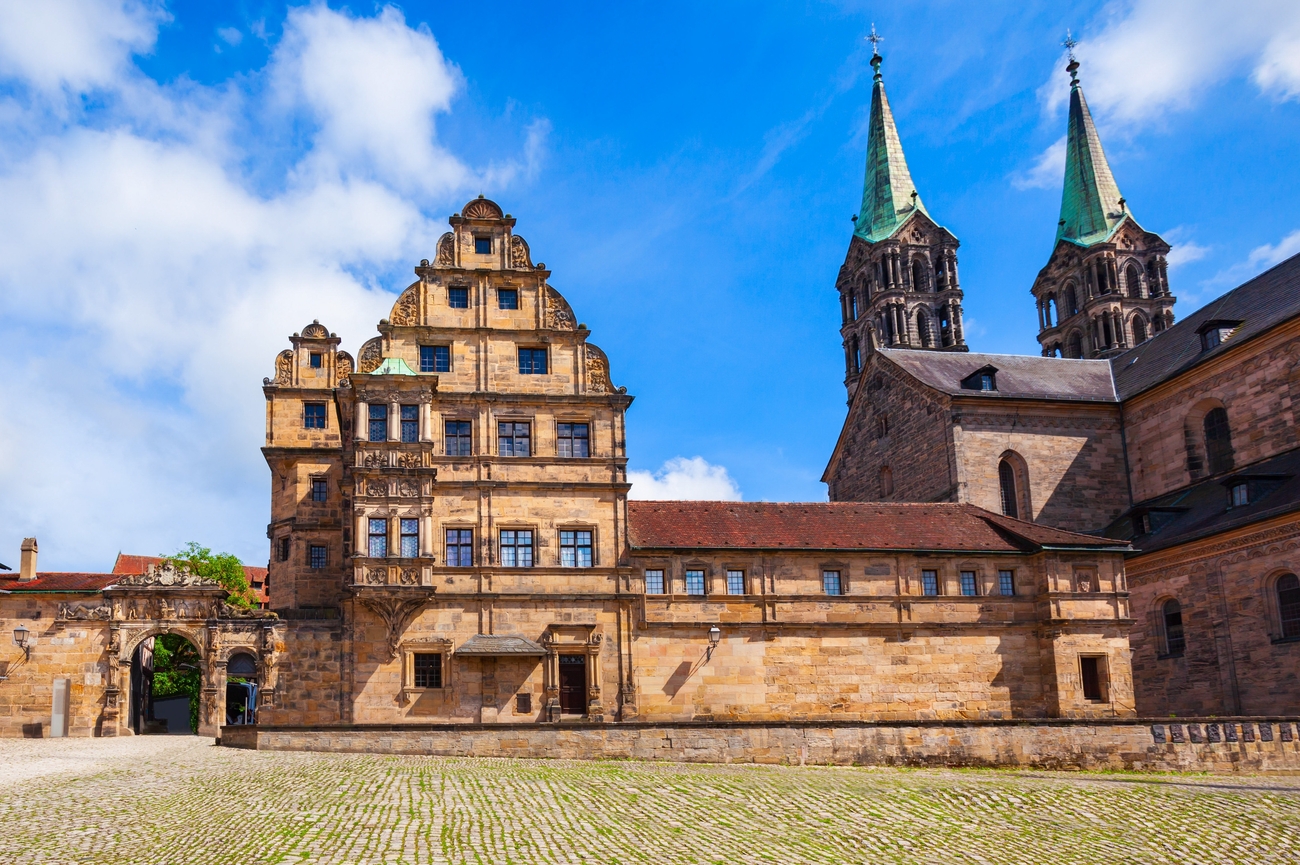
Cross Domplatz after leaving the New Residence and you will reach the Old Court, or Alte Hofhaltung, in about one minute. Its main entrance, known as the Beautiful Gateway, leads into a large enclosed courtyard framed by Renaissance stonework and late-Gothic half-timbered buildings.
The complex developed on the site of the former Castrum Babenberg and the imperial palace associated with Emperor Heinrich II. After he established the Diocese of Bamberg in 1007, the area also became a residence for the city’s bishops. A palace was constructed after the cathedral fire of 1185, but much of the present appearance comes from major 15th- and 16th-century building phases. The courtyard is especially distinctive for its timber-framed galleries, steep roofs and Renaissance entrance decorated with figures of the Virgin Mary, St. Peter, St. George, Emperor Heinrich II and Empress Kunigunde.
The Old Court now houses the Bamberg Historical Museum, which presents the city’s art, social history and cultural development. Exhibitions cover subjects such as Bamberg’s medieval and episcopal past, local civic life, Jewish history, paintings, astronomy and historic timekeeping. It offers regular one-hour highlight tours, as well as the “Secret Places” tour, which takes you into hidden sections and shares stories you would likely miss on your own.
Altes Rathaus
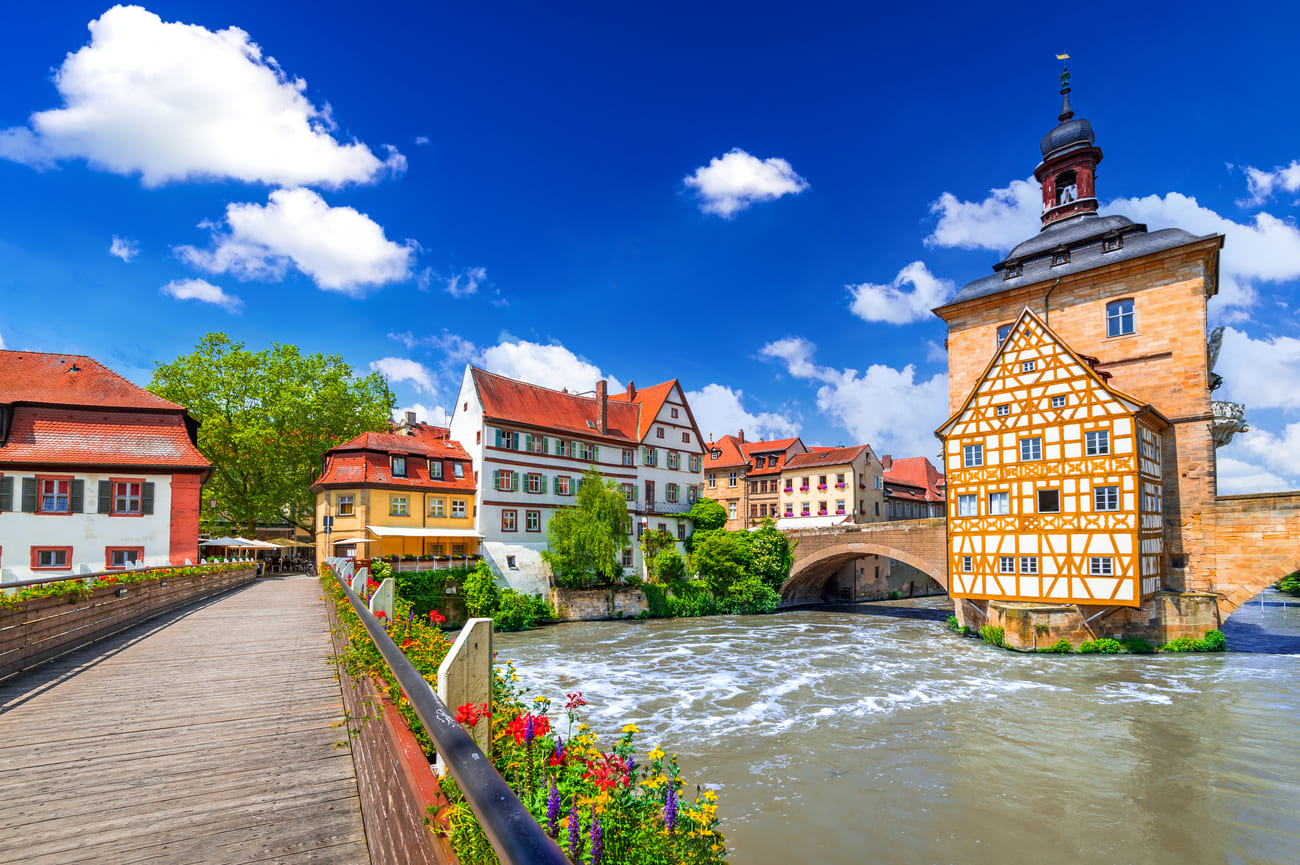
A 10-minute downhill walk through Bamberg’s historic center leads from the Old Court to the Altes Rathaus or Old Town Hall. Its position in the middle of the water makes it one of Bamberg’s most distinctive landmarks and a clear visual shift from the grand religious and royal buildings around Domplatz.
The Old Town Hall was first documented in 1387 and rebuilt between 1461 and 1467, when it gained much of its late-Gothic structure. According to local legend, Bamberg’s prince-bishop refused to provide the citizens with land for their town hall, so they created an artificial island in the Regnitz and built it there instead. The building was redesigned in the Baroque and Rococo styles between 1744 and 1756 by Johann Jakob Michael Küchel. Its facades are covered with elaborate illusionistic paintings originally created by Johann Anwander in 1755, using painted columns, balconies and architectural details to make the flat walls appear three-dimensional. Look closely at the eastern facade, where the sculpted leg of a cherub projects from the painted surface.
Evening: Klein-Venedig
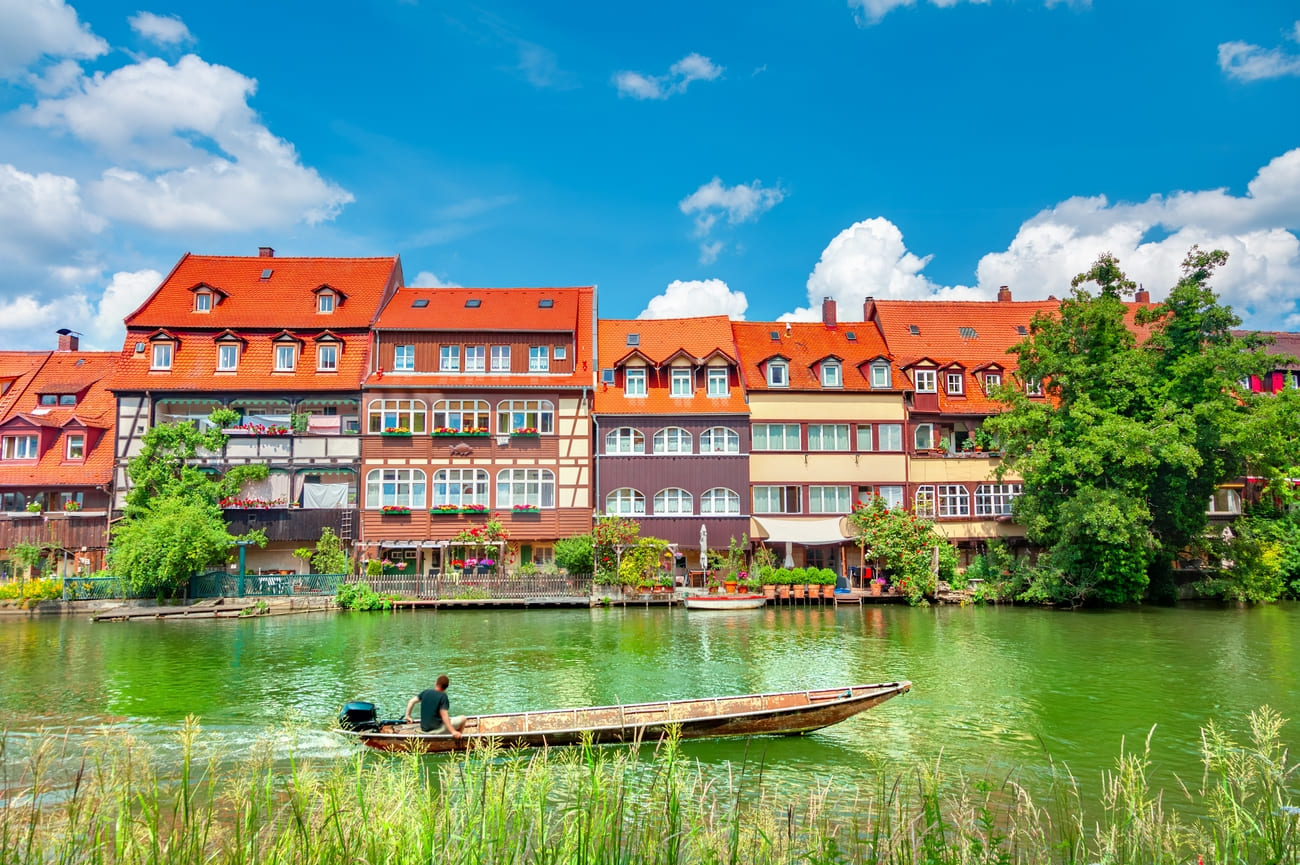
The evening continues with a 7-10 minute walk from the Altes Rathaus to Klein-Venedig, Bamberg’s former fishermen’s quarter along the Regnitz. Follow the river north toward the Leinritt promenade, which provides the clearest uninterrupted view of the waterfront.
Klein-Venedig is not a separate attraction with an entrance or ticket desk. It is a tightly packed row of historic fishermen’s houses built directly along the eastern riverbank, mainly on medieval foundations. The half-timbered facades lean closely against one another, while small front gardens, private landing points and moored boats sit between the houses and the water. And for the best experience, the standard excursion boat follows the Regnitz past Klein-Venedig before continuing toward Bamberg’s harbour and the Main–Danube Canal.
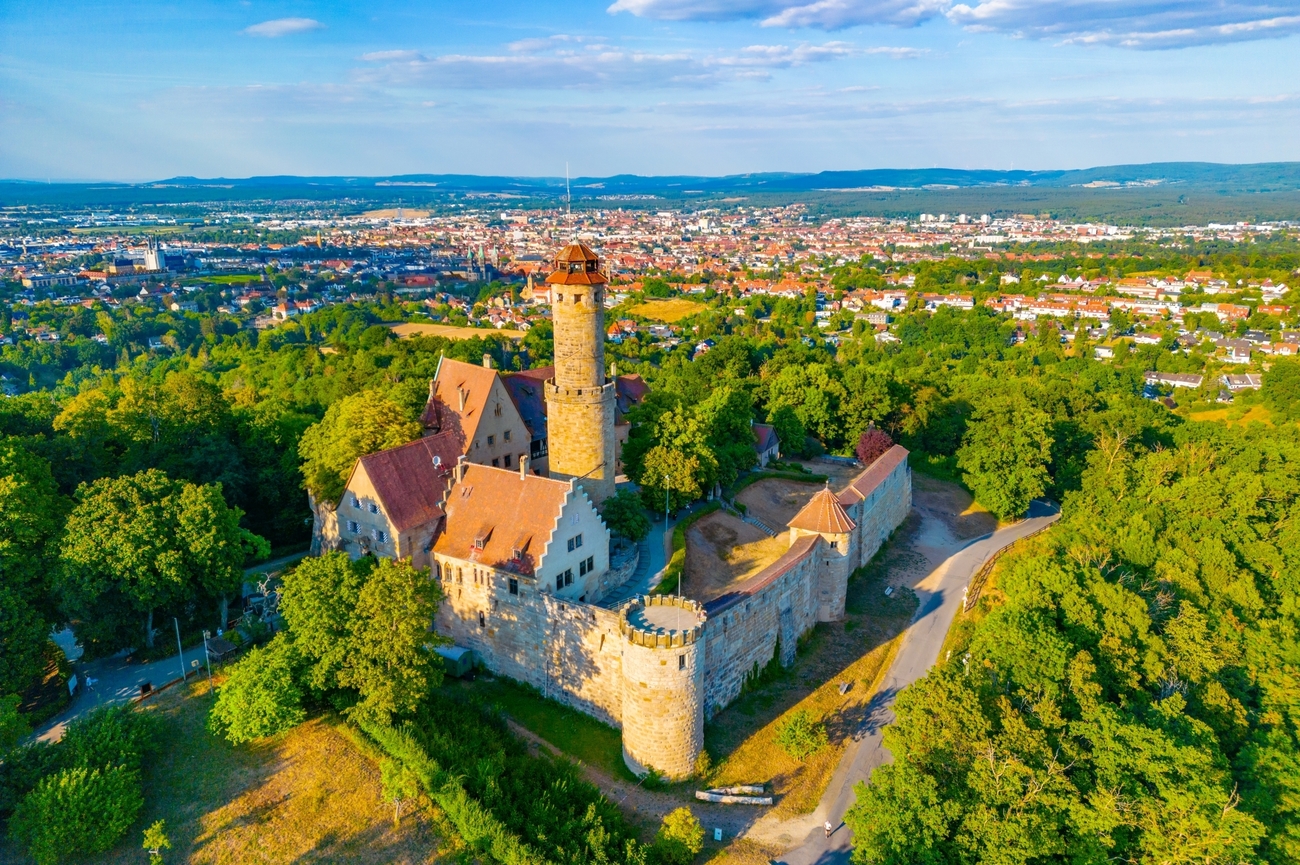
Altenburg
Close Day 4 with the uphill transfer to Altenburg Castle, located on the highest of Bamberg’s seven hills. The drive from Klein-Venedig takes roughly 10-15 minutes and is far more practical than walking after a full sightseeing day.
Altenburg was first mentioned in 1109 and originally functioned as a refuge where residents could retreat during periods of danger. During the 14th and 15th centuries, it developed into a fortified residence for Bamberg’s prince-bishops. Much of the medieval complex was destroyed in 1553 during the Second Margrave War by the forces of Margrave Albert Alcibiades of Brandenburg-Kulmbach. The main surviving medieval elements are the 33-meter keep, parts of the surrounding defensive wall and sections of the original fortifications. Later owners restored and expanded the site.
The main reason to finish the day here is the view. The keep and outer walls look across Bamberg’s cathedral towers, historic districts and surrounding Upper Franconian countryside, giving you a clear overview of the ground covered throughout the day. Selected interiors include the reconstructed Palas, the Knights’ Hall and the E.T.A. Hoffmann Klause, named after the writer, composer and artist who spent time at the castle while living in Bamberg between 1808 and 1813.
You can book the official Altenburg Castle tour which provides access to selected rooms and includes a climb up the keep. The guided experience covers roughly 900 years of castle history, including its defensive development, later reconstructions and connections to E.T.A. Hoffmann.
Day 4 - Franconia Tour Map
Day 5
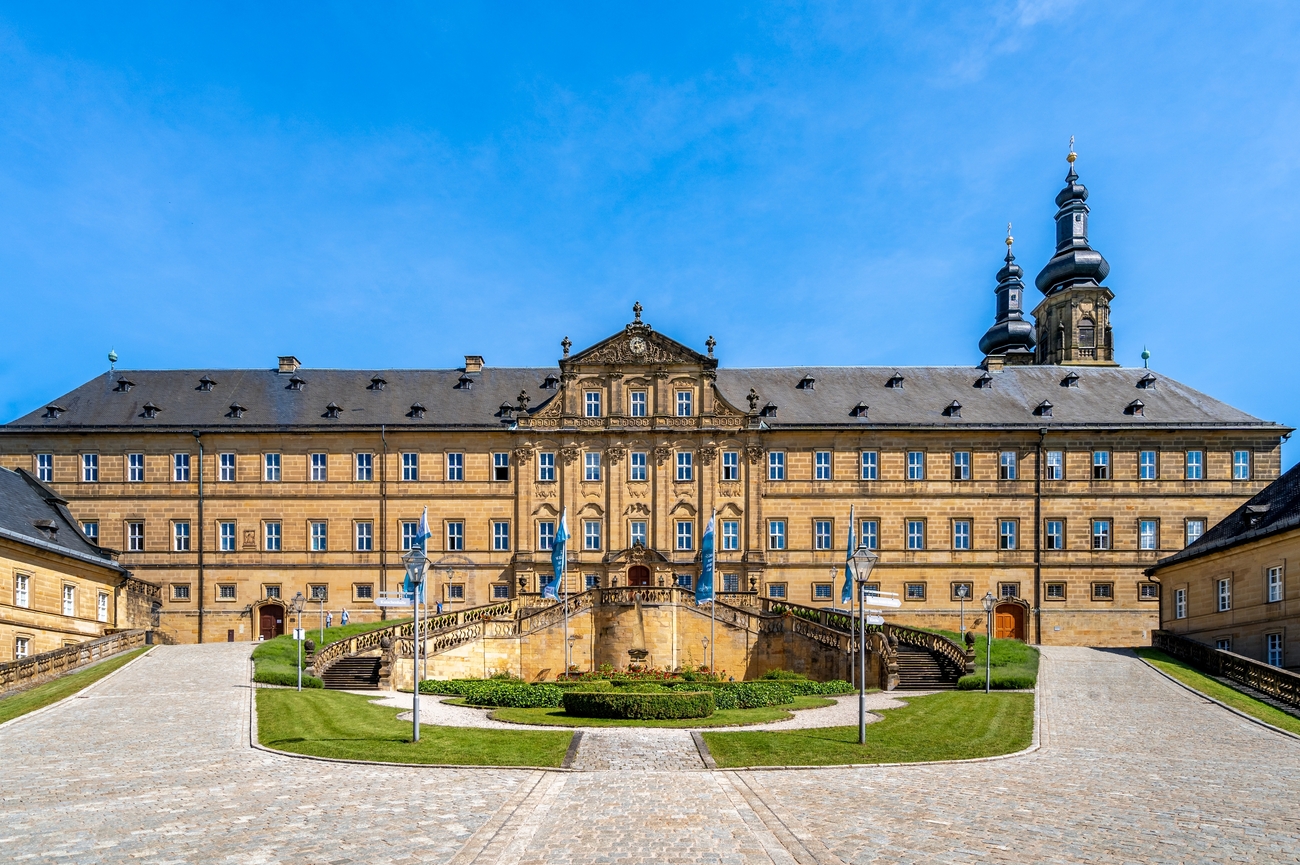
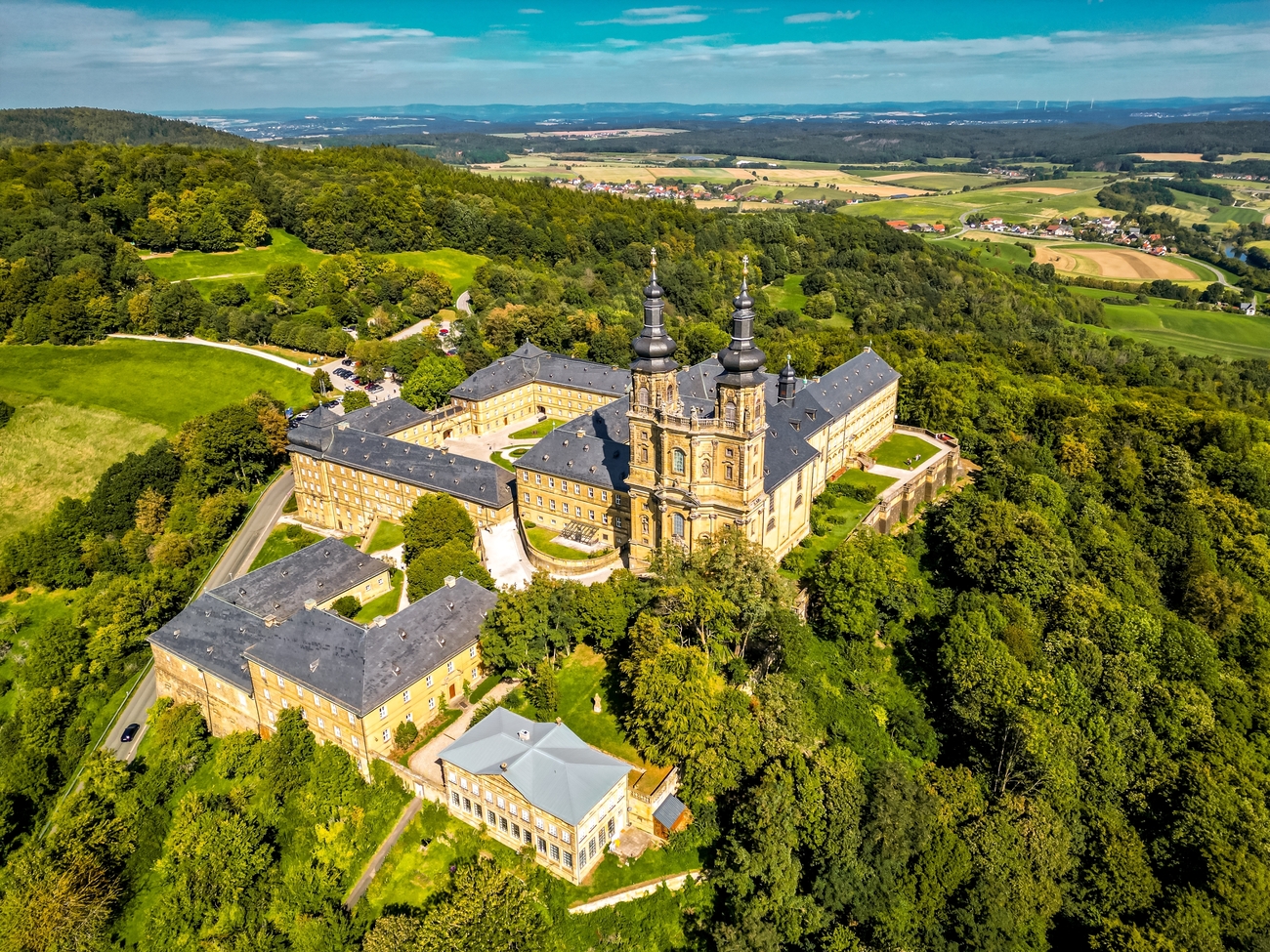
Morning: Kloster Banz
Kloster Banz began as a fortified site before Countess Alberada and her husband donated the property for the foundation of a Benedictine monastery around 1069-1071. The abbey experienced repeated periods of decline, warfare and reconstruction, including major damage during the Peasants’ War and the Thirty Years’ War. Its present Baroque appearance developed after rebuilding began in 1698 under Leonhard Dientzenhofer and continued under his brother Johann Dientzenhofer. The monastery church was consecrated in 1719, while later work involving regional builders and Balthasar Neumann continued until the wider complex was completed in 1772.
The abbey church remains the most accessible historic part of the complex, with a richly decorated Baroque interior shaped by the Vogel brothers’ stucco work and Sebastian Reinhard’s ceiling paintings. The wider monastery includes the Kaisersaal, whose painted decoration presents scenes connected to the family history of the abbey’s founder. After secularisation in 1803, the property became a Wittelsbach residence and received prominent royal and imperial visitors. Today, much of the former monastery operates as an educational and conference center run by the Hanns Seidel Foundation.
You can also visit the Museum Kloster Banz which adds another layer to the visit through three collections covering the monastery’s history, palaeontology and objects gathered by Duke Maximilian in Bavaria during his travels. Its most notable natural history exhibit is a fossilised ichthyosaur specimen measuring roughly 2.1 meters, while the Oriental Collection includes Egyptian and ethnographic objects.
Basilica of the Fourteen Holy Helpers
From Kloster Banz, continue across the Upper Main Valley to the Basilica of the Fourteen Holy Helpers, known locally as Basilika Vierzehnheiligen. The drive takes around 15 minutes, although the two landmarks appear almost directly opposite each other across the valley.
The site became a place of pilgrimage after a series of reported apparitions experienced by shepherd Hermann Leicht in 1445 and 1446. According to the basilica’s records, he saw a child who later appeared with fourteen similarly dressed figures identified as the Fourteen Holy Helpers. A chapel was established at the site, but earlier religious buildings were damaged or destroyed during periods of conflict. Construction of the present basilica began in 1743 using plans by Balthasar Neumann and continued until its consecration in 1772. Giuseppe Appiani produced the ceiling paintings, while Johann Michael Feichtmayr created much of the stucco and altar decoration.
It is known for the Gnadenaltar, or Altar of Grace, positioned in the center of the church at the traditional location of the apparitions. It displays the Fourteen Holy Helpers and includes scenes explaining the origin of the pilgrimage. Neumann organized the interior around a sequence of oval spaces, keeping the altar visually central while maintaining a direct line toward the high altar.
Schloss Rosenau, Coburg
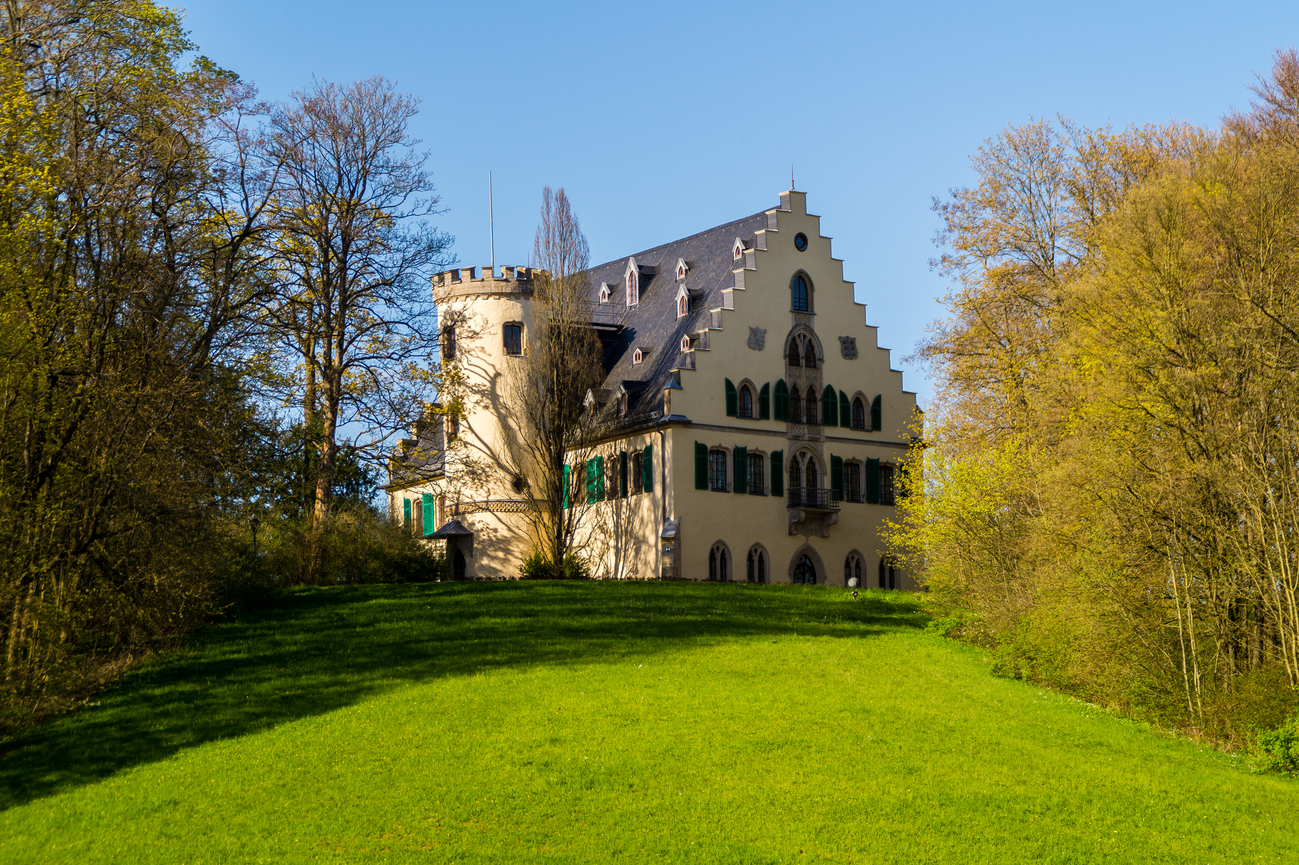
The route north continues with a 20-minute drive from the Basilica of the Fourteen Holy Helpers to Schloss Rosenau, located in Rödental just outside Coburg. The property sits within an English-style landscape park.
The estate has medieval origins, but its present appearance dates mainly from the early 19th century. The ducal family of Saxe-Coburg-Saalfeld acquired the neglected property in 1805, and Duke Ernst had it reconstructed between 1808 and 1817 as a Neo-Gothic summer residence. Architect Karl Friedrich Schinkel contributed early ideas for the pointed arches and decorative tracery, helping turn the older structure into a romantic interpretation of a medieval country palace. The completed residence was formally celebrated in 1817 during the wedding of Duke Ernst and Princess Luise of Saxe-Gotha-Altenburg.
Schloss Rosenau is best known as the birthplace of Prince Albert, who was born here in 1819 and later became the husband of Queen Victoria. Albert returned with Victoria in 1845, and the palace remains closely connected with the wider history of the British royal family. Inside, the rooms combine brightly painted Neo-Gothic decoration with original polished Viennese Biedermeier furniture.
This place is known for the Marble Hall, a large vaulted ceremonial room with stucco-marble surfaces, gilded ornament and a carved wooden chandelier created in Vienna in 1817. Other rooms include the small library, ducal bedrooms, assembly rooms and private apartments restored using historical photographs and watercolors preserved at Windsor Castle.
You can only enter the palace through an official guided tour. German-language tours begin every hour and provide access to the Marble Hall, assembly rooms and former ducal apartments.
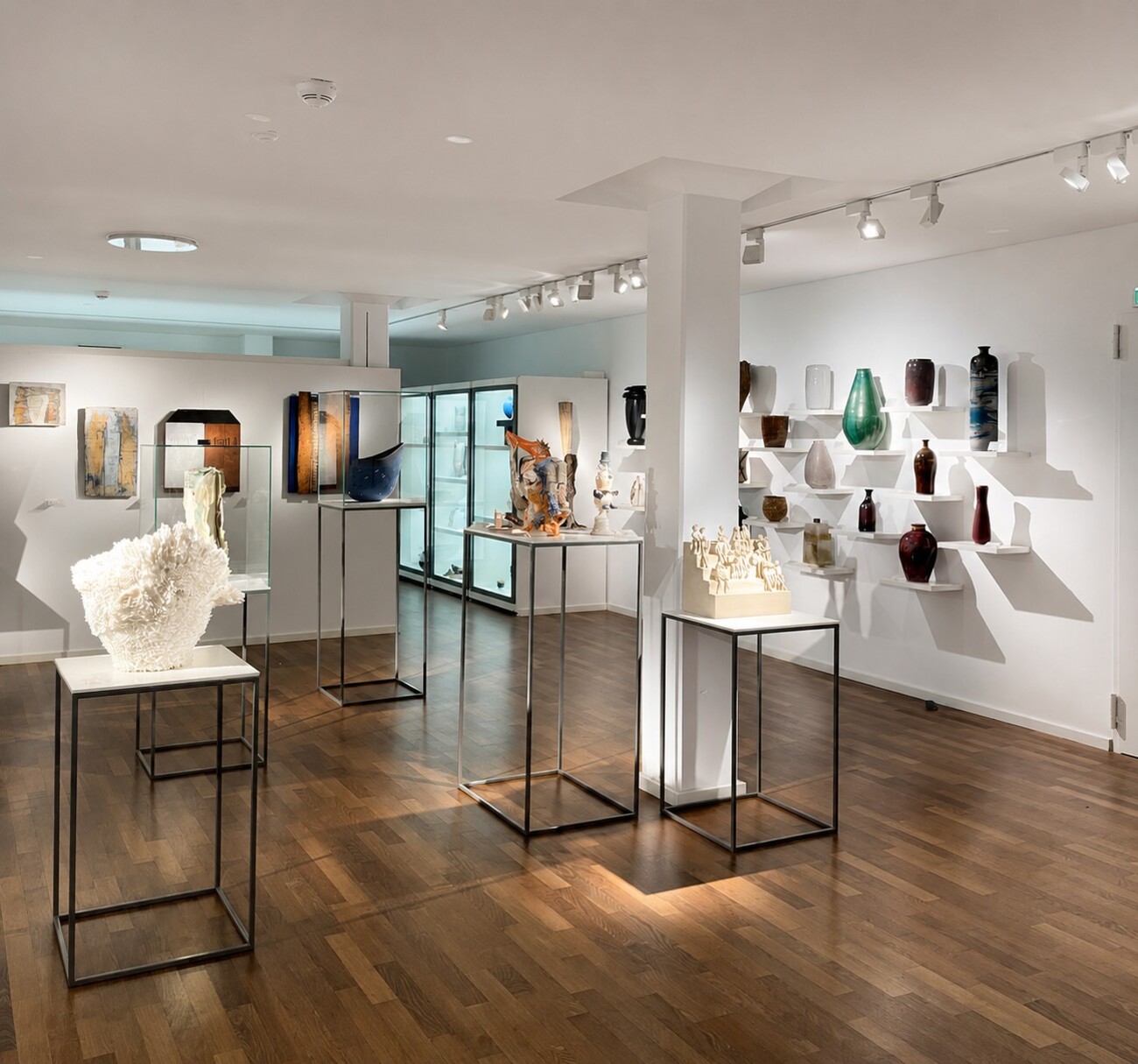
Afternoon: European Museum of Modern Glass
A short 5-10 minute walk through Rosenau Park connects Schloss Rosenau with the European Museum of Modern Glass. The museum stands near the estate’s former orangery and kitchen-garden area.
The museum moved into its present purpose-built home in 2008, with the project supported substantially by Coburg entrepreneur and patron Otto Waldrich. Its long, low building provides around 1,260 square meters of exhibition space and was designed to sit quietly within the English-style landscape park rather than compete with the nearby palace. The collection belongs to the Kunstsammlungen der Veste Coburg and is regarded as one of Europe’s most extensive presentations of modern studio glass.
The permanent exhibition covers studio glass from the 1960s to today, including sculptures, installations, and experimental works alongside functional pieces. Much of the collection comes from the Coburg Glass Prize (1977-2022), which helped establish the city as a center for contemporary glass art. The upper floor hosts temporary exhibitions and a lampwork studio, while the basement contains a ceramics study collection.
Veste Coburg
The afternoon’s museum hopping continues at Veste Coburg. It is reached after an estimated 10-15 minute drive from the European Museum of Modern Glass.
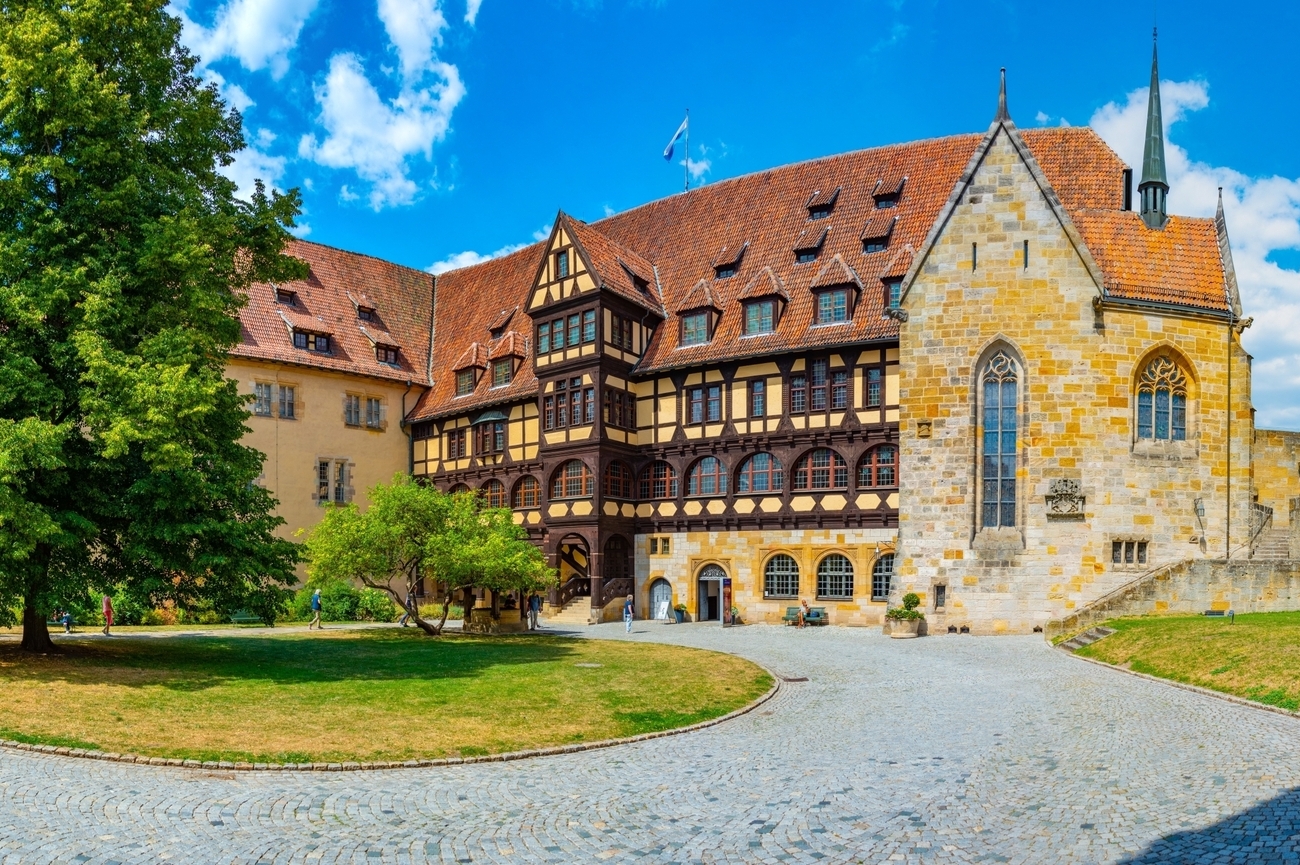
Known as the “Franconian Crown,” Veste Coburg rises above the city with its imposing walls, towers and bastions. First mentioned in the 11th century, it evolved from a castle into a major fortress and today reflects a blend of medieval and later architectural styles.
The fortress now houses the Kunstsammlungen der Veste Coburg, with collections displayed throughout its historic rooms. Highlights include works by Lucas Cranach the Elder and Younger, medieval sculpture, and richly decorated interiors such as the Great Courtroom and the Intarsia Hunting Room.
The museum is also known for one of Europe’s most significant collections of historical weapons, including armor, tournament equipment, hunting firearms and objects used in fortress defence. Another standout section displays ceremonial carriages and sleighs, including two richly gilded 16th-century bridal carriages that rank among Europe’s earliest fully preserved Renaissance vehicles. Martin Luther’s rooms add another major historical layer as he lived and worked at the fortress for around six months in 1530 while the Diet of Augsburg was taking place.
You can explore the collections on your own with an audio guide, or join a private tour for a more focused visit. The 75-minute Basic Tour covers key rooms, major artworks, Luther’s stay at the fortress and the Coburg ducal family.
Hofgarten
After museum hopping at Veste Coburg, take a quick 5-minute drive to the lower section of Hofgarten Coburg near Schlossplatz.
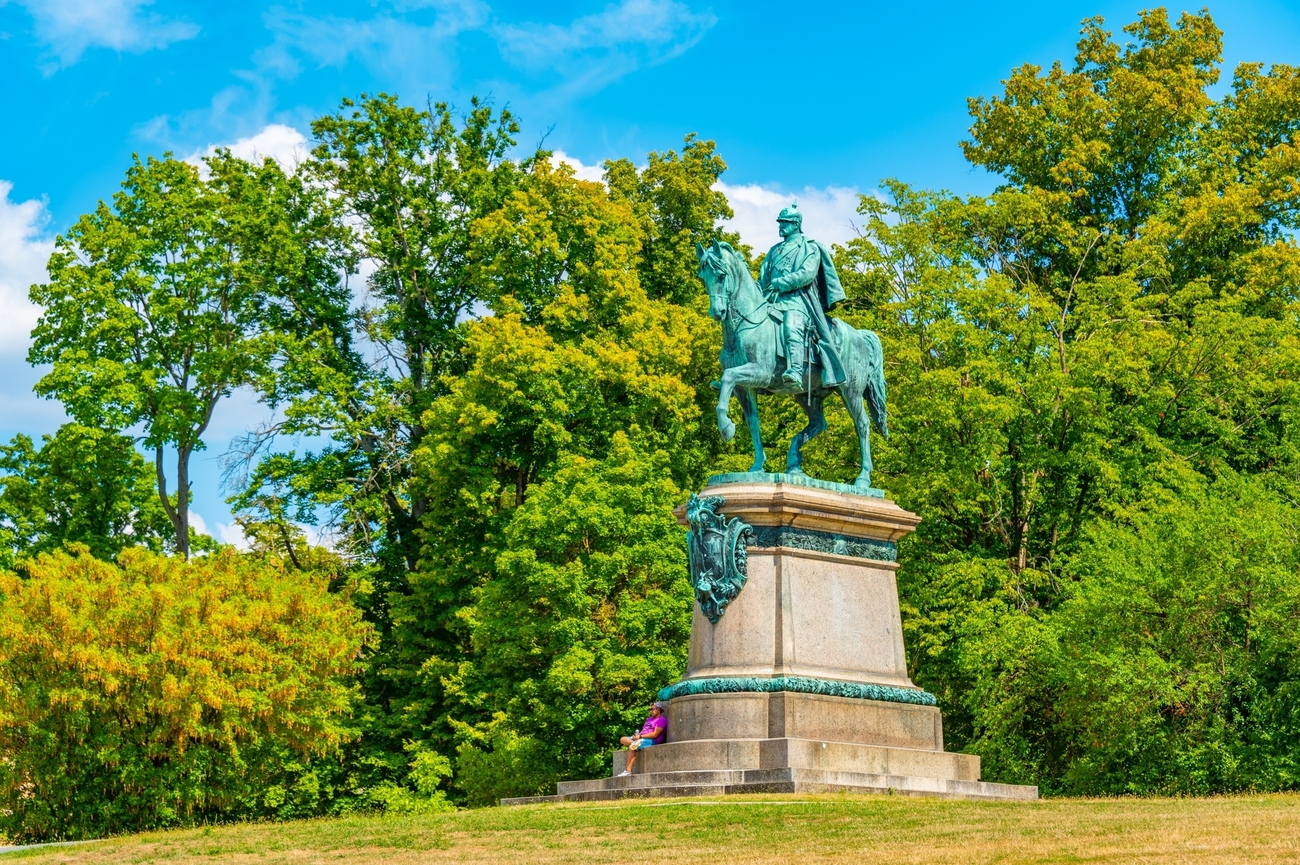
Hofgarten was originally created between 1680 and 1682 for Duke Albrecht of Saxe-Coburg as a formal Baroque garden. During the 19th century, Duke Ernst I transformed the grounds into an English-style landscape park, replacing much of the rigid layout with winding paths, open lawns and groups of rare and exotic trees.
The park is home to the mausoleum of Duke Franz Friedrich Anton, the equestrian monument to Duke Ernst II and two historic garden pavilions positioned along the slope. It also contains the Naturkunde-Museum Coburg, while several open sections provide views toward Veste Coburg and across the city. Near the lower grounds, the Kleiner Rosengarten adds flower beds, fountains, sculptures and seating beside the exhibition pavilion of the Coburg Art Association.
Evening: Ehrenburg Palace
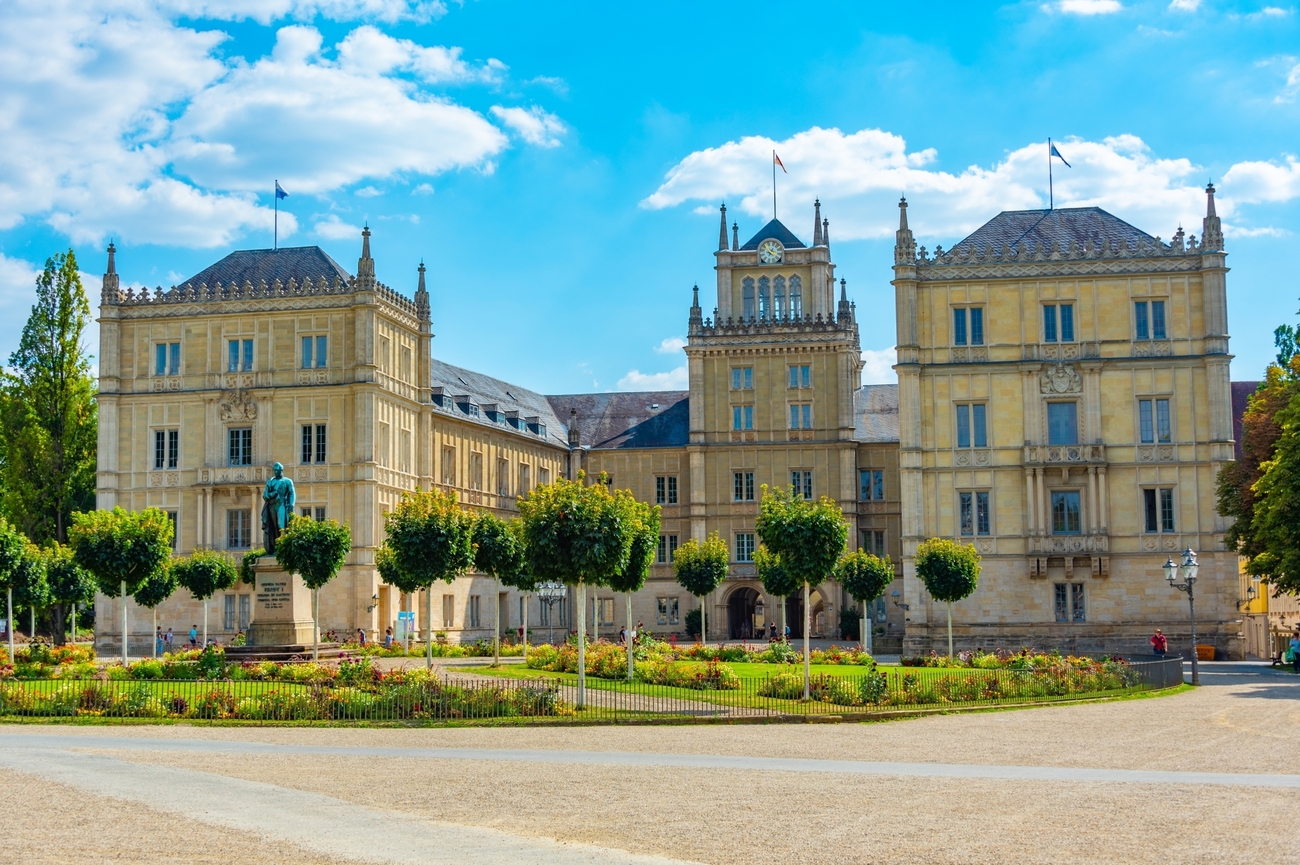
The Hofgarten opens directly onto Schlossplatz, placing Ehrenburg Palace only a 2-5 minute walk from the garden’s lower section. The palace’s Neo-Gothic facade fills the eastern side of the square.
Ehrenburg was commissioned in 1543 by Duke Johann Ernst of Saxe-Coburg as a town residence on the site of a former Franciscan monastery. The court moved down from Veste Coburg only five years later, bringing the center of ducal life closer to the city. According to tradition, Emperor Charles V gave the palace its name, meaning “Palace of Honour,” because it was completed without compulsory labor. After a major fire in 1690, Duke Albrecht rebuilt much of the complex as a Baroque residence. Its current exterior came later, when Duke Ernst I commissioned the dramatic Neo-Gothic façade designed by Karl Friedrich Schinkel and begun in 1810.
Between 1816 and 1840, the ducal apartments were redesigned in the French Empire style and furnished with elegant pieces from Paris. The palace is best known for the Hall of Giants, named after the 28 large figures supporting its ceiling. Other highlights include the Throne Room, court chapel, formal apartments and two art galleries with works by Lucas Cranach the Elder and other European artists. Queen Victoria’s former bedroom and the many royal portraits reflect the strong ties between the House of Saxe-Coburg and Gotha and European royal families.
The palace can only be entered on a guided tour, so you’ll need to join one of the scheduled departures. Standard German-language tours run every hour and take you through the principal ceremonial rooms and apartments. If you prefer a more comfortable experience, you can arrange an English-language tour in advance for an additional fee.
Marktplatz Coburg
End your evening at Marktplatz Coburg, just a short 5-minute stroll from Ehrenburg Palace. Walk across Schlossplatz and follow the narrow Old Town streets until they open out into the square.
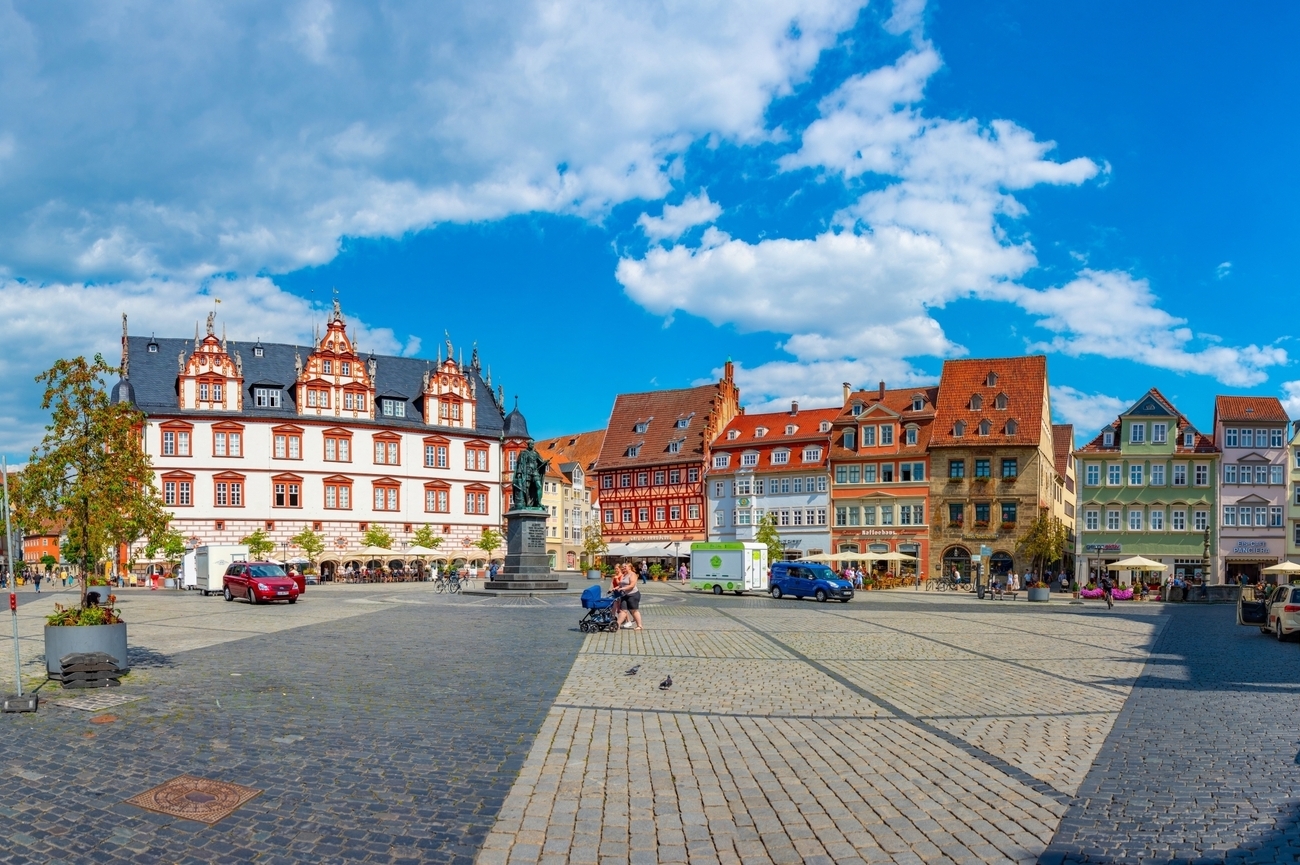
Marktplatz has served as the center of civic and commercial life in Coburg since it was laid out during the late 13th century. It was paved by the 16th century and connects with the surrounding Old Town through seven narrow streets and alleys.
At the center stands the monument to Prince Albert of Saxe-Coburg and Gotha, installed in 1865 in honour of Coburg’s most internationally recognized royal figure and the husband of Queen Victoria. The northern side is dominated by the late-Renaissance Stadthaus. Originally commissioned by Duke Johann Casimir after 1597, the building housed the government chancellery while its lower areas provided space for merchants and craftsmen. Directly opposite stands Coburg’s Renaissance Rathaus, completing one of the city’s most balanced historic architectural ensembles.
Day 5 - Franconia Tour Map
Day 6
Morning: Plassen Castle
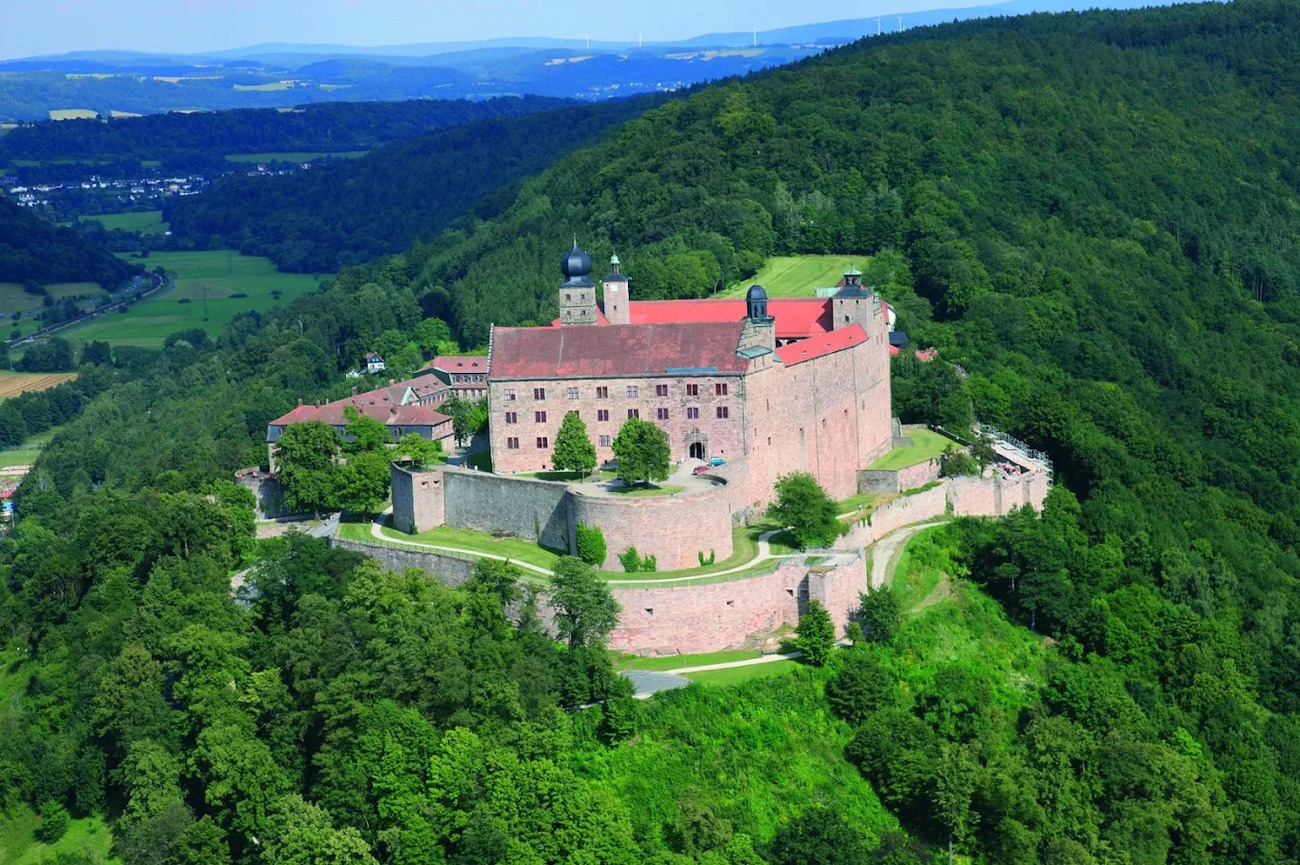
Plassen Castle is both a princely residence and a heavily fortified stronghold, with a history reaching back to a castle founded before 1135 by the Counts of Andechs. It later became one of the principal seats of the Franconian Hohenzollerns, who governed from here between approximately 1340 and 1791. The earlier complex was destroyed during the Second Margraves’ War in 1554, after which Margrave Georg Friedrich commissioned architect Caspar Vischer to rebuild it as a four-winged Renaissance palace protected by massive bastions. The site later became a Prussian fortress and after parts of its defences were dismantled under Napoleon in 1806, it served as a prison and workhouse until 1928.
The main highlight is the Schöner Hof surrounded by Renaissance arcades. Its carved details and arches create a more elegant space than the fortress exterior suggests. The castle also includes former living quarters, a church and defensive areas with views over Kulmbach. Four museums are located inside, covering Hohenzollern history, Prussian military history, regional culture and a large collection of historical tin figures.
Zinnfigurenmuseum
Museum experience continues inside Plassen Castle at the German Tin Figure Museum or Deutsches Zinnfigurenmuseum. The entrance is within the same fortress complex, making this an efficient second stop for the morning without another climb or journey into Kulmbach.
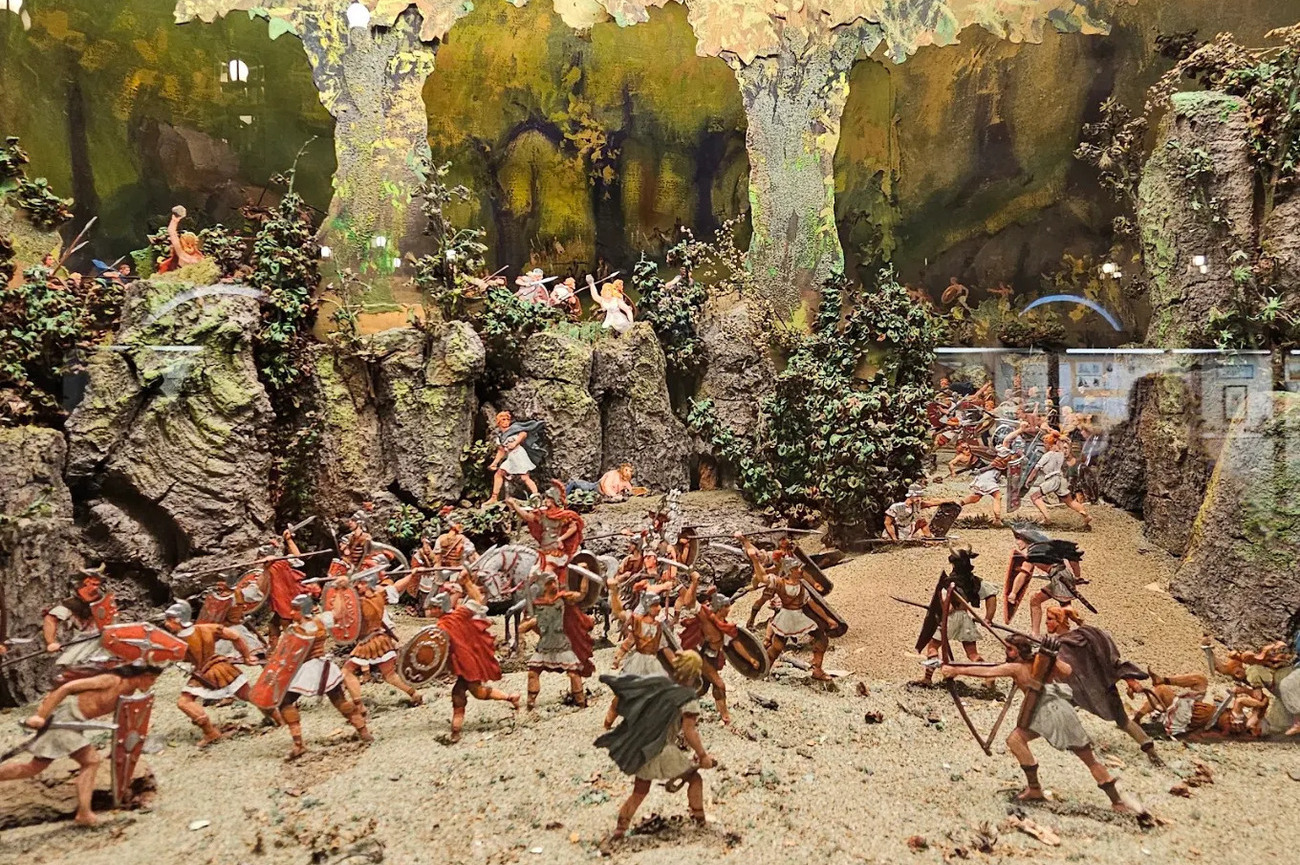
Founded in 1929, the museum holds more than 300,000 individual figures, making it the largest collection of tin figures in the world. Around 150 dioramas use the figures to recreate military campaigns, court life, ancient societies, traditional occupations, fairy tales, wildlife and scenes based on well-known paintings. The displays are detailed rather than toy-like, with carefully painted figures arranged alongside miniature buildings, landscapes and equipment.
It is known for an enormous diorama showing the destruction of Kulmbach on St. Conrad’s Day, 26 November 1553, during the Second Margraves’ War. It contains more than 19,300 painted figures and is recognized by Guinness World Records as the world’s largest three-dimensional diorama of its kind.
You can book the private tour “Im Land der Miniatursuperlativen,” which guides you through the collection’s strongest dioramas. And before leaving, the museum shop offers tin figures, specialist books and Plassenburg-related collectibles.
Felsengarten
Once you have finished at the German Tin Figure Museum, take the Plassenburgexpress back down into Kulmbach. From there, it is about a 25-minute drive to Felsengarten Sanspareil.
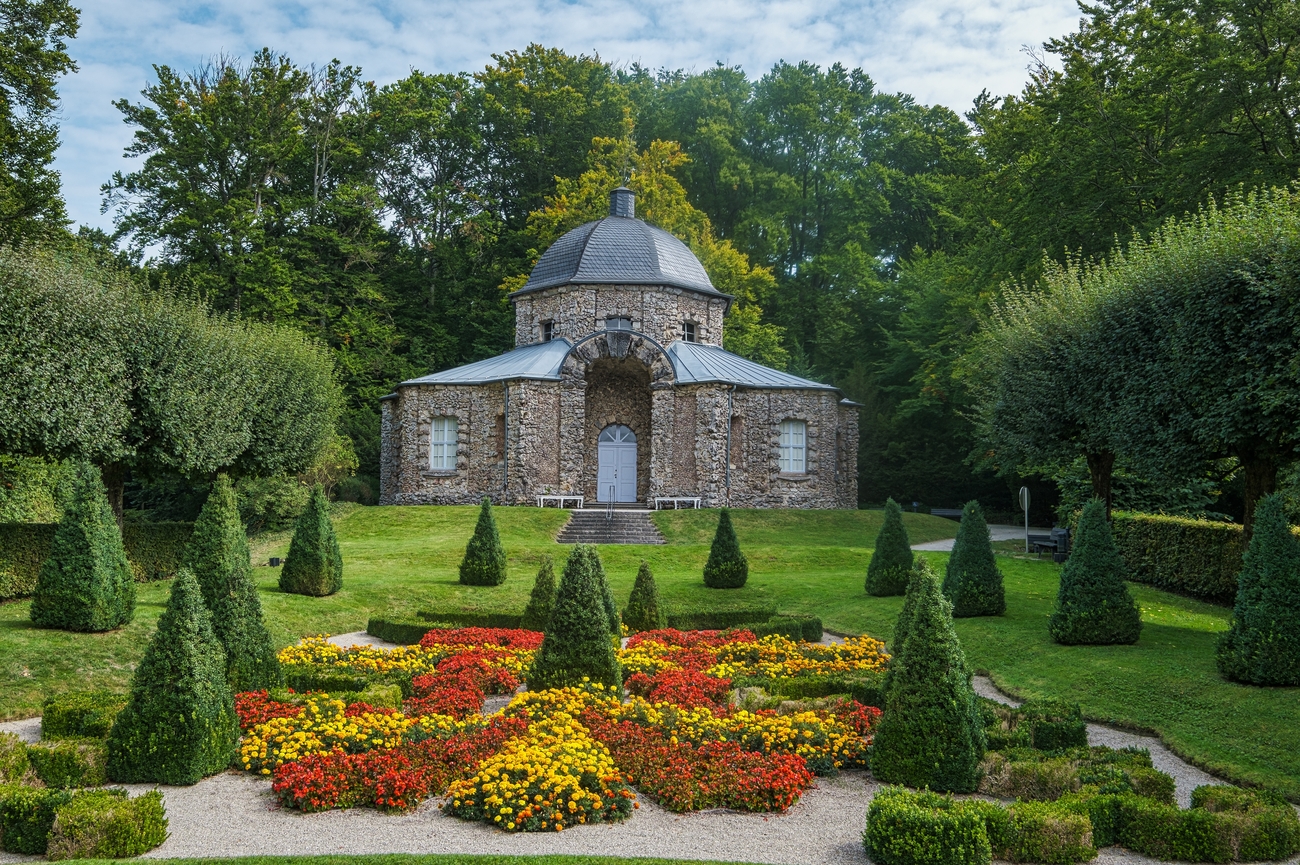
Felsengarten Sanspareil was created between 1744 and 1748 under Margrave Friedrich and Margravine Wilhelmine of Brandenburg-Bayreuth. The former hunting area surrounding Zwernitz Castle was transformed into what the court described as a “garden of wonders,” with construction timed partly around the wedding celebrations of their daughter Friederike. Formal garden areas were inserted into the existing woodland with relatively little alteration to the natural limestone formations.
The name Sanspareil comes from the French phrase meaning “without equal,” a description reportedly given by a visitor in 1746, after which the nearby village of Zwernitz was renamed. The garden is laid out along winding paths through natural rock formations, grottos and small architectural features that appear gradually as you walk, creating a sense of discovery. Although some original structures have been lost over time, the layout still reflects how landscape, theatre and court life were combined. The main highlight is the Ruin Theatre, an open-air stage built into the rocks with a large stone arch and deliberately weathered design to resemble ancient ruins, alongside the nearby Oriental Building, which adds a more decorative element and is linked to Margravine Wilhelmine’s visits.
Afternoon: Zwernitz Castle
Standing directly above Felsengarten Sanspareil, Zwernitz Castle is the natural next stop. Depending on where you finish the garden route, allow around 5-10 minutes for the uphill walk toward the visitor center and lower castle courtyard.
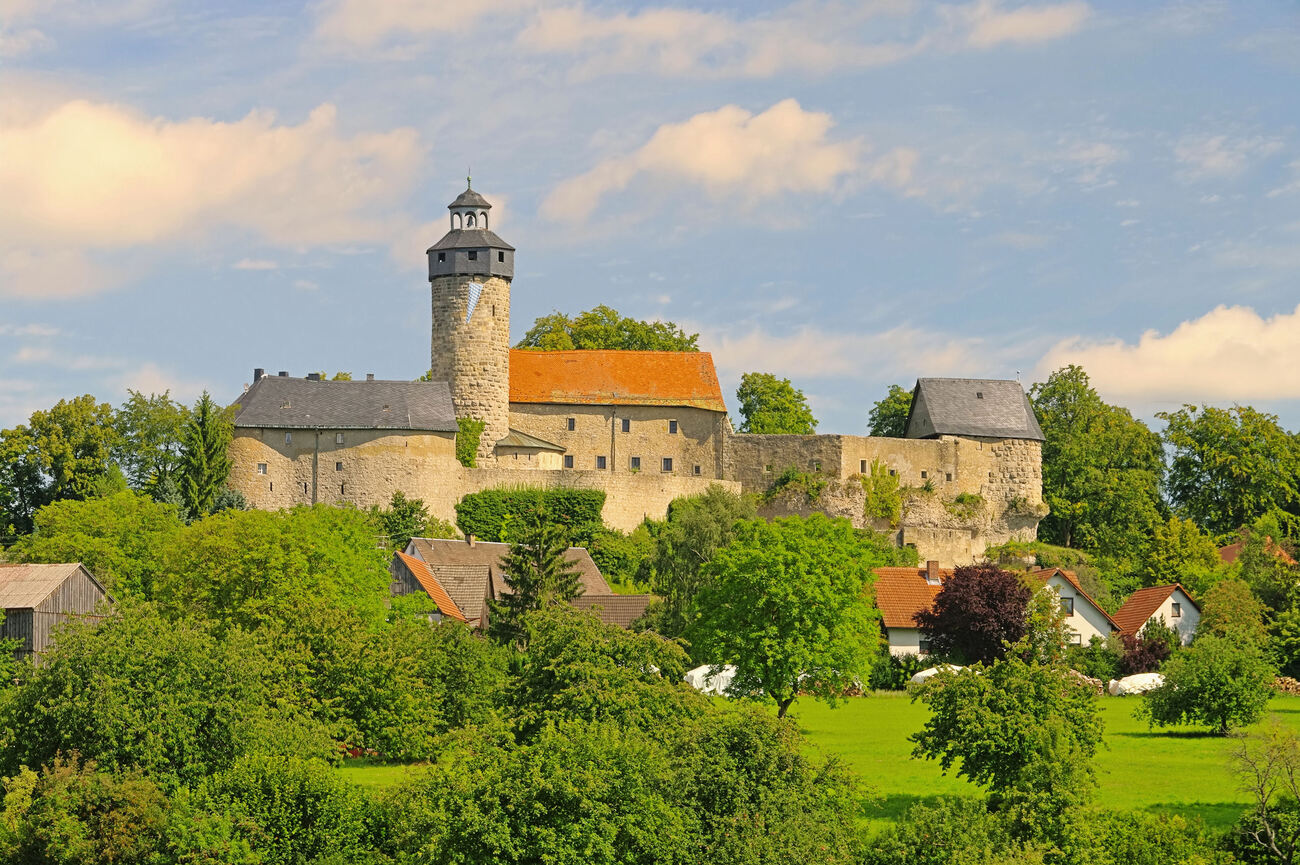
Zwernitz Castle was first documented in 1156 as the ancestral seat of the Walpoten family, although the surviving Romanesque sections date mainly from around 1200. It later became an administrative center for the Burgraves of Nuremberg and passed to the Hohenzollerns in 1338. The keep, tithe barn and parts of the defensive walls belong to the medieval complex, while the half-timbered buildings in the lower castle were added several centuries later.
The keep provides wide views across the Franconian Switzerland Nature Park and once formed part of a regional early-warning network. Smoke and other signals could be relayed through a series of observation towers as far as Plassen Castle in Kulmbach. Inside, exhibitions explain the history of the fortress, its residents and the development of Sanspareil.
Eremitage
Castle hopping continues with the drive east from Zwernitz Castle to Eremitage Bayreuth. This is going to be around a 40-minute drive to an 18th-century palace and garden complex on the outskirts of the city.
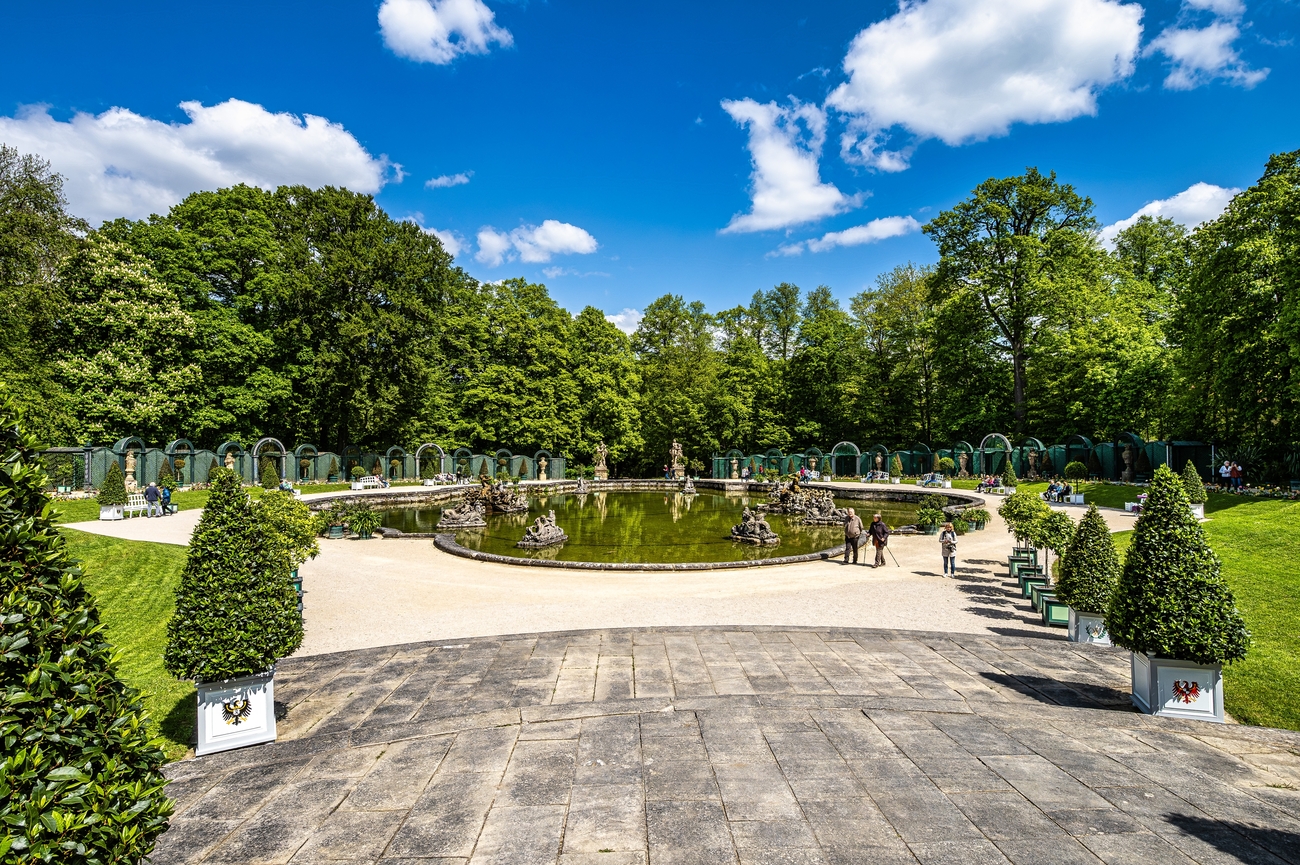
The complex began in 1715, when Margrave Georg Wilhelm developed a former deer park into a court hermitage centered on what is now called the Old Palace. Members of his private court circle came here to temporarily play the role of hermits, although the setup was still very much royal. In 1735, Margrave Friedrich gave the estate to his wife, Margravine Wilhelmine, who expanded the palace and reshaped the surrounding grounds. Her additions included the Music Room, Japanese Cabinet and Chinese Mirror Cabinet, where she wrote parts of her memoirs.
The wider park covers approximately 46 hectares and combines woodland, winding paths, formal garden sections, grottos, fountains and deliberately artificial ruins. Major features include the Old Palace, the New Palace, the Temple of the Sun, the Lower Grotto, the Ruin Theatre and the Large Pond. Unlike a typical Baroque garden, the Eremitage is not organized around one dominant central axis.
The New Palace and its Temple of the Sun are the visual highlights, with curved wings, colored stonework and an upper grotto surrounding the central domed structure. The design was completed between 1749 and 1753, while the Lower Grotto and Ruin Theatre were created slightly earlier between 1743 and 1745.
You can only enter the Old Palace through an official guided tour. Tours begin every 45 minutes, last approximately 45 minutes and cover the historic rooms added and redesigned under Margravine Wilhelmine.
Neues Schloss Bayreuth
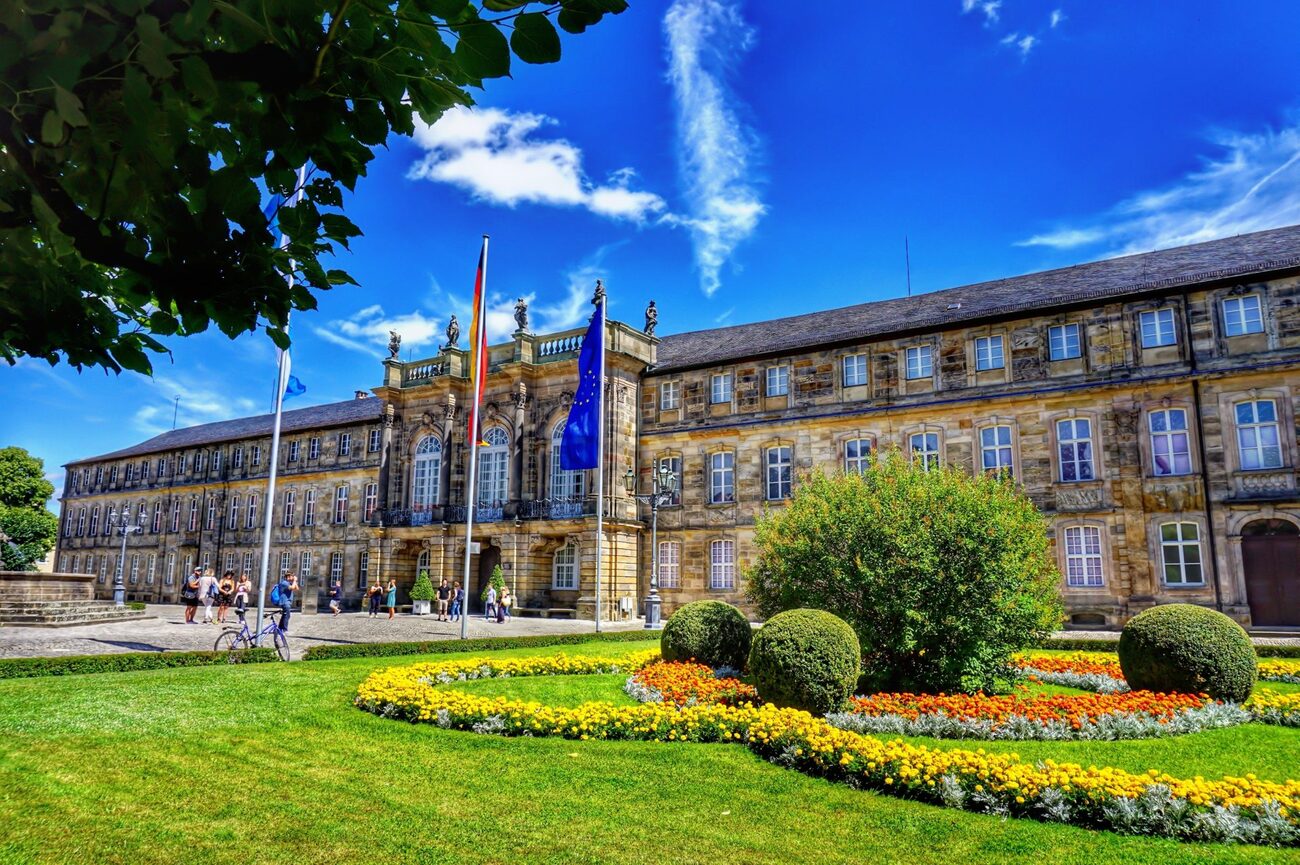
Palace hopping continues with a 10-minute drive from Eremitage Bayreuth to Neues Schloss Bayreuth, or the New Palace, in the city center. The palace stands on Ludwigstraße beside the Hofgarten.
The New Palace was built after a fire destroyed much of Bayreuth’s former city residence in 1753. Margrave Friedrich commissioned French architect Joseph Saint-Pierre to design the replacement, while Margravine Wilhelmine played an active role in shaping the interiors. Several existing buildings were incorporated into the new structure, which explains the palace’s long, slightly irregular exterior. The result became one of the best examples of Bayreuth Rococo, a decorative style known for its detailed craftsmanship, lighter colors and more intimate scale.
Inside, the main route passes through the ceremonial staircase, Guards’ Hall, Banqueting Hall and the separate apartments of the margrave and margravine. Wilhelmine’s rooms are the most distinctive, especially the Cabinet of Fragmented Mirrors, the Drawing Room with a Gold Ceiling, the Japanese Room, the Pastel Room and the Old Music Room. The Palm Room is another renowned attraction. Its walls are covered with detailed walnut paneling shaped into palm trees, flowers and decorative patterns, creating one of the most recognizable interiors in the palace.
Margravial Opera House
The next cultural stop is the Margravial Opera House. It is reached by an approximately 8-10 minute walk from Neues Schloss Bayreuth through the compact city center.
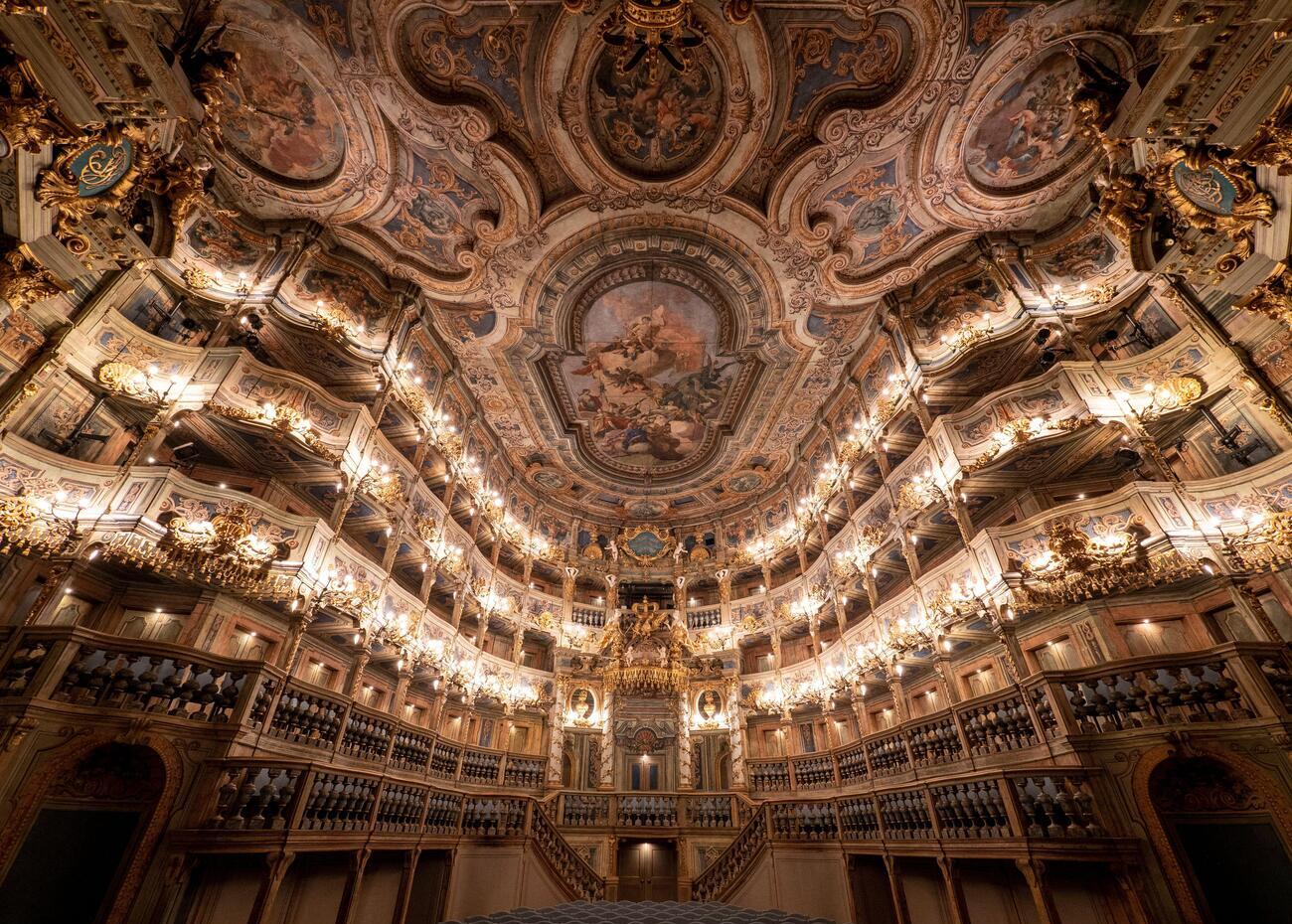
Commissioned by Margravine Wilhelmine and Margrave Friedrich, the opera house was constructed between 1744 and 1748 for the Bayreuth court. Italian theater architect Giuseppe Galli Bibiena designed the interior, while his son Carlo supervised much of the work in Bayreuth. The building was added to the UNESCO World Heritage List in 2012 as an exceptional surviving example of European Baroque theater and court festival culture.
The auditorium is arranged as an Italian-style loge theater, with three levels of boxes built primarily from wood and decorated canvas. Gilded ornament, painted architectural effects, and elaborate court symbols surround the central royal box, while the deep stage was designed to accommodate the large perspective sets used in Baroque productions.
The strongest luxury option for you is to attend an actual opera, concert, or gala inside the historic auditorium. Performances are limited because the building primarily operates as a protected museum, so you should check the annual event calendar and secure the best available seats well ahead of your visit.
Evening: Bayreuth Festival Theatre
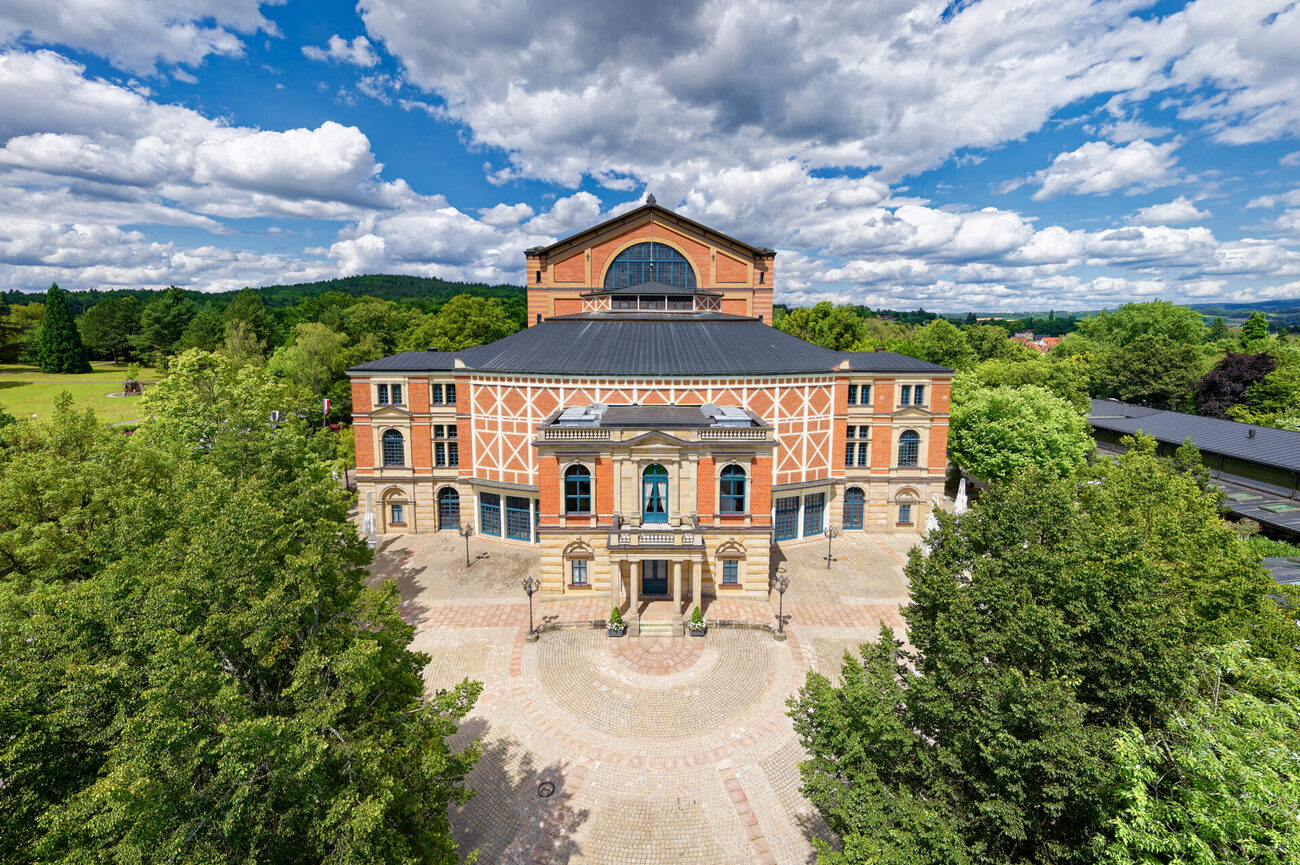
End the six-day Franconia tour at the Bayreuth Festival Theatre, also known as the Richard Wagner Festspielhaus. This is a 10-minute drive from the Margravial Opera House to the Festspielhügel, or “Festival Hill,” north of the city center.
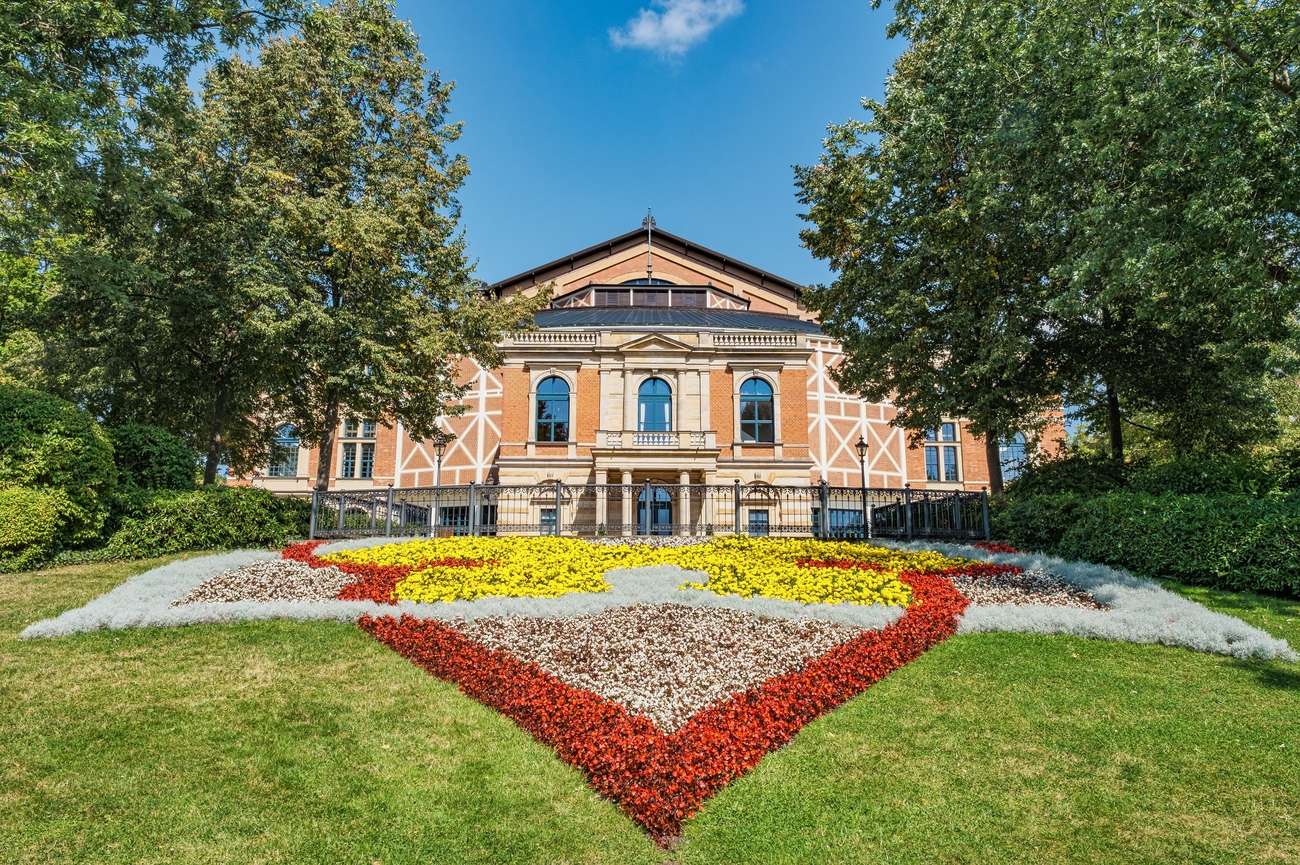
Richard Wagner selected Bayreuth for his festival project in 1871 after deciding that the Margravial Opera House was too ornate and unsuitable for the scale of his music dramas. The foundation stone for his new theater was laid in 1872 and Leipzig architect Otto Brückwald completed the building using Wagner’s ideas and elements from earlier plans by Gottfried Semper. The first Bayreuth Festival opened here in 1876 with the complete premiere cycle of “Der Ring des Nibelungen.”
The exterior is deliberately simple, with red brickwork and limited decorative detail. But inside, the auditorium rises steeply in an amphitheater-style arrangement, with every seat directed toward the stage instead of being divided into traditional private boxes. The darkened auditorium and concealed orchestra pit were also central to Wagner’s plan.
You can usually only see the interior by joining an official guided tour or by attending a performance. For the most memorable experience, try to secure tickets for a Bayreuth Festival performance and select the best seating category available through the festival’s official ticket system. Keep in mind that tickets are personalized and you should plan to arrive about 60 minutes before the performance.
Day 6 - Franconia Tour Map
Other Things to Do in Franconia
Franconia has plenty left after the headline castles and medieval centers. The region also delivers serious wine culture, privately owned palaces, historic spa architecture, industrial heritage and museums that cover everything from rural life to European music history. These places work well as additions to a longer itinerary or as focused day trips.
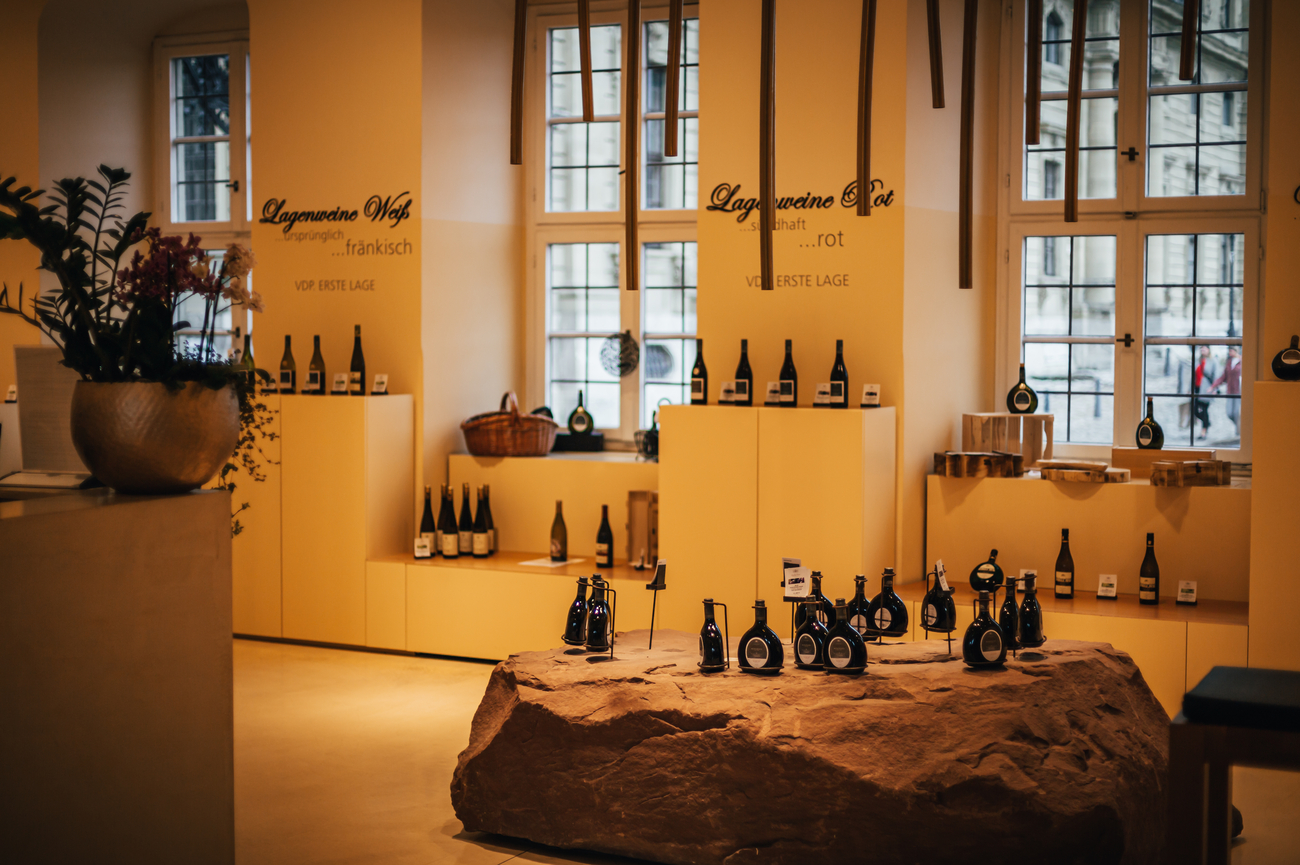
- Staatlicher Hofkeller: Located beneath the Würzburg Residence, the Staatlicher Hofkeller adds a proper wine experience to the city’s palace circuit. The underground complex covers approximately 4,557 square meters, with vaulted corridors, atmospheric lighting, traditional wooden barrels and a wine library containing bottles from previous vintages. Balthasar Neumann was instructed to include an excellent wine cellar when he began planning the Residence in 1719, and the facility still operates as a working winery rather than a museum set. You can join public cellar tours that are available for individual visitors, while private groups of at least 20 people can reserve one of the official guided formats throughout the year. There is also the Balthasar tour, which lasts 45 minutes and includes one glass of Franconian wine.
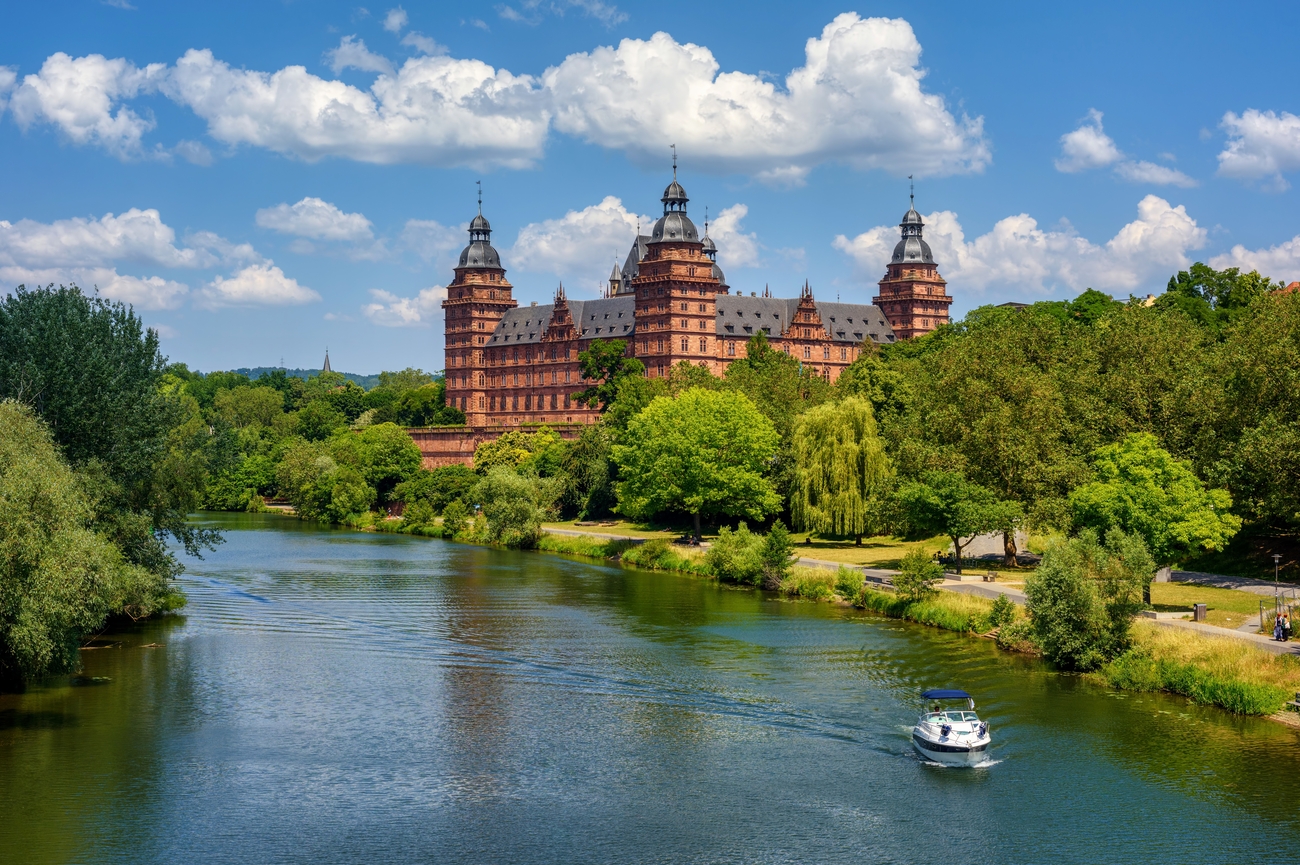
- Schloss Johannisburg: Schloss Johannisburg brings a different architectural style to the Franconian palace circuit. Built from local red sandstone between 1605 and 1614, it is one of Germany’s leading Late Renaissance residences. Architect Georg Ridinger designed a symmetrical four-winged complex with a square courtyard and four corner towers. The palace holds several collections under one roof, including the State Gallery with works by Lucas Cranach the Elder, the Palace Chapel with a monumental altar by Hans Juncker, Neoclassical princely apartments and exhibits covering six centuries of Aschaffenburg history. One of its more unexpected highlights is the world’s largest collection of cork models representing ancient Roman buildings. The 45 miniature structures include the Colosseum, Pantheon and major triumphal arches.
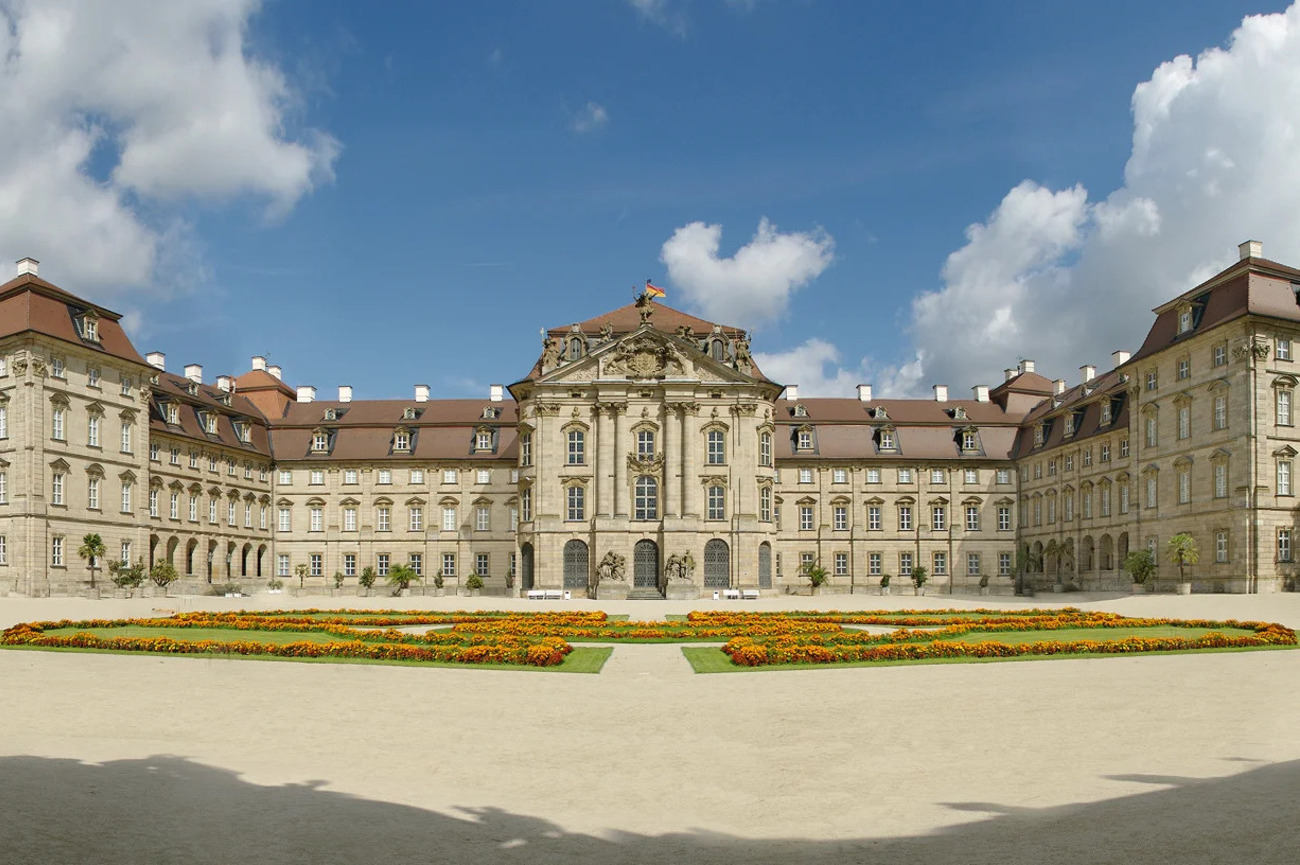
- Schloss Weißenstein is a privately owned Baroque palace near Bamberg and one of Franconia’s most substantial alternatives to the better-known state residences. It was built as the private summer residence of Lothar Franz von Schönborn and remains connected with the Schönborn family. The interior is known for its monumental staircase, grotto-style Sala Terrena, formal rooms, and one of Germany’s most important private collections of Baroque art. You can only enter the palace through a guided tour, which is conducted in German, although printed information in other languages is available. Special tours cover subjects such as the palace chapel and its connections with the Schönborn family.
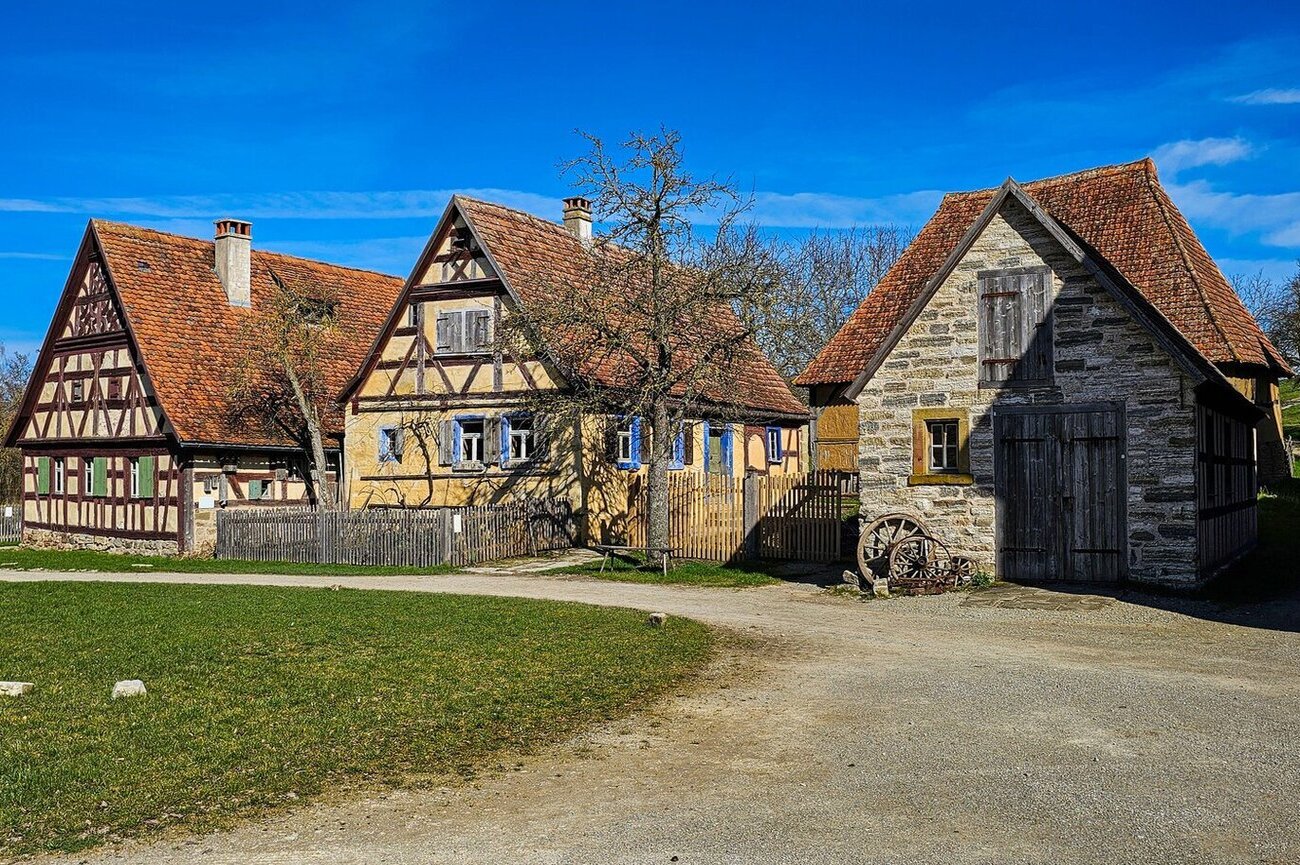
- Franconian Open Air Museum Bad Windsheim: The Franconian Open Air Museum is the place to visit when you want regional history beyond royal families and major monuments. More than 100 relocated and reconstructed buildings explain roughly 700 years of rural and small-town life in Franconia. Farmhouses, workshops, barns, bakeries, schools, mills and administrative buildings are grouped into different settlements across a large landscaped site. The interiors are furnished with period objects, while surrounding gardens, fields, vineyards and hop plantings recreate traditional Franconian agricultural landscapes. Key sections include the medieval building group, the town district, and the Museum Church in Franconia, housed within the historic Spitalkirche. You can book a private guided tour in English or request an individual guide and build a focused 90-minute route around the most historically important buildings.
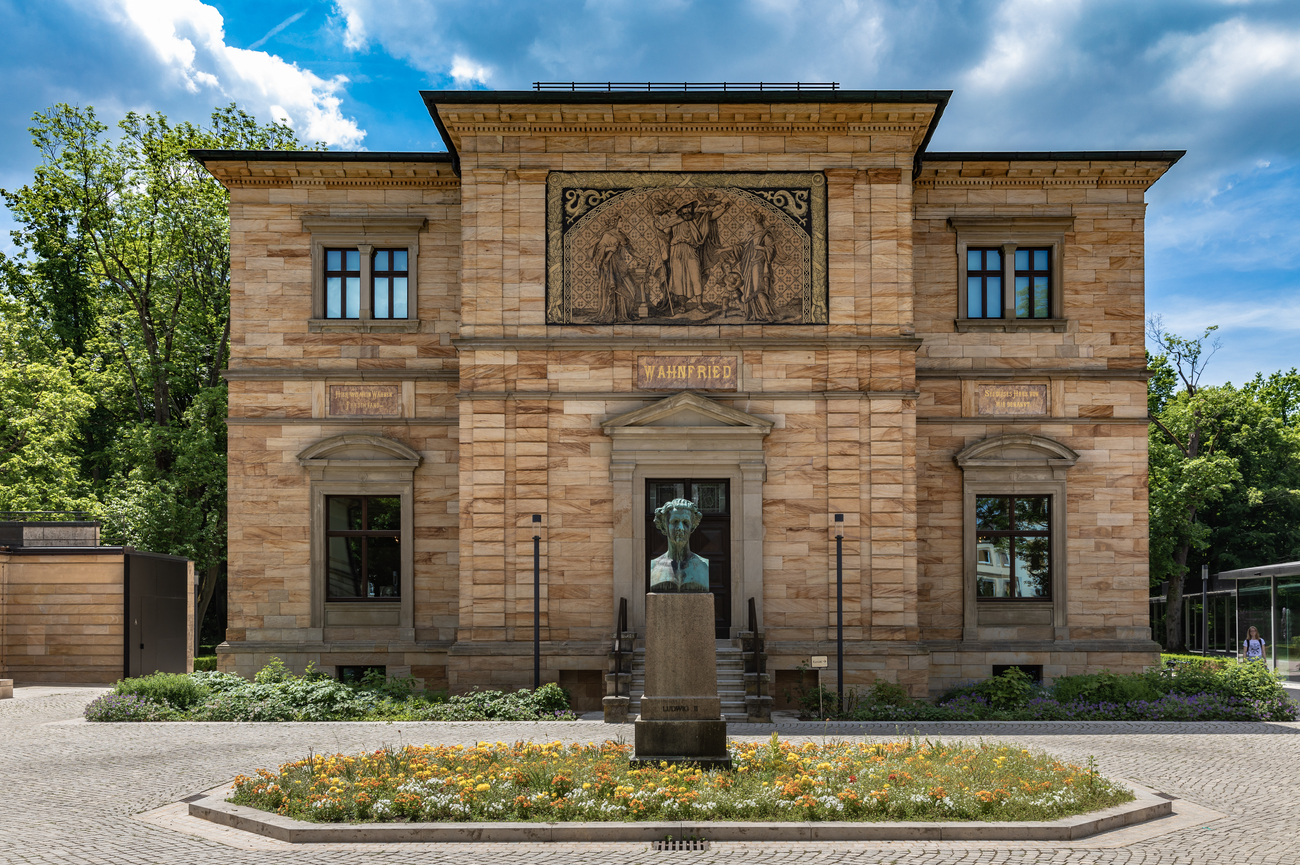
- Wahnfried: Wahnfried was Richard Wagner’s home from 1874 until his death in 1883 and now forms the center of the Richard Wagner Museum. The property includes the restored villa, a modern exhibition building, and the Siegfried Wagner House. Wagner and his wife Cosima are buried in the garden behind the main residence. The three permanent exhibitions separate Wagner’s personal life, the performance history of the Bayreuth Festival and the political and ideological legacy surrounding the Wagner family. English- and French-language tours are available and last around 90 minutes. The museum also offers after-hours access for an additional opening fee, as well as curator-led and director-led tours on selected dates.
Things to Do with Kids in Franconia
Franconia is surprisingly strong for family travel. Beyond the castles and historic centers, the region has hands-on museums, large theme parks, wildlife experiences, and enough water slides to rescue any itinerary from another round of “Do we really have to look at old buildings?” The best family attractions here are not only designed to keep children busy. Many include interactive learning, outdoor space and bookable experiences that let you enjoy the day without turning it into a logistical workout.
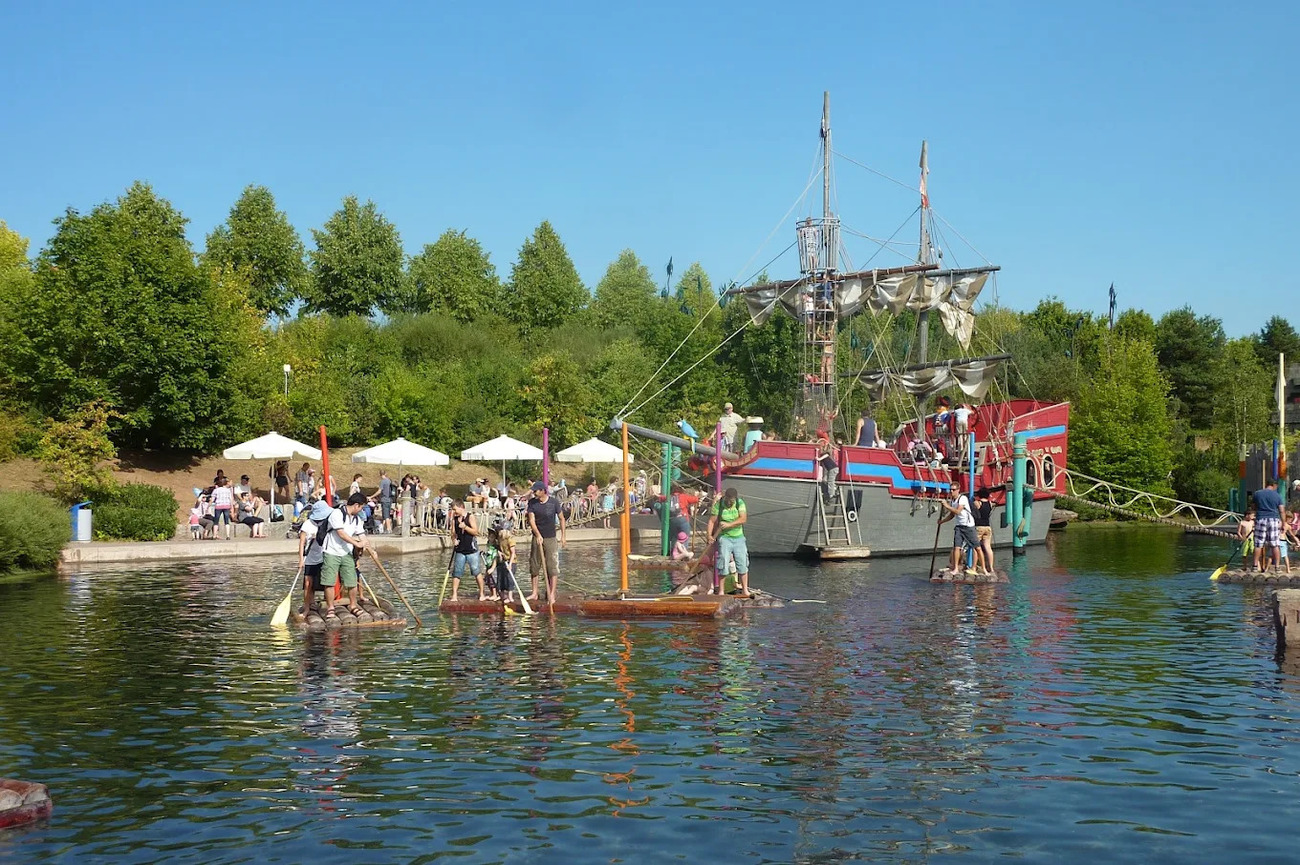
- PLAYMOBIL-FunPark: The PLAYMOBIL-FunPark in Zirndorf is built around active play rather than traditional amusement-park rides. Children can climb through a knight’s castle, explore a pirate ship, search for gold, play around a farm and construction site, and investigate a treehouse area filled with dinosaurs. The Pirate Lake alone covers a large play zone with rafts, water cannons and a shipwreck, while the indoor HOB Center keeps the energy going when the weather decides to be difficult. Most areas are aimed at children between three and ten, although the Action Park includes activities for older children and adults.
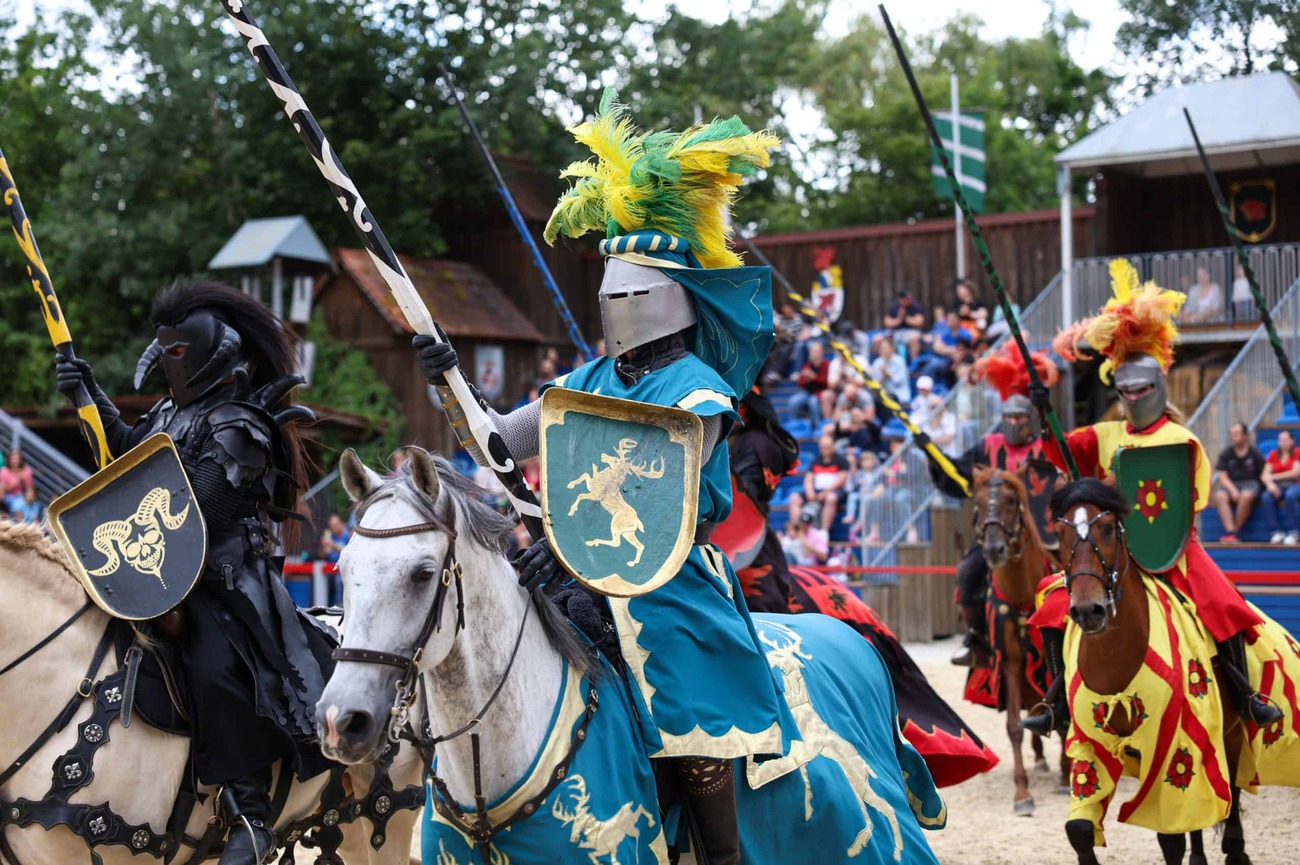
- Erlebnispark Schloss Thurn: Located in Heroldsbach, Erlebnispark Schloss Thurn combines rides, nature, animals and live entertainment around a historic castle estate. Families can move between the Western Town, Fairy-Tale Forest, motor-skills park, animal area and adventure playgrounds. The attraction list includes water rides, family coasters and smaller rides for young children, while regular productions include knight tournaments, Wild West performances and magic shows. It feels more compact than a huge international theme park, which is useful when you do not want to spend half the day crossing parking lots.
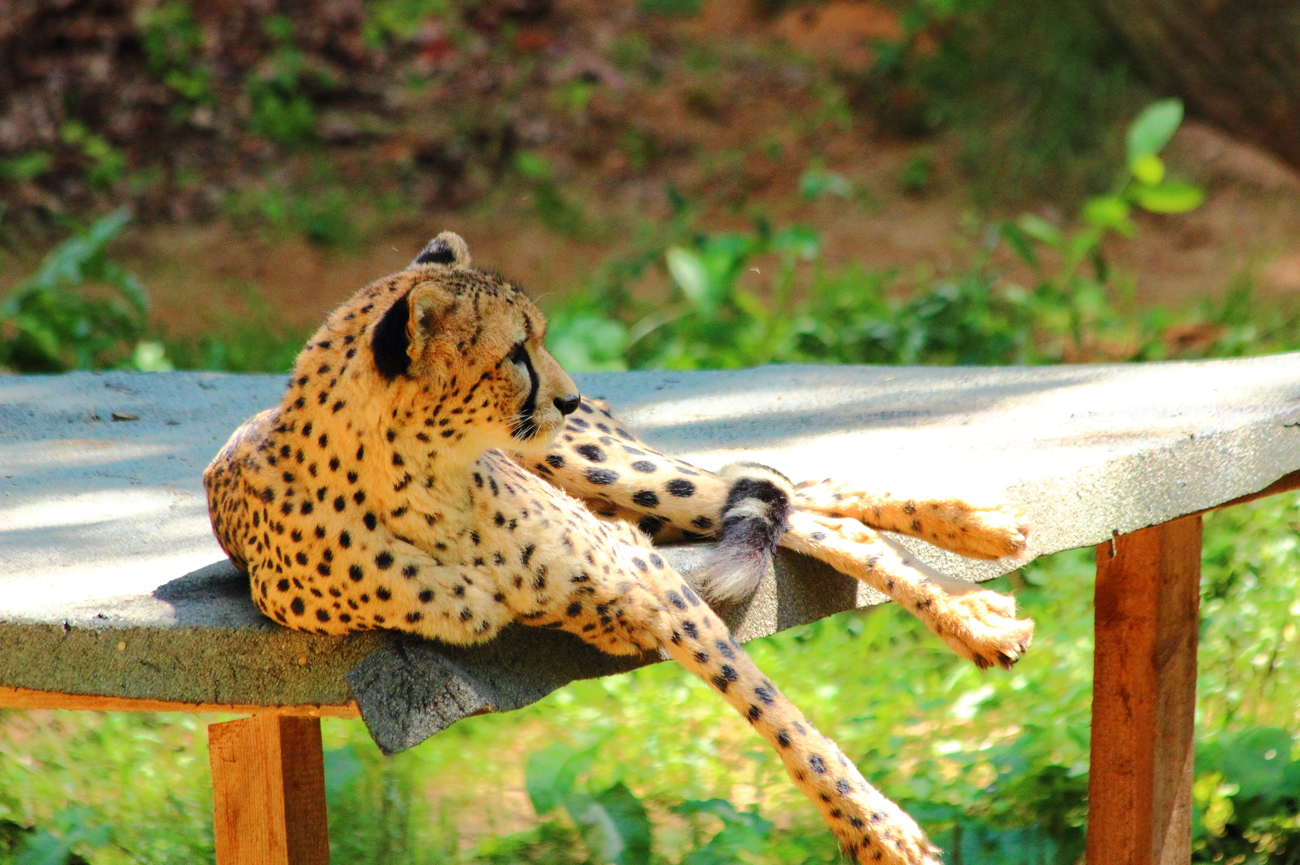
- Nürnberg Zoo: Nürnberg Zoo is a large landscape zoo built around sandstone formations, mature woodland, ponds and wetlands rather than rows of flat enclosures. Its major family highlights include the Dolphin Lagoon, children’s zoo, playgrounds, feeding presentations and a miniature railway modeled after Germany’s first passenger train. You can also enjoy the newer Climate Forest Trail, which reaches into the tree canopy and includes activity stations high above the ground, adding a solid adventure element to the animal visit. You can book morning or evening tours, children’s birthday programs, favorite-animal visits, workshops and special encounters involving dolphins, primates and the Amazon habitat.
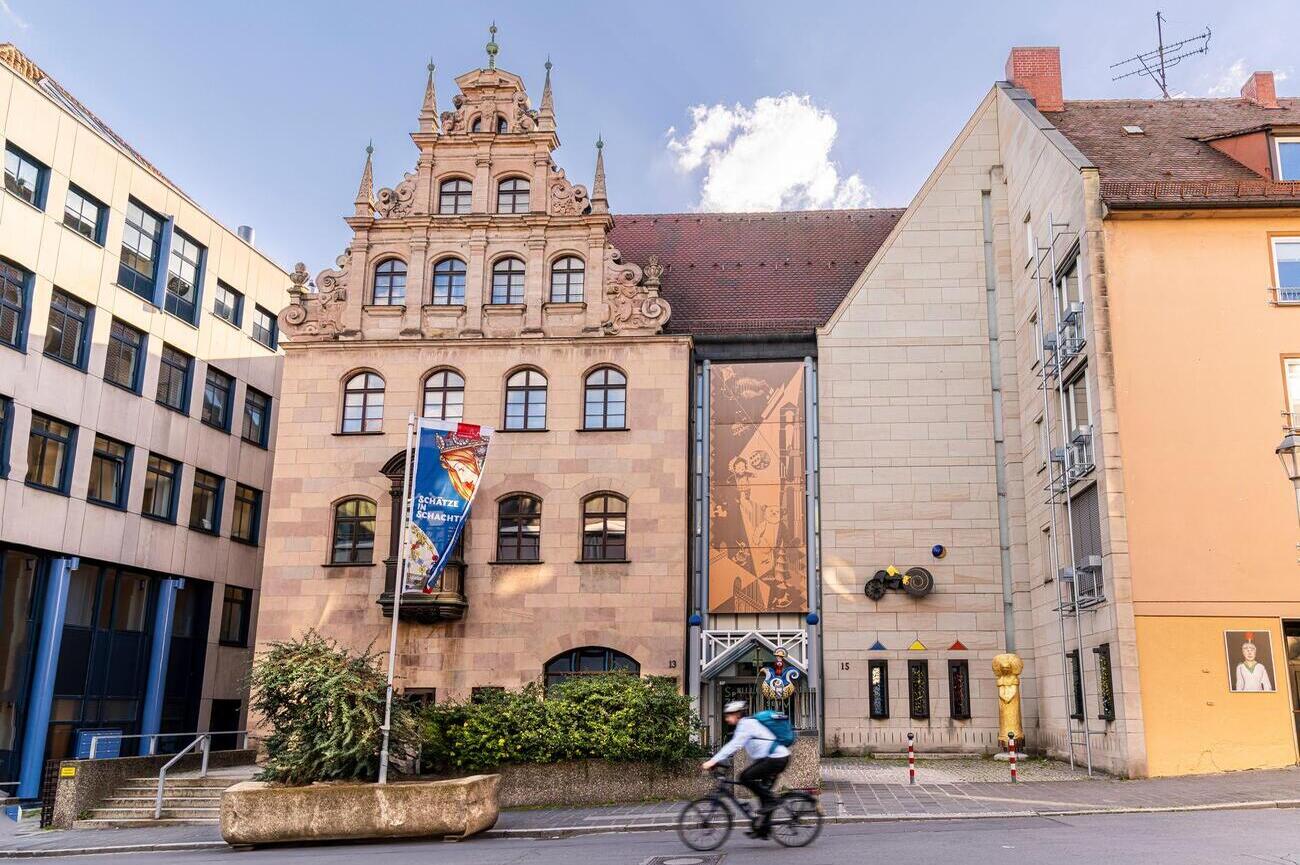
- Toy Museum: The Toy Museum in Nuremberg covers more than 600 years of the city’s toy-making history. Its exhibits include dollhouses, mechanical toys, model trains, wooden toys, tin figures and modern products linked to Nuremberg’s international toy industry. The displays work well for mixed generations because adults get the nostalgia, while children get an entire building full of things they would normally be told not to touch. You can book private tours available in English and several other languages.
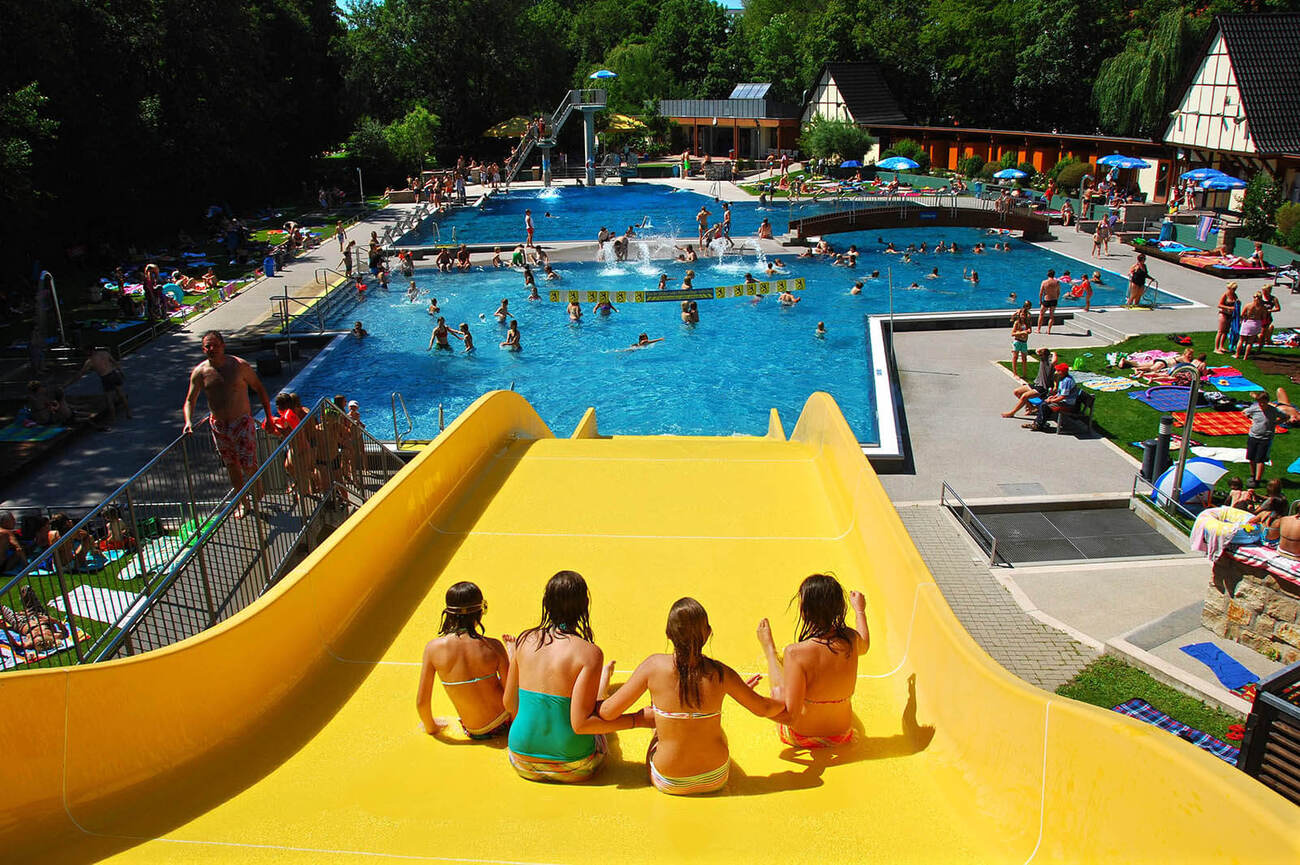
- Kristall Palm Beach: Kristall Palm Beach in Stein is one of Franconia’s major family water parks, combining a wave pool, children’s areas, thermal pools and an extensive water-slide complex. The slides are divided by age and difficulty, while the Kinderland area provides shallower water and smaller attractions for younger visitors. It works well as a full-day reset after several days of museums and castles, especially when the children have officially reached their historical-building limit.
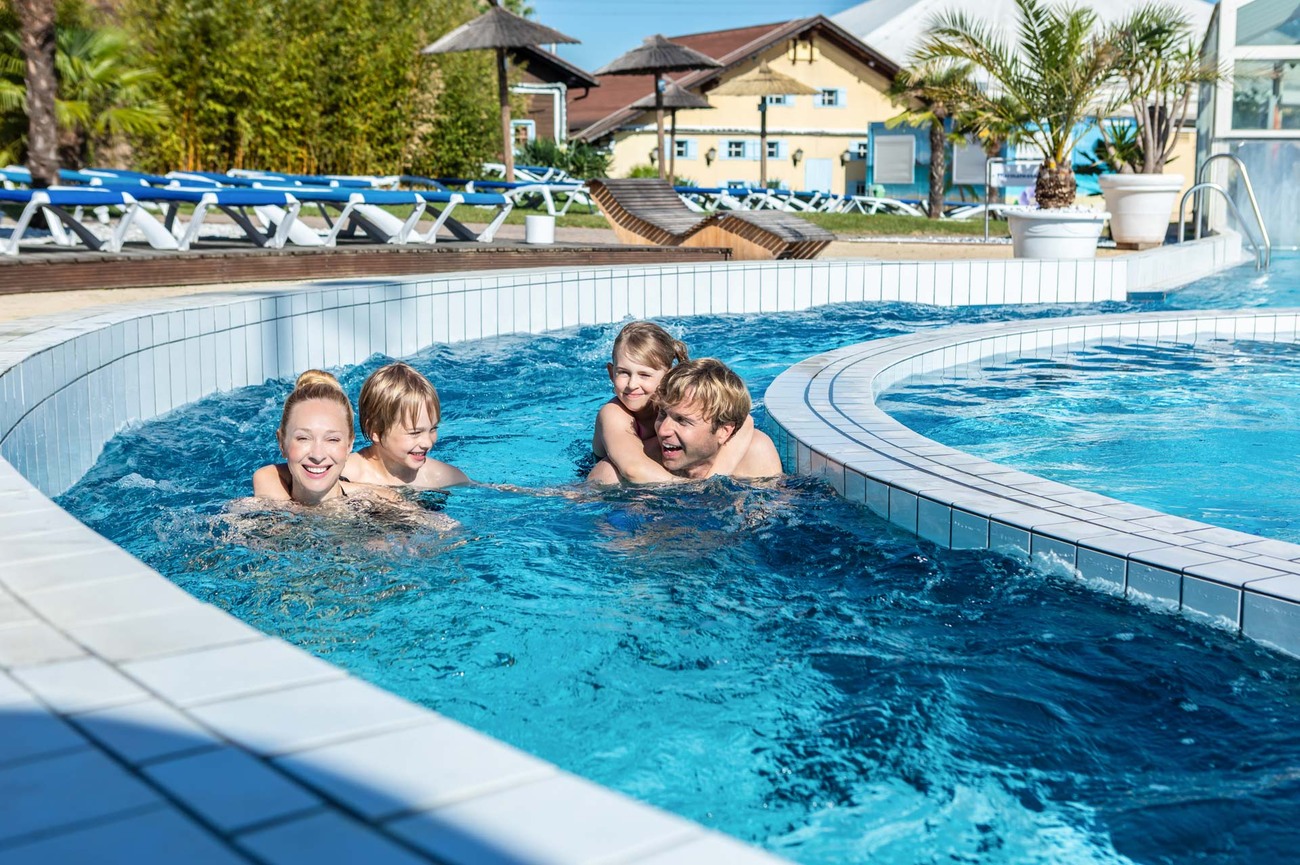
- Leisure Indoor Pool Atlantis: Leisure Indoor Pool Atlantis is an indoor and outdoor water complex with around 1,200 square meters of water, a wave pool, heated outdoor pools, a baby area and one of Bavaria’s larger children’s water-play parks. Its slide section includes faster rides such as the Black Hole and Crazy River, while the smaller water playgrounds keep younger children occupied without dropping them straight into full theme-park mode. The complex remains open into the evening. You can visit this on a rainy day or after a shorter sightseeing schedule.
Day Trips from Franconia
Franconia sits within easy reach of several major German destinations, which means you can add another UNESCO city, royal capital or historic landscape without turning the day into a transport marathon. The key is to leave from the closest Franconian base. Each destination below can be reached in no more than approximately 90 minutes. The places are substantial enough to fill a full day, but compact enough that you can still book a private guide, visit the renowned landmarks, and keep the pace comfortable.
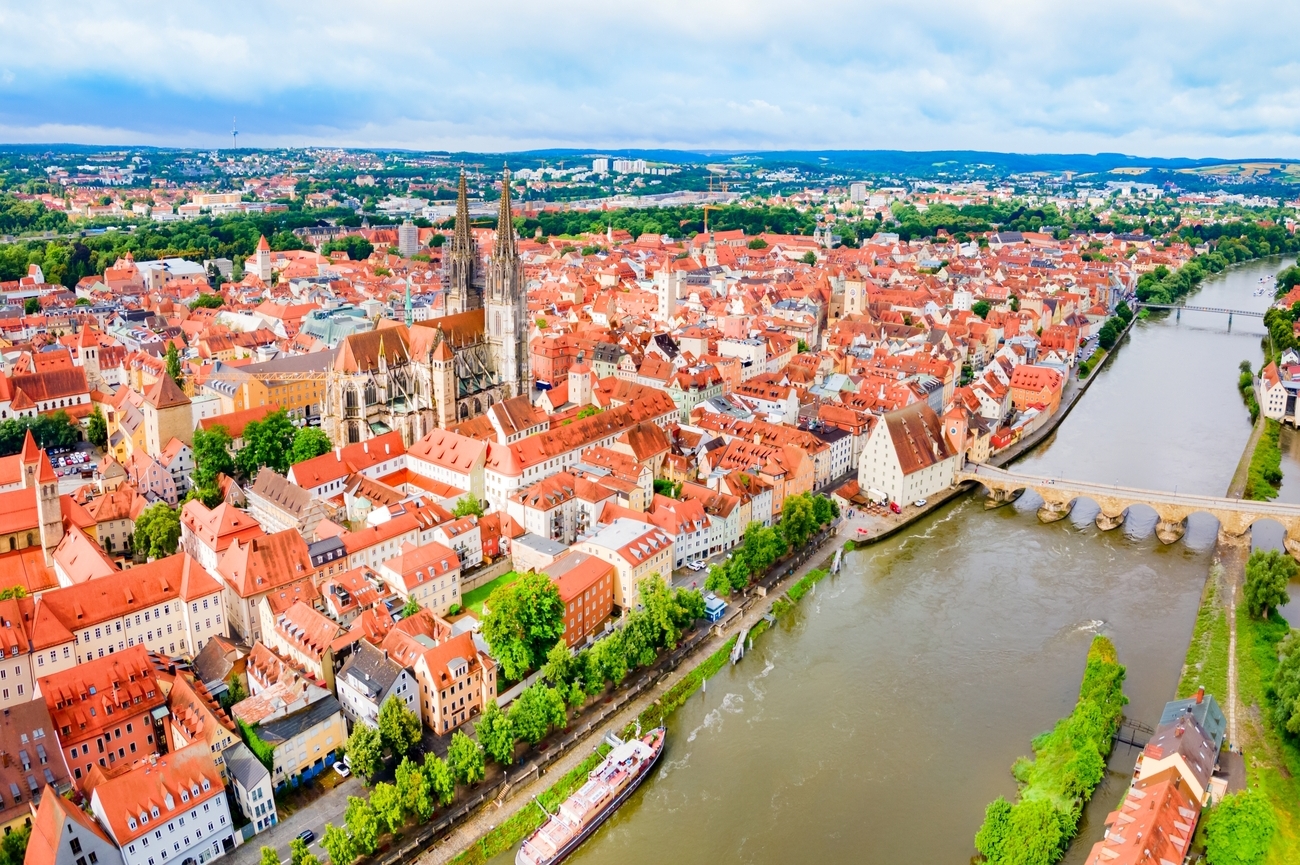
- Regensburg offers two UNESCO connections in one compact city: the Old Town and Stadtamhof, along with sections of the Roman Danube Limes. The drive from Nuremberg takes approximately one hour and five minutes, making it one of the easiest cultural day trips from eastern Franconia. Begin at St. Peter’s Cathedral, then continue through Porta Praetoria, the Stone Bridge and the narrow medieval streets surrounding Haidplatz. The Old Town Hall is one of the city’s most important stops. Its Imperial Hall and historic assembly rooms are connected with the Perpetual Imperial Diet of the Holy Roman Empire, which met in Regensburg from 1663 to 1806. Another major attraction is St. Emmeram Palace, the historic residence of the House of Thurn und Taxis. For a high-end visit, reserve a private 90-minute city tour or book the two-hour Open Sesame experience, which includes access to selected chapels, galleries, halls, and historic cellars that are normally closed to general visitors.
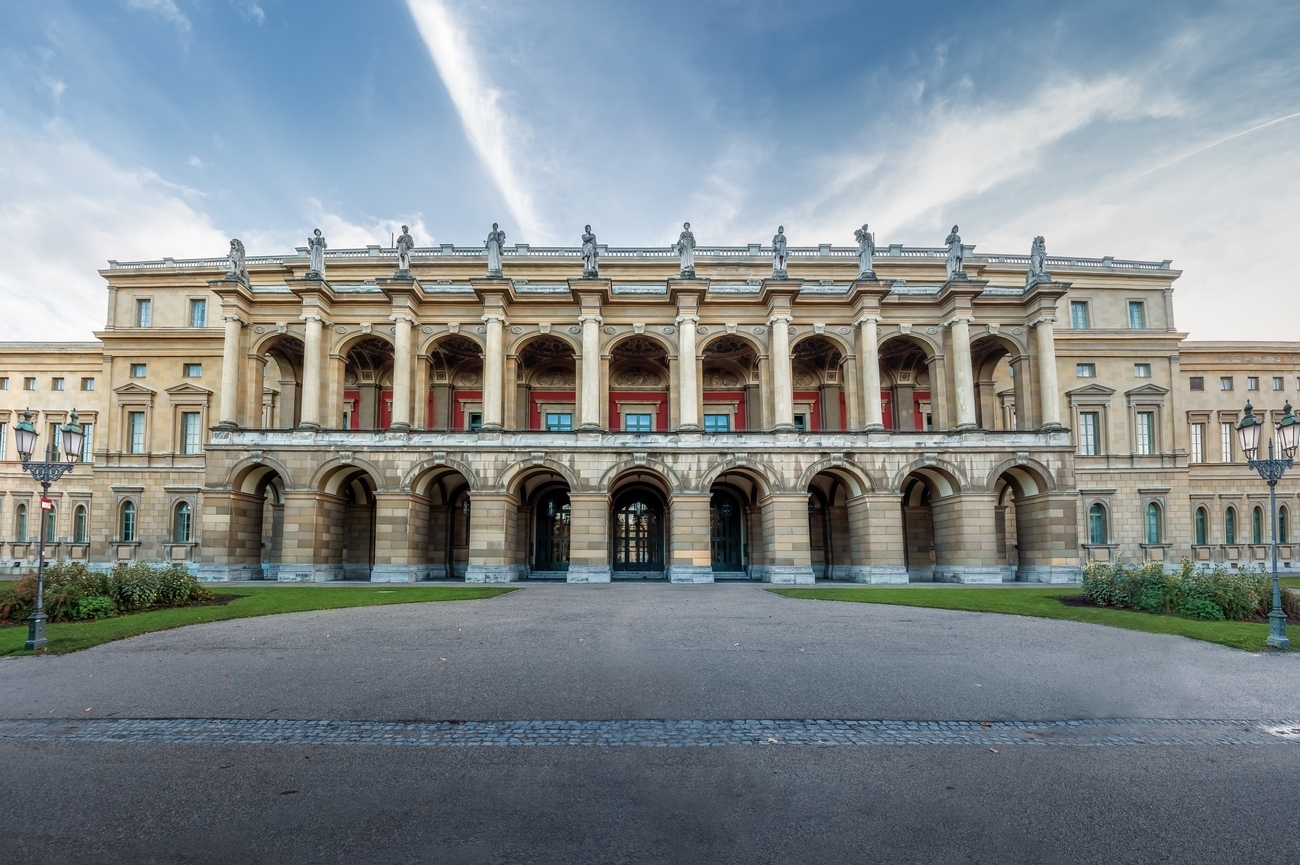
- Munich: A direct ICE train gets you from Nuremberg to Munich in approximately one hour, making rail the smarter option than dealing with city traffic. Once you arrive, keep the route focused around Marienplatz, Frauenkirche, Odeonsplatz and the Munich Residenz. Munich is too large to cover properly in one day. The Munich Residenz should take priority. The complex includes the Renaissance Antiquarium, Baroque ceremonial rooms, Rococo apartments, royal collections and the Treasury, which holds crowns, jewelry, rock crystal, ivory and religious objects collected by Bavaria’s rulers. You can also arrange a private three-hour Treasury and Cuvilliés Theatre experience, then browse the luxury boutiques along Maximilianstraße. And if you can't get enough of the city, we've prepared a Munich itinerary if you choose to extend your stay.
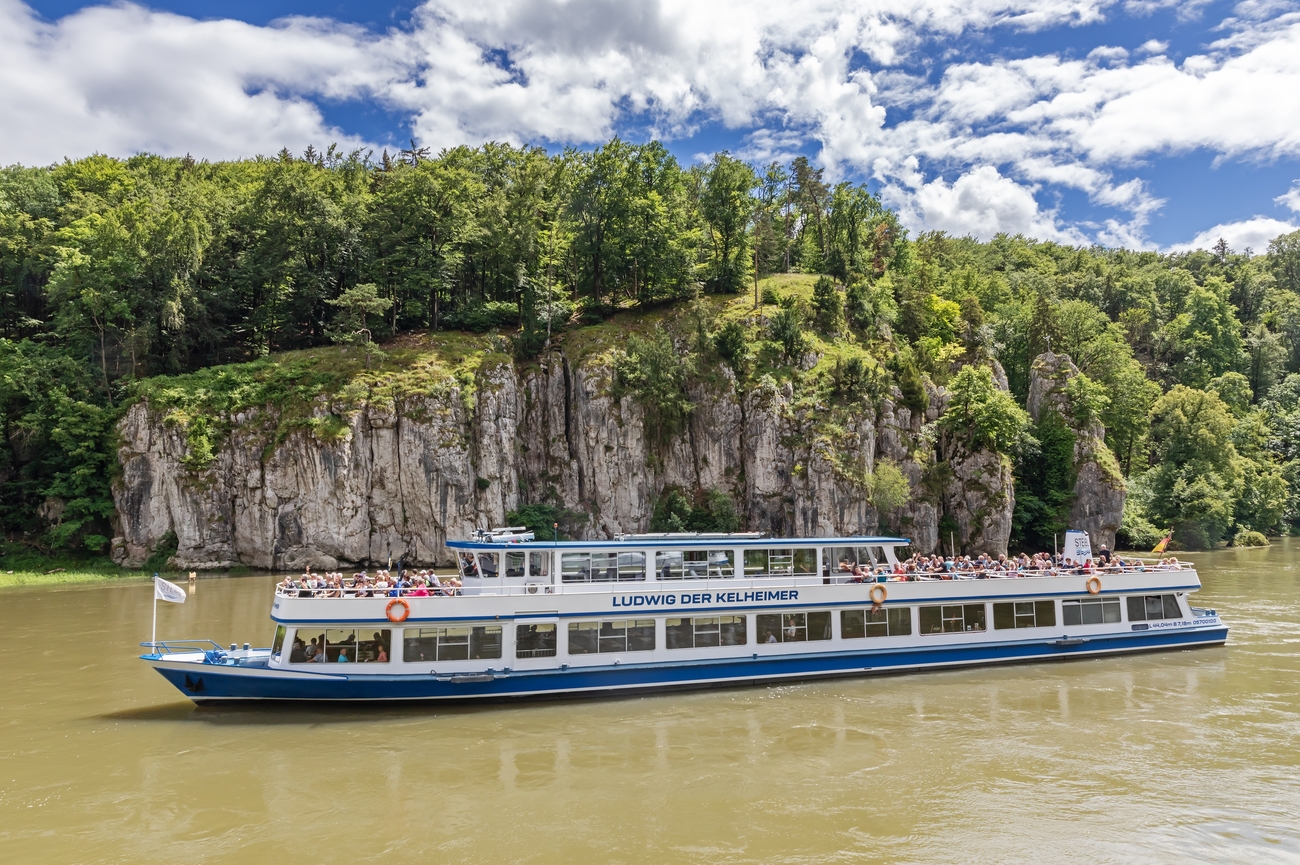
- Kelheim: The main event here is not only the destination but the route through the Danube Gorge. Kelheim is approximately 80-90 minutes by car from Nuremberg, depending on traffic, and works best during the seasonal boat-service months. Start at the Befreiungshalle, the monumental circular memorial commissioned by King Ludwig I, before heading toward the riverfront. Boats travel through the limestone cliffs of the Danube Gorge to Weltenburg Abbey, a Benedictine monastery founded near one of the river’s most scenic sections. Its Baroque church, designed and decorated by the Asam brothers, is the architectural highlight.
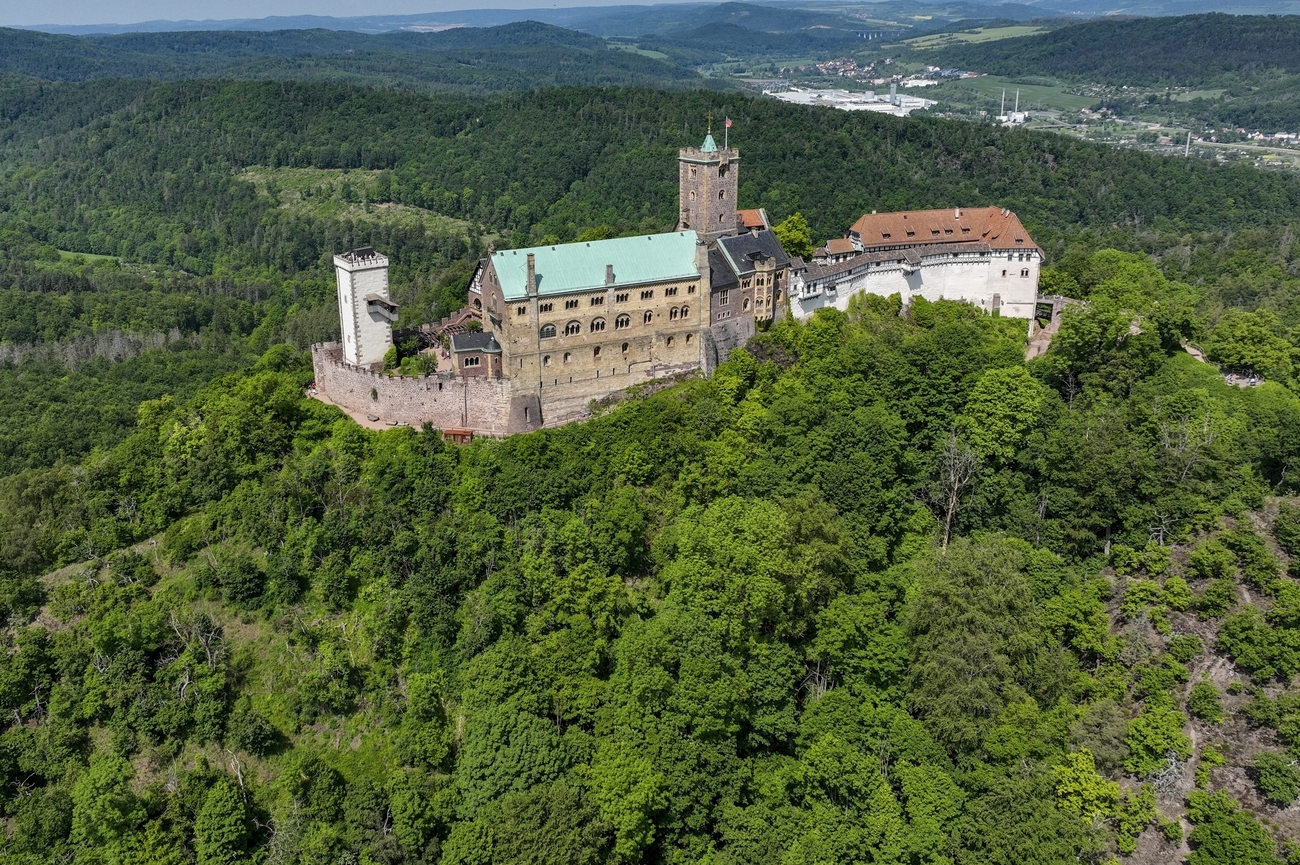
- Eisenach: Wartburg Castle is the reason Eisenach deserves a full day. The UNESCO-listed fortress stands high above the town and can be reached from Coburg in approximately one hour and 20 minutes by car. Its history is linked with St. Elizabeth of Hungary, Martin Luther and major developments in German religious, political and literary culture. Inside the castle, the tour covers medieval ceremonial rooms, the Romanesque palace and the small chamber where Luther translated the New Testament into German. Afterward, continue into Eisenach for Bach House, Luther House and the historic market square. You can also add Dragon Gorge, a narrow forest ravine south of the city with rock walls, wooden walkways and shaded trails.
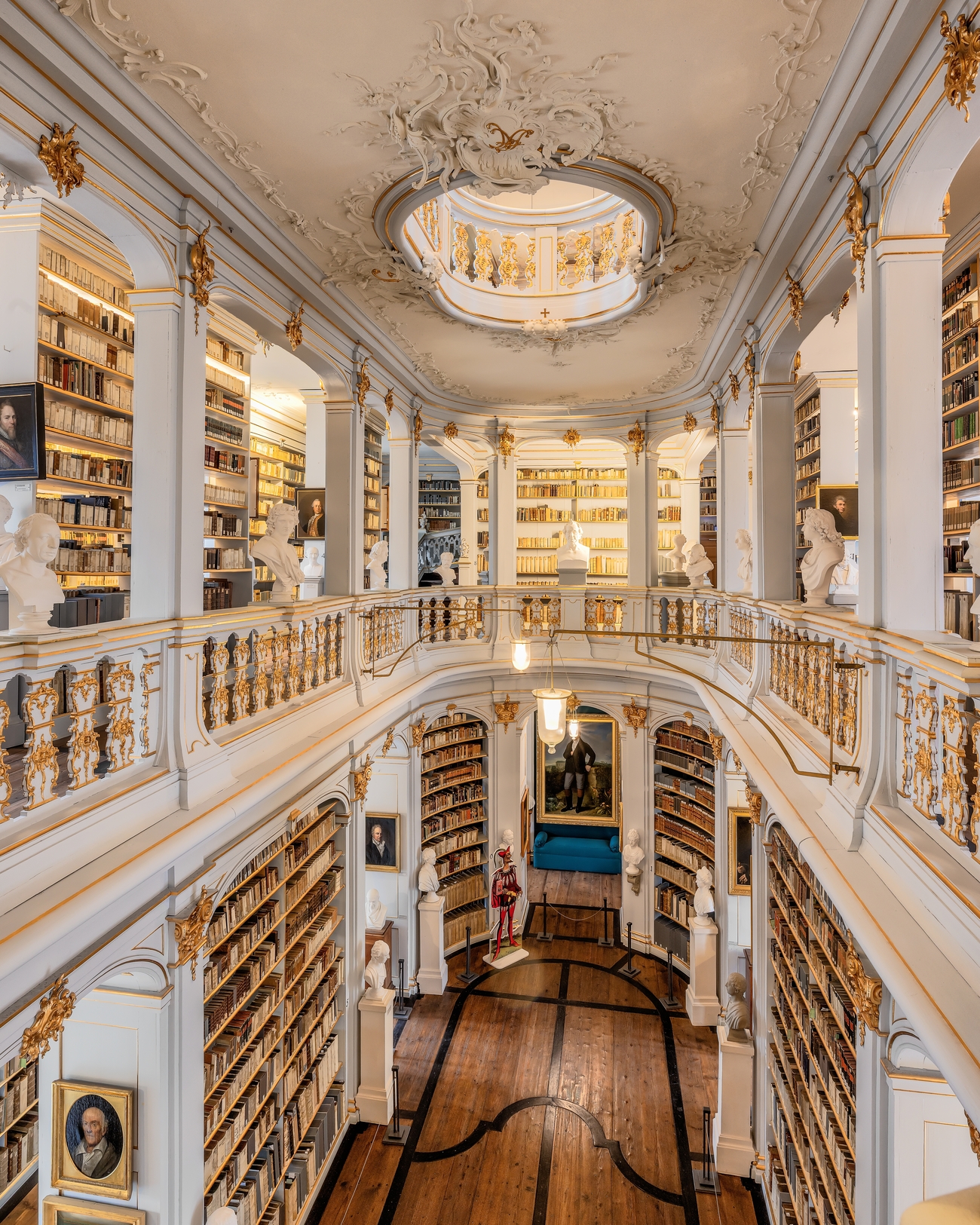
- Weimar: Weimar’s main landmarks are spread across a walkable center and the train from Coburg takes roughly 50 minutes under the fastest connections. The city carries two separate UNESCO designations: Classical Weimar, connected with Goethe, Schiller and the intellectual culture of the late 18th century and the Bauhaus sites, which document one of the most influential modern design movements. Start with Goethe’s House, Schiller’s House and Theaterplatz before entering the Duchess Anna Amalia Library, known for its restored Rococo Hall and historic book collection. You can reserve a private World Heritage walk or arrange separate English-language tours through the Klassik Stiftung Weimar.
Golf Courses in Franconia
Franconia’s golf scene has more range than it gets credit for. Courses stretch across vineyard country, wooded plateaus, former monastery grounds and castle estates, so the setting changes almost as much as the scorecard. The region works especially well for travelers who want to combine golf with culture, wine and historic sightseeing. You can play an early round overlooking the Main Valley, spend the afternoon touring a palace or vineyard and still be back in the city without losing the entire day to travel.
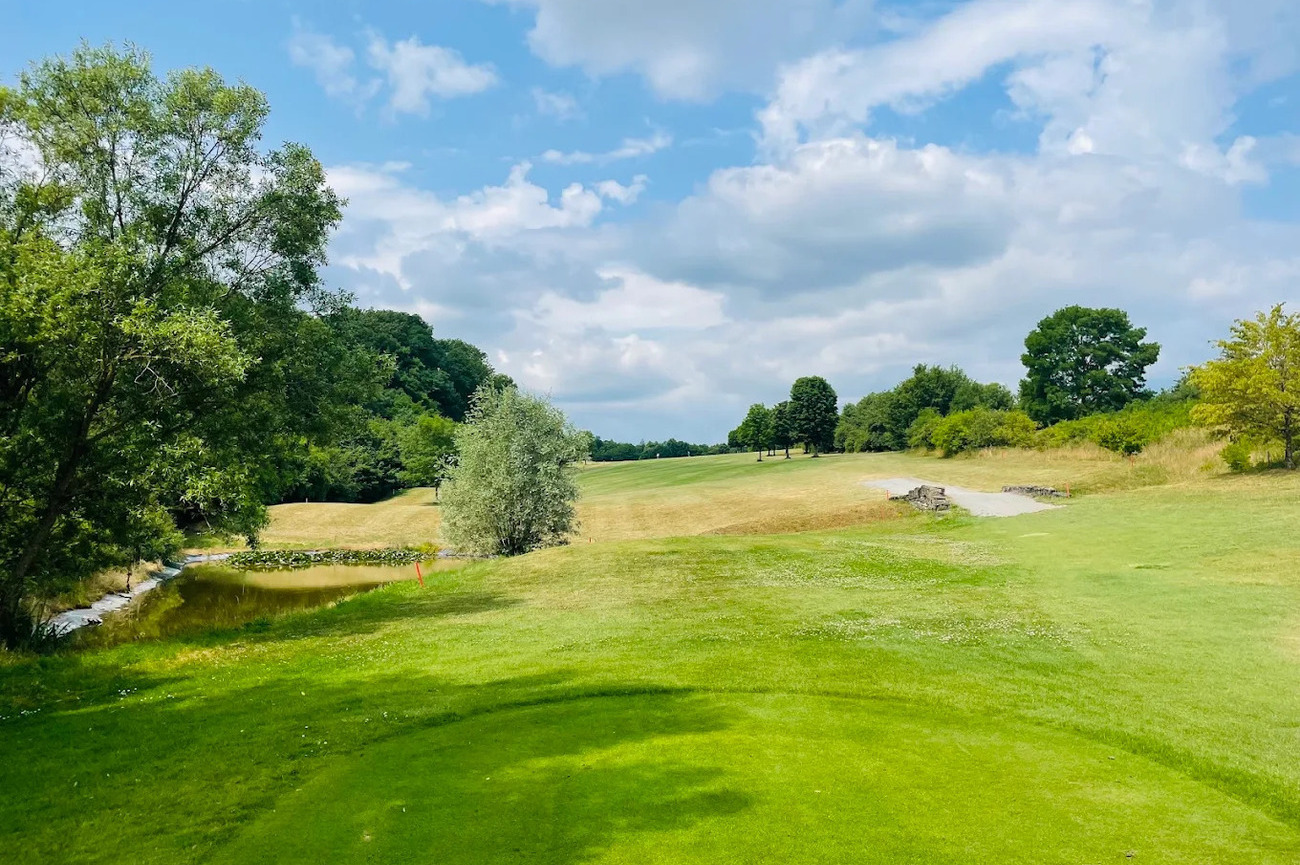
- Golf Club Würzburg e.V.: Set on a high plateau just outside the city, Golf Club Würzburg offers an 18-hole course with varied fairways, carefully maintained greens and broad views across the surrounding countryside. The course follows the natural movement of the terrain rather than forcing every hole into a flat, predictable layout. Some holes reward distance, while others rely more heavily on positioning, water management, and accurate approaches. It is part of The Leading Golf Clubs of Germany, an association that evaluates course quality, service, facilities and overall guest experience. It has also received repeated recognition through the German Golf Association’s Golf & Nature environmental program. You can choose between nine- and 18-hole rounds, while electric Club Car carts with GPS screens are available by reservation.
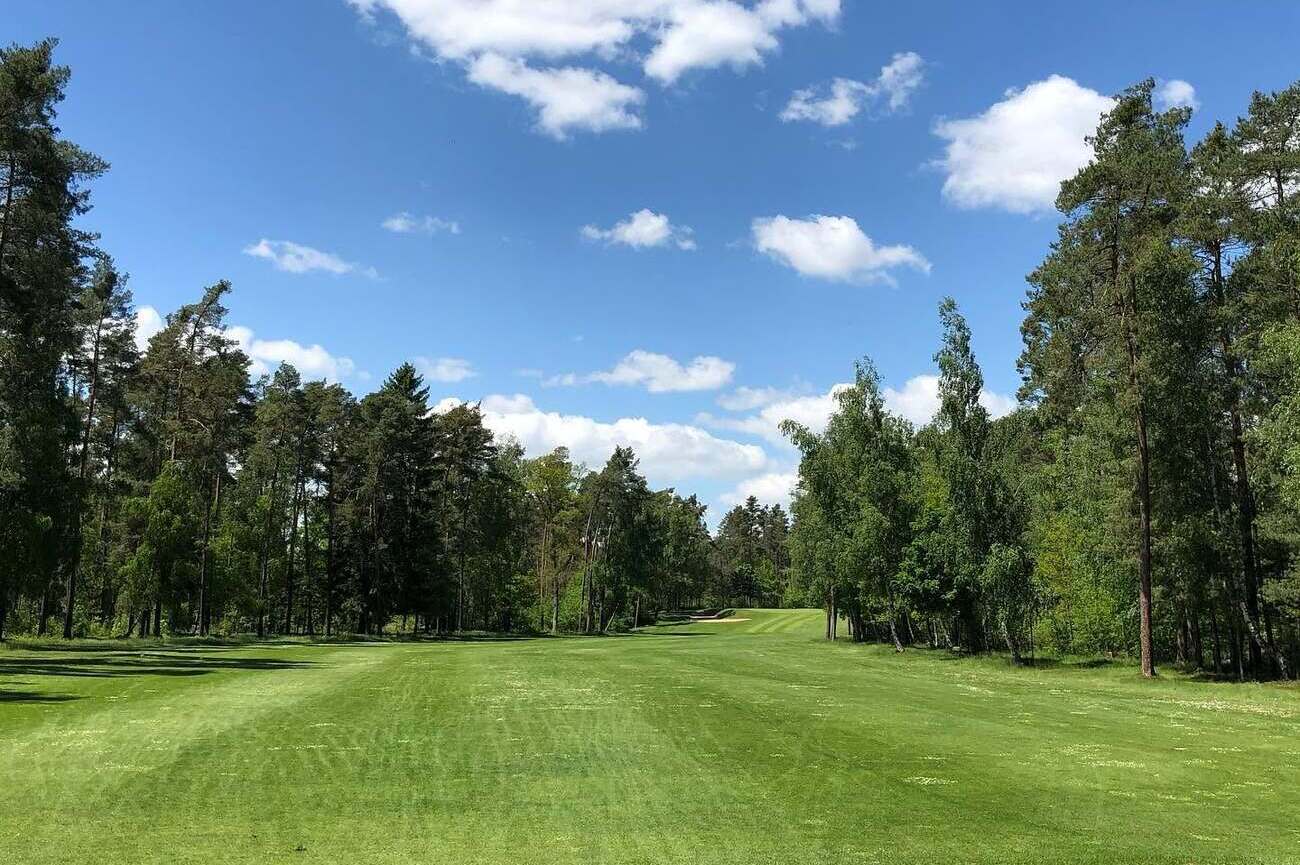
- Golf Club Nürnberg am Reichswald: Golf Club Nürnberg am Reichswald is the only golf club within Nuremberg’s city limits and has been part of The Leading Golf Clubs of Germany since 2001. Its 18 holes run through pine woodland, with narrow driving corridors, heather, bunkers and water hazards. Each hole has a distinct layout, so this is not the course for switching the brain to airplane mode after the first tee. You can book a private session followed by an 18-hole round.
- Golf-Club Herzogenaurach e.V.: The 18-hole championship course at Golf-Club Herzogenaurach opened in 2003 and was designed by former tour player Carlo Knauss. Strategic bunkering, wide rough, fast contoured greens and long holes give it a modern sporting character, while the practice facilities include a driving range with eight covered bays, putting areas and pitching grounds. You can keep the visit simple with a round and cart or arrange professional instruction first if your swing has been sending mixed signals lately.
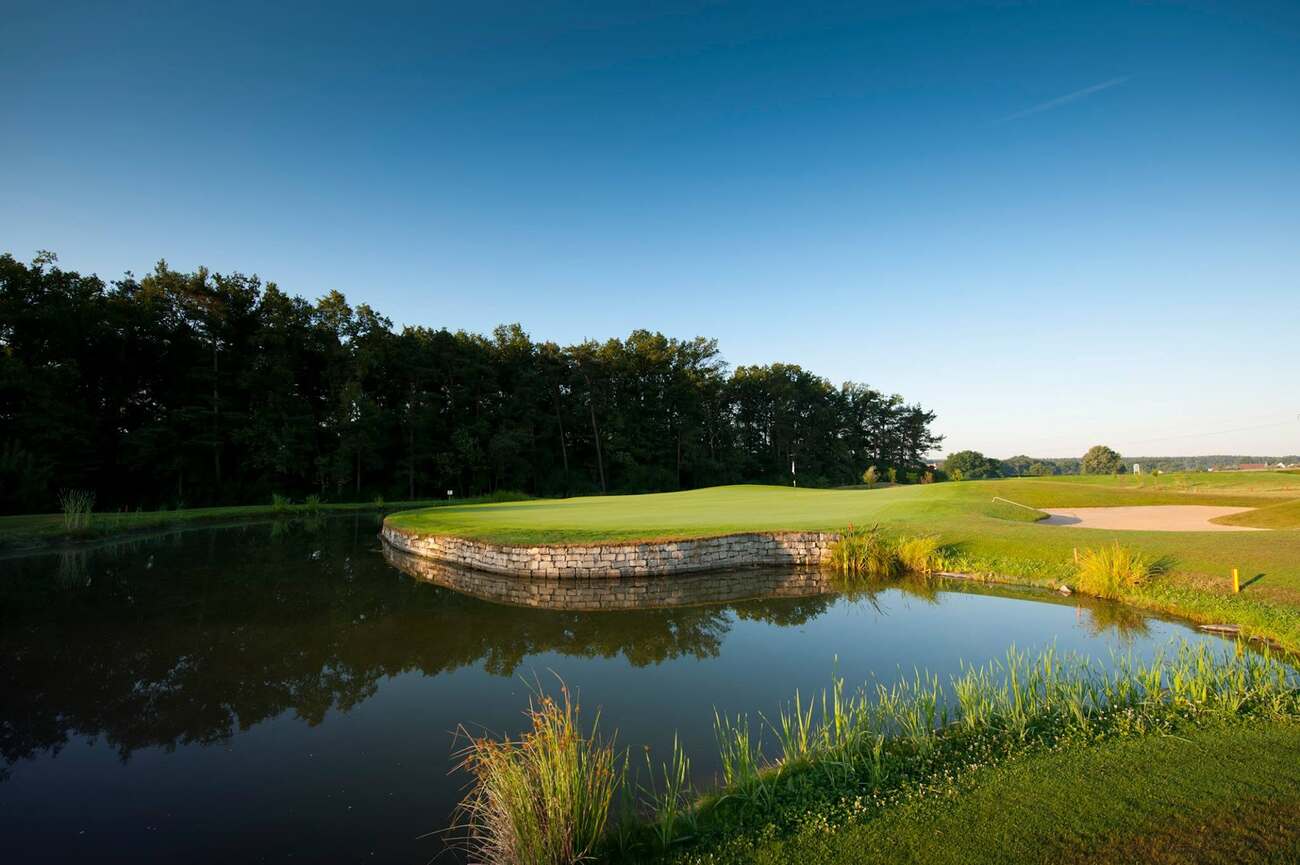
- Golf-Club Coburg e.V. Schloss Tambach: Golf-Club Coburg Schloss Tambach offers an 18-hole course in the gently rolling Coburg countryside. The setting is one of its main strengths: fairways move through open green terrain with views toward the palace and surrounding hills. Water is a regular part of the strategy, with ponds and a stream affecting several holes. You can study the course before arrival through the club’s virtual tour, digital birdie book, and individual hole information. But one of the club’s most notable premium features is its Chervò Pro Shop, which carries golf apparel, shoes, bags, accessories, and equipment from brands including Chervò, Ralph Lauren, Titleist, FootJoy, Ecco and Bogner. You can arrange a fitting before the round or have equipment prepared in advance.
Michelin-Starred Restaurants in Franconia
Across the region, chefs are turning local produce, seasonal ingredients and classic Franconian flavors into tasting menus that feel modern without losing their sense of place. Expect intimate dining rooms, thoughtful wine pairings, produce-led cooking and menus that reward a slower evening. These are places worth reserving ahead and planning an evening around.
- Essigbrätlein: Located in Nuremberg’s Old Town, Essigbrätlein holds two Michelin stars and offers one of Franconia’s most distinctive dining experiences. You ring the bell to enter the small restaurant, where chefs Andree Köthe and Yves Ollech serve highly original, vegetable-forward food based on regional ingredients. Their consistent “leaf-to-root” philosophy uses parts of plants that many kitchens overlook, creating dishes where cabbage, herbs or kohlrabi can receive the same attention normally reserved for caviar and truffles. If you want the full experience, reserve the longer evening menu and add the wine pairing, particularly if you enjoy Riesling. A vegetarian menu is available but should be requested when booking.
- etz: Also located in Nuremberg, etz has two Michelin stars and delivers a more experimental version of fine dining. Felix Schneider and his team forage, grow, ferment and produce much of what appears on the menu, including bread, butter, charcuterie, miso and vinegar. The dishes follow the restaurant’s own seasonal calendar and may feature ingredients such as heirloom tomatoes, local trout, young cabbage or house-cured meats. The experience begins with a short tour of the experimental kitchen before moving into an 11- to 16-course menu lasting around four to five hours. You can choose an omnivore or vegetarian version, supported by wine or alcohol-free pairings. Special events occasionally provide deeper access to the test kitchen and aroma library.
- Keidenzeller Hof is a one-Michelin-starred restaurant in Keidenzell, a village near Langenzenn in Middle Franconia. The dining room occupies a renovated former farmhouse where wood, stone and modern furnishings create an elegant countryside setting. Chef Martin Grimmer serves a seasonal menu built around original combinations, precise technique and produce-led cooking, with vegetarian alternatives available when ordered in advance. You can opt for Saturday’s Gourmet Lunch, which provides a shorter introduction, while dinner offers the full experience through a sequence of large and small courses. And for a private celebration, you can reserve the intimate dining room or inquire about using the restored barn for a larger event.
- KUNO 1408: Located in central Würzburg, KUNO 1408 holds one Michelin star and is the only Michelin-starred restaurant from this selection in the city. Its name refers to the history of the Zum Rebstock property, which dates back to 1408, although the dining room is modern, warm and polished rather than overly traditional. Chefs Robin Hofmann and Patrick Grieshaber serve four- to six-course menus that combine regional ingredients with contemporary international influences. Previous dishes have included pike-perch with tomato, spinach and caviar, as well as carrots with cauliflower, ponzu and lion’s mane mushroom.
- Gasthof Alex is located in Gössersdorf, a village near Weißenbrunn in Upper Franconia and holds one Michelin star. The family-run business dates back to 1886 and is now managed by fifth-generation chef Domenik Alex and Madlen Häckel. Its cooking balances traditional Franconian flavors with contemporary presentation and technique. The six-course fine-dining menu is served from Wednesday through Saturday, with all guests beginning at 6:30 p.m. Wine and nonalcoholic pairings are available, while Sunday lunch takes a more traditional direction with Franconian roasts and handmade dumplings.
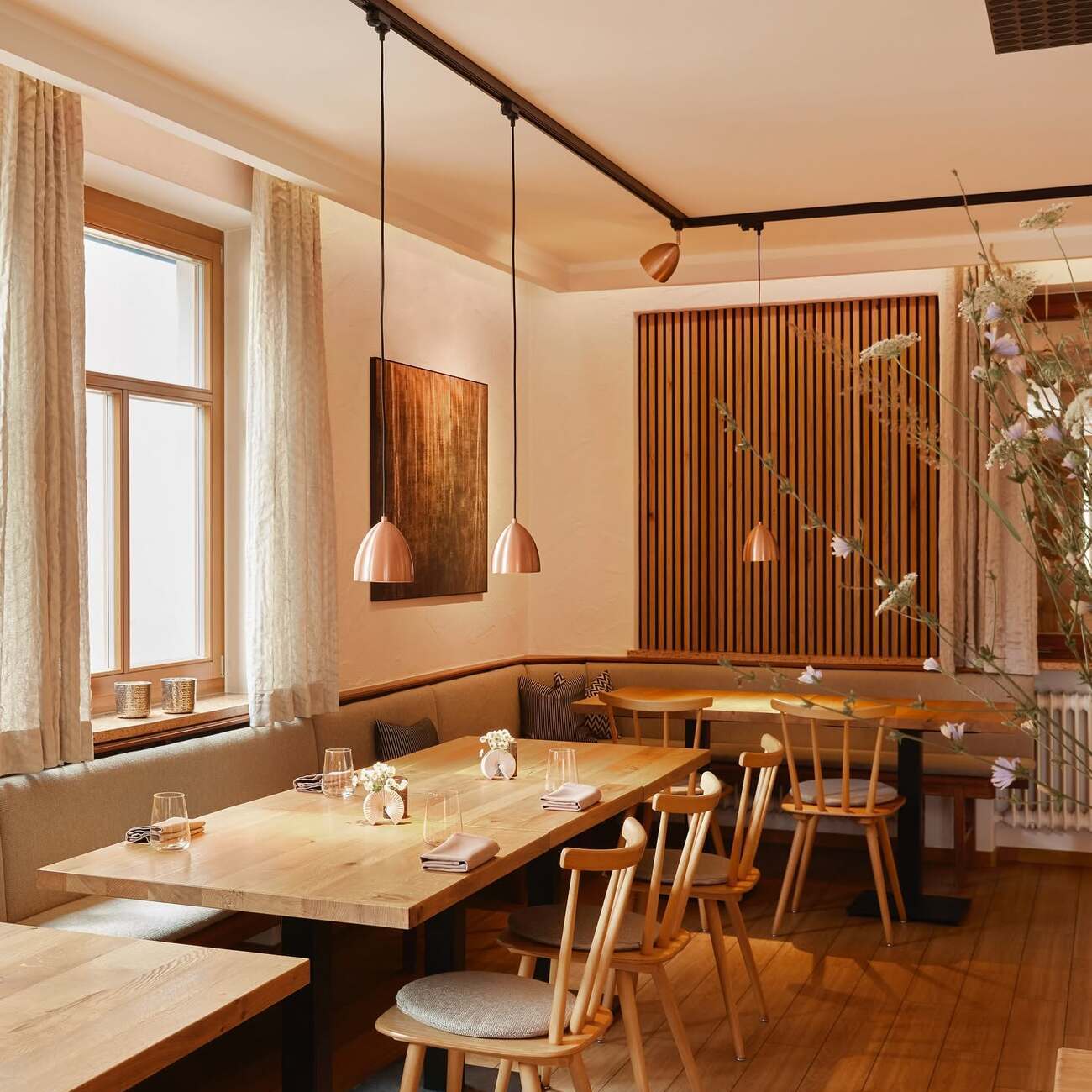
Where to Eat in Franconia
These restaurants show the range of dining across Franconia, from modern sharing plates in Erlangen and market-square dining in Würzburg to family-run kitchens in Marktbreit and the Tauber Valley. Some places lean contemporary, while others stay closer to traditional Franconian cooking.
- Holzgarten: Located on a quiet side street in Erlangen, Middle Franconia, Holzgarten has a modern, minimalist dining room with an open kitchen, a small number of counter seats and a peaceful terrace. The short menu changes regularly and combines seasonal ingredients with international influences. Previous dishes have included labneh with tomato, basil and parsley, as well as Ibérico pork with savoy cabbage, chorizo and mashed potatoes. Many dishes are designed for sharing, allowing you to try several flavors instead of sticking to one main course.
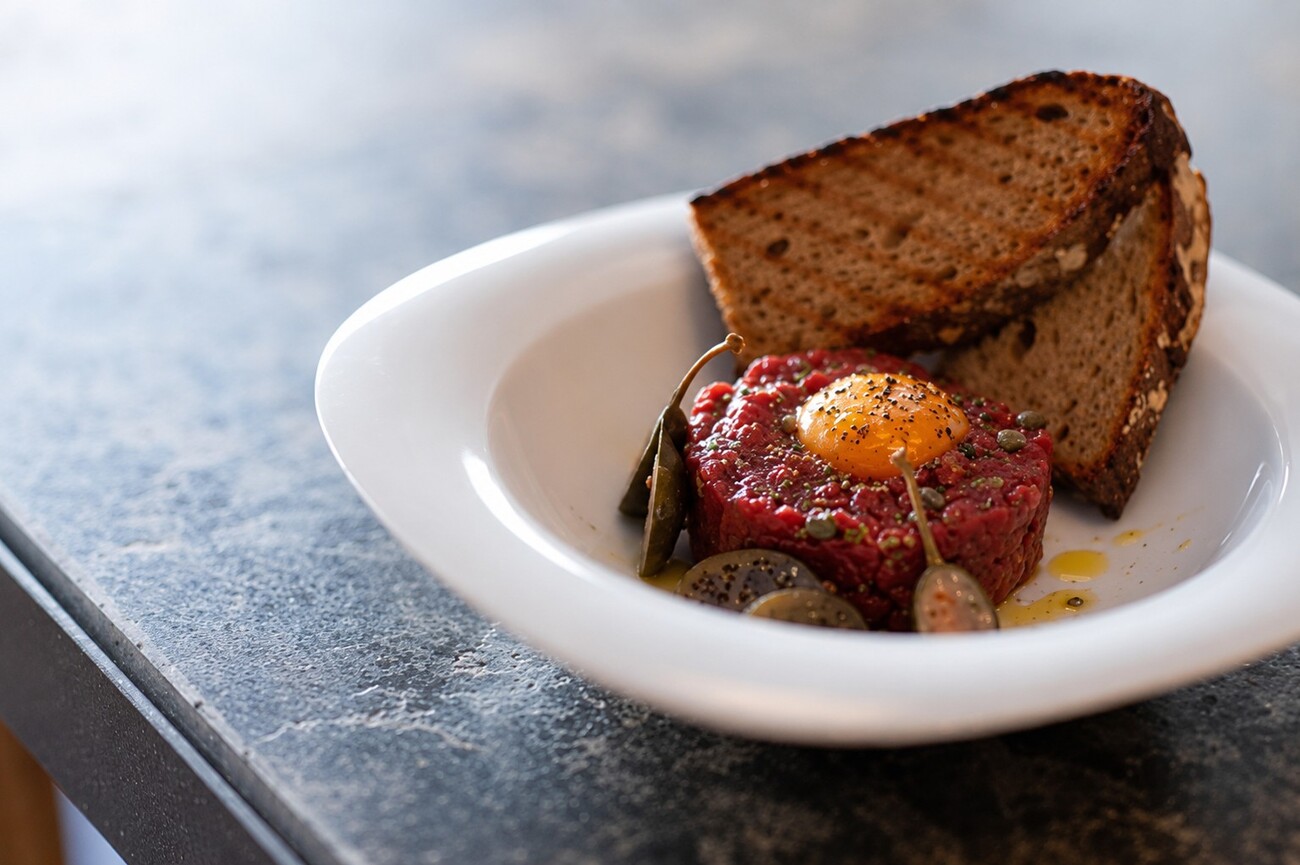
- Alter Esel: Alter Esel is located in the historic center of Marktbreit, Lower Franconia, surrounded by the town’s preserved houses and narrow streets. The restaurant is run by a couple who focus on creating a warm, personal atmosphere rather than a stiff fine-dining setup. The seasonal set menu combines regional produce with Mediterranean influences and is also available in a vegetarian version. Alter Esel is part of the Slow Food movement, so the kitchen places strong emphasis on responsible sourcing, traditional food culture and ingredients that reflect the season.
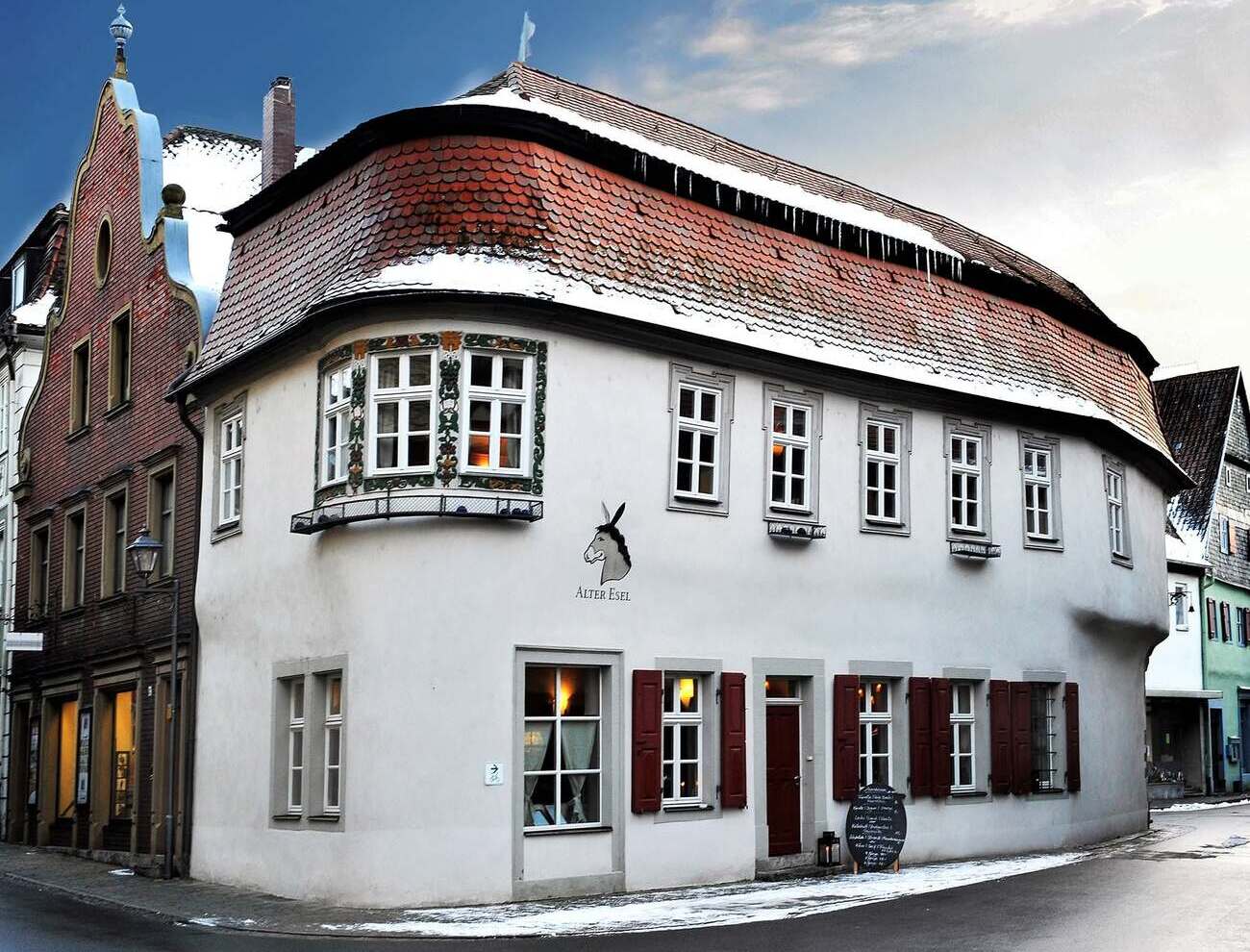
- Michels Stern: Michels Stern has been managed by the Michel family for four generations. Brothers Wolfgang and Stefan Michel now lead the restaurant, with Wolfgang handling the kitchen and Stefan managing the wine service. The setting keeps the comfortable feel of a family-run establishment while offering food that moves between traditional Franconian cooking and more refined seasonal dishes. Franconian wine is a major part of the experience and Stefan can guide you through bottles that match the food rather than simply offering the most expensive option on the list.
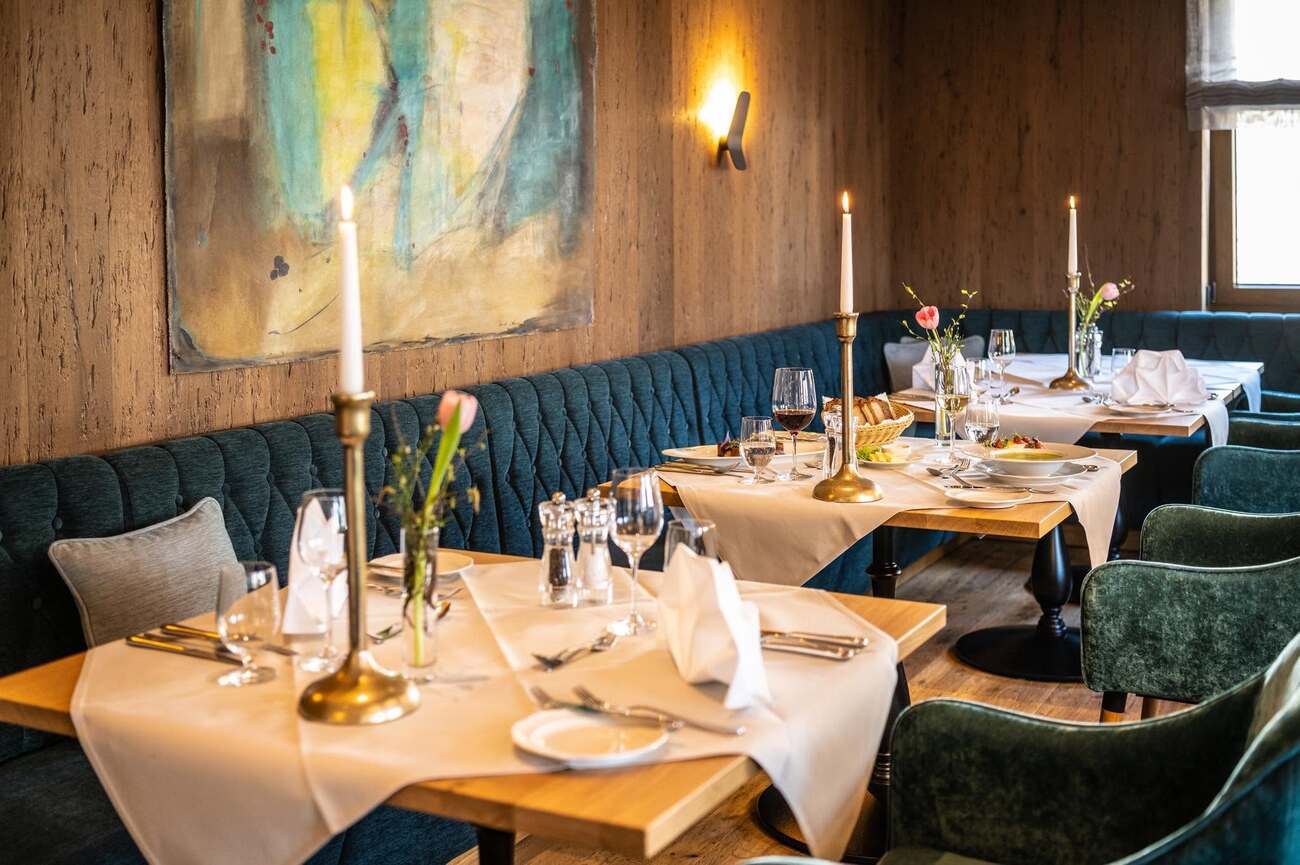
- Landhaus Zum Falken is located in Tauberzell near Adelshofen inside a country inn with several centuries of history. Chef Lars Zwick focuses on regional and seasonal cooking, sourcing ingredients locally whenever possible. The restaurant produces its own sausages, keeps bees and makes fruit brandies. Some of its wines also come from the property’s own vineyard. Known dishes include herb-crusted rack of lamb, while house-made sausages are served on selected Thursdays and Fridays. You can arrange a private wine tasting in the vaulted cellar or inquire about using the restored barn for a celebration.
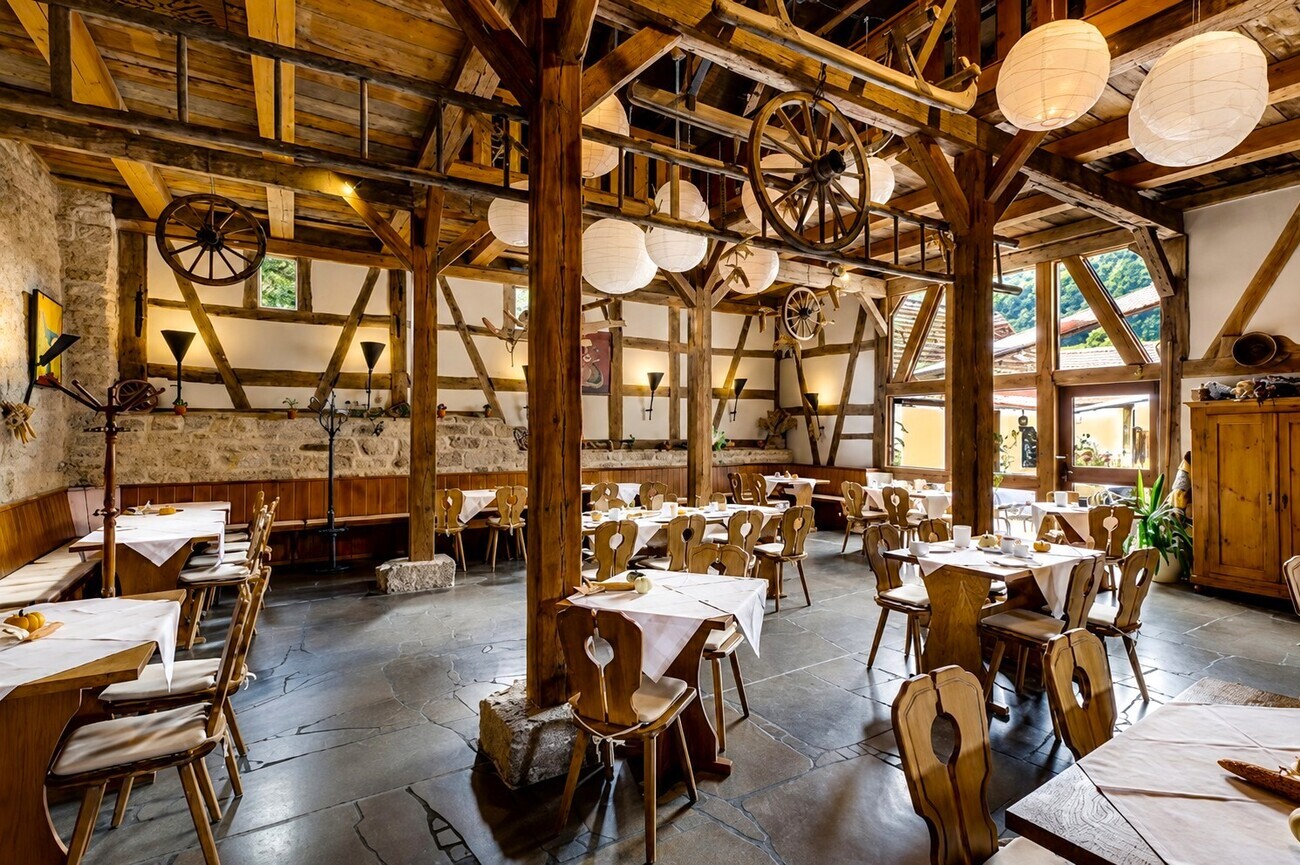
Where to Drink in Franconia
The strongest nights out in Franconia usually happen in compact rooms, historic buildings and bars with a clear personality. This list leans more toward cocktails, wine and music than giant dance floors. You will find vinyl DJs, regional spirits, private party rooms and one wine bar so small that booking ahead is basically part of the concept.
- Mata Hari Bar: Located in Nuremberg’s Old Town, Mata Hari Bar has been part of the city’s nightlife since 1994. The room is genuinely tiny, which creates a casual and highly social atmosphere rather than a polished see-and-be-seen scene. Its independent drinks list includes more than 300 options, with over 10 beers, around 60 whiskies and more than 80 cocktails and long drinks. Music is part of its identity, with vinyl and CD DJs playing rock, punk, garage, soul, rockabilly and alternative tracks instead of mainstream chart playlists.
- Mono Bar: Mono Bar sits in Klaragasse in central Nuremberg, inside a compact space styled around the 1960s. Franconian beers, wines and fruit brandies lead the drinks menu, supported by gin and a smaller selection of other spirits. Rotating DJs provide the soundtrack, while the outdoor seating and small beer garden make it a solid warm-weather stop. You can rent the upstairs room for birthdays and private gatherings.
- Bar am Kirchplatz: Set inside a restored 18th-century sandstone building in central Bayreuth, Bar am Kirchplatz faces the Stadtkirche near historic Friedrichstraße. The bar specializes in seasonal cocktails made with quality spirits, fresh fruit and herbs, alongside signature drinks, classics with modern updates and a broad gin-and-tonic selection. The outdoor section includes heaters and blankets, so you can still use the square-facing seats when the evening gets cooler.
- TÜRMLE Schweinfurt: TÜRMLE stands beside the historic city wall in Schweinfurt and describes itself as possibly the smallest wine bar in Franconia. The wine list focuses on small producers from the region and across Europe rather than mass-market labels. Tarte flambée, cheese boards, sharing platters and small snacks keep the food simple and built for a long tasting session. Visits are currently handled by appointment, making TÜRMLE feel closer to a private wine room than a conventional walk-in bar. You should book a tasting in advance and tell the team what styles you normally drink so they can build the selection around you.
- ELEON Bar: Located in Erlangen, ELEON Bar is geared toward larger groups and casual parties. The main ground floor contains a spacious bar, while additional rooms offer foosball, beer pong and television. The drinks list includes more than 50 cocktails, with several available in pitcher format, so this is the place for a lively group night rather than a silent cocktail tasting. During summer, the interior opens into a courtyard with access to two roof terraces.
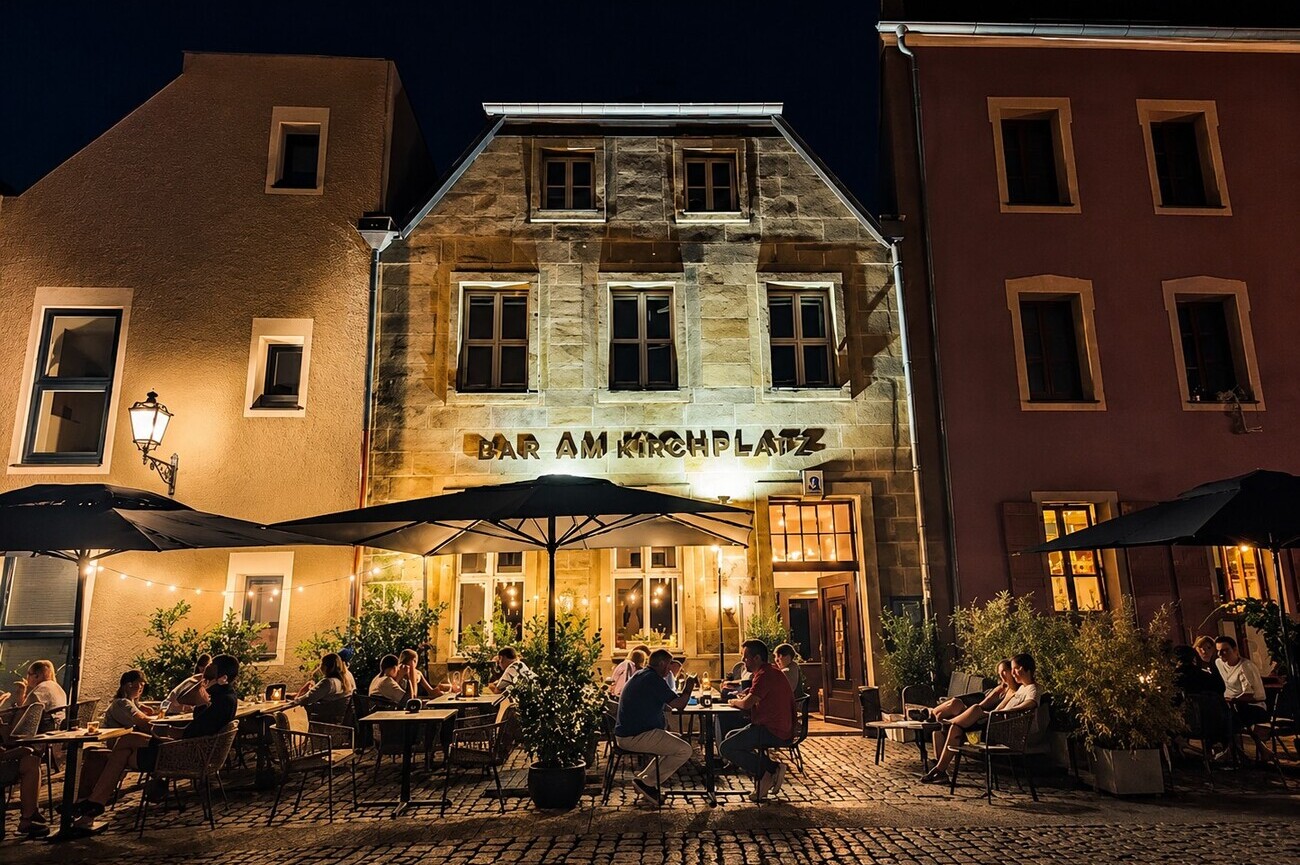
Cafes in Franconia
Franconia’s better cafés take coffee seriously without making the experience feel overly technical. This list covers family-run coffee shops, independent roasters, an inclusive community café and a Portuguese shop-café filled with vintage finds. Some are best for breakfast, while others are built around specialty beans, homemade cakes or a slower afternoon stop.
- White Bulldog Coffee Roasters: White Bulldog sits in Nuremberg’s northern Old Town and is run by a Russian-Kazakh family. The cafe has a friendly, informal atmosphere, with a compact menu of specialty coffee, breakfast dishes, waffles and homemade cakes. Cappuccino is the most reliable order, particularly when paired with something from the changing cake selection. The location works well before exploring the Imperial Castle and the quieter streets around Hirschelgasse. You can combine breakfast here with a private Old Town tour covering the castle, medieval churches and the city’s historic northern quarter.
- Kaffeemanufaktur – Würzburgs Kaffeerösterei: Kaffeemanufaktur is one of Würzburg’s strongest options for visitors who want to understand the coffee rather than simply order a drink and leave. It functions as a roastery, cafe, specialist shop and coffee school, with freshly roasted beans prepared for espresso, filter brewing and home use. Staff can recommend coffees according to your preferred flavor profile, whether you favor something chocolatey and full-bodied or lighter beans with more fruit and acidity. The store also carries tea, brewing equipment, accessories and gift products, making it useful if you are buying for a coffee enthusiast. It also has workshops covering espresso preparation, brewing methods, coffee tasting and latte art.
- BERGBRAND Kaffeebar: BERGBRAND combines a specialty coffee bar with its own small-batch roastery. The team uses traditional drum-roasting methods and sources high-quality beans, including coffees produced through organic cultivation and fair-trade partnerships. Its coffee is generally smooth and low in acidity, making the cappuccino a solid choice even for people who normally avoid stronger roasts. Filter coffee gives you a clearer sense of the individual beans, while chai latte provides a non-coffee alternative.
- Café Senza Limiti: Café Senza Limiti brings a clear Italian influence to central Würzburg through espresso-based drinks, fresh pastries and uncomplicated breakfast and lunch options. The team pays close attention to espresso extraction, milk temperature and foam texture, which makes drinks such as cappuccino, cortado and flat white the main reason to visit. The food selection includes croissants, waffles, homemade cakes and toasted panini. The goat-cheese panini is a useful savory choice, while hazelnut chocolate cake suits a slower afternoon visit.
- Zuckerstück: Located on
Sandstraße in Bamberg’s Old Town, Zuckerstück combines a Portuguese cafe with a
small shop selling vintage furniture, decorative pieces and household
accessories. The concept is more personal and eclectic than a conventional
specialty coffee bar, with mismatched furniture, closely arranged tables and a
setting that resembles a busy private living room. Galão, a Portuguese coffee
made with espresso and a generous amount of milk, is the natural starting
point. Pair it with a pastel de nata for the most representative order, or
choose from homemade cakes, quiches and other savory items when you need something
more substantial. The cafe works well as a planned break between Bamberg
Cathedral, the Old Court, Little Venice and the historic brewery district.

Where to Stay in Franconia
- Design Boutique Hotel & Spa Goldene Rose (5 Stars): Set directly on the Marktplatz in Dinkelsbühl, the Goldene Rose is an adults-only hotel for guests aged 18 and over. Its exterior retains the half-timbered character of the historic property, while the interiors have been completely redesigned with contemporary rooms, open layouts and clean architectural details. The hotel has 43 rooms and 14 studios, including a 100-square-meter Rosen Studio Superior and themed options such as the Queen Vicky Suite. It's known for the attic spa, where a heated infinity pool sits beneath the original roof structure with views toward St. George’s Church. The wellness area also includes Finnish and steam saunas, a banya, relaxation rooms and bookable treatments. If you want a more private stay, the hotel offers exclusive spa experiences for couples.
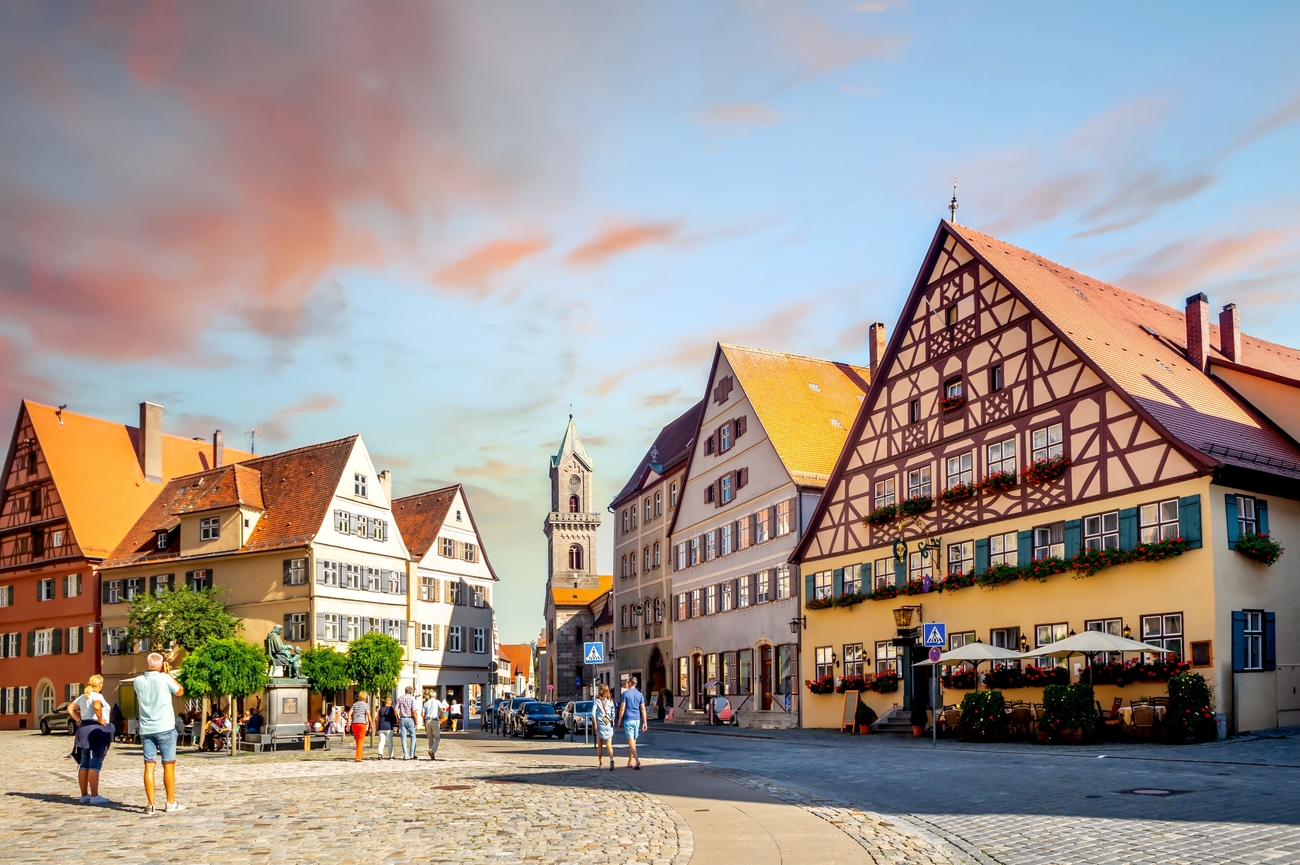
- Sheraton Carlton Hotel Nürnberg (5 Stars): Sheraton Carlton is Nuremberg’s full-service five-star option and suits travelers who need spa facilities, meeting space and strong transport connections in one property. The hotel stands close to the main railway station, with the Old Town, shops and major cultural sites within walking distance. Its upper-floor wellness area is what makes it stand out. You get a heated indoor pool, whirlpool, saunas, steam facilities, fitness equipment and bookable massages above the city rooftops. Restaurant Tafelhof combines international dishes with regional specialties and Franconian wines, while Boymanns’ Bar provides a quieter setting for drinks or an informal business conversation.
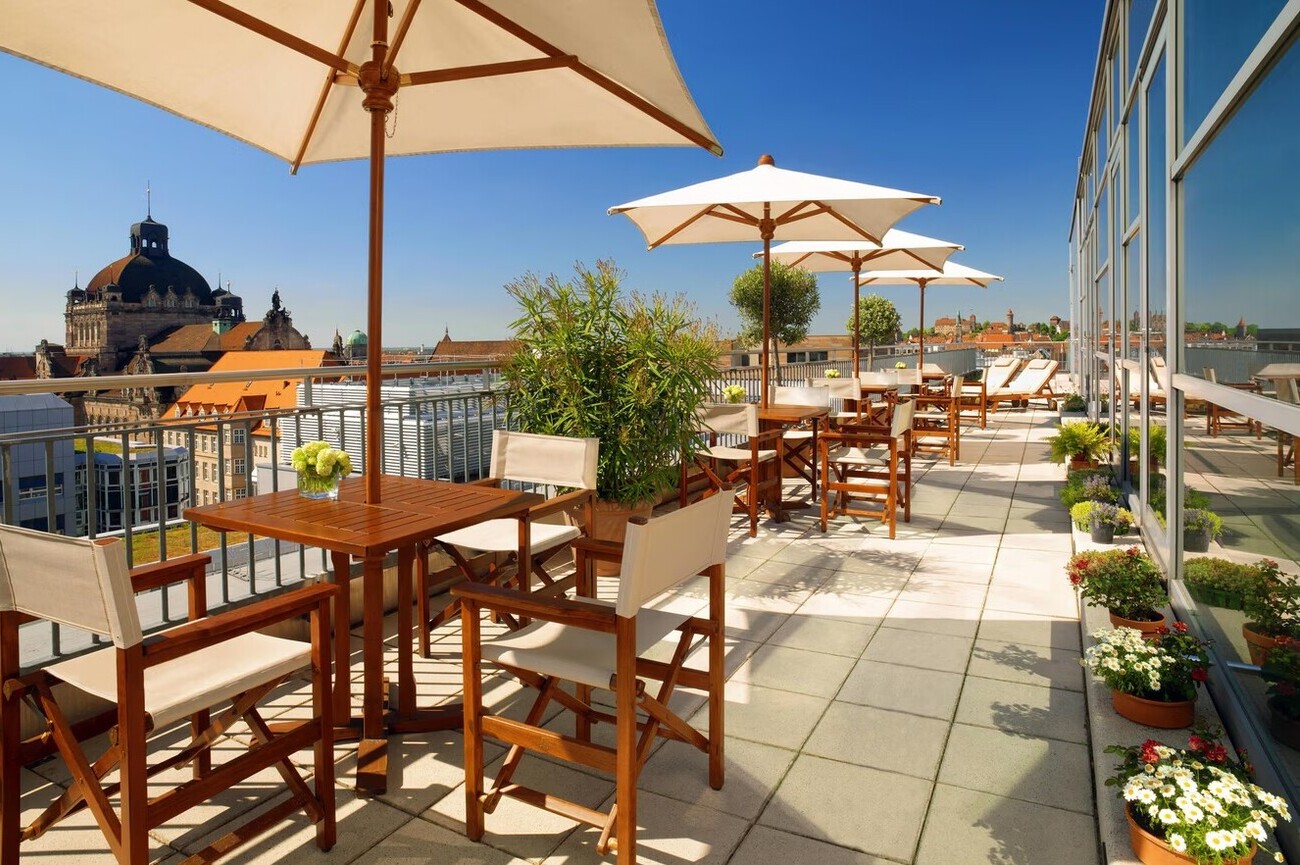
- Historik Hotel Gotisches Haus Garni (4 Stars): Hotel Gotisches Haus occupies a restored patrician residence on Herrngasse in Rothenburg ob der Tauber. The building dates back to the medieval period and has retained its stone walls, timber framing, carved details and historic arches rather than covering them with a generic renovation. With only 11 individually designed rooms, the hotel feels private and residential instead of busy. The strongest room category is the spacious Stork’s Nest, which has a covered balcony overlooking the Tauber Valley, while smaller rooms face Herrngasse or the internal courtyard. This is a good fit when you want historical atmosphere but still expect large beds, Wi-Fi, minibars and modern bathrooms.
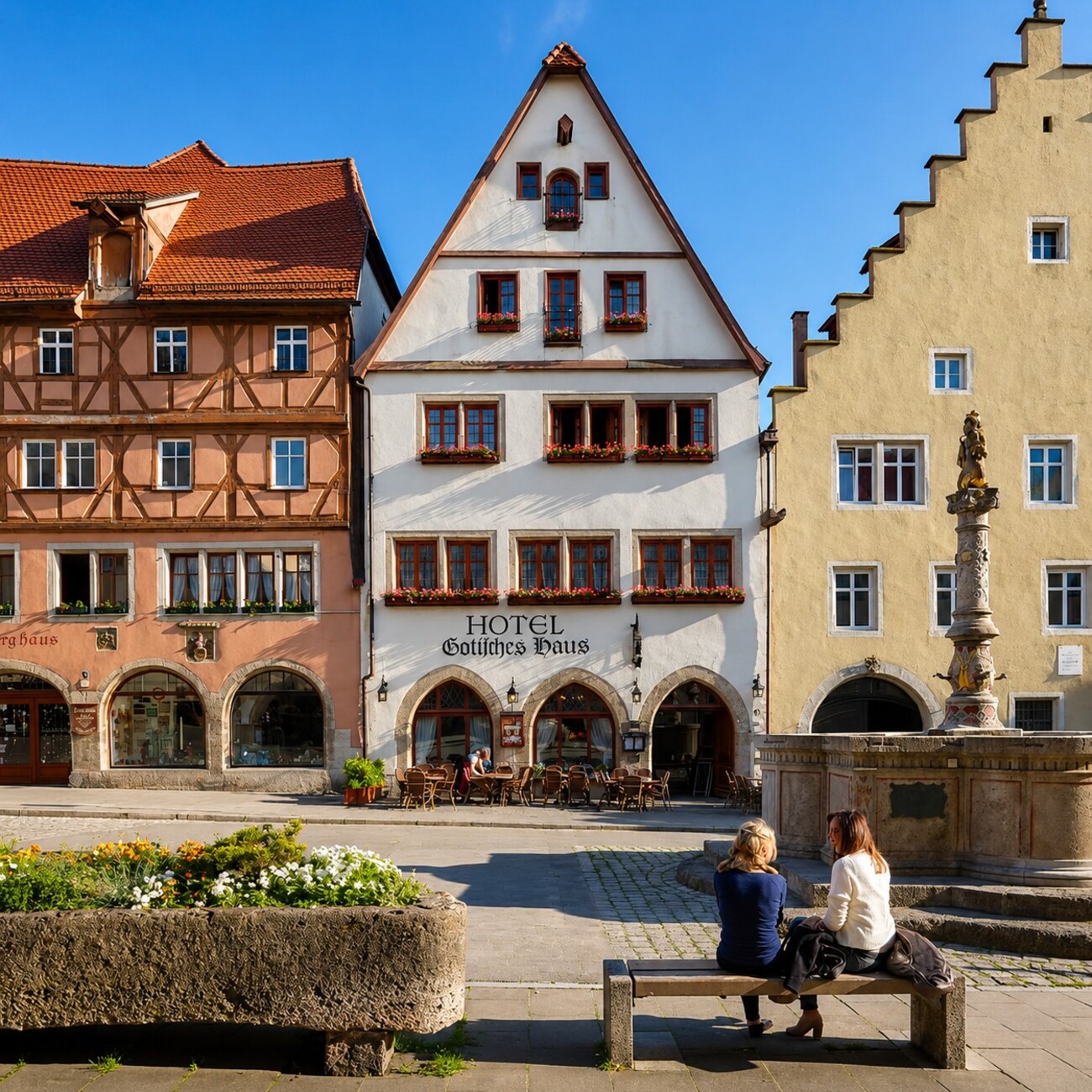
- Hotel VICTORIA Nürnberg (4 Stars): Hotel VICTORIA is positioned beside Nuremberg’s main railway station, making it particularly useful for short stays, business travel and regional day trips. The owner-managed four-star hotel occupies a listed building completed in the late 19th century, but the rooms and public areas follow a modern city-hotel format rather than a heavily traditional style. You can also use the hotel as a base for a private guided itinerary like one that starts with the Old Town and Imperial Castle, then arrange a car for the Palace of Justice or former Rally Grounds.
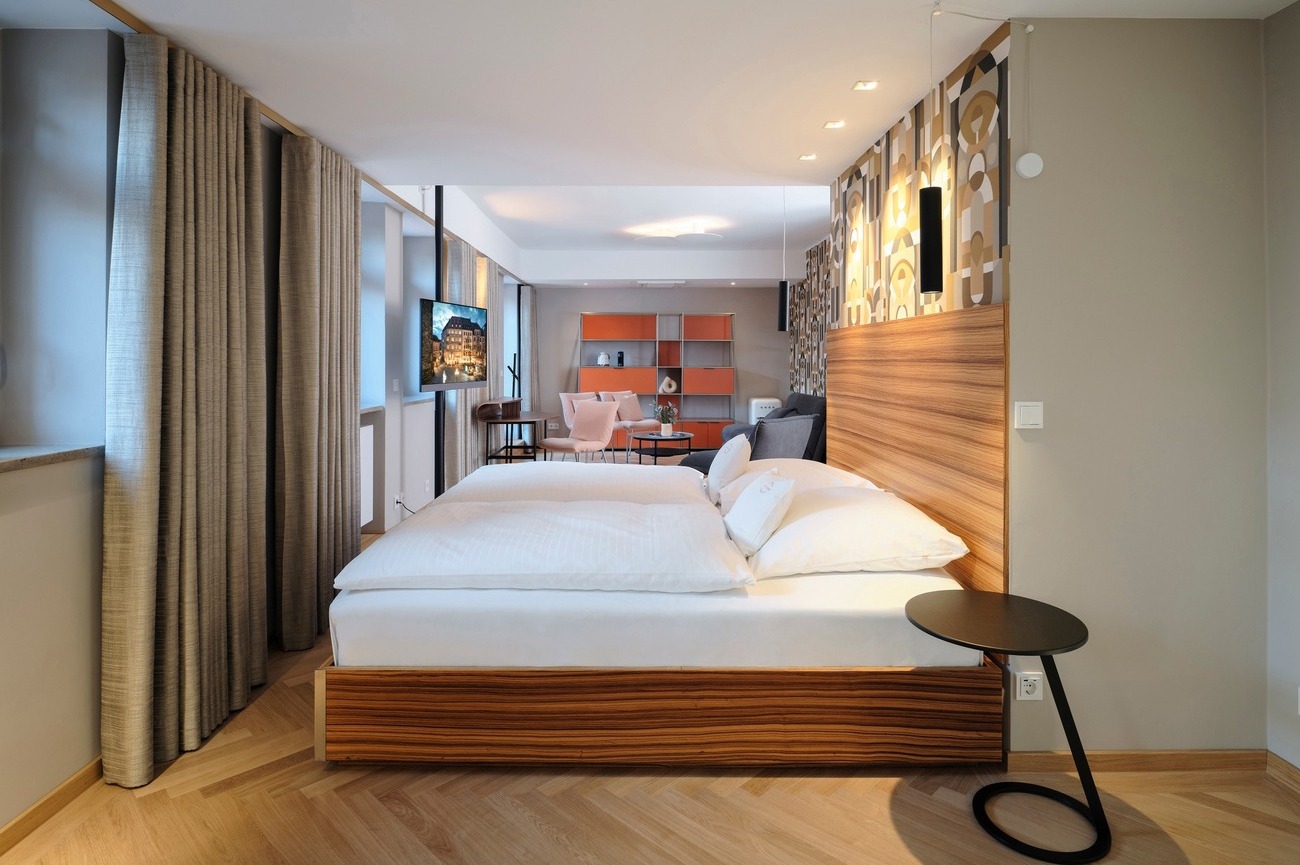
- Hotel FIVE (3 Stars): Hotel FIVE is a 16-room, three-star-superior boutique hotel on Obstmarkt. Its main advantage is location. Imperial Castle, Schöner Brunnen, St. Lawrence Church and other Old Town sights are within walking distance. The ground-floor FIVE Diner serves breakfast in the morning and switches to burgers, salads and snacks later in the day. This is the practical choice when you plan to spend most of the day outside the hotel and want to return to the center without relying on taxis.
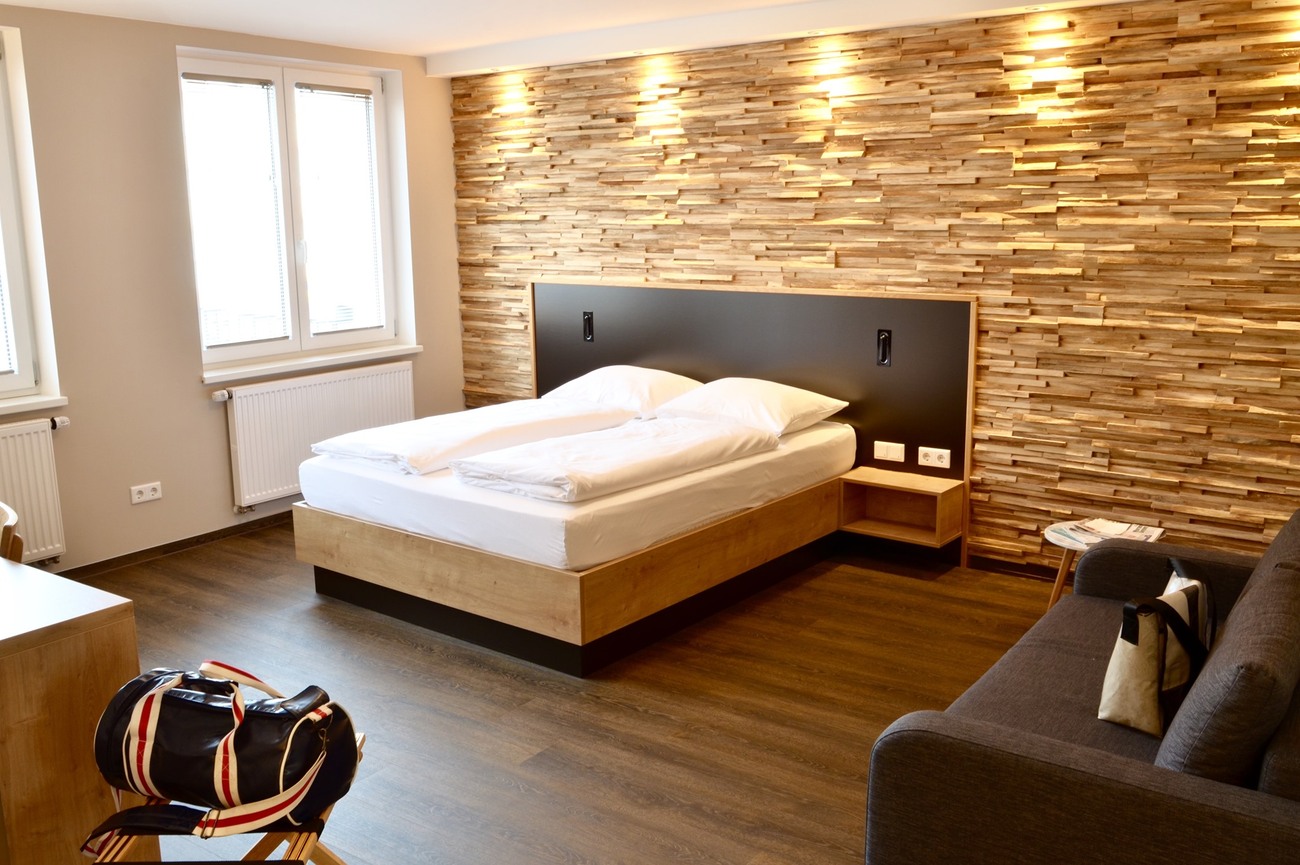
- Hotel Burgschmiet (3 Stars): Positioned near Nuremberg’s Imperial Castle and the northern city wall, Hotel Burgschmiet provides a quieter alternative to properties around the railway station and Hauptmarkt. The hotel has renovated rooms in the three-star category, with free high-speed internet and practical furnishings. You can walk to the castle, Albrecht Dürer House and the main market within minutes, but the immediate surroundings are less crowded than the central shopping streets. It also has a conference room and offers themed arrangements connected to local attractions and experiences.
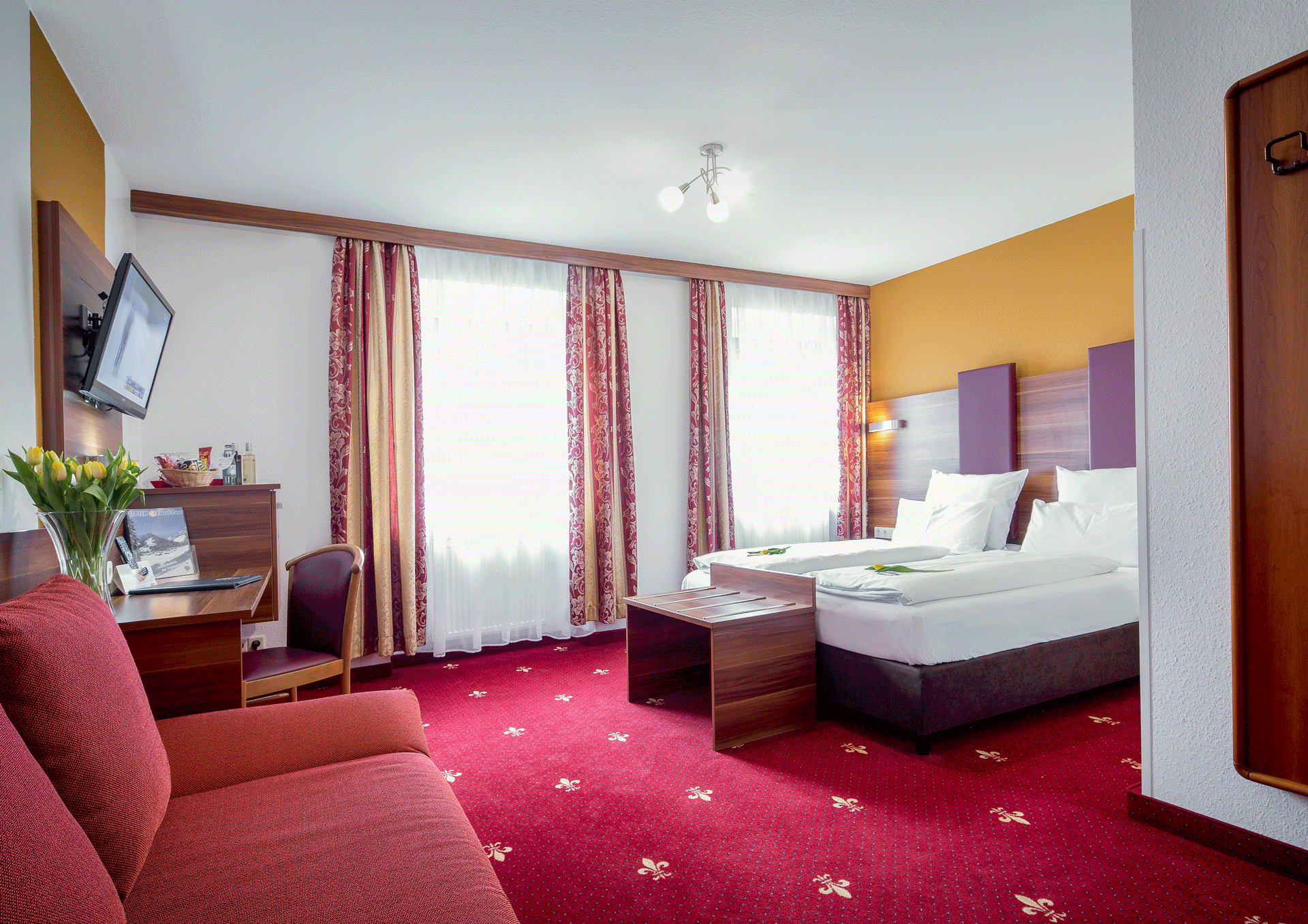
Best Time to Visit Franconia
Late spring is Franconia’s sweet spot. Plan your trip from late May to mid-June, when the region’s historic centers, palace gardens, vineyard landscapes and outdoor routes can all fit comfortably into the same itinerary. The days are long enough for full morning and afternoon programs, which matters when you are moving between cities and want to see more than one major attraction each day.
The landscape adds more value at this time of year. Vineyards around Würzburg are green, palaces and formal gardens become a proper part of the sightseeing program and fruit trees bring fresh color to areas such as Franconian Switzerland and the countryside surrounding Nuremberg. It is a strong period for combining architecture and museums with elevated viewpoints, river walks and short scenic drives instead of spending the entire trip indoors.
Franconia is best explored on foot, especially on days built around castles, museums and historic centers. Nuremberg, Bamberg, Würzburg and Rothenburg ob der Tauber all have compact central districts where major landmarks sit within a manageable walking distance. You can move from a palace or fortress to a museum, church or market square without spending much of the day in transit. Late spring makes these longer sightseeing days more comfortable and gives you enough daylight to explore at a steady pace rather than rushing between scheduled visits.
Pack comfortable walking shoes, a light jacket and a compact umbrella. Franconia rewards a structured itinerary, but late spring gives you enough flexibility to slow down for a palace garden, a vineyard tasting or an extra hour in a historic square without throwing off the rest of the trip.
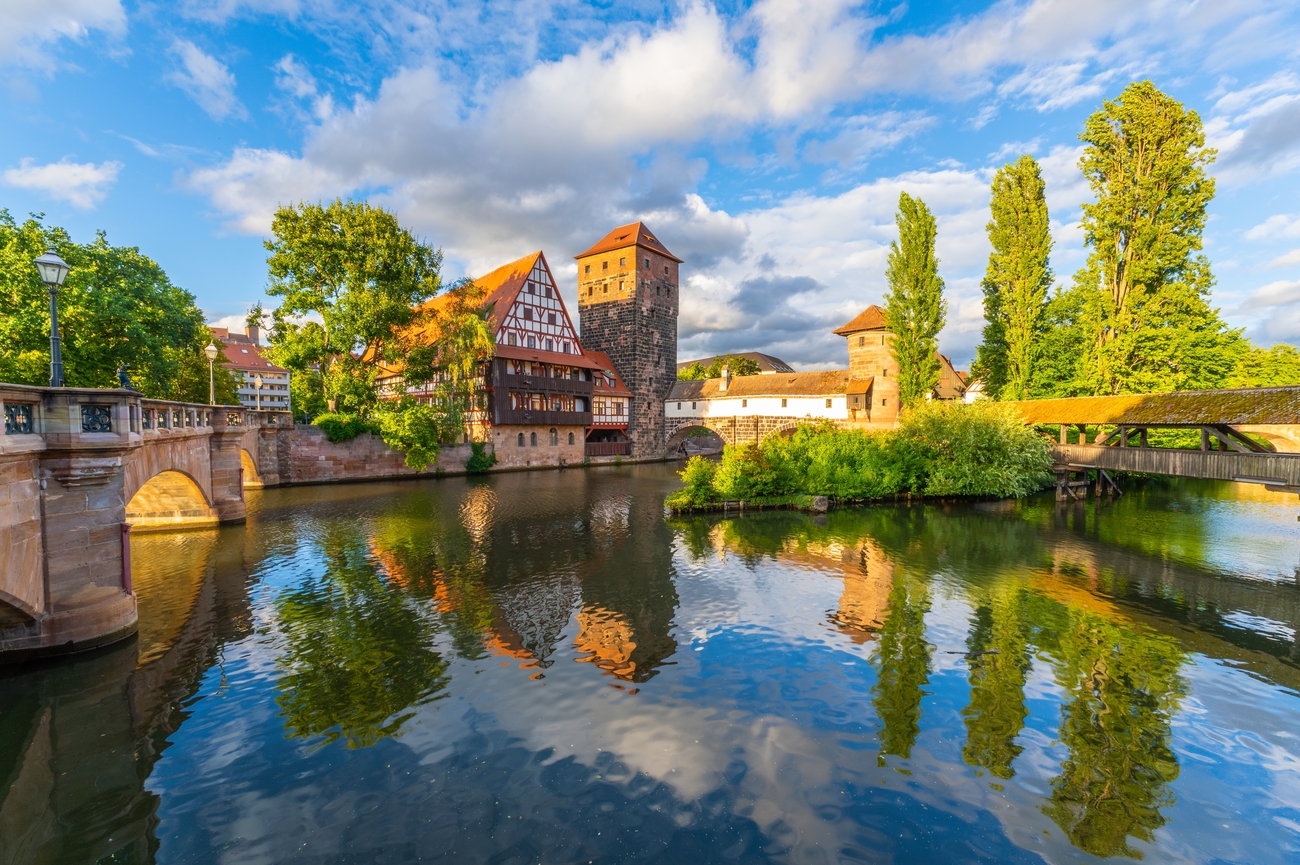
Festivals in Franconia
- Erlanger Bergkirchweih: Erlangen’s Bergkirchweih takes place from late May into early June, beginning around Ascension Day and continuing for almost two weeks. The festival spreads across the wooded Burgberg instead of using a standard enclosed fairground, with beer gardens, historic cellars, food stalls, live bands and amusement rides arranged along the hillside. You can enjoy locally brewed beer served beneath mature chestnut trees, usually with Franconian sausages, roast chicken and other festival staples. The opening includes the ceremonial tapping of the first barrel, while the final evening ends with the traditional burial of the last beer barrel.
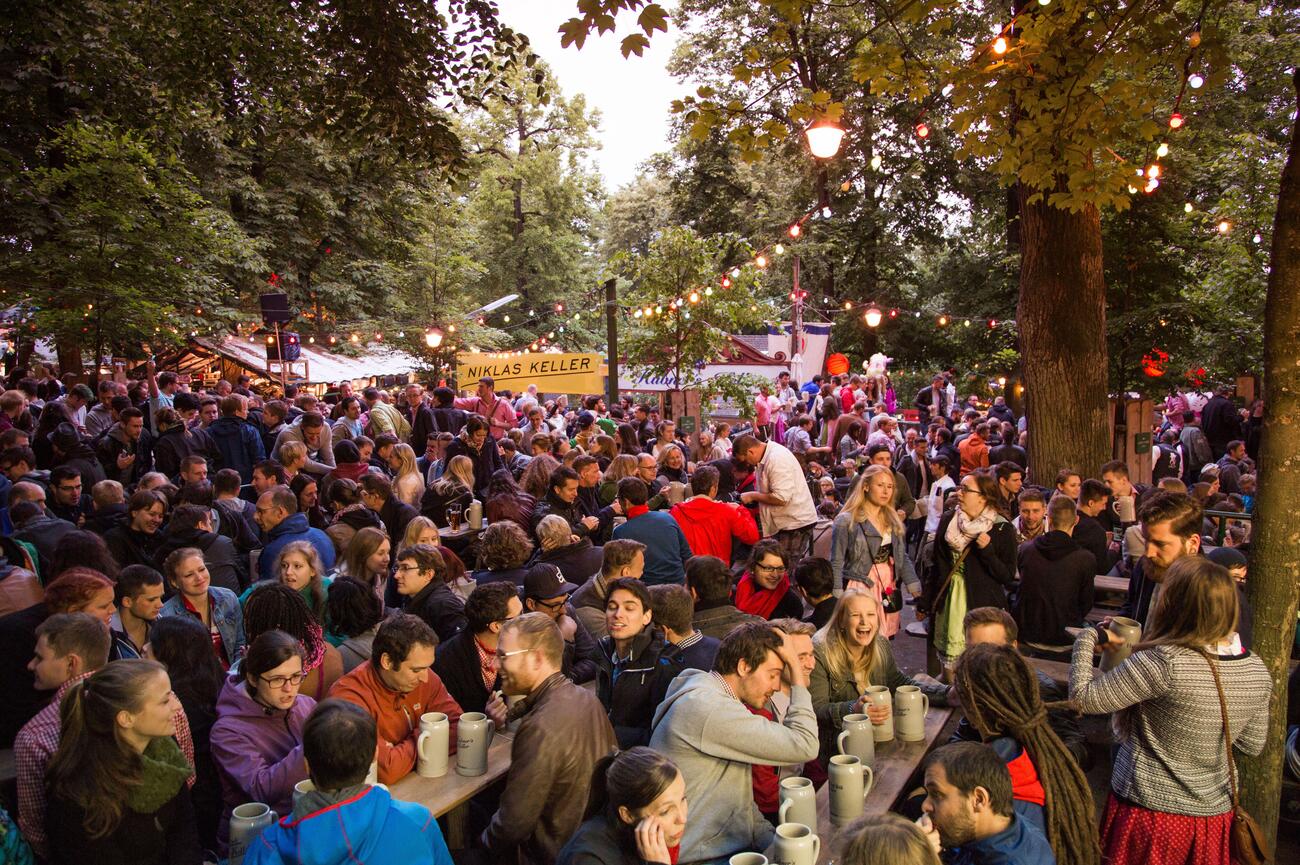
- Franconia Beer Festival: Around early June, Nuremberg hosts the Franconian Beer Festival in the moat below the Imperial Castle. Its location beneath the medieval city walls gives the event a strong sense of place without needing much extra decoration. Dozens of regional breweries take part, serving a wide selection of Kellerbier, lager, wheat beer and seasonal brews from across Franconia. Arriving earlier gives you more time to compare different breweries and find a table before the evening crowd builds.
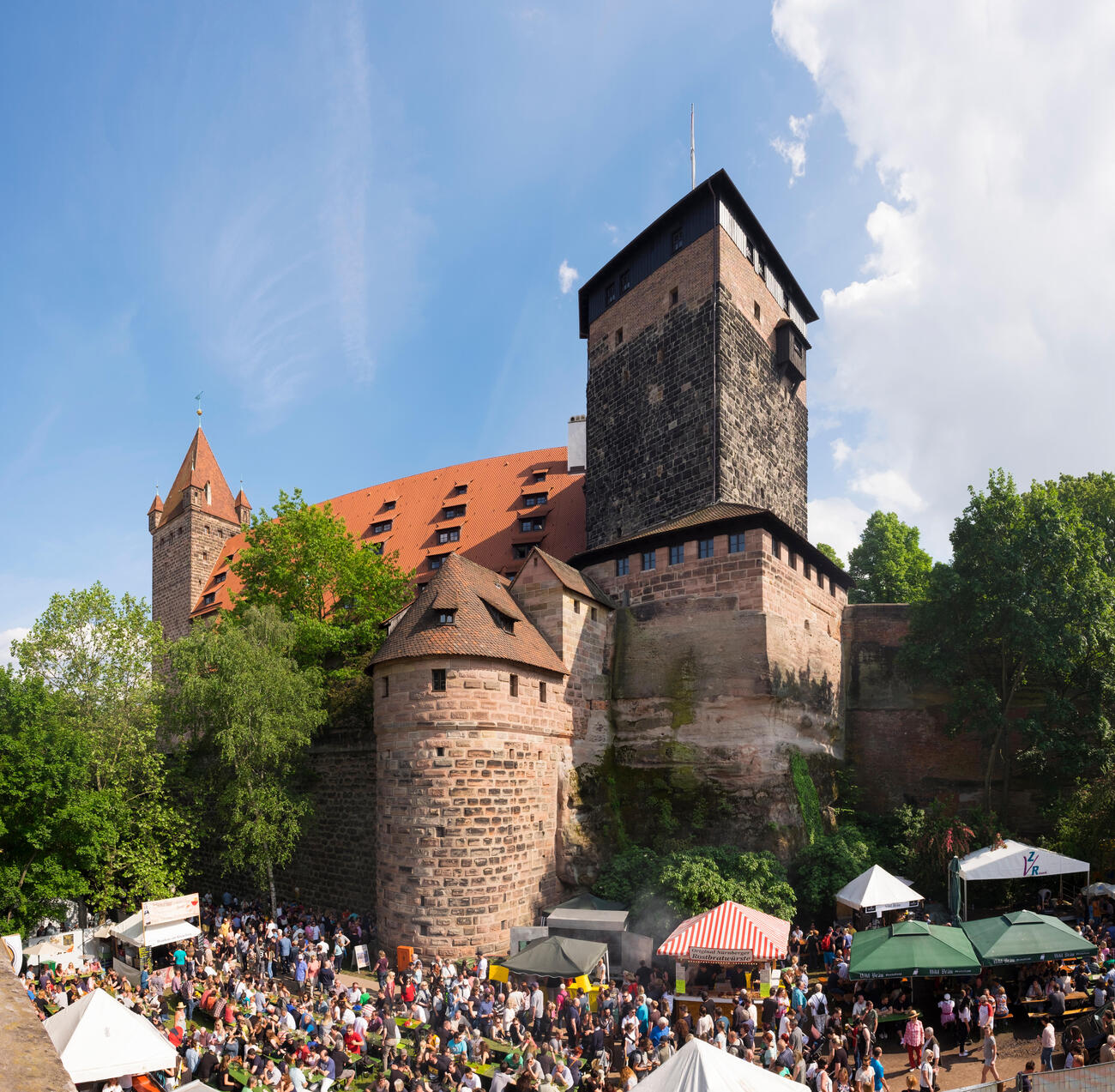
- Volkach Franconian Wine Festival: The Franconian Wine Festival in Volkach is normally held over several days in mid-August. The festival brings together wines from producers around the Volkacher Mainschleife, including Silvaner, Riesling, Müller-Thurgau and regional red varieties. The atmosphere is social and relaxed rather than formal, making it easy to sample several wines without booking a full cellar appointment. You can also arrange a guided vineyard walk or private tasting before entering the festival grounds. This gives you useful background on the area’s steep vineyards and winemaking traditions before you start ordering by the glass.
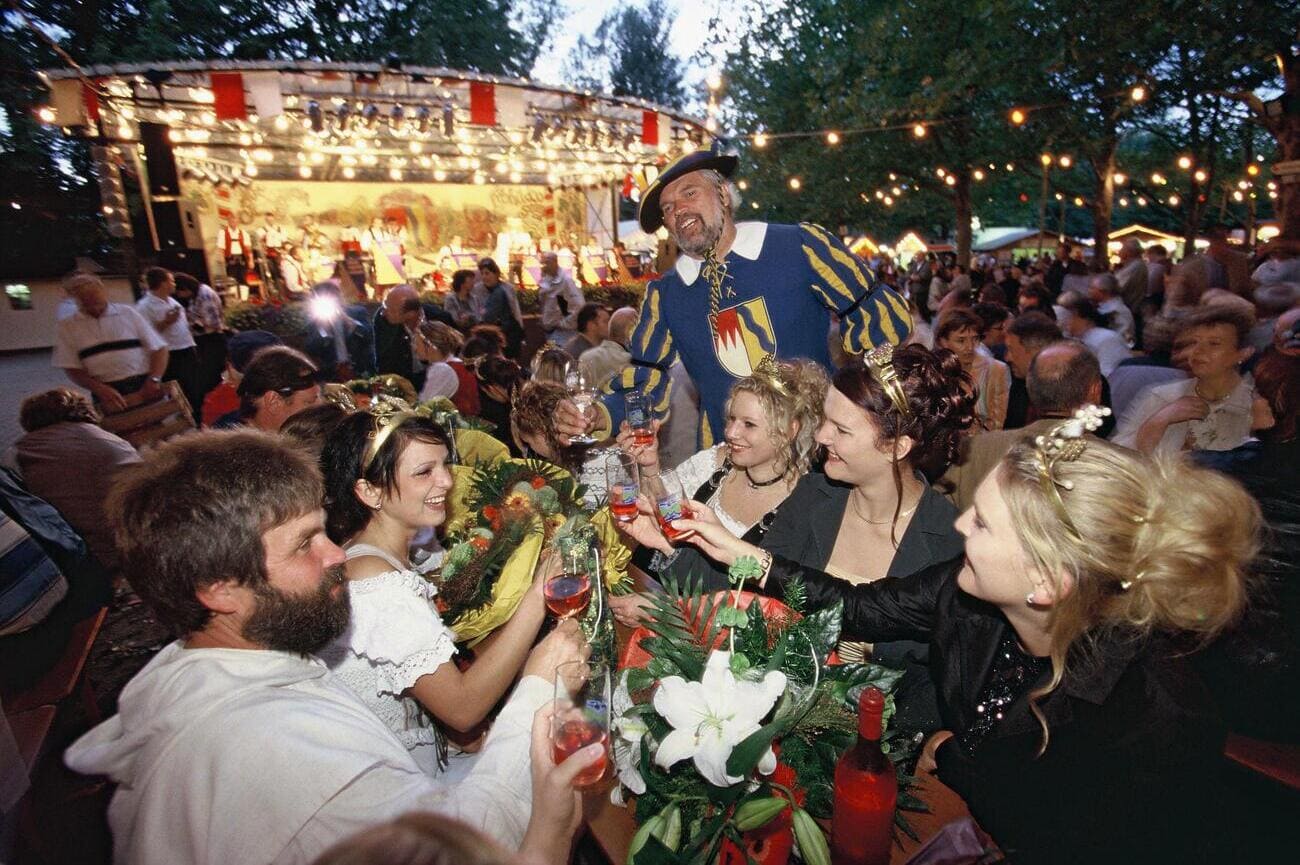
- Würzburg Kiliani Folk Festival: Würzburg’s Kiliani Folk Festival runs for more than two weeks in July at the Talavera grounds beside the Main River. It is one of Lower Franconia’s largest public festivals, combining amusement rides, food stalls, live entertainment and a large festival tent. The setup feels closer to a full regional fair than a focused beer or wine event.
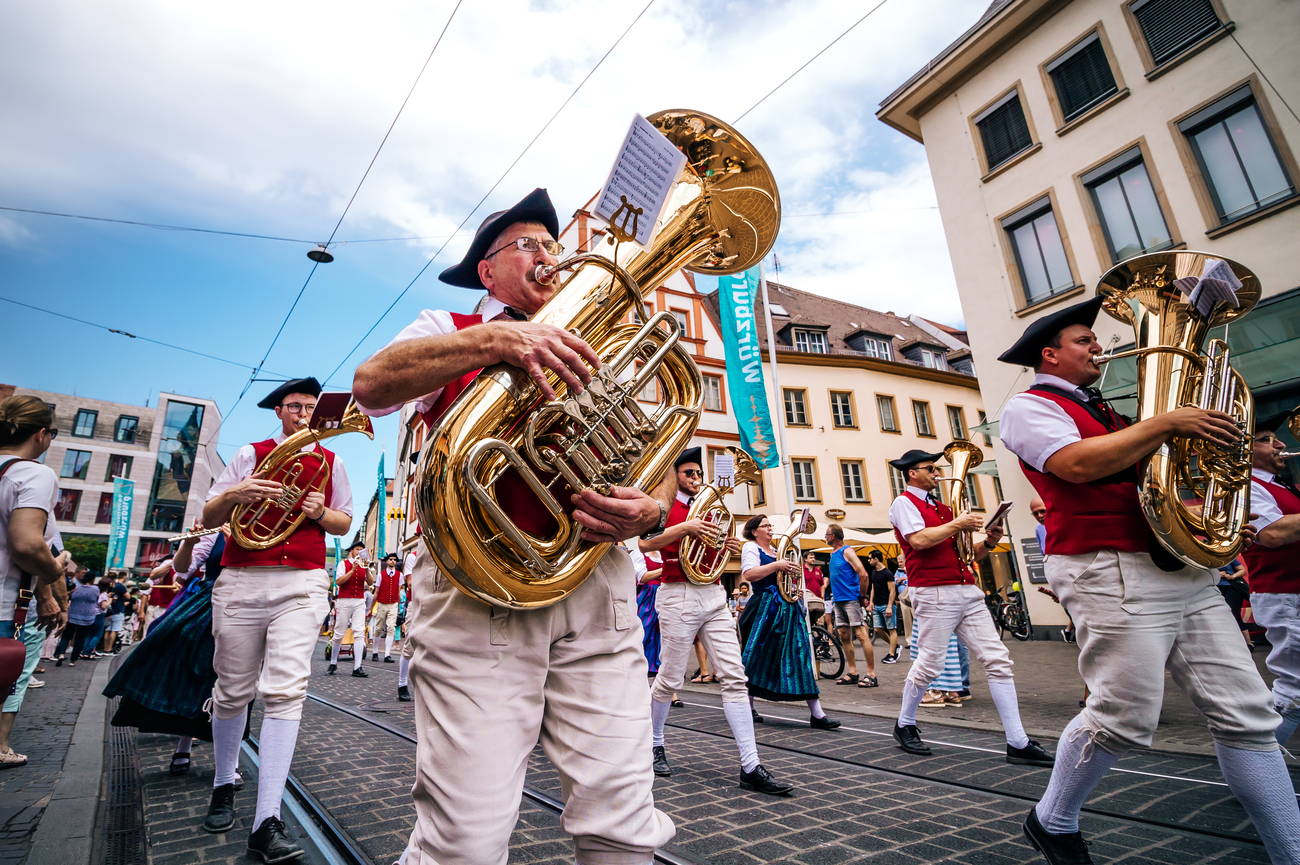
- Nuremberg Christkindlesmarkt: From late November until December 24, the Hauptmarkt and surrounding Old Town streets become the setting for the Nuremberg Christkindlesmarkt. The market is known for traditional wooden stalls selling handmade decorations, gold-foil angels, nativity figures, gingerbread and spiced Christmas treats. A ceremonial opening takes place at the beginning of the season, followed by daily market hours throughout December.
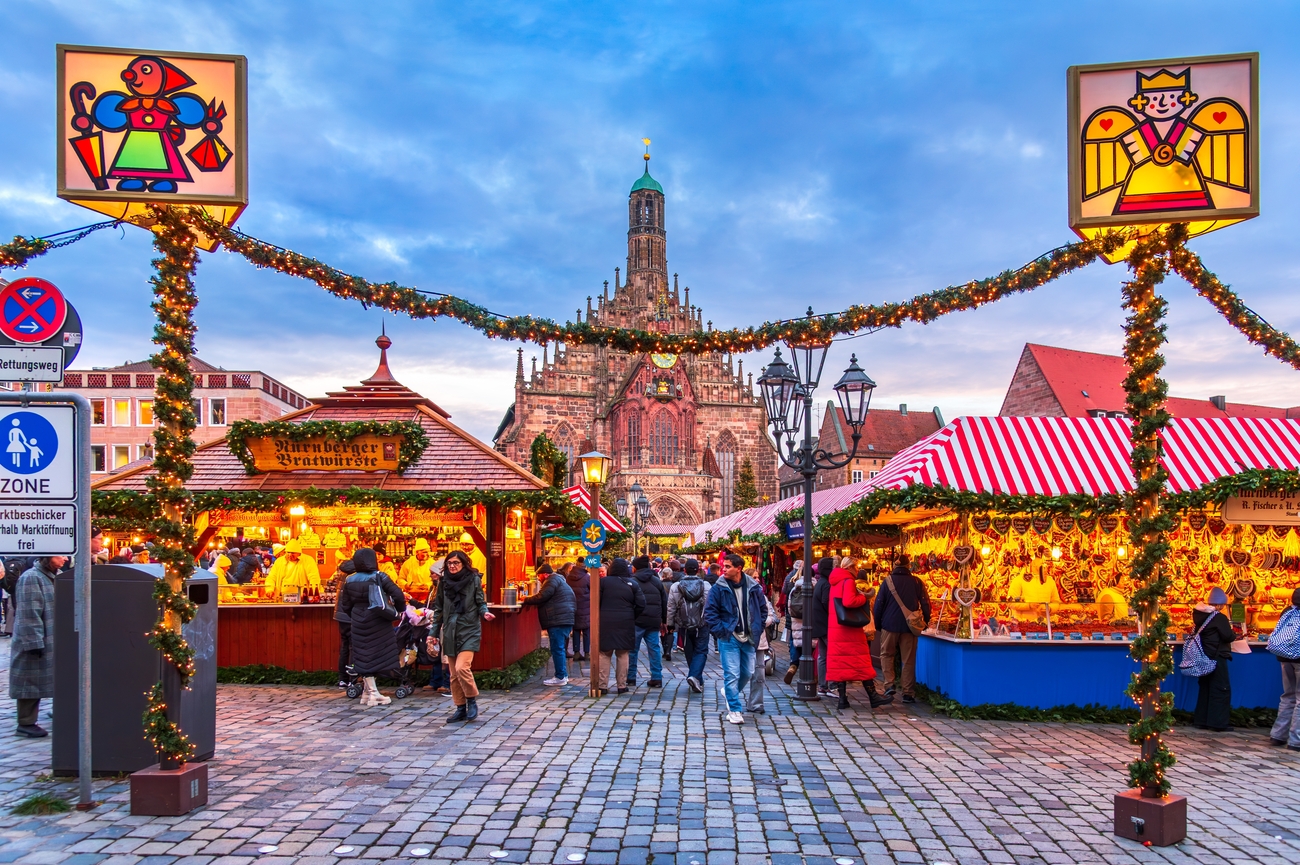
Discover the Historic Heart of Franconia
Franconia brings together medieval towns, imperial cities, UNESCO-listed landmarks, vineyard landscapes and some of Germany’s most distinctive cultural traditions. Whether you are drawn to grand palaces, historic fortresses, celebrated museums, regional wine or world-class music, every part of the region offers a different experience.
Let Revigorate create a tailor-made Franconia itinerary designed around your interests and travel style. Contact us to start planning your journey through one of Germany’s most rewarding regions.


Let us know what you love, where you want to go, and we’ll design a one-of-a-kind adventure you’ll never forget.
Get in touch
Miriam
Travel Specialist

Romina
Travel Specialist

Laura
Travel Specialist
Our offices:



Revigorate, Iberian Escapes and Algarve Lifestyle are the registered brand names of APCS Lda . We are a fully authorised travel agency licensed by Turismo de Portugal RNAVT/6867.
In the event of a dispute, the consumer may refer to: RAL - Centros de Arbitragem
Avª. 5 de Outubro, nº. 55, R/C Dtº. 8000-075 Faro, Portugal | Tel: +351 289 823 135 *
* national landline call
E-mail: info@consumoalgarve.pt| www.consumidoronline.pt | Mon to Fri: 9:00 - 13:00 / 14:00 - 17:00