Things to Do in Berlin: 5-Day Itinerary
Berlin is the capital of Germany and one of Europe’s most historically significant cities, combining landmarks connected to Prussian history, World War II, the Cold War and German reunification with major museums, contemporary art, design and nightlife.
In central Berlin, Mitte brings together the Brandenburg Gate, Reichstag, Museum Island, Unter den Linden and many of the city’s most important historic sites. Charlottenburg offers a more polished contrast, with Kurfürstendamm, KaDeWe, grand boulevards and upscale shopping, while Kreuzberg, Friedrichshain and Prenzlauer Berg reveal Berlin’s more creative and contemporary character.
What makes Berlin particularly rewarding is the contrast between these districts. Monumental architecture, museums, memorials, independent galleries, markets, restaurants and neighbourhood streets can all form part of the same trip, with each area offering a noticeably different atmosphere.
This 5-day Berlin itinerary brings together the city’s major historic landmarks, Museum Island, distinctive neighbourhoods, shopping, dining and nearby excursions in a route designed to be varied, practical and geographically logical.

Day 1

Morning: Brandenburg Gate
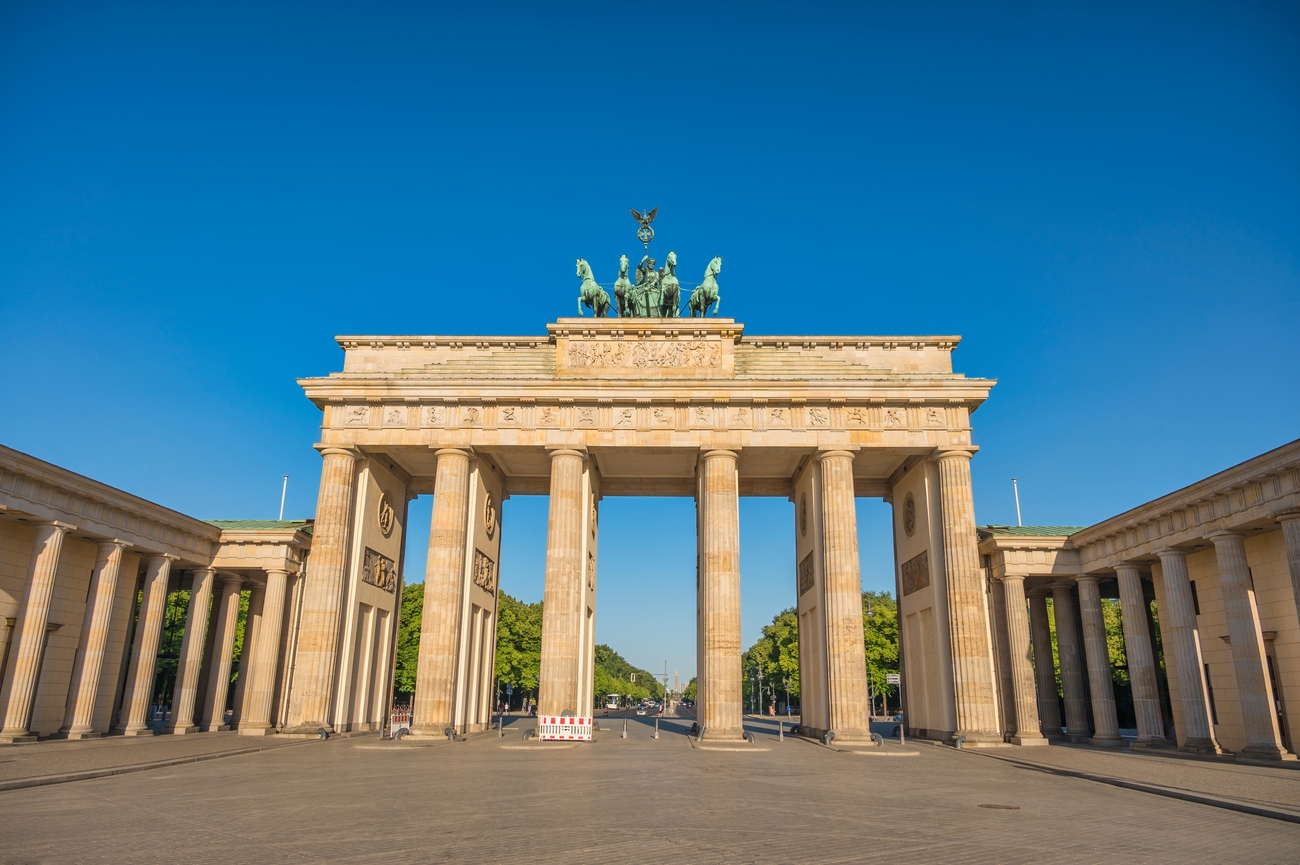
Berlin has no shortage of landmarks, but Brandenburg Gate is the one that earns its reputation without trying too hard. Standing at Pariser Platz in the heart of the city, it marks the boundary between the Mitte and Tiergarten districts and sits at the western end of Unter den Linden, one of Berlin's most important boulevards.
Built between 1788 and 1791 on the order of Prussian King Frederick William II, the gate was inspired by the Propylaea of the Athenian Acropolis. The structure stands 26 meters high and 65 meters wide, built from sandstone, with five passageways running through it and Doric columns lining each side. Most of the decorations reference the Greek mythological exploits of Heracles, and on top sits the Quadriga. This is a chariot drawn by four horses, sculpted by Gottfried Schadow. Napoleon actually took that Quadriga to Paris as war loot after defeating Prussia in 1806 and it was only returned after his defeat.
During the Cold War, the gate stood in the restricted area between East and West Berlin and could be visited by neither side. It reopened in December 1989 after the Wall fell and has been a symbol of German reunification ever since. Entry to the gate and Pariser Platz is free and open 24 hours.
Reichstag Building
From Brandenburg Gate, the Reichstag Building is a 5-minute walk north along the edge of Tiergarten park. The route stays flat and open, with the glass dome already visible above the treeline before you even cross Scheidemannstraße.
The Reichstag is the seat of the German Bundestag, the country's federal parliament and one of the most visited parliamentary buildings in the world. Originally built to mark the entrance to Unter den Linden as a symbol of peace, the building was completed in 1894 and has carried a complicated history since. It was used as a propaganda backdrop by the Nazis, left in near ruins after World War II and then split between East and West Berlin before reunification brought it back as the seat of government in 1991.
The exterior is heavy neoclassical stonework, but the defining feature is the glass dome added during a major renovation led by British architect Norman Foster. It is transparent by design and it is meant to reflect the openness of the democratic process happening below it. Inside the dome, a double-helix ramp spirals upward to the top with a central mirrored funnel that bounces natural light down into the plenary chamber.
The dome is open daily from 8 AM to midnight, with last entry at 10 PM and admission is free. The catch: advance registration is required through the official Bundestag website.

Holocaust Memorial
From the Reichstag Building, the Holocaust Memorial is a 5-minute walk south toward Cora-Berliner-Straße, just a short distance from Brandenburg Gate. The memorial occupies an entire city block in the heart of Berlin and is one of the most important historical sites in Germany.
Officially called the Memorial to the Murdered Jews of Europe, the site was designed by architect Peter Eisenman and inaugurated in 2005. The memorial consists of 2,711 concrete slabs of varying heights arranged in a grid pattern across uneven ground, creating a disorientating and deeply reflective atmosphere as visitors walk through the narrow pathways. Beneath the memorial, an underground Information Centre documents the persecution and murder of Jewish families during the Holocaust through personal stories, letters and historical records.
The memorial is open at all times and entry to the outdoor site is free. The Information Centre usually operates from morning until evening, with shorter opening hours during winter months. It remains one of the most powerful and essential experiences in Berlin, not only as a place of remembrance, but also as a reminder of the consequences of intolerance and extremism.

Pariser Platz
Pariser Platz is a 5-minute walk south through the edge of Tiergarten park, past the Soviet War Memorial and toward the Brandenburg Gate. The route is flat and open the whole way and the square reveals itself the moment you pass through the gate heading east.
Pariser Platz was first laid out in 1734 by architect Philipp Gerlach, originally called Quarree (French for square) and renamed in 1814 to mark the Prussian victory over Napoleon at the Battle of Paris. For the next century, it served as Berlin's main ceremonial entrance for military parades and royal processions. By the end of World War II, every building around the square had been reduced to rubble by air raids and artillery. After the war, the Berlin Wall cut the square in half and it became part of the restricted death strip, inaccessible to both East and West Berliners until reunification in 1990.
The rebuilt square, completed in 2002, runs on strict design rules that all buildings must hold a 22-meter eave height and a uniform stone facade. What happens behind those facades is a different story. The DZ Bank at Pariser Platz 3, designed by Frank Gehry, looks restrained from the outside, but the interior conceals an organically shaped auditorium of steel and glass.

Afternoon: UNESCO Weltkulturerbe Museumsinsel
Museum Island sits about a 15-minute walk east of Pariser Platz along Unter den Linden, Berlin's grand central boulevard. The route passes the State Opera, Humboldt University and Bebelplatz before the Spree River comes into view and the island's neoclassical rooflines appear across the water.
Museum Island is a UNESCO World Heritage Site featuring five world-class museums, the Pergamon, Neues, Altes, Bode and Alte Nationalgalerie, built over roughly 100 years on a narrow island in the Spree River. The island's history dates back to the early 19th century when King Friedrich Wilhelm III of Prussia envisioned a public museum to house the royal art collections.
Each museum covers a different era and civilization. The Neues Museum, rebuilt over a decade by British architect David Chipperfield and reopened in 2009, holds the Egyptian collection including the world-famous Bust of Nefertiti. The Alte Nationalgalerie houses paintings and sculptures from Classicism, Romanticism, Biedermeier, Impressionism and the early Modern Age. The Bode Museum at the northern tip of the island houses a unique sculpture collection from the Middle Ages to the 19th century, including works by Donatello, Bernini and Canova, alongside the Museum of Byzantine Art and the Numismatic Collection.
For tours, the Staatliche Museen zu Berlin runs official guided group tours across all museums. Overview tours are available for every museum, covering collection highlights and special exhibitions and can be tailored to specific topics, eras and artists.

Bode-Museum
The Bode-Museum sits at the very northern tip of Museum Island, a 3-minute walk from the James-Simon-Galerie. The easiest way to approach it is along Am Kupfergraben, the narrow canal road that runs alongside the island.
The history of the Bode-Museum begins in 1871 when the Imperial Prussian court set out to establish a major art museum. The concept came from art historian Wilhelm von Bode, and the building opened in 1904 as the Kaiser Friedrich Museum in honour of Friedrich III. It was renamed the Bode Museum in 1956 by the GDR Minister of Culture, after its first general director. The building is neo-baroque, designed by Ernst von Ihne to look like a ship rising out of the water, with three wings grouped around several inner courtyards directly on the banks of the Spree.
The collections span around 2,000 years across three areas, the Sculpture Collection, one of the largest in the world, covering the Middle Ages through the Baroque; the Museum of Byzantine Art with ivory panels, mosaics and early Christian sarcophagi from the 3rd to 15th century; and the Münzkabinett, half a million coins and medals spanning Roman, Greek and Oriental works. A single ticket covers all three. The museum is open Tuesday to Sunday, 10 AM to 6 PM.

Französischer Dom
The Französischer Dom sits on the north side of Gendarmenmarkt, widely considered Berlin's most beautiful square, forming an architectural trio with the Konzerthaus and the Deutscher Dom directly opposite.
First things first. Despite the name, the Französischer Dom is not actually a church. The word "Dom" here refers to the architectural form of the dome tower, not a cathedral. The building is technically two structures: the domed tower itself and the adjacent Friedrichstadtkirche, the actual church built for Berlin's French Protestant community.
Construction of the church began in 1701 and was completed in 1705, built for the Huguenots. In 1785, Friedrich II commissioned Karl von Gontard to add the grand domed towers to both churches. The buildings were destroyed during World War II and remained ruins for decades before reconstruction finally began in 1981. The restored church held its first service at Easter 1983, and the tower with its viewing platform and carillon opened in 1987 for Berlin's 750th anniversary. Inside the tower, the Huguenot Museum traces the full story of the French Protestant community in Berlin. In five rooms and six tower niches, exhibits include the original Edict of Potsdam, old paintings and documents, medals, manuscripts and historic stained glass windows from a French Calvinist church.

Evening: Departmentstore Quartier 206
From Gendarmenmarkt, Friedrichstraße is a 5-minute walk north and Quartier 206 sits right on it. The building is impossible to miss because its Art Deco-inspired facade was designed by New York architects Pei Cobb Freed & Partners, the same firm behind the Louvre Pyramid.
Often considered the most luxurious department store in Berlin, Departmentstore Quartier 206 carries a wide range of international designers including Prada, Givenchy and Tom Ford, with much of the inventory hand-picked by founder Anne Maria Jagdfeld on travels around the world. Across 2,800 square meters of retail space, the store mixes international designer fashion with niche labels, accessories, cosmetics and jewelry.
The store is open Monday to Saturday and closed on Sundays. If you are from outside Europe, Tax Free Shopping is available at the counter. It is a low-key but high-quality way to end your day.

Day 1 - Berlin Tour Map
Day 2
Morning:
Kaiser Wilhelm Memorial Church
Kaiser Wilhelm Memorial Church sits on Breitscheidplatz, right at the start of Kurfürstendamm, Berlin’s main western shopping boulevard.
Built between 1891 and 1895, the original structure featured a 113-meter spire and 2,740 square meters of stunning mosaic dedicated to the Emperor. Bombing raids severely destroyed the church in 1943, breaking off the top of the main tower and collapsing the roof truss. When authorities moved to demolish the ruins entirely in 1956, Berliners protested, and the damaged spire was kept as a deliberate memorial. Locals nicknamed it the "Hollow Tooth.”
Architect Egon Eiermann integrated the ruins into a new building constructed between 1959 and 1961, using honeycomb-shaped concrete elements with glass blocks that flood the octagonal nave in intense blue light. The memorial hall holds the original crucifix and the Coventry Nail Cross made from wreckage of Coventry Cathedral, bombed by German planes in 1940 and a symbol of reconciliation shared with Dresden, Hiroshima and Volgograd.

Berlin Zoological Garden
From the Kaiser Wilhelm Memorial Church, the zoo entrance on Hardenbergplatz is literally a 2-minute walk. The two sit on the same block, and the Elephant Gate on Budapester Straße is visible from Breitscheidplatz.
Zoo Berlin opened on August 1, 1844, as Germany's first zoo, with its foundation going back to naturalist Alexander von Humboldt and Martin Lichtenstein. Today it holds around 1,200 species and is considered the most species-rich zoo in the world. The grounds cover about 35 hectares in the Tiergarten district, with animal enclosures both in the open air and in purpose-built houses.
In the nocturnal animal house, visitors can see animals that otherwise only move in the dark. The zoo is also home to Germany's only giant pandas, which have their own dedicated garden and remain one of the biggest draws. You can also enjoy feeding sessions with commentary takes place several times a day. The adjacent Aquarium on Budapester Straße can be visited separately or with a combined ticket, and is worth adding if the itinerary has time. It covers over 1,000 aquatic species across three floors.

KaDeWe - Kaufhaus des Westens
From the Berlin Zoo, KaDeWe is a 10-minute walk. The store sits right on the square and is impossible to miss with eight floors of building occupying an entire city block.
The Kaufhaus des Westens opened on March 27, 1907, founded by businessman Adolf Jandorf who wanted to satisfy, as one contemporary magazine put it, "the spoiled demands of the top ten thousand." With over 60,000 square meters of retail space, it is the second-largest department store in Europe after Harrods in London. The store was severely damaged during World War II, reopened in 1950, and quickly became a symbol of West Berlin's economic recovery and material prosperity compared to East Berlin.
The store operates on a shop-in-shop system with international designers and well-known labels, with boutiques from Hermès, Chanel, Gucci, Dior and Tiffany on the ground floor's Luxury Boulevard. Upper floors cover women's and men's fashion, living and home, beauty and accessories.

Afternoon: Tauentzienstraße
Tauentzienstraße starts right at KaDeWe's front door on Wittenbergplatz and runs west for about 500 meters toward Breitscheidplatz and the Kaiser Wilhelm Memorial Church. The street connects the two squares in a straight line and merges seamlessly into Kurfürstendamm at the western end.
Tauentzienstraße was laid out in the manner of Parisian boulevards during the imperial era, forming the beginning of the Generalszug. It was named after Prussian General Bogislav Friedrich Emanuel von Tauentzien by order of King Wilhelm I in 1864. During the Cold War, the street became part of the commercial center of West Berlin and is technically the busier of the two streets, Tauentzien and Ku’damm, due to the concentration of shops along its shorter length.
Between KaDeWe and the Memorial Church, the street is dominated by international fashion chains, sportswear flagships and large shoe stores. It is less curated than Ku'damm but higher in foot traffic, and the energy is noticeably more commercial.

Kurfürstendamm
From Tauentzienstraße, Kurfürstendamm begins the moment you cross Breitscheidplatz at the Kaiser Wilhelm Memorial Church. The two streets are effectively one continuous boulevard, just with a name change at that junction.
Kurfürstendamm was originally established around 1542 as a bridle path connecting the Berlin City Palace to the Grunewald hunting lodge. Otto von Bismarck first envisioned transforming it into a grand boulevard, and work began in 1882. During the Golden Twenties, Ku'damm was the center of leisure and nightlife in Berlin's New West. The boulevard suffered heavy damage during World War II, and during the Cold War it reinvented itself completely. Kurfürstendamm became the heart of West Berlin.
Walking west down Kurfürstendamm, the stores become progressively more elegant and exclusive, with international designer boutiques set among hotels, restaurants and cafés with wide pavement terraces. The boulevard also carries architectural interest beyond the shopfronts. While the side streets running north off Ku'damm are where things get more personal. Fasanenstraße, Bleibtreustraße and Knesebeckstraße are lined with boutiques and specialty stores set in the ground floors of elegant old apartment buildings.

Evening: Stage Theater des Westens
The Theater des Westens is a 5-minute walk north on Kantstraße. Or you can take a short ride to Zoologischer Garten station with the theater a few minutes on foot from there.
The Theater des Westens opened in 1896 with The Thousand and One Nights and quickly became one of Germany’s most important stages. Designed by Bernhard Sehring, the theater is known for its Wilhelminian historicist style, with an ornate facade, grand staircase and richly decorated foyer. It later shifted toward opera and operetta, was renamed Volksoper during the Nazi era and was heavily damaged in World War II. In 1961, the German-language premiere of My Fair Lady marked its transition into a major musical theater venue. Since 2002, the 1,500-seat theater has been operated by Stage Entertainment.
The theater has been known as the "stage of the world stars" as Josephine Baker, Enrico Caruso, Marlene Dietrich and Hildegard Knef all performed here. Today the programming sits firmly in the musical genre, with a mix of German-language productions of international hits and original Berlin productions.
You can go watch an opera here with seating available across the orchestra, balcony and upper tiers. Or you can also join backstage tours, which give access to parts of the theater normally closed during performances.

Charlottenburg Palace
From the Theater des Westens on Kantstraße, Charlottenburg Palace is about a 15-minute walk west or a quick bus ride. You will be walking through a tree-lined avenue that leads directly to the palace forecourt.
The original building was Lietzenburg Palace, built between 1695 and 1699 as a small pleasure palace for Electress Sophie Charlotte of Brandenburg, based on designs by Arnold Nering. Sophie Charlotte was not only an accomplished musician but also strolled through the grounds with her friend, the philosopher Gottfried Wilhelm Leibniz. When she died at just 36, the palace and the surrounding area were renamed Charlottenburg in her honor.
Charlottenburg Palace is the largest and most significant palace complex in Berlin from the former Brandenburg electors, Prussian kings and German emperors. It was among the favorite retreats of seven generations of Hohenzollern rulers. The exterior stretches across an enormous forecourt anchored by a gilded equestrian statue of the Great Elector, with the dome topped by a rotating golden figure of the goddess Fortuna. Inside, the standout rooms include the Porcelain Cabinet with a floor-to-ceiling arrangement of over 2,700 pieces of Chinese and Japanese porcelain.

Day 2 - Berlin Tour Map
Day 3
Morning: Tiergarten
Tiergarten traces back to 1527, when it was founded as a hunting area for the Elector of Brandenburg. Frederick the Great had the fences torn down in 1742 and turned it into a pleasure garden open to the people of Berlin. Landscape architect Peter Joseph Lenné later redesigned the entire park drawing on English garden models, giving it the shape it largely retains today.
At 210 hectares, Tiergarten is one of the largest urban parks in Germany, Yes larger than Hyde Park. The Soviet War Memorial sits just inside the eastern edge, erected in 1945. And if you want a slower moment, the Café am Neuen See on the southern lake runs a beer garden open almost year-round.

Victory Column
The Victory Column stands at the Großer Stern, the large roundabout at the center of Tiergarten. It is a natural next stop from anywhere in the park.
The column was completed in 1873, designed by Heinrich Strack to commemorate a series of Prussian military victories. It originally stood in front of the Reichstag but was moved 1.5 kilometers west to its current location in 1938–39 and raised to 67 meters in the process. The bronze sculpture at the top weighs 35 tons and measures over 8 meters tall, representing Victoria, the Roman goddess of victory nicknamed "Goldelse" (Golden Lizzie) by Berliners. The base holds a mosaic hall and a small exhibition.
You can join major Berlin walking and bike tours to explore the Victory Column. And if you want a more in-depth option, you can join walks that include the column with a guide.

Gemäldegalerie
From the Victory Column, the Gemäldegalerie is about a 15-minute walk south through Tiergarten toward the Kulturforum complex at Matthäikirchplatz. The museum sits alongside the Neue Nationalgalerie, the Berlin Philharmonie and the Kunstbibliothek.
The Gemäldegalerie holds one of the world's finest collections of European painting from the 13th to the 18th century, with around 1,000 masterpieces across 72 rooms covering almost two kilometers of gallery space. The collection includes works by van Eyck, Bruegel, Dürer, Raphael, Titian, Caravaggio, Rubens, Vermeer and Rembrandt, with Italian painting from the 13th to 16th century and Netherlandish painting of the 15th and 16th century forming two of the strongest sections.
Caravaggio's Amor Vincit Omnia and Holbein the Younger's portrait of the merchant Georg Gisze are among the most visited individual works. To better understand the works in the museum, there are audio guides available in German, English, French and Italian.

Afternoon: Kulturforum
The Gemäldegalerie is already part of the Kulturforum complex, so this transition requires no walk at all. As you step out of the gallery, you are directly onto the piazzetta connecting the complex's main buildings.
The Kulturforum was conceived as the cultural center of West Berlin after the division of the city, built as a visible counterpoint to Museum Island, which had ended up in Soviet-controlled East Berlin. The buildings were designed by some of the most influential architects of the 20th century Hans Scharoun, Ludwig Mies van der Rohe, Rolf Gutbrod and Hilmer & Sattler. The complex is currently being expanded with a new museum building by Herzog & de Meuron, planned for completion in 2027.
The Kulturforum brings together the Gemäldegalerie, Kunstbibliothek, Kupferstichkabinett, Kunstgewerbemuseum and Neue Nationalgalerie under one walkable complex. The Neue Nationalgalerie, Mies van der Rohe's steel and glass pavilion, holds the modern and contemporary art collection and is one of the stronger architectural experiences in Berlin independently of what is on the walls. The Kunstgewerbemuseum covers medieval reliquaries through to classical furniture, fashion and modern design.
Museum Pass Berlin covers over 30 museums including the main Kulturforum institutions across three consecutive days. And if you want to experience the most out of this museum, the Kulturforum is also a hub for the Long Night of Museums, held in March and August, when the buildings stay open late and several run special programming.

Potsdamer Platz
From the Kulturforum, Potsdamer Platz is a 5-minute walk east along Potsdamer Straße. The two are essentially neighbors, with the Kulturforum sitting on the square's western edge.
Potsdamer Platz has one of the more dramatic transformation stories of any square in Europe. The Berlin Wall divided the area after the war, leaving Potsdamer Platz in a deep sleep for more than 40 years as an urban wasteland between East and West. After reunification, the entire area was rebuilt from scratch in the 1990s, becoming one of the largest construction sites in the world at the time. A metal strip embedded in the ground still marks the former course of the Wall.
The architecture is the main reason to spend time here beyond just passing through. The three futuristic high-rise buildings framing Alte Potsdamer Straße are striking. The Center am Potsdamer Platz, formerly the Sony Center, is a futuristic office and residential complex designed by Helmut Jahn, brought together by a spectacular roof construction that lights up in rotating colors after dark. The Haus Huth on Alte Potsdamer Straße is the only building in the entire area to have survived World War II, thanks to its steel structure.

Mall of Berlin
The Mall of Berlin sits on Leipziger Platz. It is a 5-minute walk east of Potsdamer Platz along Leipziger Straße.
The Mall of Berlin officially opened on September 25, 2014 and occupies the site of the former Wertheim department store. The mall covers 76,000 square meters and sits between Brandenburg Gate and Potsdamer Platz, making it one of the more centrally located shopping destinations in the city.
The layout runs across four floors: high-end fashion brands on the ground floor, more accessible clothing labels on the first, children's wear and a large food court on the second and a supermarket and sports store in the basement. Inside you will find over 270 stores covering fashion, entertainment and electronics, along with restaurants and dining venues.

Evening:
Berlinische Galerie
From the Mall of Berlin on Leipziger Platz, the Berlinische Galerie is about a 10-minute walk southeast along Alte Jakobstraße in Kreuzberg. The surrounding Kreuzberg neighborhood shifts the mood entirely from Potsdamer Platz's corporate polish to something noticeably grittier and more creative.
The Berlinische Galerie collects, preserves and displays modern and contemporary art made specifically in Berlin, covering painting, sculpture, photography and architecture from 1870 to the present day. Founded in 1975, the museum opened its current home in 2004 inside a converted 4,600 square meter industrial building, sitting around the corner from the Jewish Museum. The building is easy to spot; a yellow field of letters embedded in the forecourt pavement marks the entrance and the flat-roofed, glass-fronted structure looks exactly like a former industrial hall that was taken seriously by the right people.
The permanent exhibition "Art in Berlin 1880–1980" runs through Dada Berlin, New Objectivity, Eastern European avant-garde and the art of divided and reunited Berlin. The collection includes works by Otto Dix, Hannah Höch, Georg Baselitz, Max Liebermann and El Lissitzky, alongside photography, architecture models and graphic works. Rotating special exhibitions run alongside the permanent collection. You can join English-language guided tours run on weekends and are included in the museum admission or curator-led tours that run on Mondays.

Jewish
Museum Berlin
The Jewish Museum Berlin is literally around the corner. It is just a 2-minute walk north along Lindenstraße.
The Jewish Museum Berlin is Europe's largest Jewish museum, housed in a zigzag-shaped building by architect Daniel Libeskind that translates German-Jewish history directly into architecture. The entire architecture, inside and out, symbolizes the ambivalent theme of Jewish life in Germany. Libeskind used deliberate disorientation, broken conventions and intentional inconsistencies to force visitors to physically engage with the building and the history it holds.
The iconic zigzag form is pierced by narrow voids that symbolize the absence left by the Holocaust. The Garden of Exile features 49 tilted concrete pillars filled with growing olive willows, designed to disorient the senses and evoke feelings of instability and disconnection. The Holocaust Tower is a cold, isolated concrete shaft, dimly lit and acoustically sealed. The permanent exhibition "Jewish History and Present in Germany" covers more than 3,500 square meters and follows Jewish life in Germany from the Middle Ages to the present day in a multimedia and interactive format.
You can join guided tours available in German and English. The Jewish Museum Berlin is where Day 3 ends.

Day 3 - Berlin Tour Map
Day 4
Morning: Alexanderplatz
Day 4 starts in the east of the city at Alexanderplatz. Alexanderplatz, or "Alex" as locals call it, is the central square of the eastern city center and one of the most important public spaces in Berlin. It owes its current name to King Frederick William III, who renamed the square in 1805 to mark the visit of Tsar Alexander I of Russia. During the Cold War, the square sat in East Berlin and was heavily rebuilt by the GDR into the wide, open socialist-style plaza it remains today.

Berlin
TV Tower
From Alexanderplatz, the TV Tower is impossible to miss. It stands directly on the square and the entrance is a 2-minute walk from the Weltzeituhr.
The Berlin TV Tower on Alexanderplatz is the tallest publicly accessible building in Europe at 368 meters. It was inaugurated on 3 October 1969, built by the GDR as a symbol of East German technological power during the Cold War. The tower became an unintentional irony almost immediately after opening.
The observation deck sits at 203 meters, reached by an elevator that ascends at 6 meters per second, covering the distance in around 40 seconds. From the platform, you get a full 360-degree view taking in Brandenburg Gate, the Reichstag, Museum Island, Tiergarten and Potsdamer Platz all at once. A virtual reality experience called Berlin's Odyssey is also available inside.
And if you want to experience luxury, Sphere Tim Raue sits at 207 meters. The highest restaurant in Berlin, run by Michelin-starred chef Tim Raue, redesigned and relaunched in 2025. The revolving dining room makes a full 360-degree turn.

ALEXA Berlin
ALEXA sits on Grunerstraße 20, a 3-minute walk southeast of the Berlin TV Tower along the edge of Alexanderplatz. The red facade is visible from the square itself.
ALEXA opened in 2007 and is one of the largest shopping malls in Berlin, with its red concrete facade designed to reference the Art Deco style. The five-storey complex covers around 43,000 square meters of retail space alongside 2,000 square meters of food outlets and 9,000 square meters of leisure space, with about 180 stores in total. The tenant mix includes MediaMarkt, H&M, Zara, Tommy Hilfiger, Mango and Levi's, with the food court running more than 17 restaurants and snack bars.

Afternoon: Berlin Cathedral
From ALEXA, Berlin Cathedral is a 10-minute walk west along Karl-Liebknecht-Straße toward Museum Island, where the green dome rises above the Spree riverbank and is visible well before you arrive.
The monumental building was intended to be nothing less than Kaiser Wilhelm II's Berlin answer to St. Peter's Basilica in Rome. The Neo-Renaissance building was completed in 1905, heavily damaged in the Second World War and reconstructed in the 1970s. It has four corner towers, a dome rising nearly 100 meters and an exterior stretching across the full northern end of the Lustgarten.
The dome suspended 70 meters above the nave is decorated with 35 different mosaics depicting the Beatitudes of the Sermon on the Mount, each mosaic containing 500,000 tiles in 2,000 shades of color. Down in the crypt are some of Germany's most finely carved tombs. The Hohenzollern Crypt holds 91 burials from the end of the 16th to the beginning of the 20th century, documenting 500 years of Brandenburg-Prussian burial culture.

Hackesche Höfe
The walk north from Berlin Cathedral to Hackesche Höfe takes about 10 minutes along the Spree riverbank. The complex sits at Rosenthaler Straße and the Art Nouveau facade tiled in green, cream and terracotta picks it out immediately from the surrounding streetscape.
The Hackesche Höfe were opened in 1906 according to plans by August Endell and were the largest enclosed courtyard complex in Europe at the time, combining living, working and culture in a way that quickly made them a popular meeting place. The area around the complex sits in the Scheunenviertel, the former Jewish neighborhood of Berlin, renamed the Barn Quarter at the end of the 17th century when barns were moved outside the city walls because of fire risk.
Today, the eight courtyards of the Hackesche Höfe between Rosenthaler Straße and Sophienstraße have 27,000 square meters of space for 40 businesses, including cultural institutions, a cinema, cafes, shops and apartments. The tenants in the Hackesche Höfe shops still run their own businesses, selling high-quality products that they create and manufacture themselves.

East Side Gallery
From Hackesche Höfe, the East Side Gallery is about a 20-minute ride. The gallery runs along Mühlenstraße beside the Spree River in Friedrichshain, stretching from Ostbahnhof at the western end to Oberbaumbrücke at the eastern end.
After the fall of the Wall, 118 artists from 21 countries created the world's longest open-air gallery on 1.3 kilometers of the former border wall, making the East Side Gallery one of Berlin's most visited attractions. One detail most visitors walk past without realizing: the painted side was not the western face of the Wall. This was the Hinterlandmauer. The western side, famously covered in graffiti during the Cold War, was demolished almost entirely.
The paintings range from surreal images and political statements to graffiti-style works, reflecting the eclectic atmosphere of Berlin in the months after reunification. The two most recognized works are Dmitri Vrubel's "The Mortal Kiss,” showing Erich Honecker and Leonid Brezhnev in a mouth-to-mouth embrace. The murals were restored by the original artists in 2009 after years of weather damage and tagging, and protective fencing runs along parts of the gallery today for the same reason.

Evening: Oberbaumbrücke
The East Side Gallery ends right at the Oberbaumbrücke. Walk the full length of the murals and the bridge appears at the eastern end, crossing the Spree between Friedrichshain and Kreuzberg.
The Oberbaumbrücke is considered the most beautiful bridge in Berlin. The current structure was built between 1894 and 1896, designed by architect Otto Stahn in North German Brick Gothic style, with pointed arches, cross vaults, coats of arms and two towers inspired by the medieval city gate of Prenzlau. The bridge is double-decked. The lower level carries road and pedestrian traffic, while the upper level has carried the U-Bahn since 1902, making it part of the oldest subway line in Berlin.
Since 1997, a neon installation called "Stone, Paper, Scissors" by Thorsten Goldberg has lit up the bridge after dark. The bridge has also appeared in several films including Run Lola Run, The Bourne Supremacy and Berlin Station. At this point, it is basically a certified Berlin film location.

Uber Platz
From the Oberbaumbrücke, Uber Platz is a 5-minute walk west along Mühlenstraße, sitting directly beside the East Side Gallery between Ostbahnhof and Warschauer Straße. The Uber Arena's curved exterior and the illuminated fountain field out front mark it clearly from the riverside path.
Uber Platz, formerly known as Mercedes Platz, is a leisure and entertainment district built along the East Side Gallery in the heart of Friedrichshain, serving as a hub for a young, urban crowd with concerts, dining, sport and nightlife all in one compact area. The complex includes the Uber Arena, the Uber Eats Music Hall, a UCI Luxe cinema, Bowling World and over 20 bars and restaurants.

Day 4 - Berlin Tour Map
Day 5
Morning: Hamburger Bahnhof - Contemporary Art National Gallery
Day 5 opens in the northwest of Mitte, a short walk from Berlin Hauptbahnhof. Hamburger Bahnhof is one of the world's most significant museums for contemporary art, housed in a former 19th-century railway station that combines historic architecture with large-scale modern installations. The station was originally built as the terminus of the Hamburg to Berlin railway line and later converted into a museum, reopening as a contemporary art space in 1996. The main hall is a soaring vaulted space now used for large sculptural installations that need serious room to work.
The permanent Marx Collection features major works by Andy Warhol, Robert Rauschenberg and Cy Twombly, alongside one of the largest Joseph Beuys collections in the world. The current long-term exhibition "Nationalgalerie: A Collection for the 21st Century" brings together around 80 works like paintings, sculptures, photography and video, featuring artists including Isa Genzken, Mona Hatoum, Anri Sala and Ruth Wolf-Rehfeldt, exploring the sociopolitical factors that have shaped the city and its art.

Museum für Naturkunde Berlin
From Hamburger Bahnhof, the Museum für Naturkunde is a 10-minute walk north along Invalidenstraße. The two museums sit on the same street.
The museum was founded in 1810 together with Humboldt University and has been located in the building on Invalidenstraße ever since. With over 30 million objects, it is one of the largest natural history collections in the world, covering geology, paleontology, mineralogy and zoology.
The Dinosaur Hall is the centerpiece and the reason most people show up. The hall holds the skeleton of the Giraffatitan, one of the largest prehistoric creatures ever found, standing over 13 meters tall. Alongside it stand the bones of a Diplodocus and a Kentrosaurus, and in the same room, Tristan Otto, an original Tyrannosaurus Rex skeleton and one of the most complete T. rex specimens in existence. Beyond the fossils, the East Wing houses a genuine scientific research collection of about one million animals stored in 80 tonnes of alcohol while the Biodiversity Wall displays 3,000 species in a single installation.
You can book guided tours of the exhibitions in German and English. Or even book workshops that are bookable through the museum's education department.

Afternoon: Bellevue Palace
From the Museum für Naturkunde, Bellevue Palace is about a 20-minute walk southwest through Tiergarten park, or a short ride to Bellevue S-Bahn station and then a few minutes along the Spree riverfront.
The palace is an impressive example of early neoclassical style with a symmetrical three-winged structure with an elegant facade of Doric columns, a triangular pediment featuring the Prussian coat of arms above the entrance portal and formal gardens running down to the Spree. The name Bellevue means "beautiful view" in French, which the location on the river fully justifies.
Bellevue Palace was built in 1785 and designed by architect Michael Philipp Boumann as a summer residence for Prince August Ferdinand of Prussia. The palace passed into the possession of the Weimar government after World War I and was used to house state visitors for the first time. It was largely destroyed in World War II and rebuilt between 1955 and 1959. Since 1994, Schloss Bellevue has been the primary residence and seat of office of the German Federal President, with the Villa Hammerschmidt in Bonn serving as the second.

Andreas Murkudis
From Bellevue Palace, Andreas Murkudis is about a 15-minute walk. You can also take a short ride to Potsdamer Platz and then a few minutes walk south along the street.
Andreas Murkudis spent nearly 15 years directing the Museum der Dinge, a design museum in Berlin, before opening his first store with the vision of a space filled solely with objects and pieces near and dear to him. The result is one of the most genuinely considered retail spaces in the city. The three Berlin stores are located at Potsdamer Straße, each operating as a distinct space rather than a standard multi-floor department store format. The fashion selection has included Balenciaga, Dries van Noten and Kostas Murkudis, alongside bags, eyewear, jewelry, books and Nymphenburg porcelain. The rotating exhibition program means the store looks different each visit.

Evening: Winterfeldtplatz
Winterfeldtplatz sits in the heart of Schöneberg, about a 10-minute walk east of Andreas Murkudis along Potsdamer Straße.
Winterfeldtplatz is one of the biggest weekly markets in Berlin, with around 250 stalls opening every Wednesday from 8 AM to 2 PM and every Saturday from 8 AM to 4 PM, lining the square with fresh produce, flowers, cheese, street food and handmade goods. St. Matthias Church stands in the background and tall linden trees give the square a shaded, unhurried feel.
And this is also a spot with a wide variety of bars and restaurants. This is one of Berlin's most established nightlife districts for the gay and queer community. Marlene Dietrich partied here with Christopher Isherwood, and the first gay bar in Germany was founded in this neighborhood.

Nollendorfplatz
From Winterfeldtplatz, Nollendorfplatz is a 5-minute walk north along Maaßenstraße.
Nollendorfplatz, known as Nolli to locals, sits at the center of one of Berlin's oldest and most established gay neighborhoods, dominated by the ornate Metropol Theatre, which opened in 1906. By the late 1920s, at least 160 gay bars, clubs and cabarets were operating in these streets, and that tradition has never really stopped. The neighborhood wears its history openly with memorial plaques and rainbow flags on every balcony.
The surrounding streets are at their best after dark, when the bar terraces fill up, the conversations spill onto the pavements and the area settles into the kind of easy, unhurried sociability that is hard to manufacture and impossible to fake. It is the right note to end five days in Berlin on.

Day 5 - Berlin Tour Map
Other Things to Do in Berlin
Five days cover a lot, but Berlin is one of those cities that keeps revealing more the longer you stay. Some are free, some are worth spending on, and a few are genuinely hard to find in standard travel guides. If there is extra time in the schedule, these are the places worth adding.
- Tempelhofer Feld: Tempelhofer Feld sits on the former site of Tempelhof Airport and, since its closure in 2010, has become one of the most popular open spaces in the city. The runways are still there. You can cycle, skate, kite and run on actual airport tarmac with nothing but open sky above you. Guided nature tours of the field run seasonally, exploring the unique ecosystem and the role the open landscape plays as a habitat for various plant and animal species.

- Markthalle Neun: Markthalle Neun in Kreuzberg is one of Berlin's best permanent market halls, known for local delicacies and authentic street food. The Thursday Street Food Thursday evening market is the busiest session with over 30 vendors, local producers and independent food concepts. The hall also hosts a weekend breakfast market on Saturdays and rotating special markets throughout the year.

- Berlin Wall Memorial: The East Side Gallery is the most visible remaining section of the Wall, but the Berlin Wall Memorial on Bernauer Straße is the most historically serious. The memorial is the central memorial site of German division, stretching along 1.4 kilometers of Bernauer Straße at the historic site. The open-air exhibition includes a preserved section of the death strip, a documentation center, an underground chapel and the Chapel of Reconciliation.

- DDR Museum: Located directly across from Berlin Cathedral on the Spree Riverbank, the DDR Museum is the most interactive history museum in the city. You can sit inside a Trabant, open drawers full of everyday East German objects, step into a recreated Plattenbau apartment and browse actual Stasi files. It covers the lived reality of East German daily life rather than just the political overview. This is the kind of museum that makes history feel tactile instead of distant.

- Bikini Berlin: Sitting directly across from the Berlin Zoo on Budapester Straße, Bikini Berlin is one of the more interesting retail concepts in the city. The building is a listed 1950s structure with a glazed facade looking directly into the zoo's monkey enclosure. Inside, the concept mall format rotates independent designers, pop-up stores and creative labels across its floors rather than running permanent tenants, which means the selection genuinely changes between visits. You can visit this when you stop by KaDeWe and Kurfürstendamm as part of a City West afternoon.

- Berlin Modernism Housing Estates: Berlin is home to six Modernist housing estates collectively recognised as a UNESCO World Heritage Site for their influence on 20th-century architecture and urban planning. Built mainly during the 1920s under the Weimar Republic, the estates were designed to improve living conditions through light, green space and functional design. The most famous is the Hufeisensiedlung (Horseshoe Estate) in Britz, designed by Bruno Taut and Martin Wagner, known for its curved residential layout and colourful facades. Other notable estates include Siemensstadt, Schillerpark Estate and the Carl Legien Estate. These districts remain some of the most important examples of Bauhaus-era and Modernist residential architecture in Europe and are especially worthwhile for travellers interested in architecture, design and urban history.

Things to Do with Kids in Berlin
Berlin is one of those cities that actually delivers for families rather than just tolerating them. The kind of city where kids stay genuinely engaged from morning to evening. Not because there is a theme park on every corner, but because the city understands that children learn better when they are allowed to touch things, climb things and occasionally get wet. Museums here are built for participation, parks are large enough to actually exhaust a seven-year-old. Here are the spots worth building the family itinerary around.
- MACHmit! Museum for Children: Set in a former Elias Church in Prenzlauer Berg, MACHmit! has been running as a children's museum since 1992 and moved into its current converted church building in 2003. On the ground floor, where the altar and congregation once were, there are play areas including a mirror cabinet, an old soap shop and a printing press workshop where children can create traditional prints. Upstairs, kids can observe organisms through microscopes, learn how to create fog and experiment with basic science in a hands-on laboratory format. If you have a high-energy child who cannot sit still for five minutes, this is where they belong.

- ANOHA — The Children's World of the Jewish Museum Berlin: ANOHA opened in June 2021 in a former indoor flower market directly across from the Jewish Museum Berlin in Kreuzberg, designed as a children's world for ages three to ten built around the story of Noah's Ark from the Torah. At the center of the 2,700 square meter space is a giant round wooden ark. You can visit the museum from Tuesdays to Sundays. Oh, and bring a change of clothes for younger kids as the museum includes a 14-meter-long water basin for testing toy boats.

- LEGOLAND Discovery Centre Berlin: Located close to Potsdamer Platz, the centre spans four floors of interactive exhibits, rides, activities and an estimated 5 million LEGO bricks. If you are traveling with children between the ages of 3 and 10, this is a straightforward win. Highlights include MINILAND, a miniature version of Berlin built entirely from LEGO. Your kids can join the Model Builder Workshop which keeps more focused kids occupied for longer than you would expect or the Dragon Castle ride, which gives younger children the thrill of something actually moving.

- German Museum of Technology: The Deutsches Technikmuseum in Kreuzberg is one of the best museums in Berlin for curious kids of any age. The museum covers aviation, shipping, railways, computing, film technology, printing history and much more across the former Anhalter freight station grounds at Gleisdreieck. The real highlight for families is the Science Center Spectrum, a separate building across the street packed with over 150 hands-on experiment stations covering physics, light, sound and perception.

Day Trips from Berlin
Berlin sits in the middle of Brandenburg, which means the city is genuinely well-positioned for escaping it. The options are varied enough that the hardest part is choosing which direction to go. These are the day trips worth building into the itinerary.
- Potsdam: The default day trip from Berlin, and it earns that position without trying too hard. The Prussian capital of Brandenburg is famed for its royal residences and gardens, with a cultural landscape that has earned UNESCO World Heritage status. The centerpiece is Sanssouci Park. This is 290 hectares of palaces, fountains, terraced vineyards and formal gardens built for Frederick the Great. Sanssouci Palace itself was commissioned in 1745 as a small summer retreat, just twelve rooms, informed by the lighter spirit of Rococo rather than imposing Baroque grandeur. You can reach this place within 35-40 minutes from Berlin.

- Wittenberg: Hop on the train and reach this city within 45 minutes. Wittenberg is where Martin Luther nailed his 95 Theses to the Castle Church door in 1517. Yes, the act that started the Protestant Reformation and permanently split Western Christianity. It is one of the most historically loaded day trips from Berlin, and also one of the most compact and walkable. Four landmarks carry UNESCO World Heritage status within the Old Town: the Castle Church, St. Marien Church, Luther House and Melanchthon House, all within easy walking distance of each other. The bronze Castle Church door is engraved with the original text of the Theses. The Luther House contains the world's largest museum dedicated to the history of the Reformation.

- Leipzig: Just a 90-minute train ride from Berlin, Leipzig is hip, creative and often described as what Berlin must have felt like 15 to 20 years ago. The city punches well above its size. Bach is buried at the Thomaskirche, the Nikolaikirche was central to the 1989 Peaceful Revolution, and the Spinnerei, a former cotton mill, now houses over a dozen galleries and studios. You will find a genuinely strong café and independent gallery scene here, significantly less tourist-heavy than Berlin.

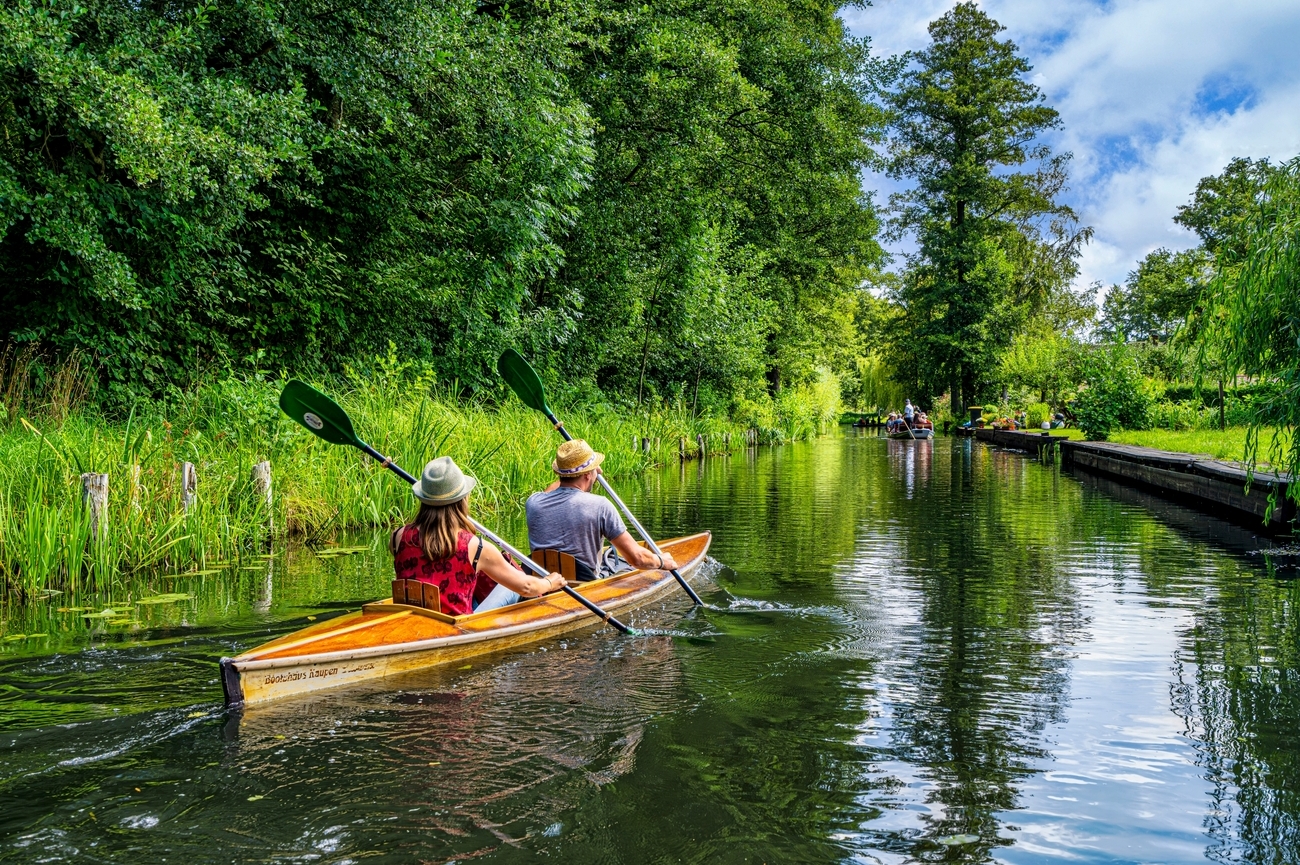
- Spreewald: Spreewald is the kind of place that resets your brain after Berlin. Around 1 hour and 20 minutes from the capital by regional train, this UNESCO-listed biosphere reserve trades traffic noise for narrow canals, forest trails and villages that still move at water level. The landscape was formed during the last ice age, creating an inland delta around the River Spree with more than 276 kilometers of navigable waterways cutting through wetlands, meadows and pine forest. You can also enjoy the Spreewald Therme which is the region’s luxury reset button. There are heated mineral pools, sauna landscapes and spa treatments built around local saltwater therapy. We have put together a full Spreewald guide if you want to plan the day in more detail.
- Magdeburg: At 1,200 years old, Magdeburg is one of the oldest cities in Germany's eastern federal states, and one of the more underrated day trips from Berlin. The city sits on the Elbe River and carries a layered identity with the medieval cathedral, Soviet-era architecture, Hundertwasser color and one of the world's most unusual feats of engineering. The Magdeburg Cathedral is the oldest Gothic cathedral to be built on German soil, housing the tomb of Otto the Great and standing as the city's defining landmark.

Nearby Experiences from Berlin
Berlin rewards those who venture just beyond the city limits. The surrounding Brandenburg region has championship golf courses designed by legends, the closest ski slopes in northern Germany, and historical landmarks that carry weight far beyond their modest appearances. Whether the plan is a morning tee time, a winter day on the slopes or a visit to a site that reshaped history, these are the experiences worth building into the trip.
- Golf and Country Club Berlin-Wannsee e.V.: Just 25 minutes outside Berlin, the Golf und Land Club Berlin Wannsee is one of the largest and most renowned golf clubs in Germany. One of the oldest and most prestigious clubs in Europe, it is home to one of Germany's well-rated championship courses, a tree-lined parkland layout with many attractive features and several excellent holes set into the hilly Brandenburg forest landscape. The club offers a 27-hole course in total with an 18-hole championship layout and a 9-hole course.

- Sachsenhausen Memorial & Museum: Sachsenhausen Concentration Camp Memorial sits in Oranienburg, about 35 kilometers north of Berlin and around 45 minutes by train from central Berlin. Built in 1936 by the Nazi regime, Sachsenhausen became one of the central concentration camps of the Third Reich and later served as a model for other camps across Germany. More than 200,000 prisoners passed through the site during the Nazi period. Today, the memorial preserves large sections of the original camp layout, including the perimeter walls, guard towers, roll-call yard, reconstructed barracks and the chilling Station Z execution and crematorium complex.

- Hoppegarten Racecourse: Located around 30 minutes east of central Berlin, Hoppegarten Racecourse is Germany’s most famous horse racing venue and one of the most historic tracks in continental Europe. Opened in 1868 under Prussian King Wilhelm I, the racecourse quickly became one of the leading centres of European horse racing and still hosts major flat racing events throughout the season. The grounds combine historic grandstands, wide green lawns and modern hospitality areas, making it a refined day out even for visitors who are not regular racing followers. During major race weekends, private lounges, dining experiences and VIP hospitality packages are available. For travellers interested in sport, history or elegant countryside experiences close to Berlin, Hoppegarten is one of the strongest additions to a tailor-made itinerary.

- Wannsee & Pfaueninsel: Around 35 to 45 minutes from central Berlin, the Wannsee district offers a calmer and more elegant side of the city, known for its lakeside villas, sailing clubs, forest landscapes and waterfront restaurants. The Große Wannsee lake becomes especially popular during late spring and summer, with private boat tours and lakeside dining making it a strong addition to a luxury Berlin itinerary. Nearby Pfaueninsel (Peacock Island), a UNESCO-listed island within the Palaces and Parks of Potsdam and Berlin landscape, was created as a royal retreat for King Friedrich Wilhelm II in the late 18th century. The island is known for its white fairytale-style palace, free-roaming peacocks and landscaped gardens, offering one of the most peaceful escapes close to Berlin.

Golf Courses in Berlin
Berlin is not the first city that comes to mind for golf, but it genuinely delivers once you start looking. Around a third of the city's area is parks, forests and waterways, which means there is more green space to work with than most capitals. The courses within the city limits range from a historic club founded by British diplomats to a pay-and-play resort with over 36 playable holes. Here are the in-city options worth knowing about.
- Berliner Golf Club Gatow: The club was established in 1969 by the Royal Air Force and is located at the western edge of Berlin in the suburb of Spandau/Kladow. The newly founded Berliner Golf Club Gatow took on its legacy in 1994 and has the eight original fairways alongside ten newly built holes. The result is an 18-hole course split between an older, heavily tree-lined parkland section and a newer layout featuring a lake and more open terrain.

- Golf Resort Berlin Pankow GmbH: The most accessible pay-and-play option inside Berlin city limits and the best choice if you want to get on the course without club membership or handicap requirements. The resort was built between 2004 and 2005 within the city limits of Berlin with an 18-hole course, a 9-hole course and a 3-hole practice course, later extended by a 6-hole short course giving the resort over 36 playable holes in total. The patron of the resort is Sepp Maier, the famous German goalkeeper, which gives the place an unexpectedly football-adjacent identity for a golf club. You can enjoy a walk-up play here.

Michelin-Starred Restaurants in Berlin
Berlin is the most Michelin-decorated city in Germany. That is not a flex that gets old. The city's fine dining scene spans everything from a three-star restaurant built on sustainability and Brandenburg produce to a Kreuzberg institution that makes French and German classics feel quietly radical. If you are planning meals around the itinerary, these are the restaurants worth knowing about.
- Rutz (3 stars): Rutz is the first and only restaurant in Berlin to hold three Michelin stars. Chef Marco Müller and head chef Dennis Quetsch run an Inspirations Menu built almost entirely around regional produce like fish from the Baltic Sea, meat from Brandenburg pastures and vegetables from suppliers the kitchen knows personally. The dishes are minimalist in appearance but dense with detail: tender Oldenburg Wagyu with umami-rich beef garum and an intense hollandaise, or North Sea squid paired with red cabbage in a combination that should not work but absolutely does. You can enjoy the full menu that runs 12 or 13 inspirations.

- Tim Raue (2 stars): Tim Raue's eponymous restaurant is a regular on the World's 50 Best list and holds two Michelin stars, making it one of the most internationally recognized restaurants in Germany. The concept is European cuisine shaped entirely by Asia, including Thai aromas, Japanese precision and Chinese philosophy running through every dish. Diners choose between the "Kolibri x Berlin" and "Koi" tasting menus, with signature dishes like Wasabi Langoustine and Duck "Marie-Anne" available across both. Oh, the entire menu is also lactose-free.

- FACIL (2 stars): FACIL sits on the fifth floor of The Mandala Hotel on Potsdamer Platz and operates as one of the more quietly exceptional dining experiences in the city. The wraparound glass windows and bamboo plants give the rooftop garden restaurant an outdoor feel regardless of season, with a small terrace among chestnut trees adding to the sense of remove from the city below. Culinary director Michael Kempf and head chef Joachim Gerner run a five to eight-course set menu that moves between classic French technique, Mediterranean influence and Asian sensibility.

- Lorenz Adlon Esszimmer (1 Star): Classic luxury at eye level with the Brandenburg Gate, the Lorenz Adlon Esszimmer sits inside the Hotel Adlon Kempinski on Pariser Platz and if you are lucky with your table, gives you a direct view of the gate through the windows. Chef Jonas Zörner runs a French-based set menu with a creative edge: marinated hamachi with green strawberries, caviar and dill-oil beurre blanc is one of the dishes that illustrates his approach to harmonious but unexpected combinations. Front of house is led by Oliver Kraft and sommelier Hans-Martin Konrad, whose wine suggestions come from an extensive list and land with confidence.

- tulus lotrek (1 Star): Set inside a beautiful old Kreuzberg building with high stuccoed ceilings, wooden floors, quirky wallpaper and a dining counter, it is run by chef Maximilian Strohe and his partner Ilona Scholl, whose front of house work defines the atmosphere as much as the kitchen does. The cooking is built on exceptional ingredients and the kitchen's particular strength, like intensely built sauces and stocks that pull the components of each dish into focus and give everything a depth that is hard to explain until you taste it. Two tasting menus of seven or eight courses run nightly, one omnivore and one vegetarian. You will also enjoy the terrace, as it gives the best outdoor dining settings in Kreuzberg.

Where to Eat in Berlin
Berlin's restaurant scene has no single identity, which is exactly what makes it worth exploring beyond the obvious. The city eats well across every price point and every neighborhood and the best meals here rarely require a Michelin star to justify them. Here are the restaurants you shouldn’t miss in Berlin.
- Lucky Leek sits in Prenzlauer Berg and runs what it calls "Fine Natural Dining.” It has a vegan tasting menu format that takes plant-based cooking seriously without making it feel like a compromise. The menu runs three to seven courses with an à la carte option alongside and the kitchen works with seasonal vegetables in combinations that are genuinely creative rather than just technically competent. Buckwheat gnocchi with beetroot and sesame cream is a good example of how the dishes are built. If you are traveling with someone skeptical about vegan fine dining, this is the restaurant that changes minds.

- November Brasserie: A Japanese brasserie in a lively pocket of Prenzlauer Berg, November Brasserie pulls in a consistent crowd with an evening menu built around Japanese specialties like sushi and sashimi. If you can get a seat at the small sushi counter, take it, watching the chefs work up close adds a layer to the meal that a regular table does not.

- Barra is the kind of restaurant Berlin does particularly well. It’s hip, international, casual and genuinely lively without trying too hard about any of it. The look is minimalist urban, the atmosphere is neighbourly and the food is built for sharing, whether you go for the Sharing menu or order à la carte. The tuna with green tomatoes is one of the standout dishes, and the in-house rolled noodles appear on every menu for a reason.

- Long March Queen: A cool spot with a buzzy energy that works equally well for a two-person dinner or a group evening out. You can choose between small tables or long communal tables and the open kitchen sends out Cantonese dishes. You’ll be having dim sum, dumplings and a range of shareable plates throughout the evening. One fair warning: when the menu says spicy, it means it. The drinks list covers wine, spirits, cocktails and long drinks with enough range to keep the evening going well past dinner.

- Fukagawa Ramen XBerg: If you only eat ramen once in Berlin, make it here. Fukagawa Ramen in Kreuzberg is a no-frills, no-nonsense spot that earns its reputation entirely through the quality of the bowls. The shoyu ramen with matured soy sauce, chashu chicken, dashi, handmade noodles, marinated egg and nori is the kind of dish that makes the queue feel justified. Start with the gyoza and work through the drinks list covering sake, wines and cocktails if the evening calls for it.

Where to Drink in Berlin
Berlin's nightlife has a reputation that precedes itself and it mostly lives up to it. The city has everything from hidden cocktail dens tucked under railway arches to craft spirits bars with over 1,400 bottles on the shelves. Whether you are after a quiet stirred drink or a dance floor that goes until morning, Berlin delivers on all of it. Here is where to spend the evening.
- Tausend: Finding Tausend is part of the experience. The bar is hidden behind an unmarked door under the Friedrichstraße train station and there is nothing on the outside to tell you it exists. Once you are in, the interior does the work: shiny glass walls, curved steel and plush sofas. The bar serves sleek, well-executed cocktails; a small but packed dance floor runs live DJs most nights and tucked all the way at the back is a secret tapas-style restaurant if the evening calls for something to eat.
- Stagger Lee: Stagger Lee commits fully to its Western saloon identity with dim lighting, large leather couches, dark wooden floors, swinging doors, country and Western music and a vintage cash register at the end of the bar. The cocktails are well-balanced and often served in unusual glassware, with prices running around €9 to €15. The bar splits into two sections, one designated for smokers, though the boundary between the two is enforced loosely at best. If you want a bar with real character that does not feel designed for Instagram, Stagger Lee is the one.
- Beavis Bar: If craft spirits are your thing, Beavis Bar in Berlin Mitte is the destination. The bar holds over 1,400 bottles from small producers across Europe and beyond like gin, grappa, calvados, fruit brandies, liqueurs and a whisky collection covering more than 220 bottles from Scotland, the US and further afield. You can order stirred drinks and gin and tonics built from the collection, or simply work through the shelf with the staff guiding you.
- LOST MY VOICE Bar - Drinks, Wine and Snacks: Sitting inside The Circus Hostel in Berlin Mitte, LOST MY VOICE Bar is the kind of spot that works equally well for a first drink of the evening or a relaxed nightcap. A clarified Bloody Mary with tequila and a reworked Pina Colada are among the signature creations. It draws a mix of travelers and locals, which gives the bar a lively and unpretentious energy throughout the week. If you are staying in Mitte and want somewhere to start the evening without a long walk, this is a solid option.
- Maxxim: Maxxim has been a permanent fixture in Berlin's nightlife since 2007, open 365 days a year in City West with four bars, a large dance floor and several lounges across 600 square meters. The music spans disco to club sounds, with live shows and entertainment complementing the regular DJ programming throughout the week. If you are visiting for a special occasion, Maxxim offers exclusive VIP tables. It sits in City West, which makes it a natural end to an evening that starts on Kurfürstendamm or around Savignyplatz.

Cafes in Berlin
Berlin's cafe scene runs deeper than the average city. Specialty roasters, neighborhood spots with genuinely good food and places where the coffee is taken seriously enough to rotate the beans regularly. The city has all of it, spread across every district.
- The Rabbit Café: The Rabbit Café on Strelitzer Straße in Mitte is the kind of neighborhood spot that earns a loyal following through consistency rather than gimmicks. The drinks cover the full range from strong espresso to caramel macchiato and fresh smoothies and the homemade cakes are worth saving room for. The avocado toast is a reliable brunch staple; the brioche egg drop sandwich with spicy red sauce is one of the stronger morning options and the bulgogi brings an unexpected Korean twist to the menu that works surprisingly well alongside the coffee selection.
- Grandaire Coffee House: Grandaire is a coffee house in the proper sense. The iced cappuccino has built a following among regulars and visiting coffee enthusiasts alike and the overall beverage quality holds up consistently across multiple visits. The interior carries a distinctive character. If you are in the mood for a straightforward, well-made coffee in a space that feels personal rather than corporate, Grandaire delivers every time.
- WhyNot Kaffee: WhyNot Kaffee stands out in Berlin's café scene for its serious drinks menu. You can order a strong Vietnamese coffee, a refreshing iced cortado or work through the less common options on the menu. The food matches the ambition: homemade croissants, pandan muffins and fluffy cakes sit alongside summer rolls and mochi, which gives the menu an international feel that works without feeling random.
- Coffee and Cookies - Berlin: Coffee and Cookies earns its name. The coffee selection runs from strong espressos through to freshly pressed juices, and the food menu is broader than the name suggests. The homemade lasagne has become one of the signature dishes and is regularly cited by regulars as a reason to come back at lunch. Bagel sandwiches with fresh fillings cover the savory side of things, while the cheesecake and chocolate donuts handle the sweet end of the spectrum with the kind of reliability that keeps people returning.

Where to Stay in Berlin
- Hotel Adlon Kempinski (5 Stars): The Adlon is the benchmark for luxury in Berlin, full stop. The original hotel opened on this site in 1907. The building was burned, rebuilt and eventually demolished, leaving a vacant lot in the no-man's land between East and West Berlin for decades. The current version, rebuilt under the Kempinski group, reopened in 1997 and has held its position at the top of the city's hotel landscape ever since. All 382 rooms and suites are equipped to the standard you would expect. The spa covers massages, saunas and steam baths and the pool and fitness center have a dedicated elevator from every floor.

- The Ritz-Carlton Berlin (5 Stars): The Ritz-Carlton sits in a skyscraper on Potsdamer Platz. The lobby sets the tone with marble columns, ornate chandeliers and a grand impression that feels timeless rather than dated. The rooms and suites shift to a more contemporary register, prioritizing comfort and a calm residential feel over the opulence of the public spaces. The wellness center is one of the stronger hotel spa setups in Berlin, covering saunas, spa treatments and a well-equipped fitness center. Business amenities are comprehensive, from meeting rooms to notaries and translators, which makes the hotel a solid base for your work trip or leisure stay.

- Hotel Telegraphenamt (5 Stars): Hotel Telegraphenamt or HTA occupies a neo-Baroque telegraph office built in 1910 in Berlin Mitte, a few minutes walk from Museum Island. The building mixes bare brick, exposed girders, Deco flourishes and classic modernist detailing in a way that feels distinctly Berlin rather than trying to smooth everything into a uniform luxury aesthetic. Rooms range from compact Cosy rooms to two-floor suites, and all of them are visually inventive without sacrificing comfort. If you want a five-star stay that feels more like a creative institution than a conventional grand hotel, HTA is the one.

- Wilmina Hotel (4 Stars): Wilmina in Charlottenburg is a former courthouse and women's prison converted into a boutique hotel, and the renovation is one of the more thoughtful adaptive reuse projects in the city. The original structure is largely intact. Chef Sophia Rudolph's vegetable-focused restaurant Lovis sits within the hotel's gardens and courtyards, the Lovis Bar runs a minimalist cocktail program and Lotta serves as the daytime café with seasonal drinks and homemade specialties. If the plan involves Charlottenburg Palace, the zoo or the KaDeWe end of the city, Wilmina puts you in exactly the right part of town.

- Hotel Luc, Autograph Collection (4 Stars): Hotel Luc sits directly on Gendarmenmarkt. It’s one of Berlin's most architecturally significant squares. Prussian blue, clean lines and precise detailing give the rooms a composed, tailored feel and some face the square with balconies overlooking the Konzerthaus and the twin cathedral towers. The location is the other argument for staying here: Museum Island, Brandenburg Gate, the best restaurants on Friedrichstraße and Unter den Linden are all within comfortable walking distance.

- CALMA Berlin Mitte (3 Stars): CALMA Berlin Mitte is a straightforward, well-located three-star option for travelers who want to spend their budget on experiences rather than hotel amenities. The Natural History Museum is less than a kilometer away, the Memorial of the Berlin Wall is a 17-minute walk. Rooms are functional and comfortable with private bathrooms, hypoallergenic bedding and free WiFi. You can also enjoy its sun terrace as a solid spot for a slow morning start.

Best Time to Visit Berlin
Berlin in May and June is a different city. Not a better-weather version of the same trip but a genuinely different experience, where the parks fill up, the palace gardens open fully and the city operates at a pace that actually lets you enjoy it rather than just survive it.
The days run long in late spring, averaging 15 to 16 hours of daylight, which means the itinerary has genuine room to breathe. Berlin is a city that rewards moving between districts from Museum Island in Mitte to the beer gardens of Tiergarten to the rooftop bars of Kreuzberg and longer daylight hours make that kind of day feel effortless rather than rushed. Temperatures also sit between 15 and 22 degrees Celsius, which is the range where the city's enormous park culture fully activates.
The day trips also land better in late spring. Sanssouci Park in Potsdam is one of those places that genuinely needs good weather to show its full hand with its terraced vineyard gardens, the fountain schedules and the full palace circuit all operating on seasonal conditions and May and June is when everything is running. The same logic applies to Wittenberg and Leipzig, where the historic centers and outdoor spaces are significantly more enjoyable when you are not navigating them in a coat.
Berlin rewards the visitors who show up before the crowds do. July and August bring the full summer surge with higher hotel rates, busier museum queues and restaurant reservations that disappear weeks in advance. May and June sit just ahead of that window, which means you get the long days, the warm temperatures and the fully activated city without the premium that comes attached to peak season.

Festivals in Berlin
- Karneval der Kulturen: Karneval der Kulturen happens every late May over Pentecost weekend. Berlin essentially turns into one giant outdoor festival celebrating the cultural diversity of the city with over 5,000 performers from dozens of countries taking part in the grand parade, with samba dancers, drummers, acrobats and elaborately decorated floats moving through the streets. The street festival around Blücherplatz in Kreuzberg runs across all four days with multiple live stages, international food stalls, craft markets and interactive workshops covering everything from capoeira to Afrobeat dance.

- Berlinale: One of the big three film festivals in Europe alongside Cannes and Venice, the Berlinale runs for 10 days in February and sees hundreds of films screened at venues across the city. The venues are spread across the city with Potsdamer Platz as the main hub. If you are in Berlin in February and even remotely into film, building the itinerary around a few Berlinale screenings is an easy decision.

- Fête de la Musique: Every year on June 21, Berliners celebrate the beginning of summer with an open-air music festival where musicians and bands play live music in the streets of Berlin for free. Over 300 concerts take place across more than 100 outdoor and indoor locations in a single day. You can walk from a jazz set in one courtyard to a techno stage two blocks away without paying a cent for either. June 21 is the longest day of the year, which means you get 17 hours of daylight alongside 300-plus concerts scattered across every neighborhood. That is a pretty strong combination.

- Lollapalooza Berlin: Lollapalooza Berlin takes place in September at Olympiapark and since Berlin became the first European city to host the festival outside the US in 2015, it has grown to over 70,000 attendees. The festival runs across two days with international headliners covering pop, rock and electronic music across multiple stages, set against the architectural backdrop of the 1972 Olympic complex. If you are a fan of large-scale outdoor music events, this is the Berlin festival that competes directly with the European festival circuit heavyweights.

- CSD Berlin: Around one million people usually take part in the Christopher Street Day parade in Berlin, one of the largest LGBTQ+ events in Europe. The festival runs from late June through July. The parade route passes through significant queer landmarks including Nollendorfplatz, which has a rich LGBTQ+ history and ends with a closing rally at the Brandenburg Gate. The surrounding weeks are filled with club nights, cultural events, film screenings, panel discussions and community parties across the city, with Schöneberg as the traditional neighborhood base for the wider Pride season. If you are in Berlin in late July, the city's energy during CSD weekend is unlike any other time of year.

- Christmas Markets in Berlin: From late November through December, Berlin turns into one of Europe’s most atmospheric winter cities, with Christmas markets spread across its squares, palace courtyards and historic streets. The Gendarmenmarkt market is one of the most elegant, framed by the Französischer Dom, Deutscher Dom and Konzerthaus, while the market at Charlottenburg Palace brings a more romantic setting with the illuminated Baroque palace as its backdrop. Expect wooden stalls selling crafts, candles, ornaments, roasted almonds, bratwurst and steaming mugs of Glühwein. If you are visiting Berlin in December, the Christmas markets are one of the best ways to experience the city’s festive side.


Let us know what you love, where you want to go, and we’ll design a one-of-a-kind adventure you’ll never forget.
Get in touch
Miriam
Travel Specialist
Romina
Travel Specialist

Laura
Travel Specialist
Our offices:


Revigorate, Iberian Escapes and Algarve Lifestyle are the registered brand names of APCS Lda . We are a fully authorised travel agency licensed by Turismo de Portugal RNAVT/6867.
In the event of a dispute, the consumer may refer to: RAL - Centros de Arbitragem
Avª. 5 de Outubro, nº. 55, R/C Dtº. 8000-075 Faro, Portugal | Tel: +351 289 823 135 *
* national landline call
E-mail: info@consumoalgarve.pt| www.consumidoronline.pt | Mon to Fri: 9:00 - 13:00 / 14:00 - 17:00