How to Visit San Juan de Gaztelugatxe: Tickets, 241 Steps & Dragonstone

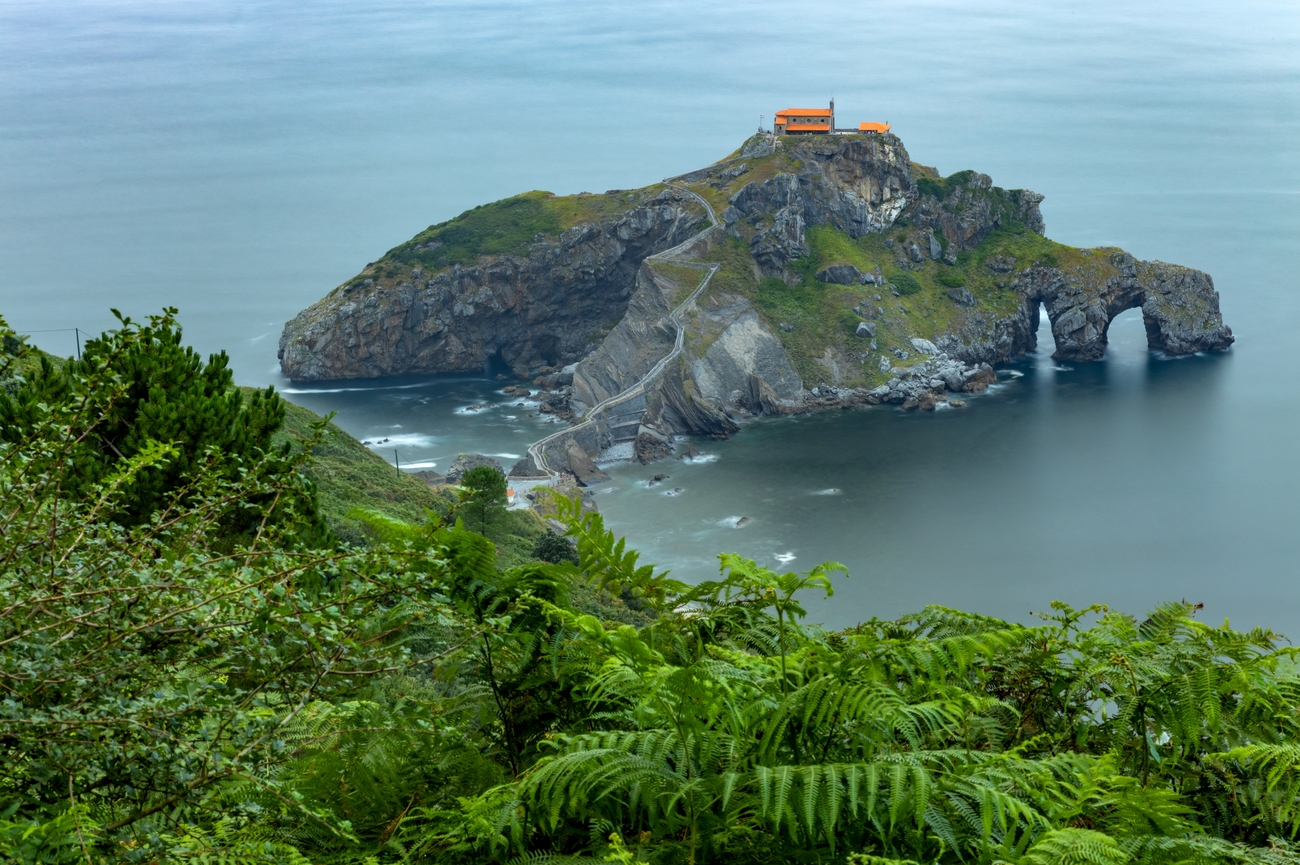
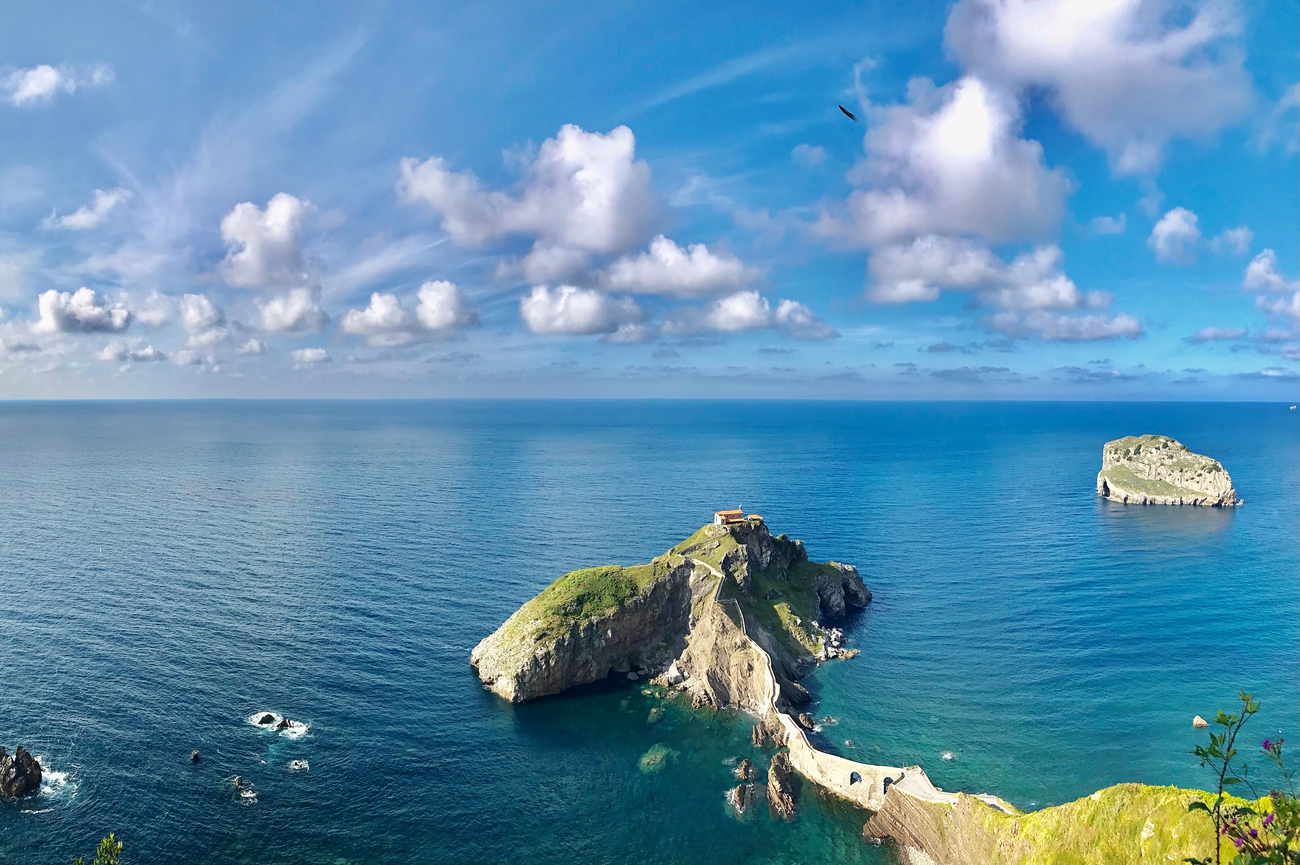
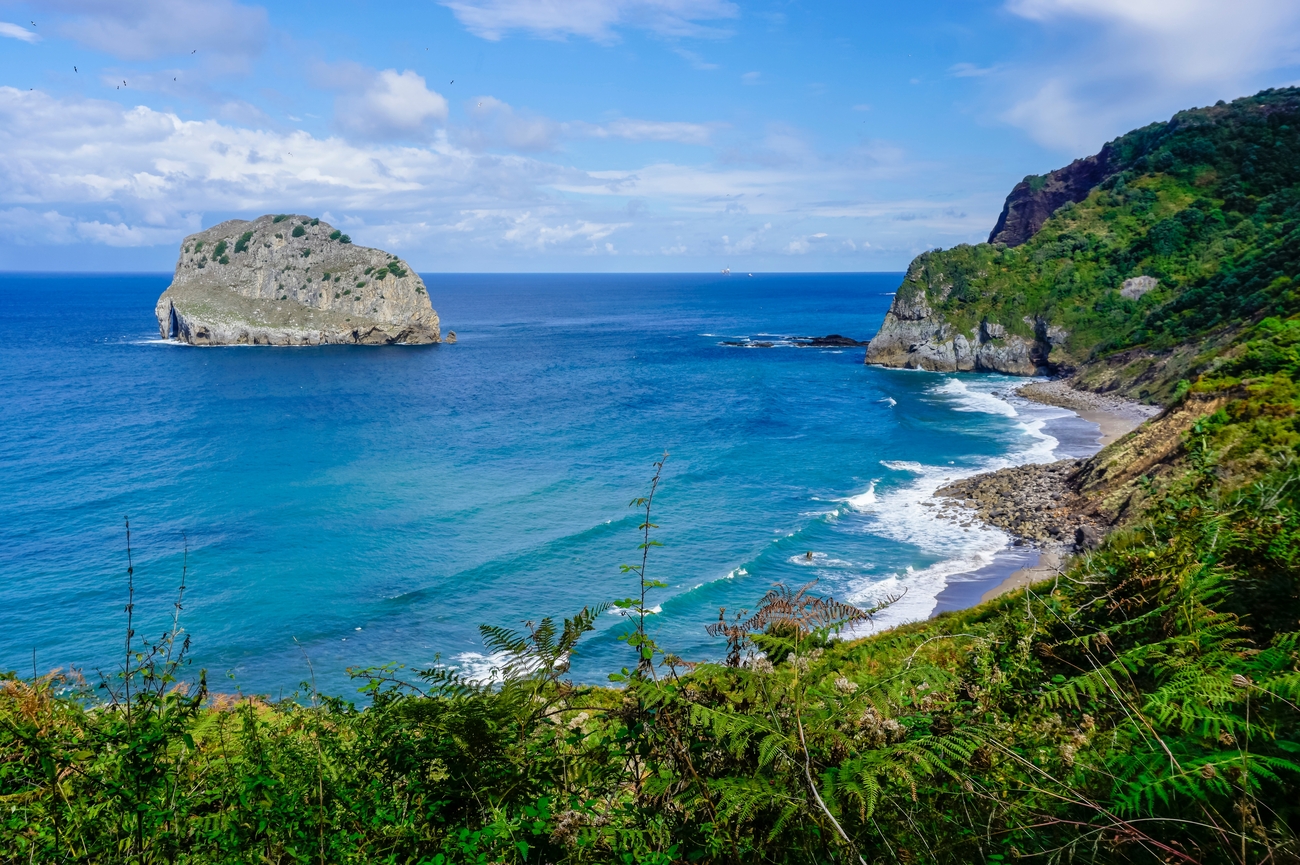
San Juan de Gaztelugatxe is one of the most distinctive landmarks on Spain’s Basque coast, a rocky islet in the Bay of Biscay connected to the mainland by a narrow stone causeway and a staircase of 241 steps leading to a small hermitage at the summit. Set between Bakio and Bermeo, it combines dramatic coastal scenery, centuries of local tradition and one of the most recognisable walks in northern Spain.
The name helps explain the landscape. Gaztelu means “castle” in Basque, while the second part of Gaztelugatxe is generally associated with rock or difficult terrain. The precise interpretation of the full name is debated, but the different explanations point towards much the same idea: a rocky stronghold reached the hard way.
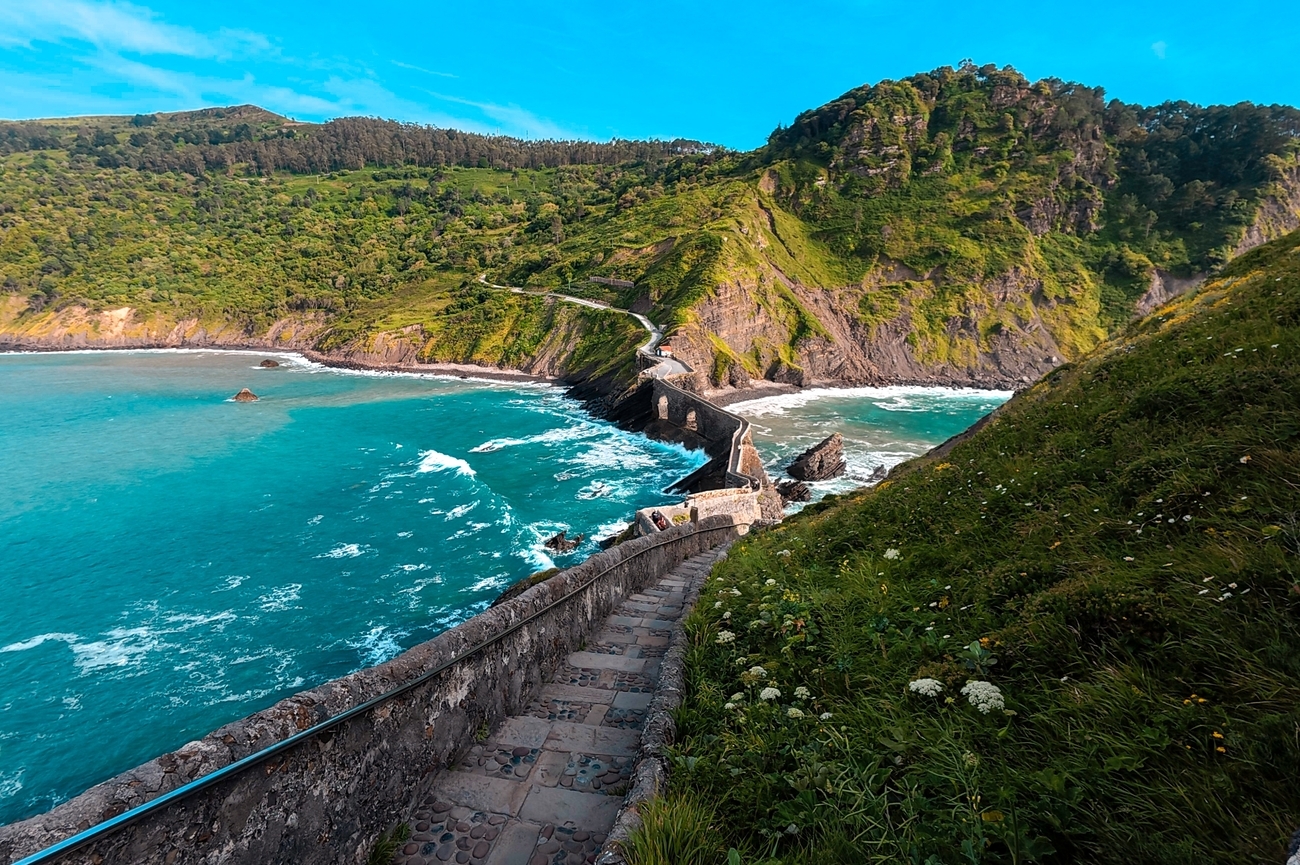
From the clifftop path, the islet appears below as a mass of stone rising from the sea, with the hermitage perched above it and the causeway zigzagging across the water. The final staircase is visible almost immediately, 241 stone steps climbing from the causeway towards the bell beside the hermitage. It is either a promise or a warning, depending on your relationship with staircases.
For centuries, sailors, pilgrims and local worshippers have made the climb. More recently, San Juan de Gaztelugatxe became internationally known after the islet and surrounding coastline were used to represent Dragonstone in Game of Thrones. The television connection brought a new audience, but the history and traditions of the site reach back far beyond its appearance on screen.
Knowing how to visit San Juan de Gaztelugatxe properly is mostly a matter of respecting three things: access arrangements, timing and weather. Entry itself is free, but timed reservations are required on designated high-demand dates. On other days, access may be possible without a booking during the established opening hours, so the rules and available time slots should always be checked before setting out.
The visit also involves more than the famous 241 steps. The route first descends through the surrounding cliffs before crossing the causeway and beginning the final climb to the hermitage, so comfortable footwear, water and enough time to complete the walk without rushing are important.
For a broader journey through the region, our Basque Country Wine and Culture Tour connects Gaztelugatxe with Bilbao, the Basque coast and Rioja Alavesa. Rather than treating it as an isolated photo stop, the route places the site within the wider landscapes, food, wine and culture of the Basque Country.
Plan the visit well and the walk becomes one of the great coastal experiences in northern Spain: a descent through green cliffs, a crossing over dark Atlantic water and the final climb to the hermitage. Plan it badly and you may arrive without the reservation required for that date, find access unavailable or reach the narrow route at its busiest time. On our Exploring the Basque Country journey, current access requirements, transport and timing are arranged in advance. The only part nobody can remove is the climb itself.
A
Thousand Years of History at Gaztelugatxe
Long before the cameras came, Gaztelugatxe was serious real estate.
The first hermitage on the summit is believed to date from the ninth or tenth century. By the twelfth century, it had become a small convent; two centuries later, according to local accounts, the friars departed with its valuables.
The rock’s later history reads like the biography of the coast itself. Its position gave it defensive importance during the Middle Ages, and over the centuries it endured sieges, raids, fires and repeated rebuilding. The hermitage visible today is not the original. It was substantially reconstructed in 1886, destroyed again by fire in 1978 and later restored.
The chapel is dedicated to Saint John the Baptist, who, according to local legend, reached the islet after landing at Bermeo and left his footprints in the rock along the way.
Whatever you make of the legend, the sailors of this coast have never treated Gaztelugatxe lightly. Inside the hermitage hang ex-votos: miniature boats, paintings and photographs offered in thanks for protection at sea.
The tradition has not entirely disappeared. Before the northern albacore fishing season, crews from Bermeo still approach Gaztelugatxe to ask for health, favourable weather and a safe catch. Some boats circle the islet in a ritual that ties modern fishing vessels to beliefs much older than their navigation equipment.
Beyond the summit, the neighbouring islet of Akatx rises sharply from the water. Its isolation has made it an important seabird sanctuary, with storm petrels, shags and yellow-legged gulls nesting among the rock.
Gaztelugatxe and Akatx form part of a protected coastal biotope extending towards Cape Matxitxako. Its limestone cliffs and steep slopes have been worked by the Atlantic into tunnels, arches and sea caves, the water cutting patiently into the rock beneath them.
Millions of years of Atlantic persistence went into the sculpture.
The place had been extraordinary for a thousand years before television noticed.
Which brings us to the dragons.
How
Gaztelugatxe Became Dragonstone
In the seventh season of Game of Thrones, Daenerys Targaryen returns to Dragonstone, the ancestral island seat of her house, and climbs a switchbacking stone staircase from the sea.
That staircase is Gaztelugatxe.
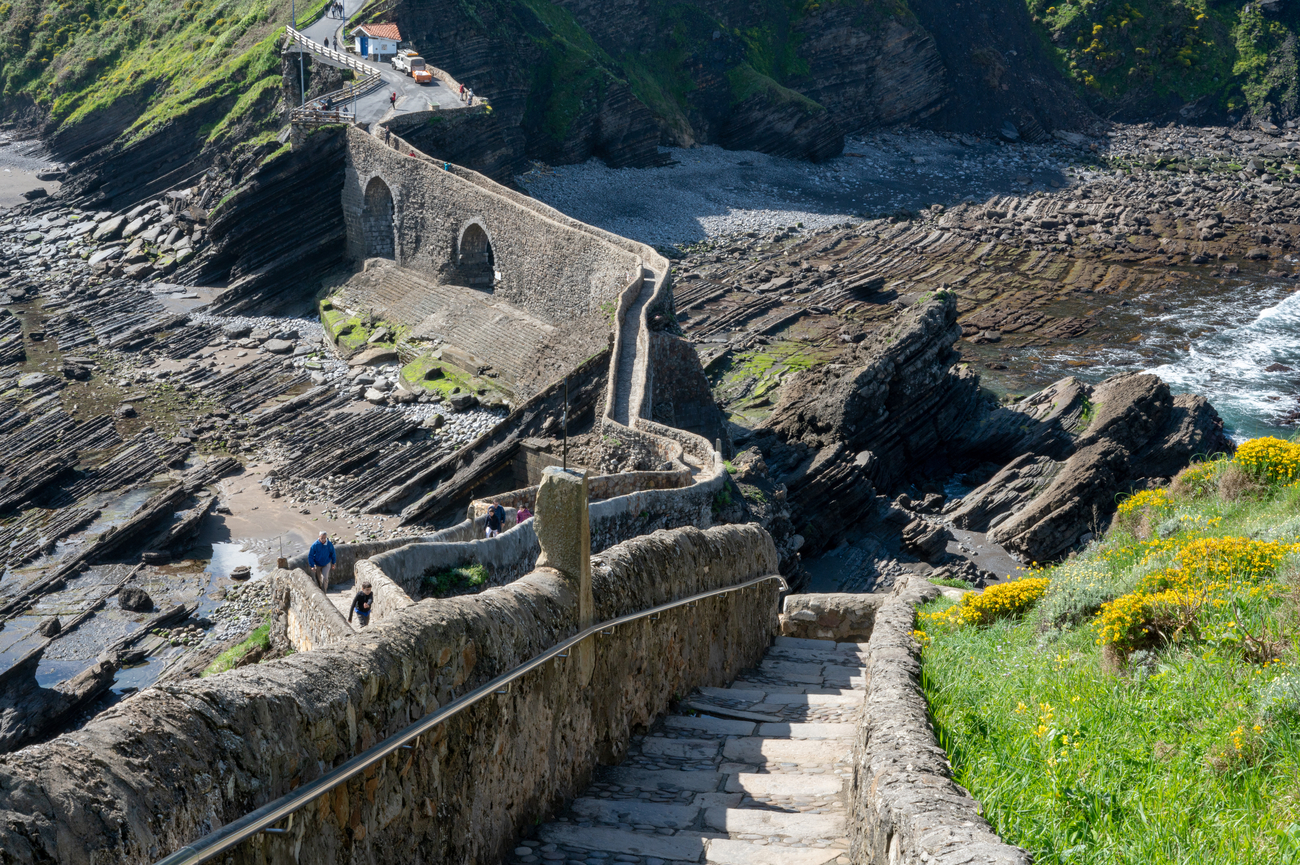
The production used several locations along the Basque coast to construct Dragonstone on screen, including Gaztelugatxe, Barrika and the flysch cliffs near Zumaia. At Gaztelugatxe, the hermitage was replaced digitally by a vast fortress, but the stone causeway and the steps beneath it were real.
For a certain generation of travellers, the site now has two names. The Game of Thrones pilgrimage is as sincere as the older kind: people travel considerable distances to stand on those switchbacks, and many discover that the real landscape needs less digital assistance than expected.
The programme brought Gaztelugatxe to an enormous international audience and added substantially to the visitor pressure on an already fragile coastal site. Today, access is managed on designated high-demand dates through free timed reservations, helping protect the landscape while keeping the visit free. On dates without controlled access, no reservation may be required, although current arrangements should always be checked before travelling.
The result is that Gaztelugatxe is neither spoiled nor always simple to visit spontaneously. The difference between those two facts is precisely where good planning earns its keep.
There is also a small pleasure available to anyone who knows both versions of the island.
Stand on the causeway and you can watch two pilgrimages sharing one staircase: fans pausing at a switchback where a queen once paused, and local visitors climbing past them towards a bell their grandparents rang. Each group is faintly puzzled by the other, and both are entirely correct.
Few filming locations have absorbed their fame this gracefully. The rock took in a global fantasy as it has taken in everything else for a thousand years, without changing its shape at all.
How
to Visit Gaztelugatxe: Tickets, Paths and Timing
The access system is simple once you see it whole.
Entry is free. What changes is whether you need a timed reservation.
On designated controlled-access dates, visitors must book a free digital ticket in advance and enter during the time shown on the reservation. On other dates, access is generally possible without a ticket. The precise calendar, opening hours and any temporary restrictions can change, so check the official arrangements before setting out.
Popular summer dates and holiday periods can fill well in advance. If your plans change, cancel the reservation so that the place becomes available to someone else.
From the road, two paths lead towards the causeway, and they are genuinely different propositions.
The main route from Urizarreta begins near the Eneperi restaurant. It descends for approximately 1.3 kilometres, with uneven surfaces, stairs and sections of steep gradient that your knees will register in both directions.
The alternative route from Ermu is longer but follows a paved lane and avoids stairs until the causeway itself. It is generally quieter and more gradual, although it still involves substantial slopes.
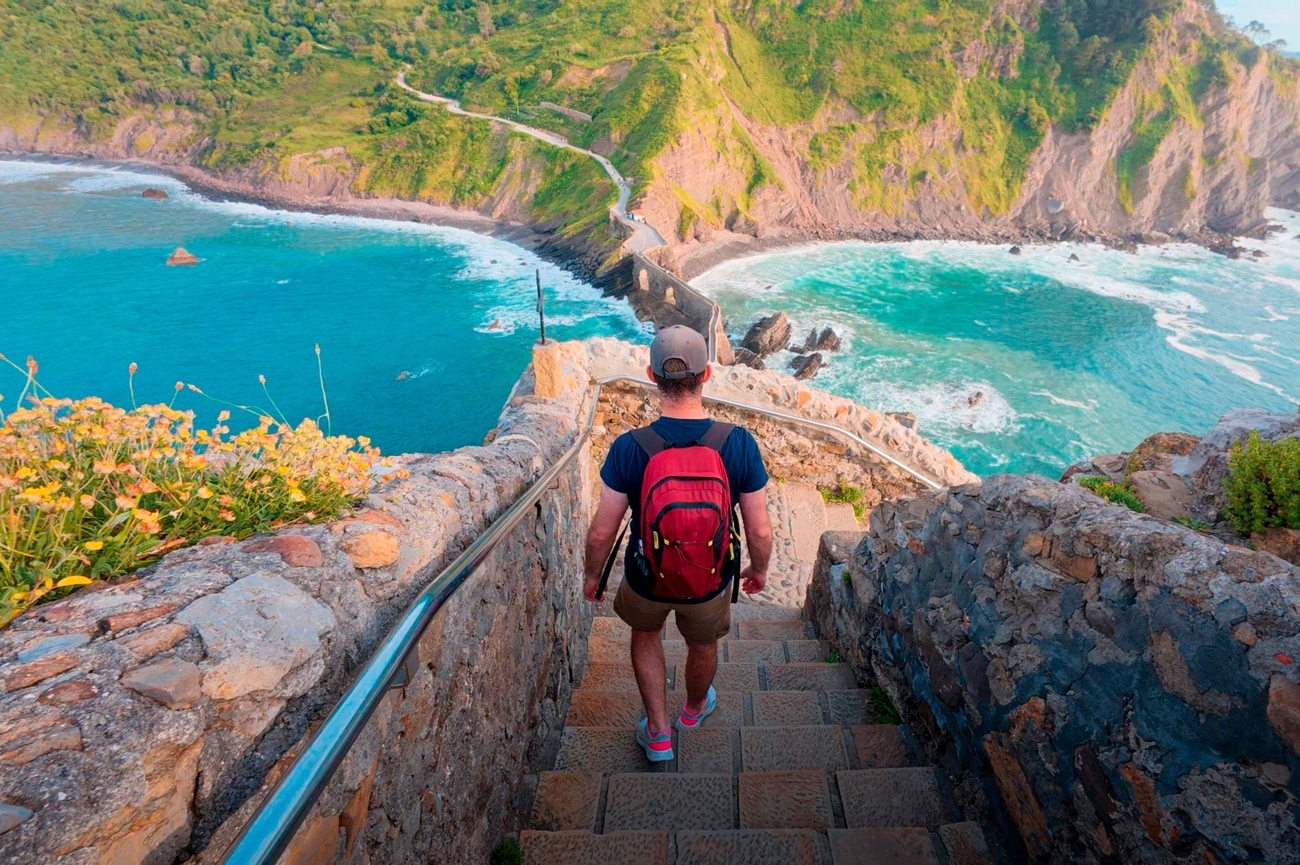
Neither route avoids the figure that matters at the bottom: the bridge across the water and the 241 stone steps switchbacking up the islet towards the hermitage.
Allow around 45 minutes to reach the top from the main access point, depending on your pace and how often you stop. The complete visit generally takes between two and a half and three hours, particularly if you return by the longer route or spend time at the viewpoints.
Remember that much of the return journey is uphill.
Wear supportive shoes and carry water. A windproof or waterproof layer is useful in any season: Gaztelugatxe is an exposed Atlantic headland and behaves like one. In severe weather or when conditions become unsafe, access may be restricted or closed altogether.
None of this should put anyone off.
The walk is the point.
Wildflowers cover parts of the cliffs in spring, while heather and salt-tolerant plants cling to the slopes through summer. The sea remains beside you for almost the entire descent, sometimes calm and metallic, sometimes breaking hard against the base of the rock.
People arrive at the top out of breath and grinning. Almost nobody regrets the steps.
The
Climb Itself
Descriptions of how to visit Gaztelugatxe tend to dwell on logistics and skip what the final approach actually feels like, which is a shame, because the walk is a small drama in three acts.
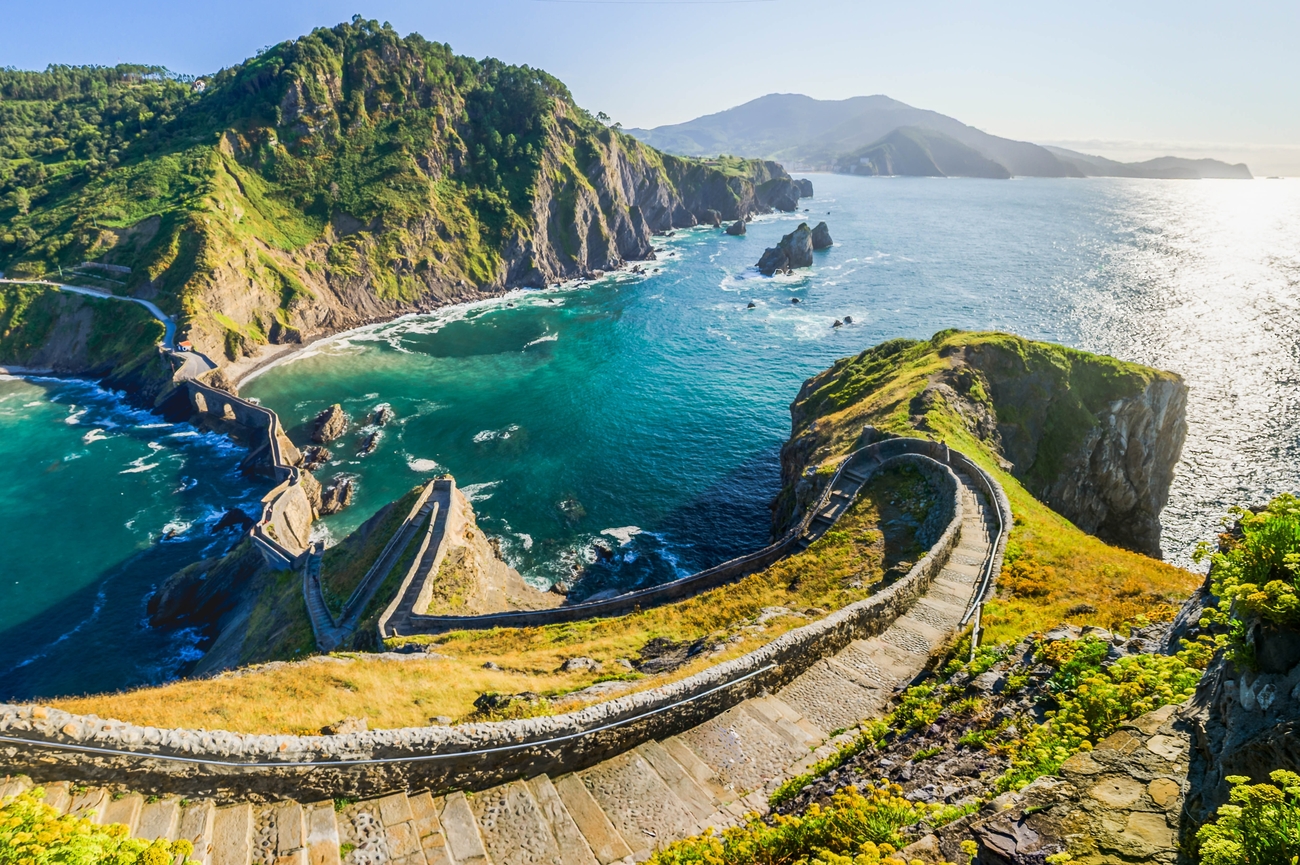
The descent comes first: the islet growing larger with every turn of the cliff path, the sound of the sea rising to meet you.
Then the causeway, where the ground briefly levels and the water takes over. The Atlantic works against the rock on both sides, and on rougher days the spray travels surprisingly far on the wind.
Then come the steps. They begin gently, develop opinions somewhere around the hundredth and deliver you at last onto a summit hardly bigger than a garden, where the chapel wall offers shelter from the wind and the coastline opens around you.
There are several viewpoints near the top of the cliffs for anyone unable or unwilling to make the full descent. The most accessible lies near the Eneperi restaurant at the trailhead, and it earns its existence: the classic view of the causeway snaking towards the islet is taken from above.
But the difference between seeing Gaztelugatxe and climbing it is roughly the difference between reading about a wish and making one.
Give yourself enough time for both: the photograph from the clifftop and the bell at the top of the steps.
The
Bell at the Top
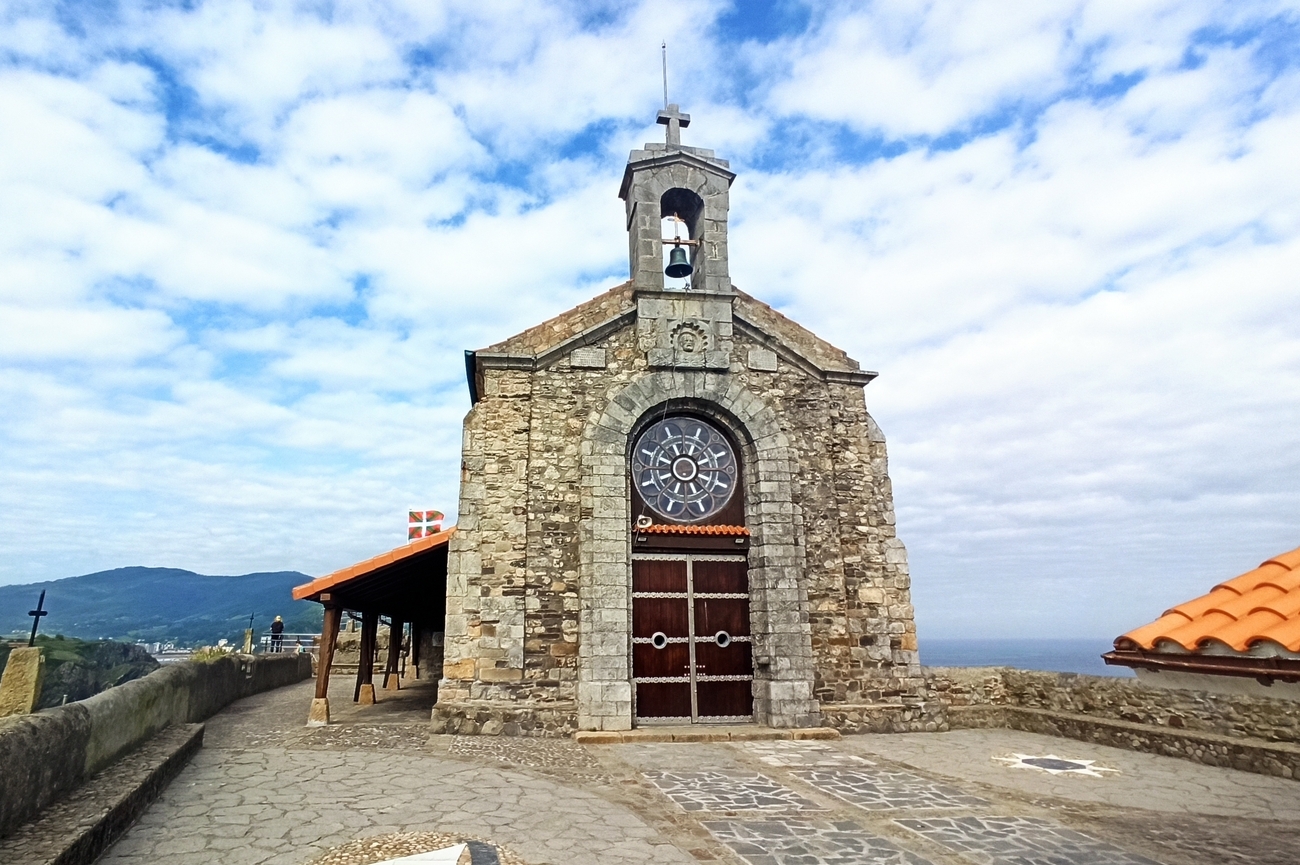
At the summit stands the hermitage of San Juan, small, whitewashed, more fortress than chapel, and on its façade hangs the bell.
The tradition is precise: ring it three times for good luck and to drive away evil spirits. Almost everyone who completes the climb observes it, and there is something quietly wonderful about a summit ritual that arrives with a soundtrack, the bright clang carrying out over the Bay of Biscay every few minutes, each one marking another arrival at the top.
Basque culture is dense with exactly this kind of living custom, rituals that never became performances, and we walk through the deeper layers of it, the language, the txokos, the sung poetry, in our guide to Basque Culture and Identity.
The hermitage has also hosted weddings, making the final climb one of Europe’s most unusual approaches to an altar. For couples drawn to the idea of marrying above the Bay of Biscay, we can explore the possibilities and coordinate the necessary arrangements as part of a tailor-made Basque Country wedding or honeymoon.
Note that the chapel interior keeps its own counsel. It normally opens only for religious celebrations on a handful of feast days, most notably 24 June, the feast of Saint John, together with several other dates during the year when the coastal communities gather here for Mass.
The ex-voto boats and the legend’s footprint are for the lucky and the well timed; the bell, the summit and the enormous view are for everyone.
Around
the Rock: Bakio, Bermeo and the Urdaibai Coast
Gaztelugatxe rewards being treated as the centrepiece of a coastal day rather than a drive-by.
On one side lies Bakio, a village with a broad surf beach and a serious claim to fame. These hills are one of the historic heartlands of Bizkaia’s txakoli, the Basque coast’s crisp, fresh white wine. Vineyards rise behind the village, shaped by the maritime climate and protected valleys, and several local wineries offer visits and tastings.
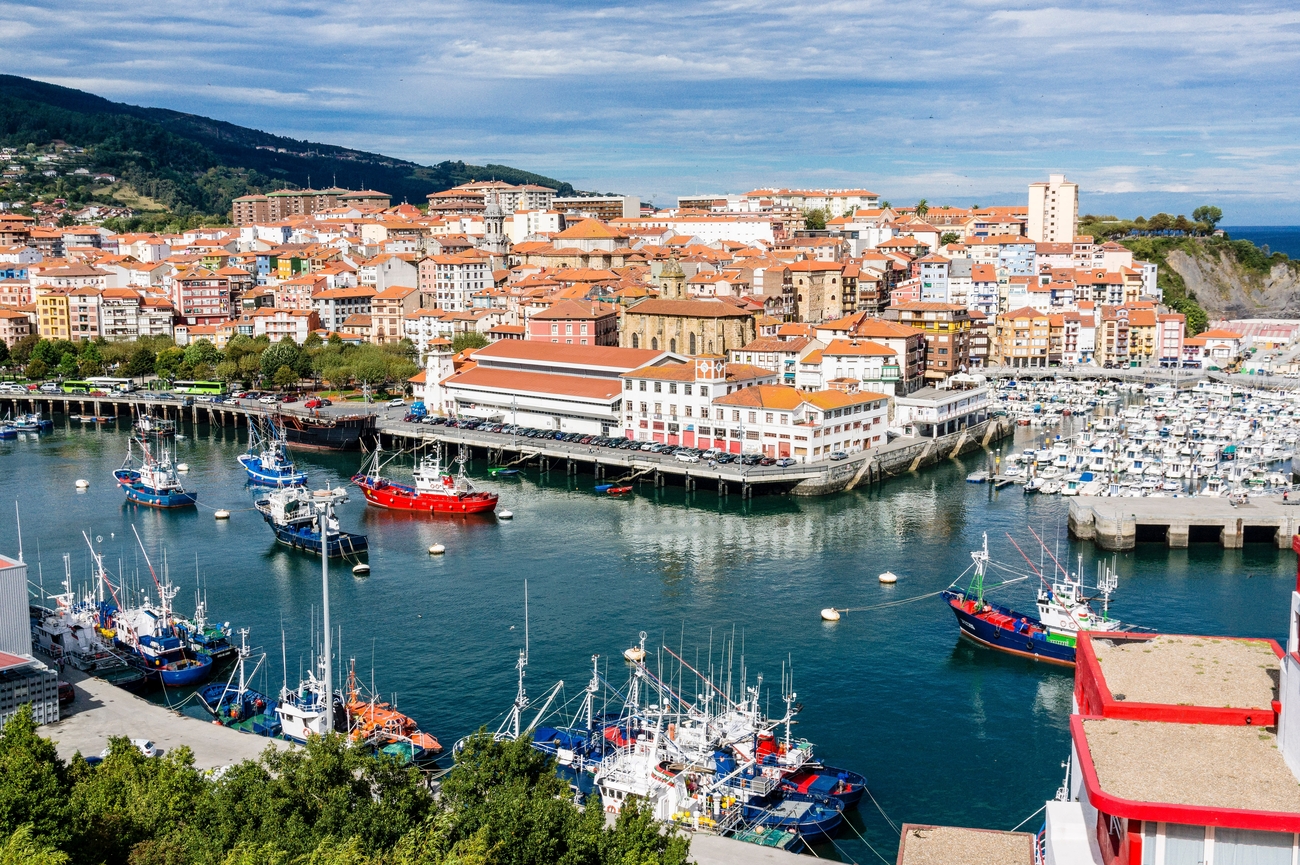
On the other side sits Bermeo, and Bermeo is the real thing: one of the great fishing ports of the Basque coast, with brightly painted fishermen’s houses stacked around the old harbour.
The town’s whole story is tied to the sea. Its port has operated as a centre of trade and fishing since the Middle Ages, its sailors once joined the Basque whaling fleets of the North Atlantic, and fishing remains central to the town today.
Lunch here after the climb - grilled fish within sight of the harbour - is the correct order of operations.
From Bermeo, seasonal boat trips follow the coast past Cape Matxitxako and the rock of Akatx to Gaztelugatxe. The regular journey takes around an hour and usually operates between spring and autumn, subject to schedules and sea conditions.
It shows you the islet as sailors saw it for centuries: rising abruptly from the water, with the causeway and staircase folded against the rock. As an encore to the climb, it is hard to better.
Just east begins the Urdaibai Biosphere Reserve, a UNESCO-designated landscape of estuary, marshland, sandbank, forest and birdlife where the tide redraws the map twice a day.
At the mouth of the estuary lies Mundaka, home to a long left-breaking wave that surfers regard as one of Europe’s great rides. When the autumn and winter swells arrive, people cross oceans for it.
The natural urban base for this coastline is Bilbao, less than an hour away in favourable traffic, whose museums, market and pintxos counters have a full guide of their own.
From the coast, the landscape changes dramatically as the road turns south towards the vineyards, medieval towns and underground cellars of Rioja Alavesa.
When
to Go
Every season on this cape has a personality.
Late spring may be the connoisseur’s pick: mild air, wildflowers thick on the cliffs, clear light between showers and fewer visitors than in August.
High summer brings warmer temperatures, long days and the fullest paths. On controlled-access dates, an early or late timed reservation booked well ahead can change the entire character of the visit, although the Basque coast never guarantees blue skies.
Autumn strips the coast back to wind and drama.
Winter offers the rock at its wildest and often its quietest to anyone willing to dress for it. Reservations may not be required on many winter dates, although the official calendar should always be checked, and storms can close the path at short notice.
There are winter mornings when only a handful of people are on the causeway, the bell’s three rings swallowed almost whole by the wind. Travellers who experience that version tend to talk about it for years.
There is no wrong season, but there are less rewarding hours. A summer visit in the middle of the day is likely to feel very different from one near the beginning or end of the access period.
The art of this place is being on the causeway when fewer people are.
Ring
It Three Times
Stripped to its parts, Gaztelugatxe is a staircase, a chapel and a bell, and somehow those parts assemble into one of the most stirring places on the Atlantic coast of Europe.
Kings defended it, fishermen thanked it, a dragon made it famous, and none of them changed what it actually offers: a steep climb above the sea and a sound you make yourself at the top, carried out over the water with a wish attached.
The only things standing between you and that moment are careful timing, the right reservation when one is required and a journey planned around more than simply reaching the car park. On our Exploring the Basque Country journey, we arrange the access and build the coastal day around the climb, leaving time for Gaztelugatxe to feel like a destination rather than a scheduled stop.
The causeway is waiting. The bell is patient.
Come and climb the 241 steps while the day is still quiet, and find out what you wish for when the Atlantic is listening.


Let us know what you love, where you want to go, and we’ll design a one-of-a-kind adventure you’ll never forget.
Get in touch
Miriam
Travel Specialist

Romina
Travel Specialist

Laura
Travel Specialist
Our offices:



Revigorate, Iberian Escapes and Algarve Lifestyle are the registered brand names of APCS Lda . We are a fully authorised travel agency licensed by Turismo de Portugal RNAVT/6867.
In the event of a dispute, the consumer may refer to: RAL - Centros de Arbitragem
Avª. 5 de Outubro, nº. 55, R/C Dtº. 8000-075 Faro, Portugal | Tel: +351 289 823 135 *
* national landline call
E-mail: info@consumoalgarve.pt| www.consumidoronline.pt | Mon to Fri: 9:00 - 13:00 / 14:00 - 17:00