How Bilbao Reinvented Itself: The Guggenheim Effect and Beyond

Bilbao is one of Europe’s best-known examples of urban reinvention, transforming from an industrial port city into a major cultural destination through riverfront regeneration, new infrastructure, architecture and investment in public space. The opening of the Guggenheim Museum Bilbao in 1997 became the international symbol of that transformation and gave rise to what became known as the “Guggenheim Effect”.
Yet Bilbao’s revival extends well beyond Frank Gehry’s titanium museum. Along the Nervión River, former industrial areas have been reshaped by contemporary architecture and promenades, while the Casco Viejo, Mercado de la Ribera and the city’s pintxos bars preserve a much older Basque identity.
That combination of reinvention and continuity is what makes Bilbao particularly interesting to explore. Contemporary landmarks sit alongside historic streets, traditional food culture and neighbourhoods where Euskera and Basque traditions remain part of everyday life.
Bilbao opens our Exploring the Basque Country vacation and provides the natural starting point for our complete Basque Country wine and culture tour, before the journey continues to the coast and Rioja Alavesa.
The
Guggenheim, Inside and Out
Start with the building, because the building changed how the world saw everything Bilbao had already begun.
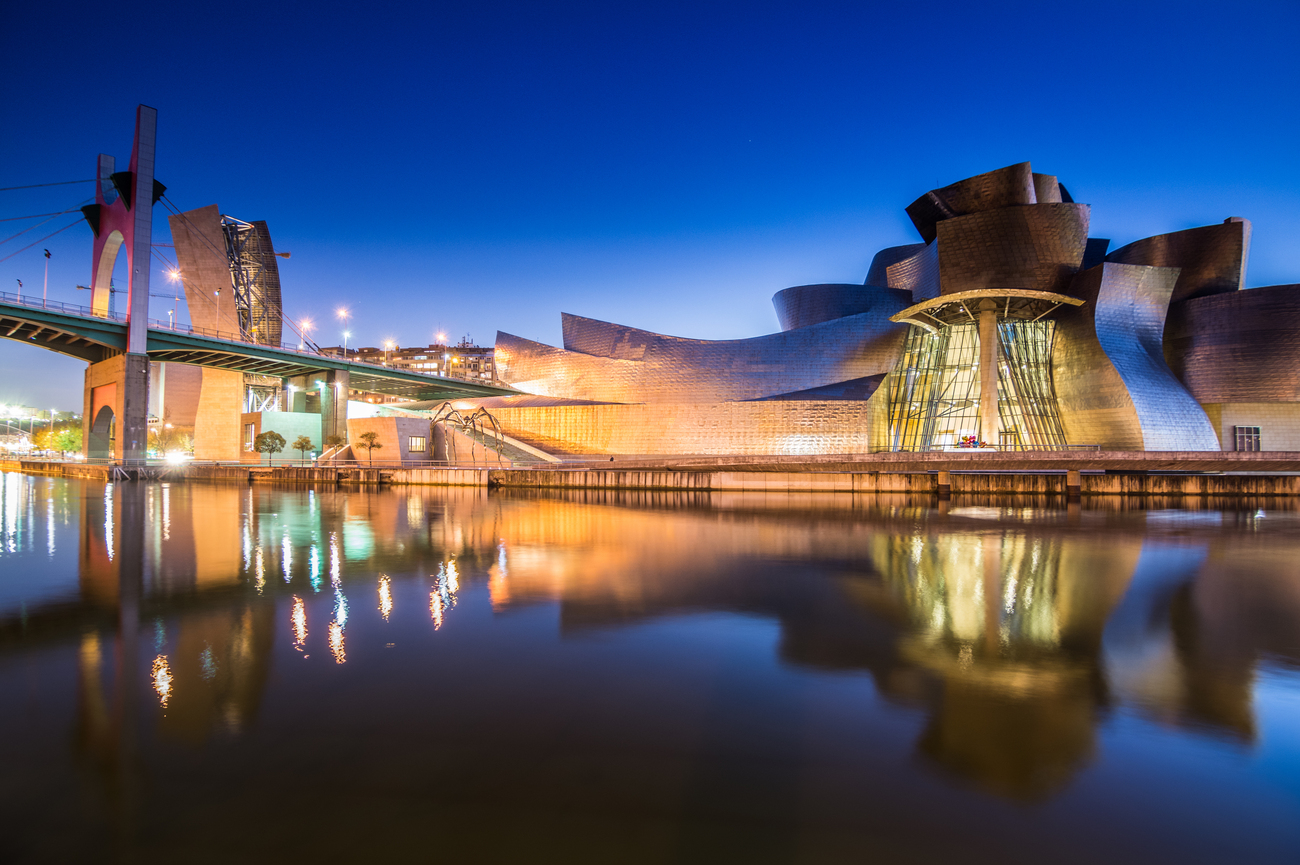
Frank Gehry’s Guggenheim Bilbao opened in October 1997 on a stretch of riverbank once dominated by port and industrial activity. It quickly became one of the most influential buildings of its era and the international symbol of Bilbao’s transformation.
It does not photograph the way it behaves. The titanium panels take whatever the sky is doing and translate it: dull silver beneath cloud, honey in the evening light and almost white in full sun. Walk around it before you walk into it. From the river side it is a ship; from the bridge it is a fish; from the plaza it refuses to be anything at all.
The art holds its own against the container. Richard Serra’s The Matter of Time occupies the museum’s largest gallery: eight enormous sculptures of weathering steel that you do not look at so much as walk through, your sense of balance quietly arguing with your eyes the whole way.
Outside, Louise Bourgeois’s Maman, a bronze spider almost nine metres tall, stands on the river terrace. Her egg sac of marble spheres is visible if you stand beneath her, which children always do and adults pretend not to. Jeff Koons’s Tulips brings another flash of reflective colour to the collection, while temporary exhibitions introduce major international artists and give the museum a different character from one visit to the next.
Two practical notes, offered lightly. The museum normally closes on Mondays outside the main summer season, although opening days vary throughout the year and should be checked before visiting. The exterior is particularly striking in late-afternoon or early-evening light, when the titanium begins to warm and the river catches its reflection.
On our journey, admission and the guided visit are arranged in advance. That matters more than it sounds during busy periods, when arriving with a plan leaves the morning for the building, the collection and the Serra rather than ticket arrangements.
The
Bilbao Effect, Explained by the Riverbank
To understand what the museum actually changed, walk the river.
Forty years ago, the Nervión estuary was heavily polluted by industry and untreated waste, and Bilbao was a city in industrial decline, losing its shipyards, steelworks and jobs. The decision to invest in an art museum designed by a Californian architect was controversial, particularly at a time when the city faced more immediate economic problems.
It worked so completely that planners around the world began chasing the “Bilbao effect” by commissioning spectacular cultural buildings. Most discovered that the building had never been the whole trick. The trick was the river, the transport system, the public spaces and the wider decision to rebuild the city around them.
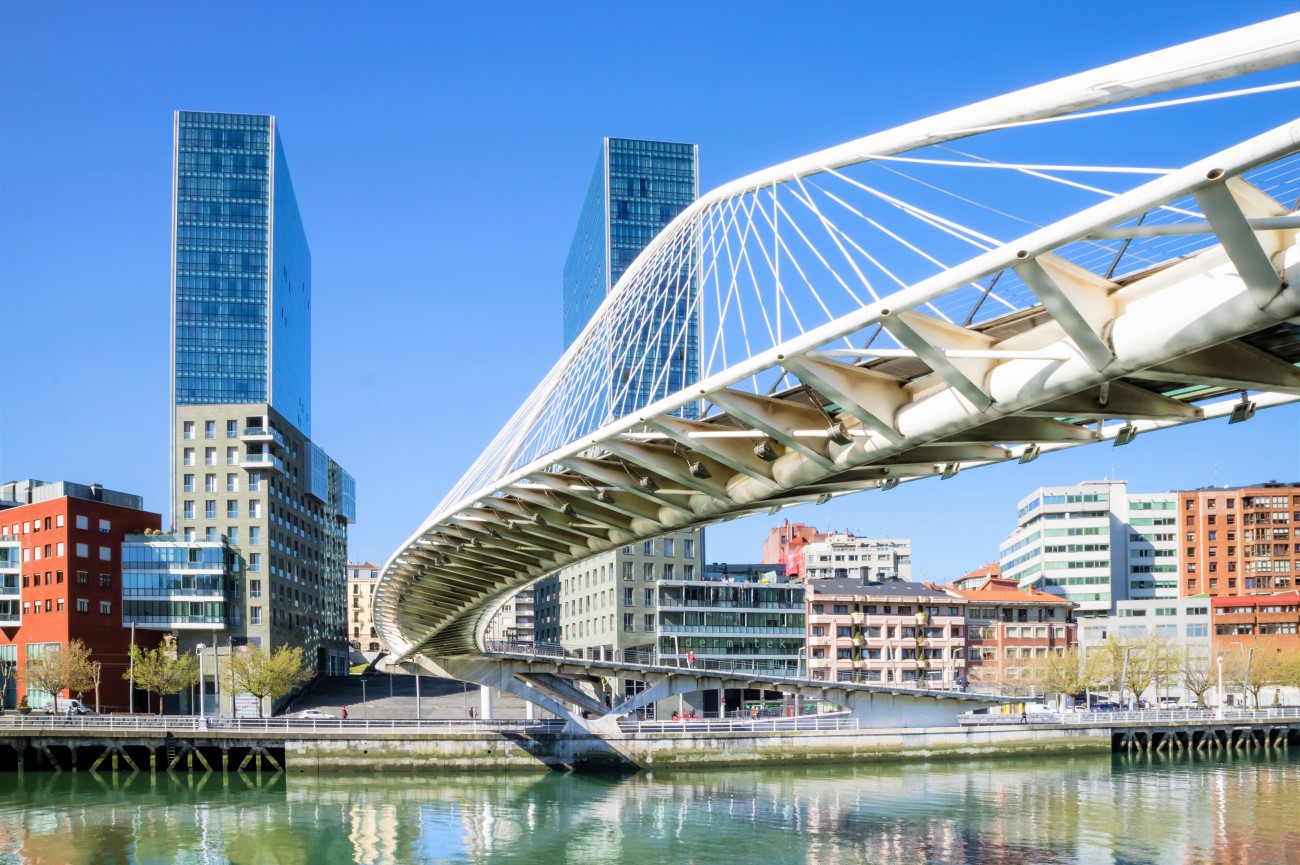
The evidence runs for several kilometres and forms one of the best free walks in Bilbao. From the museum, the Abandoibarra promenade follows the water past parks, public art and new buildings on land once occupied by port and industrial infrastructure. Santiago Calatrava’s Zubizuri footbridge arcs across the river in white steel, illuminated after dark.
Farther downstream, Itsasmuseum occupies part of the former Euskalduna shipyard and preserves Bilbao’s maritime history, with historic vessels displayed beside the water.
At the mouth of the estuary, in Getxo and Portugalete, stands the Vizcaya Bridge of 1893. It was the world’s first transporter bridge and is now the oldest surviving example still in operation. Its suspended gondola continues to carry cars and passengers across the water, while the bridge itself is recognised as a UNESCO World Heritage Site.
The whole riverbank reads as a single argument: that a city can change its mind about what it is for.
The
Casco Viejo and the Seven Streets
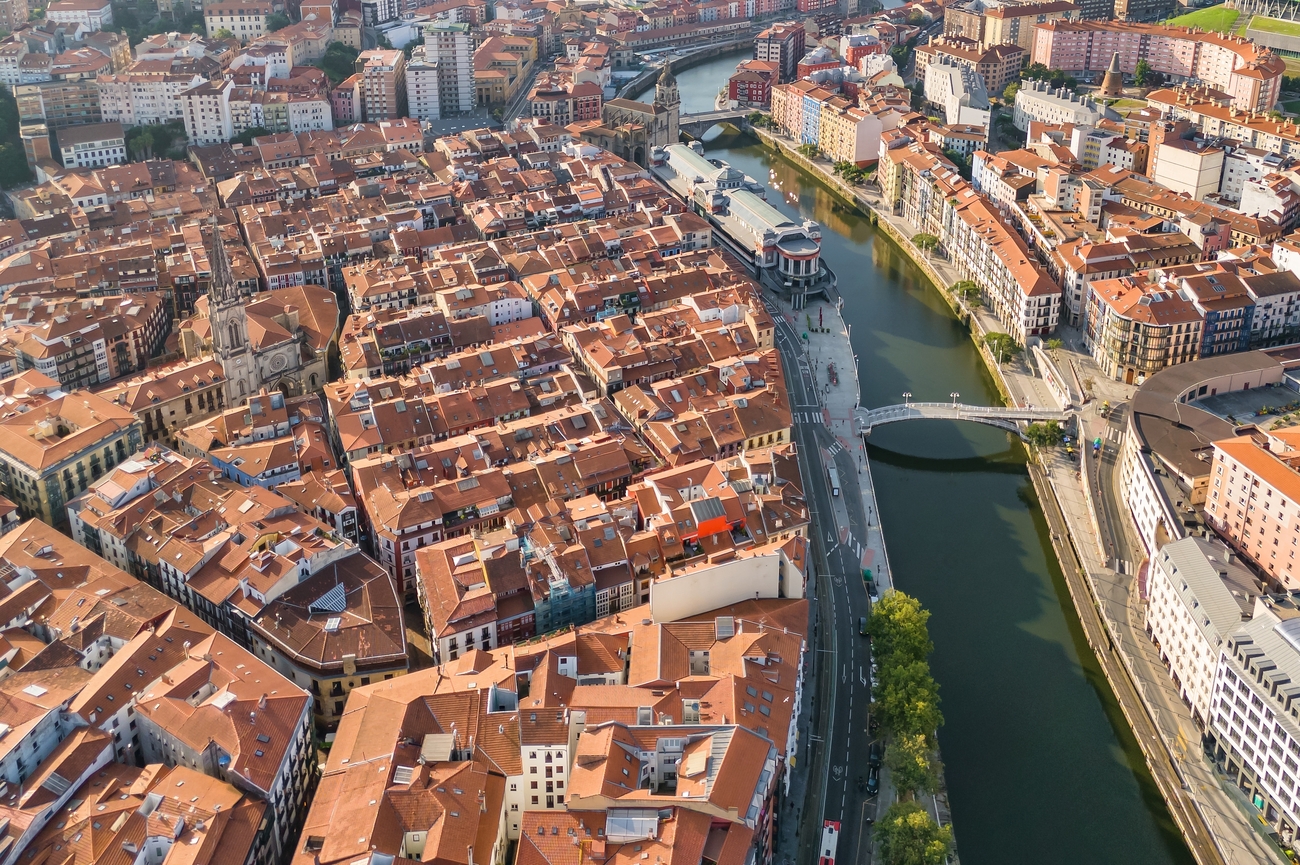
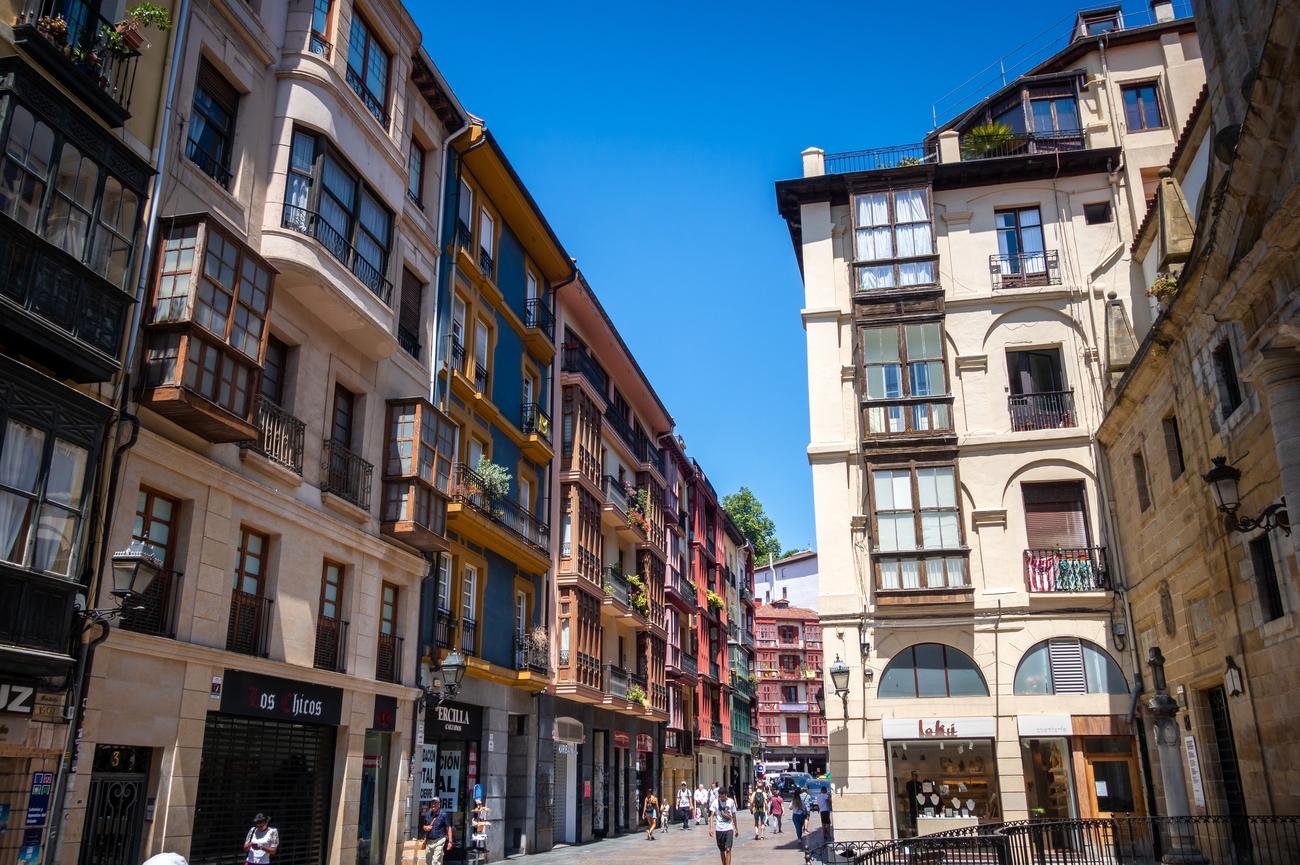
Cross the river and go back six hundred years. The Casco Viejo is Bilbao’s old town, and at its heart are the Siete Calles, the Seven Streets: the original medieval lanes from which the city grew.
They are narrow, largely pedestrian and deceptively quiet by day. The district keeps much of its energy for the evening, when the bars fill and conversation rises from the stone streets.
Santiago Cathedral anchors the quarter. Gothic and cool, it stands on the coastal route of the Camino de Santiago and was part of Bilbao’s story long before anyone thought of the city as a cultural destination.
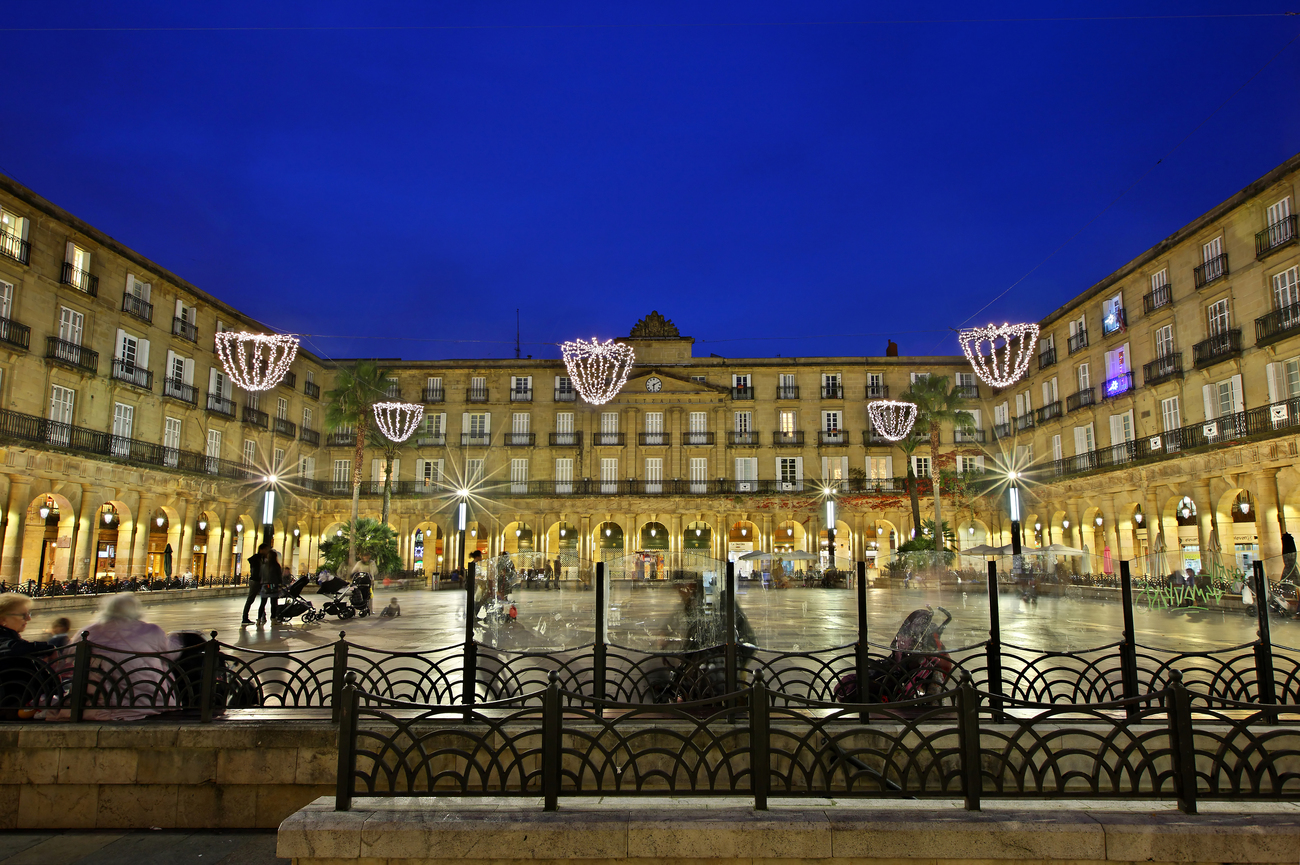
Look for the small curiosities the old town hides in plain sight: the three carved dogs’ heads of the fountain on Calle del Perro, or Txakur Kalea in Euskera, and the wall of life beneath the arcades of Plaza Nueva, the neoclassical square that serves as the old town’s living room.
The Plaza Nueva deserves its own paragraph because it may give you your best evening in Bilbao. Beneath its arcades are some of the city’s best-known pintxos bars, their counters laid out with small, precise combinations served on bread, skewers or plates.
Come in the early evening and watch the square change gear. Coffee drinkers give way to groups ordering wine, the counters fill, the noise climbs a register and the arcades gradually become a circuit of bars.
The local ritual is the poteo: one bar, one drink and perhaps one or two pintxos before moving on. The point is not to settle in for the entire evening but to experience several bars, flavours and conversations along the way.
You will find the gilda everywhere: a skewer of anchovy, olive and pickled pepper named after the Rita Hayworth film. It originated in San Sebastián rather than Bilbao, but has become one of the defining pintxos of the Basque Country. Txakoli is often poured from a height, helping to aerate the wine and bring out its slight natural spritz.
The wider culture behind the evening - the private gastronomic societies, the wine, the language and the importance placed on gathering around a table - is a story of its own. We explore it in greater depth in our guide to Basque culture, food and identity.
The
Ribera Market
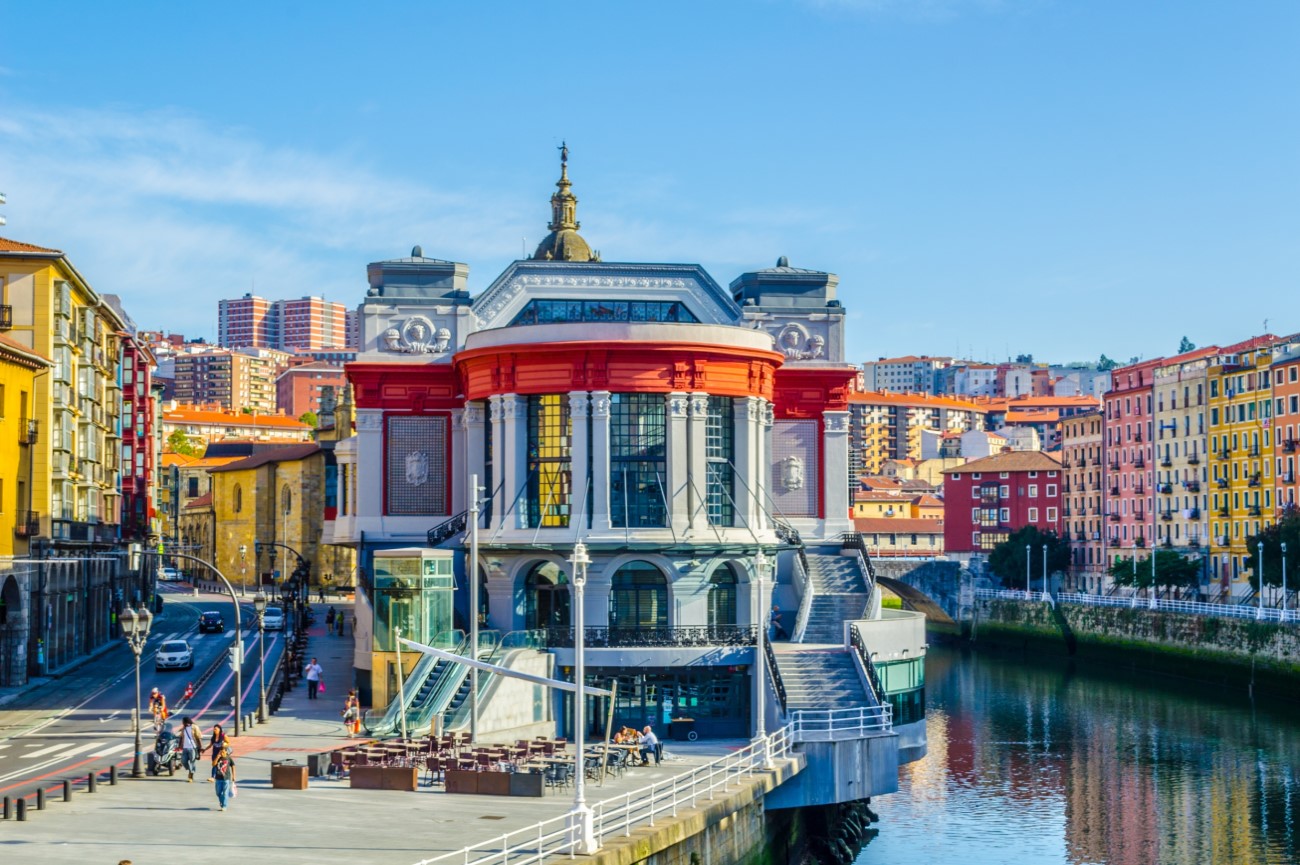
At the old town’s riverside edge stands the Mercado de la Ribera, and it settles a common argument about where the city’s true centre lies.
Markets have been part of Bilbao’s life since the town was founded in 1300, and this stretch of riverbank has been used for trade for centuries. The present building opened in 1929, all Art Deco ornament, stained glass and broad, column-free spaces. Covering around 10,000 square metres, it remains one of the largest covered markets in Europe.
Inside, the stalls are filled with Basque essentials: fresh fish and seafood, meat, vegetables, peppers, fruit and cheeses from the surrounding countryside. The gastronomic area adds casual bars and counters where you can stop for pintxos, lunch or a glass of wine without leaving the building or losing sight of the river.
Go before noon, when the stalls are full and the shopping is real.
A market is the fastest honest read of any city, and Bilbao reads as a place that takes lunch far more seriously than it takes itself.
Beyond
the Postcard: Azkuna Zentroa and the Fine Arts Museum
Two more buildings complete the city’s cultural case, and many visitors miss both.
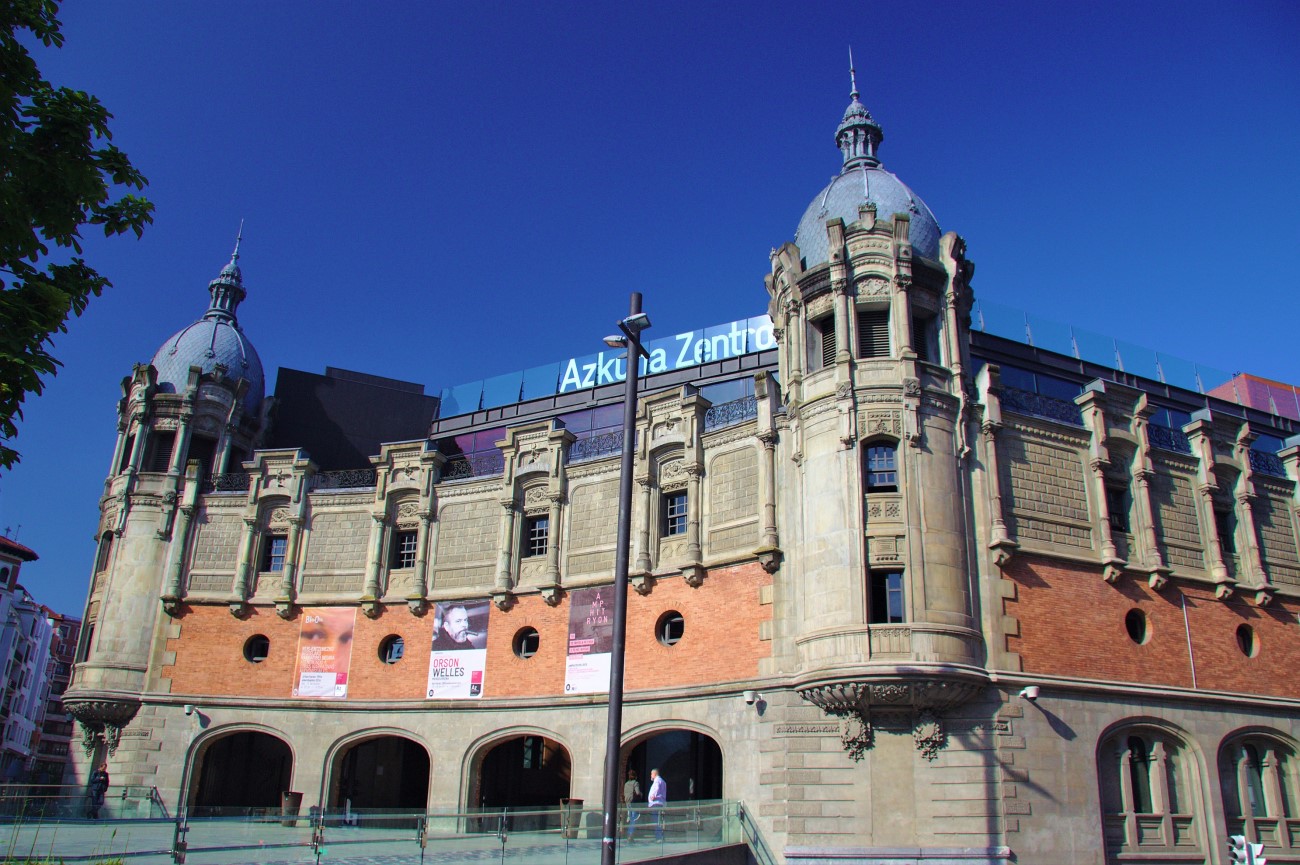
Azkuna Zentroa, in the Indautxu district, began life as Bilbao’s municipal wine warehouse. A century later, its historic exterior was preserved while Philippe Starck transformed the interior into a contemporary cultural centre built around a vast central atrium.
The three internal buildings appear to rest on 43 monumental columns, each one different. Designed as a journey through architectural styles, materials and imagined histories, they form a small forest ranging from medieval and Renaissance references to Chinese motifs and pure invention.
Above them sits a swimming pool with sections of glass flooring, allowing visitors in the atrium below to glimpse swimmers moving overhead like slow weather. The centre also contains exhibition spaces, cinemas, a library, restaurants and places to meet or work, accompanied by the general hum of a city using its own building, which is the point.
It is around a 15-minute walk from the Guggenheim and represents a different century of thinking: not a monument designed to attract the world, but a historic building remade for the everyday cultural life of the city.
The Museo de Bellas Artes, Bilbao’s Fine Arts Museum, stands in the green sweep of Doña Casilda Park. Its collection ranges from Old Masters including El Greco, Goya and Zurbarán to modern art and an especially important representation of Basque artists who recorded the region before photography became commonplace.
It is the quiet counterweight to the Guggenheim’s noise. Pairing the two museums reveals both sides of Bilbao’s artistic identity: the international landmark beside the river and the deeper collection that connects the city with Spanish and Basque art history.
The Fine Arts Museum is currently completing a major expansion and is scheduled to reopen on 5 October 2026. Visitors travelling before that date should check the latest access arrangements.
The
Cathedral of Football, and the City's Other Stages
One more institution explains Bilbao as well as any museum.
Athletic Club, the city’s football team, has played in Spain’s top division since the league began in 1928 and has never been relegated. It shares that record with only Real Madrid and Barcelona.
Athletic has achieved this while following one of the most distinctive recruitment policies in elite football. The club fields players who were born in the wider Basque Country or developed through football academies within it. The policy includes Bizkaia, Gipuzkoa, Álava and Navarre, as well as the Basque territories of south-western France.
This is not simply a recruitment rule. It is part of how the club understands itself and why supporters identify with it so intensely. Athletic would rather compete within those limits than abandon the philosophy that makes it Athletic.
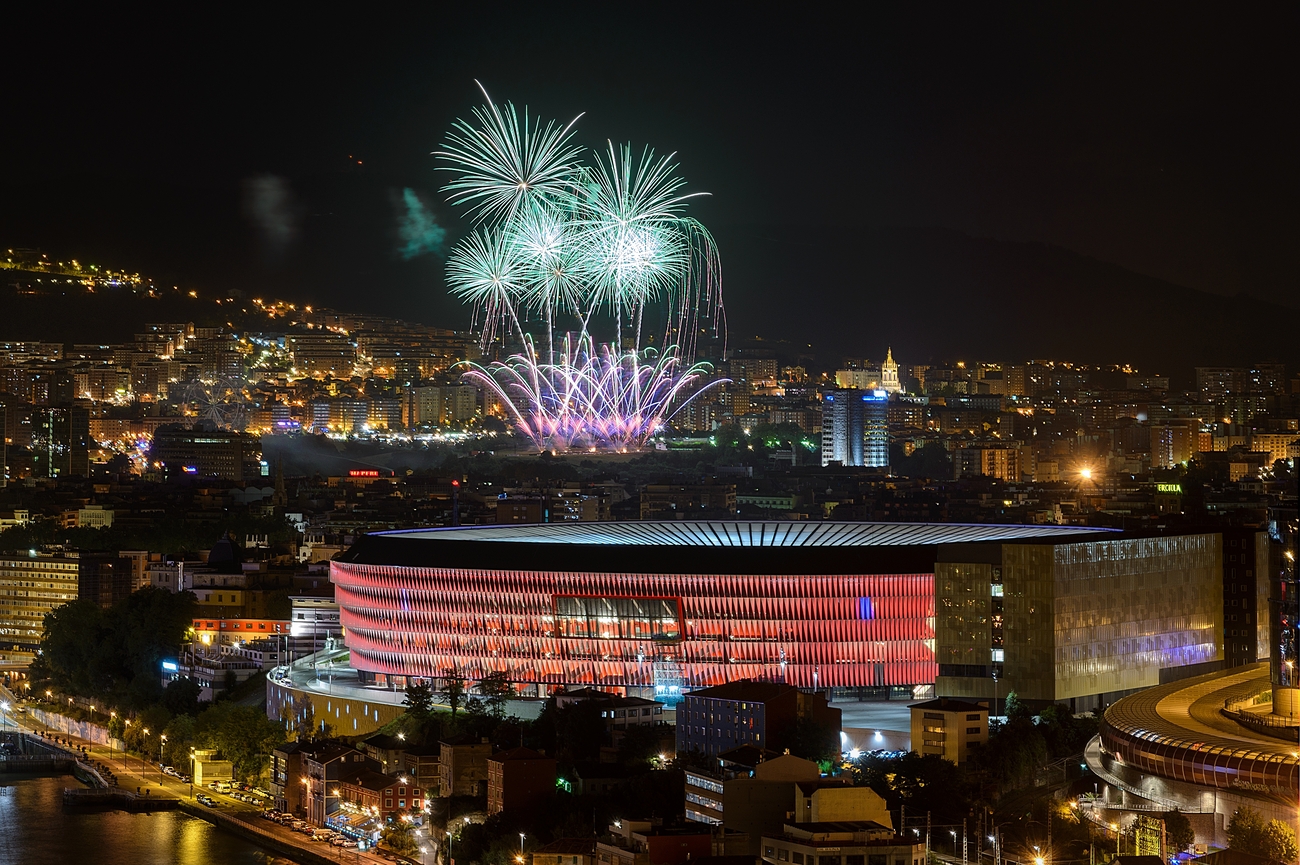
Its stadium, San Mamés, glows red beside the river on match nights and is known simply as the Cathedral. You do not have to care about football to find that moving.
The city’s older stages hold up too. The Teatro Arriaga, a neo-baroque theatre at the edge of the Casco Viejo, remains one of Bilbao’s principal venues for opera, theatre, dance and classical music.
Across the railway tracks from the old town, Bilbao La Vieja tells a more recent version of the same reinvention story. Once associated with the city’s rougher industrial margins, it is now one of Bilbao’s most multicultural and creative districts, with murals, artists’ spaces, independent shops and new restaurants alongside long-established bars.
Here, the transformation is less monumental than the Guggenheim and more uneven, playing out at street level, one building and one neighbourhood at a time.
Artxanda:
The City From Above
For the view that explains everything, take the funicular.
It has been climbing Mount Artxanda since 1915, a journey of around three minutes from a station a short walk behind the Zubizuri bridge. Services generally leave every ten or fifteen minutes, depending on the time of day.
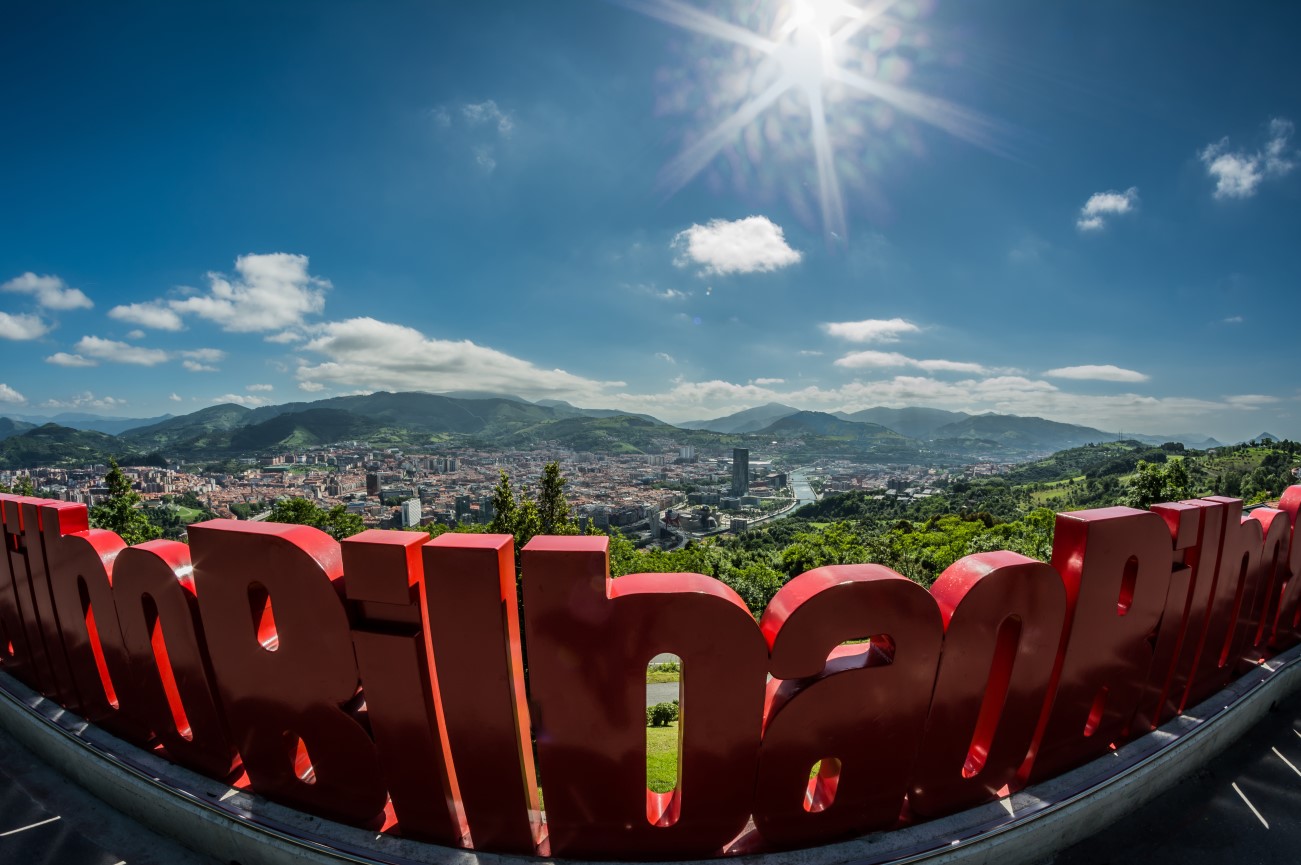
At the top there is a park, several places to eat and the whole of Bilbao laid out below: the river tracing its slow curves through the city, the titanium catching light in the middle distance and green hills pressing in on every side.
From here, the city’s compactness becomes obvious, and so does its geography. Bilbao developed along the Nervión estuary, enclosed by hills but connected directly with the Bay of Biscay. That relationship with the water shaped its port, shipbuilding and industry. When those industries declined, the city had to decide what should replace them.
Sunset is the hour, if the sky cooperates. The Basques call the fine, persistent rain of this coast sirimiri, and it comes and goes without ceremony; the reward for the grey days is the green everything.
On a clear evening, stay until the city lights appear and the museum begins to glow, then take the funicular back down for dinner.
Of all the things to do in Bilbao, Artxanda offers perhaps the clearest explanation of how the river, the hills and the city fit together.
Eating
Bilbao
Food in this city is not a category of sightseeing. It is the operating system.
Beyond the pintxos counters of Plaza Nueva, Bilbao has several Michelin-starred restaurants, among them Nerua inside the Guggenheim Museum, where chef Josean Alija interprets Basque ingredients through a contemporary tasting menu. Elsewhere are countless unstarred places where the txuleta comes to the table still arguing with the grill.
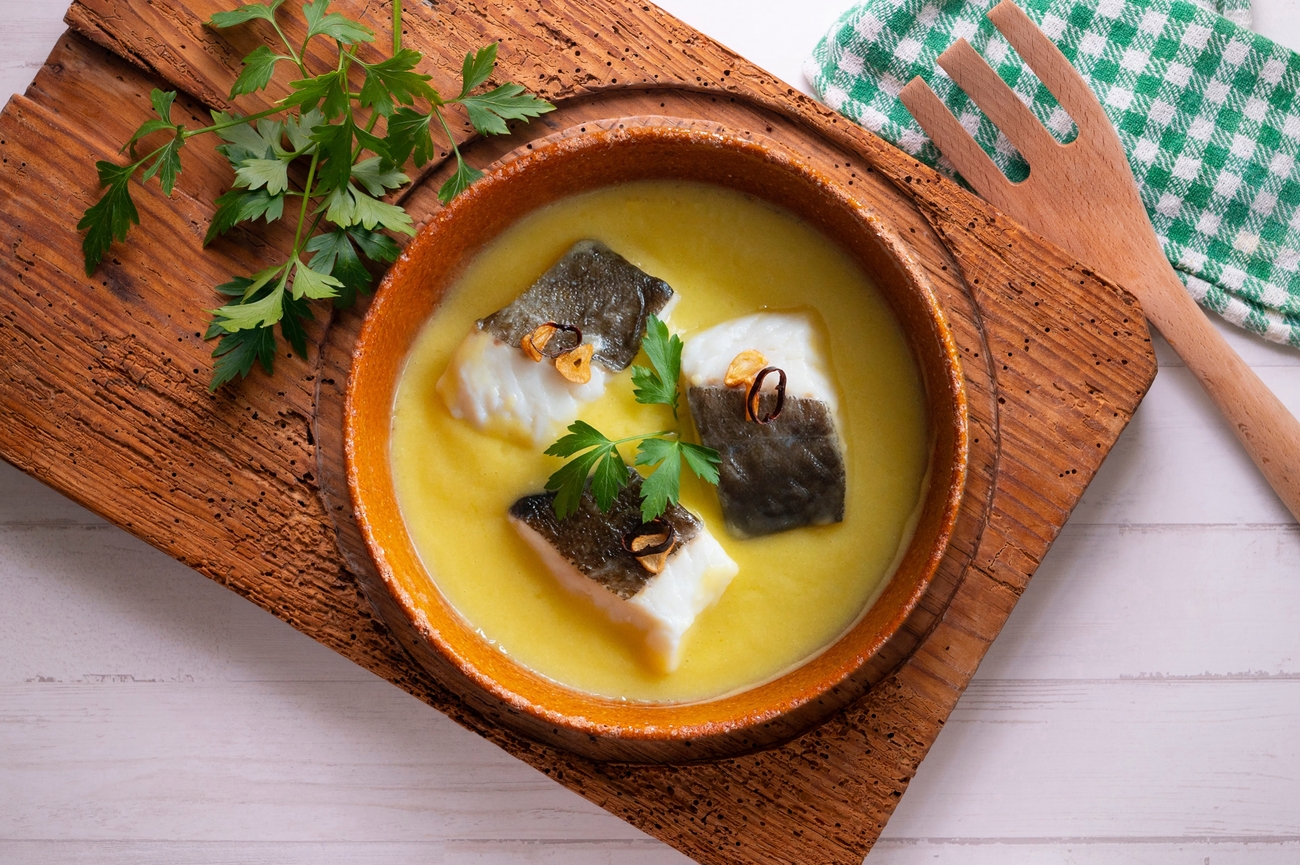
Order bacalao al pil-pil somewhere traditional: salt cod served in an emulsion created from olive oil, garlic and the natural gelatine released by the fish. Watch a waiter refuse to explain how it works. Drink txakoli with anything from the sea.
And when the city has fed you, it points you onwards, because Bilbao is a gateway as much as a destination.
A little over an hour to the east lies San Sebastián, one of Europe’s great culinary cities, which we give the four days it deserves in our luxury culinary itinerary in San Sebastián.
To the south, beyond the Sierra de Cantabria, the vineyards of Rioja Alavesa begin, with the medieval town of Laguardia, underground cellars and landmark contemporary wineries. We explore them in our guide to the wineries and wine traditions of Rioja Alavesa.
North-east of Bilbao stands San Juan de Gaztelugatxe, reached by a stone bridge and a climb of 241 steps. Access, reservations and the practicalities of the route are covered in our guide to visiting San Juan de Gaztelugatxe.
That is the real reason to give this city two nights rather than two hours. Everything in the Basque Country is close to Bilbao. Nothing else in the Basque Country is Bilbao.
When to Visit Bilbao
The city works year-round, which is rarer than it sounds on this coast.
Spring and early autumn bring mild temperatures, softer light and generally fewer visitors than the height of summer. These are particularly good seasons for walking the river, exploring the Casco Viejo and seeing the Guggenheim without the busiest holiday crowds.
High summer brings Aste Nagusia in late August: nine days when Bilbao stops pretending to be a serious place at all. Concerts fill stages across the city, Basque rural sports take over public squares and an international fireworks competition lights the sky each night.
Presiding over it all is Marijaia, the smiling festival figure with her arms raised above her head. She appears at the opening celebrations and remains the symbol of Aste Nagusia until the final night, when she is ceremonially burned before returning in a new form the following year.
Winter has its own argument: the museum is quieter, the bars are warm and the sirimiri outside makes the txakoli taste better.
There is no wrong month. There is only the question of whether you want the city with its festival clothes on or off.
How
to Spend a Day and a Half in Bilbao
The shape that works is this: arrive, drop the bags and give the first evening to the Casco Viejo. Let the Seven Streets fill around you and join the poteo from bar to bar beneath the arcades. No museum, no plan, just the city at its own hour.
The next morning belongs to the Guggenheim. Go early, before the largest tour groups arrive, walk slowly through Richard Serra’s monumental steel installation and continue afterwards along the riverbank.
Have lunch at Ribera Market while the stalls and food counters are still busy. The afternoon then divides by temperament: the Fine Arts Museum and Doña Casilda Park for some; the Philippe Starck columns and glass-bottomed swimming pool of Azkuna Zentroa for others.
Bring everyone back together for the funicular to Artxanda in the late afternoon. If the sky cooperates, stay for sunset before returning to the city for the second evening and the table you did not have to find yourself.
On our Exploring the Basque Country journey, that is roughly how Bilbao unfolds, with entries timed, tables held and a guide who knows which bar in Plaza Nueva does the gilda properly.
The city rewards exactly this kind of light-handed arrangement. It is compact, walkable and generous, and the only real way to get it wrong is to rush it.
Stay
for the Second Evening
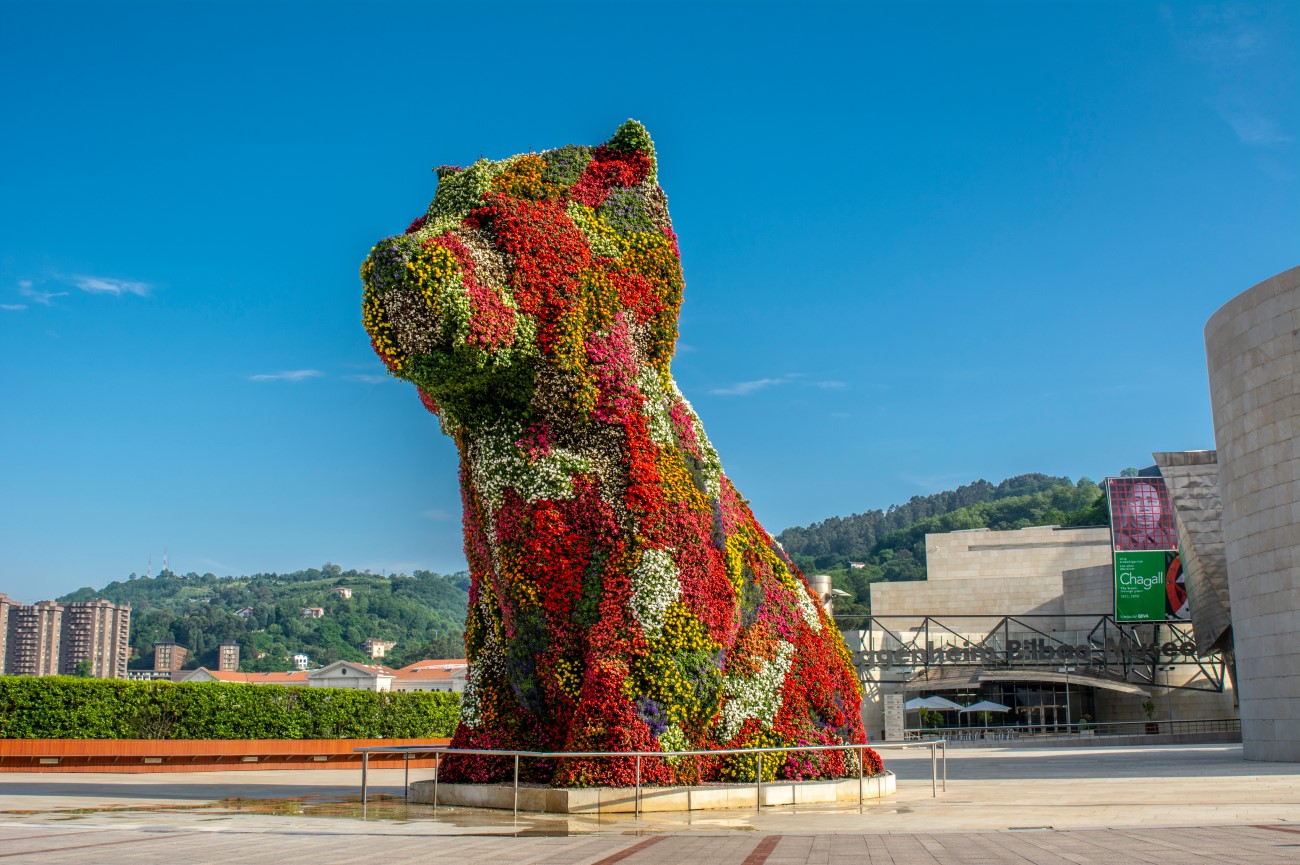
People photograph Puppy, walk through the museum and drive on.
The city they miss begins at about seven, when the counters in Plaza Nueva fill, the evening light settles across the river and the titanium starts holding the sunset as though it were built for that one job.
The second evening is when Bilbao stops being somewhere on the itinerary and becomes somewhere you have actually been.
Stay, and the rest of the region waits just beyond the city: the coast, the vineyards and a culture that changes from one valley to the next.
Come and meet the dog. Stay to meet the city that built him a kennel out of titanium.


Let us know what you love, where you want to go, and we’ll design a one-of-a-kind adventure you’ll never forget.
Get in touch
Miriam
Travel Specialist

Romina
Travel Specialist

Laura
Travel Specialist
Our offices:



Revigorate, Iberian Escapes and Algarve Lifestyle are the registered brand names of APCS Lda . We are a fully authorised travel agency licensed by Turismo de Portugal RNAVT/6867.
In the event of a dispute, the consumer may refer to: RAL - Centros de Arbitragem
Avª. 5 de Outubro, nº. 55, R/C Dtº. 8000-075 Faro, Portugal | Tel: +351 289 823 135 *
* national landline call
E-mail: info@consumoalgarve.pt| www.consumidoronline.pt | Mon to Fri: 9:00 - 13:00 / 14:00 - 17:00