Luxury Spain and Portugal Road Trip: Bilbao to Lisbon Along the Atlantic

Watch for the border.
The road rises onto a short bridge. The river slides underneath, wide and green on its way to the Atlantic, with vineyards climbing the Spanish bank behind you and vineyards climbing the Portuguese bank ahead, the same grape growing on both sides under two different spellings. Ninety seconds pass. The signs change their typeface. And that is all, the entire international ceremony, over before the song on the radio ends: you have driven from one country into another the way you would change lanes, and the anticlimax, it turns out, is the whole point of the journey.
Because nothing needs to interrupt this route.
It runs ten days and nine nights from Bilbao to Lisbon, following one Atlantic coastline that history divided and a road quietly reunites: the Basque table, the green cliffs and fishing harbours of northern Spain, Santiago de Compostela, the crossing into Portugal, the terraced Douro Valley, and Lisbon waiting at the far end with the last of the light. The complete journey is mapped and sequenced in our Road Trip from Northern Spain to Portugal, a tailor-made vacation that can be arranged with a private chauffeur or as a self-drive journey. This guide follows the same route as the road itself: west across northern Spain, then south through Portugal, at the Atlantic coast's own pace.
10-Day
Bilbao to Lisbon Road Trip Itinerary at a Glance
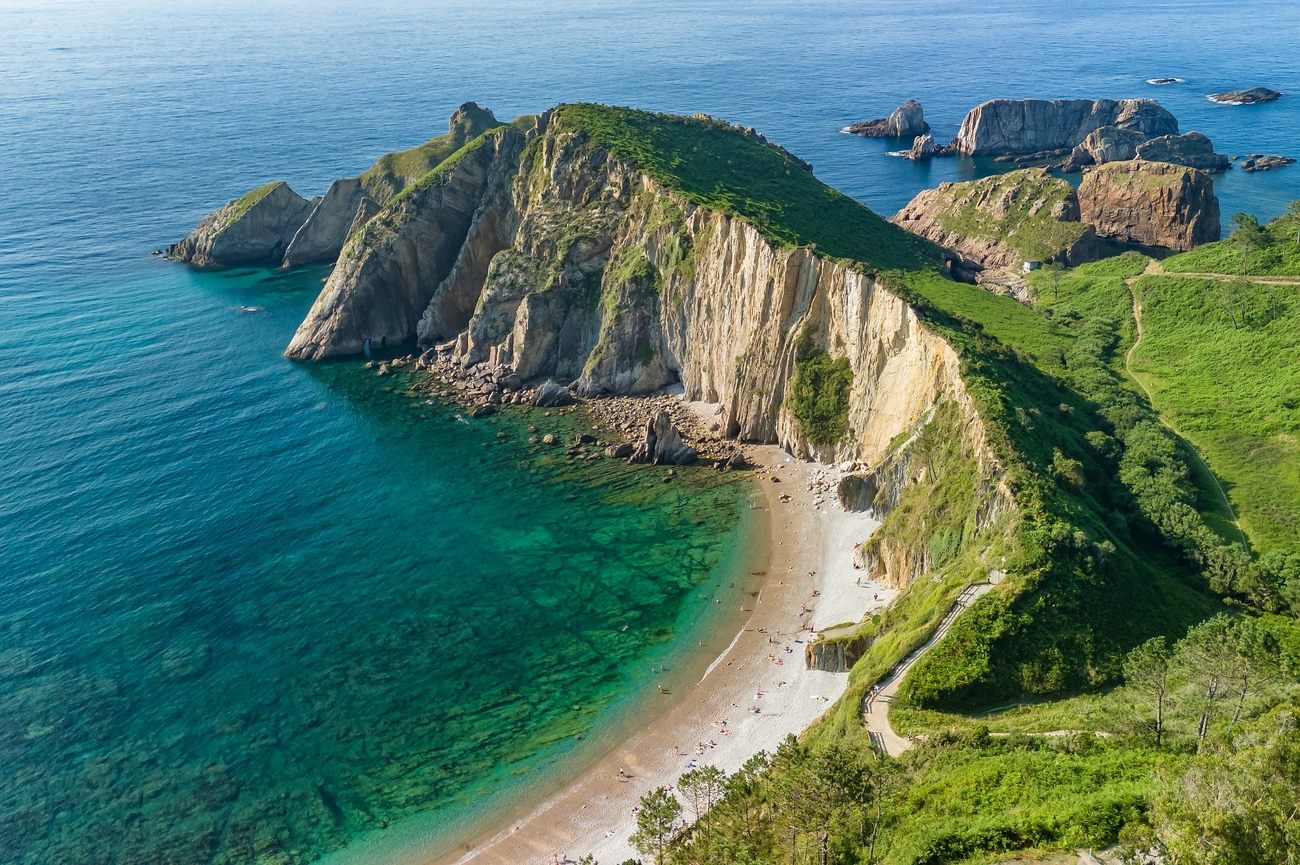
This ten-day, nine-night journey runs from May to October, travelling from Bilbao on Spain's Basque coast to Lisbon at the mouth of the Tagus while keeping hotel changes to a minimum. Bilbao forms the first three-night base, combining the Guggenheim, the Biscay coast and a day trip to San Sebastián without the need to repack. Santiago de Compostela follows for two nights, with a Relais & Châteaux manor set in its own gardens providing the journey's Spanish heart. From there, the route crosses into Portugal for a night among the terraced vineyards of the Douro Valley before continuing south to Lisbon for the final three nights, including visits to Sintra and Cascais.
Five-star and luxury boutique hotels are used throughout, with transfers and driving carefully sequenced around the journey. Travellers can choose between a private chauffeur, ideal for those who want to enjoy the scenery without driving, or a fully arranged self-drive itinerary for those who prefer to take the wheel.
How Long Does It Take to Drive from Bilbao to Lisbon?
On this Spain and Portugal road trip, the journey is spread comfortably across ten days, with no single driving leg designed to dominate the day. The distances are deliberately balanced around the experiences between them: Atlantic harbours, wine tastings, terraced valleys and long lunches across northern Spain and Portugal.
Driven directly, Bilbao to Lisbon could be covered in around a day and a half. This itinerary takes ten days because the road itself is part of the experience. The difference between those two timings is the philosophy of the journey: travelling through the landscape rather than simply crossing it.
Best
Time to Take a Northern Spain and Portugal Road Trip
The best time for this Northern Spain and Portugal road trip is from May to October. The Atlantic north follows a different seasonal rhythm from southern Spain, with Green Spain at its most vivid in late spring, when the meadows are lush and the coast roads are quieter. High summer remains milder than much of southern Spain, helped by the Atlantic climate that keeps Cantabria, Asturias and Galicia so green.
Early autumn is particularly rewarding. September brings the grape harvest to the Douro Valley, with activity returning to the terraces and quintas as the vintage begins. Lisbon also benefits from warm weather and softer light after the peak August crowds have started to ease.
The best month ultimately depends on the type of journey you want. Festival-focused travellers can time the route around Galicia's summer celebrations, while wine lovers may prefer September and the Douro harvest. Families can travel during the school holidays while still enjoying a northern coastline that feels markedly different from Spain's busiest Mediterranean resorts. Across the full May to October season, the route remains well suited to combining northern Spain, the Douro Valley and Lisbon in one continuous journey.
Bilbao
and San Sebastián: Beginning the Road Trip in the Basque Country
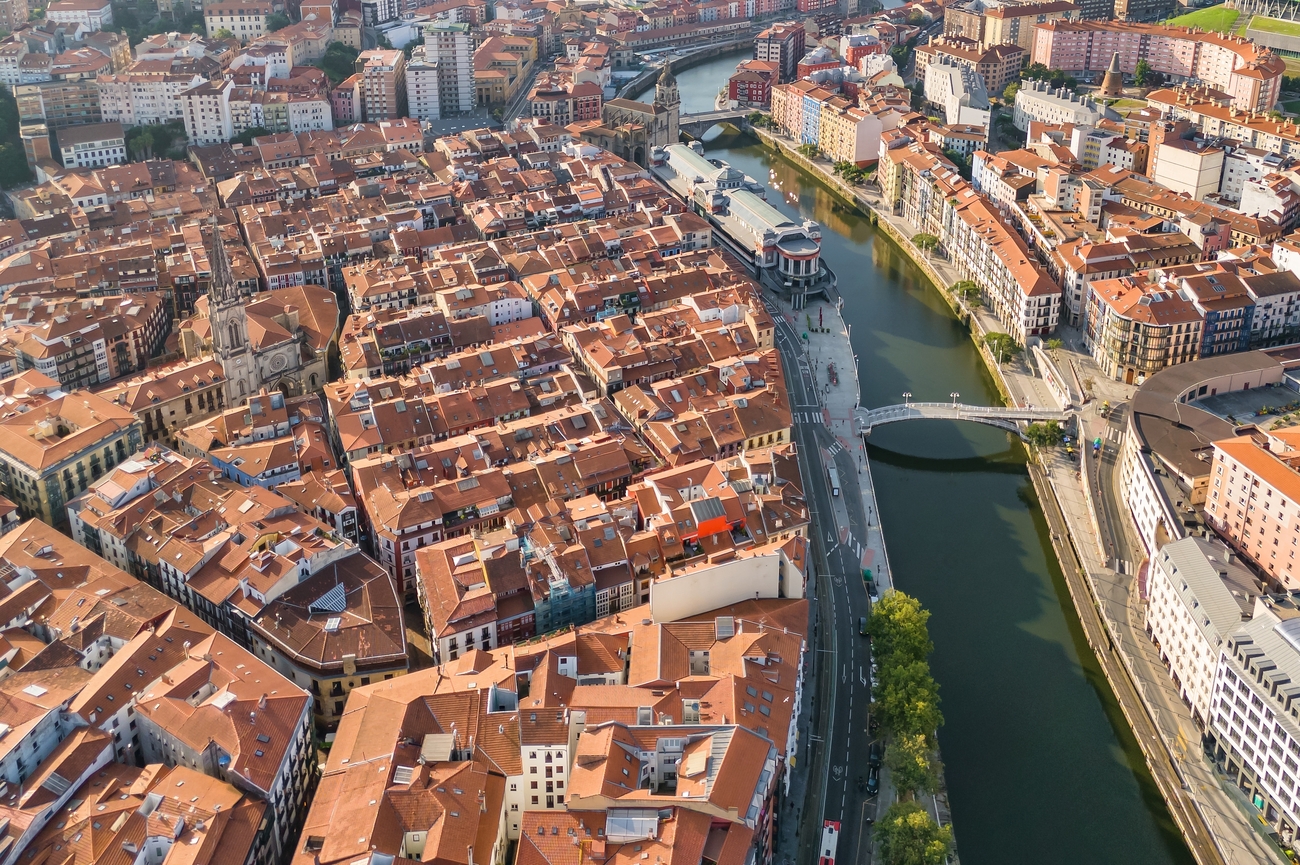
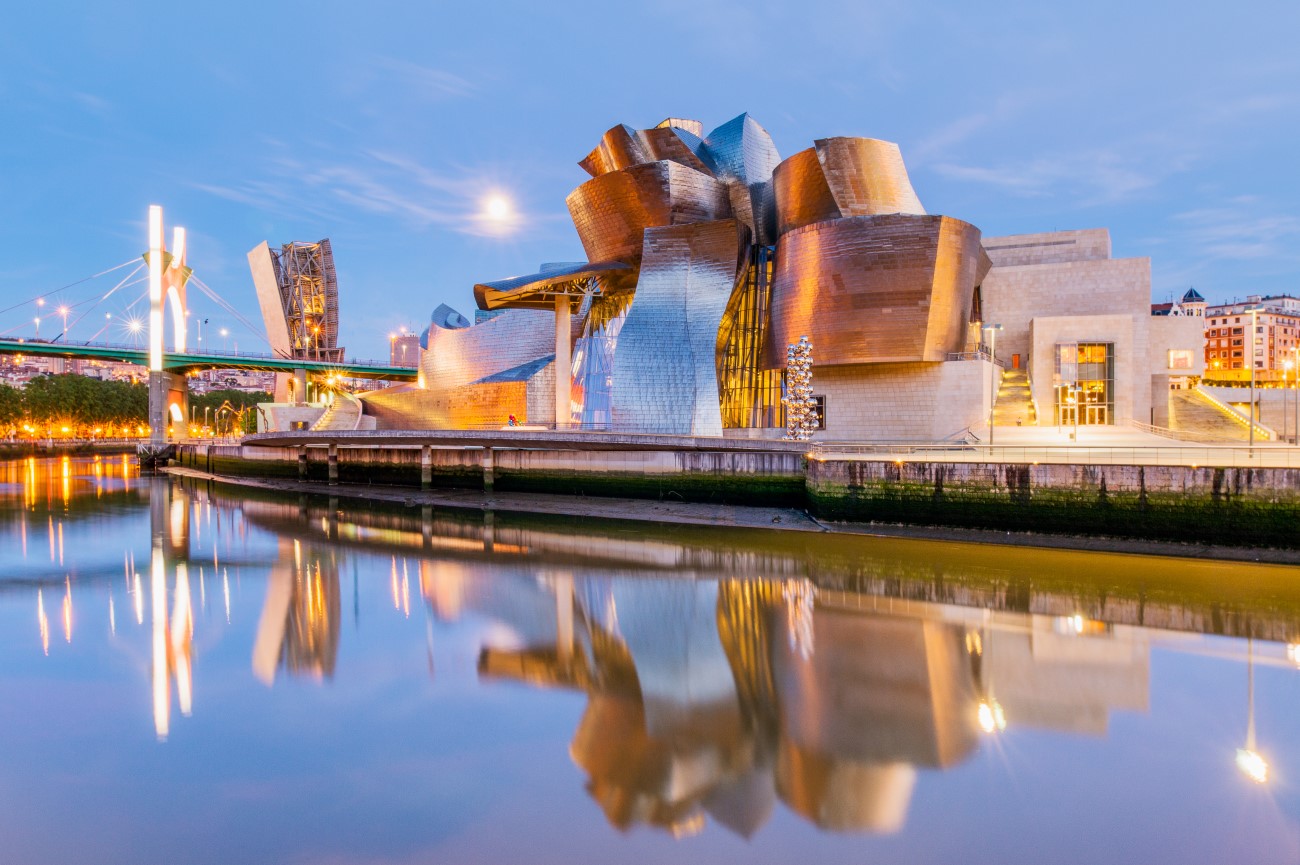
Every great road trip needs a first evening that sets the register, and the Basque Country provides two. Bilbao opens the journey with Frank Gehry's titanium Guggenheim Museum catching the river light and a city around it that turned reinvention into an art form. We explore Bilbao and the wider region in depth in our Basque Country journey, while this road trip takes considerably more from the city than a simple departure point usually gives: a private guided visit to the Guggenheim with an art historian, a riverside walk past Puppy and Maman, dinner at Nerua inside the museum itself, and a second day along the Biscay coast to the Vizcaya Bridge's glass gondola and the causeway at Gaztelugatxe.
San Sebastián follows on day three as a full-day excursion from Bilbao, with a coffee stop in Zarautz along the way. A local host leads you through the Parte Vieja and five or six of its most storied pintxos bars before the day closes with an early dinner at Arzak or Akelarre, both holding three Michelin stars, followed by the drive back along the moonlit Basque coast.
These first days establish the tone of the journey. Bilbao provides the architecture and culture, San Sebastián the gastronomy, and the Biscay coast the first real sense of the Atlantic landscapes that will shape the road ahead. The txakoli vineyards lean from the hills towards the sea as you leave the Basque Country behind, the slightly fizzy local white waving the journey off from the slopes where it grows.
From here, the Atlantic settles on the right-hand side of the car, where it will remain, with brief interruptions, for much of the journey west. The first hundred kilometres of any road trip are often about logistics, mirrors, seat positions and the radio question. Then the rhythm changes. On this route, the scenery starts competing for attention before Bilbao's city roads have fully disappeared behind you.
Driving
Through Green Spain: Cantabria, Asturias and Galicia
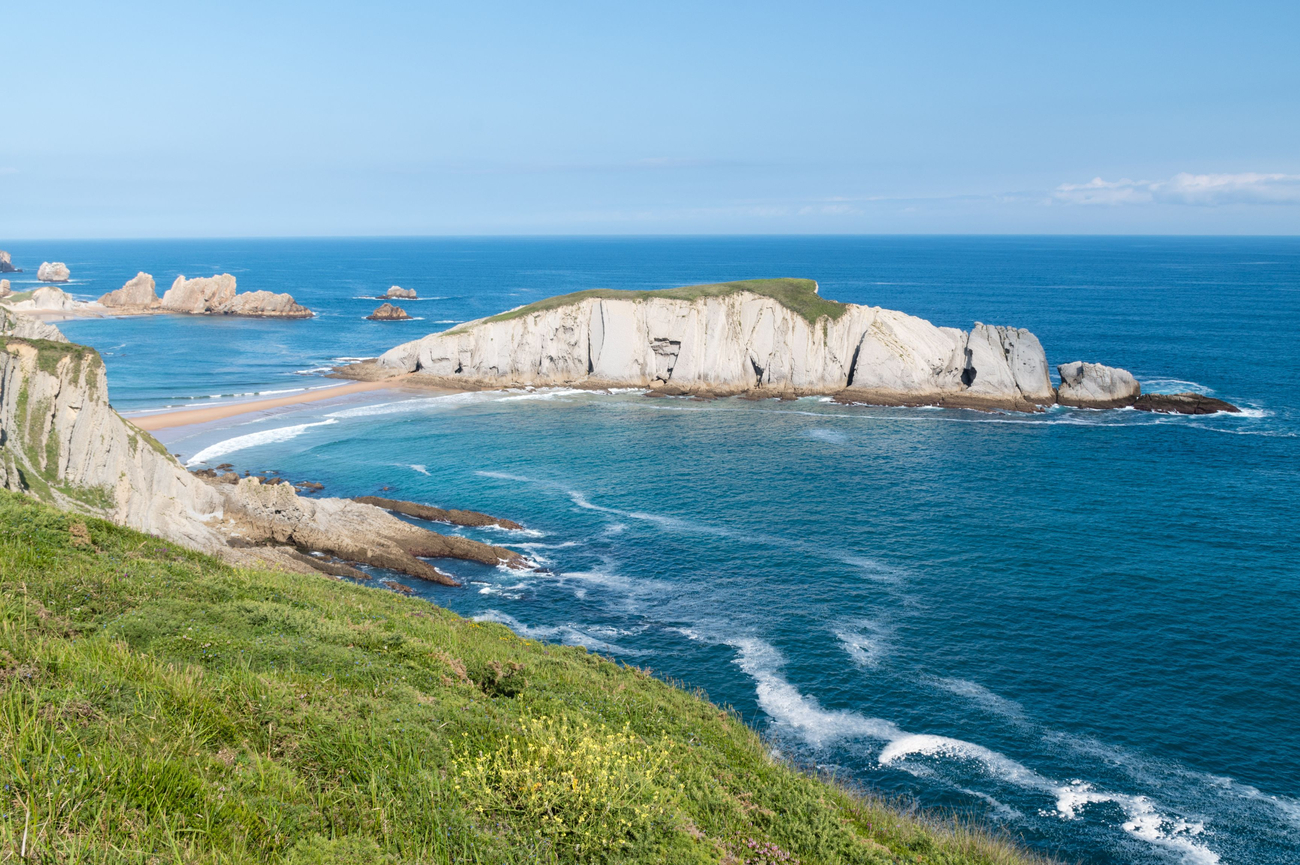
West of the Basque Country begins the Atlantic coast known as España Verde, or Green Spain. It stretches through Cantabria, Asturias and Galicia, shaped by the Atlantic weather that keeps its valleys, mountains and coastline intensely green and helps distinguish it from the drier landscapes of southern Spain.
The coast road threads through it all: stretches with the sea below and the Picos de Europa rising behind the shore, estuary bridges, eucalyptus-lined roads and fishing towns appearing and disappearing around the headlands. Travellers with more time can explore the region slowly, and we cover that extended journey in our Green Spain coast road. On this ten-day Spain and Portugal road trip, the route takes the swifter line west in a single day.
There is a particular pleasure to driving this stretch. The road climbs to a cliff shoulder and reveals the Bay of Biscay, drops into a valley of hay meadows and stone barns, follows an estuary at water level, then begins the sequence again in a different order. Mountains and ocean share the same windscreen for much of the journey, while passing Atlantic weather can transform the light and deepen the greens within minutes. Bring music, but expect long stretches when nobody reaches for it.
The towns along the way carry their own stories. Santander's belle-époque bay, the medieval harbour of San Vicente de la Barquera beneath the mountains, Oviedo's early medieval churches and the cider traditions of Asturias all belong to this wider northern landscape. Travellers who would rather cross Green Spain without taking the wheel can explore many of these places on the FEVE narrow-gauge railway, covered in our slow-coast rail journey.
The road-trip version is one memorable driving day west through Asturias and Galicia, with comfort stops wherever the landscape calls for them. One optional indulgence is a wine lunch in the Ribeira Sacra, where terraced vineyards rise above the river gorges and provide a scenic inland route towards Santiago de Compostela.
As the road enters Galicia, the character of the landscape changes again. The rías open towards the Atlantic, their sheltered waters dotted with shellfish rafts, while Galician place names begin appearing on the signs. Travellers choosing the Ribeira Sacra route approach Santiago through the valleys of the Miño and Sil, passing steep vineyards and historic monasteries on one of northern Spain's most rewarding inland drives.
Santiago de Compostela: The Spanish Heart of the
Journey
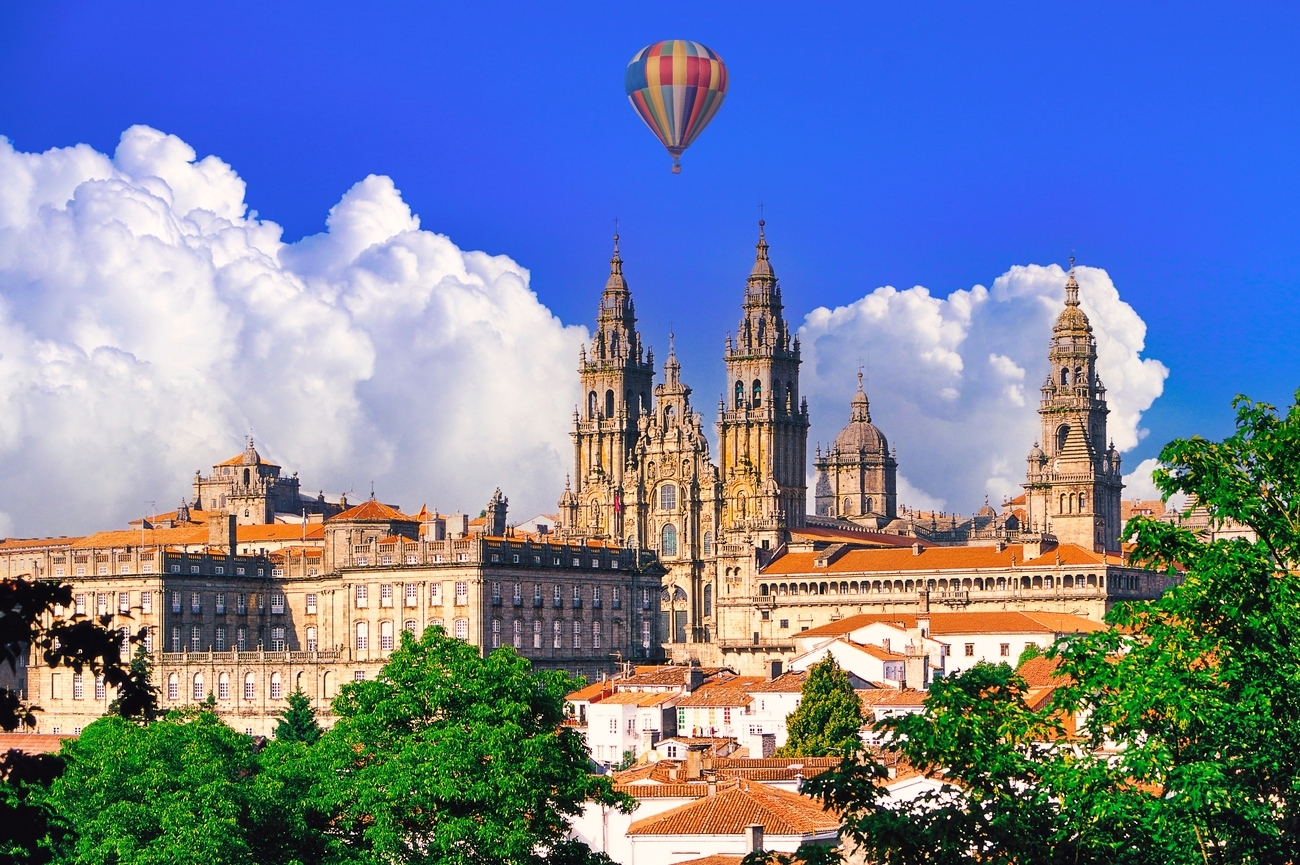
Santiago de Compostela marks the midpoint of the road trip and provides the final major stop in Spain before the journey continues towards Portugal. Reaching the city by road offers a striking contrast with the pilgrims arriving on foot, two very different journeys converging on the same historic centre.
The following morning, a private guide leads you through Santiago de Compostela's UNESCO-listed old town and into the Cathedral, with rooftop access and the cloisters included where available. The evening belongs to the city's celebrated food scene, with dinner at Casa Marcelo and its open kitchen before the journey turns south towards Portugal.
Crossing
from Northern Spain into Portugal: The Miño and Douro Valley
Day six or seven, depending on how Galicia has detained you, brings the bridge this guide opened on. The crossing from northern Spain into Portugal takes place over the River Miño, with Spain's last vineyards on the north bank and Portugal's first on the south. The same grape changes from Albariño to Alvarinho within the space of the river's width.
Both Spain and Portugal belong to Europe's Schengen area, so there are no border checks on this route, and the entire international formality amounts to a bridge, a river and a new typeface on the signs. Travellers raised on harder borders tend to laugh out loud. It seems impossible that changing countries should be easier than changing lanes, and then Portugal begins proving that the ease was the point. Pull over on the far side if the mood takes you. The first Portuguese coffee, taken within sight of Spain, is one of the route's small rituals, and the moment the espresso arrives, shorter, darker and unapologetic, the new country has already introduced itself.
The first Portuguese hours set a new register. The land softens, the villages whitewash themselves and the pace drops a further gear. Then the road does the thing this entire journey has been building towards: it finds the Douro Valley.
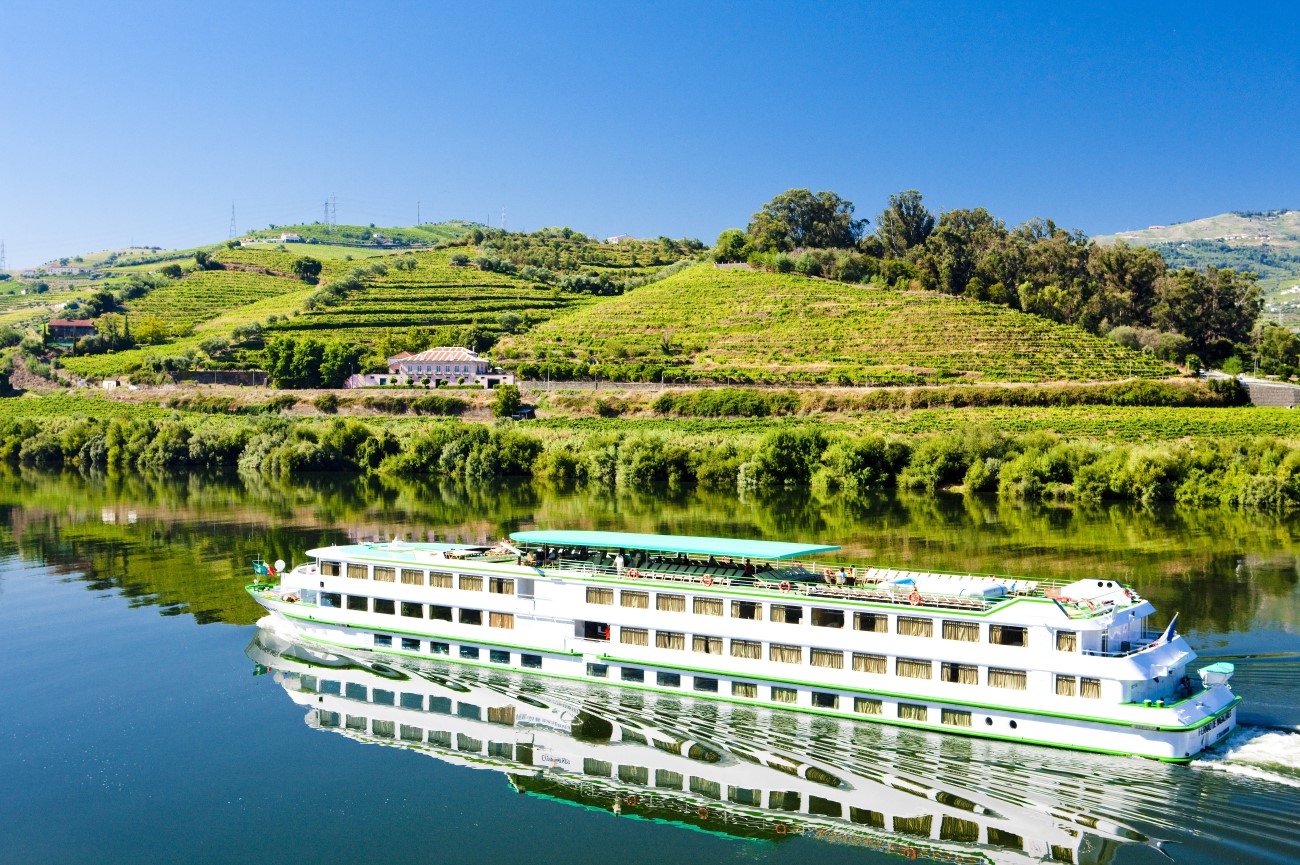
There is a hairpin on the approach where the Douro first reveals itself below, every slope rising above it in terraces held by dry-stone walls. The river itself has crossed a border to be here, rising in Spain as the Duero and continuing through Portugal as the Douro, which makes it an appropriate companion to this two-country journey. The Douro was demarcated in 1756, its terraced wine landscape is inscribed by UNESCO, and the N222 between Peso da Régua and Pinhão follows one of the valley's most celebrated scenic stretches. Travellers wanting to explore the region in greater depth can discover its viewpoints, wine estates, river experiences and historic towns in our Things to Do in the Douro Valley guide.
The valley's quintas, port wine heritage and river deserve their own full account, and they have one in our guide to crossing into Portugal. The essential point for this itinerary is that the journey does not simply visit the Douro Valley on a day trip. It stays overnight at a wine estate among the terraces.
Staying
Overnight in the Douro Valley
Day visitors from Porto often experience the Douro during the middle of the day. Staying overnight gives this Spain and Portugal road trip something quite different: dusk, when the terraces turn gold tier by tier and the river holds the last of the light, followed by dawn, when mist can settle into the valley and the estates begin to wake.
Dinner takes place among the vineyards that produced the wine in the glass, and during September the grape harvest brings another layer of activity to the surrounding quintas. These quieter hours are one of the reasons the Douro Valley is treated as an overnight destination rather than simply another stop along the road.
Downstream, the Douro continues towards Porto and the Atlantic, while the port produced from these vineyards has traditionally been aged in the lodges of Vila Nova de Gaia. This particular journey turns south from the valley towards Lisbon instead. The emphasis remains on spending a night among the vineyards that produced the wine rather than adding another city to an already rich route.
Lisbon, Sintra and
Cascais: The Final Base in Portugal
The last leg runs south to Lisbon, and the journey saves a full act for the Portuguese capital. Lisbon at the end of a road trip feels different from Lisbon at the beginning of one. You arrive with two countries in the rear-view mirror, already calibrated to Atlantic light, long lunches and the changing rhythm of the Iberian coast.
Things to Do in Lisbon at the End of the Road Trip
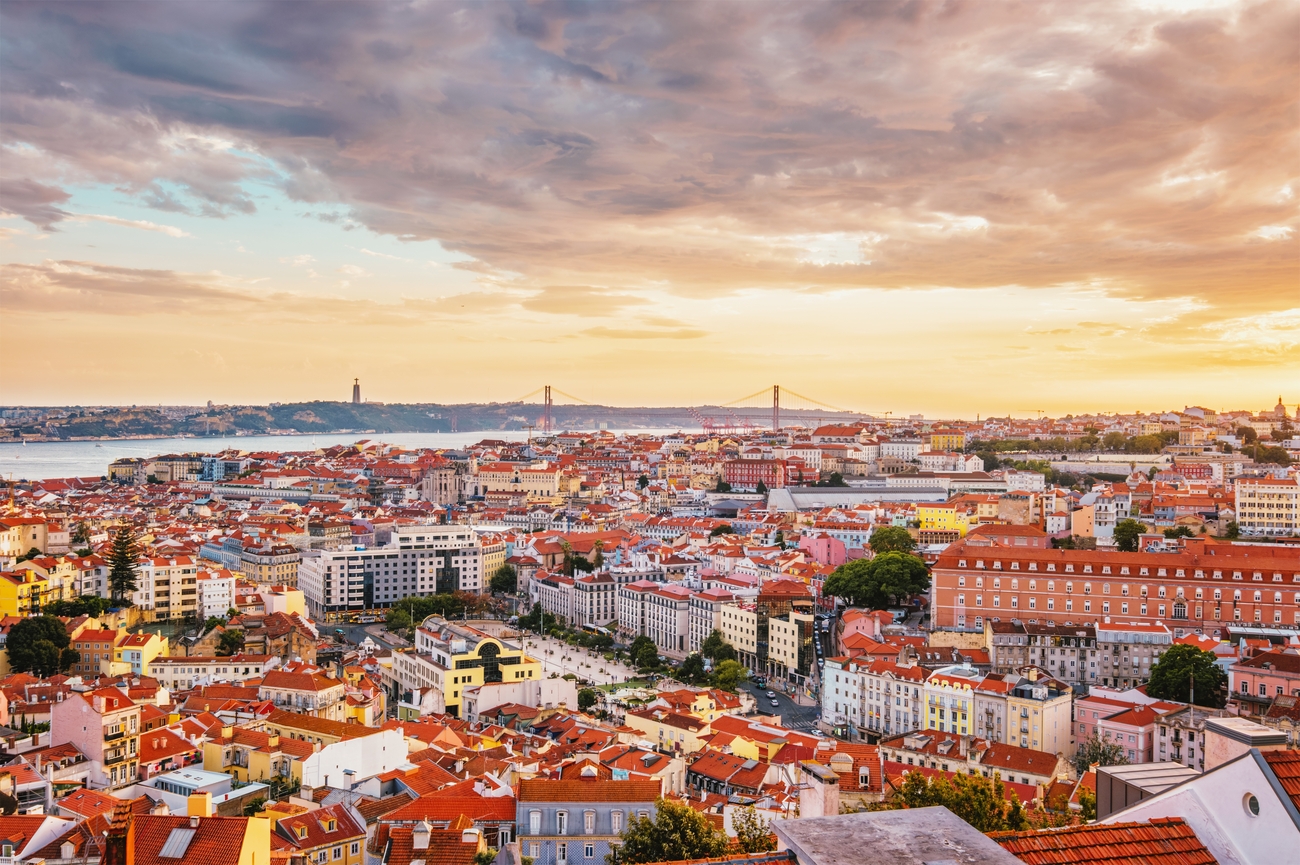
Lisbon is built on hills above the Tagus, and the hills are part of its character. The city arranges itself around viewpoints, the miradouros, where whole evenings can be structured around little more than watching the light change over the rooftops and river. Take a table at the rail as the afternoon turns amber, order something cold, and let the city perform its slow trick, the terracotta deepening, the Tagus turning to hammered metal, the first lights appearing across the far bank and, somewhere below, a tram bell marking time. Ten days of Atlantic light have been rehearsing you for this exact hour.
The journey's Lisbon is the lived-in one. A private guide takes you through Alfama, the city's oldest quarter, where narrow lanes wind between viewpoints, tiled façades and places connected to the traditions of fado. Another morning can include Time Out Market and LX Factory, combining Lisbon's food culture with one of its best-known creative districts.
The final evening offers a choice worth considering carefully: a private sunset sail on the Tagus or dinner overlooking the city from a restored historic building. In between comes fado, experienced in a small room with dinner timed around the performances, and Lisbon's food scene, from traditional tiled taverns to contemporary restaurants. Travellers wanting to explore the capital in greater depth can continue with our Things to Do in Lisbon guide.
Sintra Day Trip from Lisbon: Pena Palace and Quinta da
Regaleira
A short drive from Lisbon, Sintra provides one of the most distinctive days of the entire road trip. Its wooded hills create a cooler Atlantic microclimate that once made the area a summer retreat for Portuguese royalty and still gives its palaces much of their atmosphere.
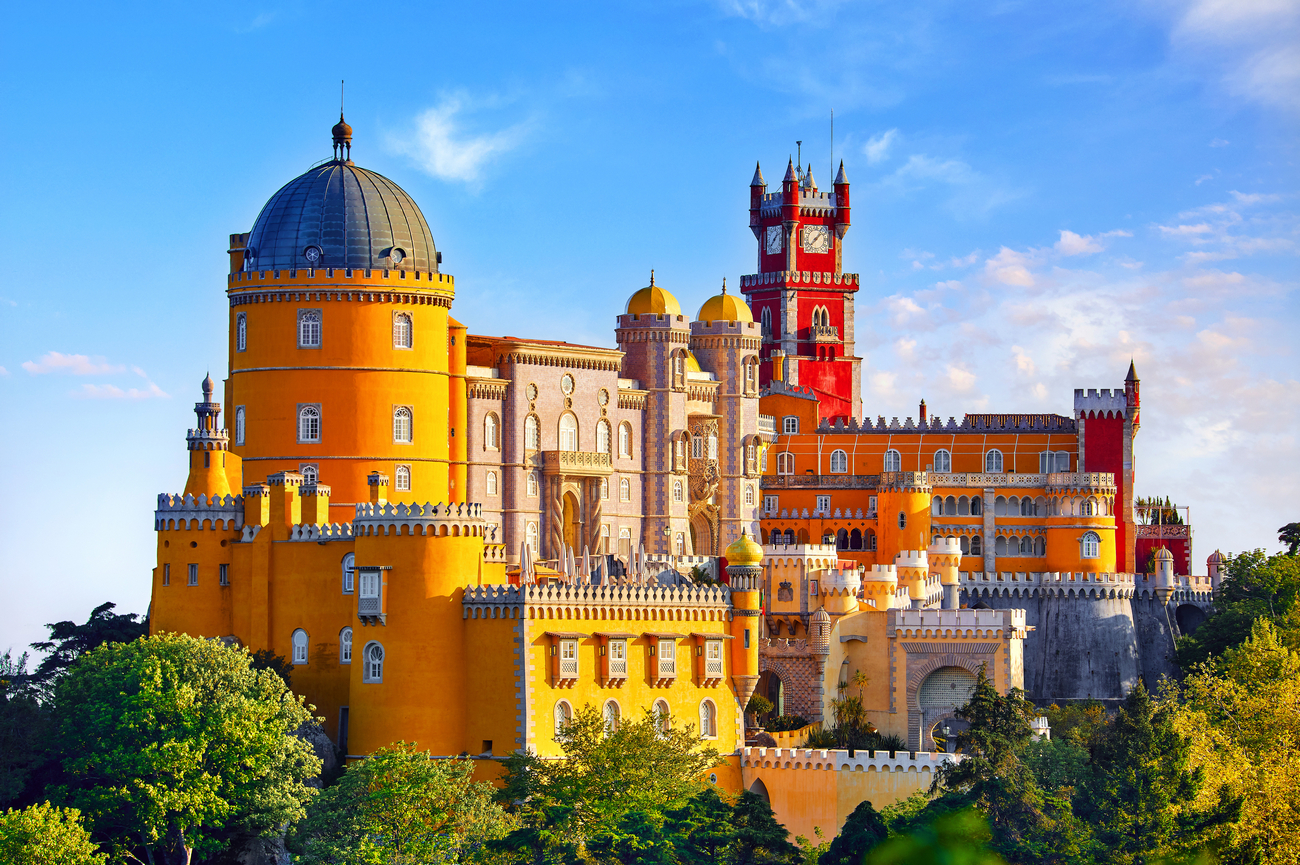
Sintra's Cultural Landscape is inscribed by UNESCO, with Pena Palace crowning the ridge in painted reds and yellows and Quinta da Regaleira concealing gardens, grottoes and its famous Initiation Well. The popularity of Sintra also makes careful planning important. Timed entries and a private guide help reduce unnecessary queuing and allow the principal sights to be experienced at the most suitable times of day. Travellers planning more time in the area can explore our Things to Do in Sintra guide.
Cascais:
The Atlantic Finale of the Bilbao to Lisbon Road Trip
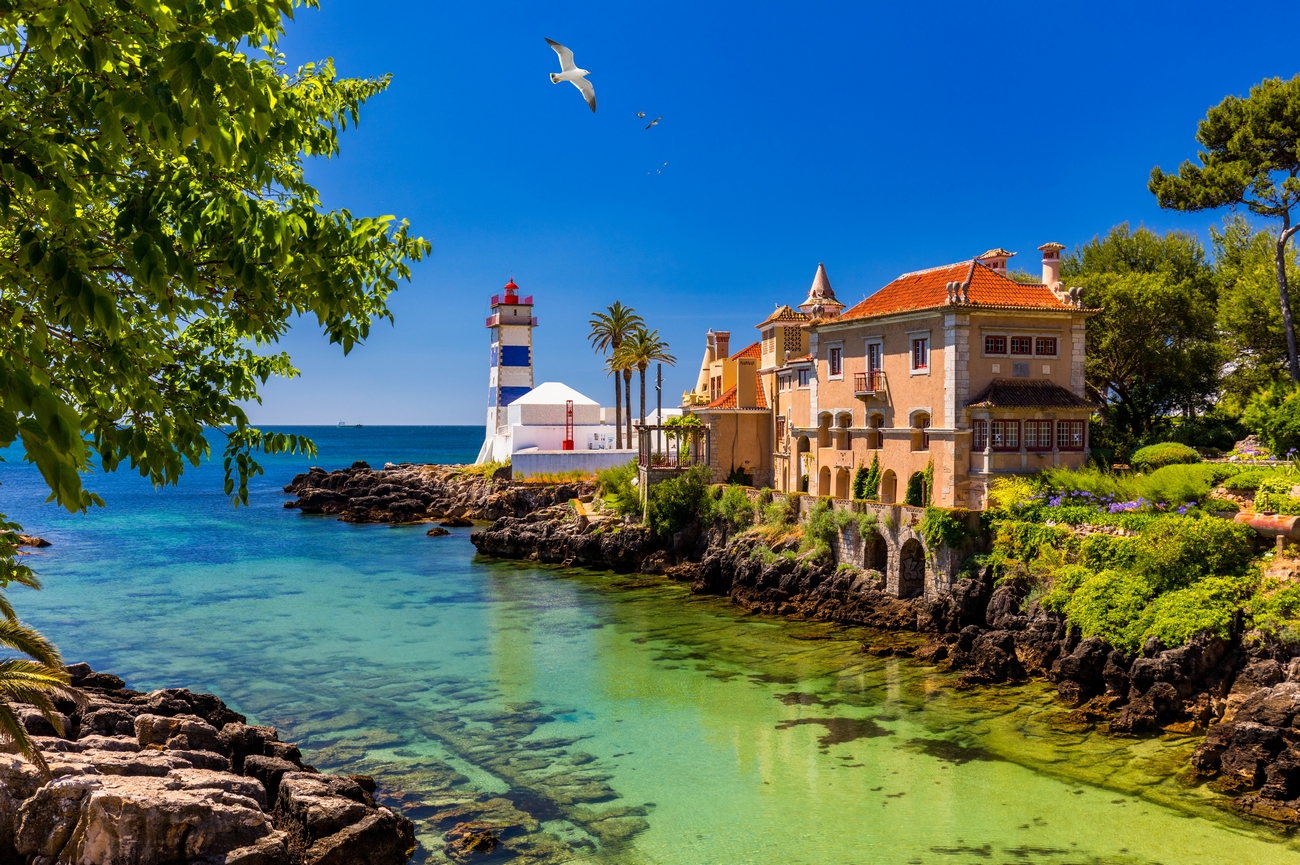
The route ends where it began, beside the Atlantic. The coastal road runs from Lisbon towards Cascais, where the Tagus meets the ocean and the former fishing town opens onto beaches, promenades and a graceful waterfront.
Walk the seafront in the late afternoon, when the light lies low across the water and the town settles into its evening rhythm, and the symmetry of the journey becomes clear. The Atlantic first encountered beside Bilbao now returns at the end of the road, almost a thousand kilometres of coastline later.
The final evening belongs here, with the whole route behind you: Bilbao's titanium and pintxos, the green landscapes of northern Spain, Santiago de Compostela, the crossing into Portugal, the Douro terraces, Sintra's palaces and Lisbon's hills. Ten days, two countries and one Atlantic journey.
Why
Combine Northern Spain and Portugal in One Road Trip?
The question arrives eventually from almost every traveller planning a Spain and Portugal road trip: is it better to explore one country in depth, or combine both in a single journey? The full case for travelling through both countries is explored in One Journey, Two Countries, but the short answer is that northern Spain and northern Portugal fit together unusually well.
Both share the Atlantic, its climate, its light and its seafood traditions. At the River Miño, vineyards rise on both sides of the border and the same grape changes from Albariño in Spain to Alvarinho in Portugal. Yet the differences are just as rewarding: late Spanish evenings give way to softer Portuguese mornings, granite towns to tiled façades, and one food and wine culture gradually becomes another. Crossing between them requires no internal flight, no airport transfer and no lost travel day.
That gradual transition is something only an overland journey can deliver. Churches change shape, coffee cups grow smaller, road signs change language and the rhythm of daily life shifts almost imperceptibly as the route moves south. Fly between the two countries and they remain separate destinations. Drive between them and they become part of one continuous Atlantic journey, with northern Spain flowing naturally into the Douro Valley and, eventually, Lisbon.
That continuity is what makes this more than two holidays joined together. It is one road trip through two neighbouring countries, with the contrasts between them becoming part of the experience rather than an interruption to it.
Luxury
Hotels on the Bilbao to Lisbon Road Trip
The accommodation is an important part of this journey, because the route works best when every overnight stop feels worth arriving for. The principle is simple: five-star and luxury boutique hotels throughout, with character taking priority over large international chains.
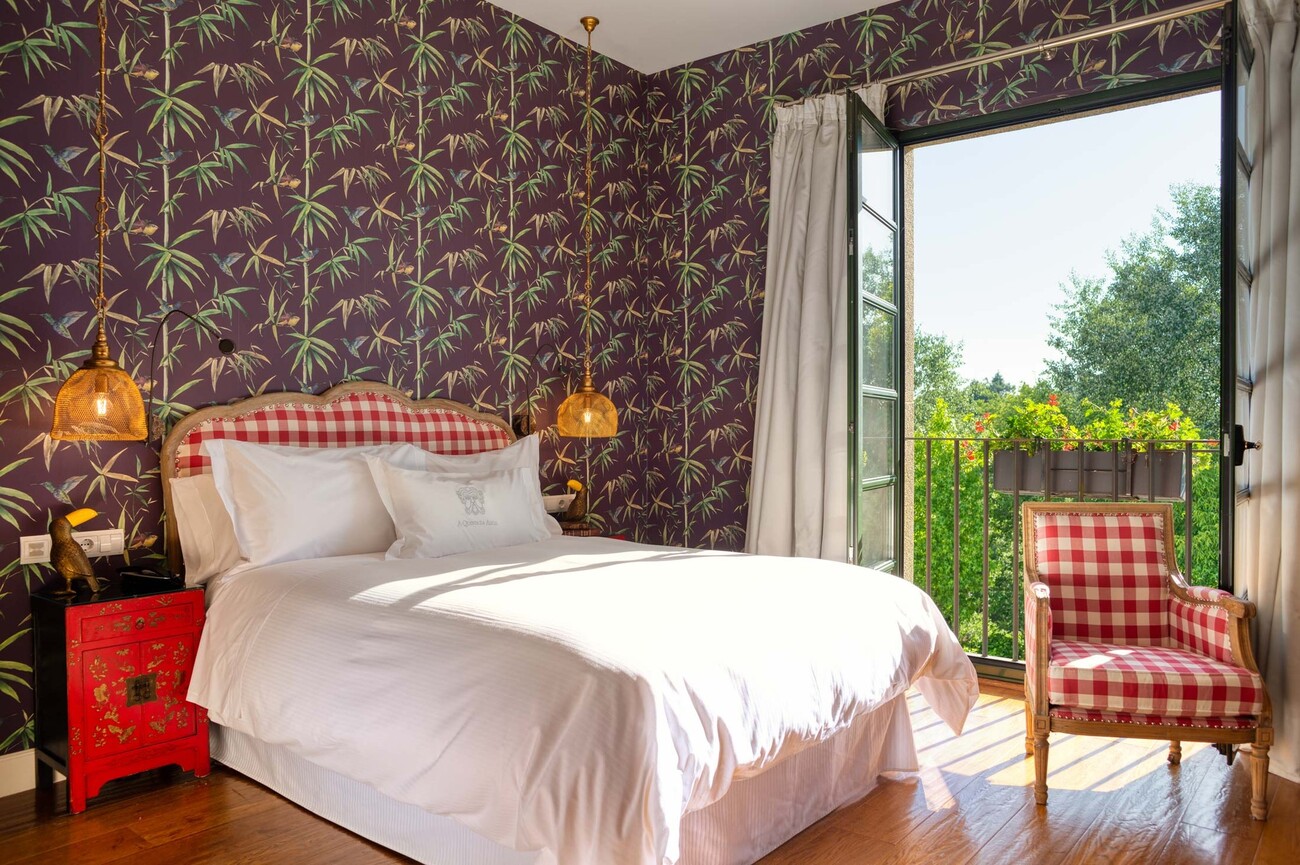
In Bilbao, the hotel places you directly opposite the Guggenheim, with floor-to-ceiling windows framing Frank Gehry's titanium architecture and a rooftop terrace positioned for breakfast above the city. Santiago de Compostela brings a very different atmosphere at A Quinta da Auga, a Relais & Châteaux property set inside a restored eighteenth-century paper mill, surrounded by rivers and gardens yet only around ten minutes from the historic centre.
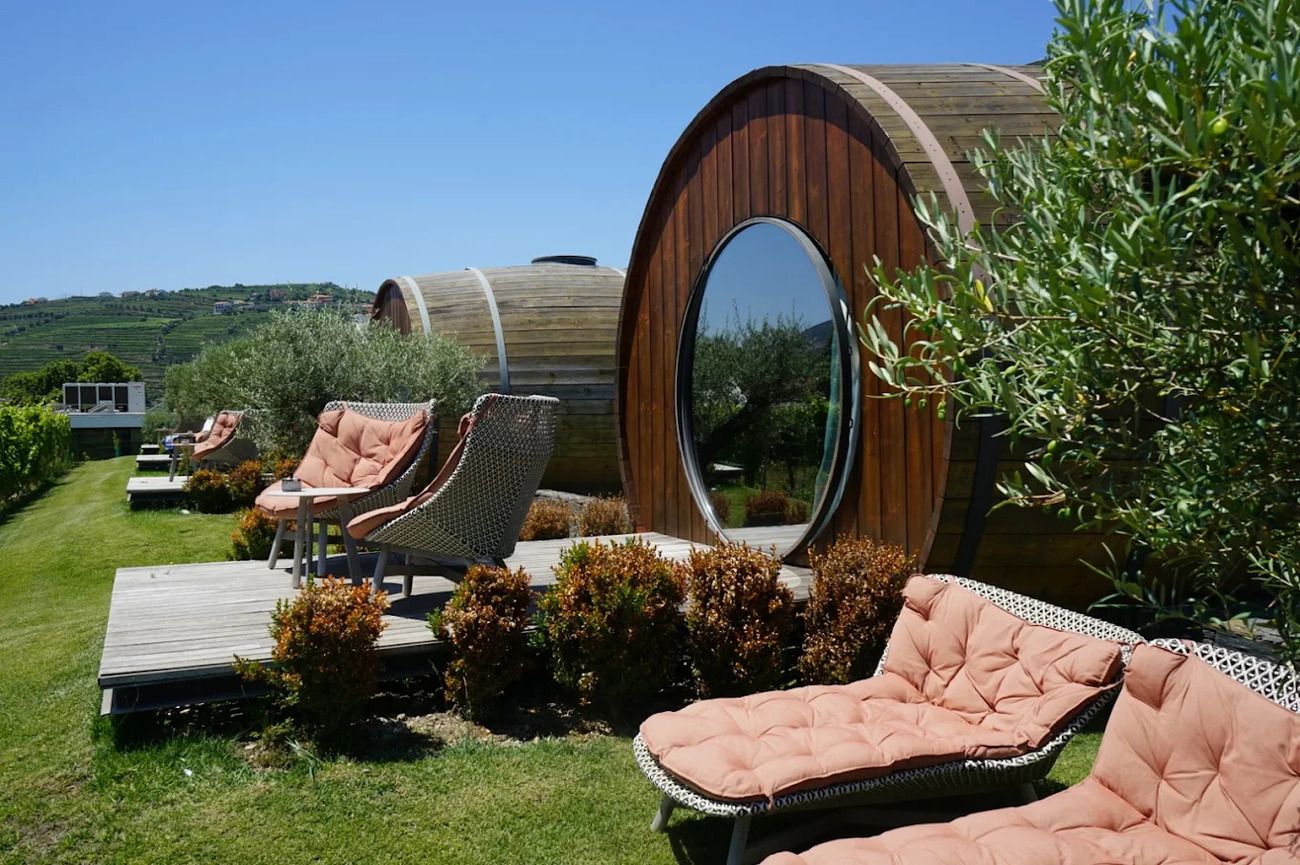
The journey then crosses into Portugal for one night in the Douro Valley at Quinta da Pacheca, where the formality of a city hotel gives way to the intimacy of a working wine estate and dinner among the vineyards. Lisbon provides the final base in a nineteenth-century mansion in Príncipe Real, with hand-painted tiles, private gardens and a quieter style of luxury at the end of the road.
The choice of accommodation matters as much as the individual properties. Across ten days, the itinerary combines three main bases with a carefully placed overnight stay in the Douro Valley, keeping unnecessary hotel changes to a minimum while still allowing each region to shape the journey. The result is four distinct stays across two countries, each reflecting the architecture, landscape and character of its destination.
Chauffeur
or Self-Drive: How the Bilbao to Lisbon Road Trip Works
Every luxury journey runs on careful planning, and the measure of that planning is how little of it the traveller ever has to notice. A two-country road trip creates its own set of practical complications. Portugal's Via Verde electronic toll system can be confusing for rental-car drivers, wine tastings need to be balanced against driving, hotels have to be sequenced carefully, and a one-way journey from Bilbao to Lisbon raises logistical questions that do not exist on a simple return trip. Add timed-entry attractions in Sintra, cellar visits arranged in advance and restaurant reservations across multiple destinations, and the planning can easily become part of the holiday itself.
On the chauffeured version of the journey, those practicalities largely disappear from view. The driver handles tolls, routing, parking and the balance between wine tastings and driving, while roads such as the N222 through the Douro Valley become part of the experience rather than another navigation task.
The arranged self-drive version offers the same journey with the freedom of taking the wheel. Tolls are prepared in advance, routes are planned, tastings are sequenced around driving times and the one-way car arrangements are handled before departure. The result is the same principle in a different form: the logistics are solved before they have a chance to interrupt the road trip.
That is the purpose of the arranged journey: you choose whether you want the passenger seat or the driver's seat, while the planning behind the ten-day route remains largely invisible.
How
the 10-Day Bilbao to Lisbon Road Trip Is Paced
A route can be perfect on paper and still feel wrong in the living, which is why the rhythm of this journey matters as much as the places it connects. Each day follows a deliberately unhurried pattern shaped by both northern Spain and Portugal. Mornings begin slowly, allowing time to enjoy the hotels and their settings. The road usually takes the late morning, when the light is high and scenic stops are easy to make. Lunch is the day's hinge, long by design and chosen as carefully as any attraction.
Afternoons generally centre on one meaningful experience, perhaps a palace, a wine tasting or a harbour, followed by an arrival early enough to enjoy the evening's destination rather than simply sleep in it. Dinner becomes the day's summit in Spain and its gentler close in Portugal, and that subtle change of rhythm is one of the pleasures of travelling through both countries in a single journey.
Nothing about that pacing is accidental. Bilbao to Lisbon can be covered much faster than ten days, but speed would remove much of what makes this particular road trip worthwhile. The journey is designed to leave space for the moments that cannot be scheduled: an unplanned harbour, coffee just across the Portuguese border, a viewpoint discovered from the road, or the moment conversation stops because everyone in the car is looking in the same direction.
Palaces, cathedrals and wine valleys can all be planned in advance. Those quieter moments between them cannot. The purpose of the ten-day itinerary is to leave enough room for both.


Let us know what you love, where you want to go, and we’ll design a one-of-a-kind adventure you’ll never forget.
Get in touch
Miriam
Travel Specialist

Romina
Travel Specialist

Laura
Travel Specialist
Frequently Asked Questions
- Do US travellers need an International Driving Permit for Spain and Portugal?
US travellers planning to drive on this journey should obtain an International Driving Permit before departure and carry it alongside their valid US driving licence and passport. It is also advisable to check the documentation requirements of the rental company before travelling.
- Can I collect a rental car in Spain and return it in Portugal?
International one-way rentals between Spain and Portugal are available through some rental companies, but they are not offered on every route or vehicle category and can involve substantial international drop-off fees. For a Bilbao to Lisbon journey, availability should therefore be confirmed before travel. Revigorate can arrange the most suitable self-drive solution as part of the itinerary.
- What type of car is best for a Bilbao to Lisbon road trip?
A comfortable mid-size or premium vehicle is generally a practical choice for this route. It provides enough space for luggage while remaining manageable on narrower roads, in historic centres and in hotel car parks. The most suitable vehicle will also depend on the number of travellers and the amount of luggage being carried.
- Should restaurants be booked in advance during the road trip?
Advance reservations are recommended for Michelin-starred restaurants, highly regarded local restaurants and popular dining venues, particularly in Bilbao, San Sebastián and Lisbon. Booking ahead is especially worthwhile during the busier summer months and for travellers who have specific restaurants they would like to experience.
- Can the Bilbao to Lisbon road trip be extended beyond 10 days?
Yes. Extra nights can be added in northern Spain, Galicia, the Douro Valley or Lisbon, and Porto can also be incorporated into the journey. Extending the itinerary allows more time for coastal stops, vineyards, historic towns and slower-paced days between the principal destinations.
- Is the Bilbao to Lisbon road trip suitable for families?
Yes. The journey can be adapted for families by adjusting driving times, accommodation and activities according to the ages and interests of the children. Private guides, coastal stops, boat trips and more relaxed sightseeing can all be incorporated into the itinerary.
- Can Revigorate personalise this Spain and Portugal road trip?
Yes. Revigorate can tailor the journey around your interests, preferred pace and travel style, including accommodation, private guides, restaurant reservations, wine experiences and special activities. The route can also be arranged as a self-drive journey or with a private chauffeur, with the logistics planned around your individual itinerary.
Our offices:



Revigorate, Iberian Escapes and Algarve Lifestyle are the registered brand names of APCS Lda . We are a fully authorised travel agency licensed by Turismo de Portugal RNAVT/6867.
In the event of a dispute, the consumer may refer to: RAL - Centros de Arbitragem
Avª. 5 de Outubro, nº. 55, R/C Dtº. 8000-075 Faro, Portugal | Tel: +351 289 823 135 *
* national landline call
E-mail: info@consumoalgarve.pt| www.consumidoronline.pt | Mon to Fri: 9:00 - 13:00 / 14:00 - 17:00