Green Spain Road Trip: Cantabria, Asturias and Galicia Along the Atlantic Coast
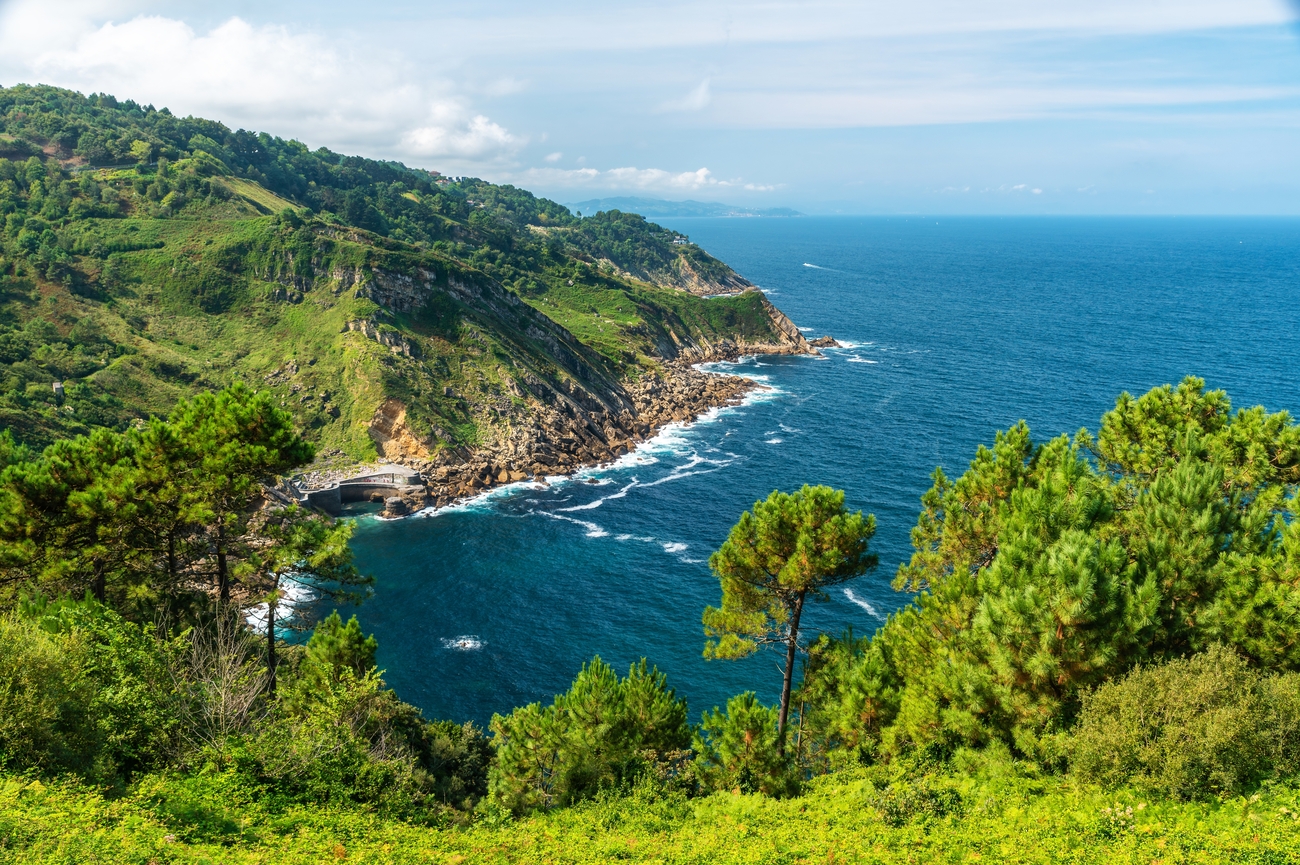
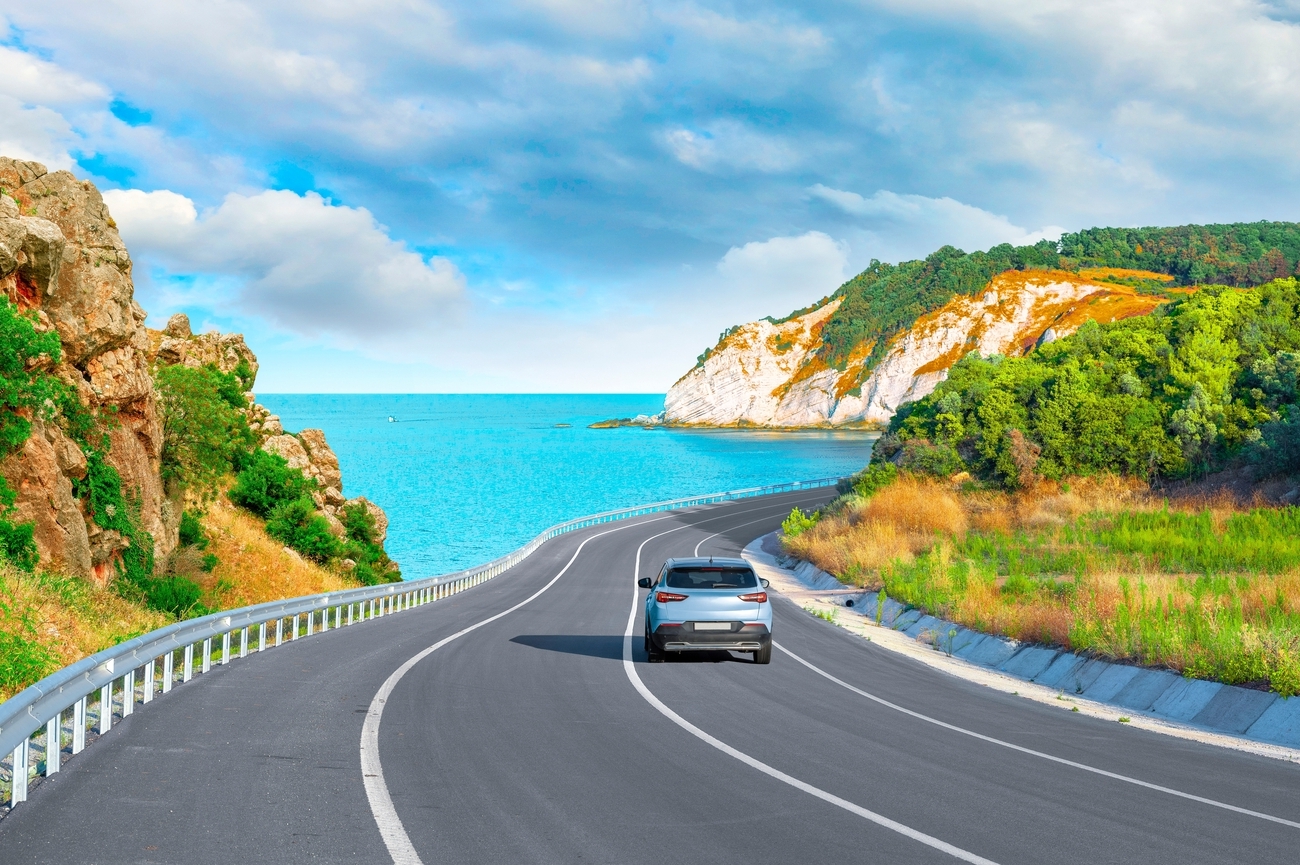
A curve came out of a eucalyptus cut somewhere west of the Cantabrian border, the Atlantic appeared two hundred metres below with the light doing something unreasonable to it, and the car was in the lay-by before anyone had formally decided anything.
Engine off. Doors open. The tick of cooling metal, gulls somewhere under the cliff edge, and a silence with surf at the bottom of it.
Ten minutes passed, or thirty; nobody was keeping the accounts, and nobody reached for the itinerary, because the itinerary, if it is any good, has nothing to say about this. The best stop on a northern Spain road trip is rarely the one that was planned, and the whole route seems to know it: the coast keeps producing these moments the way other roads produce petrol stations.
So let the first rule of a Green Spain road trip be stated before any geography, because everything else in this guide depends on it: on this Atlantic coast, the itinerary serves the drive, never the reverse. This is the landscape our ten-day road trip from northern Spain to Portugal crosses on its way west, travelling from Bilbao through Cantabria, Asturias and Galicia before reaching Santiago de Compostela, with comfort stops wherever the view insists and the option of a wine lunch in the Ribeira Sacra for anyone who wants the journey to take all afternoon.
The complete Bilbao-to-Lisbon road trip guide follows the entire journey from northern Spain into Portugal. What follows concentrates on Green Spain itself: its Atlantic roads, mountains, fishing towns and the landscapes between them, at the pace they deserve.
What
Is Green Spain?
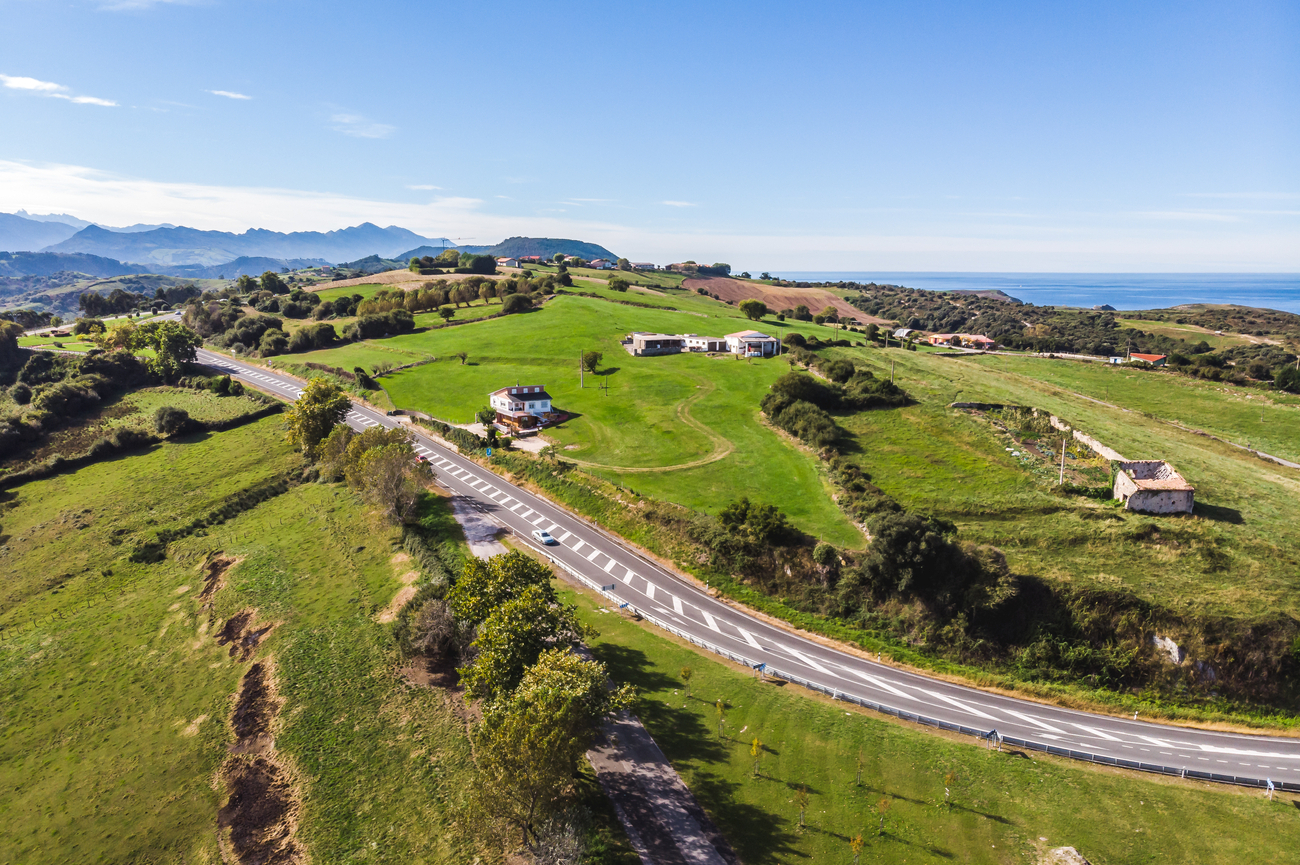
Green Spain is the country's Atlantic north: Cantabria, Asturias and Galicia, with the Basque Country forming its eastern gateway. Together, these regions stretch along the Bay of Biscay and Atlantic coast, separated from Spain's drier interior by mountains. The Spanish call it España Verde, and the name is meteorology as much as marketing. Atlantic weather keeps the landscape intensely green, with hay meadows running to cliff edges, cattle grazing within sound of the surf, and eucalyptus and oak descending almost to the beaches. After rain, the air clears and the valleys seem freshly painted.
That geography shapes the entire road trip. The first difference is the relative absence of the crowds associated with Spain's Mediterranean costas, leaving long stretches of the northern coast noticeably quieter. The second is the combination that defines Green Spain: mountains and ocean sharing the same landscape.
The Picos de Europa rise close behind the coast through Cantabria and Asturias, with snow sometimes lingering on the highest slopes into early summer. Along sections of the road, the Atlantic appears on one side while limestone peaks rise on the other, separated by only a few kilometres of green pasture. Individual landmarks elsewhere in Spain may be grander, but few driving routes repeat this combination of coast, mountains and open countryside so consistently.
Weather
in Green Spain: What to Expect on a Road Trip
Rain is one of the first questions travellers ask about Green Spain, and it is also the reason the region looks the way it does. Cantabria, Asturias and Galicia have an Atlantic climate, and that weather feeds the green valleys, rivers, cider orchards and forests that distinguish northern Spain from the country's drier Mediterranean landscapes.
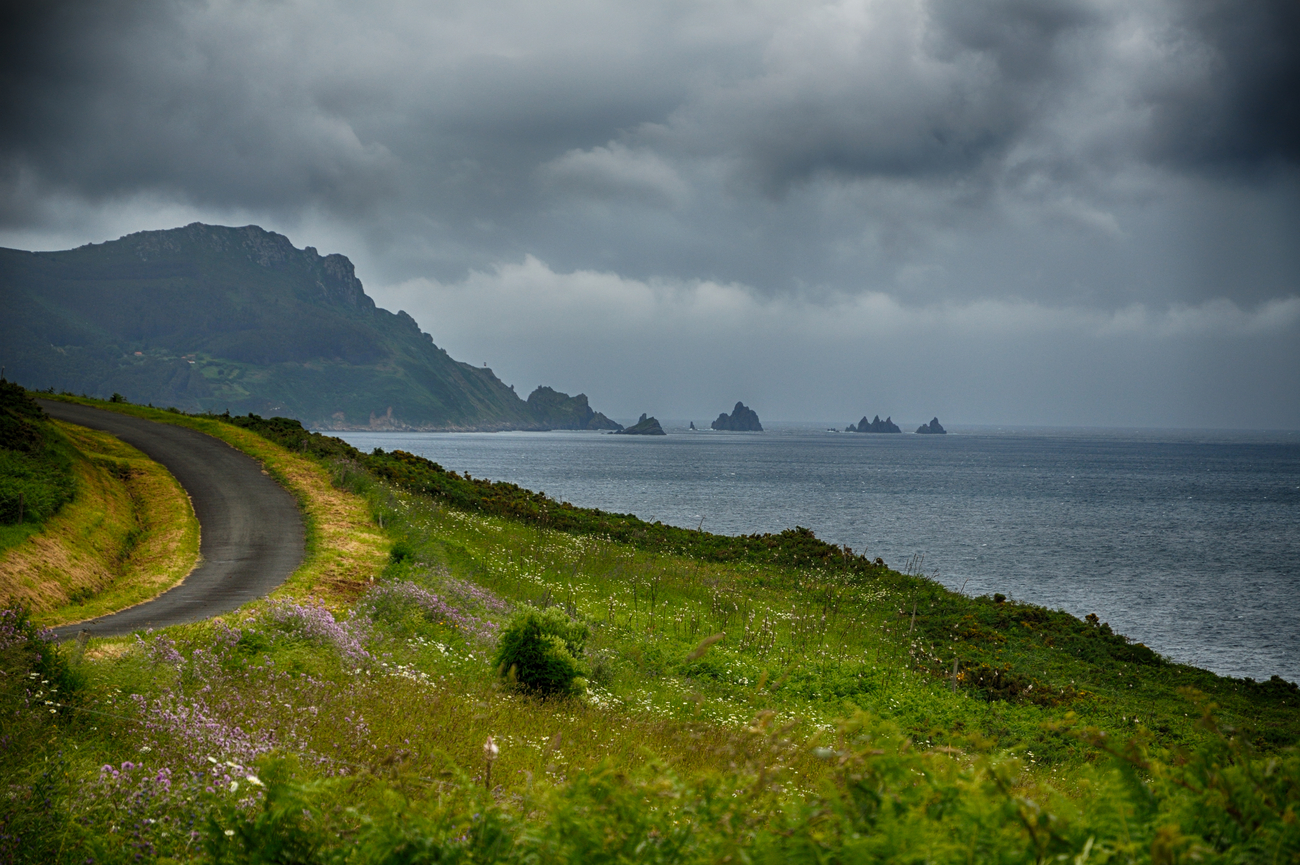
What forecasts rarely convey is how changeable the weather can be. Atlantic fronts move across the coast, bringing periods of rain followed by clearer skies, and some of the most memorable conditions arrive immediately afterwards: rinsed air, sharply defined cliffs, sunlight breaking across estuaries and greens that suddenly look almost theatrical. Some of the best hours of a northern Spain road trip can come just after the rain.
The practical answer is flexibility, which is why this driving route is built with room in the day rather than around a rigid schedule. If the weather turns, the pace slows and a viewpoint might become a café with a window for a while. When the skies clear, the road is still there and the landscape often looks better for having waited.
Pack a lightweight waterproof layer and be prepared for changing conditions, even during the May to October driving season. The Atlantic weather is not something to plan around so much as part of travelling through Green Spain itself. Travellers often arrive worrying about the rain and leave understanding that without it, this coastline would not be Green Spain at all.
Cantabria Coast Road: Santander, San Vicente de la
Barquera and the Picos de Europa
The Green Spain road trip enters Cantabria as the Basque hills begin giving way to a coastline shaped by headlands, estuaries and fishing towns. The road climbs to a cliff shoulder and hands you the whole bay, drops to cross a river mouth at water level, threads a harbour town, then climbs again, changing its mind every few kilometres in the most rewarding way a road can.
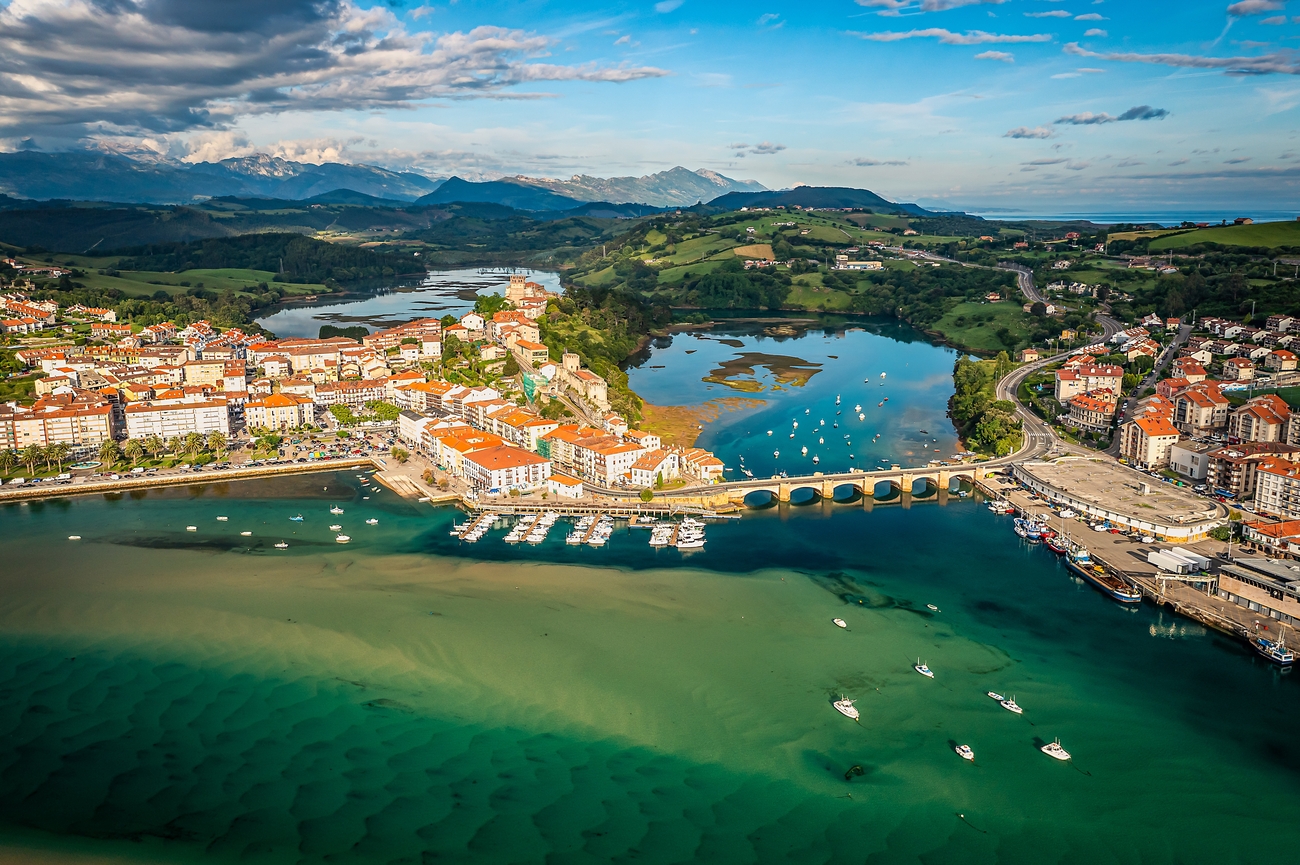
The estuaries add their own theatre. At high tide they sit brimming and mirror-still, doubling the surrounding hills; at low tide they retreat into shining flats where herons stalk and moored boats lean on their keels. The same stretch of road can therefore look entirely different a few hours later. Santander appears elegantly around its broad bay, while farther west San Vicente de la Barquera sits beneath the Picos de Europa, its medieval bridge, harbour and mountain backdrop forming one of Cantabria's defining coastal views.
The towns themselves, their historic quarters, seafood tables and stories, belong to our slow-coast journey through Santander and San Vicente de la Barquera. Travellers who would rather explore this same stretch of Green Spain without taking the wheel can follow it on the FEVE narrow-gauge line, whose trains shadow sections of the coast remarkably closely.
For the road trip, however, much of the pleasure lies between the towns: the corniche stretches, estuary bridges, coastal viewpoints and the repeated appearance of the Picos de Europa behind the Atlantic landscape. Cantabria rewards the traveller who treats the road itself as part of the destination rather than simply the way to reach the next stop.
That leads to one useful driving principle: resist the motorway when time allows. The autovía can move you quickly across northern Spain, but the slower coastal roads reveal the landscapes this journey is designed to experience. On an arranged itinerary, the route is planned accordingly, using the scenic roads where they matter and the faster alternatives only when the day requires them.
Asturias
Coast Road: Picos de Europa and Atlantic Scenery
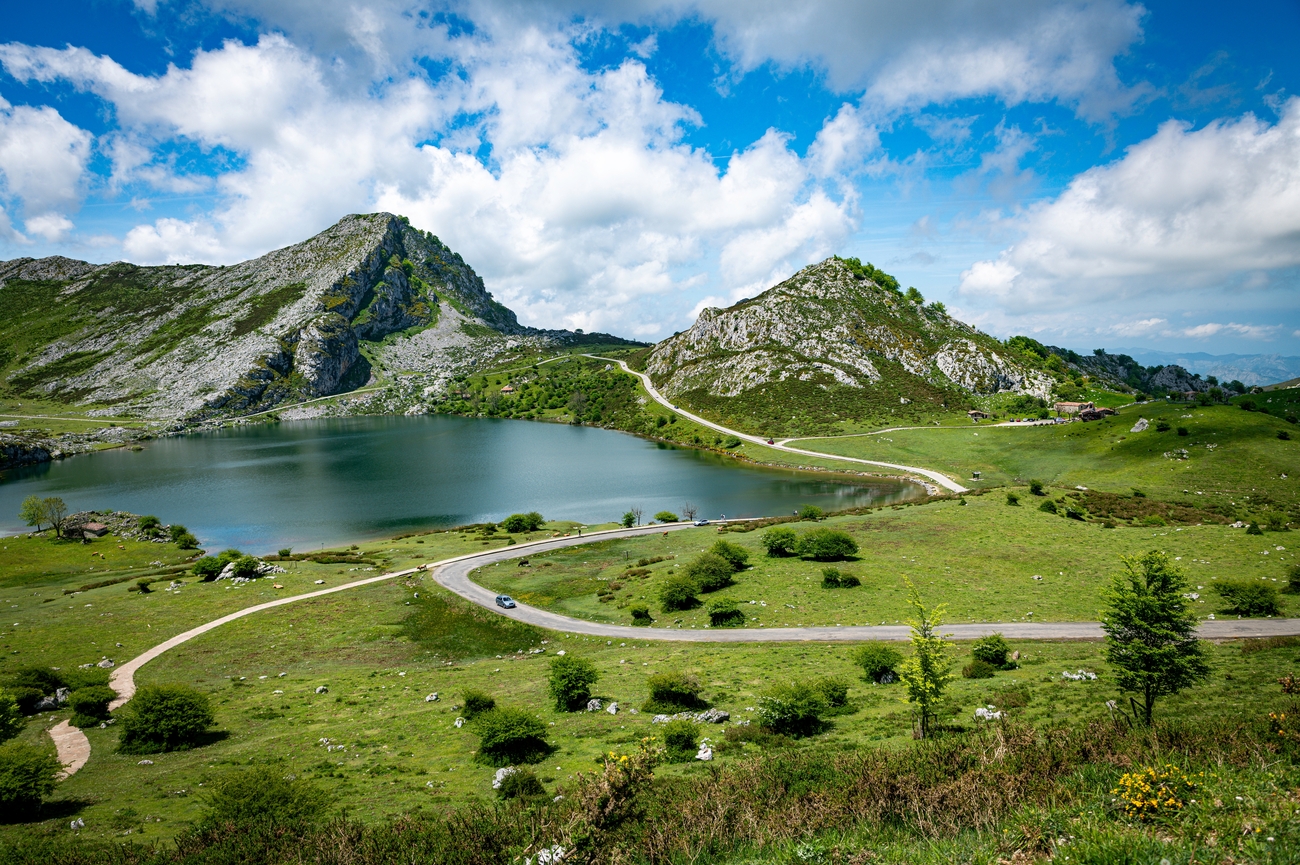
Asturias announces itself gradually, then completely. The land steepens, the valleys cut deeper, the barns turn to stone, and the road begins one of the finest sea-and-mountain stretches of the Green Spain coast. The Picos de Europa crowd close behind the shoreline, green pastures run towards the water, and the Atlantic keeps appearing between the hills before disappearing again around the next bend.
Driving through Asturias has its own rhythm: climb, curve, reveal, descend, repeat. Before long, the road itself becomes as memorable as any destination along it.
The temptations are constant and small. A fishing harbour glimpsed from above, boats gathered inside a narrow cleft in the coast. A side road dropping towards a hidden cove. A roadside mirador with two benches and a view that would be a major attraction almost anywhere else.
Give in to at least one of them. This section of the route is deliberately paced to leave room for spontaneous stops, because what Asturias does particularly well is the meeting of mountains and Atlantic coast. There is pasture through one window and sea through the other, fishing villages beneath the slopes and the persistent feeling that whatever the next headland is hiding will justify the curve.
It usually does. By the time the road crosses west into Galicia, Asturias already feels like somewhere you left too soon.
Food
and Cider on the Green Spain Coast Road
Somewhere in Asturias comes the realisation that the drive has been organising itself around meals, and it should be embraced rather than resisted. Food is one of the defining pleasures of a Green Spain road trip, particularly along the fishing harbours of Cantabria, Asturias and Galicia, where the Atlantic often determines what reaches the table that day.
The rules are few and worth remembering. Eat at the harbours, where the morning's boats help shape the menu and the terrace often overlooks the fleet that caught it. Give lunch time rather than squeezing it between stops. The afternoon's driving is deliberately paced to allow for a long meal, and on this coast lunch is part of the journey rather than an interruption to it.
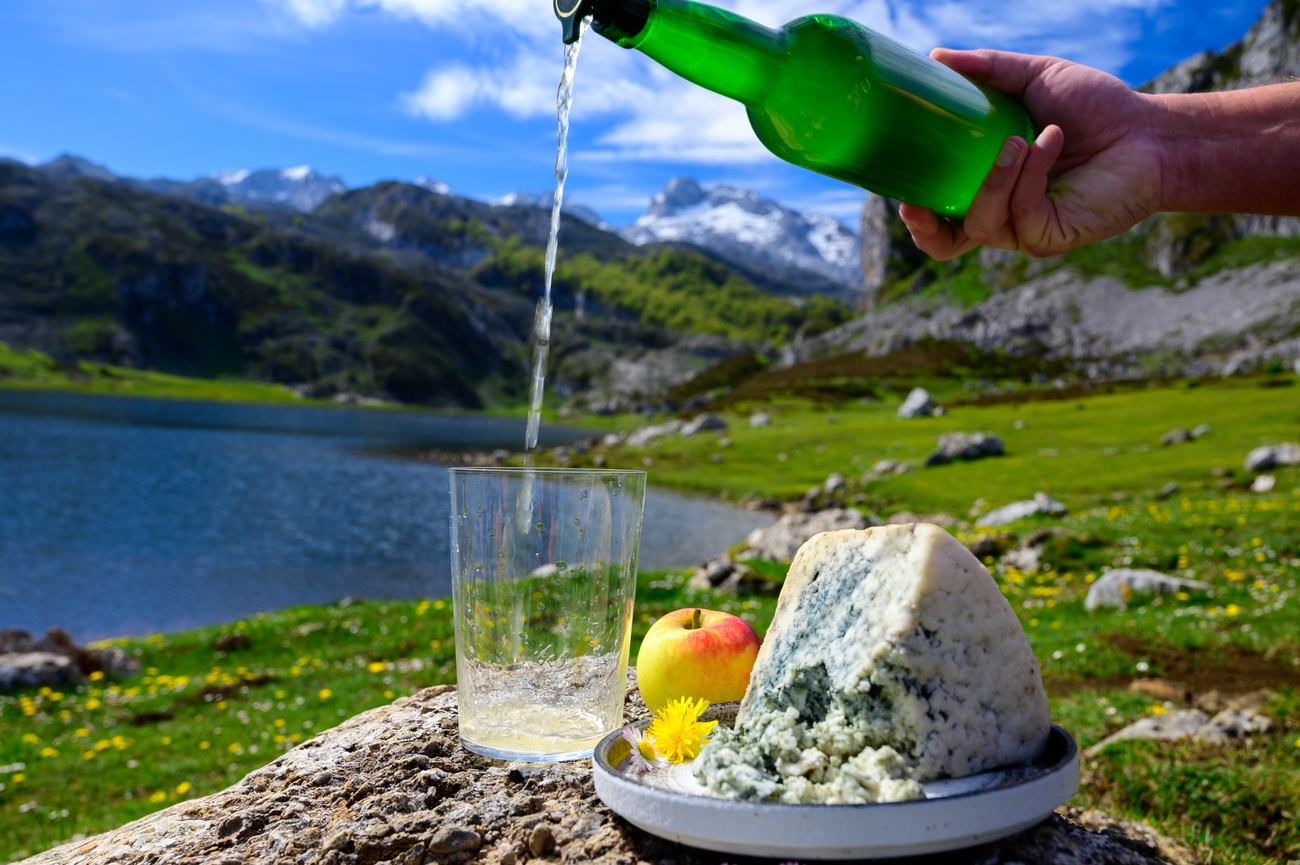
Order what is fresh and local, preferably on the recommendation of the restaurant. In Asturias, make time for cider, poured from a height into a wide glass and drunk immediately in small amounts. The ritual is part of Asturian culture, and a traditional sidrería is one of the most characteristic places to experience it.
The difference between a good lunch stop and a memorable one often comes down to local knowledge: which harbour, which restaurant and which day. Independent travellers should ask their concierge for current recommendations rather than relying solely on the map. On a Revigorate journey, a carefully chosen lunch stop can be incorporated into the westward drive, while the optional Ribeira Sacra wine lunch adds a completely different gastronomic experience before the route reaches Santiago de Compostela.
Galicia Coast Road: Rías, Costa da Morte and Ribeira
Sacra
Somewhere beyond the Eo estuary, the landscape changes register. The place names turn Galician, the x's multiply on the signs, and hórreos begin appearing beside farmhouses, the region's traditional stone granaries raised on distinctive supports above the ground. On the Atlantic side, the rías open into long, sheltered inlets, their waters dotted with shellfish rafts and fishing villages.
Each ría reorganises the road into a slow scenic negotiation: out along one wooded shore, around the head of the inlet and back down the opposite side, with the water changing colour as the road turns. Progress on the map slows, but few travellers will want to accelerate it. By this point, the question is no longer how quickly you can reach Santiago de Compostela, but how much of Galicia's coast you are willing to leave unexplored.
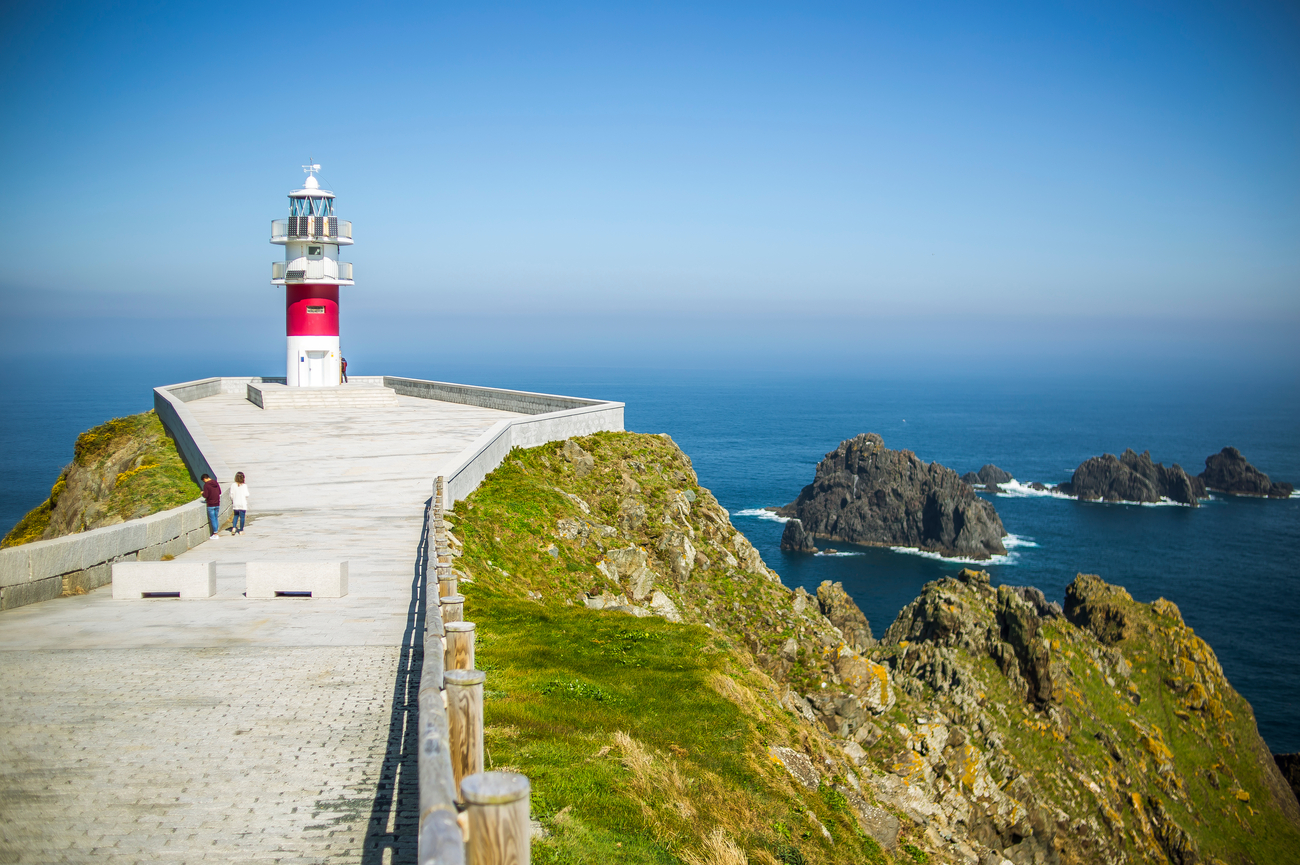
Farther west lies the Costa da Morte, one of Galicia's most dramatic stretches of coastline. Its name, the Coast of Death, reflects centuries of shipwrecks along an exposed Atlantic shore of rocky headlands, fishing villages and solitary lighthouses. Cape Fisterra stands at its western edge, long associated with the idea of finis terrae, the end of the earth. At sunset, with nothing but open Atlantic beyond the lighthouse, the description still feels entirely understandable.
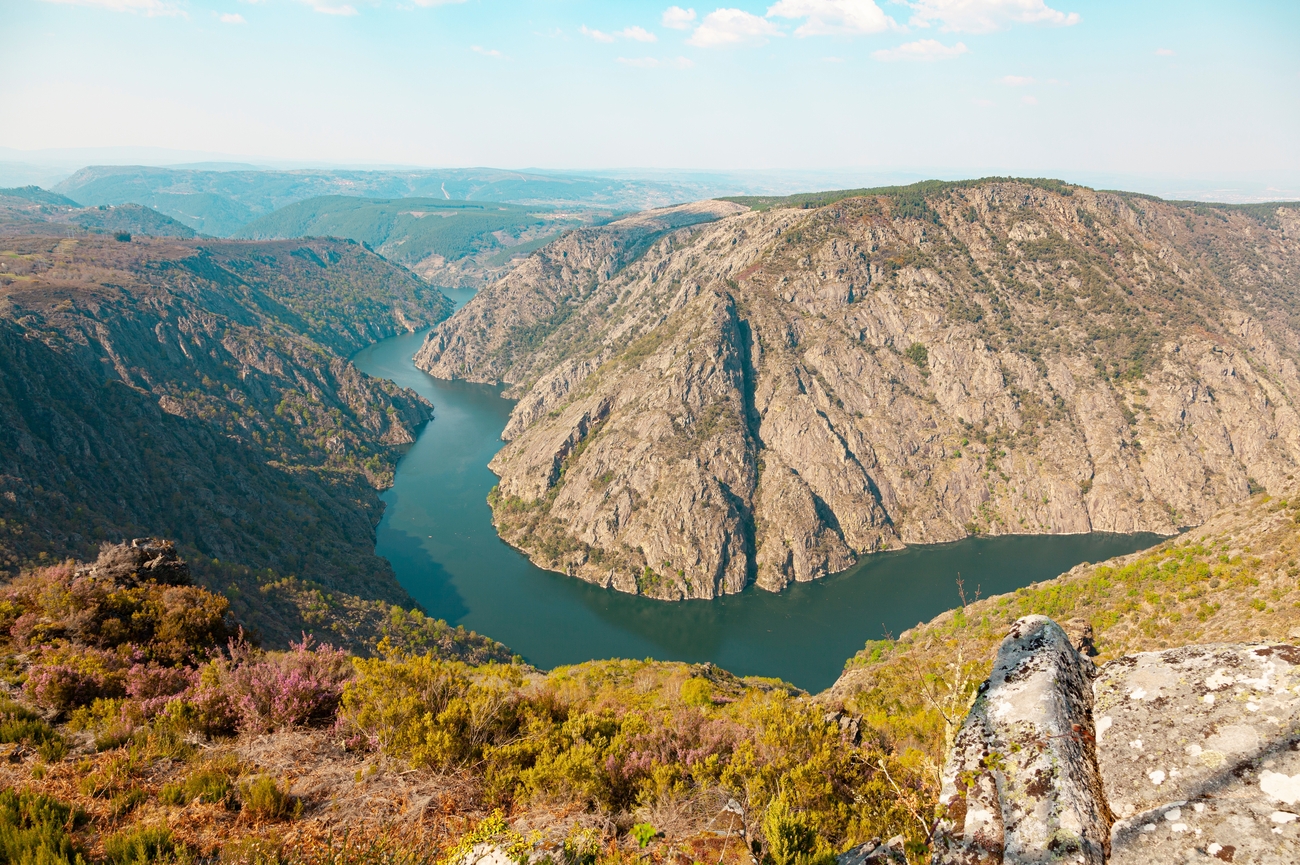
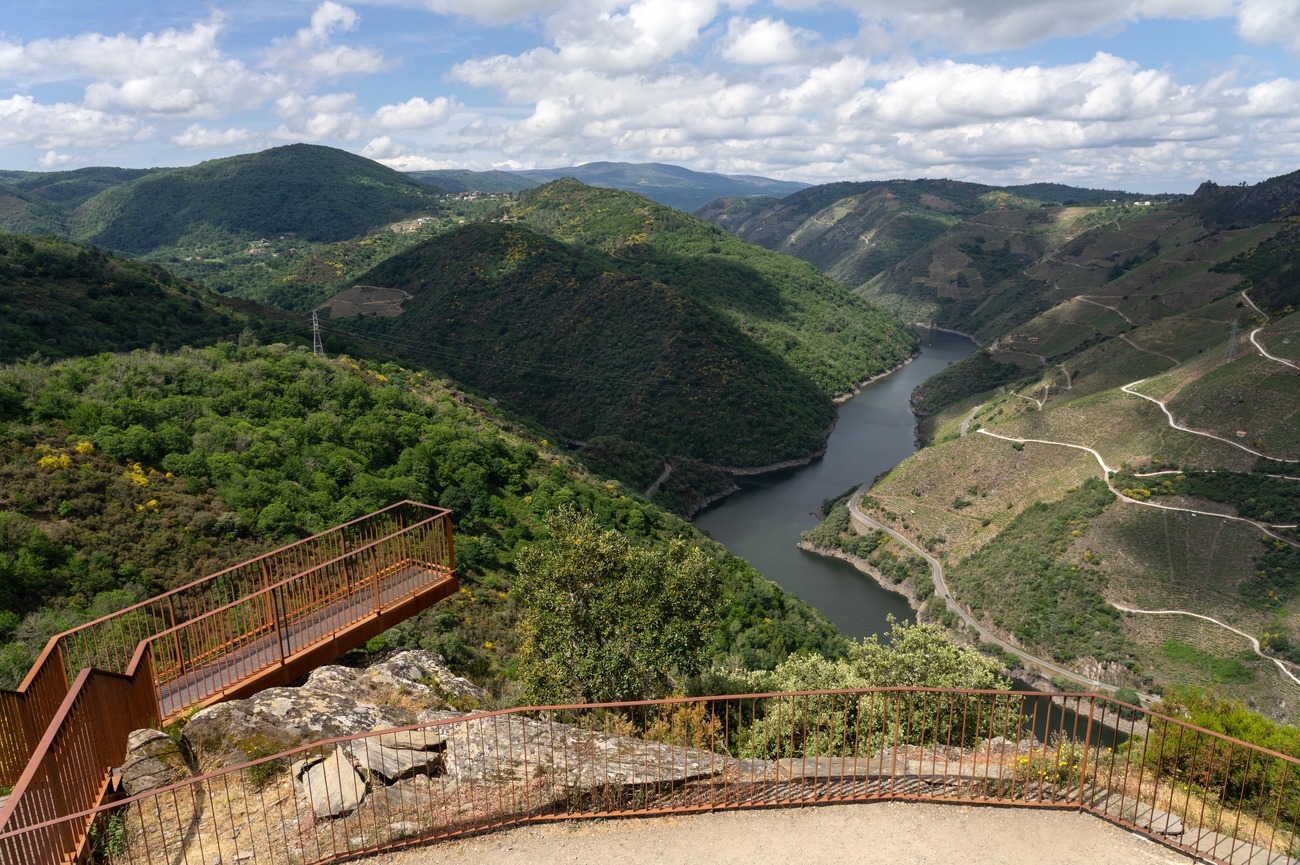
The road also offers an important choice on the approach to Santiago de Compostela. Instead of remaining on the coast, travellers can turn inland through the Ribeira Sacra, where the route follows the valleys and gorges of the Miño and Sil rivers. Vineyards cling to steep terraces above the water, while historic monasteries recall the religious communities that gave the region its name. It is one of the most rewarding inland driving landscapes in Galicia and an atmospheric way to approach Santiago from the south-east.
Galicia is also where the Green Spain road begins to connect visibly with the Portuguese half of the journey. South of Santiago, the River Miño eventually forms part of the border between Spain and Portugal. Beyond it lie the terraced vineyards of the Douro Valley and the wider story of Porto and port wine country, explored in our guide to crossing into Portugal. The landscapes change, the language changes and the wines change, but the road continues without breaking the journey.
Best
Detours on a Green Spain Road Trip: Picos de Europa, Cape Fisterra and Ribeira
Sacra
A coastline this varied naturally produces worthwhile side roads, and three stand out on a Green Spain road trip. The first turns inland from Cantabria or Asturias towards the Picos de Europa, where an hour's climb transforms the view from Atlantic coast to mountain amphitheatre, with limestone peaks rising above deep green valleys and gorges. It is possible to experience the mountains and return to the coast within the same day, making the Picos one of the most rewarding extensions along this route.
The second is the drive to Cape Fisterra on Galicia's Costa da Morte, best saved for a clear late afternoon. The lighthouse stands above the open Atlantic at what was long imagined as the end of the known world, and sunset here gives the detour a sense of occasion rather than simply another stop on the itinerary.
The third is the Ribeira Sacra, the inland alternative on the approach to Santiago de Compostela. Here the road follows the gorges of the Miño and Sil rivers through steep terraced vineyards and historic monastery country, exchanging the Atlantic coast for one of Galicia's most dramatic wine landscapes.
The calculation behind these detours is simple: each adds time to the journey, but each also turns a drive through northern Spain into a deeper experience of the regions it crosses. On our ten-day route, the Ribeira Sacra is the detour built into the journey. Travellers with more time can extend the Green Spain section by two nights, bringing the Picos de Europa, Costa da Morte and Cape Fisterra comfortably within reach.
For travellers who want to explore northern Spain more slowly, those additional nights can transform this single westward driving day into a much deeper journey through Cantabria, Asturias and Galicia.
How
to Drive the Green Spain Coast: Self-Drive or Chauffeur
The Green Spain coast rewards a specific approach: keep the daily distances short wherever possible, because this road has a habit of turning every planned hour into something longer. A viewpoint appears, a harbour deserves a stop, lunch takes more time than expected, and the interruptions become part of the journey rather than something delaying it.
Arrive early when you can. Many of the hotels along this coast were chosen as much for their setting as their rooms, and a harbour town at six in the evening, when the fishing boats are back and the terraces begin to fill, feels very different from the same place seen briefly through a windscreen after dark. Build each day around one unhurried experience, perhaps a market, a viewpoint reached on foot or a long lunch, and leave enough space for the road to provide the rest.
Timing matters too. Morning often suits the estuaries, when the water is calmer and the reflections are strongest. The middle of the day belongs to the drive itself, when changing Atlantic weather can alter the landscape within minutes. The final hours before sunset often bring the coast at its most dramatic, with cliffs catching the low light and the Picos de Europa rising behind the harbours.
Then comes the question of who drives. A private chauffeur turns the Green Spain coast into something closer to landscape cinema, with a local driver handling the road while you concentrate on the views, stops and long lunches. A fully arranged self-drive suits travellers who consider taking the wheel part of the experience, with routes planned, hotels sequenced and enough flexibility already built into the day.
On our ten-day route, Green Spain is crossed in one deliberately unhurried driving day between Bilbao and Santiago de Compostela. Travellers who want to experience Cantabria, Asturias and Galicia more slowly can extend this section to four or five days, adding further coastal stops and overnight stays along the way.
The deeper question of why this Atlantic coast belongs in the same journey as Portugal is explored in One Journey, Two Countries. The short answer is that the road itself makes the connection: Green Spain does not feel like the end of the journey, but the landscape that naturally leads you towards the Portuguese border.
Why
a Green Spain Road Trip Needs Time for Unplanned Stops
It happens again on the last Galician afternoon, of course.
A curve, a gap in the pines, the Atlantic suddenly below with a lighthouse standing off to the west and the light once more behaving unreasonably, and the car eases onto the gravel without anyone formally deciding.
Doors open. Engine ticking. Somebody says nothing at all, which is the correct remark.
By now, the stops no longer need justifying. The coast has cured everyone of that. Down the road, the next headland is already preparing its own view, and Santiago de Compostela is still comfortably ahead because this journey was deliberately paced to leave room for moments that no itinerary can schedule.
That is the real luxury of driving through Green Spain: not simply reaching Cantabria, Asturias and Galicia, but having enough time to stop when the Atlantic gives you a reason.


Let us know what you love, where you want to go, and we’ll design a one-of-a-kind adventure you’ll never forget.
Get in touch
Miriam
Travel Specialist

Romina
Travel Specialist

Laura
Travel Specialist
Our offices:



Revigorate, Iberian Escapes and Algarve Lifestyle are the registered brand names of APCS Lda . We are a fully authorised travel agency licensed by Turismo de Portugal RNAVT/6867.
In the event of a dispute, the consumer may refer to: RAL - Centros de Arbitragem
Avª. 5 de Outubro, nº. 55, R/C Dtº. 8000-075 Faro, Portugal | Tel: +351 289 823 135 *
* national landline call
E-mail: info@consumoalgarve.pt| www.consumidoronline.pt | Mon to Fri: 9:00 - 13:00 / 14:00 - 17:00