Crossing Into Portugal: Douro Valley Road Trip and Port Wine Country
The road gives no warning.
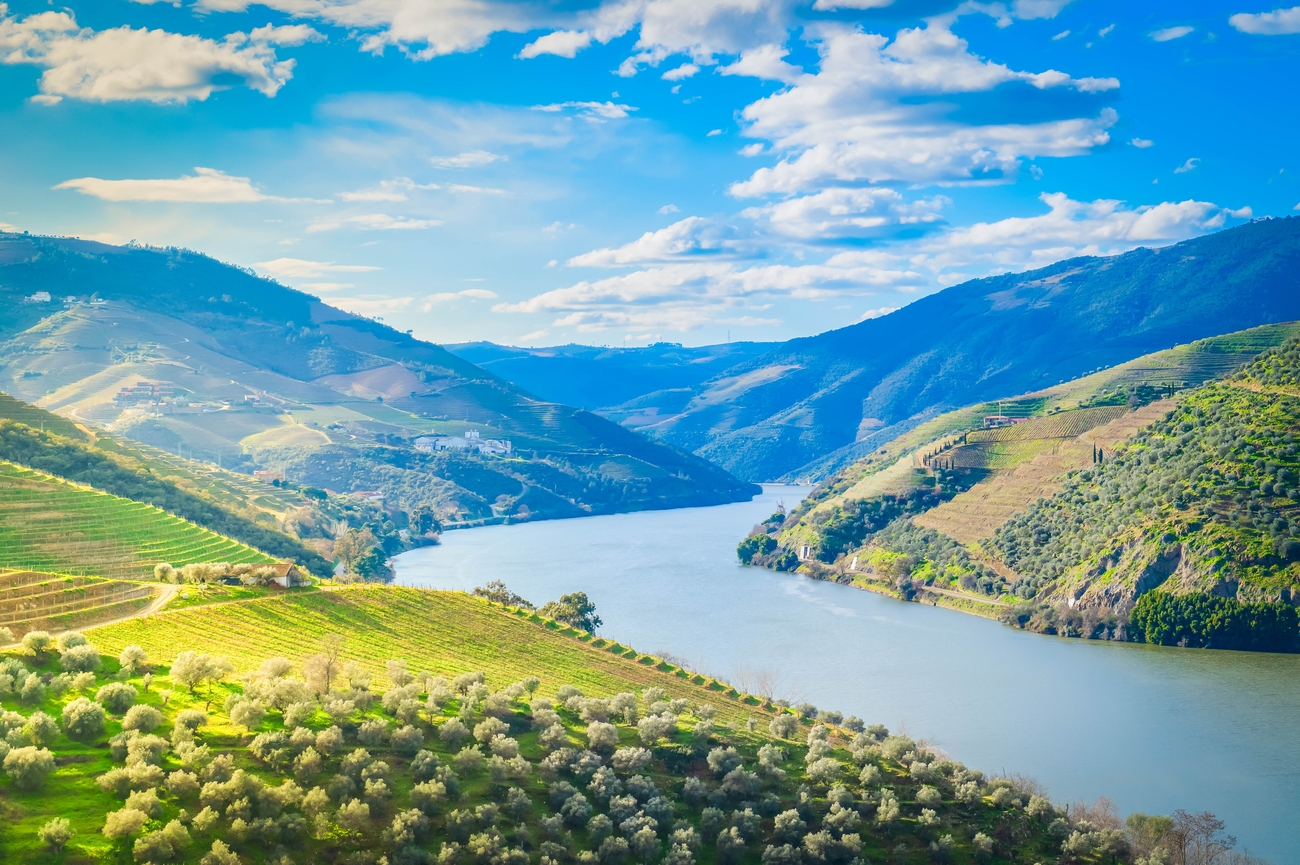
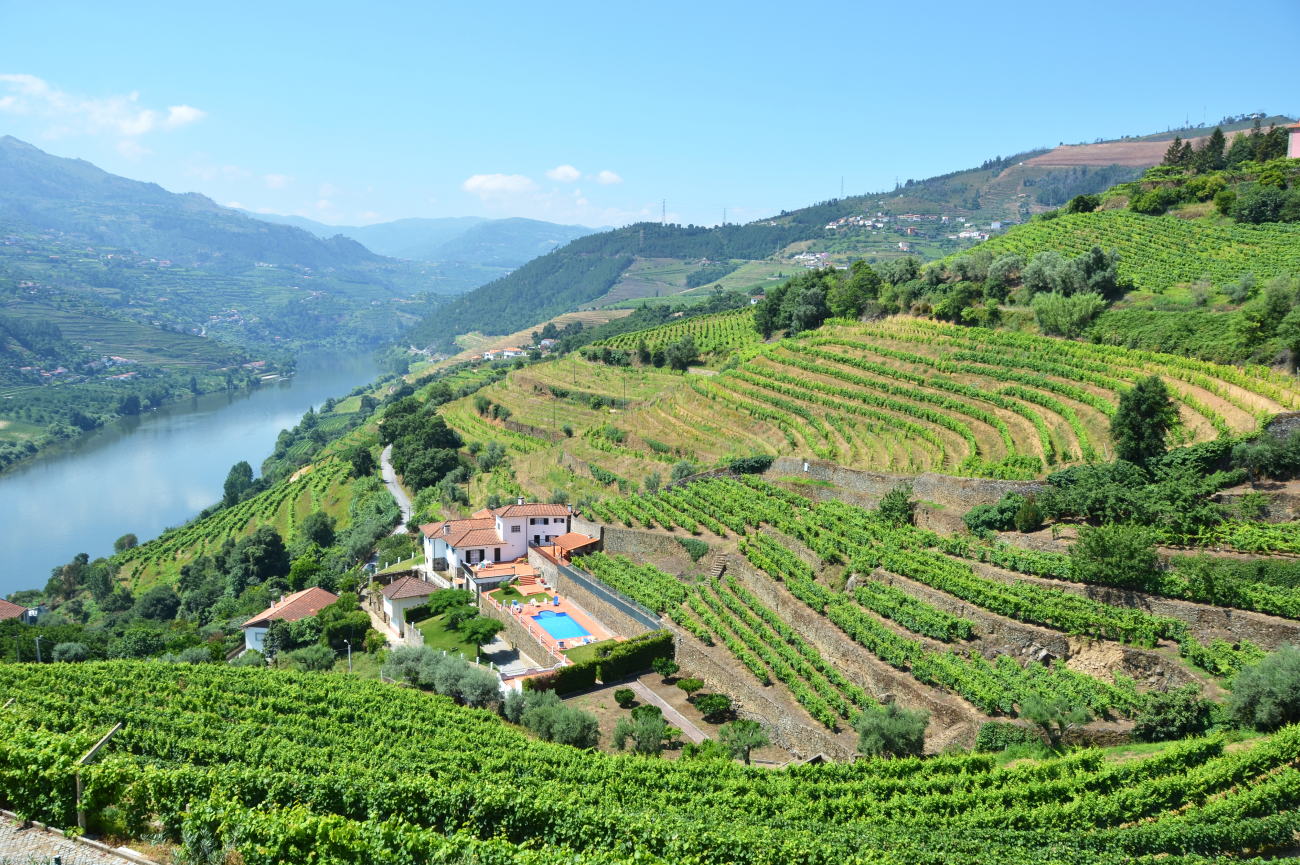
It climbs out of Peso da Régua through scrub oak and ordinary bends, doing the unremarkable work of a country road, and then swings around a shoulder of hill and the whole Douro Valley opens beneath the windscreen at once. The river lies far below, wide, slow and metal-coloured. Above it, every slope has been cut into terraces, step upon step held by dry-stone walls and running towards the skyline like contour lines drawn by someone with infinite patience. Nobody in the car says anything for a moment.
Much of what defines the Douro Valley is visible from that first bend. Its wine landscape was formally demarcated in 1756 under the Marquis of Pombal, establishing boundaries and controls around the production and trade of port wine. Centuries later, those steep vineyard terraces remain the defining image of one of Portugal's most important wine regions.
Today, the Alto Douro Wine Region is inscribed as a UNESCO World Heritage Site. On this journey, it appears on day six or seven of the Bilbao-to-Lisbon route, after the road leaves Galicia and crosses from northern Spain into Portugal. The complete two-country journey is mapped in our Spain and Portugal road trip guide, while our Road Trip from Northern Spain to Portugal turns the Douro into more than a stop along the way: the itinerary stays overnight at a wine estate among the terraces before continuing south towards Lisbon.
Driving
from Northern Spain into Portugal: Crossing the River Miño
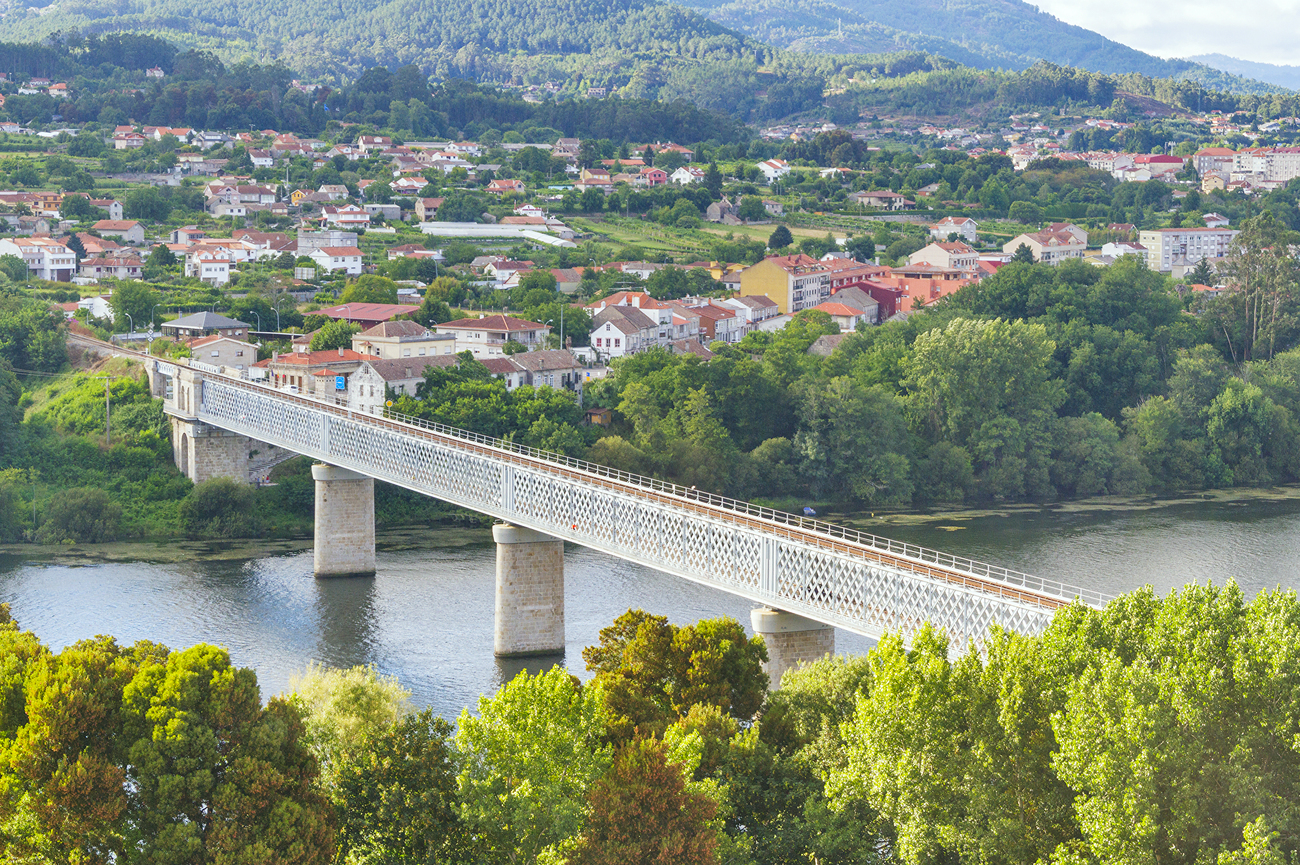
The crossing from northern Spain into Portugal happens at the River Miño and takes only moments. Spain and Portugal are both part of the Schengen Area, so there is normally no routine border check when driving between them. The frontier reveals itself quietly: a bridge over the river, vineyards on both banks and a change in the language and typeface of the road signs.
Behind you lies the Atlantic coast of Cantabria, Asturias and Galicia, whose landscapes have their own story in our Green Spain coast road. Ahead is northern Portugal and a road that will soon turn inland towards one of Europe's great wine landscapes.
The first Portuguese hour feels like a decompression. Villages turn whitewashed, roofs become terracotta, roadside cafés serve espresso in smaller cups and the pace seems to drop another gear without anybody touching the accelerator. Written Portuguese looks reassuringly familiar after Galicia, while hearing it spoken quickly reminds you that you have crossed into another country.
There is one practical detail worth understanding before driving in Portugal. The motorway network combines traditional toll roads with stretches that use exclusively electronic tolling. Travellers using a foreign-registered vehicle on electronic-only roads need an activated payment method, with several options available for visitors. On an arranged journey, these details are handled before the car moves, leaving the traveller to concentrate on the road rather than the toll system.
Then the road turns inland and begins climbing towards the Douro Valley, and the landscape starts arranging itself into terraces.
Douro
Valley Wine Country: Quintas, Terraces and Port Wine
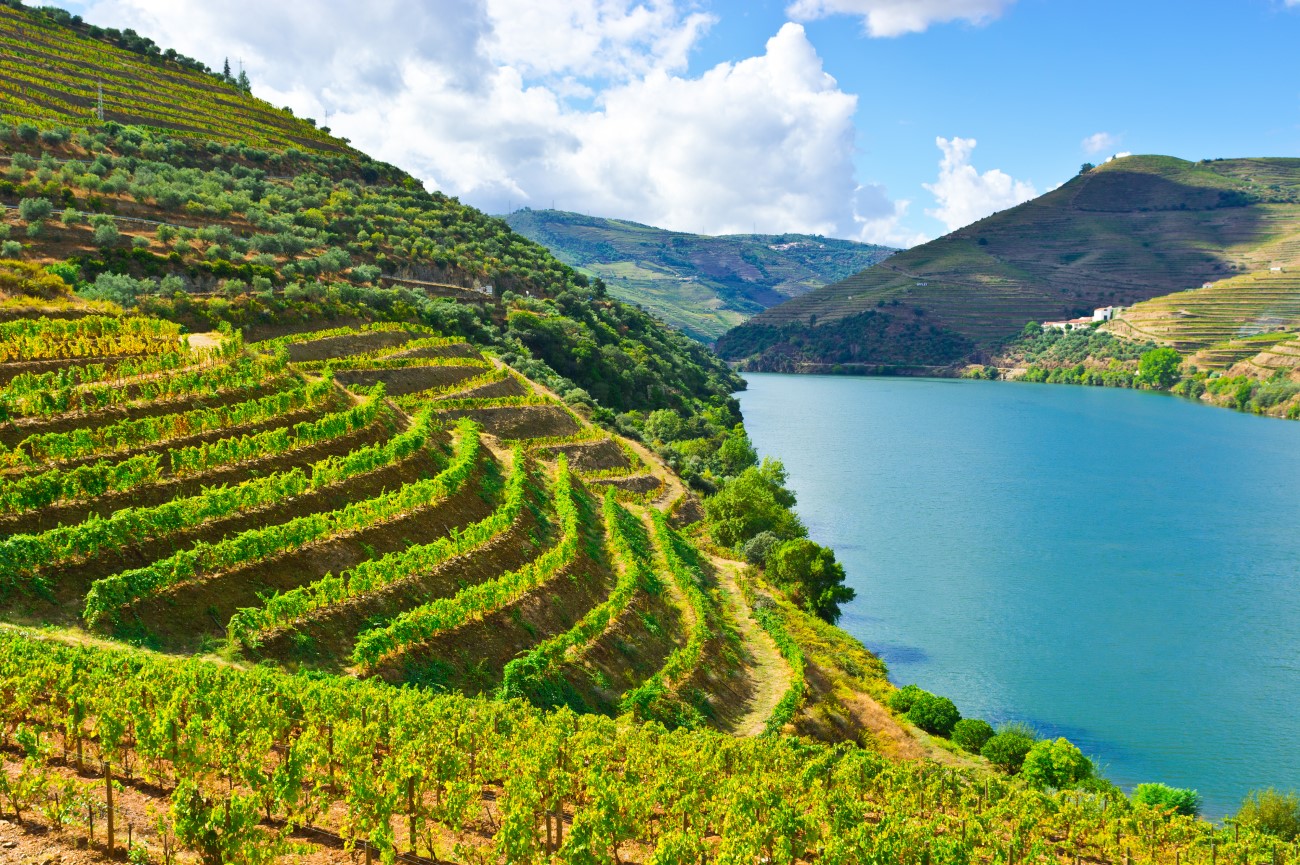
The Douro rises in Spain as the Duero, crosses into Portugal and flows west towards the Atlantic at Porto. Along its middle reaches, the river cuts through steep schist hillsides that generations of growers reshaped into vineyard terraces known as socalcos. These terraces define the landscape and form part of the Alto Douro Wine Region's UNESCO World Heritage designation.
The wine estates are known as quintas, many of them still working properties where vineyards, cellars, accommodation and dining occupy the same estate. Pinhão sits at the heart of the wine country, a small riverside town whose railway station is decorated with blue-and-white azulejos depicting scenes from the grape harvest. Downstream, Peso da Régua has long served as one of the principal gateways to the valley. Travellers wanting to explore the region beyond this particular road trip can find its viewpoints, villages, wine estates and river experiences in our Things to Do in the Douro Valley guide.
Port is the fortified wine that made the Douro internationally famous. Grape spirit is added during fermentation, preserving natural sweetness and increasing the alcohol level before the wine is aged into styles ranging from youthful ruby ports to long-aged tawnies. The Douro also produces increasingly important unfortified red and white wines, so tastings at many quintas now provide an opportunity to experience both sides of the region's winemaking tradition.
The principal grape varieties are worth knowing. Touriga Nacional and Touriga Franca are among the Douro's most important red grapes, while Tinta Roriz is the Portuguese name used here for Tempranillo. Older vineyards may contain numerous varieties planted together as field blends, harvested and fermented collectively in a tradition that predates modern single-variety winemaking.
Some quintas also continue the tradition of treading grapes by foot in granite lagares during the harvest. Visitors may occasionally have the opportunity to take part, turning one of the Douro's oldest winemaking practices into one of its most memorable experiences.
Do You Need a Car or Driver in the Douro Valley?
A car gives travellers considerably more freedom in the Douro Valley. Rail services reach Peso da Régua and Pinhão, but many quintas, viewpoints and smaller villages lie away from the railway along steep and winding roads.
For a wine-focused itinerary, a private driver offers an obvious advantage. Tastings can be enjoyed without one person having to remain behind the wheel, while the narrow roads between estates become part of the scenery rather than a navigation problem. A self-drive remains an excellent option for travellers who enjoy driving, provided the day's tastings and routes are planned accordingly.
N222 Douro Valley Scenic Drive: Peso da Régua to
Pinhão
The N222 between Peso da Régua and Pinhão follows the Douro through one of the valley's most memorable driving stretches. For roughly twenty-seven kilometres, the road traces the river's south bank, with terraced vineyards rising above one side and the water appearing below the other. Quintas punctuate the route with whitewashed entrances, vineyard walls and names that have been part of the landscape for generations.
Late afternoon is particularly rewarding, when the lower light begins to define the terraces and dry-stone walls more clearly. The road itself is part of the experience, opening and closing views of the Douro as it follows the contours of the valley.
Two viewpoints are especially worthwhile along this section. Miradouro da Boa Vista offers broad views across the river and surrounding terraces, while Casal de Loivos, above Pinhão, looks down across one of the Douro Valley's most recognisable landscapes. Both can be incorporated easily into the drive without turning the day into a sequence of rushed stops.
The road is enjoyable to drive, but it is also one of the places where a chauffeur can add real value to a wine-focused itinerary. With somebody else at the wheel, the N222 becomes part of the scenery rather than a navigation task, and wine tastings no longer have to be balanced against driving.
On the chauffeured version of our road trip, the arrival through the Douro is timed so that the road, viewpoints and late-afternoon light become part of the experience rather than simply the route to the hotel.
Staying
Overnight in the Douro Valley: Quinta Hotels and Wine Estates
Many visitors experience the Douro Valley as a day trip from Porto, arriving late in the morning, touring a cellar, stopping for lunch and returning to the city before evening. It is an enjoyable way to see the valley, but it misses the quieter hours that change the character of the landscape completely.
Is the Douro Valley Worth Staying Overnight?
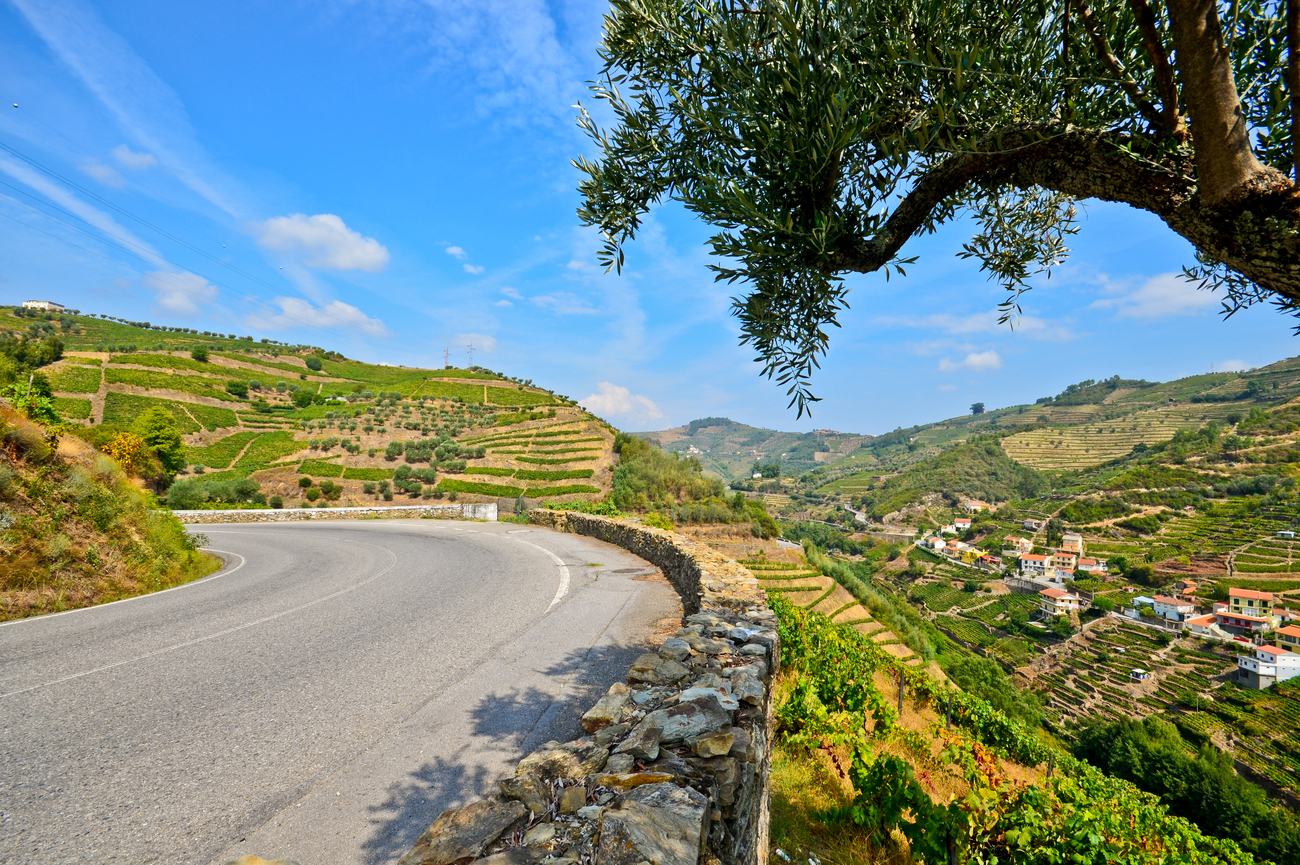
Yes. Staying overnight in the Douro Valley gives you both dusk and dawn, when the terraces, river and vineyards look very different from the middle of the day. In the evening, the last light climbs the slopes tier by tier before the river darkens and the valley settles. At dawn, mist can gather in the gorge before the estates begin to wake.
Guests staying at a quinta can also experience the wine country at a slower pace, with dinner among the vineyards, longer cellar tastings and more time to enjoy the estate itself. During the September harvest, the activity of the vintage continues into the evening, adding another layer to the experience.
Accommodation in the Douro ranges from historic family wine estates with tiled interiors and shaded terraces to contemporary vineyard hotels built in glass and stone above the river. What many share is a smaller scale, a close connection to the surrounding vineyards and a sense that the accommodation is part of the wine experience rather than simply somewhere to sleep.
The best vineyard stays have relatively few rooms and can fill well in advance, particularly during the main travel and harvest seasons. That is why the overnight stay is built deliberately into our ten-day route rather than treated as an optional addition. A night among the Douro's vineyards is one of the defining moments of the journey.
Douro
Valley Boat Trip from Pinhão: Seeing the Vineyards from the River
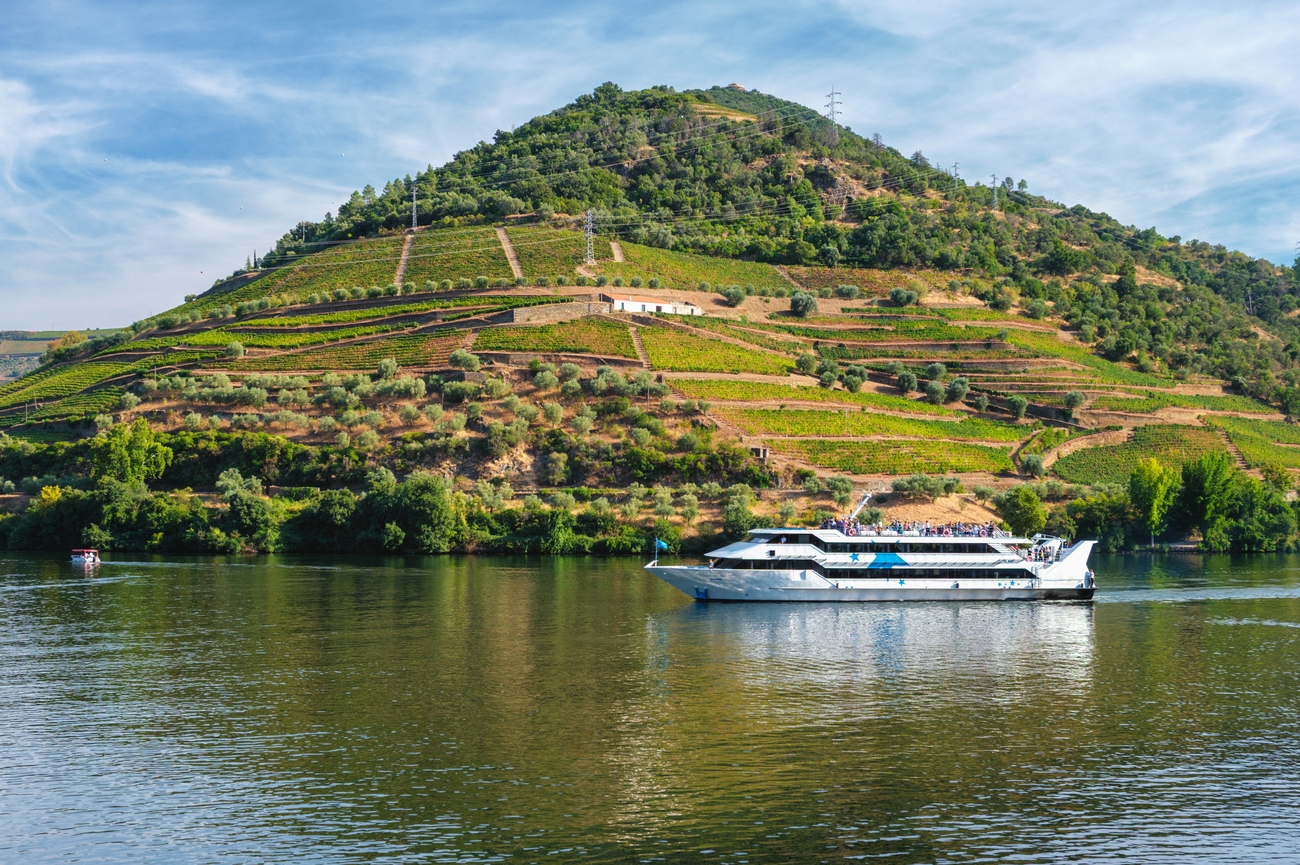
The Douro Valley was shaped around the river, so spending time on the water reveals a perspective the road cannot provide. Long before the Douro became one of Portugal's great scenic landscapes, it was a working waterway used to move wine downstream towards Porto. Rapids once made the journey difficult and dangerous, until twentieth-century dams transformed the river into the calmer sequence of navigable stretches and locks seen today.
A private boat trip from Pinhão in the early evening changes the scale of the valley completely. From the water, the vineyard terraces rise steeply on both sides, quintas appear one after another along the hillsides, and the roads that seemed dominant from above almost disappear into the landscape.
A couple of hours on the river also provides a quieter counterpoint to a day of driving and wine tastings. Late afternoon and early evening are particularly rewarding, when the light softens across the terraces and the valley begins to settle.
The boat trip is not part of the fixed ten-day itinerary, but it is one of the most popular additions for travellers who want more time in the Douro Valley. Once the landscape has been seen from the road, seeing the same vineyards from the river offers an entirely different perspective.
Porto
and Vila Nova de Gaia: Where Douro Wine Meets the Atlantic
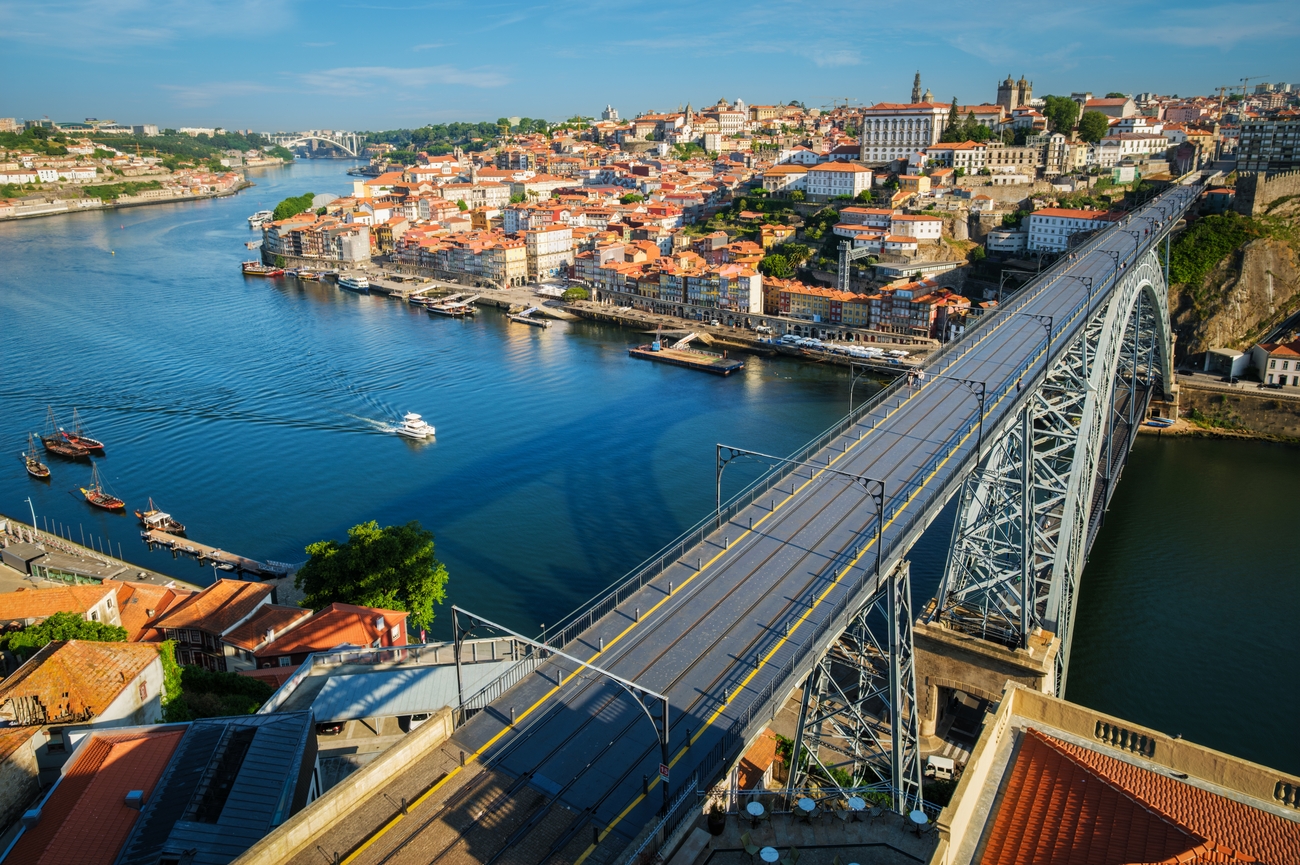
The valley's wine has always travelled downstream, even when this particular road trip does not. Porto stands where the Douro reaches the Atlantic, its historic centre rising above the river in granite, azulejo tiles and ironwork, with the UNESCO-listed old city facing the port wine lodges of Vila Nova de Gaia across the water.
For centuries, barrels of port travelled downriver from the Douro Valley aboard rabelo boats, flat-bottomed vessels designed to navigate the river before dams and locks transformed it. Today, traditional rabelos still line parts of the waterfront, while across the river in Vila Nova de Gaia the historic port lodges continue the story of the wine produced upstream.
Walking across the Dom Luís I Bridge makes the geography of the trade immediately clear. Porto rises behind you, Gaia's lodge signs appear ahead, and beneath both runs the river that connects the vineyards of the Douro Valley with the Atlantic.
A tasting in one of Gaia's historic port lodges completes the journey from vineyard to glass. Ruby, tawny and vintage styles reveal different approaches to ageing, while comparative tastings, such as ten-, twenty- and forty-year-old tawnies, make it possible to taste how time changes the wine rather than simply read about it.
Our road trip deliberately turns south from the Douro Valley towards Lisbon rather than following the river downstream to Porto. The priority is the overnight stay among the vineyards where the wine is produced. Porto, however, deserves two or three days in its own right and can easily be added before or after the ten-day journey for travellers who want to follow the Douro story all the way from the vineyards to the Atlantic.
Wine
Regions of Northern Spain and Portugal: Albariño, Alvarinho and the Douro
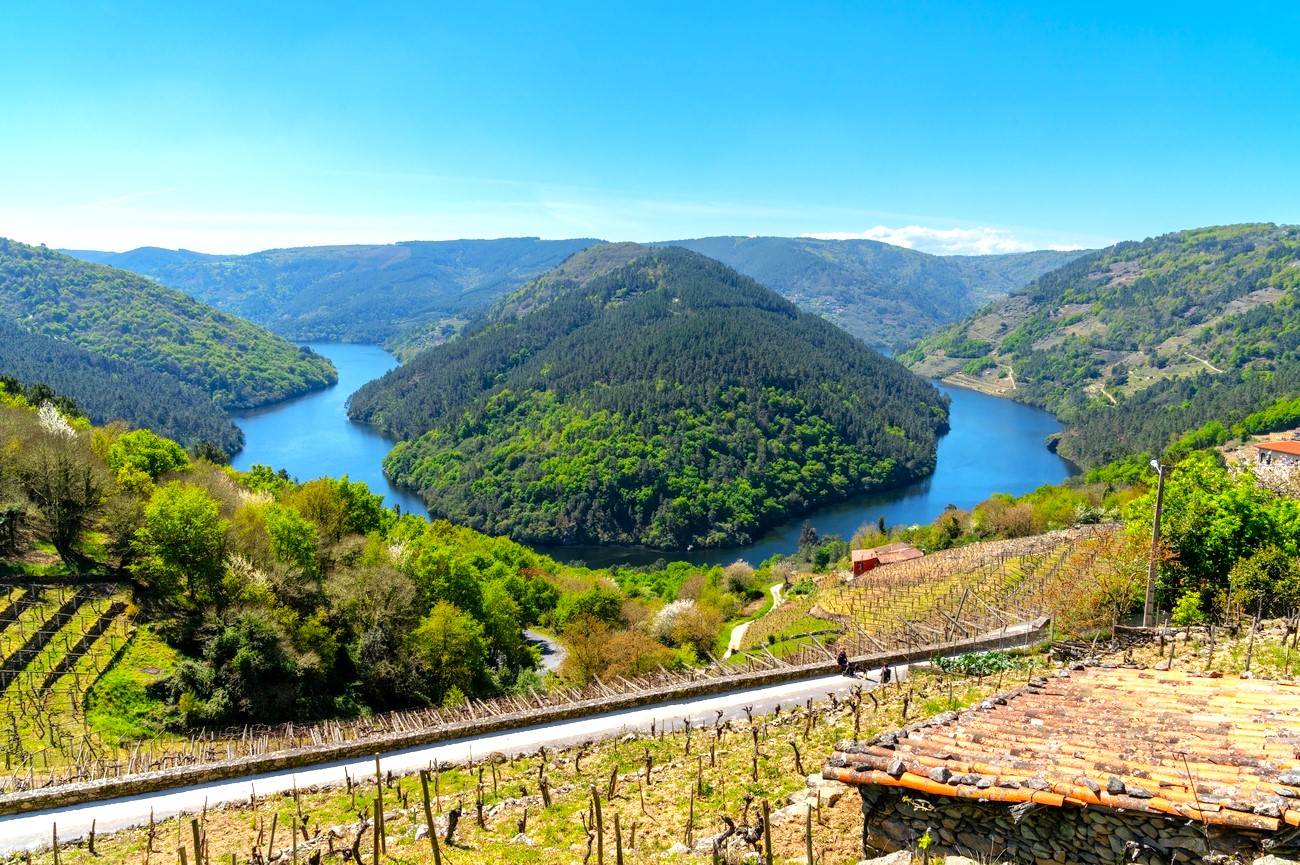
Here is what makes this part of the journey unusual. A few days earlier you were in Galicia, where Albariño grows close to the Atlantic and is poured beside the shellfish of the rías. Now you are standing on the schist terraces of the Douro Valley, tasting port and the increasingly acclaimed table wines of northern Portugal. Two very different wine cultures sit only a few days apart on the same road trip.
The transition begins at the River Miño, where the same grape grows on both sides of the Spain-Portugal border. In Galicia it is Albariño; across the river in Portugal's Minho region it becomes Alvarinho, producing the fresh white wines associated with Vinho Verde. Farther inland, the journey reaches a completely different landscape and wine tradition in the Douro Valley, where steep terraces, native red grapes and port wine reshape the character of the trip.
That progression, from the Atlantic vineyards of Galicia through Alvarinho country and into the Douro, is one of the strongest arguments for experiencing northern Spain and Portugal as a single overland journey rather than two separate holidays. The full case for combining both countries is explored in One Journey, Two Countries.
Taste the wines within a few days of one another and the contrast becomes part of the journey itself: Atlantic freshness in Galicia and Minho, followed by the warmer, deeper wines of the Douro.
There is a smaller pleasure hidden in the crossing too. On your first Portuguese evening, the vines across the Miño are growing the same grape you may have been drinking in Galicia the night before, only under a different spelling. Order a glass of Alvarinho before the Douro turns the journey towards something darker and richer, and the border becomes less a line on the map than a change of language, landscape and wine.
Douro
Valley Wine Estate Stay: Raise a Glass Where Port Is Made
To the people who built these terraces, stone by stone, across slopes that seem almost impossible to farm, creating the vineyard landscape that has defined the Douro Valley for centuries. To the wine that once travelled down a rapid-filled river aboard rabelo boats before continuing towards tables far beyond Portugal. And to the crossing of the River Miño, where vineyards on both banks turn a journey through northern Spain into one continuous Iberian road trip.
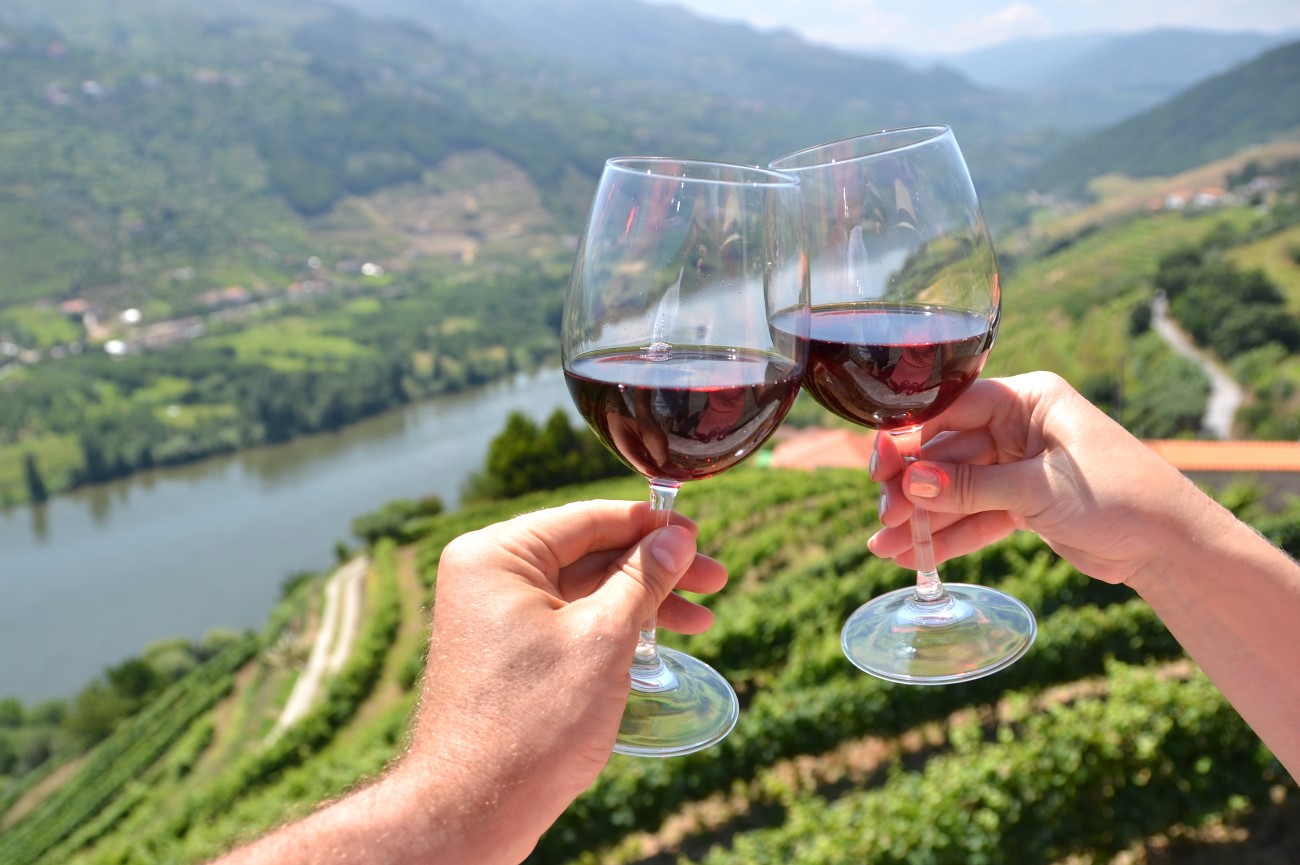
Then there is the hour itself: a terrace at a quinta above the Douro, the last light slipping from the upper vineyard walls and a tawny port in hand while the valley settles into evening. The room is already reserved, dinner is waiting, and the ten-day journey from Bilbao to Lisbon has brought you here with nothing left to arrange.
Saúde. Touch the glass to the rail.
The Douro has been making wine on these slopes for centuries, and there are few better places to understand why than from a quinta overlooking the vineyards at the end of the day.


Let us know what you love, where you want to go, and we’ll design a one-of-a-kind adventure you’ll never forget.
Get in touch
Miriam
Travel Specialist

Romina
Travel Specialist

Laura
Travel Specialist
Our offices:



Revigorate, Iberian Escapes and Algarve Lifestyle are the registered brand names of APCS Lda . We are a fully authorised travel agency licensed by Turismo de Portugal RNAVT/6867.
In the event of a dispute, the consumer may refer to: RAL - Centros de Arbitragem
Avª. 5 de Outubro, nº. 55, R/C Dtº. 8000-075 Faro, Portugal | Tel: +351 289 823 135 *
* national landline call
E-mail: info@consumoalgarve.pt| www.consumidoronline.pt | Mon to Fri: 9:00 - 13:00 / 14:00 - 17:00