Northern Spain and Portugal Road Trip: One Journey Through Two Countries
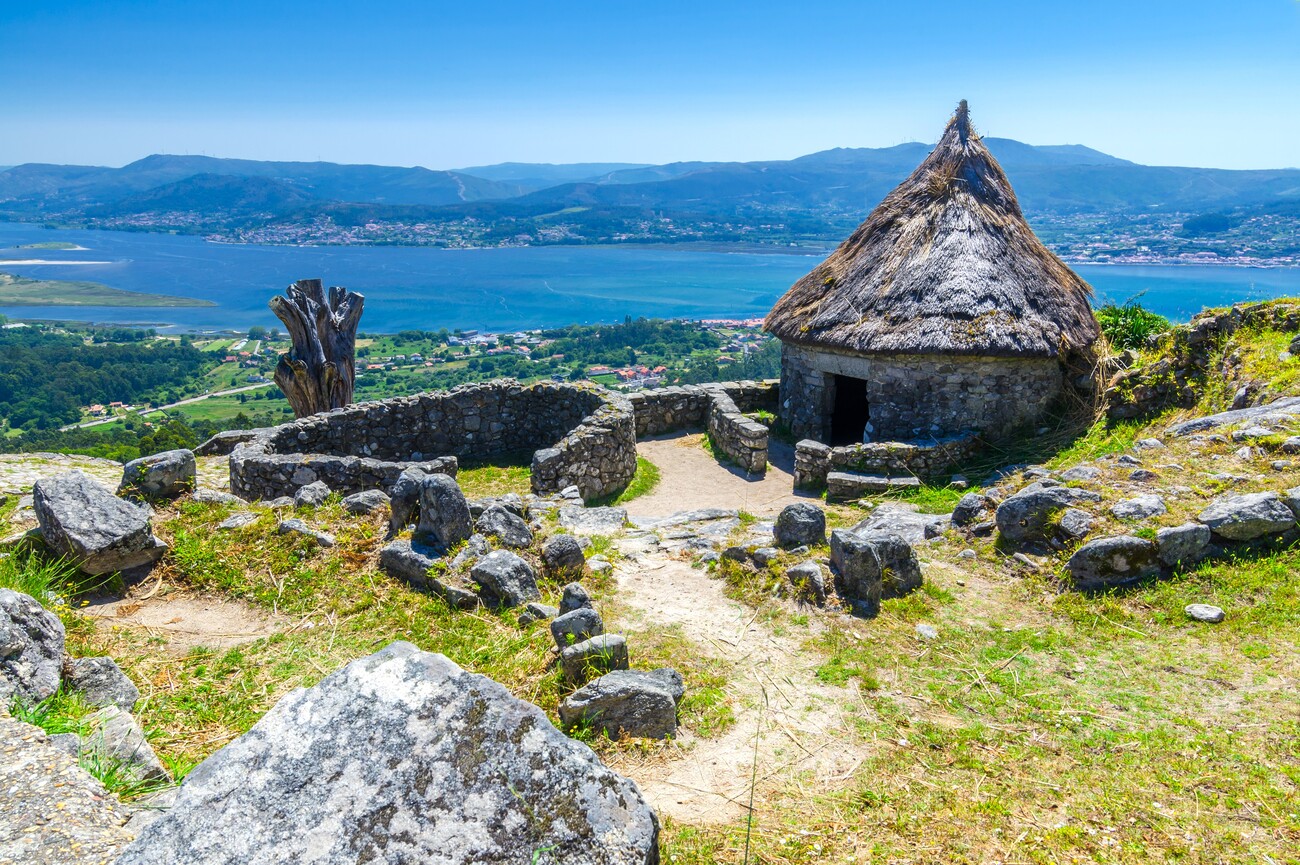
At nine in the morning, the coffee is Spanish, taken at a granite counter in a Galician town while the Atlantic works away at the rocks below the window. By one, the same day, the River Miño slides beneath a bridge and the road signs change language. By eight that evening, the wine is Portuguese, poured on a terrace above the Douro while the last light climbs the far bank, tier by tier.
One day. Two countries.
There is no airport between them, no internal flight and normally no routine border stop to break the journey. The transition from northern Spain into northern Portugal happens almost quietly enough to miss, which is precisely what makes travelling between them by road so compelling.
That crossing captures the whole idea behind this journey and answers a question many travellers face when planning the Iberian northwest: Spain or Portugal, if you only have time for one? On this route, you do not have to choose. Combining northern Spain and northern Portugal into one continuous overland journey reveals the contrasts and connections between the two countries in a way that separate holidays cannot.
Our Road Trip from Northern Spain to Portugal brings that idea to life over ten days from Bilbao to Lisbon, while the complete Bilbao-to-Lisbon road trip guide maps the full route, destinations and experiences in detail.
Can
You Combine Spain and Portugal in One Trip?
Yes. Northern Spain and northern Portugal combine particularly well in a single road trip because the journey can continue overland without an internal flight or airport transfer. Both countries are part of the Schengen Area, and the crossing over the River Miño is brief enough to feel almost incidental. On this ten-day Atlantic route, travellers move from Bilbao through northern Spain, cross into Portugal for a night in the Douro Valley, and finish in Lisbon nine nights after setting out.
The practical differences between the two countries are real, but they do not need to interrupt the journey. They share the euro, while Portugal introduces its own motorway toll system and a different set of driving logistics. Wine-tasting days also need to be balanced carefully against time behind the wheel, and the hotels must be sequenced so the route continues naturally south. On an arranged journey, those details are handled in advance, leaving the traveller to experience the transition rather than manage it.
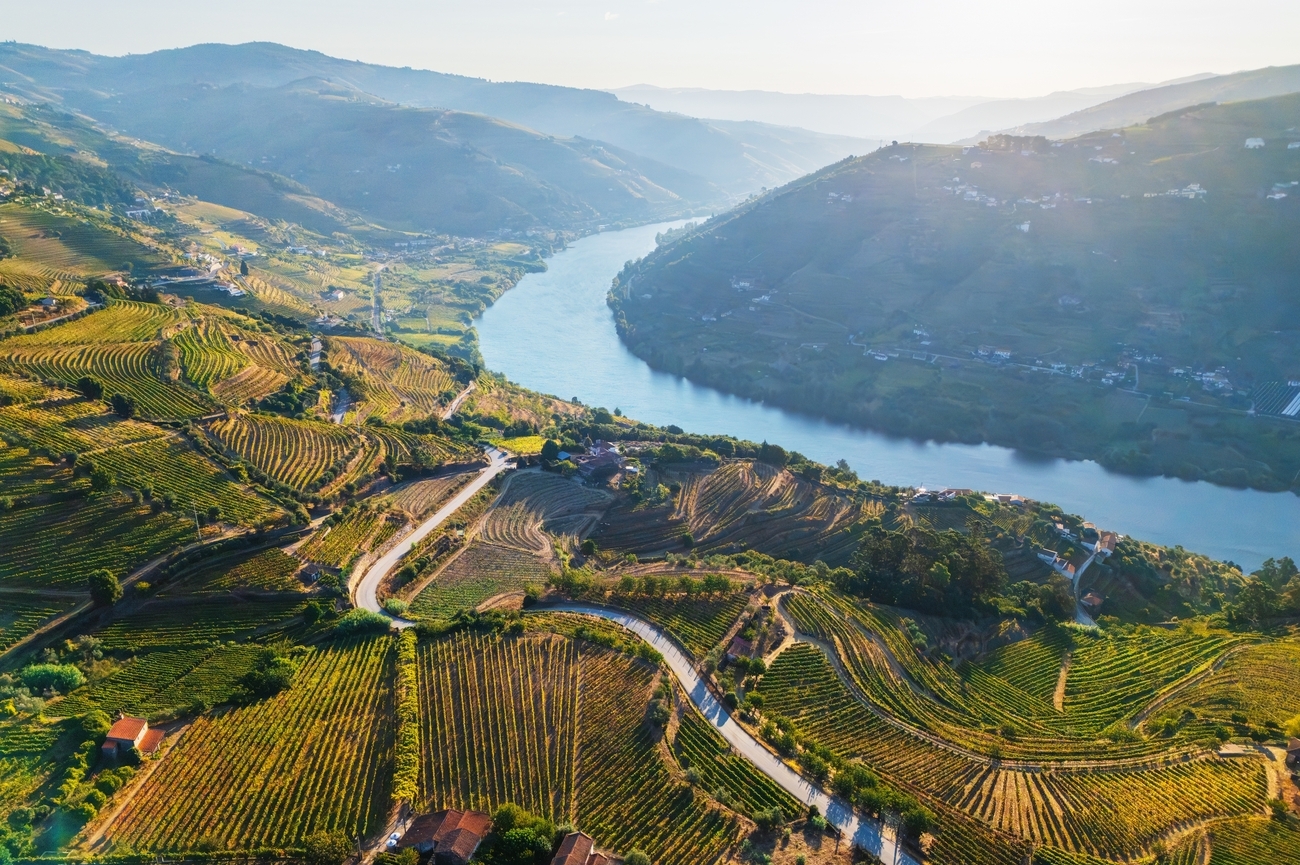
The crossing day captures why the combination works so well. The morning begins in Galicia, perhaps with one last coffee and a final look at the rías, before the road turns south towards the River Miño. By lunchtime, you are in Portugal. From there, the route continues inland and climbs towards the Douro Valley, where the terraced vineyards begin appearing by late afternoon.
One country at breakfast, Portugal by lunch and the Douro Valley by evening. That seamless progression is what makes combining Spain and Portugal in one trip feel like a single journey rather than two holidays joined together.
What
Northern Spain and Northern Portugal Have in Common
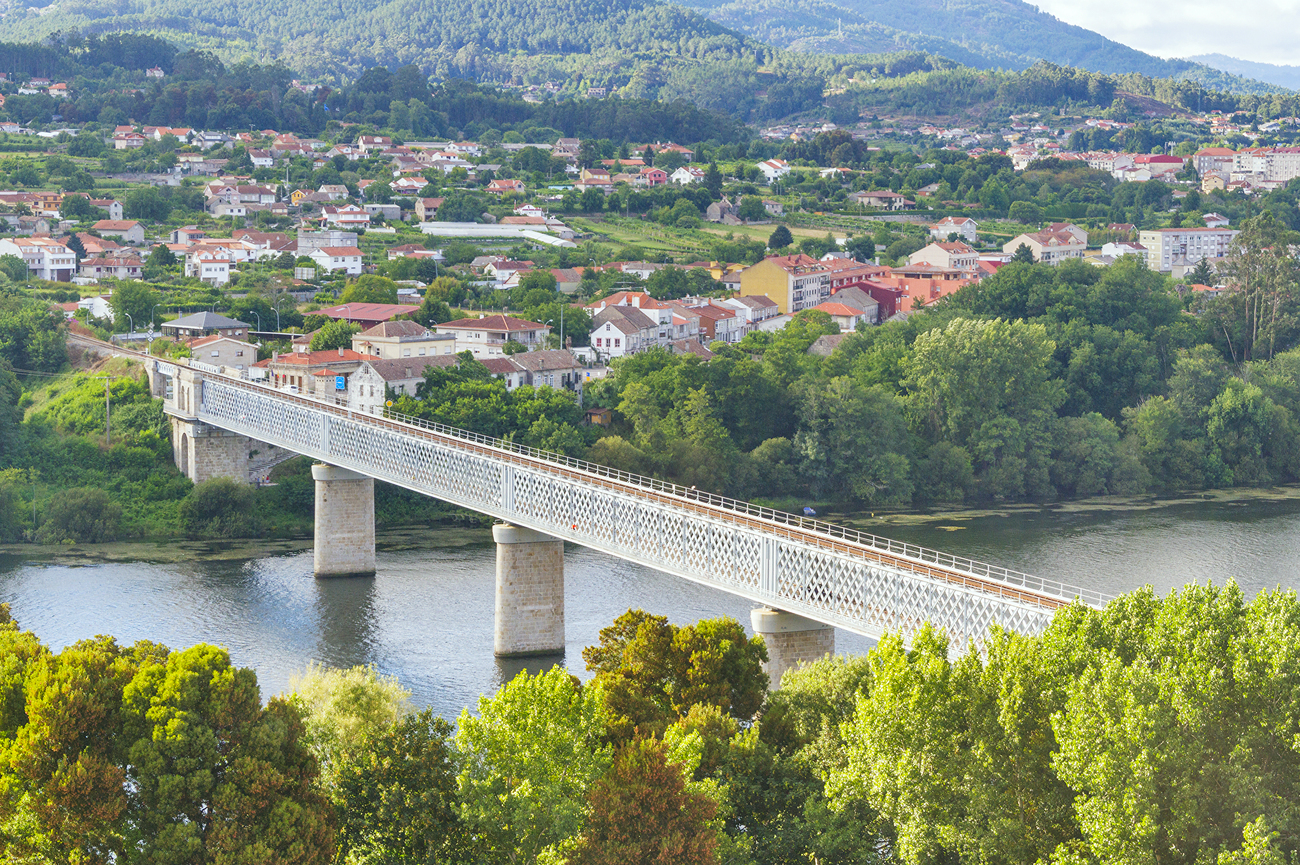
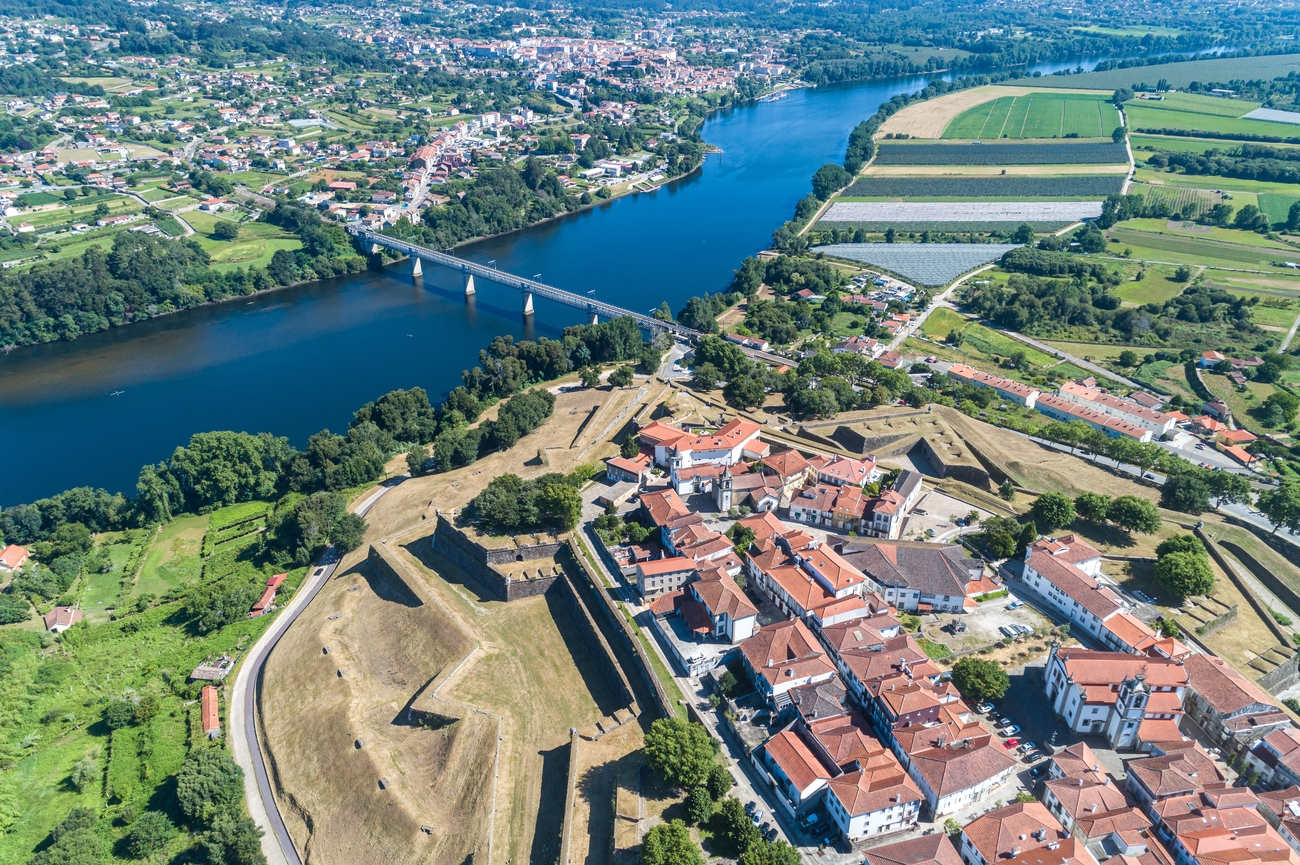
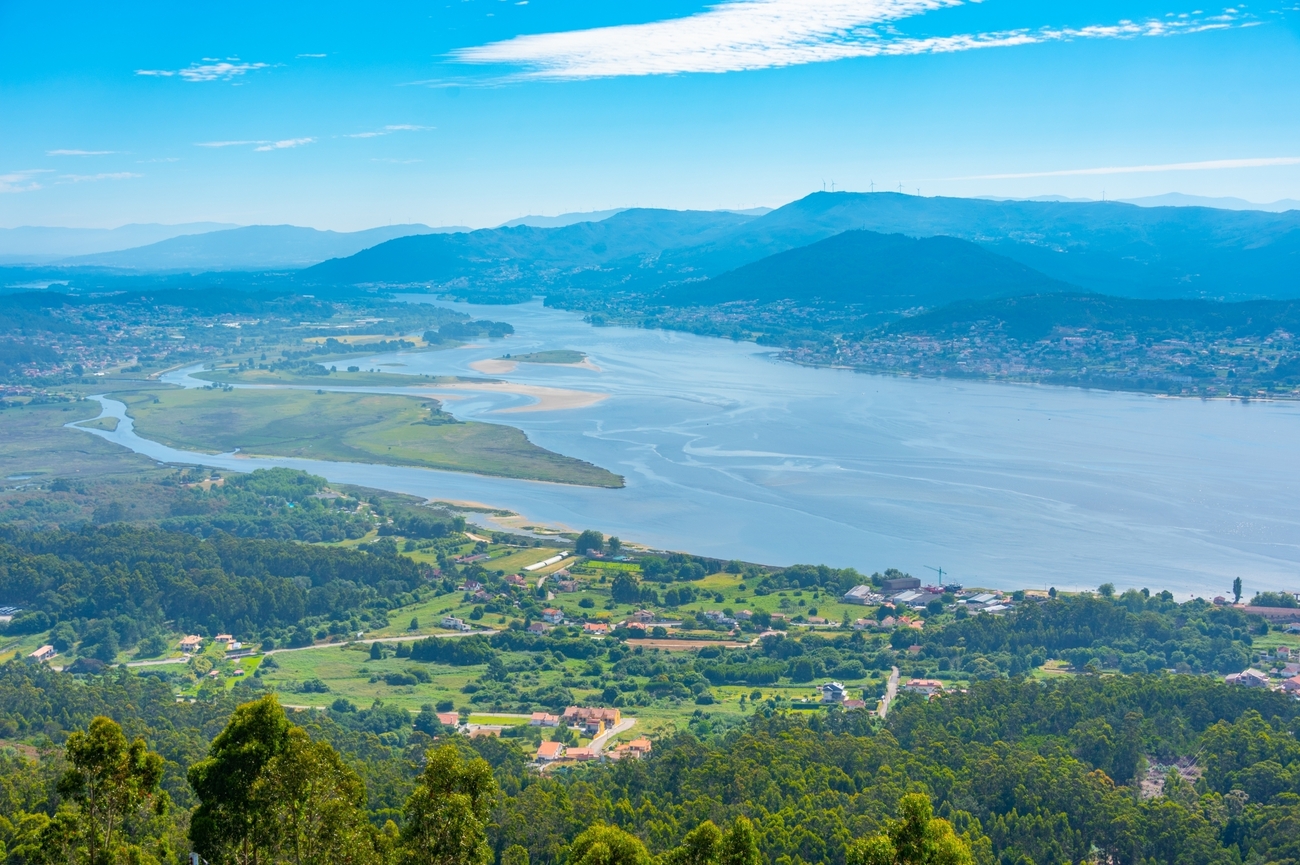
Stand on the bridge over the River Miño and the connection between northern Spain and northern Portugal is visible on both banks. The same Atlantic climate keeps the hills green, the same granite shapes towns and villages, and vineyards extend across a border that feels more geographical than cultural. Even the grape continues the story: Albariño in Galicia becomes Alvarinho in Portugal, producing fresh Atlantic white wines on both sides of the river.
Food provides another strong connection. Galicia and northern Portugal share an Atlantic seafood culture built around fish, shellfish and long meals that rarely feel rushed. Bread remains central to the table, while historic towns on both sides are shaped by granite streets, religious buildings and landscapes closely tied to rivers and the sea.
The connection also extends to the Camino de Santiago. Pilgrims travelling north through Portugal have crossed into Galicia on their way to Santiago de Compostela for centuries, making the modern road trip part of a much older pattern of movement between the two regions.
Yet perhaps the strongest connection is simply the landscape. By the time the journey reaches the Portuguese border, the Atlantic scenery of northern Spain has already established a rhythm of green hills, fishing communities, vineyards and changing coastal light. That Spanish section of the journey is explored in depth in our Green Spain coast road.
Crossing the Miño therefore feels less like leaving one landscape behind and more like beginning the next chapter of the same Atlantic journey.
How Northern Spain and Portugal Differ Along the Road
Northern Spain and northern Portugal share an Atlantic landscape, but the pleasure of travelling between them lies just as much in their differences. Daily rhythms begin to shift as the road moves south. Spanish evenings tend to run later, with long lunches, late dinners and city squares that remain lively well into the night. Portugal generally settles into a gentler rhythm, while traditions such as fado introduce a cultural atmosphere with no direct Spanish equivalent.
The visual character changes too. Granite remains prominent on both sides of the border, but Portuguese towns increasingly introduce whitewashed façades, terracotta roofs and azulejo tiles. Wine culture changes with the landscape: the fresh Atlantic whites of Galicia and Minho gradually give way to the terraced vineyards, structured table wines and long-aged ports of the Douro Valley.
These differences would be easy to miss when flying between two cities. By road, they arrive gradually. Coffee cups change, architecture shifts, road signs switch language and the rhythm of towns begins to feel different. Somewhere beyond the River Miño, you realise that Spain has become Portugal without the journey ever having been interrupted.
Language provides one of the clearest connections and contrasts. Galician and Portuguese share close historical and linguistic roots, which is why written Portuguese can appear unexpectedly familiar after travelling through Galicia. Spoken Portuguese, however, sounds distinctly different to many first-time visitors. It becomes another small reminder of what makes this border so interesting: two neighbouring regions shaped by centuries of shared history, yet unmistakably different once you begin paying attention.
Wine
Regions Between Galicia and the Douro Valley
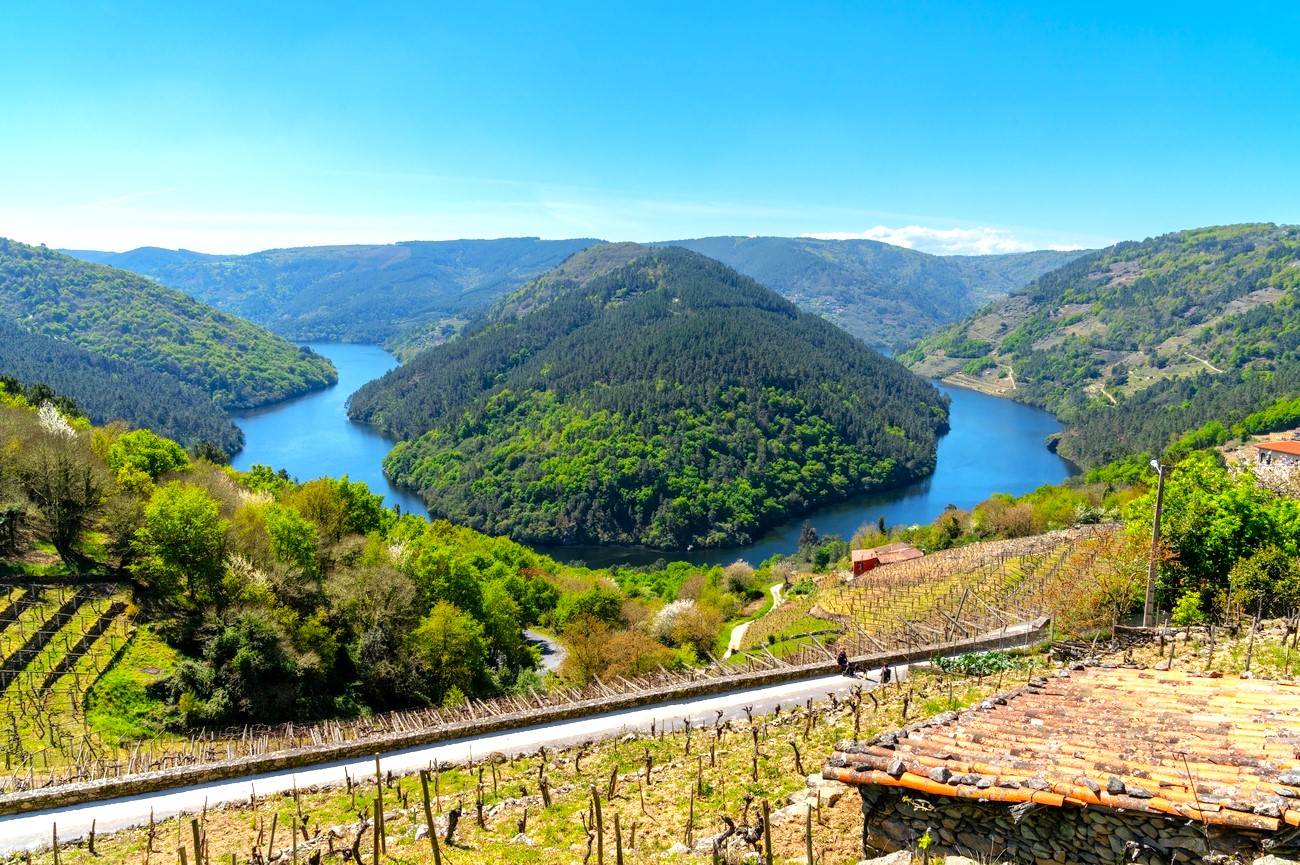
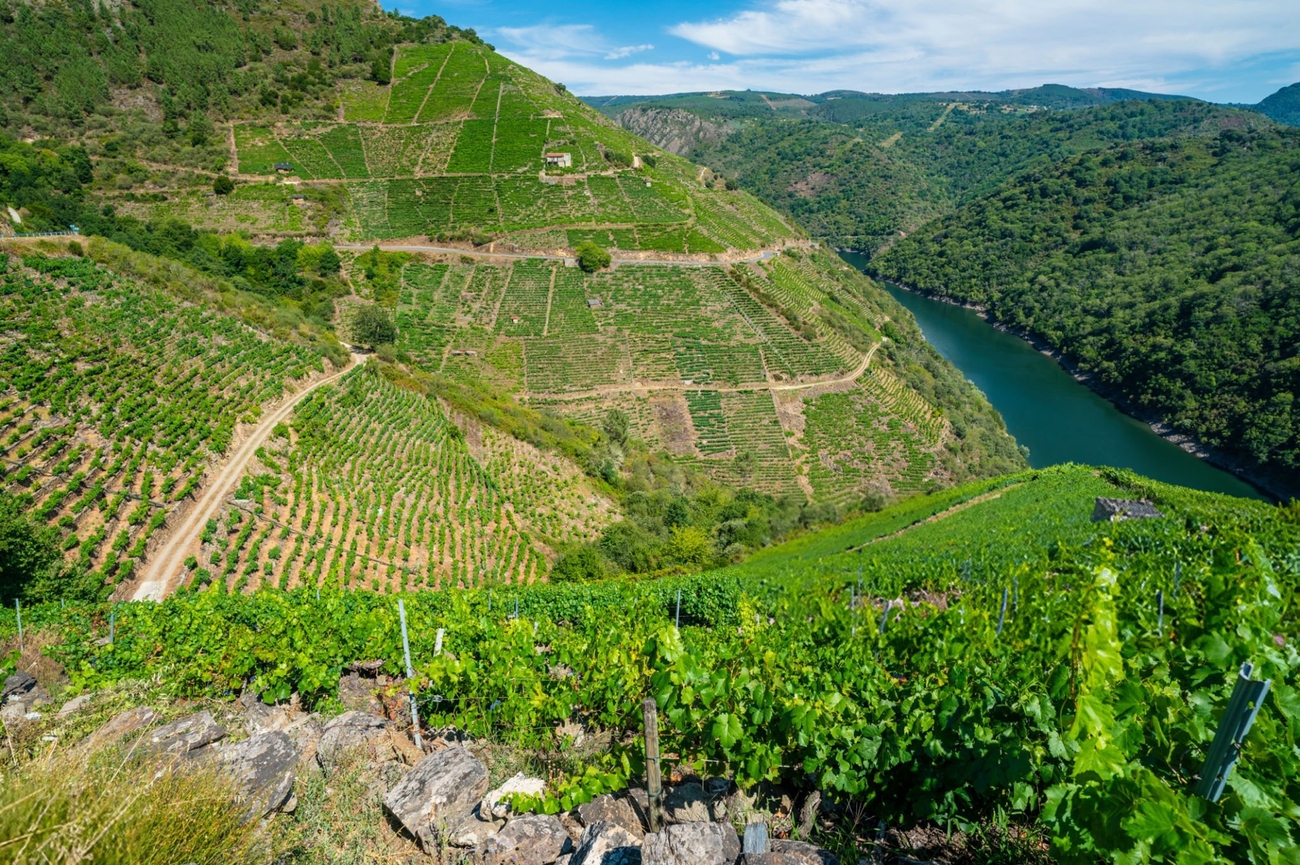
If northern Spain and Portugal have a single conversation running through this journey, it is about wine. The road follows that conversation from the steep vineyards of Galicia into northern Portugal, beginning in the Ribeira Sacra, where vines cling to terraces above the Miño and Sil river gorges, and continuing across the border into Alvarinho country before reaching the schist slopes of the Douro Valley.
The landscapes change as dramatically as the wines. Ribeira Sacra is known for vineyards planted on slopes so steep that the work is often described as heroic viticulture. Cross the River Miño into Portugal and Albariño becomes Alvarinho, producing the fresh Atlantic whites of the Minho region. Farther inland, the Douro introduces a different wine culture altogether, with native red varieties, steep terraced vineyards and the port wine tradition that made the valley internationally famous.
The rhythm changes too. In northern Spain, wine often arrives casually alongside seafood, pintxos or a long lunch. In Portugal, the journey gradually moves towards slower tastings at quintas, cellar visits and aged ports that tell their story over decades rather than minutes. Travelling through these regions within the same week makes the contrast unusually clear: three neighbouring wine landscapes, each shaped by different rivers, soils and traditions, connected by a single road.
The Douro half of that story, its terraces, quintas and the port wine trade downstream towards Vila Nova de Gaia, is explored in depth in our Douro Valley, Porto and port wine country guide.
Taste the regions only a few days apart and the comparison writes itself in the glass: the Atlantic freshness of Galicia and Minho giving way to the warmer, deeper character of the Douro. You do not need to be told that northern Spain and Portugal are different. By this point in the journey, you can taste both the contrast and the connection.
Why Northern Spain and Portugal Work Better as
One Road Trip
Some journeys become more than the sum of their stops, and this is one of them. Travelling through northern Spain and Portugal by road reveals something that separate trips cannot show in quite the same way: the Iberian northwest as one continuous Atlantic landscape, stretching from the Basque Country through Green Spain and Galicia before crossing into northern Portugal and continuing towards the Douro Valley and Lisbon.
The contrasts become more meaningful because they arrive in sequence. The pintxos bars of San Sebastián come before the quintas of the Douro. Galicia's Atlantic harbours give way to Portugal's vineyard terraces. Late Spanish evenings gradually become quieter Portuguese mornings. Food, wine, architecture and daily rhythms change as the road moves south, but the journey itself remains unbroken.
That continuity changes how each country is experienced. The stillness of the Douro feels more pronounced after Galicia's working harbours, while the energy of the Basque Country becomes even more distinctive once the journey has moved into Portugal. Each destination provides context for the next, making the differences between the two countries easier to recognise and the connections between them more apparent.
That is what only the combination provides: not simply Spain followed by Portugal, but one continuous journey in which each country becomes the other's frame. The road allows the transition to unfold gradually, turning two neighbouring destinations into a single Atlantic experience.
Why a Private Road Trip Is the Best Way to Combine
Northern Spain and Portugal
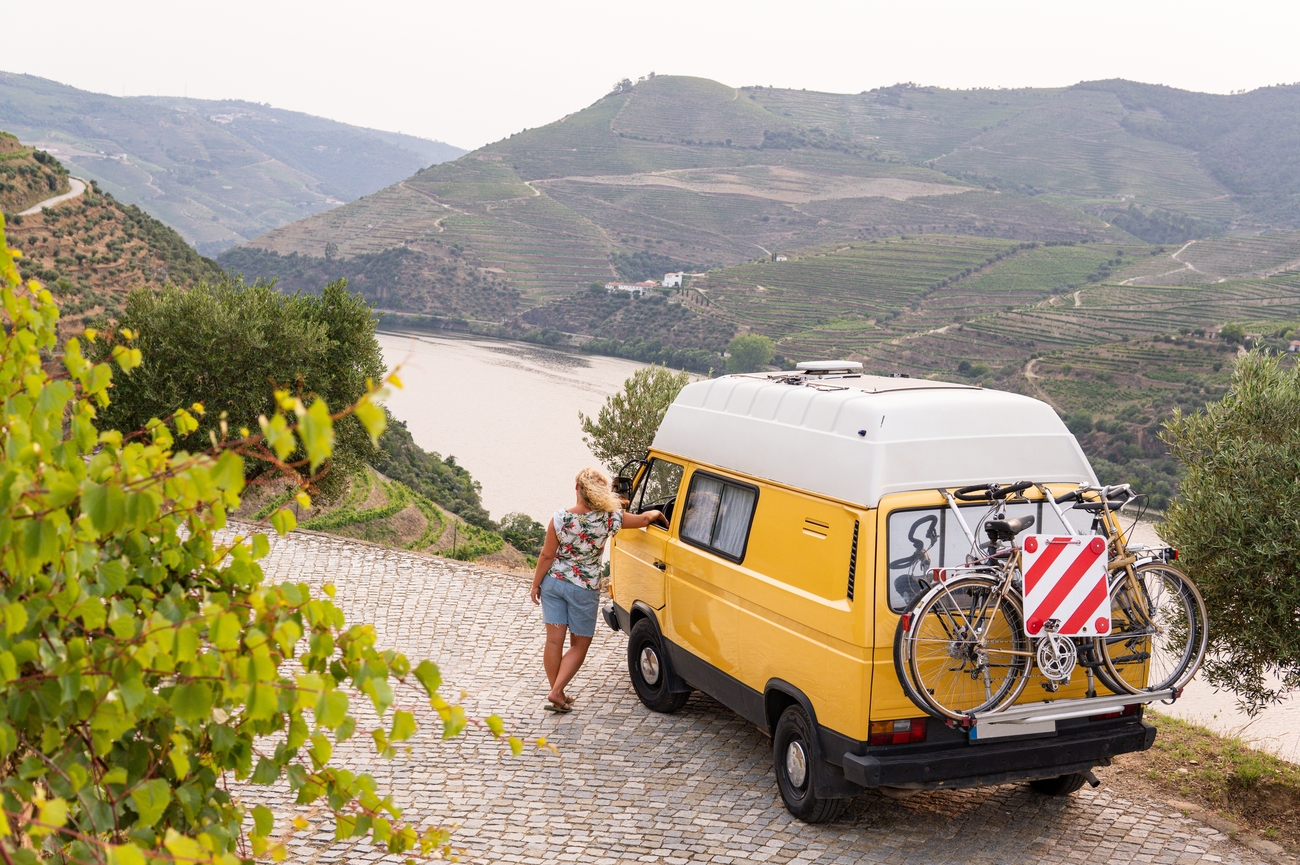
Everything this journey offers depends on the road itself, and particularly on travelling privately rather than moving between destinations on a fixed timetable. Some of its best moments happen between the famous places: the lay-by above a Galician cliff that appears on no itinerary, the bend where the Douro Valley first opens beneath the road, or the bridge across the River Miño with Spain in one mirror and Portugal in the other. A private road trip keeps those moments within reach and, more importantly, leaves enough time to stop for them.
The alternatives change the character of the journey. Flying between Spain and Portugal replaces a brief overland crossing with airports, transfers and another departure lounge. Rail can connect major cities but cannot follow many of the coastal roads, vineyard routes and viewpoints that give this itinerary its character. A group tour reaches the principal sights, but on a fixed schedule. Travelling privately preserves the two things this route depends upon: the freedom to stop when the landscape gives you a reason and the continuity that allows northern Spain to become Portugal gradually rather than through an arrivals hall.
Private does not necessarily mean chauffeured. Travellers can choose a chauffeur and keep the window seat or take the wheel themselves on a fully arranged self-drive. Either way, the practical details are handled around the journey: routes are planned, Portugal's toll arrangements are considered, wine tastings are sequenced around driving, and accommodation is organised so that the route continues naturally from Bilbao to Lisbon.
That is the advantage of our Road Trip from Northern Spain to Portugal. The machinery remains largely invisible while the road, the Atlantic coast, the border crossing and the Douro Valley stay at the centre of the experience.
There is a deeper reason private travel suits this particular journey. Its whole premise is continuity: one unbroken line from the Basque Country through Green Spain and Galicia, across the River Miño into Portugal, through the Douro Valley and finally south to Lisbon. Every transfer avoided protects that sense of progression. Keep the road continuous and the two countries never feel like separate holidays. They remain what this journey was designed to reveal: two distinct destinations connected by one remarkable route.
Why
Choose Between Northern Spain and Portugal?
Set them side by side one last time.
On the Spanish side: pintxos on the counter, Galician rías filled with shellfish rafts, plazas alive late into the evening and Santiago de Compostela at the end of the pilgrim road. On the Portuguese side: pastel de nata warm from the oven, the vineyards of the Douro climbing towards the skyline, fado in a low-lit room and Lisbon waiting beside the Tagus.
Two countries, but they do not have to become two separate holidays.
Cross the River Miño by road and the distinction begins to soften. Spain remains in the mirrors while Portugal fills the windscreen, and what seemed like a choice between two destinations becomes one continuous Atlantic journey. The food changes, the language changes and the landscape gradually shifts, but the road never breaks the connection between them.
That is the point of combining northern Spain and Portugal by road. The pintxo and the pastel de nata belong to different traditions, Galicia and the Douro tell different wine stories, and Bilbao and Lisbon could hardly feel more individual. Yet experienced in sequence, each makes the other more memorable.
The journey from Bilbao to Lisbon brings both countries together over ten days, without asking you to choose between them.
Stop choosing. The bridge is already there.


Let us know what you love, where you want to go, and we’ll design a one-of-a-kind adventure you’ll never forget.
Get in touch
Miriam
Travel Specialist

Romina
Travel Specialist

Laura
Travel Specialist
Our offices:



Revigorate, Iberian Escapes and Algarve Lifestyle are the registered brand names of APCS Lda . We are a fully authorised travel agency licensed by Turismo de Portugal RNAVT/6867.
In the event of a dispute, the consumer may refer to: RAL - Centros de Arbitragem
Avª. 5 de Outubro, nº. 55, R/C Dtº. 8000-075 Faro, Portugal | Tel: +351 289 823 135 *
* national landline call
E-mail: info@consumoalgarve.pt| www.consumidoronline.pt | Mon to Fri: 9:00 - 13:00 / 14:00 - 17:00