What to Do in Santander and San Vicente de la Barquera: the Medieval Heart of the Cantabrian Coast
Santander and San Vicente de la Barquera are among the best places to visit on Spain’s Green Coast. Together they combine royal landmarks, medieval streets, outstanding seafood, Atlantic beaches, dramatic estuaries and easy access to the Picos de Europa, all connected by Renfe’s narrow-gauge railway services, which operate over the former FEVE network.
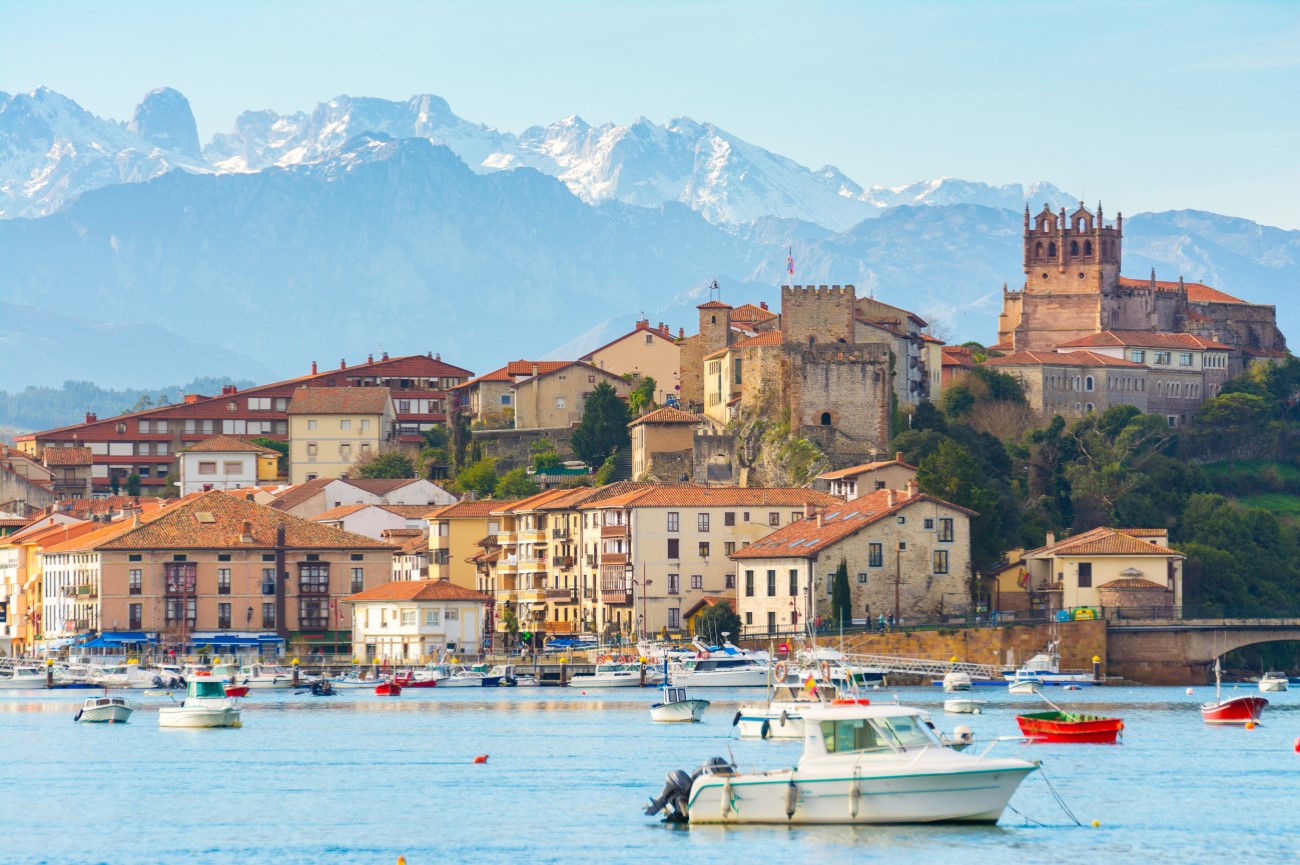
The boats come back to San Vicente de la Barquera in the last hour of light, low in the water and trailing gulls, and the whole town seems to turn to watch them.
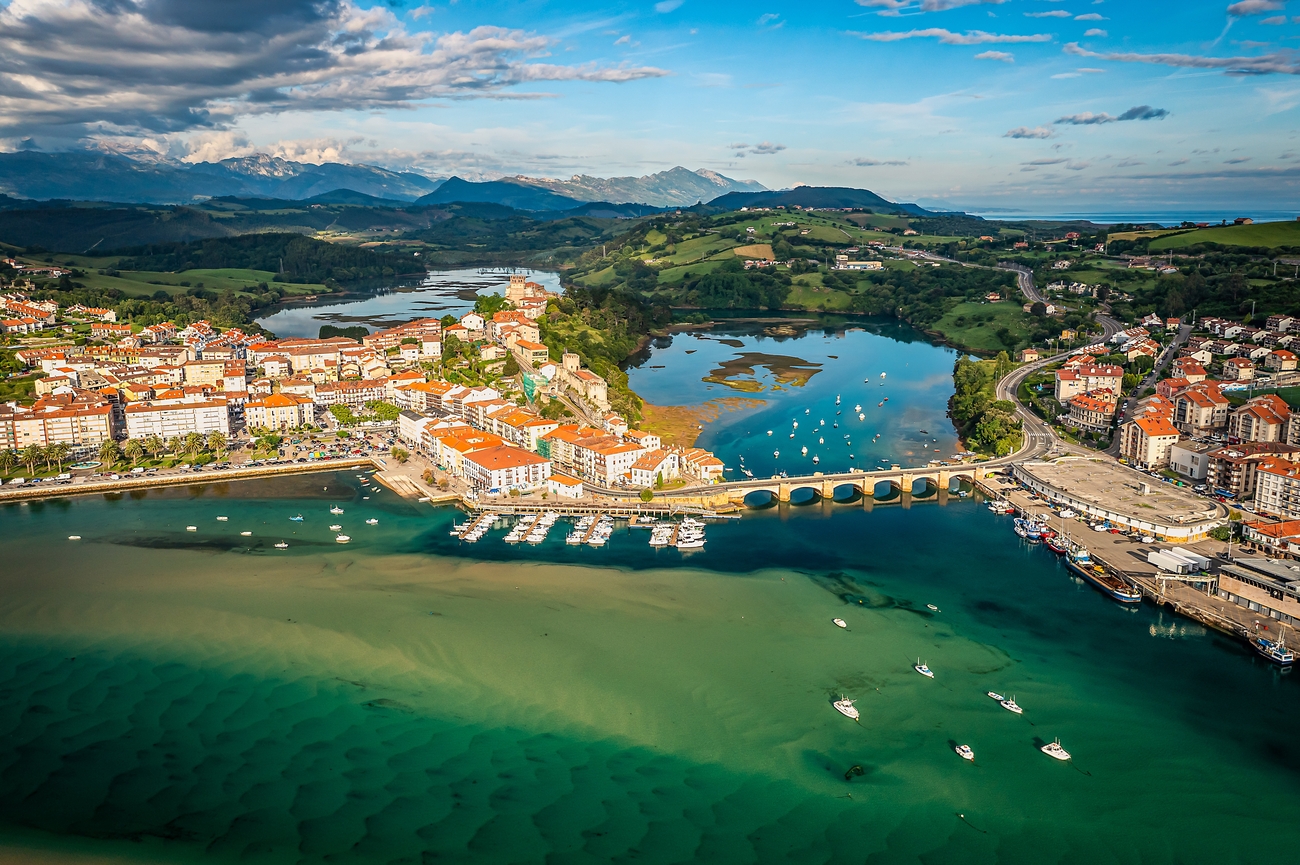
From the old quarter on its rock, the estuary shifts from silver to copper, the long medieval bridge lies flat across it, and behind everything, close enough to seem invented, the snow still holds on the peaks of the Picos de Europa. It is the kind of evening that quietly rearranges what you thought you wanted from a holiday.
This stretch of the Cantabrian coast, from the elegant bay city of Santander to the medieval harbour of San Vicente de la Barquera, is the green and unhurried heart of northern Spain, and the narrow-gauge railway that threads it was made for exactly this pace.
There are countless things to do in Santander and San Vicente de la Barquera, from royal palaces and contemporary art museums to medieval streets, estuaries, beaches and some of Cantabria’s finest seafood. Almost none of them ask you to hurry. This is a coast for long lunches and longer walks, for castles and cathedrals, and for beaches that change shape with the tide.
The two towns form the opening chapter of our Exploring Northern Spain by Narrow-Gauge Railway journey. Because the trains, connections and hotels are arranged well in advance, your only real task is to be present when the boats return to the harbour and the evening light begins to change.
Santander,
the City the Bay Made
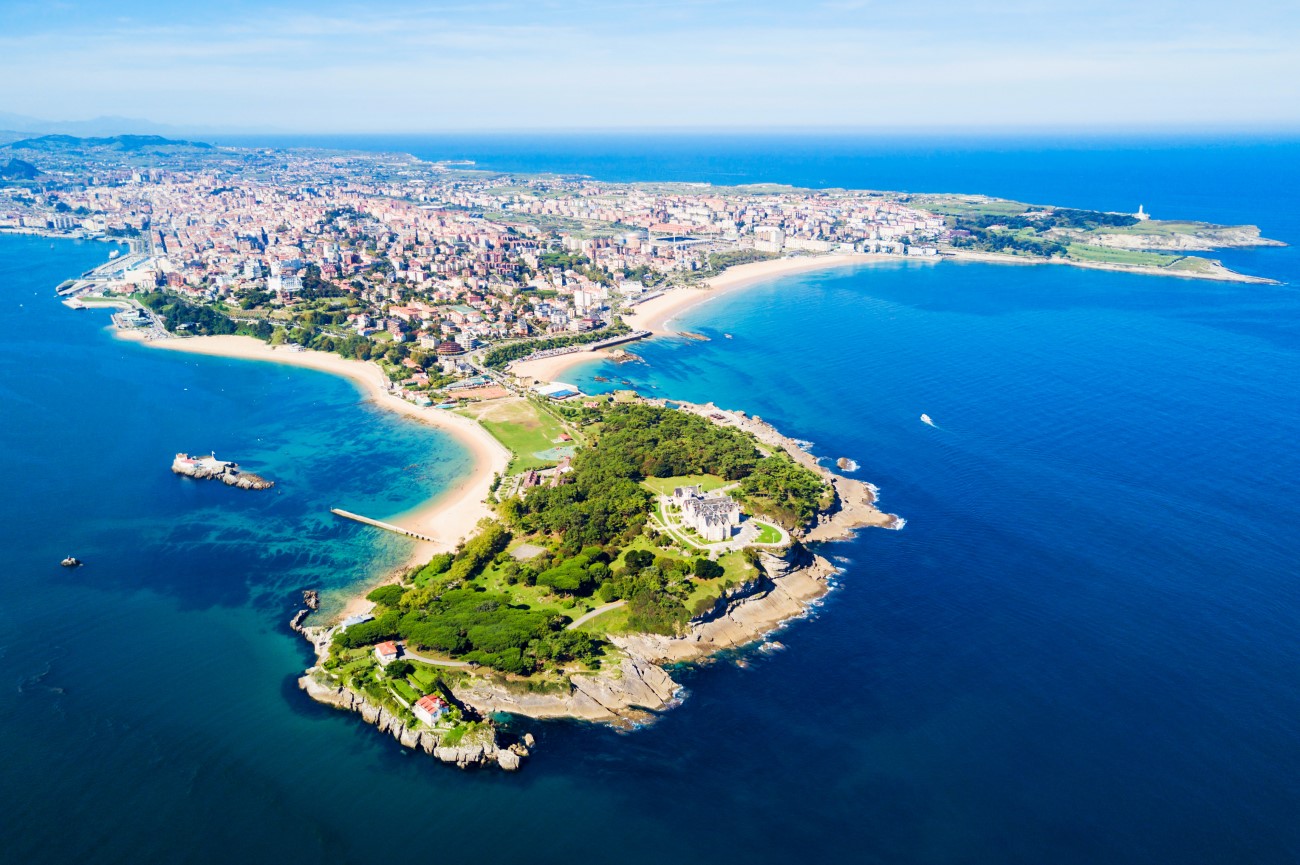
Santander is one of the most elegant cities on Spain's Green Coast, known for the Palacio de la Magdalena, the Centro Botín, El Sardinero Beach and one of the finest natural bays on the Bay of Biscay. It combines royal history, contemporary architecture, excellent seafood and a relaxed Atlantic lifestyle, making it one of the highlights of any journey through Cantabria.
Santander wraps itself around one of the great natural harbours of the Atlantic coast, and everything good about the city bends toward that water. It has been a royal resort, a fishing port and a banking capital, and it carries all three histories lightly, a place of wide promenades and belle-époque villas that never quite tips into grandeur. Among the things to do in Santander, the finest is also the simplest: walk the bay from end to end and let the city introduce itself.
The Palacio de la Magdalena and Its Peninsula
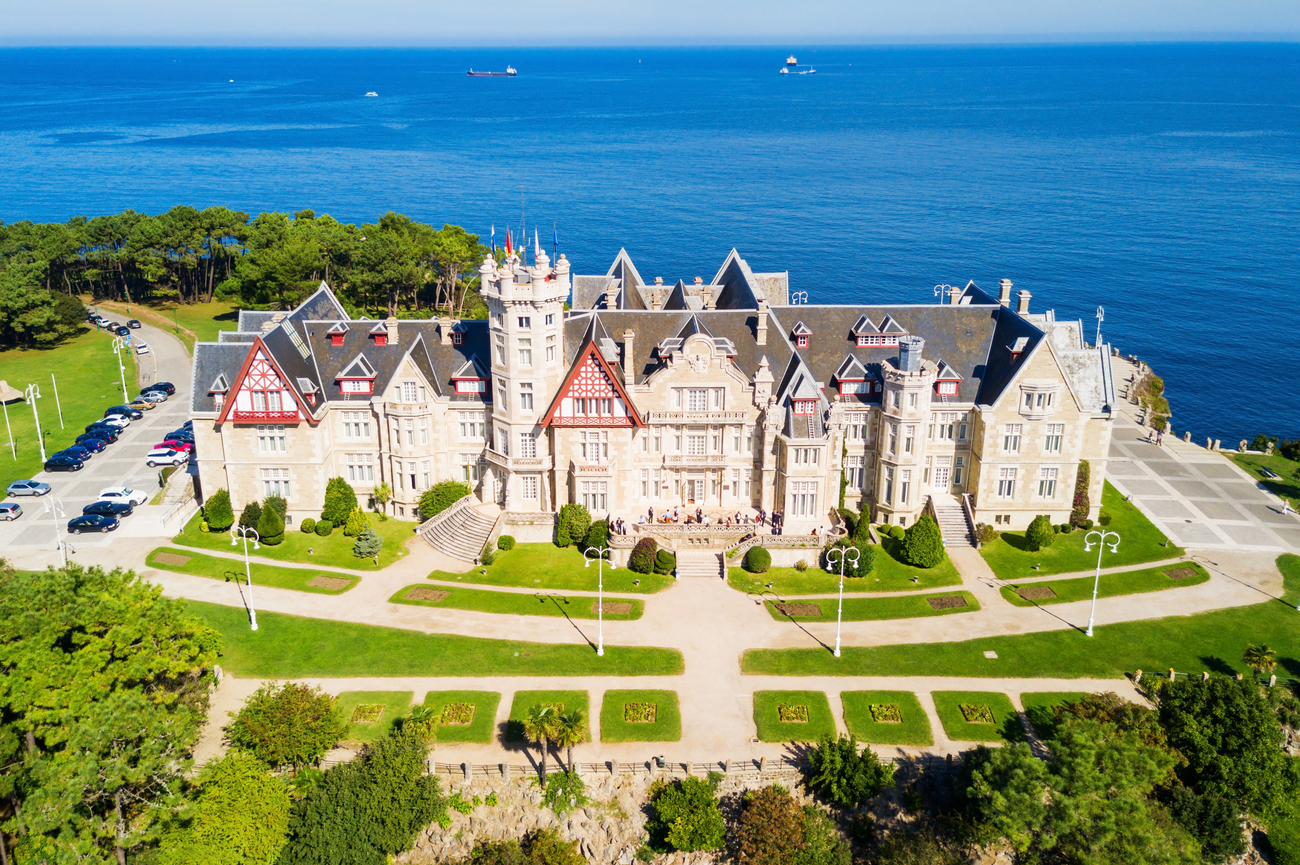
No visit to Santander is complete without the Palacio de la Magdalena. Standing on a peninsula of its own between the Bay of Santander and the Cantabrian Sea, it was built between 1908 and 1912 as the summer residence of King Alfonso XIII and Queen Victoria Eugenia. Its architecture sits somewhere between an English country house and a mountain lodge, with the sea surrounding it on three sides. The city owns it today, and although it now serves as a university and conference venue, guided tours still take visitors through the royal apartments and reception rooms, offering a glimpse into how the Spanish royal family spent their summers on the Cantabrian coast.
The palace is only the centrepiece. The whole Magdalena Peninsula is a park of around twenty-four hectares, its cliff paths opening onto the bay and the lighthouse island of Mouro, while quieter coves such as Playa de los Bikinis offer a peaceful escape from the city's larger beaches. There is a small marine park where seals bask on the rocks, and near the entrance the Muelle de las Carabelas displays the remarkable rafts and replica vessels used by Santander-born explorer Vital Alsar on his ocean crossings. Spending a morning here is one of the gentlest things to do in Santander, and simply walking the peninsula costs nothing.
Centro Botín
and the Waterfront
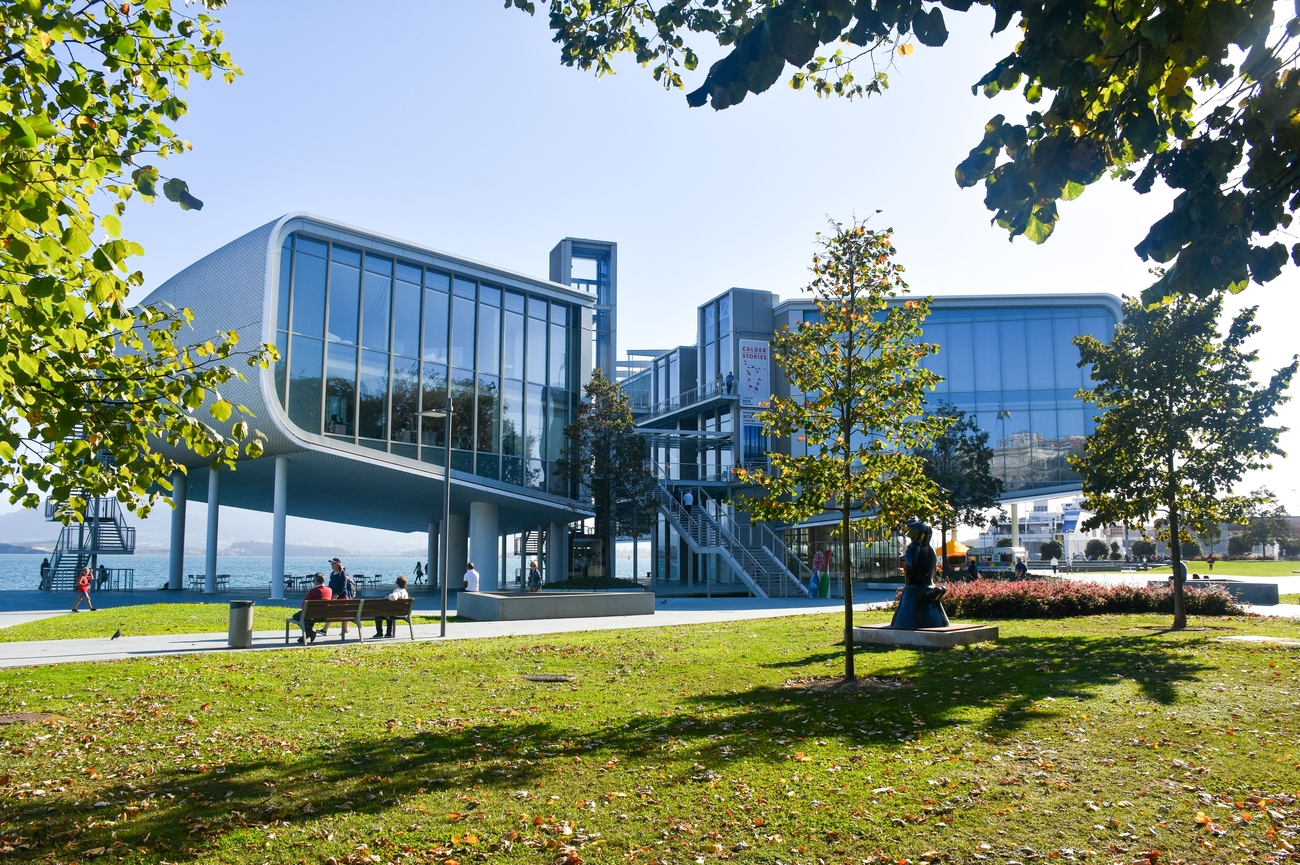
Back along the waterfront, the Centro Botín appears almost to float above the bay. Designed by Renzo Piano, the architect behind the Pompidou Centre in Paris and The Shard in London, the contemporary arts centre opened in 2017, its two rounded volumes clad in thousands of shimmering ceramic discs that constantly reflect the changing light from the water. Inside, rotating exhibitions have brought artists including Matisse and Francis Bacon to northern Spain.
For many visitors, however, the highlight is the rooftop walkway. From here, the entire sweep of the Bay of Santander unfolds beneath you, framed by the distant Cantabrian Mountains. Below lie the Jardines de Pereda, the city's elegant waterfront gardens where locals gather for the evening paseo, passing the bronze Raqueros sculptures, mischievous boys forever frozen in mid-dive as they leap into the harbour for coins.
El Sardinero and Cabo Mayor
Following the bay, the city gradually opens onto El Sardinero, a magnificent sweep of golden sand overlooked by the historic Gran Casino and elegant seafront hotels, with the Piquío Gardens separating its two beaches. This is one of Spain's finest urban beaches and the perfect place for the paseo, the unhurried evening walk that is less about exercise than enjoying the atmosphere.
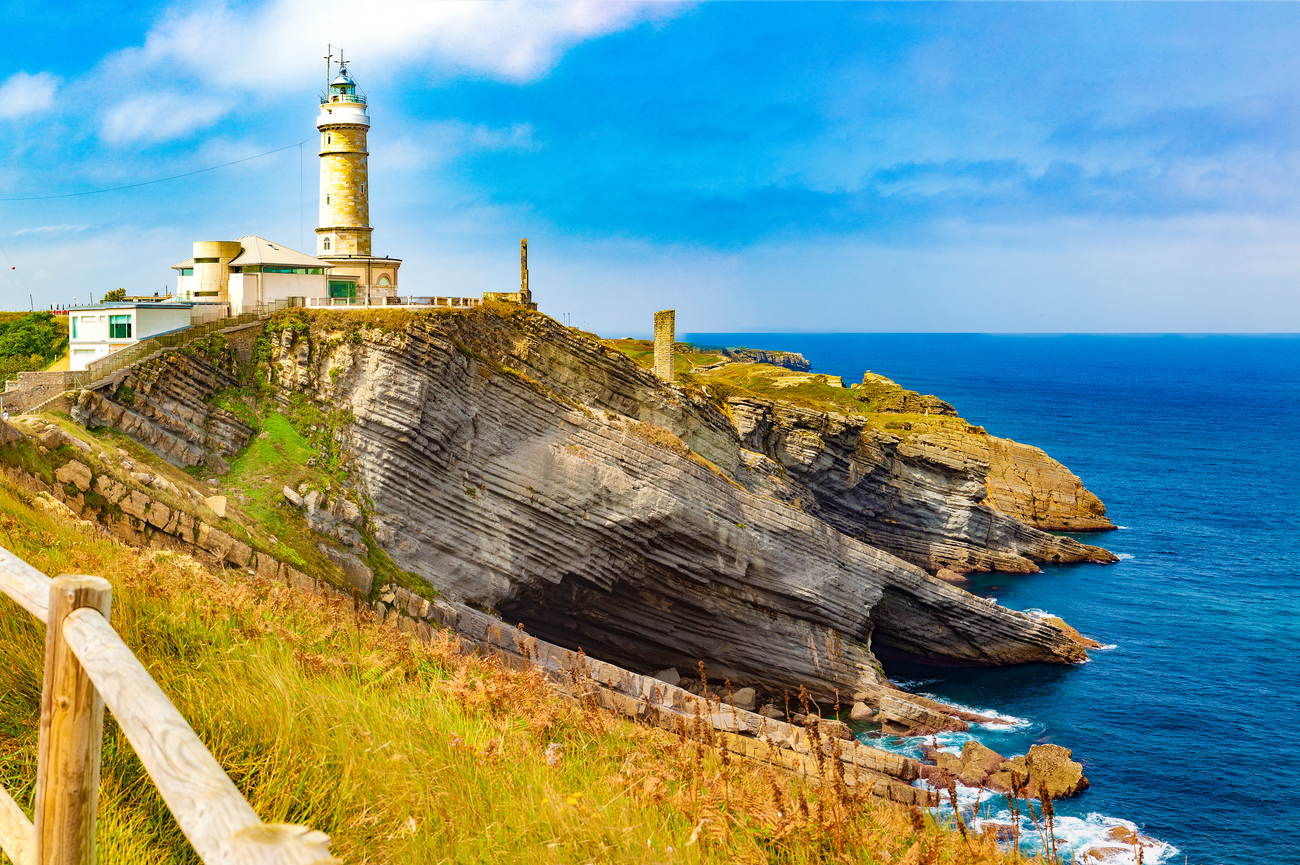
From here, a spectacular clifftop path continues north to the Faro de Cabo Mayor, the lighthouse that has guided ships safely along this coastline since 1839. Today its former keeper's quarters house a small art gallery, while the surrounding cliffs provide some of the best coastal views in Cantabria. Allow yourself an afternoon for the walk. It deserves to be taken slowly.
Santander Old
Town and Local Food
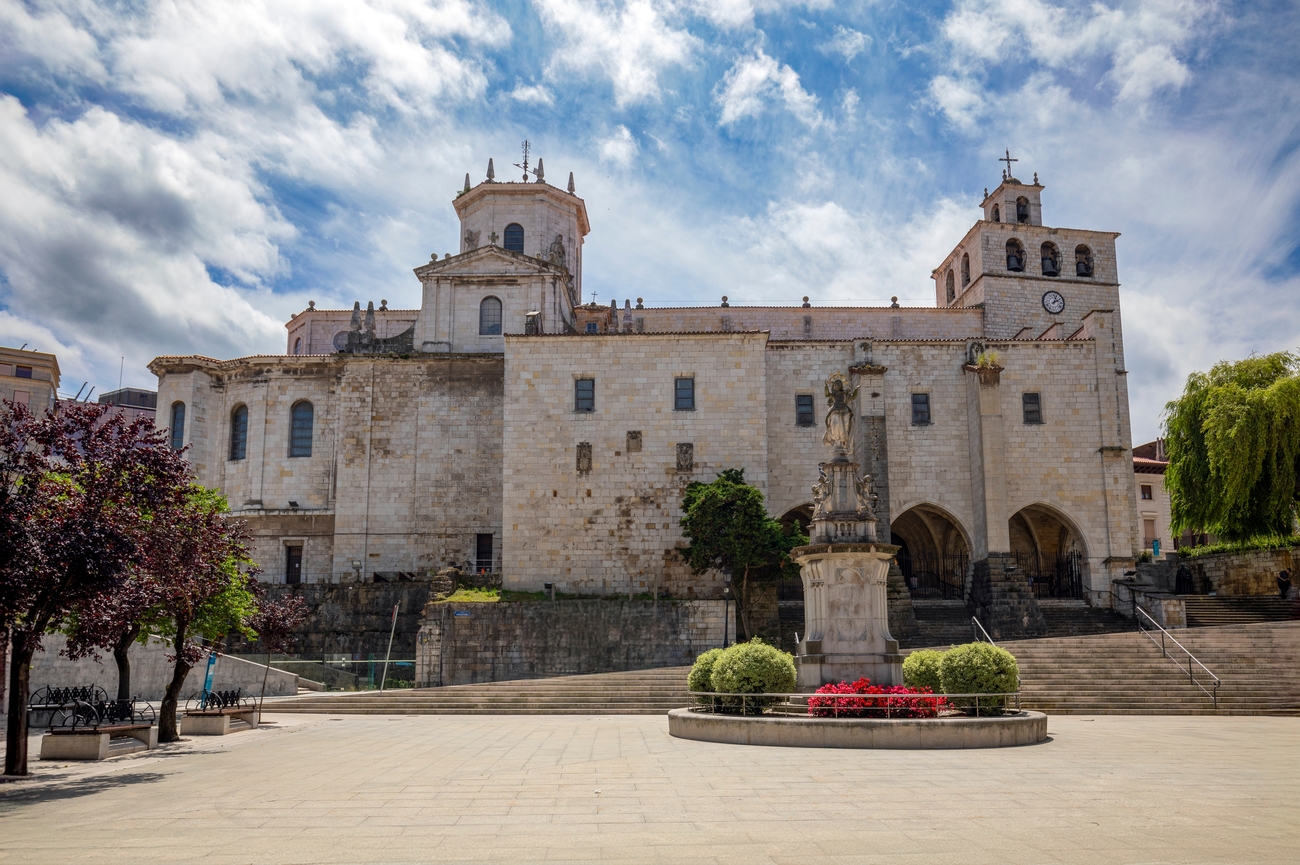
The old town is younger than its history suggests. A devastating fire swept through the city in 1941, destroying much of the medieval centre, so today's streets are more ordered and recent, gathered around the Gothic Cathedral of the Assumption, whose lower church rests on Roman foundations.
What survived unchanged is Santander's appetite. At the Mercado de la Esperanza, the city's handsome iron-and-glass market hall, fishing boats deliver their catch each morning. Around nearby Plaza de Cañadío, the bars fill with locals ordering rabas, thick-cut Cantabrian-style fried squid, best enjoyed with a chilled local white wine. Before leaving, join the city's favourite tradition by picking up an ice cream from Regma and eating it as you continue your walk along the waterfront.
Santander from
the Water
When the walking is done, the best view of Santander is often from the bay itself. Small boats leave the Paseo de Pereda throughout the day, circling the harbour, the Magdalena Peninsula and the lighthouse at Mouro. Seeing the city from the water makes it clear how completely Santander belongs to its bay.
For a different perspective, ride the funicular to the Río de la Pila viewpoint, where the rooftops, harbour and cathedral spread out beneath you. These are the quiet pleasures that define Santander: a boat across the bay, a slow climb to a viewpoint, seafood beside the harbour and another unhurried walk before dinner. They leave you perfectly prepared for the equally relaxed rhythm awaiting you farther west along the Cantabrian coast.
San
Vicente de la Barquera, Medieval Beneath the Mountains
San Vicente de la Barquera is one of the most beautiful fishing towns on Spain’s northern coast, known for its medieval old quarter, working harbour, estuaries, long beaches and extraordinary views of the Picos de Europa. Of all the things to do in San Vicente de la Barquera, the first is simply to arrive slowly and watch that unmistakable skyline come into view.
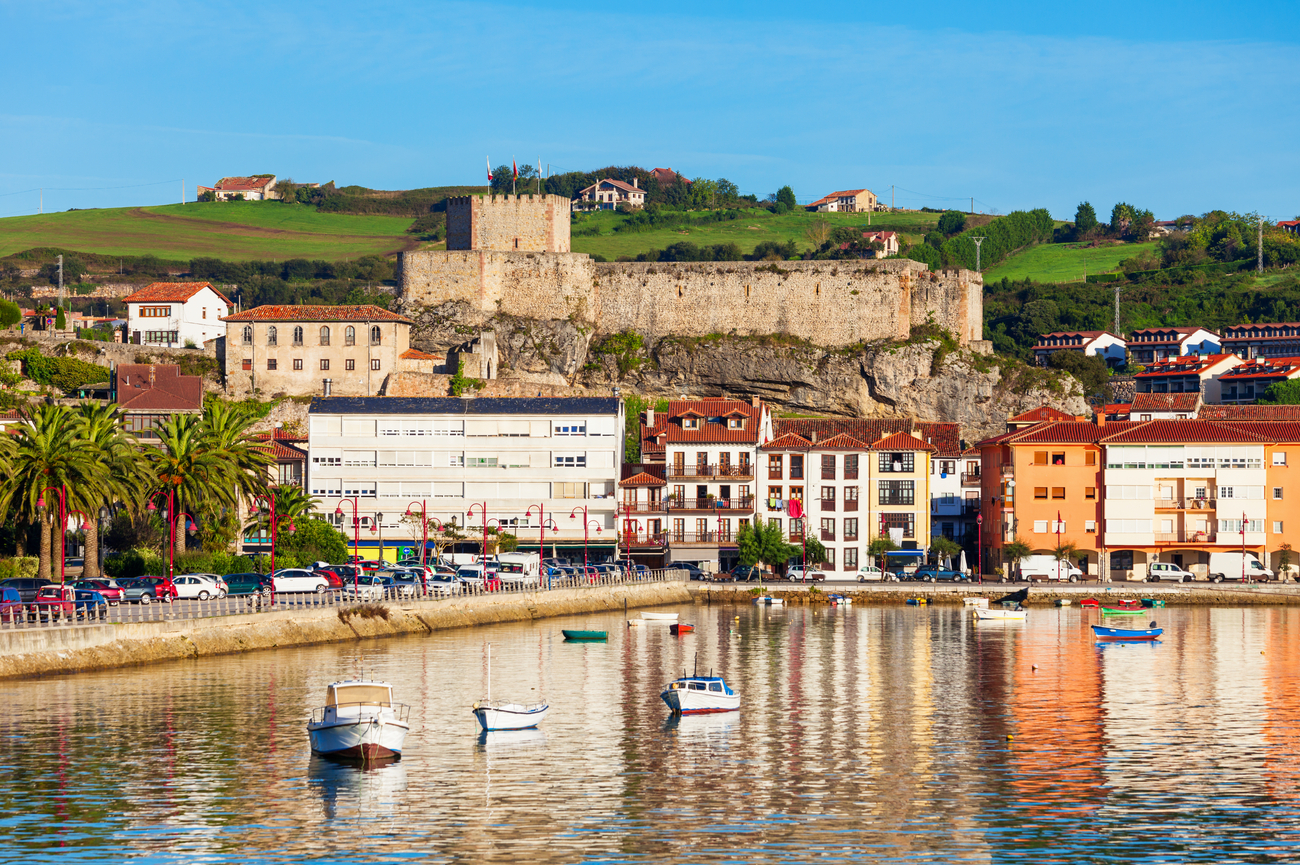
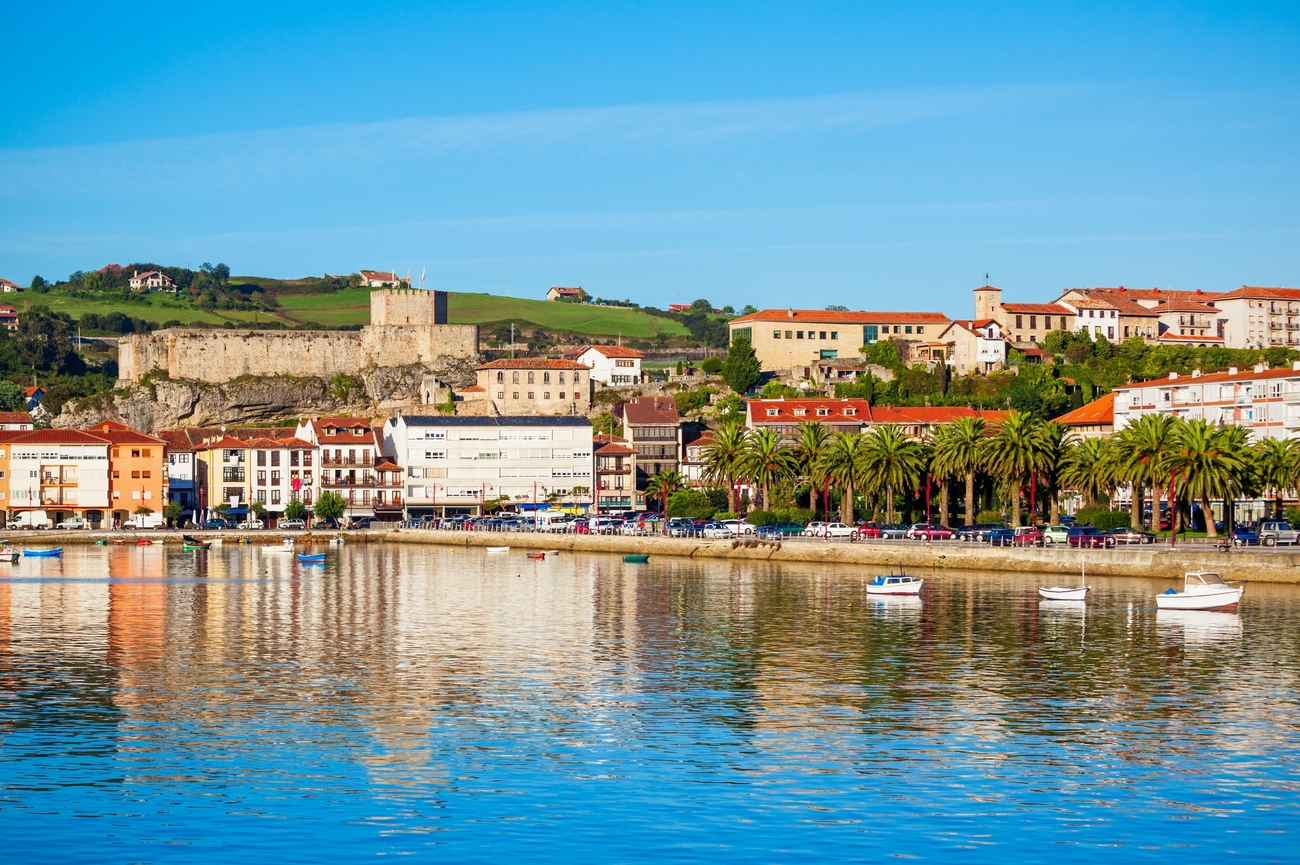
An hour or so west of Santander, the coast delivers its picture. San Vicente de la Barquera sits between two estuaries, its old town climbing along a rocky ridge towards a castle and fortified church. Fishing boats still work from the harbour below, while the Picos de Europa rise directly behind the town like a painted backdrop that someone forgot to take down.
The historic centre, known as the Puebla Vieja, was declared a Site of Cultural Interest in 1987, and it wears its age well. Its castle, church, walls and steep lanes preserve the character of a medieval port that grew rich from fishing, maritime trade and its position on the Northern Way of the Camino de Santiago.
The Puente de
la Maza
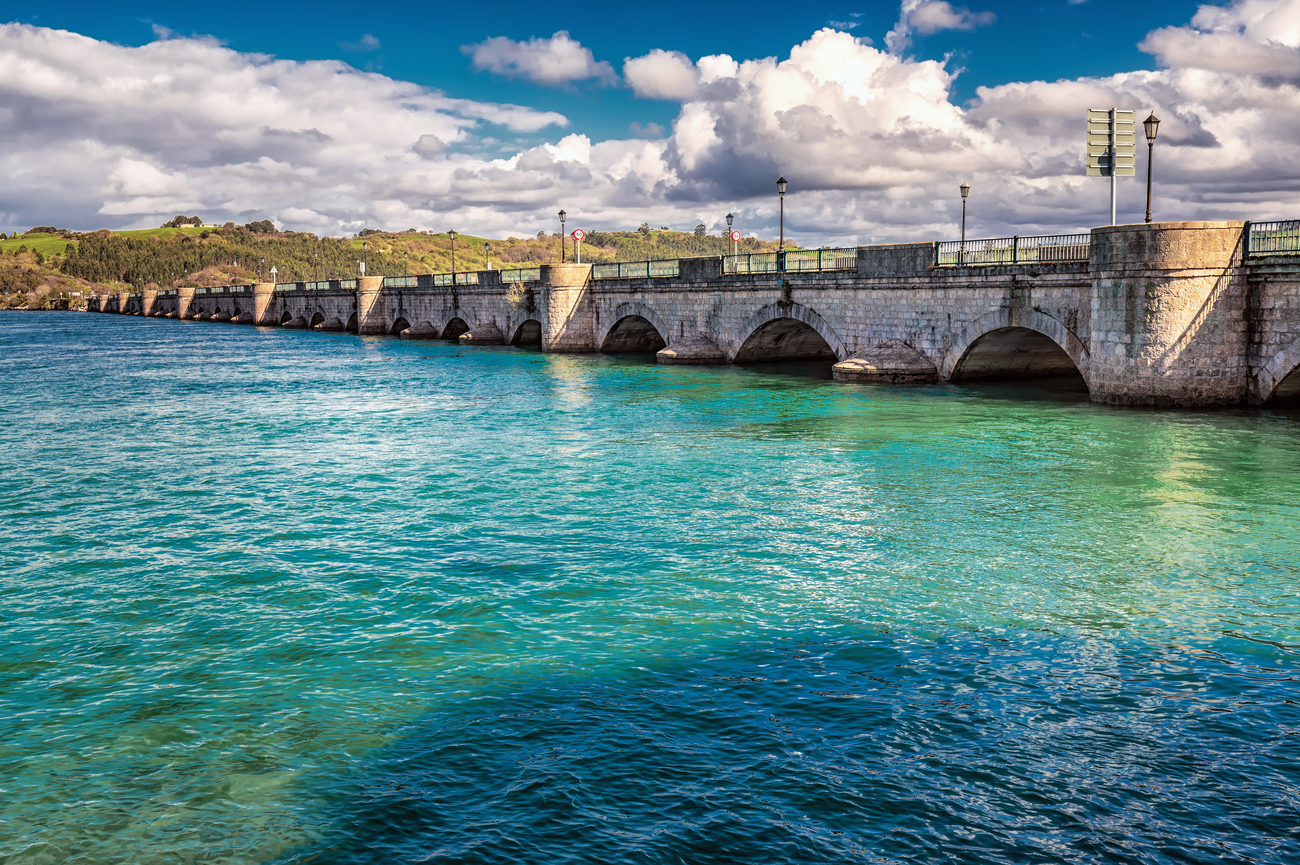
You enter over the water. The Puente de la Maza stretches for almost half a kilometre across the estuary, a long procession of stone arches that has become one of the defining images of San Vicente de la Barquera.
The present bridge was built between the fifteenth and sixteenth centuries on the orders of the Catholic Monarchs, replacing a much earlier wooden crossing. Twenty-eight arches carry it today, although it once had thirty-two, and generations of pilgrims travelling the coastal Camino de Santiago have crossed it on their way west.
Local legend insists that anyone who crosses the entire bridge while holding their breath may make a wish that will come true. It is a foolish, lovely piece of local faith, and you may find yourself trying it.
The Castillo del Rey and Santa María de los Ángeles
From the bridge, the old town climbs towards the Castillo del Rey. The fortress occupies the highest point of the Puebla Vieja, where its stone walls once protected the harbour and the settlement below. Its medieval form developed after King Alfonso VIII granted San Vicente its charter in 1210, helping the town grow into one of the important maritime ports of northern Castile.
Today, the castle contains a small exhibition devoted to local history. The real reward, however, is outside. From its walls, the estuaries, fishing harbour and tiled roofs spread below, while the Picos de Europa close the horizon beyond them.
A few steps away stands the Church of Santa María de los Ángeles, begun in the thirteenth century and completed over the centuries that followed. Its size reflects the wealth and importance San Vicente once enjoyed, while its austere stone architecture is one of the finest examples of Gothic building on the Cantabrian coast.
Inside is the marble tomb of Antonio del Corro, the sixteenth-century inquisitor born in the town. The delicately carved Renaissance monument is counted among Cantabria’s most important funerary sculptures. Outside, the terrace opens over the water, with the town falling towards the harbour and the mountains rising behind it.
The Harbour,
the Sorropotún, and La Folía
The soul of San Vicente de la Barquera lies below the medieval walls, at the port where fishing boats unload and the quayside restaurants cook what they bring ashore.
The local dish to seek out is sorropotún, also known as marmita barquereña, a fisherman’s stew made with bonito, potatoes, onion and peppers. It began as practical food cooked by crews at sea and has become the town’s defining speciality. Order it in one of the small taverns below the old quarter, followed by grilled local fish, seafood from the estuary or a plate of thick-cut rabas.
Visit on the second Sunday after Easter and you may witness La Folía, San Vicente’s great maritime celebration. The image of the Virgen de la Barquera is carried in procession and taken out among a flotilla of decorated fishing boats, while the picayas, the young women of the town, sing and play tambourines in her honour.
The festival reaches back through centuries of maritime devotion and expresses in a single afternoon how completely San Vicente belongs to the sea.
The Sanctuary, Convent and Atlantic Beaches
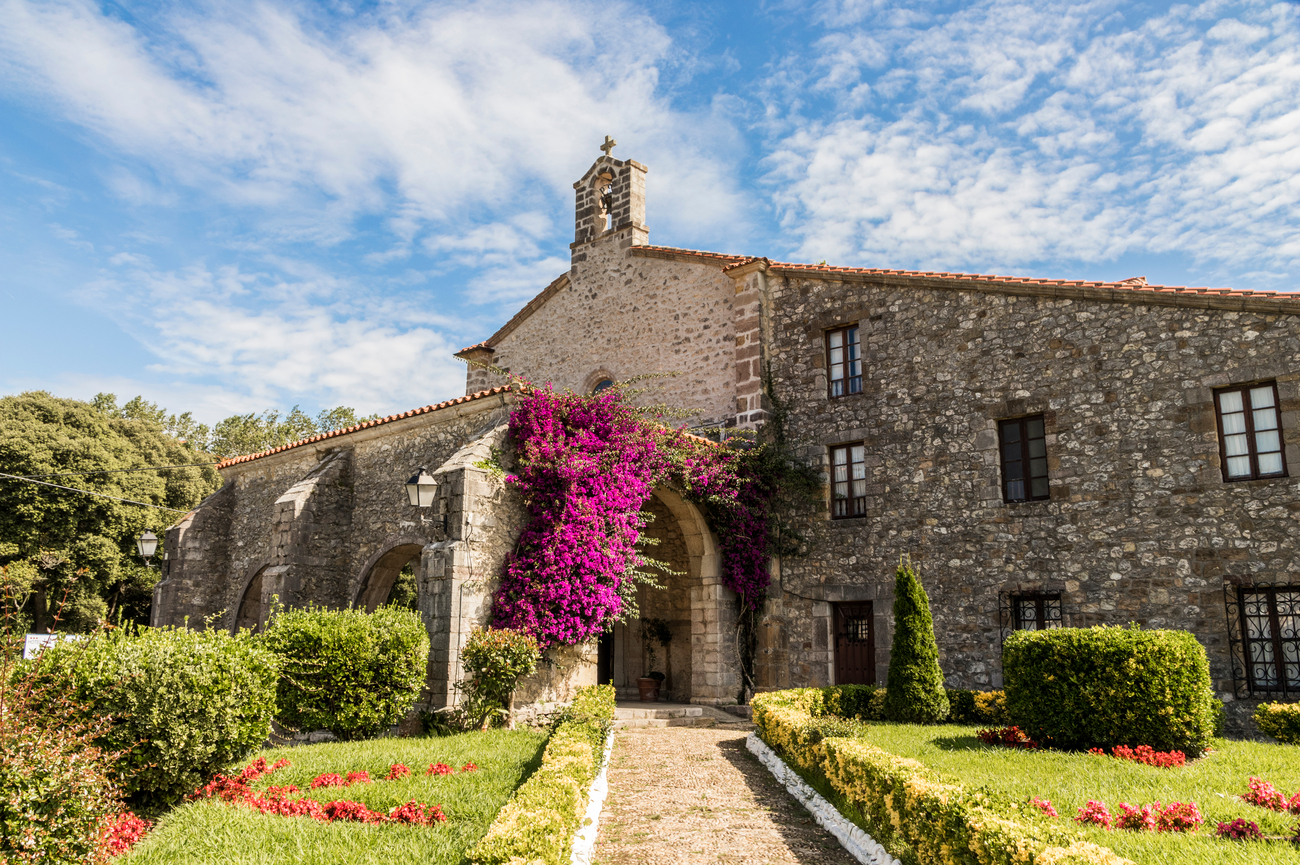
Not everything worth seeing lies within the old walls. Beside the harbour stands the Santuario de la Virgen de la Barquera, dedicated to the town’s patron. According to local tradition, her image reached the coast in a boat without sails, oars or anyone aboard to steer it.
Nearby, partially reclaimed by vegetation, are the ruins of the Convento de San Luis. The former Franciscan convent dates from the late fifteenth and early sixteenth centuries and still preserves parts of its church, cloister and chapel. King Charles I stayed here in 1517 after arriving in Spain for the first time, before continuing inland to claim his inheritance.
Across the Puente de la Maza, the medieval town gives way to the open Atlantic. The beaches of Merón and Gerra form a long sweep of golden sand backed by dunes and green hills, with the Picos de Europa still visible behind them on clear days. This coast forms part of the Oyambre Natural Park, a protected landscape of beaches, cliffs, marshes, estuaries and dunes.
Merón is also one of the best-known surfing beaches on this part of the Cantabrian coast. Even without entering the water, the walk from the medieval old town, across the estuary and onto the Atlantic sand is one of the finest things to do in San Vicente de la Barquera. In a single afternoon, the landscape moves from castle walls and Gothic stone to dunes, surf and an open horizon.
There is a whole coastline of harbours waiting farther along the railway, and our guide to Oviedo and Ribadesella carries the journey into Asturias, the old mountain kingdom and the heartland of cider.
Before the train moves on, however, San Vicente de la Barquera asks you to stay for one more tide. Our Exploring Northern Spain by Narrow-Gauge Railway journey is designed to let you do exactly that.
A
Pause at Torrelavega
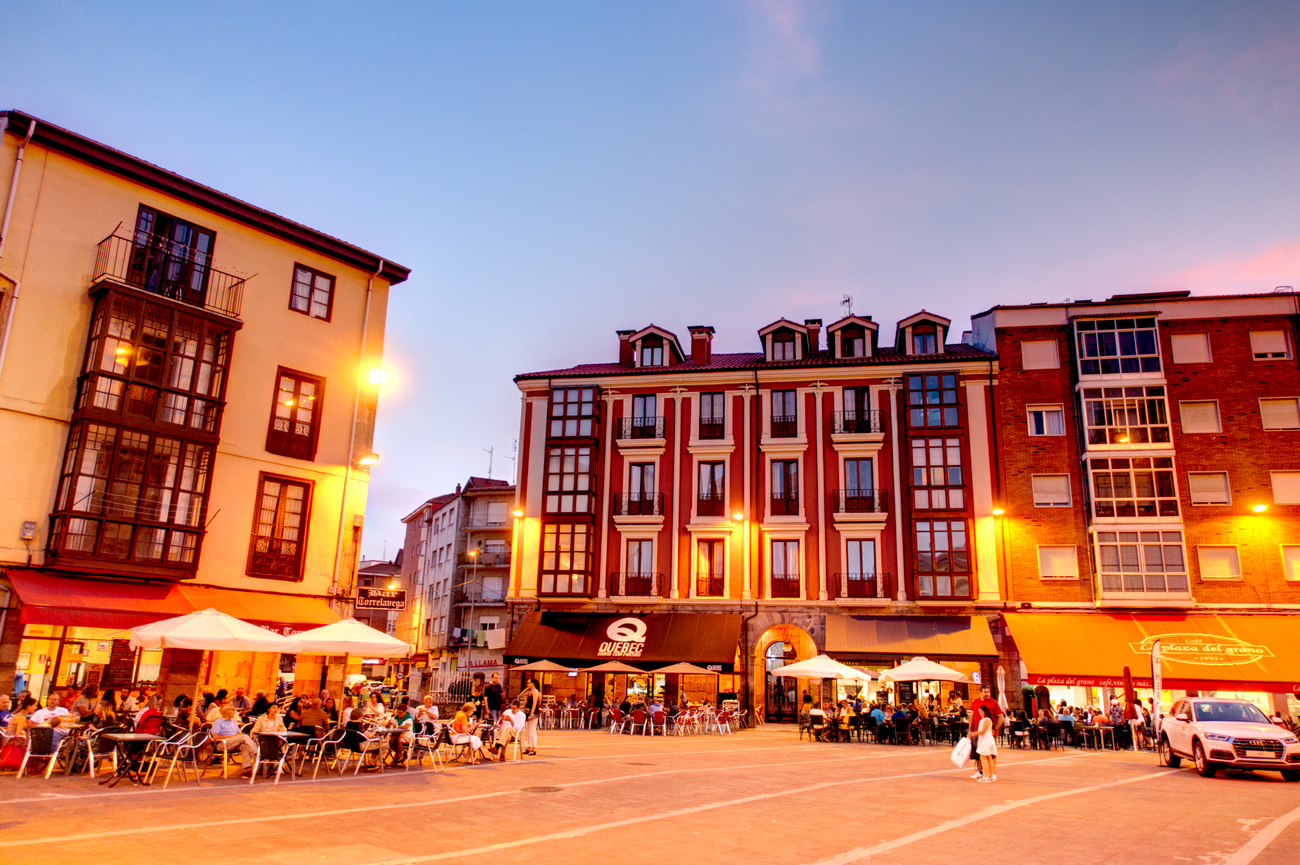
Between Santander and San Vicente de la Barquera, the narrow-gauge railway pauses inland at Torrelavega, Cantabria’s traditional commercial and market centre. It is a working town of merchant houses, quiet squares and everyday local life, offering a brief contrast to the grand bay of Santander and the medieval harbour waiting farther west.
Torrelavega asks little of you beyond an appetite. Its pleasures are simple and domestic: a wander through the market, coffee in a good neighbourhood café and a warm corbata, the almond-and-puff-pastry sweet Cantabria produces with particular pride.
This is a short stop by design, a quiet night between the bay and the mountains, and none the worse for its modesty. Torrelavega does not compete with the coast. It simply gives the journey room to breathe before the railway continues towards San Vicente de la Barquera and the peaks of the Picos de Europa.
The
Picos de Europa Beyond the Window
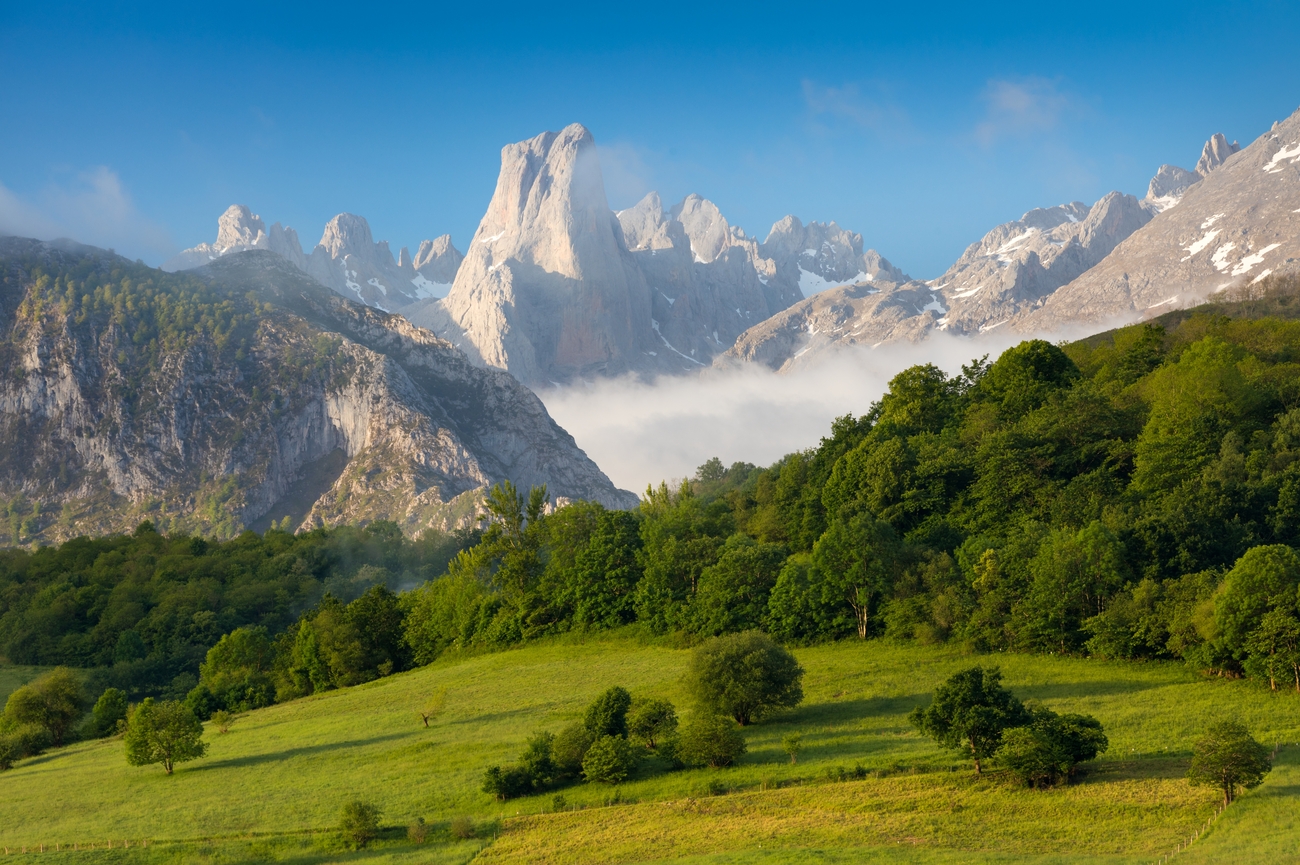
You cannot travel this coast without the mountains travelling with you. They rise so close behind the shore that they feel less like a separate region than the back wall of the beach. On clear days, the mountains appear beyond the green coastal landscape, creating an extraordinary backdrop to the journey through western Cantabria.
San Vicente de la Barquera sits beside the Oyambre Natural Park, a protected landscape of marshes, dunes, beaches, cliffs and green meadows. Twice each day, the tide fills and empties the estuary channels, while migratory birds pause to feed in the wetlands. Beyond them, the Picos de Europa stand over the coast, turning an already beautiful landscape into something extraordinary.
For travellers who want to exchange the sea for the mountains for a day, the Picos de Europa are within reach from Santander and the western Cantabrian coast. Possible excursions include the cable car at Fuente Dé, which climbs into the high limestone landscape, and the glacial Lakes of Covadonga, set among the peaks of Asturias.
As part of an arranged journey, a private guided excursion into the mountains can be added without the need to navigate local timetables, unfamiliar roads or changing mountain conditions. Even when experienced only from the railway window, however, the Picos remain one of the quiet glories of the entire route. They are the reason this part of northern Spain feels like two landscapes laid one behind the other: a wild Atlantic coast with a mountain kingdom rising immediately beyond it.
Stay
for One More Tide on the Cantabrian Coast
The trouble with the Cantabrian coast is knowing when to leave. There is always one more headland, one more harbour where the fishing boats are returning, and one more evening when the light turns the estuary to copper while the Picos de Europa hold the last of the sun.
Santander and San Vicente de la Barquera are only the beginning. Together, they open a slow journey west through Cantabria, Asturias and Galicia, following the narrow-gauge railway through fishing towns, mountain landscapes and some of the least hurried corners of northern Spain.
The rail itinerary and accommodation can be arranged in advance, while private transfers, excursions and local guides can be added according to how you wish to experience the region.
Let the coast keep you a little longer than you planned. Stand on the bridge at San Vicente de la Barquera with the mountains at your back and the sea in front of you, and make the wish while you still have the breath for it.
Let’s begin planning your Exploring Northern Spain by Narrow-Gauge Railway journey.


Let us know what you love, where you want to go, and we’ll design a one-of-a-kind adventure you’ll never forget.
Get in touch
Miriam
Travel Specialist

Romina
Travel Specialist

Laura
Travel Specialist
Our offices:



Revigorate, Iberian Escapes and Algarve Lifestyle are the registered brand names of APCS Lda . We are a fully authorised travel agency licensed by Turismo de Portugal RNAVT/6867.
In the event of a dispute, the consumer may refer to: RAL - Centros de Arbitragem
Avª. 5 de Outubro, nº. 55, R/C Dtº. 8000-075 Faro, Portugal | Tel: +351 289 823 135 *
* national landline call
E-mail: info@consumoalgarve.pt| www.consumidoronline.pt | Mon to Fri: 9:00 - 13:00 / 14:00 - 17:00