Why Oviedo and Ribadesella Are the Soul of Asturias: Pre-Romanesque Churches, Cider and the Cantabrian Coast
Oviedo and Ribadesella reveal two sides of Asturias that belong together: one shaped by the Kingdom of Asturias and some of Spain's oldest churches, the other by the Cantabrian Sea, traditional cider houses and a coastline of fishing harbours and dramatic cliffs. Together they offer one of the richest stretches of northern Spain, where history, landscape and local traditions remain deeply connected.
At the end of Calle Gascona stands a giant wooden cider barrel, a signpost that tells you exactly what Oviedo considers worth celebrating. Behind it runs a line of sidrerías, and in each the cider arrives the same way: the bottle raised above the waiter's head, the glass held by his knee, a thin stream crossing the space between them before breaking against the rim.
You receive only two fingers at a time and drink it in a single swallow, before the aeration fades. Asturians say the pour is half the drink, and they are not being sentimental. Natural cider is flat and sharp inside the bottle; it is the dramatic escanciado that wakes it. An evening on Calle Gascona remains one of the essential things to do in Oviedo because it is exactly how the city introduces itself.
There is an older Oviedo beneath the cider. It was the capital of the Kingdom of Asturias in the ninth century and continued raising churches in stone while much of the Iberian Peninsula changed hands around it. Today it forms the next chapter of our Exploring Northern Spain by Narrow-Gauge Railway journey, following the coast west from Santander and San Vicente de la Barquera. Paired with the seaside town of Ribadesella and with the railway, accommodation and logistics already arranged, the two destinations reveal both halves of Asturias: Spain's earliest medieval architecture and the traditions that still define daily life.
Oviedo,
the Old Capital of a Mountain Kingdom
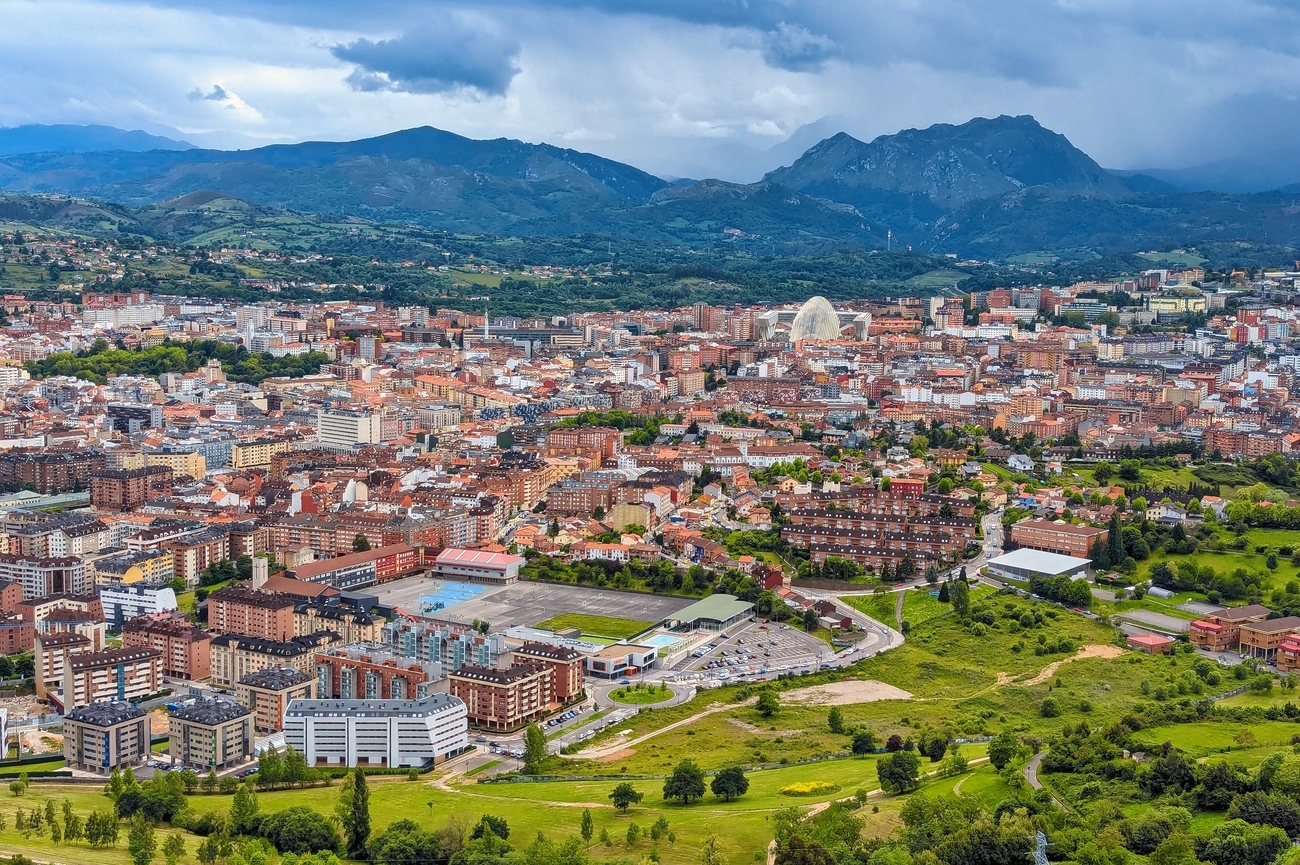
Oviedo is the historic capital of Asturias, a compact and highly walkable city known for its UNESCO-listed Pre-Romanesque churches, Gothic cathedral, medieval pilgrimage heritage and deeply rooted cider culture. The best things to do in Oviedo unfold naturally on foot, from the monuments of Monte Naranco to the old town, El Fontán market and the sidrerías of Calle Gascona.
There is a particular pleasure in a city that rewards walking, and Oviedo is built for it. Much of the centre is pedestrianised, allowing you to drift through polished stone streets and intimate plazas without a car in sight, past glass-fronted balconies and confectioners’ windows, into squares where the whole city appears to be having coffee.
Oviedo is prosperous, clean and quietly grand, a capital in miniature. Its history rarely announces itself loudly. Instead, more than a thousand years reveal themselves one corner at a time, from the hill of the Asturian kings to the cathedral, the market and the cider boulevard.
The
Pre-Romanesque Churches of Monte Naranco
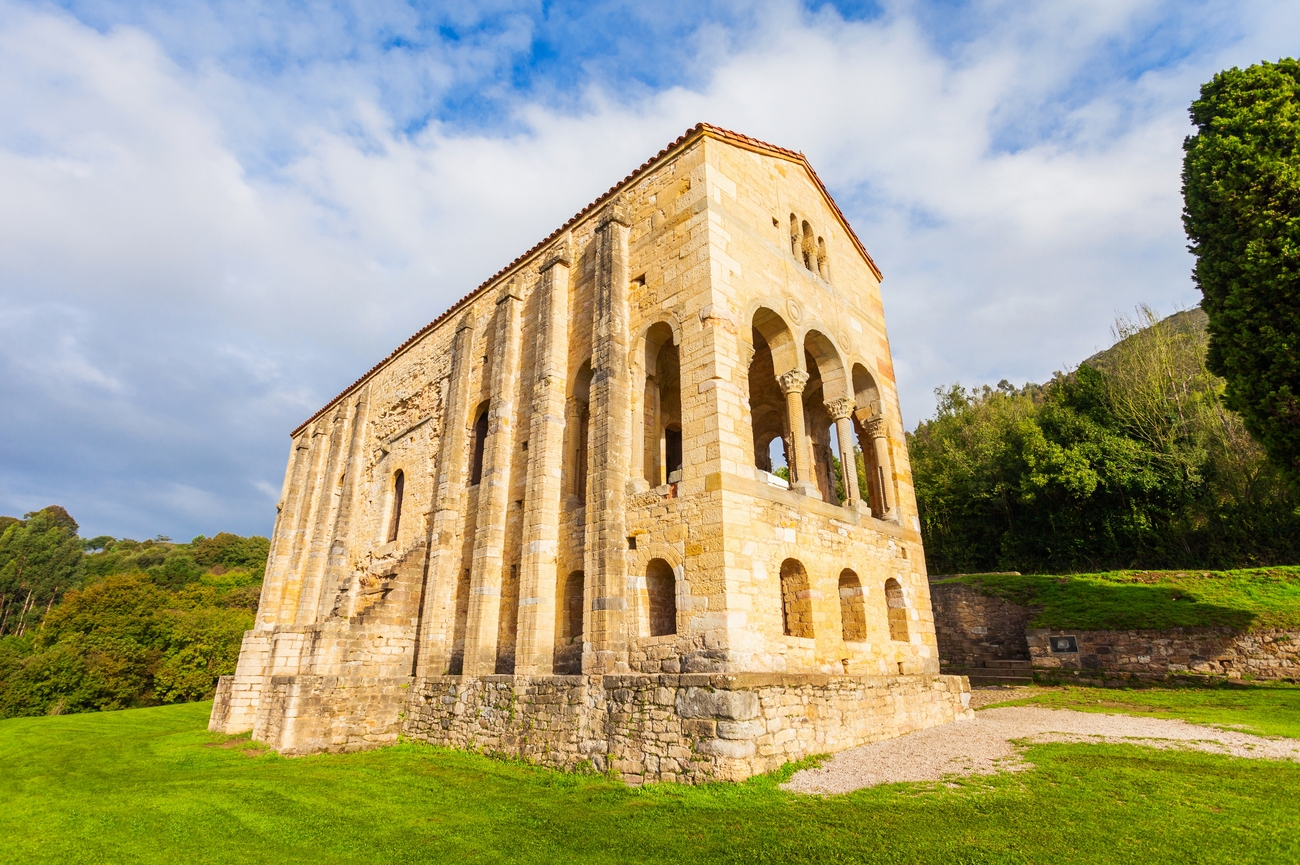
Begin above the city on Monte Naranco, where two of the most remarkable buildings in early medieval Spain stand within a short walk of one another.
Santa María del Naranco was built around 848 during the reign of King Ramiro I, originally as a royal hall or palace rather than a church. Its upper chamber, reached by an external staircase, is a long barrel-vaulted space with open loggias at either end. Slender columns, carved medallions and elegantly proportioned arches give the building a sophistication that feels unexpected for its age. One of its distinctive triple-arched windows later became an emblem of Oviedo.
A little higher on the hillside stands San Miguel de Lillo, built during the same reign as part of the royal complex. Only part of the original church survives, but its carved doorframes, stone latticework and surviving interior still convey the ambition of ninth-century Asturian architecture.
Together, the two buildings form part of the UNESCO-listed Monuments of Oviedo and the Kingdom of Asturias. They belong to a group of structures created when the small Christian kingdom in the north of the Iberian Peninsula was establishing its political and religious identity.
Oviedo preserves several other survivors from this period. San Julián de los Prados, commonly known as Santullano, is one of the largest remaining Pre-Romanesque churches in Spain. Its interior retains fragments of remarkable ninth-century wall paintings in ochre, red and yellow, decorated with architectural and geometric motifs rather than religious figures.
Near the old town stands La Foncalada, a small stone fountain constructed during the reign of Alfonso III. Modest in scale but exceptional in importance, it is the only surviving example of civic architecture from the Asturian monarchy and forms part of the same UNESCO designation. Locals pass it on their way through the city, barely glancing at a structure that has stood there for more than a thousand years. It is one of the clearest examples of how lightly Oviedo wears its antiquity.
Monte Naranco offers more than its churches. From the terraces surrounding the monuments, the whole city lies below, with the cathedral tower rising from the old town and green hills folding away on every side. Higher on the mountain stands the great statue of the Sacred Heart, visible from across Oviedo and illuminated after dark. On a clear morning, the distant line of the Cantabrian coast can sometimes be picked out beyond the valley.
The Cathedral,
the Holy Chamber, and the Camino Primitivo
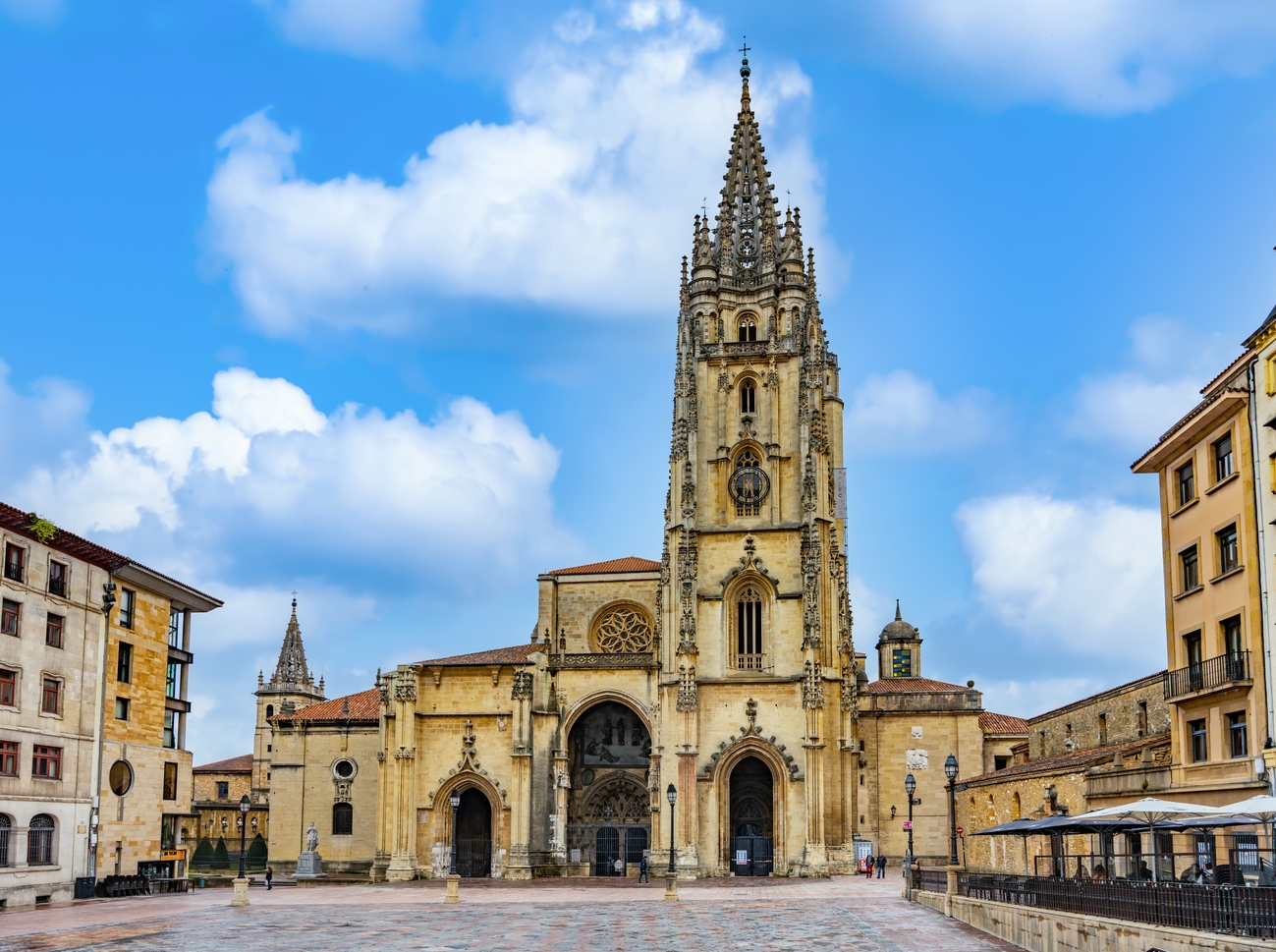
The single Gothic tower of the Cathedral of San Salvador presides over Plaza de Alfonso II, one of Oviedo’s loveliest squares and the place to which almost every walk through the old town eventually returns.
The present cathedral was built over several centuries, incorporating elements from the earlier royal and religious complex that once occupied the site. Its most important surviving space is the Cámara Santa, or Holy Chamber, constructed in the ninth century and now included within Oviedo’s UNESCO-listed monuments.
Inside are the most revered treasures of Asturias, including the Cross of the Angels and the Victory Cross. Their jewelled forms appear throughout the region, most visibly on the Asturian flag, where the Victory Cross hangs against a blue field.
The cathedral is also a beginning. The Camino Primitivo begins at its doors, the Original Way to Santiago de Compostela. Tradition connects the route with King Alfonso II, who travelled west from Oviedo after news reached him of the discovery of the apostle’s tomb.
Pilgrims still gather in the square before taking their first steps towards Galicia. There is something fitting about passing through a city that stands at the beginning of the oldest route to Santiago while travelling west on a journey that will eventually reach the same destination.
The Old Town
and Oviedo’s Open-Air Museum
Oviedo often describes itself as an open-air museum, and it has earned the name. More than a hundred sculptures are scattered throughout its streets and squares, turning an ordinary walk through the centre into a succession of unexpected encounters.
In front of the cathedral stands Ana Ozores, the tragic heroine of La Regenta, the great nineteenth-century novel set in a fictionalised version of Oviedo. Elsewhere, a bronze Woody Allen strides through the city he praised after receiving the Prince of Asturias Award, while Mafalda, the beloved Argentine cartoon character, sits on a bench in Campo de San Francisco waiting for company.
The sculptures soften the formality of Oviedo’s elegant streets with warmth and humour. Finding them is one of the gentlest things to do in Oviedo when you have an afternoon and no fixed plan.
The city’s cultural pride is most visible at the Teatro Campoamor, the nineteenth-century opera house where the Princess of Asturias Awards are presented each autumn. The awards bring figures from science, literature, international affairs, the arts and sport to Oviedo, placing the city briefly at the centre of Spain’s cultural calendar.
For something you can carry away, step into one of Oviedo’s historic confectioners and ask for a carbayón. This rich local pastry is made with puff pastry, ground almonds, egg yolk and a glossy sugar coating. Its name comes from the affectionate nickname given to the people of Oviedo, and the sweet has become one of the city’s edible emblems.
When you need a pause from stone streets and monuments, enter Campo de San Francisco, Oviedo’s green heart. The former monastic garden is now a park of mature trees, broad paths and shaded benches where the city comes to walk, read and do nothing in particular.
For a rainy afternoon, the Museum of Fine Arts of Asturias occupies a group of historic buildings close to the cathedral. Its collection spans several centuries of Spanish and European art and includes works associated with artists such as El Greco, Goya, Sorolla, Dalí, Picasso and Miró. Admission is free, making it one of the most rewarding cultural stops in the city.
El Fontán and
the Cider Boulevard
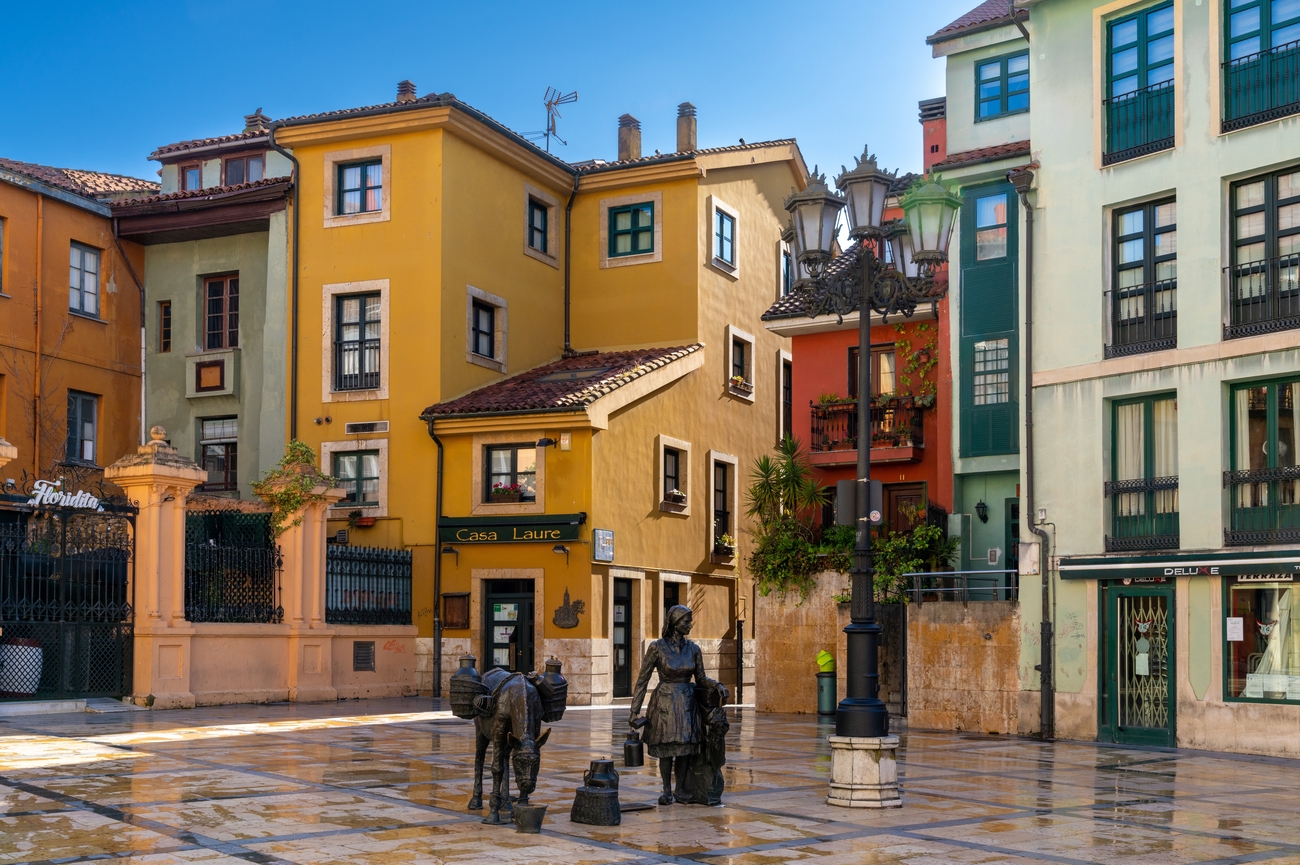
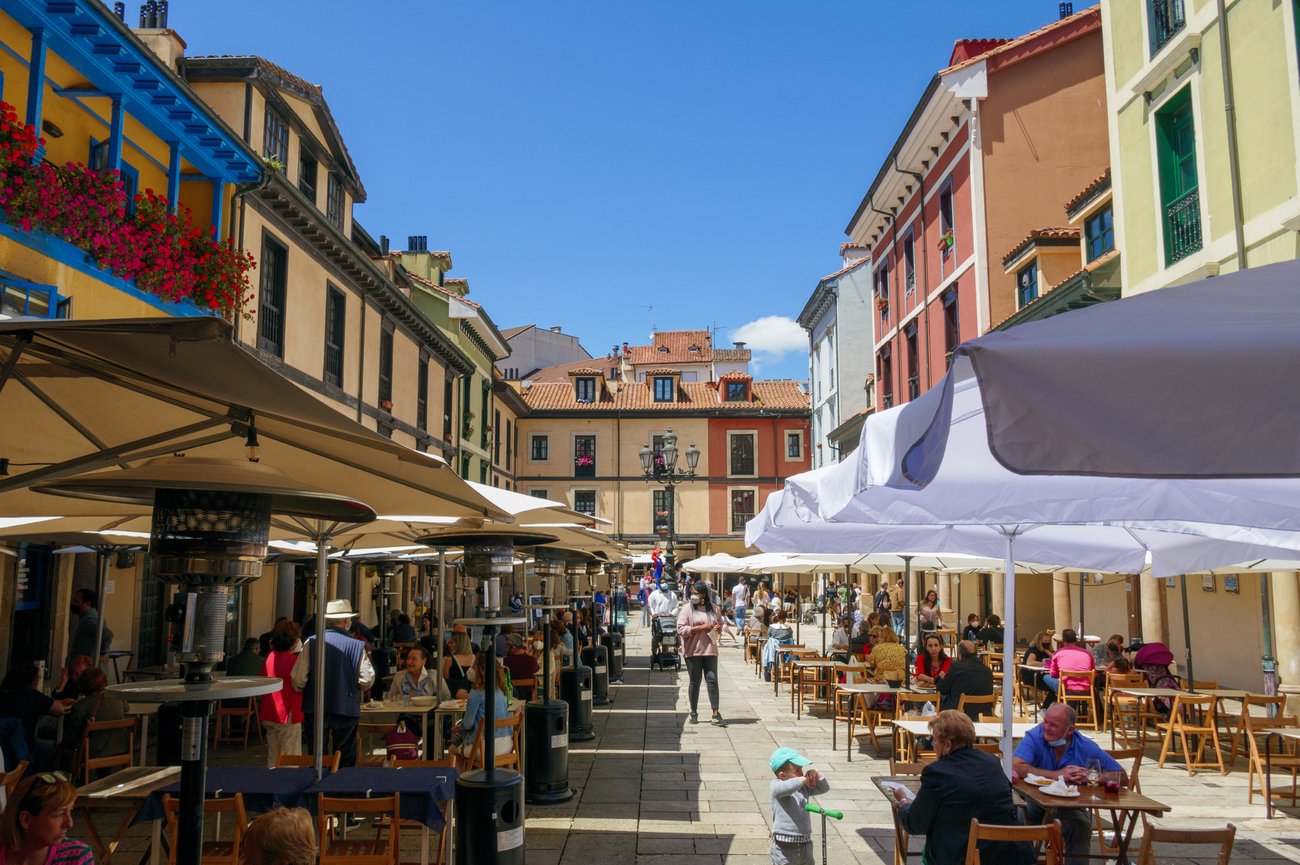
The living heart of Oviedo is Plaza del Fontán, a compact square of ochre façades, arcades and flower-hung balconies built over land that was once wet and fed by natural springs.
Beside it stands Mercado El Fontán, continuing a trading tradition that reaches back centuries. Come on a market morning and the surrounding streets fill with stalls selling fruit, vegetables, flowers, cheeses, cured meats and everyday household goods. The atmosphere is less theatrical than practical, which is precisely its appeal. This is not a market preserved for visitors but part of the city’s ordinary rhythm.
From El Fontán, it is an easy walk to Calle Gascona, known throughout Oviedo as the Boulevard of Cider. Sidrerías line the street beneath the symbol of an enormous wooden barrel, and from lunchtime until late evening the pavement fills with the distinctive splash of cider hitting glass.
In Asturias, cider is not simply poured. The waiter raises the bottle above the head and holds the glass low by the opposite hip, directing a thin stream downwards without looking directly at either. As the cider strikes the rim, it absorbs air and releases its aroma.
This ritual is known as escanciado. Each serving is deliberately small, usually only enough for a few mouthfuls, and should be drunk immediately before the bubbles and freshness disappear. The waiter returns to repeat the performance throughout the meal, leaving the final drops in the glass rather than drinking the sediment.
Natural Asturian cider is dry, lightly acidic and without the sweetness or carbonation associated with many bottled ciders elsewhere. The pour wakes it, and the social ritual surrounding it matters almost as much as the drink itself.
Order fabada asturiana while you are here, a deep and generous stew of white beans with chorizo, black pudding and cured pork. Another local favourite is cachopo, two large veal fillets filled with ham and cheese, breaded and fried until golden. Both belong to the same abundant, rain-fed landscape as the apples, cheeses and cattle of Asturias.
Of all the things to do in Oviedo, an unhurried evening on Calle Gascona may be the one the city itself would choose. Move from one sidrería to another as the light fades, drink each small measure before it loses its life, and let the old capital introduce itself in the manner it knows best.
Ribadesella
and the Cider Coast
Ribadesella is one of the essential stops on the Asturian coast, known for the UNESCO-listed Cueva de Tito Bustillo, the River Sella, Santa Marina Beach and its elegant Indiano villas. Where Oviedo preserves the royal and religious origins of Asturias, Ribadesella brings together its living pleasures: cider and seafood, river and sea, prehistoric art and an Atlantic landscape with the Picos de Europa rising behind it.
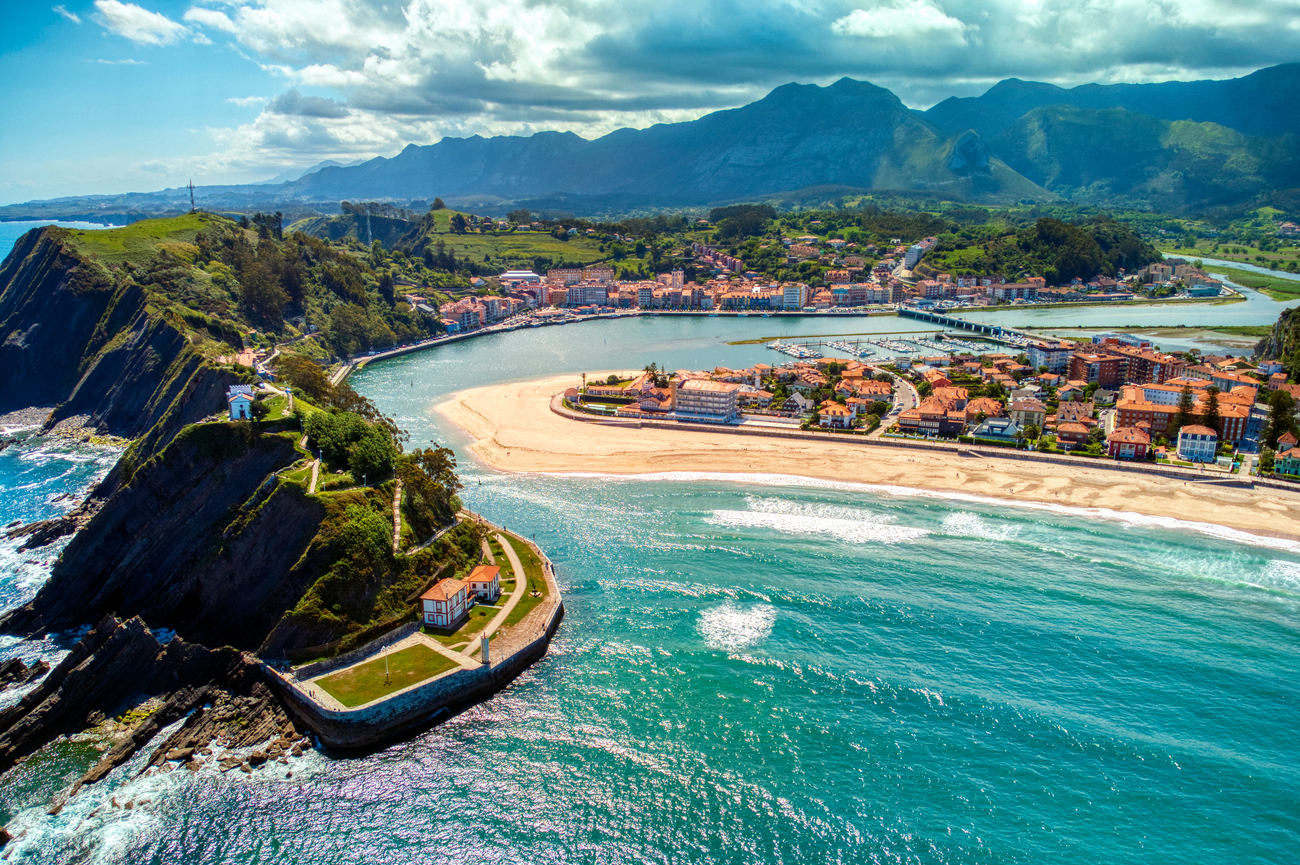
The railway carries you back down to the coast, where the River Sella reaches the Cantabrian Sea through a broad estuary and Ribadesella spreads across both banks. It is a place of three landscapes at once, with the river running through it, the Atlantic opening in front and the mountains standing close behind.
People have lived in this landscape since the depths of prehistory. That long human story remains present beneath the limestone hills, along the working harbour and even in the fossilised tracks preserved in the cliffs beside the beach. Oviedo and Ribadesella together reveal two complementary sides of Asturias, all within a short journey of one another.
Tito Bustillo
and the Deep Past
Above Ribadesella, within the limestone Ardines Massif, lies the Cueva de Tito Bustillo, one of Europe’s most important sites of Palaeolithic art. Its chambers contain paintings and engravings created across thousands of years, including horses, reindeer, signs and human forms preserved in the darkness of the cave.
Tito Bustillo forms part of the UNESCO World Heritage Site known as the Cave of Altamira and Palaeolithic Cave Art of Northern Spain. The wider group represents an extraordinary record of artistic expression during the Upper Palaeolithic, spanning approximately 35,000 to 11,000 years ago.
Access to the cave is carefully controlled to protect its fragile environment. Visitor numbers are limited, advance reservations are essential and the cave opens only during part of the year. On our journey, a visit can be incorporated whenever the season and availability permit.
Beside the cave, the Tito Bustillo Rock Art Centre places the paintings within the wider story of prehistoric life and artistic expression in northern Spain. It also provides an excellent alternative when access to the original cave is unavailable.
To enter Tito Bustillo and look upon an animal drawn by a human hand thousands of years ago is a quiet, vertiginous experience. The image is simple, but the distance between its maker and the person standing before it seems briefly to disappear.
The River Sella,
the Descent, and the Estuary
The River Sella gives Ribadesella both its name and its rhythm. It descends from the mountains of eastern Asturias before reaching the Cantabrian Sea here, dividing the historic town and harbour from the beach and villas of Santa Marina.
Each August, the river becomes the setting for the Descenso Internacional del Sella, the celebrated canoe race from Arriondas to Ribadesella. The event began in 1930 and is accompanied by the Fiesta de Les Piragües, one of Asturias’ largest festivals and an event officially recognised as being of International Tourist Interest. It normally takes place on the first Saturday in August, moving to the following Saturday when the first falls on 1 or 2 August.
For one day, the entire valley becomes a procession of canoes, trains, music, traditional dress and riverside celebrations. Even outside the festival, references to the descent appear throughout Ribadesella, including the crossed paddles incorporated into the railings along the waterfront.
The Paseo de la Grúa follows the estuary towards the harbour, its wall decorated with ceramic panels designed by Spanish cartoonist Antonio Mingote. The murals tell Ribadesella’s history with wit and colour, moving from prehistoric settlement and seafaring to the town’s modern life.
Fishing boats still return to the harbour, and the streets behind the quays are lined with cider houses and seafood restaurants. This is the place to order merluza a la sidra, hake cooked with Asturian cider, or a plate of shellfish followed by another small glass poured dramatically from above the waiter’s head.
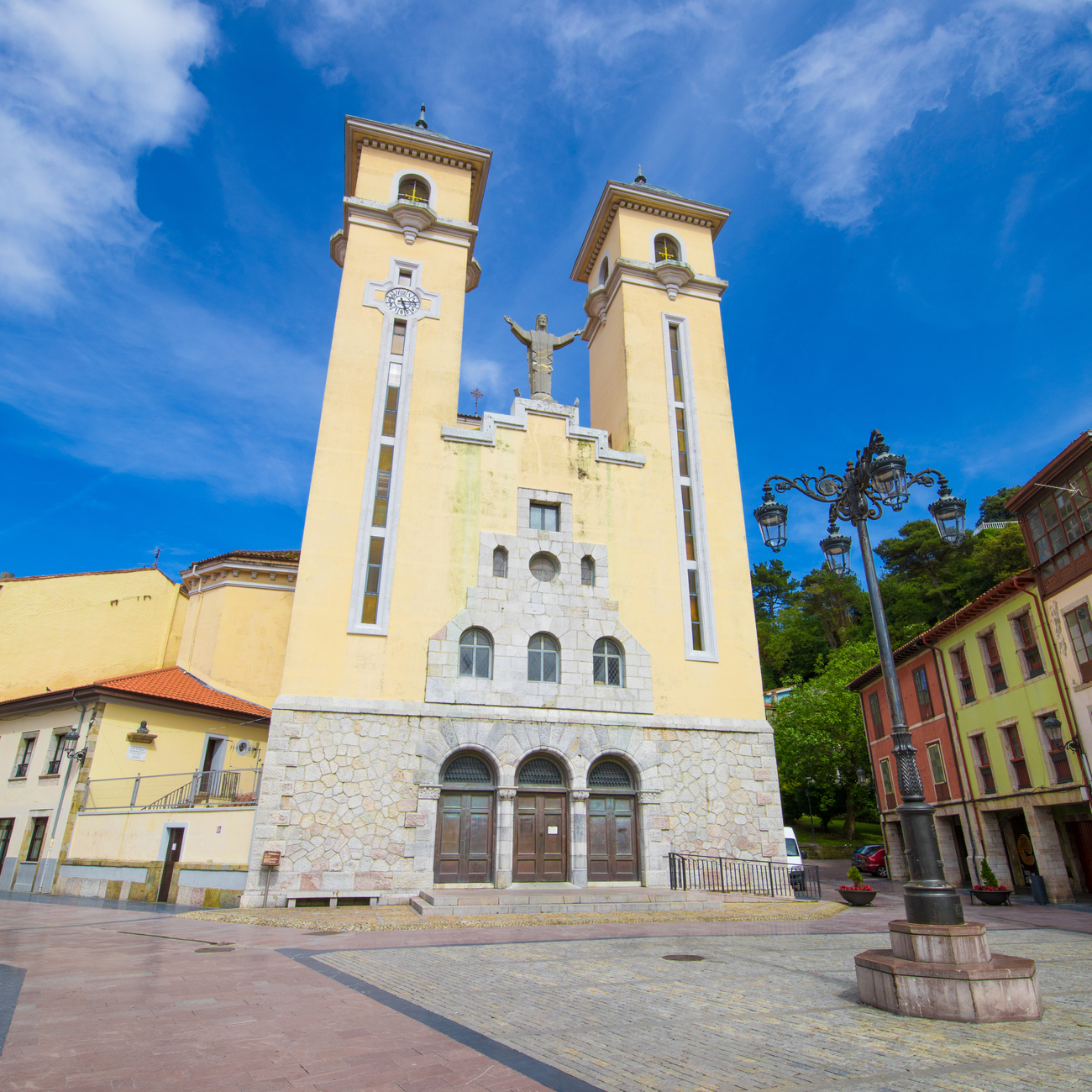
The old town gathers behind the port, its narrow lanes opening towards the twin-towered Church of Santa María Magdalena. Cider bars, cafés and small shops fill the surrounding streets, making this an easy place to lose an afternoon without ever travelling far from the water.
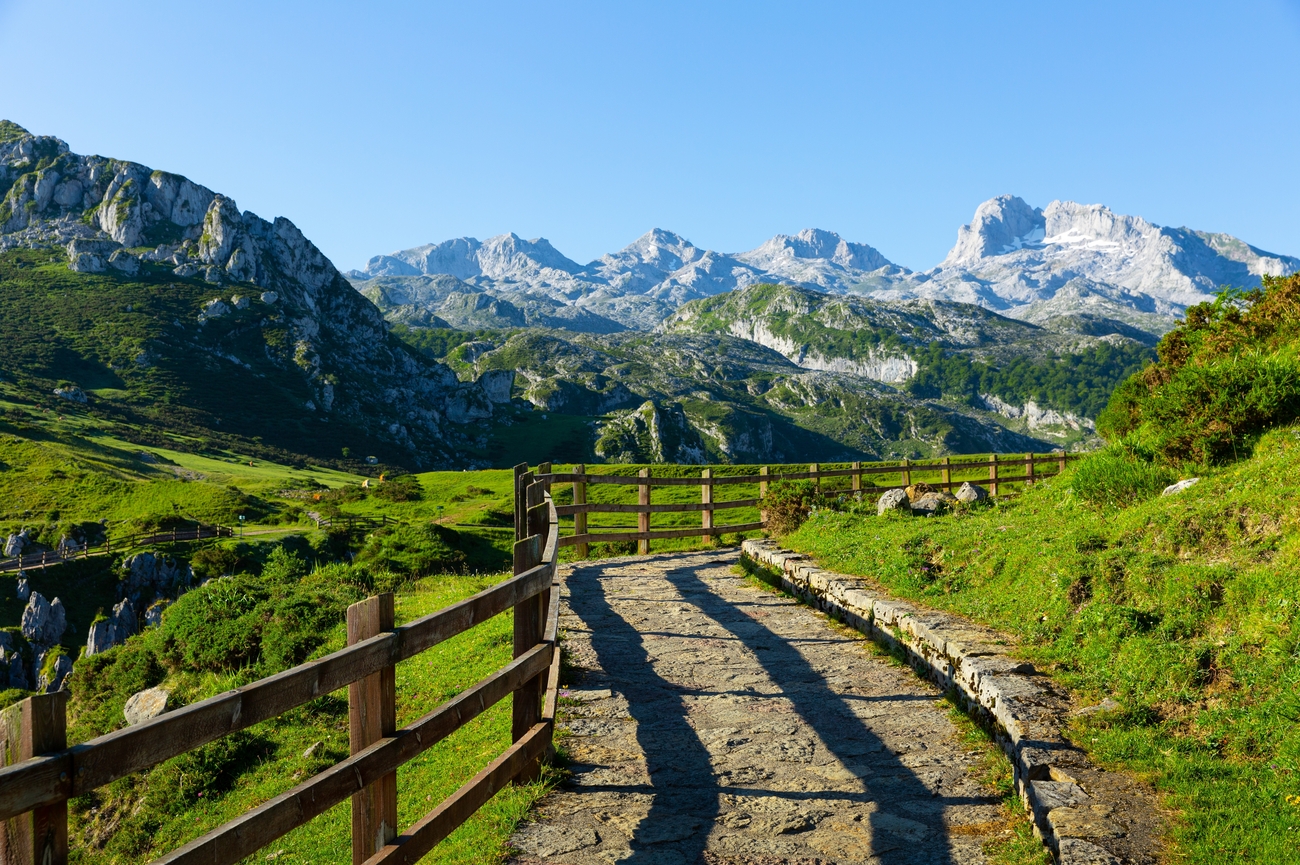
A short drive inland leads to the Mirador del Fitu, one of the great viewpoints of northern Spain. On a clear day, the Asturian coastline, the River Sella and the limestone wall of the Picos de Europa unfold together, bringing the defining landscapes of eastern Asturias into a single sweep.
Santa Marina
Beach and the Indiano Mansions
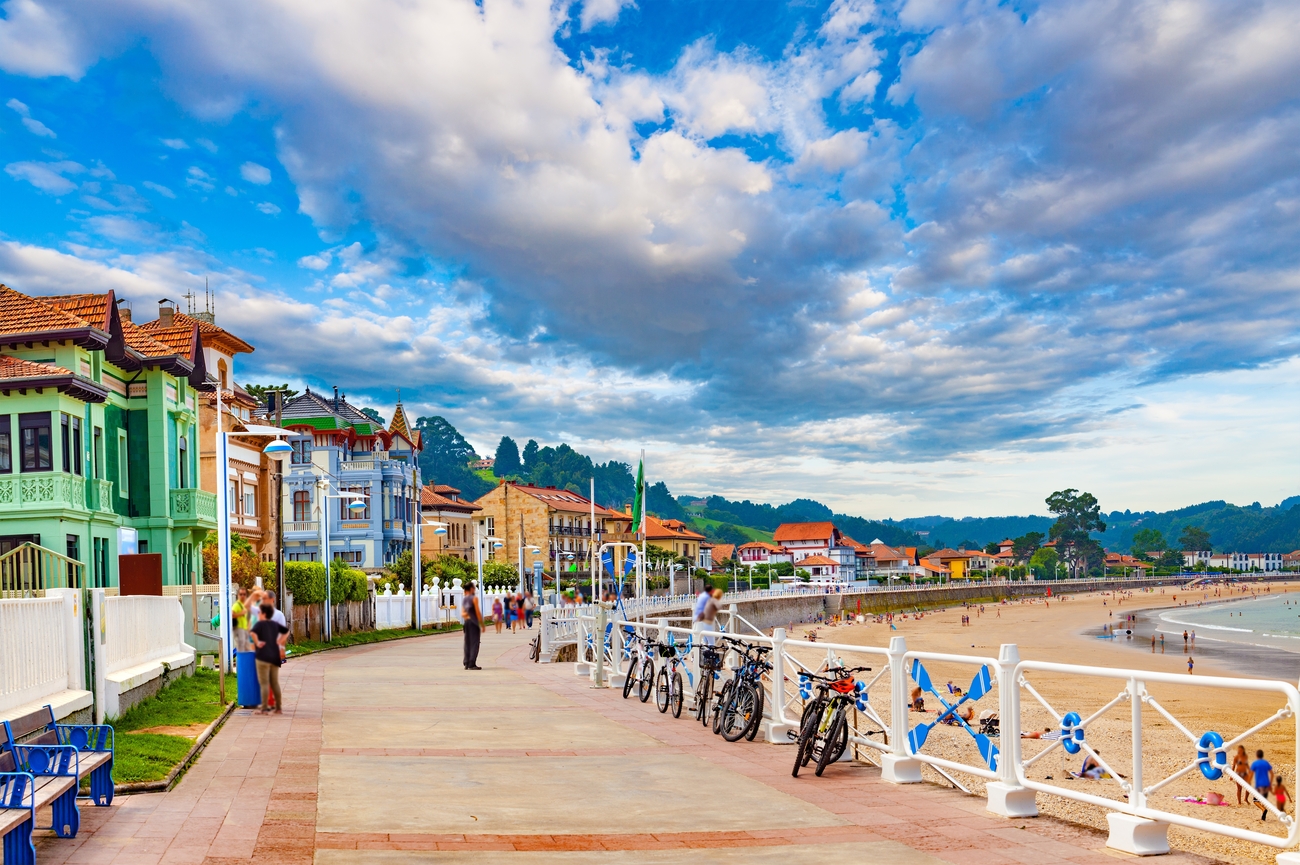
Across the estuary lies Santa Marina Beach, one of the most elegant urban beaches on Spain’s northern coast. A broad promenade curves behind the golden sand, while the mouth of the River Sella opens towards the Cantabrian Sea at its eastern end.
Behind the promenade stands an extraordinary collection of Modernist and Indiano villas. These houses were built largely during the late nineteenth and early twentieth centuries by Asturians who had emigrated to the Americas, made their fortunes and returned home with new ideas about architecture, comfort and display.
The result is a line of ornate seaside residences with towers, galleries, coloured façades and gardens planted with palms and other exotic species. Together, they turn the waterfront into an architectural record of migration, ambition and return.
Villa Rosario, where our journey stays beside the beach, is one of the finest of these historic mansions. Its position overlooking Santa Marina allows you to sleep within the story told by the promenade, with the sea directly beyond the windows and the old fishing town across the estuary.
At the western end of the beach, where the cliffs begin, fossilised dinosaur footprints are preserved in the rock. They form part of Asturias’ Costa de los Dinosaurios, a stretch of coastline known for the tracks and remains left behind when this landscape looked entirely different. Santa Marina combines those prehistoric traces with a sandy urban beach and a seafront of early twentieth-century villas.
Mountains behind, ocean in front, prehistoric art beneath the hills and dinosaur tracks underfoot: Ribadesella compresses an extraordinary span of time into one small and beautiful place.
Before the railway continues west towards Galicia, where the Atlantic has carved immense arches into the cliffs, our guide to Praia das Catedrais, Ribadeo and Ferrol takes up the journey.
This stretch of Asturias is not one to hurry. Our Exploring Northern Spain by Narrow-Gauge Railway itinerary is designed so that you never have to.
Why
Oviedo and Ribadesella Are the Soul of Asturias
Oviedo and Ribadesella belong together because they reveal the two defining sides of Asturias. Oviedo holds the memory of the old kingdom in its Pre-Romanesque churches, cathedral and pilgrimage routes. Ribadesella brings the landscape and traditions to life through its river, harbour, cider houses, seafood and Atlantic beach.
Asturias reveals itself best in the space between these two towns. Oviedo gives you the region’s memory: the ninth-century stone of a kingdom that endured while empires changed around it, the cathedral and its jewelled crosses, and the road to Santiago beginning at its door.
Ribadesella gives you the region’s appetite: cider poured from a height, seafood brought in by the boats, the River Sella descending from the mountains and the beach where returning Asturians built their ambitions in stone.
What binds them is a way of life that has not been polished away for visitors. The cider is poured with the same ceremony in a city sidrería as it is in a harbour tavern. The Picos de Europa stand behind them both, green rising into grey limestone and, in winter, snow.
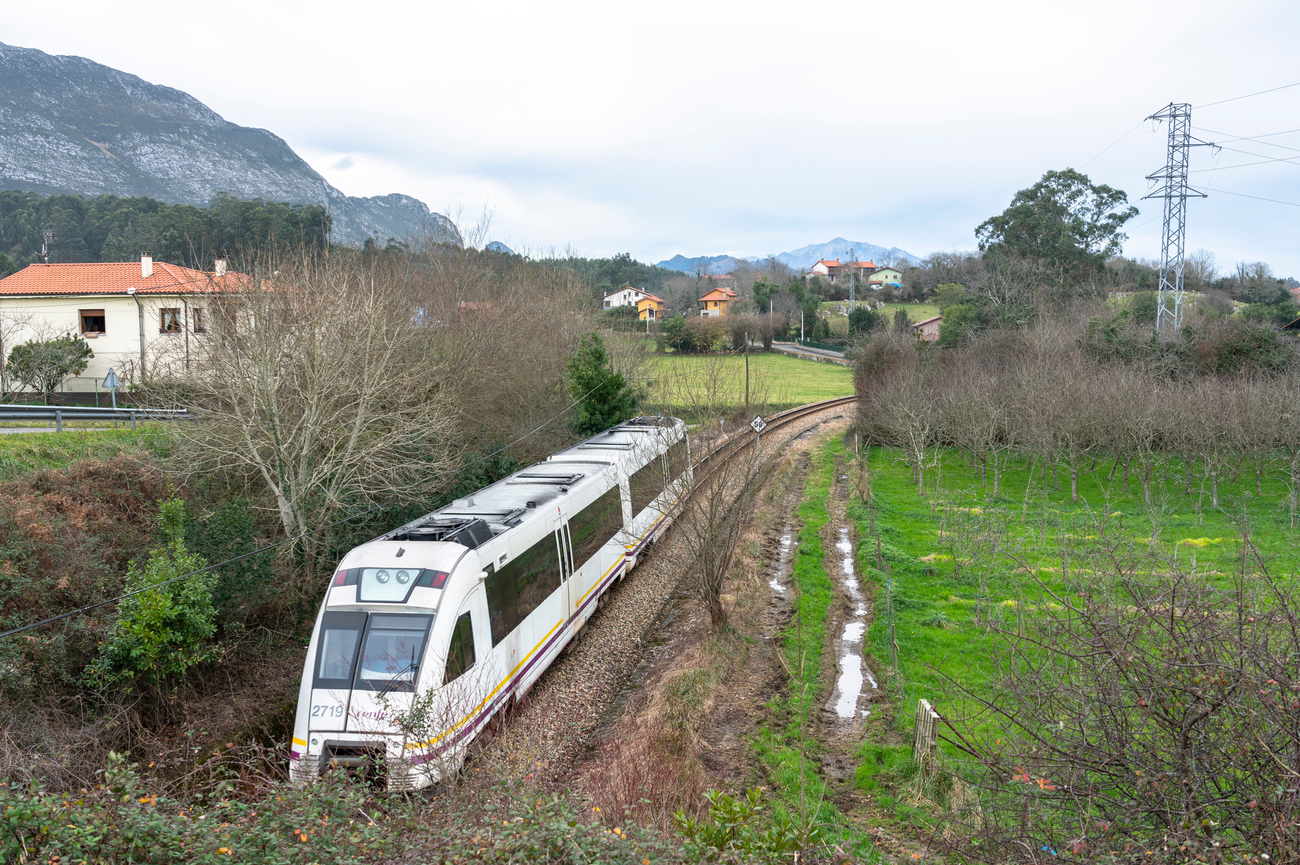
A short journey on the narrow-gauge railway connects the royal monuments of Oviedo with the prehistoric caves and Atlantic shore of Ribadesella. It carries you from the architecture of the Asturian monarchy to one of Europe’s greatest records of Palaeolithic art, with the mountains travelling beside you through the window.
To move slowly from one to the other is to understand Asturias in a way no single stop could offer. One preserves the region’s memory; the other shows how that memory is still lived.
Experience
Oviedo and Ribadesella by Narrow-Gauge Railway
You could spend a week in Asturias and only begin to understand it.
There is always another sidrería where the cider is poured a little better, another Pre-Romanesque church half-hidden in the hills, and another beach where Indiano mansions face the sea while the mountains rise behind them.
Oviedo and Ribadesella distil the region into two complementary experiences: the ancient stone of the Asturian kingdom and the living traditions of cider, seafood, river and coast. A slow journey on the narrow-gauge railway connects them, with the Picos de Europa appearing again and again beyond the window.
Come and drink the cider where it is made. Stand beneath the monuments of Monte Naranco before the city wakes. Walk the estuary at Ribadesella as the fishing boats return and the evening light settles over Santa Marina Beach.
Explore our curated Northern Spain by Narrow-Gauge Railway journey and experience Asturias with the hotels, railway connections and private excursions already arranged.
Make this journey yours.


Let us know what you love, where you want to go, and we’ll design a one-of-a-kind adventure you’ll never forget.
Get in touch
Miriam
Travel Specialist

Romina
Travel Specialist

Laura
Travel Specialist
Our offices:


Revigorate, Iberian Escapes and Algarve Lifestyle are the registered brand names of APCS Lda . We are a fully authorised travel agency licensed by Turismo de Portugal RNAVT/6867.
In the event of a dispute, the consumer may refer to: RAL - Centros de Arbitragem
Avª. 5 de Outubro, nº. 55, R/C Dtº. 8000-075 Faro, Portugal | Tel: +351 289 823 135 *
* national landline call
E-mail: info@consumoalgarve.pt| www.consumidoronline.pt | Mon to Fri: 9:00 - 13:00 / 14:00 - 17:00