Where to Stay in Madrid: Best Areas for a First Visit
Choosing where to stay in Madrid is not simply a question of which neighbourhood is closest to the main sights. Central Madrid is compact enough that several very different areas can work well for a first visit, and the better choice often depends on what you want the city to feel like once the sightseeing is over.
In La Latina, a balcony overlooking the street can be part of the appeal until late-night conversation carries upward from the bars below. Sol and Gran Vía offer exceptional convenience but rarely feel completely quiet. Barrio de las Letras sits between the historic centre and the museum district, while Salamanca trades some immediacy for broader streets, a more residential atmosphere and generally calmer evenings.
Even within the same neighbourhood, the room itself can change the experience. A street-facing bedroom and an interior courtyard room may belong to the same hotel but feel several streets apart once Madrid reaches midnight.
That is why the best area to stay in Madrid depends on more than a postcode. Walking distance, evening atmosphere, room orientation, transport and the price of equivalent quality all matter.
This guide compares Madrid’s principal central neighbourhoods, the trade-offs between them and the practical details that can make one address significantly better suited to your trip than another.
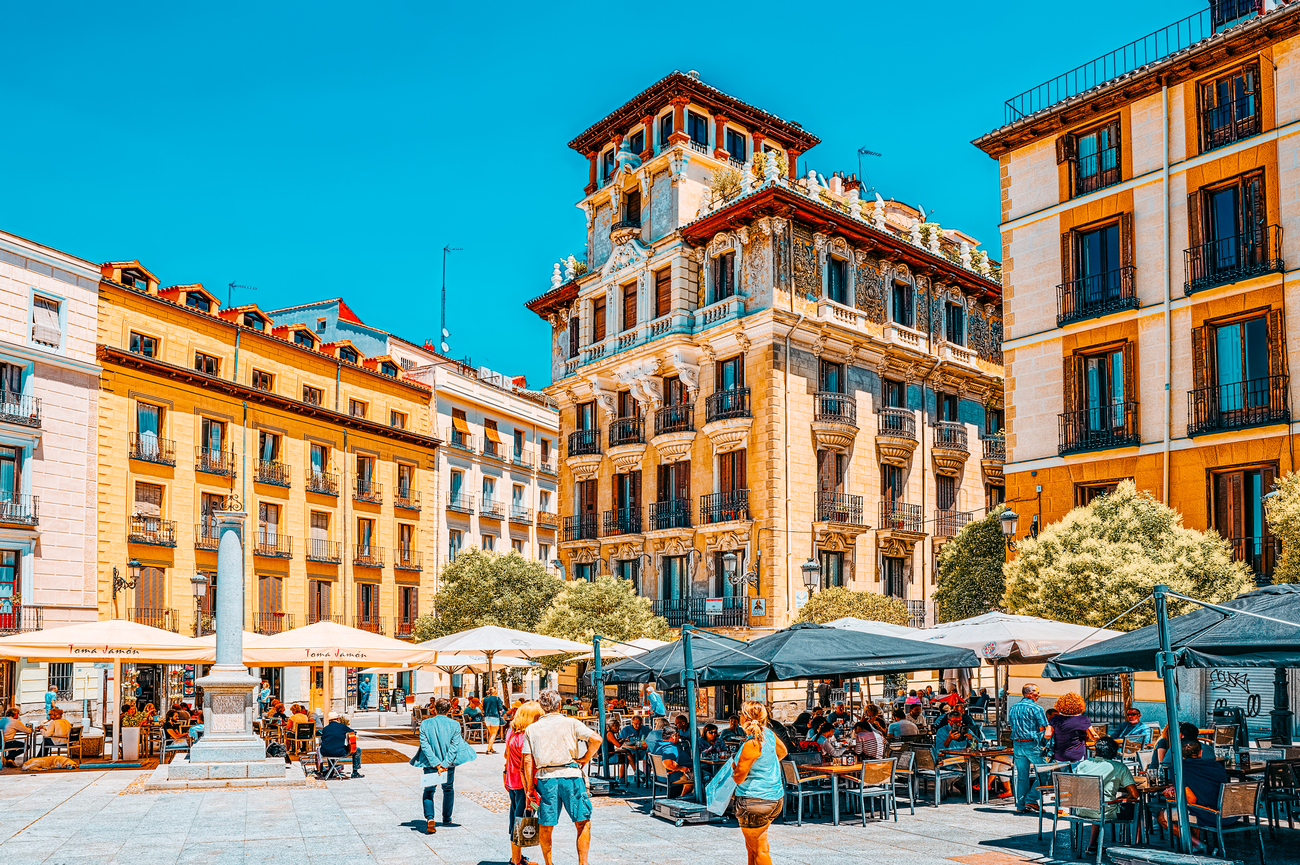
How to Choose Where to Stay in Madrid

Central Madrid is compact enough that small differences in location can look more significant on a booking map than they feel once you are there. Moving ten or fifteen minutes away from Puerta del Sol does not take you out of the centre, but it can make a noticeable difference to noise, atmosphere and what happens outside your hotel late at night.
The first consideration is evening noise. A lively street can be an advantage when you want restaurants and bars outside the door, but much less appealing when you are trying to sleep. The difference can be extremely local. Two hotels in the same neighbourhood may feel completely different because one faces a busy pedestrian street while another overlooks an internal courtyard. Even within the same hotel, room orientation can matter as much as the address.
The second is how much walking you want to do. Barrio de las Letras, Sol, La Latina and the Gran Vía area place much of central Madrid within easy reach on foot. Salamanca and Chamberí require slightly more walking or occasional use of the metro or taxis, but offer calmer residential surroundings in return.
Price also changes by neighbourhood. Salamanca commands a premium for its polished residential setting, while Sol charges for centrality and convenience. In areas slightly beyond the busiest part of the historic centre, the same budget may buy more space, a quieter room or stronger hotel facilities. Choosing where to stay in Madrid becomes much easier once you decide which of those trade-offs matters most to you.
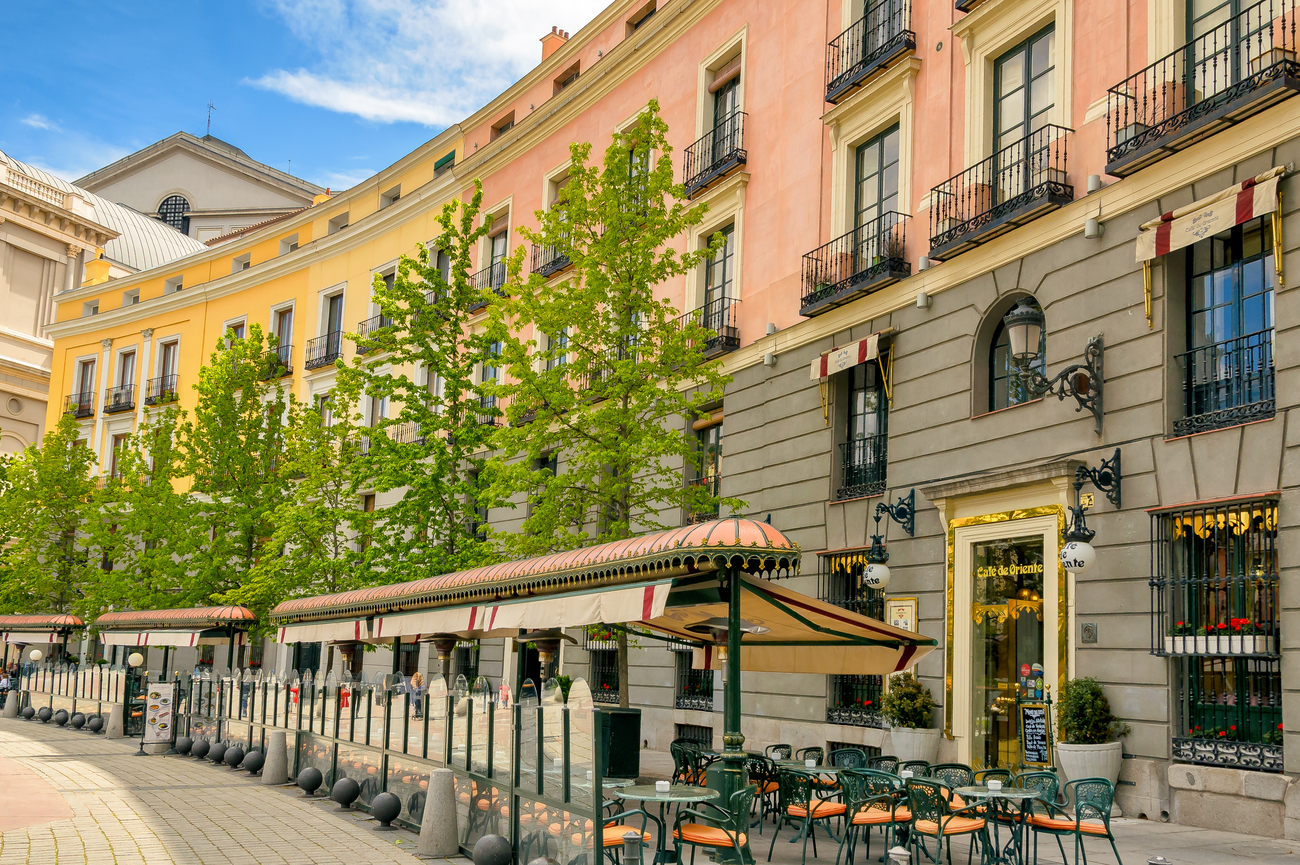
Best Areas to Stay in Madrid
Barrio de las Letras
For a first visit, Barrio de las Letras is one of the strongest all-round choices.
The neighbourhood sits between two parts of Madrid that most visitors will return to repeatedly: the historic centre to the west and the museum district to the east. Our first-visit Madrid itinerary explains how this central east-west axis fits together, and Letras occupies an unusually useful position between the two.
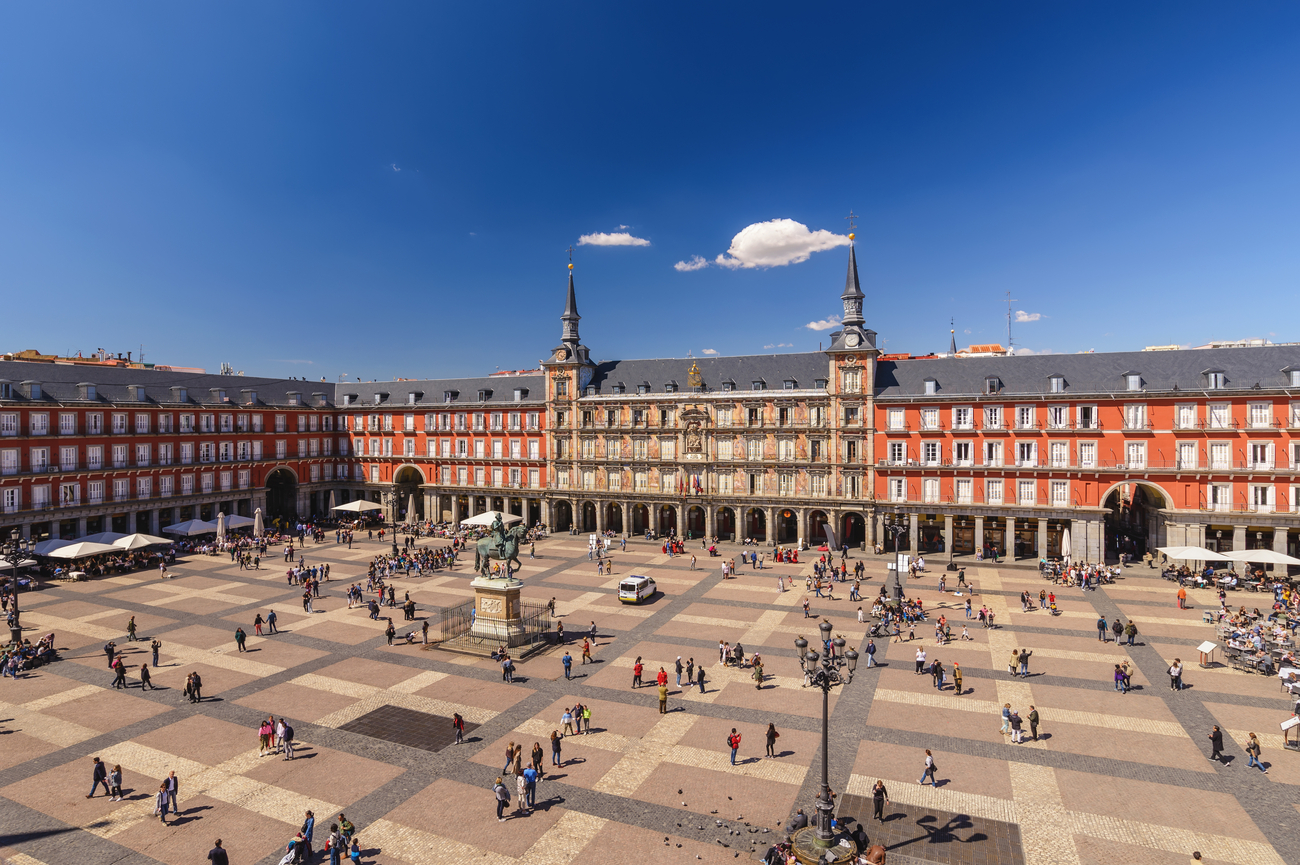
Sol, Plaza Mayor and the Royal Palace are within comfortable walking distance in one direction, while the Prado and Paseo del Arte are close in the other. The neighbourhood has character without requiring you to participate fully in Madrid’s nightlife, with narrow streets, literary history, restaurants and cafés creating plenty of atmosphere.
For someone looking for a central base without being directly inside the busiest tourist zones, Letras offers an unusually good balance of location, atmosphere and walkability.
Our Discover the Spanish Capital - City of Madrid journey is based at Vincci Soho in Barrio de las Letras, placing both the Prado and the older historic centre within easy reach on foot.
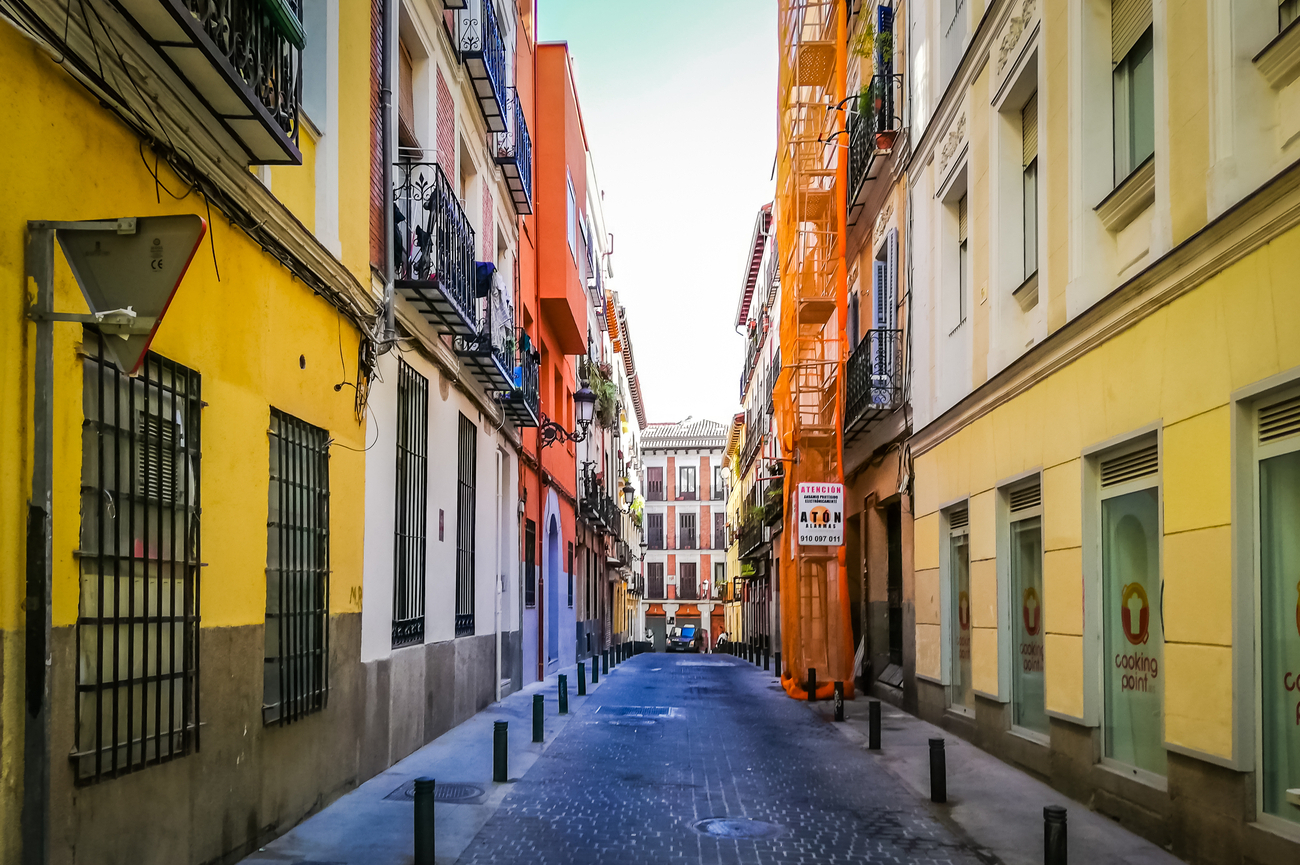
Salamanca
Salamanca suits travellers who want to stay slightly removed from the busiest part of central Madrid.
Its streets are broader, the atmosphere more residential and the hotel market generally more polished. Evenings tend to feel calmer than around Sol, La Latina or the busiest streets of the historic centre, while shopping and dining are major strengths of the neighbourhood.
The trade-off is distance. The western side of Salamanca remains convenient for Retiro and the Paseo del Prado, but Plaza Mayor, the Royal Palace and Madrid de los Austrias require a longer walk or a short taxi or metro journey.
Salamanca is also a large district, so the exact address matters. A hotel near its western edge performs very differently for sightseeing from one much farther northeast.
Choose Salamanca if you value quieter evenings, elegant surroundings and shopping more than being able to step directly into the historic centre after breakfast.
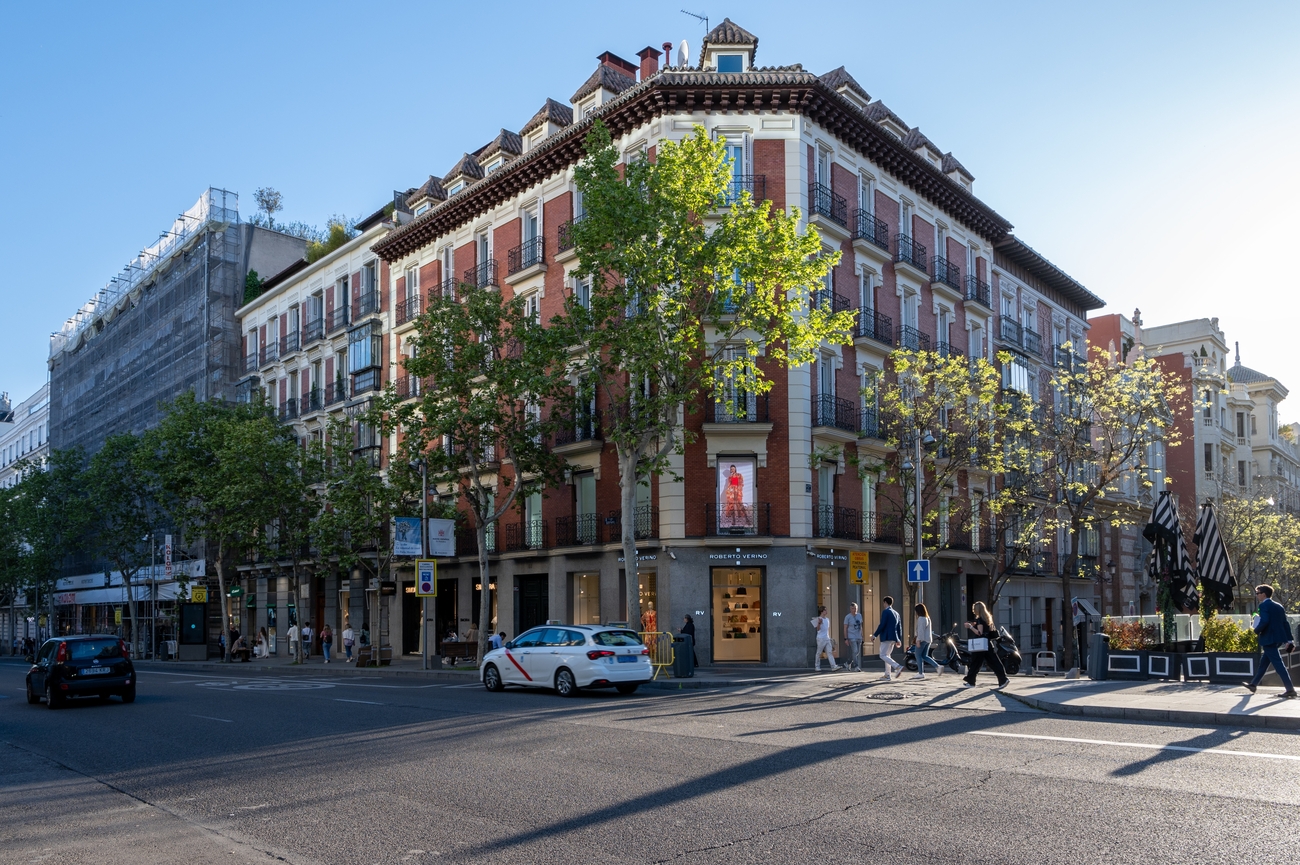
La Latina
La Latina is one of Madrid’s most atmospheric historic neighbourhoods, but it deserves more careful hotel selection than many visitors realise.
During the day, its old streets, squares and proximity to the palace quarter make it an appealing base for exploring central Madrid. On Sundays, El Rastro brings another layer of activity to the neighbourhood.
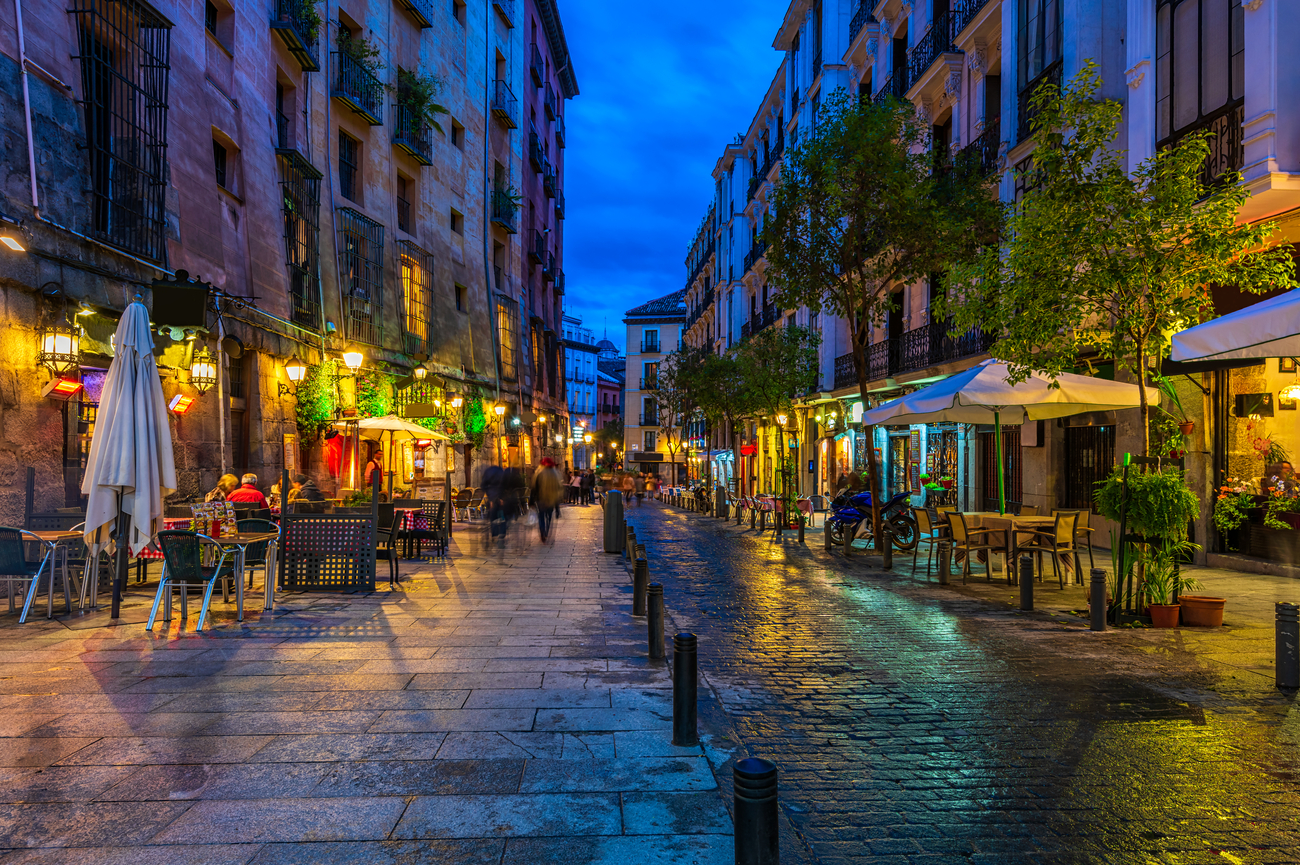
At night, the same density becomes part of the accommodation decision. Bars, restaurants and street life can continue late, particularly on Fridays and Saturdays, and voices travel easily through narrow streets and between façades.
For light sleepers, a courtyard-facing room or strong soundproofing can matter more here than a picturesque balcony. Upper floors may help, but they do not completely remove street noise.
Choose La Latina if you want historic streets, restaurants and late evenings outside the door. If you prefer to enjoy the neighbourhood and then withdraw from it, pay close attention to the room as well as the address.
Malasaña and Chueca
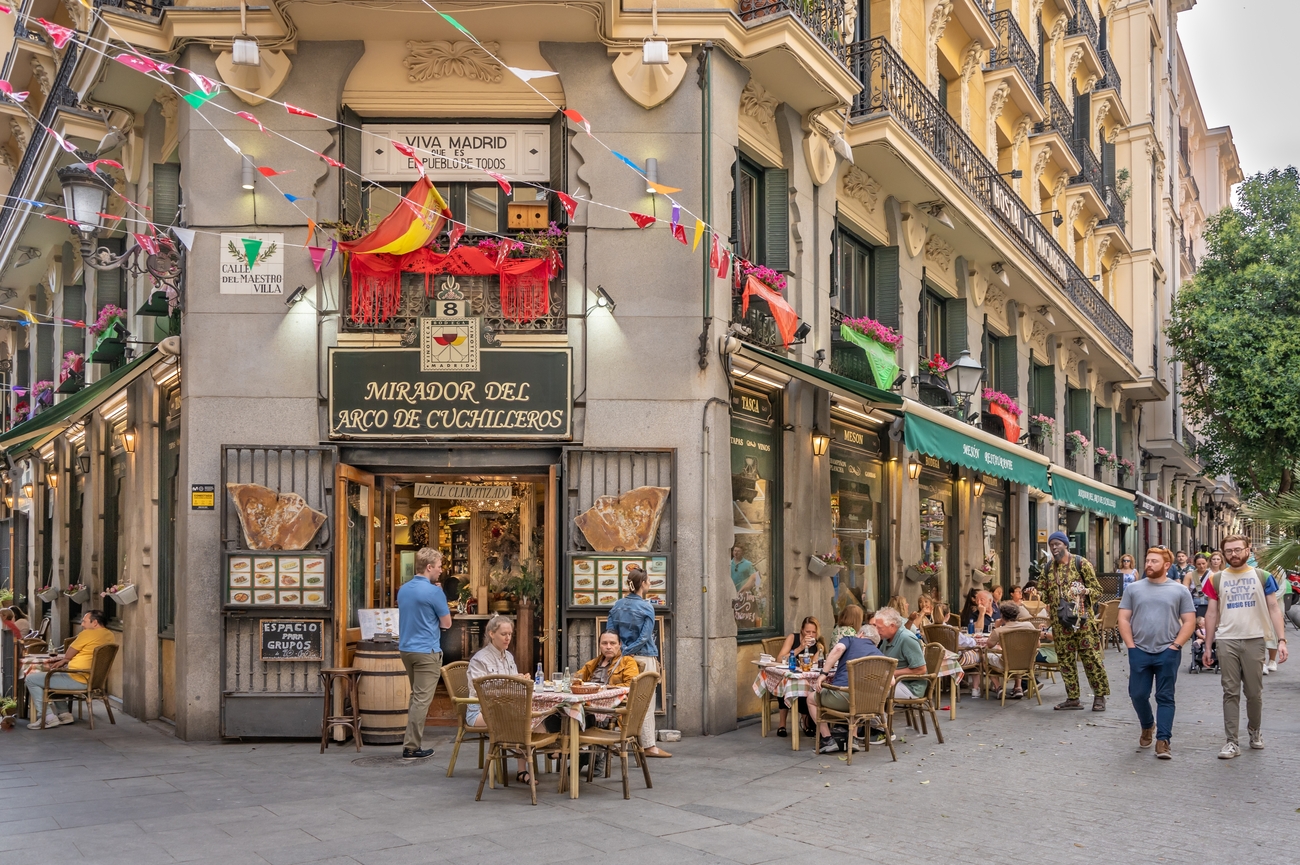
Malasaña and Chueca sit north of Gran Vía and both suit travellers who want nightlife and restaurants close to their hotel.
Malasaña has a younger, more alternative feel, with independent shops, cafés and bars concentrated along relatively compact streets. That energy is part of its appeal, but it also means some streets remain noisy well into the night.
Chueca is more polished in parts and exceptionally well placed for shopping, dining and access to the centre. It is also one of Madrid’s principal LGBTQ+ districts and becomes particularly lively on weekends and during major celebrations.
Neither neighbourhood is the obvious choice for someone who wants consistently quiet evenings. Both become much more attractive when the hotel has effective soundproofing or rooms positioned away from the busiest streets.
Their advantage is immediacy. If you prefer to finish dinner and continue the evening without crossing the city, both neighbourhoods make that easy.
Chamberí
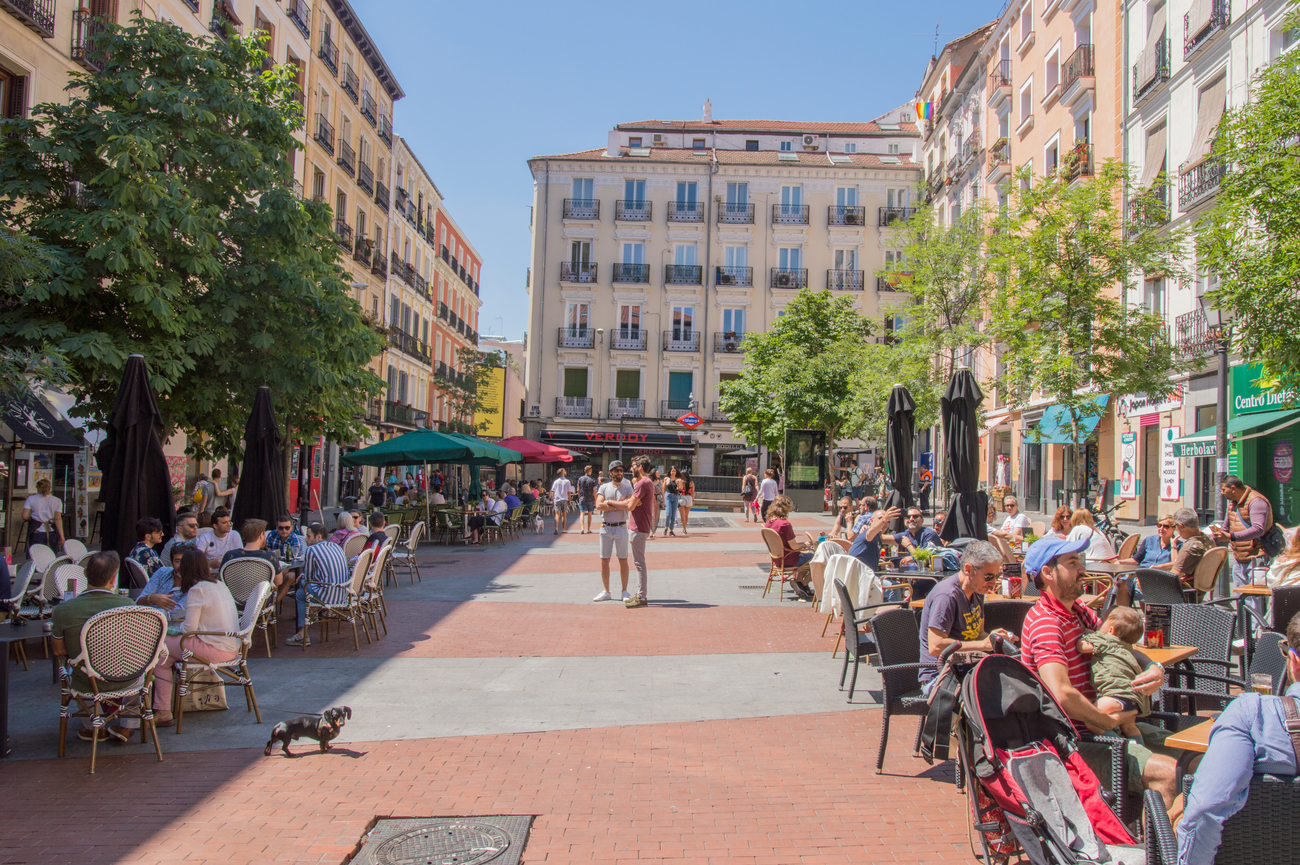
Chamberí offers a more residential side of Madrid without feeling far removed from the centre.
The neighbourhood has elegant streets, good restaurants and a strong sense of everyday city life, with considerably fewer visitors than Sol or Gran Vía. It works especially well for repeat visitors, but can also suit first-time travellers who value a quieter neighbourhood over immediate access to major landmarks.
The compromise is straightforward: some journeys will require the metro or a taxi, and you are less likely to encounter the Royal Palace, Plaza Mayor or Prado simply by stepping outside and walking.
In return, the same hotel budget may buy more space, quieter surroundings or stronger facilities than in the most central streets.
Choose Chamberí if the neighbourhood you return to in the evening matters more than having every major sight within a few minutes’ walk.
Lavapiés
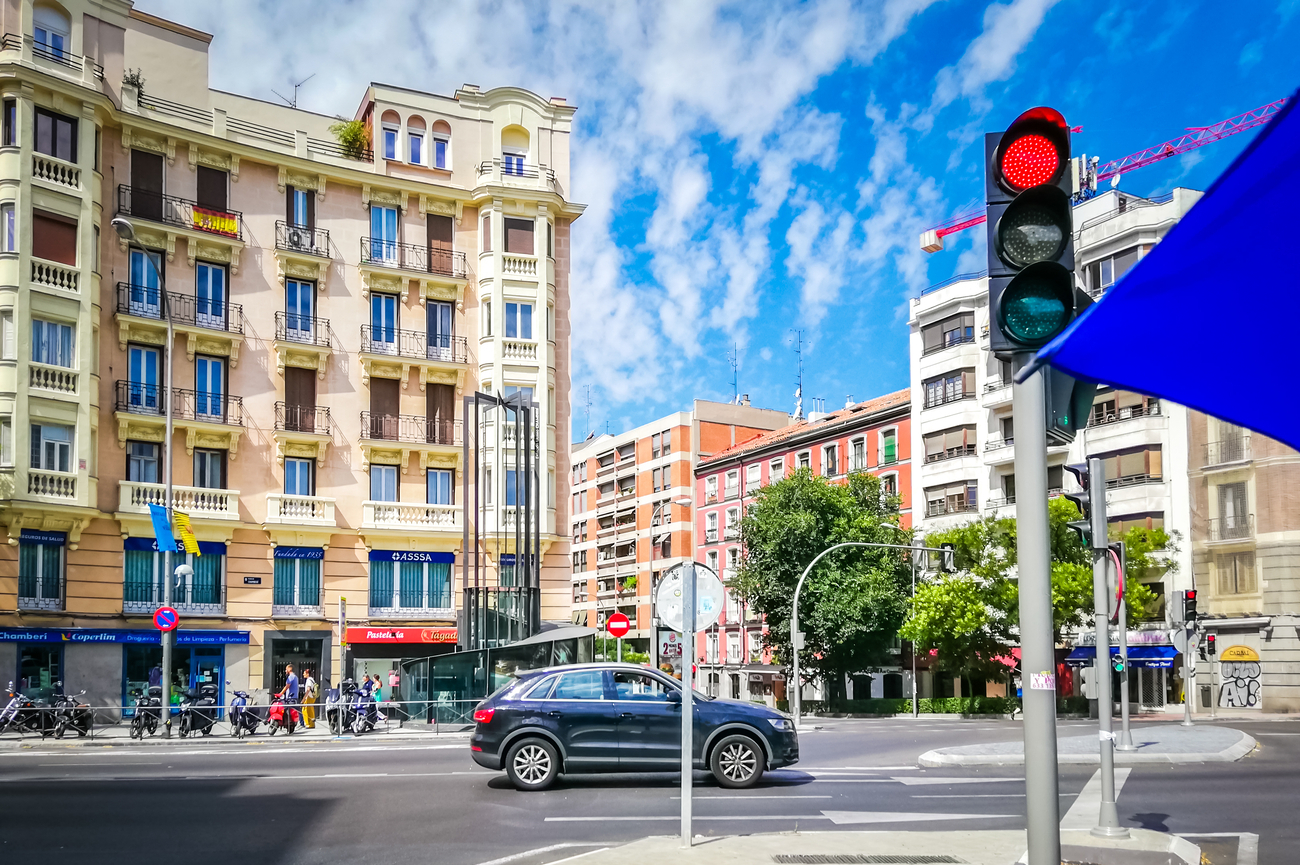
Lavapiés has a different character from the more polished neighbourhoods in this guide.
Its multicultural identity, independent businesses and everyday street life give it one of the most distinctive atmospheres in central Madrid. Its location south of the historic centre also places Atocha and the Reina Sofía within useful reach.
The character of individual streets can vary noticeably, so look carefully at the hotel’s immediate surroundings rather than relying only on the neighbourhood name or its position on a map.
Lavapiés suits travellers who prefer a neighbourhood with visible local life and cultural variety over a formal or highly polished hotel district.
It is less suited to someone whose idea of a Madrid stay depends on grand entrances, quiet ceremonial streets or an immediately luxurious atmosphere outside the hotel.
Sol and Gran Vía
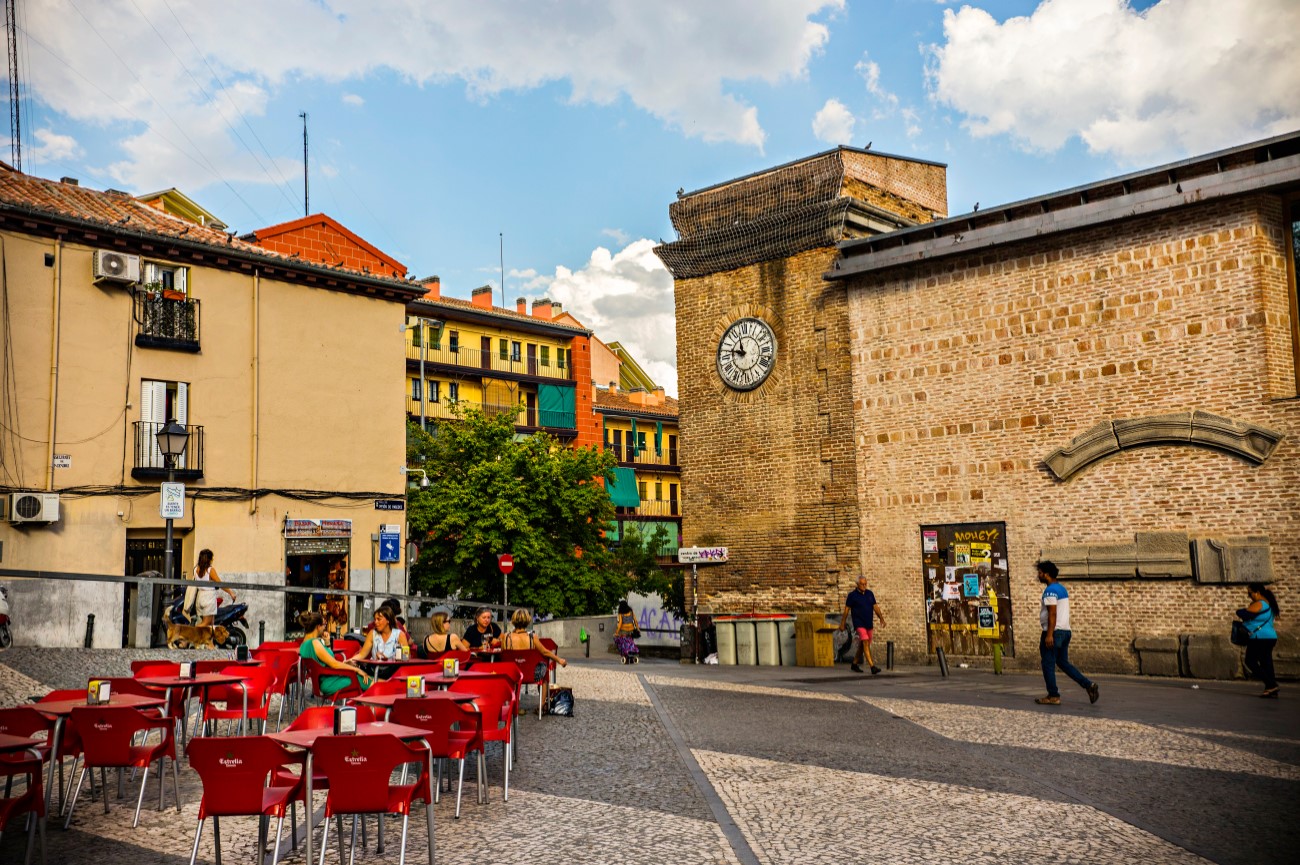
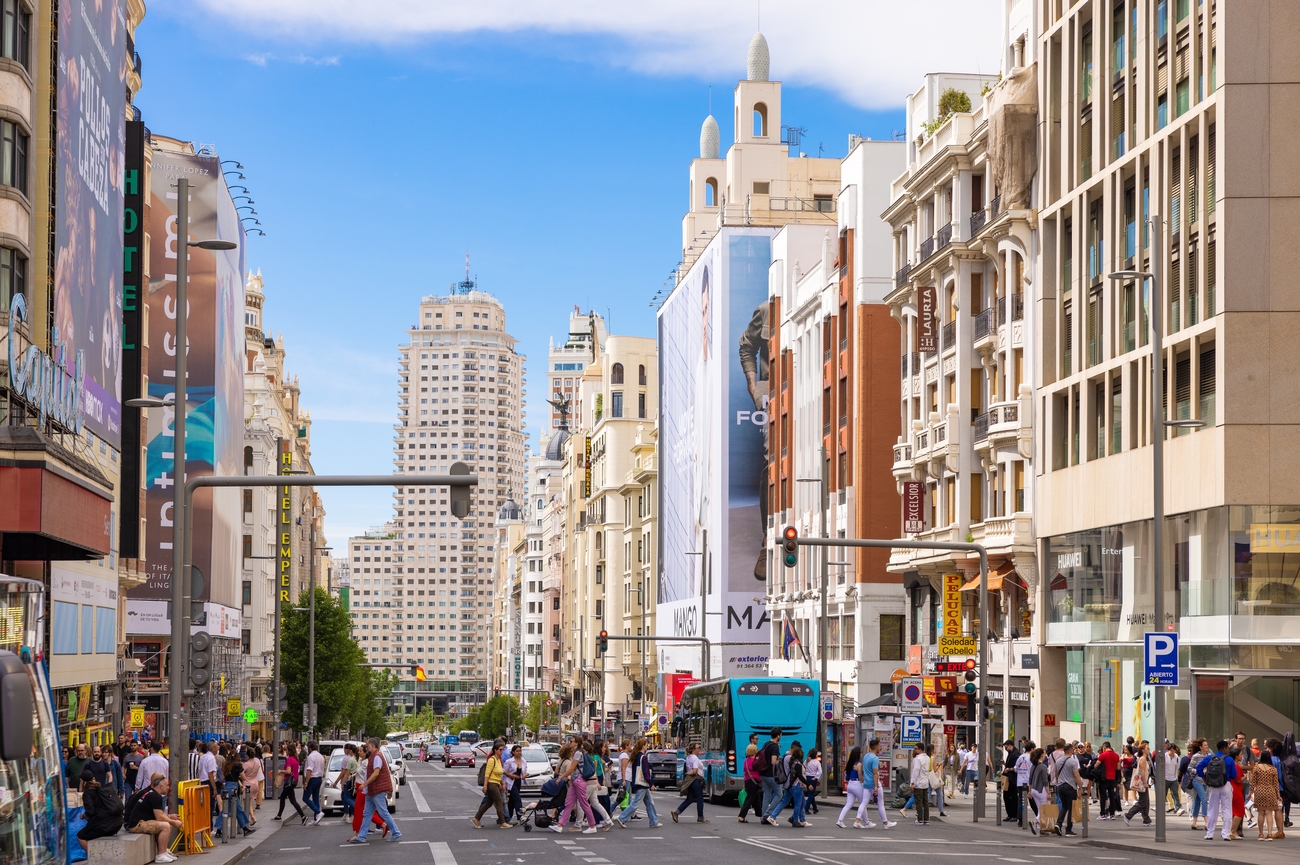
Sol and Gran Vía offer the greatest convenience and some of the heaviest visitor traffic in Madrid.
From here, the Royal Palace, Plaza Mayor, Barrio de las Letras and much of the museum district can be reached on foot, while metro connections make the rest of the city straightforward. For a short stay, that centrality can be extremely useful.
The trade-off is atmosphere. These streets rarely develop the residential calm found in Salamanca or Chamberí, and pedestrian activity can continue late into the evening. Street-facing rooms need good glazing if sleep is a priority.
Crowded tourist areas also require greater awareness of phones, wallets and open bags, particularly around Puerta del Sol, Gran Vía and busy transport connections. That does not make the area broadly unsafe; it simply requires the normal precautions appropriate to a busy European capital.
Choose Sol or Gran Vía when centrality and convenience matter most, particularly on a short first visit. For a longer stay, one of Madrid’s more residential neighbourhoods may give you a stronger sense of the city beyond its principal sights.
Practical Tips for Choosing Where to Stay in Madrid
Arriving from Madrid Airport
Madrid-Barajas has several practical connections into the centre, including taxi, metro, rail from applicable terminals and the Airport Express bus. With substantial luggage, a late arrival or several passengers travelling together, a taxi or prearranged transfer is usually the simplest option.
For Barrio de las Letras, Sol, La Latina and Gran Vía, arriving by road places you close to areas where walking can take over for much of the stay. Salamanca and Chamberí are equally straightforward by taxi, although public transport connections depend more on the exact hotel address.
Airport taxi tariffs and public transport arrangements can change, so check current information shortly before travelling rather than relying on an older fare or timetable.
How Much Does Distance From Madrid's Historic Centre
Matter?
Less than a booking map can suggest, provided you remain within the central neighbourhoods.
From Barrio de las Letras, Sol or La Latina, Plaza Mayor, Madrid de los Austrias and the Royal Palace can become part of an ordinary walk rather than a dedicated journey. Our Royal Palace of Madrid and the Habsburg Quarter guide explores that western side of the centre in more detail.
From Salamanca or Chamberí, the same area becomes somewhere you travel to deliberately, usually by a longer walk, metro or short taxi journey. The difference is rarely inconvenient, but it removes the possibility of stepping outside your hotel and reaching the old centre almost by accident.
This is one reason the best area to stay in Madrid changes with the length of the trip. Over two nights, saving twenty minutes can matter. Over five nights, a quieter room and more residential surroundings may be worth spending those minutes.
How Close Should You Stay to Madrid's Museums?
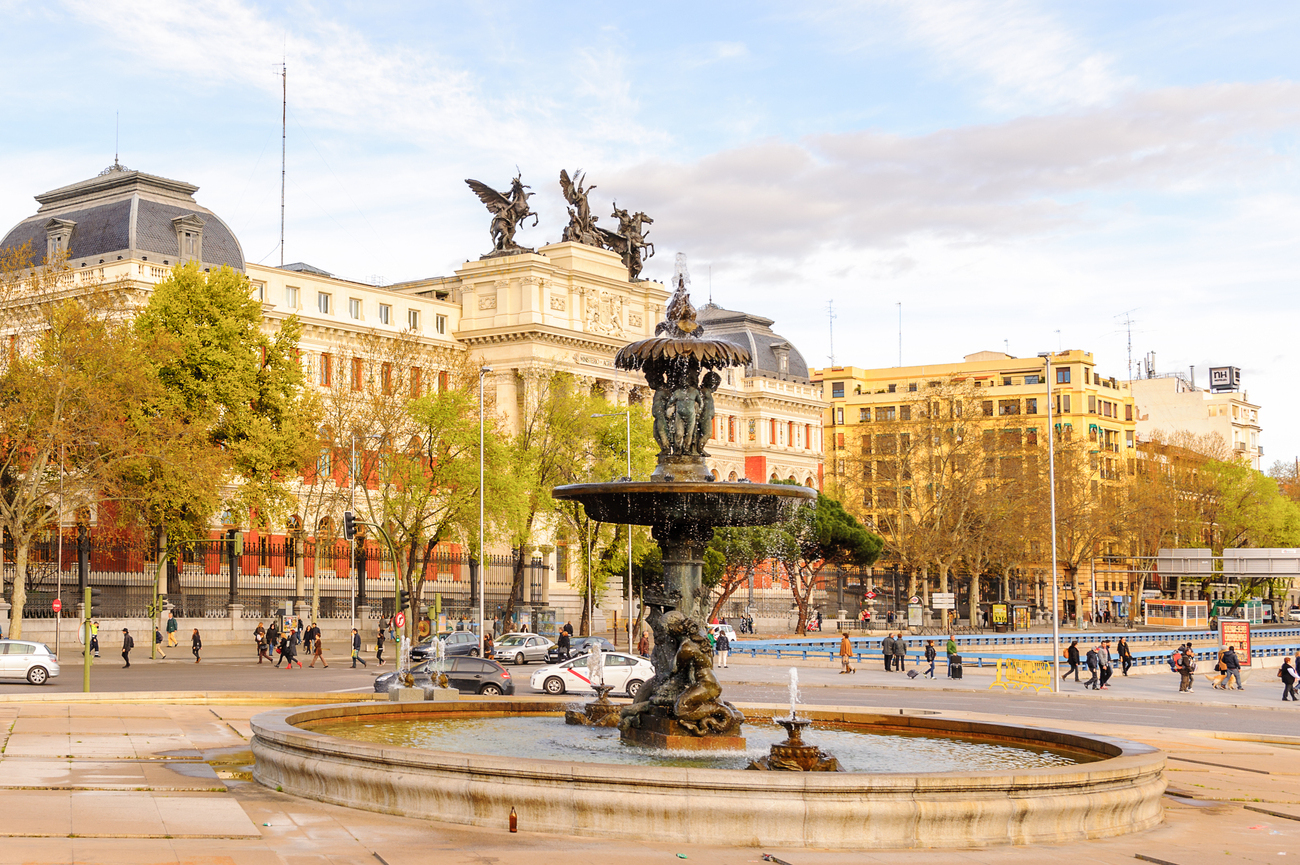
Barrio de las Letras has the clearest advantage for the Prado side of Madrid, with parts of the neighbourhood only a short walk from the Paseo del Arte. Retiro and the Royal Botanic Garden are also natural extensions of the same side of the city.
If the Prado will be a major part of your trip, our Prado Museum guide explains tickets, timing and how long to allow for the collection. Choosing a hotel solely to save a few minutes on the walk to the museum is rarely necessary.
Salamanca also works well for the eastern cultural side of the centre, particularly from its western streets. Sol remains practical, while La Latina, Malasaña and Chamberí place slightly more distance between your hotel and the museum district without making the journey difficult.
If the Prado, Thyssen-Bornemisza and Reina Sofía are all competing for your time, our guide to Madrid's Golden Triangle of Art explains how the three collections differ and which may suit your interests best.
Safety When Choosing Where to Stay
Madrid is generally straightforward to navigate on foot, but petty theft deserves attention in the busiest visitor areas.
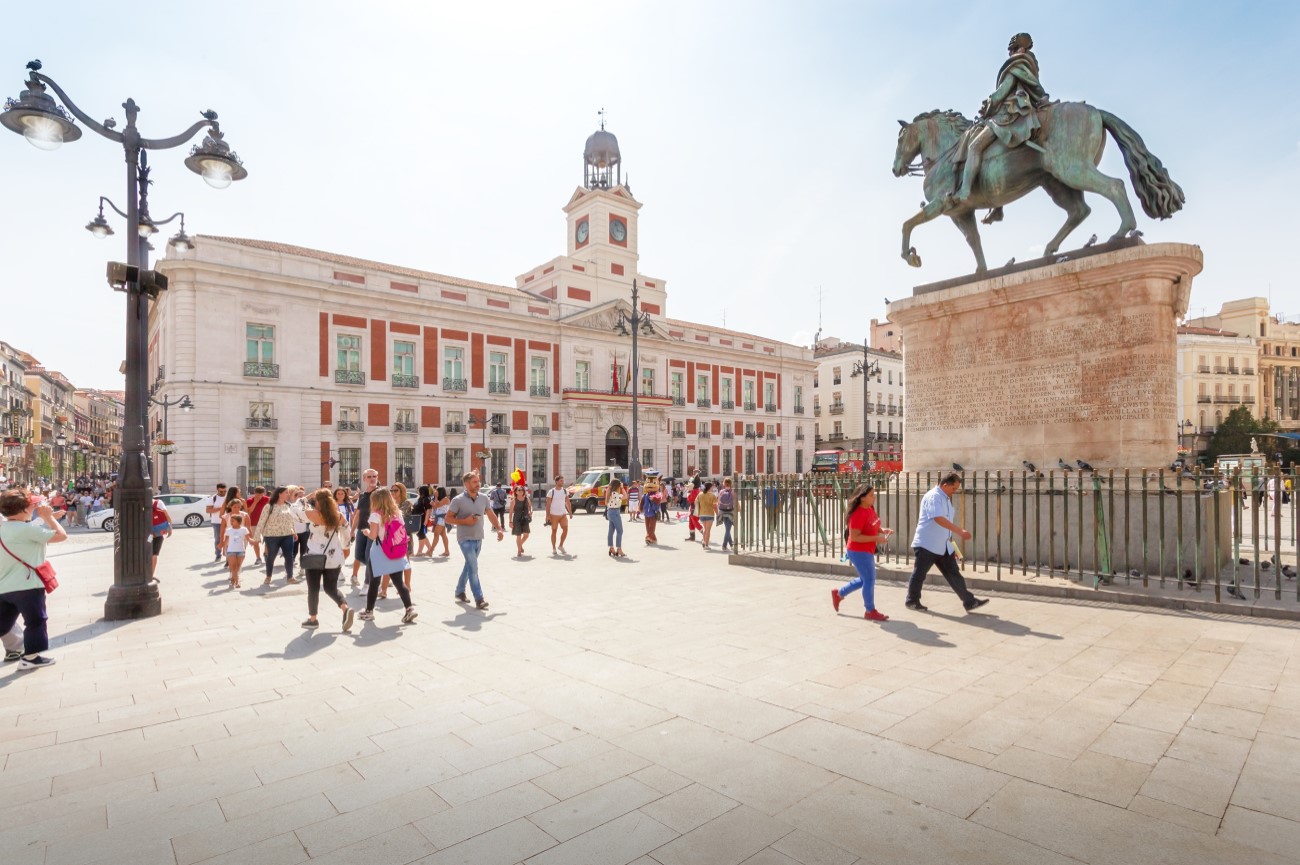
Puerta del Sol, Gran Vía, Plaza Mayor, major stations and crowded metro services are places where you should pay closer attention to phones, wallets and open bags. Avoid leaving a phone on the edge of a café table or valuables somewhere they can be easily reached in a crowd.
This should influence ordinary precautions rather than determine which neighbourhood you choose. Central Madrid remains active well into the evening, and accommodation is better selected according to atmosphere, convenience and sleep quality than through a simple safe-or-unsafe map.
How the Season Affects Madrid Hotels
Spring and autumn usually create the greatest pressure on desirable central hotels, particularly around holidays, festivals, major exhibitions and large events. If a particular neighbourhood, room orientation or terrace matters to you, booking earlier preserves more choice.
Summer changes the calculation. Reliable air conditioning becomes important, while long walks from more distant neighbourhoods become less attractive during the hottest part of the day. August has a different rhythm again, with some smaller businesses closing for holidays even though Madrid's major attractions remain open.
Winter can work particularly well for a city-hotel stay. Museums become a natural part of the day, the centre remains highly walkable and returning to a comfortable hotel after a cold evening can be part of the appeal.
There is no single ideal booking window for Madrid. Once your dates are fixed, prioritise the room features that would be difficult to replace, such as a courtyard orientation, a larger category or a terrace you genuinely intend to use.
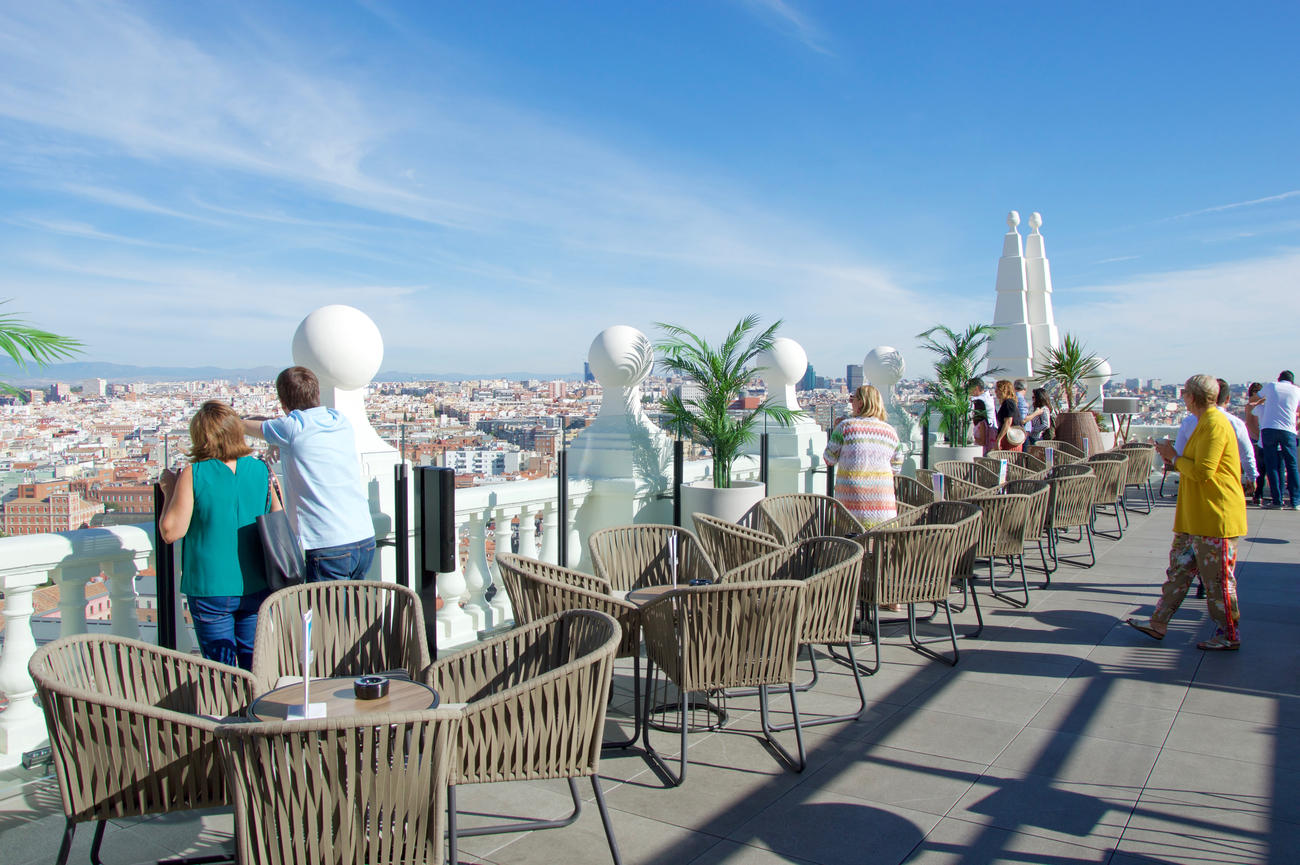
The
Address You Take Home
After a few nights in Madrid, the address on the hotel key begins to mean more than its location on a map.
It becomes the turn back into Barrio de las Letras after dinner, Salamanca before the shops open, La Latina still carrying voices through the narrow streets or Chamberí settling into a quieter evening.
That is why choosing where to stay in Madrid is ultimately about more than proximity to the major sights. The neighbourhood becomes part of the trip itself, shaping the first hour of the morning and the last part of the night.
By the end of the stay, it should feel less like somewhere you booked and more like the part of Madrid you temporarily called home.


Let us know what you love, where you want to go, and we’ll design a one-of-a-kind adventure you’ll never forget.
Get in touch
Miriam
Travel Specialist

Romina
Travel Specialist

Laura
Travel Specialist
Our offices:



Revigorate, Iberian Escapes and Algarve Lifestyle are the registered brand names of APCS Lda . We are a fully authorised travel agency licensed by Turismo de Portugal RNAVT/6867.
In the event of a dispute, the consumer may refer to: RAL - Centros de Arbitragem
Avª. 5 de Outubro, nº. 55, R/C Dtº. 8000-075 Faro, Portugal | Tel: +351 289 823 135 *
* national landline call
E-mail: info@consumoalgarve.pt| www.consumidoronline.pt | Mon to Fri: 9:00 - 13:00 / 14:00 - 17:00