Madrid's Golden Triangle of Art: Prado, Thyssen and Reina Sofía
Madrid’s three major art museums sit within a remarkably small area around the Paseo del Prado, but their collections could hardly be more different. The Prado, Thyssen-Bornemisza and Reina Sofía together form Madrid’s Golden Triangle of Art, allowing you to move from Old Masters and Spanish court painting to Impressionism, modernism and some of the most important works of twentieth-century Spanish art.
Their proximity can make the three museums look like a single cultural experience on a map. They are not. The Prado offers extraordinary depth in artists such as Velázquez and Goya. The Thyssen-Bornemisza crosses centuries and artistic movements with unusual breadth. The Reina Sofía concentrates on modern and contemporary art, with Picasso’s Guernica at the centre of its international reputation.
That difference matters when planning a Madrid itinerary. You do not need to visit all three simply because they are close together. For many travellers, choosing one museum carefully and giving it proper time will be more rewarding than trying to complete the entire triangle in a single day.
Our Discover the Spanish Capital - City of Madrid journey already includes Prado admission and a privately guided visit, while the Thyssen-Bornemisza and Reina Sofía remain separate choices if you want to explore Madrid’s wider art scene.
This guide compares what each museum does best, which one suits different interests, whether it makes sense to visit all three and how to plan your time around Madrid’s Golden Triangle of Art.
Prado, Thyssen or Reina Sofía: What Each Museum
Does Best

The three museums sit close together, but they serve very different interests. The easiest way to choose between them is not to ask which museum is best, but what kind of art you most want to see.
The Prado
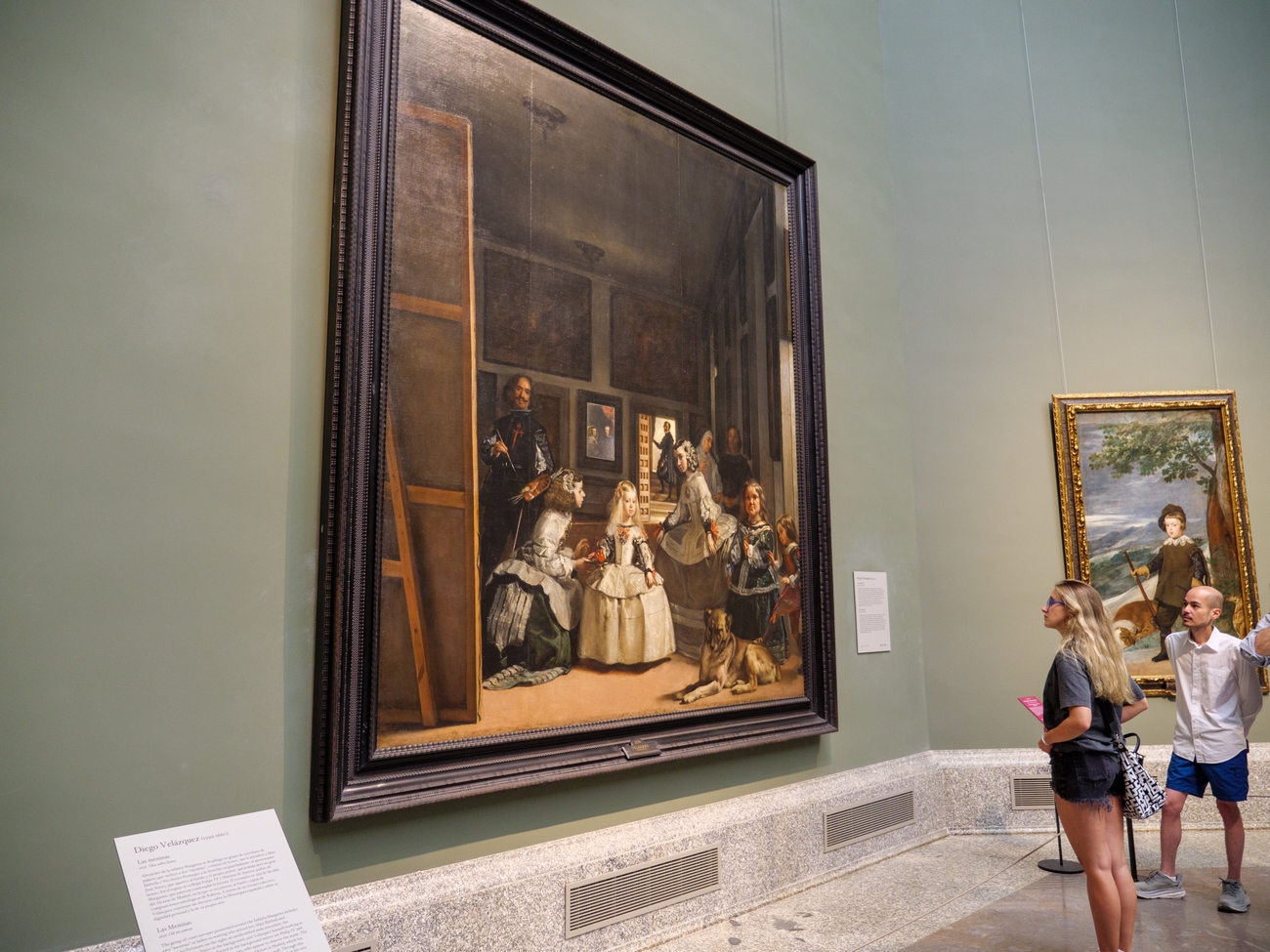
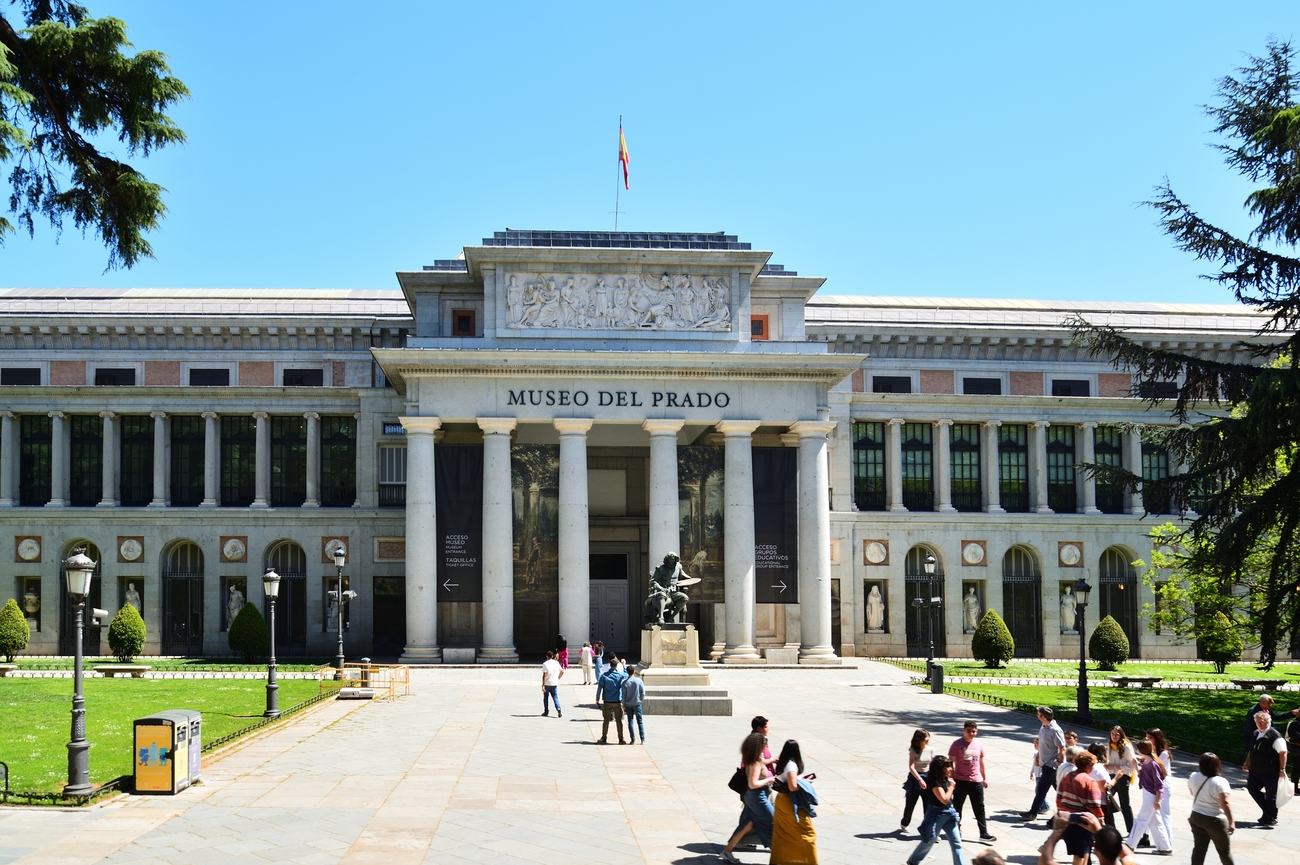
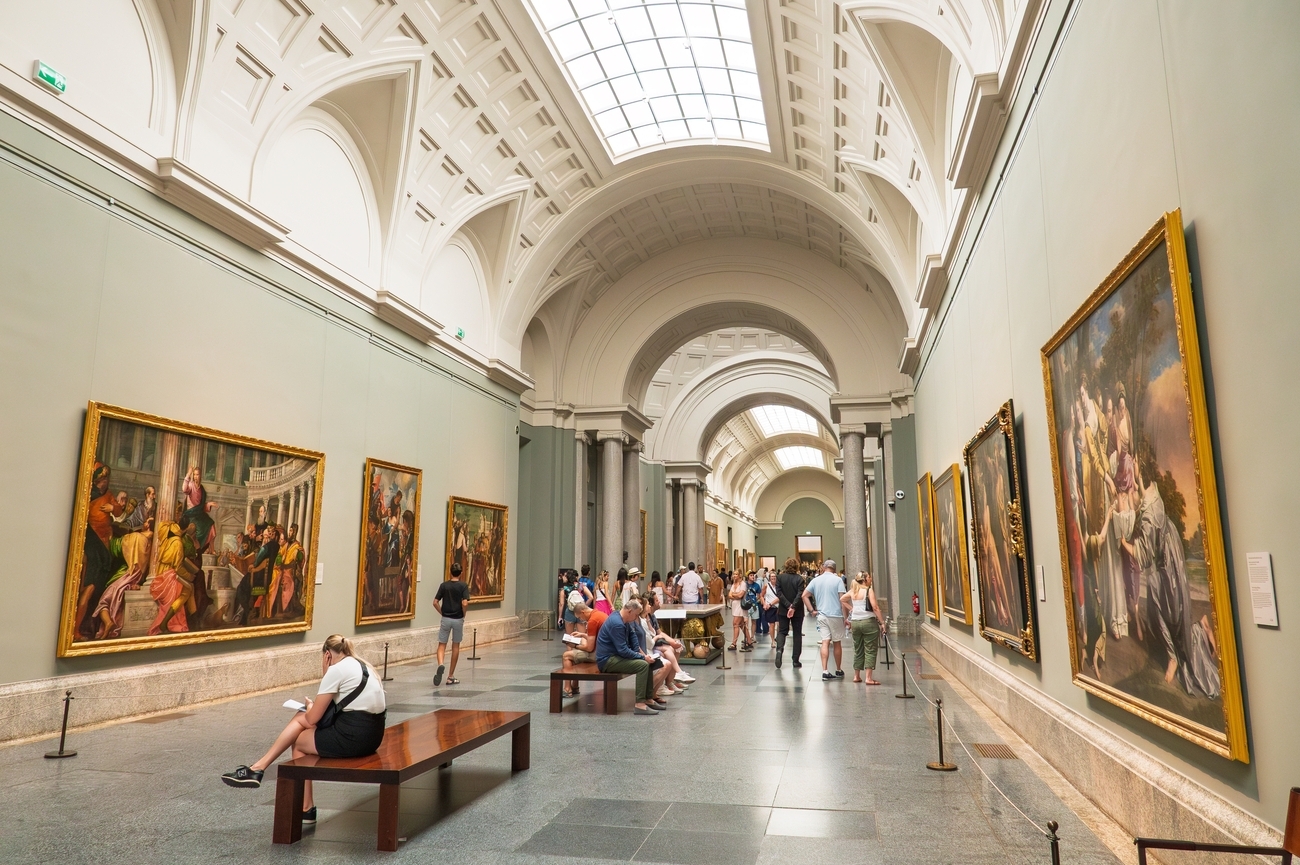
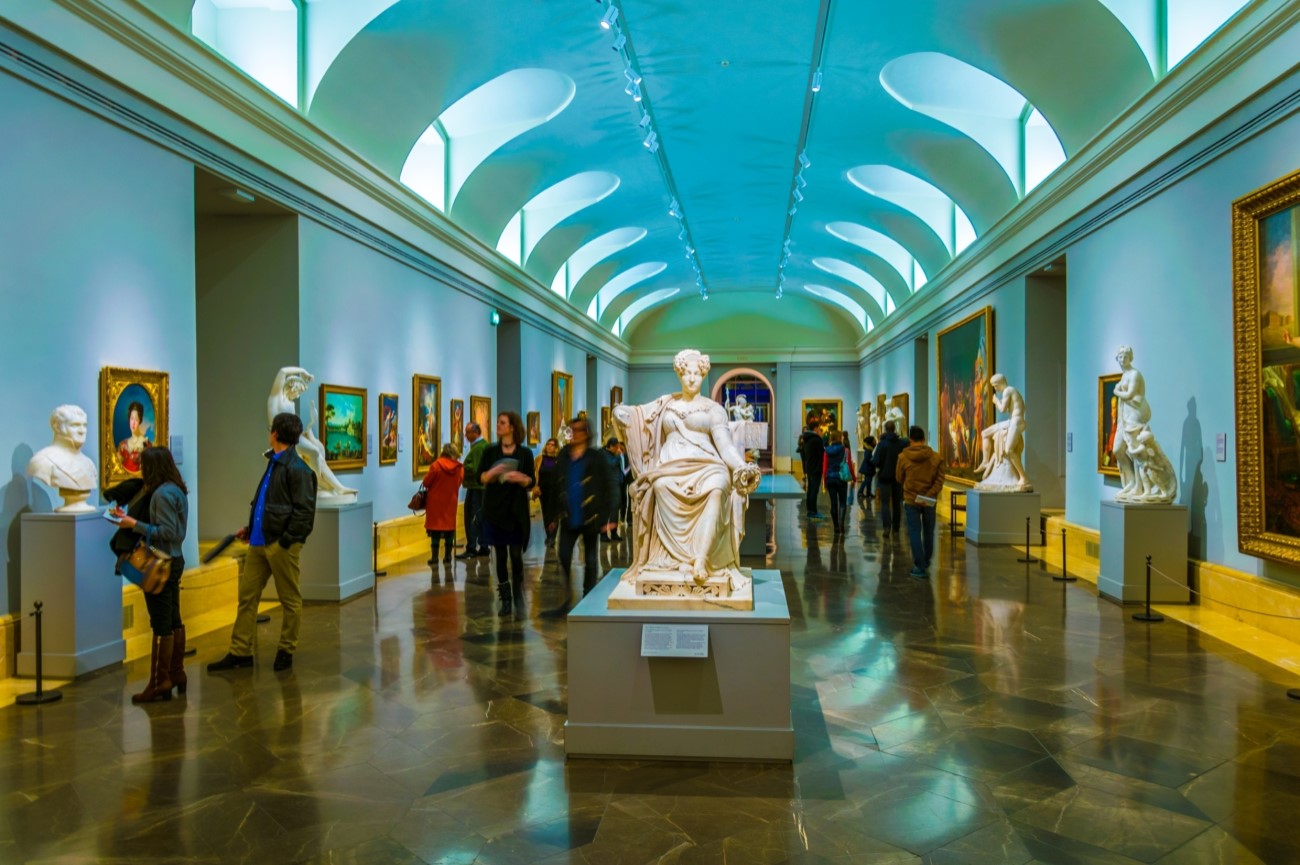
The Prado is the strongest choice for European painting before the nineteenth century and for anyone particularly interested in Velázquez, Goya, El Greco, Bosch, Titian or Rubens.
Its great advantage is depth. Major artists appear across multiple rooms and periods, allowing you to follow changes in their work rather than seeing a single famous painting in isolation. The collection also reflects centuries of Spanish royal patronage, giving the museum a strong connection to Madrid’s history as a royal capital.
Its scale makes preparation especially useful. Our Prado Museum guide covers tickets, timing and what to see first, including focused routes for visitors with two or four hours available.
Choose the Prado if Old Masters, Spanish court painting, Goya or Velázquez are central to your interest in Madrid.
The Thyssen-Bornemisza
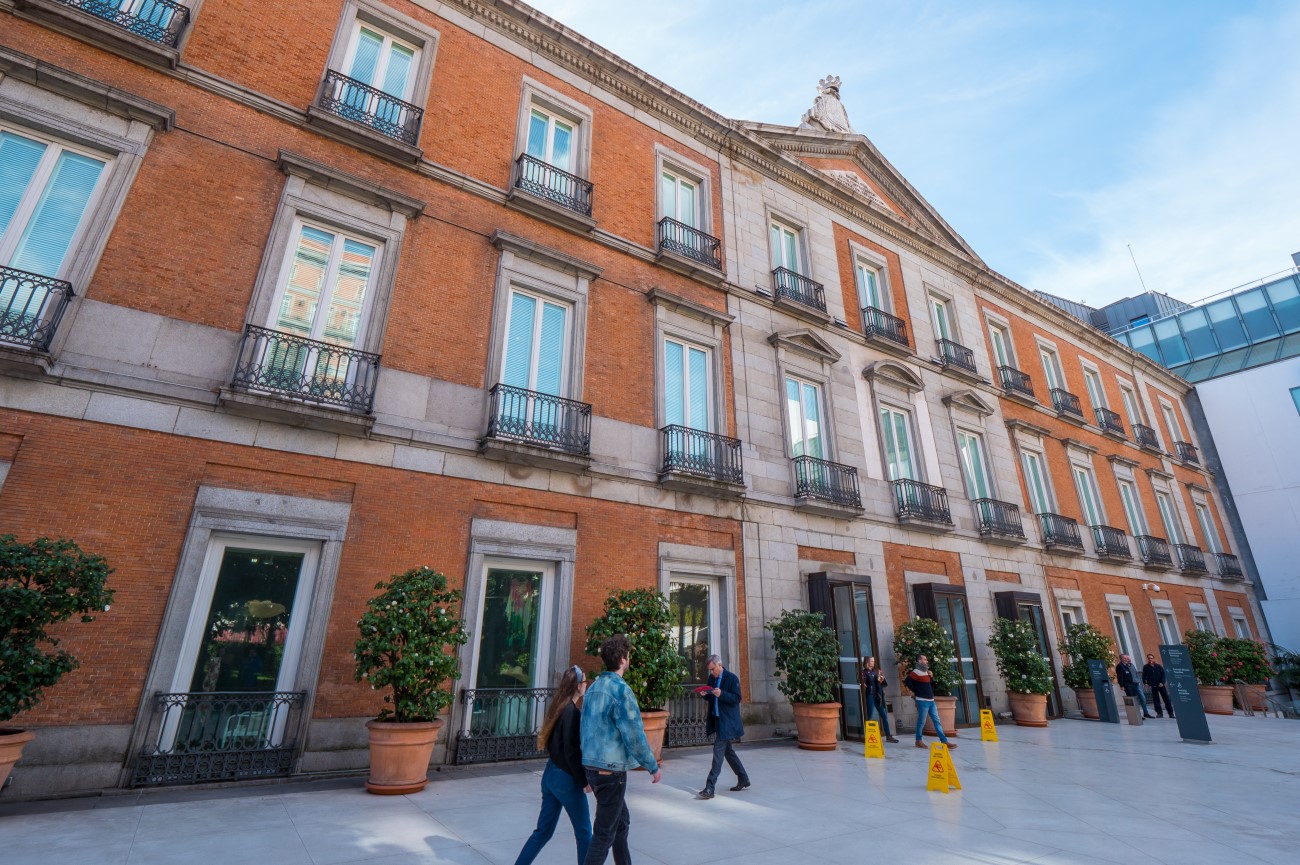
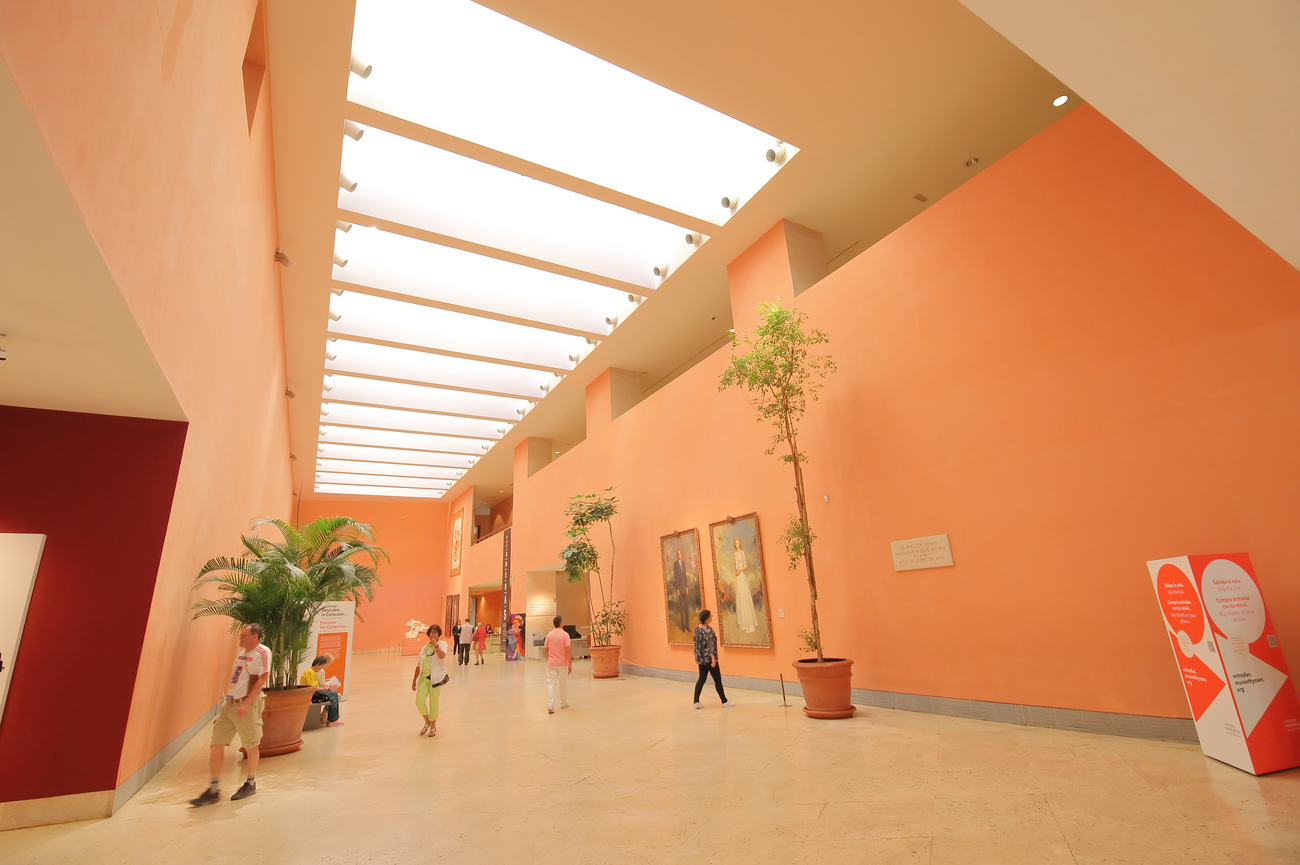
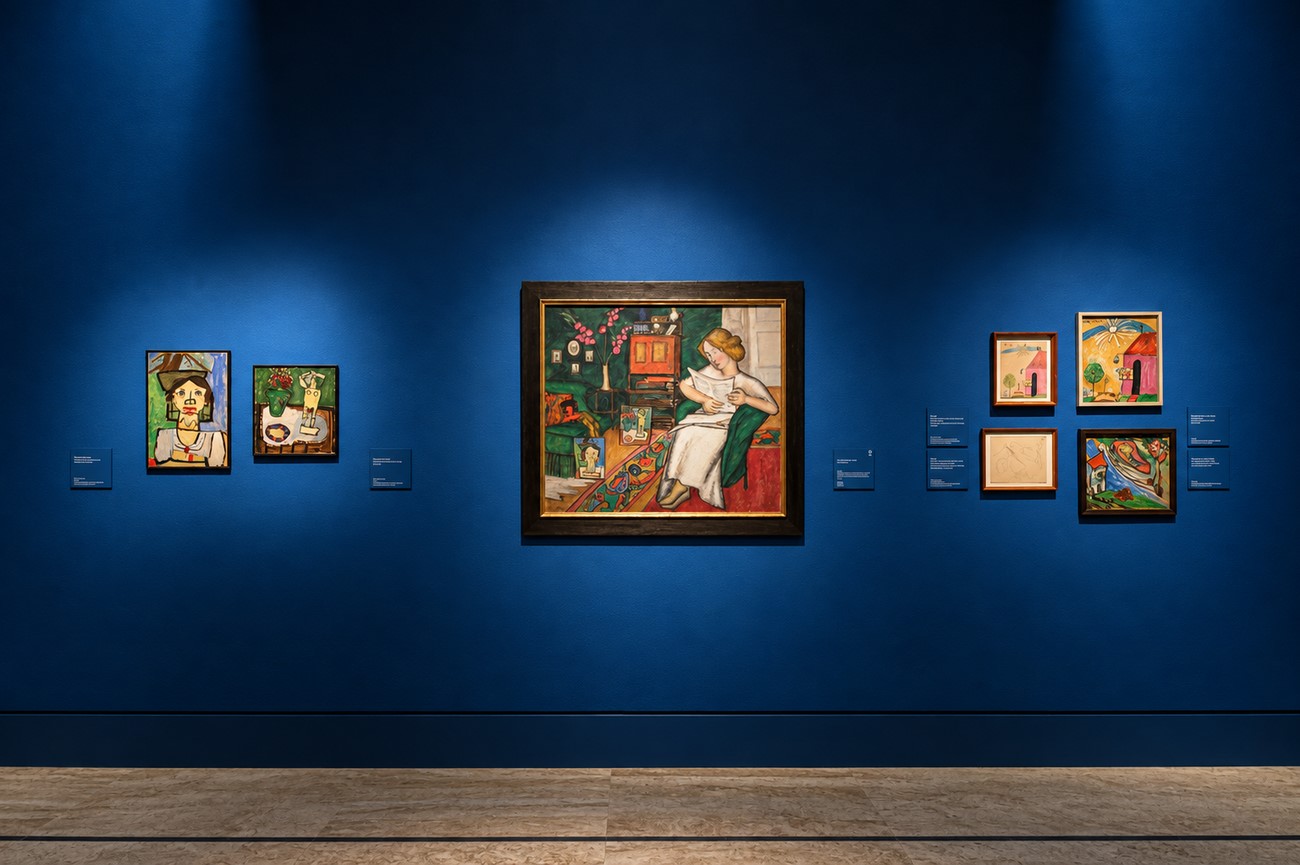
The Thyssen-Bornemisza offers the broadest chronological range of the three museums. Its collection moves from Old Masters through Impressionism, Expressionism and into twentieth-century painting, making it particularly good for visitors whose interests cross several periods.
That range is also what makes the Thyssen approachable. You can move from Renaissance painting to Degas, Van Gogh, Kandinsky or Hopper without the museum becoming overwhelming. American painting also has a stronger presence here than many visitors expect from a major European collection.
The Thyssen works especially well for someone who enjoys art but does not want an entire day organised around a single vast museum. Its scale allows you to explore seriously while still leaving enough energy for the city outside.
Choose the Thyssen if you want variety, Impressionism, nineteenth-century painting or a collection that moves easily between several artistic movements.
The Reina Sofía
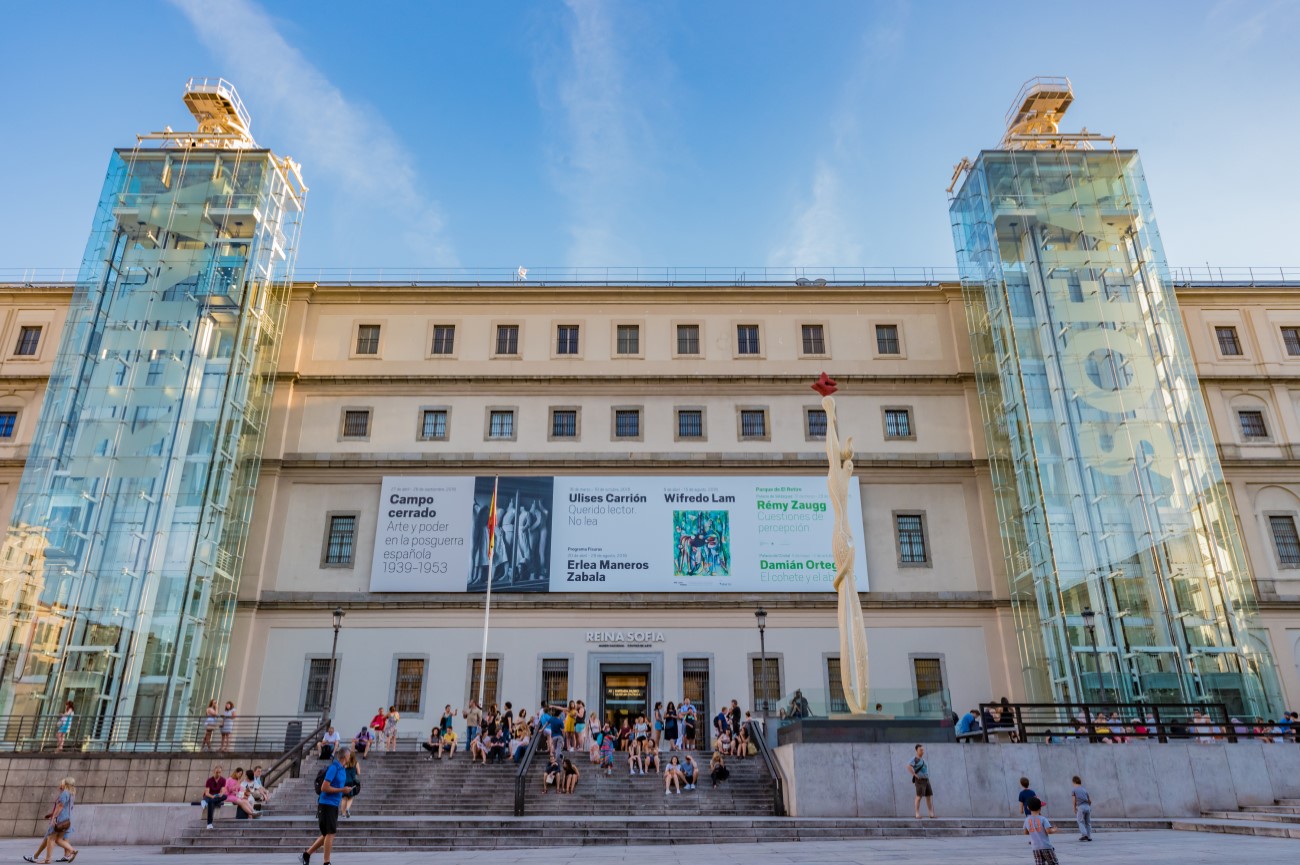
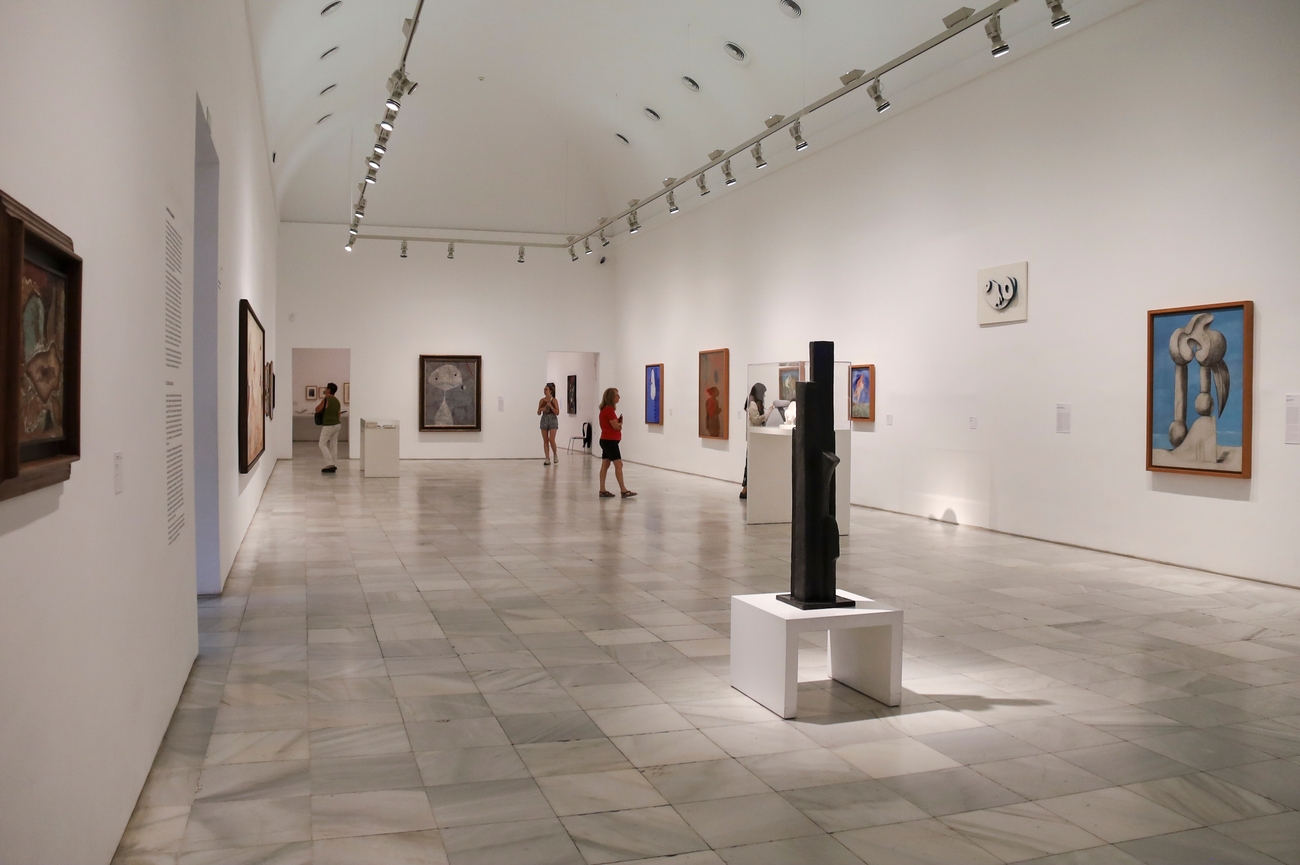
The Reina Sofía takes over where the older collections begin to give way to modernism and twentieth-century art. Picasso, Dalí and Miró provide familiar starting points, but the museum goes considerably further into photography, film, avant-garde movements and politically engaged art.
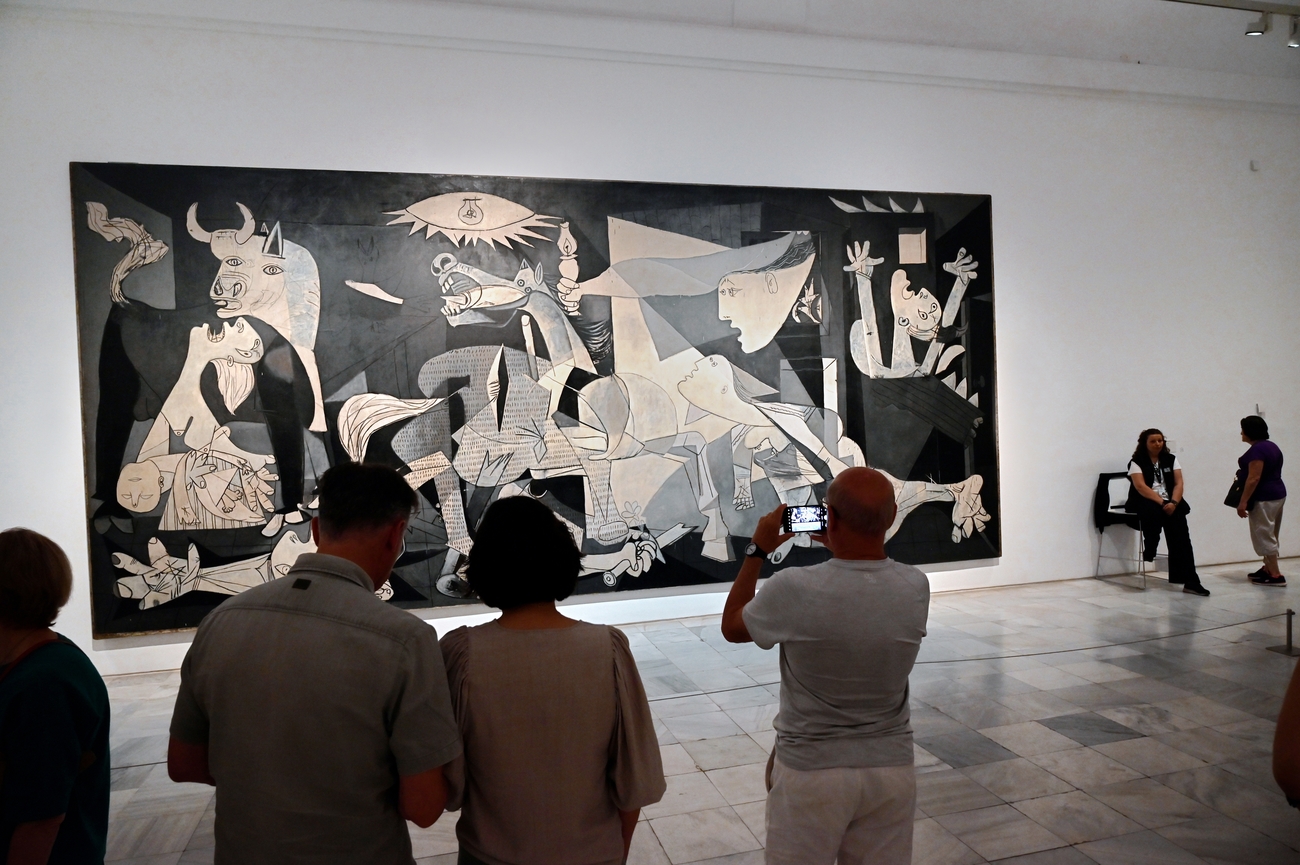
Its most famous work is Picasso’s Guernica, but seeing the painting within the Reina Sofía gives it important context. The surrounding galleries connect it to the Spanish Civil War, exile, dictatorship and wider artistic responses to the political upheavals of twentieth-century Spain.
The museum can therefore feel more demanding than someone arriving only to see Guernica might expect. The collection is not simply a sequence of famous modern paintings, and its different buildings and gallery layouts reward a more selective approach.
Choose the Reina Sofía if Picasso, Dalí, modernism, the Spanish Civil War or twentieth-century art are the main reasons you want to visit a Madrid museum.
Guernica: Commission, Exile and Return
Guernica began as a commission before Picasso had settled on its subject. In early 1937, the government of the Spanish Republic asked him to create a large work for the Spanish Pavilion at the International Exposition in Paris. On 26 April that year, the Basque town of Gernika was bombed by German and Italian forces supporting the Nationalist side during the Spanish Civil War. News of the attack gave Picasso the subject he had been searching for.
He completed the enormous canvas in Paris for the pavilion that summer. From the beginning, the painting therefore existed within a political context: it represented Republican Spain internationally while the Civil War was still being fought.
Guernica later travelled abroad, and after the outbreak of the Second World War it was placed in the custody of New York’s Museum of Modern Art. Picasso made clear that the painting should not return to Spain until democratic conditions had been restored. Franco died in 1975, Spain entered its transition to democracy, and Guernica finally arrived in Spain in 1981.
Its first permanent Spanish home was the Casón del Buen Retiro, close to the Prado. The painting moved to the Reina Sofía in 1992, where it now forms one of the central works in the museum’s account of twentieth-century Spanish art. The wider relationship between the museum district and Madrid’s historic centre is covered in our first-visit Madrid itinerary.
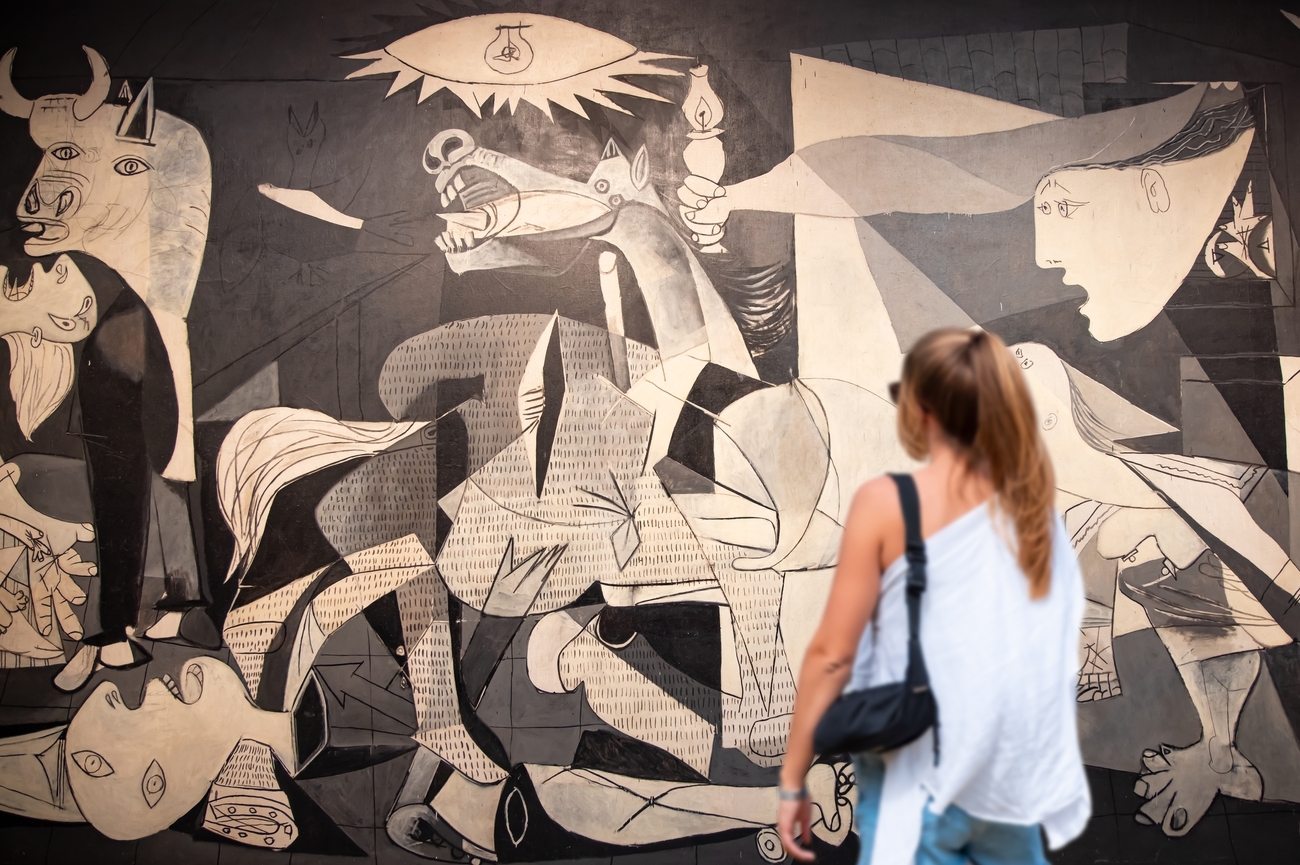
When you see Guernica in person, begin from a distance. Its scale is easy to underestimate from reproductions, and the composition works differently when the entire canvas fills your field of vision. Take in the distribution of light and dark and the movement across the painting before concentrating on individual figures.
Then move closer. The horse dominates the centre, the bull occupies the left side, and fragmented bodies and faces are compressed into an unstable interior. A lamp appears from above and to the right, while an electric light hangs near the upper centre.
Interpretations of these figures have varied widely, particularly the bull and horse. Picasso did not leave a definitive explanation assigning one fixed political meaning to every element, so it is better to preserve some of that uncertainty rather than approach the work as a puzzle with a single solution.
The surrounding galleries also deserve time. Dora Maar photographed different stages of Picasso’s work on Guernica, providing an unusually detailed record of how the composition developed and changed. Seeing that material alongside the finished painting gives a clearer sense of the work as something constructed over time rather than conceived in one complete form.
Photography rules at the Reina Sofía have changed over the years, which is why older guidebooks can be misleading. Check the signs in the galleries on the day of your visit and follow any restrictions applying to Guernica or the surrounding works.
Which Madrid Museum Should You Visit If You
Only Have Time for One?
If you only have time for one museum, the best choice depends on what you actually want to see rather than which institution is considered the most important. The Prado, Thyssen-Bornemisza and Reina Sofía are close geographically, but their collections serve very different interests.
For a First Visit to Madrid With No Strong Art Preference
Choose the Prado.
It has the closest connection to the collecting history that shaped Madrid as a royal capital, and artists such as Velázquez and Goya appear with enough depth to make even a focused visit feel substantial. Las Meninas, the Black Paintings and Bosch’s The Garden of Earthly Delights also give a first-time visitor several very different ways into the collection.
You do not need extensive knowledge of European painting to enjoy it. If you want one museum that feels strongly connected to Madrid and Spain’s artistic inheritance, the Prado is the most natural starting point.
If You Like Art but Are Not an Art-History Specialist
Choose the Thyssen-Bornemisza.
Its broad chronology makes it easier to move between styles and periods without needing to understand the structure of a much larger collection. Renaissance painting eventually gives way to Impressionism, Expressionism and twentieth-century works, with familiar artists appearing often enough to provide natural points of reference.
This also makes the Thyssen a good choice for couples or families with different levels of interest in art. There is enough depth for someone who wants to look closely, while the scale and variety make it less likely to feel overwhelming.
For Picasso, Dalí and Twentieth-Century Spain
Choose the Reina Sofía.
If modernism, the Spanish Civil War, Surrealism or twentieth-century Spanish art are your main interests, there is little reason to choose an older collection simply because it is more famous.
Guernica is the obvious draw, but the surrounding galleries place Picasso alongside other artists, political material and artistic movements connected with the upheavals of twentieth-century Spain. Dalí and Miró add further reasons to choose the Reina Sofía over the other two museums.
For Impressionism and Nineteenth-Century Art
Choose the Thyssen-Bornemisza.
The Thyssen is particularly strong in the periods between the Prado's older collections and the emergence of modern art. Impressionism, Post-Impressionism and the transition into twentieth-century movements are much easier to follow here.
Its collection also gives American painting greater visibility than many visitors expect, making it particularly interesting if your museum habits were formed around collections in the United States.
For Goya or Velázquez
Choose the Prado.
The advantage is depth. Rather than seeing a single famous painting by either artist, you can explore different periods, commissions and styles across multiple works, gaining a much fuller understanding of their artistic development.
For Velázquez, Las Meninas, The Surrender of Breda and his royal portraits reveal his extraordinary command of composition, perspective and character. For Goya, the contrast between court portraiture, The Third of May 1808 and the Black Paintings demonstrates a remarkable evolution from royal painter to one of the most powerful and unsettling voices in European art.
For Guernica
Choose the Reina Sofía and give the painting enough time.
Guernica carries enough artistic, political and historical importance to justify building a museum visit around it. The preparatory material and surrounding galleries provide context that disappears when the painting is encountered only through reproduction.
The fact that the Prado and Thyssen are nearby does not mean you need to continue to another museum afterwards. One substantial collection can be enough for the day.
How to Visit All Three Madrid Art Museums in
One Trip
Visiting the Prado, Thyssen-Bornemisza and Reina Sofía during the same Madrid stay is entirely realistic. What matters more is how you spread them across the trip.
The Prado and Thyssen sit particularly close together, while the Reina Sofía lies farther south near Atocha. That geography makes it tempting to visit the museums according to distance, but attention is a better way to plan them. Two major collections can feel very different even when their entrances are only minutes apart.
If you have four or five days in Madrid, give the museum that matters most to you the strongest part of the itinerary. Place the second collection on another day, ideally when it offers a contrast rather than more of the same. Leave the third flexible until you know whether another substantial museum still appeals.
Someone primarily interested in Old Masters might begin with the Prado and visit the Thyssen later in the stay. If twentieth-century art is the priority, start with the Reina Sofía, use the Thyssen as a broader second museum and decide afterwards whether the Prado still belongs in the trip.
There is no required order for Madrid’s Golden Triangle of Art. The advantage of having three major museums so close together is not that you need to complete them quickly. It is that you can choose between them without making the rest of the itinerary complicated.
Paseo del Arte Pass: Combined Ticket for the
Three Museums
A combined ticket is available for the Prado, Thyssen-Bornemisza and Reina Sofía. Usually sold as the Paseo del Arte Pass, it includes one visit to each museum and allows you to spread the visits across your stay rather than seeing all three on the same day.
If you come across the term Madrid museum pass while researching, check which product is being described. Madrid has several museum-related passes and discounts, while the Paseo del Arte Pass is specifically designed around these three institutions.
Whether it is worthwhile depends on how certain you are that you want to visit all three museums. If each collection is already part of your plans, the pass can simplify ticketing. If the third museum is still only a possibility, separate tickets give you more freedom to decide once you are in Madrid.
Included exhibitions, validity periods and entry procedures can change, so check the current conditions before purchasing rather than relying on older information about the pass.
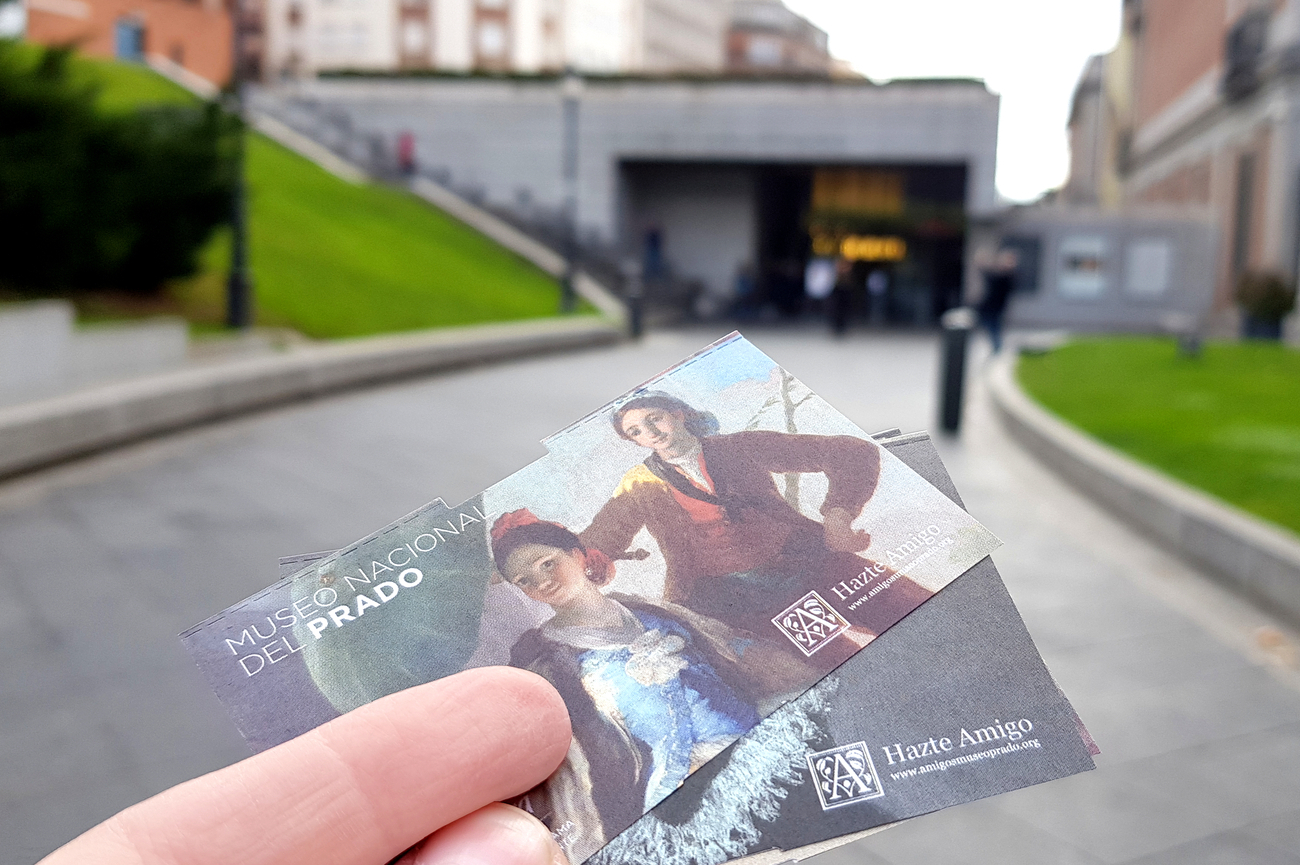
Paseo del Prado and Madrid's Museum District
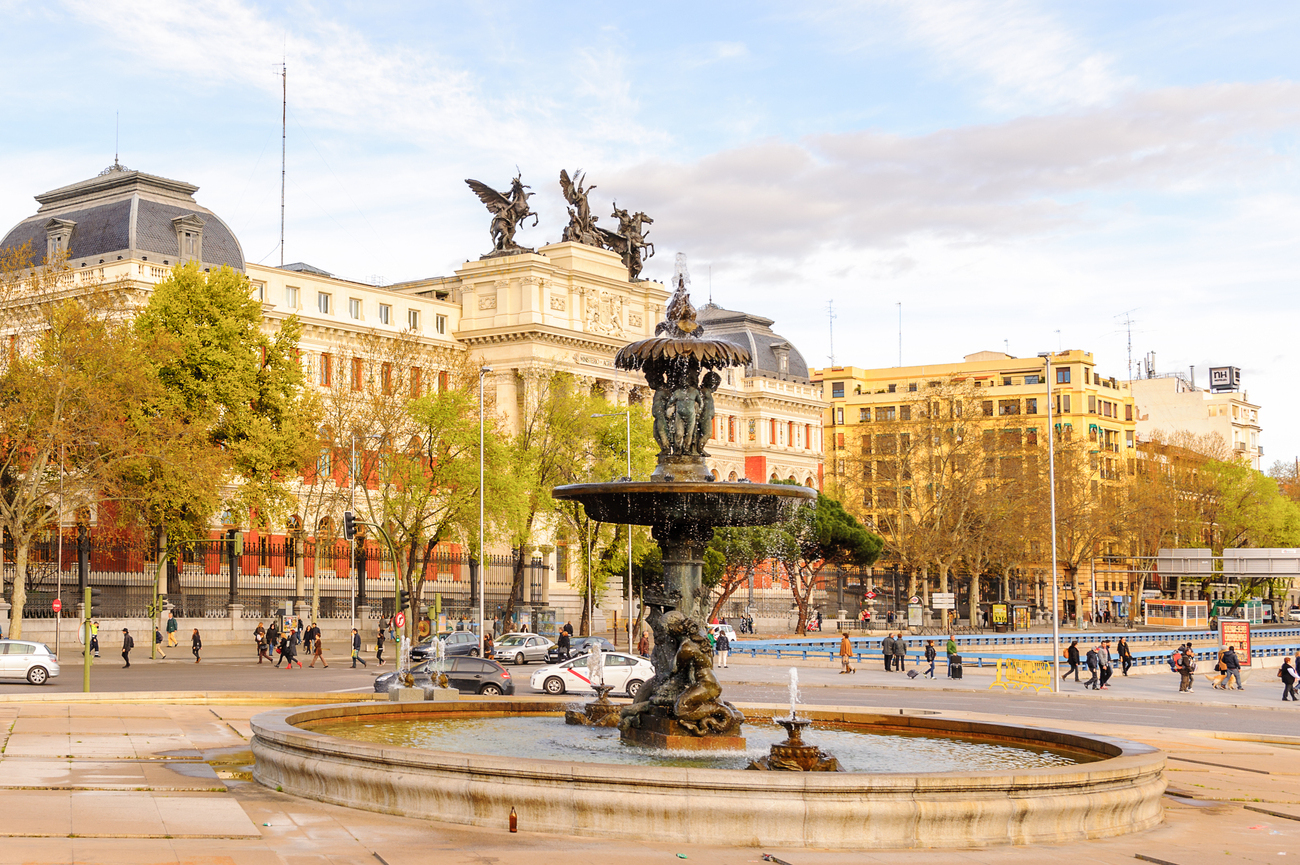
The Prado, Thyssen-Bornemisza and Reina Sofía make sense as a group on a map, but the Paseo del Prado helps explain why this part of Madrid works so well on foot.
The Paseo del Prado and Buen Retiro are recognised by UNESCO as a cultural landscape, linking a historic urban promenade with gardens and institutions devoted to art, science and public life. The result is a museum district that extends well beyond the entrances to the three main collections.
The Royal Botanic Garden sits immediately beside the Prado and provides a quieter change of pace after several hours in the galleries. Retiro lies farther east and is large enough to become part of the day in its own right rather than simply a route between museums.
CaixaForum Madrid adds another cultural institution to the area, with temporary exhibitions and changing programmes that complement the national museums without trying to become a fourth corner of the Golden Triangle.
The concentration of museums also gives you useful flexibility. If one collection takes longer than expected, you have not created a transport problem. If you leave a museum earlier than planned, the Paseo, Botanic Garden, Retiro and surrounding streets are already there to take over the rest of the day.
To the west, the museum district gradually gives way to Madrid’s older political and royal centre. Continue through the central streets and the architecture eventually shifts towards the Royal Palace and Madrid de los Austrias. Our Royal Palace of Madrid and the Habsburg Quarter guide explores that side of the city in more detail.
Where you stay can also change how easily the museum district fits into your itinerary. Barrio de las Letras places the Paseo within an easy walk, while Retiro and the western edge of Salamanca keep the museums close with a more residential atmosphere. Our guide to where to stay in Madrid compares those neighbourhoods and the practical trade-offs between them.
The great advantage of Madrid’s Golden Triangle of Art is therefore not simply that three major museums sit close together. It is that the space around them remains part of the city. You can leave the galleries for gardens, streets, lunch or a walk through Retiro without the cultural day feeling finished.
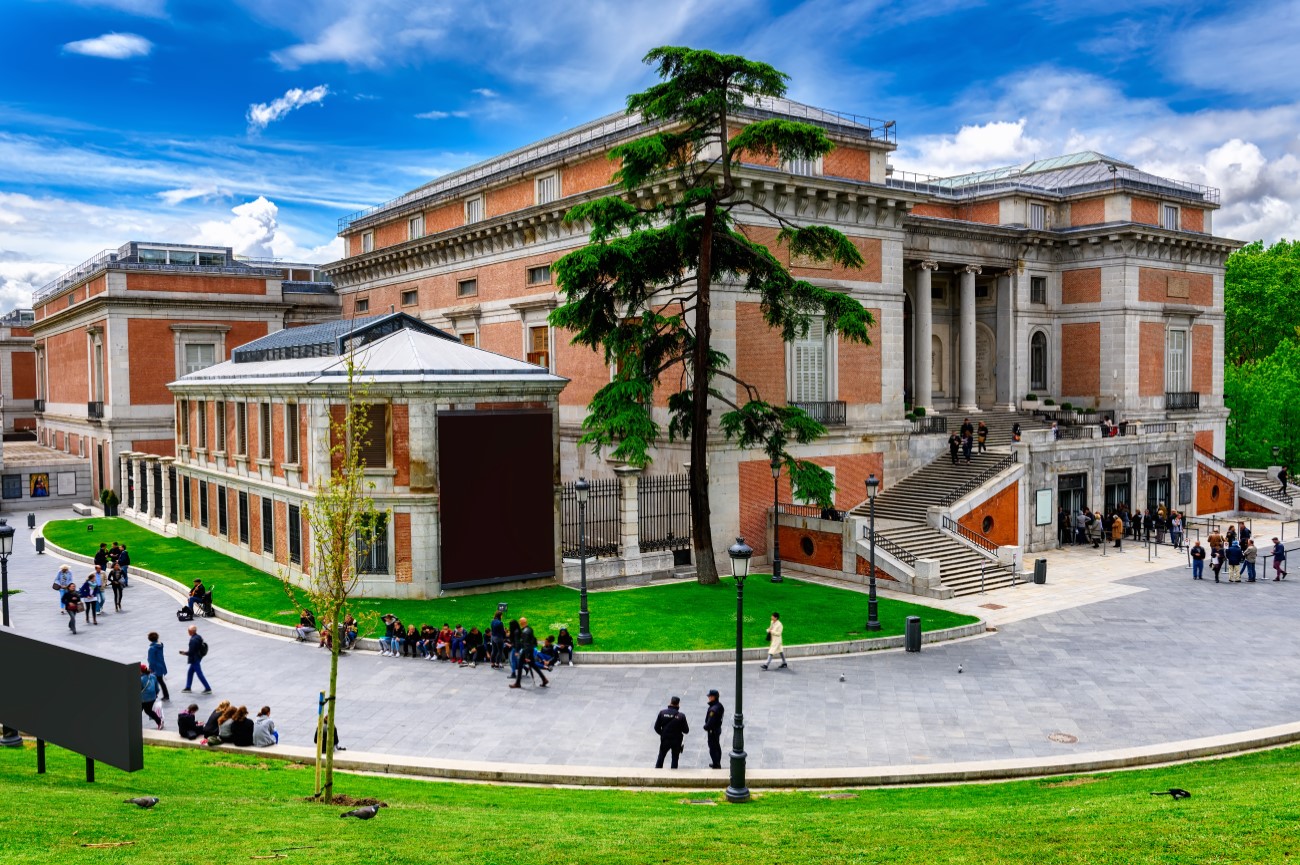
After the Museums
The Prado, Thyssen-Bornemisza and Reina Sofía sit close enough together that the map encourages completion. Madrid itself gives you plenty of reasons not to.
Once you step back onto the Paseo del Prado, the day can move in another direction entirely. Retiro is nearby, the Botanic Garden offers a quieter change of pace, and a long lunch can easily replace the museum you thought you might visit next.
That flexibility is one of the strengths of Madrid’s Golden Triangle of Art. You can see one collection properly, leave another for later and still feel that the day has been well spent.
There is no need to complete all three museums simply because they are within walking distance. Sometimes the most enjoyable way to finish a Madrid art trip is to go home with one of them still unseen.
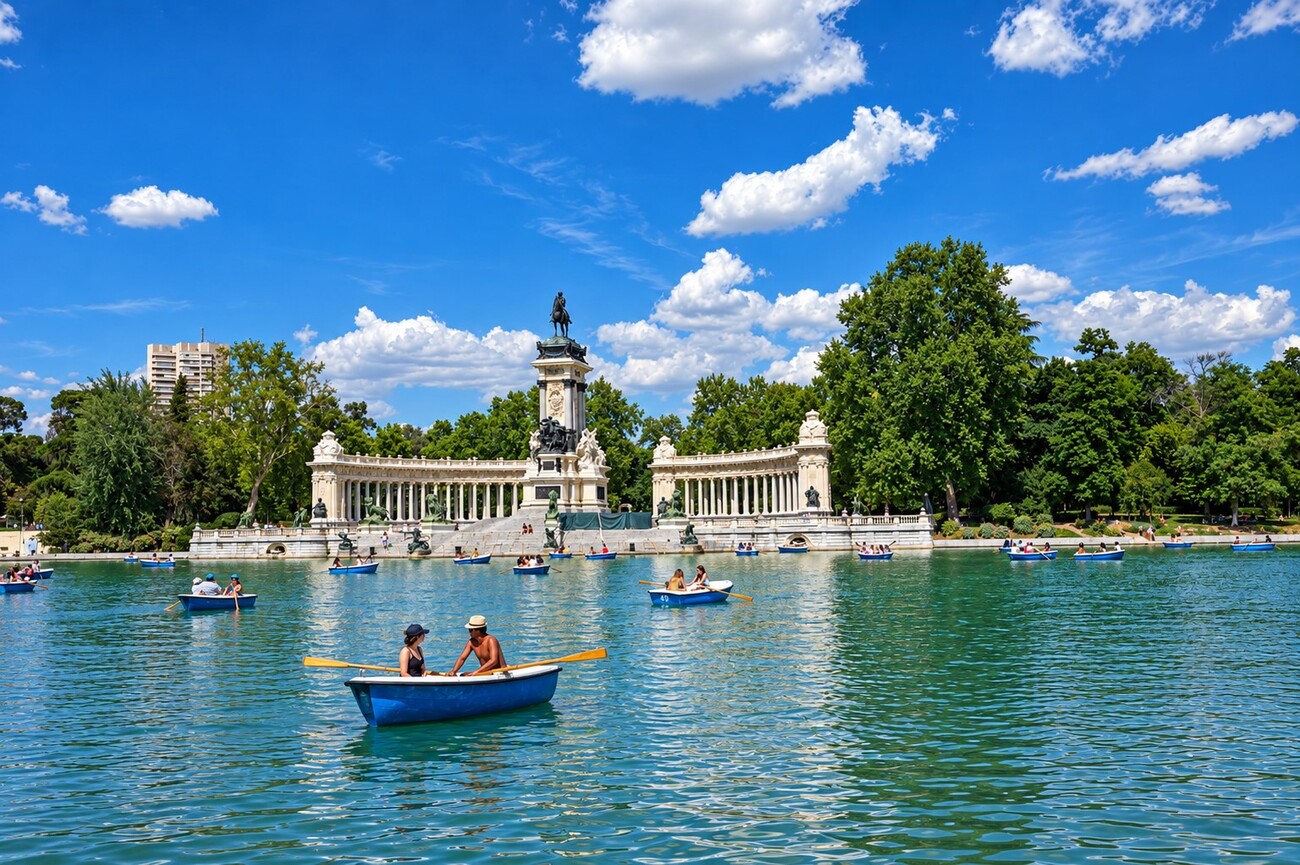


Let us know what you love, where you want to go, and we’ll design a one-of-a-kind adventure you’ll never forget.
Get in touch
Miriam
Travel Specialist

Romina
Travel Specialist

Laura
Travel Specialist
Our offices:


Revigorate, Iberian Escapes and Algarve Lifestyle are the registered brand names of APCS Lda . We are a fully authorised travel agency licensed by Turismo de Portugal RNAVT/6867.
In the event of a dispute, the consumer may refer to: RAL - Centros de Arbitragem
Avª. 5 de Outubro, nº. 55, R/C Dtº. 8000-075 Faro, Portugal | Tel: +351 289 823 135 *
* national landline call
E-mail: info@consumoalgarve.pt| www.consumidoronline.pt | Mon to Fri: 9:00 - 13:00 / 14:00 - 17:00