Madrid Itinerary: A First Visit to the Spanish
Capital
Madrid is an easy city to underestimate on a map. The historic centre is compact, many of its major sights can be reached on foot, and the Royal Palace, Plaza Mayor, Barrio de las Letras, the Prado and Retiro all sit within a relatively manageable central area. Yet each part of the city feels distinctly different once you start walking between them.
Madrid has been Spain’s capital since Philip II established his court here in 1561. Royal architecture still shapes the western side of the centre, while the Prado and the surrounding museum district give the eastern side a very different cultural identity. Between them are old squares, residential streets, neighbourhood restaurants and the everyday city that makes Madrid more rewarding than a simple collection of landmarks.
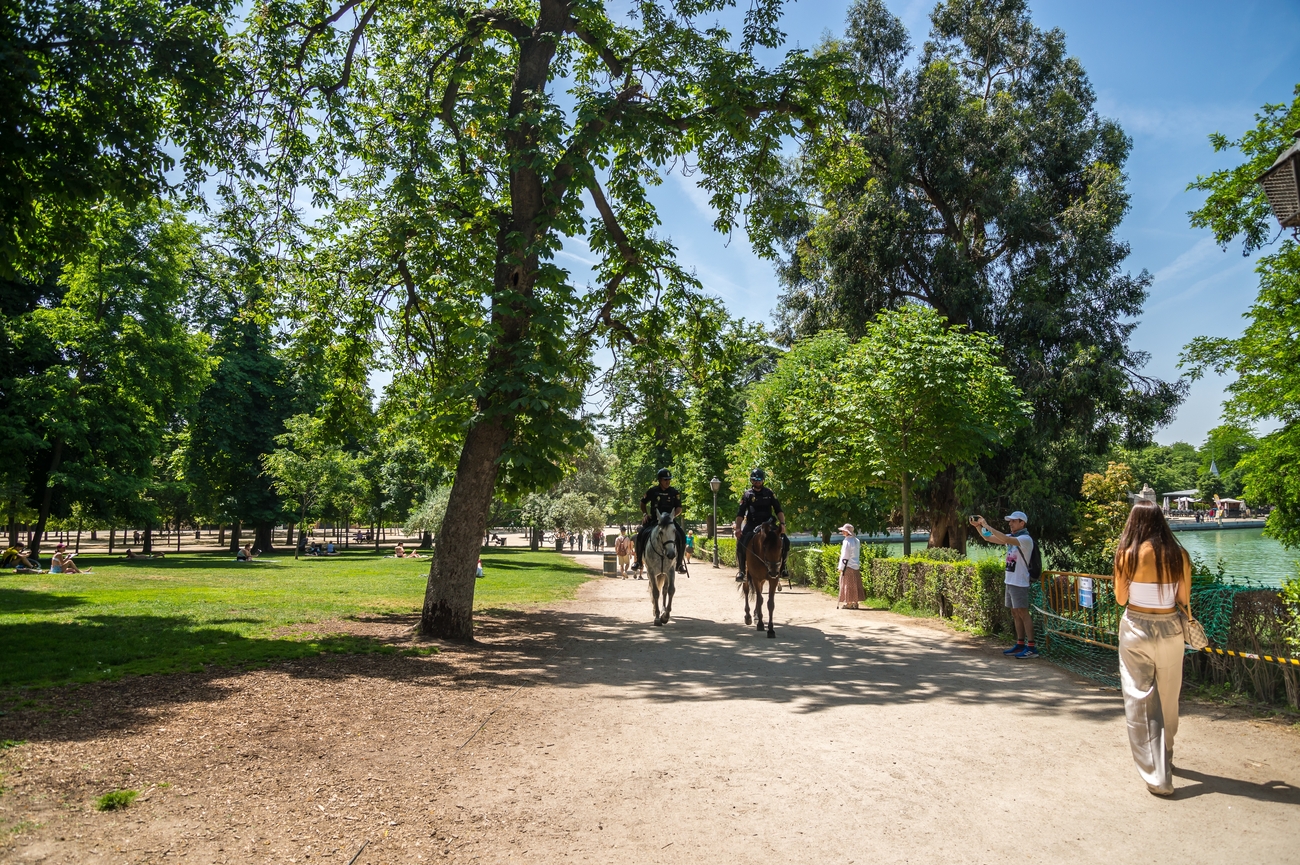
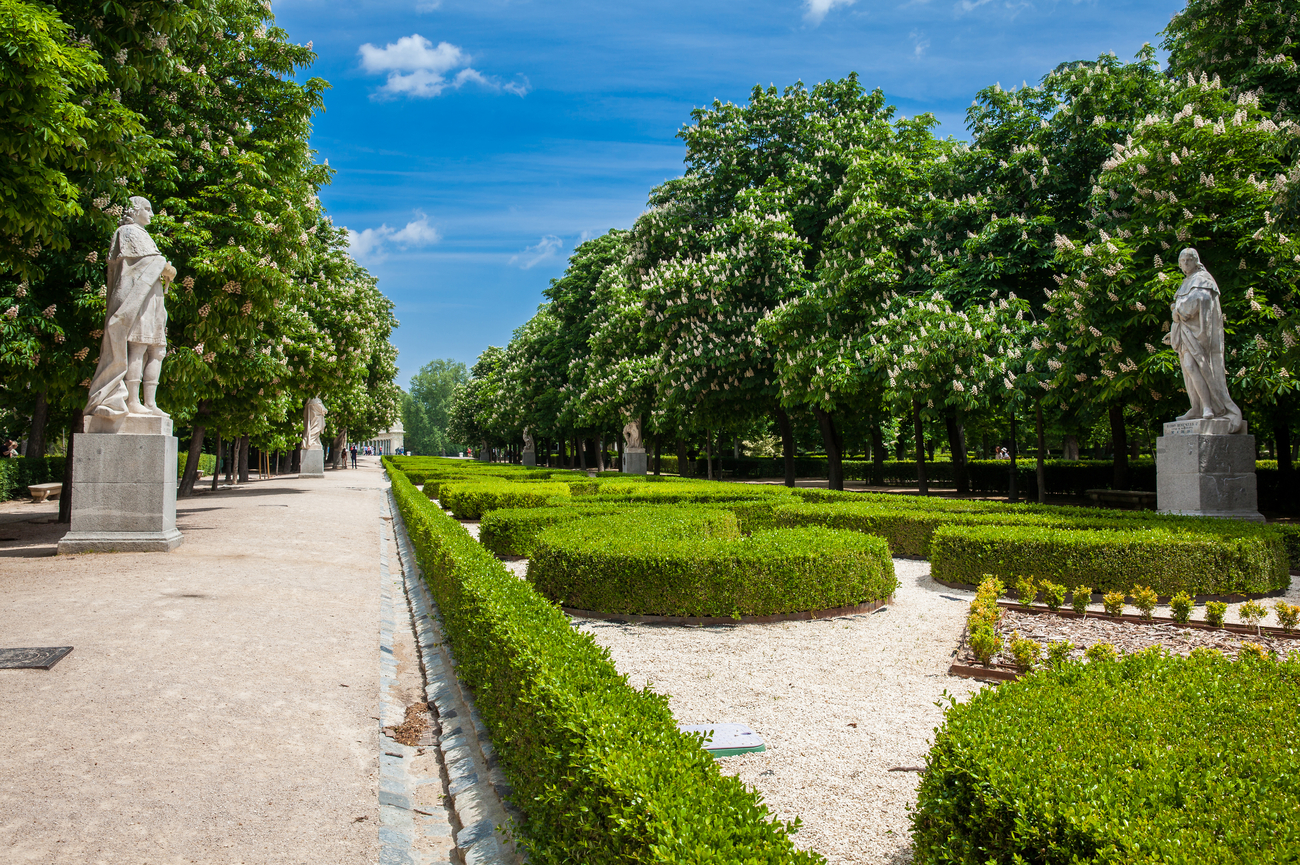
A first visit works best when you resist trying to see everything at once. The Prado deserves proper time. The Royal Palace and Habsburg quarter work better as a walk than as a checklist. Retiro and the Paseo del Prado should have enough space in the day to feel like part of the city rather than a route between attractions. The Paseo del Prado and Buen Retiro are together recognised by UNESCO as a cultural landscape, reflecting the close relationship between Madrid’s museums, gardens, public spaces and scientific institutions.
This guide will help you decide how many days to spend in Madrid, understand how the centre fits together, choose which museums and neighbourhoods deserve your time, and know what is worth booking before you arrive. If you prefer some of those arrangements to be handled in advance, our Discover the Spanish Capital - City of Madrid journey combines a four-night Madrid stay with private guiding, a food experience, a privately guided Prado visit and airport transfers.
How
Madrid Is Laid Out for a First Visit

Madrid becomes much easier to understand once you stop treating Puerta del Sol as the centre of everything. For a first visit, it is more useful to think of central Madrid as a broad east-west band stretching from the Royal Palace and Habsburg quarter to the Paseo del Prado and Retiro.
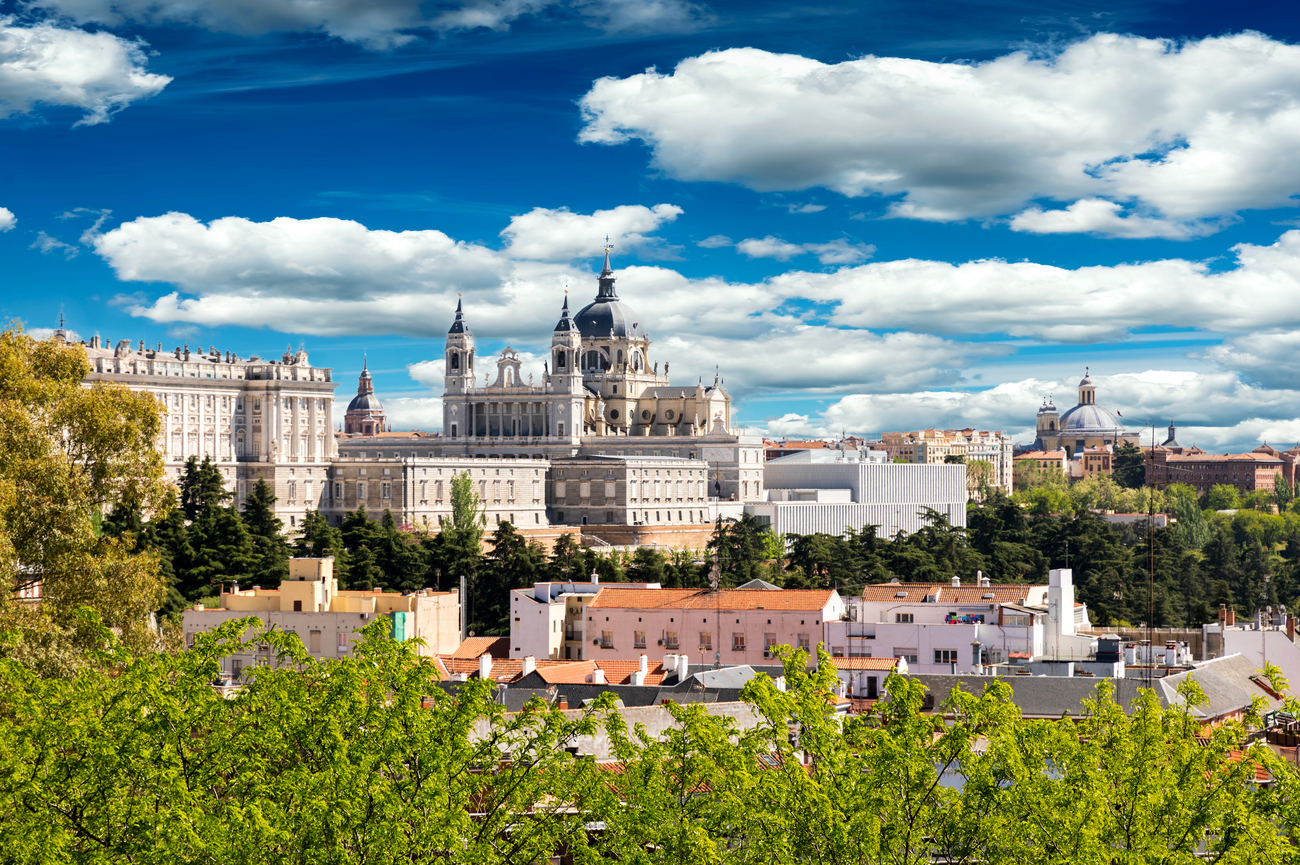
At the western end, the Royal Palace and Almudena Cathedral sit above the Manzanares side of the city. Immediately east is Madrid de los Austrias, the historic Habsburg quarter, where Plaza de la Villa, Plaza Mayor and the surrounding streets preserve much of the older urban fabric of the capital. This is one of the best areas to explore on foot because the distances are short and the smaller streets reveal far more than a direct route between monuments.
If you want to understand this part of Madrid in more depth, our guide to the Royal Palace of Madrid and the Habsburg Quarter follows a walking route through the palace area, Almudena Cathedral, Plaza de la Villa and Plaza Mayor.
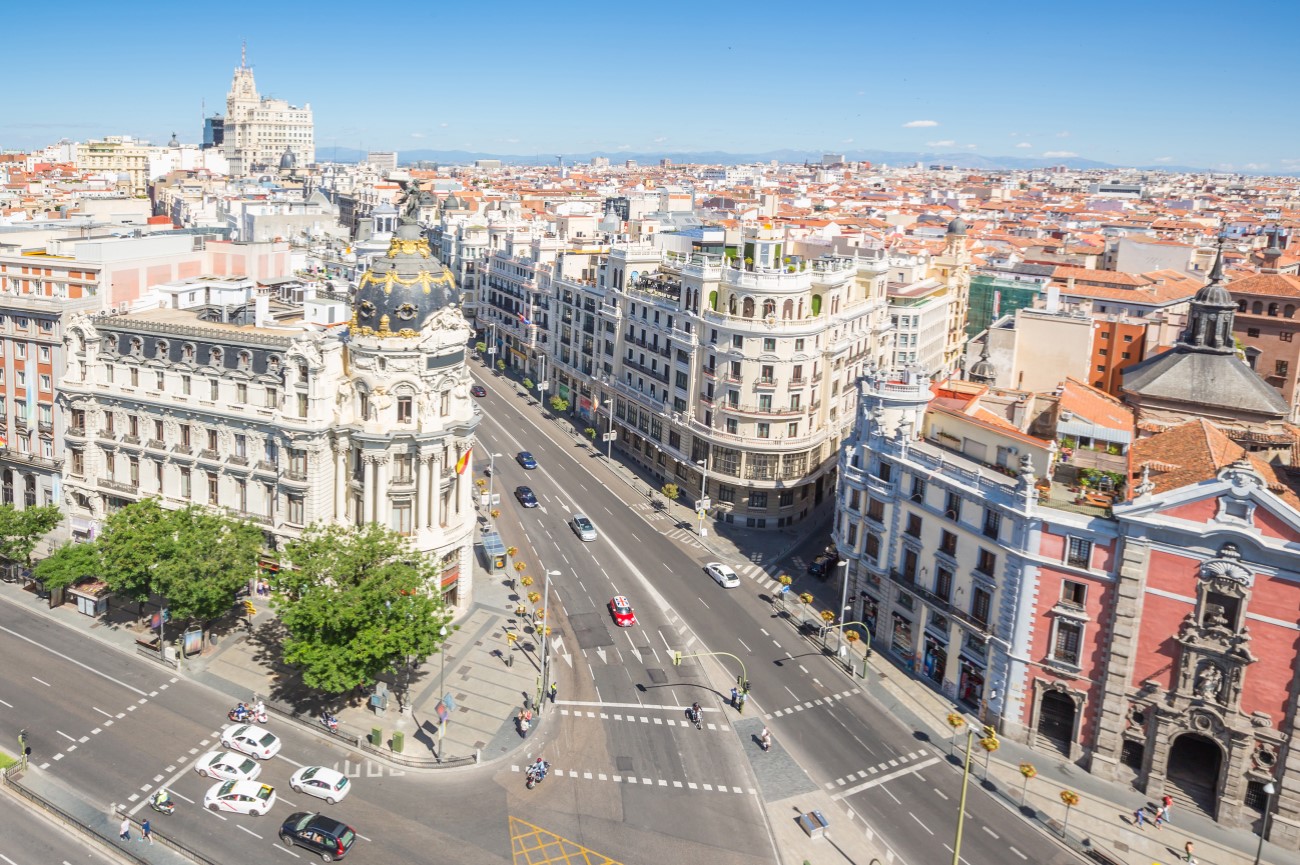
Further east, Puerta del Sol acts more as a crossroads than a destination in itself. Gran Vía rises to the north, the old centre extends west, and the streets towards Barrio de las Letras lead southeast towards the museum district.
Barrio de las Letras creates a useful bridge between the historic centre and the Paseo del Prado. It is one of the most convenient areas for a first visit because you can walk west towards Sol and Plaza Mayor or east towards the Prado without relying heavily on transport.
At the eastern end of this central band, the Paseo del Prado opens the city out again. The Prado Museum, Thyssen-Bornemisza and Reina Sofía form Madrid’s Golden Triangle of Art, while the Royal Botanic Garden and Retiro provide a greener counterpoint to the surrounding museums and avenues.
The Royal Palace to Prado axis can be walked comfortably, but there is little reason to rush it. The distance is manageable enough that many of the most interesting parts of a Madrid itinerary happen between the major sights rather than only inside them.
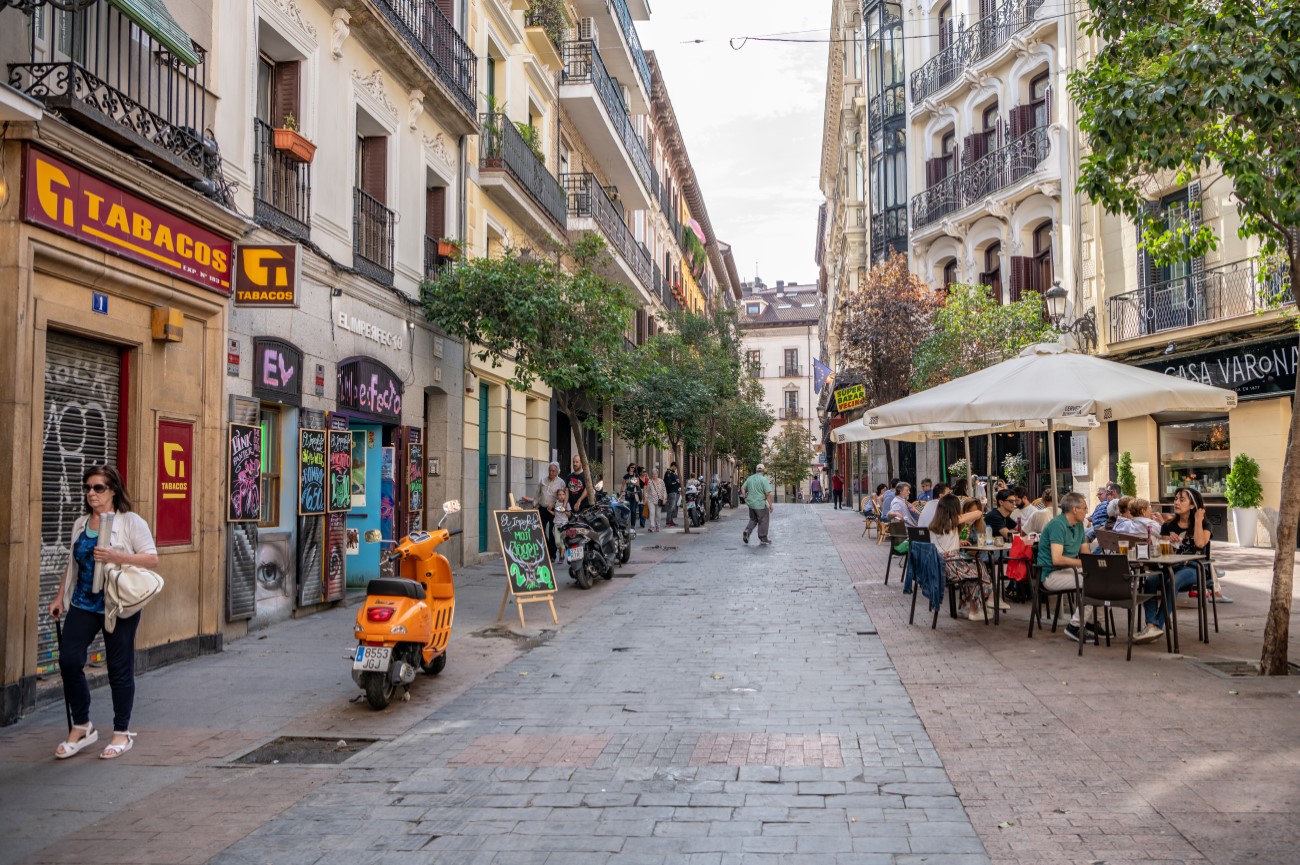
Beyond this central stretch, the neighbourhoods begin to offer different versions of Madrid. Salamanca is more polished and residential, Chamberí quieter and more local, Malasaña and Chueca livelier after dark, while La Latina and Lavapiés have a stronger connection to the older southern side of the centre.
None of these neighbourhoods needs to feel like an excursion. Madrid’s centre is compact enough that you can move between several different areas in a single day, although where you stay will affect how much of that movement happens on foot.
If you would rather have the key arrangements handled in advance, our Discover the Spanish Capital - City of Madrid journey combines four nights in Madrid with private guiding, a food experience, a privately guided Prado visit and airport transfers.
The most useful approach is to choose one part of the city as the focus of a morning or afternoon and let the surrounding streets fill the time around it. Madrid rewards walking, and the route between two places often explains the city better than another list of attractions.
How
Many Days Do You Need in Madrid?
How long you should spend in Madrid on your first visit depends on how much you want to see and how relaxed you want your itinerary to be. Three days can cover the essentials. Four days gives the city better proportion. Five days creates enough space for a slower pace or a day trip without reducing Madrid itself to a short stop.
3 Days in Madrid
Three days is the practical minimum for a first visit that includes both the historic centre and the Prado without rushing either.
Keep the itinerary focused. One substantial museum visit is usually enough, and the Royal Palace and Habsburg quarter deserve their own block of time rather than being squeezed between other sights. Retiro works naturally alongside the museum district and does not need to become a separate appointment.
The main risk with three days is trying to compensate for limited time by adding more. The Prado, Thyssen-Bornemisza and Reina Sofía sit close together, but visiting all three can easily dominate the stay. The same applies to crossing the city simply to collect neighbourhoods from a list.
A better approach is to give each day a different character: one centred on the historic and royal side of Madrid, one around the Prado and Paseo del Arte, and a third with more flexibility for Retiro, another museum or a neighbourhood beyond the main sightseeing circuit.
4 Days in Madrid
Four days is the most comfortable length for many first-time visitors.
The major sights no longer have to compete for the same hours. You can give the Prado proper time, explore the Royal Palace and historic centre separately, spend part of a day around Retiro and the museum district, and still leave room for an evening or morning without a fixed programme.
The extra day also makes small decisions easier. A late start does not compromise the itinerary. You can stay longer over lunch, return to a neighbourhood you liked or spend additional time in a museum without immediately sacrificing something else.
Four days also works particularly well because Madrid’s centre is compact enough to revisit naturally. The second walk through Letras, Plaza Mayor or the Paseo del Prado often feels very different once the geography has become familiar.
5 Days in Madrid
Five days allows Madrid to breathe and introduces the possibility of leaving the city for a day without weakening the main itinerary.
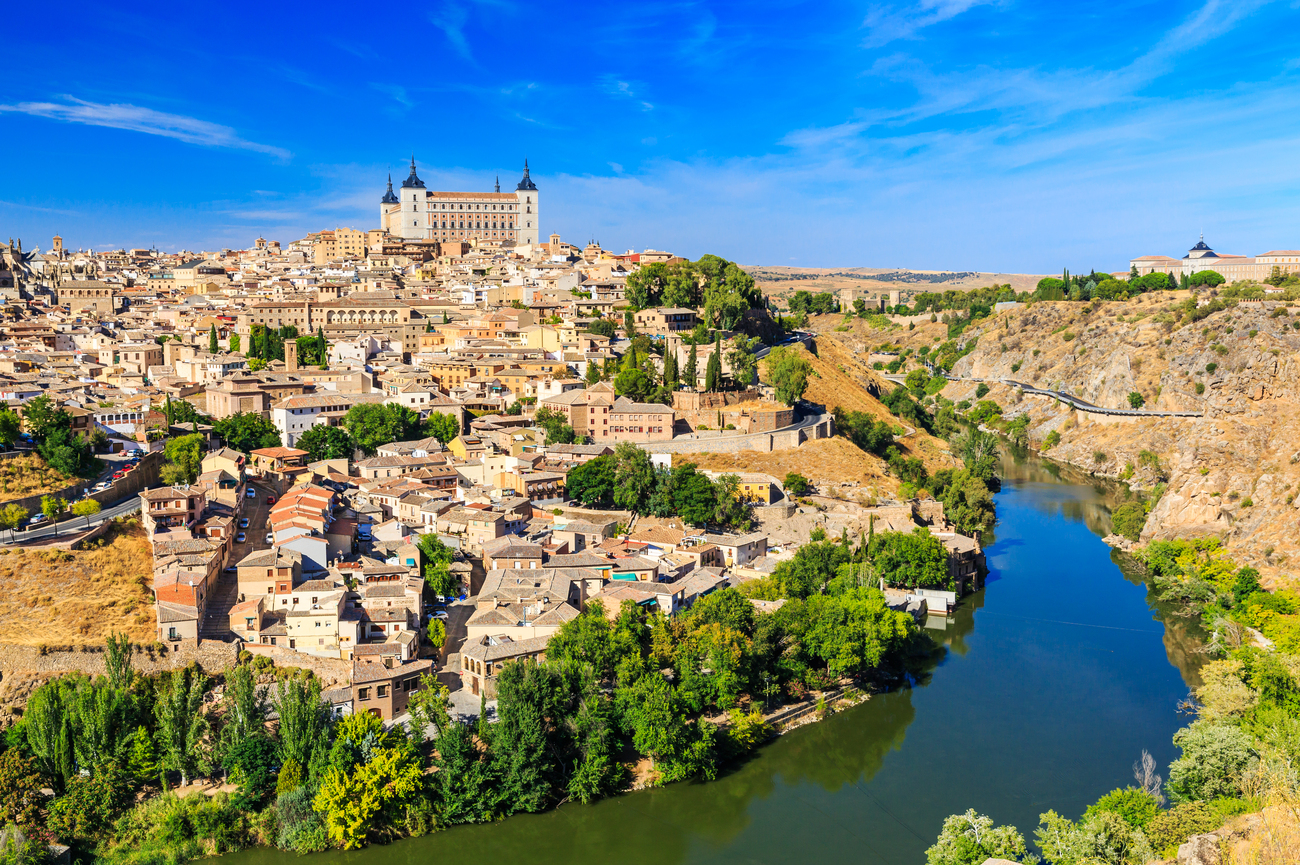
Toledo and Segovia are both established day-trip options from Madrid and can fit comfortably into a five-day stay once the capital has had several full days of its own. For most travellers, choosing one is better than trying to fit both into the same visit.
Staying in Madrid for the fifth day is equally worthwhile. You can visit the museum you left out earlier, spend more time in Salamanca or Chamberí, return to the historic centre at a slower pace or simply leave more of the day open.
Five days also gives you more flexibility with weather and season. In summer, the hottest part of the afternoon can be used for museums or a long lunch. In winter, shorter daylight matters less because there is another morning available.
A longer stay does not need a longer list of attractions. Its real advantage is that fewer parts of the trip have to compete with one another.
The
Museums
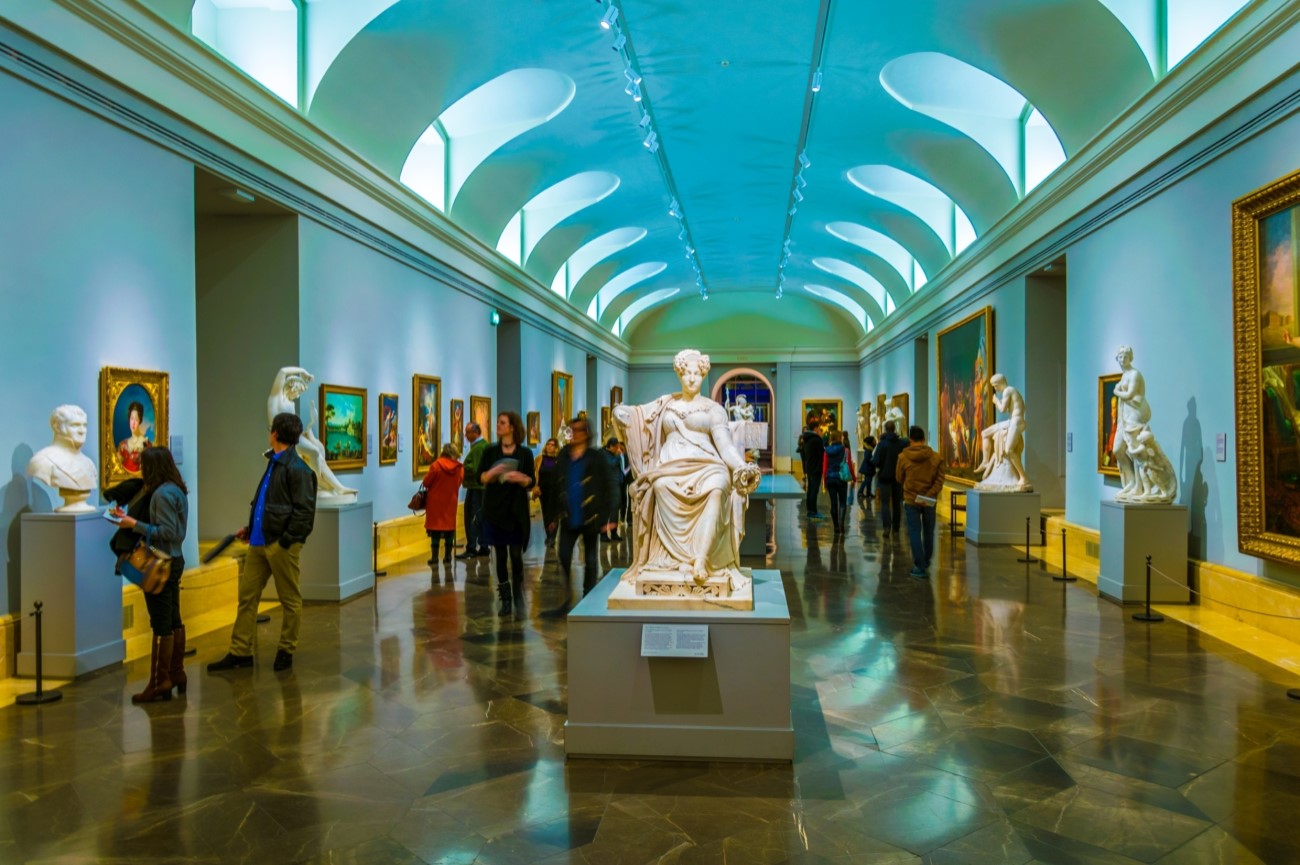
Madrid’s three major art museums sit remarkably close together, but they offer very different experiences. The Prado, Thyssen-Bornemisza and Reina Sofía form the city’s Golden Triangle of Art along the Paseo del Prado, making this one of the easiest parts of Madrid to explore on foot.
For a first visit, the Prado is the natural starting point. Its collection is particularly strong in Spanish and European painting shaped by centuries of royal collecting, with major works by Velázquez, Goya, El Greco, Bosch, Titian and Rubens.
The size of the collection makes some preparation worthwhile. A two-hour visit and a half-day visit are very different experiences, and trying to see everything usually makes the museum less rewarding. Our Prado Museum guide[Link to SP 1] explains tickets, timing and what to see first, including how to structure a shorter visit around the artists that matter most to you.
Velázquez is one of the Prado’s central figures, with Las Meninas among its most famous works. Goya provides a very different experience, from formal court portraits to The Third of May 1808 and the darker Black Paintings. Bosch’s The Garden of Earthly Delights demonstrates how far beyond Spanish painting the royal collections extended.
The Reina Sofía takes the story into the twentieth century. Its best-known work is Picasso’s Guernica, but the museum also covers Spanish modernism, the avant-garde, photography, film and art connected with the Civil War, exile and dictatorship. Dalí and Miró are among the other major Spanish artists represented.
The Thyssen-Bornemisza fills much of the chronological space between the other two museums. Its collection moves from Old Masters through Impressionism, Expressionism and twentieth-century painting, making it especially useful for visitors whose interests cross several periods rather than concentrating on one school.
Their proximity can make visiting all three seem like an efficient plan, but museum fatigue is real. One museum seen properly is usually more rewarding than racing through three simply because they are close together. If more than one collection interests you, spread them across different days where possible.
Our guide to Madrid’s Golden Triangle of Art [Link to SP 2] compares the Prado, Thyssen-Bornemisza and Reina Sofía in greater detail, including which museum suits different artistic interests and whether visiting all three makes sense for your trip.
For most first-time visitors, the best approach is to choose the museum that matters most, give it enough time and allow the Paseo del Prado, Retiro or Barrio de las Letras to take over once you step outside.
Madrid Historic Centre: Royal Palace, Plaza Mayor and
Habsburg Madrid
Madrid’s historic centre is compact enough to explore on foot, with many of its most important royal and civic landmarks concentrated within a relatively small area. Plaza Mayor, Plaza de la Villa, Almudena Cathedral, the Royal Palace and Plaza de Oriente can all be connected naturally without turning the walk into a rigid sightseeing route.
Plaza Mayor is a useful place to begin. The square was enclosed in the early seventeenth century under Philip III and has served many different purposes over its history, including markets, royal proclamations, public celebrations, bullfights and autos-da-fé. Today, its arcades and symmetrical façades make it one of Madrid’s most recognisable spaces, but its history is considerably more complex than its present appearance suggests.
A short walk away, Plaza de la Villa feels much smaller and more intimate. The historic buildings around the square preserve an older civic scale before the route continues towards Almudena Cathedral and the Royal Palace.
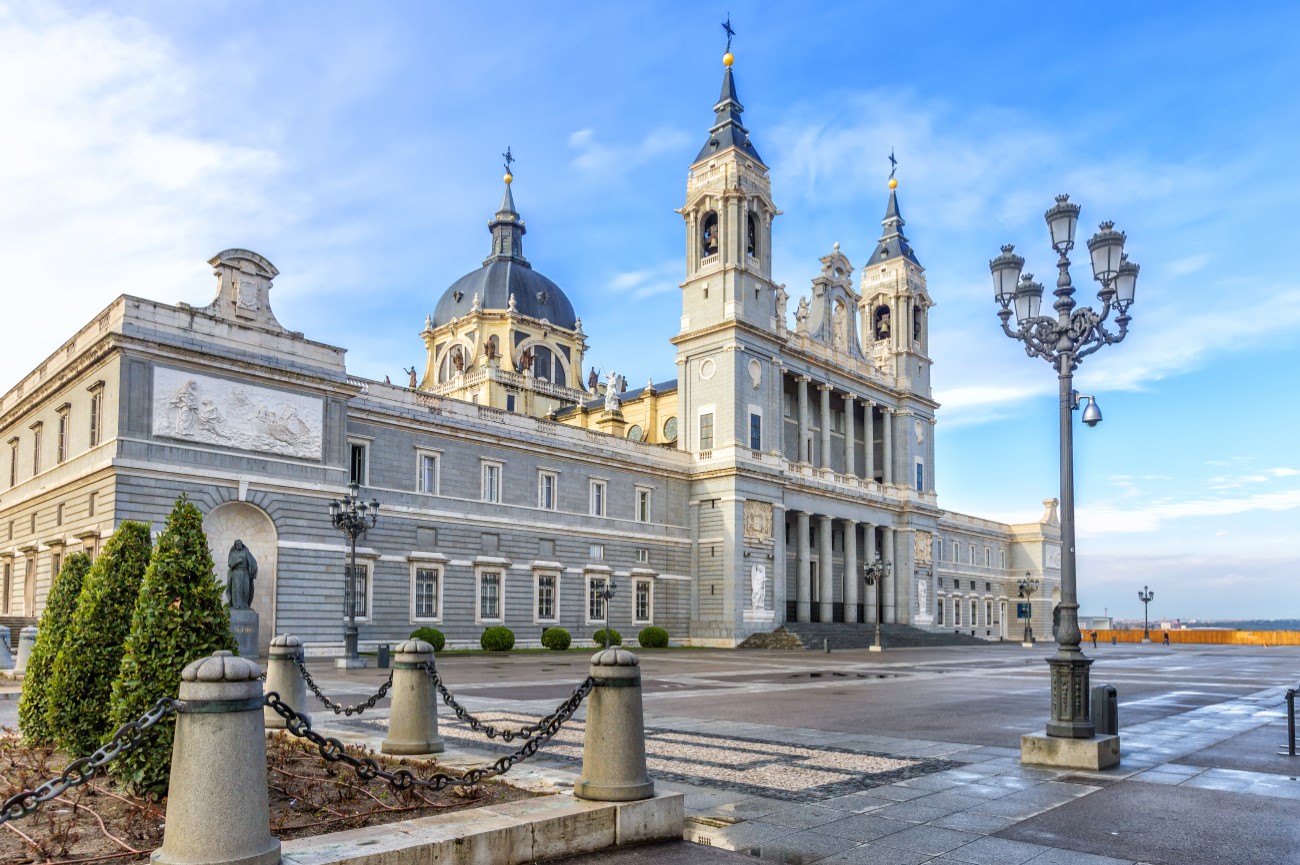
Almudena Cathedral appears much older than it is. Construction extended over more than a century, and the cathedral was finally consecrated in 1993. Its position directly opposite the Royal Palace makes the two buildings feel inseparable, even though they belong to very different periods in Madrid’s history.
The Royal Palace occupies the site of the Alcázar that was destroyed by fire in 1734. Philip V commissioned its replacement, creating the monumental palace that dominates the western side of central Madrid today. The royal family does not live here, but the palace remains an official royal residence and is still used for state ceremonies.
If you want to visit the palace interior, allow it its own block of time rather than treating it as another quick stop. The public route through the state rooms is substantial, and advance admission is sensible when the interior is an important part of your day.
Our Royal Palace of Madrid and the Habsburg Quarter guide [Link to SP 3] follows this area in much greater detail, including the palace interior, Almudena Cathedral, Plaza de la Villa, Plaza Mayor and the older streets around Madrid de los Austrias.
If you prefer to remain outside, the surrounding quarter is still worth several hours. Plaza de Oriente gives one of the clearest views of the palace façade, while the streets east towards Plaza de la Villa and Plaza Mayor reveal the transition from Bourbon grandeur to the smaller scale of Habsburg Madrid.
Continue west or southwest when the weather is good. Las Vistillas opens towards the Manzanares side of the city, while the Templo de Debod offers a broader viewpoint from higher ground. Neither needs to become another major sightseeing stop. They work best as a change of pace after the dense streets and monumental architecture around the palace.
The most rewarding way to explore this part of Madrid is slightly inefficiently. Take the smaller streets between the major landmarks, allow squares to appear more than once and avoid treating the historic centre as a straight route from one attraction to the next.
Where to Stay in Madrid for a First Visit
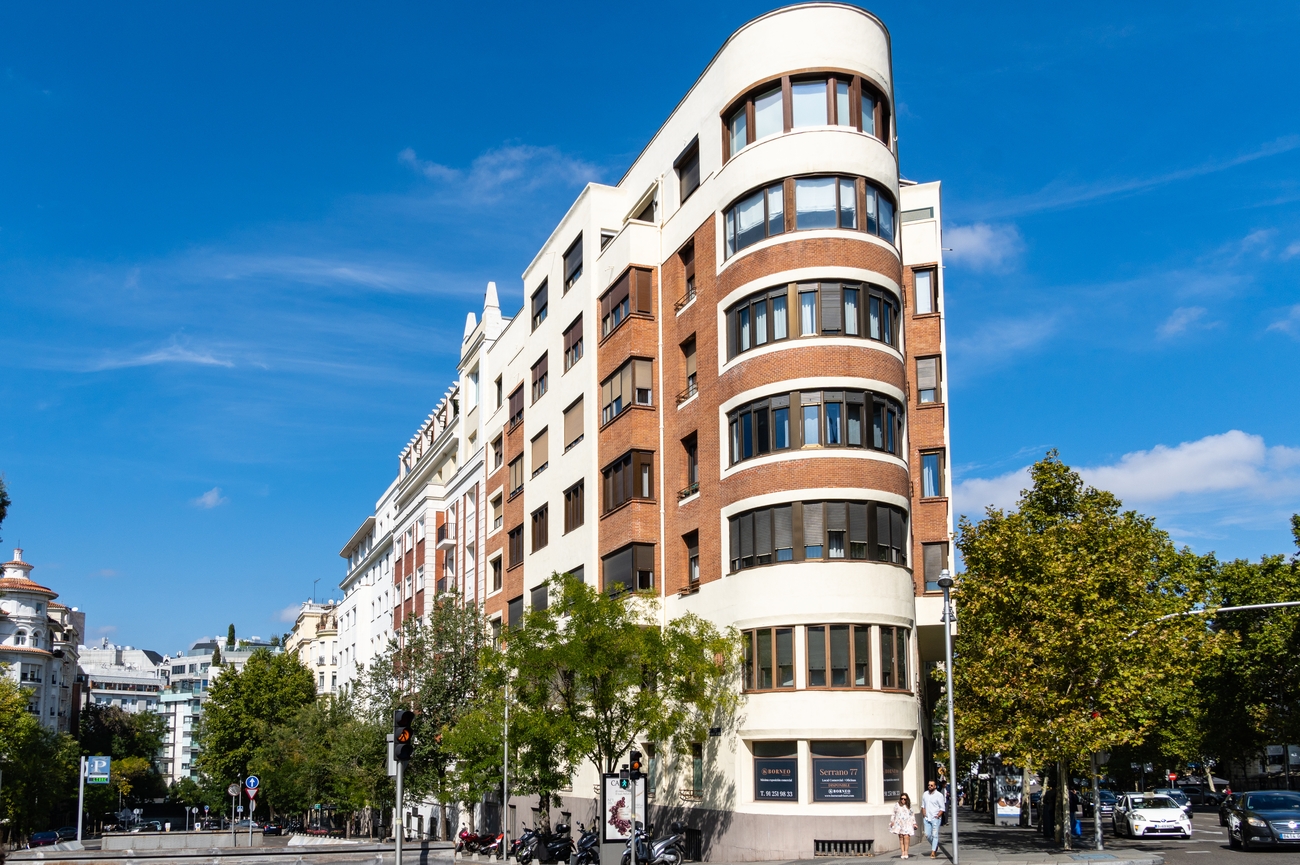
Where you stay changes the texture of Madrid more than the distance to any single landmark. Barrio de las Letras is particularly well placed for a first visit because it sits between the historic centre and the Prado side of the city. Sol and Gran Vía maximise convenience but bring more foot traffic and potential noise, while La Latina puts the older city close at hand with a livelier evening atmosphere. Salamanca and Chamberí trade a little walking time for calmer, more residential surroundings.
Room position matters almost as much as neighbourhood. A central address above a busy street can be a poor choice for light sleepers, while an interior or courtyard-facing room may feel much calmer even within the same district.
For a fuller comparison of the main areas, walking distances and differences in atmosphere, our guide to where to stay in Madrid [Link to SP 4] looks at each neighbourhood in more detail. There is no need to stay directly beside the Royal Palace or Prado to visit either comfortably; central Madrid is compact enough that a well-chosen base can sit between several priorities.
Getting
to Madrid and Getting Around the City
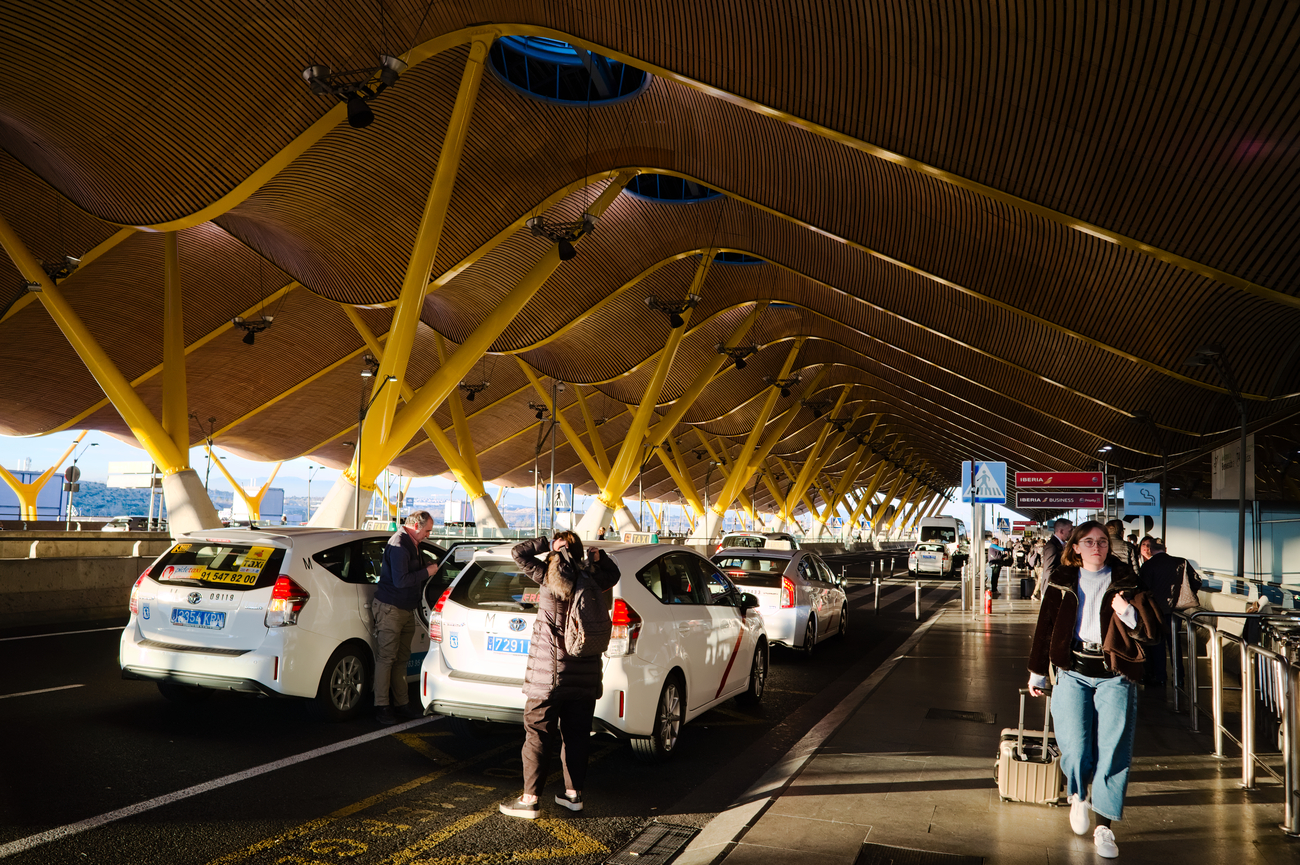
Madrid-Barajas airport has several connections into the centre, including taxis, metro and the Airport Express bus. The most suitable option depends on your arrival terminal, luggage and accommodation rather than one route being best for everyone. A taxi or prearranged transfer is usually the simplest choice after a long flight or when travelling with substantial luggage.
Madrid applies a fixed airport taxi tariff for journeys between the airport and addresses inside the M-30 ring road. Confirm the current fare before travelling and use the official taxi ranks outside arrivals rather than accepting approaches inside the terminal. The fixed tariff does not apply to every address in the wider Madrid area.
Metro Line 8 connects the airport with Nuevos Ministerios, not directly with Sol. Reaching the historic centre requires an onward connection, so allow for changes, waiting and the walk to your accommodation rather than assuming a half-hour door-to-door journey. The Airport Express bus is another practical option; check its stops and operating pattern against your arrival time and hotel location.
Once you are in Madrid, walking can carry a large share of the trip. The Royal Palace, historic centre and Prado district connect naturally on foot, and shorter journeys may not justify descending into a station, waiting and changing lines. The metro becomes more useful for neighbourhoods beyond this central stretch, or when heat, rain or tired feet change the plan.
Cercanías suburban trains connect central stations with the wider region and can be useful when making onward rail journeys. For a day trip to Toledo or Segovia, check the service and departure station when booking rather than assuming all trains leave from the same place. These journeys need their own transport planning, separate from moving around central Madrid.
Arranging the first transfer before departure can make the arrival less demanding, particularly after a long-haul flight. There is little benefit in negotiating several unfamiliar connections when you are tired and carrying bags. Once you have reached your accommodation, the rest of the visit can be much less structured.
What
to Book in Advance for Your Madrid Trip
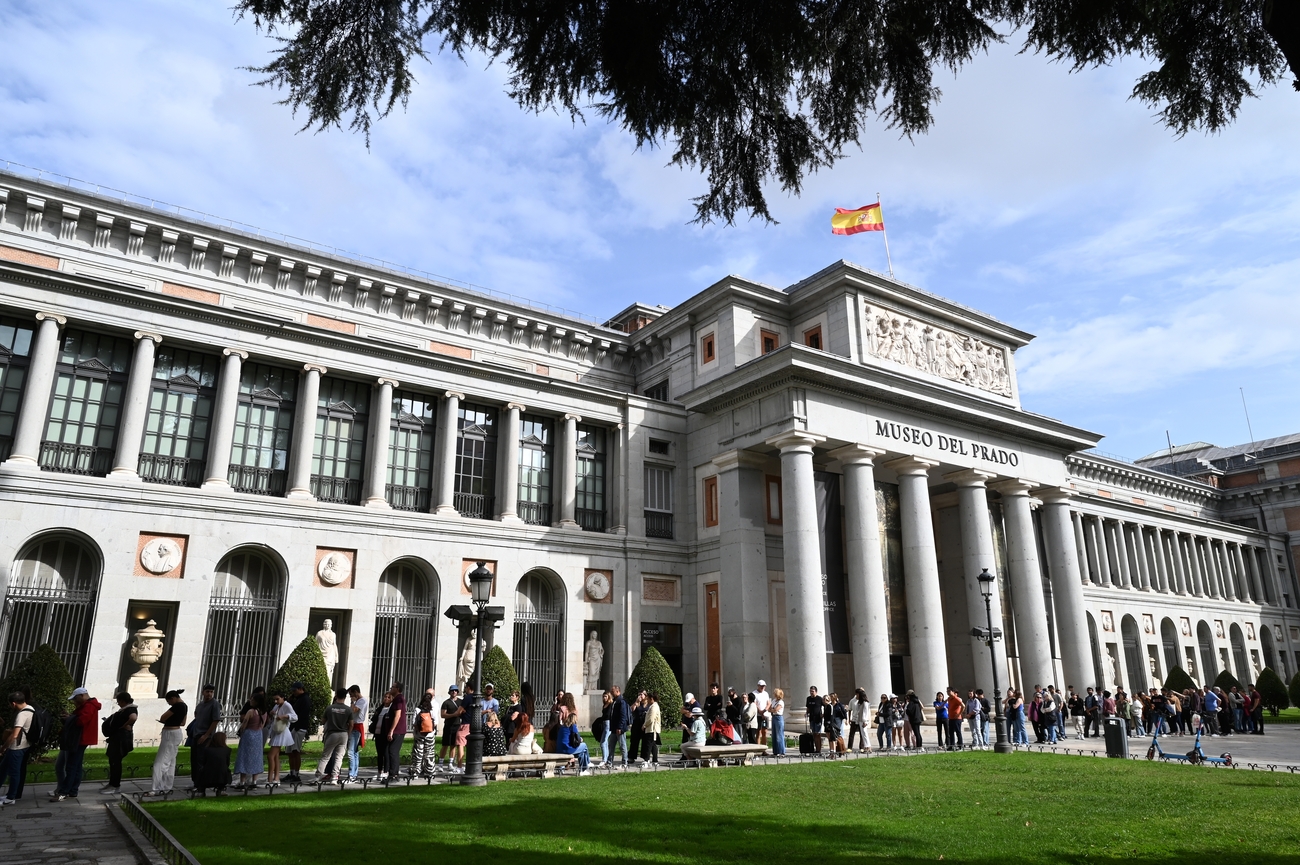
A few advance bookings can protect the experiences that matter most without filling every hour of your Madrid itinerary. The Prado is the clearest example. Entry is timed, so reserve ahead when the museum is central to your plans, then leave enough space around the visit for delays, a longer stay in the galleries or a break afterwards.
The Royal Palace deserves the same treatment if you want to go inside. Official events can affect access, so check Patrimonio Nacional’s visitor information before choosing your admission time. A guided city walk that passes the palace and Almudena Cathedral should not be assumed to include entry to either building.
There is also a case for arranging the first few services together rather than booking everything separately. Our Discover the Spanish Capital - City of Madrid journey combines a four-night stay with airport transfers, a private city introduction, a walking food tour and a privately guided Prado visit with admission. These arrangements establish the main experiences while leaving time around them to explore independently.
Reserve Friday or Saturday dinner when you have a particular restaurant in mind, especially if the meal is an important part of the trip. There is no need to pre-book every lunch and evening meal, however. Leaving some undecided allows you to stay in a neighbourhood you are enjoying rather than crossing the city to keep another reservation.
Much of Madrid needs no advance booking. Walking through Plaza Mayor, exploring the streets of Barrio de las Letras or spending an afternoon in Retiro can remain flexible. Our guide to things to do in Madrid offers further ideas for the time between your planned visits, from major landmarks to places beyond the main sightseeing circuit.
Before finalising the itinerary, check whether your dates coincide with public holidays, festivals or major exhibitions. These can affect availability and opening arrangements, even when the week otherwise looks unremarkable. Secure the experiences you would be disappointed to miss, then leave the rest of the city open to discovery.
Eating
in Madrid: Lunch and Dinner Times
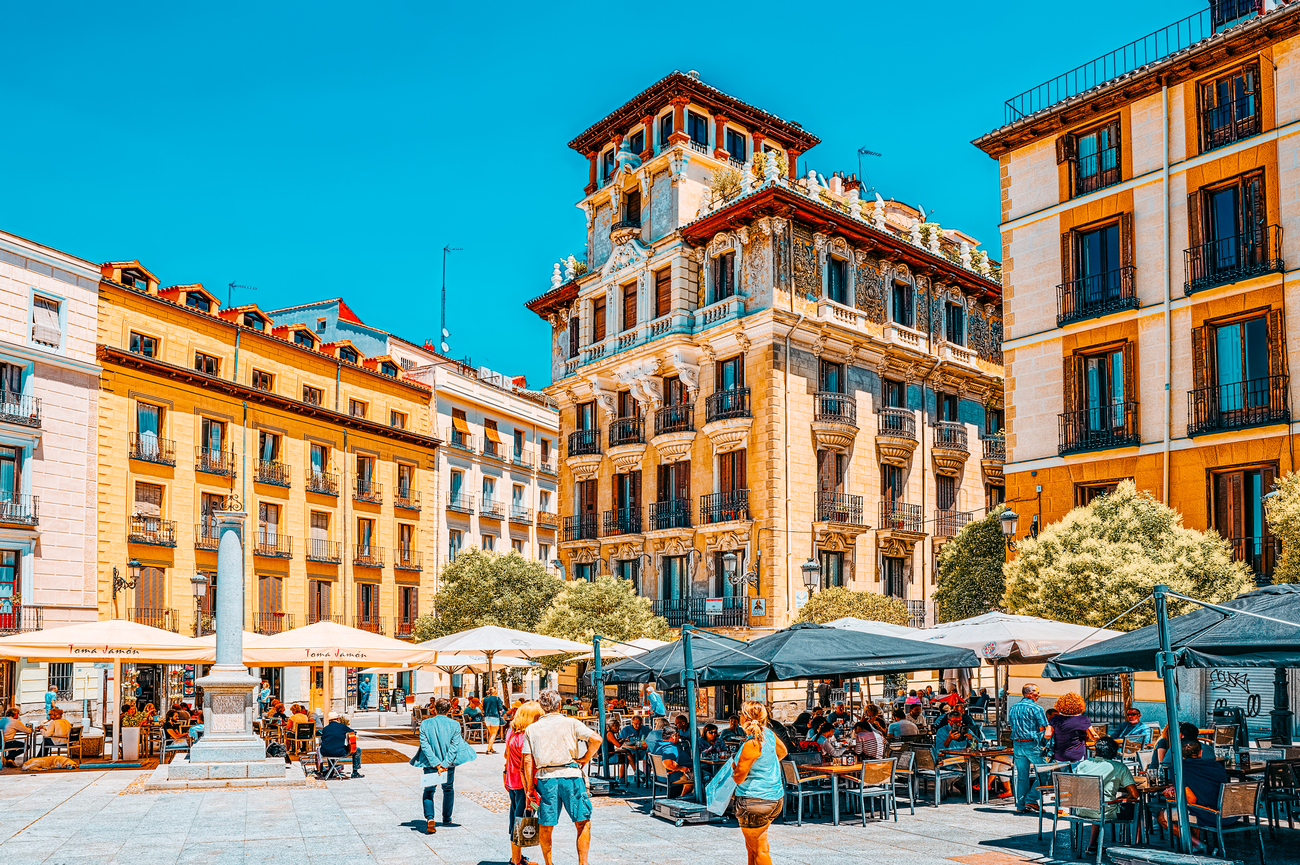
Meals in Madrid tend to happen later than many visitors expect. Lunch commonly falls between 2pm and 4pm and is traditionally the main meal of the day, while dinner often begins around 9:30pm. The menú del día is a useful lunch option when you want a proper meal without making dining the main focus of the afternoon.
Best
Time to Visit Madrid
Spring and autumn are usually the most comfortable seasons for a first visit to Madrid, particularly if you plan to explore on foot. Outdoor spaces can take up more of the day without the intensity of summer heat. May also brings San Isidro, the city’s patron festival. Check the annual programme before planning around it, as events and celebrations vary from year to year.
Summer requires more thought about the daily schedule. Madrid sits at roughly 650 metres above sea level, but that does not prevent hot afternoons. Plan longer walks through the historic centre earlier in the day, keep museums or a leisurely lunch for the hottest hours, and return outdoors later.
August has a different rhythm. Some residents leave the city, and smaller shops and restaurants may close for their holidays. The major museums remain a reason to visit, but check any independent businesses you particularly want to include rather than assuming they will keep their usual hours.
Winter suits a trip built around museums, historic interiors and shorter walks between neighbourhoods. Daylight is more limited and evenings can be cold, but the central sights remain close enough to combine without spending long periods outdoors. Leave some flexibility to move Retiro or the palace quarter to a clearer day.
Crowds depend on more than the season. Major exhibitions, public holidays and free-entry periods can all affect the experience inside a museum. An early admission can help give an important collection its own uninterrupted block of time, while free-entry periods may involve more queuing. Check the current opening and admission arrangements for the places you intend to visit.
The season should shape the order of your Madrid itinerary rather than determine everything you can do. Retiro can move to a sunny morning, a museum can take over a rainy afternoon, and a longer walk through the historic centre can be divided into shorter outings. Leaving that flexibility makes the trip easier without requiring a different itinerary for every forecast.
The
Last Morning in Madrid
On your last morning, keep Madrid close. Walk for coffee, take one final turn through the streets around your hotel and leave enough time for the airport that departure never feels rushed.
The night before, do even less. Return to a square, restaurant or neighbourhood you passed earlier and wanted to see again rather than adding another major sight simply because there is still time.
By this stage, Madrid should feel familiar enough that you no longer need an itinerary for every hour. The streets around your hotel, the route back from dinner and the café you have already visited can be as much a part of the trip as the landmarks you planned before arriving.
A good first visit should end with some of the city still unexplored. Madrid is easy to return to, and leaving one museum, one neighbourhood or one long lunch for another trip is better than forcing a final checklist into the last few hours.


Let us know what you love, where you want to go, and we’ll design a one-of-a-kind adventure you’ll never forget.
Get in touch
Miriam
Travel Specialist

Romina
Travel Specialist

Laura
Travel Specialist
Frequently Asked Questions About Visiting Madrid
-
Is There a Combined Ticket for the Prado, Thyssen and Reina Sofía?
Yes. The Paseo del Arte Pass includes one visit to each of Madrid's three major art museums: the Prado, Thyssen-Bornemisza and Reina Sofía. The pass is valid for one year, allowing you to spread the visits across your stay rather than seeing all three in a single day. Check which exhibitions are included before purchasing.
-
Can You Take Photographs Inside Madrid's Art Museums?
Photography rules differ between museums. The Prado prohibits photography and filming inside its galleries, while the Reina Sofía generally permits photography without flash, except where restrictions are indicated. The Thyssen-Bornemisza also permits non-flash photography in most areas. Always check the signs and visitor regulations, particularly for temporary exhibitions.
-
Are There Any Hidden Gardens or Courtyards Worth Visiting in Madrid?
Yes. The Jardín del Príncipe de Anglona in La Latina is a small historic garden that feels surprisingly peaceful despite its central location. The Museo del Romanticismo also has a charming interior garden and café. These quieter spaces offer a welcome contrast to Madrid's grand squares and busy avenues, although opening arrangements should be checked before visiting.
-
Can You Visit the World's Oldest Restaurant in Madrid?
Yes. Sobrino de Botín, near Plaza Mayor, is recognised by Guinness World Records as the world's oldest continuously operating restaurant. Founded in 1725, it is particularly famous for its traditional roast suckling pig and lamb, prepared in a historic wood-fired oven. The restaurant remains open for dining, and reservations are recommended, especially for dinner and weekends.
-
Where Can You Find the Best Panoramic Views of Madrid?
The rooftop of the Círculo de Bellas Artes offers one of Madrid's most impressive central panoramas, overlooking Gran Vía and the surrounding skyline. The area around the Templo de Debod is another attractive viewpoint, particularly towards sunset. For a broader perspective beyond the historic centre, Cerro del Tío Pío provides sweeping views across the city and its distinctive skyline.
-
What Are Some Unusual Experiences to Include in a Madrid Itinerary?
Beyond Madrid's major museums and monuments, consider visiting the historic Andén 0 Chamberí metro station, preserved as an underground museum, or exploring the colourful murals and independent cultural spaces of Lavapiés. You could also attend a traditional flamenco performance or visit an atmospheric neighbourhood market. These experiences reveal aspects of the capital beyond its best-known landmarks.
-
Can You Visit Madrid's Historic Rooftop Bars Without Staying at the Hotels?
Yes. Several central Madrid hotels welcome non-residents to their rooftop bars and terraces, offering views over Gran Vía, the historic rooftops and surrounding landmarks. Access policies vary, however, and some venues require reservations, charge an entrance fee or restrict entry during private events. Check directly with the hotel before visiting, especially if you are planning an evening around sunset.
-
Can Revigorate Arrange a Tailor-Made Madrid Itinerary?
Yes. Revigorate creates tailor-made Madrid itineraries around your interests, preferred pace and travel dates. Your trip can include carefully selected hotels, private airport transfers, guided visits to the Royal Palace and Prado Museum, food experiences and excursions to Toledo or Segovia. Madrid can also form part of a longer personalised journey through Spain, with arrangements coordinated in advance.
Our offices:



Revigorate, Iberian Escapes and Algarve Lifestyle are the registered brand names of APCS Lda . We are a fully authorised travel agency licensed by Turismo de Portugal RNAVT/6867.
In the event of a dispute, the consumer may refer to: RAL - Centros de Arbitragem
Avª. 5 de Outubro, nº. 55, R/C Dtº. 8000-075 Faro, Portugal | Tel: +351 289 823 135 *
* national landline call
E-mail: info@consumoalgarve.pt| www.consumidoronline.pt | Mon to Fri: 9:00 - 13:00 / 14:00 - 17:00