Where to Eat in Madrid: A Food Lover's Guide to the Capital of Spain
Madrid sits around 667 metres above sea level and several hundred kilometres from the nearest coast, yet one of the city's defining food facts begins with fish.
Through the night, refrigerated trucks move seafood inland from Spain's Atlantic and Mediterranean coasts to Mercamadrid, the vast wholesale complex that supplies the capital. Its Central Fish Market is one of the largest in the world, handling an extraordinary variety of fish and seafood. By mid-morning, fish that began the night far from the plateau can be lying on ice behind a counter in the centre.
For anyone deciding where to eat in Madrid, the consequence is national reach. A capital with the purchasing power and infrastructure to draw food from every Spanish region has long eaten beyond the limits of its own geography. Galician shellfish, Andalusian frying, Basque technique and Castilian roasting can all belong to the same day without seeming imported into the city's life.
The range is the first fact to understand and the least useful one on its own.
Eating well depends on recognising which food culture you have walked into, then arriving at the hour when it is at its best.
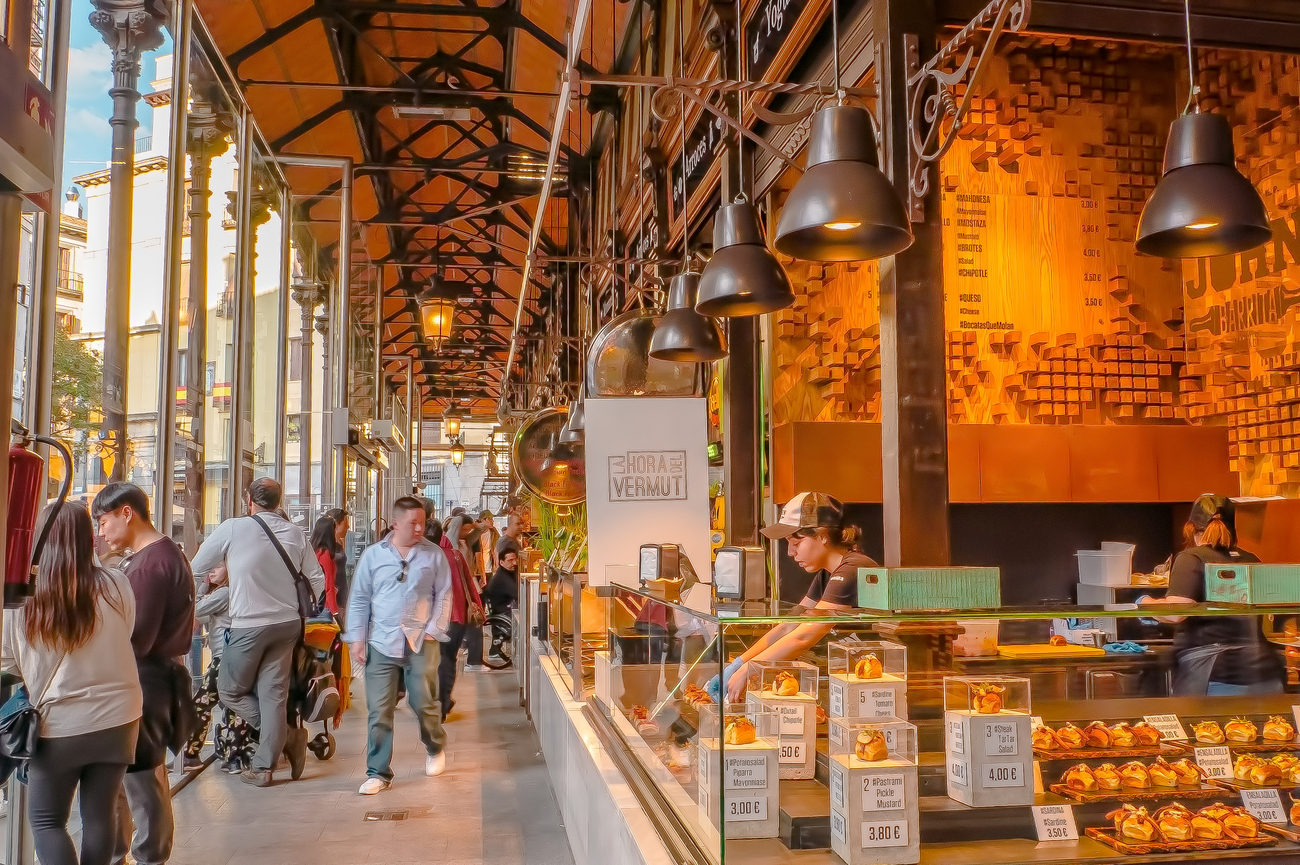
When
to Eat in Madrid: The Clock

Madrid becomes easier to read once you stop treating restaurant opening hours as the same thing as local mealtimes. A kitchen may be capable of feeding you at one o'clock, yet the room can feel entirely different ninety minutes later. The city follows a later rhythm than much of northern Europe and North America, with lunch carrying more weight than dinner and the spaces between meals filled by smaller acts of eating and drinking.
Breakfast is usually modest. Coffee with toast or a pastry is enough for many people, with a mid-morning snack bridging the long gap before lunch. The larger structural shift arrives in the afternoon: lunch belongs broadly to the 2pm to 4pm window and is traditionally the main meal of the day, while merienda creates another pause later in the afternoon. Dinner commonly begins around 9:30pm and can run considerably later, particularly in warm weather and at weekends.
Anyone deciding where to eat in Madrid should therefore begin with time before cuisine. A restaurant that looks curiously empty at 1:15pm may simply be preparing for its real lunch service. A bar with little energy at 7pm can feel entirely different two hours later. The aim is to encounter the version of the room that its owners and regulars have built together.
Menú
del día
The menú del día is one of the clearest expressions of Madrid's lunch culture. Traditionally, it is a fixed-price, multi-course meal, often including bread and a drink, designed around people who work nearby and want a complete lunch.
Its value lies in repetition and turnover. A good menú del día does not need to advertise luxury. It needs a room that fills when offices empty and a kitchen cooking for people who may return the following week. For travellers interested in understanding how Madrid actually eats, this kind of everyday lunch can be more revealing than another reservation chosen from an international ranking.
Sunday has its own pre-lunch cadence. The vermut hour gives the day a hinge: a small glass, something salty and a little time at the bar before the main meal. It also illustrates why eating in Madrid at noon is a different proposition from eating at three. At noon you may be choosing a counter and a drink. At three you are choosing a table and committing to lunch.
Shift your day by roughly two hours and much of Madrid becomes simpler. Keep a very early schedule and you can still eat well, particularly in central or visitor-heavy areas, but you may miss the period when a restaurant or bar has its natural concentration of regulars, conversation and turnover.
Luxury here is not about eating somewhere expensive. It is having enough control over your day to follow the city's clock.
How
to Choose a Restaurant in Madrid Without a List
A useful Madrid food guide should leave you less dependent on a list by the end of it. Restaurants change, chefs move and service shifts; the places dominating search results are not always the ones that make most sense for the hour, neighbourhood or appetite in front of you. Timing, turnover, menu focus, audience and the purpose of the room can tell you more than a hundred saved pins.
Start outside. A handwritten or simply printed menú del día on a board can be more promising than a permanent menu trying to sell everything to everyone. The clue lies in the intended audience. A board that changes can reflect what the kitchen is cooking that day, while a large photographic menu in several languages is often designed primarily to remove uncertainty for passing trade.
Around Plaza Mayor and Puerta del Sol, where footfall is immense, that distinction is particularly useful. Plenty of serious restaurants operate in central Madrid, but a position beside a landmark is never evidence of quality by itself.
Then look at the room at the hour when it should be working. At three in the afternoon, a good lunch restaurant should usually look like a lunch restaurant. Look for turnover and signs of regular habits, with a kitchen cooking into genuine demand. At a bar, the evidence can be even more physical: ham being cut at the counter, fish or seafood handled with care, a compact selection of prepared dishes and staff moving with the economy that comes from repeating the same service every day.
None of these signs guarantees a great meal. Together, they carry more weight than decorative language on a menu.
Menu length is another useful filter. Madrid restaurants with a clear culinary identity do not need to solve every appetite in the city. A shorter, more focused menu suggests that the kitchen has decided what it wants to buy and cook. At the upper end, judge whether the food, wine, staffing and pace appear to belong to the same level of ambition.
Reservations should follow the same logic. Madrid's popular formal restaurants and many of the strongest neighbourhood addresses can require advance planning, particularly towards the end of the week. Reserve the meal that would be difficult to replace and leave the bars, aperitifs and smaller stops around it flexible. A 2:30pm lunch or 9:30pm dinner also places you much closer to the city's natural dining rhythm than insisting on northern European or North American meal times.
Pricing is best understood by format. Counter eating can remain relatively inexpensive because you are buying small portions and little ceremony. The menú del día occupies a different category, built around completeness and routine. Formal dining rises sharply once you add ambitious cooking, deeper wine lists, more staff and longer occupation of the table.
A high bill can be entirely reasonable in the right room, but it should purchase something visible in the experience beyond location and upholstery.
Tourist traps are easiest to recognise when you remove the moral judgement from the phrase. A business beside a major attraction faces high rent and constant passing traffic, with little certainty that any individual diner will return. That commercial structure can encourage broad menus, pavement selling and food designed to appeal to the widest possible audience.
Walk a few streets, look at who is eating at the appropriate hour and choose a room with a clearer purpose. In Madrid, the neighbourhood, the time of day and the type of restaurant often tell you more than a ranking does.
Madrid’s
National Food Culture
When Philip II moved the Spanish court to Madrid in 1561, the city began to change from a relatively small inland settlement into the political and administrative centre of the kingdom. That transformation also changed the way Madrid ate. The court demanded food and supply at scale, while later generations of internal migration brought cooks and customers who expected the food of their home regions.
Madrid's food culture therefore developed with an unusual ability to absorb regional traditions without turning them into novelty.
This is why a serious answer to what to eat in Madrid can include food whose strongest geographic identity lies elsewhere. Galician shellfish belongs naturally in the capital because generations of Galicians have lived and cooked here and the city's distribution system can support it. Asturian cooking, Valencian rice and Basque pintxos fit for much the same reason.
Madrid has made room for these traditions at a scale that reflects its role as Spain's capital while allowing their regional identities to remain intact.
The practical result is a city in which an extraordinary range of Spanish cooking can appear within a very small radius. A few streets can move you from Atlantic seafood to Mediterranean rice, then inland to Castilian roasting and back to a Madrid bar whose food needs almost no explanation.
Eating well becomes easier once you separate the origin of a dish from the place where it is being cooked. Look for specialists with a clear regional identity, focused menus and customers who appear to understand what the restaurant is there to do. A city this large does not require every restaurant to speak for the whole country.
Madrid's Own Traditional Dishes
Madrid also has a compact local repertoire that it defends with particular affection, much of it suited to the cold winters of a high plateau.
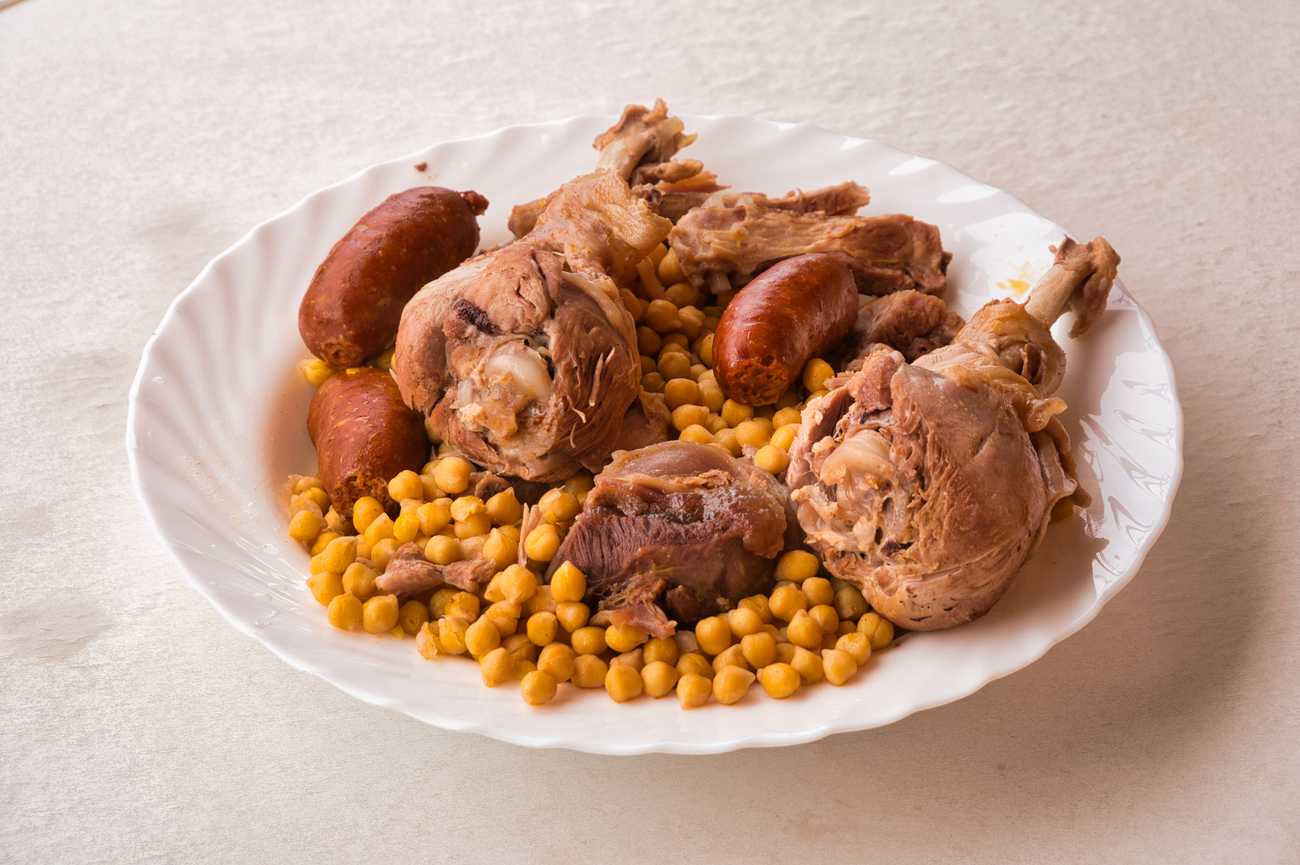
Cocido madrileño is the great structural dish: broth with noodles comes first, chickpeas and vegetables follow, then the meats. Callos a la madrileña turns tripe into a rich stew with chorizo, morcilla and paprika. The bocadillo de calamares, a fried squid sandwich, occupies the opposite end of the formality scale and remains one of the capital's signature foods.
Those dishes, together with churros and the rest of the city's traditional repertoire, are explored in our guide to traditional food in Madrid, including when to eat them and how they fit into the city's daily rhythm.
This local cooking is easy to misunderstand if you expect delicacy from every expression of a capital. Cocido and callos are substantial dishes built for colder weather and long meals. Their character comes from slow cooking, inexpensive cuts transformed through technique and a food culture shaped by the need to feed people well through winter.
At the other end of the scale, fried squid in bread makes sense in a city with a vigorous bar culture and a long habit of eating quickly and standing up.
For a traveller, Madrid's national range is liberating only if it is paired with discrimination. Do not try to collect Spain in a single meal. Choose one tradition at a time, then let the city offer another at the next lunch or in another neighbourhood.
The capital's strength lies in concentration. You can eat across Spain without turning dinner into a survey course.
Neighbourhoods
by Appetite
Each neighbourhood has its own appetite, pace, audience and natural place in the day.
La Latina
La Latina is built for movement, especially on Sunday when El Rastro changes the pressure and pace of the surrounding streets. Cava Baja is the canonical crawl street, and its real lesson is structural: an evening here does not need a single restaurant to carry the whole night. One bar can provide the first plate, another the next drink, and the route itself becomes part of the meal.
Sunday is the district at its most obvious and most demanding. After El Rastro, the temptation is to stop at the first available terrace. A better approach is to decide whether you want the energy of the crowd or a more serious lunch, then move accordingly. For a crawl, standing space and fast turnover can be assets. For a long meal, the same conditions can make a room less comfortable.
La Latina works best when the appetite is social and the route matters as much as the table.
Barrio de las Letras
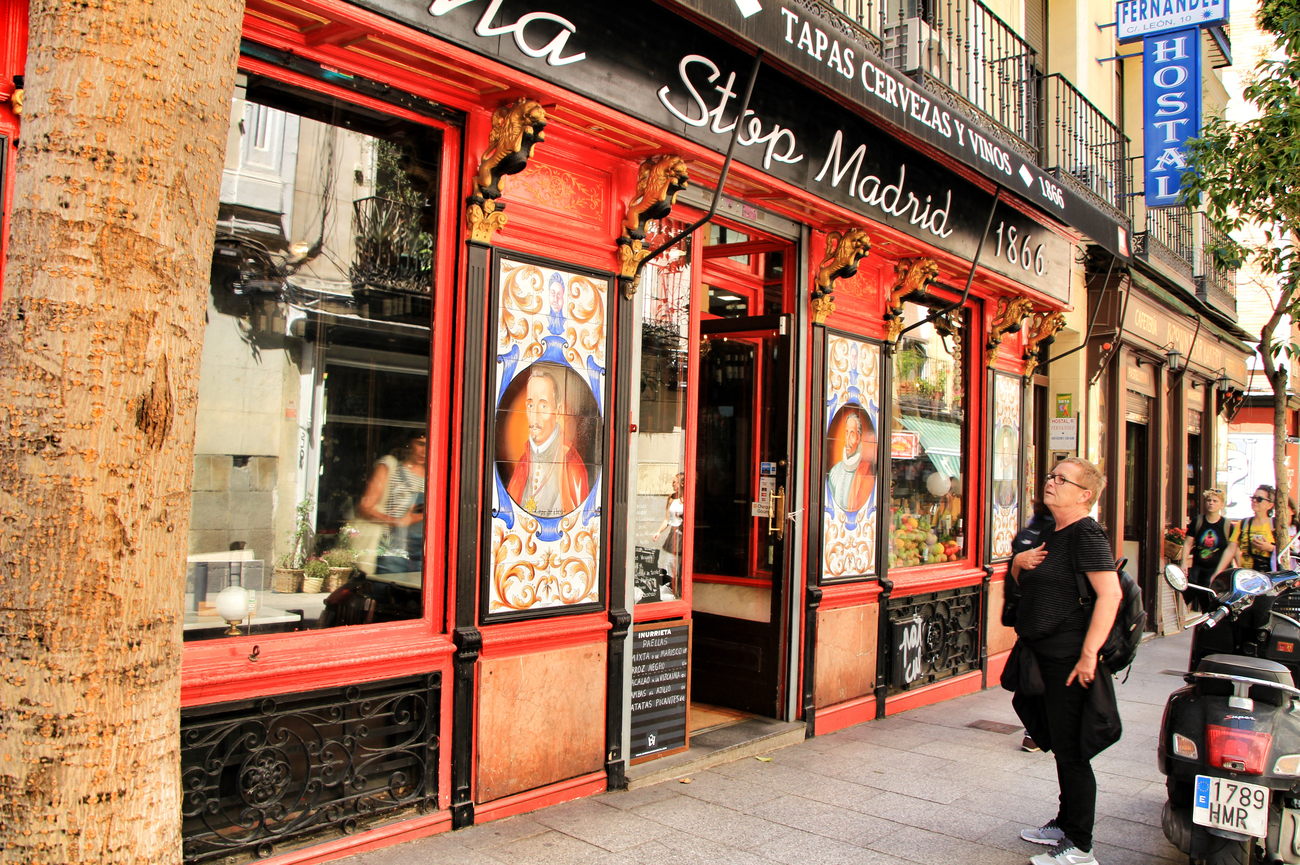
Barrio de las Letras suits travellers who want Madrid's older tavern culture without leaving the centre. The literary associations give the quarter its public identity, but the useful food cues are more immediate: old bars, vermut, small counters and dining rooms that fit naturally before or after a walk through the historic core.
Age can be part of the atmosphere, but age alone is not a reason to eat somewhere. Look for continuity. A century-old room becomes compelling when its routines still function, the bar has regulars and the menu remains coherent with what the place has long been there to do.
History reduced to décor, with food designed primarily for passing cameras, carries far less authority. Spending a few minutes at the bar before committing to a table can tell you which version you have found.
Salamanca
Salamanca sits at the more formal end of Madrid dining. This is where polished service and reservation-led dinners feel most at home, often backed by serious wine lists and kitchens working with high-end products.
The neighbourhood's affluence does not guarantee quality, but it creates a market for restaurants prepared to invest in food, staffing, wine and service.
Book here when the dinner itself is the evening. Arrive at the local hour, give the table enough time and judge the restaurant by the coherence of the whole operation. Formality in Madrid is often less stiff than in other European capitals; service can be warm and direct while the cooking remains exact.
If your version of luxury travel includes one dinner that you want carefully composed from beginning to end, Salamanca is a logical place to put it.
Chamberí
Chamberí is residential in a way that changes the restaurant equation. Much of Madrid's strongest mid-range dining thrives in districts where local demand continues throughout the week, and Chamberí can support ambitious restaurants without requiring the spectacle or visitor traffic of the historic centre.
The best strategy is to reserve the restaurant that draws you there, then leave the surrounding streets available for the unplanned part of the evening. Bars and restaurants here can afford a narrower identity because they are not all trying to satisfy the same stream of first-time visitors.
That often produces the kind of confidence luxury travellers value: fewer attempts to explain Madrid and more evidence of Madrid carrying on around them.
Lavapiés
Lavapiés offers the broadest international range among the neighbourhoods in this guide. South Asian and North African food are particularly visible alongside Spanish bars and the everyday eating of a dense central district shaped by successive communities.
It is a useful reminder that a capital's food culture is never frozen at the point when its most famous dishes were codified.
Choose with the same rules you would use elsewhere. Look for a room serving a clear community, a menu with focus and a level of activity appropriate to the hour. Lavapiés is less interesting when approached simply as a search for novelty. Its real value lies in seeing how Madrid continues to absorb new cuisines into daily life, just as earlier arrivals from other Spanish regions changed the city before them.
East of Retiro
The residential districts east of Retiro Park offer a quieter proposition, with contemporary bars and taverns working to a more local rhythm than much of the historic centre.
The appeal is partly logistical. An evening can unfold across local-scale streets, with short walks between stops and no need to cross the city each time the appetite changes. It is also an area where knowledgeable curation can be valuable when you want the sequence of the evening to be considered without making it feel over-planned.
Our Essential Culinary Experience in Madrid includes a guided tapas-and-wine route east of Retiro, with the stops and pairings chosen by local food experts. The setting works precisely because the evening can concentrate on eating, with Madrid's major sightseeing left to another part of the day.
This side of the park also demonstrates a broader principle about luxury in Madrid. Spending can buy access, curation, ease and a more coherent use of limited time, particularly in a city with more good places than a visitor could reasonably assess during a short stay.
A residential neighbourhood with fewer famous names can therefore provide a better setting for a carefully designed food evening than somewhere chosen simply because every visitor already knows its name.
Madrid’s
Food Markets
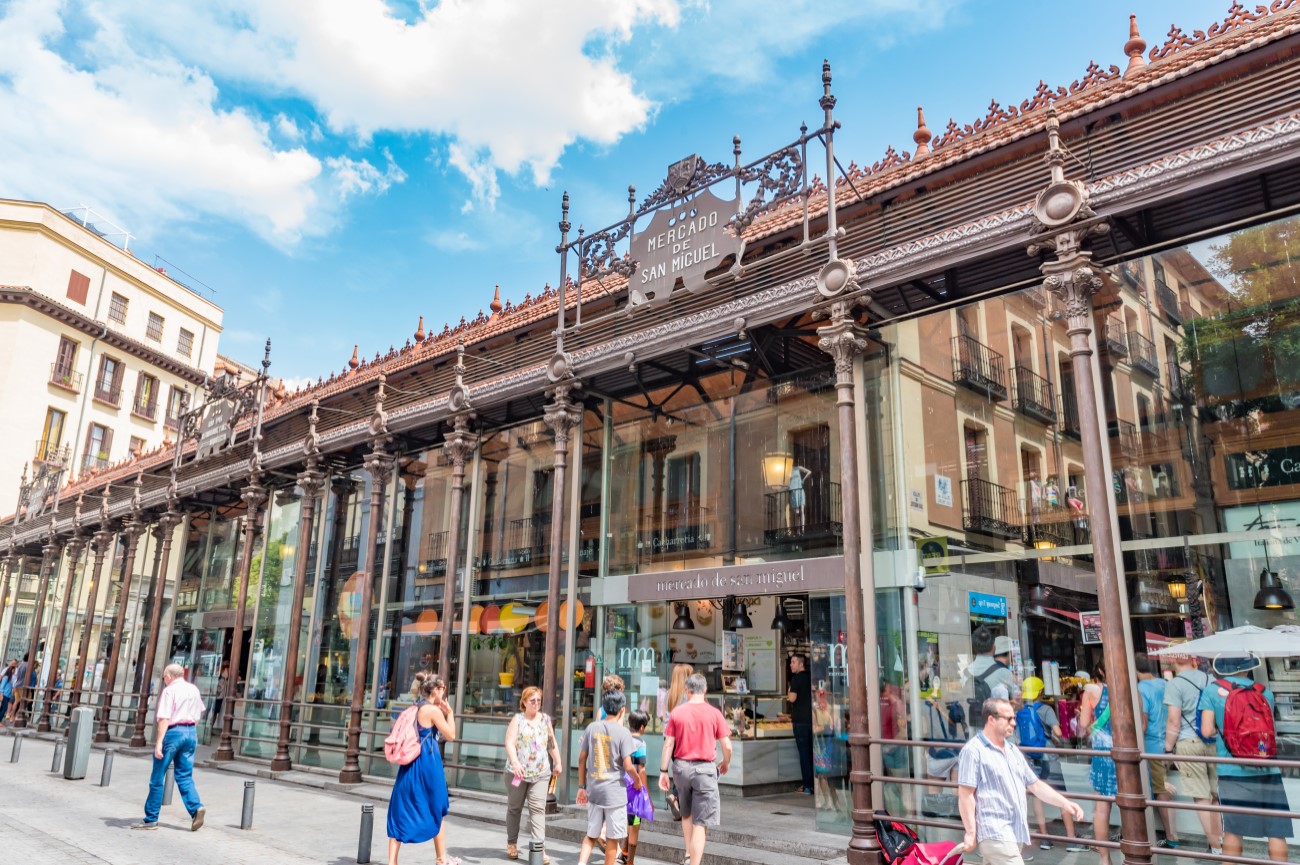
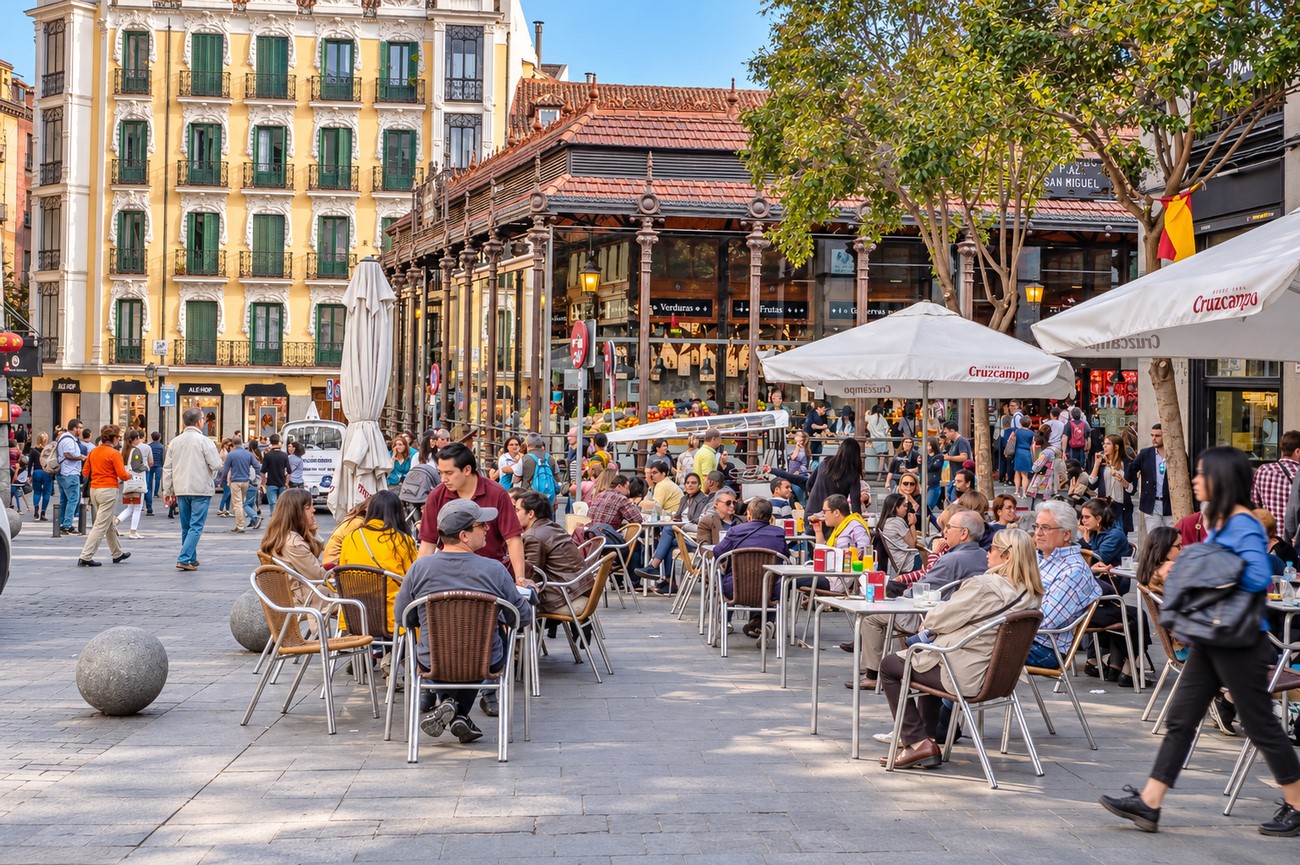
Madrid's market halls broadly divide into two useful types: places designed primarily for grazing and places that still function as neighbourhood shopping markets.
The distinction determines how you should use them. A gastronomic market such as Mercado de San Miguel is primarily an eating and drinking destination, while a working market exists first as a supply system for residents and cooks. Markets such as Antón Martín sit somewhere between the two, combining traditional food retail with small kitchens and places to eat.
That distinction is the organising principle behind our deeper guide to Madrid's food markets, which looks at San Miguel, Antón Martín and the neighbourhood halls locals still use, and helps you decide whether you are going to eat or to understand how the city buys food.
A polished stall selling ready-to-eat portions can be excellent on its own terms. A butcher, fishmonger or produce stand has a different job and should be read as part of the neighbourhood's daily infrastructure.
Decide what you want the market to do before you decide where it belongs in the day's meal plan.
Eating
and Drinking in the Evening
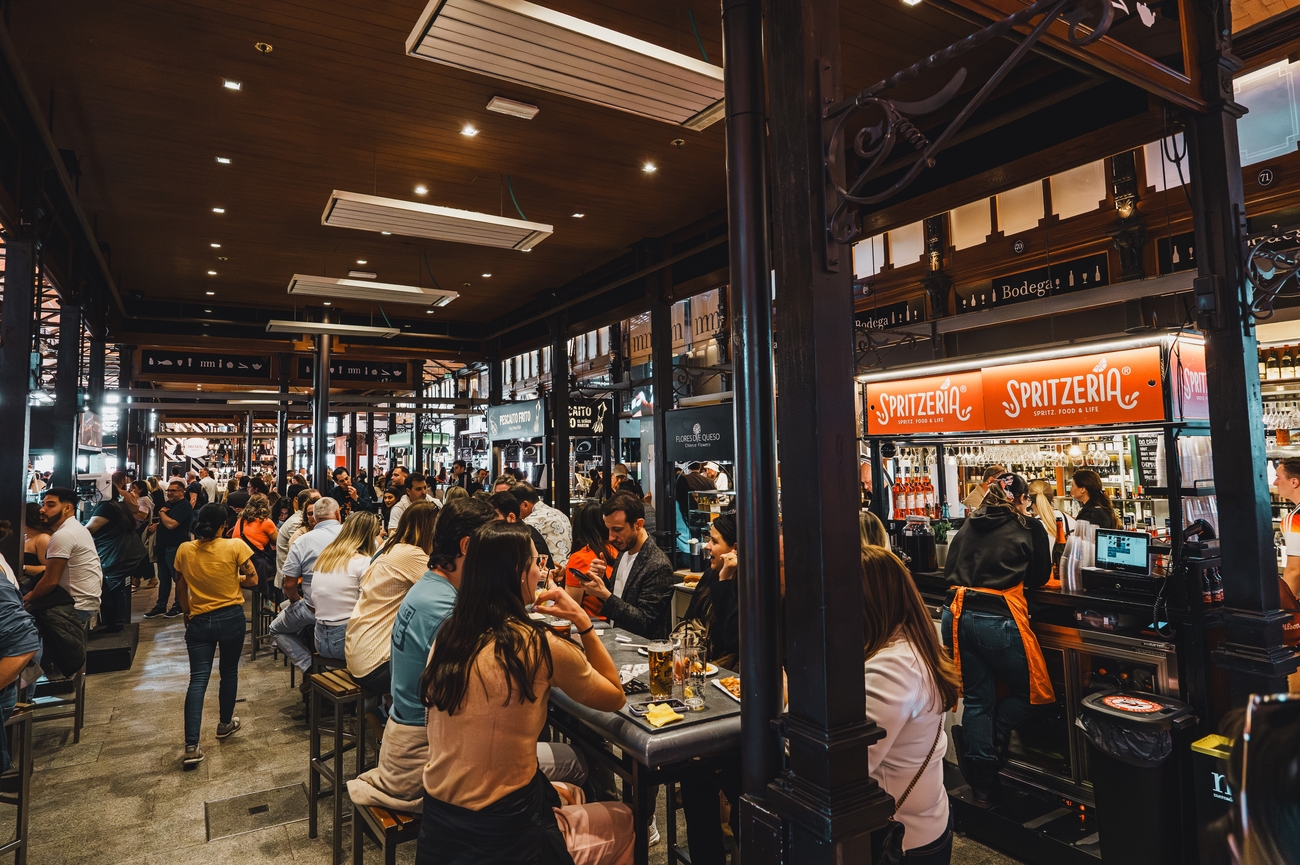
A Madrid evening often works as a progression across several addresses. The city's bar culture supports movement, and small orders allow a meal to develop through several rooms without asking every stop to perform the work of dinner.
That freedom depends on restraint. If the first bar becomes a full meal, the rest of the route is simply a change of scenery.
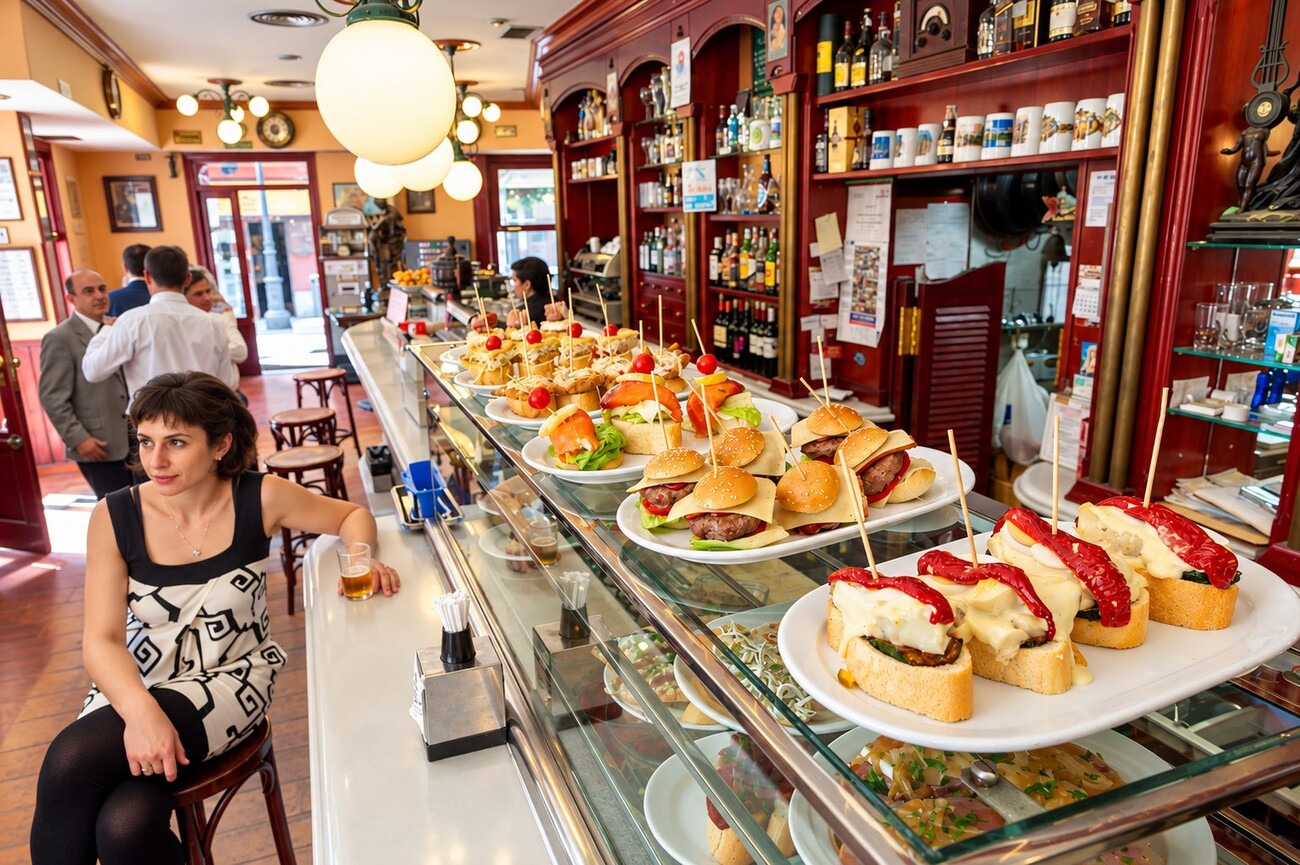
The scale of the drink helps set the pace. A caña, the small draft beer common in Spanish bars, suits a short stop because it can finish with the food. Vermut belongs more naturally earlier in the day, particularly before lunch, while wine by the glass gives an evening more flexibility than committing to a bottle at every address. Rioja and Ribera del Duero remain familiar choices, while wines from the Madrid region offer another way to drink locally.
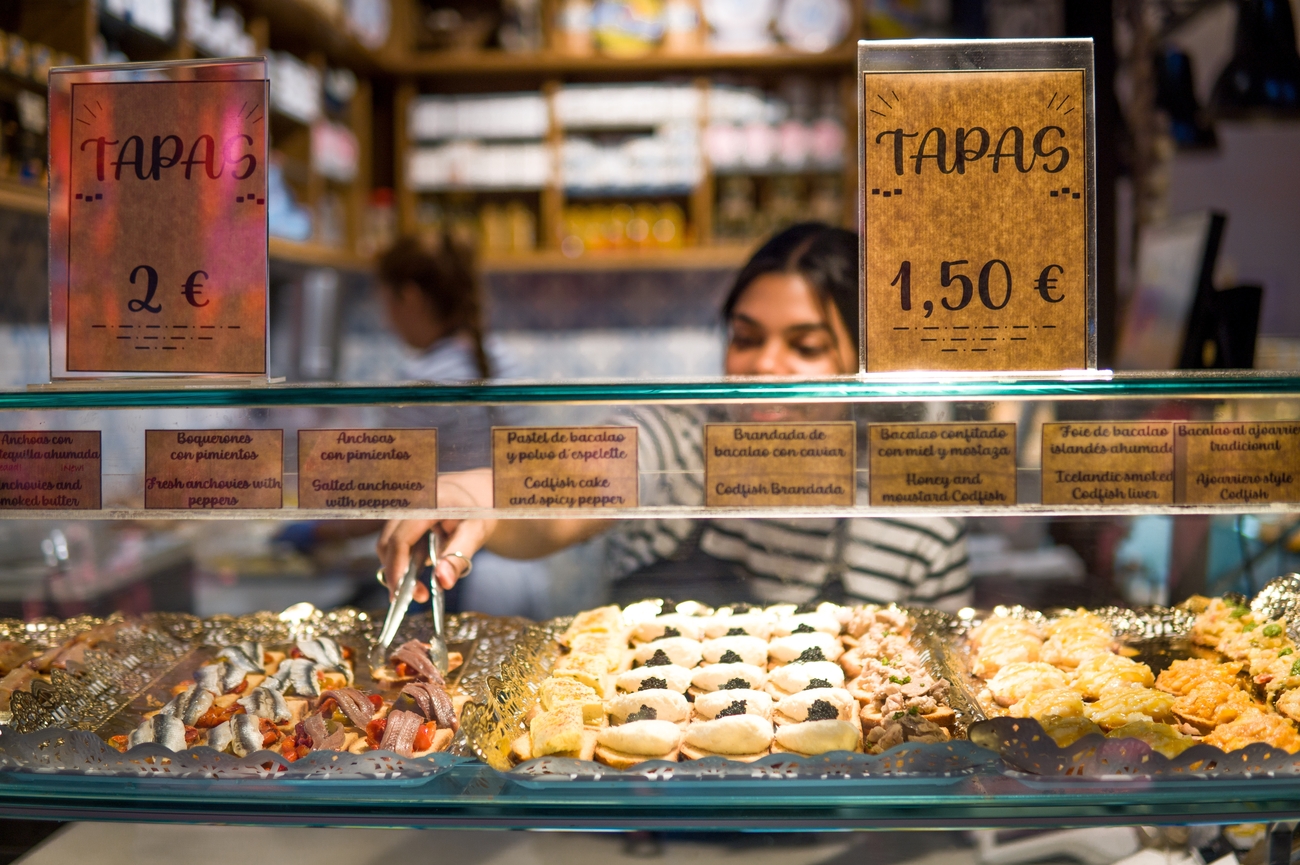
A several-bar evening is planned differently from dinner. The walking distances need to be short, and each stop should have a reason to exist. One might be for tortilla, another for croquetas or seafood, and a later bar for something more substantial.
Our guide to tapas in Madrid explains how to build that sequence, including the logic of Cava Baja, portion sizes and when to leave a bar before it becomes the whole evening.
The more important choice is between formats. If you want conversation anchored to one table, book dinner and let the meal and wine develop over the night. If you want Madrid itself to provide the rhythm, choose a neighbourhood where several bars sit within easy walking distance and keep each order small enough to continue.
Both can be luxurious. They simply purchase different things: one offers concentration, the other access to the city's living bar culture.
The later hour also changes appetite. Madrid's lunch traditionally carries more of the day's weight, which is one reason shared plates and smaller orders fit so comfortably into the evening. Eating a large early dinner and then attempting a tapas crawl works against that rhythm; allowing hunger to return naturally later in the evening makes the progression far easier.
Wine service does not need to become ceremonial to be good. Ask what is being poured by the glass and pay attention to turnover. A modest wine moving quickly through a busy bar can be a better choice than a prestigious bottle that has been open too long.
The same principle applies to food. Repetition, turnover and a dish that clearly belongs to the room often tell you more than the price of its ingredients.
Cooking
Classes in Madrid
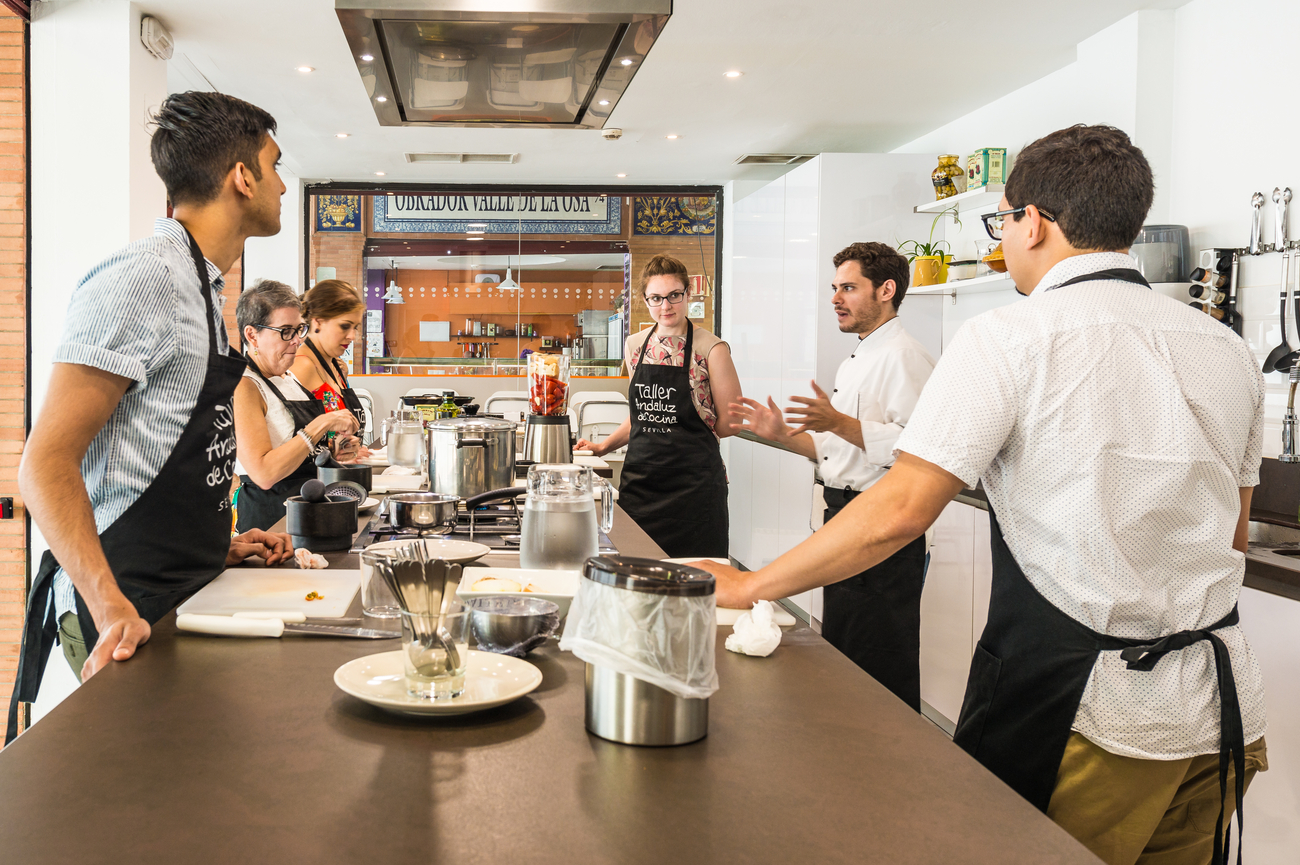
Spanish home cooking can look simple on the plate because many dishes rely on a small number of techniques repeated with care. Sofrito is one of the foundations, olive oil often does structural work rather than merely finishing a dish, and ingredient lists can remain short when the raw materials are chosen well.
The sophistication lies in judgement: how far to cook an onion, when to add liquid, how much heat a pan can take and when to stop intervening.
A market-first cooking session adds another layer by teaching sourcing alongside technique. Buying ingredients before entering the kitchen forces attention onto season, quality and condition, while substitution becomes part of the lesson rather than a problem to be avoided.
That is much closer to the way a confident home cook works than following a fixed recipe with every ingredient already measured and prepared.
Our guide to Spanish cooking classes in Madrid looks at what makes a class genuinely useful, from market sourcing and hands-on participation to the techniques that are worth taking home.
A well-run cooking session can sit comfortably inside a luxury itinerary when the value comes from access to a professional kitchen and a teacher able to explain the decisions being made as you work.
The strongest classes leave you with practical knowledge that survives the journey home: how to choose ingredients, judge heat, build flavour and recognise when a dish needs no further intervention.
Practical
Tips for Eating in Madrid
Madrid is an easy city in which to eat well, but a few assumptions carried from elsewhere can create unnecessary friction. Tipping, dietary requirements, seasonal opening patterns and the timing of sightseeing all affect how smoothly a food-focused day works.
Tipping in Madrid
Tipping is much lighter than American norms. Spain does not operate with a fixed percentage expected on every restaurant bill, and a twenty-percent gratuity should not be treated as a default.
At a bar, rounding the bill or leaving a small amount can be entirely appropriate when the service has been good. At a formal restaurant, a more deliberate tip can reflect the quality of the service without importing a percentage rule from another country.
Dietary Requirements
Vegetarian eating is straightforward in many contemporary Madrid restaurants, although traditional dishes sometimes require more attention. Something that appears vegetable-based may still contain meat stock, cured pork or seafood, so ask rather than relying on the name of the dish alone.
Madrid also has restaurants accustomed to gluten-free dining, but travellers with coeliac disease or another serious dietary requirement should explain clearly whether cross-contamination must be avoided rather than simply asking whether a dish contains gluten.
Halal and kosher food are available in Madrid, although advance planning becomes more important when certification or strict observance is essential. The same applies when several dietary restrictions need to be accommodated at the same meal.
Communicating requirements before arrival preserves far more choice than trying to solve them once you are already sitting at the table.
Eat with the Season
Seasonality is most obvious in Madrid's traditional cooking. Cocido and other substantial stews make natural sense in winter, when Madrid's altitude produces colder weather than many visitors expect. Summer shifts the appetite towards lighter food and chilled dishes such as gazpacho and salmorejo, while spring and autumn bring their own shorter ingredient seasons.
A trip does not need to be built around a particular ingredient. Ordering with the season is usually enough to let a good kitchen show what it does best.
Check August Opening Days
August requires additional planning. Madrid remains a major capital with plenty of restaurants open, but independent and family-run businesses may close for annual holidays.
A list saved several months earlier is therefore less reliable in August than at other times of year. Confirm opening days shortly before you go, particularly for restaurants outside the busiest visitor districts, and keep a second option within the same neighbourhood.
Plan the Day Around the Meal
Geography matters, particularly in the evening. A late reservation followed by a long journey across the city is less elegant than building the evening within one district. Put the formal dinner close to the bar you want beforehand, or choose a neighbourhood capable of supporting the entire evening on foot.
The same principle applies at lunch. Do not squeeze a serious two-hour meal between a major museum visit and a distant transfer as though each occupies an isolated slot. Madrid's main meal arrives in the middle of the afternoon, and a good lunch can easily become the centre of the day.
When planning things to do in Madrid, arrange the sightseeing around the lunches that matter rather than expecting the meal to fit whatever time remains.
Finally, leave some capacity for repetition. Travellers often feel pressure to sample a new neighbourhood and a new dish at every meal, but one of the privileges of a longer stay is returning somewhere that worked.
The second visit changes your relationship with the room. You know where to stand, what size to order and how the service moves.
Luxury travel has room for the confidence to repeat something excellent.
Four
Situations, Four Orders
At a counter at noon, order a vermut. It belongs to the hour and leaves the day open for lunch. Keep the aperitif measured and let the main meal retain its place later in the afternoon.
At a lunch table at two, order cocido madrileño when the weather is cold enough for it. Its sequence of broth, followed by chickpeas, vegetables and meats, gives lunch the scale Madrid expects from the middle of the day. This is not a dish to squeeze between appointments.
At the third bar of an evening, order tortilla. By then you want something substantial enough to steady the route without ending it. Choose a bar where tortilla is being cut regularly, share a portion and decide afterwards whether the evening still wants another stop.
At eleven at night, if hunger has returned, order a bocadillo de calamares. Fried squid in bread needs very little ceremony, and at that hour its simplicity is part of the point.
The best food-focused trips to Madrid work in much the same way: arrange the experiences that benefit from expertise and leave enough of the city unscripted for appetite to make some of the decisions.
Our Essential Culinary Experience in Madrid is a five-day, four-night journey that combines private airport transfers with two carefully chosen culinary experiences: a guided tapas-and-wine route and a cooking masterclass beginning with a visit to a local market.
The important meals have structure. Madrid still has room to surprise you.


Let us know what you love, where you want to go, and we’ll design a one-of-a-kind adventure you’ll never forget.
Get in touch
Miriam
Travel Specialist

Romina
Travel Specialist

Laura
Travel Specialist
Frequently Asked Questions About Eating in Madrid
-
What is the difference between tapas, raciones and pinchos in Madrid?
Tapas are small portions designed to accompany a drink, while raciones are larger plates intended for sharing. Pinchos are usually smaller individual servings, sometimes presented on bread or eaten in just a few bites. The boundaries are not rigid, so portion size and presentation can vary from one bar to another.
-
Do you need to reserve tapas bars in Madrid?
Usually not. Traditional tapas bars are often designed for spontaneous visits, standing at the counter and moving between several places during the evening. Reservations make more sense for popular restaurants, formal tapas restaurants or places where you specifically want a table at a busy time.
-
What should I eat on my first visit to Madrid?
Start with something that belongs unmistakably to the city, such as cocido madrileño, callos a la madrileña or a bocadillo de calamares. Add tortilla, croquetas and churros during the trip, then use another meal to explore one of the regional Spanish cuisines that Madrid does particularly well.
-
What drinks should you try with tapas in Madrid?
A small caña of draft beer and wine by the glass are natural choices for tapas, while vermut is particularly associated with the period before lunch. Madrid also has its own wine region, so asking what local wines are available by the glass can add another distinctly regional element to the meal.
-
Are Madrid's historic restaurants worth visiting?
They can be, but age alone is not a reason to choose a restaurant. The strongest historic restaurants still have a clear culinary identity, established routines and dishes that make sense in the room. Look for continuity rather than a famous date on the door and food designed mainly for visitors.
-
How can you tell if a tapas bar in Madrid is genuinely local?
Look at who is using the bar, what is being ordered repeatedly and how focused the food selection is. Regular customers, steady turnover, dishes that clearly belong to the establishment and a room that becomes busy at Madrid's normal eating hours are more useful clues than rustic decoration or claims of authenticity.
-
What food experiences are worth booking in advance in Madrid?
Book experiences that depend on limited capacity or specialist access, such as a small-group cooking class, a guided food and wine experience or an important restaurant you would be disappointed to miss. Leave ordinary tapas stops and casual bar visits flexible so there is still room for spontaneous discoveries.
-
Is Madrid a good destination for a food-focused city break?
Yes. Madrid combines its own traditional dishes with food from across Spain, while markets, neighbourhood restaurants, tapas bars and specialist regional kitchens make it possible to experience very different styles of eating within a short stay. Its compact central districts also make food-focused days relatively easy to organise.
-
What should you know before eating out in Madrid?
The most important adjustment is timing. Lunch and dinner generally happen later than many international visitors expect, and arriving too early can mean experiencing a restaurant before its normal atmosphere develops. Keep some meals flexible, avoid trying to eat everything in one day and allow enough time for lunch to become part of the day's itinerary.
-
How can Revigorate help plan a culinary trip to Madrid?
Revigorate can incorporate Madrid's food culture into a tailor-made stay rather than treating dining as an addition to sightseeing. Our Essential Culinary Experience in Madrid combines private airport transfers with a guided tapas-and-wine route and a cooking masterclass that begins with a visit to a local market, while leaving enough free time to explore the city's restaurants and neighbourhoods independently.
Our offices:



Revigorate, Iberian Escapes and Algarve Lifestyle are the registered brand names of APCS Lda . We are a fully authorised travel agency licensed by Turismo de Portugal RNAVT/6867.
In the event of a dispute, the consumer may refer to: RAL - Centros de Arbitragem
Avª. 5 de Outubro, nº. 55, R/C Dtº. 8000-075 Faro, Portugal | Tel: +351 289 823 135 *
* national landline call
E-mail: info@consumoalgarve.pt| www.consumidoronline.pt | Mon to Fri: 9:00 - 13:00 / 14:00 - 17:00