Traditional Food in Madrid: Cocido, Callos, Churros and Other Local Dishes
Traditional food in Madrid is built around a relatively small group of dishes with strong local identities, including cocido madrileño, callos a la madrileña, bocadillo de calamares, churros and seasonal sweets such as rosquillas.
The more interesting way to understand them, however, is through the calendar rather than a checklist.
Winter nights in Madrid bite harder than the latitude suggests. The nearest coast is far beyond the horizon, and the city's older cooking reflects both climate and geography. Cold-weather dishes rely on chickpeas, cured pork, offal and inexpensive cuts transformed by hours of slow cooking. Summer changes the appetite completely.
Cocido belongs naturally to a cold, unhurried lunch. Churros can appear at breakfast, merienda or after a very late night. Rosquillas become particularly associated with Madrid in May.
Madrid may contain one of Europe's broadest dining cultures, but the dishes it claims specifically as its own form a shorter and more distinctive canon.
Our Essential Culinary Experience in Madrid introduces several of these traditions through the ingredients, markets and cooking techniques behind them, rather than treating Madrid food as a list of dishes to sample in a single afternoon.
Cocido
Madrileño: Madrid's Three-Course Stew
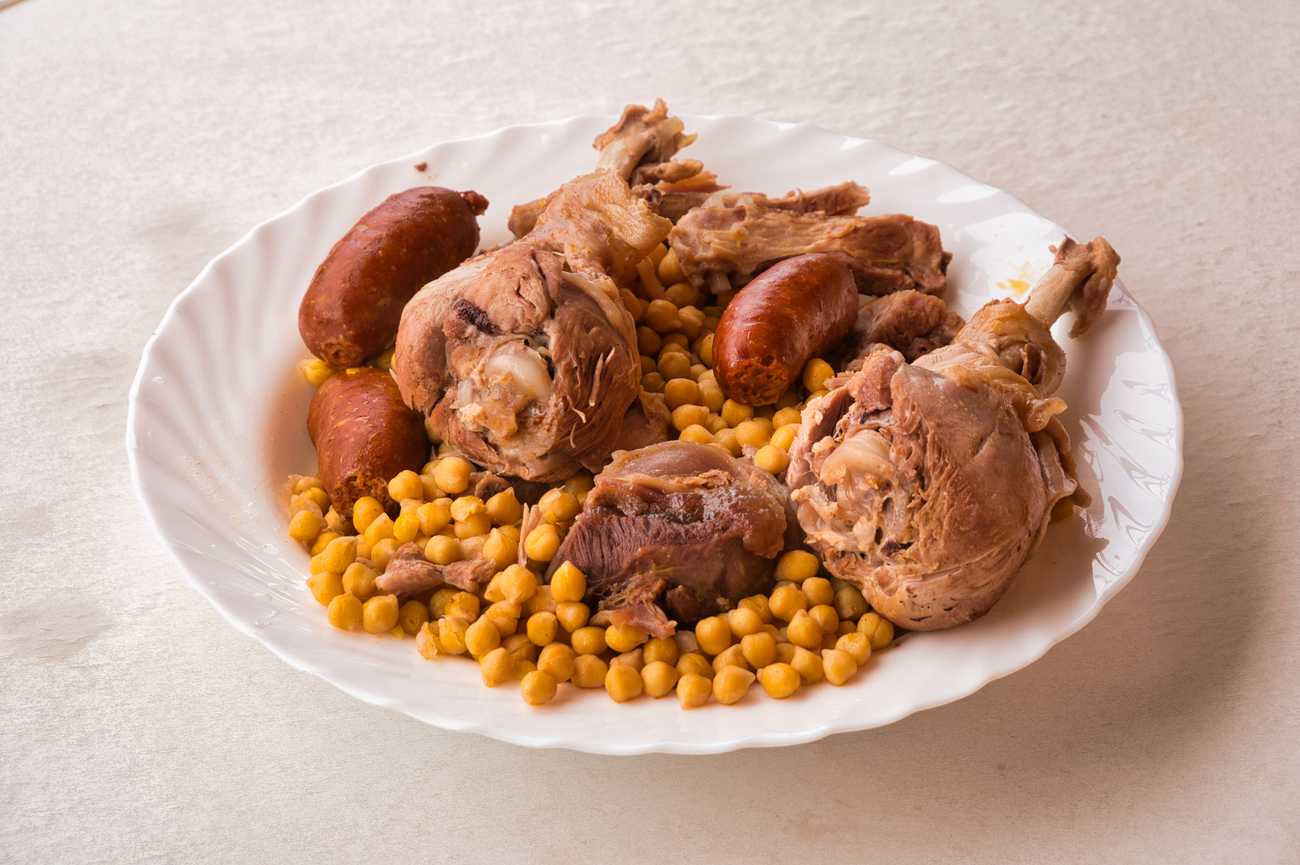
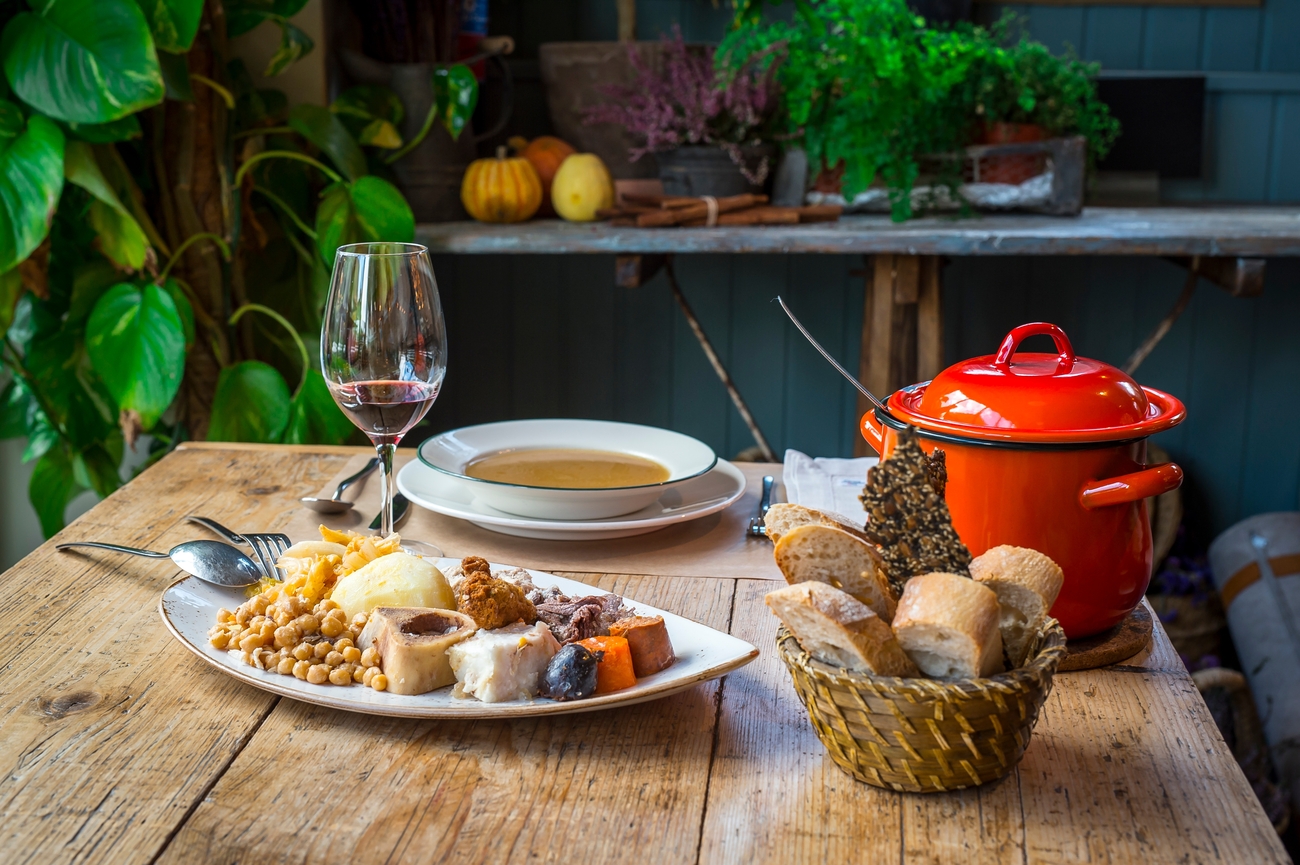
Cocido madrileño is Madrid's great cold-weather lunch, a slow-cooked stew of chickpeas, vegetables and several meats traditionally served in separate courses known as vuelcos.
There is no single fixed recipe, but the structure is consistent. Chickpeas sit at the centre, while beef, poultry, pork, marrow bones, chorizo and morcilla contribute flavour to the broth. Cabbage, potatoes and other vegetables complete the pot.
Its richness comes from accumulation rather than luxury. Bones provide gelatin, cured pork seasons the broth, poultry softens it and the chickpeas absorb flavour during hours of cooking.
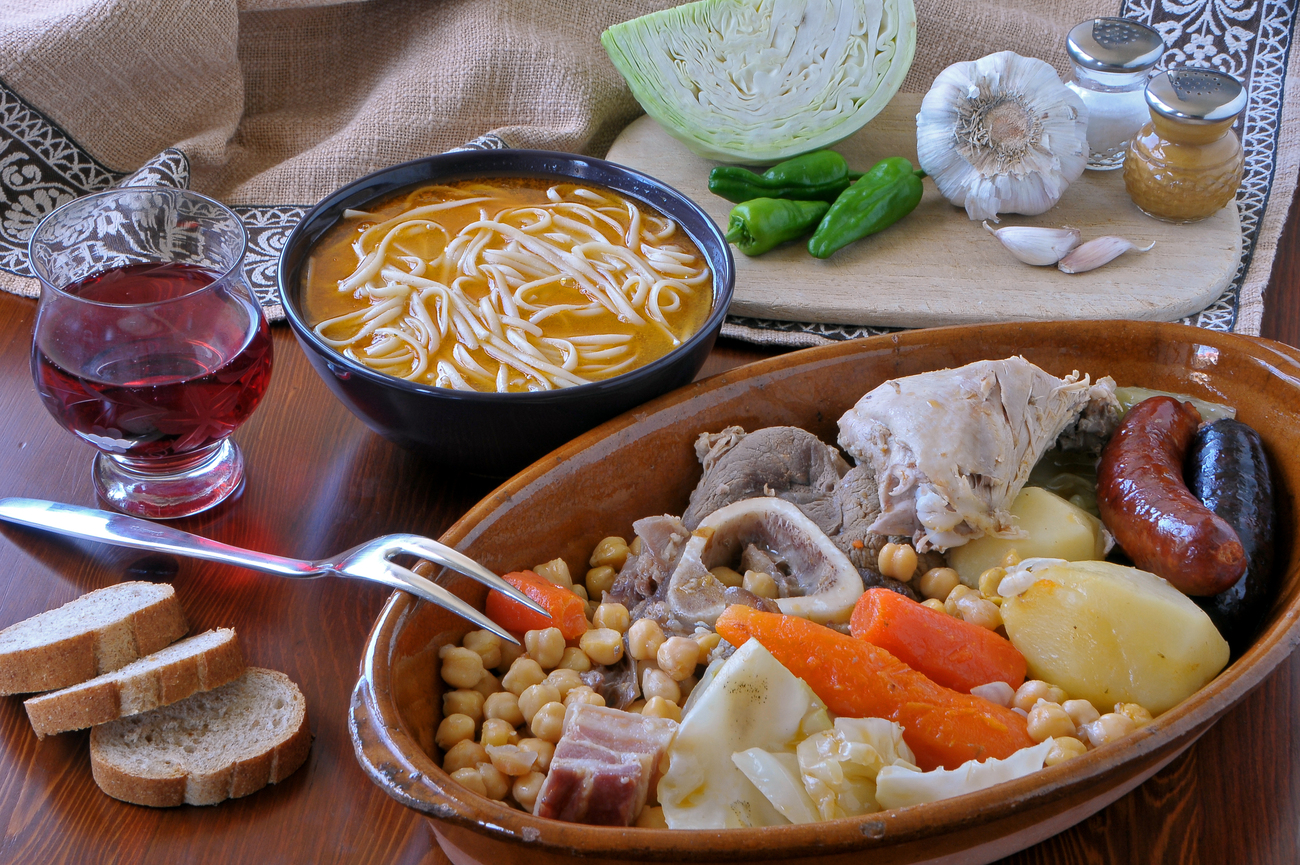
How Cocido Madrileño Is Served
The traditional three vuelcos are what distinguish cocido from an ordinary bowl of stew.
First comes the broth, usually with fine noodles. Next come the chickpeas, vegetables and potatoes. The meats and sausages arrive last.
Some restaurants use two courses rather than three, but the principle is the same: the ingredients are separated so each part of the cooking can be appreciated on its own.
When to Eat Cocido in Madrid
Cocido works best as a proper lunch rather than something squeezed between sightseeing stops.
It is rich, slow and substantial, particularly in colder weather, so allow enough time for the different courses and avoid arriving after a morning of heavy grazing.
That is also why cocido belongs naturally within the wider question of where to eat in Madrid. Choosing the restaurant matters, but giving the dish enough space in the day matters just as much.
Callos a la Madrileña: Madrid's Traditional Tripe Stew
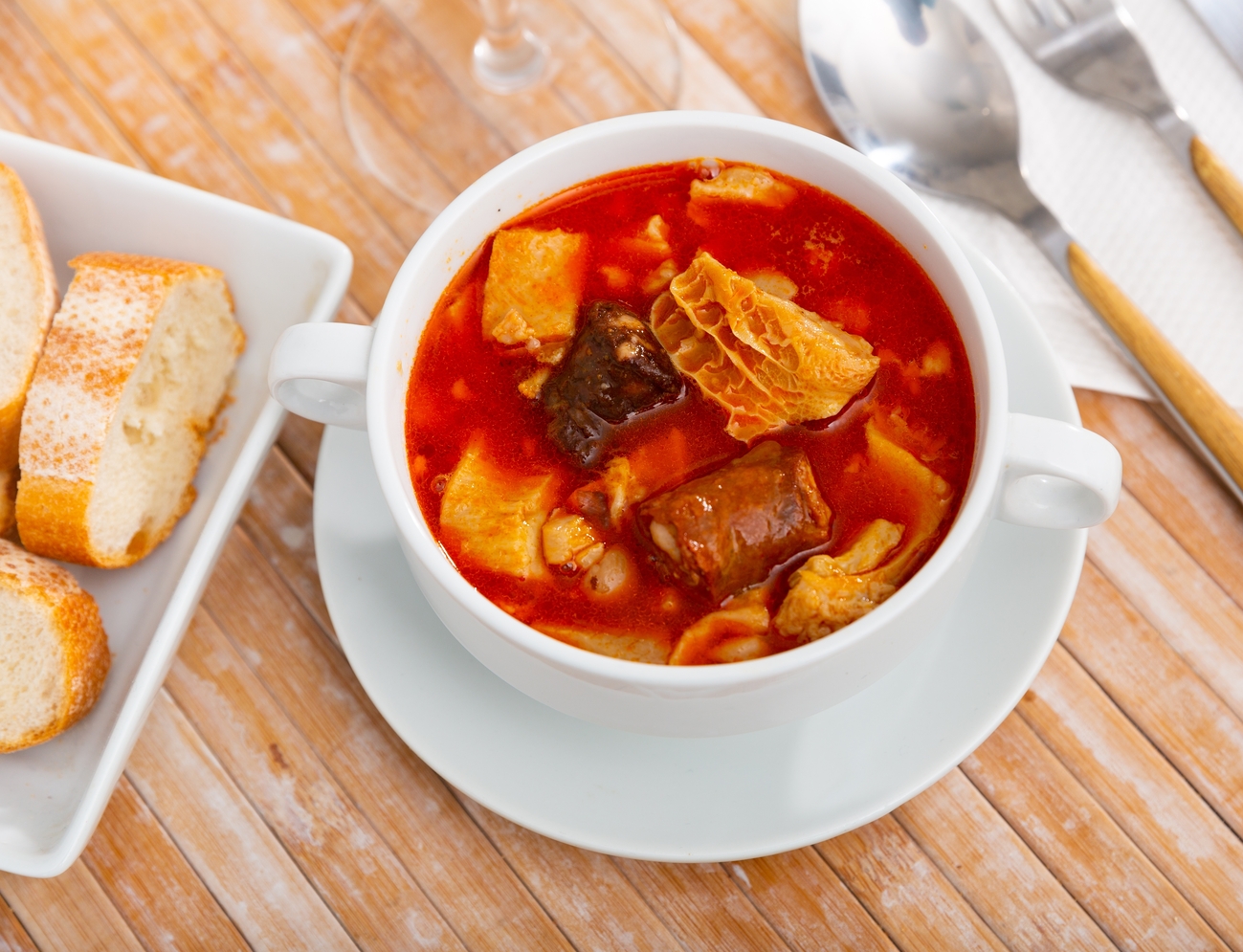
Callos a la madrileña is one of Madrid's most traditional dishes, made with beef tripe and commonly enriched with chorizo, morcilla, pimentón and gelatin-rich cuts such as snout or trotter.
The technique matters more than the ingredient list.
The tripe should be tender without losing its texture, while the sauce needs enough collagen to coat it lightly rather than becoming greasy or heavy. Pimentón and sausage add warmth and depth.
A Dish with a Long History
Cooked tripe has appeared in Spanish food writing for centuries. Enrique de Villena's Arte Cisoria from 1423 contains an early reference to callos, while Mateo Alemán also mentions tripe in Guzmán de Alfarache in 1599.
Those references do not mean the modern Madrid recipe existed unchanged at that time.
By the nineteenth century, however, callos was being served in Madrid restaurants as well as taverns. A dish built around inexpensive cuts had moved into more formal dining rooms without losing its popular identity.
That transition helps explain why callos remains such a useful test of a traditional kitchen. The ingredients may be humble, but good preparation requires careful cleaning, long cooking and precise control of texture.
Trying Callos for the First Time
If you have never eaten tripe, start with a small portion.
The important question is whether you enjoy soft, gelatinous textures and the concentrated flavour of a paprika-rich meat stew. There is no reason to order a full plate simply because callos is considered a Madrid classic.
Temperature matters too. Callos should arrive properly hot, when the gelatin in the sauce remains loose and glossy. As it cools, the texture becomes firmer and the dish can feel considerably heavier.
Bread belongs beside it for the sauce and for the contrast it brings to such a concentrated dish.
Callos is also particularly suited to colder weather. A bowl that feels exactly right on a November afternoon can be much harder work in the middle of a Madrid summer.
The
Bocadillo de Calamares: Madrid's Famous Squid Sandwich
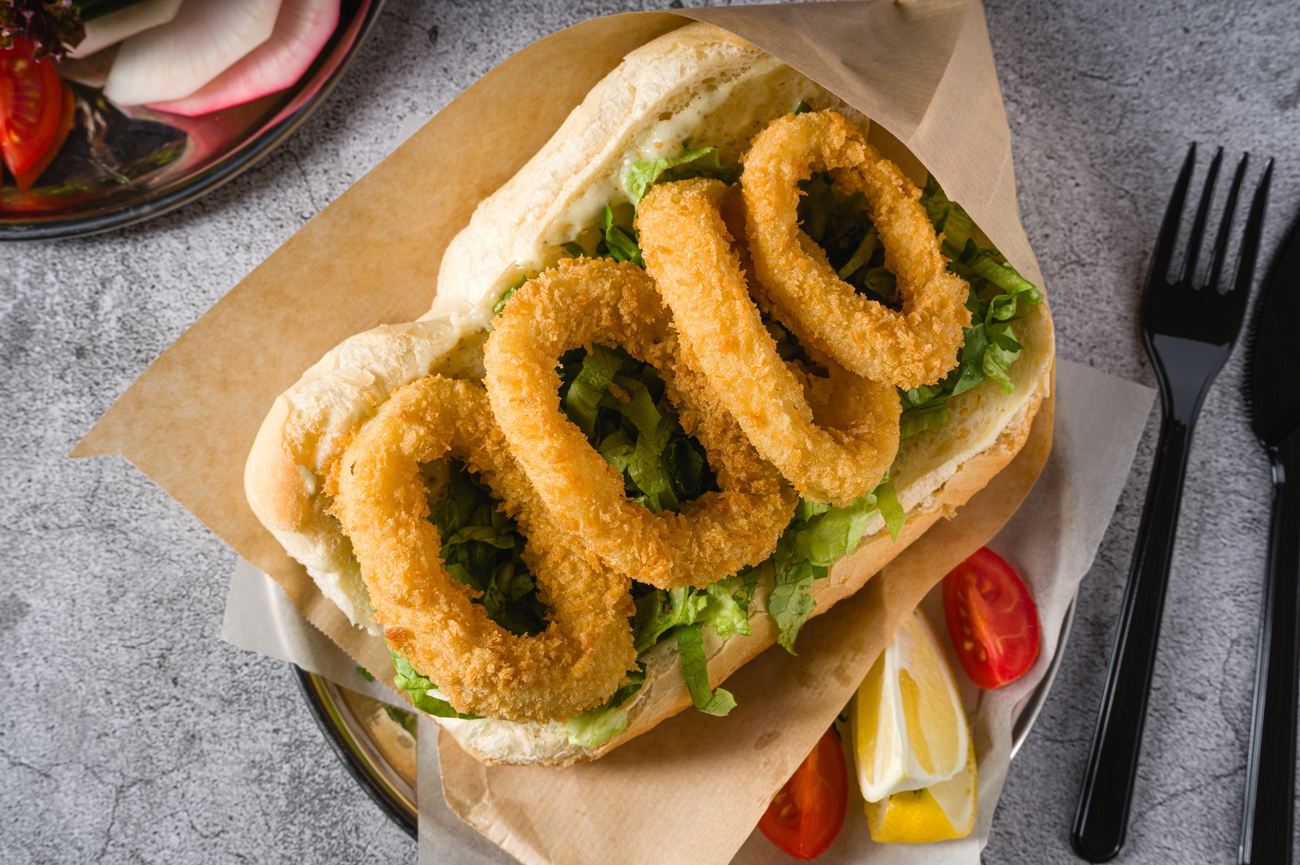
Hot squid, crisp coating, a plain bread roll and almost nothing else.
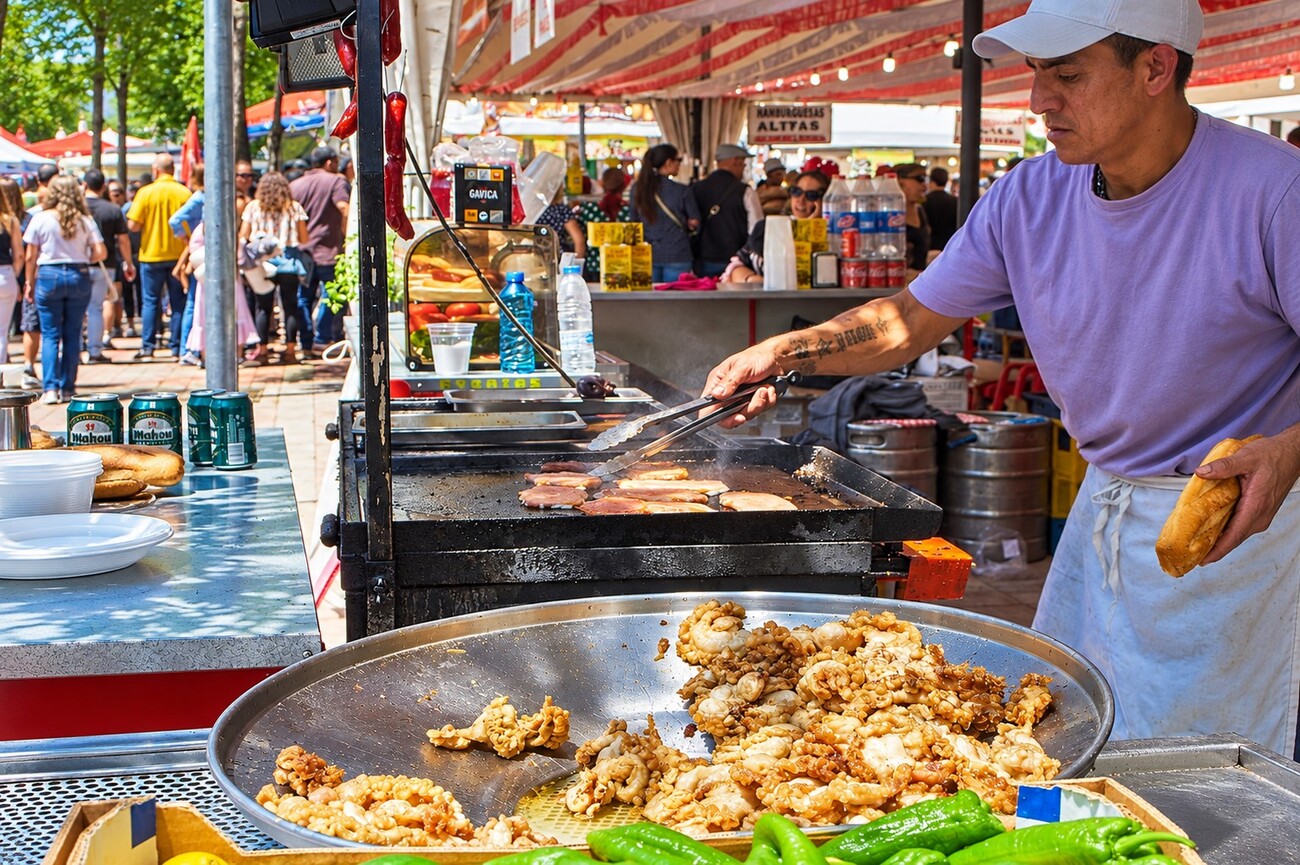
That is the bocadillo de calamares, one of Madrid's most recognisable local foods and a fixture of the bars around Plaza Mayor. It is fried, filled, wrapped and eaten quickly, often standing, with the city moving around you.
The simplicity is what makes it unforgiving. The squid should be tender, the coating crisp and the bread sturdy enough to absorb a little oil and steam without collapsing.
Lemon may appear, and some bars offer sauces, but the classic version depends mainly on the contrast between hot fried squid and bread.
Why Does Madrid Have a Squid Sandwich?
Madrid may be far from the sea, but its position as Spain's capital has long pulled seafood inland through the city's markets and distribution networks.
The stronger explanation for the sandwich itself is practical.
Squid is quick to fry, easy to portion and simple to serve. Bread turns it into a portable meal requiring no cutlery and very little ceremony, exactly the kind of food that works in the busy streets around Plaza Mayor.
Madrid made the sandwich local not because squid is a regional ingredient, but because the city gave it a distinctive urban role.
How to Eat a Bocadillo de Calamares
Order one and eat it while it is hot.
A bocadillo de calamares works best as a quick, substantial stop rather than a long sit-down meal. If you are sharing, start with one sandwich and order another only if you still want it.
It also fits naturally into a wider afternoon or evening of bar-hopping. Our guide to tapas in Madrid explains how to build that sequence without allowing one stop to dominate the entire crawl.
Churros
and Chocolate: When Madrid Eats Them
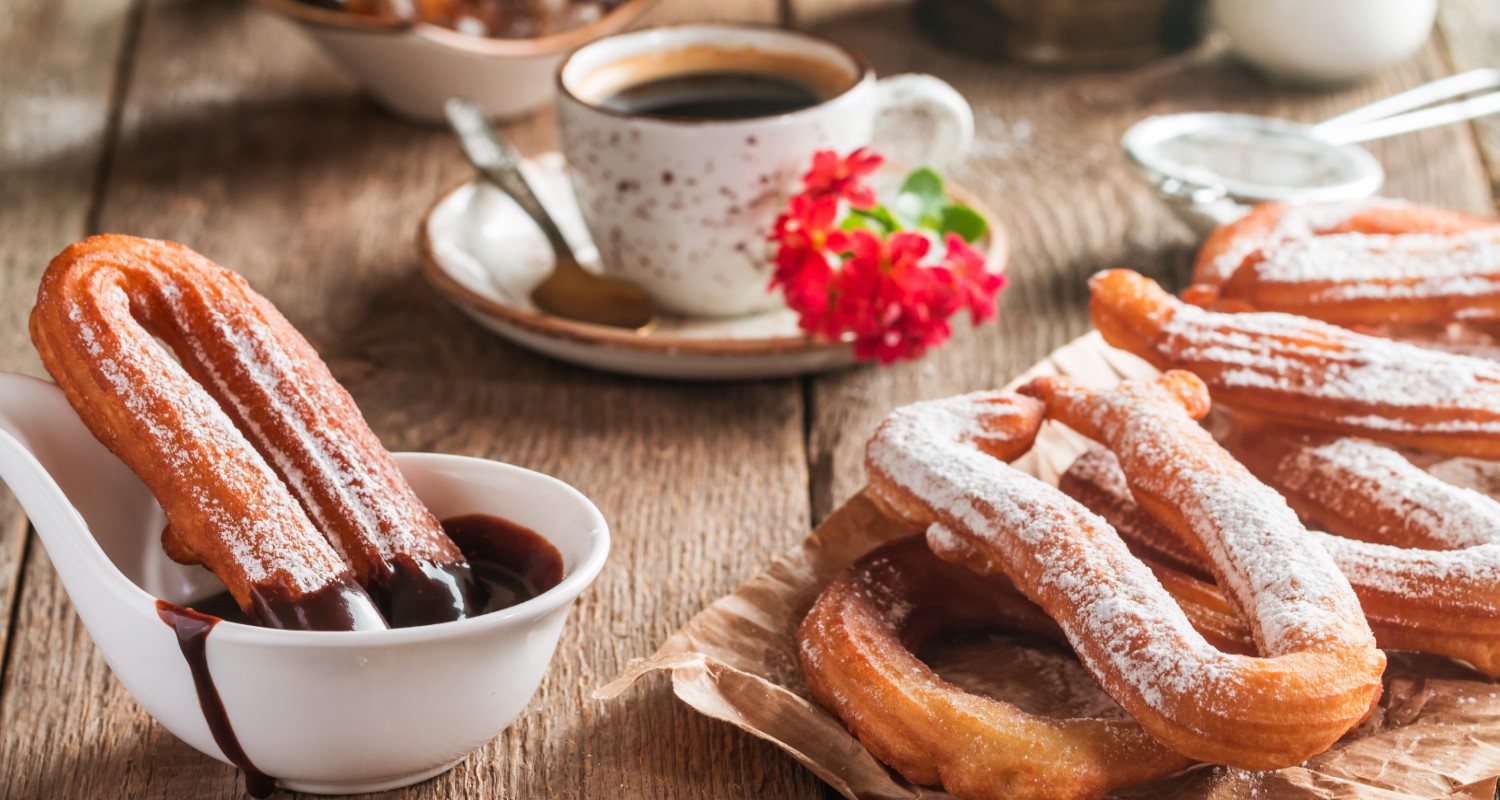
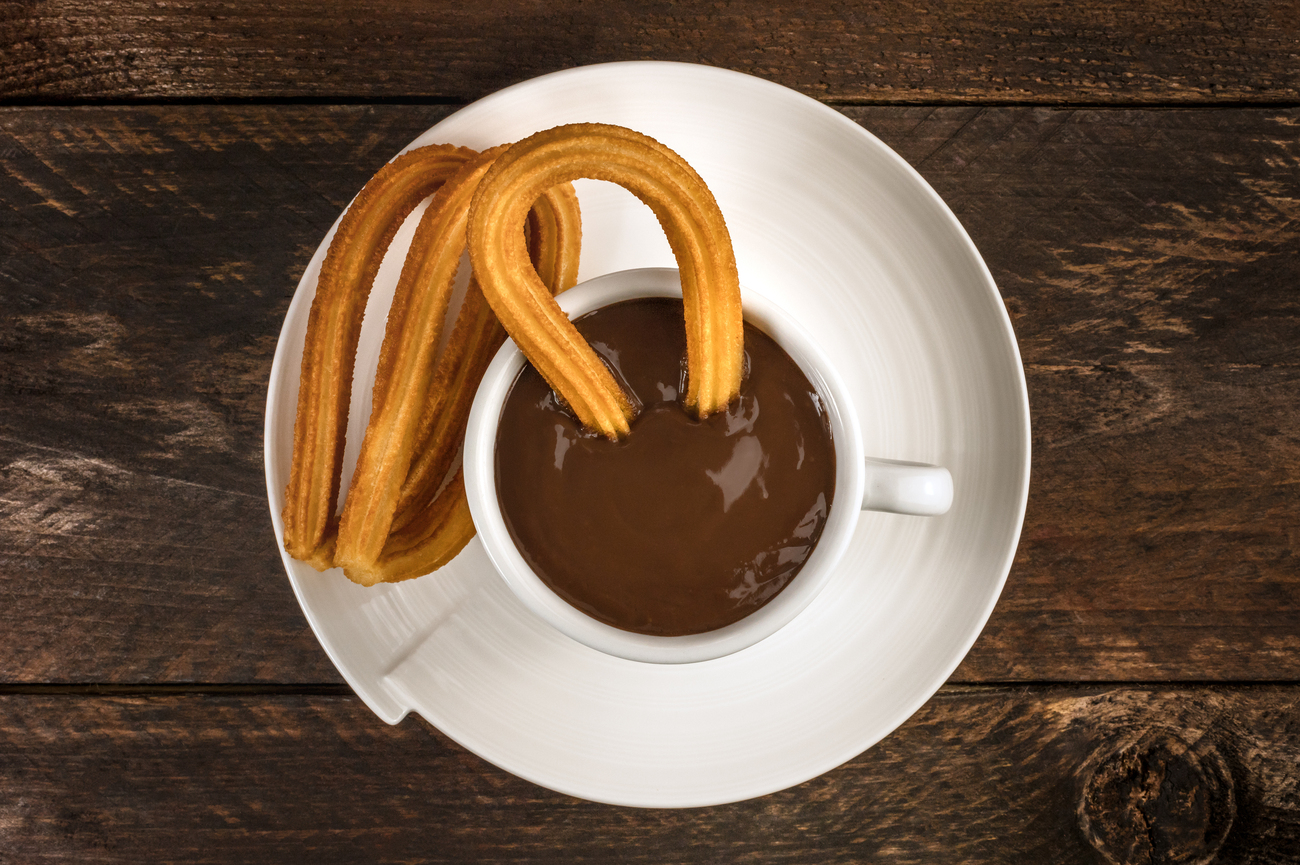
In Madrid, churros con chocolate are eaten at breakfast, during the afternoon merienda and, most distinctively, late at night after bars, celebrations or a long evening out.
The clock changes the experience. On a cold morning they feel like breakfast. At six in the afternoon they bridge the long gap before dinner. At two in the morning, a plate of hot fried dough and thick chocolate becomes the final stop before home.
Churros or Porras?
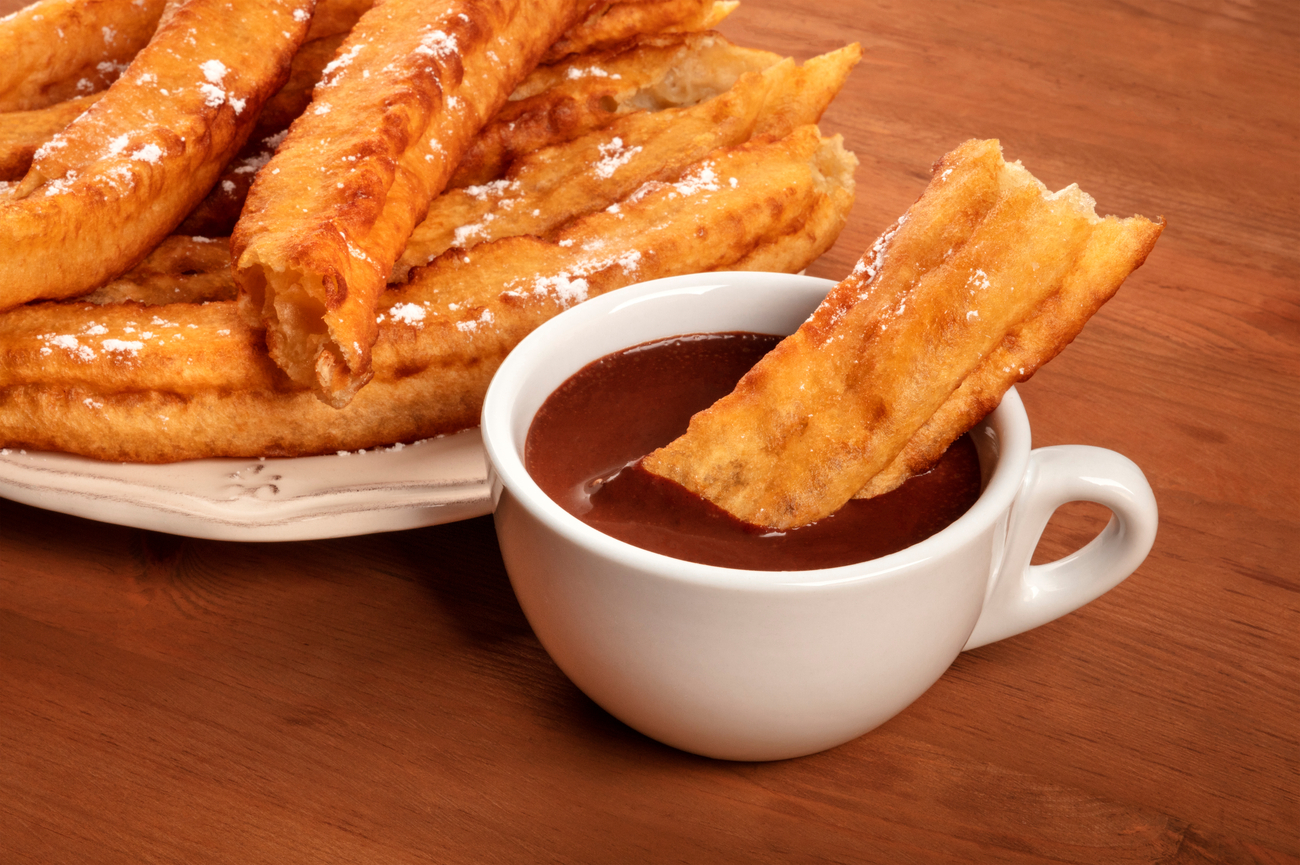
Churros are thinner and crisper. Porras are thicker, softer inside and more substantial.
Both are made for dipping, but porras carry more chocolate and fill you considerably faster. If two people are sharing, order a mixed plate and try them side by side.
Freshness matters more than elaborate presentation. The ridges of a churro should still be crisp, the centre tender and the plate free from the heaviness that comes when fried dough has been sitting too long.
What Is Spanish Hot Chocolate Like?
Madrid's chocolate is much thicker than an ordinary cup of cocoa.
Think of it partly as a drink and partly as a dipping sauce. It should cling to the churro rather than run straight back into the cup, providing the sweetness and richness that the relatively plain fried dough does not.
Finishing every drop is optional. After a few churros, particularly late at night, it can be remarkably filling.
Where to Eat Churros in Madrid
Madrid still has long-established chocolaterías that remain open into the night, but reputation is less important than what is happening at the fryer.
Look for turnover.
Churros are at their best for only a short time after frying, so a busy counter producing fresh batches can matter more than a famous name or impressive dining room.
When it comes to churros, the fryer tells you more than the mythology.
Other
Traditional Foods to Try in Madrid
Madrid's traditional repertoire extends well beyond cocido, callos, churros and the bocadillo de calamares. Several less famous dishes reveal older bar culture, working-class cooking and traditions tied closely to the city's calendar.
Huevos Rotos
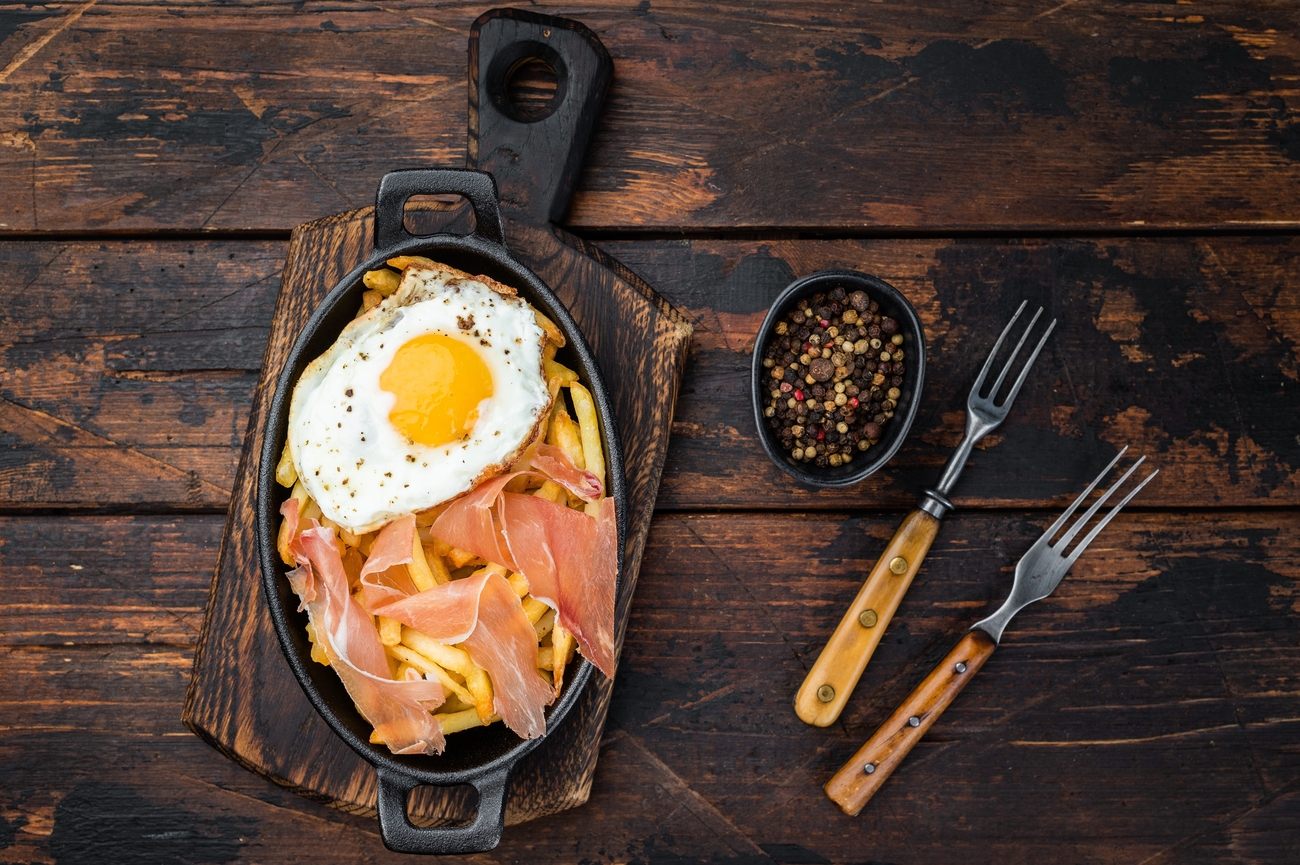
Huevos rotos are fried eggs broken over fried potatoes, often with cured ham.
The yolks should remain loose enough to coat the potatoes when everything is mixed together at the table. It is a dish designed for sharing, with everyone eating from the centre.
Its ingredients are simple, which gives a poor version very little room to hide.
Oreja a la Plancha
Oreja a la plancha is pig's ear cooked on a hot griddle until the edges brown while the cartilage retains its characteristic chew.
Texture is the point. The best versions combine crisp, browned edges with springier sections inside.
Order a small portion at a bar rather than treating it as the centre of a meal.
Gallinejas and Entresijos
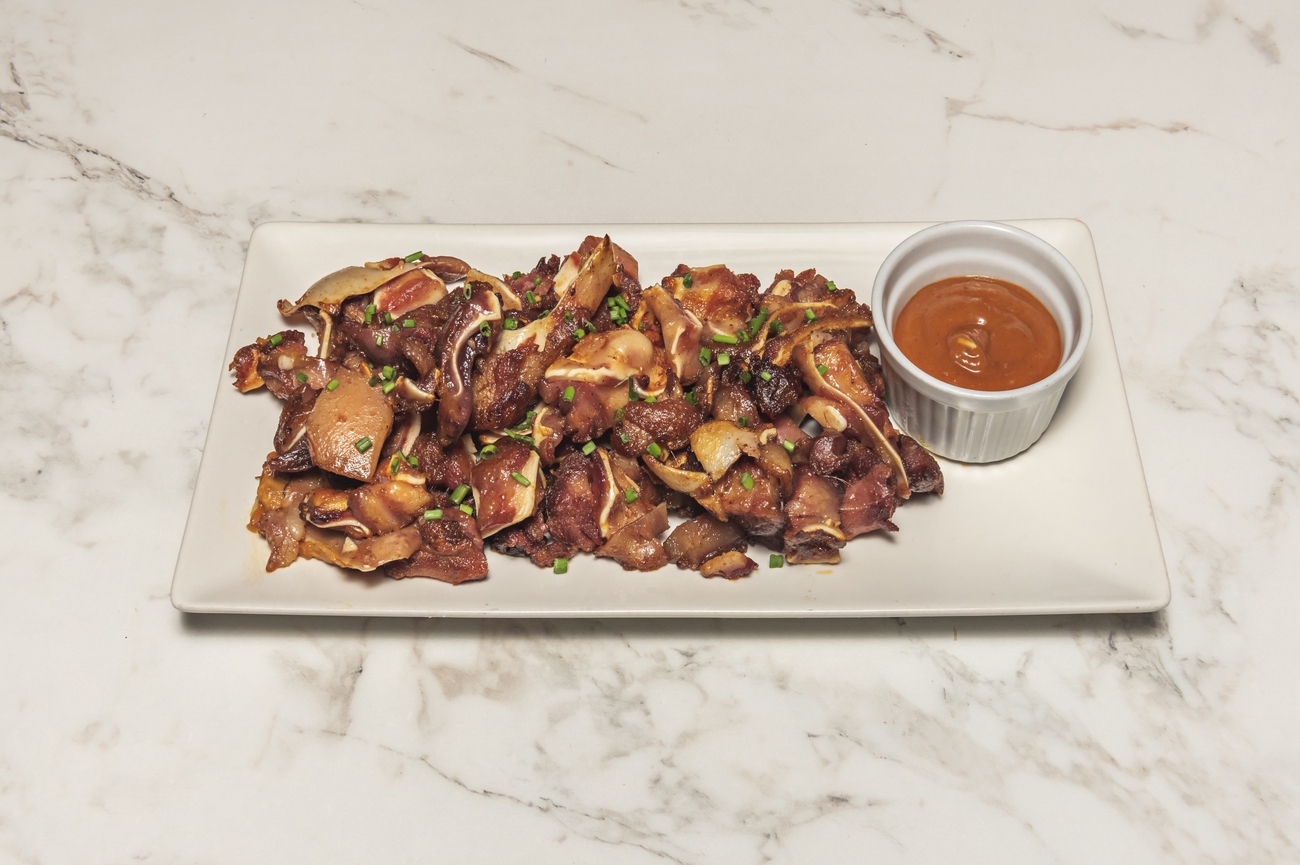
Gallinejas and entresijos belong to an older Madrid street-food tradition associated particularly with Embajadores and Lavapiés.
Both are made from lamb offal and traditionally fried in their own fat until crisp. Once common around fairs and working-class neighbourhoods, they are considerably harder to find today.
Their rarity is now part of their significance. Order them to understand a surviving piece of Madrid food history, not simply because they sound unusual.
Soldaditos de Pavía
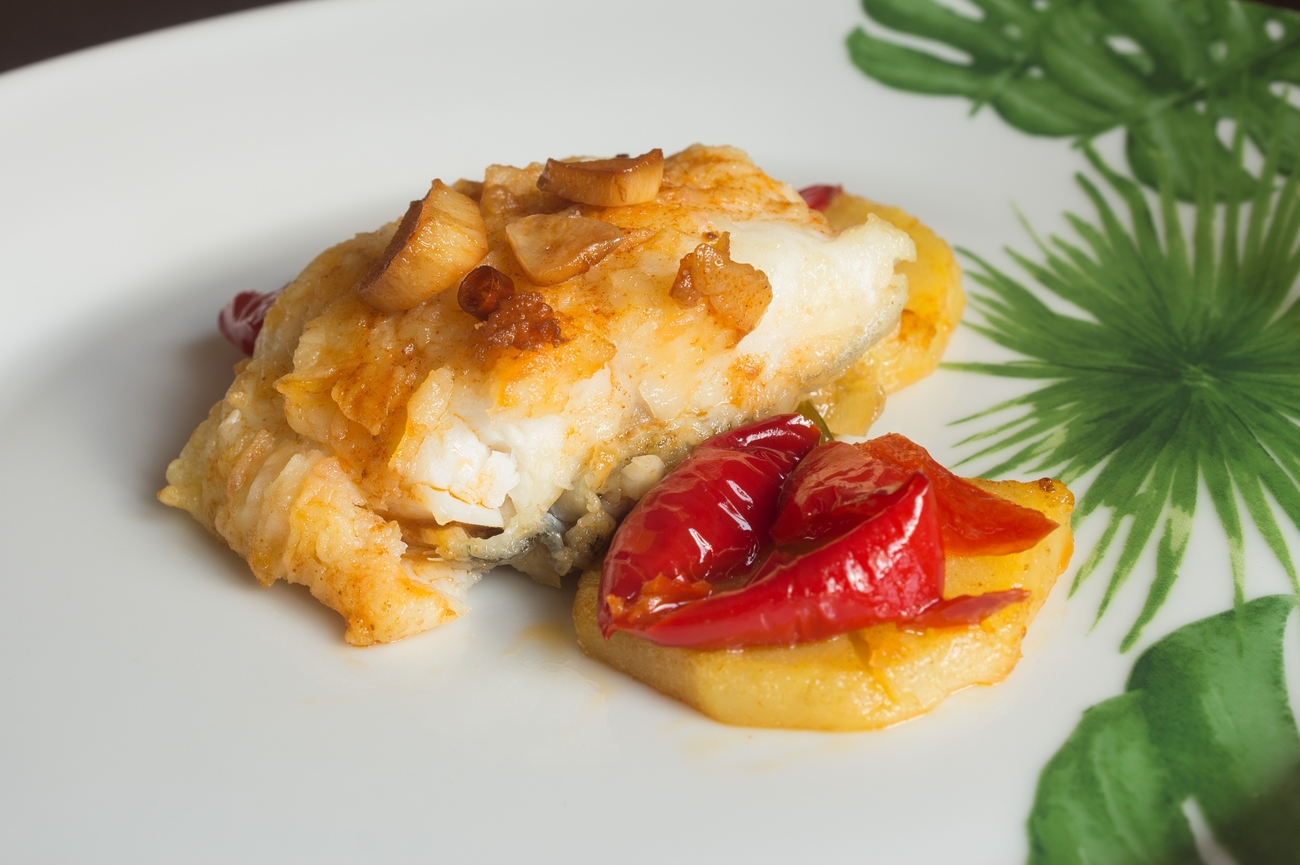
Soldaditos de Pavía are pieces of salt cod coated in batter and fried, sometimes served with red pepper.
The dish reflects Spain's long tradition of preserved cod, particularly through periods when religious observance increased demand for fish.
At its simplest, it needs very little: moist salt cod beneath a crisp shell of batter.
Rosquillas de San Isidro
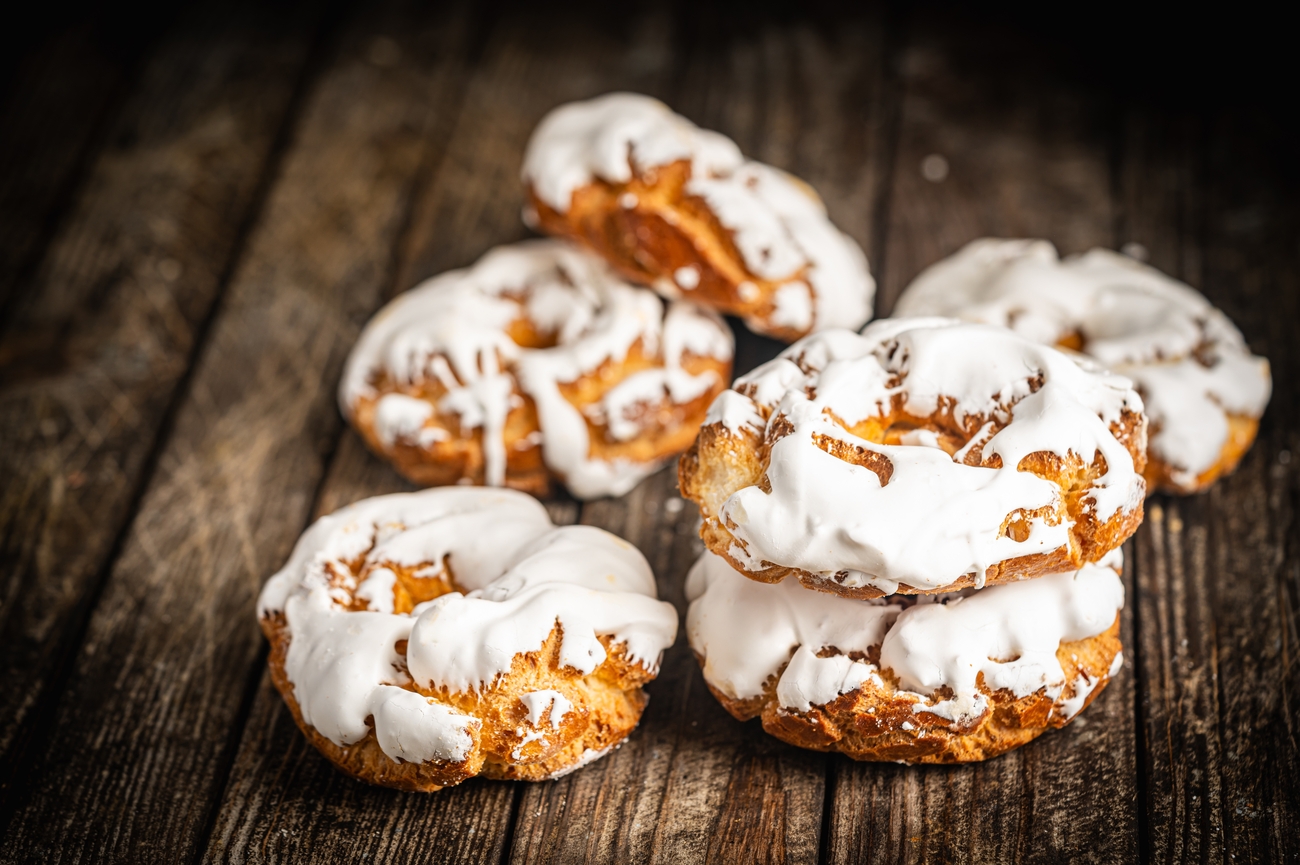
May brings rosquillas de San Isidro to pastry shops across Madrid.
The two traditional versions are tontas, which are plain, and listas, which carry a sweet glaze often flavoured with citrus or other aromatics.
They are closely associated with Madrid's San Isidro celebrations, making them one of the clearest examples of a local food whose meaning is tied to the calendar.
Besugo and Madrid's Roasting Tradition
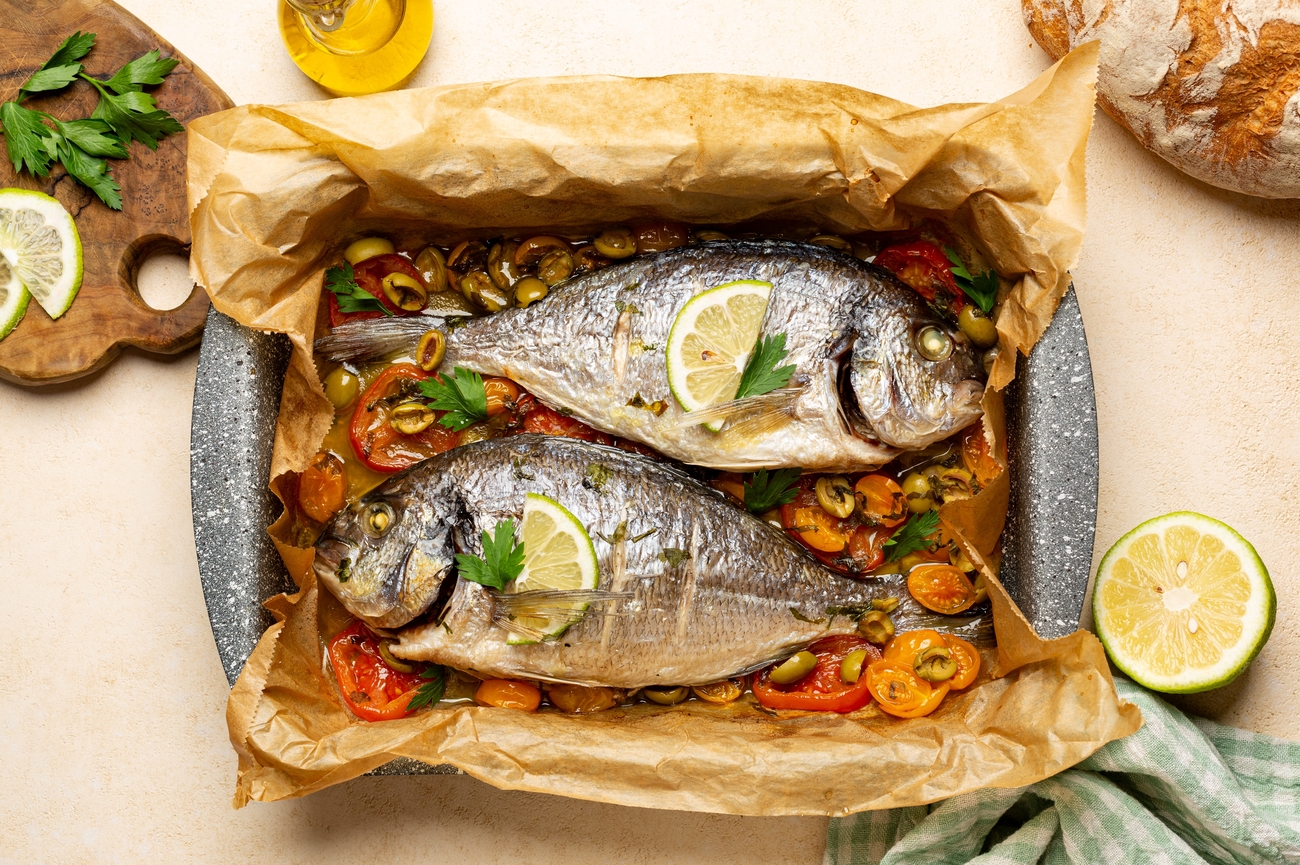
Sea bream, or besugo, has a long association with Christmas tables in Madrid despite the capital's distance from the coast.
Madrid has also absorbed the roasting traditions of surrounding Castile, particularly lamb and suckling pig, which remain part of formal and festive dining.
They are reminders that Madrid's culinary identity has never depended solely on ingredients produced within the city itself. The capital has always drawn food and cooking traditions inward from the rest of Spain.
Where
Traditional Madrid Dishes Are Still Cooked Properly
The best places for traditional Madrid food are not necessarily the oldest or most famous. Look for signs that the kitchen still organises its service around the dish rather than keeping it on the menu simply because visitors expect to see it.
Look at How the Dish Is Served
For cocido, ask when it is prepared and whether it is served in two or three vuelcos. A fixed weekday, advance booking or requirement for several diners to order it can actually be a good sign because the kitchen is working around the demands of a long-cooked dish.
Callos requires a different test. It should arrive properly hot, with the tripe tender and the gelatinous sauce loose rather than heavy. Batch cooking is normal here. What matters is careful preparation and reheating without damaging the texture.
With churros, the logic reverses completely. You want rapid turnover and frying to order. Freshness is measured in minutes.
Madrid's Historic Taverns
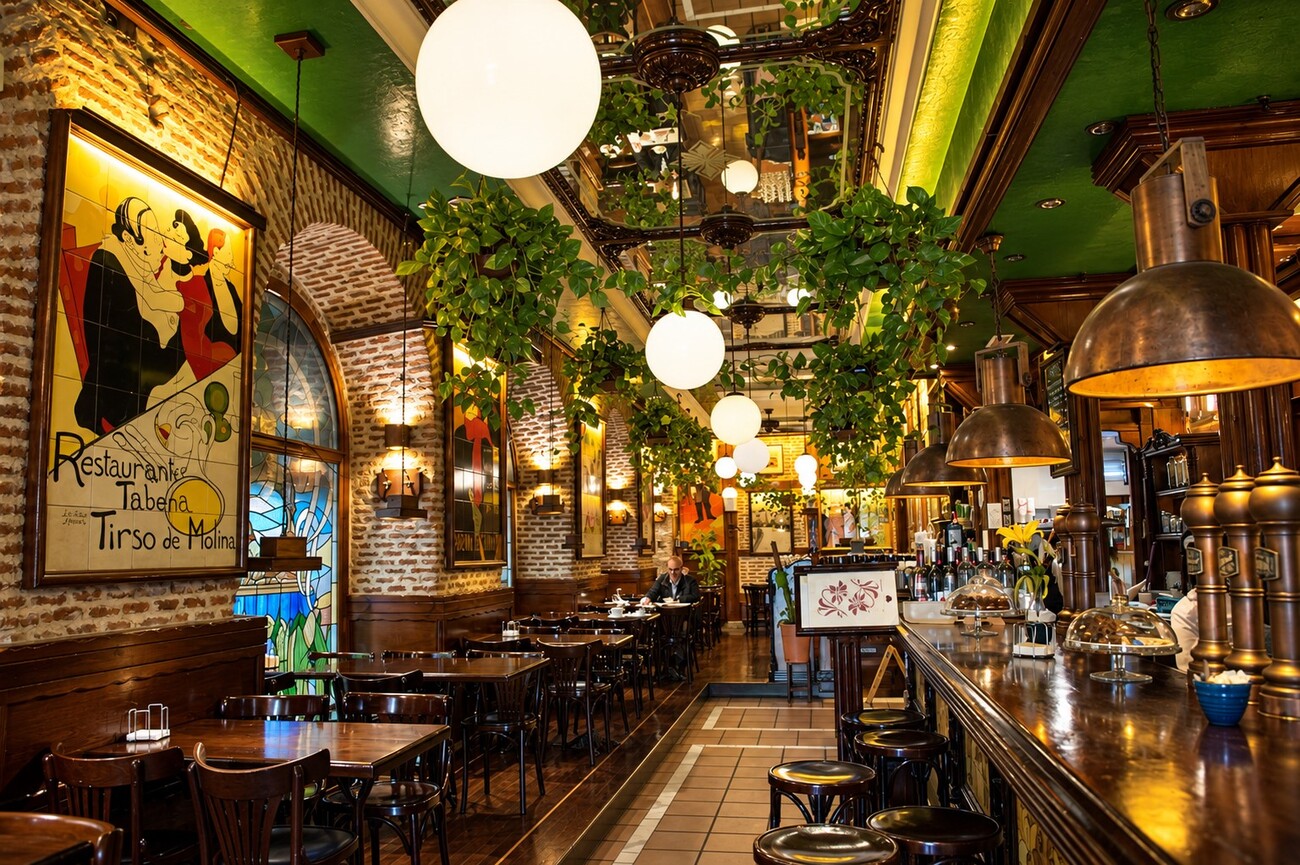
Madrid has a number of tabernas centenarias, restaurants and taverns with more than a century of history.
Age does not automatically guarantee the best food, but these establishments can offer valuable continuity. Cocido, callos, cod and roast dishes may have formed part of the house repertoire for generations.
Choose the dish most closely associated with the restaurant rather than treating the historic dining room itself as the attraction.
The history matters most when it is still visible on the plate.
When to Order Ahead
Cocido is the dish most likely to require advance planning.
Some restaurants prepare it only on particular days or ask diners to reserve portions in advance. If the booking system does not mention cocido specifically, contact the restaurant and ask whether it needs to be ordered beforehand.
That inconvenience can be reassuring.
A kitchen asking for notice is usually telling you that the dish still follows its own production rhythm rather than being kept permanently available for passing demand.
Cooking
Madrid's Traditional Dishes at Home
Some traditional Madrid dishes transfer easily to a home kitchen. Others depend more heavily on specialist ingredients, frying technique or cuts of meat that may be difficult to find outside Spain.
Shopping for Cocido Ingredients
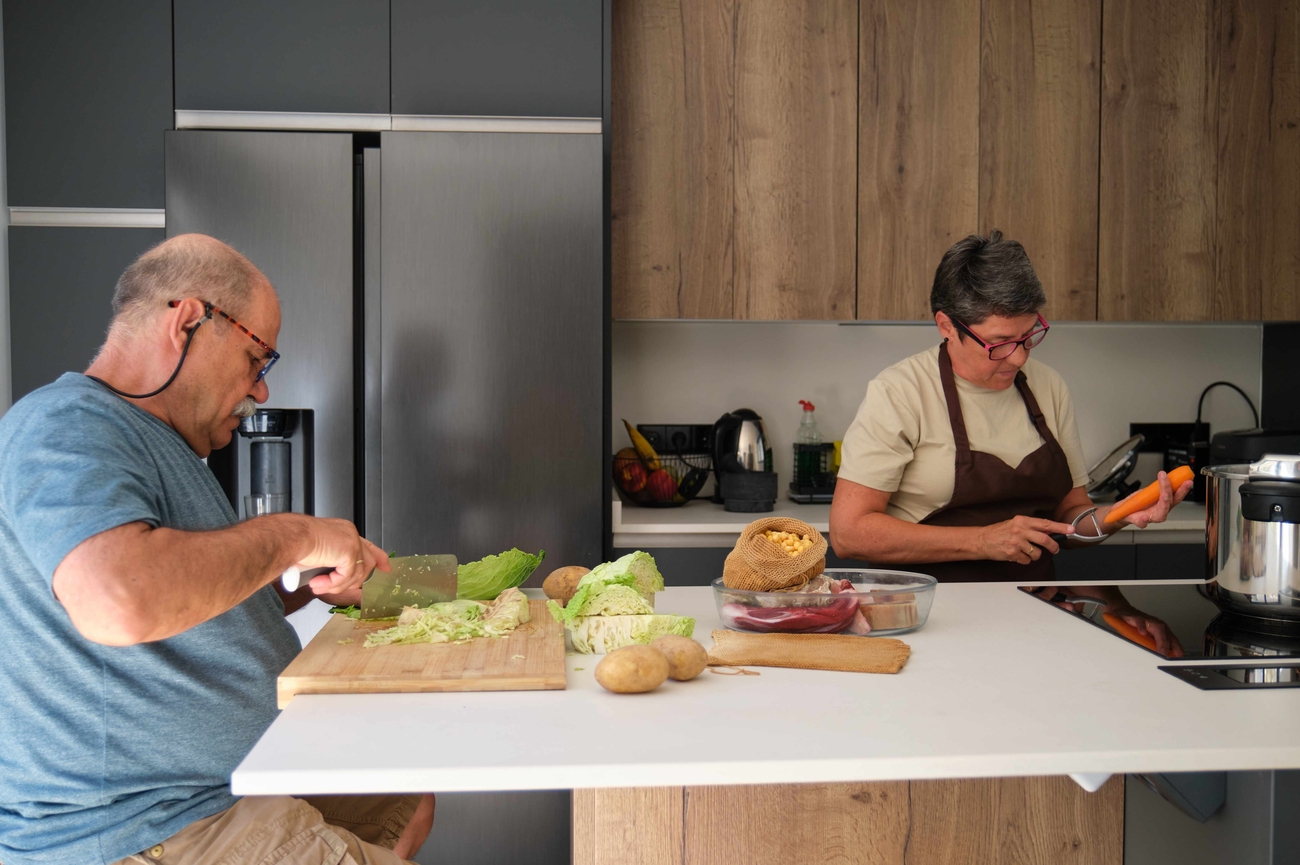
Cocido begins with chickpeas and the ingredients that build the broth: beef with enough connective tissue for long cooking, poultry, pork, bones, chorizo, morcilla, cabbage and potatoes.
The exact combination can vary. What matters is that each ingredient has a purpose. More meat does not necessarily make a better cocido.
Madrid's traditional markets are particularly useful here because a good butcher can recommend cuts for a long simmer and a specialist counter can help with sausages. Our guide to Madrid's food markets explains which halls are designed for this kind of shopping rather than immediate eating.
Do not automatically buy the most expensive version of every ingredient. Cocido rewards compatibility more than luxury.
Which Madrid Dishes Can You Make at Home?
Cocido is relatively easy to reproduce because it does not require specialist equipment. The greater challenge is finding equivalent sausages and understanding which local cuts will behave well during several hours of cooking.
Callos is possible too, but sourcing and preparing good tripe makes it a more demanding project.
Churros depend more on confident frying than specialist equipment, while a bocadillo de calamares succeeds or fails largely on the quality of the squid and the timing of the frying.
This is where technique matters more than reproducing an exact recipe. Our guide to Spanish cooking classes in Madrid explores how heat, texture and sequencing can be learned well enough to adapt once you are cooking in a different kitchen.
Some foods are better left attached to Madrid. Gallinejas and entresijos rely on cuts that can be difficult to source elsewhere, while rosquillas de San Isidro lose part of their meaning when separated from Madrid in May.
Understanding a dish does not always require recreating it at home.
Eat
the Cocido in January
Madrid will serve many of its traditional dishes throughout the year. That does not mean they belong equally well to every season.
Cocido and callos make more sense when the air is cold enough to make a long, rich lunch feel necessary. Rosquillas are worth seeking out in May, when San Isidro puts them across pastry counters throughout the city. A bocadillo de calamares needs little more than hunger and a place to stand near Plaza Mayor. Churros have the useful habit of fitting into breakfast, merienda and the hour when almost everything else has closed.
There is no prize for fitting the whole Madrid repertoire into one weekend.
Give the substantial dishes a meal of their own. Let the smaller ones appear naturally as you move through the city. And leave July's cocido to someone who ignored the weather.
That is also the thinking behind our Essential Culinary Experience in Madrid: not simply eating more, but putting the right markets, dishes and cooking traditions in the right part of the day.
Leave some of the wandering spontaneous. Plan the meals that matter.


Let us know what you love, where you want to go, and we’ll design a one-of-a-kind adventure you’ll never forget.
Get in touch
Miriam
Travel Specialist

Romina
Travel Specialist

Laura
Travel Specialist
Our offices:



Revigorate, Iberian Escapes and Algarve Lifestyle are the registered brand names of APCS Lda . We are a fully authorised travel agency licensed by Turismo de Portugal RNAVT/6867.
In the event of a dispute, the consumer may refer to: RAL - Centros de Arbitragem
Avª. 5 de Outubro, nº. 55, R/C Dtº. 8000-075 Faro, Portugal | Tel: +351 289 823 135 *
* national landline call
E-mail: info@consumoalgarve.pt| www.consumidoronline.pt | Mon to Fri: 9:00 - 13:00 / 14:00 - 17:00