Madrid Food Markets: San Miguel, Antón Martín and the Markets Locals Use
Madrid's food markets fall broadly into three types: gastronomic markets designed mainly for eating and drinking, traditional neighbourhood markets built around fresh-food shopping, and hybrid halls that combine both. Knowing the difference helps you choose the right market for tapas, ingredient shopping or simply understanding how Madrid buys and eats food.
Across twentieth-century Europe, municipal market halls lost ground as supermarkets, refrigeration and new retail habits changed how cities shopped. Madrid kept a substantial network, but survival did not mean standing still.
Some markets evolved into places to eat, where the transaction is a glass of wine and a prepared plate. Others remained neighbourhood infrastructure, with fish laid on ice, cheese cut to order and residents collecting ingredients for lunch. Many now sit somewhere between the two.
That distinction matters more than whether a market is famous.
Go to a gastronomic market with a shopping list and you may leave with very little to cook. Walk into a traditional market expecting a long lunch and the most interesting part of the visit may happen before you ever find somewhere to sit.
The useful question is therefore not simply which Madrid market is best. It is what you want the market to do.
For travellers joining our Essential Culinary Experience in Madrid, that distinction becomes practical during the market-led cooking experience, where the value of the visit lies in choosing ingredients that will later have a job in the kitchen.
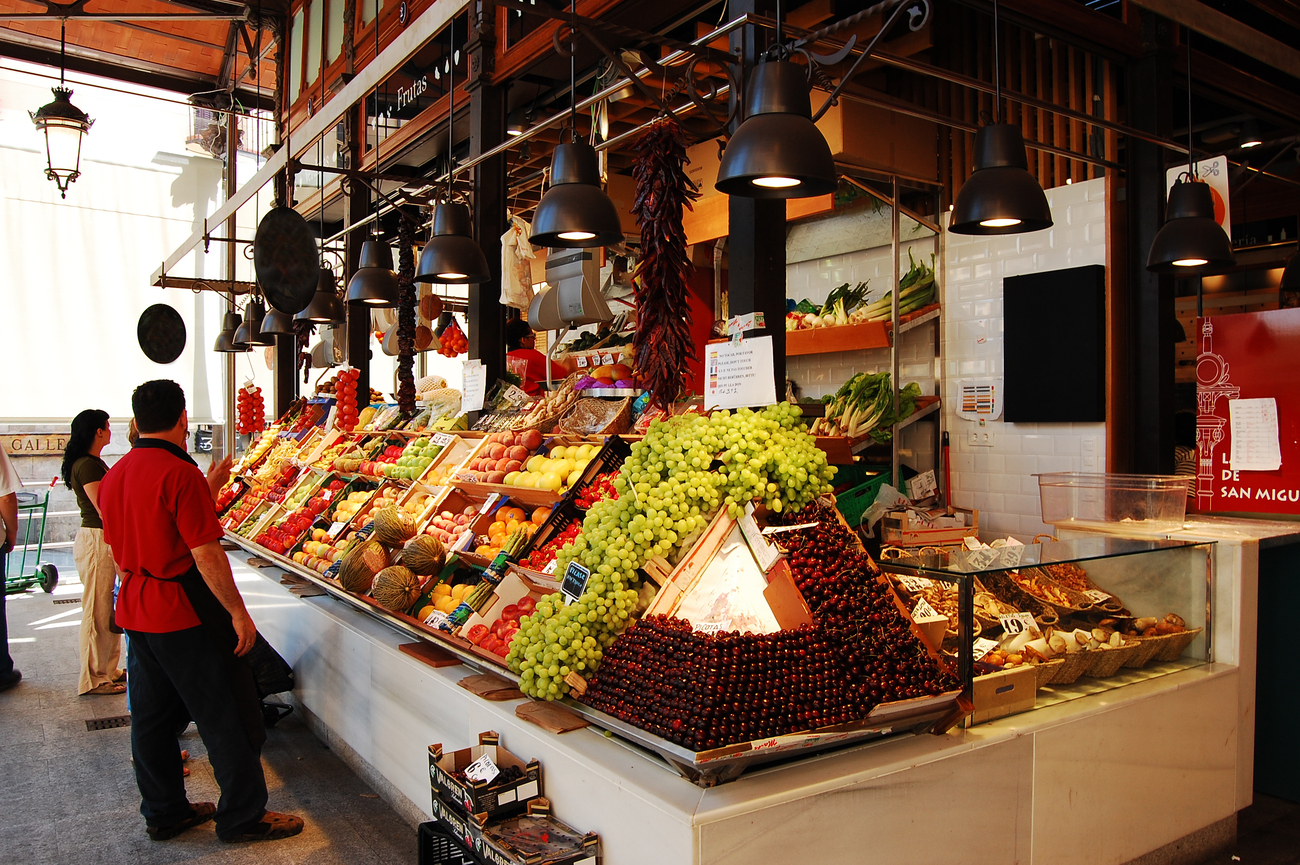
Three Types of Madrid Food Markets

Madrid's food markets can be divided into three useful categories: gastronomic markets designed mainly for eating, traditional markets centred on fresh-food shopping, and hybrid markets that combine both. The distinction matters because each type offers a very different experience.
Before choosing where to go, decide whether you want to eat, shop or see both functions operating together.
Gastronomic Markets for
Eating and Drinking
A gastronomic market is built around immediate appetite. Counters sell prepared food, drinks move quickly and the building operates more like a collection of small bars than a supply system for nearby kitchens.
This format works particularly well when time is limited. Several dishes can be sampled at one address without planning a route between restaurants, and the food is easy to understand at a glance because portions are prepared for immediate eating.
The limitation is equally important.
A gastronomic market can show you how Spanish products are presented and consumed, but it tells you much less about the daily work of choosing whole fish, comparing cuts of meat, buying vegetables in season or asking for cheese at the right point of ripeness.
There is nothing inferior about that. It is simply a different function.
Our guide to where to eat in Madrid places these markets within the city's wider dining culture, from neighbourhood restaurants to tapas bars and traditional lunch. Within the market itself, the important thing is to recognise what kind of place you have entered rather than expecting every hall to perform the same job.
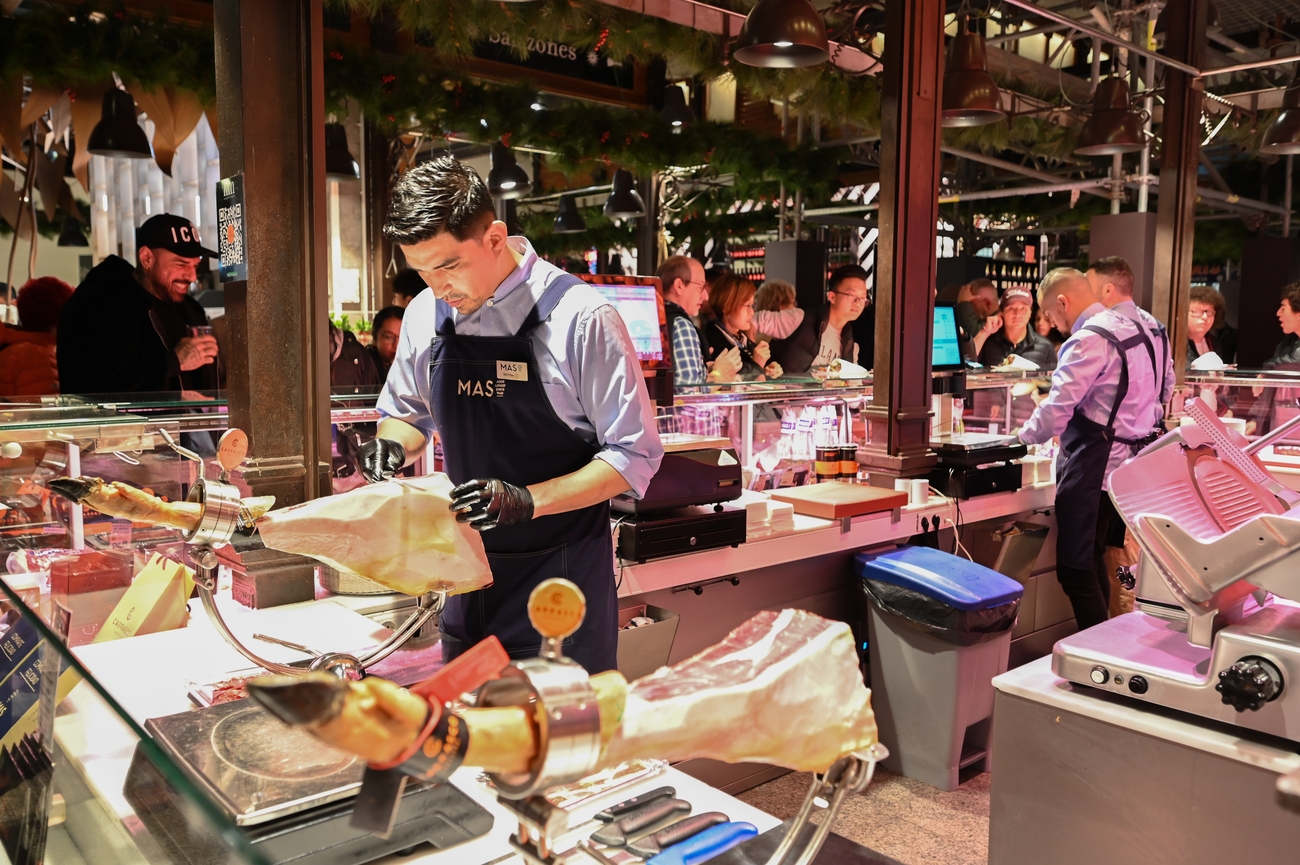
Traditional Food Markets
Used for Shopping
A traditional food market serves local households first.
Its architecture is practical. Fishmongers need chilled displays, butchers need room to cut meat, greengrocers need space for volume and specialist sellers need enough stock to support customers who return every week.
The appeal comes from abundance and competence rather than presentation.
Morning is usually the most revealing time to visit. Fresh-food counters are active, fish is being cleaned and filleted, cheese is being cut repeatedly and seasonal produce is moving through the stalls.
Those patterns can tell you more about what people actually buy than signs describing something as artisanal or seasonal.
A working market also comes with different expectations. Not every stall exists for tasting, and not every product is packaged for travellers.
A fishmonger may ask whether you want a fish cleaned or filleted. A butcher may want to know how you intend to cook a particular cut. The transaction is shaped by what will happen to the ingredient after it leaves the market.
That is precisely what makes these halls useful for understanding how Madrid shops for food.
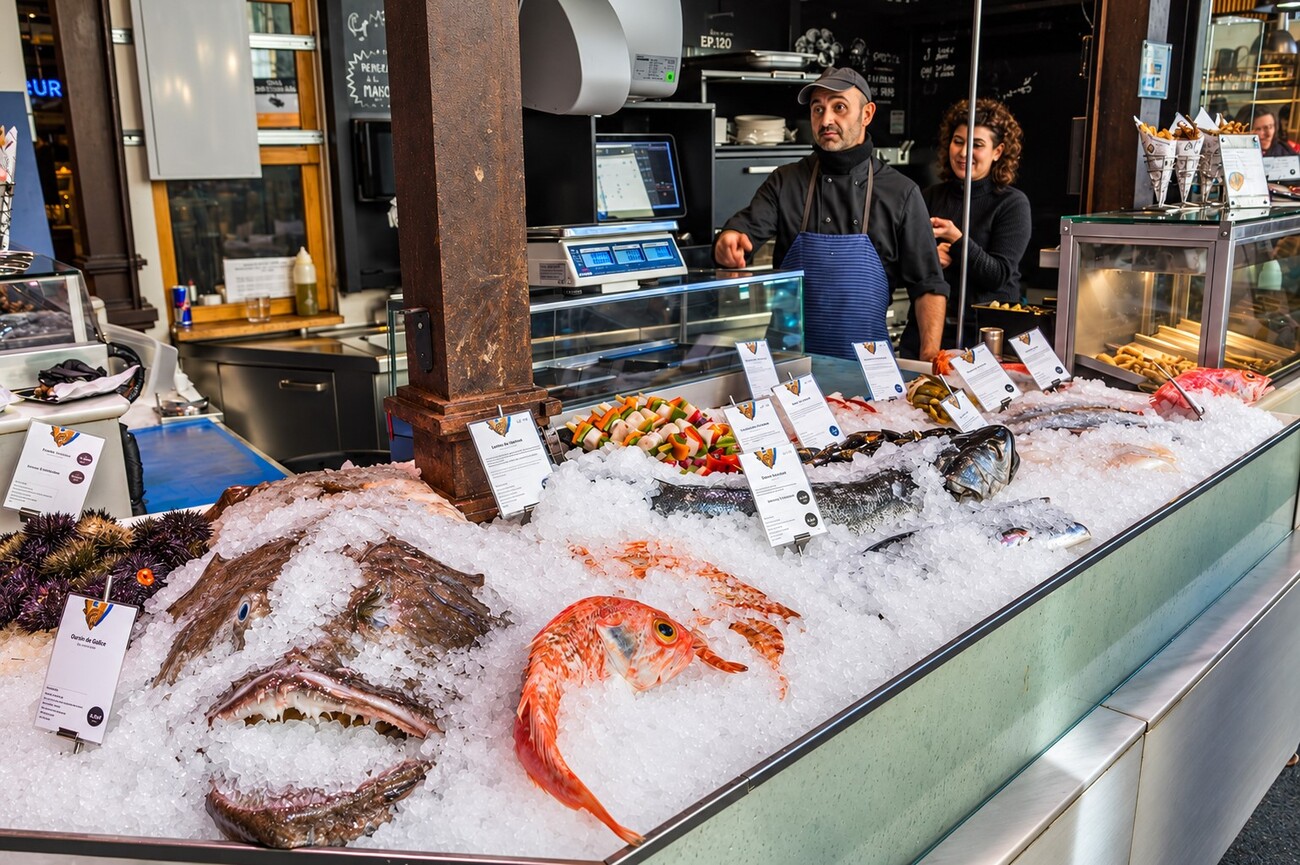
Hybrid Markets That
Combine Shopping and Eating
Some of Madrid's most interesting markets now combine traditional fresh-food stalls with small restaurants, wine counters and prepared-food businesses.
This hybrid model allows both uses to happen under the same roof.
You can arrive while local residents are shopping, spend time looking at fish, meat and produce, then stop for something small without turning the visit into a formal meal.
The balance varies from one market to another.
If raw produce and specialist food counters dominate the aisles, treat the building primarily as a working market with places to eat attached. If prepared food, bar seating and drinks occupy most of the attention, it functions more like a gastronomic market that has retained some traditional retail.
A true hybrid allows both sides to remain visible.
This distinction is more useful than simply ranking Madrid's markets. Mercado de San Miguel can be the right choice for an aperitif near Plaza Mayor. Mercado de Antón Martín makes more sense when you want to see fresh-food retail and small kitchens sharing the same building. Mercado de la Paz is stronger when shopping for high-quality ingredients is the main purpose.
The best market depends on what you want the visit to accomplish.
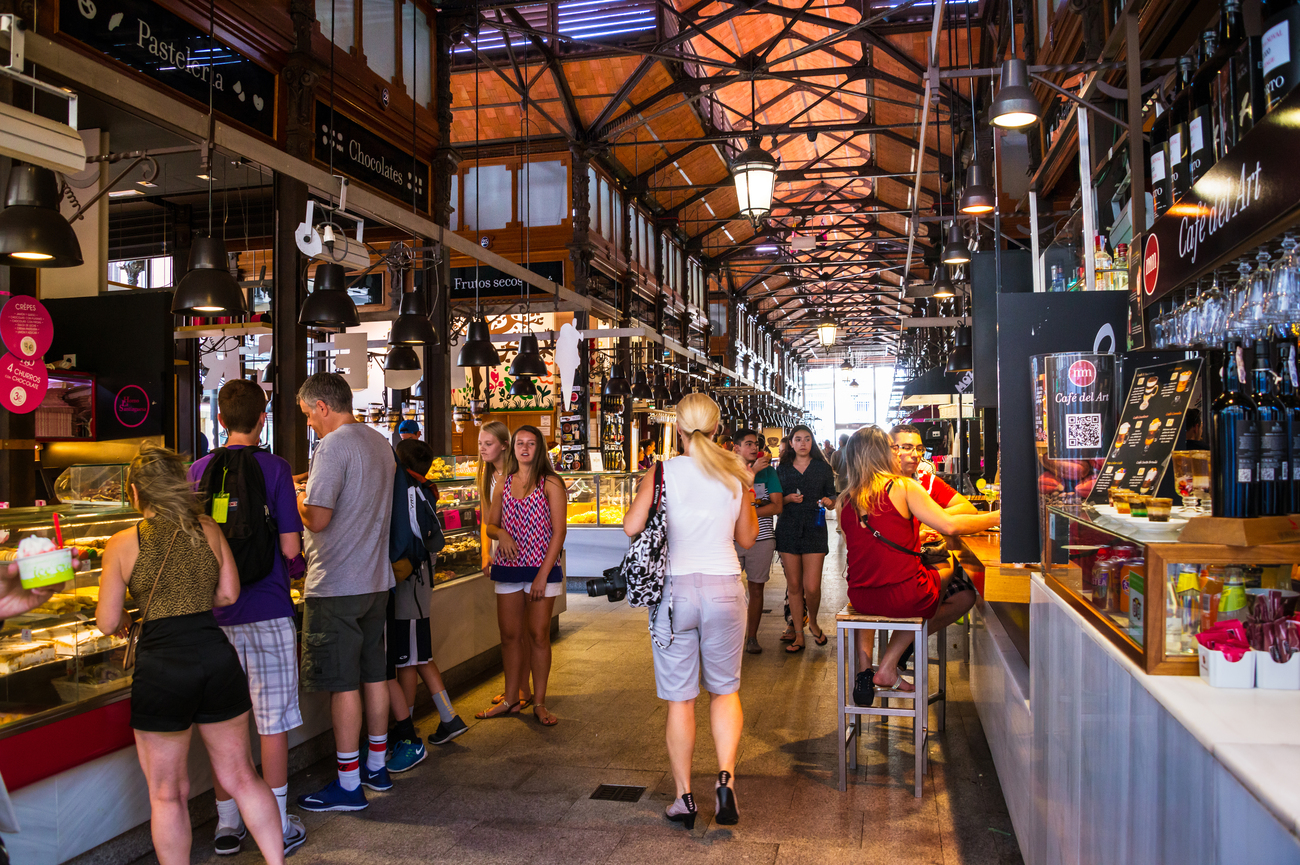
Mercado de San Miguel: A
Gastronomic Market Near Plaza Mayor
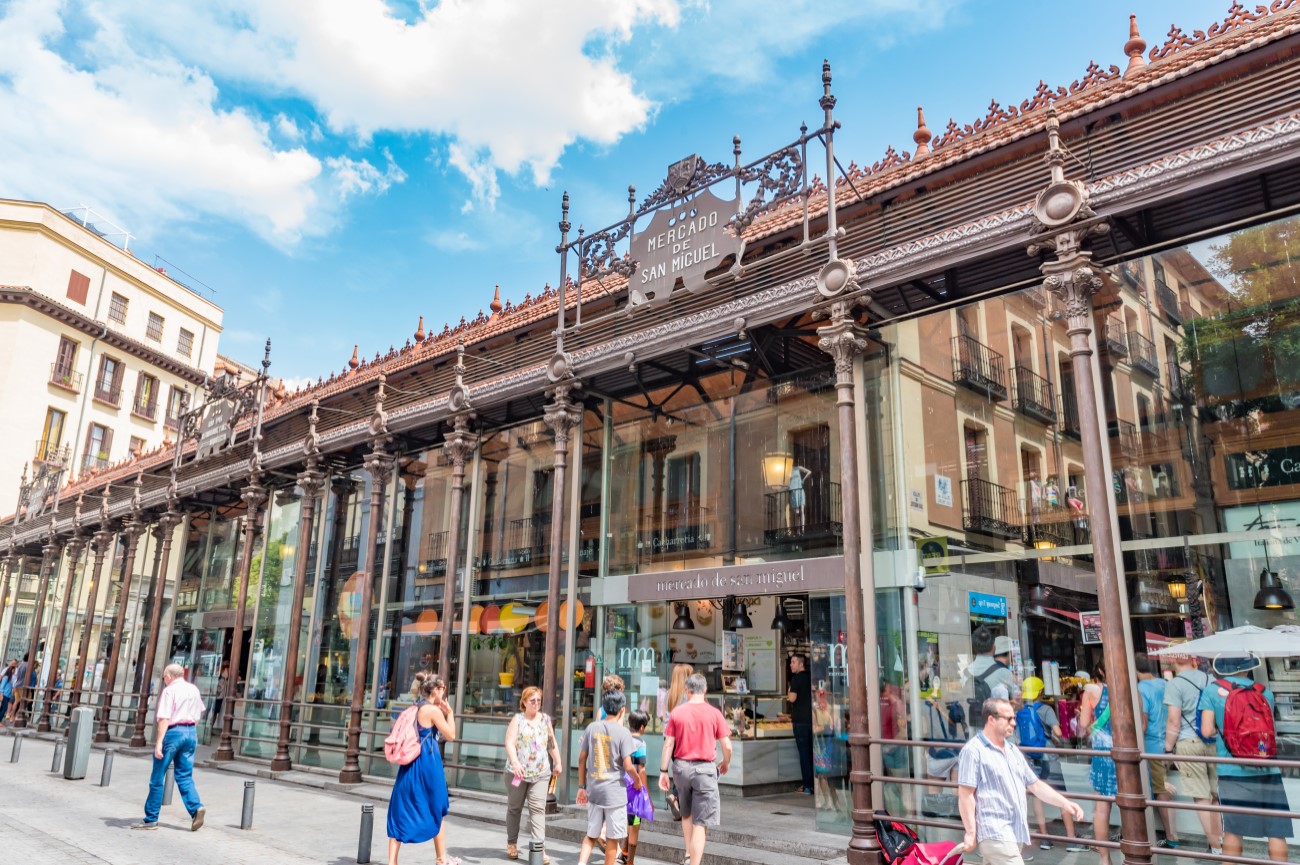
Mercado de San Miguel is one of Madrid's best-known food markets, but today it functions primarily as a gastronomic market rather than a traditional fresh-food hall. Go for prepared food, wine and the restored iron-and-glass setting, particularly when you want a short stop near Plaza Mayor rather than somewhere to shop for ingredients.
San Miguel makes more sense once you stop asking it to be the municipal market it once was.
What Is Mercado de San
Miguel Like?
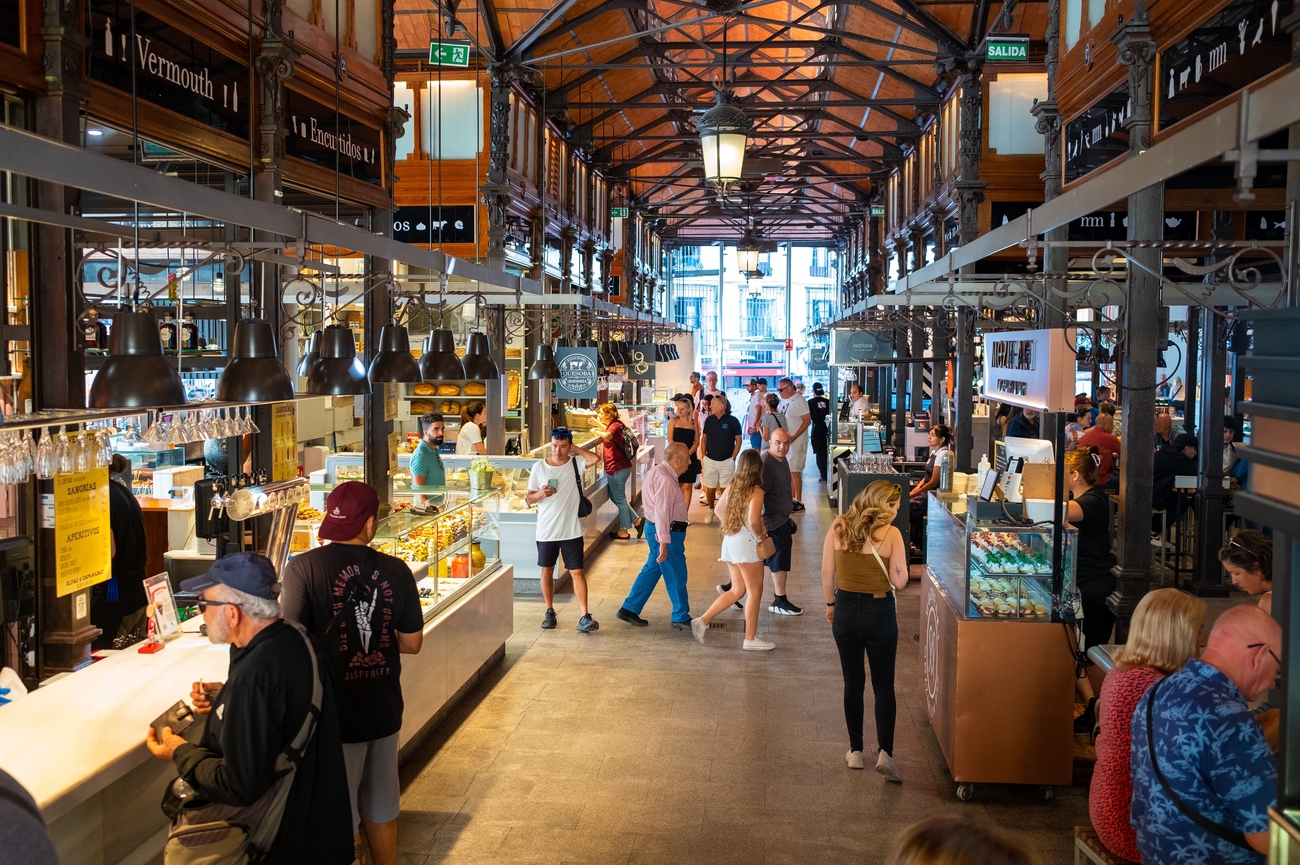
Mercado de San Miguel sits beside Plaza Mayor in a restored iron-and-glass hall whose architecture is a large part of the experience.
Light reaches the counters from several directions, the ironwork remains visible and the building can be understood almost immediately from the entrance. It is one of those food spaces where the architecture genuinely contributes to the desire to stay.
Its location also explains its intensity.
Visitors arrive continuously from the surrounding historic centre, often without planning the market as a separate destination. The result is a room designed around circulation, visible food and quick decisions rather than the slower routines of a neighbourhood shopping market.
Walk the perimeter once before ordering anything.
That first circuit tells you which counters are busy, where food is being replenished, where there is space to stand and whether you actually want something savoury, something sweet or simply a glass of wine.
Five minutes of looking can prevent an indifferent first purchase.
What to Eat at Mercado de
San Miguel
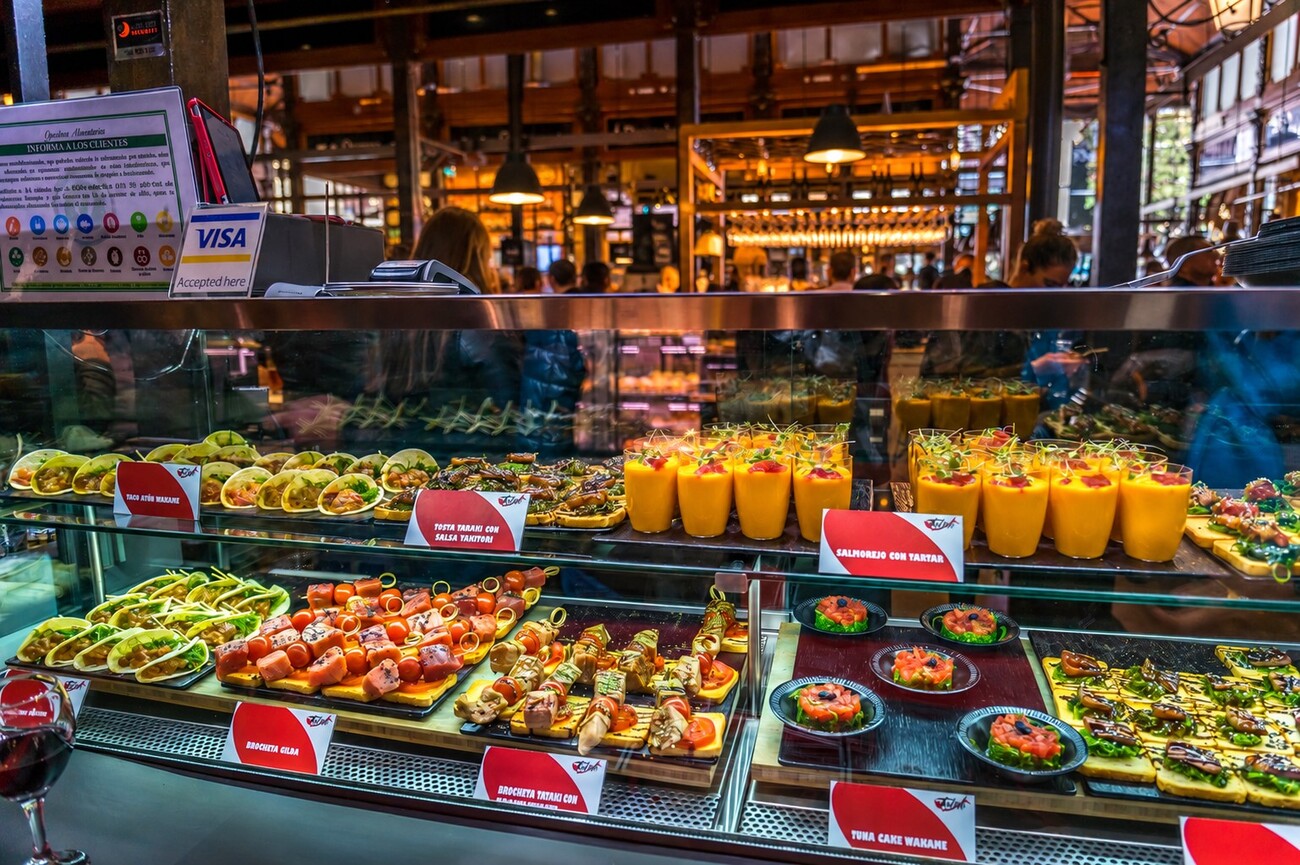
Prepared food and drink dominate Mercado de San Miguel, while raw ingredients play a relatively small role in the experience most visitors encounter.
That is why comparing it with a traditional Madrid food market can be misleading. San Miguel has a different job.
Food is highly visible, the surroundings are polished and the range makes it easy to order more than you intended. Prices can also be higher than at neighbourhood counters, particularly for premium products.
Selectivity matters.
Choose a counter where food appears to be moving quickly and being replenished regularly. Order one thing you genuinely want to try, add a glass of wine or another drink, and resist turning convenience into a complete meal unless that was your intention from the start.
Thirty minutes can be enough.
San Miguel works particularly well as a pause between Plaza Mayor and the surrounding streets. Used as an aperitif stop, it gives you the architecture, the atmosphere and a taste of the market without asking it to occupy the whole afternoon.
What Is the Best Time to
Visit Mercado de San Miguel?
The best time to visit Mercado de San Miguel is generally before the heaviest visitor traffic arrives. Earlier in the day and on weekdays, the hall is easier to navigate and you have more freedom to look at the counters rather than simply moving with the crowd.
At busy periods, particularly around midday in peak travel seasons, the market can become extremely compressed.
If you arrive and the room is too crowded to use comfortably, there is little value in forcing the visit simply because San Miguel is famous. Look in, assess the crowd and return later if the rest of your day allows it.
Opening hours are generally more generous than those of traditional fresh-food markets, but schedules can change around holidays and events, so check the current hours before visiting.
The more important question is not simply whether Mercado de San Miguel is open. It is whether you can experience it in the way you intended.
Mercado
de Antón Martín: A Working Market with Places to Eat
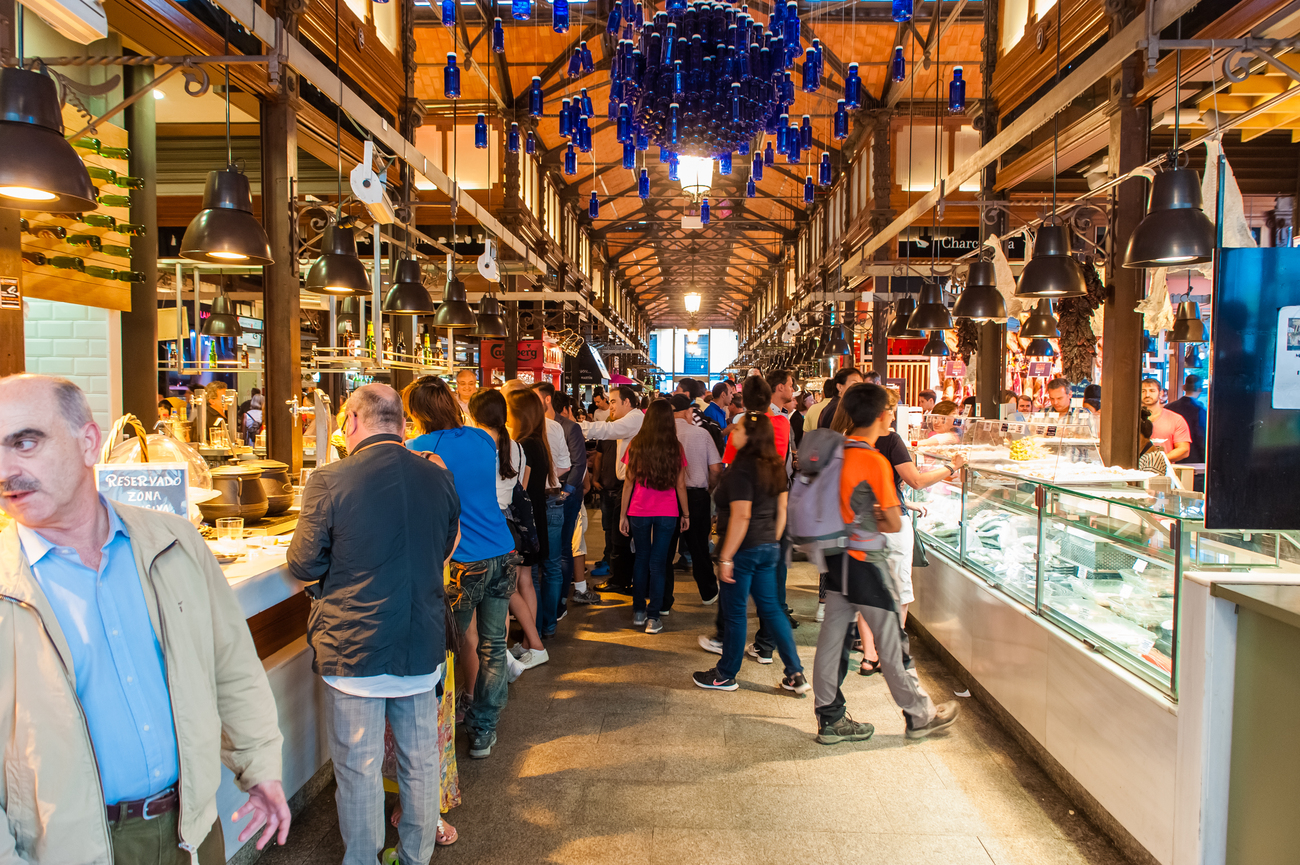
Mercado de Antón Martín is one of Madrid's most useful hybrid food markets, combining traditional fresh-food stalls with prepared-food counters and small restaurants. It offers a better view of how a neighbourhood market can continue serving local shoppers while adapting to new cuisines and new ways of eating.
Its value lies in that overlap between shopping and eating.
What Is Mercado de Antón
Martín Like?
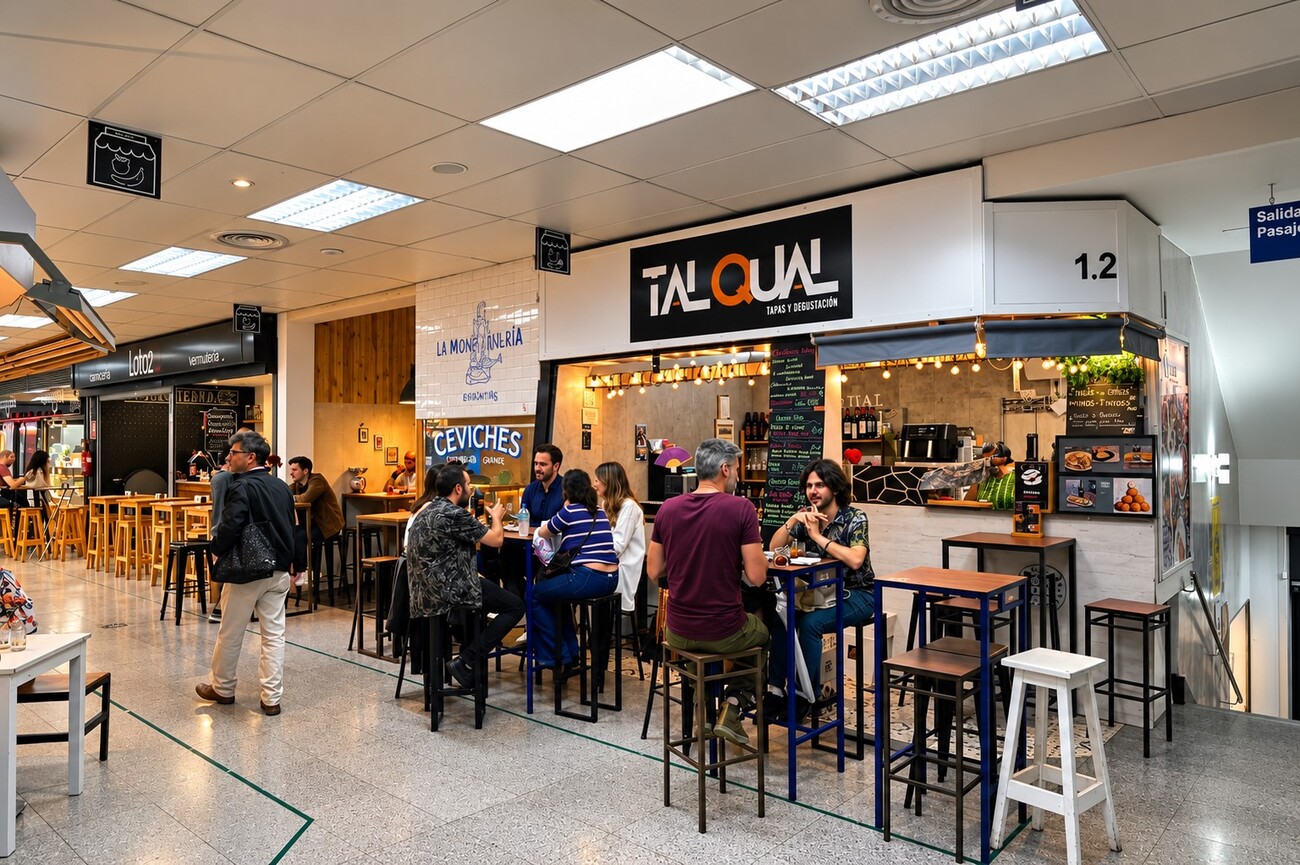
Mercado de Antón Martín sits in Lavapiés and still retains the practical functions of a neighbourhood food market.
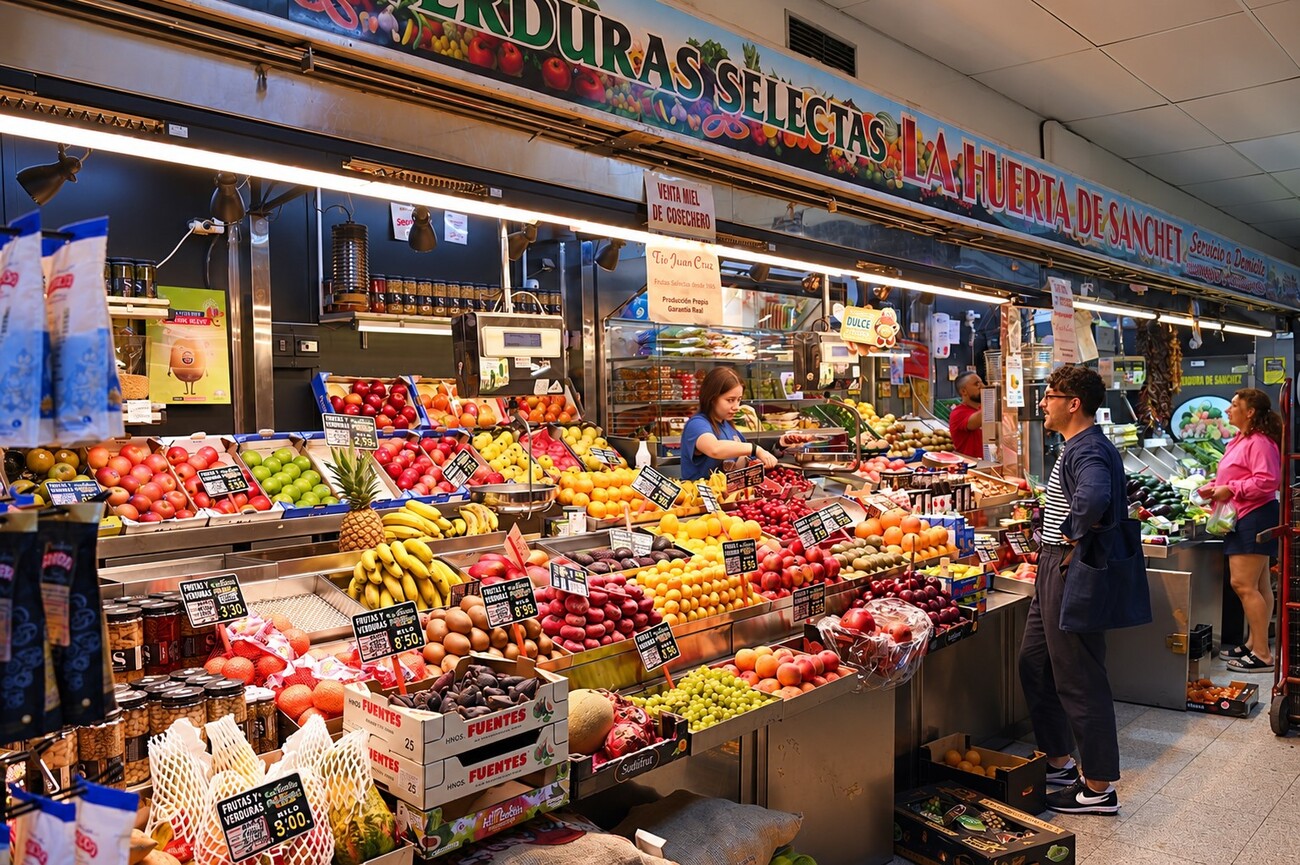
Fresh produce, meat and fish remain part of the building's daily life, but they now share space with small kitchens and prepared-food businesses. That coexistence is the main reason to visit.
You do not need to decide before entering whether the market is for shopping or eating.
Start with the traditional counters while they are active. Look at what is seasonal, notice which ingredients occupy the most space and pay attention to what local shoppers are buying.
Then move towards the prepared-food side of the market.
The order matters. If you eat first, the shopping stalls can become background scenery. If you look first, the plate you order later has more context.
A market tomato, a cut of fish or a row of peppers becomes part of the same food system as the dishes being served only a few metres away.
How Long Should You Spend
at Mercado de Antón Martín?
Mercado de Antón Martín is one of the Madrid markets where lingering makes sense.
A visit can last thirty minutes if you simply want to walk the aisles, or extend towards ninety minutes if you stop to eat and spend time exploring both the traditional and prepared-food sections.
That flexibility is part of its appeal.
The market changes character as you move through it. One aisle may feel like a traditional municipal market, while the next contains a small restaurant or food counter.
There is no need to impose a strict itinerary.
Walk first, eat later and let the market reveal where the interesting activity is happening that day.
How Lavapiés Shapes the
Market
Lavapiés has one of Madrid's broadest international food cultures, and Mercado de Antón Martín reflects the neighbourhood around it.
Traditional Spanish food retail sits alongside businesses influenced by the different communities that live nearby. The market therefore feels less like a preserved institution and more like a commercial space that has continued to change with local demand.
That is what makes the diversity meaningful.
Different residents need different ingredients and prepared foods, and the market becomes one of the places where those habits share the same roof.
Avoid turning that variety into a checklist.
The point is not to sample five different cuisines in an hour. Walk until you find a counter with a clear focus and steady turnover, then let one plate be enough.
For travellers who want to understand how Madrid's food markets still function as part of everyday neighbourhood life, Antón Martín offers something San Miguel cannot.
Buying and eating happen side by side, and neither has been reduced to scenery for the other.
The Madrid Food Markets Locals Use
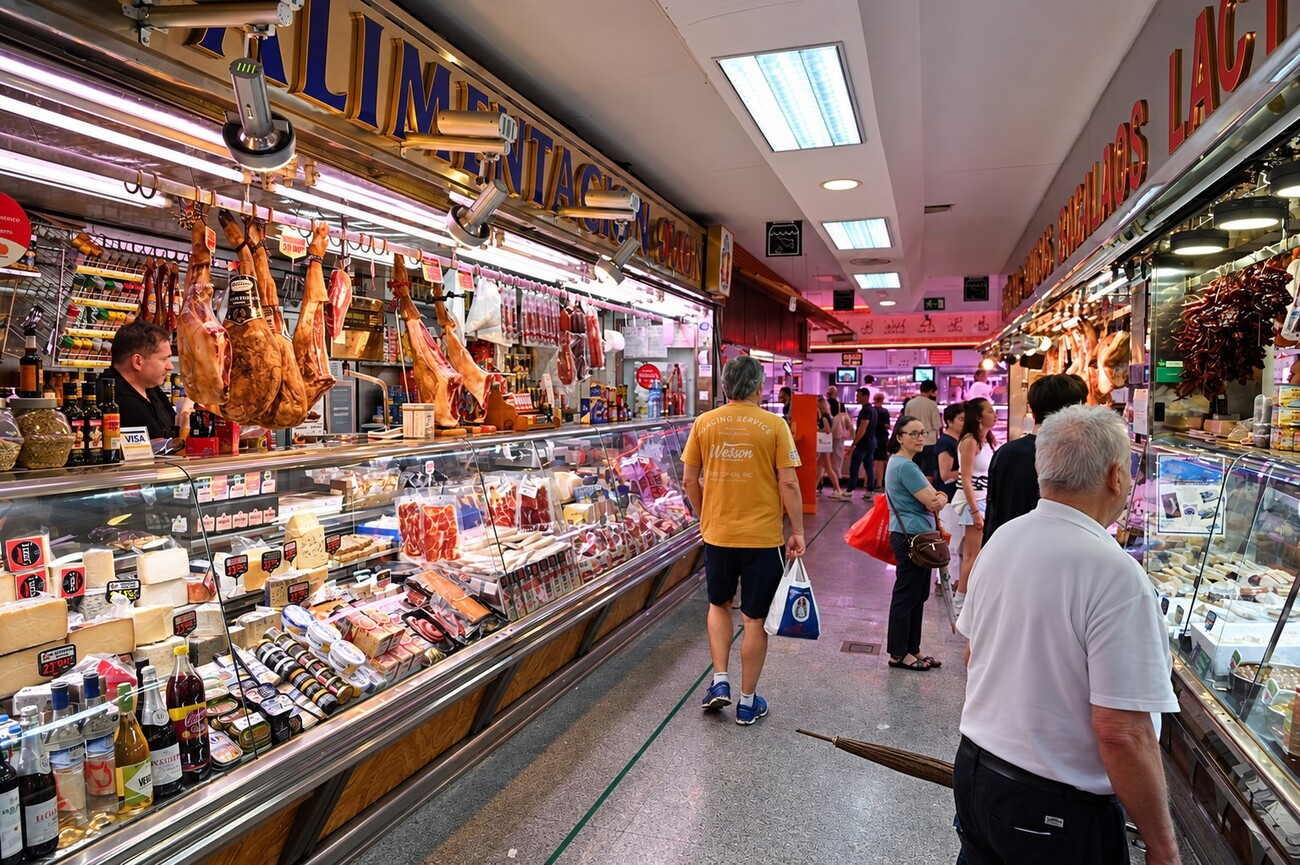
Some of Madrid's most revealing food markets are the ones that depend on local residents returning every week. They are less concerned with becoming destinations and more concerned with selling good fish, meat, cheese, produce and prepared food to people who live nearby.
For visitors, that makes them useful in a different way. The attraction is not simply seeing a market hall, but seeing which products and businesses can survive on repeat local demand.
Mercado de la Paz
Mercado de la Paz in Salamanca is one of the strongest choices when high-quality ingredients are the main reason for visiting.
The market serves an affluent residential district capable of supporting specialist food counters, with produce and cheese particularly worth exploring.
Arrive with a small purpose.
Buy fruit for the hotel, cheese for later or ingredients for lunch if you have access to a kitchen. That simple objective changes the way you interact with the market. Instead of merely looking at displays, you have to explain what you need and allow the person behind the counter to respond.
There is also a long-standing tortilla tradition inside the market, making it possible to stop for something to eat without changing the character of the visit.
Keep the hierarchy clear. La Paz is primarily worth visiting as a place to shop. Eating there is an extension of the market rather than its entire purpose.
For travellers staying in Salamanca, it fits particularly easily into the day. You can shop within the residential neighbourhood and return to the hotel before Madrid begins moving towards lunch.
Mercado de Vallehermoso
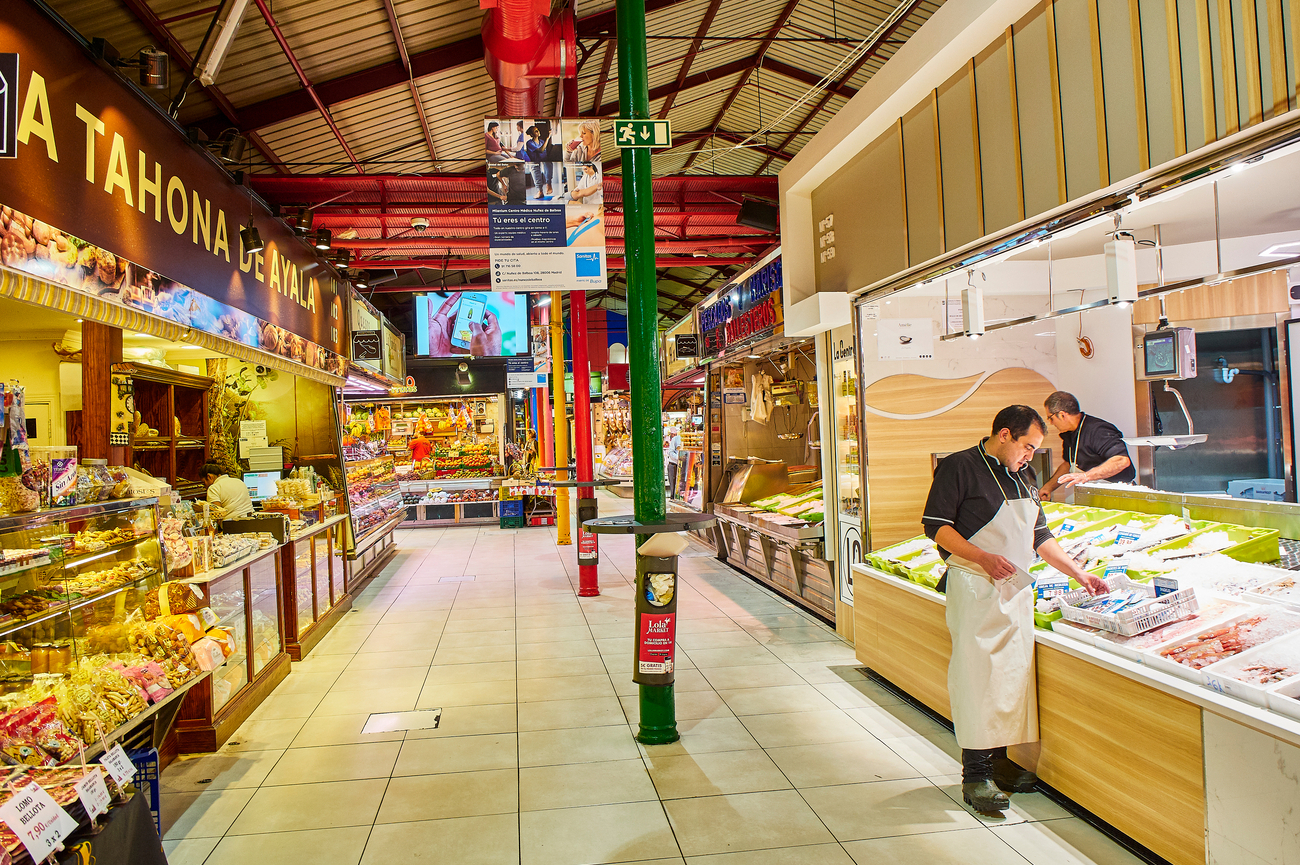
Mercado de Vallehermoso, in Madrid's Chamberí district, shows the hybrid market at its most convincing.
Traditional food retail continues alongside small kitchens and specialist producers, allowing the hall to evolve without abandoning its original role as a place to buy ingredients.
It works particularly well when you want lunch to develop naturally from the visit rather than planning the entire market around eating.
Begin with the fresh-food stalls. Look at what is moving through the fish, meat and produce counters, then turn towards the prepared-food businesses once your curiosity about the shopping side has been satisfied.
Because Chamberí is a residential district, the market remains accountable to customers who can return regularly.
That is what makes Vallehermoso interesting. It shows that a market does not have to choose between selling fish for dinner and supporting a small restaurant. Both functions can coexist as long as each remains strong enough to justify its place in the hall.
Mercado de Barceló and
Mercado de Chamartín
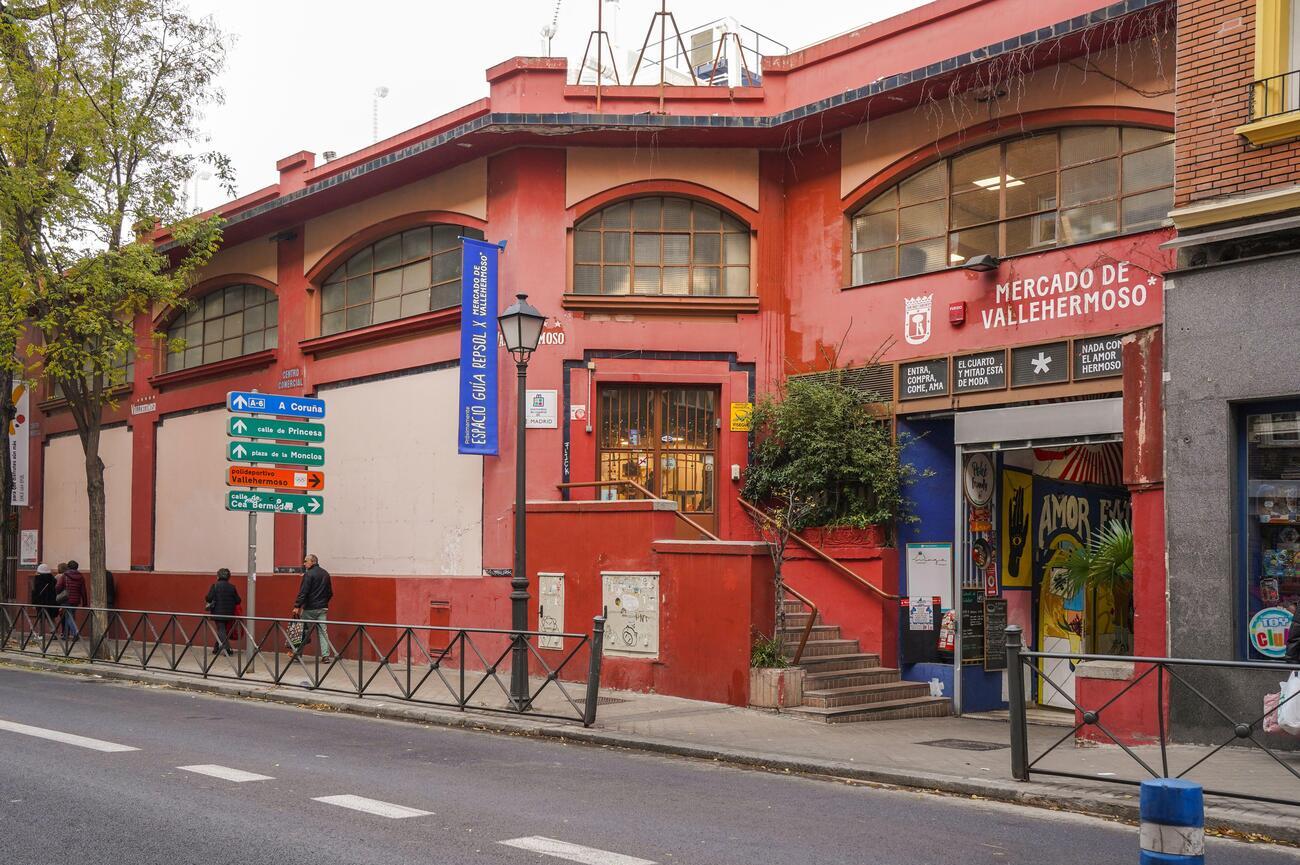
Mercado de Barceló and Mercado de Chamartín are useful for travellers staying outside Madrid's historic centre who want serious food shopping without making a special journey into the tourist core.
Both serve residential areas and offer access to specialist food counters.
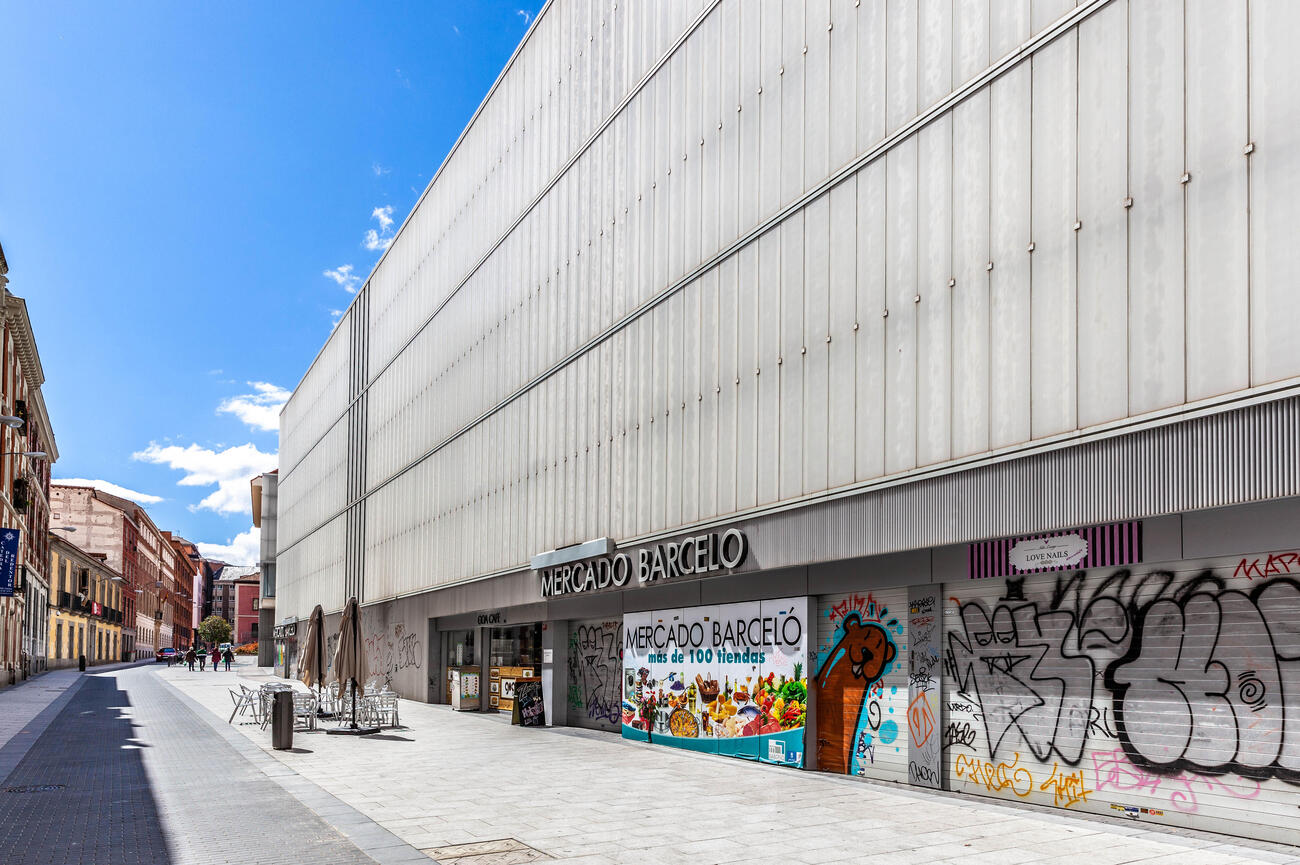
Mercado de Barceló is a modernised municipal market where traditional stalls share a larger complex with other services and places to eat. It is particularly useful when you need several different types of food in one stop and value convenience as much as atmosphere.
Mercado de Chamartín is more specialised.
Fish, meat, fruit and harder-to-find products form much of its appeal, making it better suited to someone who arrives with specific questions rather than simply browsing.
If you are staying in an apartment or serviced residence with a proper kitchen, Chamartín is the kind of market that can make cooking one evening worthwhile.
Neither market needs to compete with San Miguel for architectural drama. Their strength is practical. You can walk into a serious neighbourhood market, make a precise purchase and leave with an ingredient that might require considerably more planning elsewhere.
Mercado de San Fernando
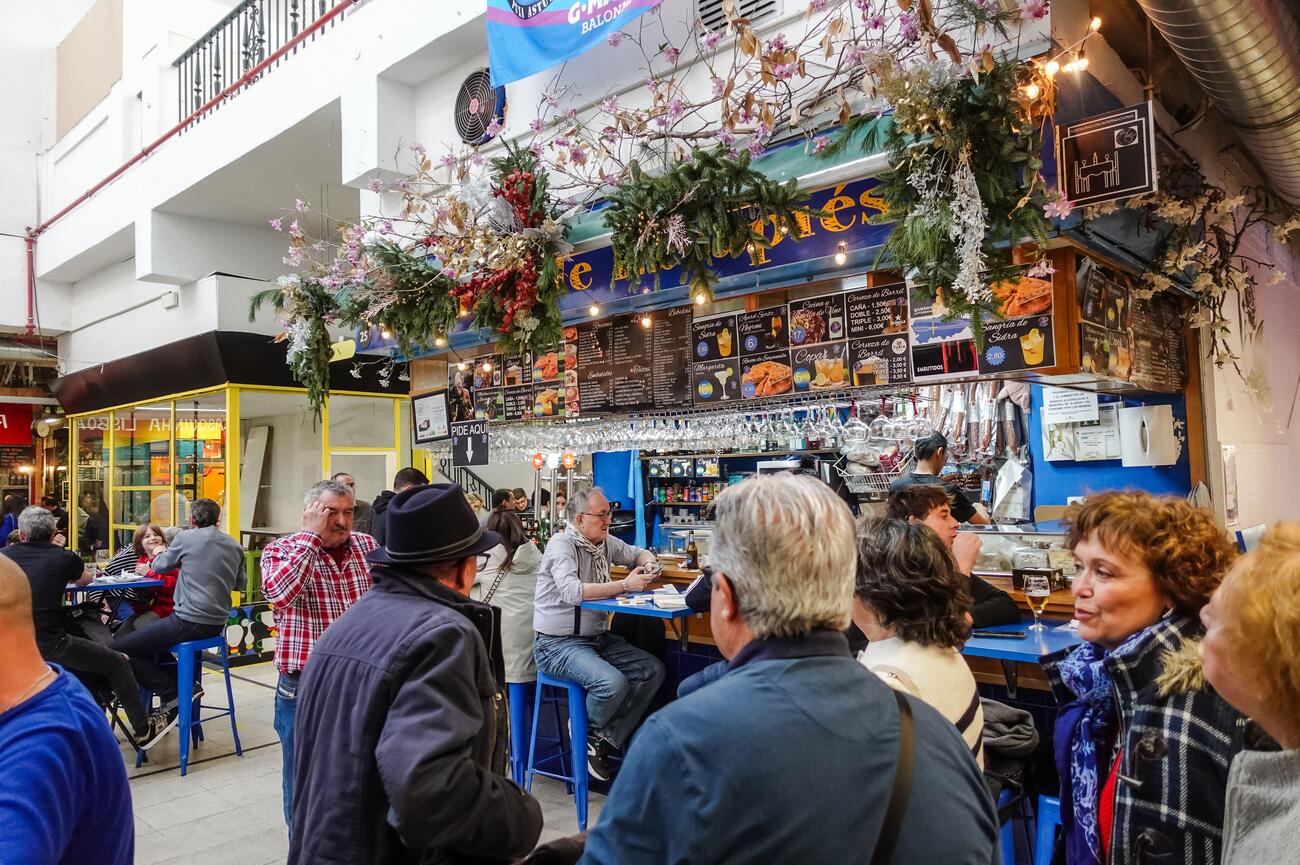
Mercado de San Fernando in Lavapiés has a more communal and less polished character than many of Madrid's better-known food markets.
Fresh-food retail shares the building with other small businesses and cultural uses, giving the market a wider neighbourhood role.
Walk through it with curiosity rather than a strict shopping list.
You may move from food stalls to books and other local businesses within a few steps. That mixture makes San Fernando feel less like a single-purpose gourmet destination and more like part of the neighbourhood's civic infrastructure.
Its informality is part of the attraction.
Madrid's municipal markets have not all evolved towards the same version of premium food retail. San Fernando demonstrates another survival strategy, built around breadth, local use and a building that continues to serve several purposes at once.
Is El Rastro a Food
Market?
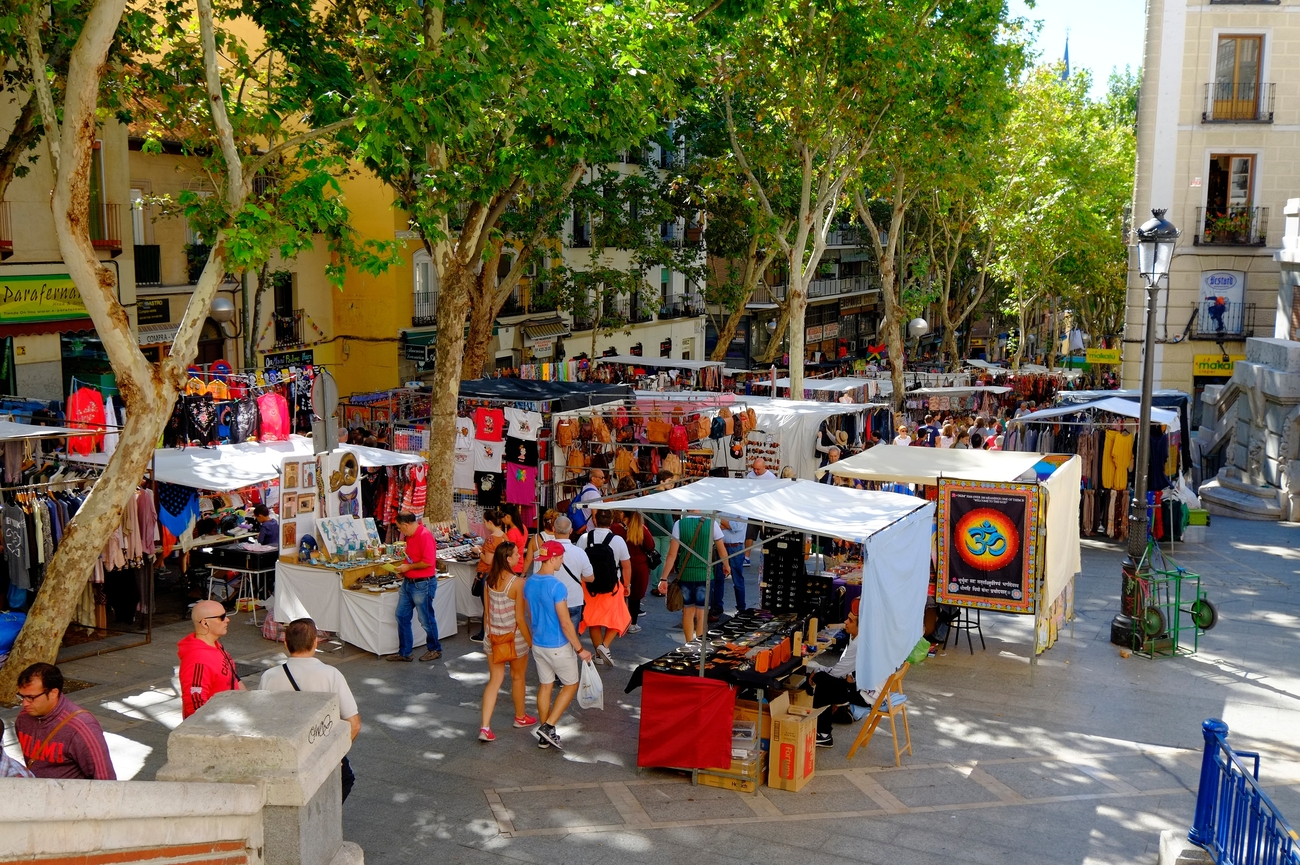
El Rastro is not a food market. It is Madrid's famous Sunday flea market, known for antiques, clothes, household objects and the dense network of streets that fills around it.
It belongs in a guide to Madrid's markets because visitors frequently group it with the city's food halls, but it should be approached on its own terms.
Go to El Rastro for the market itself, then allow food to happen around it.
As Sunday morning moves towards lunch, the bars of La Latina fill and the surrounding neighbourhood becomes the natural continuation of the visit.
Our guide to tapas in Madrid explains how to build a tapas crawl through those streets without allowing the first bar to become the entire afternoon.
Sunday also changes how Madrid's food markets operate. Traditional fresh-food counters may close or reduce their hours, while gastronomic and some hybrid markets can follow different schedules.
Check the individual market rather than assuming the same Sunday pattern applies across the city.
How to Use a Spanish Food Market
A traditional Madrid food market has its own rhythm, but the etiquette is simple. Understand how the queue works, buy from specialist stalls rather than trying to find everything at one counter, and ask what is good that day.
Take a Number
At busy counters, look for a ticket dispenser and take a number. If there is no machine and the queue seems informal, ask “¿Quién es el último?” to find out who is last.
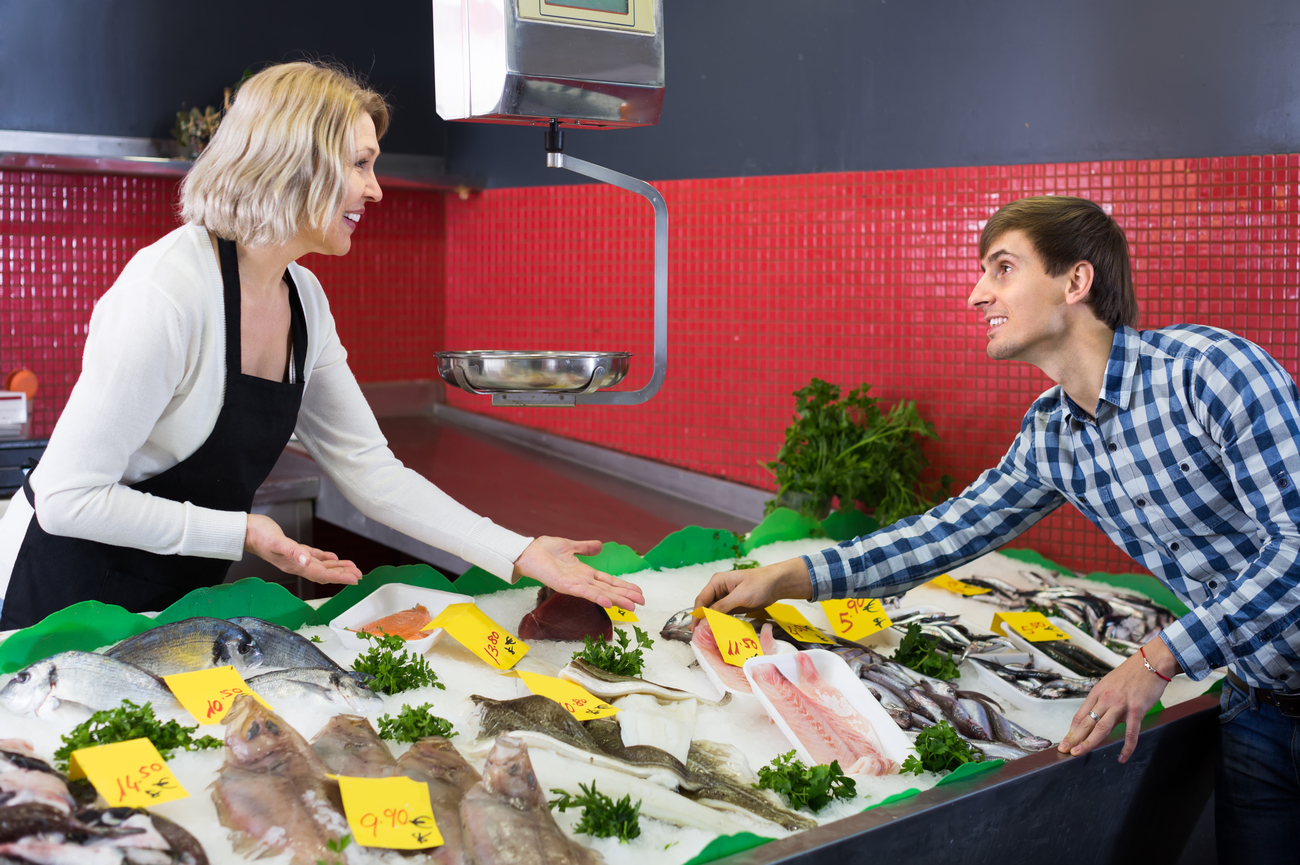
Use the wait to watch how people order. Fish may be cleaned or filleted on request, cheese cut by weight and meat prepared according to how it will be cooked.
When your turn comes, know roughly what you want and let the seller handle the technical details.
Ask What Is Good Today
Markets become more interesting when you allow the counter to influence what you buy.
Three useful questions are:
“¿Qué ha entrado hoy?” at the fishmonger, meaning “What came in today?”
“¿Qué corte me recomienda para guisar?” at the butcher, meaning “Which cut do you recommend for stewing?”
“¿Cuál está en su punto ahora?” at the cheese counter, meaning “Which one is at its best now?”
The point is not perfect Spanish. It is shifting from asking for something you already chose elsewhere to finding out what is particularly good that morning.
Visit in the Morning
Morning is generally the best time to experience Madrid's traditional food markets. Fresh-food counters are active, the day's stock is visible and the hall is still functioning primarily as a place to shop.
Early afternoon can work better if your interest is in counter bars and prepared food.
Sunday hours vary considerably, and August can bring additional closures, so check individual market schedules shortly before visiting.
Shop with a Meal in Mind
If you are buying ingredients to cook, begin with the ingredient most likely to change the menu, usually fish, meat or seasonal produce. Once that decision is made, everything else becomes easier to choose.
This same principle sits behind a market-led cooking experience. Our guide to Spanish cooking classes in Madrid explains how ingredient selection can become part of the lesson rather than simply a walk through the market.
Buy small quantities, particularly if you are travelling, and resist collecting fragile food without a clear plan for eating it.
What to Buy at Madrid Food Markets
The best things to buy at Madrid's food markets are either useful immediately or practical enough to take home. Jamón, conservas, pimentón, saffron and cheese all make sense, but the right choice depends on when you plan to eat them and whether they can travel legally and safely.
Jamón Ibérico
Jamón ibérico is easy to overspend on because a few labels contain a great deal of information.
Look first at breed percentage and feeding category. “100% ibérico” refers to pure ibérico parentage, while other hams may carry a lower percentage. Bellota refers to pigs finished on acorns and pasture during the montanera, while cebo de campo and cebo indicate different rearing and feeding systems.
If you are eating the ham in Madrid, buy a small amount sliced thinly to order. Fresh cutting is part of the quality.
If you intend to take it home, check your destination's import rules before buying. Vacuum packing does not make a meat product legal at the border.
Conservas
Spanish conservas are finished food rather than emergency provisions.
Tinned mussels, anchovies, sardines and other seafood can preserve excellent ingredients at their best. Look at the species, origin, packing liquid and preparation, whether olive oil, brine or escabeche.
They are also among the easiest market purchases to transport because they are compact and sealed, although customs restrictions may still apply.
A few carefully chosen tins can be a better reminder of a Madrid market than anything sold specifically as a souvenir.
Pimentón, Saffron and
Cheese
Pimentón and saffron are particularly practical purchases because small quantities can make a large difference in cooking.
Buy them from a specialist who can explain origin and style. With pimentón, decide whether you want sweet, bittersweet or hot. With saffron, buy a modest quantity intended for cooking rather than presentation.
Cheese is better bought for the remaining days of the trip unless you are confident about transport and storage. Ask what is at its best now and buy an amount you will realistically eat.
Ingredients for Madrid's
Traditional Dishes
Madrid's markets also make the city's traditional dishes easier to understand.
Cocido madrileño begins with relatively humble ingredients: chickpeas, vegetables, meat for broth, chorizo, morcilla and other cuts that develop through long cooking.
Seeing those ingredients separately gives the finished dish more context.
Our guide to traditional food in Madrid follows them into cocido, callos and the other dishes the capital claims as its own.
Buy these ingredients if you actually intend to cook. A cocido basket is an excellent project and a poor souvenir.
Counter Bars in Madrid Food Markets
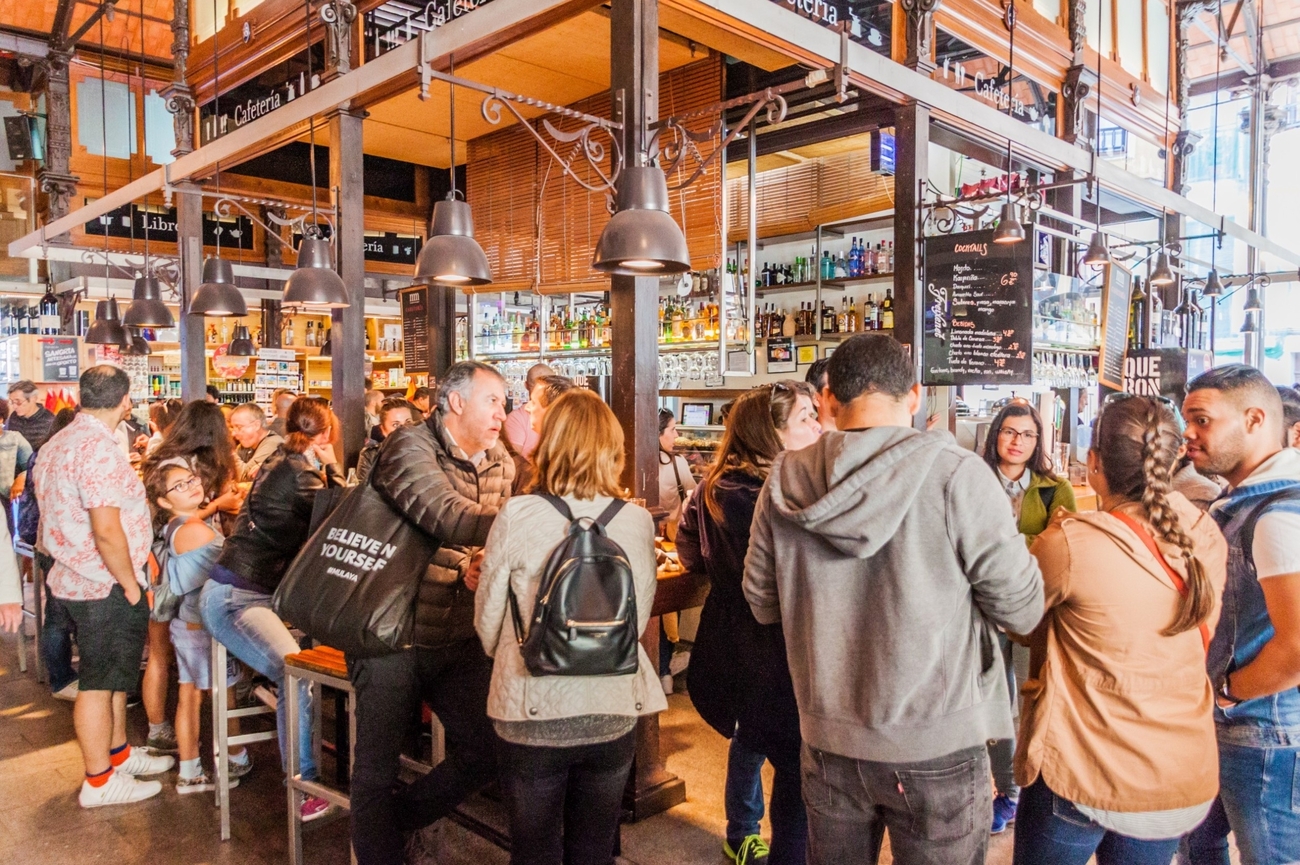
Counter bars inside Madrid's working food markets are designed for short, informal stops rather than long restaurant meals. They serve shoppers, traders and local residents alongside visitors, often using ingredients and dishes that fit naturally into the life of the market around them.
What to Order at a Market
Counter Bar
Order something small that is already moving.
A slice of tortilla, a simple sandwich or a small plate from the day's preparation is often enough. Keep the drink equally modest.
The point is not to turn the market visit into lunch. It is to stop for ten or fifteen minutes, eat something good and return to the stalls while the fresh-food counters are still active.
Turnover matters more than ceremony. Food that is being ordered repeatedly is usually a stronger choice than something elaborate sitting untouched on display.
Why Market Bars Feel
Different from Restaurants
A counter bar asks very little of you.
You may stand rather than sit. Your shopping stays beside you. Food arrives quickly and the market continues operating around you.
That lack of ceremony is part of the appeal.
In the strongest hybrid markets, the bar also shows whether the eating and shopping sides of the building still belong together. When traders and local shoppers use the same counter as visitors, the food feels connected to the market rather than added purely for tourism.
That is the balance worth looking for.
Ask the Fishmonger What Came In Today
Take a number at the fish counter before deciding what you are going to buy.
When your turn comes, ask:
“¿Qué ha entrado hoy?”
What came in today?
Then listen.
Let the fishmonger show you what is best, say how you intend to cook it and ask for enough for the meal ahead. That small exchange captures what makes a working Madrid market different from simply browsing food displays. The ingredient is allowed to change the plan.
Our Essential Culinary Experience in Madrid follows the same principle, beginning in the market before four traditional dishes are prepared in a professional kitchen.
The menu may have a plan. The market still gets a vote.


Let us know what you love, where you want to go, and we’ll design a one-of-a-kind adventure you’ll never forget.
Get in touch
Miriam
Travel Specialist

Romina
Travel Specialist

Laura
Travel Specialist
Our offices:



Revigorate, Iberian Escapes and Algarve Lifestyle are the registered brand names of APCS Lda . We are a fully authorised travel agency licensed by Turismo de Portugal RNAVT/6867.
In the event of a dispute, the consumer may refer to: RAL - Centros de Arbitragem
Avª. 5 de Outubro, nº. 55, R/C Dtº. 8000-075 Faro, Portugal | Tel: +351 289 823 135 *
* national landline call
E-mail: info@consumoalgarve.pt| www.consumidoronline.pt | Mon to Fri: 9:00 - 13:00 / 14:00 - 17:00