Tsedang: The Cradle of Tibetan Civilisation

Farmers still collect soil from the fields below Yumbulagang Palace in the Yarlung Valley and sprinkle it on their own land in the hope of a better harvest.
Those fields are traditionally regarded as the first cultivated farmland in Tibet. They have been worked for more than two thousand years in the same valley where Tibet's first hereditary monarchy emerged in the 2nd century BC. Above them, Yumbulagang Palace stands on its ridge, overlooking the landscape where Tibetan kingship, agriculture and early civilisation first took shape.
This is Tsedang in the Yarlung Valley. This is where Tibetan civilisation began. At approximately 3,560 metres above sea level, the valley lies lower and is more fertile than much of the Tibetan Plateau, with rich soils, mountain protection and water supplied by the Yarlung Tsangpo River. These conditions helped make it one of the first places in Tibet where a permanent kingdom could emerge and endure.
Our guide to the Tibet Heritage Route begins here deliberately. Seeing the Yarlung Valley before travelling to Lhasa changes the way the Potala Palace, Jokhang Temple and the great monasteries are understood. They become part of a continuous story that begins here rather than isolated monuments encountered later in the journey.
The complete eight-day Tibet Heritage journey also begins in Tsedang for both historical and practical reasons. Travellers have time to begin acclimatising to the altitude while discovering the earliest chapter of Tibetan civilisation before continuing westwards to Lhasa, Gyantse and Shigatse.

The
First Kingdom
The Yarlung Valley did not become the birthplace of Tibetan civilisation by chance. Its geography made it one of the most favourable places for settlement on the Tibetan Plateau.
Around Tsedang, fertile soil, reliable water sources and a comparatively mild climate created conditions that supported agriculture long before many other parts of Tibet could do the same. At approximately 3,560 metres above sea level, the valley sits lower than much of the surrounding plateau. While still a high-altitude environment, it is one of the most hospitable regions in central Tibet. The Yarlung Tsangpo River, which later becomes the Brahmaputra, and its tributaries provided a dependable source of water, while the surrounding mountains offered protection from the stronger winds of the open plateau.
These advantages helped create the conditions for Tibet's first kingdom.
Nyatri Tsenpo
and the Yarlung Dynasty
According to Tibetan tradition, the first hereditary king of Tibet, Nyatri Tsenpo, established his rule in the Yarlung Valley around the 2nd century BC. Legend tells that he descended from the heavens onto the sacred Yarlha Shampo Mountain overlooking the valley. The local people recognised his divine origins and carried him on their shoulders to become their king, giving rise to his name, often translated as the "neck-enthroned king".
The valley is also linked to one of Tibet's most important creation stories. According to Tibetan mythology, the first Tibetans descended from the union of Avalokiteshvara, who appeared in the form of a monkey, and an ogress. Their descendants became the ancestors of the Tibetan people. This story is associated with Gangpo Ri Mountain, which rises above Tsedang and remains a place of pilgrimage today. Prayer flags, mani stones and sacred sites along the mountain continue to connect the landscape with these ancient traditions.
The dynasty founded by Nyatri Tsenpo endured for approximately 800 years and produced 33 kings. The most famous was Songtsen Gampo, who unified the Tibetan Plateau in the early 7th century, introduced the Tibetan script, supported the spread of Buddhism and moved the capital from the Yarlung Valley to Lhasa. Much of the history encountered later on the Tibet Heritage Route, from the Potala Palace to the monasteries of central Tibet, can be traced back to the foundations established by the Yarlung Dynasty.

The Chongye
Valley: The Royal Tombs
Approximately 26 kilometres south of Tsedang lies the Chongye Valley, home to the royal tombs of the Yarlung kings. Often referred to as Tibet's Valley of the Kings, this landscape contains some of the most important royal burial sites in Tibetan history.
Large earthen burial mounds rise from the valley floor, marking the resting places of rulers who helped shape the early Tibetan kingdom. The most famous is traditionally associated with Songtsen Gampo, the king who transformed Tibet into a major regional power. Nearby stands a temple dedicated to him and his two queens, Princess Wencheng of China and Princess Bhrikuti of Nepal, both figures closely connected with the introduction of Buddhism into Tibet.
The burial mounds are simple in appearance but powerful in presence. Rising from open fields beneath the surrounding mountains, they serve as reminders that the kings who created the Tibetan state, established its script and laid the foundations of its religious traditions are still connected to the landscape where their story began.
Standing in the Chongye Valley, it becomes easier to understand why the Tibet Heritage Route begins in Tsedang. Before the monasteries of Lhasa, before the sacred lakes and mountain passes, before the great institutions of Shigatse, there was the Yarlung Valley and the dynasty that shaped everything that followed.
Yumbulagang
Palace: The Oldest Palace in Tibet
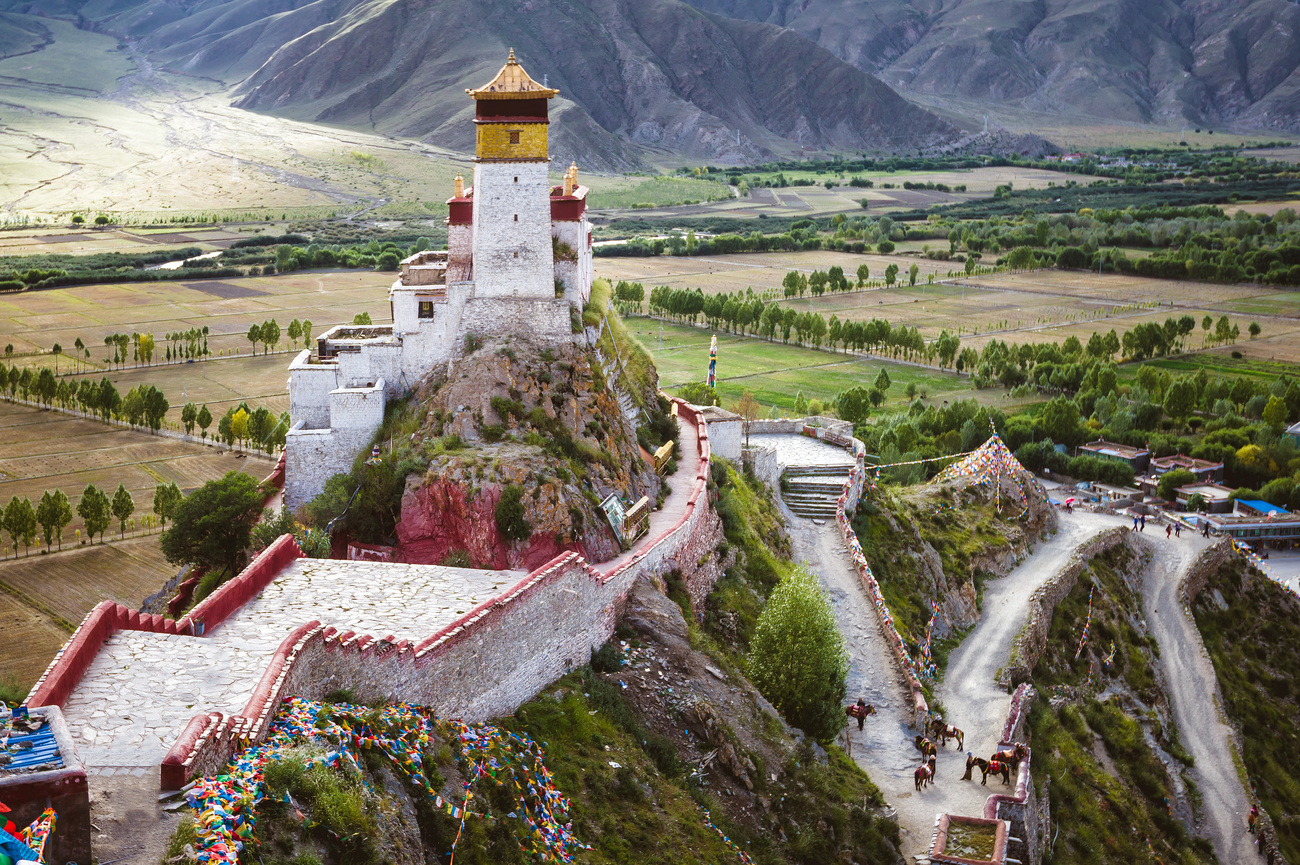
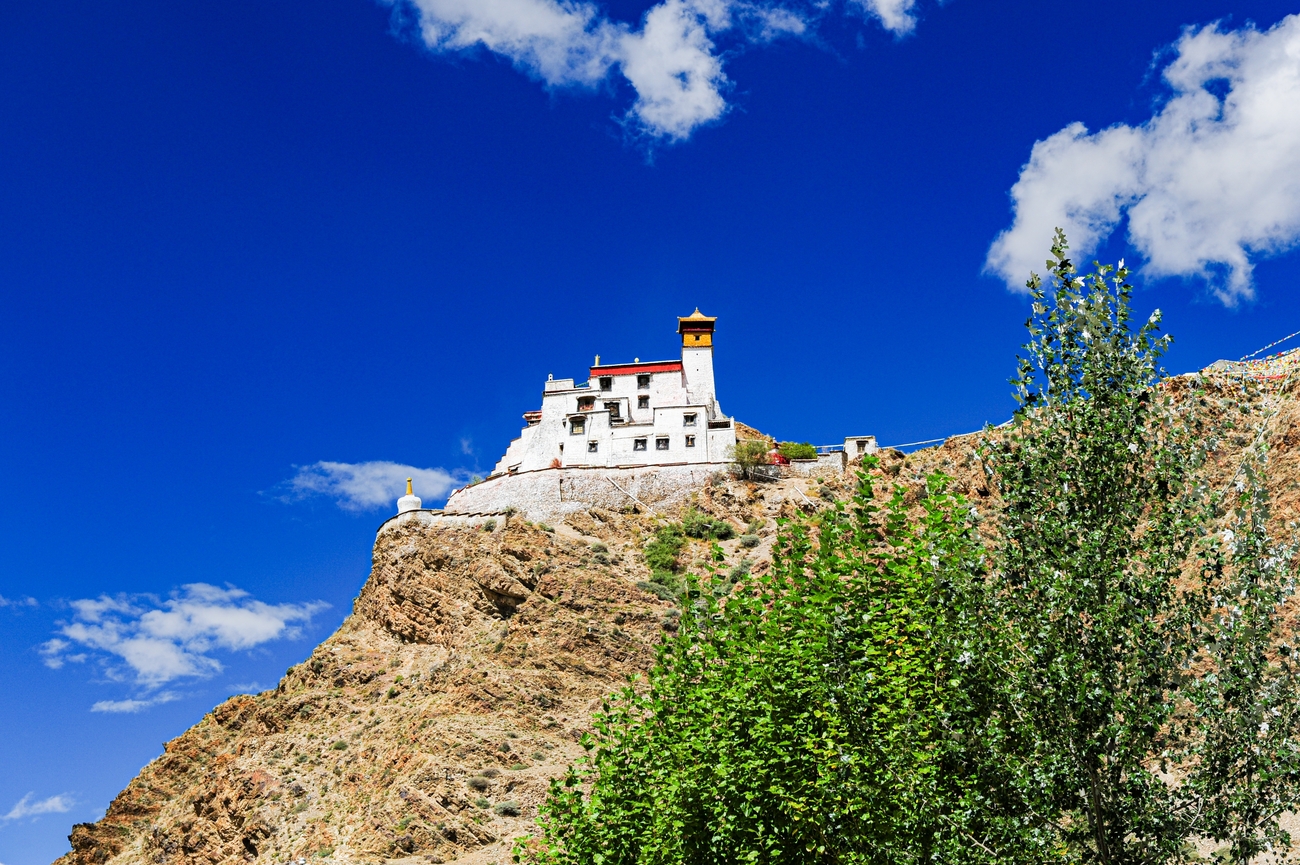
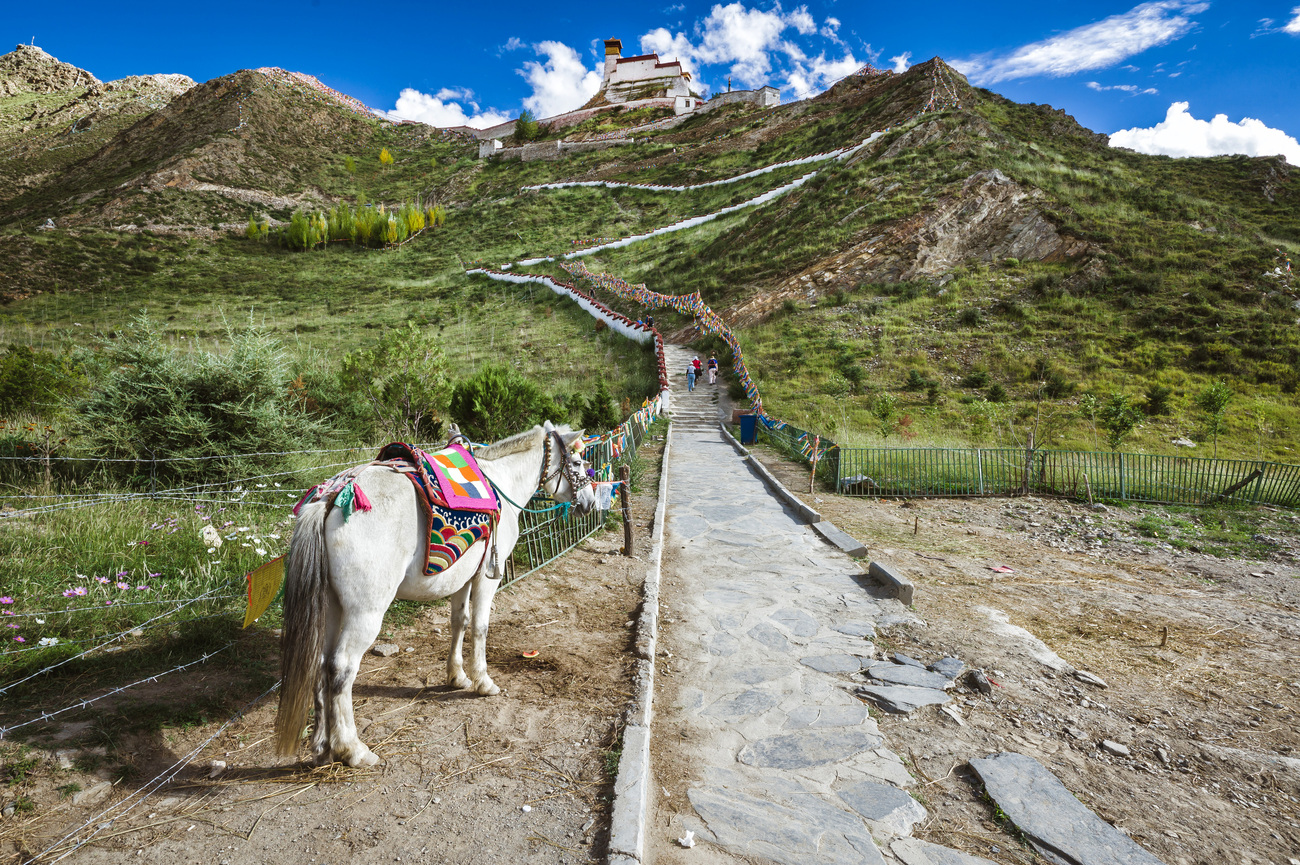
Fourteen kilometres south of Tsedang, on a narrow ridge overlooking the Yarlung Valley, stands Yumbulagang Palace, traditionally regarded as the oldest palace in Tibet.
According to Tibetan tradition, it was built in the 2nd century BC for Nyatri Tsenpo, the first king of Tibet. While the structure visible today is largely the result of later reconstruction, the site itself has been associated with Tibetan kingship for more than two thousand years. Rising above the valley on its rocky ridge, Yumbulagang occupies one of the most dramatic and historically significant locations in Tibet.
The palace combines several functions that would later become familiar throughout Tibetan history. It served as a royal residence, a defensive lookout and a sacred site. This combination reflected the nature of early Tibetan kingship, where political authority and spiritual legitimacy were closely connected.
The Legend of
the Falling Scriptures
One of the most famous stories associated with Yumbulagang concerns the arrival of Buddhism in Tibet. According to tradition, sacred Buddhist scriptures descended from the heavens onto the roof of the palace during the 5th century AD.
At that time, Tibet did not yet have a written script capable of translating or understanding the texts. The scriptures were preserved and revered until the reign of Songtsen Gampo in the 7th century, when the Tibetan script was developed and Buddhist teachings could begin to be translated and studied more widely.
Whether viewed as history, legend or a blend of both, the story reflects an important truth about early Tibet. Buddhist ideas and influences arrived before the institutions and written traditions needed to fully absorb them. The legend captures that transition in a way that has remained central to Tibetan cultural memory.
When Songtsen Gampo moved the capital from the Yarlung Valley to Lhasa, Yumbulagang gradually evolved from a royal palace into a religious site. Today, the chapel contains images associated with Tibet's early kings alongside Buddhist figures, reflecting both aspects of its history.
Songtsen Gampo's legacy extends far beyond this valley. The same ruler who established Lhasa as Tibet's capital also commissioned the earliest structures on Red Mountain that would eventually become the Potala Palace. Our guide to the Potala Palace explores how that story continued in Lhasa centuries later.
The View From
the Ridge
The walk to Yumbulagang takes approximately twenty minutes along a stone path that climbs steadily from the valley floor. The reward is one of the finest panoramic views in the Yarlung Valley.
From the ridge, visitors can see the patchwork of agricultural fields below, the Yarlung Tsangpo River winding through the landscape and the surrounding mountains that helped shelter Tibet's earliest kingdom. The Chongye Valley, home to the royal tombs of the Yarlung kings, can also be seen in the distance.
The fields beneath Yumbulagang are traditionally regarded as the first cultivated farmland in Tibet. Seeing them from above helps explain why this valley became the centre of early Tibetan civilisation. Fertile land, reliable water and natural protection created the conditions for a kingdom that would eventually shape the entire Tibetan Plateau.
Near the palace is Geer Spring, an ever-flowing natural spring that local tradition associates with healing properties. Visitors often stop here during their exploration of the area, continuing a custom that has existed for generations.
From the ridge at Yumbulagang, the wider story of Tibet begins to make sense. The fields, rivers, mountains and ancient palace all reveal why the Yarlung Valley became the birthplace of a civilisation whose influence would eventually extend across the plateau and far beyond.
Tradruk
Temple: Where Songtsen Gampo Left His Mark
Seven kilometres south of Tsedang, on the eastern side of the Yarlung Valley, Tradruk Temple is one of the oldest and most important Buddhist temples in Tibet. It is traditionally associated with King Songtsen Gampo, who is said to have built it in the 7th century during the early spread of Buddhism across the plateau.
Tradruk is closely linked to one of the most vivid founding legends in the Yarlung Valley. According to tradition, Songtsen Gampo took the form of a falcon, or tra, to subdue a dragon, or druk, allowing the temple to be built. The name Tradruk preserves this story of falcon and dragon, connecting the site with both royal authority and sacred protection.
The temple was later enlarged under the Fifth and Seventh Dalai Lamas. Its layout, with a central assembly hall surrounded by chapels, recalls the organisation of the Jokhang Temple in Lhasa. This architectural connection reinforces Tradruk's importance within the early history of Tibetan Buddhism.
The Pearl
Thangka
Tradruk Temple's greatest treasure is its pearl thangka, a sacred image of Avalokiteshvara, the Bodhisattva of Compassion. Traditionally associated with Princess Wencheng, the thangka is said to be made from thousands of natural pearls, along with other precious materials.
The thangka is not always on public display, and viewing may require a separate admission fee. When visible, it is one of the most remarkable devotional objects in the Yarlung Valley, combining religious meaning, artistic skill and the wealth of Tibet's early royal world.
The temple also contains important murals connected with the founding stories of Tibet and the spread of Buddhism. These paintings depict figures such as Nyatri Tsenpo, Tradruk itself and Guru Rinpoche, linking Tibetan kingship, sacred geography and Buddhist tradition in a single setting.
For travellers following the Tibet Heritage Route, Tradruk helps bridge the world of the early Yarlung kings with the Buddhist institutions that later flourished in Lhasa and Shigatse. It shows that Tsedang is not only the political beginning of Tibet, but also one of the places where its religious identity began to take shape.
Samye
Monastery: Where the Route’s Tradition Was Born
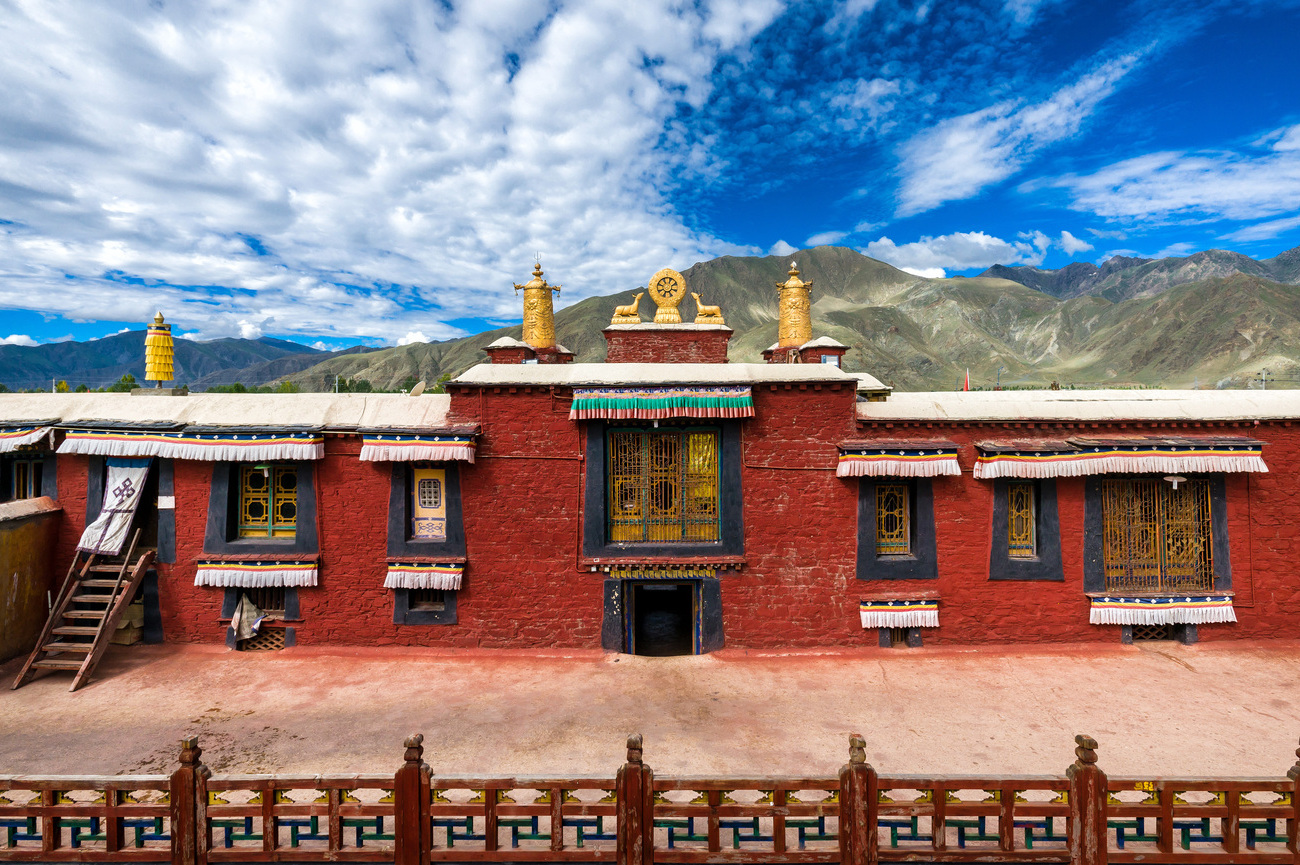
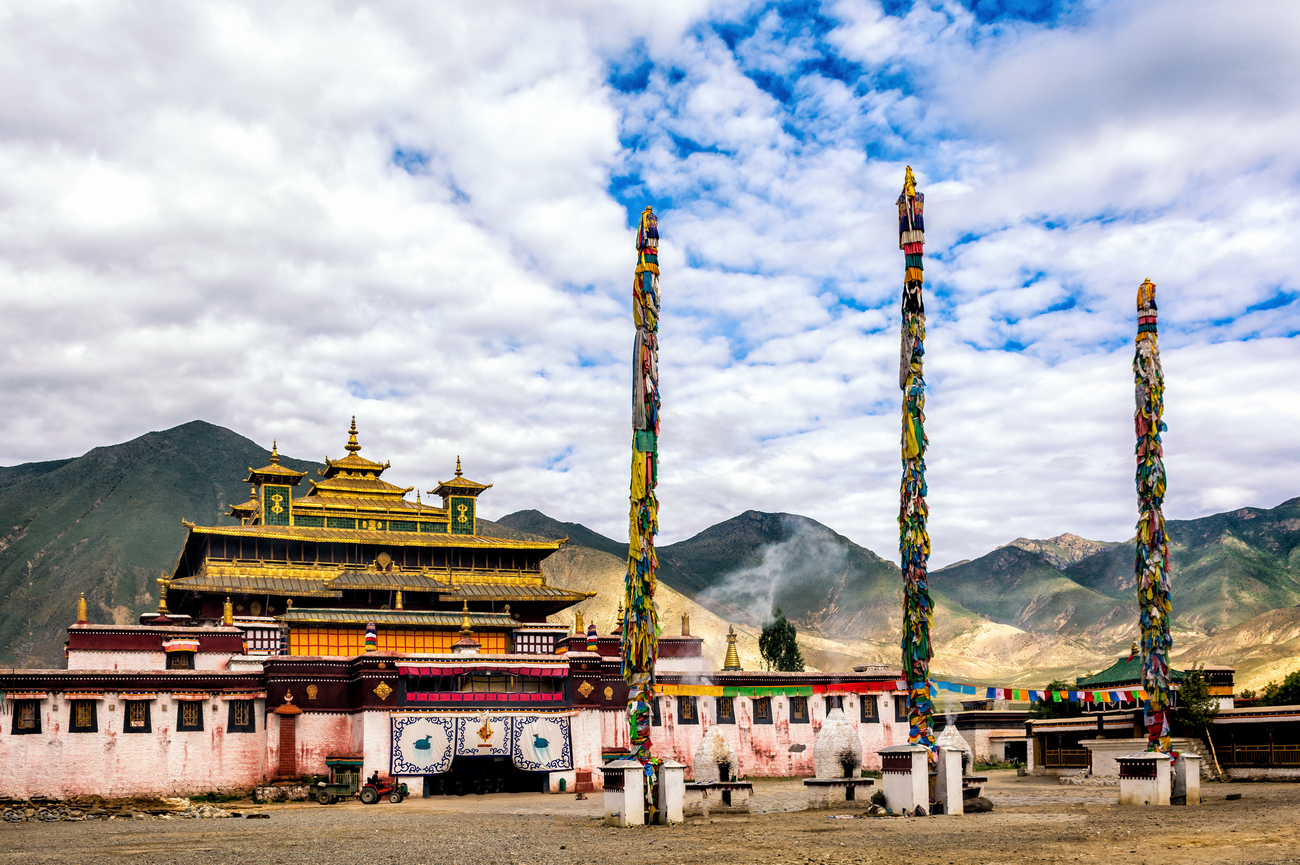
Forty kilometres from Tsedang, on the north bank of the Yarlung Tsangpo, Samye Monastery was founded in 779 AD by Padmasambhava, King Trisong Detsen and the Indian scholar Shantarakshita. It is recognised as the first Buddhist monastery established in Tibet and one of the most important religious foundations on the plateau.
Samye matters because it marks the point where Tibetan Buddhism took institutional form. Without Samye, there is no Drepung, no Sera and no Tashilhunpo as they later developed. The monastery circuit from Lhasa to Shigatse follows a tradition that began here in the 8th century.
The Mandala
Design
Samye was designed as a three-dimensional representation of the Buddhist cosmos. The central temple, known as Utse, represents Mount Meru, the sacred mountain at the centre of Buddhist cosmology. Around it, temples and chapels represent the surrounding continents and subcontinents, while the outer wall symbolises the ocean that encloses the world.
This makes Samye more than a monastery complex. It is a model of the universe expressed through architecture, colour, layout and sacred space. From ground level, the design is experienced gradually as you move through the courtyards, chapels and temples. From the nearby Hepo Ri hill, the wider mandala plan becomes much easier to understand in a single view.
The monastery was damaged during the Cultural Revolution and has since been restored, while preserving the original symbolic layout. Monks continue to practise here, maintaining the religious life of an institution that has shaped Tibetan Buddhism for more than twelve centuries.
The monastery circuit from Lhasa to Shigatse follows the tradition that Samye established. That journey, explored in our guide to the Tibetan monastery circuit, shows how the Buddhist foundations created here continued westward across the plateau through Lhasa, Gyantse and Shigatse.
Why
Tsedang Belongs at the Beginning
Many Tibet itineraries begin in Lhasa. The Tibet Heritage Route begins in the Tsedang Yarlung Valley, and that choice changes the way the whole journey is understood.
Tsedang gives the route its historical foundation. Before the Potala Palace, before the Jokhang Temple, and before the great monasteries of Lhasa and Shigatse, there was the Yarlung Valley. This is where Tibet's first kings ruled, where Yumbulagang Palace stood above the valley fields, and where early Tibetan civilisation began to take shape.
Arriving at the Potala Palace after visiting Tsedang makes Lhasa feel different. You have already stood in the valley connected with Songtsen Gampo's dynasty. You have seen Yumbulagang, walked near the fields traditionally regarded as Tibet's first farmland, and visited Tradruk Temple, one of the earliest Buddhist temples associated with the same king. The palace on Red Mountain then becomes not just an extraordinary monument, but the continuation of a story that began in the Yarlung Valley.
There is also a practical reason for beginning here. At approximately 3,560 metres above sea level, Tsedang is slightly lower and gentler than Lhasa. Starting the journey here gives the body time to adjust to the plateau before the more demanding visits in the capital, including the ascent to the Potala Palace.
That is why Tsedang belongs at the start of the route. It gives the journey both historical context and a more comfortable pace, allowing Tibet to unfold in the right order.
Practical
Notes
- Getting there: Tsedang is approximately 183 kilometres southeast of Lhasa and can be reached by road in around three hours. International travellers require a Tibet Travel Permit, which must be arranged through a registered travel agency as part of a confirmed itinerary.
- Yumbulagang: Yumbulagang stands on a ridge above the Yarlung Valley. The walk from the valley floor to the palace takes approximately 20 minutes along a stone path. Some visitors may also be able to hire yaks for the ascent. Entry arrangements can vary, so it is best to confirm the current access rules in advance.
- Tradruk Temple: The pearl thangka at Tradruk Temple is not always on public display and may require a separate viewing fee in addition to the general temple ticket. Because viewing arrangements can change, the schedule should be confirmed in advance through the local operator or guide.
- Samye Monastery is located on the north bank of the Yarlung Tsangpo and is accessible by road from Tsedang. Historically, travellers used a ferry crossing to reach Samye, but road access now makes the journey more straightforward. For the best view of the monastery's mandala layout, visitors can climb nearby Hepo Ri hill, which usually takes around 30 minutes from the monastery area.
- When to visit: The Yarlung Valley's slightly lower altitude and milder climate make it accessible for a longer season than some parts of the plateau. Spring, from April to May, and autumn, from September to November, are especially rewarding. In October, the harvest season brings golden colour to the fields below Yumbulagang, the same valley landscape that has been cultivated for more than two thousand years.
Before
Lhasa, There Was Tsedang
The Potala Palace took decades to build, but the dynasty that made Lhasa possible began much earlier in the Yarlung Valley. That is why Tsedang matters.
This valley connects the oldest layers of Tibetan civilisation with the great monuments that came later. Yumbulagang stands above fields traditionally regarded as Tibet's first cultivated farmland. Tradruk Temple preserves the early relationship between kingship and Buddhism. Samye Monastery marks the beginning of Tibetan monastic life.
Together, these places give the Tibet Heritage Route its foundation. Without Tsedang, the Potala Palace is still extraordinary. With Tsedang, it becomes part of a story you have already begun to understand.


Let us know what you love, where you want to go, and we’ll design a one-of-a-kind adventure you’ll never forget.
Get in touch
Miriam
Travel Specialist

Nina
Travel Specialist

Abigail
Travel Specialist
Our offices:



Revigorate, Iberian Escapes and Algarve Lifestyle are the registered brand names of APCS Lda . We are a fully authorised travel agency licensed by Turismo de Portugal RNAVT/6867.
In the event of a dispute, the consumer may refer to: RAL - Centros de Arbitragem
Avª. 5 de Outubro, nº. 55, R/C Dtº. 8000-075 Faro, Portugal | Tel: +351 289 823 135 *
* national landline call
E-mail: info@consumoalgarve.pt| www.consumidoronline.pt | Mon to Fri: 9:00 - 13:00 / 14:00 - 17:00