Shanghai's Bund and the Architecture That Faces the Future Across the River
Shanghai saves itself for the evening.
The stone buildings on the Bund catch the last light and go amber. Across the Huangpu, the towers of Pudong begin their slow, sequential glow. For twenty minutes, both skylines exist in the same air, one built over eight decades, the other over two, facing each other across 400 metres of river that has never once been asked to choose between them.
The Shanghai Bund is where China’s Golden Triangle vacation leaves you. After the weight of Beijing and the age of Xi'an, this city hands you something different. Something lit up and unresolved and completely, unapologetically alive.

How
the Bund Came to Exist
The word "bund" comes from Hindi, carried eastward through the British colonial network as a term for an embanked quay along a waterfront. By the time it was applied to this stretch of the Huangpu River in the 1840s, Shanghai had just been forced open as a trading port under the Treaty of Nanking, following the first Opium War. The British established their settlement here in 1843. The French established theirs in 1849. By 1863, the British and American settlements had merged into the International Settlement, and the Shanghai Bund had begun its transformation from mudflat to the financial capital of East Asia.
From 1854 to 1941, the Bund emerged as Shanghai's financial centre, earning the nickname "Oriental Wall Street." The banks, trading houses, insurance companies, and clubs that built along this waterfront were not constructing offices. They were constructing arguments about permanence and authority in stone and granite, each institution trying to out-declare the next in the language of European classical architecture. The result was not a coherent streetscape but an accidental anthology: fourteen architectural styles across fifty-two buildings, built by competing institutions from a dozen different countries, all of them looking east across the river at their rivals' operations on the opposite bank.
By the 1920s and 1930s, the Shanghai Bund had reached what historians of the period call its golden age. The Bund became synonymous with alcohol, jazz, celebrity, and capitalism. Artists and writers came there to be inspired. The rich and famous would flock to Shanghai and dance the night away with fancy cocktails in the luxurious clubs and hotels. Shanghai became the Paris of the Orient.
The Communist victory in 1949 ended that version of the Bund. Many of the financial institutions were gradually moved to Hong Kong. Hotels and clubs were closed or converted to other uses. The statues of colonial figures and foreign worthies which had dotted the riverside were also removed. The buildings remained, repurposed as government offices and state institutions, their facades intact, their original functions dissolved.
The rehabilitation came with China's economic opening. In the 1990s, the Shanghai government began restoring the Bund's heritage buildings. By March 2010, on the eve of the World Expo, the renovation was complete. The stone buildings are still there. The institutions that built them are mostly not. The facades outlasted the empires.
Reading
the Buildings
The Shanghai colonial architecture of the Bund rewards specific attention. Walking the promenade from south to north, the buildings do not blend into each other. Each one is a distinct statement.
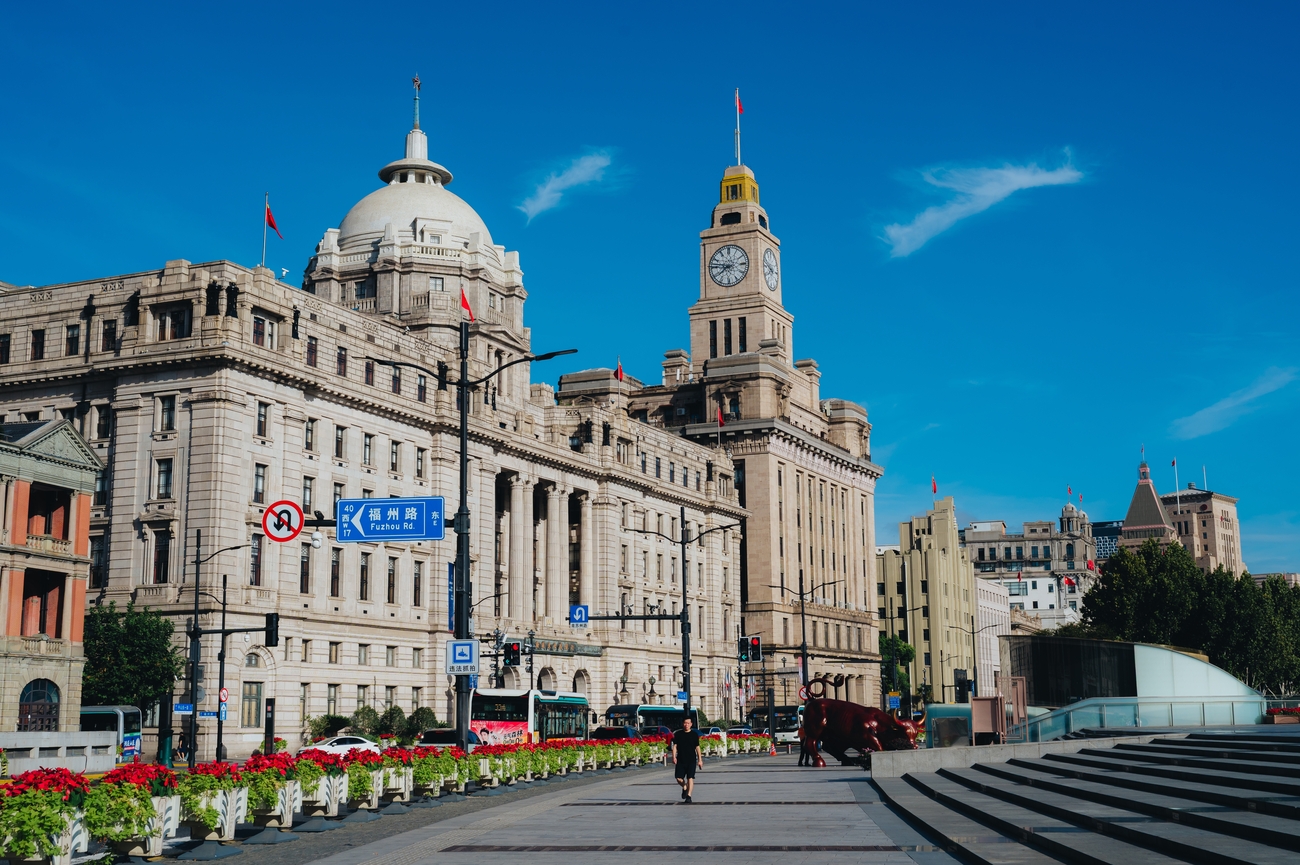
No. 2 The Bund — Waldorf
Astoria Shanghai on the Bund (formerly the Shanghai Club, 1910)
Built in 1910, it was the principal social club for British nationals in Shanghai. The building is English Renaissance, Baroque Revival style, with Corinthian columns and arched windows on a whitewashed facade. The Long Bar on its ground floor was historically the longest bar in Asia at 110 feet, the place where British merchants arranged their hierarchy by proximity to the window end, the closer your seat to the river, the more senior your position in the settlement's invisible social register. The building is now the Waldorf Astoria Shanghai Bund, and the Long Bar still operates within it. The hierarchy has softened somewhat.
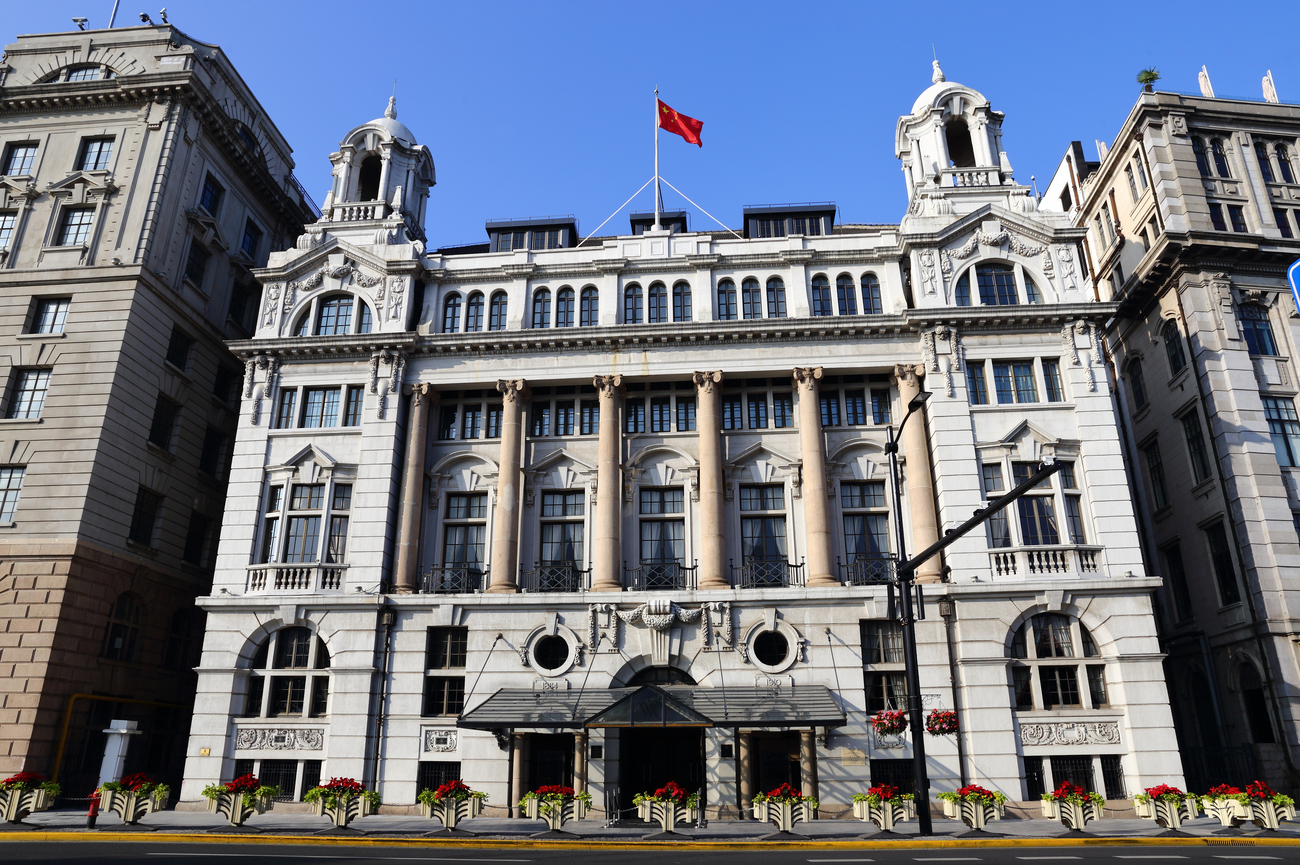
No. 12 The Bund — HSBC Building
(now Shanghai Pudong Development Bank, 1923)
Completed in 1923, it was called "the most luxurious building between the Suez Canal and the Bering Strait." The building's spectacular dome contains eight mosaic murals depicting the cities where the HSBC maintained its principal branches: London, Paris, New York, Calcutta, Tokyo, Bangkok, Hong Kong, and Shanghai itself. The mosaics survived every political transition that followed. They are still there, visible to visitors who look up inside the current bank's public atrium.
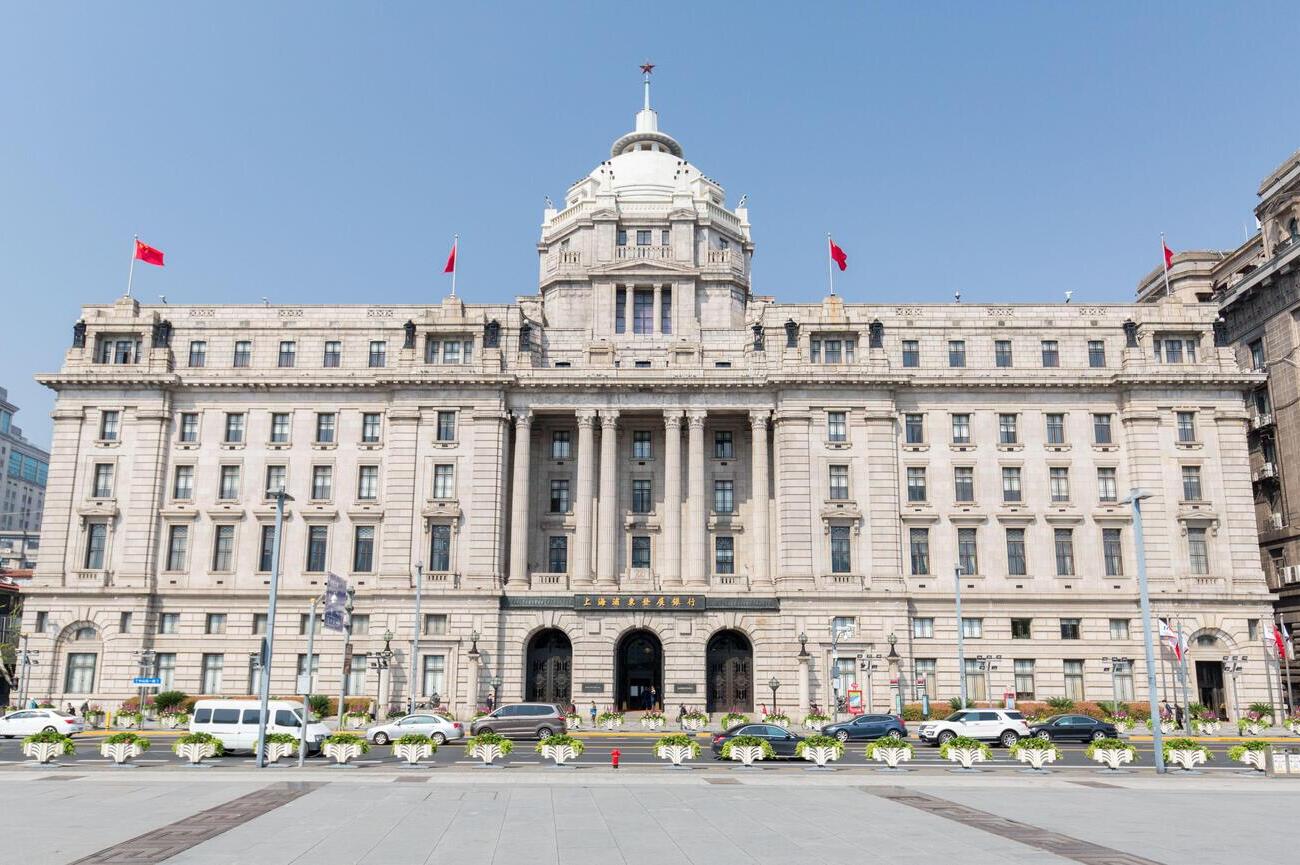
No. 13 The Bund — Customs
House (1927)
Constructed in 1927, it houses Asia's largest clock and a bell modelled after Big Ben in London. The Greek Revival exterior, dressed in red brick and granite, towers over the surrounding buildings. At the hours, the bell rings across the waterfront. It has done so since 1927. The sound is the Bund's most persistent auditory landmark, regular and indifferent to the century that has accumulated around it.
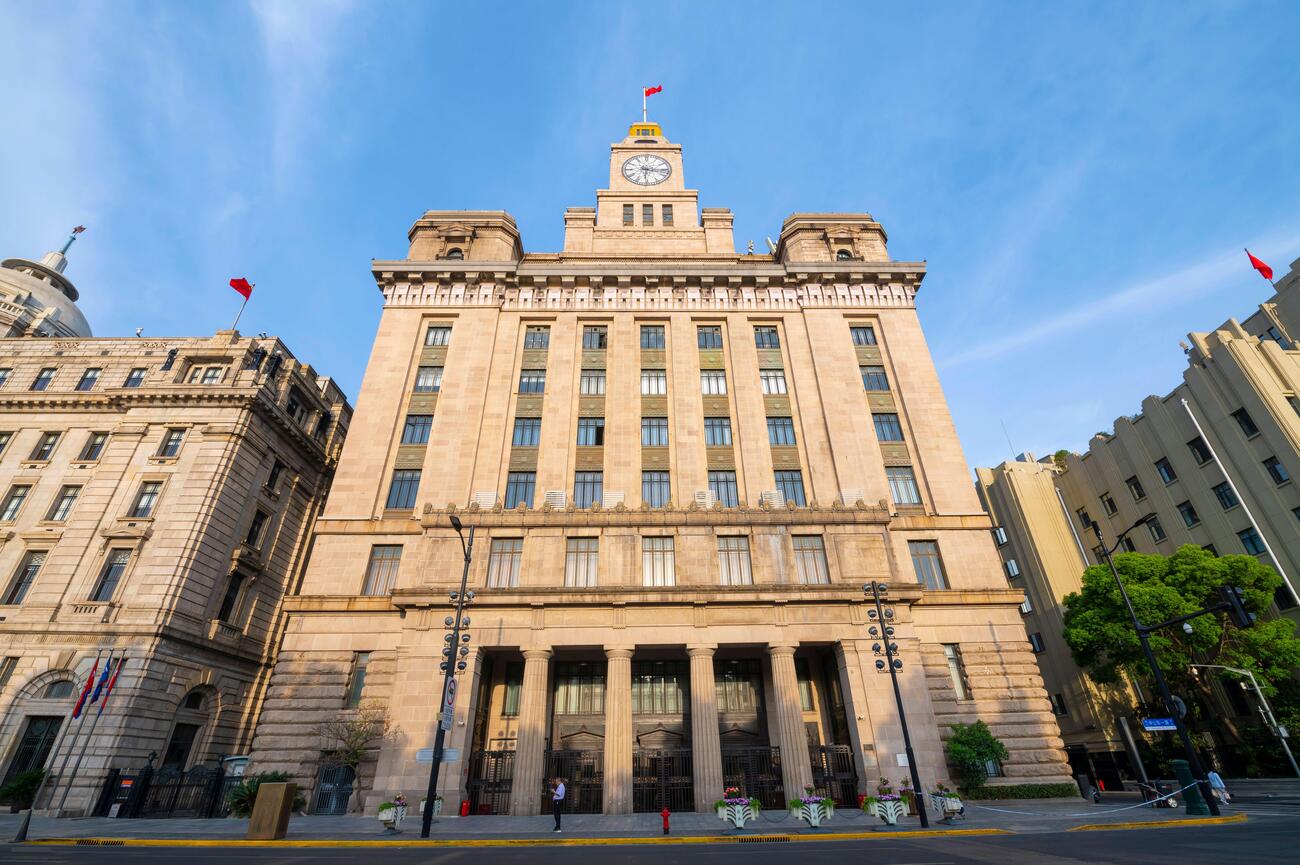
No. 20 The Bund — Peace
Hotel (formerly the Cathay Hotel, 1929)
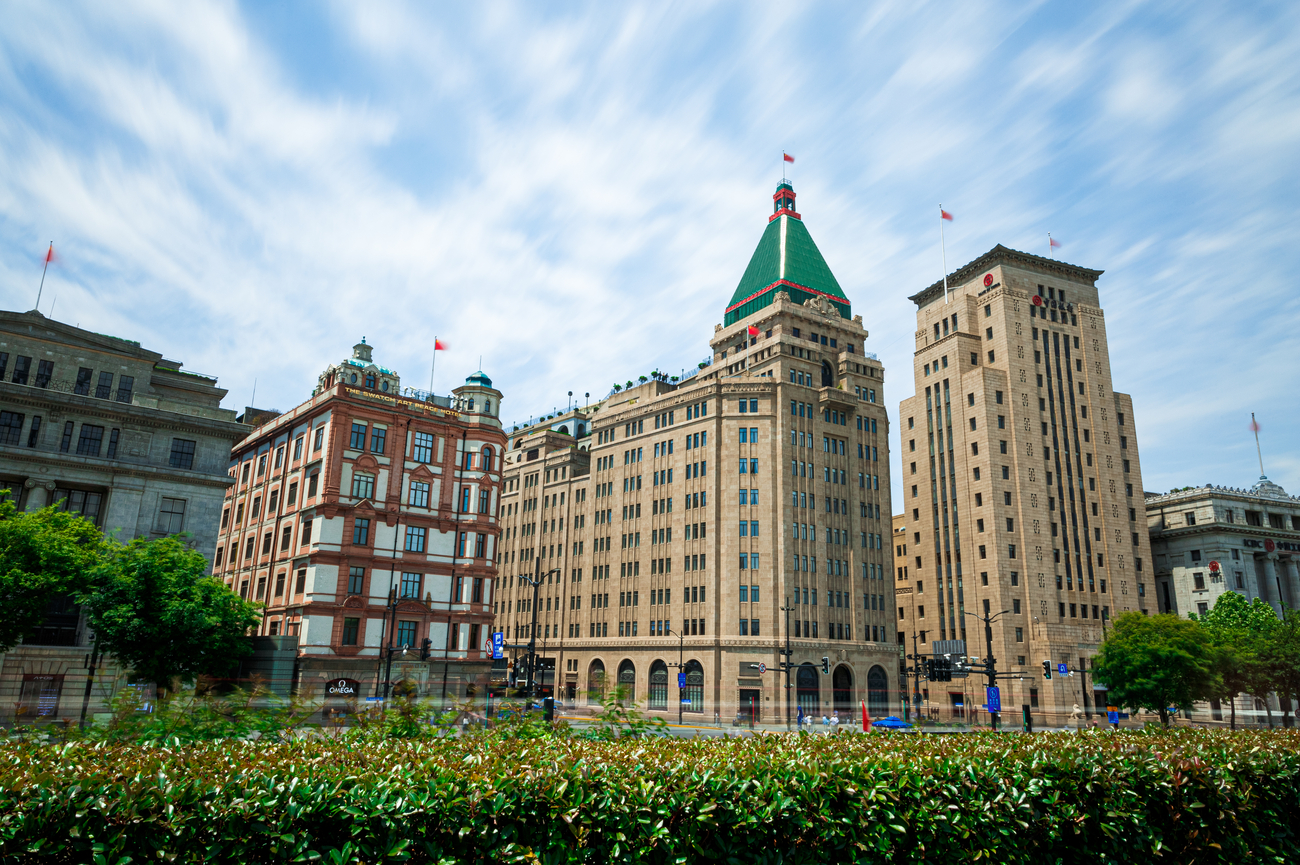
Noel Coward wrote "Private Lives" here during a four-day bout of flu in 1930, completing the entire play in the time it took him to recover. The Cathay, as the Peace Hotel was known, recently underwent a $73 million restoration. Its art deco facade and iconic green copper dome were restored to their original condition. The rooftop bar is among the better places in Shanghai to watch the Pudong lights come on at dusk, positioned high enough to see both banks of the river in a single frame.
The buildings of the Shanghai Bund can be read in sequence or in fragments. Either approach works. What does not work is walking past them too quickly.
Pudong: The View That Changed Shanghai
In 1990, the Shanghai municipal government designated the eastern bank of the Huangpu as a Special Economic Zone. Pudong, which the Bund's architects had looked at for decades and seen nothing worth noting, became the site of one of the most rapid and concentrated urban construction programmes in recorded history.
The results are visible from the Shanghai Bund promenade in their current form:
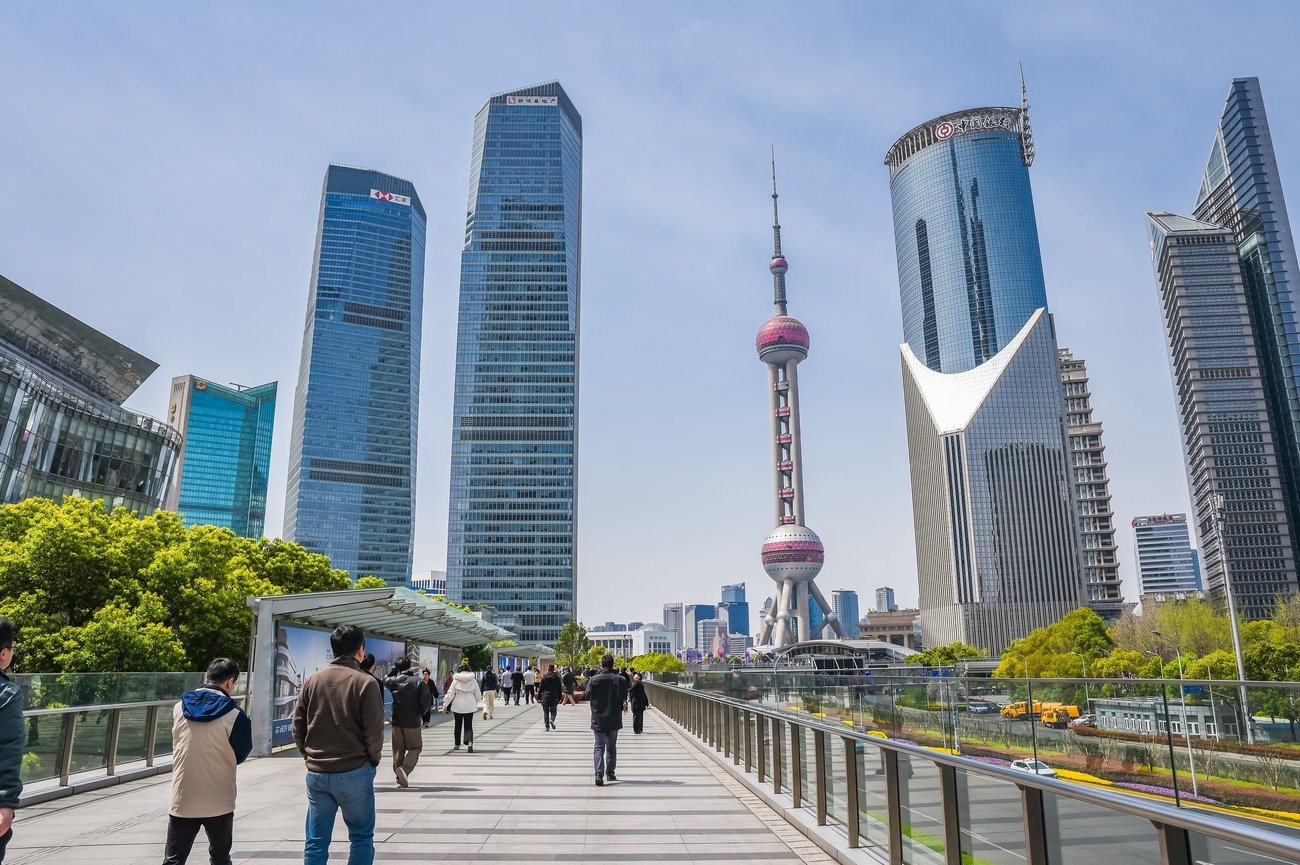
- Shanghai Tower (2015): 632 metres, China's tallest building, second in the world at the time of its completion. Its spiral form reduces wind load by 24 percent compared to a conventional rectangular tower of the same height. The elevators reach a speed of 18 metres per second, whisking visitors to the 118th floor's observation deck in 55 seconds.
- Shanghai World Financial Centre (2008): 492 metres, its trapezoidal aperture at the summit designed to reduce wind pressure. The aperture, sometimes called the "bottle opener" by Shanghai residents, is visible from the Bund as a distinctive notch in the Pudong skyline.
- Jin Mao Tower (1999): 420 metres, its pagoda-inspired tiered design referencing traditional Chinese architecture in a building made entirely of contemporary materials. It was Pudong's defining landmark for nearly a decade before its neighbours arrived.
- Oriental Pearl Tower (1994): 468 metres, its twin spheres and cylindrical form the most distinctive silhouette in the Lujiazui cluster and the image most associated with the Pudong skyline internationally.
A 100-second animated film at the Shanghai Tower's exhibition condenses the development history of the Bund and the Pudong Lujiazui skyline over 170 years since Shanghai opened as a port in 1840. The compression is apt. The Pudong skyline that took shape between 1994 and 2015, those four towers built across two decades, represents one of the most concentrated accumulations of architectural ambition in any city at any period.
From the Shanghai Bund waterfront at dusk, watching the Pudong towers illuminate sequentially as the daylight drops, the pace of it becomes legible. The stone buildings behind you took decades to build, one institution at a time, between 1880 and 1940. The glass towers across the water took twenty years. Both facts are visible in the view simultaneously.
The observation deck of the Shanghai Tower at 546 metres offers the inverse perspective: the Bund's colonial facades, seen from above and across the river, resolve into a single coherent strip rather than a sequence of individual buildings. The Huangpu's curve toward the East China Sea is visible from this height. The container ships moving toward the harbour are visible. The full horizontal spread of a city of 25 million people is visible in every direction. It is a useful place to understand Shanghai's scale before descending back into it.
The
Pudong View at Dusk: A Note on Timing
The Pudong skyline Shanghai illuminates in stages as evening approaches. The sequence varies slightly by season, but the general pattern is consistent: the Oriental Pearl Tower's spheres begin to glow first, usually around 6.30 PM, followed by the Jin Mao and World Financial Centre, and finally the Shanghai Tower's full LED skin, which wraps its spiral exterior in light that is visible from the Bund promenade as a slow vertical pulse.
The promenade itself, East Zhongshan Road running along the riverfront, is at its most atmospheric in the hour before and after sunset. The stone facades of the Bund catch the late afternoon light from the west in a way that makes the white and cream frontages look warmer than they do at midday. The tourist crowds are present but manageable on weekday evenings. On weekends, the promenade fills to the point where the view becomes harder to access comfortably.
What the promenade does not offer is intimacy. The Shanghai Bund at street level is a public spectacle, by design. The more private version of the same view comes from the rooftop bars of several of the Bund's heritage buildings or from the river itself, on a Huangpu cruise that places the two skylines in motion on either side.

Yu
Garden: The Ming Dynasty Inside the Modern City
Two kilometres south of the Shanghai Bund, past the commercial density of the old town and down through the narrow streets of Nanshi, Yu Garden exists in a different register entirely.
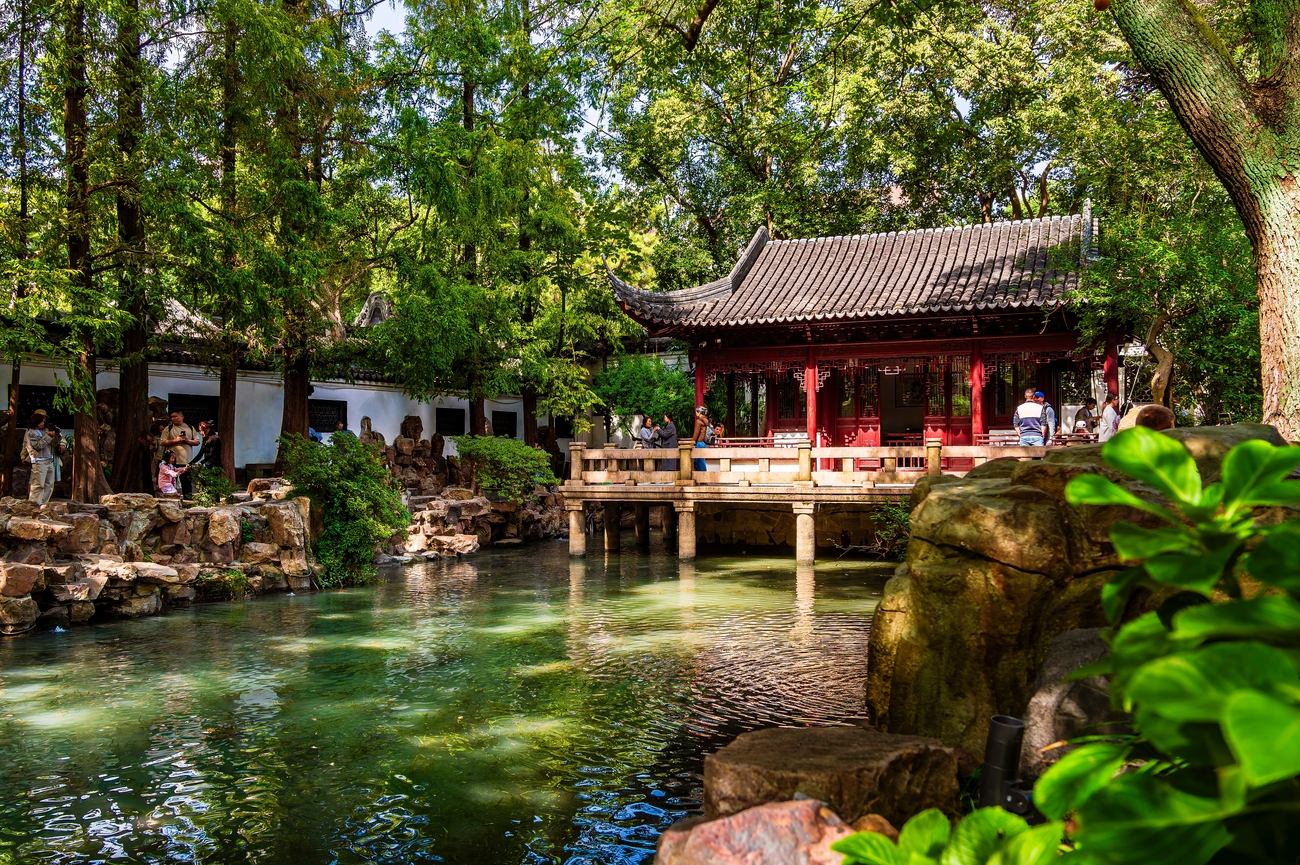
Built between 1559 and 1577 by the Ming official Pan Yunduan as a private retreat for his elderly father, the garden covers five acres inside one of the most commercially active neighbourhoods in Shanghai. The contrast between its interior and its exterior is immediate and absolute. Outside: street vendors, tourist shops, the compressed noise of a very busy part of a very large city. Inside: rockeries, koi ponds, covered walkways, pavilion roofs curving against the sky, and the particular silence that classical Chinese garden design achieves through enclosure.
The Yu Garden Shanghai is organised around a series of distinct areas, each with its own landscaping logic:
- The Three Ears of Corn Hall, the garden's main building, named for the carved corn motif on its ridgepole
- The Hall of Ten Thousand Flowers, surrounded by seasonal plantings that change with the calendar
- The Grand Rockery, a 14-metre artificial mountain of Taihu limestone that was the tallest structure in the old walled city when it was built
- The Exquisite Jade Rock, Yulinglong: a 3.3-metre Taihu limestone formation with 72 perforations, allowing smoke, water, and light to pass through simultaneously. Emperors coveted it. Three different owners possessed it before Pan Yunduan acquired it for this garden.
- The Inner Garden, a separate compound within the garden added during the Qing Dynasty, more intimate in scale than the main garden and considerably less visited
The Yu Garden Shanghai has survived the full turbulence of the city that grew up around it. It was used as a command post during the Small Swords Society uprising of 1853. It was damaged by French artillery in 1855. It was restored, incrementally, across several generations. Its five acres remain in daily use, occupied simultaneously by visitors from every country and elderly Shanghai residents doing their morning tai chi in the covered walkways before the tourist hour begins.
The same Ming Dynasty that built this garden also built the Forbidden City and the Great Wall at Mutianyu. Pan Yunduan was laying out his Taihu limestone rockeries in 1559, 139 years after the Yongle Emperor completed the palace in Beijing. The three sites are different in scale and function beyond all comparison. They share a dynasty and a sensibility about the relationship between architecture and the natural world.
Zhangyuan:
Shanghai's Most Honest Conservation Argument
In the Jing'an District, northwest of the city centre, Zhangyuan is the most recent and most considered version of a question Shanghai has been asking itself for thirty years: what do you do with the shikumen?
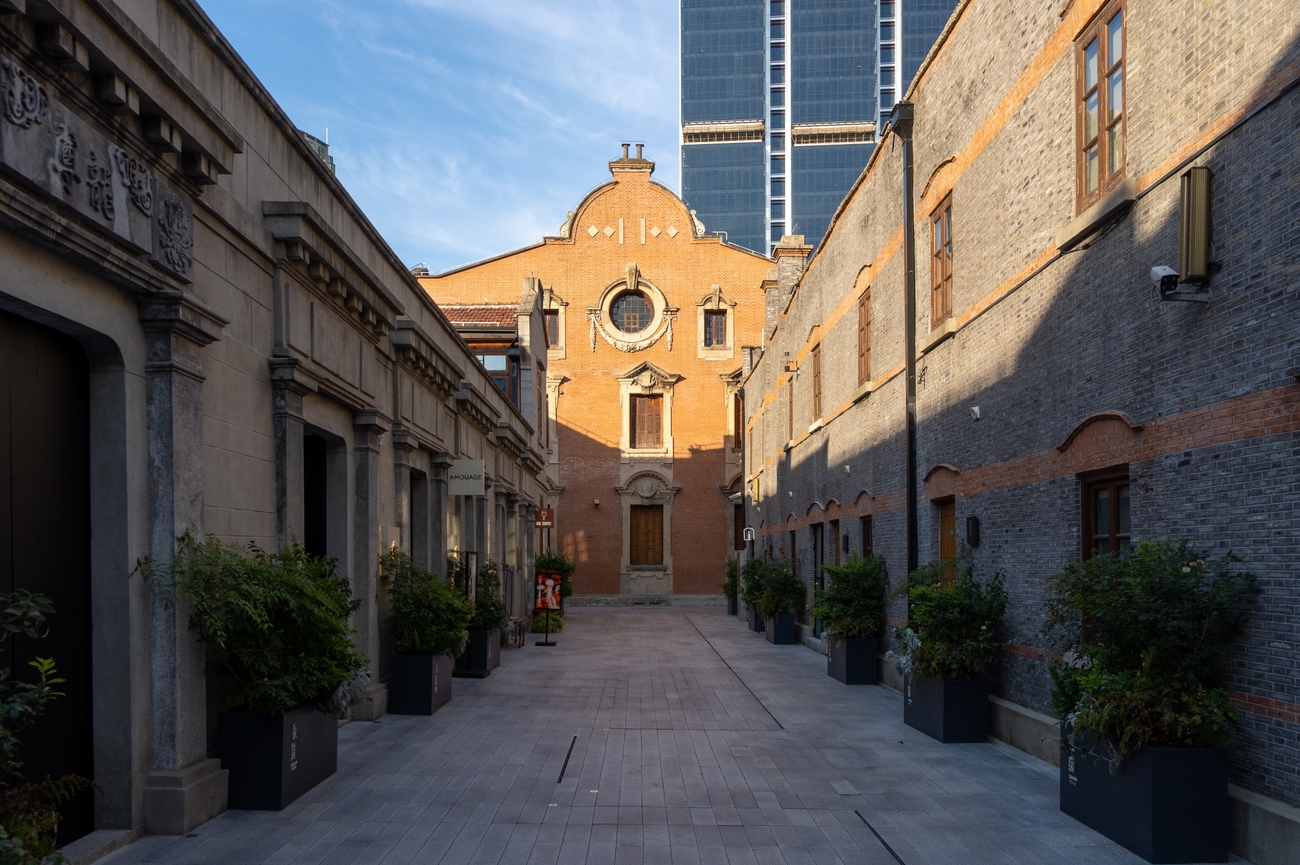
The shikumen, the stone-gate lane house, is Shanghai's own architectural form. It combines the internal courtyard logic of the traditional Chinese residence with the terrace house street pattern common to British and French colonial urban design. The result is a building type that exists nowhere else: courtyard houses opening onto narrow lanes, grouped in compounds, with carved granite gate frames that give the form its name. The shikumen neighbourhoods that once covered large areas of the city have been demolished, renovated, theme-parked, and neglected in various combinations since the 1990s.
Zhangyuan, built in the 1880s and meticulously restored between 2018 and 2021, represents the argument that preservation and active use are not incompatible. The original lane configuration, the granite gate frames, the external proportions of the buildings are intact. The interiors have been modernised. The compound reopened in 2022 as a functioning cultural and retail neighbourhood, its lanes occupied by a mix of cultural institutions, restaurants, and boutiques that did not require the buildings to become a museum in order to survive.
The shikumen architecture has, incidentally, influenced the design of the building that stands directly across the Huangpu from the Bund's stone facades. The Shanghai Tower incorporates "blurred spaces," influenced by the shikumen architectural style unique to Shanghai. The winding lanes and courtyards, once central to social life in Shanghai, are reimagined vertically in the Shanghai Tower, creating a uniquely layered social experience at soaring heights.
The city's oldest domestic architecture and its tallest building share a spatial logic. Shanghai does things like that.
The
Shanghai Museum: Where the Collections Land
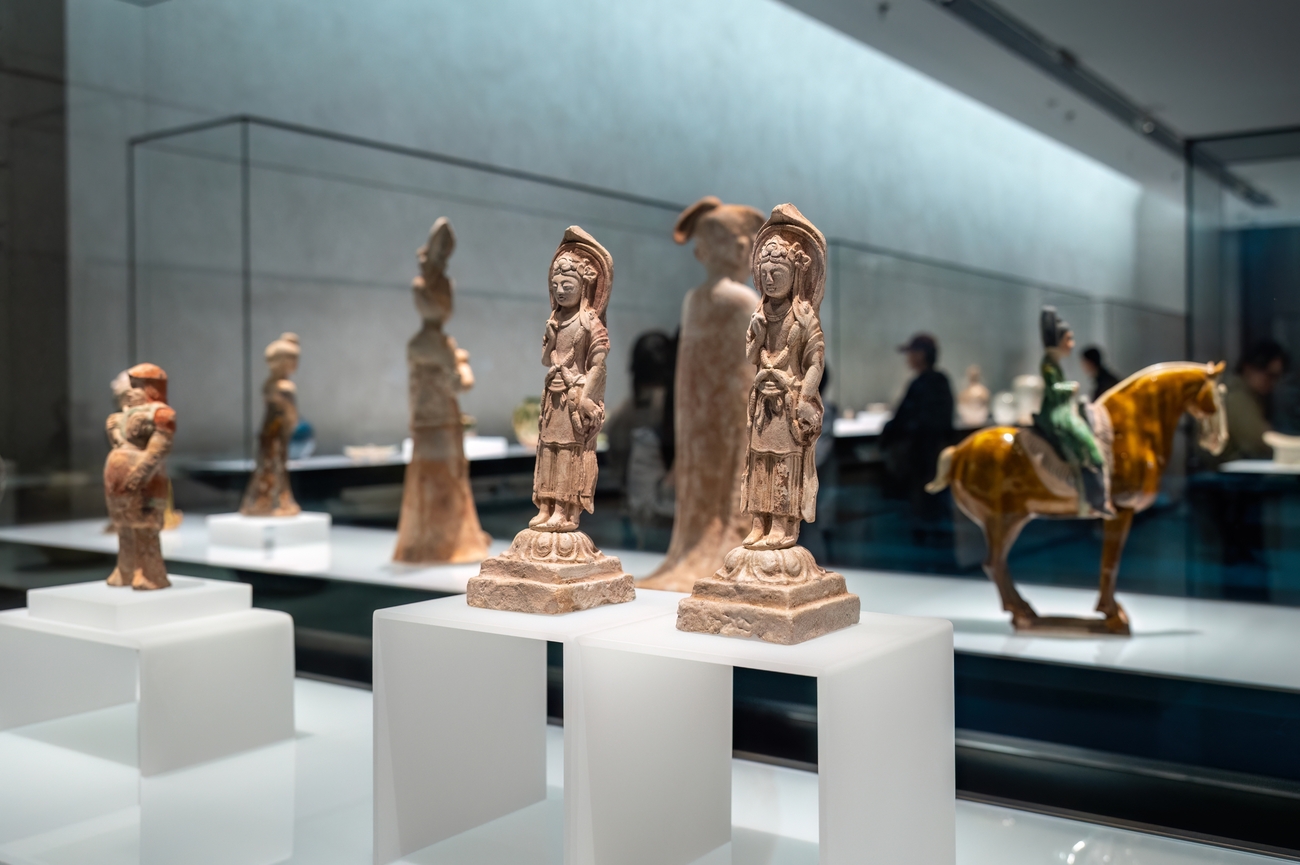
People's Square sits at the geographic centre of old Shanghai, the former racecourse of the International Settlement era converted into a public plaza after 1949. On its southern edge, the Shanghai Museum occupies a building designed to evoke a ding, the ancient bronze ritual vessel, in contemporary form.
The museum's permanent collection spans eleven galleries. For travellers who have moved through the Forbidden City's Treasure Gallery and Xi'an's archaeological site before arriving in Shanghai, the Shanghai Museum offers a different kind of engagement with the same material categories. Where the Palace Museum in Beijing displays imperial objects in the context of their use, and the Terracotta Warriors site in Xi'an presents artefacts in the context of their excavation, the Shanghai Museum organises its holdings chronologically and typologically.
The bronzes gallery, which spans 3,500 years of casting history from Shang Dynasty ritual vessels to Han-era figurines, is the museum's most significant permanent collection. The ceramics gallery traces the full development of Chinese porcelain from Tang earthenwares to Qing imperial wares in a progression that makes the individual achievements of each period legible against the whole. The ancient paintings gallery holds Song, Yuan, Ming, and Qing works that are displayed in rotating selection to protect the light-sensitive originals.
Admission to the permanent galleries is free. The museum operates a timed entry system that requires advance booking during peak periods. An hour in the bronzes gallery and an hour in the ceramics gallery is a morning spent in one of the finest collections of Chinese art outside Beijing, and significantly less crowded than either of the two institutions in the capital.
The
Waldorf Astoria on the Bund: The Building That Anchors the Journey
The Waldorf Astoria Shanghai Bund occupies the building at No. 2, The Bund, which began its life in 1910 as the Shanghai Club. Once home to Shanghai's elite club, it features an iconic 110-foot bar counter, representing colonial-era luxury. The English Renaissance and Baroque Revival facade, its Corinthian columns and whitewashed stone, is among the most detailed and best-preserved on the entire Bund.
The restoration that transformed it into the Waldorf Astoria preserved the Long Bar, reopened the grand lobby with its original proportions, and positioned the hotel at the southern anchor of the Bund's promenade, with direct views of the Huangpu and the Pudong skyline from its river-facing rooms. Staying here is not simply a question of accommodation category. The building is the Bund's most significant address, and the hotel's position at No. 2 places it at the precise point where the Shanghai Bund waterfront begins its northward run toward the Garden Bridge.
Revigorate's First-Time China vacation package places guests at the Waldorf Astoria for the final two nights of the eight-day journey. After the Grand Hyatt Beijing and the Ritz-Carlton Xi'an, the Waldorf is not simply a hotel at the end of the itinerary. It is the journey's final register: a building that has held its position on the Shanghai waterfront for over a century, that has watched the Pudong skyline rise across the river from its east-facing windows, and that remains, in the way the best addresses in the world remain, entirely itself.

Nanjing
Road and the Evening That Extends Itself
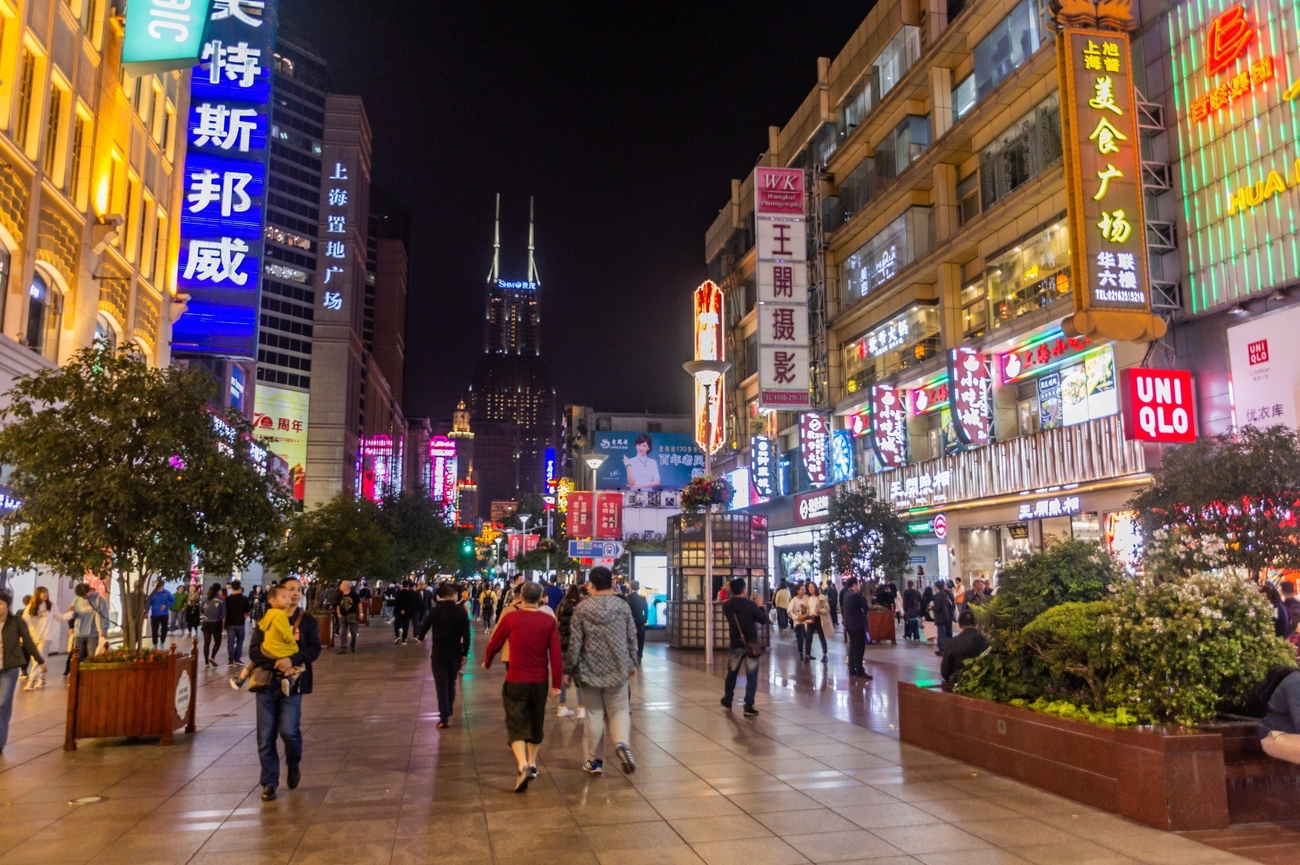
Nanjing Road runs west from the Shanghai Bund for six kilometres through the former International Settlement into Jing'an. The eastern pedestrian section, between the Bund and People's Square, is where the city's commercial history is most concentrated.
The art deco shopfronts of the department stores that once defined this street are still standing, largely intact behind contemporary retail fit-outs. The neon signage has modernised. The density of foot traffic on a Shanghai evening has not changed in character since the 1930s, when this was described as the most commercially active street in Asia. Walking it at night, with the Bund a few minutes behind you and the illuminated facades overhead, is a different kind of Shanghai than the waterfront promenade offers: closer, louder, and considerably more alive.
The evening tends to extend itself in Shanghai. The city's restaurant culture is serious and the dining hours are late. The cocktail bars in the Bund's heritage buildings, many of them occupying upper floors with unobstructed river views, are open until well past midnight. The Huangpu River cruises run into the evening hours. The Pudong skyline Shanghai maintains its full illumination until 10 PM on most nights.
Shanghai does not wind down. It shifts register. The city that looked so composed from the observation deck of the Shanghai Tower at dusk becomes, street level, after dark, something considerably more interesting.
The Stone Side
Always Wins at Dusk
Some cities are best understood from above. Shanghai is best understood from the water's edge, at the hour when the Bund's facades go warm and the Pudong towers answer with light.
The First-Time China vacation we have curated to perfection ends here, at the Waldorf Astoria Shanghai on the Bund, in the building that has held its position at No. 2 since 1910 and has been watching that view longer than most of the towers across the river have existed. Two nights in Shanghai. The garden, the skyline, the river, the lanes. All of it at the pace the city actually deserves.
The Huangpu will be running when you arrive. The light will do what it always does at dusk.
All that's left is you being there to see it.


Let us know what you love, where you want to go, and we’ll design a one-of-a-kind adventure you’ll never forget.
Get in touch
Miriam
Travel Specialist

Nina
Travel Specialist
Abigail
Travel Specialist
Our offices:



Revigorate, Iberian Escapes and Algarve Lifestyle are the registered brand names of APCS Lda . We are a fully authorised travel agency licensed by Turismo de Portugal RNAVT/6867.
In the event of a dispute, the consumer may refer to: RAL - Centros de Arbitragem
Avª. 5 de Outubro, nº. 55, R/C Dtº. 8000-075 Faro, Portugal | Tel: +351 289 823 135 *
* national landline call
E-mail: info@consumoalgarve.pt| www.consumidoronline.pt | Mon to Fri: 9:00 - 13:00 / 14:00 - 17:00