Inside the Forbidden City: Beijing's Imperial Core, Layer by Layer
The Forbidden City in Beijing was built to impress, intimidate and make every visitor feel small.
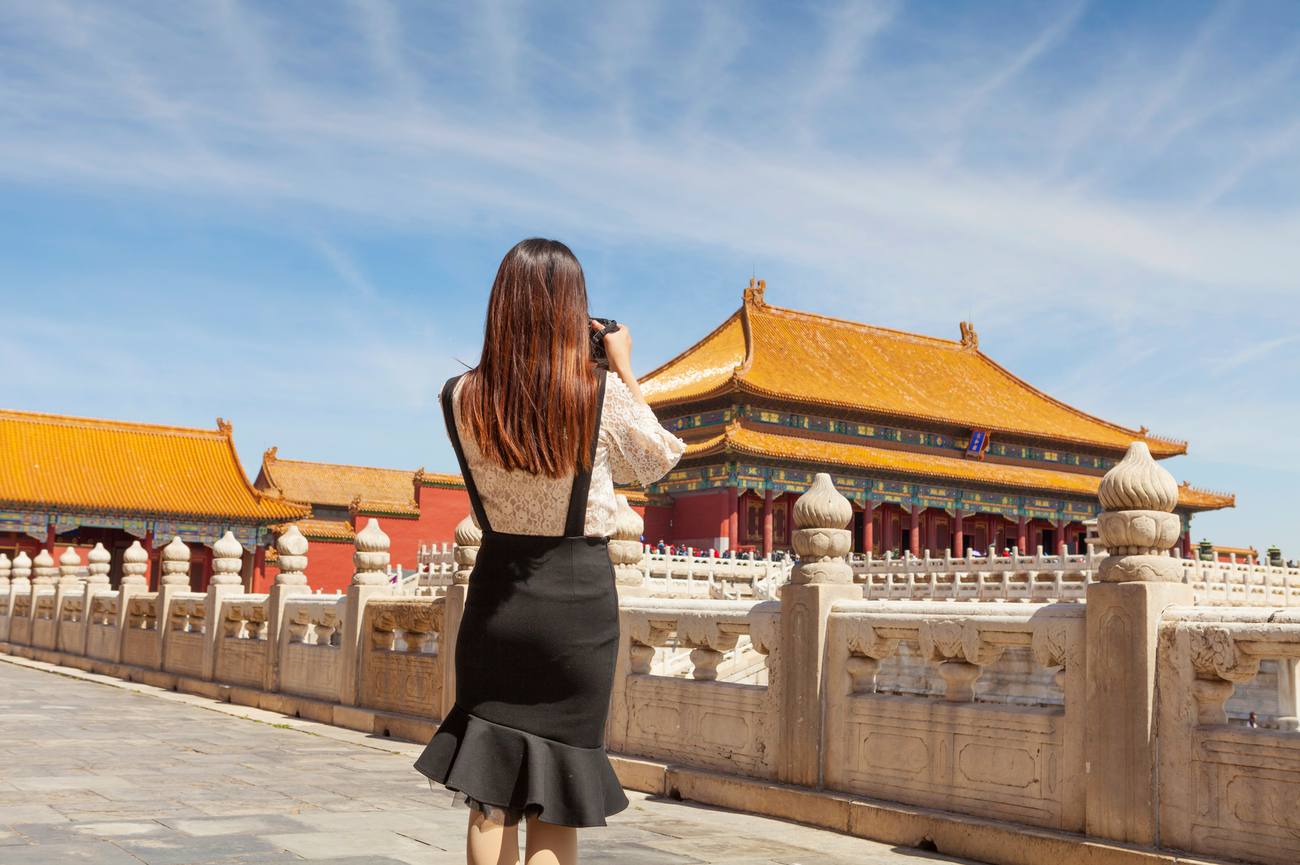
In photographs, the palace looks symmetrical, golden, comprehensible. Standing at the threshold of the Hall of Supreme Harmony, with the full weight of 180 acres pressing in from every direction, what you actually feel is the deliberateness of it.
Every proportion was calculated to diminish the person standing inside it.
For anyone moving through China's Golden Triangle for the first time, the Forbidden City is where the journey sets its tone. The full shape of that journey, across Beijing, Xi'an, and Shanghai, is laid out in our China's Golden Triangle guide, which maps all eight days and what each city is doing in the sequence.
Whatever comes after, the Terracotta Army’s underground silence, the Shanghai Bund at dusk, all of it reads differently once you have spent a morning inside these walls. The Beijing imperial palace is the foundation.
Before
You Cross the Gate
The Forbidden City Beijing requires advance booking. Walk-in admission is not possible. The site operates under a daily cap of 40,000 visitors, and tickets are released at 8 PM exactly seven days before the intended visit date through the Palace Museum's official booking system. They move quickly.
A few things worth knowing before you go:
- Every ticket is tied to a passport number. There are no transfers, no resales, no workarounds.
- The daily cap of 40,000 sounds generous. During peak season it is not.
- Separate tickets are required for the Treasure Gallery and the Clock Collection, priced at CNY 10 each, purchased on entry.
- The palace is closed every Monday without exception.
- The Gate of Heavenly Purity closes before the outer areas. Timing matters more inside the Forbidden City than almost anywhere else in Beijing.
This is one of several practical realities that separate a well-arranged visit to Beijing's imperial landmarks from one assembled at the last minute. Arriving in Beijing without pre-arranged access means standing outside the Meridian Gate while the morning inside it happens without you.
What this means in practice, for a visit that earns its place in a serious itinerary, is that the logistics need to be sorted long before departure. Not the week before. Months before. Having them in place, invisibly, is the difference between a Beijing morning that unfolds the way it should and one that begins in a queue with an uncertain outcome.
Revigorate's First-Time China vacation handles the Forbidden City booking, the timed entry, and the specialist guide as part of the eight-day itinerary. The morning begins at the Meridian Gate, not in front of a laptop.
The Outer Court: Where the Empire Was
Administered
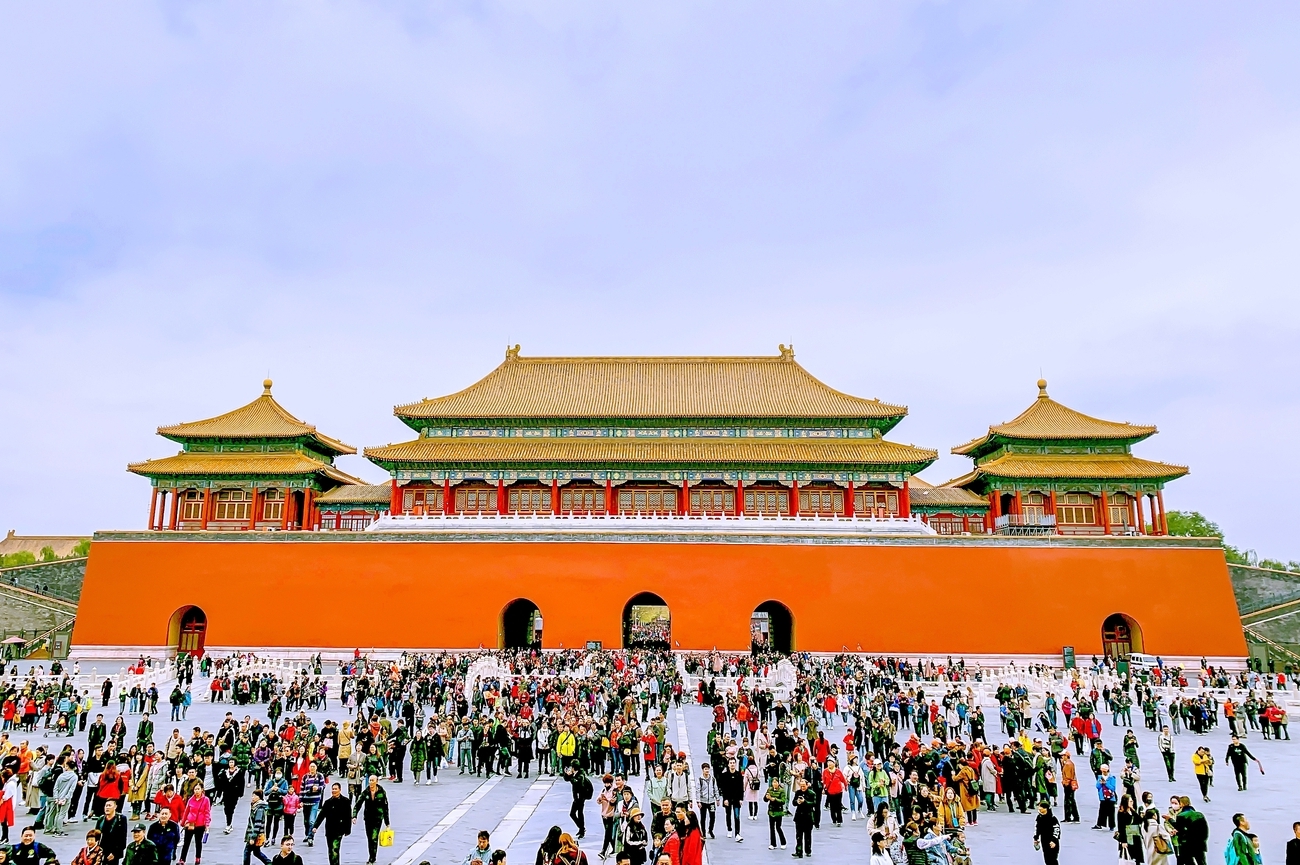
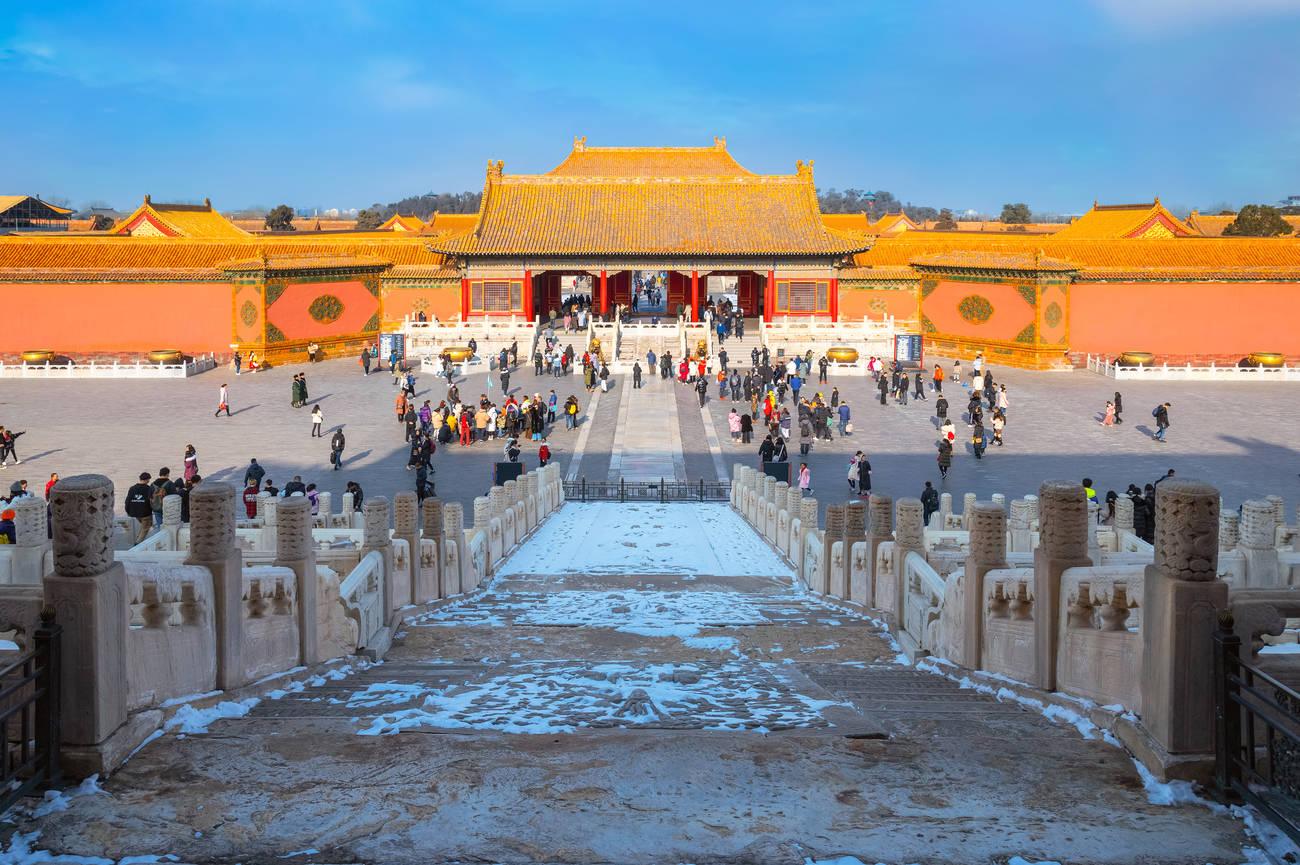
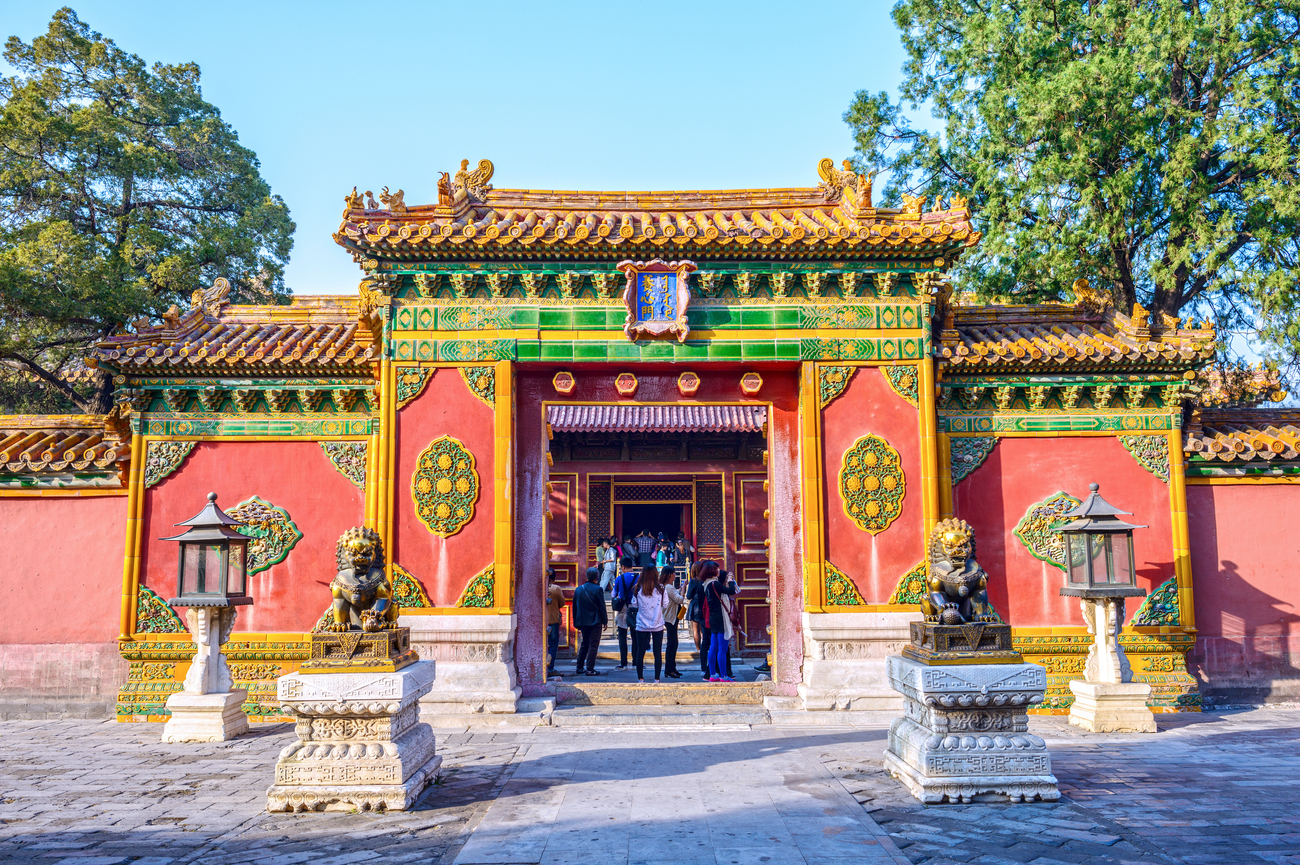
The walk from Tiananmen Square into the Forbidden City Beijing moves through five successive gates, each one narrowing the world a little more: Tiananmen Gate, Duanmen, the Meridian Gate, the Gate of Supreme Harmony, and then the Gate of Heavenly Purity marking the entrance to the Inner Court.
In the Ming and Qing Dynasties, each gate represented a threshold of access. The further north you went, the fewer people were permitted to follow. Most imperial officials never crossed beyond the third. The vast majority of the population never crossed the first.
Walking the full south-to-north axis of the Forbidden City Beijing in a single progression is the correct way to understand it. The Outer Court, occupying the southern half of the complex, is where the business of running an empire was conducted.
The Hall of Supreme Harmony
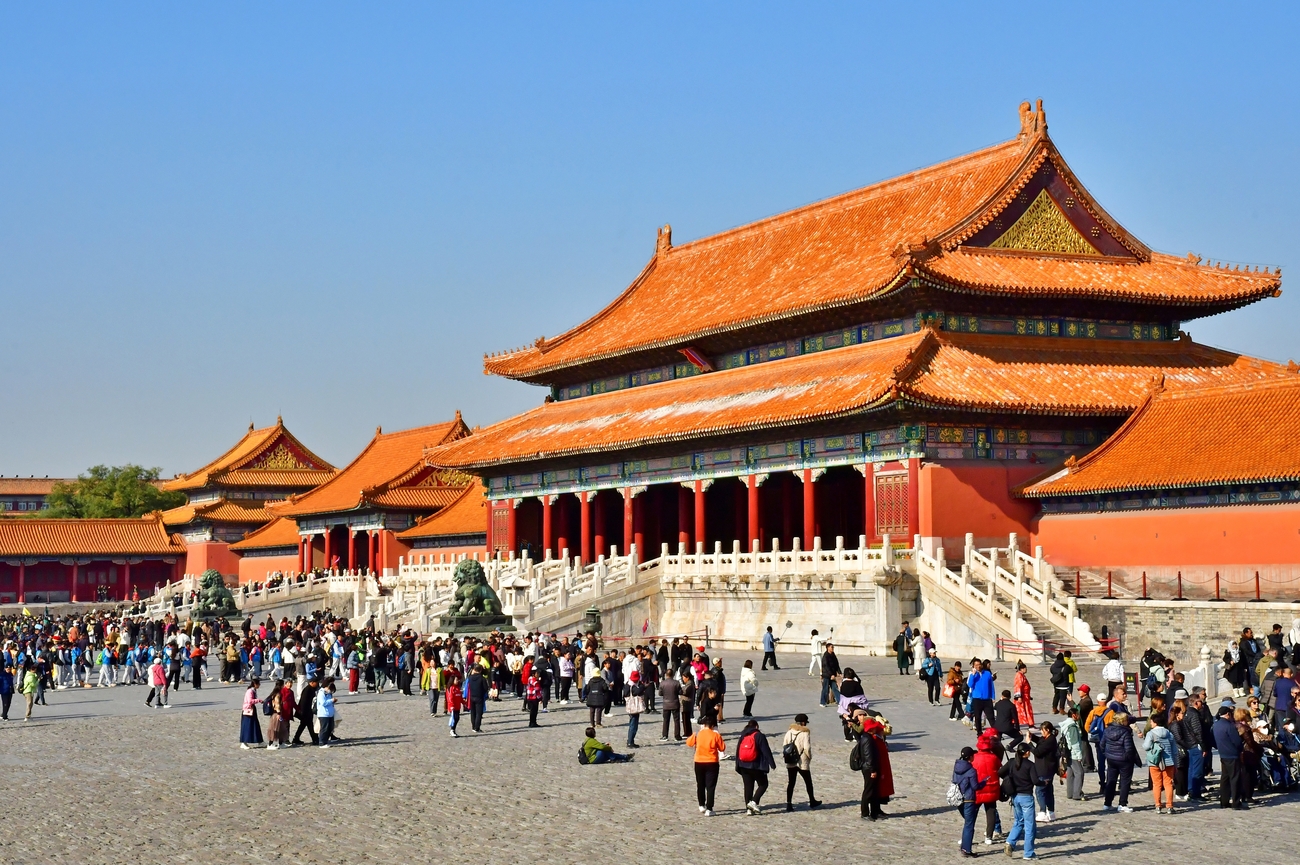
The Hall of Supreme Harmony, the Taihe Dian, is the largest wooden structure in China. It sits on a three-tiered white marble terrace covering 85,000 square metres, flanked by bronze incense burners and sundials, with stone dragon carvings on its balustrades that number in the hundreds. The building itself rises eighteen metres from the terrace floor, under a double-eaved hip roof of glazed yellow tile.
What happened inside it was theatrical by design. Imperial enthronements, the announcement of military victories, New Year ceremonies, the emperor's birthday: the Hall of Supreme Harmony was reserved for the state's most significant moments. Officials would enter the outer courtyard in ranked formation, prostrate themselves in specific configurations according to their exact position in the imperial hierarchy, and conduct the business of the empire under the eyes of a man seated on a raised throne beneath a golden canopy who represented, in official cosmology, the link between heaven and the human world below.
The throne is still there. The Hall is still there. In 1789, Emperor Qianlong removed the Palace Examination from this hall to the Hall of Preserving Harmony. The layers of ceremony that passed through this building across five centuries are, in a sense, still present in the proportions of the space. You feel them in the hush that settles over even the largest visiting crowds once they cross the threshold.
The Hall of Central Harmony and the Hall of Preserving Harmony
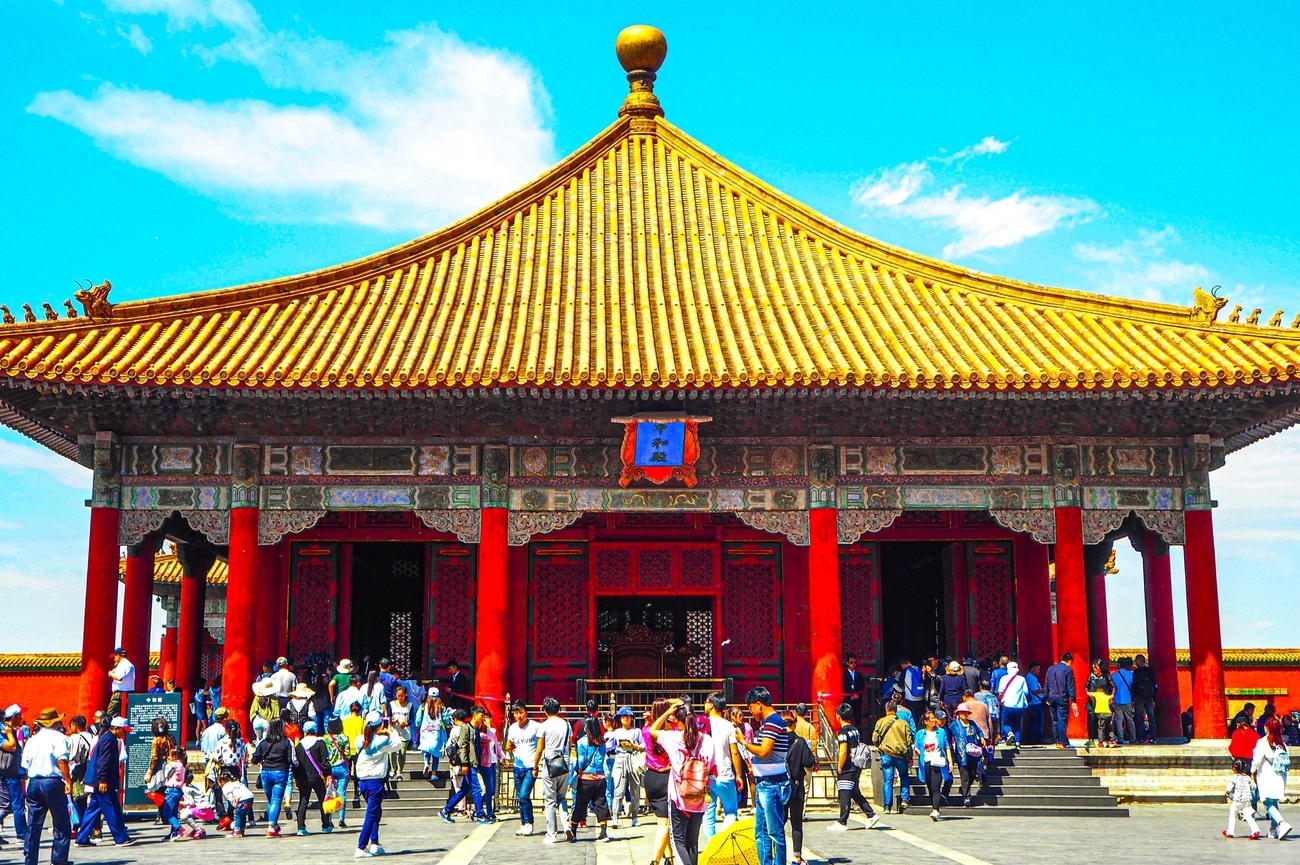
The two halls flanking the Supreme Harmony to the north were the preparation and conclusion of the imperial ceremony. The Hall of Central Harmony was where the emperor composed himself before major events: reviewing documents, receiving palace officials in smaller audiences, rehearsing the rituals he was about to perform in the larger hall. The Hall of Preserving Harmony hosted imperial examinations and the grand banquets the emperor gave for officials and foreign dignitaries.
Behind the Hall of Preserving Harmony, a single carved marble ramp descends from the terrace. Sixteen metres long, 3.07 metres wide, carved from a single piece of stone weighing over 200 tonnes. It was transported from the quarry outside Beijing in winter, with workers pouring water along the route ahead of the sledge until it froze into a surface smooth enough to slide the stone across. The carving on its surface, coiling dragons among clouds and water, is some of the finest stonework in the palace complex. Most visitors walk past it without stopping.
Crossing Into the Inner Court
The Gate of Heavenly Purity marks the boundary between the Outer Court and the Inner. Cross it and the character of the Forbidden City Beijing changes completely. The grand ceremonial spaces give way to something more intimate and, in its own way, more unnerving. This is where the emperor actually lived.
The Inner Court's central axis holds three palaces in sequence:
- Palace of Heavenly Purity — the emperor's residence and daily governance hub
- Hall of Union — the symbolic connector between imperial and empress's quarters, housing 25 jade seals and the palace's timekeeping instruments
- Palace of Earthly Tranquility — the empress's residence in the Ming period; the site of imperial weddings under the Qing
The scale is smaller than the Outer Court. The weight is different. If the outer halls communicated authority outward, these spaces folded it inward.
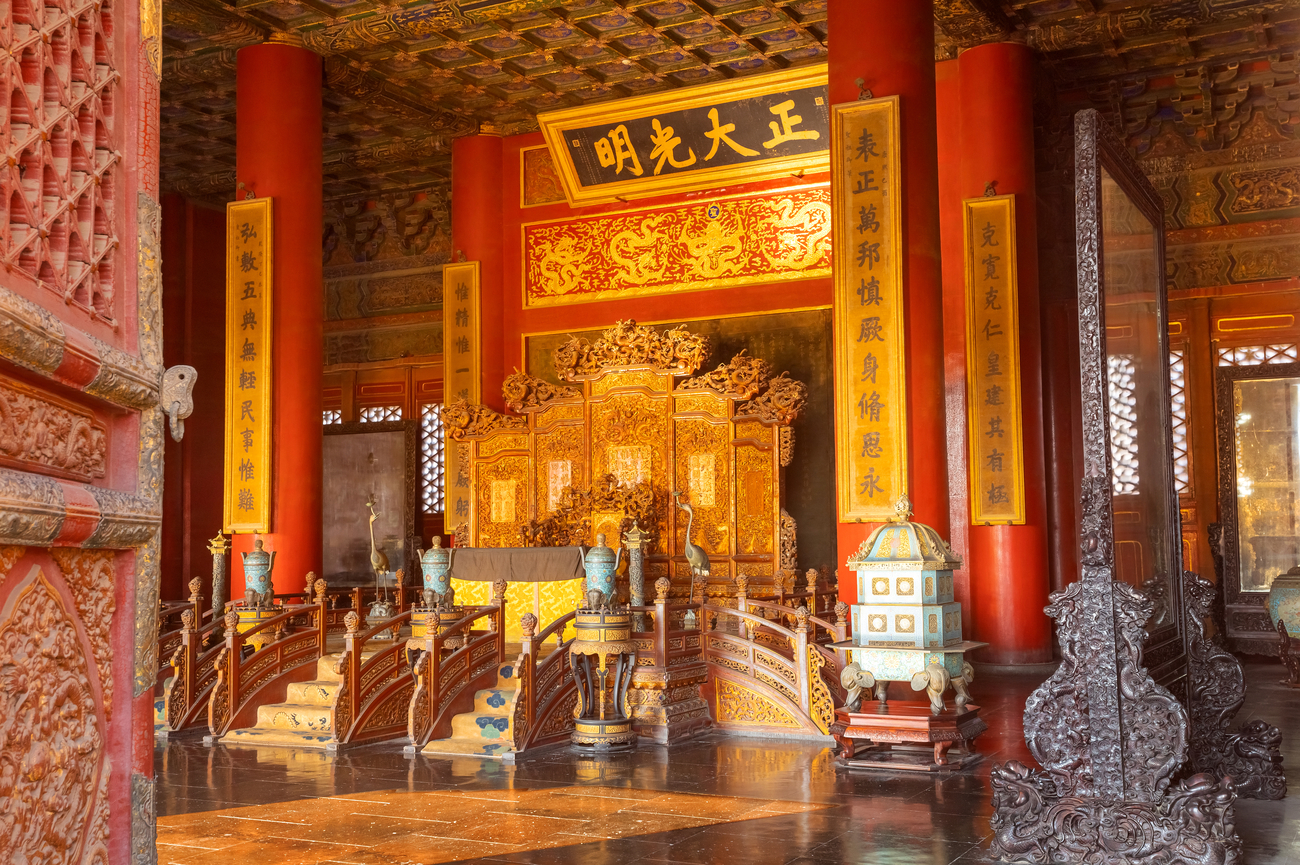
The Palace of Heavenly Purity
The throne sits beneath a plaque reading "Justice and Honesty," a pointed reminder about the emperor's duty to rule with virtue. It was here that Qing emperors received officials informally, reviewed petitions, and made the daily decisions that governed the world's largest empire.
Above the throne, another plaque reads Zhengda Guangming: honest, open, upright. The calligraphy is Emperor Shunzhi's. The plaque conceals something more interesting than calligraphy. Qing emperors, having learned from the bloody succession crises of earlier dynasties, developed a practice of writing their chosen heir's name on a sealed document placed behind this plaque. Only the emperor knew the contents. The announcement came only at his death. The system worked, mostly. The intrigue surrounding it did not always resolve cleanly.
The Hall of Union and the Palace of Earthly Tranquility
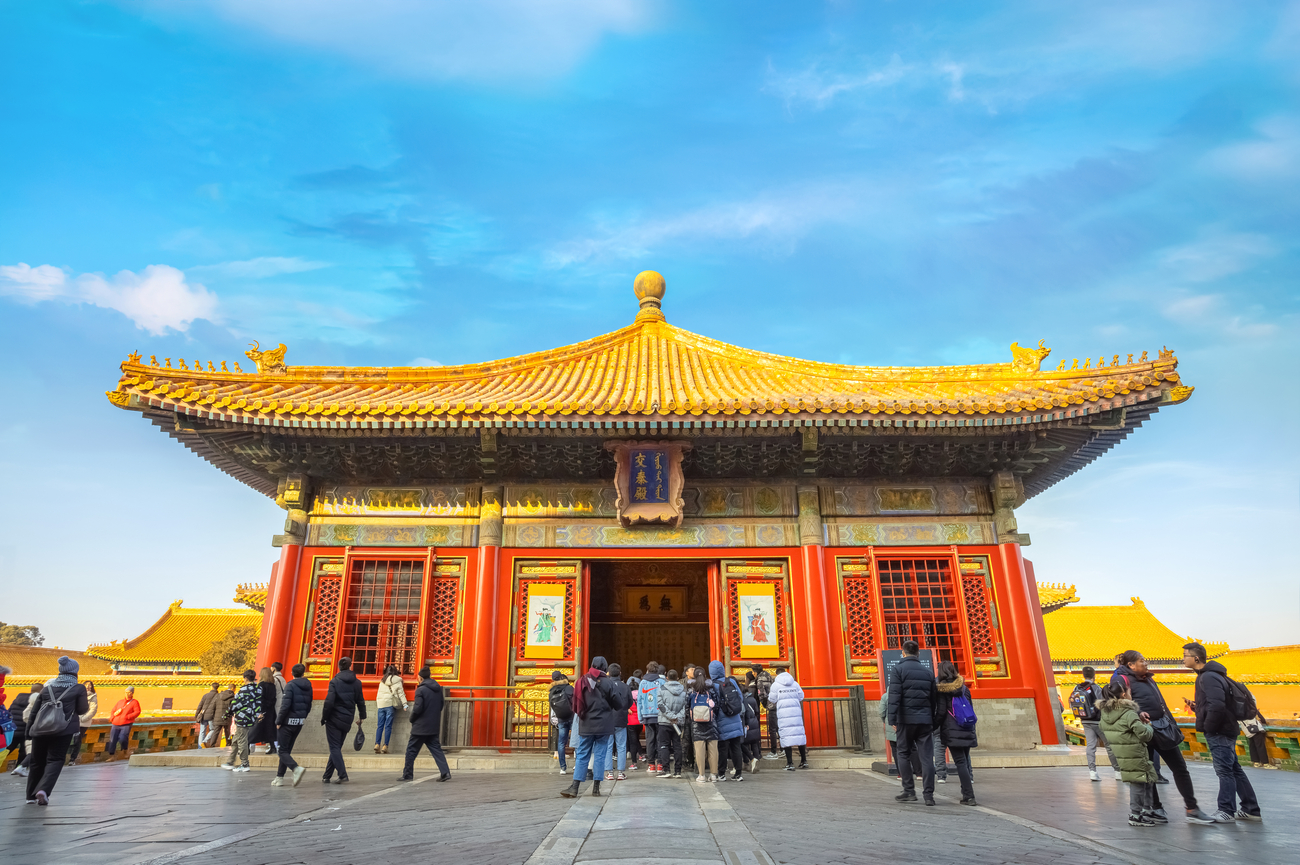
The Hall of Union sits between the emperor's and empress's residences, a compact square building that stored twenty-five imperial jade seals and marked time through a clepsydra water clock and a mechanical chiming clock installed during the Qing. A hall about nothing except the maintenance of order, which is to say a hall about everything.
The Palace of Earthly Tranquility directly behind it was the empress's residence during the Ming Dynasty. Under the Qing, it became primarily the site of imperial weddings, the first two nights of a new marriage conducted here before the couple moved to more comfortable quarters. The bridal chamber still exists, its furnishings original, its red lacquer and gold decoration intact. The red cloth on the canopied bed has not changed colour.
The Six Western Palaces: The Lives Behind the
Ceremony
East and west of the three central Inner Court palaces, twelve residential compounds housed the emperor's consorts, concubines, and their households. Twelve palaces, each a self-contained courtyard complex with its own hierarchy, its own politics, its own version of the particular life that came from living inside the most powerful and most confined address in China.
The Six Western Palaces are the more storied half of the twelve. The Palace for Gathered Elegance, Chuxiugong, is the most significant: Empress Dowager Cixi lived here as a young concubine, gave birth to the future Emperor Tongzhi within its walls, and used the residence as the launchpad for a political ascent that eventually placed her in effective control of the Qing government for nearly five decades. She spent lavishly on its refurbishment for her 50th birthday in 1884. The final occupant was Wanrong, the last Empress of China, who lived here with Puyi until the autumn of 1924, when they were driven from the Forbidden City Beijing by the National Revolutionary Army and the palace's 500 years of inhabitation came to an end.
Standing in the courtyard of the Palace for Gathered Elegance, where Cixi's bronze dragons still guard the entrance gates, is one of the quieter and more affecting moments the complex offers. The crowds thin here. The central axis pulls most visitors forward. These side courtyards belong to the people who take the time to step into them, and what they find is the personal scale of a life lived entirely within walls: extraordinarily powerful and extraordinarily circumscribed in equal measure.
The Hall of Mental Cultivation
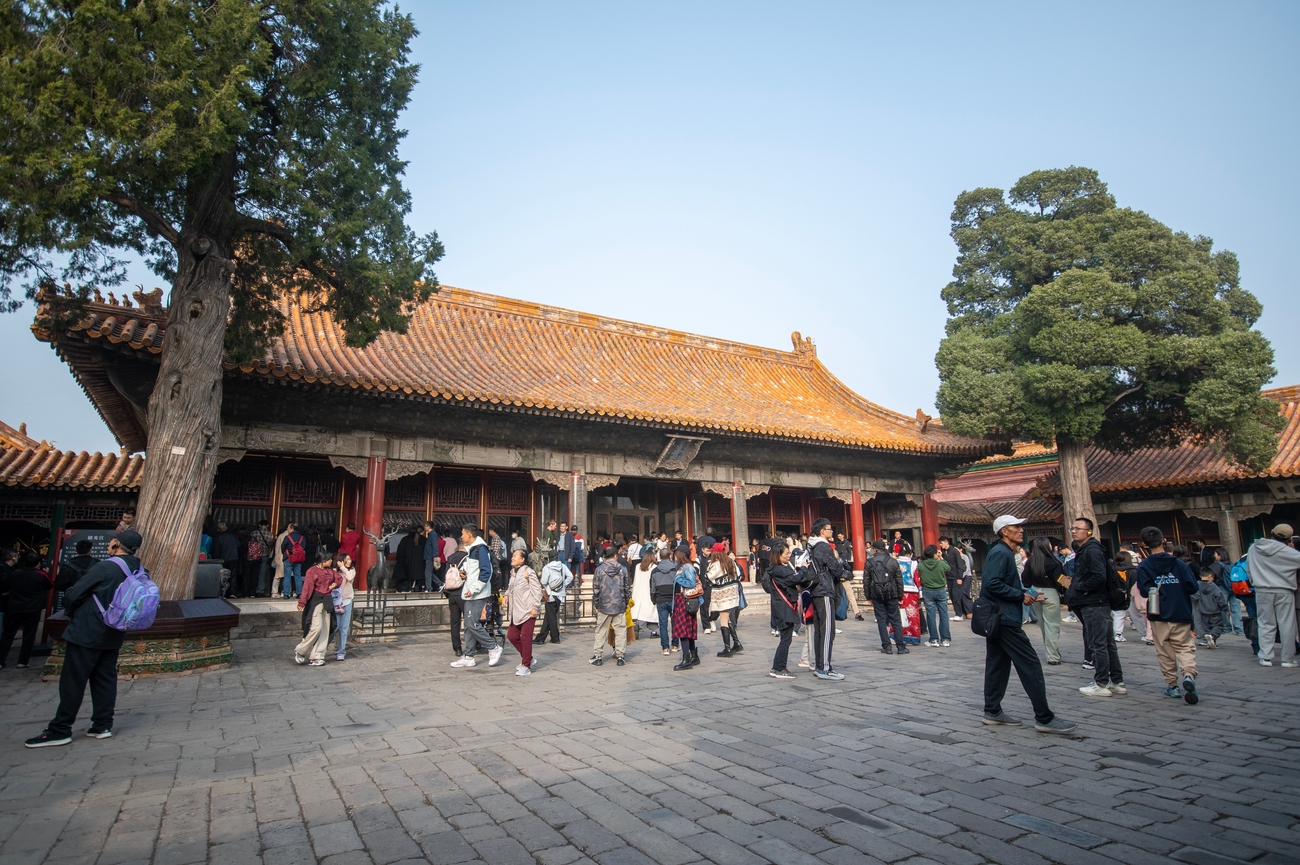
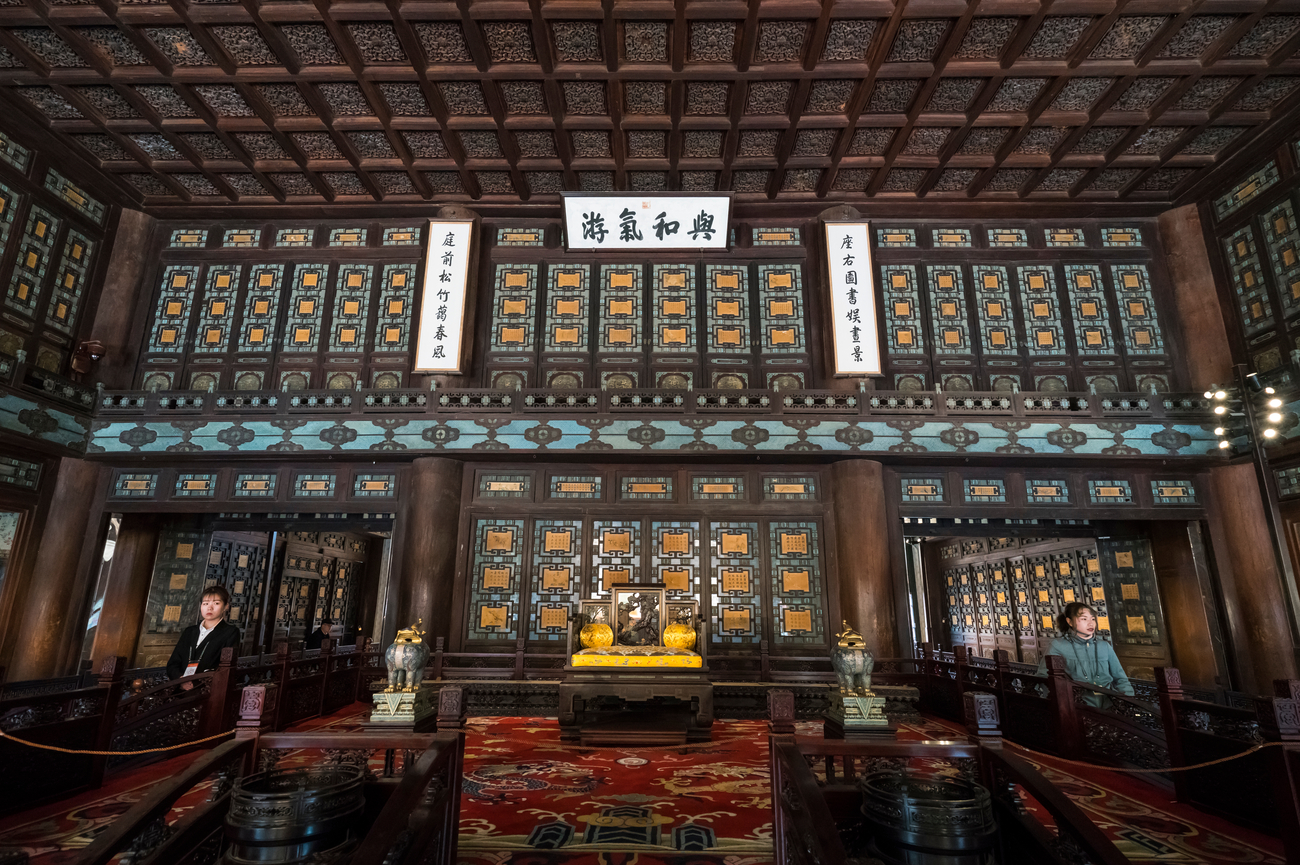
West of the Six Western Palaces, the Yangxin Dian was where eight Qing emperors conducted the daily business of the empire from the Yongzheng period onward. Not the grand ceremonies of the Outer Court, but the routine: reading memorials, issuing edicts, meeting with ministers in the relative privacy of the western residential compound.
The Eastern Warm Pavilion within this hall is where Empress Dowager Cixi sat behind a yellow screen and conducted state affairs on behalf of two successive child emperors. The practice was called "listening to government from behind the curtain." The yellow screen is still there. The throne the child emperor occupied is still there. The arrangement made concrete in furniture what the dynasty's collapse would make concrete in fact: that the person nominally in charge and the person actually in charge were not the same person.
The Treasure Gallery and the Clock Collection
Two of the Beijing imperial palace's most significant collections require separate tickets beyond the general admission. Both earn the additional cost.
The Treasure Gallery in the Palace of Tranquil Longevity holds six rooms of objects from the imperial collection:
- Jade carvings in white, green, and the prized imperial yellow
- Gold and silver ceremonial vessels used in ritual contexts only
- Pearl and coral jewellery from the Qing empress's private collection
- Cloisonné enamelwork in forms that took months of labour per piece
- Buddhist ritual objects accumulated across the full span of the dynasty
An emperor's court was, in material terms, a curated argument about the quality of heaven's favour. The objects in the Treasure Gallery are what that argument looked like in physical form.
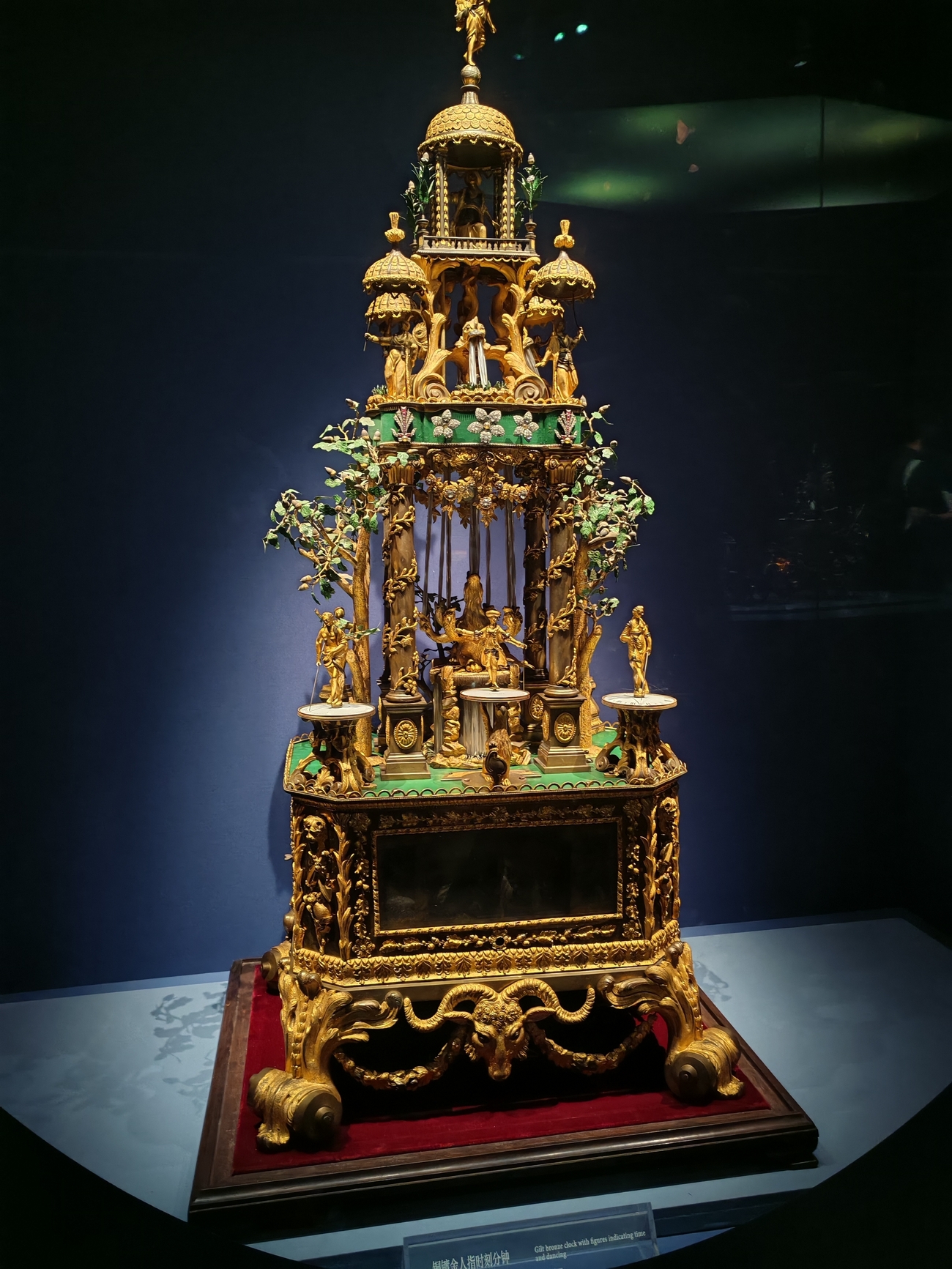
The Clock Gallery in the Hall of Ancestral Worship is something different entirely. The Palace Museum holds a significant body of Qing court painting that blends Chinese and European techniques, most famously the work of the Italian Jesuit Giuseppe Castiglione, who served the court for several decades. The clocks represent the same cultural transaction in mechanical form: European craftsmen sending extraordinary timepieces to the Qing court as diplomatic gifts, each one more elaborate than the last, designed to impress an emperor who officially held the outside world in contempt but privately collected its most precise instruments. Castiglione and his fellow Jesuits used their access to the imperial court as missionaries. The clocks paid for the access. The gallery is full of that negotiation, rendered in gilded bronze, enamel, and working mechanical movement.
The Imperial Garden
The Forbidden City ends, in the north, in a garden.
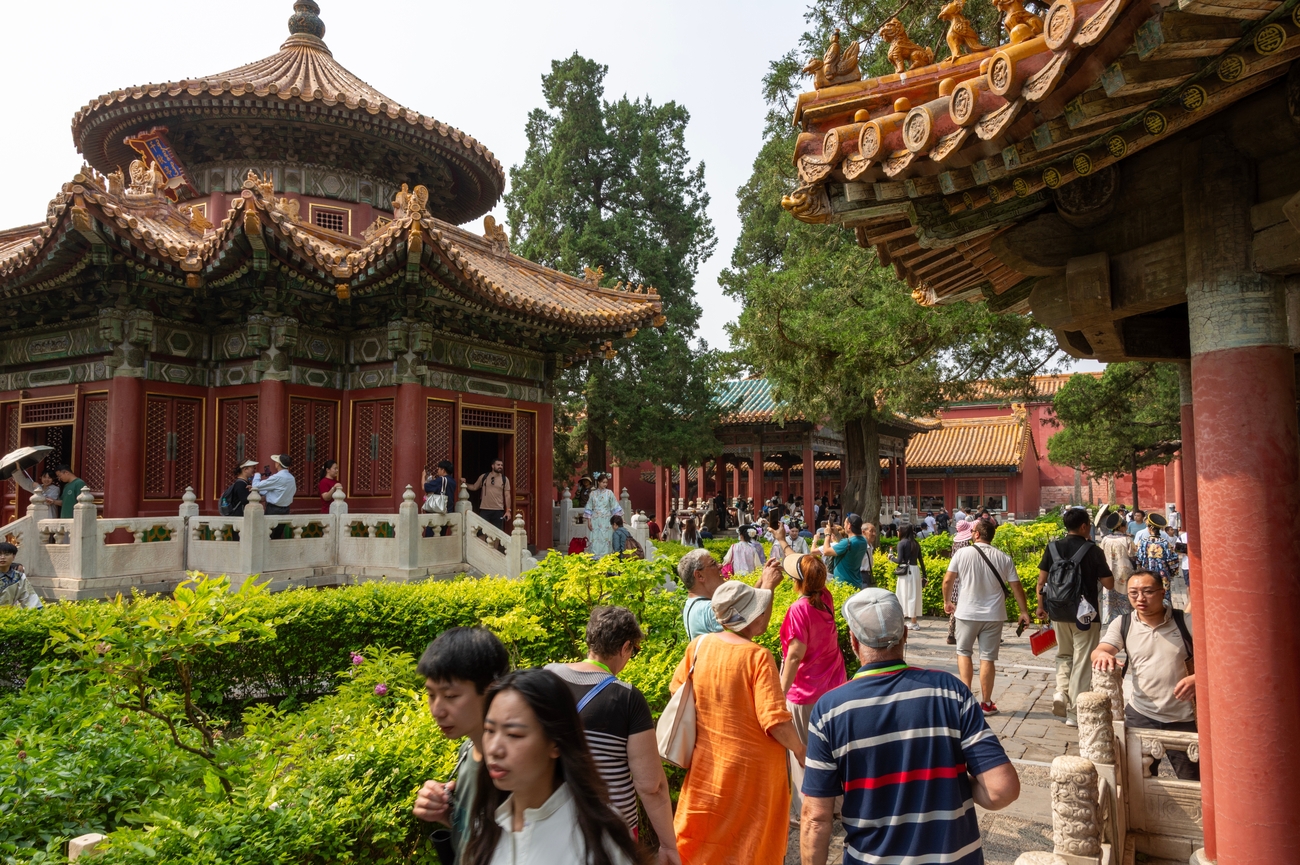
After the scale of the Outer Court, after the compressed intensity of the Inner Court's residential precincts, the Imperial Garden, the Yuhuayuan, arrives as a kind of exhale. Ancient cypress trees, some of them planted during the Yongle period, cast shade across stone paths between rockeries and ponds and small pavilions. The garden was built for the imperial family's private use and its proportions reflect that: intimate, quiet, arranged with a care for the particular pleasure of a small group of people who had everything except the ability to leave.
The Thousand-Year Pavilion at the garden's northeast corner sits atop a rockery constructed from Taihu limestone. Climbing it, even partly, gives a view back across the rooflines of the inner court, the yellow tiles catching whatever light the sky is offering, the whole complex visible from above as it was designed to be understood: symmetrical, deliberate, enclosed. It is a good place to stop before exiting through the Gate of Divine Might to the north, and a better place to try to absorb what you have spent the morning moving through.
What the Palace Museum Holds Beyond the
Architecture
The Palace Museum Beijing opened in 1925, the year after the last emperor was evicted, and it has been accumulating significance ever since. Its collection of 1.86 million artefacts, held across the 980 surviving buildings of the complex, represents the accumulated material culture of the Ming and Qing dynasties: paintings, ceramics, jade, bronze, silk, lacquerware, books, documents, furniture, clocks. Most of it is in storage. What is displayed in the permanent galleries and rotating exhibitions represents a curatorial selection from one of the largest collections of Chinese cultural heritage anywhere on earth.
In 2025, the Palace Museum Beijing marked 100 years of conservation, restoration, and digitisation. The restoration work happening continuously across the complex employs craftspeople trained in the traditional techniques that built the palace in the first place: hand-fired tiles, traditional timber joinery, pigments mixed according to Qing-era formulas. It is a 100-year programme. It is not finished.
The View From Jingshan Park
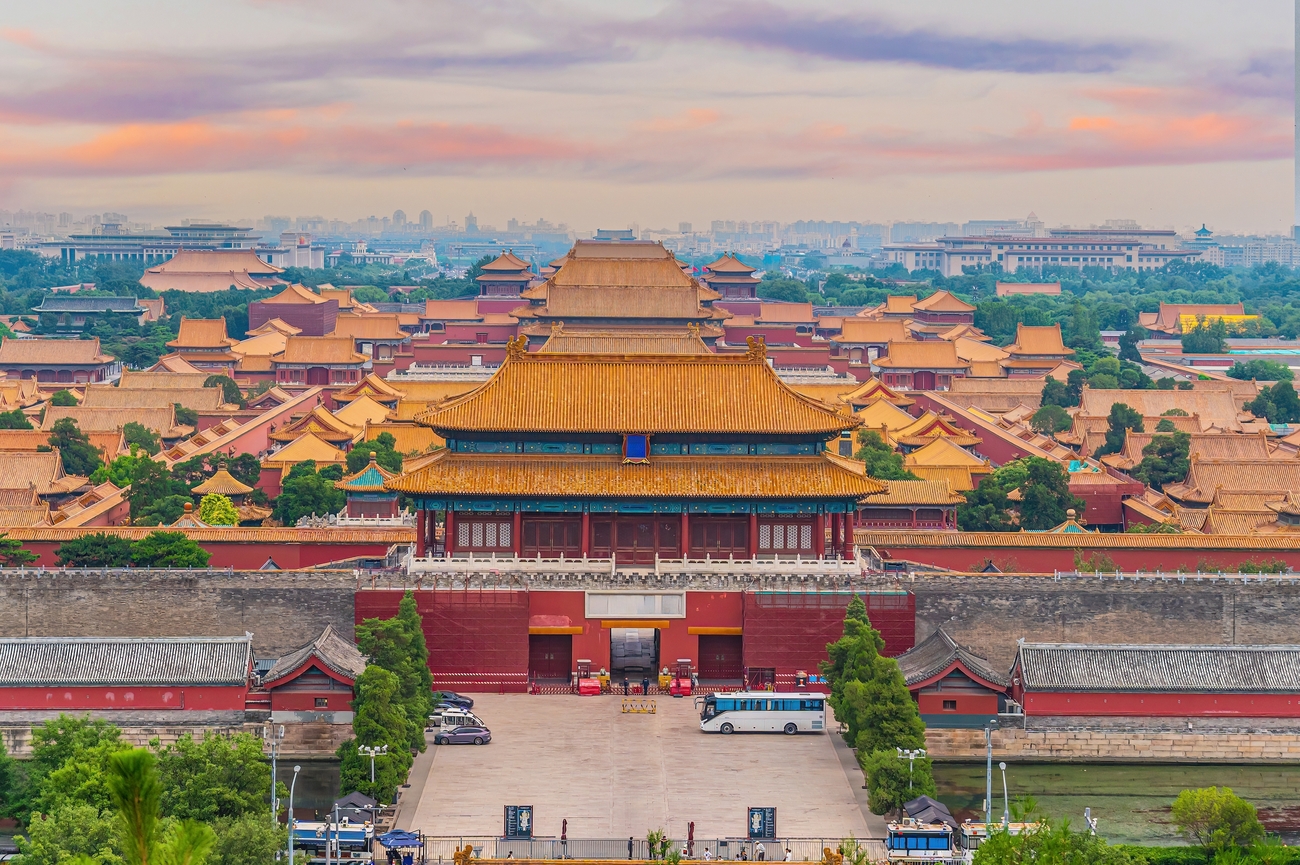
Directly north of the Gate of Divine Might, across the moat that encircles the Forbidden City Beijing, Jingshan Park rises on an artificial hill. The hill was constructed from the earth excavated to create the moat when the palace was built in the early 15th century. On its summit, a yellow-roofed pavilion offers an unobstructed elevated view back across the entire complex.
This is the view the palace was designed to present from above: the central axis running north to south through the complete length of the complex, every significant hall aligned along it, the rooflines of the Outer Court to the south and the residential compounds to the north visible simultaneously, the geometry of the whole thing finally legible in a single frame.
It is also, quietly, the best place to let the morning settle before the afternoon continues. Xi'an's 2,200-year-old underground army, which the journey reaches by high-speed train on day four, carries a completely different weight once you have spent a morning inside the palace it predates by fifteen centuries.
The route between Beijing’s Forbidden City and Xi’an is not only geographical. It traces the full arc of Chinese imperial history in the order it actually unfolded, and what awaits in those excavated pits east of Xi’an is unlike anything the palace, for all its grandeur, can prepare you for.

Why Visit the Forbidden City with a Private Guide
The Forbidden City Beijing admits up to 40,000 people on its busiest days. Some sections of the central axis, particularly the approaches to the Hall of Supreme Harmony between 10 AM and noon, confirm what that number feels like in practice. The side courtyards of the Western Palaces, the Treasure Gallery, the Clock Collection and the Imperial Garden fill later, drain faster and reward the visitor who knows where to move and when.
The deeper case for an arranged visit is not logistical. It is contextual. The kind of luxury Beijing experience that this palace is capable of delivering, where the architecture becomes legible as argument, where the objects in the Treasure Gallery accrue their proper significance, where the Eastern Warm Pavilion's yellow screen stops being furniture and starts being political theory, depends on having someone alongside you who can read the place.
A private specialist guide inside the Palace Museum Beijing is not a convenience for the traveller who does not know where to go. It is the difference between walking through one of the world's great monuments and understanding it. The Forbidden City was built to communicate, in the most precise possible terms, a specific set of ideas about power, cosmology and the relationship between the human world and the heavens above it. The ideas are still there, encoded in the tiles, thresholds, marble and gates. Having someone who can translate them changes the morning entirely.
The following day, the itinerary moves north to the Great Wall. The Mutianyu section, 73 kilometres from the city, is where the same Ming Dynasty that built the Forbidden City Beijing drew its northern frontier in granite. The two sites read very differently in person. Together, they are one dynasty's complete self-portrait, which continues in our guide to the Mutianyu Great Wall.
Some Places You Return from Changed
The Forbidden City took fourteen years to build. It held 24 emperors across five centuries. It contains 1.86 million artefacts across 980 buildings and has been, since 1987, a UNESCO World Heritage Site. It rewards, in return for the time given to it, the kind of morning that stays with you for years.
Our First-Time China vacation places you inside the Forbidden City with pre-arranged access, a specialist guide and the Grand Hyatt Beijing as your base for the first three nights. Xi’an and Shanghai follow, each city given the same level of care, context and logistical precision. The itinerary is already built around the places that matter. The only thing left is deciding when to go.
Some places you visit. Some places you return from changed, in small ways, in the way you read the world.
The Forbidden City Beijing is the second kind.


Let us know what you love, where you want to go, and we’ll design a one-of-a-kind adventure you’ll never forget.
Get in touch
Miriam
Travel Specialist

Nina
Travel Specialist
Abigail
Travel Specialist
Our offices:



Revigorate, Iberian Escapes and Algarve Lifestyle are the registered brand names of APCS Lda . We are a fully authorised travel agency licensed by Turismo de Portugal RNAVT/6867.
In the event of a dispute, the consumer may refer to: RAL - Centros de Arbitragem
Avª. 5 de Outubro, nº. 55, R/C Dtº. 8000-075 Faro, Portugal | Tel: +351 289 823 135 *
* national landline call
E-mail: info@consumoalgarve.pt| www.consumidoronline.pt | Mon to Fri: 9:00 - 13:00 / 14:00 - 17:00