Mutianyu Great Wall: The Most Iconic Stretch of Beijing's Northern Frontier
The wind arrives before the view does.
You feel it first at the top of the cable car, a cold press from the north that has crossed the plateau without interruption and found you, specifically, on this ridgeline. Then the Mutianyu Great Wall opens up in both directions and you stop thinking about the wind.
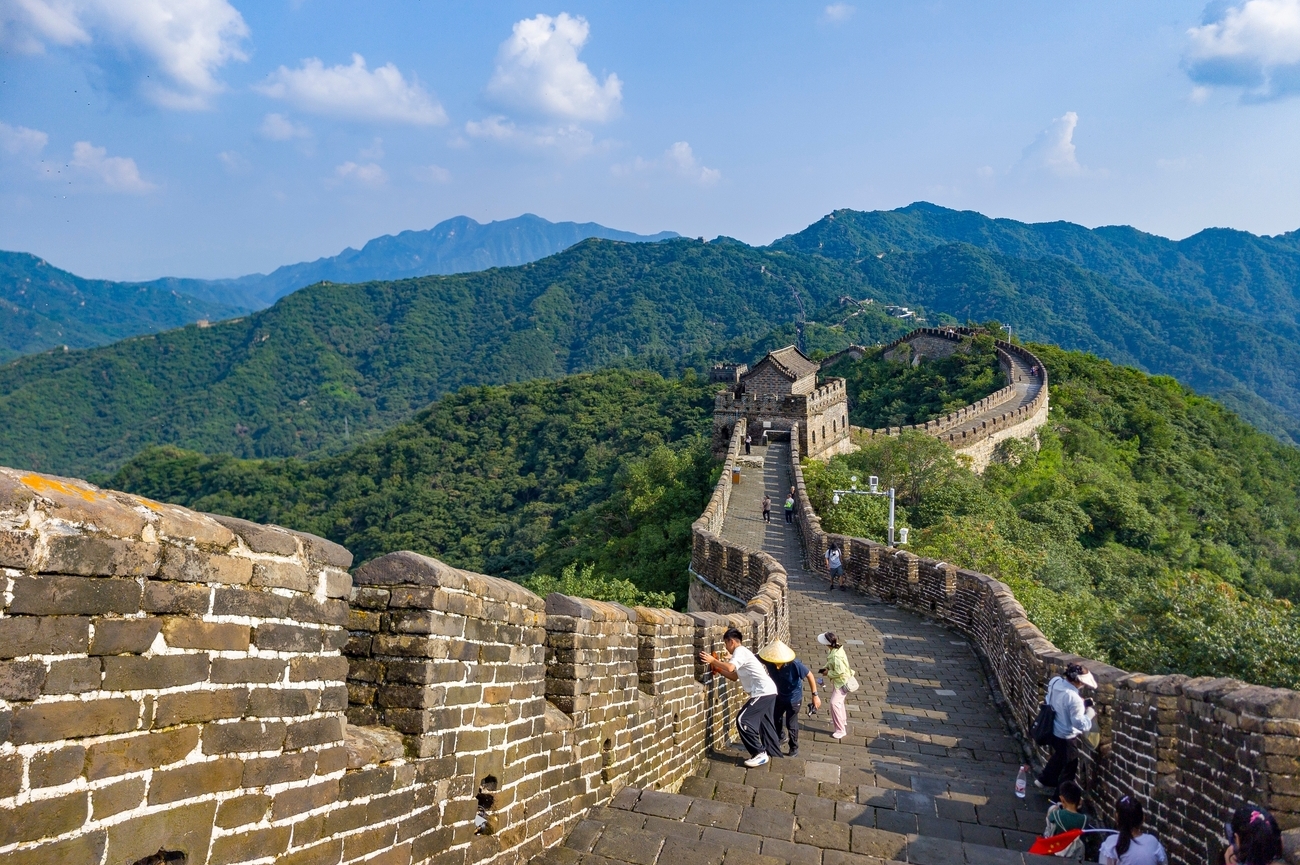
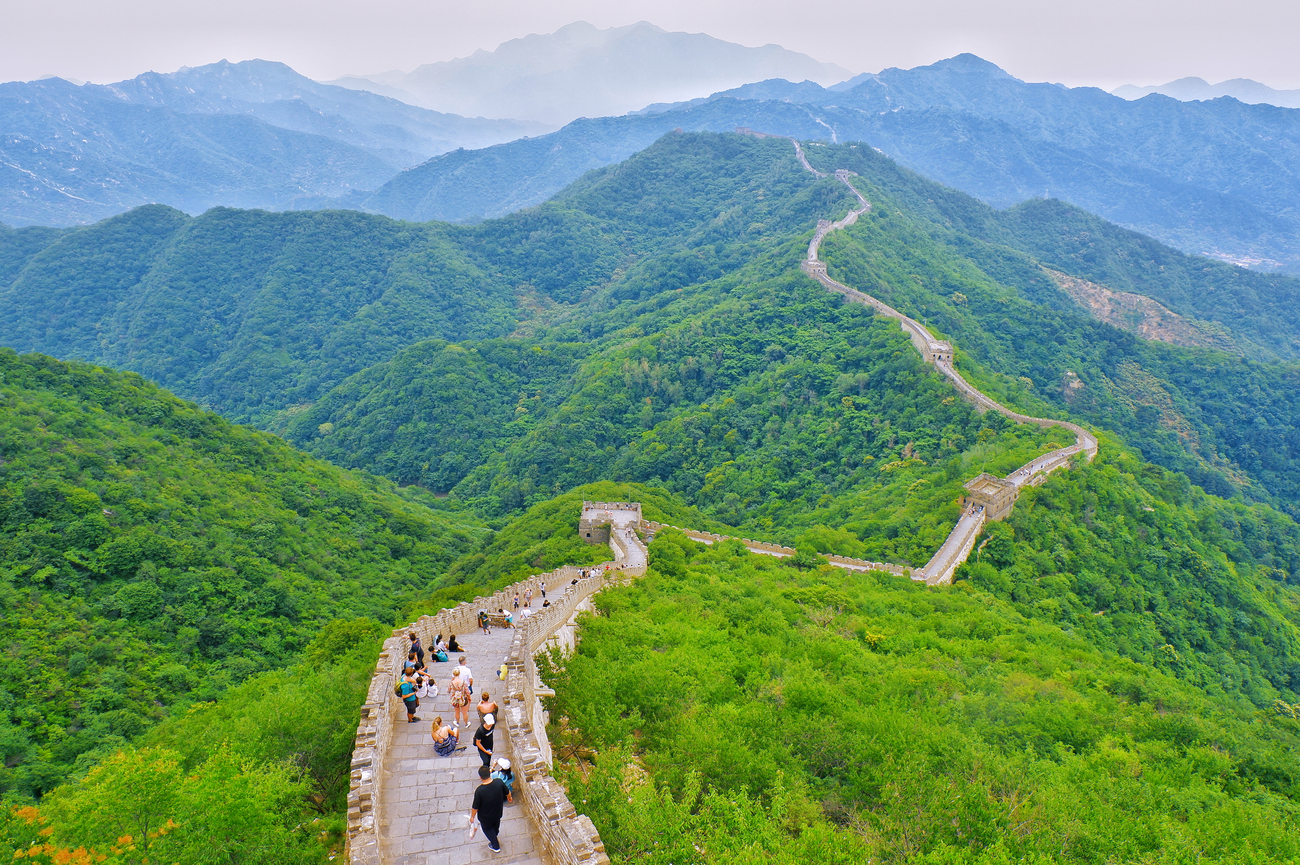
The wall doesn't sit on the mountain. It follows it. Every rise and fall of the granite ridge, the wall traces it exactly, climbing, dropping, curving east and then west again, 22 watchtowers disappearing into pine forest on one side and open sky on the other. Standing at Tower 14 and looking at the full length of the accessible section, the scale of the thing isn't loud. It's quiet. It presses in slowly, the way cold does.
For anyone moving through China’s Golden Triangle for the first time, the full eight-day route through Beijing, Xi'an, and Shanghai gives the Mutianyu Great Wall its proper place in the sequence. This is day three. Everything before it was the city. Everything after it moves south toward Xi'an.
The wall is the pause between those two things, the moment Beijing steps back and shows you what it was built to defend.
Before the Ming: What Was Here First
The Mutianyu Great Wall is older than most visitors realise. The first defensive structures in this valley were built during the Northern Qi Dynasty, between 550 and 577 AD, over a century before the Tang Dynasty, over seven centuries before the Ming. The Mutianyu section of the Great Wall was first built in Northern Qi over 1,400 years ago.
The Northern Qi wall was rudimentary by comparison to what replaced it: earthen and stone barriers along the ridgeline, functional but not fortified in the way the Ming would later fortify them. The Ming reconstruction, beginning in 1368 under General Xu Da, one of the founding generals of the new dynasty, built over the Northern Qi foundations using granite quarried from the surrounding mountains. The material choice was deliberate. Granite is harder to breach, harder to degrade, and in the specific geology of the Huairou District, available in quantities sufficient for a wall seven to eight metres high and four to five metres wide, running continuously across several kilometres of mountain ridge.
In 1404, a pass was built in the wall. Mutianyu Pass was fortified with a rare triangular formation of three interlinked watchtowers. This formation, known today as the Zhengguan Terrace and marked as Watchtower No. 4 on visitor maps, remains the only structure of its kind anywhere along the Great Wall of China. Three towers on a single shared platform, connected at their upper levels, each facing a different compass direction. In 1404. The engineering has not been replicated in six centuries.
General Qi Jiguang and the 1569
Reconstruction
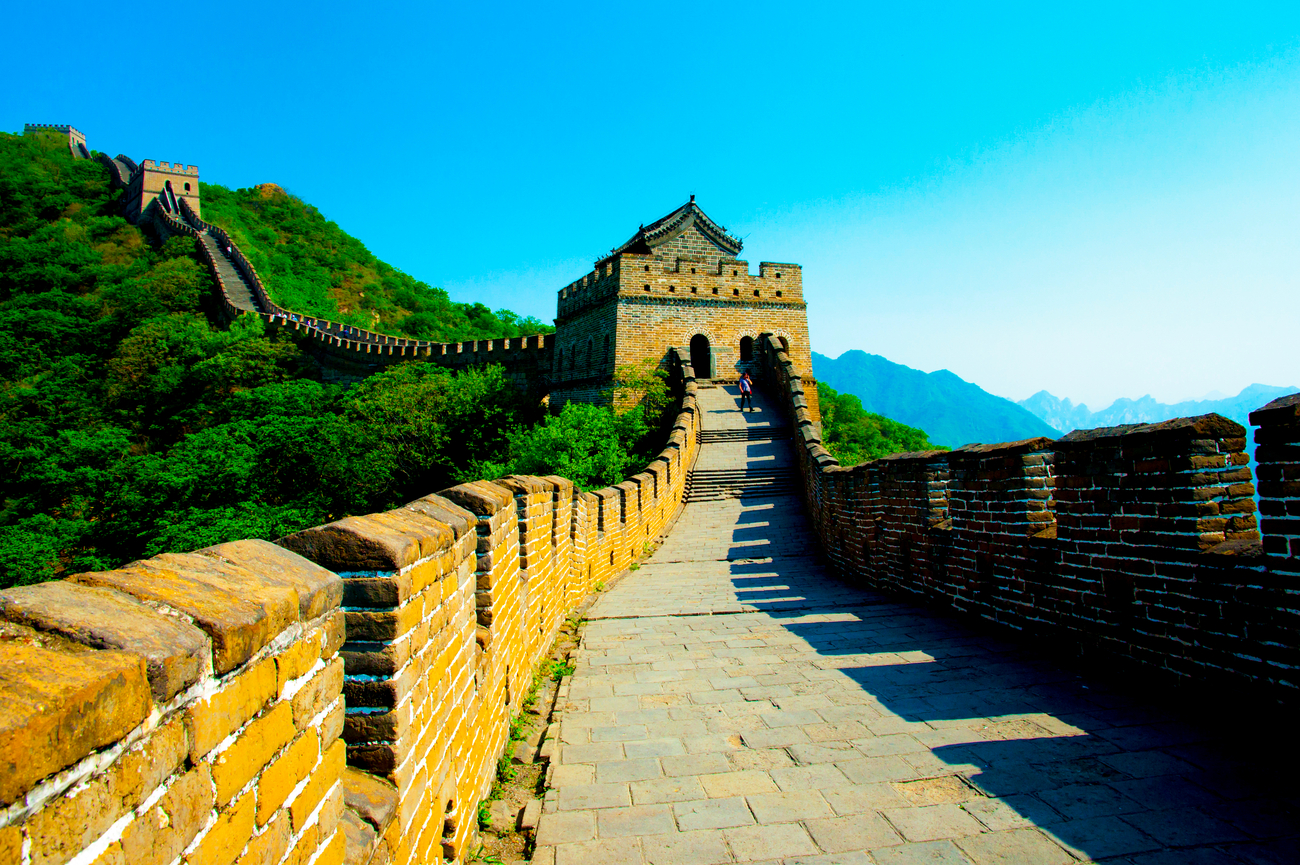
The Mutianyu Great Wall as it stands today is primarily Qi Jiguang's work.
By the mid-Ming Dynasty, to fortify the capital's northern defences, the renowned general Qi Jiguang was summoned from southern China. Recognising Mutianyu's strategic significance, he personally oversaw its reinforcement in 1569, strengthening walls, adding beacon towers and watchtowers, and refining its defensive layout to render it virtually impenetrable.
Qi Jiguang's contribution to the Ming Dynasty Great Wall went beyond Mutianyu. He supervised the reinforcement of a 1,000-kilometre stretch of the northern frontier between 1569 and 1572. What distinguishes his work at Mutianyu specifically is an architectural decision that has no equivalent on any other accessible section of the wall.
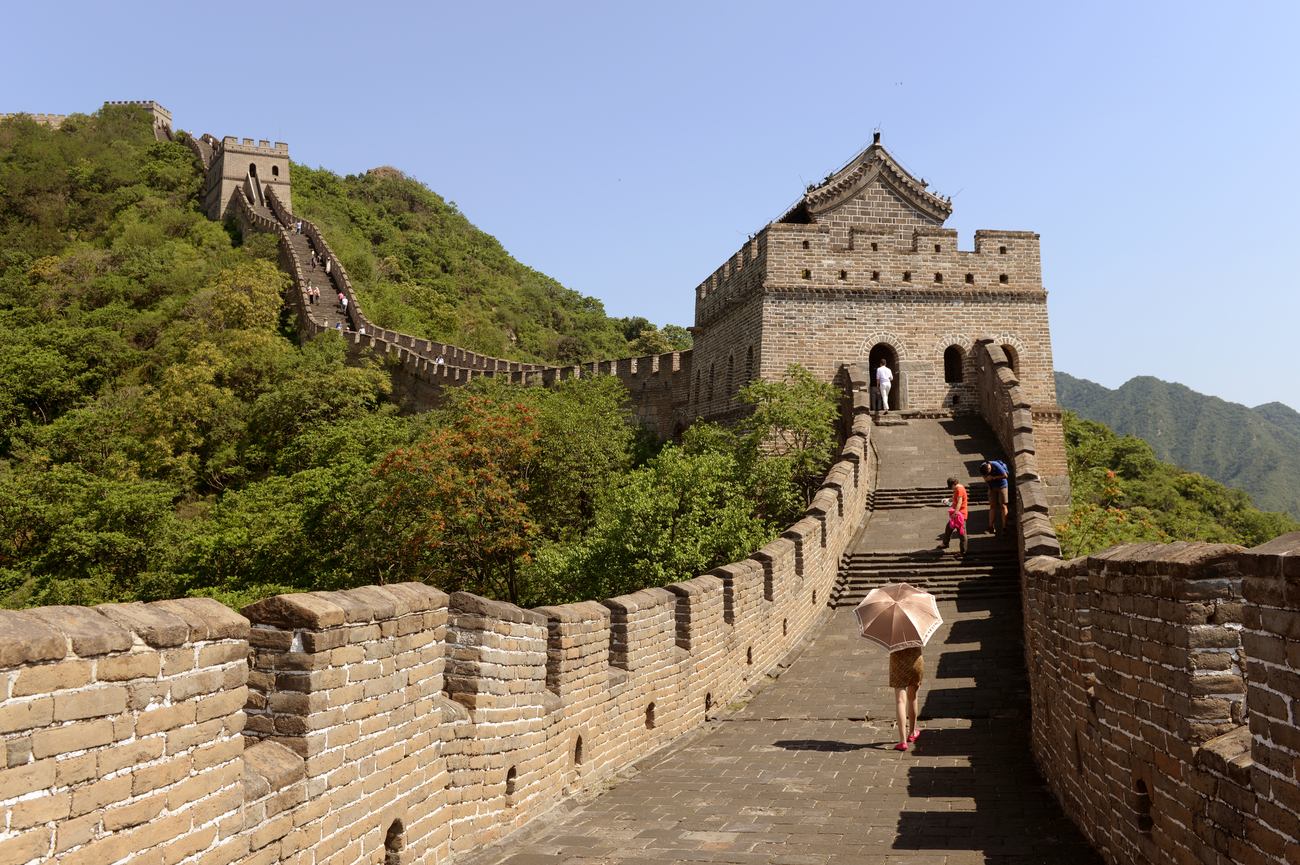
Both the outer and inner parapets are crenellated with merlons, so that archers could fire protected on both sides, a feature very rare on other parts of the Great Wall.
Most sections of the Great Wall of China were built with battlements on the outer face only. The logic was straightforward: the threat came from outside. Qi Jiguang's Mutianyu section has merlons on both faces. The inner battlements prepared for the possibility of a breach, that the wall itself might be taken and turned against its own defenders. The decision to build for that contingency, into granite, at this scale, says something specific about how Qi Jiguang understood the northern threat after two decades of fighting on China's southern coast. He did not assume the outer edge would hold.
The Mutianyu Great Wall rebuilt to his specifications was opened to visitors in 1988. It received National 5A-level Tourist Attraction designation in 2011, the highest classification the Chinese government applies to a scenic site. The recognition reflects what the section actually is: not the most famous stretch of the wall, but the most militarily coherent, the most architecturally intact, and the most legible to a first-time visitor trying to understand what they are standing inside.
The 22 Watchtowers
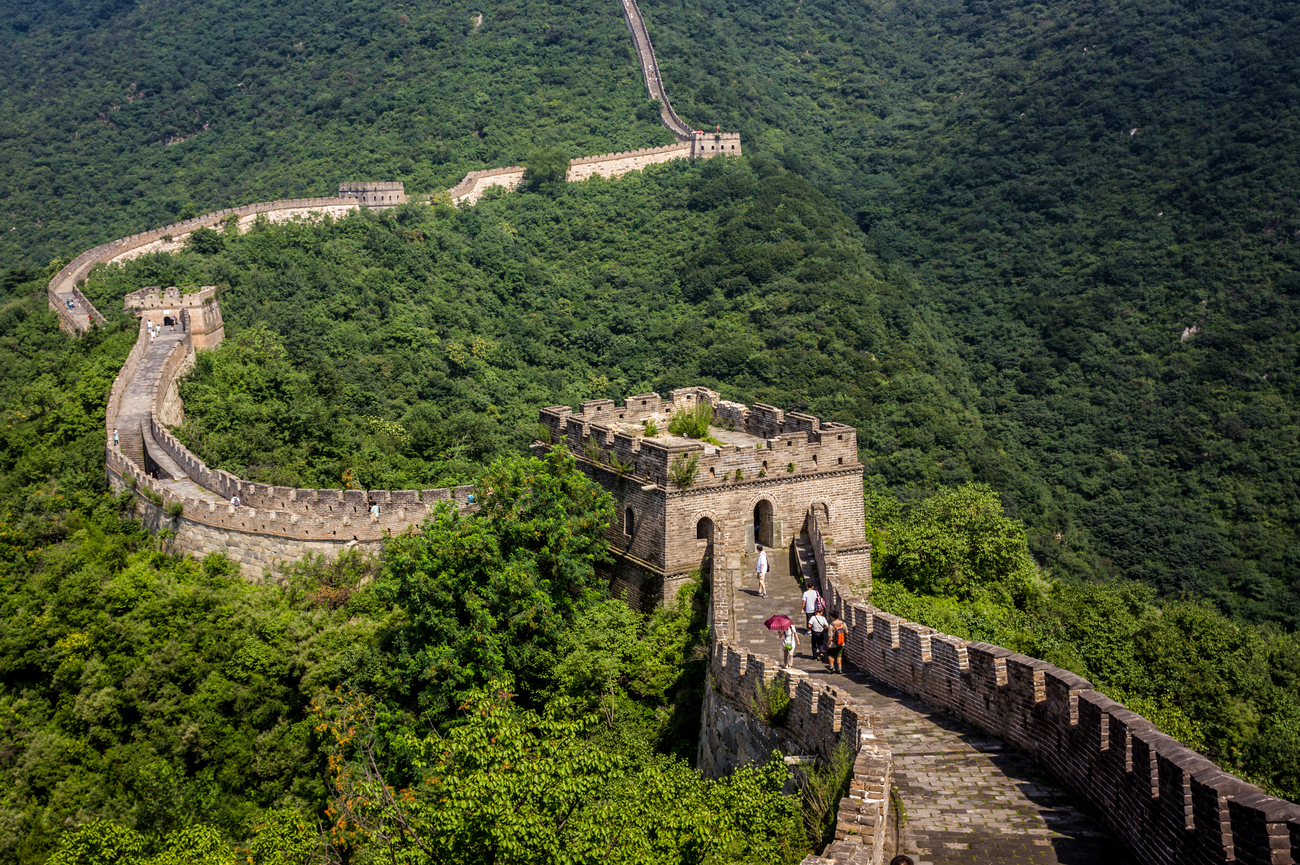
The restored section of the Mutianyu Great Wall open to visitors runs 2,250 metres along the ridgeline of the Huairou mountains, studded with 22 watchtowers at intervals of roughly 100 metres. That density, one tower every hundred metres, is the defining characteristic of this section and the most immediate evidence of Qi Jiguang's influence on its design.
Each tower served multiple functions simultaneously:
Surveillance: elevated sightlines in both directions along the wall, with clear views of the valley approaches from the north
Garrison: sleeping quarters for soldiers, heated in winter through stone platform beds, with capacity for up to 200 men in the larger towers
Storage: ground-floor rooms for weapons, supplies, and provisions sufficient to sustain a garrison through a siege
Communication: signal fires built on platforms at the tower summits, capable of relaying military intelligence from Mutianyu to Beijing in hours
Command: the larger towers contained dedicated command rooms where officers coordinated the defence of their section
Tower 14, accessible via the main cable car, offers panoramic views and serves as an excellent starting point for wall walking. The three-story structure features archer windows, storage rooms, and a command post that once coordinated defensive operations.
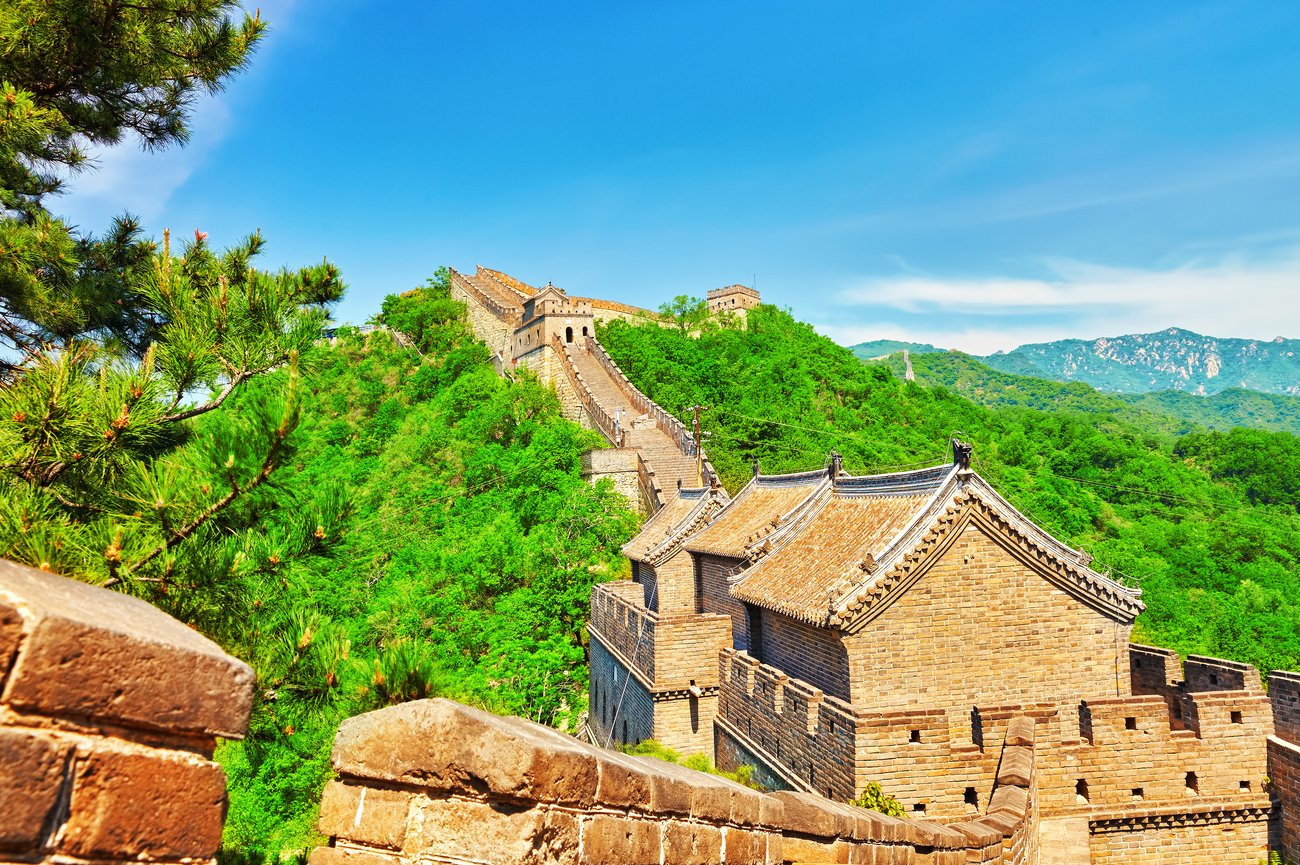
The section between Towers 11 and 15 is the one that ends up on the covers of travel publications. The wall follows the ridgeline's natural contours here with a sinuous precision, rising and falling with the mountain's profile, and the view from any elevated point along this stretch shows it curving away in both directions into the forested hills, grey granite against the green of the surrounding pine and cypress, the scale of the project resolving itself suddenly into something comprehensible. You are not looking at a wall. You are looking at a decision about geography, made in stone, that shaped the next two hundred years of Chinese history.
The Zhengguan Terrace
Watchtower No. 4 deserves its own attention.
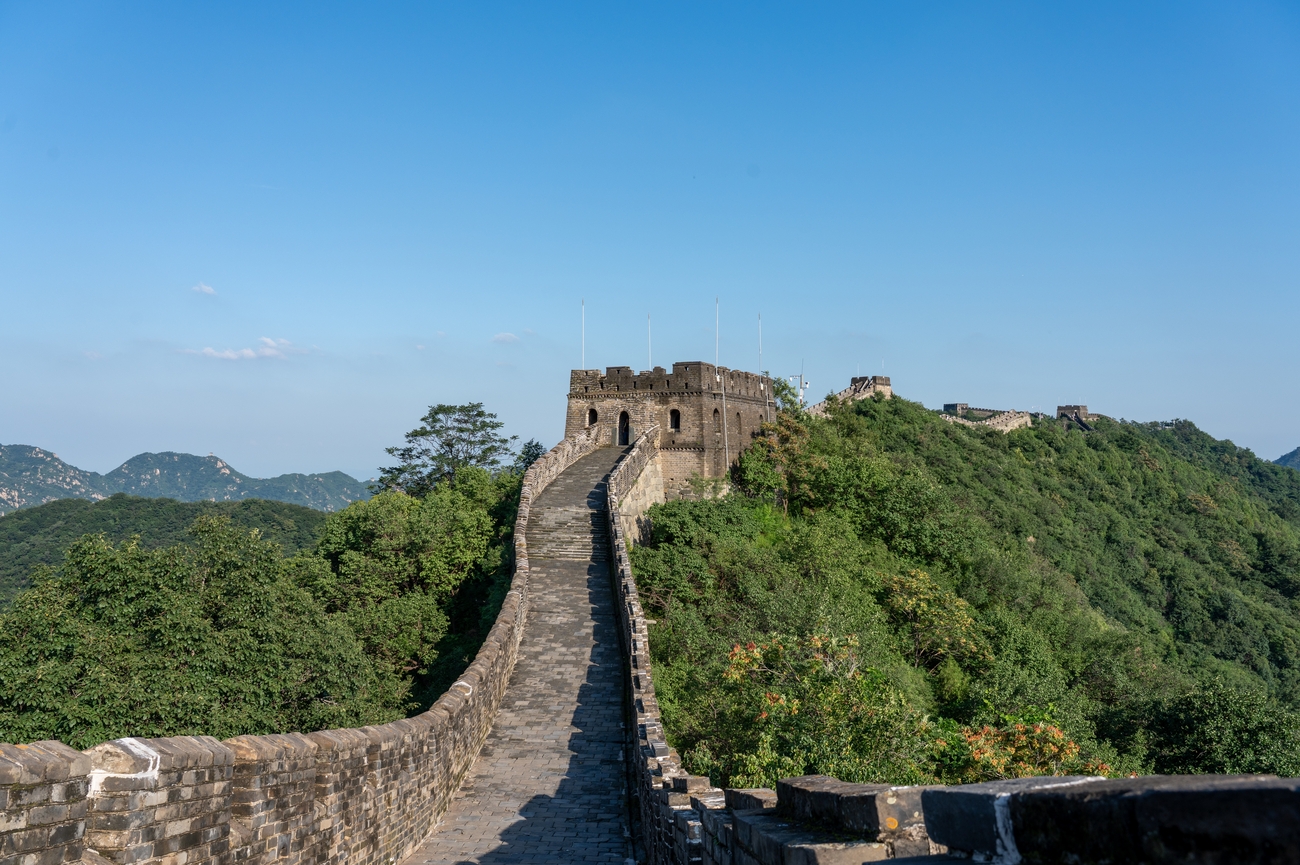
The Zhengguan Terrace is a striking platform with three watchtowers set side by side: one large central tower flanked by two smaller ones. These towers are combined into a single architectural ensemble, featuring two tiers, internal passageways, and rooms once used by guards. It is the only complex of three towers on a shared platform anywhere along the Great Wall.
Built in 1404 during the Yongle Emperor's reign, the same emperor who was simultaneously completing the Forbidden City in Beijing, the Zhengguan Terrace represents the first major architectural milestone of the Ming Dynasty's northern fortification programme. It is not incidental that the Forbidden City and this watchtower complex were conceived in the same reign. The palace the Yongle Emperor built in Beijing and the frontier fortification he built at Mutianyu are the two faces of the same imperial programme: the projection of authority inward and the defence of that authority against external threat.
The Zhengguan Terrace's triangular configuration of three towers on a single platform allowed its garrison to cover three separate fields of fire simultaneously, from the north, the northeast, and the northwest, without repositioning. The ground floor of the central tower still contains the stone platform beds where soldiers slept, positioned to be heated by the cooking fire in the room below. The detail is domestic in a way the tower's military exterior does not suggest. The people who lived and worked in these towers were not monuments. They were soldiers with specific jobs in specific rooms, trying to stay warm in the northern winter while watching a mountain pass.
Mutianyu Against the Other Sections
The Great Wall Beijing, accessible to visitors, comes in several versions. The differences between them are meaningful.
Badaling
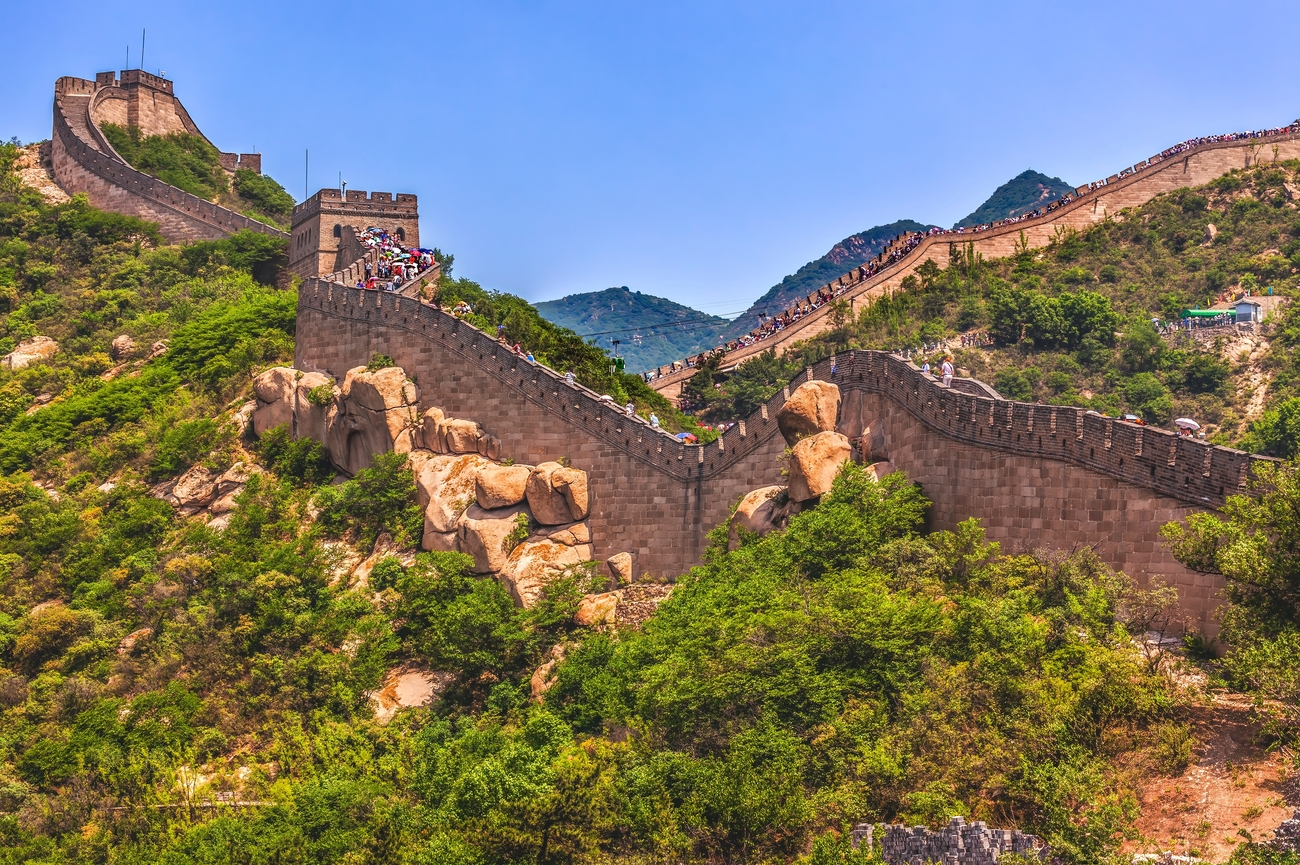
43 kilometres northwest of Beijing, this is the most visited section in the world. It was the first to be restored, in the late 1950s, and the first to be opened internationally. Its infrastructure is extensive: multiple cable cars, a large visitor centre, significant commercial development in the surrounding area. It is also, by most accounts, the most crowded section on the wall, particularly between 10 AM and noon during peak season. The restoration prioritised accessibility over historical specificity, and the wall here is wide enough at the top that it loses something of the vertiginous quality that makes the Mutianyu Great Wall feel genuinely elevated above its own terrain.
Jinshanling
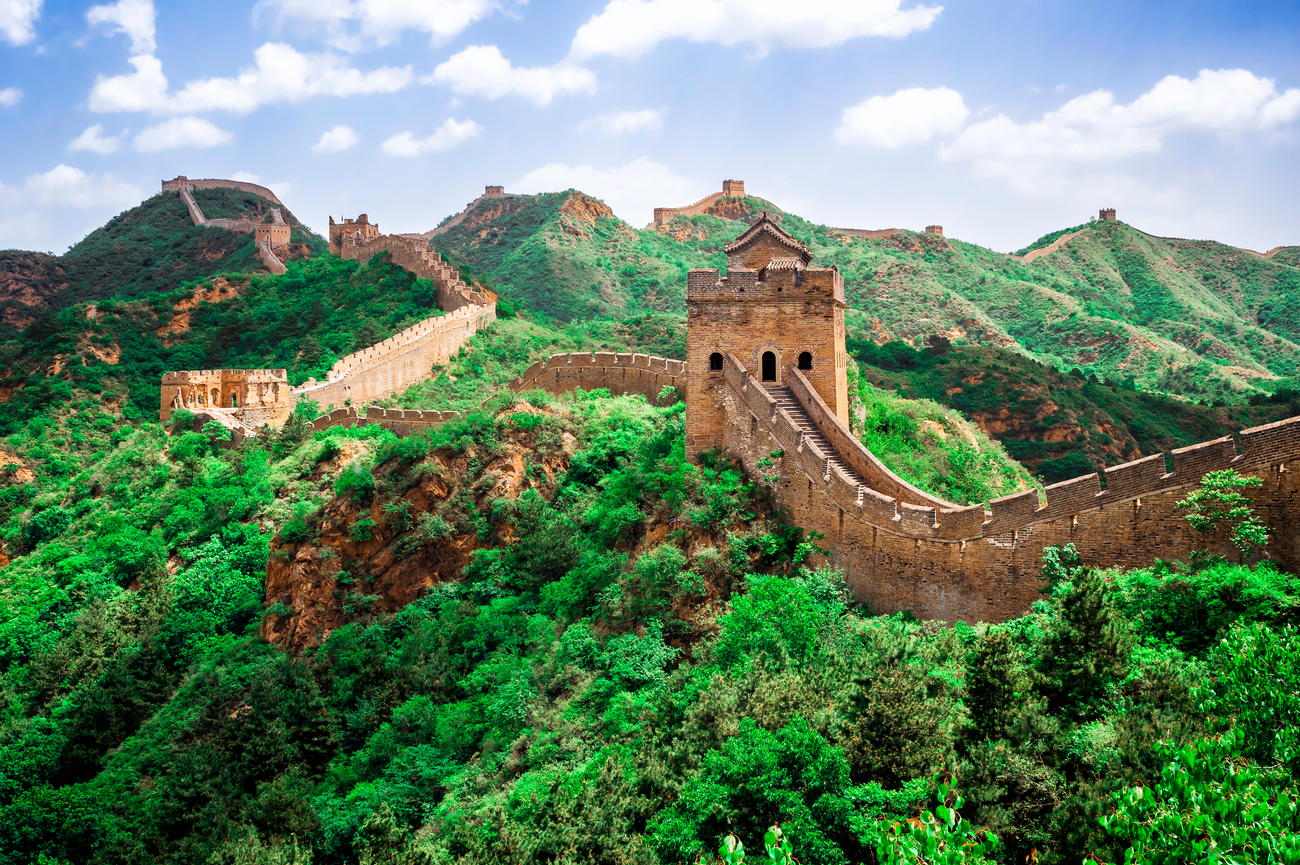
Further east and partially unrestored, it attracts photographers and serious hikers for its dramatic crumbling towers and the atmospheric quality of a wall that has not been maintained. The condition that produces those images also makes the site physically demanding and less legible as a military structure. You are looking at beautiful decay rather than the thing itself.
Jiankou
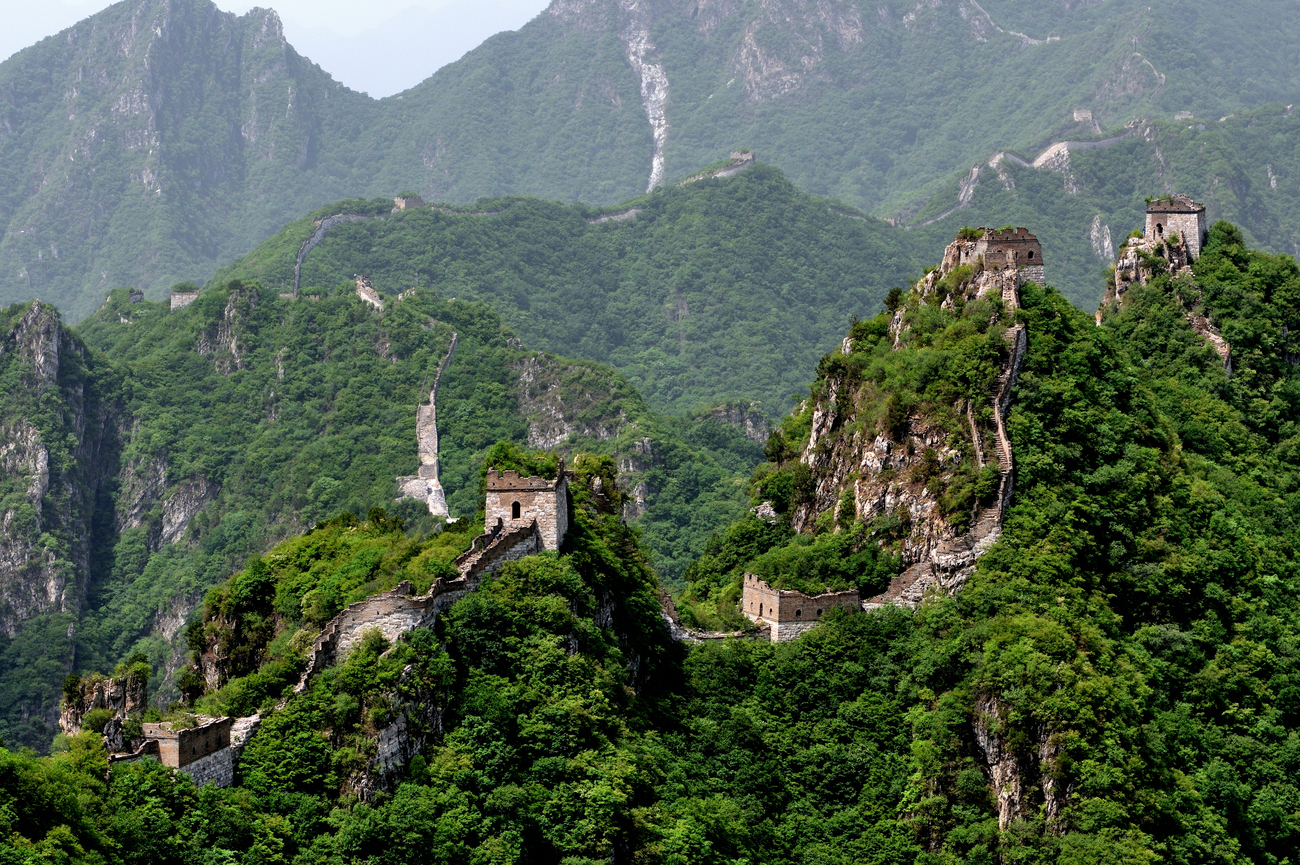
Adjacent to Mutianyu and accessible by trail, Jiankou is entirely unrestored. As Jiankou is in a state of disrepair, the Mutianyu-Jiankou trail combines the preserved condition of Jiankou's Great Wall with the classic restorative brickwork of Mutianyu. The trail is popular with experienced hikers. It is not suitable for a first visit.
The Mutianyu Great Wall sits between these options in a way that makes it the most complete experience for a traveller on a first China journey. The restoration is faithful to Qi Jiguang's 1569 construction rather than an approximation of it. The watchtowers are intact, accessible, and internally visible. The setting, more than 90 percent forest coverage in the surrounding hills, gives the ridgeline wall its forested backdrop in every direction. And the crowds, while present, are manageable in a way Badaling simply cannot offer.
The forest coverage is worth noting in more detail: pine and cypress, ancient trees whose root systems have been growing into the foundations of the wall for centuries, create a canopy that makes the approach to the Mutianyu Great Wall feel like an ascent through something living as much as something built.
What the Wall Signals to Beijing
Standing on the Mutianyu Great Wall at its highest accessible point, with Beijing somewhere to the south behind the hills and the open terrain of what was once the northern frontier stretching away to the north, the logic of the site becomes geographical before it becomes historical.
The Huairou mountains form a natural barrier along the approach to Beijing from the Mongolian plateau. The valleys between the peaks were the routes through which nomadic cavalry historically moved south. Mutianyu controlled one of those routes. The wall here was not built along an arbitrary line. It was built precisely where the terrain made a breach most possible, and it was built to make that breach as costly as could be engineered in granite, in the late 14th and 16th centuries, by the most capable military architects in China.
The Ming Dynasty built the Great Wall of China to its most extensive form between 1368 and 1644. The 21,196 kilometres of wall, tower, and fortification that UNESCO recognised as a World Heritage Site in 1987 represent the accumulated effort of that entire period. The Mutianyu Great Wall is, in the assessment of Chinese heritage authorities, the section with the largest construction scale and the highest quality of preservation anywhere along that 21,000-kilometre length.
Qi Jiguang knew this ridgeline was important. He rebuilt it accordingly. What remains is his judgement, in stone, still standing after four and a half centuries.
The Summer Palace: The Morning Before
the Ridgeline
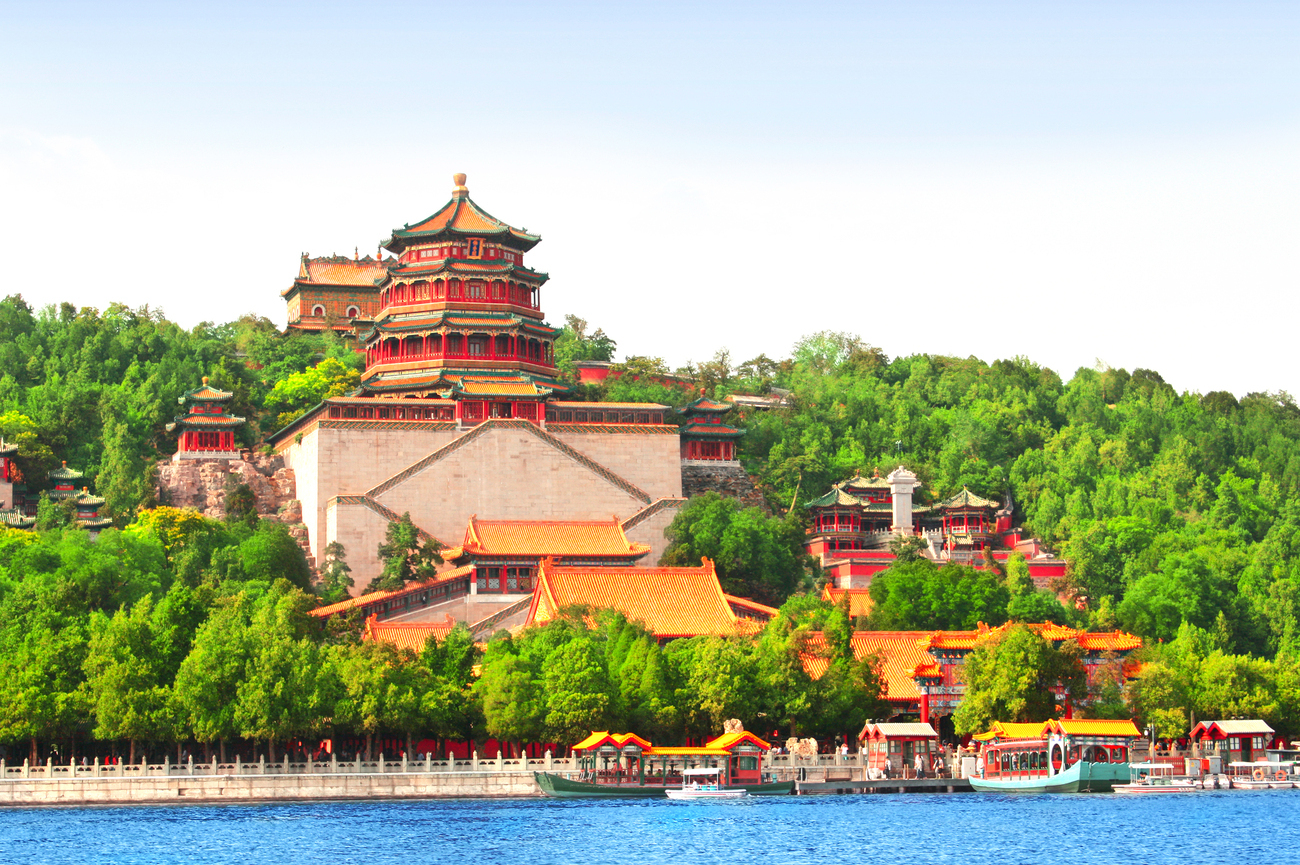
Day three of the Beijing itinerary pairs the Mutianyu Great Wall with a morning at the Summer Palace, and the pairing holds its logic in the contrast.
The Summer Palace, Yiheyuan, sits on the northwest edge of the city. Kunming Lake covers 220 hectares of its 2.9-square-kilometre grounds. The Long Corridor, a 728-metre covered walkway connecting the palace's main halls, is decorated with over 14,000 painted scenes of landscapes, mythology, and court life. Empress Dowager Cixi rebuilt the complex in 1888 using funds allocated to the Qing naval programme. The lakeside pavilions and carefully landscaped shores represent the Qing Dynasty's vision of imperial leisure: controlled, refined, and insulated from the world beyond the garden walls.
Ninety minutes north on the road to Huairou, the Mutianyu Great Wall is the same dynasty's other register, its defensive face, the version of imperial China that was not serene and did not have a covered walkway. The transition from Kunming Lake to the granite ridgeline in a single afternoon is one of the better structural decisions in the eight-day itinerary.
Xi'an follows Beijing. After two full days in the imperial capital and one day on its northern frontier, the high-speed train south to Xi'an moves through five hours of changing landscape toward a city that predates everything in Beijing by fifteen centuries. The burial army east of Xi'an and the wall at Mutianyu are, in a sense, the same dynasty's problem and solution: the Qin built the first connected wall to contain the northern threat; the Terracotta Warriors were the army buried to defend against it in the afterlife. The Ming inherited both anxieties.
Shanghai waits at the far end of the journey. Where Beijing speaks in imperial scale and Xi'an in dynastic origins, the Bund presents China's modern chapter, a waterfront promenade where colonial architecture, global commerce, and the skyline of Pudong face one another across the Huangpu River. Together, Beijing, Xi'an, and Shanghai form a sequence that traces the country's evolution from imperial capital to ancient heartland to modern metropolis.
The Wall Before the Crowds Arrive
The Mutianyu Great Wall receives significantly fewer visitors than Badaling. That gap narrows between 10 AM and 1 PM during the spring and autumn peak seasons, when the car parks fill and the cable car queues lengthen. The wall itself absorbs crowds differently than a museum or a palace: the ridgeline distributes people across 2,250 metres of open walkway, and the sections beyond Tower 15 eastward thin quickly. But the optimal hours are before the tour buses arrive, which means arriving before 9 AM, which means having the logistics arranged to make that possible.
A morning at the Great Wall Beijing that begins with a gate queue and an uncertain cable car wait is a different morning from one that begins on the wall itself, at the tower configuration that repays the most attention, with someone alongside who knows the engineering well enough to explain why the inner merlons exist and what that decision reveals about the commander who ordered them built.
The Mutianyu Great Wall is built on a granite ridgeline between 486 and 1,039 metres above sea level. The air at the higher points is different from the city air. The view at Tower 20, the eastern limit of the accessible section, is a long undisturbed sightline across forested hills with no visible development in any direction. It is one of the few moments in a Beijing itinerary where the modern city entirely disappears.
The Wall That Still Holds Its Ground
Our carefully curated First-Time China vacation builds the Great Wall day around a morning at the Summer Palace followed by the drive north to Mutianyu, with pre-arranged access, private transfer and a specialist guide who carries the military history of the site the way the wall itself carries the Ming Dynasty’s ambition: with enough depth that the surface is worth looking at closely. The Grand Hyatt Beijing is waiting on your return.
Some things that have been standing for 1,400 years have become background. The Mutianyu Great Wall has not. It remains, on its granite ridge above the valley that used to grow apricots, precisely what Qi Jiguang intended it to be: a thing that holds its ground.
This is the kind of place that deserves to be understood, not simply visited.


Let us know what you love, where you want to go, and we’ll design a one-of-a-kind adventure you’ll never forget.
Get in touch
Miriam
Travel Specialist

Nina
Travel Specialist

Abigail
Travel Specialist
Our offices:



Revigorate, Iberian Escapes and Algarve Lifestyle are the registered brand names of APCS Lda . We are a fully authorised travel agency licensed by Turismo de Portugal RNAVT/6867.
In the event of a dispute, the consumer may refer to: RAL - Centros de Arbitragem
Avª. 5 de Outubro, nº. 55, R/C Dtº. 8000-075 Faro, Portugal | Tel: +351 289 823 135 *
* national landline call
E-mail: info@consumoalgarve.pt| www.consumidoronline.pt | Mon to Fri: 9:00 - 13:00 / 14:00 - 17:00