China’s Golden Triangle: The Classic First Journey Through Beijing, Xi’an and Shanghai
Beijing begins with imperial scale.
The yellow roof tiles of the Forbidden City were that colour by law. No one outside the imperial family was permitted to live beneath them. Walk through the gate and the scale of it settles over you before a single word of context does. Later, the high-speed train carries you southwest across five hours of China's interior, the flatlands giving way to loess hills the colour of old terracotta, and then Xi'an opens up and the name suddenly means something. Shanghai comes last, and it should. Nothing prepares you for that waterfront at dusk except everything that came before it.
This is the journey that changes how you think about history. Our First-Time China vacation is where it begins.

Beijing:
Three Days in the Capital That Built an Empire
You could spend a month in Beijing and still be finding things. The practical reality, for travellers on a Beijing Xi'an Shanghai tour, is three days. Three days is enough if the sequencing is right. Travellers wanting a broader overview can also explore our Things to Do in Beijing guide
Beijing's landmarks are arguments. The Forbidden City was built to make imperial authority felt at a bodily level, through geometry, through scale, through the deliberate management of who could proceed beyond each gate and who could not. Tiananmen Square was not planned as a central plaza but as a theatre. Even the hutongs, those narrow lane networks threading through the older residential quarters, are arguments about how a city's social fabric gets organised when proximity matters more than square footage.
Understanding that these places were built with intention changes the experience of standing inside them.

The Forbidden
City
Tiananmen Square is where most visits begin, and the sequence is correct. The square covers 440,000 square metres. That number is meaningless until you're standing inside it and realise that even a significant crowd feels small within it. Looking north from the square toward the Gate of Heavenly Peace, with the vast red walls beyond and Mao's portrait presiding over the entrance, the scale of what's coming begins to register.
The Forbidden City sits directly behind that gate. Completed in 1420 under the Yongle Emperor of the Ming Dynasty, it served as the ceremonial and political heart of Chinese imperial rule for 491 years. Twenty-four emperors lived and governed here across the Ming and Qing dynasties. Its 980 surviving buildings hold 1.86 million artefacts. UNESCO declared it a World Heritage Site in 1987. The superlatives are accurate. They don't prepare you for the experience.
The palace runs on a strict north-south axis that functions simultaneously as architecture and cosmology. The Outer Court, occupying the southern half, was where state affairs unfolded, grand imperial ceremonies, proclamations, the administration of an empire. The Inner Court to the north was the private architecture of imperial life: residential palaces, family quarters, the gardens that emperors retreated into. The further north you walk, the more intimate the spaces become. By the time you reach the Imperial Garden, with its ancient cypress trees and limestone rockeries, it's possible to forget for a moment that you're inside one of the most visited sites anywhere on earth.
The Forbidden City enforces a daily visitor cap of 40,000 people and requires advance real-name booking through official channels. Walk-in admission is no longer possible. This is one of several sites on a Beijing Xi'an Shanghai tour where advance arrangement isn't a convenience but a requirement. Having that handled before you arrive is the difference between spending your first morning at the ticket window and spending it inside the palace. Our dedicated guide to the Forbidden City takes its layout, collections and historical logic layer by layer.

The Temple of
Heaven
The Temple of Heaven is often overshadowed by the Forbidden City in itinerary planning.
Built in the same year, 1420, the Temple of Heaven represents a different register of imperial thought. Where the Forbidden City declared political authority outward, this complex turned inward toward something more uncertain: the emperor's relationship with heaven, and the genuine anxiety of a ruler who understood that the Mandate of Heaven could be revoked if the harvests failed.
The Hall of Prayer for Good Harvests, the complex's most famous structure, is a circular blue-tiled tower constructed without a single nail in its wooden framework. The circularity was deliberate. Heaven, in Chinese cosmological tradition, was round; earth was square. The building's geometry was theology.
What surprises most visitors is the surrounding park, which operates as a working gathering place for the neighbourhood. Early mornings here belong to the residents: tai chi practitioners, erhu players, elderly regulars going through routines they've kept for decades. If the Forbidden City represents imperial power preserved in stone, the Temple of Heaven park represents what a city's ceremonial spaces look like when ordinary life moves back in.

The Hutong
Lanes and Ming Tombs
Beijing's hutong neighbourhoods require a different kind of attention. A rickshaw ride through the old lane networks is less a sightseeing exercise and more a recalibration of scale. After the Forbidden City's vast ceremonial spaces, the hutongs bring you down to the actual texture of city life as it has existed here for centuries. The siheyuan, the traditional courtyard home, organises family life around a shared interior courtyard in a logic that values proximity and a particular kind of privacy simultaneously. The lanes are narrow enough that you could extend both arms and nearly touch the walls on either side.
The Ming Tombs at Changling, visited on the Great Wall day, add a further dimension to Beijing's imperial story. Emperor Yongle's mausoleum, built in 1427, is set within a landscape of deliberate calm: rolling hills, pine forests, a long ceremonial road flanked by stone statues of animals and officials. The scale of the burial project becomes easier to absorb here than it ever could in a museum context.

The
Great Wall at Mutianyu
The Great Wall is not a single structure. It is a series of walls, built, rebuilt, extended, and abandoned across different dynasties and different centuries, covering terrain that ranges from Gobi Desert plateaus to the forested mountain ridges of northern Beijing. Choosing which section to visit on a Beijing Xi'an Shanghai tour is a genuine decision. Mutianyu is the right answer for most first-time visitors, and the reasoning is specific.
Mutianyu sits 73 kilometres northeast of Beijing in the Huairou District. The restored section open to visitors runs approximately three kilometres along a mountain ridgeline, studded with 23 original-style Ming watchtowers spaced at roughly 100-metre intervals. That density of towers, one every hundred metres, is rare across the entire wall and was deliberate: each served simultaneously as lookout post, garrison quarters, and weapons storage, close enough together that a signal fire could alert the next tower before a breach could widen.
The current structure sits on foundations laid during the Northern Qi Dynasty in the 6th century. The Ming reconstruction began in 1368 under General Xu Da and was reinforced in 1569 under Generals Tan Lun and Qi Jiguang, one of China's most celebrated military strategists. The 1569 renovation introduced what sets Mutianyu apart from most other sections: crenellated parapets on both the outer and the inner face of the wall. Most sections only defended against external attack. Mutianyu's inner merlons prepared for the possibility that a breach could turn the wall against its own defenders.
The Zhengguan Terrace, marked as Watchtower No. 4 on the site maps, is a triple watchtower configuration built in 1404 on a single shared platform. Three towers, connected at their upper levels, each facing a different compass direction. There is no other formation like it anywhere along the Great Wall. Standing at it and looking at the wall as it climbs and descends across the ridgeline in both directions, the engineering ambition of the project becomes entirely legible, six hundred years after its completion.
In 2025, Mutianyu welcomed over one million international visitors, a 60 percent increase on the previous year. That year it held the number one position among all Chinese tourist attractions on TripAdvisor. The recognition reflects what the site actually is: the section of the Great Wall where military architecture, natural setting, and preservation quality come together most clearly.
The day on Revigorate's itinerary pairs the Great Wall with a morning at the Summer Palace, the vast Qing imperial retreat north of central Beijing. Kunming Lake's 220 hectares of water, the 728-metre Long Corridor with its 14,000 painted scenes, the lakeside pavilions where Empress Dowager Cixi spent the navy's budget on limestone balustrades: the Summer Palace's lakeside serenity makes the Wall's ridgeline exposure, visited afterward, more striking by contrast. They are two faces of the same dynasty's ambition, and experiencing both in one day is one of the itinerary's more considered structural choices.
If you want to read more about the Mutianyu Great Wall, we have covered its construction history, the different watchtower types, and what the section between Towers 11 and 15 reveals about Ming defensive strategy in this guide.

Xi'an:
Where China's First Chapter Was Written
The high-speed G-train from Beijing West Station to Xi'an North covers 1,065 kilometres in approximately four and a half hours. What makes the journey worth taking over a flight is not the efficiency. It's the view: the North China Plain opening to wide farmland, then the loess plateau rising in amber tiers, the landscape growing more ancient-looking as the train moves west. By the time Xi'an appears through the window, you understand something about the geography these ancient armies were built to defend.
Xi'an was the imperial capital of eleven Chinese dynasties and the eastern anchor of the Silk Road. The city that exists today, with its Ming-era walls intact and its ancient core still recognisable beneath modern construction, is the same city from which silk merchants and Buddhist monks set out across Central Asia toward Constantinople and Rome. The Terracotta Warriors are the most dramatic evidence of that history. They are not its sum. For a wider look beyond this itinerary, see our Things to Do in Xi'an guide

The Terracotta
Warriors
On a quiet morning in March 1974, three farmers drilling for water in the fields east of Xi'an broke through into an underground chamber. What they had found, though they didn't know it yet, was the burial complex of Qin Shi Huang, China's first emperor, dead for over 2,200 years and still attended by his army.
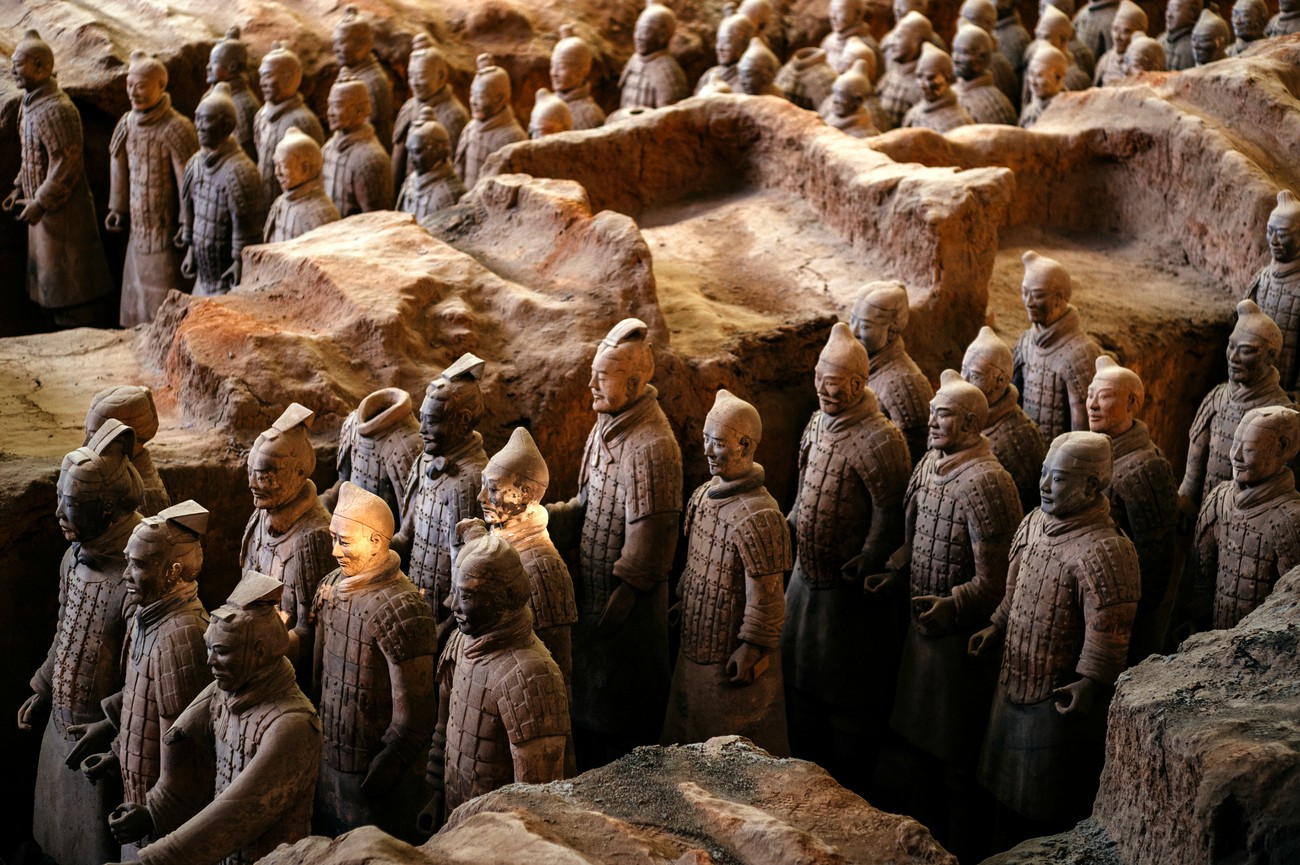
The site has since yielded three excavated pits containing more than 8,000 life-sized terracotta soldiers, horses, and chariots. Every figure is individually rendered. Facial features, hairstyle, armour configuration, rank insignia: the details distinguish one soldier from the next in ways that are still being catalogued. Pit 1, the largest, covers 14,260 square metres and holds its warriors in battle formation, row upon row, all of them facing east toward the enemies of the Qin state. The photographs do not prepare you for the actual scale.
The bronze weapons discovered alongside the figures remain extraordinarily sharp. Qin Dynasty metallurgists coated them with a chromium-oxide layer, a preservation technique not independently rediscovered in the West until the 20th century. The warriors themselves were originally painted in vivid pigments: reds, blues, greens, flesh tones. The paint begins flaking within minutes of air exposure, which is why many figures remain partially excavated, held in position until conservation science develops the means to stabilise what would be revealed.
More than 95 percent of the site remains unexcavated. The burial mound beneath which Qin Shi Huang's actual tomb chamber lies has been confirmed by modern soil surveys to contain mercury concentrations consistent with ancient texts describing rivers of the element running through the tomb's interior. The decision not to open it is ongoing. Archaeologist Yuan Zhongyi described the three pits as the guards standing outside the east gate. What lies inside is a question that may not be answered in our lifetimes.
Our guide to the Terracotta Warriors covers the pit-by-pit breakdown, the bronze chariots and what the Warriors reveal about the Qin Dynasty's conception of power and the afterlife.
The City Wall,
the Pagoda, and the Muslim Quarter
Xi'an's ancient City Wall encircles the historic centre in 8.7 miles of intact fortification, built in the early Ming Dynasty on Tang-era foundations. From its ramparts, you see both cities simultaneously: the modern Xi'an stretching outward beyond the walls, the older urban grain preserved within. The scale is different from the Great Wall of Mutianyu, more domestic, more civic, but the integrity of the circuit is remarkable.
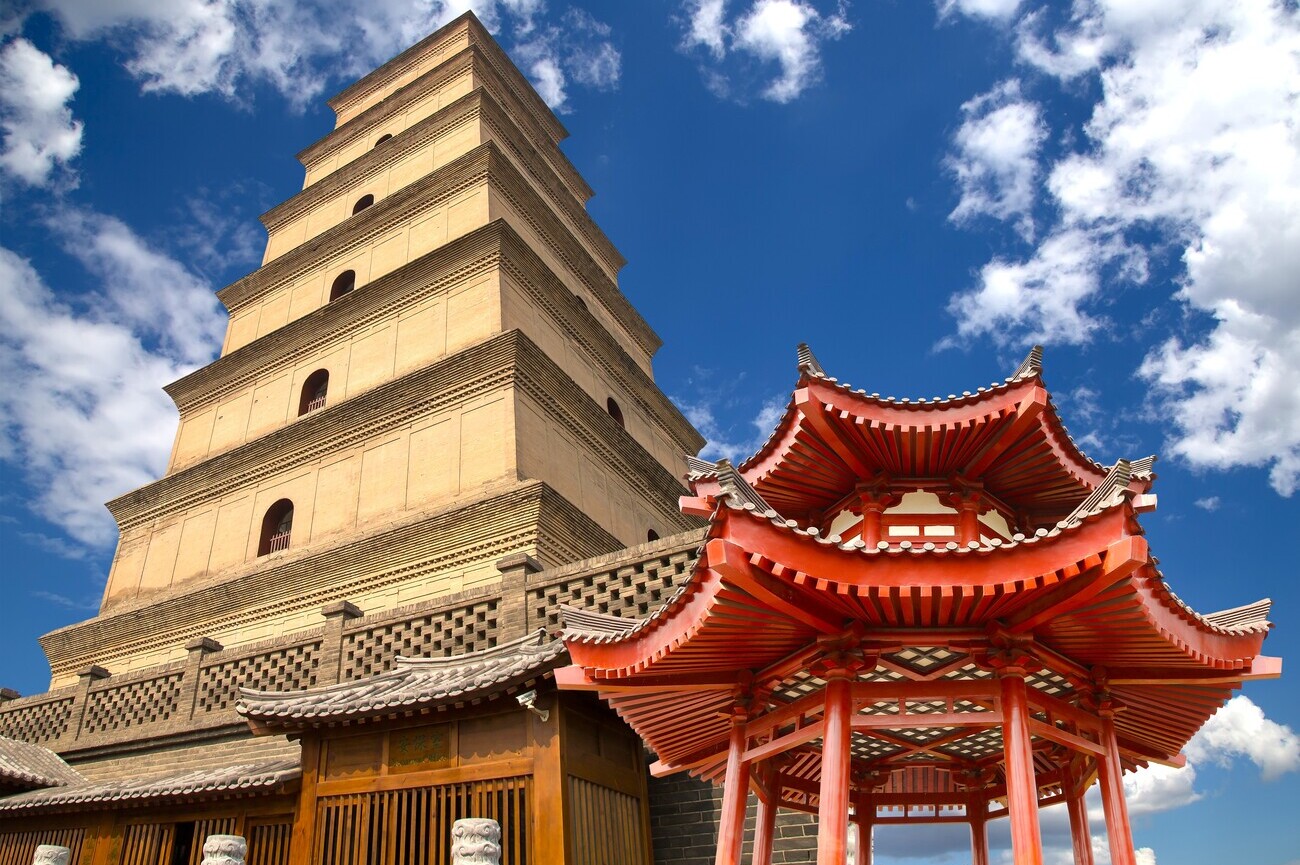
The Giant Wild Goose Pagoda rises above the city's southern district. Built in 652 AD by Emperor Gaozong of the Tang Dynasty, it was constructed specifically to house Buddhist scriptures brought back from India by the monk Xuanzang after a seventeen-year journey across Central Asia along the Silk Road. Sixty-four metres of brick, without structural steel, without mortar between many of its courses. It has stood longer than most European cathedrals.
The Muslim Quarter is something else entirely. Eight blocks of layered street commerce, lamb skewers over charcoal smoke, pomegranate juice pressed to order, stalls of persimmon cakes and biangbiang noodles, all surrounding the Great Mosque on Huajue Lane: a Tang Dynasty mosque built with Chinese garden courtyards, minaret towers designed to read as pagodas, calligraphy in Arabic script carved into woodwork that looks completely Han Chinese. Xi'an's Hui Muslim community has been present here for over a thousand years, arriving with the Silk Road traders who made this city their eastern destination. The Quarter is a living neighbourhood, not a heritage zone, and its noise and density are part of what it is.
Shanghai: Where Past and Future Face Each Other
The flight from Xi'an to Shanghai covers the distance between China's oldest and most contemporary registers in the time it takes to finish a glass of wine. Landing in Shanghai is landing in a city that has never pretended to be ancient. It has always been in conversation with the outside world, and that conversation is written into every facade along its waterfront. If you're planning extra time in the city, our Things to Do in Shanghai guide explores many more experiences.
The Bund and
Pudong
The Bund runs 1.5 kilometres along the western bank of the Huangpu River. Its 52 surviving buildings represent 14 European architectural styles, all constructed between the 1860s and 1930s by the foreign trading houses, banks, and gentlemen's clubs of the International Settlement. Neoclassical banks. Art Deco hotels. Baroque customs houses with clock towers modelled on London landmarks. Each building put up by a different institution, each making its own architectural statement within the same stretch of waterfront.
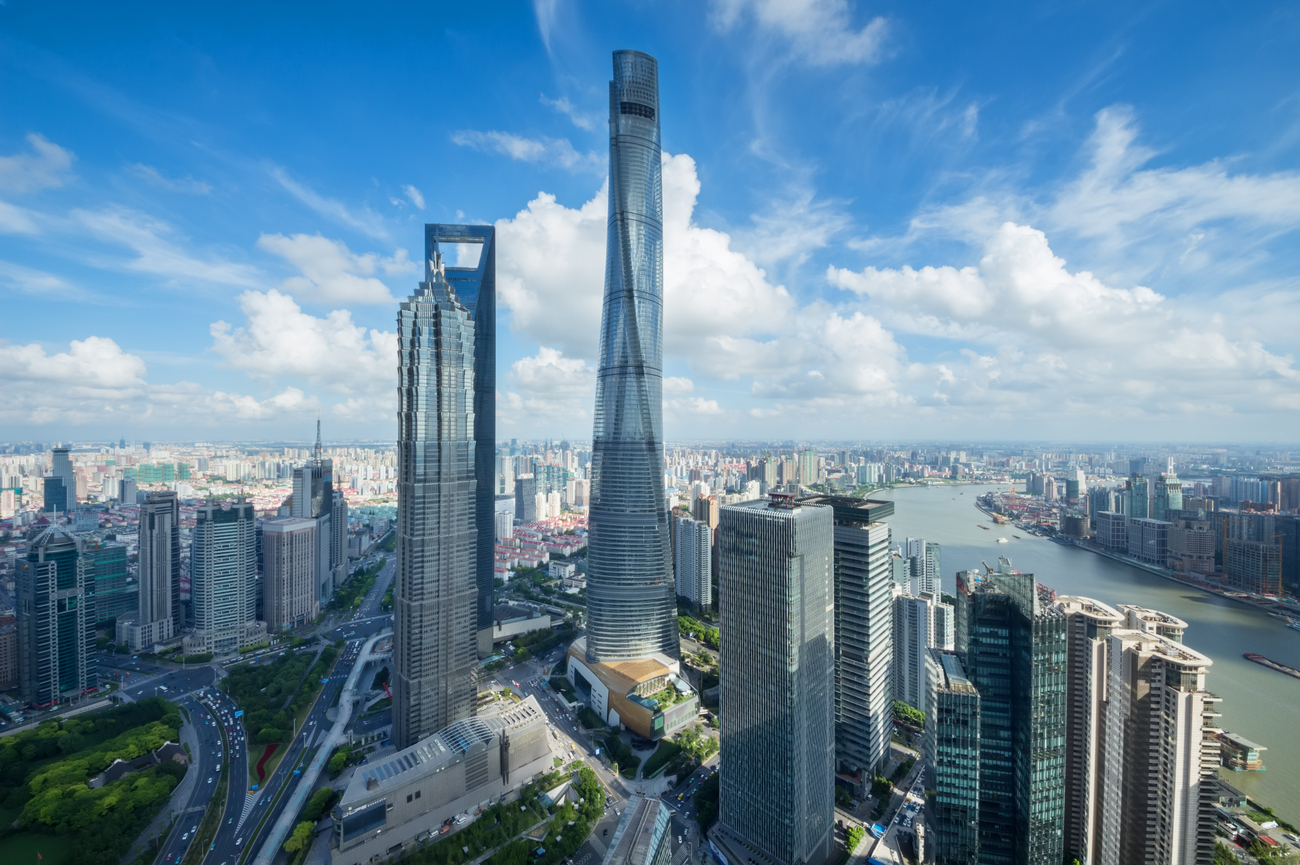
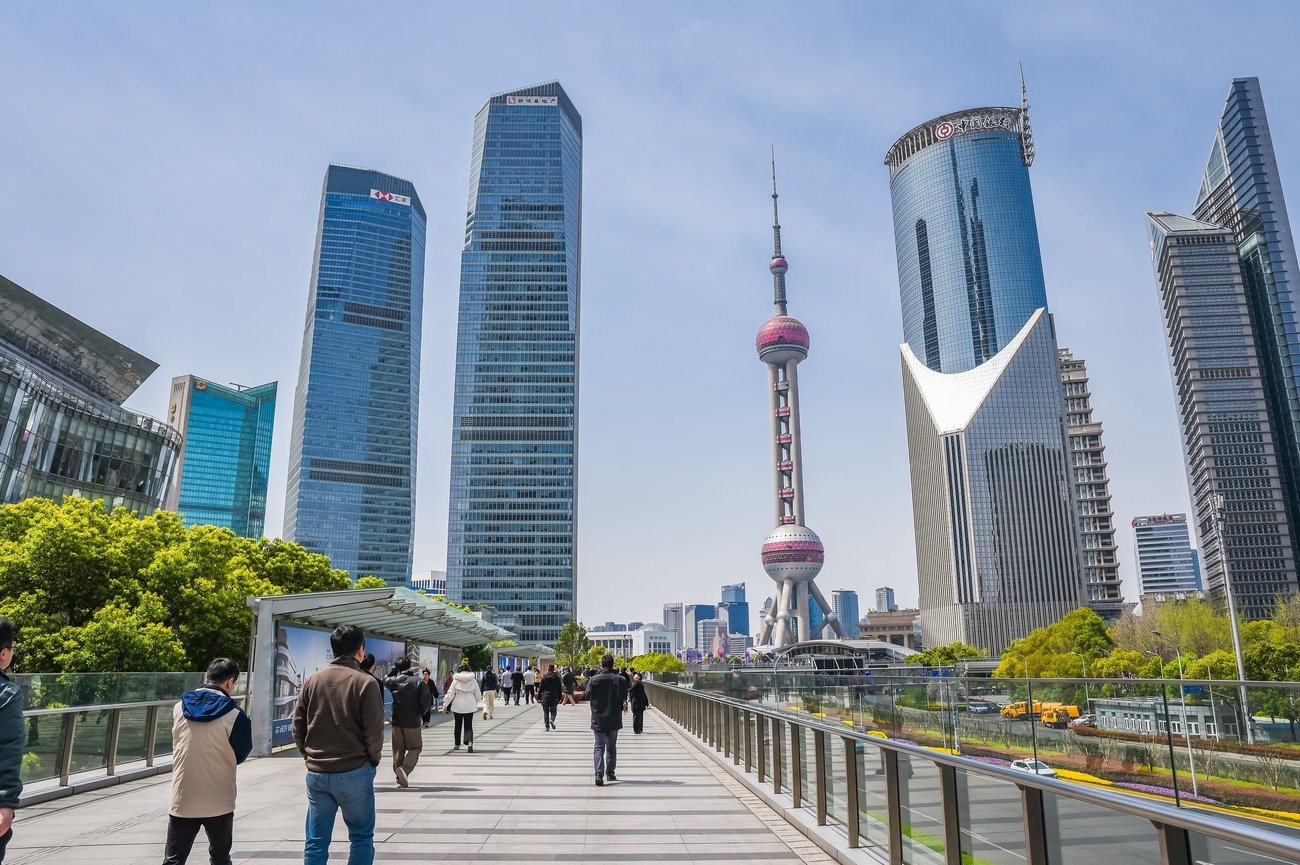
They were all built facing east. Facing what was, at the time of their construction, empty marshland: the Pudong riverbank, undeveloped, insignificant, the flattest part of a flat city. That decision reads differently now. Today, Pudong's Lujiazui skyline holds Shanghai Tower at 632 metres (the world's second tallest building), the Jin Mao Tower, and the Shanghai World Financial Centre: three skyscrapers from three different decades of China's economic ascent, each one a monument to a different moment in that ambition. The colonial facades of the Bund and the glass towers of Pudong stare at each other across 400 metres of river, and the view in both directions is extraordinary.
Standing on the Bund waterfront at dusk, watching the Pudong lights come on one building at a time, is what a Beijing Xi'an Shanghai tour saves for last. It gives the journey its final perspective.
Our guide on Shanghai's Bund traces its architectural inventory, the building-by-building history of the International Settlement, and what the Huangpu view tells you about Shanghai's particular relationship to its own past.

Yu Garden and
Zhangyuan
Yu Garden is five acres of classical garden built between 1559 and 1577 by the Ming official Pan Yunduan as a private retreat for his elderly father. It sits inside the old Nanshi district, now surrounded by Shanghai's most commercially dense neighbourhood, and its interior is absolutely quiet. Rockeries, koi ponds, covered walkways, pavilions with upturned roofs, and the Exquisite Jade Rock: a 3.3-metre limestone formation with 72 perforations that allow smoke, water, and light to pass through simultaneously. Emperors coveted it. It has been here for 450 years.
Zhangyuan, in the Jing'an district, is Shanghai's most recent and most honest conservation statement. The shikumen, the stone-gate lane house, is an architectural form specific to Shanghai, combining the spatial logic of the Chinese courtyard with the street pattern of colonial terrace housing. The Zhangyuan complex, built in the 1880s and meticulously restored between 2018 and 2021, preserves its original lane configuration, granite doorframes, and building proportions. It reopened in 2022 as a functioning cultural neighbourhood. The conversation about what preservation means in a city that rebuilds as constantly as Shanghai is ongoing. Zhangyuan is its most considered contribution.

The Shanghai
Museum and Shanghai Tower
The Shanghai Museum in People's Square holds eleven permanent galleries of Chinese art. Its bronzes collection spans 3,500 years of casting history, from Shang Dynasty ritual vessels to Han-era figurines. Travellers who have moved through the Forbidden City's Treasure Gallery and Xi'an's archaeological context will find the Shanghai Museum's curatorial perspective a useful counterpoint: the same categories of objects, placed in a different kind of conversation.
The observation deck of Shanghai Tower, on the 118th floor at 546 metres above street level, is the correct vantage point from which Pudong and the Bund resolve into a single coherent image. The city's full horizontal sweep, the curve of the Huangpu toward the harbour, the container ships moving toward the East China Sea: at this height, Shanghai's scale becomes comprehensible in a way it isn't from the street. It is a good final view before the journey closes.
Where
You Stay: The Hotels That Hold the Itinerary Together
The accommodation on Revigorate's China 8-day itinerary is not incidental to the experience. The Grand Hyatt Beijing, the Ritz-Carlton Xi'an, and the Waldorf Astoria Shanghai on the Bund are each the correct hotel for their respective city, in ways that are practical as much as they are aspirational.
The Grand Hyatt Beijing occupies the Orient Plaza complex at the intersection of Chang'an Avenue and Wangfujing, walking distance from Tiananmen Square and the Forbidden City. Its position makes the first morning in Beijing logistically clean. The city's most significant landmarks are immediately accessible without a commute.
The Ritz-Carlton Xi'an places you inside the historic centre, close to the City Wall. Xi'an rewards proximity. The Muslim Quarter's morning light, the City Wall at dusk, the quieter residential streets beyond the principal circuits: these are things a centrally positioned hotel makes possible in the margins between scheduled visits.
The Waldorf Astoria Shanghai on the Bund is in a category of its own. The building was originally constructed in 1911 and opened as the legendary Shanghai Club. Throughout the 1920s and 1930s, it was the city's most exclusive gentlemen's club, renowned for its decadent offerings, with its celebrated Long Bar at 110 feet having once been the longest bar in the world. The restoration that transformed it into the Waldorf Astoria preserved the English Renaissance facade and reopened the Long Bar as one of Shanghai's most distinctive rooms. Staying here is not a hotel choice in the conventional sense. It is a position on the Bund's most historically significant stretch, with direct river views and the entire waterfront promenade accessible on foot from the front entrance.
A luxury China holiday built around these three properties has a continuity of standard that goes beyond individual star ratings. Each hotel understands the city it occupies, and that understanding informs how they support the kind of itinerary that makes a first journey through China worth the distance.

Why
Eight Days Works
The Beijing Xi'an Shanghai tour works for eight days because the sequencing is coherent and the transitions earn their place. Three days in Beijing covers the imperial core without exhausting it. One day at the Great Wall and Summer Palace gives the city's northern edge. Two days in Xi'an allow the Warriors and the city proper without rushing either. Two days in Shanghai move through its layers, historical, contemporary, and in-between, without the compression that would flatten them.
A China 8-day itinerary built this way leaves each city feeling complete rather than abbreviated. The high-speed G-train from Beijing to Xi'an is part of the journey rather than a logistical interruption. The view from the window across the North China Plain, that shifting landscape of farmland giving way to loess plateau, is one of the itinerary's less discussed pleasures. The short flight from Xi'an to Shanghai makes the register shift between ancient and contemporary feel deliberate.
What a Beijing Xi'an Shanghai tour of this structure cannot be is a self-assembled exercise. The Forbidden City's advance booking requirements alone require local coordination. The continuity of private transfers across three cities, the specialist guide who carries the historical context unbroken from the Forbidden City through to the Shanghai Museum: these are arrangements that require planning months rather than weeks in advance. Having them in place before departure is precisely what allows the actual journey to feel effortless.
The
Next Step Is a Conversation
This journey will stay with you in fragments. The gold of the Forbidden City roof tiles at a certain hour. The silence inside Pit 1 of the Terracotta Warriors. The Great Wall running across the mountains north of Beijing. The Huangpu at dusk, lit on both banks, with old Shanghai and new Shanghai facing each other across the river.
Beijing, Xi'an, and Shanghai do that. They stay with you.
Our curated First-Time China vacation moves through all three cities across eight days, with the Grand Hyatt Beijing, Ritz-Carlton Xi’an and Waldorf Astoria Shanghai on the Bund anchoring the journey. The Forbidden City, Mutianyu Great Wall, Terracotta Warriors and Shanghai’s historic waterfront are all arranged with private guides, timed access and the context needed to make each place meaningful.
If you are planning your first journey to China and want the experience arranged properly from start to finish, speak to our team about creating your tailor-made China vacation.


Let us know what you love, where you want to go, and we’ll design a one-of-a-kind adventure you’ll never forget.
Get in touch
Miriam
Travel Specialist

Nina
Travel Specialist

Abigail
Travel Specialist
Frequently Asked Questions
-
When is the best time of year to visit Beijing, Xi'an and Shanghai?
Spring, from April to May, and autumn, from September to November, generally offer the most comfortable weather across Beijing, Xi'an and Shanghai. These seasons are well suited to visiting outdoor sites such as the Great Wall, the Bund and the historic streets of Xi'an.
-
Do I need a visa to visit China?
Visa requirements depend on your nationality and the passport you hold. Some travellers may qualify for visa-free transit or visa exemption policies, while others will need to arrange a tourist visa before departure. Requirements should always be checked before booking.
-
How much walking is involved on this itinerary?
This itinerary involves a moderate amount of walking. The Forbidden City, the Great Wall, the Terracotta Warriors, Yu Garden and the Bund are all best experienced on foot, so comfortable walking shoes are strongly recommended.
-
Is China suitable for first-time visitors to Asia?
Yes. Beijing, Xi'an and Shanghai offer a strong introduction to China and are suitable for many first-time visitors to Asia. The route combines major historic landmarks, modern hotels, efficient transport and guided cultural context.
-
Can dietary requirements be accommodated during the trip?
Dietary requirements can usually be accommodated with advance notice, particularly in selected restaurants and international hotels. Vegetarian, vegan, gluten-free and other dietary needs should be shared during the planning stage.
-
What currency is used in China?
China's currency is the Renminbi, also known as the yuan. International credit cards are accepted in many luxury hotels and larger establishments, although mobile payment systems are widely used throughout the country.
-
How far in advance should I book a China vacation?
It is advisable to plan several months in advance, especially for spring, autumn, national holidays and peak travel periods. Advance planning helps secure preferred hotels, private guides, transport arrangements and timed access to major attractions.
-
Can this China itinerary be customised?
Yes. The itinerary can be tailored with extra nights, additional destinations such as Chengdu, Guilin or Hong Kong, specialist cultural experiences, culinary elements, or a deeper focus on history, architecture or contemporary China.
Our offices:



Revigorate, Iberian Escapes and Algarve Lifestyle are the registered brand names of APCS Lda . We are a fully authorised travel agency licensed by Turismo de Portugal RNAVT/6867.
In the event of a dispute, the consumer may refer to: RAL - Centros de Arbitragem
Avª. 5 de Outubro, nº. 55, R/C Dtº. 8000-075 Faro, Portugal | Tel: +351 289 823 135 *
* national landline call
E-mail: info@consumoalgarve.pt| www.consumidoronline.pt | Mon to Fri: 9:00 - 13:00 / 14:00 - 17:00