Santiago de Compostela Food Guide: What to Eat, from Mercado de Abastos to Tarta de Santiago

Santiago de Compostela is one of Galicia’s most rewarding food cities, known for the Mercado de Abastos, fresh seafood from the rías, pulpo á feira, scallops, Padrón peppers, Galician cheeses and tarta de Santiago. The city combines centuries of pilgrimage tradition with a food culture built around markets, taverns, local wines and restaurants throughout the historic centre.
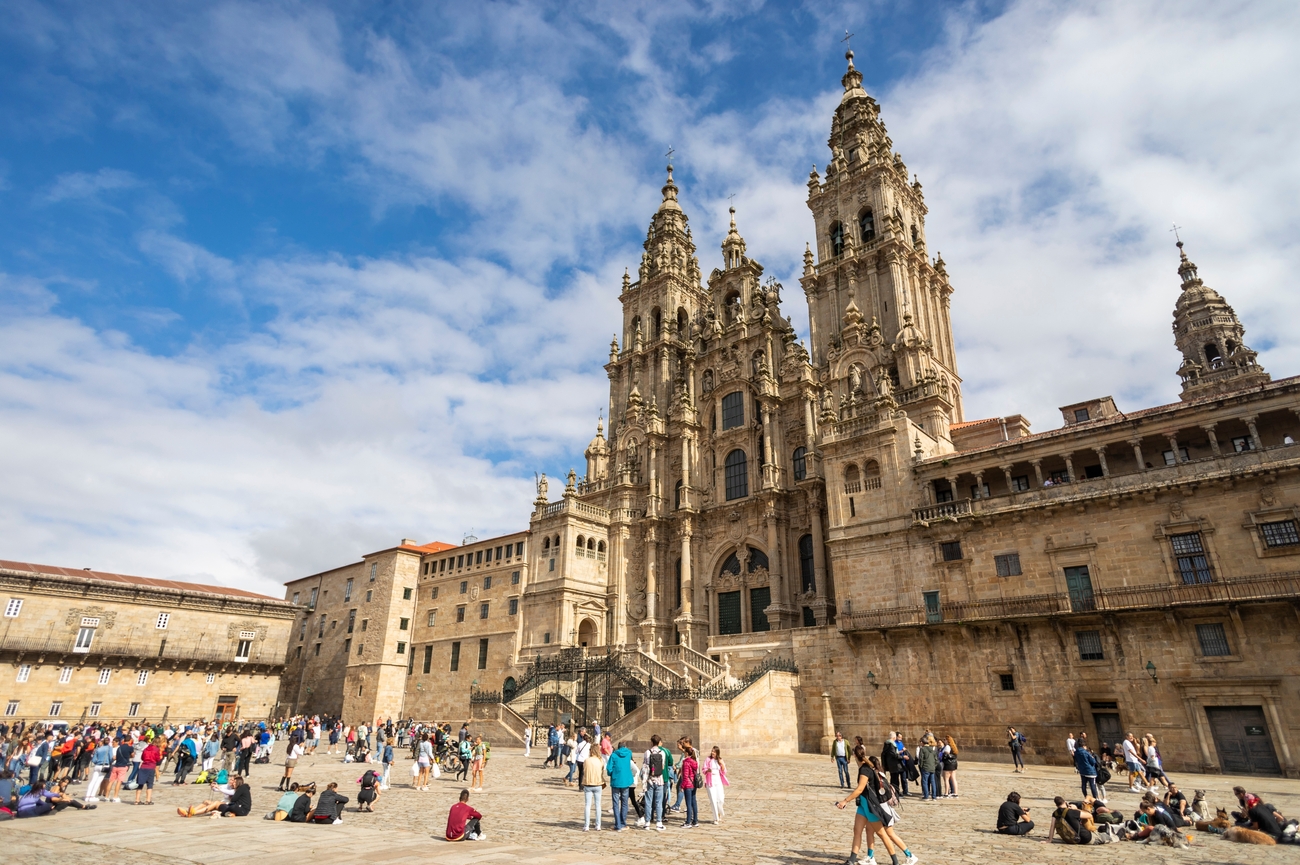
They arrive all morning, every morning, limping into the Praza do Obradoiro with scallop shells tied to their packs. Some drop their poles and sit straight down on the granite, staring up at the cathedral they have walked weeks to reach. Some cry. Most laugh at themselves for crying. And then, with a reliability that a thousand years of pilgrimage has made into something like liturgy, nearly all of them ask the same question within the hour, and it has nothing to do with the cathedral. The question is where to eat.
Santiago has been answering it for centuries. The holy city is also one of Galicia’s great places to eat, with its food culture centred on the market, the old town and the steady arrival of travellers from every Camino route. Locals will tell you their city is really measured in two buildings, the cathedral and the market, and they will not always name them in that order.
The city is where our Galician gastronomy guide begins and then simply stays, four nights in one hotel a few lanes from the market, and on the Galician Gastronomy Express Tour its tables are chosen and held before you land.
Morning
in Santiago de Compostela: Coffee Before the Market
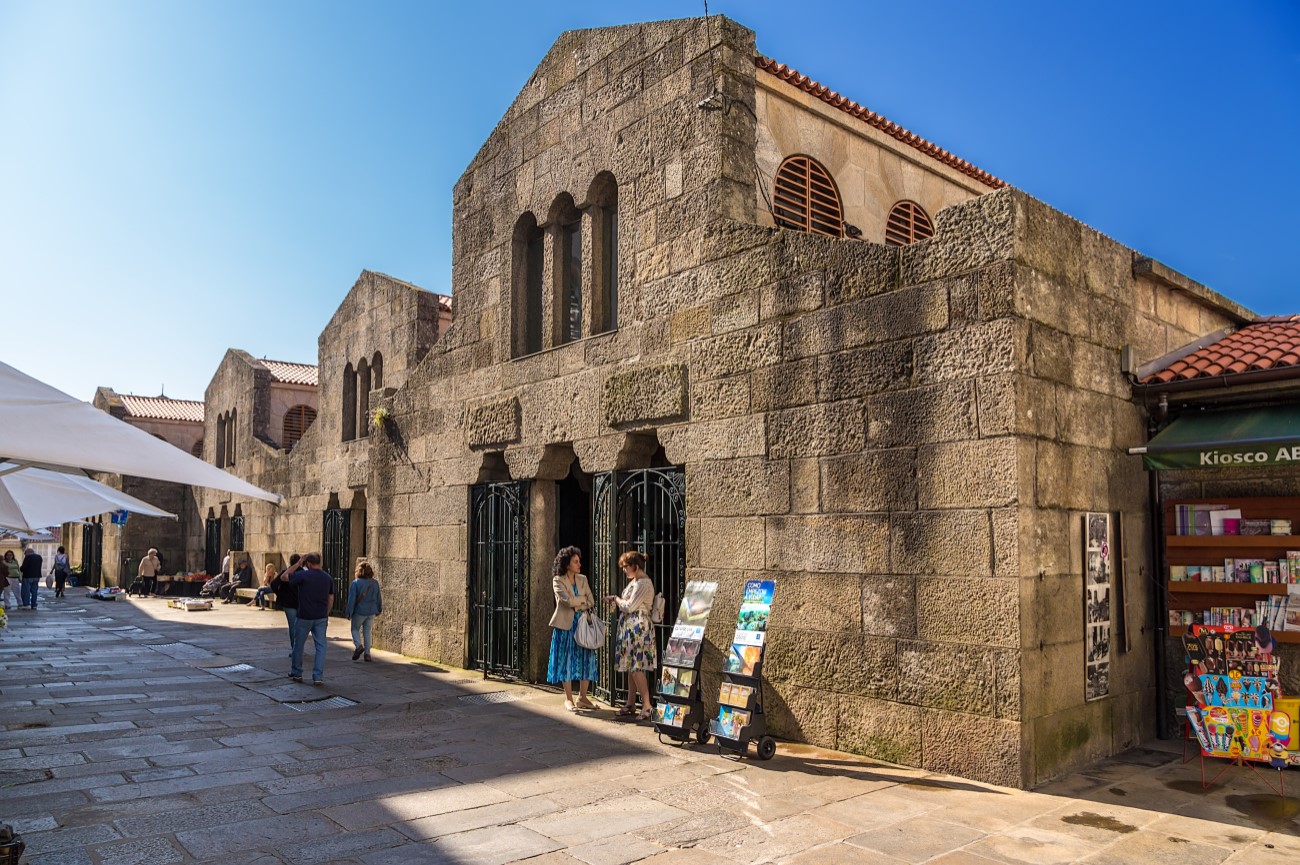
The day begins before the market does. Santiago at eight in the morning belongs to three constituencies: the street cleaners, the earliest pilgrims arriving over the final miles, and anyone wise enough to be having coffee under the arcades while the granite is still cold and the lanes still echo.
The UNESCO-listed old town is at its most persuasive at this hour, with the squares quiet enough to hear footsteps, the pastelería windows filling with the morning's tartas and the smell of coffee drifting from doorways that have welcomed travellers for generations. Take the first cup standing at a bar and watch the city assemble itself.
By the time the coffee is finished, the Mercado de Abastos will be open, and Santiago's eating day can begin in earnest.
Mercado
de Abastos: What to Eat at Santiago’s Food Market
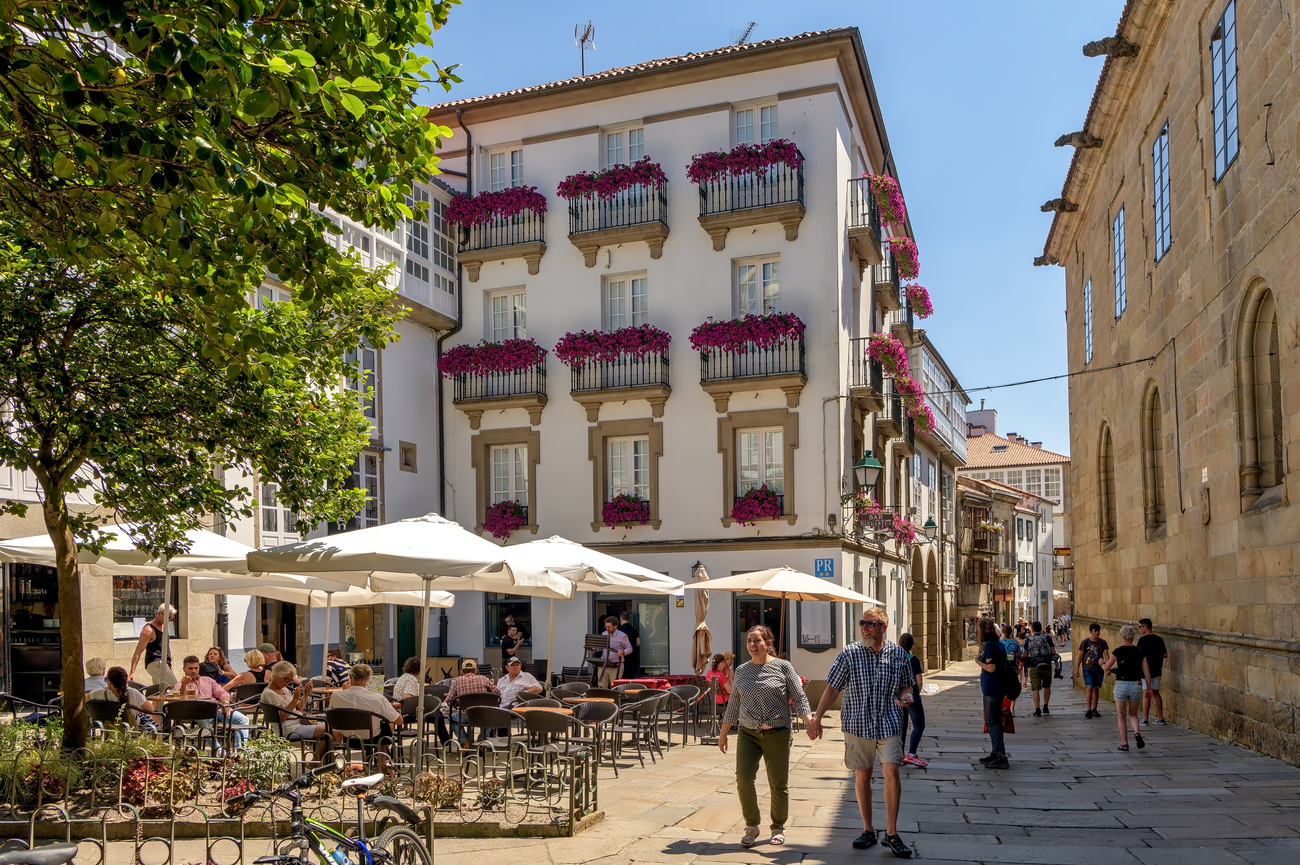
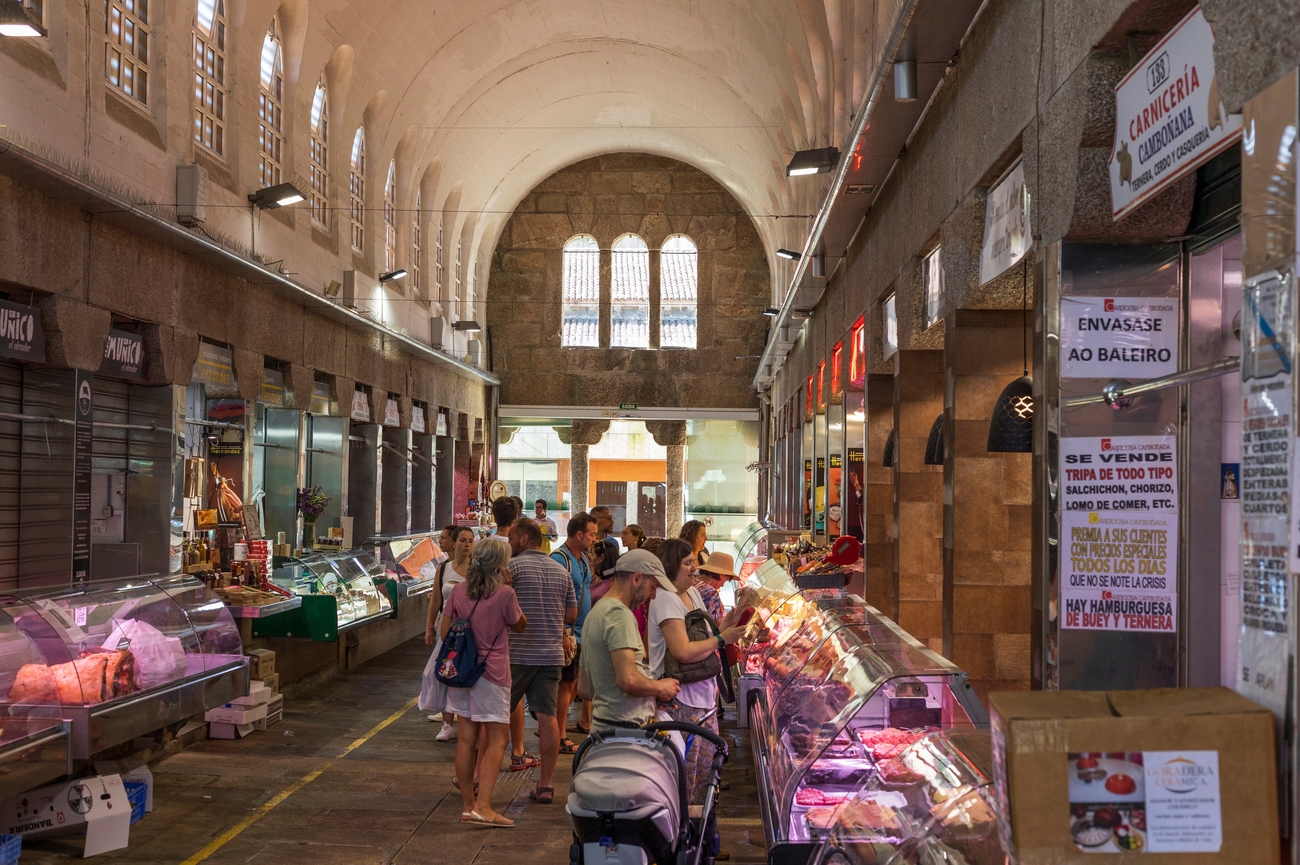
The Mercado de Abastos is the heart of Santiago de Compostela’s food scene, a collection of granite market halls a short walk from the cathedral where fishmongers, farmers and local producers sell the ingredients that define Galician cooking. Seafood from the rías, Padrón peppers, cheeses, eggs, greens and seasonal produce arrive early, making the market one of the best places to understand what the city eats before those ingredients reach restaurant tables.
The fish counters are still wet from the rías, with octopus, hake and turbot laid over ice while fishmongers call prices in Galician. Farmers arrive from surrounding villages with baskets of produce, from Padrón peppers and brown eggs to bundles of grelos and local cheeses. Chefs move through the aisles collecting ingredients for the day, while pilgrims wander in from the nearby cathedral quarter.
One of the market’s most distinctive experiences is the chance to eat what you buy. Selected counters and eateries will prepare ingredients purchased from the stalls, turning the morning market into an immediate lunch experience. Choose the fish, watch it weighed, sit down, and the distance between market and plate is measured in minutes.
Give the halls a full hour even if you are not buying anything to cook. Seeing the morning’s turbot, peppers and shellfish changes the way you read menus later in the day, because the market shows you what is freshest before it reaches the city’s restaurants. Anyone asking what to eat in Santiago de Compostela can find much of the answer here first.
On our journey, a local guide takes you through Santiago’s food streets after dark, connecting what appeared on the market counters that morning with where it has ended up that evening.
Midday:
What to Eat in Santiago de Compostela
The best things to eat in Santiago de Compostela reflect the wider flavours of Galicia, from octopus and scallops to Padrón peppers, empanada, Galician beef and local cheeses. Many of these dishes are rooted in regional traditions, while others are closely tied to the city’s pilgrimage history.
- Pulpo á feira. The octopus of the fairs, boiled until tender, scissor-cut onto wooden plates and dressed with olive oil, coarse salt and pimentón. Santiago eats it the way the rest of Galicia does, and the full account of the dish and the coast behind it lives in our guide to Galician seafood.
- The vieira. The great Galician scallop, baked in its own shell with onion, ham and breadcrumbs. In Santiago, the shell carries particular significance because it is also the emblem of the Camino, worn by pilgrims and marked along the routes leading to the cathedral.
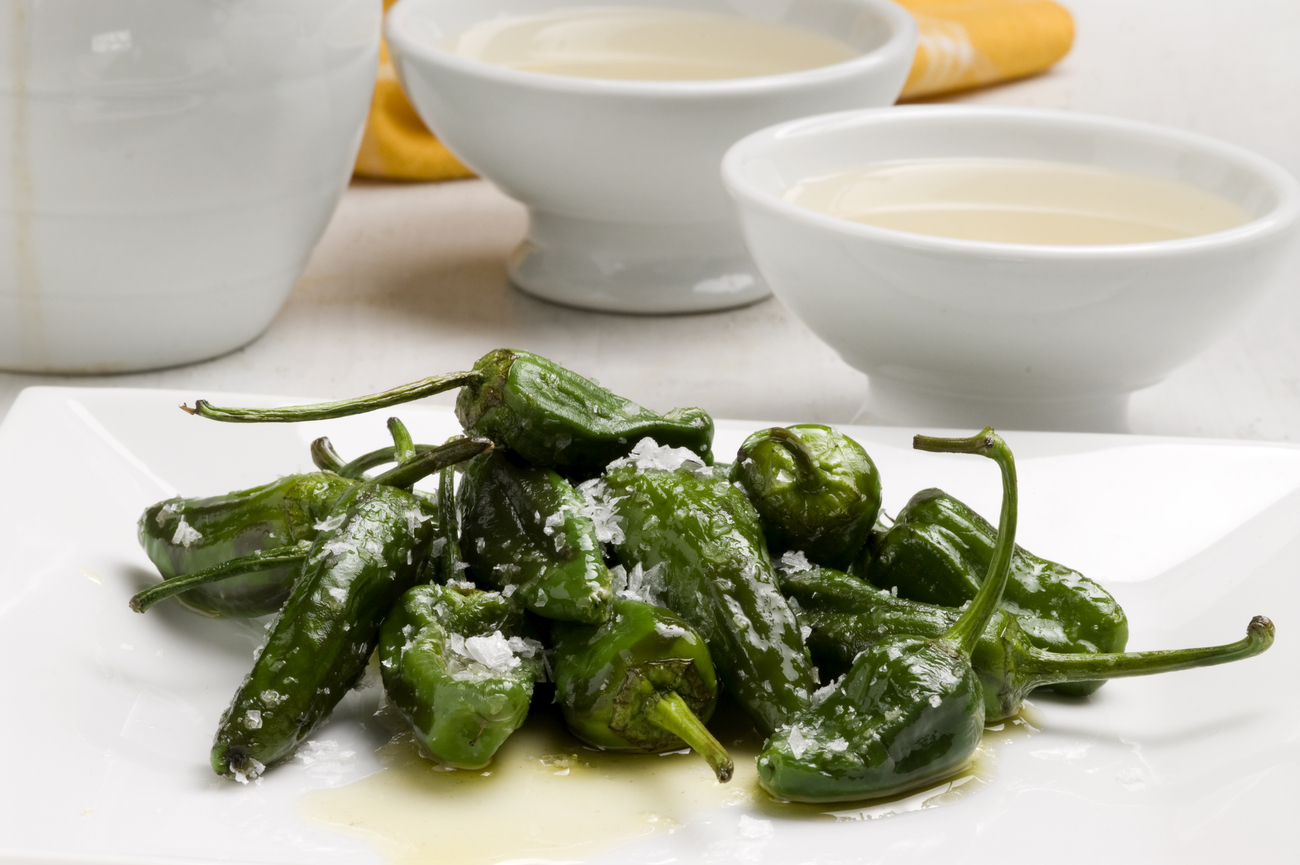
- Pementos de Padrón. Small green peppers from Herbón, blistered in oil and finished with coarse salt. Most are mild, while the occasional hot one gives the dish its famous element of surprise.
- Caldo gallego and lacón con grelos. Two traditional cold-weather dishes: a broth of greens, potato and pork, and boiled ham served with turnip tops. Both are deeply rooted in Galician home cooking and particularly suited to the region’s cooler months.
- Empanada gallega. A traditional flat pie with fillings that vary by household and region, including tuna, cockles and scallops. It appears in bakeries throughout Santiago and works just as well as a quick snack as part of a longer meal.
- Galician beef. Rubia Gallega cattle are one of the region’s best-known breeds, and the meat is typically served simply, allowing the quality of the beef to remain the focus.
- Tetilla and the cheese board. Tetilla is a soft, mild Galician cheese often served with membrillo, while San Simón adds a smokier note to the regional cheese selection.
And with many of these dishes comes the local wine. Galician whites may still be served traditionally in cuncas, shallow ceramic bowls held in the palm rather than by the stem.
The best known is Albariño, grown in the Rías Baixas wine region south of Santiago, where granite soils, Atlantic air and pergola-trained vineyards help define its character. The region’s estates and cellars have a guide of their own in the best wineries in Rías Baixas.
Four
O'Clock: Tarta de Santiago
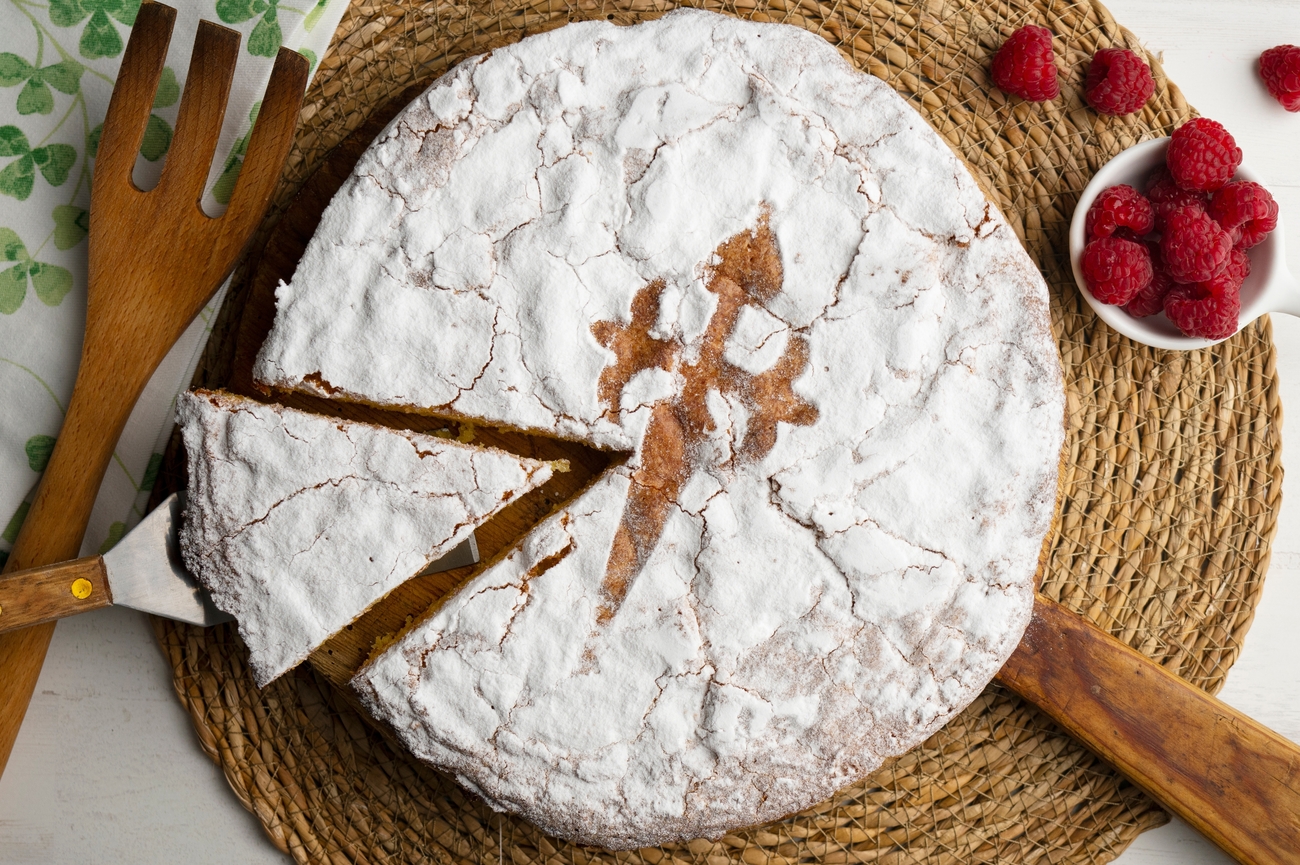
Tarta de Santiago is Santiago de Compostela’s best-known dessert, a traditional almond cake made with ground almonds, eggs and sugar, then dusted with icing sugar around the silhouette of the Cross of Saint James. The design has become one of the city’s most recognisable food symbols and appears in pastelería windows throughout the historic centre.
The hour matters almost as much as the cake. Between lunch and evening, Santiago grows quieter, the tour groups thin and the granite lanes settle into a slower rhythm. Take a slice with coffee beneath the arcades and the city feels briefly unperformed.
Buy a boxed tarta on the last day, too. It travels well and makes one of Santiago’s most distinctive edible souvenirs.
Where
to Eat in Santiago de Compostela at Night
Santiago de Compostela’s evening food scene moves from busy seafood streets to quieter local bars and more ambitious dining rooms. The old town offers all three within a compact area, which makes it easy to experience different sides of the city over several nights.
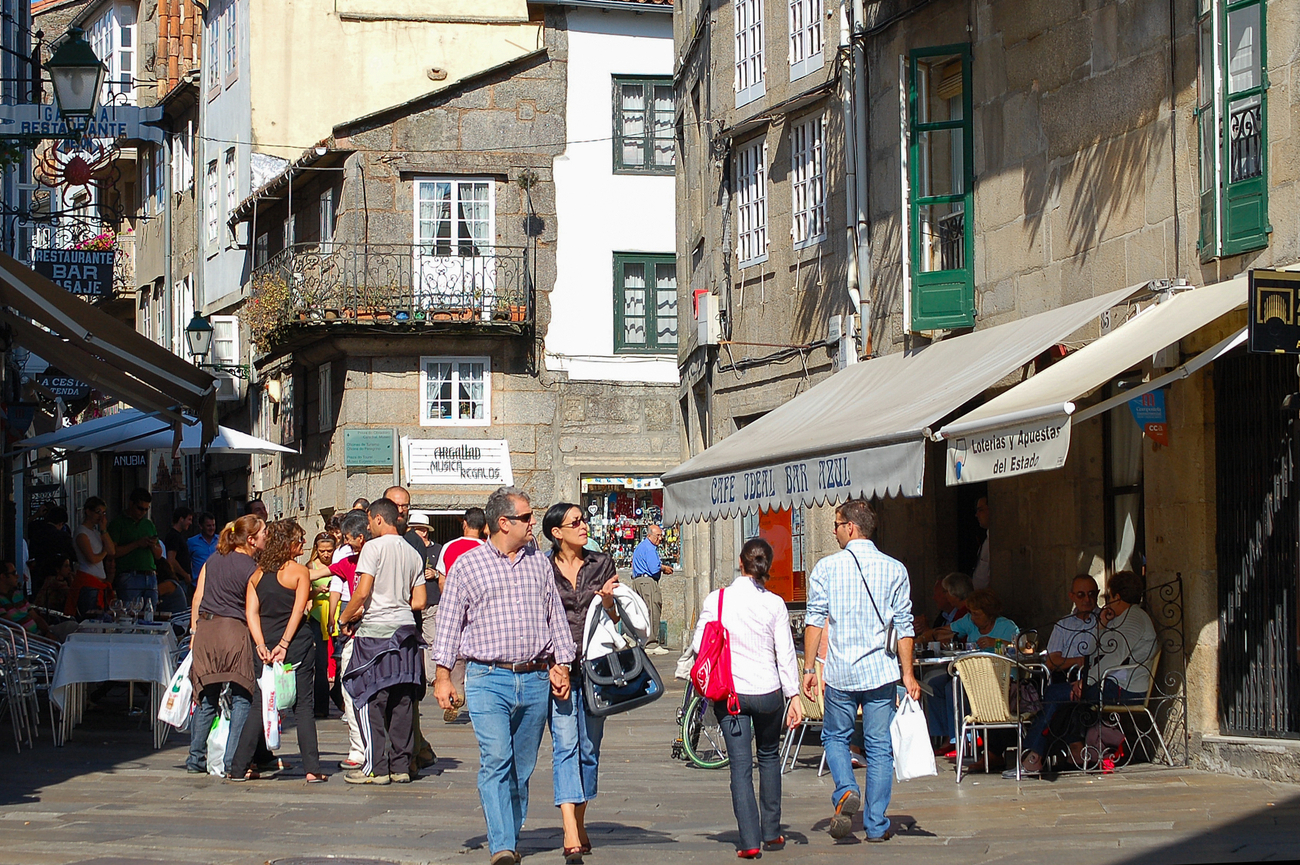
The first layer is the famous one. Rúa do Franco runs from the cathedral quarter and is lined with seafood windows, tanks and display counters, and every first-time visitor walks it, as they should, once. The second layer is found one or two streets away, on quieter rúas where the bars are smaller, the wine may come in cuncas and the atmosphere feels more local. The evening ritual is a slow progression from one bar to another, with a glass and something small to eat at each stop.
The third layer is Santiago’s fine dining scene. Casa Marcelo is one of the city’s best-known names, alongside other ambitious kitchens working with Galician produce and contemporary techniques. Beyond the centre, Galicia’s historic pazos also provide a more formal setting for long dinners and special occasions.
On our Galician journey, one evening is given over to a gourmet dinner at one of Santiago’s finest restaurants, arranged well in advance and followed by the blue flames of a traditional queimada. The remaining evenings are left open, giving you time to explore the city’s bars and restaurants at your own pace.
Timing matters in Santiago. Lunch is typically late and unhurried, while dinner often begins later than many visitors are used to. Adapting to that rhythm leaves the afternoon free for the cathedral, museums and a slice of tarta de Santiago, before the city returns to the table after dark.
Midnight:
The Queimada
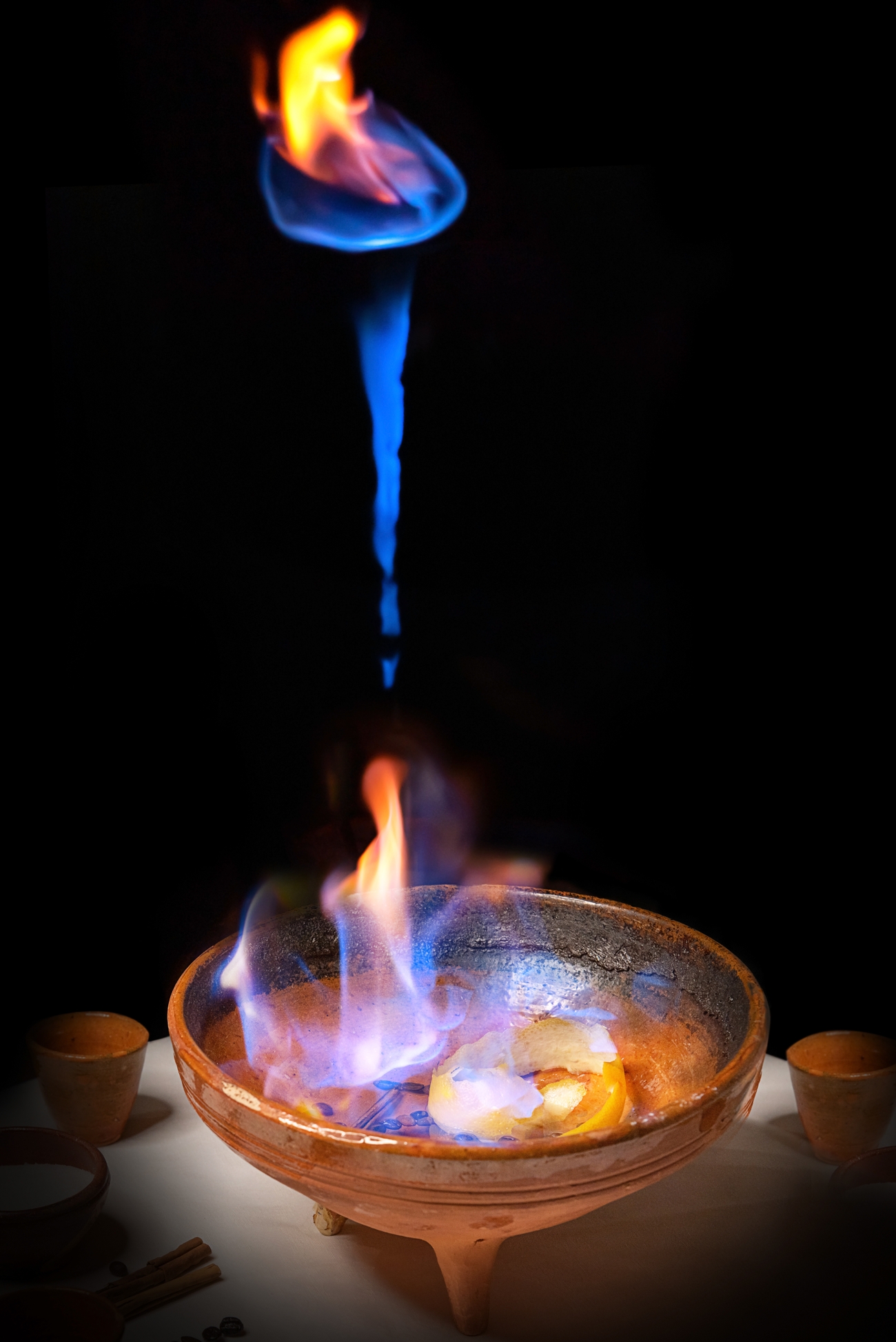
Queimada is one of Galicia’s most distinctive food and drink traditions, made by setting orujo grape spirit alight in a clay bowl with sugar, lemon peel and coffee beans while the conxuro, a traditional Galician incantation, is recited over the blue flames.
The eating day in Santiago has a proper ending, and it involves fire. Ladle after ladle of burning spirit is lifted high and poured back into the bowl before the flames are extinguished and the drink is shared. Warm, sweet and aromatic, it carries notes of citrus, coffee and the unmistakable theatre of the ritual itself.
Performed at the end of a long dinner, with the lights lowered and the conxuro delivered over the flames, queimada becomes one of the most memorable ways to close an evening in Santiago. The full ritual and the wider Galician table it crowns run through our Galician gastronomy journey from its first page.
Santiago
de Compostela: The City at the End of
Every Road
Santiago de Compostela has spent centuries welcoming travellers at the end of long journeys, and that history still shapes the way the city eats. Pilgrims arrive by the French Way, the Portuguese Way, the Primitivo and the Camino Inglés, converging on the cathedral and the Praza do Obradoiro before turning, almost inevitably, towards the city’s tables.
On holy days, the cathedral swings the botafumeiro, the great censer, above the heads of pilgrims who have walked hundreds of miles to stand beneath it, while the Feast of Saint James brings another layer of celebration each July. Travellers arrive by gentler routes too. The slow narrow-gauge railway along the green northern coast also reaches Santiago, a journey we explore in full along the FEVE line.
The city’s food culture grew from centuries of feeding the newly arrived, and that history still shows in the character of the welcome: generous portions, unhurried tables and a sense that the meal marks the end of something important. In Santiago, dinner is often more than dinner. It is the first celebration after the road.
Santiago
de Compostela Food Experience: Walk In and Eat Because You Earned It
Book the Galician Gastronomy Express Tour and Santiago is yours for four nights: a guided walk through its food streets after dark, a gourmet dinner at one of the city's finest restaurants, the blue flames of queimada, and a free day for the Mercado de Abastos, tarta de Santiago and whichever lane you have not walked yet.
Then forget the machinery, because the machinery is the point of having the journey arranged, and let the city do what it has done for centuries. Somewhere out on the roads, pilgrims are still walking towards the Praza do Obradoiro with scallop shells on their packs, thinking about the first meal waiting at the end.
You will already be at the table, the wine cold in its cunca, the octopus on its wooden plate and the cathedral bells counting the hour.
Most people order another plate and stop trying to explain why Santiago feels different.


Let us know what you love, where you want to go, and we’ll design a one-of-a-kind adventure you’ll never forget.
Get in touch
Miriam
Travel Specialist

Romina
Travel Specialist

Laura
Travel Specialist
Our offices:



Revigorate, Iberian Escapes and Algarve Lifestyle are the registered brand names of APCS Lda . We are a fully authorised travel agency licensed by Turismo de Portugal RNAVT/6867.
In the event of a dispute, the consumer may refer to: RAL - Centros de Arbitragem
Avª. 5 de Outubro, nº. 55, R/C Dtº. 8000-075 Faro, Portugal | Tel: +351 289 823 135 *
* national landline call
E-mail: info@consumoalgarve.pt| www.consumidoronline.pt | Mon to Fri: 9:00 - 13:00 / 14:00 - 17:00