Galician Gastronomy: A Luxury Food Journey Through Santiago, A Coruña and Vigo

Galician gastronomy is shaped by the Atlantic and is considered one of Spain’s most distinctive regional cuisines, combining exceptional seafood, Albariño wines, traditional dishes and centuries-old food customs. From Santiago de Compostela and A Coruña to Vigo and the Rías Baixas, Galicia offers a food culture built around shellfish from the rías, local markets, regional wines and a festival calendar that celebrates more than three hundred foods by name.
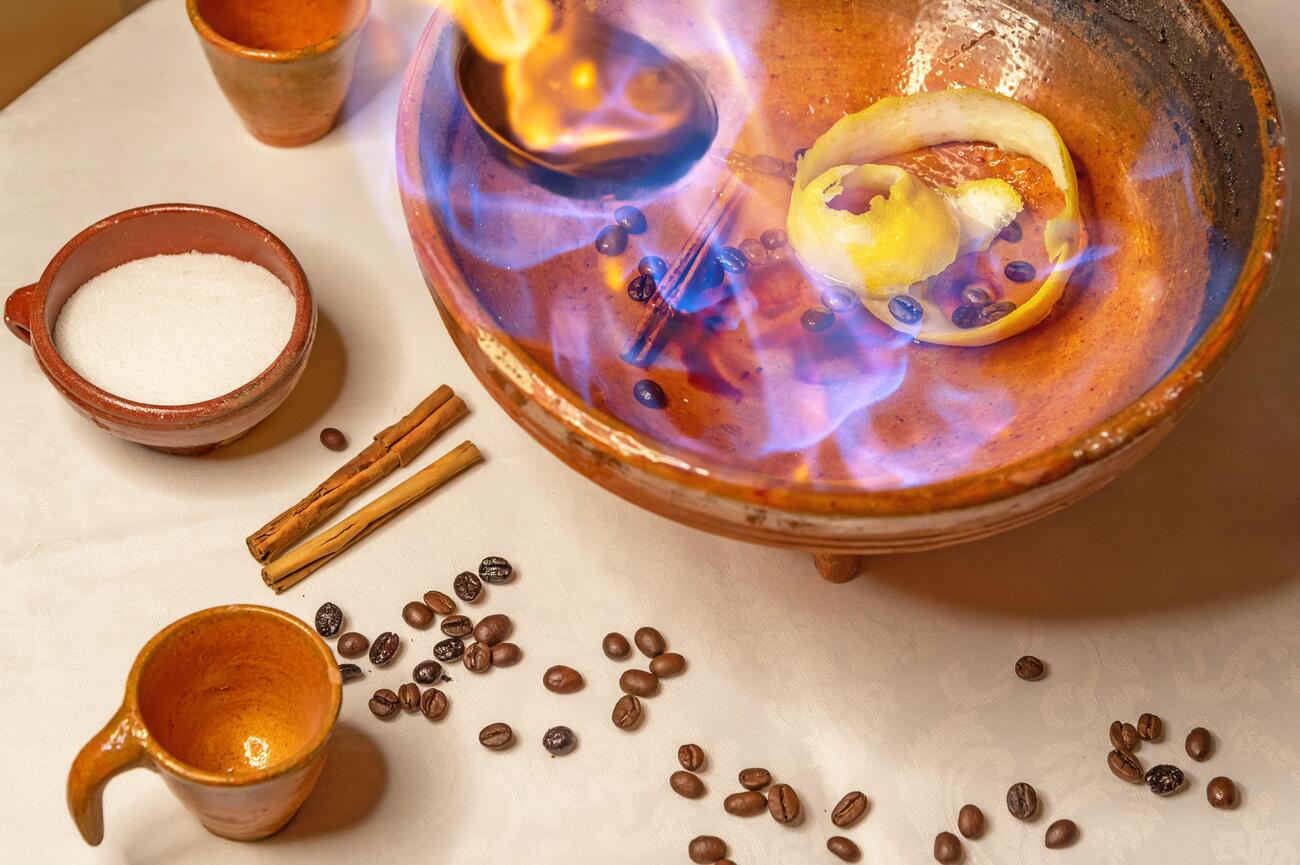
The lights go out first. Someone carries in a wide clay bowl of orujo, the local grape spirit, with lemon peel, sugar and a scatter of coffee beans, and sets it alight. Blue flame fills the bowl. Then a voice begins the conxuro, the spell, in Galician, calling out owls and toads and witches, demons and goblins, and banishing the lot of them, while the speaker lifts ladle after ladle of burning spirit high into the dark and pours the fire back on itself. The room watches in silence. When the spell ends and the flames are drowned, everyone drinks. The drink is called queimada, the burned one, and Galicians will tell you, with a straight face and a full cup, that it keeps the evil spirits off.
Any region that opens its evenings with fire and incantation takes its table seriously. Galicia has one of Spain’s great shellfish coasts, a white wine region recognised internationally for Albariño, a pilgrimage city that has been feeding travellers for centuries, and a culinary culture that remains noticeably less commercialised than many of Spain’s better-known food regions.
Our Galician Gastronomy Express Tour is a seat at that table, five days through Santiago, A Coruña and Vigo, with one hotel to unpack into and the ordering left to people who eat here every week of their lives, because at a table this long, the order matters.
Galician
Food: Spain’s Atlantic Kitchen
Forget, for a moment, everything the word Spain puts on a plate in your mind. Galician food belongs to the country’s rainy green northwest, above Portugal and facing the open Atlantic. Its cooking is Atlantic rather than Mediterranean, shaped by cold coastal waters, fertile pastures and a climate closer in spirit to Ireland or Scotland than to the sun-and-olive south. Granite villages, Celtic bagpipes, hot springs, hórreos standing on stone legs to keep grain dry, and generous rainfall all form part of the landscape behind the region’s distinctive cuisine.
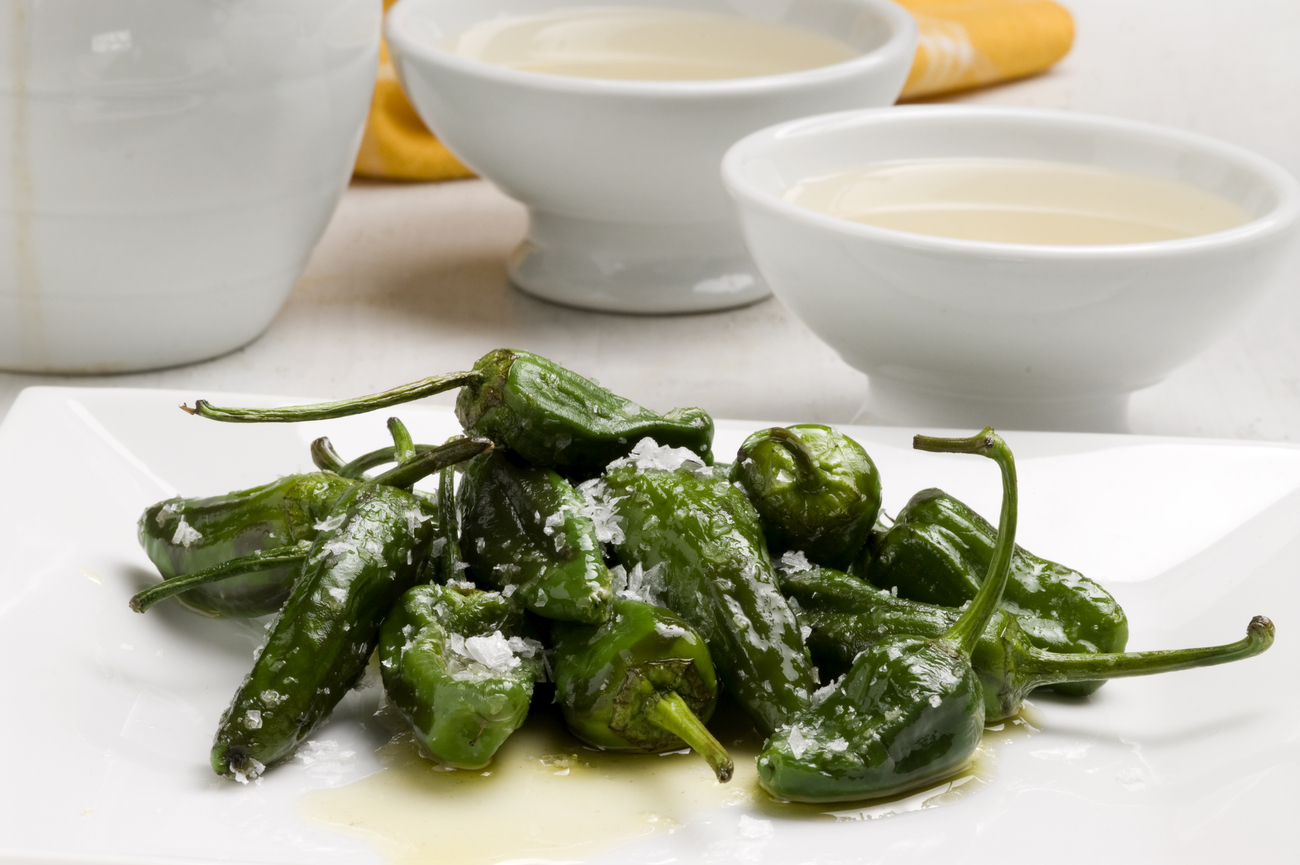
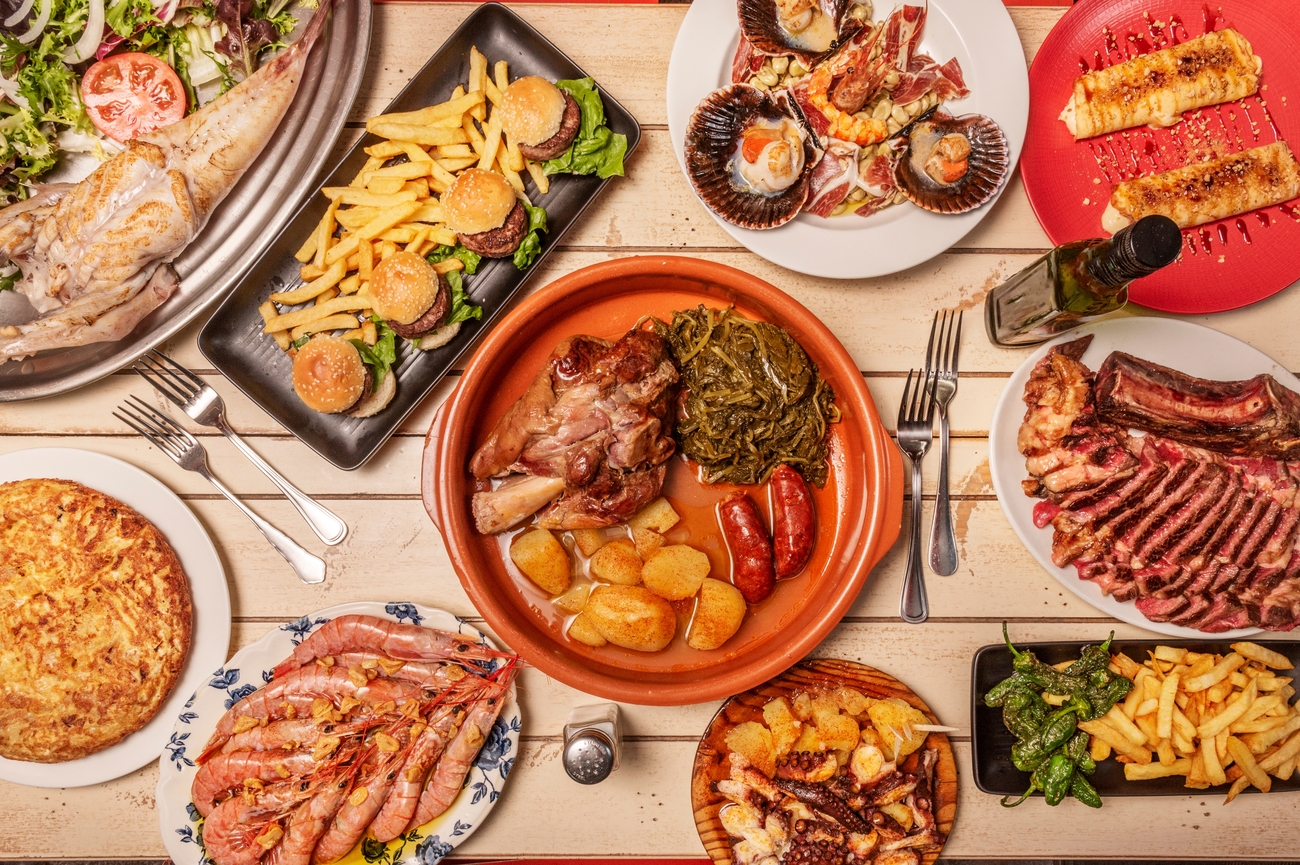
The pantry that rain fills is extraordinary. Padrón peppers from the village of Herbón, fried and salted, roughly one in ten of them secretly hot, are a plate of edible roulette. Four cheeses carry protected names: tetilla and Arzúa-Ulloa from the dairy pastures, San Simón smoked to a bronze point, and O Cebreiro from the mountain passes of the Camino. Bread from Cea has been baked in much the same way for centuries and became the first bread in Europe to receive its own geographical indication. Chestnuts arrive in autumn and are celebrated at bonfire festivals called magostos. Then come caldo gallego, lacón con grelos, Galician empanada and filloas for dessert.
The land answers the sea with meat that has its own following. Galician beef from Rubia Gallega cattle, grass-fed under the Ternera Gallega seal and, in the most prized cases, raised for many years, develops the deep, savoury flavour for which the region is known. Inland, sausages such as androlla and botelo are smoked and simmered into winter dishes, while at Christmas the capón of Vilalba reaches the table with the ceremony other regions reserve for wine.
Even the region’s stews have festivals. Lalín holds its Fiesta del Cocido each winter for the great Galician boiled dinner, while Cambados devotes its own major celebration to Albariño. After dinner comes orujo, the grape spirit used for queimada, or its gentler relatives, coffee liqueur and herb liqueur, traditional endings to a long Galician meal.
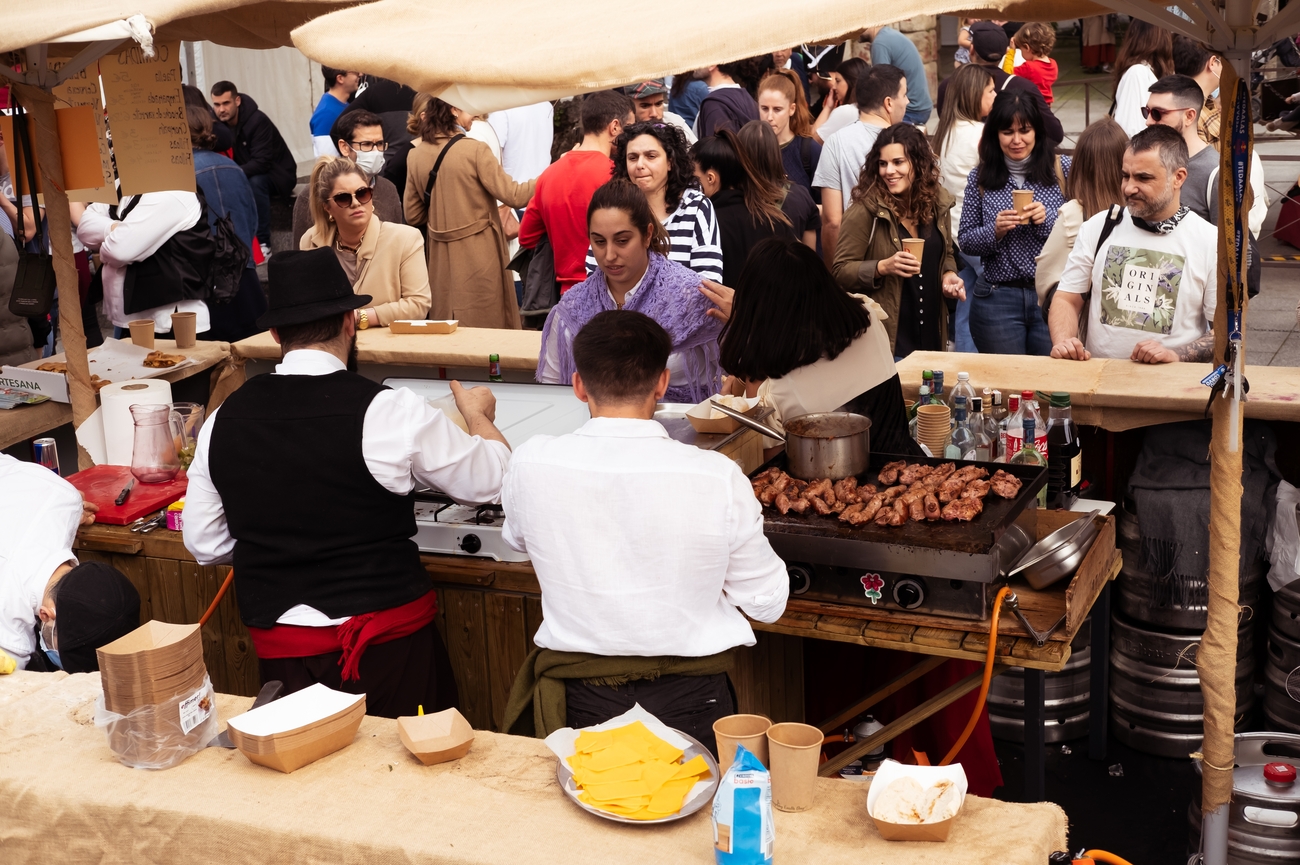
Food festivals run through the Galician calendar. The region celebrates octopus, peppers, cocido, seafood, wine and many other local products through gastronomic fiestas and romerías rooted in centuries of community tradition. O Grove hosts one of Galicia’s best-known seafood festivals each autumn, while Cambados celebrates Albariño in summer. In Galicia, ingredients are not simply eaten. They are given their own seasons, gatherings and traditions.
Galician
Seafood: The Shellfish That Defines the Coast
Galician seafood is one of the defining elements of the region’s cuisine, shaped by the cold Atlantic and the network of rías that cut into the coastline. These drowned river valleys create nutrient-rich waters that support mussels, oysters, scallops and many of Galicia’s most prized shellfish. In the Ría de Arousa, bateas, wooden rafts anchored across the water, are used to cultivate mussels and other shellfish in one of the region’s most productive marine environments.
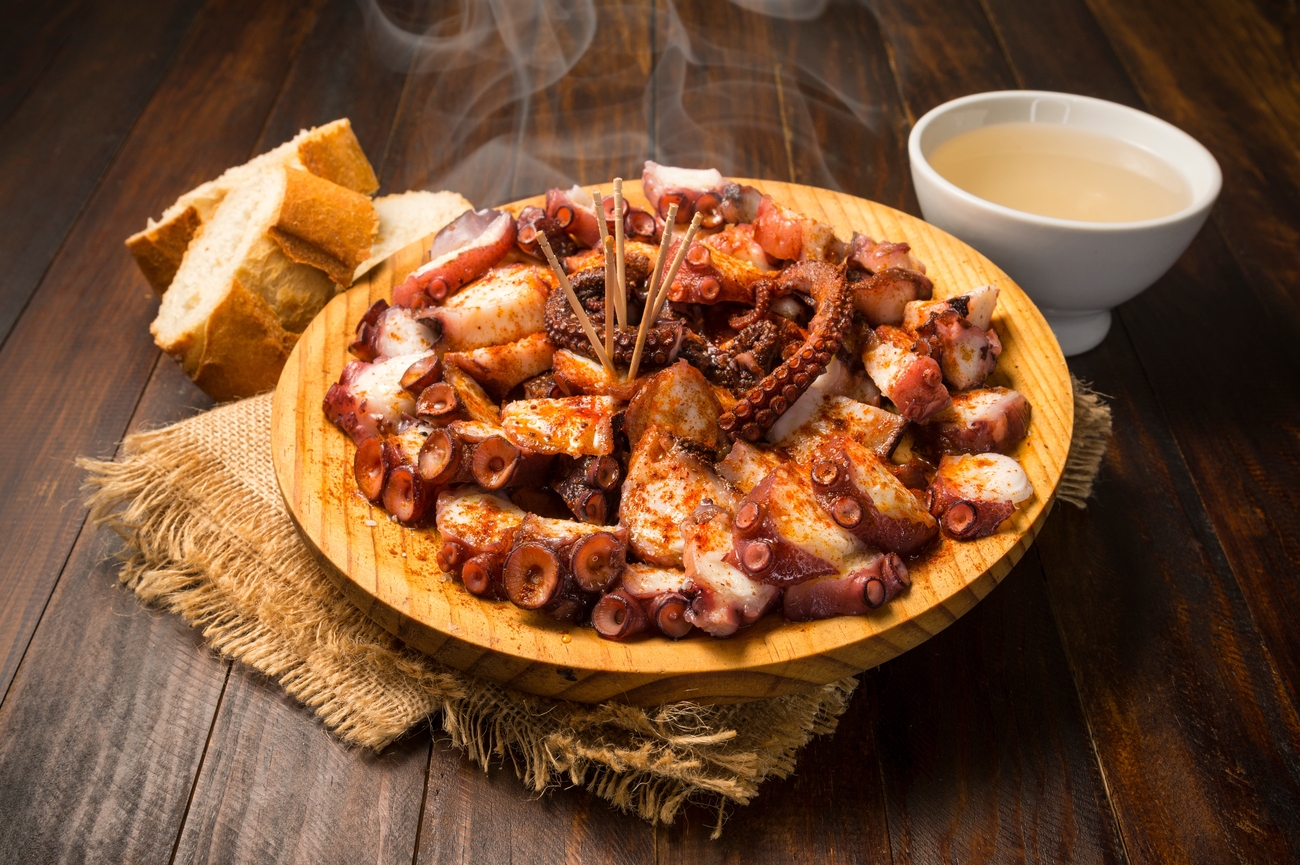
The table reflects it. Pulpo á feira, the octopus of the fairs, is one of Galicia’s most iconic dishes, and its name tells its story: this was festival food, cooked at the ferias and romerías where communities gathered, and it still is. The pulpeiras boil the octopus in copper cauldrons, traditionally dipping it three times before the long simmer, then scissor-cut the tentacles onto round wooden plates and dress them with olive oil, coarse salt and pimentón. Eaten standing at a fair with a cunca of young wine, it remains one of the simplest and most recognisable expressions of Galician cooking.
Percebes, the goose barnacles harvested from wave-battered rocks along the Costa da Morte, are among Galicia’s most distinctive shellfish. Around them gather scallops in their pilgrim shells, oysters, razor clams, spider crabs, velvet crabs and the full range of seafood that appears on a traditional mariscada platter. Even preserved seafood has its own place in the region’s food culture, with Galician tinned mussels, cockles and sardines served in good wine bars as delicacies rather than substitutes for fresh catch.
For a deeper look at the harvesters, traditional dishes and shellfish of the Atlantic coast, read our guide to Galician seafood, and it reads better on an empty stomach.
How
Galicia Eats
Understanding Galician food culture means understanding how people eat as much as what they eat. Meals are unhurried, local wine has its own traditions, and some of the region’s most memorable food experiences happen far from formal restaurants. Lunch is often the main event of the day, followed by the sobremesa, the long conversation that continues after the plates have been cleared. In traditional taverns and at festivals, local wine may still be served in a cunca, a shallow ceramic bowl held in the palm rather than by a stem.
Another distinctly Galician tradition is the furancho. For a limited period each year, families in the Rías Baixas traditionally open spaces in their homes to serve their own wine alongside simple food such as tortilla, empanada or cured meats. A laurel branch may mark the entrance, and the experience is deliberately informal. Finding a good furancho open at the right time depends heavily on local knowledge, which is why it fits naturally into an arranged journey through Galicia rather than being left entirely to chance.
Then there are the conservas. Galician canned seafood, from mussels in escabeche to cockles and small sardines, is treated as a delicacy in its own right. In good wine bars, beautifully packed tins are opened at the table and paired with local wines rather than regarded as a substitute for fresh seafood. A tin of Galician cockles with a cold Albariño in Cambados can be every bit as representative of the region as a more elaborate restaurant dish.
Albariño
Wine in Rías Baixas: Galicia’s Atlantic Vineyards
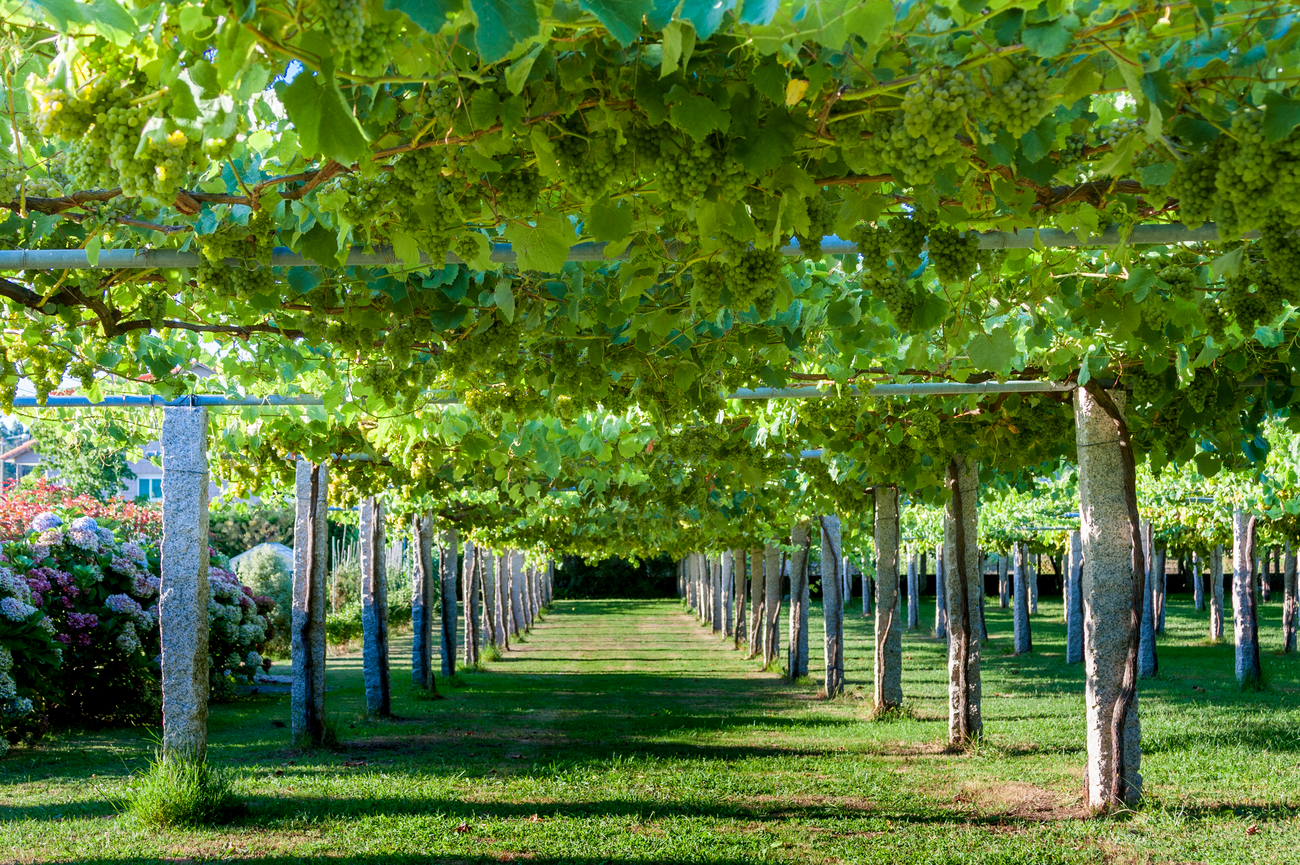
Albariño is Galicia’s best-known white wine, and its heartland lies in Rías Baixas on the region’s Atlantic southwest coast. Cool sea air, granite soils and the influence of the rías help give the wine its characteristic citrus, stone-fruit and saline notes. Across the denomination’s five subzones, vineyards are planted predominantly with Albariño, while in the Val do Salnés, the grape reaches its most maritime expression beneath the distinctive pergola-trained vines that rise above granite posts.
At the centre of this wine country is Cambados, a seaside town widely associated with the origins and development of Albariño. Its main square is dominated by the seventeenth-century Pazo de Fefiñáns, home to one of the town’s historic wineries. Beyond the tastings, Cambados also offers the roofless church of Santa Mariña Dozo, the Wine Museum and views across the Ría de Arousa, where the region’s vineyards and shellfish culture meet within the same landscape.
Around Cambados are some of the best-known names in Rías Baixas, including Pazo de Señoráns, Pazo Baión, Granbazán and Martín Códax. Together they illustrate how Albariño has developed from a deeply local Galician wine into one recognised on international wine lists. Each summer, Cambados celebrates that heritage during the Festa do Albariño, when the town becomes the focal point of the region’s wine culture.
Many of the most memorable winery visits in Rías Baixas depend on advance arrangements, particularly at smaller estates and historic pazos. Tastings may take place in family cellars or around tables where aged Albariño is served alongside local shellfish. Standing among the vineyards is one way to understand the wine. The other is to drink it where it was always headed, cold on a Galician table beside seafood landed that morning. That is the version our Galician journey brings to the table. The full wine story, the town, the houses and the glass, is in our guide to the best wineries in Rías Baixas.
Galicia’s wine story extends beyond Albariño. The region has five denominations of origin, including Ribeira Sacra, where Mencía vines grow on steep slopes above the Miño and Sil rivers, and Valdeorras, known particularly for Godello. Together they show that Galicia is not simply a white-wine destination but one of Spain’s most varied wine regions, ranging from Atlantic Albariño to mountain-grown reds and fuller-bodied inland whites.
Santiago
de Compostela Food: Where the Camino Ends at a Table
Santiago de Compostela is known worldwide as the end of the Camino, but it is also one of Galicia’s great food cities. For more than a thousand years, people have walked across Europe to reach the cathedral where the apostle James is said to rest. On holy days, the botafumeiro, the enormous censer, swings through the transept above pilgrims who have travelled hundreds of miles to stand beneath it. What the guidebooks mention less is what happens next: the pilgrims eat, and the city that receives them has spent centuries learning how to feed arrivals well.
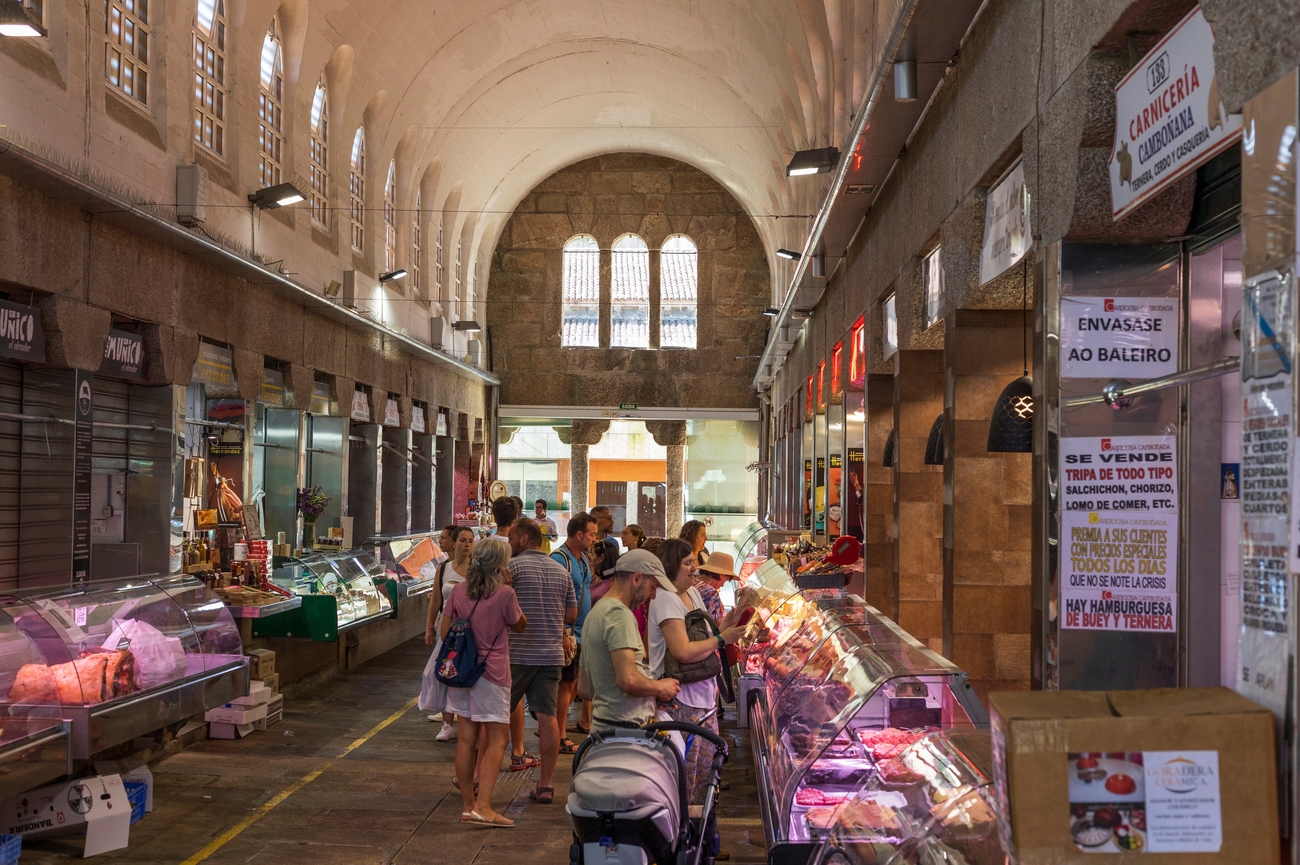
The heart of Santiago’s food scene is the Mercado de Abastos, the granite market halls that locals regard as one of the city’s essential places after the cathedral itself. Farmers sell seasonal produce, fish arrives from the rías, tetilla cheese sits beside cured meats, and market eateries will cook selected ingredients bought from the stalls, turning a morning visit into one of the most direct ways to experience Galician food. Beyond the market, the UNESCO-listed old town unfolds through a network of traditional bars, seafood restaurants and more ambitious kitchens.
The Rúa do Franco is lined with seafood displays and busy restaurants, while quieter streets nearby offer a more local rhythm, with wine served in cuncas and small plates accompanying the evening. At the higher end, restaurants such as Casa Marcelo reinterpret Galician ingredients through contemporary cooking. And throughout the old town, pastelería windows display tarta de Santiago, the almond cake dusted with icing sugar around the Cross of Saint James. We walk the whole city plate by plate in our Santiago de Compostela food guide, from the market benches to the last slice of almond cake.
For travellers who want to explore beyond the table, our guide to the best things to do in Santiago de Compostela covers the city’s cathedral, historic streets, cultural landmarks and other essential experiences.
A
Coruña Food and Attractions: Glass Galleries and the Tower of Hercules
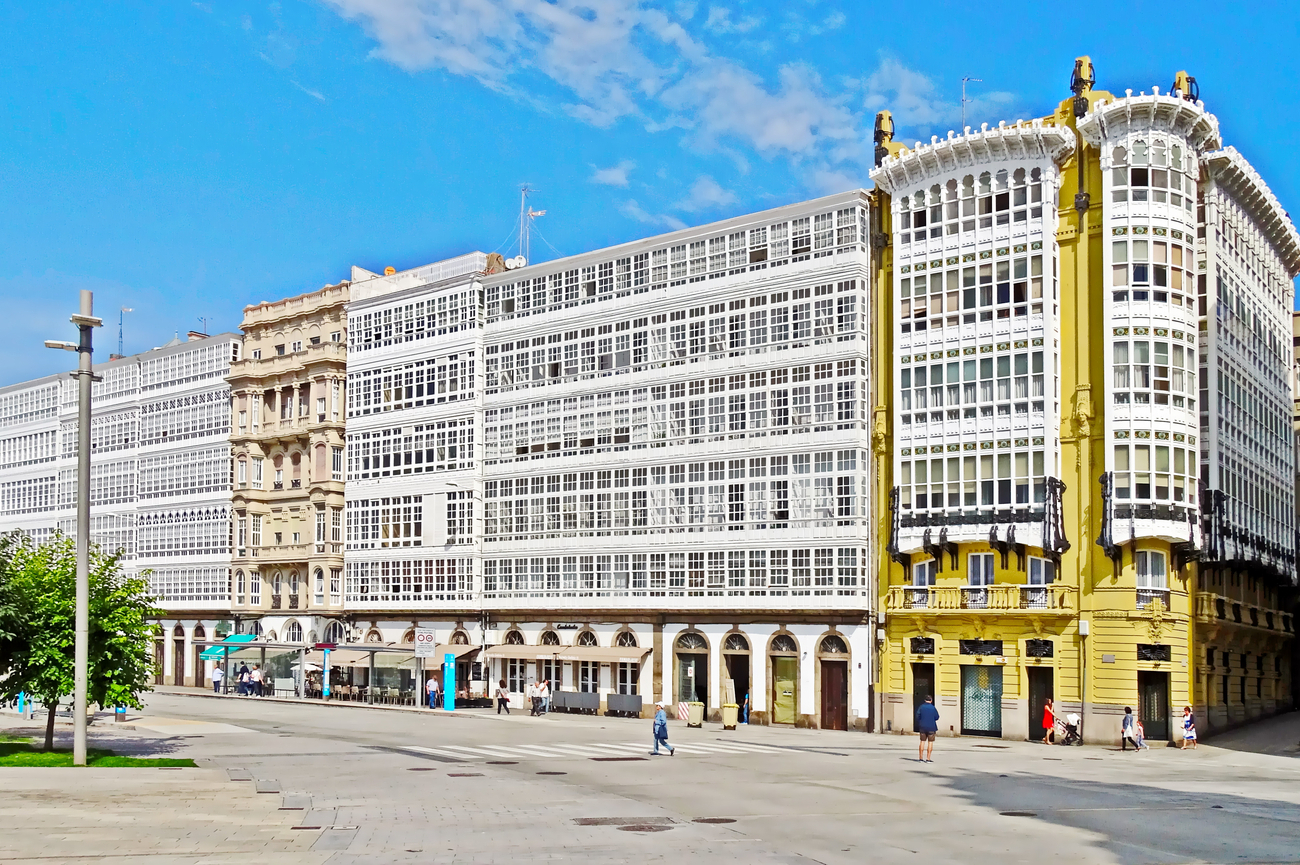
North of Santiago de Compostela, where the coast turns towards the open Atlantic, A Coruña combines one of Galicia’s most distinctive waterfronts with a strong food scene. The city is known as the City of Glass, a reference to the white-framed glazed galleries lining the Marina and reflecting the shifting Atlantic light. At the city’s edge stands the Tower of Hercules, the Roman lighthouse that has remained in use since antiquity and is recognised as a UNESCO World Heritage Site. Between the tower and the harbour, A Coruña’s long seafront promenade links some of the city’s most important coastal sights.
Food is equally central to the experience. The market at Praza de Lugo is one of the best places to see the region’s seafood culture at close range, while the streets around Calle Estrella and La Galera are known for tapas and evening dining. The city’s restaurants range from traditional marisquerías to more contemporary kitchens, helping make A Coruña an important gastronomic stop in northern Galicia. On our Galician journey, it forms the northern day of the itinerary, a coastal contrast to Santiago’s historic centre and the wine country further south.
For a broader look at the city beyond its food scene, see our guide to the best things to do in A Coruña.
Vigo
Food and Seafood: At the Mouth of the Atlantic
Vigo is one of Galicia’s most important seafood cities, shaped by its position on the Atlantic and its working fishing port. The city’s lonxa, or fish auction, handles catches of hake, monkfish and other Atlantic species each morning, while the harbour supplies restaurants and markets across the region. That connection between port and plate gives Vigo one of the most immediate seafood experiences in Galicia.
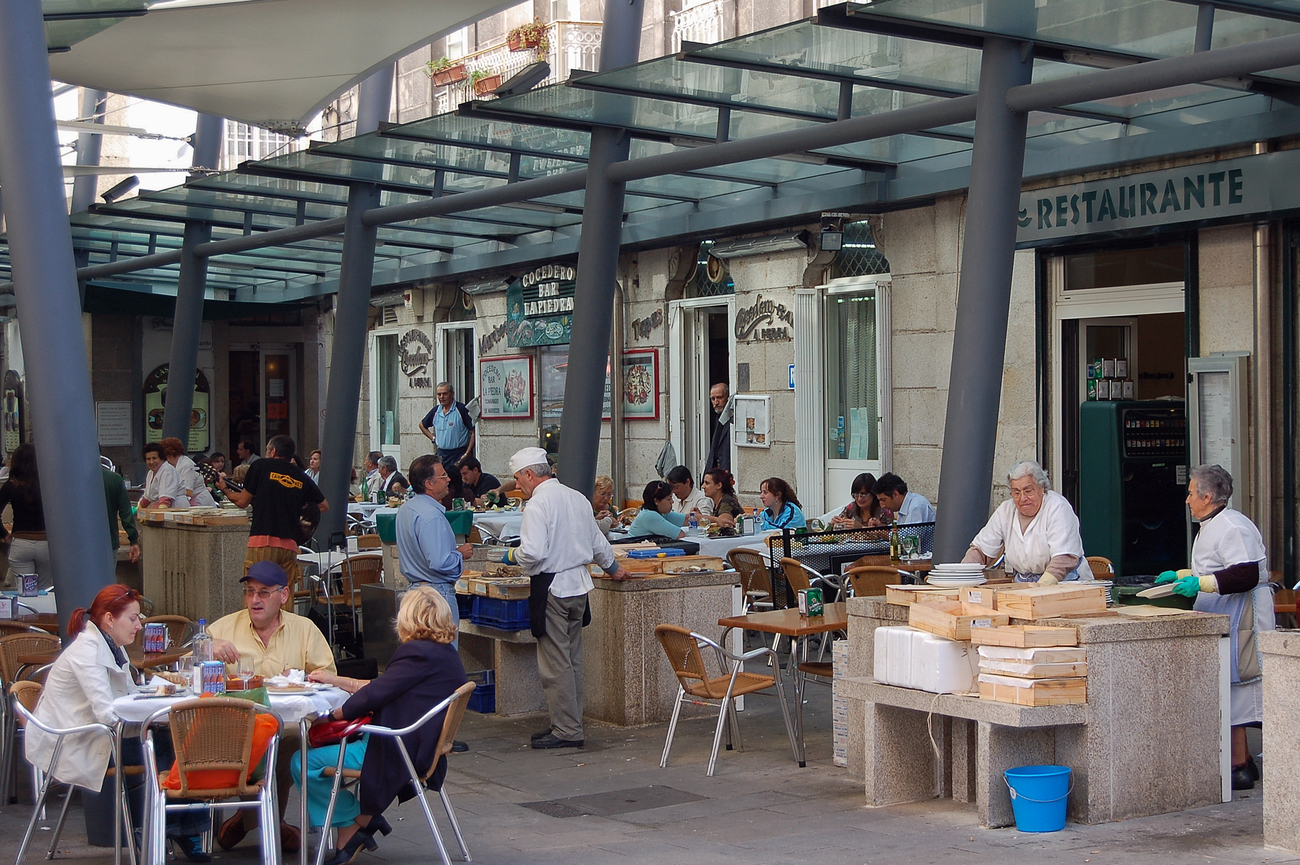
One of the city’s best-known food traditions can be found on Rúa da Pescadería, widely known as Oyster Street. Here the ostreiras shuck oysters at their stalls, traditionally served with lemon and a cold glass of Albariño. Nearby, the granite streets of the Casco Vello are filled with bars and restaurants serving dishes such as arroz con bogavante, seafood and fish landed along the Galician coast. On our journey, Vigo provides the southern food experience, contrasting with the historic streets of Santiago and the wine country of the Rías Baixas.
Offshore, the Cíes Islands guard the entrance to the Ría de Vigo within the Atlantic Islands of Galicia National Park. Pine-covered hills, clear Atlantic water and Rodas Beach provide a striking contrast to the working port on the mainland. Access is controlled during the busier months and requires advance authorisation and ferry arrangements. On our Galician journey, these details are organised in advance, allowing the experience to fit naturally into the day without the practical arrangements becoming part of the holiday.
For more ideas beyond Vigo’s food scene, see our guide to the best things to do in Vigo.
Five-Day
Galician Gastronomy Itinerary
Our five-day Galician gastronomy itinerary is based in Santiago de Compostela, with four nights in one hotel near the cathedral and day trips to A Coruña and Vigo. This keeps the journey relaxed, avoids unnecessary hotel changes and allows Santiago to become a base rather than simply another stop.
A Coruña provides the northern day of the itinerary. A local guide leads you through María Pita Square, the old town and the market halls, with time to experience the city’s food culture before lunch at a carefully selected restaurant. Vigo provides the southern day, beginning with a guided walk through the old port city before moving into a working kitchen, where a local chef introduces you to regional dishes through a hands-on cooking experience. Lunch is the food you prepare.
The fourth day is deliberately left free. There is no pickup and no fixed schedule, giving you time to explore Santiago at your own pace, return to the Mercado de Abastos, enjoy a slice of tarta de Santiago or simply follow whichever street catches your attention. Unstructured time in a city this good at feeding people is not a gap in the itinerary. It is part of the experience.
One evening is reserved for a gourmet dinner at one of Santiago’s leading restaurants, arranged in advance. Afterwards comes the queimada that opened this guide, with orujo set alight in a clay bowl while the traditional conxuro is recited over the flames.
The best time for this Galician food journey depends on what you want to experience. Late spring through early autumn brings the mildest weather, while the Albariño Festival in Cambados takes place in summer and the Seafood Festival of O Grove arrives in autumn. Winter offers a different appeal, particularly for shellfish such as percebes and seasonal dishes including the cocido of Lalín.
For the full day-by-day programme, see our Galician Gastronomy Express Tour.
Galician
Food Festivals: Three Hundred Celebrations Can't All Be Wrong
Somewhere in Galicia, a town is celebrating a single food: octopus, peppers, wine, seafood or stew. Many of these festivals have been held for generations, rooted in local traditions that bring entire communities together around the ingredients that define the region.
That connection between food, season and place is one of the reasons Galician gastronomy feels so distinctive. The region has spent centuries deciding what is worth eating, when it should be eaten and how it should be shared. For the traveller, the challenge is simply knowing where to be and when.
Our Galician Gastronomy Express Tour brings those experiences together across five days, with Santiago de Compostela as your base and visits to A Coruña and Vigo. Expect local guides, carefully chosen restaurants, a hands-on cooking experience in Vigo, time to explore Santiago independently and an evening that ends with the blue flames of a traditional queimada.
The table is long, the order matters, and your seat is already being held.
Come and take it while the flames are still lit.


Let us know what you love, where you want to go, and we’ll design a one-of-a-kind adventure you’ll never forget.
Get in touch
Miriam
Travel Specialist

Romina
Travel Specialist

Laura
Travel Specialist
Frequently Asked Questions
-
Can I explore Galicia's food scene without a car?
Yes. Santiago de Compostela, A Coruña and Vigo are all easy to explore on foot once you are in the city, and public transport connects the main urban centres. A car or private driver becomes much more useful for winery visits, rural restaurants and smaller villages in the Rías Baixas, where stops are more dispersed.
-
What time do people usually eat lunch and dinner in Galicia?
Galician meal times are later than in many northern European countries. Lunch commonly begins around 2:00–3:30 pm, while dinner often starts around 9:00–10:30 pm. Popular restaurants may open for dinner later than international visitors expect, so it is worth checking opening hours before making evening plans.
-
Do I need to book restaurants in advance in Galicia?
Not everywhere, but reservations are sensible for well-known restaurants, weekend meals, gourmet dining and small venues with limited tables. Casual tapas bars and traditional taverns are often easier to visit spontaneously, although busy summer dates and local festivals can change that quickly.
-
Is Galician food suitable for gluten-free travellers?
It can be. Fresh seafood, grilled fish and meat, many cheeses, Padrón peppers and simple potato dishes can be naturally gluten-free, but bread, empanadas, some sauces and foods cooked in shared fryers may not be suitable. Travellers with coeliac disease should always confirm ingredients and cross-contamination directly with the restaurant.
-
Is Galicia a good destination for vegetarians?
Yes, although traditional Galician cuisine is strongly centred on seafood and meat. Vegetarians can still find dishes built around local cheeses, Padrón peppers, tortilla, seasonal vegetables, potatoes and mushrooms, particularly in larger towns and modern restaurants. It is worth mentioning dietary requirements when reserving a more traditional restaurant.
-
Is tipping expected in restaurants in Galicia?
Tipping is appreciated but is not generally compulsory in Spain. For good table service, many diners simply round up the bill or leave a small additional amount rather than using the percentage-based tipping common in the United States.
-
Do I need to speak Spanish or Galician to order food in Galicia?
No, but a few basic words are useful. Spanish is widely understood and Galician is spoken throughout the region; in hotels and many restaurants used to international visitors, some English is usually available. In traditional markets, furanchos and smaller rural restaurants, menus and conversation may be primarily in Galician or Spanish.
-
Is Galicia good for a luxury food holiday?
Yes. Galicia combines exceptional seafood, the Albariño vineyards of Rías Baixas, historic markets, acclaimed restaurants and distinctive regional food traditions. Santiago de Compostela, A Coruña and Vigo can also be combined easily within one gastronomy-focused journey.
-
Can Revigorate arrange a luxury gastronomy journey through Galicia?
Yes. Revigorate can arrange a tailor-made Galician food journey combining Santiago de Compostela, A Coruña, Vigo and the Rías Baixas, with carefully selected restaurants, local guides, winery visits, food experiences and private arrangements built around your interests and pace.
Our offices:



Revigorate, Iberian Escapes and Algarve Lifestyle are the registered brand names of APCS Lda . We are a fully authorised travel agency licensed by Turismo de Portugal RNAVT/6867.
In the event of a dispute, the consumer may refer to: RAL - Centros de Arbitragem
Avª. 5 de Outubro, nº. 55, R/C Dtº. 8000-075 Faro, Portugal | Tel: +351 289 823 135 *
* national landline call
E-mail: info@consumoalgarve.pt| www.consumidoronline.pt | Mon to Fri: 9:00 - 13:00 / 14:00 - 17:00