Paella Cooking Class in Valencia: A Hands-On Guide to Technique and Local Food Culture

Any Valencian family will tell you who makes the paella. It is usually one person. They may have cooked it for twenty or thirty years, everyone refers to them when Sunday lunch comes around, and nobody else is entirely trusted with the pan.
That tells you something important about paella in Valencia. It is not simply a recipe passed around between competent home cooks, but a specialism learned through repetition, observation and argument. Uncles teach nephews. Neighbours debate the height of the flame across a garden wall. Much of the knowledge is transmitted by watching rather than by reading.
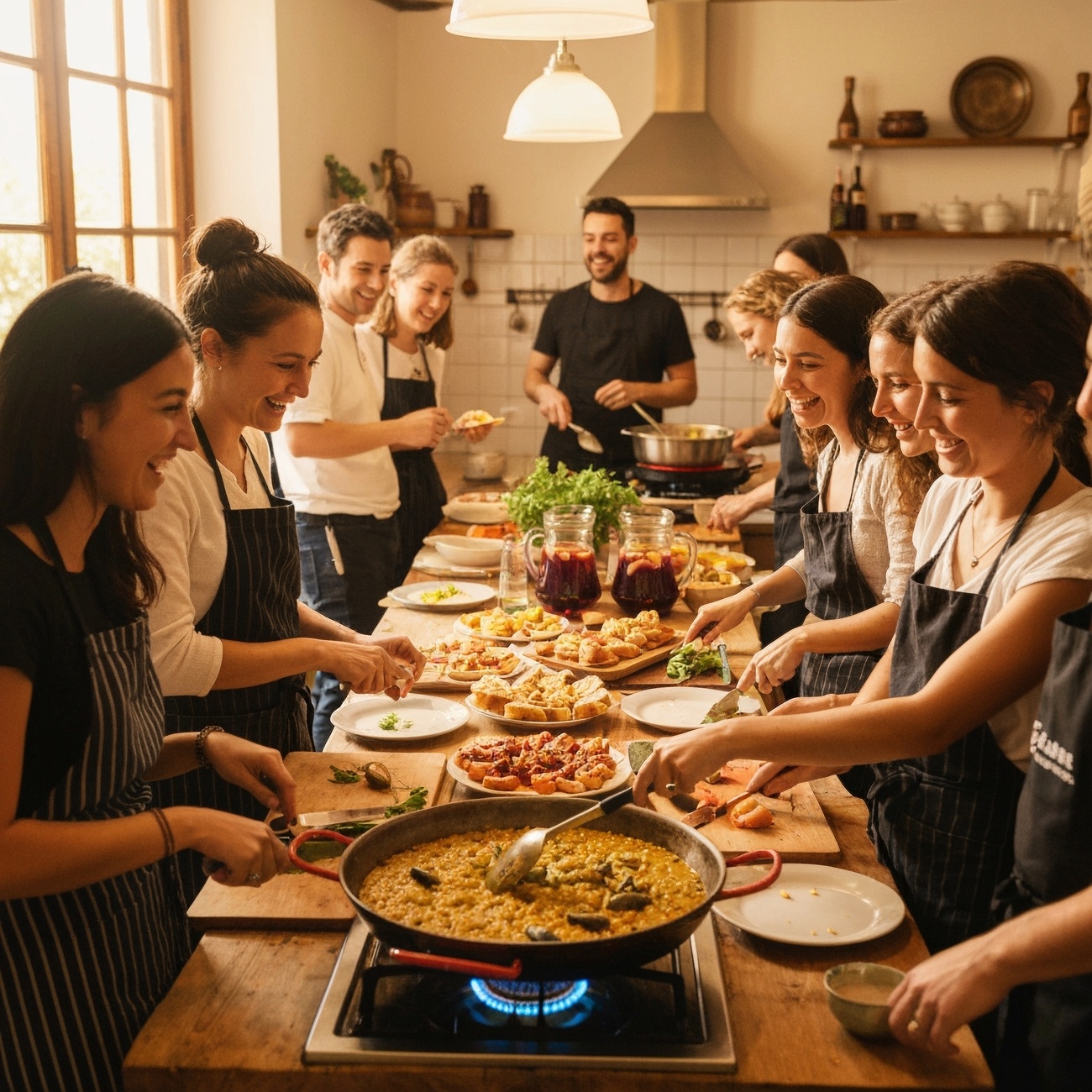
That is what makes a paella cooking class in Valencia worthwhile. A good class does more than hand you a recipe and a list of ingredients. You learn how to choose the right rice, control the heat, build the stock, judge when the liquid has reduced enough, leave the grains untouched once the rice goes in and recognise when the socarrat is beginning to form.
For visitors, it is one of the quickest ways to understand why Valencians treat paella so differently from the versions served elsewhere in Spain and around the world. Our guide to what to eat in Valencia explains where paella sits within the wider Valencian kitchen, from the rice fields of the Albufera to the city's markets, tapas bars and regional dishes.
A hands-on paella class also forms part of our Foodie Side of Valencia journey, which explores the food, ingredients and traditions that made Valencia the home of Spain's most famous rice dish.
A
Good Paella Cooking Class in Valencia Starts at the Market
The order of a good paella cooking class tells you a great deal about its quality. One of the first things to check when comparing cooking classes in Valencia is whether the experience begins in the kitchen or at a local food market.
A class that starts with ingredients already weighed into bowls is largely teaching assembly. A class that begins at a market stall is teaching something more useful: how Valencians choose the ingredients before they ever reach the pan. In Valencia, what you buy determines what you cook, and understanding those ingredients is part of understanding paella itself.
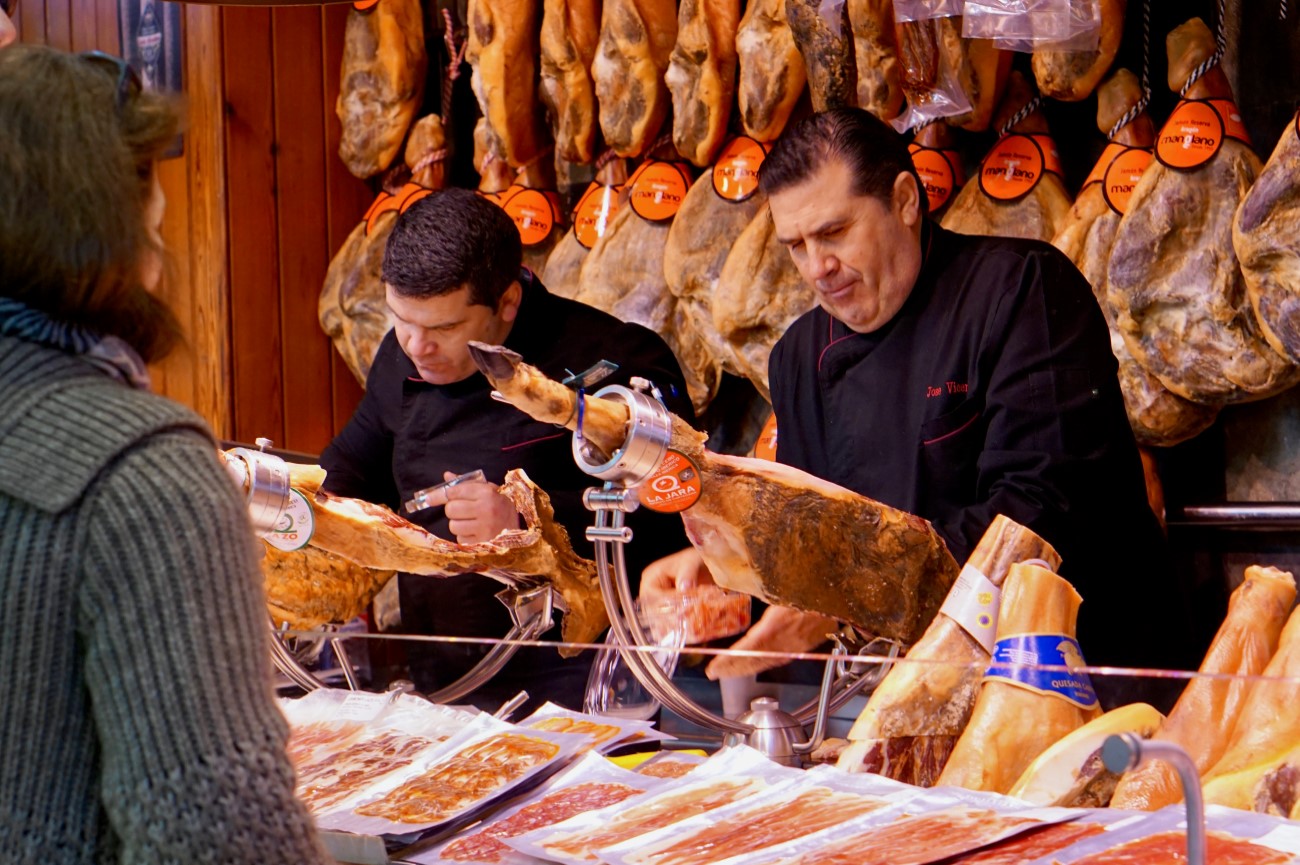
Ruzafa Market is a common starting point for paella cooking classes based in the city. Smaller and less photographed than Valencia's Mercado Central, it remains a working neighbourhood market where residents shop for meat, vegetables, rice and spices. For a traditional paella valenciana, four ingredients deserve particular attention.
Rice for Paella: Bomba, Senia and Albufera
Bomba, Senia and Albufera are among the rice varieties associated with D.O.P. Arroz de Valencia, the protected designation covering rice grown in the region.
Bomba is the most forgiving for inexperienced cooks because it absorbs a large amount of liquid while holding its shape. Senia absorbs flavour readily but requires more precise timing and can soften quickly if overcooked. Albufera combines characteristics of both and is increasingly used in professional kitchens.
A good instructor will explain not simply which rice to buy, but why different varieties behave differently once the stock begins to reduce.
Ferraura and Garrofó Beans
Two beans are central to traditional paella valenciana: ferraura and garrofó.
Ferraura is a broad, flat green bean, softer and wider than a typical French bean. Garrofó is a large, pale Valencian bean with a soft texture and mild, slightly sweet flavour. It may be bought fresh when in season or dried at other times of year.
They are not decorative additions. Both influence the texture and flavour of the finished dish, which is why learning to recognise them in the market is more useful than simply seeing their names on a recipe.
Chicken and Rabbit
Traditional paella valenciana is made with chicken and rabbit rather than seafood. The meat is cut into relatively small bone-in pieces so it can brown thoroughly and contribute flavour to the stock that is built directly in the paella pan.
At a Valencian market, a butcher accustomed to local cooking will immediately understand how the meat needs to be cut for paella.
Saffron
Good saffron comes in threads rather than as brightly coloured seasoning powder. The threads are deep red, with a distinctive aroma often described as floral, hay-like and faintly metallic, and they release their colour gradually when infused.
A cooking class gives you the opportunity to see, smell and handle proper saffron before it enters the pan, which makes recognising good-quality saffron considerably easier afterwards.
What this part of the class teaches is ingredient literacy. You begin to understand not simply what goes into paella valenciana, but why those particular ingredients belong together.
The history of paella explains how that combination developed from the ingredients available around Valencia's smallholdings, market gardens and Albufera rice fields.
Why
Heat Control Matters in a Paella Cooking Class
Heat control is one of the most important techniques you learn in a paella cooking class in Valencia. The fire must change as the dish cooks: strong at the beginning, steadier while the rice absorbs the stock, then carefully controlled as the socarrat forms at the base of the pan.
Traditional Paella Is Cooked Over Wood
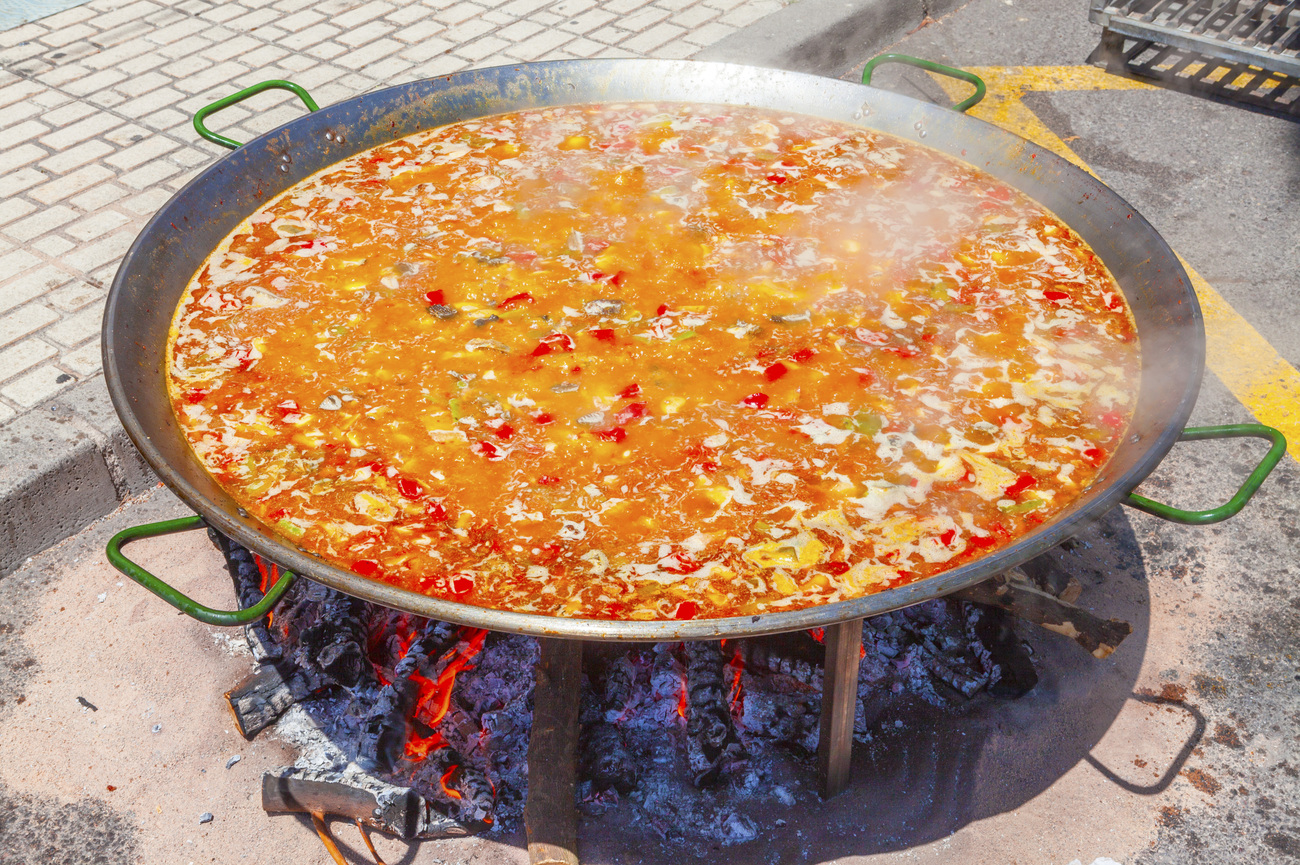
The traditional heat source for paella is wood, particularly orange-tree prunings and vine cuttings. Both burn hot and quickly and have long been readily available in Valencia's agricultural landscape.
A wood fire naturally rises, peaks and falls, which suits the different stages of cooking paella. The heat is fierce when the ingredients first go into the pan, more moderate while the rice cooks, and lower towards the end as the liquid disappears and the socarrat begins to form.
Many paella cooking classes use gas burners because they give beginners immediate and precise control over the flame, while some also demonstrate the traditional wood-fired method. Gas makes it easier to understand the changing heat required at each stage before seeing how an experienced cook manages the same process over an open fire.
The Flame Needs to Heat the Whole Paella Pan
Whatever the heat source, the flame needs to reach across the full diameter of the pan.
This is one reason paella can be difficult to reproduce on a domestic hob. A large paella pan placed over a small burner receives strong heat in the centre but much less around the edges, causing different parts of the rice to cook at different speeds.
Traditional paella burners solve this with several concentric gas rings, spreading the flame evenly underneath the pan. A good cooking class will show you how the flame should sit beneath the pan before the cooking begins.
Why a Paella Pan Is Wide and Shallow
The shape of the paella pan is part of the technique. Thin polished steel responds quickly when the heat changes, while the wide, shallow shape spreads the rice into a thin layer across a large surface area.
That shallow layer helps the liquid evaporate evenly and allows the rice to cook at a consistent rate across the pan. The pan also needs to sit level so the stock remains evenly distributed rather than collecting on one side.
Experienced cooks often use the liquid in the pan itself to check that it is level. It is a small detail, but one that demonstrates why making traditional paella depends as much on controlling the pan and the fire as it does on following a recipe.
The
Five Stages of Cooking Paella and the Mistakes to Avoid
Learning how to cook paella is largely about understanding the order of the process. Each stage builds the flavour and texture needed for the next, and once the rice has been added there is very little room to correct earlier mistakes. A good paella cooking class therefore teaches the sequence as carefully as the ingredients.
1. Brown the Chicken and Rabbit
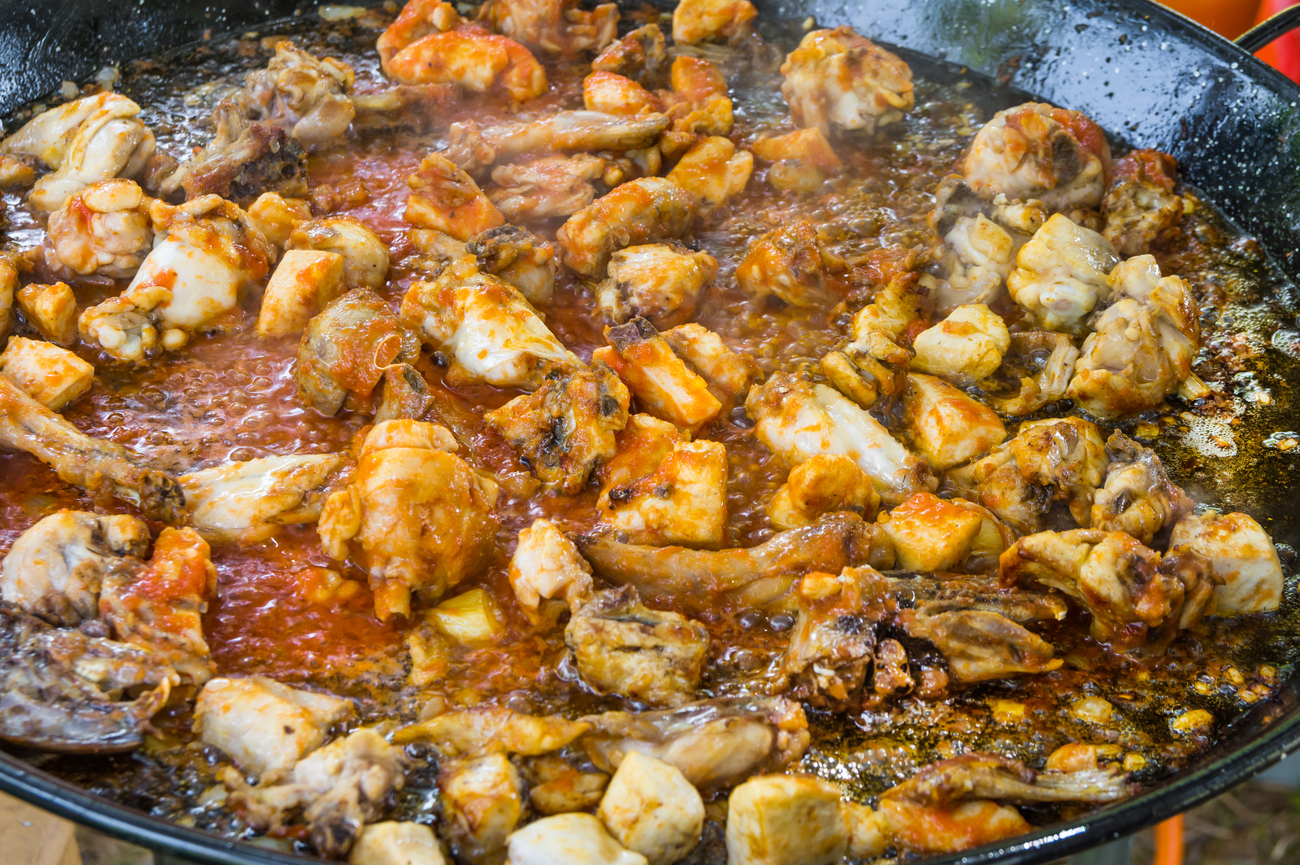
Olive oil goes into the pan first, followed by the chicken and rabbit. The meat needs to brown slowly and thoroughly rather than simply being sealed on the surface, and around fifteen minutes is not unusual.
As the pieces colour, they are moved towards the outer edge of the pan. This browning creates much of the flavour that will later pass into the stock.
The common mistake is impatience. Meat that has barely coloured produces a lighter, less concentrated broth, and there is little opportunity to recover that depth later.
2. Cook the Vegetables and Sofrito
Ferraura and garrofó are added next and allowed to cook before the tomato goes into the pan.
The tomato is traditionally grated and cooked until much of its water has evaporated, its colour deepens and the olive oil begins to separate again. This stage develops much of the savoury depth of the finished paella.
Paprika, when used, is added towards the end because it can burn quickly. It is one of the moments when an instructor is likely to pay particularly close attention to the pan.
3. Build the Stock in the Pan
Traditional paella valenciana does not rely on a separate ready-made stock. Water is added directly to the browned meat, vegetables and sofrito, then brought to a strong boil so the flavours already in the pan become the broth in which the rice will cook.
Saffron is usually added during this stage, either directly or after being lightly toasted, crushed and infused in a little hot liquid.
The amount of liquid depends on the rice variety, the strength of the heat and even conditions such as wind when cooking outdoors. A rough starting point may be two to three parts liquid to one part rice, but experienced cooks judge the level by sight rather than relying entirely on a fixed ratio.
One traditional technique is to note the liquid level against the rivets or another reference point on the pan before the rice is added. A paella cooking class is useful precisely because these visual judgements are difficult to learn from a written recipe.
4. Add the Rice and Do Not Stir
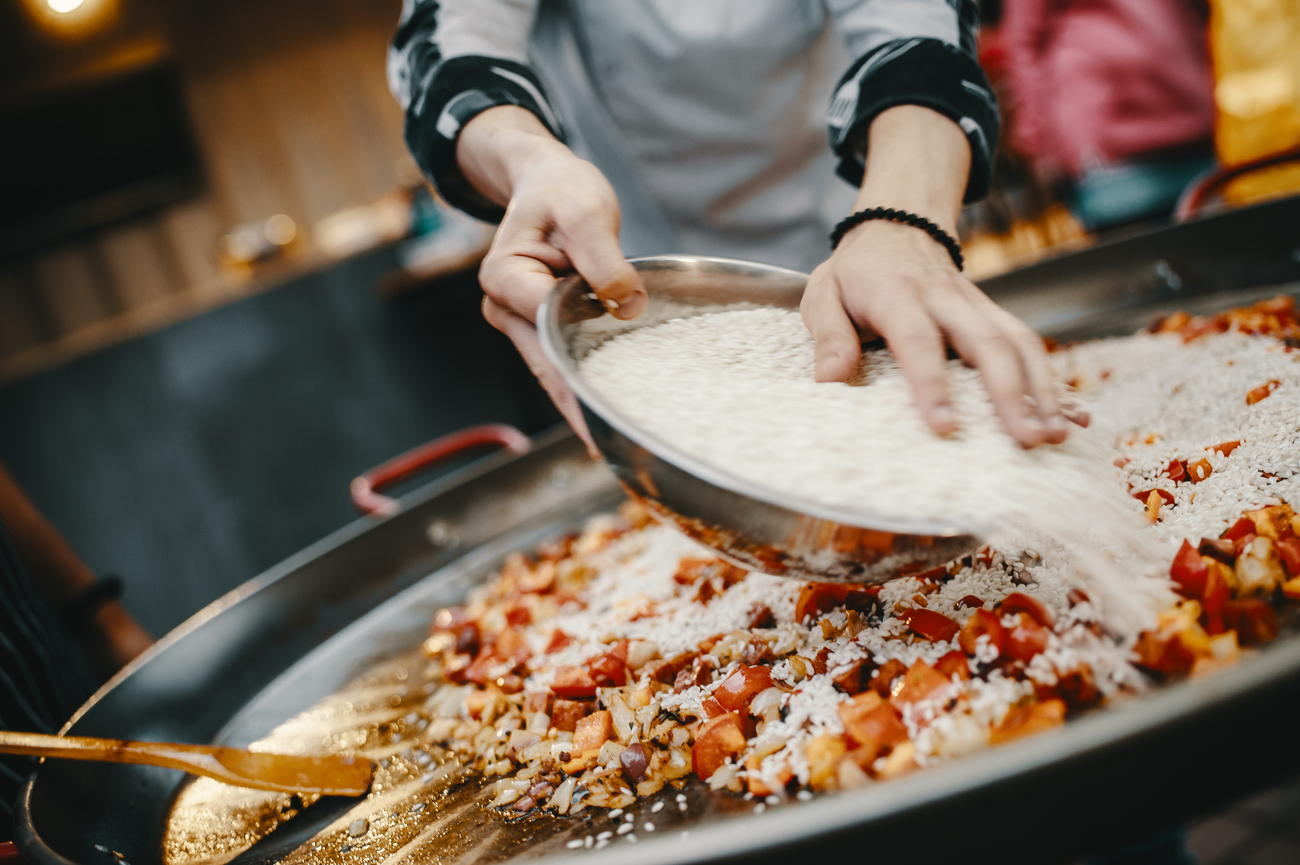
The rice is traditionally poured across the pan, often in a cross, before being distributed into an even, shallow layer.
Once it is levelled, it is left alone.
This is one of the fundamental differences between paella and risotto. Stirring rice releases starch and creates the creamy texture wanted in a risotto. Paella is intended to have separate grains cooked in a shallow layer, so stirring after the rice has been distributed works against the texture you are trying to achieve.
The heat is usually stronger during the first part of the rice cooking and reduced later as the liquid is absorbed and evaporates. The exact timing varies with the rice, pan and heat source, which is why experienced cooks rely on appearance, sound and evaporation as well as the clock.
5. Form the Socarrat and Rest the Paella
Socarrat is the thin toasted layer of rice that forms against the bottom of the pan towards the end of cooking, and producing it without burning the rice is one of the most delicate parts of the process.
As the remaining liquid disappears, an experienced cook listens to the change in sound from the pan and watches for the aroma of toasted rice. The heat may be increased briefly to encourage the socarrat, but the difference between caramelised and burnt rice can be small.
Once the paella comes off the heat, it is normally allowed to rest for several minutes before being eaten. The resting period allows the remaining moisture and heat to settle through the rice.
These five stages, browning, sofrito, stock, rice and socarrat, explain why making paella in Valencia is less about following a fixed recipe than learning to read the pan as it cooks.
What
You Really Learn in a Paella Cooking Class in Valencia
People book a paella cooking class in Valencia expecting to learn how to make paella, and they do. But the recipe itself is only part of what a good class teaches.
The more valuable skill is judgement. You learn to read the pan by sound, colour, smell and evaporation rather than relying entirely on a timer. Those instincts transfer to many of Valencia's other rice dishes, including arròs a banda, arròs negre and arròs al forn, as well as fideuà.
Ingredient knowledge stays with you too. After handling proper saffron, ferraura, garrofó and Valencian rice varieties in the market and kitchen, it becomes much easier to recognise what belongs in a traditional paella valenciana and why substitutes can change the finished dish.
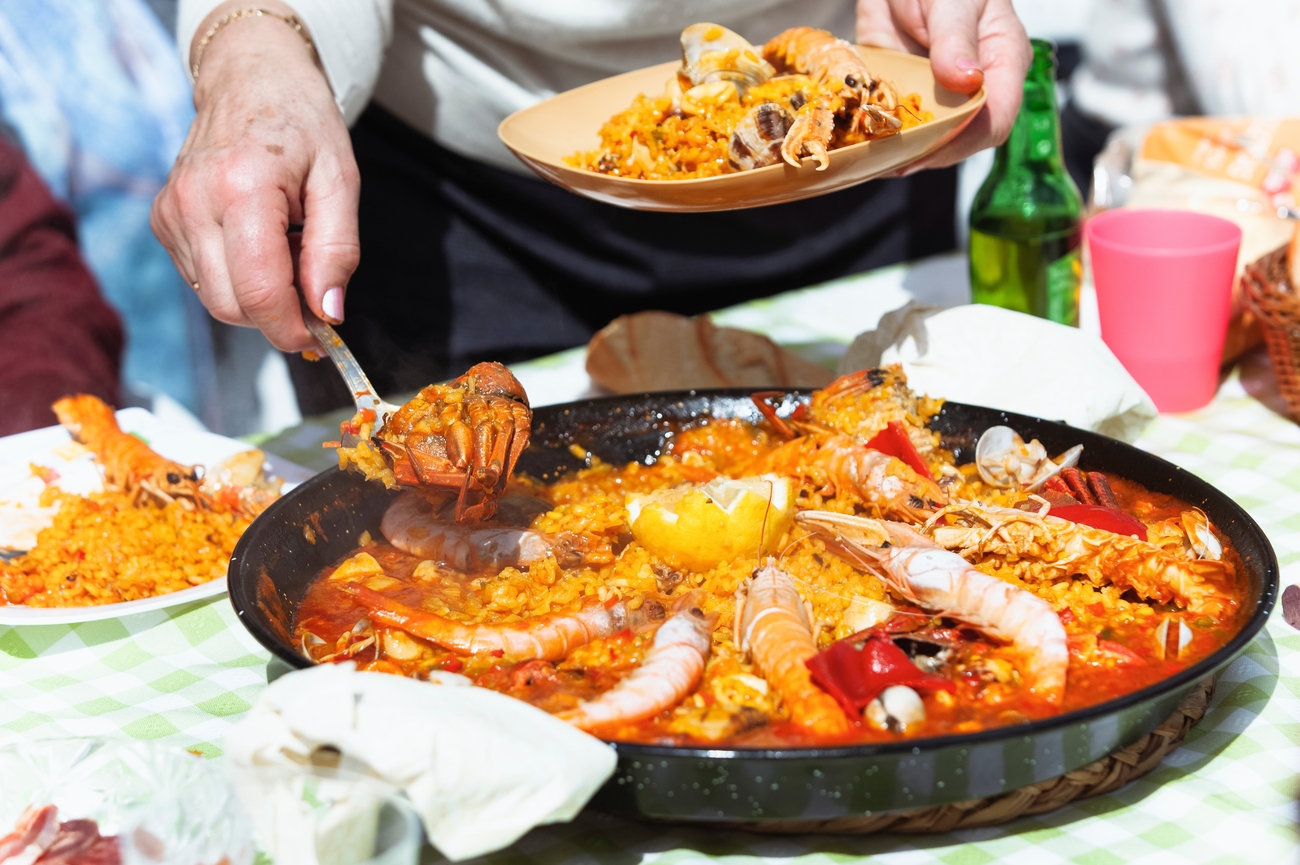
There is also a cultural lesson that a recipe cannot provide. In Valencia, eating the paella is treated as part of the cooking experience. The pan is brought to the table whole, diners traditionally eat from the section in front of them, working towards the centre, and the socarrat at the bottom is often the most sought-after part.
You also learn when paella is traditionally eaten. It is primarily a lunch dish, closely associated with Sunday gatherings and long family meals. The person responsible for cooking it is often the family member who has spent years mastering the pan, the fire and the timing.
That combination of technique, ingredients and food culture is what makes taking a paella cooking class in Valencia different from simply following a paella recipe at home.
What
Else Do You Make in a Paella Cooking Class in Valencia?
A good paella cooking class in Valencia often goes beyond the rice itself. The additional dishes and drinks introduce ingredients and traditions that belong to the wider Valencian table, turning the class into a broader lesson in local food culture.
Allioli
Allioli is often prepared by hand in a mortar using garlic, salt and olive oil added gradually until the mixture emulsifies.
Traditional Valencian allioli contains no egg. Making it from scratch is deceptively difficult, which makes it a useful lesson in texture, patience and emulsification before work begins on the paella itself.
Agua de Valencia and Sangria
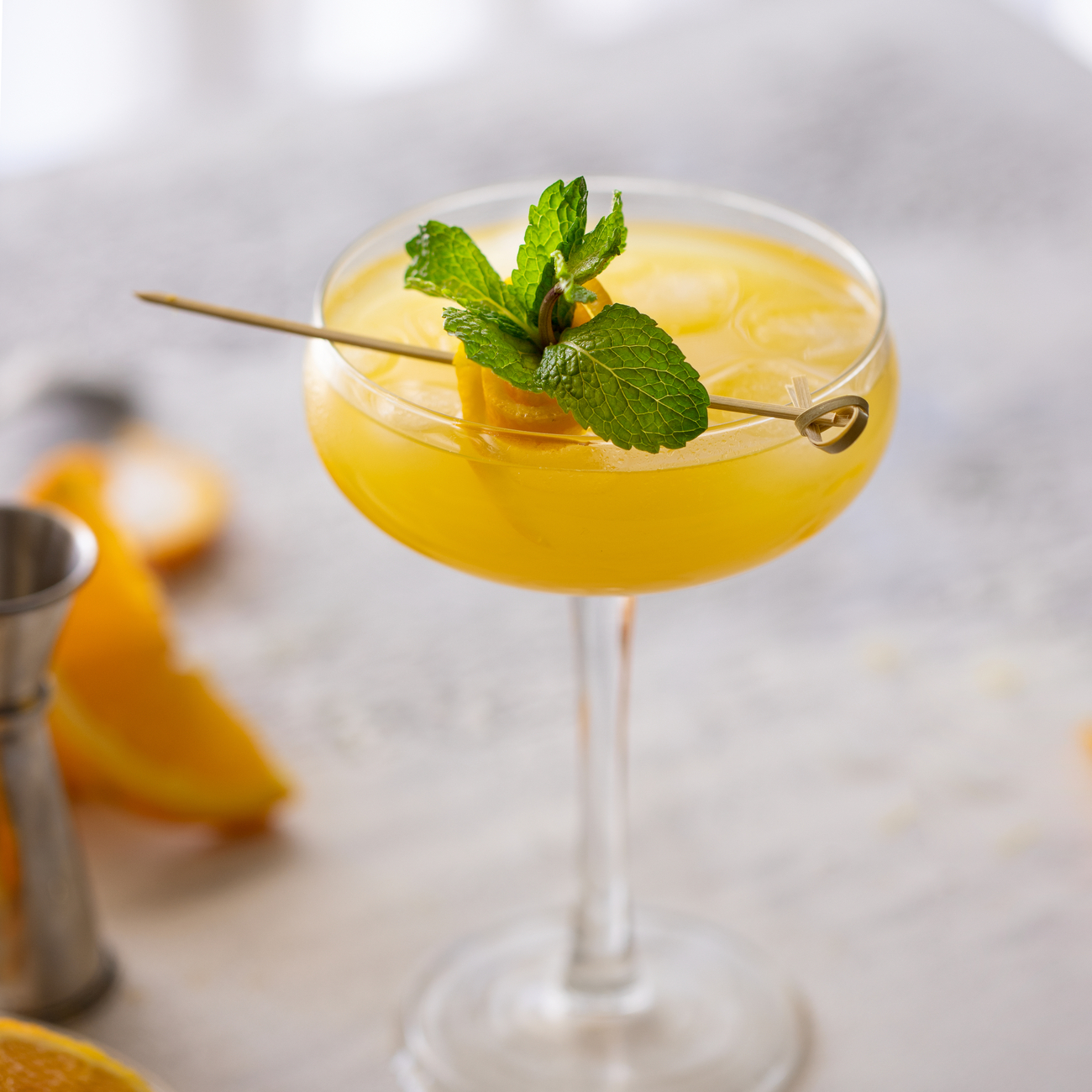
Sangria may appear in classes aimed at international visitors, but agua de Valencia is the more distinctly local drink.
Created in Valencia, it combines fresh orange juice and cava with gin and vodka. Its connection to the region is obvious: Valencian oranges and Spanish sparkling wine brought together in a drink that has become one of the city's best-known cocktails.
Learning the difference between the two also helps explain an important part of Valencian food culture. What visitors expect to drink in Spain is not always what locals associate most closely with Valencia.
Coca de Llanda
Coca de llanda is a traditional Valencian sponge cake baked in a rectangular metal tray, or llanda. Usually light and simple, often flavoured with lemon, it is commonly served with coffee or as the sweet end to a long lunch.
Including it in a cooking class introduces a quieter side of Valencian cuisine that visitors who focus entirely on paella can easily miss.
Cremaet
Cremaet is one of Valencia's most distinctive coffee traditions. It combines coffee with rum, sugar, lemon peel and cinnamon, with the alcohol traditionally flamed before the espresso is added.
It is commonly associated with the end of an esmorzaret or a leisurely Valencian meal, and makes a fitting conclusion to a day spent learning how the region cooks and eats.
Taken together, these additions show why a paella cooking class can teach considerably more than one famous dish. Allioli, agua de Valencia, coca de llanda and cremaet place the paella within the wider food traditions of Valencia.
How
to Choose the Best Paella Cooking Class in Valencia
Not all paella cooking classes in Valencia offer the same experience. Some focus on demonstration and entertainment, while others teach the ingredients, heat control and decision-making behind traditional paella. Before booking, six questions help separate a genuine hands-on class from a more passive cooking experience.
Does the Class Include a Market Visit?
A market visit adds an important part of the learning process. Instead of arriving to find the ingredients already measured and prepared, you see how Valencian rice, ferraura, garrofó, saffron, chicken and rabbit are selected before cooking begins.
For anyone interested in understanding paella rather than simply reproducing a recipe, this is one of the most valuable parts of the class.
Is It Hands-On or a Demonstration?
Both formats can be enjoyable, but they offer very different experiences.
In a demonstration, you watch an experienced cook prepare the paella while explaining the process. In a hands-on paella class, you control the pan yourself, brown the ingredients, manage the heat, add the rice and make the decisions that determine the final result.
Check exactly what participation means before booking.
How Many People Share Each Paella Pan?
Group size matters less than the number of people working around each pan.
Two or three people per pan give everyone the opportunity to take part. A large group sharing a single pan inevitably means that some participants spend more time watching than cooking.
What Heat Source Is Used?
Gas ring burners designed specifically for paella are widely used because they distribute heat across the full width of the pan and allow precise control of the flame.
This matters because learning how heat changes during the cooking process is one of the most important skills a paella class can teach. A small domestic burner or induction hob provides a very different cooking environment.
Is the Instructor Valencian?
A local instructor can teach more than technique. They can explain how paella is cooked in Valencian homes, why families disagree over particular details, when the dish is traditionally eaten and how methods vary between households and villages.
That cultural knowledge is difficult to reproduce in a generic cooking class.
What Time Does the Class Take Place?
Traditional paella valenciana is primarily a lunch dish, so morning classes that finish with lunch are closest to the way the dish is normally prepared and eaten in Valencia.
An evening class may still be enjoyable, but travellers looking for a more traditional experience should consider the timing when comparing options.
The paella cooking experience included in our Foodie Side of Valencia journey follows this approach, beginning at Ruzafa Market before moving into a professional kitchen for a hands-on class with local chefs and finishing with the paella at the table.
Who
Is a Paella Cooking Class in Valencia Best For?
A paella cooking class in Valencia can take four or five hours, so it is worth deciding whether the experience fits the way you want to spend a short stay in the city.
Good for Food Lovers and Confident Home Cooks
These classes work particularly well for people who already enjoy cooking and want to learn techniques that are difficult to pick up from a recipe alone. Heat control, rice texture, stock reduction and recognising socarrat are all easier to understand when you can see, smell and hear the pan as it cooks.
Beginners can still enjoy the experience, but travellers who already cook regularly are likely to notice more of the detail.
Good for Couples, Small Groups and Families
Paella is naturally suited to shared cooking. Couples and small groups can divide the preparation between them before sitting down together for the meal at the end.
A hands-on paella class can also work well for families travelling with older children, especially if the experience includes a market visit, ingredient selection and practical kitchen work rather than simply watching a demonstration.
Less Suitable for a Rushed Itinerary
A paella cooking class is not a quick activity. The market visit, preparation, cooking and meal can occupy much of the morning and early afternoon.
It is therefore a poor fit for a day packed with sightseeing or another fixed booking shortly afterwards. Even when a class has a scheduled finishing time, the meal is part of the experience and is better enjoyed without watching the clock.
When
to Book a Paella Class During Your Stay
The second or third day of a Valencia trip is often a better time for a cooking class than the first.
By then, you may already have eaten paella or another Valencian rice dish in a restaurant and have something to compare with what you are learning. Understanding the ingredients, fire and cooking process can then change the way you order and judge rice dishes for the rest of your stay.
How
to Cook Paella at Home After Your Valencia Cooking Class
One of the benefits of taking a paella cooking class in Valencia is that much of what you learn can be recreated at home. The ingredients travel easily. The bigger challenge is reproducing the wide, even heat of a traditional paella burner.
Choosing a Paella Pan
A traditional paella pan is wide, shallow and made from thin polished steel. Its diameter determines how much rice can be spread into the thin layer needed for even cooking.
As a general guide, a pan of around 38 centimetres works for roughly four people, while larger pans are needed as the number of portions increases. The important point is not simply capacity, but keeping the rice layer shallow rather than piling more rice into the same pan.
Polished steel pans also need a little care. Dry the pan thoroughly after washing and wipe it with a very thin layer of oil before storing it, as untreated steel can rust quickly.
Bring Home Valencian Rice and Garrofó
D.O.P. Arroz de Valencia is one of the most useful ingredients to take home. Bomba is particularly forgiving for home cooks, while Senia and Albufera offer different levels of absorption and texture.
Dried garrofó is also worth buying while you are in Valencia. It is one of the characteristic ingredients of paella valenciana and can be much harder to find outside Spain.
Buy Saffron Threads, Not Powder
Saffron travels easily and takes up almost no luggage space. Choose whole threads from a reputable spice seller rather than pre-mixed paella seasoning or brightly coloured powders.
A cooking class gives you the advantage of having already seen and smelled good saffron, making it easier to recognise what you are buying.
Recreating the Heat at Home
Heat distribution is the hardest part of making paella at home.
A large paella pan placed on a small domestic burner will become much hotter in the centre than around the edges. If you are cooking on a standard hob, use a pan that matches the size of the heat source as closely as possible and rotate it carefully during cooking if necessary to compensate for uneven heat.
For anyone planning to make paella regularly, an outdoor paella burner with concentric gas rings is the most effective way to reproduce the even heat used in Valencia.
Socarrat should form through controlled heat underneath the pan during the final stage of cooking. It is created at the base of the rice, so the key is learning when to increase the heat briefly and when to remove the pan before the toasted layer becomes burnt.
Water Can Change the Result
Water is one of the less obvious variables in paella. Valencia has relatively hard water, and mineral content can influence how rice behaves during cooking.
It is not something that needs to be reproduced exactly at home, but differences in water, rice variety, pan size and heat source help explain why your first paella at home may not taste exactly like the one you cooked in Valencia.
The valuable thing you bring back from a paella cooking class is therefore not an exact formula. It is the ability to recognise what the rice, stock and pan are doing and adjust accordingly.
What to Do After a
Paella Cooking Class in Valencia
A paella cooking class usually takes up most of the morning and finishes with a substantial lunch, so it is worth leaving the rest of the day relatively unstructured.
If your class finishes around two, give yourself time afterwards rather than rushing straight into sightseeing. You will have spent several hours shopping, cooking and eating, often with wine alongside the meal. A slow afternoon in Valencia fits naturally with the city's rhythm.
By evening, Valencia changes pace. Bars begin filling from around nine, and eating becomes lighter and more social, with small plates, vermut and local wine replacing the long lunchtime meal. Our guide to tapas and wine in Valencia explains how the city's evening food culture works, including Ruzafa, the vermut hour and the traditional esmorzaret.
If the class leaves you wondering where the rice and other ingredients come from, spend another day exploring the Albufera and Valencia's rice fields. The lagoon and surrounding rice-growing landscape lie just south of the city and provide the geographical context for paella valenciana, from the paddies themselves to the villages where rice remains central to everyday cooking.
Seeing both sides of the story, the market and kitchen in Valencia followed by the rice fields of the Albufera, gives you a much fuller understanding of why paella developed here.
Why a Paella Cooking Class Is More Than a Recipe
The recipe for paella is surprisingly simple. The real value of a paella cooking class in Valencia is learning the judgement that cannot easily be written down: how the pan should sound, how the rice should look, how the heat needs to change and when to leave everything alone.
Write down the basic method and it fits on a card. A handful of ingredients, five stages, changing heat and one essential instruction once the rice is in the pan: do not stir it. You could learn all of that from a recipe before arriving in Valencia.
What you take home is harder to write down.
It is the memory of a particular sound from the pan, and of a chef reaching for the gas before you had noticed anything had changed. It is knowing what good saffron smells like in your hand. It is recognising when the stock has reduced enough, when the rice needs more heat and when the socarrat has reached the point just before burnt.
Weeks later, in a kitchen a long way from the Mediterranean, you may hear that same crackle underneath your own paella and know what to do next.
That is what a good cooking experience leaves behind, and it is the sort of thing four days spent exploring Valencia through its food is designed to give you.


Let us know what you love, where you want to go, and we’ll design a one-of-a-kind adventure you’ll never forget.
Get in touch
Miriam
Travel Specialist

Romina
Travel Specialist

Laura
Travel Specialist
Our offices:


Revigorate, Iberian Escapes and Algarve Lifestyle are the registered brand names of APCS Lda . We are a fully authorised travel agency licensed by Turismo de Portugal RNAVT/6867.
In the event of a dispute, the consumer may refer to: RAL - Centros de Arbitragem
Avª. 5 de Outubro, nº. 55, R/C Dtº. 8000-075 Faro, Portugal | Tel: +351 289 823 135 *
* national landline call
E-mail: info@consumoalgarve.pt| www.consumidoronline.pt | Mon to Fri: 9:00 - 13:00 / 14:00 - 17:00