The History of Paella: From Valencian Farm Workers to Spain's Most Famous Dish
Paella began far from the restaurant terraces and tourist menus with which it is now associated. Its roots lie in the rice-growing landscape around Albufera, south of Valencia, where agricultural workers cooked filling midday meals from the ingredients available around them.
Rice had been cultivated around Valencia for centuries, and by the 18th century written recipes were already describing arroz a la valenciana prepared so that the grains remained dry and separate. In the countryside around Albufera, those rice dishes drew on what the land and wetlands provided: vegetables, beans, snails, rabbit, duck and, historically, even water vole from the marshes.
That last ingredient sounds extraordinary now, but it tells us something important about the origins of paella. This was not a dish created according to a fixed restaurant recipe. It developed from necessity, using rice from the fields and whatever meat, vegetables and other ingredients were locally available.
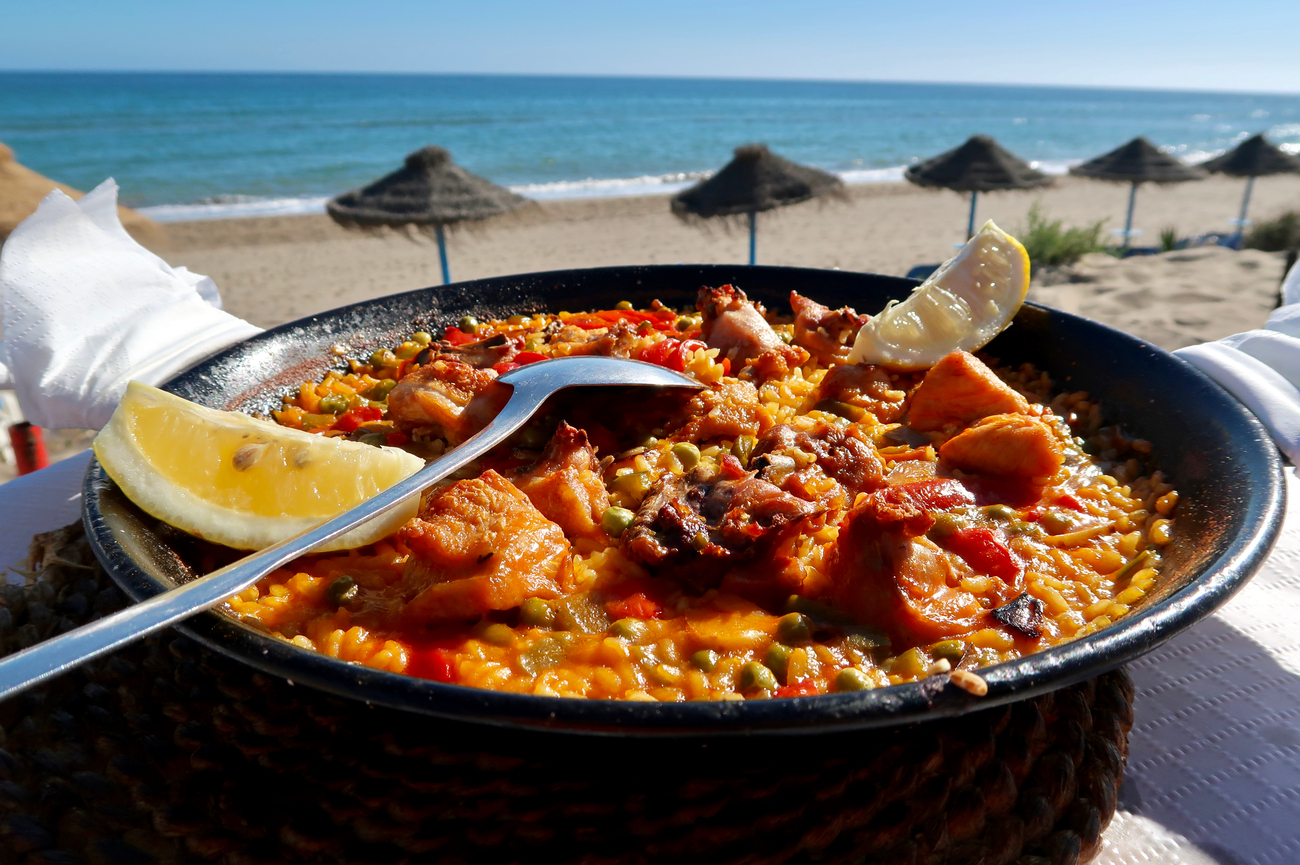
The paella was cooked outdoors over a wood fire and shared as a communal meal. Over time, particular combinations became established. Paella Valenciana acquired a more recognisable identity, and the dish moved from fields and farmhouses into restaurants, seaside gathering places and eventually kitchens around the world.
What began as a practical Valencian rice dish ultimately became one of the most recognisable symbols of Spanish food. Understanding that transformation makes the arguments about ingredients, technique and authenticity much easier to understand.
Our Foodie Side of Valencia journey explores that history in the landscape where paella developed, combining the city's markets, traditional cooking and the rice culture surrounding Valencia.
The
Rice Arrived First
The history of paella begins centuries before the dish itself, because before there was paella there was rice.
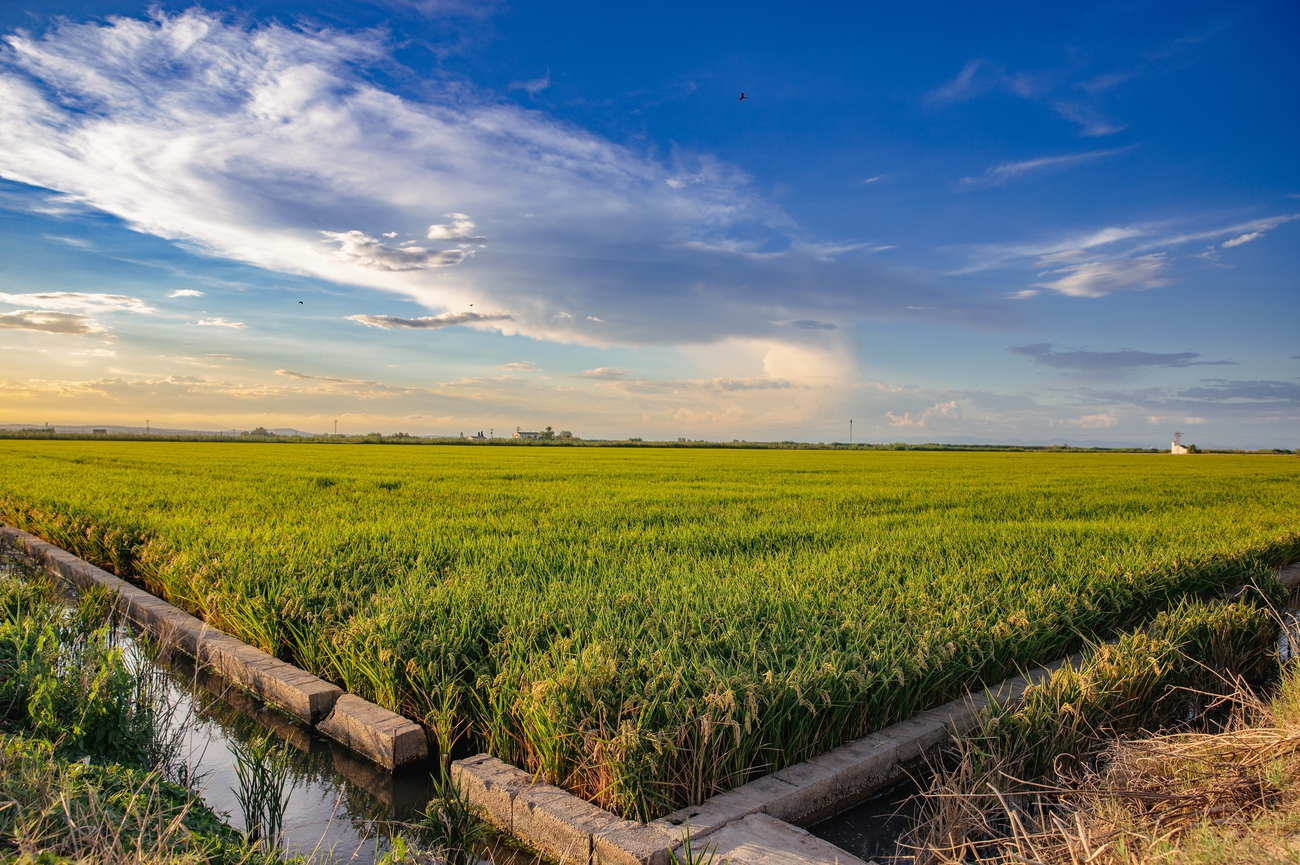
Rice cultivation in Valencia dates back to the Muslim period, with documented cultivation from around the late 10th century. The wetlands around Albufera provided the conditions it needed: shallow water, marshland and a warm Mediterranean climate. Rice has been grown in this landscape ever since.
The language still carries that history. The Spanish word arroz comes from Arabic, as does much of the vocabulary associated with the irrigation systems that transformed the agricultural plain around Valencia. The acequias that carry water through the Huerta have roots in the Islamic period, and disputes over that water are still settled by the Tribunal de las Aguas, whose elected representatives meet outside Valencia Cathedral every Thursday at noon.
Rice was not always prestigious. Growing it in standing water brought serious health concerns, particularly malaria, and cultivation was repeatedly restricted over the centuries. Yet the crop endured because the wetlands around Albufera were particularly well suited to it and because rice provided an abundant, affordable source of food.
That combination of landscape, water and necessity created the conditions from which Valencia's rice culture eventually emerged. The lagoon and its surrounding paddies remain at the heart of the protected Arroz de Valencia denomination today, and our guide to Albufera and Valencia's rice fields explores that landscape in more detail.
For the wider picture, from eel and seafood to horchata and the many different styles of rice, see our guide to what to eat in Valencia.
A
Meal Cooked Where the Work Was
Paella is generally traced to the countryside around Albufera, where agricultural workers needed a substantial midday meal that could be cooked outdoors from ingredients close at hand. The dish is associated with the 16th century, while written references become much clearer by the 18th century.
Picture the conditions rather than the recipe. Workers were several kilometres from home, with no kitchen nearby, but they had firewood, a wide shallow pan and ingredients from the surrounding fields and wetlands. Orange wood became particularly valued because it burns evenly and can be controlled easily over an open fire.
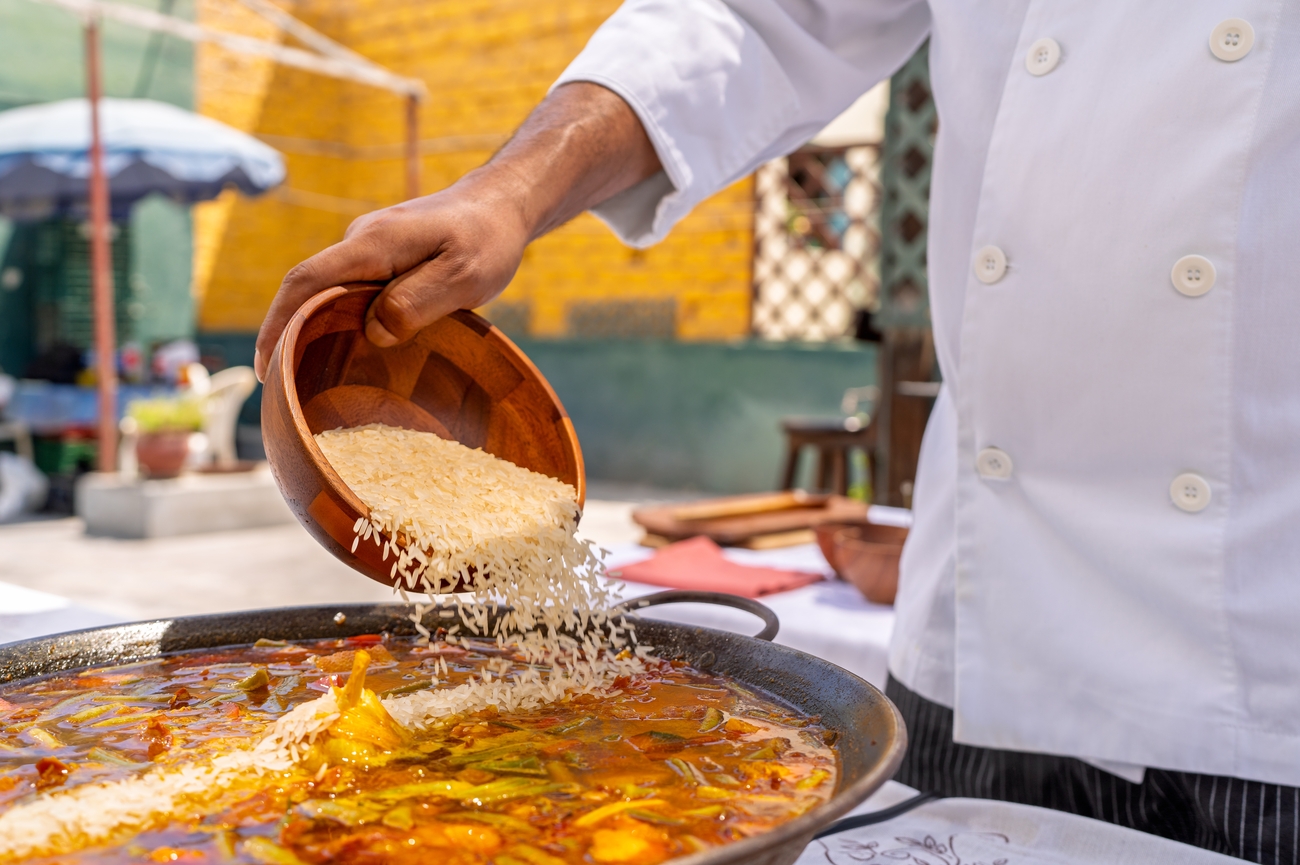
The method followed naturally from those circumstances. A broad pan spread the rice into a thin layer, helping the liquid evaporate and allowing the grains to cook evenly. The rice was left unstirred so that it remained separate rather than becoming creamy. The finished dish was traditionally shared straight from the pan, with each diner eating from the section in front of them.
The ingredients depended on what was available locally: chicken, rabbit, flat green beans, garrofó, snails and seasonal vegetables. Around Albufera, duck and other ingredients from the wetlands also appeared. This was not originally a restaurant recipe with a fixed formula. It was a practical way of cooking rice with what the landscape provided.
The name preserves that history. Paella is the Valencian word for the wide, shallow pan itself, derived ultimately from the Latin patella. The dish took the name of the vessel in which it was cooked.
What
Goes Into Authentic Paella Valenciana
The question of authentic paella ingredients is where the history of paella moves from anecdote into evidence. A method once shaped by whatever was available gradually became a tradition with recognisable boundaries. Until recently, however, nobody had measured where Valencian home cooks actually drew those boundaries.
A study published in 2022 surveyed close to 400 non-professional cooks aged over 50 across all 266 towns and cities in the province of Valencia. Rather than asking them to define the correct recipe, researchers recorded what they actually put into their own Paella Valenciana.
Ten ingredients appeared with remarkable consistency: rice, water, olive oil, salt, saffron or colouring, tomato, flat green beans, garrofó, chicken and rabbit. Nine were used by more than 90% of those surveyed, while rabbit appeared in 88.9% of responses.
The significance of the study is not that it created an official recipe. It demonstrated that generations of Valencian households had independently arrived at a remarkably consistent core.
Around that core, variation remains part of the tradition. Paprika, rosemary and artichoke were also widely used, while other ingredients vary according to season, village and family. That flexibility matters: Paella Valenciana has recognisable boundaries, but it has never been identical in every kitchen.
Rice matters just as much as what goes into the pan. Senia, Bomba and Albufera are among the varieties protected by D.O.P. Arroz de Valencia, alongside several others, and each behaves differently as it absorbs stock and responds to heat.
That is where the history stops being something you can simply read and becomes something you have to cook. Our [guide to paella cooking classes in Valencia](Link to SP 2) explains why controlling the fire, stock and rice matters more than simply following a list of ingredients.
How
Paella Spread Beyond Valencia
Paella's first journey beyond the rice fields was local. By the late 19th century, it had moved from the farmhouses and agricultural communities around Albufera into restaurants and seaside establishments along the Valencian coast.
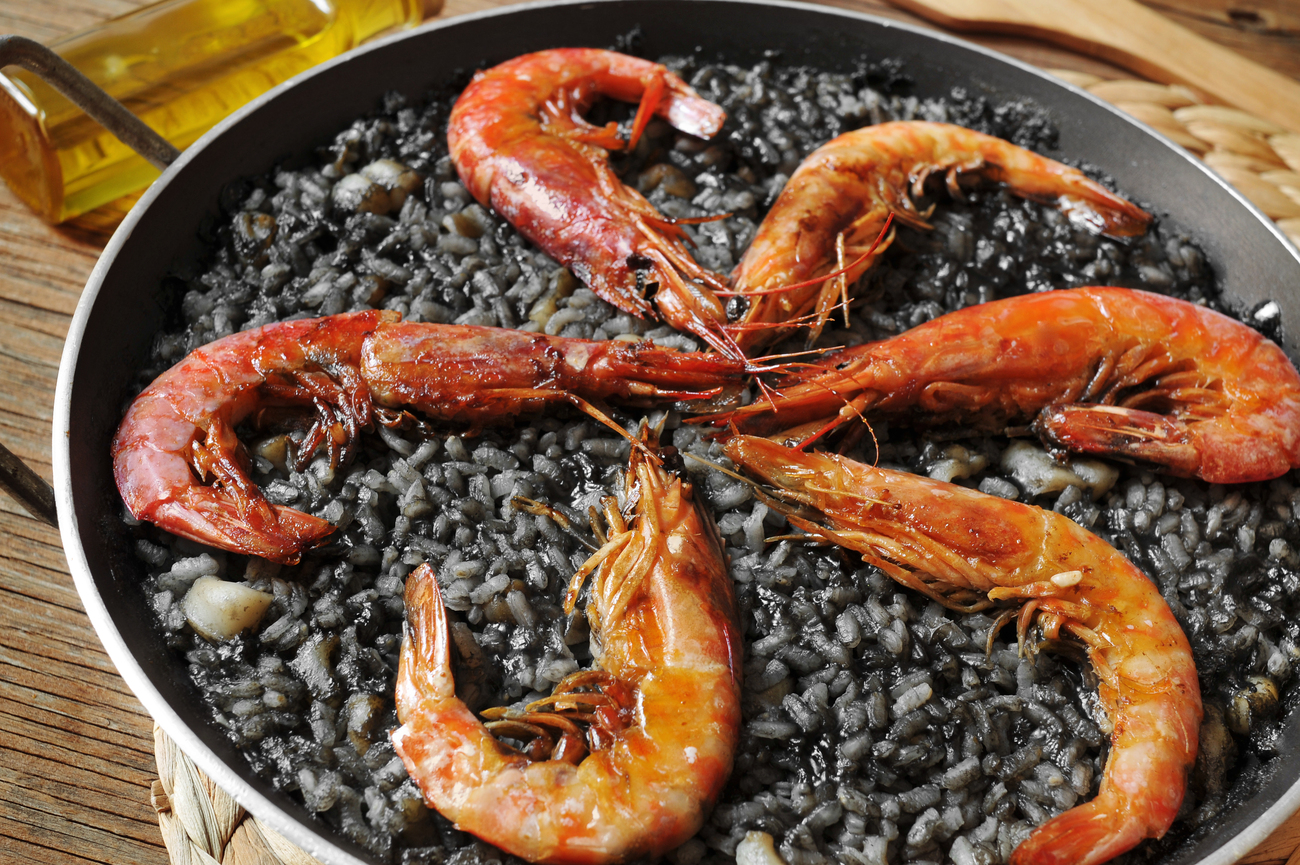
The coast developed its own rice traditions. Arròs a banda cooks rice in a deeply flavoured fish stock derived from a fishermen's dish in which the fish was served separately. Arròs negre takes its distinctive colour and flavour from squid or cuttlefish ink. Seafood paella also belongs to Valencia's coastal cooking tradition. These dishes are authentically Valencian, but they are not Paella Valenciana, which developed from the agricultural landscape inland from the coast.
Fideuà came later. The dish originated around Gandia in the early 20th century and uses short noodles rather than rice, cooked with fish stock and seafood. Several versions of its creation survive, but all place its origins among the fishing community of the Grau de Gandia.
Paella's much longer journey was driven by its growing popularity beyond Valencia. By the 19th century, versions of arroz a la valenciana were already appearing outside Spain, and during the 20th century tourism helped turn the colourful communal pan into an international shorthand for Spanish cuisine. At the Spanish Pavilion of the 1964 New York World's Fair, paella was reportedly its most requested main course.
That success created the contradiction that still surrounds the dish. Around the world, paella is often treated as a national Spanish food. In Valencia, it remains something much more specific: a regional dish rooted in a particular landscape, cooking technique and social tradition.
Who
Protects the Paella Tradition Today
Paella has not become a museum piece. If anything, its international success has made Valencians more deliberate about protecting what the dish represents.
Wikipaella, a non-profit cultural association founded in 2013, identifies and recognises restaurants that prepare traditional Valencian rice dishes with respect for established techniques and ingredients. Its distinctions now extend well beyond Valencia, reflecting the unusual position paella occupies as both a regional tradition and a global dish.
Sueca, in the rice-growing country south of Valencia, provides another form of guardianship through its International Paella Valenciana Competition. Professional cooks compete using defined ingredients and techniques, turning what began as rural cooking into something that can be judged without losing sight of where it came from.
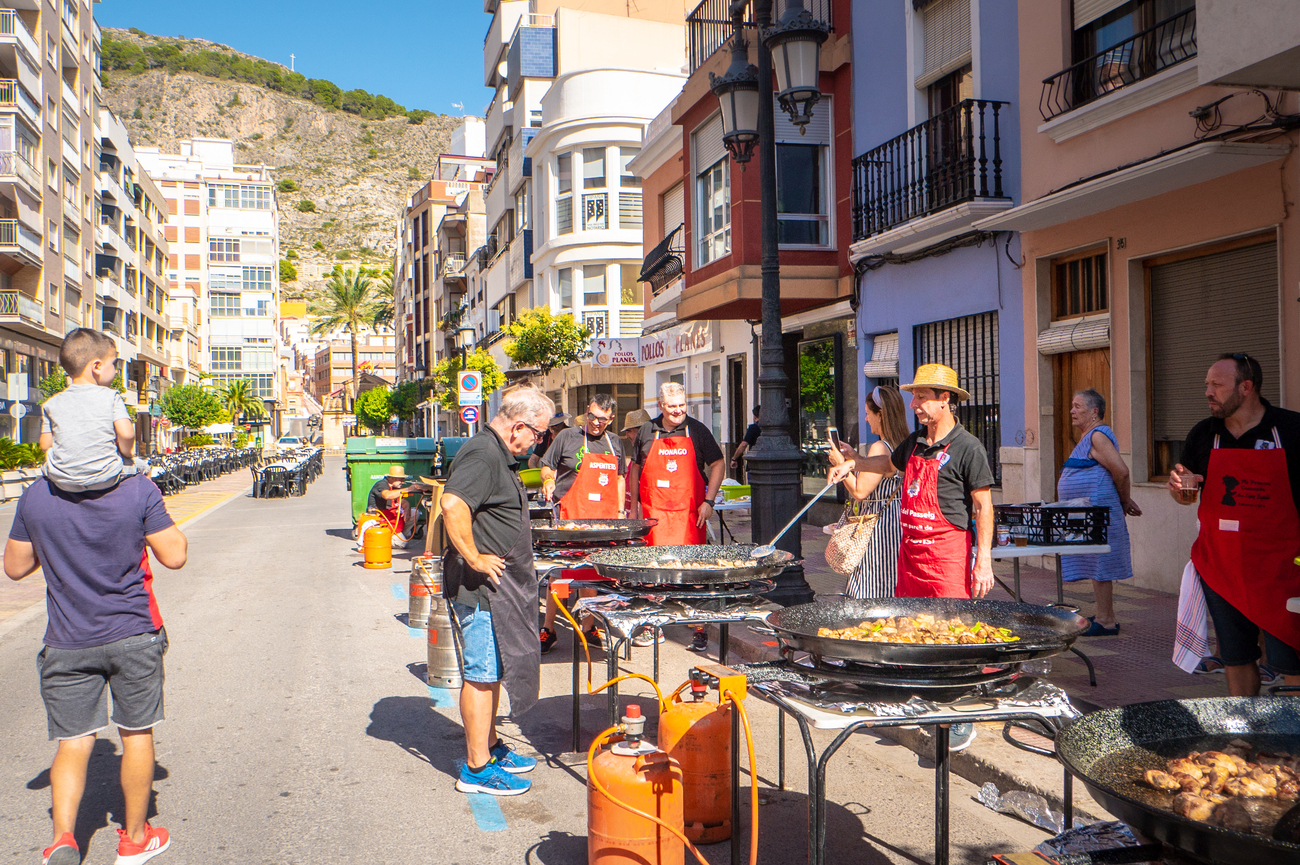
The more important custodians, however, are still Valencian families. Paella remains closely associated with long weekend lunches, particularly Sundays, cooked at home, at a country house or outdoors when circumstances allow. Recipes, techniques and opinions about the correct fire or thickness of the rice are passed between generations rather than learned from cookbooks.
That continuity matters more than any competition or official distinction. The history of paella survives because it is still cooked, shared and argued over every week in the place where it began.
A
Recipe as a Map
Look again at the ingredients of Paella Valenciana and they begin to read like a map of the landscape around Valencia.
Chicken and rabbit came from the farmyard. Ferraura, garrofó and tomato came from the surrounding plots. Olive oil came from drier ground, water from the irrigation channels, saffron from inland cultivation and rice from the wetlands around Albufera. Even the fire traditionally came from local wood, including orange-tree prunings.
Seen this way, Paella Valenciana is more than a recipe. It is a condensed expression of the agricultural landscape that produced it.
That helps explain why ingredient debates provoke such strong reactions. Changing the ingredients does more than alter the flavour. It changes the relationship between the dish and the place it came from.
The global success of paella has produced countless variations, many of them perfectly enjoyable. But the traditional Valencian version remains distinctive because almost every element of the pan points back to the same landscape.
Eating
Paella With the History in Mind
Knowing the history changes the way you order and eat the dish.
You stop asking simply for paella and start asking which rice the kitchen is preparing that day. That small change often leads to a more interesting answer than the tourist-facing menu. You order it at lunch rather than in the evening, because paella belongs to the midday meal in Valencia.
You also expect to wait. A properly cooked rice dish takes time, and the delay is part of the preparation rather than a sign that the kitchen is struggling.
When the pan arrives, look for the socarrat, the toasted layer at the base created by the combination of a shallow pan, direct heat and the final evaporation of the stock. In traditional settings, the rice may be eaten directly from the pan, with each diner working inwards from the section in front of them.
And if you are somewhere good, you begin to notice the details: the rice variety, the beans, the thickness of the layer in the pan, and the families at neighbouring tables following much the same Sunday ritual.
The rest of Valencia's eating culture, from the esmorzaret and vermut hour to the bars that fill after nine, follows its own rhythm and is covered in our guide to tapas and wine in Valencia (Link to SP 3).
This
Sunday, Over Orange Wood, Much as Before
Somewhere south of Valencia this Sunday, a fire of vine cuttings or orange-tree prunings will be burning in a yard, with a wide steel paella pan balanced above it.
Chicken and rabbit will brown in olive oil before the tomato is cooked down and the beans added. The rice will go in later, spread into a thin, even layer and then left largely undisturbed while the stock reduces and the socarrat begins to form at the base.
Around the pan, somebody will almost certainly have an opinion about the fire, the amount of water or exactly when the rice should come off. Once it is ready, the pan will rest briefly before being carried to the table and shared over a long Sunday lunch.
The details have changed over time, but the essential ritual remains recognisably Valencian: rice cooked communally, often outdoors, for family and friends, using a method tied closely to the landscape that created it.
Getting close to that living tradition, rather than simply eating a version designed for visitors, is the real point.
It is what our four-night Foodie Side of Valencia journey is designed to explore.


Let us know what you love, where you want to go, and we’ll design a one-of-a-kind adventure you’ll never forget.
Get in touch
Miriam
Travel Specialist

Romina
Travel Specialist

Laura
Travel Specialist
Our offices:



Revigorate, Iberian Escapes and Algarve Lifestyle are the registered brand names of APCS Lda . We are a fully authorised travel agency licensed by Turismo de Portugal RNAVT/6867.
In the event of a dispute, the consumer may refer to: RAL - Centros de Arbitragem
Avª. 5 de Outubro, nº. 55, R/C Dtº. 8000-075 Faro, Portugal | Tel: +351 289 823 135 *
* national landline call
E-mail: info@consumoalgarve.pt| www.consumidoronline.pt | Mon to Fri: 9:00 - 13:00 / 14:00 - 17:00