Chengdu’s Giant Panda Research Base and the Conservation Story Behind the Glass
Chengdu’s Giant Panda Research Base is one of the best places in China to see giant pandas up close while understanding the conservation work that has helped protect the species.
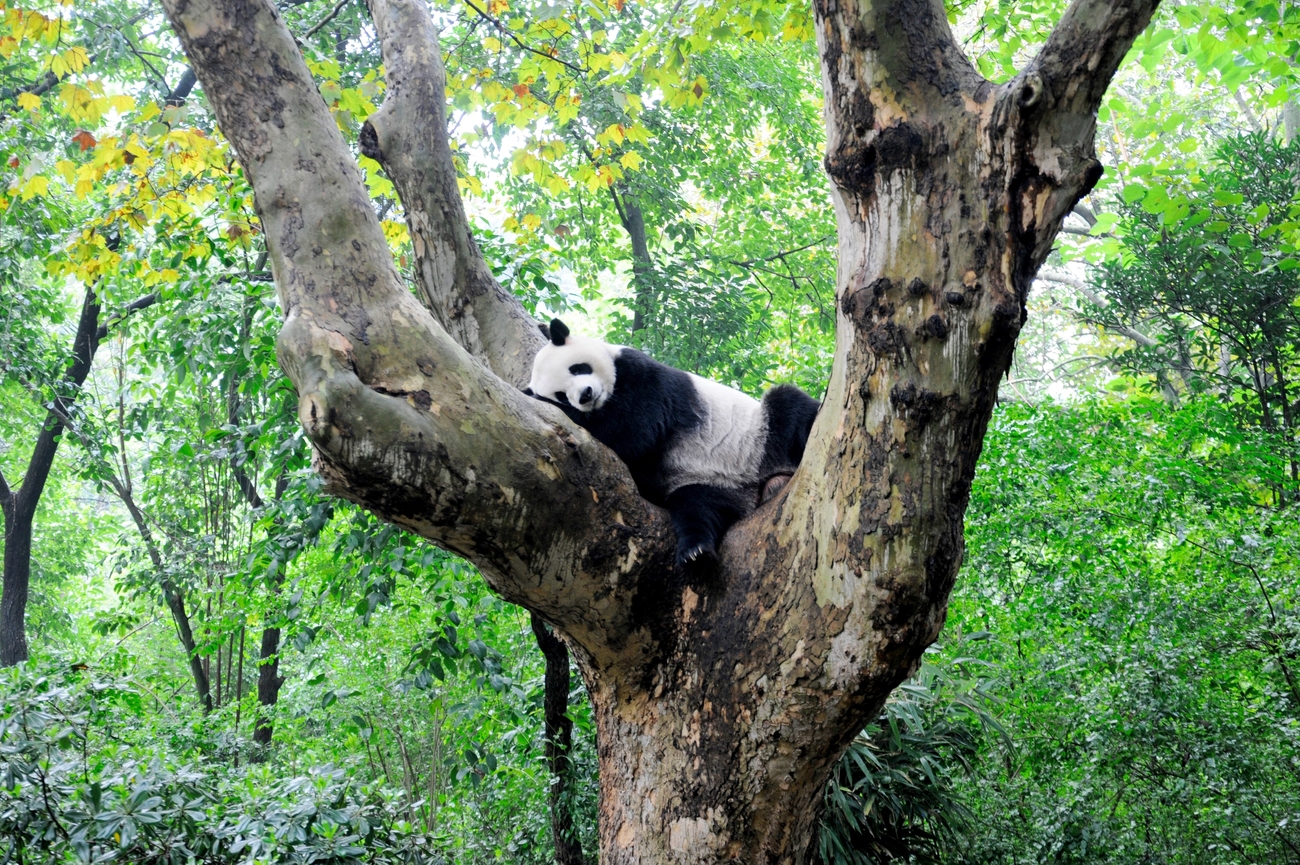
Seven-thirty in the morning, and the bamboo is still holding the night’s cold. The paths are quiet, the light arrives in long angles through the groves, and then you round a bend and there is a giant panda, three metres away, sitting as if it has never once been in a hurry. It holds a bamboo stalk the way a person might hold a newspaper, strips a leaf and does not look at you.
Nothing prepares you for the size of them, or the stillness, or the feeling of standing close to an animal that nearly disappeared from the earth and is now completely, magnificently present.
The full Sichuan route appears in our China Panda & Peaks journey, placing Chengdu, Panda Valley and the Giant Panda Research Base within a carefully timed luxury itinerary through China.
What
the Chengdu Panda Base Was Built to Solve
When the Chengdu Research Base of Giant Panda Breeding opened in 1987, captive giant panda breeding was, by most scientific assessments, failing.
The fundamental problem was reproductive. Giant pandas have naturally low reproductive rates in the wild: a female is fertile for 24 to 72 hours once per year, a window so narrow that missed opportunities cannot be recovered until the following year. In captivity, this already difficult biology was compounded by additional failures. Male pandas in captivity showed low libido and poor semen quality. Females failed to recognise oestrus cues. Cubs, which are born blind and helpless at roughly 100 grams, had high mortality rates in captive settings. The institutions holding pandas through the 1970s and early 1980s were, despite genuine effort, watching the captive population stagnate.
Over the past three decades, the Panda Base has addressed key technical problems in feeding and management, reproduction and cub rearing, disease prevention and control, and population genetic management of captive giant pandas. It broke through a series of technical bottlenecks and produced original scientific research achievements that changed what captive panda conservation could become.
The specific breakthroughs are worth naming. Artificial insemination techniques developed at the base resolved the male fertility problem for many breeding pairs. A twin-cub rearing protocol, where the base’s keepers alternate twins between mother care and incubator care so that both survive when the mother would naturally abandon the smaller cub, has dramatically improved cub survival rates. Population genetic management, the deliberate tracking and management of which animals breed to maintain maximum genetic diversity across the captive population, has prevented the inbreeding that devastates small captive populations of other species. These are not small technical achievements. They are the reason the captive population exists at the scale it does.
The base was the first institution in China’s national wildlife conservation system to establish a dedicated popular science education department, doing so at the turn of the millennium. In 2021, it established and operated the world’s first interactive giant panda museum. The scientific commitment and the public education commitment have run in parallel from the beginning, which is why the base functions simultaneously as a research institution and as the most visited wildlife facility in China.
The base's conservation work sits within a Sichuan route that moves from Beijing's imperial core through Xi'an before arriving in Chengdu. The full shape of that journey, and why the panda base is its centrepiece, is explored in our complete Panda & Peaks travel guide.
 Keeper caring for a giant panda cub at Chengdu Research Base of Giant Panda Breeding, Chengdu, China
The
Giant Pandas That Make the Base Feel Personal
Over 240 giant pandas live at the Chengdu panda base. The number is significant as a conservation statistic. It becomes something else entirely when you spend a morning moving through the enclosures and start to understand that these are individual animals with distinct personalities, recognisable faces, and names that the base’s keepers, researchers, and a significant portion of the visiting public know by heart.
Hua Hua, resident of Villa No. 6, is the base’s most famous individual. She has been the subject of substantial international media coverage and has developed something of a following among visitors who specifically route their morning to reach her enclosure before the crowds build. For the best chance to see her active, arriving early when she is energetically feeding or playing is ideal. The base’s fast-track route from the South Gate to Villa No. 6 takes less than ten minutes from the entrance.
The Zoo Atlanta partnership produced a lineage that illustrates how the base’s conservation diplomacy works in practice. The partnership helped the zoo secure the loan of two giant pandas, Yang Yang and Lun Lun. Together, these pandas produced Mei Lan in 2006, Xi Lan in 2008, Po in 2010, twins Mei Lun and Mei Huan in 2013, and twins Ya Lun and Xi Lun in 2016. The base’s international collaborations extend to Chester Zoo, the University of Denver, and the University of Queensland. The animals are not simply held here. They are active participants in a coordinated global breeding programme.
The base is also home to pandas at every stage of development, and each stage offers something different to visitors.
The giant panda villas, spread across the facility’s two main zones, house adult animals in large open-air enclosures with bamboo forest access, climbing structures, and indoor heated quarters. The adult pandas are the most visually commanding: the full black-and-white colouring, the scale of the animals, and the particular unhurried authority of a creature that spends twelve hours a day eating and does so without apparent concern for anything else.
The sub-adult enclosures hold animals between the cub stage and full adulthood, typically two to four years old. These are the most actively playful: climbing things they fall off, wrestling with each other, and investigating their environment with a combination of curiosity and clumsiness that has generated more viral video content than any other stage of panda development.
Our Sichuan food guide covers what Chengdu looks like after this morning ends, the teahouse afternoons and the hotpot tables that are the city’s other defining experience.

The
Nursery Houses and the Best Season to See Panda Cubs
The Chengdu panda base has three nursery houses: the Star Giant Panda Nursery House, the Sunshine Delivery House, and the Moonlight Delivery House. Each serves a slightly different function within the breeding programme, and the distinctions matter for what a visit to each one shows.
The Sunshine Nursery House and Moonlight Nursery House are where the cubs live. During peak season, from July to October, newborns are visible through nursery windows, tiny and pink. A giant panda at birth weighs approximately 100 grams, about 1/900th of the mother’s body weight, making it the most disproportionate newborn-to-parent ratio of any placental mammal. The pink, hairless, visibly alive cubs in the incubators of the nursery houses are genuinely shocking in their smallness relative to the animals moving through the outdoor enclosures a short walk away.
The twin-rearing protocol that the base developed becomes physically visible in the nurseries. When a giant panda mother gives birth to twins, she will typically focus entirely on one cub and abandon the other. The base’s keepers intervene: the two cubs are alternated between mother care and the incubator, each spending time with their mother while the other receives human-assisted warmth and nutrition. The mother, by the logic of the protocol, always has one cub present and never fully registers the absence of the other. Both cubs survive. The system has been one of the base’s most consequential technical achievements, and the nursery house is where it is enacted daily during the birth season.
Daily newborn meet-and-greet sessions run from 14:00 to 16:00 during panda season. The afternoon sessions draw significant crowds. Visiting the nurseries in the morning, before the afternoon rush, gives a considerably different experience of the space.
July through October is the recommended window for seeing cubs. Pandas are more active outdoors in cool or cold weather, making October through March ideal for viewing adult animals. The two windows overlap in October, which produces the fullest range of life stages visible at the base simultaneously: cubs in the nursery houses, sub-adults in their enclosures, and adults at their most active in the cooler morning air.
For travellers continuing from the panda base to Mt. Emei, the sacred Buddhist mountain 90 kilometres southwest of Chengdu, the timing of both experiences matters as much as the experiences themselves. Our Mt. Emei guide covers the temple circuit, the Golden Summit above the cloud line, and the Leshan Giant Buddha in full.

Red
Pandas at Chengdu Panda Base: The Species Most Visitors Nearly Miss
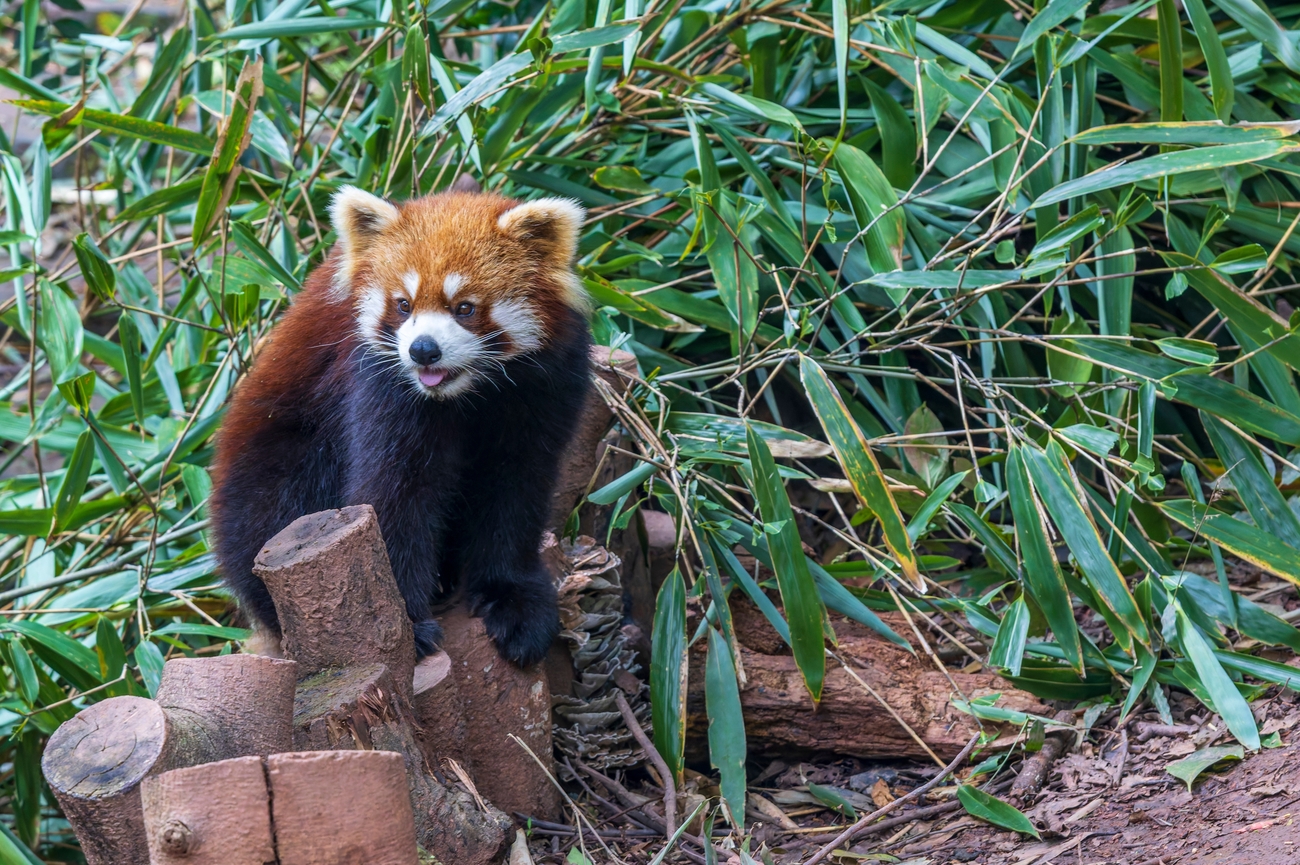
The Panda Base has the world’s largest population of captive red pandas.
This fact is less widely known than it should be, and the red panda enclosures are consistently undervisited relative to the giant panda areas. This is a mistake worth correcting before anyone plans their morning.
Red pandas, Ailurus fulgens, are not a smaller or younger version of the giant panda. They share a name acquired by historical accident: the red panda was formally described by science in 1825 and named panda, from the Nepali word for bamboo-eater, ponya. The giant panda received its name decades later, by association with the already-named species. The two animals are genetically unrelated. The giant panda is a bear. The red panda occupies its own family, Ailuridae, and is the sole living member of it.
Red pandas are roughly the size of a large domestic cat, covered in rust-red fur with darker legs and a banded tail, with a face that bears no resemblance to a bear and considerable resemblance to the raccoons they were once grouped with before genetic analysis revealed their true isolation. They eat bamboo, like the giant panda, and share the mountain forest habitats of Sichuan, Yunnan, and the eastern Himalayas. They are also classified as Endangered, with a wild population estimated at under 10,000.
The red panda enclosures sit along the main route and are easy to miss if you are moving quickly. Red pandas are smaller, faster, and considerably more agile than their famous neighbours. Feeding time runs from 14:00 to 15:00 daily.
The boardwalk that runs through the red panda enclosures places visitors at the same level as the animals moving through the elevated branches. They sometimes leap onto the walkways or fences, right next to your feet or arms if you’re lucky. The proximity is different from the giant panda experience, less about scale and more about the particular alertness of an animal that is genuinely at eye level and genuinely curious about your presence.
Xi’an’s Muslim Quarter, the next city on this route before Chengdu, holds its own endangered cultural identity in the form of 1,300 years of Hui settlement, a Great Mosque built in Tang Dynasty garden architecture, and a street food culture carried here by Silk Road traders. That piece runs parallel to this one as a conservation story of a different kind.
The
Giant Panda Museum
The Chengdu panda base is also home to the only museum in the world dedicated entirely to the species.
The Panda Base established and operates the world’s first interactive giant panda museum. The museum, located near the South Gate, is closed on Mondays. Admission is free with a valid base ticket and pre-registered reservation through the Chengdu Giant Panda Museum WeChat official account.
The museum’s three main halls cover the natural history of the giant panda, the science of its conservation, and its cultural significance in China and globally. The natural history hall holds over 2,140 specimens: fossils, skeletal remains, taxidermy, preserved tissue samples, and the kind of comparative anatomical material that contextualises what the giant panda is biologically, a bear that has evolved an almost entirely herbivorous diet while retaining the carnivore’s digestive system and processing bamboo at speed rather than efficiency.
The conservation science hall is where the base’s research legacy is most fully documented. The breeding records, the cub survival data, the genetic diversity charts, and the international partnership history make a different kind of case for the institution’s importance than watching animals eat bamboo. The two experiences together produce a complete picture that neither one alone provides.
The books and scientific literature section holds global publications about giant pandas across more than a century of scientific writing. The scope of international academic interest in a single species that lives in one small region of one country, held here in a single room, is itself a form of argument.

The
Conservation Network Beyond Chengdu
The Chengdu panda base is the most visible part of a broader conservation architecture in Sichuan.
Set in Majiagou, Yutang Town, Dujiangyan City, the Chengdu Field Research Center for Giant Pandas, known as Panda Valley, covers 2,004 mu and sits close to the ancient Dujiangyan Irrigation Project and Mt. Qingcheng, a sacred Taoist mountain. It is 50 kilometres from Chengdu and around 3 kilometres from Dujiangyan proper. Panda Valley is the base’s field research centre and the primary site for the wild reintroduction programme that represents the next phase of giant panda conservation in China.
The reintroduction programme is methodologically careful in ways that reflect hard lessons from other species’ reintroduction failures. Pandas raised for potential reintroduction are handled exclusively by keepers in full panda costumes, never exposed to human faces or voices, and fed from equipment designed not to carry human scent. The goal is to produce animals that retain no positive associations with human presence and can navigate the complex social and ecological dynamics of a wild panda community. The base’s 2025 expansion of its scientific facilities specifically targets wild reintroduction research.
The broader Sichuan landscape holds thirty-three giant panda nature reserves covering a combined area of 3.27 million hectares. The captive population at the Chengdu base and its affiliated facilities exists in deliberate relationship with this wild habitat: as a genetic reservoir, as a source of animals for reintroduction, and as the research engine that generates the knowledge needed to manage both.
Sichuan’s panda breeding programme has been cited by the IUCN, the World Wildlife Fund, and conservation scientists internationally as a model for ex-situ conservation more broadly. The methods developed here for managing small populations, addressing reproductive challenges in captivity, and maintaining genetic diversity across a captive group are now applied to other endangered species whose conservation situations do not attract the same level of global attention that the giant panda commands.

How
to Visit Chengdu Panda Base Well
The Chengdu panda base takes between four and six hours to visit comprehensively. The South Gate route covers the nurseries, the cub enclosures, the adult villas, and the Giant Panda Museum in a circuit that exits through the West Gate. The West Gate route, entered from Chengdu Junqu General Hospital Station on Metro Line 3, leads into the newer sections of the facility where the crowds are thinnest and the adult pandas in the villas are most likely to be actively feeding in the morning air.
Pandas are out by 7:30 AM near the South Gate, but only from 9 AM near the West Gate. The hour between 7:30 and 8:30 AM at the South Gate, before the first tour buses arrive, is the window that produces the experience most people describe when they say the panda base changed something about how they think about wildlife conservation. Not the information. The proximity.
The afternoon at the base, after the morning’s most active viewing window, belongs to the museum and to the red panda feeding at 14:00. By early afternoon, the giant pandas have mostly withdrawn into shade or indoor quarters, and the base shifts into a quieter mode that rewards a slower pace and more time with the less-visited sections.
The morning at the base and the evening at a hotpot table are, between them, a complete introduction to what Chengdu values. One is about patience, observation, and the particular dignity of an animal going about its day. The other is about heat, communality, and the particular pleasure of a meal that has nowhere to rush. The city’s philosophy about time runs through both of them.

Why
Seeing Giant Pandas in Chengdu Changes the Experience
The giant panda is the most recognised conservation symbol in the world. It has been the logo of the World Wildlife Fund since 1961. Its black-and-white markings are among the most instantly identifiable in the animal kingdom. It has appeared in more wildlife documentaries, diplomatic contexts, and conservation campaigns than any other species alive.
None of that prepares you for the specific experience of standing a few metres from one and watching it eat.
The scale of the animal, the unhurried authority of its movements, the way it holds a bamboo stalk in its modified wrist bone, a radial sesamoid that functions as a thumb though it is not one, and strips the leaves with a precision that the rest of its bear physiology does not suggest: these are things that photographs communicate incompletely and that presence communicates completely.
The Chengdu panda base has 240 of them. Each one is an individual with a name, a history, a known personality, and a specific contribution to a breeding programme that has changed the conservation outlook for the species in ways that seemed impossible forty years ago. Standing in front of any one of them, knowing that context, is a different experience from watching wildlife in the abstract.

Eight Million Years and Still Here
Giant pandas have been on this earth for eight million years. They nearly did not make it to the ninth. Standing in front of one that morning, watching it eat with the unhurried certainty of something that has no concept of its own near-disappearance, is the kind of experience that rearranges something quietly inside you.
The Chengdu panda base will show you 240 animals that were not supposed to still be here, in bamboo forest, in morning light, going about their lives.
Revigorate’s China Panda & Peaks journey puts you in front of them at the right hour, with the context that makes the morning mean what it should. The giant panda’s survival is one of conservation science’s genuinely good stories.
Being here is how you see it in person.


Let us know what you love, where you want to go, and we’ll design a one-of-a-kind adventure you’ll never forget.
Get in touch
Miriam
Travel Specialist

Nina
Travel Specialist

Abigail
Travel Specialist
Our offices:



Revigorate, Iberian Escapes and Algarve Lifestyle are the registered brand names of APCS Lda . We are a fully authorised travel agency licensed by Turismo de Portugal RNAVT/6867.
In the event of a dispute, the consumer may refer to: RAL - Centros de Arbitragem
Avª. 5 de Outubro, nº. 55, R/C Dtº. 8000-075 Faro, Portugal | Tel: +351 289 823 135 *
* national landline call
E-mail: info@consumoalgarve.pt| www.consumidoronline.pt | Mon to Fri: 9:00 - 13:00 / 14:00 - 17:00