Yangtze Three Gorges Cruise: The River Passage That Shaped Chinese Poetry

The cliffs close in quickly enough that conversation on deck can simply stop.
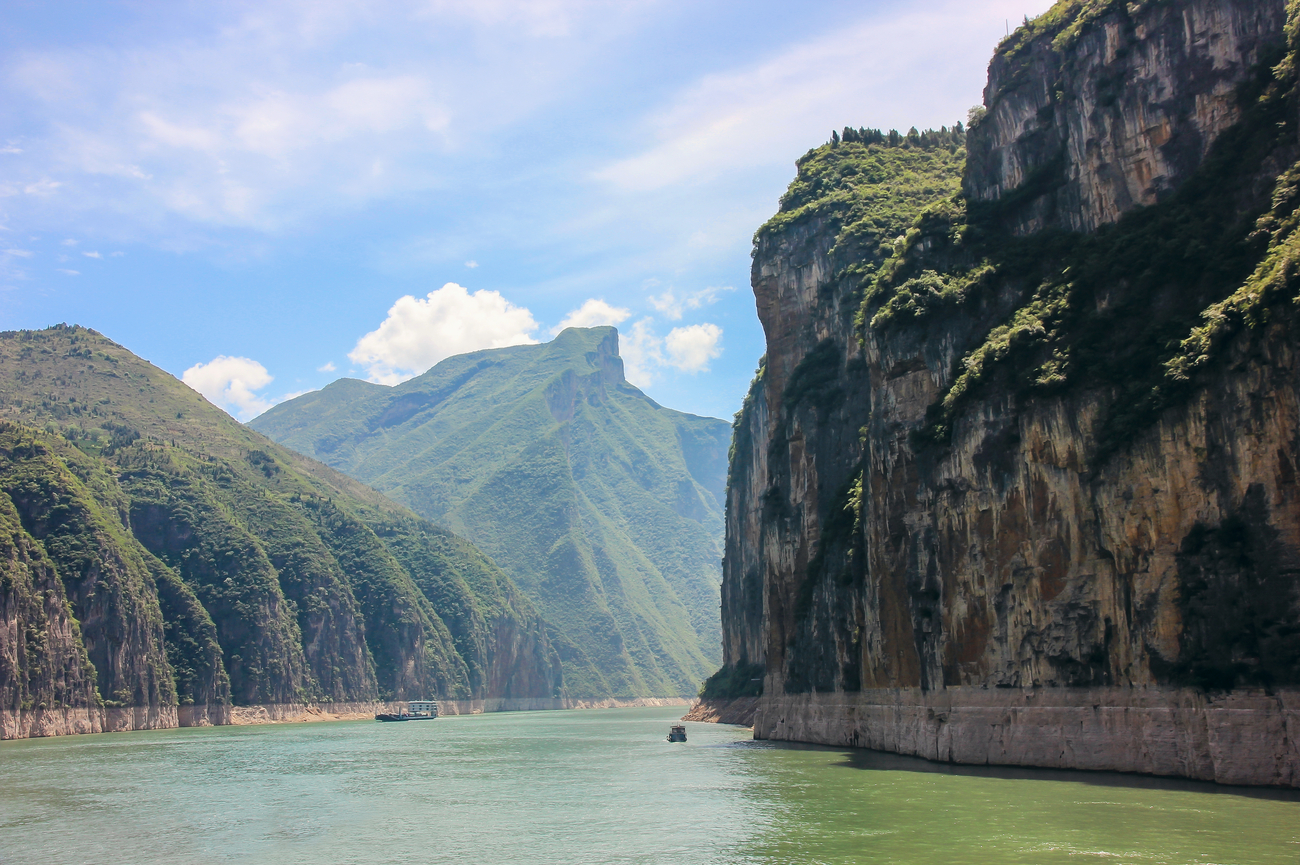
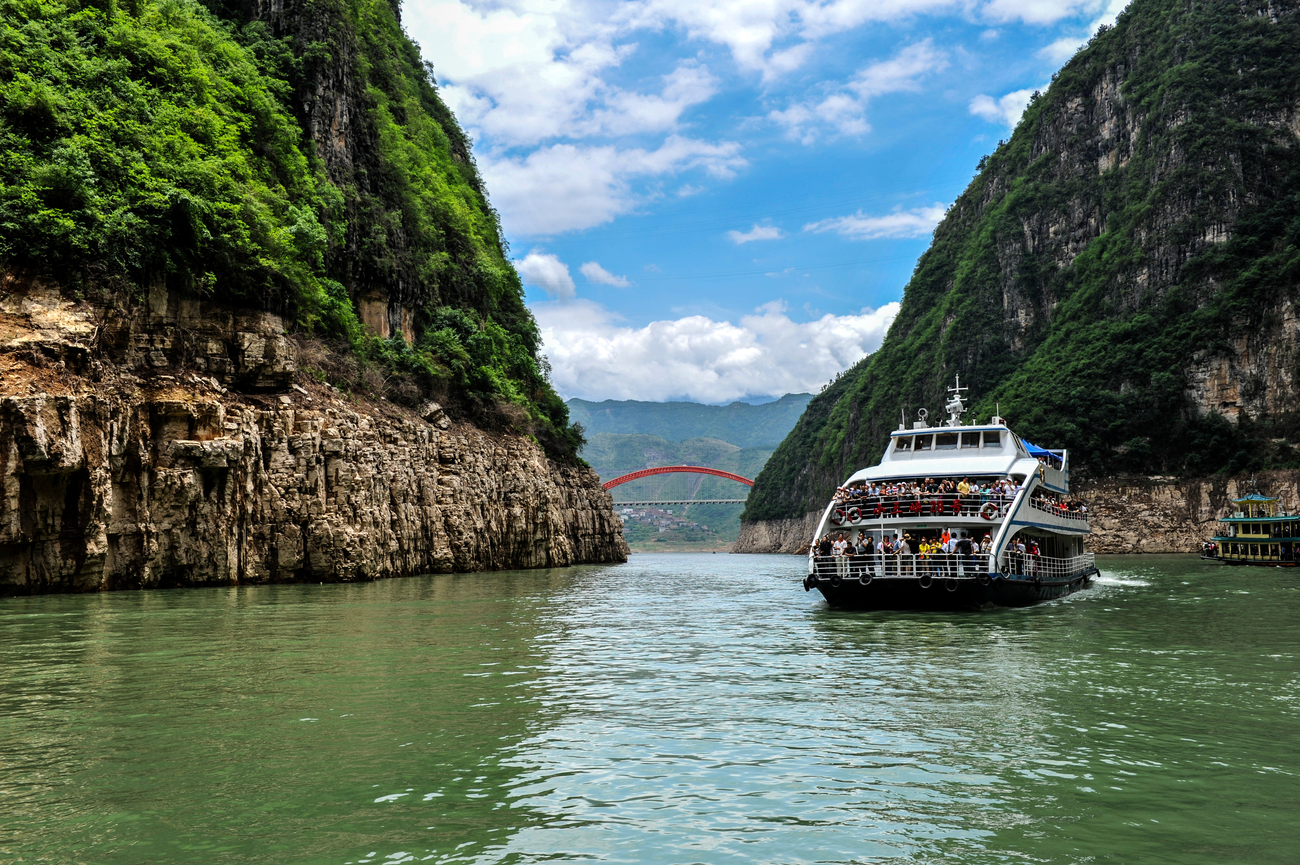
One moment, the Yangtze feels broad and open. Then Qutang Gorge takes hold, and the landscape turns vertical as steep mountains close around the river. The sound changes too, with the ship’s engines echoing back from the narrowing walls and the sky reduced to a strip overhead.
Qutang is the shortest of the Three Gorges, followed by Wu and Xiling as the Yangtze continues east towards Yichang. Together, they form one of China’s most dramatic river passages, shaped by steep geology, ancient settlements and centuries of history.
They have also inspired generations of Chinese writers. Tang dynasty poet Li Bai travelled through the Yangtze region and wrote some of the verses most closely associated with this landscape.
The wider story connecting Guizhou’s mountain villages, the Yangtze and Shanghai is explored in China Villages & Gorges, while what follows here focuses on the river itself, gorge by gorge, with the space a single overview cannot provide.

Yangtze
Cruise Shore Excursions Before the Three Gorges
The cruise’s opening stretch from Chongqing includes two shore excursions that earn their place on the itinerary without belonging to the gorges proper. The first of them is stranger than almost anything else on this trip.
Fengdu Ghost
City: The Yangtze’s City of the Dead
Fengdu Ghost City sits on Ming Mountain, roughly 170 kilometres downstream of Chongqing. The legend behind its name dates to the Eastern Han Dynasty, when two imperial officials, Yin Changsheng and Wang Fangping, abandoned their court positions to practise Taoism on the mountain and were said to have achieved immortality there.
Combine their surnames and you get Yinwang, which translates roughly as King of Hell, and that linguistic accident is the reason a complex of temples dedicated to the Chinese underworld exists on this specific stretch of riverbank rather than anywhere else.
What developed on the mountain across the centuries that followed is a complete physical model of the afterlife journey as Chinese folk religion imagines it: three sequential tests a soul must pass before being permitted into the next life.
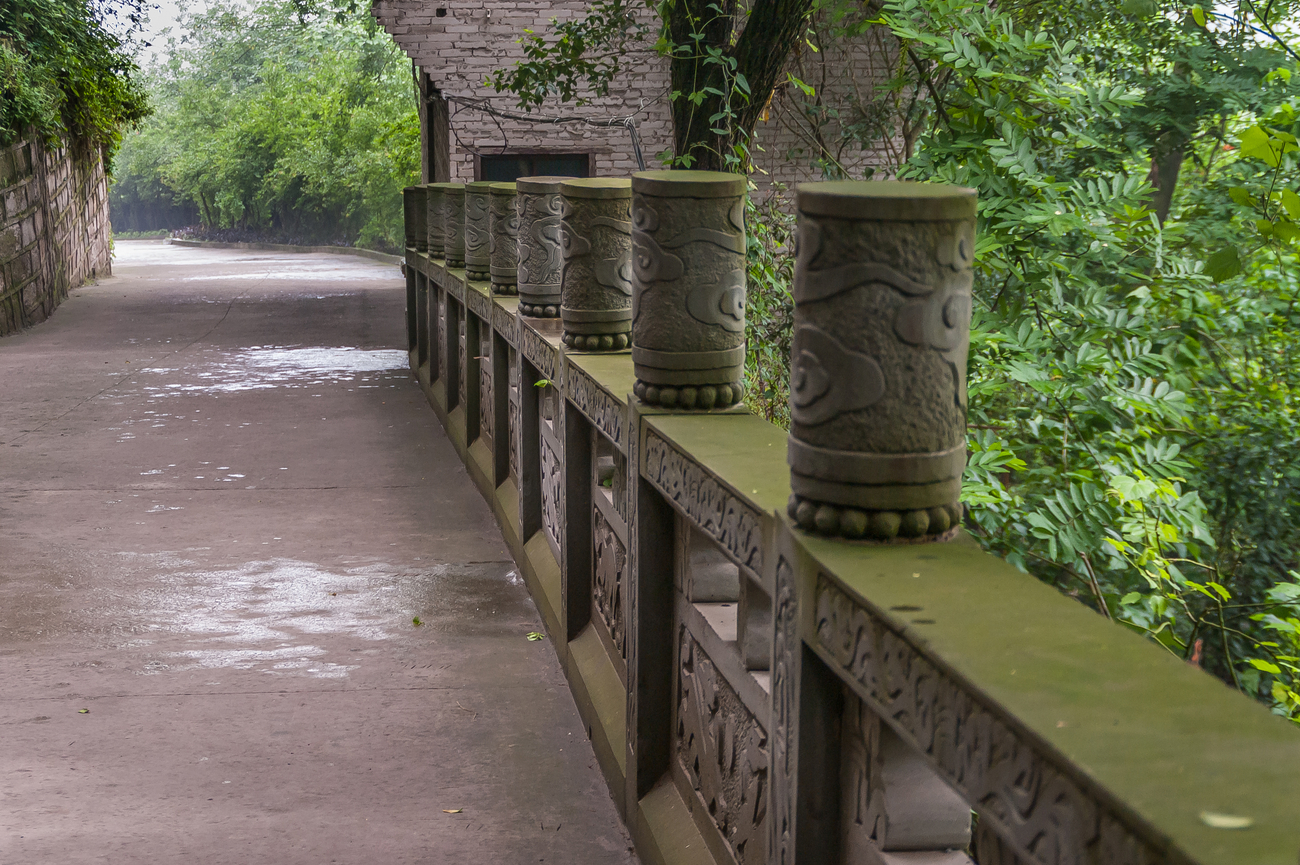
The first is the Naihe Bridge, also called the Bridge of Helplessness, a Ming Dynasty stone structure with three identical arches where only the centre arch is used for testing. Virtuous souls cross without incident, while the wicked are said to fall into the square pools below, with the specific protocol for crossing varying by the deceased’s gender, age and marital status.
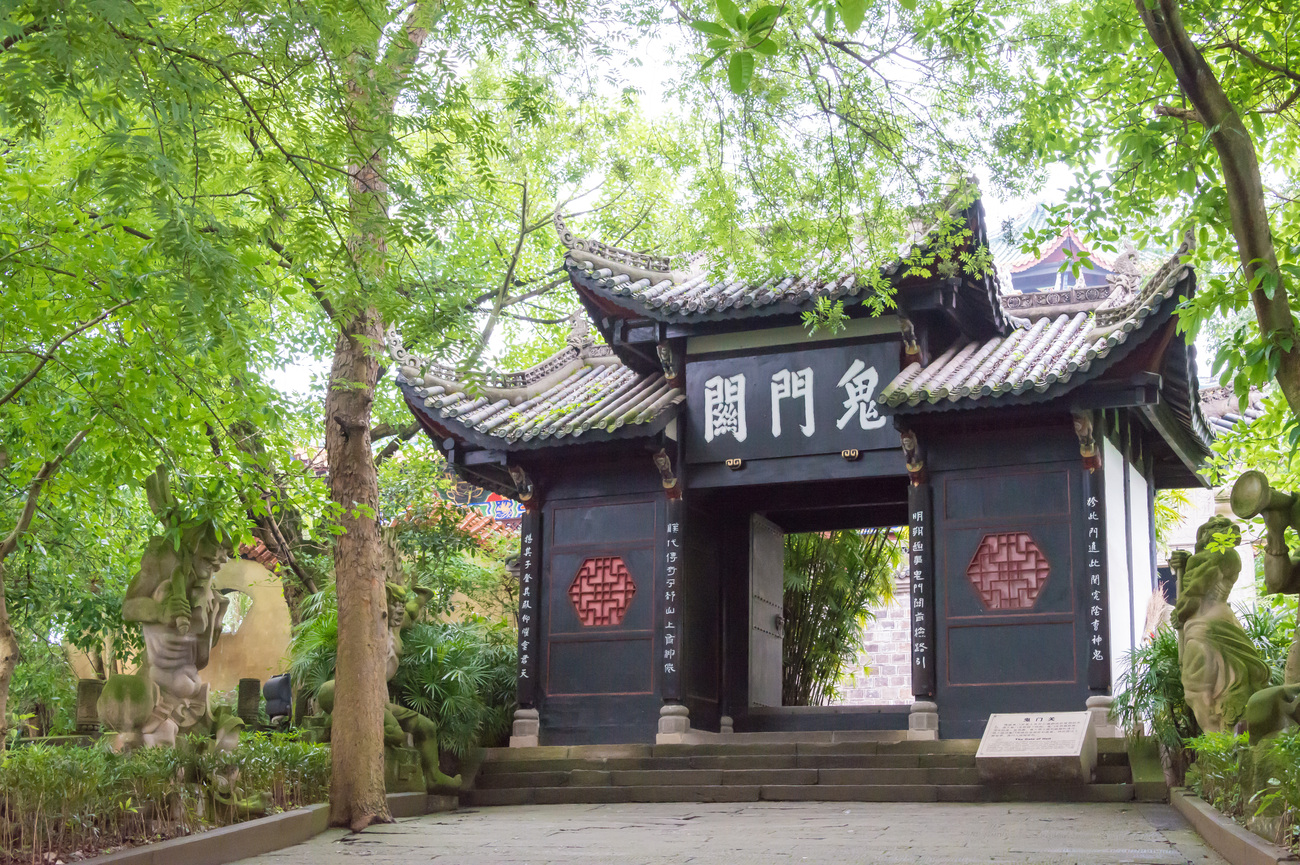
The second test happens at Guimen Gate, the Gate of Hell itself, fronted by eighteen sculpted demons, where the dead must present a symbolic pass before facing judgment from Yama, the King of Hell.
The third and final test takes place at the entrance to Tianzi Palace, the oldest and largest temple on the mountain at over 1,600 years old. Here, the dead must balance on one foot atop a designated stone for three full minutes, a task only the pure of heart are said to manage without failing straight into hell.
A carved face on the hillside, known locally as the Ghost King, holds a Guinness World Record as the largest sculpture cut directly into rock anywhere on earth. The Last-Glance at Home Tower, despite looking considerably older, was built only in 1985 and gives the condemned dead one final view of their families before the journey continues.
None of this iconography softened when the Three Gorges Dam raised the water level and separated the original Fengdu town from the temple complex entirely, turning Ming Mountain into an island connected to the new, relocated town by cable car. The ghosts, evidently, adapted faster than most of the human residents did.
Shibaozhai
Pagoda: The Ming Tower Saved From the Reservoir
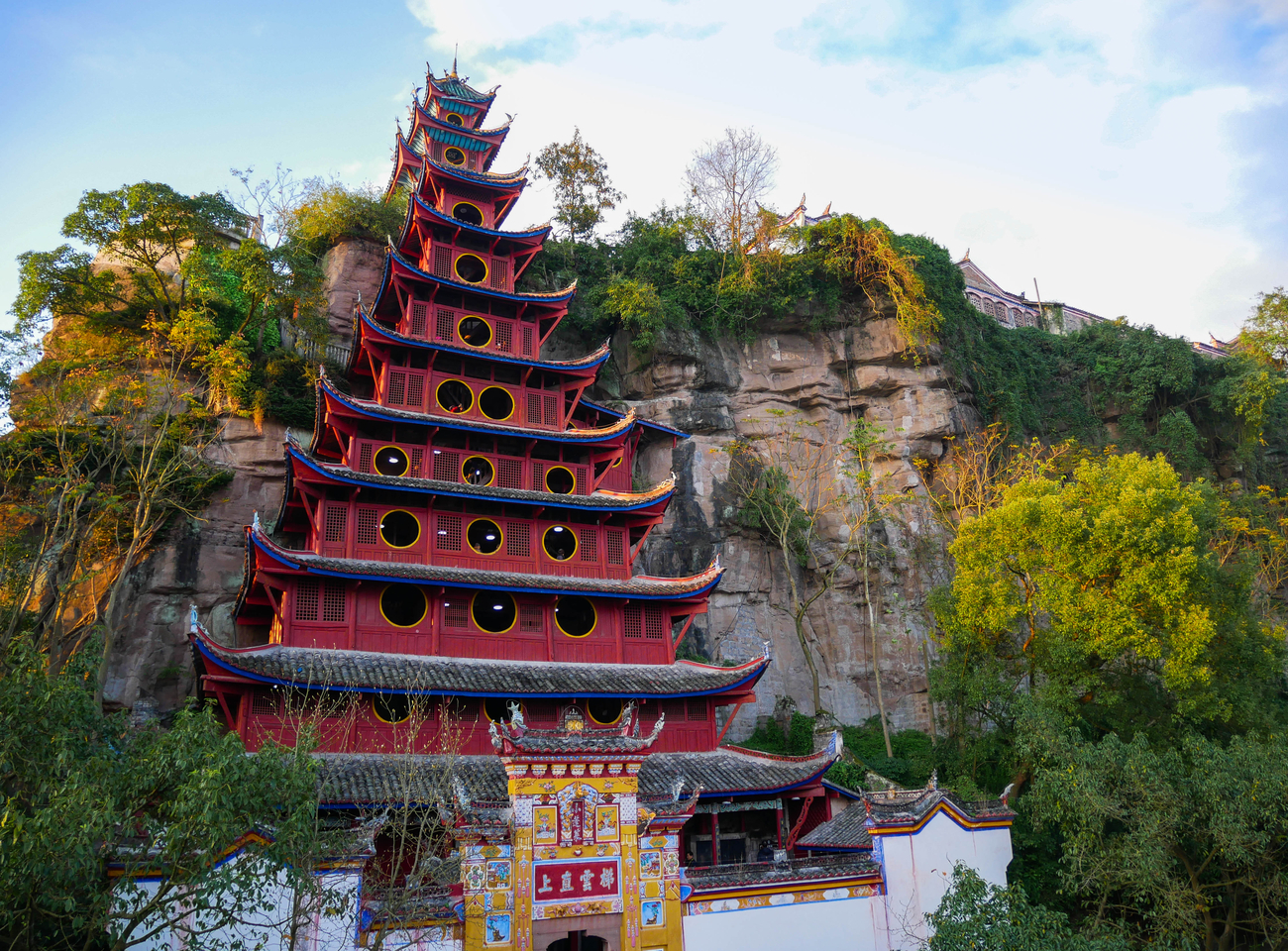
Shibaozhai Pagoda is the more visually arresting of the two pre-gorge stops: a twelve-storey wooden tower built directly against a sheer 30-metre cliff face during the Ming Dynasty, accessible only by climbing through its own internal staircase rather than approaching from any conventional ground-level entrance.
When the Three Gorges reservoir began filling in 2003, engineers faced a problem with no obvious historical precedent: how do you protect a centuries-old wooden pagoda from a body of water about to rise around its base by well over a hundred metres?
Their solution was to build a protective cofferdam, essentially a reinforced concrete ring wall, around the entire islet the pagoda sits on, sealing it off from the rising reservoir entirely.
The pagoda today rises from what looks, from the cruise deck, like a small fortified island in the middle of open water: a piece of Ming Dynasty carpentry preserved inside a distinctly twenty-first-century engineering shell.
Qutang
Gorge and Kuimen Gate: The Grandest Entrance to the Three Gorges
Qutang Gorge is the shortest of the three at eight kilometres and, by nearly every traveller’s account, the most immediately overwhelming. At its western entrance, the Kuimen Gate compresses the river to under a hundred metres wide between those same 1,500-metre cliffs, a passage narrow enough that it appears on China’s 10 RMB note. Most passengers aboard have technically been carrying an image of this exact spot in their wallet for years without ever connecting the two.
Above the gate, on a low hill, sits Baidi City, or White Emperor City, where the Shu Kingdom ruler Liu Bei delivered his final instructions to his advisors Zhuge Liang and Zhao Yun before his death in 223 AD during the Three Kingdoms period. It remains one of the most heavily mythologised episodes in Chinese historical literature.
Roughly five centuries later, the poet Du Fu spent close to two years in exile at a post overlooking this same gate, sick and displaced from the imperial court that had once employed him. In that span, he wrote more poems than in almost any comparable period of his career, nearly all of them circling back to the same view in front of him.
A smaller detour into Bellows Gorge, a narrower tributary section within Qutang, leads to one of the river’s stranger archaeological details: wooden coffins set into cliff-face caves by the Ba people, a pre-Han culture that inhabited this stretch of the Yangtze long before recorded Chinese history reached it.
Some of the coffins date to the Shang and Zhou dynasties, making them among the oldest surviving evidence of human habitation anywhere along the Three Gorges. Exactly how anyone managed to place a coffin into a cave halfway up a sheer cliff face, using whatever tools a pre-Han culture had access to, remains a genuinely unresolved question among the archaeologists who have studied the site.
Wu
Gorge and Shennong Stream: The Yangtze Gorge the Poets Could Not Stop
Writing About
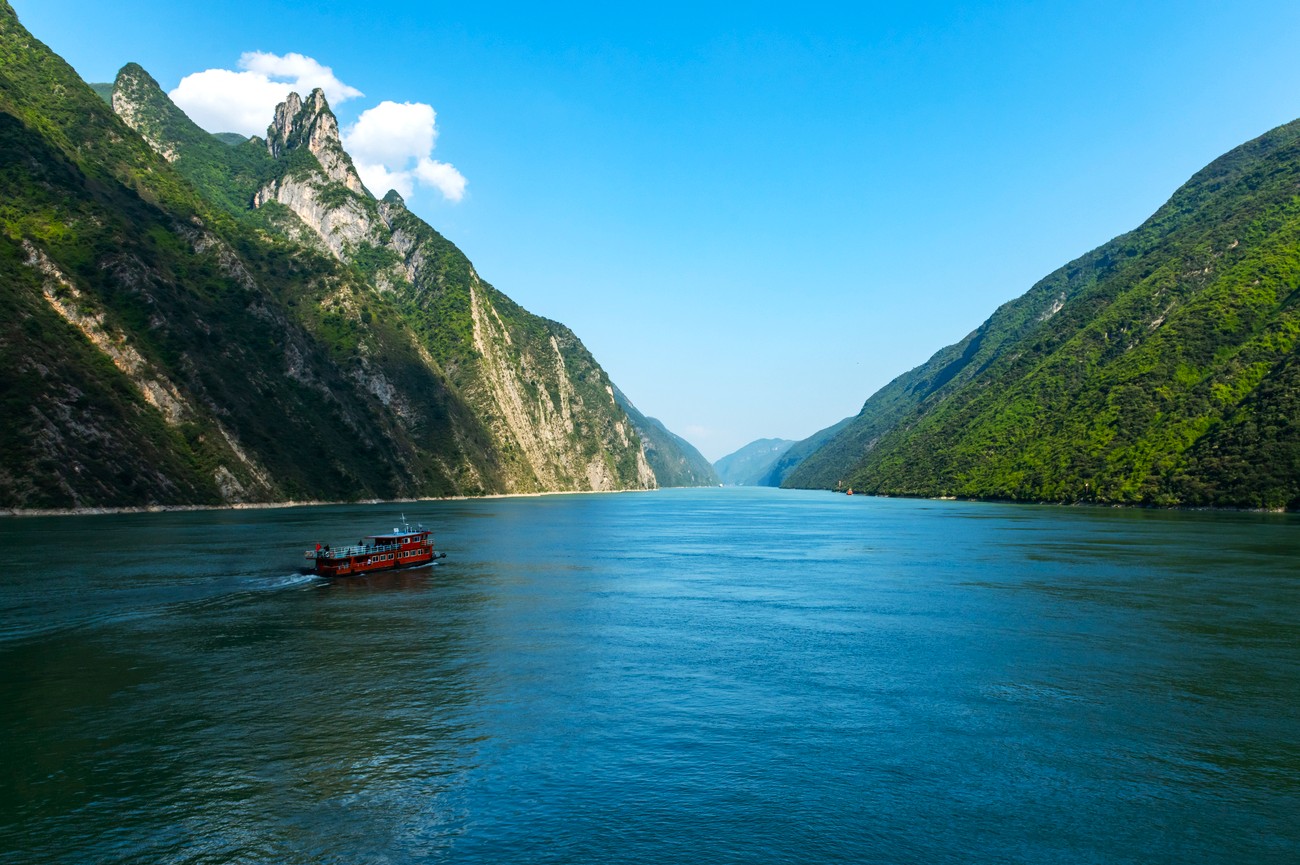
Wu Gorge stretches 46 kilometres, considerably longer than Qutang, and carries the reputation among Chinese poets and painters as the most beautiful of the Three Gorges, an opinion that has held remarkably steady across roughly two thousand years of recorded literary preference.
The Twelve Peaks rise on both banks, each with its own name and legend attached: Climbing Dragon Peak, Fresh Flower Peak, Congregating Cranes Peak, Holy Spring Peak and, most celebrated of all, Goddess Peak. Rising to roughly 900 metres, Goddess Peak has been identified since the Han Dynasty with a mountain deity said to help sailors navigate the river’s more dangerous stretches safely.
Early mornings here, when cloud cover settles low against the peaks before the day’s heat burns it off, produce the specific visual condition that gave Tang Dynasty poetry its most enduring images of this gorge. It is a genuinely different register of beauty from Qutang’s compressed, vertiginous scale. Where Qutang makes you feel small all at once, Wu Gorge unfolds slowly across 46 kilometres, each peak distinct enough that the gorge reads more like a gallery walk than a single dramatic gesture.
A shore excursion up Shennong Stream, a tributary entering from the south bank partway through Wu Gorge, swaps the main cruise ship for smaller sampans poled upstream by local boatmen using long bamboo rods. The technique predates the dam and has not needed updating since.
The tributary gorge is narrower, quieter and considerably more intimate than the main river. The boatmen work in a rhythm that owes nothing to a tourist schedule and everything to a skill passed down the way most genuinely old river skills are: by watching someone older do it correctly enough times that eventually you can too.
Xiling
Gorge and the Three Gorges Dam: Where Engineering Took Over
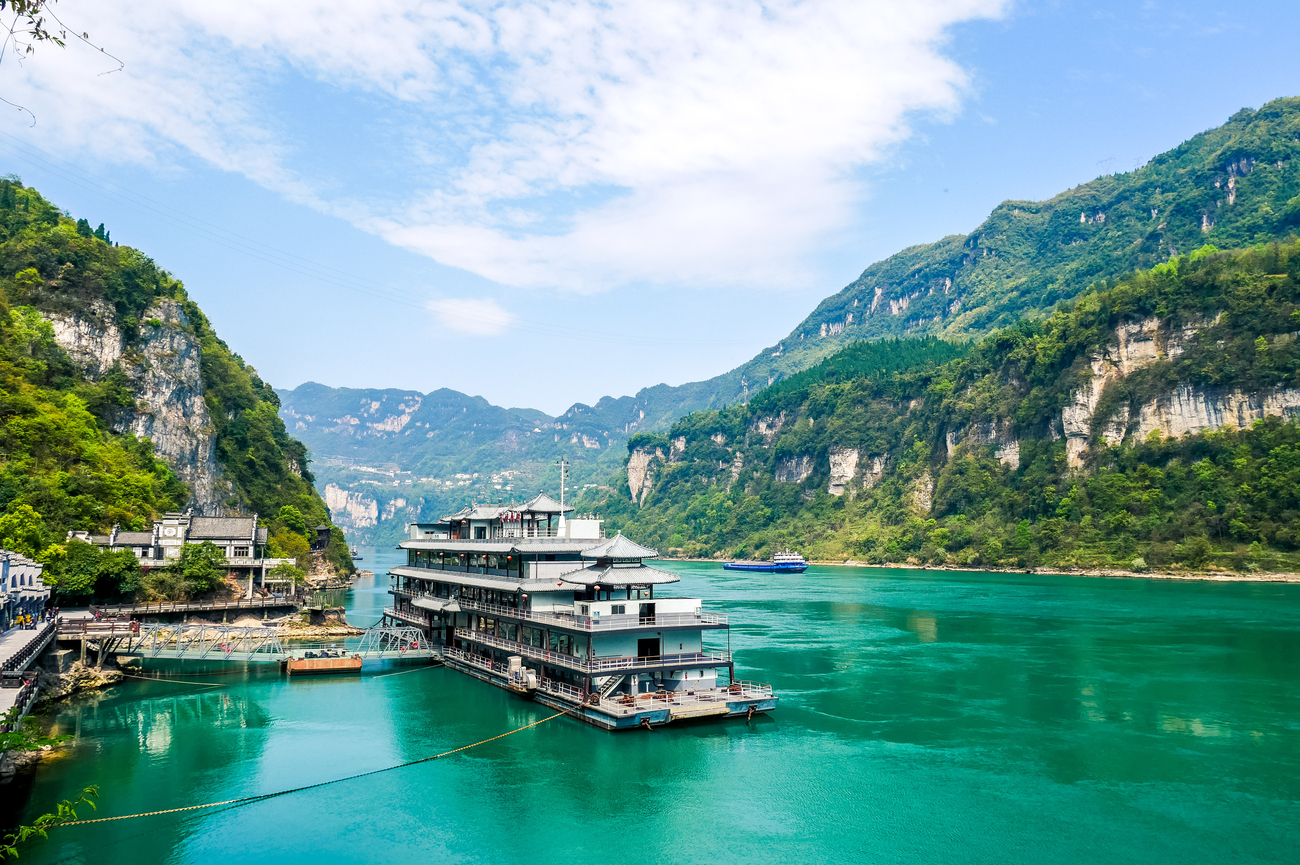
Xiling Gorge is the longest of the three at 76 kilometres, and it carries a history considerably less romantic than Qutang’s poetry or Wu Gorge’s mythology.
Before the dam, this was the most dangerous stretch on the entire Yangtze. Its rapids and shoals were responsible for the majority of shipping fatalities recorded across the steamship era, a reputation earned over centuries of river traffic rather than assigned by any single dramatic incident.
That danger has been almost entirely engineered away by the structure now sitting within the gorge’s boundaries. The contrast between Xiling’s relative literary absence, compared with Qutang and Wu’s heavy poetic attention, and its current engineering significance is worth sitting with.
The most dangerous gorge became the site of the most consequential modern intervention on the entire river. Depending on how generously you want to read it, that feels either entirely coincidental or exactly the kind of pattern history produces without anyone intending it.
Three
Gorges Dam: What Changed on the Yangtze
The Three Gorges Dam, completed in 2006, sits within Xiling Gorge near Yichang and stands as the world’s largest hydroelectric power station by installed capacity, generating 22,500 megawatts.
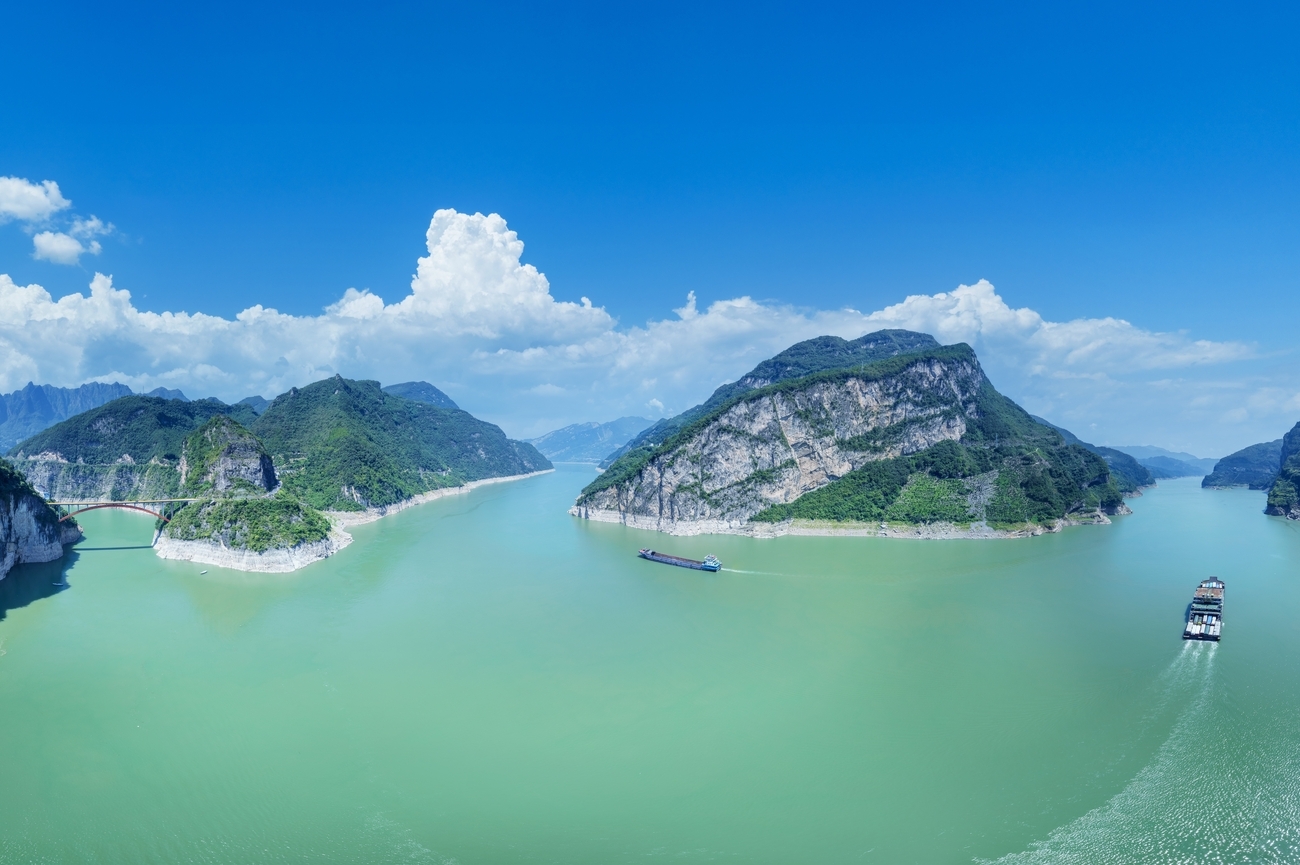
The dam raised the water level across the gorges by roughly 175 metres, a change visible directly on the cliff faces: a horizontal line where weathered, vegetated stone gives way abruptly to pale rock exposed only since the reservoir filled. Below that line, everything is new. Above it, the cliffs are doing exactly what they were doing when Du Fu was writing about them.
The human cost of that engineering achievement was considerable. Roughly 1.3 million people were resettled from the flooded valley, and historic towns including the original Fengdu were partially or fully submerged, their populations relocated to new settlements built above the new waterline.
The ship lock system that now carries cruise vessels through the 185-metre difference between reservoir and downstream river levels runs through five successive chambers and takes roughly four hours. The lock walls rise on either side of the ship with a slow, mechanical inevitability that is a genuinely different kind of impressive from anything the gorges themselves produce naturally.
The Dong communities back in Guizhou built their drum towers using nothing but interlocking timber joints, with no nails and no modern tools, a tradition that survives specifically because it never needed updating. The dam represents almost the exact opposite instinct: solving the Yangtze’s oldest problem, its dangerous unpredictability, through the largest piece of modern engineering most passengers will ever personally pass through.
Both approaches, centuries apart and built from entirely different materials, are answers to the same underlying question of how to live alongside something much larger than any single person. What the Dong chose to build instead, and why it has held up just as long without a single nail, is explored in our guide to Dong and Miao architecture in Guizhou.

Yangtze
Poetry: 2,000 Years of Trying to Describe the Three Gorges
The poetic attention this stretch of river has received is not incidental decoration on top of its scenery. It is closer to the central reason the Three Gorges occupy the position they do in Chinese cultural memory, ahead of rivers that are longer and ahead of gorges that are, by some measures, deeper.
Li Bai, writing in the 8th century and travelling this same river during one of his own periods of exile, returned to the gorges repeatedly in his work. He used the river’s narrow, compressed passages as a recurring image for the speed and unpredictability of a life he did not feel he fully controlled.
Du Fu, arriving in Kuizhou decades later under his own kind of exile, took a different approach entirely. Rather than treating the gorge as metaphor, he wrote it with the specificity of someone who had nowhere else to look for two straight years. The cliffs and the river became, poem after poem, the only fixed point in an otherwise displaced and uncertain existence.
What both poets were responding to, beyond the obvious visual drama, was the river’s particular relationship to scale and time. A person passing through Qutang Gorge by boat is, for those few minutes, smaller and more powerless than almost anywhere else a Tang Dynasty traveller might find themselves, the cliffs indifferent to whatever business brought them there.
That specific feeling, of being moved through something vastly larger than yourself with no ability to slow it down or argue with it, turns out to be remarkably durable material for poetry. Durable enough that poets kept returning to it for two thousand years without exhausting what it had to offer.
Life
Aboard a Yangtze Three Gorges Cruise
The four days on the water have a rhythm of their own, and it is easy to underestimate before experiencing it.
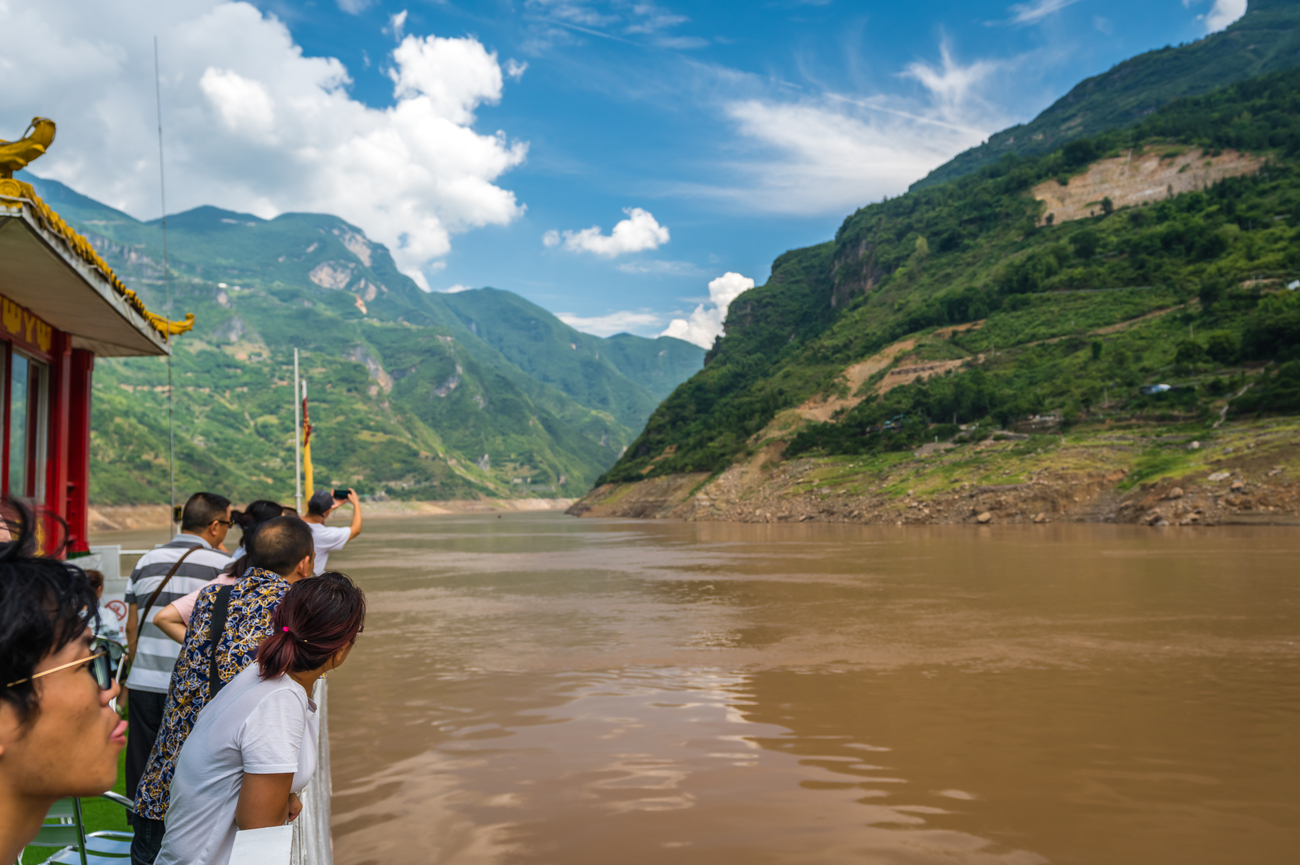
Mornings tend to open with the ship already moving, the gorge scenery visible from the dining room windows during breakfast, and the day’s shore excursion scheduled to align with whichever landmark the ship is approaching.
Afternoons bring the excursions themselves: Fengdu or Shibaozhai on the earlier days, then the gorge passages and Shennong Stream detour later. The ship’s public decks fill with passengers for the most dramatic stretches and empty again once the cliffs widen back out.
Evenings, on most vessels, bring an onboard cultural performance, frequently drawing on the folk traditions of the Tujia and Ba communities who have lived along this stretch of river for centuries. The songs and dances offer a small, curated counterpart to the deeper cultural immersion the Guizhou leg of this journey provides in full.
It is a gentler, more theatrical version of what a Dong drum tower offers on its own terms, and recognising the difference between the two is part of what makes a traveller who has done both legs of this itinerary notice things a single-region visitor would not.
Choosing
the Right Yangtze Three Gorges Cruise
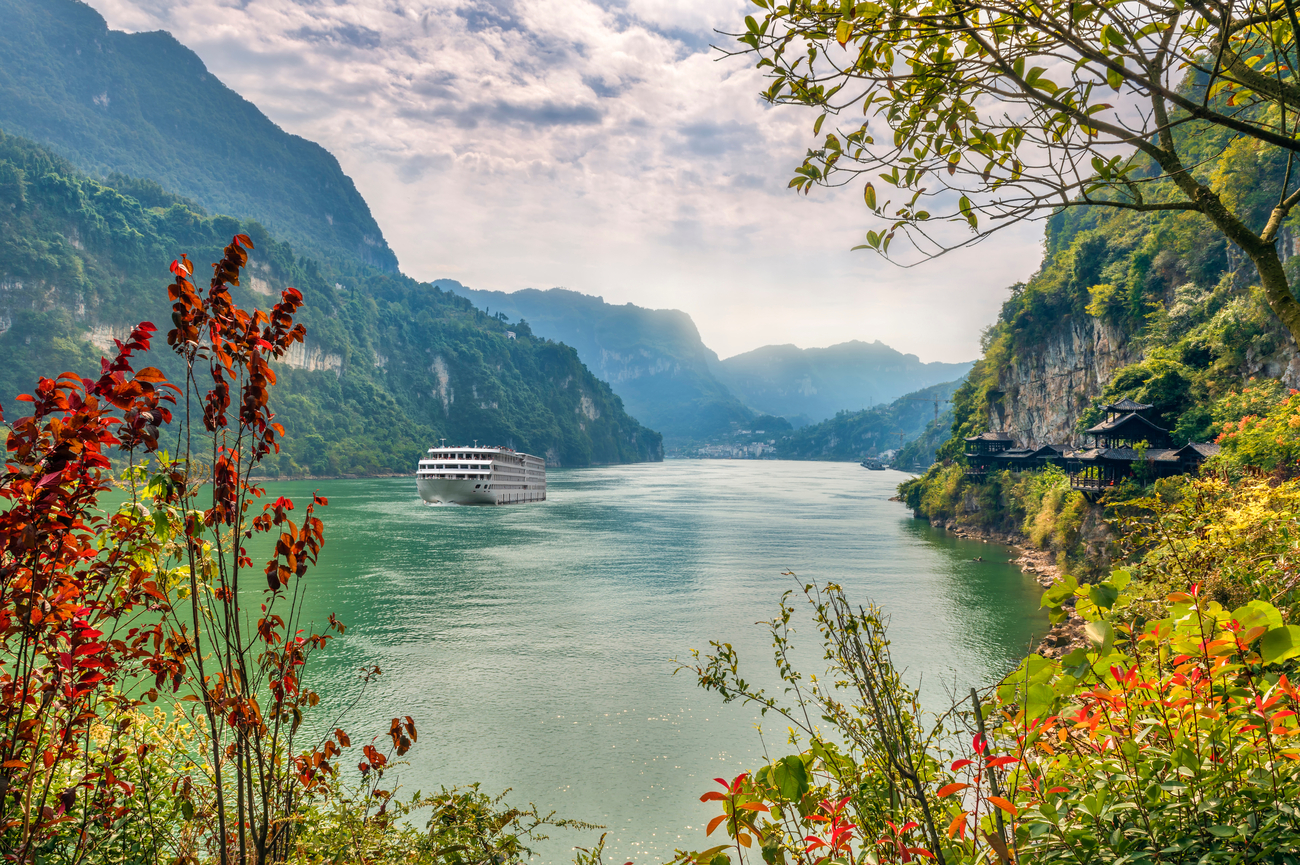
The standard Yangtze Three Gorges cruise runs four days and three nights from Chongqing to Yichang, or in the reverse direction at a slower pace. The downstream route, more commonly operated, passes the gorges in sequence: Qutang, then Wu, then Xiling.
Vessel categories range from three-star to five-star, and the difference matters considerably more here than it would on a shorter trip. This is effectively three nights of accommodation, not a single afternoon excursion.
Five-star vessels offer larger private balconies for unobstructed gorge viewing, stronger shore excursion programming and dining that draws from the regional cuisines of the Sichuan and Hubei stretches of river the ship passes through.
The shore excursions that genuinely add to the gorge scenery, rather than simply filling time between them, are White Emperor City for the Three Kingdoms history and Du Fu’s exact vantage point, Shennong Stream for the tributary boat experience, and the ship lock passage itself for anyone who wants to see modern engineering operating at the same scale the gorges produce naturally.
Fengdu and Shibaozhai are worthwhile without being essential, the kind of stops that reward a curious traveller without leaving a serious gap in anyone’s itinerary if skipped.
The mountain villages of Guizhou and the gorges of the Yangtze sit consecutively on the same fifteen-day route for a reason that becomes obvious once you have experienced both: one is built from timber, silence and oral memory, the other from limestone, current and two thousand years of written verse.
Moving from one register to the other, in a matter of days rather than years, is most of what makes this particular itinerary worth the length it asks for.
Practical
Notes for a Yangtze Three Gorges Cruise
The essential gorge passage, from Qutang Gorge through Wu Gorge, takes place over roughly a day and a half of the four-day cruise. Xiling Gorge and the Three Gorges Dam ship lock system occupy the final stretch before Yichang.
Cabin selection matters most for the Qutang and Wu passages, since this is when the cliffs are closest and the balcony view is hardest to replace from a public deck.
Spring and autumn offer the clearest visibility through the gorges. Winter cruising is calmer and considerably less crowded, but comes at the cost of some of the atmospheric cloud cover that gives Wu Gorge its most photographed mornings.
No special permit is required for the Yangtze Three Gorges cruise beyond a standard Chinese tourist visa, a meaningful contrast to what Tibet requires elsewhere in this portfolio.
Yangtze
Three Gorges Cruise: The River Du Fu Could Not Stop Writing About
There is a single, permanent mark on the cliff faces throughout these gorges, roughly 175 metres up from the current water level, where the old weathered stone gives way to rock that has only been exposed to open air since 2006.
Below that line, the dam rewrote the river entirely. Above it, nothing has changed since Du Fu was sick and exiled and writing about exactly this view, since the Ba people were somehow placing coffins into cliffside caves with tools nobody has fully accounted for, and since Liu Bei gave his final instructions from a hilltop that still stands in the same place it always has.
Most engineering projects this size erase what came before them.
The Three Gorges Dam, for all its scale, only got partway up the cliff.
Spend four days on the water, between Guizhou’s mountain villages and Shanghai’s skyline, with the cabin and timing already arranged so the only thing left to do is watch the gorges unfold around you.


Let us know what you love, where you want to go, and we’ll design a one-of-a-kind adventure you’ll never forget.
Get in touch
Miriam
Travel Specialist

Nina
Travel Specialist

Abigail
Travel Specialist
Our offices:



Revigorate, Iberian Escapes and Algarve Lifestyle are the registered brand names of APCS Lda . We are a fully authorised travel agency licensed by Turismo de Portugal RNAVT/6867.
In the event of a dispute, the consumer may refer to: RAL - Centros de Arbitragem
Avª. 5 de Outubro, nº. 55, R/C Dtº. 8000-075 Faro, Portugal | Tel: +351 289 823 135 *
* national landline call
E-mail: info@consumoalgarve.pt| www.consumidoronline.pt | Mon to Fri: 9:00 - 13:00 / 14:00 - 17:00