China Villages & Gorges: The Journey for Travellers Who Want More

No nails. Not one.
In Zhaoxing, one of China’s most important Dong villages, timber drum towers rise above the rooftops without metal fasteners. Their interlocking mortise-and-tenon joints reflect a building tradition passed between generations of Dong craftsmen.
Then there is the Yangtze. At Kuimen Gate, steep mountains close around the river as it enters Qutang Gorge, the shortest and narrowest of the Three Gorges. The landscape has shaped Chinese history, art and poetry for centuries; the Tang dynasty poet Li Bai wrote of travelling through this dramatic passage more than 1,200 years ago.
These are two very different expressions of permanence: one constructed by human hands, the other carved by water.
China Villages & Gorges connects them in a 15-day journey from imperial Beijing to contemporary Shanghai, travelling through Guizhou’s Miao and Dong communities, Chongqing and the Yangtze Three Gorges. It is designed for travellers who want to experience China beyond its famous cities without rushing the places in between.
If that is the trip you have been circling without quite naming it, here’s where it starts.

Beijing: Where the Expedition Opens
Three days in Beijing open the route in the register most travellers expect from China: the Forbidden City’s 980 surviving buildings, the Great Wall at Mutianyu rebuilt under General Qi Jiguang in 1569, and the hutong quarter that brings imperial scale down to domestic life.
What Beijing gives the China Villages & Gorges route is a baseline. Centralised imperial power, recorded in stone and bronze, organised on an axis that took fourteen years and 700,000 workers to complete. Everything that follows measures itself, knowingly or not, against that baseline.

Arriving in Guizhou: Guiyang and Qingyan
The flight from Beijing to Guiyang covers close to two thousand kilometres and lands somewhere most travellers to China have never considered, let alone visited. Guizhou does not sit on the high-speed corridor that links Beijing, Xi’an and Shanghai into a single seamless trip. Reaching it takes intention, and that requirement of intention is one reason its cultures have stayed so distinct.
Jiaxiu Pavilion and the
City Guiyang Built Around a River
Guiyang rewards a day before the journey continues into the mountain villages of southeastern Guizhou. Jiaxiu Pavilion, the city’s emblem and most photographed structure, was built entirely from wood in 1598, late in the Ming Dynasty, and stands on a turtle-shaped rock formation rising from the Nanming River.
Its name translates roughly as “flourishing talent”, chosen to symbolise academic excellence, and the building has been rebuilt and restored multiple times across four centuries without losing the proportions that made it Guiyang’s defining image. The best version of it is not the daytime one. At dusk, when the lights come up against the dark water and the floating bridge nearby fills with people taking the same photograph their grandparents likely took from the same spot, the pavilion does what Ming Dynasty wooden architecture does best: it looks lit from within rather than lit by anything external.
Guiyang has also, almost invisibly, become something else in the past two decades. As of 2025, the city has over 3,000 coffee shops, the highest density of any city in China, a fact that sits oddly alongside its reputation as a remote provincial capital until you remember that remote and undeveloped are not the same thing.
The climate helps explain some of it. Guiyang’s main travel season runs from March to October, with average temperatures hovering around 20°C even at the height of summer, which has earned the city an old nickname as a natural summer resort. Sitting in one of those coffee shops in the Nanming district before heading out to a 14th-century stone fortress town is a fairly accurate preview of the contrasts this entire route is built to hold.

Qingyan Ancient Town: The
Ming Fortress Before the Mountains
Around 29 kilometres south of downtown Guiyang, Qingyan Ancient Town is not a heritage site dressed up for tourism. It was built in 1378, early in the Ming Dynasty, as a military garrison under an imperial policy of relocating northern troops to secure the southern frontier. Its architecture still reads as the product of defensive logic rather than aesthetic intention. The town is constructed from stone, a material choice dictated by the local geology rather than decoration, and its walls rise directly from the cliffs they were built to defend.
What makes Qingyan distinctive among China’s old garrison towns is not only its age, but its religious layering. Within the same compact stone perimeter, Buddhist temples, Taoist shrines, a Christian church and Confucian ancestral halls have coexisted for centuries, a density of religious plurality that earned the town its local description as a place of “four religions in harmony”.
Wanshou Palace, also known as the Jiangxi Guild Hall, was rebuilt in 1778 during the Qing Dynasty and remains Qingyan’s most architecturally distinct structure, its layout reflecting the trading-hall function it once served for merchants from Jiangxi Province who settled here centuries ago.
Climb the North Gate’s tower early in the morning, before nine, and the fortress resolves into a single legible shape: four main gates, twenty-six lanes, dark-tiled roofs and mountains beyond. Locals will tell you that the patterns and breaks in those roof tiles once carried coded information about which households were safe and which were not, a detail from the garrison’s working life that gives the town’s quiet alleys a different weight once you know it.
Qingyan’s culinary reputation rests on a single, oddly specific dish: pig’s feet, prepared in a style unique to the town and considered, in local custom, a symbol of good fortune. Eating it in one of the stone-walled restaurants along Beijie, the most atmospheric of the four main streets, after a morning on the city wall, is as close as the China Villages & Gorges route comes to a properly old-fashioned market town experience before the journey turns toward Guizhou’s minority villages.
Guiyang’s broader food culture deserves its own moment. Sour fish soup and sour beef hotpot, both built on a fermented sour broth specific to Guizhou cuisine, define the province’s flavour profile more than any single dish. Changwang noodles, made with pork offal, blood curd and fried pork bits, are a street-stall staple best eaten for breakfast in the markets of the Nanming district. Siwawa, a DIY rice wrap assembled from vegetables, pickles and crispy bits, is less a dish than a small ritual, and Qingyun Night Market is where it is eaten at its most authentic and least staged.

Guizhou Minority Villages: Miao, Dong and Ancient Traditions
Mountains and hills cover more than 97 percent of Guizhou’s land area. That terrain, difficult to farm and harder still to govern from a distant capital, is precisely what allowed the province’s ethnic minority communities to maintain their own languages, architecture and oral traditions largely undisturbed by the cultural standardisation that swept through lowland China across successive dynasties.
Roughly 36 percent of Guizhou’s 36 million residents belong to officially recognised minority groups: Miao, Dong, Buyi, Tujia, Yi and dozens of smaller communities besides. The highest concentration sits in the southeastern corner of the province, in the Qiandongnan Miao and Dong Autonomous Prefecture, where 81.3 percent of the population is Miao or Dong, and where more than a hundred distinct village festivals take place across the calendar year, with the densest concentration falling in February, March, October and November.
Kaili, the prefecture’s capital, is the practical gateway, reachable from Guiyang in half an hour by high-speed rail. By most honest accounts, including those of people who have spent real time there, the city itself offers limited attractions. What it offers instead is positioning: a base from which the surrounding counties of Leishan, Rongjiang, Congjiang and Liping become reachable within a few hours by private vehicle. The villages, not the city, are the reason anyone makes the trip.
The Miao Villages: Silver,
Skirts and Batik
Xijiang Qianhu Miao Village, around 30 kilometres from Kaili in Leishan County, is the largest Miao settlement on earth, its wooden stilted houses descending the mountain slope in tiered rows that, viewed from the designated hilltop platform, resemble a single continuous structure rather than more than a thousand separate households. The three-storey construction, with storage and livestock below, living quarters in the middle and grain stored above, developed specifically because the terrain offered no flat ground to build on by any conventional method.
Xijiang is, by a wide margin, the most commercially developed village on the circuit, its main pedestrian street lined with souvenir shops and a scheduled evening performance. But walking uphill into the residential terraces beyond that street strips the commercial layer away within a few hundred metres.
Langde Upper Village, smaller and considerably quieter, holds a specific historical distinction: it was the first ethnic village in southeastern Guizhou formally opened to outside visitors, in 1985, decades before Xijiang’s tourism infrastructure existed. With roughly five hundred residents, Langde has earned a reputation among international visitors specifically for what it lacks compared to its larger neighbour: crowds, formal staging and the sense of performance. Local custom describes it as the hometown of Lusheng, the bamboo wind instrument central to Miao festival music, and the village’s welcome ceremonies retain a directness that Xijiang’s larger scale has, inevitably, smoothed into something closer to spectacle.
Matang Gejia Village, home to a community of around four hundred people known as the Gejia, occupies an unusual position in China’s official ethnic classification. The Gejia are sometimes informally described as the “fifty-seventh ethnic group”, not among the fifty-five officially recognised minorities but distinct enough in custom and dress that the designation has stuck colloquially. According to community legend, the Gejia trace their lineage to Hou Yi, the mythological archer credited in classical Chinese mythology with shooting down nine of ten suns scorching the earth. Matang’s defining craft is batik, wax-resist dyeing practised by the village’s women using techniques passed down through direct instruction rather than formal teaching, the resulting patterns appearing on everything from clothing to wall hangings sold in the village’s small workshops.
Shiqiao Village, less visited again, maintains a tradition of handmade paper production using techniques that predate industrial papermaking by centuries. The bark-pulping and sheet-forming process is visible to visitors who arrive willing to watch an unhurried craft rather than a staged show. Datang Village, in a different county again, is known specifically for a skirt style measuring barely ten to sixteen centimetres in length, worn year-round including through Guizhou’s cold, damp winters, a tradition its residents trace back over six hundred years without anyone, including the residents themselves, able to offer a documented origin story anyone fully trusts.
The Miao silverwork tradition is the culture’s most internationally recognised expression, and the festival headdresses worn by Miao women can weigh several kilograms in total silver. The designs encode clan mythology and family wealth in patterns transmitted through hereditary silversmithing families rather than written records. Seeing that silver catch the light during a Lusheng Festival gathering, the wind instruments playing in formation while dancers move through full ceremonial dress, is the kind of experience photographs consistently fail to prepare visitors for, because the sound and the motion are doing as much of the communicative work as anything visible.
What each village offers beyond this overview, the welcome ceremonies and what they actually involve, the festival calendar that determines which weeks bring each community to its fullest expression, and the practical question of sequencing five or six villages into four unhurried days, is covered in our dedicated guide to Guizhou’s minority villages and cultural traditions.

The
Dong Villages: Towers Without Nails
South and east of the Miao settlements, the cultural register shifts again. The Dong number close to three million people across China, with roughly half living in Guizhou, and their architectural signature is unmistakable from a considerable distance: the drum tower, a multi-storey wooden structure with successively narrowing tiers of pagoda-style eaves, built entirely without a single nail.
Zhaoxing Dong Village, in Liping County, holds five of these towers, one for each of the village’s five clan groups, distributed across the settlement according to a social geography that has nothing to do with the road layout a first-time visitor would notice. Over six thousand people live in Zhaoxing, divided among clans named for Confucian virtues, Ren, Yi, Li, Zhi and Xin, rather than family lineage. The construction relies entirely on mortise-and-tenon joinery, cut by hereditary master craftsmen called Zhang Shi, working from proportional ratios held in memory rather than committed to any written plan.
Dali Dong Village, smaller and more remote at around 23 kilometres from Rongjiang County, offers a different kind of authenticity: a community built around four hundred ancient phoebe trees, more than forty of which exceed five hundred years in age, surrounding a stone-paved path laid during the Qianlong reign of the Qing Dynasty and still in daily use exactly as it has been for centuries. Dali shares Zhaoxing’s wind-rain bridge tradition, five bridges here as well, but its smaller scale and lower visitor numbers give the architecture room to be experienced rather than photographed in passing.
The Dong’s other major architectural contribution, the wind-rain bridge, is a covered wooden crossing that shelters travellers from weather while doubling as informal community gathering space, its interior benches occupied throughout the day by residents in unhurried conversation. The Dong’s most significant cultural inheritance, though, is not architectural at all. Dong Grand Song, a polyphonic choral tradition performed without a conductor or written score, the harmonies carried entirely in oral memory across generations, was inscribed on UNESCO’s Representative List of the Intangible Cultural Heritage of Humanity in 2009. Hearing it performed inside a drum tower, multiple voice parts layering against each other in a building that required no written structural plan to construct, is as close as any single experience comes to summarising what makes Guizhou’s minority cultures so distinct from the China most visitors expect to find.
The craft behind the drum towers and wind-rain bridges, the specific joinery techniques, the dwindling number of master craftsmen still capable of building one entirely from memory, and what the architecture itself reveals about the philosophy of the people who built it, gets its own full treatment in our guide to Dong and Miao architecture in Guizhou.

Basha Miao Village and the
Village Super League
Congjiang County holds the most anthropologically singular stop on the circuit: Basha Miao Village, home to the only community in China still formally recognised for carrying firearms as part of daily dress. The muzzle-loading rifles, used in welcoming ceremonies and the community’s coming-of-age rituals, accompany a hairstyle, dress code and set of customs that residents trace to the Qin Dynasty, over two thousand years before the People’s Republic existed to register any of it as heritage.
Basha has operated as a designated tourist destination since the 1980s, and its formal welcome ceremony is, by most honest accounts, more theatrical than the daily life surrounding it. That daily life, observed quietly rather than on a fixed schedule, is where the village’s real character holds.
Nearby Rongjiang has, somewhat improbably, become known across China for something entirely unconnected to ethnic heritage: the Village Super League, a grassroots football competition between local farming and village teams that exploded in national popularity in recent years for its unfiltered, unsponsored energy. Catching a match here in the late afternoon, the local market still running behind the touchline, is an entirely contemporary counterpoint to a day otherwise spent in centuries-old villages, and it is the kind of detail that proves Guizhou is not a place frozen for visitors. It is a place still actively becoming itself.

Chongqing: The Mountain City Before the Yangtze
From Guizhou, the route turns north toward Chongqing, and the register shifts one more time before the Yangtze takes over entirely.
Chongqing is a municipality of more than thirty million people built directly onto cliffs above the confluence of the Yangtze and Jialing rivers. Its geography is so vertical that the city has earned the nickname “the 8D mountain city”, a reference to how its roads, light rail lines and pedestrian paths exist on overlapping levels, often passing directly through the lower floors of residential buildings rather than around them.
Hongyadong, the multi-tiered stilted complex built into the cliff face above the river, is best seen at night, when its layered structure lights up in a way that has made it one of the most photographed urban views in China. Ciqikou Ancient Town, the old porcelain trading port that gives the district its name, preserves Ming and Qing Dynasty streets within a city otherwise defined by glass, height and elevation.
Chongqing’s food culture deserves a specific note for travellers who have already encountered Sichuan cuisine elsewhere in China: Chongqing hotpot is not Chengdu’s hotpot wearing a different city’s name. It runs hotter, oilier and more aggressively peppered, built around a base of beef tallow and dried chillies that coats rather than simply spices. The city’s claim to having invented hotpot in its current form, contested as that claim always is across Sichuan and Chongqing alike, is not made lightly by locals who consider the Chengdu version comparatively restrained.
One or two nights here, enough to take in the cliffside skyline and a properly punishing hotpot dinner, is the correct amount of time before boarding the ship that carries the route into its most dramatic stretch.

Yangtze Three Gorges Cruise: 4 Days Through 2,000 Years of Poetry
Qutang, Wu, and Xiling: The Three Gorges of the Yangtze
The Three Gorges, Qutang, Wu and Xiling, stretch for 193 kilometres along the upper Yangtze between Fengjie County in Chongqing and Nanjingguan in Yichang, Hubei Province. The river predates the mountains around it. The gorges exist because the Yangtze carved through the eastern edge of the Sichuan Basin as the surrounding land was lifted by tectonic forces moving considerably slower than the water.
Qutang Gorge, the first encountered heading downstream, is the shortest at eight kilometres and the most immediately dramatic. At its western entrance, two mountains press close enough together to form the Kuimen Gate, the river compressed to under a hundred metres wide between cliffs climbing to 1,500 metres on either side. The gate appears on China’s 10 RMB note, and it appeared in the poetry of Du Fu and Li Bai over a thousand years before either of those facts existed to compete for anyone’s attention.
Above the gate sits Baidi City, White Emperor City, where Liu Bei, ruler of the Shu Kingdom during the Three Kingdoms period, delivered his final instructions to his advisors Zhuge Liang and Zhao Yun before his death in 223 AD. Du Fu, exiled to nearby Kuizhou during the An Lushan Rebellion, wrote more than four hundred poems from this specific vantage point, looking down at the same gate visible from the cruise deck today.
Wu Gorge, at 46 kilometres, carries the reputation among Chinese poets and painters as the most beautiful of the three. The Twelve Peaks line both banks, each with its own legend, the most celebrated being Goddess Peak, identified since the Han Dynasty with a mountain deity said to guide sailors safely through treacherous water. The mist that gathers in the gorge before sunrise, settling against the peaks before the morning sun burns it away, is the specific atmospheric condition that gave Tang Dynasty poetry its most enduring images of this stretch of river.
A shore excursion up Shennong Stream, a tributary entering from the south bank, swaps the main ship for smaller sampans poled upstream by local boatmen using long bamboo rods. It is a technique unchanged by the dam or by tourism, and one of the few moments on the cruise where the Yangtze feels genuinely small and intimate rather than monumental.
Xiling Gorge runs longest at 76 kilometres and was, before the dam, the most dangerous stretch on the entire river. Its rapids and shoals were responsible for the majority of shipping fatalities recorded across the steamship era. That danger has been almost entirely engineered away by the structure now sitting within the gorge’s boundaries.
Before the gorges themselves, two shore stops reward the detour. Shibaozhai Pagoda, a twelve-storey wooden tower built against a sheer 30-metre cliff face during the Ming Dynasty and accessible only by climbing through its own interior, was enclosed in a protective cofferdam when the reservoir filled. It now rises from a small island ringed by water that did not exist in this configuration before 2006.
Scattered along Qutang’s Bellows Gorge section, wooden coffins placed into cliff-face caves by the Ba people, a pre-Han culture that inhabited this stretch of river long before recorded Chinese history reached it, date to the Shang and Zhou dynasties, making them among the oldest surviving evidence of human habitation anywhere along the Three Gorges.
What each gorge looks like from the deck at the correct hour, what Du Fu was actually describing from above the Kuimen Gate, and the specific shore excursions that turn a scenic cruise into something considerably richer than scenery, are covered at full depth in our Yangtze Three Gorges cruise guide. That is where the river finally gets the attention two thousand years of poets have been insisting it deserves.

Three Gorges Dam: What
Changed on the Yangtze
The Three Gorges Dam, completed in 2006, sits within Xiling Gorge near Yichang and stands as the world’s largest hydroelectric power station by installed capacity, generating 22,500 megawatts. The dam raised the water level across the gorges by roughly 175 metres, a change visible directly on the cliff faces: a horizontal line where weathered, vegetated stone gives way to pale rock exposed only since the reservoir filled.
The human cost of that engineering achievement was considerable. Approximately 1.3 million people were resettled from the flooded valley, and historic towns including the original Fengdu were partially or fully submerged, their populations relocated to new settlements built above the new waterline. Fengdu’s relocated “ghost city”, historically associated in Chinese Buddhist and Taoist tradition with the underworld, is now a standard cruise shore excursion, visited today by more people in its rebuilt form than the original town likely saw across any comparable stretch of its earlier history.
For a traveller moving through the cruise, the dam announces itself most directly through its ship lock system: five successive chambers carrying vessels through the 185-metre difference between reservoir and downstream river levels, a passage taking roughly four hours that offers, at human scale, an engineering spectacle to match the natural one the gorges provide on either side of it.
Arranging the cruise properly means choosing the cabin category that matters more here than almost anywhere else in this portfolio, timing the Wu Gorge passage at dawn when the mist sits thickest, and selecting the shore excursions worth building a full day around. That is exactly the kind of logistics that turns four days on a river into the trip people fly across the world for.

Shanghai: The Expedition's Final Register
The route closes in Shanghai, where the Golden Triangle does, on the Bund’s colonial waterfront facing Pudong’s contemporary skyline across the Huangpu. Full coverage of the Bund’s architecture, Yu Garden and Shanghai’s development story belongs to the Golden Triangle cluster.
What matters here is the shape the full fifteen-day journey traces by holding all four of its registers in direct sequence: the Forbidden City’s centralised imperial authority, Guizhou’s drum towers and silverwork standing outside that authority’s historical reach, the Yangtze’s two thousand years of poetic attention now permanently altered by a dam built within this century, and Shanghai’s unambiguous, glass-and-steel commitment to the present moment.
No other itinerary in this portfolio asks a traveller to carry that much range across a single trip.

Where You Stay on a China Villages & Gorges Tour
Beijing’s centrally located accommodation provides refined service and convenient access to the capital’s most important landmarks, giving the journey a smooth and comfortable beginning.
In Guiyang, the right hotel should be positioned for both Jiaxiu Pavilion’s evening light and the road south to Qingyan, making the most of a single transitional day before the village circuit begins.
In Kaili, accommodation is chosen for access rather than urban luxury. The city’s own attractions are limited, but it places Leishan, Rongjiang, Congjiang and Liping within reach by private vehicle. That matters because the village circuit rewards a guide who knows precisely which settlements deserve a full, unhurried day and which are better suited to a few focused hours.
In Chongqing, one or two nights before embarkation give the cliffside skyline and the city’s hotpot tradition time to register properly before the ship departs.
The Yangtze cruise vessel becomes the accommodation for four nights, and the difference between a five-star and a three-star ship matters more here than almost anywhere else in the portfolio. Cabin balcony size determines whether the gorge passages are watched privately or from a crowded public deck. Dining quality, shore excursion programming and the timing of meals around the gorge schedule all vary meaningfully between categories.
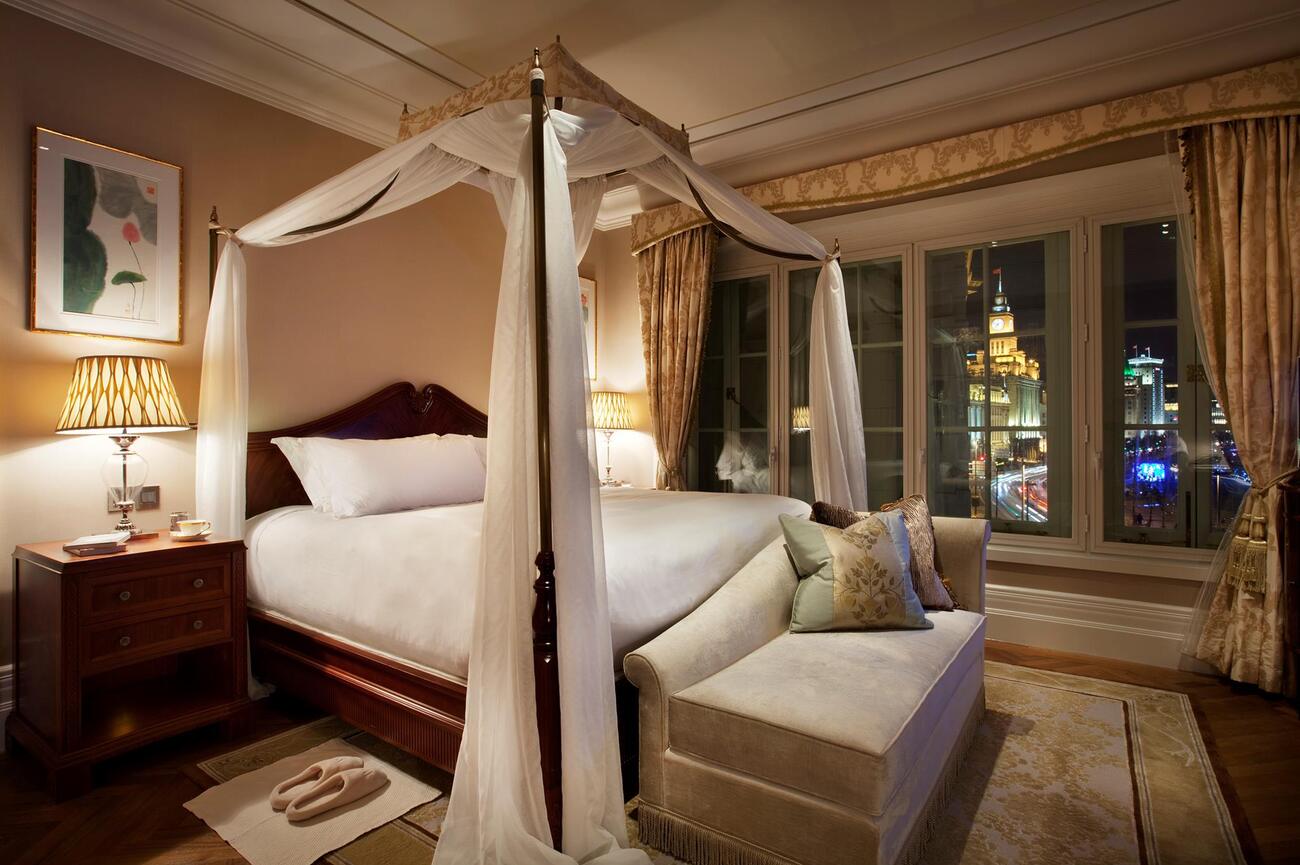
Shanghai’s final nights, at the Waldorf Astoria on the Bund or an equivalent luxury hotel, return the journey to the polished comfort of China’s most international city.
Practical Notes for the China Villages & Gorges Tour
No special permit is required for Guizhou or the Yangtze cruise, a meaningful contrast to the documentation Tibet requires elsewhere in this portfolio. A standard Chinese tourist visa covers the full fifteen-day route.
The best time for the Guizhou leg is March to October, when temperatures stay mild and the main festival season falls within reach. The Yangtze cruise operates year-round, although spring and autumn usually offer the clearest visibility through the gorges and the most comfortable shore excursion conditions.
Winter cruising is calmer on the water and considerably quieter in terms of crowds, but comes at the cost of some of the mist that gives Wu Gorge its most photographed mornings.
Comfortable, sturdy footwear matters more on this route than on most others in the portfolio. Qingyan’s stone alleys, the uneven paths through Guizhou’s hillside villages and the steeper sections of several shore excursions are not forgiving terrain for anything less practical.
China Villages & Gorges: See What Still Stands Without a Single
Nail
The drum tower at Zhaoxing has stood for generations on nothing but interlocking timber joints, no fasteners, no adhesive, no written structural plan beyond what a hereditary craftsman carries in memory. The Kuimen Gate has been narrowing the Yangtze to under a hundred metres for longer than recorded history extends in either direction.
Neither of these things needed an itinerary to exist.
They needed one only if the plan was to stand inside them at the right hour, with the context that turns a striking photograph into something you actually understand.
Fifteen days. Four registers of China that almost never appear together in the same sentence, let alone the same trip.
Here's the itinerary that gets you there while that knowledge is still being passed on.



Let us know what you love, where you want to go, and we’ll design a one-of-a-kind adventure you’ll never forget.
Get in touch
Miriam
Travel Specialist

Nina
Travel Specialist

Abigail
Travel Specialist
Frequently Asked Questions
- How physically demanding is the China Villages & Gorges tour?
The China Villages & Gorges tour is moderately demanding. Travellers should be comfortable walking on uneven stone streets, hillside village paths, steps and occasionally steep sections during shore excursions. Comfortable, sturdy footwear is strongly recommended.
- Are domestic flights, high-speed trains and private transfers included in the tour?
Domestic flights, high-speed rail journeys and private transfers can be included as part of the complete itinerary. The exact transport arrangements and inclusions are confirmed clearly in each personalised Revigorate proposal.
- What standard of accommodation is available in the smaller towns and villages of Guizhou?
Accommodation in Guizhou’s smaller towns is generally more practical and locally focused than the luxury hotels available in Beijing, Chongqing and Shanghai. Revigorate selects the best suitable properties available based on comfort, cleanliness, location and access to the surrounding villages.
- Are vegetarian, vegan or other dietary requirements manageable during the Guizhou and Yangtze portions of the journey?
Most dietary requirements can be accommodated with advance notice, although choices may be more limited in remote villages and smaller local restaurants. Revigorate communicates dietary needs to guides, hotels and cruise operators before travel.
- Is the Yangtze cruise suitable for travellers with limited mobility?
Suitability depends on the chosen vessel, cabin location and shore excursion programme. Some excursions involve steps, steep paths, smaller boats or uneven ground, so mobility requirements should be discussed before the cruise is selected.
- How far in advance should the China Villages & Gorges tour be booked?
Booking several months in advance is recommended, particularly for spring and autumn travel, major village festivals and preferred Yangtze cruise cabin categories. Earlier planning provides the widest choice of hotels, guides and transport connections.
- Can the route be extended with additional nights in Beijing, Shanghai or elsewhere in China?
Yes. Additional nights can be added in Beijing, Shanghai, Chongqing or other destinations in China. The journey can also be combined with Xi’an, Chengdu, Guilin, Tibet or another region according to the traveller’s interests and available time.
- How does Revigorate customise the China Villages & Gorges tour for individual travellers?
Revigorate tailors the journey around each traveller’s preferred pace, hotel standard, cultural interests, mobility requirements and available travel dates. The route, village visits, cruise category, private guiding and transport arrangements are adapted to create a personalised China itinerary.
Our offices:



Revigorate, Iberian Escapes and Algarve Lifestyle are the registered brand names of APCS Lda . We are a fully authorised travel agency licensed by Turismo de Portugal RNAVT/6867.
In the event of a dispute, the consumer may refer to: RAL - Centros de Arbitragem
Avª. 5 de Outubro, nº. 55, R/C Dtº. 8000-075 Faro, Portugal | Tel: +351 289 823 135 *
* national landline call
E-mail: info@consumoalgarve.pt| www.consumidoronline.pt | Mon to Fri: 9:00 - 13:00 / 14:00 - 17:00