Valencia Old Town: A Walking Guide to the Cathedral, Silk Exchange, and Medieval Landmarks
Shortly before noon on a Thursday, an usher carries eight leather chairs out of Valencia Cathedral and arranges them in a semicircle on the flagstones. Eight men sit down. A farmer steps forward to complain that his neighbour has taken water that was not his to take. The case is heard in Valencian, decided within minutes, and everyone goes home. Nothing is written down. There is nowhere to appeal.
The Tribunal de las Aguas has met outside the cathedral for centuries and is one of Europe's oldest continuously functioning judicial institutions. Yet it takes place in a square crossed by thousands of people, many of whom have no idea what they are watching.
Valencia Old Town works on much the same principle. The cathedral, La Lonja de la Seda, Mercado Central, medieval gates and layers of Roman and Islamic history all sit within a compact area that is best explored on foot.
Give Valencia's historic centre a full day and it opens up. Give it ninety minutes between other plans and you will see the monuments but miss much of what connects them.
This walking guide covers the essential sights, the best order to visit them and the details worth looking for along the way. For the wider trip, see our guide to planning seven days in Valencia.
How
Valencia Old Town Is Laid Out
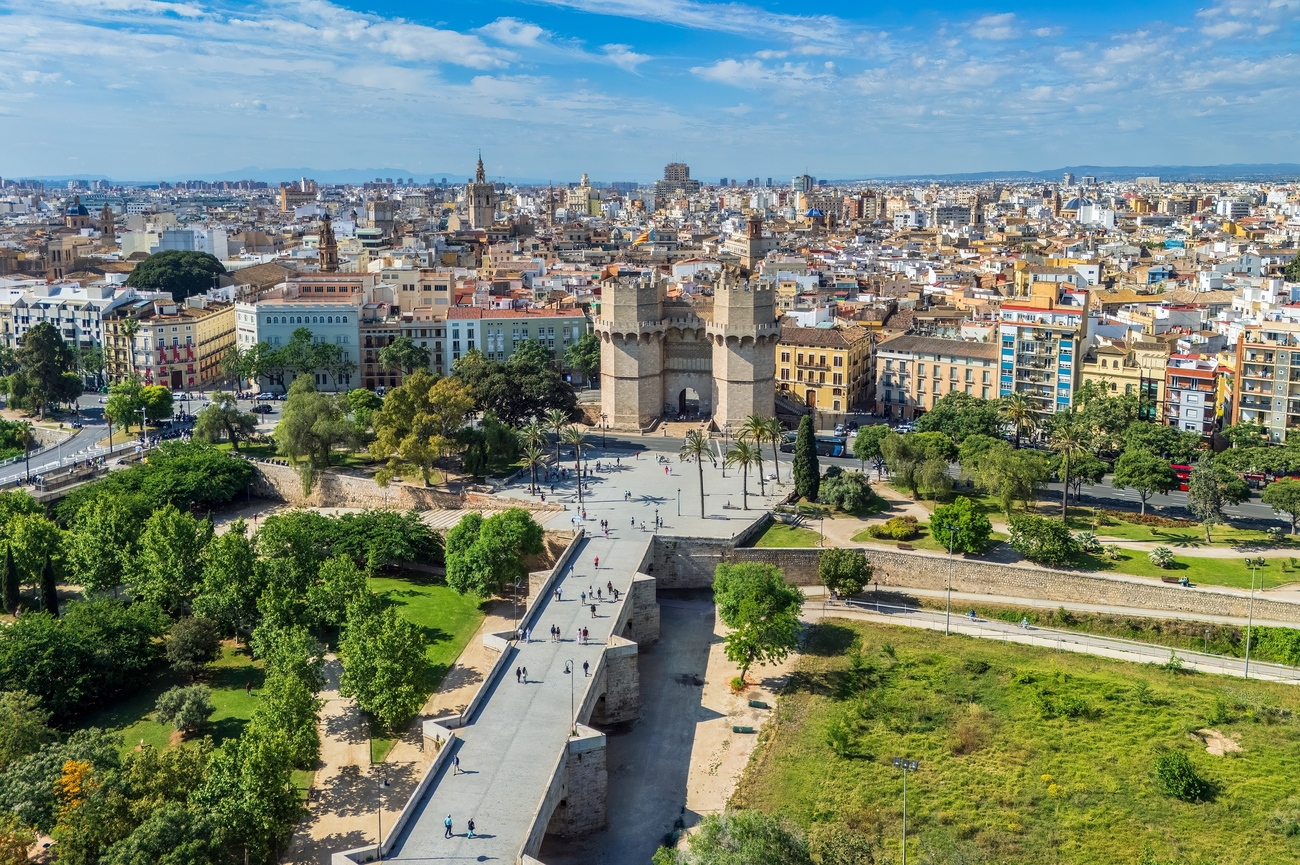
Valencia Old Town is a walled city without walls.
The medieval defences were demolished in the nineteenth century, but their outline is still easy to trace. Broad streets follow much of the former perimeter, while the Turia Gardens curve around its northern and eastern edges. Two medieval gates survive - the Torres de Serranos to the north and the Torres de Quart to the west.
Between them lies Ciutat Vella, a compact historic centre that has been continuously inhabited since the Romans founded Valentia in 138 BC.
Ciutat Vella and El Carmen
The Old Town divides broadly into two different moods.
South and west of Valencia Cathedral, the streets are generally broader and grander, shaped by nineteenth-century redevelopment and the wealth generated by silk, trade and citrus.
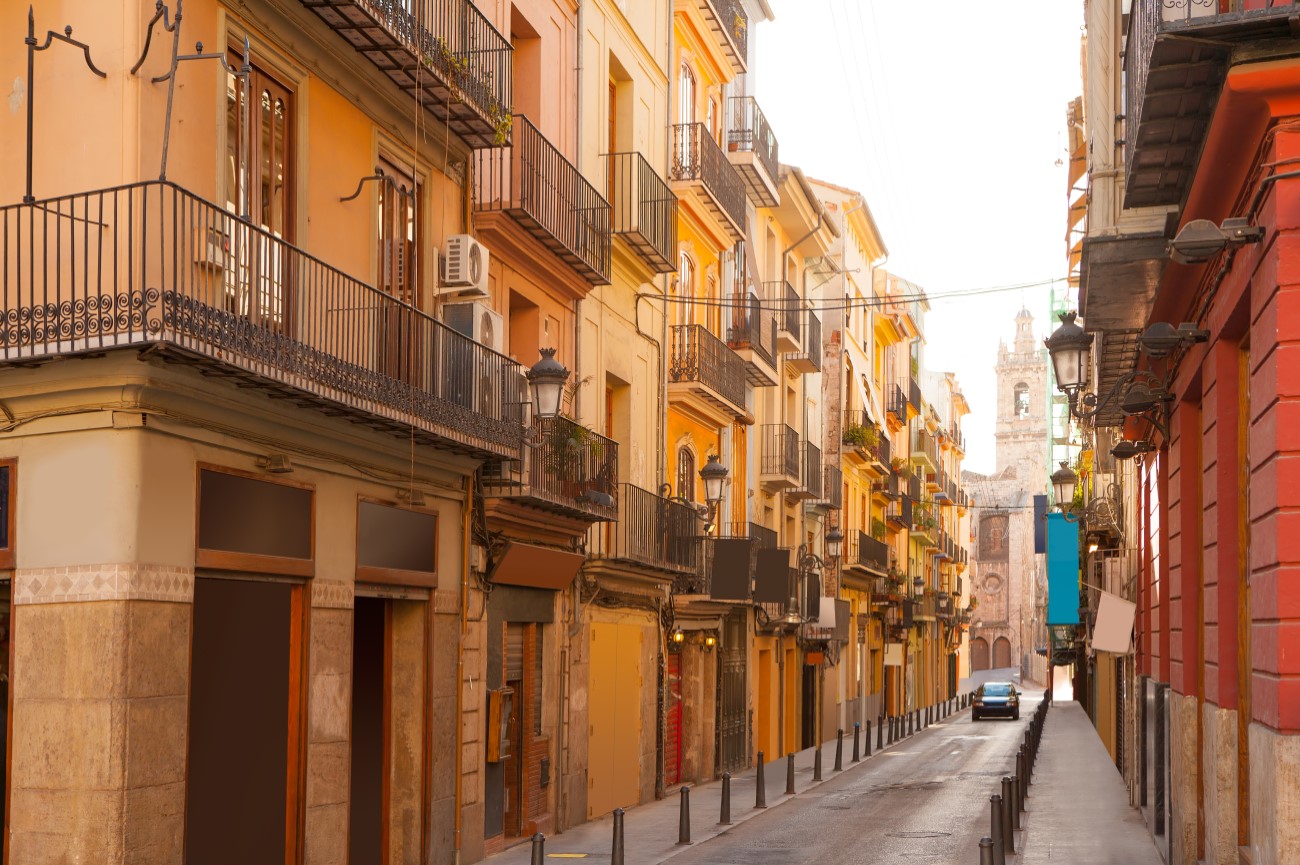
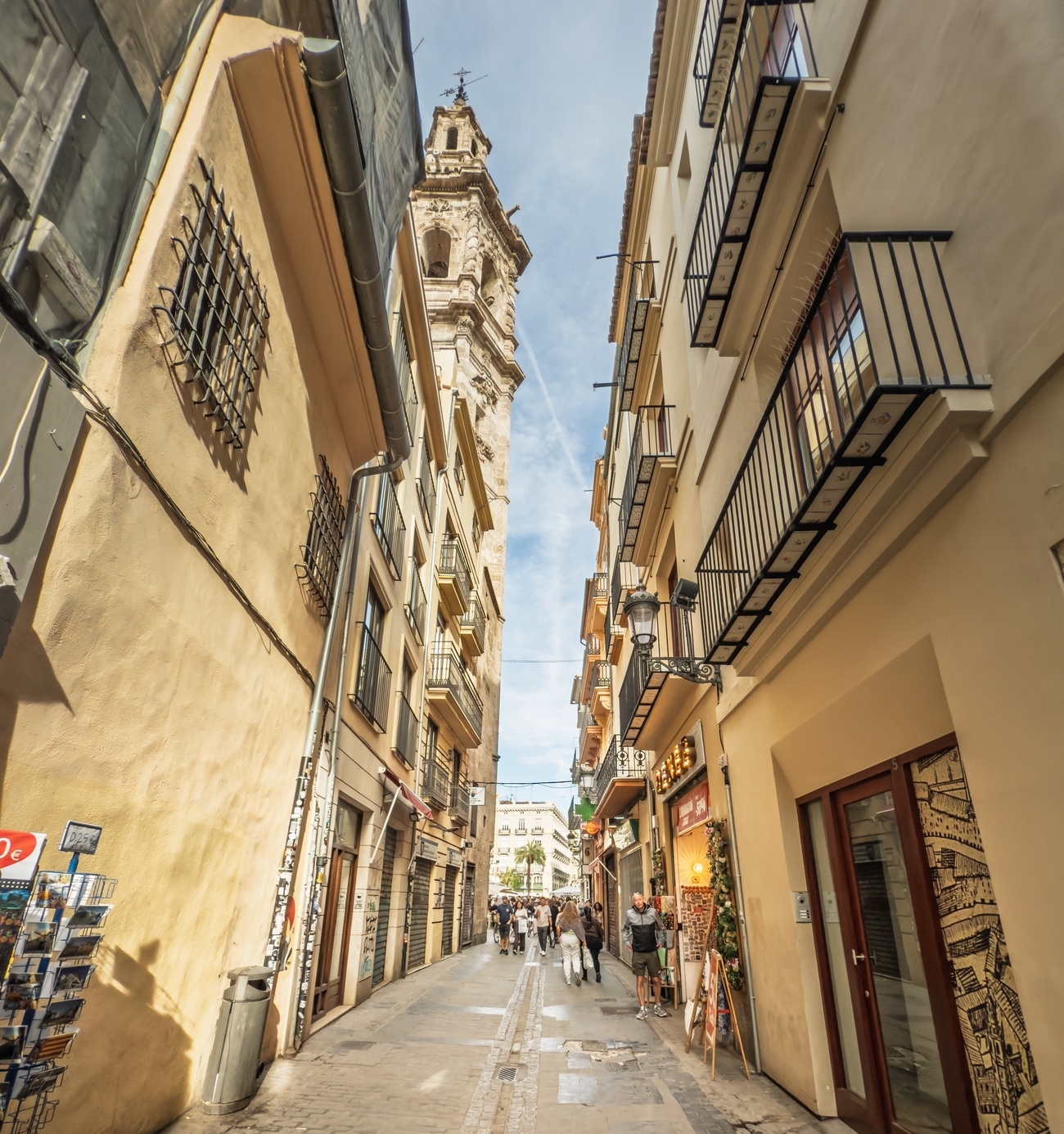
North of the cathedral lies El Carmen, where much more of the medieval street pattern survives. The streets are narrow, irregular and occasionally scruffy, with small squares, historic buildings and street art appearing unexpectedly around corners.
Everything covered in this Valencia Old Town walking guide lies within roughly a twenty-minute walk of everything else. The distances are short. What the quarter requires is time rather than mileage.
Visit La Lonja de la Seda: Valencia's UNESCO Silk
Exchange
Begin at La Lonja de la Seda, Valencia's historic Silk Exchange, and arrive early.
Built between 1482 and 1548, La Lonja dates from the period when Valencia was one of the Mediterranean's great trading cities and had both the wealth and confidence to demonstrate it. What makes the building unusual is that this elaborate Gothic architecture was created for commerce rather than religion. UNESCO inscribed La Lonja de la Seda as a World Heritage Site in 1996.
See the Sala de Contratación
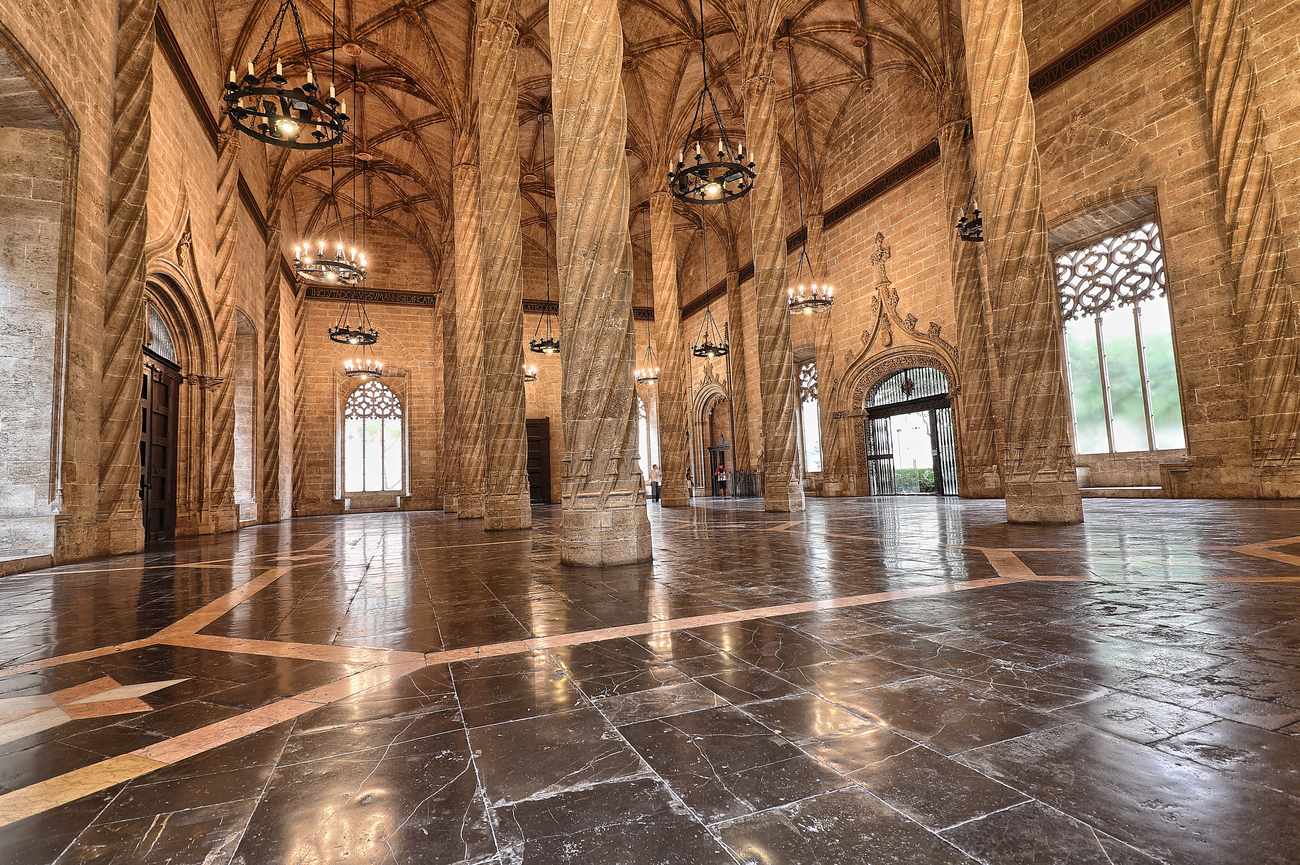
The room that matters is the Sala de Contratación, the vast trading hall.
Eight helical columns rise from the floor without capitals, twisting as they climb before opening into ribbed vaulting twenty-five metres overhead. The effect is unmistakably a grove of palm trees rendered in stone.
For centuries, merchants concluded contracts beneath these columns. A Latin inscription running around the walls instructs them to trade without deceit and keep their oaths. The instruction was presumably necessary.
Visit the Orange Courtyard and Consulate of the Sea
Beyond the trading hall lies a formal orange courtyard, one of the quietest spaces in Valencia Old Town.
Above it is the Consulate of the Sea, where maritime commercial law was administered across the Crown of Aragon. Its richly decorated interior provides a very different setting from the soaring Gothic trading hall below.
Best Time to Visit La Lonja de la Seda
Visit at opening if possible. The Sala de Contratación is at its most impressive when quiet, and the morning light catches the spiralling columns particularly well.
Allow around 45 minutes for La Lonja de la Seda, or closer to an hour if you want time to sit in the orange courtyard.
Visit
Mercado Central: Valencia's Historic Central Market
Directly opposite La Lonja de la Seda stands its modern descendant, and the contrast between the two is one of the pleasures of Valencia Old Town.
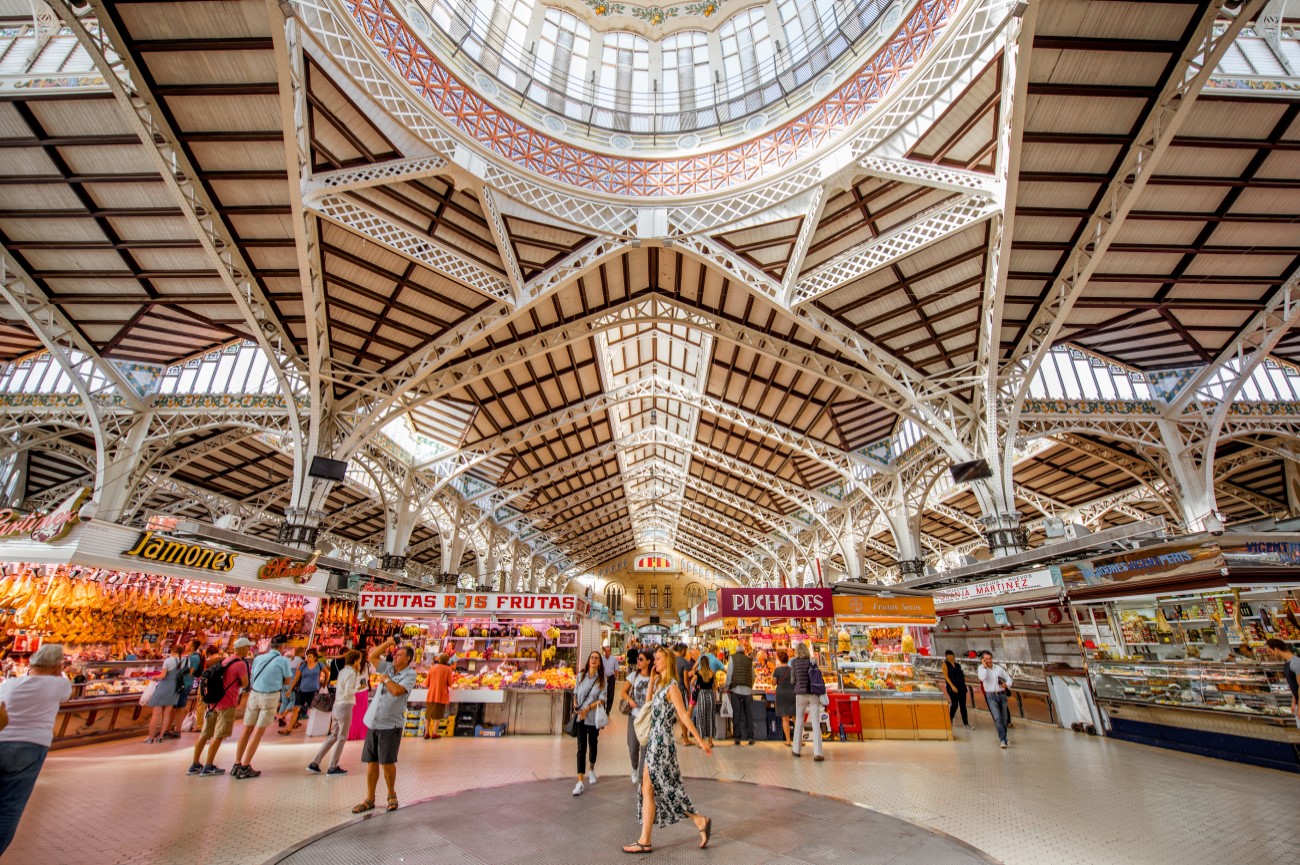
Mercado Central opened in 1928 and is one of the city's finest examples of Valencian Modernista architecture. Iron, glass and colourful ceramics surround a vast central dome, with a distinctive parrot-shaped weathervane above it.
Covering around 8,000 square metres, it remains a working food market rather than a food hall created primarily for visitors.
What to See at Valencia Central Market
Walk through Mercado Central for the architecture and the produce equally.
Fish and seafood counters fill one section, while vegetables from Valencia's surrounding huerta arrive from the market gardens beyond the city. You will also find stalls selling spices, cured meats, cheeses and tiger nuts - the local ingredient used to make horchata.
Look up as well as down. The iron structure, stained glass, ceramics and central dome make the building itself one of the highlights of the Old Town.
Best Time to Visit Mercado Central
Visit in the mid-morning, when the market is at its liveliest and most stalls are open.
Mercado Central is closed on Sundays, so plan your Valencia Old Town walking route accordingly.
Visit Plaza Redonda in Valencia Old Town
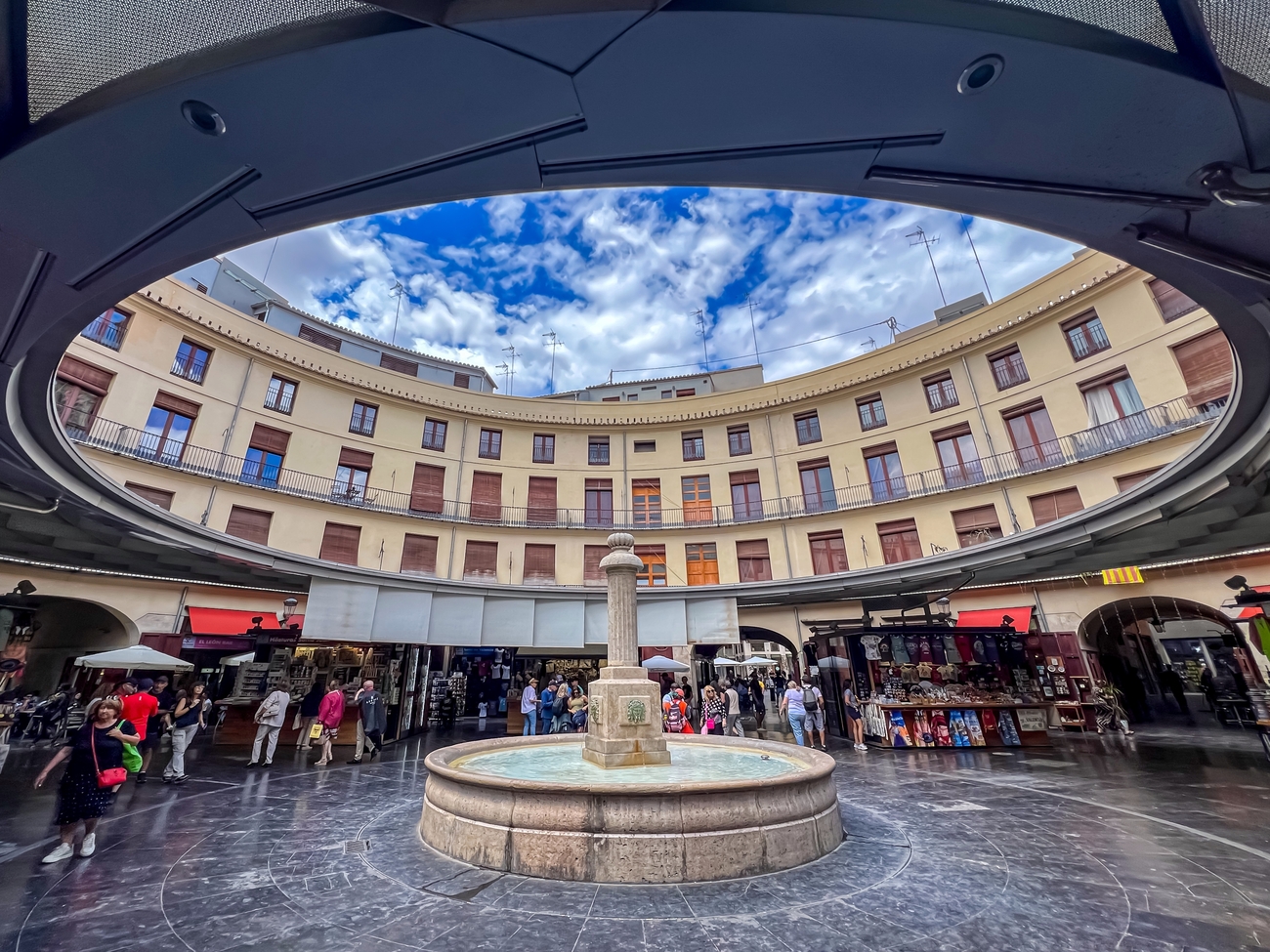
A short walk east of Mercado Central, Plaza Redonda is one of the easiest places in Valencia Old Town to miss.
Built in the mid-nineteenth century on the site of a former slaughterhouse, the circular square is enclosed by small shops beneath a colonnade, with a fountain at its centre. Restored in 2012, it is now known particularly for lace, haberdashery and ceramics.
What to See at Plaza Redonda
The main reason to visit is the unusual geometry. The square is almost completely hidden from the surrounding streets and is reached through four narrow passages rather than a grand entrance.
Allow around 10 to 15 minutes to walk through, look at the architecture and browse the small shops before continuing towards Valencia Cathedral.
Visit
Valencia Cathedral, the Holy Grail and El Miguelete
Valencia Cathedral is best understood as several centuries of architecture layered onto the same site.
A Roman temple, Visigothic cathedral and mosque all stood here before construction of the present cathedral began in 1262. Work continued for centuries, which is why the exterior combines Romanesque, Gothic and Baroque architecture.
Walk around the cathedral before going inside. The Puerta del Palau, its Romanesque doorway, is the oldest surviving part of the building and one many visitors miss.
See the Holy Grail at Valencia Cathedral
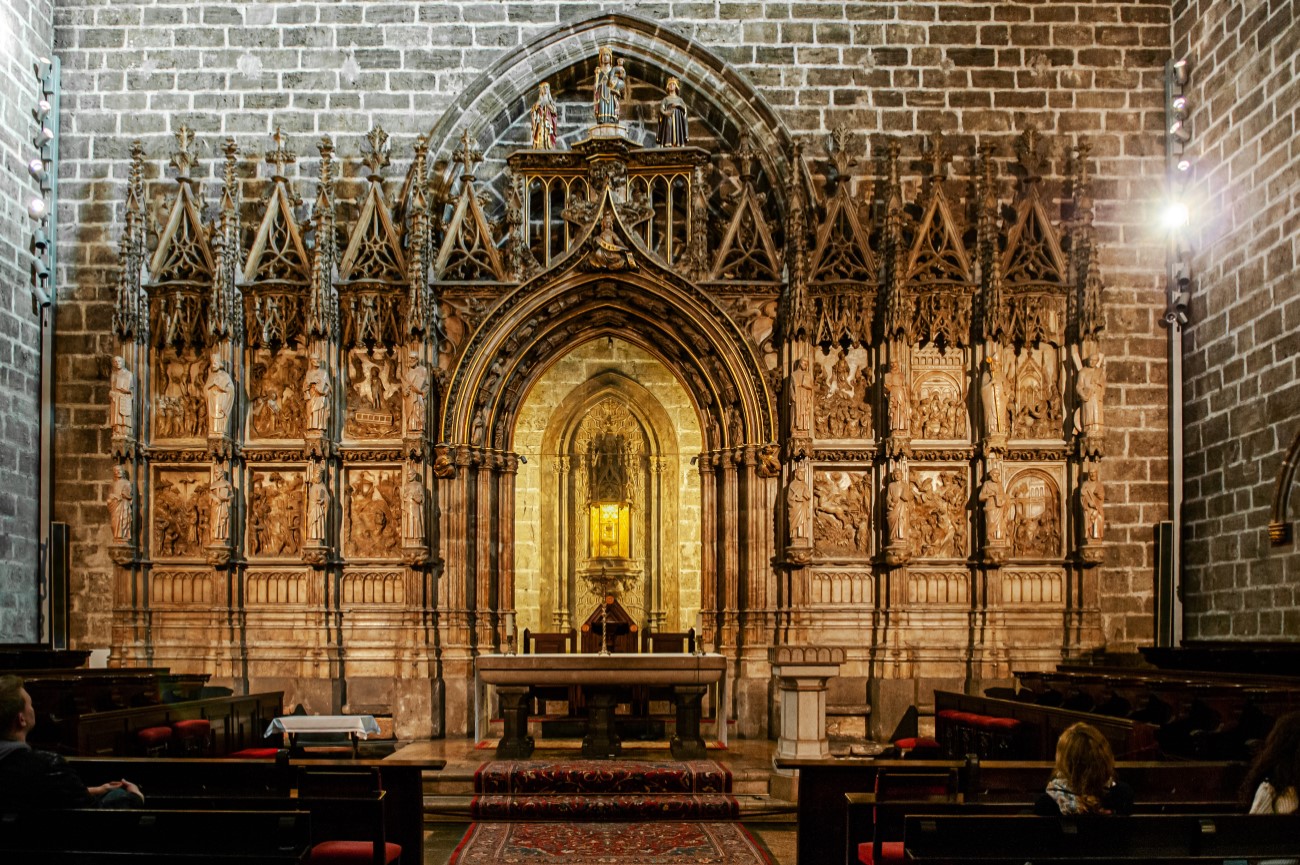
The Chapel of the Holy Chalice, or Capilla del Santo Cáliz, holds the agate cup traditionally identified as the Holy Grail.
The cup itself has been dated to between the fourth century BC and the first century AD and is believed to have originated in the eastern Mediterranean. Documentary evidence places it at the monastery of San Juan de la Peña by the eleventh century and in Valencia since 1437.
Its authenticity cannot be proved or disproved, but its religious significance is considerable. Both Pope John Paul II and Pope Benedict XVI celebrated Mass using the chalice.
The chapel is worth seeing independently of the claim. Its fifteenth-century vaulting and alabaster altarpiece make it one of the most atmospheric spaces inside Valencia Cathedral.
Climb El Miguelete Bell Tower
El Miguelete, Valencia Cathedral's octagonal bell tower, was begun in 1381 and completed in 1429.
A spiral staircase of 207 steps leads to the terrace, where the whole of Valencia Old Town comes into view: terracotta rooftops, Mercado Central, the curve of the Turia Gardens and, on a clear day, the Mediterranean beyond.
Climb El Miguelete early in your visit. Seeing the historic centre from above makes the streets you explore afterwards much easier to understand.
Best Time to Visit Valencia Cathedral
Visit the cathedral in the late morning.
For El Miguelete, aim to climb before 11:00, when the terrace is generally more comfortable and the light across the Old Town is softer.
See the Tribunal de las Aguas in Valencia
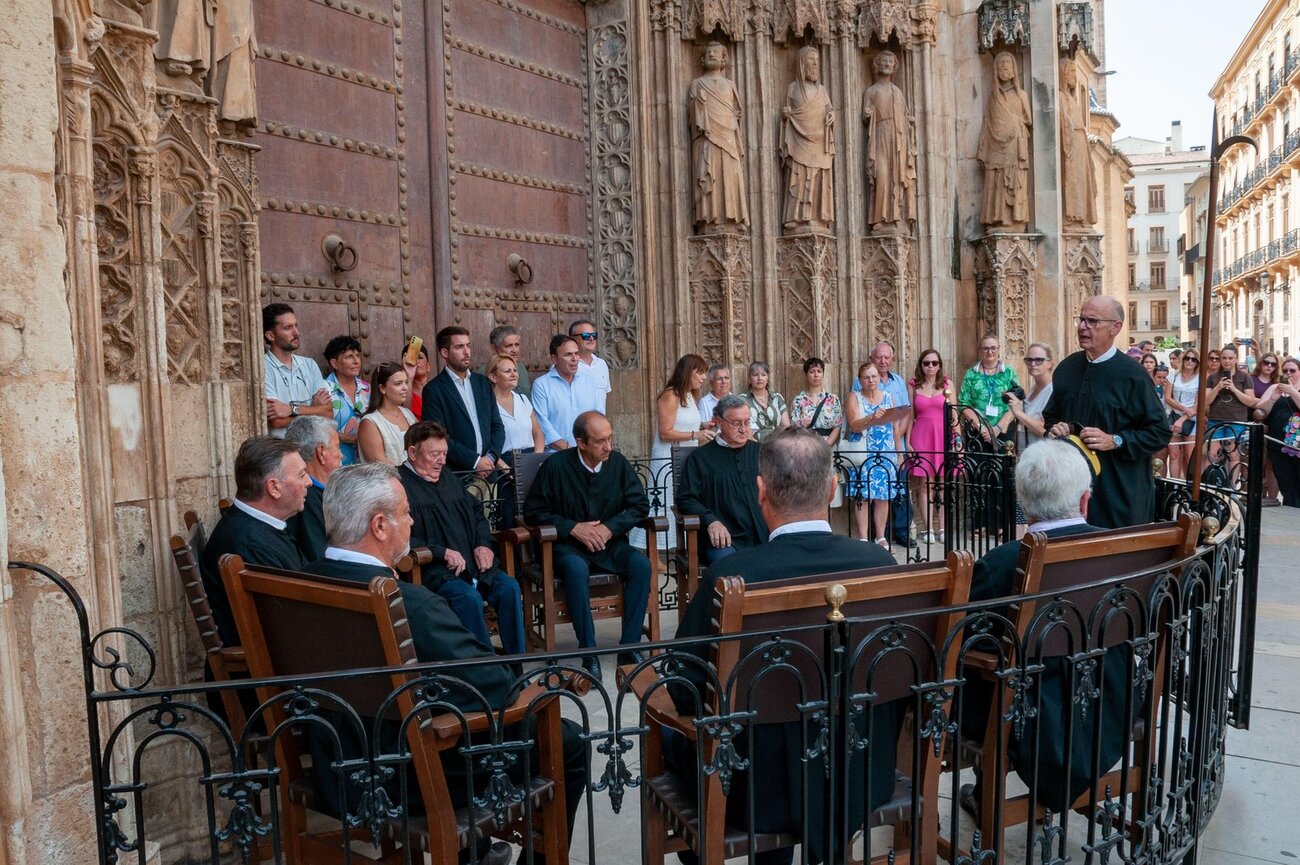
Every Thursday shortly before noon, eight men take their seats in a semicircle of leather chairs outside the Puerta de los Apóstoles of Valencia Cathedral.
They are the elected representatives of the eight historic irrigation channels that water the huerta surrounding Valencia. Farmers bring disputes over water rights before them, with cases heard aloud in Valencian and decided immediately. There are no lawyers, no written records and no appeals.
The Tribunal de las Aguas is generally regarded as one of the oldest continuously functioning judicial institutions in Europe, with origins traced to around the tenth century. UNESCO recognised it as Intangible Cultural Heritage in 2009.
The entire proceeding usually lasts around fifteen minutes. If you are in Plaza de la Virgen on a Thursday at noon, it is one of the most distinctive traditions you can witness in Valencia - and many visitors walk past without realising what is happening.
Visit Plaza de la Virgen in Valencia Old Town
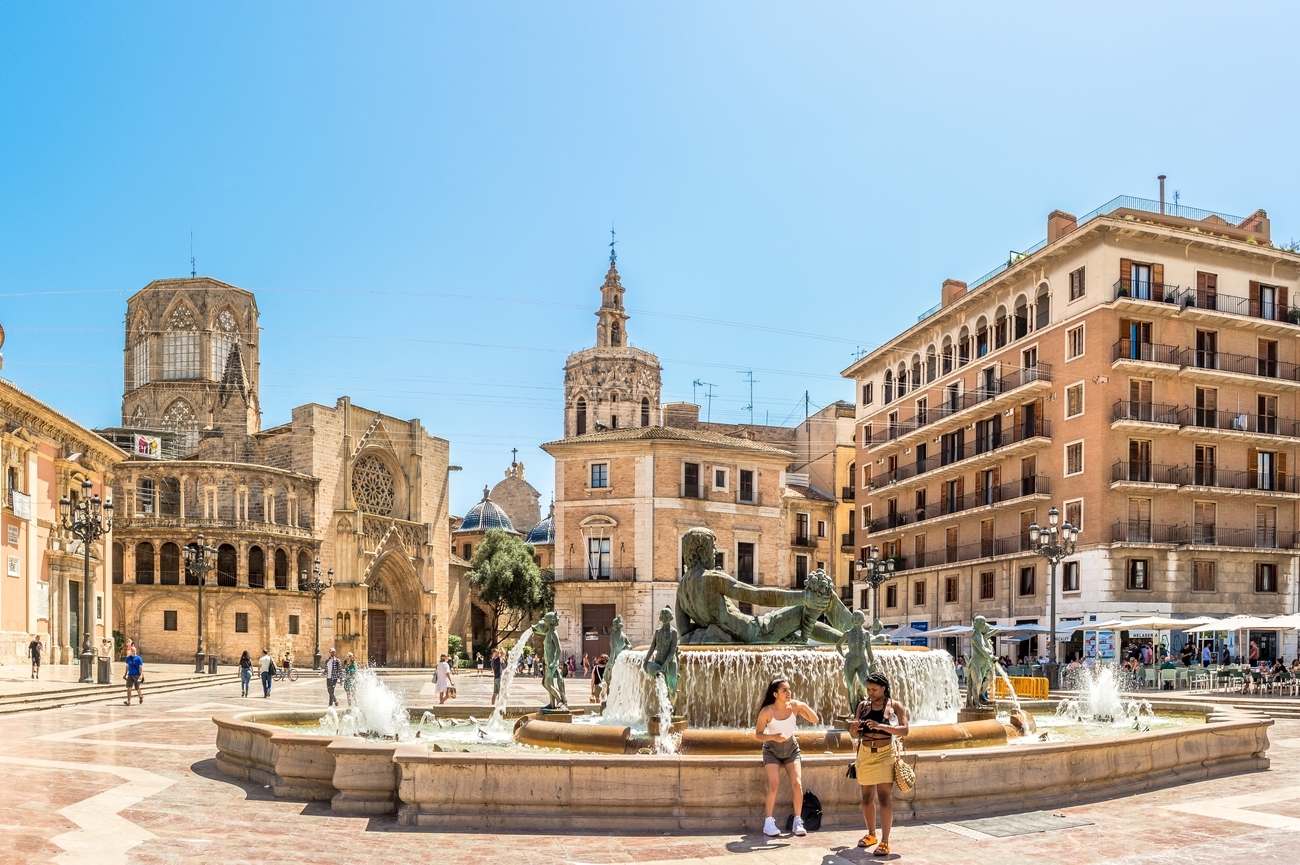
Plaza de la Virgen, immediately north of Valencia Cathedral, is one of the main gathering places in the historic centre and a natural place to pause during a walking route through the Old Town.
See the Turia Fountain
At the centre of the square, the Turia Fountain represents the river as a reclining male figure surrounded by eight female figures carrying water vessels. Each represents one of the historic irrigation channels associated with the Tribunal de las Aguas.
On the eastern side stands the Basilica de la Virgen de los Desamparados, home to the image of Valencia's patroness and an oval dome frescoed by Antonio Palomino.
Discover Roman Valencia at the Almoina Archaeological Centre
Beneath Plaza de la Virgen lie the remains of the forum of Roman Valentia.
The nearby Almoina Archaeological Centre reveals the layers beneath the modern city, from Roman streets through Visigothic and Islamic Valencia. It is one of the clearest places in the Old Town to understand how successive versions of the city were built on the same ground.
Best Time to Visit Plaza de la Virgen
Come in the early evening, when the square begins to fill and the surrounding terraces become livelier.
It is also a good place to stop for your first horchata before continuing through Valencia Old Town.
Visit the Torres de Serranos and Torres de Quart
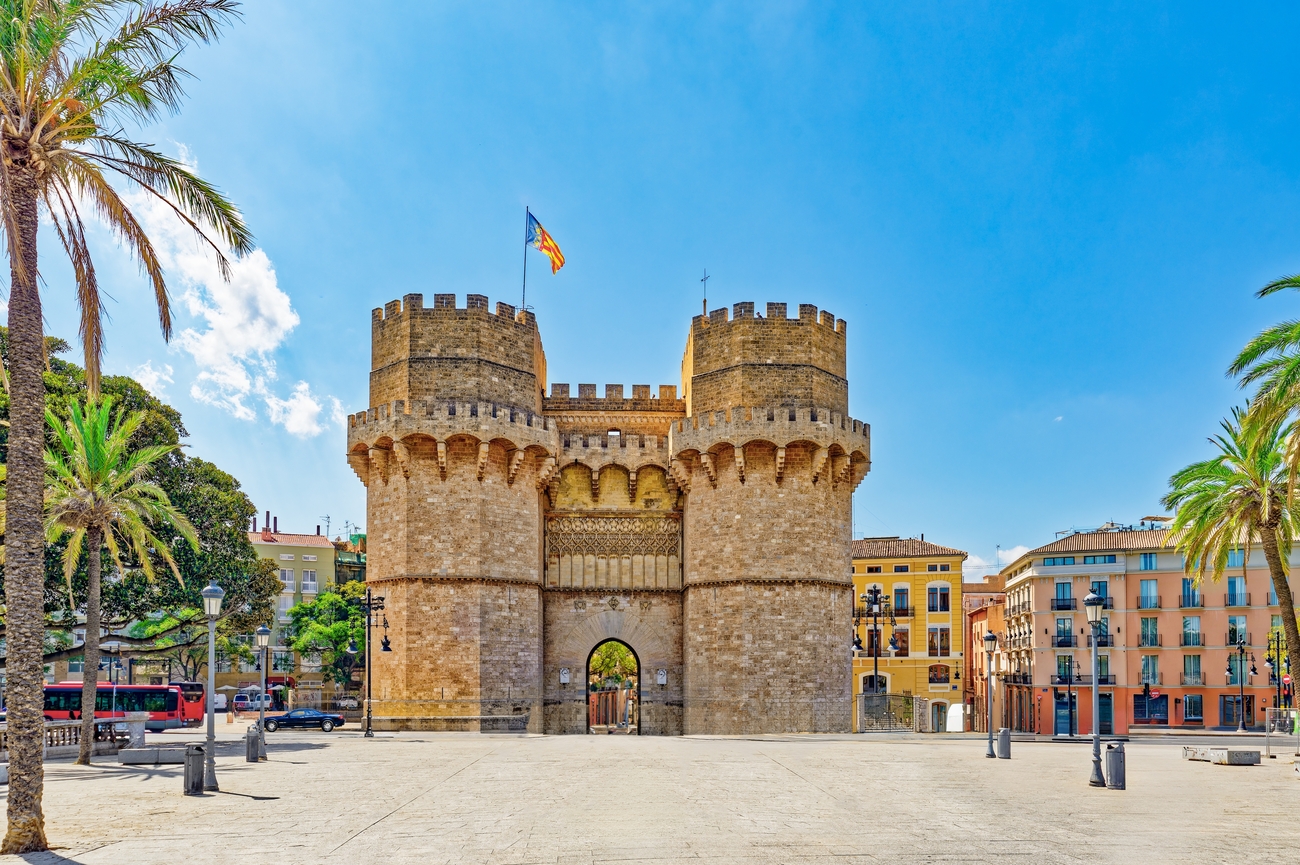
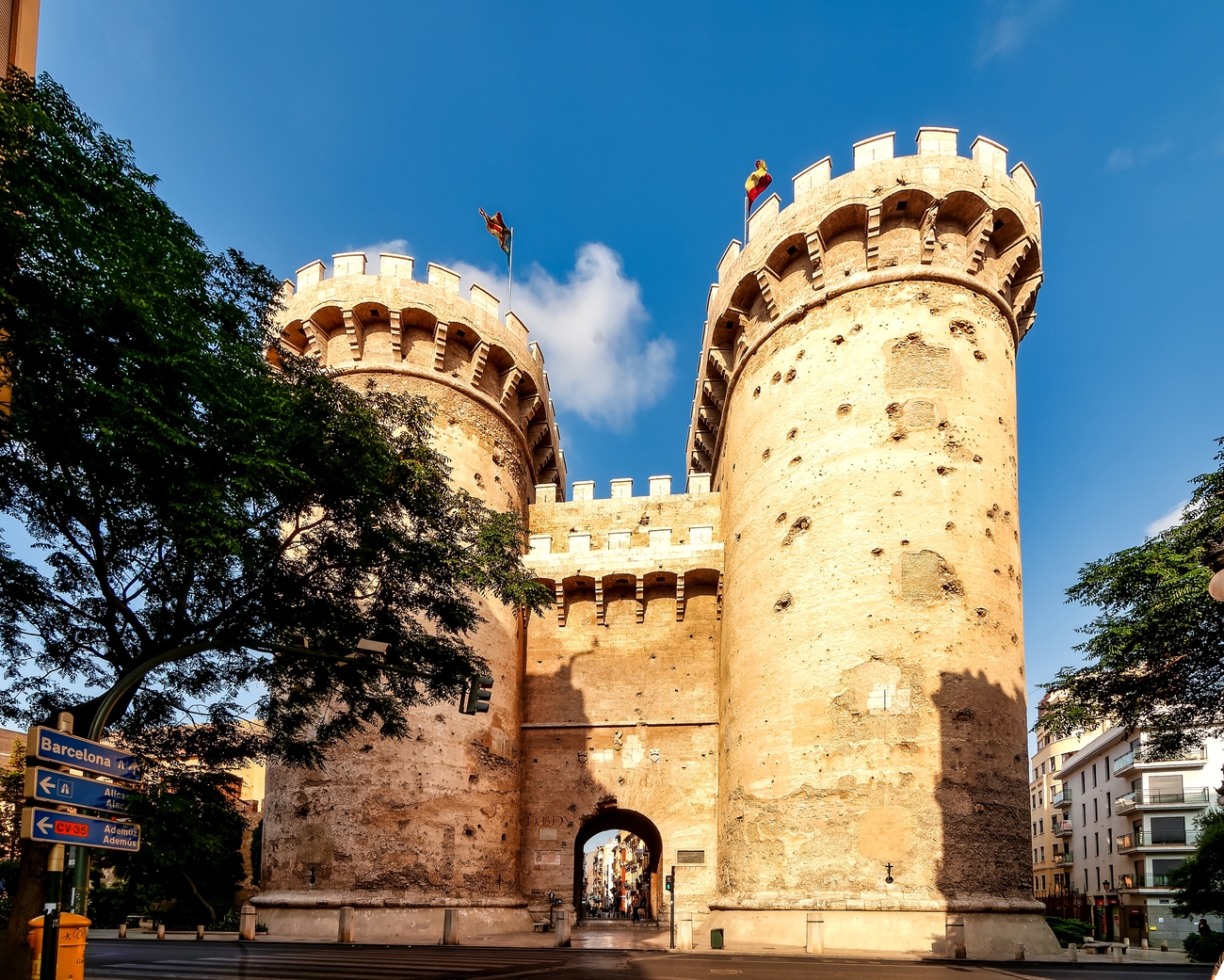
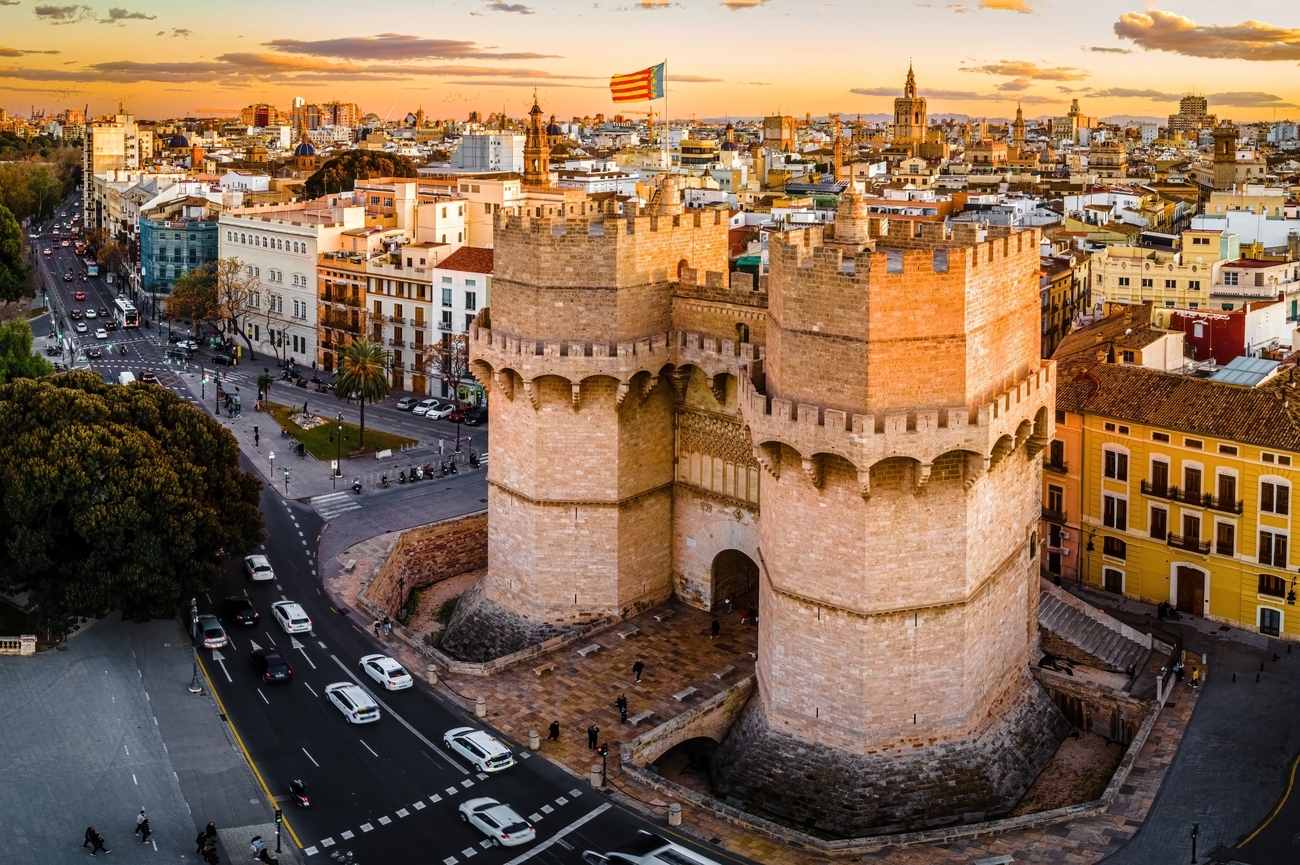
Valencia's two surviving medieval gates, the Torres de Serranos and Torres de Quart, stand roughly a kilometre apart and can both be climbed.
Climb the Torres de Serranos
Completed in 1398, the Torres de Serranos guarded the northern entrance to Valencia and later served for centuries as a prison for nobles.
From the terrace, you get one of the best views over the Turia Gardens and the northern edge of the Old Town. The towers also play an important role during Las Fallas, when the festival's ceremonial opening takes place here.
See the Cannon Damage at Torres de Quart
The Torres de Quart, completed in 1460, guarded the western road towards Madrid.
Its outer walls still carry visible damage from French artillery during the siege of Valencia in 1808. The pockmarked stone makes the city's military history unusually tangible.
Best Time to Visit Valencia's Medieval Towers
Visit the Torres de Serranos around sunset, when the light falls along the Turia Gardens. Both towers are inexpensive to enter and generally less crowded than Valencia's better-known attractions.
From the Serranos terrace, look east along the former Turia riverbed and you can trace the route towards the City of Arts and Sciences around three kilometres away.
Walking between the medieval towers and Santiago Calatrava's modern complex gives you one of Valencia's sharpest architectural contrasts in about forty minutes. For what to see when you arrive, read our first-timer's guide to the City of Arts and Sciences.
Walk
Through El Carmen in Valencia Old Town
North and west of Valencia Cathedral, the streets narrow and the character of the Old Town changes.
El Carmen preserves the medieval street pattern more completely than much of the historic centre. The neighbourhood spent long periods neglected during the twentieth century, which helped leave its irregular lanes, small squares and older buildings largely intact.
The former Convent of El Carmen, now a cultural centre, anchors the quarter, while the streets around Plaça del Tossal and Carrer Alta are best explored without a rigid route.
Discover El Carmen's Street Art
El Carmen is also the heart of Valencia's street art scene.
Murals, painted shutters, stencils and smaller independent pieces appear throughout the neighbourhood, particularly around Carrer Alta and the surrounding streets. The work changes constantly, so specific murals can disappear while new ones take their place.
For the artists, streets and neighbourhoods worth looking for, see our guide to Valencia's street art.
Best Time to Visit El Carmen
Visit in the evening if you can.
El Carmen becomes livelier after dark, when the bars and restaurants fill and the medieval streets take on a very different atmosphere from during the day.
Where
to Pause in Valencia Old Town
Walking Valencia Old Town is less about covering distance than knowing when to stop.
Sit in the Courtyard of La Lonja de la Seda
The orange courtyard at La Lonja de la Seda is one of the quietest enclosed spaces in the historic centre and is easy to overlook once visitors leave the trading hall.
If you have time, sit here for a few minutes before continuing through the Old Town.
Stop at Plaza del Patriarca or Plaza de la Virgen
Plaza del Patriarca, south of Valencia Cathedral, is shaded through much of the afternoon and usually quieter than the city's best-known squares.
Later in the day, the steps around the Turia Fountain in Plaza de la Virgen become one of the best informal places to sit and watch the square fill.
Have Horchata in Plaza de la Reina
For a longer stop, choose one of the terraces in Plaza de la Reina facing Valencia Cathedral's Baroque façade.
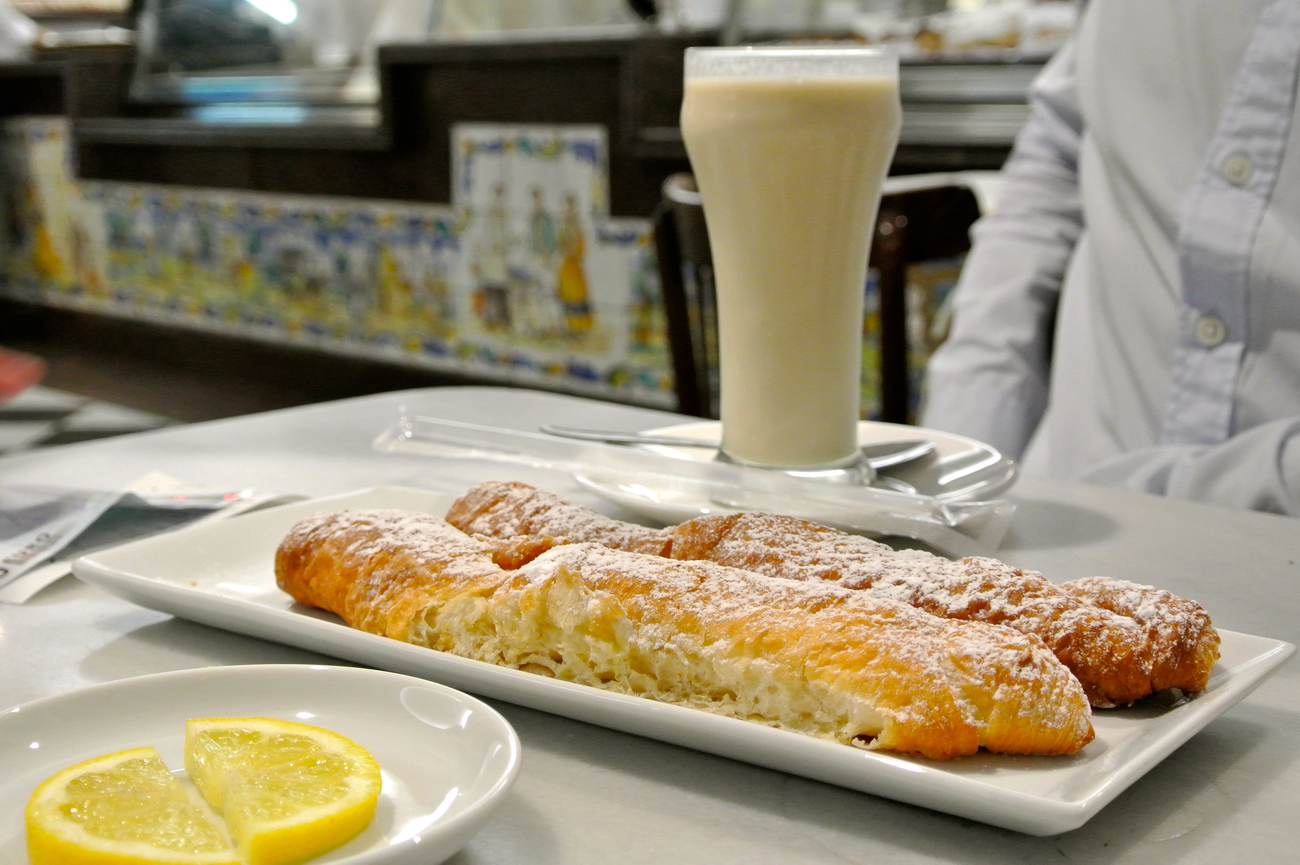
In the afternoon, order horchata rather than coffee. Made from tiger nuts traditionally grown around Alboraya, just north of Valencia, it is served cold and often accompanied by fartons, long soft pastries designed for dipping.
How
to Walk Valencia Old Town in One Day
A full day in Valencia Old Town works best when you plan the route around opening hours, the heat and the changing light rather than simply following the map.
Morning: La Lonja, Central Market and Valencia Cathedral
Start at La Lonja de la Seda when it opens, before the larger groups arrive. Cross directly to Mercado Central while the market is at its busiest, then continue through Plaza Redonda towards Valencia Cathedral.
Visit the cathedral in the late morning and climb El Miguelete before 11:00 if possible, when the terrace is generally more comfortable.
If you are visiting on a Thursday, be outside the Puerta de los Apóstoles at noon for the Tribunal de las Aguas.
Afternoon: Plaza de la Virgen and the Almoina
Take a long lunch between around 14:00 and 16:00, when much of the historic centre becomes quieter.
Resume your walk at the Almoina Archaeological Centre and Plaza de la Virgen in the late afternoon, when the temperature drops and the square begins to fill again.
Evening: Torres de Serranos and El Carmen
Walk north to the Torres de Serranos and climb the towers around sunset for views over the Turia Gardens.
As the light fades, continue into El Carmen. Its narrow medieval streets become livelier in the evening, making this a natural place to finish the walking route and stay for dinner.
This sequence follows the rhythm of the Old Town rather than simply its geography. On our Valencia journey, a guided walk through the historic centre is arranged in advance, with key visits such as the cathedral and La Lonja incorporated into the wider stay.
Practical
Information for Visiting Valencia Old Town
How Long Do You Need in Valencia Old Town?
The main sights in Valencia Old Town cover roughly three kilometres in total, so the area is compact and easy to explore on foot. A full day is ideal if you want to visit the major landmarks without rushing.
Is Valencia Old Town Accessible?
Most streets are pedestrianised and paved, although parts of El Carmen are cobbled and uneven.
El Miguelete is reached by a spiral staircase and has no lift.
What to Wear in Valencia Cathedral
Visitors to Valencia Cathedral and the Basilica de la Virgen de los Desamparados should keep shoulders and knees covered.
Opening Days and Closures
Mercado Central is closed on Sundays.
Valencia Cathedral generally has shorter visiting hours on Sundays and during religious festivals.
The Tribunal de las Aguas meets on Thursdays only and does not sit on public holidays.
Best Time of Year to Walk Valencia Old Town
October to May is particularly comfortable for exploring the historic centre, with cooler temperatures for walking and sightseeing.
In July and August, plan most of your walking for the early morning or after 18:00, when the heat is less intense.
Best
Time of Day to Walk Valencia Old Town
Valencia Old Town has a particular hour, and it is not the one most visitors give it.
Walk the Old Town in the Evening
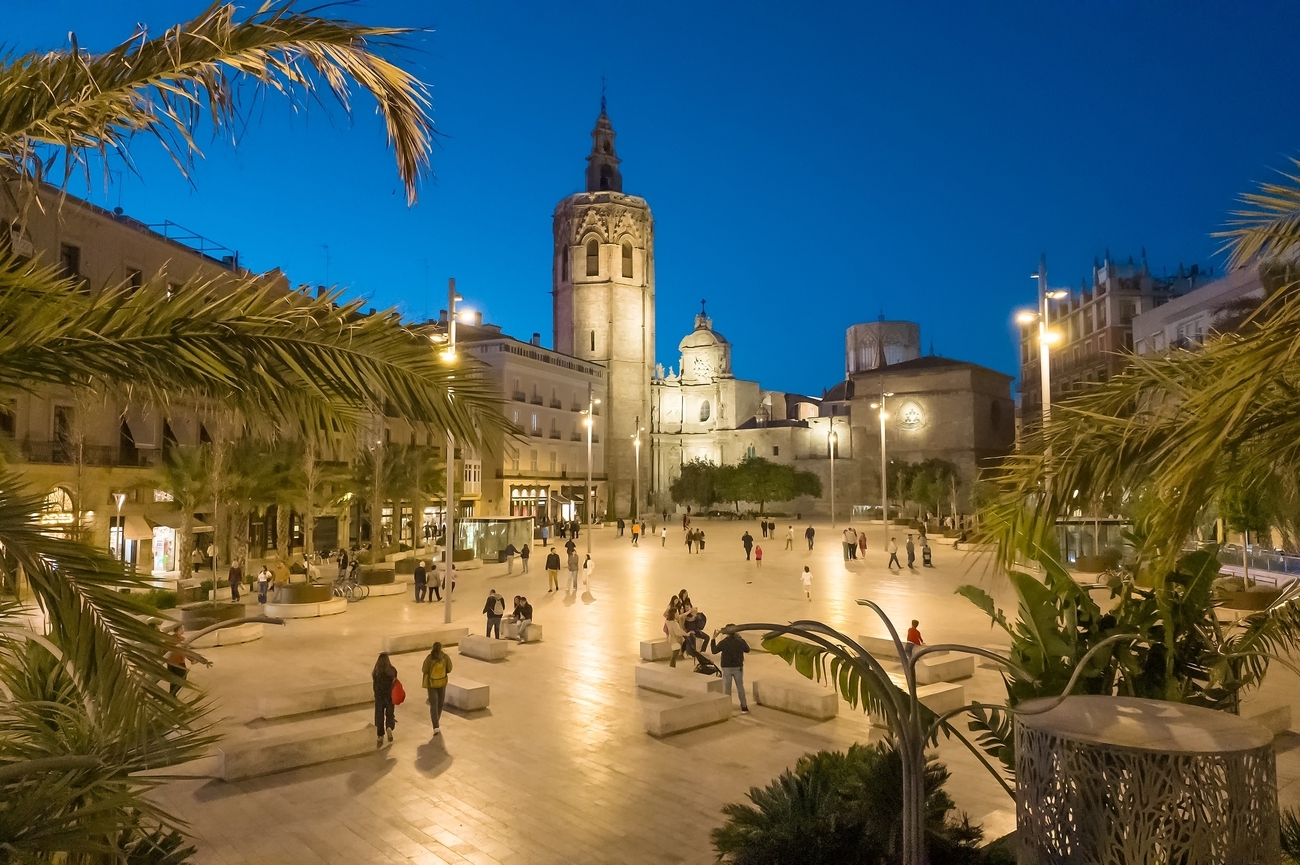
Between May and September, around 20:00 is one of the best times to walk through the historic centre. The stone still holds the day's warmth, many tour groups have gone, and the squares begin filling with people who live in the city.
Valencia Cathedral is illuminated, La Lonja de la Seda is closed and its Gothic exterior stands out more clearly against the evening sky. Plaza de la Virgen fills with tables, conversation and the slower rhythm of the city after the heat of the afternoon.
See Valencia Old Town Twice
If you have time, walk part of the same route again in the evening without entering anything.
The buildings you explored from the inside earlier in the day become part of the skyline instead, and the Old Town feels very different once the monuments have closed.
Staying for a full week gives you time for exactly that kind of second visit, which is why we build our Valencia journey the way we do.


Let us know what you love, where you want to go, and we’ll design a one-of-a-kind adventure you’ll never forget.
Get in touch
Miriam
Travel Specialist

Romina
Travel Specialist

Laura
Travel Specialist
Our offices:



Revigorate, Iberian Escapes and Algarve Lifestyle are the registered brand names of APCS Lda . We are a fully authorised travel agency licensed by Turismo de Portugal RNAVT/6867.
In the event of a dispute, the consumer may refer to: RAL - Centros de Arbitragem
Avª. 5 de Outubro, nº. 55, R/C Dtº. 8000-075 Faro, Portugal | Tel: +351 289 823 135 *
* national landline call
E-mail: info@consumoalgarve.pt| www.consumidoronline.pt | Mon to Fri: 9:00 - 13:00 / 14:00 - 17:00