Valencia Itinerary: 7 Days of Architecture, Paella and Beaches
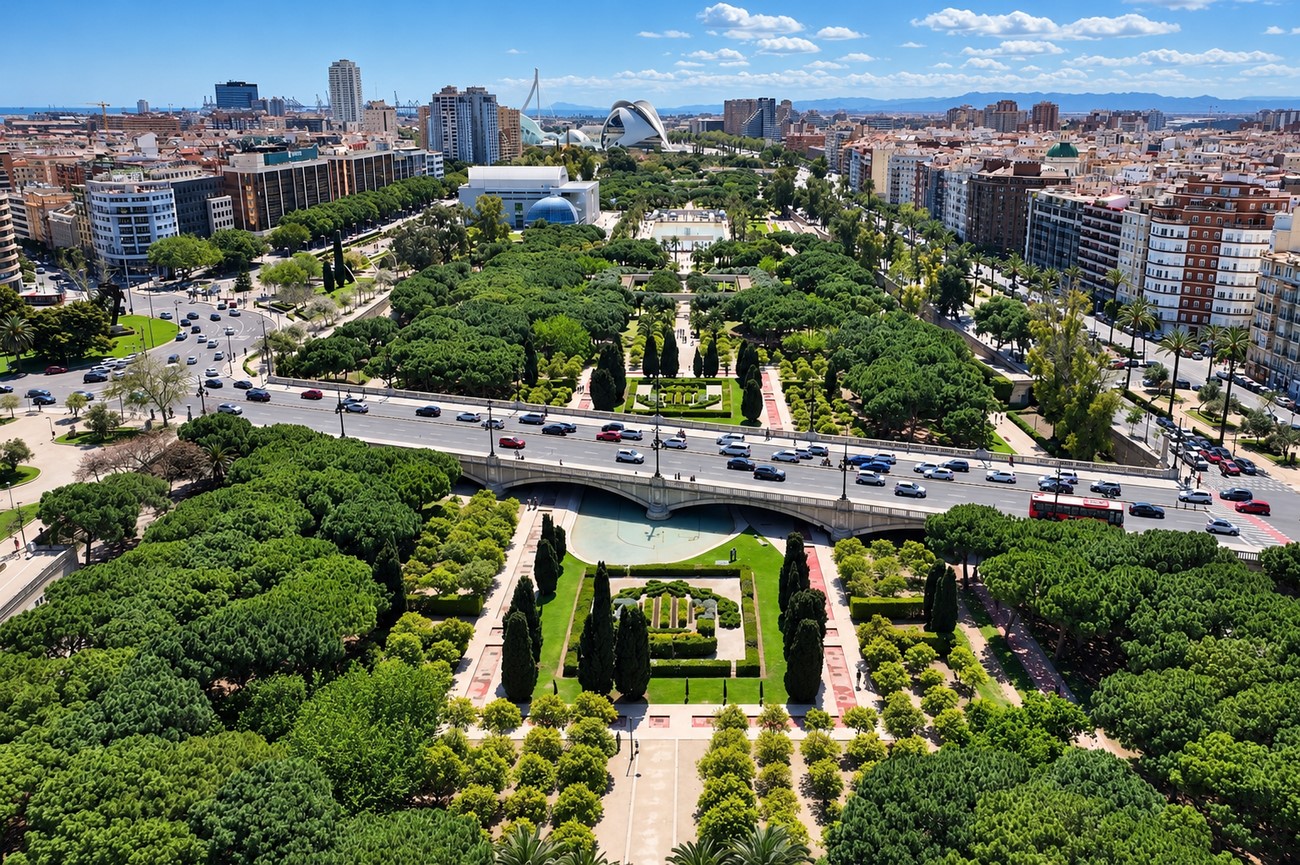
Nine kilometres of park run through the middle of Valencia, and there is a football pitch where a river used to be.
In October 1957 the Turia broke its banks and flooded the city. Afterwards, Valencia moved the water rather than rebuild the walls, diverting the river south and planting the empty bed it left behind. The bridges still stand. They cross gardens now, while people walk, cycle and play football eight metres below the traffic.
That former riverbed is the reason a Valencia itinerary works the way it does. The medieval city sits inside its curve. Follow it seawards and it leads to the white structures of the City of Arts and Sciences, then the port and finally the beach. Almost everything worth reaching in Valencia connects naturally to this green spine through the city.
Seven days gives you time to walk it in both directions, return to places at different hours and get beyond the version of Valencia seen by travellers who give the city two nights on the way to Andalusia. A week here is a different experience, and it is the kind of stay behind the Valencia journey we build for guests who want it handled.
How
Valencia Is Laid Out
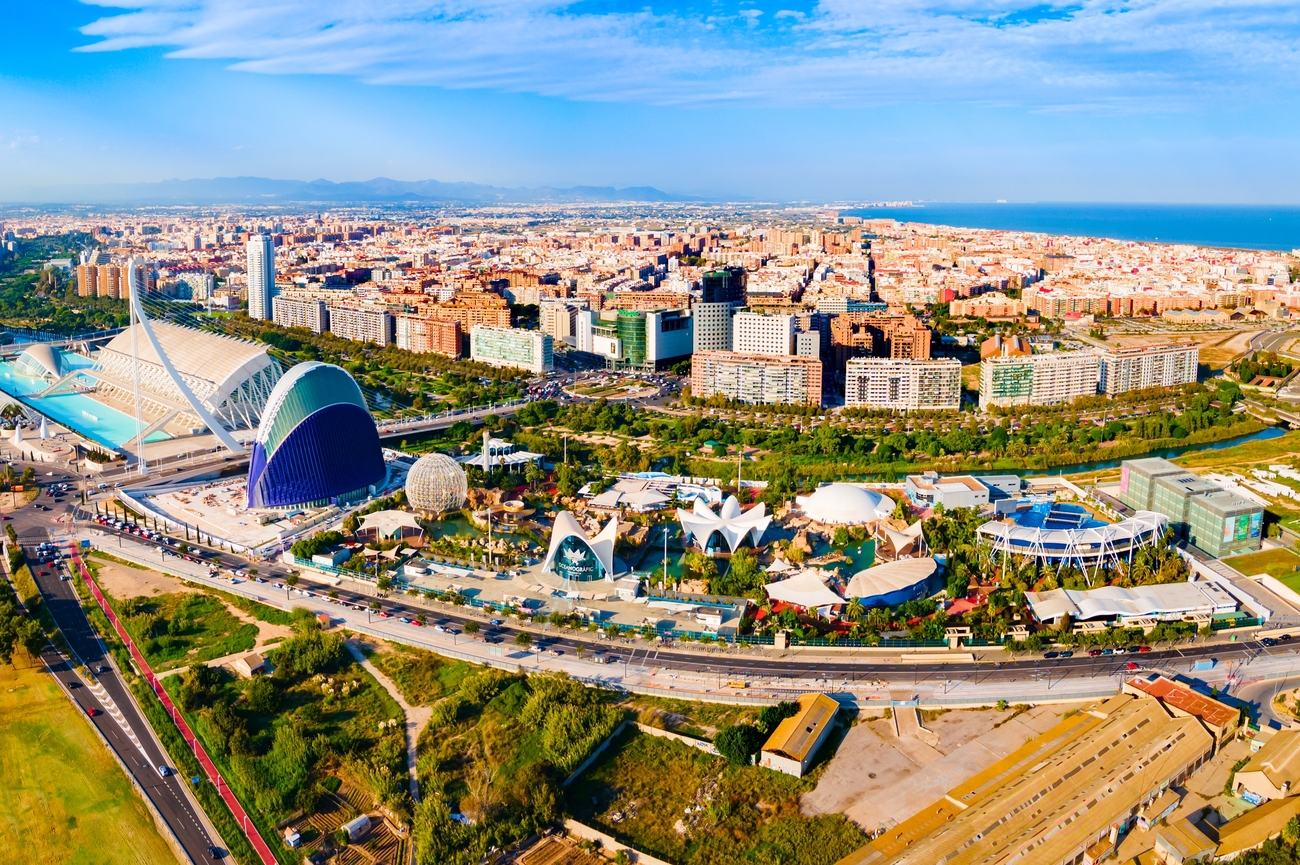
Valencia is a compact city organised around the former Turia riverbed. Ciutat Vella, the old city, sits inside its curve, while the Turia Gardens run east towards the City of Arts and Sciences, the port and the Mediterranean beaches.
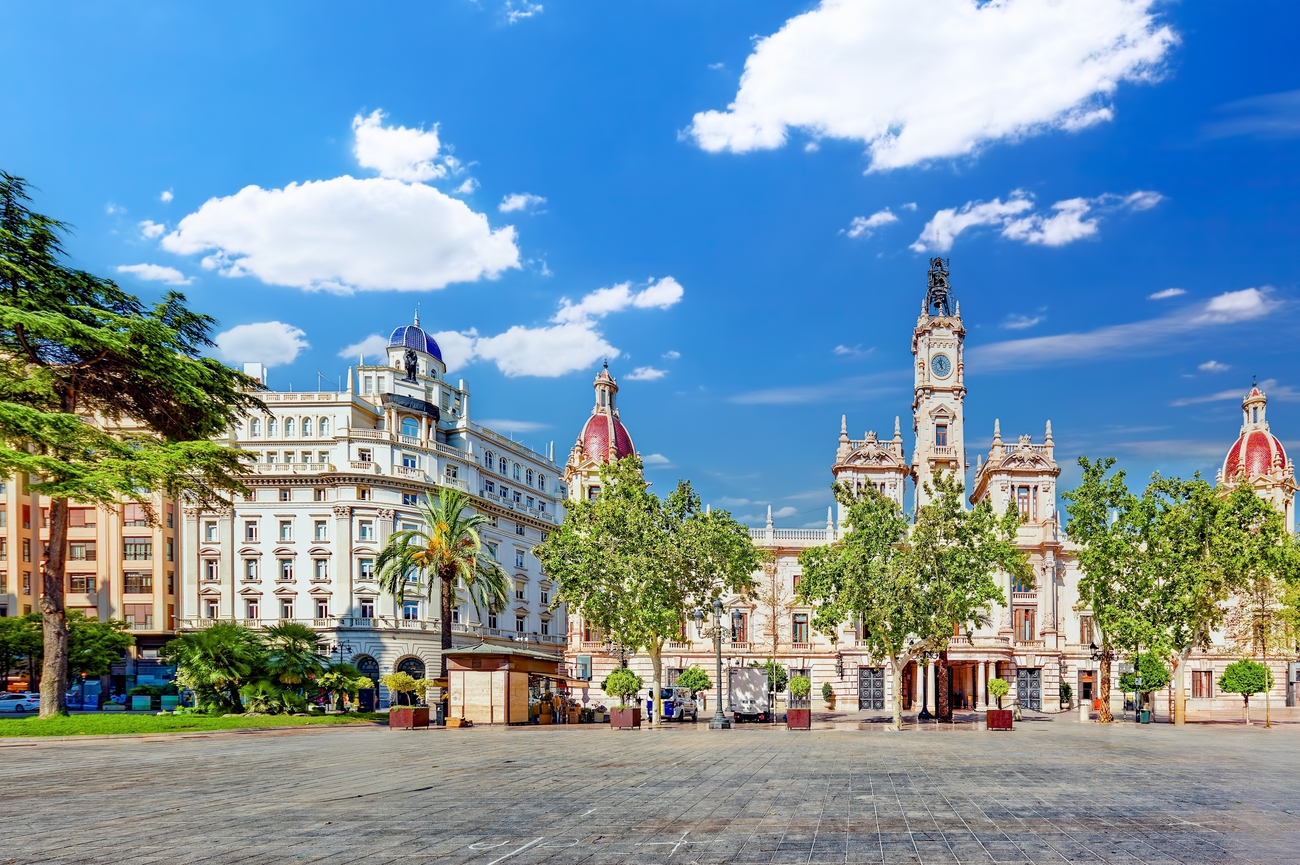
Ciutat Vella holds the cathedral, the Silk Exchange, the Central Market and the two surviving gates of the medieval wall. The wall itself came down in the nineteenth century, so its former boundary now reads as a ring of broad streets with two enormous stone towers standing on it, marooned and magnificent.
El Carmen occupies the northern part of the old city. Narrow, slightly rough at the edges and covered with Valencia's densest concentration of street art, it has the feel of a quarter that spent decades being ignored and then found a new life.
Ruzafa sits just south of the centre, beyond the railway station. This is contemporary Valencia: independent restaurants, small bars, galleries and a neighbourhood market that still feels like part of the district rather than an attraction built for visitors.
The City of Arts and Sciences occupies the seaward end of the former riverbed, where the Turia once widened towards the port. Six extraordinary structures rise from the gardens, none of them modest.
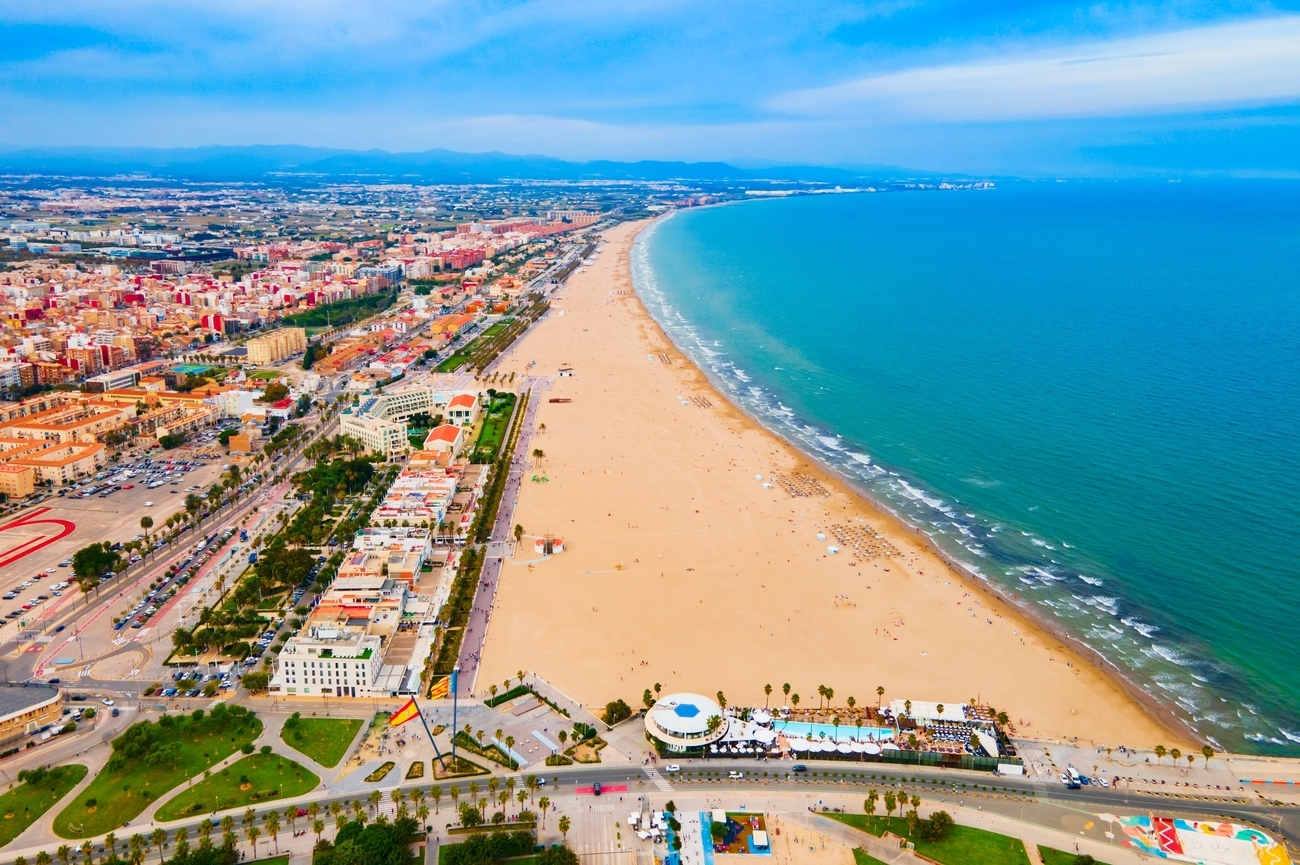
Beyond them are El Cabanyal and the beaches. Cabanyal was the fishermen's quarter, with tiled house fronts and low streets laid out in a grid, while the broad beaches beyond remain places Valencians actually use.
Understanding this geography matters. Visitors who fight the map spend unnecessary time crossing the city. Follow the Turia Gardens instead and Valencia begins to connect naturally: old city, modern architecture, port and beach, with much of the city's everyday life unfolding along the way.
Day 1: Explore the Old Town and Plaza de la Virgen
The temptation on arrival is to start sightseeing. Resist it.
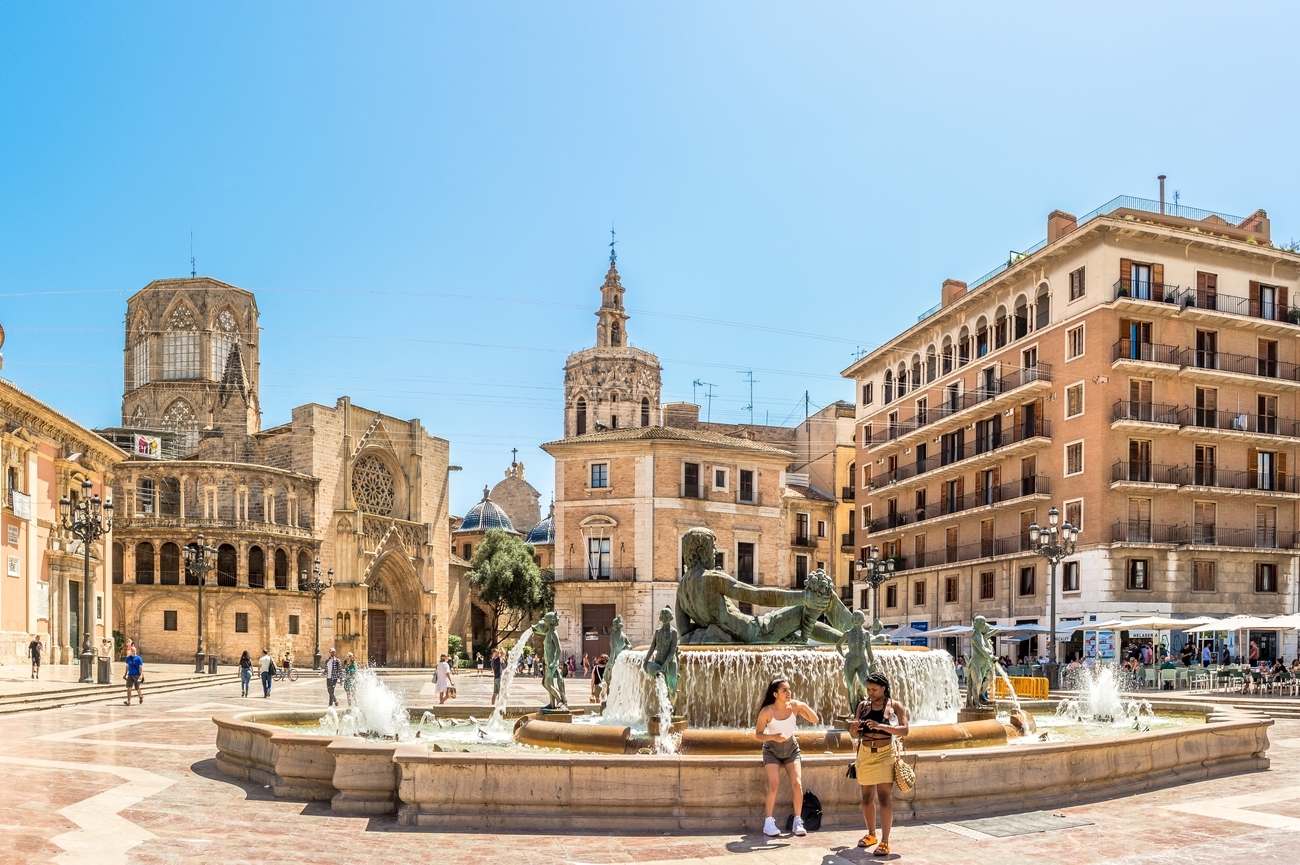
Your first evening in Valencia is better spent doing very little. Drop your bags and walk into the old city towards Plaza de la Virgen, a historic square built over the layers of Roman Valentia and centred on a fountain representing the Turia and its irrigation channels. Find a table, sit down and let the city come to you.
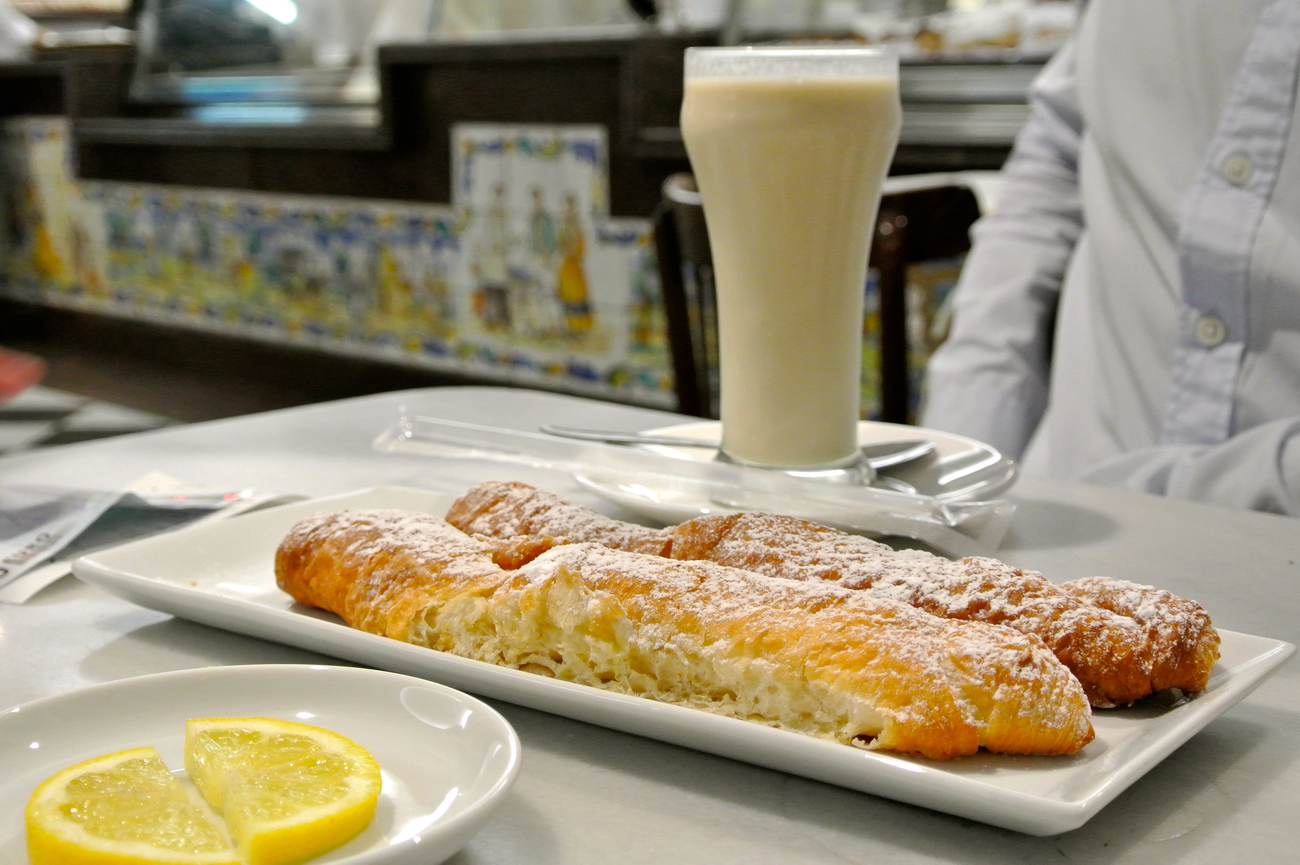
Order horchata. Made from tiger nuts and served very cold, it usually comes with long, soft pastries called fartons for dipping. It tastes of almond and cinnamon with something faintly grassy underneath. The first glass can be confusing. The second is often the moment people decide they like Valencia.
Then walk without direction for an hour. The old city is small enough that getting lost has a natural time limit, and the streets around the cathedral in the early evening have a particular quality of noise: shutters going up rather than down, families appearing in the squares and the sound of a city preparing to eat late.
For your first evening in Valencia, that is enough. There will be time for monuments, museums and planned routes tomorrow. Tonight is about getting your bearings and beginning to understand the rhythm of the city.
Day 2: Explore the Old Town, Cathedral, La Lonja and Central Market
The four essential sights in Valencia's Old Town sit within about four hundred metres of one another. That makes this the ideal day to explore Ciutat Vella on foot.
Visit La Lonja de la Seda
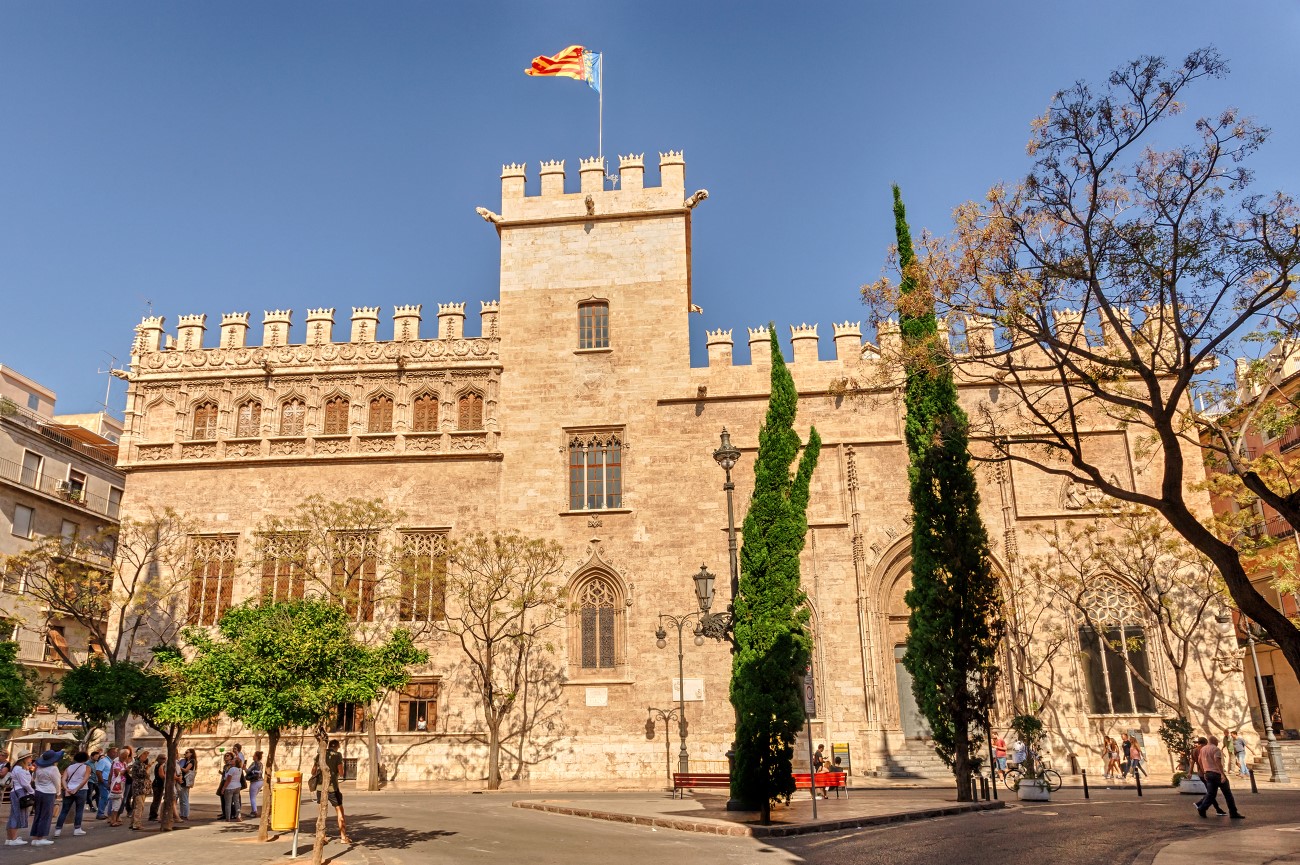
Start at La Lonja de la Seda, Valencia's fifteenth-century Silk Exchange, and go early. This UNESCO World Heritage Site was built when Valencia was one of the great trading cities of the Mediterranean and had the wealth to prove it.
The room that matters is the Sala de Contratación, the trading hall. Eight helical columns rise from the floor and split into ribs across the vaulting, spiralling as they climb. The effect is unmistakably a grove of palm trees rendered in stone. Merchants closed contracts beneath them for four centuries. An inscription around the walls instructs them to trade honestly, which suggests the instruction was needed.
Allow around forty-five minutes and arrive at opening, when the hall is quiet and the morning light catches the columns.
Visit Valencia Cathedral and the Holy Grail
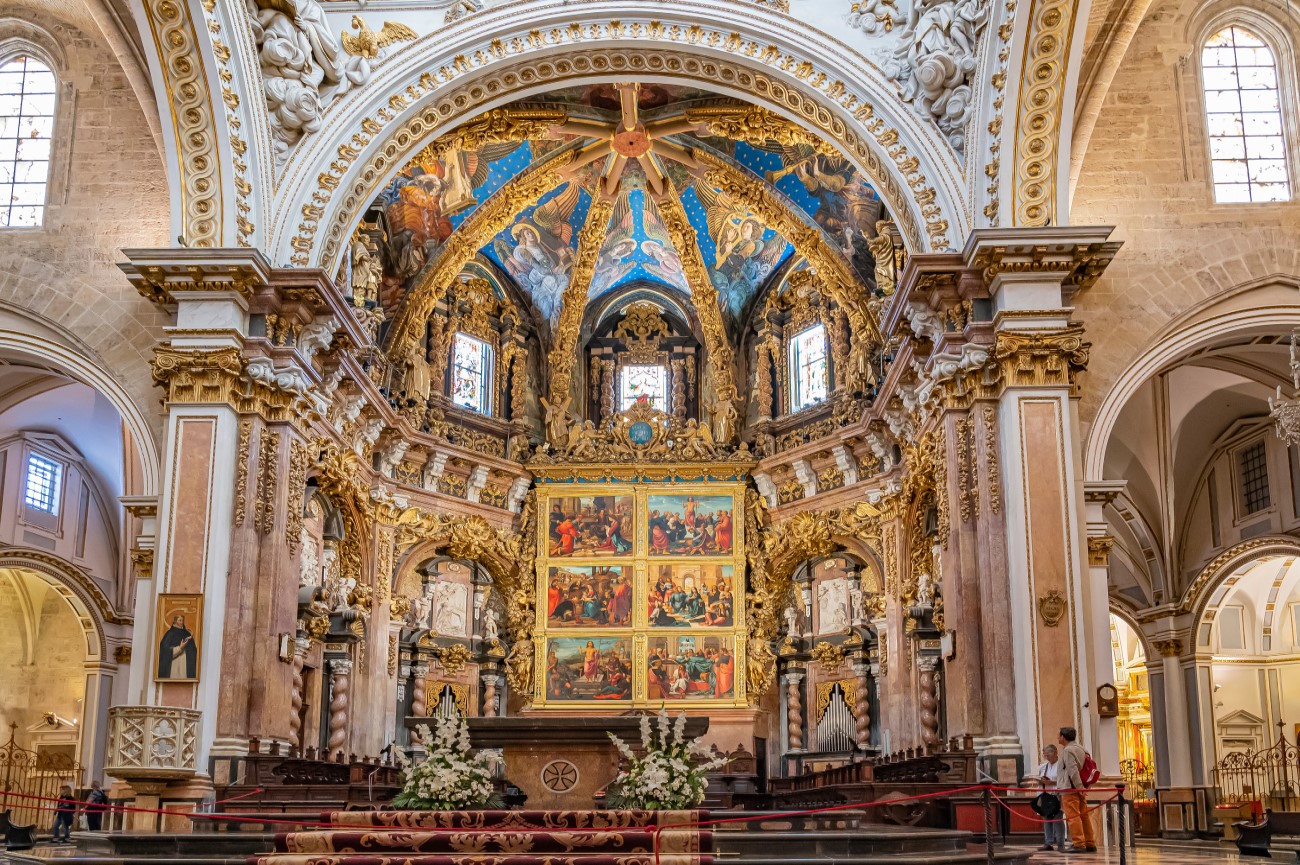
From La Lonja, walk to Valencia Cathedral, a building shaped by more than eight centuries of history. Romanesque, Gothic, Baroque and Neoclassical elements sit alongside one another on a site previously occupied by a mosque and, before that, a Roman temple.
Circle the exterior before going inside.
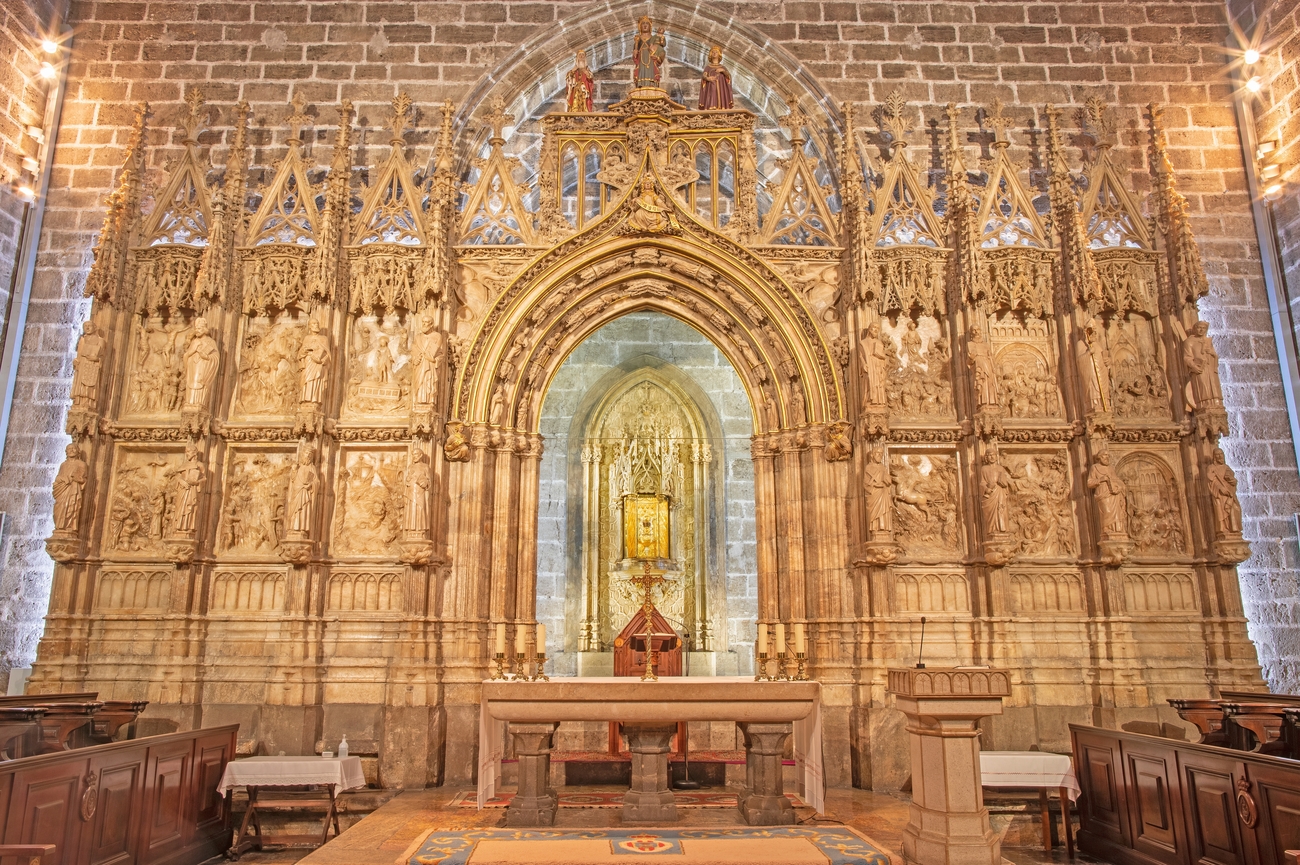
Within the cathedral, the Chapel of the Holy Chalice holds a small agate cup traditionally identified as the Holy Grail. The cup has been dated to between the fourth century BC and the first century AD and has been venerated in Valencia for centuries. Its authenticity cannot be proved, but its history and religious significance make the chapel one of the city's most unusual sights.
Climb El Miguelete for Views Over Valencia
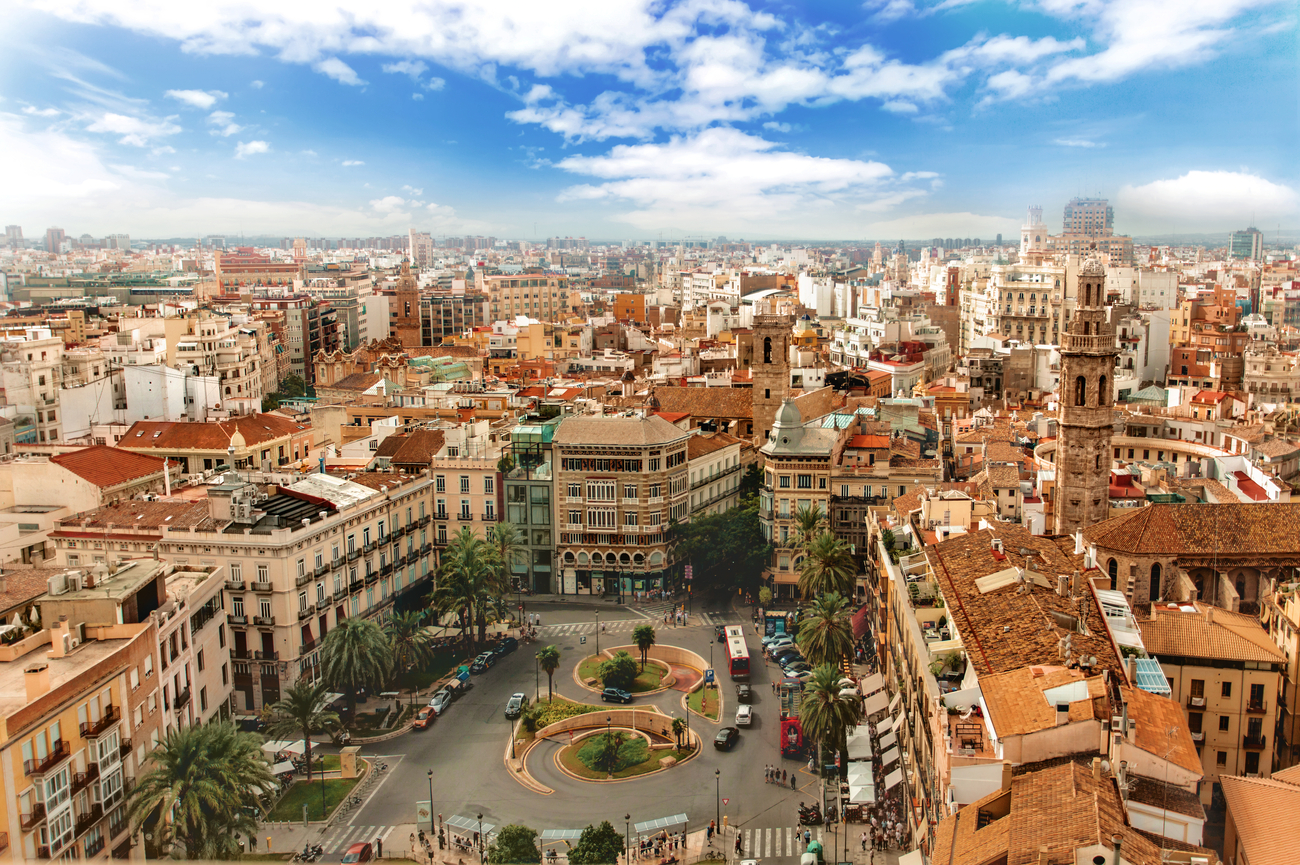
Next, climb El Miguelete, Valencia Cathedral's octagonal bell tower. A spiral staircase of just over two hundred steps leads to one of the best viewpoints in the historic centre.
From the top, Valencia's Old Town resolves into a plan: terracotta roofs, the Turia Gardens curving around the centre and, on a clear day, the Mediterranean beyond.
Climb it early in your stay. The streets you walk afterwards make more sense once you have seen the city from above.
See the Tribunal de las Aguas on Thursday
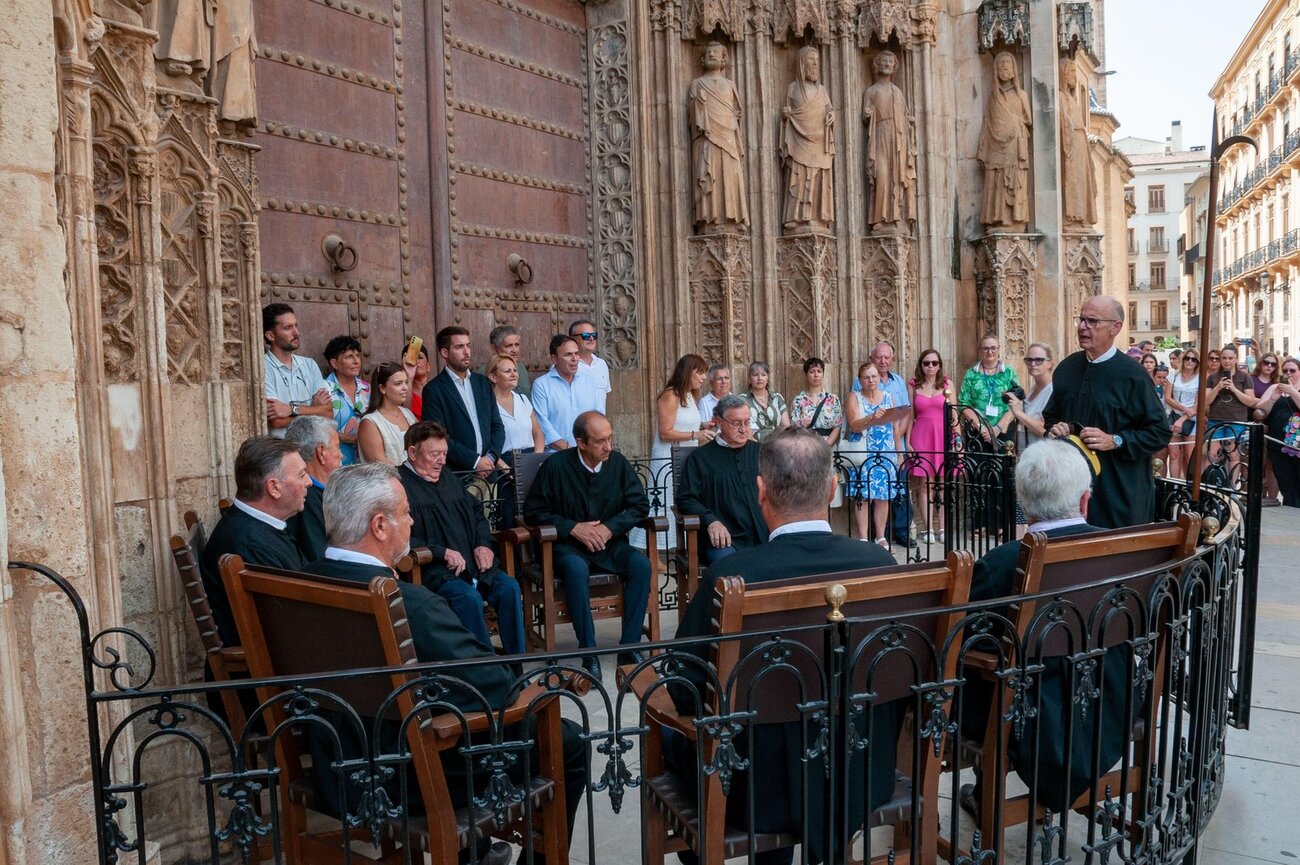
If Day 2 falls on a Thursday, be outside the cathedral's Apostles doorway at noon.
Eight elected representatives of Valencia's historic irrigation communities gather in a semicircle to settle disputes over water from the surrounding huerta. Cases are heard aloud in Valencian, decisions are immediate and there is no written record or appeal.
The Tribunal de las Aguas has origins stretching back roughly a thousand years and is recognised by UNESCO as Intangible Cultural Heritage. The proceedings usually last only around fifteen minutes, yet many visitors cross the square without realising what they are seeing.
Explore Valencia Central Market
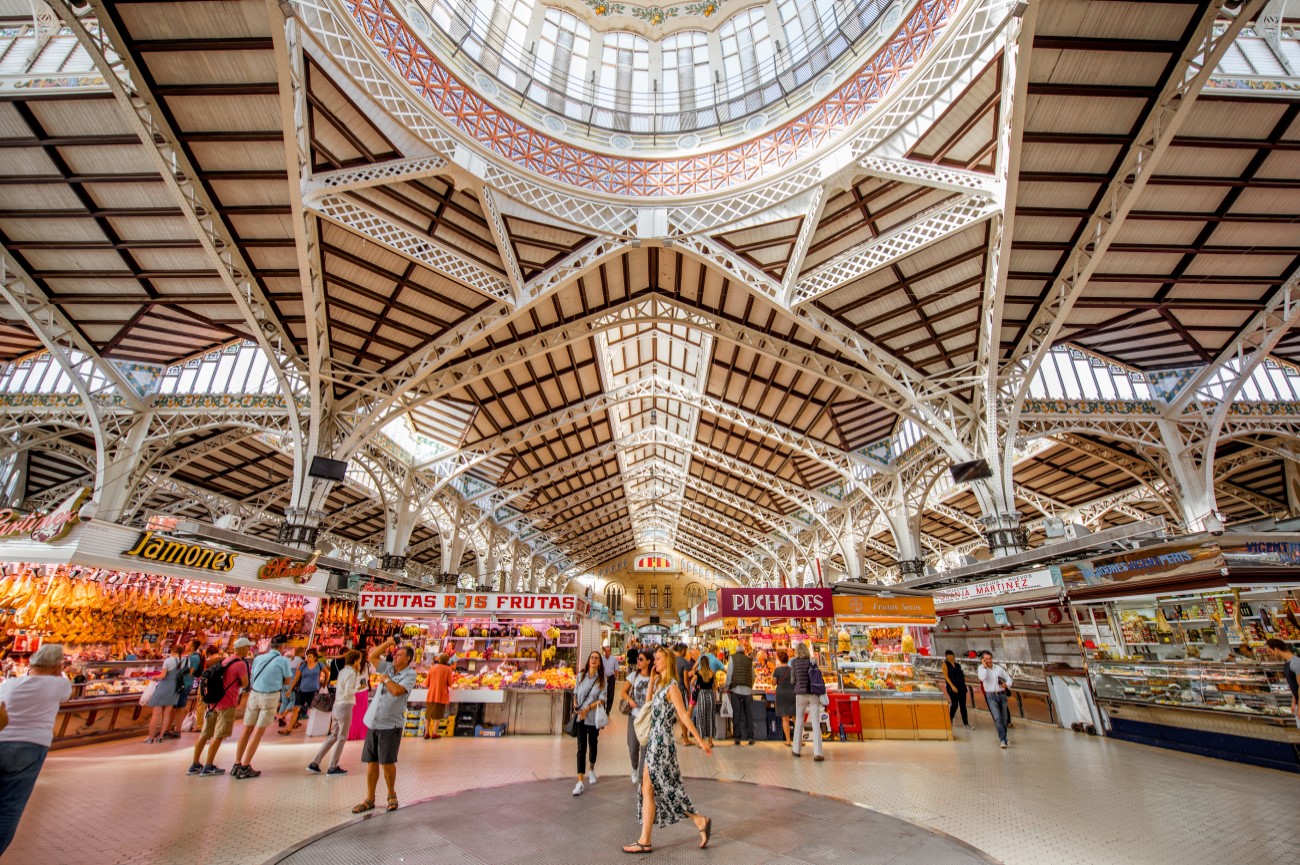
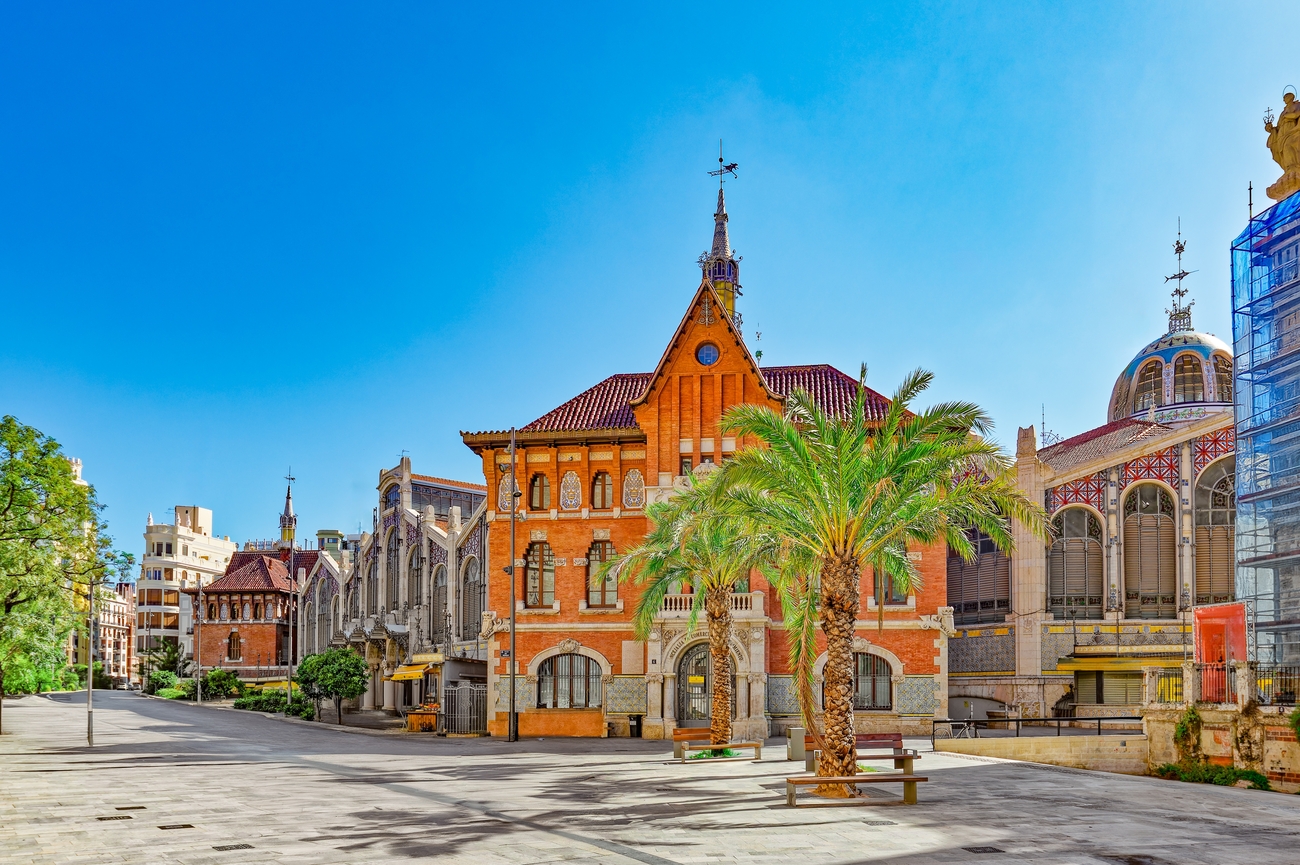
Finish at Mercado Central, Valencia's great Modernista food market. Opened in 1928, its ironwork, coloured glass and vast dome make it as much an architectural landmark as a working market.
Walk through the produce, fish and local food stalls, then stop in the centre and look up at the dome.
The sights are close together, but the streets connecting them contain much of what makes the historic centre worth exploring. For the complete route through Ciutat Vella, follow our walking guide to Valencia's Old Town.
Day 3: City of Arts and Sciences
Give the City of Arts and Sciences a full day. Many Valencia itineraries allocate only a morning, but the complex is far larger than it appears and the Oceanogràfic alone can easily take half a day.
Built between 1998 and 2005 along the seaward end of the former Turia riverbed, the City of Arts and Sciences covers around 350,000 square metres. Valencian architect Santiago Calatrava designed most of the complex, while Félix Candela designed the Oceanogràfic.
Walk there through the Turia Gardens rather than arriving by taxi. Approaching along the former riverbed, the white structures reveal themselves one by one over the final kilometre.
Visit L'Hemisfèric
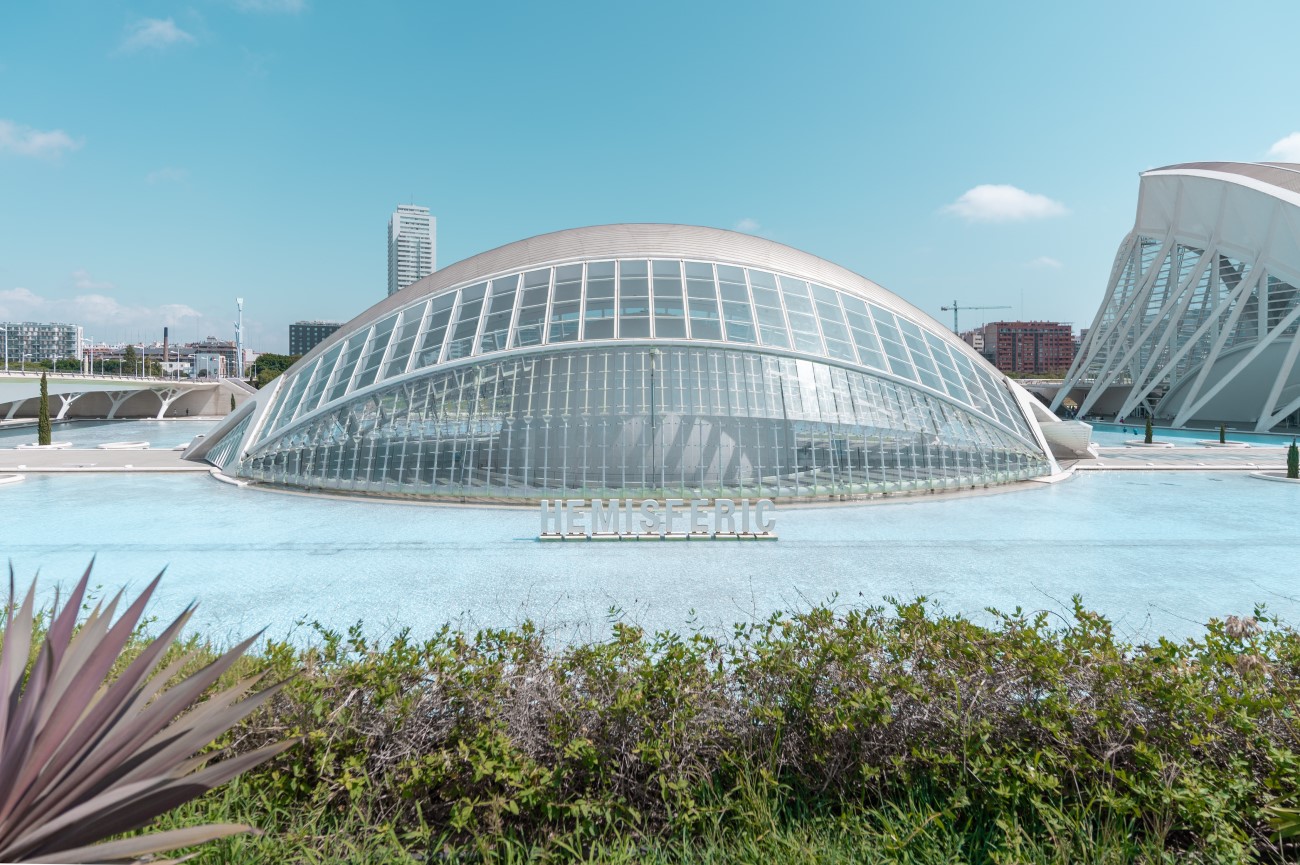
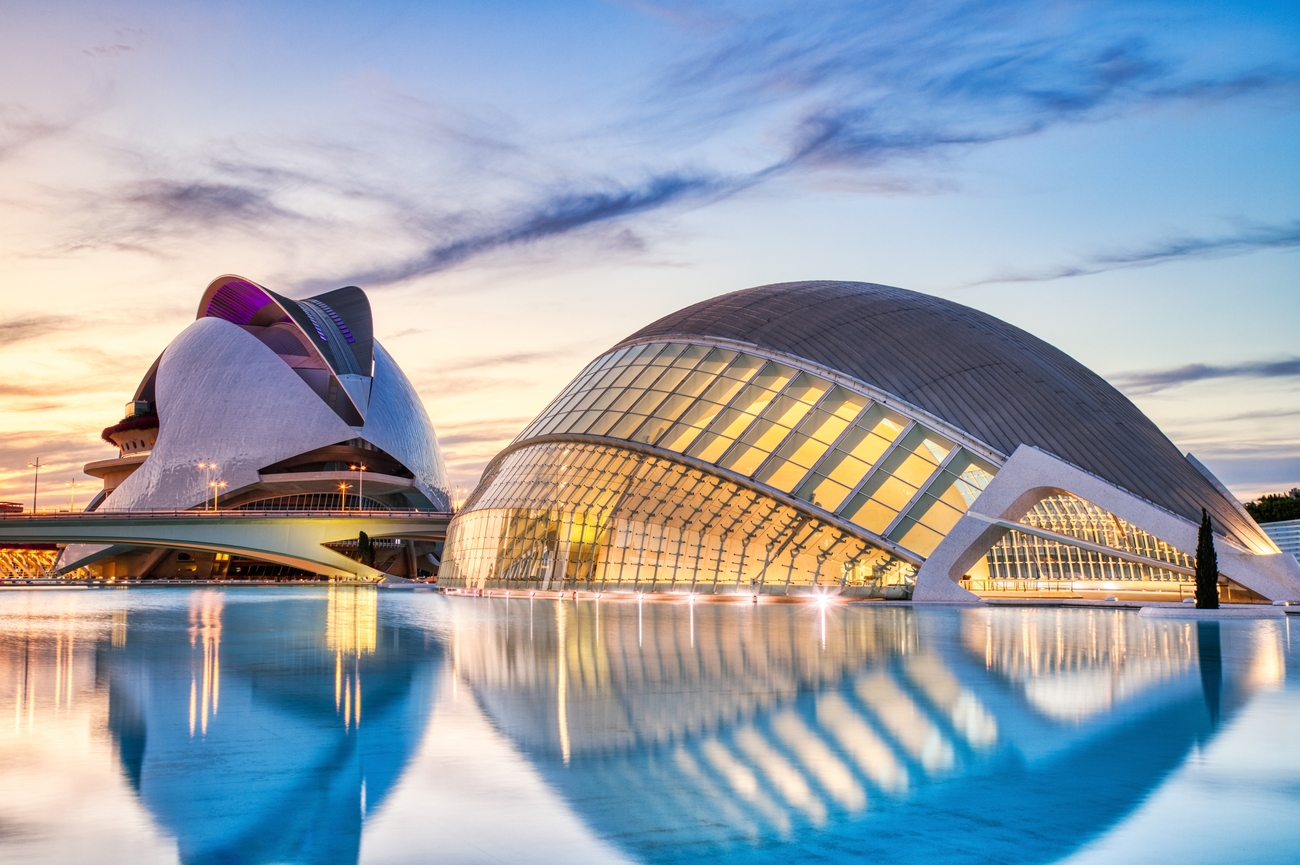
L'Hemisfèric is designed like an enormous eye. An eyelid-shaped structure opens over a glass hemisphere, while the shallow reflecting pool beneath completes the illusion.
Inside are an IMAX cinema and planetarium. Screenings vary by film and language, so check the programme before committing ninety minutes.
Explore the Science Museum
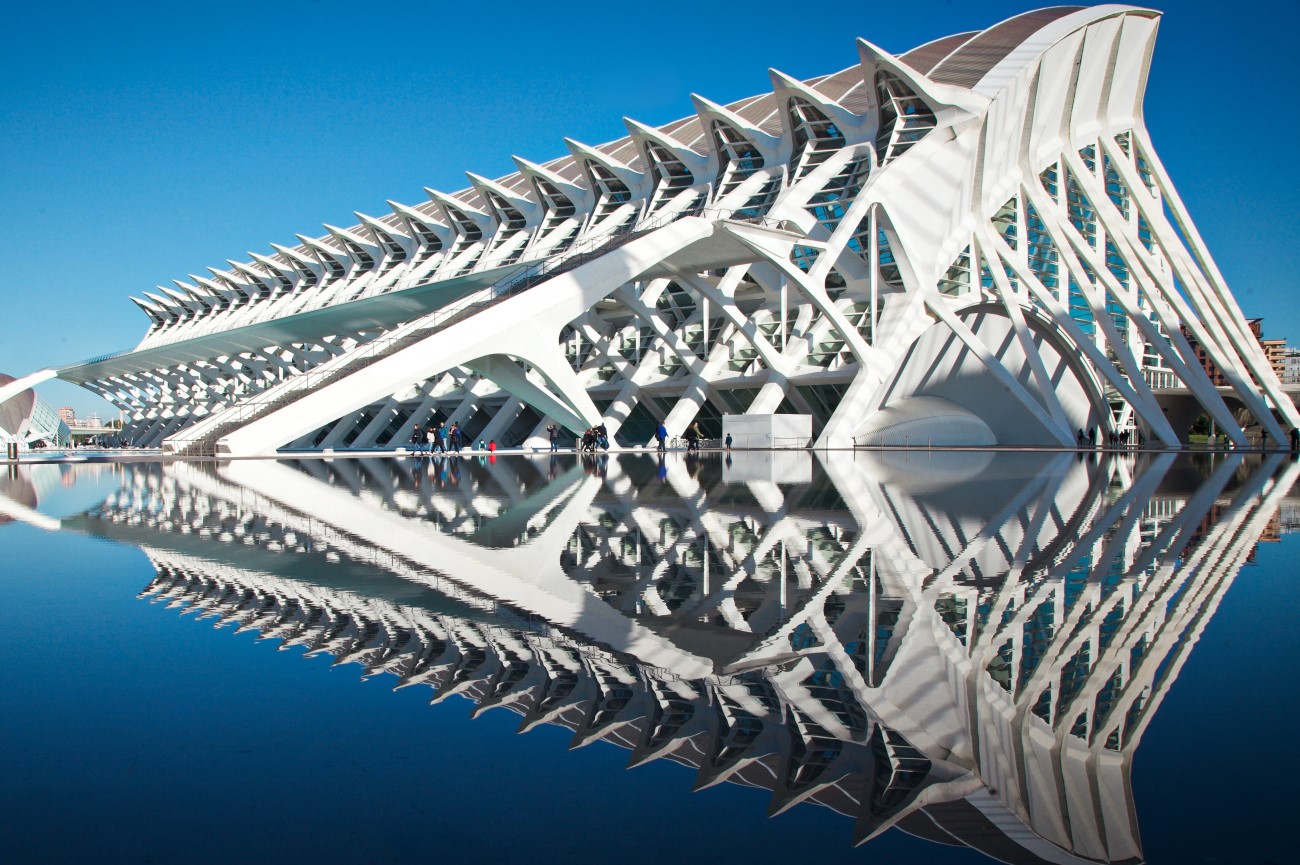
El Museu de les Ciències resembles the ribcage of an enormous animal. Inside is an interactive science museum spread over several levels.
It is particularly good for families with children, although the architecture alone makes the interior worth seeing even if you are not planning a full museum visit.
Walk Through L'Umbracle
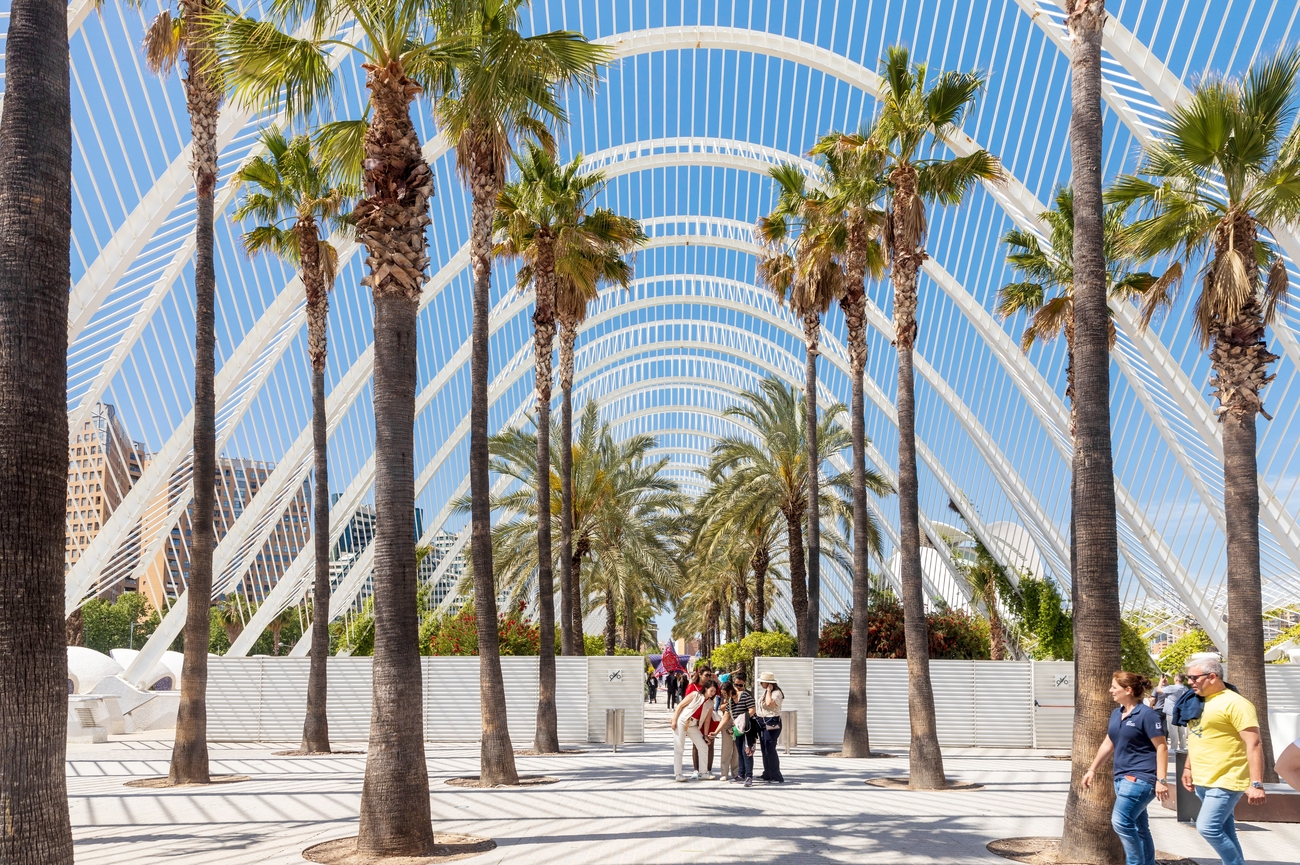
L'Umbracle is the elevated walkway running along the eastern side of the complex, with white arches rising above Mediterranean planting.
It is free to enter and offers one of the best viewpoints across the City of Arts and Sciences. In summer, part of it becomes a nightclub terrace after dark, so an evening visit can feel very different from one during the day.
Allow Half a Day for L'Oceanogràfic
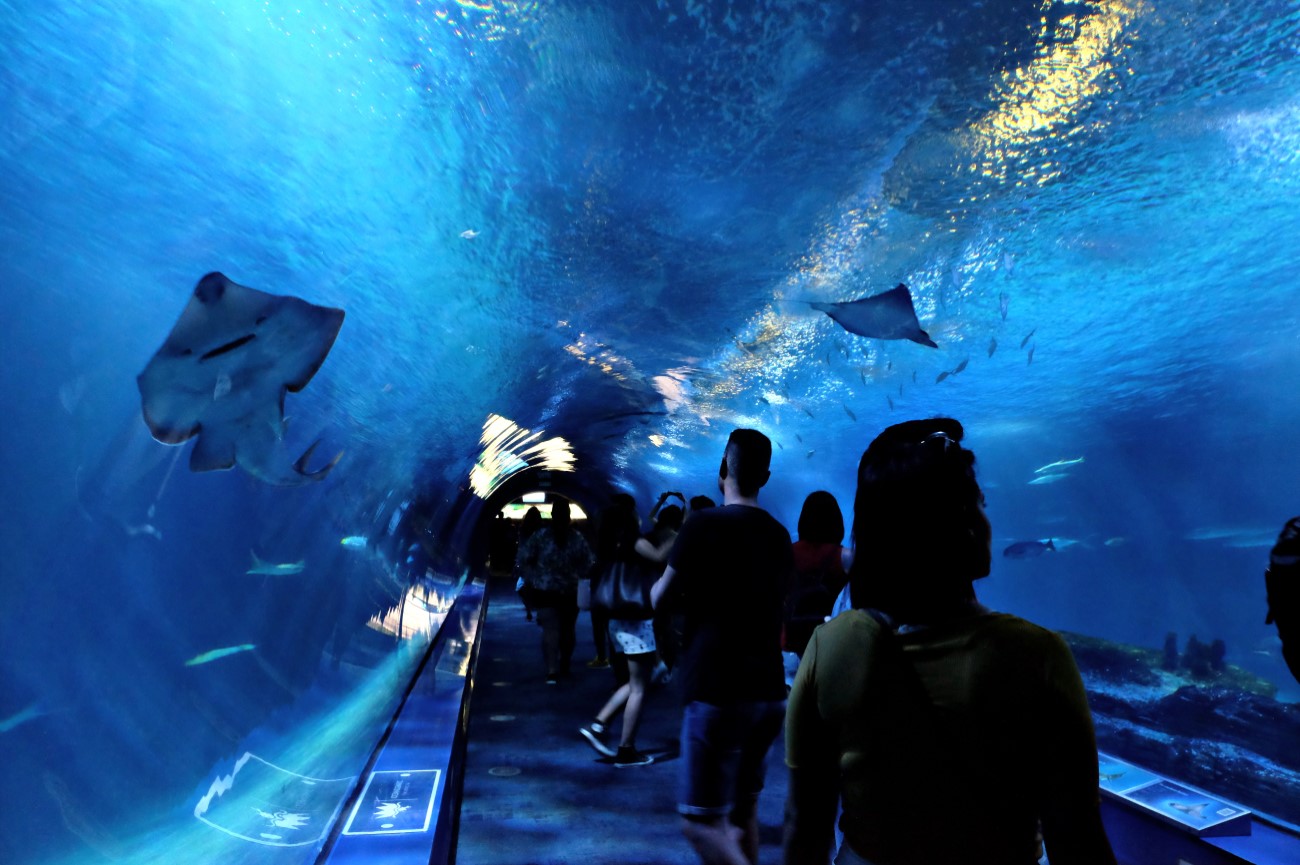
L'Oceanogràfic is Europe's largest aquarium and the attraction most likely to determine the shape of your day. Around 45,000 animals representing roughly 500 species are divided between marine environments from the Mediterranean to Arctic and Antarctic habitats.
Highlights include belugas, walruses, sharks, rays and the underwater tunnels. Félix Candela's sweeping concrete entrance building is also one of the complex's architectural landmarks.
Allow at least four hours. Trying to see the Oceanogràfic in ninety minutes means missing much of what makes it worthwhile.
See the Palau de les Arts Reina Sofía
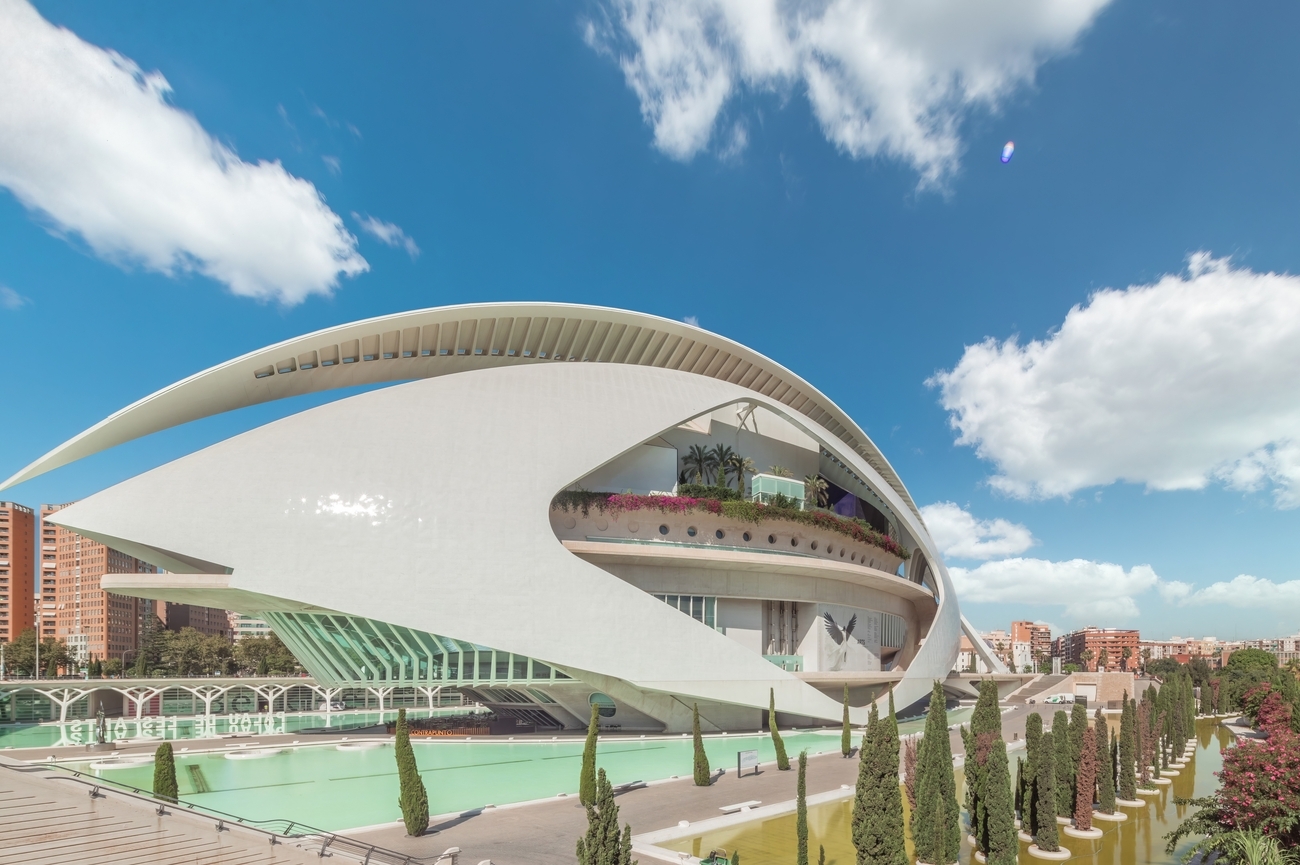
At the northern end of the complex, the Palau de les Arts Reina Sofía is Valencia's opera house.
It is not a conventional daytime attraction, but if opera or classical music interests you, check the programme before your trip. Attending a performance inside the building offers a very different experience from simply seeing Calatrava's architecture from outside.
Visit at the Best Time for Photographs
The reflecting pools are central to how the City of Arts and Sciences looks. Early morning and the hour before sunset produce the best light, when the white concrete picks up colour and the buildings reflect clearly in the water.
Midday sun can flatten the entire complex into white glare. If photography matters, visit at one end of the day - or return later in the week for a second look.
Once the Oceanogràfic takes half your day, fitting the other buildings around it becomes the real challenge. For recommended timings, which attractions to prioritise and how to plan the visit efficiently, see our first-timer's guide to the City of Arts and Sciences.
Day 4: Lladró, Paella and Playa de las Arenas
By the fourth day, the standard tourist sequence has been exhausted, and a seven-day Valencia itinerary starts to earn itself.
Visit the Lladró Porcelain Factory
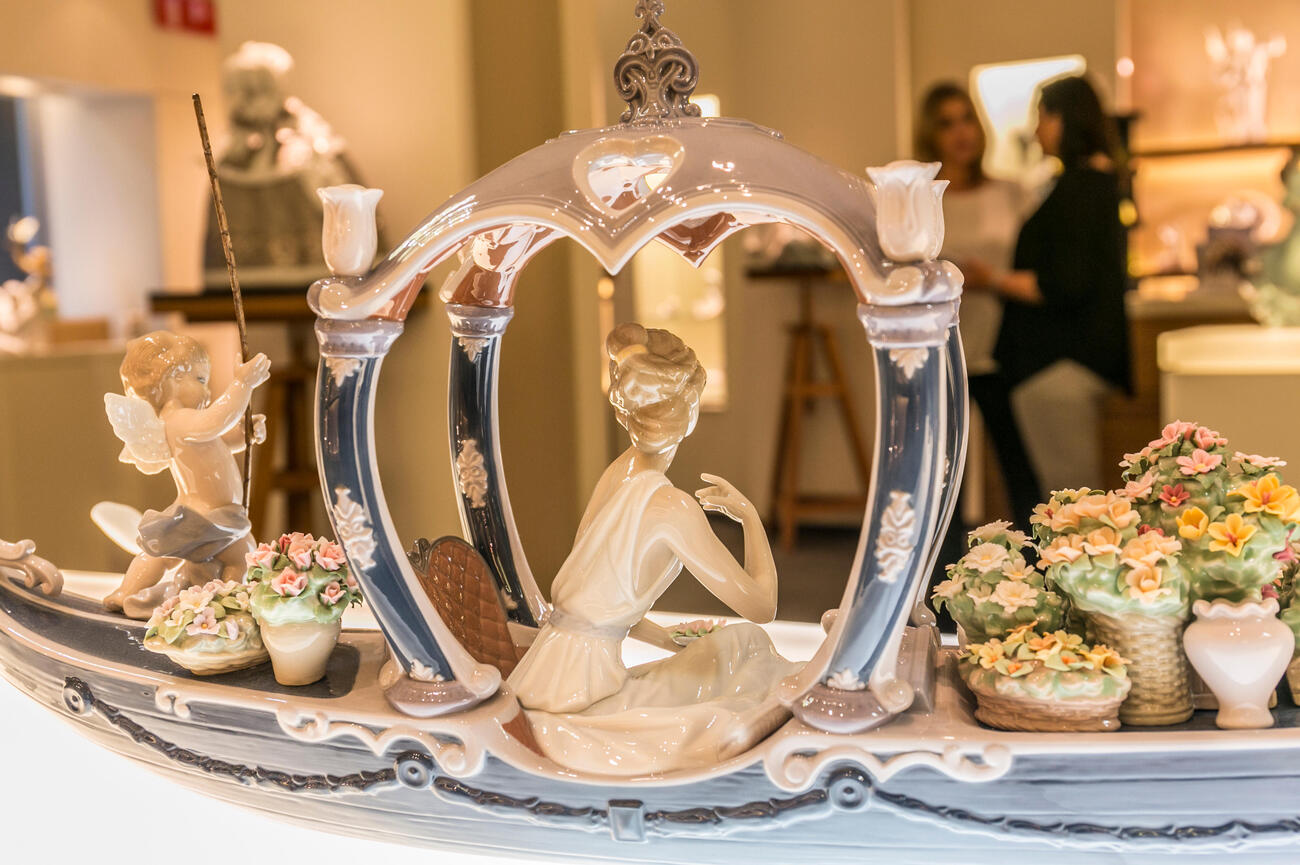
Valencia has a porcelain tradition that most visitors know little about. Lladró's distinctive figurines are made here, and the factory can be visited.
Watching the process is quietly absorbing: porcelain is prepared and moulded before each piece is painted and detailed by hand. Many of the finishing touches are applied by craftspeople who have spent decades perfecting a particular part of the process.
It is less a conventional museum visit than an opportunity to see Valencian craftsmanship at work, and it changes how you look at the finished pieces afterwards.
Have a Paella Lunch at Playa de las Arenas
Then head to Playa de las Arenas and stay for the afternoon.
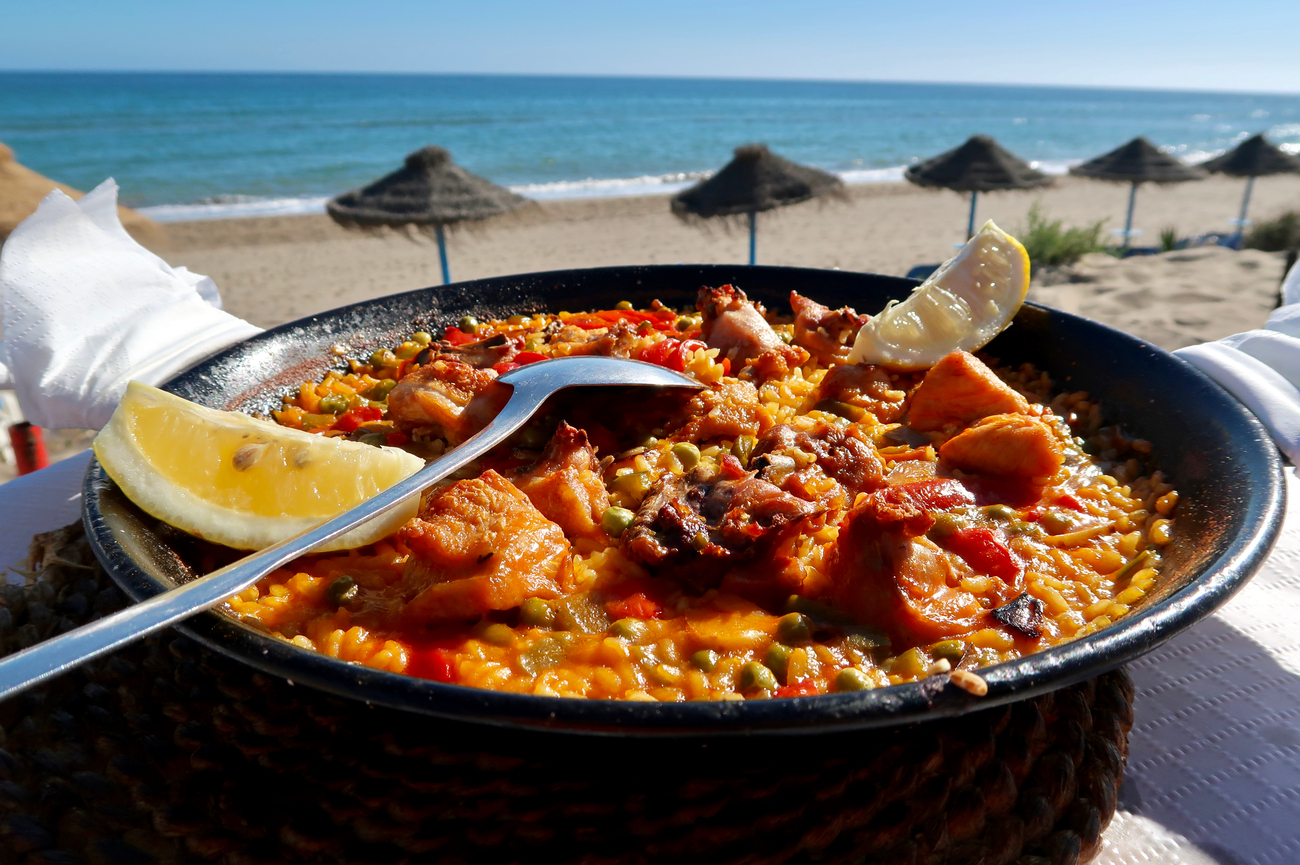
This wide city beach is backed by a promenade of restaurants with terraces facing the Mediterranean, and it is one of the classic places to eat paella in Valencia.
Lunch here is not something to rush. Order a starter to share - perhaps esgarrat, roasted red pepper with salt cod and garlic, grilled squid or mussels - before the rice arrives around two. Then something cold, coffee, and by the time you finish the afternoon light will be beginning to soften over the sand.
Paella in Valencia is traditionally a lunch dish rather than an evening meal. It is part of the rhythm of the day: a long lunch followed by an afternoon with nowhere particular to be.
Spend the Afternoon on Valencia's Beach
Swim afterwards, walk along the beach towards the port, or simply stay where you are.
This is one of the least complicated days in the itinerary and often one of the most memorable. After three days of monuments, museums and architecture, the point is to spend an afternoon doing almost nothing at all.
Day 5: El Carmen, Ruzafa and Street Art
Valencia's neighbourhoods are often reduced to a few lines in city guides. Give them a day instead.
Explore the Street Art of El Carmen
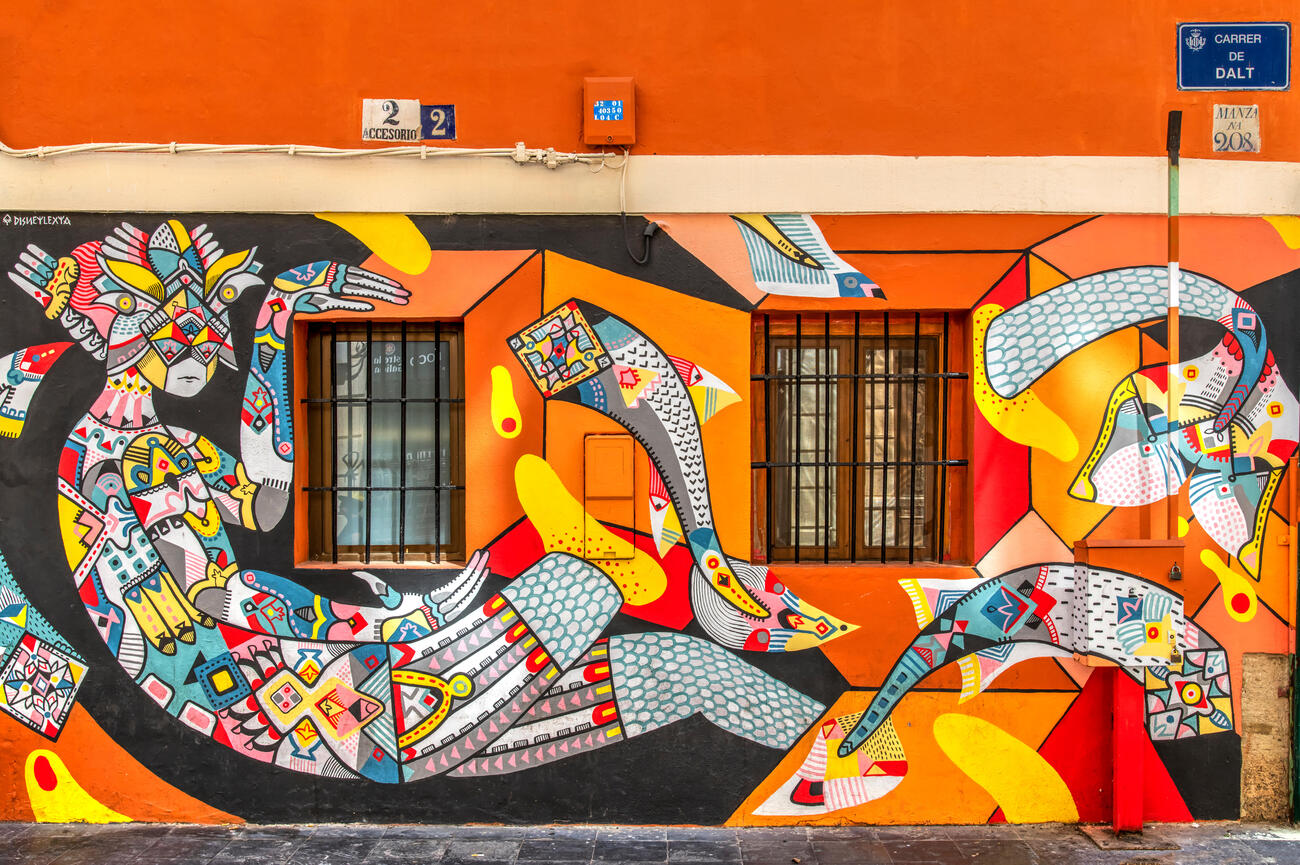
Spend the morning in El Carmen, wandering the streets north of Plaça del Tossal without a fixed route. The quarter spent decades semi-derelict, leaving blank rendered walls close to the historic centre that gradually became canvases for artists.
Today, large commissioned murals sit alongside unsanctioned pieces, paste-ups, stencils and painted shutters. Carrer de Moret, known locally as the street of colours, is one of the best places to start, but some of the most interesting work appears on the smaller streets around it.
Look beyond the obvious walls. Doorways, shutters and corners change constantly, and a shop front that appears blank during opening hours can reveal an entirely different piece once it closes.
Artists including David de Limón, PichiAvo, Escif, Julieta XLF and the late Hyuro have all left recognisable marks on Valencia. Once you begin identifying their styles, walking through El Carmen becomes less about finding individual murals and more about recognising who made them.
Spend the Evening in Ruzafa
Later, head south to Ruzafa, where the atmosphere changes completely.
The street art is generally more commissioned and design-led than in El Carmen, appearing on shop fronts, shutters and businesses throughout the neighbourhood. Ruzafa is also one of Valencia's liveliest areas for restaurants and bars, making it an easy place to stay into the evening.
The work in both neighbourhoods changes constantly. Murals are painted over, shutters are redesigned and new pieces appear without warning, so routes published even a couple of years ago can quickly become outdated.
For the neighbourhoods, artists and streets worth looking for now, see our guide to Valencia's street art.
Day 6: Albufera Natural Park and Sunset Boat Trip
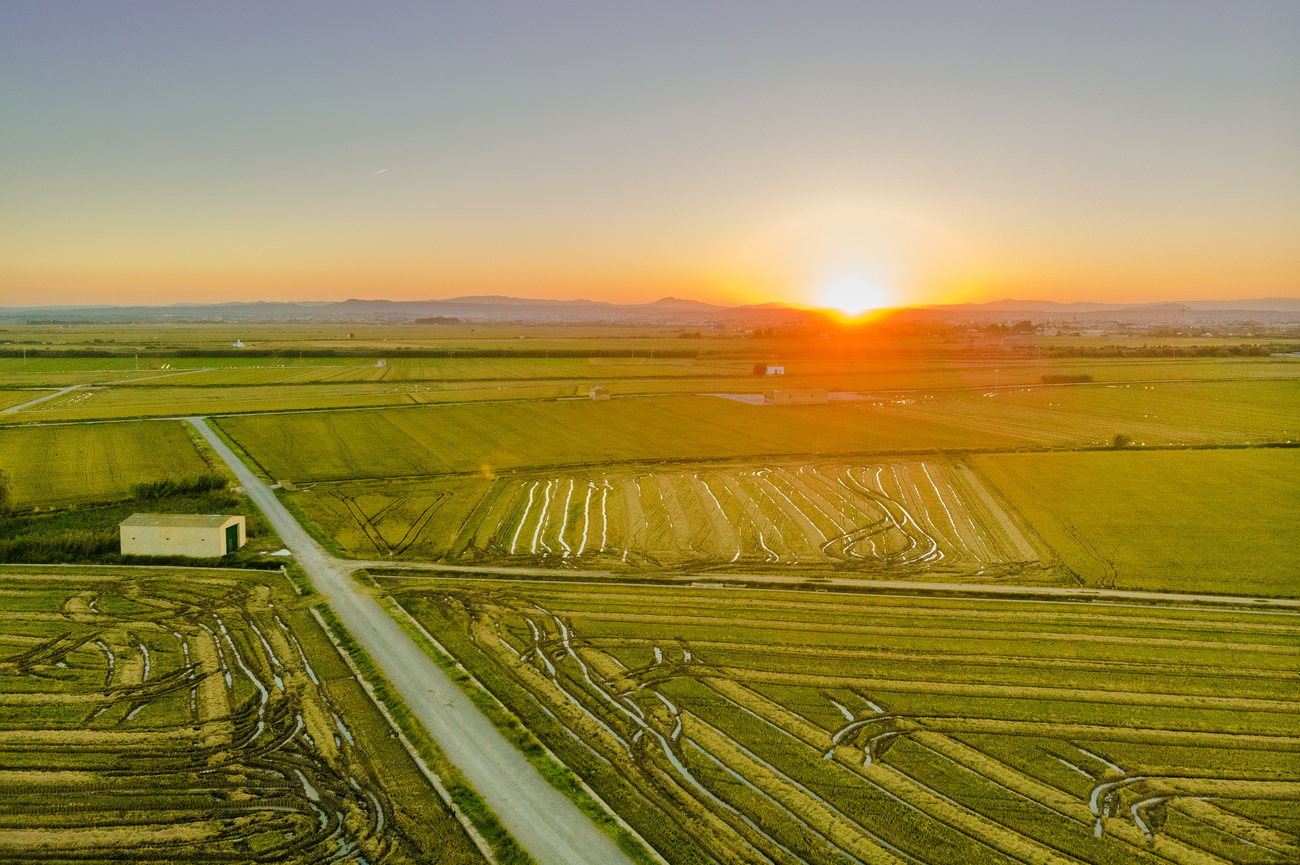
Twenty minutes south of Valencia, the city gives way to rice fields and water.
Explore Albufera Natural Park
La Albufera is Spain's largest freshwater lagoon and one of the landscapes that shaped Valencian food. Rice has been cultivated in the surrounding wetlands since the period of Arab agriculture, and rice grown here carries a protected designation of origin.
The paddies flood and drain throughout the year. During the flooded months, much of the landscape becomes a vast mirror of shallow water.
Take a Sunset Boat Trip on Albufera Lagoon
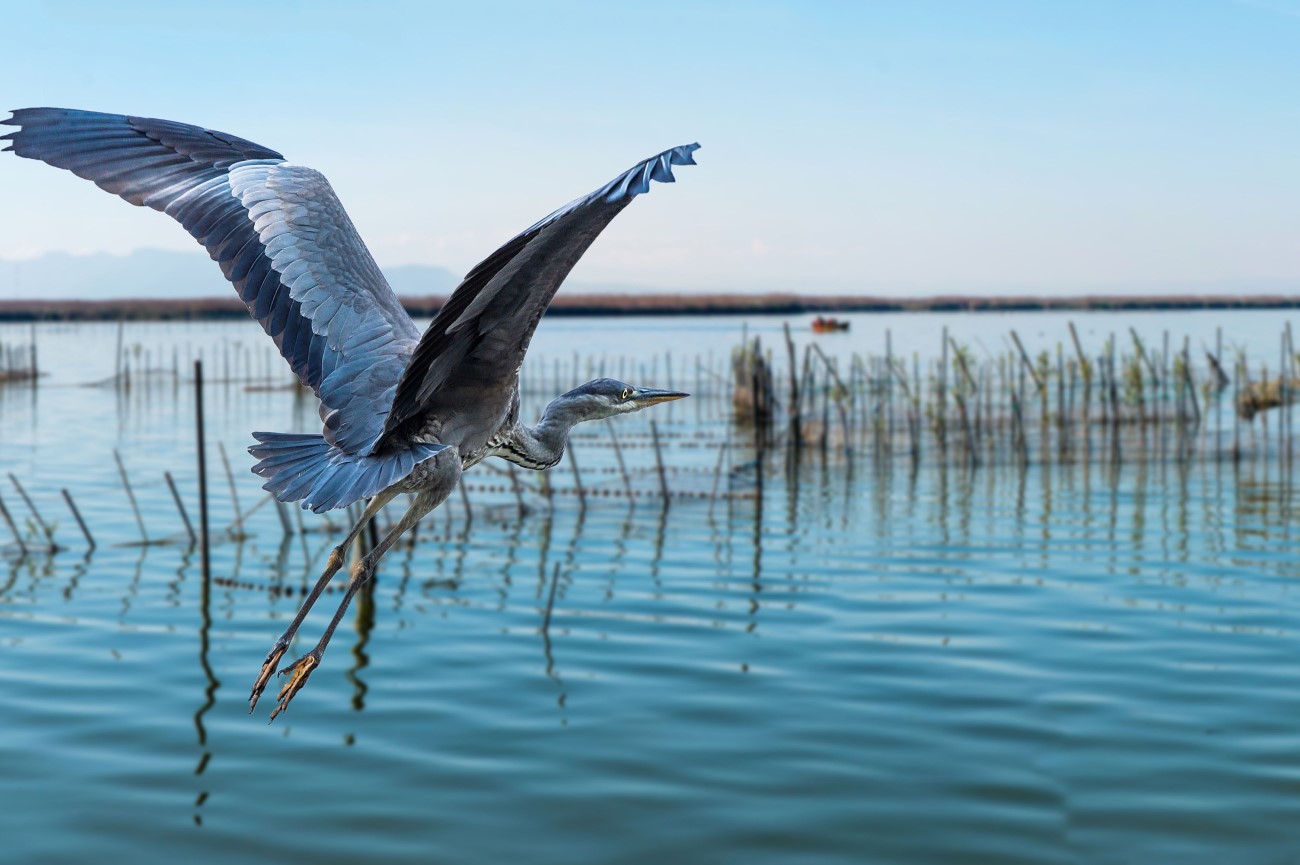
Go in the late afternoon and take one of the traditional flat-bottomed boats onto the lagoon for sunset.
The boats move slowly across the shallow water, passing reed beds and the wooden posts of eel traps. As the sun drops, the light spreads across the lagoon and the rice fields beyond, making this one of the most atmospheric excursions from Valencia.

Eat Rice and All i Pebre by the Lagoon
Stay for dinner rather than returning immediately to the city.
In the villages around Albufera, look for all i pebre, a traditional dish of eel cooked with potato, garlic and paprika. Rice is equally important here, and eating it within sight of the fields where it was grown gives the meal a connection to the landscape that is difficult to reproduce in central Valencia.
After five days exploring the city, Albufera provides the contrast: open water, rice fields and a slower final evening outside Valencia.
Day 7: Central Market and Medieval Towers
Leave your final morning in Valencia deliberately unstructured.
Return to Valencia Central Market
Go back to Mercado Central and buy something to take home: saffron, smoked paprika, bomba rice or a tin of good tuna belly. Have coffee somewhere you have already discovered rather than looking for somewhere new, then walk one last section of the Turia Gardens.
Climb the Torres de Serranos or Torres de Quart
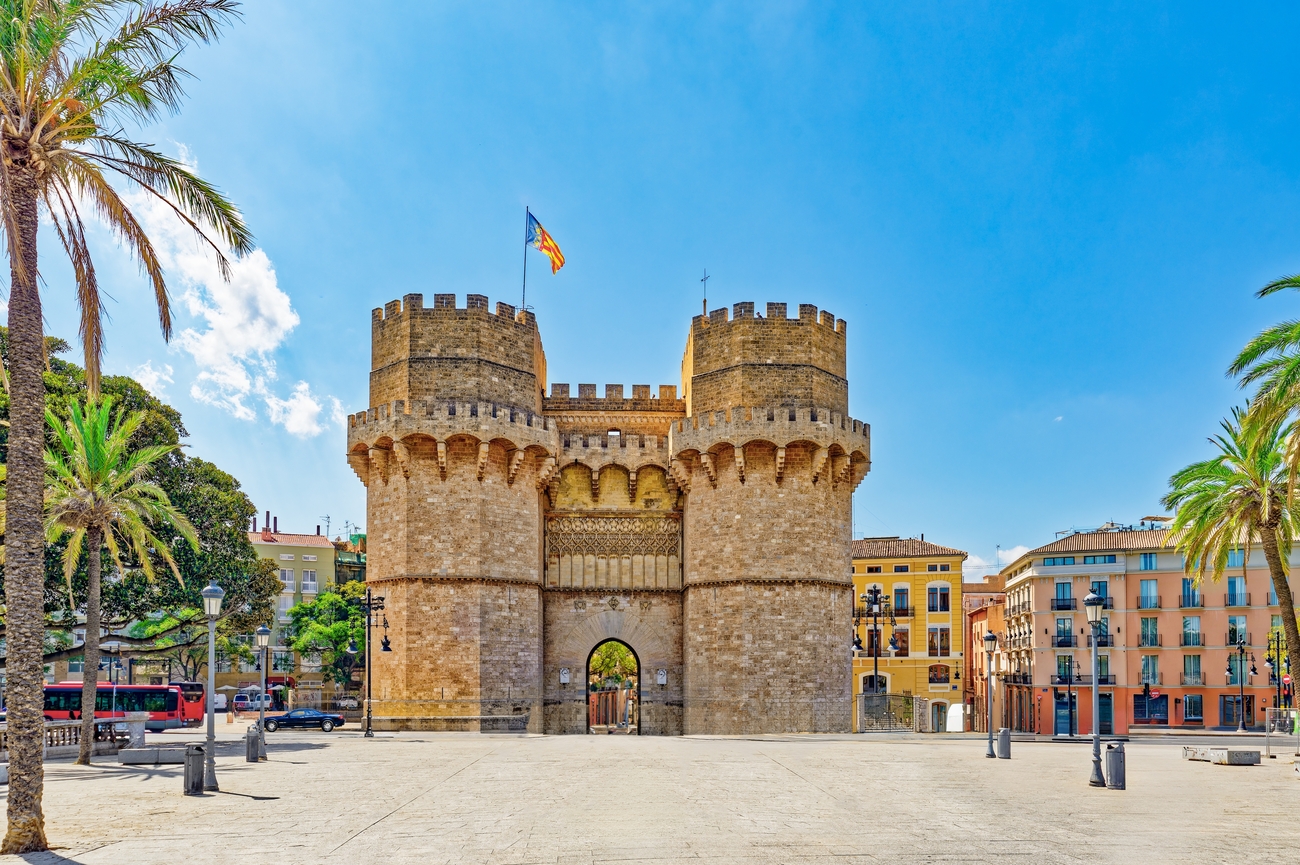
If time allows, climb one of Valencia's surviving medieval gates.
The fourteenth-century Torres de Serranos marks the northern edge of the historic centre, while the Torres de Quart stands to the west and still carries the marks of Napoleonic cannon fire.
Both towers can be climbed and offer a different perspective over Valencia's Old Town from the view you had from El Miguelete earlier in the week.
Then head to the airport, and be slightly annoyed about it.
What
to Eat in Valencia: Paella, Horchata and Local Food
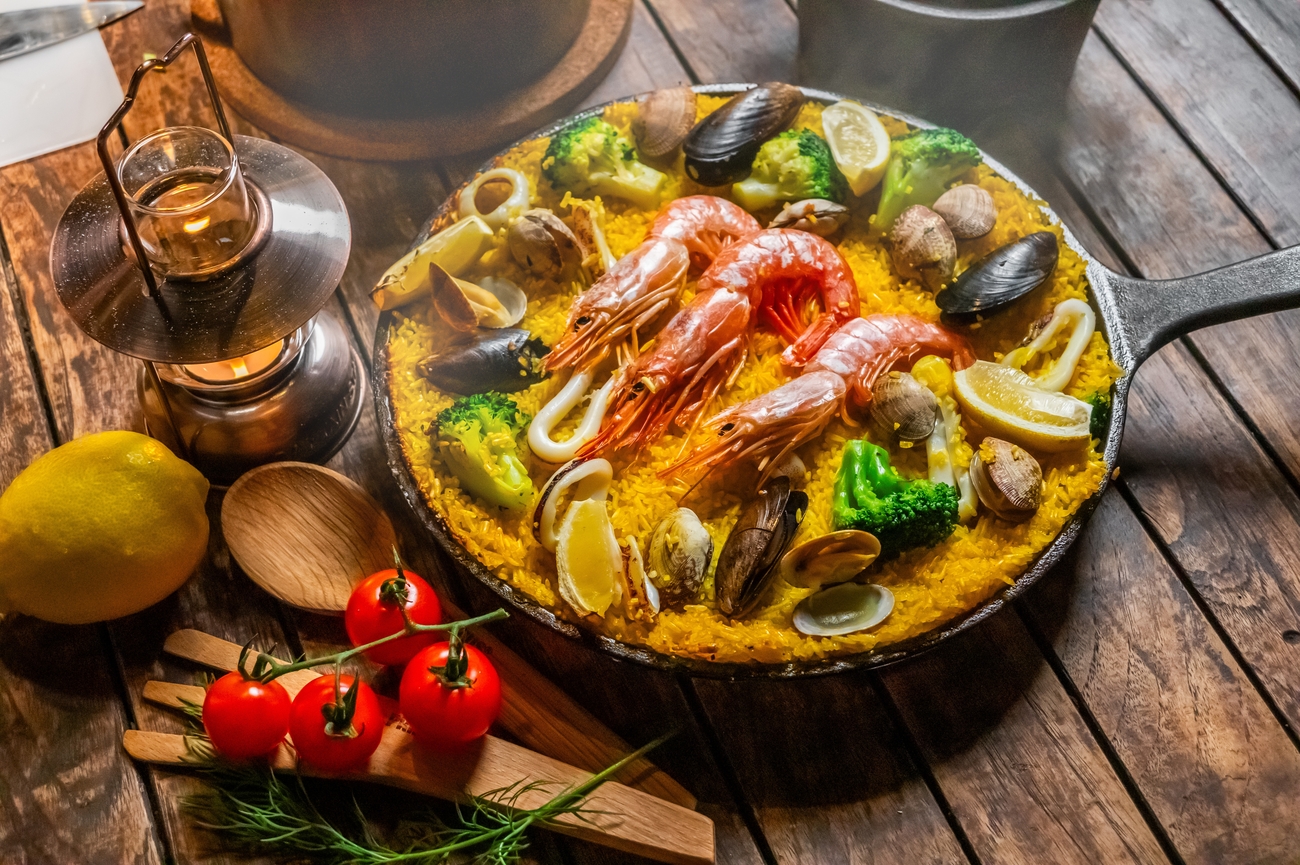
Valencia is a city built around rice. Cultivation began in the surrounding wetlands during the period of Arab agriculture, and today the region claims hundreds of rice dishes, with paella simply the one that travelled furthest.
Try Authentic Valencian Paella
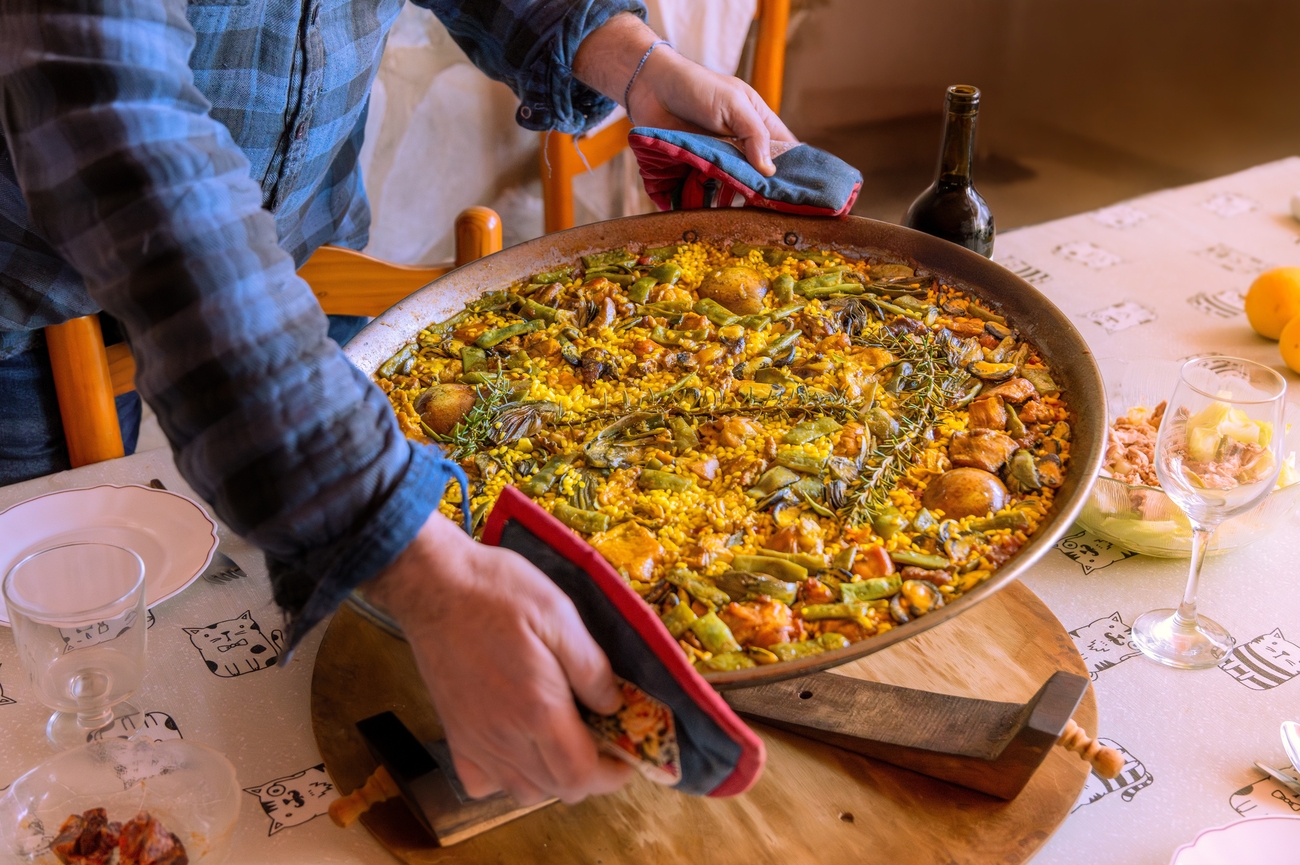
Traditional Valencian paella is a specific dish: chicken, rabbit, flat green beans, garrofó beans, tomato, olive oil, saffron, salt and water, cooked in a wide shallow pan.
The aim is not just perfectly cooked rice but socarrat, the thin toasted layer that forms across the bottom of the pan and is usually the part everyone wants.
Seafood paella is widely served along the coast and is excellent, but it is a later coastal variation rather than the original Valencian recipe. Chorizo does not traditionally appear in either.
Discover Valencia's Other Rice Dishes
Paella is only the beginning. Look for arroz a banda, arroz negro, arroz al horno and arròs en fesols i naps, each using rice to absorb the flavours of seafood, meat, vegetables or stock.
The Albufera wetlands south of Valencia remain closely tied to this food culture, which is why eating rice there feels particularly connected to the landscape.
Try Horchata, Fartons and Other Valencian Specialities
In the afternoon, order horchata with fartons. Horchata is a cold drink made from tiger nuts, while the long, soft pastries alongside it are designed for dipping.
Other local specialities include esgarrat, made with roasted red pepper and salt cod, and Agua de Valencia, a cocktail combining orange juice with sparkling wine. Sweet mistela and the aniseed spirit cazalla also appear at the end of traditional meals.
Eat at Valencian Times
When you eat matters almost as much as what you order.
Lunch is the main meal of the day and commonly runs from around two until four. Dinner usually starts at nine and can begin considerably later.
Between breakfast and lunch comes the esmorzaret, a substantial mid-morning meal centred on a filled roll, often accompanied by a drink. It is one of Valencia's most distinctive everyday food traditions and one many visitors miss entirely.
Best
Time to Visit Valencia: Weather, Las Fallas and Seasons
Valencia can be visited year-round, but the experience changes considerably with the season. For most travellers, late spring and early autumn offer the best combination of warm weather, comfortable sightseeing and time at the beach.
Visit Valencia for Las Fallas in March
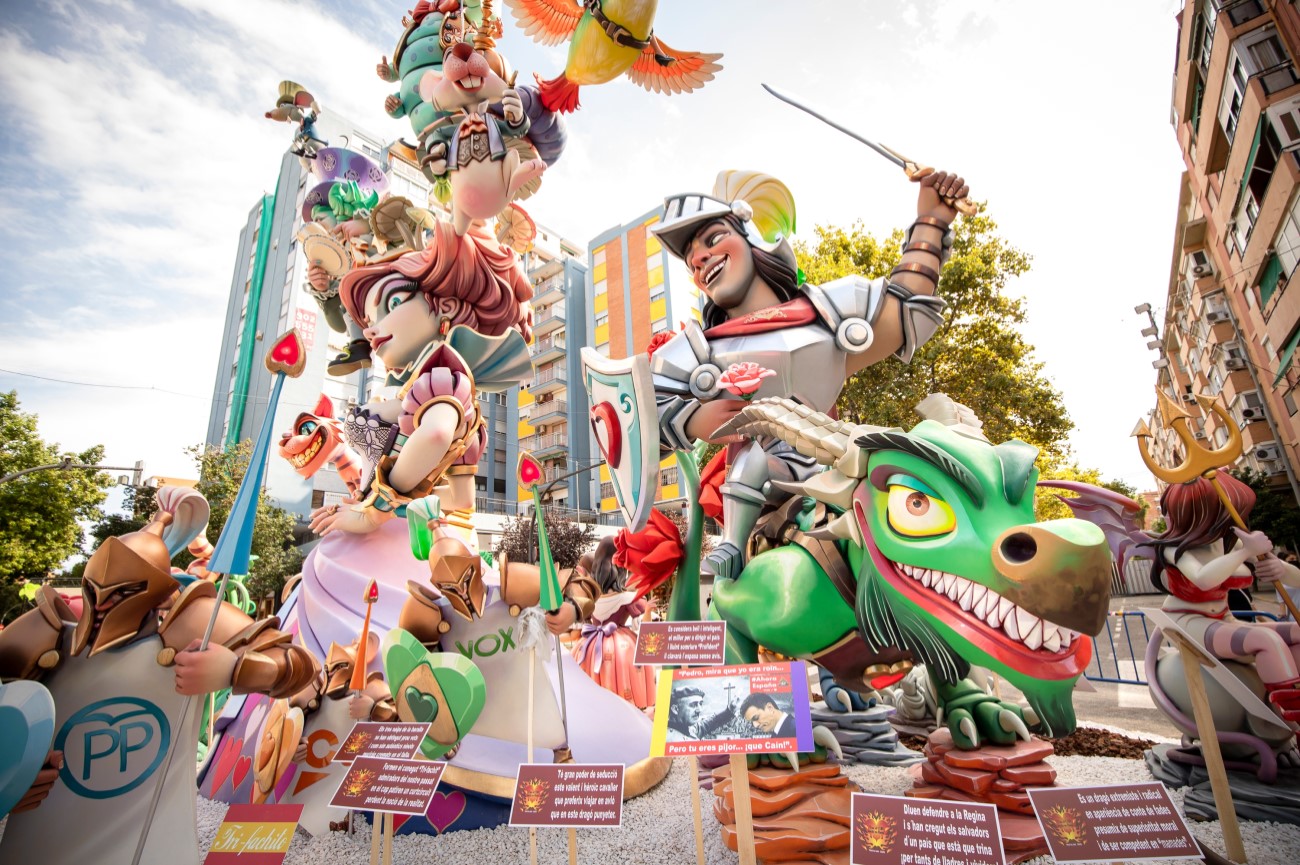
March belongs to Las Fallas, Valencia's biggest festival. The city fills with enormous satirical sculptures created by neighbourhood associations, most of which are burned on the final night.
It is loud, crowded, smoky and genuinely extraordinary, but it is not a normal week in Valencia. Plan deliberately around Las Fallas: either come specifically to experience it or choose different dates if you want to explore the city at its usual pace.
Visit in Spring or Autumn for the Best Weather
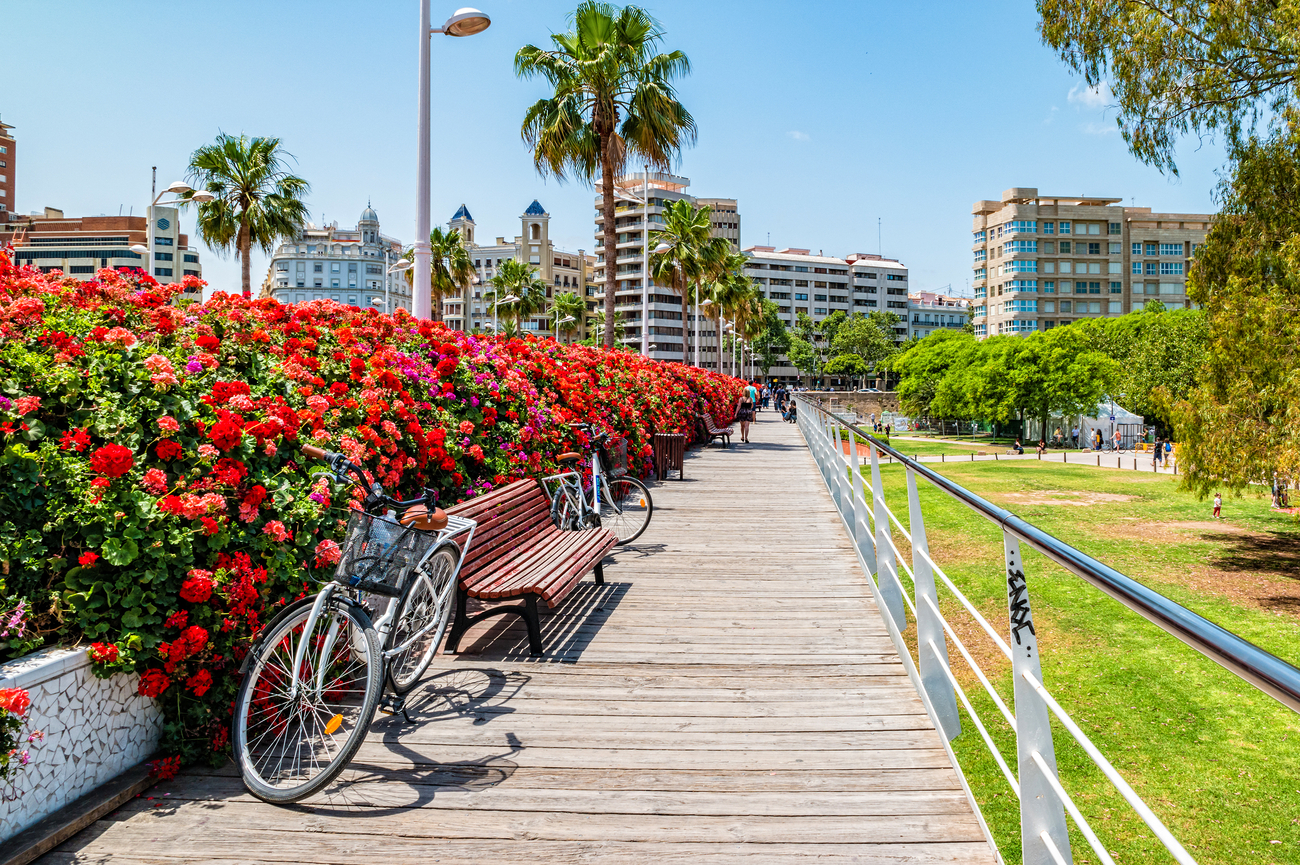
Late spring and early autumn are the sweet spots for a Valencia itinerary. Temperatures are generally warm enough for the beach while remaining comfortable for walking through the Old Town, Turia Gardens and neighbourhoods during the day.
Visit Valencia in Summer for the Beaches
Summer is hot and busy, and the rhythm of the trip changes accordingly. Sightseeing works best earlier and later in the day, while Playa de las Arenas and Valencia's other beaches become a much bigger part of the itinerary.
Visit Valencia in Winter for Fewer Crowds
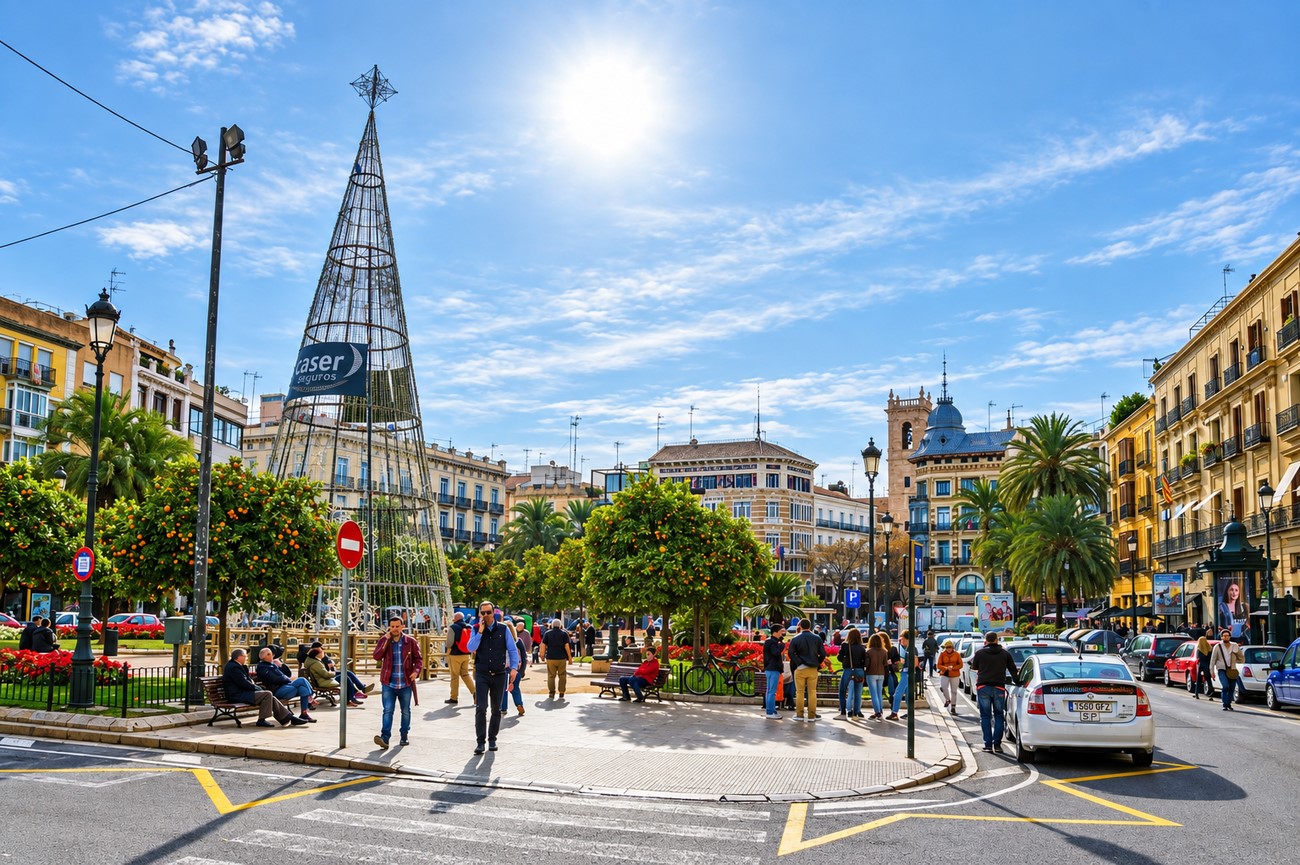
Winter is Valencia's underrated season. The weather is generally mild, visitor numbers are lower and major attractions such as the cathedral, La Lonja de la Seda and the Oceanogràfic are considerably quieter.
For travellers with flexible dates, February can also offer particularly good value and a much more relaxed way to experience the city.
Is
7 Days in Valencia Too Long?
No. Seven days in Valencia gives you enough time to see the major sights without rushing while also exploring the beaches, neighbourhoods and Albufera beyond the historic centre.
Two or three days gets you the cathedral, La Lonja de la Seda and the City of Arts and Sciences. If that is all the time you have, our 3-day Valencia itinerary covers the essentials.
Seven days gives you something different. It gives you a second visit to the same market, an afternoon at the beach with no plan, the Thursday Water Tribunal, sunset over Albufera and the mural you walked past on day two but only recognise on day five.
It also gives you the thing no schedule can deliver: the morning you stop consulting one. Somewhere around day five, you order without reading the menu, take the shortcut through the Turia Gardens without checking your phone and know which side of the square has the shade. That is the point at which a city stops feeling like a destination.
A week in Valencia does require some planning. Restaurant timings, guided tours, popular tickets, market opening hours and an Albufera visit timed for sunset all need to fit together. Get those details right, however, and seven days feels less like an extended city break and more like enough time to understand the city.
The
Morning Valencia Stops Being a List
It is day five or six. You are walking back from the market with something in a paper bag, taking the path through the Turia Gardens because it is shorter and because you like it down there. The light comes through the palms at an angle you have started to recognise. Someone is playing football where the river once ran.
You have not looked at your phone since breakfast. You know where you want to stop for horchata. Tomorrow, without discussing it, you will probably go back to the beach.
That feeling does not arrive entirely by accident. It comes more easily when the tickets are already booked, the table is held for two o'clock and the excursion south is timed for sunset rather than fitted into whatever time remains.
Somebody still has to do that work.


Let us know what you love, where you want to go, and we’ll design a one-of-a-kind adventure you’ll never forget.
Get in touch
Miriam
Travel Specialist

Romina
Travel Specialist

Laura
Travel Specialist
Frequently Asked Questions
-
What is the best area to stay in Valencia for first-time visitors?
Ciutat Vella is a convenient choice for first-time visitors who want to be close to Valencia Cathedral, the Central Market and La Lonja de la Seda. Ruzafa is a good alternative for travellers who prefer a neighbourhood with more restaurants, bars and contemporary city life.
-
Do you need a car for a week in Valencia?
No. Valencia is easy to explore on foot, by bicycle and by public transport, and many of the main sights are relatively close together. A car is generally unnecessary unless you plan to explore farther beyond the city.
-
How do you get from Valencia Airport to the city centre?
Valencia Airport is well connected to the city centre by metro, taxi and private transfer. The journey is relatively short, making Valencia one of the easier Spanish cities to reach after landing.
-
What should you book in advance for a Valencia itinerary?
Popular guided tours, restaurants and major attractions are worth booking ahead, particularly during summer, weekends and Las Fallas. Tickets for the City of Arts and Sciences and timed experiences such as an Albufera sunset excursion are also easier to organise in advance.
-
Can you see Valencia's main attractions on foot?
Many of them, yes. Valencia's Old Town is highly walkable, with the cathedral, Central Market and La Lonja de la Seda close together. The Turia Gardens also provide an enjoyable walking and cycling route towards the City of Arts and Sciences.
-
Is Valencia a good destination for families with children?
Yes. Valencia combines beaches, parks and a compact historic centre with family-friendly attractions such as the Oceanogràfic and Science Museum. The Turia Gardens also provide plenty of open space away from city traffic.
-
What other destinations can you combine with Valencia?
Valencia works well as part of a longer journey through eastern or central Spain. Alicante and the Costa Blanca lie to the south, while Madrid, Barcelona and other parts of the Mediterranean coast can also be combined with Valencia.
-
Can Revigorate arrange a tailor-made Valencia vacation?
Yes. Revigorate can create a tailor-made Valencia itinerary around your interests and travel dates, arranging accommodation, experiences, restaurant reservations, transfers and excursions so the different parts of your trip fit together smoothly.
Our offices:



Revigorate, Iberian Escapes and Algarve Lifestyle are the registered brand names of APCS Lda . We are a fully authorised travel agency licensed by Turismo de Portugal RNAVT/6867.
In the event of a dispute, the consumer may refer to: RAL - Centros de Arbitragem
Avª. 5 de Outubro, nº. 55, R/C Dtº. 8000-075 Faro, Portugal | Tel: +351 289 823 135 *
* national landline call
E-mail: info@consumoalgarve.pt| www.consumidoronline.pt | Mon to Fri: 9:00 - 13:00 / 14:00 - 17:00