City of Arts and Sciences Valencia: First-Timer's Guide to Oceanogràfic, Museums and Architecture
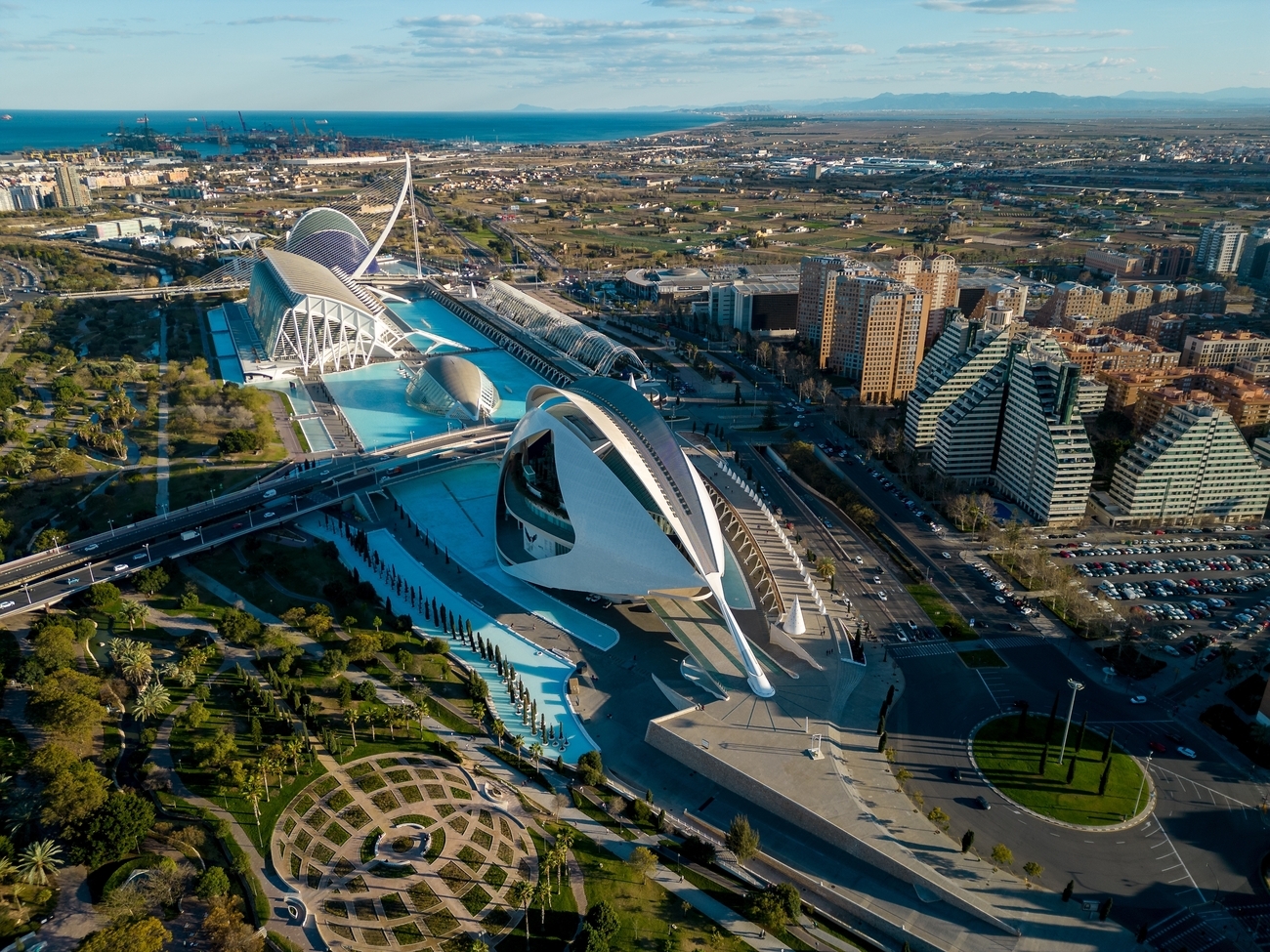
Valencia has a habit of surprising people who came for the paella. The City of Arts and Sciences is its biggest architectural statement: a vast collection of white, sculptural buildings stretching along the former Turia riverbed.
Known as Ciudad de las Artes y las Ciencias in Spanish and Ciutat de les Arts i les Ciències in Valencian, the complex covers roughly 350,000 square metres. It includes the Oceanogràfic aquarium, science museum, Hemisfèric, Umbracle and Palau de les Arts, alongside some of Valencia's most recognisable modern architecture.
The first thing to understand is its scale. This is not an attraction you walk around in an hour. The Oceanogràfic alone can take half a day, while the rest of the complex can easily fill the remaining hours.
This guide explains what each part of the City of Arts and Sciences contains, how long to allow, what is worth paying for and how to plan your first visit. If you are building a longer stay around it, see our guide to spending seven days in Valencia.
Why
the City of Arts and Sciences Was Built in the Turia Riverbed
You cannot really understand the City of Arts and Sciences without understanding the Turia.
From the 1957 Valencia Flood to the Turia Gardens
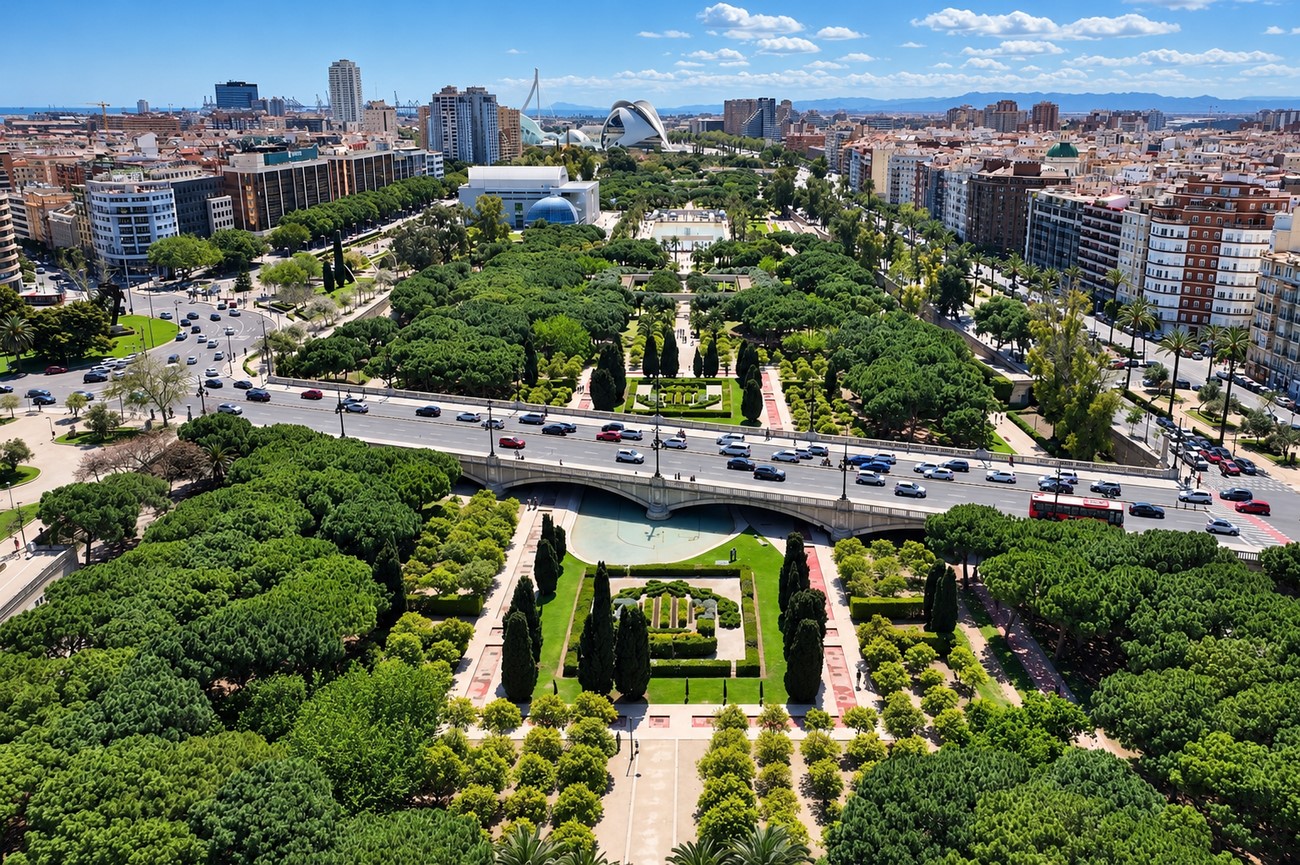
In October 1957, the Turia River burst its banks and flooded Valencia. Rather than simply rebuild the flood defences, the city diverted the river south around its outskirts, leaving around nine kilometres of empty riverbed through the centre.
Most of that former riverbed became the Turia Gardens: palms, orange trees, running tracks and football pitches, all sitting below street level beneath the city's old stone bridges.
At the eastern end, where the river once widened towards the port, Valencia built the City of Arts and Sciences.
Santiago Calatrava and the Architecture of the Complex
Its position in the former riverbed helps explain the scale. With no historic buildings immediately around it, Valencian architect Santiago Calatrava was able to create a complex of enormous white structures with very little to compete with them.
Walk along the streets and bridges above and you look down onto the roofs, giving you a perspective that few modern architectural complexes offer.
Construction took place between 1998 and 2005. Calatrava designed most of the City of Arts and Sciences, while the Oceanogràfic was designed by Spanish-Mexican engineer Félix Candela, known for his remarkably thin concrete shell structures.
The complex has not always been universally loved in Valencia. Its construction costs became controversial, and locals can be sharply critical of it while remaining quietly proud that these buildings have become the most instantly recognisable image of their city.
L'Oceanogràfic
Valencia: What to See and How Long to Spend
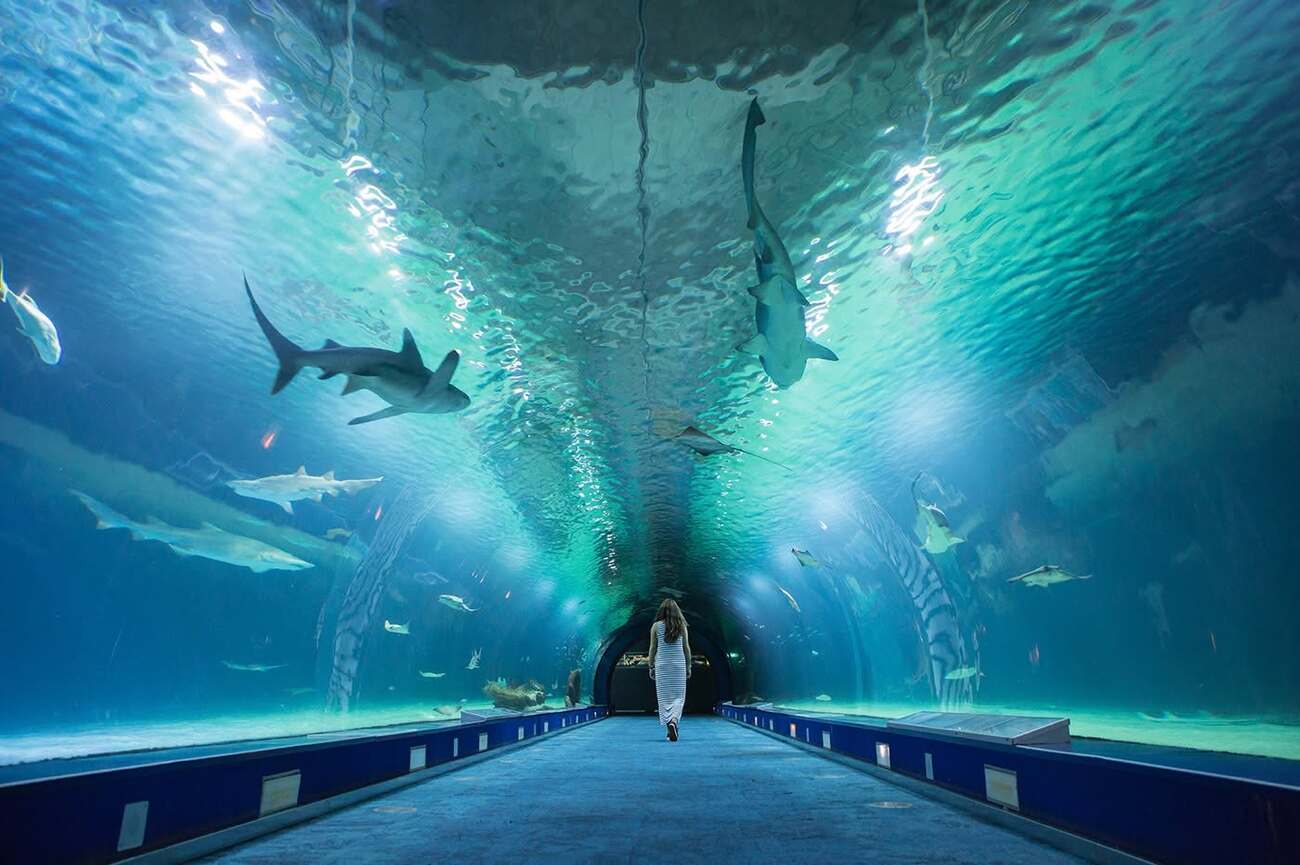
L'Oceanogràfic is the aquarium, and for many visitors the main reason to spend a full day at the City of Arts and Sciences. It is the largest aquarium in Europe, with around 45,000 animals from roughly 500 species representing the world's major marine environments and wetlands.
What to Expect at L'Oceanogràfic
Two things are worth knowing before you go in.
First, L'Oceanogràfic is not a single building. Separate pavilions are connected by outdoor paths and gardens, with many of the tanks below ground. You will spend a surprising amount of time outside between exhibits, which is lovely in May and considerably less forgiving in August.
Second, it is much larger on foot than the map suggests.
Highlights of L'Oceanogràfic
Start with the walruses. Seeing one at close range gives an immediate sense of the scale of the animals that live in polar waters.
The Arctic and Antarctic areas, with belugas and walruses, are among the highlights. The main ocean tank contains sharks and rays, with an underwater tunnel running directly through it.
The dolphinarium is also one of the largest in Europe. Presentations run to fixed times, so check the schedule when you arrive and plan the rest of your visit around the one you want to see.
There is also a Mediterranean section, appropriately enough with the actual Mediterranean only a short distance away, alongside mangrove and wetland habitats that echo the landscape of Albufera south of Valencia.
How Long Do You Need at L'Oceanogràfic?
Allow at least four hours for L'Oceanogràfic, and preferably half a day.
Trying to fit it into ninety minutes means seeing only a fraction of the aquarium and rushing through a place that rewards taking your time.
L'Hemisfèric
Valencia: IMAX, Planetarium and Architecture
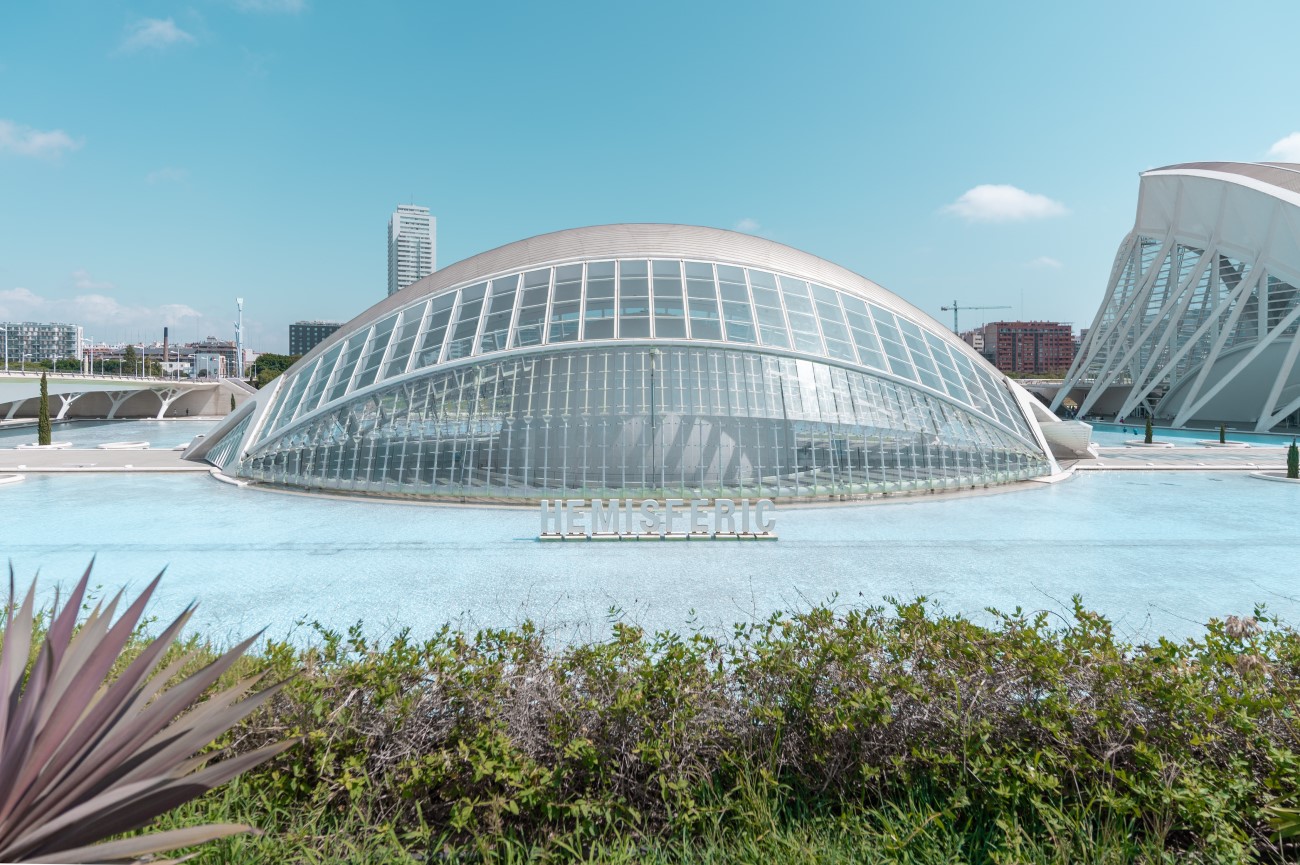
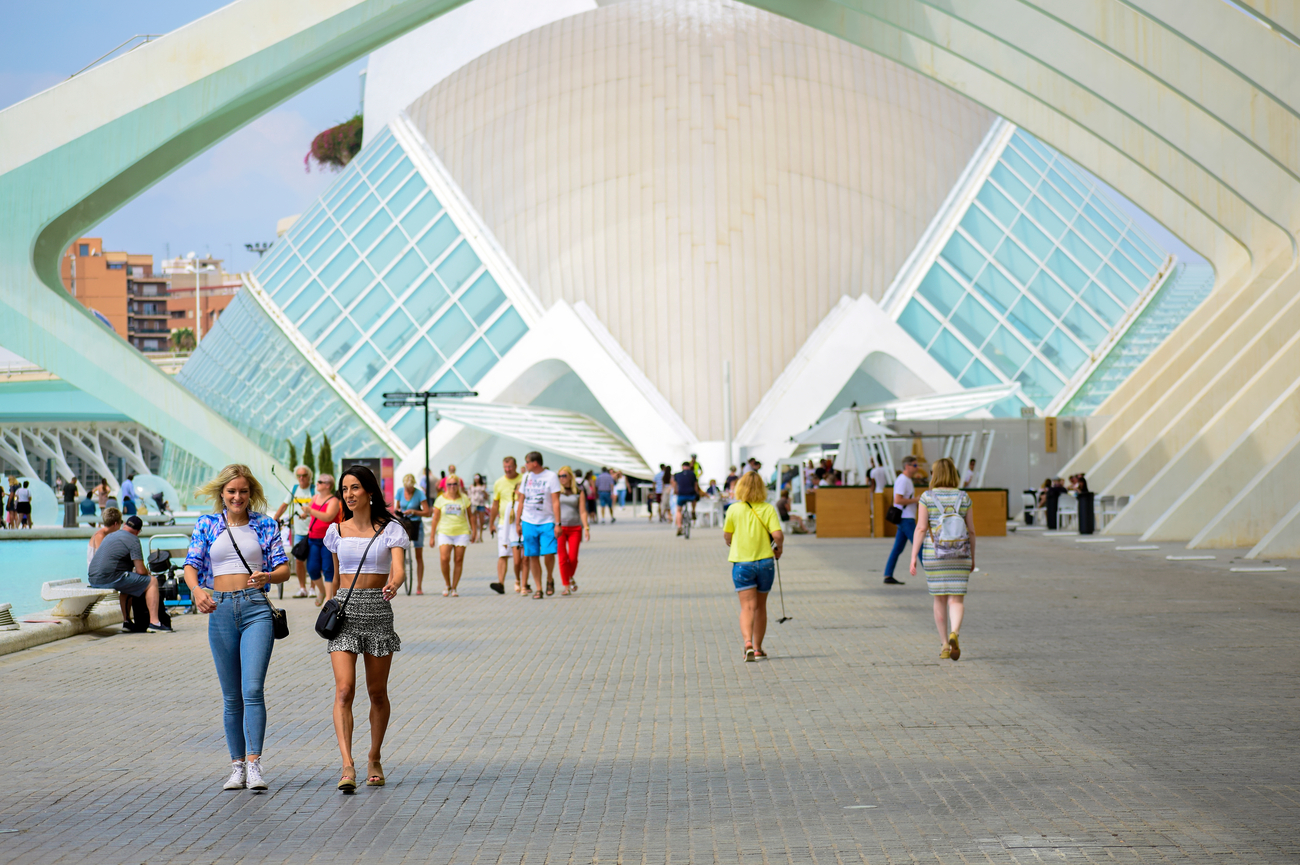
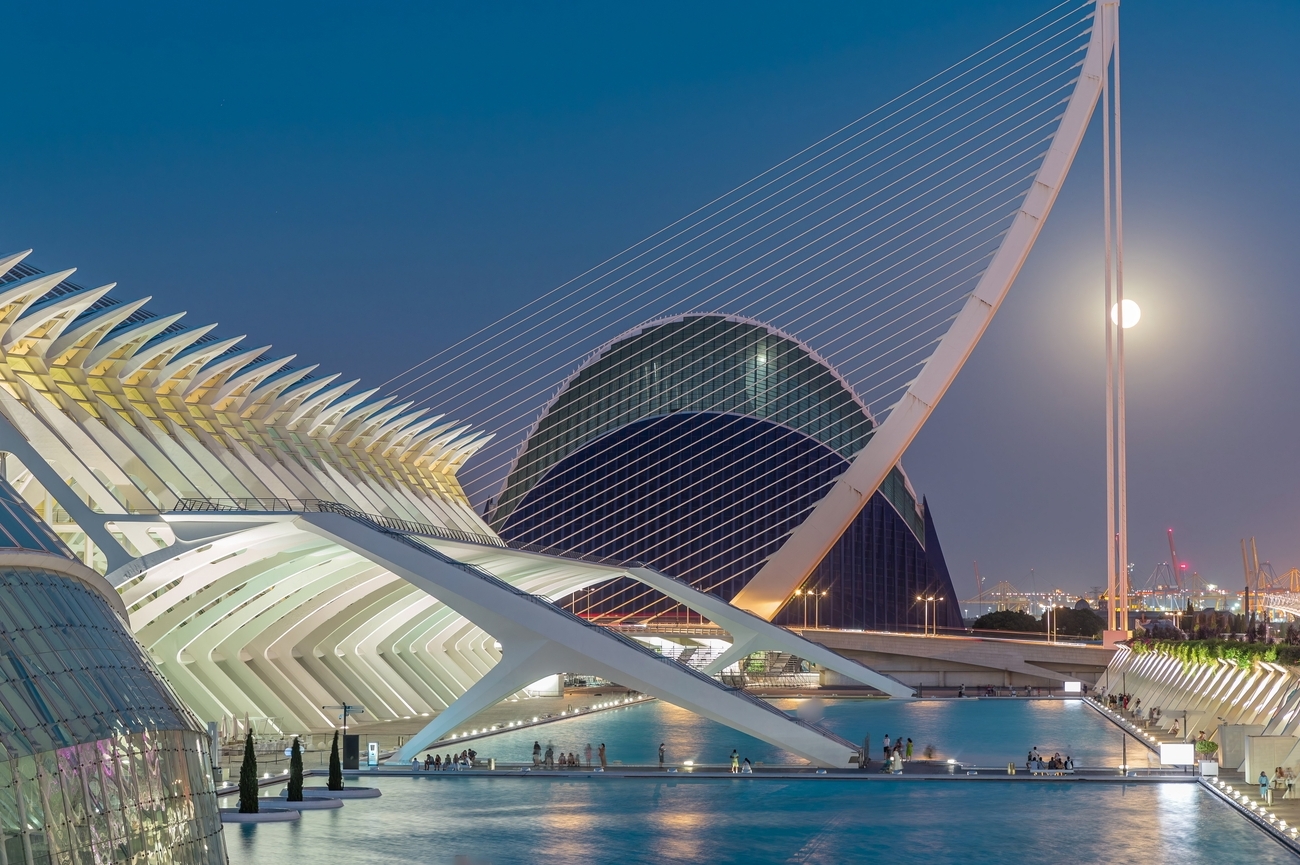
L'Hemisfèric is the eye of the City of Arts and Sciences. An eyelid-shaped structure opens over a glass hemisphere, while the shallow reflecting pool beneath completes the image of a single enormous eyeball.
It is one of Valencia's most recognisable buildings, and one of Santiago Calatrava's clearest examples of architecture designed around movement and reflection.
What Is Inside L'Hemisfèric?
Inside, L'Hemisfèric contains an IMAX dome and planetarium. Screenings change throughout the year and are offered in different languages, so check the programme before choosing a session.
The steeply reclined seating and enormous dome make the experience particularly immersive.
When to Visit L'Hemisfèric
L'Hemisfèric works especially well in the middle of a hot afternoon. The auditorium is dark, cool and comfortable, making it a useful break from walking around the exposed outdoor areas of the City of Arts and Sciences.
How Long Do You Need at L'Hemisfèric?
Allow around 10 to 15 minutes if you only want to see and photograph the building from outside.
If you are attending an IMAX or planetarium screening, allow around 90 minutes.
El Museu de les Ciències Valencia: Science Museum Guide
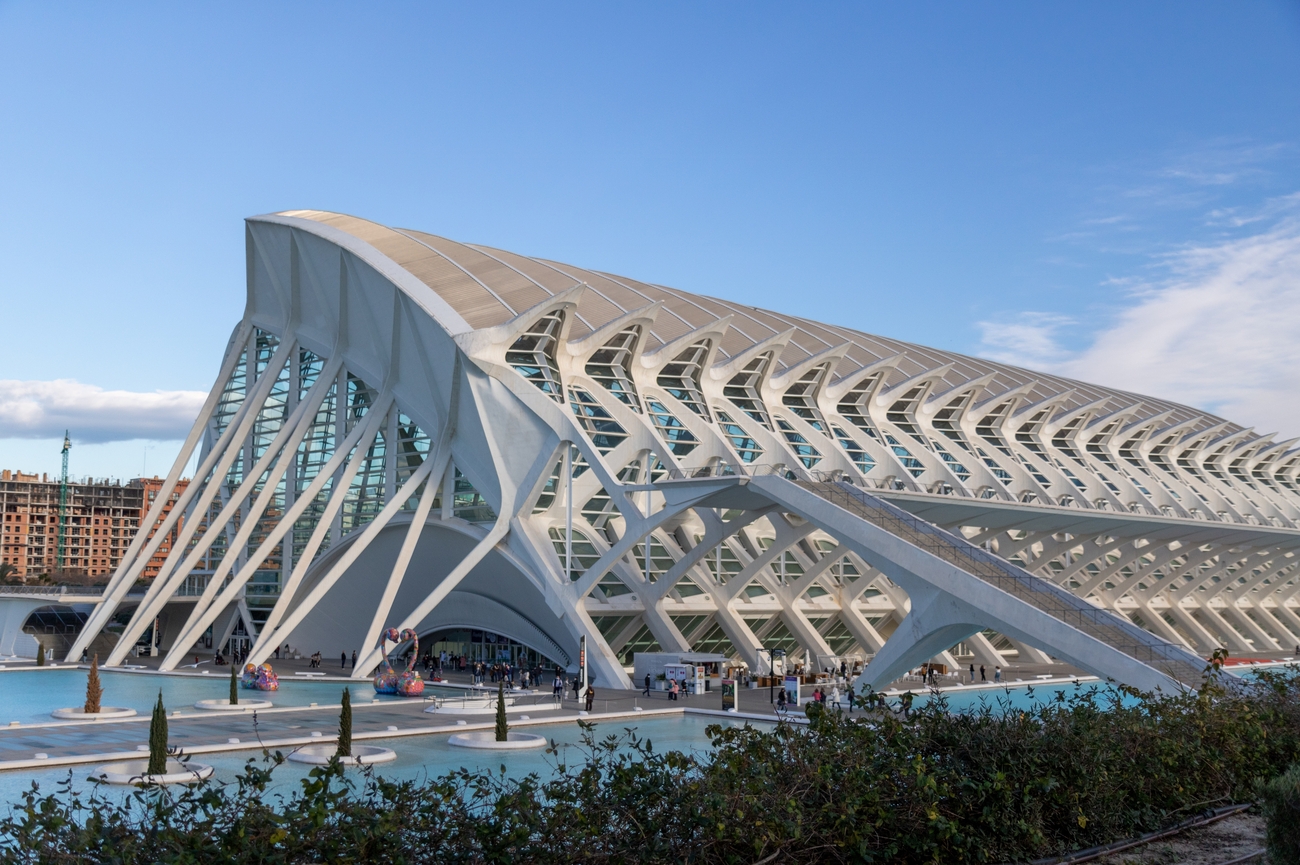
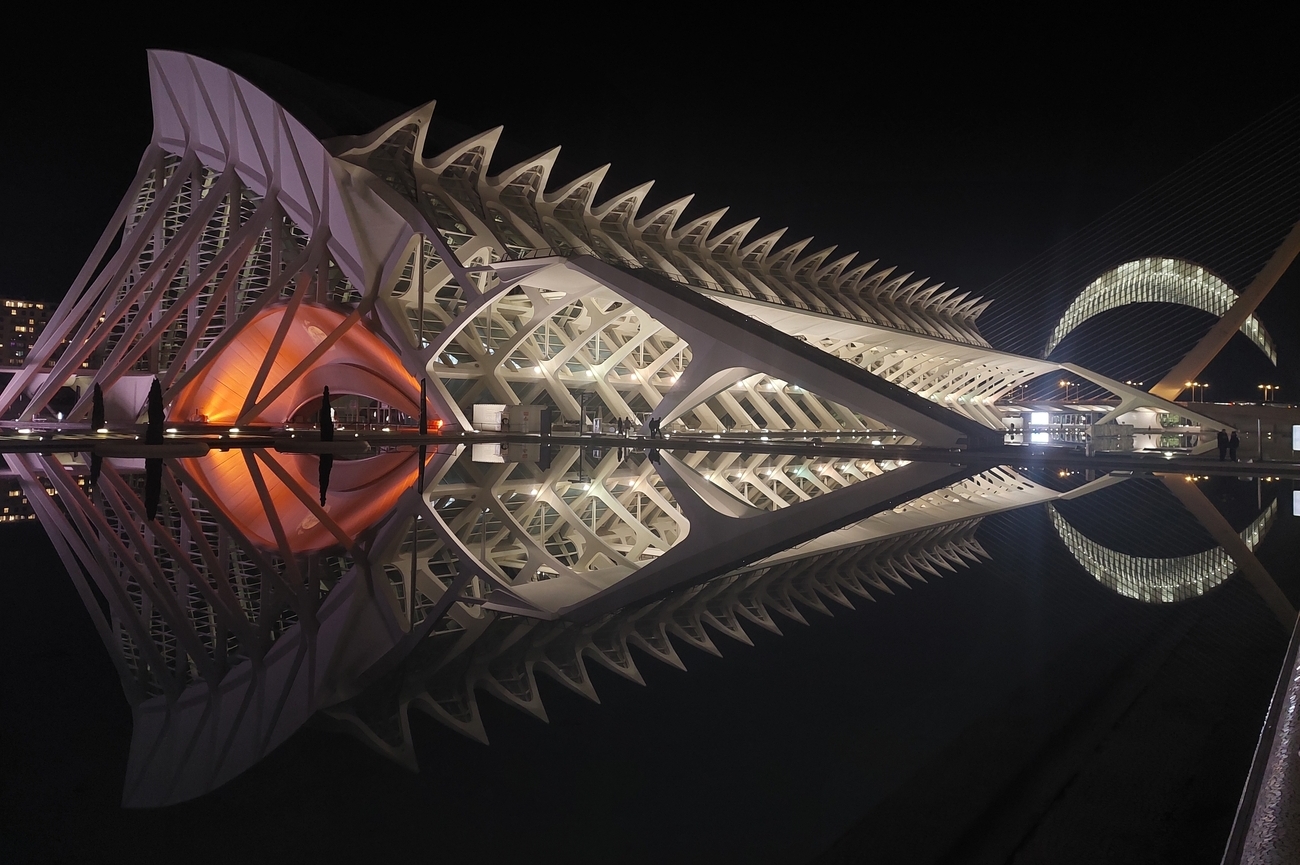
From outside, El Museu de les Ciències looks like the skeleton of an enormous whale, with repeating white ribs curving over a long glass interior. Of all Santiago Calatrava's buildings at the City of Arts and Sciences, this is where the organic design is most obvious.
What Is Inside the Valencia Science Museum?
Inside is a large interactive science museum spread over several levels around a vast central hall. The emphasis is firmly hands-on, with exhibits designed to be touched, tested and explored rather than simply viewed.
It is particularly good for families. With children, you can easily spend two hours here and still leave things unseen. Without children, the architecture and main exhibition spaces can be explored much more quickly.
How Long Do You Need at El Museu de les Ciències?
Allow around two hours with children.
If you are visiting mainly for the architecture and do not have a particular interest in the exhibitions, around 30 to 45 minutes may be enough.
Check the Temporary Exhibitions
The museum also hosts temporary exhibitions alongside its permanent displays, so check what is on during your visit if you have a particular interest.
One practical advantage in summer: the interior is heavily air-conditioned, making it one of the best places in the complex to spend the hottest part of the afternoon.
L'Umbracle
Valencia: Free Garden, Views and Photography
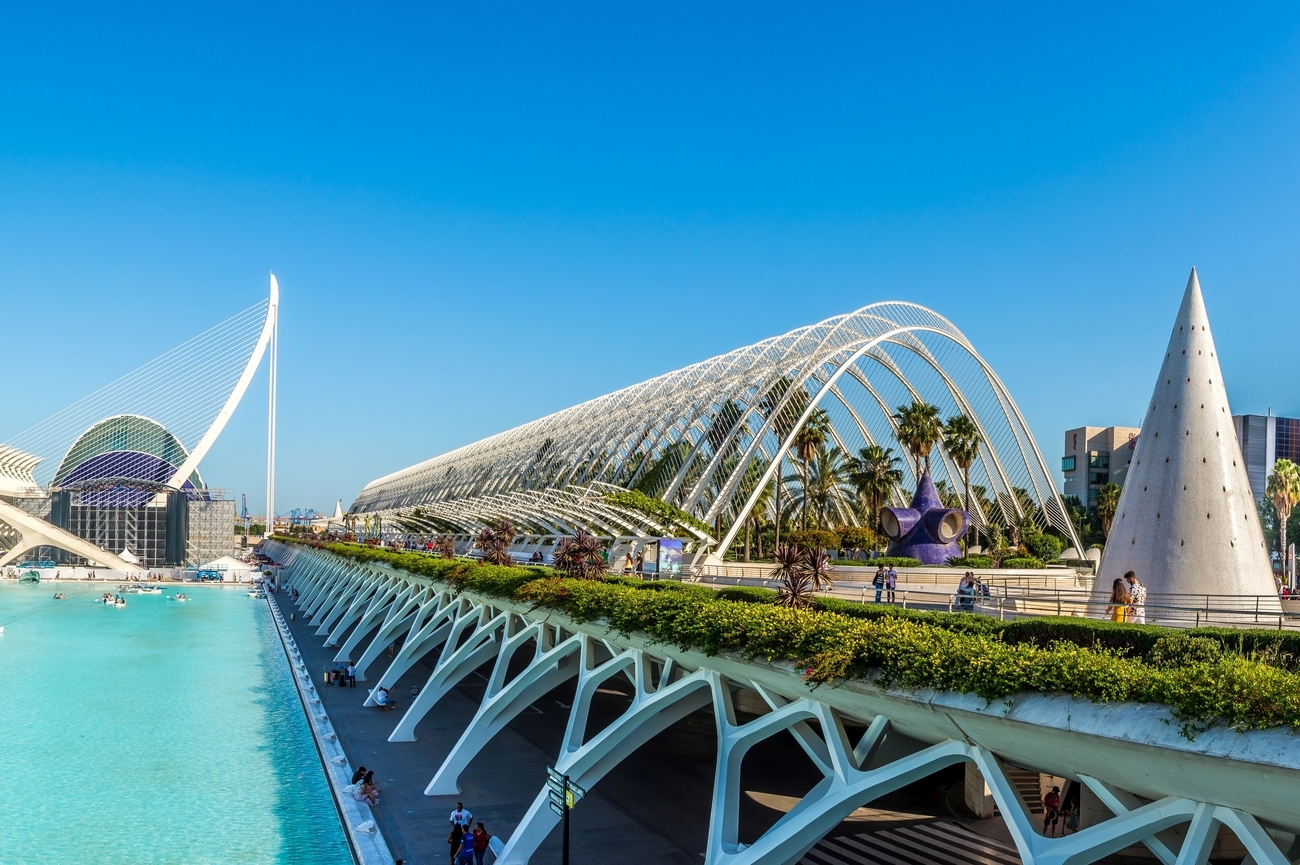
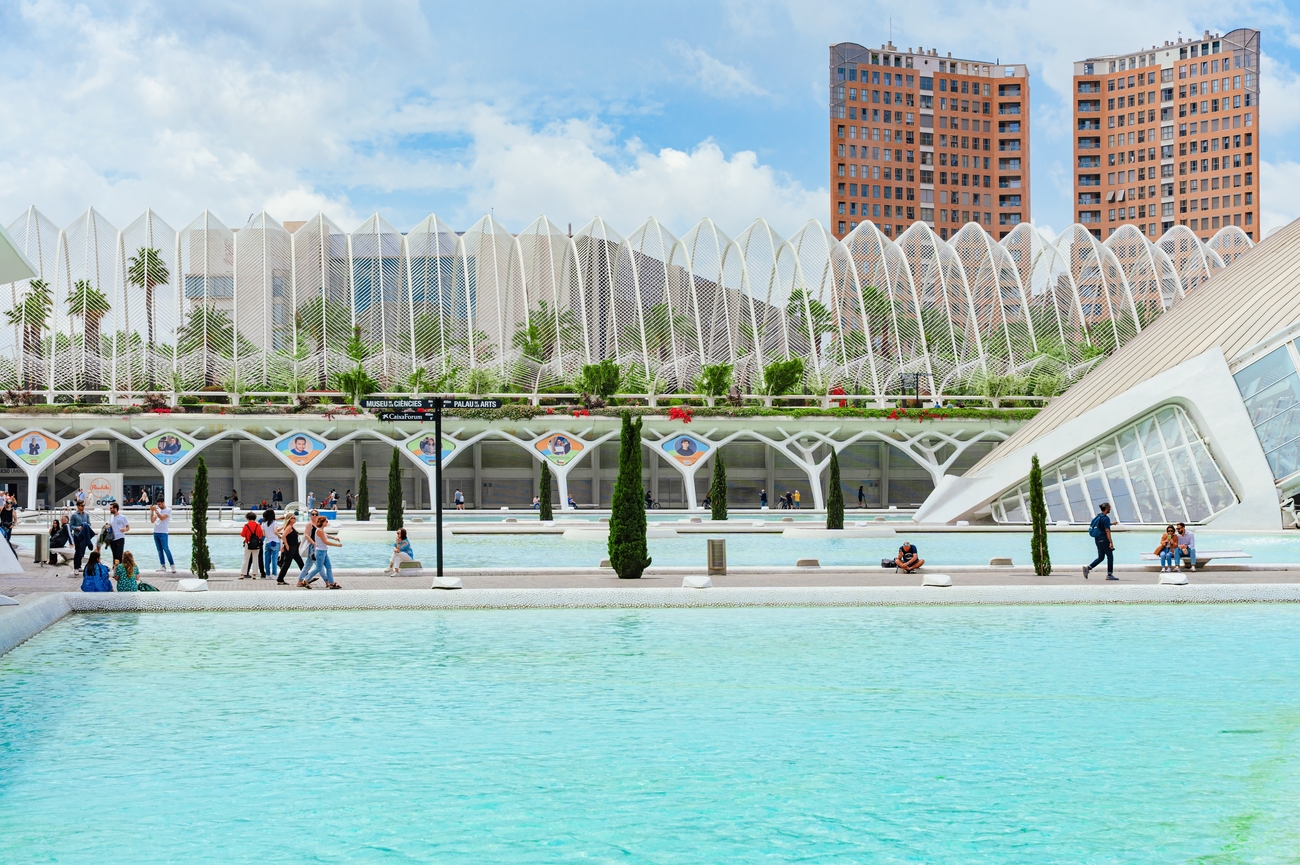
L'Umbracle is the long white colonnade running along the eastern side of the City of Arts and Sciences, raised above the rest of the complex and planted with palms and Mediterranean shrubs.
Why Visit L'Umbracle?
It is free to enter, offers one of the best views across the City of Arts and Sciences and is one of the strongest spots for photographs.
The elevated position gives you a clear view over the reflecting pools and surrounding buildings, while the repeating white arches frame the architecture particularly well.
Best Time to Visit L'Umbracle
Allow around 30 minutes, ideally in the early morning or late afternoon when the light is softer.
In summer, L'Umbracle changes character after dark when part of it becomes a nightclub terrace, so a late-night visit can mean music, queues and a DJ rather than a quiet garden.
A Quiet Place to Stop
L'Umbracle is also one of the most underrated places in the complex simply to sit down. Benches run along its length, the arches provide some shade, and the elevated walkway gives you a view across the site while most visitors continue straight towards the ticketed attractions.
Palau de les Arts and L'Àgora Valencia: Opera and
Events
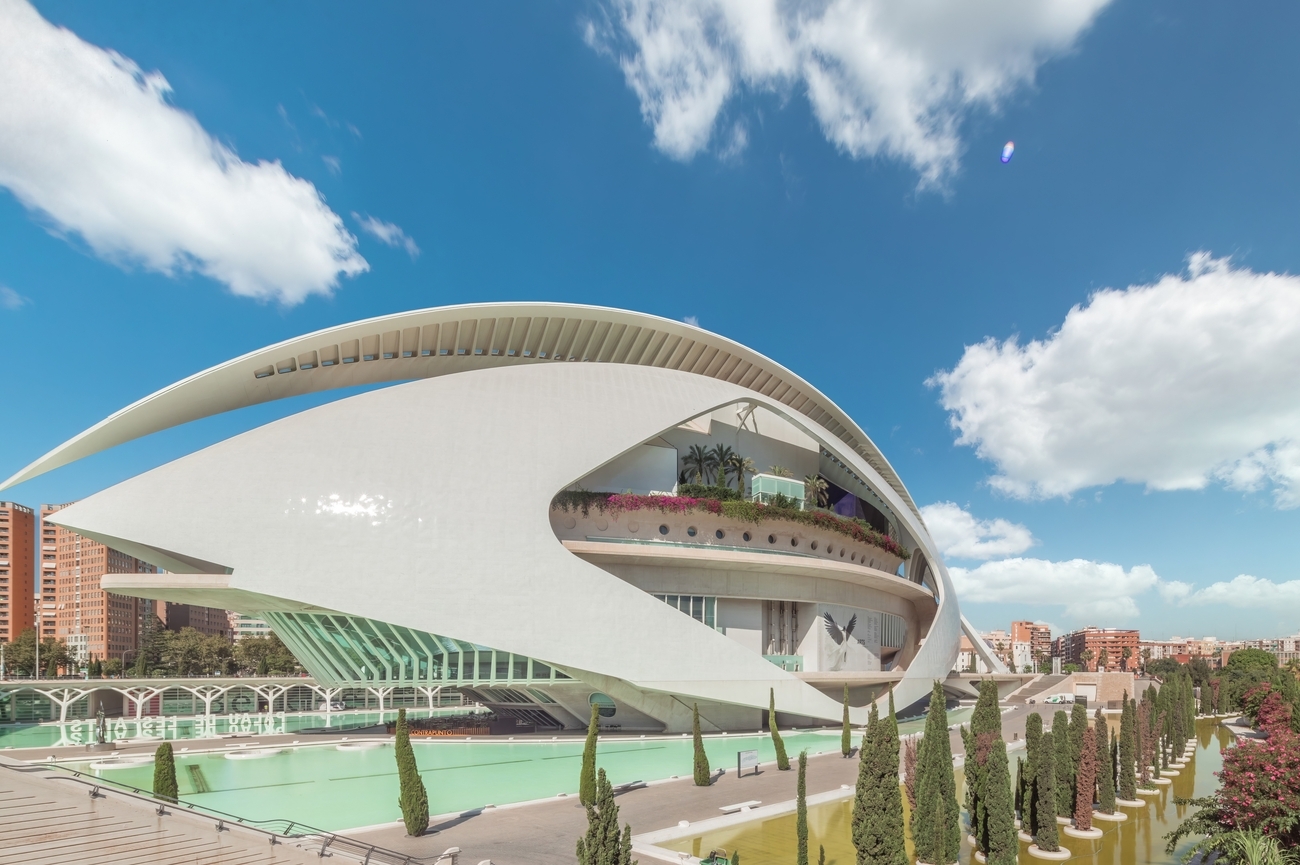
The Palau de les Arts Reina Sofía sits at the northern end of the City of Arts and Sciences, while L'Àgora, the covered events space, stands at the southern end. Neither works particularly well as a conventional daytime attraction.
See a Performance at Palau de les Arts Reina Sofía
The Palau de les Arts is Valencia's opera house, and it is worth checking the programme before your trip.
Seeing an opera or performance inside the building is a completely different experience from photographing it from one of the surrounding bridges. If you are spending a week in Valencia, it can make an exceptional evening.
See L'Àgora from the City of Arts and Sciences
L'Àgora is best appreciated as part of the wider architectural complex rather than as a standalone daytime visit. Its scale and form are easiest to understand while walking through the southern end of the City of Arts and Sciences.
How to Visit the City of Arts and Sciences in One Day
There are three sensible ways to spend a day at the City of Arts and Sciences, depending on what you want to see and who you are travelling with.
Full-Day City of Arts and Sciences Itinerary
Start at the northern end and walk south, allowing the buildings to reveal themselves one by one. Visit L'Hemisfèric or the science museum in the morning, have lunch on site, then spend the afternoon at L'Oceanogràfic.
Allow around eight to nine hours for the full experience. It is a substantial day, but it avoids rushing the aquarium or trying to fit too many ticketed attractions into a few hours.
City of Arts and Sciences With Children
With children, start at El Museu de les Ciències while everyone is fresh, break for lunch, then spend the afternoon at L'Oceanogràfic.
Save the underwater tunnel and some of the aquarium's biggest exhibits until later in the visit. Add L'Hemisfèric only if the film suits their age and interests.
Allow around five to six hours, depending on how much time you spend in the science museum.
Free Architecture-Only Itinerary
If you are visiting for Santiago Calatrava's architecture rather than the museums or aquarium, you can see the City of Arts and Sciences without buying a ticket.
Walk beside the reflecting pools, cross the bridges, explore L'Umbracle and view the buildings from both the riverbed and the streets above.
Allow around 90 minutes to two hours for an unhurried architecture walk.
Choosing your approach before you arrive avoids wasting time deciding between ticket combinations once you are there. On our Valencia journey, the City of Arts and Sciences gets a full day, with the timings and tickets arranged in advance.
Whichever version you choose, leave twenty minutes for doing nothing. Sit beside the reflecting pools with a cold drink and watch the buildings change in the light. It is one of the best experiences on the site, and it costs nothing.
How
to Get to the City of Arts and Sciences from Valencia City Centre
The best way to reach the City of Arts and Sciences from central Valencia is through the Turia Gardens.
Walk or Cycle Through the Turia Gardens
From Valencia's Old Town, the walk takes around 40 minutes, or about 15 minutes by bicycle. The route follows the former Turia riverbed beneath the city's historic bridges, with the white buildings of the complex gradually appearing over the final kilometre.
It is more than simply a way of getting there. Approaching through the gardens gives you one of the best introductions to the City of Arts and Sciences.
Getting There by Bus or Taxi
A taxi is the quickest option and can drop you close to whichever attraction you are visiting first, including L'Oceanogràfic.
Buses from central Valencia generally take around 20 minutes, depending on your starting point and traffic.
Choose the Right Entrance
There is no single main entrance to the City of Arts and Sciences. The complex stretches for more than a kilometre, with separate access points for L'Hemisfèric, the science museum and L'Oceanogràfic.
Check where your first attraction is before setting out. Arriving at the wrong end can mean a long walk in the sun before your visit has even begun.
Book City of Arts and Sciences Tickets in Advance
Book ahead during July and August and around Las Fallas in March, particularly if you plan to visit L'Oceanogràfic.
Combined tickets are available for several attractions and can offer better value if you intend to visit more than one. The combinations and prices can change, so check the official City of Arts and Sciences website before buying.
What
It Is Like to Visit the City of Arts and Sciences
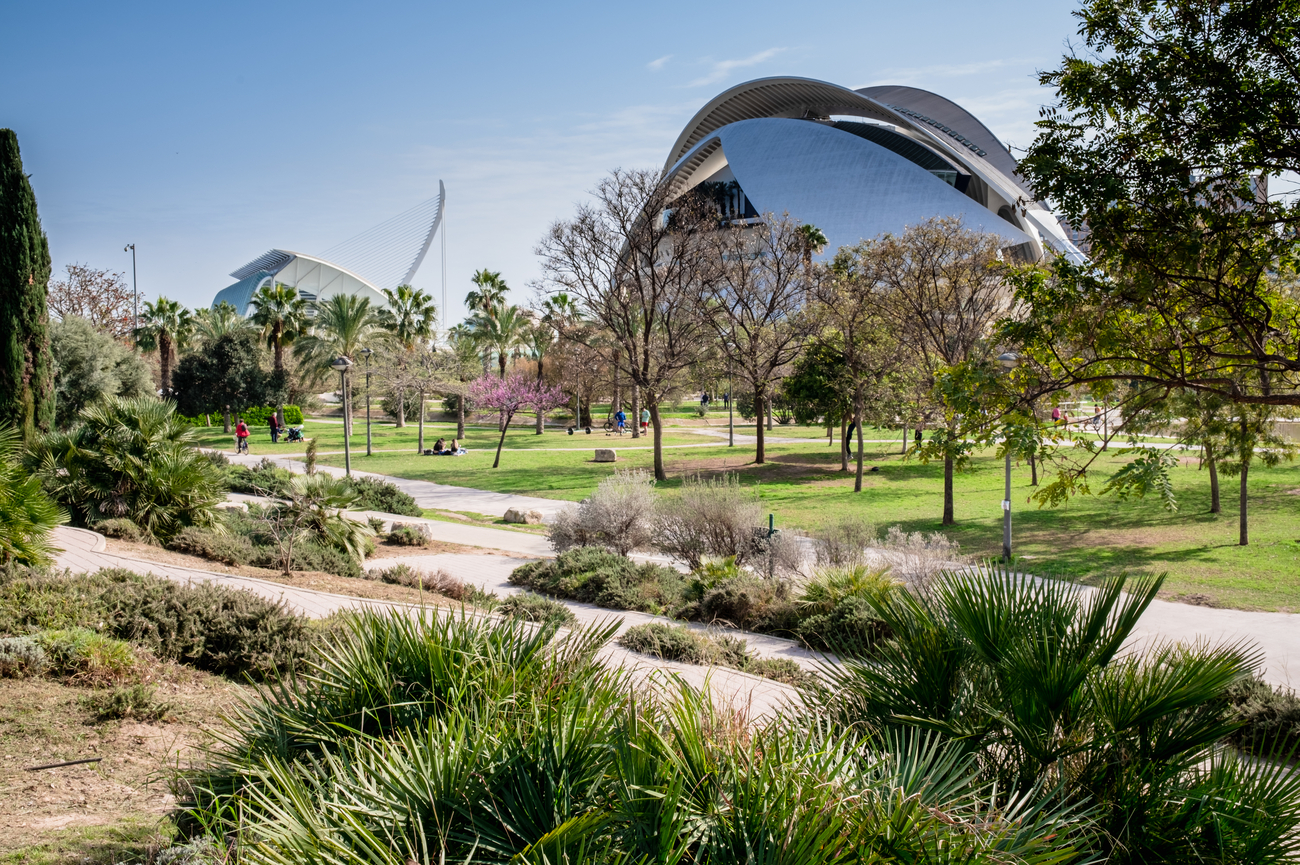
One thing photographs do not convey is how quiet the City of Arts and Sciences can feel. The complex is large enough to absorb substantial numbers of visitors without seeming crowded outside L'Oceanogràfic, and because it sits below street level, much of the traffic noise from Valencia disappears.
What remains is water, footsteps and an unusual amount of open sky.
Architecture, Light and Reflections
The white architecture also looks different in person. Photographs tend to flatten it, but the concrete changes constantly with the light: blue-white in the morning, warmer towards evening and briefly almost pink around dusk.
The broken ceramic tiling reflects the light differently again, adding a distinctly Valencian detail to buildings that otherwise look unlike anything else in the city.
Is the City of Arts and Sciences Easy to Walk Around?
Yes. Despite its size, the complex is flat, wide and largely straightforward to explore on foot.
The paved routes are suitable for buggies and wheelchairs, while benches, water and areas of shade appear at intervals throughout the site. The distances are greater than they first appear, but the walking itself is generally easy.
Best
Time to Visit the City of Arts and Sciences
The best time to visit the City of Arts and Sciences is early morning or late afternoon, when the light is softer and the reflecting pools are most effective.
Best Time for Photography
The reflecting pools are a large part of the visual effect. When the water is still, the buildings appear doubled in the surface; even a light breeze can break up the reflections.
Early morning usually gives you the best chance of calm water. If the pools are choppy when you arrive, try again later in the day.
Light matters just as much. Midday sun on the white concrete can be harsh, while the hour after sunrise and the hour before sunset bring out far more colour and detail in the architecture.
Visiting in Summer
In midsummer, the best evening light arrives late, often after eight. That works well because the exposed outdoor areas can be uncomfortable in the middle of the day, particularly around the paths between the Oceanogràfic pavilions.
Plan indoor attractions between noon and four, then return outside as the temperature drops.
Best Months to Visit
April, May, September and October offer warm weather without the most intense summer heat.
March brings Las Fallas, when Valencia is especially busy. Winter is quieter and mild, with lower light that can be particularly good for photography and fewer visitors at attractions such as L'Oceanogràfic.

Where
to Go After the City of Arts and Sciences
The City of Arts and Sciences is well placed for continuing either towards Valencia's beaches or back into the historic centre.
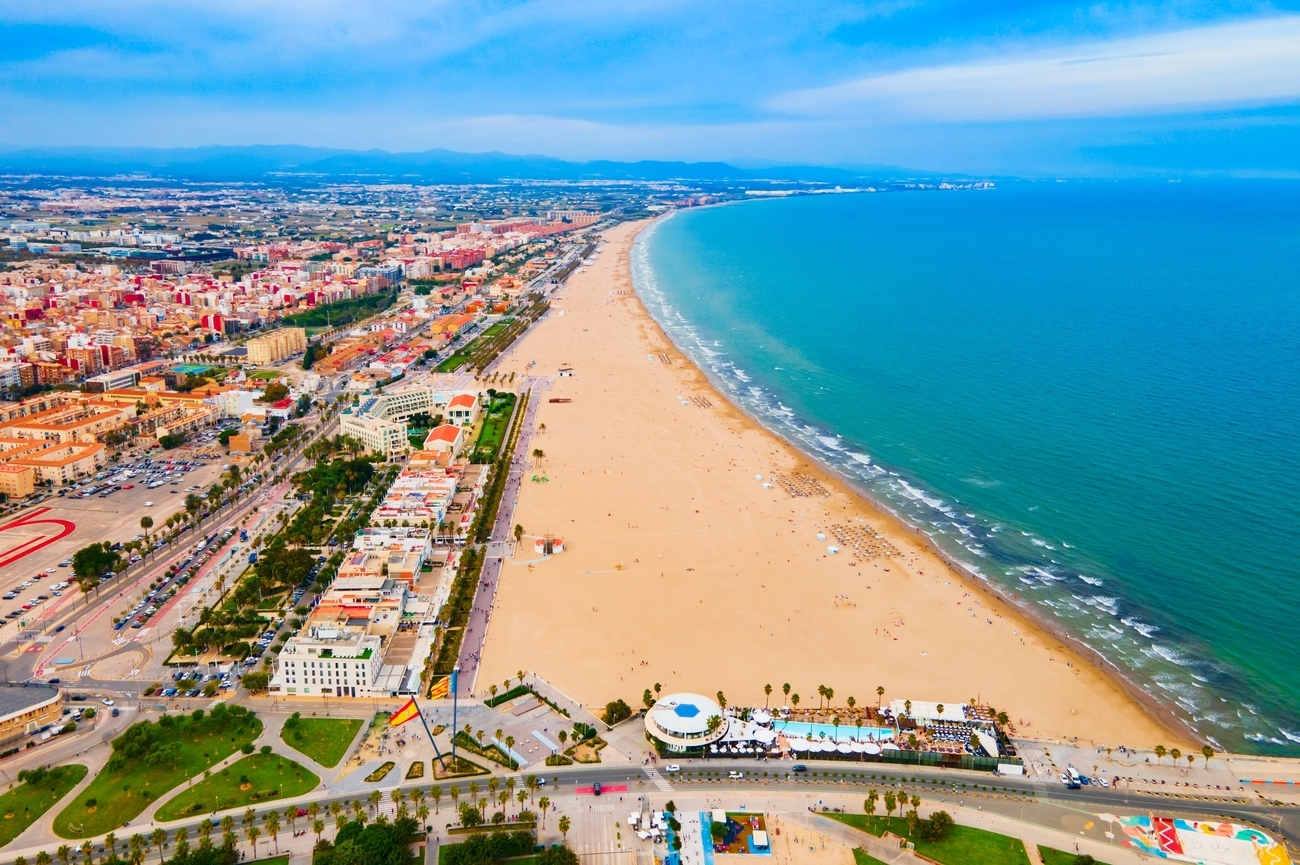
Head to Playa de las Arenas for Lunch
From the southern end of the complex, Playa de las Arenas is around fifteen minutes away.
A late lunch on the beachfront after a morning among the white architecture makes an easy contrast. This is a good place to slow the pace, order rice and stay by the Mediterranean for the afternoon.
Walk Back to Valencia Old Town
Alternatively, follow the Turia Gardens back towards the historic centre.
In around forty minutes you move from a complex completed in the early twenty-first century to Valencia Cathedral, built and altered over centuries on a site previously occupied by a mosque. La Lonja de la Seda stands only a few minutes further on.
For the complete route through the historic centre, see our walking guide to Valencia's Old Town.
Continue Through El Carmen
Following the former riverbed back towards the centre also brings you below El Carmen, where Valencia's medieval streets begin to fill with murals, painted shutters and contemporary street art.
For the best streets, neighbourhoods and artists to look for, see our guide to Valencia's street art.
Is
the City of Arts and Sciences Worth the Money?
Yes, but you do not necessarily need to buy the most expensive ticket.
Which City of Arts and Sciences Attractions Are Worth Paying For?
L'Oceanogràfic offers the strongest case for buying a ticket and can justify half a day on its own. L'Hemisfèric is worthwhile if the film or planetarium programme interests you, while El Museu de les Ciències is particularly good for families with children.
If you are travelling without children and have little interest in interactive science exhibits, the museum is easier to skip.
Can You Visit the City of Arts and Sciences for Free?
Yes. Much of what makes the City of Arts and Sciences remarkable costs nothing.
You can walk through the entire complex, explore the reflecting pools, visit L'Umbracle, cross the bridges and see Santiago Calatrava's architecture without buying a ticket.
For visitors primarily interested in architecture and photography, spending a couple of hours here without entering any of the ticketed attractions is entirely worthwhile.
Should You Buy a Combined Ticket?
Decide which attractions you genuinely want to visit before buying a combined ticket.
The City of Arts and Sciences is large enough that trying to make a multi-attraction ticket feel worthwhile can easily turn the day into a race. Choose the experiences first, then buy the ticket that fits them - not the other way around.
Visit
the City of Arts and Sciences at Night
The buildings may close, but the City of Arts and Sciences itself is worth seeing after dark.
Come back later in the evening, once the daytime crowds have gone and the lights beneath the arches and around the pools have come on. A walk through the complex takes around thirty minutes, costs nothing, and feels completely different from a daytime visit.
When the wind drops, the reflecting pools become glassy and L'Hemisfèric appears doubled in the water. The white concrete softens under the evening lighting, and there are far fewer people competing for the same views.
Most Valencia itineraries visit the City of Arts and Sciences once during the day and move on. If you are staying for a full week, return for twenty or thirty minutes after dark. It is one of the advantages of having enough time to see the same place twice.
That slower approach is built into our Valencia journey.


Let us know what you love, where you want to go, and we’ll design a one-of-a-kind adventure you’ll never forget.
Get in touch
Miriam
Travel Specialist

Romina
Travel Specialist

Laura
Travel Specialist
Our offices:



Revigorate, Iberian Escapes and Algarve Lifestyle are the registered brand names of APCS Lda . We are a fully authorised travel agency licensed by Turismo de Portugal RNAVT/6867.
In the event of a dispute, the consumer may refer to: RAL - Centros de Arbitragem
Avª. 5 de Outubro, nº. 55, R/C Dtº. 8000-075 Faro, Portugal | Tel: +351 289 823 135 *
* national landline call
E-mail: info@consumoalgarve.pt| www.consumidoronline.pt | Mon to Fri: 9:00 - 13:00 / 14:00 - 17:00