Txakoli and Basque Cider: A Drinks Guide to San Sebastian and the Basque Country
"TXOTX."
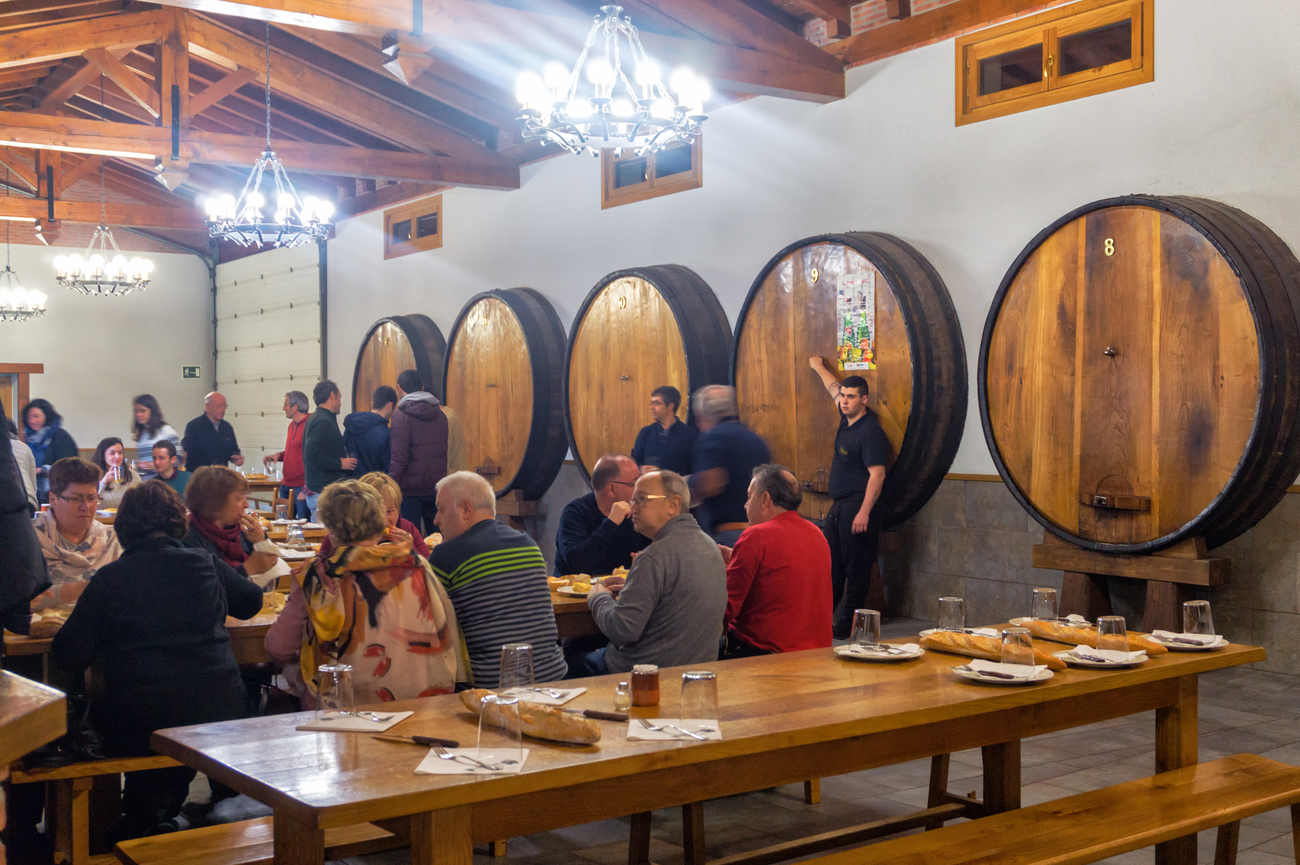
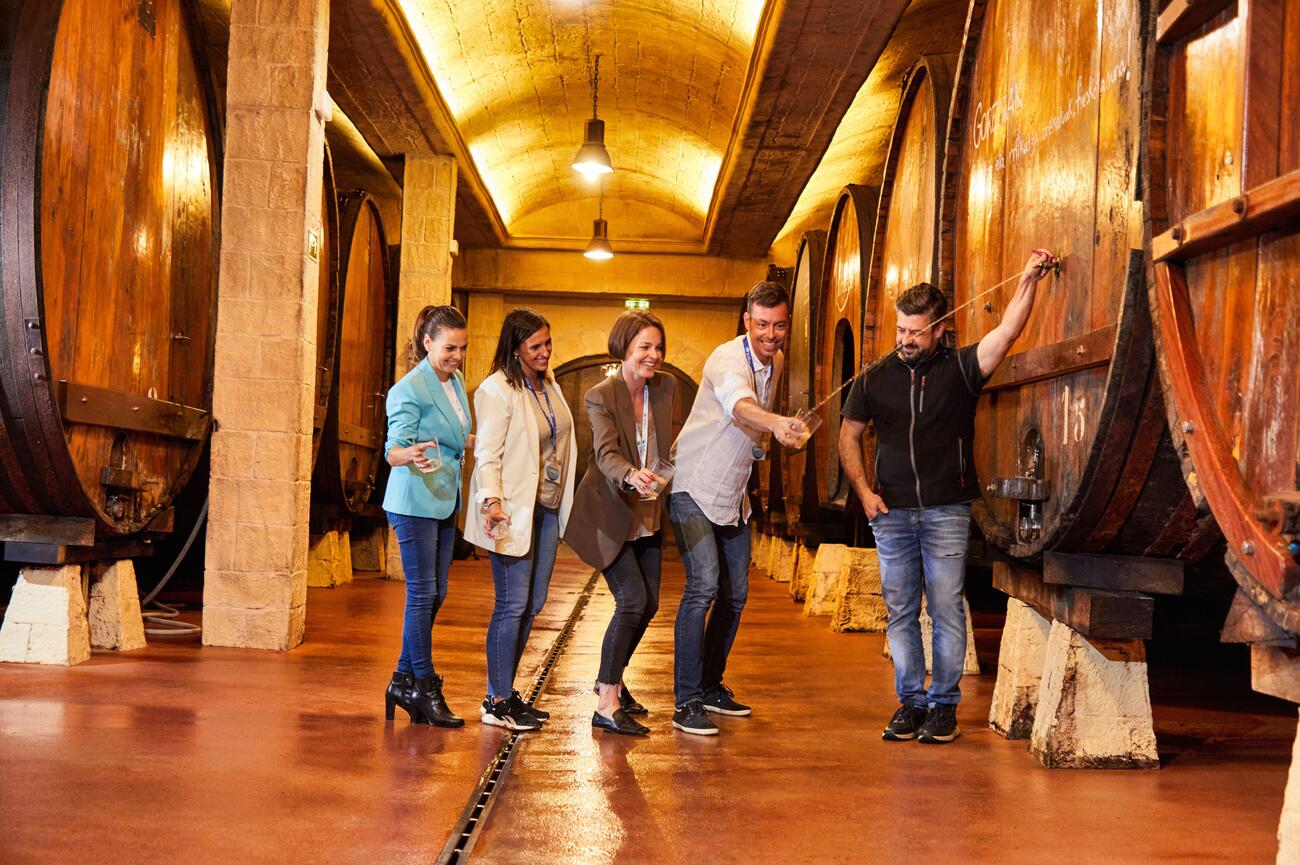
Pronounced roughly "choch", the call rises above the conversation and people begin leaving the long tables with empty glasses in their hands. Chairs scrape. A line forms towards the cellar, where enormous cider barrels, known as kupelas, stand in rows. One is opened and a thin stream of cider arcs from the wood. Each person catches a small amount in a tilted glass, drinks it and eventually returns to the table until the call comes again.
This is txotx, one of the defining rituals of a traditional Basque cider house, or sagardotegi. The name originally refers to the small peg used to close the opening in the barrel, but today it also describes the ritual of tasting cider directly from the kupela. Cider houses have been part of Basque rural culture for centuries, particularly in Gipuzkoa, with Astigarraga, Hernani and Usurbil among the places most closely associated with the tradition.
Alongside cider stands txakoli, pronounced roughly "cha-ko-LEE", the crisp Basque wine closely associated with the coast. Getariako Txakolina, produced mainly in Gipuzkoa from the Hondarrabi Zuri grape, is typically young, fresh and relatively low in alcohol, with the acidity that makes it particularly well suited to seafood and pintxos. Traditionally, txakoli can be poured from a height to aerate the wine and give it a slight sparkle in the glass.
Together, txakoli and Basque cider reveal two sides of the region's drinking culture: one associated with pintxos bars, coastal vineyards and seafood, the other with communal tables, apple orchards and cider drawn directly from the barrel. Both make much more sense alongside the food they were developed to accompany, which our San Sebastian food guide explores in full.
Our 4-day luxury culinary itinerary in San Sebastián includes a pintxos and wine experience in the Parte Vieja, with the option to travel west to Getaria for a visit to a family-run txakoli winery overlooking the coast. A traditional cider-house experience can also be incorporated for travellers who want to explore the other great drinking tradition of the Basque Country.
This guide explains what is in the glass, how to drink it and why a single shout of "txotx" can bring an entire cider house to its feet.
What
Is Txakoli?

Txakoli, pronounced roughly “cha-ko-LEE”, is a traditional Basque wine produced in the green, Atlantic-influenced landscapes of northern Spain. Most txakoli is white, fresh and relatively low in alcohol, with lively acidity and, in some styles, a slight natural spritz. Hondarrabi Zuri is the principal white grape associated with the wine, particularly in the coastal vineyards of Getaria.
The Basque Country has three protected Txakoli Designations of Origin: Getariako Txakolina in Gipuzkoa, Bizkaiko Txakolina in Bizkaia and Arabako Txakolina in Álava. Each has its own landscape and winemaking traditions, although native varieties including Hondarrabi Zuri play a central role across the region.
Around Getaria, the Atlantic climate has an especially strong influence. Vineyards rise across the green hills close to the Bay of Biscay, and growers use both traditional and modern training systems to manage vigorous vines in this cool, humid environment. Getariako Txakolina is generally produced as a young wine with moderate alcohol and balanced acidity, characteristics that make it particularly well suited to the seafood of the Basque coast.
That freshness also explains why txakoli works so naturally with pintxos. Its acidity pairs particularly well with fish, shellfish, anchovies, fried dishes and richer bites, making a small glass an easy companion during a txikiteo through San Sebastián.
The full evening it accompanies, from the first Gilda to the final bar of the night, is mapped in our guide to the best pintxos in San Sebastian.
Why Is Txakoli Poured from a Height?
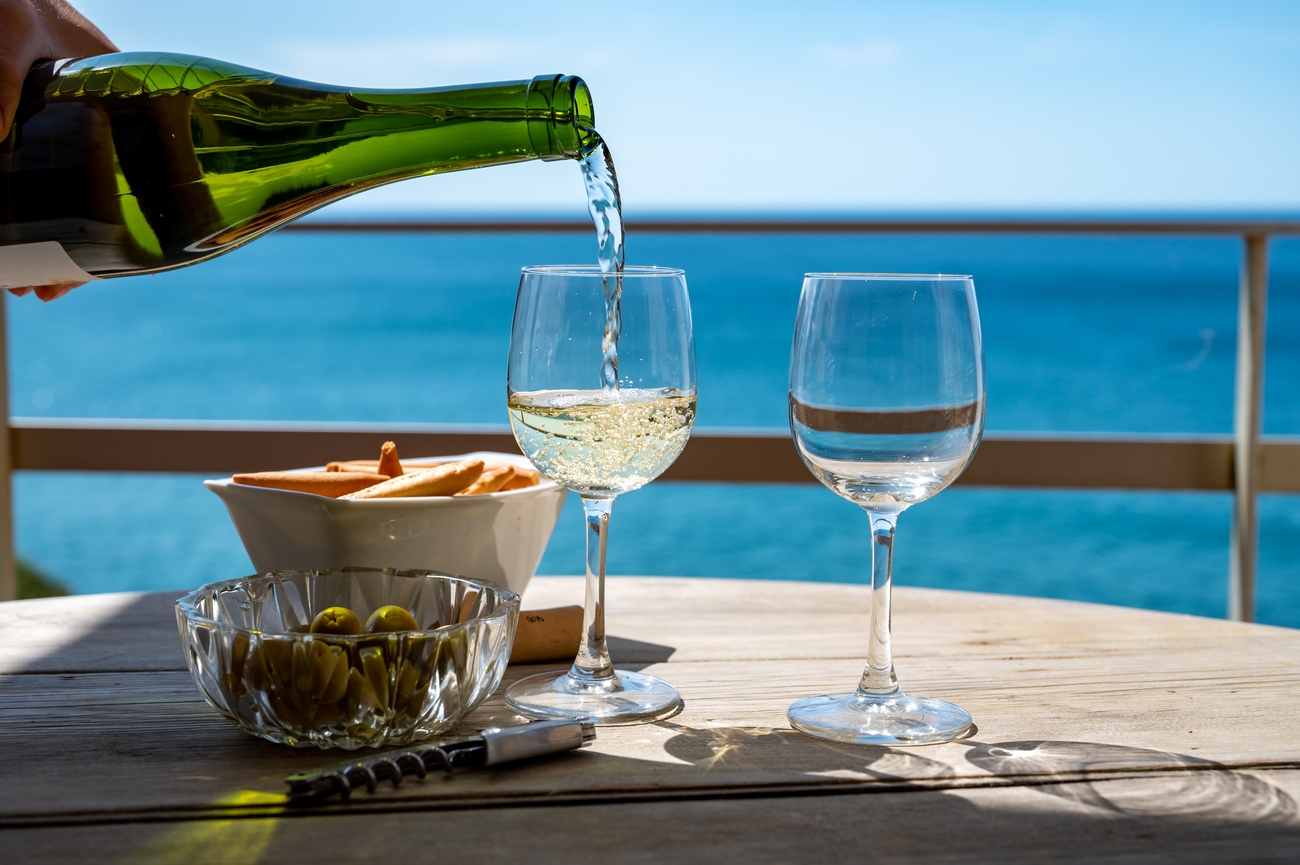
The traditional high pour is one of the most recognisable rituals associated with txakoli. The wine is poured in a long stream from above the glass, helping to aerate it, release its aromas and briefly emphasise its fresh, lightly sparkling character.
It is also part of the theatre of drinking txakoli in the Basque Country. The technique is particularly associated with younger, traditional styles, although not every modern txakoli needs to be served this way.
The glass receives only a modest pour, intended to be enjoyed fresh and then replenished, which suits the rhythm of a San Sebastián pintxos crawl: one dish, one small drink and then on to the next bar.
Txakoli
Country: Getaria and the Coastal Vineyards
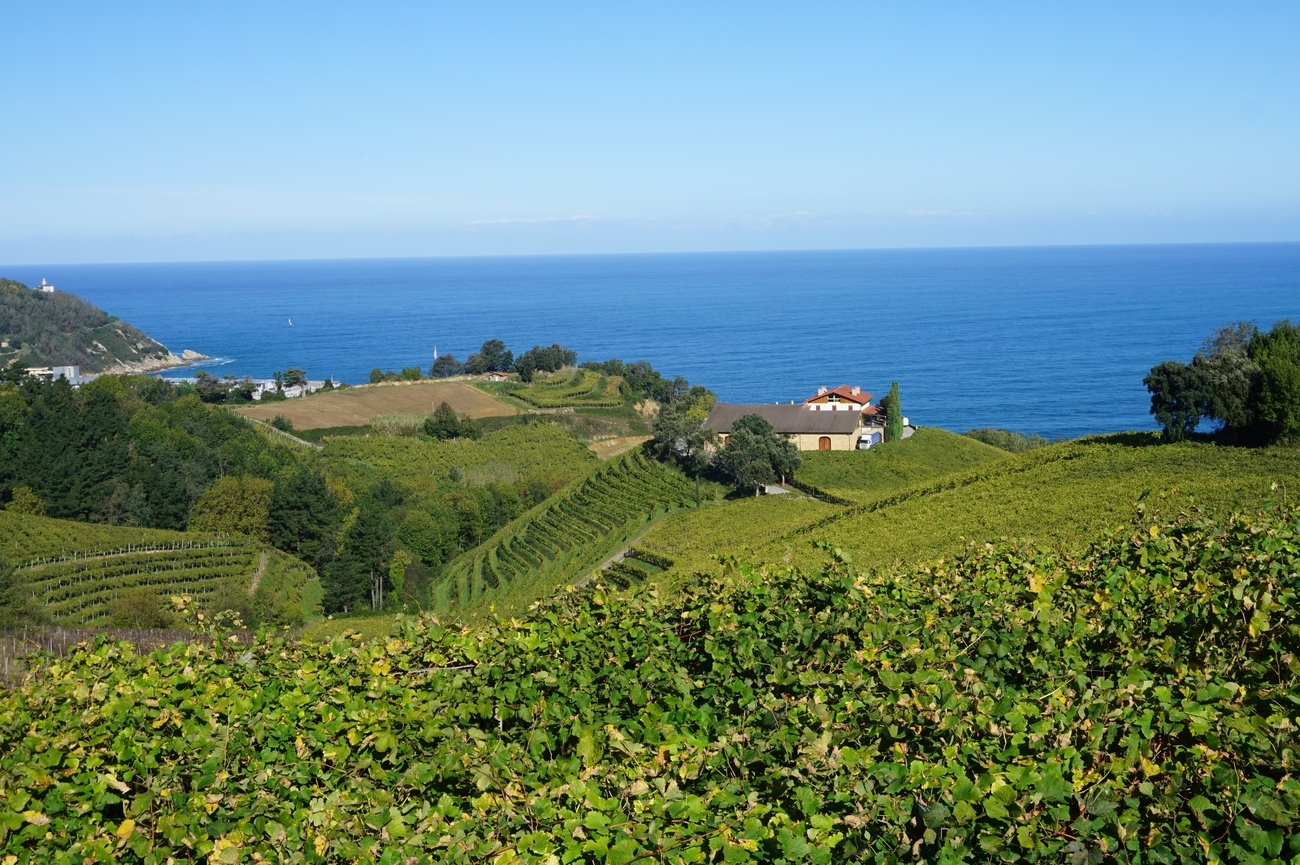
To understand txakoli properly, travel west from San Sebastián to Getaria. This small fishing town sits between the Bay of Biscay and green vineyard-covered hills at the heart of Getariako Txakolina. The denomination was officially recognised in 1989 and today extends across Gipuzkoa, although its identity remains closely tied to the Atlantic coast and the native Hondarrabi grape varieties.
The landscape explains much of the wine's character. Vineyards climb the hills around Getaria with the sea often visible below, while the cool, humid Atlantic climate shapes a style typically associated with freshness, moderate alcohol and lively acidity. Around 90% of the denomination's vineyard area lies in coastal zones, making this one of the clearest places to see the relationship between Basque wine and its landscape.
Getaria also has two remarkable sons. Juan Sebastián Elcano was born here and completed the first circumnavigation of the world in 1522, returning aboard the Victoria after an expedition that had begun under Ferdinand Magellan. The town continues to commemorate Elcano through monuments and sites connected with his life. Cristóbal Balenciaga was also born in Getaria, and the Cristóbal Balenciaga Museoa, opened in 2011, explores the life, technique and legacy of one of the most influential designers in twentieth-century fashion.
Then there is the fish. Getaria has developed an international reputation for grilling whole fish over hot coals, a tradition rooted in the town's maritime history. Restaurants around the harbour continue to use outdoor grills for fish arriving from the coast, with turbot among the dishes most strongly associated with the town. A bottle of locally produced txakoli beside grilled fish, with the harbour and Atlantic immediately beyond the table, is one of the most natural pairings in Basque cuisine.
A morning visit to a txakoli producer adds another layer to the experience, allowing you to see the vineyards, understand the Hondarrabi grapes and taste the wine close to where it is grown. Our 4-day luxury culinary itinerary in San Sebastián can include a visit to a family-run winery in Getaria, combining a tasting among the coastal vineyards with time to explore one of the Basque Country's most distinctive fishing towns.
The
Sagardotegi: Inside a Basque Cider House
A sagardotegi is a traditional Basque cider house, originally a place where cider was produced and tasted and today one of the most distinctive food experiences in the Basque Country. Many are concentrated in Gipuzkoa, particularly around Astigarraga, Hernani and Usurbil. Astigarraga, only a few kilometres from San Sebastián, is widely regarded as the capital of Basque cider.
A traditional sagardotegi is very different from a conventional restaurant. Cider remains at the centre of the experience, with food served alongside it at communal tables and guests periodically leaving their seats to taste cider directly from the kupelas, the large barrels in which it is stored. The atmosphere is typically informal and sociable, with the focus firmly on cider, traditional Basque food and the ritual of sharing both.
The tradition developed from the cider-making farms of the Basque countryside. Producers invited neighbours and buyers to taste cider from different barrels, often accompanied by food. Over time, this evolved into the cider-house meals and txotx ritual that visitors encounter today.
For travellers coming from San Sebastián's Michelin-starred dining rooms, the contrast is part of the appeal. A sagardotegi is less about formal service and more about participating in a long-established Basque tradition: sharing food, standing up when the next barrel is opened and tasting cider directly where it is made.
What Is on the Menu at a Basque Cider House?
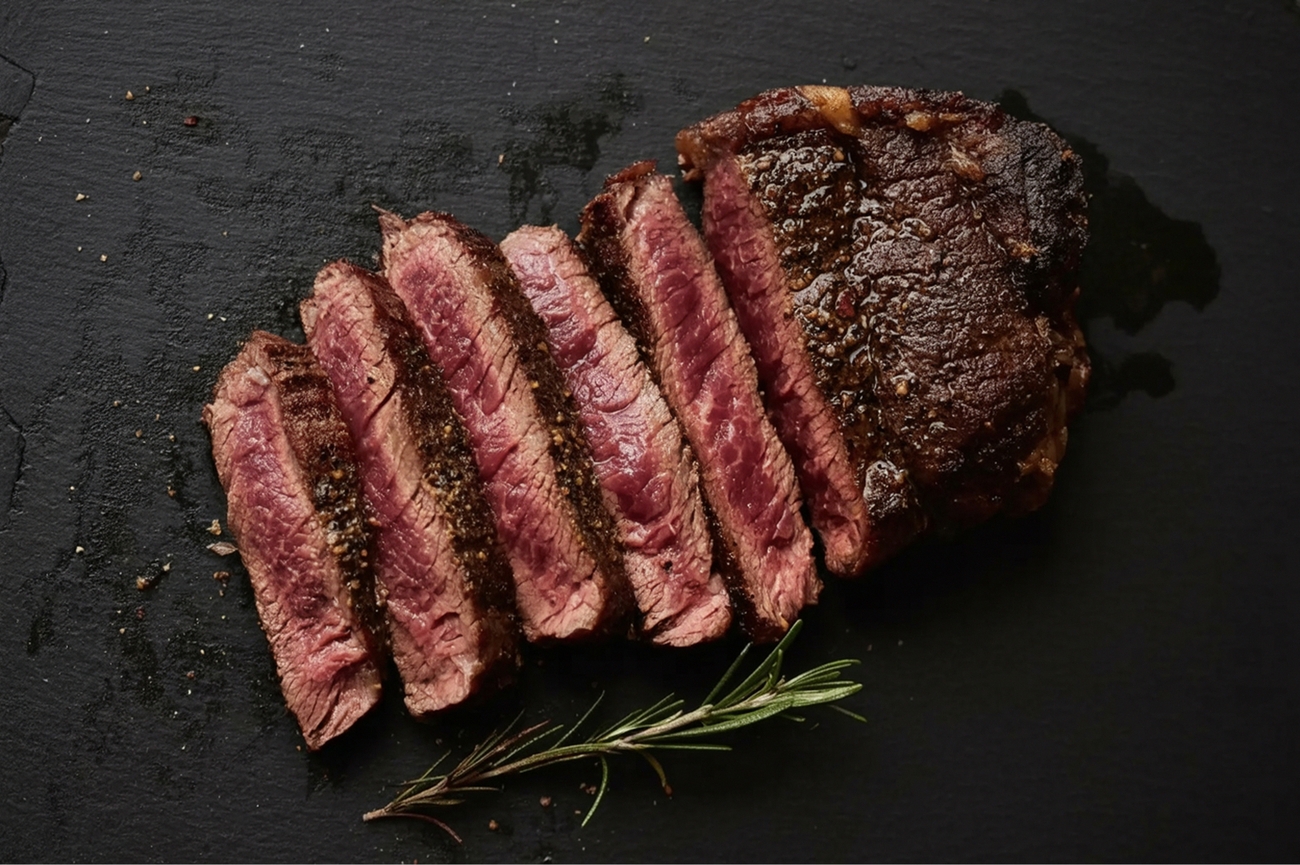
The traditional cider-house menu typically begins with a cod omelette, followed by salt cod with peppers and a large grilled txuleta or T-bone steak to share. Dessert usually combines local cheese with quince paste and walnuts. Bread and cider accompany the meal. Individual cider houses may add dishes or offer alternative menus, but this sequence remains the classic foundation.
The food is intentionally straightforward. Cod, steak, cheese, walnuts and cider rely on the quality of the ingredients rather than elaborate presentation, and dishes are generally served for the table to share.
What Happens When Someone Calls "Txotx"?
"Txotx", pronounced roughly "choch", is the call that signals a barrel of cider is being opened for tasting. Traditionally, the cider-house owner or another person responsible for the barrels selects a kupela and calls "txotx", inviting diners to leave the table with their glasses and form a line.
The cider flows from the barrel in a continuous stream. Each person catches only a small amount, holding the glass at an angle so the cider strikes the inside of it before quickly making way for the next person. The aim is not to fill the glass, but to taste a small serving before returning later when another barrel is opened.
The ritual originally allowed people to compare cider from different barrels before it was bottled. Today it remains one of the defining experiences of Basque cider culture, turning a meal into something participatory: when the call of "txotx" goes up, you take your glass and join the queue.
When
Is Txotx Season?
The traditional txotx season runs from January until around mid-April, after the autumn apple harvest and winter fermentation. This is when the new Basque cider is tasted directly from the kupelas, or barrels, before much of it is bottled. Cider houses around Astigarraga, Hernani and Usurbil are particularly lively during these months.
Historically, tasting cider from different barrels allowed producers, customers and local communities to assess the new year's cider before bottling or purchase. The practice gradually developed into the social txotx ritual associated with Basque cider houses today, accompanied by the traditional cider-house meal.
During txotx season, several kupelas may be opened during the same meal, giving guests the opportunity to compare ciders that can differ in acidity, aroma and character. The cider is still developing during this period, so even cider from the same barrel can evolve as the season progresses.
Can You Visit a Basque Cider House Outside Txotx
Season?
Yes, but the experience depends on the cider house. Some traditional sagardotegis operate only during the January to April season, while others remain open throughout much or all of the year. Certain year-round cider houses continue to offer cider in txotx style, while others serve bottled cider outside the traditional season.
That distinction matters when planning a trip to San Sebastián. A February visit offers the traditional txotx season at its fullest, with the new cider being tasted directly from the barrels. From May to October, when our culinary itinerary operates, a cider-house experience can still be arranged, but the choice of sagardotegi becomes more important because not every traditional house is open.
For travellers particularly interested in Basque cider culture, January to mid-April is the season to prioritise. For those visiting in the warmer months, a carefully chosen year-round sagardotegi can still provide an excellent introduction to the food, cider and rituals surrounding this distinctive Basque tradition.
What
Makes Basque Cider Different?
Basque cider, or sagardoa, is very different from the sweet, sparkling cider many visitors may know from elsewhere. Traditional Euskal Sagardoa is dry, fresh and typically around 5 to 6% alcohol, with pronounced acidity and flavours that can range from fruity and floral to bitter, tart and gently astringent. It is not artificially carbonated, although naturally occurring carbon dioxide can give some ciders a slight prickle in the glass.
The apples are fundamental to that character. Euskal Sagardoa is produced from authorised native cider-apple varieties grown within the Basque Country. These include acidic, bitter, bittersweet and sweet varieties, which producers combine in different proportions to create balance and complexity.
The production method is equally distinctive. For protected Euskal Sagardoa, the apple must is fermented without added sugar or water, and any carbon dioxide in the cider must develop naturally during fermentation. The traditional cider is also neither filtered nor stabilised, preserving a style that remains closely connected to the fruit, fermentation and individual producer.
That helps explain why cider tasted directly from different kupelas in the same sagardotegi does not necessarily taste identical. Apple varieties, blending, fermentation and the individual barrel all influence the final character.
The point of moving from barrel to barrel during txotx is therefore not simply the ritual. You are tasting the cider as a living agricultural product, comparing one expression with the next while the meal continues around you.
Txakoli
and Basque Cider: Two Traditions, One Food Culture
Txakoli and Basque cider belong to different settings, but both are deeply connected to the food culture of San Sebastián and the surrounding Basque Country. Txakoli is closely associated with coastal vineyards, seafood and the pintxos bars of the city, while cider leads inland towards the orchards and sagardotegis of Gipuzkoa.
The experience of drinking them is different too. Txakoli is traditionally served chilled and can be poured from a height to aerate the wine and emphasise its freshness. Its balanced acidity and moderate alcohol make it particularly well suited to fish, shellfish, pintxos and local cheeses such as Idiazabal.
Basque cider has its own ritual. During txotx season, diners leave the communal table and approach the kupelas to catch a small amount of cider directly from the stream flowing from the barrel. The cider is typically low in alcohol, around 5%, and accompanies the traditional cider-house menu of cod, txuleta, cheese, quince and walnuts.
What connects the two is not the way they are poured but the role they play at the table. Neither tradition developed around drinking in isolation. Txakoli makes sense beside anchovies, grilled fish and pintxos, while cider belongs with the communal meal of the sagardotegi. Both are expressions of a food culture in which what is in the glass is closely tied to what is on the plate and where it was produced.
That relationship becomes particularly clear around Getaria, where txakoli vineyards rise above the Basque coast and a winery visit can be combined with the fishing town's celebrated grilled seafood. Inland, the cider houses provide the contrasting experience: orchards, barrels, long tables and the call of "txotx".
The landscape linking those experiences is as important as the food and drink themselves. La Concha, Monte Igueldo, the Old Town and Eduardo Chillida's Peine del Viento give you the other side of San Sebastián between tastings and meals. Our guide to San Sebastián between meals explores La Concha, Monte Igueldo and other Basque cultural landmarks in greater detail.
Basque
Cider House Tips: Booking, Transport and What to Expect
How Do You Get to a Cider House from San Sebastian?
Many traditional cider houses are concentrated around Astigarraga, Hernani, Usurbil and Urnieta, outside central San Sebastián. Some can be reached by public transport, while others are considerably easier by taxi, private transfer or car. If you plan to take part fully in the cider tasting, arranging transport in advance is the simplest option.
Do You Need to Book a Basque Cider House?
Booking in advance is advisable, particularly during the January to April txotx season and when you have a particular sagardotegi in mind. Sagardoaren Lurraldea operates a reservation system covering participating cider houses, with availability and opening periods varying between establishments.
What Should You Wear to a Sagardotegi?
A cider house is generally much more informal than San Sebastián's fine-dining restaurants. Choose comfortable clothing and shoes and expect to move between the dining table and the kupelas during the txotx ritual. This is an evening for practicality rather than dressing for a Michelin-starred dining room.
Can Vegetarians Eat at a Basque Cider House?
The traditional cider-house menu is heavily centred on fish and meat, typically including cod omelette, cod with peppers and grilled txuleta before cheese, quince and walnuts. Some modern sagardotegis offer additional dishes or alternative menus, but this varies by establishment, so dietary requirements should be discussed when booking rather than assumed on arrival.
How Much Should You Eat Before Visiting?
Come hungry. The traditional menu progresses from cod omelette and cod to a substantial shared txuleta, followed by cheese, quince and walnuts. The dishes are designed to form a complete meal alongside repeated opportunities to taste cider from the barrels.
The best approach is not to rush it. A sagardotegi is as much about the rhythm of the evening as the individual dishes: eat, talk, hear the call of "txotx", take your glass to the barrel and then return to the table for the next course.
The
Barrel Is Open, and Your Glass Is Waiting
By the final call of "txotx", you know what to do. The fork goes down, the empty glass comes up and people begin moving towards the kupelas. You follow, no longer watching from the edge but taking part in a ritual that has shaped Basque cider culture for generations.
At the barrel, a stream of cider arcs into the waiting glasses. You hold yours low and at an angle, catch a small amount and step aside for the next person. Then it is back to the table, where the meal continues and another call may come before the evening is over.
That is what makes a sagardotegi memorable. It is not simply dinner accompanied by cider. The barrels, communal table, traditional dishes and repeated call of "txotx" are all part of the experience.
For travellers who want to add that experience to San Sebastián, Revigorate can arrange the right cider house, reservations and private transport around the rest of the journey.
Our 4-day luxury culinary itinerary in San Sebastián brings the region's food traditions together, from pintxos and txakoli to Michelin-starred dining, with a Basque cider-house evening available for those who want to follow the journey from the counter all the way to the barrel.
When the call goes up, there is only one thing left to do: take your glass and join the line.


Let us know what you love, where you want to go, and we’ll design a one-of-a-kind adventure you’ll never forget.
Get in touch
Miriam
Travel Specialist

Romina
Travel Specialist

Laura
Travel Specialist
Our offices:



Revigorate, Iberian Escapes and Algarve Lifestyle are the registered brand names of APCS Lda . We are a fully authorised travel agency licensed by Turismo de Portugal RNAVT/6867.
In the event of a dispute, the consumer may refer to: RAL - Centros de Arbitragem
Avª. 5 de Outubro, nº. 55, R/C Dtº. 8000-075 Faro, Portugal | Tel: +351 289 823 135 *
* national landline call
E-mail: info@consumoalgarve.pt| www.consumidoronline.pt | Mon to Fri: 9:00 - 13:00 / 14:00 - 17:00