San Sebastian Between Meals: La Concha, Monte Igueldo and Basque Culture
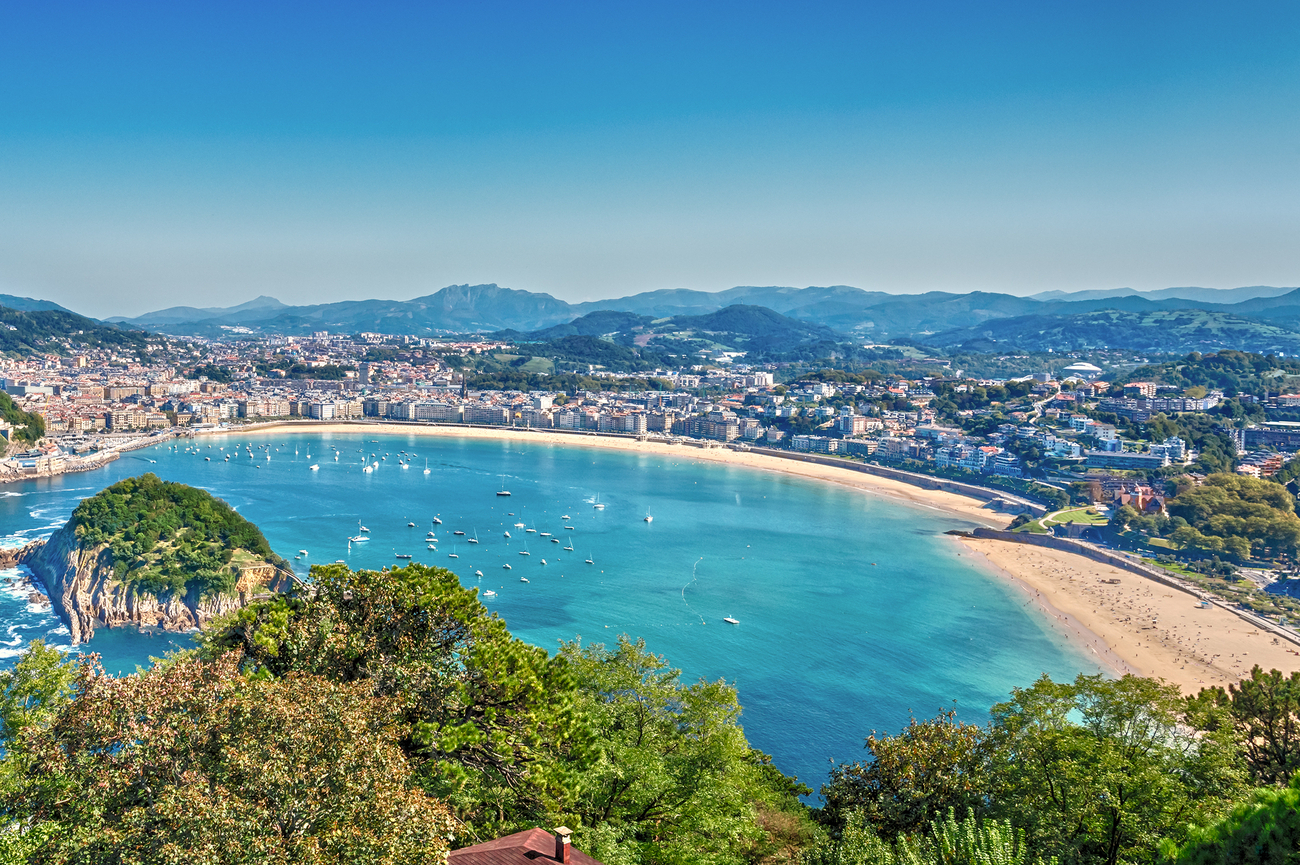
At half past seven, La Concha belongs almost to nobody. The tide is out and its 1,350 metres of sand sweep around the shell-shaped bay, with Santa Clara Island in the water and Monte Igueldo and Monte Urgull framing either side. One swimmer moves beyond the shallows. The white railings of the promenade stand almost empty above the beach. A man walks a dog. Somebody hoses down a terrace. A few hours later the waterfront will be busy again, but for now one of Europe's best-known urban beaches is remarkably quiet.
San Sebastián may be famous for its food, but the hours between meals are hardly something to fill. This compact coastal city combines beaches, panoramic hills, Basque history, Belle Époque architecture, museums, surf and major works of public art, much of it within walking distance of the Parte Vieja.
La Concha became closely associated with Spanish royalty during the nineteenth century, helping transform San Sebastián into an elegant seaside resort. Above the bay, Monte Igueldo and Monte Urgull offer two very different perspectives over the city. In the Old Town, Plaza de la Constitución still has numbered balconies recalling the period when the square served as a bullring. At the western edge of the bay, Eduardo Chillida's Peine del Viento places three monumental steel sculptures directly against the Atlantic.
Our San Sebastian food guide covers the pintxos, Michelin-starred restaurants, markets, txakoli and cider that make the city such an extraordinary place to eat.
For a broader introduction to the city's main sights, our guide to things to do in San Sebastián covers the destination as a whole.
This guide has a more specific purpose: what to see and do between the meals on a food-focused stay in San Sebastián, from an early walk along La Concha to sunset above the bay.
Why
San Sebastian Is Easy to Explore Between Meals

Take the restaurants away and San Sebastián would still be one of Spain's most compelling small coastal cities. Fewer than 200,000 people live here, yet within a remarkably compact area are La Concha Bay, the Parte Vieja, two panoramic hills, a major museum of Basque society, the surf at Zurriola and a waterfront that can be followed for much of the city on foot.
That scale is particularly useful on a food-focused trip. Many of San Sebastián's best-known sights can be explored between lunch and dinner without turning the day into a sightseeing marathon. Walk the promenade beside La Concha, ride the funicular to Monte Igueldo, explore the Old Town or spend a couple of hours discovering Basque history and culture at San Telmo Museoa.
Our 4-day luxury culinary itinerary in San Sebastián uses the city in exactly this way. One morning is deliberately left flexible, allowing you to choose between the seawater pools and thalassotherapy circuit at La Perla, the collections of San Telmo Museoa or the funicular to Monte Igueldo for panoramic views across La Concha.
The result is a city that works particularly well for culinary travel: the major meals can remain the anchors of the journey without requiring you to sacrifice the beaches, culture and landscapes that make San Sebastián worth visiting in the first place.
La Concha, Ondarreta and
Zurriola Beaches
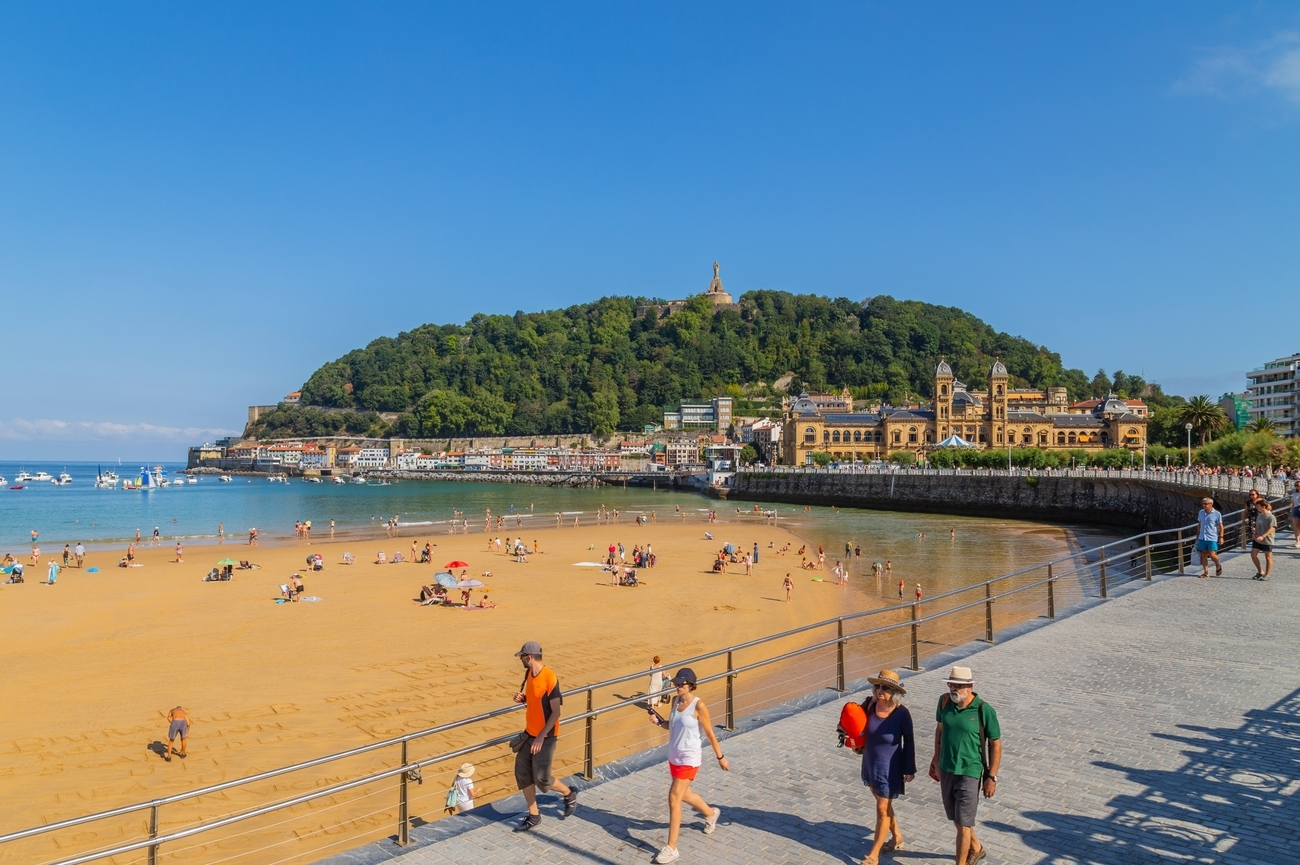
La Concha is the beach that defines San Sebastián. Its 1,350 metres of sand curve around the shell-shaped bay, with Santa Clara Island in the centre and Monte Urgull and Monte Igueldo framing either side. Sheltered waters make it popular for swimming, while the promenade above, with its distinctive white railings and ornamental lamps, provides one of the city's classic waterfront walks.
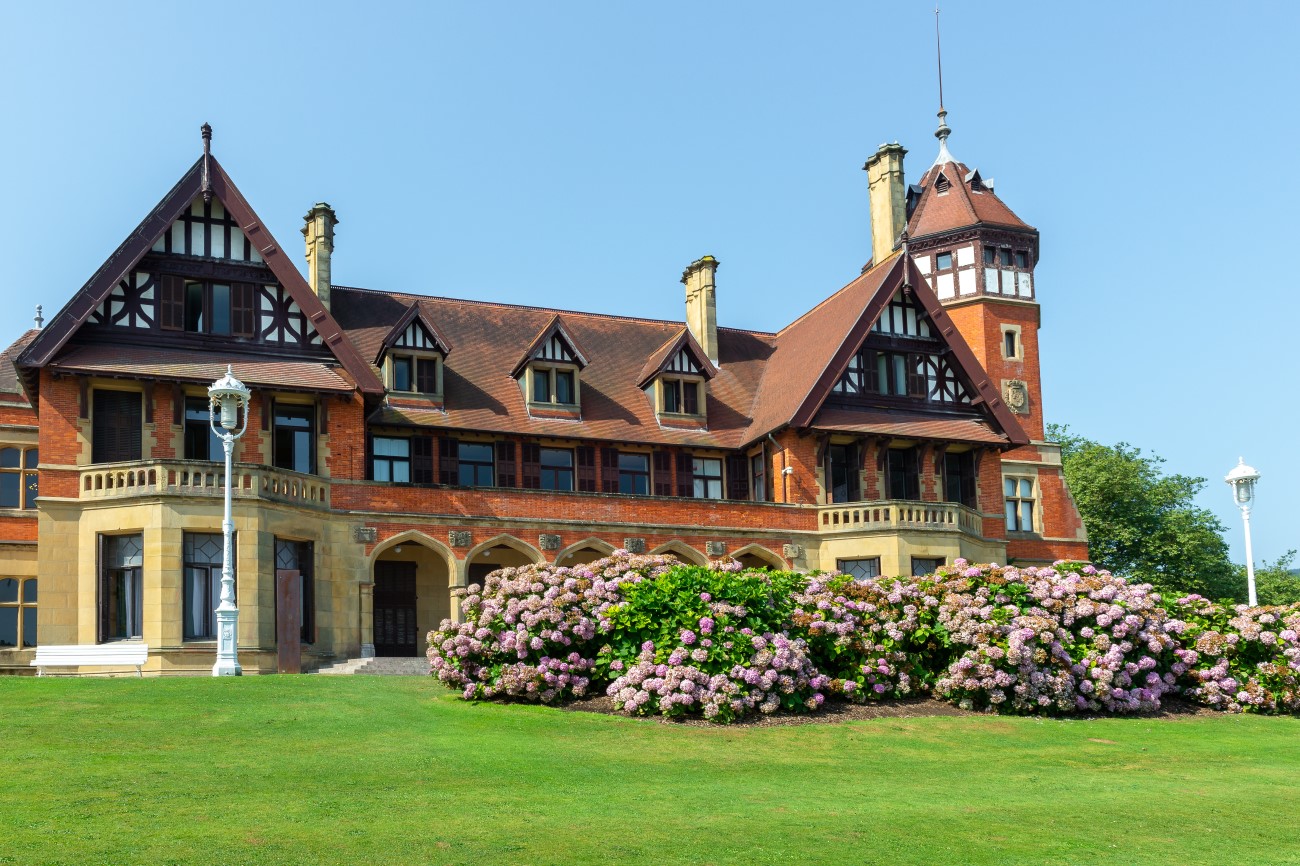
Its elegance is closely connected to San Sebastián's royal history. In 1845, doctors recommended sea bathing to Queen Isabel II to help with a skin condition, and she chose San Sebastián for her summer stays. Her presence helped establish the city as a fashionable seaside destination among Spain's aristocracy. Later in the century, Queen María Cristina strengthened that royal connection, eventually commissioning Miramar Palace as her summer residence overlooking the bay.
Continue west and La Concha gives way to Ondarreta, the quieter of San Sebastián's three main city beaches. Its more sheltered setting and gardens create a calmer atmosphere, while the promenade continues towards Eduardo Chillida's Peine del Viento at the western edge of the bay.
Zurriola offers the contrast. Across the Urumea river in the Gros neighbourhood, this 800-metre Atlantic-facing beach is San Sebastián's principal surfing beach, with surf schools, competitions and a noticeably more active character than La Concha or Ondarreta.
Santa Clara Island sits between them in the centre of La Concha Bay. During summer, boats connect the harbour with the island, where paths, picnic areas and panoramic views overlook the city. Its tiny beach is less than 30 metres long and changes dramatically with the tide. The island's former lighthouse is now home to Hondalea, an artwork by Basque sculptor Cristina Iglesias inspired by the geology and marine environment surrounding the island.
For a morning between meals, La Concha is difficult to improve upon. Walk the promenade while the waterfront is quiet, swim when conditions suit, or continue towards Ondarreta and the western end of the bay before returning to the city for lunch.
Monte
Igueldo and Monte Urgull: The Best Views in San Sebastian
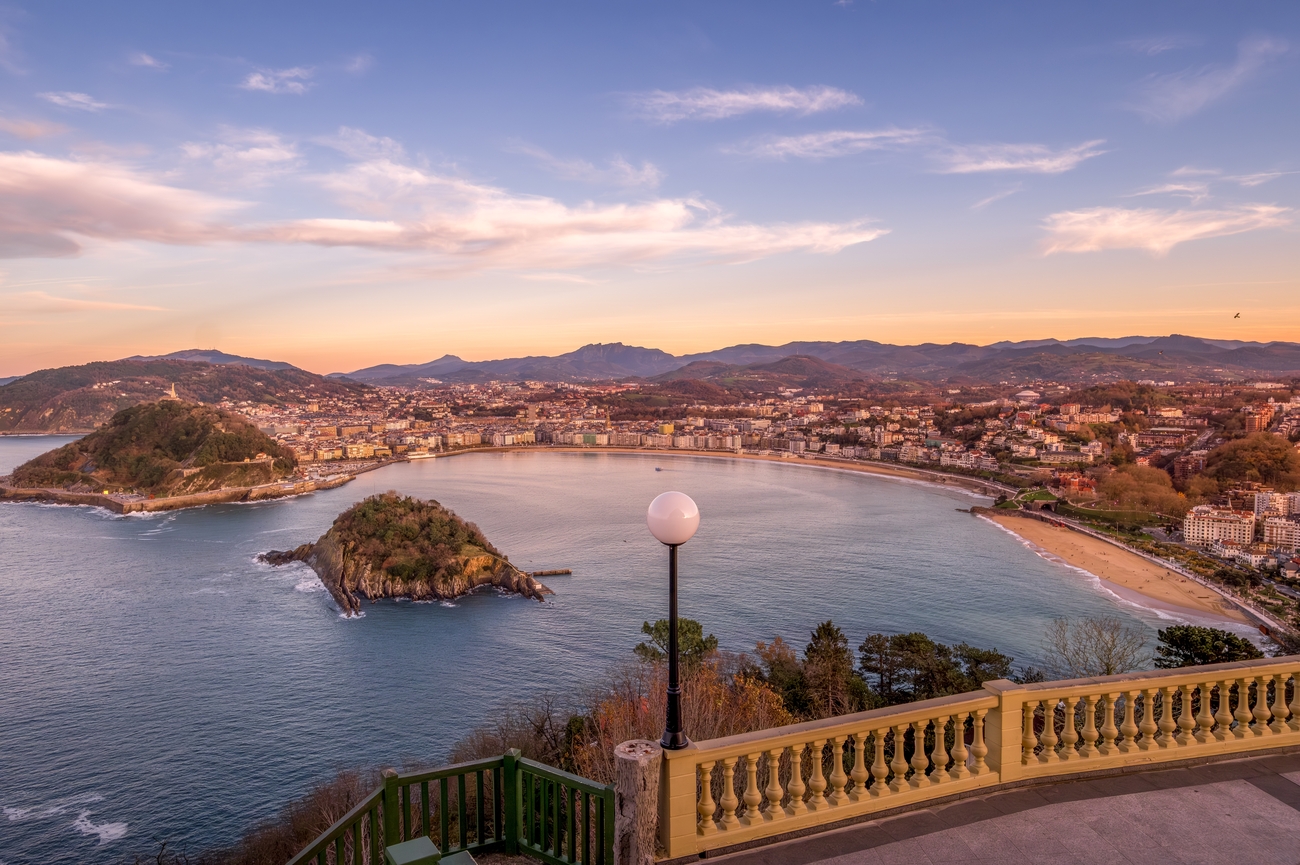
Monte Igueldo gives San Sebastián its classic panoramic view: the full curve of La Concha Bay below, Santa Clara Island in the centre, the Parte Vieja gathered beneath Monte Urgull and the Bay of Biscay stretching west towards the horizon.
The traditional way to reach the viewpoint is on the Monte Igueldo funicular, which opened in 1912 and still operates with the original equipment and vehicles from its inauguration. Its wooden carriages climb from the western end of La Concha to the historic amusement park and viewpoints at the top.
The amusement park adds another layer to the experience. Rather than a modern theme park, Monte Igueldo preserves historic attractions including the Montaña Suiza rollercoaster, Río Misterioso and Casa del Terror alongside newer rides. The attractions are entertaining, but for many visitors the main reason to come remains the extraordinary view across San Sebastián.
Monte Urgull offers a completely different perspective. Rising directly behind the Parte Vieja, it is reached on foot through paths, fortifications and viewpoints connected with San Sebastián's military history. At the summit stands the Castillo de la Mota and the Sagrado Corazón, the 12-metre Sacred Heart statue that has overlooked the city since 1950.
Inside the castle, the Casa de la Historia de Urgull traces more than 800 years of San Sebastián's history through audiovisual displays, models and historic objects. From the surrounding viewpoints, the harbour and terracotta rooftops of the Old Town sit directly below, with La Concha sweeping away towards Monte Igueldo.
The choice between the two is simple: Monte Igueldo for the iconic panorama across La Concha, Monte Urgull for a closer encounter with the city and its history. If time allows, do both.
Our 4-day luxury culinary itinerary in San Sebastián deliberately leaves time between the major dining experiences for exactly this kind of exploration, with Monte Igueldo among the options for a free morning in the city.
Parte
Vieja by Daylight: Churches, History and Basque Culture
The Parte Vieja in the morning feels very different from the neighbourhood encountered during an evening pintxos crawl. The busiest bars are quieter, deliveries move through the narrow streets and the architecture that disappears behind the crowds at night becomes much easier to appreciate. Anyone who explored the quarter the previous evening on our guide to the best pintxos in San Sebastian will discover another side of the Old Town in daylight.
Two important religious buildings anchor the neighbourhood. The Church of San Vicente, built in the early sixteenth century in the late Gothic style, is the oldest building in San Sebastián. At the opposite end of Calle 31 de Agosto stands the eighteenth-century Baroque Basilica of Santa María del Coro, whose elaborate façade faces directly down the narrow Old Town street.
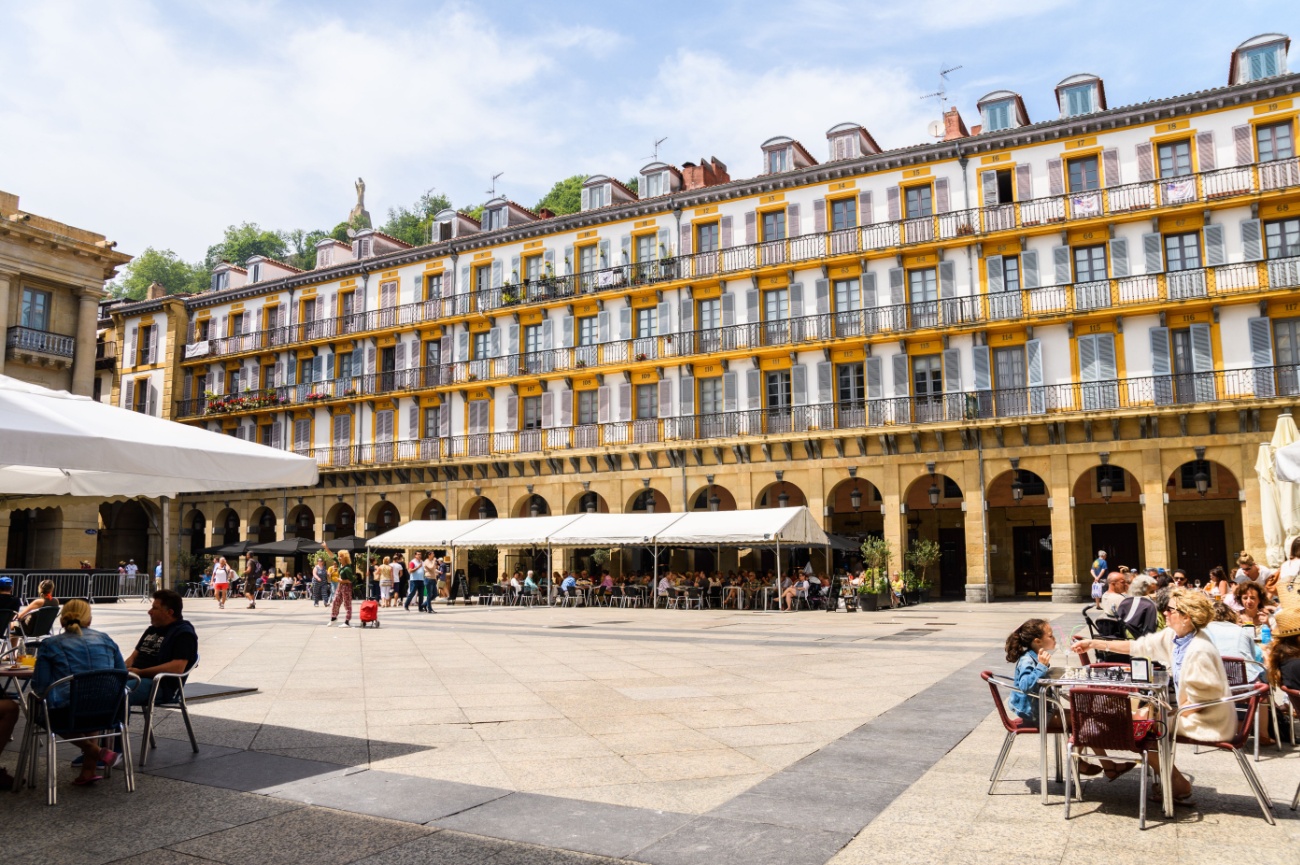
Between them lies Plaza de la Constitución, the arcaded square at the heart of the Parte Vieja. Look closely at the balconies and you will see numbers still painted above them. The square once served as a bullring, and the numbered balconies were used as viewing boxes, leaving an unusual reminder of the square's earlier purpose.
The Old Town also carries the memory of one of the darkest events in San Sebastián's history. On 31 August 1813, during the Peninsular War, British and Portuguese troops entered the city while attacking the French garrison, and a devastating fire destroyed most of San Sebastián. The houses on the even-numbered side of what is now Calle 31 de Agosto were among the few to survive. The street's present name commemorates that date.
Continue towards the water and the Old Town opens onto San Sebastián's harbour. At its western end, the Aquarium combines marine life with the maritime history of Gipuzkoa. Its exhibits include more than 200 species and a 360-degree underwater tunnel through the oceanarium.
A short walk away, San Telmo Museoa occupies a former sixteenth-century Dominican convent combined with a contemporary architectural extension. The museum is devoted to Basque society and citizenship, using art, historical collections and multimedia to explore the development of Basque culture and identity. For travellers wanting to understand the region beyond what appears on the plate, it is one of the most useful stops in the city.
Three More Places to Explore Between Meals
La Perla sits directly beside La Concha and continues a bathing tradition that stretches back to the nineteenth century. Its landmark stone spa opened in 1912, while today's thalassotherapy centre uses seawater for wellness and relaxation treatments overlooking the bay.
Miramar Palace occupies the headland between La Concha and Ondarreta. Built in 1893 at the request of Queen María Cristina, it became a summer residence of the Spanish royal family. Its gardens descend towards the water and provide broad views across La Concha Bay and Santa Clara Island.
For a different perspective on Basque history, travel east to Pasaia and Albaola Itsas Kultur Faktoria, a shipyard-museum devoted to Basque maritime heritage and traditional shipbuilding. Its most ambitious project is the San Juan, a scientific replica of a sixteenth-century Basque transoceanic whaling ship. After more than a decade of construction, the vessel was launched on 7 November 2025 and has now entered the next stage of its life at sea.
Together, these places add three very different dimensions to a food-focused stay: thalassotherapy beside La Concha, royal history overlooking the bay and the maritime traditions that once carried Basque sailors across the Atlantic.
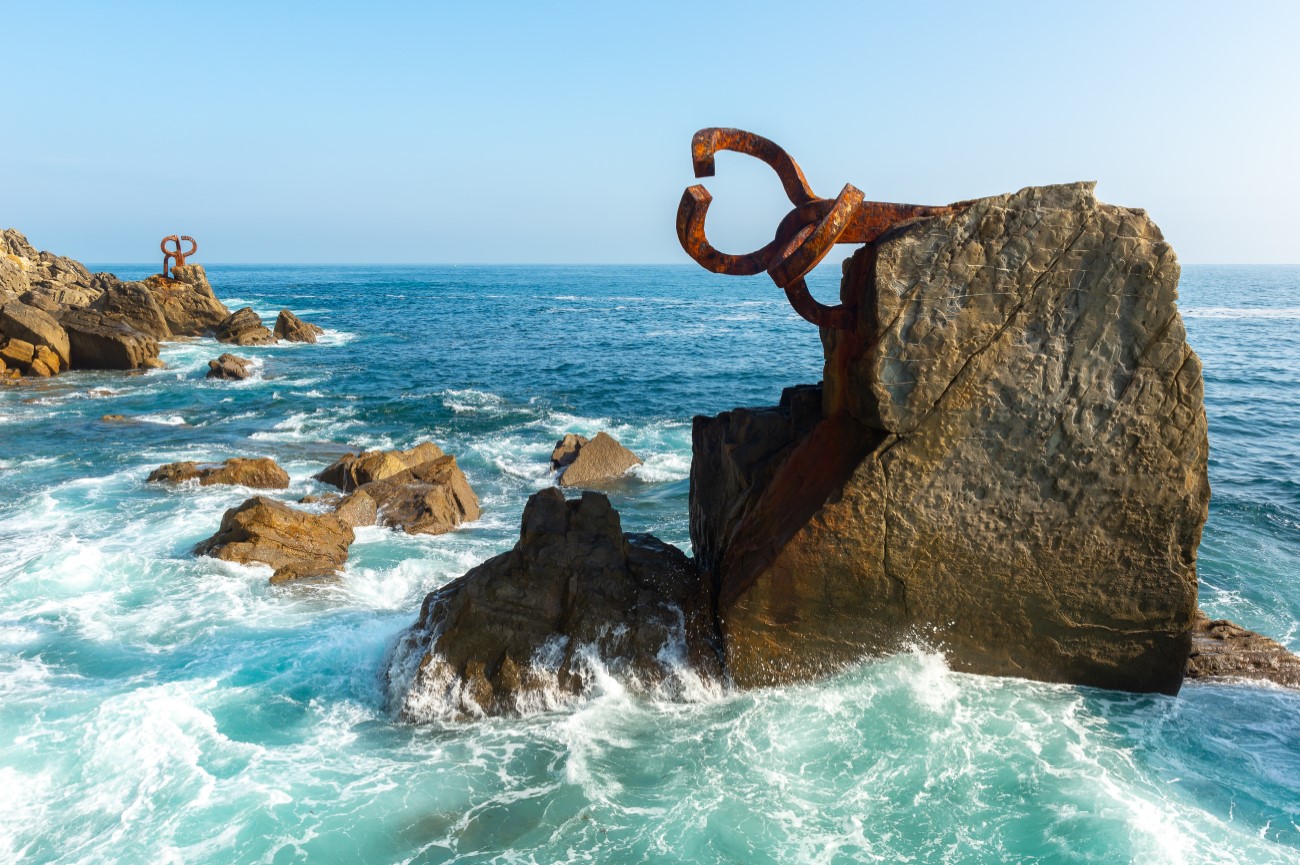
Peine del Viento: Eduardo Chillida’s Iconic Sculpture in San Sebastián
At the far western end of the bay, where Ondarreta Beach gives way to rock and open Atlantic, stand three monumental steel sculptures anchored directly into the coastline. This is Peine del Viento, or the Comb of the Wind, created by San Sebastián-born sculptor Eduardo Chillida in 1977 and now one of the city's most recognisable landmarks.
The three sculptures are made from Cor-ten steel, a material designed to weather naturally as it is exposed to the elements. Each piece weighs around nine tonnes and appears to emerge from the rocks rather than simply rest upon them, placing the Atlantic, wind and changing weather at the centre of the work.
The setting is part of the artwork. Basque architect Luis Peña Ganchegui designed the surrounding rose-granite terraces and amphitheatre, creating a public space that leads visitors gradually towards Chillida's sculptures and the sea. Openings in the plaza interact with the waves below, and when conditions are rough, seawater can surge upwards through them like a natural geyser.
Peine del Viento is particularly powerful because the landscape never stays the same. On a calm day, the steel, rocks and water create an almost contemplative setting. When the Atlantic is more energetic, waves and spray become part of the experience.
Come towards the end of the day if your itinerary allows. As the light changes over the Bay of Biscay, Chillida's dark steel, Ganchegui's stone terraces and the Atlantic combine into one of the most memorable places to finish a walk along San Sebastián's waterfront.
Gros,
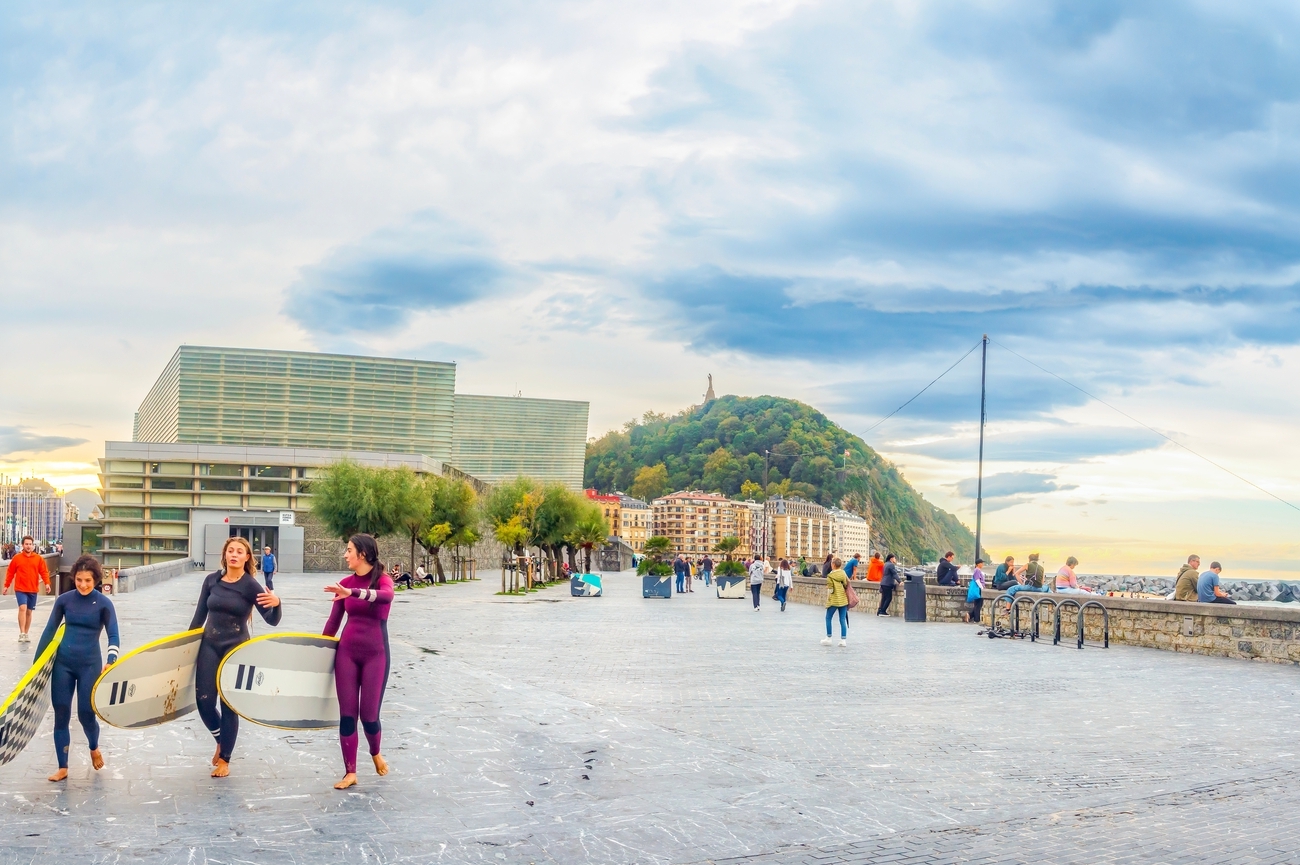
the Kursaal and Zurriola Beach
Cross the Urumea river from the Old Town and San Sebastián changes character. At the river mouth stand the two translucent glass cubes of the Kursaal, designed by Spanish architect Rafael Moneo to resemble two rocks stranded beside the sea. The building opened in 1999 and has become one of the defining works of contemporary architecture in San Sebastián.
The Kursaal is much more than a landmark. It is one of the city's principal cultural and conference venues, hosting concerts and major events throughout the year as well as the San Sebastián International Film Festival and Jazzaldia. Moneo had already received the Pritzker Architecture Prize in 1996, and the Kursaal itself went on to receive the European Union Prize for Contemporary Architecture, the Mies van der Rohe Award, in 2001.
Behind it lies Gros, one of the liveliest neighbourhoods in San Sebastián. Its identity is closely tied to Zurriola Beach, which stretches between the Kursaal and Monte Ulía and is the city's principal surfing beach. Surf schools, boards and wetsuits are part of the everyday scene, giving this side of the river a noticeably different atmosphere from La Concha and the Parte Vieja.
Gros is also worth returning to after dark. Its bars and restaurants provide another perspective on San Sebastián's food culture, making the neighbourhood a natural choice for a second pintxos evening once you have experienced the more traditional crawl through the Parte Vieja.
Continue inland from the coast and the urban landscape quickly gives way to the greener countryside of Gipuzkoa. Beyond San Sebastián lie Astigarraga and other communities closely associated with Basque cider, where sagardotegis combine long communal tables, traditional food and cider drawn from the barrel.
Our guide to txakoli and Basque cider explores these two Basque drinking traditions in detail, from the coastal vineyards around Getaria to the cider houses and orchards beyond San Sebastián.
Day
Trips from San Sebastian: Hondarribia, Getaria and Gaztelugatxe
San Sebastián is compact enough to leave room for exploring the Basque coast, with several rewarding day trips in either direction.
Hondarribia and the French Border
Travel east towards Hondarribia, one of the best-preserved walled towns in Gipuzkoa. Its historic upper town retains medieval streets, fortifications and the Castle of Charles V, which now houses the Parador de Hondarribia. Below, the Marina district brings a different character with colourful houses, balconies, pintxos bars and the town's fishing heritage.
Hondarribia sits beside the Bidasoa, the river forming the border with France. A small passenger boat connects Hondarribia with Hendaye on the opposite bank, crossing in less than ten minutes, so it is possible to move between Spain and France by boat during the same visit.
Getaria and the Basque Coast
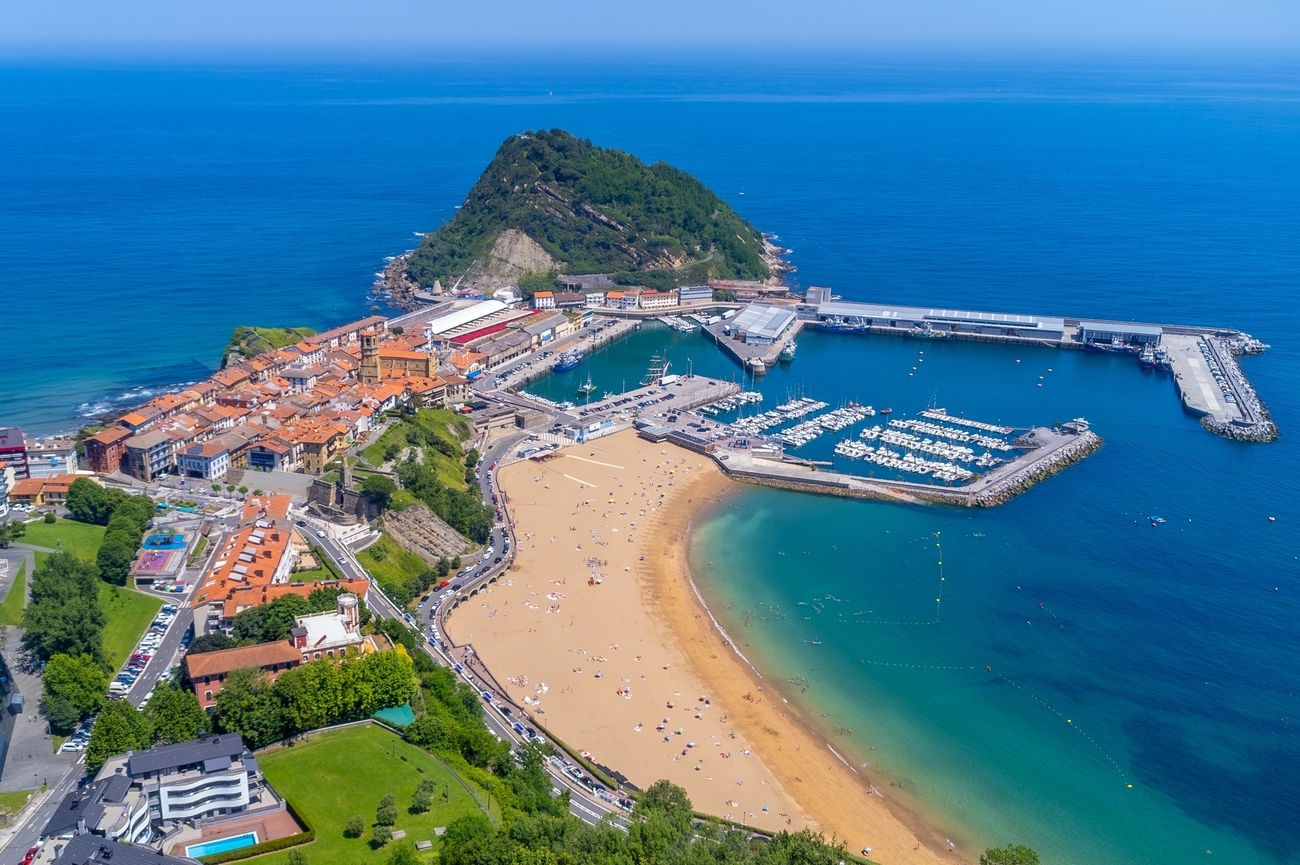
Head west and the coast leads towards Getaria, a historic fishing town closely associated with grilled seafood and Getariako Txakolina. Mount San Antón creates the distinctive silhouette known locally as the Mouse of Getaria, while the harbour remains central to a fishing tradition stretching back centuries.
Getaria is particularly famous for grilling whole fish over outdoor charcoal grills, with turbot among the town's signature dishes. Combine lunch by the harbour with the surrounding txakoli vineyards and it becomes a natural extension to a food-focused stay in San Sebastián.
For travellers who want to continue west, San Sebastián also fits naturally into a longer journey across northern Spain. Our 10-day road trip from Northern Spain to Portugal begins in Bilbao, includes San Sebastián and continues through Galicia and Portugal before finishing in Lisbon.
San Juan de Gaztelugatxe
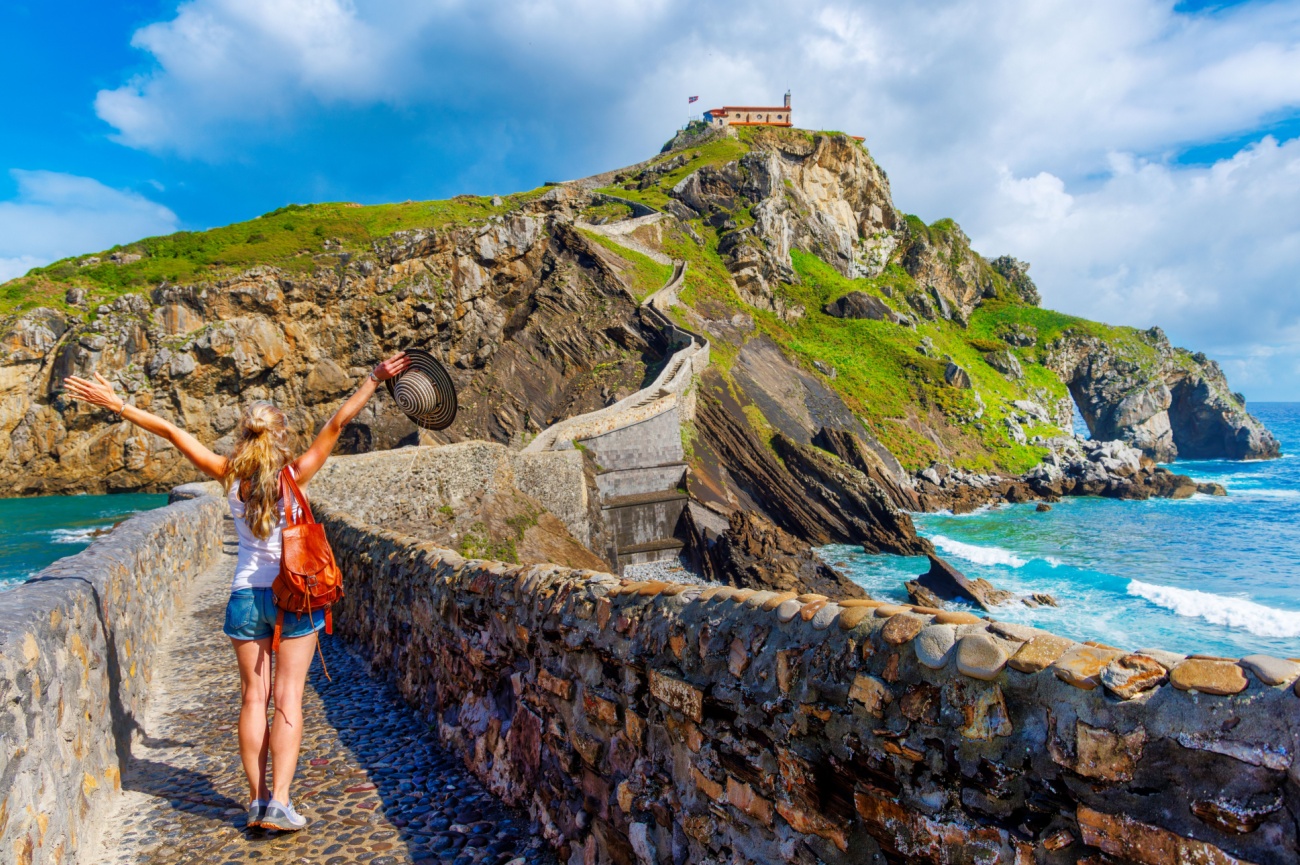
Further west, between Bakio and Bermeo, San Juan de Gaztelugatxe requires more time but rewards the journey. A stone bridge connects the coast to the rocky islet, followed by 241 steps climbing to the hermitage at the summit. The first chapel here is believed to have been built in the 9th century, although it has been rebuilt several times during its long history.
The landscape became internationally recognisable after appearing as Dragonstone in Game of Thrones. Unlike Hondarribia or Getaria, Gaztelugatxe is better treated as a substantial excursion rather than something squeezed between meals. A free entry ticket is currently required, so access should be planned before travelling.
Together, these excursions reveal how quickly San Sebastián gives way to something different: France and a fortified border town to the east, vineyards and fishing villages to the west, and one of the Basque coast's most dramatic landscapes beyond Bilbao.
When
to Visit San Sebastian for Beaches, Festivals and City Life
San Sebastián changes noticeably with the seasons. Late spring and early autumn are particularly appealing for exploring the city on foot, with generally mild temperatures and plenty happening without the intensity of the peak summer period. The Atlantic climate means sunshine is never guaranteed, but the green hills and temperate conditions are part of the city's character.
Summer brings the busiest and most festive version of San Sebastián. Beaches fill, evenings stretch later and Aste Nagusia, or Semana Grande, takes place during the week around 15 August. One of its major events is the International Fireworks Competition, when displays illuminate La Concha Bay on successive evenings.
September brings another change of atmosphere with the San Sebastián International Film Festival, one of the city's biggest cultural events and a fixture of the calendar every September.
Winter is quieter and often more dramatic beside the Atlantic. On 20 January, Tamborrada transforms the city for 24 hours as companies of drummers and barrel players move through the streets. The first months of the year also coincide with the traditional Basque cider season, when many sagardotegis around Astigarraga and Hernani open their kupelas for the txotx ritual.
The weather deserves one honest note. San Sebastián has a temperate Atlantic climate characterised by mild temperatures, high humidity, frequent cloud cover and rainfall spread throughout the year. Even in summer, a waterproof layer is worth packing.
Do not come expecting guaranteed Mediterranean sunshine. Come for a city shaped by the Atlantic, where beaches, green hills, changing skies and the sea are part of the experience in every season.
Last
Light at Peine del Viento
On the final evening, walk west along La Concha. The light begins to soften across the bay, the beach grows quieter and the promenade carries you past Ondarreta towards the point where the city finally gives way to rock and Atlantic water.
At Peine del Viento, Eduardo Chillida's three steel sculptures stand against the sea while waves move beneath Luis Peña Ganchegui's granite terraces. When conditions are right, air and seawater surge through the openings in the plaza, turning the landscape itself into part of the work. As the light fades, the weathered steel changes with it, from deep rust and bronze towards almost black.
It is an appropriate place to end a few days in San Sebastián because it has almost nothing to do with food and everything to do with why the city works so well as a culinary destination. The great meals matter, but so does leaving enough room between them for La Concha, Monte Igueldo, the Old Town, Basque culture and an evening beside the Atlantic.
That balance is built into our 4-day luxury culinary itinerary in San Sebastián, with the major dining experiences carefully arranged while leaving enough time to discover the city between them.
The tables may bring you to San Sebastián. The moments between them are often what make you want to return.


Let us know what you love, where you want to go, and we’ll design a one-of-a-kind adventure you’ll never forget.
Get in touch
Miriam
Travel Specialist

Romina
Travel Specialist

Laura
Travel Specialist
Our offices:



Revigorate, Iberian Escapes and Algarve Lifestyle are the registered brand names of APCS Lda . We are a fully authorised travel agency licensed by Turismo de Portugal RNAVT/6867.
In the event of a dispute, the consumer may refer to: RAL - Centros de Arbitragem
Avª. 5 de Outubro, nº. 55, R/C Dtº. 8000-075 Faro, Portugal | Tel: +351 289 823 135 *
* national landline call
E-mail: info@consumoalgarve.pt| www.consumidoronline.pt | Mon to Fri: 9:00 - 13:00 / 14:00 - 17:00