San Sebastian Food Guide: Pintxos, Michelin Dining and Basque Food Culture
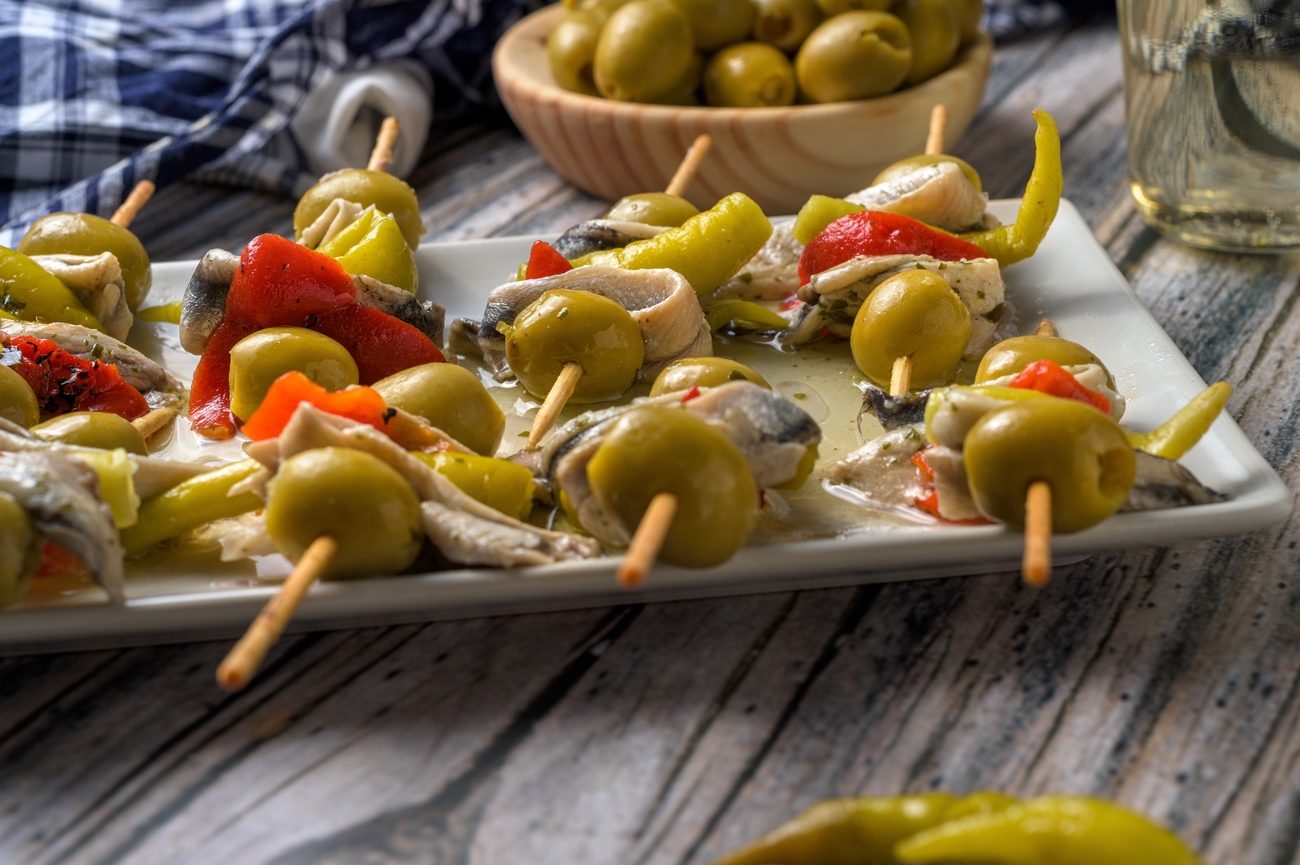
It is four inches tall and costs less than a coffee. An anchovy, cured and glossy, folds around a fat green olive and a slim pickled pepper, all held together with a single toothpick on a saucer in San Sebastián's Old Town. Three ingredients, no cooking. This is the Gilda, one of the city's signature pintxos, created in the 1940s and named after the Rita Hayworth film because it was said to be green, salty and a little bit spicy.
You eat it in two bites: salt, then vinegar, then the slow oily heat arriving underneath, followed by the small shock of realising that something this simple has been refined over decades into something that needs very little improvement.
San Sebastián, or Donostia in Basque, is one of Europe's great culinary destinations, combining traditional pintxos bars, Basque gastronomic culture, exceptional seafood, txakoli and cider with some of Spain's most celebrated Michelin-starred restaurants. Much of this food culture is concentrated within a compact, walkable city wrapped around La Concha Bay.
This San Sebastian food guide explores the traditions, dishes, markets, pintxos bars and restaurants that have shaped the city's reputation. It begins at the zinc counters of the Parte Vieja and continues into the Basque hills, where some of the region's most ambitious kitchens are found.
For travellers who want to experience these places rather than simply read about them, our 4-day luxury culinary itinerary in San Sebastián brings the markets, pintxos, Basque cooking and Michelin dining together in one carefully arranged journey.
All that remains to be decided is who sits down.
Why
Is San Sebastian One of the World's Great Food Cities?

San Sebastián, or Donostia in Basque, is considered one of the world's great food cities because of its exceptional concentration of Michelin-starred restaurants, deeply rooted pintxos culture, outstanding local produce and a wider Basque tradition in which cooking is part of everyday life. Few cities combine ambitious fine dining and extraordinary casual food within such a compact area.
The city has fewer than 190,000 residents, yet several of Spain's most celebrated restaurants sit in San Sebastián and the surrounding hills of Gipuzkoa. Within a short drive of the Parte Vieja, where a Gilda can be eaten standing at a zinc counter, are restaurants that have helped shape modern Basque and Spanish cuisine. That contrast is central to understanding San Sebastian food culture: excellence is found at every level, from a simple pintxo to an elaborate tasting menu.
The Michelin stars are only the most visible part of the story. What makes eating in San Sebastián remarkable is the standard of everyday food. A neighbourhood bar showing football on television can still serve grilled prawns, tortilla, anchovies or freshly cooked pintxos with the same attention to ingredients that elsewhere might be reserved for a formal restaurant.
Several traditions help explain those standards. The Basque Culinary Center has reinforced the city's international reputation for culinary education and innovation, while local markets connect restaurants and home cooks with produce from the surrounding region. Older still are the txokos, private Basque gastronomic societies where members gather in shared kitchens to cook for one another. They helped make cooking a social and civic tradition rather than something confined to professional kitchens.
Geography supplies the final ingredient. The Cantabrian Sea provides anchovies, hake, spider crab, turbot and prawns, while the green hills of Gipuzkoa produce beef, Idiazabal cheese, apples for Basque cider, peppers and beans. Sea and mountains meet within a remarkably small area, giving San Sebastián direct access to many of the ingredients that define Basque cuisine.
That combination of exceptional produce, pintxos culture, gastronomic tradition and Michelin-starred dining is what gives San Sebastián a food identity far greater than its size.
What
Are Txokos? Inside San Sebastian's Gastronomic Societies
Txokos are private Basque gastronomic societies where members gather in shared kitchens to cook and eat together. They are one of the traditions that best explains San Sebastián's unusually deep food culture, yet most visitors will never see inside one.
There is no professional chef and no conventional restaurant service. A member books the kitchen, buys the ingredients, cooks for the table, records anything taken from the cellar in a ledger and helps clean up afterwards. The societies operate largely on trust, including an honour system for wine and other supplies, and on the expectation that everyone at the table understands and cares about good cooking.
Their influence reaches far beyond the clubs themselves. In San Sebastián, cooking well has long been a social accomplishment rather than a skill confined to professional kitchens. Accountants, dockworkers, teachers and other members of the community have cooked for one another in txokos, developing a collective knowledge of ingredients, techniques and traditional Basque dishes.
That culture helps explain the standards found throughout the city. A pintxos bar is not competing only with the bar next door, but with generations of local diners who know how turbot should be grilled, how seafood should taste and when a seemingly simple dish has been prepared properly.
For anyone trying to understand why San Sebastián became such an important food destination, the txokos provide part of the answer. Behind the Michelin stars, pintxos counters and celebrated restaurants lies a culture in which cooking, eating and sharing food have long been part of everyday Basque life.
Pintxos
in San Sebastian: How to Eat Them Like a Local
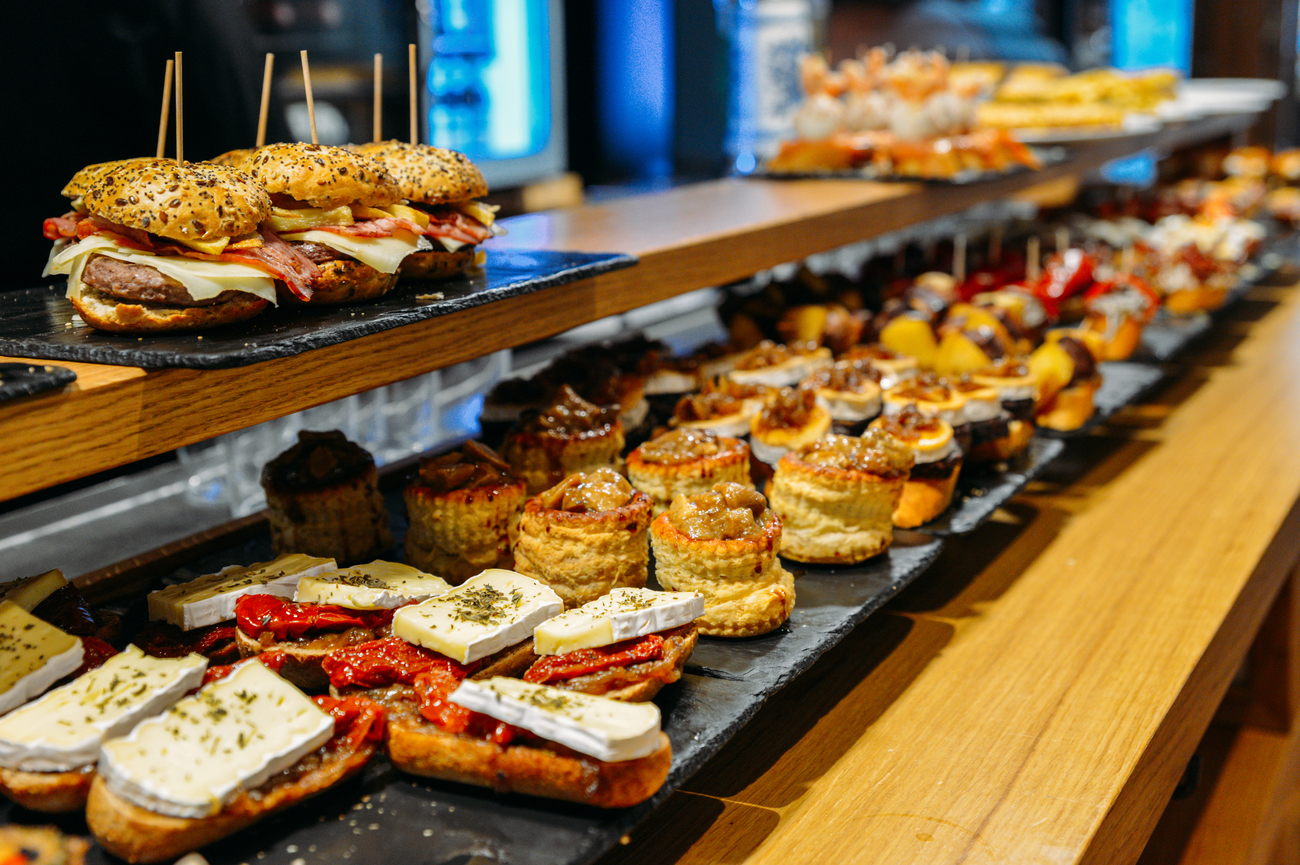
Pintxos are at the heart of San Sebastián's food culture. These small Basque dishes are eaten one or two at a time, usually with a small beer or glass of txakoli, before moving on to another bar. This tradition of moving between bars is known as the txikiteo, and nowhere is it more firmly established than in the Parte Vieja, San Sebastián's Old Town.
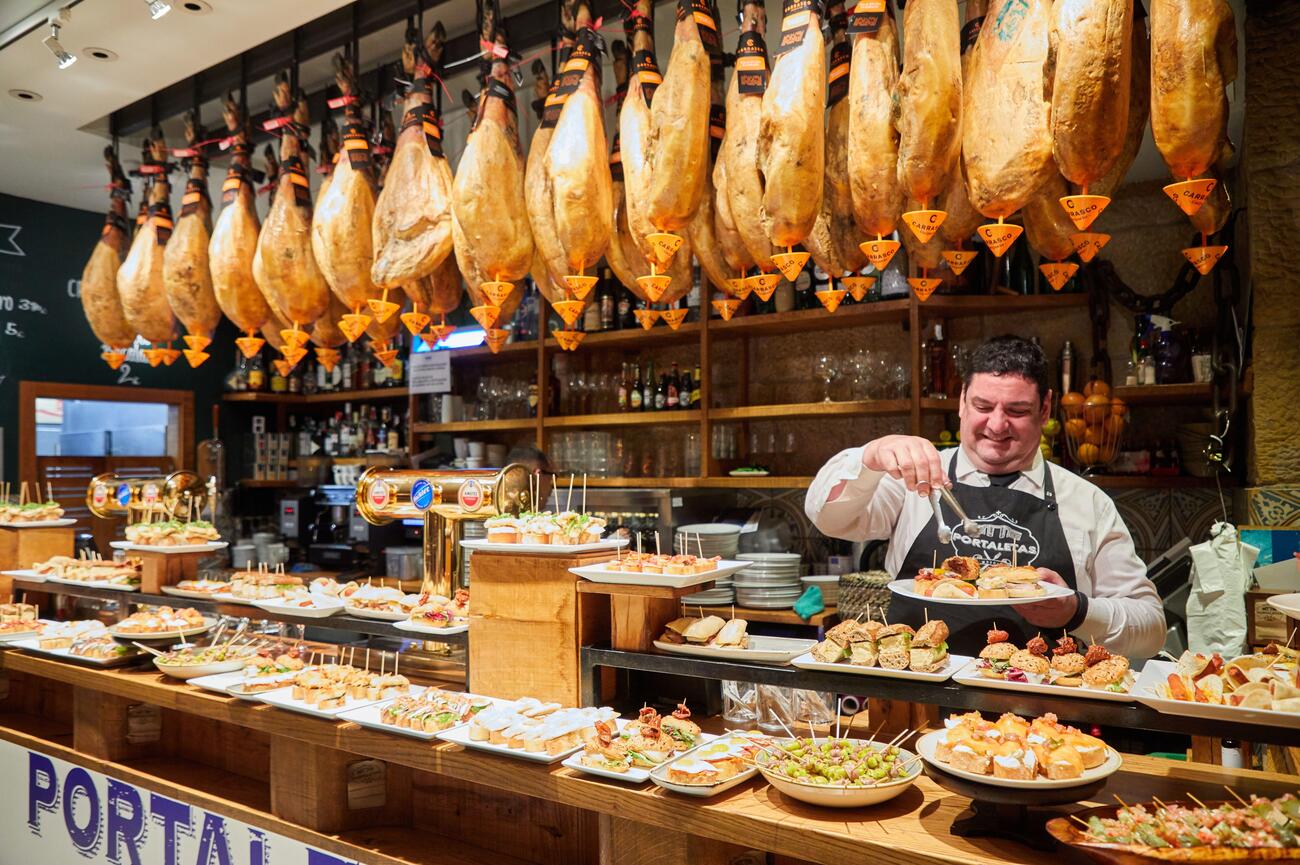
The counters are part of the experience. Cold pintxos are displayed along the bar, with tortilla, anchovies, crab, salt cod, jamón and peppers arranged in carefully prepared rows. But some of the best pintxos in San Sebastian are not on the counter at all. Look instead for the blackboard listing pintxos calientes, hot dishes cooked to order, which might include slow-braised veal cheeks, grilled mushrooms with egg yolk, seared foie or seafood landed that morning.
Knowing how to order makes a considerable difference. Order through the bartender rather than treating the counter as a buffet, choose one or two pintxos at a time and keep drinks small, perhaps a zurito of beer or a short pour of txakoli. The idea is not to settle in for an entire meal but to experience several bars, each chosen for the dishes it does particularly well.
That movement is what distinguishes a proper txikiteo. One bar might be known for its Gilda, another for tortilla and the next for a hot dish prepared only to order. Knowing which counters to visit, what to order and when to move on is part of the local knowledge that turns an evening of pintxos into one of San Sebastián's defining food experiences.
Our guide to the best pintxos in San Sebastian explores the tradition in detail, including what to order, how the txikiteo works and how to build an evening through the Old Town bar by bar.
The essential point is simple: in San Sebastián, some of the city's most memorable food is not served in a formal dining room. It is eaten standing at a crowded counter, one small plate at a time.
What
to Drink in San Sebastian: Txakoli and Basque Cider
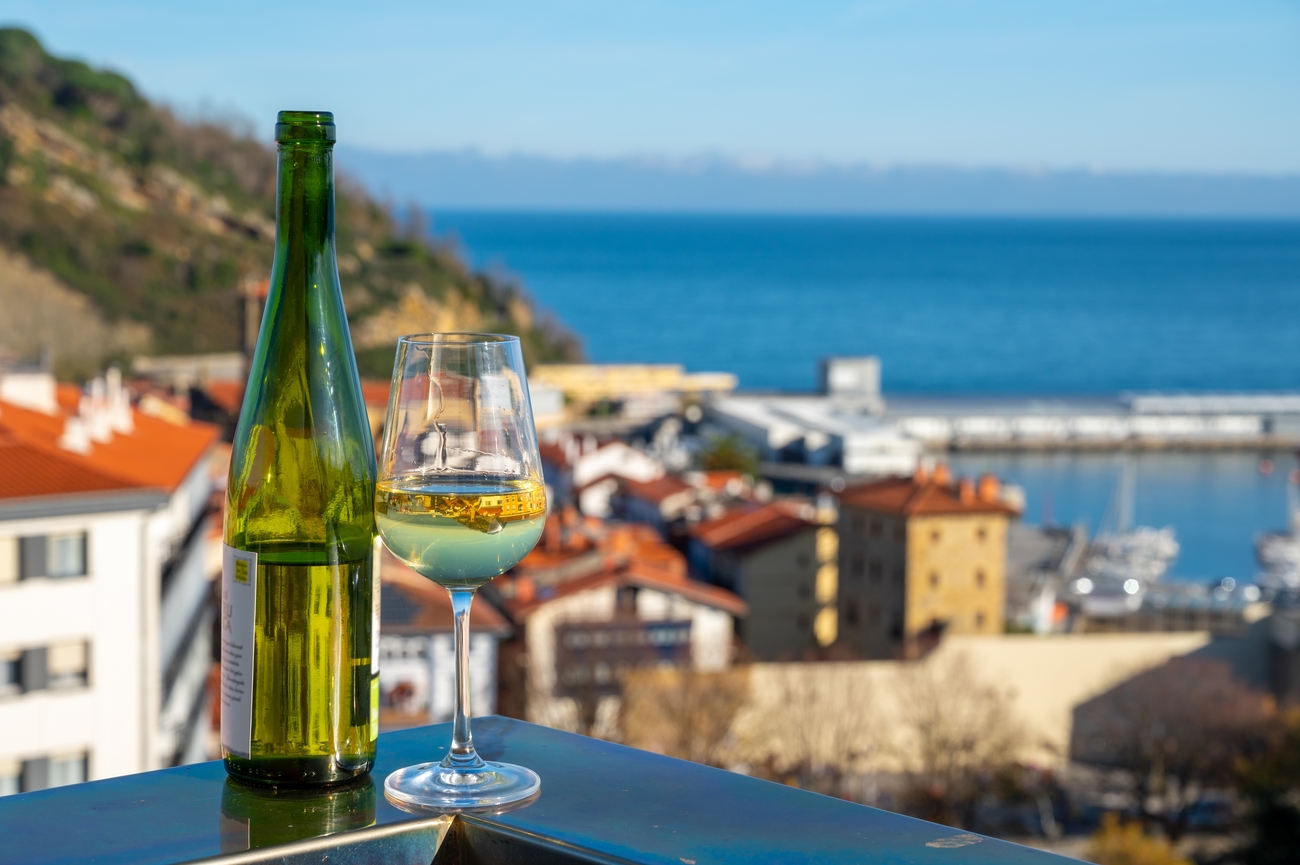
Two drinks are central to San Sebastián's food culture: txakoli, the dry Basque white wine served throughout the city's pintxos bars, and traditional Basque cider, or sagardoa, poured directly from barrels in the cider houses of the surrounding hills.
Txakoli is the everyday companion to pintxos. It is bone dry, high in acidity, low in alcohol and faintly sparkling, qualities that make it particularly well suited to anchovies, foie, fried dishes and other rich or salty flavours. It is traditionally poured from a height into a wide glass, creating a long, thin stream that briefly aerates the wine and lifts its natural spritz. Only a small amount is poured at a time and drunk quickly before the glass is refilled.
Basque cider offers a very different experience. In the villages behind San Sebastián, particularly around Astigarraga, sagardotegis serve traditional meals at long communal tables with cider drawn directly from enormous wooden barrels. During the meal, someone calls "txotx", signalling that diners should take their glasses to the cellar and catch a small amount of cider as it streams from the barrel.
A traditional Basque cider-house menu typically includes cod omelette, salt cod with peppers, a large grilled txuleta steak to share, followed by sheep's cheese with quince paste and walnuts. The cider itself is dry, still and distinctly tart, very different from the sweet or sparkling styles many visitors associate with cider.
Together, txakoli and Basque cider reveal two sides of the region's drinking culture: the fast-moving pintxos bars of San Sebastián and the communal cider houses of the Basque countryside.
Our guide to txakoli and Basque cider explores both traditions in greater detail, including how txakoli is produced and poured, what happens during a txotx, and what to expect when visiting a traditional sagardotegi.
Basque
Food in San Sebastian: Markets and Traditional Dishes
San Sebastián's food culture begins with the quality of its ingredients. At the Mercado de la Bretxa, on the edge of the Old Town, shoppers and restaurant cooks find many of the products that define Basque cuisine, including Bay of Biscay anchovies, spider crab, piparra peppers, Tolosa beans and Idiazabal sheep's cheese.
A morning visit offers a useful introduction to what will appear on menus later in the day. Whole fish and shellfish reflect the city's close relationship with the Cantabrian Sea, while produce from the surrounding Basque countryside supplies many of the cheeses, peppers, beans and meats used in traditional dishes.
Among the most important foods to try in San Sebastián is txuleta, an aged rib steak traditionally grilled over coals until deeply browned outside while remaining rare inside. Kokotxas, the gelatinous throats of hake, are gently cooked in oil and garlic until their natural collagen helps create a silky emulsion.
Bacalao al pil-pil is another Basque classic, combining salt cod, garlic and olive oil in a sauce thickened through careful movement of the pan. Marmitako is a traditional fishermen's stew of tuna and potatoes, while txangurro is spider crab prepared and often served in its shell.
Whole grilled turbot is one of the defining dishes of the Basque coast. The fish is split and cooked over hot coals before being finished simply, allowing the flavour and texture of the fish to remain at the centre of the dish.
These dishes share a common principle. Traditional Basque cooking relies less on elaborate presentation than on excellent ingredients, precise technique and restraint. From the seafood of the Cantabrian coast to the meat, cheese and vegetables of Gipuzkoa, the produce provides the foundation on which San Sebastián's pintxos bars and Michelin-starred restaurants are built.
Michelin-Starred
Restaurants in San Sebastian
San Sebastián and the surrounding area have one of Europe's most celebrated concentrations of Michelin-starred restaurants. For travellers planning where to eat in San Sebastian, three names sit at the highest level: Arzak and Akelarre in the city, and Martín Berasategui in nearby Lasarte-Oria. Each holds three Michelin stars in the 2026 Michelin Guide.
Three-Michelin-Star Restaurants in San Sebastian
Arzak has held three Michelin stars since 1989 and remains one of the defining restaurants of modern Basque cuisine. Juan Mari Arzak was among the chefs who created the New Basque Cuisine movement in 1976, and today he shares the restaurant's culinary direction with his daughter Elena Arzak, who received the World's Best Female Chef award in 2012. The restaurant combines Basque tradition with experimentation and contemporary technique, making it as important historically as it is gastronomically.
Akelarre occupies a dramatic position on Monte Igueldo overlooking the Bay of Biscay. Chef Pedro Subijana was another founding figure of New Basque Cuisine, and his cooking continues to combine creative technique with dishes rooted in Basque tradition. The restaurant retains three Michelin stars and currently offers two tasting menus alongside views that make the setting an integral part of the experience.
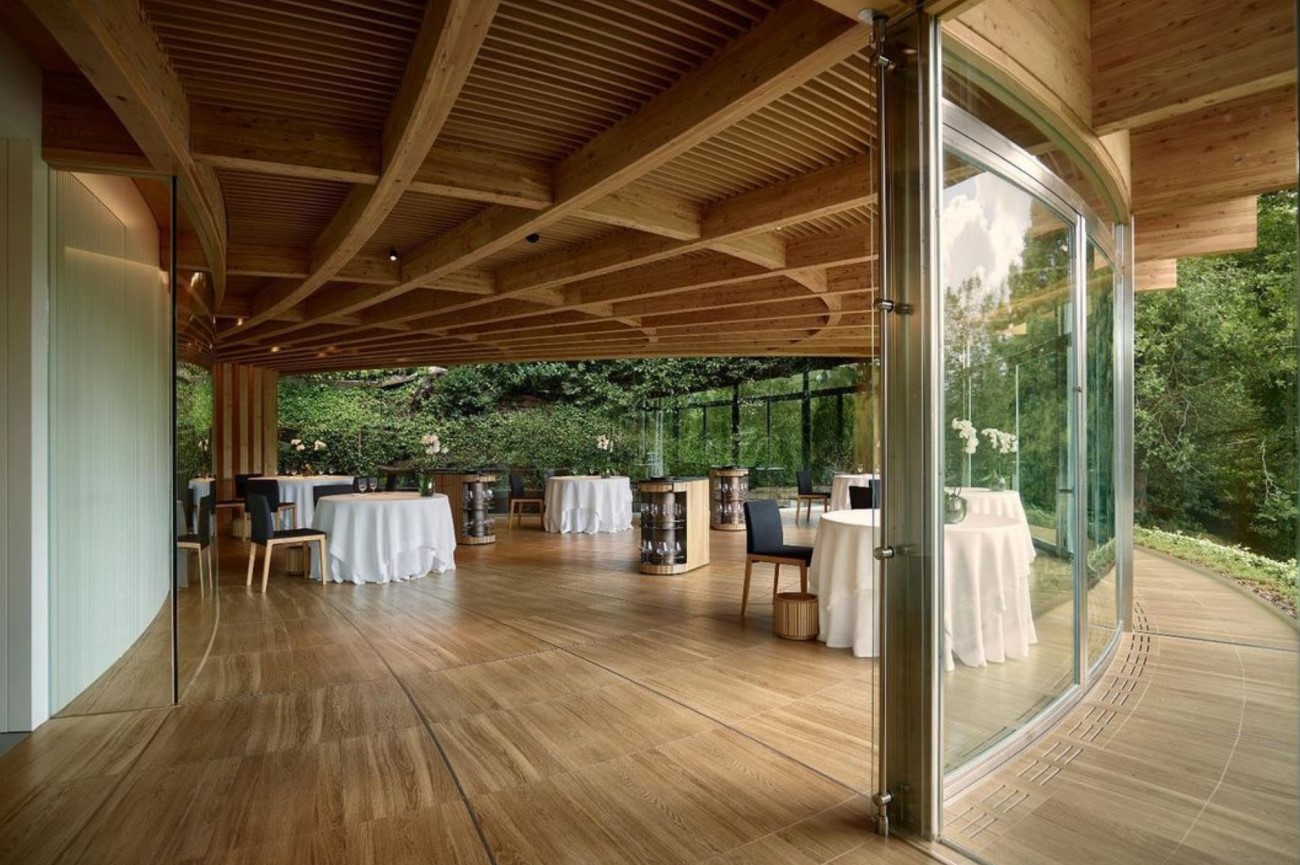
Martín Berasategui lies in Lasarte-Oria, around seven kilometres from San Sebastián. The flagship restaurant has held three Michelin stars since 2002 and offers both a tasting menu and an à la carte menu, combining signature dishes from Berasategui's career with new creations. His restaurant is surrounded by the green countryside of Gipuzkoa, creating a very different setting from the coastal dining rooms in San Sebastián itself.
Other Michelin-Starred Restaurants Around San
Sebastian
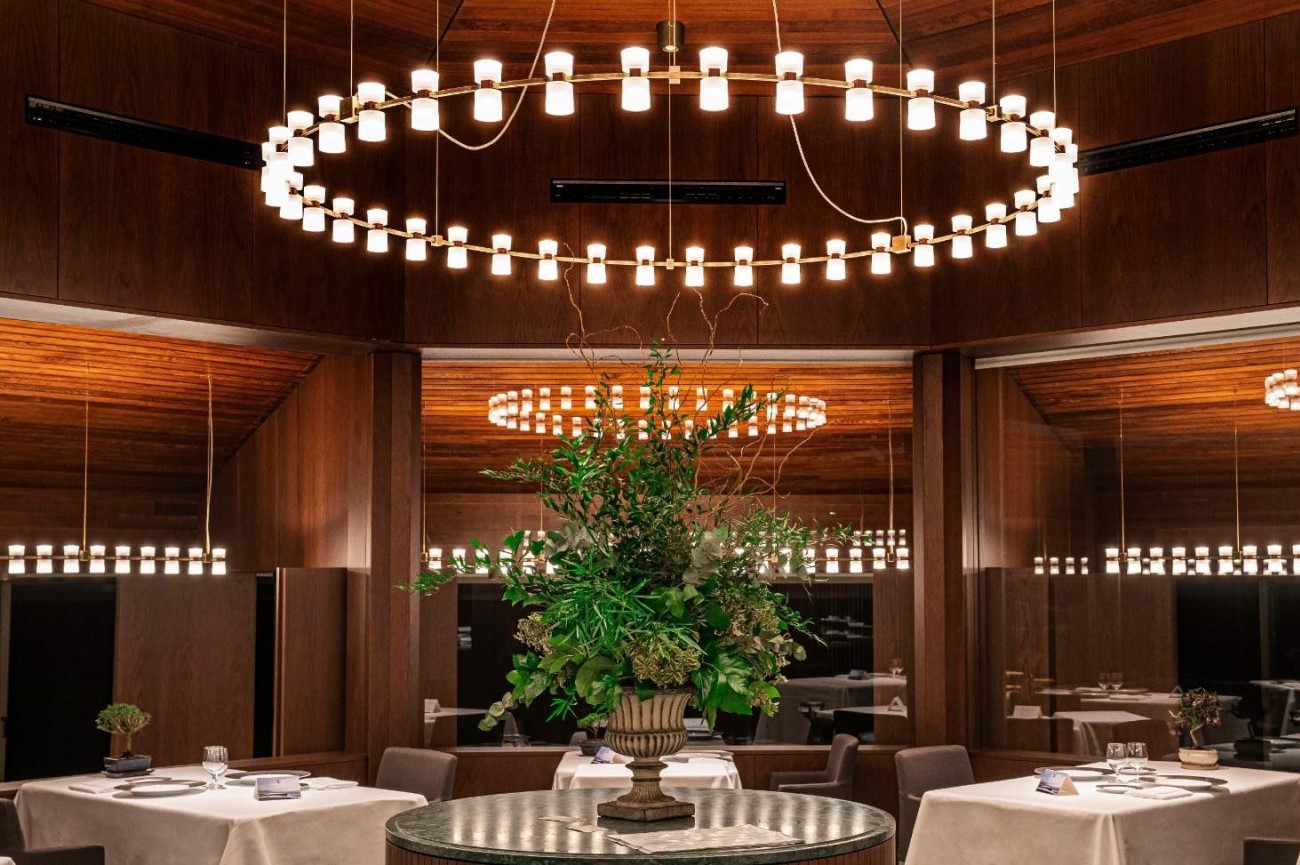
The region's Michelin dining extends well beyond the three-star restaurants. Mugaritz, in Errenteria, holds two Michelin stars under chef Andoni Luis Aduriz and offers one of the Basque Country's most experimental dining experiences. Rather than following a conventional sequence of courses, its tasting menu deliberately questions familiar ideas about flavour, texture and how a restaurant meal should unfold.
Amelia by Paulo Airaudo also holds two Michelin stars and entered a new chapter in May 2026 when it moved to Hotel María Cristina in central San Sebastián. Airaudo's current concept draws on his Italian heritage while placing particular emphasis on seafood and a close interaction between the kitchen and diners.
Beyond these restaurants are Michelin-starred kitchens, accomplished asadores specialising in grilled turbot and txuleta, and ambitious contemporary restaurants that make San Sebastián's fine-dining landscape considerably broader than its most famous names.
For travellers, the challenge is less choosing whether to include Michelin dining than deciding which experience best suits the journey. Arzak offers history and a direct connection to the development of New Basque Cuisine. Akelarre combines three-star cooking with one of the region's most dramatic coastal settings. Martín Berasategui offers a technically ambitious tasting menu in the countryside outside the city, while Mugaritz is the choice for travellers drawn to a more unconventional and experimental approach.
On our 4-day San Sebastián culinary itinerary, dinner at Martín Berasategui forms one of the journey's principal dining experiences, while the farewell dinner can be arranged at either Arzak or Akelarre. Mugaritz can also be incorporated for travellers who want to take the culinary journey in a more experimental direction.
These restaurants are not interchangeable. Each represents a different chapter of modern Basque cuisine, and choosing the right table is as important as securing the reservation itself.
Beyond
the Table: Beaches, Views and Basque Culture
San Sebastián's appeal extends far beyond its restaurants. Between meals, the city offers beaches, panoramic viewpoints, Basque culture and striking coastal landmarks, all within a compact area that is easy to explore on foot.
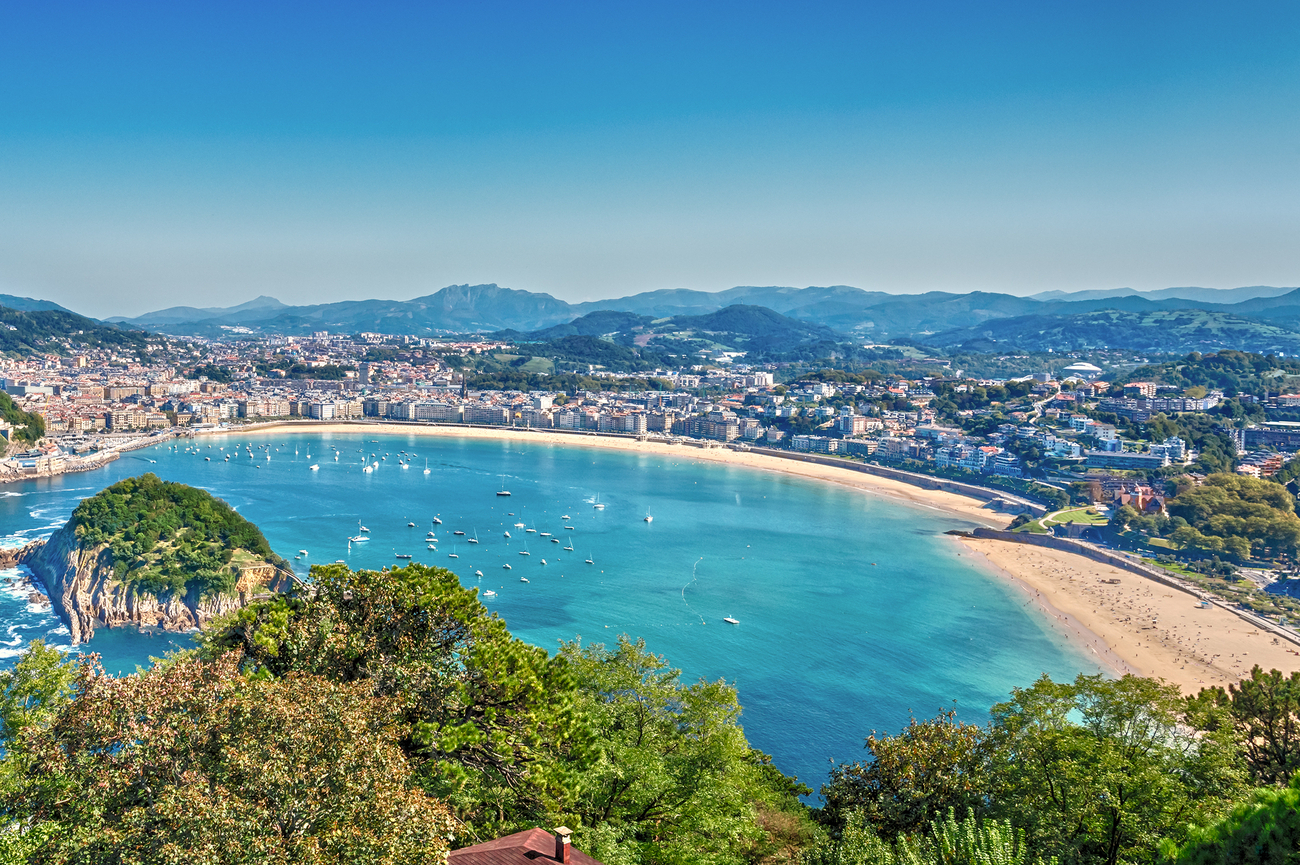
La Concha is the city's defining landscape, a sweeping bay framed by Monte Igueldo and Monte Urgull and bordered by an elegant Belle Époque promenade. Its sheltered waters, broad sandy beach and distinctive white railings have become symbols of San Sebastián. The city's transformation into a fashionable seaside resort accelerated in the nineteenth century when the Spanish royal family began spending summers here, leaving a legacy of grand architecture along the waterfront.
At the western end of the bay, the historic funicular climbs Monte Igueldo for one of the best panoramic views across La Concha, Santa Clara Island and the city. On the opposite side, Monte Urgull rises directly behind the Parte Vieja, with walking paths leading towards the Castillo de la Mota and the Sacred Heart statue overlooking the rooftops and harbour.
Closer to street level, the Parte Vieja combines historic churches and squares with the San Telmo Museoa, which explores Basque society, history and culture. Across the Urumea river, Zurriola Beach brings a different atmosphere with its Atlantic surf, while at the western edge of the city Eduardo Chillida's Peine del Viento sculptures meet the waves where the promenade gives way to rock.
These places provide the natural counterpoint to San Sebastián's culinary intensity, leaving space between pintxos crawls, markets and Michelin-starred dinners to experience the city itself.
Our guide to San Sebastián between meals explores La Concha, Monte Igueldo and Basque culture in greater detail.
How
to Pace a Food-Focused Stay in San Sebastian
A food-focused trip to San Sebastián works best when the major dining experiences are separated by time to explore the city. Rather than scheduling one elaborate meal after another, the aim is to balance pintxos, markets and Michelin-starred restaurants with La Concha, Basque culture and the surrounding coast.
Day 1: La Concha, the Old Town and Pintxos
Begin on foot with La Concha and the Parte Vieja, allowing time to understand the city before exploring its food. In the evening, a traditional txikiteo introduces San Sebastián's pintxos culture through five or six carefully chosen bars, with one or two dishes and a small drink at each stop.
Day 2: Mercado de la Bretxa, Basque Cooking and Martín Berasategui
The second day moves from ingredients to technique. Start at Mercado de la Bretxa before joining a private Basque cooking experience built around regional produce and dishes.
Keep the afternoon deliberately light, with time to walk along La Concha or simply enjoy the waterfront before travelling into the green countryside of Lasarte-Oria for dinner at the three-Michelin-starred Martín Berasategui. The restaurant currently offers a tasting menu alongside an à la carte option, combining signature dishes with contemporary creations.
Day 3: Spa, Basque Culture or the Coast
The final full day can be shaped around individual interests. La Perla offers thalassotherapy beside La Concha, including seawater-based wellness facilities, while San Telmo Museoa and Monte Igueldo provide alternatives centred on Basque culture and panoramic views.
Travellers wanting to explore beyond the city can head west towards Getaria and the vineyards of Getariako Txakolina, or east to Albaola in Pasaia. The latter is centred on Basque maritime heritage and the San Juan, a scientific replica of a sixteenth-century Basque whaling ship whose reconstruction has entered a new seagoing phase.
The journey culminates with a farewell dinner at either Arzak or Akelarre, two very different three-Michelin-starred expressions of modern Basque cuisine.
Day 4: Departure
After three nights in San Sebastián, the fourth day is reserved for departure, leaving the previous three days free to concentrate on the city, its food and the experiences surrounding it. This is the structure used in our 4-day luxury culinary itinerary in San Sebastián.
Where to Stay in San Sebastian
Location matters on a food-focused stay because so much of San Sebastián is explored on foot. Hotel Maria Cristina has welcomed guests since 1912 and occupies a prominent position beside the Urumea river, within easy reach of the Old Town.
Hotel Villa Favorita offers a contrasting experience directly beside the La Concha promenade. The boutique hotel occupies the last surviving historic villa on the bay and places guests immediately beside the beach and within walking distance of the Parte Vieja.

When
to Plan a Culinary Trip to San Sebastian
Our culinary journey operates from May to October, covering the warmer months when the city, coastline and outdoor dining culture can be enjoyed together. September also brings the San Sebastián International Film Festival, which in 2026 takes place from 18 to 26 September.
For travellers with more time, San Sebastián also works naturally as the starting point for a wider journey through northern Spain. Continue into our Basque Country wine and culture tour, or follow the Atlantic coast through northern Spain and Portugal on our Spain and Portugal road trip.


Let us know what you love, where you want to go, and we’ll design a one-of-a-kind adventure you’ll never forget.
Get in touch
Miriam
Travel Specialist

Romina
Travel Specialist

Laura
Travel Specialist
Frequently Asked Questions
-
What is the difference between pintxos and tapas?
Pintxos are the Basque Country's distinctive form of small-bar dining. While tapas is the broader Spanish term for small dishes, pintxos in San Sebastián have developed their own culture, with bars often becoming known for particular creations and diners moving between several establishments during the same meal.
-
Is it pintxos or pinchos?
Both spellings refer to similar small dishes, but pintxo is the Basque spelling and is the term normally used in San Sebastián and across the Basque Country. Pincho is the Spanish spelling.
-
Do you need to book pintxos bars in San Sebastián?
Usually not. Traditional pintxos bars generally operate on a walk-in basis, particularly in the Parte Vieja. Diners typically order one or two pintxos and a small drink before moving on to another bar rather than reserving a table for the entire evening.
-
What is the best time to go for pintxos in San Sebastián?
Pintxos bars become particularly lively around lunchtime and again in the evening. Going slightly before the busiest local dining times can make it easier to reach the counter and order, while later visits offer more of the energetic atmosphere associated with a traditional txikiteo.
-
Are pintxos always served on bread?
No. Many traditional pintxos are served on bread, but others are presented on skewers, in small dishes or as hot plates cooked to order. Modern pintxos can be surprisingly elaborate and may resemble miniature restaurant dishes.
-
Can tourists visit a Basque txoko?
Txokos are private gastronomic societies rather than conventional restaurants, so visitors cannot normally simply walk in. Access generally requires an invitation from a member or a specially arranged experience.
-
Is a guided pintxos tour worth it in San Sebastián?
It can be, particularly for first-time visitors. Local knowledge helps identify which bars are best for particular dishes, which pintxos should be ordered hot and when to move on, turning a casual evening of bar-hopping into a more complete introduction to San Sebastián's food culture.
-
Is San Sebastián good for gluten-free travellers?
Yes. San Sebastián is a good destination for gluten-free travellers, with many Basque dishes based on grilled fish, seafood, meat, vegetables and cheese. Bread-based pintxos, sauces and shared cooking areas require more care, so travellers with coeliac disease should always confirm ingredients and cross-contamination with each restaurant or bar.
-
Can Revigorate arrange a luxury culinary trip to San Sebastián?
Yes. Revigorate can create a tailor-made San Sebastián culinary journey combining private pintxos experiences, Basque markets and cooking, Michelin-starred restaurants, txakoli or cider experiences and time to explore the city and surrounding coast, with the itinerary arranged around each traveller's interests and preferred pace.
Our offices:



Revigorate, Iberian Escapes and Algarve Lifestyle are the registered brand names of APCS Lda . We are a fully authorised travel agency licensed by Turismo de Portugal RNAVT/6867.
In the event of a dispute, the consumer may refer to: RAL - Centros de Arbitragem
Avª. 5 de Outubro, nº. 55, R/C Dtº. 8000-075 Faro, Portugal | Tel: +351 289 823 135 *
* national landline call
E-mail: info@consumoalgarve.pt| www.consumidoronline.pt | Mon to Fri: 9:00 - 13:00 / 14:00 - 17:00