The Best Pintxos in San Sebastian: A Parte Vieja Crawl Through the Old Town, Bar by Bar
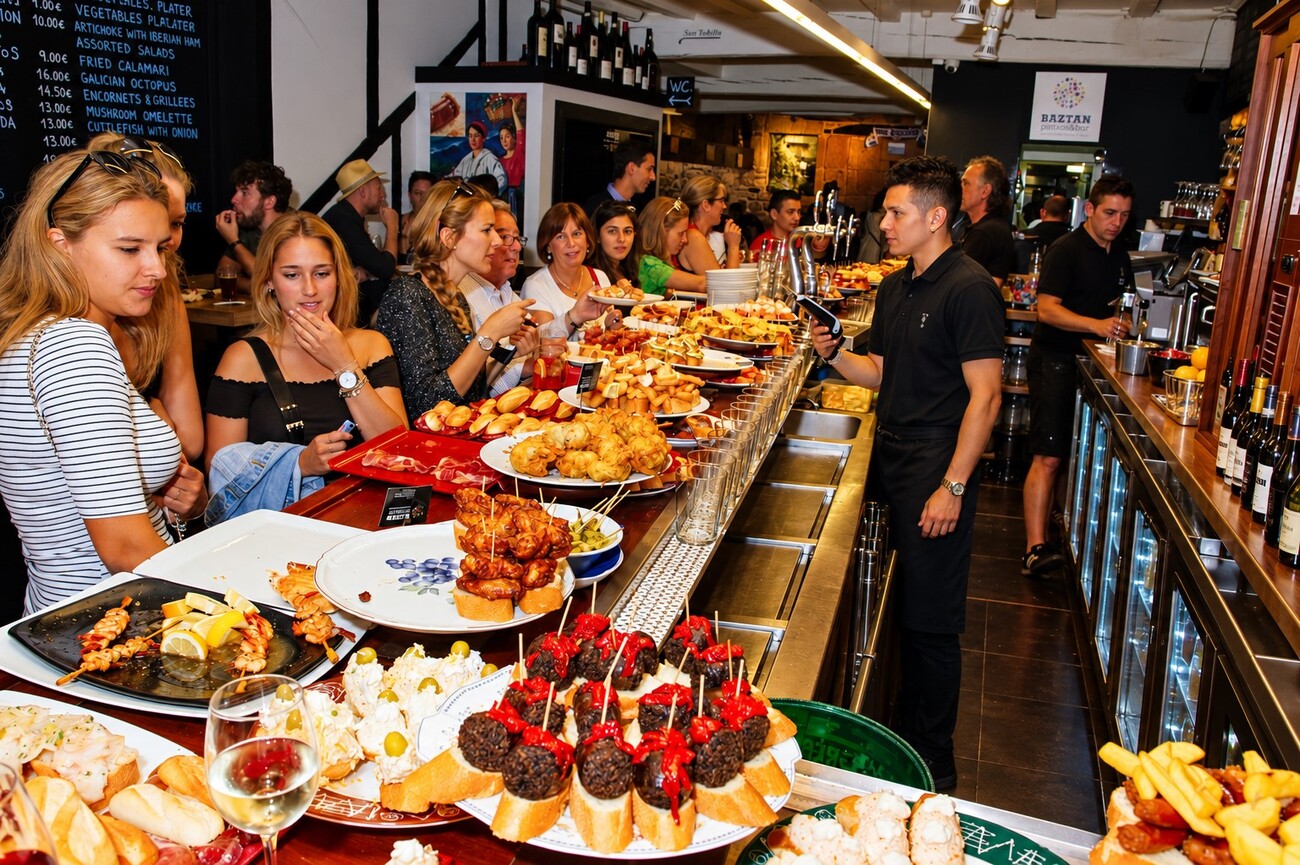
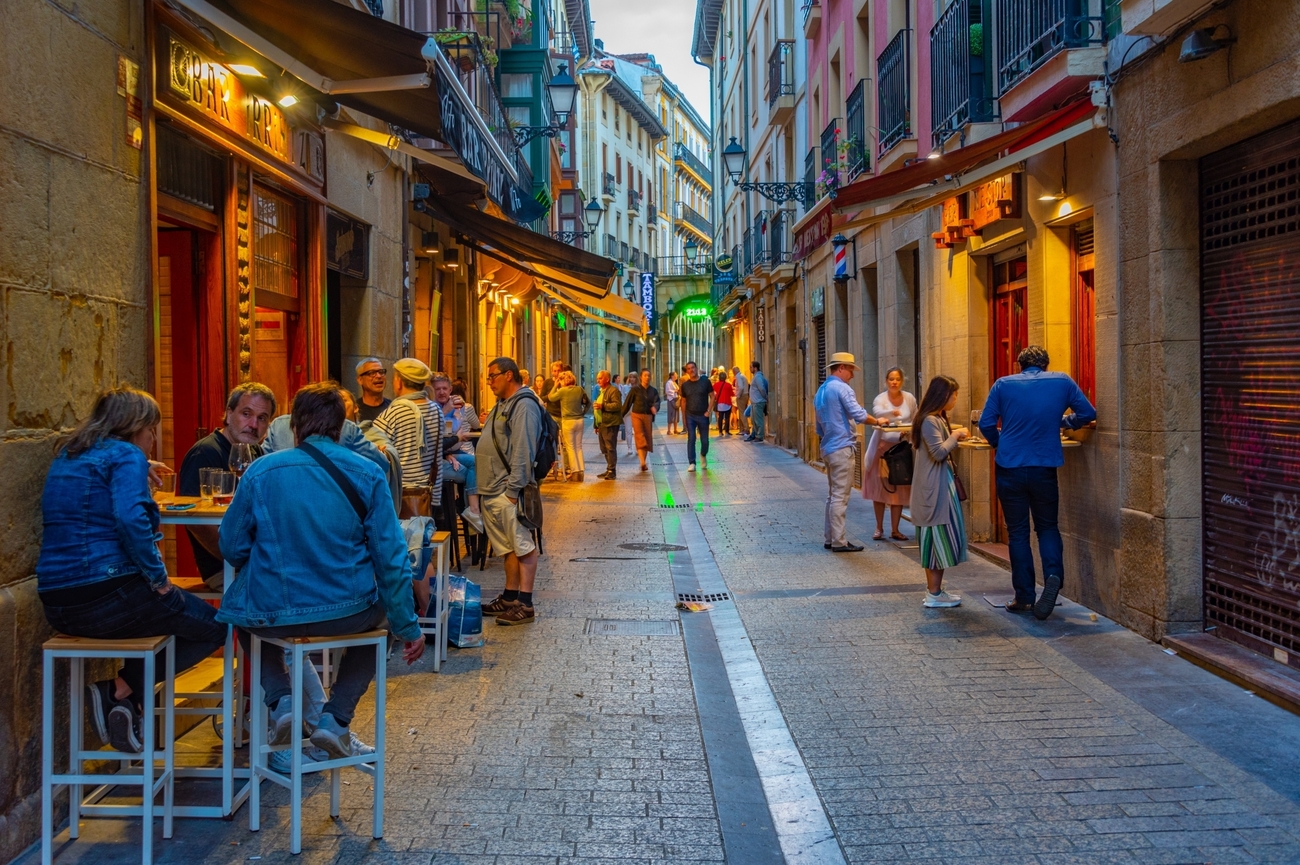
Kalea 31 de Agosto at nine on a Friday evening can feel as though a hundred people have squeezed into a room built for thirty. Every conversation competes with the next. Orders travel over the heads of strangers, glasses return through the same airspace, and behind a counter lined with pintxos a bartender is grilling, pouring drinks, remembering tabs and discussing football without appearing to stop for breath.
Nobody is sitting. That is part of the point. Within minutes, much of the room will move on to another bar and a new crowd will take its place.
This is the txikiteo, pronounced roughly “chee-kee-TEH-o”, the Basque tradition of moving from bar to bar, eating one or two pintxos and taking a small drink at each stop before continuing. It is sometimes also called a poteo. Rather than settling in for a single meal, the evening is assembled one counter at a time.
The best pintxos in San Sebastian are therefore not necessarily found in one bar. One place might be known for its Gilda, another for tortilla, another for a hot dish cooked to order. Knowing where to go, what to order and when to move on is what turns a collection of small dishes into a proper Parte Vieja pintxos crawl.
Our San Sebastian food guide explores the wider food culture behind the city's markets, Michelin-starred restaurants, Basque cooking and drinking traditions. Here, the focus is narrower: how to experience the pintxos bars of the Parte Vieja properly, from the first Gilda to the last stop of the night.
What
Is a Txikiteo?

A txikiteo, pronounced roughly “chee-kee-TEH-o”, is the Basque tradition of moving between bars, taking one or two pintxos and a small drink at each before continuing to the next. Rather than settling somewhere for a full meal, the evening unfolds across several bars. The term is related to txikito, a small glass of wine traditionally associated with the ritual.
Locals often make the rounds in cuadrillas, established groups of friends who may have known one another since childhood. The group moves together, usually without much discussion about when it is time to leave one bar and head for the next.
The logic is simple. Many pintxos bars in San Sebastián are particularly known for one or two dishes, whether a Gilda, tortilla, grilled seafood or something hot from the blackboard. Staying in one place means experiencing one kitchen. A txikiteo lets you take the best of several, building an evening from a sequence of different counters.
Timing changes the experience too. Early evening brings full displays and busy streets, with drinkers spilling outside the bars of the Parte Vieja. Later, the crowds begin to loosen and the kitchens concentrate increasingly on hot dishes cooked to order. By then, the evening has usually developed its own rhythm.
That is what makes a txikiteo more than a conventional bar crawl. The objective is not simply to drink from place to place, but to construct a meal across San Sebastián, one pintxo, one small glass and one bar at a time.
Why Do Pintxos Bars
Display Food on the Counter?
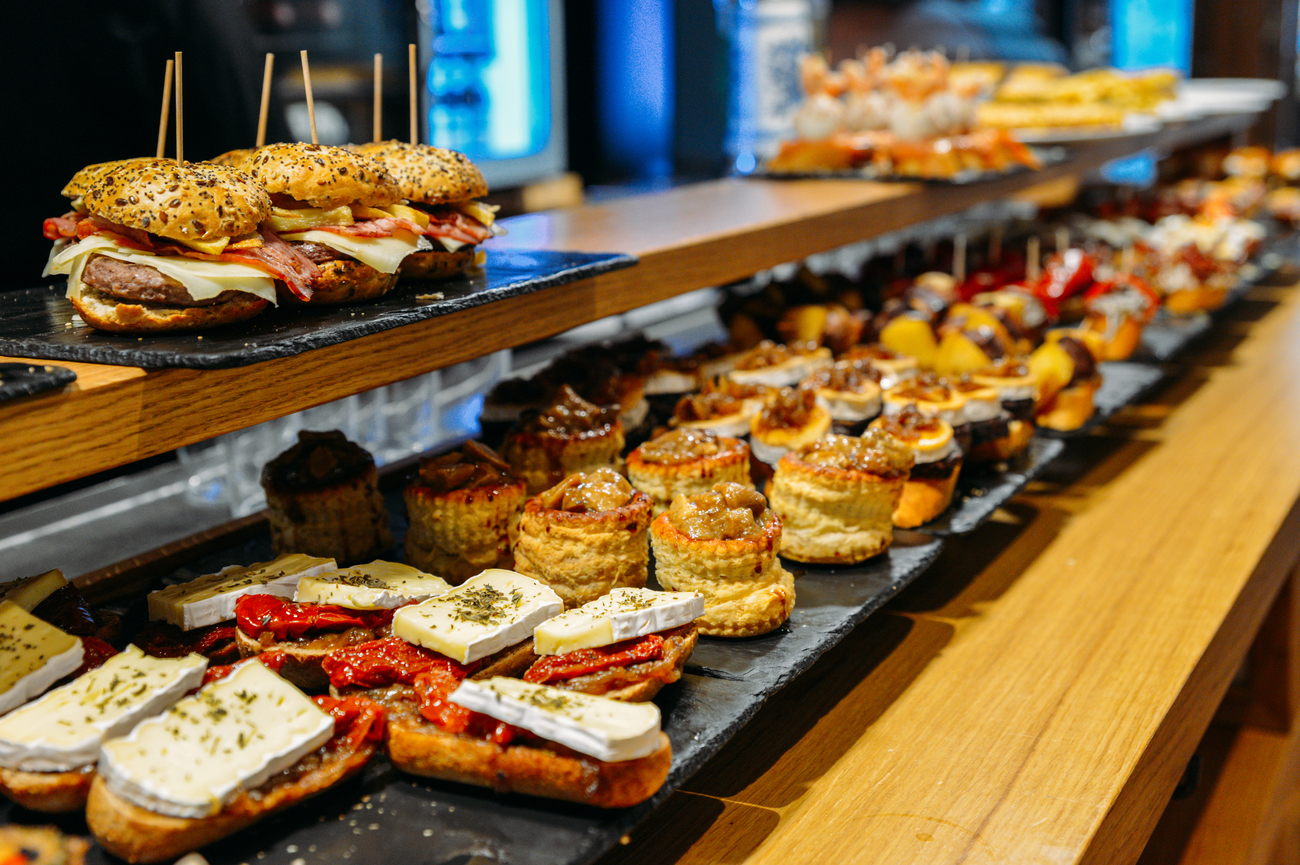
Walk into a traditional pintxos bar in San Sebastián and the counter is often the first thing you notice. Tortilla, anchovies, peppers, seafood and elaborate combinations of bread and toppings are arranged across the bar in a display designed to make choosing just one almost impossible.
The counter is not simply decoration. Cold pintxos are traditionally displayed ready to eat, allowing customers to see what is available as soon as they enter. Hot pintxos work differently: these are generally ordered from the bartender and prepared in the kitchen, often from a menu or blackboard behind the bar.
Learning to distinguish between the two is useful when searching for the best pintxos in San Sebastian. The display shows you the cold specialities, but some of a bar's most interesting dishes may never appear on the counter at all. Grilled seafood, mushrooms, foie, slow-cooked meat and other pintxos calientes are often cooked only after you order them.
There is also something revealing about a busy counter. Pintxos disappearing quickly, trays being replenished and hot dishes moving constantly from the kitchen are signs of a bar in full flow. Rather than choosing somewhere simply because its display looks the most abundant, pay attention to what people around you are ordering and what is coming freshly from the kitchen.
The counter catches your attention. The real skill is learning to read the whole bar.
How
to Order Pintxos Like a Local
Ordering pintxos in San Sebastián is simple once you understand the rhythm. Cold pintxos are generally displayed on the counter and can be taken directly, while hot pintxos are ordered from the bartender and prepared to order. Take one or two rather than loading a plate, add a small drink, and then move on to another bar.
The counter can be distracting. Tortilla wedges, anchovies, peppers, seafood and elaborate combinations are laid out within reach, but they represent only part of what a good pintxos bar offers. Look behind the counter for a blackboard or menu listing pintxos calientes, the hot dishes coming directly from the kitchen.
These might include slow-braised veal cheeks, seared foie, grilled octopus, mushrooms with egg yolk or seafood cooked to order. Every bar has its own specialities, so watch what local customers are ordering rather than choosing entirely by appearance.
Keep the drinks small too. A zurito of beer, a small glass of wine or a short pour of txakoli suits the pace of a txikiteo, where the aim is to experience several bars rather than settle into one. Traditionally, one pintxo and one drink is enough before moving on.
Payment is generally made when you are ready to leave. Local groups often take turns paying for rounds or create a shared kitty rather than dividing every individual item, another reminder that going for pintxos is as much a social ritual as a way of eating.
On our 4-day luxury culinary itinerary in San Sebastián, the first evening introduces this tradition with a local host, moving through a carefully selected collection of Parte Vieja bars and learning what to order, where to order it and when it is time to move on.
Best Pintxos to Try in
San Sebastian
Before planning the route, it helps to know what to order. San Sebastián's pintxos range from remarkably simple combinations to miniature dishes cooked to order, but several Basque classics appear repeatedly across the Parte Vieja.
Gilda
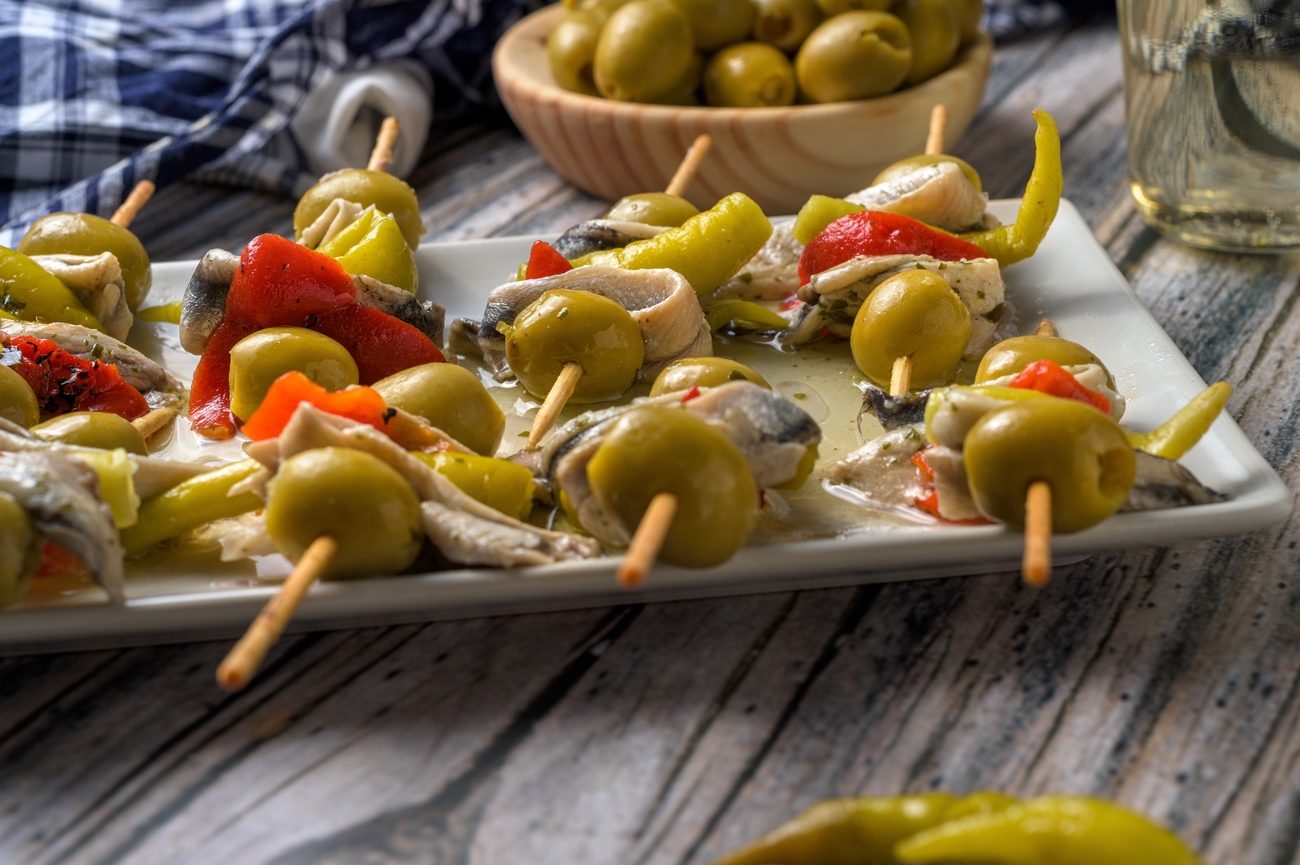
The Gilda is one of San Sebastián's most famous pintxos: an anchovy, green olive and pickled guindilla pepper threaded onto a skewer. The combination originated in the city and was named in homage to Rita Hayworth's character in the film Gilda. Salty, sharp and slightly spicy, it is an ideal first pintxo of the evening.
Tortilla de Patatas
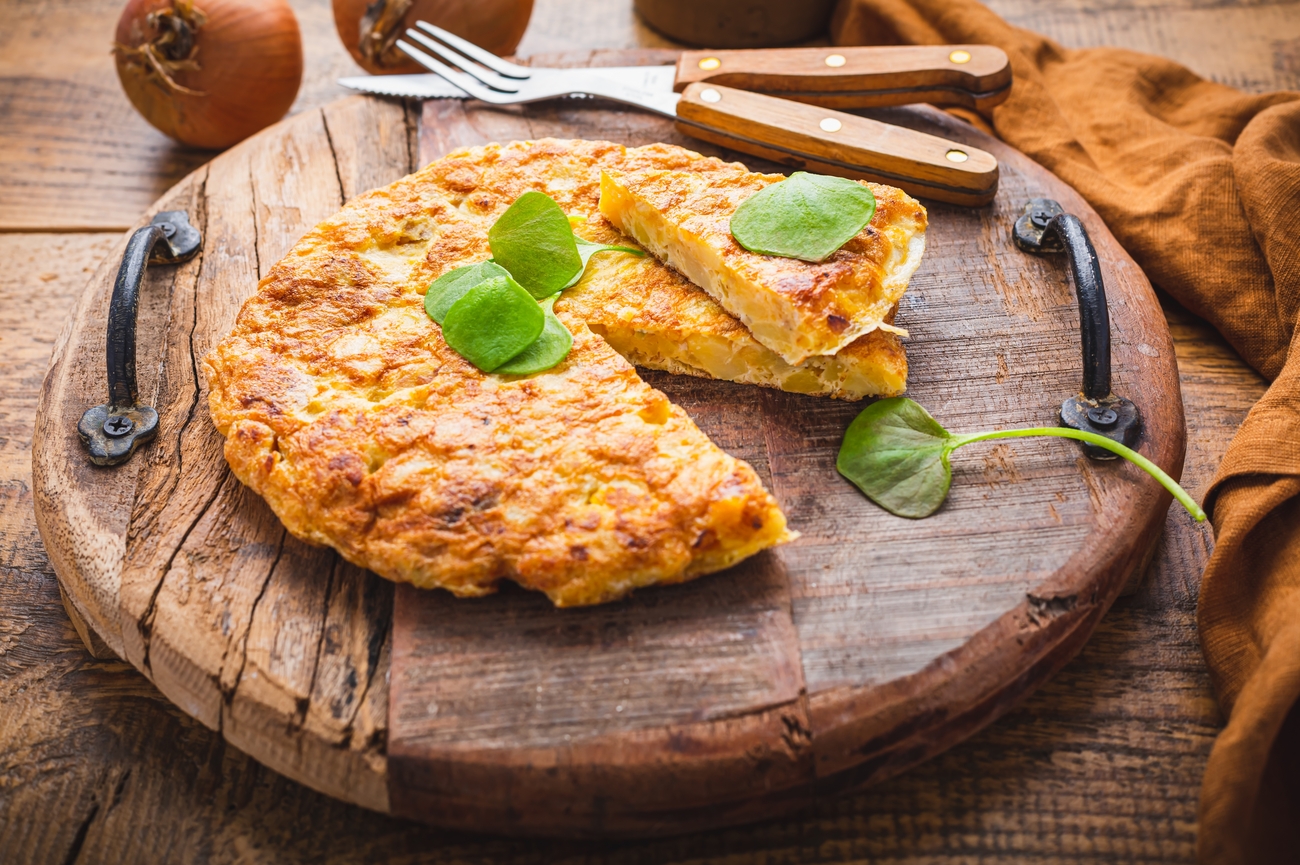
Tortilla de patatas is found throughout Spain, but individual bars in San Sebastián have developed fiercely loyal followings for their own versions. Some serve it soft and creamy in the centre, while others favour a firmer texture. The best-known tortillas can sell out, so if you see locals waiting for a fresh one to be cut, take the hint.
Txangurro
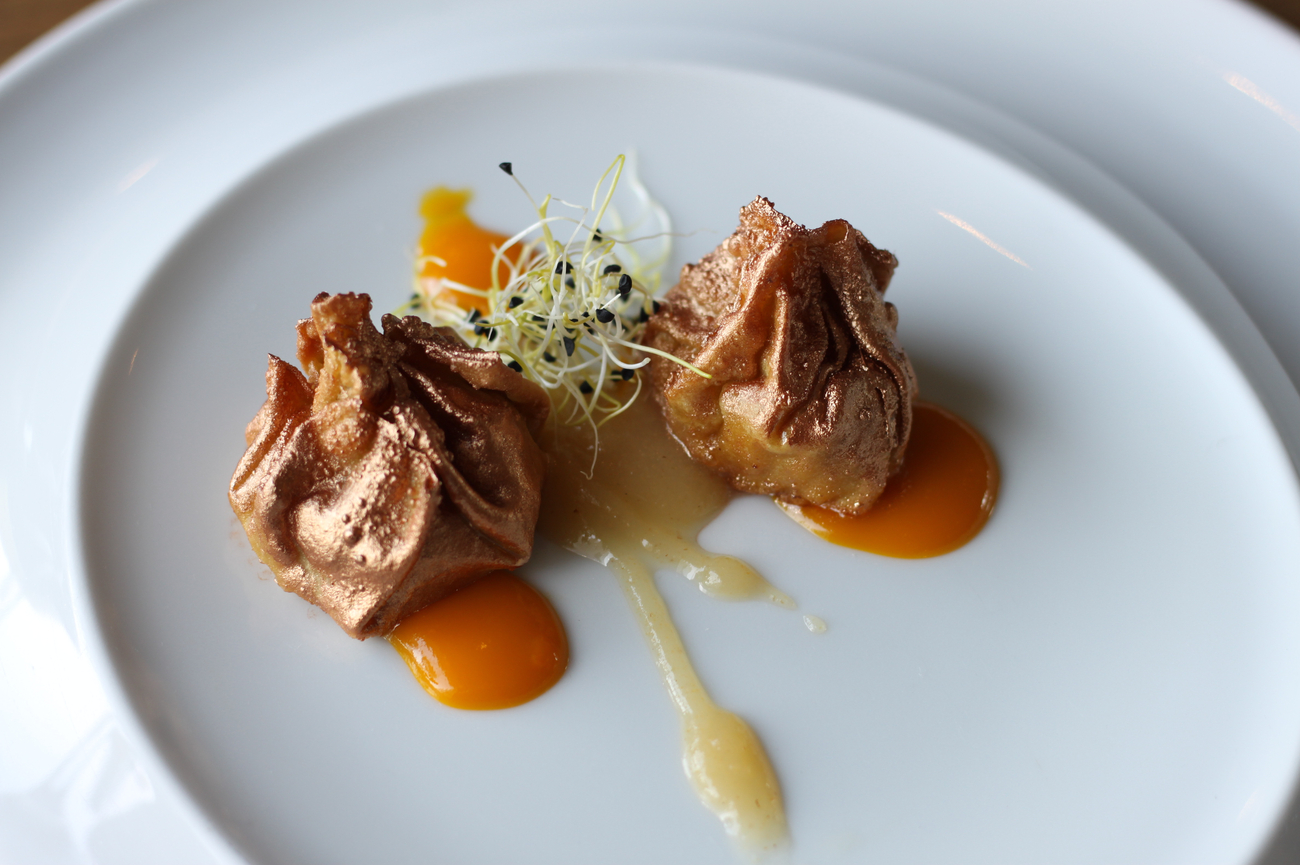
Txangurro, pronounced roughly "chan-GOO-rro", is spider crab, a prized ingredient in Basque cooking. It may be seasoned and baked in its shell or used as the filling for an elaborate pintxo. Rich and distinctly maritime, it reflects San Sebastián's close relationship with the Cantabrian Sea.
Kokotxas
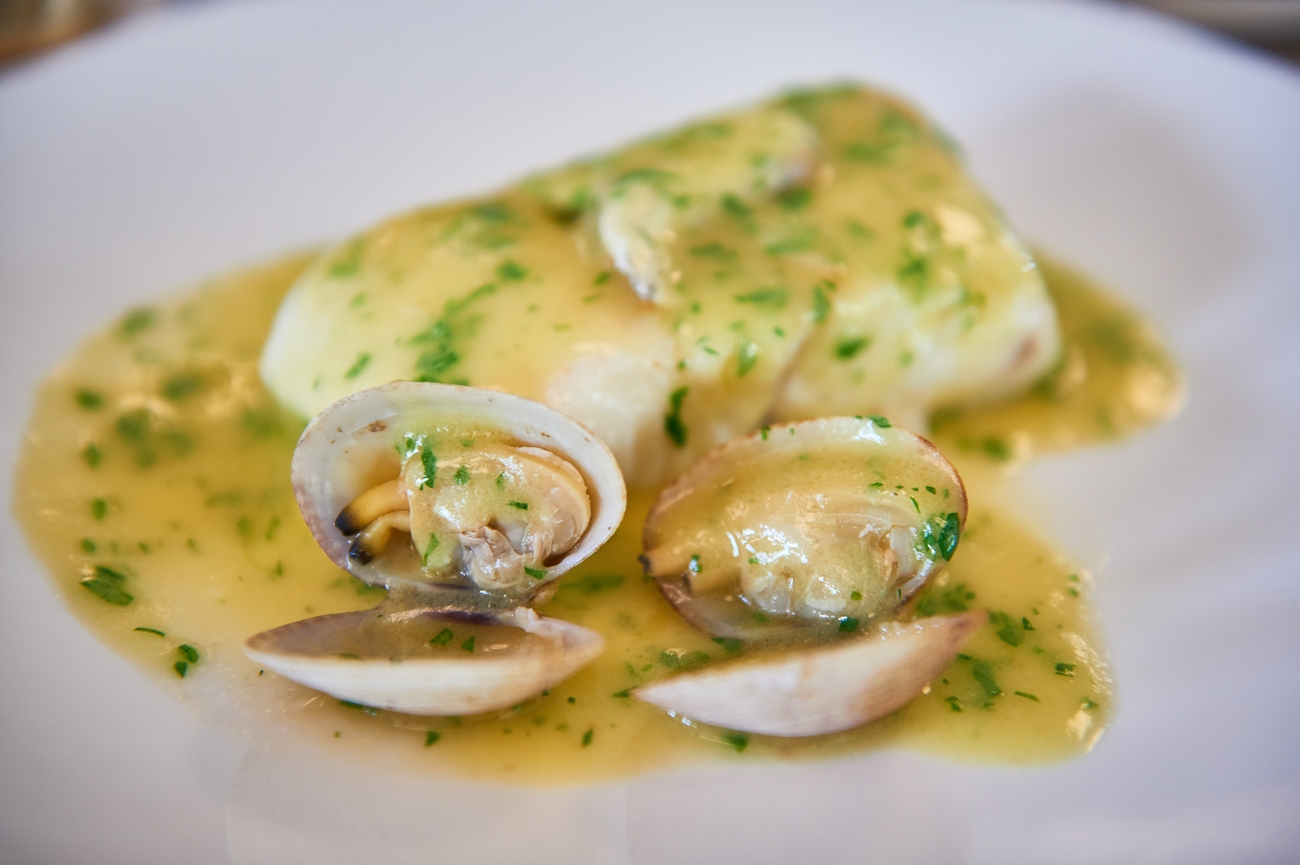
Kokotxas are the fleshy pieces found beneath the head of hake or cod and are particularly valued in Basque cuisine for their delicate texture and natural gelatin. They are often cooked gently with garlic and olive oil, including in pil-pil or salsa verde preparations.
Foie a la Plancha
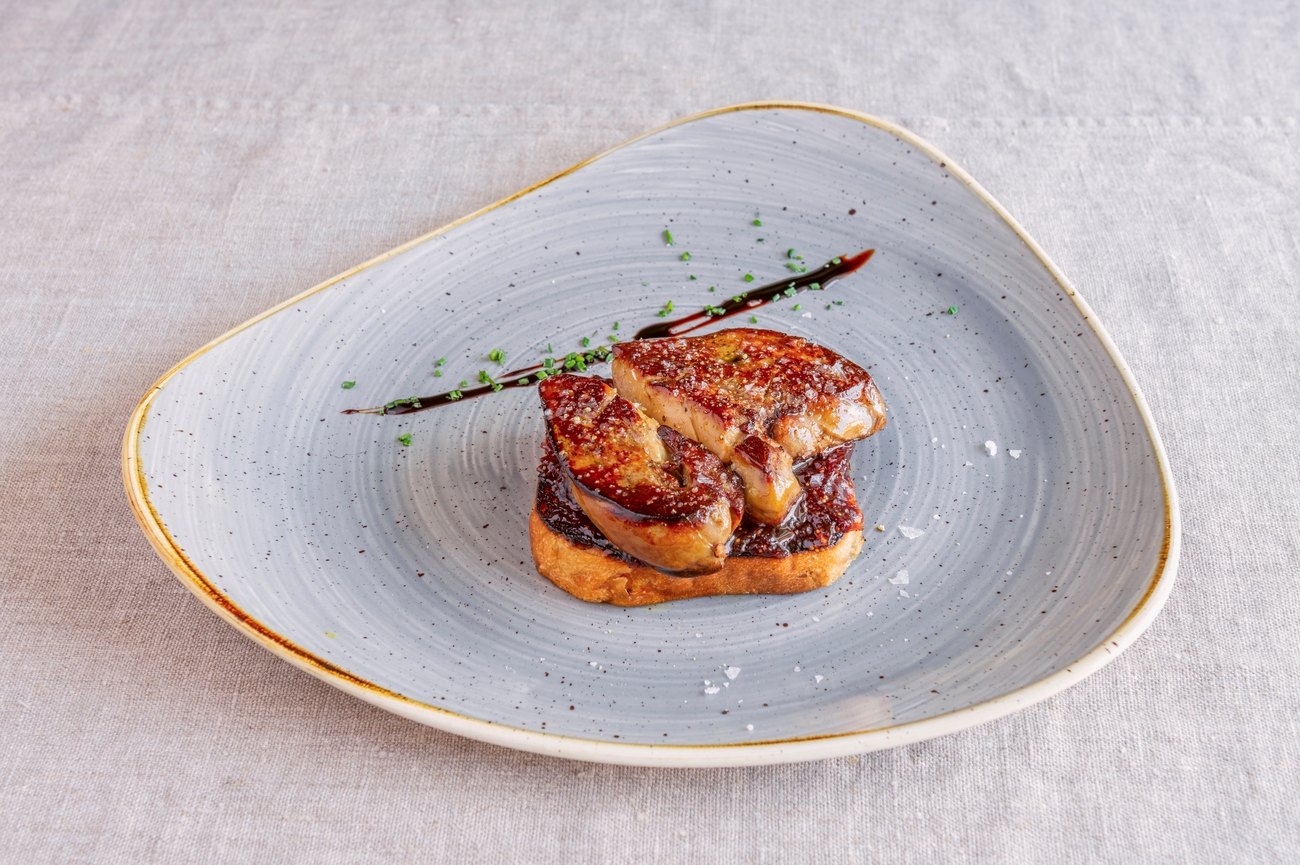
Seared foie gras appears on blackboards throughout the city, often paired with something sweet, acidic or fruity to balance its richness. It is a good example of how San Sebastián's pintxos bars blur the boundary between casual bar food and accomplished restaurant cooking.
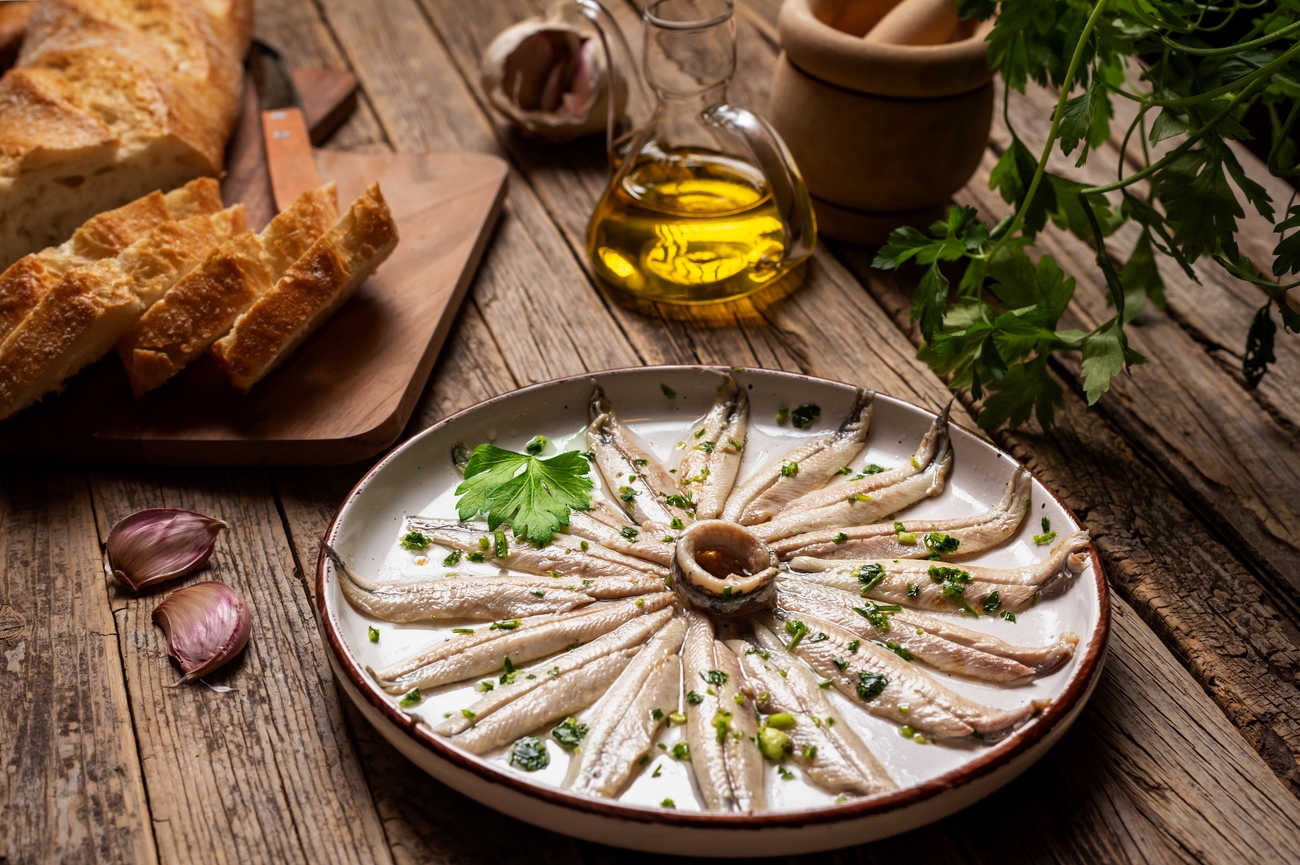
Anchovies
Anchovies are fundamental to the food of Spain's northern coast. Boquerones are generally marinated in vinegar and remain pale, while anchoas are salt-cured and develop a deeper colour and more concentrated flavour. Both frequently appear in pintxos, either alone or combined with peppers, olives and other ingredients.
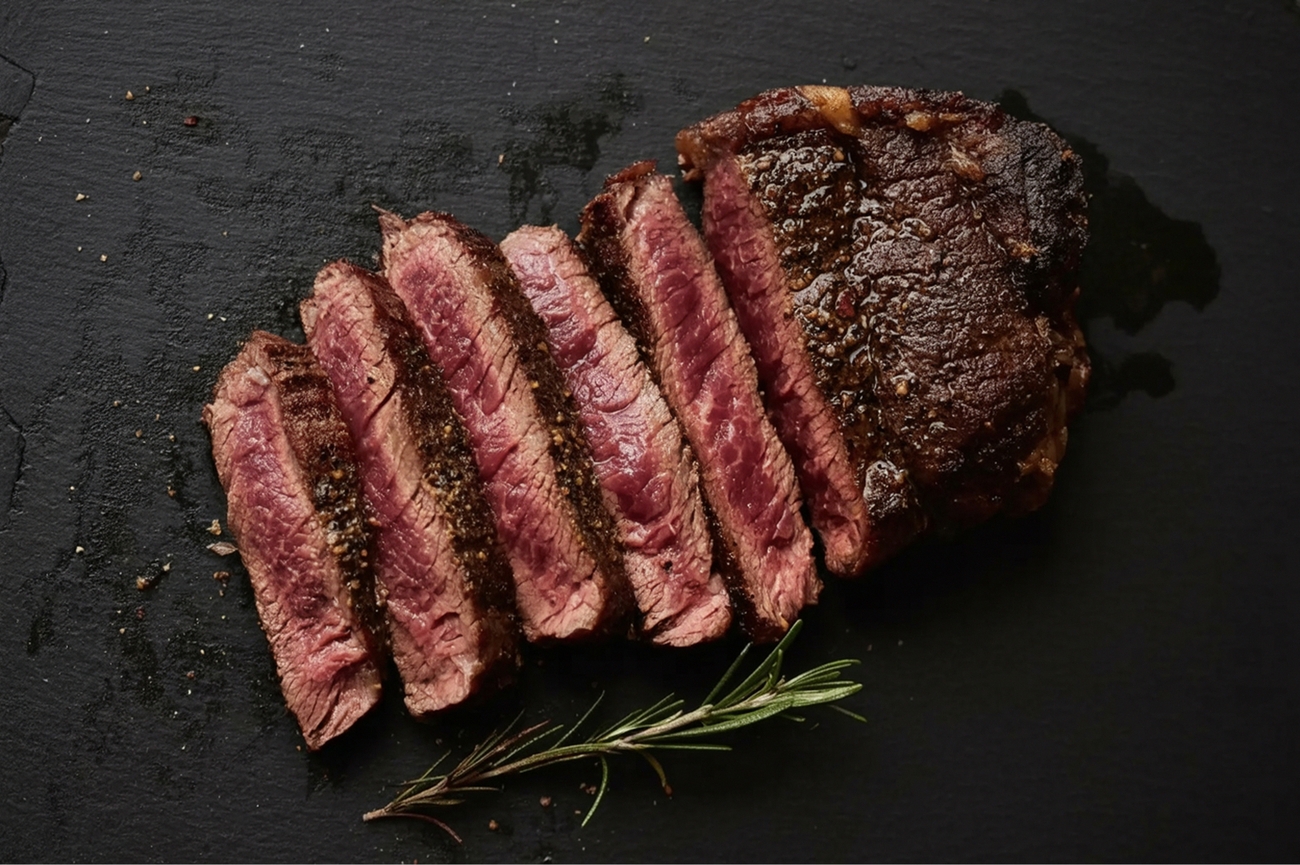
Txuleta
Txuleta, pronounced roughly "choo-LEH-ta", is a thick Basque-style beef chop traditionally cooked over hot coals. It is not a pintxo in the strict sense, but some bars and grills serve slices that can be shared as part of an evening's progression through the city.
And then there is txakoli. Pronounced roughly "cha-ko-LEE", this dry Basque white wine is a natural companion to pintxos, particularly seafood, anchovies and richer dishes. Our guide to txakoli and Basque cider explores the wine, the traditional high pour and the cider houses in the hills around San Sebastián in greater detail.
A
Parte Vieja Pintxos Crawl, Bar by Bar
The Parte Vieja concentrates an extraordinary number of pintxos bars into a compact network of streets, so the secret to finding the best pintxos in San Sebastian is not choosing one destination. It is building the right sequence. Think of this as a six-stop framework rather than a fixed prescription, leaving room to follow what looks good, what has just come out of the kitchen and where the evening takes you.
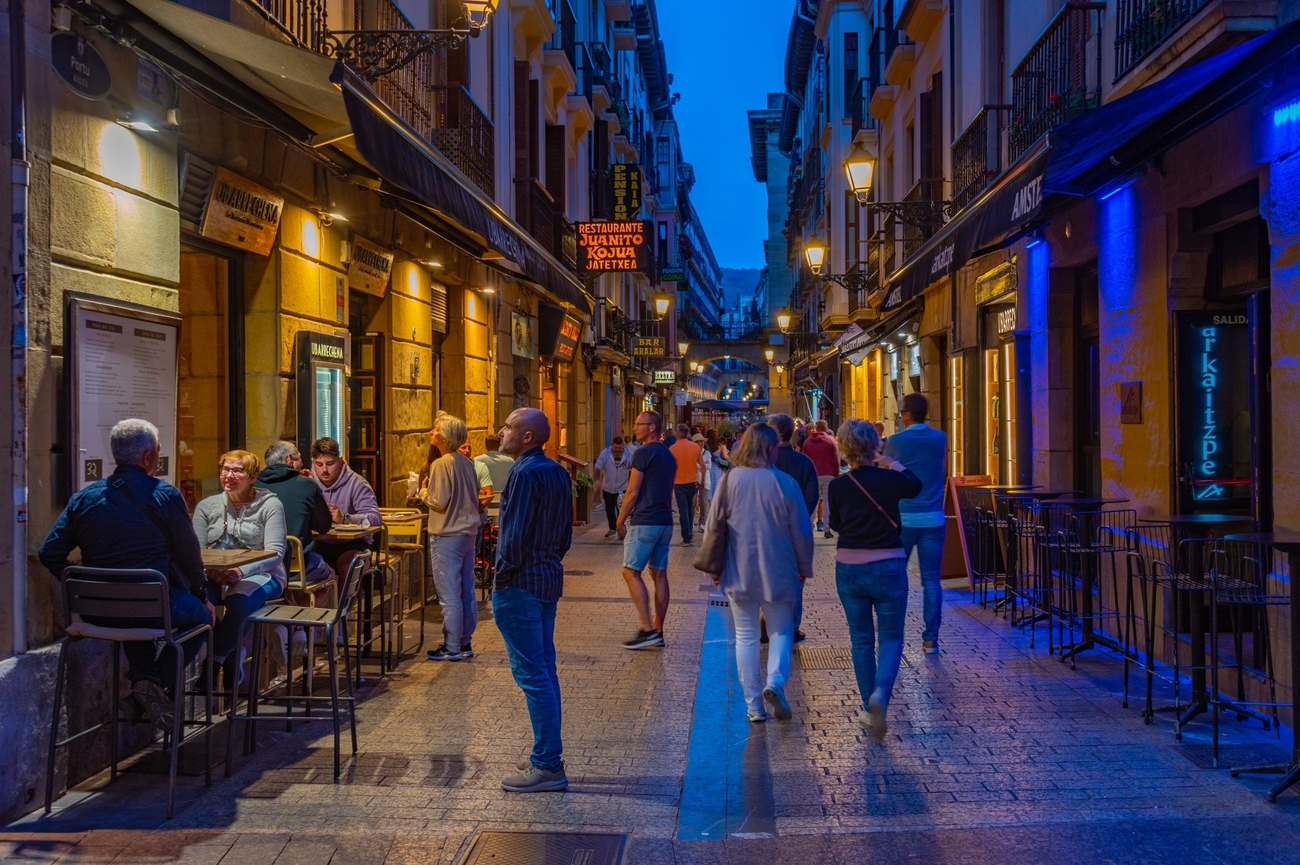
Stop 1: Begin on Calle 31 de Agosto
Start on one of the Old Town's most historic streets. During the siege and fire of 1813, San Sebastián was devastated, but the houses on the even-numbered side of what is now Calle 31 de Agosto survived. Today the street is also one of the Parte Vieja's great gastronomic thoroughfares.
Begin simply: a Gilda and a small glass of txakoli. One bite, one drink, then move on.
Stop
2: Find the Tortilla
Every good crawl needs a tortilla stop. Different bars inspire fierce loyalty for their own versions, and the best strategy is to look for somewhere cutting a fresh tortilla rather than arriving with one particular name fixed in mind.
Order a slice, see whether you prefer it soft and creamy or more firmly set, and resist the temptation to stay for another. There are several kitchens still to come.
Stop 3: Move on to Hot Pintxos
By the third stop, turn your attention from the counter to the hot dishes prepared to order. Casa Urola on Fermín Calbetón is a good example, combining traditional cold pintxos with classic and seasonal hot pintxos prepared fresh.
This is the point to share one or two cooked dishes rather than simply choosing whatever looks most colourful under the glass.
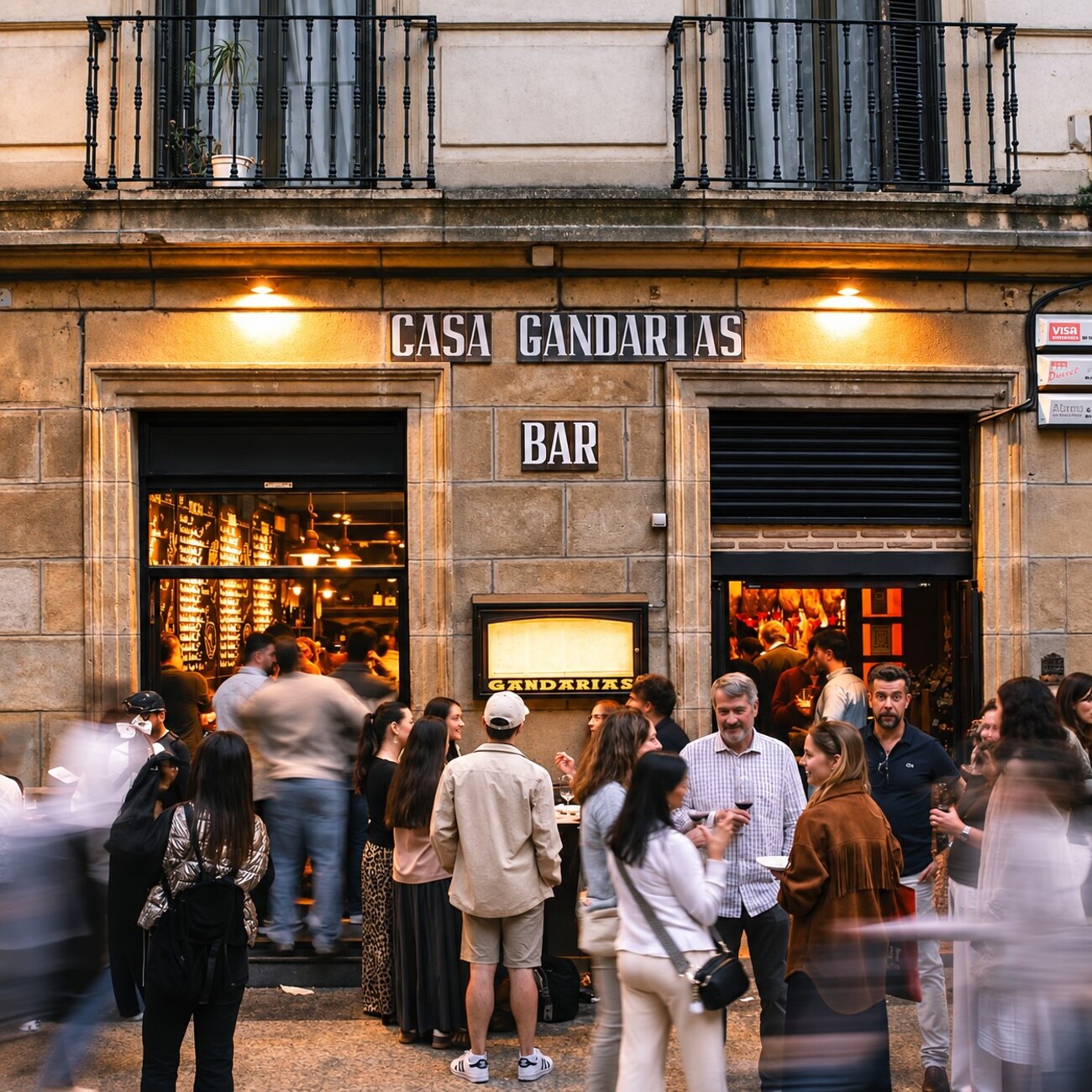
Stop 4: Experience a Classic Parte Vieja Bar
Next, move into one of the Old Town's established pintxos bars. Gandarias, on Calle 31 de Agosto, is known for its broad selection of pintxos alongside traditional Basque cooking.
By now the evening should feel less like a list of bars and more like a meal assembled across several kitchens: perhaps seafood here, meat there, another small glass, then back onto the street.
Stop 5: Change the Rhythm
For the fifth stop, change the setting rather than simply ordering more of the same. Atari Gastroleku, beside the Basílica de Santa María del Coro, combines traditional foundations with a more contemporary approach to Basque cooking.
The point at this stage is variety. If the previous bar was about classic pintxos, choose something more contemporary. If you have been drinking txakoli, change the drink. A good txikiteo evolves as the evening progresses.
Stop 6: Let the Evening Choose
The final stop does not need to be planned. By now you will have seen dishes arriving at neighbouring tables, passed bars you want to return to and developed some idea of what you still want to eat.
Follow one of those instincts. Order one final hot pintxo or share a dish, take one last small drink and let that be where the evening lands.
Should You Go for Pintxos in Gros?
Yes, but ideally on a separate evening. Gros, across the Urumea river, is another of San Sebastián's principal areas for pintxos and gives you a reason to move beyond the Parte Vieja rather than repeating the same streets.
For a first pintxos experience, the Parte Vieja remains the natural introduction because of the density of bars, history and atmosphere concentrated into such a small area. Gros works particularly well as the next chapter, allowing you to compare another neighbourhood's bars and cooking without trying to squeeze both districts into a single crawl.
Best
Time to Go for Pintxos in San Sebastian
Timing matters almost as much as choosing the bars. Pintxos are served throughout much of the day in San Sebastián, but the evening brings a different atmosphere as the Parte Vieja fills with people moving between counters before and during the traditional Spanish dinner hours.
For an evening txikiteo, starting around 8pm gives you time to move comfortably between several bars. San Sebastián's usual dinner period runs from approximately 8pm to 11pm, and pintxos bars generally continue serving well into the evening.
Weekends tend to bring a livelier atmosphere, while a weekday crawl can be easier for travellers who prefer more space at the counter and more time to look at menus and order. Opening days vary from bar to bar, however, so a good route should never depend entirely on one establishment being open.
Whatever time you begin, follow the rhythm rather than the clock. The traditional approach is one round, usually a pintxo and a small drink, before moving on to another bar. Six stops can therefore become a substantial dinner without ever sitting down for a conventional meal.
The one thing not to do is eat dinner first. Arrive hungry. A proper pintxos crawl is the dinner, assembled gradually across several bars rather than served at a single table.
Pintxos
During San Sebastian's Festivals
A txikiteo takes on a different character when San Sebastián is celebrating. The same Parte Vieja bars are there, but major festivals bring music, crowds and events into the streets, turning an evening of pintxos into part of a much larger citywide occasion.
The biggest celebration falls well outside the summer travel season. Tamborrada, San Sebastián's patron saint festival, begins at midnight as 20 January starts and continues for 24 hours. Tamborradas of drummers and barrel players move through the city to the music of Raimundo Sarriegui, filling the streets with one of Donostia's most distinctive traditions.
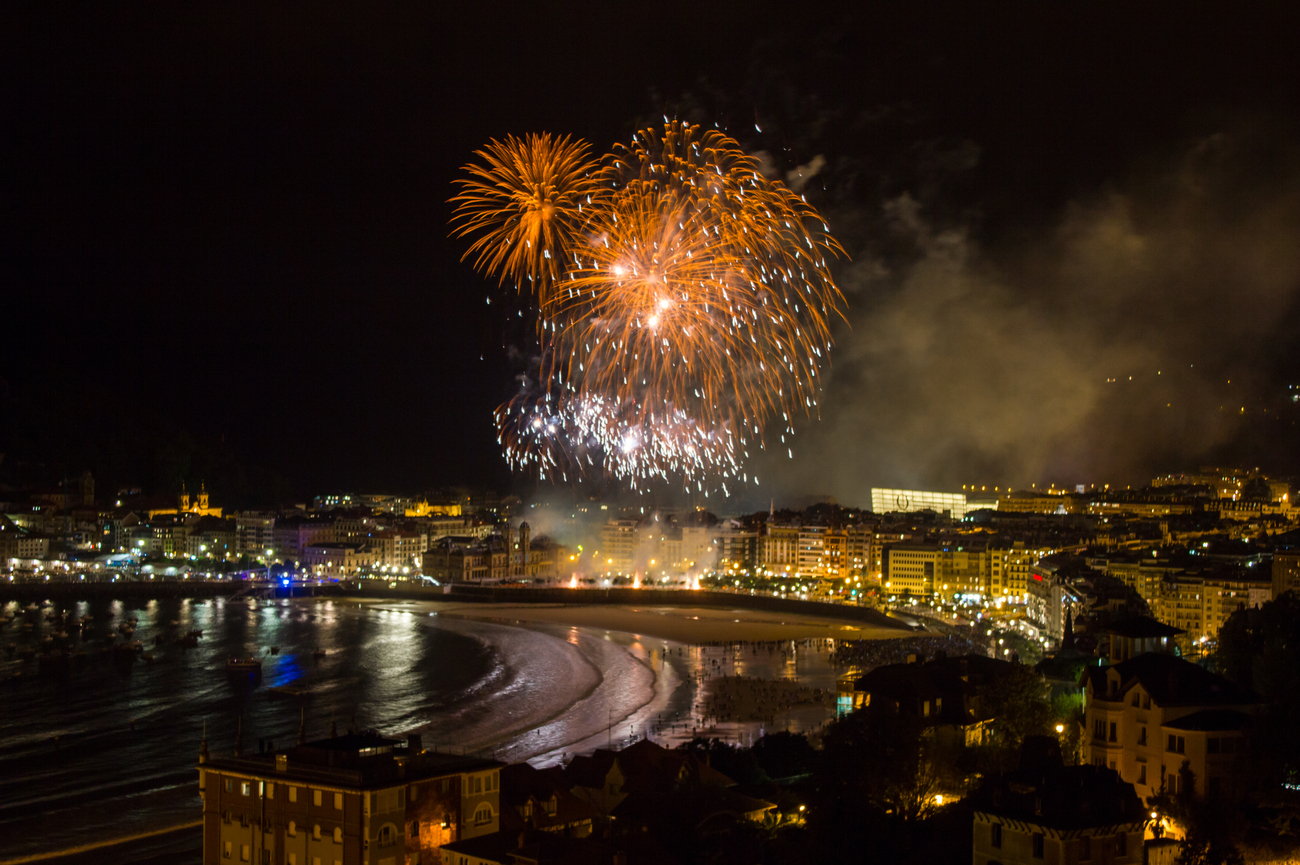
Summer brings Aste Nagusia, or Semana Grande, during the week around 15 August. Its International Fireworks Competition illuminates La Concha Bay on successive evenings, with the promenade and surrounding streets becoming some of the most popular places to watch. A pintxos crawl before the fireworks, followed by the short walk towards the bay, is an easy way to combine two quintessential San Sebastián experiences.
September changes the atmosphere again with the San Sebastián International Film Festival. The city fills with screenings, events, industry guests and visitors, while the Parte Vieja remains at the centre of evening life.
Tamborrada falls outside our May-to-October culinary season, but both Semana Grande and the film festival can coincide with a summer or early-autumn visit. During these major events, advance planning becomes particularly valuable if Michelin-starred dining and specific pintxos experiences are priorities.
The reward is a different version of San Sebastián: the food remains central, but for a few nights the whole city becomes part of the evening.
The
Morning After: La Concha and Monte Igueldo
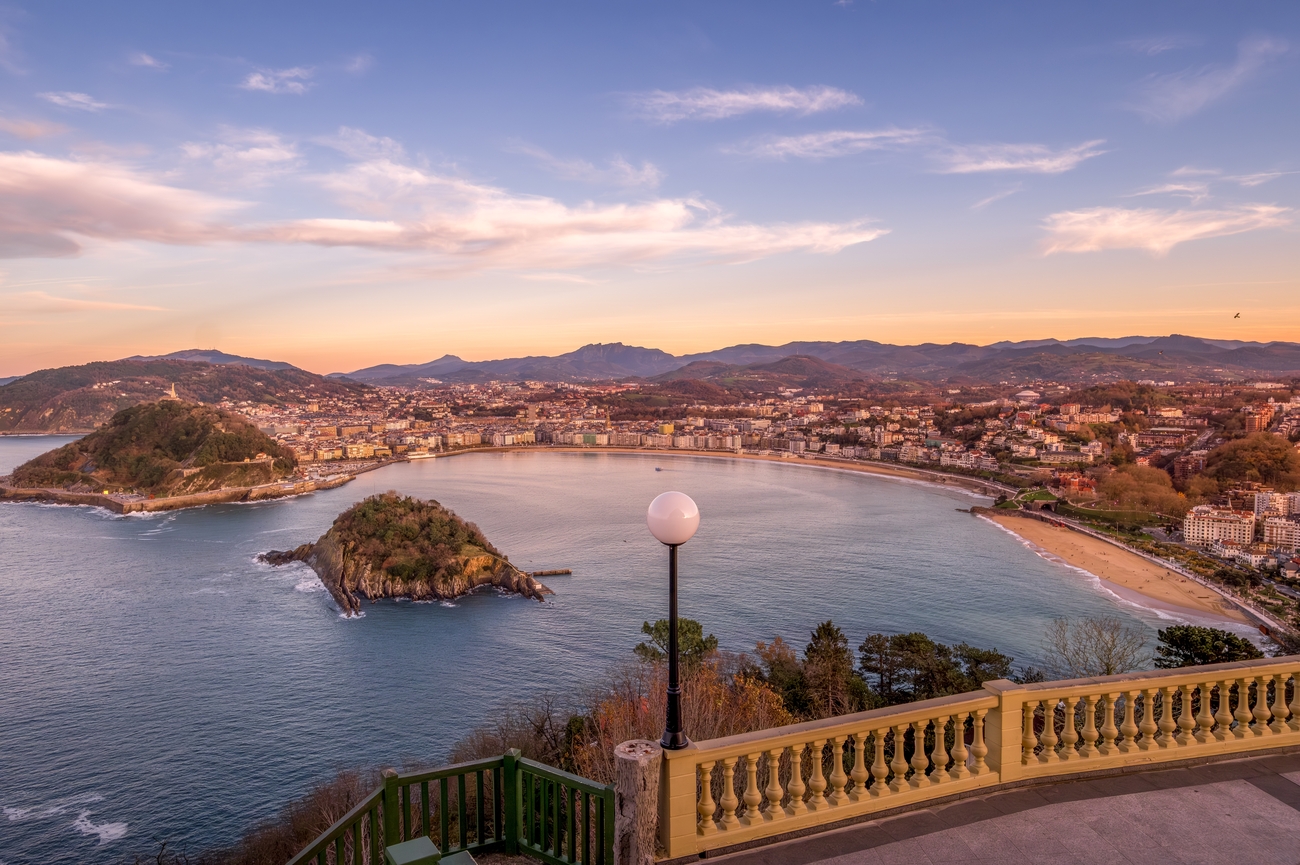
After an evening of pintxos, one of the best ways to see another side of San Sebastián is to head towards La Concha. The promenade follows one of Europe's best-known urban beaches, with the bay framed by Monte Urgull, Monte Igueldo and Santa Clara Island. Early in the day, before the waterfront becomes busier, it is an easy place for a walk, a coffee overlooking the water or, when conditions allow, a swim.
If you have more time, continue towards Monte Igueldo. Its historic funicular has been carrying passengers up the hillside for more than a century, leading to panoramic views across La Concha Bay, the city and the surrounding coastline.
The contrast is part of San Sebastián's appeal. One evening can be spent moving through crowded bars in the Parte Vieja, while the following morning belongs to beaches, hills, viewpoints and Basque culture.
Our guide to San Sebastián between meals explores La Concha, Monte Igueldo and Basque culture in greater detail.
One More Bar. There Is Always One More Bar
It is nearly midnight and the group has thinned to the committed. The final counter is smaller than the others and nobody quite remembers who suggested it. Somebody orders one last Gilda because the evening began with one and there is a pleasing symmetry to finishing the same way. Another plate of grilled prawns passes by, somebody changes their mind about being full, and the night continues for one more round.
Outside, the cobbled streets of the Parte Vieja are still busy with people making exactly the same decision. The lights behind the bars are brighter now, the crowds slightly thinner, but the ritual has not changed: one pintxo, one small drink, then perhaps one more bar.
That is the pleasure of a proper txikiteo. The evening is not really about completing a list of addresses. It is about knowing where to begin, what each bar does particularly well and when to move on, while leaving enough room for the unexpected stop that becomes the one you remember.
And tomorrow brings another side of San Sebastián: the market, Basque cooking and one of the region's three-Michelin-starred tables. On our 4-day luxury culinary itinerary in San Sebastián, the pintxos crawl is only the first course in a journey built around the food culture of the city and the Basque Country beyond it.


Let us know what you love, where you want to go, and we’ll design a one-of-a-kind adventure you’ll never forget.
Get in touch
Miriam
Travel Specialist

Romina
Travel Specialist

Laura
Travel Specialist
Our offices:



Revigorate, Iberian Escapes and Algarve Lifestyle are the registered brand names of APCS Lda . We are a fully authorised travel agency licensed by Turismo de Portugal RNAVT/6867.
In the event of a dispute, the consumer may refer to: RAL - Centros de Arbitragem
Avª. 5 de Outubro, nº. 55, R/C Dtº. 8000-075 Faro, Portugal | Tel: +351 289 823 135 *
* national landline call
E-mail: info@consumoalgarve.pt| www.consumidoronline.pt | Mon to Fri: 9:00 - 13:00 / 14:00 - 17:00