Longji Rice Terraces: Centuries of Farming Carved Into Guangxi’s Mountains
The Longji Rice Terraces in Guangxi are among China’s most striking mountain landscapes, where Zhuang and Yao communities have shaped steep hillsides into layered fields over centuries of farming.
Known as the Dragon’s Backbone, Longji rises above Longsheng in sweeping curves of rice terraces, wooden villages and high mountain paths. The landscape changes dramatically with the seasons: water-filled terraces reflect the sky in spring, green rice shoots cover the slopes in summer, and autumn turns the fields gold before harvest.
This is a very different China from imperial capitals and skyline cities. Longji belongs to agriculture, altitude and village life, where the beauty of the landscape comes from generations of human work. As part of the wider Guangxi route through Guilin, Yangshuo and the Li River, the Longji Rice Terraces add depth, texture and a powerful sense of place to a journey through China’s riverlands.

The
Making of a Mountain
The Yuan Dynasty lasted from 1271 to 1368. Somewhere within that period, the first Zhuang farmers reached the mountains of what is now Longsheng County and began cutting terraces into slopes that most people would not have considered farmable.
The terraces were constructed by China's Zhuang and Yao ethnic minority communities during the Yuan and Qing dynasties. The specific problem they faced was not technical but existential. The flat valley floors where rice farming was possible were no longer available to them. The mountain was what they had. So they rebuilt the mountain.
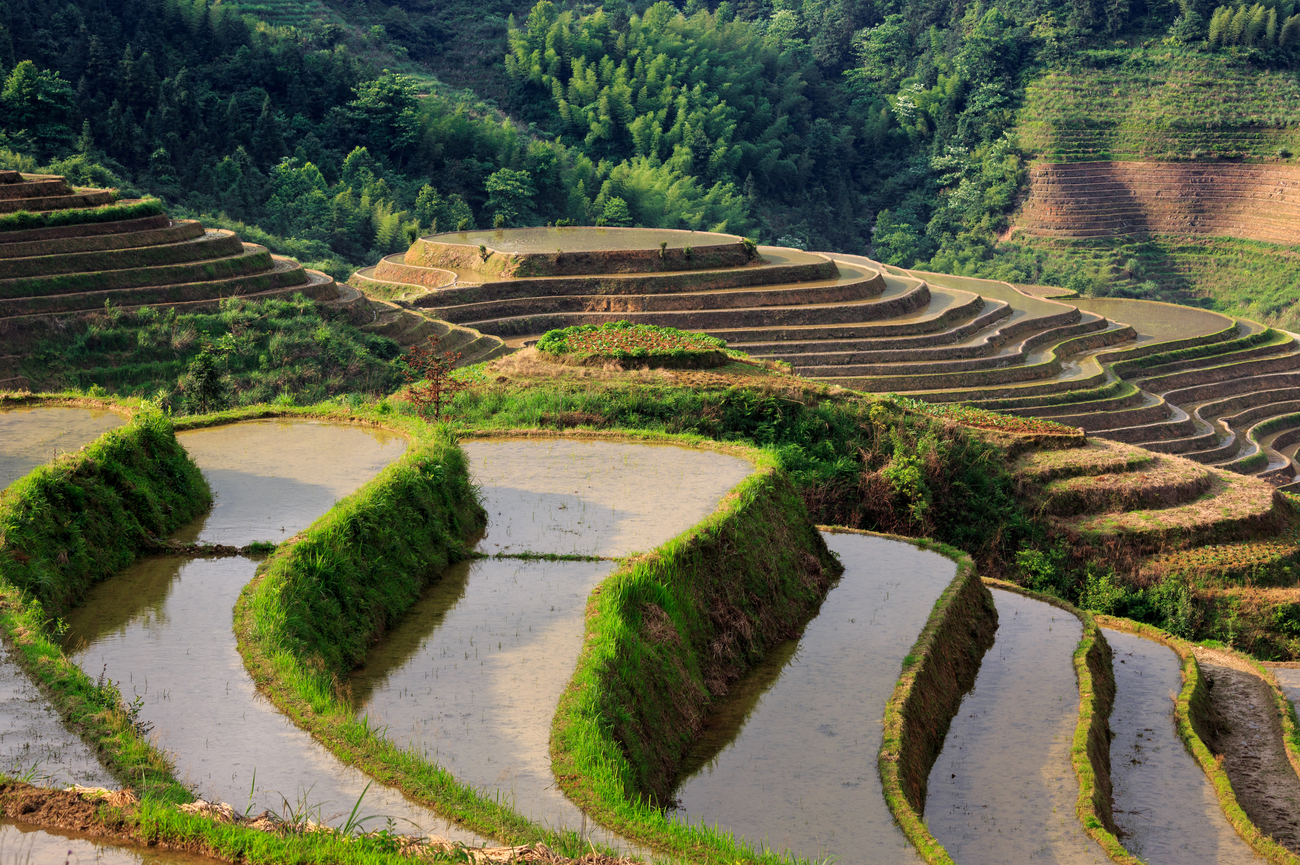
The terrace walls, laid in stone without mortar, follow the natural contours of the slope in lines no surveyor drew. Each wall was placed by someone reading the land with the accumulated knowledge of those who had read it before them. Water enters the highest terraces from mountain springs and moves by gravity through a network of channels cut into the terrace walls, feeding each level in sequence. Ming and Qing builders refined a system that channels water from dozens of mountain streams into more than 10,000 fields. No pumps. No external infrastructure. The system feeds itself from the mountain's own moisture and has done so without fundamental modification for centuries.
The terraced fields are distributed between 300 and 1,100 metres above sea level, and some slopes reach gradients of 50 degrees. Mechanisation has never replaced the original scale of cultivation. The steepest sections can only be worked by hand. Eighteen varieties of rice are grown across the scenic area. The glutinous rice specific to Longsheng is noted for a flavour attributed to altitude and the mineral profile of the mountain spring water. It is not easily replicated in a valley field.
The Dragon's Backbone Rice Terraces received FAO Globally Important Agricultural Heritage System designation in 2018. In 2022, Dazhai Village within the scenic area was selected as a UN World Tourism Organisation Best Tourism Village. Both recognitions confirm what is visible to the naked eye: this is an agricultural engineering achievement of extraordinary scale and durability.
The villages that contain the terraces are still inhabited by the communities that built them. The same families. The same knowledge. The same rice.
The full Guangxi route that places these terraces within a ten-day journey through Beijing, Xi'an, and Shanghai is mapped in the China's Riverlands guide, showing how the mountain landscape fits between the Li River below it and the imperial cities to the north.
The
People Who Built Them
Two ethnic minority groups divided the mountain between them, each occupying a distinct altitude range and maintaining a distinct cultural identity. Spending time in both communities is the only way to understand what the terraces represent beyond their visual drama.
The Zhuang of
Ping'an Village
China's largest ethnic minority group numbers approximately 18 million people, most living in Guangxi and neighbouring Yunnan. In Longsheng, the Zhuang communities have inhabited these slopes for more than 700 years. Their architectural signature is the stilt house: wooden structures raised on posts above the steep terrain, with the ground floor used for storage and livestock and the living quarters suspended above.
Longji Ancient Zhuang Village contains some of the best-preserved Zhuang stilt-house architecture in China. Five buildings survive from the Qing Dynasty. Walking through the village on stone-paved paths that have remained largely unchanged for centuries, the logic of the settlement becomes clear. Each house is positioned to maximise terrace views while minimising exposure to winter winds, reflecting a community that understood this mountain in extraordinary detail.
The Zhuang viewpoints in Ping'an, Seven Stars Around the Moon and Nine Dragons and Five Tigers, take their names from the patterns the terraces create when viewed from the correct elevation. The farmers who named them were looking at these same fields from these same positions season after season, generation after generation.

The Red Yao of
Jinkeng Dazhai
Higher in the mountains, at Jinkeng Dazhai, the dominant community is Yao rather than Zhuang, and the cultural character is entirely different.
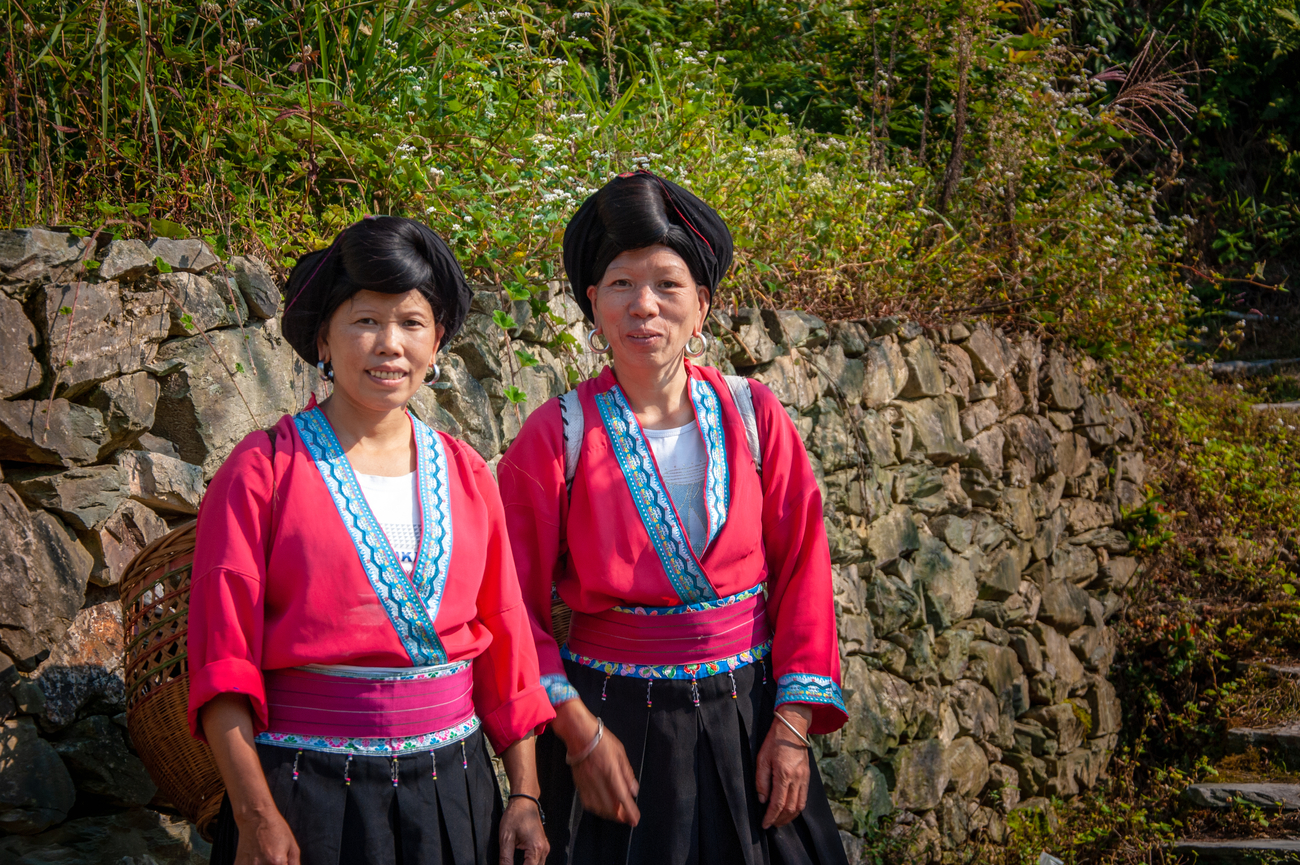
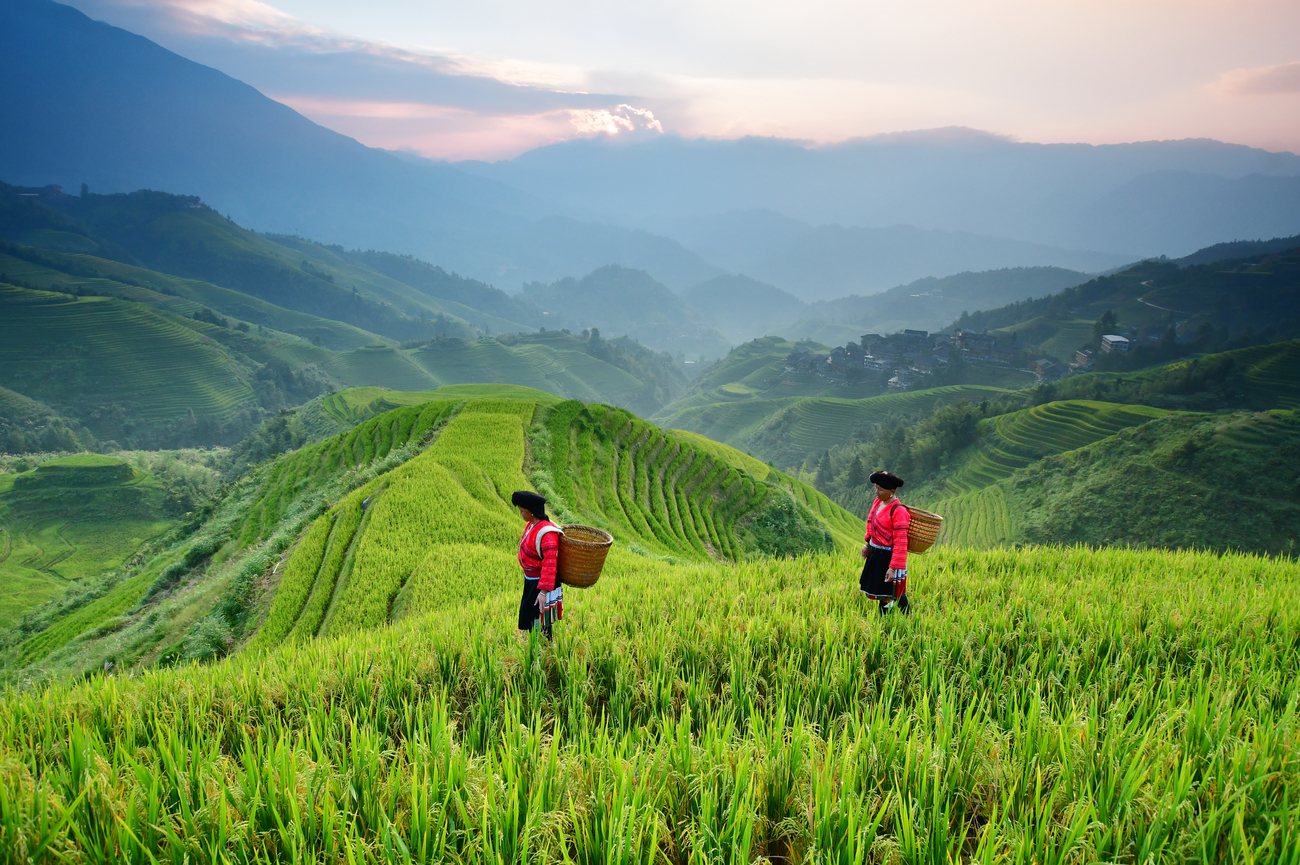
The Red Yao women of Huangluo are known for maintaining exceptionally long hair using fermented rice water. Traditionally, a woman's hair was cut only once, around the age of sixteen, marking readiness for courtship, after which it was preserved and incorporated into future hairstyles. The arrangements worn today combine current hair with these preserved tresses. Lengths commonly range from 1.4 to 1.8 metres.
The rice-water treatment has a biochemical basis. Fermentation increases compounds such as inositol and panthenol, which help retain moisture within the hair shaft. The practice continued privately for generations before receiving wider recognition as an important element of cultural heritage. It was not created for visitors. It was created for the women who maintain it.
Red Yao garments are adorned with intricate hand-embroidered patterns. A single piece can take months, sometimes years, to complete. The embroidery encodes community history, family lineage, and cultural identity. Each garment is unique. The women who create them learned the patterns from the generations before them, continuing a chain of instruction that stretches back to the earliest Yao communities that settled these mountains.
Jinkeng's three numbered viewpoints occupy different elevations across the Dazhai area. Viewpoint 1, the highest, is best experienced by travellers who spend the night in the village. Before dawn, mist often fills the valleys below while the terraces emerge gradually into the first light of day. It is the experience for which the Longji Rice Terraces are most celebrated and the one least possible to replicate on a same-day excursion from Guilin.
The karst peaks of Guilin and the terraces of Longsheng represent Guangxi's two most distinctive landscape traditions: one created by water across geological time, the other by human hands across centuries of agricultural labour. Seen together on the same journey, each changes how the other is understood. Our guide to Guilin's karst peaks explores the geological counterpart below the terraces in full.
What
the Mountain Looks Like Across the Year
The terraces change so completely between seasons that visitors who arrive in October and return in May can genuinely question whether they are looking at the same landscape. The change is the point: a working agricultural system is visible in its full cycle, not frozen at any single stage.
Spring: The
Mirror Season
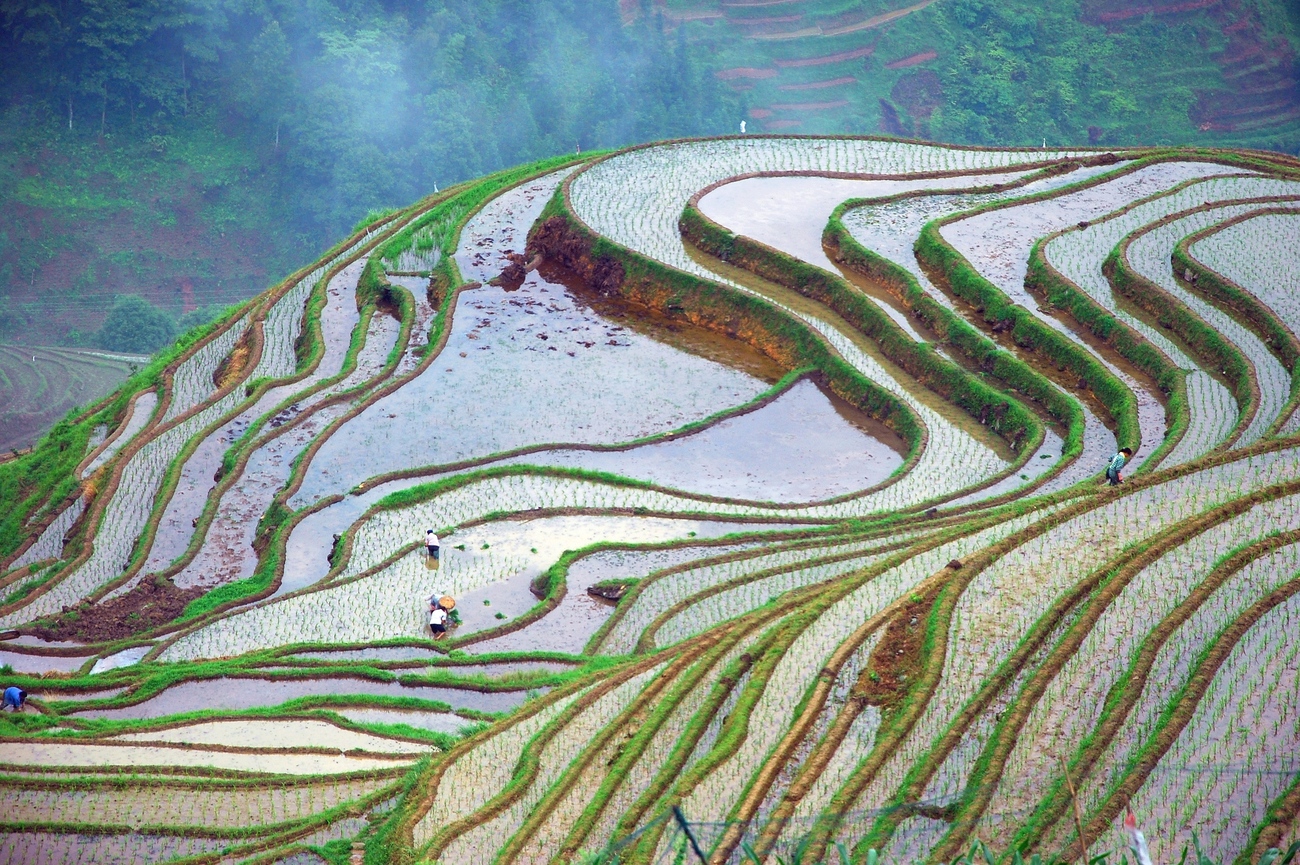
From late April through June, the terraces are flooded for planting. Each level fills with water and becomes a mirror. From the viewpoints, the mountain appears to have been tiled in silver, every tier reflecting a different angle of the same sky. The most dramatic version of this effect comes before dawn, when the flooding is complete, mist has settled in the valleys, and the reflection in each terrace is cleaner than at any other hour.
The flooding is not decorative. It is the first stage of the rice planting cycle, and the mirror quality is a consequence of agricultural necessity rather than aesthetic design. The terraces look like art because they are built to function precisely.
Summer: The
Green Season
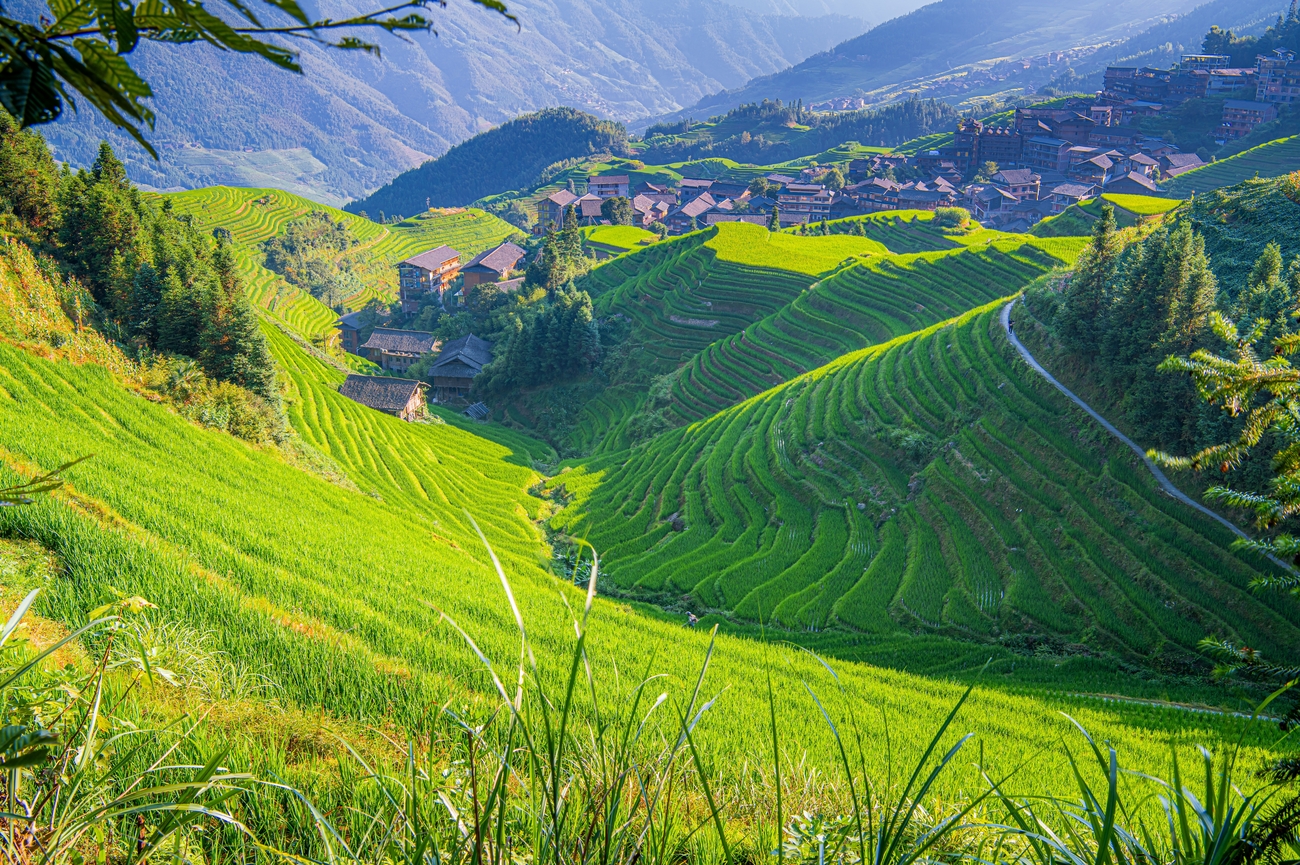
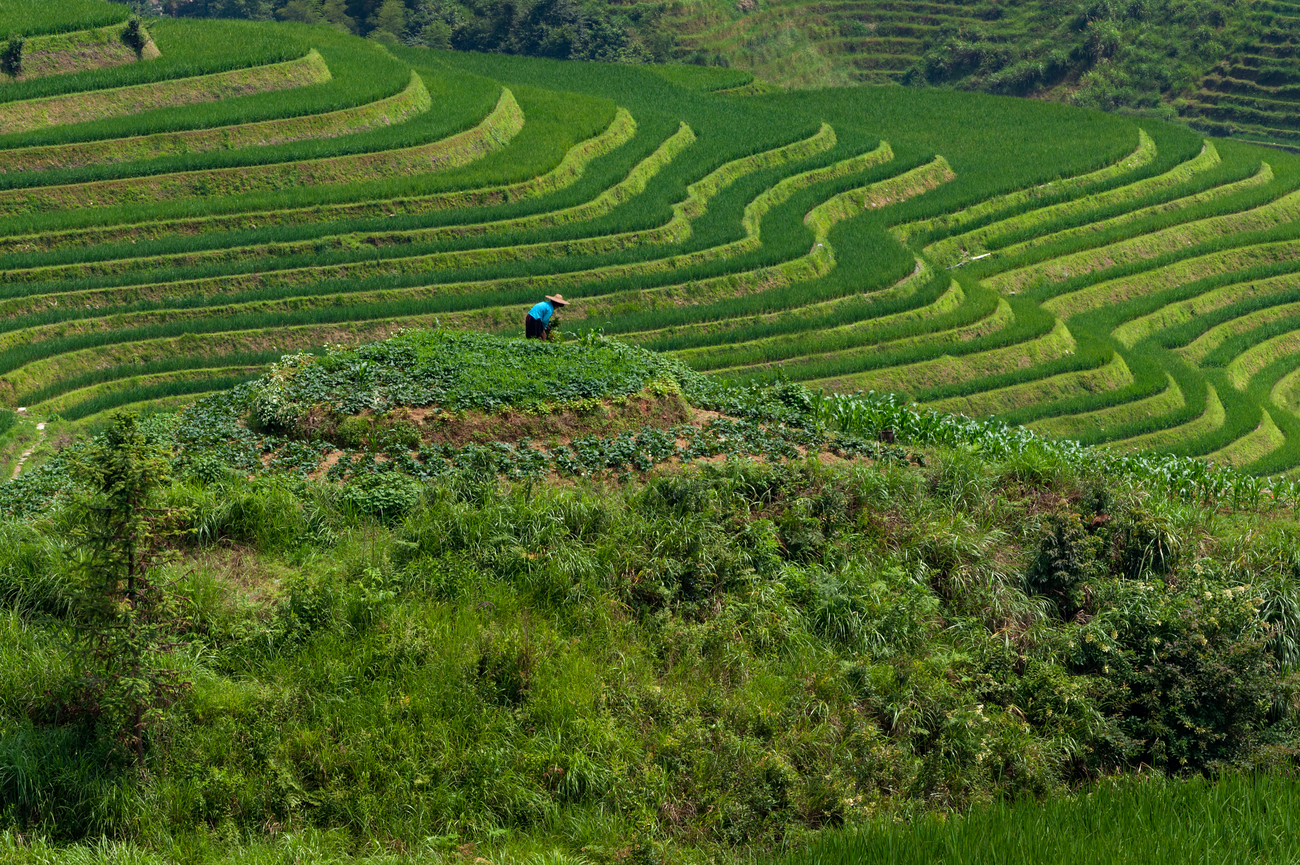
July through September brings the rice to its full growth. The terraces move from pale green to the deep emerald of mature paddy, with the gradient of colour from valley floor to mountain summit varying by elevation and water supply. Each level is at a slightly different stage of growth from the one below it. The cumulative effect, a mountain covered in green at twenty different shades simultaneously, is the Dragon's Backbone Rice Terraces in their most saturated state.
The mist that settles in the valley below the viewpoints during summer mornings, leaving the terraces visible above it and the valley hidden below, is the version of the Longji landscape most associated with the shanshui painting tradition. Standing on the Jinkeng viewpoint platform with the valley filled with cloud and the upper terraces rising above the white in full summer green, the landscape looks painted because this is where the painters were looking.
Autumn: The
Gold Season
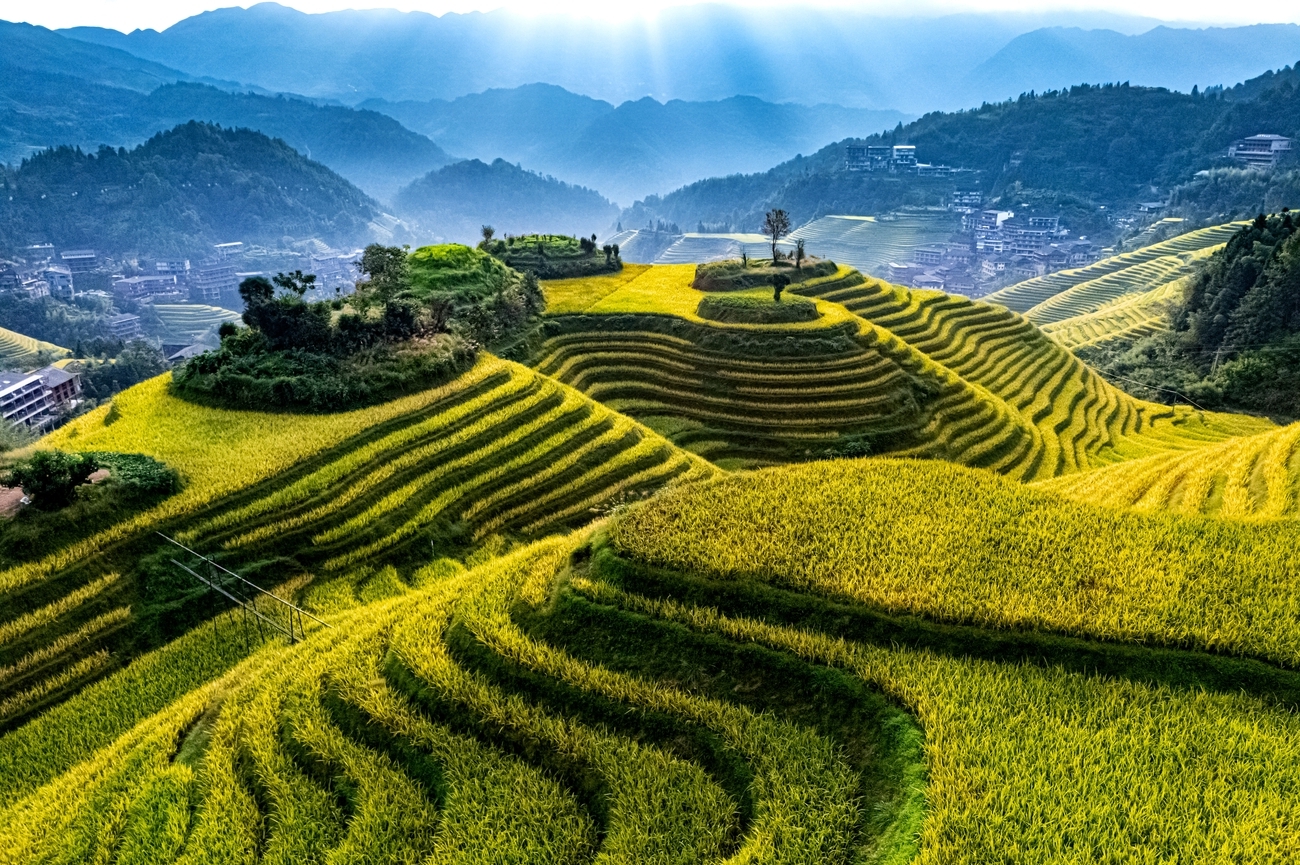
From late September through early October, the Longji Rice Terraces reach their annual peak. The rice ripens, the colour shifts from green through amber to gold, and the entire mountain becomes a staircase of warm light descending from ridge to valley floor. This is the season most visitors travel specifically to see, and the one for which accommodation in Ping'an and Dazhai books out weeks in advance.
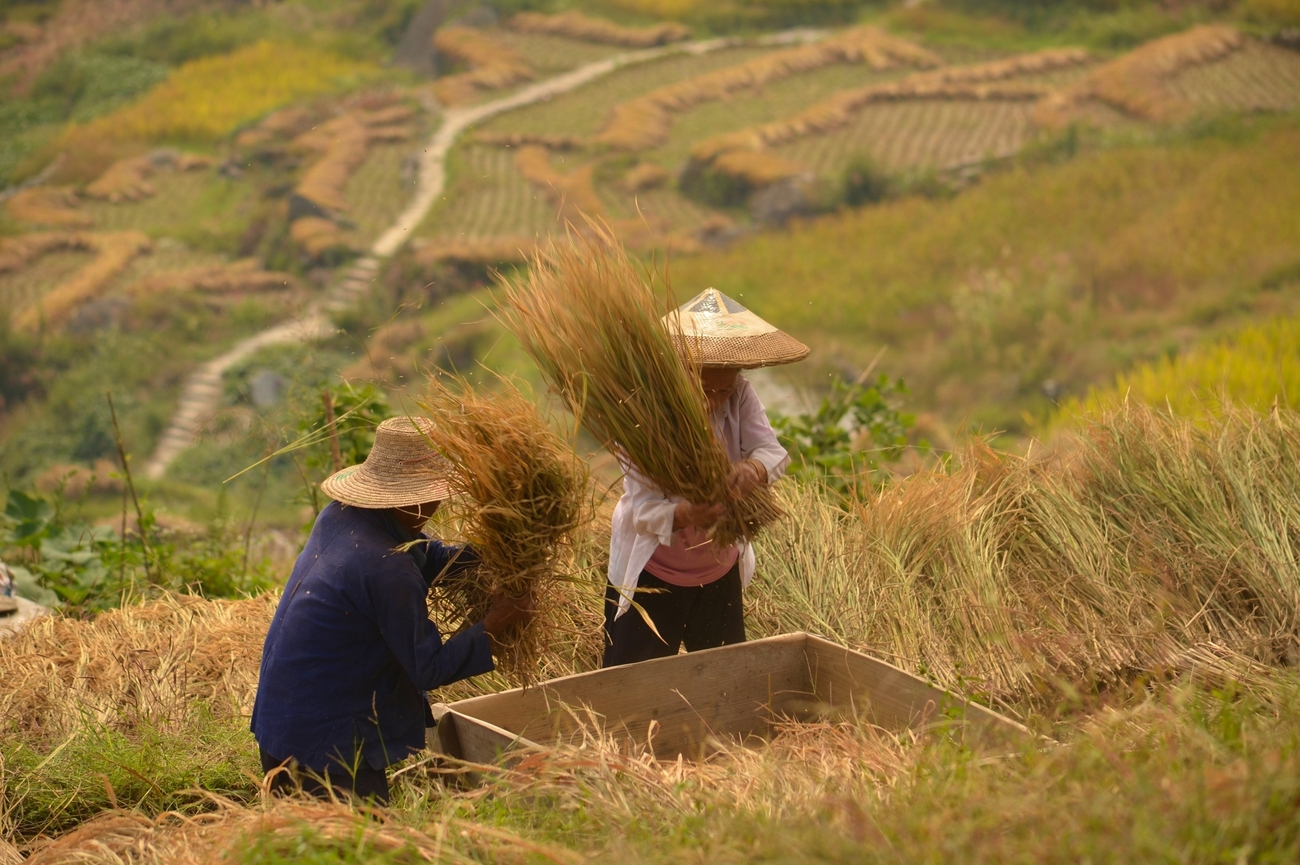
The harvest is done by hand. From mid-September to mid-October, the rice fields turn golden and the waves of rice create a sense of abundance. Farmers can be seen cutting rice by hand, adding to the cultural dimension of the landscape. The sight of multiple farmers working the terraces simultaneously, moving across the gold in a line, with cut rice bound into sheaves on the terrace walls, is the most direct encounter the Guangxi mountain villages offer with the continuous agricultural tradition recognised by UNESCO.
The Yao Clothes-Drying Festival in Jinkeng and the Zhuang Harvest Festival in Ping'an both fall within this window, filling the mountain with music specific to the harvesting season. The festivals are not performances for visitors but community celebrations that happen to be visible to anyone present.
Winter: The
Structural Season
November through February strips the terraces bare. The rice is harvested, the earth is exposed, and the stone walls become the visible subject of the landscape rather than the support system beneath the crop. Snow reaches the upper elevations in January in most years, covering the exposed walls and remaining stubble in white.
The winter viewpoints are the least visited and the clearest. The atmospheric haze of summer and the harvest warmth of October are absent, and the full engineering of the terrace system across the mountain's face is visible in a single frame. Photographers who understand this travel specifically for February, when the winter terraces are at their most structural and the mountain can be seen as it was designed rather than as it grows.
The
Three Areas and Their Viewpoints
Longji Rice Terraces scenic area encompasses three distinct zones. Each has its own community, viewpoints, and character.
Ping'an and
the Zhuang Terraces
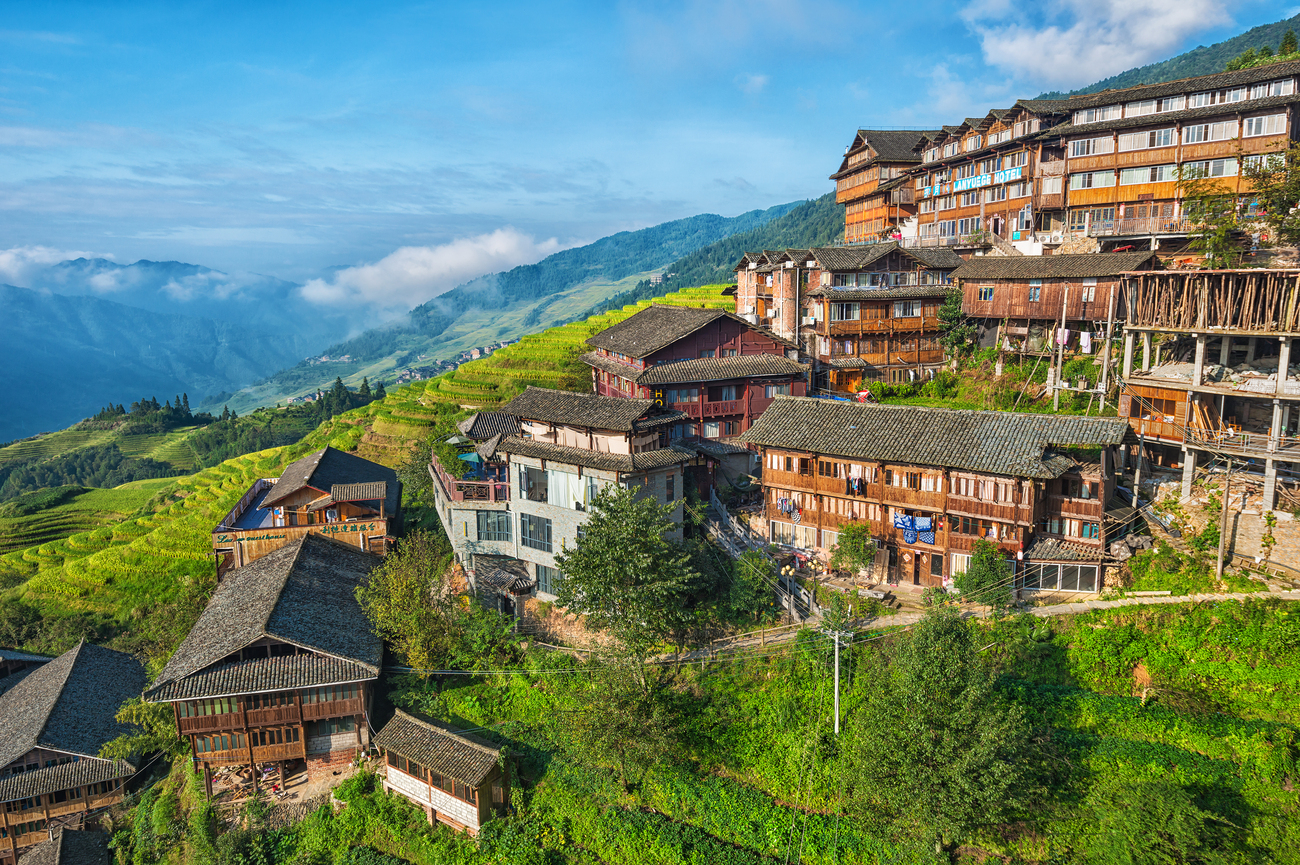
Ping'an Village, the most accessible of the three areas, is the starting point for many visitors. Its two signature viewpoints, Seven Stars Around the Moon and Nine Dragons and Five Tigers, are reached by footpaths from the village that take between forty minutes and an hour to climb. The terrace patterns visible from these viewpoints are among the most widely recognised images of Longji: circular formations of flooded fields in spring and the same formations transformed into gold during the autumn harvest.
Ping'an Village itself, built in traditional Zhuang architectural style, has guesthouses with balconies overlooking the terraces. Waking to a view of paddy fields emerging from the morning mist, then walking to the viewpoints before the first visitors arrive from Guilin, is one of the strongest arguments for staying overnight on the mountain.
Jinkeng Dazhai
and the Red Yao Terraces
Jinkeng, the highest and most dramatic of the three areas, contains the three numbered viewpoints most closely associated with the Longji Rice Terraces internationally. Viewpoint 1, at the highest elevation, faces east and is best known for sunrise. Viewpoint 2 offers the broadest panoramic sweep, revealing the full scale of the terrace system across the mountain face. Viewpoint 3, accessible by cable car, faces west and is the preferred location for sunset.
The eight-kilometre Sky Gallery trail connects the viewpoints along the ridgeline, passing through working terraces and the residential lanes of the villages between them. The walk itself is part of the experience. The viewpoints simply provide moments to stop and understand the scale of what surrounds you.
Longji Ancient
Zhuang Village
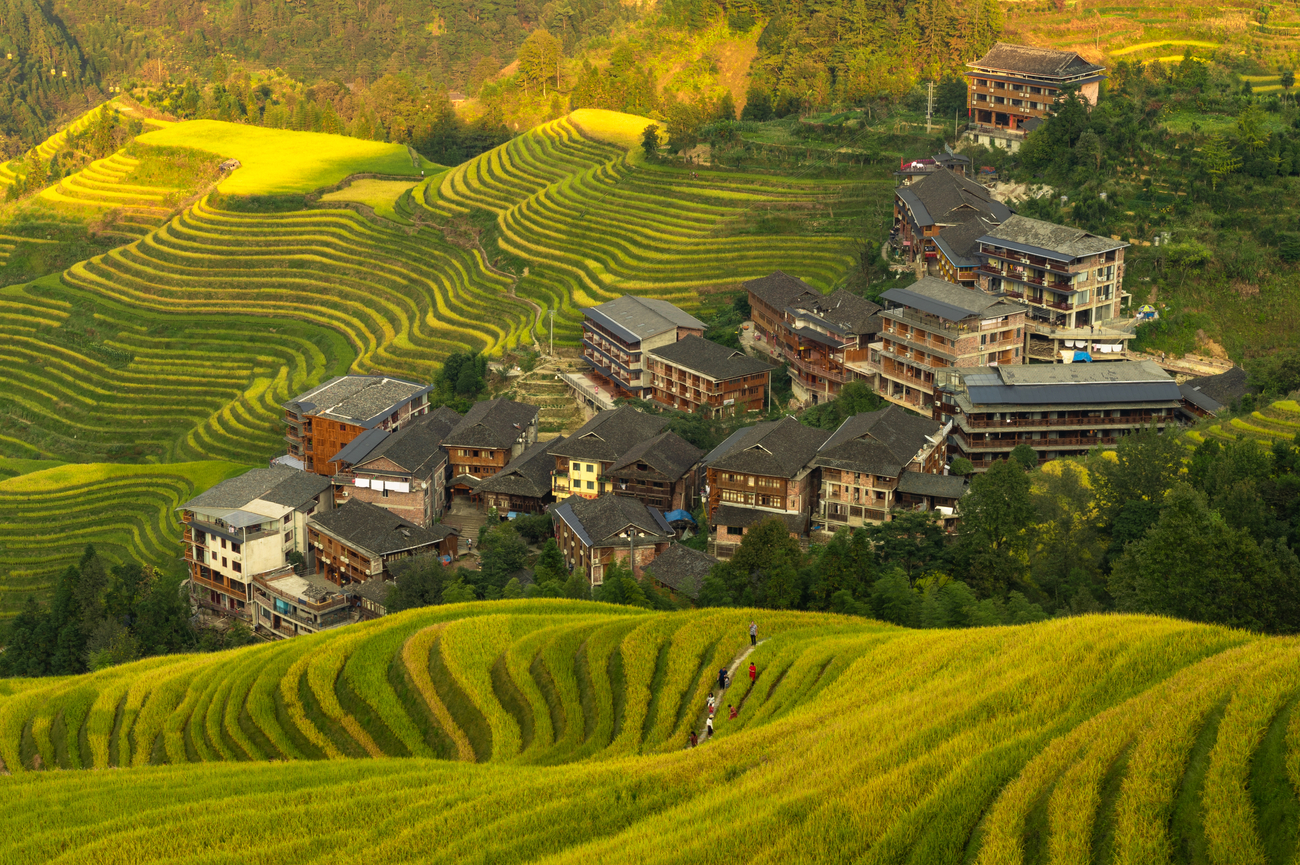
The oldest settlement in the scenic area, predating the terrace system it now sits within. Five Qing Dynasty stilt houses survive. The stone paths through the village are the original surfaces. The Longji Zhuang Ecological Museum within the village is the most comprehensive documentation of traditional Zhuang terrace farming practice available in the scenic area, including seed selection, terrace maintenance techniques, and the irrigation channel management system that has been in continuous operation for 650 years.
Getting
There and Staying
The Longji Rice Terraces are approximately 80 kilometres from Guilin by mountain road. Direct tourist buses run from Guilin's main bus stations to the scenic area, with the journey taking around two hours depending on traffic. Entry to the scenic area costs CNY 80 and covers access to all three terrace zones.
The cable car in Jinkeng reaches the Golden Buddha Peak viewpoint in approximately eight minutes. From the upper station, the walk to Viewpoint 1 takes around forty minutes. The ridge walk between Jinkeng and Ping'an takes two to three hours, depending on pace, passing through terrace fields and village lanes for almost its entire length.
Accommodation in both Ping'an and Jinkeng books out during the peak harvest season in late September and early October. Rooms in Dazhai should be reserved at least two weeks in advance if travelling during the golden harvest period. During Golden Week, typically held during the first week of October, accommodation fills quickly and the viewpoints become noticeably busier. The week before Golden Week, when the rice is at its most vibrant and visitor numbers are lower, is often the best time to visit.
The Li River cruise through Guilin and Yangshuo, explored in full in the next article, flows below these mountains in the valley the terraces overlook. Together, the two experiences form Guangxi's vertical argument: what sixty-five million years of water can create in a river valley, and what more than six hundred and fifty years of human labour can create on the slopes above it.
The
Long View
The Dragon's Backbone Rice Terraces were not preserved by a heritage body. They were not saved by government intervention. They continued because the people who built them continued farming them, and because the people who farmed them taught their children how. The chain of instruction has run without interruption from the Yuan Dynasty to the present.
That continuity is not visible in any photograph. A photograph shows the gold of October or the silver of May. What it cannot show is the knowledge embedded in knowing when to flood the fields, which channels to clear first, how to read the mountain's water in spring to predict summer irrigation, what movement in a terrace wall means, and how to correct it. That knowledge lives in the people who are on these terraces every day.
The China Rivers and Terraces itinerary places you in Longsheng at the right season, with an overnight in the village so the pre-dawn viewpoint is accessible and a guide who carries the agricultural context that makes what you are looking at legible beyond its visual beauty. The terraces reward that level of attention.
Still
Gold in October, Still Here
The Longji Rice Terraces are worth seeing in two seasons. The traveller who arrives in spring, when the fields are flooded and silver, and returns in October to find them gold and in harvest, is not visiting the same place twice. The landscape changes so completely that the second visit is genuinely new.
Late October. The rice has been cut. The terraces are amber-lit at 7 AM before the mist has cleared the lower valley. A farmer is already on the slope. His grandmother grew rice on this same terrace. His granddaughter will grow rice on it after him.
Six hundred and fifty years is a long time to keep farming a mountain. The view from Viewpoint 1 at dawn, above the cloud and in full October gold, is what that commitment looks like.
The harvest peaks between late September and the first week of October. Ping'an books out a month before.
Tell us which season you're working with and we'll build the rest around it.


Let us know what you love, where you want to go, and we’ll design a one-of-a-kind adventure you’ll never forget.
Get in touch
Miriam
Travel Specialist

Nina
Travel Specialist

Abigail
Travel Specialist
Our offices:



Revigorate, Iberian Escapes and Algarve Lifestyle are the registered brand names of APCS Lda . We are a fully authorised travel agency licensed by Turismo de Portugal RNAVT/6867.
In the event of a dispute, the consumer may refer to: RAL - Centros de Arbitragem
Avª. 5 de Outubro, nº. 55, R/C Dtº. 8000-075 Faro, Portugal | Tel: +351 289 823 135 *
* national landline call
E-mail: info@consumoalgarve.pt| www.consumidoronline.pt | Mon to Fri: 9:00 - 13:00 / 14:00 - 17:00