Avatar and Zhangjiajie: How a Chinese National Park Inspired Pandora

Somewhere between the opening credits and the Hallelujah Mountains, many people watching Avatar in 2009 had the same thought: that cannot be real.
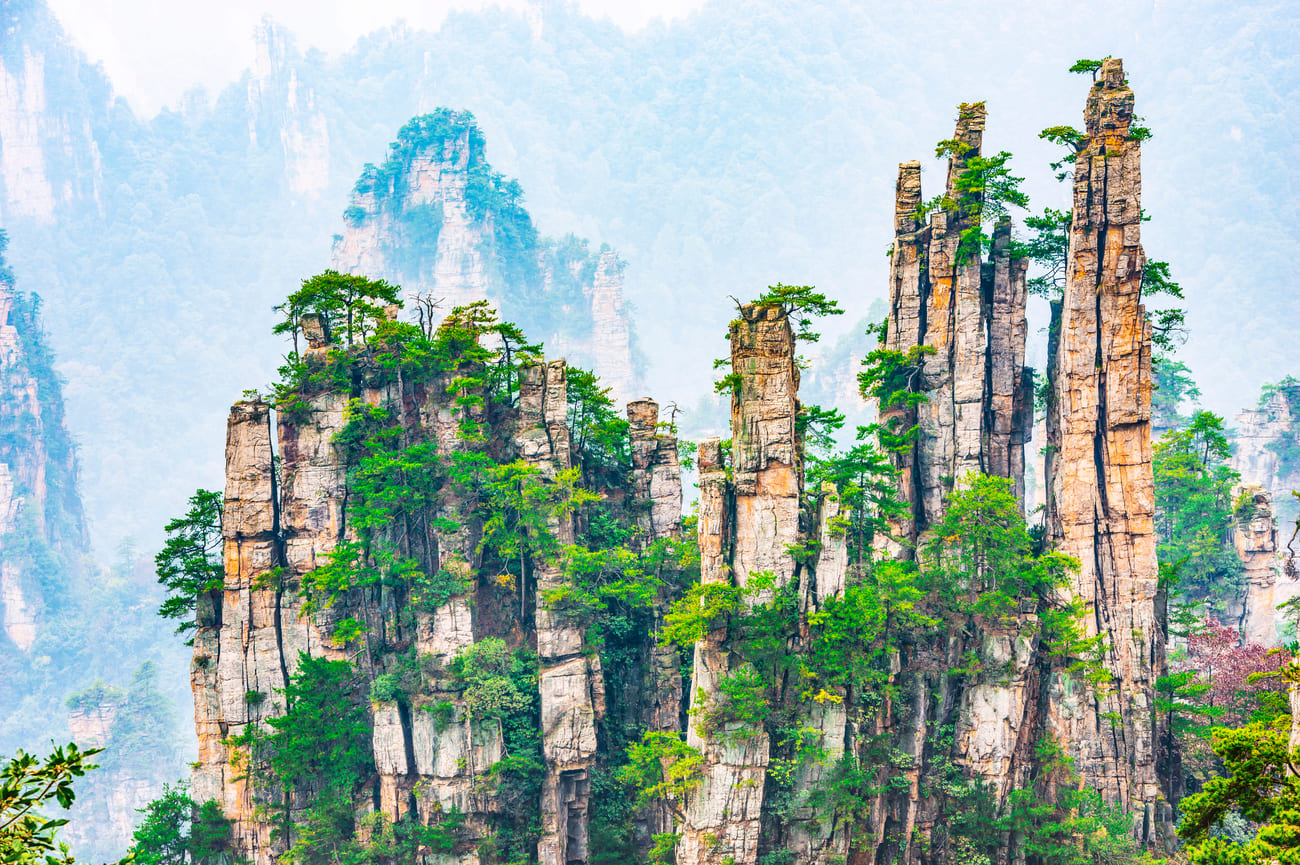
It is real. It is Zhangjiajie National Forest Park in Hunan Province, China, and it has been shaped over approximately 380 million years. Morning cloud seas fill the gorges while towering sandstone pillars rise above the white. Ancient trees cling to cliff faces and narrow ledges. During the film's development, Zhangjiajie became one of the landscapes that inspired the visual creation of Pandora.
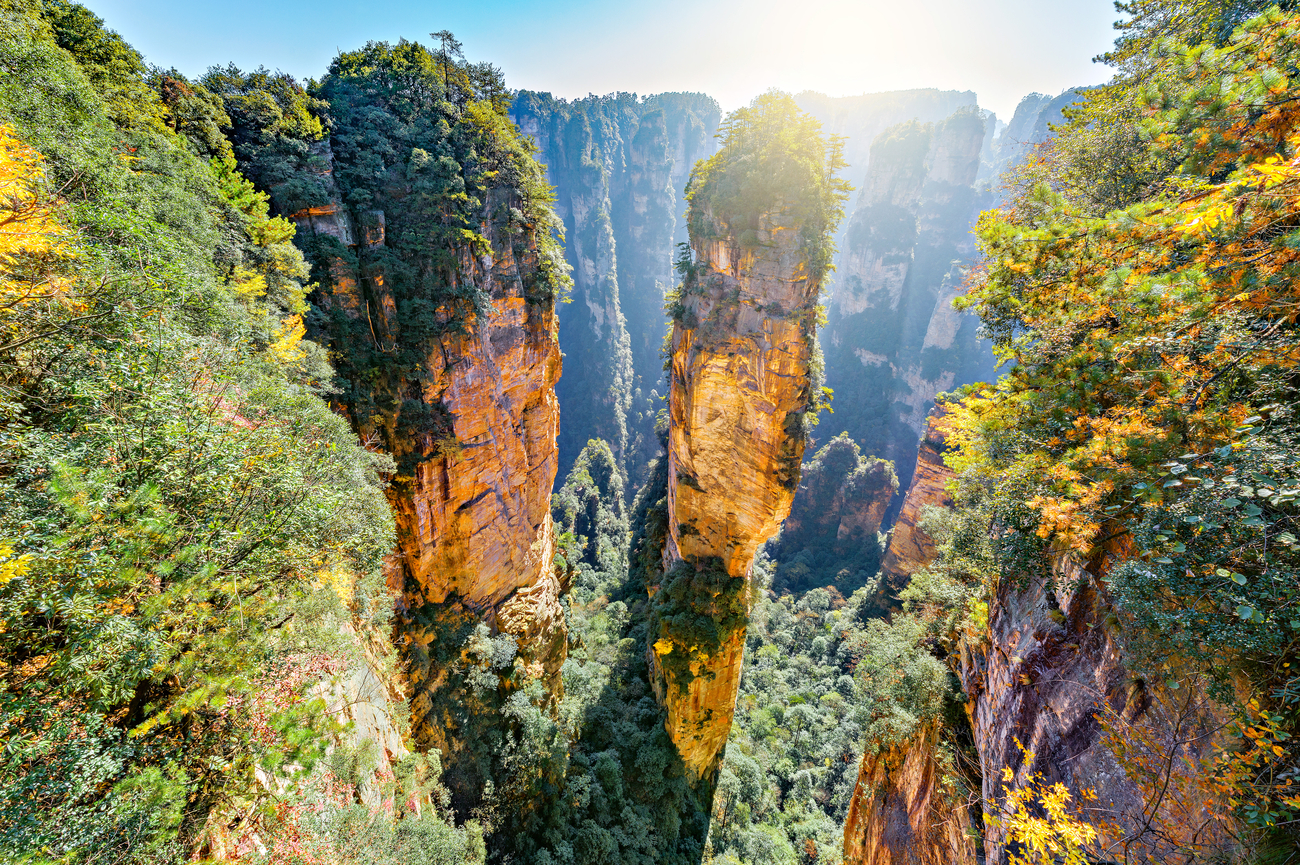
Arriving at the Yuanjiajie viewing platform is a strange experience. In one direction, there may be Avatar signs, Na'vi figures and visitors taking photographs. Behind them stands the Southern Sky Column, later renamed Avatar Hallelujah Mountain, a sandstone pillar that existed long before cinema and will outlast any film association.
The story of Avatar and Zhangjiajie is not simply about a filming inspiration. It is about what happens when one of the world's most successful films draws on a real landscape, and that landscape proves every bit as extraordinary as the fictional world it helped create.
Our China Floating Forests itinerary is where that story begins.

The
Landscape Before the Film
Wulingyuan was recognised long before Avatar reached cinemas.
The Wulingyuan Scenic Area was inscribed as a UNESCO World Heritage Site in 1992. Avatar was released on 18 December 2009. Between those two dates, seventeen years passed during which the park was already recognised for its exceptional quartz-sandstone peak forest landscape, its gorge ecosystems and its extraordinary concentration of stone pillars.
That order matters. Zhangjiajie did not become significant because of Avatar. Avatar became more visually convincing because it borrowed from a landscape that was already geologically and ecologically remarkable.
The cloud sea that fills the gorges between Zhangjiajie's sandstone pillars on autumn mornings is not a cinematic invention. It is the result of the park's geology and weather working together. The same fracture systems that created the deep, narrow gorges also help trap and concentrate the morning fog, making the pillar tops appear to float above the white.
Our dedicated guide to Zhangjiajie's sandstone pillars and geology explains why this happens in more detail.
The wider story of how this landscape fits into the full Zhangjiajie journey is explored in our Zhangjiajie and the Floating Forests guide.

How
the Production Team Found Zhangjiajie
Avatar began in development long before its 2009 release. James Cameron wrote an early treatment in 1994, and the visual world of Pandora, especially the Hallelujah Mountains, occupied the production design team for years before the film reached audiences.
When Cameron's team began developing Pandora, they studied reference landscapes from around the world. Zhangjiajie's Yuanjiajie Scenic Area, and particularly the Southern Sky Column, became one of the clearest real-world visual anchors for the floating mountains: vast stone towers rising through cloud, wrapped in vegetation and separated by deep, mist-filled gorges.
The resemblance was not accidental. The production team photographed and studied Zhangjiajie's formations during pre-production, using the landscape as a visual reference rather than a filming location. Avatar was not shot in Zhangjiajie National Forest Park. Pandora was built digitally, with Zhangjiajie helping to shape its atmosphere, scale and visual logic.
The key element was the cloud sea. The presence of mist between the pillar tops and the valley floor created the sensation that the mountains were floating. Zhangjiajie gave the film a natural answer to a visual problem: how to make impossible mountains feel believable.
What the film borrowed was visual: the verticality of the pillars, the forested cliff faces, the morning cloud, and the contrast between pale quartz-sandstone and subtropical green. What it added was science fiction: the Na'vi, the Ikran, the bioluminescence, the exaggerated scale and the fictional physics of Pandora.
The real landscape did not need those inventions. It had already done the difficult part.
The
Renaming and Its Aftermath
On 25 January 2010, shortly after Avatar became a global phenomenon, Zhangjiajie's Southern Sky Column was officially renamed Avatar Hallelujah Mountain.
The decision was pragmatic, but not without controversy. The original name, Southern Sky Column, carried classical Chinese meaning and a far longer cultural life than the film reference that replaced it. For some, the renaming felt like a loss of local identity. For the park authorities, it was a way to formalise an association that was already bringing international attention to Hunan Province.
That tension is still visible at the Yuanjiajie viewpoints. Avatar signage, souvenir stands and fibreglass Na'vi figures occupy the same visual frame as the actual sandstone pillar behind them. Visitors often arrive because of the film, but the landscape quickly overwhelms the association.
The pillar itself has not changed. Its quartz-sandstone face, ancient trees and fractured upper ledges belong to a geological timescale far beyond cinema. The name may have shifted in 2010, but the mountain remains what it always was: a formation shaped by hundreds of millions of years of erosion, long before Avatar and long after it.

What the Film Got Right
The visual connection between Pandora's Hallelujah Mountains and Zhangjiajie's pillar landscape is real and specific.
The cloud sea is the clearest example. At Yuanjiajie, fog gathers in the gorges while the sandstone pillars rise above it, creating the illusion that the towers are floating. This is the same visual effect Avatar used to make Pandora's mountains feel believable.
The vegetation is also accurate. Zhangjiajie's pillars are not bare rock. Ancient trees grow from fissures in the cliff faces, with moss, ferns and subtropical forest softening the stone. Avatar captured that living quality, showing its mountains as organic surfaces rather than exposed geology.
The scale relationship also feels familiar. Zhangjiajie combines broad plateau remnants with isolated pillars of different heights, a visual structure echoed in the film's floating mountain sequences. The landscape has rhythm: massive forms, smaller towers, gaps of cloud and forest below.
Then there is the colour. Pale quartz-sandstone, deep green vegetation and warm amber light give Zhangjiajie its distinctive atmosphere. The film translated that palette into science fiction, but the source was already there in Hunan.

What
the Film Invented
Avatar took Zhangjiajie's landscape and pushed it beyond the limits of the real world.
The first invention was scale. Pandora's Hallelujah Mountains are far larger than any formation in Zhangjiajie National Forest Park. The Southern Sky Column is extraordinary, rising to around 1,080 metres, but the mountains in Avatar are imagined at a scale that suggests several kilometres of height. The film enlarged the reference landscape to create the sense of impossible grandeur its story required.
The second invention was physics. In Avatar, the mountains float because of superconducting materials interacting with Pandora's magnetic field. In Zhangjiajie, the floating effect is created by something quieter and more real: fog trapped in deep, narrow gorges while the pillar tops remain visible above the cloud sea.
The film also left out one of the most interesting ideas. Production designer Dylan Cole once described a concept in which the mountains would drift like boats, colliding and breaking apart. That idea did not survive into the final film, but it came close to how the cloud sea actually behaves at Yuanjiajie, where fog moves in currents between the pillars and changes the landscape from minute to minute.
The film chose spectacle. Zhangjiajie offers the original.
Visiting
the Avatar Hallelujah Mountain
The Avatar Hallelujah Mountain is viewed from the Yuanjiajie area of Zhangjiajie National Forest Park, reached most famously by the Bailong Elevator.
The key viewpoint is around the No. 1 Scenic Bridge, where the Southern Sky Column can be seen in profile against the gorge behind it. Nearby, the First Bridge Under Heaven forms a natural sandstone arch between two pillar formations, creating one of the most recognisable views in the park.
In clear weather, the scale of the landscape is immediate. The gorge drops below, the pillar stands apart from the surrounding rock, and the erosion that shaped the park becomes visible. In cloud sea conditions, the experience changes completely. The gorge disappears into white, the bridge seems suspended above absence, and the sandstone towers rise through mist like something imagined.
The best time to be here is early morning, especially in October or after rain, when the cloud sea is most likely to form. The first two hours after the park opens usually offer the strongest chance of seeing the atmosphere that helped inspire Avatar.
The film references are visible here: signs, themed models and visitors arriving with Pandora in mind. Yet the real power of the place comes from the landscape itself. One element belongs to cinema. The other has been shaped over hundreds of millions of years.
The
Park Beyond the Association
The Avatar connection has shaped Zhangjiajie's international identity, but it concentrates visitors heavily within the Yuanjiajie area where the Hallelujah Mountain viewpoints are located. While those areas are spectacular, the sections of the park the film association does not reach are often the most rewarding.
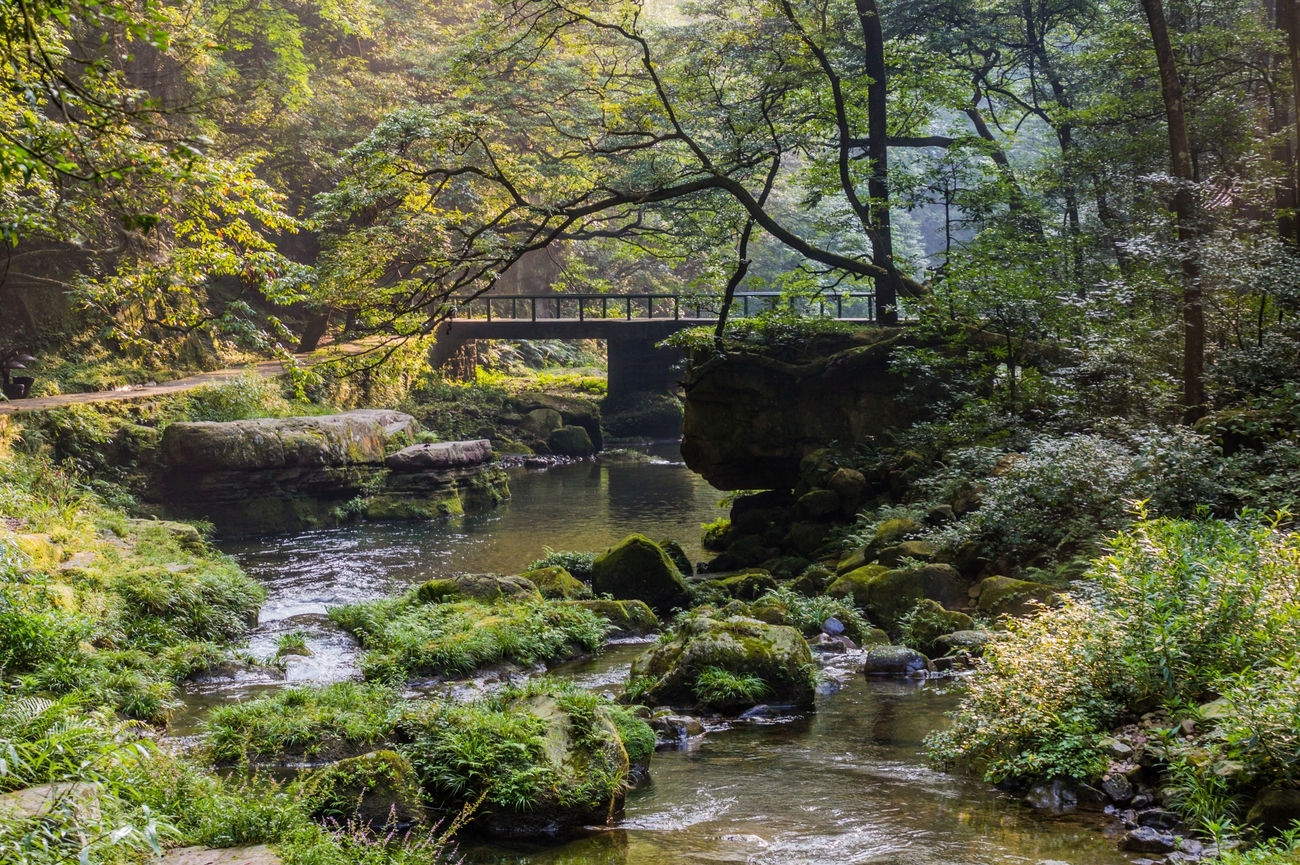
Below the crowded plateaus, the Golden Whip Stream corridor offers a completely different perspective, following a 7.5-kilometer valley-floor path right through the pillar forest. For grand scales, the Tianzi Mountain zone, the park's highest accessible point at 1,262 meters, draws fewer crowds than the film platforms despite offering the fullest panoramic views of the sandstone peaks and cloud seas. Meanwhile, the Yangjiajie zone remains the least visited of the main areas, offering a quieter encounter with the wilderness and virtually no commercial infrastructure.
The park's incredible biodiversity also has nothing to do with cinema. Over centuries, the geological isolation of the deep gorges and steep cliffs kept human access difficult enough that an ancient ecosystem survived intact. Rare wildlife like the Endangered clouded leopard, the Chinese giant salamander in the stream systems, and ancient tree species unchanged since the Cretaceous period belong to the true ecological story of the Wulingyuan scenic area.
Tianmen Mountain, located 8 kilometers south of Zhangjiajie National Forest Park, sits in a different category entirely. Its massive karst cave, glass walkways, Buddhist temple, and long pilgrimage history represent another side of the region's heritage, explored fully in our dedicated guide to Tianmen Mountain.

What
the Sequels Mean for the Park
The Avatar sequels may continue to renew interest in Zhangjiajie, especially among travellers who first encounter the landscape through Pandora rather than through geography.
For the park, the practical effect is likely to remain the same: more international attention and continued concentration of visitors around the Yuanjiajie viewpoints associated with Avatar. The geological effect is none. The Southern Sky Column was renamed in 2010, but the pillar itself remains part of a landscape shaped over hundreds of millions of years.
Zhangjiajie predates Avatar by 380 million years. It will outlast the franchise by a similar margin. The film gave the park global name recognition. The park gave the film one of its most convincing pieces of natural visual logic.
The exchange was powerful, but the landscape remains the original.
The
Pandora That Already Existed
Pandora required a film studio, visual effects teams and years of digital construction. Zhangjiajie required 380 million years, quartz-rich sandstone, subtropical forest and morning cloud.
At Yuanjiajie, the landscape is most powerful before the crowds build. The cloud sea gathers in the gorges, the pillar tops rise above the white, and the first light catches the sandstone in amber. Ancient trees cling to fractures in the rock, their roots still widening the cracks that helped shape the formations in the first place.
This is what Avatar was trying to approximate: a landscape that already felt impossible before cinema borrowed from it.
The film made the image famous. Zhangjiajie made the image believable.
Pandora is a cinema screen away. Zhangjiajie is a journey to Hunan, an early start and the patience to wait for the morning cloud.
Our offices:




Revigorate, Iberian Escapes and Algarve Lifestyle are the registered brand names of APCS Lda . We are a fully authorised travel agency licensed by Turismo de Portugal RNAVT/6867.
In the event of a dispute, the consumer may refer to: RAL - Centros de Arbitragem
Avª. 5 de Outubro, nº. 55, R/C Dtº. 8000-075 Faro, Portugal | Tel: +351 289 823 135 *
* national landline call
E-mail: info@consumoalgarve.pt| www.consumidoronline.pt | Mon to Fri: 9:00 - 13:00 / 14:00 - 17:00